Category: Business

  • Kickstarter Launches India Operations With Amazon And HAX

    Kickstarter Launches India Operations With Amazon And HAX

    Kickstarter, one of the largest crowdfunding platform in the world is entering India in association with Amazon Launchpad and HAX. Together, the three global entities will launch Startup C-Cube, a multi-level challenge for Indian start-ups that flags off in Bangalore on the 5th of December 2017.

    HAX is a hardware accelerator that invests in select startups in their early stages and provides guidance and resources in exchange for equity. Kickstarter is a platform for entrepreneurs to showcase their products and start a crowdfunding program. Amazon Launchpad is a global program that curates, showcases and delivers all kinds of products from startups to Amazon customers.

    Amazon Launchpad In India

    The Startup C-Cube challenge will be officially flagged off by Amazon Launchpad, HAX and Kickstarter at an event in Bangalore on the 5th of December. This will also mark Amazon Launchpad’s one year anniversary in the Indian market. The winning start-up will be supported by the three companies through the entire “concept-to-customer” journey and the joint program will also provide resources to the winner for launch, both in India and in Europe/US, depending on the scalability of the idea.

    Manish Tiwary, VP of Category Management at Amazon India said:

    Business growth of some of the start-ups on Amazon Launchpad has elicited interest in these start-ups from VCs as well as other funding agencies in the last one year.
    We are very happy to bring Kickstarter and HAX to India to give Indian start-ups an opportunity to get their ideas noticed at the global stage and arm them with resources to convert these into real business opportunities.
    If you think you have the idea and the planning to win The Startup C-Cube challenge, then you can enter the competition by clicking here.
  • Amazon Will Now Deliver SIM Cards To Your Doorstep

    Amazon Will Now Deliver SIM Cards To Your Doorstep

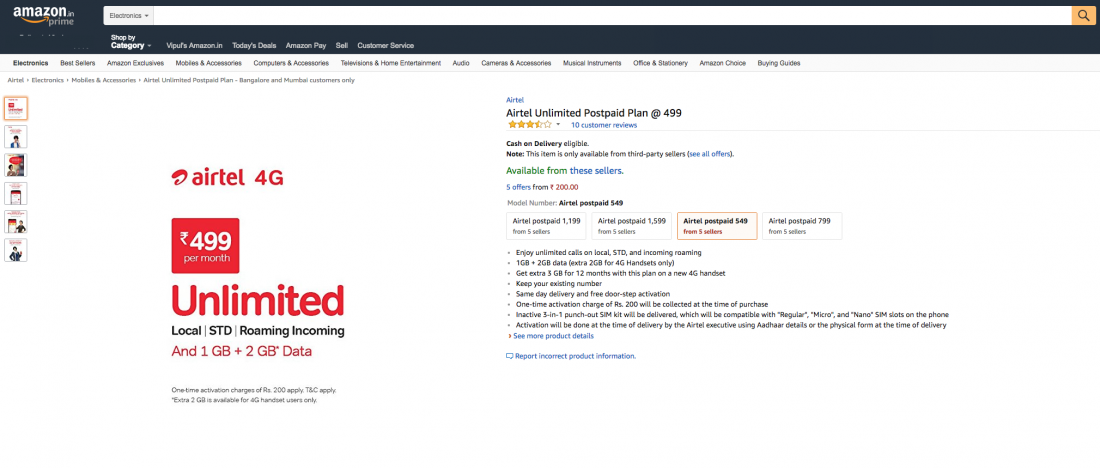
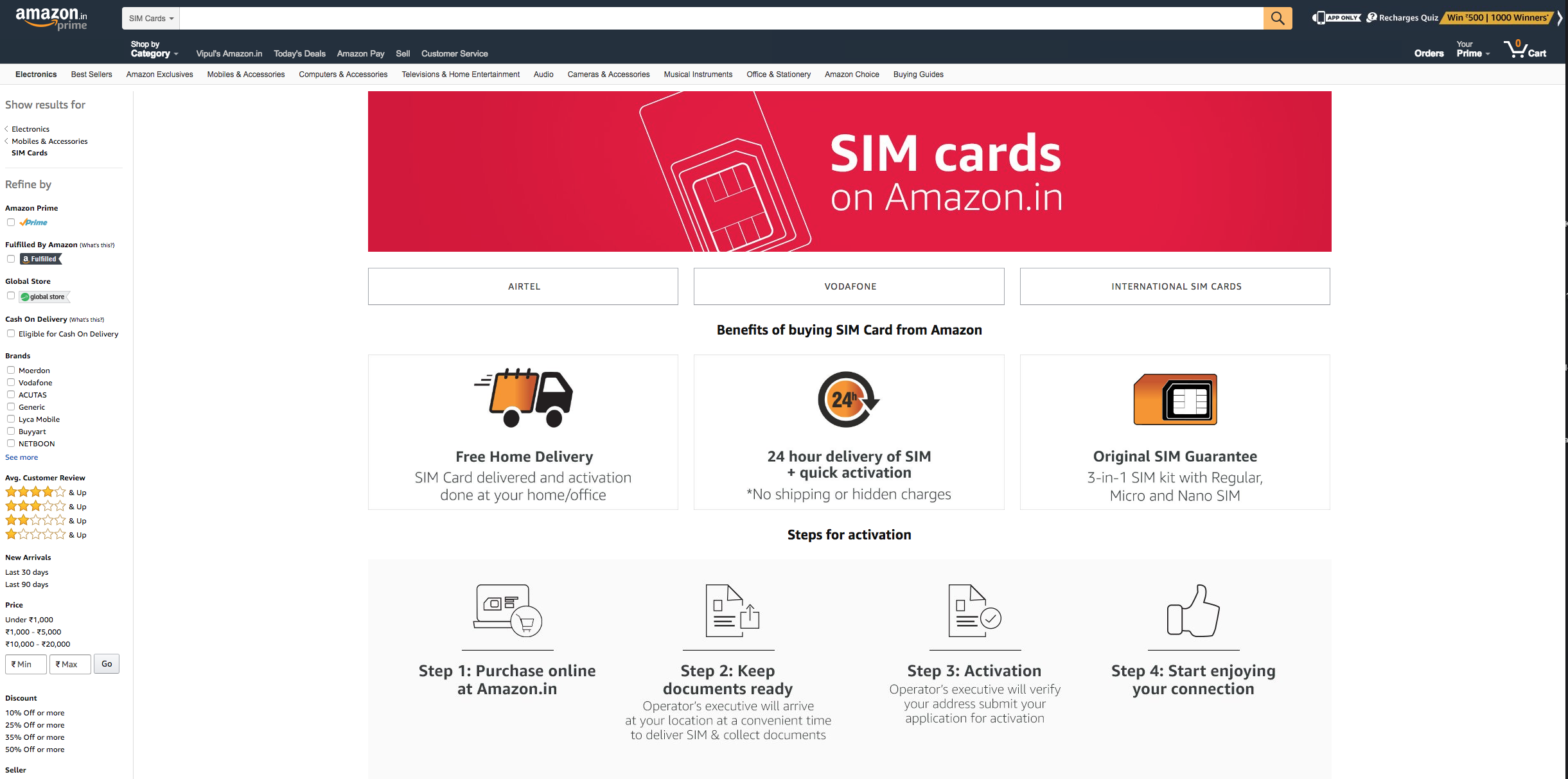
    Amazon, the e-commerce giant will now start delivering Airtel and Vodafone SIM cards. The company claims to deliver free SIM cards, however, Airtel is asking for a security deposit of Rs 200 and Vodafone costs Rs 15.

    Both, Airtel and Vodafone are offering Postpaid SIM cards along with a few good plans. The Airtel connection is available for Rs 499, Rs 799, Rs 1,199 and Rs 1,599. On the flip side, consukers who want to buy a Vodafone SIM can opt for RED plans including Rs 499, Rs 699, Rs 999, Rs 1,699, Rs 1,999 and 2,999.

    A user can also avail cash back on the first recharge of operators. Airtel customers get flat Rs 75 cash back on recharge of above Rs 349, Jio users will receive a cash back of Rs 99 on the payment of Rs 399 or more, while Aircel customers can avail up toRs 75 on an unlimited plan, and for the rest of the operators, you can get a cash back of Rs 50 on the first payment.

    Apart from this, Amazon has also listed a host of international SIM cards as well, which include connections of the countries such as US, UK, Portugal, Italy, Austria, Hong Kong, Australia, Belgium and more.

  • Israeli Company Sues Apple For Dual-Camera Patent Infringement

    Israeli Company Sues Apple For Dual-Camera Patent Infringement

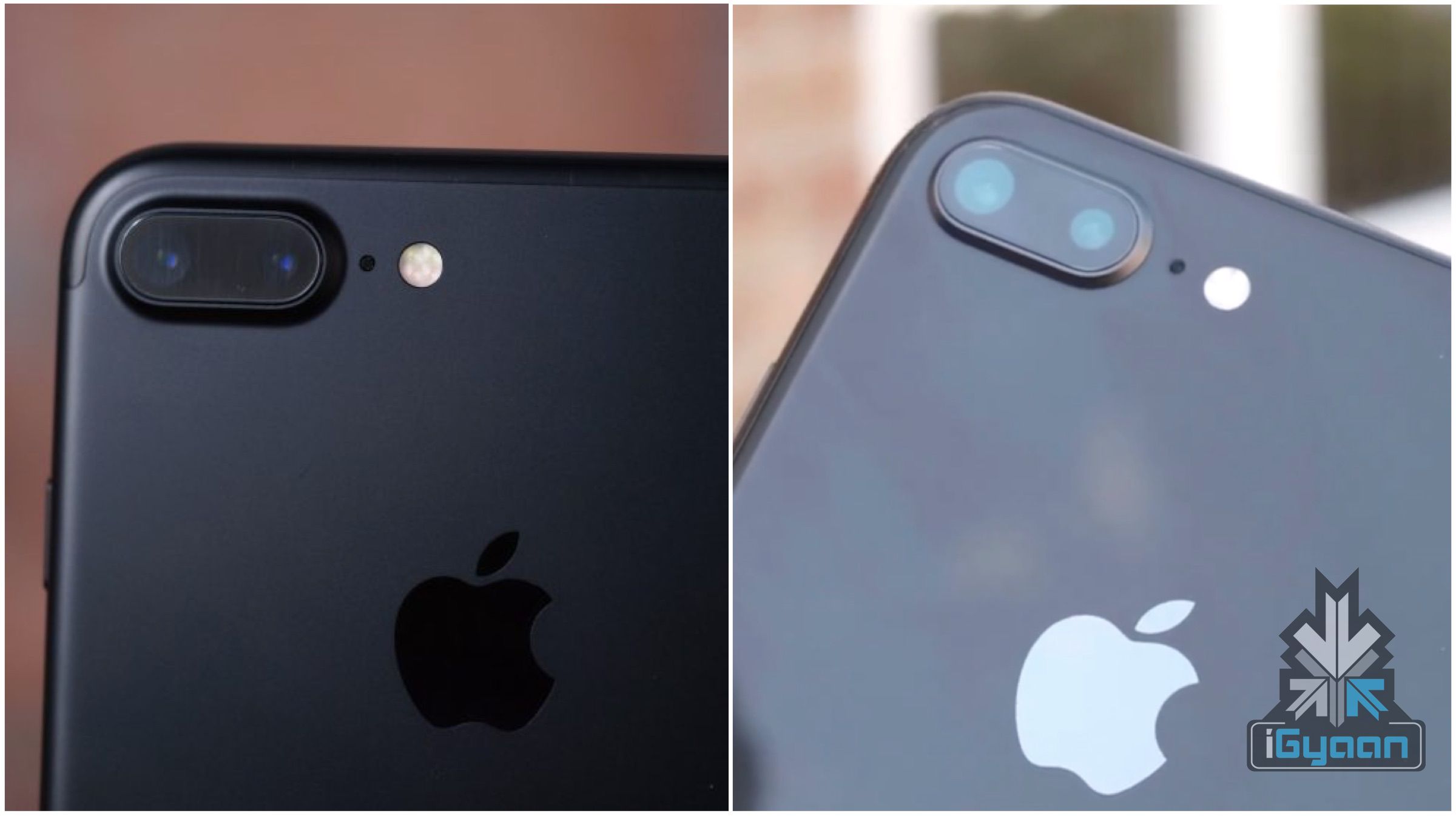
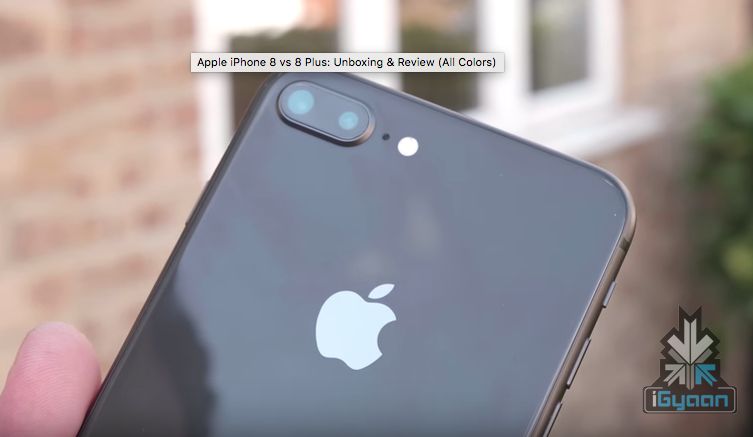
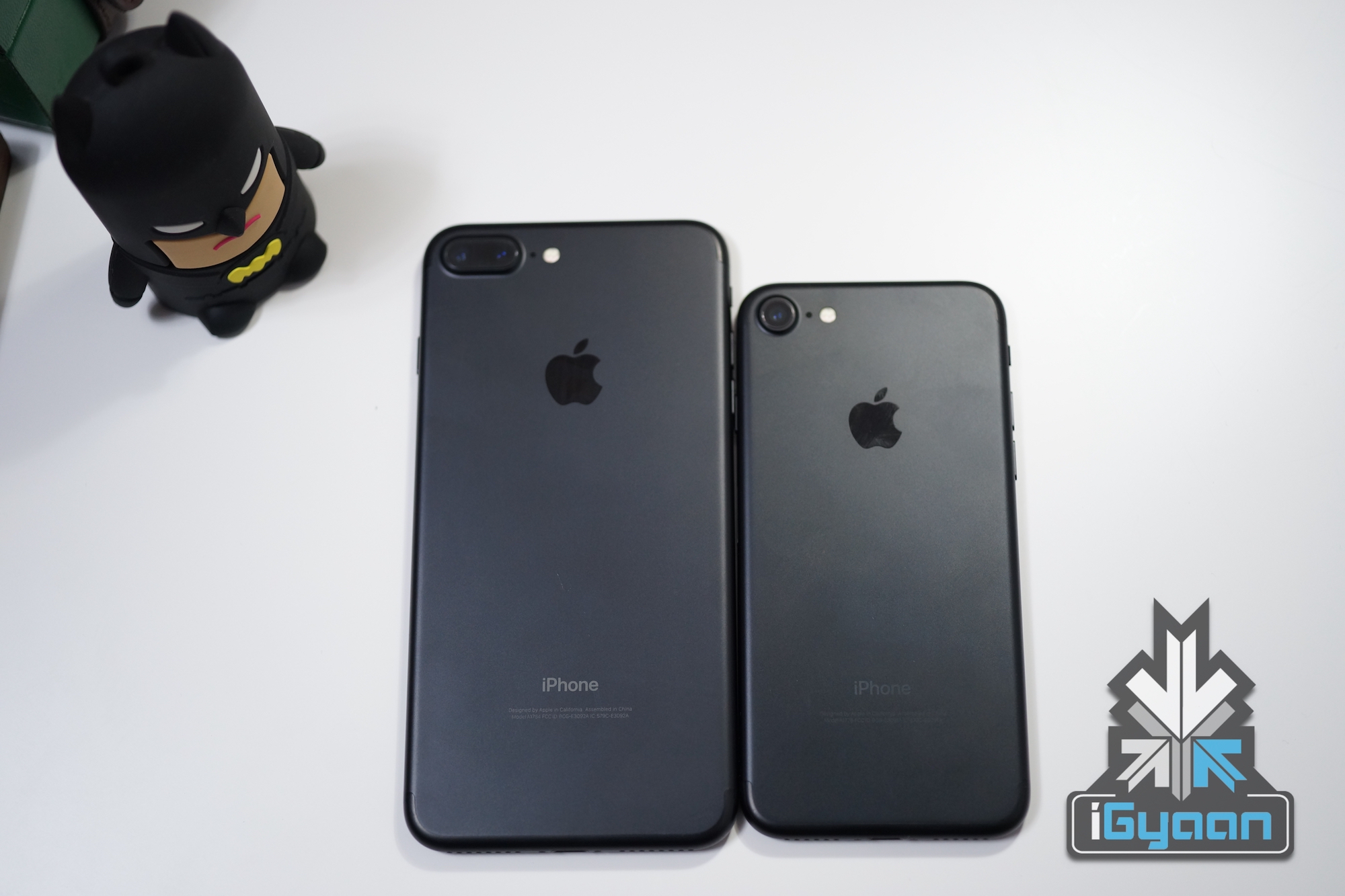
    Israeli company Corephotonics has filed a lawsuit against Apple for patent infringement. It looks like Apple can’t catch a break, as this case has emerged right after it won a US $120 million case against Samsung. Corephotonics, a maker of dual lens camera technology, claims that the cameras featured in the iPhone 7 Plus and iPhone 8 Plus infringe on four of its patents.

    Corephotonics was founded in 2012 by Dr. David Medlovic, a Tel Aviv University professor and former chief scientist in the Israeli government.

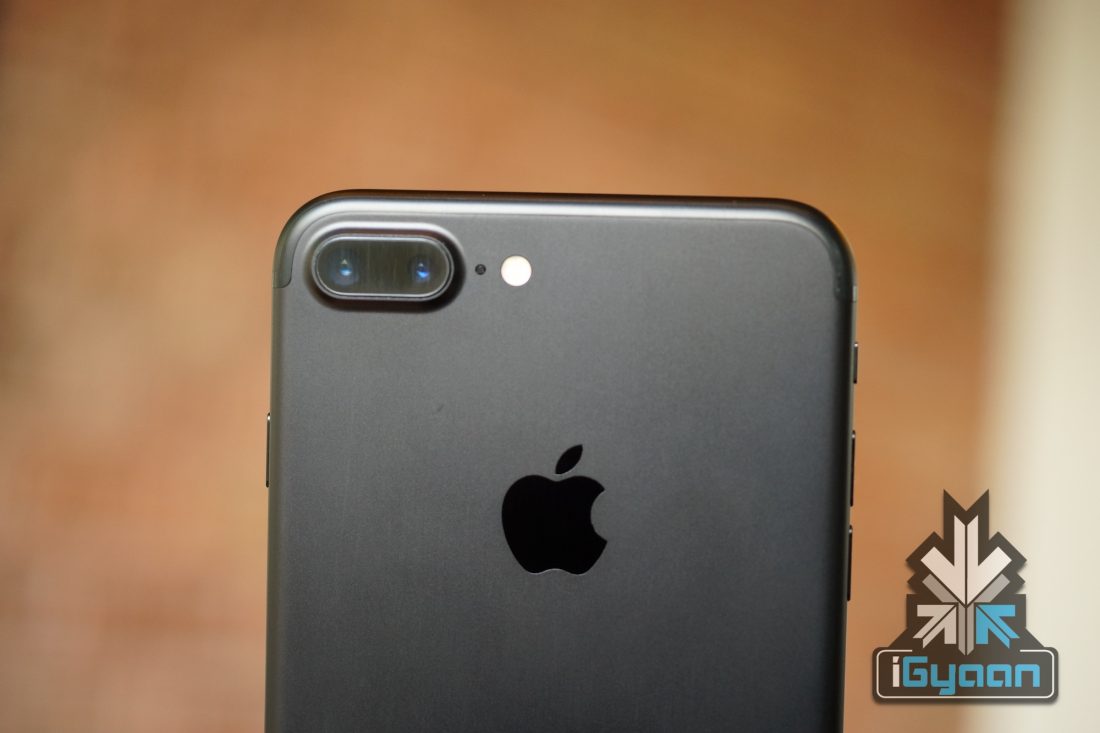
    iPhone 7 Plus

    Corephotonics claims in the lawsuit that it reached out to Apple “as one of its first acts as a company” to establish a strategic partnership. The exchanges with Apple continued for a some time but never resulted in a license agreement for Corephotonics’ dual lens technology. In the lawsuit, the company claims:

    Apple’s lead negotiator expressed contempt for Corephotonics’ patents, telling Dr. Mendlovic and others that even if Apple infringed, it would take years and millions of dollars in litigation before Apple might have to pay something.

    According to the lawsuit filed, Apple infinged four patents that Corephotonics filed between 2012 and 2015. Of the four, two patents were on mini telephoto lens assembly, one patent on dual aperture zoom digital cameras, and one on high resolution thin multi-aperture imaging systems, which is essentially an umbrella term that covers what dual lens cameras are.

    The company claims that its dual aperture camera technology has two fixed-focal length lenses, including a wide angle and a telephoto lens, which is what Apple uses in its iPhone 7 Plus and iPhone 8 Plus.

    In a bizarre turn of events, the Israeli company has roped in the consumers as well in this lawsuit. Corephotonics says since Apple is selling the phones with “knowledge of or wilful blindness” of the patents it’s allegedly infringing, the lawsuit claims that consumers who buy the iPhone 7 Plus and the iPhone 8 Plus are infringing on the Corephotonics’ telephoto lens assembly patent as well.

    The lawsuit demands monetary compensation for the lawyers that Corephotonics has had to hire along with additional damages. It is also demanding that Apple stop using dual-aperture cameras immediately.


  • Samsung Has To Pay US $120 Million To Apple

    Samsung Has To Pay US $120 Million To Apple

    Samsung and Apple may be nearing the end of their legal battle woes. The US Supreme Court refused to hear Samsung’s appeal of a ruling that awarded Apple $120 million for a case that started back in 2014

    Back in 2014, a San Jose, California federal court ruled that Samsung infringed several Apple patents that allowed for a lot of  popular iPhone features, such as slide-to-unlock, autocorrect, and the ability for information like addresses and phone numbers to automatically turn into links. As a result of that ruling, Samsung was asked to pay US $119.6 million to Apple. That verdict was then overturned by the Federal Circuit but, it was then reinstated in October 2016 by that same court.

    After that ruling, Samsung appealed the decision to the US Supreme Court. In the appeal, Samsung stated that the Federal Circuit, which specifically deals with patents, made the decision without listening or reading the whole story. The company also implied that the patent court is biased toward patent holders. In a statement, Samsung express its disappointment on the ruling:

    Our argument was supported by many who believed that the Court should hear the case to reinstate fair standards that promote innovation and prevent abuse of the patent system. One of Apple’s patents at issue in this case has been invalidated by courts around the world, and yet today’s decision allows Apple to unjustly profit from this patent, stunts innovation and places competition in the courtroom rather than the marketplace.

    The good news for Samsung is that this does not change an earlier decision to dismiss a $399 million verdict against the company. In December 2016, the US Supreme Court sided with Samsung in a case against Apple over patent infringement. The case began in 2012 when Apple sued Samsung, claiming Samsung had violated its design and other patents for its iPhone on many of Samsung’s Galaxy smartphones. After years of back-and-forth and re-appeals, Samsung took the case to the US Supreme Court in 2016 where it ruled 8-0 that Samsung does not have to pay $399 million to Apple, overturning an earlier appeals court ruling in this case.

    Samsung and Apple have been rivals ever since the Android platform rose to prominence and Samsung became one of the biggest smartphone makers in the world. Apart from the legal battles, both the companies are known to mock each other on social media and their respective ad campaigns. Recently, Samsung released an ad where it mocked the iPhone X and urged people to ‘upgrade to Galaxy’.

  • Broadcom Wants To Buy Qualcomm For US $100 Billion

    Broadcom Wants To Buy Qualcomm For US $100 Billion

    In what might be one of the most sensational deals in the tech industry, Broadcom is interested in buying Qualcomm. According to a report, Broadcom is currently in talks with advisers on how to best approach the potential bid, which is likely to be made official by the end of 2017. However, it is an iffy situation right now and sources from the company have said that Broadcom might even not go ahead with it if the pieces don’t fall into place.

    Qualcomm is the largest maker of modems while Broadcom is the industry leader in terms of WiFi chips. A deal between the two companies would consolidate their stand in the industry and put them in a better position to negotiate with the likes of Samsung and Apple.

    The sensational US $100 billion bid, if made, will not guarantee the deal. Qualcomm is not in a strong legal position right now considering a number of legal battles the company is embroiled in. Qualcomm is in the midst of a legal dispute with Apple, with the dispute having started in January when Apple sued Qualcomm for US$1 billion. Qualcomm countersued the American tech giant, Apple in April, sought injunctions to halt iPhone sales in the US and China, and filed a lawsuit over copyright infringement.

    The legal battle for Qualcomm doesn’t end here, it recently sued Apple again for leaking software information to rival chip-maker, Intel. Qualcomm further said that it has proof of such a leak and that Apple has breached their contract by not allowing Qualcomm to audit its software handling by Apple.

    It is yet to be seen if Qualcomm will indulge in a US $100 billion takeover considering its legal woes but, if it does happen, it will be the biggest ever takeover of a chip maker in the world.


  • Qualcomm Sues Apple Again For Sharing Software With Intel

    Qualcomm Sues Apple Again For Sharing Software With Intel

    The legal battle between Qualcomm and Apple has been extended as Qualcomm has now sued Apple for allegedly sharing proprietary Qualcomm technologies with its market rival, Intel. In the lawsuit, filed on the 1st of November, Qualcomm is accusing the Apple of breaching a software license contract. To prove its claim, Qualcomm says it has email in which Apple requested confidential documentation. It has been reported that the email contained an Intel engineer in the distribution list.

    Qualcomm goes on to claim that according to the contract between the two companies, Qualcomm has the permission to audit Apple’s handling of its software, however, Apple has refused any such requests. The details of the lawsuit do not clarify the amount of money Qualcomm has sued the tech giant for but, considering the recent legal battles between the two companies, Qualcomm might not settle for a meagre amount.

    It was reported that Apple will drop Qualcomm components from its 2018 iOS devices, ending a long-term partnership with the American chip maker. This news came after a series of legal battles were dragged on between Apple and Qualcomm. Apple, along with Samsung is also suing Qualcomm for taking advantage of its monopoly.

    Qualcomm has not had an ideal time in terms of its legal battles after it was fined a record US $773 million by Taiwan’s Fair Trade Commission. The Commission said that Qualcomm misused the monopoly in the smartphone business to squeeze higher licensing fees and better terms out of its customers.


  • Samsung And Xiaomi Make Up For 45% Of Smartphone Market In India

    Samsung And Xiaomi Make Up For 45% Of Smartphone Market In India

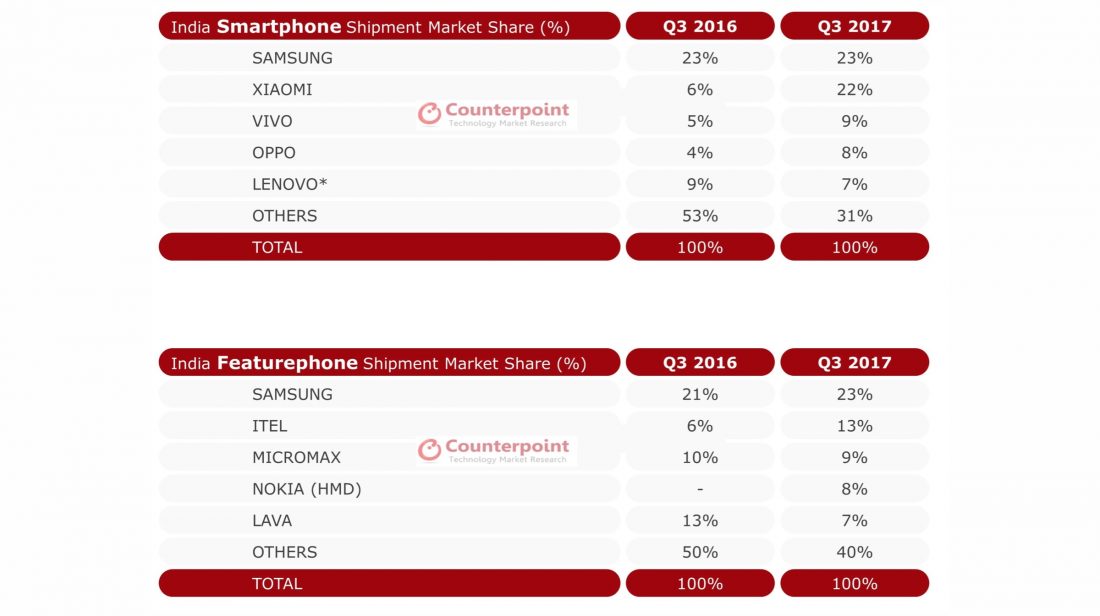
    Samsung and Xiaomi together constitute 45% of the smartphone market in India in Q3 of 2017. The smartphone grew 37% (quarter on quarter) and 18% (year on year) to temporarily surpass the US for the first time ever as the second largest smartphone market in the world. The number one spot i still retained by China. According to Counterpoint’s Market Monitor service, India’s mobile phone shipments reached an all time high of 84 million in 2017 thanks to a strong sale period of both feature and smartphones.

    Samsung and Xiaomi together contributed to almost 45% of the smartphone market. This is the first time since 2012, that the top two brands have reached this level of combined share, signalling that key brands are ramping up their presence in India. Additionally, the quarter was marked with return to growth for local handset players such as Micromax and Lava in the smartphone segment.

    Affordable mid-end segment (Rs. 10,000 – Rs. 15,000) was the fastest growing segment thanks largely to a strong performance of Xiaomi which contributed to almost half of the shipments. Three of the top five best selling smartphones in India were from Xiaomi alone.

    Commenting on the findings, Karn Chauhan, Research Analyst at Counterpoint Research said,

    India continues to be an attractive destination for handset OEMs. With strong smartphone growth and a sizeable feature phone market for at least three to four years, OEMs in India can target a diverse set of audiences. This has allowed a number of OEM’s to still realise double digit growth in the feature phone segment in spite of being absent in the smartphone segment.

    Chinese smartphone brands have a third consecutive year when their market share is over 50% in India. Indian brands like Micromax and Lava grew 41% and 24% (quarter on quarter), respectively, in the smartphone market after recovering from their all-time low performance after demonetization in 2016. Micromax Bharat 2 was the bestselling phone in the sub-Rs 5000 segment. Xiaomi, iTel, Oppo, Vivo, and OnePlus were the fastest growing smartphone brands during the third quarter which is largely due to the festive sales and attractive discounts.

    Because of the strong performance of Apple, OnePlus, and Samsung, the premium segment (above Rs. 30,000) grew record three times (year on year) during Q3 of 2017.

  • Samsung And Apple To Face Retrial Over $400 Million Patent Damages

    Samsung And Apple To Face Retrial Over $400 Million Patent Damages

    Apple has its hands full at the moment, as the sale of the iPhone X nears, the company finds itself in a yet another prolonged legal battle against Samsung. The patent battle between Apple and Samsung over who owns the concept of smartphones with round corners is back for another trial. Back in 2012, the case was settled and Samsung was ordered to pay over US $1 billion to Apple. That figure is currently US $400 million and a successful appeal for a retrial means that this amount might be reassessed again.

    The judgement was made yesterday by Judge Lucy Koh of the United States District Court for the Northern District of California, with the ruling spotted and shared by patent lawyer Florian Mueller. Apple and Samsung now have until the 25th of October to propose a date for the retrial, although Mueller has said that there is a high chance that the two companies will settle out-of-court instead. Although there’s still a lot of money on the table, both sides have proved their willingness to go to the mats on this issue. Moreover, Samsung and Apple cannot be distracted right now since both companies will be up against Qualcomm in a legal battle.

    It is worth noting that the retrial isn’t to determine whether Samsung infringed the patents of Apple while making its smartphones. That bit is settled and Apple will receive the damages f0r it. This retrial is to see whether Samsung will pay the damages it pays based on the total profit it made from its handsets, or a percentage of that profit. Samsung argues that even if it copied certain aspects of Apple’s smartphones, these were only ever a part of the appeal of its own products. The Supreme Court Of America had already ruled that a judgement based on profit would be unfair.

  • Apple Sued By A Japanese Company Which Owns ‘Animoji’ Trademark

    Apple Sued By A Japanese Company Which Owns ‘Animoji’ Trademark

    Legal battles just doesn’t seem to go away for Apple at the moment. The Tokyo-based company, Emonster, which owns the trademark for “Animoji” in the US, is suing Apple for using the word to name its iPhone X feature. Legal worries continue for Apple with an ongoing legal battle with Qualcomm and recently losing a lawsuit against VirnetX.

    Emonster filed the suit on Wednesday in US federal court, saying,

    Apple made the conscious decision to try to pilfer the name for itself.

    Emonster owns an iOS app called Animoji that was launched in 2014, which lets people send emojis that are animated in a loop like GIFs. The app asks its users to compose the message in the lines of how you would format a line of code in Python or Javascript, with parentheses and brackets that separate the kinds of effects you want to add to text or emoji. The app costs US$0.99 on iTunes.

    The iPhone X’s Animoji feature, meanwhile, lets people transform their face into customised moving emoji. This is done using Apple’s face recognition technology. Apple tried to put a “fun and quirky” twist on its new flagship smartphone but, this suit couls cause some troubles to the American tech giant. The lawsuit alleges that because both the Animoji app and the iPhone X feature are on Apple’s platforms, and because both involve motion animation, the court should rule one out.

    According to the suit, Apple knew about Emonster’s ownership of the Animoji trademark since the app is in the Apple Store. Apple allegedly offered to buy the trademark, and when that didn’t work out, it kept using the name anyway. Emonster is seeking an undisclosed amount of money in damages and a court order to block Apple from continuing to use the name “Animoji” with immediate effect.

    It is reported that Emonster has owned the trademark for Animoji since 2015, Apple filed a petition in September 2017 to cancel the trademark, so the registration is now under review. Apple said that because of a filing error, Emonster registered the trademark to a nonexistent business and therefore can’t actually own the trademark for ‘animoji’.

  • Apple Has To Pay US$439.7 Million For Patent Infringement

    Apple Has To Pay US$439.7 Million For Patent Infringement

    Apple has been dealt with a US$439.7 million fine for apparently infringing four patented technologies of VirnetX used in FaceTime and other iOS apps. While this is the final judgment from the US District Court, Apple has plans to appeal the ruling which will prolong the legal battle which began back in 2012.

    Legal battles between these two companies has been a back and forth tennis match since 2010. VirnetX first filed suit against Apple in 2010, winning US$368 million two years later. It then sued Apple again in 2012, which is the suit that was being ruled on this time.  Apple initially lost the suit, and then filed for a mistrial. It won a new trial, lost that trial, and was ordered to pay around US$300 million, then lost some more money and is now having that amount increased even further. This happened because a judge found Apple guilty of wilful infringement, bumping its payment amount from US$1.20 per infringing Apple device to US$1.80 per device. In response to the ruling, VirnetX has said that this was a “reasonable amount.”

    US$440 million might not be a huge amount for Apple and the money involved is certainly not the reason behind Apple’s effort to appeal against the judgement. VirnetX has been known to make money out of filing patent infringement suits. The company’s SEC filing states, “Our portfolio of intellectual property is the foundation of our business model.”

    Legal battles seem to be following Apple nowadays. Qualcomm recently filed a lawsuit against Apple in China in an attempt to stop manufacturing and sales of iPhones in China. China is the largest smartphone market in the world and this lawsuit has come at an extremely crucial time as the company gears up for the sales of the iPhone X.

  • Samsung CEO Kwon Oh-hyun Resigns Under Mysterious Circumstances

    Samsung CEO Kwon Oh-hyun Resigns Under Mysterious Circumstances

    Kwon Oh-hyun, CEO of Samsung Electronics and Samsung Display, vice chairman and head of Samsung’s components division has announced his resignation. He will step down from the role as well as his position on the board in March 2018.

    Kwon Oh-hyun said in a letter to the employees:

    It is something I had been thinking long and hard about for quite some time. It has not been an easy decision, but I feel I can no longer put it off. As we are confronted with unprecedented crisis inside out, I believe that time has now come for the company start anew, with a new spirit and young leadership to better respond to challenges arising from the rapidly changing IT industry.

    There are no words to describe how proud I am that we built together one of the most valuable companies in the world. We have come a long way to create a company that truly changes how people live, work and communicate with each other. But now the company needs a new leader more than ever and it is time for me to move to the next chapter of my life.

    Kwon joined Samsung in 1985, rising to lead its semiconductor business before his appointment as the CEO. He was appointed CEO of Samsung Electronics in 2012 and in 2016, he became the CEO of Samsung Display.

    Samsung has had a very successful finanical year but, all may not be well in its leadership. The South Korean tech giant, Samsung expects its operating profit to nearly triple year on year, demonstrating a very strong recovery after the equivalent period in 2016 saw the infamous Galaxy Note7 recall. In his letter, Kwon cites “unprecedented crisis,” he might be referring to the arrest of Lee Jae-yong, the de facto leader of the entire Samsung group, on corruption charges. It looks like the scandal will slowly show the repercussions and Kwon Oh-hyun’s resignation seems like the fist indication. Samsung is yet to announce a replacement. It seems like one of the two “co-CEOs”,  BK Yoon and JK Shin would replace Kwon. Will this internal turmoil affect Samsung and its future plans? We don’t think so.


  • Qualcomm Hit With a US$773 Million Fine In Taiwan

    Qualcomm Hit With a US$773 Million Fine In Taiwan

    Qualcomm, theSan Diego-based chipset maker was fined for US$773 million by Taiwan’s Fair Trade Commission. The Commission said that Qualcomm misused the monopoly in the smartphone business to squeeze higher licensing fees and better terms out of its customers.

    The commission said that Qualcomm’s dominance in CDMA and LTE chips, as well as its major patent holdings for both technologies, let the company abuse its position and refuse to license necessary patents. It’ll now be required to end those practices and parts of unfavourable deals it forged with other companies. This is not the first time that Qualcomm has been fined, South Korea and China have also fined Qualcomm in the last 2 years and Apple is involved in a series of lawsuits globally against Qualcomm over similar practices.

    On its website, FTC says:

    Qualcomm holds big number of standard essential patents in CDMA, WCDMA and LTE segments and is the dominant provider of CDMA, WCDMA and LTE baseband chips. It abused its advantage in mobile communication standards, refused to license necessary patents.

    By not providing products to its clients who don’t agree to its terms, Qualcomm is abusing the monopoly it has in the business, therefore violating the local anti trust laws. According to FTC, local companies purchased around US$30 billion worth of Qualcomm’s chips, which is way more than the fine it was dealt with.

    In response to the fine, Qualcomm has said:

    The fine bears no rational relationship to the amount of Qualcomm’s revenues or activities in Taiwan, and Qualcomm will appeal the amount of the fine and the method used to calculate it.

    Even though Qualcomm’s Snapdragon processors power most of the Android devices in the market with the only real resistance coming rom MediaTek, Qualcomm’s main money minting business is that of licensing patents. That business however, is under attack right now around the world. Countries and companies have finally decided to take action against the alleged unfair practices of Qualcomm.

  • Apple Could Partner With LG For Foldable Smartphones

    Apple Could Partner With LG For Foldable Smartphones

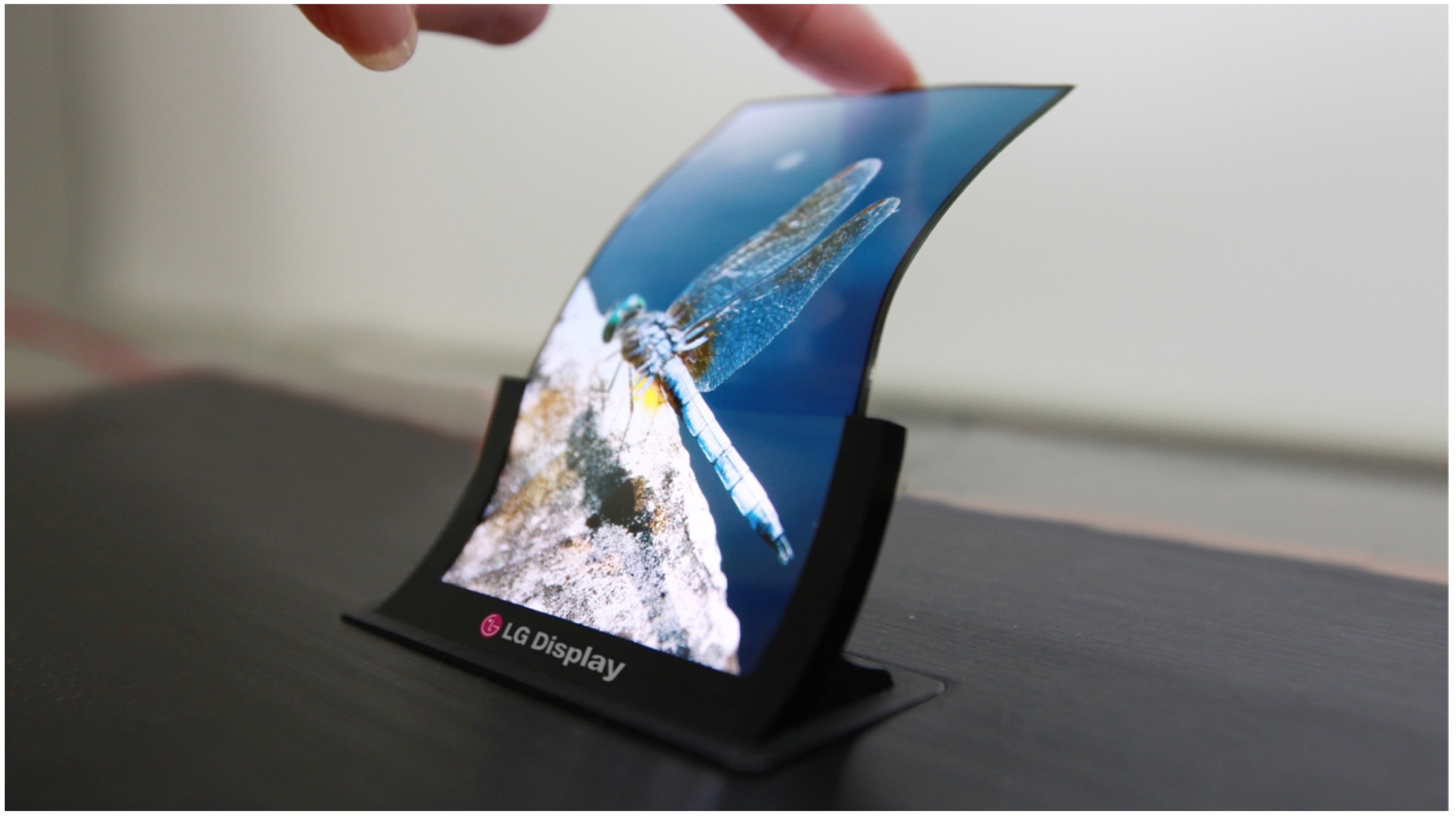
    The smartphone industry has seen a gradual slump in innovation over the past few years. Bezel-less display has been the rage of 2017 but, other than that you barely see anything new nowadays. Samsung stirred things up a little with the news of it launching a foldable Android phone in early 2018. Now, there is news that Apple might be teaming up with LG to work on a foldable smartphone.

    Samsung has been at the top of its game in the OLED market but, it hasn’t yet commercialised the flexible OLED displays. LG had also revealed a foldable display at CES and has the opportunity to take over that segment of the market and that might be the reason why Apple would choose to team up with LG. This news also falls in line with another report from July about Apple potentially investing over US$2 billion in LG’s new OLED plant.

    According to a report from The Bell (via The Investor), Apple will use flexible screens supplied by LG Display for an upcoming folding smartphone. Meanwhile, LG’s Innotek business is already said to be gearing up to produce the rigid flexible printed circuit boards, or RFPCBs, that would feature inside the phones. Apple would be seeking to release this device in 2020, which could give competitors like Samsung and LG itself a head-start.

    Samsung already seems well on its way to launch a foldable smartphone in early 2018 with the Galaxy X getting certified in Samsung’s native country, South Korea.

    All these are still speculations and as we say it always, take these rumours with a hint of scepticism.

  • The Apple iPhone 7 Was The Best-Selling Smartphone Globally In The First-Half Of 2017

    The Apple iPhone 7 Was The Best-Selling Smartphone Globally In The First-Half Of 2017

    Apple launched the iPhone 8, iPhone 8 Plus and the iPhone X on September 12th. The iPhone 8 devices went on sale in September and the iPhone X will be available to buy in November. However, it is the iPhone 7 and iPhone 7 Plus which are making the headlines for being the best-selling smartphones in the first half of 2017.

    The Apple iPhone 7 outsold all other smartphone models globally during the first six months of 2017, followed by the iPhone 7 Plus. The Samsung Galaxy Grand Prime Plus held the number three spot, followed by iPhone 6s and Galaxy S8 in in fourth and fifth places, respectively. Galaxy S8 Plus was the number six best seller, with slightly less volume than the Galaxy S8.

    The report notes that the 4.7 inch variant of the iPhone continued to be the best seller in first half of three consecutive years beginning in 2015. However, their market share continues to fall, dropping from 10 percent in 2015 to 7 percent in 2016, and 5 percent in 2017. Although the latest iPhone models secured top positions, shipment volume declined compared to their respective predecessor models, the iPhone 6s and 6s Plus, during the same period in 2016.

    Five Samsung phones, four Apple phones, and one Oppo smartphone ranked in the top 10 most-shipped smartphones in the first half of 2017.

    The number of smartphones with more than a million shipments in the first half of the year also increased to 22 from 17 in 2016.

    This is a direct result of smartphone OEM efforts to select and concentrate in order to improve product portfolios and increase profitability. In addition, more Chinese OEMs are selling their smartphone models outside of China, which intensifies competition and generates more globally popular models.

    The report further delves into the numbers and states that out of 22 smartphones with over a million shipments a month 8 were from Chinese OEMs. Out of the eight, five were from Oppo, two from Xiaomi and one from Huawei.

    The first half of 2018 will be an interesting battle with Apple having three new iPhones in the market with the iPhone X being the clear-cut consumer favourite due to the new design. Samsung’s Galaxy S9 and S9+ will also be launched in early 2018 and will be the only Android phones in the market with the Snapdragon 845 chipset under the hood.


  • Big Bazaar And Xiaomi Partner Up To Sell Redmi Phones Offline

    Big Bazaar And Xiaomi Partner Up To Sell Redmi Phones Offline

    In order to solidify its already growing presence in the offline market in India, Xiaomi has teamed up with Big Bazaar. You will soon be able to buy the Xiaomi Redmi 4 and Redmi Note 4 at Big Bazaar outlets.

    Xiaomi, just like a lot of other Chinese OEMs came to India focusing on the online market. Over the course of time, smartphone makers realised that an untapped offline market might yield them better results than focusing more on the online market. OnePlus, a company that has solely operated through its online channels recently announced a partnership with Croma. OnePlus also has its OnePlus experience stores but, there are only two in India. So, a deal with an offline retailer with a widespread operation in India made sense.Apart from Big Bazaar, Xiaomi already sells its phones via multiple offline chains like Sangeetha Mobiles, LOT, Big C, Univercell and more along with its own Mi Home stores across country.

    With record-breaking sales figures, the Redmi Note 4 has been Xiaomi’s best-selling smartphone. The company turned a few competitors’ heads when it announced that it has shipped over 10 million smartphones in September globally, and over 25 million phones in India in 3 years since entering the market. Xiaomi has been selling its mid-rangers like hot cakes in the current festive season. During the sales on Amazon and Flipkart over a course of 3 days, Xiaomi sold over a million devices.

    It is no surprise that every company wants a presence in the offline market. Google recently conceded that Pixel phones in 2016 didn’t do all that well in India because of a lack of offline presence in India. Smartphone makers which came to India as online exclusive have branched out to the offline market to tap the people who are sceptical about online shopping and like to buy a phone after physically using it.


iGyaan Network
Privacy Overview

This website uses cookies so that we can provide you with the best user experience possible. Cookie information is stored in your browser and performs functions such as recognising you when you return to our website and helping our team to understand which sections of the website you find most interesting and useful.