Category: Government, Law and Policy

  • Ban Imposed on Mobiles with Duplicate IMEI Numbers

    Ban Imposed on Mobiles with Duplicate IMEI Numbers

    The Indian Government has enforced a ban on the import of mobile handsets in India which don’t carry a unique identity number. This measure is taken citing security concerns as such handsets can be untraceable.

    GSM phones carry an IMEI (International Mobile Equipment Identity) number while CDMA handsets carry a ESN (Electronic Serial Number)/MEID (Mobile Equipment Identifier) which gives them a unique identity. This unique identity helps to keep a track of the device and can be used to retrieve the device following a theft.

    Mobile handsets with duplicate or fake IMEI numbers can be used for nefarious activities. There are already instructions to ban import of handsets with fake numbers or have no numbers or with ’00…00’ IMEIs. With this new order the government intends to add handsets with duplicate IMEI on that list too.

    Duplicate handsets are a menace for the security agencies who find it hard to keep track of the devices. It also creates issues for the consumers who use them as well as the service providers. This ban would help the government to crack down on the importers.

  • Britain and USA Team Up to Stage Cyber Wargames

    Britain and USA Team Up to Stage Cyber Wargames

    In an attempt to bolster their cyber defence from online attackers, intelligence agencies from the U.S and Britain will conduct planned cyber attacks on each other’s financial and other critical sectors. These intended cyber attacks will be conducted to test and measure their online defences. Countries all around the globe are attempting to take on the increased concerns over vulnerabilities of critical online infrastructure.

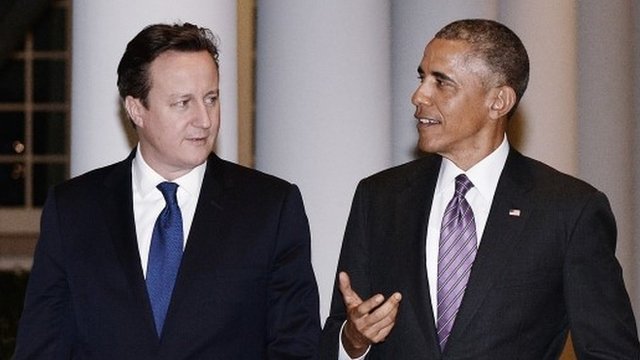
    U.S President Barack Obama and British Prime Minister David Cameron agreed upon this initiative on Friday. The joint effort has come amid concerns over the growing threat of online cyber attacks following the massive Sony hack last year.

    Both countries will begin work on a series of large scale joint exercises to assess each other’s online infrastructure. The first attack is expected to take place later this year on the financial sector. Other online ‘war games’ exercises will include premeditated attacks on energy and transport sectors.

    [quote text_size=”medium” author=”David Cameron”]

    This is an evolving threat which poses a real risk to our businesses and that’s why we’re taking our cooperation with the U.S. to an unprecedented level, This is about pooling our effort so we stay one step ahead of those who seek to attack us

    [/quote]

    Meanwhile, Britain’s MI5 along with their communication intelligence agency, known as GCHQ will work with their US counterparts in the NSA (National Security Agency) and FBI (Federal Bureau of Investigation) to further bolster the exchange of information.

    In addition, the two governments will also invest in training next-gen cyber agents; to lay down norms and standards to ensure big multinationals are getting constant advice on how to protect their systems.

  • India and US to Collaborate for the Digital India Initiative

    India and US to Collaborate for the Digital India Initiative

    Just days before President Obama’s visit to New Delhi, India and US have agreed to collaborate together for implementing the Digital India Initiative to boost e-Governance and e-Commerce.

     The Government of India initiated the Digital India Program to help integrate the people of India and the Government for effective governance. It aims to reduce paperwork for the citizens by providing Government services electronically. This also includes providing high speed internet connectivity to rural areas. Digital India includes three core components, digital infrastructure, digitally delivered services and digital literacy. It is stated to be completed by 2019.

    During the two day meeting of the US-India Information and Communications Technology (ICT), concerns were raised by the Indian Delegation, led by RS Sharma, about the refusal of a large number of visas of Indian skilful workers. The meet also stressed to expand the economic opportunity, create jobs and empower the citizens.

  • Industry Body says High Spectrum Costs Will Lead to Increased Mobile Tariffs

    Industry Body says High Spectrum Costs Will Lead to Increased Mobile Tariffs

    The Indian government will hold the auction of mobile spectrum in the month of February. The Indian Exchequer is expected to gain Rs. 80,000 crore(Rs 64,840 crore excluding 2100 MHz spectrum) from this auction. The bidding process is expected to start on February 23. But the industry association of GSM operators in India, COAI(Cellular Operators Association of India) are warning that the high spectrum costs would lead to higher mobile tariff for the consumers.

    COAI has written a letter to the Minister of Telecom, Mr. Ravi Shanker Prasad saying that the high prices would adversely impact the business viability for the telecom operators. They also added that the high spectrum costs would lead to tariff hike and will also effect government’s Digital India initiative and hinder rural penetration. The letter is also said to be forwarded to the Prime Minister.

    COAI claims that the high spectrum costs will lead to increased mobile tariff's which will hamper government Digital India plan.
    COAI claims that the high spectrum costs will lead to increased mobile tariff’s which will hamper government’s Digital India plan.

    The cabinet of ministers approved the following reserve pricing for the various spectrums:

    • Rs. 3,646 crores for pan-India license per MHz in the 800 MHz band
    • Rs. 3,980 crores for pan-India excluding Delhi, Mumbai, Kolkata, and J&K in the 900 MHz band
    • Rs. 2,191 crores pan-India (excluding Maharashtra and West Bengal) in the 1800 MHz band.

    COAI has also said that the government has priced the spectrum way above the pricing recommended by telecom regulator TRAI (Telecom Regulatory Authority of India). The pricing is said to be over 107% higher than the amount paid by the companies in the spectrum auction of 2010. TARI has also recommended a reduction of the license fee from 8% of adjusted gross revenue to 6%.

    The government plans to bring 5 Mhz for auction and will release an additional 15 Mhz on a later date. This low availability of spectrum will lead to even higher final prices as the companies would have to try to ferociously outbid each other to stay in business. The last auction also lead to heavy price wars which lead to the telecom companies borrowing huge amount of money from the banks. COAI claims that the combined debt of the industry now stands at a staggering Rs. 2.5 lakh crores.

    The present Indian government has some audacious plans to raise the standards of connectivity across India. For this a healthy cooperation with the telecom companies is essential. The issues raised by the telecom body seem valid, and the price is ultimately going to be borne by the consumers. We will await the government’s response for more updates on the story. Keep checking back on iGyaan.in.

  • AAP Brings Out Muffler Man, an Android Game ‘That Fights Corruption’

    AAP Brings Out Muffler Man, an Android Game ‘That Fights Corruption’

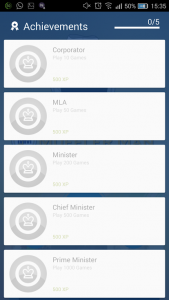
    Just when you thought AAP (Aam Admi Party) peaked at becoming the laughing stock among the Indian public, the party volunteered a bigger and better joke. Its digital agents have developed an Android Game called Muffler Man, in an effort to increase donations. Muffler Man (who looks quite similar to Mr. Arvind Kejriwal, but faceless) jumps all the way from India Gate to limitless sky.

    Download Now!


    The funny faceless Muffler man jumps on various platforms overcoming hurdles like corruption and bribe to win the game. According to the developers, they decided to keep the protagonist faceless to represent the common man. There are platforms like bribe, scam and corruption that will bring you down. Also there are brooms or ‘JHARU’ (party’s official symbol) which gives the Muffler Man the power to fly with a funny red cape.

    In the latest bid to garner more donations, AAP has linked this game with all new campaign hash tags. Well, even if it is quite a new thing in Indian politics, one thing is true, we couldn’t stop laughing when Muffler Man collected 3 ‘JHARUS’ to fly like Superman!

  • Government of India Unblocks Most of the 32 Banned Websites

    Government of India Unblocks Most of the 32 Banned Websites

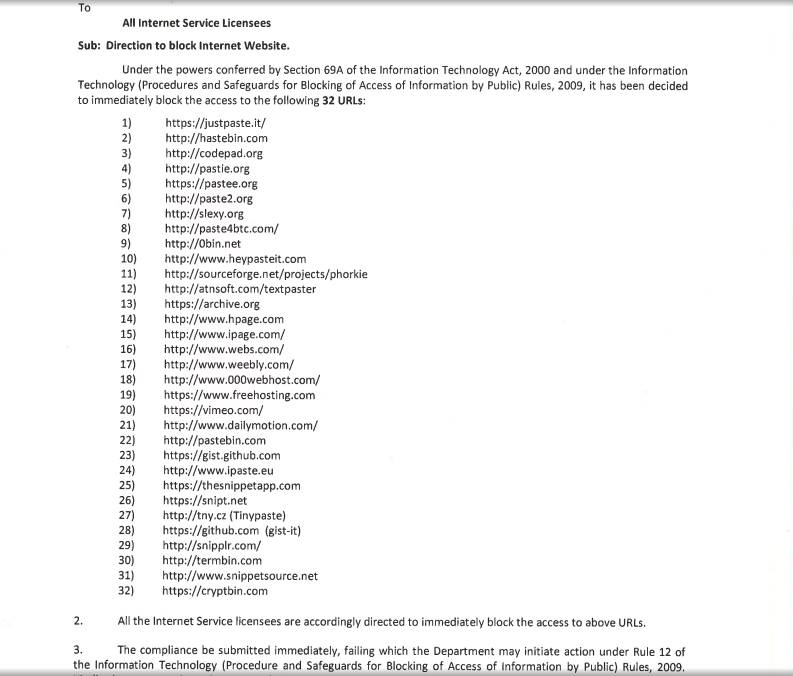
    The biggest news of 2014 was, of course, about the brutal group ISIS or ISIL or simply Islamic State. This group has been raising terror in Iraq and Syria. ISIS has proactively used internet and social media tools to spread their pernicious propaganda. It was also recently found that a young executive based in Bangalore was responsible for operating a pro-ISIS Twitter handle. The Indian Government has gone ahead and issued directives to internet providers to ban 32 websites citing national security concerns. Now it seems like most of the websites have been unblocked and are functional.

    There were some prominent names in the list including Vimeo, Dailymotion, Sourceforge and Github. A circular supposedly issued by the Department of Telecom (DoT)  also threatened actions against non-compliance of the order by the service providers. The circular came to prominence when it was shared on Twitter.

    Govt-blocking
    This circular supposedly from DOT was shared widely on Social media

    The head of ruling BJP’s IT cell, Arvind Gupta tweeted that the websites blocked were based on an advisory by Anti-Terrorism Squad, and were carrying Anti-India content from ISIS. To ban the websites the government used section 69A of the Information Technology Act (2000) and Information Technology (Procedure and Safeguards for Blocking for Access of Information by Public) Rules (“Blocking Rules”).

    This did cause a lot of furor especially amongst the developer community, which depends on websites like it Github for their projects. Hacktivist group Anonymous also said that they would start attacking Indian government websites if the websites weren’t unblocked. — AnonOpsIndia (@opindia_revenge) December 31, 2014

    As of now, it seems that most of the blocks have been lifted as we were able to access almost all of the websites listed in the circular. The block was said to have affected around 290 million Indian citizens.

  • Uber to Resume Services With Additional Security Measures

    Uber to Resume Services With Additional Security Measures

    The Uber owners can now breathe a sigh of relief as Delhi government has lifted ban on the app-based transportation service. Delhi Transport Department on Monday added some new rules in the Radio Taxi Scheme 2006 which include cab-hailing apps like Uber, Ola and more to the category of Radio Taxis. The declaration has come as a welcome note for the ride-sharing service as its status was uncertain post the ban implemented earlier this month.

    Uber services were banned in Delhi as a result of the rape incident committed by a registered Uber driver two weeks ago. The app faced an outrage of people all over the world, and as a result, its services were barred in the capital.

    As per the modified rules in the Radio Taxi Scheme 2006, the app-based taxi companies can resume their services in the national capital once they obtain a license. All licensees need to maintain a minimum fleet of 200 radio taxis. It can be done either by owning a car or by an agreement with individual drivers possessing licensed taxi permits. The new law overrules the existing rule which say that those services will only be eligible to own licenses who have at least 500 cabs.

    The modified rule received a mixed response from the taxi-app owners, however, Uber head seemed relieved with the decision. The head of Uber Asia operations Eric Alexander commented-

    All the information solicited from Uber has been dutifully provided to the authorities. We look forward to a positive outcome which benefits the people of Delhi.

    The rule says that the app-driven taxis should incorporate GPS and GPRS trackers, a printer along with a display panel through which passengers could keep a tab on the path and total distance covered. Furthermore, a helpline center, an authorised call center or a web portal should be established for the security of female passengers. Also, licensees need to list all the details on the website like ownership, registered address, contact details, fare structure, control room number, services offered, insurance liabilities, together with a section for redressal of grievances.

    Although the lift of this ban has been met with mixed emotions; we pray that the security measures implemented are enough to prevent any such incident in future.

  • Google’s Gmail Service Blocked in China

    Gmail was banned in Mainland China earlier this year, however, people were able to exchange messages, videos, pictures through  the mailing service. Protocols like IMAP, SMTP and POP3 and third-party apps such as Microsoft Outlook and Apple Mail aided users to access Gmail but now, even that isn’t possible as the Chinese government closed the loophole. As per a recent revelation, the government has permanently shunned Gmail in the country behind the Great Firewall.

    Google has continuously been observing a major traffic dip in Gmail from China and this has been evident through Google’s Transparency Report. A spokesperson from the firm said that there had been no issues from the company’s side, which could have led to this action, “We’ve checked and there’s nothing wrong on our end.”

    The China-based freedom of speech advocacy group GreatFire.org argued that this is a step towards completely banishing Google from China,

    I think the government is just trying to further eliminate Google’s presence in China and even weaken its market overseas. Imagine if Gmail users might not get through to Chinese clients. Many people outside China might be forced to switch away from Gmail.

    The East Asia’s sovereign state has made a firm boundary around itself called Great Firewall of China, which it says is a sophisticated internet censorship mechanism. This wall restricts the Chinese audience to interact with rest of the world. The decision will lead to an awkward situation for companies doing business, as almost all use Gmail to exchange conversation.
    gmail-sign-google

    However, the Chinese government has regulated the ban, the Foreign Ministry spokeswoman Hua Chunying said that she has no clue about the ban. Chunying added to her statement that the government is committed to provide a healthy business environment to foreign investors, “China has consistently had a welcoming and supportive attitude towards foreign investors doing legitimate business here. We will, as always, provide an open, transparent and good environment for foreign companies in China.”

    Meanwhile, as the mailing service is blocked, the users out there are left with just one alternative, Virtual Private Networks (VPN). The Gmail ban hasn’t come a surprise decision as the country has a long list of restricted websites. Along with Google Docs, Google Drive, YouTube, Twitter and many more sites blocked earlier, the recent block record includes Instagram, Dropbox, Google Maps, Google and a few more.

  • Indian Government Gives Green Signal to Electronic Manufacturing Proposals Worth Rs. 6,000 Crore

    Indian Government Gives Green Signal to Electronic Manufacturing Proposals Worth Rs. 6,000 Crore

    Modern India has understood the importance of technology and the Indian government is eyeing on making India an electronic hub. The administration has quickly started working in the direction and says that it has given a green signal to investment proposals worth Rs. 6,000 crore in the short period of six months.

    In a statement by Department of Electronics and Information Technology, “In last six months, we received firm proposals of about Rs. 18,000 crore and most of them were with financial closures. Till date, proposals of about Rs 6,000 crore have been approved.” The fact should also be underlined that besides already established companies, new firms also took active part in expanding this list.

    An official from the department confirmed, “About 25-30 new companies across various segments have come with investment proposals. Now people across geographies are very sure about the electronics manufacturing push by the Indian government. Reimbursement of MSIPS benefit has further boosted confidence.” He further elaborated saying that most of the investment have come from various segments of electronic like telecom equipments, electronic parts, LED, consumer electronics, automotive and a few more. The list includes firms like Nidec, Continental, Motherson Sumi, Calsonic Kansei, Tissol, Tata SED, and many more renowned names.

    MSIPS, the Modified Special Incentive Package, is an initiative by the government to promote large-scale manufacturing. Under this scheme, government provides subsidy to the companies for investments in capital expenditure. The firms get a maximum of 20 percent subsidiary for investment in Special Economic Zone (SEZ) and 25 percent in non-SEZs.

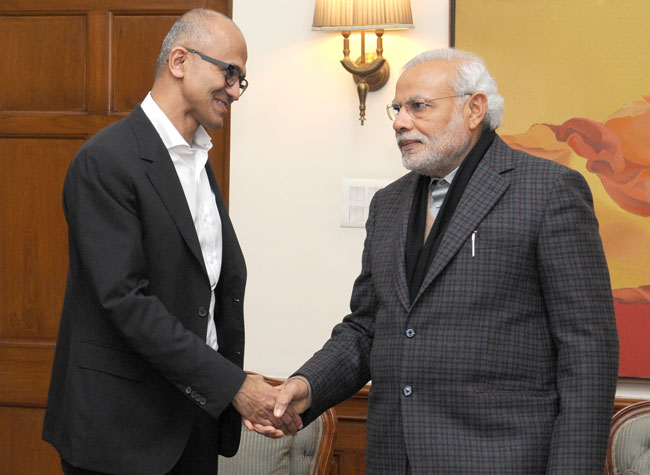
  • Microsoft CEO Satya Nadella Meets PM Modi to Discuss the Digital India Project

    Microsoft CEO Satya Nadella Meets PM Modi to Discuss the Digital India Project

    Narendra Modi has a long list of high-profile guests flying over to India to meet him. The recent addition to the list was Microsoft’s Chief Executive Officer Satya Nadella.

    Nadella after meeting the PM at his office on Friday commented, “it’s always fantastic for me personally to be in India and the conversation I had with the minister was wide ranging,”

    Nadella is the third major tech executive to meet PM Modi, after Amazon’s Jeff Bezos and Facebook’s Mark Zuckerberg. While it is largely being dubbed as a personal visit for the India-born chief executive of the American software giant, he was also supposed to address Microsoft’s employees in India on Friday.

    Earlier in the day Nadella met PM Narendra Modi and communications and IT Minister Ravi Shankar Prasad. “I have an aspiration that in this mobile and cloud world, we can empower every individual citizen of India and every business organization and institution in India to be able to try with new technology. So, I am looking forward to be a part of both the Digital India and Make in India,” he said.

    One of the major highlight of this high-profile meeting was the talks between Nadella and telecom minister Ravi Shankar Prasad where he urged the telecom minister to allow Microsoft to pilot its ‘White-Fi’ technology to provide internet connectivity in remote villages in the country.

    Microsoft India, since last month, has been seeking approvals to deploy a project that will enable Internet connectivity using ‘White Space’ spectrum that is currently used for television transmission by Doordarshan. White space technology has previously been deployed in South Africa, Ghana, and the UK, although to this point, white space broadband hasn’t been deployed at a commercially meaningful scale.

    This was the second courtesy call of the Microsoft CEO to PM Narendra Modi. Nadella met the Prime Minister earlier during his first India visit after taking charge as boss of the top software company.

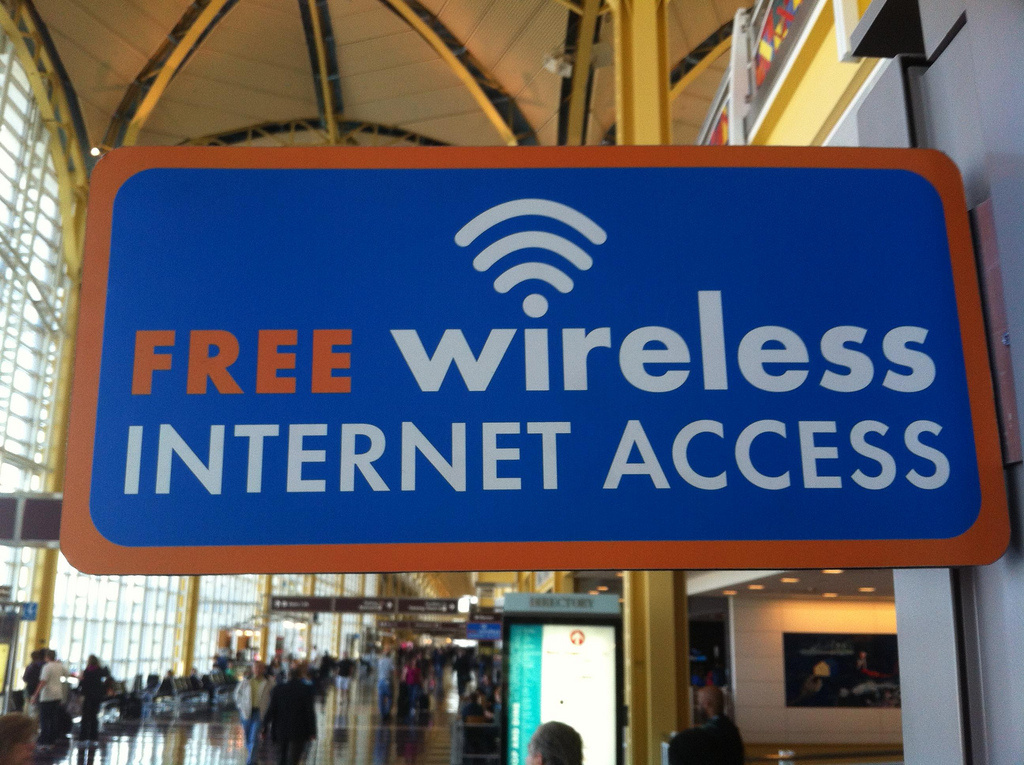
  • Indian Government to Roll Out Public Wi-fi in 25 Cities by June 2015

    Indian Government to Roll Out Public Wi-fi in 25 Cities by June 2015

    The present government has taken proactive actions to make India technically strong. In an age where connectivity is power, it’s a step in the right direction. At municipal levels there have been many initiatives to provide Wi-Fi in pockets of the cities like Delhi. The government now plans to identify public places across the nation where it can begin offering Wi-Fi service by June 2015.

    This initiative is a part of the audacious Digital India program, the aim of which is to connect cities with a population over 1 million and tourist spots with WiFi by December 2015. The task does look massive, and a lot of bits have to be figured out, most importantly the security aspect in this volatile nation.

    According to an official source, the government will work with three or four service providers to provide the services in 25 cities across India. The project is being undertaken jointly by the Department of Telecom and the Ministry of Urban Development. The service providers will have three months time on their hands to roll out the service.

    To boost tourism the government has identified 25 archeological sites for providing free WiFi access. The monuments are Humayun’s Tomb, Red Fort, Qutub Complex in Delhi, Taj Mahal, Fatehpur Sikri Sravasti and Sarnath in Uttar Pradesh, Shore Temple in Mahabalipuram, Vaishali-Kohua in Bihar, Martand Temple and Leh Palace in J&K, Konark Temple in Odisha, Rani-ki Vav Gujarat, Khajuraho and Mandu in Madhya Pradesh and Rang Ghar in Assam. So after June next year, you wouldn’t have to wait till you get to your hotel or home to upload those selfies.

    The initiative is definitely appreciable, but the government needs to make sure that the plan is executed to the finish. In India, it is really easy to inaugurate an initiative but maintenance is the tough part. The government needs to ensure that the telecom operators provide a standard service which make them accountable for any malfunction. Connecting India should have a long term view and should not just be seen as a PR activity by the government. This service can attract more people to come to the Indian shores and increase revenues for the nation. Even businesses can benefit from ever present internet services and in turn help to grow the economy. This is a serious endeavor, and the government should proceed with the development understanding its healthy consequences for the economy.

  • Gionee Ready to Manufacture in India; Awaiting Government Clearance

    Gionee Ready to Manufacture in India; Awaiting Government Clearance

    Chinese handset manufacturer Gionee has announced its plan of manufacturing its devices in India, but is currently awaiting clarity on the government policy before taking the dive.

    President of Gionee, William Lu said,

    It depends on the (government) policy, we are ready to manufacture in India

    Gionee India Head Arvind R Vohra said “It depends at what stage the (Indian) government plans to facilitate manufacturing, as far as we are concerned, we are ready at every stage.” He further added, “we have to find vendors for our produce. If the need is for an assembly line we are ready now but would rather go for deep manufacturing. IUNI will be a separate company and we are hopeful of completing the registration process by April-June 2015.”

    The company plans to scale up its manufacturing units from 60 million annually to 75-80 million. The Chinese manufacturer’s latest device S 5.1 was recorded as the thinnest phone in the world by Guinness Book of World Records, although subsequent to this, thinner phones have entered the market.

    Gionee may be among the first smartphone company to initiate manufacturing handsets in India itself.

  • Xiaomi to Resume Sales (But There’s a Catch)

    Xiaomi to Resume Sales (But There’s a Catch)

    Chinese smartphone maker Xiaomi has been reportedly granted some reprieve after announcing the ban on the sale of their handsets in India last week. As per a tweet by Press Trust of India (PTI) the Delhi High Court today permitted the sale of their smartphones powered by Qualcomm chipsets till January 8 in India.

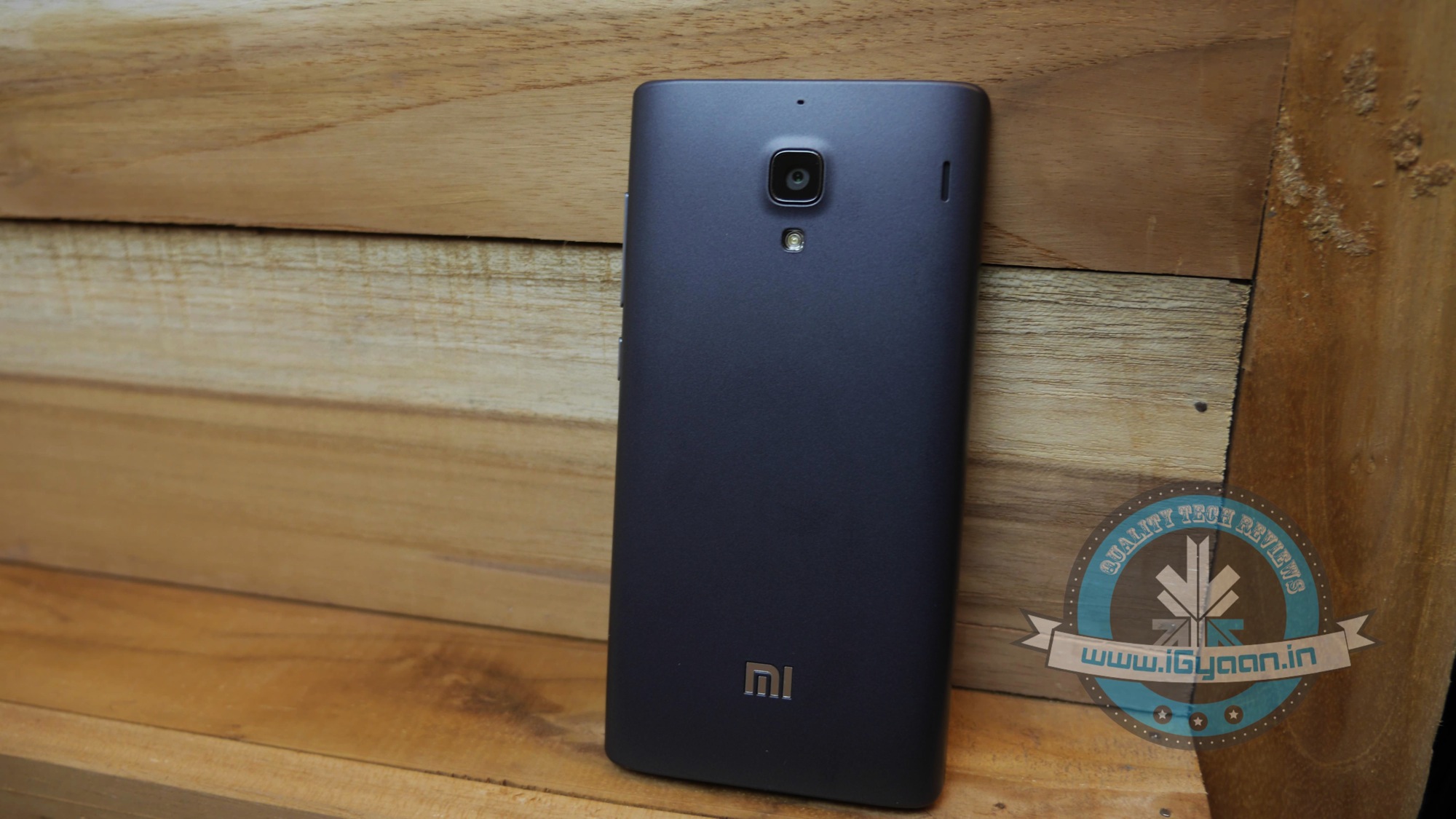
    Prior to the ban, the company was selling two smartphones in the country: Redmi 1S and Redmi Note. Redmi 1s runs on a Qualcomm chipset, while Redmi Note is powered by a MediaTek processor. This release would imply that Xiaomi can sell the Redmi 1s for nearly a month. Additionally, Xiaomi had earlier planned to launch Redmi Note 4G in December, which is also powered by a Qualcomm processor implying that this too could be sold till January 8th.

    However no official word is out on the much awaited Xiaomi Mi4. Although Xiaomi planned to launch this device with a Qualcomm Snapdragon 801, however it still remains to be seen whether they will go ahead with the launch or wait patiently till the dust settles.

    Last week the Delhi High Court had passed an injunction suspending any import or sale of smartphones in India due to patent infringement complaints by Swedish telecom giant Ericsson. The court is scheduled to hear the case on February 5, so it is likely that Xiaomi phones will again be banned in the country from 9th January unless the court passes another similar order.

    However, in the mean time, Xiaomi has three more ‘Happy Tuesdays’ in which they can resume their flash sales and reach out to maximum number of aggrieved customers.

  • Indian Government Files a Legal Case Against Google

    Indian Government Files a Legal Case Against Google

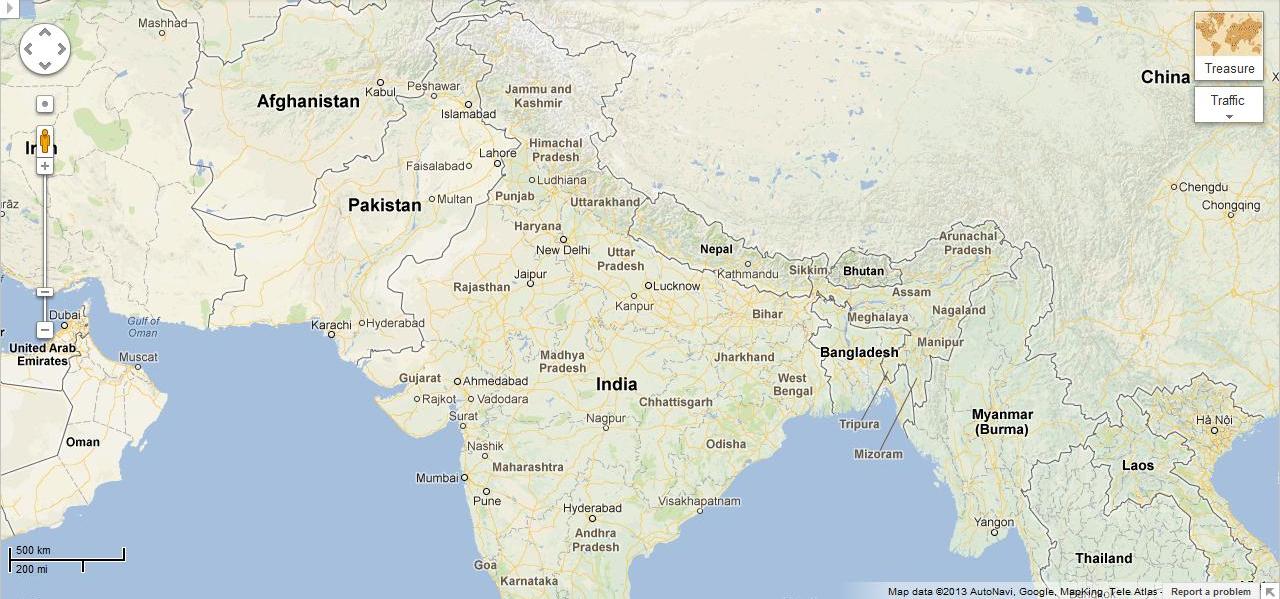
    It looks like tough times for Google are not going to be over anytime soon. After facing oppressive laws in Spain over the news service of Google, the internet search giant is under scanner in India as well. Of late, The Survey of India (SOI) filed a complaint against Google saying that it has been misleading people. As per the complaint lodged with Dehradun police, the multinational search giant has been disseminating wrong information about the coordinates of the Indian boundaries.

    India Map

    A senior official from the technical wing of the SOI stamped the news saying, “The faulty coordinates were noticed in Jammu & Kashmir and the northern side of India which are not as per our maps. The decision to file a written complaint was taken after consulting the highest level of authority.”

    However, the police seems skeptical on this take of SOI. When inquired from the police official Anil Joshi about how far is the news reliable, he conveyed that the police is still on it. He commented that officials are trying to figure out the authenticity of the complaint. Meanwhile, the complaint has been forwarded to the cyber cell team as they will be heading all further investigations. And once they come to a conclusion, the subsequent course of action will be decided then on.

  • Xiaomi Adamant to Fight Back High Court Order; Assessing Legal Options

    Xiaomi Adamant to Fight Back High Court Order; Assessing Legal Options

    Post the verdict of Delhi High Court to ban Xiaomi handsets in India, the Chinese smartphone maker spoke openly for the first time. In a conversation with Economic Times, Xiaomi India Head, Manu Jain, said that the company will comply with the court orders to stop the sale of its smartphones in India, “We have not been served the notice till now, but we know about the issue. If the court has asked us not to do it, we won’t do it.”

    He further said, “We would want to be 100% compliant with Indian rules and regulations.” The smartphone manufacturer is trying every possible bit to fight back legally on the issue, “We will explore all options including legal options on what can be done. Our lawyers and legal teams are working on it, but we don’t know how this will proceed.”

    Xiaomi Redmi 1s Unboxing 12
    Redmi 1s, one of Xiaomi’s most popular handsets is no longer available on Flipkart

    Apologizing to the Xiaomi enthusiasts for the inability to deliver handsets, the International Operations Head, Hugo Barra, commented on the prevailing issue and the drew light on the company’s take to deal with the situation. “We have been forced to suspend sales in India until further notice due to an order passed by the Delhi High Court. As a law abiding company, we are investigating the matter carefully and assessing our legal options,” said Barra.

    Meanwhile, registration is closed for both for Redmi 1S and Redmi Note and the upcoming flagships have also been suspended in the country. Yes, that means the upcoming Mi4 will not be available in our country for some time.

    The Delhi High Court imposed the ban after hearing the allegations by Ericsson of infringing eight of its registered patents. The company cannot assemble, import, sell or advertise its devices until 5th February.

    As of now, both the companies have been asked to submit the list of devices sold by them. Along with that, they have to furnish revenue details generated by the sale of the devices.

iGyaan Network
Privacy Overview

This website uses cookies so that we can provide you with the best user experience possible. Cookie information is stored in your browser and performs functions such as recognising you when you return to our website and helping our team to understand which sections of the website you find most interesting and useful.