Category: Mobile

Smartphone News and Reviews, Latest Cellphones, Accessories, New Launches, Specifications, Details with Image and Video from Apple, Samsung, Lenovo, Moto, HTC, Xiaomi, Oneplus, Meizu, Sony, Lava, Micromax Yu Mobile and More.

  • Google Assistant Now Available For Apple iPads

    Google Assistant Now Available For Apple iPads

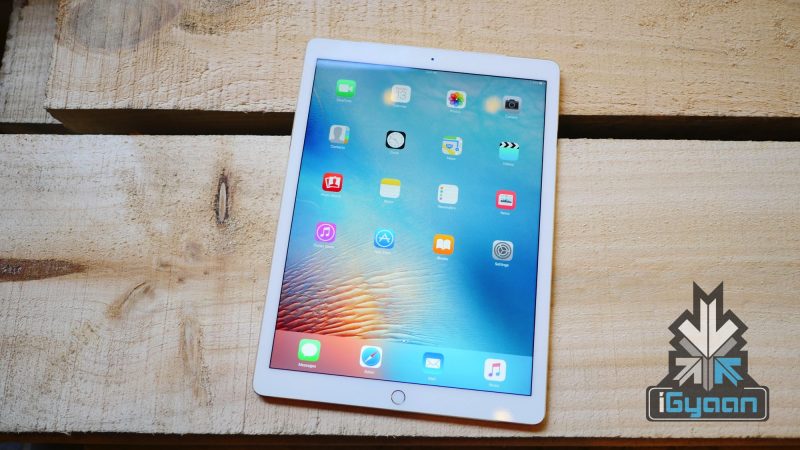
    Google Assistant is one of the best AI assistants right now. It competes closely with Amazon Alexa but, has a much better integration with the mobile OS. Also, Android is the most used OS in the world which means Google Assistant is available on more devices. But, Google Assistant has not limited itself to just Android devices. Google made the Assistant available for iPhones in 2017 and has now rolled out the support for iPad as well. However, unlike an Android device, the Google Assistance has some limitations due to API restrictions.

    The Google Assistant on Apple iPads can perform tasks like setting a reminder, turning on the light etc. In fact, it can also be used to make a video call or sending a text message.

    The Assistant can also be used with another app using iOS multitasking capabilities. However, as this is an Apple device, Google Assistant cannot be revoked by long pressing the home similar to Siri. The Google Assistant will be available in English, French, German, Italian, Japanese, Portuguese (Brazil) and Spanish.
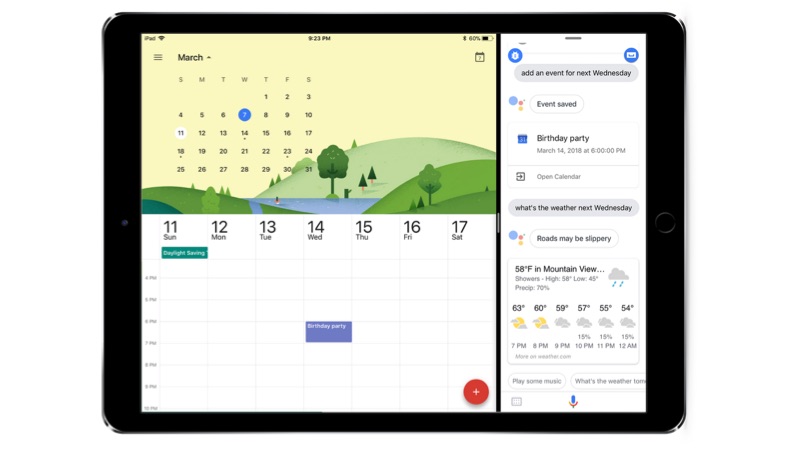
    Google Assistant

    One has to download the app from Apple app store

    Here are the some of the basic commands that can be used with Google Assistant
    • Set the mood by having the Assistant “dim the lights”
    • Cast to your TV by asking the Assistant to “watch the latest news on the living room TV”
    • Stay in touch by asking the Assistant to “video call mom” or “text Lauren”
    • Keep up with your chores by asking the Assistant to “remind me to take out the recycling at 8 PM”
    Minimum hardware and software required
    • iOS 10 or latest operating system
    • 155.6 MB of Data
    • 300 MB of Storage
  • Sony Removed The Headphone Jack Because “Everyone Was Doing it”

    Sony Removed The Headphone Jack Because “Everyone Was Doing it”

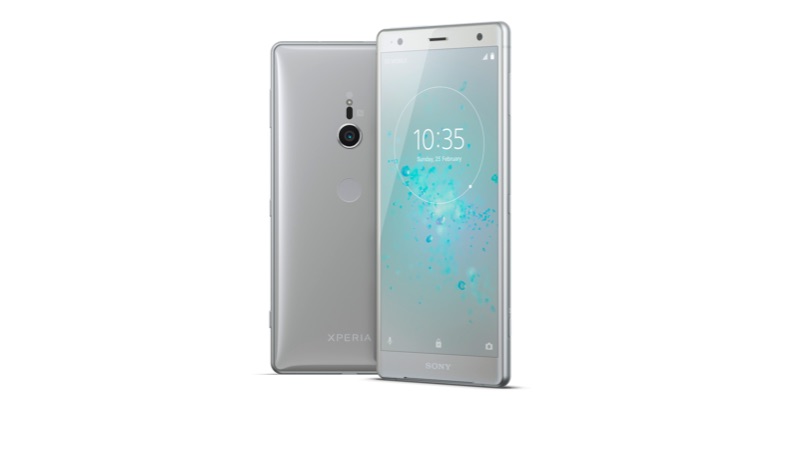
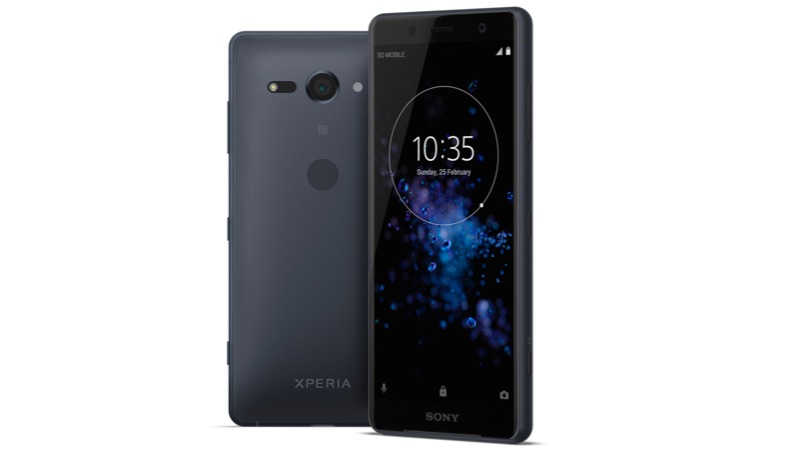
    Sony launched the Sony Xperia Xz2 and Xz2 Compact at MWC 2018. Starting with these smartphones, the company has changed a lot of things on its flagship smartphone series. The devices no longer look like a slab of metal or glass, as the devices flaunt a new Ambient Flow design. In fact, these are the first batch Sony smartphones to feature 18:9 aspect ratio display. However, when everything was going well with these smartphones, the brand ironically decided to ditch the 3.5 mm headphone.

    Sony Xperia XZ2
    Sony Xperia XZ2
    Sony’s Blog

    This is part of the shift to our new Ambient Flow design language. In order to create the beautiful seamless design, our designers needed to remove the headphone jack. Plus, we’re aware of the major market trend toward wireless headphones over wired headphones.

    Sony is trying to convince us that the removal of headphone jack has helped them to achieve this form factor. On the contrary, the Sony Xperia Xz2 is one of the thickest flagship smartphones that has been launched in 2018. Sony’s “ambient flow” design has taken a bit of inspiration from the HTC U11 and U11+. However, instead of a glossy finish, Sony has opted for matt finish.

    Sony Xperia XZ2


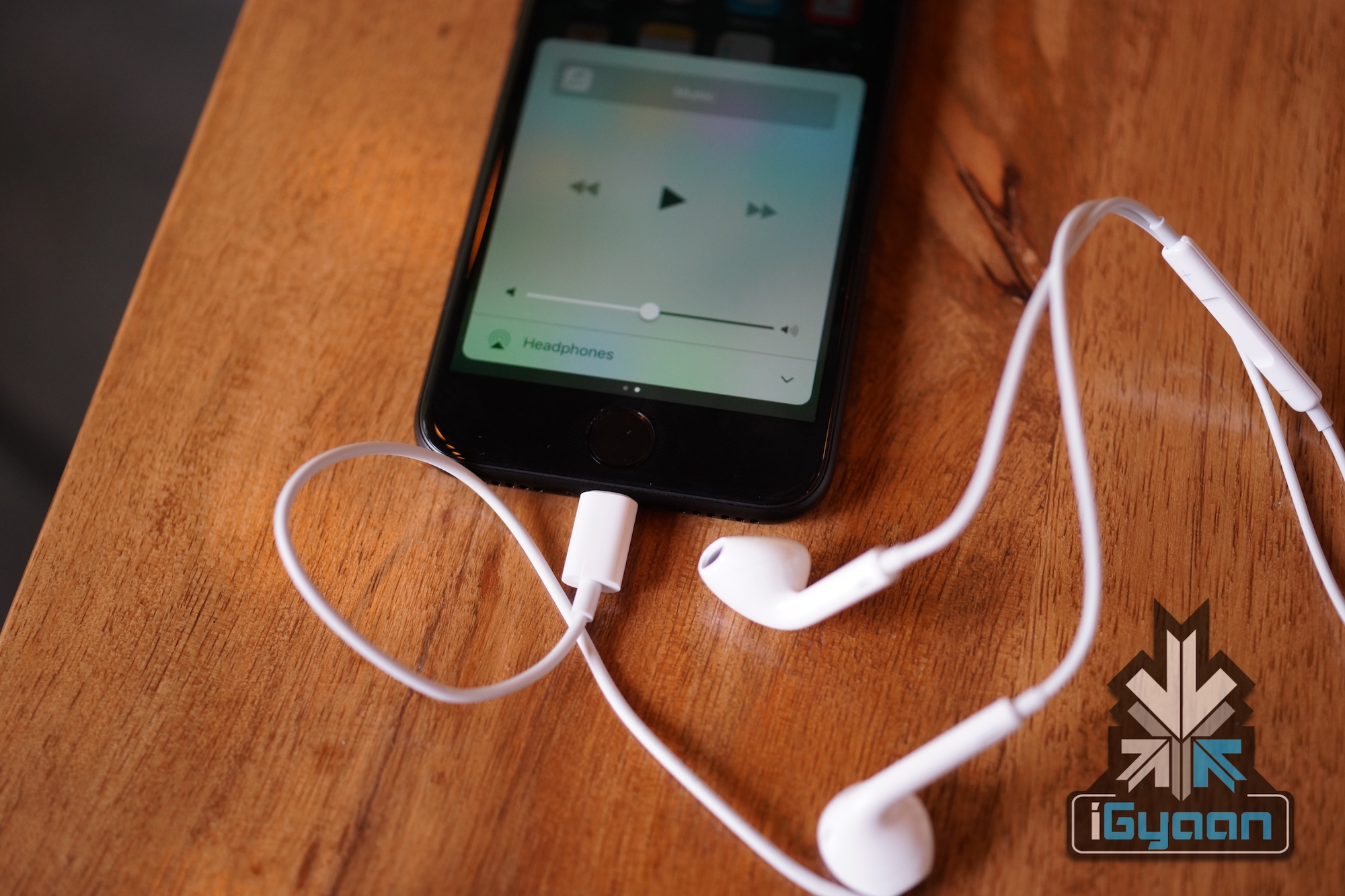
    The trend of removing the 3.5 mm headphone jack started with the Apple iPhone 7. The company moved one step closer to a completely port-less iPhone and has continued to exclude the headphone jack ever since. However, at the time of the launch, the decision was met with a collective disdain. In fact, Google mocked Apple during the launch of the Pixel and Pixel XL. However, that soon changed and Google even removed the headphone jack from its Pixel 2 and Pixel 2 XL. Over the past year and a half, companies like HTC, Xioami, and Nokia have started shipping their flagship smartphones without a 3.5 mm headphone jack. In fact, OnePlus, Samsung and LG seem to be the only major smartphone makers still interested in keeping the headphone jack relevant.

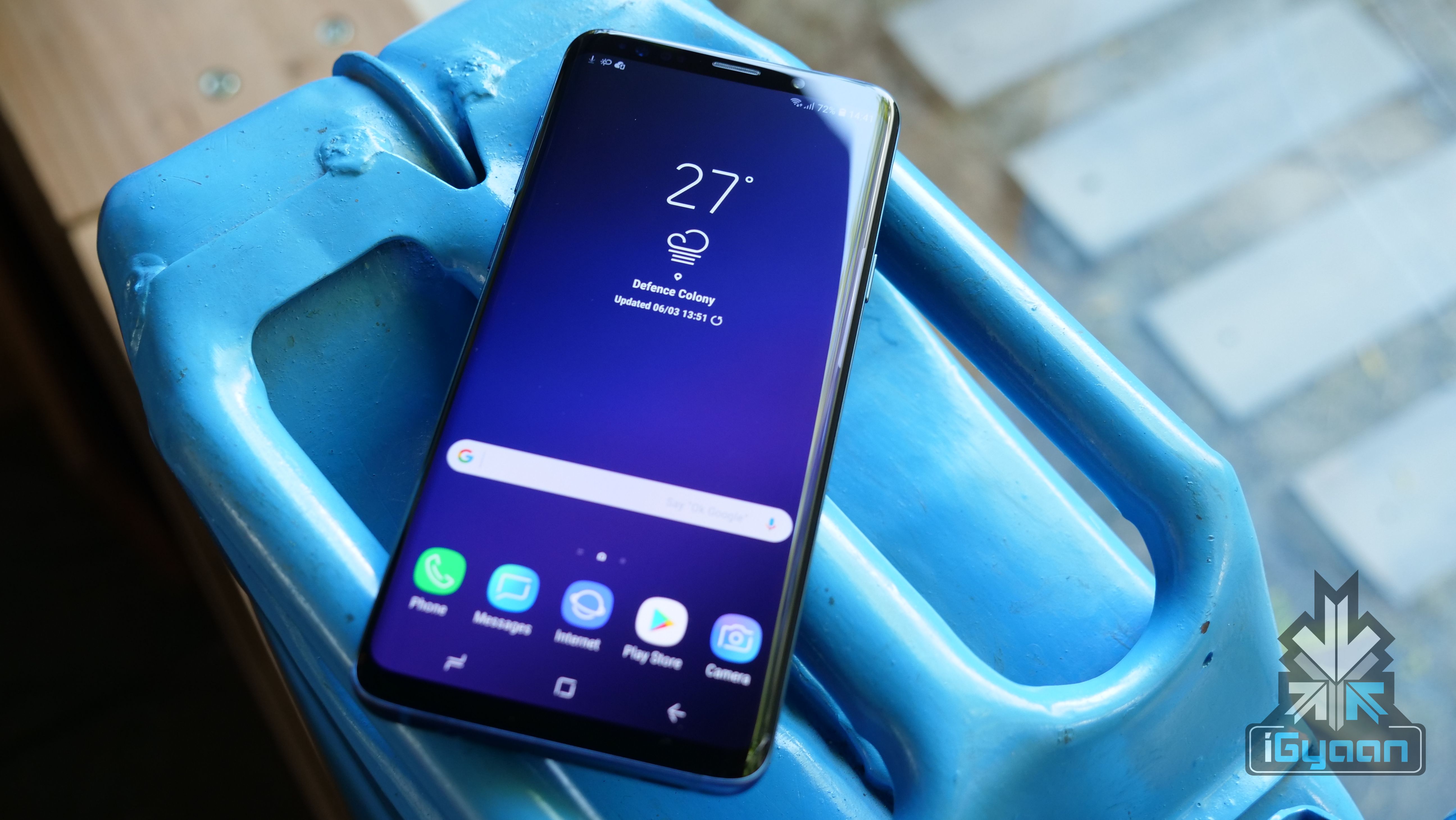
    The Samsung Galaxy S9 is a great example of a flagship smartphone design with a headphone jack. The smartphone comes with a slim form factor. OnePlus’s co-founder Card Pie recently did a poll on Twitter regarding the requirement of the headphone jack. As usual, the crowd went with the first option with almost 88 percent of them saying yes. This could be a hint that the OnePlus 6 will indeed retain the headphone jack.

    https://twitter.com/getpeid/status/973745407208468485

    Conclusion

    It is fair to say that industry trends exist for a reason. While Apple’s decision to remove the headphone jack was panned at first, many smartphone makers have come around the idea since then. Sony, even though late to the party, has also jumped aboard the idea that wireless is the future. Sony itself makes some of the best wireless headphones on the market right now. So, it does make sense for the company to push consumers toward wireless headphones.

  • Xiaomi Redmi 5 Vs Samsung J7 Nxt Vs Moto G5s

    Xiaomi Redmi 5 Vs Samsung J7 Nxt Vs Moto G5s

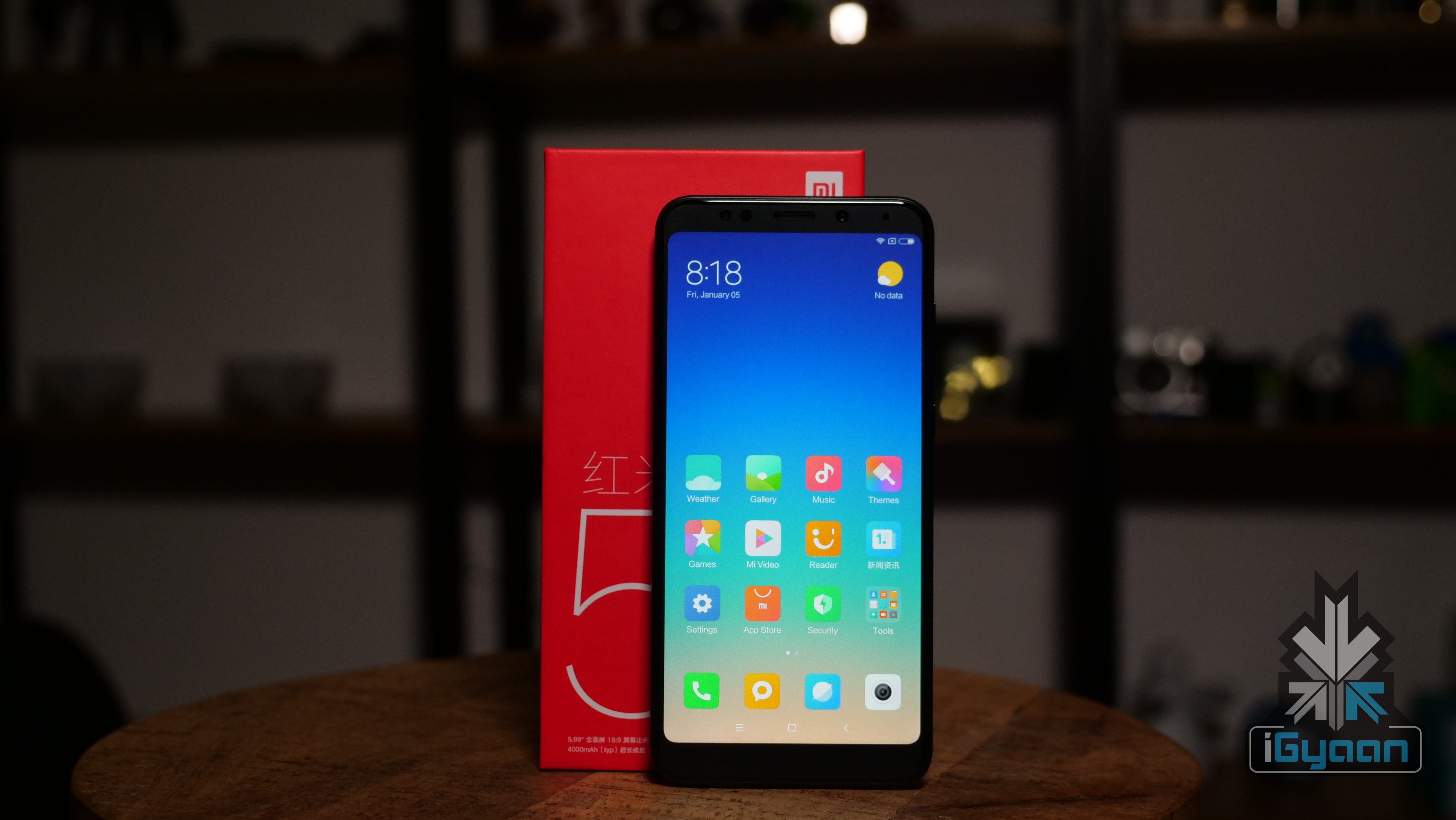
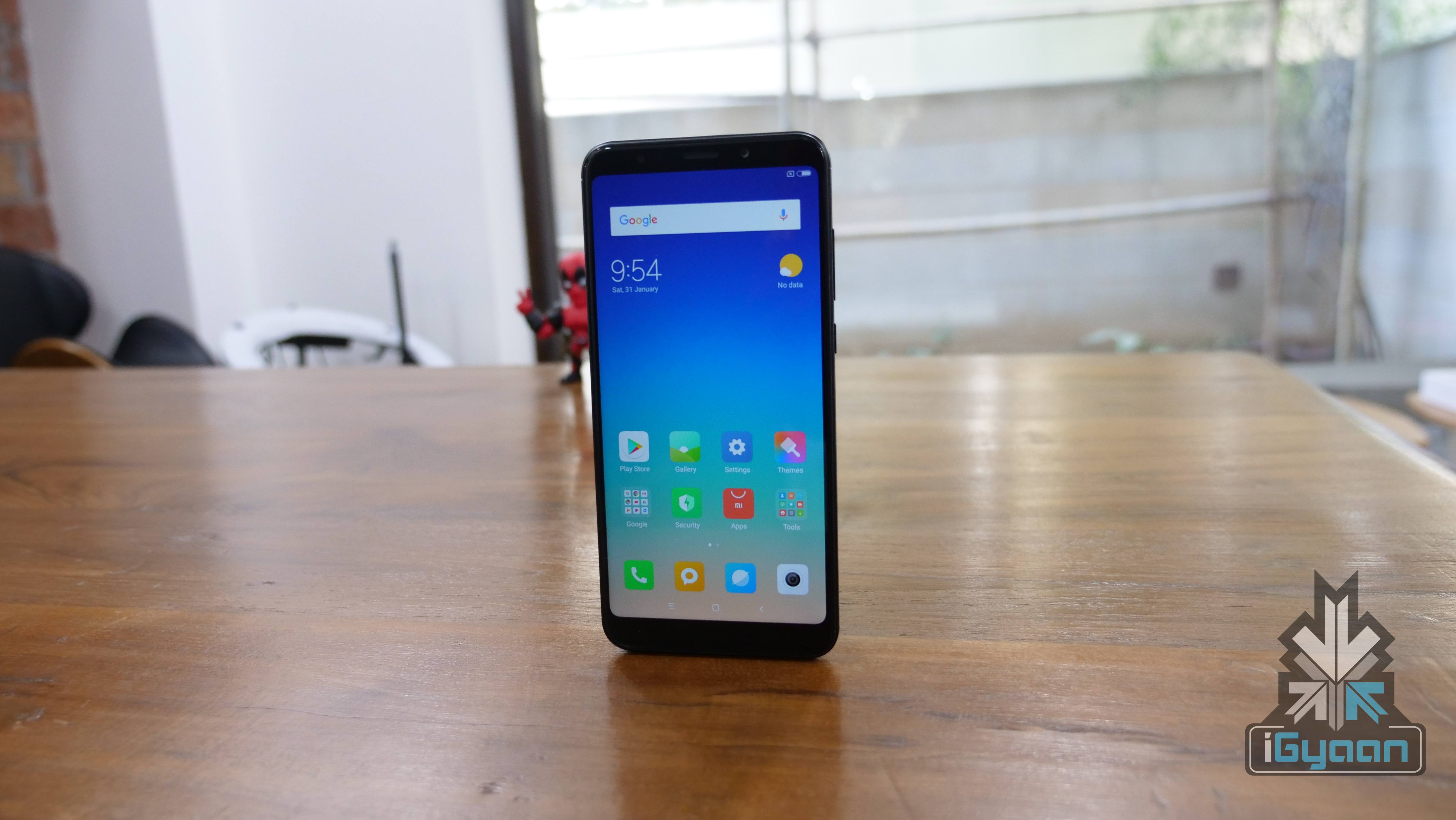
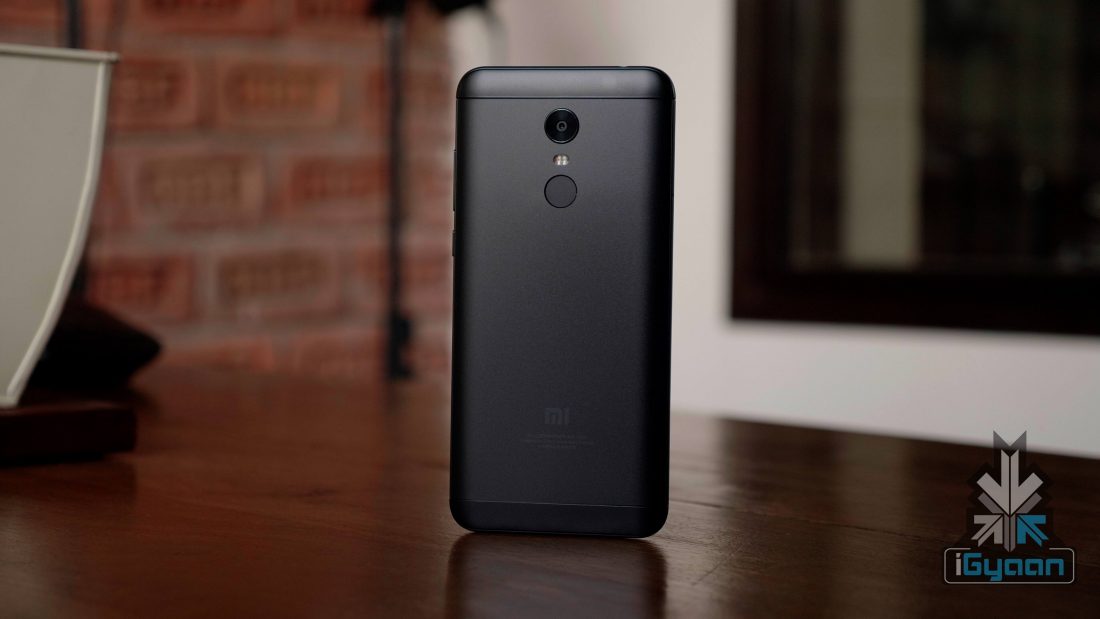
    Xiaomi has officially launched the Redmi 5 in India for a starting price of Rs 7,999. The device comes with a metal unibody design with an 18:9 aspect ratio display. In fact, this is the cheapest Redmi smartphone to feature 18:9 aspect ratio display. And can be deemed as a downscaled version of the recently launched Xiaomi Redmi Note 5.

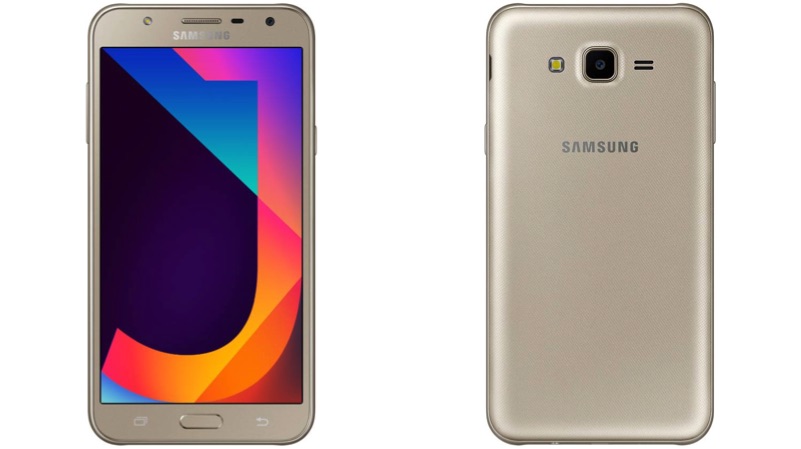
    At the time of launch, the device was compared to smartphones like the Samsung Galaxy J7 Nxt and Moto G5s. The Samsung Galaxy J7 Nxt is one of the most affordable smartphones from the South Korean smartphone maker. The smartphone has a 5.5 inch HD 1280 x 720 px Super AMOLED display with 16:9 aspect ratio. Though the device has prominent bezels compared to the Redmi 5, the OLED panel offers impressive black levels and high contrast ratio.

    Xiaomi Redmi 5


    The Galaxy J7 NXt is powered by Exynos Octa-core chipset with 2GB RAM and 16GB storage. However, unlike the Moto G5s and the Redmi 5, the device does not have a fingerprint scanner. Similarly, the Samsung Galaxy J7 Nxt also misses out on the full metal unibody design.

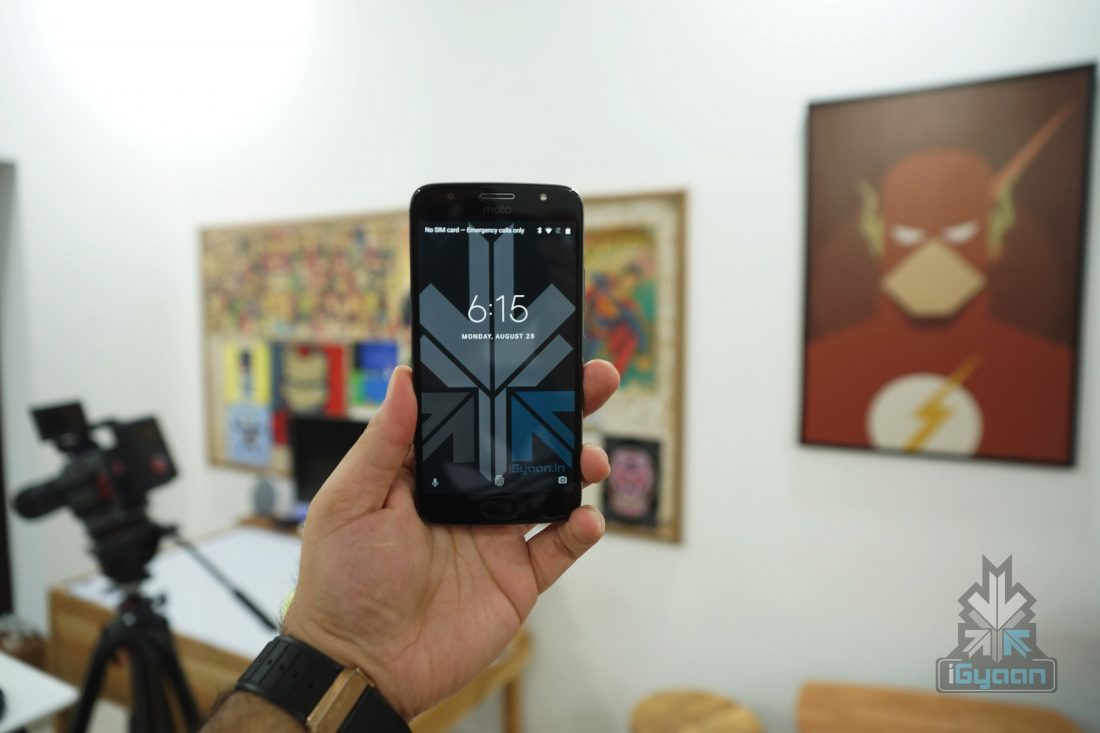
    The Moto G5S is the close contender for the Redmi 5. The smartphone has a full metal unibody design and a fingerprint sensor. Stock Android OS is also an added advantage for the Device. However, unlike other two devices, the smartphone has a full HD 5.2 IPS LCD display with Corning Gorilla Glass protection.

    Xiaomi Redmi 5


    Specifications Comparision
    Features Xiaomi Redmi 5 Samsung Galaxy J7 Nxt Moto G5S
    Price Rs 7,999 Rs 9,900 Rs 10,999
    Display 5.7 inch HD+ IPS LCD

    1440 x 720

    18:9 aspect ratio

    5.5 inch HD Super AMOLED

    1280 x 720

    16:9 aspect ratio

    5.2 inch FHD IPS LCD

    1920 x 1080

    16:9 aspect ratio

    Processor Snapdragon 450 Octa-core Exynos Octa-core Snapdragon 430 Octa-core
    RAM 2GB 2GB 4GB
    Storage 16GB 16GB 32GB
    OS Android 7 Nougat

    MiUi 9

    Android 7 Nougat

    Samsung Experience UI

    Android 7 Nougat

    Stock Android

    Primary camera 12MP 13MP 16MP
    Front-facing camera 5MP 5MP 5MP
    Battery 3300 mAh 3000 mAh 3000 mAh


  • Xiaomi Redmi 5 Launched in India For Rs 7,999

    Xiaomi Redmi 5 Launched in India For Rs 7,999

    Xiaomi has officially launched the Xiaomi Redmi 5 in India at a starting price of Rs 7999. The smartphone is a compact version of the recently launched Redmi Note 5. In fact, the device offers an identical metal unibody design similar to the Note 5. However, the internals differs a lot and that is reflected in the pricing of the two smartphones.

    Pricing and availability

    The smartphone will be available on Amazon and Mi.com via flash sale from the 20th of March in Gold, Black, Blue, and Rose Gold finish.

    • 2GBRAM/16GB storage: Rs 7999
    • 3GB/32GB storage: Rs 8999
    • 4GB/64GB storage: Rs 10999
    Xiaomi Redmi 5 Specifications

    The Xiaomi Redmi 5 has a 5.7-inch 1440 x 720 px display with an 18:9 aspect ratio. However, the bezels are still very visible, especially in the Gold colour variant.

    Under the hood, the Redmi 5 has the Qualcomm Snapdragon 450 chipset, a 1.8GHz octa-core processor, Adreno 506 GPU, 2GB, 3GB or 4GB of RAM, 16GB, 32GB or 64GB of onboard storage which will be expandable via microSD card. In fact, the Snapdragon 450 is an underclocked Snapdragon 625 chipset, which is used in the Note 5.

    Xiaomi Redmi 5
    Xiaomi Redmi 5 Plus

    There is a fingerprint sensor placed at the back of the phone just below the camera. However, that is mainly a signature Xiaomi decision and not due to the lack of bezels on the front. Powering the device is a 3300 mAh battery which, Xioami claims has a standby time of up to 12 days. The battery is charged via a micro USB slot which means no fast charging.

    The Redmi 5 has a 12MP camera at the back with 1.25-micron pixel size. The camera surprisingly only records 1080P videos at 30fps. To the front of the device is a 5MP camera with Beautify 3.0, which is Xiaomi’s software for enhanced selfies. However, unlike the Xiaomi Redmi Note 5 Pro, the device misses out on Face Unlock feature.

  • Android Enterprise Recommended Smartphones Explained

    Android Enterprise Recommended Smartphones Explained

    Recently, smartphone makers have started to promote their devices with a new terminology. Companies like Nokia and Motorola use the term, Android Enterprise Recommended. This new moniker holds a lot of significance. But, should you care? And is it relevant to the Indian market? Let’s find out!

     The Definition

    Android Enterprise Recommended is a new certification given by Google for the Android-powered smartphones. Subsequently, the devices have to meet the elevated enterprise requirements validated by Google. Interestingly, this is applicable even for non-stock OS running smartphones.

    Android Enterprise Recommended
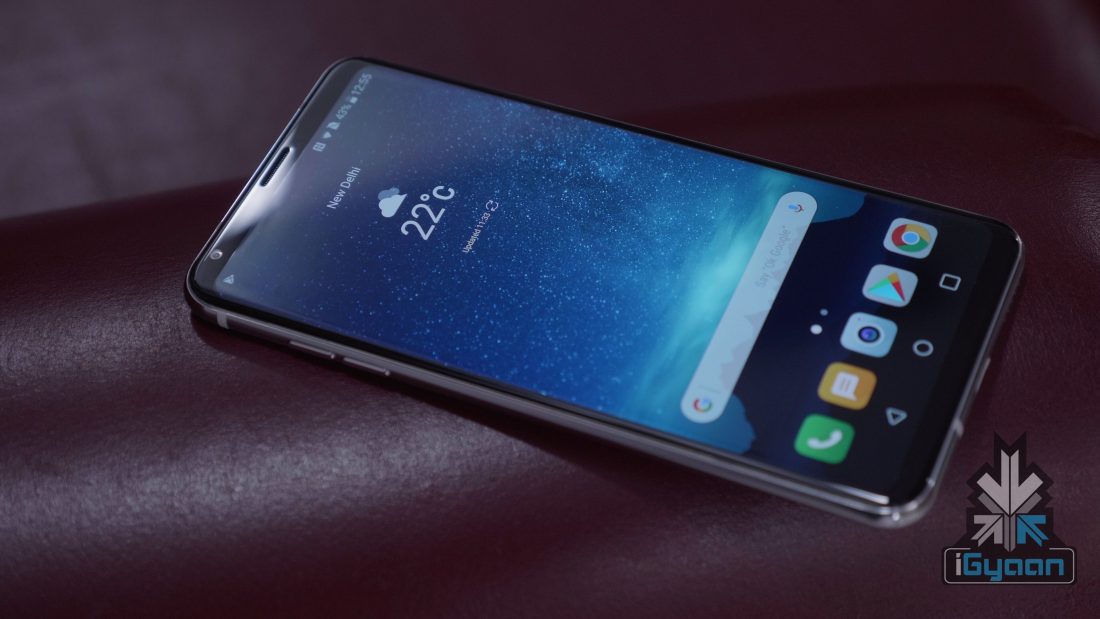
    LG V30+
    Minimum requirements to enrol under Android Enterprise Recommended?

    The device should be running on Android Nougat 7 or the newest version of Android OS. The device should have at least 2GB RAM and 32GB onboard storage. The smartphone should be powered by a chipset with at least 1.4 GHz clock speed with 64-bit architecture.

    Google has also mentioned the camera requirements to get this certification. The device should have a 2MP+ front-facing camera and a 10MP+ primary camera.

    The OEMs can enrol the devices using QR Code or Zero-touch enrollment. However, to make Zero-touch enrollment the device has to be running on Android 8 Oreo or the latest OS. The devices should receive the security update within 90 days of its release. Similarly, the phone should also receive one letter OS upgrade.

    Android Enterprise Recommended
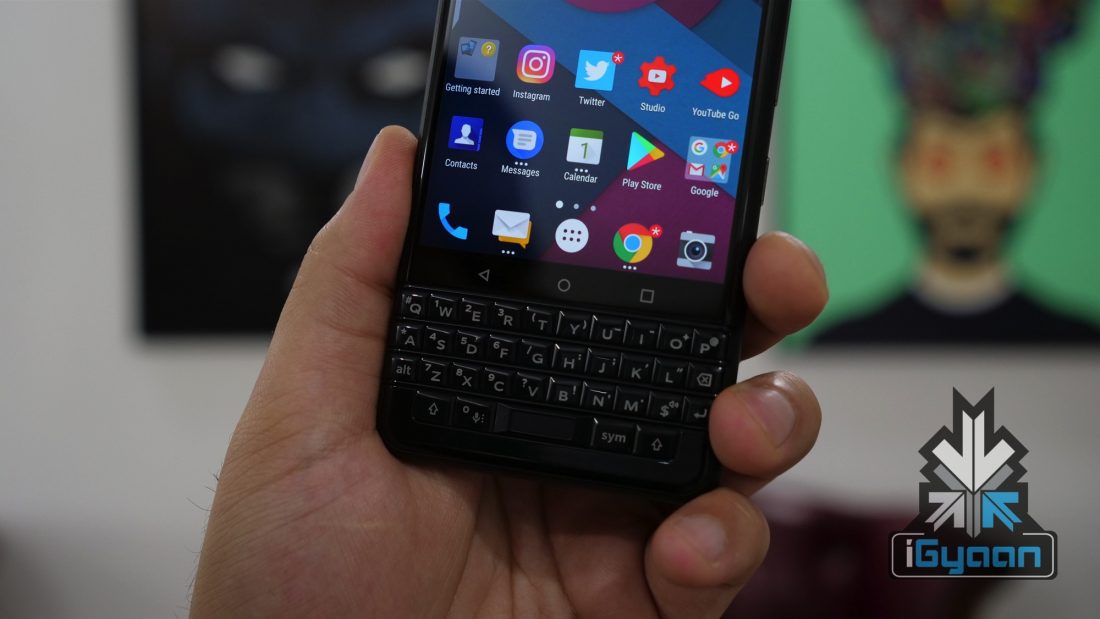
    BlackBerry KEYone
    Android Enterprise Recommended Devices in India
  • New Google Maps Feature Lets Users Publicly List Locations

    New Google Maps Feature Lets Users Publicly List Locations

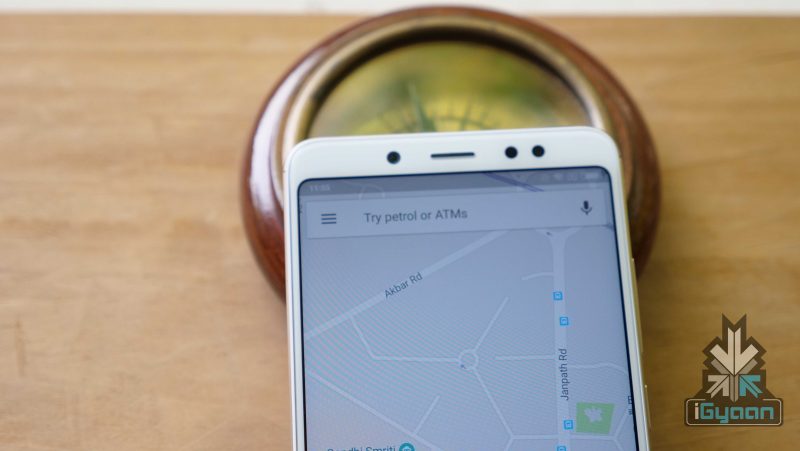
    Google Maps recently announced a bunch of new features for India. These new features ease the process of searching or sharing an address. The company has combined area code with the local code to generate a unique “Plus” code for every geographical area. The Google Maps Plus code can be broadcasted across social media platforms for sharing.

    Google Maps Plus Code

    The Google Plus code is a combination of GPS location details and the local area pin code. Up until now, Google Maps let the users share direct GPS locations. However, with the Google Maps Plus Code, the sharing of location is a lot easier. This feature is available for both Android and iOS operating systems.

    Google Maps

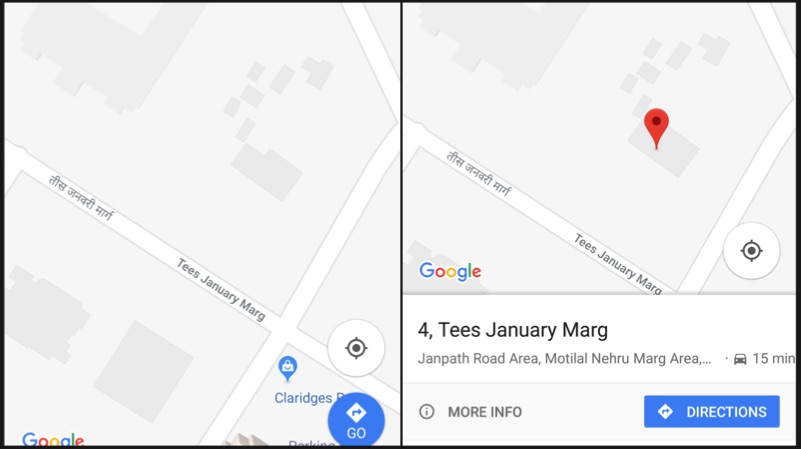
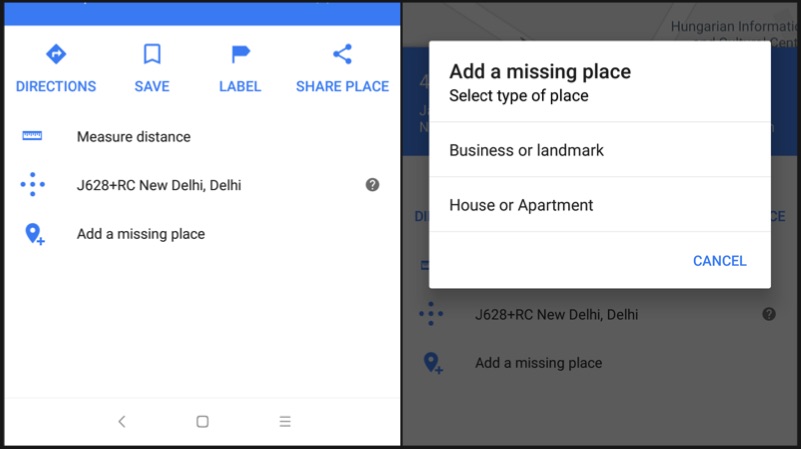
    How to add missing Address
    • Open Maps
    • Touch and hold the place to select the marker
    • Click on the description of the place
    • Click on “Add a missing place” option
    • Enter the details such as name, website etc and press the arrow mark on the top right corner
    How to generate Plus Code
    • Open Maps on your iOS or Android device
    • Touch and hold the place to select the marker
    • Click on the description of the place
    • Scroll down to the bottom to find the Plus code
    • Copy the code by pressing on it

    Google Maps

    How to search an address using Plus Code
    • Copy and paste the code into Google Maps search bar and hit enter to find the navigation for the address
    • Or simply, copy paste the code into Google search, and the address will be shown in the search results
  • LG G7, G7 Plus Could Be Launched In May 2018

    LG G7, G7 Plus Could Be Launched In May 2018

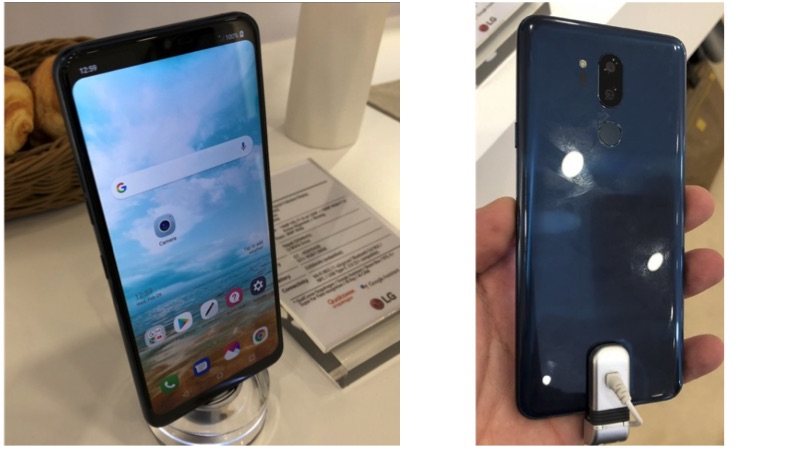
    The LG G7 was expected to be unveiled at Mobile World Congress (MWC 2018), similar to its predecessor. However, LG announced its plan to rework on its flagship smartphone strategy. The CEO of LG Mobile conceded that the company would now launch smartphones as and when it deems fit. While reports claimed that the LG G7 was completely rehashed a few days before Mobile World Congress 2018, it was showcased behind closed doors.

    Leaked images of the LG G7 revealed a vertically placed dual-camera setup and an iPhone X like notch. While it is possible that this was just a prototype, more reports have solidified the counter-argument. A new report from in ETNews claims that the LG G7 and G7 Plus will be launched in May 2018. Also, the devices will be very similar to the images leaked at MWC 2018.

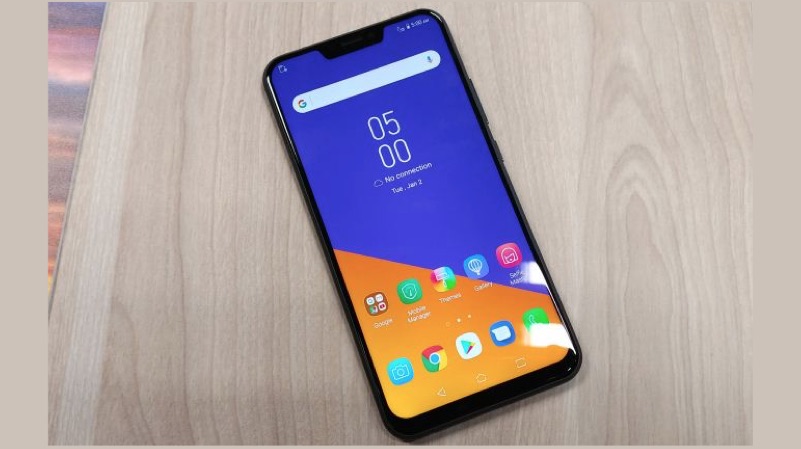
    Asus Zenfone 5Z

    This means that the LG G7 and its Plus sibling will join an increasingly long list of iPhone copycats on the market. MWC 2018 saw a lot of smartphone makers take the Apple iPhone X route. But, without really justifying the need for a notch. However, LG is still one of the most renowned mobile manufacturers in the world and wouldn’t just put a notch on their device because it’s a “trend”.

    The LG G7 and 7 Plus will also have the AI camera found on the LG V30S ThinQ. The devices will be powered by the Snapdragon 845 chipset and feature a dual-camera setup on the back. If LG does go with a notch, the company could also introduce a proprietary Face Unlock feature as well.

    Apple
    iPhone X Notch
    Conclusion

    When the LG G7 and G7 Plus are launched, the devices will usher in a new strategy for LG. The company is also expected to push the launch of the LG G40 to later in the year instead of its traditional September launch. Whether the new strategy along with a drastic design shift will work in favour of LG or not is to be seen.

    OnePlus 6
    OnePlus 6 Leaked Image

    It is also worth noting that the OnePlus 6 expected to be launched in June 2018. It will also have a notch and a new glass design at a price similar to the OnePlus 5T.

  • You Can Buy A Gold iPhone X For US$ 4510

    You Can Buy A Gold iPhone X For US$ 4510

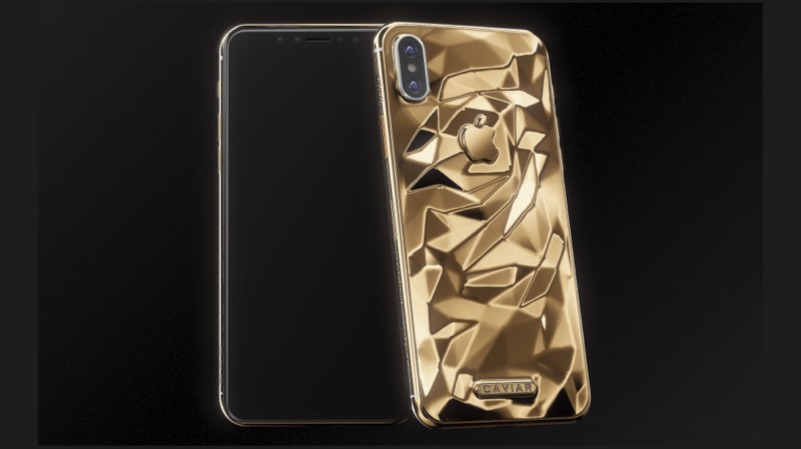
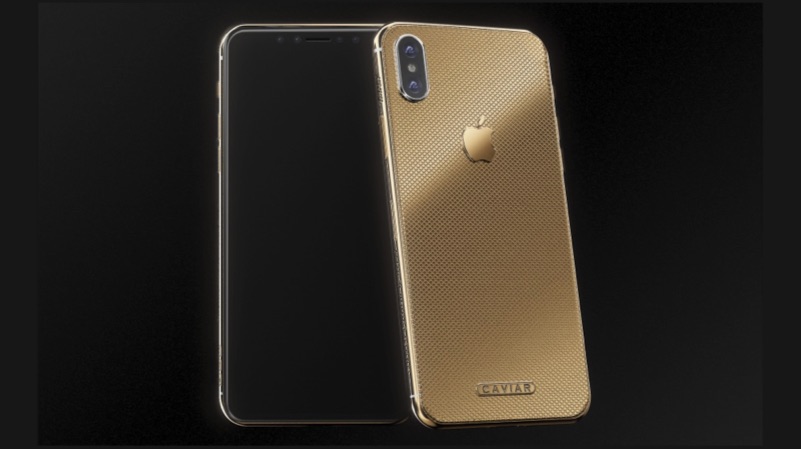
    If you have a spare US$ 4,510, then you can get yourself a limited edition Gold Apple iPhone X. In fact, this could be your only chance to buy a golden iPhone X, as the official iPhone X is only available in Grey and White colour only.

    For the hefty price that you are paying for the device, you are not just getting an ordinary gold iPhone. Instead, you are getting an iPhone with 24-carat gold plating. In fact, these are the first set Caviar to feature Apple logo on the back.

    Caviar is a luxury smartphone brand, which changes the external looks and aesthetics of Apple products. The company is known for customised iPhones and Apple Watches.

    There are two versions of Caviar’s Gold iPhone X. One can choose between “classic gold” and “liquid gold”. The classic gold version retails for US$ 4,510 and the liquid gold version retails for US$ 4,805.

    Apple iPhone X

    Apple iPhone X Specifications

    The iPhone X has a 5.8-inch 2436 x 1125 px OLED True Tone Super Retina display. Under the hood, the smartphone has the Apple A11 Bionic chipset with a neural engine, a hexacore processor, 3GB of RAM and storage options of 64GB, and 256GB.

    The small bezels mean there is no physical home button, which is now replaced with gestures for navigation. Siri is activated by pressing the now larger lock/unlock button. The iPhone X is also IP67 certified for water and dust resistance, and wireless charging. The phone runs iOS 11.1 and is powered by a 3,000 mAh battery.

    The iPhone X has dual 12-megapixel rear cameras, and it’s equipped with dual optical image stabilization. The sensors are both larger and faster, according to Apple, and the main camera is equipped with a wide angle lens and has an f/1.8 aperture while the secondary telephoto lens has an f/2.4 aperture. In between the two cameras is a quad-LED True Tone flash.

  • Huawei P20 Pro Official Cases Leaked

    Huawei P20 Pro Official Cases Leaked

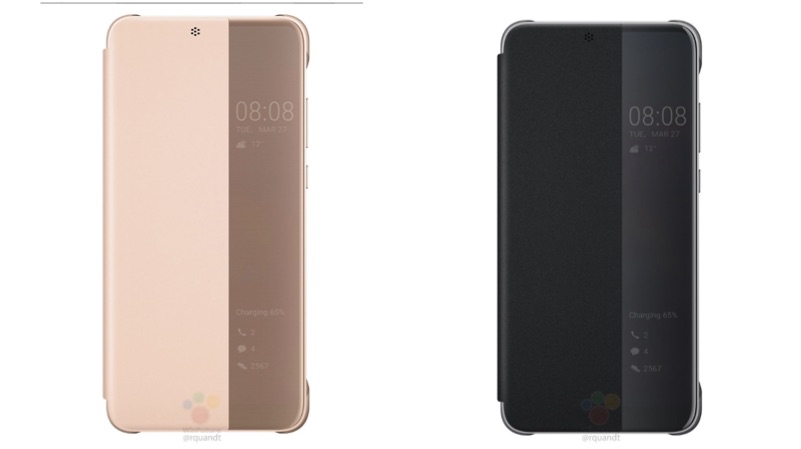
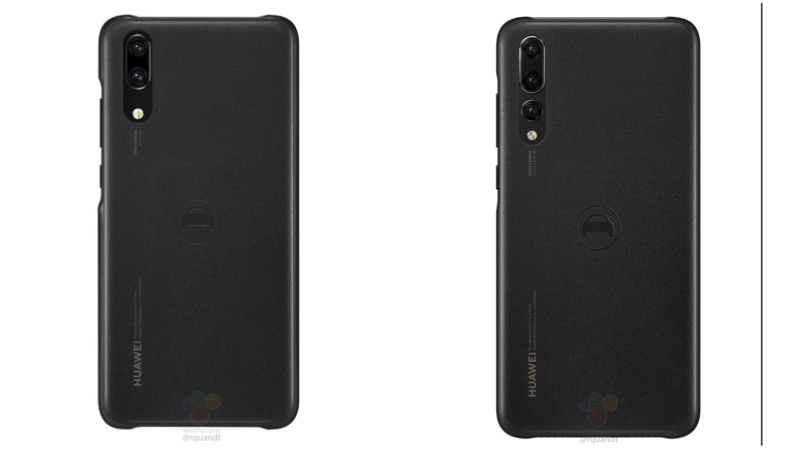
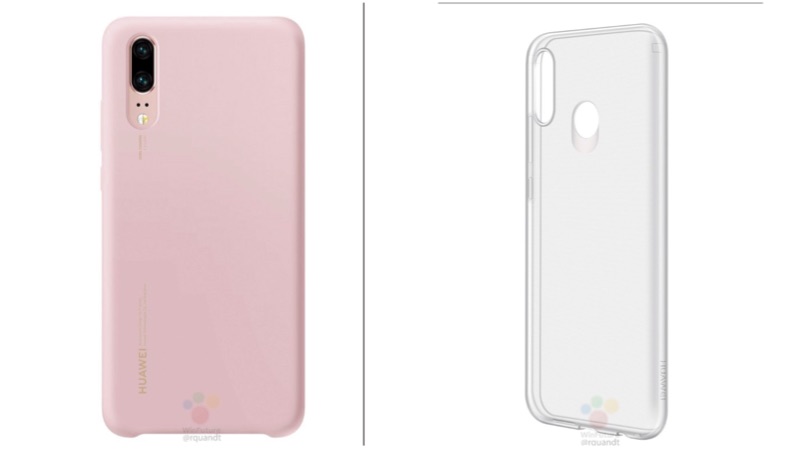
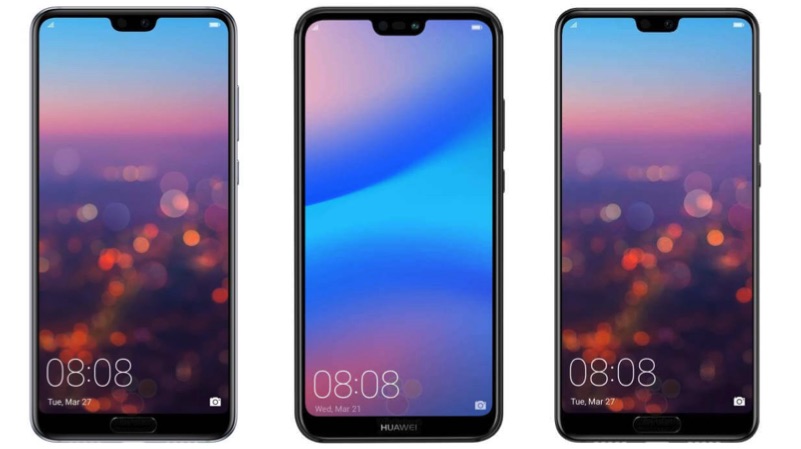
    Huawei is all set to launch the P20 series of smartphones on the 27th of March in France. In our previous Huawei P20 story, we explained about the new colour combinations used for the Huawei P20 Pro and P20 Lite. Similarly, a new leak has surfaced online, which showcases the official case renders of Huawei P20 Pro.

    The leaked case renders comes in multiple colours including Black, Pink and Gold, and Blue. One thing that caught our attention is the View Cover. The View Cover looks like a specially designed Flip-case, which has a half transparent-front to display time, date and weather. In fact, this is similar to the always on display found on the Samsung Galaxy smartphones. The active display confirms that the smartphone will have an OLED display.

    Huawei P20 Pro

    Specifications of Huawei P20 Pro

    The smartphone is expected to have a 6 inch 2880 x 1440 px OLED display with a notch on the top. Under the hood, the smartphone will be powered by the Kirin 970 chipset with 6GB RAM and 128GB storage. In fact, the smartphone is expected to support native face unlock algorithm similar to the iPhone X.

    The device is also expected to offer a wide range of AI capabilities, which is expected to improve the smartphone photography.

    The smartphone is likely to house a triple lens primary camera setup with RGB + wide angle + telephoto lens combination. On to the front, the smartphone is likely to have dual camera setup. In fact, the dual front-facing camera can aid the facial recognition system as well.

    Huawei P20 Pro

    Specifications of Huawei P20

    The phone is expected to have a 6 inch 2160 x 1080 px IPS LCD display with a notch on the top. Under the hood, the smartphone will be powered by the Kirin 970 chipset with 6GB RAM and 128GB storage. However, we might also see a plus version with OLED display and 8GB RAM.

    The smartphone is likely to house a dual lens primary camera setup with RGB + wide angle lens combination. On to the front, the smartphone is likely to have dual camera setup. In fact, the dual front-facing camera can aid the facial recognition system as well.

    Huawei P20 Pro

    Specifications of Huawei P20 Lite

    The smartphone is expected to have a 6 inch display with a 2160 x 1080 px resolution. Under the hood, it will have the HiSilicon Kirin 970 chipset along with 4GB or 6GB of RAM. However, as this is a Lite edition, we expect the company to go with a Kirin 600 series chipset, instead of Kirin 970.

    While the smartphone will be thin, it is expected to house a big battery that will support SuperCharge. The Huawei P20 Lite is expected to have a 16 MP + 2 MP primary camera setup and a 16 MP front-facing camera.

  • Samsung Galaxy S9 Is Tougher To Repair Than Apple iPhone X

    Samsung Galaxy S9 Is Tougher To Repair Than Apple iPhone X

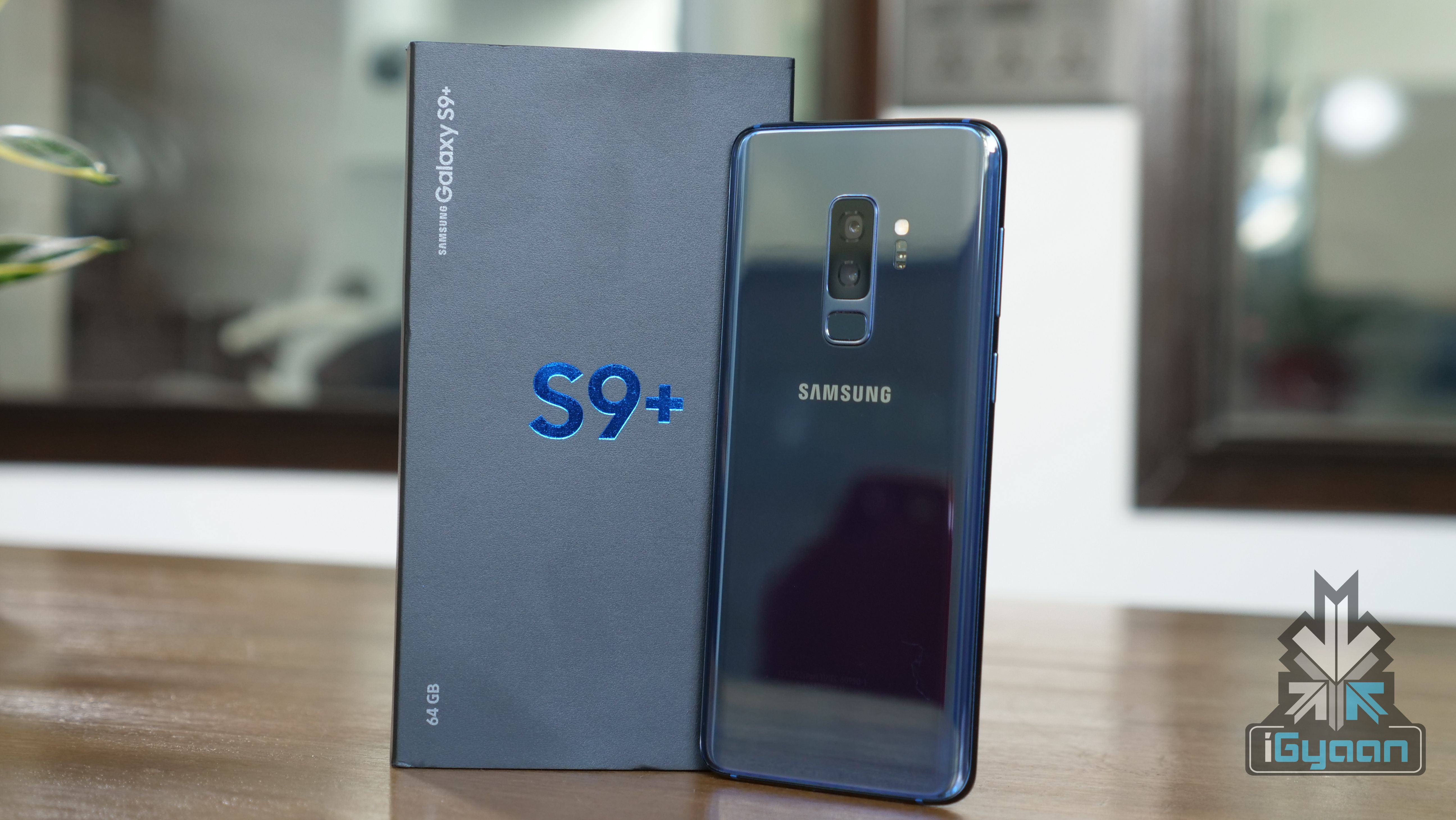
    Samsung Galaxy S9 and S9+ were launched in Barcelona on the 25th of February. While it is tough to figure out key differences between the S8 and S9 from the outside, the story doesn’t change much once you tear it down.

    The folks at iFixit have posted a detailed teardown of the Samsung Galaxy S9 and S9+ and the results are not too different from what we expected. The 2018 flagship smartphones get a score 4/10, just like the S8, while the Apple iPhone X got a score of 6/10. The higher the number, the easier it is to repair the device.

    [amazon_link asins=’B06Y3GYZKW’ template=’ProductAd’ store=’igyaan-21′ marketplace=’IN’ link_id=’c2ef695d-26c6-11e8-90b2-6342c4961ccb’]

    According to the teardown, the iris scanner found on the Galaxy S9 isn’t all too different from the one found on the S8. In fact, the front camera is comparable with its predecessor as well. This is an interesting revelation considering the company has hyped up its new “Intelligent Scan” feature. If almost the same hardware is used, then a future software update could introduce this feature on the likes of Galaxy S8 and Note8.

    Apart from that revelation, this is quite standard for an all glass and metal smartphone. While the industry is fast moving towards an all-glass build for a lot of devices, this does mean that more smartphones will be fragile. Subsequently, iFixit notes that:

    Display and rear glass increase the chance of breakage, and make repairs difficult to start. Replacing the screen requires removing the glass rear panel and disassembling the entire phone while battling tough adhesive.

    While the iPhone X does score a higher repairability score, the results are nothing to ride home about. In fact, in its teardown of the iPhone X, iFixit said:

    Glass on front and back doubles the likelihood of drop damage. If the back glass breaks, you’ll be removing every component and replacing the entire chassis.

    This just reiterates that with a premium smartphone, comes great responsibility. While the Galaxy S9 and S9+ cost lesser than the iPhone X, repair costs will differ.

    • 5.8 inch/6.2 inch Super AMOLED display
    • 2960 x 1440 px resolution, 18.5:9 aspect ratio
    • Exynos 9810 chipset
    • 4GB/6GB RAM, 64GB/256GB storage
    • Android 8 Oreo

  • Five Hidden Features of Android 8 Oreo

    Five Hidden Features of Android 8 Oreo

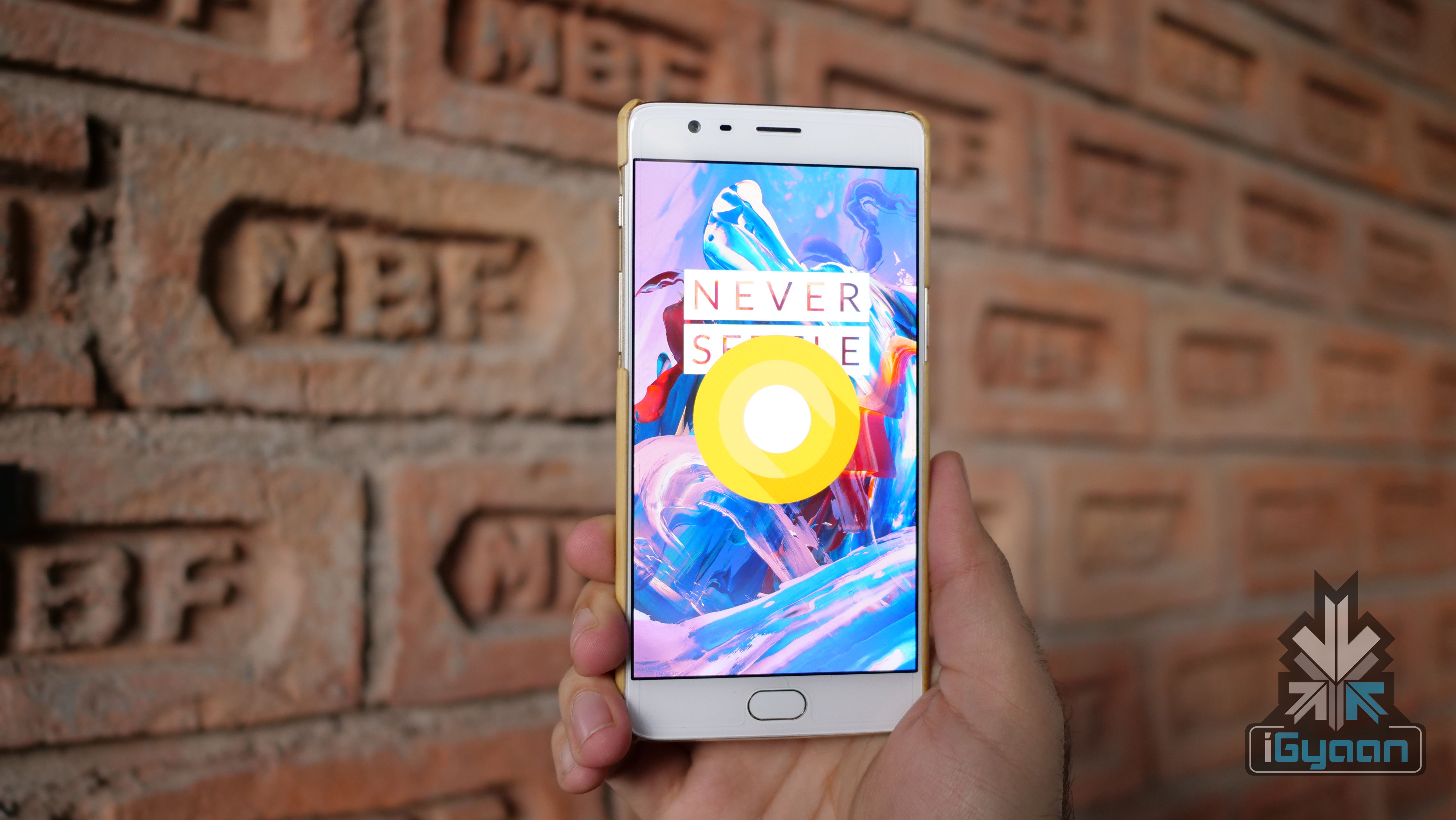
    Android 8 Oreo is the latest mobile operating system from Google. The new iteration introduced features like notification dot, app shortcuts, and a smart text selection. In terms of UI, the OS looks similar to Android 7 Nougat. However, there are additional features that have gone unnoticed on Android 8 Oreo.

    Here are the top five hidden features of Android 8 Oreo. However, these features are only available on smartphones that run on stock Android OS.

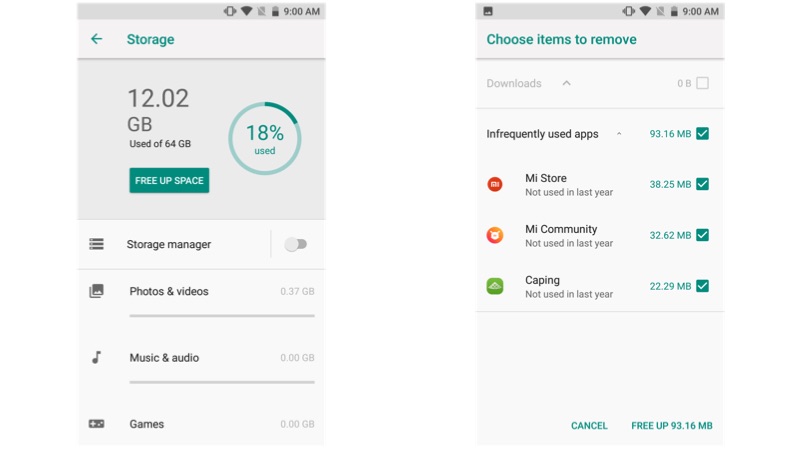
    Clearing phone’s storage

    For this task, most of us depend on an external application. Though multimedia files consume the majority of the storage space, app cache and other files consume a certain amount of space, which are not visible on a standard file manager. Go to storage in the settings option and press on the blue icon, that says free up some space. Bam, your device will remove the unwanted files to clear the storage space.

    Android 8 Oreo

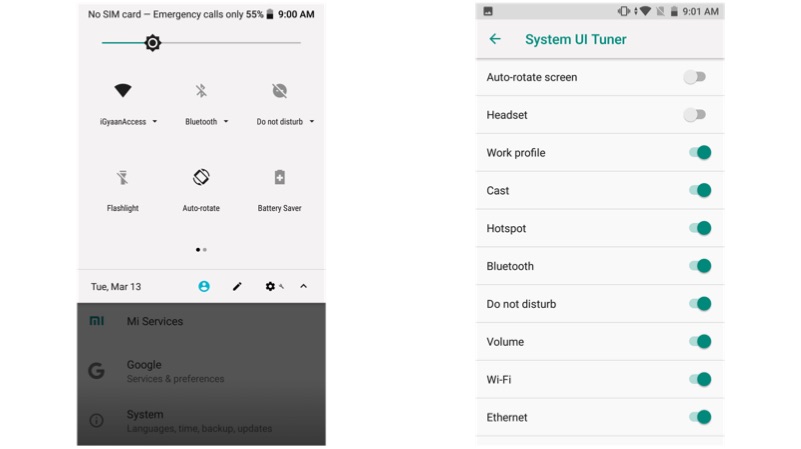
    System UI tuner

    This one is one of our favourite hidden features. In fact, this feature was originally launched in Android Marshmallow. The system UI tuner gives an additional control over the look and feel of the Android operating system. To enable system UI tuner, open your notification shade, tap and hold the gear icon until it starts vibrating. Using this feature, you can add or remove the app icons like Wi-Fi, Bluetooth, and Battery.

    Android 8 Oreo

    Turn on Wi-Fi automatically

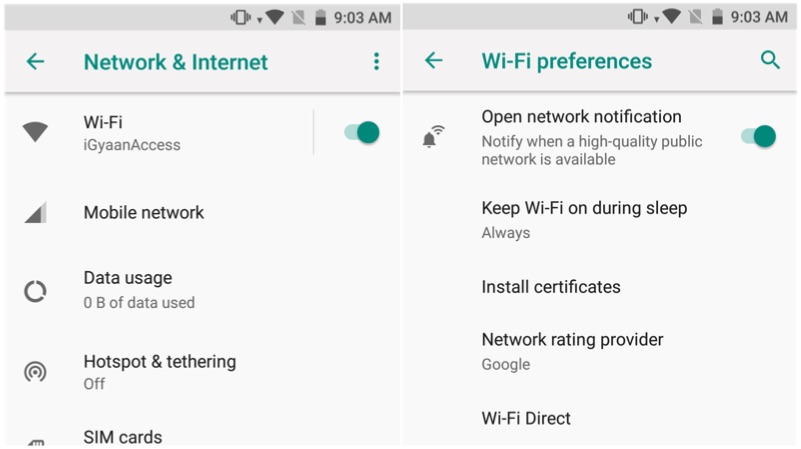
    Updating apps on a cellular network requires a lot of mobile data. Instead, make your smartphone to connect to an open Wi-Fi whenever it is available. To enable this, go to Settings, Wi-Fi, and Wi-Fi preferences and enable the first option. Similarly, enable the third option if you want to get notifications about the availability of open Wi-Fi networks.

    Android 8 Oreo


    Autofill

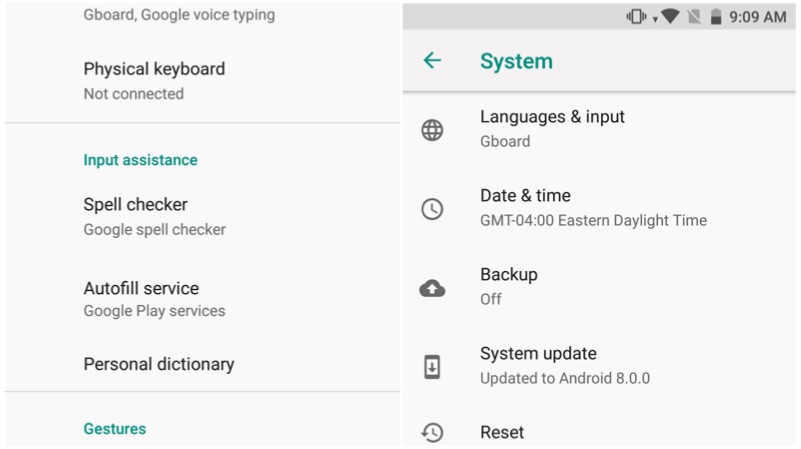
    Remembering various passwords for different applications is a cumbersome processor. However, the Android 8 Oreo has a solution for this. Go to Settings>System > Languages & input > Advanced > Autofill service and select Autofill with Google. This feature will prompt to remember your password and for the next time, it autofill the username and password on the specific application.

    Android 8 Oreo

    Snooze notifications

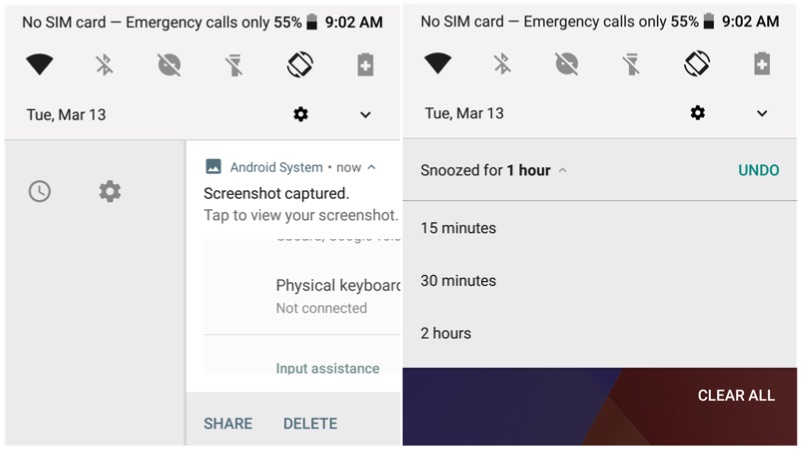
    Notifications are the best part of Android OS. However, when you are in a middle of a meeting, those notifications might just annoy you. With Android 8 Oreo you can snooze the notification for a fixed time period. Swipe from left to right and click on the time amount of time, that you want to snooze the notification. However, one can only choose between 15 minutes, 1 hours, or 2 hours of snooze time.

    Android 8 Oreo

  • Android 8 Oreo For Xiaomi Mi MIX 2 Brings iPhone X Like Gestures

    Android 8 Oreo For Xiaomi Mi MIX 2 Brings iPhone X Like Gestures

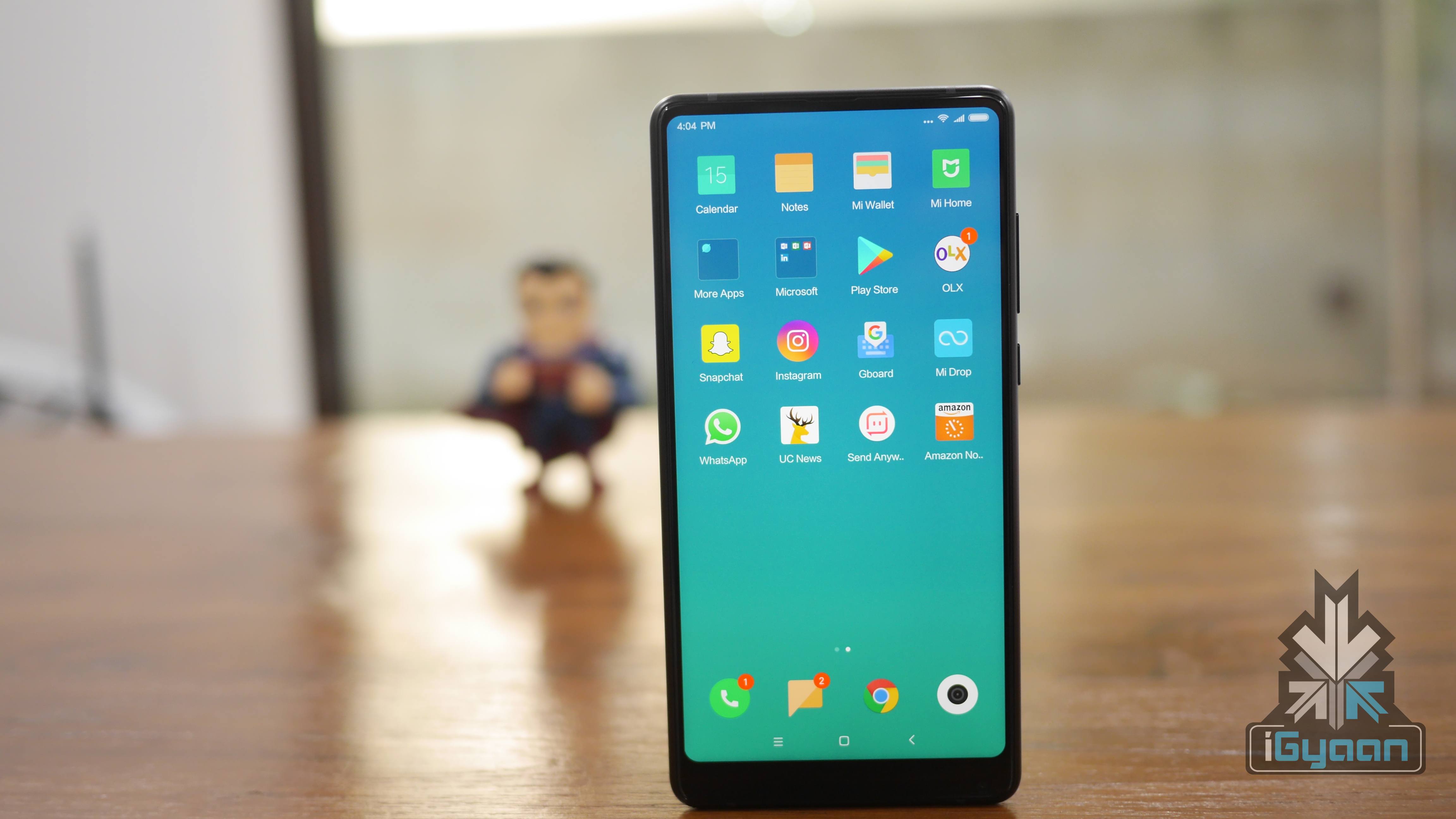
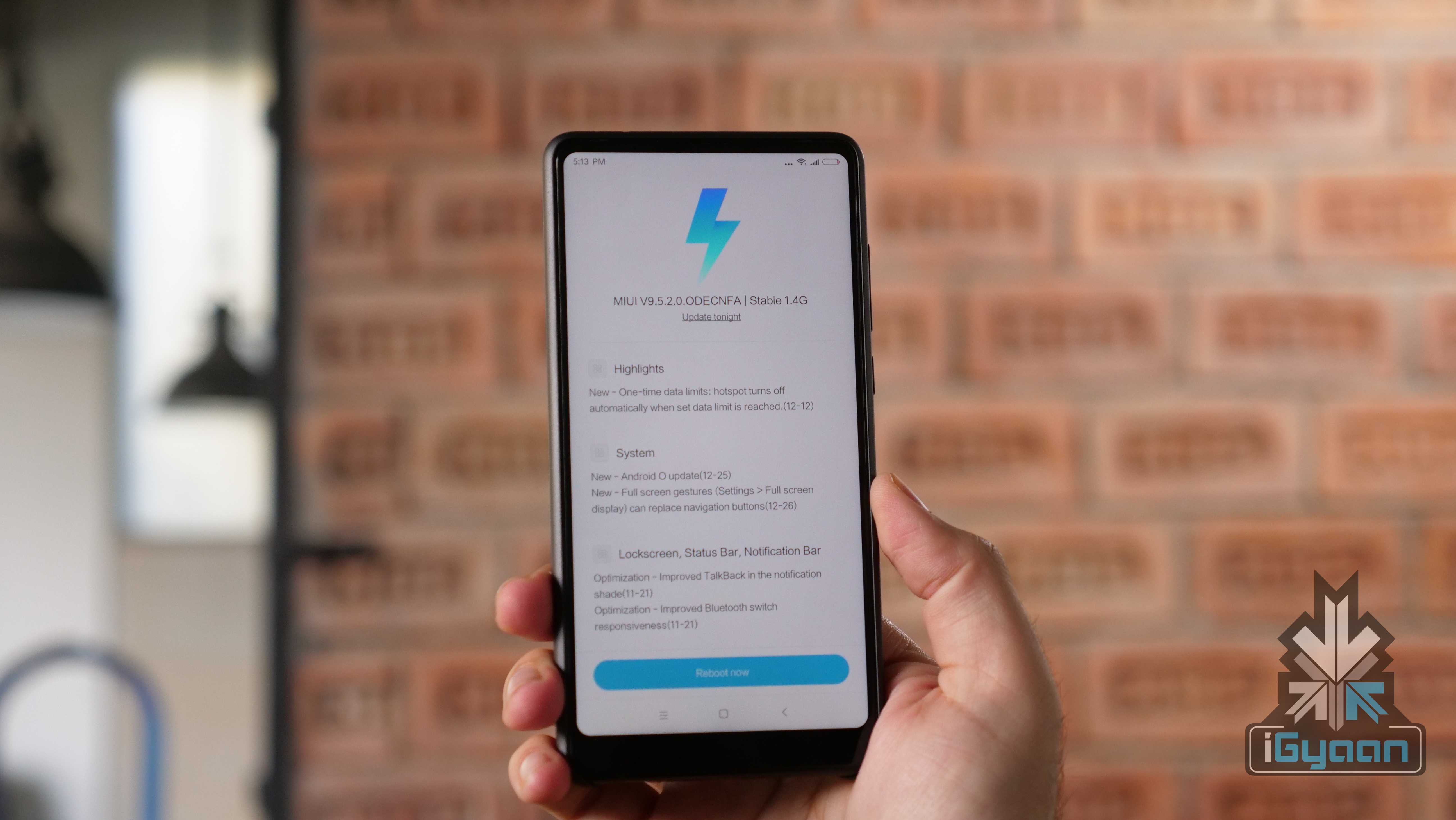
    Launched back in October of 2017, the Xiaomi Mi MIX 2 succeeded the 2016 bezel-less device, Mi MIX. It followed a similar design language with thin bezels and a thick chin to house the front camera. But, like almost every other Xiaomi smartphone, it ran on Android 7 Nougat with MIUI on top. After updating the Mi A1 to Android 8 Oreo, the Mi MIX 2 has also received the stable build for Android 8 Oreo.

    Mi MIX 2 Android 8 Oreo Update

    The update weighs in at about 1.4GB and should be rolled out to all devices soon. To install the update, you need to charge your Mi MIX 2 first. Then head to Settings>About Phone>System Update. Then download the update and install it.

    Full-screen gestures is a highlight feature that has been added. Introduced in a Beta build back in December, the gestures essentially replace the stock buttons for navigation within the UI. We will be testing out the gestures to check how the implementation works with a smartphone Xiaomi Mi MIX 2’s size.

    However, users will barely feel the difference after switching to Android 8 Oreo considering how heavily customised MIUI skin is.

    Over the years, Xiaomi devices have been deprived of the latest version of Android OS. However, it recently received a lot of plaudits for updating devices as old as 4 years to the latest version of its MIUI skin. Even smartphones like the Redmi 1s Prime and Redmi Note 4 have been updated to MIUI 9 which is commendable. Whether more Xiaomi devices will be added to this list is yet to be seen. But, the signs are good so far.

    • 5.99 inch IPS LCD
    • 2160 x 1080 px, 18:9 aspect ratio
    • Qualcomm Snapdragon 835
    • 6GB RAM, 128GB storage
    • Android 8 Oreo, MIUI 9
    • 12MP f/2.0 Primary Camera
    • 5MP Secondary Camera

    [widgets]

  • Top Three File Sharing Apps For Android And iOS

    Top Three File Sharing Apps For Android And iOS

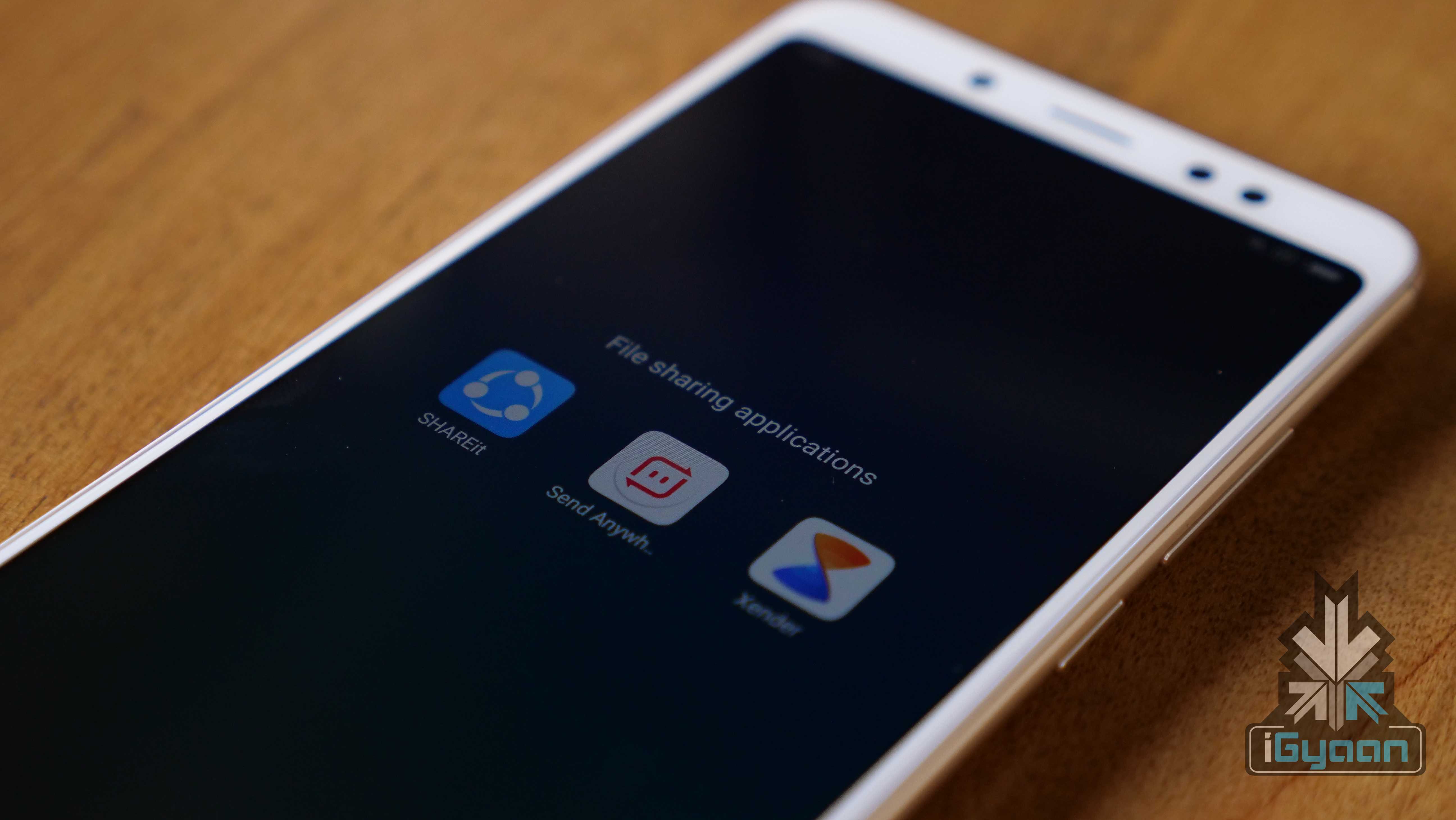
    The Bluetooth technology has come a long way but, it is still not the best way to send large files. Users share different file types across different devices, including smartphones, tablets, computers etc. Sometimes, sharing a large sized file like an HD movie over Bluetooth might be cumbersome. So, here are the top three apps that can be used to share files across the devices with the touch of a button.

    SHAREit

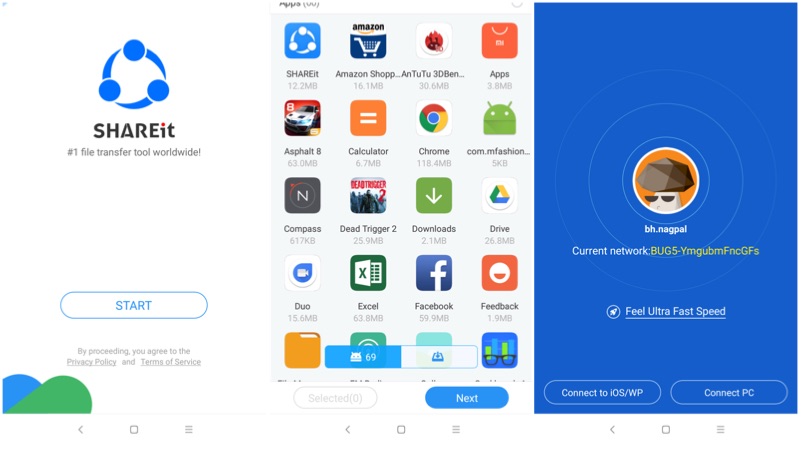
    If you are a smartphone user, then you would have heard this name at least once in your life. SHAREit has been in the file-sharing business from last few years. This application is mainly used to share files between closely located devices (~10 meters). Both the users have to have the application to either send or receive a file. The app supports Android to Android, Android to iOS, iOS to iOS files transfer. This works on the principle of Wi-Fi and Wi-Fi Hotspot. Usually, receiving device will create a secure hotspot and the sender has to join the network. The files transfer happens via Wi-Fi with an average data transfer speed of 5 MBPS.

    File sharing

    Sendanywhere

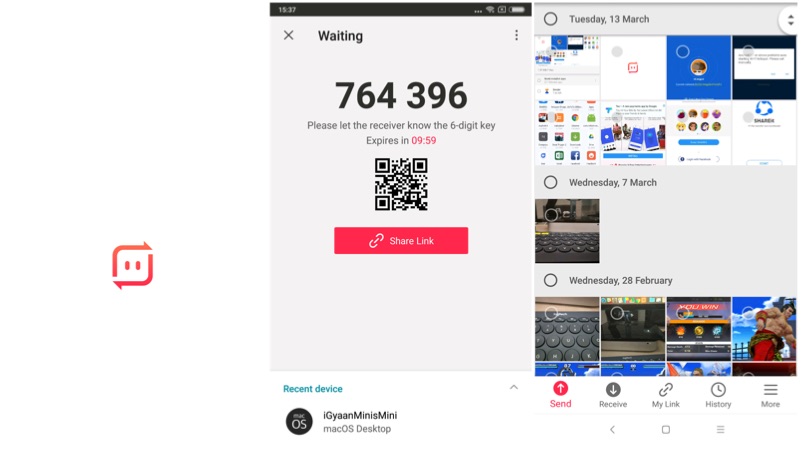
    At iGyaan, we use sendanywhere application. This is a cross-platform app and connects well with Android, iOS and, macOS in no time. The working procedure is a bit different compared to SHAREit. A user has to select the files, which he is interested in sharing. Then, the application generates a unique 6 digit key, which has to be entered on the receiver’s end. Unlike SHAREit, this even with the remotely located devices. However, both the parties should have an active internet connection to initiate the transfer.

    File sharing

    Xender

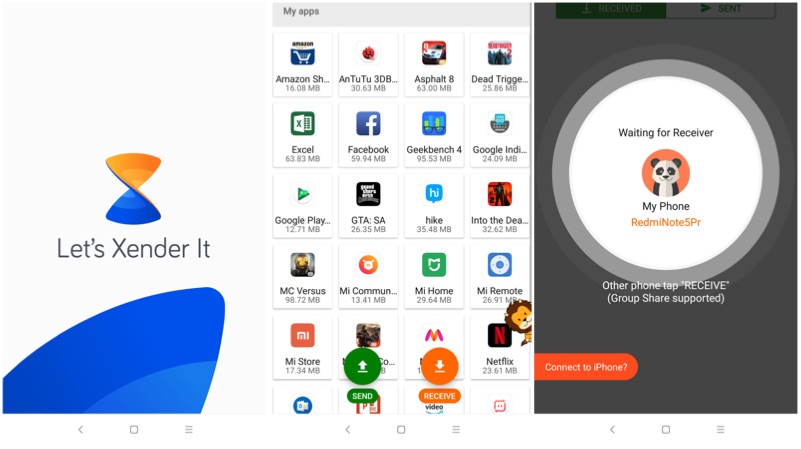
    The working principle behind Xender is similar to SHAREit. However, Xender’s UI looks better than the SHAREit. The applications work on iOS and Android devices. In fact, when you are sharing a file, the app specifically asks to connect to an iPhone. The app comes with different menu buttons, which has an option to select apps, photos, music files, and videos.

    File sharing

  • Huawei P20 Pro Leaked In “Twilight” Colour Variant

    Huawei P20 Pro Leaked In “Twilight” Colour Variant

    In the post-Galaxy S9 launch time, the Huawei launch event is highly anticipated. The company has already confirmed that the Huawei P20 series of will be unveiled on the 27th of March in France.

    Usually, smartphone makers do not play much with the colour variants. In fact, most of the smartphones come in either Black, Grey, or Gold Colour. In 2015, Apple introduced the iPhone 6s in a new Rose Gold colour. While it took a while for people to war down to the colour, it soon became an industry trend, much like the iPhone X’s notch. Even now, after Apple dropped the Rose Gold colour, smartphone makers continue to launch devices in a Pink colour variant.

    It looks like, Huawei is planning to set a new trend in the smartphone industry. A batch of leaked renders of the Huawei P20 Pro reveals an interesting colour choice by the company. The Huawei P20 Pro might come in a new “Twilight” colour shade, which has never been seen on any smartphone.

    Huawei P20

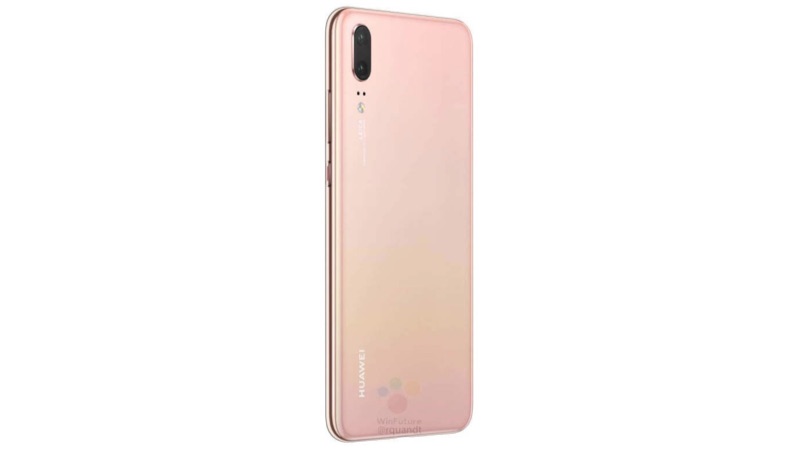
    The colour choice is very bold by Huawei. In a world where smartphones are becoming increasingly similar, very few things separate them. Like the Galaxy S9 and its Lilac Purple variant, the new Twilight Huawei P20 Pro will definitely stand out from the crowd. Even the Huawei P20 will see an unusual colour variant. The leaked renders reveal a dual tone pink-and-gold colour which might seem like a botched photoshop job at first.

    Huawei P20 Lite

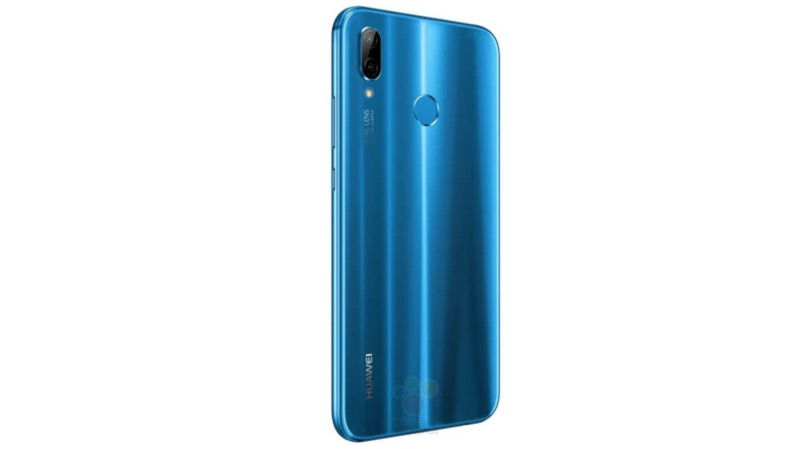
    The P20 Lite, on the other hand, will be available in a colour variant very similar to what we saw with the Honor 9 Lite. It is shiny and very blue but, looks pretty great.

    Huawei P20 Pro Specifications:
    • 6 inch OLED Display with a notch
    • Kirin 970 Chipset
    • 6GB RAM and 128GB Storage
    • Leica branded triple camera setup
  • Huawei Y7 2018 Renders Leaked

    Huawei Y7 2018 Renders Leaked

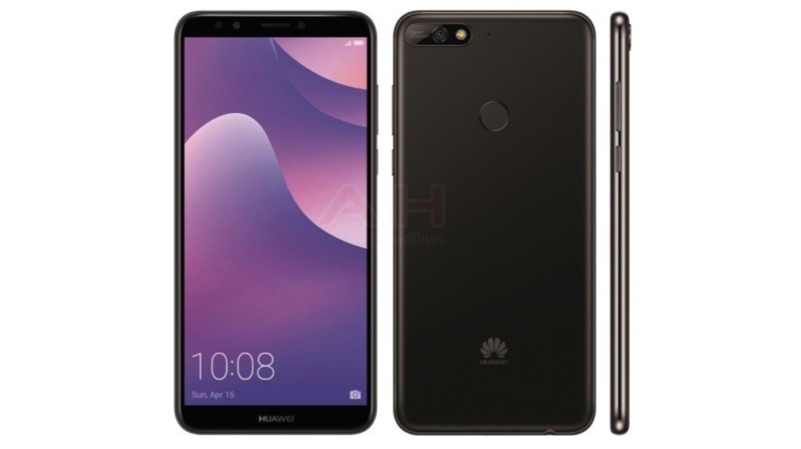
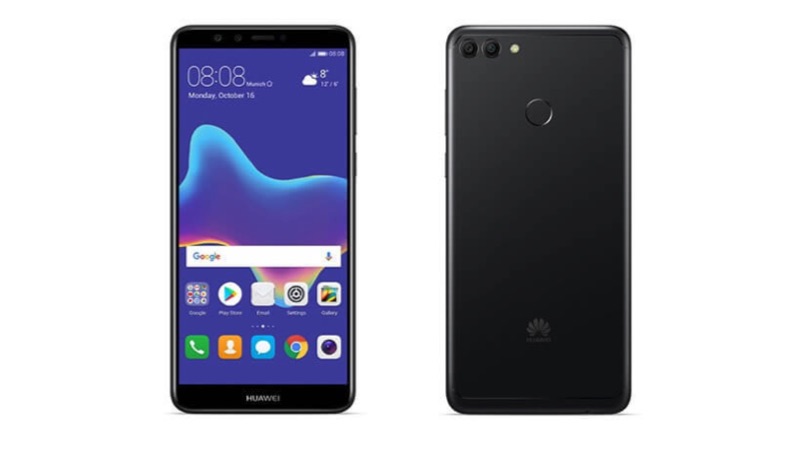
    Huawei is preparing to launch more smartphones in the affordable ‘Y’ lineup in 2018. In fact, the company recently launched the Huawei Y9 2018 in Thailand. Similarly, a new device with a Y lineup has been spotted, which is expected to be the Huawei Y7 2018.

    The major improvement is in the display, the last year’s Huawei Y7 had a 16:9 aspect ratio with prominent bezels. However, this time around, the smartphone has a modern metal unibody design with a FullView 18:9 display. However, the exact specifications of the phone are yet to be known.

    Findings From the Renders

    The smartphone has a single 13 MP primary camera with a single tone single LED flash. Similar to a lot of Huawei devices, the fingerprint sensor will be placed on the back. However, the bottom chin can easily house the sensor which currently, has the Honor branding.

    Huawei Y9
    Huawei Y9 2018

    The smartphone has a 3.5 mm headphone jack and an old-school micro USB port for charging and data syncing. The back case of the smartphone does not showcase any sort of antenna bands, which is strange for an affordable smartphone. In fact, the smartphone might come with polycarbonate back case.

    Huawei Y7 2018 Specifications

    The device will have a 6 inch IPS LCD HD+ 1440 x 720 px IPS LCD display. The smartphone is expected to be powered by Kirin 659 Octa-core chipset with 2/3GB RAM and 16/32GB storage. Similarly, the smartphone is also expected storage expansion using micro SD card.
    The smartphone has a 13 MP primary camera and an 8 MP front-facing camera with expected support for face unlock. The device will run on Android 8 Oreo with custom EMUI 8.0 skin on the top. Going by the last generation Huawei Y7, the device is expected to house a 4000 mAh battery.

    • 6 inch HD+ 1440 x 720 px
    • HiSilicon Kirin 659 Octa-core chipset
    • 2/3GB RAM and 16/32GB storage
    • 13 MP primary camera
iGyaan Network
Privacy Overview

This website uses cookies so that we can provide you with the best user experience possible. Cookie information is stored in your browser and performs functions such as recognising you when you return to our website and helping our team to understand which sections of the website you find most interesting and useful.