Smartphone News and Reviews, Latest Cellphones, Accessories, New Launches, Specifications, Details with Image and Video from Apple, Samsung, Lenovo, Moto, HTC, Xiaomi, Oneplus, Meizu, Sony, Lava, Micromax Yu Mobile and More.
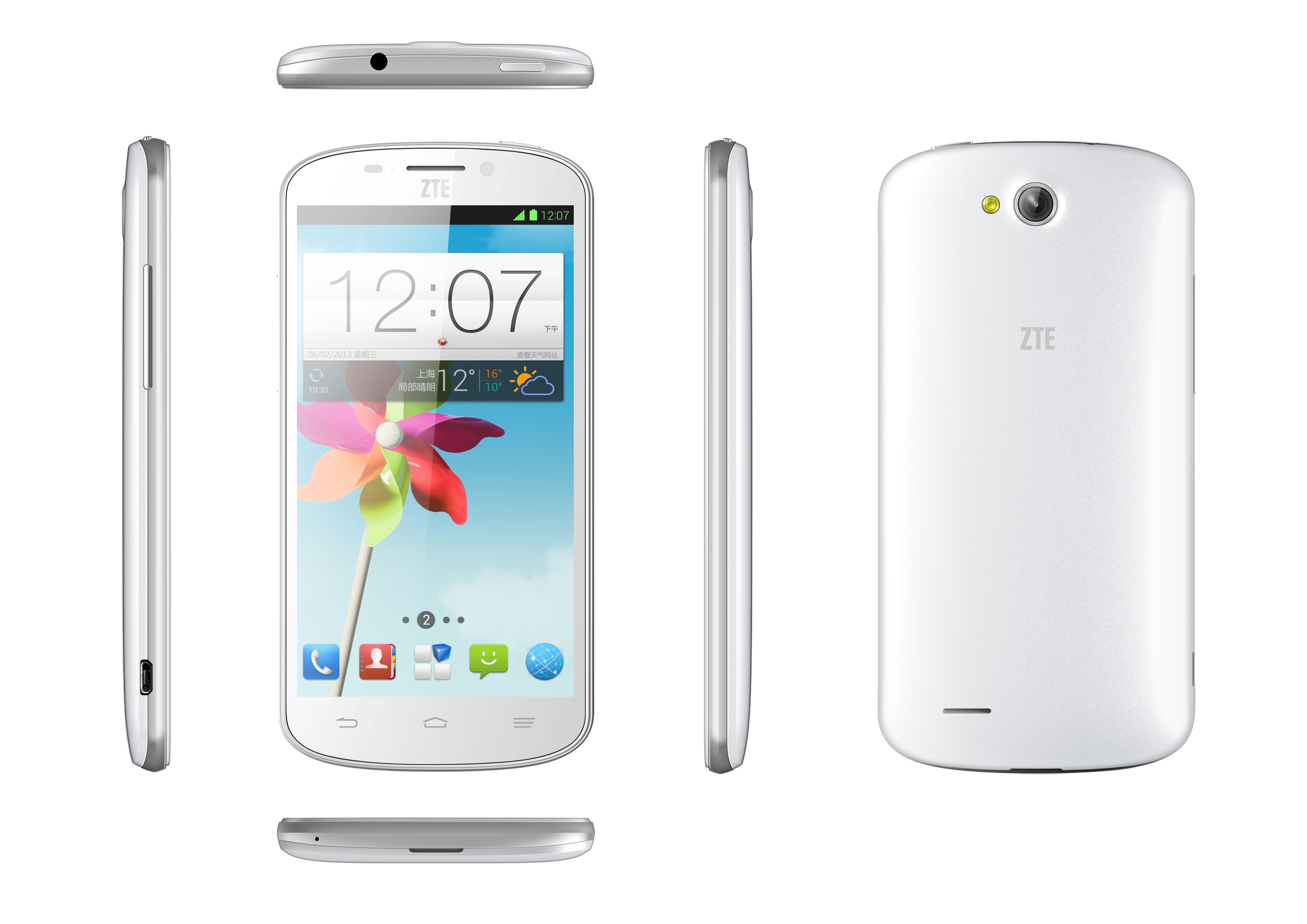
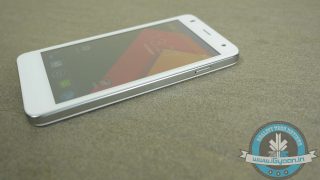
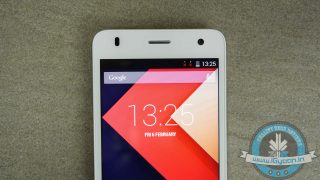
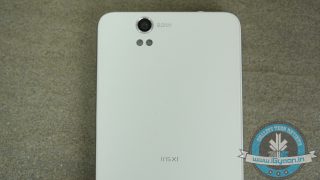
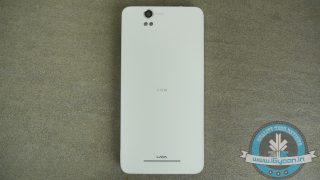
Today, ZTE added another low-budget device to its smartphone portfolio, the ZTE N919D. The handset is designed keeping in mind the requirements of the Indian market and is priced at mere Rs. 6,999. The product is exclusively available at the online retail store ebay.in.
Given the price range, the smartphone has some decent specifications that could make customers go for the device. It has a touch screen display of 5-inch (480x854p resolution) and is powered by a quad-core Snapdragon processor clocked at 1.2 GHz. It comes with 1GB of RAM and 4GB of internal storage capacity which can be expanded up to 32 GB via external memory card. The ZTE N919D runs on Android 4.1 OS.
The phone holds 8MP front snapper with Flash and Auto Focus and a secondary VGA camera. The device houses 2500 mAh battery, which can last for more than 9 hours on a full charge. The connectivity options include Wi-Fi and Bluetooth.
Furthermore, the company has collaborated with Reliance to provide free unlimited internet for 3 months. Some of the features might impress buyers, but the company has tough competition in this segment – namely Xiaomi Redmi 1S and Lava Iris X1 Grand.
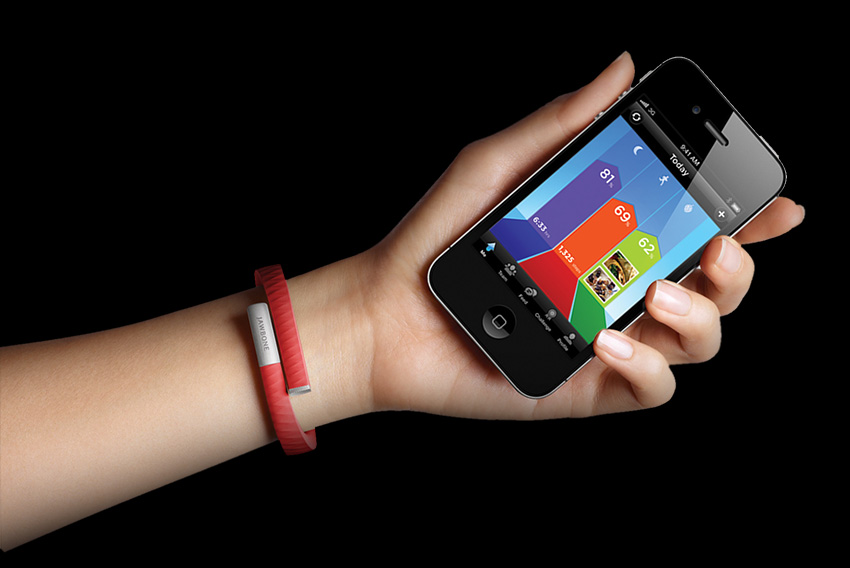
Wearable technology is the field where most of the innovations are taking place in the tech sector. All technology brands are trying to woo consumers with new wearable devices. One of the basic features of most of the wearables, especially smartwatches is their ability track the fitness activities of the user. A new study might just spoil the fun for the makers of such fitness trackers as it says that smartphone apps may be just as good as wearables in tracking fitness.
The research letter was published in the Journal of the American Medical Association. The study was conducted by researchers at the Perelman School of Medicine at the University of Pennsylvania.
The study found the mobile apps to be just as good, if not better than the fitness wearables.
The researchers used ten most selling smartphone apps as well as devices for the test. They made participants walk twice on a treadmill for 500 steps and 1500 steps. The participants of the study were packed up with multiple devices during the test. They were made to wear a waistband with one pedometer and two accelerometers, three wearable devices and two smartphones where one was running three apps while the other was running one app.
In their results, the researchers found the smartphone apps to be reasonably accurate, and there was at most a 7% difference in figures between the apps. But when it came to fitness wearables, they found the result varying across the different devices. Devices like the Fitbit One and Zip were found to be accurate in their readings while the Nike Fuelband was found to be off by a huge margin.
This revelation might get consumers to question the need for buying a wearable fitness sensor. Well, the newer smartwatches are coming with more features that give you broader health data than just the distance covered in a day. This study didn’t consider the new smartwatches. Apart from their health benefits, the smartwatches also act as remotes for your various digital appliances and their functionalities will just keep on increasing. So while the study puts to question the need for fitness sensors, the wearable market is still a fertile market for investment by the tech industry.
Just a few years back, BlackBerry was all the rage. In the pre-iPhone era, every celebrity flaunted their BlackBerry. The devices from the company were seen as a status symbol. At their peak, the devices held 43% of the American market. But soon Steve Jobs unveiled his baby, the iPhone, and Google got into the field with its Android ecosystem; they cornered BlackBerry out of the game. At present, the company holds only 0.5% of the market.
The smartphone market is just the brim of what BlackBerry does. The company has developed a plethora of products that are used worldwide by corporations and governments. We follow BlackBerry through its inception, its rise in the communications equipment world to its decline in the smartphone industry.
BlackBerry was founded by Mike Lazaridis and Douglas Fregin in 1984
The Beginnings:
BlackBerry began its operations under the name Research In Motion Limited. It was founded in 1984 by Mike Lazaridis, who was an engineering student at the University of Waterloo, and Douglas Fregin, who was an engineering student at the University of Windsor. This collaboration led to some game-changing devices and immense pop culture significance in the early moments of the smartphone age.
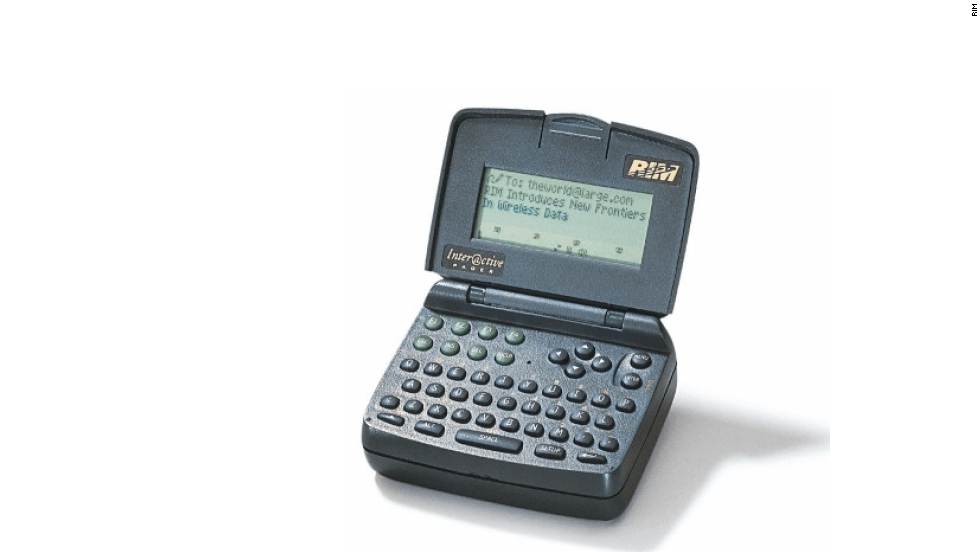
RIM 900
The first device from BlackBerry’s stable was the RIM-900, which was introduced in 1996 and was also known as the Inter@ctive Pager. This pager allowed users to receive and send messages over the internet via a wireless data network known as Mobitex, which was developed by Ericcson. It was followed by the RIM 950, introduced in 1998. It was a phenomenal success, to say the least. The messages could get forwarded to the device on the move. It was a giant deal back then; the only hitch though was that to receive email on the go, you had to leave your desktop switched on. The devices were appreciated by the top jocks of enterprises. People loved receiving messages on their belts as the device was kept in a holster. One CTO even called it digital heroin.
The company used some innovative techniques to market their products. During a launch in the Caribbean, they handed out scannable temporary barcode tattoos. These tattoos stored the user’s personal identification numbers (PINs). So instead of asking for each other’s numbers, people asked if they could scan their PINs.
Establishing the Smartphone brand:
By 2002, the company was bringing in devices with a “built-in mobile phone”. These devices ran on Java and transmitted data over normal 2G networks. These devices were targeted towards businesses, and they would enter the consumer markets much later.
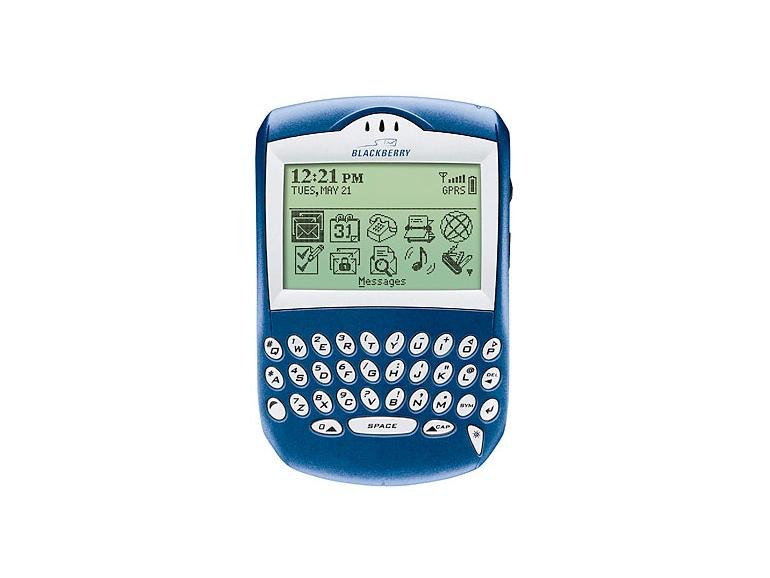
One of the major devices from BlackBerry’s first-generation offerings was the BlackBerry Quark 6230. Launched in 2003, this device had a 34 key Qwerty keyboard. It had 160×100 pixel display and had a 16 MB RAM. This device found a spot in the prestigious Time magazine’s All-TIME top 100 Gadgets list in 2010.
The BlackBerry Quark 6210
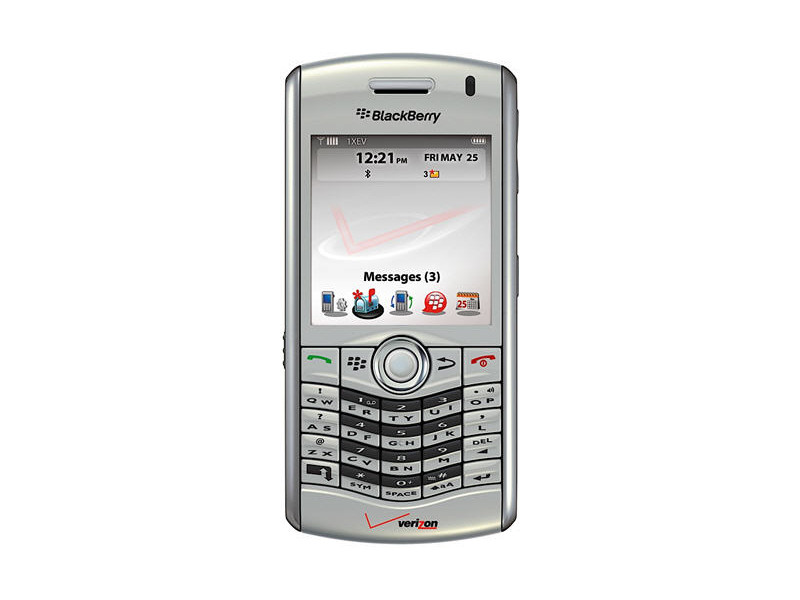
In 2006, BlackBerry’s official foray into the consumer market began with the BlackBerry Pearl family of devices. This bar shaped device was the first to get multimedia features. It included a media player and a camera. The 2 MP camera also had a self-portrait mirror at the back which let users take their own images, this was the first step towards the creation of the selfie generation.
The device flaunted GPS-enabled maps and had 64 MB internal memory that was expandable up to 16 GB MicroSDHC cards. The Pearl also replaced the scroll wheel for a tiny trackball that made it easier to access the phone’s function like a trackpad on a computer. A follow-up device was the Pearl Flip, which was BlackBerry’s first flip phone.
BlackBerry Pearl
Come 2007 and BlackBerry launched the Curve, a prominent family of devices from the company. The family garnered excellent reviews but also received flak for the absence of 3G, Wi-Fi along with the lack of video recording.
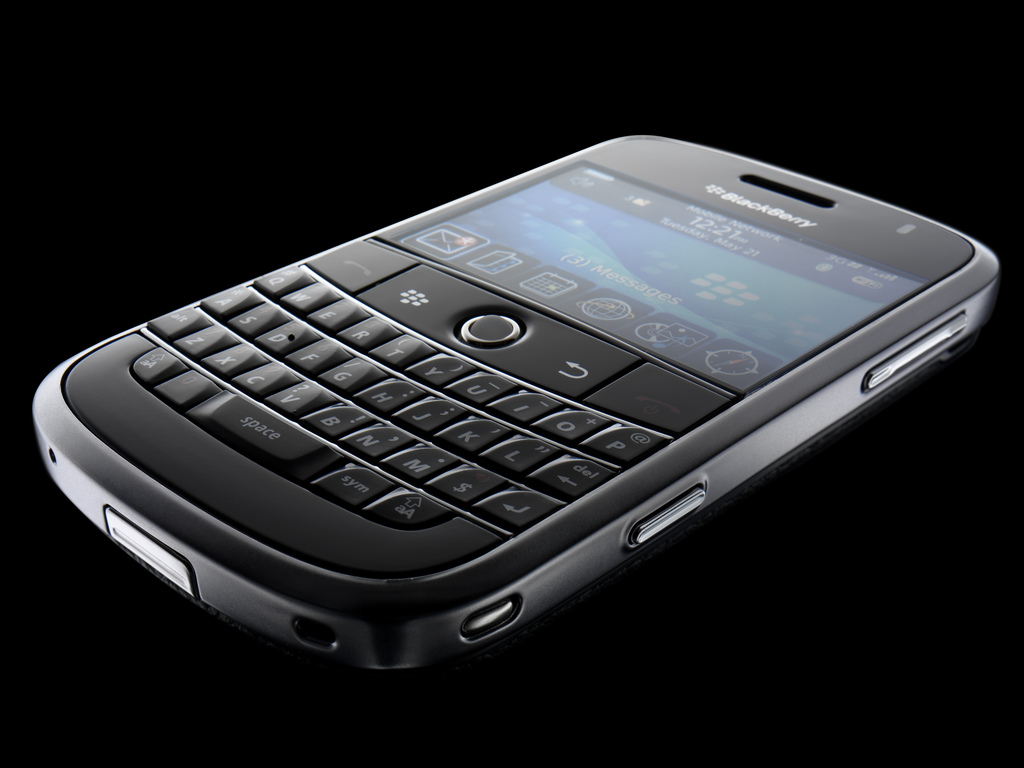
The BlackBerry Bold was one of the most popular form factor’s for the company.
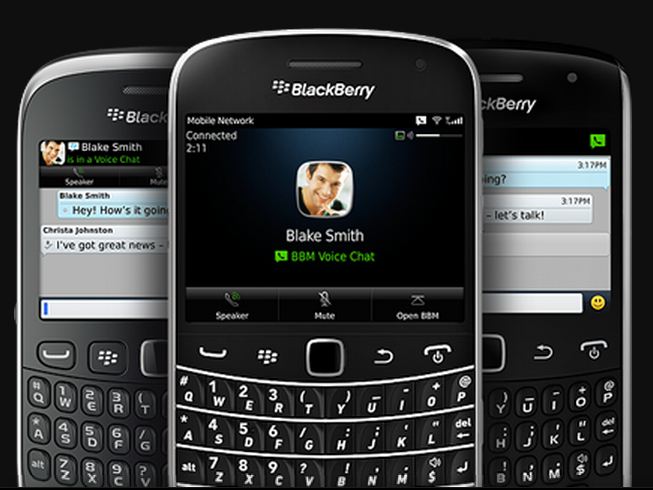
In 2008, the company was at its peak with the launch of the BlackBerry Bold. This device introduced a whole new design feature which made them easier to use and type. It played around in the more premium segment of the market. This successful form factor would be later updated by BlackBerry in 2014 with a new device called BlackBerry Classic.
BlackBerry Torch
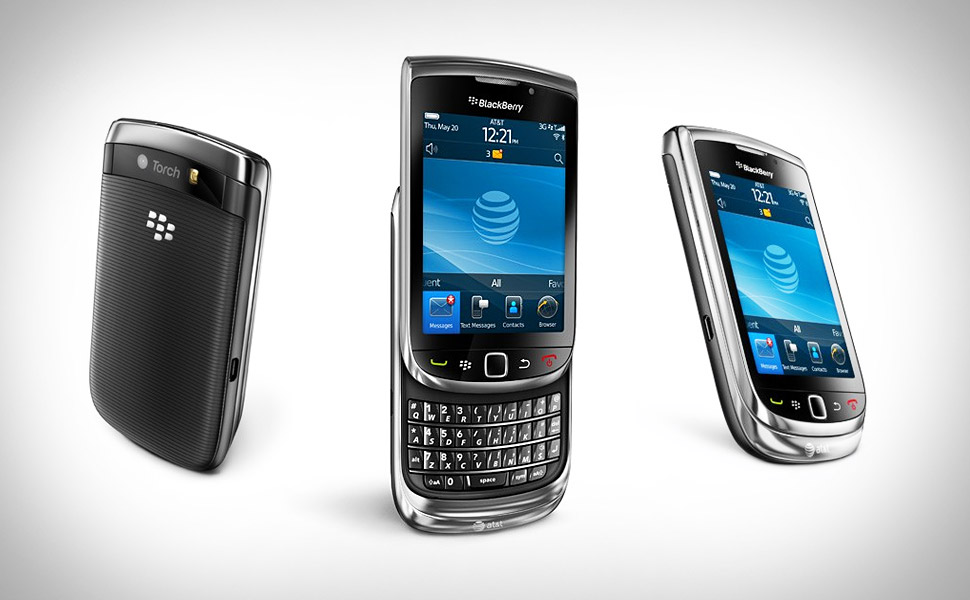
In 2010, Blackberry attempted a change in their form factor with the BlackBerry Torch. It carried the physical QWERTY keyboard but also came with a sliding multi-touch display. The Torch 9800 was the first device in the line-up and it ran on BlackBerry OS 6. The device was criticized for offering lower specs in comparison to its competitors like the iPhone 4 and the Droid X.
In 2012, Research in Motion officially changed its name to BlackBerry.
BlackBerry Messenger:
BlackBerry Messenger or BBM is a popular messaging app on the platform
The BlackBerry Messenger or BBM was one of the most appreciated apps from the company. This default messenger on BlackBerry device was so popular that it was later released for Android and Windows devices. Initially BBM was exclusive to BlackBerry and users required BlackBerry PINs to interact with each other. With BlackBerry 10, users could use video calling. It is estimated that there are over 91 Million BBM users worldwide.
In 2014 BlackBerry decided to give an adrenaline boost to its messaging app and added a plethora of functionalities to it. It added a retraction function so that users could remove chats that they regret sending. It added HD picture transfer to send high quality images through the service. The update also introduced a Snapchat-like time limited messaging service.
The Present:
After holding a considerable amount of influence over the smartphone market, BlackBerry’s market share has consistently depreciated. It now sits at a small corner reminiscing its glory days. This year after failed attempts at making touchscreen based devices, the company finally decided to go back to its roots. It decided to bring back the Qwerty keyboard-based form factor.
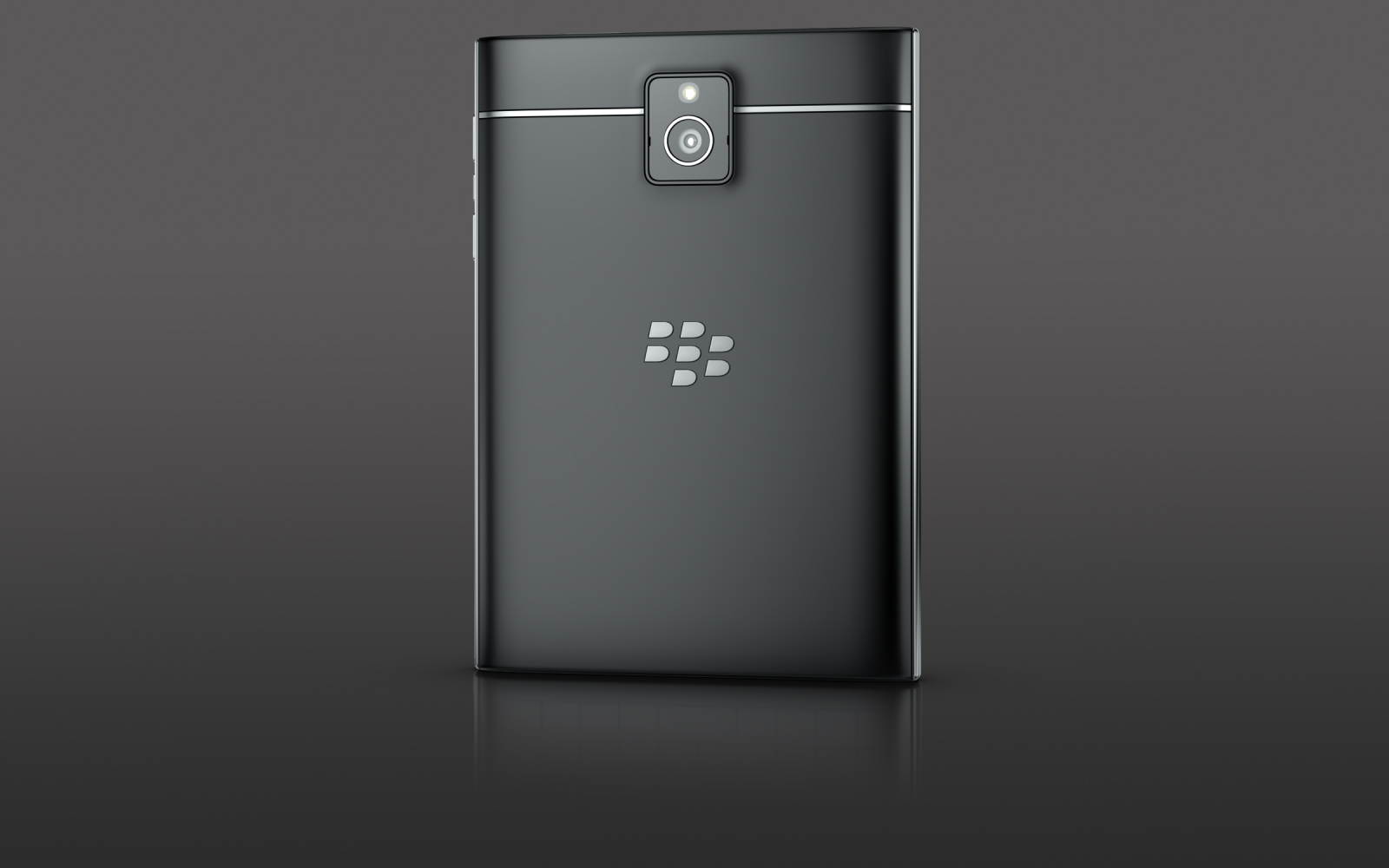
Passport received mix reviews but was appreciated for its unique features.
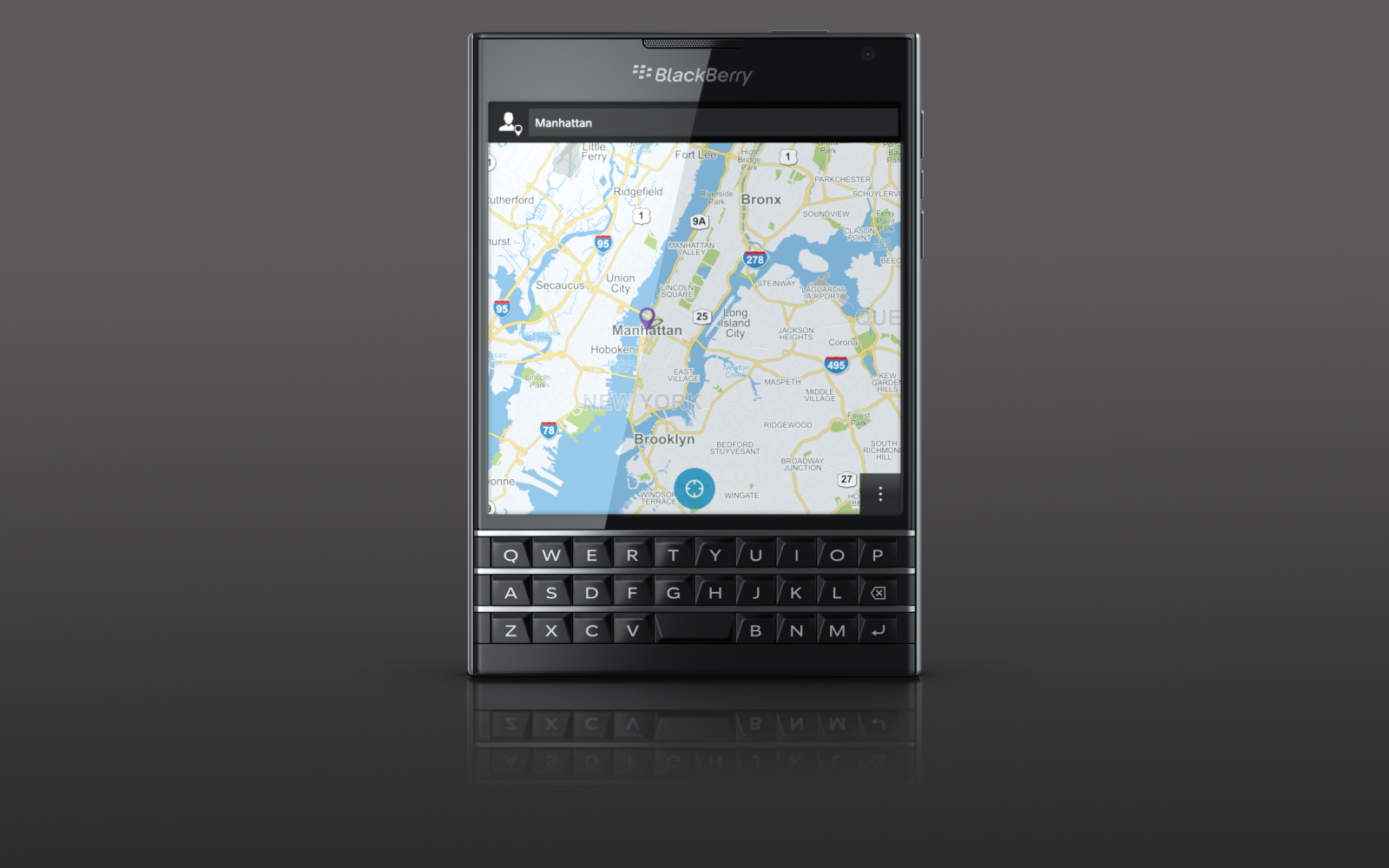
The company launched a unique device called the BlackBerry Passport. The device has a 1400X1400 pixel square display. It features a keypad that doubles as a trackpad. The device got a lukewarm response by the critics and received flak for being too wide to be held by one hand. The device though did good business in the festive season and held the top spot in Amazon’s Black Friday Sales.
BlackBerry returned to its original form factor with the Classic Q20.
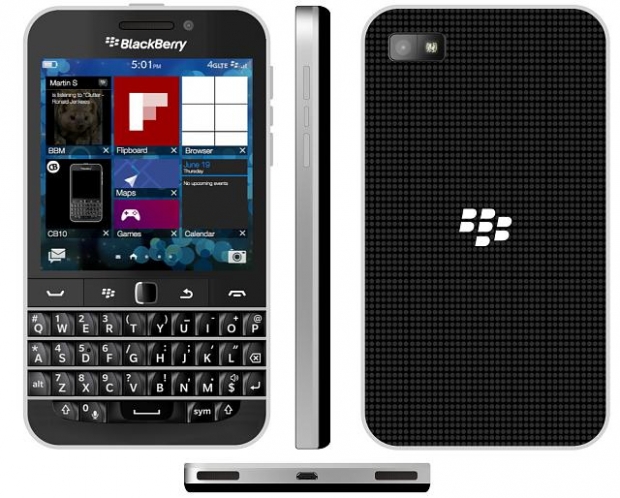
BlackBerry also launched a second device by the end of 2014 called the BlackBerry Classic. This was a kind of a follow-up to the BlackBerry Bold series and has the same form factor. The device sports a Square 3.5-inch 720p LCD display, and comes loaded with the latest specs in a retro design. This might be the device for hardcore BlackBerry enthusiasts to cherish the good old days.
Legacy:
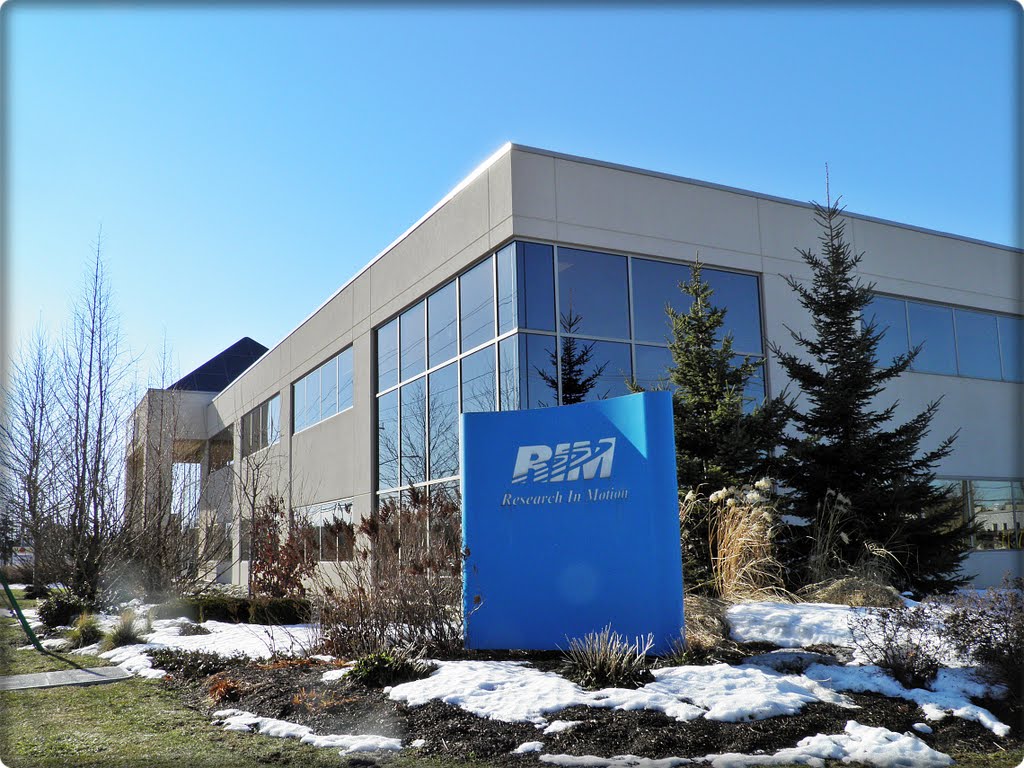
BlackBerry’s HQ in Waterloo, Ontario
At a point, BlackBerry was growing in popularity. Its success had turned Waterloo into a sort of Canadian Silicon Valley. At present, there are over 1000 companies operating there with a combined annual revenue of $30 Billion.
During the damaging Sony Hack by alleged North Korean hackers, BlackBerry phones came really handy. Because of their unmatched security standards, senior executives used the old BlackBerry phones that were stored in a basement. BlackBerry devices are used by top government and corporate honchos to keep their messages secure.
BlackBerry is still in the business, but its market share has been steadily declining for a while. It will be interesting to see how the step of returning back to the basic design format works out for BlackBerry. The company has some great technologies under its belt to share with the world, provided it withstands the challenges of the brutal smartphone business.
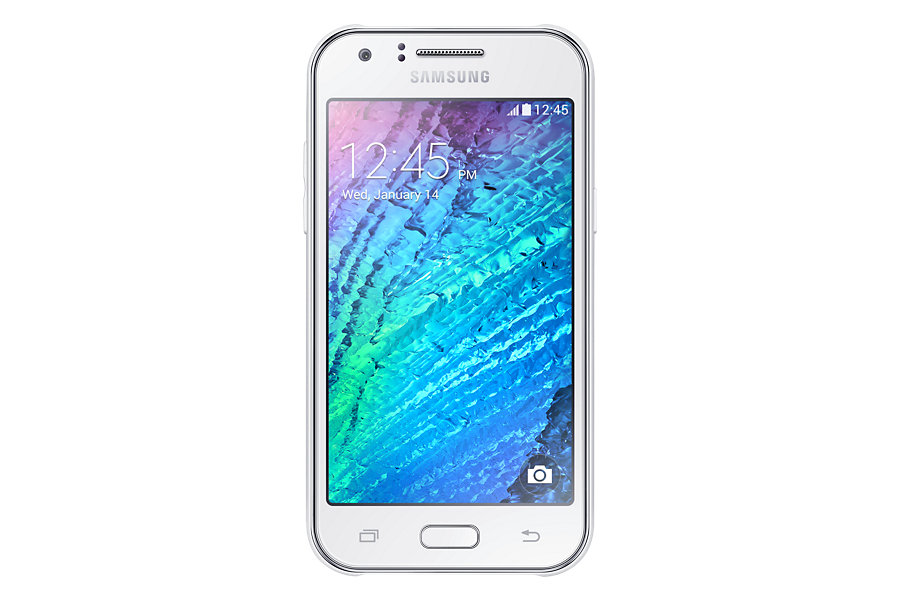
Not long ago Samsung launched the Tizen-based Z1 in India, which failed to impress the Indian customers. Now, the South Korean manufacturer is giving another shot to influence the budget segment and is set to launch Galaxy J1 in India. The device will debut tomorrow, i.e. 11th February, and will cost Rs. 7,199.
Getting to the specifications of the handset, the Galaxy J1 sports a 4.3-inch WVGA (800×480) display. It packs a 1.2GHz dual-core Cortex A7 CPU and a Mali-400 GPU paired with 512 MB RAM. The handset features 4 GB of internal space which is expandable. The Galaxy J1 will run on Android 4.4 KitKat.
The phone encompasses a 5MP primary camera and 2MP secondary shooter at the top. The device gets its juice from the 1,580mAh battery and the connectivity options include Wi-Fi and Bluetooth. The dual-SIM phone will come bundled some exciting offers, as informed by Amazon India.
The phone is not exceptional, and at this price point, Xiaomi and Asus are offering much better specifications. Samsung has to throw some free deal to lure more audience and stay in the competition.
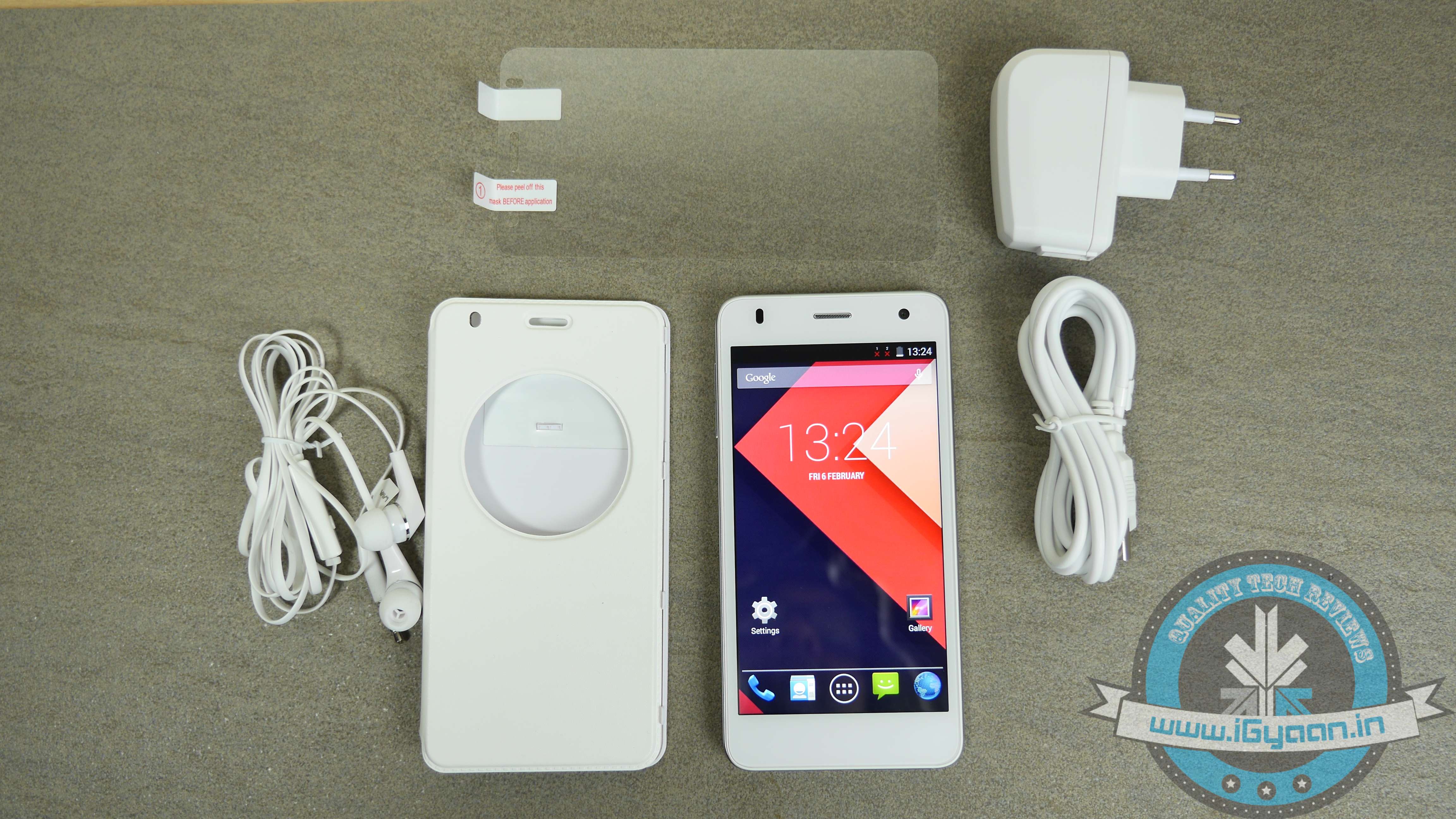
Indian smartphone brand Lava recently brought out their new offering in the sub-Rs.10,000 market in the form of the Iris X1 Grand. This is a successor to the Lava Iris X1 that the company launched in the May of 2014. We unbox the device for you.
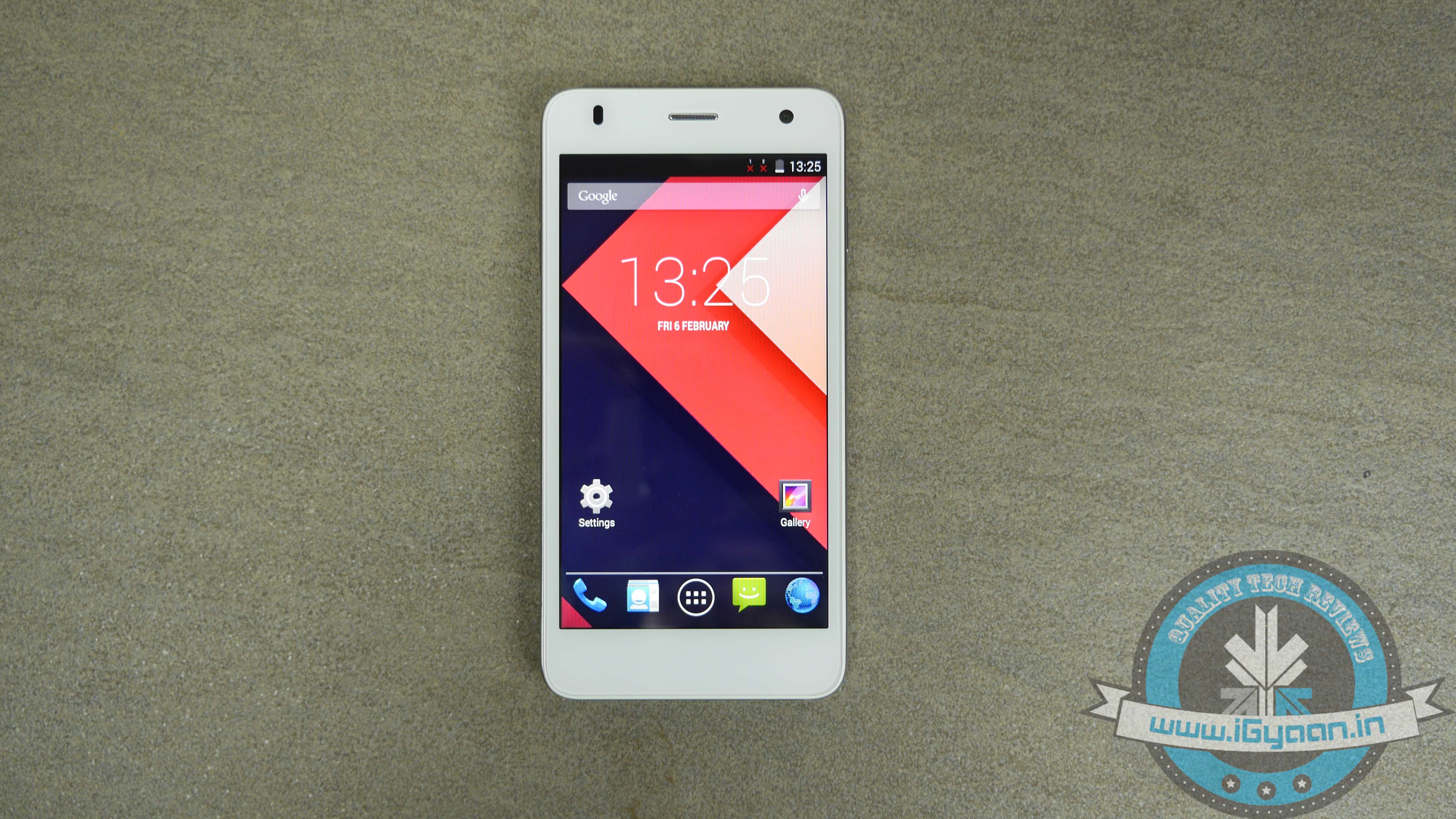
The device looks like an elder sibling to the Iris X1. It sports a 5-inch display with a resolution of 480×854 pixels. The power button is located on the right while the volume rockers are placed on the left. The flip cover provided with the device has markings on it which lets you manipulate the volume without opening the case.
The Lava Iris X1 Grand
In the Box you get:
Lava Iris X1 Grand Handset
In-ear Earphones
Charger and USB cable
Flip cover
Screen Protectors
Information booklet
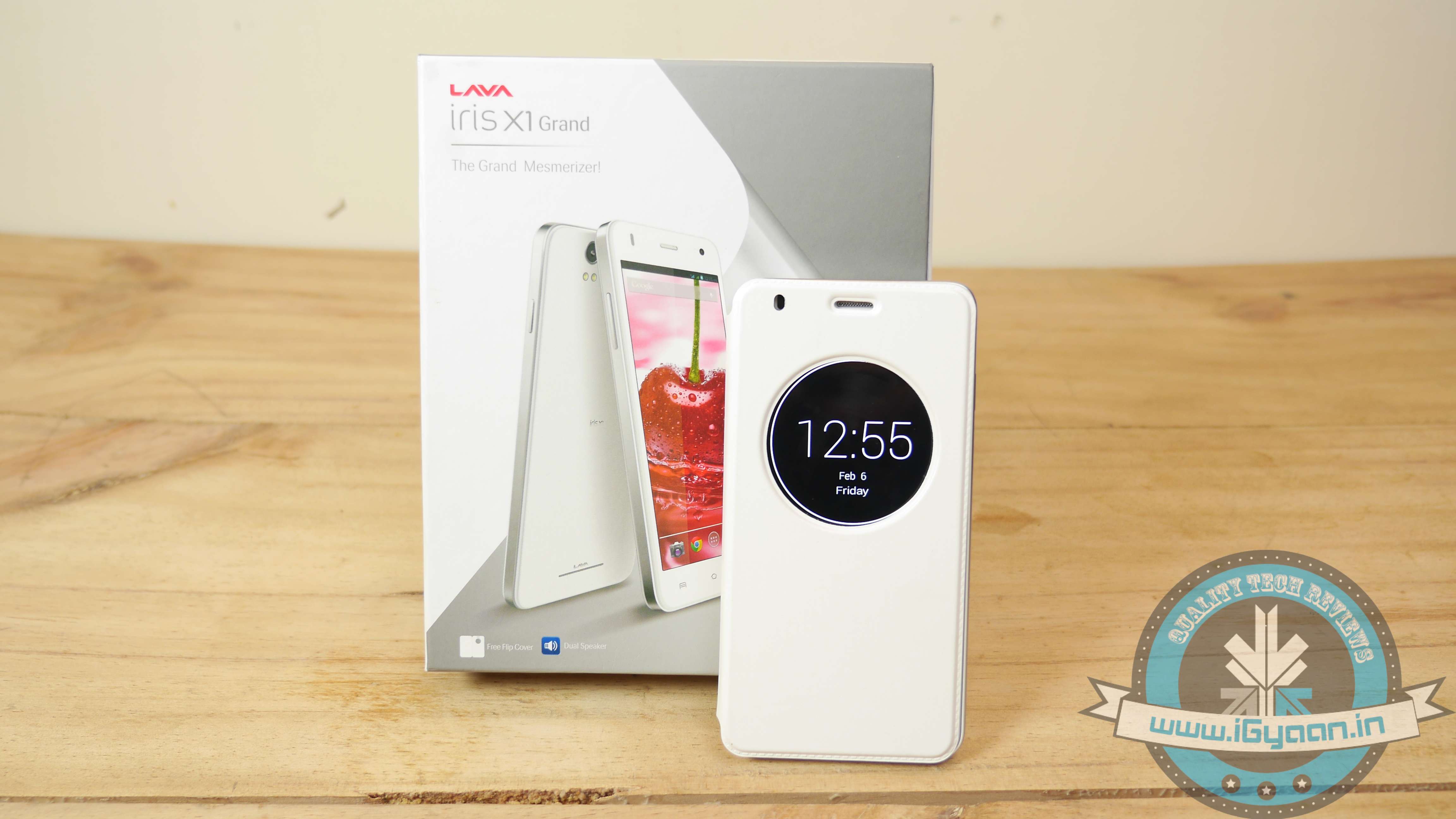
The Iris X1 Comes along with a free Flip case and screen protector.
The device runs Android KitKat 4.4.2, out of the box, but it promises a guaranteed upgrade to Android Lollipop 5.0 which makes the deal attractive for the price. There aren’t a lot of bloatware on the device and the interface felt snappy and responsive.
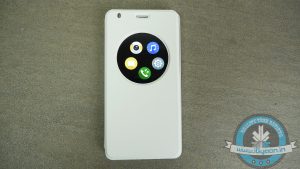
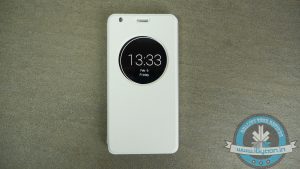
Lava offers a free flip case with a round opening in the front which looks “inspired” from LG G3. The case is magnetic, so the screen shuts off when the case is on. You get quick access to the phone log, messages, music, settings and camera from the round screen so it would come handy when you are on the move.
The Lava Iris is priced at Rs. 6,500 which along with all the freebies such as flip case and the screen protectors makes it a bargain. Overall, the Lava Iris X1 Grand felt great in its first impressions, and we’ll take the device to task in our in-depth video, so stay tuned for that.
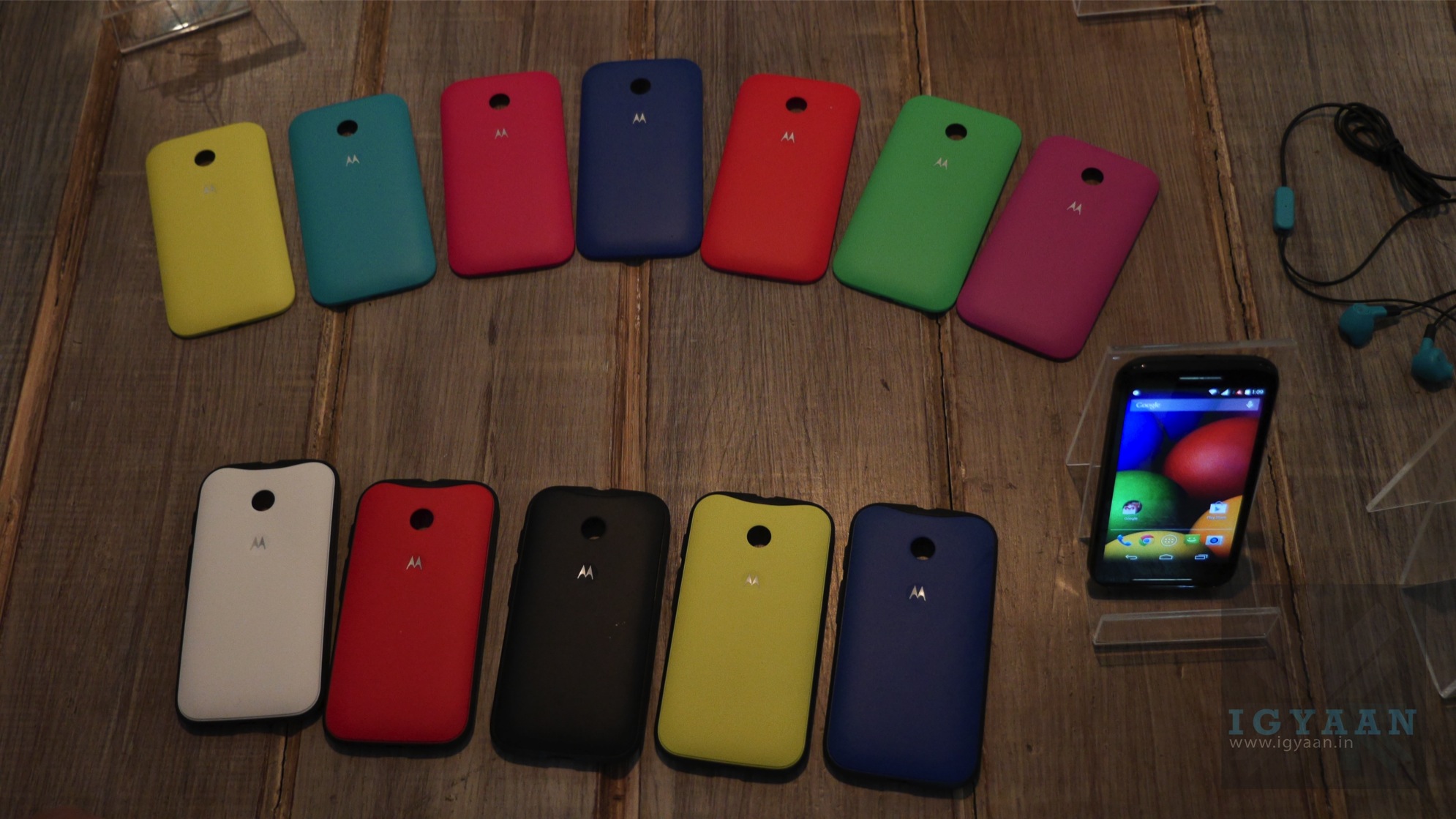
Yesterday we heard that Motorola slashed the price of the Moto E by Rs.1000, reducing the price of the handset to a mere Rs. 5,999. Today, we can tell you why.
Motorola devices are doing well in the smartphone market. Moto G, Moto X and Moto E have made a good name for themselves in the industry. These devices offer specs of a high-end phones at relatively low prices; the fool-proof winning formula. Now, sources close to iGyaan have said that Motorola is working on releasing the successor of the Moto E handset.
Seeing the positive response to the E range, the US-based telecommunication firm is likely to release Moto E (Gen 2) soon. There is no word about the specifications of the rumored phone, but it is likely to flaunt a 4.5-inch qHD display (540x960p resolution). The second gen phone might be powered by 1.2GHz Snapdragon 400 processor coupled with 1 GB of RAM. Talking about the camera of the device, the Moto E (Gen 2) may sport a 5MP main camera with LED flash and LTE connectivity, along with 2 MP front snapper.
Moto E was appreciated in its first generation because of its feature and price. But soon the market saw the arrival of the Redmi 1S which offered even more features for a price of Rs.5,999. Like its bigger siblings the Moto G and X, the E needs to offer a little more in terms of features or at least style to beat the competition this time around.
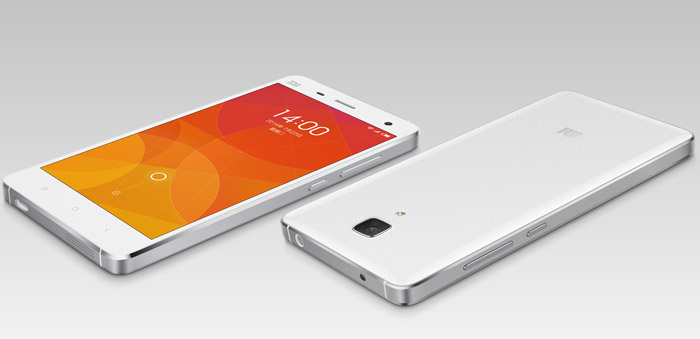
Xiaomi recently launched its last flagship, the Mi4 in India. As with all the other Xiaomi launches, it was embraced warmly by the fans of the company. One major complaint with the device was the lack of expandable storage on the device and the lack of a 64 GB variant in the market. Heeding to the complaint Xiaomi will be launching a 64 GB variant of the Mi 4 on the 24th of February.
On their Facebook page, the company has announced that the 64 GB variant of Xiaomi Mi 4 will be available for a price of Rs.23,999.
The Mi 4 features 5-inch Full HD Display. It is powered by a 2.5 Snapdragon 801 processor along with 3 RAM. The handset sports a 13 MP camera on the back and an 8 MP selfie snapper on the front. It gets its juice from 3080 mAh battery and runs on the latest MIUI 6. With this device, Xiaomi will be directly competing against the OnePlus One in India.
Microsoft has presented its new operating system, Windows 10, and it has impressed a lot of its critics. The latest Windows offering will act as Microsoft’s initiative to create an ecosystem for its devices. It will work on all the Microsoft devices – from desktops to tablets to smartphones. Microsoft just announced that even the lower end smartphones running on Windows 8.1 will also be getting the Windows 10 upgrade.
In a tweet, Joe Belfiore, the Corporate Vice President of Operating Systems Group for Microsoft has said that they are making a version of Windows 10 for devices running on 512 MB RAM. The tweet specifically mentions the Lumia 520. But he also added that the features would vary in these devices. It would probably be a stripped down version of the operating system made to run on devices with lower specs.
Hey all: we ARE working on Win10 for 512MB, including 520. Our ambition is to make #Win10 available for these devices but features may vary
Microsoft has been struggling with its smartphone business. Its smartphone operating system runs in just about 3% of the devices sold. It has some good features, but the mass appeal of Android and iOS from Apple has not given it a chance to grow. Joe also announced that the insider build announced at the Windows event would be coming out sometime in February.
Also, we’re on track for Insider build coming “in Feb” as Terry said at our 1/21 event. We need to complete internal testing 1st, hang in!
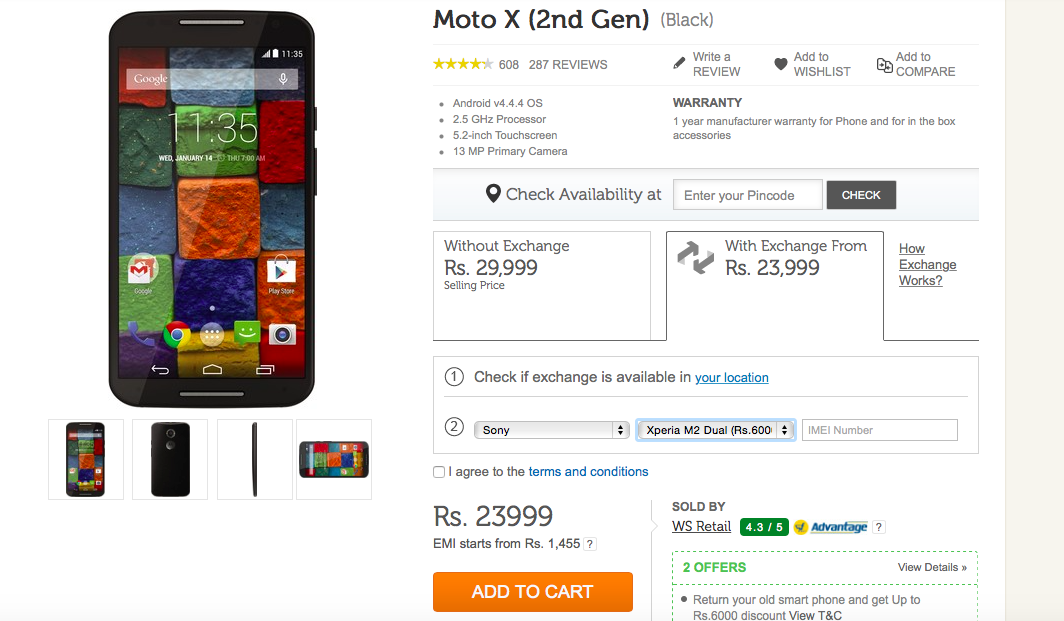
If you’ve been mulling over the idea of switching up your device to a better model, this might be the good news you needed to brighten up your Monday. To celebrate Motorola’s one-year tie-up with Flipkart, the two have joined hands to bring out offers. You can now exchange your old smartphone for a brand new Motorola handset at a discounted rate.
Motorola is offering discounted rates up to Rs. 4,000 on Moto G (2nd Gen) phones and Rs. 6,000 on the Moto X (2nd Gen). In short, the discount brings down the price of the Moto X and the Moto G to Rs. 25,999 and Rs. 8,999, respectively. Another exciting offer is that Motorola is giving out free Moto Deck Speakers, if you decide to go for the Moto X (2nd Gen). As always, the discount rate depends on the phone model you are exchanging.
Other than the Motorola range, the Google Nexus 6 phones are also available discount of up to Rs. 10,000 on exchange, another offer with Rs. 10,000 off if bought along with a Moto 360 Smart Watch – the two offers cannot be combined. These exchange offers are valid only till 15th February, so make sure to spread the word.
Though there are no exchange offers available on the Moto E handsets, price of the phone has been been slashed by Rs. 1000 and is now priced at a mere Rs. 5,999 on Flipkart.
Want to get a user feedback on the devices? Click here for our full reviews.
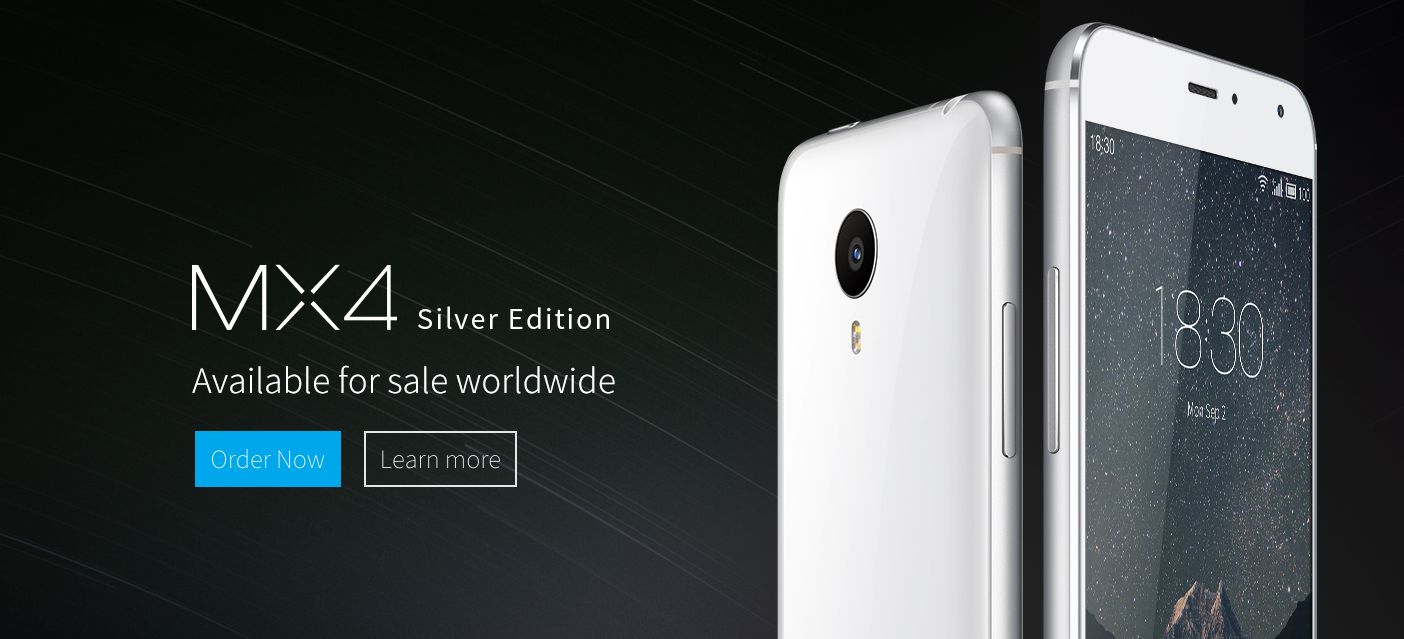
Alibaba, the Chinese e-commerce giant, has been trying for a while to put its foot in the profitable smartphone business. The company created a record last year with the biggest IPO ever worth $25 Billion. Alibaba is now betting big on Chinese smartphone maker Meizu and has invested a sum of $590 Million in the company.
Through this merger, Alibaba would try to take its operating system Yun OS further in the market. The os is based on the Android platform and provides cloud-based features like e-mail, Web search, weather updates, and GPS navigation tools. It is also called Aliyun OS. Google had previously dissuaded Acer to ship devices based on Aliyun as it was incompatible with other Android devices, and Acer is a signatory of the Open Handset Alliance (OHA).
Meizu like Xiaomi, gets its design “inspirations” from Apple
Meizu has tried to emulate Xiaomi, which in turn “borrows” from Apple. This deal might also help Meizu to take on Xiaomi, which has replaced Samsung in China as the biggest smartphone brand. Meizu isn’t even in the top-5 of that points tally, and a push by Alibaba might work in its favor.
[quote text_size=”small” author=”Alibaba “]
Alibaba Group will provide Meizu with resources and support in the fields of e-commerce, mobile Internet, mobile operating system and data analysis with the aim of developing Meizu’s smartphone ecosystem.
[/quote]
Alibaba has, in the past, invested $280 million in a messaging app called Tango and $120 million in US game maker Kabam. But these investments are yet to bear fruit for the company. It makes sense for it to invest in an established brand rather than starting a brand from scratch.
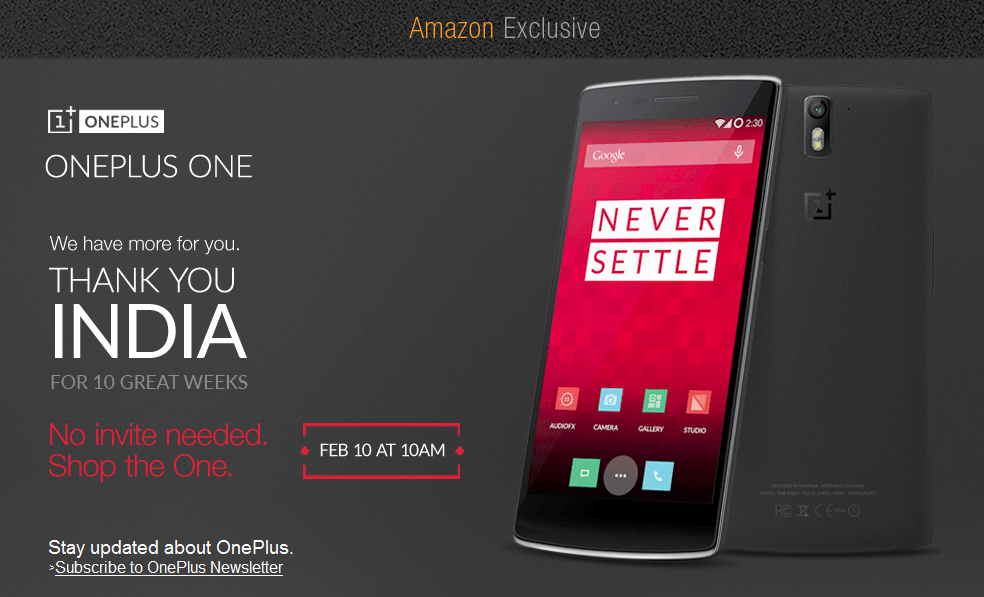
All OnePlus One fans, hold your breath. The flagship killer is going on open sale tomorrow on Amazon India. The handset will be available without an invite on 10th February and the sale will kick off at 10am IST.
The company confirmed the same via Twitter saying –
The open sale is to celebrate the 10 brilliantly successful weeks of OnePlus in India. The same can be confirmed through the Amazon India website that reads – No invite needed. Shop the One. There is no announcement about the number of units going up for sale, however, the company has hinted limited stock with the statement ’till stock lasts’.
Amazon India egged the willing customers to hurry with the statement, “The sale would be for limited quantity which is expected to run out quickly given the high demand for the phone.” The flagship One will be available for Rs. 21,999 for the 64 GB model.
OnePlus embarked on similar sales in other countries, but Indians haven’t had the opportunity to buy it without an invite. It’s the first time the One smartphones are going on open sale in our country.
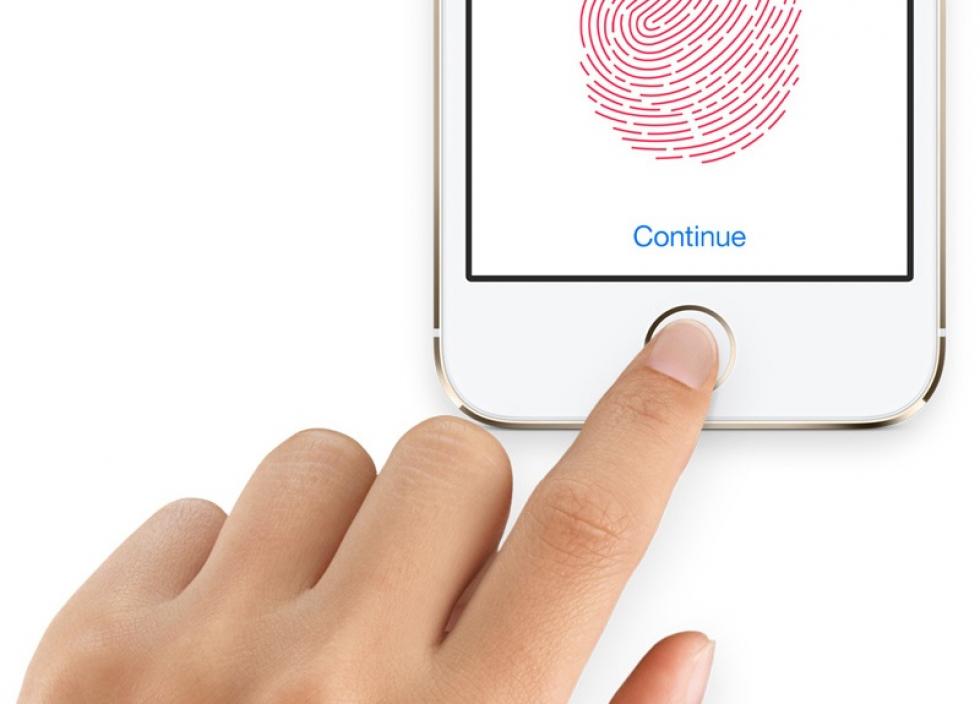
We have all seen those lame fingerprint sensor apps available on various app stores. They have been able to prank a lot of folks into downloading them. But Apple seems to have cracked the code to bring display-based Touch ID into reality.
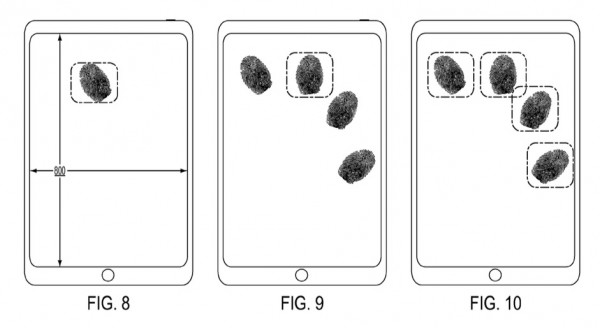
In a patent titled “Fingerprint Sensor in an Electronic Device,” the company explains the technology. According to the abstract, a fingerprint sensor may capture fingerprint at a single pre-defined fixed location on a display, or they can opt for a full panel fingerprint sensor to capture multiple fingerprints.
The Fingerprint sensor can be placed at one spot on the display or it can scan multiple fingers at once.
Users may be able to unlock their device by placing a thumb at a predetermined spot on their iOS displays. On bigger displays like the iPad, there can be multiple fingerprint detection where you may scan with all five fingers.
To keep the sensors sensitive enough, Apple plans to implement the sensor as an integrated circuit connected to a bottom surface of a cover sheet. They can also place it near the bottom surface of the cover sheet, or connected to a top surface of a display.
This initiative will let Apple take off the round home button and make the device even slimmer. The technology still seems to be in the beginning stage and may not show up immediately on the next device by Apple. There will surely be some privacy concerns with this technology though as a thief could gain access to a person’s information by just acquiring their fingerprints. Apple would have to work seriously on the security features before it can bring the technology in the mainstream.
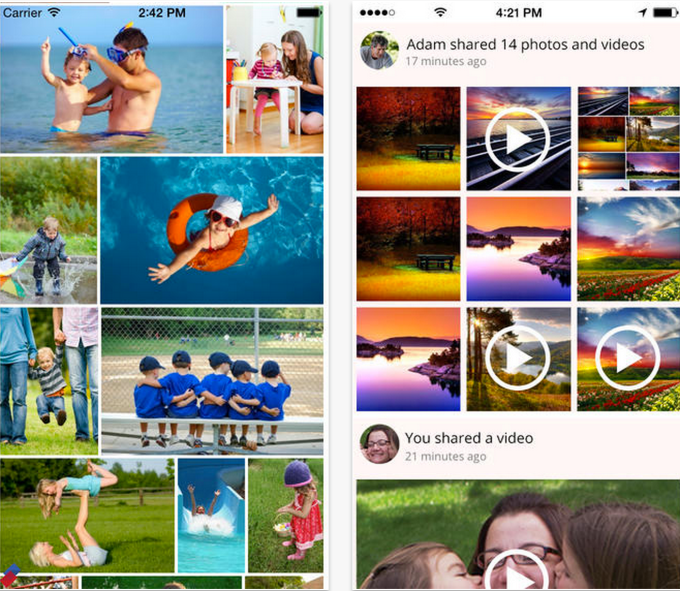
Google, the company that stores almost all of our information has now hired the makers of an app that lets user send images privately. Odysee is an iOS and Android app that lets user automatically back up the photos and videos they’ve taken on their cameras or tablets on to their home computers. The creators of this app will now join the team at Google+.
The feature that sets Odysee apart is its ability to share photos privately and automatically with other people. It gives the option to share with followers or a follower group so your pictures only reach the people you intend to share with. The app keeps the content in full quality on the home computer.
The app was co-founded by Raghavan Menon and Shiva Javalagi. On their homepage, the Odysee team thanked the users and informed them that the service will come to a close on the 23rd of February. The current users will be able to download their photos and videos as archives.
Google is rumoured to be transitioning Photos into an independent app. Giving an option to save content directly on a home computer sounds much safer than a cloud server after the entire iCloud fiasco last year. The photo sharing app space is really crowded right now with Instagram ruling the roost, so Google would have to offer a lot more features in the new independent app to get ahead in the race.
Late last year telecom equipment maker, Ericsson filed a complaint in Delhi High Court that Xioami was violating their patents. This complaint had led to a temporary ban on the Chinese smartphone maker. The ban was later lifted, and Xiaomi was allowed to import and sell their devices in the country till the 5th of February with the condition that these devices only have Qualcomm processors. Now Ericsson is alleging that Xiaomi is violating by selling non-Qualcomm devices through a website.
The lawyers for Ericsson claimed that Xiaomi was selling its non-Qualcomm devices through a website called www.xiaomishop.com. The website at present seems to have been taken down.
Responding to the complaint, Xiaomi’s lawyer said that the company has no stake in the website, and someone else was misusing their name. He also added that the company was complying with the court order, and this is a case of third party sale where Xiaomi has no control.
There was also good news for Xiaomi as a single judge allowed the company to further sell their devices till March 18. The company would have to deposit Rs.100 per imported device to the Registrar General of the Delhi High Court.
Xiaomi is currently selling its last flagship, the Mi4 in India and the extension of the sale period would be a good news for the company’s consumers. The next sale will be held on February 10th where the Mi4 and the Redmi Note 4G will go on sale.
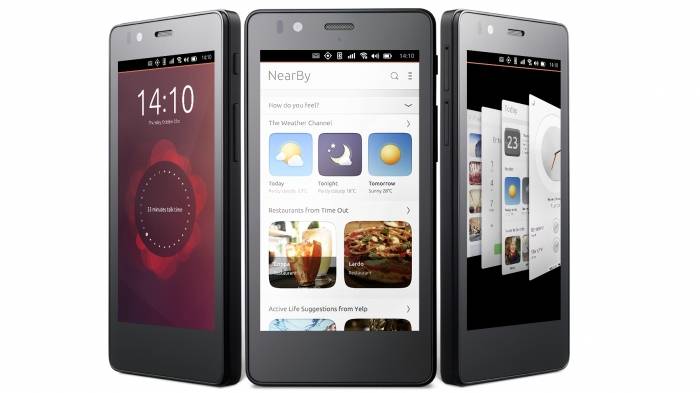
Ubuntu, a powerful, fast, and clean operating system (OS) debuted over two years back, but failed to make space in this over-flooded market. But finally, the operating system has got direction and an Ubuntu Phone is coming out next week.
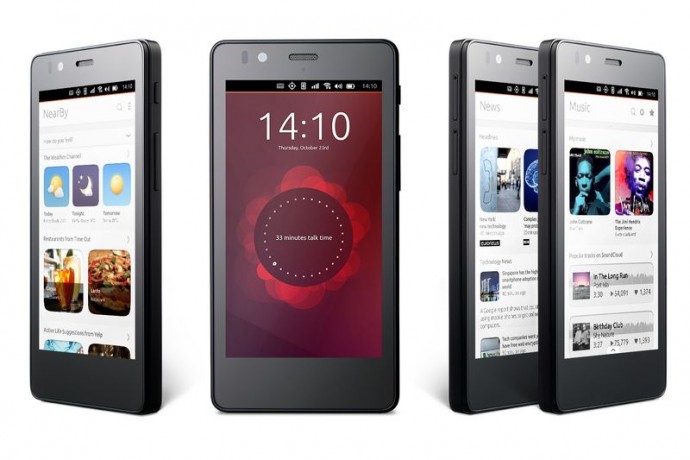
Titled Aquaris E4.5 Ubuntu Edition, the phone is built by the Spanish company BQ. The low-budget handset sports a 4.5-inch qHD display. It is powered by MediaTek Quad Core Cortex A7 processor clocked at 1.3 GHz paired with 1 GB of RAM and a Mali 400 GPU. The device has an internal storage capacity of 8 GB along with a battery of 2150mAh. An 8MP rear shooter and a 5MP front snapper sits on the handset.
The phone is expected to be priced at $195 (somewhere around Rs. 12,000) and will go on sale in Europe on February 9 via flash sale model.
Ubuntu Phones will come with a new user interface (UI) called Scopes that will change the way we interact with our phones. “A new UI paradigm, designed to deliver content and services directly to categorized home screens, giving users a rich, unfragmented experience.” Scopes will give categorized home screens to pull content from multiple sources. Users can get the content from YouTube, Vimeo and other sources on the same page.
A new operating system means native apps need to build up. But Canonical, the company behind the operating system, doesn’t want its users to wait that long. It is making a way to port apps from its desktop Linux distribution Ubuntu to the Ubuntu Phones. So, around 1,000 apps would be available to download. It has been learnt that WhatsApp is not backing Ubuntu, so the instant messaging service will not be a part of it for now.
Canonical is planning to release it in the US market soon. An Ubuntu-based smartphone is a big step by the company and was much-needed to bring it to mainstream. It would be interesting to see how users respond to the new OS.