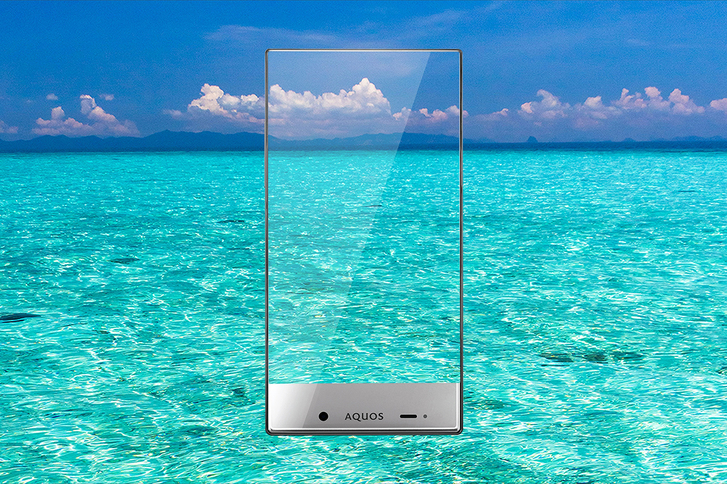
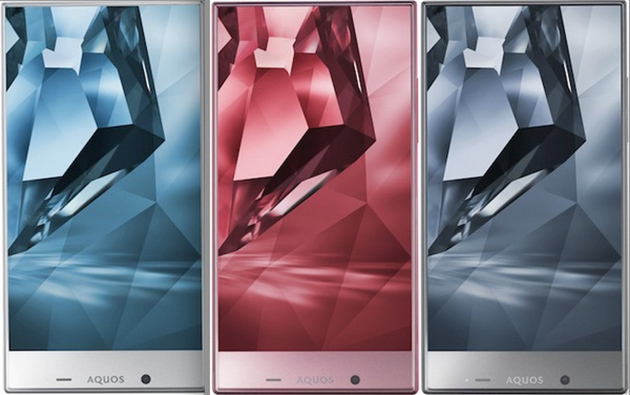
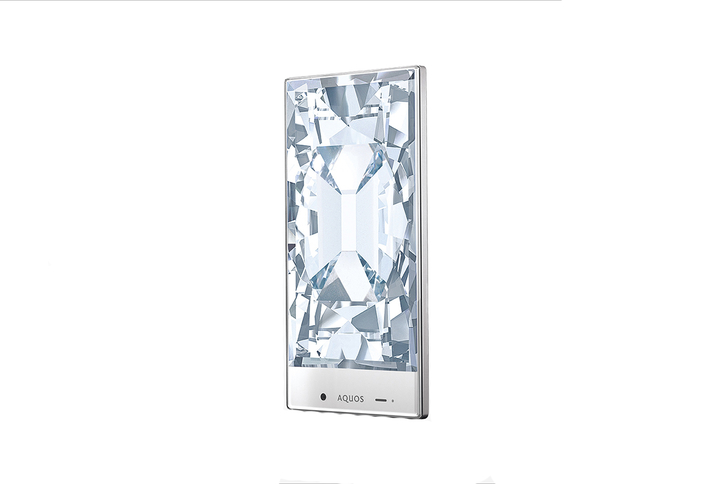
Sharp is not a company which people usually associate with Smartphones. But, Japanese electronics giant recently introduced a pair of amazing smartphones that barely have bezels.
Sharp has managed to stock a 5.5-inch screen into a body that stops right at the edge of that display. Not only that, the innards of the phone are also impressive. The 5.5-inch Sharp’s Aquos Crystal X is at 1080p resolution and there’s a 2.3GHz Snapdragon 801 ticking away inside its 10mm thick chassis.
The less powerful and slightly smaller Aquos Crystal packs a 1.2 GHz Snapdragon 400 and a 5-inch 720p display. The phone comes with a Harmon Kardon sound effects engine that delivers “Clari-Fi” to restore quality lost in music compression. There’s also “LiveStage” streaming and native compatibility with the Harman Kardon Onyx Studio Bluetooth speaker.
Sharp is said to enter the US smartphone market with these two phones soon. It has been reported that a invite from US Network Sprint that invites guests to “Take the edge off” has been spotted. It’s also decorated with crystals, suggesting the Sharp Aquos Crystal will be launched on 19th August in the US. The Japanese launch of the Sharp Aquos Crystal and Crystal X has already taken place via Sprint’s parent company SoftBank.
Sprint hasn’t officially confirmed it’ll offer the Crystal, the reports strongly suggest that it will happen. Sprint is holding a press conference in New York tonight, and its invitation is rife with crystalline symbolism and a tagline that associated with the Aquos’ bezel-less screen.
However, there is no word on pricing or availability in India right now but we’re hoping it arrives here soon. That or it inspires other phone manufacturers to create an interesting bezel-free design like this.
Using smartphones and tablets is a big help for every creative person. A quick note of an idea that popped out of no where or to save blueprints that are worth checking out, apps these days not only help you save ideas but also allow you to share them with your friends. Even better, they inspire you to bring your creative insight out in the light.
We are listing top 5 apps to help you inspire and manage your creative endeavours.
The first recommendation for a creatively inclined person is a cross-device easy-to-use app which stores your notes, photos and to-do lists. Evernote is an easy-to-use, free app that helps you remember everything across all of the devices you use. It lets you stay organized, save your ideas and improve your productivity. Evernote lets you take notes, snap photos, create to-do lists, scan business cards, record voice reminders. Best part? It makes everything searchable, whether you are at home, at work, or on the go.
If you are not familiar with TedTalks then, we don’t know which planet you are from. TedTalks believe in power of ideas to change attitudes, lives and, ultimately, the world. The official app as simply as it can be named is called TED. It even sports a button called “Inspire.” Press it and get an earful from the geniuses, mavens, and rule-breakers who are changing the world.
This amazing drawing app has won numerous awards like Apple’s App of the Year award, a Verge interaction-design award, and a Fast Company Crunchy for best design. Furthermore, it’s not all about drawing, you can start with just jotting down ideas, sketching, and outlining. If you want to see all the awesomeness it has to offer, there are loads of tutorials online that are very much worth checking out.
The Whack Pack is a great tool for establishing innovative thinking as a daily habit or for pulling fresh ideas out of one’s subconscious. The app features the 64 cards offered in the physical deck – divided into 4 suits: Explorer, Artist, Judge and Warrior. Each card features a whimsical drawing by Von Oech and a snappy yet detailed explanation of the concept behind the card. For the app, Von Oech has also added 20 cards that illuminate the wisdom of the Greek sage Heraclitus, whom Von Oech refers to as “the world’s first creativity teacher.”
Clear is a nice-looking list-keeping app that is really simple, quick and easy to use, no matter if you are creating notes or to-do lists. Clear’s playful and clutter-free interface makes it easier than ever to stay organized. It’s as easy to use as pen and paper: pull down to add a new item and swipe right to complete a task – it’s that simple.
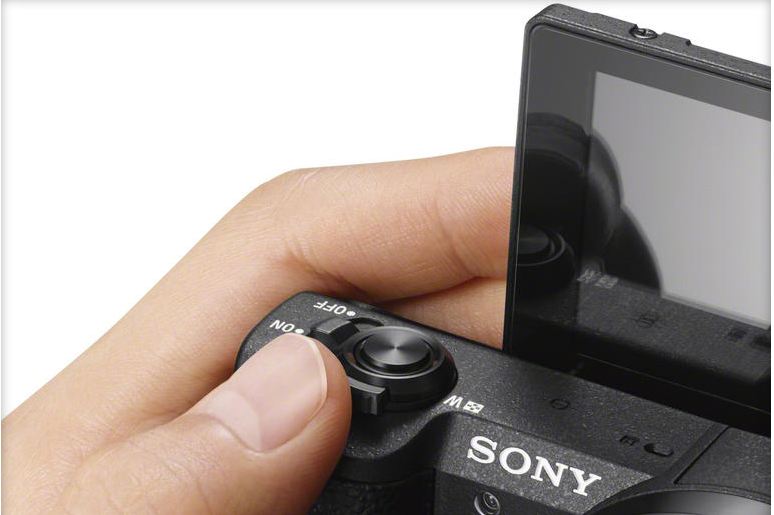
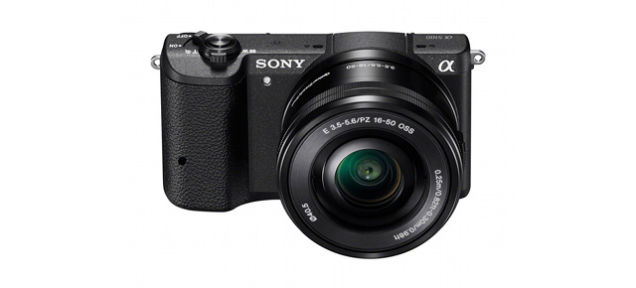
Adding to its line of mirrorless cameras, Sony is back again with the new A5100. Six months after introducing the A6000, Sony replaces the NEX-5T and dropping the NEX line, unifying all its mirrorless interchangeable-lens cameras with Sony Alpha A5100.
It’s also a very minor upgrade over the existing A5000. It has a similar body design, but adds more advanced image sensors. The Sony A5000 is a small size camera with the smallest APS-C interchangeable-lens camera out there. However, before this upgrade, it didn’t have the hybrid autofocus system. The camera is extremely small-sized (4.3 x 2.5 x 1.4 inch) to be packed with so many feature.
The camera does not have an electronic viewfinder, but it does have a NEX-5T-like touchscreen. The ability to tap and focus is quite convenient. It pairs 179 phase-detection AF points with 25 contrast-detection AF points. Sony says it can lock on in as little as 0.07 seconds. Continuous shooting mode supports up to 6fps.
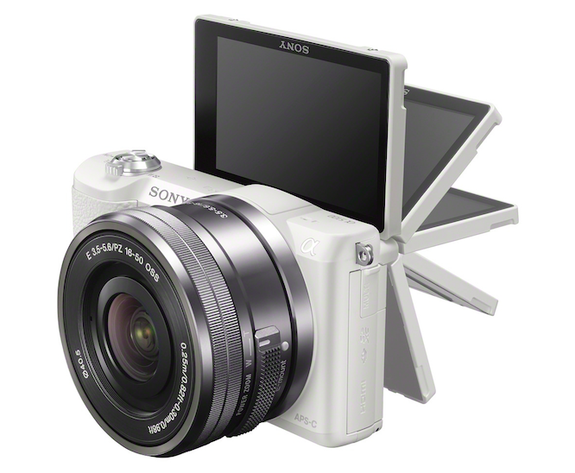
The Sony A5100’s 921k-dot display flips forward 180 degrees for self-portraits. There’s also built-in WiFi, XAVC S video capture and a top sensitivity of ISO 25,600.
If you are a video shooter, then Sony A5100 also stores cool innards for you. There is an option of recording in XAVC S, which allows users to capture footage in 1080p at a bit rate of 50Mbps. Sony says the camera can optionally make two versions of clips: one in AVCHD for easier sharing, and the other in XAVC S with a greater focus on quality. Although, they haven’t provided a mic jack which is disappointing.
But overall, the Sony A5100 seems like a great value. It’ll start shipping in early September, but you can pre-order now. It is available in two color options – white and black.
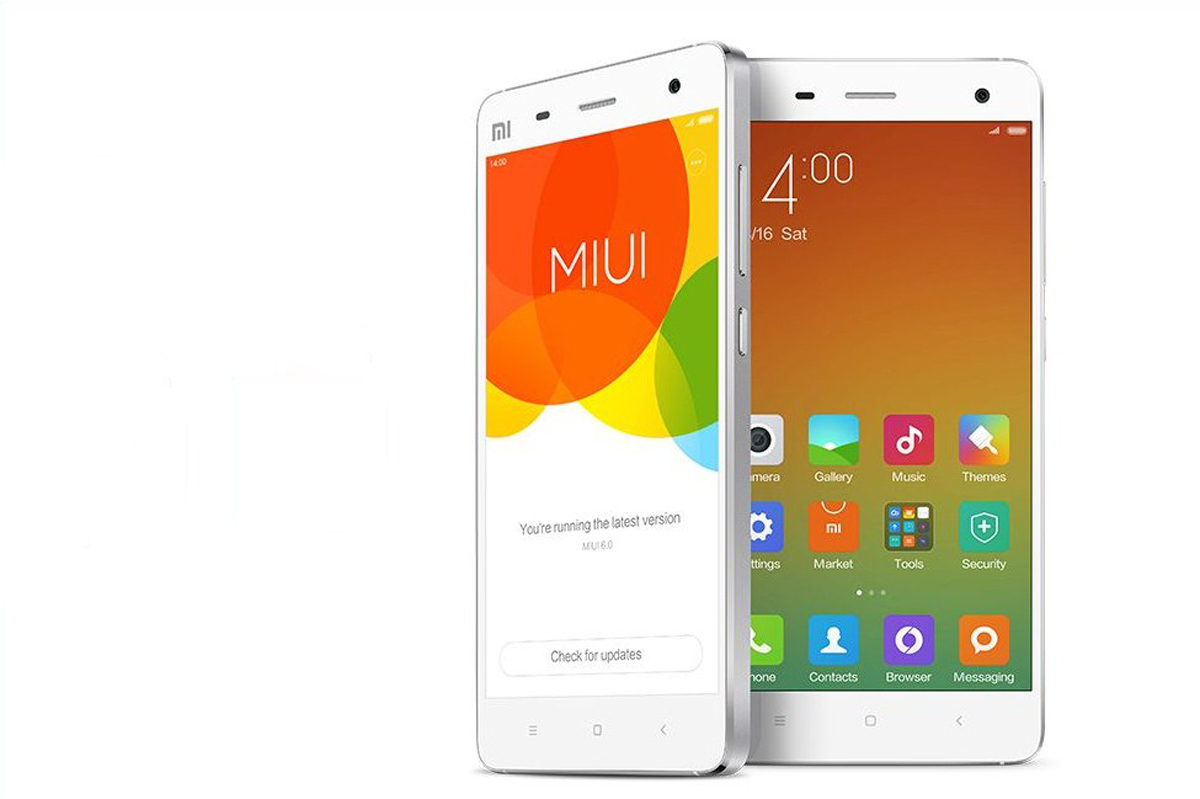
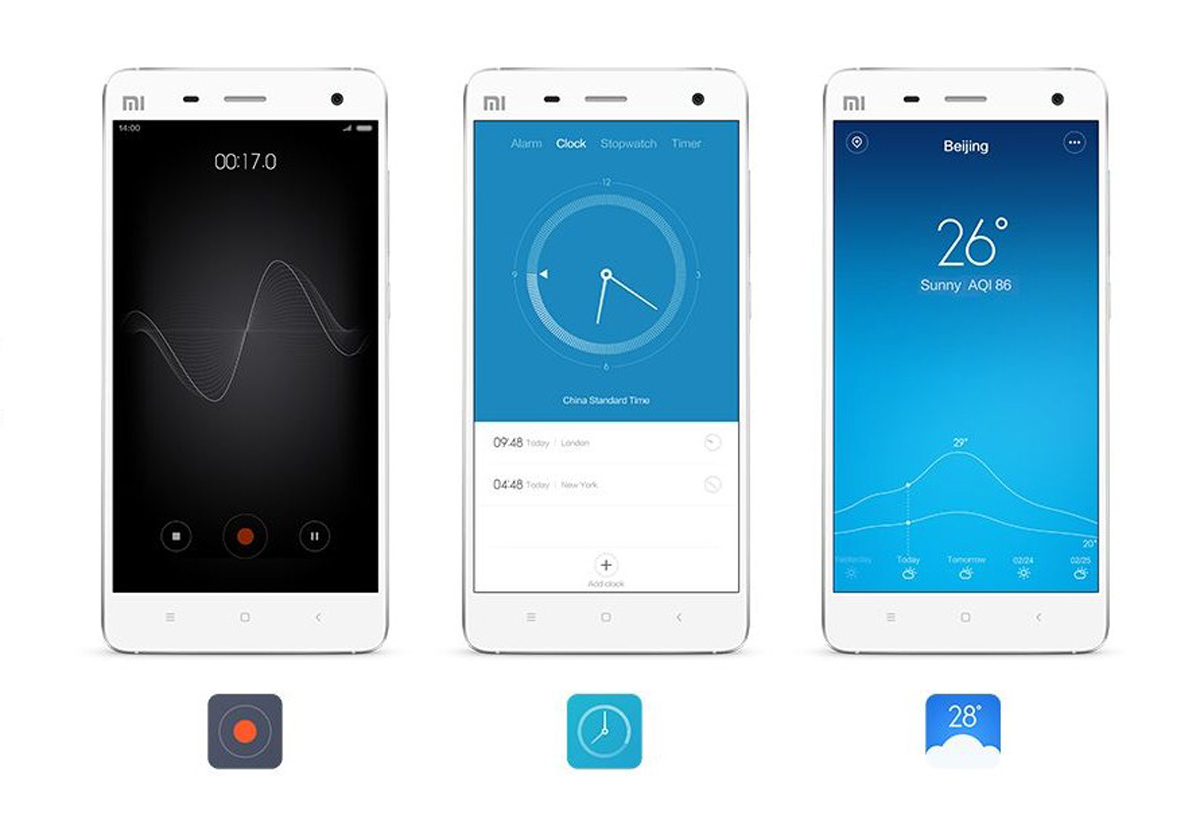
Xiaomi is growing and how, the young Chinese company has earned tremendous brand recognition in a short period. Its Android based UI, the MIUI has been a recognized and well-appreciated interface. Lot many folks are impressed by the regular updates and superior customizability of the UI. The company announced that it will be bringing the next version of the UI, the MIUI 6 for developers, and it will be out for the users very soon.
The company released a teaser video of what the new MIUI would look like and true to Xiaomi’s design approach; the new UI looks rather close to iOS 7. Xiaomi doesn’t make it a secret that they derive some of their “inspiration” from Apple products, and this one seems to fall just in line.
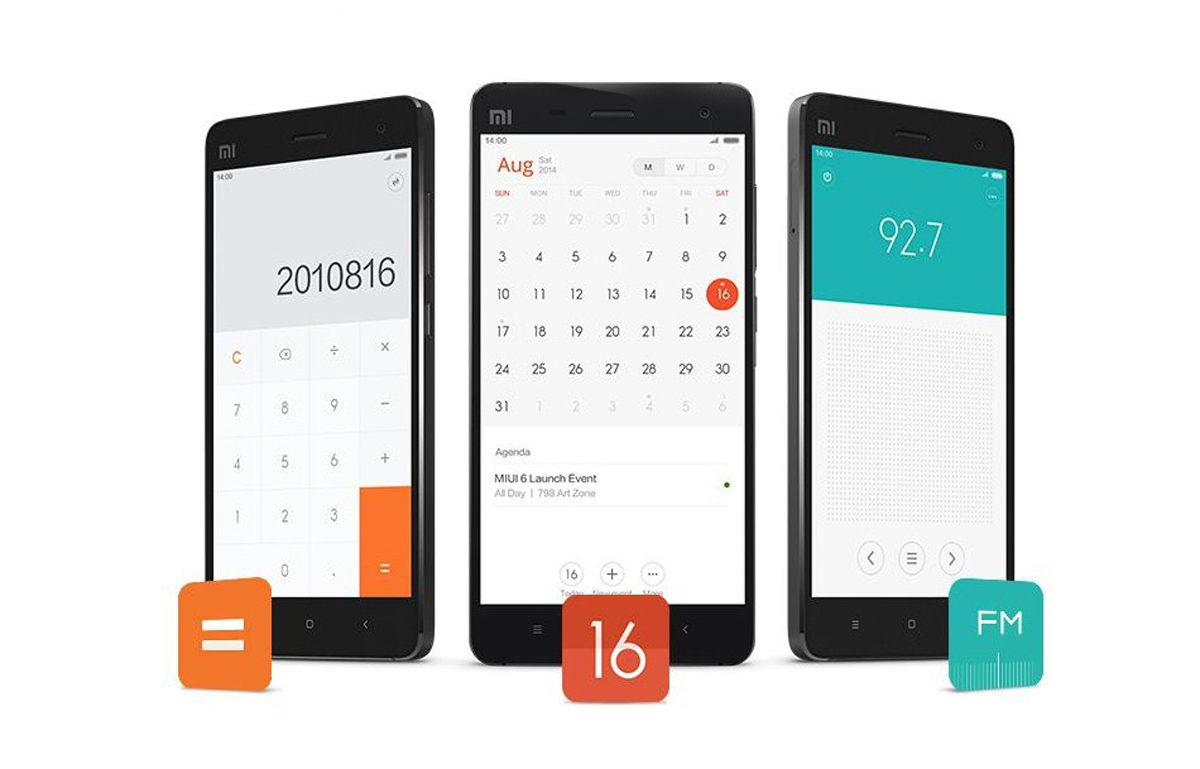
MIUI 6 will follow a minimalistic design pattern with lots of colors. It will also have enhanced security and new features such as immersive parallax effect on apps like clock.
Minimalistic Look with subtle graphics.
The new update according to Xiaomi will be less distracting, and if the visuals are to be believed, the clean interface has some sweet graphics backing it. The new phonebook allows you to identify unknown callers; mark service numbers (as banks, scams, sales) and see a visible menu of the carrier’s hotline numbers so you can easily choose your option without trying to decipher the IVRS.
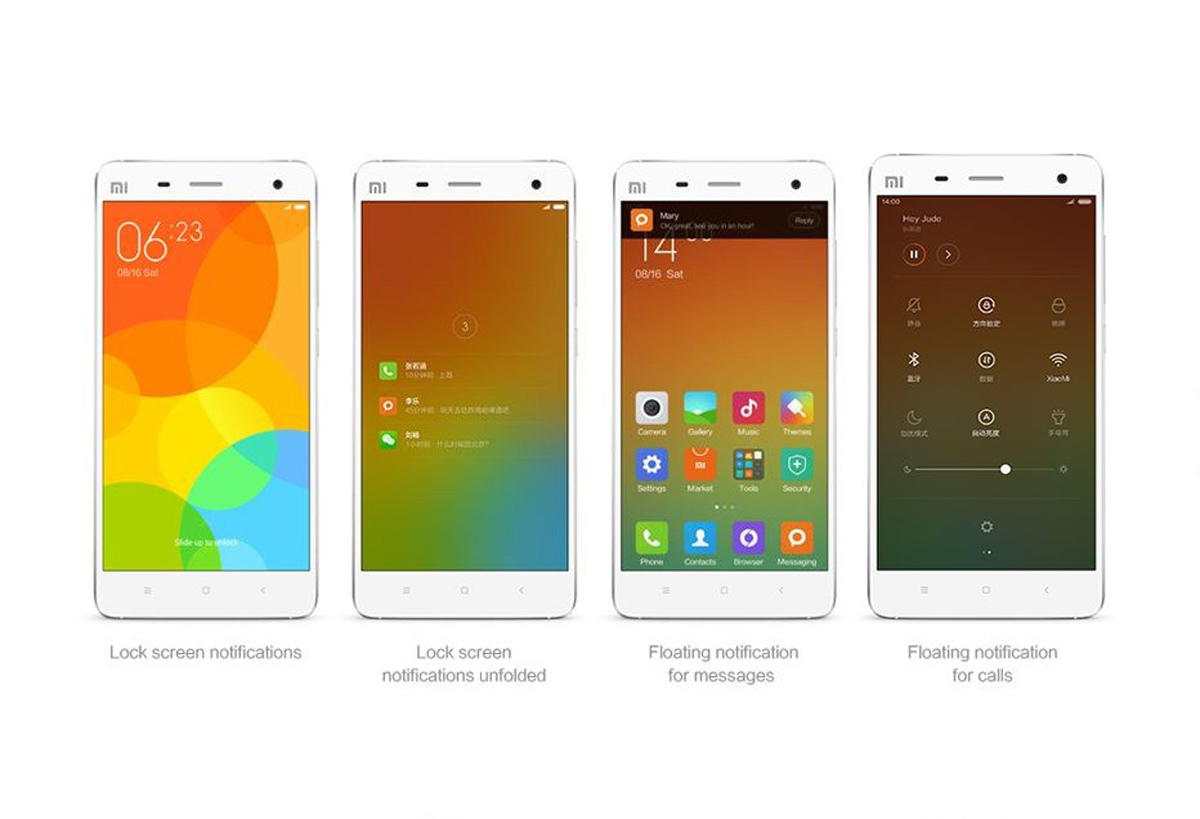
MIUI 6 will have new gestures for the home-screen and a redesigned notification shade with toggles for various settings. The notification center shows notifications on the lock-screen and the UI has support for more than 5,000 theme options.
The Flat design is almost reminiscent of sticky pads.
The flat design sure makes some of the apps seems as if they are sticky notes. The translucent features of the UI stand out and give dimension to the content that is also visually appealing.
The Color options are visually appealing.The Color options are visually appealing.The Color options are visually appealing.The Color options are visually appealing.
Overall, the design is clean and easy on the eyes and will definitely impress the seasoned MIUI users as well as new adopters. But it’s time the company took a departure from blatantly copying Apple; even their website follows the Apple design. Now that the company is out of the Chinese borders and made its mark in countries across the globe, it needs an identity for itself. The company is still ahead in terms of product design, both interiors and exterior, than many of its competitors, but “Apple copycats” is not the tag they want when attracting a wide audience.
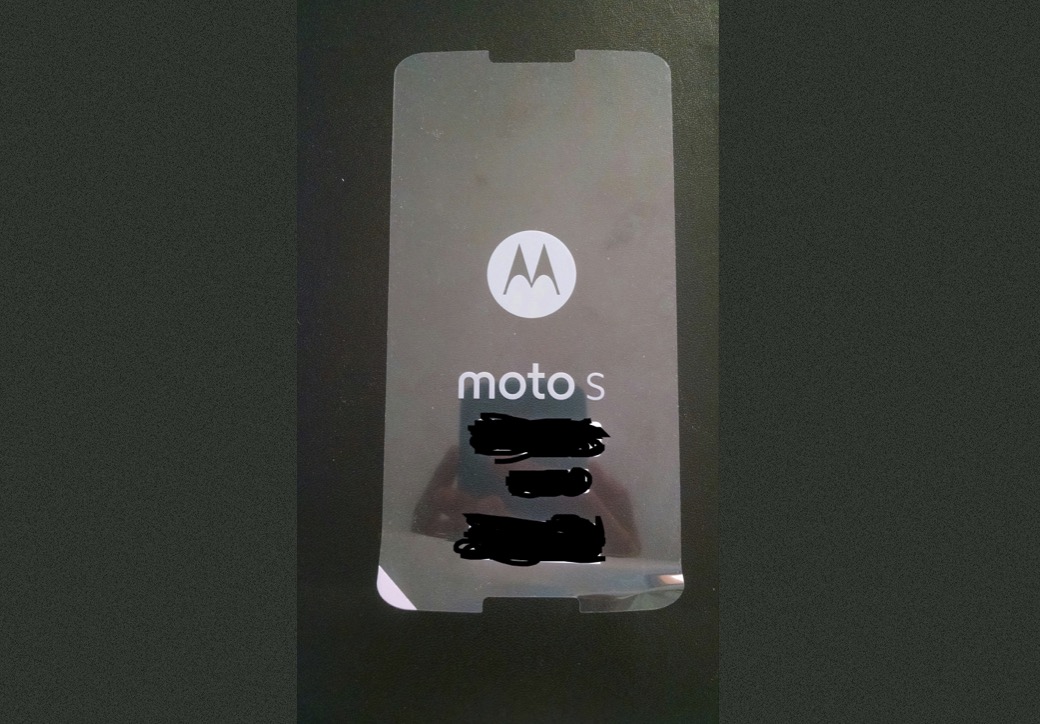
A leaked screen protector for an unreleased ‘Moto S’ has started speculations that Motorola is building Google’s next Nexus smartphone. The proposed Nexus 6 has the working name Motorola “Shamu,” and is supposedly slated for a November 2014 release.
The screen protector sheet has Motorola’s logo printed on it, alongside the handset’s ‘Moto S’ name — and there are also some identification numbers that were covered to protect the source. This is the first hard evidence we’ve seen so far for the long-rumored ‘Shamu’.
As for now, Google’s Nexus have been manufactured by top smartphone manufacturers, including Samsung and LG. However, different online news reports and leaks stated that Google won’t be naming the Nexus series as they did before (Nexus 1 to Nexus 5). Leaks stated that Google is thinking of renaming the Nexus series as Android Silver.
TK claimed in a video that the device will have a Quad HD or 2K display that’s 5+ inches in size, a 13-megapixel camera, and a “ridiculous amount of RAM.” The screen protector also suggests that like other Motorola handsets, the Moto S will have dual front-facing speakers.
It’s unclear at this point when the Moto S will make its debut. We’re not expecting to see it at the Motorola event on September 4 — the Moto X+1, the Moto G2 and much awaited Moto 360 smartwatch are likely to be the stars of that show — but we could see an announcement from Google or Verizon in October.
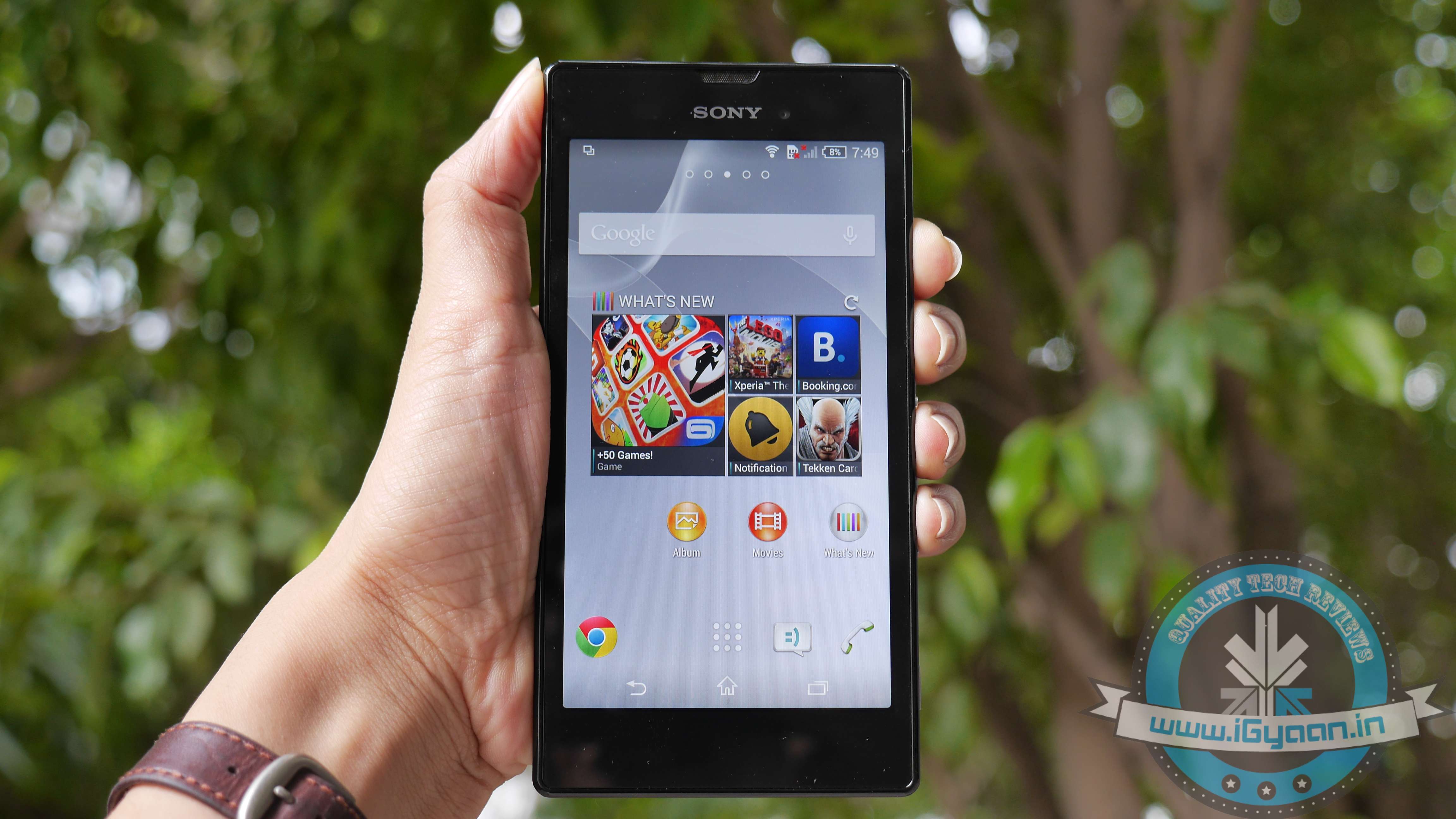
Sony has been a background player in the smartphone game. They have lost some market in the past and haven’t brought anything out of the ordinary in a while. The Japanese company has now come with the next in their T series of smartphones. The Xperia T3 looks impressive on the outside but the innards leave a lot to be desired.
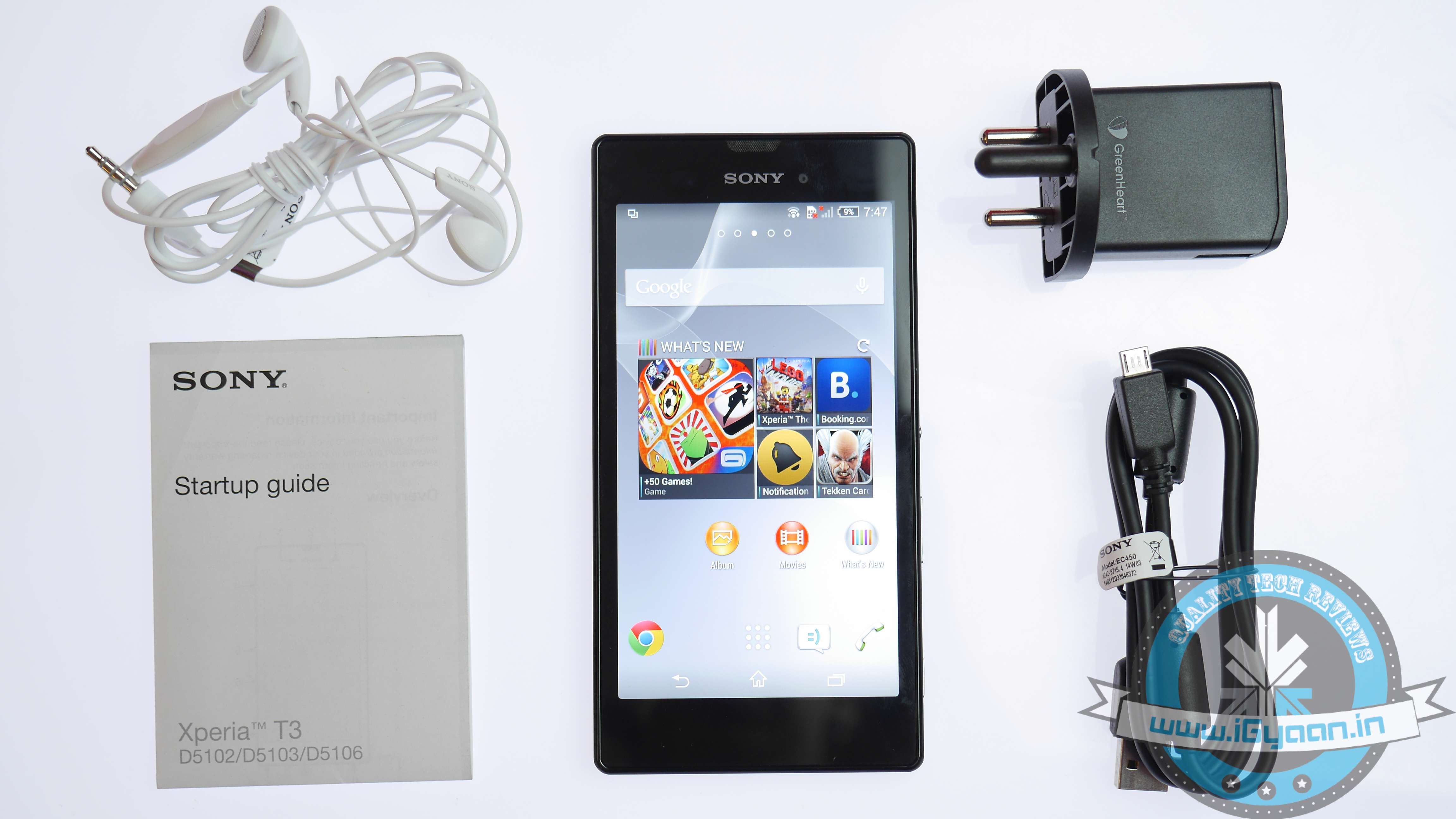
The box offers the usual. The headset could have been better.
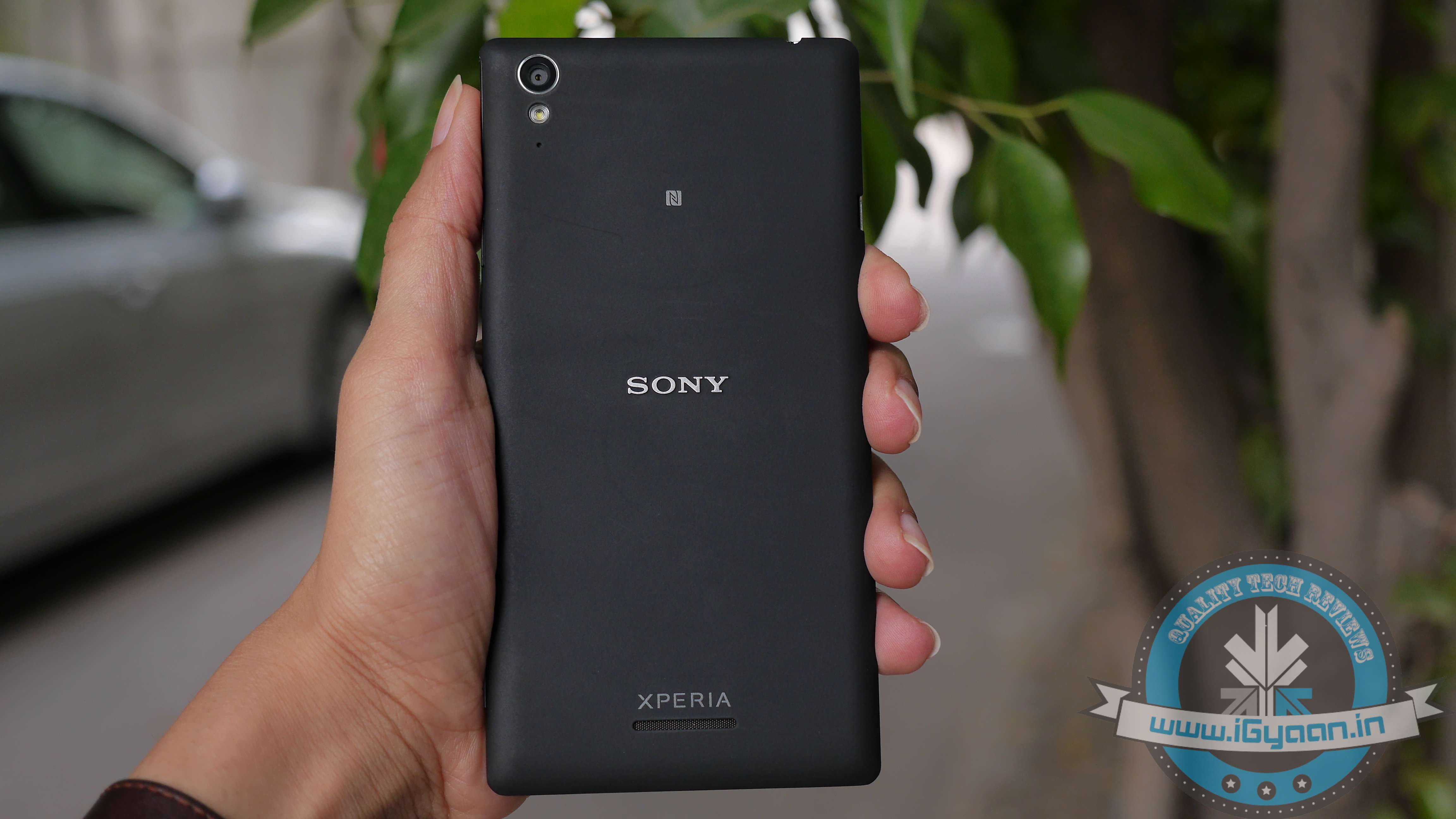
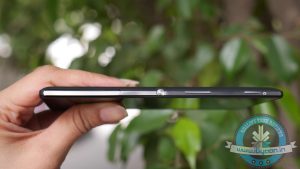
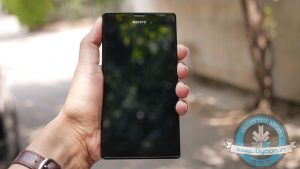
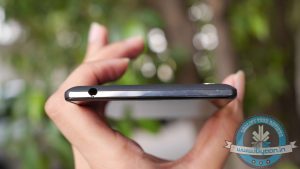
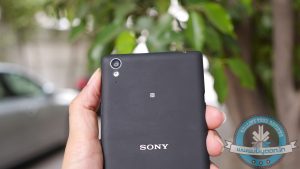
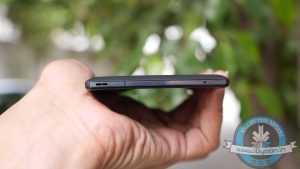
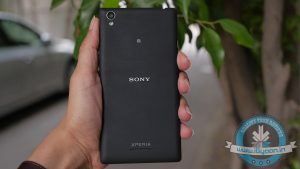
The box comes with the usual inhabitants; the handset, pair of generic looking headsets, charger, micro-USB to USB cable and the documentation. The headsets provided in the box that is available is very average and doesn’t at all say Sony. Design-wise the phone is good to look at. The back panel is made of a gradient or distressed material that makes the phone appealing to hold with its enhanced grip. The exteriors of T3 appear premium, and the 7.7mm ‘thinness’ does make the phone look sexy.
The back panel makes the phone look premium and is good to hold
Specs wise, the Xperia T3 runs Android 4.4.2 out of the box. It is powered by a quad-core 1.4 GHz, Snapdragon 400 processor with an Adreno 305 GPU. The RAM stands at 1GB and 8GB of internal storage. The phone gives expandable storage options up to 32GB. The device is NFC capable. Compared to its competition and its price, the specs don’t feel satisfactory. The battery on the device is 2500 mAh that can take good care of the phone for about a day.
Display wise, the T3 sports a 5.3 inch IPS LCD screen. The resolution of the screen is 1280×720 with a pixel density of 277 ppi. The annoying part of this device is that even with its massive display it only accepts four finger touch.
The main camera on the device is 8 MP shooter whereas on the front is rather disappointing 1.1MP camera, which is capable of shooting 720p videos. The dedicated camera button is a welcome feature. The User Interface (UI) is similar to previous generation Sony Timescape UI. There are some decent customization features but overall it is pretty much the usual Xperia experience.
Multimedia experience in the T3 is appreciable. The playback and viewing angles on the display are great. The sound from the speakers is decent and gets the job done, but Sony should have brought in better speakers.
Overall, the device looks like a lazy attempt by Sony and has too little for too much. The phone is priced at Rs. 25,990. The competitors have lot better specs at this price point, and Sony really needs to buck up its game if it wants to be perceived as a worthy smartphone company.
Delhi’s audacious project of bringing Wi-Fi connectivity to the markets of Delhi has begun at Khan Market. The shopping area now has limited time, free usage internet. After the free usage has expired, the shoppers can just use scratch cards to get access to the network.
To connect to the network, you just have to punch in some basic information such as email ID and phone number. Next you get a one-time password (OTP) on your phone using which you can register into the Wi-Fi network.
The facility was to be extended to Connaught Place (CP) but it is facing some technical delays. The major issue in bringing WiFi access to CP has been the size of the area. To avoid the place from looking cluttered, the cables for the services are being laid underground.
Tata Docomo and Vodafone who have partnered together with NDMC for the service say that CP will be Wi-Fi activated by the end of the month. As of now a beta service is being run in the N-block of CP.
The security agencies based in CP have also raised some issues with the service. According to them the WiFi service may be used to interfere with their network. But the folks at NDMC state that the networks used are extremely secure.
The service providers have got their security clearance after clearing five levels of certification testing. The project can also be monitored by the Department of Telecom, thereby being in safe hands.
Microsoft’s new update of the Windows operating system codenamed as Windows Threshold should be available as soon as September. The software maker has been gradually working on the release over the past several months, adding and tweaking features ready for a “technology preview” release to the public.
According to a ZDnet report, Windows Threshold would likely have the official ‘Windows 9’ name, when the ‘technology preview of the OS starts seeding late next month. People who would like to install the Windows 9 ‘Technology Preview’ will have to sign up to receive automatic regular monthly updates that Microsoft is expected to seed, once the preview build gets an official rollout.
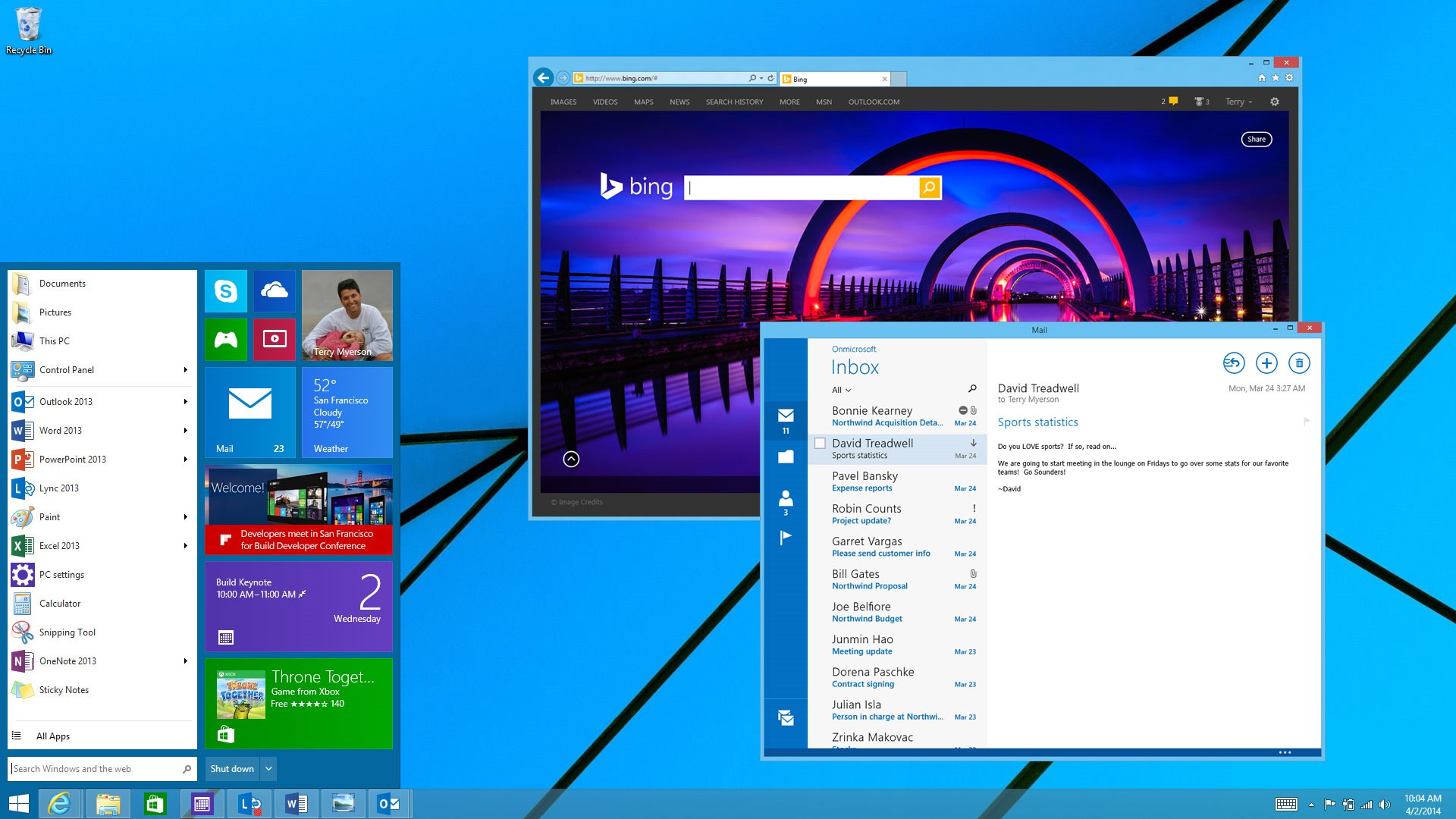
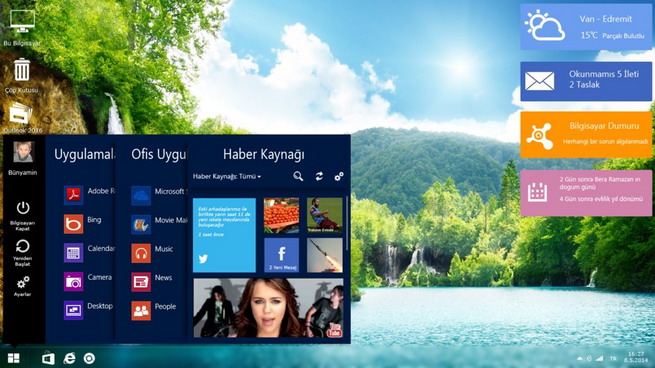
Windows 9 leaks present a refreshing new look while keeping the classic Windows look.
The Windows 9 preview will be similar to how Microsoft first let developers test Windows 8, with features not fully complete or missing. It is said that the updates will be pushed to users who install the preview on an automatic basis, meaning the release will change rapidly over the coming months before it’s finally ready.
Existing internal versions of Threshold include a new mini Start Menu, “Metro-style” apps that float in separate windows on the desktop, a virtual desktops feature, the removal of the Charms bar feature, and an early version of Cortana. Microsoft is also making several UI changes to Windows 9, including some tweaks on the desktop to improve upon Windows 8.
On desktops, Windows 9 ‘Threshold’ interface is expected to boot as default rather than letting users choose between the traditional Windows and metro-style user interfaces.Windows 9, once official, is expected to dynamically fit in the device, which it runs.
Microsoft CEO Satya Nadella has said Windows 9 will be an all-around OS that will be compatible with personal computers, tablets, smartphones and video-game consoles. In particular, differences between Windows Phone software and standard PC software should be removed. As of now, Windows 9 stable version is expected to start rolling out by spring 2015, though this is yet to be confirmed by Microsoft. The pricing details of this OS are yet to surface.
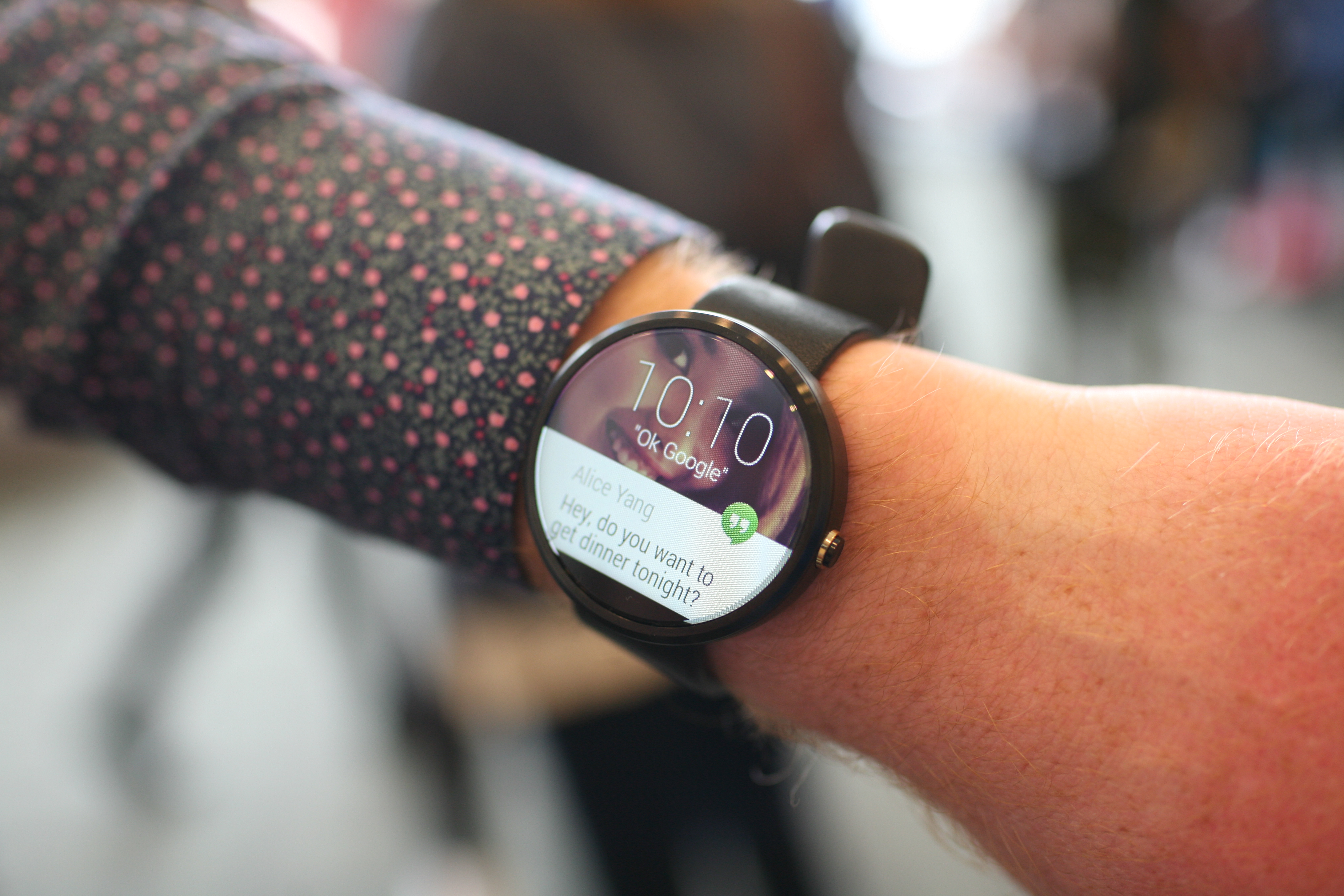
We have been hoping to get our hands on the Moto 360 smartwatch next month. It is said to launch on 4th September. But it seems that we don’t have to wait long to get a preview of what Motorola has in store for us.
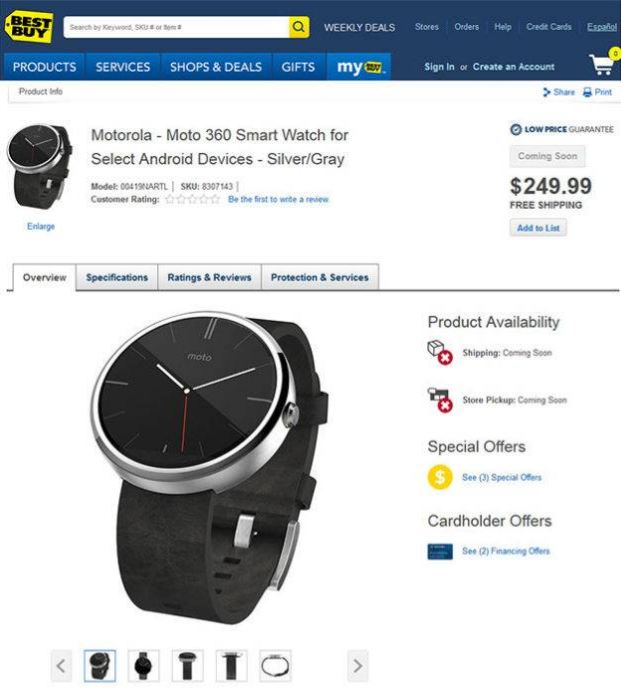
Best Buy has gone ahead and (accidentally?) spilled the beans by releasing the device’s features and price. The big-box retailer has posted a product listing for the timepiece that appears to reveal many (though not all) of the specifications. We have seen the device and many leaks that gives us a fairly good image about what the device will look like. Up until now, the only one thing that had been alluding everyone was the price.
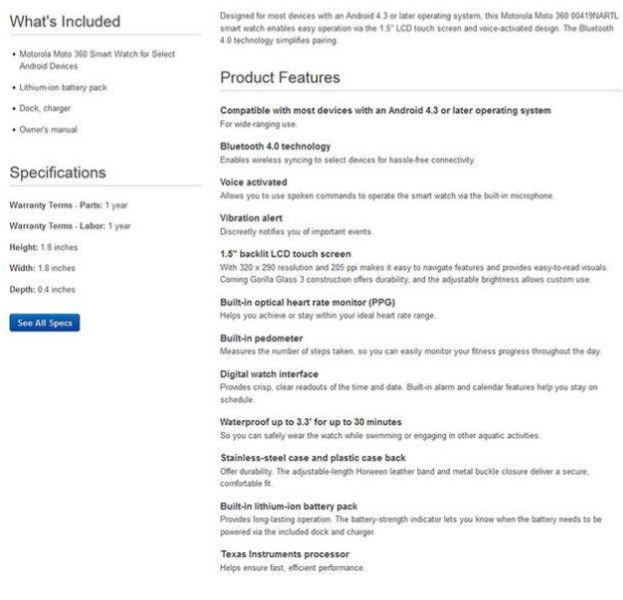
According to specs published on Sunday on the electronics retailer’s website, the Moto 360 will cost $250 and feature a 1.5-inch backlit LCD touch screen with a 320×290 resolution and 205 pixels per inch. Corning Gorilla Glass 3 will protect the Android-powered smartwatch’s screen.
The voice-activated smartwatch will sport an optical heart rate monitor, pedometer, and Bluetooth 4.0. It will be compatible with most devices running Android 4.3 or later versions of Google’s mobile operating system, according to Best Buy’s page.
The Moto 360’s availability is listed as “coming soon,” which we can only presume to means after Motorola officially debuts it. Google has hinted that the smartwatch will arrive at some point this summer, and Motorola will likely debut the watch at a press event on 4th September.
Specs mentioned in the product page:
1.5-inch backlit LCD touch screen
512MB of RAM
Waterproof up to 3.3-feet for 30 minutes
Texas Instrument processor
Built pedometer and HR monitor
Compatible with Android 4.3 or later
However, Product pages have been wrong in the past. The final specifications for the Moto 360 might differ slightly from what Best Buy has listed, as might the device’s final price. As such, it won’t be shocking if there are at least a few surprises left when the Moto 360 makes its official debut next month.
Samsung has more or less dominated the smartphone market in the past couple of years. After a short, yet fruitful reign of the Cupertino based Apple Inc. and their iPhone, Samsung took the pole position and has not wanted to let go ever since then.
With the power of 100% component control, in-house manufacturing and software R&D, Samsung led the rat race thanks to all its strengths. But, just like every other leader in the past, Samsung took the threat of competition lightly. So sure of their position and their loyalties, the Korean manufacturer failed to realise the need of the modern day man.
2014 may have seen less of it, but up until last year it was impossible to go ten days without an announcement from Samsung and that too just the mobile division. With their consumer electronics and home appliances doing their bit separately. Samsung wanted to be present, and today it is present in each and every price segment.
So here is a big question; why has Samsung started to dwindle, why are the consumers against the company they loved so much and what has really happened?
The answer lies in Samsung’s own flawed approach. Even though the company made sure it could tighten its ends and function like a well-oiled single operational unit, too much goodwill from within the organization led to almost zero critical feedback. Everyone in-house was busy appreciating how wonderful they are, no one telling them where they are wrong.
The Korean giant also failed to answer people’s unanimous need of better-built phones that not only performed well but were also made with the use of premium materials. Samsung failed the consumer’s demand and hope within a brand that people had only just begun to trust. Samsung never changed their design philosophy, making handset after handset to feed the familiarity of the brand.
A premium phone to create excitement in the flagship market; and then a mid-segment with similar looks and software capabilities to excite and create aspiration for those who could not afford the premium segment. Then there was the down segment shift of the same design to the lowest price point.
Not to say that this strategy didn’t work for Samsung, 2012 and 2013 alone saw an estimated 150+ launches for Samsung Mobile division, that is four times their next closest competitor and 75 times that of Apple Smartphone announcements, being the iPhone 5s and 5c.
2014 was also supposed to be a year of Samsung; many launches and many price segments and many new-magical innovations. But, things like multi-window and air gesture were not going to get attention. Hopes were pegged on a metal built handset with a 2k display, which was supposed to woo the crowd and earn the Korean company millions and millions of dollars with the Samsung Galaxy S5. But, ironically the complete opposite started to happen, the Korean giant started to lose market share and how. The company is worried, to the extent that they have reshuffled policies and opened up board rooms for strategy building. Resources are being spent, and ideas are being made within the company to rebuild the position that Samsung seems to be losing fast.
Samsung knows very well that they failed with the Samsung Galaxy S5, especially in markets like India, where they offered a sub standard and sub performance flagship, which not only quickly dropped in price but also in fan fare.
Samsung has never been a humble company; employees seem to be trained always to be arrogant and adamant about their policies, and about the position of the company. The beginning of the company itself is said to be tainted by a tale of controversy. Originally started as a trucking business in 1938, by the name of Samsung Trading Co, the company had corrupt ties with war governments trying to give an industrial strength to the country and survived through the war to become what is now a mega company.
The company’s chairman of 25 years, Lee Kun-hee resigned from Samsung in 2008 after being indicted and found guilty of embezzlement and tax evasion in Samsung’s infamous slush funds scandal. It is estimated that the company had over US $200 million in budgets for bribing prosecutors and politicians in favour of Samsung policies and making them blind towards the company’s misconduct.
But how does that play in today’s scenario? and how does that affect us in any manner?
It is speculated that Samsung has kept a stiff upper lip in India since its inception in the early days. The company is said to have deep ties with the Indian government and deeper pockets for the not so honest few in control. Samsung has often managed to bend rules in favour of their products and managing to change laws to better help the company’s growth.
However, while the Korean company was busy playing its deep rooted tactics, a new enemy was lurking in the shadows. Samsung essentially dethroned by local competition in markets they wouldn’t have imagined possible.
Micromax has always been playing catch up with Samsung, playing on the weaknesses of the company and essentially delivering a value for money prospect for the consumer who was sick of the boring design and hardware mix of Samsung. Micromax even brought unibody aluminium phones to mid and low segment markets while Samsung’s flagships continued to be made out of plastic. (we meant “Polycarbonate painted – er – plastic”)
In China on the other hand, Samsung never considered Xiaomi a threat, assuming that the company would never reach production requirements of the market. Most investment specialists and market reach firms estimated that Xiaomi would fizzle out in less than a year from inception. But just like Nokia back in the day, these people were wrong, very wrong; Xiaomi dethroned Samsung to gain not only the current position but as the leader in the Chinese market. The company has secured millions of pre-orders of their upcoming phones, the Redmi and the Mi4, ensuring them success and a tight position on the top of the chain for a few months if not years.
Xiaomi has also seen success in markets like India where they have managed to gather interest of the consumer, although largely lacking supply. The Indian market may not be that forgiving to the company if their current policy of sale of phones continues. However, this has set rolling the notion for a perfect budget phone, making companies like Samsung with red-rock strategies of selling dated products for newer markets obsolete.
The reign of Samsung is far from over, in-fact the company may as well be in a great place to play its strengths and recover market share with ease. The lack of great phones hasn’t helped the Korean manufacturer, and with their flagship of 2014 fizzling out in the market, Samsung will need new products and cut throat pricing strategy to regain their stronghold in markets like India. With players like Motorola, Xiaomi and Gionee playing catch-up in India, Samsung may have their work cut out for them.
Their previous relationships with their distribution and end retail chain are also in the swamp, and the company is having a real hard time coping with the situation. With all eyes perched on the new Note 4, Samsung may have more on the line than ever before. If the Korean smartphone maker fails to deliver in their monopolised category, they might have a tough time recovering. Samsung India plans to play a lot more in the online space, which initially was being ignored by the Korean company, and if previous examples have taught us anything, we know India is more than ready for e-commerce.
We have moved to the age of convergence to make our existence comfortable. With the evolution and digitalisation of communication, photography, and even education, we are now moving to an era where we want gadgets that not only give us comfort but also the luxuries that we never imagined.
We are listing 5 amazing gadgets that make our lives better and would make for perfect gifts:
Fujifilm Instax Mini 50S
Polaroid Camera
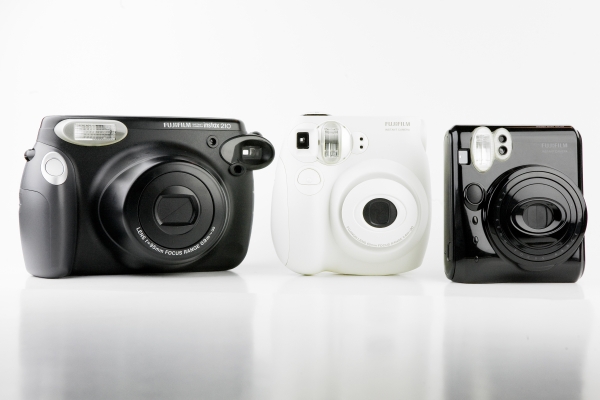
The Instax Mini 50S combines best-in-class image quality with a small form factor that makes it easy to carry in a bag or hand without considerable discomfort. The film packs it uses are widely available online and inexpensive, costing less than Rs. 2,000 for 20 exposures. Loading the film, which is rated at ISO 800 is a child’s play. While the camera’s metering does well in the most favorable lighting conditions, you can adjust exposure brightness, which can help prevent overly dark portraits and highlight detail.
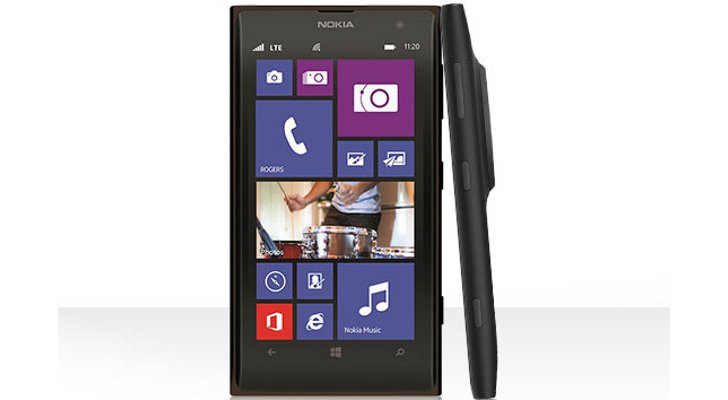
As a phone, it doesn’t bring anything revolutionary to the table, but as an imaging device, it’s quite a stunner. The Nokia Lumia 1020 is the best camera phone in the market today. Thanks to its large, 0.6″ BSI CMOS sensor and 41MP camera. You get excellent details and enough resolution for large poster size prints.
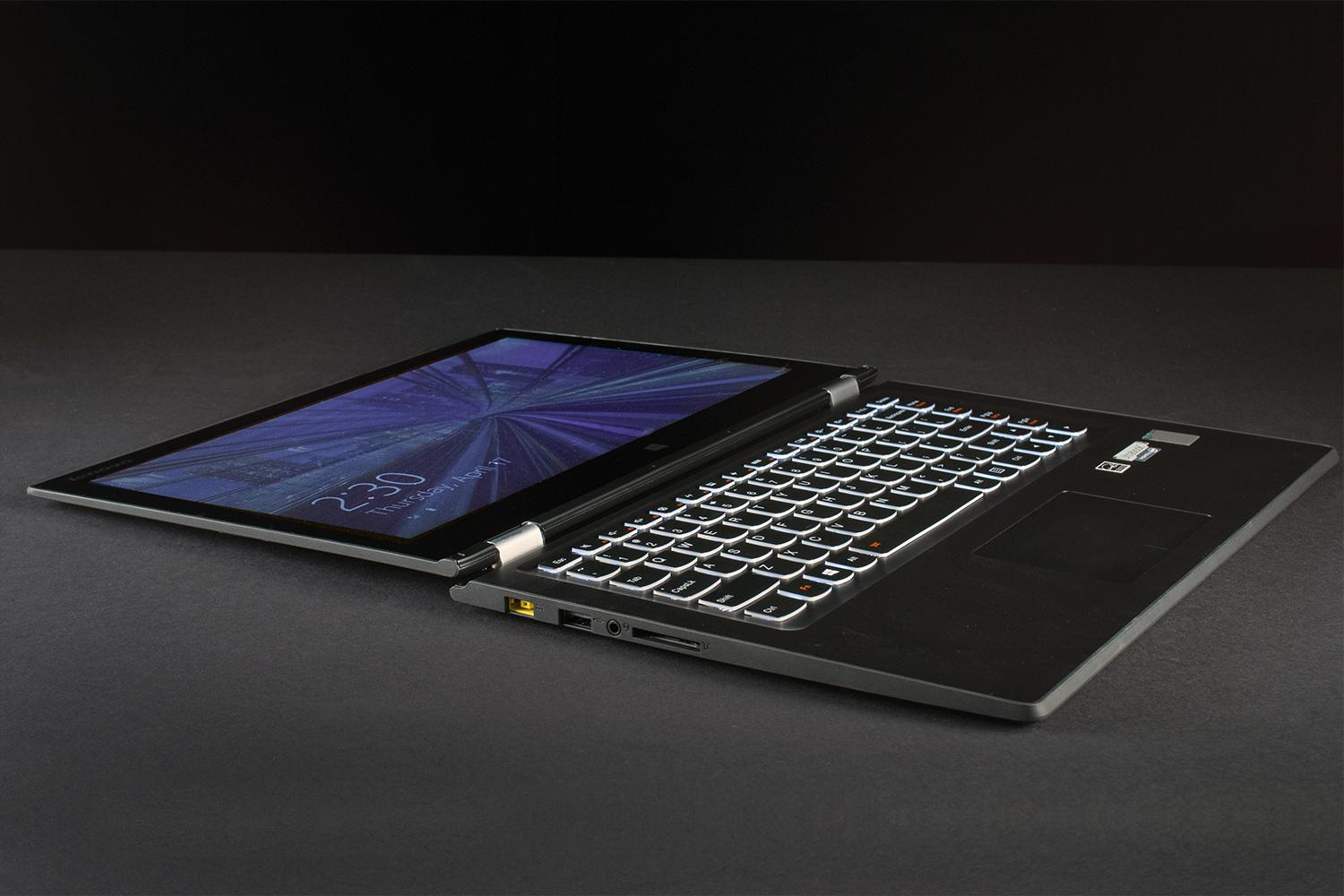
Lenovo’s Yoga 2 13 does everything you would expect of a slim, lightweight ultrabook—plus it converts to a tablet and two modes in between. And the competitive price means you’re getting the convertible abilities essentially for free. It is an excellent ultrabook, even without digging into its hybrid capabilities. This new model adds a backlit keyboard and an impressive 3,200×1, 800-pixel-resolution display.
Samsung UN65HU9000 directly takes to the front row of Television technology. The UNHU9000 curved 4K LED LCD has an excellent picture with deep black levels, accurate color and great bright-room viewing qualities. Its styling is drop-dead gorgeous, and the curve lends a unique, futuristic look. The feature set is well-implemented and comprehensive, with best-in-class connectivity and upgradeability and a superb remote.
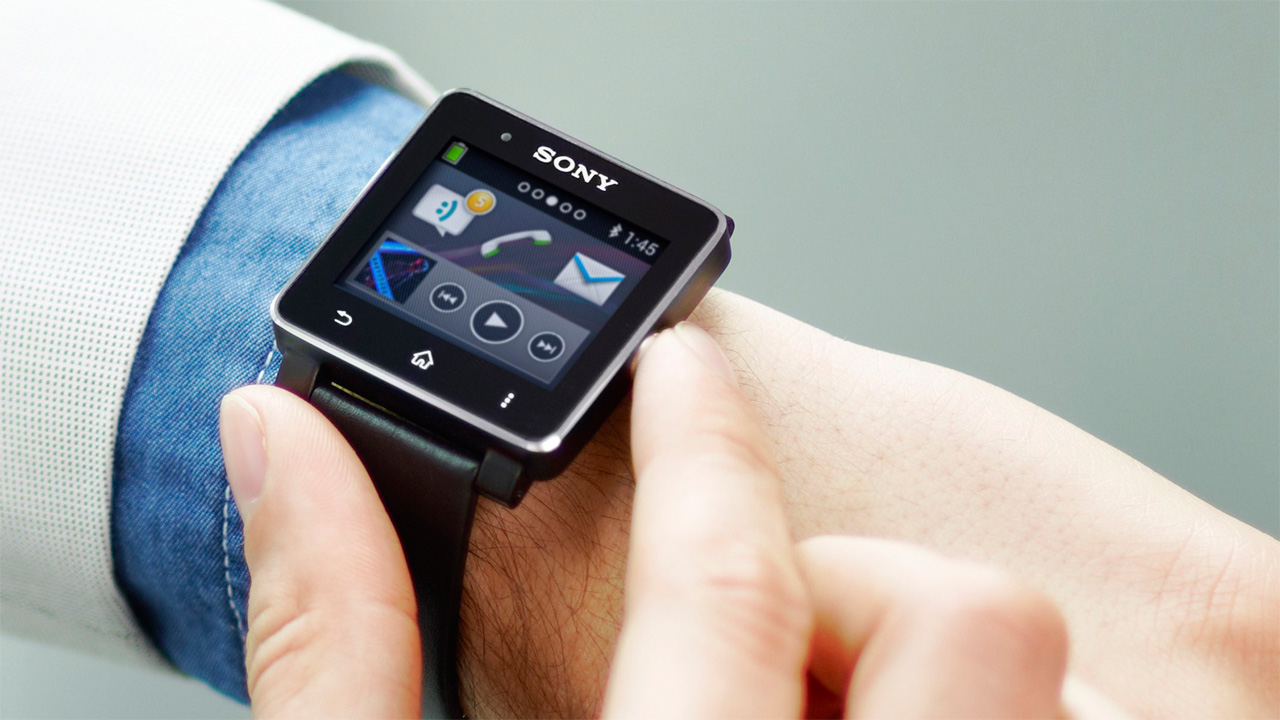
With a 1.6-inch touchscreen, this Android-powered smartwatch connects with compatible smartphones over Bluetooth to sync time, date and weather information. It can be customised to add functions such as control the phone’s music player, view messages, email, Facebook, Twitter, as well as accept or reject incoming calls. It also has Walkmate available for fitness enthusiasts.
Looks like everything we own and use is on its way to becoming ‘smart’. From smartphones to smartTVs, need of technological advancement has become a major part of tech business these day; smart tech ecosystem are slowly and steadily approaching our homes now.
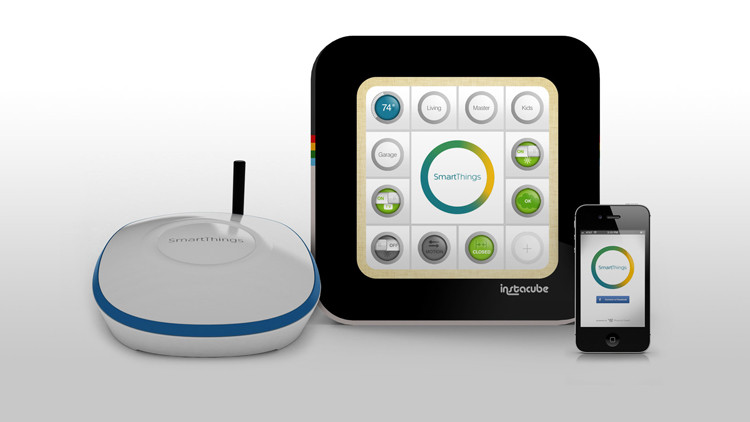
Seems like Samsung is playing it big to become the center of smart home with its acquisition of SmartThings. While the companies did not disclose the price, reports are the South Korean consumer electronics giant paid about $200 million.
The deal is the latest sign that big companies are staking out positions in what industry executives call the Internet of Things. That broad term encompasses just about any product that can be augmented with computing and communications capability, including doorlocks, smoke alarms, wearable devices and new-wave security cameras.
SmartThings will operate as an independent company under CEO Alex Hawkinson, within Samsung’s Open Innovation Center group, says Samsung. The firm will move from Washington DC to OIC’s headquarters in Palo Alto, California.
Joining forces with Samsung will enable us to support all of the leading smartphone vendors, devices, and applications; expand our base of developers and enhance the tools and programs that they rely on
Founded in 2012, SmartThings has created an unusually influential position. It sells a $99 home controller device, but its broader functions include operating an online service and setting specifications to help developers create designs for gadgets that work together and are controlled using smartphone apps.
While the company has been acquired by Samsung, being in the Open Innovation Center, the company will be kept at arms length away from Samsung, We want to people to understand how important it is that they will stay independent. SmartThings will continue to work with its developer community and business partners. In the meantime, we’ll be exploring ways to partner with them.
[/quote]
Like Oculus VR, which recently sold to Facebook for $2 billion, SmartThings started as a Kickstarter project in 2012. It has since raised just over $15 million in funding, with investors being Greylock Partners, Highland Capital and First Round Capital, among others.
Wearables are in and here to stay. The biggest names in the tech world anticipate that the wearable technology will be the next step in mobile evolution. Now Indian phone company, Spice has decided to enter the field by bringing out the first Smartwatch in the affordable range.
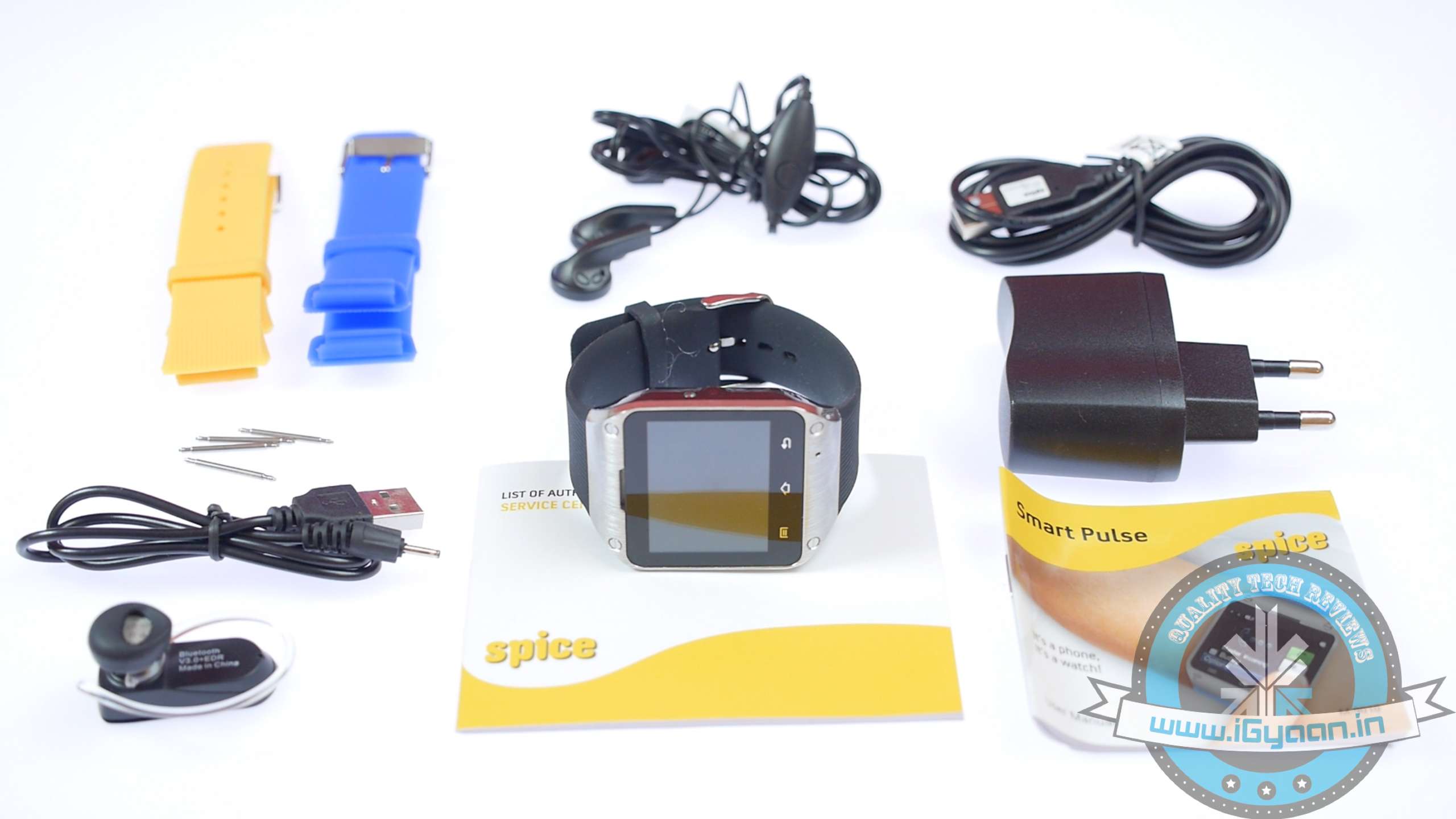
The Smart Pulse comes with an assortment of accessories
You won’t believe the amount of stuff that comes with this smartwatch at its price. It seems like they filled the box with accessories till they could fit no more. You get a handsfree, a Bluetooth headset, two extra watch straps, charging cables for the watch and a Bluetooth headset.
Design
On the design front, the Smart Pulse reminds you of the Galaxy Gear Live. The fake metal body does succeed in hiding its real make. You might be impressed by the brushed metal finish until you realize that its just plastic.
User Interface (UI)
At first impression, the UI is visually appealing. The Smart Pulse has a dialer and messaging feature for sending SMS’s. The UI is a generic Chinese UI and so, unfortunately, cannot reap the benefits of the wearable specific apps that are being brought out on an everyday basis. It can though be connected to an Android phone through Bluetooth and can be used as a secondary device. Using this connect, you can make calls, send texts, enable remote camera capture, stream music and get notification alert for social applications.
The UI isn’t too tacky, and you might easily get used to it after some tries. It is capable of dispensing all that a wearable can do, except, of course, the health features. The device doesn’t have any heart rate sensors or monitors so it can’t be used for fitness purposes. The main complaint with the UI is the tiny typefaces. It can be grueling to use if you have bad eyesight.
Internals
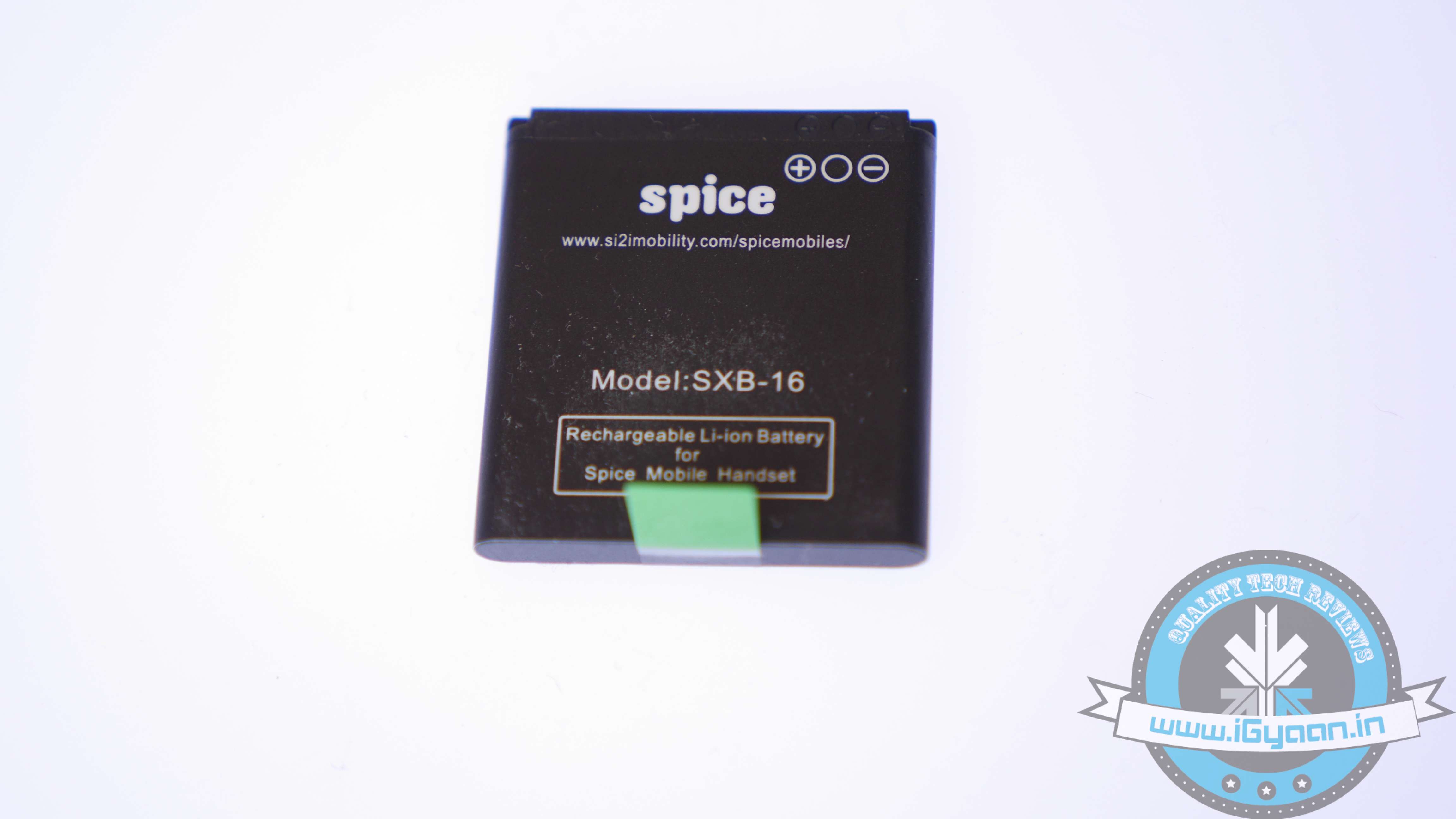
The 420 mAh battery is too tiny to handle the features available with the watch
The Smart Pulse should be known as the Smartphonewatch, or Smartphwatch (or maybe something better.) It is powered by a 420 mAh battery. How this tiny battery will handle the dual SIM capability is a mystery. It also has other juice gulping features like Bluetooth and GPRS. The watch also has a camera with flash that might be used only when you desperately need to take a photo. The flash can be used as a torch, which is handy at times. The makers have also added a vibration motor which could be useful for notifications.
Dual Sim
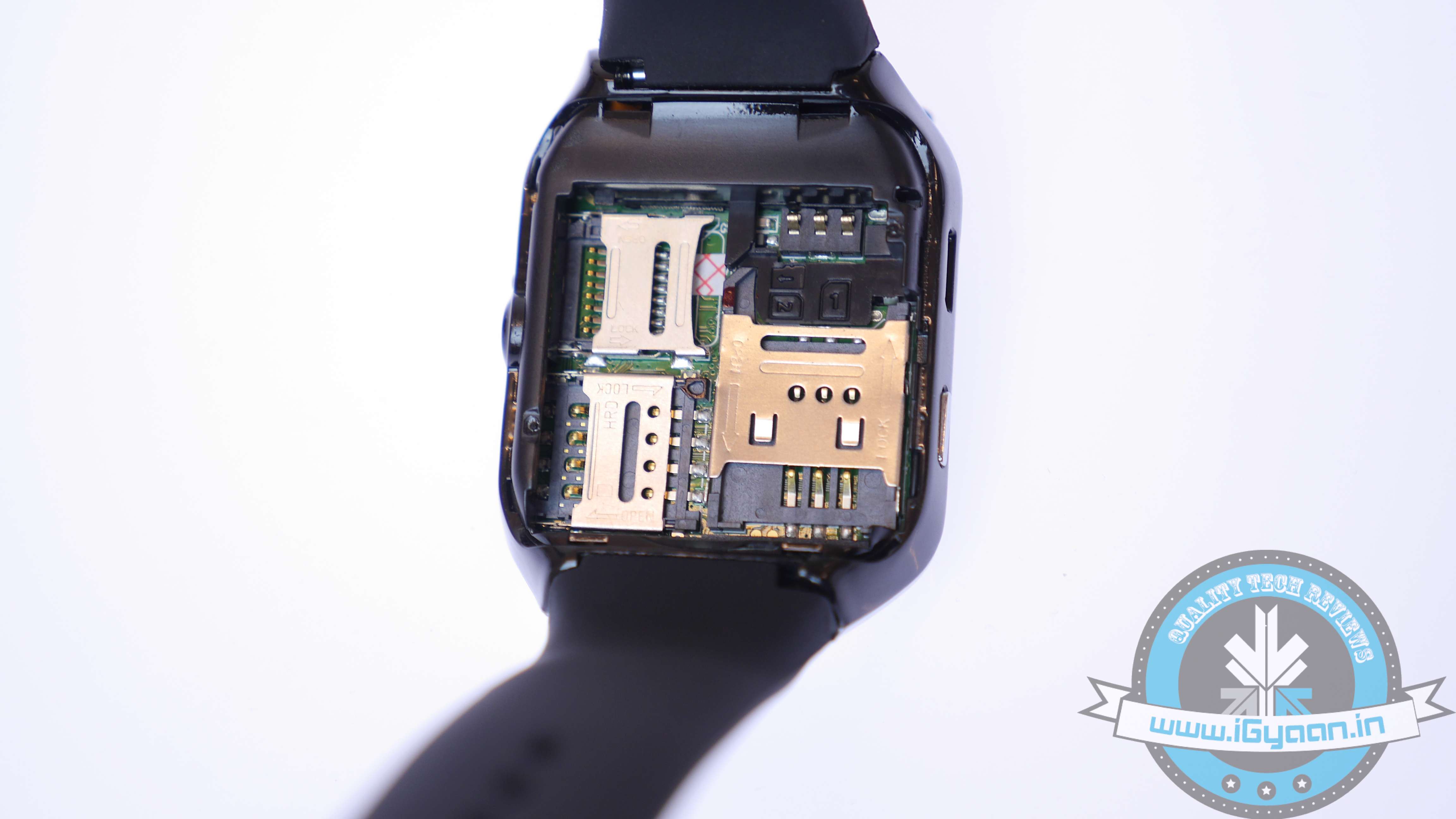
Smart Pulse is Dual SIM and expandable storage capable
The most surprising part of the watch is its dual SIM slots. Not just that, it also capable of holding expandable storage upto 8GB. It is basically an independent phone masquerading as a watch.
Price
With all that phone features packed into a tiny watch, which also comes with tons of accessories, the Smart Pulse is modestly priced. The watch is available for just Rs. 4,000, which is a great price for someone who wants to get introduced to wearable technology. As it’s a standalone phone in itself it can be a flaunt-worthy gizmo for some, a little taste of the future if you may. There are in fact some Android based smartwatches being manufactured by Chinese manufacturers and you may want to look into that. But as those are not yet available in India, you can try this out till the time Moto 360 arrives in India.
If you’d like us to do a full review, leave a request in the comments below.
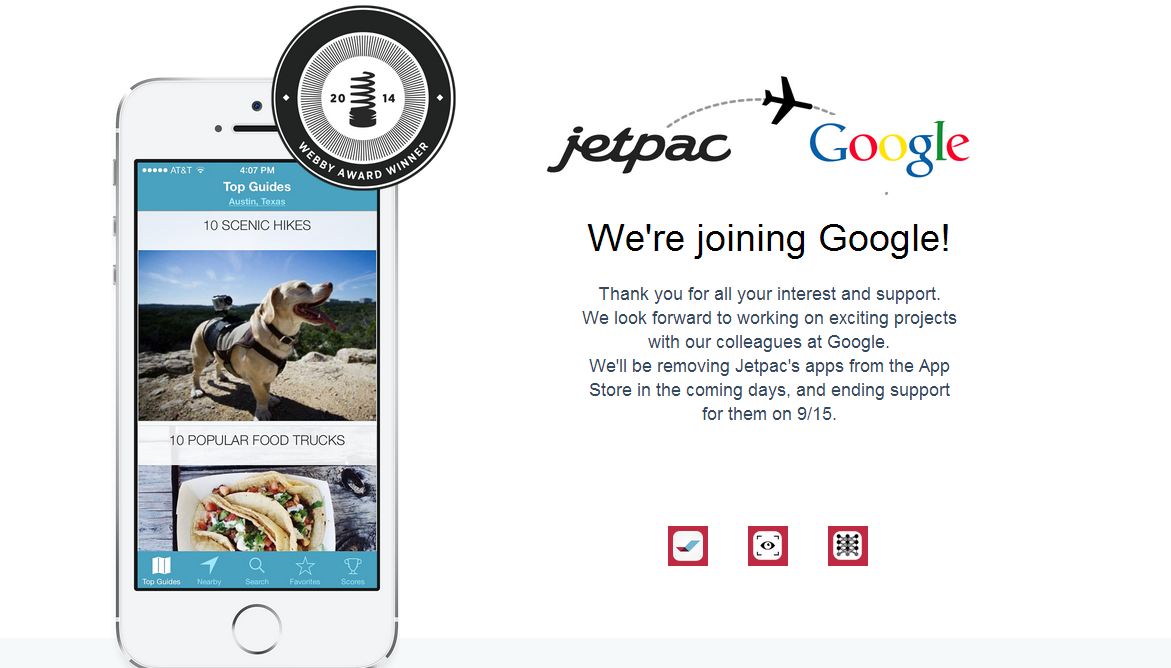
Adding to the long list of artificial-intelligence hiring, Google Inc is buying Jetpac Inc, the startup that designs social travel applications.
In an official tweet, Jetpac Co-Founder and Chief Technology Officer Pete Warden directed people to a new company homepage that announced the news:
We look forward to working on exciting projects with our colleagues at Google. We’ll be removing Jetpac’s apps from the App Store in the coming days, and ending support for them on 9/15.
That may have been a disappointment for the existing users, but for people who use Google services there is some good news. As company managed to simplify a complex branch of artificial intelligence known as computer vision and make it easy for lots of people to use.
More recently, Jetpac developed a mechanism for spotting smiles in pictures to discern how happy people are in a city.
The Jetpac team is highly skilled in this particular field which is an area Google has done plenty of work on, but it certainly could use more talent and ideas for ways to implement image-recognition technologies as plenty other companies, including Microsoft and Baidu, beef up their own deep-learning operations.
Jetpac announced a $2.4 million funding round in 2012. The startup’s investors include Khosla Ventures, Morado Venture Partners, and Jerry Yang. Earlier in its life, the Jetpac app let people explore travel pictures from their Facebook friends and decide where they wanted to visit.
Last January, Google also bought DEEPMIND, an artificial intelligence startup, which was founded in 2011 by Demis Hassabis, Shane Legg and Mustafa Suleyman. The team is based in London and combine the techniques from machine learning and systems neuroscience to build powerful general-purpose learning algorithms. Also, earlier this year, Google bought Nest Labs Inc, which makes smart thermostat and smoke alarms, for $3.2 billion, making the deal one of the largest in Google’s history.
Check this amazing video where the company explains how their app works.
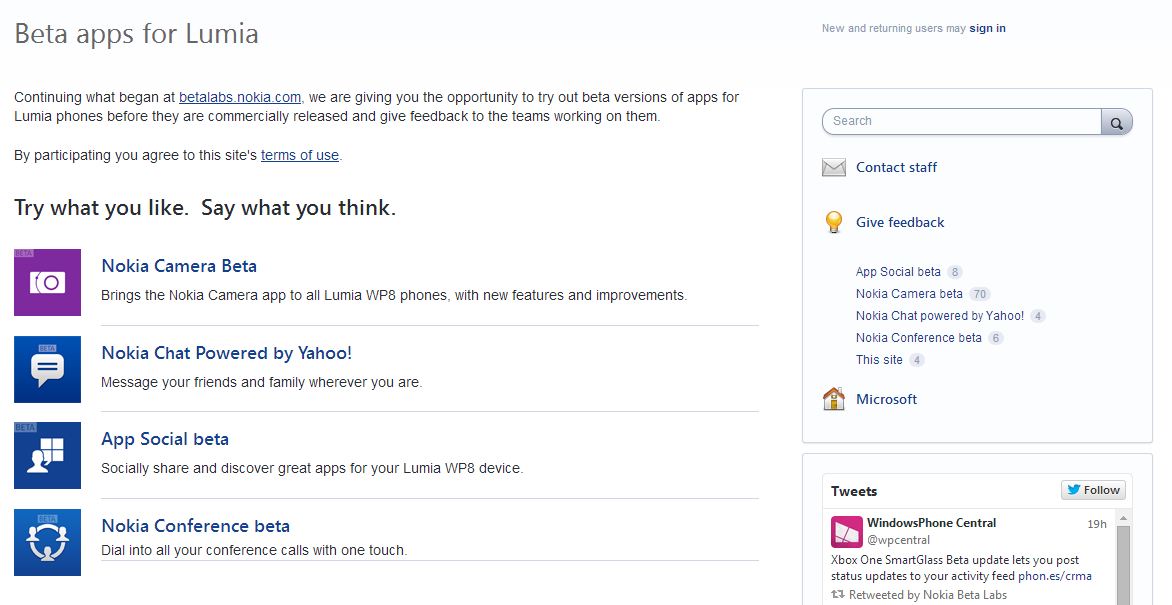
Microsoft has recently announced that the company is closing the Nokia Beta Labs site, but users will still be able to test apps under development via the new Lumia Beta Apps site. Microsoft said that the new site is designed to elicit more feedback and make it easier for users to participate.
The Nokia site betalabs.nokia.com will be discontinued from August 31, 2014. Thereafter, all links to the Nokia site will be redirected to Lumia Beta Apps. The new site is includes UserVoice, which also hosts the Windows Phone Feature Suggestion box page and more.
On the Lumia Beta Apps site, users will be able to find information about ongoing trials, instructions on how to install apps, and notes about features and known issues. Each beta has its own feedback forum for interacting with other users and the teams developing the apps. The ongoing trials at Nokia Beta Labs will continue at the new site and users can continue to give feedback and interact there.
The beta apps can be downloaded via Microsoft’s Windows Phone store, by clicking on a link or by scanning a QR code. Anyone is welcome to participate, but Microsoft prefers if users have a “relatively new Lumia smartphone”, “are willing to tolerate rough edges” and aren’t afraid to share their opinions, company said.
Presently, four apps – Nokia Camera, Yahoo-powered Nokia Chat, App Social and Nokia Conference are available in the beta version. These apps will be rolled out publicly following testing and app revisions based on the feedback given to their respective development teams.
The change is a clear indication of the company’s plan of dropping Nokia as a brand image. Back in April, Stephen Elop, now Executive Vice President of the Microsoft Devices Group, said, “Nokia as a brand will not be used for long going forward for smartphones. Work is underway to select the go-forward smartphone brand.”