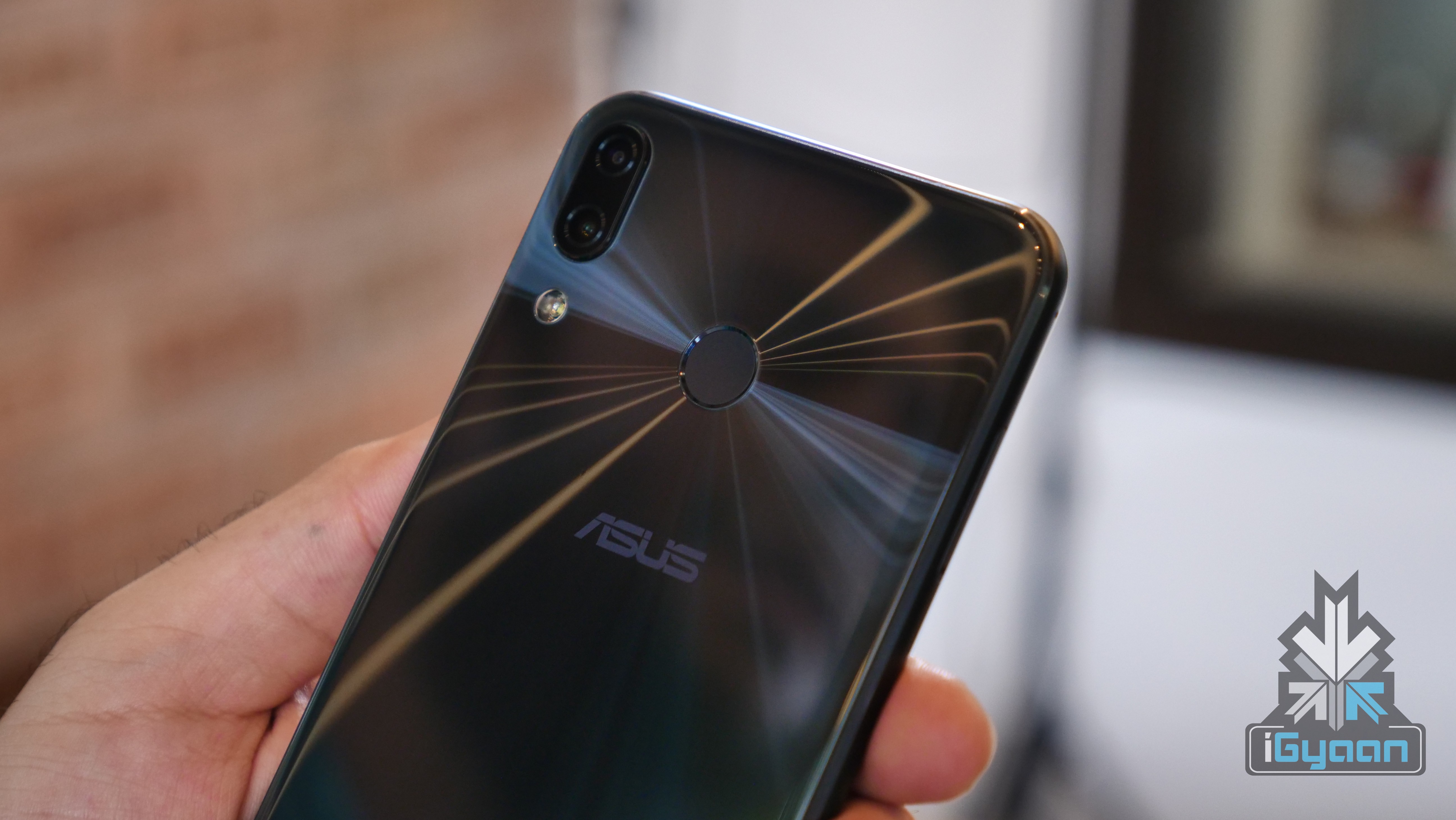
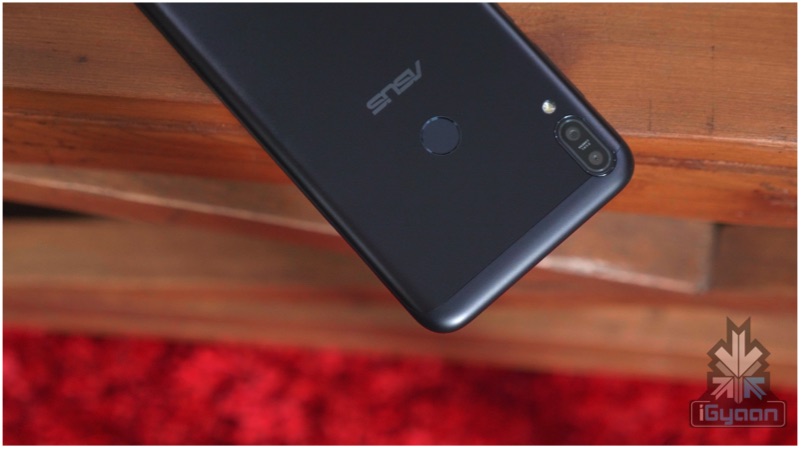
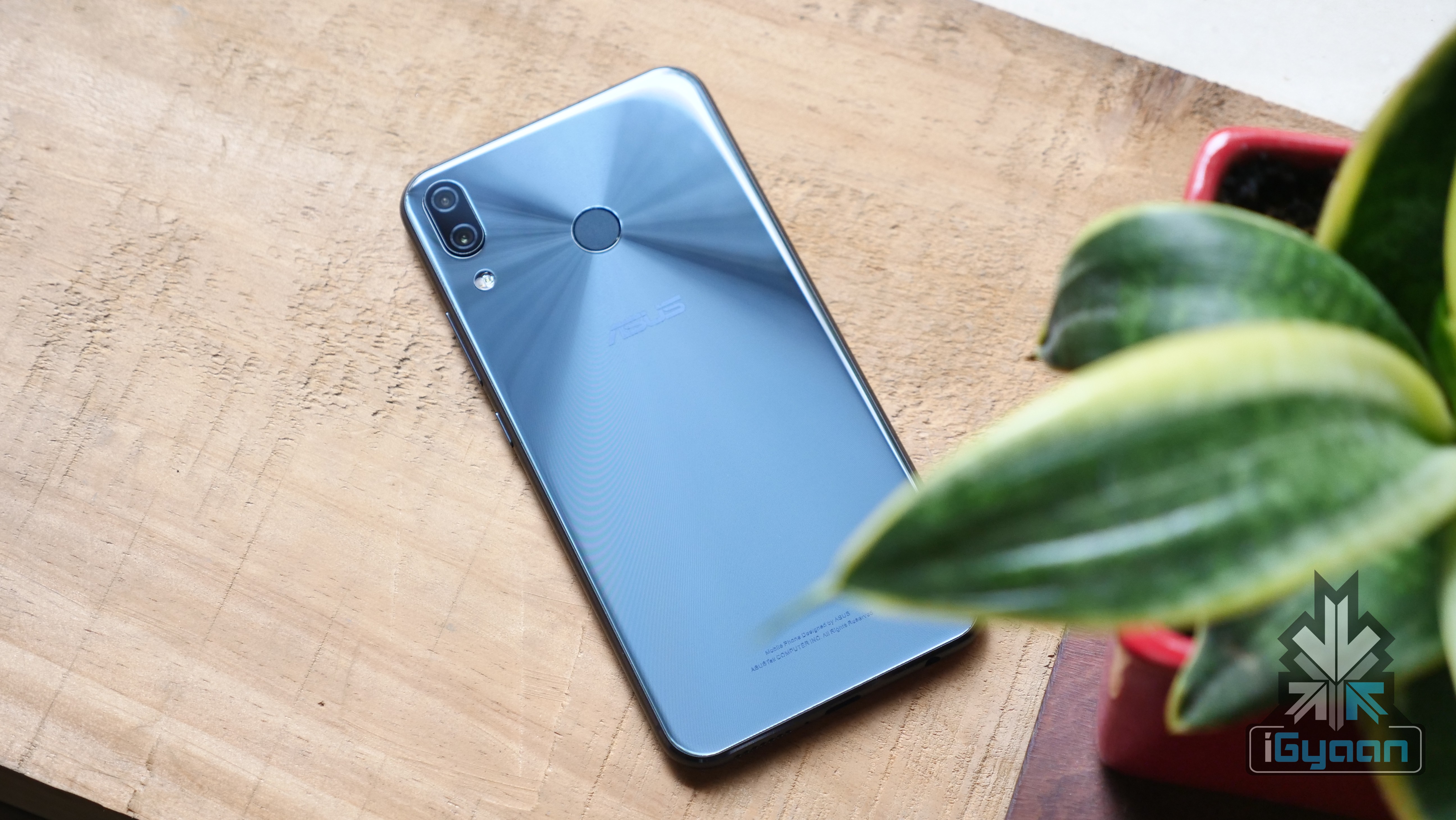
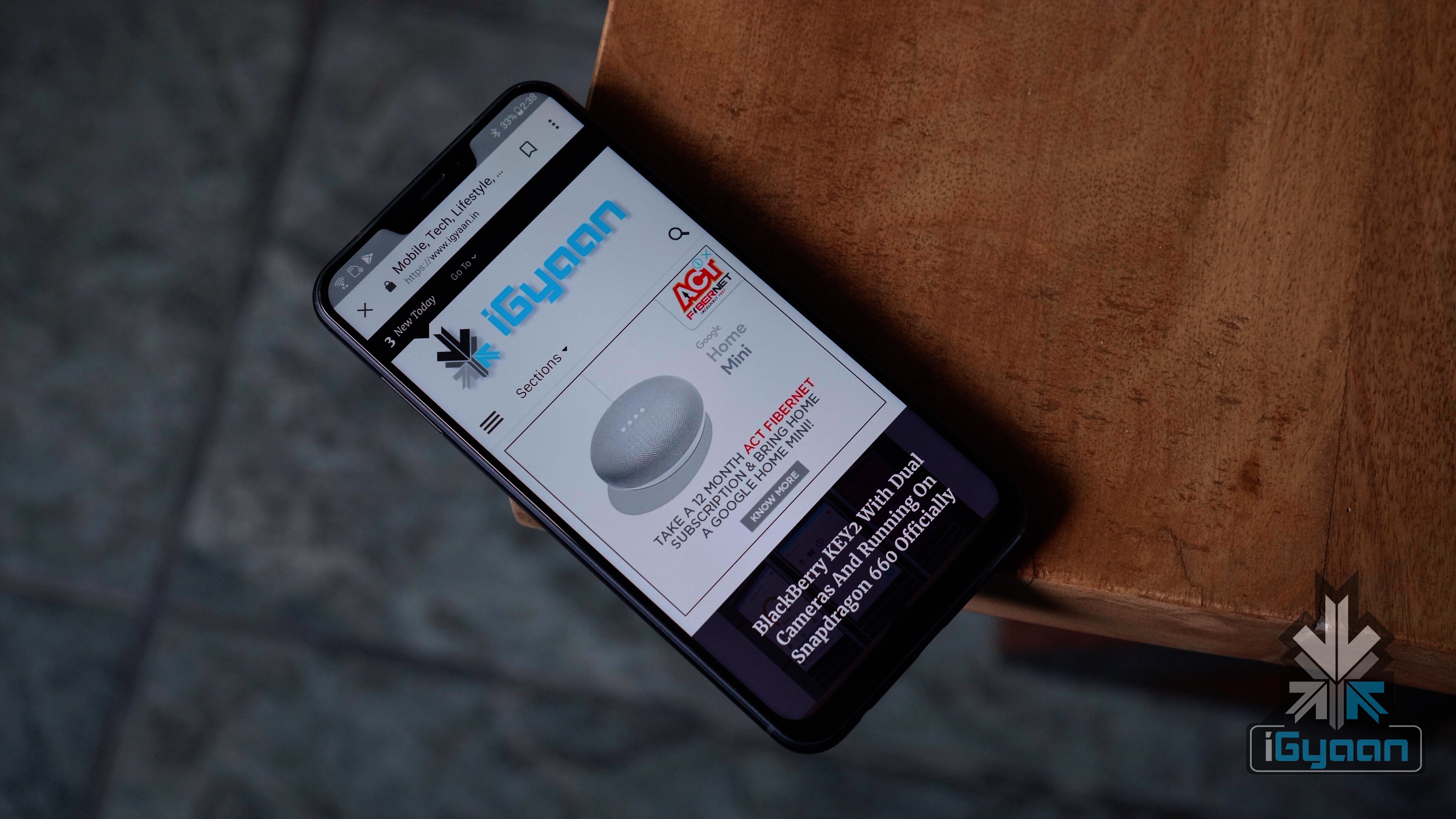
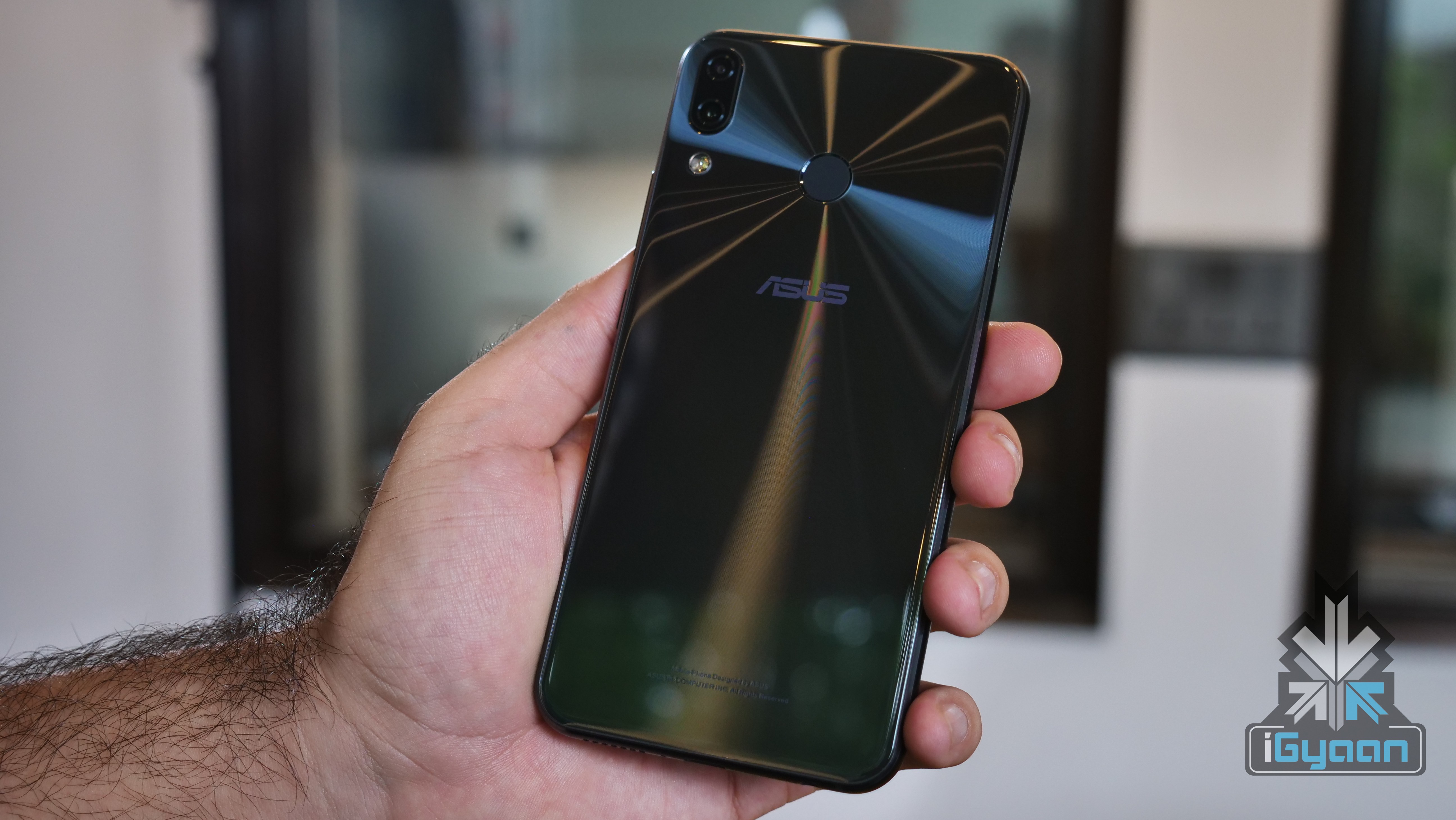
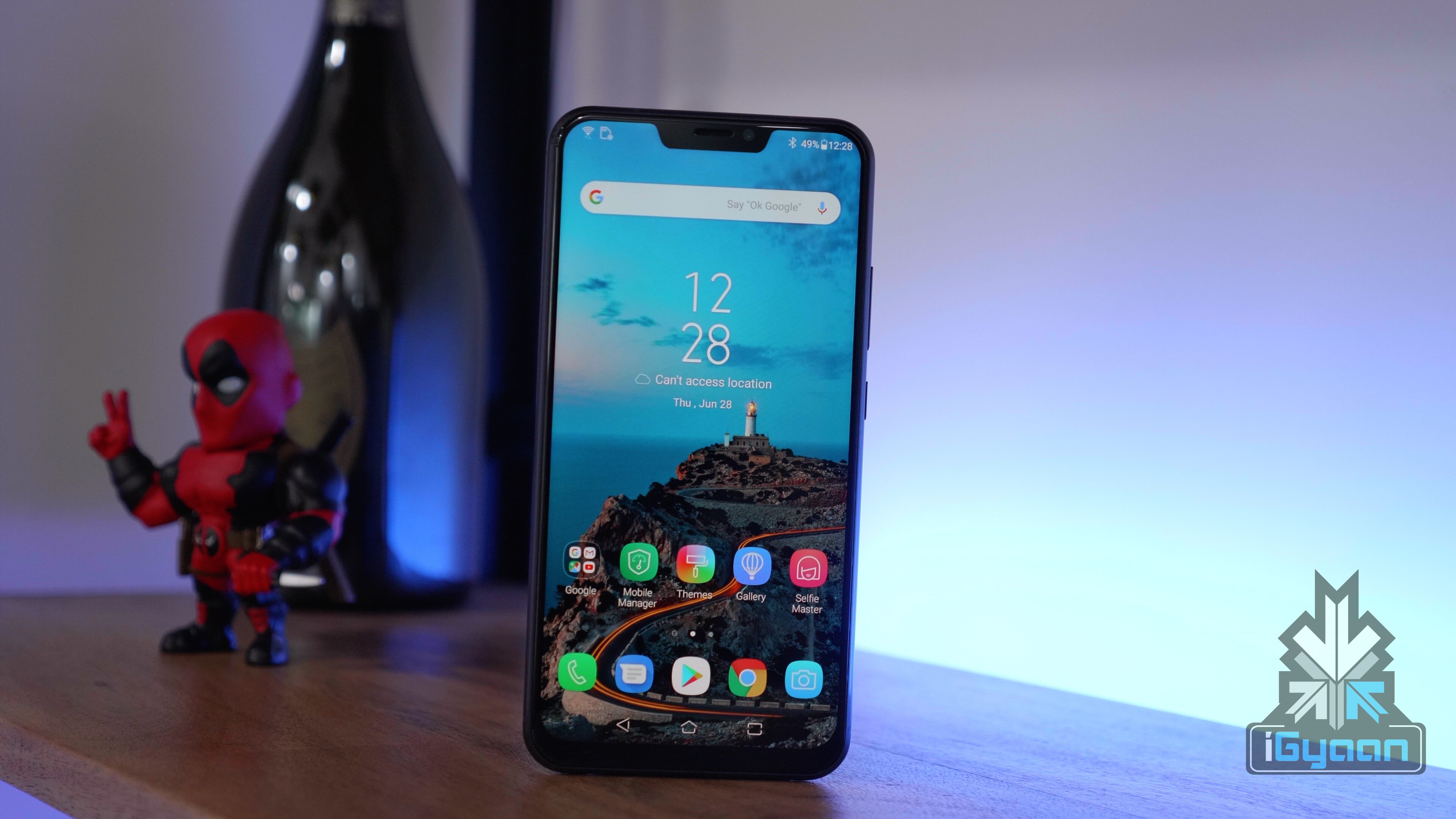
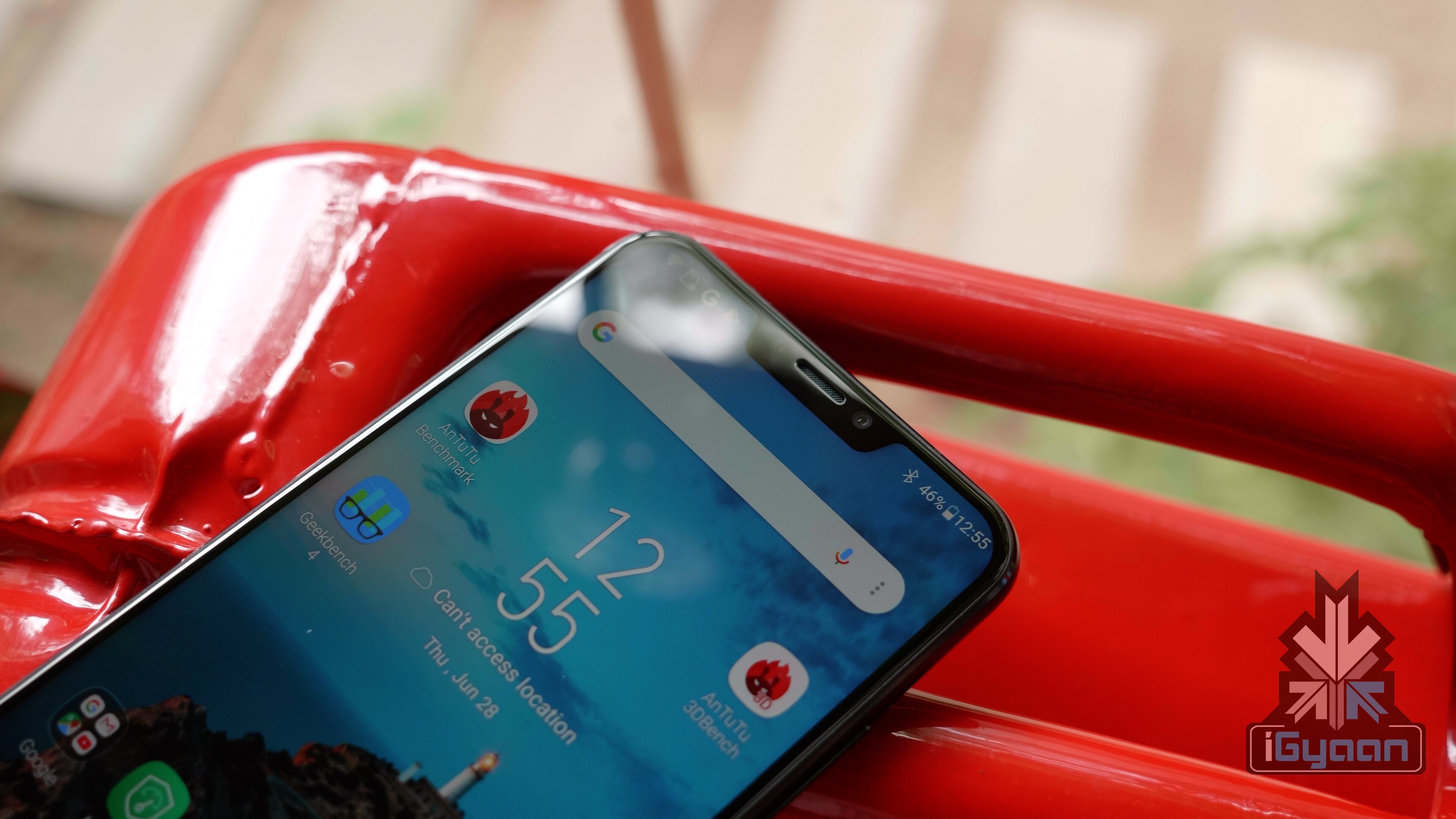
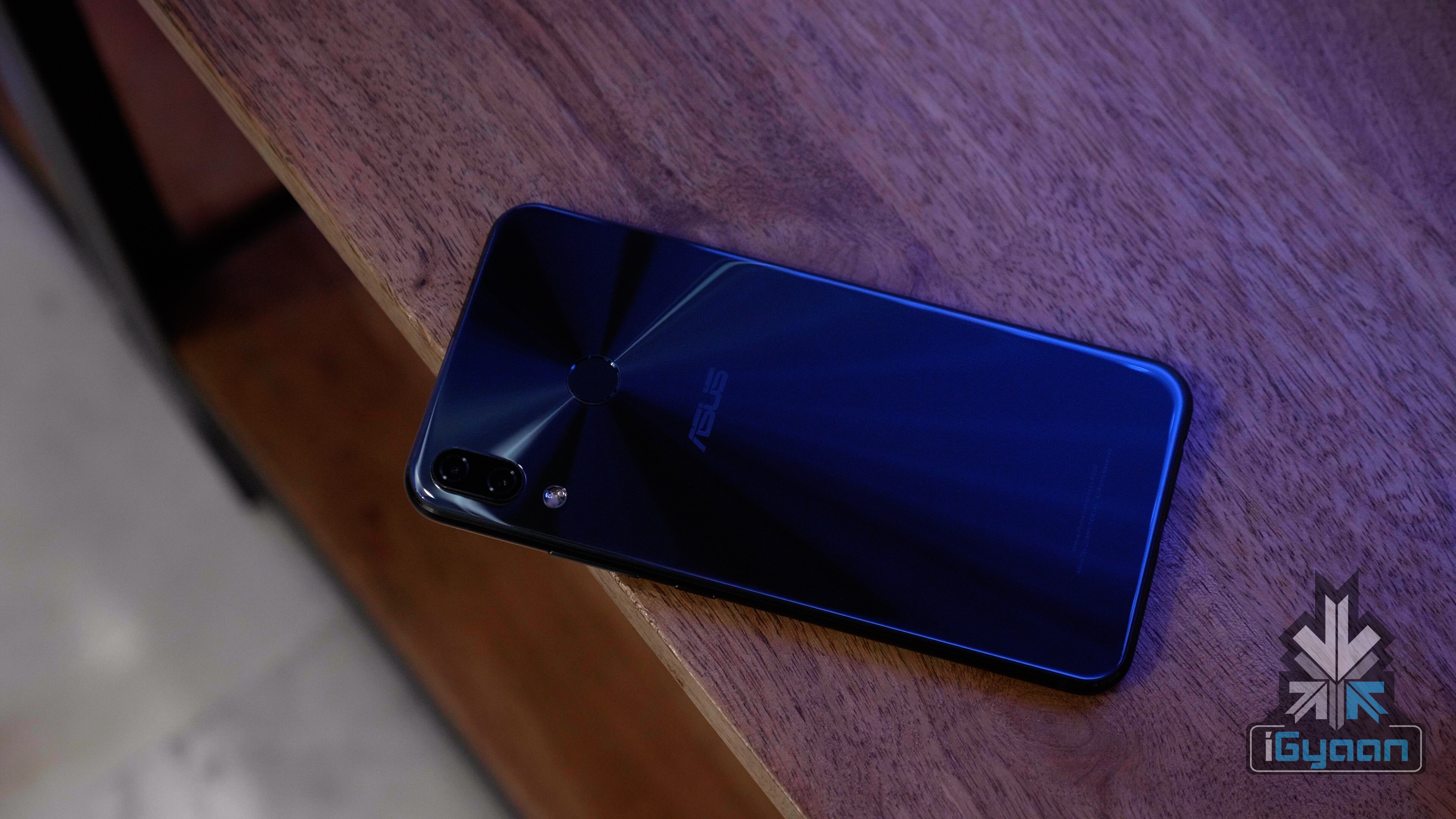
Asus has finally announced the launch date of its flagship, the Zenfone 9. The company announced that the smartphone will be released in global markets on July 28. The launch event will take place in Taipei, the capital of Taiwan, and will be live-streamed as well. Globally, the smartphone will be launched as the Zenfone 9, but in India, it will be known as the 9z.
Asus has teased that the Zenfone 9 will be “Compact Size”, hinting at its size. Last year’s Zenfone 8 was a delight, compact and one-hand usable, like the android equivalent to the iPhone 13 mini. Unlike last year, Asus may not launch two phones, with the Zenfone 9 launching only as reports suggest.
Asus Zenfone 9: Specifications
Specifications of the Asus Zenfone 9 are yet to be confirmed. However, a leaked video from last week revealed a number of features and specs. Powering the Zenfone 9 will be Qualcomm’s Snapdragon 8+ Gen 1 processor. The display is a 5.9-inch AMOLED panel with a 120Hz refresh rate while the battery is a 4300 mAh unit with 65W fast charging support.
Video Via GSMArena
The two biggest talking points from the leak are the cameras and Zentouch. The Asus Zenfone 9 will use Sony’s 50-megapixel IMX766 sensor as the main shooter. Though the sensor is used by a lot of other smartphones, its Asus’ integration of a 6-axis hybrid gimbal stabilizer that makes it unique. Gimbals are mainly used to give increased stability to cameras. It will be interesting to see how it performs in the Zenfone 9.
The other big feature is what Asus has dubbed the Zentouch. It allows the power button (itself dubbed the Smart Key) to essentially work as a scroll wheel to slide up and down webpages. It has been ages since scroll wheels on phones went extinct, and this could be the best way to make a comeback. The power button also works as a fingerprint sensor.
Other features include a 3.5mm jack (always welcome), dual speakers, and an IP68 water resistance rating.
Asus Zenfone 9: Price
Though prices for the Asus Zenfone 9 haven’t been revealed yet, a tipster suggested the Zenfone 9 could cost between EUR 800 (INR 64,700) and EUR 900 (INR 72,800. The leaked video also showed off the colour choices for the Zenfone 9, red, white, blue, and black. What do you think of the Zenfone 9? Would you be interested in buying it? Tell us in the comments below.
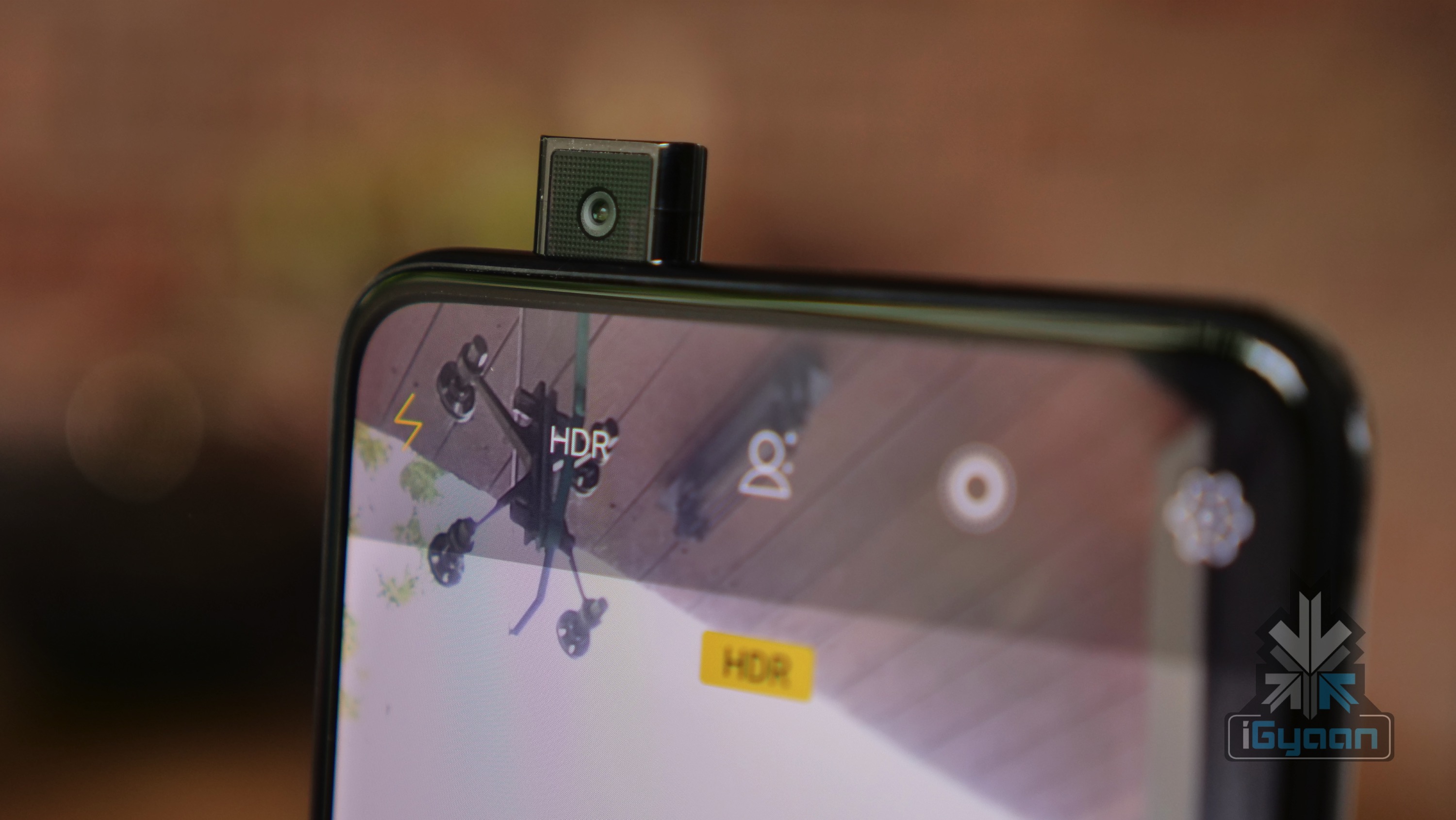
The Asus Zenfone series has been one of the most popular smartphones in the budget segment for quite a while now. With the latest device, Asus carries forward the tradition of big batteries, good camera performance and a great performance. However, here is some news that can make the upcoming series of Asus Zenfone smartphones even more appealing. A patent from the smartphone company shows that it is working on two new possible Zenfone designs. These include one with a pop up camera and one with a punch hole camera.
The patent was filed with the EUIPO earlier this year and have just recently been published. They show many smartphone designs, all of them without bezels or a notch. The first design shows a smartphone with a pop up camera. This means that the screen will be totally bezel-less and will have a sliding compartment on the top. This will house the single or even dual front cameras. It is still not clear as to whether this will be a manual slider or will be mechanised like on the Vivo Nex.
Additionally, the patent also talks about a second design with a punch hole camera or a camera cut out. This patent was submitted in Germany while the previous one was submitted in France. This design shows an Asus smartphone with a hole in the top left of its display. And it houses a single front facing camera. This technology is already seen in the Samsung Galaxy A8s, which was launched recently.
With the advent of mobile technology, every manufacturer is looking to beat the competition with something unique. This includes unique and sometimes even quirky design elements such as the camera cut out or the pop up camera to grab attention. Whether a smartphone will really make a mark in the market ultimately depends on the features it packs and its price.
The much awaited Asus Zenfone Max M2 Pro has been confirmed to launch in India, by the company. Asus did so through a tweet on its official account. They have set the date for its launch for the 11th of December. The tweet also mentions that the smartphone will have Corning Gorilla Glass 6 and will be a Flipkart exclusive.
The unrivalled champion of mid-range is ready to begin its dominance with the most durable screen in the segment – Corning Gorilla Glass 6. The Zenfone Max Pro M2 launches on 11th December, exclusively on @Flipkart. Stay tuned for more. @corninggorilla#UnbeatablePerformer2dot0pic.twitter.com/Kd2vHKN22B
Earlier, a teaser on the companies Indonesian account had revealed that the phone has a massive 5,000 mAh battery. The Asus Zenfone Max Pro M2 is expected to have many more such features which will make it a worthy successor to the extremely popular Zenfone Max Pro M1. The phone is also has a dual rear camera setup, as has been seen from earlier teasers and leaks. The device also has a rear mounted fingerprint sensor and a glass back. The phone will also have a notch on its display, which will house the front facing camera.
The phone is also said to have a 6.3 inch FHD+ display, which will house a notch. It is said to run on the Qualcomm Snapdragon 660 SoC. And will have 4 GB of RAM along with 64 GB and 128 GB storage options. Some reports also claim of a second variant with 6GB of RAM. The Snapdragon 660 chipset has a lot fo improvements in terms of performance and AI capabilities when compared to the Snapdragon 636 chipset on the Zenfone Max Pro M1.
Interestingly enough, some sources also claim that the phone has a triple rear camera setup and not a dual rear camera. This can be a possibility as none of the teasers actually show the entire camera setup. They always cut the phone at a place where the third lens os not visible. However, it is also possible that this is not a third sensor and is simply the LED flash on the back. We will have to wait till the launch of the device on December 11th to know more details about the phone.
Asus launched the ZenFone Max Pro M1 phone earlier this year. The device was able to rake in good sales for the company because of its excellent specs & competitive pricing. Recently, specifications of two upcoming successors of the smartphone have leaked online. The phones will reportedly be called ZenFone Max Pro M2 & ZenFone Max M2. The source additionally mentioned that the devices will be launched in the Indian market.
ASUS ZenFone Max Pro M2 ZB631KL = 6in FHD+, 13MP, 4GB RAM, 64/128GB. Snapdragon 660 (SDM660), Triple Cam ASUS ZenFone Max M2 ZB633KL = 6in FHD+, 13MP, 4GB RAM, 32/64GB. Snapdragon 636 (MSM8953), Dual Cam ZB632KL (non-Pro), ZB634KL (Pro) are likely India specific variants
The specifications have been leaked by Roland Quandt. The leaker goes by the username of @rquandt on twitter & is a trustworthy source. As he has previously leaked specifications of multiple devices that have turned out to be true. He states that ZB632KL (non-Pro) & ZB634KL (Pro) are likely to be India specific model numbers of the smartphones.
Asus ZenFone Max Pro M2 Specs:
The Zenfone Max Pro M2 is reported to feature a 6-inch full HD+ display. The device will have a triple camera set up on the back out of which the main telephoto lens is a 13 MP sensor. The device will be available in two storage capacities which will be 64 GB & 128 GB. However, no information about storage expandability is known.
In terms of memory, the ZenFone Max Pro M2 will have 4 GB of RAM. The upcoming smartphone will have the Octa-Core Snapdragon 660 SoC. The massive 5,000 mAh battery was the highly admired feature of the ZenFone Max Pro M1 and the successor is expected to have at least the same capacity if not more.
The ZenFone Max M2 will be a more affordable phone than the ZenFone Max Pro M2. Hence, it will be a scaled down variant of the pro version. It has a Snapdragon 636 SoC and dual rear cameras. Like the elder Max Pro M2, it also gets a main 13 MP telephoto sensor. The handset will also have 4 GB of RAM and will be available in two storage variants which are 32 GB & 64 GB. It is reported to have a 6-inch Full HD+ display.
Finally, both the devices seem promising and will be a serious contender in the budget segment if Asus is able to carry forward the excellent pricing from their earlier phones.
The Asus Zenfone Max Pro M1 was launched earlier this year and was a hit in the budget segment. The phone got everything right and put Asus back on track again. It packs a massive 5,000 mAh battery, along with a solid build quality and some stellar features. All this combined, it is a great deal. Naturally, the successor to this phone would be highly anticipated and the latest leak has just added to the excitement. According to sources, the Zenfone Max Pro M2 will sport a triple camera setup on the back.
ASUS ZenFone ZB634KL should launch "SOON" ™. Comes with triple cam setup on rear.
The feature was made public by Roland Quandt, who is one of the most trustworthy leakers. So we can be sure that this feature will be seen on the upcoming smartphone. He detailed a phone by the name of Asus Zenfone ZB634KL which is set to launch ‘soon’. However, the source did not detail a specific date or time frame, so we do not know when we can expect this device. However, the fact that it will have triple cameras is really interesting. This would make it the first device in the sub-20K category to have triple rear cameras.
While no other specifications regarding the device are available as of now, we can expect it to have similar features to the Zenfone Max Pro M1, if not better. Here are the specifications of the Max Pro M1 for reference.
Asus Zenfone Max Pro M1
The Asus Zenfone Max Pro M1 has a 5.99 inch IPS LCD display with a 2160 x 1080 px resolution and an 18:9 aspect ratio. The phone has an aluminium unibody design. Running on the Qualcomm Snapdragon 636 SoC, it has 3 GB, 4 GB and 6 GB RAM options. The phone has 32 GB, 64 GB and 128 GB storage options which is also expandable up to 256 GB using a microSD card.
On the rear, it sports a dual 13 MP + 5 MP camera setup. It has an 8 MP front facing camera with flash and bokeh effect. The Zenfone Max Pro M1 packs a massive 5,000 mAh battery and has a fingerprint sensor for securely unlocking the phone.
The Asus Zenfone 5Z was launched in India earlier this year and got a pretty good reception. The Zenfone Max Pro M1was also an instant hit with its massive battery and attractive features. Latest leaks of the alleged Asus Zenfone 6 show that the company is not slowing down and plans on keeping up its streak of great smartphones.
The Future Of Displays
The leaked images showcase various prototypes of the Asus Zenfone 6. All of these devices sport a glass back and a large display. However, there are various combinations, with different camera setups and unique displays. The most striking one is that of a camera cut-out, which is said to be present in the upcoming Samsung Galaxy A8s as well. Different prototypes show different positions for the camera cut-out. It is placed on the left and right sides, as well as the in the middle of the display. The camera cut-out seems to be the next big step towards a bezel-less display. This might eliminate the need of having a sliding camera mechanism as seen on the Xiaomi Mi Mix 3.
The next prototype however, showcases the Asus Zenfone 6 with a tiny water-drop notch, which houses the front camera sensor. This is not all, the prototypes also showcase two different variants for the camera setup. One of the prototypes has a triple main camera setup while the other has a more common, dual camera setup.
While the camera cut-out on a display sure does look better and will take up lesser space, the placement is still an issue. If the company will place it on the sides rather than in the centre, the entire symmetry of the display could be lost. The notch on any phone is specially designed to ensure that the icons on each side of the notch are balanced equally and displayed in an aesthetic manner.
However, it is important to note that these are just prototypes of the devices. The retail unit might not be similar. But, we do hope that Asus brings some great changes to its next big smartphone.
Asus launched the Zenfone Max Pro M1 in April. The company touted the smartphone as the device running on a completely stock version of Android 8.1 Oreo. During its initial launch, the smartphone only had two storage variants, a 3GB RAM with 32GB storage and 4GB RAM and 64GB storage. The company had promised to launch a 6GB variant of the smartphone, and it has finally delivered on its promise. The Zenfone Max Pro M1 with 6GB RAM will go on sale exclusively via Flipkart from 26th of July. Keeping in mind the track record of the previous sale, the 6GB variant may not last long. So those who were waiting for this variant should be on the for the smartphone on 26th July at 12 PM.
Zenfone Max Pro
Why A Zenfone Max Pro M1 With A 6GB Variant?
Asus launch of a 6GB variant of the Zenfone Max Pro M1 could have something to do with the competition. The Xiaomi Mi A2 which is another mid-range smartphone has a 6GB RAM variant. So, it was only natural for Asus to launch a mid-range smartphone with a 6GB RAM variant. Since the Zenfone Max was launched recently, the company decided to launch its additional variant.
What’s Changed With The Zenfone Max Pro M1 6GB Variant?
Apart from a new RAM and storage variant, a few other specifications have changed. The 6GB variant also has a new camera setup. The front-facing camera has a 16 MP sensor with f/2.0 aperture and a 5 MP sensor with a f/2.4 aperture. The older variants had a 13 MP and a 5 MP sensor. For the front facing camera, the 6GB variant has a 16 MP sensor as opposed to the 5 MP on the older variant. The new variant has the same 5.99-inch IPS LCD panel with a 2160 x 1080 px resolution and 18:9 aspect ratio as the older versions.
Zenfone Max Pro Display
Pricing And Availability
The Asus Zenfone Max Pro M1 with 6GB RAM and 64GB storage will go on sale in India via Flipkart on 26th July starting from 12 PM. The smartphone will cost Rs. 14,999. You can buy the smartphone via this link. The smartphone will compete with the likes of the Redmi Note 5 Pro, which has a similar spec sheet and price tag.
Asus has launched its new flagship smartphone, the Asus Zenfone 5Z in India. Astonishingly enough, the smartphone will retail for a starting price of Rs 29999, which is considerably cheaper than the OnePlus 6. The Zenfone 5Z has all the features for a 2018 flagship smartphone and will go on sale in India via Flipkart on 9th July. It is worth noting that there is a flat Rs 3000 discount upon using an ICICI Credit/Debit card, bringing the price down to Rs 26999 for the base model.
Asus recently launched the Zenfone Max Pro, a budget smartphone which runs on the Snapdragon 636 chipset. The smartphone has done well in India and the company would expect the same from its flagship device. So, let’s unbox the Asus Zenfone 5Z and see what we get inside the box!
[section label=”Unboxing”]
Inside the box of the Asus Zenfone 5Z
Asus Zenfone 5Z
Wall Charger
USB-C Cable
ZenEar Pro Earphones
Documentation
Sim Ejector Tool
Clear Case
[section label=”First Impressions”]
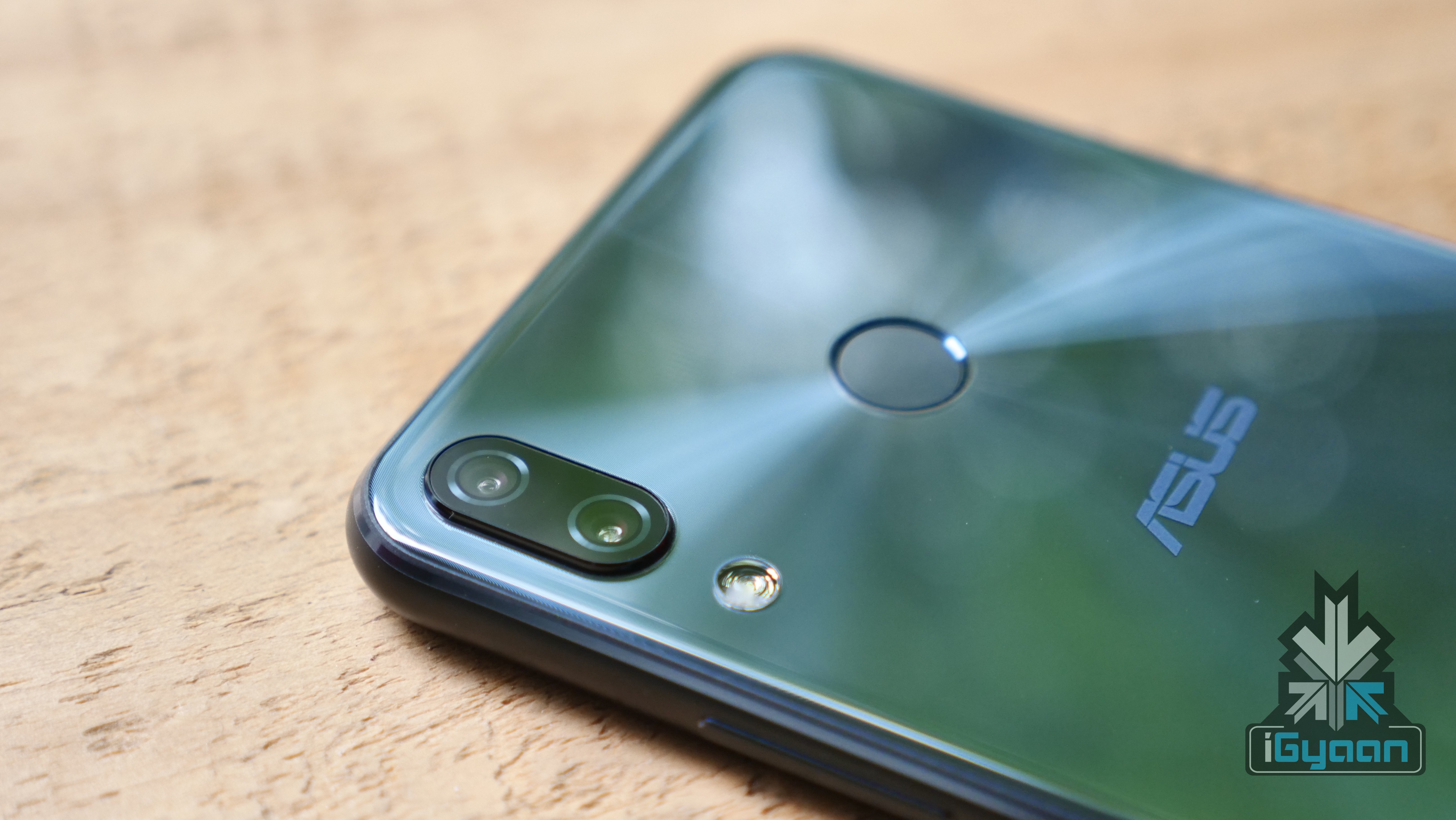
The trend of an all-glass design has really caught up in 2018. Even budget smartphones like the Honor 9 Lite, Moto G6, Nokia X6 sport an all-glass design and the Asus Zenfone 5Z is no different. The device will be available in Midnight Blye and The glass on the back has a unique finish which reflects the light in a very different manner. This is common with Asus smartphones and the Zenfone 5Z looks like a premium smartphone. The aluminium frame means that the device has a solid build.
The dual-camera is placed vertically on the top-left corner. This design choice, again, has become very common ever since the iPhone X was launched in September 2017. There is a small camera bump which can be negated using the clear case found inside the box. Talking about accessories found inside the box, Asus talked a lot about the ZenEar Pro earphones that will retail with every Zenfone 5Z unit in India. We will be testing the earphones out and talk about it in detail in our full review.
The Asus Zenfone 5Z has a 6.2 inch Super IPS+ display with a 2246 x 1080 px resolution. This translates into a 19:9 aspect ratio, just like the OnePlus 6 which also has a 19:9 aspect ratio.
Under the hood, the smartphone runs on the Qualcomm Snapdragon 845 chipset. The flagship chipset is coupled with either 6GB or 8GB of RAM. In India, the Zenfone 5Z will retail in three models, one with 64GB of storage, the second one with 128GB storage coupled with 6GB of RAM. The third variant has 256GB of onboard storage and 8GB of RAM. The onboard storage will be expandable up to 2TB via a microSD card which will use up the second SIM slot. The fingerprint sensor is placed on the back of the device in a central location.
As is with a flagship device these days, the Asus Zenfone 5Z has a dual-camera setup on the back. It consists of a 12MP primary sensor with an f/1.8 aperture and 4-axis OIS. The secondary 8MP sensor has a wide-angle lens with a 120º field of view. This implementation is different from a lot of other flagship devices which usually have a telephoto or a monochrome lens. The OnePlus 6, for example, has two RGB sensors. The notch houses an 8MP camera with an f/2.0 aperture and an 84º field of view.
[section label=”Conclusion”]
At the first glance, the Zenfone 5Z appears to be a worthy affordable flagship smartphone. The price of the device sweetens the deal for sure but, does it hold its own against the OnePlus 6? We will find out in our full review which will soon be up on our YouTube channel.
Asus has launched the Zenfone 5Zin India at a starting price of Rs 29999. The new affordable flagship smartphone will be sold via Flipkart exclusively and go on sale on 9th July. It is worth noting that there is a flat Rs 3000 discount upon using an ICICI Credit/Debit card, bringing the price down to Rs 26999 for the base model. The Asus Zenfone 5Z enters India’s affordable flagship segment and will be up against the likes of OnePlus 6and Honor 10.
The Zenfone 5Z has all the makings of a flagship smartphone of 2018. The infamous notch also makes an appearance on the device. The notch, unlike the Xiaomi Mi 8, does not have any special sensors housed inside. The notch, however, allows the company to use a bigger display without drastically increasing the overall footprint of the smartphone.
The Asus Zenfone 5Z has a 6.2 inch Super IPS+ display with a 2246 x 1080 px resolution. This translates into a 19:9 aspect ratio, just like the OnePlus 6 which also has a 19:9 aspect ratio. With so many different aspect ratios prevalent in the market, it will become harder for content creators to cater to everyone’s needs.
Under the hood, the smartphone runs on the Qualcomm Snapdragon 845 chipset. The flagship chipset is coupled with either 6GB or 8GB of RAM. In India, the Zenfone 5Z will retail in three models, one with 64GB of storage, the second one with 128GB storage coupled with 6GB of RAM. The third variant has 256GB of onboard storage and 8GB of RAM. The onboard storage will be expandable up to 2TB via a microSD card which will use up the second SIM slot.
The fingerprint sensor is placed on the back of the device in a central location. The company also spoke about the ZenEar Pro earphones which will be included in the retail box. This is something most affordable flagship devices don’t include in their packaging and Asus has in fact, claimed that its earphones are of premium quality.
As is with a flagship device these days, the Asus Zenfone 5Z has a dual-camera setup on the back. It consists of a 12MP primary sensor with an f/1.8 aperture and 4-axis OIS. The secondary 8MP sensor has a wide-angle lens with a 120º field of view. This implementation is different from a lot of other flagship devices which usually have a telephoto or a monochrome lens. The OnePlus 6, for example, has two RGB sensors. The notch houses an 8MP camera with an f/2.0 aperture and an 84º field of view.
The Zenfone 5Z has all the features of a flagship smartphone. Moreover, it severely undercuts the OnePlus 6 and Honor 10 in terms of pricing. The OnePlus 6 retails for Rs 34999 while the Honor 10 is priced at Rs 32999. At a starting price of Rs 29999, the Zenfone 5Z gives consumers a lot to think about before buying their next flagship smartphone.
Update: At the Zenfone 5Z launch event, the company confirmed that the Zenfone Max Pro 6GB RAM variant will go on sale sometime in July.
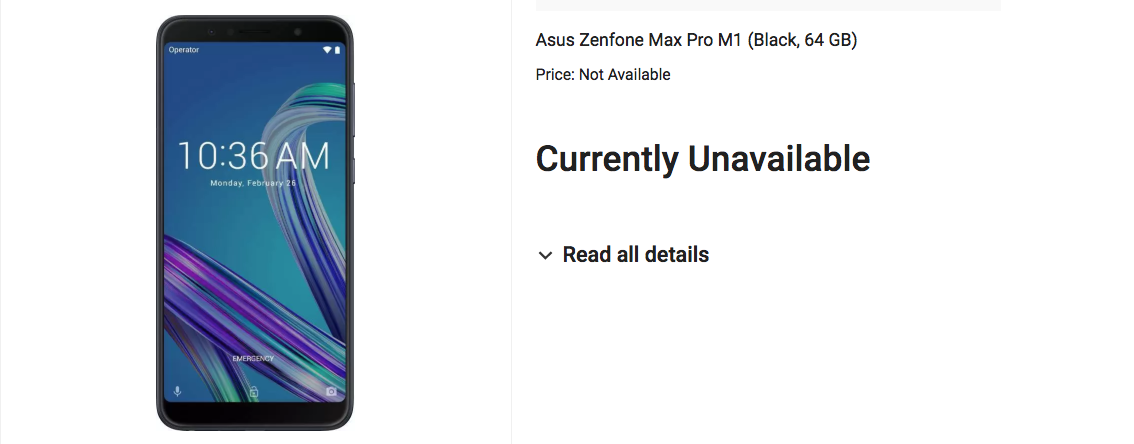
ASUS launched the Zenfone Max Pro in India on April 23rd in India. The budget smartphone was launched at a starting price of Rs 10999, severely undercutting the Redmi Note 5 Pro, which runs on the same Snapdragon 636 chipset. The company also announced that it will launch a 6GB RAM variant soon, with improved cameras. That launch might be on the horizon as its listing has gone live on Flipkart.
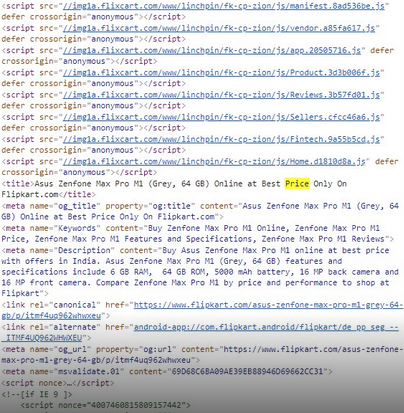
As seen in the screenshot above, the listing doesn’t mention the 6GB of RAM. However, the source code for the page confirms it is indeed the 6GB RAM variant. It is, however, worth noting that the listing reveals 64GB onboard storage while it is supposed to have 128G of onboard storage. The 6GB RAM variant will have a 16MP front-facing camera compared to the 8MP sensor found on the 3GB and 4GB RAM variants. Even the rear-facing dual camera setup gets an upgrade. The 6GB RAM model will have a 16MP primary sensor coupled with the same 5MP secondary sensor. The rest of the specifications will remain the same.
The ASUS Zenfone Max Pro has a 5.99 inch IPS LCD display with a 2160 x 1080 px resolution. The smartphone has an 18:9 aspect ratio similar to devices like the Redmi Note 5 Pro, Realme 1 and more.
Under the hood, the smartphone runs on the Qualcomm Snapdragon 636 chipset coupled with 3GB/4GB/6GB of RAM and 32GB/64GB/128G B of onboard storage. The fingerprint sensor is placed on the back of the device below the vertically placed dual-camera setup. The dual-camera setup looks similar to the Redmi Note 5 Pro.
One advantage the Zenfone Max Pro has over the Redmi Note 5 Pro is in the battery department. It is powered by a 5000 mAh battery while the size and weight of the smartphone are almost equivalent to that of the Redmi Note 5 Pro. For context, the Redmi Note 5 Pro is powered by a 4000 mAh battery. However, the Zenfone Max Pro will charge via a micro USB port which means it could take a while to fully charge from 0%.
The launch of the 6GB RAM variant seems imminent. With more RAM and storage at Rs 14999 when compared to the Redmi Note 5 Pro, it should give the Xiaomi budget smartphone a run for its money.
Asus launched an impressive budget smartphone, the Zenfone Max Pro in India in April. The company is also expected to launch the Asus Zenfone 5Z which it unveiled at MWC 2018. However, before a flagship smartphone launch, the company has unveiled its first-ever Android Go smartphone, the Zenfone Live L1. Asus has launched the new smartphone in Indonesia for a price of around IDR 1.5 million (Rs 7200 approx.).
The Asus Zenfone Live L1 is an entry-level Android Go device that has a 5.45 inch display with a 1440 x 720 px resolution.
Under the hood, the smartphone runs on the Qualcomm Snapdragon 425 chipset paired with 1GB of RAM and 16GB onboard storage. The onboard storage can be expanded using a microSD card slot. The smartphone runs on Android 8.1 Oreo (Go Edition) out of the box. Asus has also launched a 2GB RAM variant of the smartphone which runs Android 8 Oreo with ZenUI 5.0 on top.
Powering the smartphone is a 3000 mAh battery which charges via a micro USB port. To the back of the smartphone is a 13MP camera with an LED flash while the front of the device houses a 5MP camera.
At the Google I/O event in May 2017, Google promised to launch a custom version of Android tailor-made for lower-end devices. On the 5th of December, Android Go (Oreo edition) was officially launched and made available to smartphone manufacturers and developers.
The idea behind Android Go is for Google to create a version of Android OS which is designed to run better on phones with either 512MB or 1GB of RAM. In the world of OnePlus 5T with its 8GB of RAM or Galaxy Note8’s 6GB RAM, it is easy to forget that there are lower-end smartphones currently available in the market which have 1GB of RAM or less.
Google has claimed that Android Go’s Oreo edition will be a variant of Android Oreo that a manufacturer can just set by ticking off a configuration flag. What this basically does is that it sets up the phone to use the “Go” versions of a handful of Google apps such as the main Google app, Google Assistant, Google Maps, Gmail, and others. Google claims that the smaller apps and slimmer OS can as much as halve the amount of storage that’s taken up by default on a new phone running default OS.
For an entry-level Android Go device, the Zenfone Live L1 has impressive specifications, especially when compared to the likes of the Nokia 1, another Android Go device. However, the Zenfone Live doe snot have a fingerprint sensor which is a norm for a 2018 a smartphone. There are no details about the smartphone’s launch in India as of now.
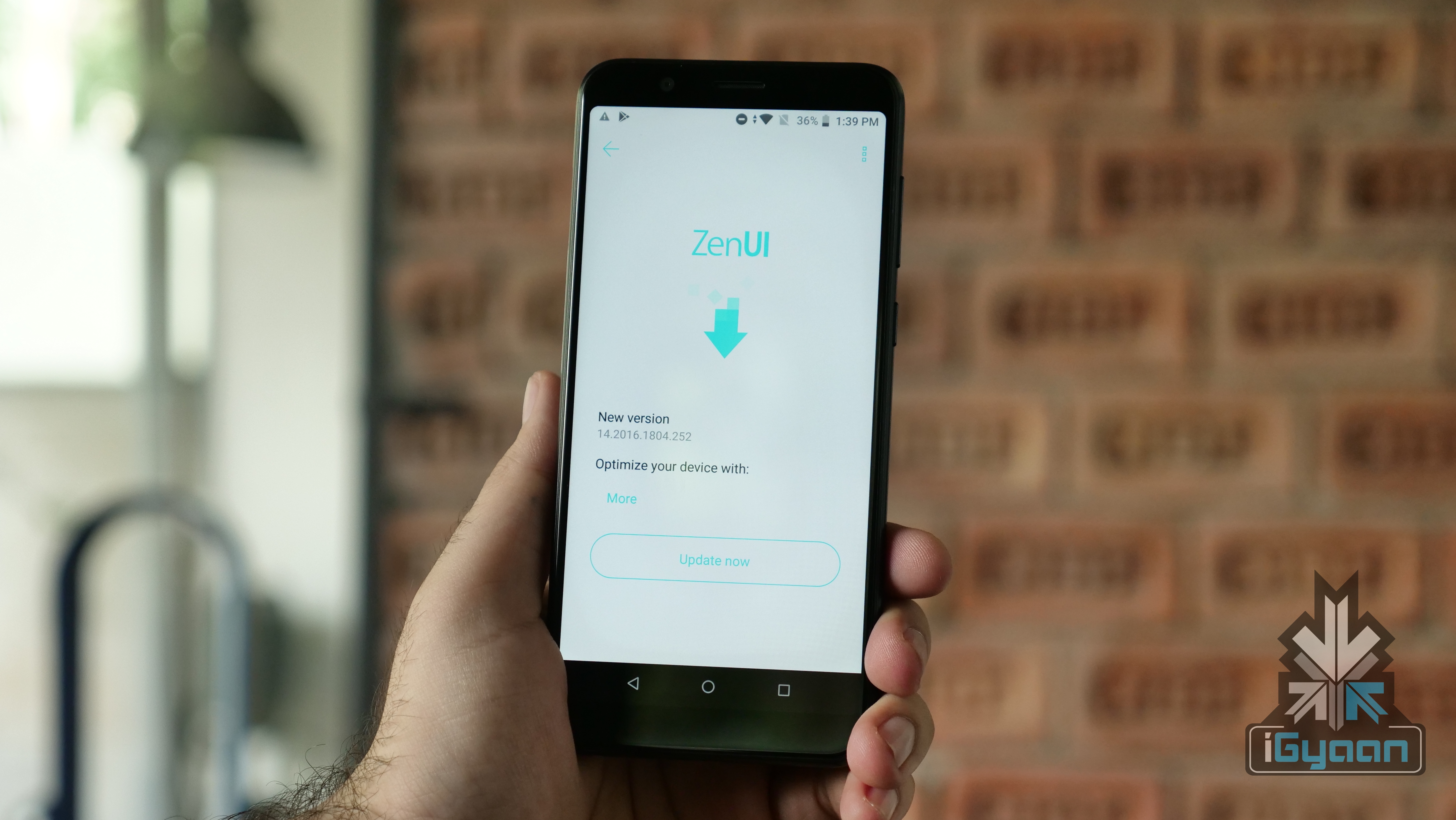
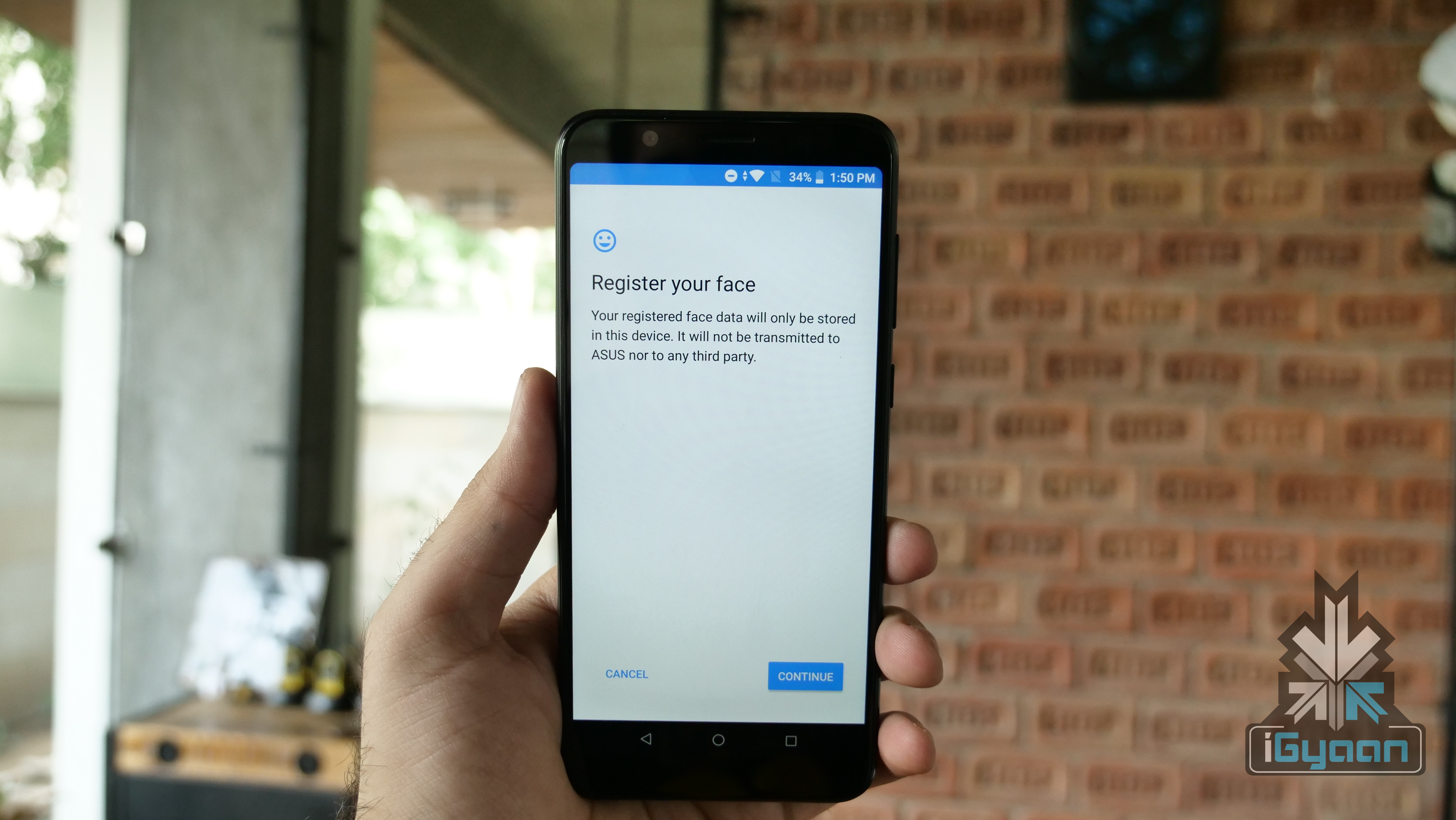
Asus launched its new budget smartphone, the Asus Zenfone Max Pro on April 23rd. The smartphone retails for Rs 10999 for the base variant and the company has already promised to launch a 6GB RAM variant with better camera performance. Asus has been pushing out a few software updates to the Zenfone Max Pro before its first sale and the new update brings the Face Unlock feature to the device.
The Face Unlock feature is definitely the marquee addition with the new software. However, there are a few other changes that might improve the day-to-day usage of the smartphone. The update brings improvement to the gyroscope functionality and some audio parameters. Asus claims that the response speed of the fingerprint sensor will also improve. There are a few improvements in the camera department as well like colour correction, HDR Algorithm, low light photography and more.
Must Read: Asus Zenfone Max Pro Vs Xiaomi Redmi Note 5 Pro
The Asus Zenfone Max Pro is also only the second smartphone running on the Snapdragon 636 chipset to be launched in India. This means that it is a direct competitor of the highly popular Xiaomi Redmi Note 5 Pro.
Without a doubt, one of the highlights of the Zenfone Max Pro is its battery capacity. It is powered by a 5000 mAh battery while the size and weight of the smartphone are almost equivalent to that of the Redmi Note 5 Pro. For context, the Redmi Note 5 Pro is powered by a 4000 mAh battery. However, the Zenfone Max Pro will charge via a micro USB port which means it could take a while to fully charge from 0%.
The Asus Zenfone Max Pro is available in two variants in India for now, one with 3GB RAM and 32GB storage and the other with 4GB RAM and 64GB storage You can buy it by clicking here. At the launch, the company also announced that a 6GB RAM/128GB storage variant with better camera capabilities will be launched at a price of Rs 14999.
That 5000 mAh battery will be powering a 5.99 inch IPS LCD display with a 2160 x 1080 px resolution.
So far, Asus smartphones have had the custom ZenUI on top of Android. However, Asus has gone the stock Android route with the Zenfone Max Pro. Out of the box, the Zenfone Max Pro will run on Android 8.1 Oreo, which is the latest version of Android available right now. Asus has also promised timely software upgrades for their new budget smartphone up to Android Q.
Asus has launched its latest budget offering for the India market, the Zenfone Max Pro. The newly launched smartphone will go on sale via Flipkart on the 3rd of May at a starting price of Rs 10999. The Zenfone Max Pro, in the beginning, will be available two variants, one with 3GB RAM and 32GB storage and the other one with 4GB RAM and 64GB storage. The company also announced that a 6GB RAM and 128GB storage variant with improved camera capabilities will also launch soon in India.
At such a price range, the Zenfone Max Pro directly competes with the Redmi Note 5. However, in terms of features and hardware, it stacks up against the Redmi Note 5 Pro. The Xiaomi Redmi Note 5 Pro was launched in February of this year and has garnered great reviews so far. The only caveat being its annoying flash sales which is still the only way to buy the smartphone. It starts at a price of Rs 13999 for the 4GB RAM and the 6GB RAM model costs Rs 16999.
In a price sensitive market like India, such a price gap between two smartphones can be telling. But, does the Asus Zenfone Max Pro hold up against highly successful Redmi Note 5 Pro? Let’s find out!
Design
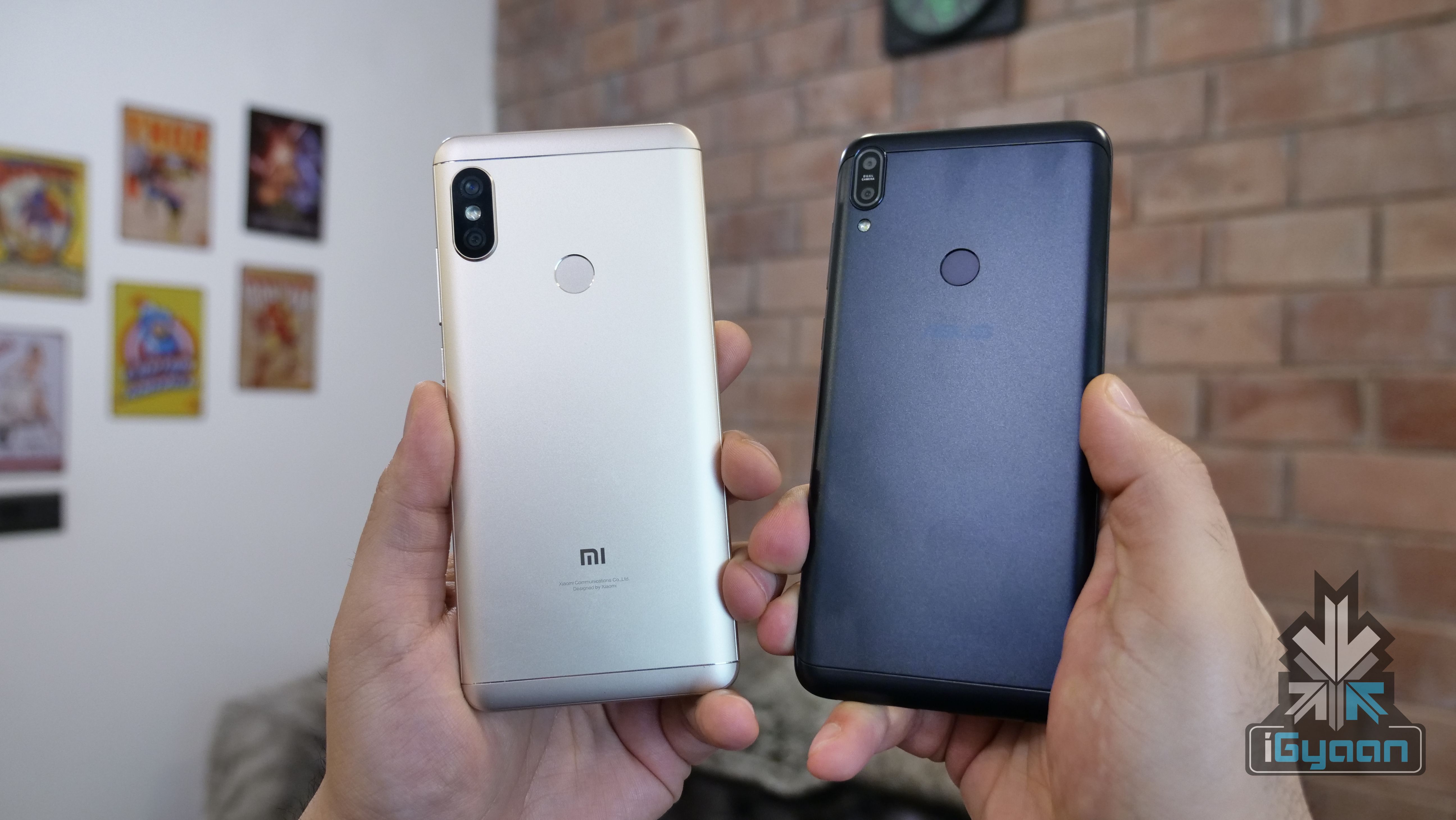
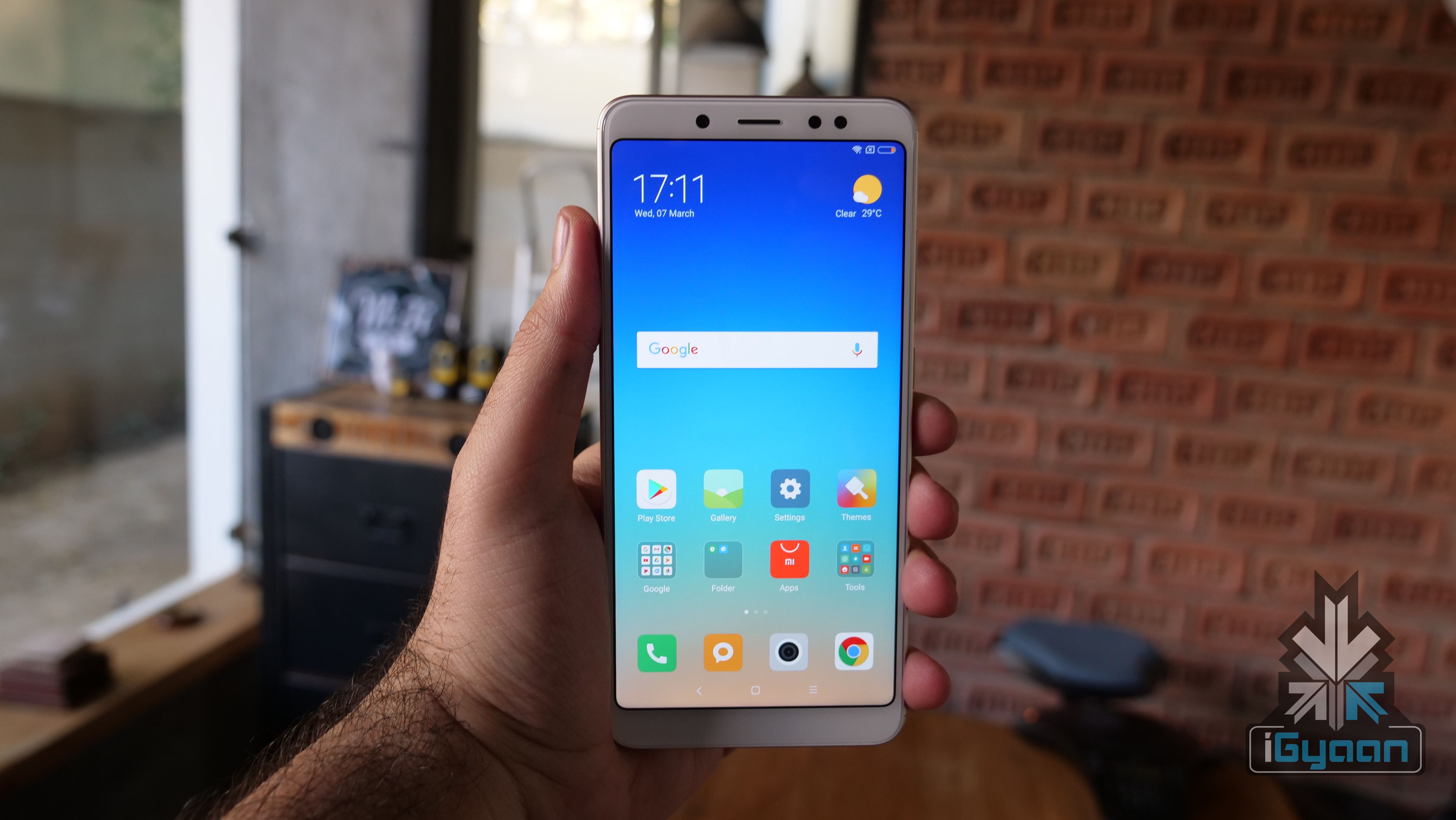
The Xiaomi Redmi Note 5 Pro and Asus Zenfone Max Pro look identical in more than one way. On the front, the bezels have a similar size around the displays of both the phones. On the back, both the devices have a vertically placed dual camera setup with very similar placements as well. However, the LED flash on the Note 5 Pro is placed between the two cameras while on Zenfone Max Pro, it is placed beneath the dual camera setup. The brushed metal finish on both the phones means that the devices can be a bit slippery, especially if you have smaller hands and cannot get a proper grip.
It is also worth noting here that the Redmi Note 5 Pro has a camera bump on the back while the cameras on the Zenfone Max Pro are flush along the body.
Display
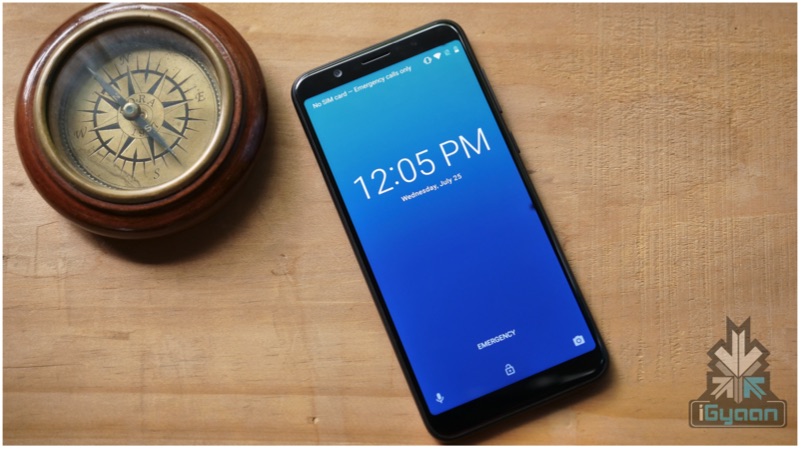
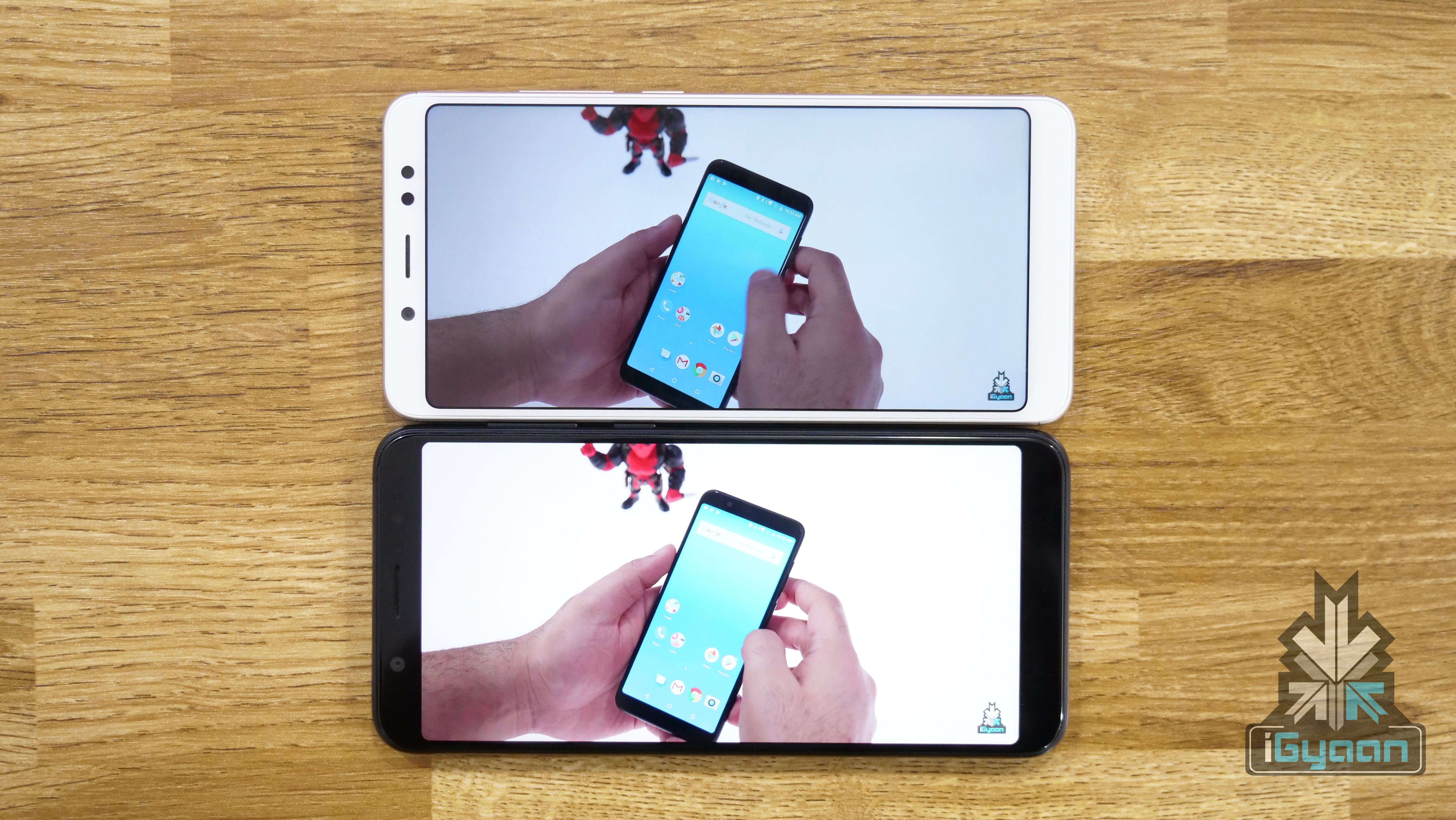
The display on both the smartphones is identical. It is a 5.99 inch IPS LCD display with a 2160 x 1080 px resolution. This translates into an 18:9 aspect ratio. The corners of the displays are curved giving the smartphones a bit more premium look compared to sharp corners found on something like the Honor 7X.
The viewing angles are great and the colour reproduction is exactly what you would expect from an HD+ LCD panel. Considering how smartphones are the primary source of media consumption for a lot of users, both the devices do a great job with their respective displays. Another advantage of a tall display and thin bezels is the ability to fit a larger display in a relatively smaller body.
Hardware
When the Redmi Note 5 Pro was launched, its chipset was one of the highlights. It was the only smartphone to run on the Snapdragon 636 chipset before the Zenfone Max Pro’s launch. The Zenfone Max Pro is available in three different RAM and storage options, while the Note 5 Pro is only available in two RAM and one storage options.
A department where the Zenfone Max Pro hands down one-ups the Note 5 Pro is the battery. The Zenfone Max Pro has a 5000 mAh battery compared to Redmi Note 5 Pro’s 4000 mAh battery. Also, Asus has managed to keep the weight of the Zenfone Max Pro at 180 grams, identical to that of the Redmi Note 5 Pro.
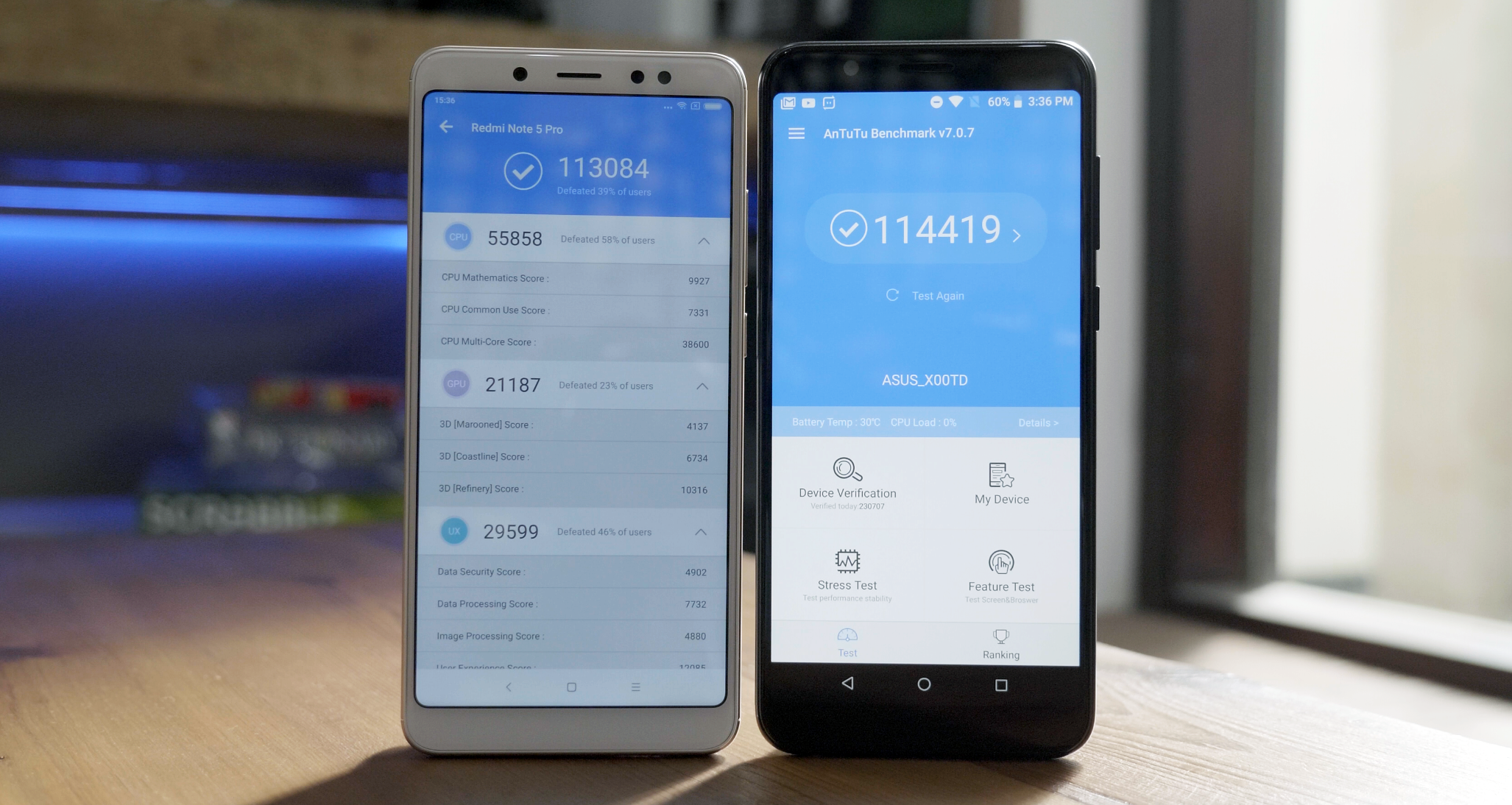
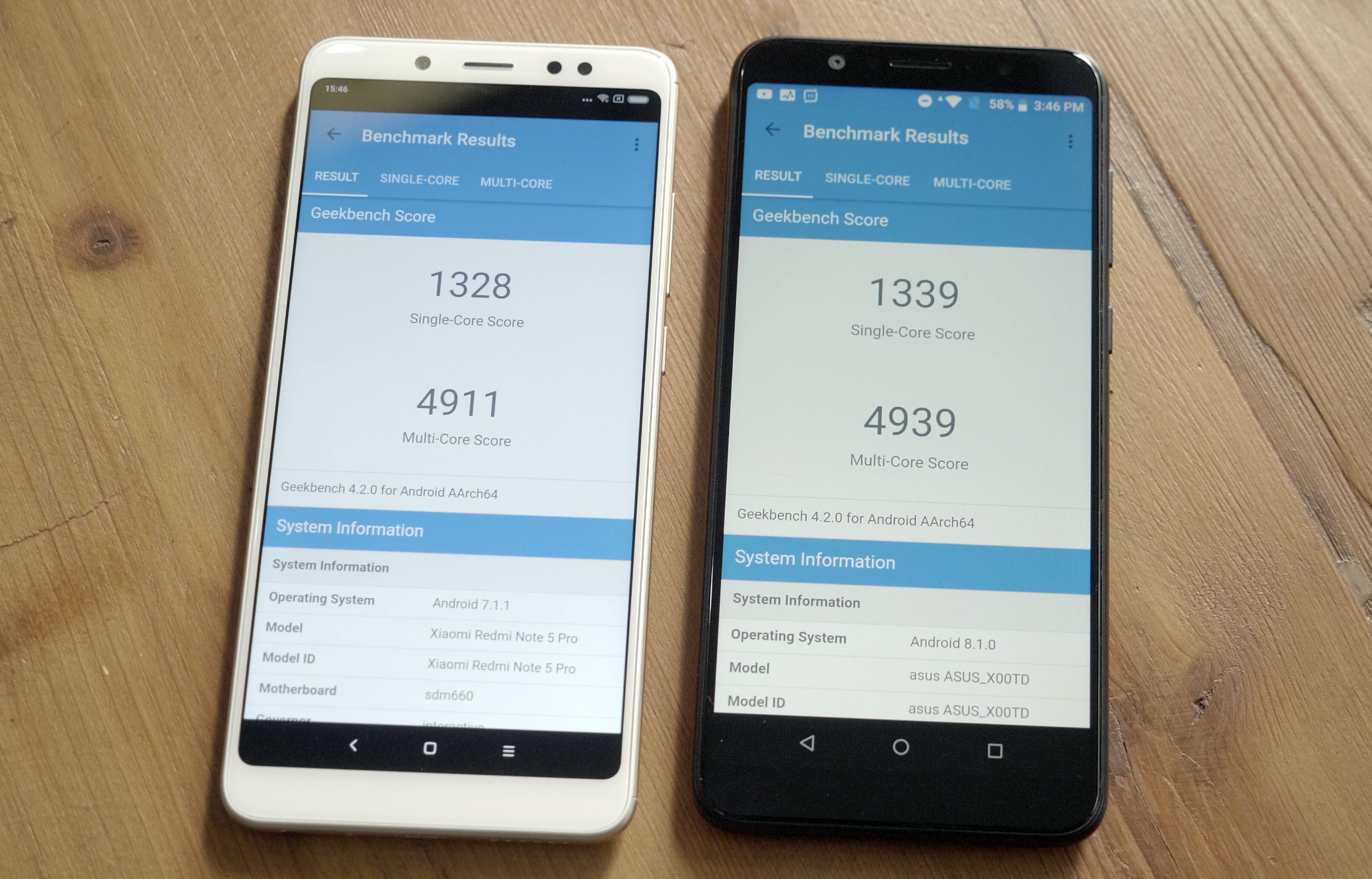
If you are someone who swears by the benchmark scores, here they are for both the devices:
Antutu BenchmarkGeekbench
Camera
The Xiaomi Redmi Note 5 Pro has a 20MP Sony IMX376 camera on the front with an LED light. To the back of the smartphone is a vertically placed dual-camera setup. It is a 12MP colour sensor with an f/2.2 and a 5MPcolour sensor with an f/2.0 aperture setup. The smartphone clicks portrait mode photos from the front and rear cameras.
The Asus Zenfone Max Pro has a 13MP primary sensor with an f/2.2 aperture and the depth sensor is a 5MP camera. The front of the device houses an 8MP camera with an f/2.0 aperture and an LED flash. The Zenfone Max Pro records 4K videos at 30fps while the Redmi Note 5 Pro can only record 1080P videos. Both the smartphones have EIS (electronic image stabilisation) when recording 1080P videos.
Asus has officially launched the Zenfone Max Pro in India at an event in Delhi. The Zenfone Max Pro will go on sale in India via Flipkart. The Asus Zenfone Max Pro will be available in two variants in India for now, one with 3GB RAM and 32GB storage and the other with 4GB RAM and 64GB storage You can buy it by clicking here. At the launch, the company also announced that a 6GB RAM/128GB storage variant with better camera capabilities will be launched at a price of Rs 14999. However, no specific timeline for that launch was mentioned.
The new smartphone has a few interesting features and specifications and at this price, it will compete with the Redmi Note 5 Pro in this highly congested budget smartphone segment in India.
Asus, with the Zenfone Max Pro, is taking a different approach towards to the budget segment of the Indian smartphone market. There are a few aspects of the smartphone that will an “Asus-first,” especially for India. The Zenfone Max Pro launch is also a world first launch, just like the Redmi Note 5 Pro was.
[section label=”Unboxing”]
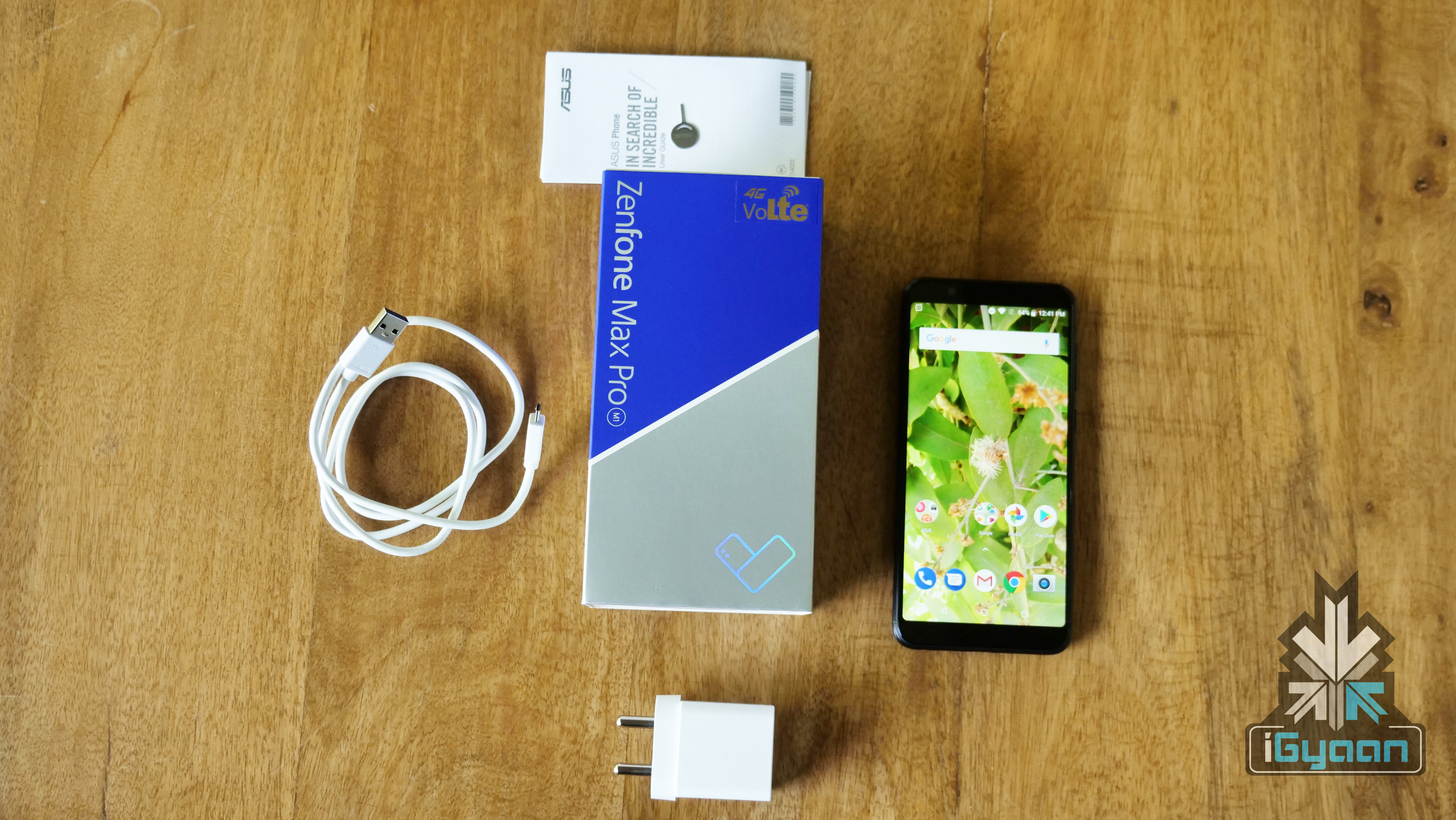
Inside the box of the Asus Zenfone Max Pro:
Asus Zenfone Max Pro
Documentation
Micro USB Cable
10W Wall Charger
Sim Ejector Tool
[section label=”Initial Impressions”]
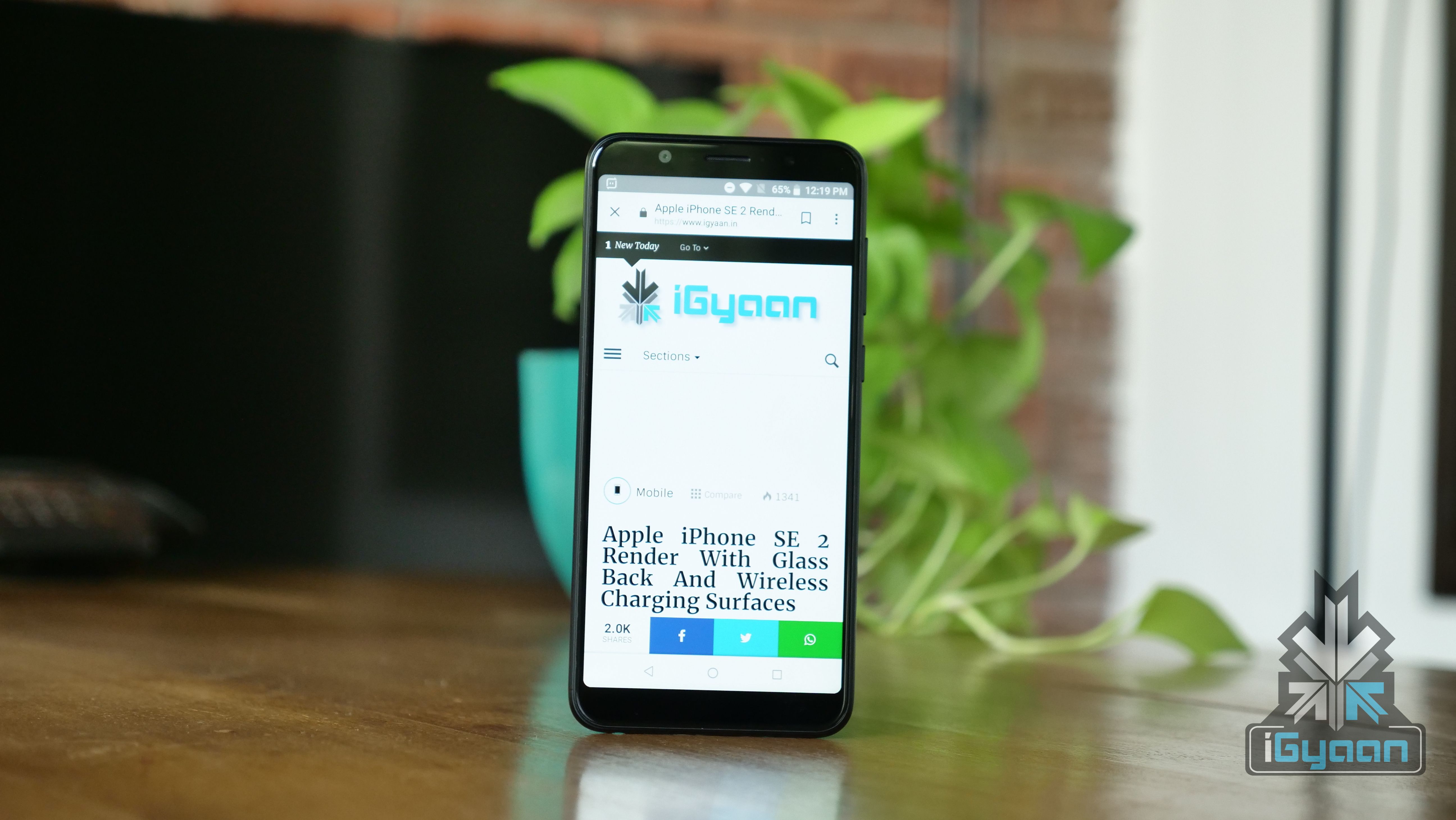
Right off the bat, the Asus Zenfone Max Pro exuberates a sense of familiarity. The aluminium unibody design is prevalent across the budget category of smartphones and the Zenfone Max Pro is no different. The 18:9 aspect ratio and thinner bezels mean that a 5.99 inch display fits into the body of a regular 16:9 smartphone with a 5.5 inch display. Fair to say that the 18:9 aspect ratio has become the norm even in sub-15K smartphones. It is worth noting that even though the bezels are thin, they are still substantial and not as thin as some of the flagship devices.
Another interesting feature of the Asus Zenfone Max Pro is its OS. So far, we have become accustomed to the heavily customised ZenUI on all Asus Android smartphones. However, with the new Asus Zenfone Max Pro, the company has decided to go for stock Android OS. Now, it is not Android One, which means it is not completely stock OS and there are a few pre-installed apps as well. However, it is much lighter than ZenUI which should bode well with the powerful Snapdragon 636 chipset.
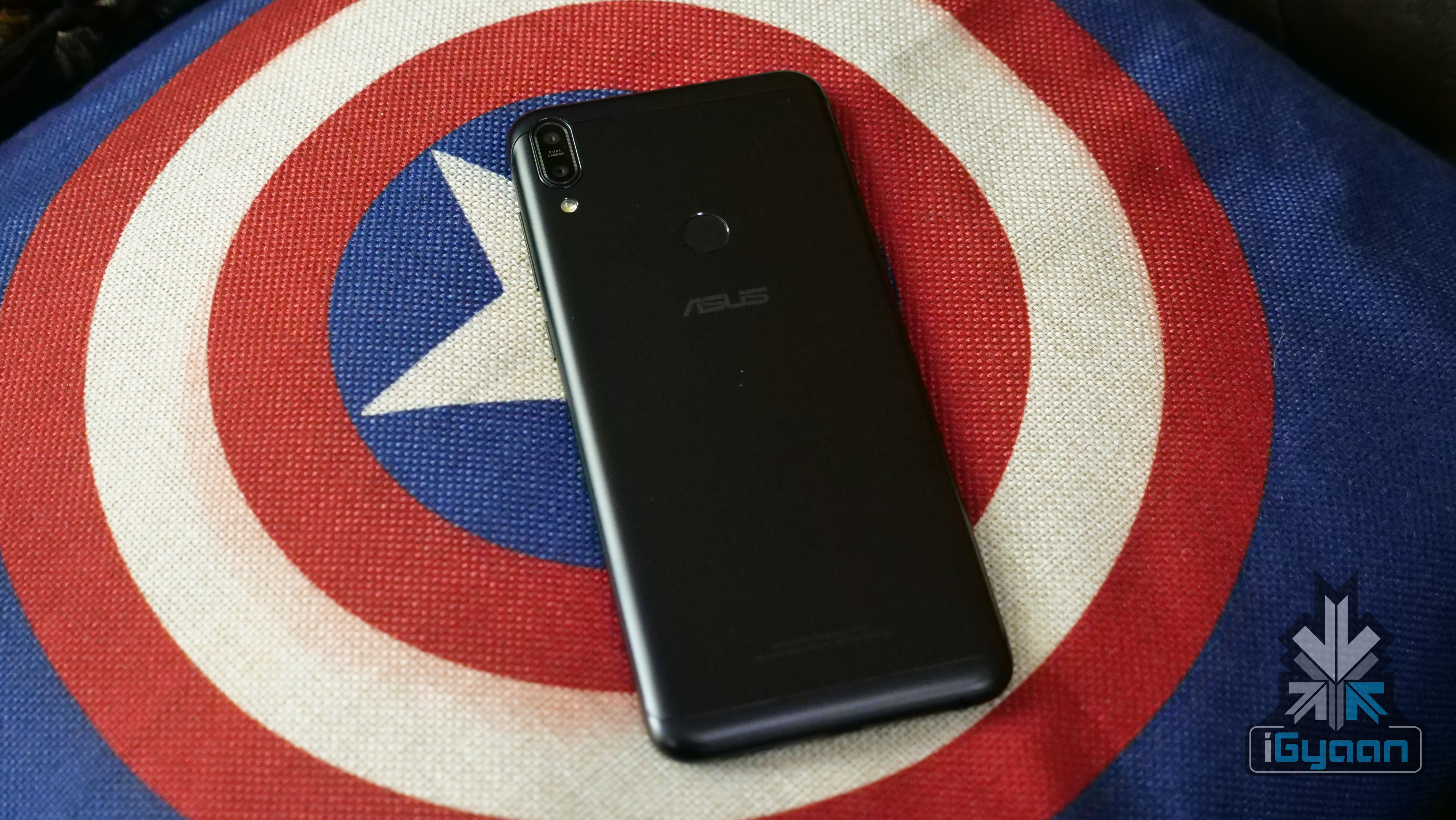
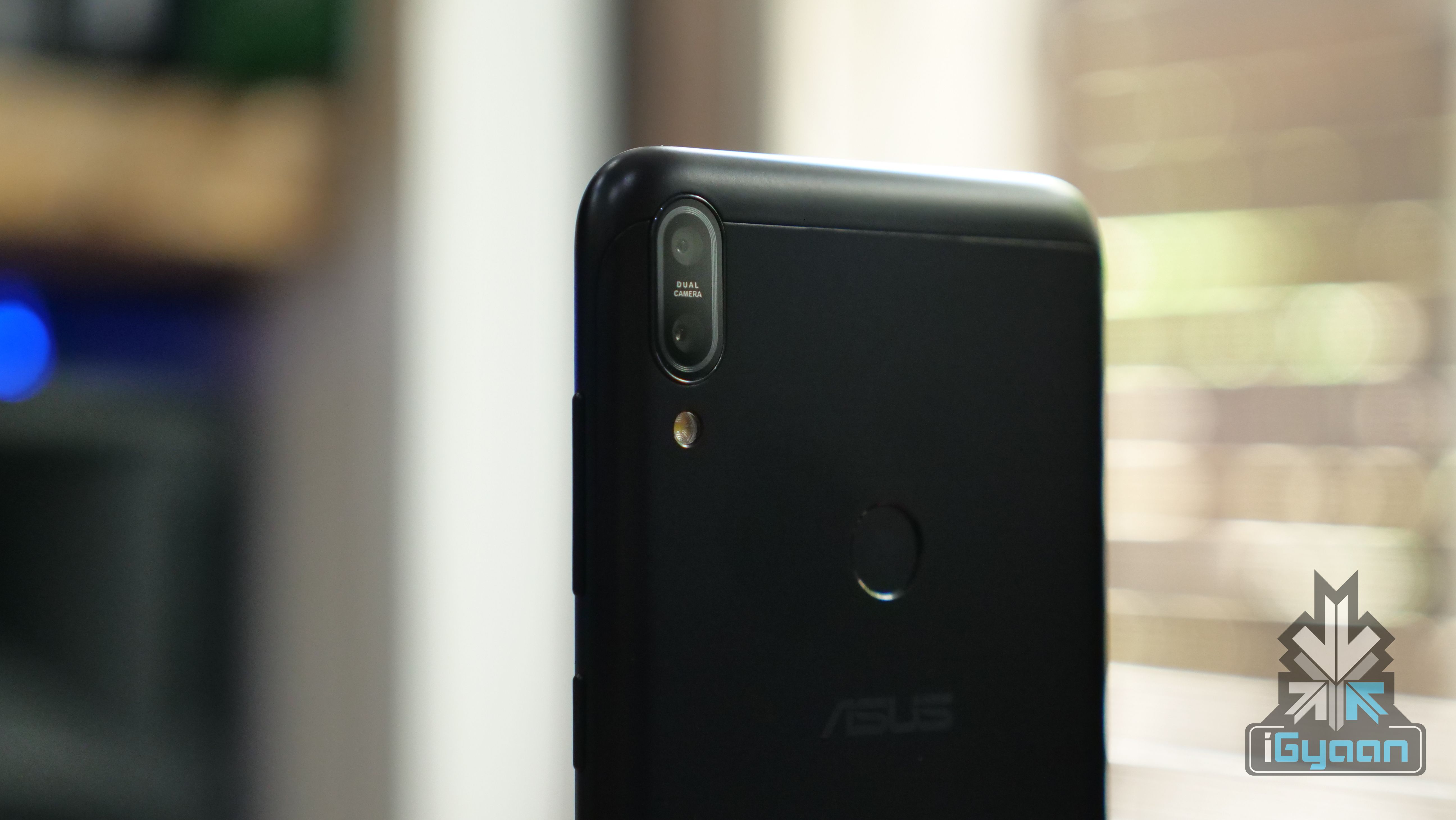
The back of the smartphone also houses a vertically placed dual-camera setup which looks uncannily similar to the Redmi Note 5 Pro. It appears that this trend of vertically placed dual-camera setup on the side of the smartphone also took off with the iPhone X. The dual-camera setup consists of a depth sensor which will be used for portrait mode shots. It has a 13MP primary sensor with an f/2.2 aperture and the depth sensor is a 5MP camera. The front of the device houses an 8MP camera with an f/2.0 aperture and an LED flash.
At a starting price of Rs 10999, the Zenfone Max Pro, despite its specifications matching the Redmi Note 5 Pro, will compete with the Redmi Note 5. Maybe, the launch of the Zenfone Max Pro will push Xiaomi into launching a follow-up to the Mi A1.
Asus has launched a new budget smartphone in India, the Zenfone Max Pro. The new smartphone will be priced at Rs 10999 for the entry-level variant and will be sold via Flipkart. There are no details about the offline availability of the smartphone as of now. The Asus Zenfone Max Pro will be available in two variants in India for now, one with 3GB RAM and 32GB storage and the other with 4GB RAM and 64GB storage. Interestingly, this a world first launch of the Zenfone Max Pro and will eventually launch in other markets as well.
At the launch, the company also announced that a 6GB RAM/128GB storage variant with better camera capabilities will be launched at a price of Rs 14999. However, no specific timeline for that launch was mentioned.
Unboxing Video
The Asus Zenfone Max Pro is also only the second smartphone running on the Snapdragon 636 chipset to be launched in India. This means that it is a direct competitor of the highly popular Xiaomi Redmi Note 5 Pro. Both the smartphones also have a lot of similarities in terms of design and pricing.
Without a doubt, one of the highlights of the Zenfone Max Pro is its battery capacity. It is powered by a 5000 mAh battery while the size and weight of the smartphone are almost equivalent to that of the Redmi Note 5 Pro. For context, the Redmi Note 5 Pro is powered by a 4000 mAh battery. However, the Zenfone Max Pro will charge via a micro USB port which means it could take a while to fully charge from 0%.
That 5000 mAh battery will be powering a 5.99 inch IPS LCD display with a 2160 x 1080 px resolution.
So far, Asus smartphones have had the custom ZenUI on top of Android. However, Asus has gone the stock Android route with the Zenfone Max Pro. Out of the box, the Zenfone Max Pro will run on Android 8.1 Oreo, which is the latest version of Android available right now. Asus has also promised timely software upgrades for their new budget smartphone up to Android Q.
The Asus Zenfone Max Pro will go on sale in India on May 3rd. With such a competitive pricing and specifications, it will be interesting to see how the Zenfone Max Pro holds up in the Indian market.