Tag: CONCEPT

  • More Concept Images Of The Mi Mix 4 With Pop Up Camera Surface Online

    More Concept Images Of The Mi Mix 4 With Pop Up Camera Surface Online

    After launching the flagship smartphones in the Redmi sub-brand which are dubbed the K20 and K20 Pro, Xiaomi is apparently working on its very own flagship handset. Till now the responsibility has been held by devices in the Mi Mix lineup and the year 2019 will be no different. Going by chronological order, the upcoming smarpthone will be callled the Mi Mix 4 which will succed the Mi Mix 3 from the year 2018. 

    Falling into the footsteps of its ancestors, the Mi Mix 4 will carry forward the design language of a smartphone with an edge-to-edge display. Although Xiaomi has not officially revealed any details about the ucpoming smarpthone, concepts and leaks of the device have been making rounds on the internet for quite some time.  In the past, a conceptual render showcased the device with a gradient back that looks very attractive.Mi Mix 4 Popup Camera

    Now, the same source has shared another concept image that also reveals the front of the Mi Mix 4 which has a high probability of turning into a reallity. Correspondingly, the 2019 flagship from Xiaomi will have an extremely high screen to body ratio. Besides, the display panel tapers towards the sides which provides for a premium apperance. The concept image also reveals a pop up selfie which is slowly becoming a common sighting in mid range and premium smartphones as observed with the Redmi K20 lineup and the OnePlus 7 Pro. Unfortunately, specifications of the Mi Mix 4 are still far-sighted, however, according to our speculations the handset will have the following features:

    Mi Mix 4 Expected FeaturesMi Mix 4 Gradient Back
    • Display: 6.67 inch Super AMOLED, 90 Hz refresh rate
    • Rear Camera: Triple Sensors, 48 MP (Sony IMX 586), Telescopic Sensor, Ultra Wide Sensor
    • Front Camera: 32 MP
    • Battery: 4000 mAh or larger, 27 W Sonic Charge
    • Chipset: Snapdragon 855 Plus, X50 Modem
    • CPU: Octa Core
    • GPU:  Adreno 640
    • Connectivity: 5G, 802.11 Wi-Fi, Bluetooth 5.0, GPS, NFC
    • Biometric Security:  In-Display Fingerprint Scanner

    Also Read: Key Specs Of Google Pixel 4 And Pixel 4 XL Revealed

    Conclusively, the assumed specs and concept images will only be verified once the smarpthone is officially announced. Going by past launch cycles, the Mi Mix 4 is expected to launch in the month of October. 

    What are your thoughts on the concept renders of the Mi Mix 4 with a popup selfie camera? Do let us know in the comments below.


  • This Foldable iPhone Concept Has Us Excited

    This Foldable iPhone Concept Has Us Excited

    The year 2019 in technology will be remembered for many things. From the popularisation of the punch hole display to the introduction of ultrasonic fingerprint scanners in the Galaxy S10 series, there has been a lot to this year. But perhaps the most innovative advancement has been the advent of folding smartphones. Samsung, the largest smartphone OEM in the world, released its foldable device, the Galaxy Fold back in February. Even Huawei, the manufacturer holding the second place, has announced its handset that can be folded into half, the Mate X will launch soon. Many other mainstream OEMs like Xiaomi and Oppo have confirmed that they are working on a foldable smartphone. 

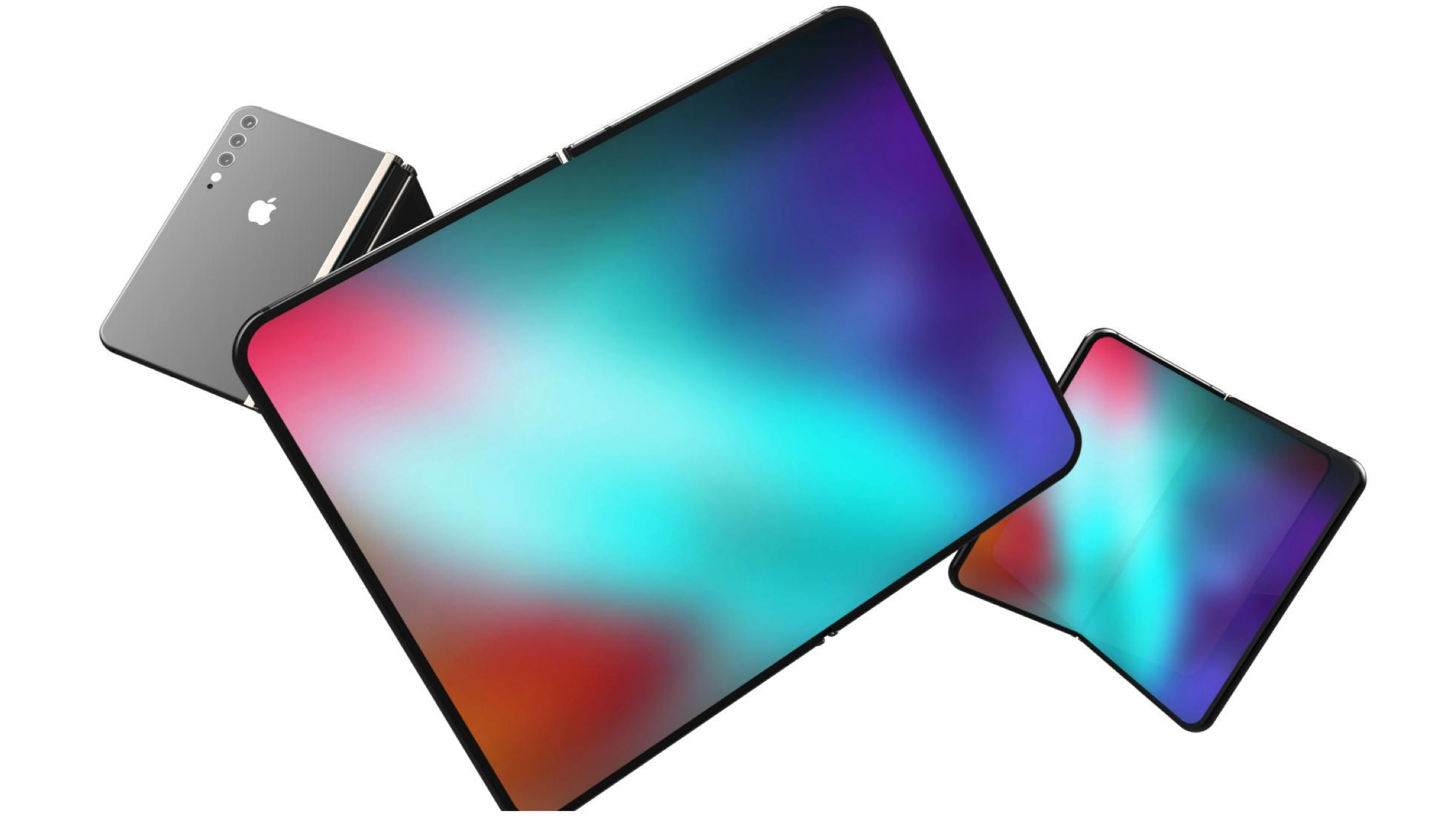
    With all the aforementioned manufacturers announcing a foldable smartphone; it was expected that Apple, a renowned OEM in itself will announce a similar device soon. What the device will look like is anyone’s guess. But in a recently designed render by a reputed media house in collaboration with the Concept Creator, it is imagined how a foldable handset by the company may look like based on previously filed patents. While the actual smartphone, whenever it launches, may be different from what is shown below; the very idea of a foldable handset from a company like Apple has us excited.

    Foldable iPhone Concept

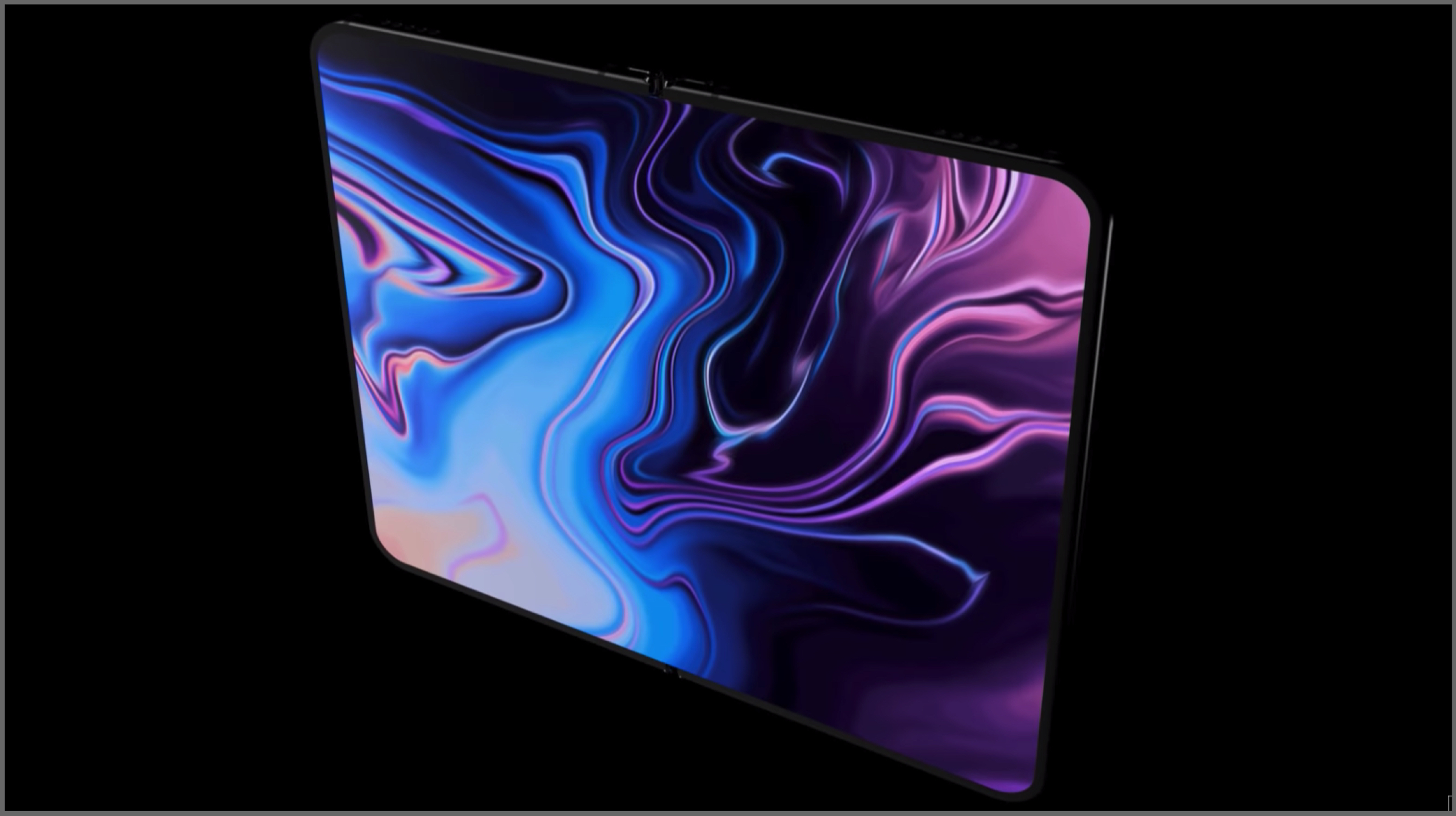
    The renders designed by Concept Creator give an insight into how Apple may choose to design its folding smartphone. From a first glance, it looks oddly similar to the Samsung Galaxy Fold, albeit with a few enhancements to the design. While the concept doesn’t expose all the visual elements of the device, it implies the handset will use a large tablet-like display with an option of folding it into half. It is not clear from the video if this smartphone, called the iPhone Flex will use a secondary outer display like the Galaxy Fold. But unlike the latter, it is devoid of any notches on the inside display. For optics, Apple may opt-in for a vertical triple camera setup as shown in the images.

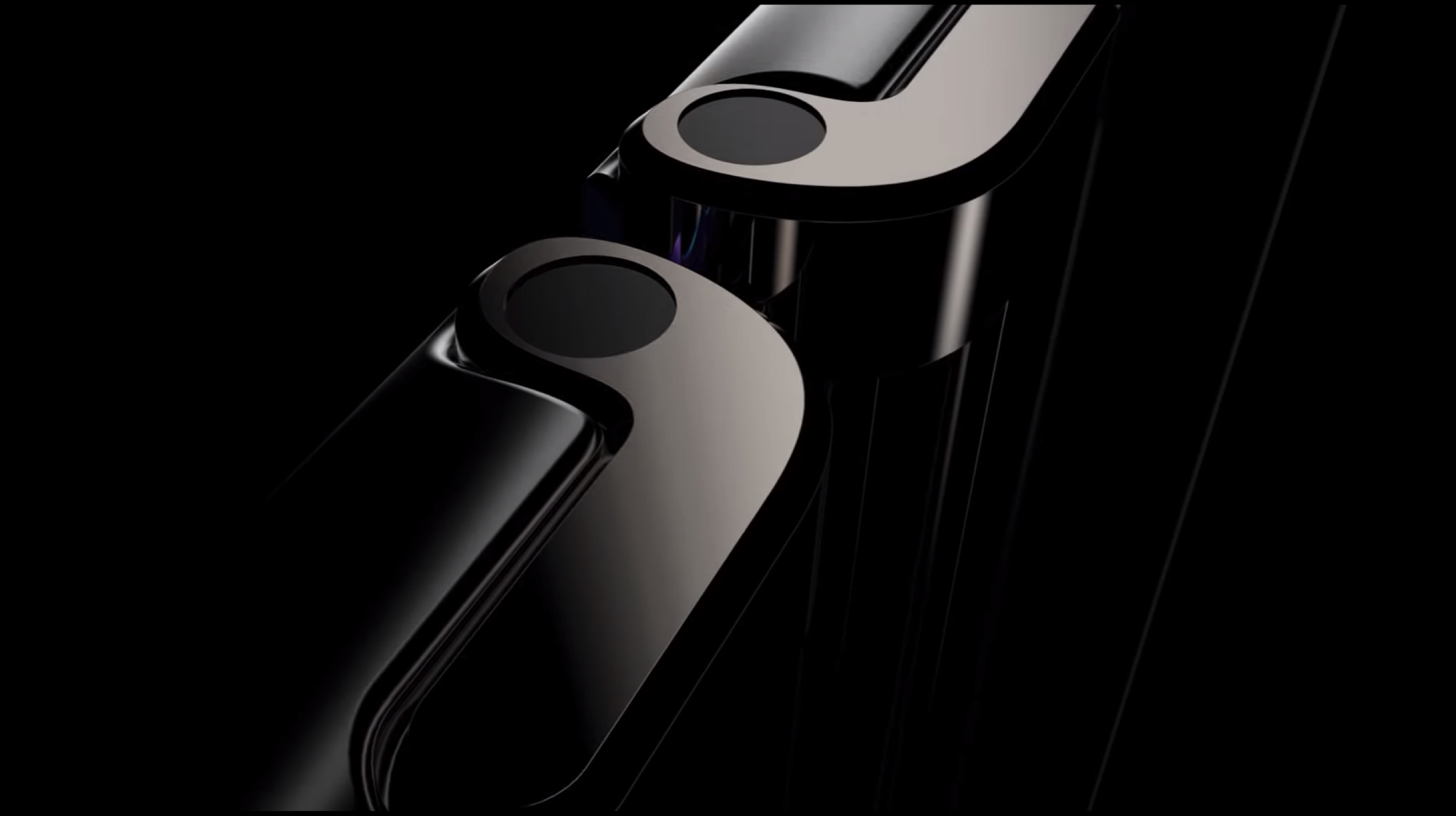
    But, with a similar design like the Galaxy Fold, a question arises if the alleged iPhone Flex will also face display malfunctions like the former. From the looks of the concept, it seems highly unlikely. This is due to the design of the hinge, which features a closed off design, not letting foreign particles like dust get into the device. Another question is if the upcoming iPhone Flex does not feature a secondary display or camera on the outside, if this turns out true, the users won’t be able to take selfies from the smartphone. 

    Foldable iPhone: What About The Price?

    Okay, now let’s get real here. Foldable smartphones are a unique and cool piece of technology, but there is no denying they are known to be priced at a premium. Samsung’s offering costs close to US$ 2,000 (Rs 1,40,000) and the Huawei Mate X is also rumoured to cost around US$ 2,600 (Rs 1,80,000) at the time of launch. And considering Apple products are generally more expensive than the competition, its foldable smartphone may also end up being more expensive than its rivals. However, the company is also known for one more thing. That is perfecting a technology before bringing it to the mass market.

    Also read: Apple To Soon Launch A Paintbrush For iPad, Reveals Patent

    This might suggest the wait, and the extra money for the technology may very well be worth it. Regarding the launch date of the foldable smartphone from Apple, it is rumoured the company may release one next year. The timing seems right as the technology will have been matured enough for the company to implement it. Maybe the company will not even release a foldable iPhone, or it may take a long time to do so. Whatever may be the case, if the company decides to release a smartphone like the one shown above, colour us excited.

  • ASUS 5G Concept Smartphone Renders Show Off Stylish Slider Design

    ASUS 5G Concept Smartphone Renders Show Off Stylish Slider Design

    In a time where every smartphone manufacturer is experimenting with a host of innovations, devices with never-heard-of features are emerging. For instance, devices like the Mi Mix used their OLED screens to resonate sound, whereas smartphones like the Huawei P30 Pro have cameras with extraordinary zooming capabilities. Freshly released renders for a concept smartphone from ASUS reveal a captivating dual slider design and a display with almost no bezels.

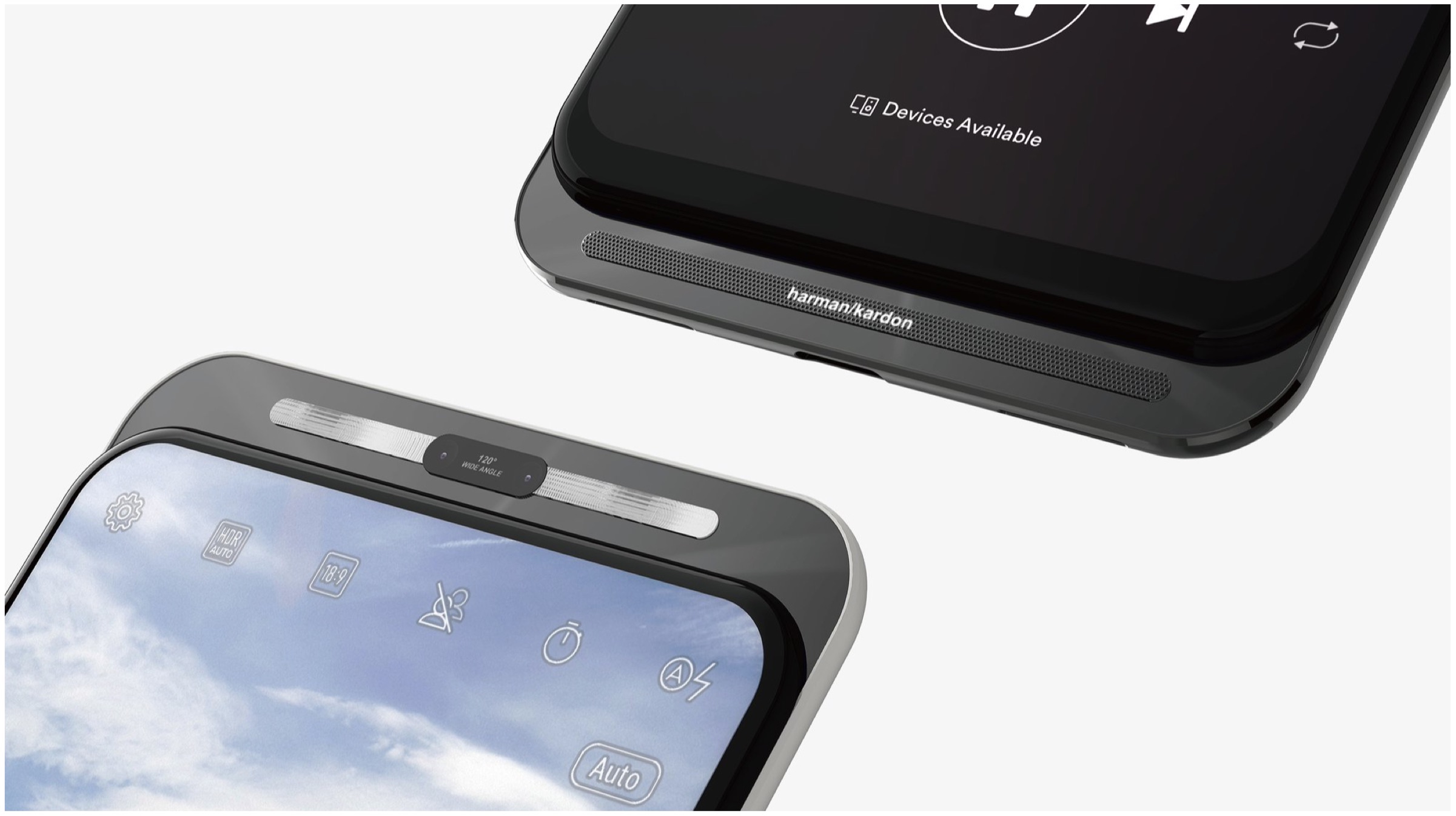
    The renders were actually developed by a designer who previously worked on the design of the ASUS Zenfone 5 but was shared on Twitter by noted tipster Evan Blass (@evleaks). A total of two designs were spotted in the images. The first design shows off a unique slider mechanism that shifts downwards to reveal dual front selfie cameras. On the sides of the cameras lie the LED flash “strips” which cover nearly 60% of the whole area.

    First Smartphone Render – Design

    When the device is slid upwards, an attractive speaker grille bearing the label of Harman Kordan speakers is observed. This indicates the fact that the smartphone may have dual front firing speakers, but it’s unclear how both the speakers will function together simultaneously. The concept smartphone has a dual rear camera setup positioned at the top of the back panel. Along with the presence of the LED flash, a noteworthy feature of the back panel is the absence of a fingerprint scanner, hinting towards the fact that the device may have an in-display fingerprint scanner. 

    Second Smartphone Render – Design

    The second smartphone design shifts the perspective towards more of a “camera-oriented” device. Where the first render had a single LED flash strip for the front-facing cameras, the second concept shows off a separate LED flash for each of the dual selfie shooters when the slider is shifted downwards. Also, both the cameras are placed at a notable distance from each other.

    As per the renders, the screen can be slid upwards to reveal another display which is much smaller than the primary display. In the image, the small screen shows controls for image exposure, a function option, a zoom slider and a camera shutter button. However, the controls may not be just limited to the camera, in fact, each app may have its own set of touch controls to integrate with the miniature display. The back of the smartphone has a set of dual cameras that are placed together in a single module, with the left side being flanked by the LED flash. Also, a fingerprint scanner can clearly be spotted on the back, which is placed between the camera and the ASUS branding.

    Also Read: Interesting Facts About PUBG That You Probably Did Not Know

    Since both the smartphones are born out of mere concept renders, no specifications are known as of now. Even the chance the ASUS works on similarly-designed smartphones seems bleak, but in the minute probability that it does happen, the smartphones are sure to catch some attention.

  • A ‘Concept Video’ Of The Samsung Galaxy F Surfaces

    A ‘Concept Video’ Of The Samsung Galaxy F Surfaces

    Foldable phones have been rumored for years and finally, Samsung showcased a working prototype of one such device in their developer’s conference. The device will most probably be called the Samsung Galaxy F, owing to its foldable screen. Recently, in an interview with Yonhapnews (a South Korean news agency), Samsung said that the Galaxy F will be commercially available in the first half of 2019.

    The company also claims to sell at least 1 million units of the foldable phone within the first year of its launch. According to sources, the smartphone will have a hefty price tag of $ 1,770 (around 2 million Korean Won). Any technical specification except the screen size of the Galaxy F is currently unavailable. Recently, a YouTube channel with the username ‘Concept Creator’ has shared a concept video of the foldable Galaxy F.

    Galaxy F Concept

    The concept video shows a smartphone that folds out into a sleek looking tablet. The tablet mode has a 4.2:3 aspect ratio, edge-to-edge display with rounded corners and negligible bezels. In the smartphone mode, it has a smaller, 4.3-inch infinity display with thick top and bottom bezels. The front-facing selfie camera is present on the top bezel of the phone. The device has a clamshell style curved hinge that gives it the folding capabilities.

    The power button & volume rockers are placed on the left side when the device is in phone mode. The Galaxy F concept also has a USB Type-C port, 3.5 mm headphone jack & dual bottom firing speakers. Additionally, the device also has dual rear cameras along with an LED flash and unidentified sensor. 

    Also Read: Foldable Samsung Phone Will Launch In First Half of 2019

    Albeit, the video is a fan-made concept. But it does looks amazing & we hope that the final product resembles the same. If Samsung is actually able to pull off something like this, it will help the tech giant further strengthen its roots in the smartphone market. Again, it must be kept in mind that this is just a fan-made concept and the real device may not be the same.

  • Xiaomi Mi MIX Is The Company’s Concept Phone From The Future

    Xiaomi Mi MIX Is The Company’s Concept Phone From The Future

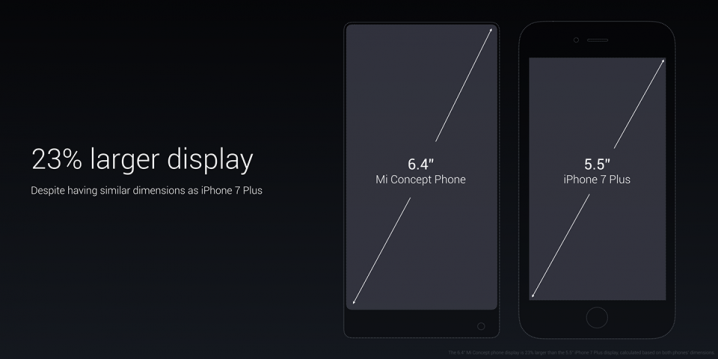
    Xiaomi at the Mi Note 2 launch also showed off the MIX the concept smartphone that the company claims to have been working on for a long time. The 91.3 screen to body ratio has not been possible till now, but Xiaomi claims they have managed to achieve it with the MIX.

    xiaomi-mix-iphone

    Converting the concept phone into reality they introduced some new features, the earpiece is replaced with conductive audio tech and the proximity sensor is based on a range sensing technology that allows the device to not have a top bezel. The display drivers are stuffed in the bottom bezel which also houses the front facing camera.

    There is practically no bezel except on the bottom part. The phone will be available in China on November 4 and will come in two models. One, housing 6GB of RAM and 128GB of onboard storage, will retail for 3499 yuan (Rs. 34503, $510, AU$680, £420) while a premium model with 18k gold embossing and 256GB onboard storage will cost 3,999 yuan (Rs. 39500, $590, AU$770, £480).

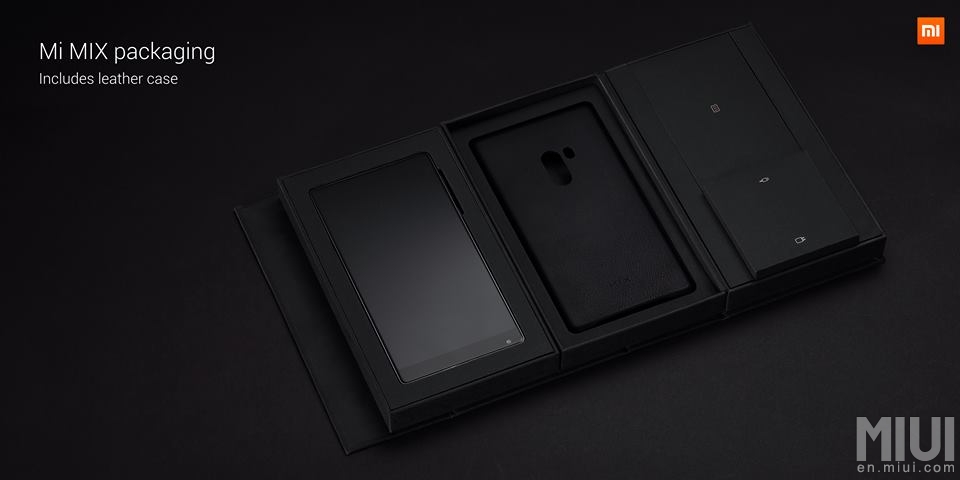
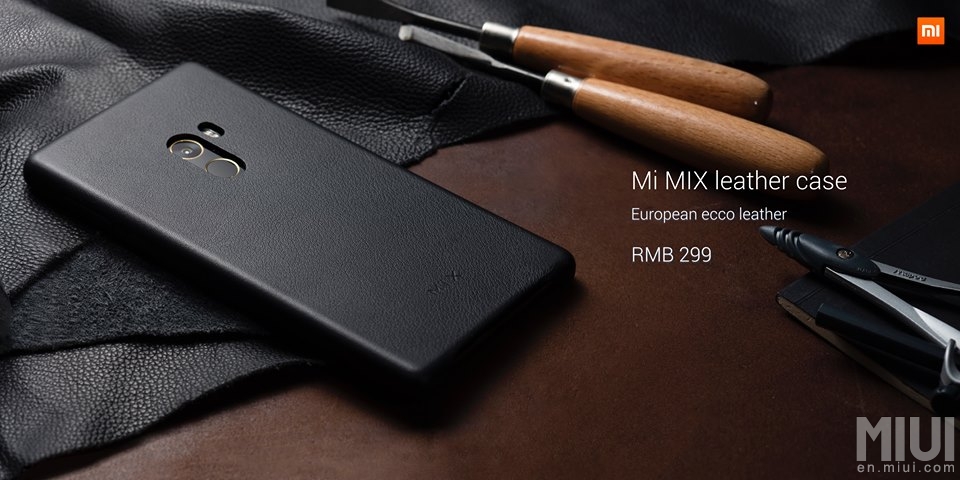
    xiaomi-mix

    Claiming a completely edgeless design the company showed off a working prototype of the phones on stage. The back of the MIX is based on a solid slim metal frame which is backed completely by ceramic outer shell. The design was made by Philippe Starck who himself showed off the phone on stage.


  • iPhone SE Concepts: Pick a Favorite

    iPhone SE Concepts: Pick a Favorite

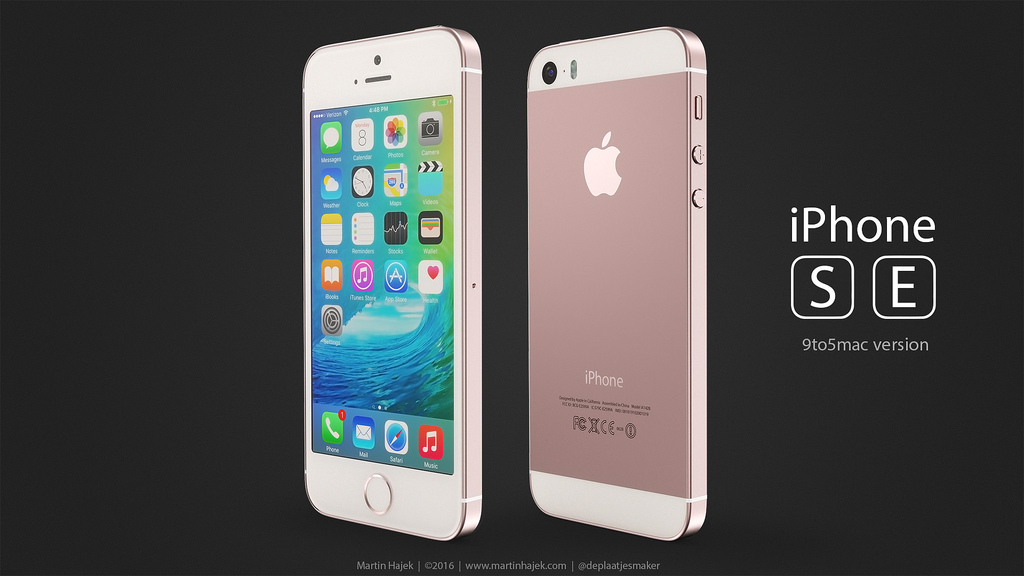
    We’ve entered the month of March, which means we’re just three weeks away from the first Apple event of 2016. This event will see the unveiling of a 4-inch iPhone, called iPhone SE, and a 9.7-inch iPad Pro variant. When it comes to the iPhone SE, there have been a lot of rumours regarding the specifications.

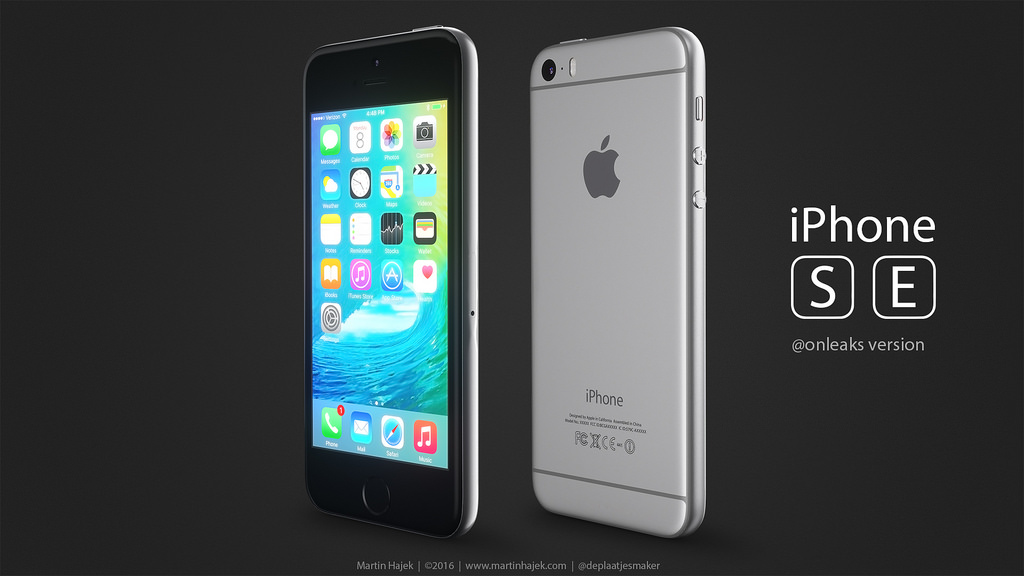
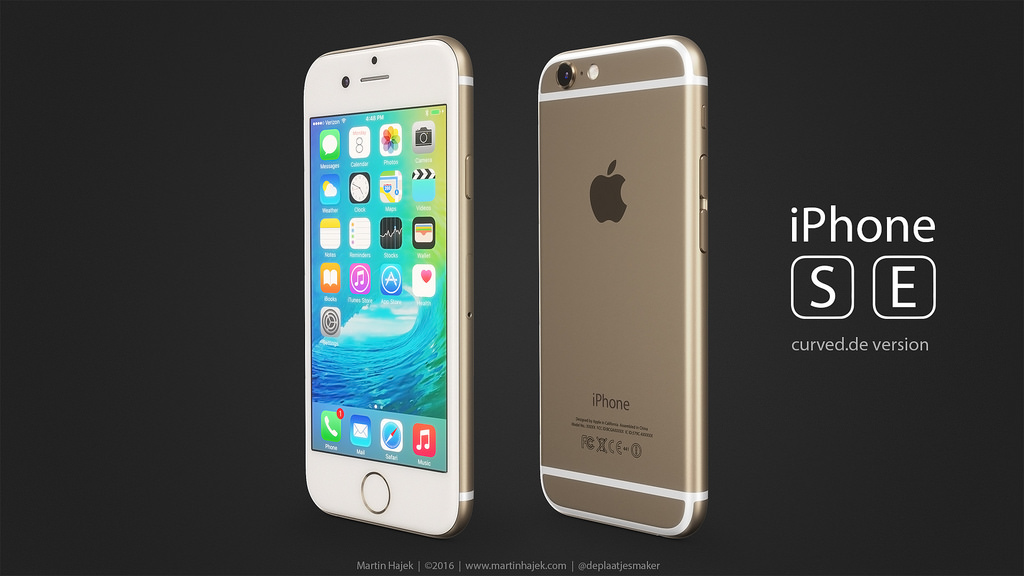
    Going by the flagship models and seeing as how the iPhone SE is aimed at a mid-range market, it becomes a little easier to make a few guesses at what the specifications can be. However, the design of the iPhone SE is shrouded in mystery and there have been a lot of renders and concepts that have emerged ever since talk about the 4-inch iPhone began. While some feel that the iPhone SE will look like the iPhone 5 lineup (since initially the 4-inch handset was called the iPhone 5se), others feel it’ll quite simply be a miniaturised version of the iPhone 6 and 6s.  Whatever may be the case, it is likely that the design of the iPhone SE will look like any one of these most likely contestants below.

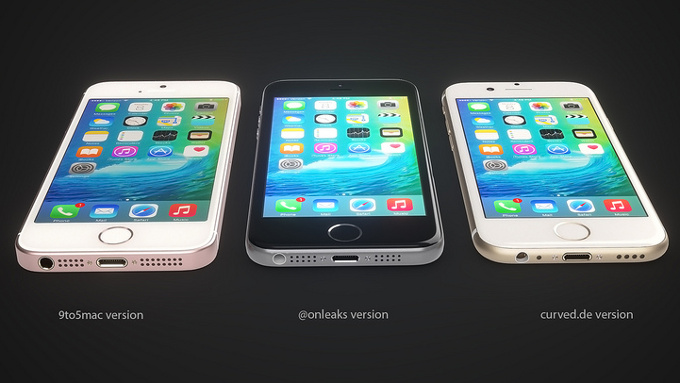
    iPhone SE Concept

    These concepts are among the likeliest design language that the upcoming 4-inch iPhone could take after. The 9to5mac version shows a flat edged design, much like the iPhone 5 family while the other two show a curved edge design as the current generation of iPhones. A 4-inch iPhone that brings back the iPhone 5 design language would please Apple fans a lot and would bring back some favour as well. After all, The iPhone 5 series has been one of Apple’s most successful iPhones lineup, and the Cupertino giant could do well in reincarnating it with the iPhone SE.

    Popular Apple insider Ming-Chi Kuo expects the iPhone SE to feature a 12MP rear camera rather than an 8MP module as earlier expected. Kuo also added that the handset will fall between $400 to $500 and will be available in two variants – one with 16GB of internal storage and the other with 64GB. Lastly, the iPhone SE will pack a 1642mAh battery, and will be equipped with Bluetooth 4.2 and  Wi-Fi 802.11ac. The iPhone SE along with the 9.7-inch iPad Pro will be unveiled at an event on March 22.

    Source

  • Contact Lenses Could Work as Displays and Fitness Trackers in the Future

    Contact Lenses Could Work as Displays and Fitness Trackers in the Future

    Forget VR headsets that simulate concussions or augmented reality that alters the world around you. Here’s a concept of lenses from the future that could work as electronic displays, along with tracking the vital stats of the body. A team of researchers at University of South Australia have come up with a concept of a conductive polymer film coating that is capable of achieving this with future contact lenses.

    If the concept is realised into reality, it would be an immensely huge leap for virtual reality. As users do away with cumbersome VR headsets, this piece of futuristic technology would change lifestyles in an unprecedented way.

    The idea behind the research is to use water-compatible conductors on contact lenses which would render them capable of measuring glucose levels or creating electronic displays.

    Is it time for good-bye already?
    Is it time for good-bye already?

    Professor Drew Evans describes comments on their research and says, “The trick is to provide power to the contact lens display. We are excited by advances from other researchers showing you can use tear drops to power special batteries. There is a possibility to modify this for use with our conductive coatings.” He further added that the inspiration behind the research came from wearables and their increasing presence in the contemporary world.

    Many people who require contact lenses for eye-sight correction, shy away from opting for them because the idea of making the eye under-go any kind of external physical contact is not a welcomed one. But if the future truly offers us electronic displays that could be attached to the eye-ball would you say yay or nay? Let us know in the comments below.

    Source

  • Mini Vision Concept Hints at Next-Gen Mini’s Styling

    Mini Vision Concept Hints at Next-Gen Mini’s Styling

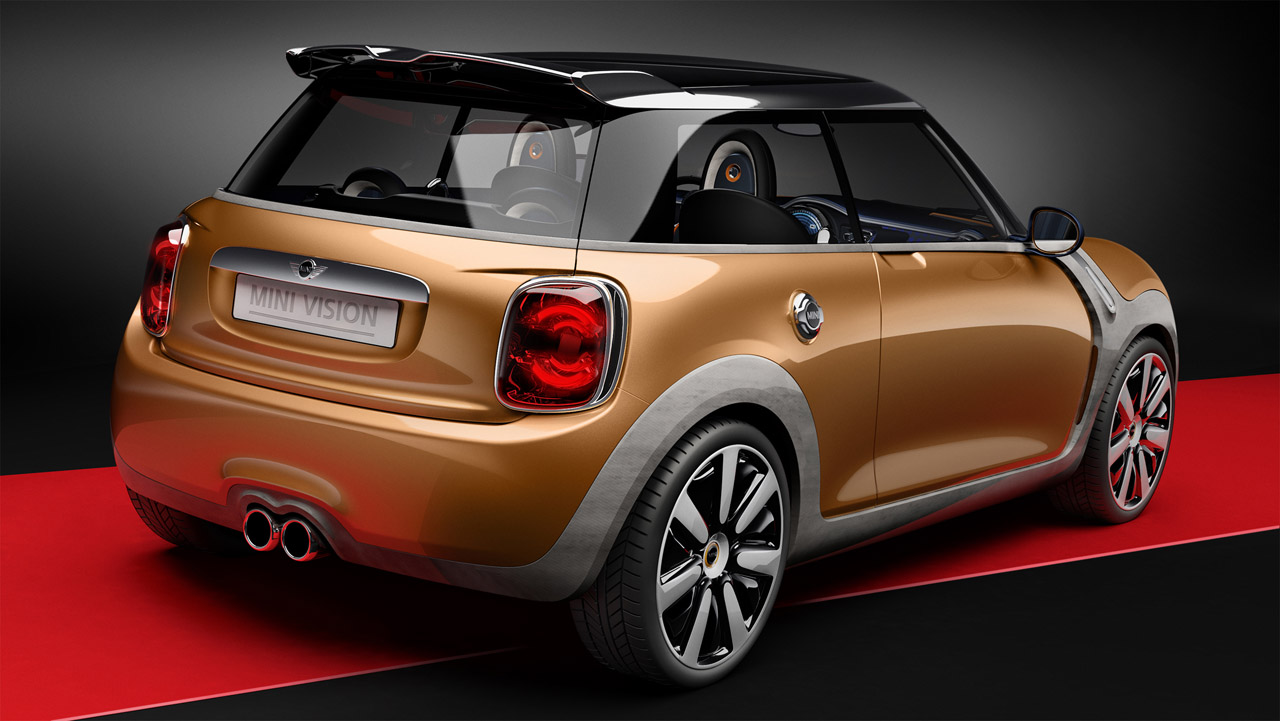
    Even though Mini’s upcoming third-generation trademark three-door hatchback has already been spied upon sans all camouflage, the BMW-owned marque feels the need to release a concept previewing the next-gen design. This is it, and it’s called the Mini Vision Concept. It looks mostly similar to the next-gen Mini hatchback, except for a few typical concept-like styling touches, which never end up making it to the production vehicle anyway.

    Mini Vision

    The Mini Vision seems to combine styling elements of both its predecessors. It’s more rounded than the 2002 hatchback which rebooted the Mini brand, but more muscular than the bloated 2007 model. Modern accents like full LED headlights inspired by the Rocketman concept find their way on to the Mini Vision. Mini’s traditional floating roof keeps its place on the Mini Vision, while the concept shows side grilles which seem to be borrowed from the Countryman and Paceman.

    Mini Vision

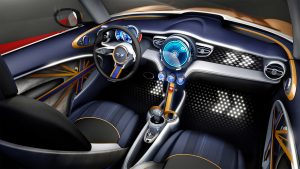
    The interior will almost definitely not make it to the production version. Integrated Union Jack straps in the door panels make for a very cool interior, but surely not production-practical. Mini revealed the Vision Concept at an event called the Mini Design@Home. We expect to see it on the auto show circuit this year before Mini unveils the third-gen F56 Mini Cooper Hardtop.


    [Images source: Mini]

  • New Renault Duster to be Unveiled at Frankfurt Motor Show

    New Renault Duster to be Unveiled at Frankfurt Motor Show

    Renault will be heading to the 2013 Frankfurt Motor Show and has already made some exciting announcements. Apart from a new concept car, it has promised the introduction of an all-new Duster at the popular auto show.

    The new concept is an interesting prospect, with Renault’s press release mentioning a “new brand identity. However we believe the big newsmaker will be the second incarnation of the French automaker’s successful compact SUV.

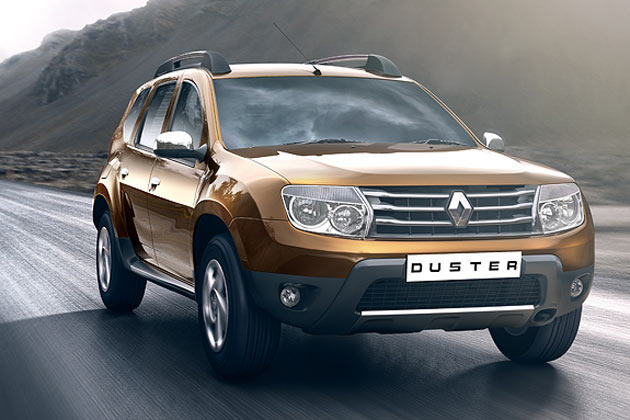
    The Duster which is sold in India under the Renault badge, is manufactured and sold globally under the badge of Renault’s Romanian budget brand, Dacia. Introduced in 2010, the Dacia Duster has been a massive hit in markets such as the UK, Russia and India, becoming Renault’s best-selling global model. Clearly, the new Duster will have big shoes to fill, and all eyes will be on Renault’s pavilion in Frankfurt, come September 10.

    Duster

    Spyshots of test models have been spotted more than once on the internet. Multiple shots of the new Duster testing in and around Europe show evident cosmetic changes both inside and outside. Exterior changes to the Duster include revised headlights and tail lights, grille, bumpers. It is believed that inside, the new Duster will get most of the upgrades that were shown on the 2013 Dacia Logan sedan. A slightly revised version was spotted testing in Romania five months ago and featured a revised instrument cluster and cruise control. The interior will get a brand new dashboard, better electronics such as a touch screen display, higher quality upholstery and lots more. A lot of these upgrades may not make it to India, but we’re hoping Renault includes the more important ones.

  • Bentley Confirms First SUV for 2016

    Bentley Confirms First SUV for 2016

    After over a year of speculation, Bentley has finally confirmed that it will produce an SUV. The new model line will be built in Crewe and will go on sale in 2016.

    The new model will will represent the brand’s hallmarks of “luxury, performance, quality and craftsmanship”, and Bentley says that it will be the “most luxurious and most powerful SUV” on the market. The announcement of a production SUV follows the Bentley EXP 9 F concept, which was shown at the 2012 Geneva Motor Show. The as-yet unnnamed SUV will help create 1,000 jobs in the UK.

    To prepare for the fourth model in its lineup, Bentley will be investing 800 million British pounds (around $1.2 billion USD) into its Crewe headquarters and production lines over the next three years.

    This £800 million investment and a thousand new jobs from Bentley is fantastic news for both Crewe and for the UK as a whole. It is another important milestone in strengthening our economy. I am delighted that Bentley will be building their new vehicle here, not only creating a thousand jobs, but safeguarding many more, as well as increasing training opportunities for highly skilled apprentices.

    – David Cameron, Prime Minister, United Kingdom

    The Bentley SUV is likely to share its platform with the next-generation Audi Q7 and Porsche Cayenne. Past rumors have indicated that the SUV could look completely different from the 2012 EXP 9 F Concept shown above, be renamed the Falcon and offer options like a plug-in hybrid version and three-row seating. 

  • Volvo Pure Tension Concept has Folding Solar Pavilion

    Volvo Pure Tension Concept has Folding Solar Pavilion

    Everyday we come across concept cars which promise to change the future, but aren’t much more than a carbon fibre monocoque riding on magnesium rims. The “Pure Tension” Volvo V60 Pavilion however, is really something else.

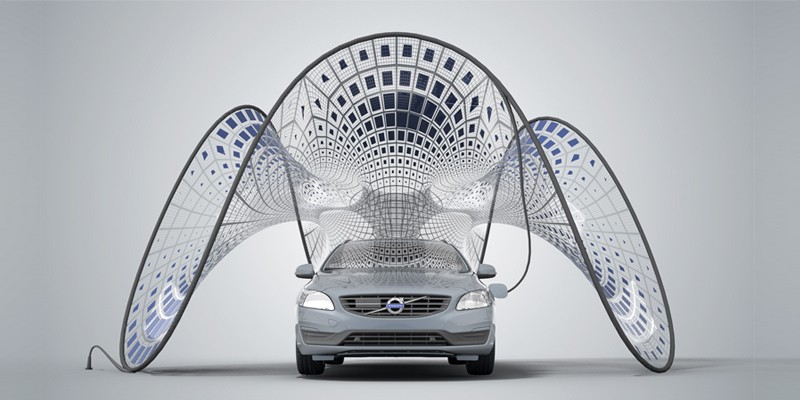
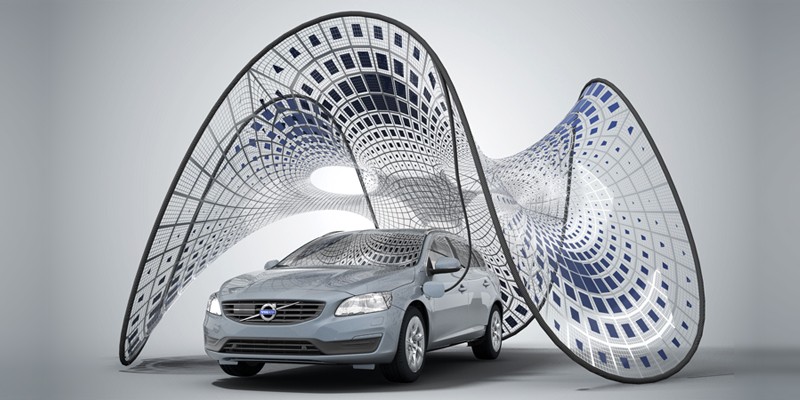
    Commissioned by Volvo Italy and the winner of the Pure Volvo Pavilion Design competition, the Pure Tension solar pavilion is an experimental creation, developed by Synthesis Design + Architecture, Buro Happold, and Fabric Images. The mysterious floating sculpture of sorts seen floating above the rendered Volvo V60 is a pavilion, like the ones erected for trade shows or outdoor events. The pavilion is a tensioned membrane structure constructed using a flexible HDPE (High Density Polyethylene) mesh skin, held in place by carbon fibre rods, which can fully collapse and fit inside the trunk of the V60 when not in use. The Pure Tension however isn’t designed to just provide shelter and look pretty while doing it; It doubles up as a power source as well.

    Pure Tension

    The mesh is embedded with photovoltaic cells so that the pavilion can absorb energy from the sun or indoor lighting, making it a portable charging station. It can power itself or the V60 which aptly so, is a diesel hybrid that plugs straight into the pavilion.

    According to reports, the Pure Tension Volvo V60 Pavilion concept will be shown in September in Rome. The creation however is lightyears away from being market ready, and chances of us ever seeing such a car on the road are quite small. But the Pure Tension is a great example of true innovation in the automotive industry, and is comfortable proof that the ability to think differently about the cars of the future, isn’t going anywhere anytime soon.


    [Source: Synthesis +DNA]

  • Edit: The Best of the 2013 Goodwood Festival of Speed

    Edit: The Best of the 2013 Goodwood Festival of Speed

    For the uninitiated among you, The Goodwood Festival of Speed (FoS) is an annual hill climb featuring historic motor racing vehicles, held in the grounds of Goodwood House, West Sussex, England, every June/July. Visitors can expect to see lots of cars and motorbikes from over 100 years of worldwide motor racing history as well as newer models take a shot at the hill run. An immensely popular event, 1,50,000 people regularly attend the FoS. Here are some of the newer cars which were seen at the 2013 FoS, which was held over the last weekend.


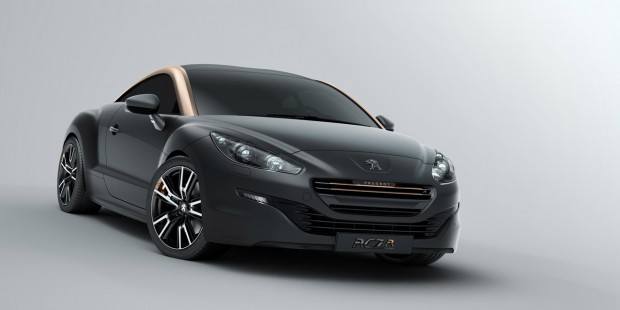
    Peugeot RCZ R
    Goodwood

    Dubbed the RCZ R, this striking coupe is the most powerful production Peugeot in history and was unveiled at the 2013 Goodwood FoS. The RCZ R uses an updated version of the 1.6-liter, turbocharged four-cylinder engine found in the standard RCZ, which produces an impressive 270 hp and 243 lb-ft of torque. It can hit 100 kmph in 5.9 seconds and sports a beefier twin-scroll turbocharger, as well as a racing-derived steel exhaust manifold. Lots of mechanical upgrades have been done to the pistons, connecting rods, dampers and anti-roll bars making it a very capable little car. The Peugeot RCZ R will get its auto show reveal at the 2013 Frankfurt Motor Show in September before hitting European showrooms in early 2014.


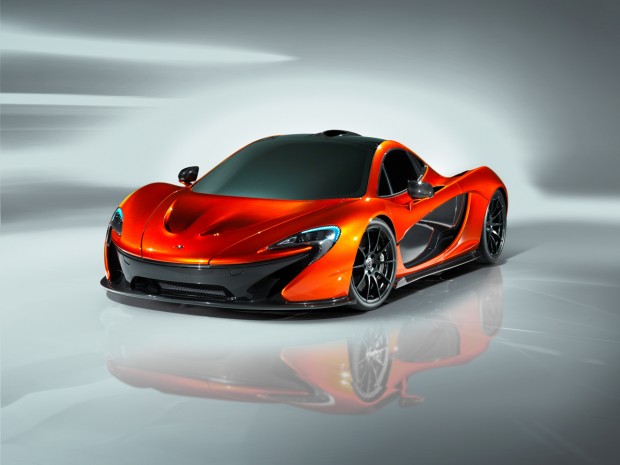
    McLaren P1
    Goodwood

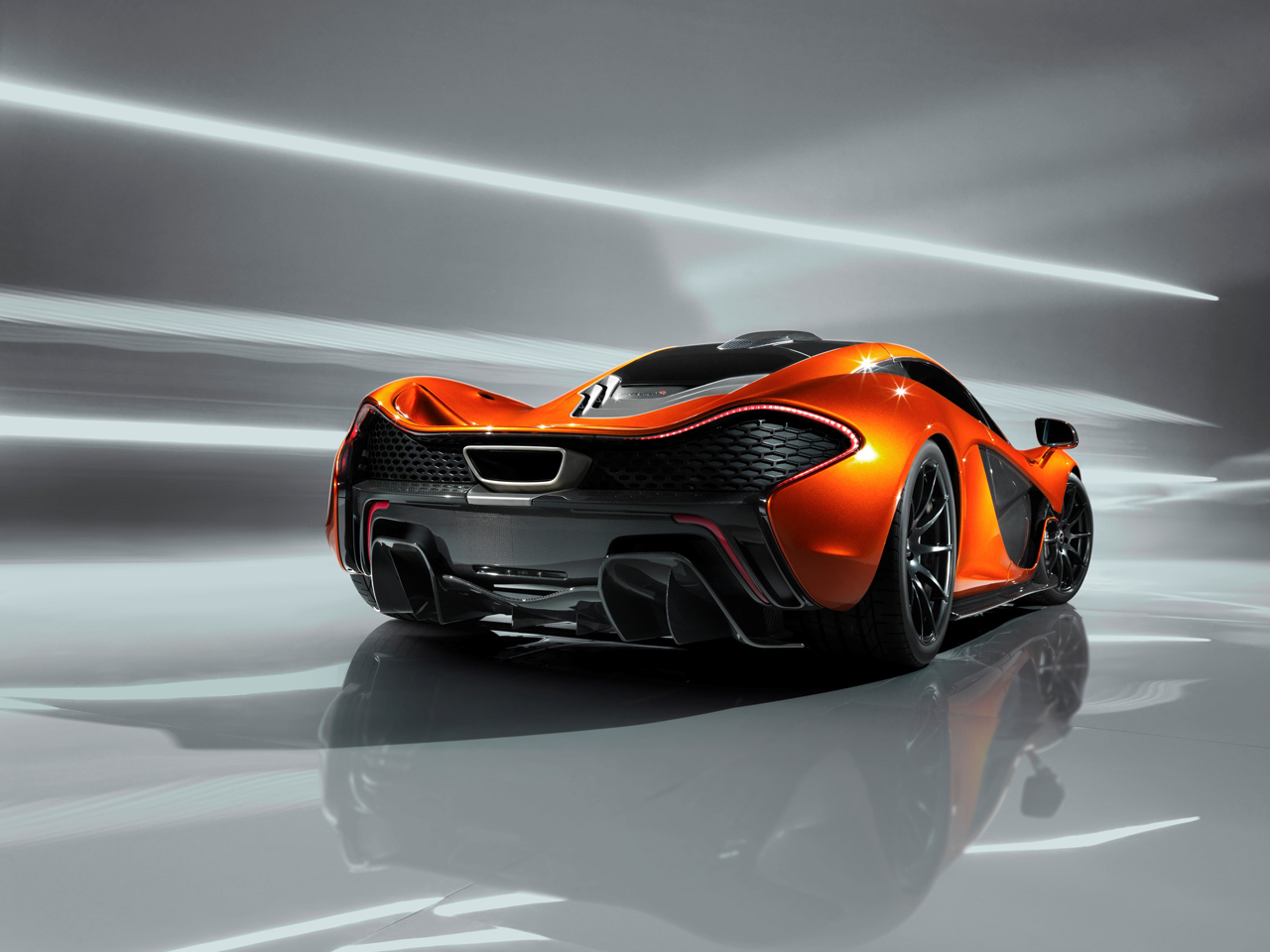
    McLaren’s latest offering and part of the new breed of hyper cars, the McLaren P1 is the spiritual successor to the legend which was the McLaren F1. Unveiled at the 2012 Paris Motor Show, the P1 packs some serious performance under the extremely aerodynamic carbon-fibre body. With a 903 hp hybrid powerplant which will slingshot the P1 from a standstill to 100 kmph in under 3 seconds, and to 300 kmph in 17 seconds, the P1 is a member of a very small and elite group capable of crunching numbers like those. If you haven’t noticed yet, the body is styled with the McLaren logo making multiple appearances all over the car’s sleek construction. McLaren really wants you to recognise this car when you see it fly past on the expressway. And if you want another number to feed on, the base model retails for a cool US $1,150,000.


    Citroën DS3 Cabrio Racing Goodwood
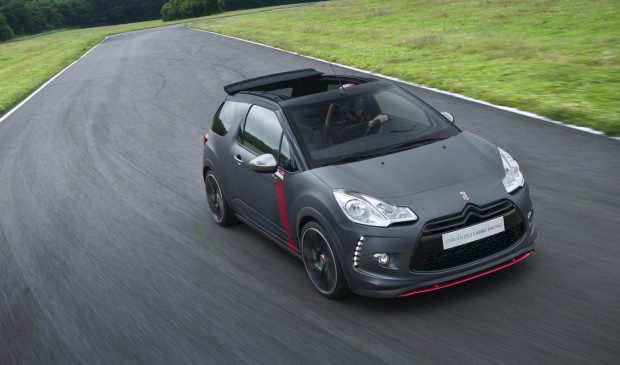
    We at iGyaan love hot hatchbacks. Brimming with character and ambition, they really epitomise everything that’s wonderful about car culture. The Citroën DS3 Cabrio Racing is one such sporty little car, and was shown for the first time to the world at the FoS. A roll-top version of the DS3 Racing that was introduced three years ago at the Geneva Motor Show, it keeps the same 1.6-liter four-cylinder with 202 horsepower and 19-inch wheels. The entire package is coated in a stunning textured Moondark matte grey with black chrome, Carmin Red and DS-pattern accents. In fact, according to a few reputed sources, this isn’t just a concept anymore and is expected to go on sale in the UK next year. Unfortunately, it seems like we’ll have to wait a couple years more for the hot hatchback segment to really hit Indian markets.


    Porsche 918 SpyderGoodwood

    Another member of the new group of hyper cars, the Porsche 918 Spyder is truly an engineering marvel. The 918 is testament to Porsche’s belief that hybrid supercars will not only successfully exist, but they will dominate the automotive industry. By far the most complex vehicle ever to come out of the Stuttgart-based automaker’s labs, the 918 Spyder is propelled by a hybrid gasoline-electric unit making use of a race-spec 4.6-liter V8 engine producing 795 hp, supplemented by two electric motors drawing power from a liquid-cooled lithium-ion battery pack. It starts up with the hum of a small electric fan, gently floats about without any combustion, and then takes off like a fighter jet when you put the pedal to the metal, onto a top speed in excess of 320 kmph. The base price is US $845,000 and considering the top-mounted exhaust pipes like the flare launchers on the 1966 Batmobile, we think its worth every penny.


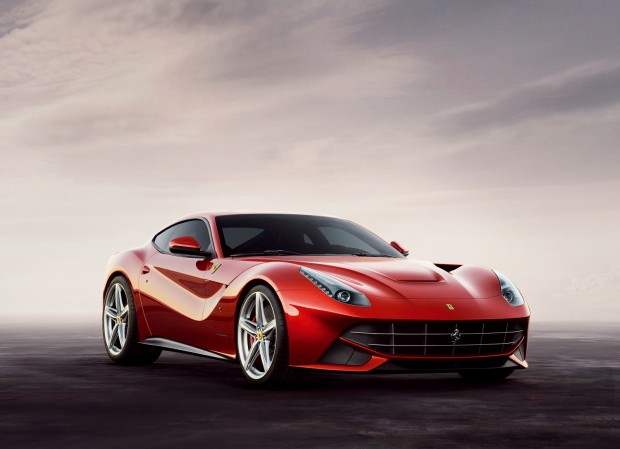
    Ferrari F12 Berlinetta
    Goodwood

    The successor to the Ferrari 599, the F12berlinetta F12 Berlinetta is one of the fastest production Ferraris ever built. The 6.3-litre V12 produces an unadulterated 740 hp and 509 lb-ft of torque propelling the big grand tourer from nought to 100 kmph in just 3.1 seconds. But the true measure of any Prancing Horse is the lap time around the Ferrari-owned Fiorano circuit near Ferrari’s hometown, Maranello. Ferrari claims that the F12 can go around the test track in 1:23. To put things into perspective, the previous record-holder was the 599 GTO at 1:24, while the Enzo clocked in at a ‘slow’ 1:25. A 0.299 Cd and 76 percent more downforce allows a top speed of over 337 kmph.


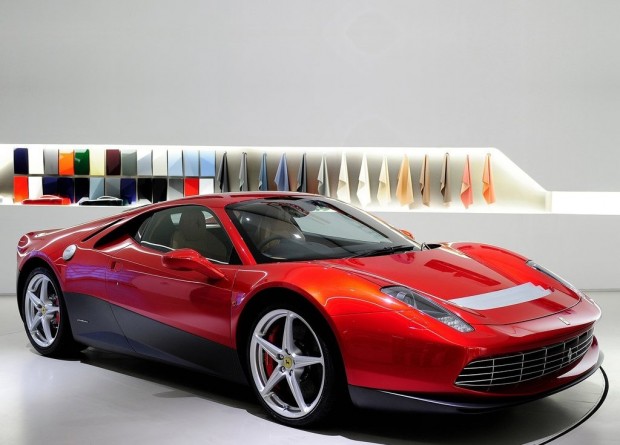
    Ferrari SP12 EC
    Goodwood

    The only one of its kind in the world, the SP12 EC was specially built by Ferrari for legendary guitarist, Eric Clapton, who was happy to let them use his initials in the name. Based on the chassis of the 458 and the bodywork of the 512 BB, the SP12 EC was designed by Centro Stile in Maranello, in collaboration with Pininfarina, the famous Italian car design firm. Mechanically, it utilises the important bits of the 458 Italia, including a 4.5-litre V8 engine and seven-speed dual-clutch transmission, but not many people know what the technical specifications of the one-off supercar really are. It reportedly set Mr. Clapton back by US $4.7 million.

    Rolls Royce WraithGoodwood
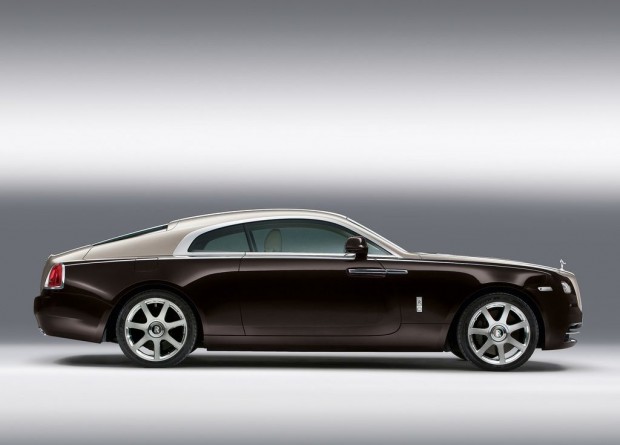
    On to the maker of the ‘best car in the world’, the Rolls Royce Wraith made its dynamic debut at the Goodwood FoS. The most powerful Rolls ever, the Wraith was unveiled at the Geneva Motor Show. Although we’re wildly guessing that most people who end up buying the Wraith won’t be plowing it down racetracks too often, they very well could if they wished to. The 6.6-litre twin turbo V12 engine under the long hood of the luxury coupe produces 625 PS of power and a massive 800 Nm of torque. This along with Rolls Royce’s unique Satellite Aided Transmission technology fitted eight-speed ZF gearbox means that you go from nothing to 100 kmph in 4.4 seconds. Keep in mind that this is a 5.3m long car weighing 2.36 tons and those figures become a whole lot more impressive. The interiors are typical Rolls Royce, providing the ultimate in luxury making use of all the features of the Ghost while also flaunting ‘premium’ creature comforts like the “Starlight Headliner” cabin ceiling southern French wood panelling featured in the superior Phantom models.


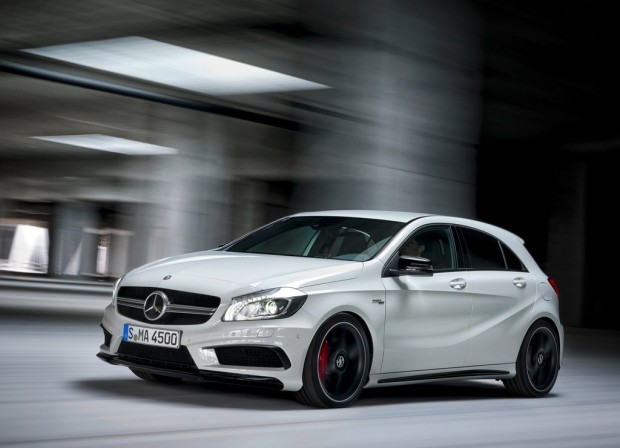
    Mercedes Benz A45 AMG
    Goodwood

    The Mercedes Benz A-Class was recently launched in India, and its AMG variant may soon be on its way as well. The striking A45 AMG hatchback had an impressive showing at the FoS as well, and unsurprisingly so. The potent little Benz only has a 2.0-litre engine under the hood but turbocharging helps it attain the highest specific output among production car engines, an astonishing 355 bhp. The hot hatch features a four-wheel-drive system for greater traction which helps it get from a standstill to 100 kmph in 4.6 seconds onto a top speed of 250 kmph. Those are some serious numbers for a hatchback. The car is expected to be priced upwards of Rs. 50 lakh if it finds its way to India.


    The coveted spot on the lawn of the Goodwood House was given to Porsche this year, where a sculpture is erected annually to serve as a backdrop to the FoS. This year, Porsche  has put up three 911s, new and old, in celebration of 50 years of the iconic car’s existence.

    Other eye-catching cars at the Goodwood Festival of Speed included the stunning Jaguar Project 7 Concept, which is based on the new F-Type as well as the Bentley Continental GT3 race car. The FoS also saw the record-breaking auction of a Fangio-driven Mercedes Benz W196R Silver Arrows F1 car, at an unbelievable price of US$ 29.65 million. The 285 hp sub-700 kg Mexican Vuhl 05 as well as the eyecatching Alfa Romeo 4C were on display, as was the new Caterham 620, which may look like a small buggy to those who aren’t aware of it, but has a 0-100 kmph time of 2.8 seconds, making it one of the most fastest cars in the world in terms of acceleration. The Pikes Peak record smashing Peugeot 208 T16 also got a run around the much less challenging Goodwood hill and the Volkswagen XL1, known as the world’s most fuel-efficient car (at a truly staggering 132 kmpl) was on show as well.


  • Meet the single-seater Jaguar Project 7 concept [w/Video]

    Meet the single-seater Jaguar Project 7 concept [w/Video]

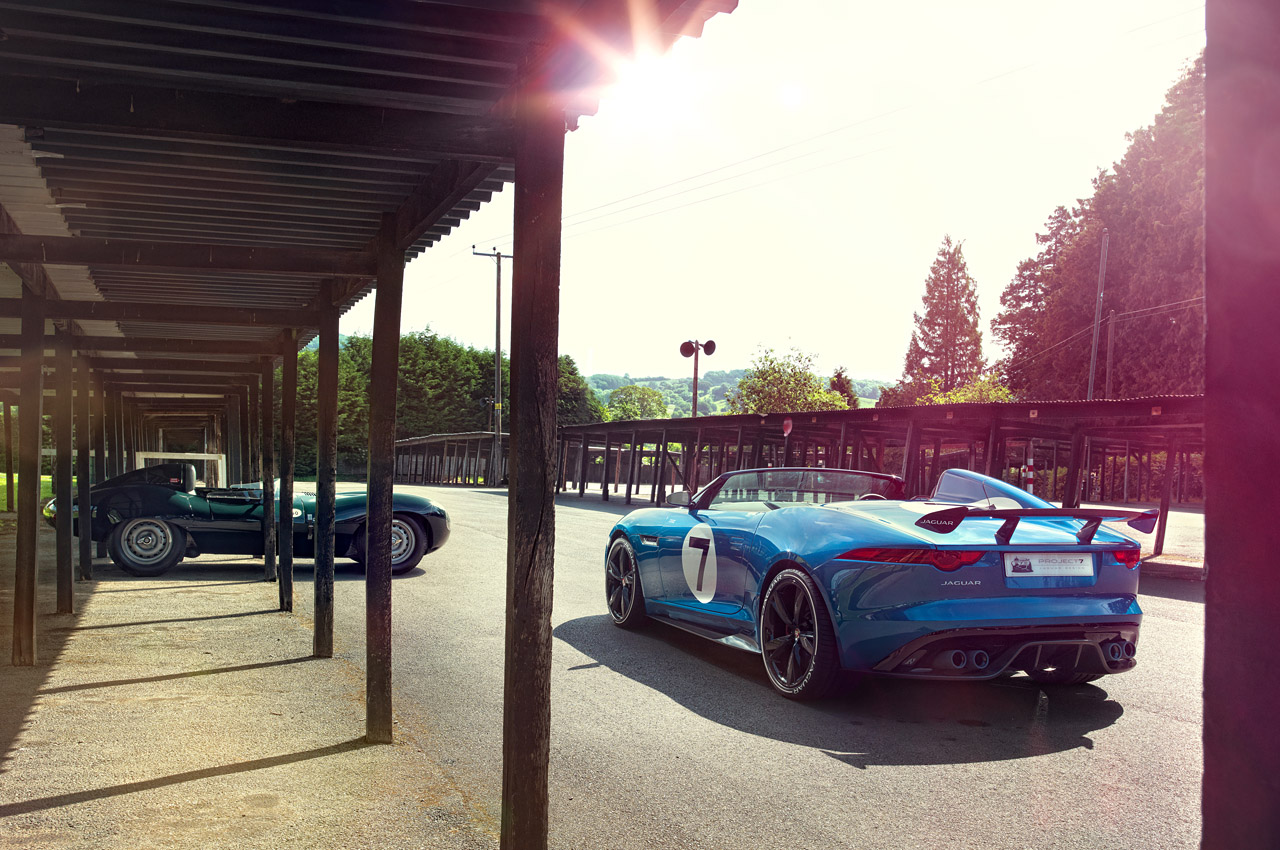
    This is the Jaguar Project 7 concept. It’s a one-off car based on the new F-Type convertible, and will debut at this weekend’s Goodwood Festival of Speed. It’s called the Project 7 in homage to Jaguar’s seven victories at Le Mans between 1951 and 1990.

     Project 7

    The aluminium bodied roadster was created in just four months, and pays tribute to the Jag D-type with an inspired rear fairing with an integrated rollover hoop. The model has also been equipped with a new front bumper, an enlarged grille and a variety of carbon fiber components not found on the base F-Type. A rear wing, 20-inch wheels and Pirelli P-Zero tyres with a white sidewall make their way on to the road racer as well.

    Project 7 has the kind of racing-inspired form that designers dream about. It has one purpose: to be driven fast and enjoyed. Jaguar sports cars are known for exceptional performance and clean design. Project 7 captures that spirit in its purest form.

    – Ian Callum, Design Director, Jaguar Project 7

    Project 7

    The Project 7 is powered by a supercharged 5.0-liter V8 engine producing 550 HP (405 kW) and 680 Nm (502 lb-ft) of torque. It is connected to an eight-speed Quickshift transmission which enables the car to go from a standstill to 100 kmph in 4.2 seconds and hit an electronically-limited top speed of 300 km/h (186 mph). The Project 7 also has a sports-tuned suspension, an electronic rear differential and a sinister sounding free-flowing exhaust.

    The interiors have been done up as well. Elegant diamond-quilted leather upholstery and carbon fiber trim make the inside of the Project 7 a very nice place to be. Only one composite racing seat with a four-point harness is to be found, with the passenger seat making way for a bespoke helmet holder that secures a matching Project 7 helmet.


    Watch the video below to see more of the Jaguar Project 7 Concept:

    [youtube id=”sGBMSLvggqA” width=”100%” height=”300px”]


    [Source: Jaguar]

  • Lamborghini Gallardo replacement to be launched in 2014

    Lamborghini Gallardo replacement to be launched in 2014

    According to reports, Lamborghini is set to put a cap on its 50th anniversary celebrations with the unveil of one last concept car at the Frankfurt Motor Show in September, which will closely preview the upcoming Gallardo replacement. The production version of the new two-seater, is set to go on sale in the UK during the second half of next year and will follow its predecessor in sharing key components, including a lightweight carbonfibre and aluminium spaceframe structure, with the replacement for the current Audi R8, due in 2015.

    Rumours suggest that the Gallardo replacement will be called the Cabrera. In keeping with Lamborghini tradition, it refers to a line of Spanish bulls whose lineage can be traced to other famous breeds, including the Miura, Gallardo, Navarra and Veragua.

    The Gallardo’s 5.2-liter V-10 will carry over, but with extensive revisions to deliver more power and fewer emissions. Peak output should come in at 592 horsepower, which in metric figures converts to about 600 horses. This means the new car is likely to be an LP 600-4. Note, an engine with these very specs was previewed in the Egoista concept. The engine will be mated to a standard six-speed manual gearbox, while the new seven-speed dual-clutch automatic from the R8 will be available as an option, replacing the current Gallardo’s six-speed automated manual ’box. Lamborghini plans on introducing a rear-wheel drive model as well, apart from the usual range of four-wheel drive variants.

    The Gallardo replacement’s design is expected to be a blend of the Sesto Elemento and Egoista concepts. The new car, which carries the internal codename LP724, is said to have grown marginally in length to almost 4500mm, or 16mm longer than its predecessor, with width and height remaining close to the 1900mm and 1165mm respectively of the Gallardo. Together with an edgy new exterior, the Gallardo replacement is set to adopt a new interior layout that, with a slight increase in wheelbase over its predecessor at 2600mm, will offer added levels of accommodation.

    Lamborghini had initially planned to base its new car around a contemporary carbonfibre monocoque similar to that of the Aventador, however parent compant Audi has dictated them to follow a more conservative route, keeping in mind the second-generation R8.

    Since the R8’s conception, both cars have shared a modular spacefame. This allows them to share vital components, and will therefore continue to be the case. A new, lightweight carbonfibre and aluminium structure weighing 198kg will be used by the Audi. That is 24kg less than the all-aluminium structure used by the current R8.

    The new spaceframe structure will be clothed in a body that uses a combination of carbonfibre-reinforced plastic and aluminium panels. The move is aimed at bringing the new mid-engined Lamborghini to the scales at less than 1500kg — the official kerb weight of today’s four-wheel-drive Gallardo.

  • 2014 Toyota Corolla Finally Revealed

    2014 Toyota Corolla Finally Revealed

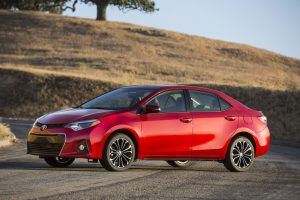
    The Toyota Corolla is widely known as the best-selling car on the planet and after tons of teasing, the long overdue update has finally been unveiled by Toyota. This is the 2014 Toyota Corolla and it features the new design language, first seen on the Furia Concept, which Toyota calls “Iconic Dynamism.” Likely to be known as the Corolla Altis in India, the car features much sharper styling than its predecessors. In an effort to solve the demerits of a now dated design, Toyota has added nearly 4 inches to the wheelbase. Here are the exact numbers: 

    Exterior Dimensions (Change compared to current model)

    Overall length 

      182.6 in. (+3.90 in.) 183.1 for S-grade   

      4639 mm (+99), 4650mm for S-grade   

    Overall width

    69.9 in. (+0.63 in.)

    1776 mm (+16)

    Overall height

    57.3 in. (-0.39 in.)

    1455 mm (-10)

    Wheelbase

    106.3 in. (+ 3.93 in.)

    2700 mm (+100)

     Front Overhang 

    37.7 in. (+0.90 in.)

    958 mm (+23)

    Rear Overhang

    38.6 in. (-0.94 in.)

    981 mm (-24)


    The newly designed front end is testament to Toyota’s ambition of attracting a younger generation to its 47 year old torch bearer, with its aggressive and sporty styling. A prominent shoulder line, the kink in the window line and heavily creased bumpers remain from the Furia concept, adding character to the previously demure image of the Corolla. The wraparound tail-lamps are sharper and the presence of the Furia’s modern, tightly stretched skin is also evident. We wish more attention had been paid to the uninspiring rear end, but have no doubt that the 2014 Corolla’s new image is a very welcome change.

    Corolla

    Internationally, engine choices will consist of two 1.8-liter four-cylinder units. One will offer dual VVT-i technology – where the valve timing on both the intake and exhaust are infinitely variable – and will produce 132 horsepower and 128 pound-feet of torque. The other, more efficient version will utilise Toyota’s new Valvematic technology to put out 140 horses and 126 lb-ft of torque. It is not known right now if the Valvematic engine will make its way to India, but the 1.4-litre diesel engine currently offered in the country is expected to be available as well. Here are detailed specs of the two internation 1.8-litre engines: 

    Engine Specifications

    Engine Type

    2ZR-FE

    2ZR-FAE

    Number of Cylinders/arrangement

    4 cylinders, in-line

    4 cylinders, in-line

    Valve Mechanism

    16-valve DOHC with Dual VVT-i

    16-valve DOHC with Valvematic

    Bore x Stroke mm

    80.5 x 88.3

    80.5 x 88.3

    Displacement c.c.

    1798

    1798

    Compression Ratio

    10.0:1

    10.6:1

    Fuel System

    EFI

    EFI

    Max Output

    132 Hp/ 6000 rpm

    140 Hp/6100 rpm

    Max Torque

    128 lb-ft/ 4400rpm

    126 lb-ft/4000 rpm


    With the new CVTi-S automatic, Toyota claims a “17 kpl estimated highway fuel economy” with the Eco trim. The CVTi-S also offers a sport mode, which alters shift points and the power steering. With the S model, paddle shifters will also be part of standard equipment on the car. Apart from the new CVT, the base model Corolla L will be offered with a four-speed automatic transmission or a six-speed manual transmission, which is also available in the Corolla S in case you prefer either to paddle shifters for changing your Corolla’s gears.

    Corolla
    Euro-spec 2014 Corolla

    The S model comes with 17-inch wheels and ventilated disc brakes on all wheels, whereas the base model is equipped with 15-inch wheels with rear drums, however “Vehicle Stability Control (VSC), Traction Control (TRAC), Anti-lock Braking System (ABS), Electronic Brake-force Distribution (EBD) and Brake Assist” will come as standard, as will the Smart Stop Technology brake-override system and the electronic tire pressure monitoring system.

    All new interiors make the 2014 Corolla a much nicer place to be than the outgoing model. Official pricing hasn’t been announced yet, but we’ll be sure to update you when Toyota shares any more information about the new Corolla. What do you think about the newest version of the world’ best selling car? Let us know in the comments section below!

    Click here for a detailed picture gallery of the different versions of the 2014 Toyota Corolla.


    Images courtesy: Toyota

iGyaan Network
Privacy Overview

This website uses cookies so that we can provide you with the best user experience possible. Cookie information is stored in your browser and performs functions such as recognising you when you return to our website and helping our team to understand which sections of the website you find most interesting and useful.