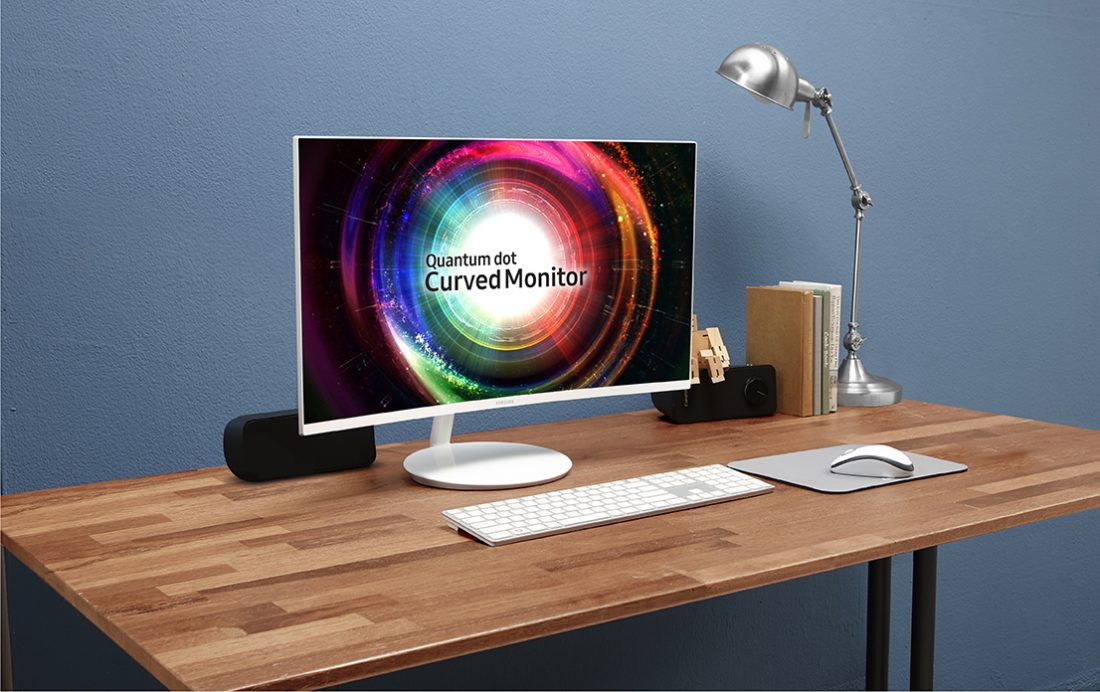
Samsung will launch a new CH711 curved Quantum Dot monitor at CES 2017, aimed at the growing gamers market. the Monitor will be available in 27- and 31.5-inch variations, and is scheduled for an early 2017 commercial release. The CH711 monitor has a 1,800R curvature and an ultrawide 178-degree viewing angle.
The design allows for the monitor’s horizontal and vertical positioning adjustment. The CH711 has 125 percent sRGB color coverage and 2,560 x 1,440 WQHD resolution. The monitor also features a “Gaming UX” allowing for precise corrections of colour brightness and picture along with presets for FPS, RTS, RPG and AOS game genres.
Today’s multimedia consumers, quite rightly, have high expectations and demand a truly cutting edge, totally immersive experience that realizes the full potential of whatever they are playing or watching, This year’s line-up of curved Quantum Dot monitors offers brilliant design, richer color and deeper contrast than ever before. We can’t wait to share them with the world at CES 2017 in Las Vegas.” – said Seoggi Kim, Senior Vice President of Samsung Electronics’ Visual Display Business.
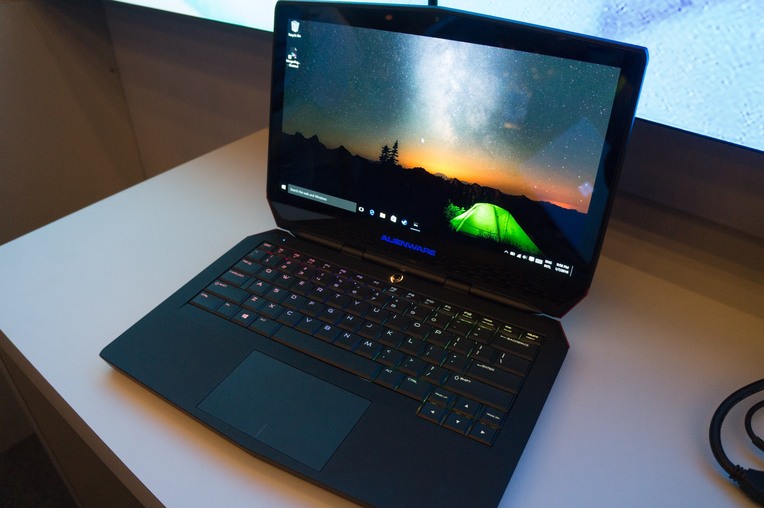
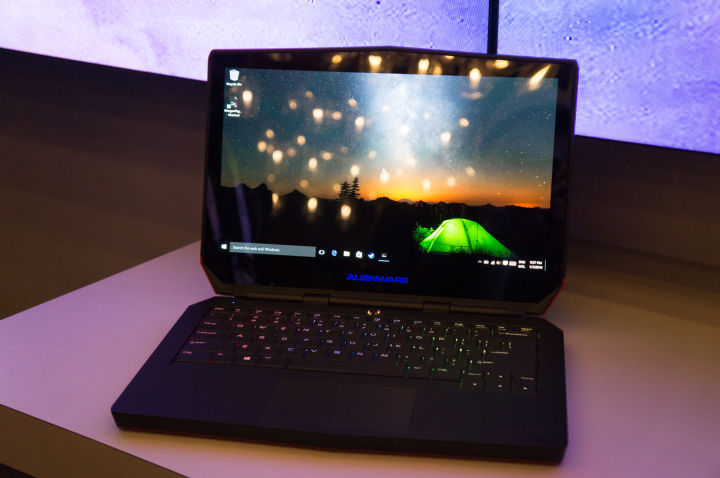
CES 2016 has seen a number of firsts. From the world’s thinnest TV to the world’s first transparent display, the technological fest has seen it all. Now, Alienware has joined the league of firsts by unveiling the world’s first OLED gaming laptop.
Those familiar with OLED displays will know why this is a big deal for a gaming laptop. OLEDs offer deeper blacks since there’s no need for a backlight and lower latency. Alienware has claimed that its new Alienware 13 laptop will have a one millisecond refresh rate thanks to OLED.
The reason behind the delay to embrace OLED screens for gaming laptops is that OLED panels used to be expensive in larger sizes, but they are now affordable enough to be used by Alienware without having its laptops cost and exuberant amount.
The Alienware 13 will be priced similar to its Quad-HD display variant. The starting price of the OLED model is $1499 and the laptop is expected to launch mid-April.
Micromax’s subsidiary Yu Televentures launched the Yutopia smartphone yesterday. At a price of Rs. 24,999, the device has some solid features like an all-metal body and Snapdragon 810 chipset along with 4 GB of RAM. We put the device to test and checked its hardware and graphic capabilities.
Have a look at our benchmark, gaming and heating test:
The device sports a 5.2-inch quad HD IPS display, powered by Qualcomm Snapdragon 810 chipset, with 4 GB of RAM and 32 GB storage. There is a 3000mAh battery pack with Quick Charge 2.0 feature, which means that the phone will be equipped with charging capabilities up to 75% faster than conventional charging mechanisms. The device runs on Android 5.1 Lollipop with Cyanogen OS 12.1.
We ran AnTuTu and Vellamo on our device and here are its scores along with OnePlus 2, and Nexus 5X:
Test
Yutopia
OnePlux 2
Qiku Q Terra
AnTuTu
60369
54929
65164
Vellamo (Metal)
1346
1678
2226
So, as you can see above, Yutopia scored 60,369 in the AnTuTu test and does better than OnePlus 2 but falls short of Qiku Terra’s score. However, a score of 60K is decent in our opinion. The Yutopia does poorly in comparison to the other two devices in the single core Vellamo test.
Questions Answered
The fingerprint scanner on the back is fast and responsive, and unlocks the phone quickly. The response time is right up there with the HTC One A9 and iPhone 6s.
There have been several queries regarding the OTG support on the device. We checked out this aspect and found that Yutopia does support OTG.
The device surprisingly does not heat up and after playing games like Asphalt 8, the phone stayed under 40-degree celsius, which is a sigh of relief for a device sporting a Snapdragon 810 chipset
We will have the full review of the Yu Yutopia soon. Meanwhile, you can click here to watch our unboxing and hands-on video.
iGyaan is here with a platform for all gamers in the country. With so many gamers, game developers and sellers in India, it is time to build a community dedicated to them.
iGyaan launches ‘Let’s Game’ in collaboration with Motorola for all Indian gamers to come together. Find all other details in the video below.
Subscribe to our channel to follow ‘Let’s Game’ and all that it has to offer. If you have any suggestions about what all ‘Let’s Game’ should be about, the content it should include and any other gaming-related topics that you think it should cover, tell us about them.
Be part of the community, and help it evolve with you.
Something is cooking up at Microsoft in the gaming department. The company recently bought Irish physics firm Havok for an undisclosed amount. Havok is behind games such as Call of Duty, Assassin’s Creed, Elder Scrolls, and Microsoft’s own Halo, and is one of the leading firms in 3D physics. It looks like Microsoft is planning big things by integrating Havok’s physics engine into the existing Windows and Xbox toolset.
Havok has been known for real-time collisions and dynamics of rigid bodies in 3D. By using dynamical simulation, Havok Physics allows for more realistic virtual worlds in games. “Throughout the company’s history, they’ve partnered with Activision, EA, Ubisoft, Nintendo, Sony, Microsoft and many others to create more than 600 games,” Microsoft stated in a blog. The firm is also known for powering more special effects for films like The Matrix and Troy.
Havok shares Microsoft’s vision for empowering people to create worlds and experiences that have never been seen before, and we look forward to sharing more of this vision in the near future.
In 2007, Intel had acquired Havok, and now Microsoft has taken over. The company is excited to add Havok to its portfolio for developer tools and components like DirectX 12, VisualStudio app development kit, and the Azure cloud platform. Microsoft said that it plans to continue letting Havok license its technology with existing and future gaming platforms. “We will continue to license Havok’s technology to the broad AAA games industry,” Microsoft said in a statement to IGN. “This also means that we will continue to license Havok’s technology to run across various game consoles including Sony and Nintendo.”
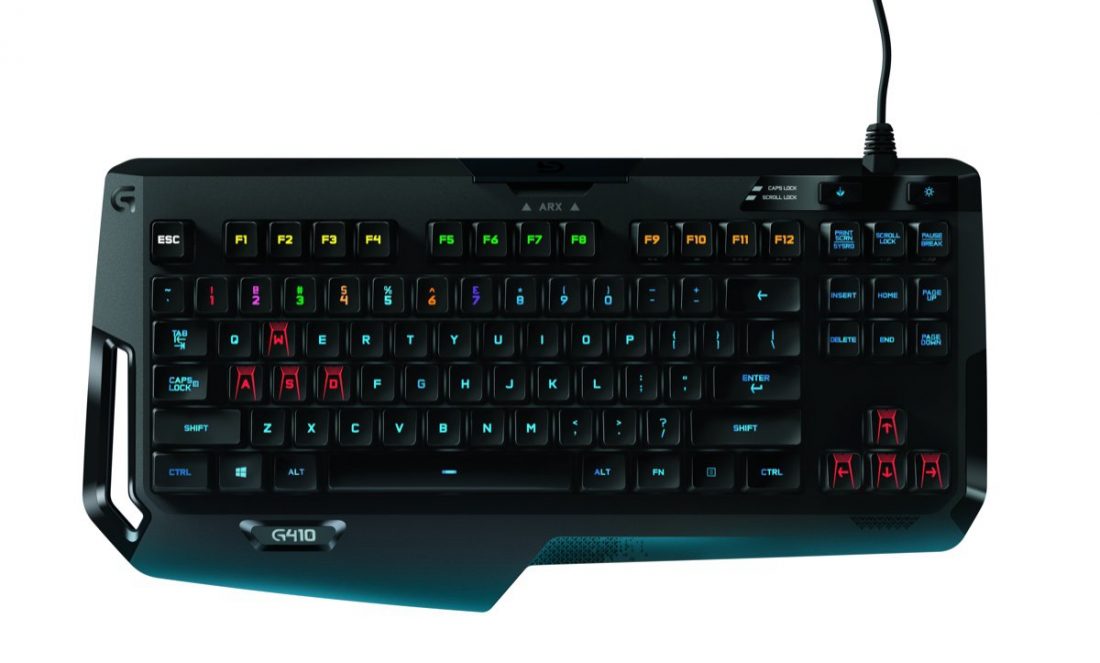
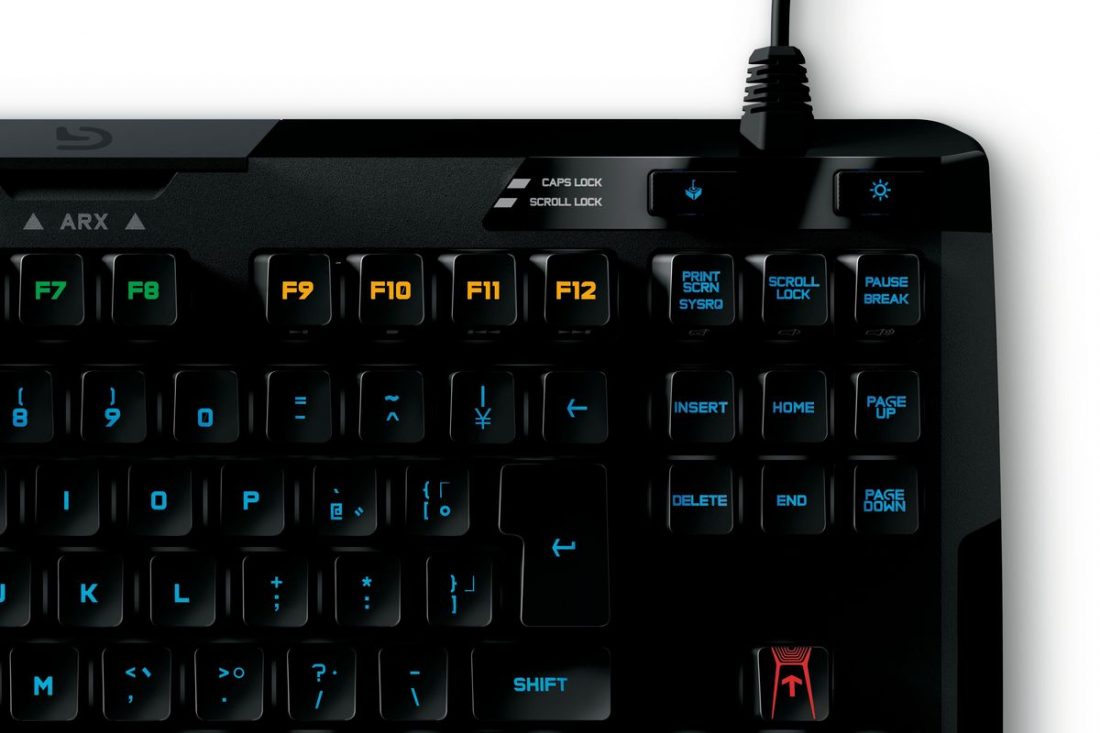
Logitech has come out with a new gaming keyboard, the G410 Atlas Spectrum. Logitech says that fans have been asking for a smaller keyboard that did away with keys that were of no use to gaming whatsoever. So the company did just that with the G410, which has a tenkeyless design (i.e no number pad or macro keys).
The tenkeyless keyboard makes the G410 small and light enough to carry around in your bag. The smaller board also makes it easier to identify keys for gaming and allows for a smoother, easier gameplay.
The keyboard is built around the custom-designed Romer-G mechanical switches. This means the keys have a shallow actuation point (1.5 mm of travel) and is designed to have a softer click as well. The company also says that the Romer-G switches register key presses up to 25 percent faster than its competitors.
Users who still prefer the old-school way of having a mechanical keyboard and who enjoy the loud clicks may find softer voice of the G410 a little too subtle. However, newcomers are sure to love the smaller, lighter board and the RGB (Red-Green-Blue) LED keys that light up the board beautifully when your fingers press on a key.
Typing on the G410 will surely bring back your early PC memories. It has everything a gamer could want, and everything else for everyday use. The G410 is easy to type accurately on, with keys that are easy to find by touch and can be pressed with very little force. However, those who prefer the hard clicking sound of the Logitech G310 will perhaps want to stick with the older keyboard.
Companies like Alienware and Razer have already used multi-colours inside their keyboards, but Logitech cleverly uses those lights to bring a sense of joy in typing, gaming, or simply looking at it. See the keyboard light up in the video below.
The Logitech G410 goes on sale in October at a price of $129.99 in the United States and €149 in Europe. No details yet as to when it will reach India. The G310 Atlas Dawn, however, is available in India on Amazon for Rs. 7,291.
India is still figuring out technology, yet it is one of the largest consumers of new technology in the world. Smartphones reach India faster than ever and now other categories of tech are starting to pay interest in the growing market.
Gaming is also an industry that has been synonymous with the international market, and while a lot of people are interested in gaming, the scope of engagement has stayed outside the borders of our country.
Let’s Game wants to change that!
A community of gamers, game lovers, game developers and enthusiasts. While iGyaan will do its bit in providing news and information along with reviews. Let’s Game will allow direct interaction with gamers. iGyaan will share community videos and crowd sourced gameplay, tips and tricks.
We are working on a mega event for 2016 where 2000 people will get together for the largest gaming festival in India. We can’t be excited enough!
While we iron out the details on this. Tell us what you would like, how you would like this to work. Your ideas for engagement, and your methods of communication. What you would like to see and how you would like to see it grow.
Motorola India is backing this project by iGyaan and are helping us develop and engage the community.
So stay tuned for updates and more exciting news, and till then watch our intro to Let’s Game below. Soon you and us will be on projects like these together.
PlayStation turned 20 this month and it has come a long way. With the first console launched in 1995, PlayStation has come to define gaming experience. As a nostalgic homage we will look at how the original console redefined the way games would be played in the years to come.
Future of Gaming
Prior to its launch, people would have only been familiar with the Sega and Nintendo consoles. The PlayStation introduced CD based gaming in a huge way. Not that CD games didn’t exist before, but it was the PlayStation that used CDs in a big way instead of the cartridges used by Nintendo and Sega. The cartridges were more expensive compared to CDs and was more limited in terms of space. The PlayStation arrived at an important time. 1995 saw the beginnings of the World Wide Web and CD-ROM technology that allowed games to include real videos and music soundtracks.
Since CDs were cheaper and could hold a lot more data, Sony was able to attract more third-party publishers. Developers such as Squaresoft (Final Fantasy VII) and Enix (Dragon Quest VII) left Nintendo and joined Sony to release their games in CD format. The success of the PlayStation is widely believed to have cause the demise of the cartridge-based consoles.
The Definitive Controller
Sony PlayStationNintendo 64
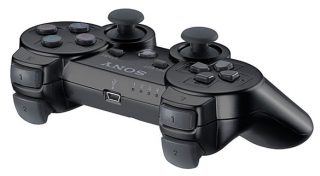
Nintendo may have popularized the four-faced diamond shaped buttons, the analogue stick, and the shoulder buttons, but the PlayStation set the standard for controllers.
The PlayStation had four shoulder buttons (L1, R1, L2, and R2) rather than the traditional two found in Nintendo. Moreover, it also introduced the Dual Analogue Controller, where Nintendo had one one, allowing for greater camera and action controls. And this has become the standard controller for gaming since.
Narrative Gameplay
Another significant change were the games themselves. Before the PlayStation, Super Mario and Sonic the Hedgehog were the most popular names in the gaming world. Yet these games offered a simple, linear gameplay where story did not matter. However, Sony wanted more out of games and with the CD-ROM technology at its disposal, it had the power to add more to gaming than ever before.
The PlayStation brought in story-driven games that had a narrative structure to it. Games had an entire movie-like experience with major action moments and cutscenes. The idea of playing a game that was like a story in itself was quite exciting. And over the years the stories grew bigger, more engrossing, and more intricately woven.
These are only some of the major features that changed and defined the way games would be played in the years to come. And it all started 20 years ago.
For nostalgia sake, here is a video showing some of the most popular games from the first PlayStation, and we’re sure they’ll will bring a smile to your face (except for Silent Hill). How many of them have you played? Let us know in the comments below.
Mobile phones have become an extended appendage to our bodies. Today though, with the stable establishment of the Smartphone, our lifestyle and etiquette has entirely changed. We embraced this change of modernity without much resistance, although it doesn’t hurt to wonder what it would have been like otherwise.
The Word ‘Selfie’ Would Not Be a Part of the Dictionary
The still trending culture of the ‘selfie‘ would be non-existent and one would have to learn how to perfect the art of holding one’s digital camera awkwardly. It helps that the new smartphones now come with a good front camera with up to 8MP HD clarity.
We Would be Rolling Down Our Car Window to Ask for Directions
Shopkeepers and road signs or even a REAL map would show us the way instead of the GPS or Google Map.
Image Source: Raising Gentlemen
Our Pictures Would Have #NoFilter
Instagram has nothing less than a cult following since its introduction. The App allows people to publish their photographs and has by far, the most aesthetic editing options that any photo editing app could offer. Although saying that it revolutionized picture quality and the art of photography would be going too far.
Source : Emarketing Blog
No Video Chats On-the-Go
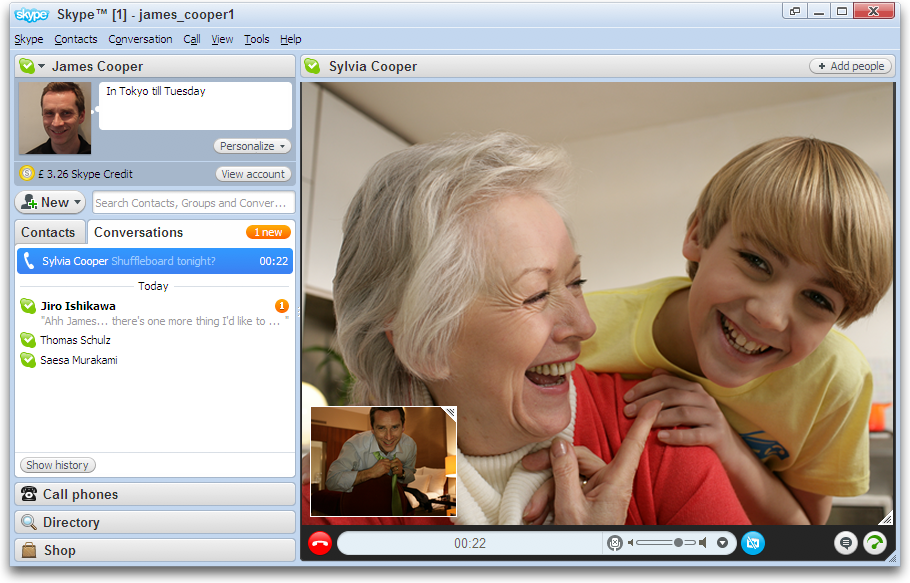
At one point Skype was the only means to video chat across the world. It seemed like a revolutionary idea until the advent of the smartphone and along with it multiple video chatting apps such as FaceTime, Viber etc.
Remember SMS?
Two of the most popular apps for informal communication have changed the world of text messaging. Now we barely ever fill up our texting balance because we would rather use the Wi-fi to text, call, send jpeg images, voice notes etc.
Source : Mashable
We’d Still be Buying Cookbooks, Dictionaries, and Books in General
With the introduction of reading apps like Kindle, Aldiko Book Reader, Cool Reader etc. we have almost stopped opening Dictionaries, Cook Books and buying special edition magazines and novels. The reading app has become so much a part of our culture that Sunday morning Church services also involve the congregation taking out their mobile phones instead of The Bible. The mantra being, ‘less is more’.
Downloading and Storing Music
Today music enthusiasts don’t need to go to Music Stores in order to buy their favourite albums. In fact they don’t even need to buy an MP3 player or even the life changing iPod. All one needs to do is own a smartphone with apps such as SoundCloud, Apple Music, Spotify etc and you have it all in tow.
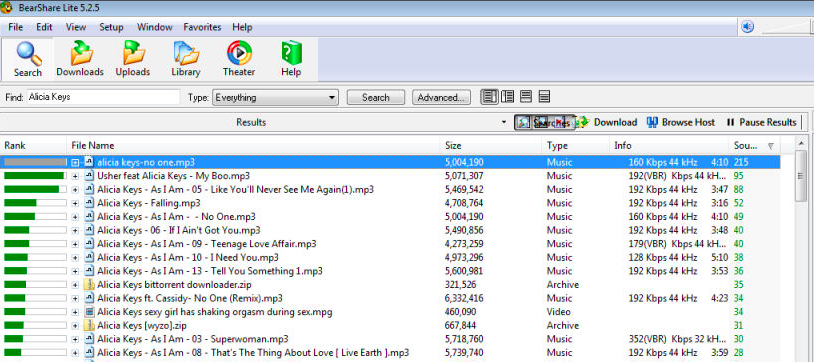
We should also be thankful that we’re no longer downloading music (along with a hundred viruses) from Limewire or Bearshare.
Candy Crush and Angry Birds Probably Wouldn’t Exist
Long ago in the 90s, if we wanted to play computer games we would have to go to the gaming parlours to experience the ultimate fun of gaming. Even when the feature Nokia mobile phone arrived the only game they had was called Snakes and it was joyous!
Arguments Wouldn’t Be Resolved Until Someone Located a PC/Laptop
Initially internet access would only be available to computer users and those who did not own one would have to visit Cyber Cafes. The feature phone too did not have a Wifi or data connection option and therefore the Cyber Cafés and computer business thrived. But with the coming of the smartphone and all its internet options most people now choose to buy a smartphone which has all the functions of a laptop or PC and have internet access on the go.
Without our smartphones, everytime anyone got into an argument, it wouldn’t be resolved till someone located a PC/Laptop.
To-Do Lists
The emergence of reminder apps have alone perhaps dropped the sales of efficient and creative stationary like sticky notes, labels, notebook fridge magnets etc.
In conclusion, a world without the smartphone would still be beautiful but perhaps won’t be able to keep up with the notoriously infamous ‘fast-paced modern’ lifestyle.
Jason Voorhees is one of the scariest characters that have been created. Though fictional, the chief antagonist of Friday the 13th has undoubtedly raised eyebrows with his mass murder spree series of films. Now, imagine playing with him against a group of equally proficient fighters. That’s right, Mortal Kombat X now has Jason Voorhees as a playable character, with his set of combat moves and fatalities. The character unveiled before Jason is the Predator, a well known fictional character from the Alien Vs Predator franchise.
Jason was inducted as a character on May 5th if you have purchased the Kombat pack for Playstation 4, Xbox One and PC. Most of Jason’s moves include a standard line of attacks and if executed correctly, a clothesline. One important skill of this character is that it can become unstoppable, which means nothing would be able to escape his special moves.
In addition to Jason, the pack also includes characters like Vampiress Mileena, Kraken Reptile, and Pharaoh Ermac horror-themed skins. For players who have not purchased the package, Jason Voorhees will be available from May 12th for $7.99. Today is also the official release of the game on Android devices.
Who would have thought that Twitter, one of the world’s largest social networking site, would now allow its users to play old MS-DOS games within its app? Now, thanks to the feature that allows you to embed various forms of media into tweets, it is possible to share old DOS-format games.
Well, we can now embed playable Internet Archive games into tweets, so: https://t.co/sMZwcB5nAN
For now, the Internet Archive’s library is offering a good amount of games such as Metal Gear, Prince of Persia, Wolfenstein 3D; that can be shared and played within tweets. All you need to do is click on the game, copy the link, paste it in the tweet compose field and press send.
The games can also be embedded within the Wordpress platform. Try playing Aladdin below:
Most of these games can be played otherwise, but you may face problems while playing these because programs like DOSBox are not compatible with modern machines. If you wish you spend hours on these nostalgic games, make sure to play it on full screen mode. This helps in dealing with the pixel problem. Happy gaming!
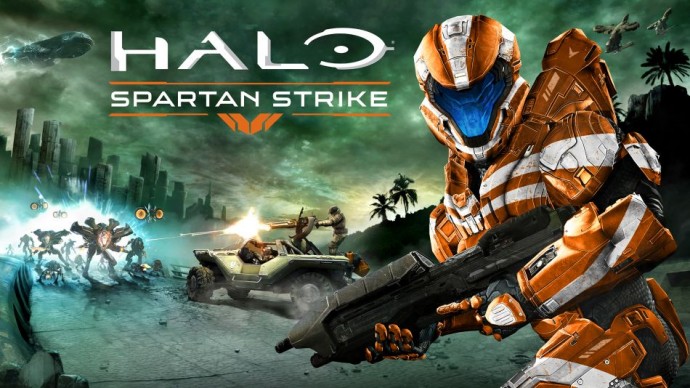
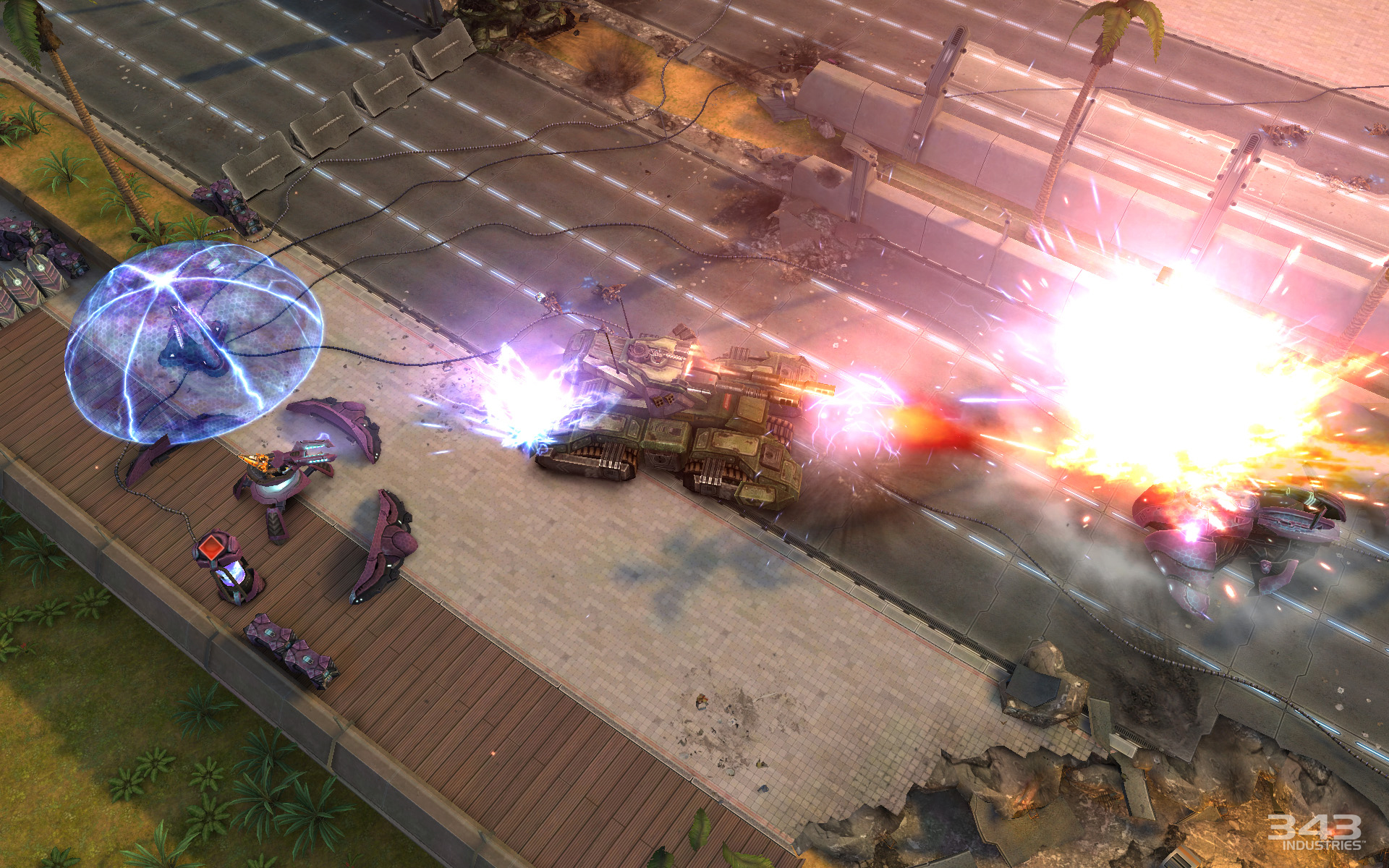
Halo is back again with its newest top-down shooter game. Partnering with Vanguard Games, Microsoft Studios and 343 Industries have launched Halo: Spartan Strike. The new story is touted to be different from previous releases.
The new story is based in the Halo universe on New Mombasa in the year of 2552. The game consists of 30 different levels while maintaining the objective of leading the UNSC troops through jungles and cities against Covenant and Promethean foes. For aid, the player has a huge arsenal of weapons, abilities and vehicles. In addition to this, players can buckle up against each other in a variety of weekly challenges to earn the top spot on the leaderboard. The achievements can be earned to attain new avatars or emblems on Xbox One.
The game is available for $5.99 on iOS, Windows and Steam. For iOS and Steam users, you can also avail Halo: Spartan assault as a bundle for $9.99. The Indian Windows Store lists the game for Rs. 379. Once purchased on any Windows device, this game can be played across different platforms too. This includes syncing of the game data and progress, as long as it is connected to Steam.
Some time ago, NVIDIA had launched the GeForce GTX 980M and 970M processors for notebooks. Now, to turn up the heat on the competition a bit more, the chip maker has added GeForce GTX 960M and 950M to the GTX 900M lineup. Nvidia is mainly aiming for notebooks from ASUS, Lenovo, Alienware, Acer and HP. Both the processors features Maxwell architecture, including 640 CUDA cores and are built on 28nm process.
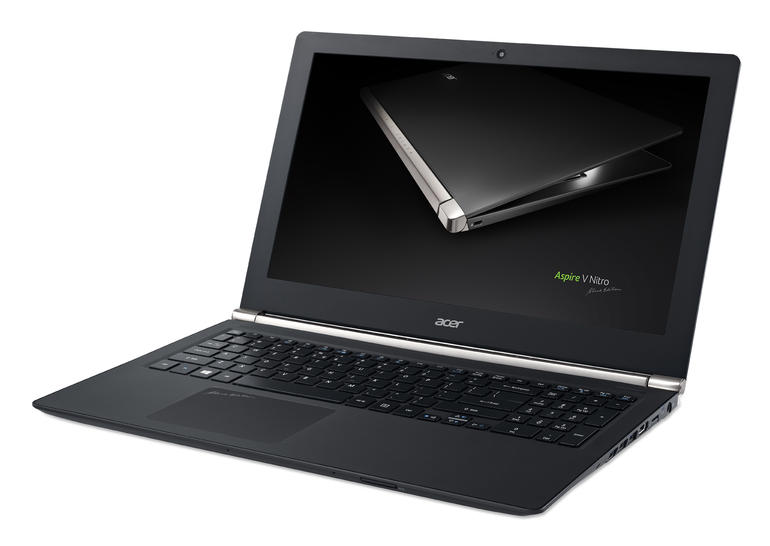
These new processors are very powerful and hence can be used for purposes other than gaming, for example video editing and creating 3D graphics. Acer has announced that a new batch of its existing line of Aspire V Nitro Black Edition laptops will offer the GeForce GTX 960M as an option.
Aspire V Nitro Black Edition laptop
One of the features of the processor is the BatteryBoost which lets users enjoy longer playtime than previous gaming notebooks. It provides more battery backup, even if the user is playing off-cord. Users can choose between the best graphics performance or the best battery life, according to the application they are using. Other features include ShadowPlay activation. Users can record full-resolution videos for sharing on YouTube or stream live to Twitch.
As of now, only the Acer V Nitro will be offering the GTX 960M service. Alienware, ASUS, HP and Lenovo would be releasing the upgraded version soon.
UPDATE
For a limited period, customers who purchase the GeForce GTX 980, GTX 970, and GTX 960 graphics cards, or a notebook with a GTX 970M or above, will get a code for a digital copy of the game. Labelled the ‘Undeniably Epic’ bundle, it will be authorized for purchases from Flipkart, Snapdeal and computer stores that are a part of Nvidia’s retail network.
Xiaomi, few days back, teased a gaming hardware with the launch date expected to be 20th January. Now it has been revealed that this mysterious device was none other than a bluetooth game controller, which carries an amazingly low price tag (surprise, surprise) of 99 Yuan.
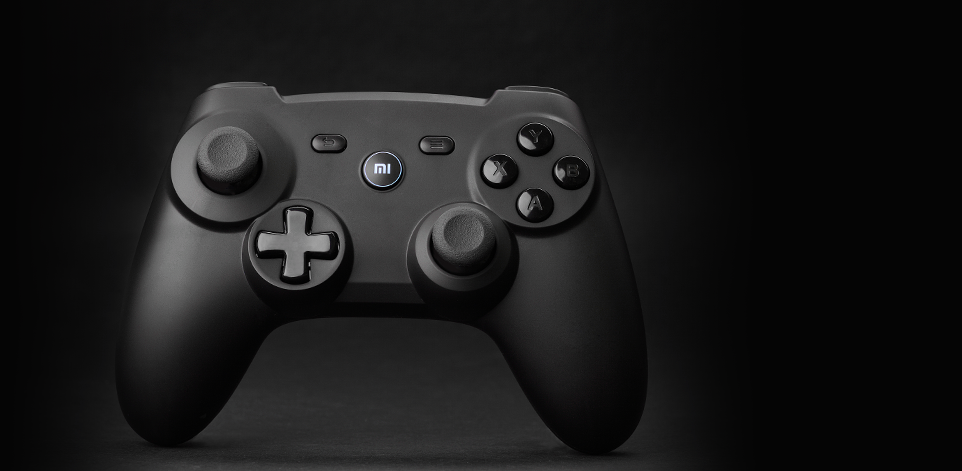
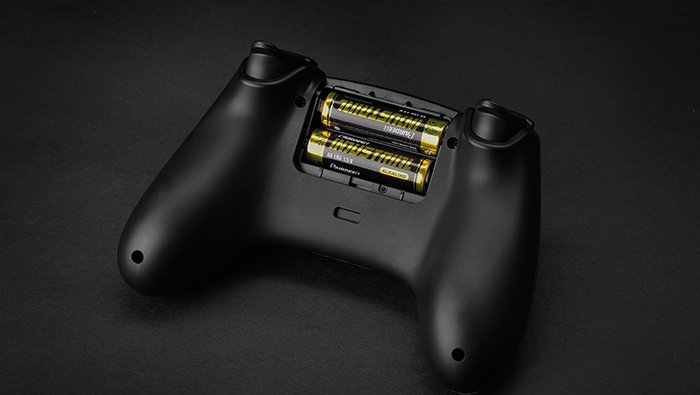
The Xiaomi game controller sports a D-pad, analogue sticks, Y, X, A, and B buttons, as well as two shoulder buttons on either side. It also has a back button, menu button, and a home button with Mi branding. It is powered by 2xAA batteries.
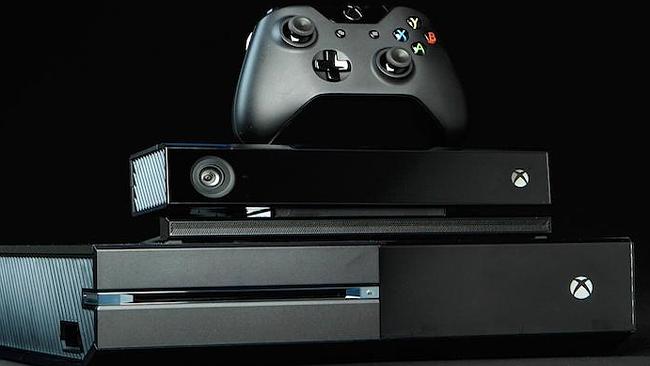
It looks awfully similar to the XBox One controller and according to the company, has a very ergonomic and comfortable feel while holding. The shell is made of tough materials manufactured by Samsung. Xiaomi claims that the remote controller is made using the same quality manufacturing process as the Sony PS4 remote.
Another interesting thing about the controller is that it is scratch and sunlight resistant. The company hopes that you can play your games for hours without getting tired.
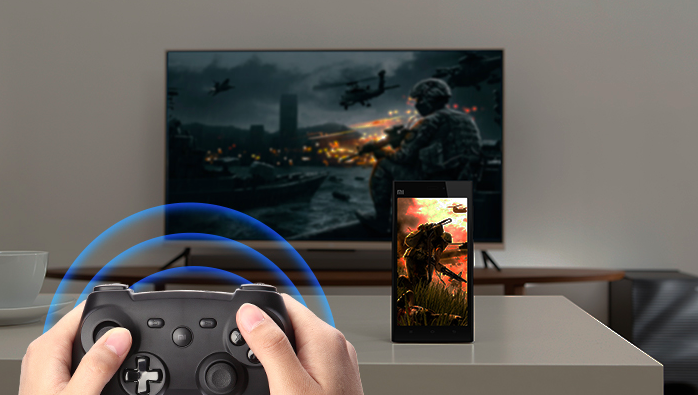
The controller comes with some serious features for heavy gamers; 360-degree field of precision positioning, which has an accuracy of 0.172 degrees, shaking, center-specific anti-tampering measures of 0.5 degrees and high precision arrow keys which have a 360 degrees movement technology, ensuring a uniform gap around the keys. It connects with Android devices using Bluetooth 3.0 and comes with a power management system which turns the device into standby mode after 5 minutes of remaining idle.
The official website states that the first 300 buyers of the Bluetooth game controller would only have to shell out just CNY 1 (roughly Rs. 9) for the device. As mentioned above, the controller is priced very competitively at 99 Yuan which rounds up to about Rs. 1000 in India currency.
Microsoft’s Xbox One had a good holiday season last year where it outsold its arch nemesis, the Sony Playstation. The trick Microsoft used was selling the Kinect motion sensor as a separate device and slashing down the cost of the gaming console by $50. But the company has bigger plans for its gaming ecosystem, and it will be unveiling them real soon.
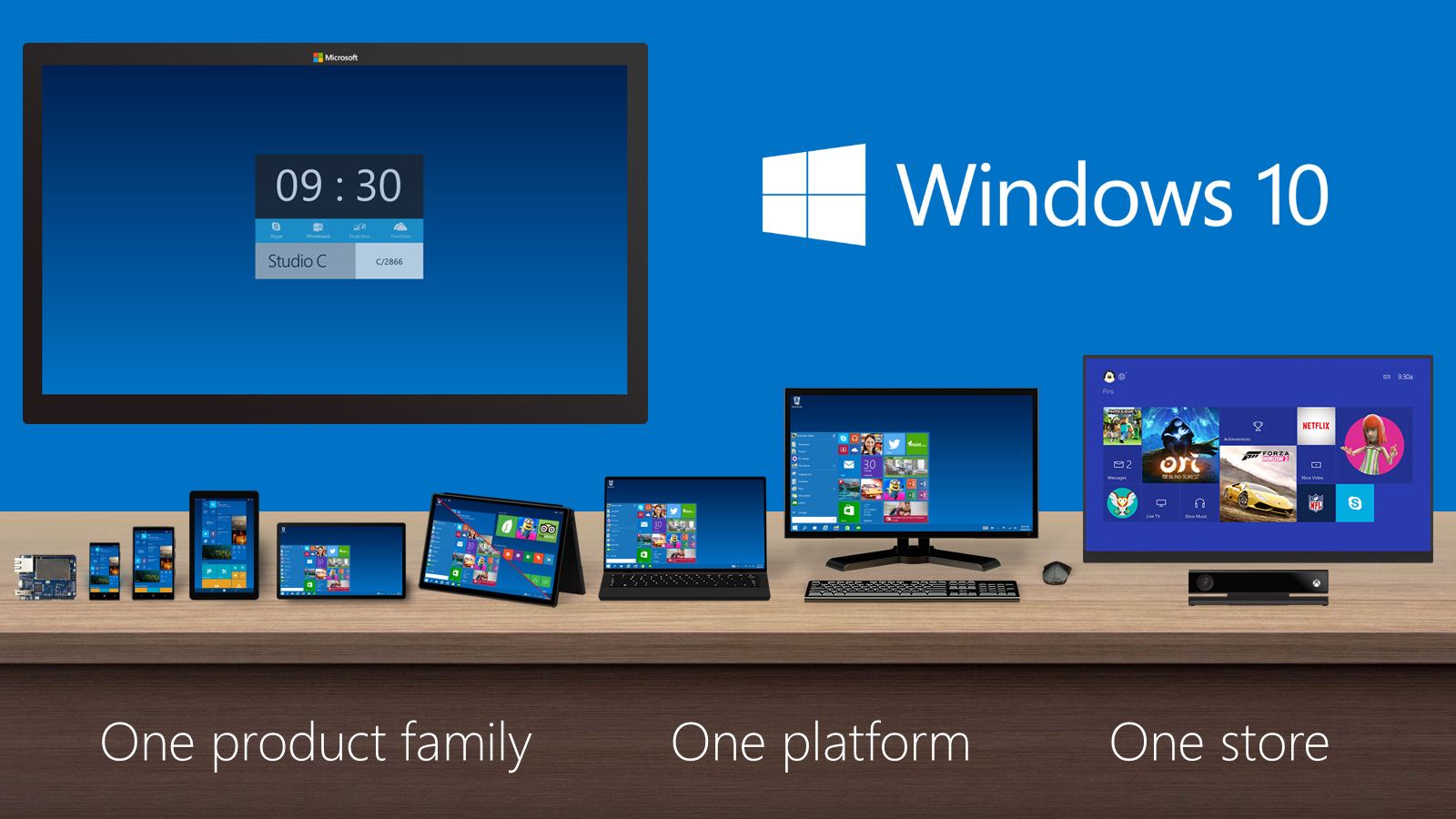
Microsoft will be holding a consumer preview of its next operating system, Windows 10 on the 21st of January. It has already held a developer’s preview where it showcased several new features along with the return of the trusty old Start Menu that it unceremoniously pulled out in Windows 8. The new OS also comes with features like multiple desktops and a Task View for multitasking.
Microsoft will be presenting a consumer preview of Windows 10 on January 21
During the event, Xbox’s Head, Phil Spencer will unveil the company’s plans for increasing the gaming ability of the desktop systems. In a post on the Xbox Weblog page, the company has said, “Our goal is to help PC gaming flourish, and we’re excited to be helping shape the future of Windows. Phil Spencer will be sharing on the Windows consumer experience at a Windows event on January 21, including the role that gaming will play.”
We are eagerly waiting for the new Windows operating system. Also, prospects of additional gaming support would really make hardcore PC gamer’s brains’ tingle.