Tag: india

  • Samsung Galaxy Note 4 to Launch in India on 10th October

    Samsung Galaxy Note 4 to Launch in India on 10th October

    With Apple fans waiting for the iPhone 6 and iPhone 6 Plus to launch in India later this month, Samsung seems to be attempting to stay ahead of the game. The South Korean giant shared the worldwide roll-out schedule of the Samsung Galaxy Note 4 in a Facebook post. The phone maker prepares to cash in on buyer interest during the apt timing of Diwali.

    According to the post, Samsung Galaxy Note 4 will hit the Indian market on 10th October. Though there is no word about the price of the phablet, it is expected to cost more than Rs 50,000. Its predecessor, Samsung Galaxy Note 3, was launched last year at Rs 49,990. According to earlier reports, Samsung is expecting overall sales to rise in the three month period beginning October to December, with new announcements and launches during the quarter.

    The Galaxy Note 4’s roll-out thus far has not been ideal for Samsung, with some buyers in South Korea complaining of a manufacturing defect in the handset. Some users even posted images of the new phablet from Samsung showing the defect – a gap between the phone’s screen and the metal casing. However, Samsung was quick enough to respond and rejected the claims. It stressed that the gap was a natural part of design that “does not impact the functionality or quality” of the phone.
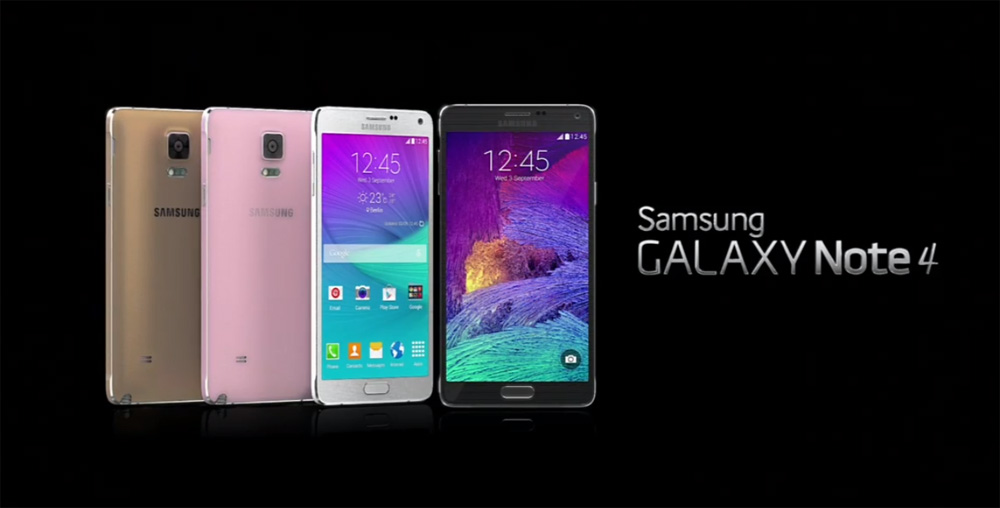
    samsung galaxy note 4

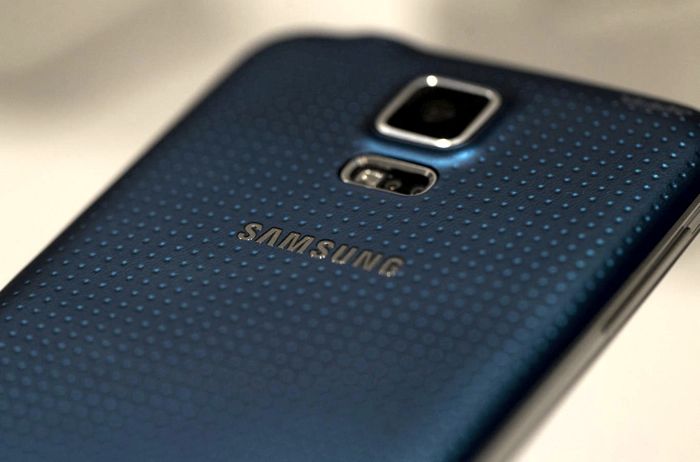
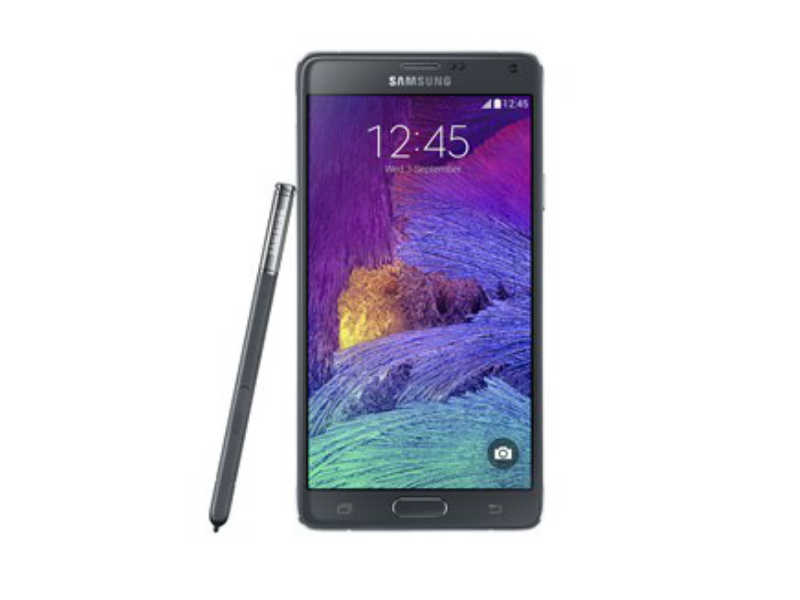
    The Note 4 has a design similar to that of the Galaxy Alpha, which was launched a few days ago in India. It has a 5.7-inch screen size with QuadHD resolution (2560 x 1440 pixels). The Indian version of the Note 4 is likely to be powered by Exynos 5433, an octa-core processor that has fours Cortex A15 cores clocked at 1.9GHz and the four Cortex A7 cores clocked at 1.3GHz. The global version uses Qualcomm Snapdragon 805 chipset clocked at 2.7GHz.

    The Note 4 has 3GB of RAM, 32GB of internal storage and a microSD card slot that supports up to 64GB of storage. It uses Android 4.4 along with Samsung’s TouchWiz user interface. The Samsung Galaxy Note 4 fashions a 16-megapixel autofocus rear camera with Smart OIS, and a 3.7-megapixel front-facing camera with an f/1.9 lens. It comes with 32GB of built-in storage, and expandability via microSD card.

    It also comes with additional software optimized to make use of the S Pen stylus. Compared to Note 3, users can multitask better in multi-window mode of Galaxy Note 4, which supports minimizing apps as floating widgets. It also has better text selection and crops selected areas on the screen for later viewing.

  • Technology We Need in India

    Technology We Need in India

    India’s new government is putting proactive emphasis on the Digital India Project. The country is a high priority market for smartphone companies with major releases happening almost instantly with an international release. For more than a decade the country has been a tech hub and exports a mammoth number of tech-based workforce all over the world.

    But still the country lags behind in terms of inculcation of technology in everyday life. There are various causes for this ranging from red-tapism to lack of understanding of the issues.  Some of the major focus arenas are:

    Electric Cars

    electric-car

    The future of vehicle technology seriously lacks on Indian roads. The most prominent name is the Reva which came at the price of a regular car but doesn’t give acceptable range. India has great technical workforce from automobile engineers to talented designers. If encouraged through the administrative institutions can be a leader in this field. Moreover by subsidizing these cars and incentivizing them, you can have cars that are not just good for your monthly budget, but also for the environment. While its great to know that the present government is focusing attention on Solar energy, pushing for electric vehicles along with solar will be a symbiotic transaction to a clean fuel economy.

    Research

    For the growth of any civilization, corporation, country, new ideas are absolutely important. There is a lack of funding for research in the country. As mentioned earlier there is no shortage of talented, hardworking individual who can take charge for a change. Currently, India’s share in R&D spending to the total global R&D spending stands at just 2.1 percent while the share of China is 12.5 per cent. For the third biggest economy in the world, that is a puny figure. To bring real change, the government has to aggressively invest in R&D.

    Good Internet

    LibrarySymbolLaptop-WifiBl

    An important component of the 21st century economy, the information superhighway, or the internet. It is the economy making force of the 21st century but India is limited by its speed. TRAI classifies the broadband at 512 KBps, which is not an acceptable speed in the first place. AKAMAI’s study showed India lagging behind all Asian and BRICS countries in terms of broadband speeds. With 4K streaming becoming available in most countries, it’s high time India puts its investment in information infrastructure as the world is moving to a knowledge-based economy. An accessible, faster and trustworthy internet would not just bring us closer to the world; it will bring a whole new empowered consumer base for the economy. This should be a priority issue for the government.

    Agriculture

    India has long touted itself as an agricultural priority country, but its agricultural yield is amongst the lowest in the world. Seed technology also needs to be looked into to prevent ethically immoral MNC’s to dictate terms to Indian farmers. A second green revolution is the need of the hour and the pride of doing it ourselves will help the country raise its sense of self-respect. It is also an important field as people can live without all the gadgets and tech under the sun, but can’t live without food. Apart from raising the number of agricultural research institutions, agricultural knowledge should be effectively disseminated amongst the farmers; the Krishi Darshan on DD just doesn’t cut it anymore. The acute importance of agricultural revolution should also be understood by the general public as they are on the consumption end of the spectrum and it’s always good to know what’s on your plate and how it got there.

    There are certainly a lot more areas in need of a technology revolution but none greater than in our educational institutions. We are currently creating a knowledge platform that churns out over 10 lakh engineers every year with a sole goal of earning big pay packages. There is an immediate need for induction of an innovation and entrepreneurial spirit in the minds of the Indian youth. Instead of being cheap labour to international MNC’s, they should instead be able to tie their shoelaces and aim to create the next big thing. Only and only then can this country claim for greatness instead of just brandishing past glories. This country deserves a technology revolution to be an active member of the global decision makers. We got the talent, all we need is leadership.
  • Samsung Galaxy Alpha Launched in India for Rs. 39,990

    Samsung Galaxy Alpha Launched in India for Rs. 39,990

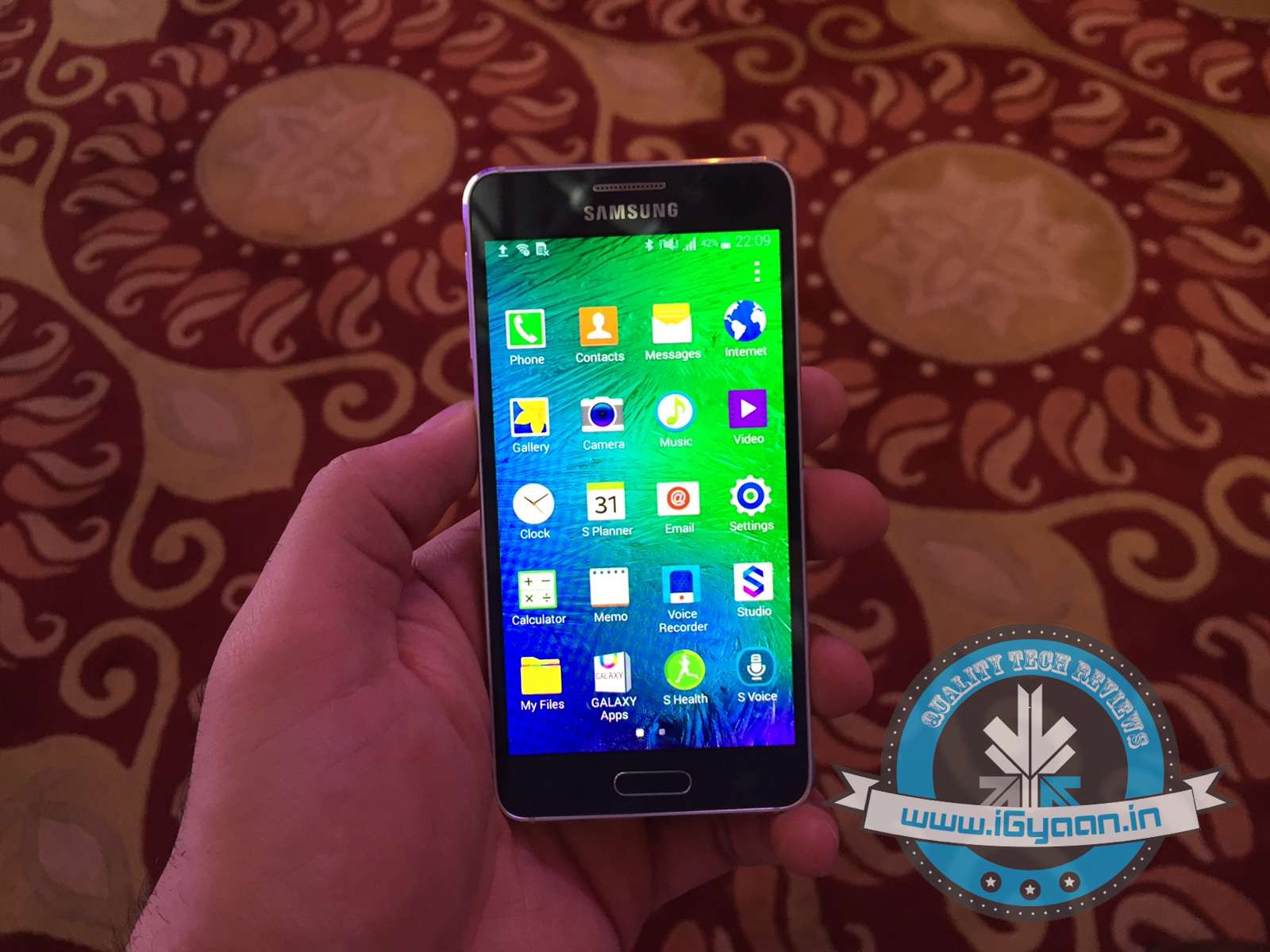
    Today at an event held in Delhi, Samsung unveiled its latest offering, the Samsung Galaxy Alpha. The smartphone comes in three colour variants: Black, White and Gold.

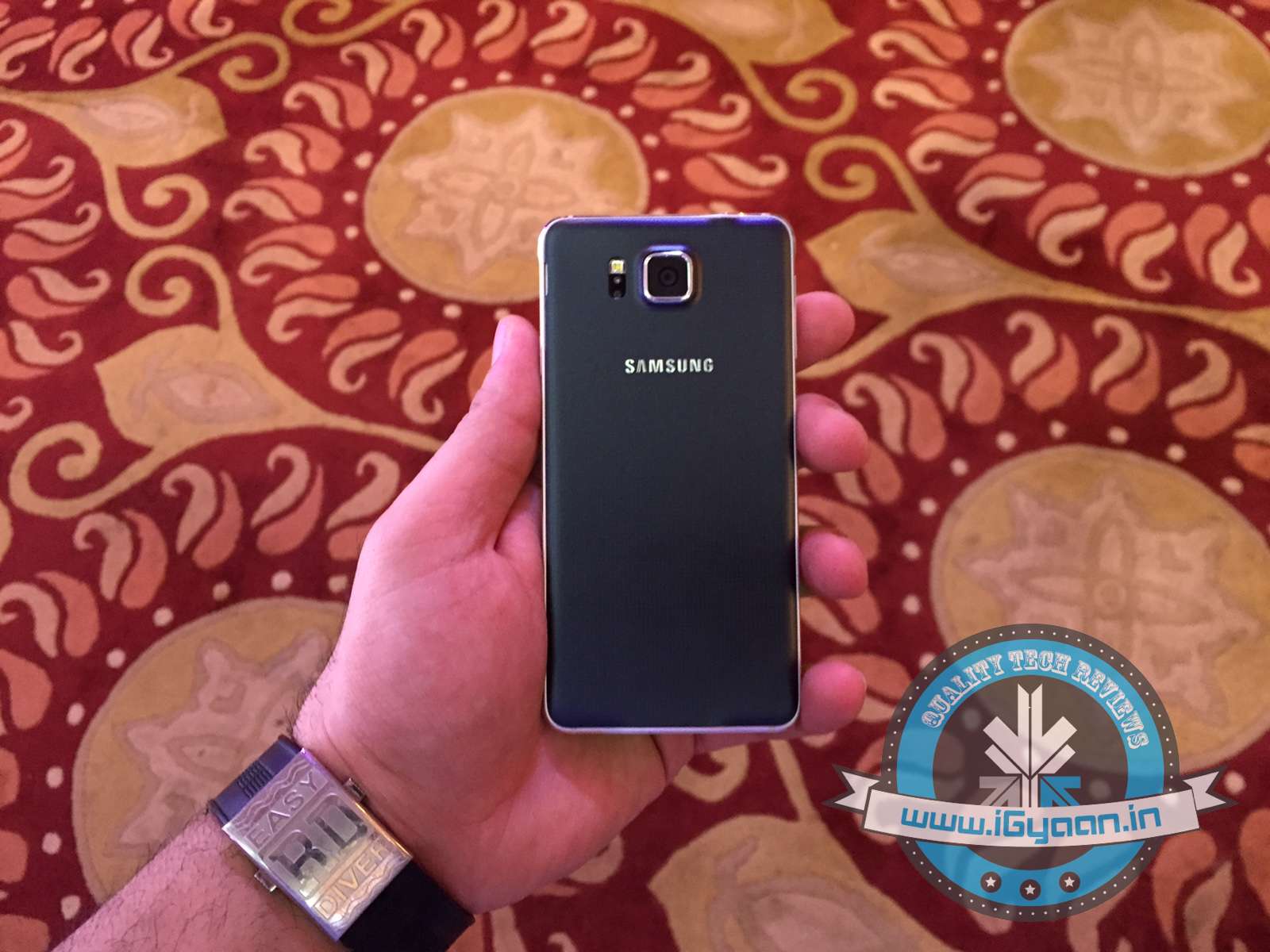
    The Alpha was the first to get the metal frame and was followed by the Note 4. The back cover on the devices are still plastic, but Samsung claims the metal frame provides enhanced safety to the phone.

    Samsung Galaxy Alpha
    Bollywood actress Lara Dutta and Asim Warsi, Vice President, Mobile & IT of Samsung India, on stage launching the Samsung Galaxy Alpha.

    The Galaxy Alpha is powered by an Exynos 5 Octa 5430 processor (1.8GHz quad-core Cortex A51 + 1.3GHz quad-core Cortex A7.) It has 2 GB of RAM and 32 GB of internal storage. The device has a 4.7-inch 1280x 720 Super AMOLED display.

    Samsung Galaxy Alpha India1

    The main camera on the device is a 12 MP shooter while the front camera is a 2.1 MP selfie shooter. The camera has a selective auto focus feature. The Alpha gets its juice from an 1860 mAh battery. The phone runs Android Kitkat 4.4.4 out of the box. The smartphone is priced for Rs. 39.990.

    Samsung Galaxy Alpha India0


  • Sony Brings Out the Xperia Z3 and Z3 Compact, We Unbox Them!

    Sony Brings Out the Xperia Z3 and Z3 Compact, We Unbox Them!

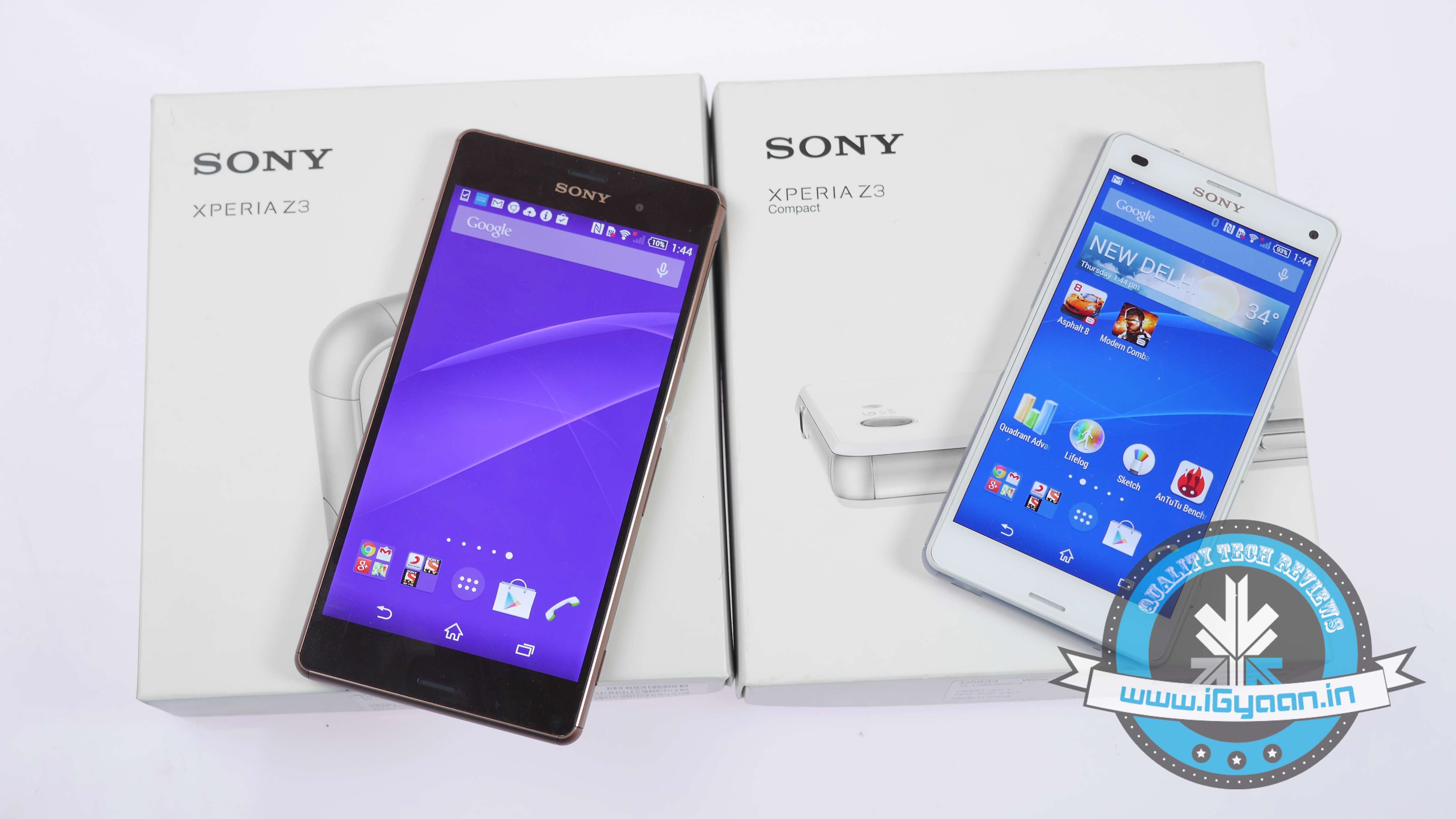
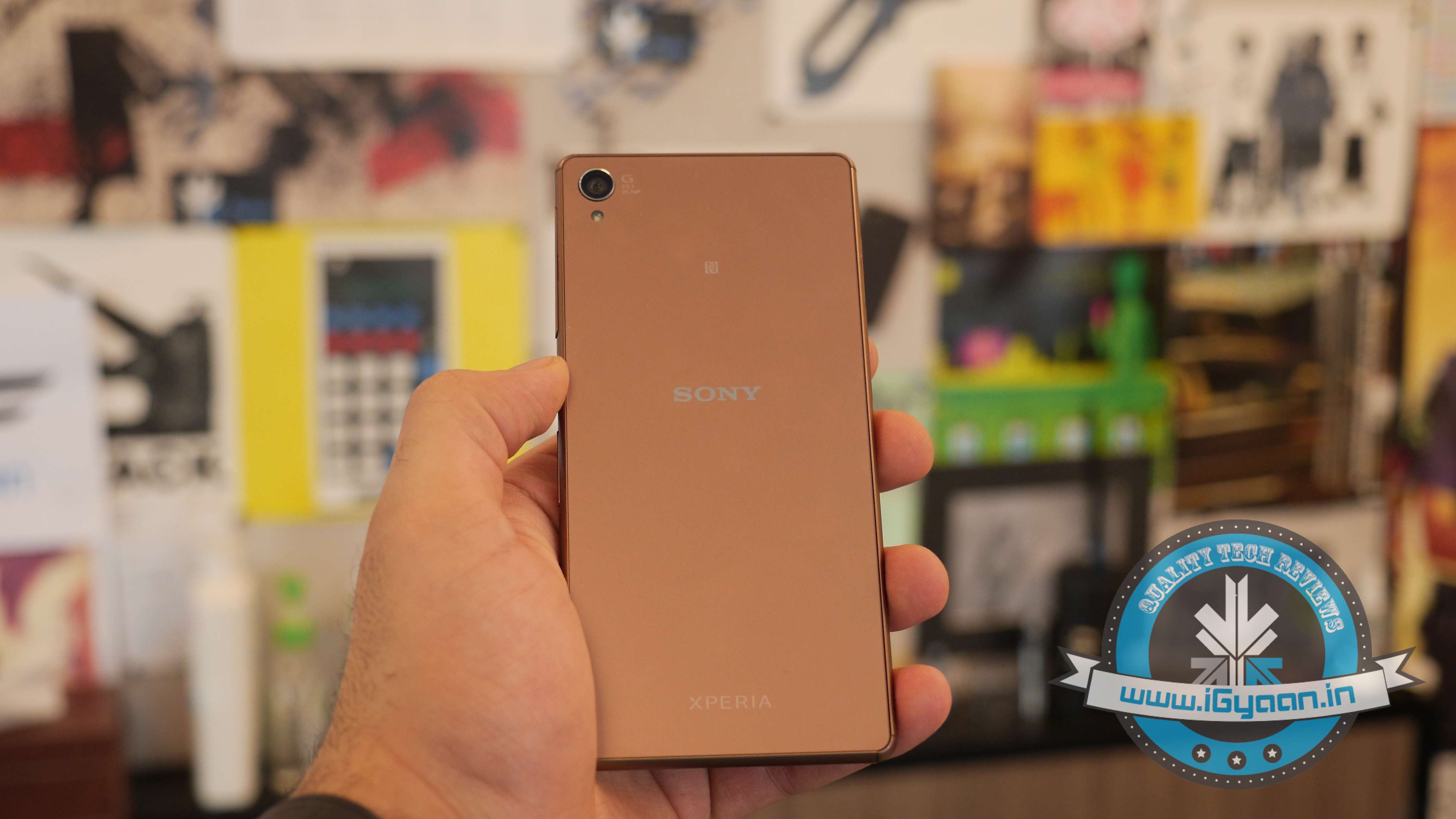
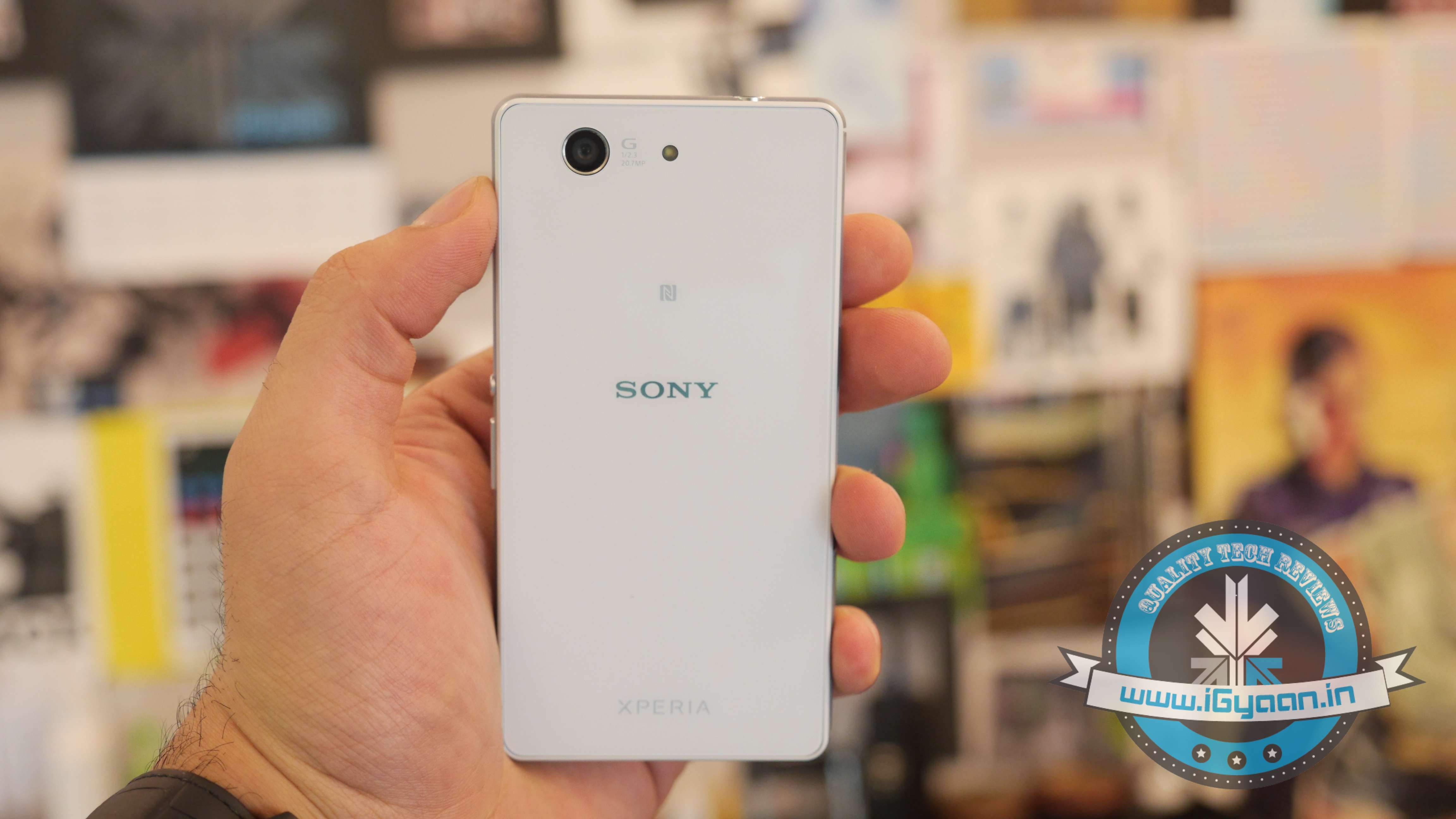
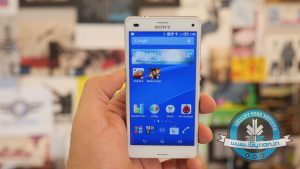
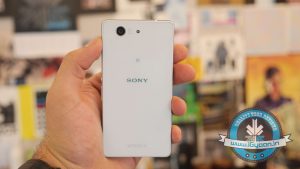
    Today Sony launched its latest flagship, the Xperia Z3 and its mini version, the Xperia Z3 Compact in India. The handsets were recently unveiled at IFA 2014, held in Berlin. The Sony Xperia z3 is priced for Rs. 51,990, while the smaller variant is available for Rs. 44,990.

    Sony Xperia z3 India6

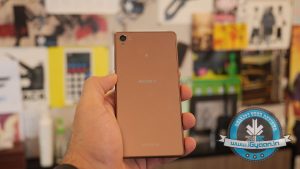
    This time Sony has focused on design, with the new smartphones being thinner and lighter than its predecessors. The smartphone comes in two stylish colour options. They have a curvier aluminium frame, which makes it easier to hold and use.

    Sony Xperia z3 India12

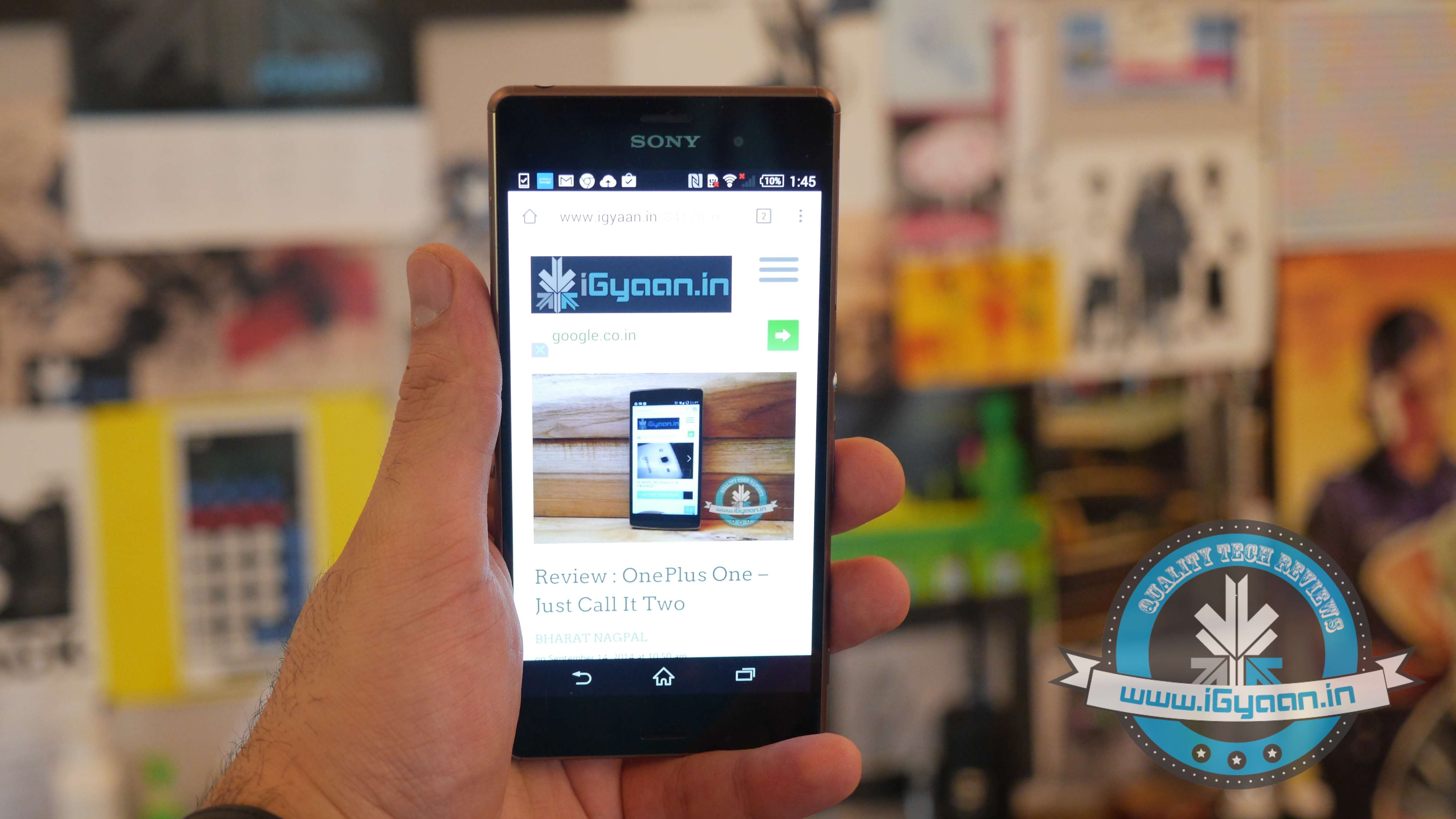
    Sony Xperia Z3 comes with a 5.2-inch Full HD display which Sony claims is the world’s brightest display of all the leading premium smartphones. Other specs for the devices include a 2.5 GHz quad-core Qualcomm Snapdragon 801 processor, 3GB of RAM and Android 4.4 KitKat.

    Sony Xperia z3 India5

    The main difference between the Xperia Z3 and the Z3 Compact is the size of the display — the Z3 Compact features a 720p 4.6-inch screen. Other than minute differences, it’s nearly identical to the flagship. Both smartphones also have the same 20.7 MP front camera, and the 2.2 MP frontal camera.

    Sony Xperia z3 India17

    Also, in terms of battery, the Xperia Z3 is packed with a non-removable 3,100 mAh whereas the Xperia Z3 Compact comes with a non-removable 2,600 mAh capacity. Without compromising on specifications, Sony has built two variations of a single smartphone in order capture a wider market base.

    Stay tuned for our Full Review out shortly. Watch the Unboxing video below.

  • Moto X (Gen 2) Goes on Sale Tonight Starting at Rs. 31,999

    Moto X (Gen 2) Goes on Sale Tonight Starting at Rs. 31,999

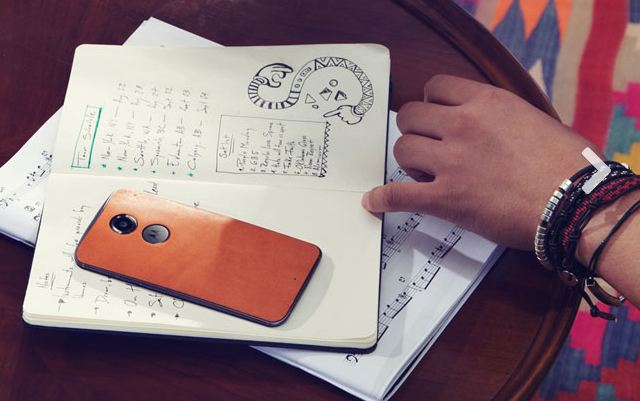
     Motorola recently came up with their latest generation of smartphones, the Moto X (Gen 2) and the Moto G (Gen 2). Moto G (Gen 2) is already available in the market for Rs. 12,999, but we had been waiting to get our hands on the new gen Moto X.

    Well the wait is over, the company today has revealed the pricing of the Moto X (Gen 2) through their Motorola India Twitter handle. The new handset will be available exclusively on Flipkart from midnight today starting at the price of Rs. Rs. 31,999.

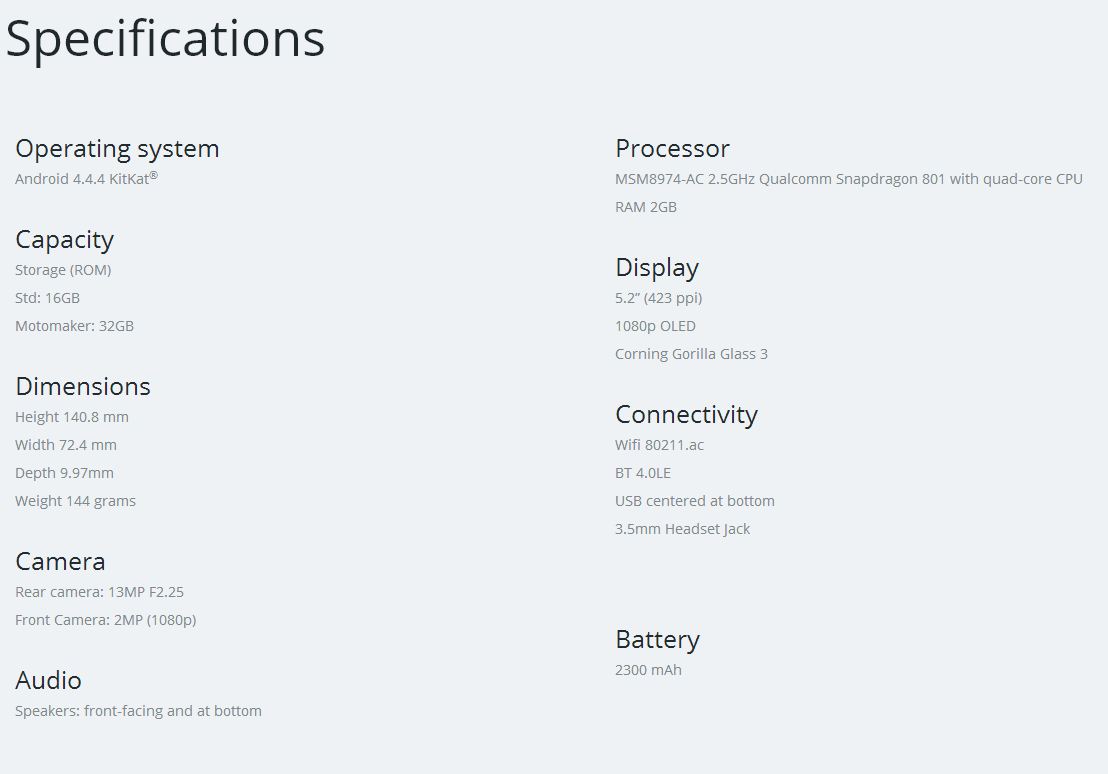
    The new Moto X is not much bigger than the previous one, with a 5.2 inch AMOLED display. It is still protected by Gorilla Glass. It is about 0.5 inch wider than last year’s X. However, the refreshed model sports a 1080p full HD display instead of a 720p one.

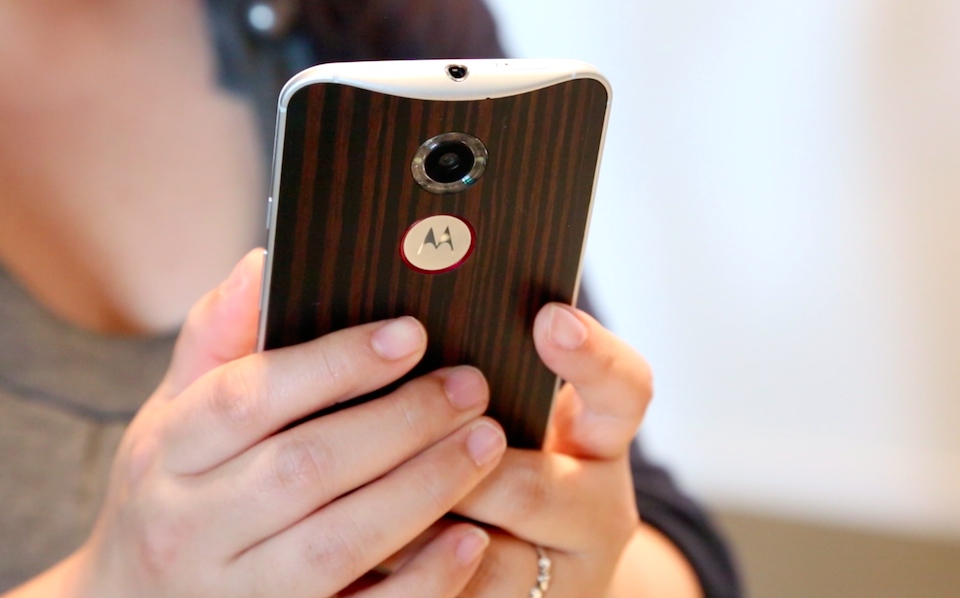
    The screen takes almost all the space on the front, leaving the bare minimum for bezels.  It measures 72.4mm wide by 140.8mm tall and weighs 144 grams. To give the device a premium feel, the company has added a smooth piece of aluminium wrapping the entire edge of the phone.

    At the back, it has an updated 13-megapixel camera lens with 4x zoom and a ring flash. The camera has the ability to capture 4K video instead of just 1080p and it’s also got a new feature called Best Shot.

    newmotoxlead

    As far as the hardware is concerned you won’t be disappointed. The device runs on  a Qualcomm Snapdragon 801 processor with a 2.5GHz quad-core CPU, an Adreno 330 578MHz GPU and 2GB of RAM. It is powered by 2,300 mAh battery which Motorola claims will last a full day.  The new Moto X has four microphones to help reduce background noise, and comes in a “splash guard” water repellent coating  and will be available in both 16GB and 32GB variants.

    One the software side, new Moto X comes with hand full of softwares, same as the older Moto X, including Migration tool and some others like Touchless Control, Active Display and Motorola Assist have been renamed in the new Moto X as Moto Actions, Moto Display and Moto Assist respectively. Another great iteration in the new Moto X is that instead of ‘OK Google’  as a voice prompt, you can customize the voice command prompt to anything you like.

    new moto x specs

  • HTC Brings Out the Colourful Desire 820 and Desire 820Q Dual-SIM in India

    HTC Brings Out the Colourful Desire 820 and Desire 820Q Dual-SIM in India

    HTC has launched its new offerings Desire 820 and Desire 820Q Dual SIM in India, which the company showcased at the IFA Berlin 2014. HTC has been one of the front runners in the smartphone game with its One M8 and the Desire line-up, which have been a favourite amongst Android lovers.

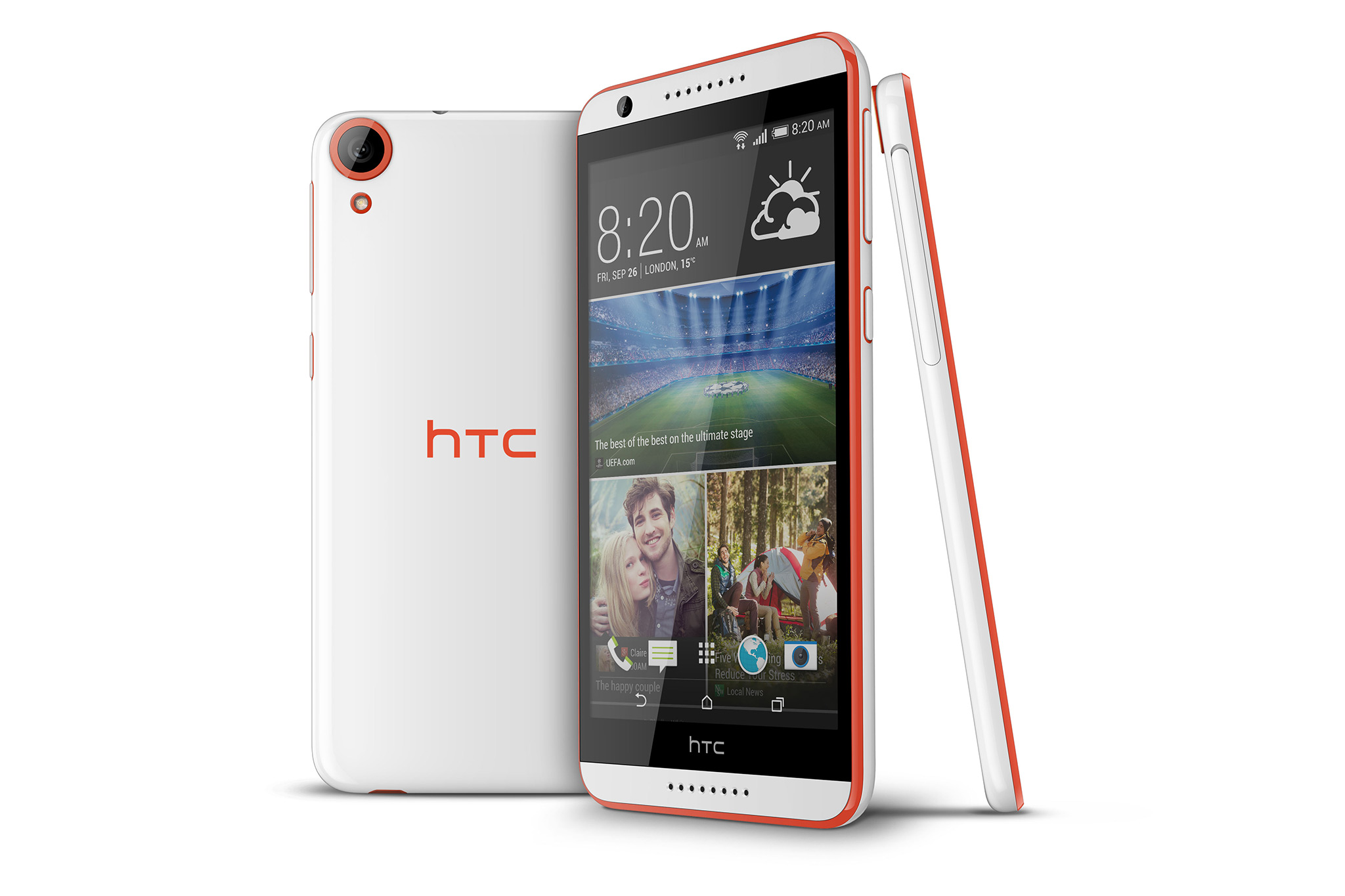
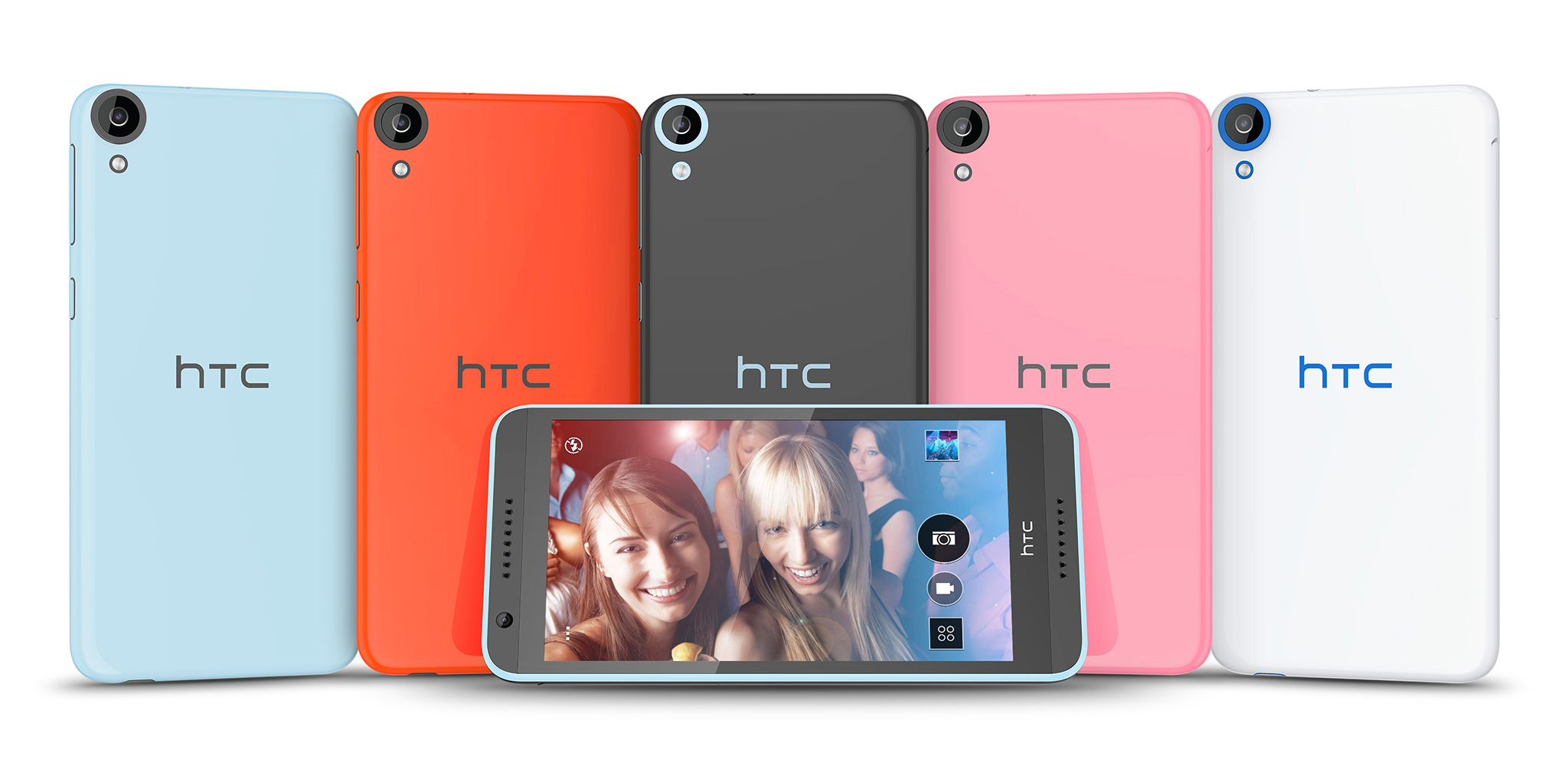
    The smartphones have been given an amazing look and feel. They come with a bold two-tone color scheme that makes the devices standout. Even the HTC logo on the back gets a different color treatment for each phone color option. The devices are made in a unibody, polycarbonate casing that HTC defines as its “double shot color technology.”

    With the Colors and powerful front camera makes it a youth friendly device.
    The Colors and powerful front camera makes it a youth friendly device.

    Same as its predecessor Desire 816, new desire 820 comes with a 5.5 inch 720p HD screen. The new handset is one of the first phones to come with a 64 bit Qualcomm’s octa-core Snapdragon 615 chipset. The processor runs on two quad-core chips of 1.5GHz and 1.0GHz with 2 GB RAM and 16 GB internal storage.

    On the imaging side, the main camera on the device is a 13 MP shooter with f/2.2 aperture and the front camera packs an 8 MP which is one of the main highlight of the handset. The device is powered through a 2600 mAh battery. On the software front, it runs on Android 4.4.2 KitKat wrapped under Sense UI. The Desire 820 comes with latest Category 4 LTE.

    The HTC Desire 820Q is essentially the mini version of Desire 820. It comes with a 64 bit Snapdragon 410 1.2 GHz  quad core processor and 1GB of RAM. The handset borrows rest of the specs from its bigger brother. Both smartphones will have DLNA to stream wireless on TV.

    Back in IFA, HTC said that the phones will be updated with Android L when it comes out which makes it one of the first companies to promise the Android L upgrades. They come with HTC’s Dual Boomsound front facing speakers and also its own version of the dot view case. Both devices will be shipped in early November, however, the pricing is not revealed yet, the company said that they will announce the pricing near the release date.

    Specs

    HTC Desire 820

    HTC Desire 820Q Dual-SIM

    Display 5.5 inch, 720×1280 pixels, ~267ppi 5.5 inch, 720×1280 pixels, ~267ppi
    Processor Qualcomm Snapdragon 615 1.5 GHz  octa-core (64 bit) Qualcomm Snapdragon 410 1.2 GHz  octa-core (64 bit)
    RAM 2GB 1GB
    Storage  16GB expandable upto 128GB 16GB expandable upto 128GB
    Battery capacity (mAh) 2600, non-removable 2600, non-removable
    Camera Rear camera 13-megapixel
    Front camera 8-megapixel
    Rear camera 13-megapixel
    Front camera 8-megapixel
    Operating System Android 4.4 Android 4.4
  • Exclusive : Moto 360 to Arrive in India in the First Week of October

    Exclusive : Moto 360 to Arrive in India in the First Week of October

    UPDATE: We had previously reported that the Moto X and Moto 360  will be arriving by the beginning of October. It appears that the Moto X as well as the Moto 360 will be coming out in the last week of September.

    The Moto 360 has been one of the most-awaited wearables in the market. The Smartwatch was unveiled at the beginning of this month, and it was impressive in many aspects. Now sources close to iGyaan reveal that the Moto 360 will be available in India starting next month.

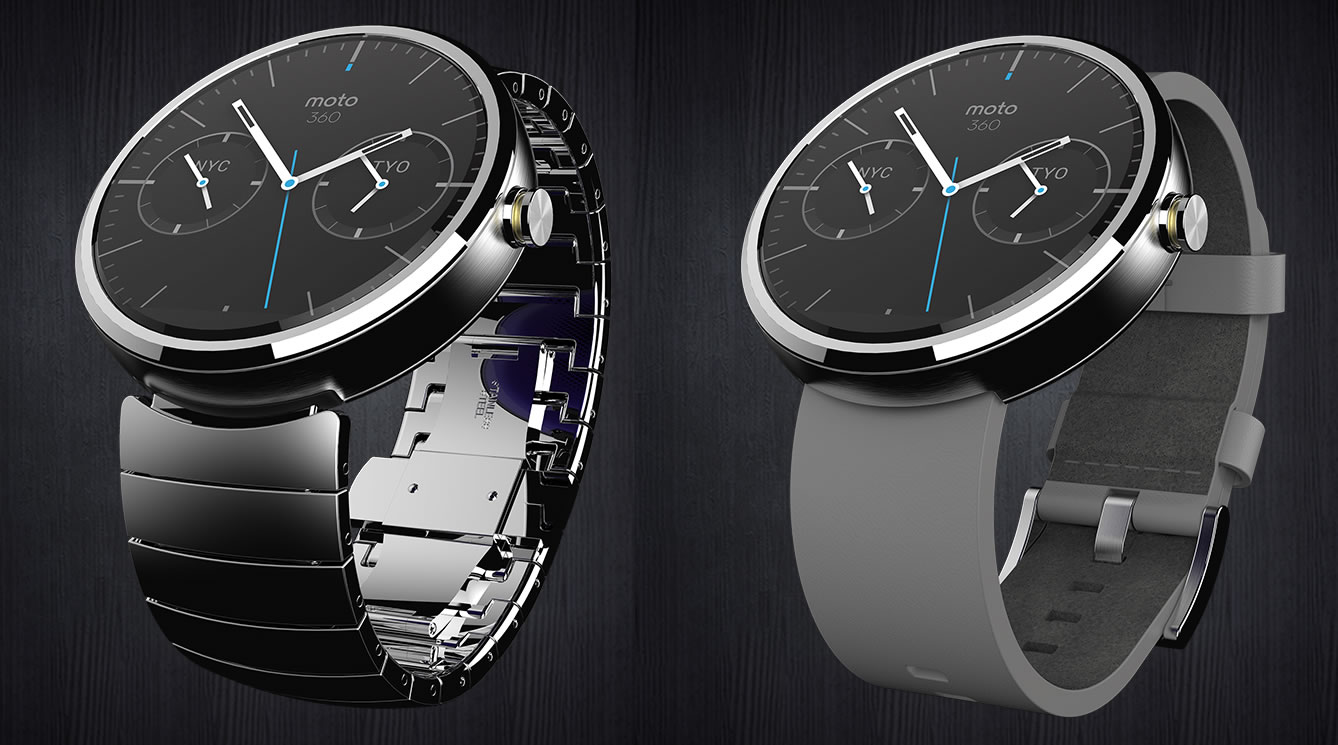
    The base model of the device is expected to be launched in the first week. It is going to be priced at Rs. 17,999. A steel band variant will follow soon after this launch. It is expected to come with a price tag of Rs. 19,999.

    The Base model will arrive first and will be followed by a steel strap variant.
    The Base model will arrive first and will be followed by a steel strap variant.

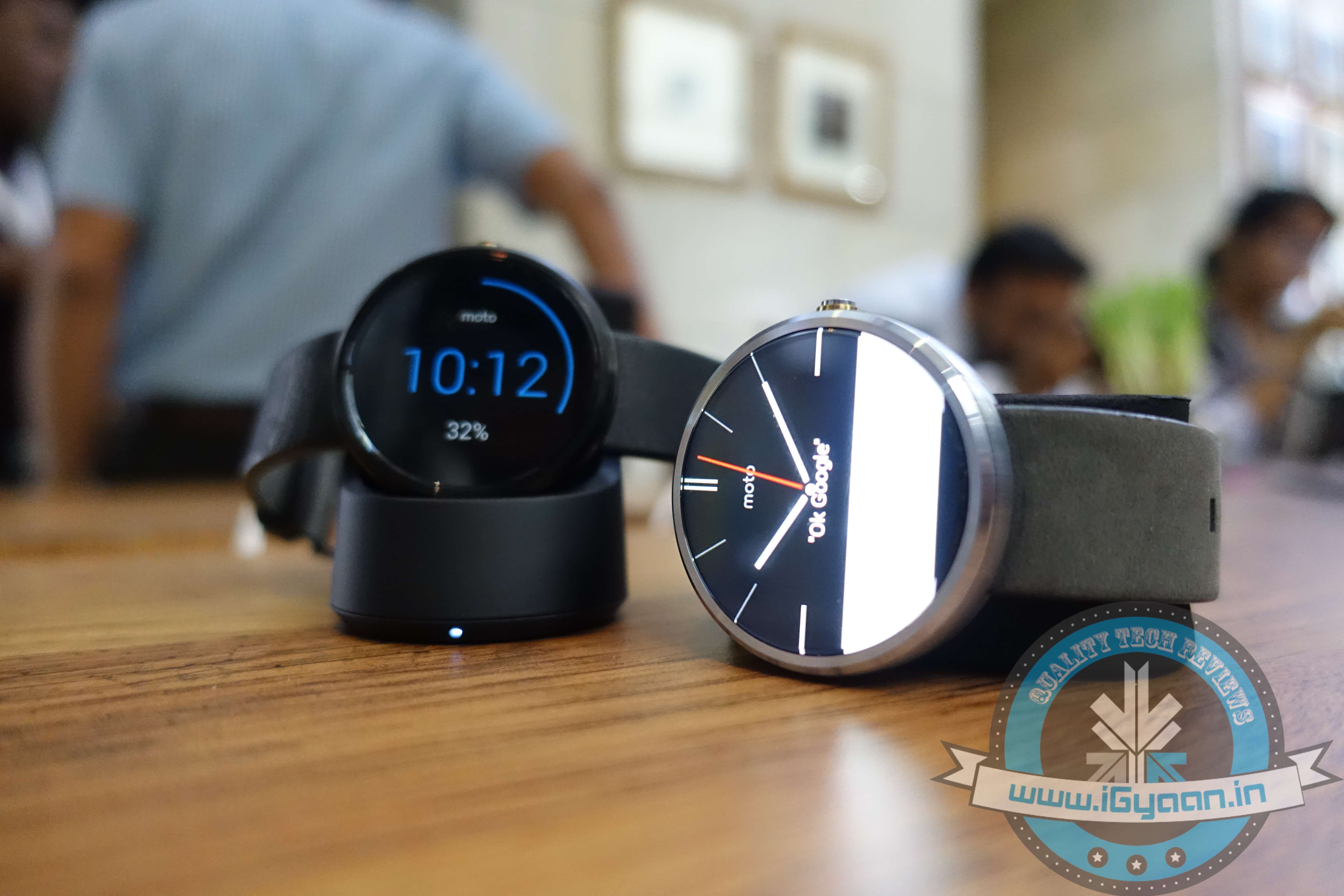
    The Moto 360 provides some great watch faces and by being one of the two round devices. The other one being LG’s G watch R which is also expected to come later this year. The G watch R has a more authentic watch like feel, but it comes at an expensive price tag.

    The main issue with the device is that even though it is shaped round, the Android Wear OS running on it is designed for rectangle devices. So round screen just end up cutting the corners of the content. Another issue with the 360 is the battery life. Motorola claims it lasts a day, but professional testing shows the Smartwatch losing power by the half day point. The wireless charger that comes with it is really cool, but the thing about wearables is that we don’t want to worry about their batteries. The battery woes might disappoint a lot of folks who have been waiting around for the device for a long while.

    The Moto 360 still stands out as a unique device. It also comes from a company which has gained a lot of goodwill amongst the users. The 1st generation of the 360 does have some pretty visible flaws. Motorola had a lot of time on their hands to mend the issues. Hopefully, now that the flaws are apparent in the market, Motorola will fix them in their next versions or provide software tweaks to make the 360 better so that it stands true to the Moto Brand. We just have to wait and watch for this Smartwatch.

    [poll id=”22″]

  • iOS 8 Update Will be Available for India Tonight

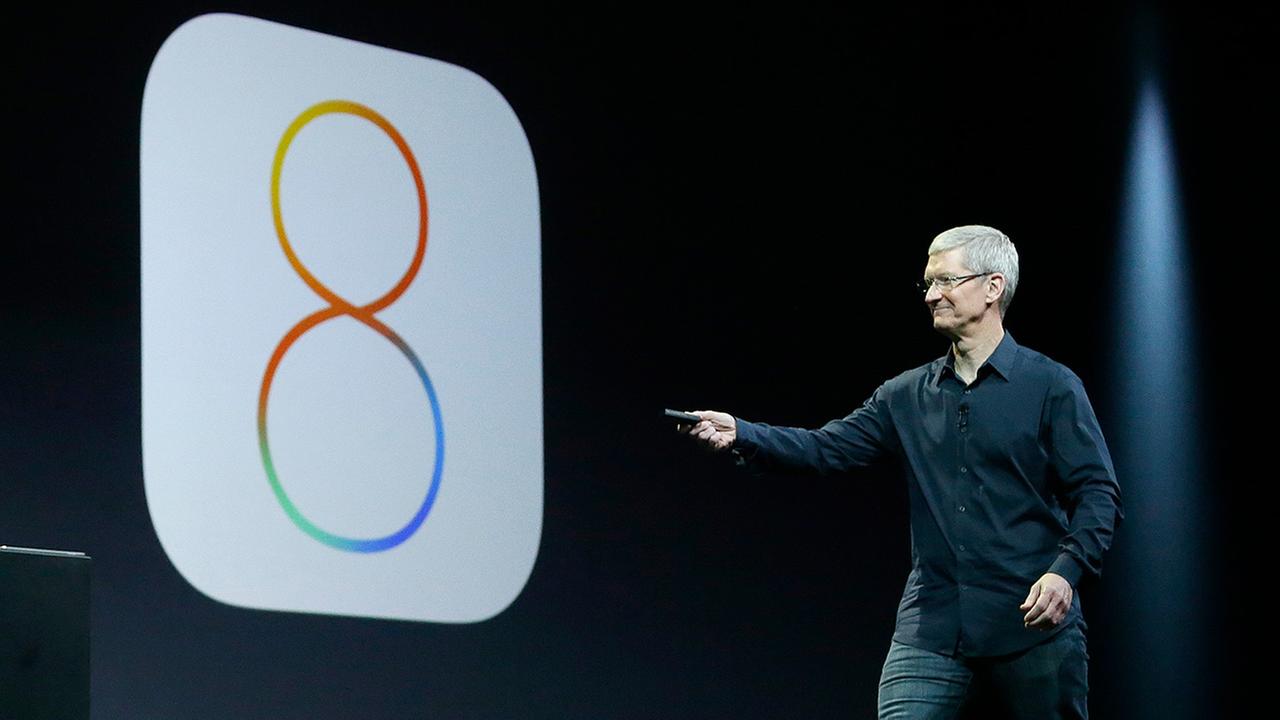
    Apple users have been eagerly waiting for the latest iOS 8 software update. Following the announcement of the latest iPhones and smartwatch, Apple has now announced it will be rolling out the iOS 8 update this month and it is finally going to launch tonight after 10.30pm IST.

    It will, of course, come pre-loaded on Apple’s new iPhone 6, but if you have no plans to upgrade your smartphone, you’re in luck. Current Apple phones users after the iPhone 4s model can upgrade to iOS 8. Read about all the new features of the iOS 8 here.

    iOS 8

    The devices which are compatible with the new upgrade include the iPhone 4S, iPhone 5, iPhone 5C and iPhone 5S. The 5th generation iPod touch and all iPads except for the original one are also compatible with the iOS 8 update.

    According to Apple, the iOS 8 is the biggest iOS upgrade since Apple store’s origin. The new upgrade includes better photo-centric features with Photos app for the smarter shutterbug; messages with capability to share video and audio messages directly (aka Whatsapp). Notifications have been given a major facelift as well to aid better iOS experience for iPhone/iPad users. Also third-party keyboard apps will be supported in iOS 8 for typing convenience.

  • Moto G (2nd Gen) Unboxed : The Trendsetter Returns

    Moto G (2nd Gen) Unboxed : The Trendsetter Returns

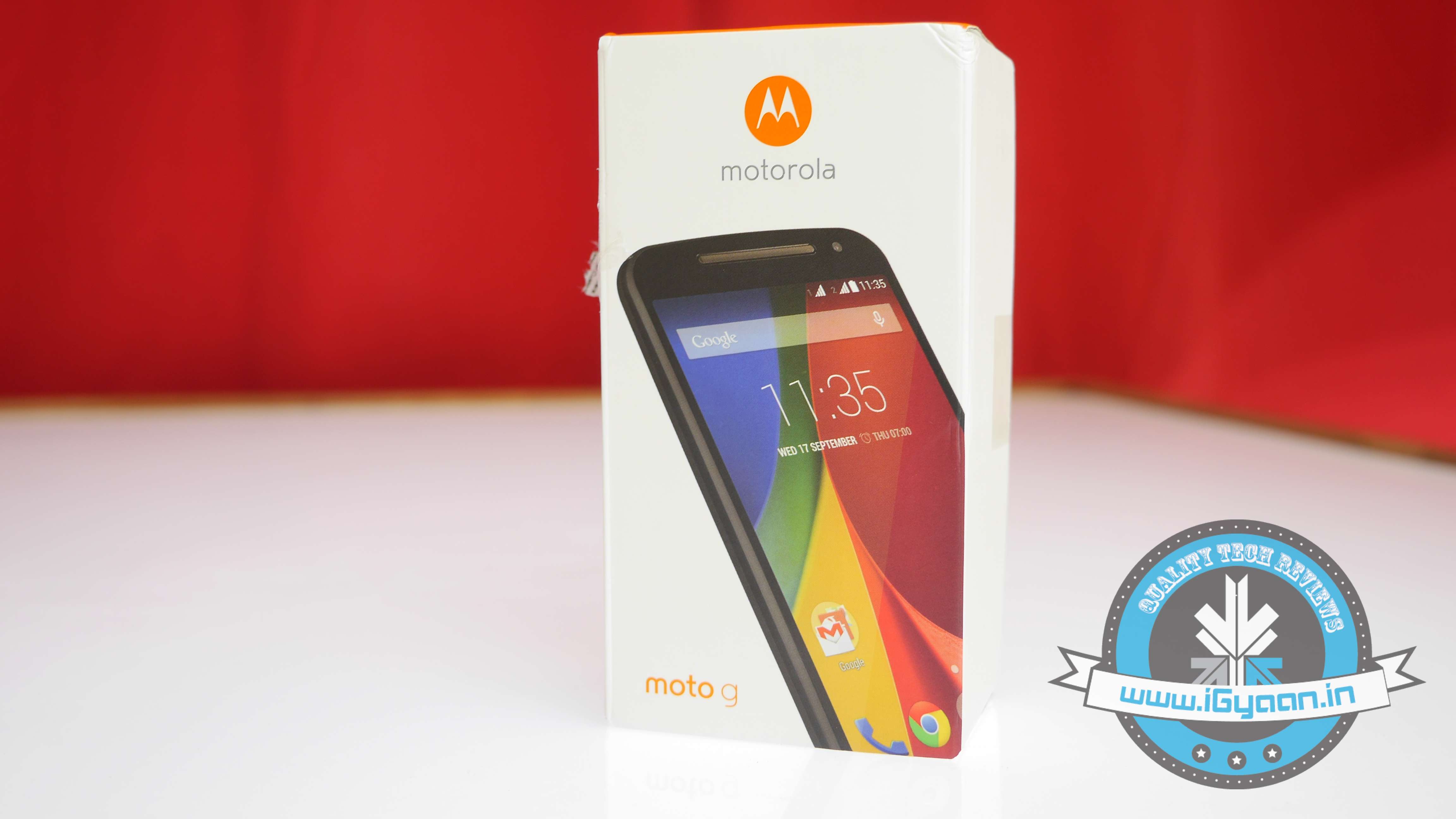
    The second generation of the blockbuster Moto G is out now. The device was much awaited and comes with considerable improvement over its trendsetting predecessor. We finally got our Moto G (2nd Gen) box and here’s what we found on the inside.

    On the looks front, the box is small and minimalistic just like its predecessor. The box features a side view of the phone, and that’s about the only graphics there. The price mentioned on the box is Rs.13,099; the device is available on Flipkart for 12,999.

    Inside the box, on the top is the new generation Moto G with a 5-inch display. Dig deeper, and you’ll find a non-detachable charging adapter with a micro-USB charging pin, which will disappoint folks who don’t already possess a USB to micro-USB data cable. Apart from the adapter you get Motorola’s handsfree and the documentation. Motorola has provided a copy of the guides in Hindi, which is appreciable and shows its seriousness of competing in the Indian market.


    Coming back to the device, we already introduced the device earlier. We now got to spend some more time with it. The device is a looker with slimmer bezels. The dual speakers attract your attention immediately as you glance at it.

    The stock Android interface is also impressive, and the absence of any bloatware makes the device fast and smooth to use. The only app addition to the device is Moto Migrate, which helps you get contacts from your old phone to the new Moto G, this even works with feature phones. The second add-on is Moto Assist that helps you lets you use the device hands-free while driving, and it lets only important calls through when you don’t want to be disturbed. The last app is Moto Alert that alerts your close ones of your location when you want it to.

    Overall it’s an impressive device, but it was about time Motorola added 1080p recording capabilities. We love the dual speaker and increased screen size. The phone comes with Android KitKat 4.4.4 out of the box and will get updated to Android L when it comes out.

    Keep checking iGyaan, the full review will be coming out soon.

    Quick Specs:

    Operating System Android KitKat 4.4.4
    Processor Qualcomm Snapdragon 400 processor with 1.2 GHz quad-core CPU
    RAM 1 GB
    Display 5 inch, 720p screen with Corning Gorilla Glass 3, 294 ppi
    Storage 16 GB
    External Storage Upto 32 GB
    Battery 2070 mAh
    Main Camera 8 MP
    Front Camera 2 MP
    Miscellaneous Dual Speakers in the Front, Upgradeable to Android L
  • Indian Prime Minister Wants Every Citizen to Own a Smartphone by 2019

    Indian Prime Minister Wants Every Citizen to Own a Smartphone by 2019

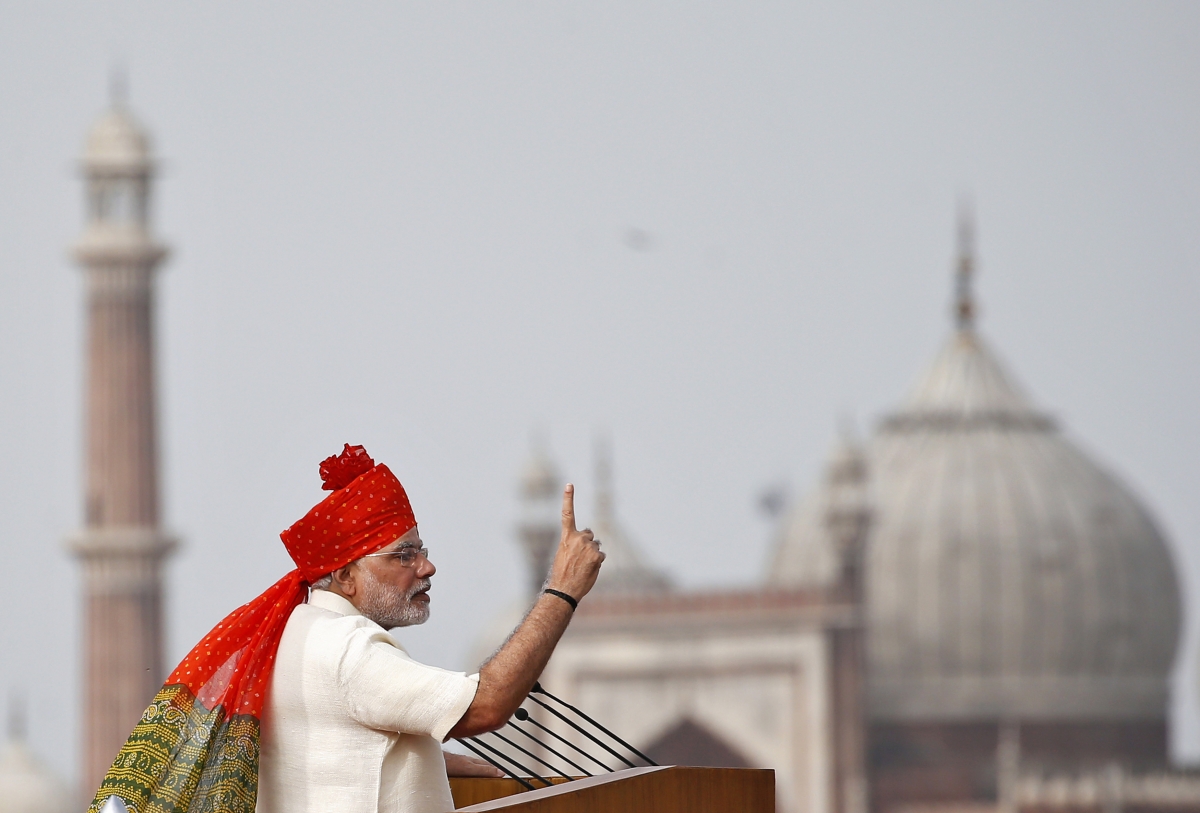
    The Indian Prime Minister, Mr. Narendra Modi laid out some bold 21st century goals in his Independence Day speech. One important goal was the Digital India project which would connect India through its length and width. The project has been green-lit by the cabinet of ministers, and the Prime Minister hopes for an India where government services can be delivered through the creation of technological infrastructure.

    For starters, the Digital India project is a Rs 113,000 crore project directed towards setting up of a broadband highway. It hopes to connect 2.5 lakh villages by broadband and phones and bring Wi-Fi capabilities in 2.5 lakh schools, all universities and setup public Wi-Fi hotspots for citizens. It is expected to create about 1.7 crore direct and 8.5 crore indirect jobs. It will be particularly beneficial for delivering e-governance and e-services.

    As of now mobile phones have reached about 74% of Indian population, which considering India’s massive population is a huge number. While a major portion of this population resides in urban areas, Mr. Modi hopes to change that in the coming future. He wants every Indian citizen to have access to a smartphone by 2019. He hopes to see mobile phones grow as welfare services delivery tool.

    The main aim of the Digital India Project is to convert India into a connected knowledge economy which offers world class services. The government plans to take assistance from tech giants such as Cisco and Facebook in creating the infrastructure as well as spread awareness regarding the plan.

    E-Governance is not just economical, it provides immense convenience to citizens
    E-Governance is not just economical, it provides immense convenience to citizens

    The cornerstone of his speech on Independence day was transforming India into a manufacturing hub of the world. The government of India plans to bring net electronics import to zero by 2020 which is an audacious plan. This will also help in curbing down the huge outflow of income that is spent by tech crazy Indian population. The manufacturing process will no doubt get a boost from the high-speed informational connectivity.

    The Telecom Minister of India, Ravi Shanker Prasad said that the National Optic Fibre Network (NOFN) venture which had been lying dormant for some years will be reinvigorated. The progress of the network will be monitored by the Prime minister himself.

    Investment in Technological infrastructure will lead to a speedy growth in the economy. Not only will it help a farmer in the remote region of the country to know the right price of his produce, it will also make the government functioning transparent. It will also help in bringing better, technology aided education to the children of India, thereby leading to an optimistic future about the country. All we can ask the Prime Minister right now is to bring Google Fibre to India and speed up the urban economy right away.

  • Techies at Work: Making India Proud

    Techies at Work: Making India Proud

    “The U.S. is looking to India as more than just a marketplace for our defense products, but as a technology, aerospace and strategic partner for our future endeavors”, said Kit Bond, a former US Senator. The current global technology scenario, clearly, highlights the rise of Indians in the worldwide market and as Indians, we take pride in it. After all, what is a country without its countrymen? And what do we toil for, if not our own country?

    As India celebrates its 68th Independence Day, we bring to you the top Indian techies from all over the world that have done all they can and more to make India proud.

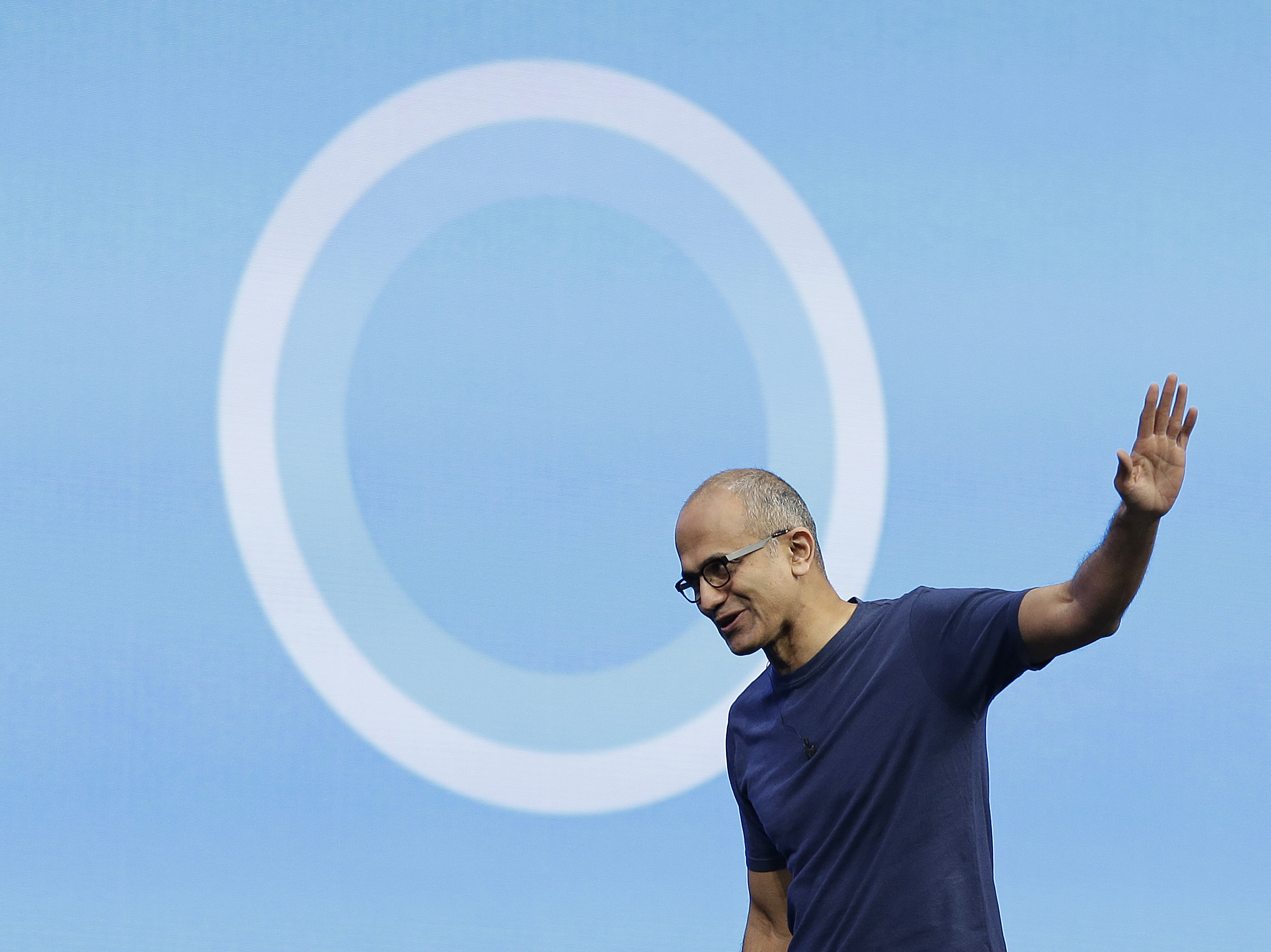
    1. Satya Nadella

    CEO, Microsoft

     140402-satya-nadella-1522_babd2ba4acc880ad1ce4dcaa482513e4

    Born in a Telugu family in Hyderabad, Satya Nadella replaced Steve Ballmer as the CEO of Microsoft. He joined Microsoft in 1992 and since then, has worked at various projects including the company’s transformation from client services to cloud infrastructure and computing.

    Before being announced the CEO of the company on 4 February 2014, Nadella was working as the President of the Server and Tools Division. His desi reason for success, he mentions, is the leadership and teamwork skills he learns from cricket!

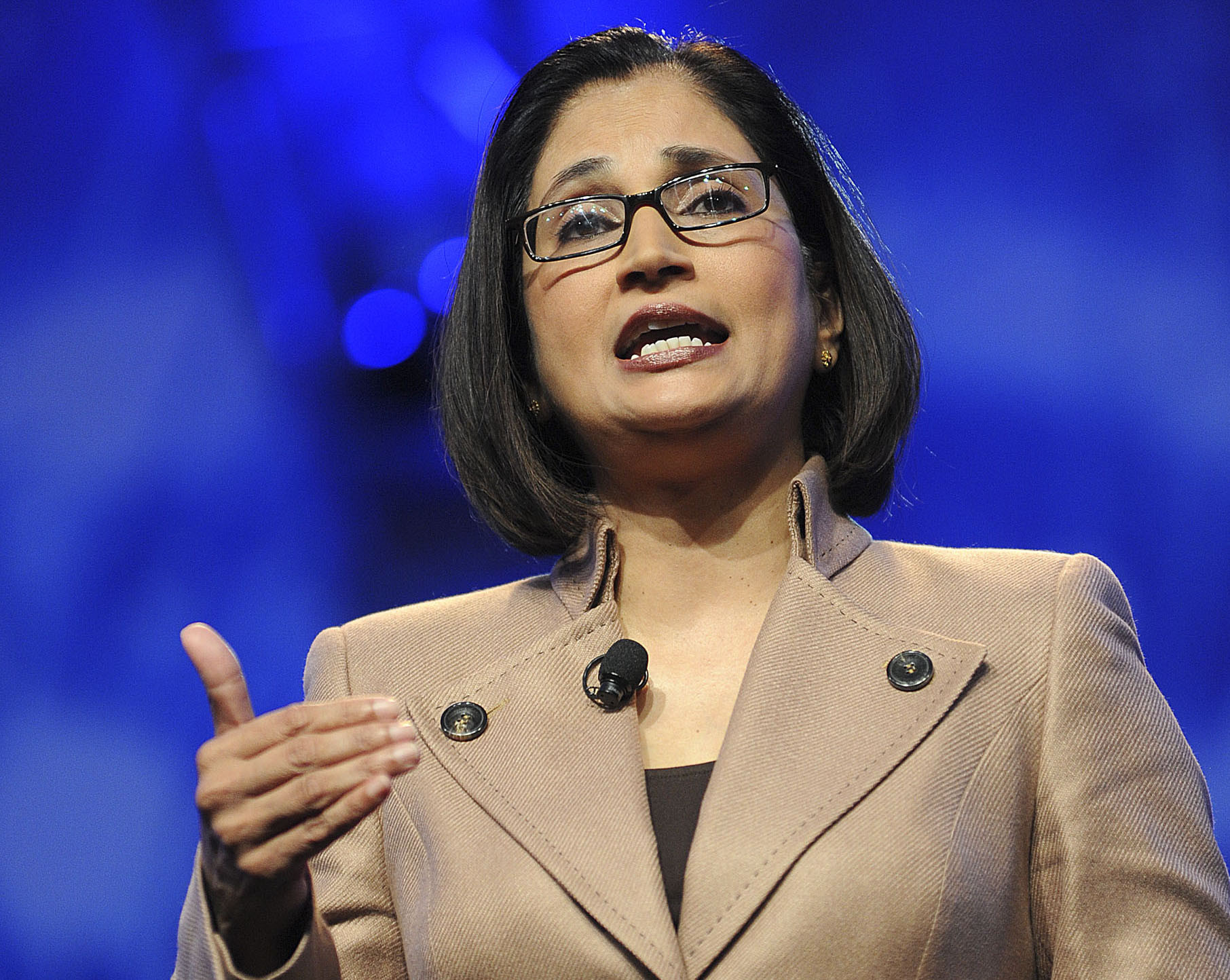
    2.  Padmasree Warrior

    CTO, Cisco Systems

     CTIA Wireless 2010 Show

    Padmasree Warrior is the current CTO (Chief Technology & Strategy Officer) of Cisco Systems and the former of Motorola Inc. Born and raised in the city of Vijayawada in the southern state of Andhra Pradesh, she has worked for 23 years at Motorola and 7 years (and still counting) for Cisco Systems.

    At Cisco, she is responsible for strategic partnerships, mergers and acquisitions, integration of new business models, incubation of new technologies and talent. Earlier this year, she was listed as the 71st most powerful woman in the world by Forbes magazine.

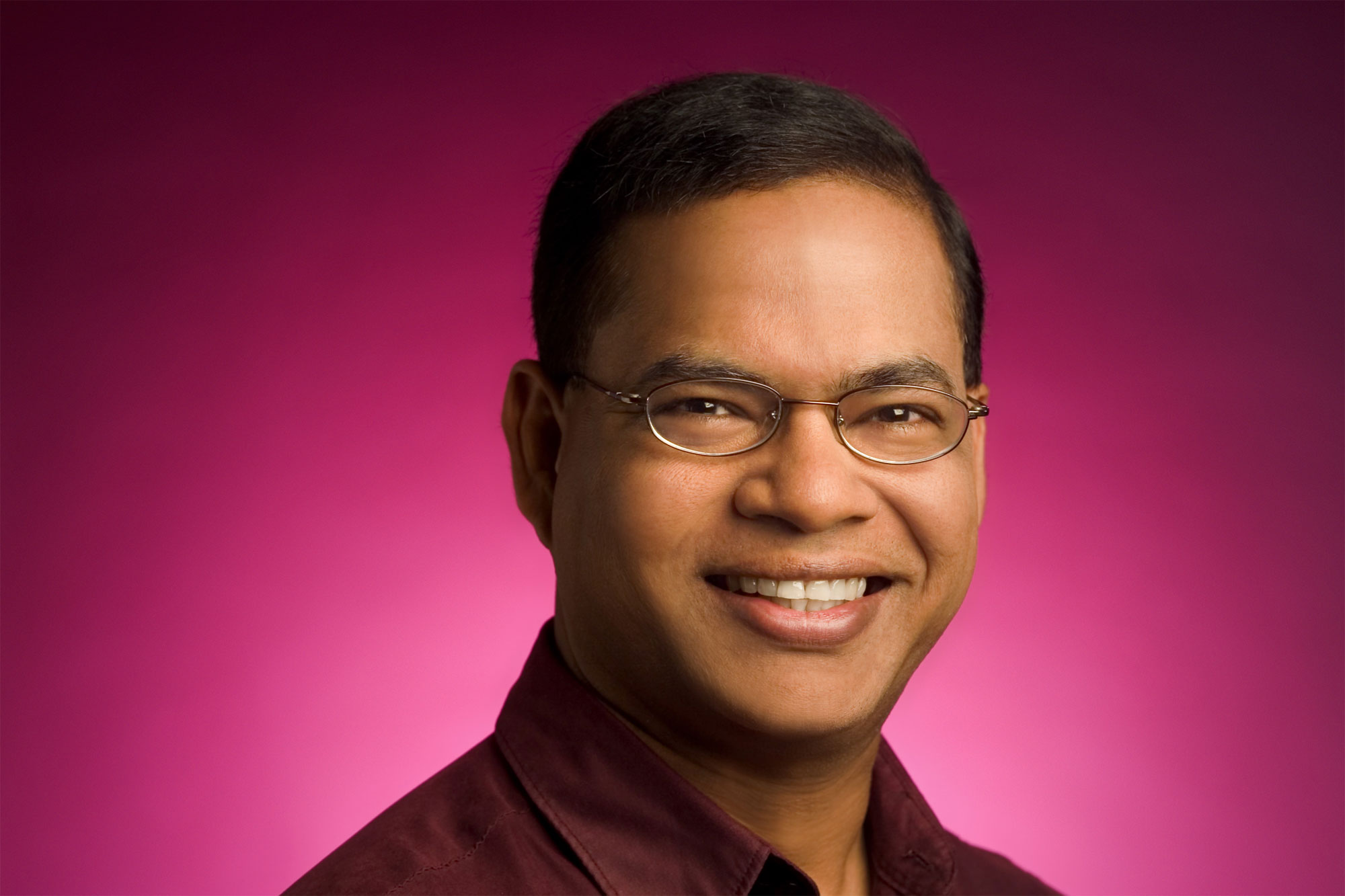
    3. Amit Singhal

    Senior Vice President, Google Inc.

    bio_singhal_full

    Amit Singhal, also called a “Google Fellow”, is the current Senior Vice President of Google Inc. A product of IIT Roorkee, Mr. Singhal is also the head of Google’s core ranking team.  He joined Google in 2000 and has worked sincerely towards its development ever since.

    According to New York Times, he is the master of what Google calls its “ranking algorithm” — the formulae that choose which Web page provides the most suitable answer to a user’s question. Prior to joining Google, he worked in AT&T Labs.

    4. Shantanu Narayen

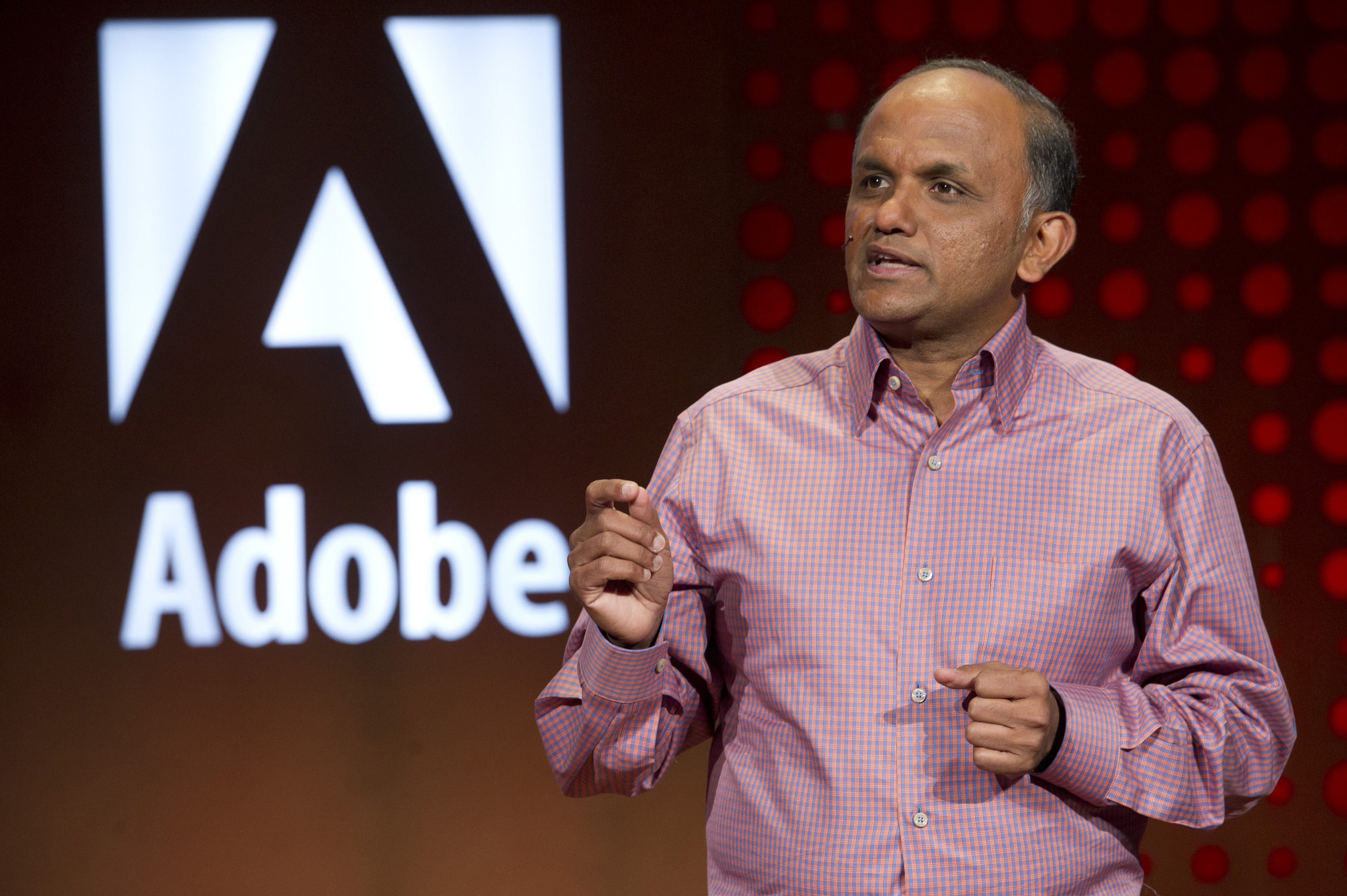
    President and CEO, Adobe

    ADOBE CREATIVE CLOUD

    He started his career at Apple and is currently, the President and CEO of Adobe. His journey includes various other landmarks such as Silicon Graphics and Pictra Inc. Born in Mumbai, raised in Hyderabad, Mr. Narayen is currently the Board Member of Dell Inc., Adobe Systems and University of California at Berkeley.

    He was one of the most hard working and inspirational forces behind Adobe’s $3.4bn attainment of multi-media company Macromedia in 2005. His 16 year career at Adobe reflects the Indian technology talent that currently resides in the creative technology tool industry.

    5. Vinod Dham

    Managing Director and Founder, Indo US Venture Partners

    100_1169

    This list will not be complete without the ‘Father of Pentium’. An inventor, entrepreneur and venture capitalist, Mr. Dham is a celebrated Indian among all techies from the world for his contribution to the development of highly successful Pentium processors from Intel.

    A respected alumnus of Delhi College of Engineering, he specialized in solid state electronics – the technology which forms the basis for the storage that is found in every smartphone and tablet as well as many laptops. He led the development of the Pentium processor, and also co-invented Intel’s first flash memory technology.

  • Top 5 Wearables You Can Buy In India Right Now

    Top 5 Wearables You Can Buy In India Right Now

    Wearables are huge these days – with technology giants like Samsung, Google, Apple and basically everyone else investing huge sums into this relatively new technology. While there are a myriad of wearables available in the international market, only half the number show up on the Indian shore. We are listing top 5 wearables you can buy in India right now.

    Pebble Smart

    Pebble

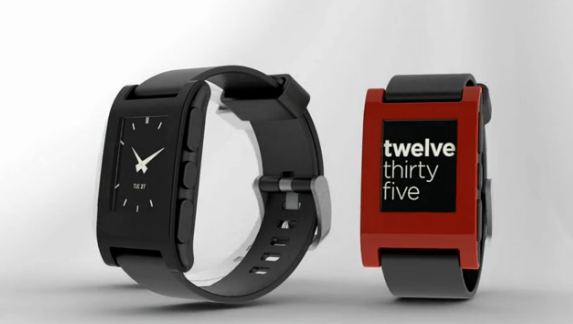
    Pebble Smart is a toned down version of more expensive and metal-clad Pebble Steel which is not available in India. This one features a 1.26 inch, 168×144 display along with an ARM Cortex M3 CPU and supports Bluetooth 4.0 LE. The design is also waterproof so you can go for a swim without worrying. Performance and battery life are very good. It may not have the sharpest display, but it would last you several days of heavy usage.
    Buy it Now

    Sony Smart Watch 2

    49261-sony_smartwatch2

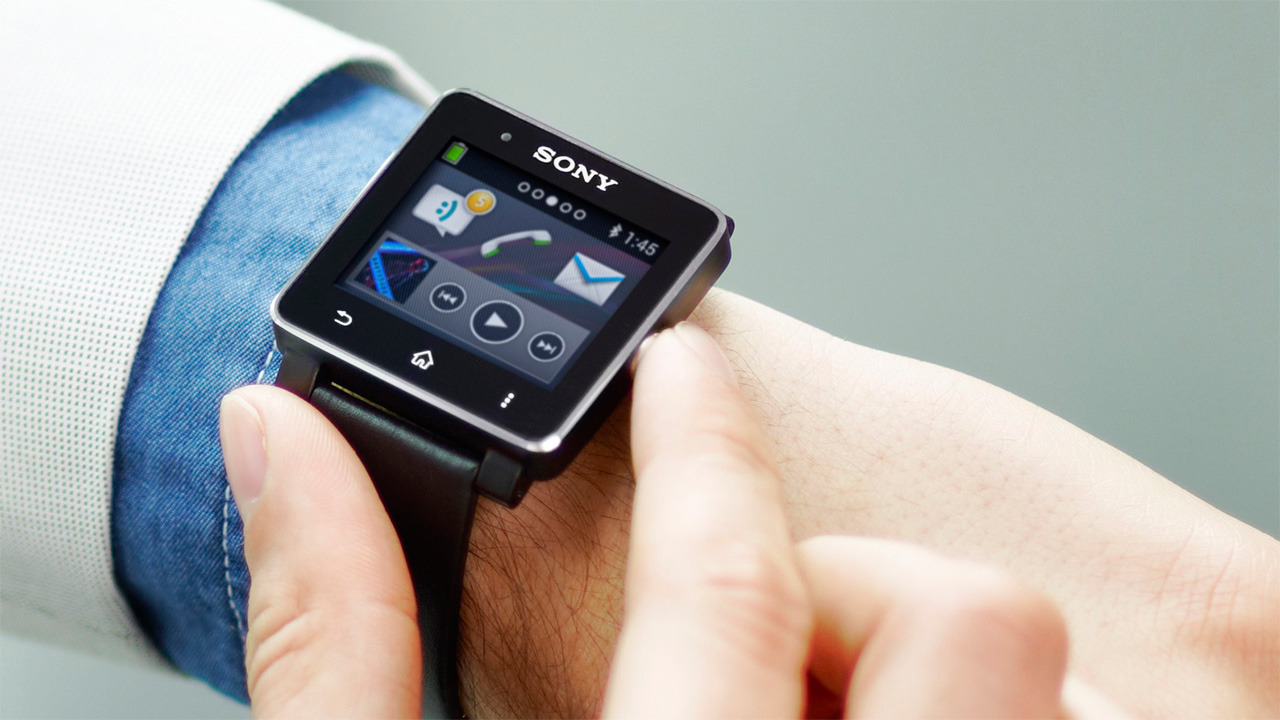
    Unlike most smartwatches available in the market which beg you to connect the device with your phone, Sony Smart Watch 2 is more like a stand alone smartwatch. However, it can still be paired up with the Sony Xperia Z2/Z Ultra/Z1 for notifications. It includes three capacitive buttons underneath the display, which measures 1.6 inches and has a 220×176 resolution. There’s an array of app support with more than 300 apps supporting the watch, including Facebook and Twitter. It’s also dust and water resistant plus it has that attractive Xperia-like design.

    Buy it Now

    Misfit Shine

    misfit

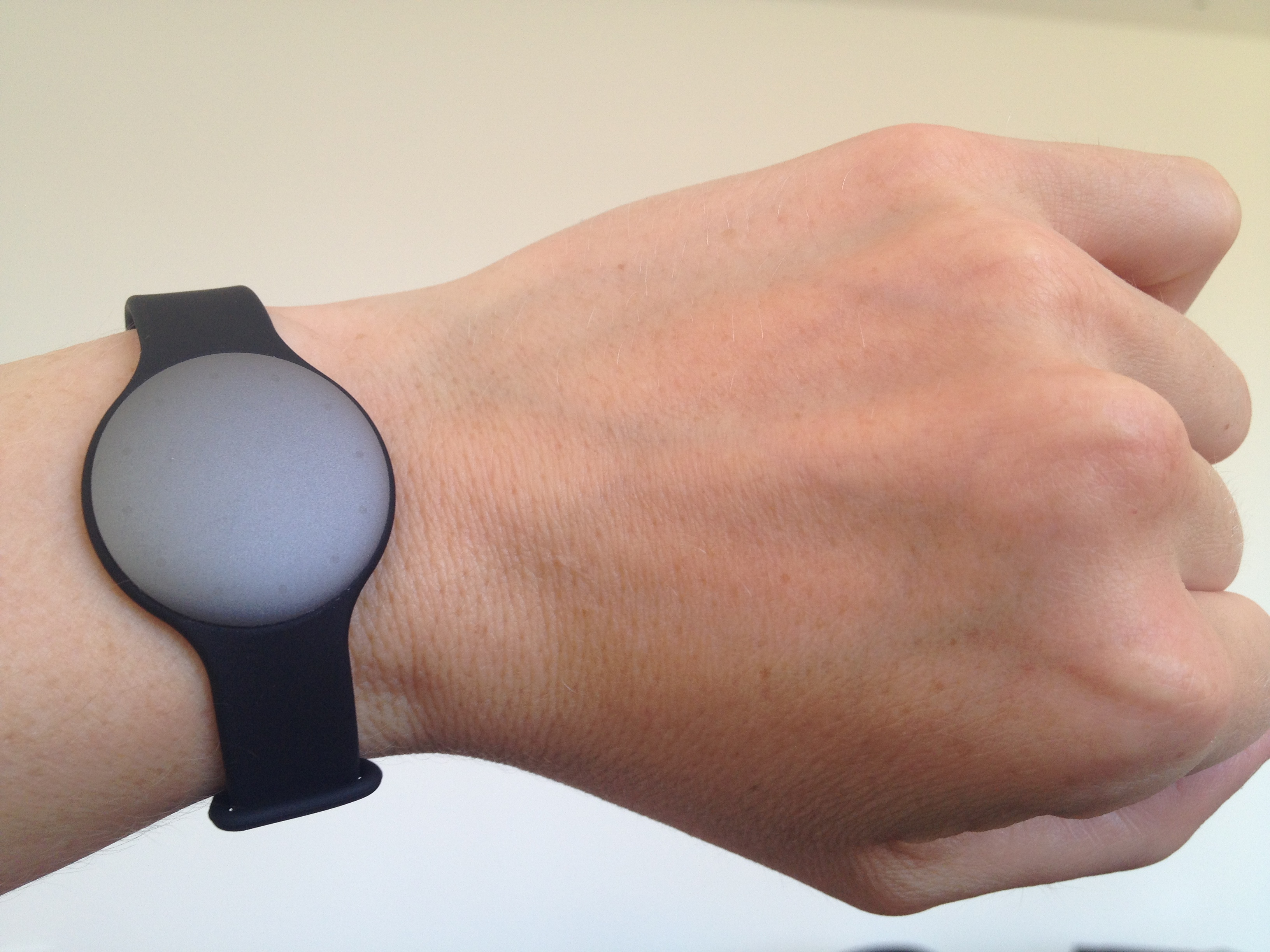
    A lot of fitness gadgets that track your progress are bulky and only come in certain wristband styles. Misfit Shine is the size of a quarter, and can be worn anywhere. The design is diamond-cut from a block of aircraft-grade aluminium and runs on a replaceable battery that lasts up to six months. The Shine syncs easily with its app by placing the metal dot on your phone screen to download data in seconds. It tracks walking, jogging, running, cycling, and swimming (the Shine is waterproof too), and weighs less than 10 grams.

    Buy it Now

    Samsung Galaxy Gear 2 Neo

    samsung-gear-2-neo-black-product-photos-007

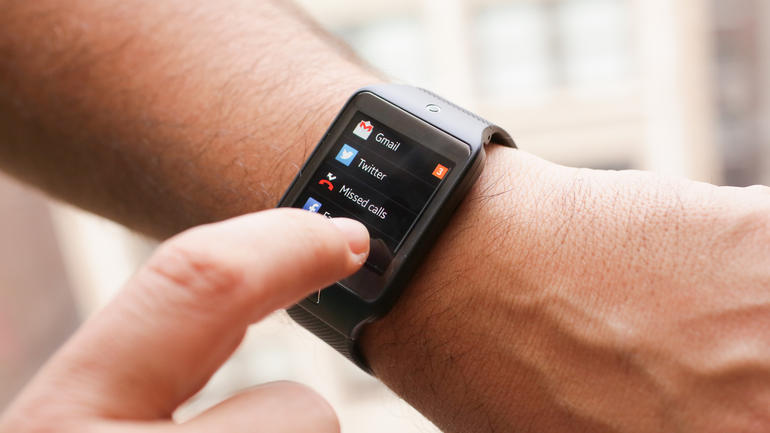
    As its predecessor, the Samsung Galaxy Gear 2 Neo features 1.63 inch Super AMOLED display, a dust and water-resistant body and a 2 megapixel camera with auto focus. It is a toned down version of the original’s futuristic metallic body. A neat addition is being able to attach your own straps to the Gear 2 Neo. Tizen OS is in place instead of Android and this helps to extend the battery life while focusing more on fitness. A heart sensor and pedometer are included for the same purpose.

    Buy it Now

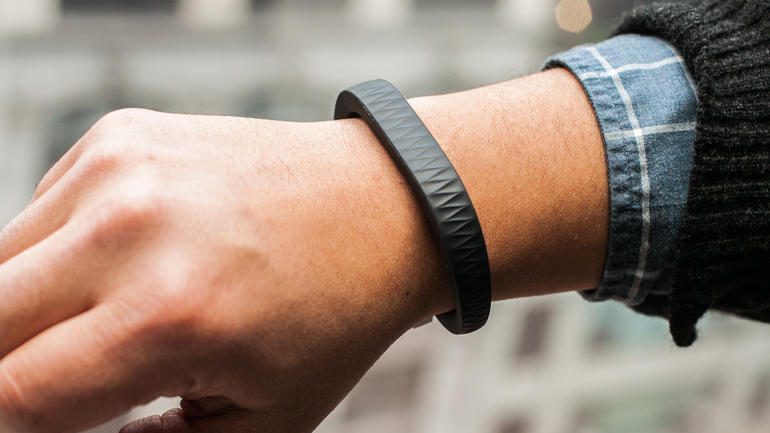
    UP by Jawbone

    Jawbone_Up_35536649_05

    UP is a fitness tracker that provides you feedback on your activity, calories burned, diet, and sleep, and then guides you towards achieving your goals. The design is fantastic, it is extremely comfortable and pleasant to wear as well.

    Buy it Now


  • Oppo Teases the Indian Market With the Hint Of N1 Mini

    Oppo Teases the Indian Market With the Hint Of N1 Mini

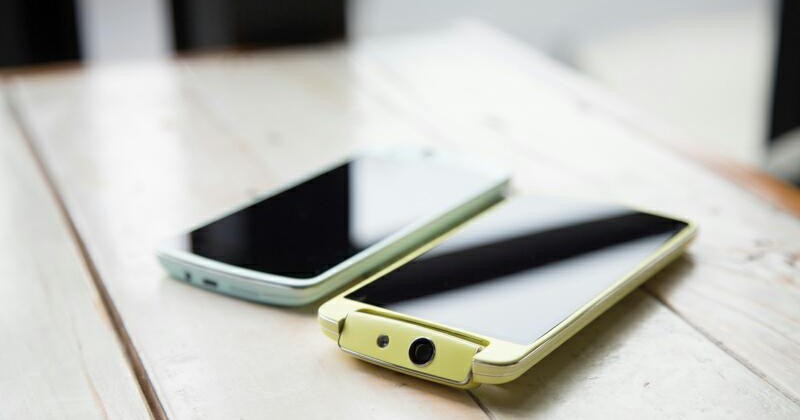
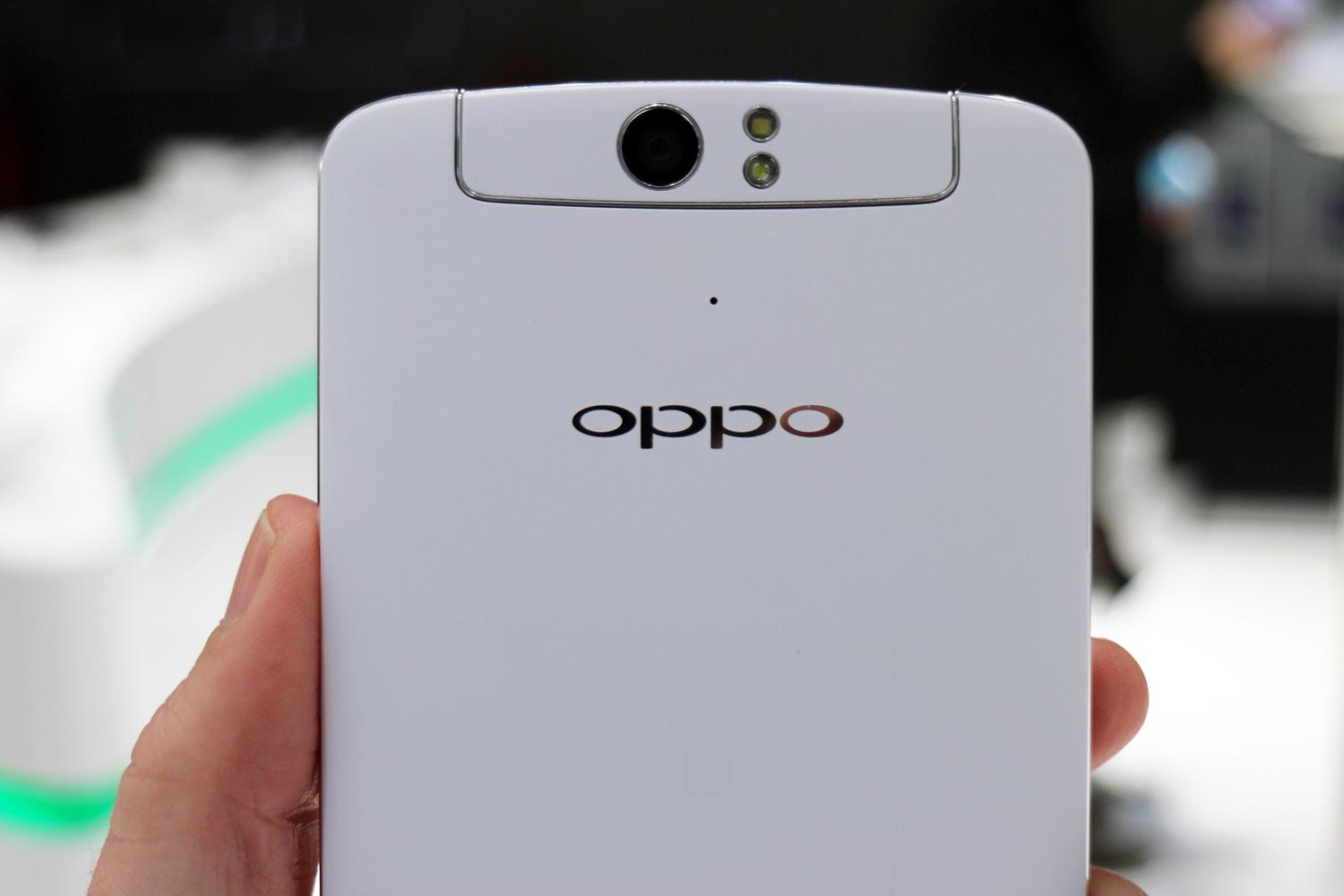
    Remember the Oppo N1? Announced way back in September last year, the device featured a unique rotating camera at the top, giving you the capability of taking your selfies in ultra-sharp 13 megapixel quality.

    Now, Oppo is teasing the launch of it’s younger sibling, the Oppo N1 Mini, in India. The company on Sunday tweeted an image of the Mini with the text “Revolutionary 24 Mega Pixels Ultra HD Camera, Coming Soon!”. The picture carries the caption “Mini in size, Max on fun”.

    N1 Mini

    If you missed the official launch of the N1 Mini back in June, we don’t blame you. It was a silent affair, with no extravagant event or hype. However, it did manage to tell us the official launch specs that the device will carry.

    The N1 Mini sports a 5” HD (1280×720) display. Under the hood, it comes with a 1.6GHz quad-core processor and Adreno 305 GPU paired with a healthy 2GB of RAM. There is 16GB of non-expandable storage available. Similar to its bigger brother, it features a 13-megapixel ‘swivel’ camera with LED flash.

    Oppo-N1-hands-on-camera-back-macro

    The battery capacity is 2140mAh. The body is 9.2mm thick, and weighs 150 grams. It comes in White, Blue and Yellow colour options. The Oppo N1 recently received a price cut in India, bringing it down from Rs. 39,999 to 32,990. So if Oppo learn from their mistakes and price the N1 Mini competitively, they could have a winner on their hands.

    By Pranav Arora

  • 5 Things You Should But Don’t Know About Xiaomi Smartphones

    5 Things You Should But Don’t Know About Xiaomi Smartphones

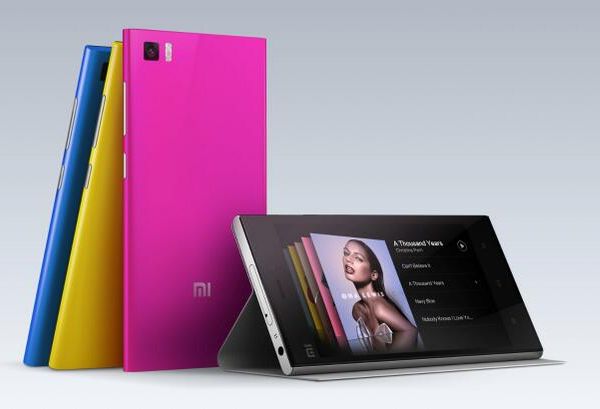
    The entry of Xiaomi in the Indian market has already created a stir amongst the domestic smartphone players. It may be difficult to imagine that any smartphone firm other than Apple and Samsung can cause such a commotion, let alone a Chinese one. But what is Xiaomi? At first, we couldn’t even pronounce its name properly (it’s Shiao-Me). Well tell you what, we give you 5 reasons to consider Xiaomi as a  strong contender in Smartphone market.

    1. Lockscreen

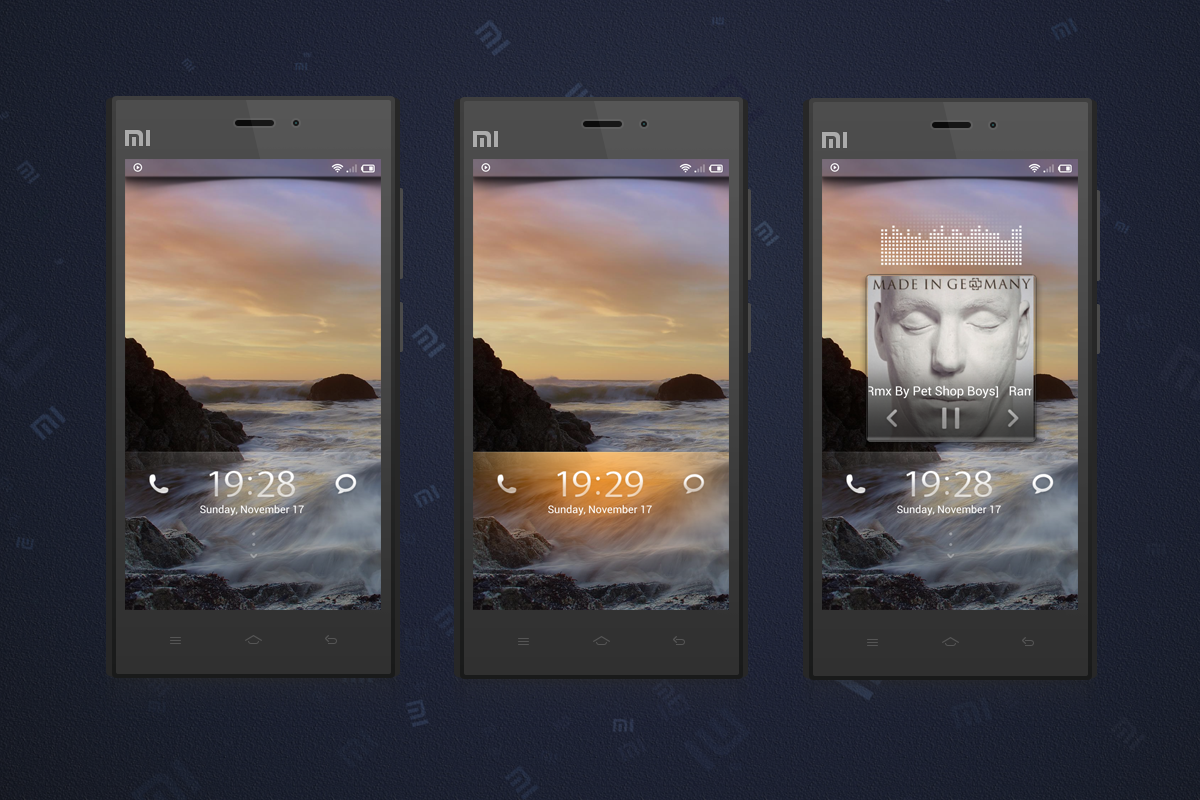
    The MiUi (Xiaomi operating system) lockscreen has multiple functions. To lock the screen, press the home button till you see a LED light being activated. Double tap the lock screen to control the music menu. Got an unread SMS? Just tap the center of the screen to directly answer the text.

    v6_lockscreen_for_miui_v5_by_xiaomi_miui-d6ulrra

    2. Interface

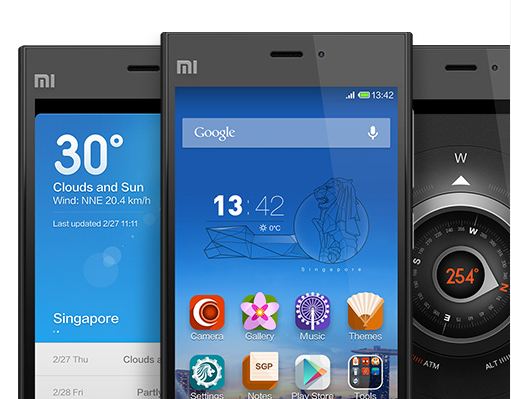
    All apps in MiUi are gathered at the main interface along with the widgets as MiUi does not have an app drawer. While Android can quit all applications that run in the background with a long press on the menu button, MiUi users can choose the applications they want in the background, while exiting the rest of them. Also, MiUi’s call interface looks similar to that of Android but it offers additional functions. When making a call, users can opt to write a note and record the conversation in an MP3 format.

    Capture

    3. Messaging

    MiUi’s messaging application seems normal but it has an ability to ensure important messages are always on the top by using the pin. Most importantly, MiUi has a Private Messaging function, which allows users to hide sensitive messages with the use of password. You can even select your private messaging contacts and save them in a password protected format. The function can be accessed by dragging down the Messaging interface several times.

    4. Intelligent Front Camera

    The front camera of Mi 3 has special functions. It comes with an ability to detect gender and age, and subsequently chooses the right filter to enhance pictures. Good news for selfie lovers as no editing is needed before posting pictures in social network. The Mi3 which is going to enter Indian market soon, flaunts a 13 MP  rear and 2 MP front camera.

    xia

    5. Backup

    MiUi has its own Backup application. Users can create a backup and save it somewhere else, such as a laptop. This backup can be used if the gadget faces problems in the future. Each function can be reinstalled with Backup. It comes with it’s own local backup system, inclusive of 3rd party applications and data. You can also activate automatic backup timing, which will execute data backup at your specific intervals.

    [poll id=”14″]

  • India’s upcoming floating Solar Farm

    India’s upcoming floating Solar Farm

    India is in a major energy crisis. With the population multiplying on a daily basis the need for cheap forms of electricity have become a must. India has large plans, whether politically invoked or not; we might be one of the first few nations with a large chunk of renewable electricity sources.

    About five years ago large parts of the Thar desert in Rajasthan and surrounding areas was sanctioned for subsidised privately run solar farms. The land was practically given for free, and an energy reclaim of Rs. 5/ KW (8 cents approximately) was promised to the solar energy companies that were supposed to be set up.

    The project is yet to see the light of day. However, sources tell us that the work is still underway.

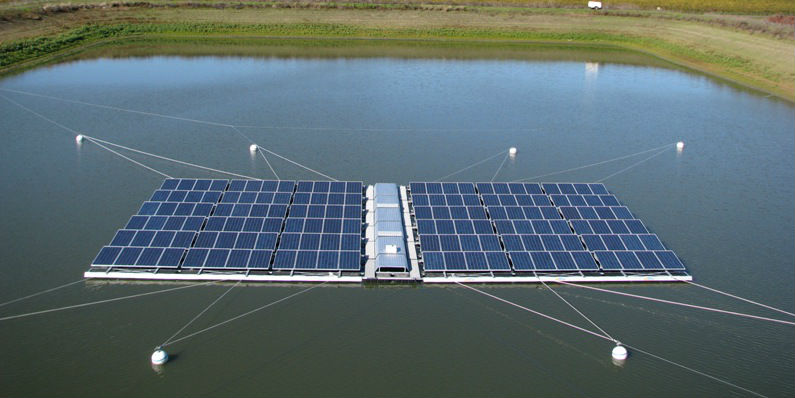
    Meanwhile, a new project in the southern state of Kerala is said to lead the Solar energy revolution in India, thanks to the abundance of sun and large water bodies. A new 50MW plant built entirely on 1.27 million square meter floating platform in Kerala is said already to be in the works. The plant has been approved by the NHPC and will get commissioned in October of 2014. (Yes this year).

    This Solar Farm project will provide cheap and renewable electricity to about 18,000 homes. After the states announcement on building two lakh megawatt of solar power generation capacity, the price of barren solar usable land rose this quarter by tenfold, building a plant on water will be cheap for the government as well as the people enjoying the electricity.

    [quote text_size=”small” author=”SP Gon Choudhury” author_title=”chairman of the Renewable Energy College”]

    Each station would require around 3,000 square feet of space to generate 20 kilowatt of power. There are many water bodies that could be used for this

    [/quote]

    The total project is estimated to cost between Rs 350 crore and Rs 400 crore, the Renewable Energy College will assist in sourcing material till commissioning of the plant.
    The first phase of this Solar Farm, estimated to cost Rs 35 lakh, has been fully funded by the ministry of new and renewable energy and is expected to generate around 12 kilowatt of power to begin with by October 2014.

    [quote text_size=”small” author=”SP Gon Choudhury” author_title=”Chairman of the Renewable Energy College”]

    The ecology of the water body is not likely to be affected much, and it will also reduce evaporation, thus helping preserve water levels during extreme summer. Solar panels installed on land, face reduction of yield as the ground heats up. When such panels are installed on a floating platform, the heating problem is solved to a great extent

    [/quote]

    The yield on these panels is expected to be 20% higher than land based solar power plants. The overall capital cost for such solar projects will be around Rs 6.5 crores per megawatt, which will bring down costs of electricity to Rs 7 / unit. This price will then be further regularised by the state electricity board.

    With the large availability of Sun energy in the country, the future may finally hold a strong supply of electricity for everyone, everywhere!

iGyaan Network
Privacy Overview

This website uses cookies so that we can provide you with the best user experience possible. Cookie information is stored in your browser and performs functions such as recognising you when you return to our website and helping our team to understand which sections of the website you find most interesting and useful.