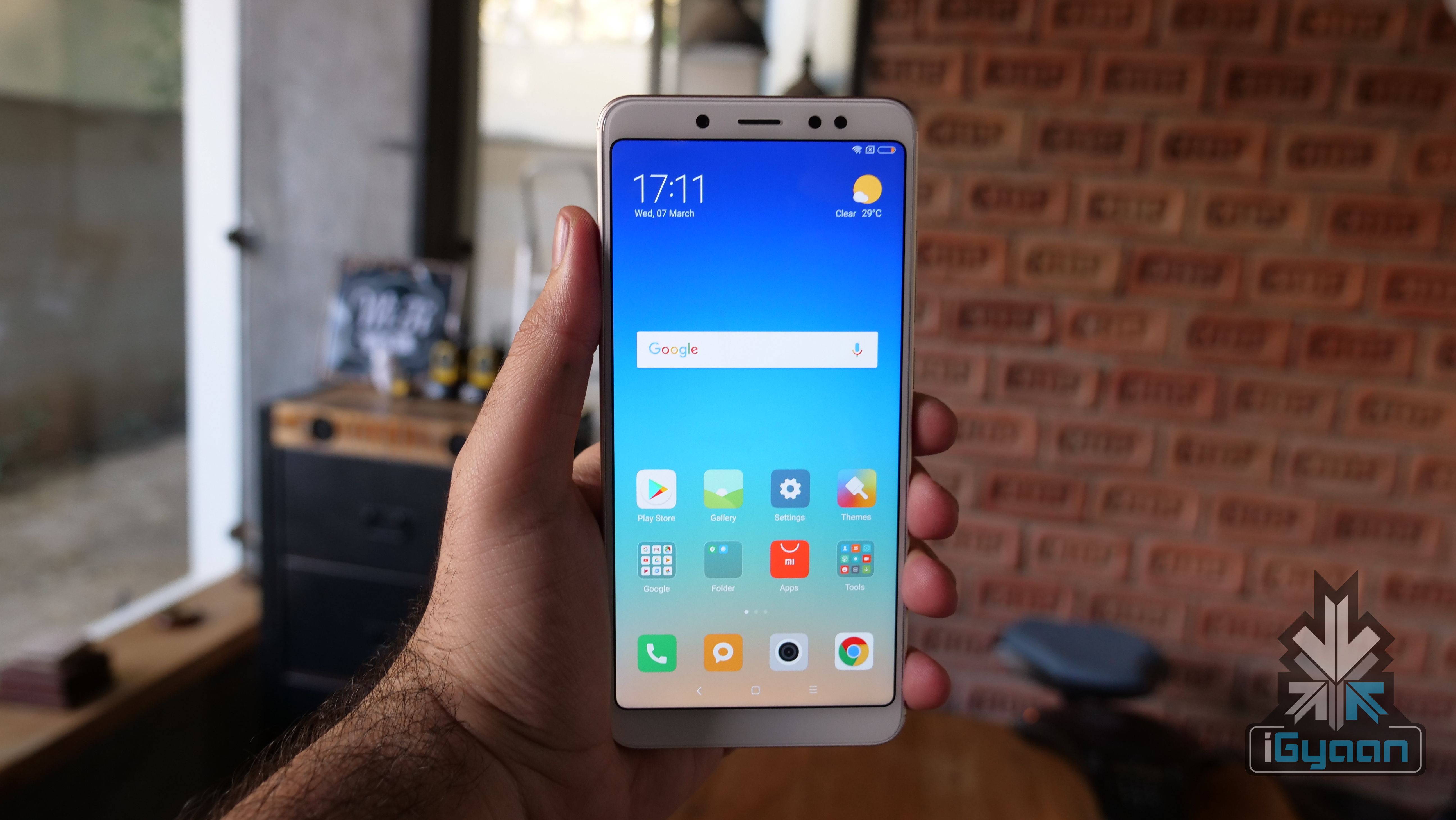
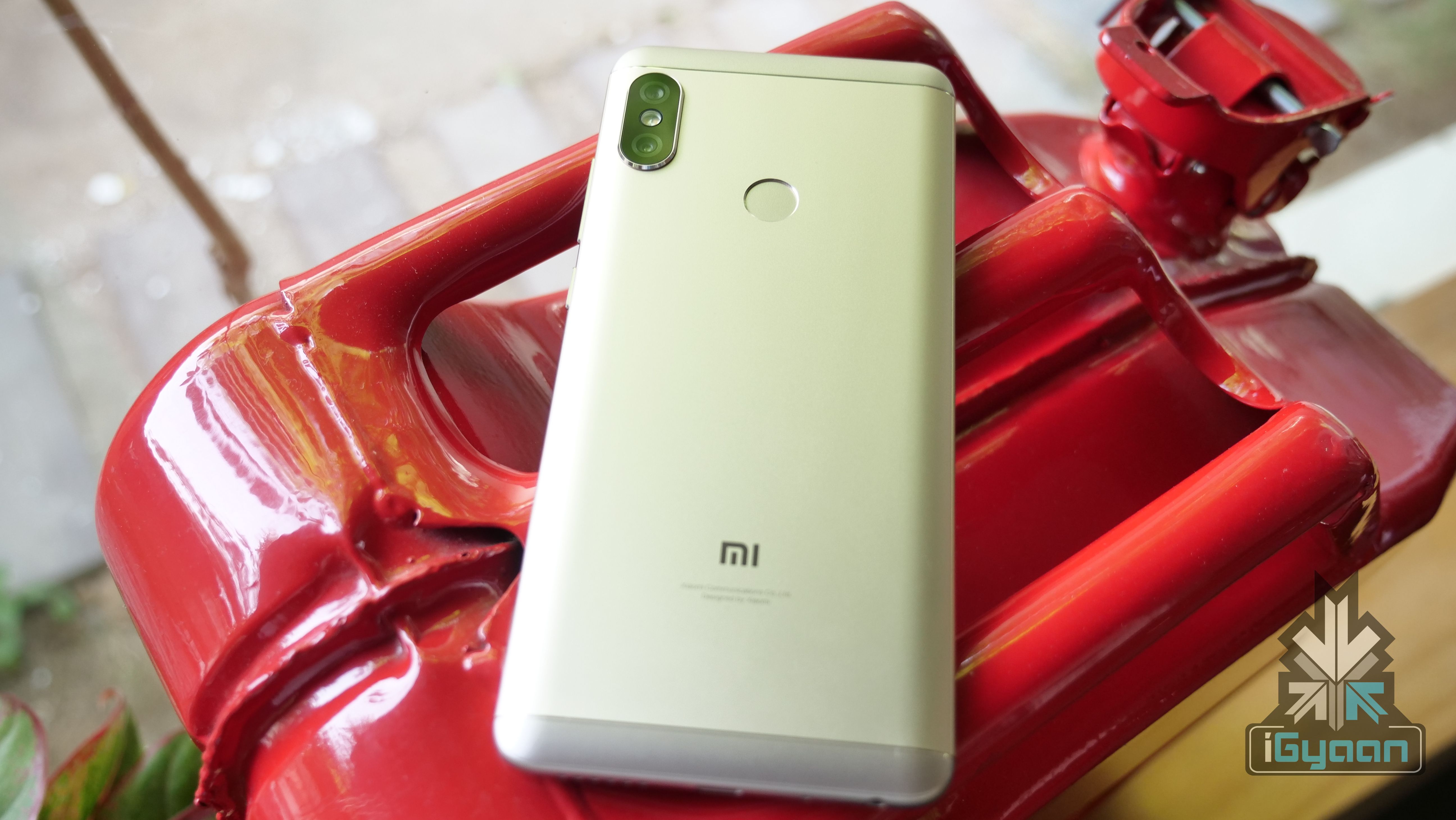
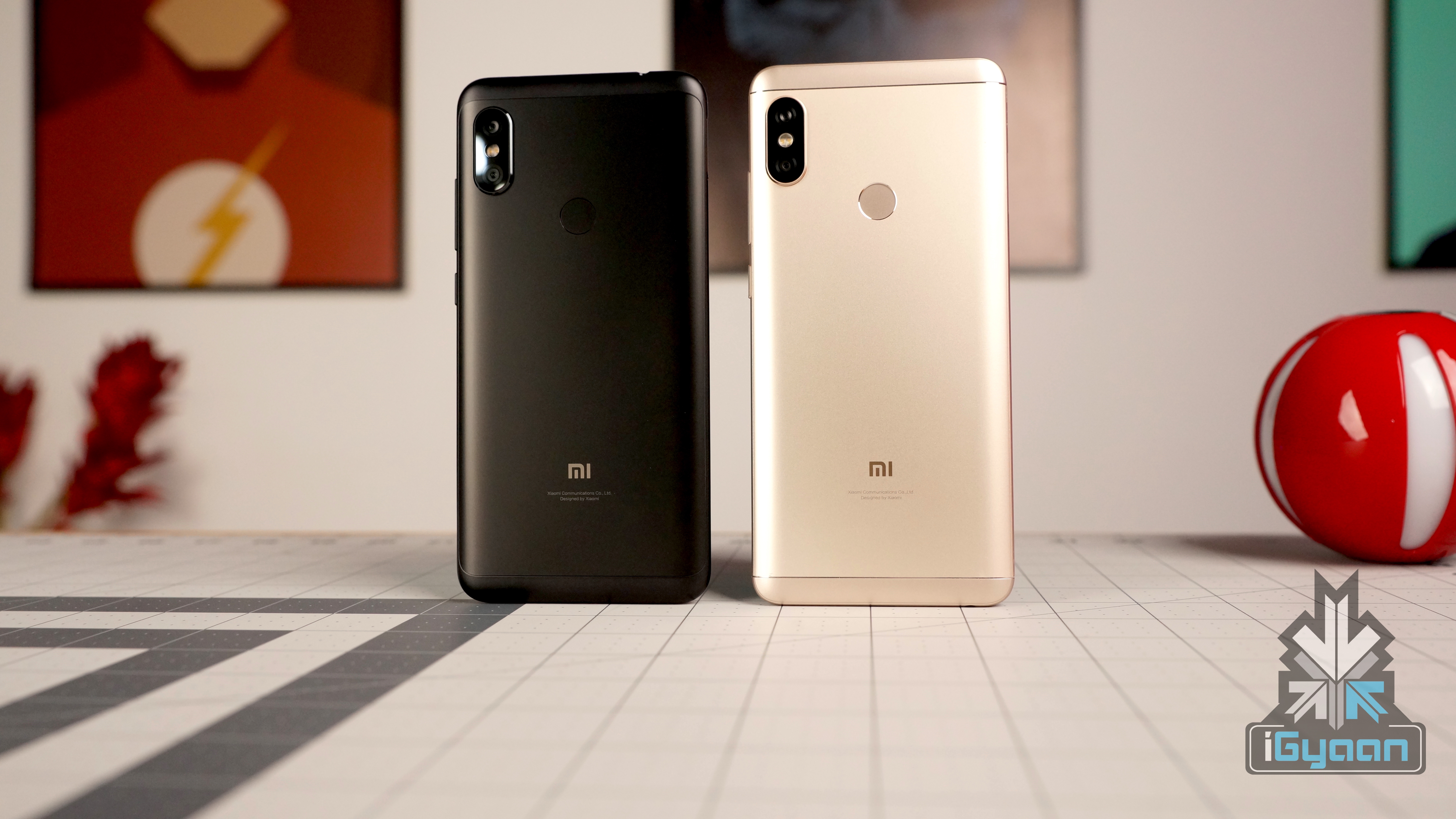
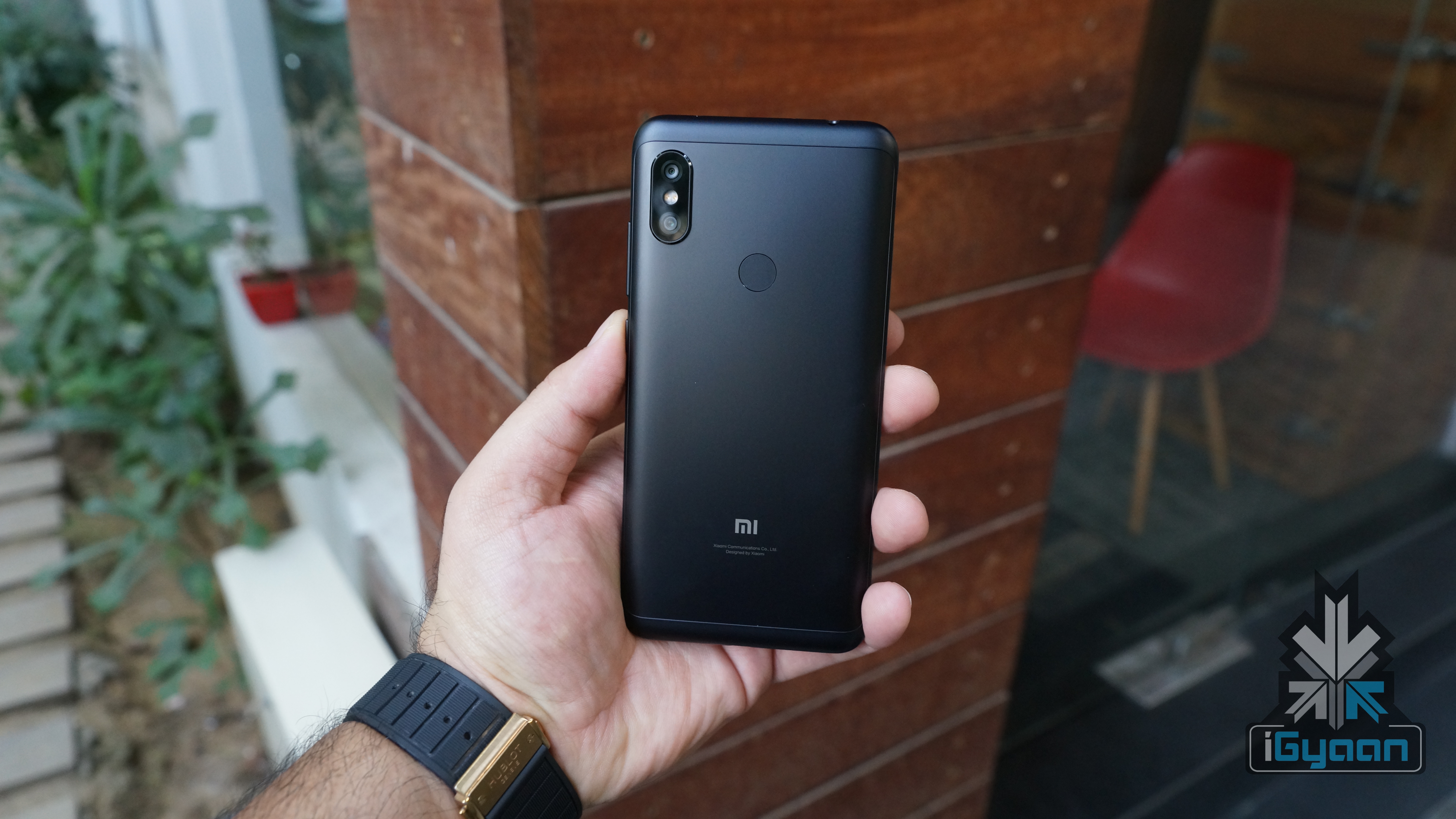
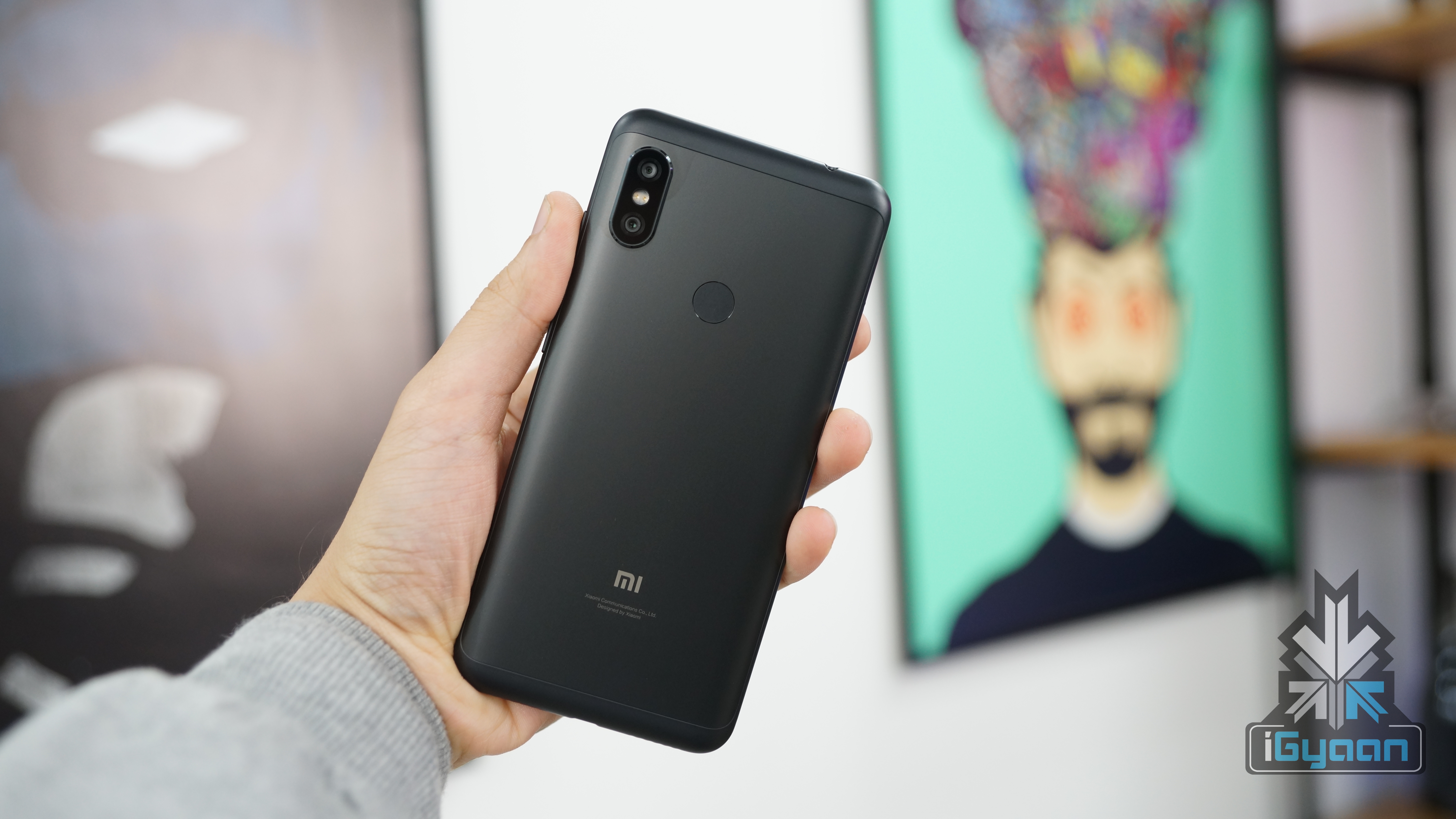
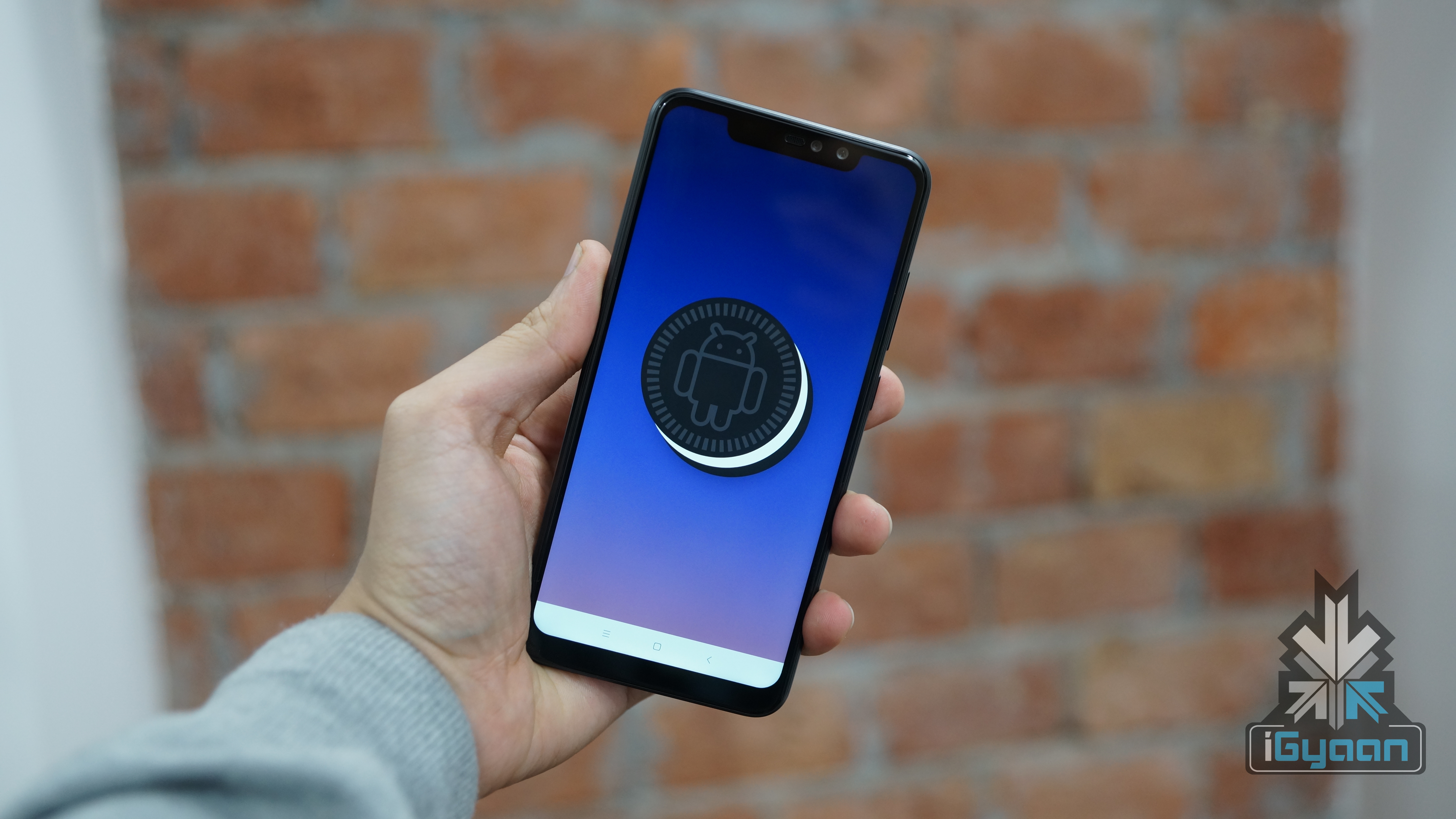
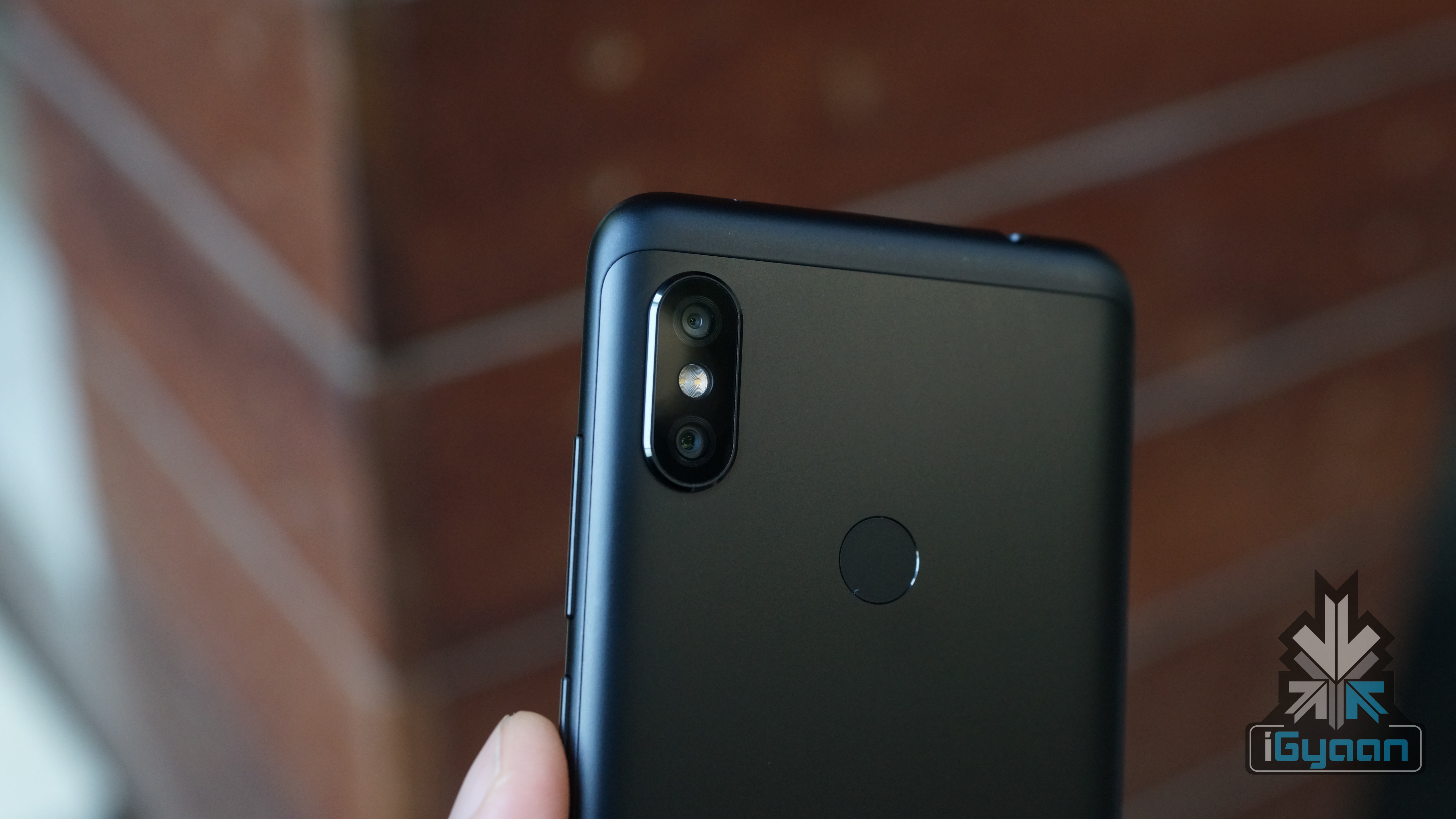
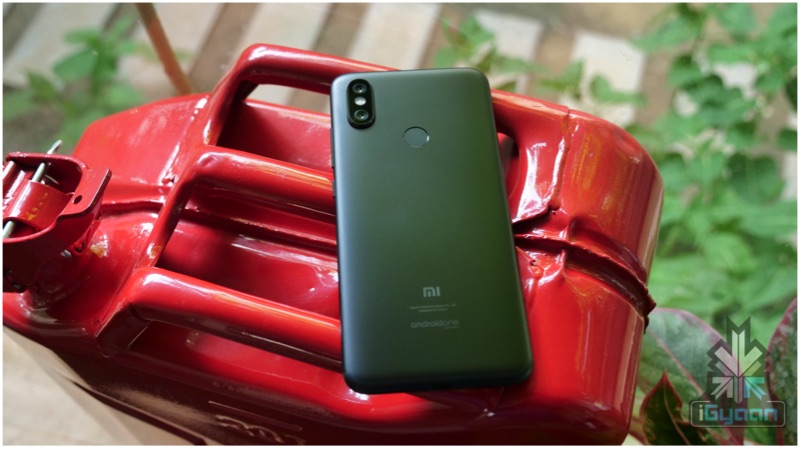
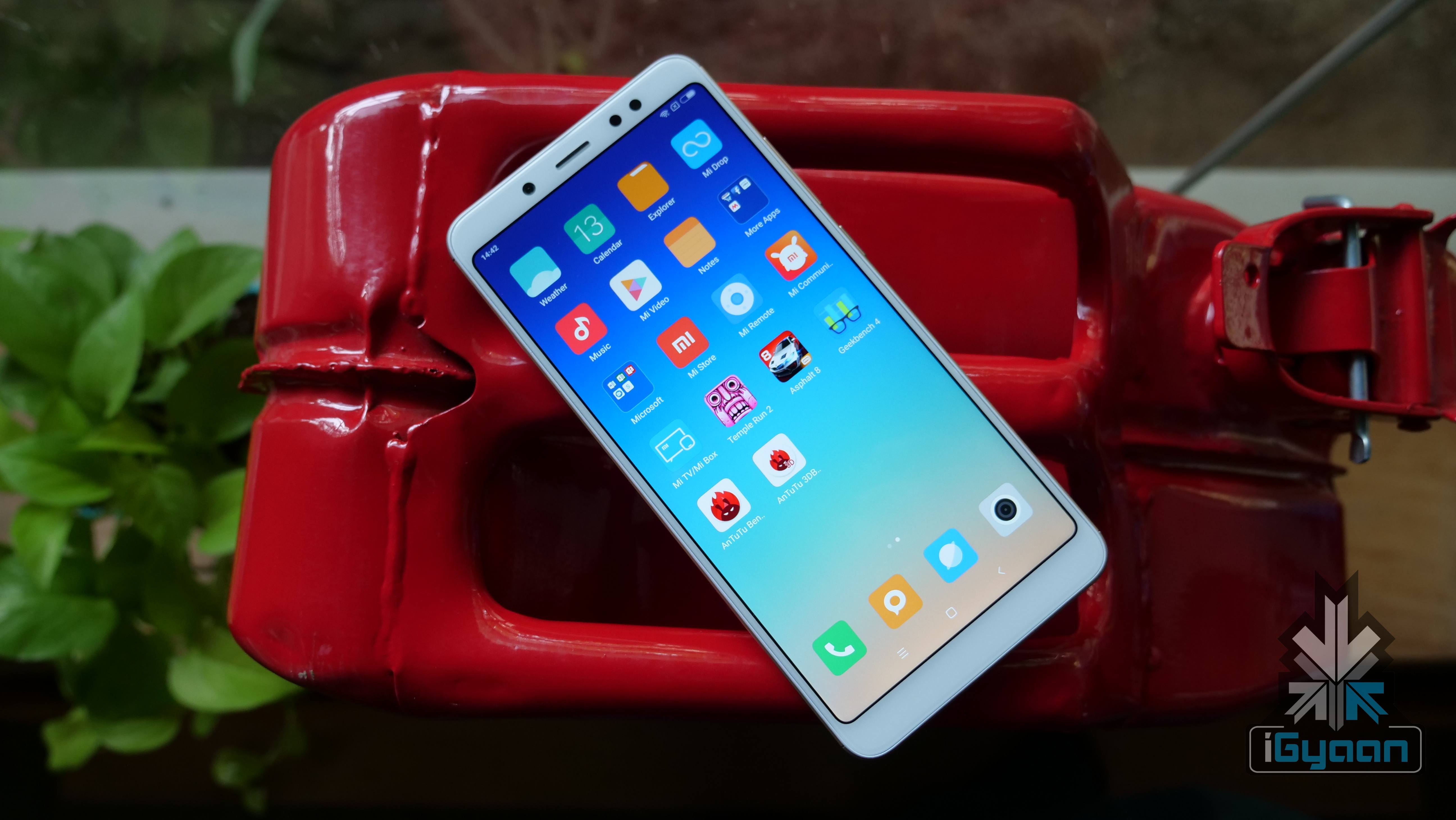
The Xiaomi Redmi Note 5 Pro is one of the most popular Xiaomi phones sold in India till date. Even though the phone was launched some time back and a successor, the Redmi Note 6 Pro has been launched, the phone still retains its popularity. The phone was launched with Android 7 Nougat. It got the Android 8 Oreo update within a few months, as promised by the company. And now, according to the latest listing, the smartphone will be receiving the Android 9 Pie update soon.
Geekbench Listing
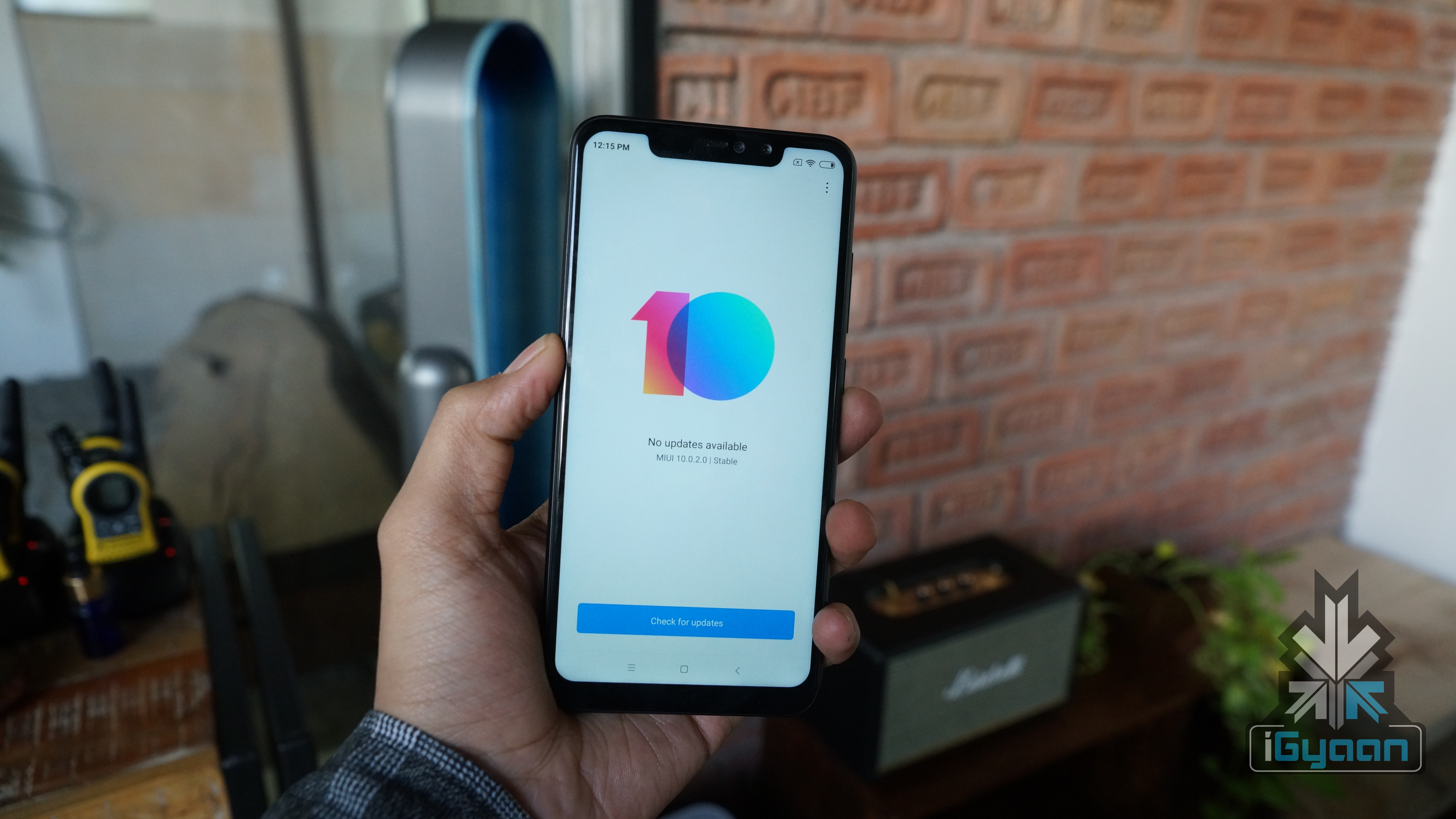
The latest software upgrade that the Redmi Note 5 Pro had received was the MIUI 10 update. But it looks like the company is all set to take one of its most popular phones to the next level. The phone was spotted on Geekbench, running on Android 9. This means that the update for the same is around the same and will be rolled out to users soon. If this update will happen, it will make it the second major software update for the device, which is not very common in Xiaomi devices. Adding to that, it will also make it one of the most speediest updates to reach a device which is not so recent.
However the Geekbench listing also provided another interesting bit of information. A version of the Redmi Note 5 Pro was spotted with the Snapdragon 660 processor. The Redmi Note 5 Pro was initially launched with the Snapdragon 636 processor. Interestingly, even the newly launched Redmi Note 6 Pro runs on the 636 chipset. It is possible that Xiaomi might be launching a second variant of the Redmi Note 5 Pro with the 660 chipset.
The Xiaomi Redmi note 5 Pro has a 5.99 inch LCD display with a 2160 x 1080 px resolution. It runs on the Qualcomm Snapdragon 636 processor and has 3 GB, 4 GB and 6 GB RAM options. It has 32 GB and 64 GB storage variants, both with expandable memory of upto 256 GB. The phone sports a 12 MP + 5 MP dual rear camera and a 20 MP front facing camera.
The Redmi Note 5 Pro was launched earlier this year. It was a big hit among Indian consumers due to its value for money pricing. Xiaomi is now all set to launch the Redmi Note 6 Pro in the country on 22nd November. The specifications of the Redmi Note 6 Pro are quite similar to its predecessor. But, even with similar specifications, Xiaomi claims that it is a major step forward from the previous smartphone.
What’s The Same
Before we start talking about what is different, here are the similarities. The Redmi Note 6 Pro has the same 4,000 mAh battery as its predecessor. Even though the company has tweaked the performance of the new device with MIUI 10, it still runs on the same Snapdragon 636 chipset from the previous generation. Having the same chipset means that both devices have the Adreno 509 GPU.
The company might have bumped up the display size from 5.99-inch to 6.26-inch but the screen resolution and type still remains the same. The new phone still ships with a hybrid SIM tray while the competition like Realme 2 Pro has a dedicated slot for the second SIM. Even memory and storage options stay the same while other contenders in this price range offer up to 8 GB of RAM + 128 GB of ROM.
Specifications
Rear Camera
12 MP PDAF
5 MP Depth Sensor
Dual LED Flash
Battery Capacity
4,000 mAh
Chipset
Snapdragon 636
Octa-Core
GPU
Adreno 509
Display Resolution
2160 x 1080 px
Finger Print Sensor
Rear-Mounted
Display Type
LCD
SIM Slot Type
Hybrid Dual SIM
RAM & ROM
4 GB + 64 GB
6 GB + 64 GB
What’s Changed
Improved Camera Optics
As one cannot judge a book by its cover, the same is the case with camera performance on this smartphone. The Note 6 Pro has a similar camera setup with one 12 MP sensor and one 5 MP sensor. But, the company claims better real-world output from them. The sensor on the new phone features a larger f/1.9 aperture instead of the f/2.2 which was present on the previous model. The larger aperture we hope, allows it to absorb more light, therefore resulting in better lit pictures.
Additionally, the camera of the new smartphone has a 1.4 micron size pixel that will help in capturing better detail. The device also has AI scene detection capabilities that enable it to automatically choose the best scene from 32 different available options.
The Redmi Note 6 Pro has dual front-facing cameras with AI portrait mode and 12 scene detection modes. The front camera setup has a 20 MP primary sensor and a 2 MP secondary sensor for the depth effect. Xiaomi states that the 20 MP sensor is integrated with Super Pixel Technology which when combined with the 2 MP depth sensor produces results equivalent to a 1.8 micron size pixel sensor.
New Design & Corrosion Resistant Ports
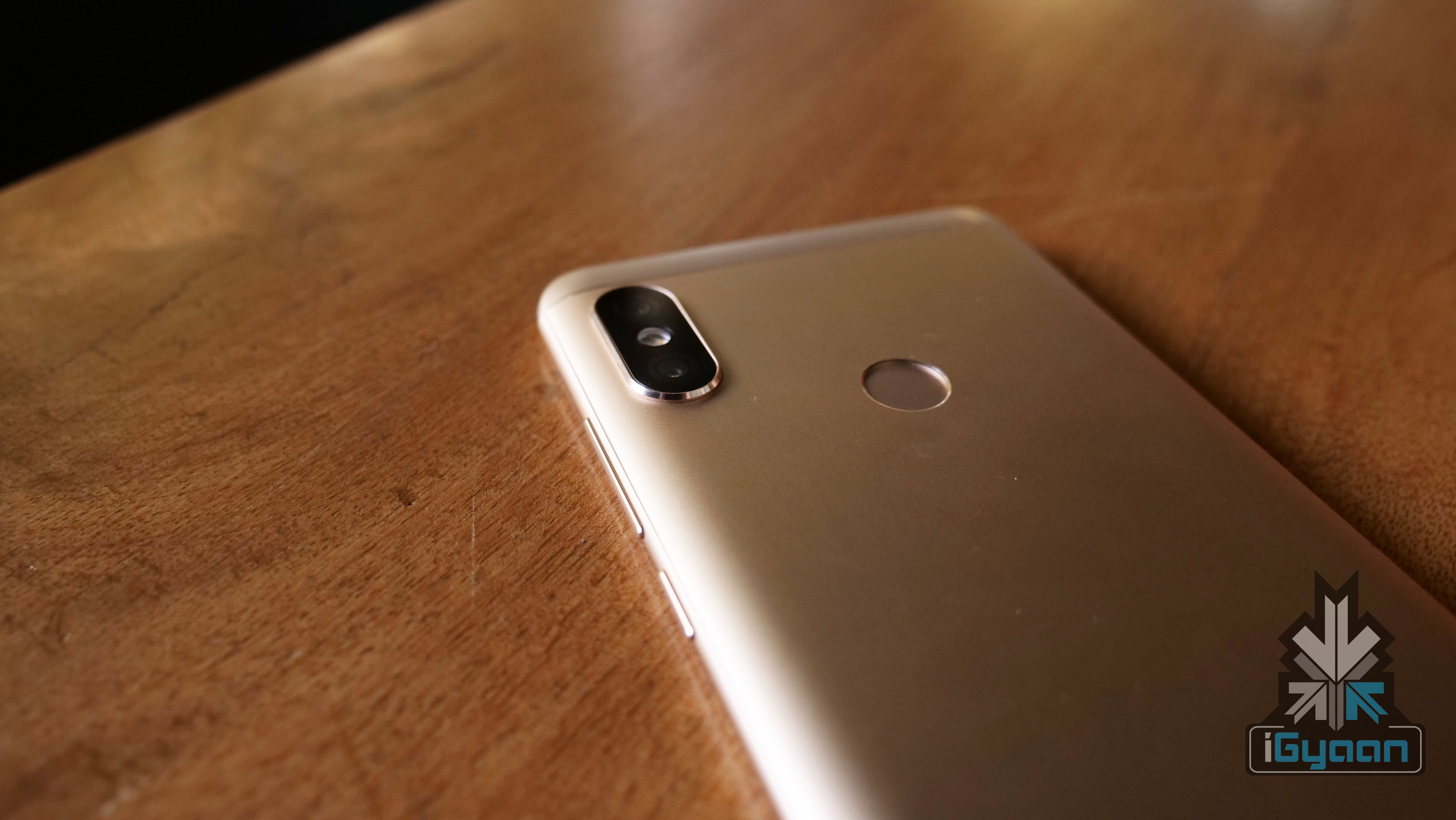
The new Note 6 Pro now has a wide notch on the front. With an arc design on the back and a brushed metallic finish. The design not only looks good but, it also improves the grip of the device in the user’s hand.
With the Note 5 Pro, some consumers in coastal regions were left disgruntled. The 3.5 mm jack and charging port on their phone would corrode easily. The company noticed that it was an issue that was mostly faced by people living in coastal regions. Upon investigation, the company found humidity along with salt to be the reason behind the issue. To overcome the problem, Xiaomi now uses a corrosion resistant metal alloy to manufacture the ports for their devices.
P2i Coating
Xiaomi coats the innards of its Note 6 Pro with a P2i hydrophobic nano coating which makes it resistant to light splashes of liquid. However, It does not make the smartphone waterproof. But, the coating will allow the handset to easily survive those accidental liquid spills.
Bigger, Brighter Screen
The Note 6 Pro packs in a larger 6.26-inch display compared to a 5.99-inch on its predecessor. Xiaomi has managed to pack a larger display into the phone while retaining the footprint of its predecessor. Furthermore, the display panel on the new phone can reach up to 500 nits of peak brightness. These high brightness levels allow for easy screen viewability even in harsh sunlight.
MIUI 10
The Note 6 Pro runs MIUI 10 out of the box which Xiaomi claims is highly optimised. According to the company, MIUI 10 significantly bumps up performance on the new device while still featuring the same Snapdragon 636 processor. The new MIUI 10 also has inbuilt support for gestures which makes navigation across the device’s menus a total breeze.
The Xiaomi Redmi Note 6 Pro is the long awaited successor to the extremely popular Redmi Note 5 Pro. The Redmi Note 5 Pro was launched in February this year, and the company has already rolled out the next iteration of the device. Being from the Redmi Note series, it retains the same values as its predecessor. These include a large display, a big battery and great camera performance. While the device was launched in Thailand almost a month back, it did take some time to come to India. The official launch of the device will be held on 22nd November in an event in New Delhi, where the price and availability of the device will be announced.
The Redmi Note 6 Pro: What’s New
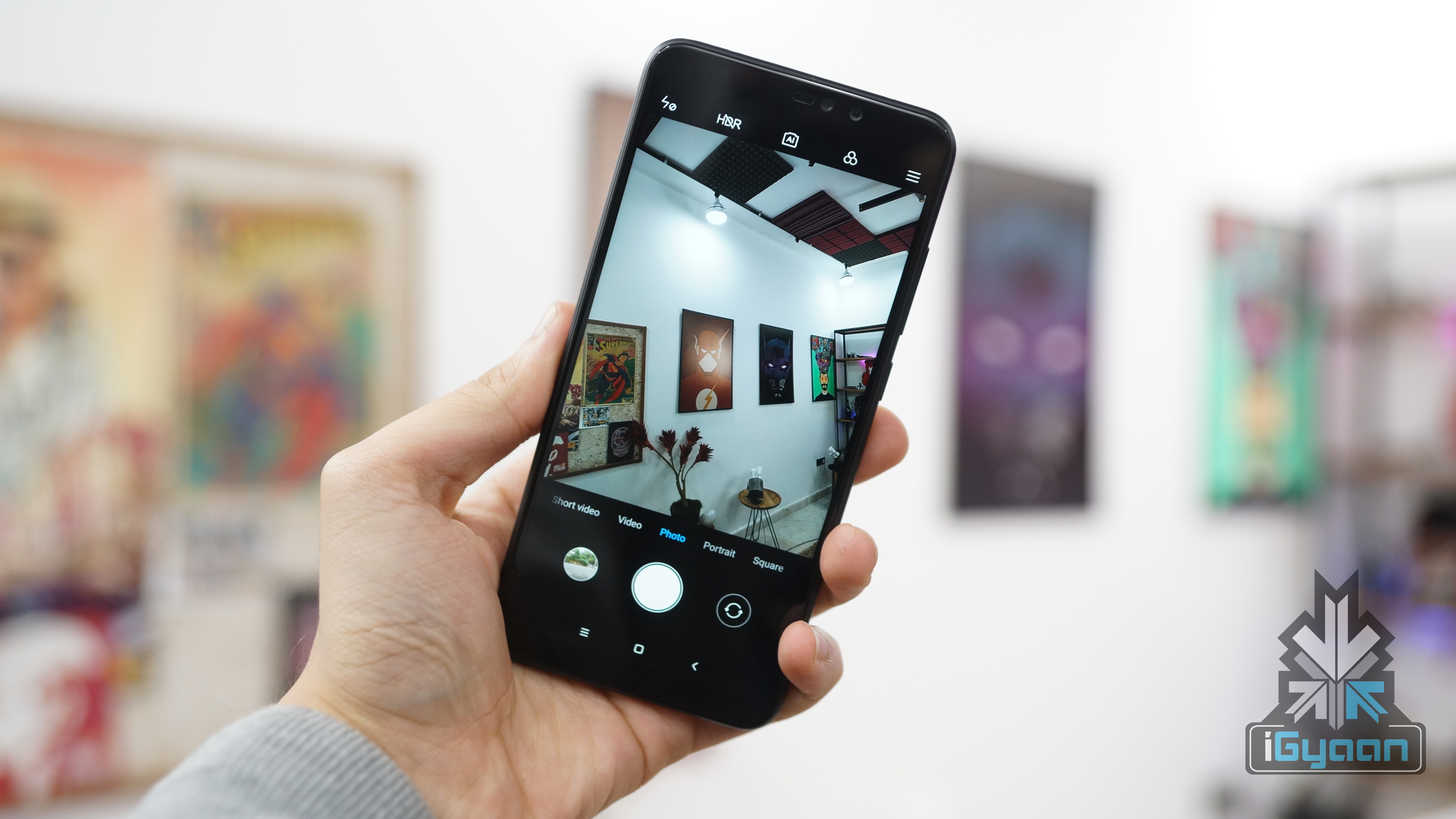
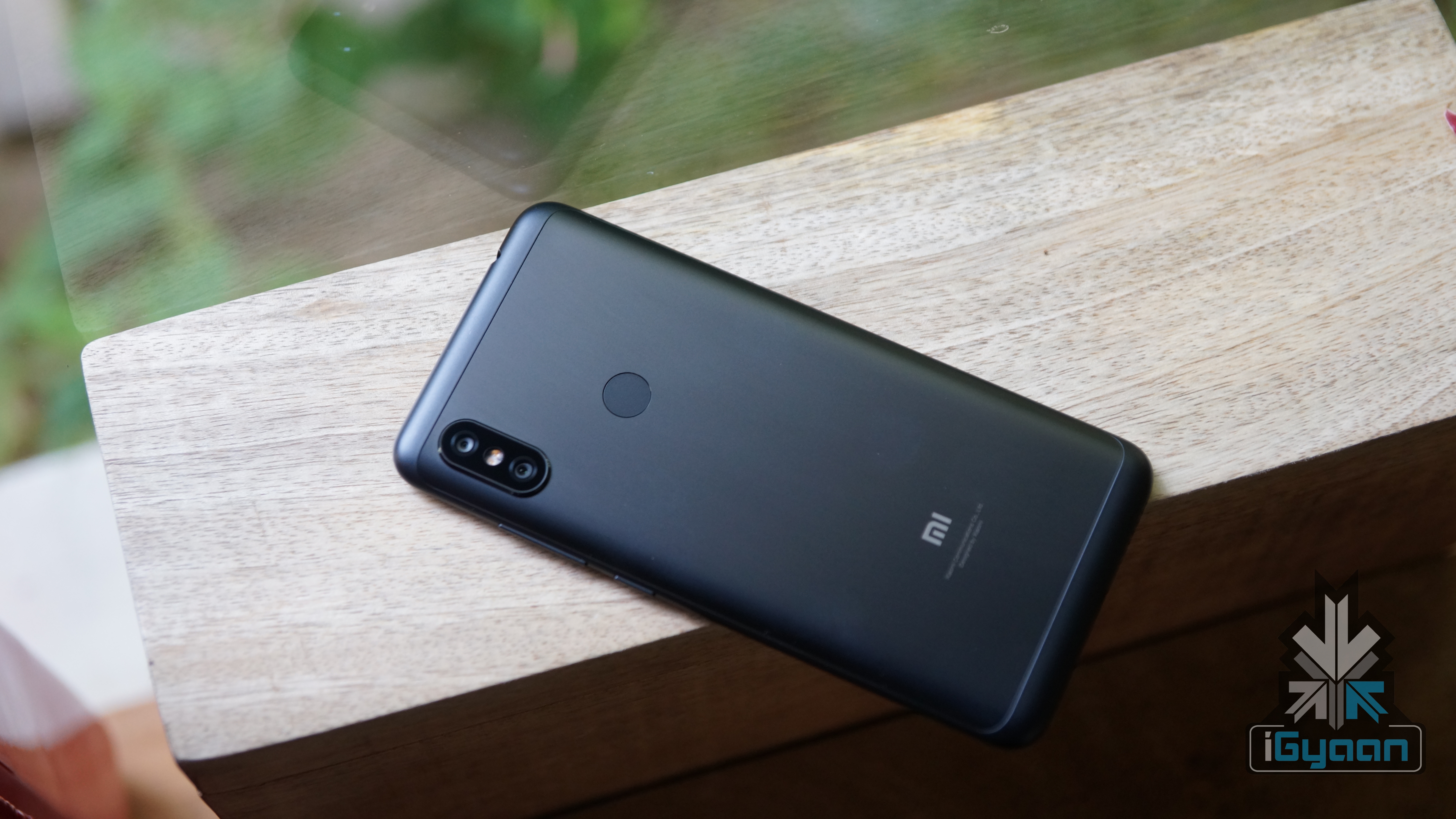
In terms of looks, the Redmi Note 6 Pro does look a lot like its predecessor. It has a big notch on its display, and a dual camera setup on the back, with a fingerprint scanner. There are however, many differences when you look closer. In terms of ergonomics, it has more rounded edged all around its body, giving it a better grip and feel in your hand. The Note 6 Pro has a bigger, 6.26 inch display, as compared to the 5.99 inch display from the Note 5 Pro. The FHD+ display has a 2280 x 1080 px resolution and a brightness of 500 nit.
The display also features Corning Gorilla Glass for protection, though the company has not specified the version. The notch on the Redmi Note 6 Pro is large when compared to other devices as it houses two cameras. But the bezels and the chin on the device are thinner than that on its predecessor.
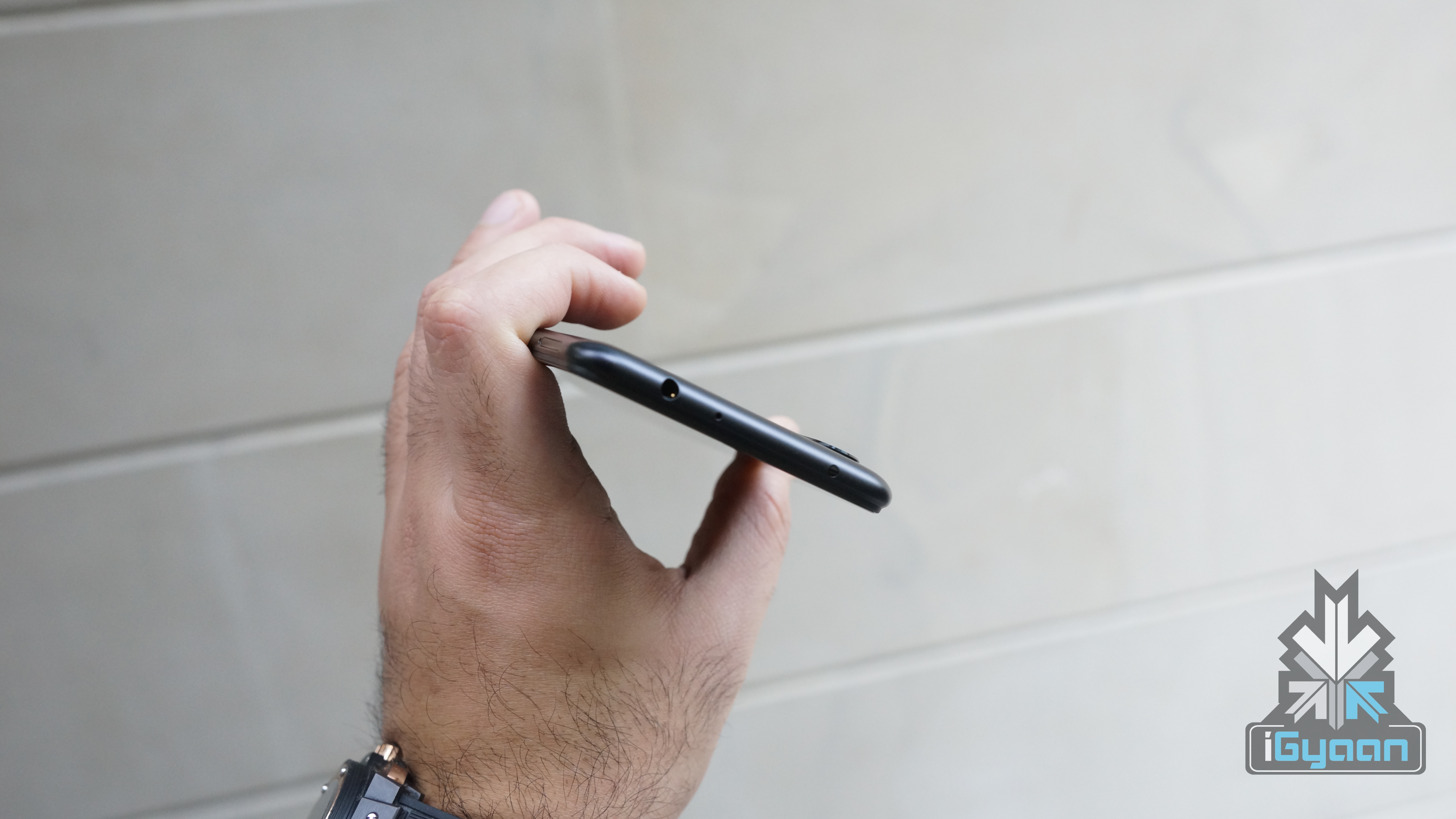
Xiaomi has also made considerable improvements in terms of build quality. The ports now use a new alloy, which do not corrode that easily. This move came in after the company received a lot of issues with phones dying out early in coastal areas. Xiaomi later found out that the cause for this was the corrosion of the elements in the ports. Hopefully, this step will ensure a better longevity for the device. Another great addition is a P21 coating. This is basically a water repellant coating. This coating is present on the externals as well as the internals of the phone as well. However, this is not to be confused with water resistance and this is just meant to save your phone from minor, accidental spillage or water contact.
What’s More
Another big jump is in the camera department. While on paper, the specs for the camera remain the same, the Redmi Note 6 Pro brings along both hardware and software improvements. The 12 MP main sensor on the back now has a larger, 1.4 micron pixel size, resulting in better photo quality and improvements in low-light performance. It also features a wider, f/1.9 aperture. The secondary sensor is a 5 MP depth sensor. Additionally, the Note 6 Pro has an impressive portrait mode. The portrait mode now features studio lighting options and also a ‘light flare’ feature.
It also has AI scene detection which detects 32 scenes, including scenes optimised for India such as weddings and motorbikes. The rear camera also features a new AI adjustable bokeh feature. This lets you choose the amount of blur you want in the background, even after you have clicked the picture. The front camera us a 20 MP + 2 MP set up. This features an AI portrait mode with AI scene detection of upto 12 scenes. The dual front cameras also help in the Face Unlock technology to unlock your phone.
Inside The Phone
The phone runs MIUI 10 out of the box, which brings in advanced gesture navigation. It packs a 4,000 mAh battery which supports Quick Charge 3.0. While the Note 6 Pro supports fast charging, the company does not provide a fast charger in the box, and it has to be purchased separately. It runs on the Qualcomm Snapdragon 636 SoC and has 4 GB and 6 GB RAM options. In terms of storage, it has one option with 64 GB of internal storage, which is expandable up to 256 GB via a microSD card.
The phone also features an auto data switch feature. When you are on a call, the phone switches your data from that SIM to your secondary SIM, so that neither of the operations are interrupted. The phone has dual VoLTE support but does not have a dedicated microSD card slot. It also has a new Wi-F- pass through feature. Using this feature, you can connect to a Wi-Fi network and use that Wi-Fi network to create a hotspot.
At first look, the phone does seem like a big and thoughtful improvement. We are yet to check it out fully and see what it is capable of. As mentioned before, the price and availability of the phone will be revealed only after its launch on 22nd November.
Xiaomi is a company that needs no introduction as they are the number one smartphone manufacturer in the nation. They are known for their value for money smartphones. Last week the company increased the price of their few products due to the depreciating value of Indian currency(Read here). Now however, the company is cheering up the consumers by decreasing the price of some of their top selling smartphones. The company reports that the reduction in component costs has allowed them to take this move. The devices that are receiving a price cut are as follows:
Redmi Note 5 Pro
The Redmi Note 5 Pro was one of the first budget smartphones to offer dual rear cameras. The feature-rich smartphone was able to rake in a lot of sales for the company. It is available in two variants which are 4 GB RAM + 64 GB ROM and 6 GB RAM + 64 GB ROM. Now the company has slashed the price of both variants by Rs. 1000. Post price reduction the variants will be available for Rs 13,999 and Rs 15,999 respectively.
The Mi A2 is a smartphone with a completely different approach. It is the second device from Xiaomi that runs on Android One. Being an Android One device enables it to receive the latest Android updates soon after they are launched by Google. It is available in two variants which are 4 GB RAM + 64 GB ROM and 6 GB RAM + 128 GB ROM. Like the Redmi Note 5 Pro, the company has decreased the price of both its variants by 1000 Rs. After the price drop, the variants will be available for Rs 15,999 & Rs 18,999 respectively.
The Redmi Y2 is a phone that has a focus on photography. It has a 16 MP AI-powered front-facing selfie camera and dual rear cameras. Like the elder A2 and Redmi Note 5 Pro, the Redmi Y2 also gets a price drop of Rs 1,000. The smartphone after the price drop will be available for Rs 11,999 for 4 GB RAM + 64 GB ROM variant.
Xiaomi’s Redmi Note 5 Pro was one of the first budget phones to feature dual rear cameras. It was launched in the month of February this year. Due to its stellar features & competitive pricing it was a sensational hit in the Indian market. Last month, Xiaomi launched its successor, the Redmi Note 6 Pro in Thailand. Now Xiaomi has sent out a launch invite for an upcoming device in India which is likely to be the Note 6 Pro.
November 22, The New Note
The media invitation reads “The New Note Rises” which makes it apparent that upcoming device is infact the Note 6 Pro. It also shows a smartphone with a notch display that the Note 6 Pro will have. The launch event will be held in New Delhi & it starts at 11:30 AM on 22 November. The Indian variant might have similar specifications as the Thai variant. For reference:
Specifications
The Redmi Note 6 Pro has a 6.26 inch Full HD+ display with a wide notch up top. It has an 81.1% screen-to-body ratio with 2280 x 1080 px resolution & a pixel density of 403 ppi. The display of the smartphone also gets Corning Gorilla Glass protection. However, the company does not specify the version of Gorilla Glass.
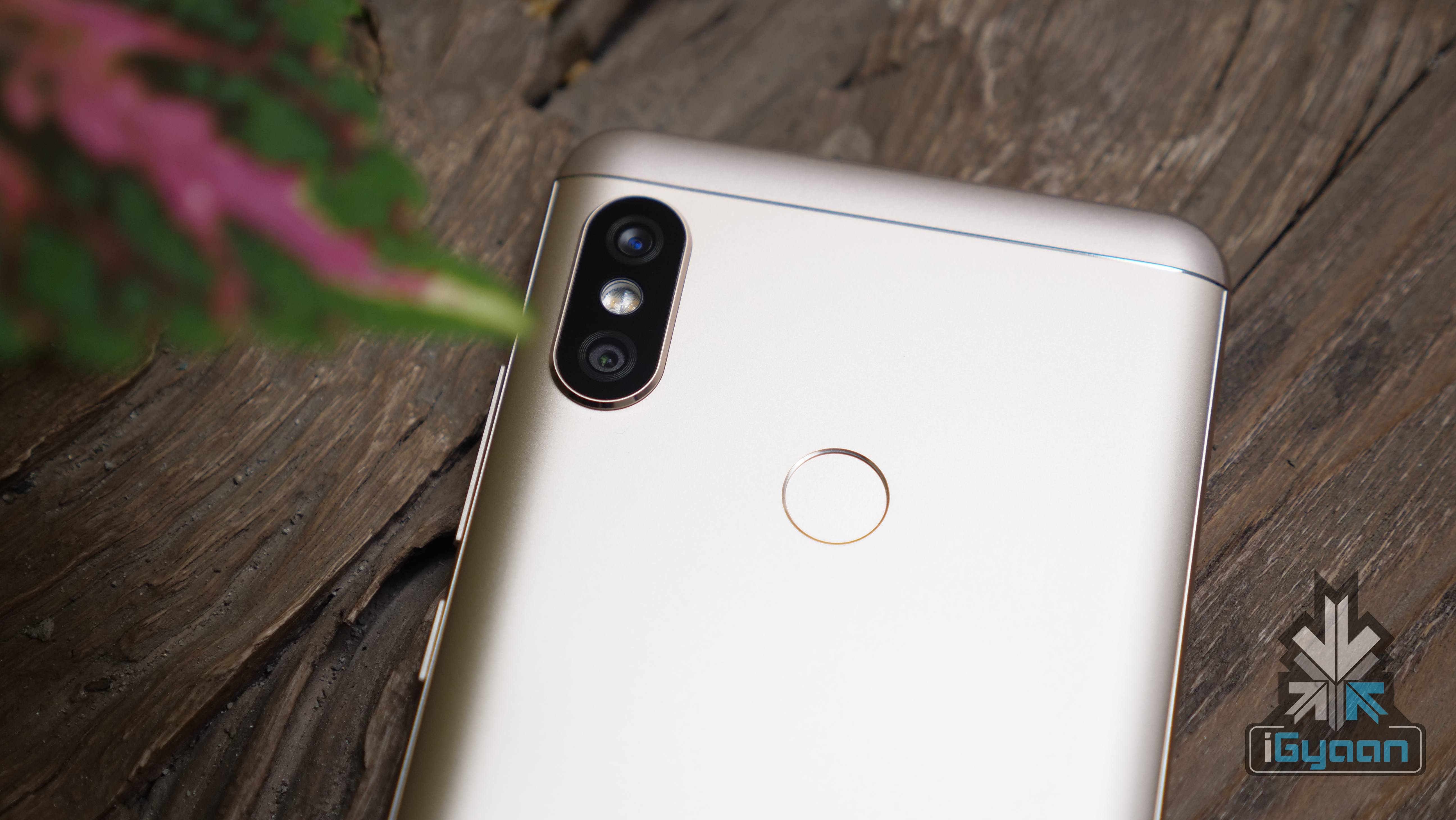
It has an Octa-Core Snapdragon 636 CPU along with the Adreno 509 GPU. The Redmi Note 6 Pro has dual rear cameras with a dual LED flash which are arranged in a capsule shaped ridge. The rear camera setup has a 12 MP PDAF sensor and a 5 MP depth sensor. The smartphone also gets 20 MP + 2 MP dual front cameras. Both the front & rear cameras can capture 1080p videos @ 30fps. The handset has a 4,000 mAh battery which is sufficient for day to day usage. The Thai variant is available in three options which are as follows:
3 GB RAM + 32 GB
4 GB RAM + 64 GB
6 GB RAM + 64 GB
In terms of connectivity, the Note 6 Pro has 802.11 ac Wi-Fi, Bluetooth 5.0, Infrared sensor, GPS & Micro USB 2.0 for charging and data syncing. The smartphone is available in four colors which are Black, Red, Blue & Rose Gold.
Price & Availablity
The pricing & availability information is unavailable for now but we won’t have to wait for long as the launch of the device is just around the corner.
The upcoming Xiaomi Redmi Note 6 Pro is set to launch in India and the specifications of the device have been made public through a leak. The device has already been released in Thailand but this leak provides us information about the Indian variant and also reveals its colour options.
The leak details that the Redmi Note 6 Pro has a 6.26 inch FHD+ display with an aspect ratio of 19:9. It is powered by the Snapdragon 636 SoC and has 4 GB and 6 GB RAM options. The device has an internal memory of 64 GB and runs on Android 8.1 Oreo. Under the hood, it packs a 4,000 mAh battery.
The device has a dual rear camera as well as dual front camera setup. The dual rear cameras comprises of a 12 MP + 5 MP sensor with dual pixel autofocus. The front camera setup has a 20 MP primary sensor along with a 2 MP depth sensor. On the back, the device also has a fingerprint sensor for accessibility and security.
The leak details that the Redmi Note 6 Pro will be available in Blue, Red, Black and Rose Gold colours. The device will cost somewhere around Rs 15,000 for its 4 GB RAM base variant. Reports also suggest that Xiaomi will hold an event in India in November to launch the device.
It is hard to ignore the fact that barring the display size and the dual front cameras, the Redmi Note 6 Pro does not offer any improvements over its predecessor. The specifications are ditto and may not be exciting enough for consumers looking to upgrade. However, we will have to wait till the official launch to verify whether the leaks have been right.
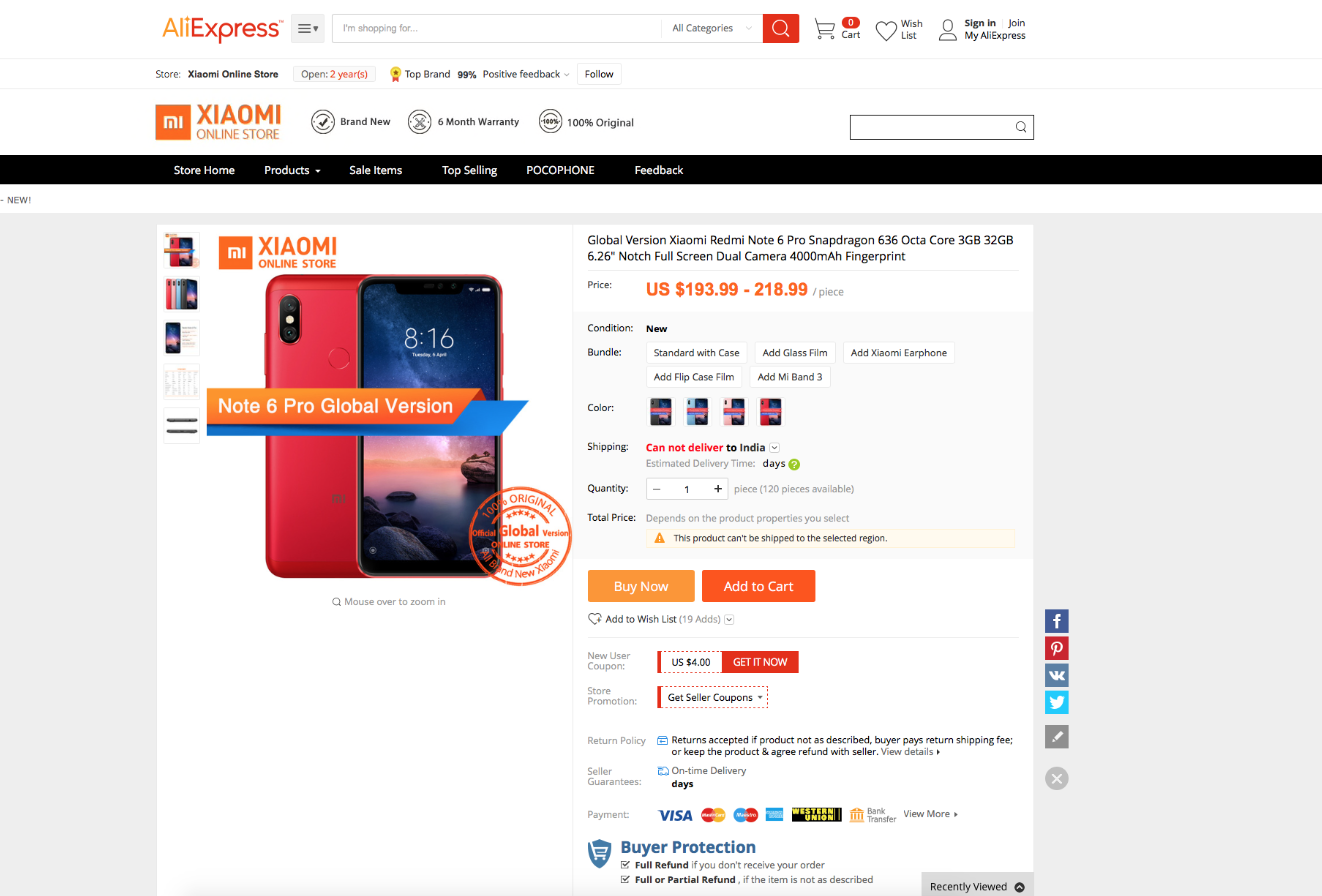
A Xiaomi Redmi Note 6 Pro device is already on sale, even before the device has been announced by the company. The device is on sale on AliExpress and is listed along with full specifications and images. This is a global version which will support over 70 languages and comes with Google Services and OTA updates.
The Xiaomi Redmi Note 6 Pro is on sale with a Snapdragon 636 chipset. It is listed as a 3 GB RAM and 32 GB storage version and has a microSD port. It has a 6.26 inch display and a resolution of 2160 x 1080 pixels. The listing also confirms the fact that there are four cameras on the device.
The device has a 12 MP + 5 MP primary camera and a 20 MP + 2 MP front camera. The device runs on Android Oreo with MIUI 9. It has a 4,000 mAh battery and a micro USB port.
Legit Or Not?
While most of the specifications from the listing are the same as earlier leaks and reports, a few things do not fall into place. The listing claims a Snapdragon 636 SoC for the device. This is inconsistent to earlier reports which said the device will have a Snapdragon 660 chipset. This seems highly unlikely as the Redmi Note 5 Pro also used the Snapdragon 636. The upgraded version of the device is bound to use a better chipset.
Apart from this, the listing also places the display resolution at 2160 x 1080 pixels. The device claims to have an 19:9 aspect ratio. If that’s the case, the resolution should be 2280 x 1080 pixels. These two points do make us question the credibility of the device which is being sold.
The device is available in four colours which are Black, Blue, Rose Gold, and Red and costs $193. The website also shows that the device is not available for delivery to India.
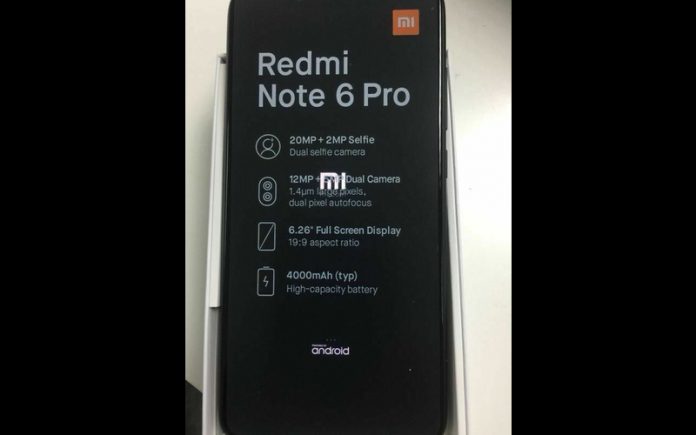
The upcoming Xiaomi Redmi Note 6 Pro has been leaked in what seems to be an alleged image of the device. The device was supposedly spotted on the Wi-Fi alliance certification website. This is the successor to the Redmi Note 5 Pro which was launched earlier this year and has become one of the most popular devices in its price range.
This image posted on Reddit, gives us a brief glimpse at the specifications the device has. The Redmi Note 6 Pro will have a 6.2 inch display with a 19:9 aspect ratio. The device has the same 4000 mAh battery as the Redmi Note 5 Pro. Another feature is the dual camera setup both in the front and the back. The front features a 20 MP + 2 MP dual selfie camera. The main camera has a 12 MP + 5 MP dual sensor which is slightly different than its predecessor. This setup features a slightly larger sensor which could possibly help in better low light performance and improved pictures.
If the leaked image is to be believed, we can make a few comparisons between the two devices. The Redmi Note 6 Pro features a larger 6.2 inch screen over the Note 5 Pro’s 5.9 inch display. It is also expected that the device will have a FHD+ display with a 19:9 ratio.
Despite the fact that the camera setup in both the devices is quite similar, we can expect significant improvements. The sensor in the Redmi Note 6 Pro has a larger 1.4um pixel along with Dual Pixel AF. A bigger jump in terms of the front camera is evident. The Redmi Note 6 Pro has a dual front camera setup. This will enhance the portrait shots taken by the device.
Along with this, the device is expected to carry all other regular features seen in Redmi devices such as AI Portrait Mode, AI Scene Detection, AI beautify mode. It is expected to have Face Unlock support too. Rumours also suggest that the device will run on the Qualcomm Snapdragon 660 chipset and have Android 8.1 Oreo and MIUI 10 out of the box.
Launch:
The device is expected to be launched soon as it has already started appearing on certification websites. Having launched the Redmi Note 5 in India before China, it won’t be surprising if Xiaomi does the same this time around. The price and other details will be known closer to the launch. However, it it still a bargain as to how many Note 5 users will be willing to upgrade to the Note 6 this soon.
After a series of tweets which hinted at its launch, Xiaomi finally unveiled the Redmi Note 5 Pro Red edition. The device is also available for sale on the company’s official website and will be available on Flipkart soon.
The Redmi Note 5 Pro had been launched in India with four colours; black, blue, gold and rose gold. The red coloured variant had been released in China but was not made available in India. However, with a tweet this morning, Xiaomi announced the launch of the Red edition in India as well.
Red is my favourite colour! It is the colour of love ???
Excited that we are launching the brand new Red coloured #RedmiNote5Pro, India's No. 1 selling dual camera phone!
The Red edition of the Redmi Note 5 Pro Red edition retains all the other specifications and features of the Redmi Note 5 Pro. The device has two variants, because of varying RAM. It has a 4 GB and 6 GB variant. The internal memory of the device is 64 GB. The memory of the device is expandable up to 256 GB.
It runs on the Snapdragon 636 processor clocking out at 1.8 GHz. The device features a dual rear camera with a 12 MP and a 5 MP sensor. The Redmi Note 5 Pro Red edition packs a 4000 mAh battery and runs Android 7 Nougat and MIUI 9.
The Redmi Note 5 Pro Red edition is already available on the official Xiaomi website and will soon be available on Flipkart. The device is priced at Rs 14,999 for the 4 GB/64 GB variant and Rs 16,999 for the 6 GB/ 64 GB variant.
The mid-range segment for smartphones gives prospective buyers a lot of options to choose from. Sometimes the option can get a little overwhelming. The price bracket of Rs. 15,000 – Rs. 20,000 has the phones like the Redmi Note 5 Pro, the Zenfone Max Pro, and the latest Mi A2. The Zenfone Max Pro will go on sale with its 6GB variant tomorrow. Check out the full details of the launch here. With that said, it’s only natural that we put these smartphones side by side to see which one performs better. Given that the smartphones have a lot in common.
Redmi Note 5 Pro vs Zenfone Max Pro vs Mi A2, What’s Same And What’s Different?
The Xiaomi Redmi Note 5, Zenfone Max Pro and the Mi A2, all follow the same design of glass front panel with an aluminum body. All the three smartphones have a 5.99-inch display with a 2160 x 1080px resolution with an 18:9 aspect ratio. Under the hood, the Redmi Note 5 Pro and the Zenfone Max share the same Qualcomm Snapdragon 636 chipset. While the Mi A2 runs on the Snapdragon 660. The Redmi Note 5 Pro and the Mi A2 is available with 4B or 6GB of RAM. Whereas, the Zenfone Max Pro is available with 3GB, 4GB, or 6GB of RAM. The Zenfone Max Pro has two storage variants, either 32GB or 64GB. The Redmi Note 5 Pro has is only available with 64GB storage. The Mi A2 has three variants with 32GB, 64GB, or 128GB of storage. All three smartphones have expandable storage using microSD card slot.
The Xiaomi Redmi Note 5 Pro was launched in February along with the Redmi Note 5. At that time, it was the only smartphone on the market to run on the Qualcomm Snapdragon 636. Since then, the smartphone has received a host of software updates and the latest update is the biggest till date. The new update brings MIUI 9.5.14 to the Redmi Note 5 Pro which is based on Android 8 Oreo.
While the company has made an official statement about the rollout, it is yet to publish the changelog. The most notable change with the new update is the upgrade to Android 8.1 Oreo. Xiaomi smartphones are not known for the regular Android updates. However, thanks to Project Treble, the Redmi Note 5 Pro will be one of the faster Xiaomi devices to receive software updates.
What is Project Treble?
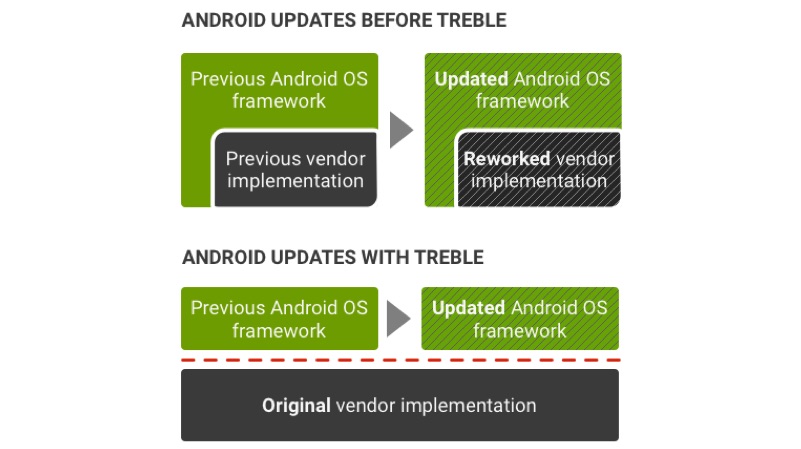
Project Treble is a feature that is included as a part of Android 8 Oreo OS. This enables OEMs to make software updates faster and easier. A few months ago Android gained a “Vendor Interface” (VI), largely due to a new development effort from Google. The VI’s aim is to separate the “Vendor Implementation” (that is, “the device-specific, lower-level software written in large part by the silicon manufacturers”), from the Android OS framework.
The new VI is supposed to sit between the Android OS framework and Vendor Implementation. And the new VI will be validated by a Vendor Test Suite (VTS), which is analogous to the Compatibility Test Suite (CTS) that Google has been using for API testing of apps. The VTS ensures forward-compatibility of the VI. Before, the VI needed to be reworked after every single Android OS framework update, while with Project Treble, that won’t be the case anymore.
The Xiaomi Redmi Note 5 Pro is one of the most popular budget smartphones in India right now. The fact that it first launched in India before any other country made it an even sweeter deal for many users. With the success of this Pro device, Xiaomi appears to be already working on a new smartphone with this moniker and could launch it in late-2018. Apart from the Redmi 6 Pro, the existence of the Mi Max 3 and Mi Pad 4 has also been confirmed.
A new report claims that references to all the three devices were found on the Mi China website. This means that these smartphones will launch in China before anywhere else in the world. While the Redmi Note 5 Pro was an India-first device, it seems unlikely that Xiaomi will continue this trend.
Recently, a Xiaomi smartphone with a notched display was leaked on TENNA. While it was initially expected to the Redmi 6 Plus, it now appears to be the Redmi 6 Pro. Xiaomi recently launched the Redmi 6 and 6A while there were no traces of a Redmi 6 Plus being launched in the near future. While the design is plausible, we hope Xiaomi fixes the colour of the bezels and notch and go with a black colour instead.
The Redmi 6 Pro could have a 5.84 inch display with a 2280 x 1080 px resolution. This translates into a 19:9 aspect ratio which is common for smartphones with a notch.
The listing mentions that the device will run on an octa-core 2.0GHz processor which could well be the Snapdragon 660 SoC. The Xiaomi Redmi 6 Pro is expected to be available in three configurations, 2GB RAM/16GB storage, 3GB RAM/32GB storage, and 4GB RAM/64GB storage. Like the Redmi Note 5 Pro, the 6 Pro is also expected to offer expandable storage via microSD card.
On the back of the smartphone will be a dual-camera setup. The listing mentions a 12MP primary sensor and 5MP secondary sensor. This is the exact configuration found on the Redmi Note 5 Pro. Xiaomi would probably improve the quality of the sensors and add a few software features as well. Powering the Redmi 6 Pro will be a 4000 mAh battery. Hopefully, with the 6 Pro, we will see the inclusion of a USB Type C port.
Mi Max 2
The Mi Max 3 has been in the news for quite a while now. Xiaomi is one of the few companies that still makes phablets. The Mi Max 3 will succeed the Mi Max 2 and is expected to launch in July. Just like the recently launched Mi 8 SE, the Mi Max 3 is expected to run on the Qualcomm Snapdragon 710 chipset. This could be coupled with 6GB of RAM and up to 64GB of onboard storage.
The Xiaomi Mi Pad 4 will be one of the few exciting Android-running tablets to launch in 2018. Xiaomi has not given up on tablets yet and the Mi Pad 4 could launch soon as well. Recent leaks suggest the Mi Pad 4 will run on Snapdragon 660 chipset and sport an 18:9 aspect ratio. If true, this will be a headline-grabber as well since no other tablets with this aspect ratio have launched so far.
The list of smartphones that Xiaomi could launch is exciting. At the end of the day, these are leaks and a lot can happen by the time these smartphones are launched.
2018 so far, has been a great year for smartphone enthusiasts. Vivo became the first company to unveil a smartphone with an in-display fingerprint sensor. Concept phones like the Vivo APEX captured everyone’s imagination while flagship devices like the OnePlus 6, Huawei P20 Pro have been well-received by consumers and critics alike. The budget smartphone market in India has also seen a lot of really interesting launches in 2018 so far, from the Redmi Note 5 Pro to Huawei P20 Lite. So, here is a list of top budget smartphones to buy in 2018 if your budget is Rs 20,000 or less!
Launched along with the flagship P20 Pro, the P20 Lite is priced at Rs 19999. The Huawei P20 Lite has an all-glass design with a dual-camera setup. For a price of Rs 19999, the P20 Lite has a great build quality along with an impressive set of cameras.
The Huawei P20 Lite has a 5.84 inch LTPS IPS LCD display with a 2280 x 1080 px resolution. The Huawei P20 Lite runs on the HiSilicon Kirin 659 Octa-core chipset coupled with 4GB RAM and 64GB storage.
The Huawei P20 Lite has a 16MP RGB sensor and a 2MP depth sensor. In fact, this dual camera setup is similar to the one found on the Honor 7X. The Huawei P20 Lite has a 24MP front-facing camera with 3D Portrait Lighting effect. This is very similar to the Portrait Lighting effect found on the iPhone X.
Xiaomi Redmi Note 5 Pro
The Xiaomi Redmi Note 5 Pro was launched in February 2018 along with the Redmi Note 5. With the Redmi Note 5 an underwhelming upgrade over the Redmi Note 4, many believe that the Redmi Note 5 Pro should have succeeded the Redmi Note 4. It recently received a price hike and is now priced at Rs 14999 for the base variant.
The Redmi Note 5 Pro has a 5.99-inch display with a 2160 x 1080px resolution which translates to an 18:9 aspect ratio.
Under the hood, the device runs on the Qualcomm Snapdragon 636 chipset along with an Adreno 509 GPU to handle the graphics. The Redmi Note 5 Pro is available in two variants, 4GB RAM/64GB storage and 6GB RAM/64GB storage. The 6GB RAM variant is a great prospect for users who multitask a lot.
The Redmi Note 5 Pro has a 20MP Sony IMX376 camera on the front with an LED light. To the back of the smartphone is a vertically place dual-camera setup. It is a 12MP colour sensor f/2.2 and 5MP f/2.0 colour sensor setup. The smartphone will click portrait mode photos from the front and rear cameras.
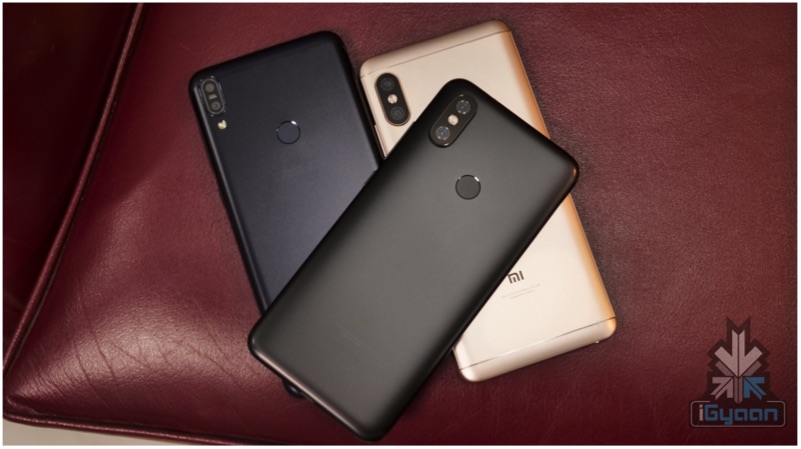
The Asus Zenfone Max Pro was launched in India on April 23rd. Without a doubt, one of the highlights of the Zenfone Max Pro is its battery capacity. It is powered by a 5000 mAh battery while the size and weight of the smartphone are almost equivalent to that of the Redmi Note 5 Pro. For context, the Redmi Note 5 Pro is powered by a 4000 mAh battery.
That 5000 mAh battery will be powering a 5.99 inch IPS LCD display with a 2160 x 1080 px resolution. Under the hood, the Zenfone Max Pro runs on the Snapdragon 636 chipset coupled with 3GB/4GB of RAM along with either 32GB or 64 GB storage. There will be a 6GB RAM variant which will launch later in the year with improved camera capabilities.
The device has a 13MP primary sensor on the rear along with a 5MP depth sensor with an f/2.2 aperture. The dual-camera setup can record 4K videos @ 30fps which is impressive for the price point. To the front is an 8MP camera with an f/2.0 aperture with a bokeh effect.
The Nokia 6 was launched in India in early-April after launching it in China on January 2018. The smartphone does not have an 18:9 aspect ratio like the other devices in the list. However, it carries the sentiments of the Nokia brand and also has decent specifications for the price. The device is priced at Rs 16999 for the base model and the Nokia 6.1 is priced at Rs 18999 for the 4GB RAM and 64GB storage variant.
The Nokia 6 2018 has a 5.5 inch 1920 x 1080 px IPS LCD display with 16:9 aspect ratio. Under the hood, the smartphone runs on the Qualcomm Snapdragon 630 Octa-core chipset with 4GB and 32/64GB storage. Like the original Nokia 6, the storage is expandable up to 256GB using a micro SD card.
The has a 3000 mAh sealed battery with support for fast charging via USB type C port. The fingerprint sensor now sits on the back of the device. This is a peculiar decision by the company since it has retained the 16:9 aspect ratio. Smartphone makers usually revert to a rear-facing fingerprint sensor when they shrink the bezels and don’t have enough space to place the sensor on the front.
This smartphone also has a Zeiss certified single 16MP camera with an f/2.0 aperture and an 8MP front-facing camera with an f/2.0 aperture. The primary camera can record native 4K videos, whereas the front-facing camera maxes out at 1080p @ 30fps.
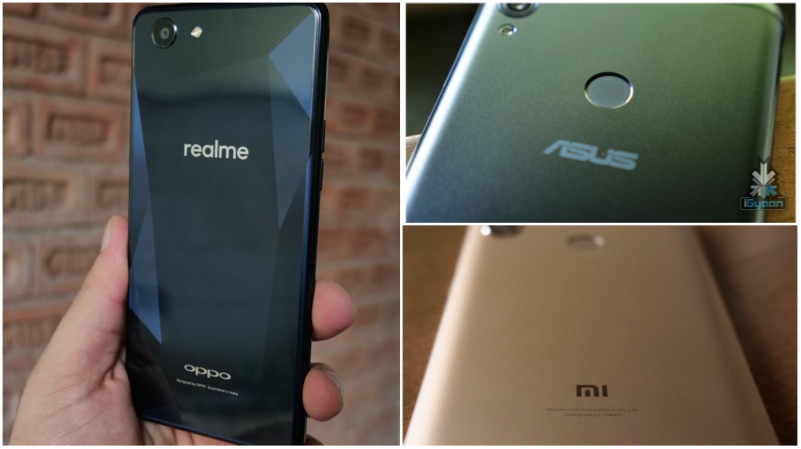
The budget smartphone category in the Indian market is seldom short of great offerings. In 2017, devices like the Mi A1, Moto G5 Plus and the Honor 7X were the popular budget smartphones. Honor kicked off 2018 with the Honor 9 Lite which has a great build quality and a dual-camera setup on the front and back. Xiaomi launched the Redmi Note 5 Pro, the first-ever smartphone with the Qualcomm Snapdragon 636 chipset. Asus launched the Zenfone Max Pro with the same chipset at a more affordable price. Recently, OPPO launched its sub-brand Realme and unveiled the Helio P60-running Realme 1 in India.
The Xiaomi Redmi Note 5 Pro retails for a starting price of Rs 14999, while the base model of Asus Zenfone Max Pro is priced at Rs 10999. The Realme 1 retails for a starting price of Rs 8999 which is very competitive for the specifications it has. One caveat for all the three smartphones is flash sales. The Zenfone Max Pro and Redmi Note 5 Pro have had multiple sales while Realme 1 will have its first sale on May 25th.
Redmi Note 5 Pro
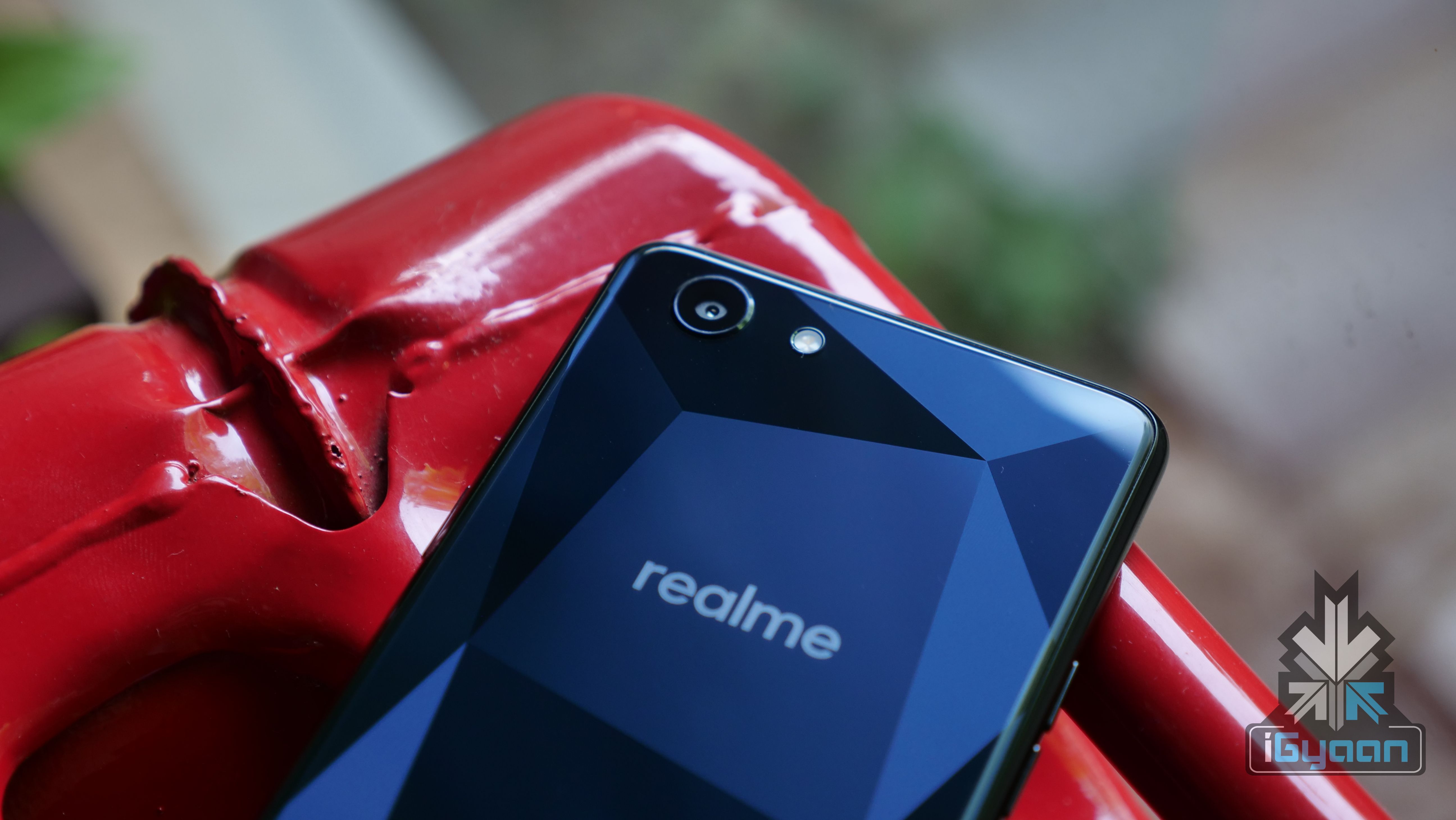
The Realme 1, hands down, looks the best out of the three smartphones with its diamond design. The Redmi Note 5 Pro and Zenfone Max Pro have a very similar metal unibody design with a vertically placed dual-camera setup. The fingerprint sensor on the two phones is placed on the back in a central position. This is where the Realme 1 falls behind as it doesn’t have a fingerprint sensor, one of the most common features in modern-day smartphones. It does, however, have Face Unlock, which the Redmi Note 5 Pro and Zenfone Max Pro do as well.
The Realme 1 runs on the MediaTek MT6771 Helio P60 chipset coupled with 3GB/4GB/6GB RAM and 32GB/64GB/128GB storage. The onboard storage is expandable via a microSD card in case you run out of the onboard storage provided. Powering the smartphone is 3410 mAh battery which charges via a micro USB slot.
Asus Zenfone Max Pro
The Redmi Note 5 Pro runs on the Qualcomm Snapdragon 636 chipset along with an Adreno 509 GPU to handle the graphics. The Redmi Note 5 Pro is available in two variants, 4GB RAM/64GB storage and 6GB RAM/64GB storage. The Zenfone Max Pro as well runs on the Qualcomm Snapdragon 636 chipset coupled with 3GB/4GB/6GB RAM along with 32GB/64GB/128GB storage.
Specifications
Specifications
OPPO Realme 1
Xiaomi Redmi Note 5 Pro
Asus Zenfone Max Pro
Price
Starting Rs 8990
Starting Rs 14999
Starting Rs 10999
Display
6 inch
IPS LCD
5.99 inch
IPS LCD
5.99 inch
IPS LCD
Resolution
2160 x 1080 px
18:9
403 ppi
2160 x 1080 px
18:9
403 ppi
2160 x 1080 px
18:9
403 ppi
Chipset
MediaTek MT6771 Helio P60
Octa-core
4 x ARM Cortex-A73 up 2.0 GHz
4 x ARM Cortex-A53 up to 2.0GHz
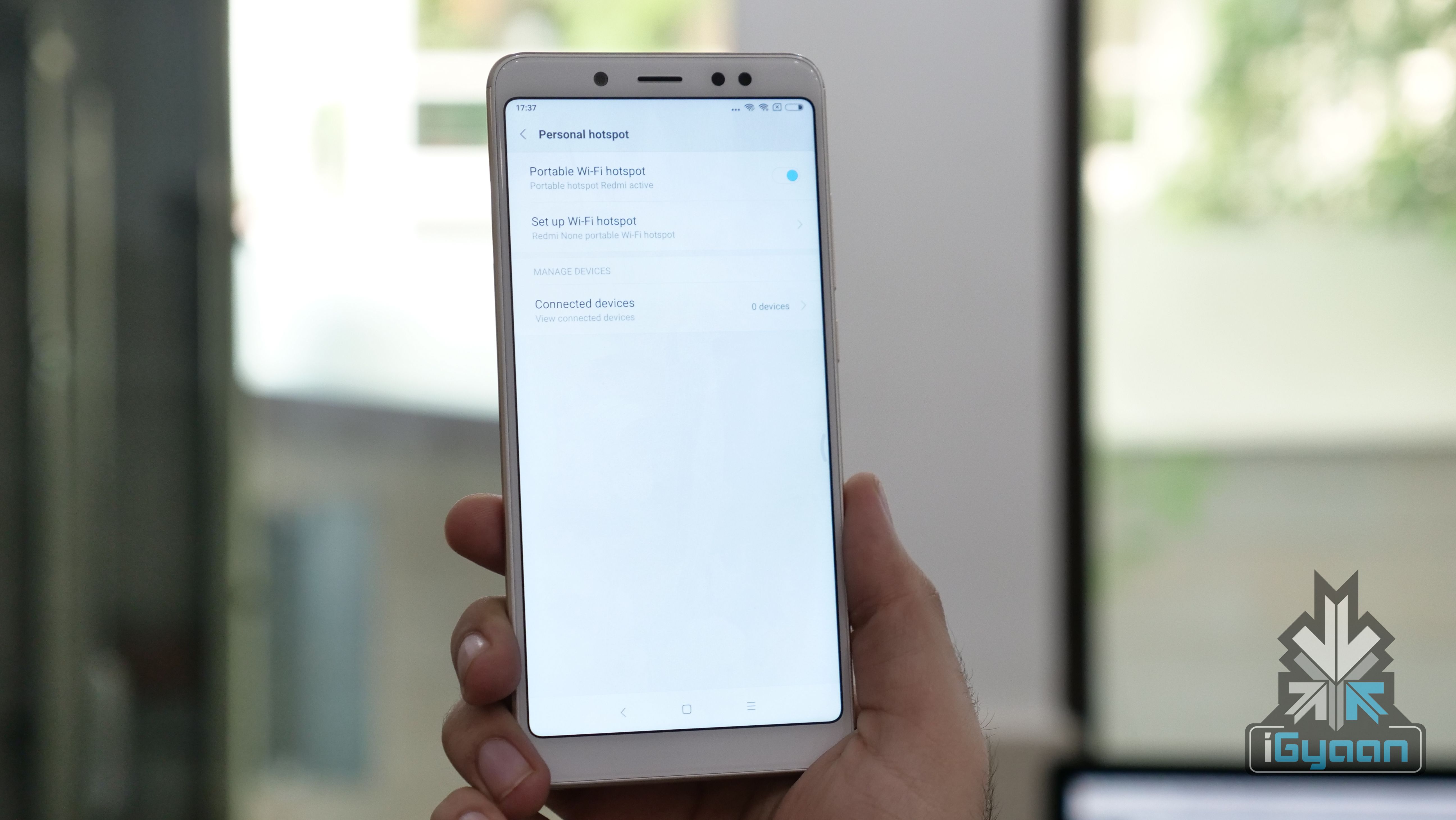
The Xiaomi Redmi Note 5 Pro was launched in India on the 14th of February. At the time of its launch, the smartphone received great reviews and many hailed it as the best budget smartphone currently. Over the course of time, devices like the Asus Zenfone Max Pro have launched in India at a competitive price and similar specifications. The Redmi Note 5 Pro, however, hasn’t seized to amaze us as we recently discovered that the smartphone has Wi-Fi repeater.
Usually, smartphones use the 4G/3G mobile data to make a Wi-Fi hotspot but, with the Redmi Note 5 Pro, the same can be done using a Wi-Fi connection. For this, ensure that your smartphone is connected to a Wi-Fi network. Once connected, head to the settings menu and click on Personal Hotspot and enable the Wifi Hotspot. Once enabled, the smartphone will then use the Wi-Fi connection to create a hotspot. Users can share the password of their hotspot with other people to access the Wi-Fi without requiring a password for the main router’s Wi-Fi.
This feature can also help you get a slightly better signal as the phone can be used as a temporary network booster. Do note however, speeds are not extremely impressive and it dumbed down a 100 Mbps connection to just 7 Mbps when routed though the Red Note 5 pro. This however may not be a problem for those looking for a quick guest network or a wifi boost.
Xiaomi Redmi Note 5 Pro Overview
The Note 5 Pro has a 5.99-inch display with a 2160 x 1080px resolution which translates to an 18:9 aspect ratio.
Under the hood, the device has the Qualcomm Snapdragon 636 chipset and an Adreno 509 GPU to handle the graphics. The Redmi Note 5 Pro will be available in two variants, 4GB RAM/64GB storage and 6GB RAM/64GB storage. The 6GB RAM variant is a great prospect for users who multitask a lot.
The fingerprint sensor is placed on the back of the phone and it has an aluminium unibody build, similar to the Redmi Note 5. Out of the box, the Redmi Note 5 Pro will also run Android 7 Nougat with MIUI 9 on top.
The Redmi Note 5 Pro will also have the infamous Face Unlock feature. It won’t be available out of the box but, will be introduced via an OTA update in March.
The Redmi Note 5 Pro has focussed a lot on the front camera. It has a 20MP Sony IMX376 camera on the front with an LED light. Unlike the Redmi Note 5, it has Beautify 4.0 software which will result in better portrait mode photos, the company claims. To the back of the smartphone is a vertically place dual-camera setup. It is a 12MP colour sensor f/2.2 and 5MP f/2.0 colour sensor setup. The smartphone will click portrait mode photos from the front and rear cameras.
This new feature unearthed can come in handy in a lot of situations. Have you found any interesting feature in your Redmi Note 5 Pro? Let us know in the comments!
This story was made with inputs from Bharat Nagpal