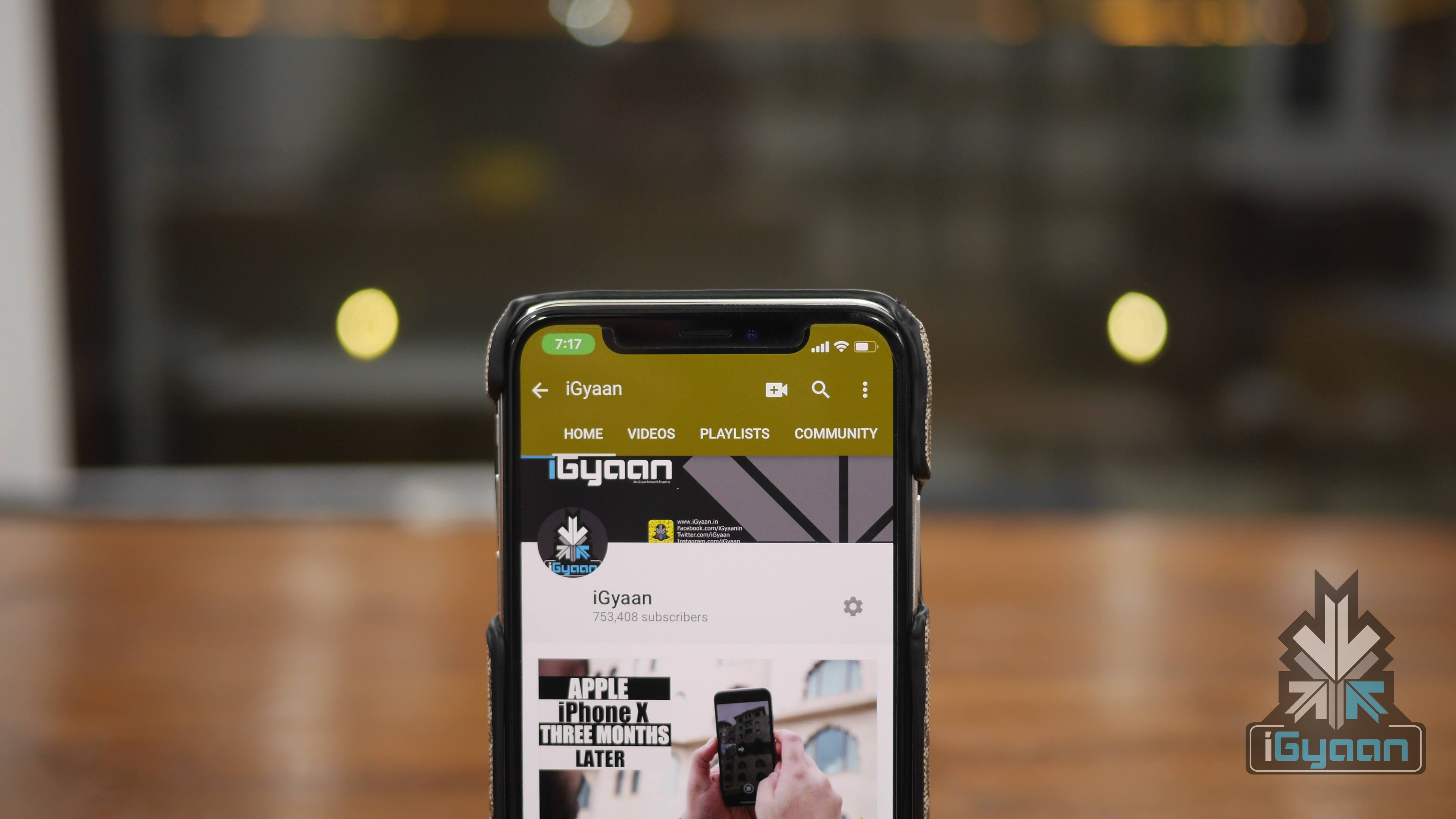
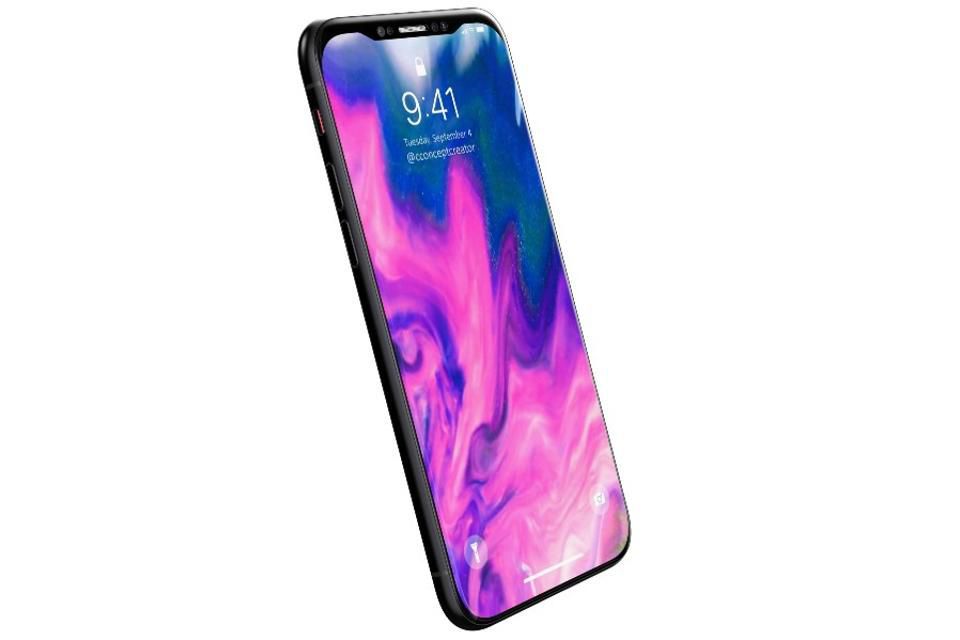
The Apple iPhone X was launched in September 2017 to enormous anticipation. For weeks leading up to the launch, there were hints that the iPhone X won’t look like a regular iPhone. The launch confirmed that as the iPhone X was unveiled with nearly bezel-less design and notch on the display. While the notch received mixed reviews at the beginning, it has since then, become very popular.
iPhone X
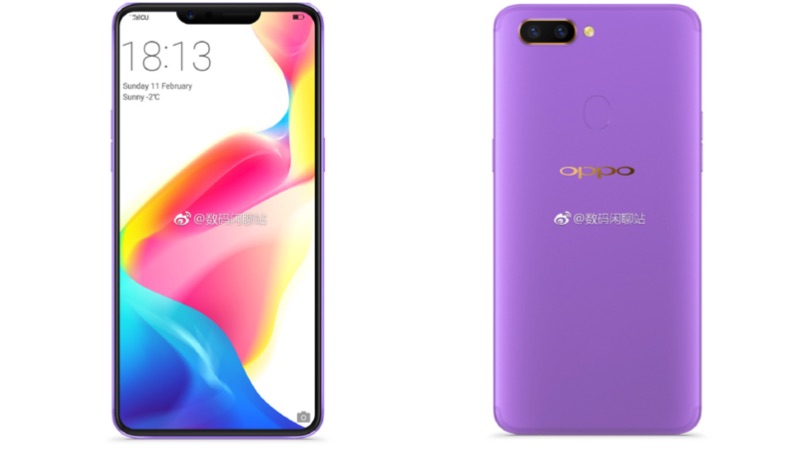
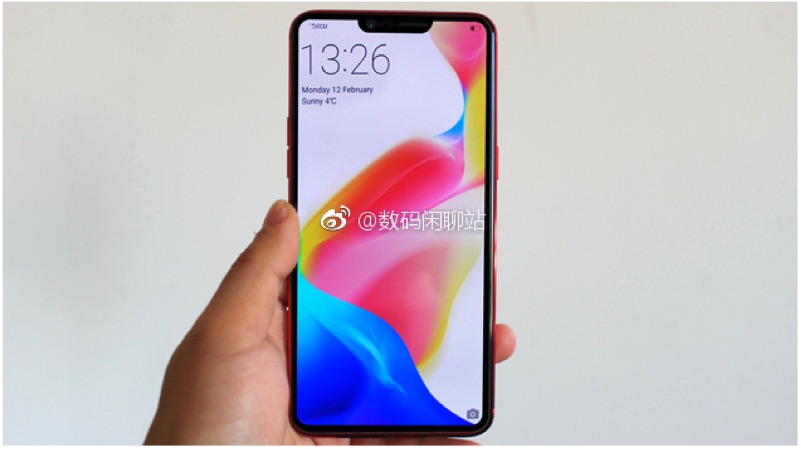
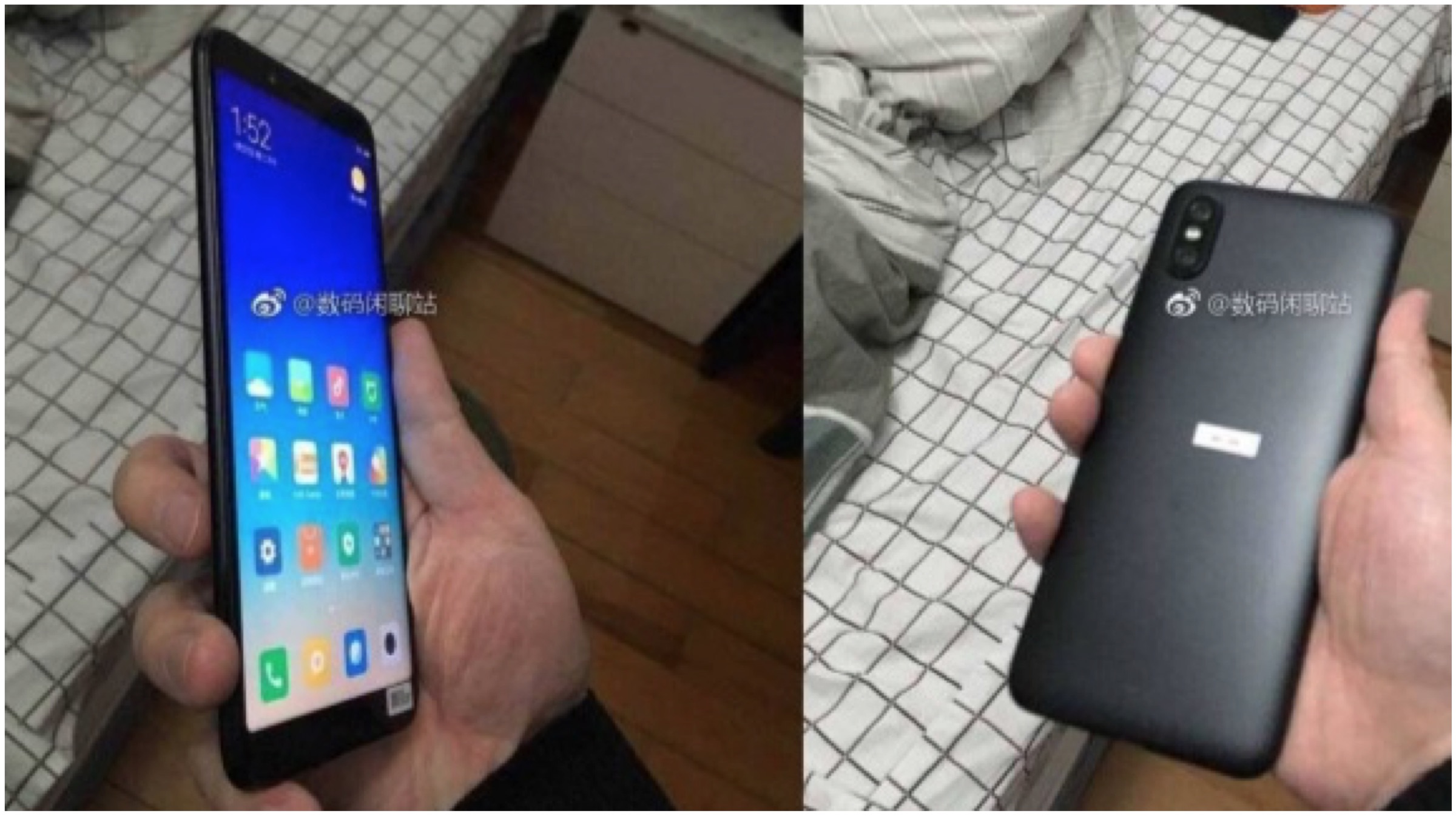
The Oppo R15 looks like another Android phone trying to go the iPhone route. New leaked images of the device reveal that R15 will have a nearly bezel-less design but, with a notch on the top. The notch on the Oppo R15 does look to house the front-facing camera and the earpiece. However, it doesn’t look like it will have any of the hardware similar to what the notch on the iPhone houses.
The company has stuck to its older design for the back of the smartphone. In fact, it resembles the Oppo R11s.
A recent rumour speculated that Android P might natively support the notch. Therefore, there have been speculations that the upcoming Google Pixel 3 and the Google Pixel 3 XL might come with a notch with the iPhone X-like Face ID setup.
Specifications:
The Oppo R15 is expected to feature a 5.8-inch QHD+ OLED display with 19.5:9 aspect ratio. Under the hood, the smartphone might be powered by the Qualcomm Snapdragon 660 Oct-core chipset with 6GB RAM and 64GB storage.
The device might come with the dual camera setup with a primary RGB lens and a secondary telephoto lens. For the front-facing camera, the smartphone might offer high-resolution 2o MP camera with features like Animoji and Face Unlock.
While the iPhone X was met with scepticism, it has since then, become a fan-favourite. However, smartphones like the Huawei P20 Lite, P20 and P20 Plus are expected to be launched with an iPhone X-like notch as well. It begs the question, is the display notch, the answer the design problems of future completely bezel-less smartphones?
Motorola has finally launched its flagship smartphone, the Moto Z2 Force in India. It is priced at Rs. 34,999 which took everyone by surprise. It was globally launched for US$ 720 (Rs. 47,000 approx.) which means that it is considerably cheaper than its global price. The pricing makes sense for Motorola as the Z2 Force runs on the Snapdragon 835 chipset, which will soon be outdated.
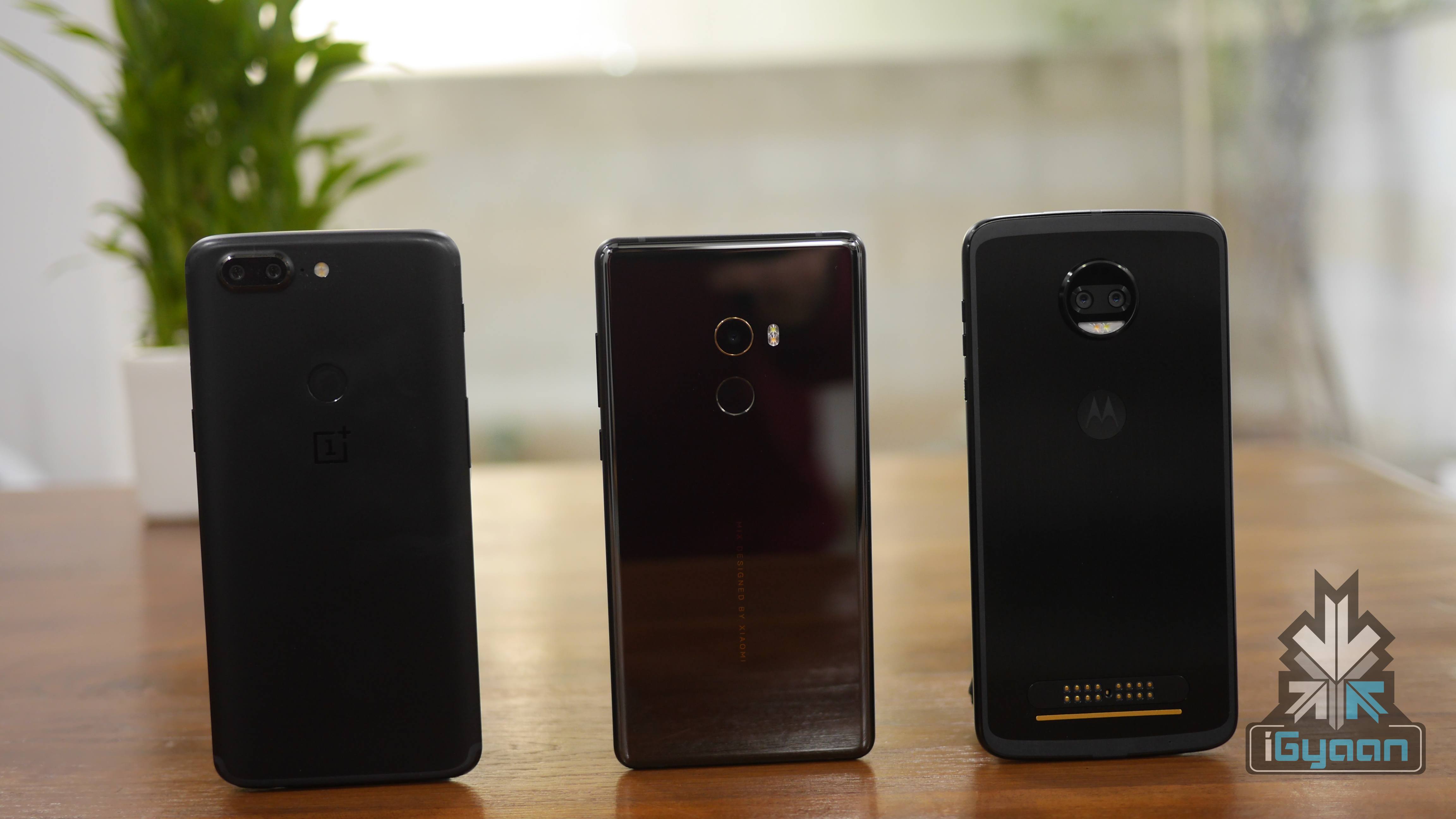
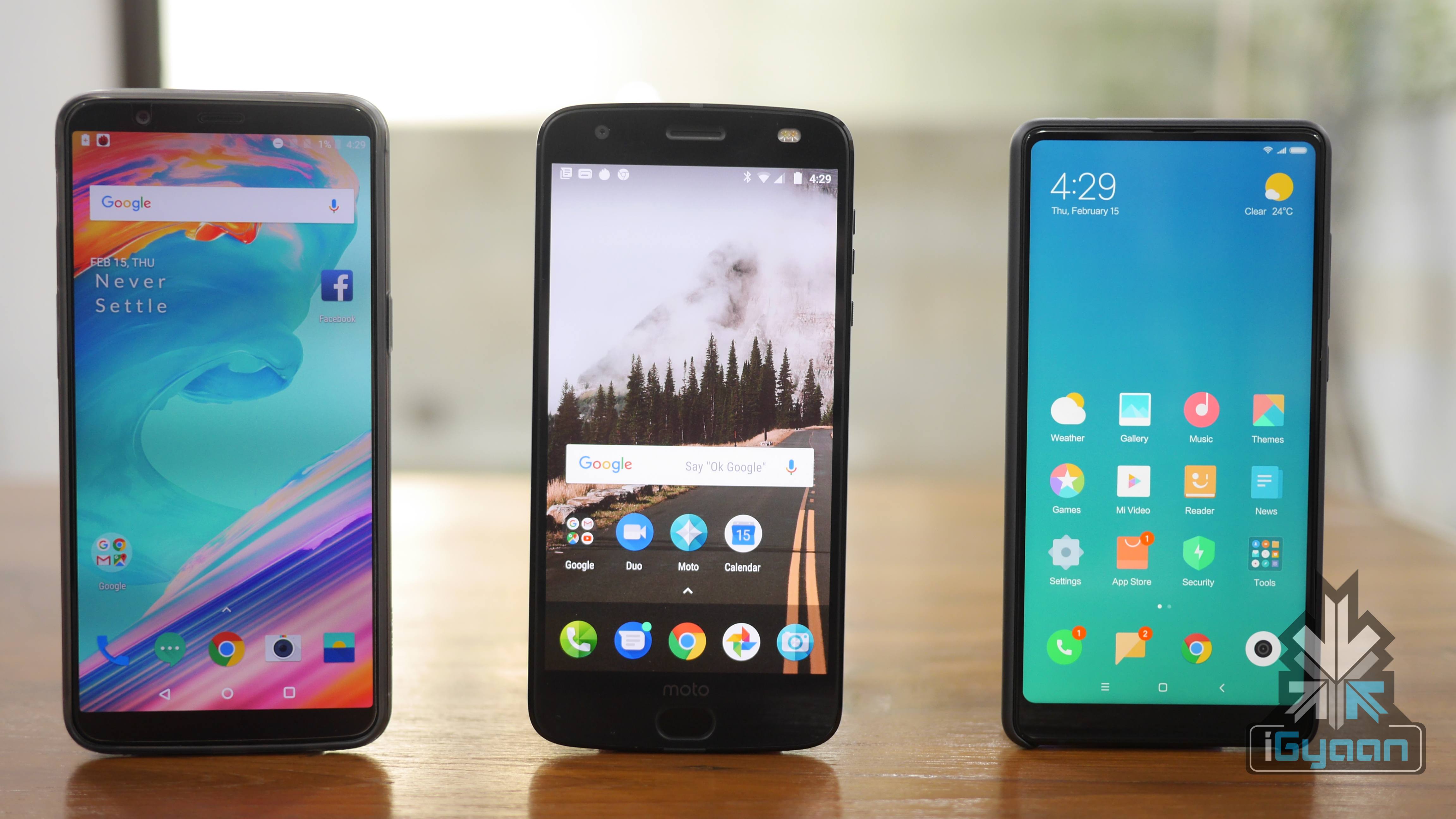
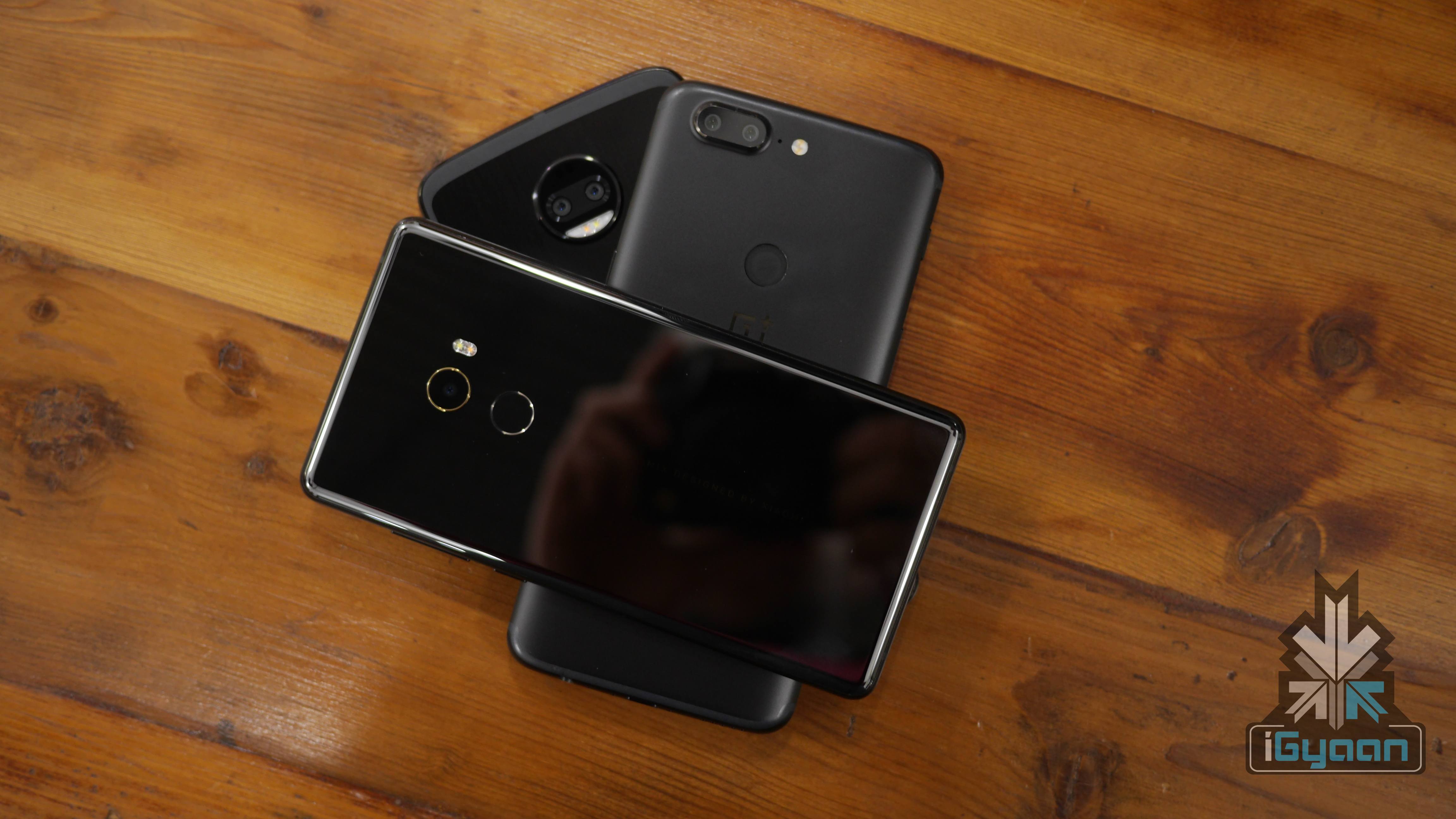
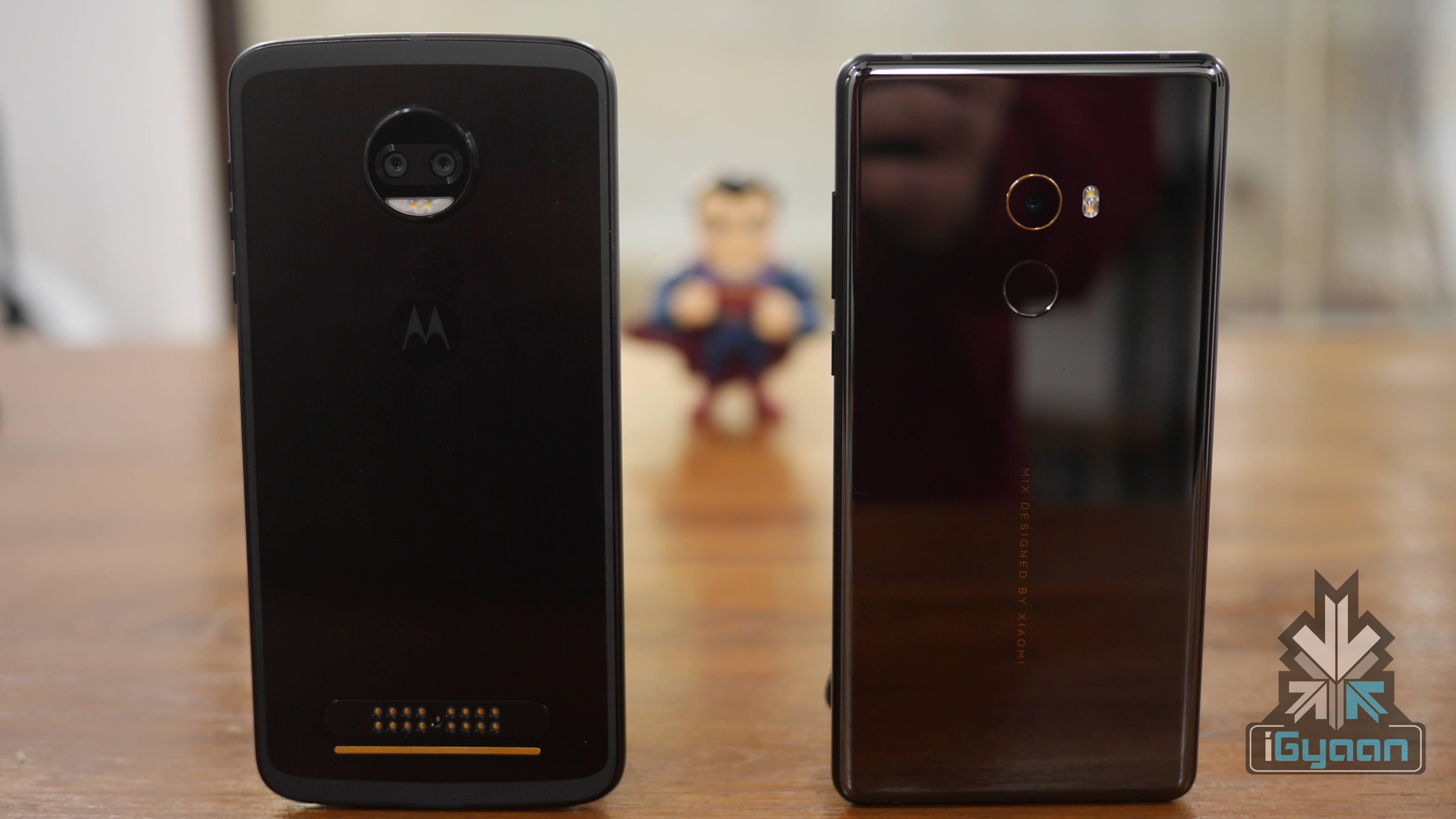
At such a price, the Moto Z2 Force will go head-to-head with the likes of Xiaomi Mi Mix 2 and OnePlus 5T. The OnePlus 5T, in particular, has been very successful in the Indian market. The Moto Z2 Force matches with the OnePlus 5T in almost every aspect and then does a bit more. The Moto Z2 Force, apart from being shatterproof, also has modular capabilities. This is something that is missing in the OnePlus 5T and the Mi Mix 2.
Where the Moto Z2 Force might fall behind the design department, it makes it up in functionality. That being said, the Moto Z2 Force still has a stunning design despite the 16:9 aspect ratio.Being a mid-2017 flagship, the Moto Z2 Force has bigger bezels and a 16:9 aspect ratio while the other two devices sport a modern design. The OnePlus 5T and Mi Mix 2 have thin bezels and an 18:9 aspect ratio.
Under the hood, all the three smartphones run on the same Qualcomm Snapdragon 835 chipset. The base model of the OnePlus 5T, priced at Rs. 32999, has 6GB of RAM and 64GB storage. The Mi Mix 2 is also priced at Rs. 32999 and offers the same RAM with 128GB storage. The Moto Z2 Force also has 6GB RAM and 64GB storage. However, it is the only one to offer expandable storage up to 2TB. That can be a dealmaker for people whose primary media consumption happens through a smartphone. The flexibility of storage matters a great deal for a few.
The Mot Z2 Force also runs Android 8 Oreo out of the box while the Mi Mix 2 is still stuck at Android 7 Nougat. The OnePlus 5T recently received an update to Android 8 Oreo as well. The Moto Z2 Force and OnePlus 5T run close to stock Android OS while the Mi Mix 2 comes with MIUI 9 on top. As we have said it in the past, preference for stock OS or custom skin is very subjective.
The OnePlus 5T retains the 3.5mm headphone jack while the Mi Mix 2 and Z2 Force both don’t have a headphone jack. This, again, can be a huge deal for a few consumers. The Moto Z2 Force is also the most durable smartphone thanks to its shattershield display. Due to the plastic coating on top, the Moto Z2 Force will be able to survive a few drops where the other two might crumble.
2017 was a great year for smartphones. The bezels shrunk, dual cameras became a norm, and AI gained a few strides. 2018 promises to be another great year for a smartphone enthusiast and the early leaks and rumours are very promising. Let’s take a look at the top five upcoming smartphones of 2018:
Samsung Galaxy S9/Galaxy S9+
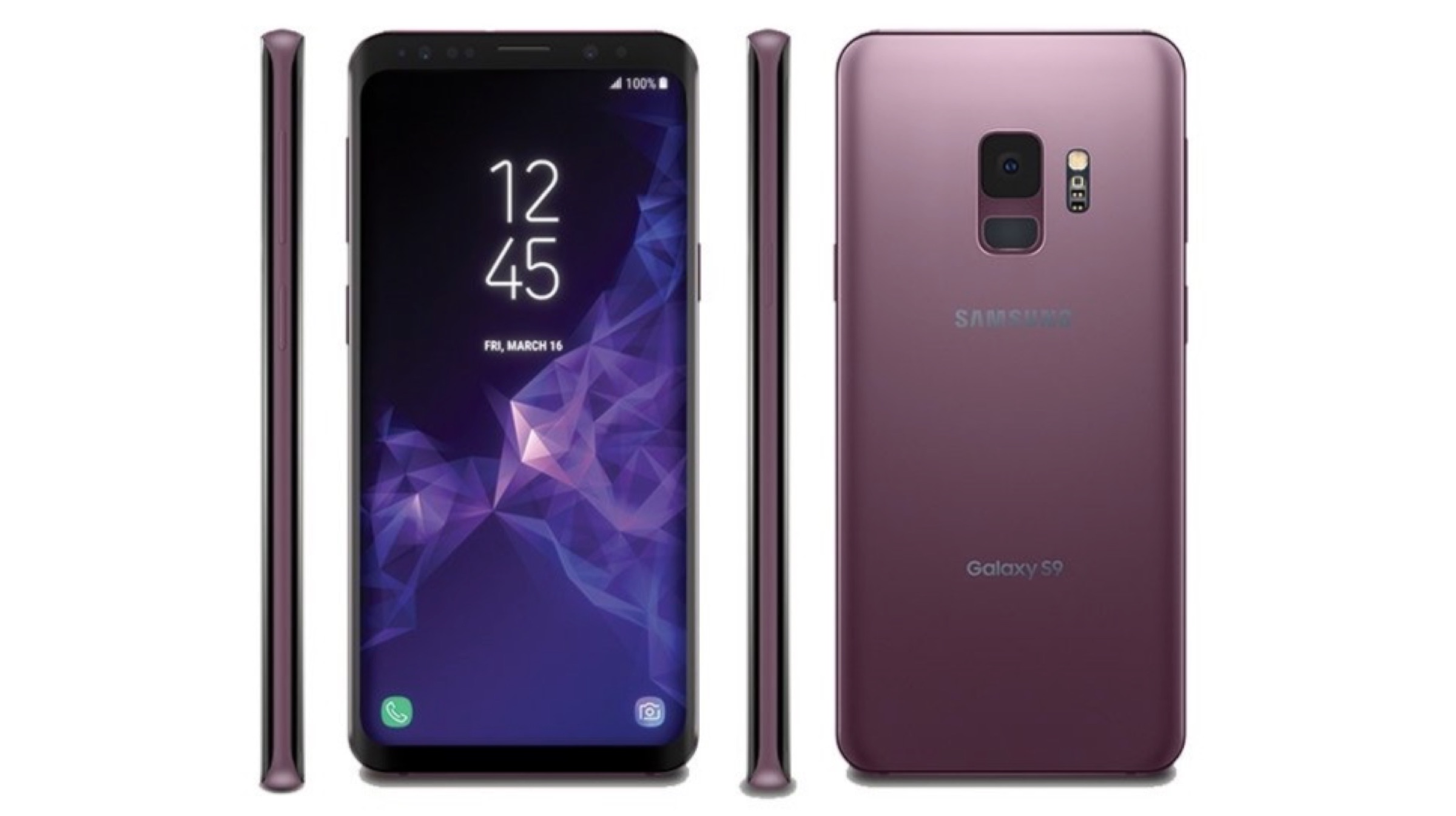
The first big launch of 2018 will be that of the Galaxy S9 and the Galaxy S9+. The smartphones will be launched at MWC 2018 and will possibly be the first to run on the Snapdragon 845 chipset. After weeks of renders and leaks, Samsung will finally unveil two of the most anticipated smartphones of 2018.
Design wise, the two phones won’t look different than their predecessors which is not a bad thing. The Galaxy S8 and S8+ are still two of the most stunning devices on the market. The top and bottom bezels will be slightly thinner and the fingerprint sensor will be repositioned. Unlike last year’s, the fingerprint sensor will now be placed below the camera module instead of next to it. That is a great design change which was called for by many Galaxy S8 and Note8 users.
To compete with Apple’s Face ID, Samsung is rumoured to introduce Smart Scan as well. Apparently, the new feature is a combination of face and iris scanning. This extra layer will improve accuracy and security of the system in extremely dark or lit up environments. These are the situations where iris scanning and facial recognition systems fail. There have been reports that suggest the Samsung Galaxy S9 devices might have a 3D sensor equipped front-camera for improved biometrics.
There are no rumours or leaks about an upcoming Xiaomi Mi A2 or Mi A1(2018). However, considering the popularity of the Mi A1 in India, the company will be hard-pressed to launch a successor in 2018. The Mi A1 had a more 2016 design with thick bezels but, with budget smartphones also moving on to an 18:9 aspect ratio, the Mi A2 will also have a modern design.
The Xiaomi Mi A1 was launched as the Mi 5X in China and the Mi 6X could be the Mi A2 in India. So far, there have been a few leaks pertaining to the Xiaomi Mi 6X. According to leaked images, the Mi 6X will have an iPhone X-like vertically placed dual-camera setup along with fingerprint sensor and an aluminium unibody build.
Up until the Xiaomi Mi A1 was launched, Motorola’s Moto G5 Plus and G5s Plus had the best cameras in the segment. However, the Xiaomi Mi A1 had a great dual-camera setup as well and the Mi A2, in order to sway customers will have to have a great camera performance as well. The Xiaomi Mi A2 is expected to have the same “wide-angle and telephoto lens” combination for the primary cameras. The dual-camera setup on the front is becoming popular as well, meaning the Xiaomi Mi A2 could also have a dual-camera setup on the front as well.
If Xiaomi does launch the Mi A2 or Mi A1 (2018) in India, it is expected to do well, considering budget smartphones from Honor will have EMUI and a lot of consumers still prefer stock Android OS.
The OnePlus 5 and OnePlus 5T saw a rise in price which many people weren’t happy about. There was also no water resistance even though OnePlus decided to increase the price of its new flagship considerably. However, early rumours of the OnePlus 6 are in and it appears that the company will be refreshing its smartphone lineup earlier than expected. A report from Android Marvel claims that the OnePlus 6 will be launched in March of 2018 and have a few new features which the OnePlus 5T is missing.
Inspired by Face ID, the OnePlus 6 will also have its own version of facial recognition. The OnePlus 6 is expected to have a camera hardware setup similar to the iPhone X, complete with a 3D camera module that will use infrared light to measure depth. However, the OnePlus 6 will not have an iPhone X-like notch. Instead, the handset is expected to have a full top bezel where the extra sensors should be found.
The OnePlus 6 is expected to have the Qualcomm Snapdragon 845 chipset under the hood along with 6GB or 8GB of RAM. Storage options will most probably be the same with 64GB or 128Gb variants of the phone. OnePlus has shown its tendency to launch limited edition variants of its devices and it is fair to assume that the company will do something similar with the OnePlus 6 and possibly, the OnePlus 6T.
Apple iPhone X Plus
2018 Apple iPhone lineup
It’s tentative but, we might see a bigger version of the iPhone X in September of 2018. The iPhone X, launched in September 2017 saw a radical shift from the traditional iPhone design we were accustomed to, since the launch of the iPhone 6. While the iPhone 8 and iPhone 8 Plus were similar to their predecessors, the iPhone X was the special 10th-anniversary device, billed as the true successor to the original iPhone which was launched back in 2007.
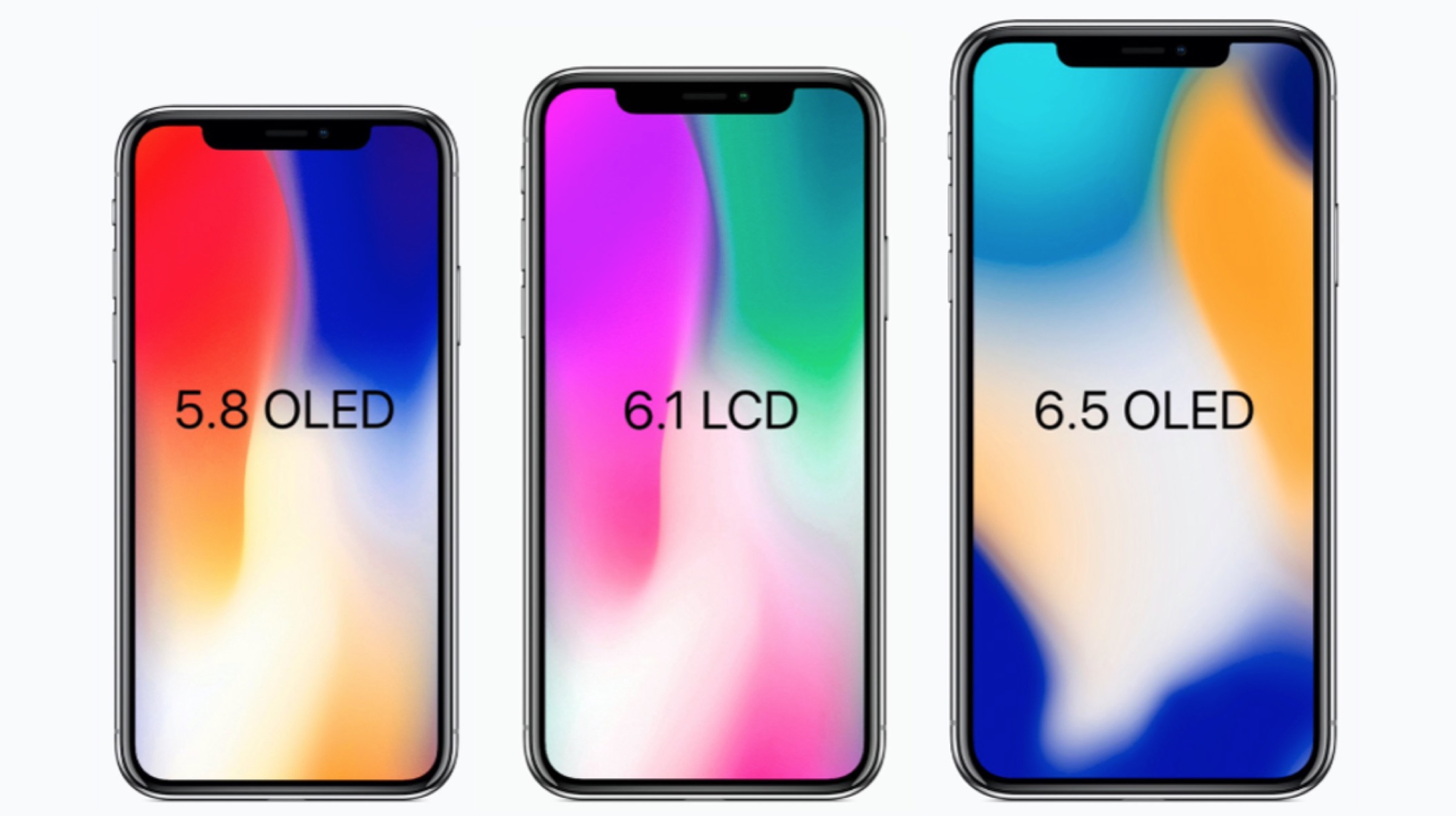
Early reports claim that Apple will continue the trend and launch three new iPhones in 2018. While two of them will continue to have an OLED display, the smallest of the three iPhones will be cheaper thanks to the LCD display. However, the design of all the three iPhones will be similar to the iPhone X with the notch at the top of the display and vertically placed dual cameras.
Under the hood, an upgraded A12 (tentatively named) chipset is expected which will, as always, perform better than the previous generation and go toe-to-toe with the Snapdragon 845 chipset.
Apple made it clear that it will emphasise a lot on the use of AI and machine learning with the introduction of ARKit. This is expected to be taken a notch higher with the next generation iPhones. What will be interesting to see is the nomenclature of all the three iPhones.
Google Pixel 3/Pixel 3 XL
The Google Pixel 2 and Pixel 2 XL launched amidst a lot of anticipation. Google was expected to deliver two of the best Android phones of the year and while the software and AI integration of the two phones was commendable, Google lost the race in the hardware department.
In 2018, especially after having the HTC smartphone personnel on board, Google will be expected to rectify those mistakes and deliver great Android devices which will compete with the likes of the Galaxy S9 and the OnePlus 6.
Similar to the Pixel 2, the Pixel 3 and its bigger sibling will focus a lot on AI and machine learning, and deliver smooth software experience thanks to the stock Android OS. 2018 will see the launch of Android P and the Pixel 3 devices will be the first Android phones on the planet to run o the new Android OS.
The Pixel 2 smartphones had the best camera on smartphones and achieved dual-camera capable features on their single camera setup thanks to Google’s incredible machine learning and AI implementation. We expect similar results from the Google Pixel 3 and Pixel 3 XL.
OnePlus launched the OnePlus 5T Lava Red in India in late-January. It was sold via a flash sale on Amazon and went out of stock pretty quick. However, the demand for the Lava Red OnePlus 5T has made the company restock the Indian shores with the device. As a part of Valentine’s Day offer, the Lava Red OnePlus 5T is back in sale via Amazon, OnePlus.com and OnePlus Experience Stores.
It is priced at Rs. 37999 as it is only available in the 8GB RAM variant. The Valentine’s Day offer will run until the 14th of February and has a few good deals for prospective buyers. People who buy the Lava Red OnePlus 5T from Amazon can get an instant discount of up to Rs. 1,500 by using an SBI credit card. They will also be eligible for 3 months of zero-interest EMIs.
People who buy the OnePlus 5T Lava Red from the OnePlus Experience Stores or OnePlus.com will get a cashback of Rs. 1500. OnePlus has also announced a new referral program for users who bought either the OnePlus 5 or the OnePlus 5T before the 30th of January. All such eligible customers will get two referral codes via email. Using these codes, if anyone purchases the OnePlus 5T, both the referrer and the new buyer will get a warranty extension of up to three months each. The company is also offering the first 500 successful referrers and referees a pair of Bullet V2 earphones each.
OnePlus 5T Lava Red First Impressions
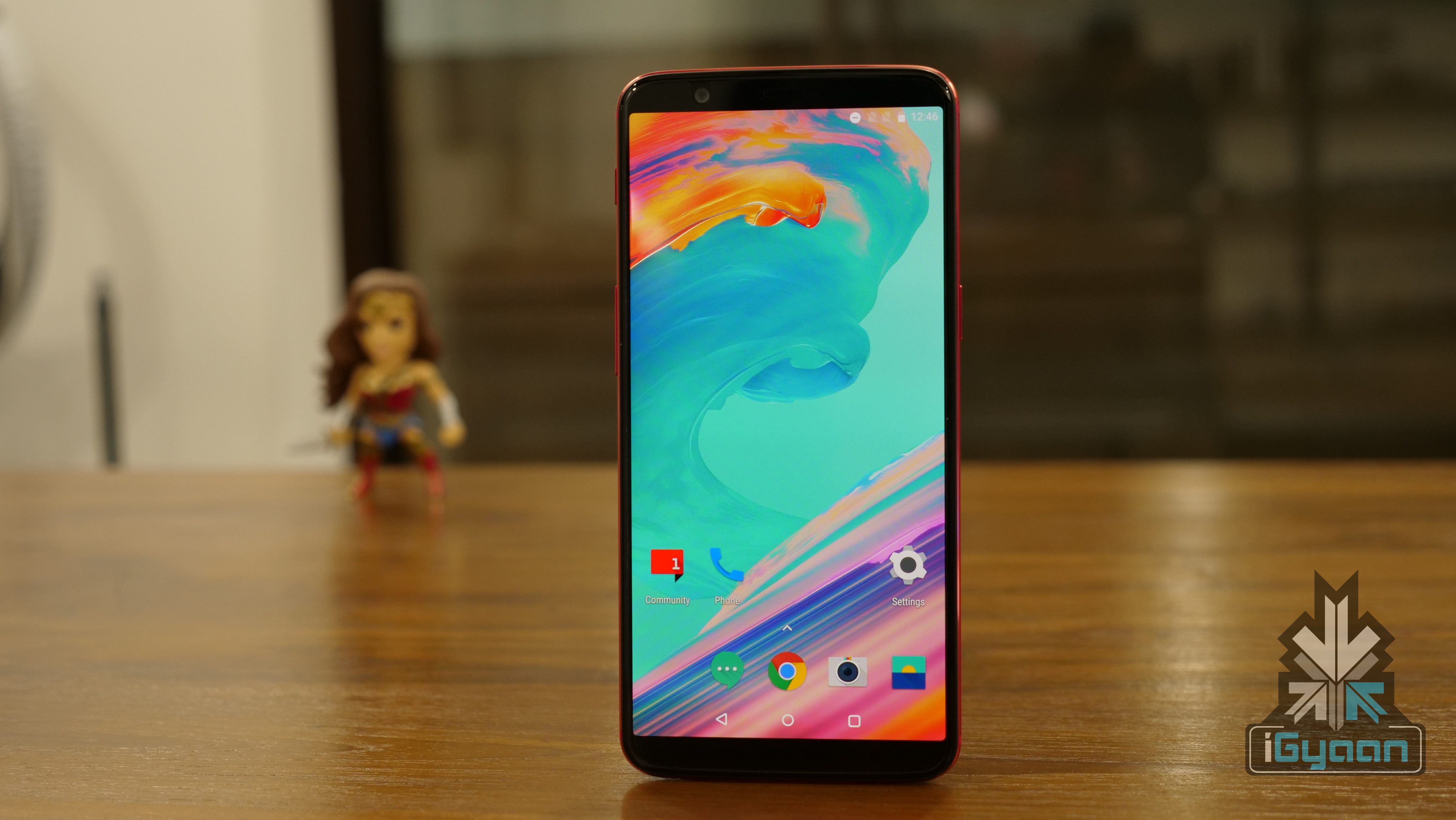
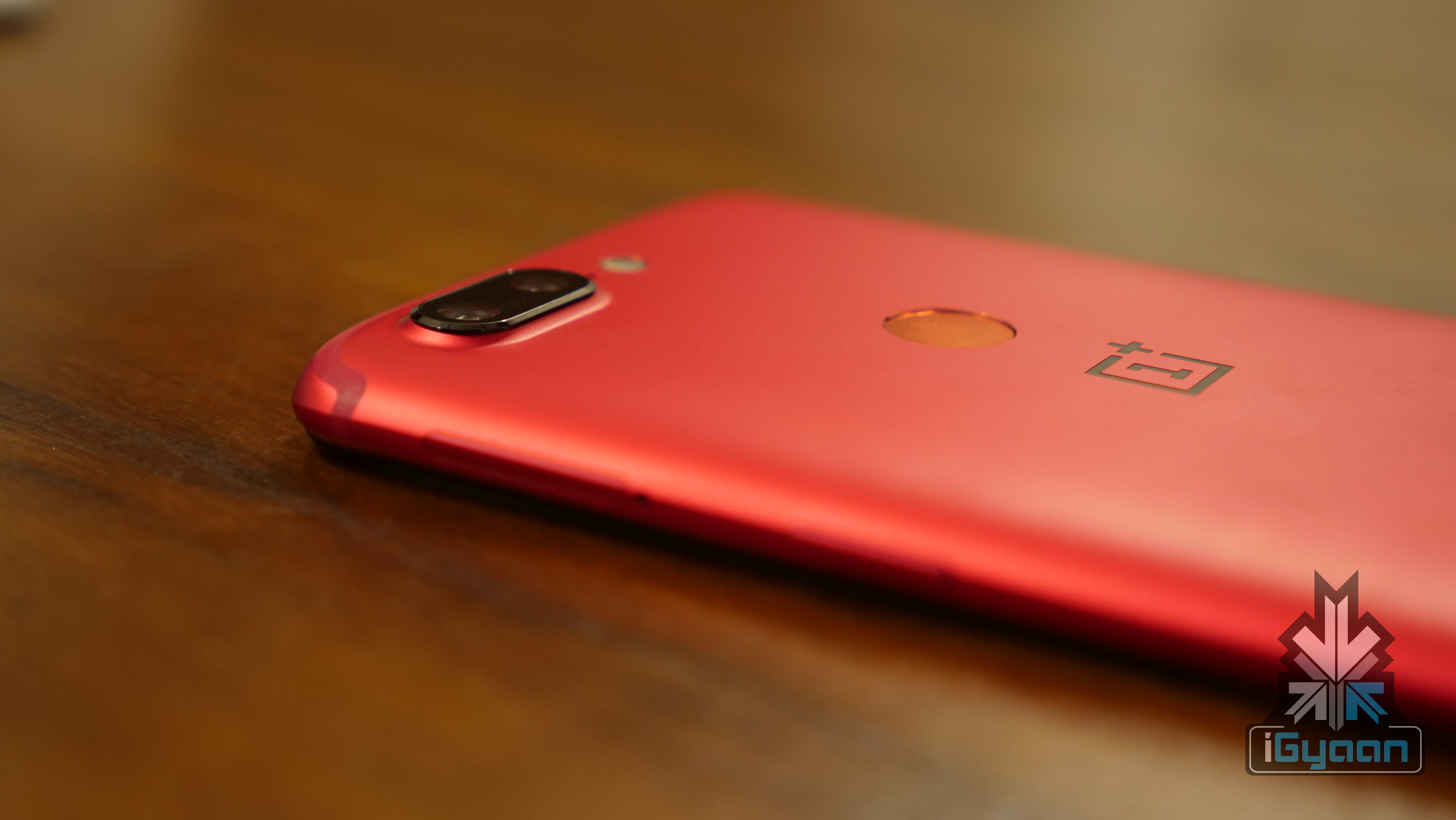
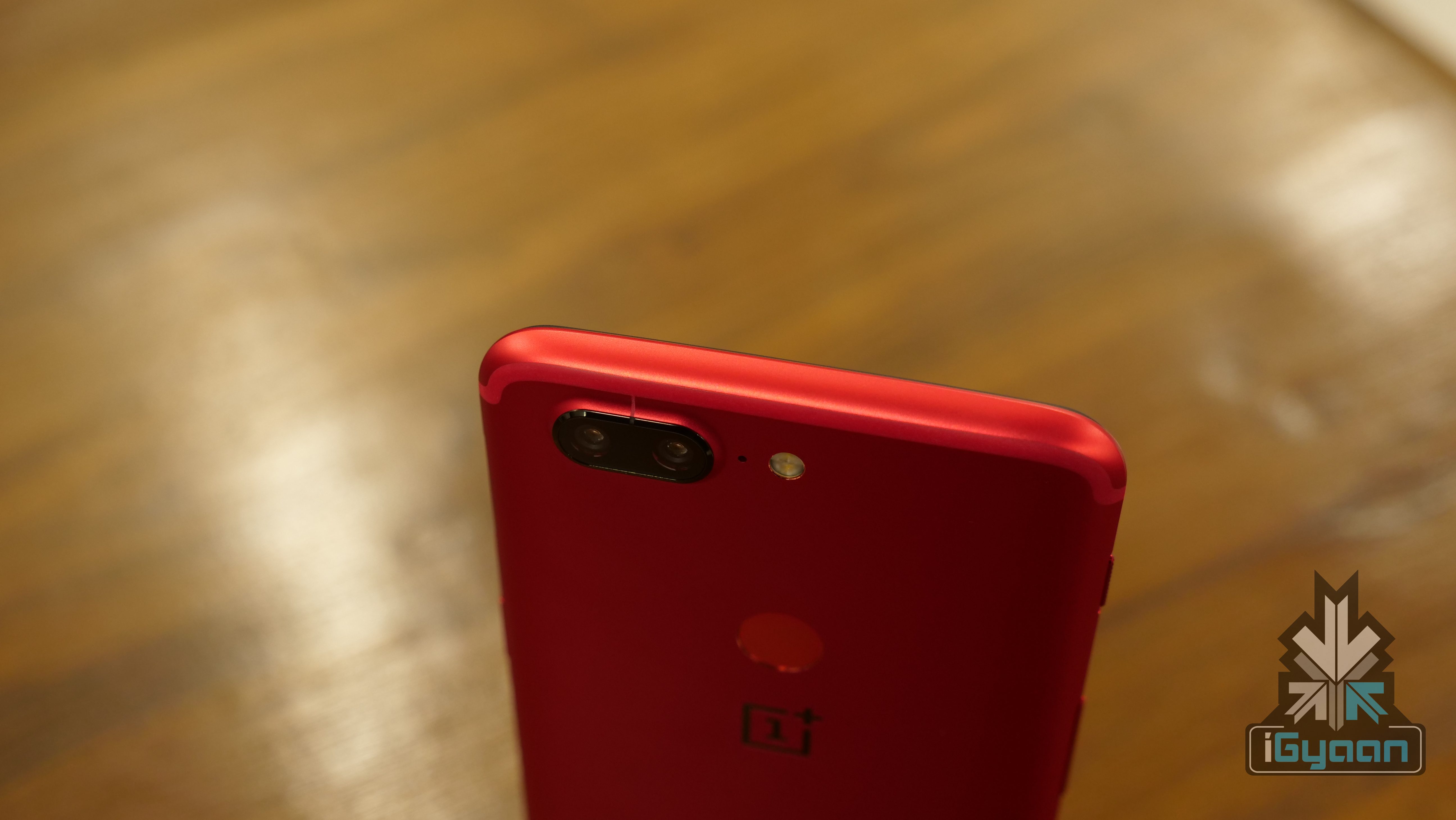
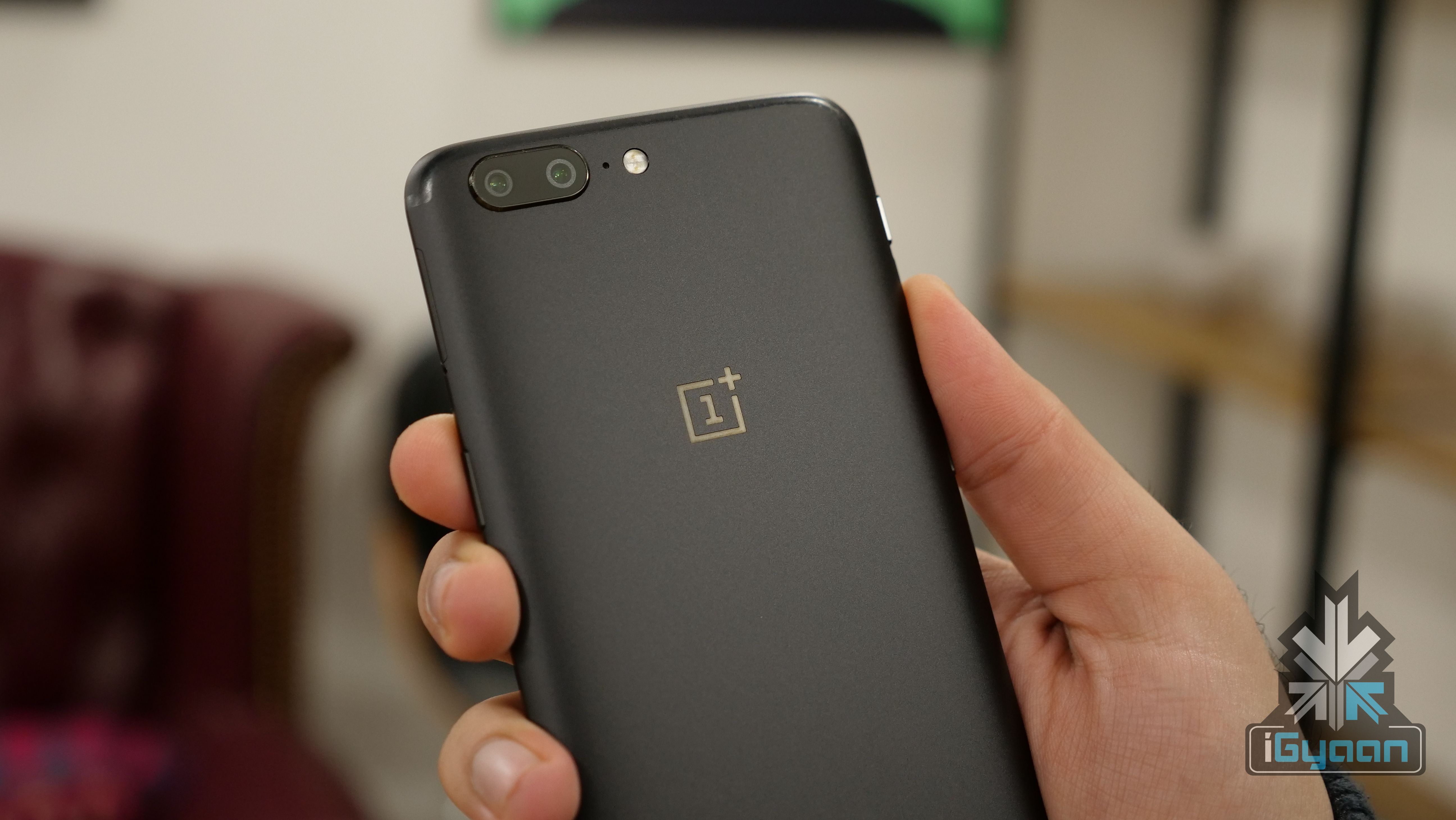
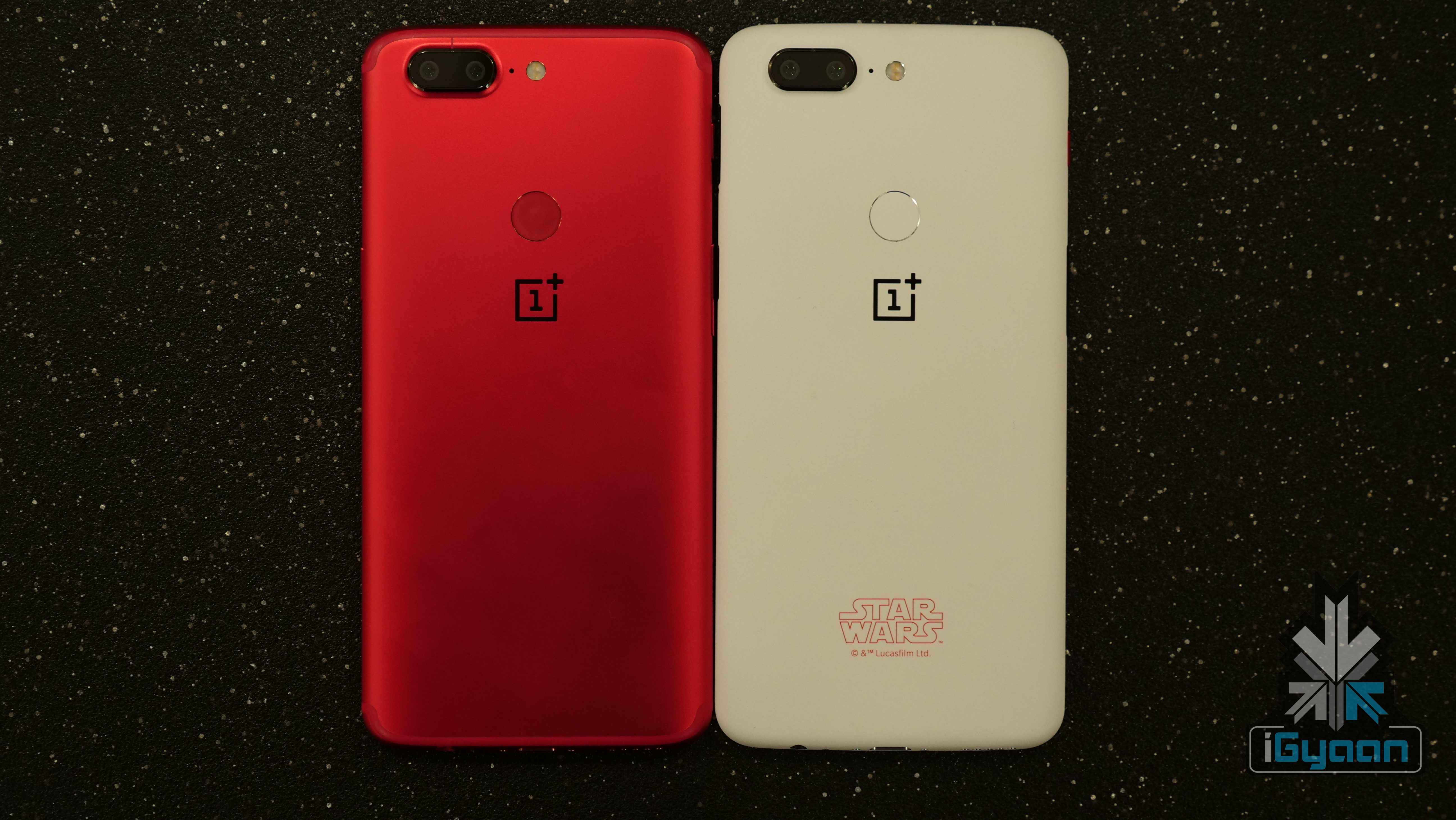
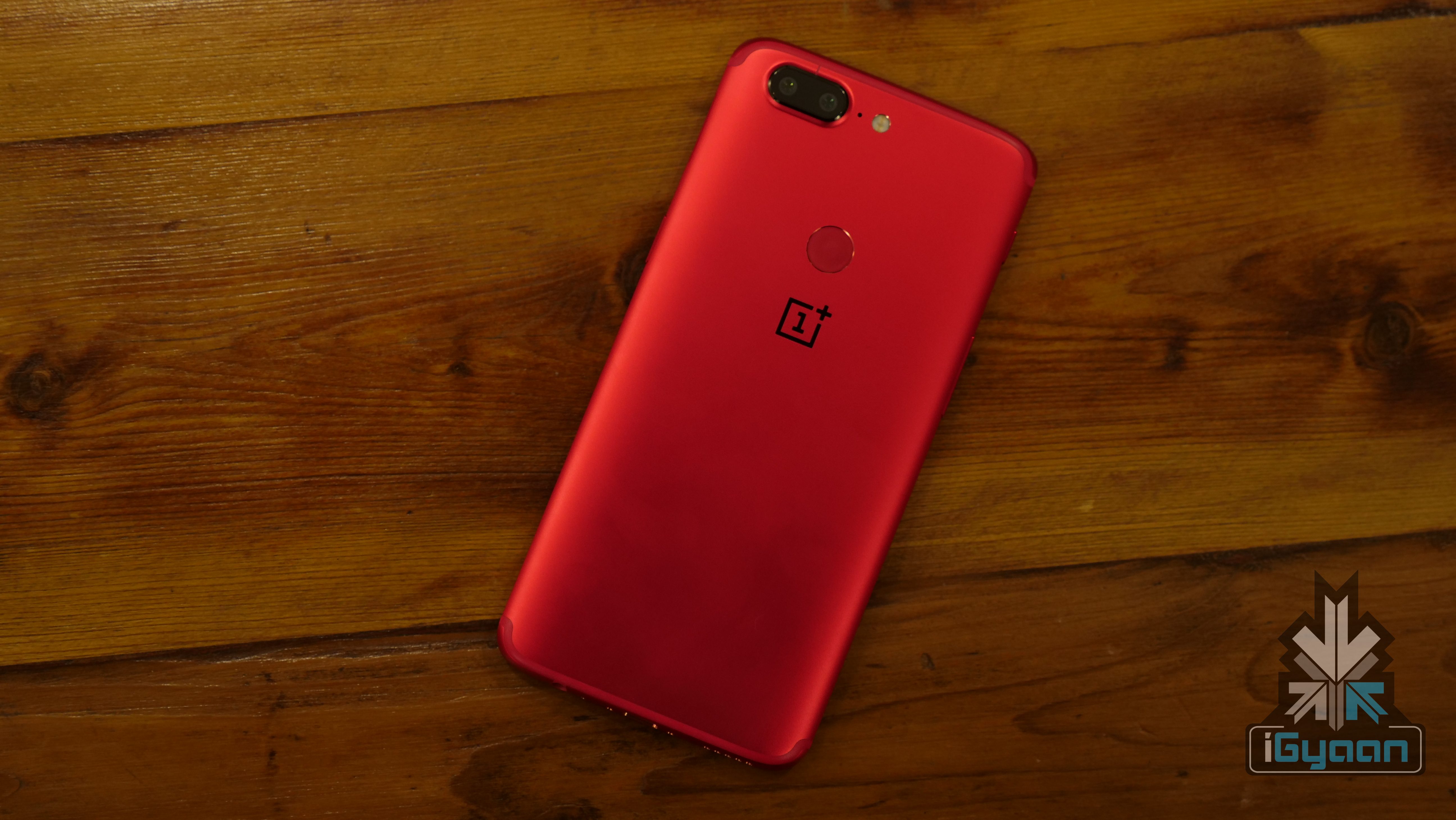
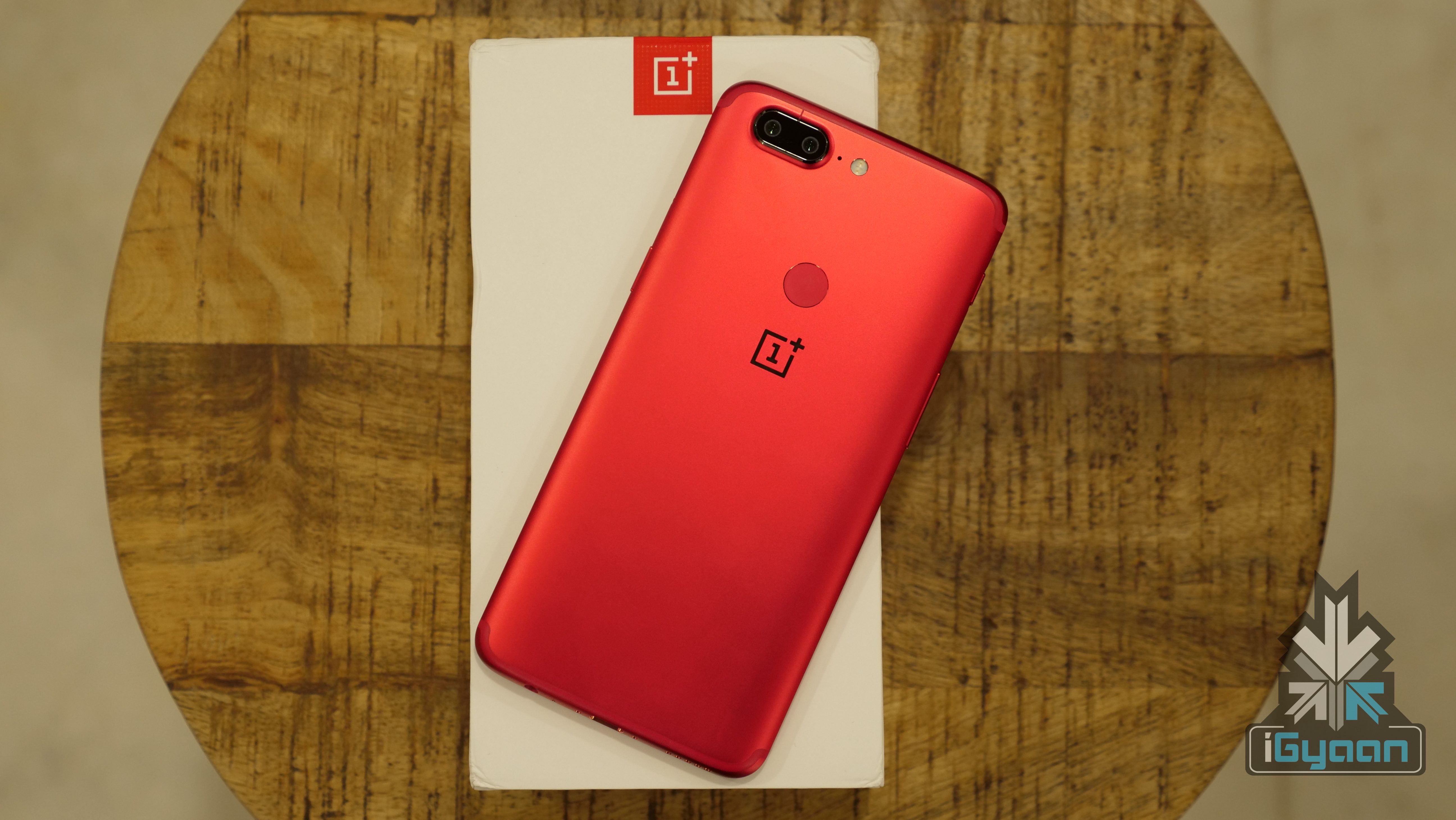
The Lava Red OnePlus 5T looks and feels exactly the same as the Midnight Black variant except it is red in colour. The smartphone has the same matte finish on the back which makes it a bit slippery to hold but, otherwise it’s a very sturdy phone. Depending on which side you’re on, you’ll be happy or sad to know that OnePlus has retained the black colour for the front of the smartphone, something that a lot of people wanted in the Product Red iPhone 7 and 7 Plus.
The power button, volume rockers and the fingerprint sensor are also red in colour with the black OnePlus logo providing a bit of contrast on the back. There is a small camera bump on the back which means that the OnePlus 5T doesn’t lay flat on a surface which may bug a few people while others won’t even notice it. The headphone jack, USB C port and the single bottom firing speaker reside on the bottom of the smartphone.
Are you buying a new Lava Red OnePlus 5T this Valentine’s Day?
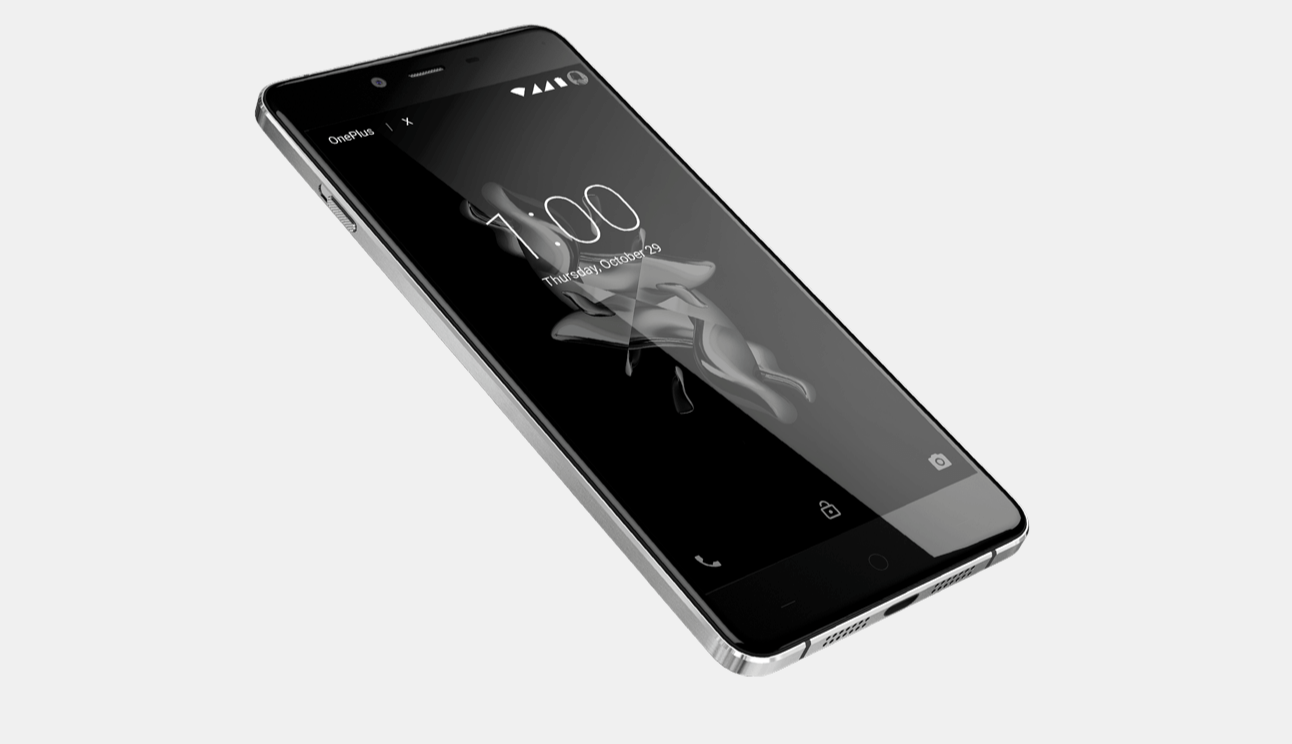
OnePlus has been known to refresh its smartphone lineup rather swiftly. It launched the OnePlus 3T a few months after the launch of the OnePlus 3 and followed the same strategy with the OnePlus 5 and 5T. One smartphone that has not seen a successor yet is the OnePlus. The OnePlus X was OnePlus’ ultra-affordable device that was launched in September 2015. Even though it had a premium build and good enough specifications, the device failed to make an impact in the market.
A new rumour claimed that the company was working on a successor to the OnePlus X, the OnePlus X2. While the information that was leaked appeared plausible, the company has come out and said that there will be OnePlus X2.
While this pretty much confirms that the OnePlus X2 was barely a thing of someone’s imagination, it could be a good device if it were true. According to the rumour, the OnePlus X2 would have reverted to the 5.5 inch display with a 1920 x 1080 px resolution.
It goes on to claim that due to the surplus of Snapdragon 835 chipsets, the company will use these chipsets for the OnePlus X2. Although that could have been the case, OnePlus recently announced its best ever year by revenue. This means that the company sold a lot of OnePlus 5 and OnePlus 5T which were powered by the Qualcomm Snapdragon 835.
The price of the smartphone was predicted to be in the region of US$ 250 (Rs. 16,000 approx.). At such a price with the Snapdragon 835 chipset and a build quality similar to the predecessor, this device would have been a mid-range killer.
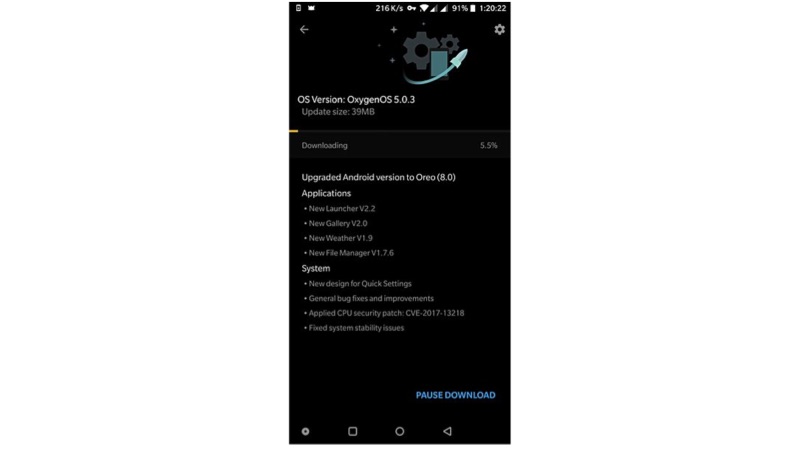
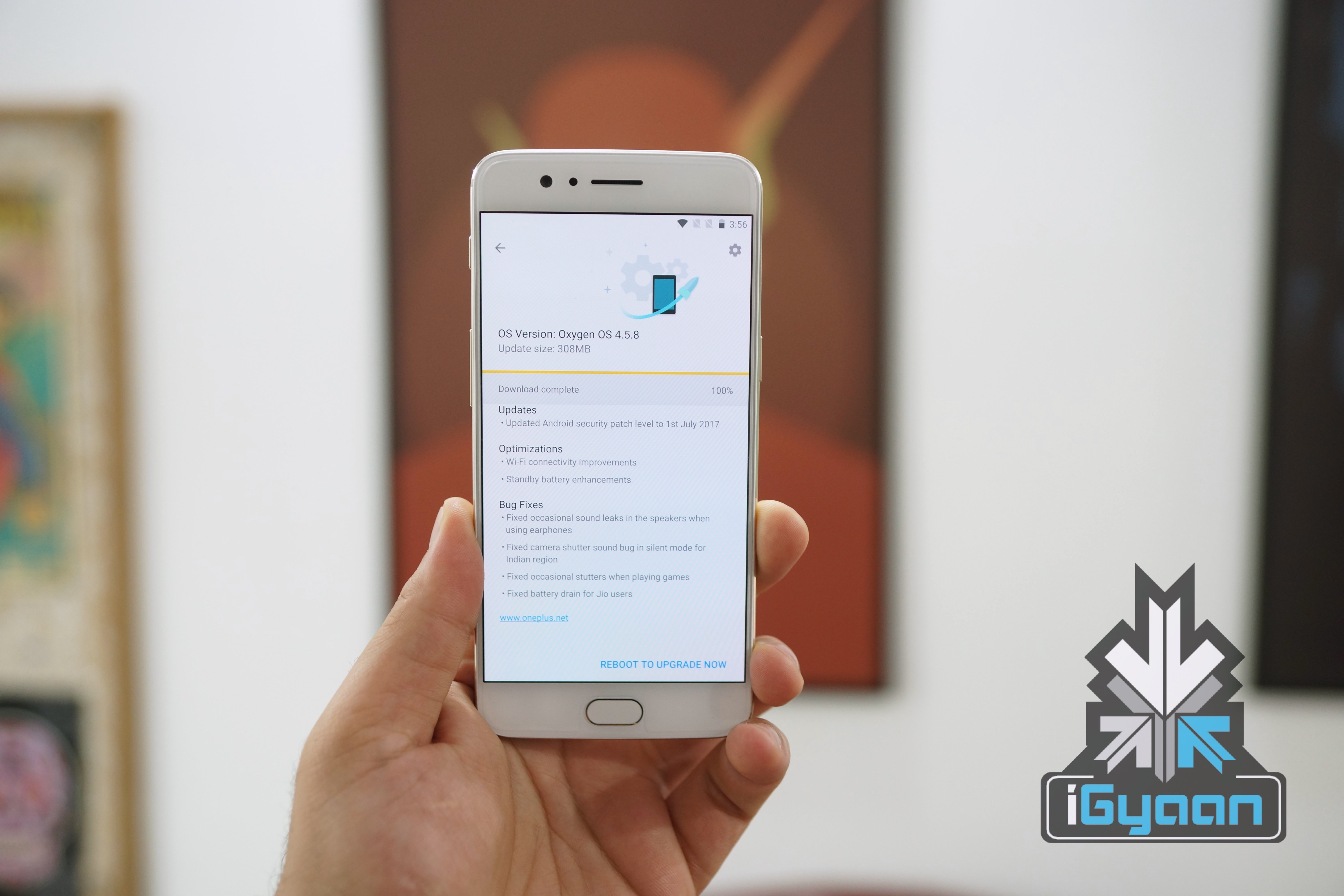
On the 30th of January OnePlus announced that an Android 8 Oreo update for the OnePlus 5T had begun. The update was due to arrive along with OxygenOS 5.0.2. However, due to some bugs, the rollout was suspended. Now, after swiftly working on the issues, the company has started rolling out OxygenOS 5.0.3 which also brings Android 8.09 Oreo update with it.
This is is not the first time that an OEM had to suspend Android 8 Oreo rollout for its devices. Most notably, it has been smartphones with stock Android OS which have had a lot of issues. Xiaomi Mi A1 runs stock Android OS and after the initial Oreo update, the company had to suspend it due to a lot of complaints.
If you had already updated to OxygenOS 5.0.2, the new update weighs in at about 39MB. For users moving from Android 7 Nougat, the update will be much bigger in size.
OnePlus 5T Specifications
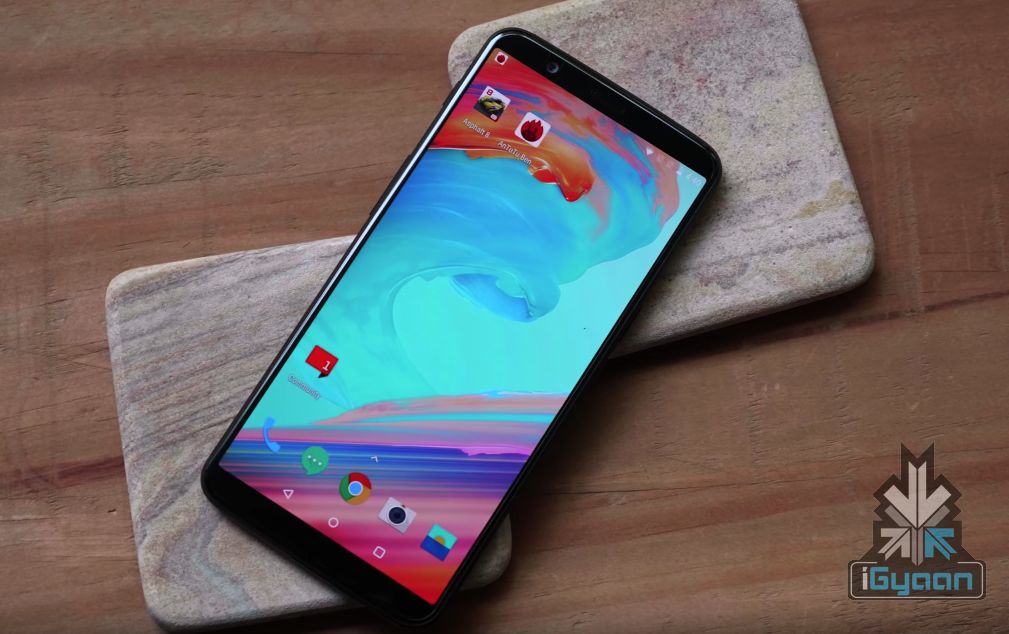
The OnePlus 5T has a 6-inch Full Optic AMOLED display with a 2160 x 1080 px resolution.
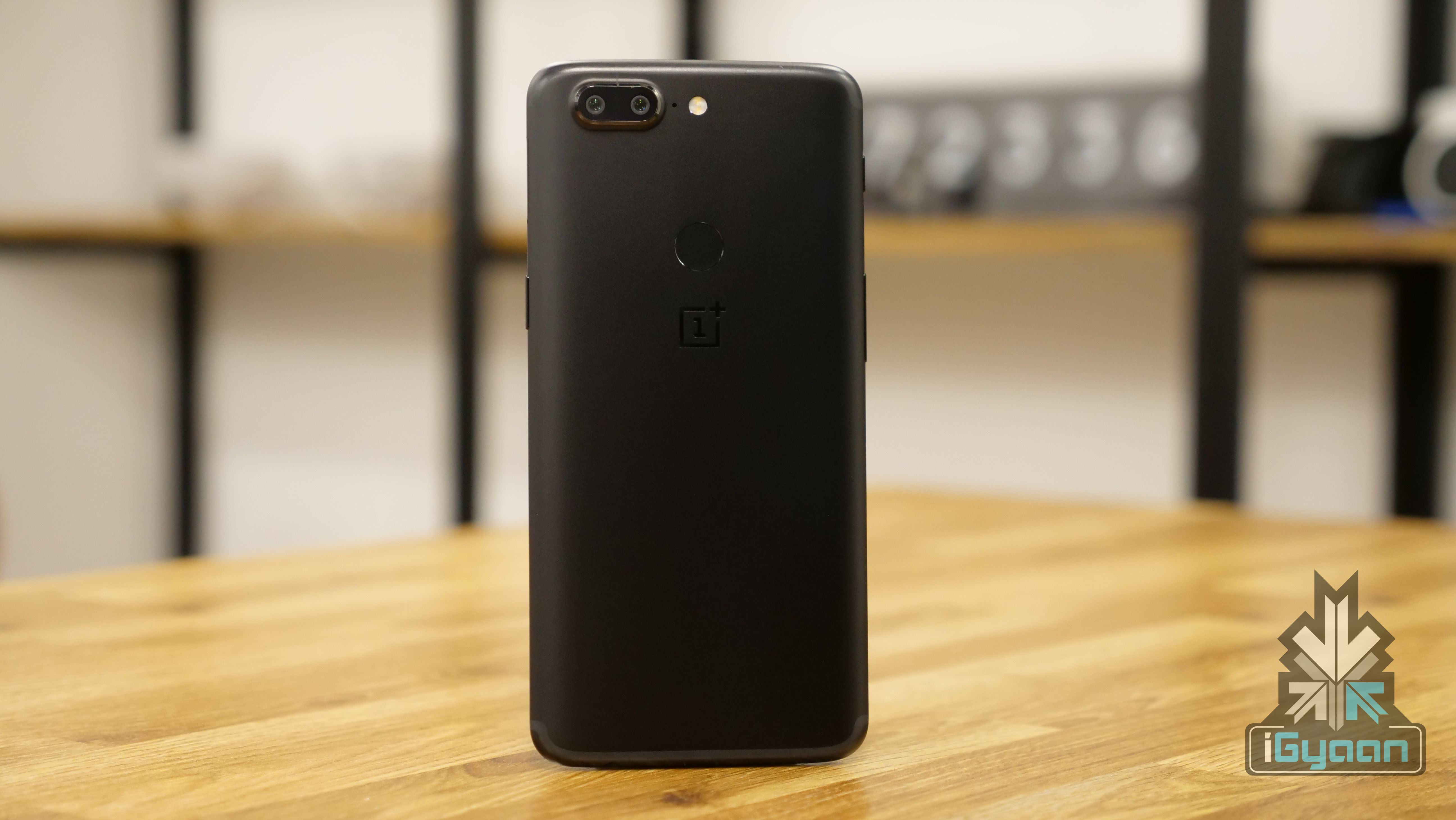
Under the hood, the OnePlus 5T has the Qualcomm Snapdragon 835 chipset, a 2.4GHz octa-core processor, 8GB of RAM, 128GB of onboard storage which cannot be expanded. Due to thin bezels, there is no place for a home button and the fingerprint sensor has now been shifted to the back of the phone and is placed right above OnePlus logo.
Powering the device is a 3300 mAh battery which supports OnePlus’ DashCharge technology. The OnePlus 5T also features facial recognition for unlocking the device. The alert slider retains its place at the top left side of the phone.
One big change in the OnePlus 5T is in the camera department. Unlike the OnePlus 5, the OnePlus 5T no longer has a secondary telephoto lens at the back. Instead, OnePlus has decided to focus on the device’s low-light photography capabilities. The cameras do not have OIS and OnePlus has decided to go for EIS on the dual camera setup at the back. The device has a 16MP camera with an f/1.7 aperture coupled with a 20MP sensor with the same f/1.7 aperture and field of view, ie no optical zoom. On the front is a 16MP camera with an f/2.0 aperture.
The OnePlus 5 has gone from being one of the best smartphones to a forgotten sibling in just a few months. In November, OnePlus launched the OnePlus 5T as an upgraded version of the OnePlus 5. Unlike the upgrade from the OnePlus 3 to 3T, the most noticeable change was on the outside.
The OnePlus 5T got rid of giant bezels and also moved the fingerprint sensor to the back. This prompted the company to introduce a new feature, called Face Unlock. Still considered to be one of the fastest facial recognition systems on the market right now, the Face Unlock feature is a great feature. The OnePlus 5 has finally started receiving the much coveted Face Unlock feature as well.
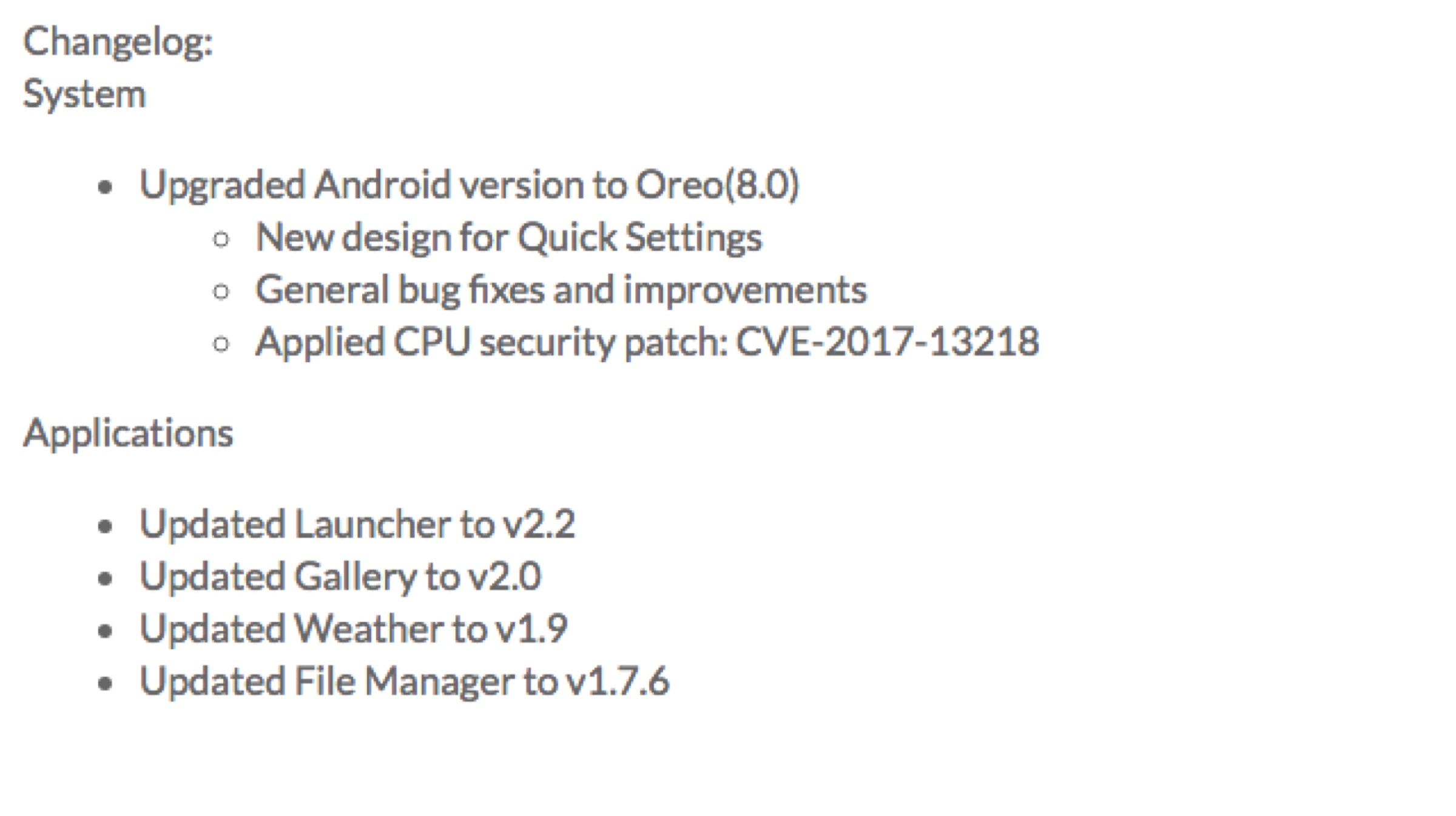
The update is a part of an incremental update, OxygenOS 5.0.2. The changelog also includes a CPU security patch (CVE-2017-13218), enhanced EIS for video recording, and updates to Launcher, Gallery, Weather, and File Manager apps.
The OnePlus 5 has a 5.5-inch Optic AMOLED display with a 1920 x 1080 px resolution.
The 2017 flagship has the Qualcomm Snapdragon 835 chipset with a combination of either 6GB RAM and 64GB of storage or 8GB RAM and 128 of storage which can not be expanded.
The OnePlus 5 is powered by a 3300 mAh battery with DashCharge technology.
The OnePlus 5 also features dual cameras on the back, one of the cameras is a 20 MP sensor with an f/2.6 aperture, while the other is a 16 MP telephoto lens with an aperture of F/1.7. On the front is a 16MP camera with an f/2.0 aperture.
The OnePlus 5T was launched in November of 2017 as an incremental upgrade of the OnePlus 5. It ran Android 7 Nougat out of the box even though Android 8.0 Oreo was officially launched in August. OnePlus said that Android 8 Oreo update for OnePlus 5T will come after a few Beta builds were tested.
The testing phase has been completed as the company announced the official rollout of Android 8 Oreo for the OnePlus 5T users. The stable build rollout will be in phases with a few users receiving the update right now while the rest will start receiving it in a few days.
Android 8.0 Oreo update for a few smartphones has not been a complete success so far. OnePlus itself had to suspend the Android 8 Oreo update for the OnePlus 5 earlier in January. Similarly, Xiaomi had to suspend the Android Oreo update for the Mi A1 as well.
New Features In Android 8 Oreo Update
Hopefully, the OnePlus 5T update will only bring new features rather bugs. You can check for the update by heading to Settings>System Update.
OnePlus 5T Specifications
The OnePlus 5T has a 6-inch Full Optic AMOLED display with a 2160 x 1080 px resolution.
Under the hood, the OnePlus 5T has the Qualcomm Snapdragon 835 chipset, a 2.4GHz octa-core processor, 8GB of RAM, 128GB of onboard storage which cannot be expanded. Due to thin bezels, there is no place for a home button and the fingerprint sensor has now been shifted to the back of the phone and is placed right above OnePlus logo.
Powering the device is a 3300 mAh battery which supports OnePlus’ DashCharge technology. The OnePlus 5T also features facial recognition for unlocking the device. The alert slider retains its place at the top left side of the phone.
One big change in the OnePlus 5T is in the camera department. Unlike the OnePlus 5, the OnePlus 5T no longer has a secondary telephoto lens at the back. Instead, OnePlus has decided to focus on the device’s low-light photography capabilities. The cameras do not have OIS and OnePlus has decided to go for EIS on the dual camera setup at the back. The device has a 16MP camera with an f/1.7 aperture coupled with a 20MP sensor with the same f/1.7 aperture and field of view, ie no optical zoom. On the front is a 16MP camera with an f/2.0 aperture.
OnePlus has started rolling out a new beta update to all the testers of the OnePlus 5T. The Oxygen OS Open Beta 3 arrives a couple of weeks after the previous update started seeding. The new update, however, will be noted for two noticeable changes. The first one is the removal of the controversial Clipboard app. The other one is the entry of gesture support.
The Clipboard app was introduced in the previous Beta build that started seeding on the 16th of January. It was reported on the OnePlus forums by a user named v1nc. The user found this out by accident when NetGuard blocked the Clipboard app from accessing the network. Clipboard app basically stores all the copy-pasted data on your phone. Further investigation revealed that the app was trying to ping a server that was an Alibaba owned property.
Although OnePlus came out and quashed these reports, it has now removed the app from the latest beta build.
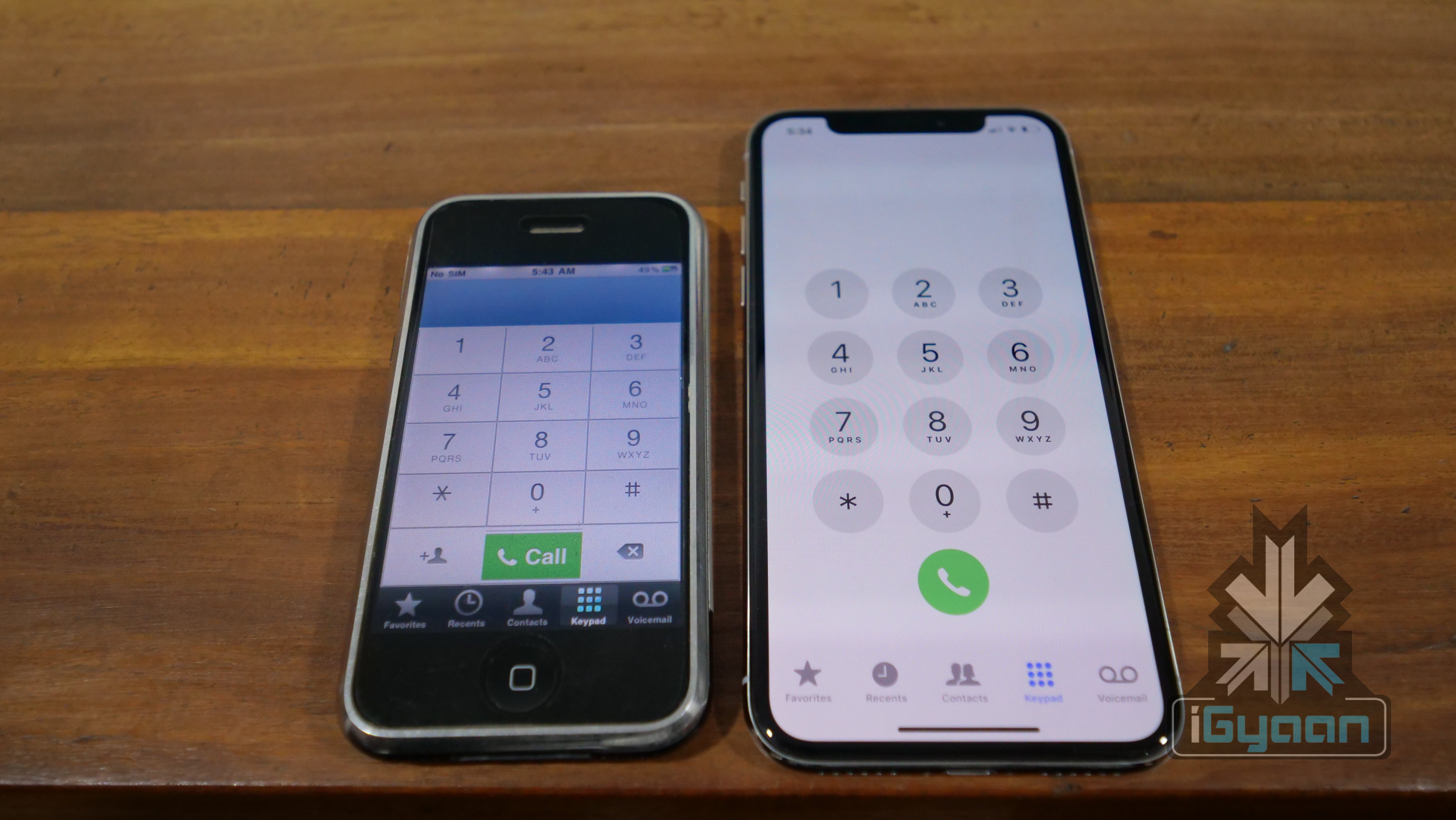
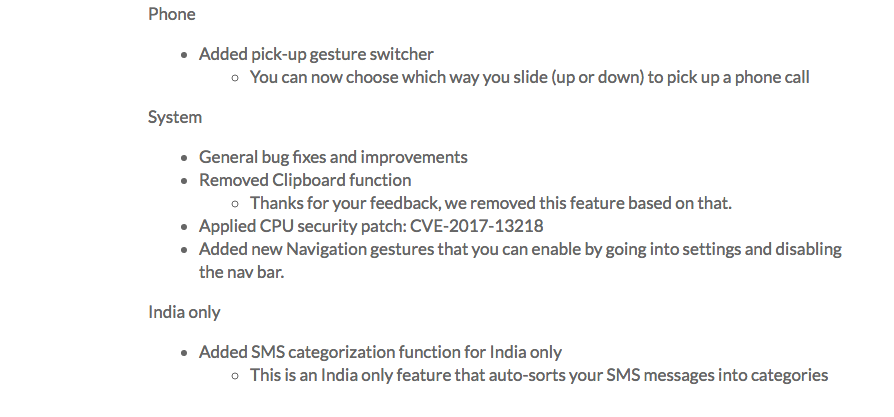
The other notable change is the addition of iPhone X-like gestures for navigation. Users now have the option of disabling on-screen navigation buttons. Once disabled, users have to use gestures to navigate through the UI. The gestures are not exactly like the ones found on the iPhone X but, are somewhat similar.
Homebar On The iPhone X
Another change is in the incoming call screen. Users can now choose to slide up or down to answer or ignore an incoming call. Here is a list of all the new changes:
The introduction of gestures is an interesting move by OnePlus. With smartphones moving to an all-screen design, wasting that little space on navigation buttons seem counterproductive. Although traditionally, Android OS has had navigation buttons, a slow introduction of gestures can go a long way in helping consumers get acclimatised with the new way of navigation.
The budget segment of smartphones in India saw a plethora of releases in 2017. Even the flagship segment and affordable flagship segment saw the release of some great devices by Samsung, Apple, OnePlus and Honor. However, the Rs. 20,000-25,000 price category is right now full of old devices that were great at one point. In November 2017, Lenovo-owned Motorola launched the Moto X4 that entered this price segment.
Recently, Motorola launched the 6GB RAM variant of the Moto X4 in India at a price of Rs. 24999. At this price, the Moto X4 has competition from the bygone flagship devices OnePlus 3T and Honor 8 Pro. It is worth noting that only a certified refurbished OnePlus 3T is available on Amazon anymore.
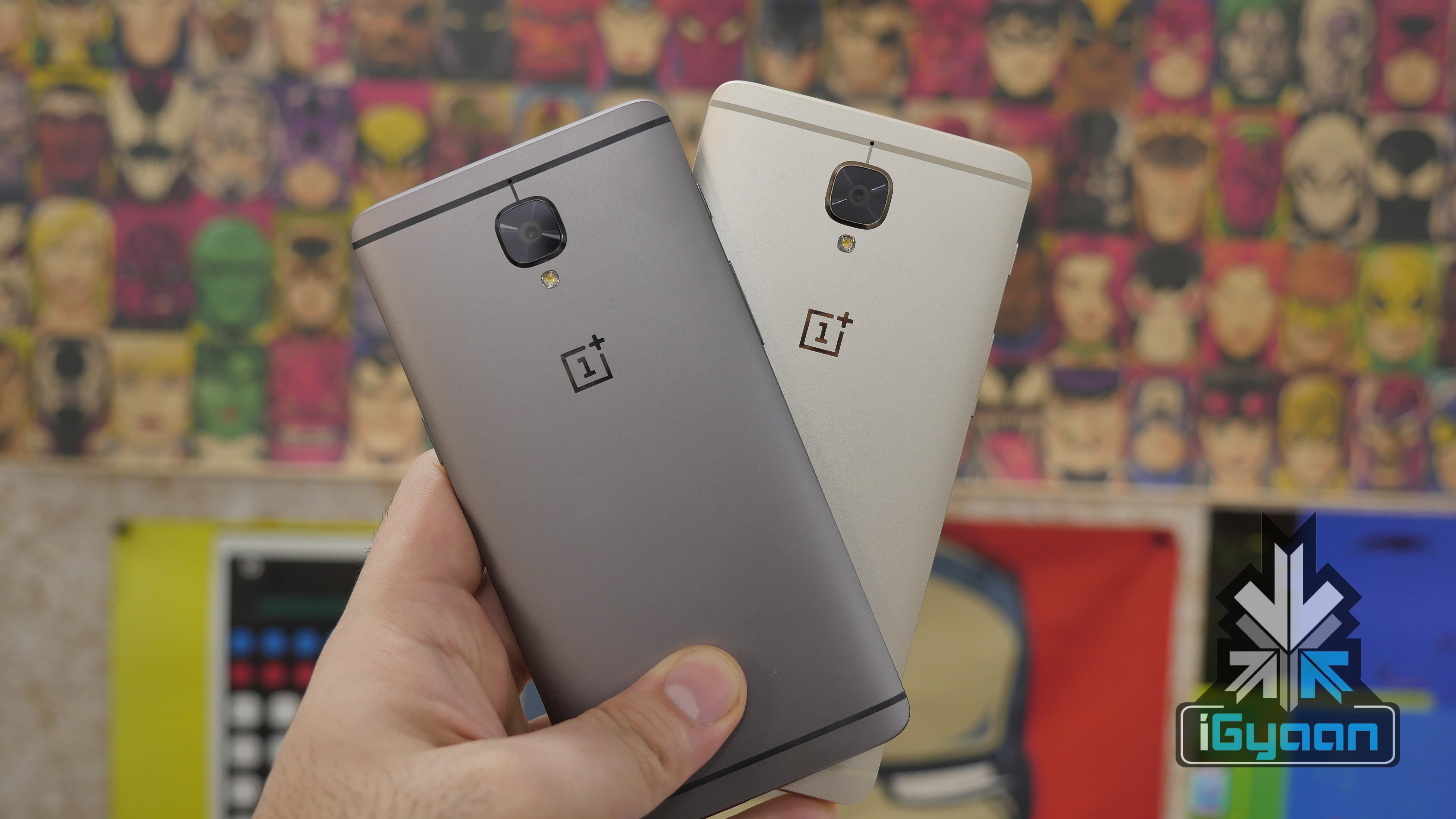
While how people perceive a phone is subjective, the Moto X4 does exude a premium feel. The OnePlus 3T and Honor 8 Pro offer great build quality as well but, the contoured glass back of the Moto X4 feels more premium. The Sterling Blue colour of the Moto X4, thanks to a different hue of blue stands out between the three phones.
Both the Moto X4 and OnePlus 3T run Android 8 Oreo out of the box. The Honor 8 Pro, launched after the OnePlus 3T runs Android 7 Nougat right now with no confirmation from the company regarding an Android 8 Oreo update. OnePlus has confirmed that Android 8 Oreo will be the last major software upgrade for the OnePlus 3T. Since the new Moto X4 runs Android 8 Oreo out of the box, there is a high possibility that it will receive an update to Android P as well.
Under the hood, the OnePlus 3T has the 2016 flagship chipset, Snapdragon 821. The Honor 8 Pro has the Kirin 960 while the Moto X4 has the Snapdragon 630 under the hood. OnePlus 3T has a very capable chipset under the hood which is almost two years old now. Add no software support to that, and the OnePlus 3T doesn’t look like a future-proof phone.
The Honor 8 Pro is already lagging in the software department but, it does offer a customisable skin which a lot of people prefer over stock OS.
One of the USPs of the Moto X4 is its ruggedness. While 2017 flagship phones like the Pixel 2 and OnePlus 5T skipped an IP rating, the Moto X4 has an IP68 rating for water and dust resistance. The Moto X4 is the only device in this price range that has a dual-camera setup and provides an IP68 rating.
Let’s compare the specifications and see which smartphone provides the most in this price range.
OnePlus has just launched the new Lava Red colour variant of the OnePlus 5T in India, a few weeks after it was unveiled in China. While OnePlus 5T suitors might be rejoicing about another possible option to buy, there are a few customers who might be left with a sour taste in their mouths after shopping on the OnePlus store.
A few days ago, OnePlus shut down all credit card payments options on its official website after a few reports claimed that a lot of customers were facing issues after making payments on the OnePlus store. Affected customers reported cases of fraudulent transactions made without their knowledge, with one person saying someone ordered US $200 worth of Papa John’s pizza.
After an investigation, OnePlus posted a statement which will not ring a tone of good news in the ears of the Chinese company or the aggrieved customers. In its forums, the company posted the following:
We are deeply sorry to announce that we have indeed been attacked, and up to 40k users at oneplus.net may be affected by the incident. We have sent out an email to all possibly affected users.
The company confirmed that the severity of the problem is far larger than initially thought. It continues to state that this could have affected anyone who input credit card information on OnePlus’ website from as far back as mid-November 2017. During the investigation, it was discovered that one of OnePlus’ systems had been attacked by a malicious script that intermittently captured data from a user’s browser window.
While the infected server has since been isolated, it is unclear as to how much damage the infected server inflicted while its two-month-long active period. OnePlus says that credit card numbers, expiry dates, and security codes may have all been compromised. However, as a silver lining in the dark clouds, credit cards already saved on the site are apparently unaffected, according to OnePlus.
While the company took the opportunity and apologised to its customers, it is hard to imagine that the company’s reputation will remain unscathed after such a severe incidence. Whether the inability to make payments on its official website will have a huge impact on the sales, especially a few days after the company announced its record sales numbers of 2017, is yet to be seen. However, above the sales figures and record numbers lies the trust of a consumer, and that might be dented after such a huge security failure.
OnePlus recently launched the OnePlus 5T Lava Red edition in India. The new colour will only be available in the 8GB RAM variant and is priced at Rs. 37999, just like the regular Midnight Black colour variant. It goes on sale at 12 noon on the 20th of January via Amazon, oneplus.in, Croma stores and OnePlus experience zones in Bangalore, Mumbai and Delhi NCR.
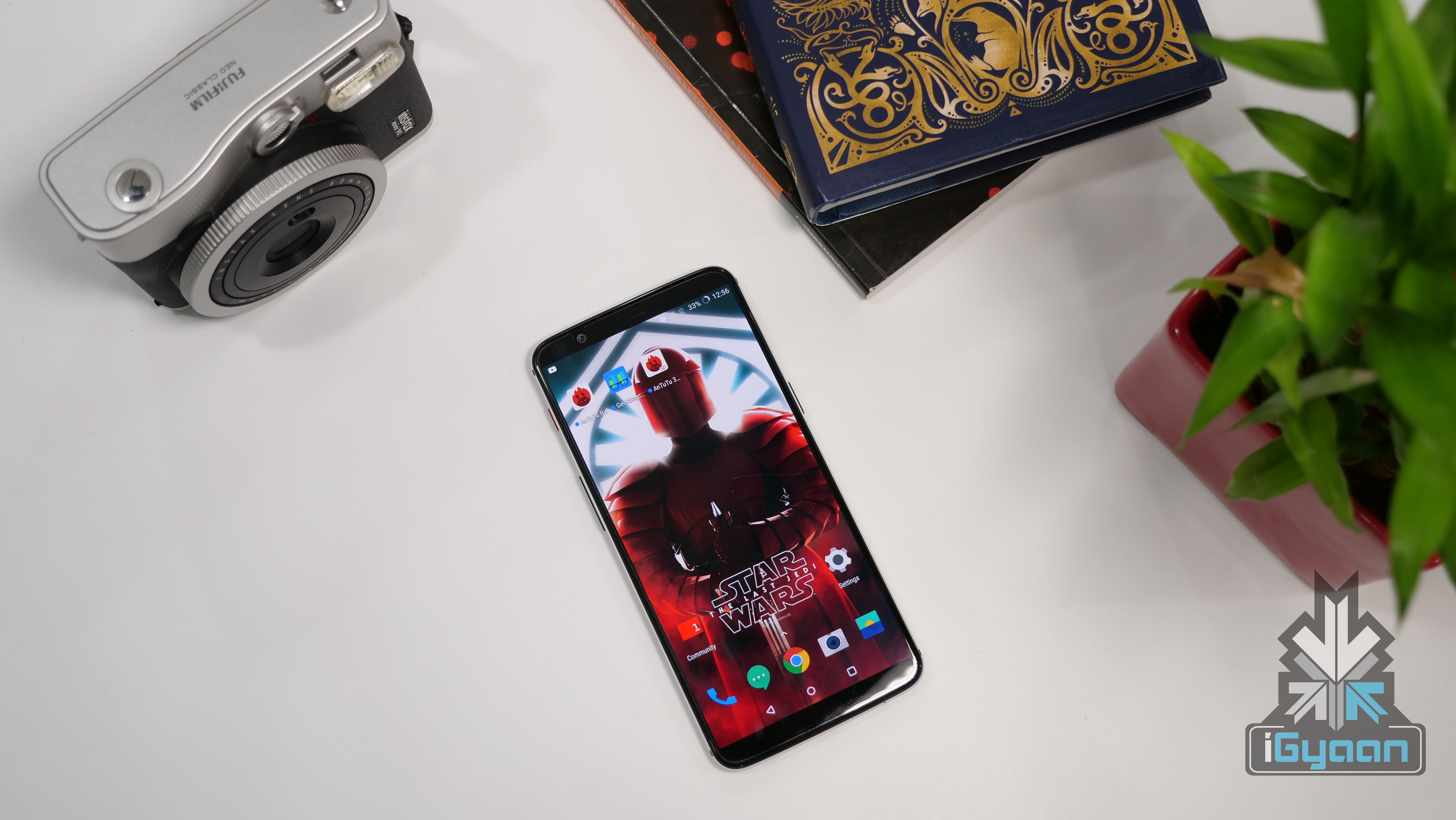
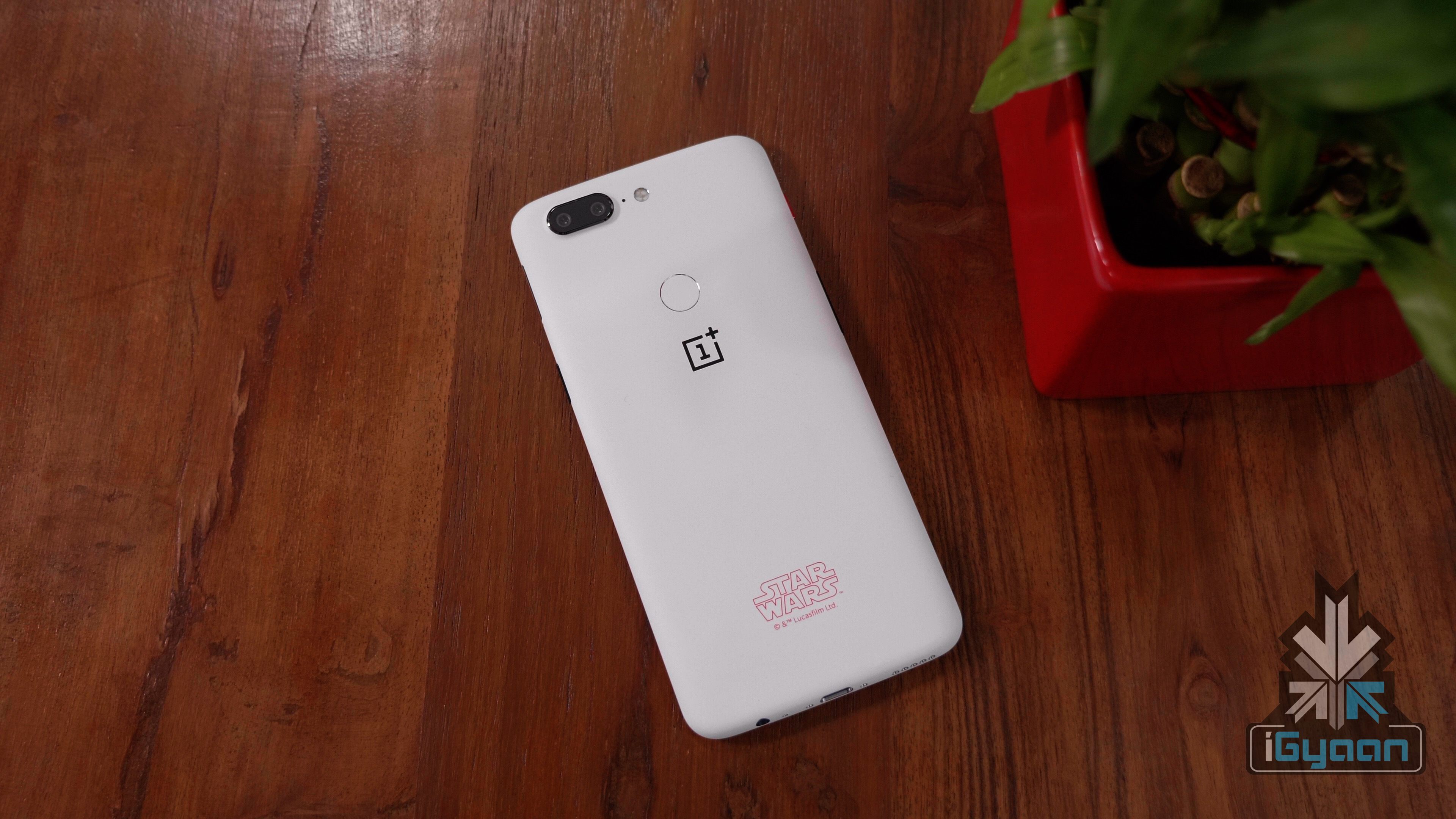
With smartphones becoming increasingly similar as far as hardware as is concerned, smartphone makers need to find a way to differentiate their product from the rest of offerings in the market. And it appears that a “special edition” Red colour variant is the next big differentiator, that companies have identified. The Lava Red isn’t the only special edition smartphone the company has launched in India, back in December, the OnePlus 5T Star Wars edition was launched at a price of Rs. 38999.
It is a red OnePlus 5T. It looks and feels exactly the same as the Midnight Black variant except it is red in colour. The smartphone has the same matte finish on the back which makes it a bit slippery to hold but, otherwise it’s a very sturdy phone. Depending on which side you’re on, you’ll be happy or sad to know that OnePlus has retained the black colour for the front of the smartphone, something that a lot of people wanted in the Product Red iPhone 7 and 7 Plus.
The power button, volume rockers and the fingerprint sensor are also red in colour with the black OnePlus logo providing a bit of contrast on the back. There is a small camera bump on the back which means that the OnePlus 5T doesn’t lay flat on a surface which may bug a few people while others won’t even notice it. The headphone jack, USB C port and the single bottom firing speaker reside on the bottom of the smartphone.
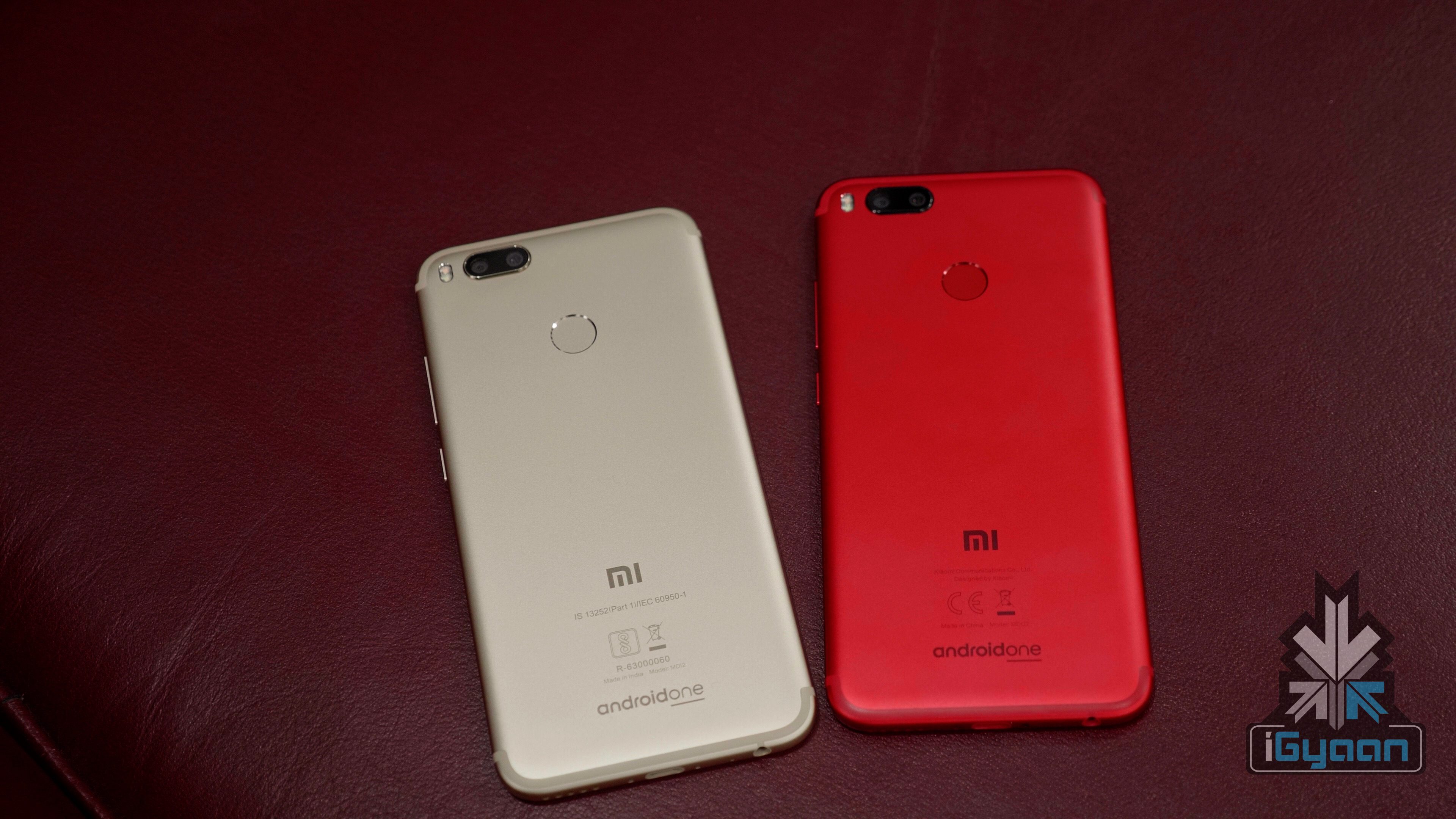
We also unboxed the Xiaomi Mi A1 red colour variant and similar to the regular Mi A1, it has a metal build with a matte finish. The red colour dominates the back of the device and just like OnePlus, the company has retained the black colour for the front of the smartphone which compliments the red colour really well. The specifications remain the same as well for the red coloured Xiaomi Mi A1.
Just like it was for the OnePlus 5T Star Wars Edition, the specifications remain the same for the OnePlus 5T Lava Red.
The OnePlus 5T has a 6-inch Full Optic AMOLED display with a 2160 x 1080 px resolution, 401ppi and an 80.5% screen to body ratio.
Under the hood, the OnePlus 5T has the Qualcomm Snapdragon 835 chipset, a 2.4GHz octa-core processor, 8GB of RAM, 128GB of onboard storage which cannot be expanded. Due to thin bezels, there is no place for a home button and the fingerprint sensor has now been shifted to the back of the phone and is placed right above OnePlus logo.
Powering the device is a 3300 mAh battery which supports OnePlus’ DashCharge technology. The OnePlus 5T also features facial recognition for unlocking the device. The alert slider retains its place at the top left side of the phone which can be used to switch between different modes of notification alerts.
The OnePlus 5T runs stock Android 7.1.1 Nougat with customisability options thanks to the Oxygen OS on top. The update to Android 8.0 Oreo update is coming soon on the OnePlus 5T as the beta testing has already begun.
One big change in the OnePlus 5T is in the camera department. Unlike the OnePlus 5, the OnePlus 5T no longer has a secondary telephoto lens at the back. Instead, OnePlus has decided to focus on the device’s low-light photography capabilities. The cameras do not have OIS and OnePlus has decided to go for EIS on the dual camera setup at the back. The device has a 16MP camera with an f/1.7 aperture coupled with a 20MP sensor with the same f/1.7 aperture and field of view, ie no optical zoom. On the front is a 16MP camera with an f/2.0 aperture.
The OnePlus 5T continues to be a strong offering in the sub-40K category with its flagship-like specifications and a modern design. With a new colour to the fore, it gives consumers an extra option to look at and for some people, a red colour variant is the ultimate deal maker.
A new leaked image has revealed that the OnePlus 6 could have a mirror finish on the back and an iPhone X-like notch on top. More details will follow, as we move closer to the launch.
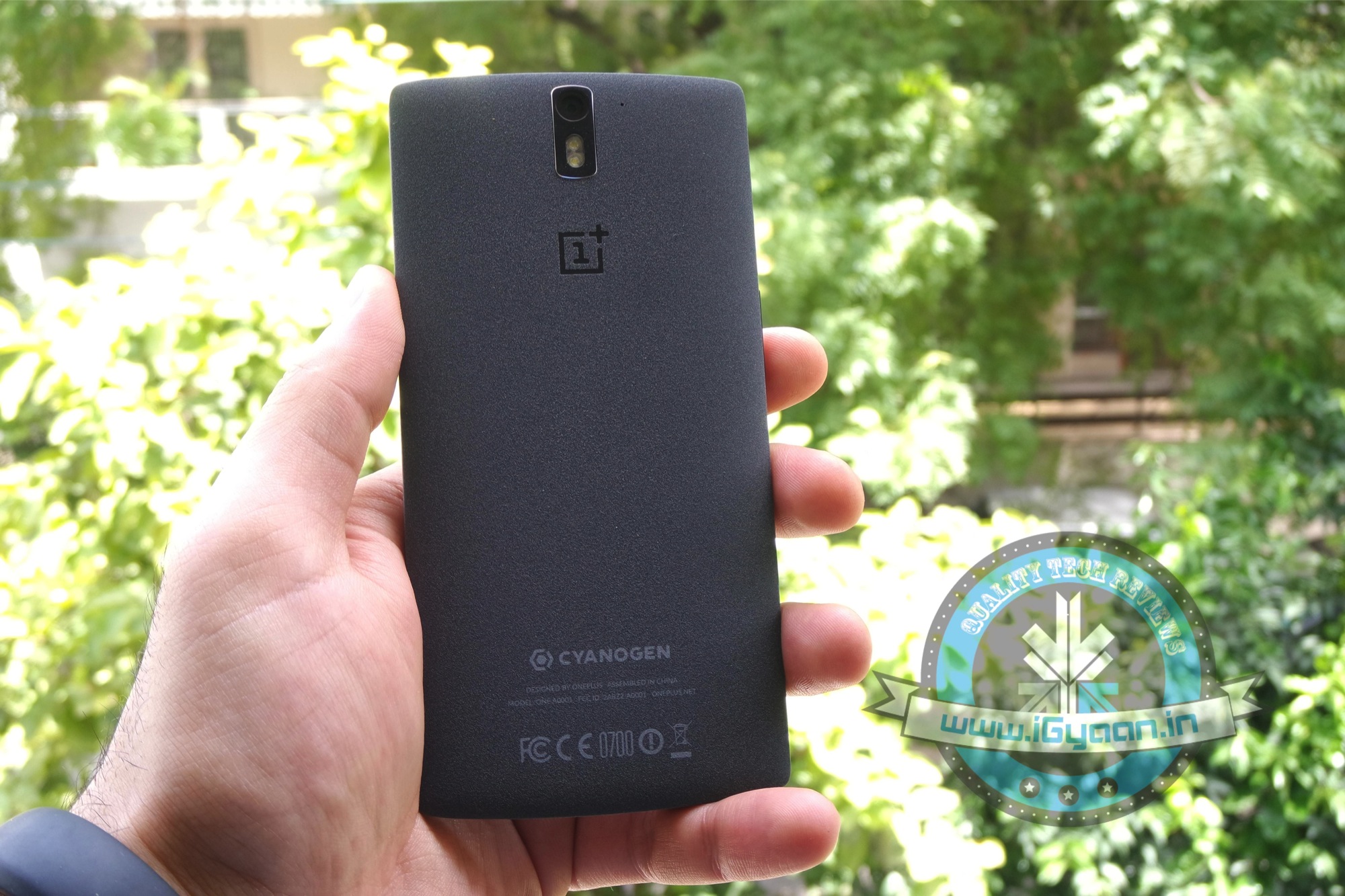
OnePlus is a new Chinese smartphone company that burst on to the scene in 2014. In the era of a clear divide between budget and premium smartphones, the OnePlus One was a breath of fresh air. It provided flagship phone-like specifications with very little compromises at almost half the price of top premium smartphones at that point.
OnePlus One
The company followed up the OnePlus One with the OnePlus Two and even launched the OnePlus X, an even more inexpensive device with a glass build. However, they weren’t received too well by the consumers and in 2016, the company launched the OnePlus 3 and a few months later, the OnePlus 3T. While many OnePlus 3 owners were disappointed with the launch of a better phone just a few months later, the difference between the 3 and 3T was just in the chipset.
The OnePlus 5 was launched in June of 2017, and the company received some flak from consumers for considerably increasing the price of the OnePlus 5. While it was still much cheaper than other flagship devices, the price when compared to its predecessors was a bit too much for the consumers. The company stuck with its release policy and in November of 2017, launched the OnePlus 5T. The OnePlus 5T had a much better design than the OnePlus 5 and according to the company, improved dual-camera setup as well.
OnePlus 5
The next in line for the company is the OnePlus 6. While there is no confirmation or even a hint from OnePlus on what the devices will be called, the company’s naming policy dictates that it would be the OnePlus 6 indeed. So, what can we expect from the OnePlus 6 in 2018? Let’s find out:
Price
After the launch of the OnePlus 5, the company faced a mini-backlash from consumers for its inflated price. However, the performance of the smartphone and then the OnePlus 5T’s modern design took away the spotlight from its price. The OnePlus 6 could be priced a bit higher especially if the company introduces radically new features in the smartphone. With the history of OnePlus device’s performance, the OnePlus 6 will have no problem justifying its price tag.
Display
6-inch displays are what 5.5-inch displays were in 2016. With thinner bezels and 18:9 aspect ratio becoming the norm, a lot of smartphones will stick to the 6-inch screen size, and the OnePlus 6 could do the same with the Optic AMOLED display. Ever since the OnePlus One was launched, the company has maintained its stance over the Full HD resolution. The OnePlus 6 could continue having the same 2160 x 1080 px resolution.
OnePlus 5T
In-Display Fingerprint Sensor?
Vivo, along with Synaptics, recently announced the first-ever smartphone with an in-display fingerprint sensor. Ever since that announcement, there have been rumours of more smartphone makers launching devices with a similar technology, called Clear ID. There was a recent report that claimed that the OnePlus 6 will have an in-display fingerprint sensor and launch in March 2018. While Pete Lau has confirmed the OnePlus 6 will launch in June, it could be possible that OnePlus introduces an in-display fingerprint sensor in its latest flagship device.
However, it won’t be surprising if the OnePlus 6T is introduced in late-November with an in-display fingerprint sensor.
Under The Hood
Pete Lau also confirmed that the OnePlus 6 be powered by the Snapdragon 845 chipset since it is the latest flagship chip available. Similar to the OnePlus 5 and 5T, the OnePlus 6 will also have 6GB or 8GB of RAM along with 64GB or 128GB of onboard storage. There will be no option for expanding the onboard storage via a microSD card. With AI expected to be huge in 2018 smartphones, it will be interesting to see OnePlus’s approach towards this particular feature.
OnePlus 5T
Face Unlock will, in all probability, be present in the OnePlus 6 and be better than the one found on the OnePlus 5T.
Camera
The OnePlus 5 and the 5T had two different implementations of the dual-camera setup. For the OnePlus 5T, the company focussed on low-light photography and relied on software to create bokeh effect images. The OnePlus 6 will also have a dual-camera setup and after what Google did with one camera on its Pixel devices, smartphone makers will be inspired to make better performing camera smartphones.
Conclusion
While the OnePlus 6 might come with a slightly heftier price tag than its predecessor, it will be another exciting offering from a young smartphone maker. If the OnePlus 6 does come with an in-display fingerprint sensor, it could be the most exciting mid-year smartphone launch and have an advantage over the likes of the Samsung Galaxy S9 and LG G7.
OnePlus 5T was launched back in early-November 2017 as a refreshed variant of the OnePlus 5. The OnePlus 5T has a modern design with thin bezels and a tall display and has a different camera setup at the back as well. However, OnePlus introduced another feature in the OnePlus 5T that was a first for the company, Face Unlock. Subsequently, the company announced that the OnePlus 5 would soon get Face Unlock via an OTA update and the company’s co-founder, Carl Pei asked OnePlus 3 and 3T users to voice their opinion and demand the Face unlock feature for their devices.
After a couple of weeks of putting out that tweet, Pei has confirmed that the OnePlus 3 and 3T users will get a beta version of Face Unlock via an OTA update. This is possible because OnePlus’ facial recognition is purely software-based, unlike Face ID.
The intention behind face Unlock on the OnePlus 5T was the convenience, since the fingerprint sensor was moved to the back. Face Unlock is an easier way to unlock your smartphone, however, it is not as secure as other facial recognition systems such as Apple’s. OnePlus conceded this after Face Unlock received great reviews for incredibly fast and accurate and ideal lighting conditions, that this system can not be used for bank transactions or storing data.
OnePlus 5T
OnePlus is not the only company to come up with its facial recognition system, Huawei unveiled its own technology and even claimed that it is faster and more accurate than Face ID while being secure enough for bank transactions. Samsung has been implemented iris scanning on its smartphone for some time now, and there are reports that the upcoming Samsung Galaxy S9 and S9+ will be even more accurate.
The OnePlus 5T was recently launched in November and since then, there have been three variants of the device launched in different part of the world. The OnePlus 6 widely expected to be launched in the second quarter of 2018 and the company’s CEO, Pete Lau has just confirmed that.
In an interview with CNET, Pete conceded that the company has no other option but to use the Snapdragon 835 chipset for its upcoming device in the second quarter of 2018. While he did not confirm the name of the smartphone, logic dictates that the company will name it OnePlus 6.
He also said that there is no confirmation of a second device (OnePlus 6T) that could be launched in late-2018. However, the company’s recent launch activity certainly hints toward a refreshed version of its mid-year flagship. Perhaps, the OnePlus 6T could have an in-display fingerprint sensor as by the time the 6T launches, the Samsung Galaxy Note 8 would’ve implemented the technology as it is expected to be launched in August.
OnePlus smartphones are known to have the latest and greatest specifications at a much more affordable price and that is what the OnePlus 6 is expected to deliver as well. Moreover, there have been a few reports that suggest that the OnePlus 6 will have a few exciting features such as Face ID-like technology and even an under display fingerprint sensor.
While the chances of an in-display fingerprint sensor may seem thin, OnePlus has made its stance clear on facial recognition technology. The OnePlus 5T has one of the fastest facial recognition technology but, it isn’t secure enough for bank transactions, unlike Face ID. The company could implement better hardware and make its Face Unlock much more secure than it already is.
As far as features and specifications are concerned, these are all mere speculations. More leaks and renders will be leaked as we move closer to the launch of the OnePlus 6 in June of 2018.