With Apple’s recent and successful launch of Apple Music, the Music streaming space has gotten really crowded. With companies like Spotify and Pandora already eating the pie, Facebook wants now a big chink of this space.
According to reports the social networking website has already tied up with various music labels and has already started showing music videos which are ad supported.
With reports of a Youtube-esque video service for Facebook already in the works, an all audio variant is expected to roll out later this year. It would be rather easy for Facebook to just acquire an already running service, say Spotify.
However, the folks over at Facebook are mum on the conversation and fail to add any new insight.
Just because we are digital doesn’t always mean we are doing our bid to go green. Every photograph, video and every other file we upload on social media, cloud storage and email are stored in a facility known as a data centre. Without the data centres, companies like Facebook, Twitter and Google cannot handle the intense volume of traffic on Internet.
Data centres mainly require electricity for the central servers that handle the data and to cool down the servers, which often get heated due to excess traffic. Environmental concerns have been raised due to the amount of energy consumed by these data centres. Companies like Apple and Google have been taking steps to reduce the carbon footprint generated by data centres and it seems Facebook has taken another step in that direction.
Facebook’s new data centre in Fort Worth, Texas, USA.
Facebook has announced that its next data centre in Fort Worth, Texas, USA, will be entirely powered by wind energy. With this data center, Facebook hopes to reduce its carbon footprint. In 2011, Facebook announced that its data center in Sweden would employ 70% fewer power generators than usual.
The data centre in Fort Worth will run on 200 MW of power and is already under construction. The new facility is expected to operate by 2016.
IT industry consumes about 10% of the world’s energy, most of which is used up by data centres. Thus, it has become important for technological companies to run their data centres on renewable sources of energy, which allows for a smaller carbon footprint without damaging the environment.
Instagram is an awesome app to share your memories in the form of pictures and videos. For as long as we can remember, Instagram was stuck with the 640×640 pixel resolution. But now, with the latest update, everything is about to change. With phones of the modern era capable of handling the high level of pixels, Instagram is finally upgrading to HD.
The latest report from Instagram co-founder Mike Krieger says the update will be rolling out to both Android and iOS. The company says the new highlight has been spreading out for a week, and most users should start seeing the change slowly. It should be noted that the new feature does not come in the form of an app update, but instead, changes have been made on the server side.
Back when Instagram launched in 2010, 640 by 640 pixels was a fair size for photos that would ultimately end up on an iPhone because Instagram was an iOS-only app at first. As the years have moved on and smartphones developed towards large display sizes, much more accurate resolutions, as well as high-resolution cameras, the size restraint was often probed by tech bloggers and regular users alike.
Facebook’s latest endeavour, Internet.org has received a lot of flak for violating the rules of net neutrality. Co-founder Mark Zuckerberg has defended the company’s initiative many times, as he insists that the initiative’s sole purpose is to provide affordable Internet access to developing nations. It seems that Facebook has taken another step in this direction, as the company is working on lasers to improve Internet connectivity around the world.
Today, Zuckerberg has posted a few photos from the Connectivity Lab, Facebook’s ambitious project to connect the world to the internet through “drones, satellites and lasers”. According to his Facebook post, the Connectivity Lab has developed laser beams that will be able to transmit data from the sky into communities. As the Facebook founder explains, the beams will dramatically increase the speed of sending data over long distances.
The laser beams in the photos have been made visible for demonstration purposes. Zuckerberg says the beams won’t be actually visible and has not provided any further explanation on how the system works.
Internet.org is an initiative by Facebook to provide affordable Internet to developing nations by giving access to select Internet services for free. Facebook has been criticised for violating the principles of net neutrality through this initiative, as the program favors certain sites over other.
It seems Facebook’s vision to provide the internet for everyone is one step closer to reality.
Today, Google has announced that the YouTube’s iOS and Android app will support HFR playback, meaning that you can watch Mario steer through obstacles at a smooth 60fps on your phone, just like you see it on your Xbox or PS4. The announcement follows the one Google made in October last year, as it rolled out HFR video for YouTube, allowing users to watch videos with a smooth playback on web browsers.
Over the past few years, High Frame Rate (HFR) video playback has been a craze around the world. The feature plays videos at 48-or-60 fps, as compared to the normal 24 fps playback. Videos playing in high frame rates appear silky smooth and without motion blurs. It is usually used by gamers who upload footage from video games and want the same quality they expect from a PS4 or Xbox. YouTube currently offers HFR playback only on HD videos.
Since Google is updating the content from the servers, Android and iOS users don’t have to update their apps to access HFR videos. If the video has been uploaded in HFR format, all users would have to do is select the resolution, which will be marked as 720p60 or 1080p60. The app users won’t be able to view live streaming in HFR though. In May, Google extended HFR support for live streaming for desktop users.
If you have no idea how HFR video looks like, play the video below and select 720p60 or 1080p60 to enjoy the smooth playback. Trust us, you’ll know the difference.
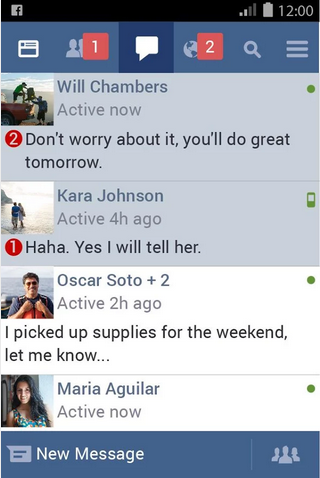
Recently, Facebook came out with a new feature that allows you to log into its Messenger without actually having a Facebook account. The social media giant made this announcement on Wednesday, stating that this move is being done to push Messenger’s count of 700 million users, higher. They said that users in US, Peru, Canada and Venezuela would no longer need a Facebook account to use Messenger.
Users in the mentioned countries can make an account using their names and their phone number only. They can upload their phone contacts to the app. Yes, we know what you’re thinking, this is quite similar to popular instant messaging apps like WeChat and (Facebook-owned) WhatsApp.
With Messenger, we’ve been focused on creating the best messaging experience possible by giving people a fun and easy way to connect and express themselves with friends. With this update, more people can enjoy all the features that are available on Messenger – including photos, videos, group chats, voice and video calling, stickers and more.
Last year in July, when Facebook announced that it will be removing the messaging feature from its mobile app, which will require people to use its standalone Messenger app instead. This forced users to download the Messenger app to chat with their Facebook contacts on their mobiles.
Just a few months prior to this, Facebook had acquired WhatsApp for $19 Billion. Then why, has Facebook been trying to make Facebook Messenger more and more like WhatsApp? It owns both. What difference would remain between the two, which were once entirely different apps?
The math is simple. Currently, WhatsApp has about 800 million active users, and Messenger has about 700 million monthly users. If added up, the number would outweigh any other competitive instant messaging app. Messaging has become a way of life, and there are many users that use Facebook purely for chatting and talking with friends. This group of users will find the change very welcoming.
Mark Zuckerberg is also on a spree to convert the chat-only app to something more. Messenger has, earlier this year, introduced the payment feature that allows you to make payments through the Messenger interface. He also introduced video calling and location sharing features.
Needless to say, we’re certainly interested to see where the continuously-evolving Messenger finally lands in the near future.
Twitter had added direct messaging service (DMS) but it was always restricted to just 140-characters. Now, frequent Twitter users will be happy to know that the social network is finally putting an end to the restriction, and making it 10,000 characters as opposed to just 140. Thus DMS will function like any other regular instant messaging service, effective this July.
In a rather smart move, they announced:
We’ve done a lot to improve Direct Messages over the past year and have much more exciting work on the horizon. One change coming in July that we want to make you aware of now (and first!) is the removal of the 140 character limit in Direct Messages.
It is a welcoming change as having a limit over DMS was more of a nuisance than a boon. However, while the DMS will no longer have a restriction, public tweets will continue to be within the 140 character limit.
This comes as a great relief to the social networking giant because it might finally give them a chance to compete with other instant messaging services like WhatsApp and Facebook and even add to their user base.
In a short span of time, Facebook’s standalone app, Messenger has grown immensely. Recently Facebook announced that the Messenger service already has a staggering 700 Million monthly active user base. It added a 100 Million users in the past three months. While Facebook’s new app’s numbers are growing at an unfathomable rate, Twitter is currently stuck at a mere 302 Million Active users. Back in April, even WhatsApp had announced that it had crossed the 800 Million monthly active user mark.
This change might give Twitter a fair chance to compete. Also, according to Forbes, people spend 86% of their Twitter time via smart phones, this will therefore, be further enhanced as people will now be able to have long chats on the social handle, without even needing to ‘follow’ one another. Naturally, this will increase Twitter’s fortunes as well.
Along with this, Twitter is planning a few other updates and changes that will further improve the performance of the site. We hope to hear more good news soon. Watch this space for more.
Since YouTube was formed 10 years ago, founders, Chad Hurley and Jawed Karim, had no idea how the concept would work out. The first video, ‘Me at the Zoo’, showed Jawed Karim at a zoo watching some elephants, and since then, there has been no stopping for them.
YouTube has played a pivotal role in becoming a global phenomenon for viewing videos. 10 years down the line, YouTube has over 1 billion users and 300 hours of videos uploaded every minute.
We will see the top nine most viewed videos of 2015 on YouTube today:
Jurassic World Super Bowl Trailer
6,737,966 views
Jurassic Park 2 never lived up to the expectations of the original film. Now, Steven Spielberg has returned with a brand new franchise of the series. This trailer debuted during the Super Bowl and left many fans asking for more.
100 Years of Beauty: Aging | Cut Has A Field Day
15,069,410 views
This is a video about a 20-something couple, who was to get married in less than a month. They got to see how they will look like in the next 50, 75 and 90 years of age. All thanks to high detailed makeup and costume professionals. Starting of as humorous, this video touches your emotional side once it progresses forward.
Dodge: Wisdom
16,148,004 views
https://www.youtube.com/watch?v=JKKlqMs19tU
On the occasion of its 100th anniversary, Dodge, an American brand of automobiles, minivans, and sport utility vehicles, created a campaign covering its own history. The Super Bowl commercial went viral and was viewed by more than 16 million viewers worldwide. The ad is about people who are more than a 100 years old and focuses on the fact that ‘100 years in’ isn’t necessarily the mark of decline.
Galaxy Family – Movie Magic (90 seconds)
10,320,560 views
https://www.youtube.com/watch?v=bQTXAhdksYg
This video is about a woman who wants to make a movie using all sorts of stiched-up special effects and acting services of her family and friends, and a plumber too! She shoots all of these using Samsung devices.
How to remove your face
9,100,782 views
https://www.youtube.com/watch?v=lpQS5i6nSH8
While the world watches videos on applying make-up, this woman removes makeup from half of her face. It was uploaded by a South Korean woman on YouTube who shows herself removing cosmetics from one side of her face with a wad of cotton dipped in makeup remover. Gradually, almost like magic, the eye liner, eye shadow, brow filler, mascara, foundation and whatever else was used before, disappears to reveal her ‘original’ face.This video went viral and reached one million views within a few weeks. The message conveyed by this video is how the woman transformed herself with a just few cosmetics and some handy brushwork.
BATMAN vs. DARTH VADER Super Power Beat Down
2,112,235 views
For
For all the comic books and Star War fans, this video is the real treat. With the world’s most powerful brain on one side and the Dark Lord of the Sith on the other, Super Powered Beat down, really highlights the “Super” part.
Zach LaVine Throws Down the “Space Jam” Dunk: 2015 Sprite Slam-Dunk Contest
9,278,688 views
The last time we saw a Slam Dunk like this was during the 1990s Michael Jordan and Looney Tunes movie. Minnesota Timberwolves player Zach LaVine performed one of the film’s iconic slams and brought the popular kids film to life
“Seeing” mommy for the first time!
13,235,533 views
This video is about a child suffering from Albinism, that reduces visual accuracy due to light-induced retinal damage. Louise received her glasses to help her see properly and saw her mother for the first time.
This Girl Can
8,264,593 views
https://www.youtube.com/watch?v=aN7lt0CYwHg
Earlier this year, Sport England (English Sports Council) released its ‘This Girl’ Can video which shows all types of women being active in sports like swimming, boxing, volleyball. They are strong, engaged, super sweaty, and rightfully unaffected by the fact that they don’t look like the models on a sneaker commercial.
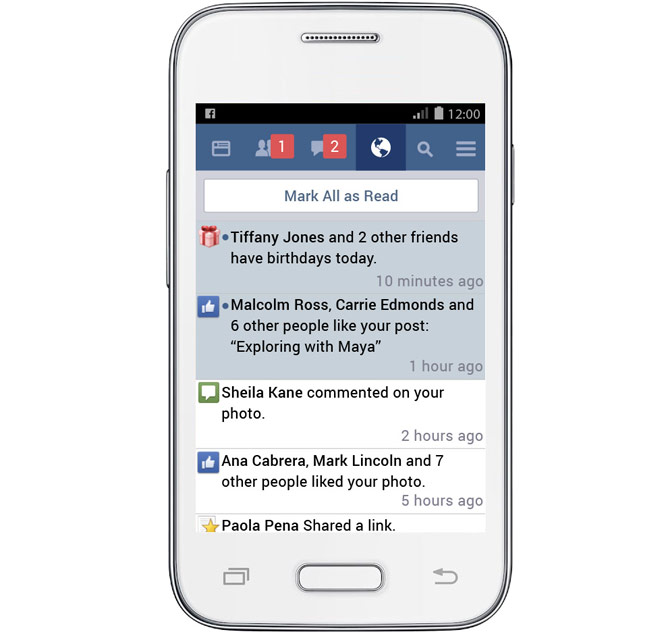
Finally, Facebook is accomplishing its aim of expanding the internet to every corner of the globe. Recently, the social networking giant launched a trimmed-down version of its app that has been in the works for more than a year. Termed as ‘Facebook Lite’, the modern tool is dedicated to working in areas where telecommunication services are constrained. Facebook Lite uses less data and works even in narrow wireless bandwidth.
The blog post updated by the company reads –
In many areas, networks can be slow and not able to support all the functionality found in Facebook for Android. Facebook Lite was built for these situations, giving people a reliable Facebook experience when bandwidth is at a minimum.
The slimmer version is just 1MB in size, so it would take few seconds to download and install. However there will be certain design changes, the core functionality will be uniform in both the Facebook app and its lighter version. The social platform states that features like News Feed, status updates, photos and notifications will be identical on Facebook Lite.
Facebook Lite is the company’s push to make basic services available in developing countries at the lowest price possible. There are places in the world where buying internet data is an excessive expense because of its high cost. The app works faster with any device, and is data efficient, giving the same features with less data consumption. It’s like Facebook with an in-built Data Saver mode.
As it works even on slow mobile networks, the page loads comparatively faster. Users can upload, download and check photos instantly, for which users had to wait for more than a couple of minutes on 2G networks. Users can have a real-time conversation with friends – either one-on-one or in group – on the slimmer Facebook edition.
The tool is rolling out to countries across Asia, and in the coming weeks, it will be available in parts of Latin America, Africa and Europe. It works on all Android phones. The app is not available on Play Store for now, but will soon be live.
Given its popularity, one might think that Instagram was earning millions of dollars through its followers. But what sort of an app will earn money if its only function is uploading or liking pictures? It barely earned a penny. Then, in 2012, it got a push because Facebook bought it for a billion dollars. However, the income was still meagre. Now in 2015, this is why it’s going to change:
Instagram will finally allow a fully operational Ad business, providing shopping links with their posts, aided by Facebook targeted groups. Yes, this means that Instagram, will now have a ‘Shop Now’ button that will link you to what you want to buy.
Earlier, Instagram had 475 campaigns with huge companies like Gap, Disney and other retailers, however, they wouldn’t provide links to buy the product outside the app and these companies would have to collaborate with third party services. Now though, we will be able to see purchase details of all commodities below the pictures and videos a company posts, and we’ll even be directed to the site of purchase.
Instagram plans to use Facebook’s 2 million advertisers to facilitate this new feature and it is certain that companies too, are ecstatic about the new development.
“It’s an ideal platform to shop on as it’s so visual and fashion oriented,” said Old Navy media director Michele Schuh in an email to Adweek.
While it will be very convenient to find the cost of a Michael Kors bag or the price of GAP t-shirts, below the picture, it will also mean that the number of ads is bound to increase. And we know how annoying that can be.
Instagram is not too worried about losing its followers, though. It is said that they have a new API in place that will allow marketing partners to automate ad responses. This means that advertisers can reach all age groups on Facebook and target their interests as well. In addition to this, they are working on making each ad fit seamlessly into your feed so that it causes minimum disturbance while you’re scrolling through your friends’ posts. So we can expect that there will be no pop-ups in the near future, at least.
This spells good news for retailers and Instagram as they will see their fortunes rising. However, we don’t know if this is a positive or negative development for its users.
What do you think? Feel free to leave a comment below.
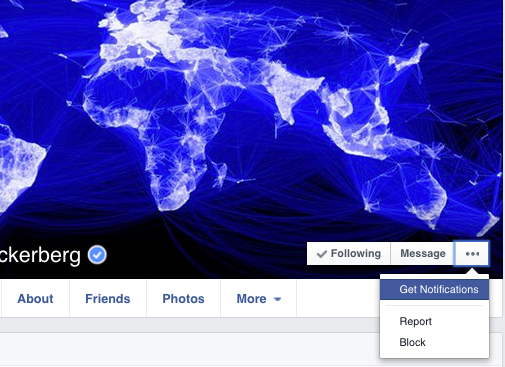
In the physical world, it may be difficult for you to cut some annoying people from your life. And admit it, we’ve all been in that situation where we wish we could ‘block’ that obnoxious boss, a lecherous acquaintance or maybe a spiteful ex, without confrontation. Facebook understands this and makes it super easy to shut someone out, without being harassed. Here is a three-step process to severe ties, instantly. Just virtually, of course.
1. Go to the profile of the person you wish to block.
2. Click the three dots “…” alongside Message and a list will appear
3. Select ‘Block’ to restrict the person from sharing things with you.
How Does Facebook Blocking Help?
As soon as you confirm, the user will be blocked from receiving any notifications from you. Blocking is not permanent and you may choose to unblock anyone, anytime. It’s extremely efficient and the person will not be notified about the blocking. He/She can’t even find you on the social networking site, even if they try. If that sounds a bit harsh, then there are options to unfriend them or hide the particular post which you don’t want to see on your wall.
When Facebook acquired WhatsApp for $19 billion last year, we weren’t sure how the social media giant would make use of the messaging app. However, at the F8 conference 2015, Facebook announced a new Business for Messenger initiative, through which the company might be able to make some profit. According to this initiative, Business for its Messenger app will give users the choice to install apps and make purchases with the Facebook Messenger app itself.
The company said that they would include some of the features of Facebook Messenger and experiment with it on WhatsApp, to promote business to consumer communications that could be paid up by marketers.
We think that enabling that [business to consumer] messaging has an excellent business potential for us. As we learn those things, I think there are going to be opportunities to bring some of those things to WhatsApp, but that’s more longer-term than the near-term.
[/quote]
Facebook CEO, Mark Zuckerberg says that once WhatsApp reaches 1 billion users, will business through the messaging app is meaningful. For now, WhatsApp has got around 800 million users. After the $22 billion acquisition by Facebook, WhatsApp Chief Jan Koum said that the messaging app will be ad-free.
Currently, Facebook is working with more business partners and will soon begin Business for its Messenger app.
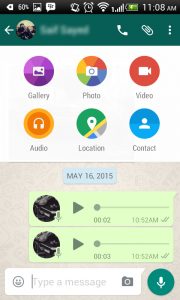
WhatsApp is out with their new update and is sure to easy on your eyes. Earlier, WhatsApp had released the new update with a new Material Design and UI, but only to a handful of users as beta versions. After a month of anxious waiting, the update is now available for everyone to download through the Google Play Store.
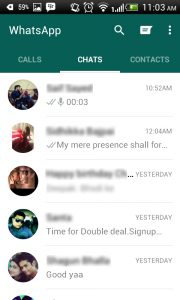
The new build (version 2.12.87) has a dark green background that earlier was grey in colour. The top bar that holds the Search and Setting buttons has been enlarged as compared to the previous update. This top bar hides itself when you scroll downwards. When you click on a friend’s profile, you will find that the person’s picture is big enough to be viewed easily as a profile picture. The new chat screen looks very light and bright, maybe because of the fresh aura of the dark green interface. From the Emoji perspective, the only change you will see is a white background on the emoji list. While calling through WhatsApp, the caller’s name will be highlighted in bigger fonts with smaller and more minimalistic icons.
This update can now be downloaded on Android devices from the Google Play Store. As of now, we do not have any knowledge about the new update for the iOS, Windows or Blackberry devices. Keep checking this page out to stay updated.
Just to be made clear, some users received this update few weeks ago. This update was actually the beta version of the same. The final version is being talked about in this article.
Click here to read more about WhatsApp Voice Calling feature.
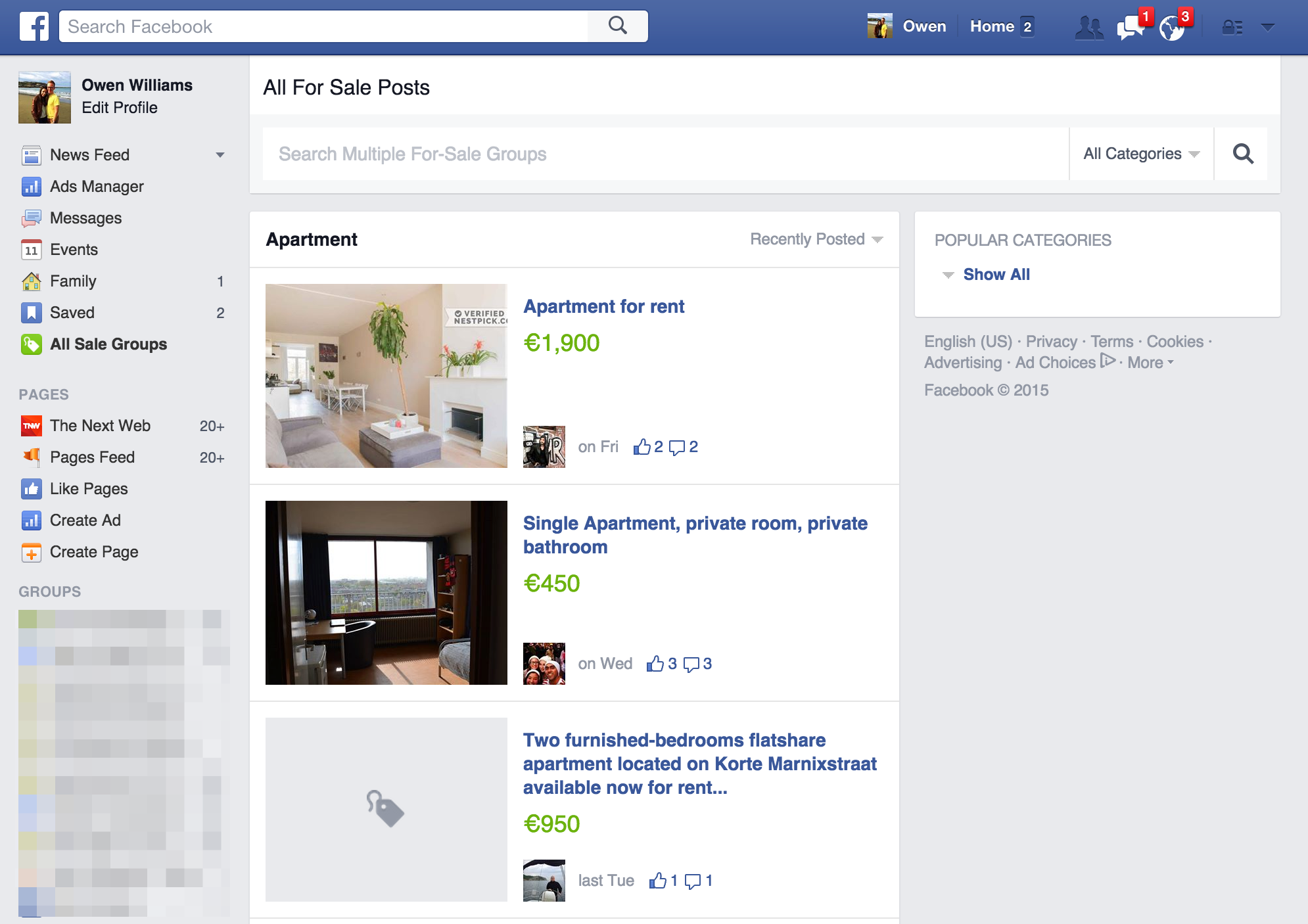
After working on a new feature that may give Google a direct competition in the terms of a search engine, Facebook is now eyeing a feature that will let its users buy or sell goods through groups. Although, this feature is not new to Facebook as the social networking giant tried it briefly back in December 2014.
Right now in its test mode, Facebook’s latest extension is a group called ‘All Sale Groups’ that will allow users to scan through a catalog of items that are up for grabs. The items are shown along with the Groups or categories they are a part of, in a unified manner. Facebook search box would enable people to search for goods that are made public and are up for sale. Categories like books, event tickets, clothing, video games, furniture, etc. helps in faster search results.
When a person lists an item for sale, they mention the price and state whether the price rate is negotiable or not. The details include information about the product along with photos, pick up and delivery option.
Vendors would not have to pay any commission to Facebook. In return, this raises up the chances that the user will stay on the social networking site for a long time.
According to TheNextWeb, this feature is now in its infant form, and work is being done for its worldwide launch within the next few weeks. Looks like eBay has got its competitor!
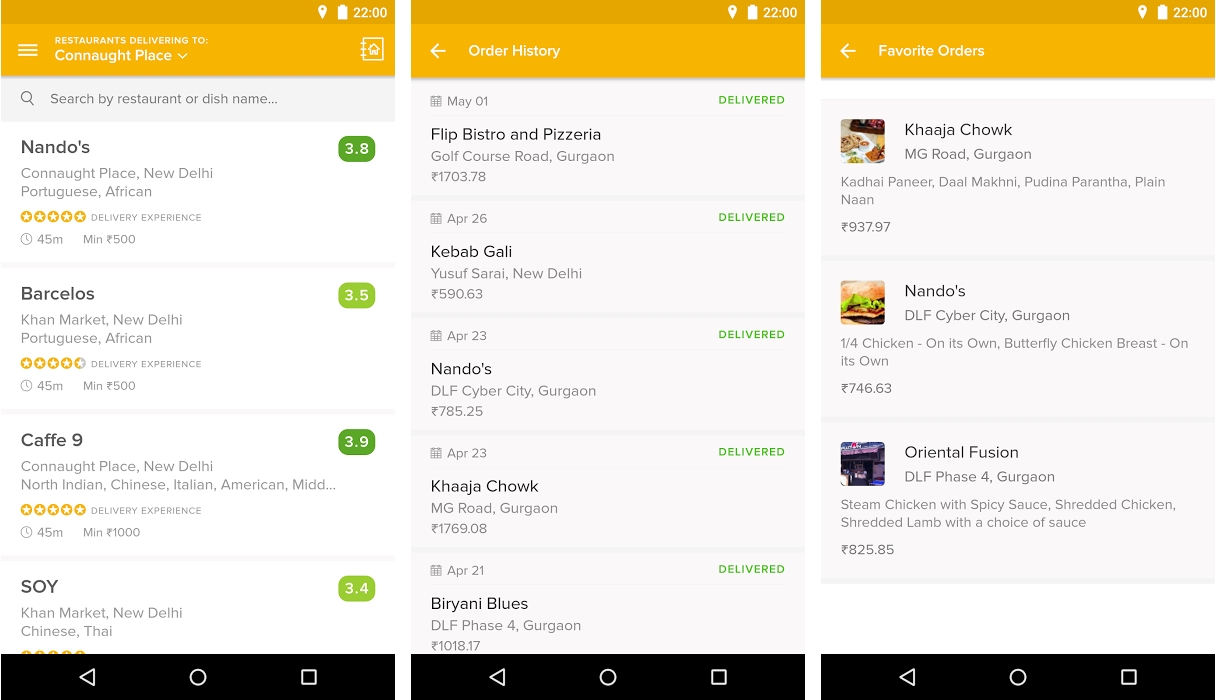
In March, Zomato launched a delivery system where customers can place an order on its site and the same is delivered at their homes. More recently, Zomato had partnered along with Uber to help customers book cabs to the restaurant they are planning to eat. Now, the company is preparing to launch another new app called Zomato Order for its Android and iOS users.
The new yellow app’s primary functionality lies only on delivery of food. However, both, the native app and the new Order app, are intertwined in functionality. Users can switch from the older Zomato app to the new one instantly.
Zomato’s official blog reads that there are three main reasons as to why a new app is being launched. One, the focus on a single function will improve user experiences, thus making it a hassle-free app. Second, the new app will not have to be updated along with the native app and vice versa. Lastly, the two apps will be linked to each other in such a way that users will be able to look up to the restaurant in the Zomato app, and place the delivery order in the Order app.
Zomato explained,
Having two separate apps allows us to build lightweight apps that get straight to solving the problems you face. Actions that are core to the app experience can be given priority of position, and we aren’t forced into making real estate compromises.
The Order app is currently available for users in NCR and will soon be released for Bangalore, Mumbai, Hyderabad, Pune and Kolkata users. Zomato is also working on a variety of new apps. One such app is ‘Zomato Book’ which will deal only with table reservations and is scheduled for launch in the next few months.