Smartphone News and Reviews, Latest Cellphones, Accessories, New Launches, Specifications, Details with Image and Video from Apple, Samsung, Lenovo, Moto, HTC, Xiaomi, Oneplus, Meizu, Sony, Lava, Micromax Yu Mobile and More.
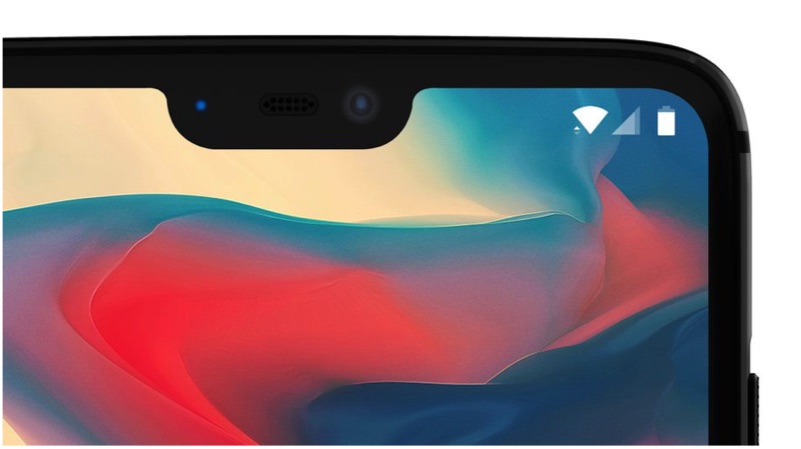
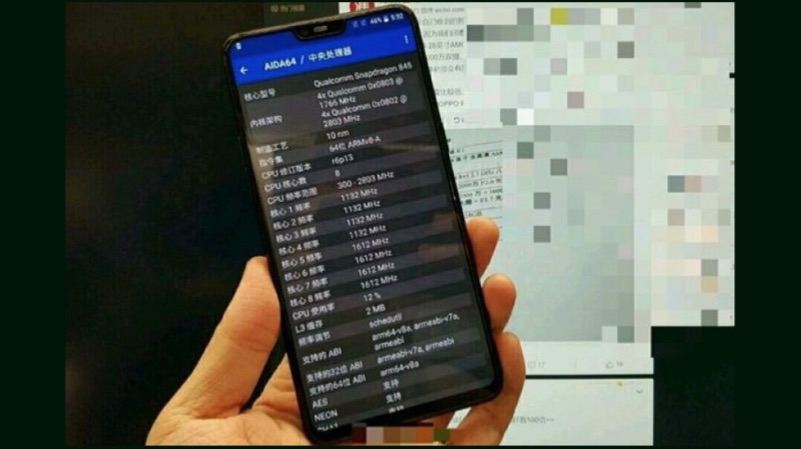
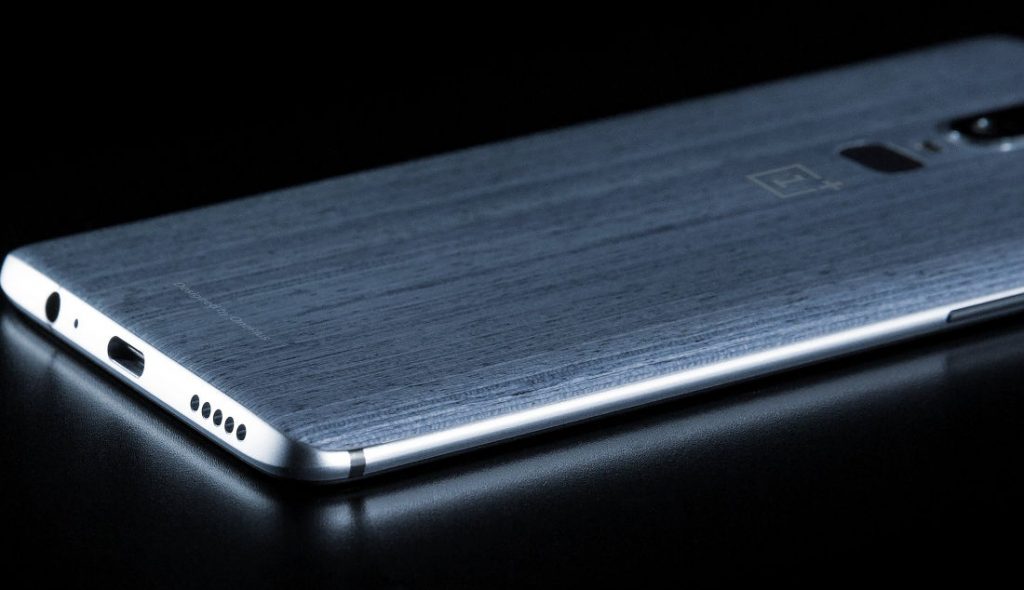
OnePlus appears to be gearing up for the launch of the OnePlus 6. The company has started teasing the upcoming smartphone on social media and the leaks have been aplenty. A few days ago, we got a confirmation from OnePlus itself that the OnePlus 6 will sport an iPhone X like notch. Now, a new image of the smartphone out in the wild has re-affirmed the same. The notchy OnePlus 6 is seen running the AIDA64 app with all the information in the background blurred out.
While the image doesn’t shed any light on something we don’t already know, it does give us a glimpse of what the OnePlus 6 might look like. Carl Pei has already stated the reasons why the smartphone will have a chin and this image shows us the possible size of the chin. It appears to be thinner than the one found on the Huawei P20 Pro or the Asus ZenFone 5Z. However, unlike the P20 Pro, which has a front-facing fingerprint sensor, the chin on the 6 won’t solve a purpose.
OnePlus, on their Facebook page, also released a teaser hinting at gestures for navigation on the OnePlus 6. The company has already introduced this feature for the OnePlus 5T via the Open Beta build 3 and it appears that the feature will be available out of the box.
OnePlus 6 Leaked Image
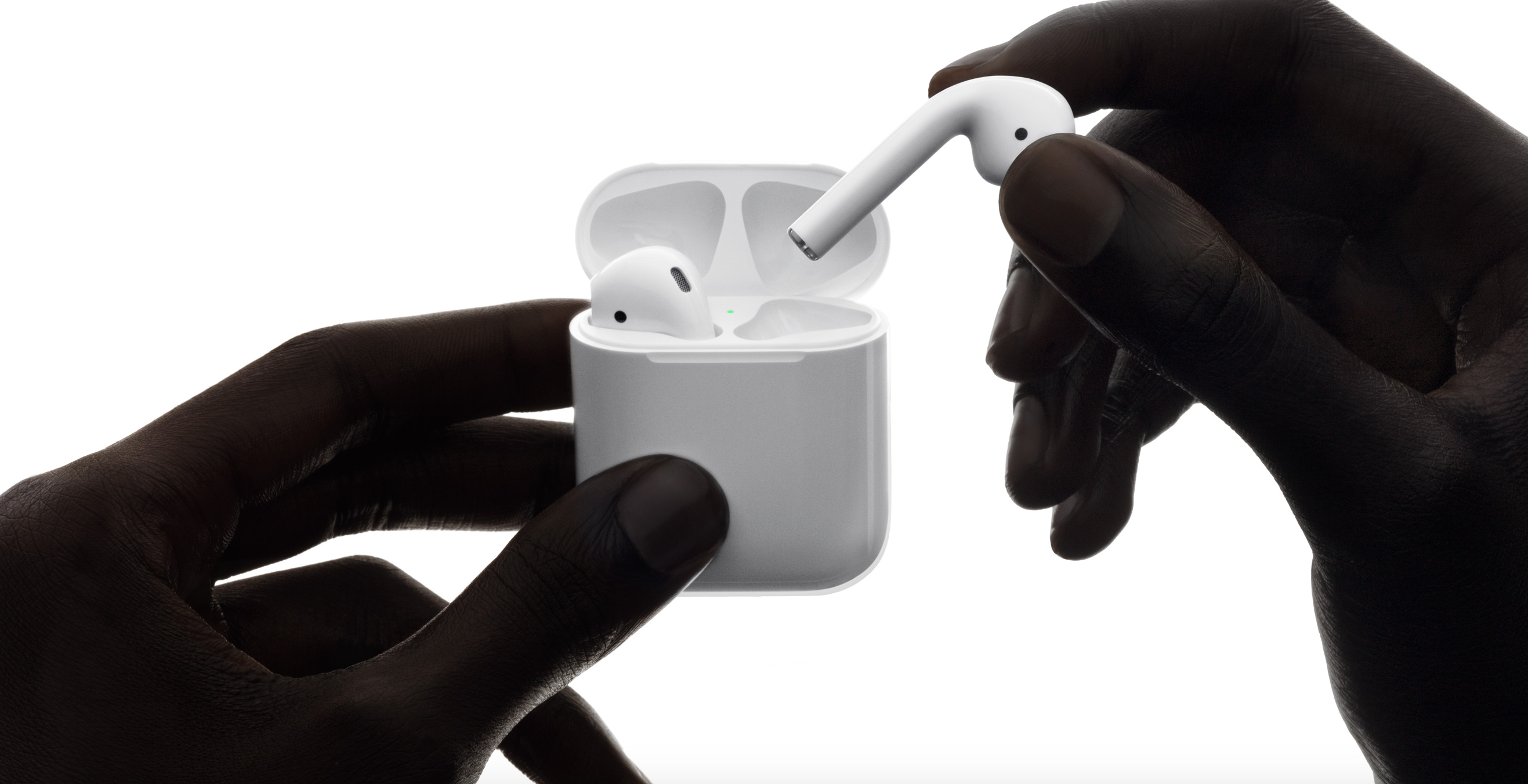
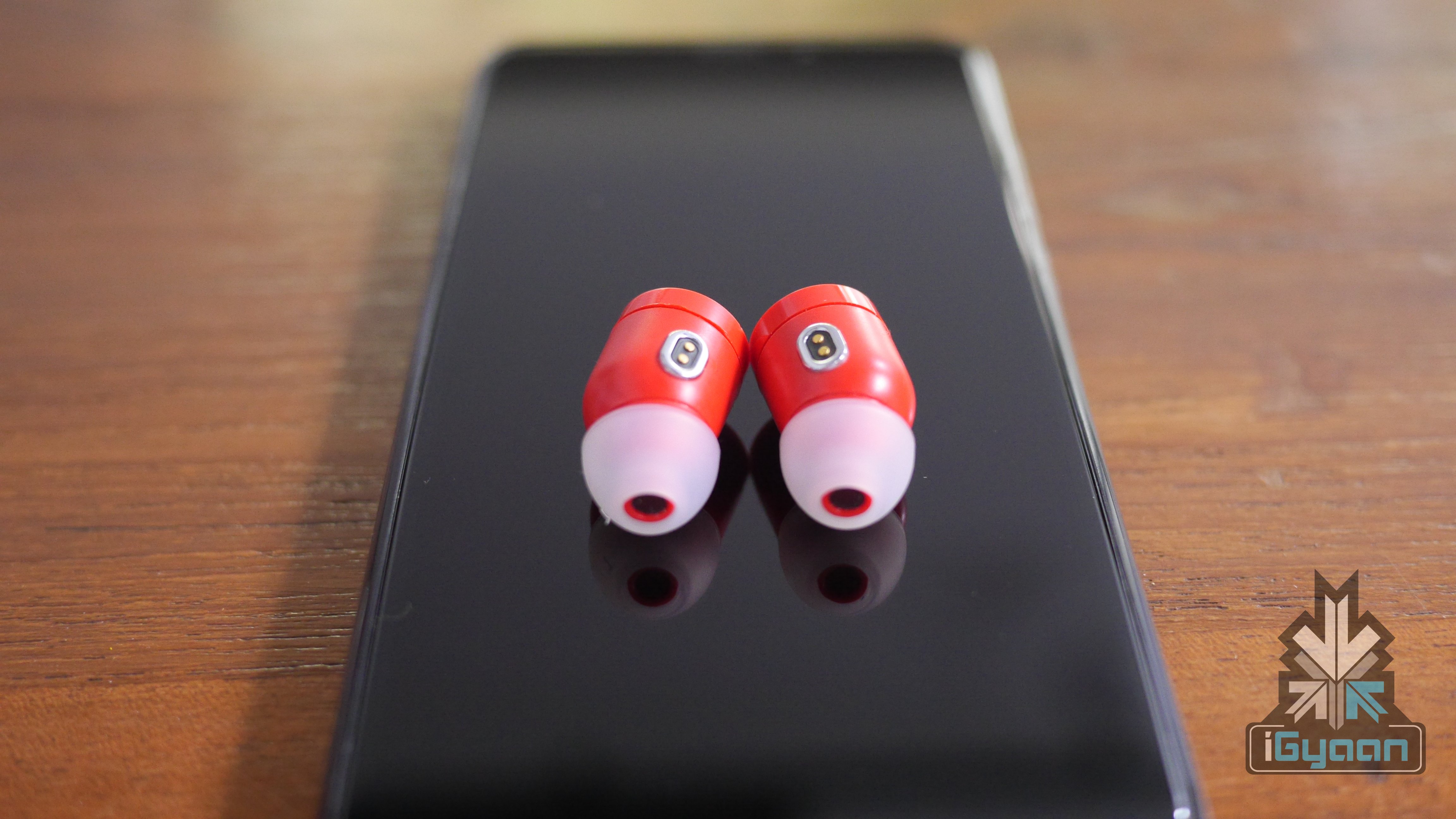
Apart from the OnePlus 6, the company might also launch a pair of Bluetooth earphones. Huawei also introduced its own pair of truly wireless earbuds, the Freebuds at the P20 Pro launch. It will be interesting to see what the OnePlus wireless earbuds will look like. Considering OnePlus’ history of getting inspired by Apple’s design, we won’t be surprised if the earphones look like AirPods.
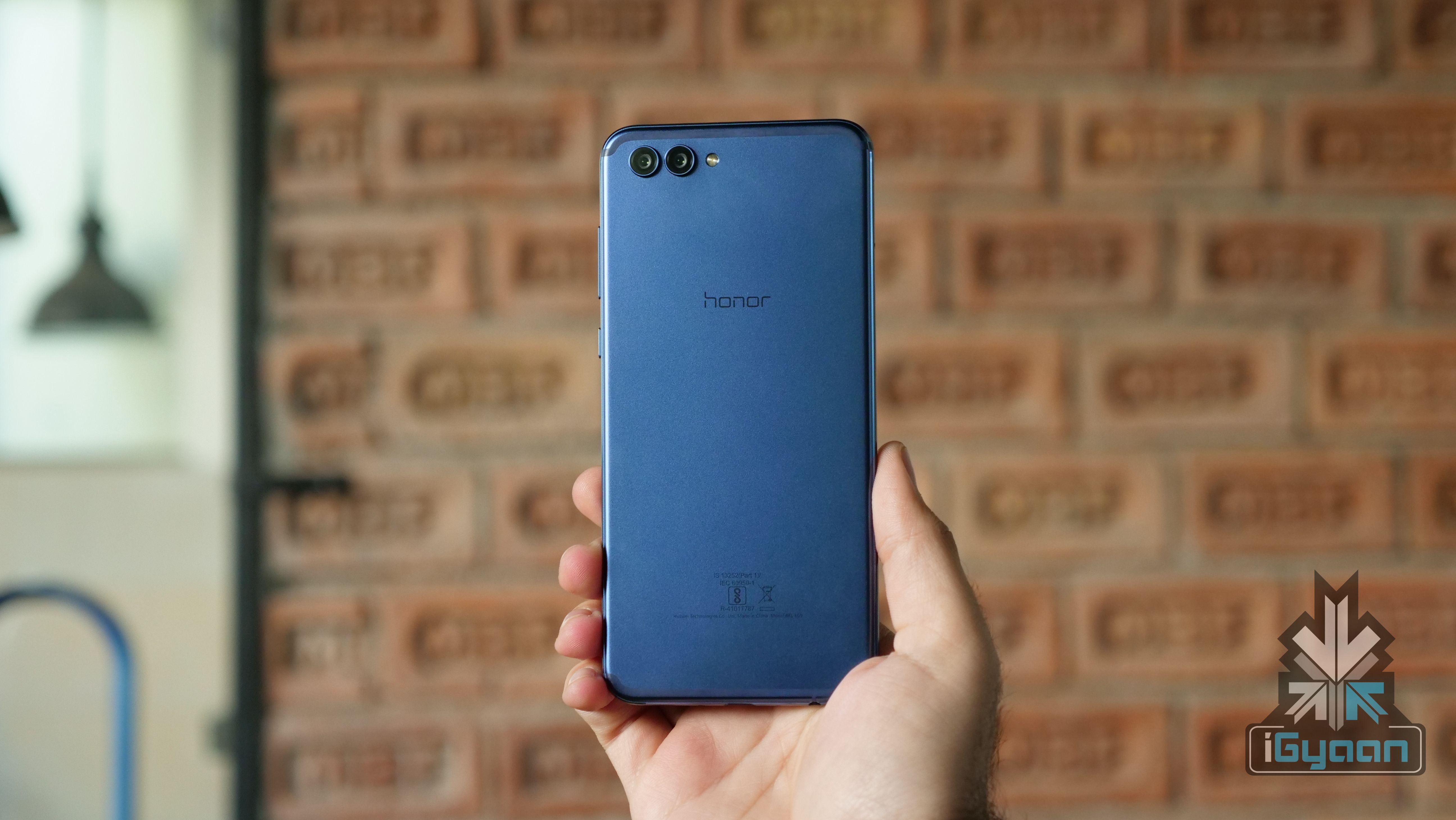
Honor has sent out an invitation for a launch event on the 15th of May in London, where the company could launch the Honor 10. The Honor 10 could be the successor to the Honor View10, which was launched in India in January 2018. Now, a new poster image and a mall billboard confirm some significant specifications of the Honor 10. According to the poster, the smartphone will have a glass back panel, which is reminiscent the Huawei P20 Lite’s design. However, the Huawei P20 Lite has a vertically placed camera while the Honor 10 has a horizontal camera setup.
A Billboard found in a Chinese mall hint that the Honor 10 might have a 5.8 inch display. Considering the Huawei P20‘s display, the Honor 10 is likely to have a 2280 x 1080 px resolution screen. As no Honor smartphone has an OLED display, the Honor 10 is expected to have an IPS LCD display. The Billboard also suggests that the smartphone will run on the HiSilicon Kirin 970 Octa-core chipset. According to leak, the device will have 6GB RAM and 256GB onboard storage.
One thing, which is beyond belief is the fact that the poster says that the smartphone has a 100% screen-to-body ratio. Considering the previous leak, where the smartphone has a visible amount of chin with a front-facing fingerprint sensor, there is no reason to justify this information what so ever. The previous leak also hints that the smartphone might have a Huawei P20 style notch.
The device is expected to have an AI-powered dual camera setup, similar to the Huawei P20 with a 12MP with an f/1.8 sensor and a 20MP with an f/1.6 sensor. Additionally, the device will have a bigger battery with SuperCharge capability. Since Huawei removed the headphone jack with the Mate 1o Pro and now the P20 series, Honor might follow suit, starting with the Honor 10.
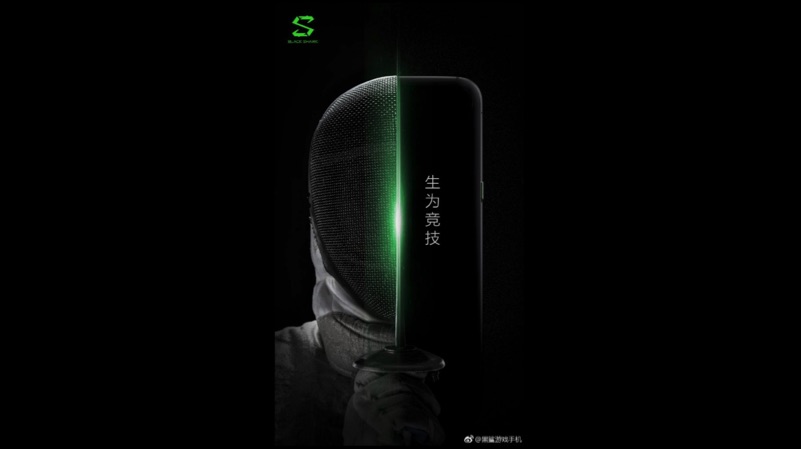
Black Sharkis a Xiaomi-backed smartphone company that has been teasing its upcoming gaming smartphone for the past few weeks. The newly released teaser from the company has a Fencing theme, which hints towards the gaming capabilities of the smartphone. The teaser also hints that the smartphone will have a metal unibody design. Having a metal body does have some advantages in a gaming smartphone, as metal is a good conductor of heat, which helps to dissipate the heat of the smartphone.
The teaser shows half a side of the Black Shark smartphone with a power button and a SIM tray. The teaser also reveals a single antenna band on the top of the smartphone. The teaser also has a sentence, which roughly translates to ‘Born to Compete’, which means the device could have flagship level specifications at an affordable price.
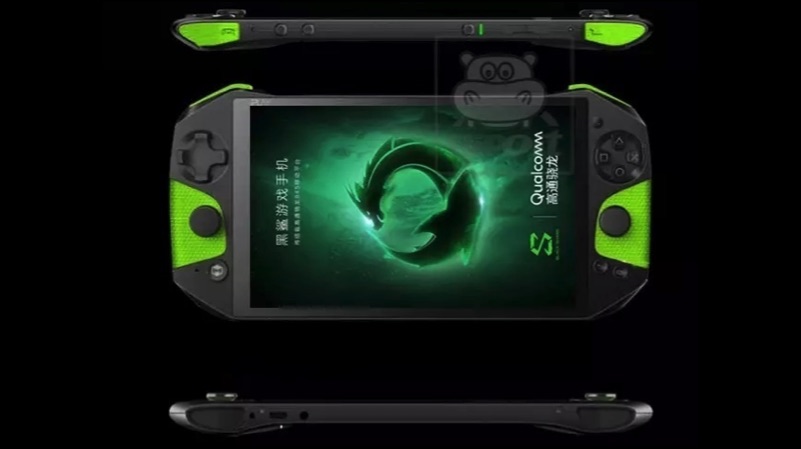
Black Shark Render
Xiaomi Black Shark Specs
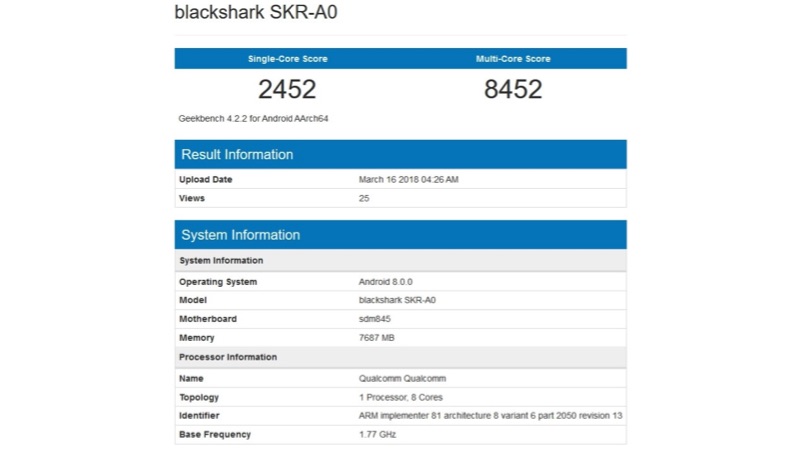
The Black Shark is expected to have a 6 inch display with a 2160 x 1080 px resolution and a 120Hz refresh rate. Having a higher refresh rate display will help the gaming performance by reducing the visible lag. The display with 120Hz refresh rate comes with a lag of 8.33ms, whereas a typical smartphone display with 60Hz refresh rate has a lag of 16.67ms. Under the hood, the smartphone might be powered by the Snapdragon 845 chipset with 8GB RAM and 32GB storage. However, the company might also launch the Xiaomi BlackShark with either 64GB or 128GB storage.
Out of the box, the smartphone might run on Android 8.0 Oreo. However, whether it will run MIUI or some other custom skin on top is unclear. There are rumours that the Black Shark will feature one of a kind aviation class cooling system with additional tweaks to keep the device cool at all the time. The smartphone scores an impressive 270680 points on Antutu benchmark leak. In fact, it is more than that of the Galaxy S9’s 265267 points.
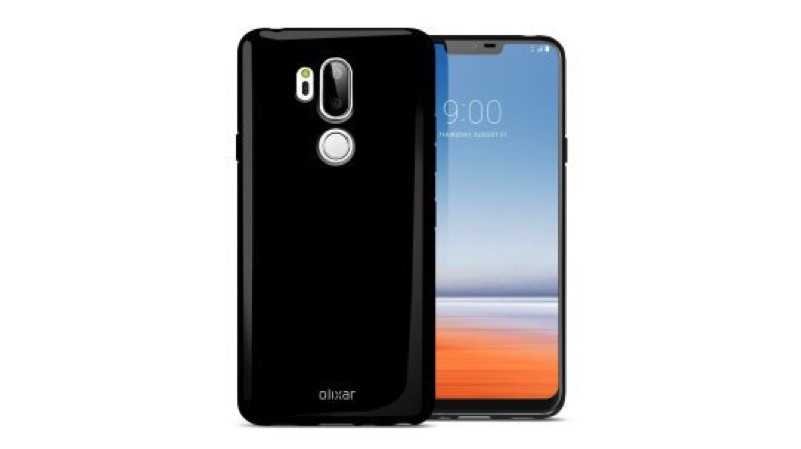
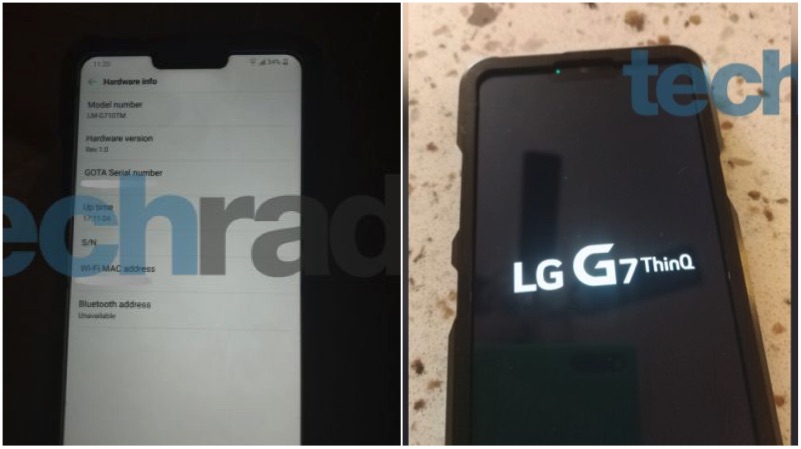
LG was expected to launch the LG G7 at Mobile World Congress 2018. However, days before the event, LG CEO conceded that the company will rework on its next flagship device. It was also revealed that the LG G7 was showcased behind closed doors at MWC 2018 when an Israeli publication leaked its images. Now, live images of the LG G7 have been leaked and they reveal a couple of important aspects. The LG G7 will be launched as the LG G7 ThinQ and also sport an iPhone X-like notch.
The company launched the LG V30S ThinQ at MWC 2018, a standard LG V30+ with the new software-based AI features. Similarly, the LG G7 ThinQ is also expected to have a wide array of software-based AI capabilities, which explains the ThinQ moniker.
There has been an industry-wide discussion about Android smartphone makers adopting the notch. OnePlus has already conceded that the OnePlus 6 will have a notch and the conversation is bound to be fueled once the LG G7 ThinQ is launched. Unfortunately, the leaked images do not reveal the bottom part of the smartphone, which means we can’t say for certain whether the G7 ThinQ will also have a chin. However, recent renders have imagined the device to sport a chin, just like the OnePlus 6 will.
LG G7 ThinQ Specs
The LG G7 ThinQ with model number LG-G710TM is expected to have a 6.2 inch QHD+ 2880 x 1440 px M+ LCD display with 19:9 aspect ratio. Under the hood, the device will run on Qualcomm Snapdragon 845 Octa-core chipset with 4/6GB RAM. The smartphone will have 64GB or 128GB internal storage with a dedicated micro SD card slot. The smartphone is also likely to have an IP68 certification for water and dust resistance. A CAD-based 3D render has also confirmed that the smartphone will retain the 3.5mm headphone jack.
The smartphone will have a dual primary camera setup with a 16MP RGB sensor and a 16MP wide angle sensor with an f/1.5 aperture. However, after the Galaxy S9 was launched with a variable feature, we could see the LG G7 ThinQ sporting something similar. So far, we do not know much about the front-facing camera. It is, however, expected to have the Face Unlock feature which has slowly become a norm for all smartphones.
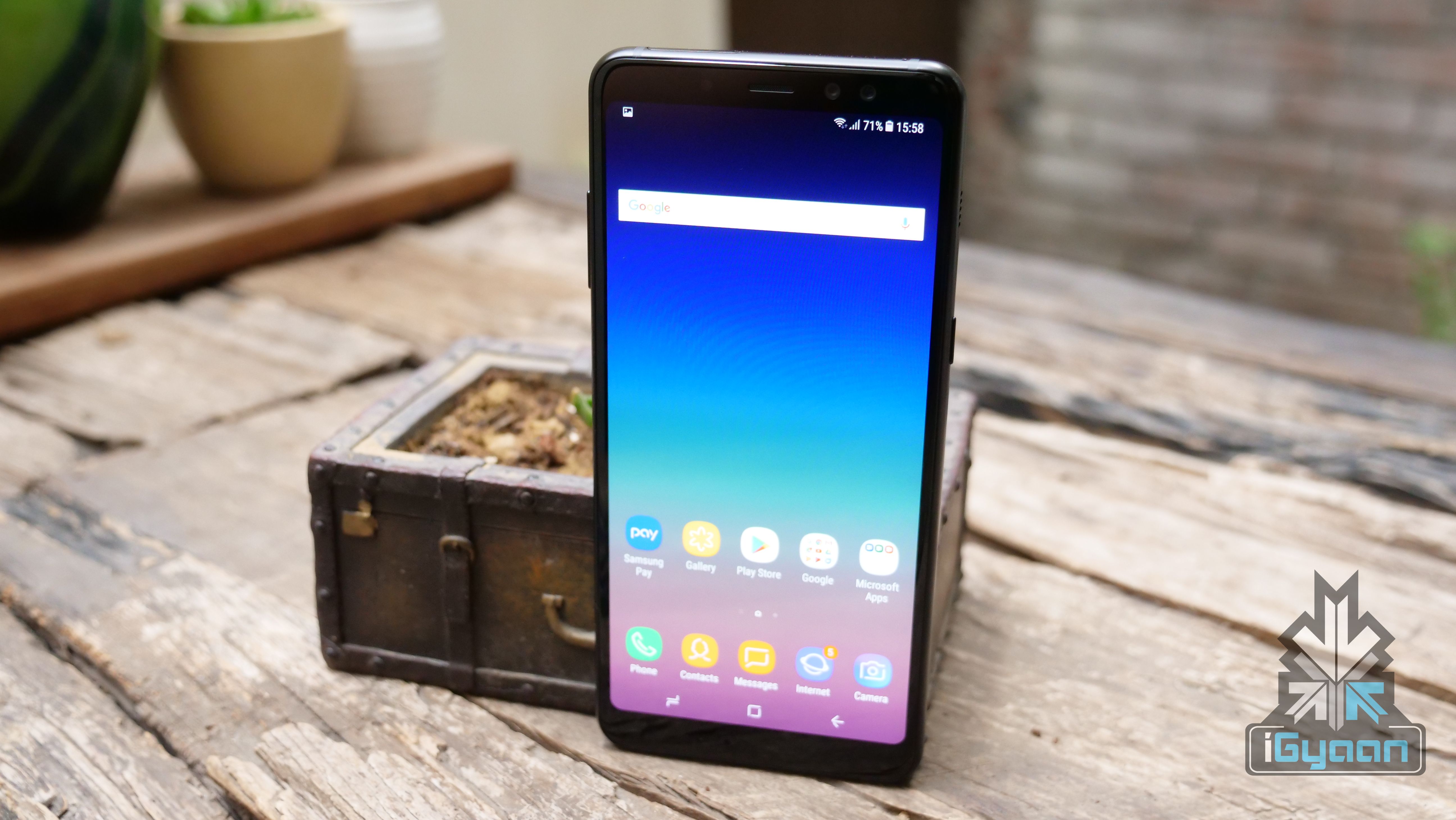
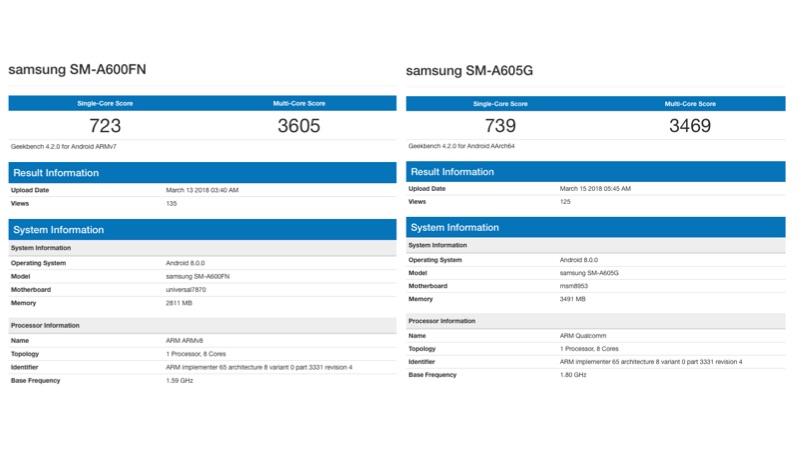
Samsung seems to be working towards an imminent launch of the 2018 Galaxy A6 and A6+ . The smartphones have been spotted on different certification boards in the past few weeks, unravelling most of their specifications. Now, a new leak has surfaced online which confirms the display size and type of these devices. The Samsung Galaxy A6 is expected to have a 5.6 inch display with 2220 x 1080 px resolution. However, the larger Samsung Galaxy A6+ has a 6.0 inch display with the same 2220 x 1080 px resolution. Additionally, the leak also re-affirms the Exynos 7870 and the Qualcomm Snapdragon 625 chipsets used on these devices, which are in line with the previous leaks. However, take this information with a pinch of salt, as the benchmark mentions, that the phones, both have a pixel density of 441 ppi.
Considering previous Galaxy A series devices, these too, are likely to have a Super AMOLED screen with FHD+ resolution. In fact, the screen resolution does match with the Samsung Galaxy A8+, which was launched in India in 2017 and had a 6 inch 2220 x 1080 px resolution. The Samsung Galaxy A8+ currently retails in India for a price of Rs 28,990 and the A6+ and A6 are expected to be launched and priced in the same price range. These smartphones are expected to have an 18.5:9 aspect ratio display with a 2.5D curved glass protection.
Samsung Galaxy A6 Specs
The Samsung Galaxy A6 with a model number SM-A600FN is expected to have the Exynos 7870 Octa-core chipset. Packed with 3GB RAM the Galaxy A6 is expected to have Android 8 Oreo out of the box. The device scores 723 points on the single core and 3605 points on the multi-core performance on the Geeekbench benchmark leak. However, there is no information on the display resolution or aspect ratio of both models.
Model Number
Samsung Galaxy A6
SM-A600FN
Display
5.6 inch
2220 x 1080 px (expected)
Processor
Exynos 7870 Octa-core
RAM
3GB
Storage
32GB
Samsung Galaxy A6+ Specs
The Samsung Galaxy A6+ with a model number SM-A605G will run on Qualcomm Snapdragon 625 Octa-core chipset. The device gets a boost in RAM to 4GB RAM and the same storage at 32GB storage. The larger sibling is also expected to run on the latest Android 8 Oreo out of the box. The Galaxy A6+ scores marginally higher score on single core performance (739) and scores lower in the multi-core performance(3469). In fact, the phone scores 739 points on the single core and 3469 points on the multicore performance.
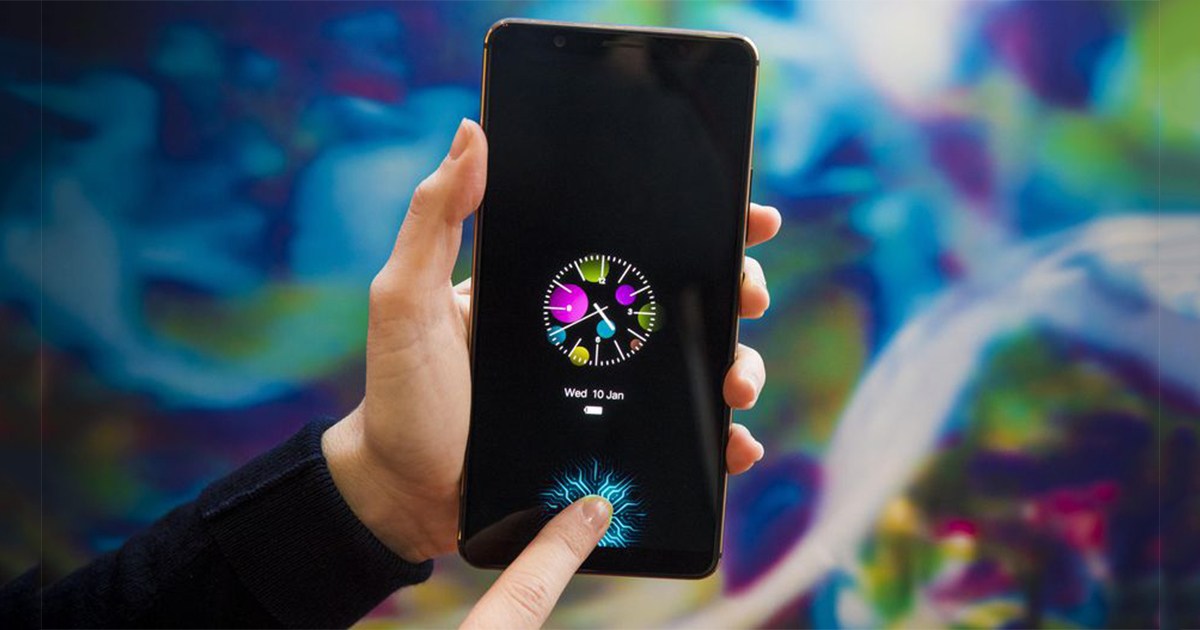
Xiaomi was earlier expected to launch the Mi 7 at an event during the Mobile World Congress 2018. The delay in the launch of the Mi 7 was initially attributed to just the timing of the Mi MIX 2s launch. However, it now appears that the company delayed the launch to incorporate within the Mi 7 new biometric technology. Xiaomi CEO has confirmed via an online post that the MI 7 will indeed have an in-screen fingerprint sensor.
Xiaomi’s CEO Lei Jun commented on a Weibo post confirming the feature. The exchange happened on a post containing official Xiaomi Mi Mix 2s disassembly photos. In the image, it appears that a user jokingly mentions that the Mi 7 will have an in-screen fingerprint sensor. Lei Jun then replied to that comment confirming the presence of an in-screen fingerprint sensor.
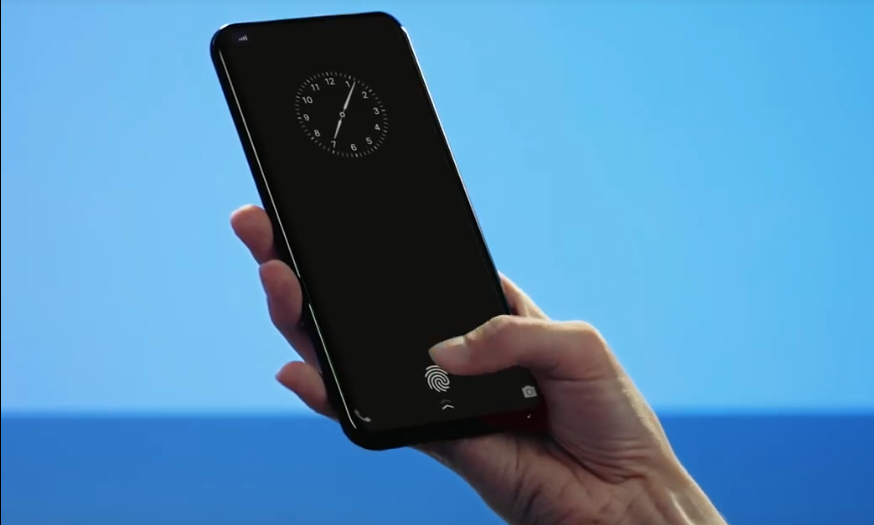
In-display Sensor demo
It is worth noting that the nature of the exchange is not serious and the following comment sort of dismisses the claim. However, there has been a lot of chatter of the Xiaomi Mi 7 sporting the Clear ID technology. If so, the Mi 7 is confirmed to also have an OLED display which is required to embed this type of fingerprint sensor.
The fingerprint sensor sits between the mainboard and the OLED panel where the OLED panel illuminates the finger and then processes the fingerprint scan. Hence, this technology will not work on an LCD panel, at least for now. Synaptics claims that it has a failure rate of 1 in 50,000. So far, the consensus on the use of Clear ID tech has been positive. However, many have pointed out that it is still much slower than traditional fingerprint sensors. With Xiaomi taking its time to launch the Mi 7, we expect the phone will launch with a more refined version of this Clear ID tech.
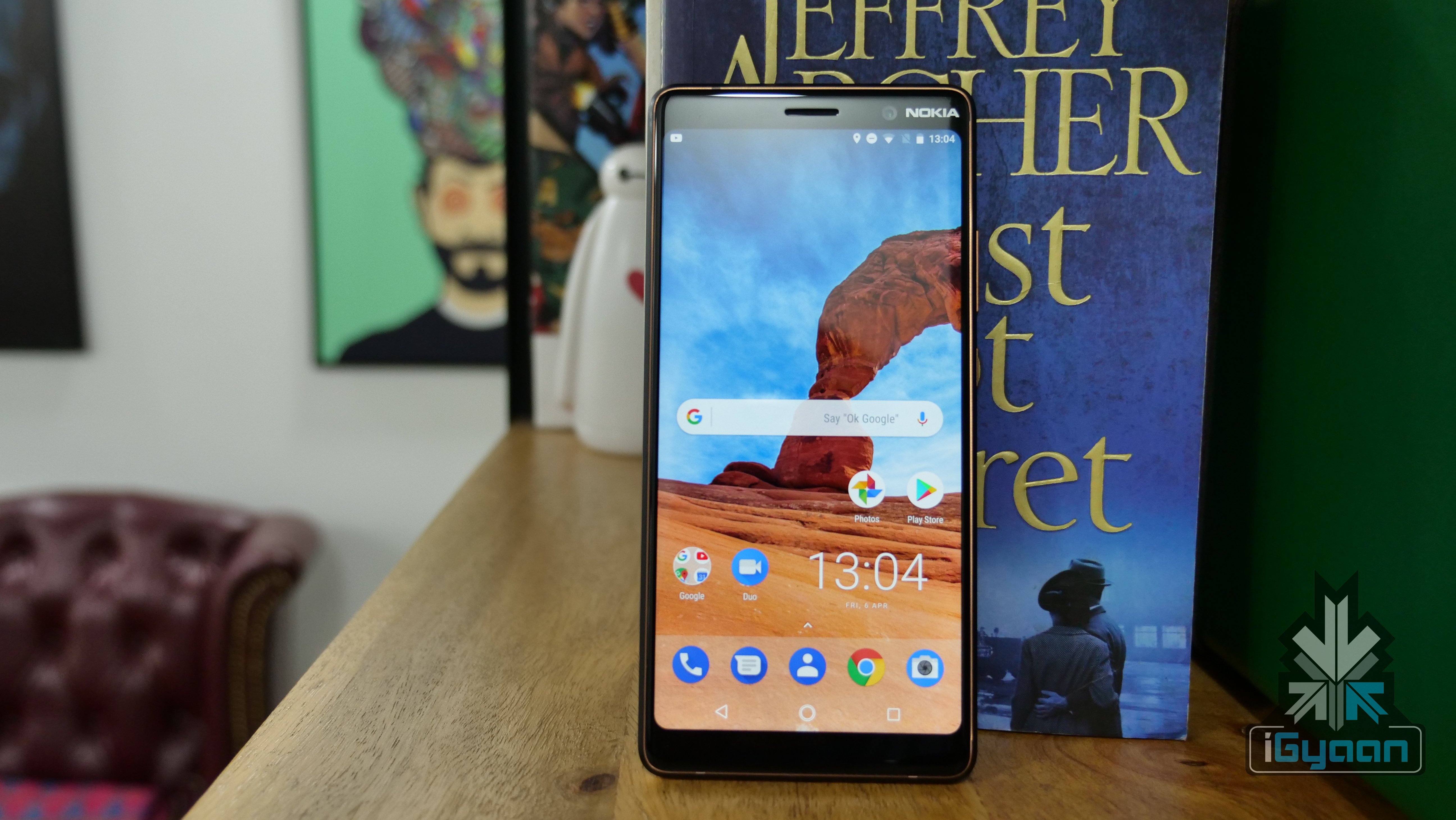
HMD Global has officially launched the Nokia 7 Plus in India at a price of Rs 25999. The smartphone will be up for preorders from the 20th of April via Amazon exclusively. Subsequently, the Nokia 7 Plus will go on sale on the 30th of April. Unlike a lot of other smartphones, the Nokia 7 Plus is only available in 4GB RAM/64GB storage variant. However, it will retail in two colours, Black with Copper and White with Copper, both of these look extremely premium and well built.
Nokia has had a rocky start ever since making its return to the smartphone industry under a new management. In 2017, the company launched quite a few but, pricey budget smartphones in India. The brand Nokia picked up momentum when the Nokia 8 was launched in India at a very competitive price.
With the launch of the Nokia 7 Plus, the once celebrated phone brand has entered untested waters. At a price of Rs 25999, the Nokia 7 Plus will try to fill the gaping hole in a segment where the Moto X4 is a lone warrior. The company has moved on from an older-looking design and refreshed its highly successful (in China) Nokia 7 for the global market.
[section label=”Unboxing”]
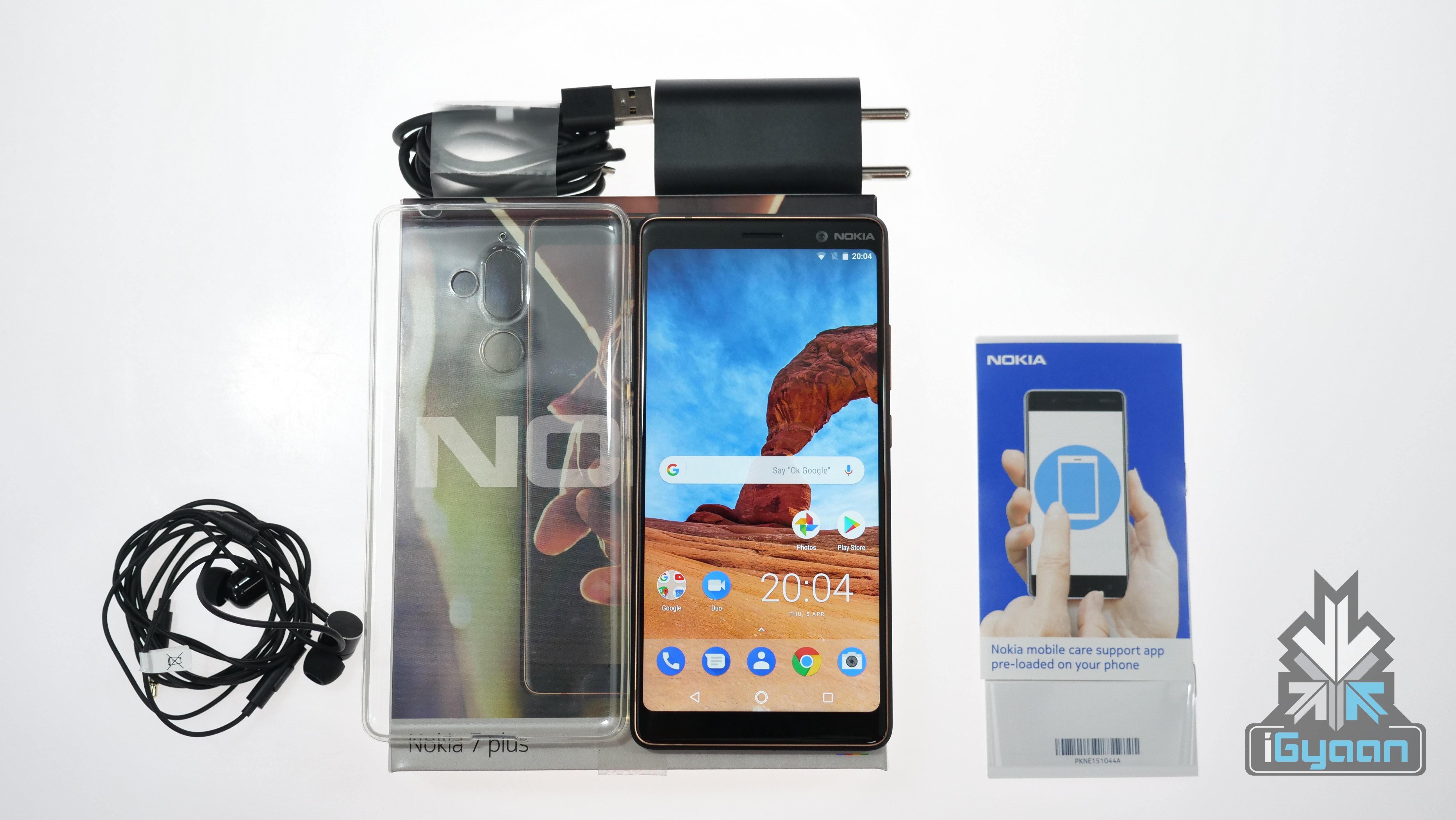
Inside the box of the Nokia 7 Plus :
Nokia 7 Plus
Clear Case
Documentation
Sim Ejector Tool
Earphones
Wall Charger (Fast Charging compatible)
USB Type C Cable
[section label=”Initial Impressions”]
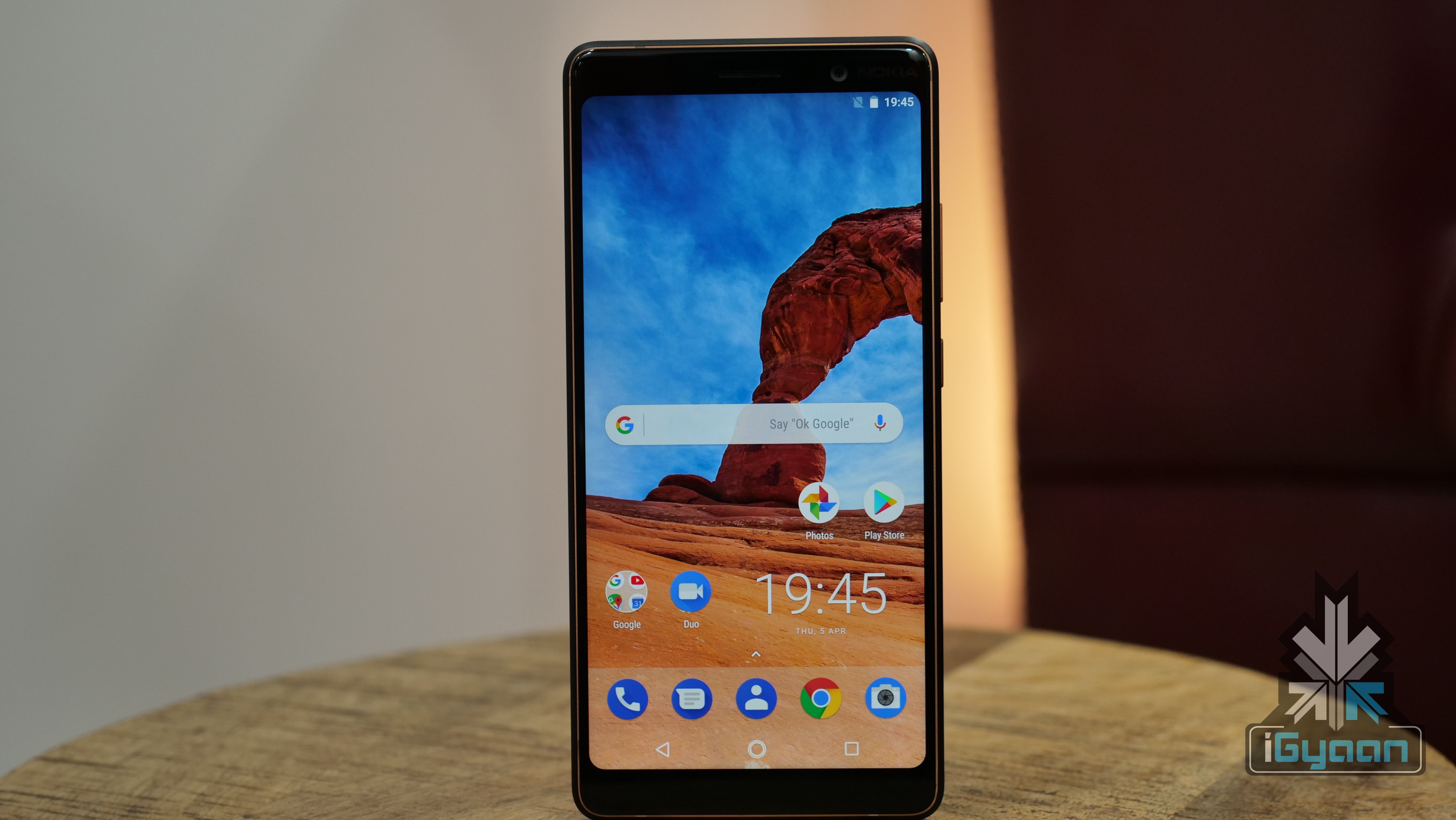
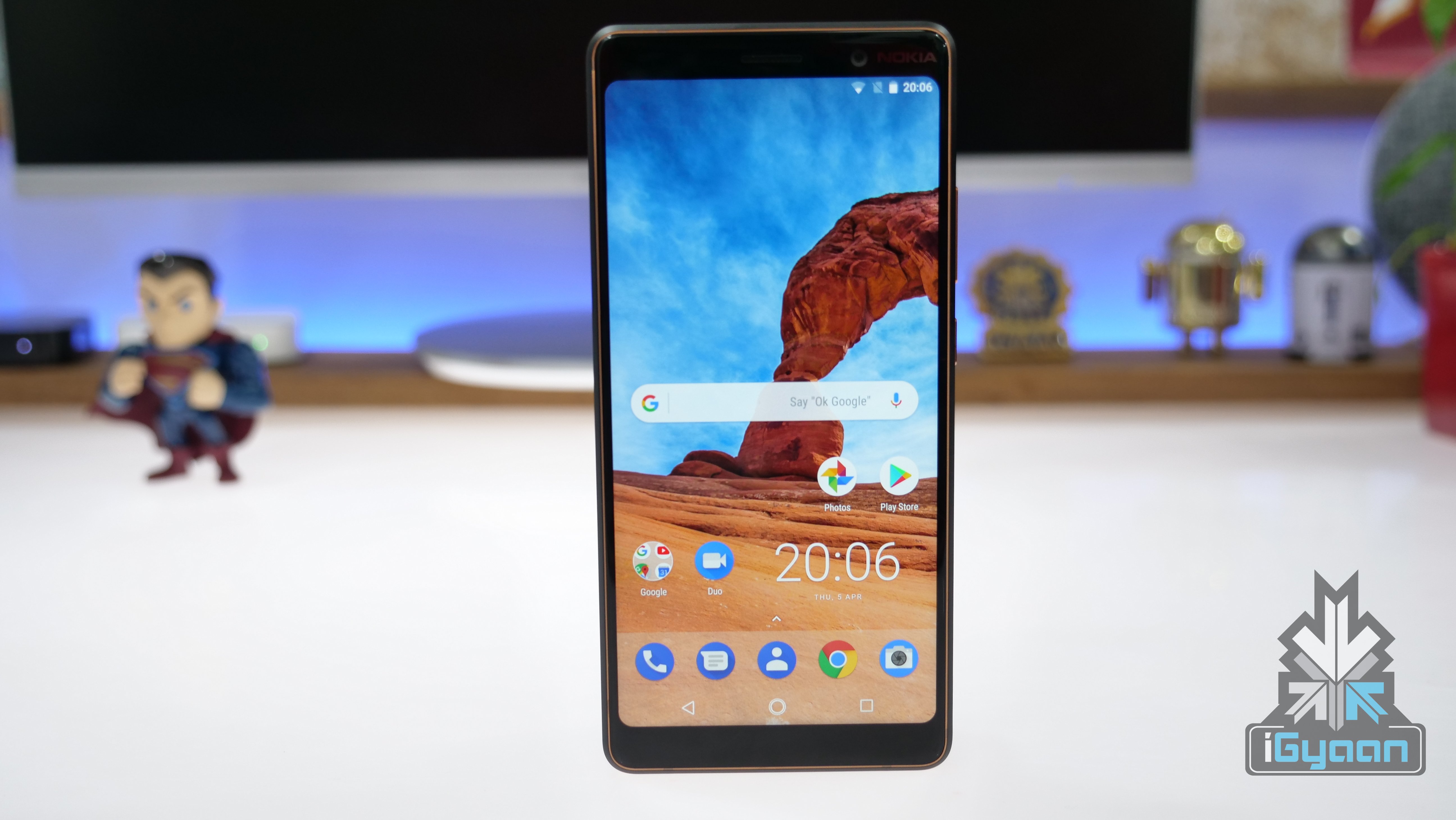
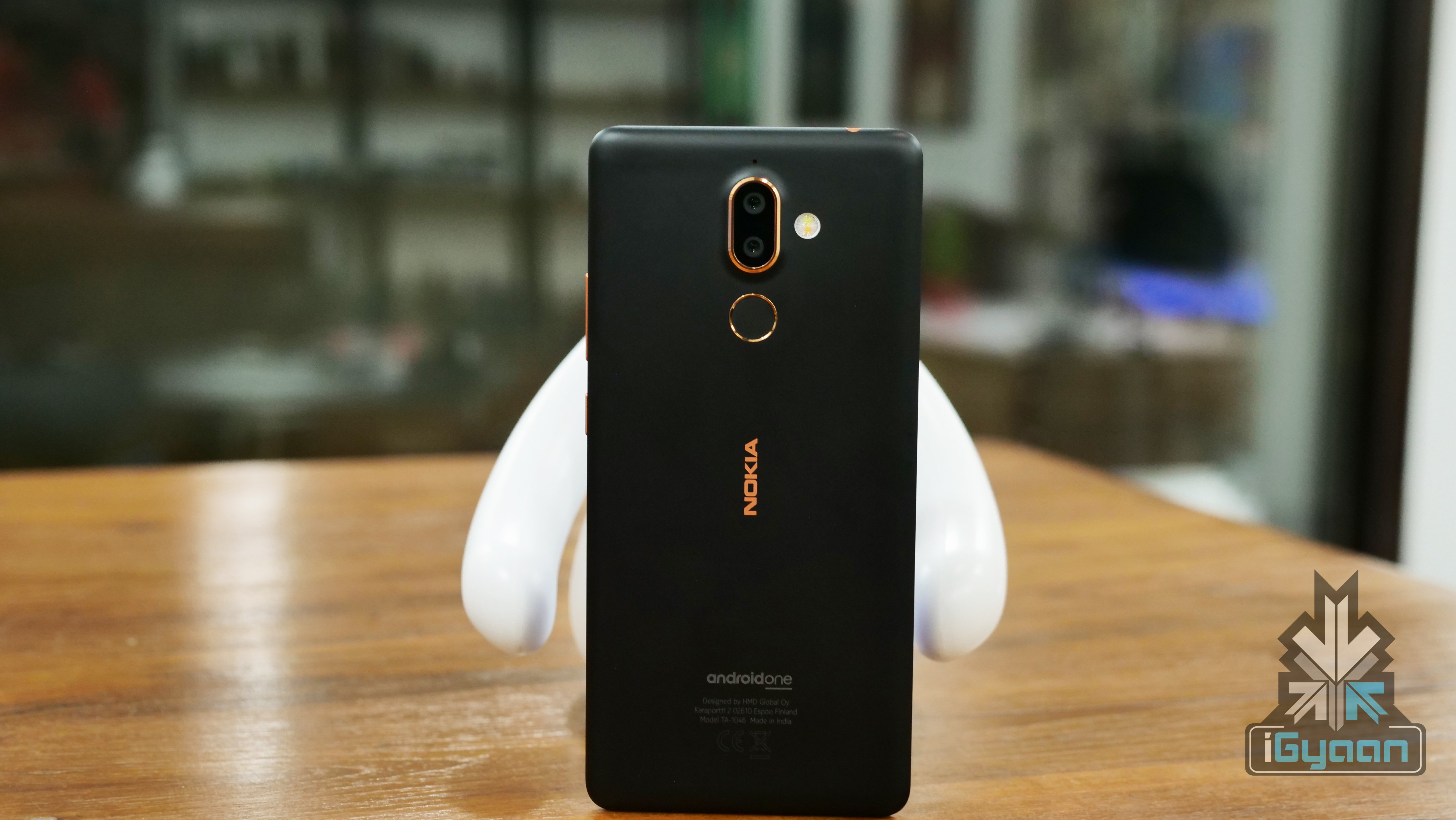
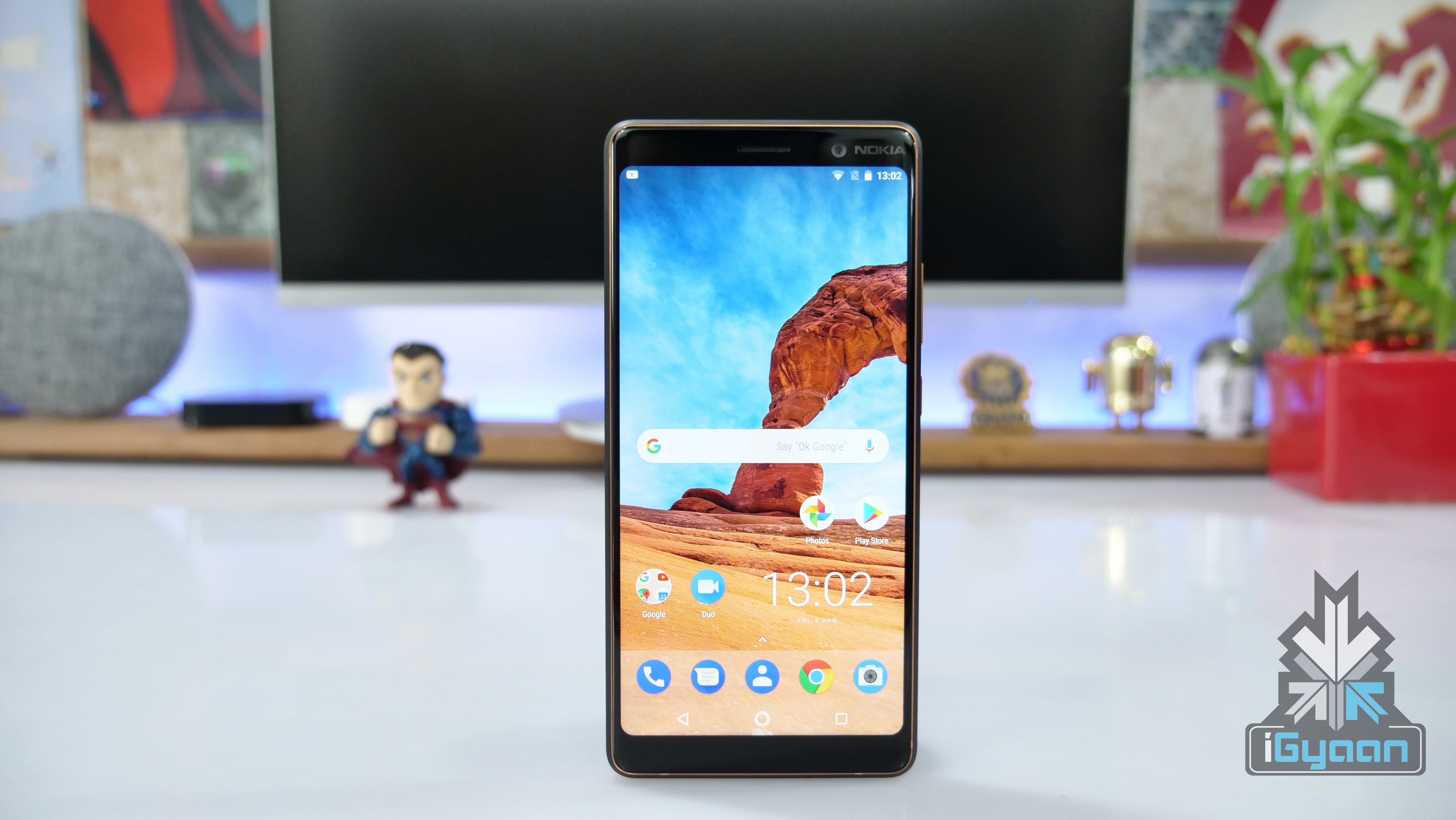
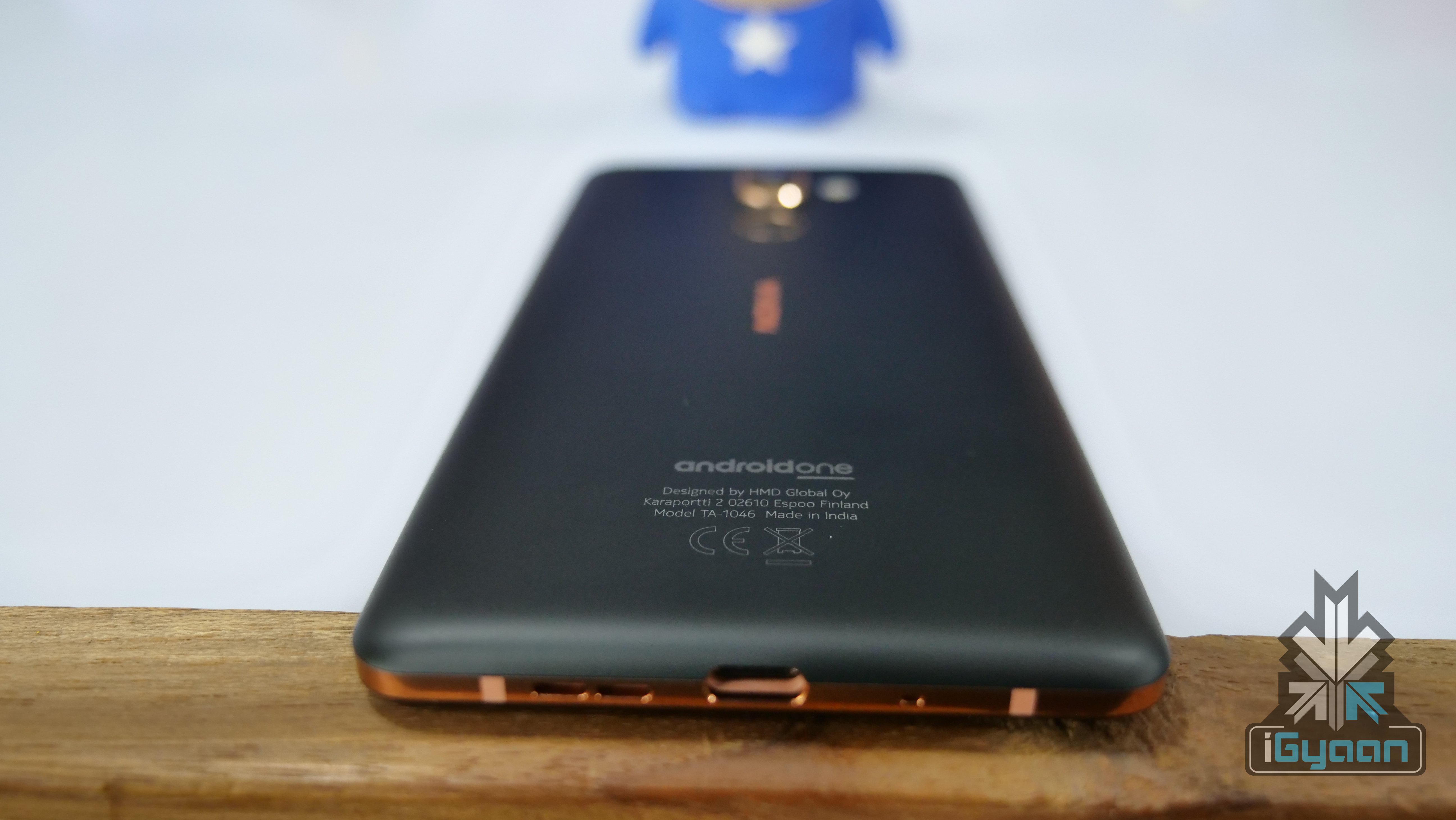
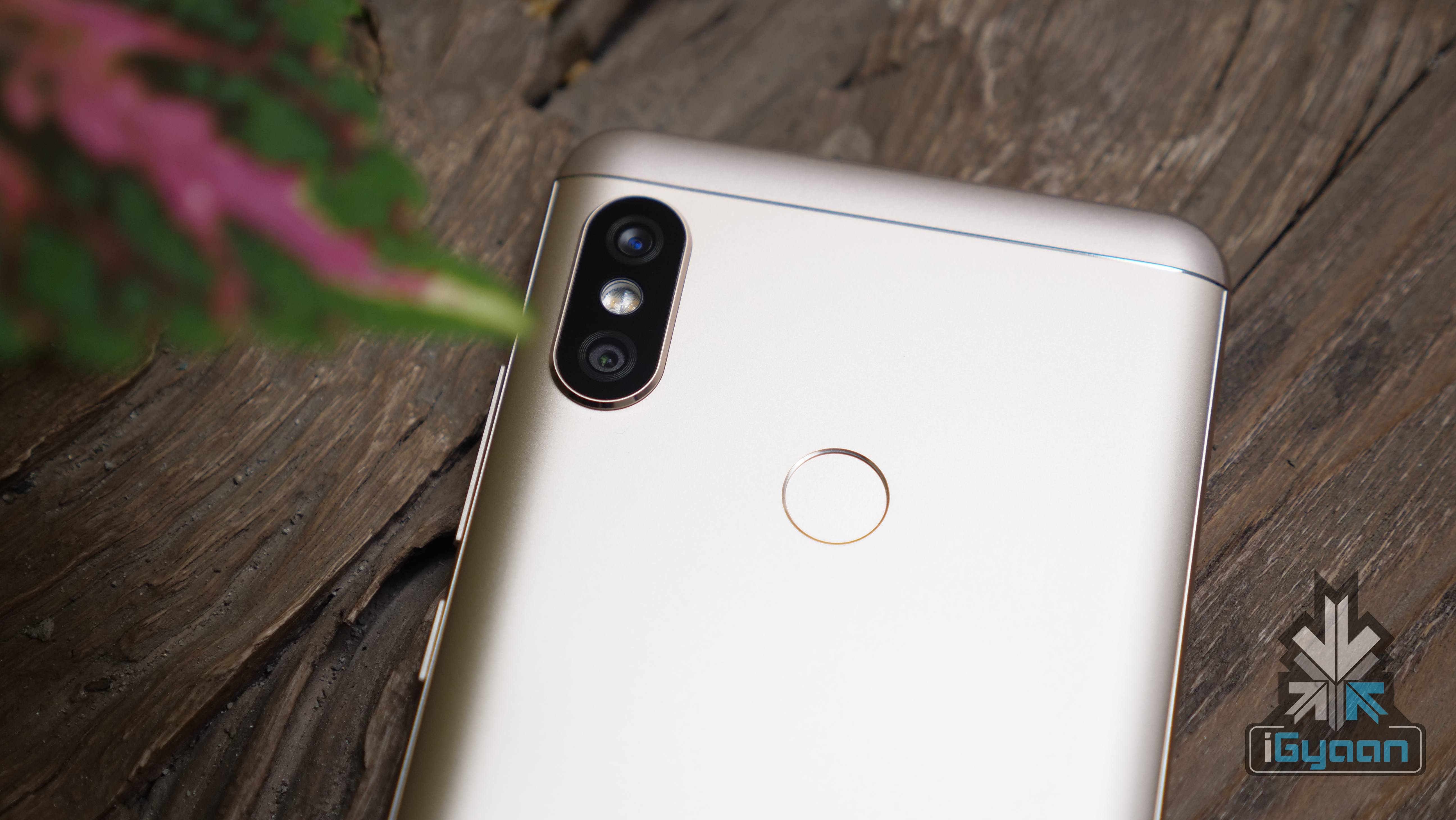
The Nokia 7 Plus is a welcome refresh from HMD Global and that is visible the moment you hold the device. It has a metallic unibody design with a matte finish to the back which does not look cheap at all. On the contrary, it looks extremely premium and should give others in this range a run for their money.
Another significant change in the Nokia 7 Plus is the placement of the fingerprint sensor. Up until now, HMD Global either placed the fingerprint sensor on the front or decided to have a phone sans fingerprint sensor. However, with the bezels considerably shrunken on the 7 Plus, the fingerprint sensor resides on the back. However, it is very centrally positioned which means it is easy to reach and is distinguishable.
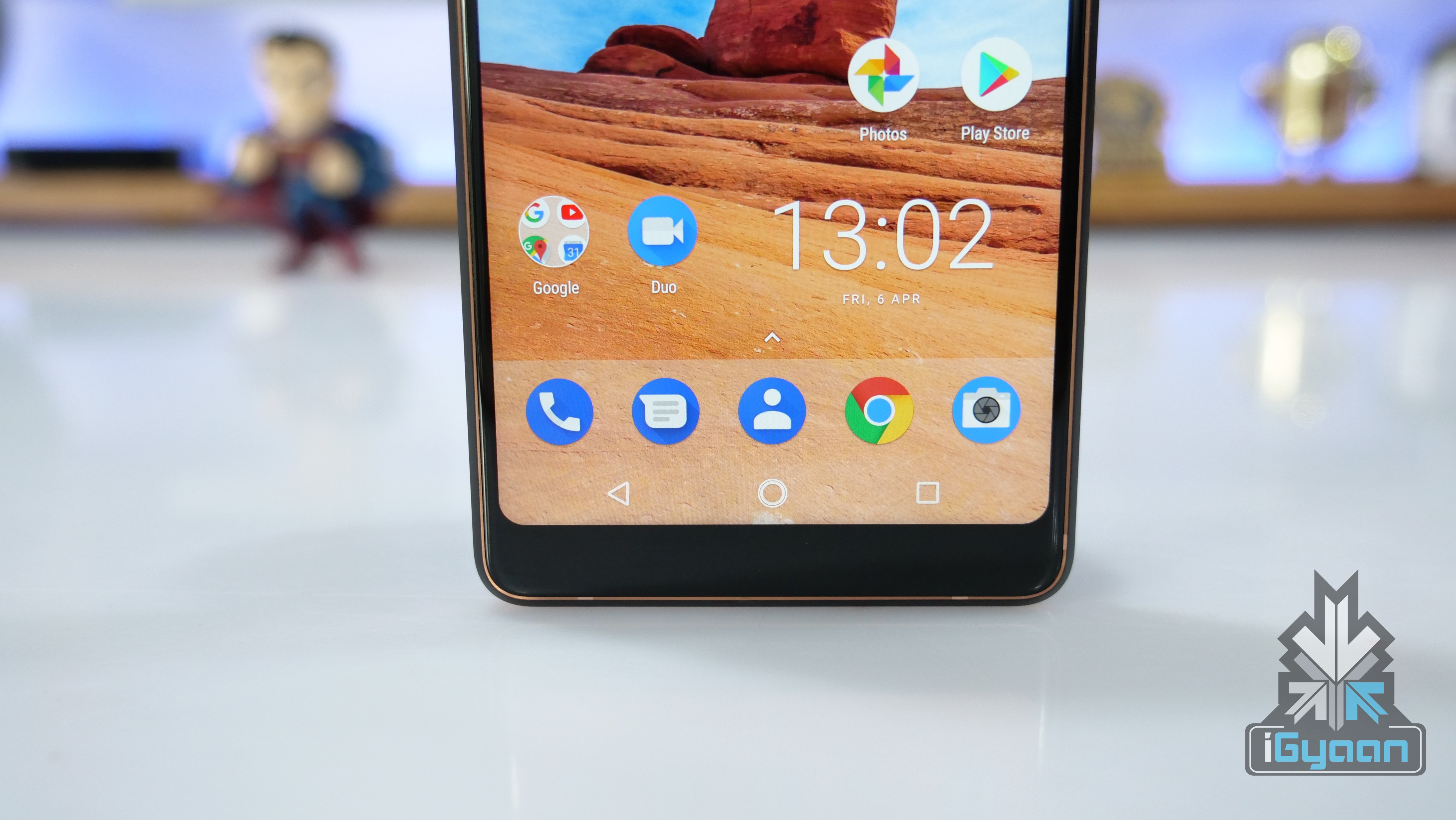
While the 7 plus sports a taller display with thin bezels, they aren’t the thinnest by any stretch, in fact, the phone has a significant forehead and chin. The Nokia 7 Plus has a 6 inch IPS LCD display with a 2160 x 1080 px resolution. The bezels are visible on all the sides of the device but, after a few minutes of usage, your eyes and mind get used to the black space around the display. Thanks to its taller 18:9 aspect ratio the 7 Plus, even with its 6 inch display is easy to use and unless you have tiny hands, the one-handed usage should not be an issue.
The Full HD+ IPS LCD display is bright and vibrant. It has great viewing angles and the 18:9 aspect ratio means the display can fit more content while the overall size of the smartphone has not changed drastically. The single bottom firing speaker is a let down hence, we suggest using external speakers or headphones for any sort of media consumption.
The Nokia 7 Plus runs stock Android 8 Oreo OS and also supports the Android One program. This means the smartphone will receive timely software and security updates for at least a couple of years. Just like the previous Nokia devices, it runs stock OS which means no bloatware. However, there are a few people who prefer a custom skin like MIUI over stock OS. For them, apps like the Nova Launcher is the only way to heavily customise their UI.
Under the hood, the Nokia 7 Plus has the Qualcomm Snapdragon 660 chipset. In fact, it is the first ever smartphone launched in India that is powered by the chipset. The 2.2 GHz octa-core processor handles day-to-day tasks extremely well. The stock OS and lack of any sort of bloatware also help its cause. The smartphone feels snappy to use and handles gaming quite well.
The Nokia 7 Plus has a dual-camera setup on the back. The primary wide-angle sensor is a 12MP camera with an f/1.75 aperture coupled with a 13MP telephoto lens with an f/2.6 aperture. In our brief testing, we found the camera app to be a bit laggy and even while recording videos, the app stutters a bit.
With an impressive build and stock Android out of the box, the Nokia 7 plus promises to be an exciting seller in the market. However, India being extremely price sensitive, sales might change that opinion. Stay tuned for our full review!
OnePlus 6 is expected to launch by the end of April 2018. The prominent specifications of the smartphone have been already confirmed by the company’s CEO Pete Lau via social media posts. The company has now released a new teaser video of the OnePlus 6 on Facebook, which hints towards an iPhone X like gestures for navigation.
The trend of gesture-based navigation has picked up ever since the iPhone X was launched. In fact, companies like Xiaomi and OnePlus have already introduced gestures for navigation on their smartphones. The OnePlus 5T is the only smartphone from OnePlus, as of now, to support gesture-based navigation albeit, via Open Beta ROM. However, Xiaomi has started introducing gesture-based navigation in their new MIUI 9.5 update. The gesture-based navigation has an added advantage on devices which have a taller display, allowing users to eliminate the software navigation keys to offer a larger screen real estate to users.
The OnePlus 6 will have a 6.28 inch Optic OLED display with 2280 x 1080 px resolution. The notch will house the earpiece, front camera, and other sensors. However, we cannot rule out the possibility of a much more advanced facial recognition technology which will require extra sensors. In such a case, not a lot of people should have an issue with the notch. Considering OnePlus’s previous devices, the OnePlus 6 will have Corning Gorilla Glass 5 for protection on both the sides.
Under the hood, the device will have the Qualcomm Snapdragon 845 Octa-core chipset with 6GB RAM and 128GB storage. Going by the previous leak, there might be a model with 8GB RAM and 256GB storage as well. Additionally, there will be no support for SD card.
The device will have a dual camera setup with a 16MP sensor and a 20MP low light sensor with an f/1.7 aperture on both lenses. For the front-facing camera, the device will have a 20MP sensor with an f/2.0 aperture with support for Face Unlock.
The OnePlus 6 will run on Android 8.1 Oreo with custom OxygenOS on top. The device might also support gesture-based navigation similar to the iPhone X. Finally, the smartphone will have a 3450 mAh Li-ion battery with Dash Charging and possibly, wireless charging capabilities as well.
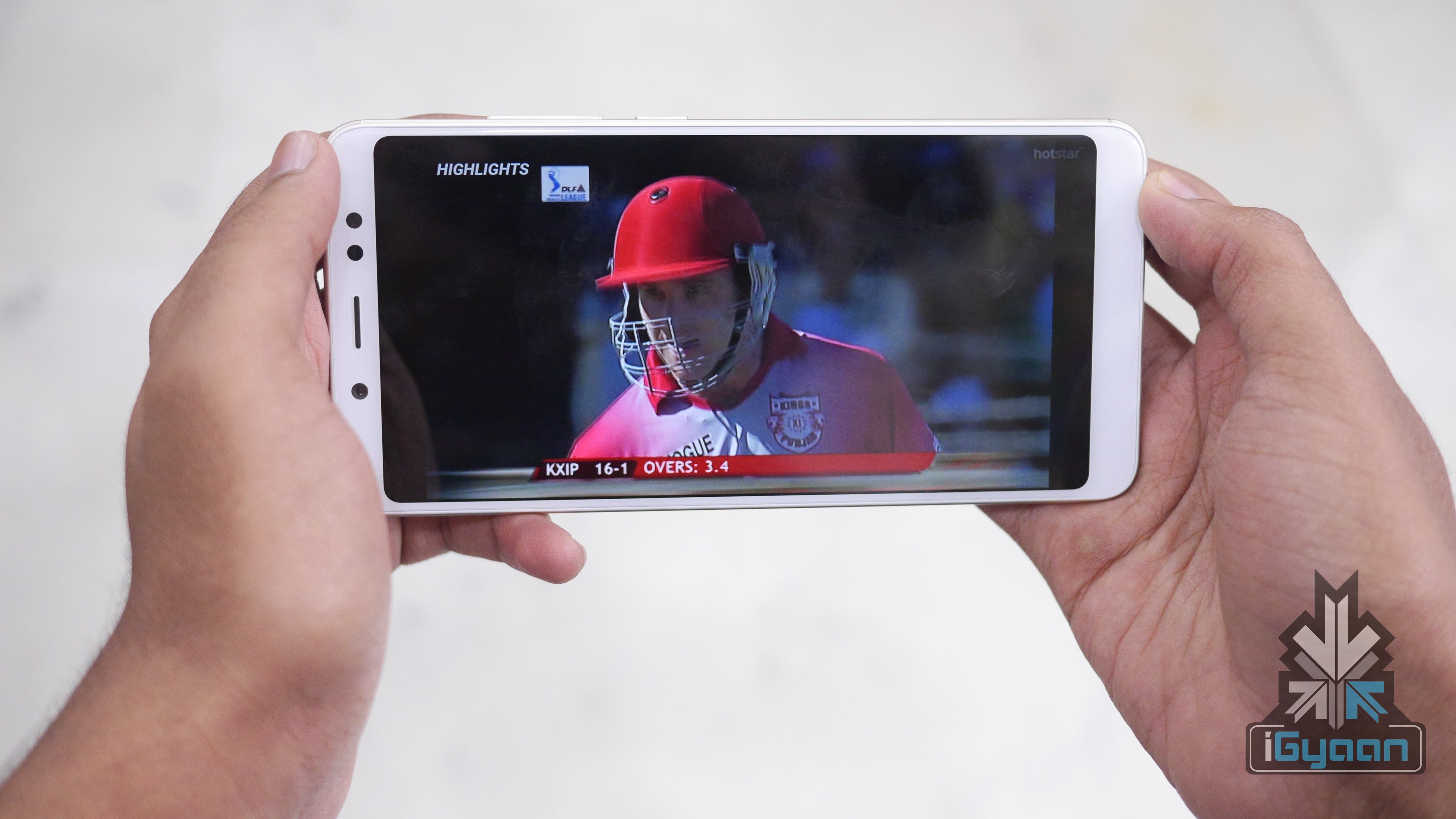
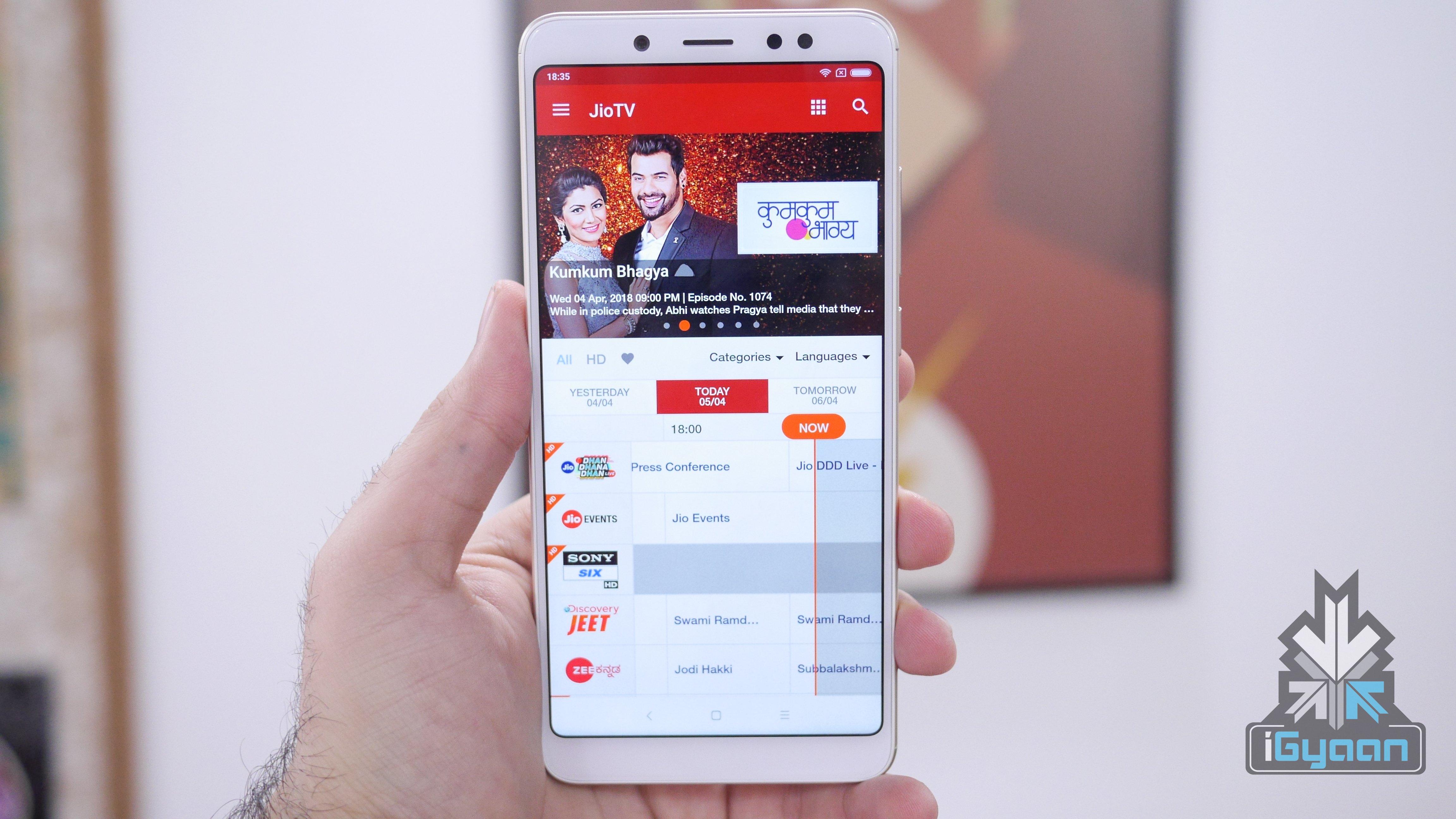
The 11th edition of Indian Premier League is just around the corner. There will be a grand inaugural ceremony on the 7th of April. This season, we have 8 teams battling for a single trophy. If you are an IPL enthusiast, then here are the top three free IPL streaming apps available for Android and iOS. However, some of these apps are carrier specific and work only with a certain telecom operator.
Hotstar
Hotstar is our first pick of the lot. In fact, Hotstar has been offering free streaming for different Star-only cricket tournaments since its inception. With Hotstar, the user will be able to enjoy other regional content, cinemas and Hotstar exclusive titles. However, there will be a few seconds of delay in the streaming and one can overcome that by subscribing as a paid member. Do note that Hotstar offers free one month of premium for free of cost.
Reliance Jio Network now has 100 million subscribers and the company is offering free IPL streaming for the entire customer base. One has to download the JioTV application on iOS or Android device. If the user is connected via Jio network, the JioTV logins automatically using My Jio credentials. Jio TV offers free IPL streaming not only in English and Hind but, also other regional languages including Kannada, Telugu, and Tamil. The company has also announced new Jio Cricket Season packs for Rs 251, which comes with 102 GB 4G data for 51 days (2GB/day).
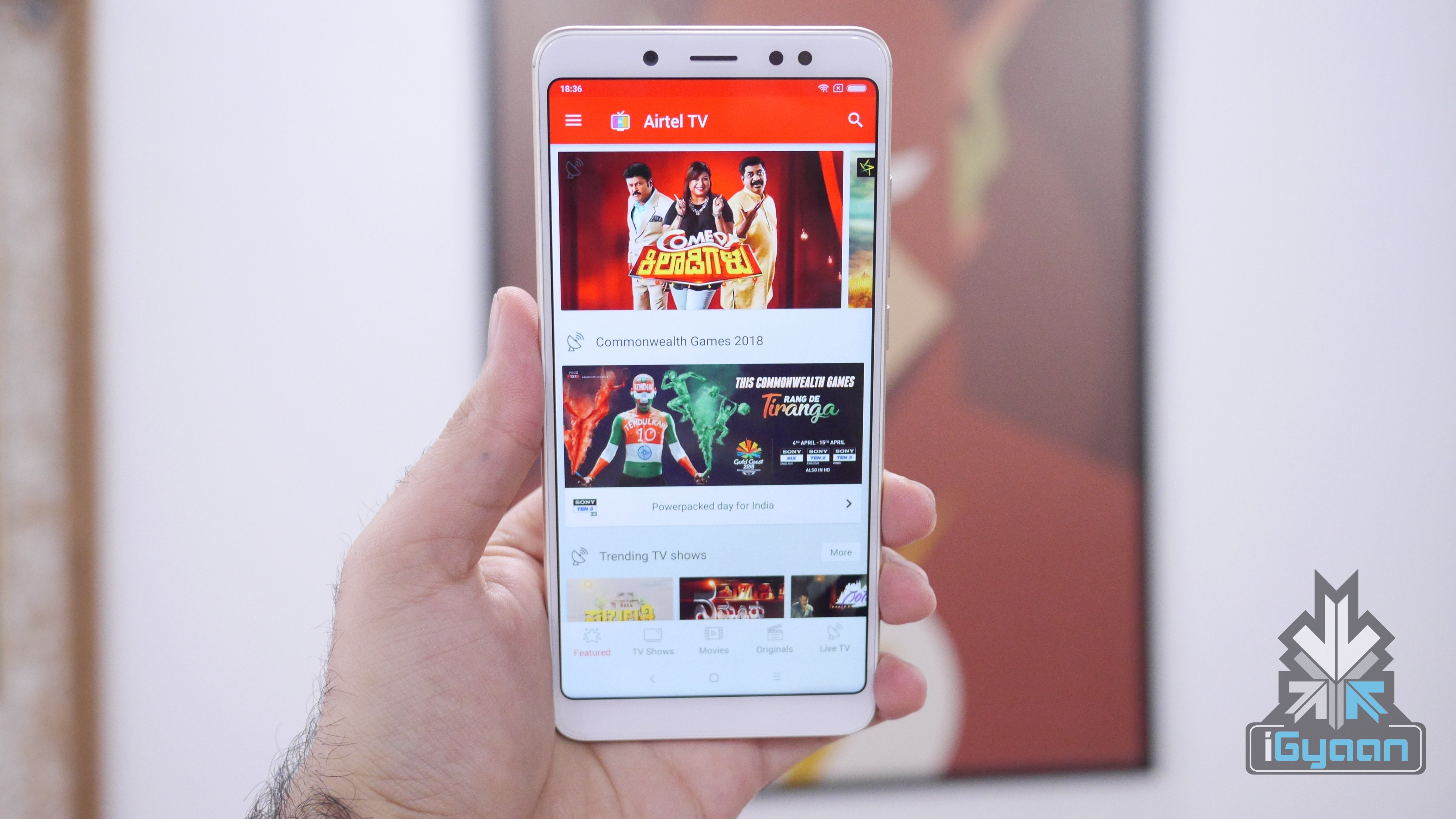
Airtel TV is the latest addition to the free IPL streaming services. Download the Airtel TV app and register using your Airtel number. If you are a first time Airtel TV user, then the company is offering free 1GB 4G data for the first 3 days. Along with the IPL season 11, one can also follow the ongoing Common Wealth Games 2018. Like Jio TV, this app is limited to Airtel subscribers and works well for both prepaid and postpaid users.
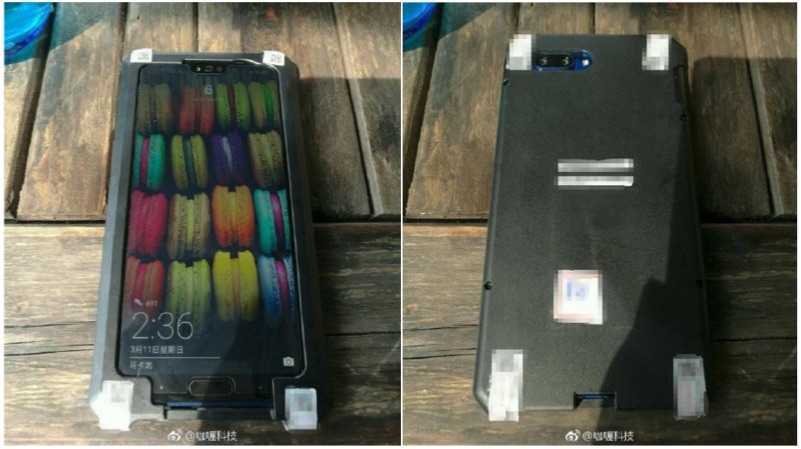
Huawei recently launched its flagship Huawei P20 series of smartphones in Paris. Now, Huawei’s sub smartphone brand Honor will launch a new smartphone in London on the 15th of May. According to a leak, the company will launch the Honor 10, which will be a much more affordable alternative to the Huawei P20. The Honor 10 will have a glass back, glass front, and a metal unibody design, similar to the Huawei P20 series. Additionally, this will be the first Honor smartphone to sport a notch as well.
Whether the Honor 10 will launch in India is still uncertain. But, Honor has had success in India in the recent past. Hence, the Honor 10 could launch in India as well. Pricing has been the biggest advantage for Honor. In fact, the Honor View10 was launched in India for Rs 29,999, at a much lower price than the global price of 449 Euros.
The Honor 10 will have a 5.7 inch IPS LCD display with a 2260 x 1080 px resolution. This translates to a 19:9 aspect ratio, similar to the P20 Pro. As this is will be an affordable model, we do not expect Honor to go the OLED route. Under the hood, the device will have the HiSilicon Kirin 970 Octa-core chipset with 4/6GB RAM and 64/128GB storage.
Leaked Honor 10 Images
The device will have an AI-powered dual camera setup, similar to the Huawei P20. However, the company is likely to use different camera sensors. Additionally, the device will have a bigger battery with SuperCharging capability. Since Huawei removed the headphone jack with the Mate 1o Pro and now the P20 series, Honor might follow suit, starting with the Honor 10.
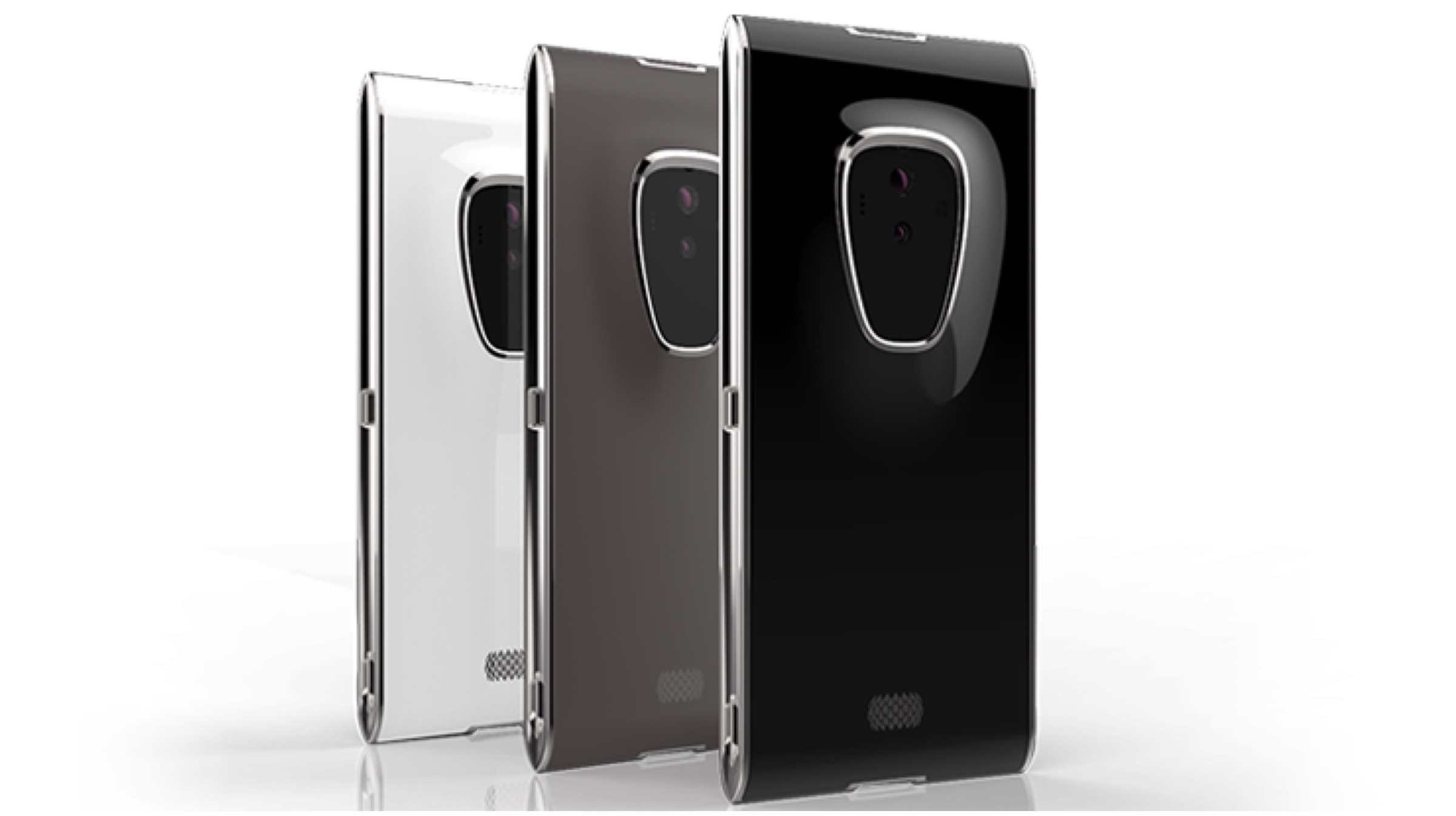
Smartphones, over the years, have become quite stagnant. We see a similar design, specifications and features in the majority of phones. That doesn’t mean there is no innovation, Huawei launched the P20 Pro with a triple-camera setup while Vivo launched the first-ever smartphone with an in-display fingerprint sensor. However, in October, we won’t see a launch of an engineering marvel but, a rather quirky smartphone to say the least. Sirin Labs, the Switzerland-based firm will launch the first-ever blockchain smartphone.
In September 2017, the company unveiled a blockchain-powered smartphone and PC for cryptocurrency nerds. These devices would act as secure wallets for all the cryptocurrency wealth the user possesses. Now, the company has roped in Foxconn to manufacture the smartphone. Interestingly, Foxconn is the same firm that manufactures the iPhones for Apple.
Sirin Labs has conceded that it plans on launching the Finney in October 2018. The company has already received 25000 pre-orders and hopes to sell between 100,000 and a few million units in 2018. A rather ambitious number, we must say. According to Sirin Labs, the company has plans to further launch blockchain-powered smartphones in an association with other OEMs. The company is already in talks with Huawei, world’s third largest smartphone maker.
Finney Phone
The Finney phone will retail for a price of US$ 999 (Rs 65000 approx.) or about 0.15 Bitcoin. The smartphone will be readily available to buy at physical stores in eight cities where cryptocurrency is currently striving, in countries like Vietnam and Turkey. This means that the chances of the smartphone launching in India are slim.
According to a report by Bloomberg, the smartphone will have a physical switch will activate coin-related services. Additionally, it will have a feature similar to Apple Key wherein users will be able to secure the devices with an iris scan, fingerprint, or a simple password. This feature will be useful for people who have multiple wallets with different passwords. The Finney will run on open source Android-based Sirin OS. Interestingly, users will be able to earn tokens by sharing their mobile data connection with people around them.
The specifications mentioned on the company’s website include a 5.5 inch display, 64GB of onboard storage coupled with 6GB of RAM. The device will also sport a 12MP rear-facing camera and a 13MP front camera. The website also has a small asterisk next to the specs which mean these are not the final specifications.
Last year when Samsung launched the W-2018 flip smartphone, we iterated that it was a device for a very specific audience. The Finney phone takes that to another level because not a lot of people would shell out a thousand dollars for this smartphone.
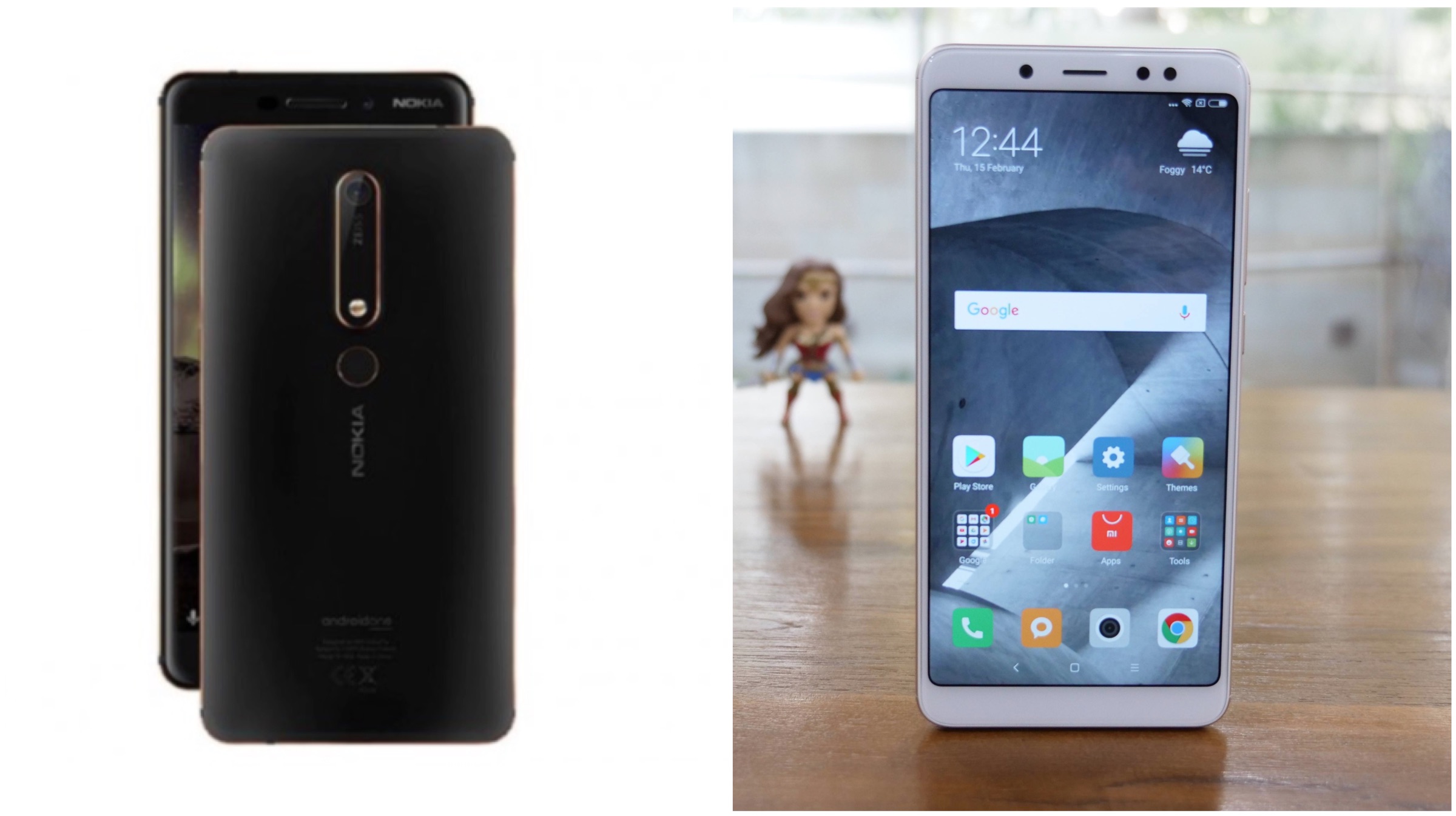
The budget segment of smartphones in India has seen an influx of some great devices. In 2017, the Xiaomi Mi A1, Moto G5s Plus and the Honor 7X were some of the best budget Android devices. 2018 did not have a bad start either, the Honor 9 Lite with its all-glass design and quad-camera setup turned some heads. However, in February, Xiaomi launched the smartphone to beat in this segment, the Redmi Note 5 Pro. Now, HMD Global has launched the Nokia 6 2018 in India at a price of Rs 16999 which will be sold offline only.
In our review of the Redmi Note 5 Pro, we expressed that this was the true successor to the Redmi Note 4. However, Xiaomi also launched the Redmi Note 5 which has been selling well in the previous flash sales. The Nokia 6 2018, on the other hand, succeeds the Nokia 6 from 2017 which left a lot to be desired thanks to its extravagant pricing.
Dual-Camera Redmi Note 5 Pro
With the Nokia 6 2018, HMD Global has provided better specifications while retaining the 16:9 aspect ratio. This means that despite its new colour accents, the Nokia 6 2018 will look like an older smartphone when compared with the likes of Redmi Note 5 Pro and Honor 7X. It is also worth noting that these two devices cost less than the Nokia 6 2018. The new Nokia 6 also retains a single camera setup on the back while its competitors sport a dual camera setup.
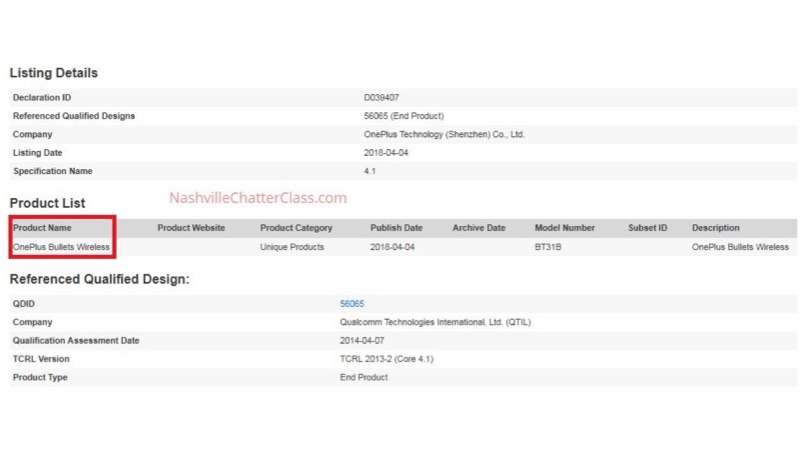
The launch of the OnePlus 6 is just around the corner. The company will launch the next flagship smartphone some time in April. Now, a newly leaked Bluetooth certification page confirms that the company will also launch the OnePlus Bullet Wireless Earphones. OnePlus has launched the Silver Bullet V1 and V2 along with the launch of the OnePlus 3 and OnePlus 5. And now, the company is going the wireless way, by launching its first ever in-house wireless earphones. It is worth noting that the company has confirmed the OnePlus 6 will retain the 3.5mm headphone jack.
The listing states that the OnePlus Bullet Wireless Earphones will go by the model number BT31B. These earphones have a custom Qualcomm chipset with Bluetooth V4.1. Which suggests that the earphones might have an additional functionality similar to the Apple AirPods. As of now, there is no information on the pricing or the launch date of the accessory. However, these earphones might launch in India along with the OnePlus 6.
Considering the company’s pricing philosophy, these earphones are likely to be a budget pair of earphones, which are expected to be priced less than Rs 5,000. In fact, the OnePlus Silver Bullet Earphones V2 currently retail in India for a price of Rs 1,199. The Bullet Earphones V2 has a metal head with a 1.2-meter long cable. Additionally, these weigh in at 14 grams and also have an in-line microphone.
Lenovo has sent out a press invites in Brazil for an upcoming launch. According to the invite, Motorola is holding a launch event on the 19th of April, where the company is expected to unveil the Moto G6 series of smartphones. Like a typical press invite, it says ‘save the date’ and doesn’t specify any products. However, the invite has a green background, which is similar to the wallpapers of the leaked G6 series of smartphones. Considering the success of the G series in India the company might launch the smartphones in India soon as well.
Along with the Moto G6 series, the company might also launch the Moto E5 series as well. The upcoming Moto G6 and E5 series will be very important to the company’s portfolio. In fact, these mid-tier devices will account for the majority of the sale numbers in the company’s portfolio.
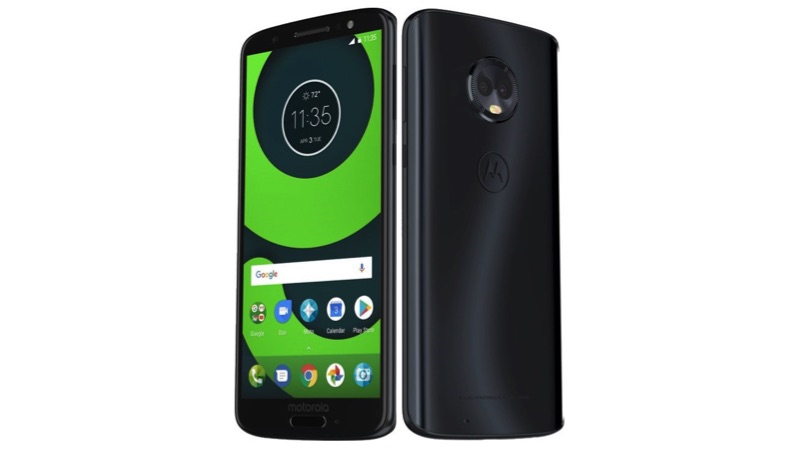
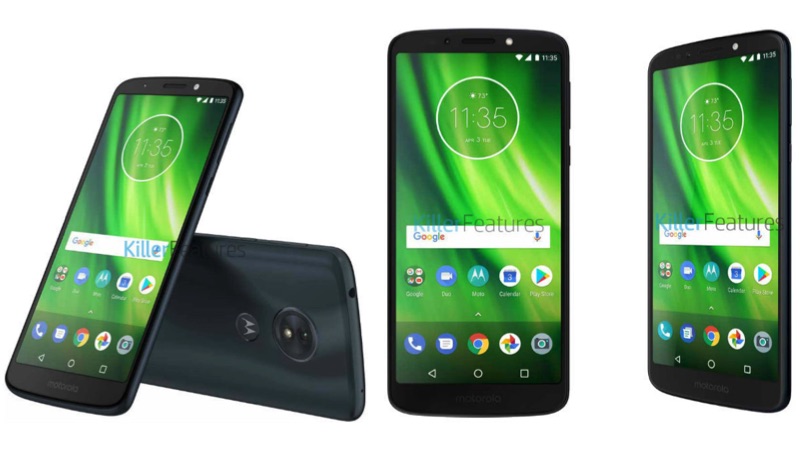
The Moto G6 series has three phones, the Moto G6, G6 Plus, and G6 Play. All three phones have a premium full glass unibody design, similar to the Moto X4. Additionally, these are the first set of Moto smartphones to have an 18:9 aspect ratio display.
In the G6 lineup, the Moto G6 Plus will be the priciest of the lot. The smartphone has a 5.93 inch FHD+ 2160 x 1080 px IPS LCD display, powered by the Qualcomm Snapdragon 630 SoC. Similarly, the Moto G6 has a same 5.93 inch FhD+ display with 2160 x 1080px IPS LCD display, powered by the Qualcomm Snapdragon 450 chipset. These devices have a dual primary camera setup with a 12MP RGB sensor and a 5MP depth sensor.
The Moto G6 Play will be a budget offering, which has a 5.7 inch HD+ 1440 x 720 px display. Under the hood, the device has the Qualcomm Snapdragon 430 Octa-core chipset. However, unlike the G6 and G6 Plus, the play moniker has a single 13MP camera.
Apple may never be the first to introduce a feature but, it usually sets an industry-wide trend. In 2017 again, Apple was not the first one to introduce a notch (not a feature but, still). However, it is not rocket science to figure out the overall design shift across Android smartphones ever since the iPhone X was launched. Now, Apple appears to be working on launching a few iPhones with a curved display. However, this reality is still a few years away.
According to few people close to the matter at Apple, these panels will curve inward gradually from top to bottom. This implementation is different from Samsung’s for its recent flagship smartphones. Now, so far we have seen smartphone makers choose the same route for curves, like Samsung. So, it is unclear why Apple would go a different way. It could be because Apple’s research team identified ergonomic advantages with this method. The other reason could be to potentially prevent people from saying that they copied Samsung.
Another interesting feature in future iPhones will be touchless gestures. Since the launch of the iPhone X, other smartphone makers have also identified gestures for navigation as a viable replacement to the same old navigation buttons found on Android since its inception. However, Apple wants to that a step further with touchless gestures. Users will be able to perform certain tasks by just hovering their fingers over the display. But, since the technology will be built into the display, users will have to bring their fingers very close to the display.
These features, as of now, are in early stages of R&D. As we know, Apple never puts out something until the technology is perfected which means we will have to wait a while for the new iPhones. However, the features are very interesting and could, potentially, set another industry trend in the years to come.