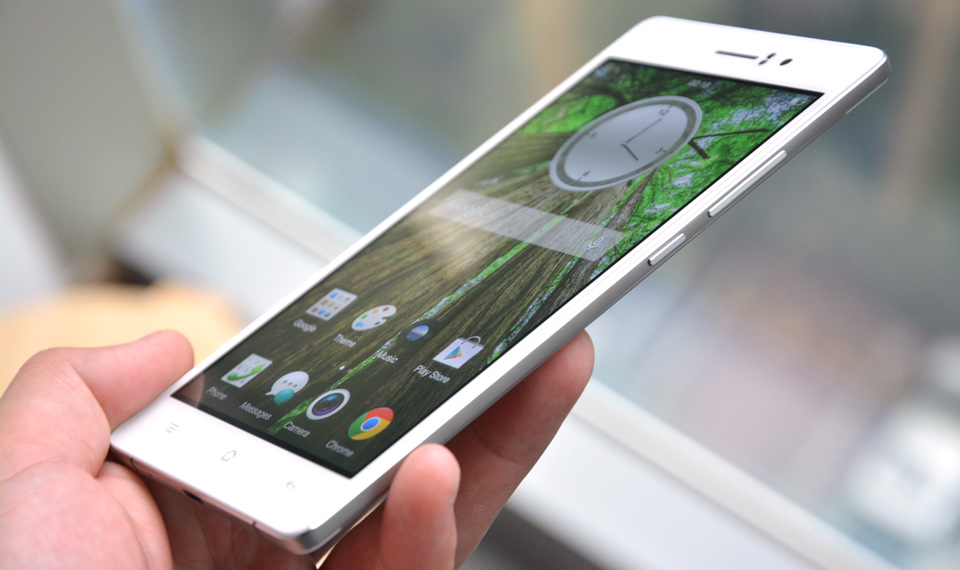
The slimmest smartphone by the Chinese electronics manufacturer, OPPO R5 was much-awaited by the Indian audience and finally, the wait has come to an end. OPPO India has launched its flagship device in the country today at a price of Rs. 29,990. The company announced that the phone will be available for pre-order from 1st January, 2015.
The high-end device was unveiled by the company in October at a price tag of $499. The smartphone was the world’s slimmest phone record holder before the launch of Vivo X5 Max. The X5 Max beats OPPO R5 by just .10 mm, with a sleek design measured at 4.75 mm.
In an official announcement, the company highlighted its specifications, “The 4G-enabled R5 is equipped with Octa-core Qualcomm MSM8939 processor and features a 5.2-inch AMOLED screen”. Adding to its specs, the phone has a screen resolution of 1080×1920 pixels. Along with the Qualcomm processors, the device packs 2 GB of RAM and an Adreno 405 GPU. The 13 MP rear camera and 5 MP front shooter are quite impressive and can take amazing pictures. Running on Android 4.4 KitKat, the phone supports a single SIM. The device comes with 16 GB of unexpandable inbuilt storage, which is the only drawback of this model.
OPPO India CEO Tom Lu commented on the launch –
This phone has been developed with the end user in mind. We used cutting edge manufacturing techniques to create a phone that fits perfectly into the users’ hands, and that feels incredible. The frame has been forged nine times and then finished by hand to give a perfect sheen and feel. It has a quality that is not available anywhere else in the industry. The R5, like the rest of the R series delivers a truly stylish, exquisite and distinctive design and will continue to delight our customers with its innovative yet practical functions.
The device is available in other countries like Australia, Egypt, Indonesia, Malaysia, Philippines, Singapore, Taiwan, Thailand, and few more except India. The other smartphones by the company were received well by the Indian users. Only time will tell whether this device finds a place in this saturated smartphone market.
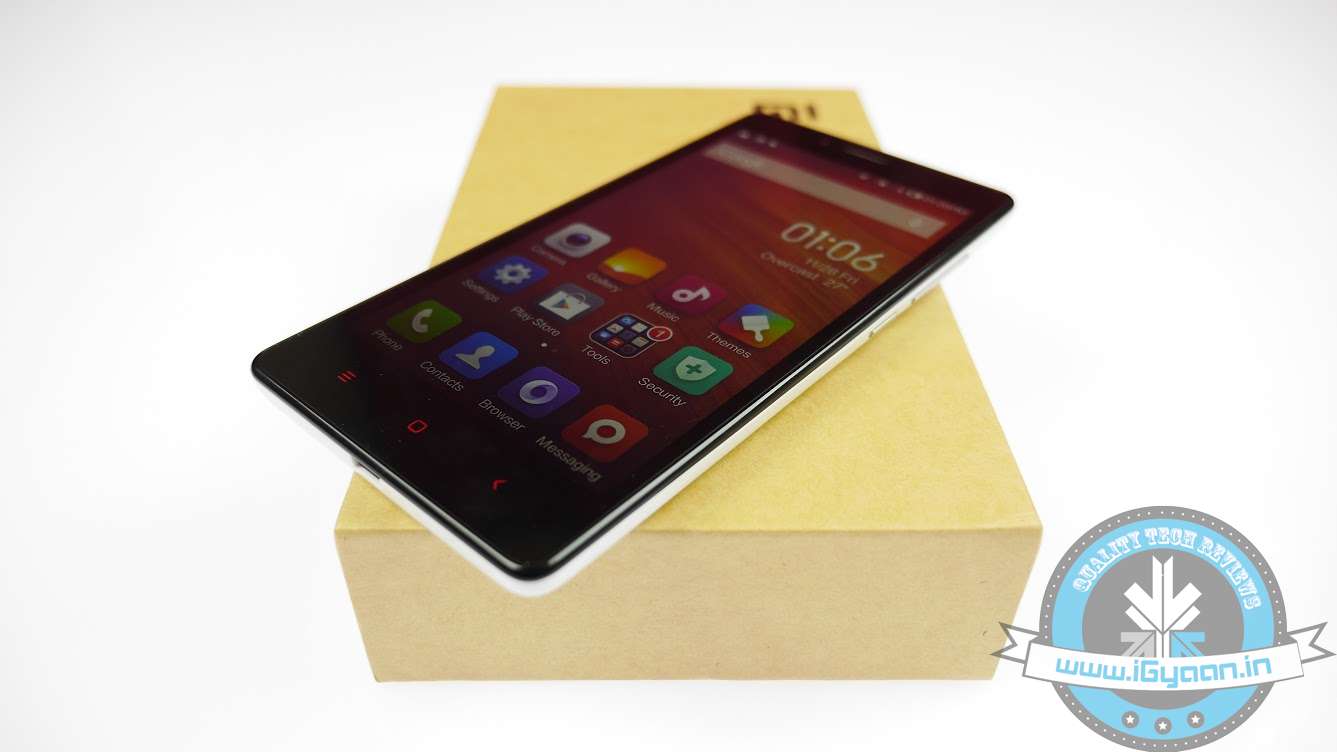
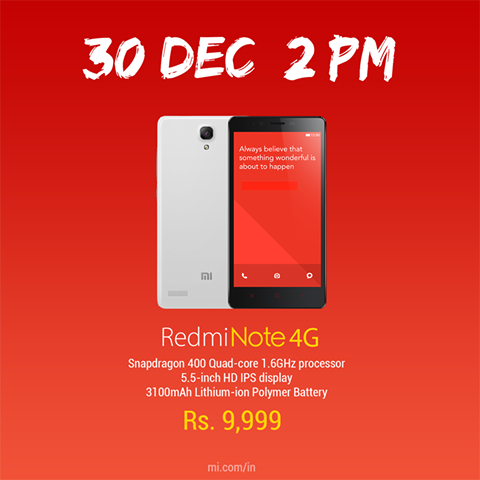
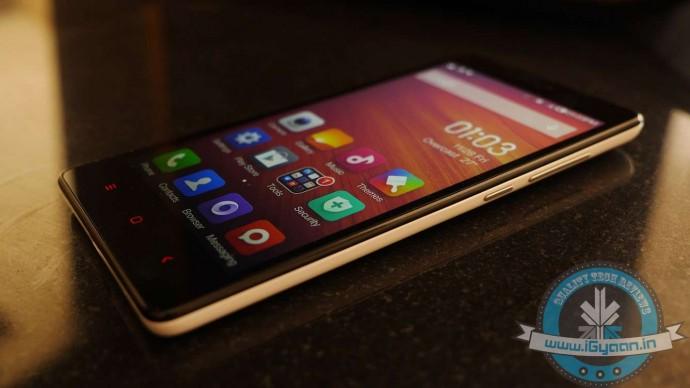
The much awaited 4G variant of Xiaomi’s blockbuster Redmi Note was officially up for grab today. The flash sale started (like always) at 2PM today on Flipkart allowing registered users to buy Redmi Note 4G for Rs. 9,999.
There were only 40,000 units up for sale, whereas, according to Flipkart, 200,000 people registered for the Redmi Note 4G variant. Like in the past, this one was also a torrid affair and the Redmi Note 4G was out of the stock in seconds. Although, last week the Redmi 1S, after a prolonged ban, did not get the expected response.
The major difference between the 4G and 3G variants of the Redmi Note is the processor and connectivity support. As the name suggests, the Xiaomi Redmi Note 4G is a 4G LTE ready device. It is further powered by a 1.6GHz quad-core Qualcomm Snapdragon 400 CPU coupled with 2GB of RAM.
Although Xiaomi will be pleased with the response, there continues to remain a partial ban on the company and it will be interesting to observe how this Chinese superpower will proceed. As as now Xiaomi seems to be stronger than ever, KUDOS!
The Uber owners can now breathe a sigh of relief as Delhi government has lifted ban on the app-based transportation service. Delhi Transport Department on Monday added some new rules in the Radio Taxi Scheme 2006 which include cab-hailing apps like Uber, Ola and more to the category of Radio Taxis. The declaration has come as a welcome note for the ride-sharing service as its status was uncertain post the ban implemented earlier this month.
Uber services were banned in Delhi as a result of the rape incident committed by a registered Uber driver two weeks ago. The app faced an outrage of people all over the world, and as a result, its services were barred in the capital.
As per the modified rules in the Radio Taxi Scheme 2006, the app-based taxi companies can resume their services in the national capital once they obtain a license. All licensees need to maintain a minimum fleet of 200 radio taxis. It can be done either by owning a car or by an agreement with individual drivers possessing licensed taxi permits. The new law overrules the existing rule which say that those services will only be eligible to own licenses who have at least 500 cabs.
The modified rule received a mixed response from the taxi-app owners, however, Uber head seemed relieved with the decision. The head of Uber Asia operations Eric Alexander commented-
All the information solicited from Uber has been dutifully provided to the authorities. We look forward to a positive outcome which benefits the people of Delhi.
The rule says that the app-driven taxis should incorporate GPS and GPRS trackers, a printer along with a display panel through which passengers could keep a tab on the path and total distance covered. Furthermore, a helpline center, an authorised call center or a web portal should be established for the security of female passengers. Also, licensees need to list all the details on the website like ownership, registered address, contact details, fare structure, control room number, services offered, insurance liabilities, together with a section for redressal of grievances.
Although the lift of this ban has been met with mixed emotions; we pray that the security measures implemented are enough to prevent any such incident in future.
Inspite of recent controversies surrounding the Chinese smartphone giant regarding patent infringement, the company seems undeterred. After raising funding of $1.1 Billion over the last couple of days, Xiaomi seems to be diversifying into the Laptop market as well.
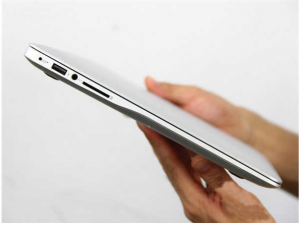
Their latest addition to the portfolio (as leaks online suggest,) may be a Xiaomi MI Laptop. Earlier Xiaomi had already come out with the Mi Power bank (in the 10,400 mAh and 5,200 mAh variant) which was quite a hit. Although there were speculations regarding Xiaomi entering the Computing market however, this is the first time that there have been conclusive pictures as well as some details regarding its configuration.
The leaked specs allegedly reveal that it would have an Intel Haswell i7-4500u processor with 2 x 8GB dual channel memory. Further, it would have a large 15-inch 1080p display up front and would run on a linux OS customized by Xiaomi. Additionally, it is expected to be priced at approximately $480 (Rs. 30,000).
The leaked pictures of this laptop uncannily resemble the Macbook Air. Who knows it may even be called the Xiaomi Air when released.
The leaked pictures of this laptop uncannily resemble the Macbook Air. Who knows it may even be called the Xiaomi Air when released.
The leaked pictures of this laptop uncannily resemble the Macbook Air. Who knows it may even be called the Xiaomi Air when released.
If these specs are anything close to reality, then this seems to be a device worth every Dollar, Yuan or Rupee spent on it; which would make the Chinese a superpower in the Laptop category as well.
In the past, Xiaomi has been quite successful in selling their devices in India through flash sales via Flipkart. Rumours also surround the market that Xiaomi is working on a dual edge smartphone known as the Xiaomi Arch, a device in direct competition with the Samsung Galaxy Note Edge.
Unfortunately nothing has been officially declared by Xiaomi regarding the Notebook and the fans would have to wait a while before the company announces the same. This device, if and when released, could be a game changer destroying many domestic companies which are presently enjoying the benefit of the lower and middle-end consumers.
Chinese powerhouse Xiaomi refuses to look back in its pursuit to the top. The smartphone maker has become a major disruptive force in the industry. Industry Sales reports show that Xiaomi has reached the third spot in the global market, behind Samsung and Apple. That’s a phenomenal rise for a company that came into existence in 2010. Now, Xiaomi has taken a step ahead by raising $1.1 Billion in the latest round of funding, and its valuation now stands at more than $45 Billion.
The USP of Xiaomi is to provide devices with high specifications at prices comparatively lower than the competition. This coupled with an exclusive internet-based flash sale model makes the device more desirable for the users.
With more than $45 Billion in valuation, Xiaomi has now become the most valuable startup.
Investors in this round of funding included private equity firms like All-Stars Investment, DST Global, Hopu Investment Management, Yunfeng Capital, and Singapore sovereign wealth fund GIC. The company was previously been supported by Temasek Holdings Pte, Qiming Venture Partners, Morningside Venture Capital and DST.
Xiaomi has seen a meteoric rise in its valuation over just a year. Last year it garnered $10 Billion after the last round of financing. This year it crossed over $45 Billion, thereby towering over its contemporary startups like, Uber, Dropbox, Pinterest, etc. It can, in fact, be considered the most valuable startup right now.
In India, it faces some challenges, thanks to a patent infringement complaint by Ericsson. We’ll have to wait till January to know the fate of companies India plans. Xiaomi has said that India is an important market for them and by the looks of it, Indians have embraced the brand too. It just a matter of time that the company uses its new found wealth to devise a strategy to overcome its hurdles with amicable solutions, something rich corporations have done in the past. This is a rising horse that requires an equally formidable competitor to bring it down.
Xiaomi looks upbeat and in a mood to surprise. The upcoming device by the Chinese smartphone manufacturer, Mi5, has already created quite a buzz in town and now the Co-Founder and President of the company, Bin Lin has disclosed that their new flagship smartphone would be unveiled in January.
Along with the revelation of a $1.1 billion funding, Bin mentioned in his post,
In January 2015, we will be unveiling our next flagship device.
However, Bin didn’t disclose the exact date of its arrival, GizChina claims that the device will launch by 15th of January, 2015.
Few days back, some pictures of the Mi5 were spotted on the internet, which demonstrated most of its display specifications.
The website also stated that the phone would have a 5.7-inch QHD display with 2560×1440 pixels resolution. It will be powered by a 64-bit Snapdragon 810 octa-core processor along with Adreno 430 GPU and 3 GB of RAM. The Mi5 is said to feature a massive 20.7MP front camera coupled with a fingerprint scanner and Sony Exmor sensor.
There are also rumours about the expected launch of Mi Pad 2 and Redmi Note 2 (temporarily titled). The Mi Pad 2 is expected to sport a 7.9-inch screen. Meanwhile the successor of Redmi Note is rumored to have a 5.5-inch display along with a 64-bit Snapdragon 615 octa-core processor, 2 GB of RAM and 8 MP camera.
Xiaomi’s Redmi Note 4G will go on sale on 30th December. The specs quoted for the next generation Mi device seems to put it directly on top of the food chain. Xiaomi has already become the third biggest smartphone company in the world. This flagship may be a direct assault on the big boys; Apple and Samsung. And if Xiaomi prices the device as competitively as it has done in the past, this might again be a big winner for the company. Seems like there’s no force yet which might stop Xiaomi’s roaring momentum.
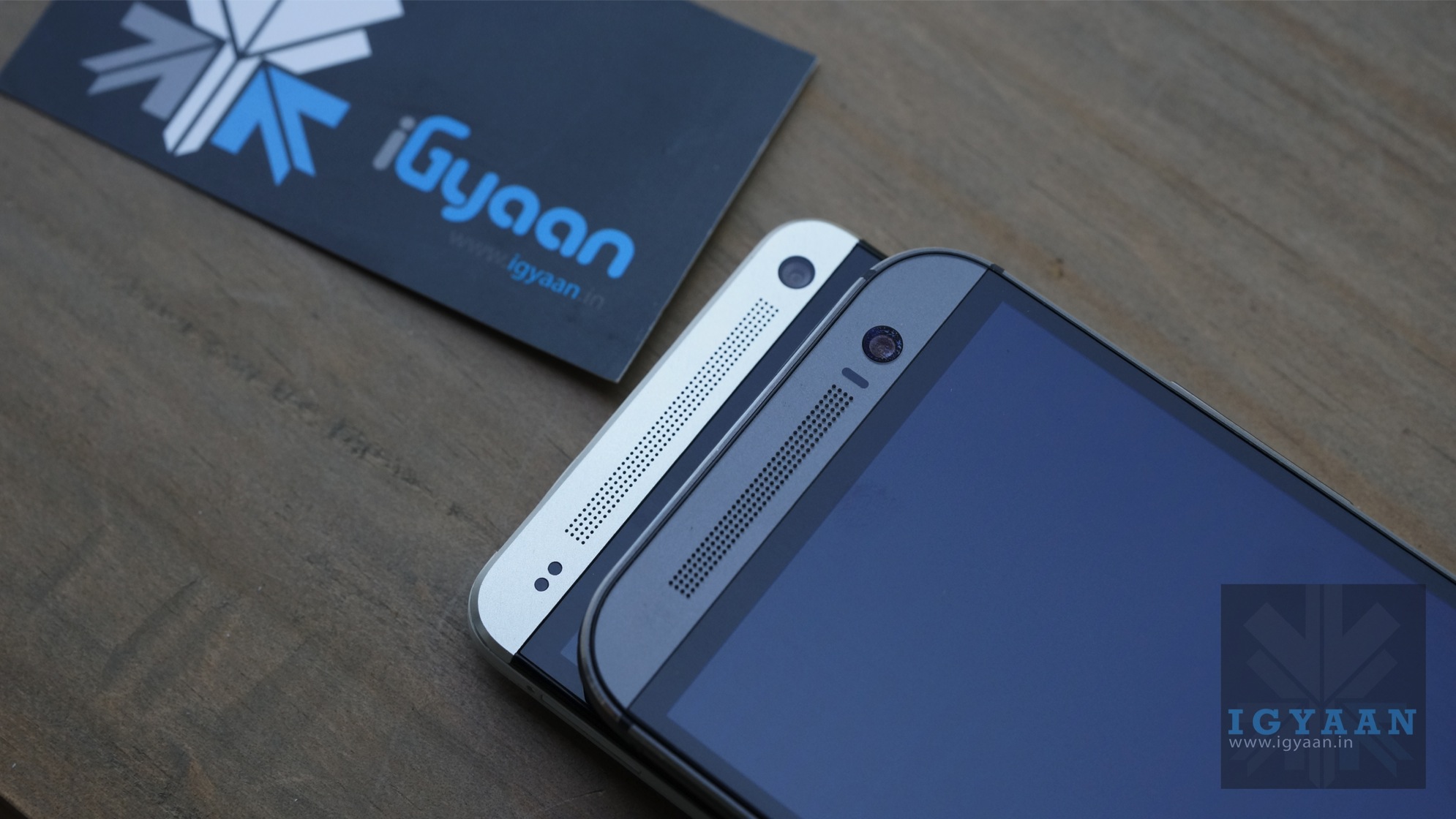
Just like every year, the start of new tech quarter brings the release of some highly anticipated devices, including the HTC One M9, allegedly called “Hima.” HTC is getting ready to release the newest version of the HTC One smartphone and there is great excitement to see what the new flagship from HTC packs.
Considering the predecessor handsets, the HTC One M9 should have an excellent feature set. Recent leaks suggest that the company will be launching ‘Hima’ in March, after the Mobile World Congress 2015, same as the HTC One M8.
A recent leak revealed that HTC will hold a separate press launch for the smartphone like what the company did last year when it released the M8. According to the rumours, the flagship handset will be released alongside two other smartphones – Hima “Ace” and its Chinese variant Hima “Ultra”. The “Ace” variant will sport a plastic body and not the signature metal casing of HTC smartphones.
More importantly, these smartphones will be powered by MediaTek processors and not Qualcomm’s Snapdragon SoC. HTC already packed MediaTek processors in its previous smartphones – Desire 310, Desire 516 and Desire 820.
The leak also suggested that people may be in for some excellent features in the new HTC One M9. Among these are the next generation Snapdragon 810 SoC, new Sense 7 plus 3GB RAM. The camera, however, remains debatable as some people believe it to be around 16 MP while others expect a 20.7 MP resolution from Sony.
Along with this, another leak noted that the new HTC One M9 or Hima will come in several colour variants: gold, gunmetal gold, silver and grey. The leak included that the announcement may come around January, but the expected official commercial release is around March 2015.
As of now the new flagship is referred as Hima or One M9, has no solid leak regarding the name. Until HTC comes forward to confirm these rumours, it is a toss up and should be taken with a grain of salt.
From Virtual reality to 3D printing, the past 12 months have been a whirlwind of impressive new gadgets and game-changing innovations. Apple launched a handful of devices including iMac with Retina 5K display, iPhone 6, iPhone 6 Plus and most notably, the Apple Watch. It was big year for Virtual Reality as well with Google’s, simple yet intelligent, Cardboard project, Samsung’s Gear VR and Oculus Rift’s $350 development kit coming into the market this year.
We look into 2014’s most epic and innovative releases:
10. YotaPhone 2
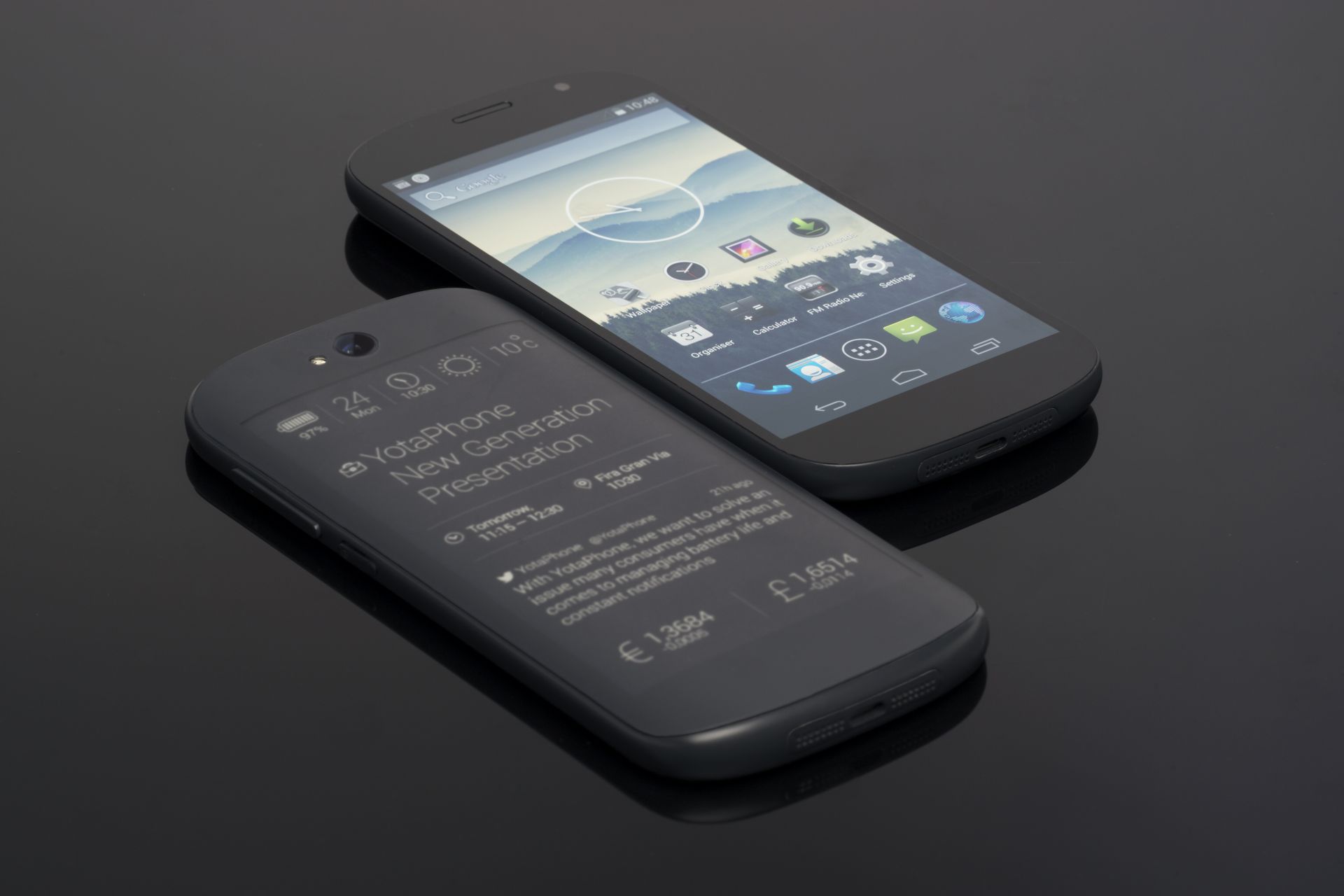
YotaPhone 2 was officially announced earlier this month and is already setting benchmarks when it comes to innovation. The YotaPhone 2 has got some considerable improvements over its predecessor. It features a 5-inch 1080p AMOLED display and a 4.7-inch QHD e-Ink touchscreen, which is way better than the 4.3-inch screen of the previous model. The e-Ink paper display on the smartphone is similar to the e-Ink display we find on Amazon’s Kindle readers. It shows notifications, clock, weather, and is great for reading books and other readables in an eye friendly display.
9. Google Cardboard
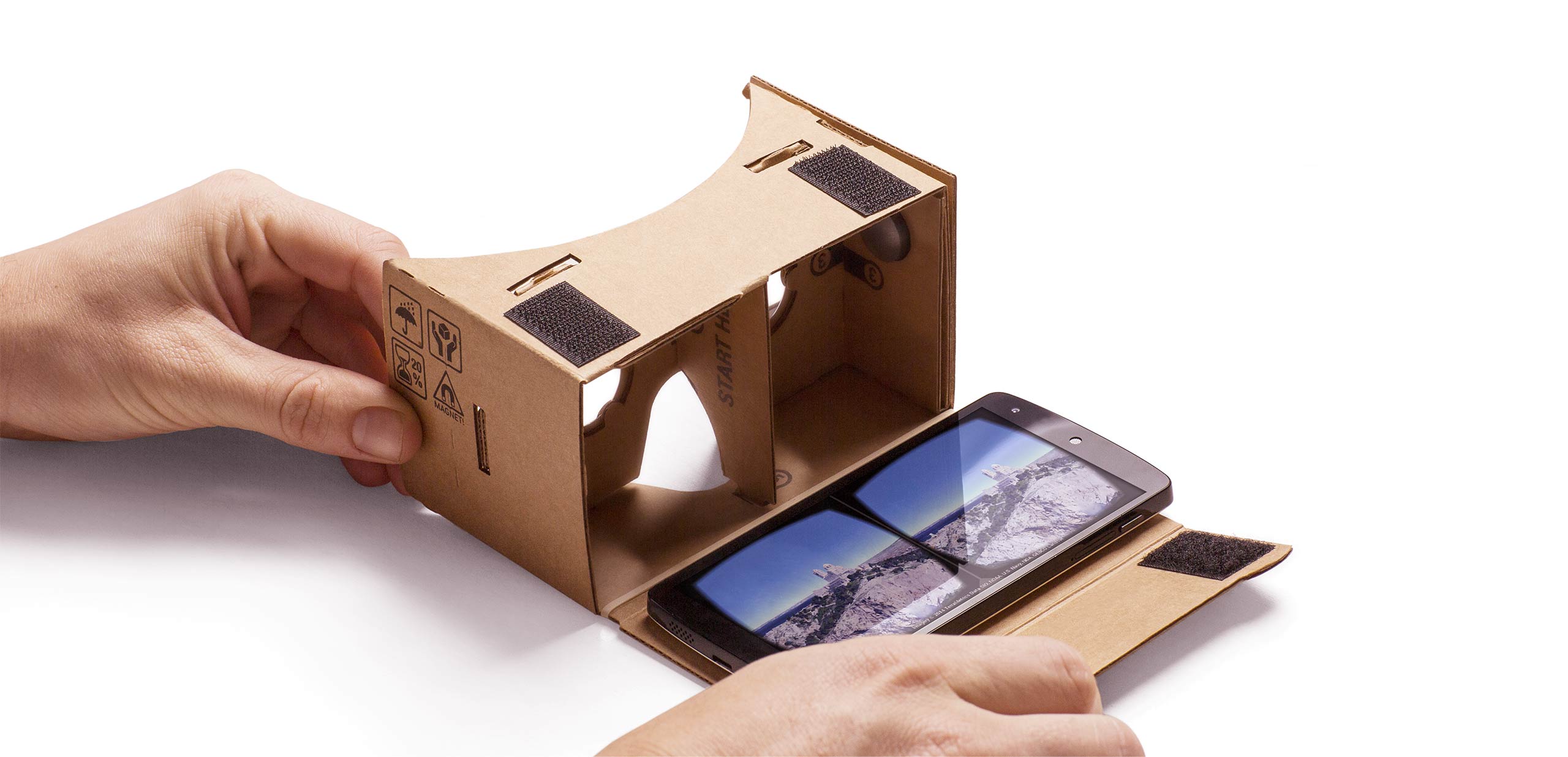
Google Cardboard is a fold-out cardboard smartphone mount that, when combined with lenses, a magnet, a piece of hook-and-loop fastener, rubber band and held against the face, affords a virtual reality experience. Impressive, right? This is a DIY project from Google can can be made right at your place with minimal investment. In order to build it, all you need is a pair of lenses with a 40mm focal distance to keep the phone’s screen in focus some magnets, velcro and a rubber band. Thats it, with this tiny tinkering, you’ll be ready to hit the virtual reality experience. And if you don’t want to take the efforts of making one, you can always find ready made Cardboard headset for just $20-$40.
8. Vibso headphones
Build by designer Renaud Defrancesco, Vibso headband is made of a transparent acrylic glass and sends music vibrations across its surface to the user’s ears. The VIBSO headphones play music via Bluetooth and has a vibrating electromagnet that is hidden under an opaque plastic cover on top of the head and helps create the sound for the wearer. The electromagnet works like a speaker and has a connecting element that causes a membrane to vibrate and create sounds. The membrane, in this case, is made in a two-mm-thick transparent acrylic glass. Defrancesco used acrylic glass because it transmits sounds well and is flexible and easy to form.
7. Epson Wireless Workforce WF-100
Touted as the world’s smallest and lightest mobile printer yet, the WF-100 comes with built-in wireless and Wi-Fi direct capabilities to hook up to your laptop, tablet or any Android phones. The printer uses a rechargeable battery that charges via a USB port. It can print both A4 as well as 4X6 inch photos. It prints at the speed of 6.7 pages in a minute for black and 3.8 pages per minute for color.
6. LIX – 3D Printing Pen
London-based startup LIX created the smallest 3D printing pen in the world, a device that enables users to doodle in the air. Milled from aluminum and measuring 164mm x 14mm, it allows users to make objects in just a few seconds, including calligraphy, accessories and one-off prototypes. With functionalities similar to 3D printers, the USB port chargeable LIX pen quickly melts and cools colored plastic, which enables the pen to create rigid and freestanding structures on demand. Drawing in the air, now its cool or what?
5. DJI Phantom 2 Vision+
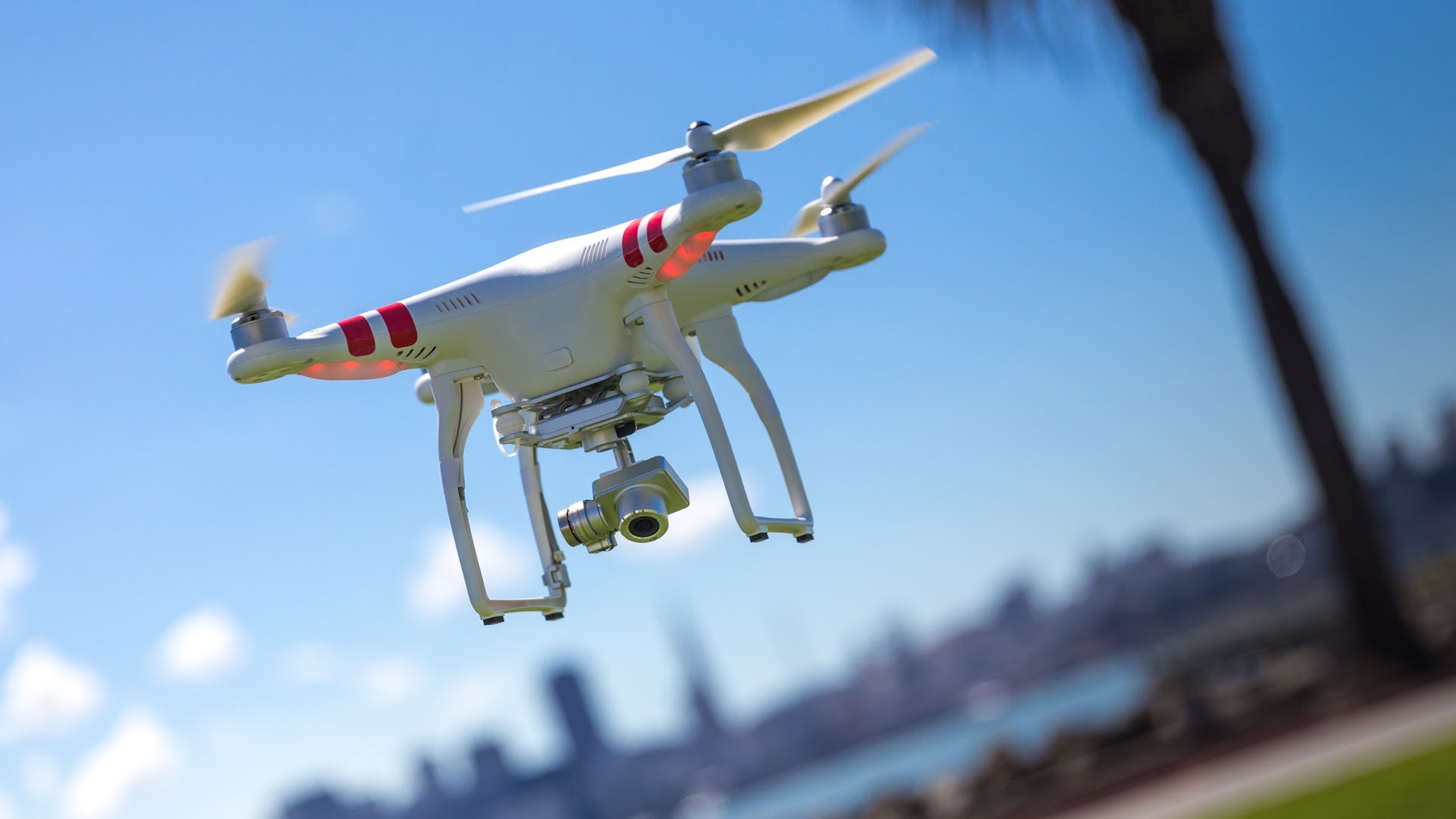
The DJI Phantom 2 Vision+Quadcopter comes with a GPS based navigation system, flies for up to 25 minutes, and has the capability to take still photos and shoot streaming video. The $1,200 price tag may make you lose the interest, but this drone is known of its exceptional flying capabilities and its powerful camera.
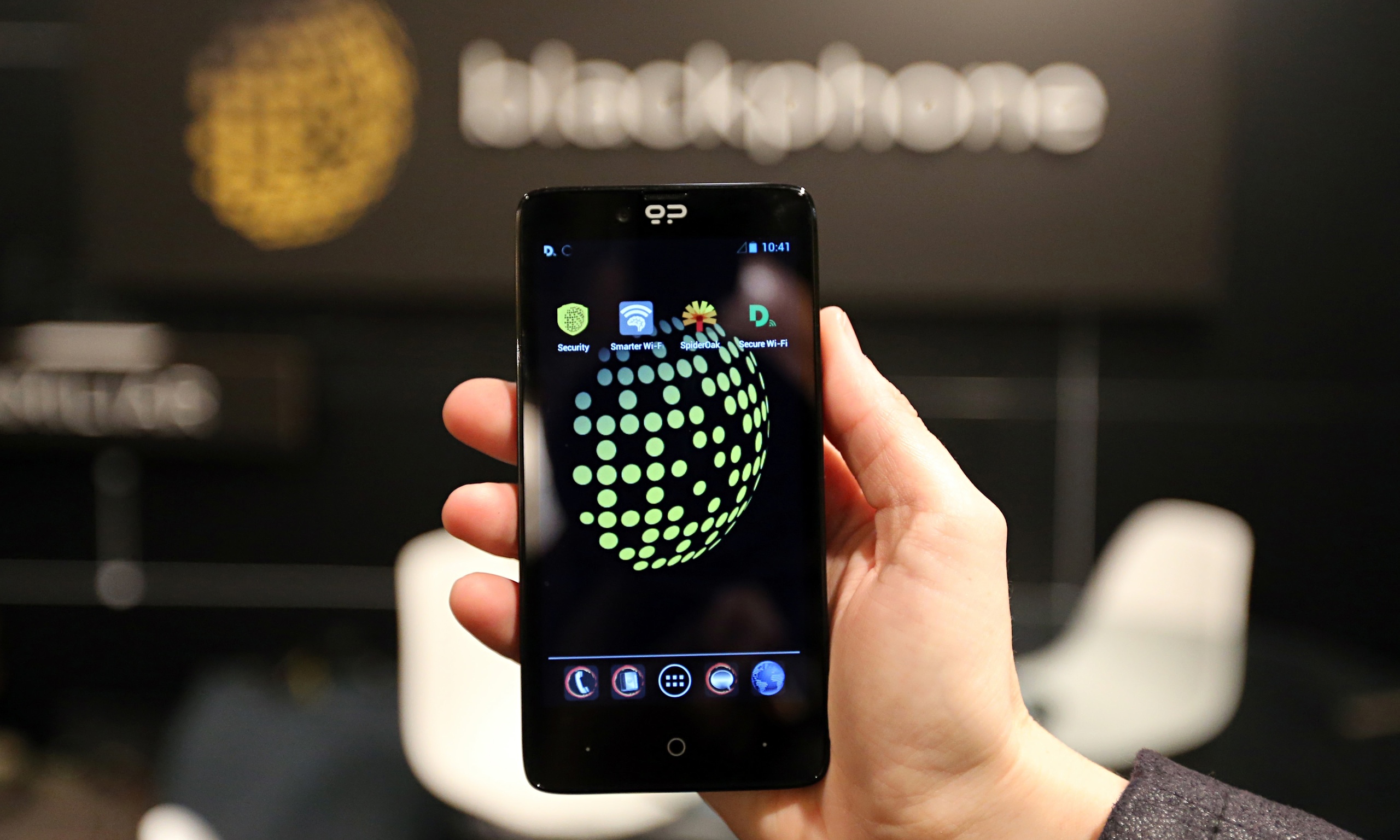
4. Blackphone
The Blackphone is a smartphone developed by SGP Technologies, that provides encryption for phone calls, emails, texts and internet browsing. SGP Technologies is a joint venture between the makers of GeeksPhone and Silent Circle. Blackphone’s Security Center in PrivatOS gives control over app permissions, such as the bundled Silent Phone and Silent Text services that encrypt communications so no one can eavesdrop on voice, video and text calls.
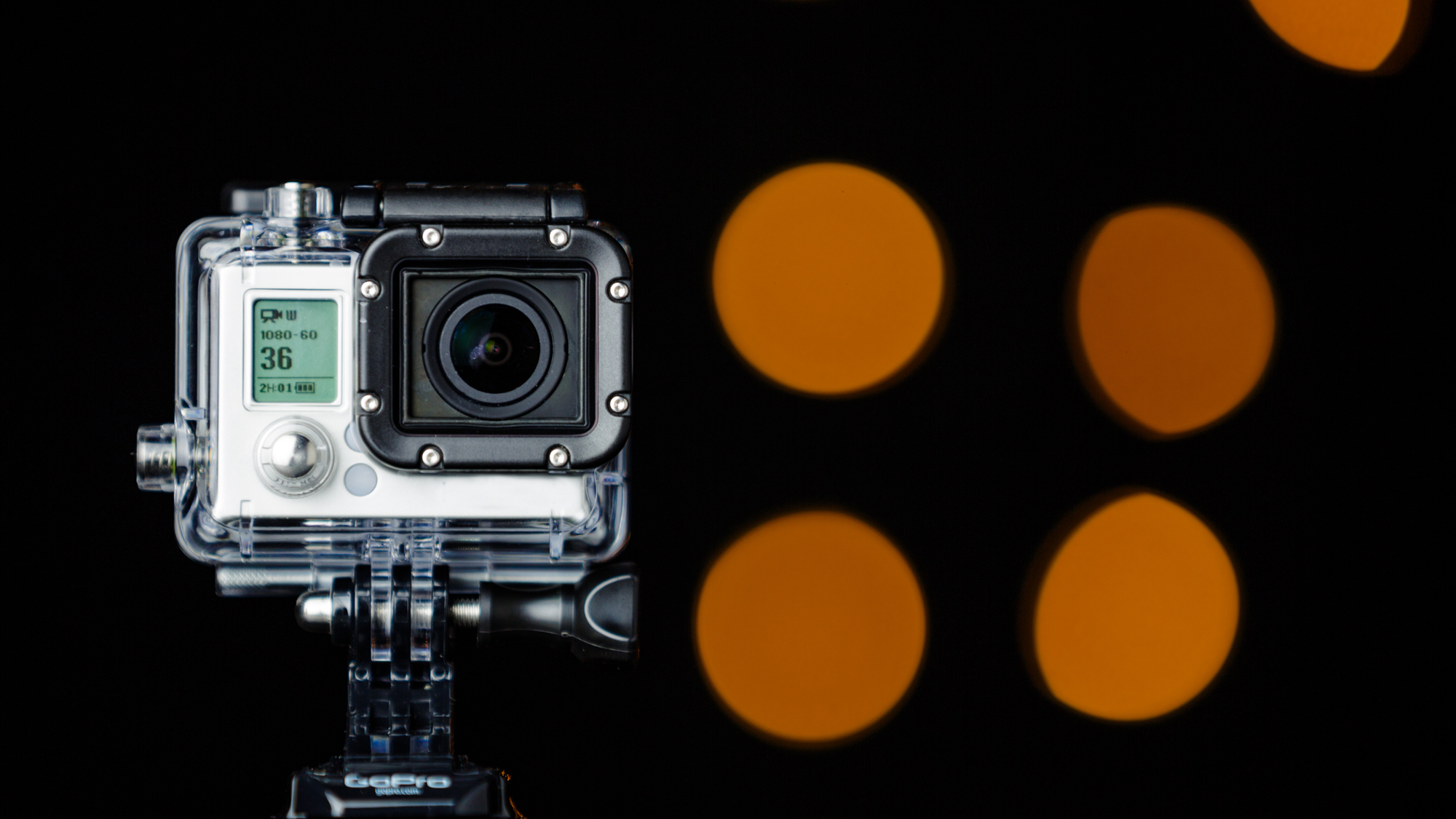
3. GoPro Hero4 Black
GoPro’s latest offering, the Hero4 lineup builds on the legacy and comes with great new upgrades. On the top of the line-up is the Hero4 Black, which comes at a price of $499. It shoots 4K video at up to 30 frames per second, giving you some incredible eye-popping visuals. Apart from that, it shoots Full HD (1080p) at 120 frames per second so you can play with some sweet slow-motion action shots. And of course, it offers 12-megapixel photos for folks who want a selfie at an epic destination.
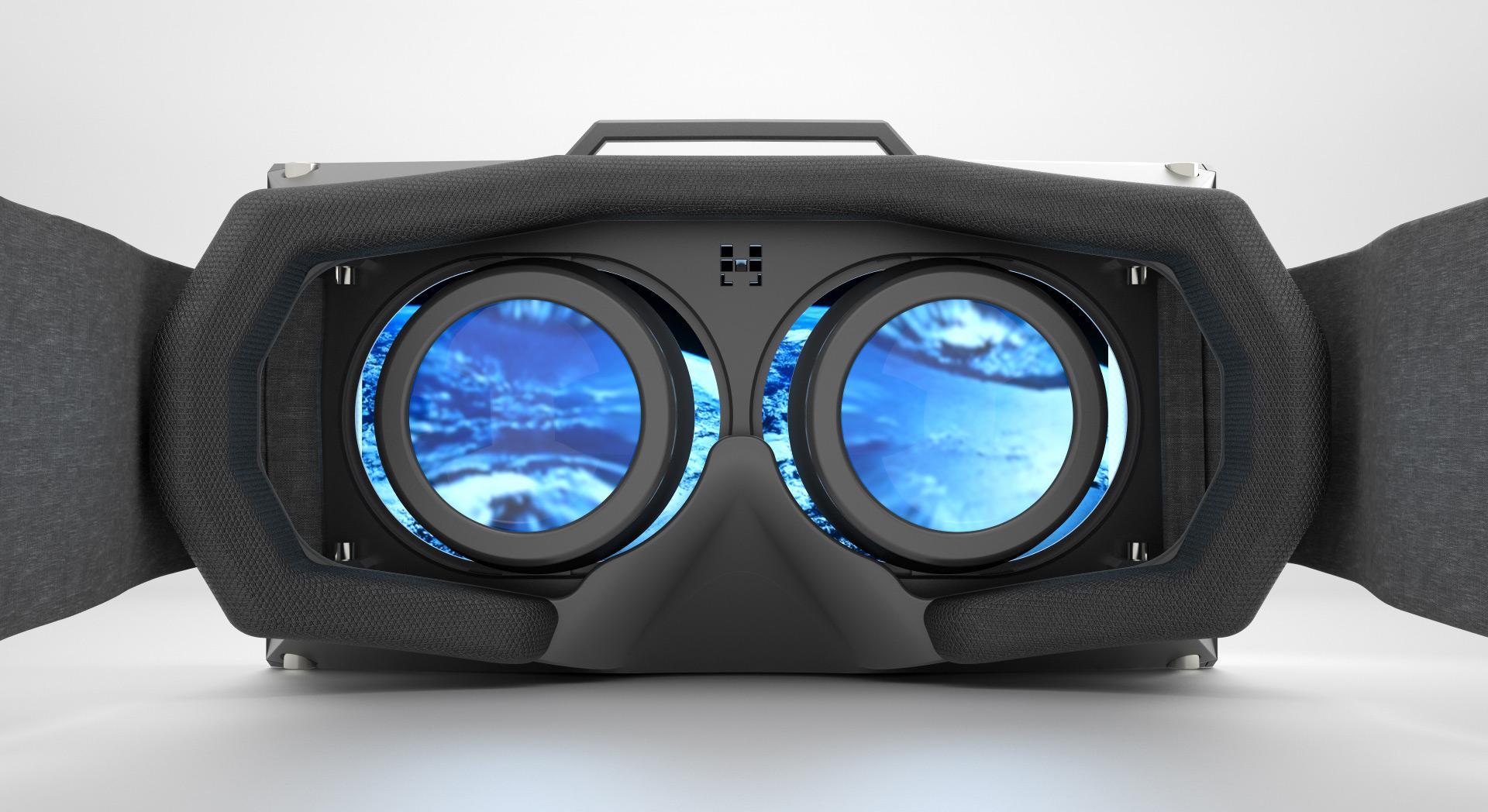
2. Oculus Rift Developers Kit
The Oculus Rift DK 2 is an amazing piece of hardware, and while it’s far from ready for consumer use, it delivers a highly compelling experience that shows exactly how easy it is to get lost in virtual reality. From a gaming perspective, there’s no doubt that this is one of the most interesting new pieces of hardware. Oculus claims that the display works at 75 Hz, which is above the standard 60 Hz refresh rate. On their website, Oculus calls its display a low persistence OLED display, to eliminate motion blur and judder, two of the biggest contributors to simulator sickness. The 5.7 inch Note 3 display might address the pixilation issue and probably save people from the day long motion sickness they feel after wearing these headgears.
1. Apple Watch
Among other things, 2014 marked the return of Apple. Its iPhone 6 and iPhone 6 Plus rollout was usual – full of giddy anticipation and excitement. The two models did not just break sales records globally, but they put Apple back on the front row. Apple also launched another product which is probably 2015’s most awaited device called the ‘Apple Watch’ (not iWatch). Apple is entering a completely new market category by bringing out the first Apple Watch. This smartwatch, expected to be out in early 2015, will come in three variations – Apple Watch, Apple Watch Sport and the Apple Watch Edition. The wearable will be compatible with iPhone 5, 5S, 5C, 6 and 6 Plus.
Each year technology changes considerably, and each year there are lots of innovations in technology. Today we honor those who have achieved technological prowess and have delivered on the expectations of those who help them aim higher.
Presenting the iGyaan Tech Awards 2014, a 100% community driven one of a kind technology awards for saluting those who have made it in the good books of the people who trust them with their money and time.
You Have Voted and You Have Decided who wons in the iGyaan Tech Awards 2014, and by voting you won, One of the 10 Free Gionee Elife S5.1 slim smartphones.
In the year 2014 Virtual Reality(VR) took a giant leap. From the hands of a limited few, the technology has now seeped into the consumer market. Oculus can be credited for bringing the technology to the mainstream. Taking cues from Oculus, several new devices have arrived in the market. Sony got its Project Morpheus and Samsung got the Gear VR headsets. There were also some independent attempts into making VR headsets including Google’s Cardboard project. The question remains – is this just a mere fad or is this technology here to stay? We delve into the past, present and future of VR Headsets today.
What is Virtual Reality?
According to a popular online encyclopedia, virtual reality is a computer simulated environment that can simulate physical presence in places in the real world or imagined worlds. It, in essence, creates a world that creates the perception of being in a whole new place. Using various other techniques, VR can create sensory perceptions of touch, smell, sounds and even taste.
The Journey to Now…
It’s not really a recent phenomenon in any sense of the word. There have been efforts to create an artificial environment for manipulating the senses since the 1800s. In 1860’s there were art installations that used a 360-degree panoramic mural to create an artificial reality. One of the most prominent examples of this is Sala delle Prospettive by Baldassare Peruzzi.
Since then, there have been multiple efforts to artistically take the audience into a perceived reality. But in 1968 the first computer artificial reality headsets came to become a reality. Dubbed the Sword of Damocles that was created by computer scientists Ivan Sutherland. It was archaic in every sense of the word. It only displayed wire-frame models and was so heavy that it needed to be suspended from the ceiling, thus getting its name.
Sword of Damocles was the first computer aided VR headset.
In 1991, Sega arrived with the first VR headsets for the consumers. Though it got a tepid response from the press, and there were fears that they could spoil the eyesight of children, this prevented it from getting to the shelves.
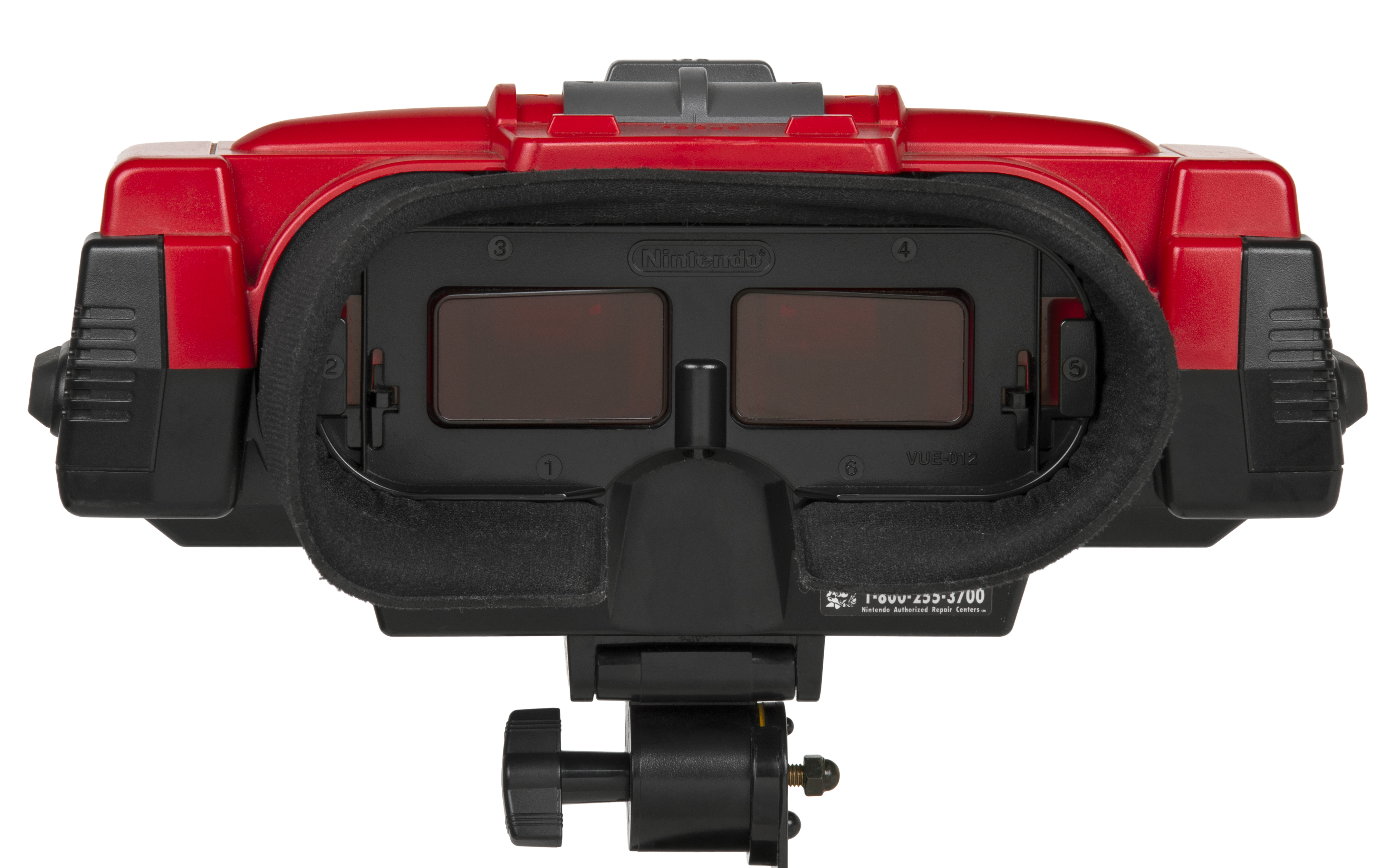
Nintendo tried its hand at VR headsets when it came out with the Virtual Boy in 1995. This device too was a commercial failure, and the users faced discomforts like dizziness, nausea, and headaches after extended use. The device was also lamented for the lack of a head tracking feature and color graphics.
Virtual Boy by Nintendo released in 1995
Fast forward to 2014, and we see a return with a vengeance of the VR technology. Aided by high processing power of modern day devices and the phenomenal breakthroughs in the mobile technology, it seems like VR has finally found its moment in time. The race was intensified with the purchase of Oculus VR by Facebook. Sony and Samsung soon followed with their own designs. Google tried to bring the technology in the grasps of everyone with the cardboard project, a DIY project through which you can create a stereoscopic VR headsets using cheap ingredients which costs just about $20.
How do VR Headsets work?
VR headsets pretty much use the concept of 3D glasses. On the displays, there are two images, one for each eye. These images, when viewed through a stereoscopic lens system, gives a perception of depth in the images. The brain brings together the two images as one and that creates the depth that immerses the user into the artificial world. Advanced VR systems like the Oculus have motion tracking system that responds to the user’s movement. Using hardware like the Omni treadmill, you feel like you are really moving around in the virtual environment.
The emergence of mobile-based portable headsets has made it a lot easier to access the technology. Devices like the Gear VR, Google cardboard, and ANTVR make it a lot easier to use. These even allow you to look at your movies with a perception of watching them on a big screen. This could possibly mean the end of movie theaters and the expensive popcorn that comes with it.
The other potential uses of the technology
There are a wide range of uses of VR technology.
Virtual Reality is not just limited to providing quality entertainment and gaming, it has many real world applications too. It can come in handy in multiple fields such as:
Virtual field Trips
The best way to learn about a new place is to go there and travel around. It can often be educational to travel. But if you cannot afford the trip, you have virtual reality to your rescue. The virtual tour can show you around the place and using complementary technologies like haptic mediums; you can get to touch and smell your new environment too. It can be a complete immersive experience that you wouldn’t want to come out of.
Education
Learning by doing is the best way to acquire knowledge. Using the tools provided by gaming advancements in VR, students can learn to interact with their future workplace. For example, an architect can learn to create buildings and manipulate it in real time, almost like Ariadne in Inception. It can even come handy to school children to bring lessons to them in a more interactive immersive fashion.
Training
Several military professionals are trained on VR surfaces. It is a lot more economical than creating real world environments and also decreases the chance of injury while training. It gives the chance to practice their lessons as many times as needed. Pilots are also trained on simulators that actively recreate the flying environment. VR can come handy to train drivers who work in specialized environments such as high terrains or ice roads.
Medicine
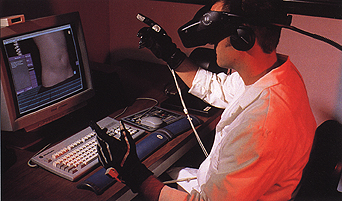
The technology can be used to train doctors.
Doctors can benefit from some virtual simulations too. Specialized surgeries that require immense precision require constant practice. In an artificially created environment, the surgeon can constantly train on the simulated body to perfect his/her skills that could someday come handy to save real lives.
Challenges with VR Devices
VR though has been in development for quite a while, but there are some limitations to the technology to make it more palatable to a mass audience. The confines of graphics and the tracking systems even in the best headsets results in various discomfort for the users. The industry needs to really work on the VR tracking systems.
The audio too is an important element of an immersive experience. The disconnect between the audio and visuals or low quality audio can also lead to motion sickness and other discomforts. The audio industry is being encouraged to fix the gap to create a more natural environment for the users.
There are also some issues with the content that can be created for consumption in the virtual world. Some psychologists say that the VR can create a generation of sociopaths who have gotten so used to first person violence that they are desensitized to it. To counter this, there is a need for regulation and codification of content meant for VR headsets. There should also be instruction and education on how to use the technology right so that it benefits all.
Virtual Reality has come a long way, but there still is long way ahead for the technology to grow.
A Long journey begins now.
With the processing power up to the mark and graphical interfaces replicating reality better than ever, this is the right time for VR to come out of its cocoon. The smartphone revolution has brought the VR technology in the grasps of everyone. Google’s cardboard project literally makes this technology universal. There is a long way to go with the potential applications of the technology, but its mainstream visibility will speed up its adoption in various fields. There is a lot the technology can offer us, and it’s just the beginning of the access to the virtual world. The immense potential of the technology is still up for unlocking. We’re excited about the prospects of VR, are you?
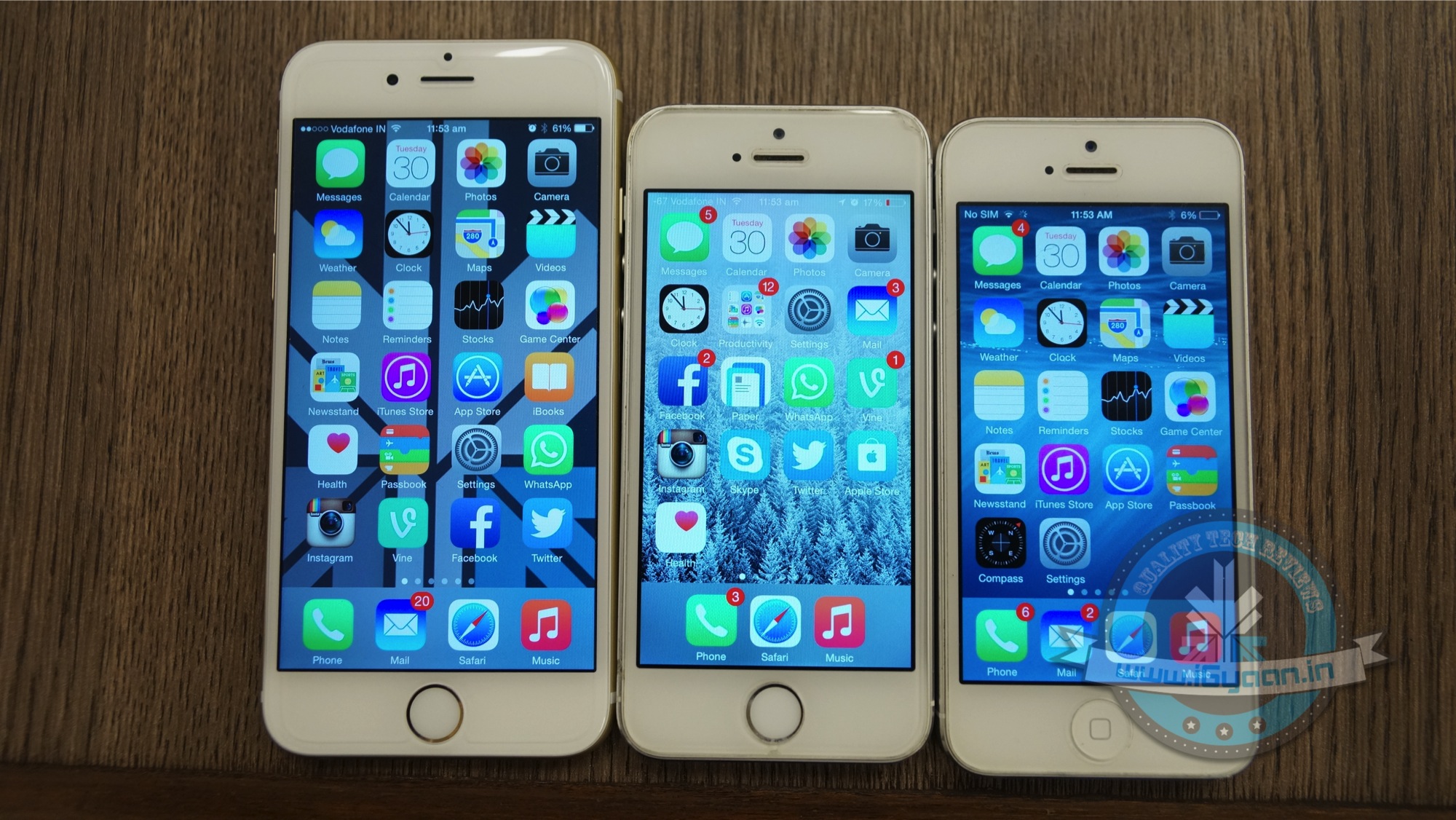
The 2014 launch of iPhone 6 and iPhone 6 Plus brought out the whole new design philosophy in Apple’s offerings. Earlier, the company had stuck to the smaller 4-inch screen size. Now it seems like Apple is further experimenting with different screen sizes; the new rumours making the rounds say that the company is planning to launch a mini version of its iPhone dubbed ‘iPhone 6s Mini’.
According to recent reports by Apple Insider, the specifications of the rumoured mini smartphone will match that of iPhone 5s and the specifications with iPhone 6. In other words, a return to the prior model’s 4-inch display size.
Apple Insider, citing a note issued by Timothy Arcuri, an analyst with Cowen and Company, to the investors suggests that Apple may launch a new 4-inch iPhone variant in 2015, which will be called iPhone 6s mini. The smartphone will join the current generation screen sizes of 4.7- inch and 5.5-inch.
The publication also noted that Arcuri, in the past, has a mixed track record on Apple iPhone rumors. In January 2014, the analyst correctly predicted some details of the iPhone 6. However, his prediction about a powerful processor for the iPhone 6 Plus turned out to be incorrect.
If the rumors are true, the new iPhone 6s is more likely to replace iPhone 5c as the company’s low-end offering. Being a low-end phone, the iPhone 6s Mini is also expected to have low-cost internals to keep the price low.
In the past, Samsung has launched the mini versions of its Galaxy S devices such as the Galaxy S3 Mini, Galaxy S4 Mini and the Galaxy S5 Mini. These mini handsets cater to smartphone customers who prefer a smaller handset and lower cost. With Apple looking into the mini segment of smartphones, the move could help bring wider consumers in the company’s ecosystem.
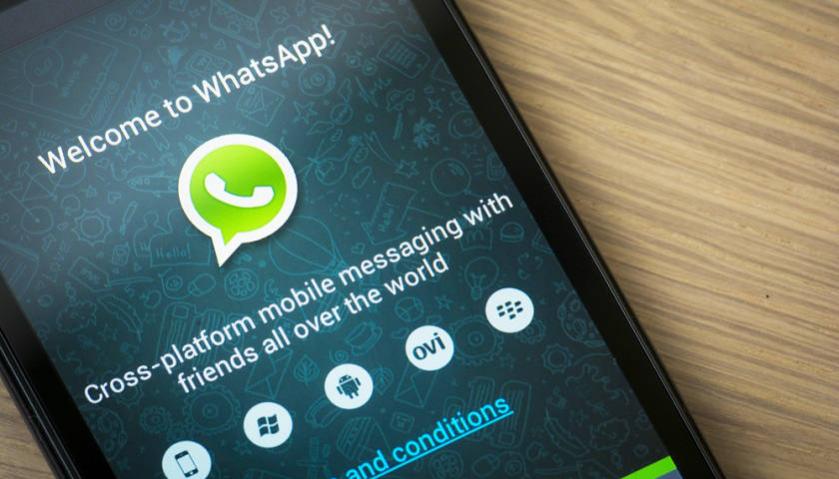
At the commencement of year 2014, it was learnt that WhatsApp was planning on diminishing the dependability of its users on other calling services and had glad plans of introducing a voice calling feature. Months passed, but there was no sign of the said feature on the cross-platform mobile messaging service. However, a reliable source has come up with some interesting screenshots that depict the calling feature on WhatsApp.
The website Androidworld.nl posted some pictures of the new version of WhatsApp that shows voice calling. The screenshots also suggest that the upgraded version will have a separate window for making calls to WhatsApp contacts and a dedicated call log. Users can keep a tab on missed calls, ongoing calls and received calls through this window. Additionally, it can also include options like call mute, switch to text message, and hang up.
However, these are just leaks and there is no proof of its authenticity. Jan Koum, WhatsApp CEO, said in an industry conference that the company will surely be rolling out voice calling feature in Q1 2015. The delayed release has been due to some technical complications faced by the development team.
If WhatsApp succeeds in overcoming all the said hurdles and brings out a version featuring voice calling, it can prove to be a threat for the other services like Viber, Line, Facebook Messenger and more.
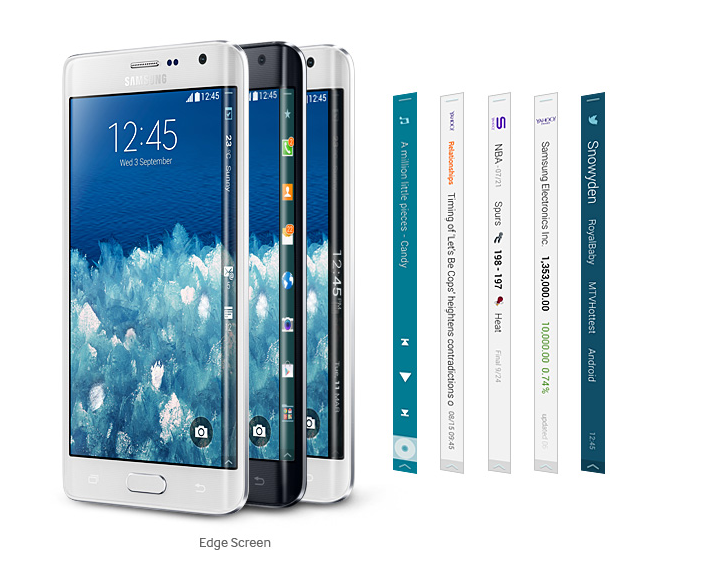
Samsung has brought its edgy new device, the Note Edge to India. The company unveiled the device at the IFA Berlin earlier this year, alongside the Note 4. It was quite a surprise when it was launched as Samsung had done a good job at keeping it a secret. This is a unique device as it has a slightly curved screen on the side that acts a second display and which can be used for viewing notifications without unlocking the main display.
The device carries pretty much the same specs as the Note 4. The device gets its processing might from a quad-core, 2.7 GHz Snapdragon 805 processor which is supported by 3GB RAM. It has 32 GB internal storage that is expandable up to 128 GB.
Just like its un-curved sibling, the Note Edge also sports a Quad HD display. The 5.6 inch primary display is coupled with a curved display also known as the edge display. This display can be used to access frequently used apps, check alerts and notifications, news and more. This display stays on even when the main display is covered, so it’s convenient to catch on with the essentials without disturbing the main screen.
The curved display can be used for accessing alerts, notifications, news and more.
The camera was one of the highlights of the Note 4, and it is true for the Note Edge as well. It carries almost all the features of the Note 4 including wide selfies and OIS. The main camera on the device is a 16 MP shooter that comes with optical image stabilization. The camera on the front has been designed keeping selfies in mind. It gives you the option to shoot 90-degree selfies and an option to take even wider 120-degree selfies by panning the device around.
The S-pen, that separates the Note family from the rest of the smartphones in the market, is incorporated in this device too. Samsung has added improved functionalities to the S-pen this time around. You can use it like a mouse to click and drag multiple files, use smart select to combine multiple files together and it offers better handwriting recognition than previous generation S-pens.
Samsung claims that the Note Edge has improved battery life. The device has a 3000 mAh battery which is 220 mAh less than the Note 4. Samsung claims that using its adaptive charging feature; the device charges 30% faster than conventional methods.
The device is priced at Rs. 64,900 and will go on sale in January 2015. It will be available in ‘Charcoal Black’ and ‘Frost White’ color variants in the India.
Xiaomi returned back today with fresh stocks of the Redmi 1S, its blockbuster low-cost smartphone. The sale went on longer than the usual Xiaomi flash sales, but the company did end up selling all of its stock as usual. The company has now revealed the date of the flash sale of the Redmi Note.
Xiaomi will hold a flash sale for the 4G variant of the Redmi Note 0n Tuesday 30th December at 2pm. The device has a price tag of Rs. 9,999. It is powered by a Snapdragon 400 processor clocked at 1.6 GHz. The 5.5-inch 720p HD display will also be appreciated by multimedia enthusiasts.
A 3G variant was also launched by the company and it was priced at Rs. 8,999. This variant of the phone has been banned from sale by Delhi high court following an infringement accusation from Ericsson India.
So if you want to enjoy the big screen goodness of the Redmi Note, make sure you register for the sale on Flipkart by the 29th of December.
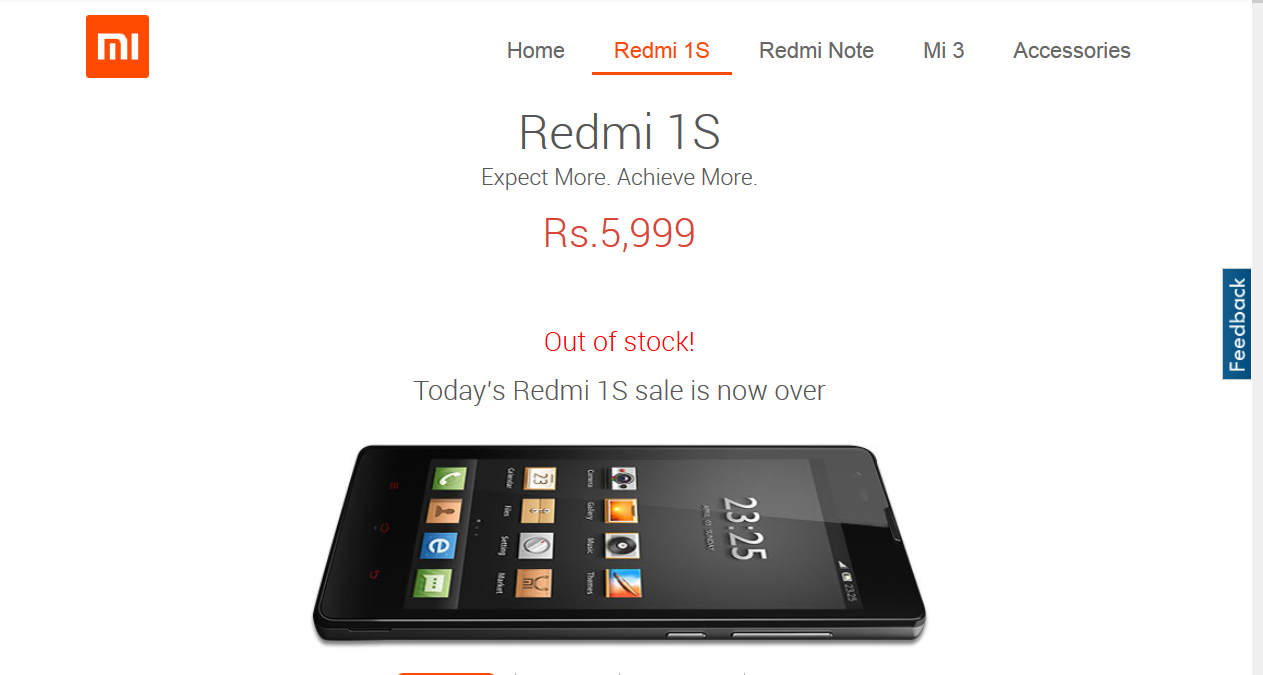
Xiaomi fans, who were dejected after the ban on the company’s devices, have a reason to smile today. The Xiaomi Redmi 1S went on sale after a gap of nearly a month. The devices were selling faster than hot cakes before the ban was imposed. At 2pm today, the devices were up again for purchase on Flipkart but the virtual stampede by fans to buy the device was missing. The sale went on for over thirty minutes before going out of stock.
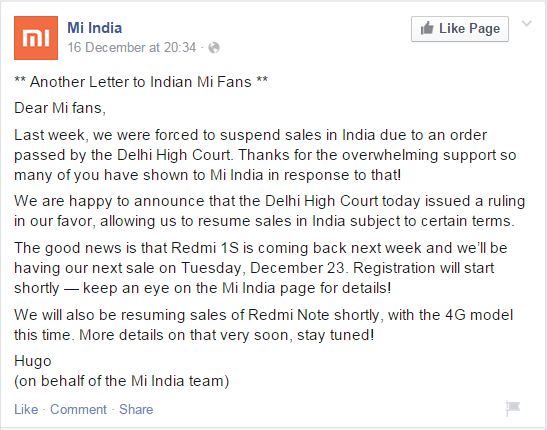
Xiaomi’s VP, Hugo Barra had announced the sale through a Facebook post on 16th December:
The Delhi High court had banned the devices after a patent infringement accusation by Ericcson. Ericcson claimed that Xiaomi infringed on eight of its patents that include features like AMR, EDGE and 3G technologies. Xiaomi later appealed to the court saying that it sold Qualcomm chipset based devices, and Qualcomm had obtained the required licenses from Ericsson. This meant that the Xiaomi phones running on Qualcomm chipset did not infringe on the patents of Ericsson. Thus the Delhi High Court raised the ban on the company allowing them to sell Qualcomm chipset based devices. And hence the Redmi 1S with its Snapdragon 400 chipset went on sale today.
Xiaomi had brought up to 50,000 devices for sale today, which is one of the biggest stocks from the company for a single flash sale. It was a slow sales day at Mi India’s page at Flipkart. During previous sales we saw the devices disappear within seconds but this time around, the window of purchase was open for several minutes before the devices went out of stock.
Xiaomi also said that it will be bringing the 4G variant of the Redmi Note, which runs on a Snapdragon processor to the market. However the date of sale is yet to be specified. We would like to assume that the folks have been saving for the Redmi Note, which carries a bigger display with almost the same specs as the Redmi 1S. The Note also supports 4G so it surely has that advantage over the 1S. But even with a slow sales day, Xiaomi still managed to clear all its stocks which means the love for the company hasn’t ended yet.
If you are one of the many who scored the device, share your joy with us in the comments. We will also keep you updated on the date of sale of the Redmi Note. Keep checking iGyaan for more.











![dji-phantom-2-vision-quadcopter-[3]-703-p](https://www.igyaan.in/wp-content/uploads/2014/12/dji-phantom-2-vision-quadcopter-3-703-p.png)