Tag: Cloud computing

  • Microsoft Is Developing An xCloud Console To Take On Google Stadia

    Microsoft Is Developing An xCloud Console To Take On Google Stadia

    Initial rumours had claimed that Microsoft will take a new direction with its Xbox gaming consoles. Its latest generation of the console was speculated to arrive in two variants with one being beefier and higher spec than the other. That fell through after Microsoft’s E3 2019 keynote that did not feature a separate tag for a second console. A brand new report now claims that the weaker console was scrapped for an xCloud based console.

    Microsoft

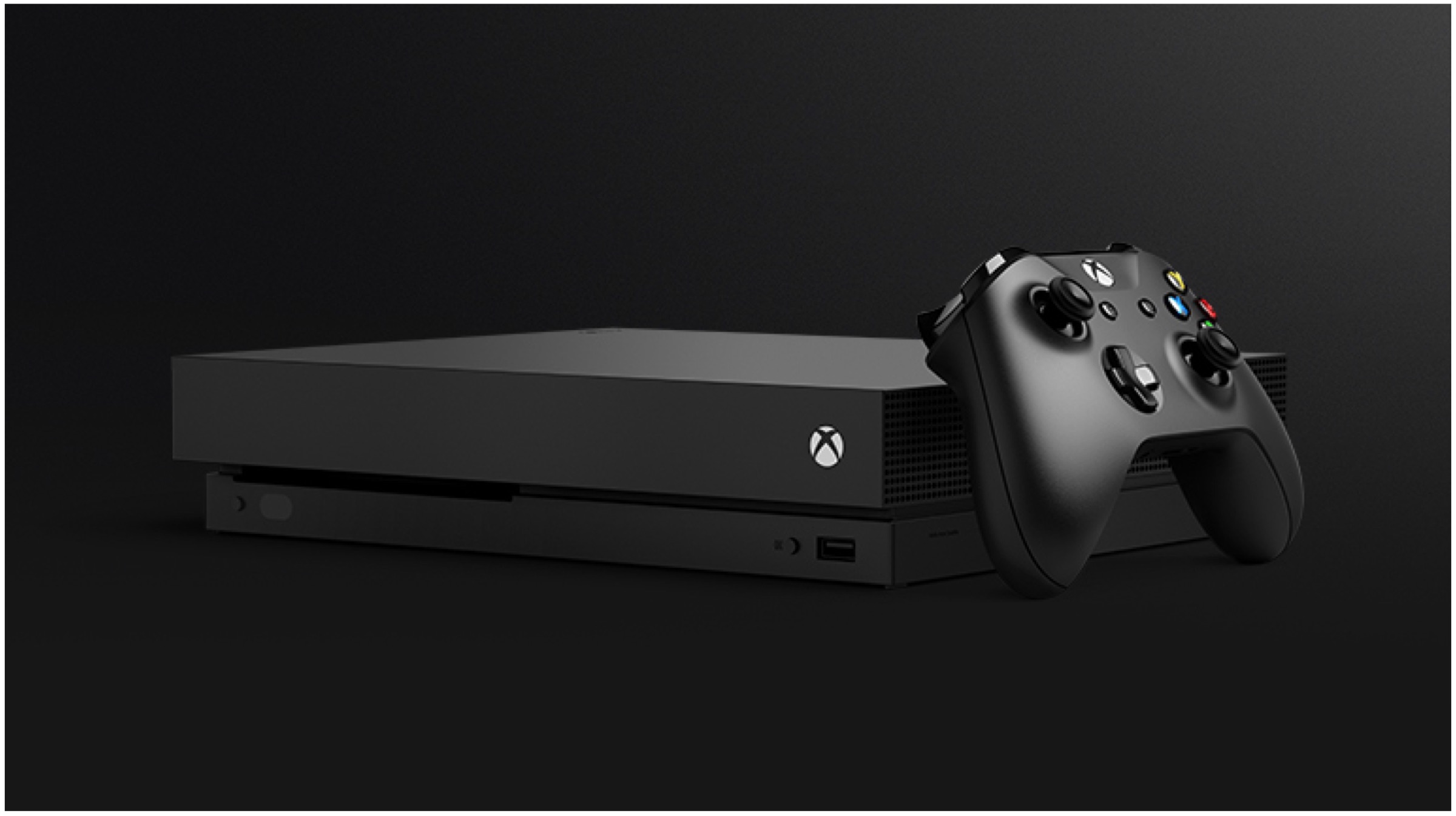
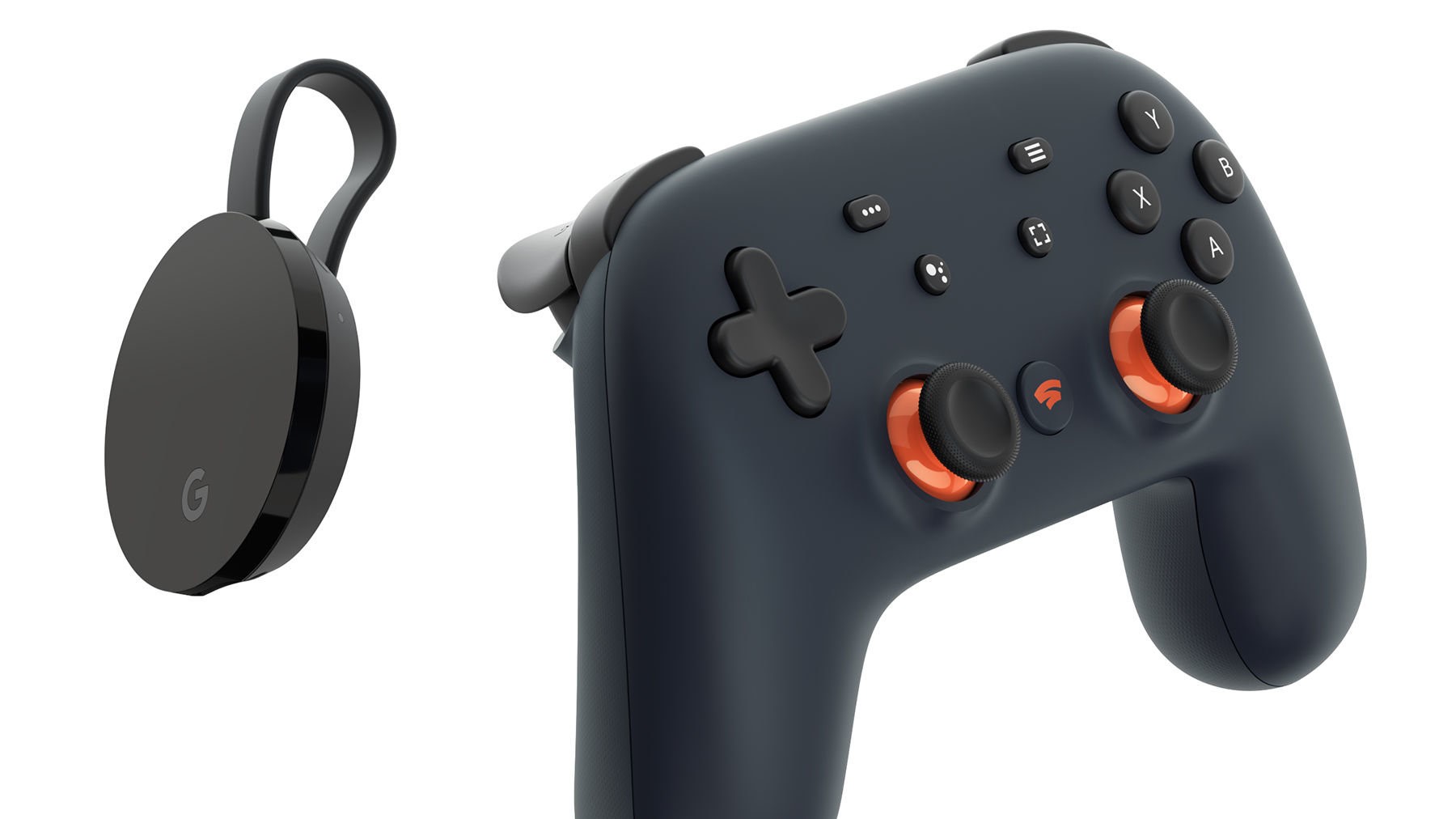
    The new report may give both Sony and Google a run for their money. Sony’s PlayStation Now and PlayStation 5 and Google’s Stadia might have to rethink strategies and prices after the launch of both Microsoft consoles. Project Scarlett will be the flagship console of this generation from the company while an xCloud exclusive gaming console will be sold separately. The concept is similar to Stadia controllers which directly connects to users routers.
    xCloud

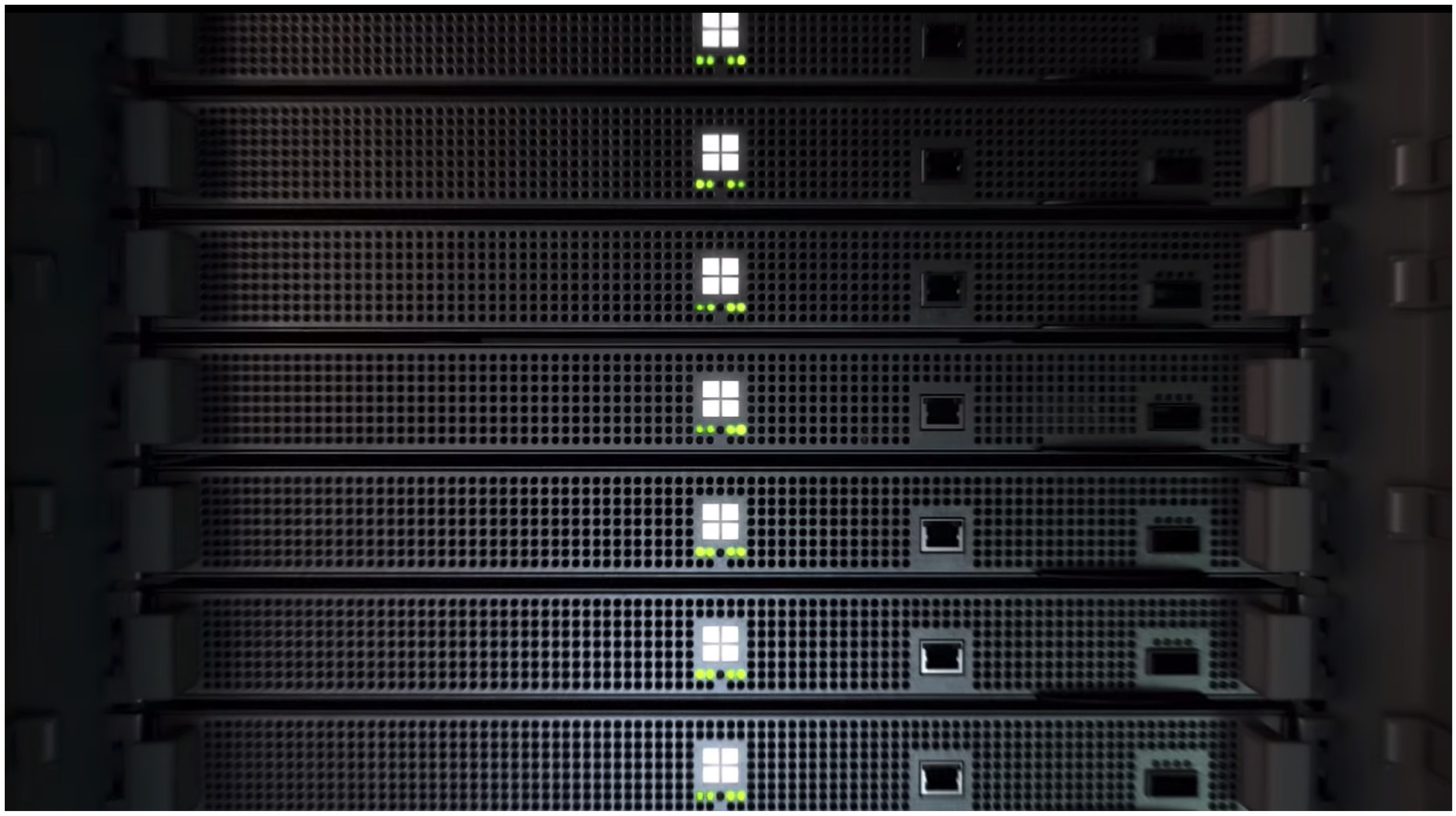
    It seems that Microsoft is renewing its intent for a sister console according to the fresh report. An xCloud console is apparently in the works. Project xCloud is Microsoft’s proprietary take on the cloud game streaming service. The new service blew up on social media after Google had announced Stadia for the first time. It brought the existing cloud gaming service to mainstream media. The upcoming console will be a low powered machine as most of the computing hassles are taken care of by Microsoft’s own servers. It will be designed to give a low power and low latency experience designed specifically for a better gaming experience on the xCloud.
    Microsoft

    Also ReadXiaomi Develops A Periscope Camera Module, May Debut With Mi Mix 4

    The new xCloud console could possibly sell for anywhere between the bracket of $60 to $100, not including the monthly subscription. It is a step away from the reduced graphics and performance variant of Project Scarlett. The console will be a bit more than a basic set-top box like Apple TV but will connect to an Xbox controller directly to xCloud for gaming. Finer details are still unavailable but more updates are expected to arrive soon.
  • Nintendo Gears Up To Dip Toes In Cloud Gaming

    Nintendo Gears Up To Dip Toes In Cloud Gaming

    The mainstream gaming term of the year can be coined under “Cloud Game Streaming.” Large corporations that are well renowned in the gaming community have already started the shift in focus towards hardware-less philosophy. The concept is not new by any means but Google’s announcement of Stadia clearly brought it to the mainstream medias’ attention. Now, Nintendo in a statement has addressed the implications of the new technology alongside its possible interests with it.

    Nintendo

    Multi-billion dollar corporations like Sony and Microsoft are already working on their own proprietary online service. The Window’s company has already announced the xCloud while the Sony will launch its PlayStation Now. Notably, both the companies already have their own major consoles, namely Xbox and PlayStation, which the service will seek to replace. Nintendo has been on the sidelines during the announcement of the aforementioned services, however, the company has not ruled it out entirely.

    Nintendo

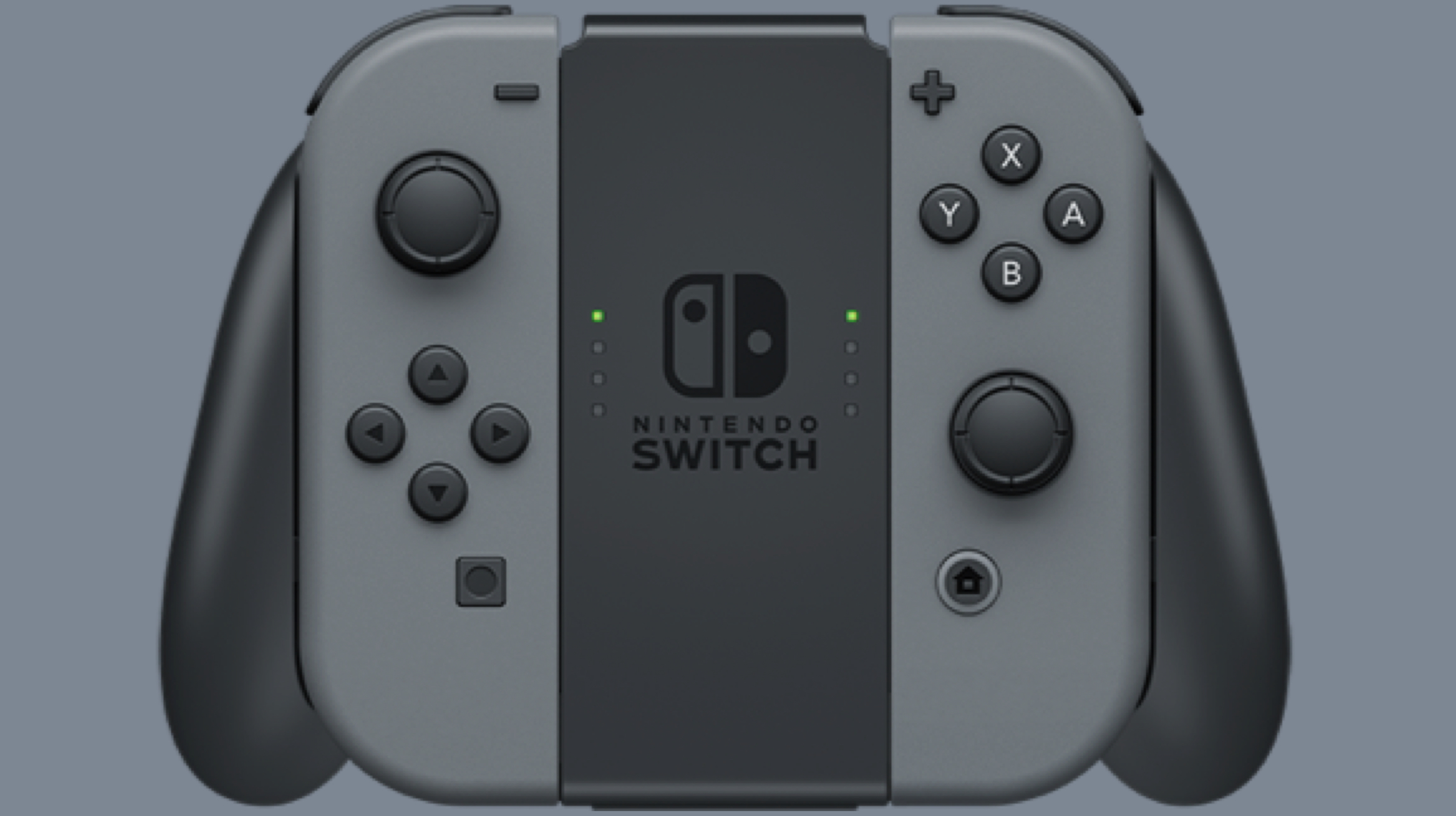
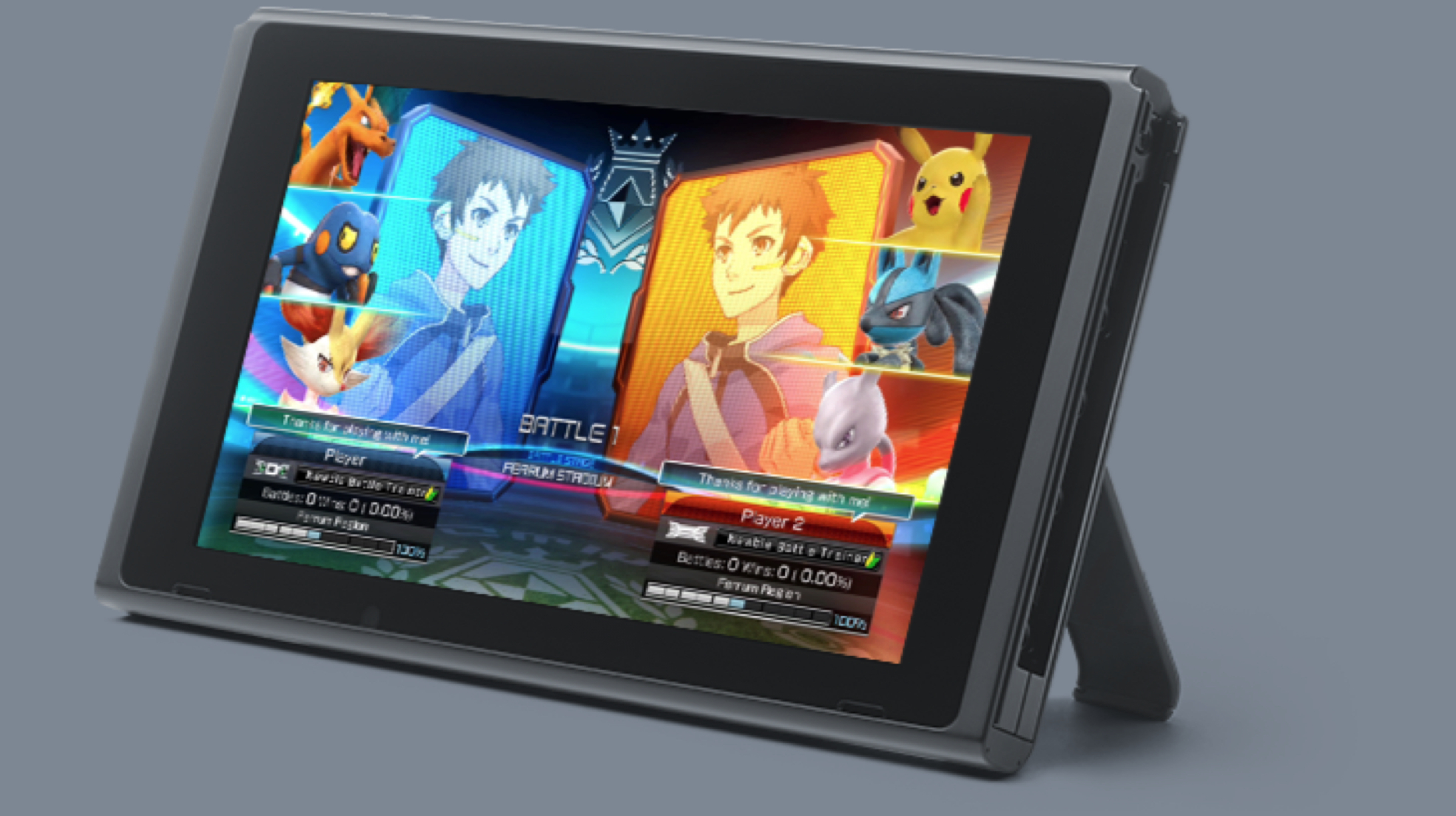
    Nintendo, unlike Microsoft and Sony, has not revealed any involvement with the gaming buzz of the year. The company’s Switch which is a handheld portable gaming console offers much of the similar functions as the online game streaming service. One of the key selling points of cloud gaming is its portability; anyone with an internet connection can essentially game anywhere and on any device with a screen. Google Stadia was seen playing the popular gaming title Doom on the Pixel as an example. 

    Nintendo’s President was quoted saying that game streaming is still early but will soon catch on; the company will always strive to adapt to the dynamic gaming environment. Other top officials also stated that services like this cannot ever completely replace hardware-based consoles like the Switch. The company is rather open to future endeavours focused on cloud computing. It would help them bring its beloved title to more broader audiences across the globe.

    Nintendo

    Also ReadRedmi K20 Pro Indian Price Leaks, Starts At Rs 24,999

    The company is currently working on its subscription model that was teased at its E3 Gaming Expo Stage. It will review every product and offer the ones that are viable for the new business model to further expand its horizons. We might soon see one or another form of game streaming from Nintendo as a Switch was recently seen running popular AAA titles. The company while not actively promoting the service has discreetly tested games, like Assassin’s Creed: Odyssey on its handheld machine. Popular titles like Mario might be soon appearing with subscription-based models.

  • Microsoft Renames The Windows 10 Xbox App To Xbox Console Companion

    Microsoft Renames The Windows 10 Xbox App To Xbox Console Companion

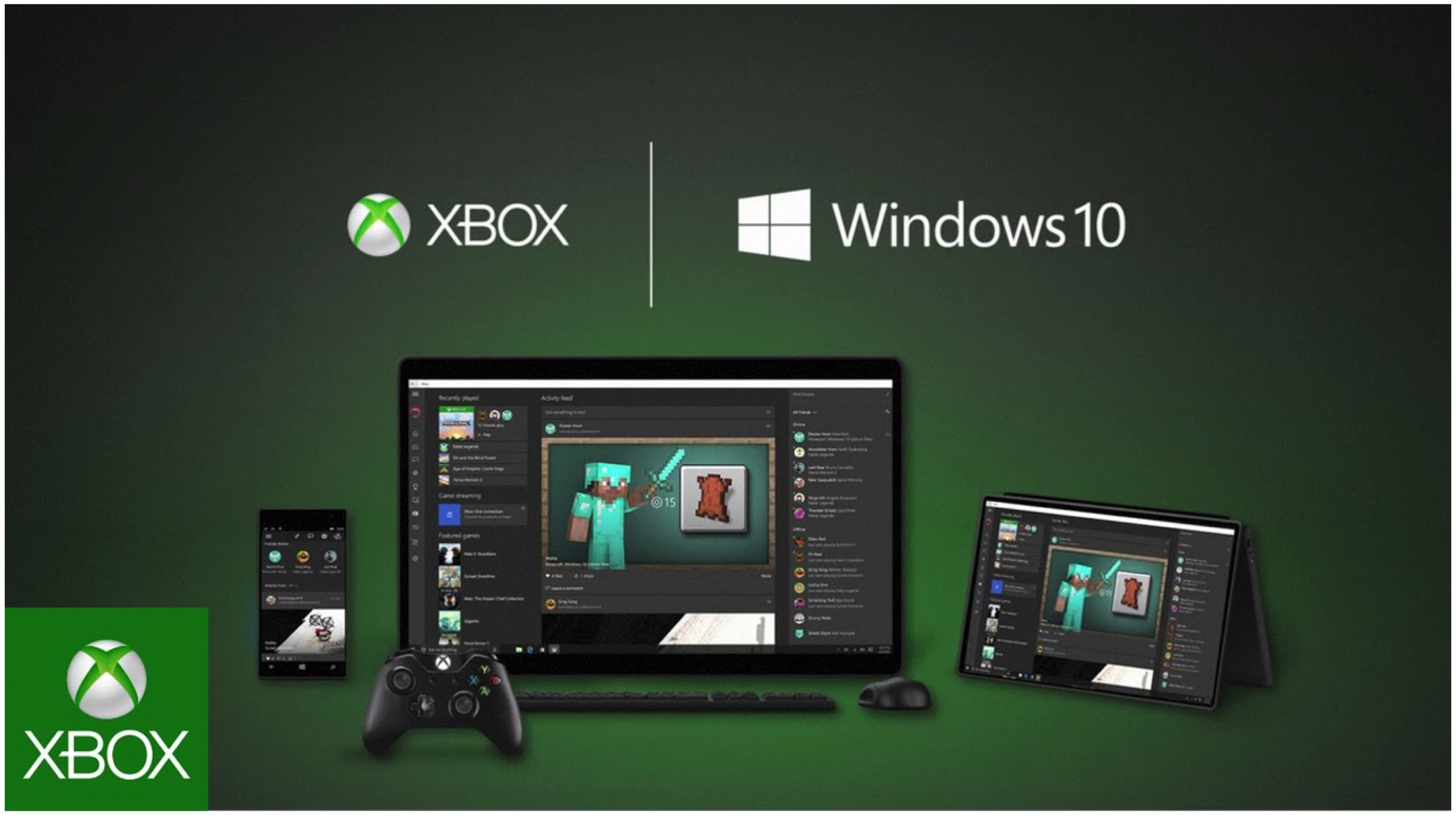
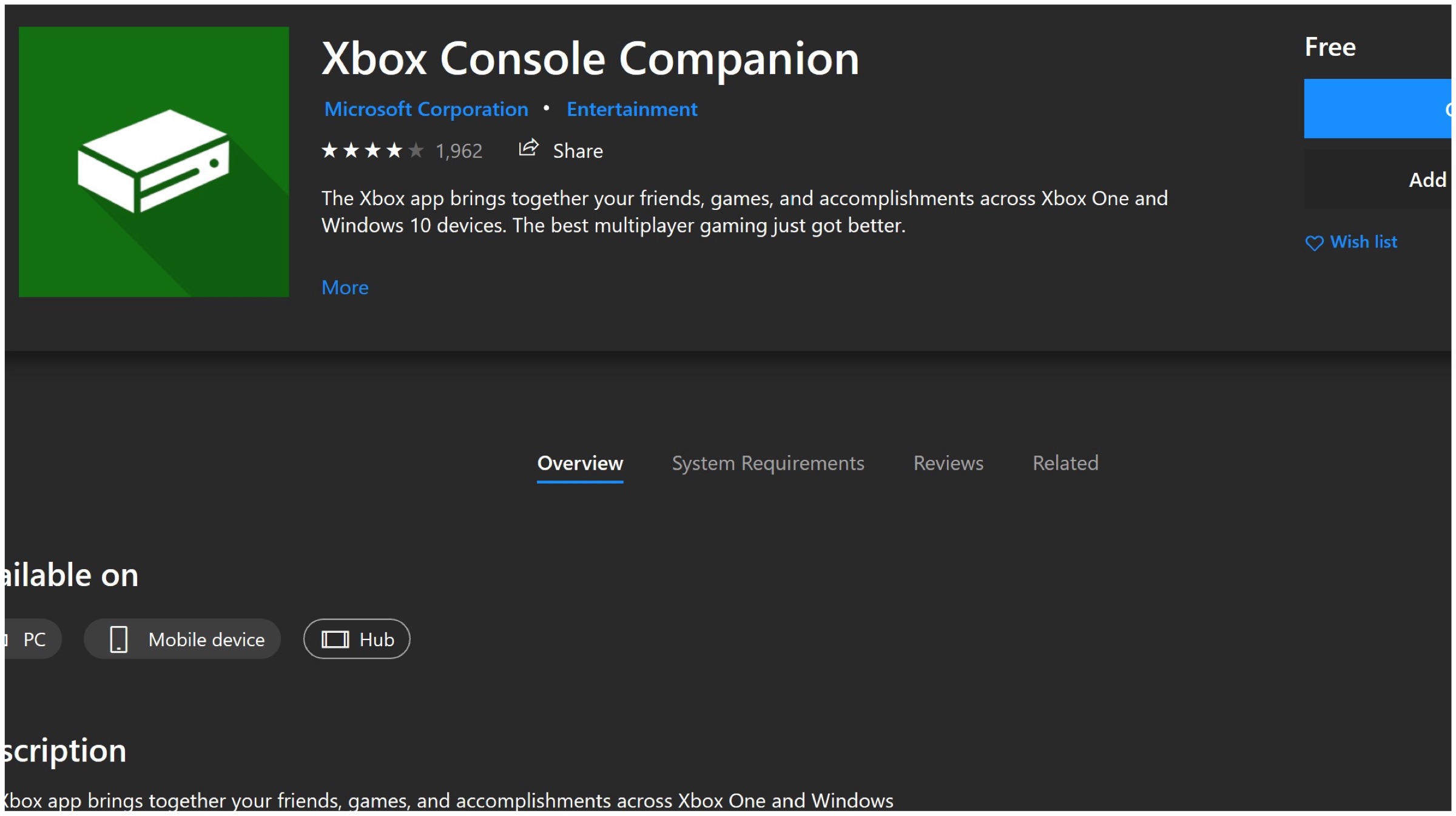
    Microsoft has always had its gaming console companion app pre-installed on every Windows 10 supported device. This was done in order to bridge the social gap between its PC and console gaming fans. In the latest Windows update, the company renamed its Xbox App to Xbox Console Companion. This update is a refresh right before the upcoming ‘new desktop experience’ by the company. Apart from the name, no functional changes have been made to the Windows application.

    Microsoft

    However, Microsoft has planned updates in the future that will lead to the revamp of the dashboard setup in the app. Furthermore, these changes will be made for an unannounced Xbox console settings menu. The future iterations may also team up with the launch of Microsoft’s xCloud, the online gaming and streaming service. It will also allow cross-platform game streaming amongst the user’s devices. However, no significant changes are mirrored in the Xbox apps for Android and iOS as of now.

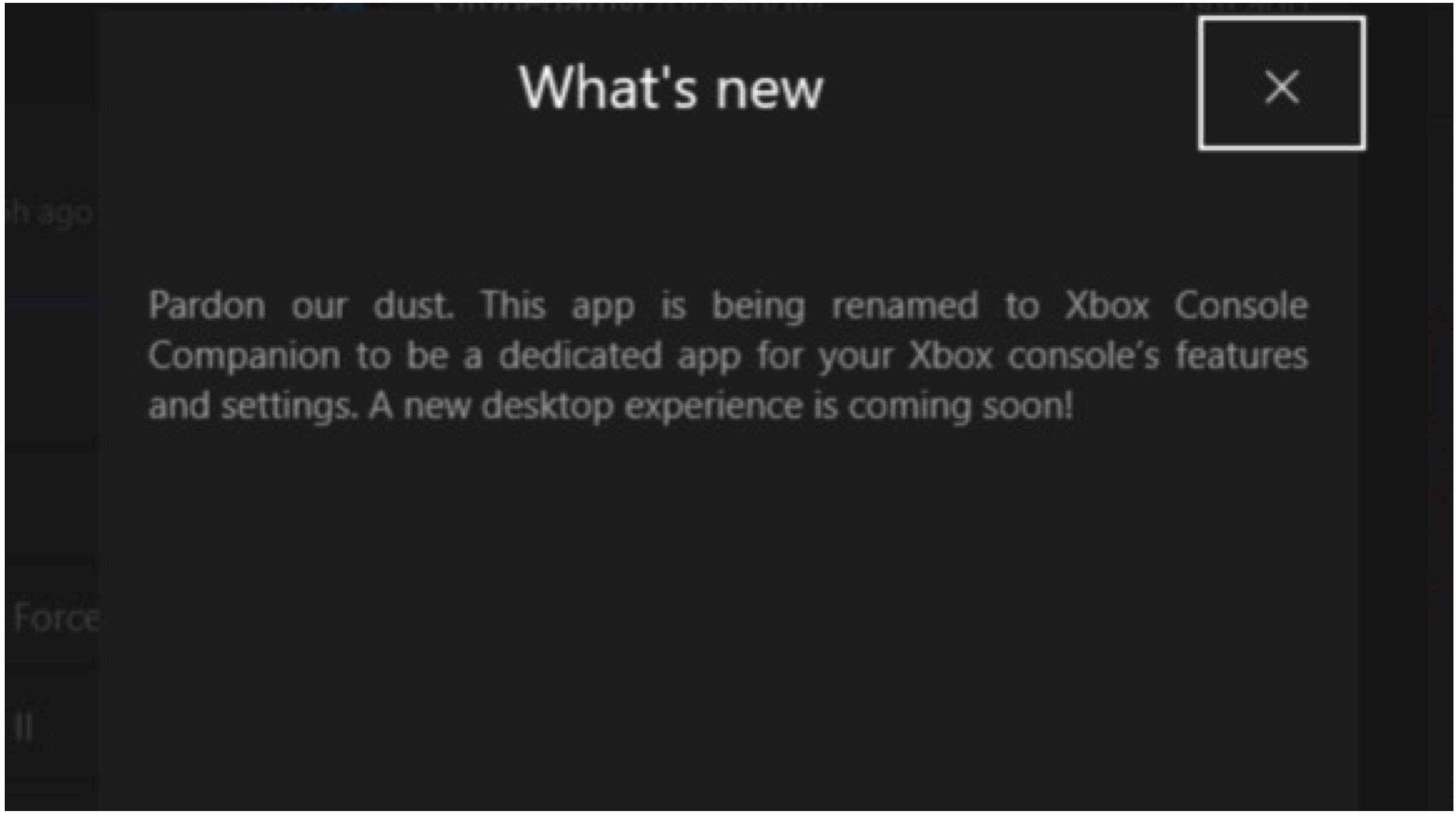
    When users will update the Microsoft store, they will receive a pop-up message from the company. The message will start with, “Pardon our dust.” and go on to describe the reason for the new name of the application. Xbox Console Companion receives a new icon and will be dedicated for Xbox users. An up-to-date version of Windows (10th May 2019 Build) is required to experience the new feature as promised by Microsoft. 

    The original Xbox app is made for managing games installed on the Windows 10 PC. It also provides a simple catalogue for users to browse games in Microsoft Store, or manage the Xbox Live profiles. The app has in-built functions like social chat. This allows for cross-platform chat with friends and participation in communities, sharing in-game achievements and tracking them, managing video clips and capturing screenshots. The latter two of the features were made possible to the users via the console’s DVR feature which also makes game streaming possible via an Xbox console to a Windows 10 PC.

    Microsoft will hold a press conference at the gaming expo E3 2019 on June 9th. This event should unveil more details regarding the promised desktop experience and xCloud. The game streaming service will begin its trials in the latter half of the year 2019, as previously claimed by Microsoft. The rebranding of the desktop apps name after the overhaul of Windows 10 Game Bar lays the foundation for the future console’s framework. The Game Bar is now equipped with PC resource monitors, customizable widgets, and broadcast/game capture controls.

    Also ReadGoogle Maps Will Now Provide Info on Trains and Buses In India

    With social media now integrated directly with the GameBar, users will be able to access cross-platform voice and text chat. This feature is synchronized across Xbox devices, as well as multiplayer team management. Additionally, Spotify music controls can also be a part of Microsoft future plans to enhance user experience during gaming. The aforementioned features although, might be removed from the now repurposed Xbox Console Companion App.

  • Microsoft Teases A New Operating System With AI Integration

    Microsoft Teases A New Operating System With AI Integration

    Amidst major announcements in Computex 2019, Microsoft let a teaser out for its future plans on the software front. The long-awaited lite version of Windows OS (for the likes of Chromebooks) may or may not be included in the definition of Microsoft’s “modern” operating system.

    This modern OS as stated by Microsoft is not just a software version and rather it is a benchmark that would define the future of operating systems. With the functionality of the OS at its essence, the ‘seamless’ word was used quite a lot by Microsoft on stage and seamless updates being at the centre of it. Windows updates have improved exponentially over the years as promised by Microsoft but the company is not stopping there. It is now seeking to make the entire process occur in the background, never requiring the user to actively check for updates.

    Microsoft

    Current iterations of Windows OS handle software updates very differently, with comments pointing towards the similarities in relation to Chrome OS. The ‘modern OS’ is also supposed to be highly secure from the ground up. “The state is separated from the operating system; compute is separated from the applications.” This line by Microsoft’s Spokesperson points towards cloud computing at a level the industry has not yet been comfortable with but is a step towards the future which the company has kept in mind. “Sustained performance” as Microsoft puts it that is “always connected” to have zero interruptions. Sharing the workload with cloud solutions online to enhance user experience on devices. 

    All of these “enablers’ will be supplemented by an AI. In other words prediction based algorithm to get end results faster for the User. Microsoft there on goes to mention other sci-fi, futuristic but not far-fetched input methods such as voice, touch, and gaze, apart from the conventional mouse and keyboard combo. All this in a light form factor that adds to the mobility of the machine on which the OS is loaded.

    Also ReadNew MediaTek SoC Is All Set To Bring 5G Network On Budget Devices

    No finer details have been revealed as of yet. All that anyone has to go on is the teaser dropped today. The concept may still seem far away but more concrete information should soon follow in the coming months either through official channels or in the form of leaks and rumours.

  • AMD Reveals 3rd Gen  Ryzen CPUs And 7nm Radeon RX5000 GPU

    AMD Reveals 3rd Gen Ryzen CPUs And 7nm Radeon RX5000 GPU

    Rumours had been trickling by on the new lineup of 3rd generation Ryzen and Radeon NAVI GPUs of AMD. Computex 2019 launched with its very first keynote by AMD’s CEO, Dr. Lisa Su. AMD has various announcements to make on their lineups and their new data centre offerings, AMD Epyc.

    AMD NAVI

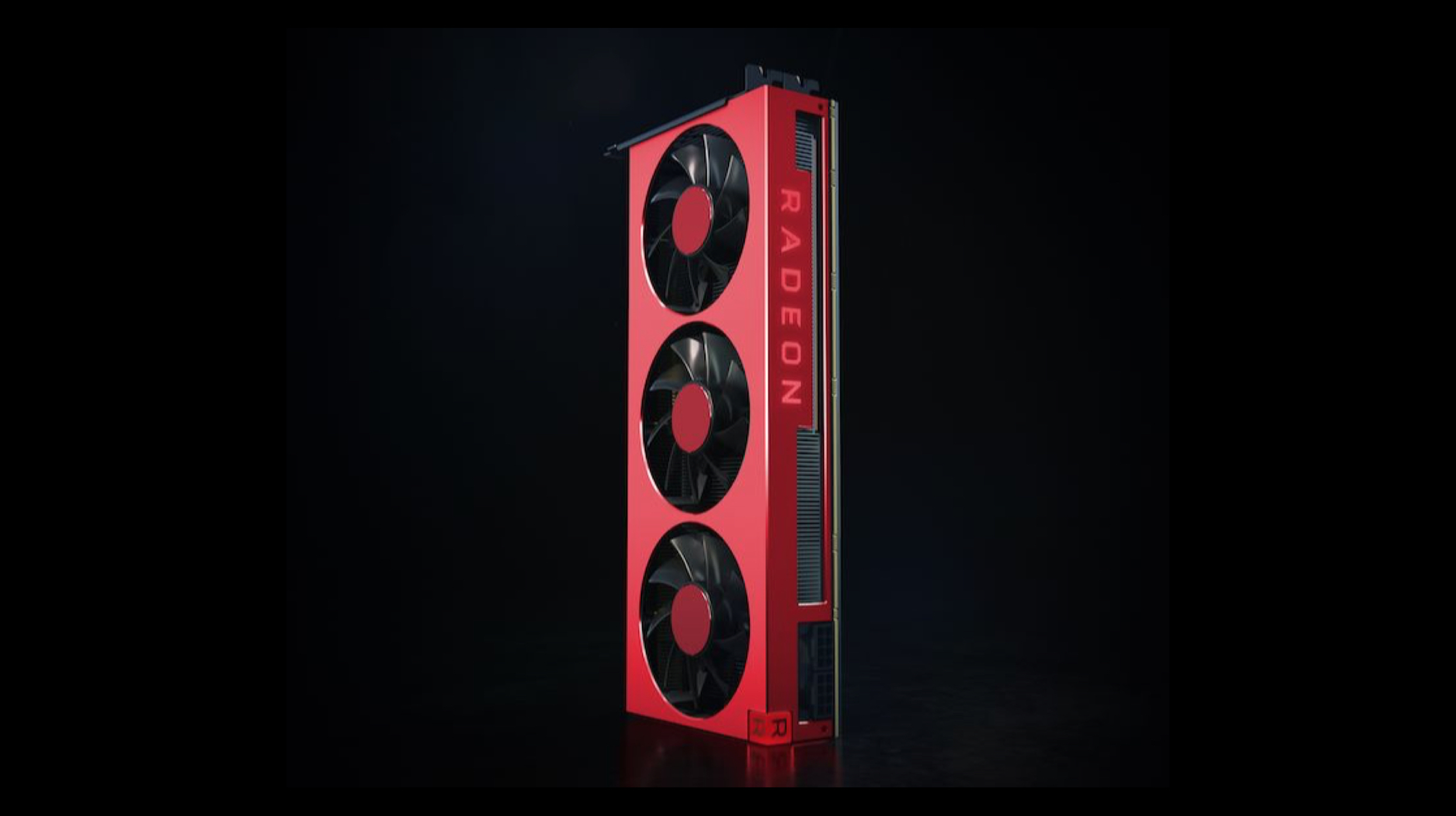
    A major announcement in AMD’s keynote was it’s much awaited new 7nm GPUs which will be a part of their Radeon NAVI, i.e AMD Radeon RX 5000 lineup of graphics cards. The nomenclature is influenced by the company’s 50th anniversary.

    The new microarchitecture, called RDNA, is set to replace the GCN architecture that has powered AMD’s Radeon GPU. The notable improvements thus far have been the new compute design engine, multi-level cache hierarchy and a streamlined graphics pipeline. Essentially providing higher clock speeds for the graphics card at a lower power. The new GPUs are also the first to adopt the PCIe Gen 4.

    A quick benchmark on the Strange Brigade has AMD’s Radeon RX 5700 take a marginal 10% lead on NVidia’s RTX 2070 graphics card. AMD is expected to start shipping by July 2019, although the details are reported to be revealed on June 10. 

    AMD RYZEN 3RD GEN

    The new and highly anticipated CPU lineups from AMD were finally unveiled. Being built on a 7nm process node, the AMD Ryzen 7 3700X is an 8 core/16 threads processor which is also compatible with the AM4 socket but will need the latest X570 platform to bring out its full potential. This does not mean using older motherboards such as the X370 or X470 is pointless. A significant lead in terms of performance was showcased by AMD’s new CPU over Intel’s Core i7-9700K in comparison. The 3700X scoring 4806 points in Cinebench while 9700K only managed 3276 points. This, however, was not the top SKU in the mainstream lineup. The 3800X followed after 3700X and had a base clock of 3.9 GHz and a boost clock of 4.5GHz. The 3800X has 105W TDP in comparison to 3700X with 65W TDP. 3800X had a mean lead of 11% that went upto 34% when in comparison to its older generation Ryzen 7 2700Z when performance was testes in gaming.

    AMD has also announced the Ryzen 9 top of the line SKUs, with the most powerful being Ryzen 9 3900X, a 12-core/ 24 threads processor with a 105W TDP draw. Its base clock sits at 3.8Ghz while the boost clock reaches 4.6GHz that utilizes two chiplets to achieve the high core count. Blender benchmark was used to pit the Ryzen 9 3900X against Intel’s Core i9-9920X processor that has a 165W TDP, in which the new Ryzen processor outclassed in both single and multi-core performance.

    AMD EPYC


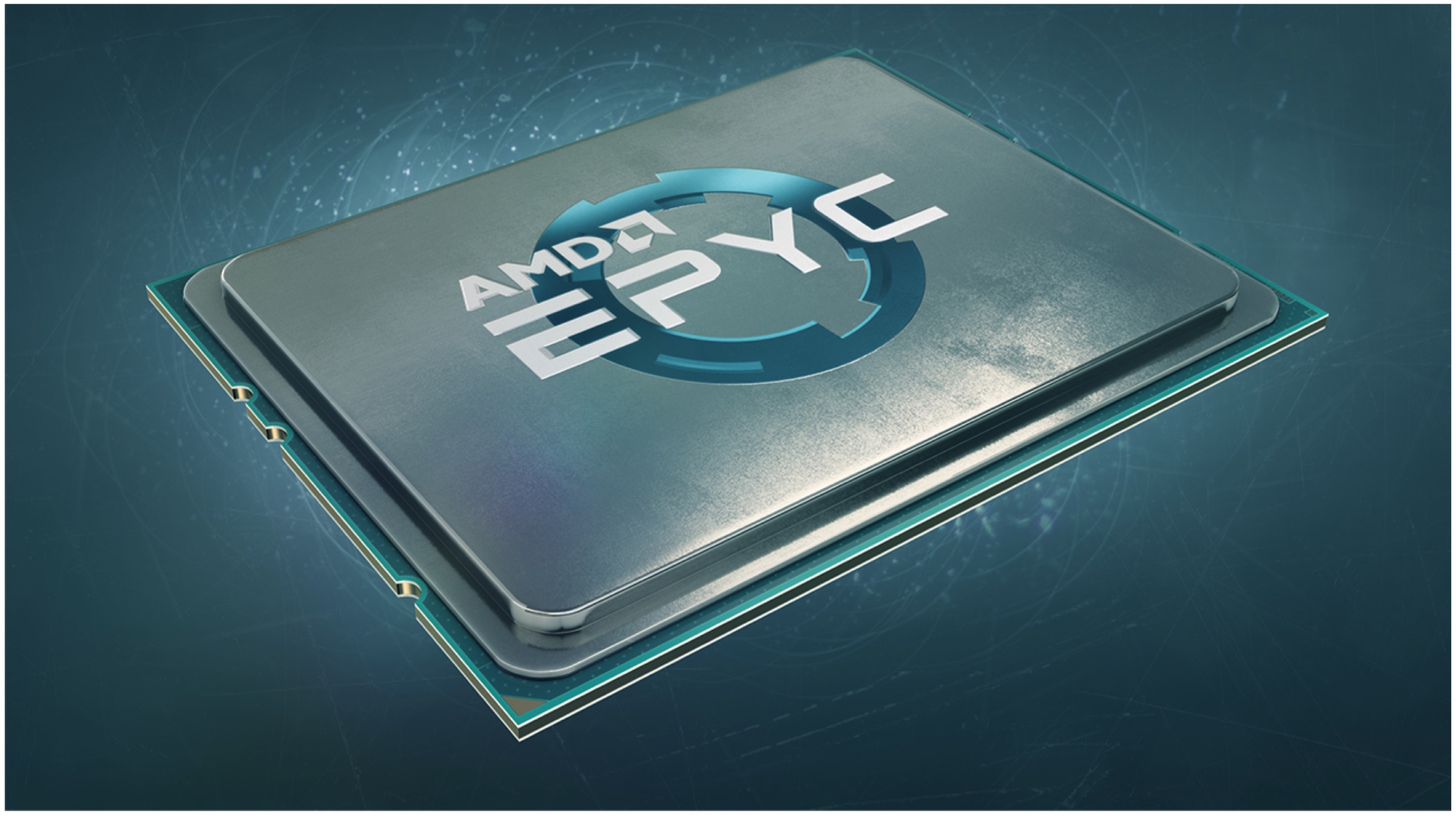
    Dr Lisa Su, the CEO of AMD, announced the new data centre offerings, AMD EPYC. EPYC has grown over the last 3 years to have more than 60 solutions on more than 50 cloud installations. This was followed by AMD’s crown jewel, the Frontier Supercomputer at Oak Ridge, National Laboratory that is capable of more than 1.5 exaFLOPS and is reportedly said to receive the world’s fastest supercomputer once it goes live.

    Similarly to Sony’s announcements of collaborating with Microsoft for their cloud computing solutions, AMD unveiled that it has also incorporated AMD EPYC with Microsoft’s Azure.

    Also ReadIntel Announces Octa Core i9-9900KS CPU With All Cores Clocked At 5.0 GHz

    Codenamed ‘Rome’ the 2nd Gen EPYC processors by AMD give upto 64 cores per socket and are claimed to be able to push out four times more floating point workload per socket when compared to its previous generation. A demonstration showcased the 2nd Gen AMD EPYC 2-socket solution going up against an Intel Cascade Lake 8280 28 core/ socket 2-socket solution. The EPYC solution crunched out 19.60 ns/Day compared to the Intel solution. The launch is set to be in Q3 2019.

  • Microsoft To Donate $1Billion in ‘Cloud Computing Services’

    Microsoft To Donate $1Billion in ‘Cloud Computing Services’

    Microsoft yesterday took a giant leap towards fulfilling its mission of giving back to society, and acknowledged through philanthropy the growing importance of cloud computing in the modern age.

    The Redmond-based company made an announcement yesterday to donate $1 Billion worth of ‘cloud computing services’ to university researchers, and non-profit organizations. These services, billing into multiple digits, would be doled out to these universities, and over 70,000 such organizations over the span of next three years.

    Microsoft’s Hyderabad-born CEO, Satya Nadela, who was at the heart of this decision said that he believes that cloud computing has become a vital resource for addressing the world’s problems that many of these institutions and non-profit organizations are trying to fix, and as such this is the best way to help them in their cause.

    In an online post Satya Nadela elaborated on the reasons behind this decision. He said,

    ” Last fall, world leaders at the United Nations adopted 17 sustainable development goals to tackle some of the toughest global problems by 2030, including poverty, hunger, health and education.
    A careful read of those goals reveals the central role that data and cloud computing must play for analysis and action.”

    This particular project will be a part of a greater three-part Microsoft donation program.In what will be welcome news to the various organizations who will be helped by it, yesterday’s announcement will see the company expand its global donation program to include its full suite of cloud services.

    The particular suite will include Microsoft Azure, allowing nonprofit organizations to use Microsoft’s vast data centers for their apps and Enterprise Mobility Suite that will enable the organizations to manage all their devices/apps/data on a cross-platform basis.

iGyaan Network
Privacy Overview

This website uses cookies so that we can provide you with the best user experience possible. Cookie information is stored in your browser and performs functions such as recognising you when you return to our website and helping our team to understand which sections of the website you find most interesting and useful.