Tag: google

  • Google’s ‘Android M’ Likely to Hand Over Privacy Controls to Users: Report

    Google’s ‘Android M’ Likely to Hand Over Privacy Controls to Users: Report

    Google’s upcoming Android OS is the next big thing everybody is looking forward to. There are speculations of the tech giant gearing to unveil the mysterious ‘Android M‘ in the Google I/O conference 2015. Bloomberg has surfaced another vital fact about the forthcoming Android version that would bring data apps control in the hands of users.

    According to a report by the global business and financial information portal, Google is planning to provide users with privacy controls that would allow users grant permissions to a particular app. This way, users themselves can decide what apps can penetrate more into the content and which can’t. These may include photos, contacts or location. The privacy controls would bring Android OS closer to Apple’s iOS that furnish users with the freedom to apps permission.
    Google Messenger 1

    For now, Android users cannot decide permissions for the app. Whenever a user wishes to download a new application, he/she is directed to the setting page to provide the app with required permissions. Refusing to the permissions leads to cancellation of the app download. Presently, the customization option is available on Cyanogen and Xiaomi’s MIUI 6.

    The demand for privacy on Android devices is being made for quite a while. Paying a little attention to the rising voices, Google has lost 3 percent share in Europe’s five largest countries, coming down to 69 percent. On the other hand, the share of iOS has increased from 18.6 percent to 20.3 percent in those five countries.

    However, there is no confirmation from the company, but the mounting pressure may force Google to come up with the advanced Android version this time. Google’s annual I/O developers’ conference is scheduled for 28th of this month.
  • Here’s How Facebook Would Like to Replace Google

    Here’s How Facebook Would Like to Replace Google

    When browsing through mobile, it is quite a task to open a website, copying the link, switching between the apps and pasting it on your Facebook status bar. For many users, this is quite a cumbersome job. According to TechCrunch, to change the experiences for its mobile users, Facebook is working on an internal test search engine for its mobile app.

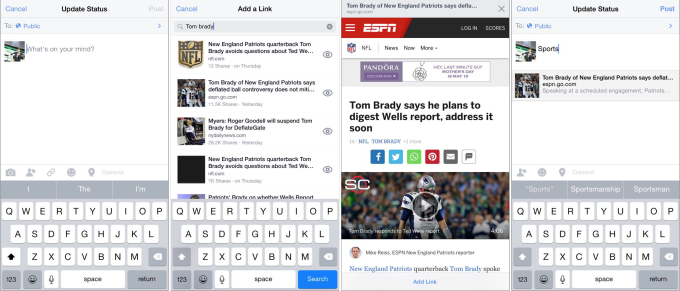
    TechCrunch spotted that a few iOS users saw a new ‘Add a Link’ button next to buttons that we use to add photos, location and feelings. Upon writing down a word in the search engine, a list of related and matching links shows up that can be shared to your wall along with a caption. Using this feature, users will be able to bypass search engine while searching for content and give the social media giant a rich data of analytics of the type of content being explored and shared in a series of detailed statistics.

    facebook-add-a-link

    This move by Facebook may throw a hard brick on Google. On the other hand, Google has also allowed users to order food from its search results and add tweets. Apple, too, mentioned about the AppleBot on its support page, indicating an all-new Apple Search on Safari and other search related apps on iOS and OSX environment. This may set up an entirely new bar for search engines.

    There are no words when this feature will roll out for the rest of its mobile users. For now, only a handful of iOS users has access to this new tool.

  • Android Lollipop Market Share Growth is Slow, Yet Steady

    Android Lollipop Market Share Growth is Slow, Yet Steady

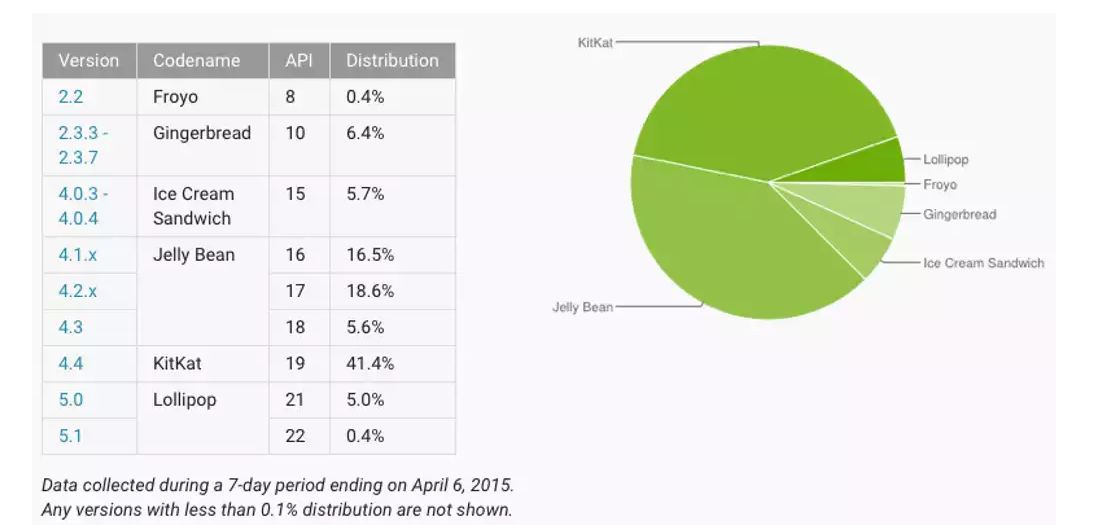
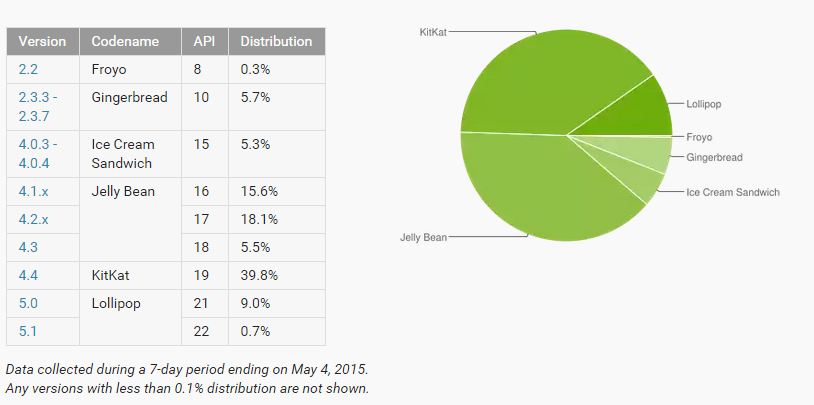
    Officially introduced in early-March 2014, Lollipop is the newest Android software release available now. Steadily, it seems that Android has started to grasp the ways of the competitive market. However, after being made available, Lollipop was being used by only 0.7% of the market. Now, Lollipop’s market almost doubled within this month, whose surge can be attributed to the launch of Samsung Galaxy S6 and Galaxy S6 Edge. Both the handsets came pre-loaded with the operating system.

    Meanwhile, its predecessor, KitKat, slipped from 41.4% to 39.8%, which could very well hint towards the rate of the upgrade of the OS. In the similar fashion, all the previous versions of Android saw a decline. Surprisingly, Froyo, the first Android OS, still hangs at the tip with 0.3% market share.

    april 2015


    may 2015

    As you can see in the above figure, the number of active Android handset space has increased eventually. Lollipop now operates in 9.7% of the Android smartphones around the world. Google released a report on the steady growth of Android 5.0 Lollipop’s market share, rising from 0.1% in December 2014 to 1.6% in January and over 5% in March. If the jump crosses above 10% in April, it may be one of the biggest wins for Android.

    First introduced in the summers of 2014 at Google’s I/O, a 10% growth in a year may not seem too much for most of the other companies. Reasons for the slow increase? Patchwork arrangements between Google and various other manufacturers, the large collection of Android devices of the companies, many more variants required by each carrier – all contribute towards the fact that it is not easy for Android to roll out its updates for handsets in the same way as Apple does for iOS.

  • Future Google Laptops May Eliminate the Space Bar Altogether

    Future Google Laptops May Eliminate the Space Bar Altogether

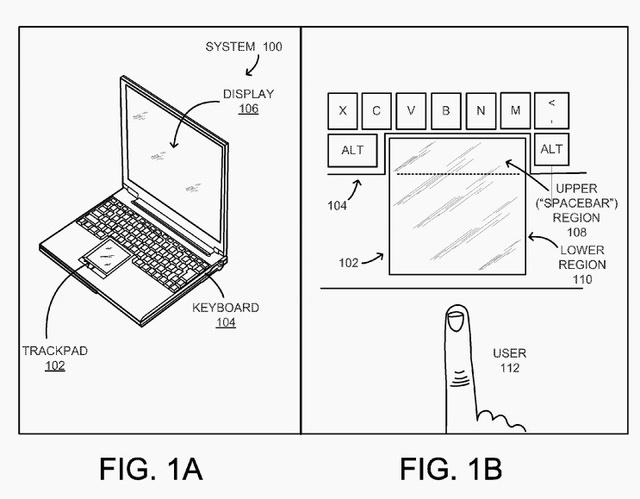
    In an attempt to making laptops more compact, Google has recently signed a patent that may make your future laptop smaller by getting rid of the space bar. In a patent signed by the search giant, the design of the laptop replaced the space bar with an extended mouse trackpad. The trackpad and the rest of the keyboard are separated by a ridge, or a line, which might work as a spacebar button. Sensors beneath the trackpad will determine whether the space is used as a trackpad or a space bar. While typing, a touch to this region will result in a space, while a tap while using the trackpad will result in a mouse click.

    google-space-640

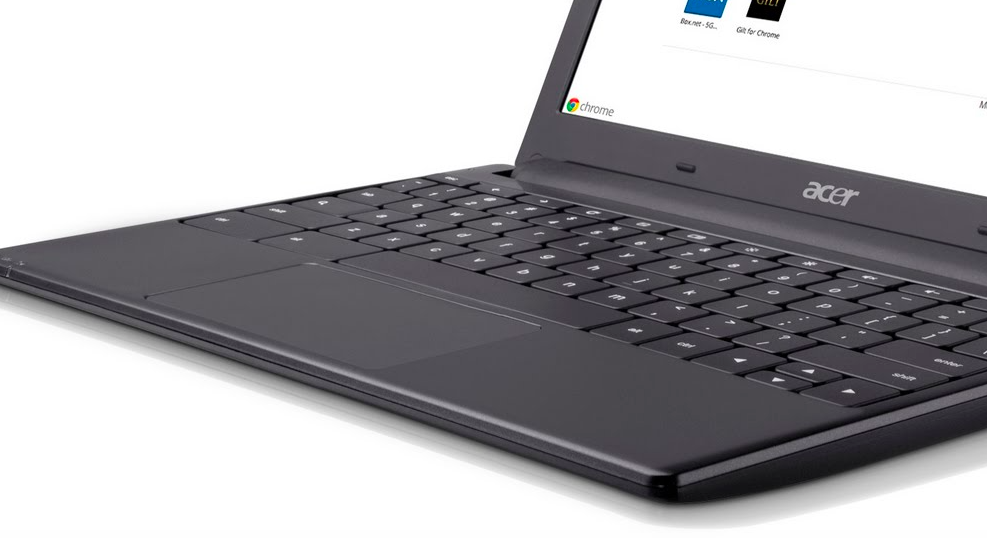
    Google’s reason for removing the space bar is that by pushing the trackpad up to the area of the space bar would be the first step to creating a smaller laptop. Although, the patent is still presented as ‘questionable’ since Lenovo’s current line of laptops already have trackpads pushed closer to the space bar.

    Meanwhile, Google’s space bar patent was rejected four times in the past, according to Patent Office’s digital paper trail system. Will we soon see a smaller keyboard in Google’s Chromebook? We will have to wait to find that out.

  • Google’s New Marketplace Invites Sellers to Trade Their Patents

    Google aims to get a hold of your exclusive set of rights. The search internet giant announced the same on Monday by stating its plan to establish an online marketplace. The common place will offer talented minds sell their patents to them.

    The online meeting spot for Google and patent holders is known as Patent Purchase Promotion and it is an “experimental marketplace for patents that’s simple, easy to use, and fast.”

    Allen Lo, the Patent Deputy Counsel of Google mentioned in a blog post –

    We invite you to sell us your patents. Today we’re announcing the Patent Purchase Promotion as an experiment to remove friction from the patent market.

    The blog post adds that a streamlined portal will be open for patent holders from May 8, 2015 through May 22, 2015, where willing sellers can set a price of their product. On the last date, the submission will close and submitters with valuable patents will be contacted by June 26, 2015. The deal is anticipated to close by late August.

    The move will help improve their patent landscape. Also, it will provide better benefits to the original patent owner.

    Get more information on Patent Purchase Promotion here.

  • Now Google Lets You Send Directions From Desktop to Your Android Phone

    Now Google Lets You Send Directions From Desktop to Your Android Phone

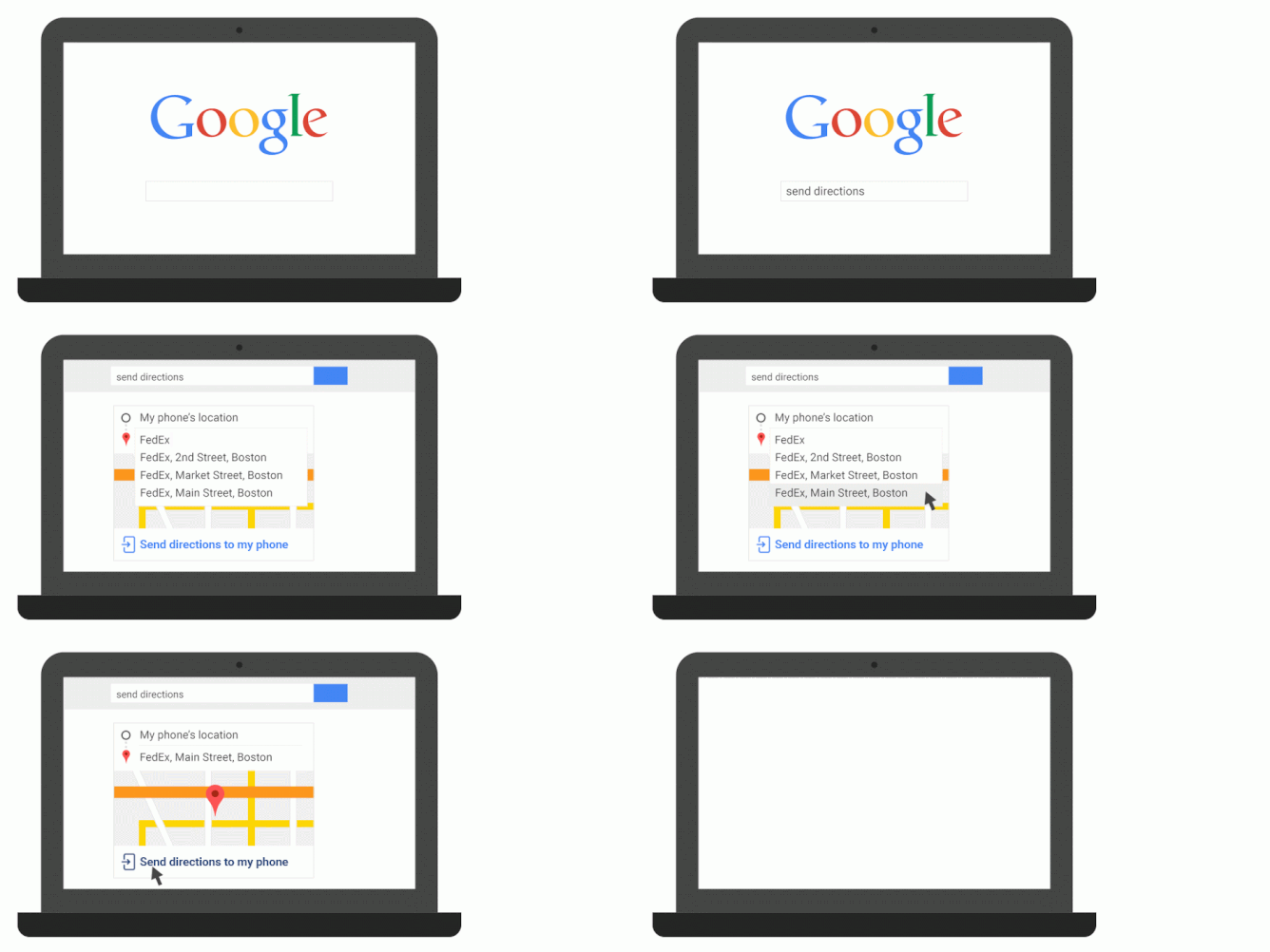
    The Maps app by Google is a must-have tool while commuting from one place to another. Users need to type in the address or speak it to Google to get directions to the location, but what if you can avoid all that hassle. The search engine biggie has launched a new feature that allows sending directions from Chrome browser to your handheld device. Now users can search commute routes before leaving for the destination.

    The announcement was made public by the company itself through its Google+ page. The process is as simple as searching on Google. Just type in send directions in the Chrome omnibox and add the final point. Tap on the ‘Send directions to my phone’ option and it will send the directions to your device. The Google Maps will load automatically with the specified location and will navigate to your destination.

    It looks like the feature is not accessible in India as of now, but is expected to arrive soon. The hardware and software company launched ‘Find my Phone’ feature a week back that helps locate your missing Android device. It also revised its search algorithm to boost mobile-friendly websites and slipped a list of relevant apps within search results for you to download. All the moves are in favour of its users.

  • Here’s Everything You Need to Know About Google’s New Mobile Network ‘Project Fi’

    Here’s Everything You Need to Know About Google’s New Mobile Network ‘Project Fi’

    A couple of days back, there had been reports that Google was planning to launch its own US mobile wireless service. Now, the company has made its plan to bring wireless services public. Google’s new venture gives users an alternate way to curb data usage and keep their phone bills low.

    Dubbed as ‘Project Fi’, the new Google-run network service is a customizable package that switches between Wi-Fi and cellular networks. It eradicates boundaries and gives customers freedom to use the network in their hometown and during international travels at the same rate. The service is only available for Nexus 6 smartphones as of now, and will work with newer models soon.

    The blog post of Google reads –

    Similar to our Nexus hardware program, Project Fi enables us to work in close partnership with leading carriers, hardware makers, and all of you to push the boundaries of what’s possible. By designing across hardware, software and connectivity, we can more fully explore new ways for people to connect and communicate.

    google project fi

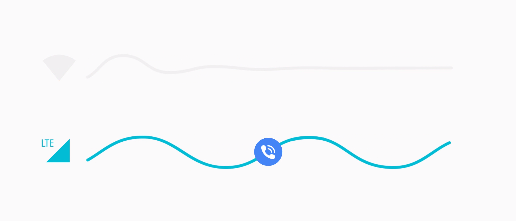
    Project Fi makes use of Wi-Fi hotspot or specific 4G LTE networks, together with the US mobile networks of Sprint and T-Mobile, the venture partners. Here’s how it works: if you are connected to a Wi-Fi hotspot and leave the Wi-Fi coverage area, your call will seamlessly transmit to cell networks. The service requires a special SIM and is supported in over 120 countries without roaming charges.

    google project fi 1

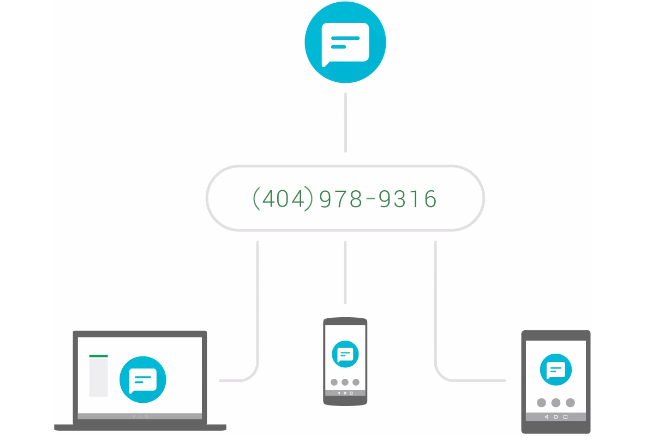
    Another revolutionary development that comes with Project Fi is that phone numbers adopt “a multi-screen world”. This means your number works with all your devices like a phone, tablet or laptop. You can connect any device that supports Google Hangouts, whether it works on Android, iOS, Windows, and start a chat. It cuts down the dependency on your smartphone and makes every device a ready-to-use handset.

    Google’s new project is unconventional in the sense that it charges customers only for the data consumed. It breaks the standard procedure of dispatching a bill for the unused data as well, which is practiced till date. Google says, “Project Fi takes a fresh approach to how you pay for wireless, manage your service, and get in touch when you need help.” There is one plan for all, and in case a user doesn’t utilize the pack called, Google will simply refund the variance.

    Here’s how Project Fi works:

    For $20 a month you get all the basics (talk, text, Wi-Fi tethering, and international coverage in 120+ countries), and then it’s a flat $10 per GB for cellular data while in the U.S. and abroad. 1GB is $10/month, 2GB is $20/month, 3GB is $30/month, and so on. Since it’s hard to predict your data usage, you’ll get credit for the full value of your unused data. Let’s say you go with 3GB for $30 and only use 1.4GB one month. You’ll get $16 back, so you only pay for what you use.

    For now, Project Fi is invite-based, and customers need to request an invite on their site to get the service. Meanwhile it’s available only in the US, but India can expect to receive it sometime later. Check the video below to understand it better:

  • Google Gives a Boost to Mobile-Friendly Websites With its New Update

    Google Gives a Boost to Mobile-Friendly Websites With its New Update

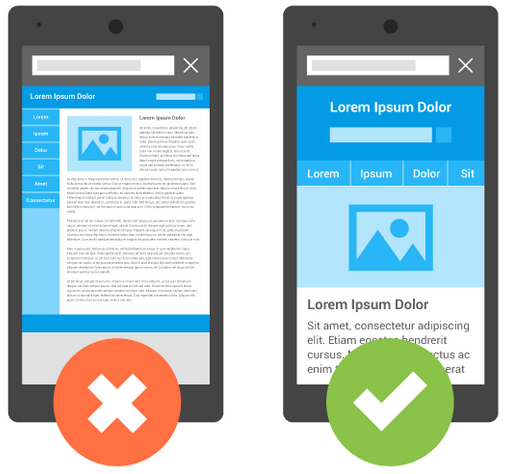
    Google is making a pre-determined move that will affect website search on mobile devices. The search giant has revised its search algorithm to rank sites at the top that are tailored for mobile screens. Termed as Mobile-Friendly update, the new changes have been implemented from yesterday.

    The new upgrade will push up the content fitting the small screen of your smartphones and force the desktop-optimised searches down to the bottom of the list. It will give a boost to mobile-adaptive websites, given that over 60 percent of the search is done through smartphones. The update is limited to just handsets only and doesn’t extend to bigger devices like tablets. This suggests that from now on, search results on mobile will be different from the results googled on the desktop.

    google mobile friendly update

    Google stated in its blog post –

    We’re boosting the ranking of mobile-friendly pages on mobile search results. Now searchers can more easily find high-quality and relevant results where text is readable without tapping or zooming, tap targets are spaced appropriately, and the page avoids unplayable content or horizontal scrolling.

    However Google is not favouring anyone in the internet business, it will give advantage to the sites designed for mobile. The search would work on Mobile-Friendly Test and would scan different factors of each page to give it a thumps up. It’s important to note that the update applies to individual pages, not entire websites. It will affect search results in all languages globally.

    The California-based giant recently did another major alteration for smartphones; it slipped a list of relevant apps within search results for you to download. Both these moves are useful for users and developers alike.

  • Google Gives Android Wear a New Look With the Latest Update

    Google Gives Android Wear a New Look With the Latest Update

    The search engine major is geared to update its smartwatch operating system that would bring Android-run watches a step closer to Apple Watch. Lately, Google announced to update Android Wear to bring a slew of new features that are simple, fast and would make Android watches convenient to use.

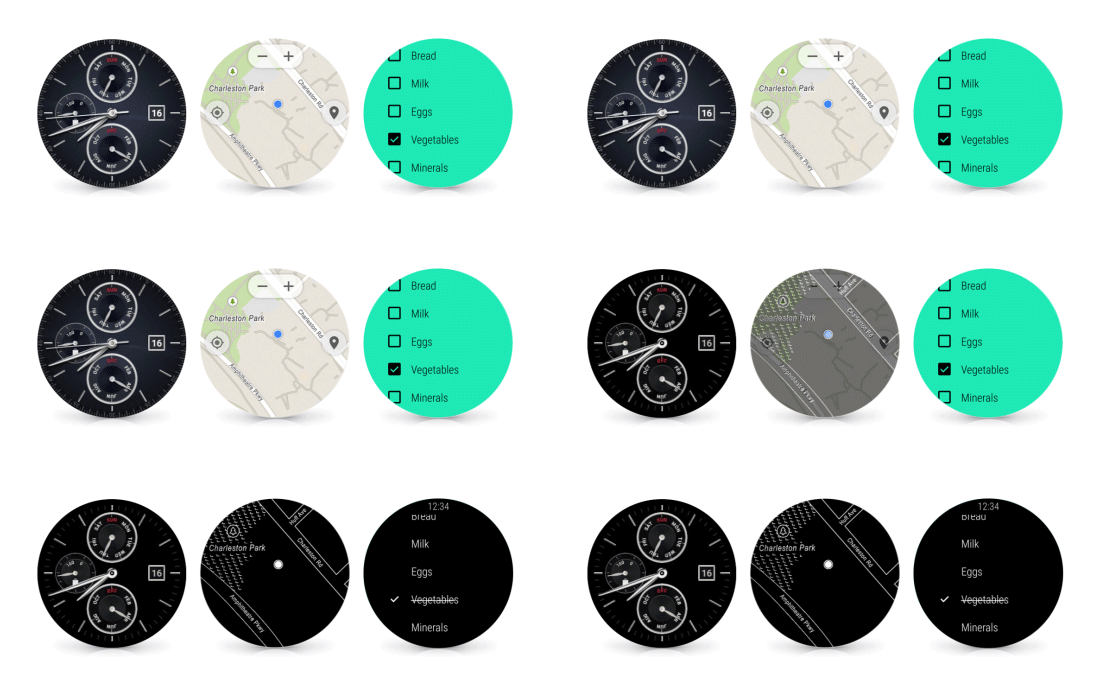
    The foremost significant feature of the new update is the always-on mode that is now extended to the apps. With the update, Android Wear will support a low-power, always-on mode that would allow apps to stay in the background in black and white. The screen will remain on, showing just a minimal amount of data and will save the battery life as well. The feature is helpful especially with shopping lists, map directions, music controls and fitness apps. The screen turns back to full colour when the user is actively looking at it.

    android wear always on

    Google has reduced the dependability on your smartphone with the latest Android Wear update. The Android smartwatches can now operate independently “as long as your watch is connected to a Wi-Fi network, and your phone has a data connection.” Yes, the Android Wear now supports Wi-Fi. Users can move the smartwatch beyond the Bluetooth range of their handset, which was the only connecting medium until now. The Android Wear device will now receive notifications, send messages, and use all your favorite apps.

    android wear

    The fresh update will sort of change the way users interact with their smartwatch. Google has added a few gestures to improve usability. Now, one can scroll the screen up just by a flick of the wrist and don’t need to empty your hands to operate the watch.

    android wear apps_people_actions

    The basic functionality of the watch has been simplified by bringing ahead the apps and contacts. Just touch the watch face and users can start send messages immediately and start apps.

    android wear _emoji

    Also, Google has added hand-drawn emoji support as a mode to communicate with your friends. Android Wear will understand the hundreds of different emojis drawn by you and send it via message or text.

    The update will be coming over the next few weeks, starting with the new LG Watch Urbane. All the other Android watches will soon follow.

  • Google Search Results Will Soon Include a List of Relevant Apps to Download

    Google Search Results Will Soon Include a List of Relevant Apps to Download

    Google, as we all know, is a powerful search engine which has given us the power of endless knowledge on our fingertips. Yesterday, it introduced a super useful new tool called ‘Find My Phone’ which helps locate missing Android smartphones and today, it revealed a feature that suggests apps based on your search.

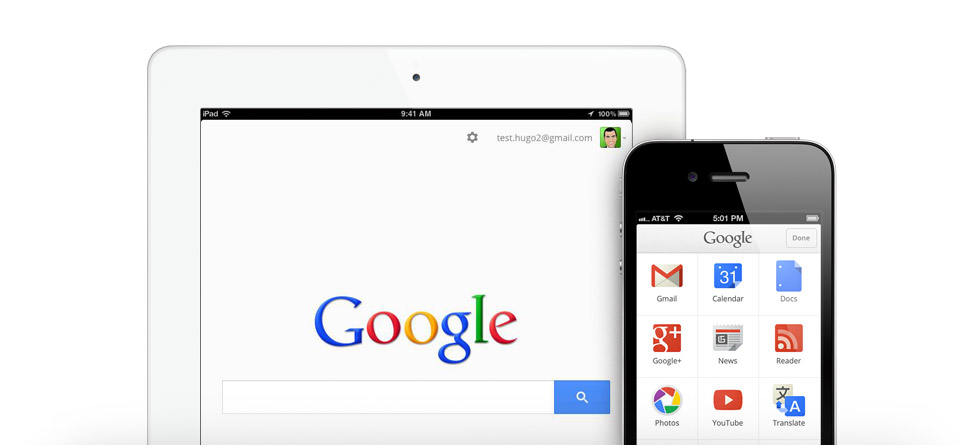
    Through the newly developed feature called App Indexing, users will come across more relevant content on the web, along with applications notification on your Search page. That means, besides other results that usually pop up on your screen, applications suggestion relevant to your search will also be made available on your handset.

    google app index

    For example, if you type ‘Give me instructions to make perfect tea’ then a list of standard search results together with applications recommendations will appear before you. The application suggestions will come with an Install button that will take the users to the App Store for installation. Once installed, the app will take you straight on to the required content within it. The service will start for Android users sometime next week.

    The App Indexing program is beneficial to developers and users alike. Users can get app suggestions without browsing through millions of apps on Play Store and for developers, it will make their apps more discoverable. The app makers just need to implement the App Indexing API onto their applications.

    Developers can get more information on the App Indexing API here.

  • Google Adds ‘Find my Phone’ Support to Help Locate Your Missing Android Device

    Google Adds ‘Find my Phone’ Support to Help Locate Your Missing Android Device

    Google has volunteered to lend a hand in searching for our missing devices. The search giant has added a new super-useful feature called ‘Find My Phone’ that helps Android users google their smartphone.

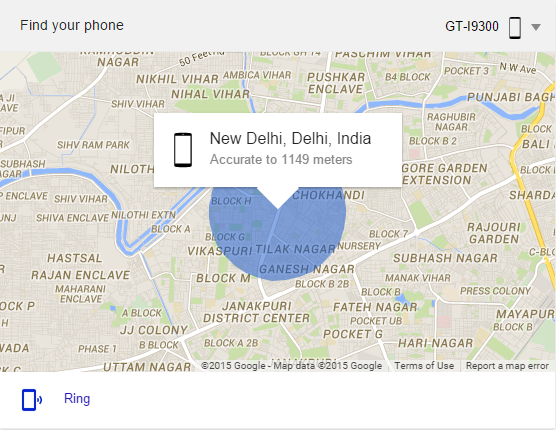
    Google hasn’t gone for a tangled tracing process and has kept it straight and simple. Just log in to your Gmail account fro your computer’s browser and type ‘Find my phone’ on a Google omnibox. Make sure that you are logged in to the same account as on the device. You will be directed to a page with a map view, depicting the location of your phone. While the map appears on the screen, and it may ask you to log in again. Once logged in, call your device with the ‘Ring’ option provided below.

    google find my phone

    Google will call your handset within a few seconds and user can track the location of the handset. The loud ringing bell can be turned off by pressing the power button on the handset.

    Though it’s a hassle-free approach to find your phone, one should have the latest version of Google app installed to access the benefits. The latest feature shows the location of your phone on the map, but to erase the content of your phone, one needs to have Android Device Manager installed.

  • Google is Reportedly Working on a Mysterious Battery Project

    Google has joined forces to develop a more productive battery technology for its line of consumer devices and other hardware projects. The search behemoth reportedly has a small team of researchers who are working on future batteries and is devising measures to advance present batteries for better outcomes.

    The report by Wall Street Journal suggests that the team working on future battery technology is headed by Apple’s former battery expert Dr. Ramesh Bhardwaj. The four-member team is a part of Google X research lab, a facility dedicated to making major technological advancements like Project Loon and driver-less cars. Meanwhile, the battery research wing is working on enhancing lithium-ion and the advanced solid-state batteries for a range of consumer products like Google Glass and the contact lens that helps measure glucose level in blood.

    Google is not a confined body limiting to consumer manufacturing electronics and offers its services to various industries like transportation, robotics, healthcare, and communications. Being in the hardware business, Google needs efficient batteries that can power their devices for a longer span of time.

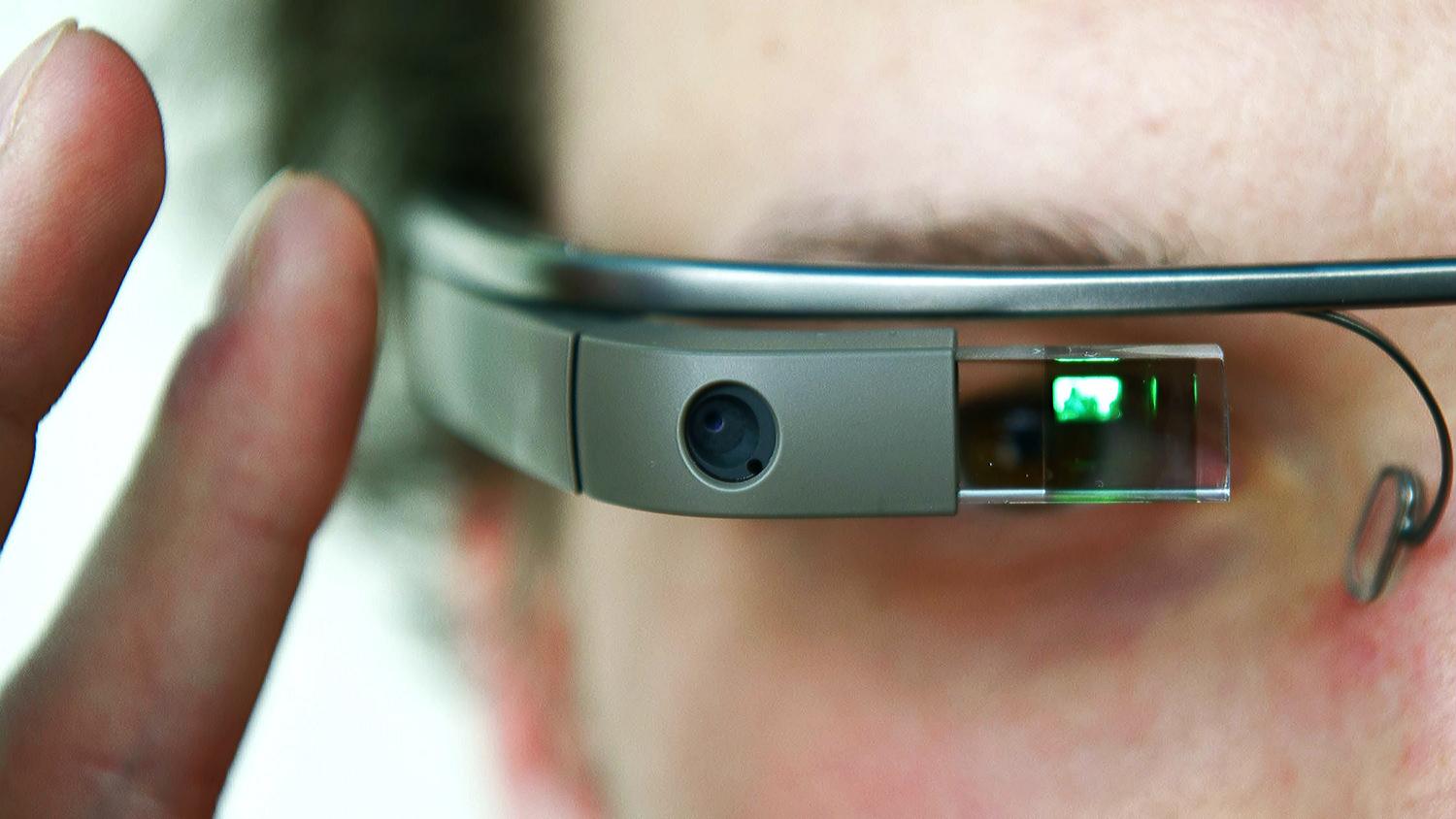
    Google Glass is being used to research the behaviour of passengers to offer them more convinence in the future.

    Dr. Bhardwaj disclosed ideas in a February presentation of a new-age battery technology that can be equipped to wearables, and smartphones and can also be implanted in the human body. The internet supreme requires such a revolutionary technology that can give new life to its projects that got overshadowed because of shorter battery life, e.g. Google Glass.

    The report said that other research teams are working in conjunction with the Chicago-based technology firm that can bring more potent batteries for four bigger projects including Project Loon. The internet-broadcasting plan to beam Internet down the earth is presently using traditional batteries and has to suffer high-temperature issues. The latest innovation is likely to resolve the current complexities along with being cost effective.

    Several companies are coming with battery prototypes that can charge mobile devices within half a minute, but there is no certainty if they will be inexpensive if produced in large numbers. If the report turns out to be true and Google succeeds in developing a super slim battery for flexible displays, it will be a landmark of the threshold of a new era. The batteries will make room for a new line of products that will be more compact and powerful.

  • Now Run Android Apps on Windows and Mac Using Google Chrome

    Now Run Android Apps on Windows and Mac Using Google Chrome

    Back in September, Google released a beta project ARC (App Runtime for Chrome) that allowed Android apps to run on Chrome OS. Now the news has surfaced that speaks of its compatibility on every desktop version of Chrome. This means any user running the latest Chrome browser can download and run the Android apps on different platforms like Windows, Mac OS X, and Linux.

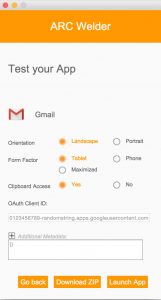
    As aforementioned, the project is in beta stage and is officially designed for developers only. But one can download the .apk file of any Android app and install it on their desktops. All you need to download is the ARC Welder tool where you can find the official .apk files of all the Android applications from Play Store.

    The ARC project is a double benefit initiative targeted at customers and developers alike. Customers can port any Android-powered app to the desktops, developers can test any app by submitting it on ARC. The application to run softwares is based on Android 4.4 KitKat, giving users access to a range of standalone apps like Twitter, Facebook, Facebook Messenger and a wide variety games.

    It’s a nice push by Google to make every laptop or Macbook running Windows, Mac OS X, and Linux its platform. Through the project, the internet giant has given folks an easy way to peek into the gigantic Android world and experience it.

  • Google’s Chromebit is a $100 Portable Dongle That Converts Any Display Into a PC

    Google’s Chromebit is a $100 Portable Dongle That Converts Any Display Into a PC

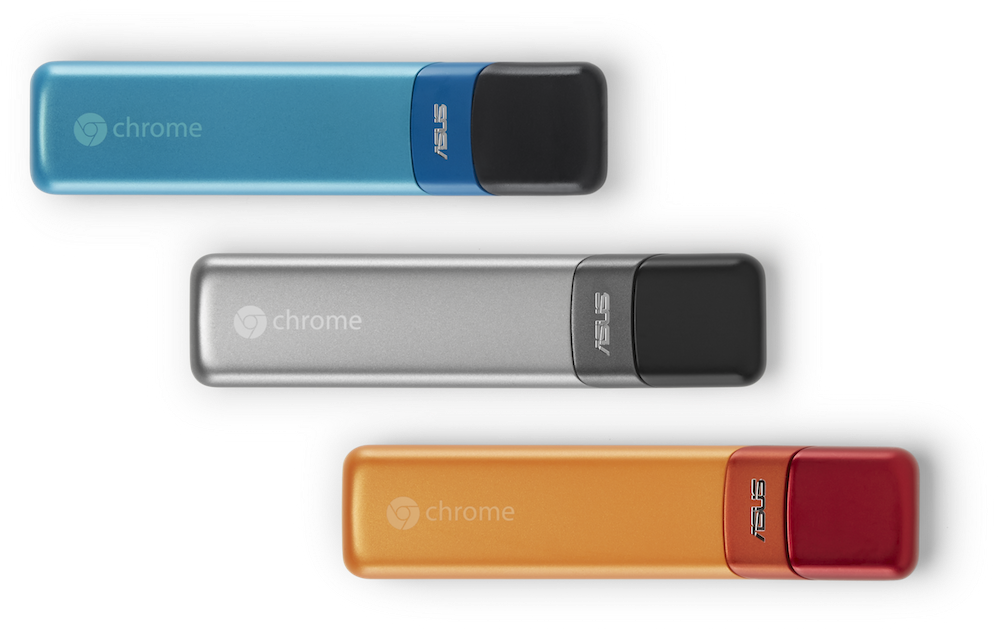
    Recently Google supplemented a new product to its range of devices that is a compressed form of Chromebook. Labelled as Chromebit, the gadget is a tiny HDMI dongle of a size smaller than a candy bar that can turn any connected display to a full-fledged computer.

    The internet search major spoke about Chromebit –

    The Chromebit is a full computer that will be available for less than $100. It’s the perfect upgrade for an existing desktop and will be really useful for schools and businesses.

    The tiny little package is a powerhouse that runs on Google’s Chrome operating system. It features a Rockchip 3288 SoC, an ARM Mali 760 quad-core GPU, along with 2GB of RAM. A 16GB of internal storage space is provided with Chromebit to store important stuff. The quintessential features are also equipped with the fresh product, Bluetooth 4.0 and Wi-Fi 802.11 ac, together with a Smart Ready controller.

    The Chromebit supports connectivity through two ports. One is HDMI that allows you to connect the device to a TV or other external display, and the other is USB port that offers it to be plugged into peripherals like keyboard, mouse or any other mobile devices.

    The handy PC is under testing as of now, but the company stated that it will come with an ASUS trademark. The product will retail for less than $100, and will be available later this summer in three colour choices – silver, blue and orange.

    Google’s Chromebit reminds us of Intel’s Compute Stick that was designed to perform the similar task; except that it was a straight piece with no bends. Chromebit, on the other hand, is slightly curved at the end that gives it a smooth finish.

    Besides Chromebit, the tech firm also disclosed two new laptops – The Hisense Chromebook and Haier 11 Chromebook. Each of them are priced at $149 and are available for pre-orders. The notebooks will be available later this year.

  • Google Makes the Gmail App an Integrated Inbox for All Your Email Accounts

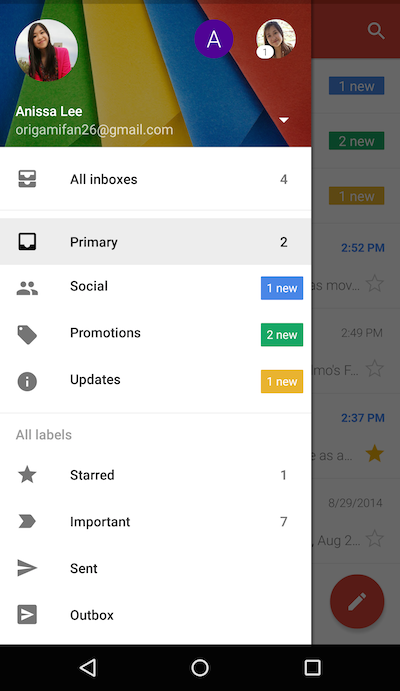
    Google understands the need of users to maintain several accounts at a time, and has found out a hassle-free solution to help  bring them all in one place. Google has announced a Gmail update for Android users that makes Inbox a unified place to access emails from your multiple accounts. Which simply means, whether you have a Yahoo account or an Outlook ID, you can add them all to send and receive messages through the consolidated Gmail app.

    The Gmail update holds a new option called ‘All Inboxes’. This option comprises of a list of all your added accounts and one can continue the conversation from different handles through ‘All Inboxes’. This upgrade relieves users from the inconvenience of hopping from one tab to another.

    gmail

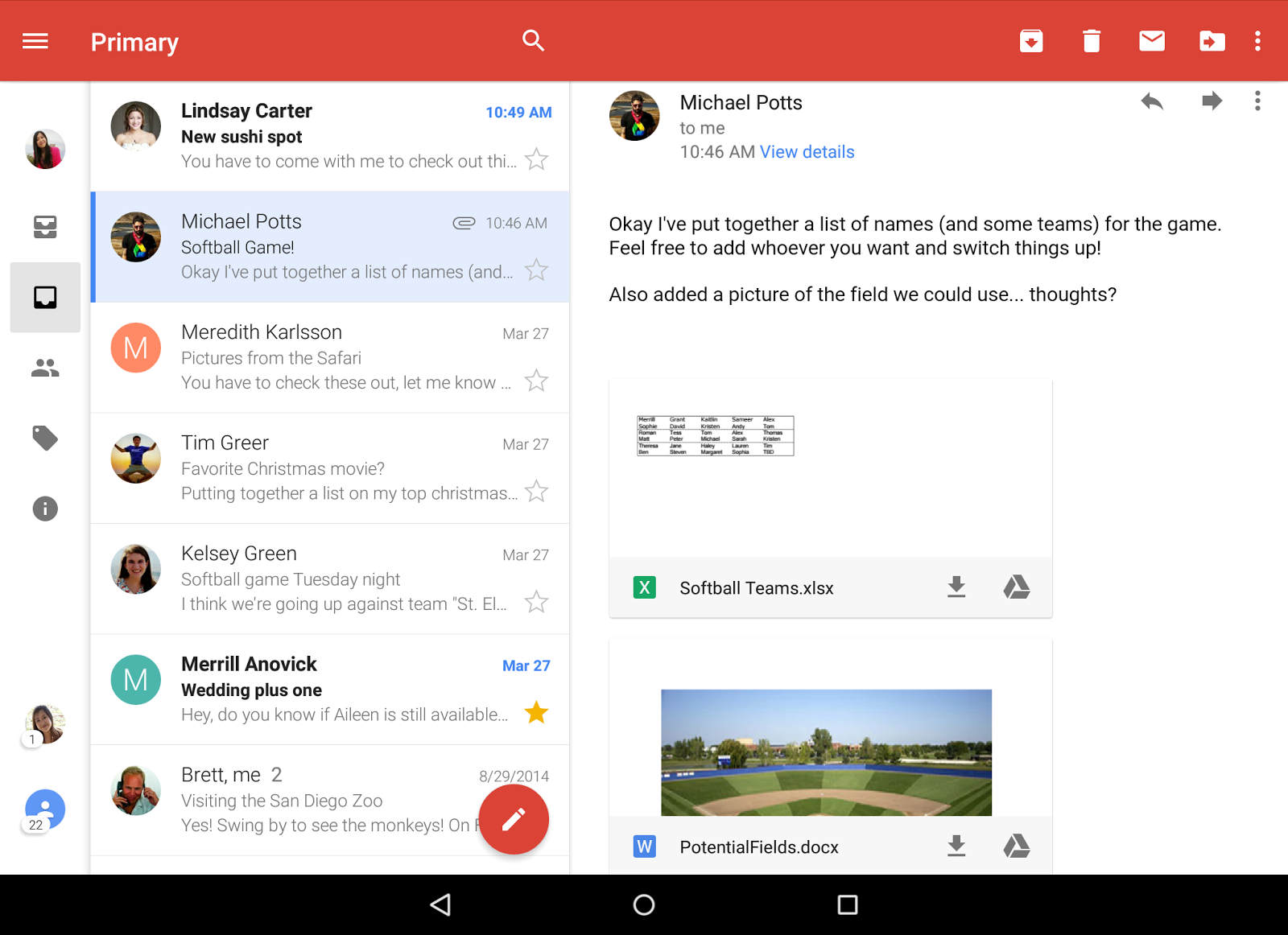
    Along with providing a combined Inbox, the internet giant has added a slew of other features too. Like Gmail, Google has added a threaded conversation support to other accounts as well, which keeps the emails in an organized manner. The messages remain stacked at a place as one conversation. Also, the upgrade opts for a smarter search tool. Users can find better results with the improved auto-complete feature which makes their search quicker.

    gmail update

    Followed by them are a few other inclusions like more responsive animations and larger attachment previews. A button of ‘Save to Drive’ can be spotted in the update where users can save the files with a single tap.

    The official blogpost of Gmail states that the upgrade was made available from yesterday onwards, and Android users can update Gmail to find the changes. Meanwhile, the company hasn’t notified about its roll out for iOS users as of now, but it is expected to arrive soon.

iGyaan Network
Privacy Overview

This website uses cookies so that we can provide you with the best user experience possible. Cookie information is stored in your browser and performs functions such as recognising you when you return to our website and helping our team to understand which sections of the website you find most interesting and useful.