Tag: mark zuckerberg

  • Mark Zuckerberg Stays Hopeful About Internet.org in India After TRAI Bans Free Basics

    Mark Zuckerberg Stays Hopeful About Internet.org in India After TRAI Bans Free Basics

    Telecom Regulatory Authority of India has spelled doom for Facebook’s Free Basics campaign by banning it from India. So much for all the voiced opinions in the last couple of weeks.

    Though this is big setback for Internet.org, Mark Zuckerberg refuses to let it douse his spirits. In a post he put up earlier today, he says,

    “Our work with Internet.org around the world has already improved many people’s lives. More than 19 million people in 38 countries have been connected through our different programs. Connecting India is an important goal we won’t give up on, because more than a billion people in India don’t have access to the internet.”

    One cannot help but question Facebook’s ‘altruistic’ intentions, or ones it cannot stop talking about when it comes to Free Basics. With its infinite resources can’t Facebook simply set up a company that provides Internet to remote locations for free? Wi-Fi powered stations that provide connectivity can be used to help with these attempts. Once there are a substantial amount of people involved, there can surely be a way figure out a way to make money without necessarily compromising on net neutrality.

    It is a fact that Facebook has provided some sort of Internet connectivity, mostly through the platform of Free Basics in 38 countries. But in the future, both Internet.org and Free Basics are expected to face the same trouble it did in India elsewhere as well over net neutrality.

  • Mark Zuckerberg is Connected to Every Facebook User by 3 Degrees of Separation

    Mark Zuckerberg is Connected to Every Facebook User by 3 Degrees of Separation

    Frigyes Karinthyan, a Hungarian playwright, proposed the theory of six degrees of separation for the first time in early twentieth century. According to this theory, everyone in the world is connected with each other by way of 6 people. Since then the proposition is a fairly popular and widely accepted one.

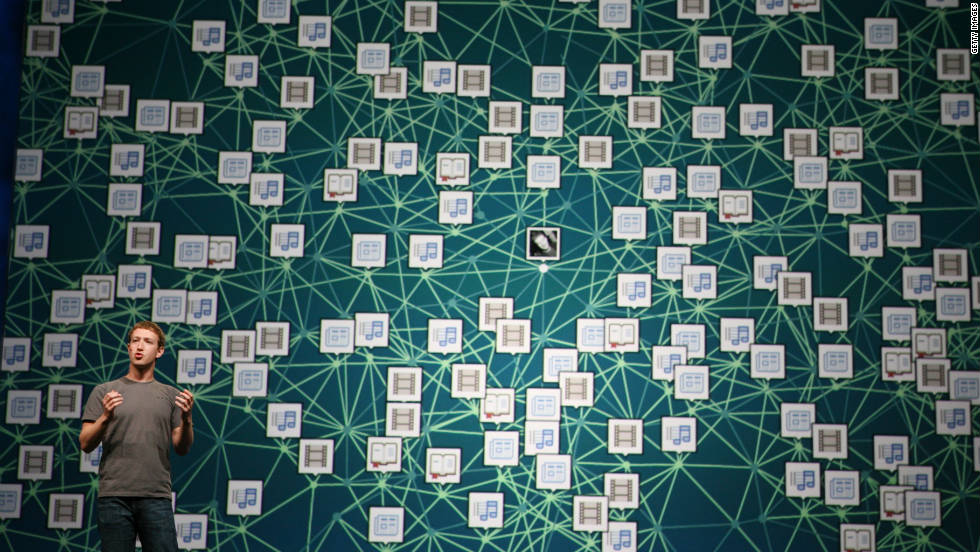
    However, now Facebook has chosen to differ from it. The networking platform has brought down the number to 3.5 from 6 people. After conducting a study of 1.59 billion active Facebook users, it was concluded that every person is connected to another by 3.57 people.Mark Zuckerberg Degrees of Separation

    According to the report, the collective degree of separation between people all over the world has shrunk over the last 5 years. And now Mark Zuckerberg is separated from every Facebook user by only a 3.17 degrees of separation.

    “Calculating this number across billions of people and hundreds of billions of friendship connections is challenging; we use statistical techniques described below to precisely estimate distance based on de-identified, aggregate data,” says the team.

    It was further commented that, “Within the US, people are connected to each other by an average of 3.46 degrees.” In a country like India, where there are so many of us, we can probably half this number.

  • Mark Zuckerberg Wants a Jarvis of His Own

    Mark Zuckerberg Wants a Jarvis of His Own

    Mark Zuckerberg revealed yesterday that he will be working on an AI butler for his home this year. He hopes to make it efficient enough to be able to recognise his friends’s faces and let them in, to keep an eye on his baby daughter’s room and take care of other basic controls of the house like music, temperature and light.

    Zuckerberg put up a status update on his Facebook page stating,

    My personal challenge for 2016 is to build a simple AI to run my home and help me with my work. You can think of it kind of like Jarvis in Iron Man.

    He intends to use his work on the AI to also help him with research in VR as he says, “On the work side, it’ll help me visualize data in VR to help me build better services and lead my organizations more effectively.”

    This won’t be the first time, however, when someone is going the Tony Stark way. Tesla’s Elon Musk already has a lab which is heavily inspired by the snazzy Avenger character.

    Looks like things on the tech-front are going to get quite interesting as real-life tech geniuses borrow from popular culture to add that extra edge to their lifestyle.

    Every year, I take on a personal challenge to learn new things and grow outside my work at Facebook. My challenges in…

    Posted by Mark Zuckerberg on Sunday, January 3, 2016


  • Mark Zuckerberg and Bill Gates to Work Together on Clean Energy

    Mark Zuckerberg and Bill Gates to Work Together on Clean Energy

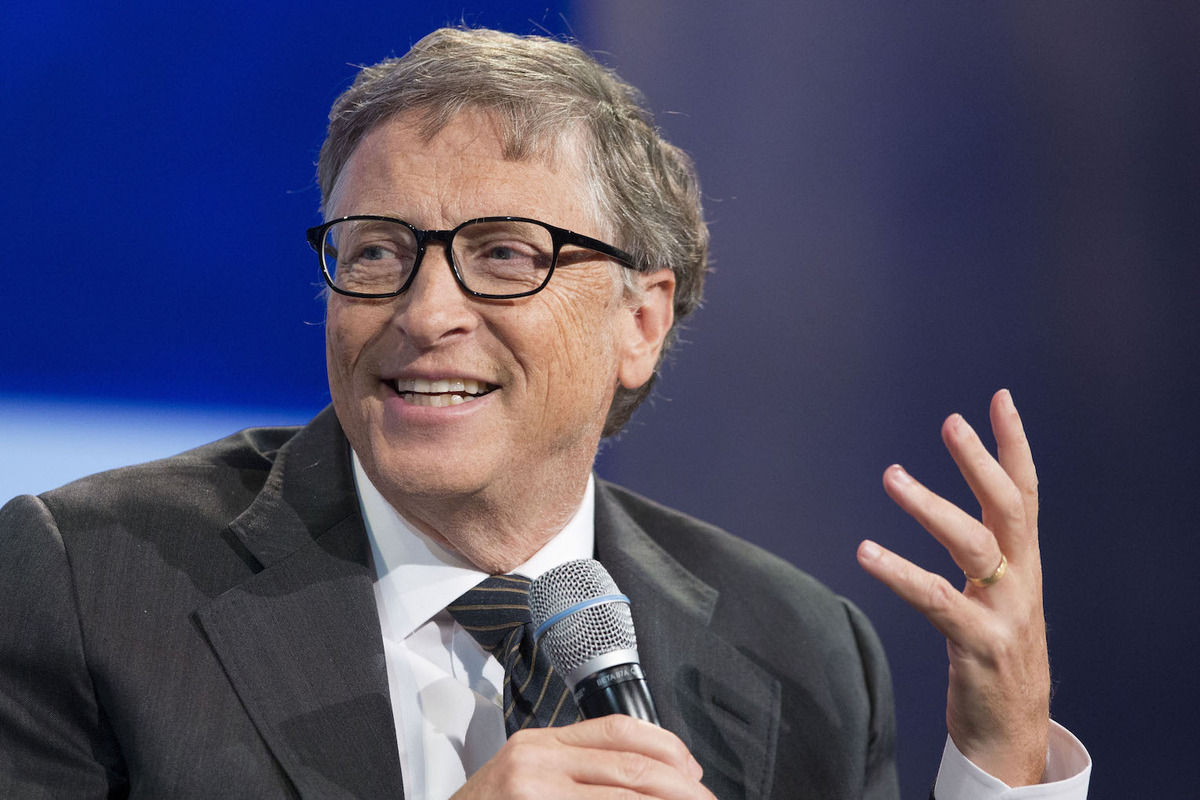
    The Facebook and Microsoft founders have teamed up to work together on solving problems related to climate change. Mark Zuckerberg has announced that he and his wife, Priscilla Chang will join forces with Bill Gates in an initiative called Breakthrough Energy Coalition that aims to invest in zero-carbon technology all over the world. The organisation’s membership includes other names like Richard Branson, Jeff Bezos, Jack Ma, and Masayoshi Son.Bill Gates

    This announcement has been made just ahead of the the UN Climate Control Conference in Paris later this week. American President Barack Obama and Microsoft founder Bill Gates are expected to unveil an initiative called Mission Innovation at the Paris event.This initiative will work with governments all over the world to double public investments in energy research.

    The 19 countries which have already signed up to be part of Mission Innovation will increase their investment in energy-research to $20 billion by 2020; India is part of this list of countries. Even though Mission Innovation and Breakthrough Energy Coalition are separate programmes, they will work side by side to achieve their common goal of working on clean, sustainable energy sources.

  • Zuckerberg Donates Twenty Million Dollars To Provide High-Speed Internet In Public Schools

    Zuckerberg Donates Twenty Million Dollars To Provide High-Speed Internet In Public Schools

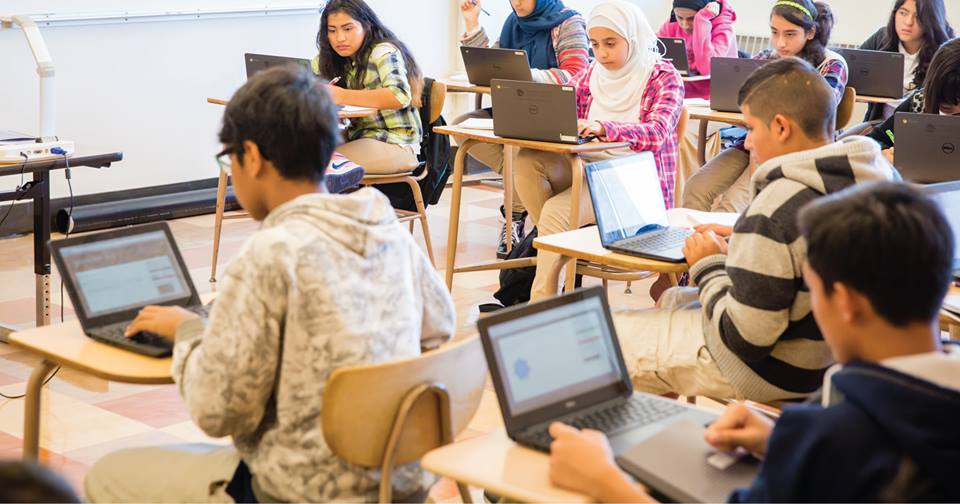
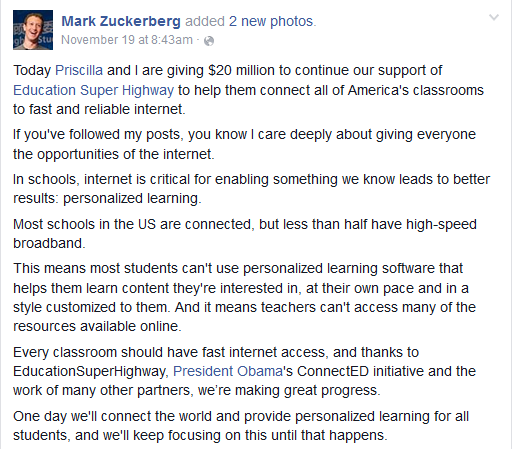
    Facebook founder Mark Zuckerberg announced that he and his wife would be giving twenty million dollars to the non-profit organization called EducationSuperHighway. This NGO helps provide high-speed internet to public schools in the United States of America.

    Facebook

    Research suggest that there are more than a bunch of schools in the country that have access to internet connection, but not high-speed broadband. Therefore, most teachers and students don’t use the computer in their classroom for personalized teaching during the instructional hours because it is counterproductive.

    “In schools, Internet is critical for enabling something we know leads to better results: personalized learning,”- says Mr.Zuckerberg.

    Contributing towards educational endeavors is not something new for the couple; they had previously also donated three million dollars to the same foundation in 2013, and plan to start their own educational endeavour called The Primary School by August next year. The new project will be spearheaded by Priscilla Chan and strives towards bringing together education, quality, youth, and family health care for the people involved.


  • Facebook CEO Mark Zuckerberg At IIT Delhi: Here’s What Went Down

    Facebook CEO Mark Zuckerberg At IIT Delhi: Here’s What Went Down

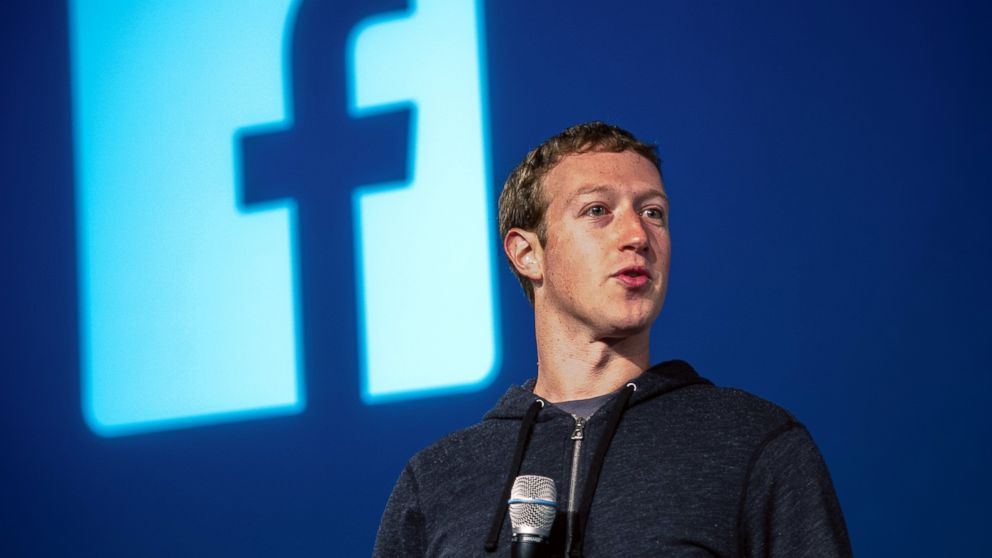
    Facebook CEO Mark Zuckerberg is in Delhi today and hosted a Townhall Q&A at the Indian Institute of Technology to a crowd of around 900 students. The visit was posted by Zuckerberg early this month on his Facebook page.

    Zuckerberg had posted that he was eager to meet and hear directly from one of Facebook’s “most active and engaged communities.” India has the second largest user base of Facebook with over 130 million active users.
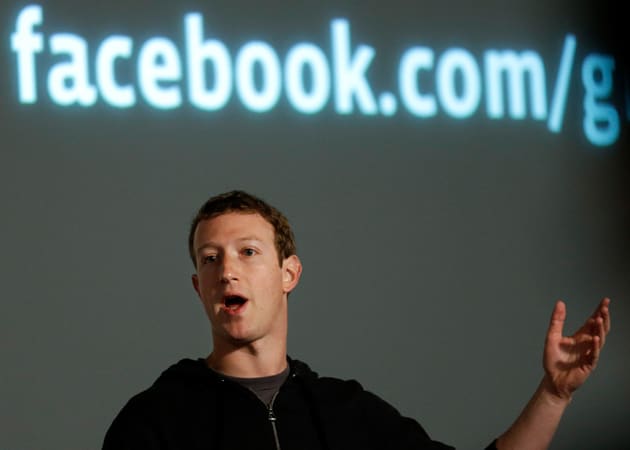
    Facebook CEO Mark Zuckerberg's Date With IIT Delhi Today

    The Townhall Q&A started at 12 pm. Zuckerberg took the stage amidst a round of applause by the crowd. He expressed the importance of the Townhall Q&A in helping the social media site work better for every country.

    Why India?

    The questions began soon enough. The first question posed was regarding Zuckerberg’s interest in India. The Facebook CEO answered by saying that India still has a billion people who don’t have internet accessibility. One of his major interests is to bring basic internet access to as many people as possible, if not all. Zuckerberg is especially interested in bringing internet connectivity to rural areas. “We want to get the next billion people online,” said Zuckerberg.

    “India is the largest democracy. It is one of the countries where you cannot connect the world without connecting India.”

    Three Key Issues: Availability, Affordability and Awareness

    A followup to the previous question was how Facebook plans on bringing internet to the rest of India. Naturally, Mark Zuckerberg mentioned Internet.org.  He posed stats saying that the internet growth rate in India has doubled through Internet.org. Availability, affordability and awareness are three key areas that need to be addressed in order to bring internet.

    Solar-powered planes that beam down connectivity, apps that use less data, Free Basics that provide basic information and communication tools not only provide free internet but also raise awareness of what can be found on the internet, are some of the ways the company plans on tackling the three issues.

    “Internet.org and Facebook support Net Neutrality a hundred percent.”

    Death to Candy Crush Invites

    The top voted issue, that wasn’t exactly a surprise if you’ve been following Mark Zuckerberg’s post, was how to avoid getting Candy Crush invites. Based on the sheer number of votes, the question deserved to be asked. However, the answer did not help concerned and annoyed citizens. Zuckerberg stated that the company is working on getting rid of the problem. “I told my developers that can we have a solution to this problem (Candy Crush requests on Facebook) by the time I do my Q/A… So we are doing it now.”

    Facebook VR and Artificial Intellegence: A Connected Future

    Other questions asked were related to Facebook’s VR technology as well as artificial intelligence. With VR, the company wants to make video experience on Facebook more real than ever. And with AI, Facebook wants to make content more accessible for everyone, especially the physically handicapped. So, for example, a person who is blind will be able to understand a picture by having Facebook’s AI describe the picture.

    There were some lighthearted moments during the Q&A where Zuckerberg was asked what he would do if he had superpowers given by aliens. Zuckerberg answered by talking about the VR headset that is very much like having superpowers, or at least will be in 10 years time. “Through technology, you can pretty much have abilities similar to super powers.”

    Towards he end of the Q&A, Zuckerberg spoke about startups and the importance of knowing what you want to do rather than going in with little or no knowledge.

    “None of the people who built big companies thought that they would be as big as they ended up being… So my advice is focus on what you care about and not the decision to start a company”
  • Mark Zuckerberg is Coming to IIT Delhi

    Mark Zuckerberg is Coming to IIT Delhi

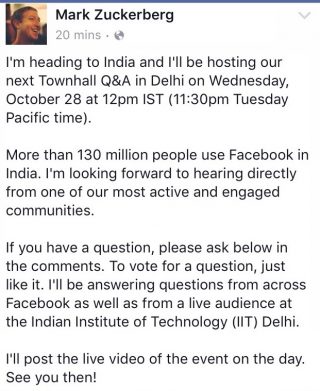
    Founder and CEO of Facebook, Mark Zuckerberg, has planned out his next trip. According to his recent post on Facebook, Zuckerberg will be visiting India on October 28. He will arrive in New Delhi at 12 pm and will host a Townhall Q&A at the Indian Institute of Technology.

    Zuckerberg has not stated the duration of his stay and if he’s planning on visiting other parts of the country, yet.

    Mark Zukerberg

    Zuckerberg also mentions in the post that India is one of the most active communities on Facebook with over 130 million users. He has invited Facebook users to post questions in the comments section that the people in India would like answered during his Delhi visit. He says that he will “be answering questions from across Facebook as well as from a live audience at the Indian Institute of Technology (IIT) Delhi.”

    Within an hour since his post, people have already begun posting questions, some of which are related to the benefits of Internet.org in rural communities and ways in which Facebook can help better the lives of people in India. If you have any questions, be sure to leave a comment below his post.

  • Why You Should Think Before Using Facebook’s Indian Flag Photo

    Why You Should Think Before Using Facebook’s Indian Flag Photo

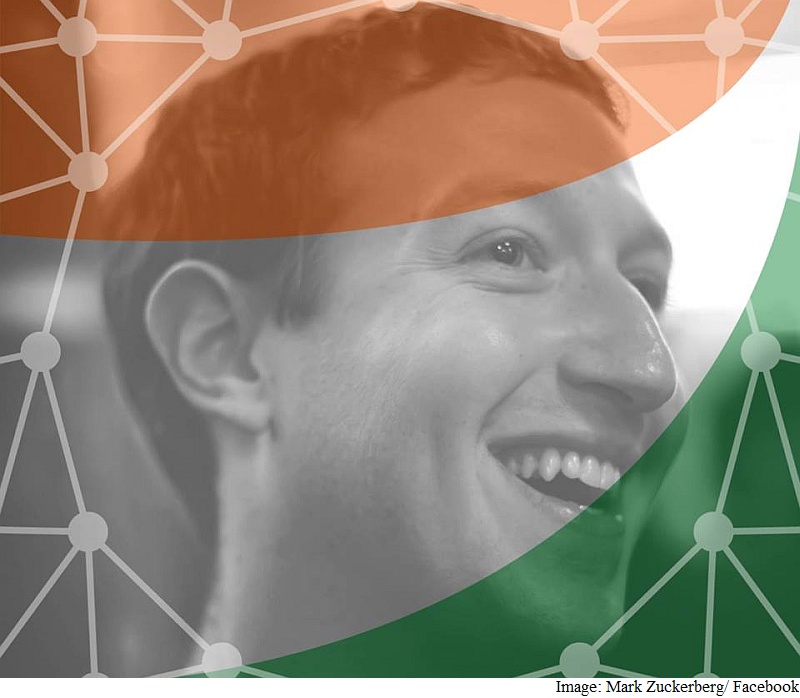
    Mark Zuckerberg recently changed his Facebook display picture to one which has an over-lay of the Indian flag. This was done following his Town Hall meeting with Prime Minister Narendra Modi in Silicon Valley this week. Zuckerberg unequivocally expressed his support for the Digital India campaign of the country.

    Mark Zuckerberg

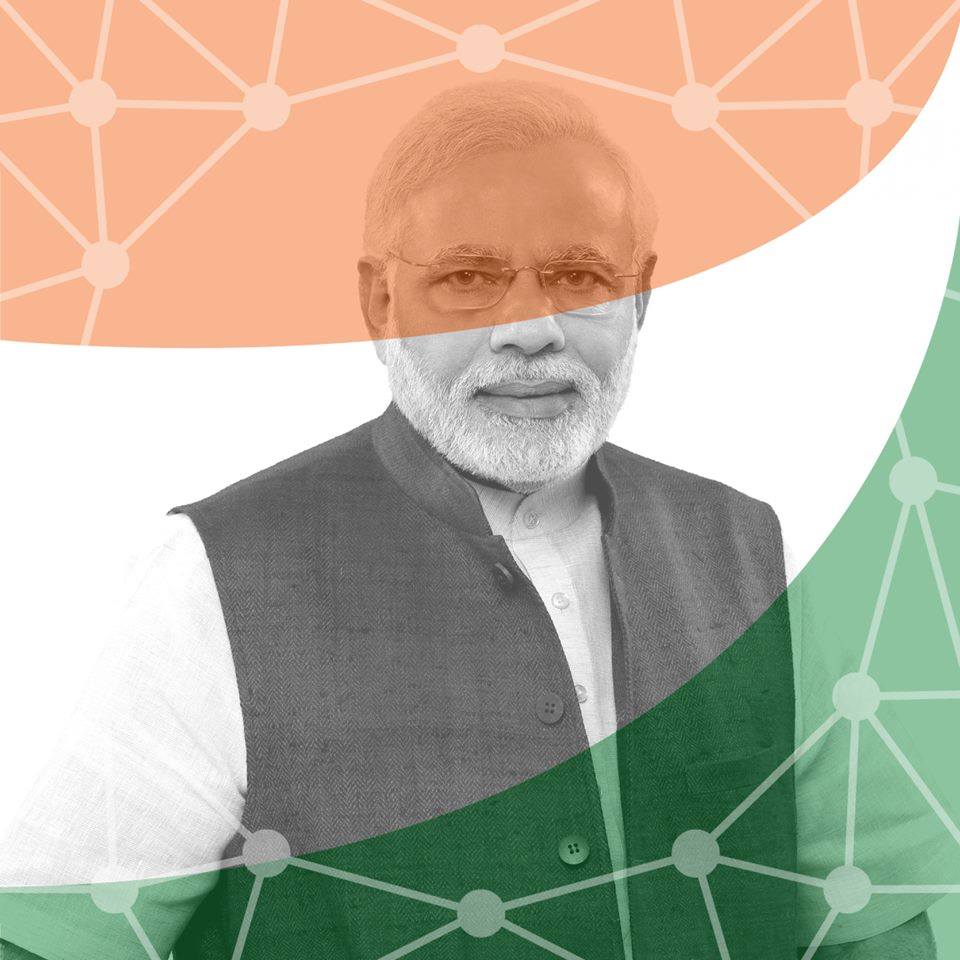
    Prime Minister Modi soon followed league and changed his display picture on Facebook as well. Facebook also introduced a feature which allowed users everywhere to make the tri-colour part of their display pictures. Post this, people, as we know them to be, switched their profile pictures left and right and centre. All of a sudden, we woke up to find unanimous, enthusiastic support for Digital India. Utopia, could it be?

    Narendra ModiMaybe not. A lot of netizens took to social media platforms to express their dismay at the new feature, which was allegedly directly connected with Facebook’s Internet.org. It was assumed that these pictures had a source code which would automatically link them to Internet.org, inadvertently making them support the initiative.

    Now the idea of thousands and millions being included within the ambit of the virtual world sounds brilliant and one everyone is up for. But before that, those endorsing this initiative as part of Digital India campaign need to understand all that it entails.internet.org

    Internet.org:

    Internet.org refers to a collaboration between Facebook and six other companies, namely, Samsung, Qualcomm, Nokia, Ericsson, MediaTek and Opera Software. The aim of this collaboration is to bring easily accessible internet to developing countries, especially in remote rural areas. However since it includes only selected services and online operators, it is seen not only as a direct threat to net neutrality but also as rampant publicizing of Facebook. It would be a single company, or a small group of them, which would decide what services are made available and which ones are excluded, a right earlier extended only to the user of the internet, not the service providers.

    However, earlier today, an official statement was made by Facebook which reads as follows:

    “There is absolutely no connection between updating your profile picture for digital India and registering support for Internet.org. An engineer mistakenly used the words “Internet.org profile picture” as a shorthand name he chose for part of the code. But this product in no way connects to or registers support for Internet.org. We are changing the code today to eliminate any confusion.”

    mark_zuckerberg_internet_org_reuters

    And so, the hue and cry gradually died. But the proposition still remains -before you jump at the idea of a tri-coloured display picture, try remembering the things it implies. Granted such a picture does not necessarily mean support for Internet.org, yet the issue of separating Digital India from Internet.org remains just as relevant. Nothing would be better on the tech front than to have a country where internet is available in every household. But any policy that endangers net neutrality, and therefore, the freedom of expression and to make choices in the virtual space, needs to be reconsidered.


  • Like, Unlike and Now a Dislike Button For Facebook

    Like, Unlike and Now a Dislike Button For Facebook

    Our favourite social networking site, Facebook is now expected to come out with a new ‘dislike’ button. Why? Well, you know all those sad posts about bad things happening to someone, or a world crisis that is so appalling and you can’t really do much to help, but you still have an opinion about it? This button is for that. So, now when your friend posts a status about losing a dear one, you don’t have to ‘like’ the status and later feel awkward that you didn’t feel the need to comment but yet wanted to express support, so you went ahead and ‘liked’ the fact that your friend just lost a loved one. These kind of situations can hopefully be avoided in the future.

    The unique element about Facebook that seems to keep it running, is its ability to stay updated with all the current trends, and today the world seems to have moved on from merely ‘liking’ things or ignoring things that they’re not comfortable with. Today, if you don’t like something you’re expected to give an opinion about it, ignoring things is apparently cowardly, escapist and spineless etc. nowadays. So therefore, ‘dislike’ and let the world know.

    However, Facebook’s reason for introducing the ‘dislike’ button is more constructive than merely voicing an opinion for the heck of it. This button is expected to help Facebook build their NewsFeed better. As of now the content for each person’s NewsFeed is basically constructed by an algorithm that takes into account many actions of the user, but is mostly guesswork. This algorithm can’t tell what exactly the user dislikes and does not want to see. So, the introduction of the ‘dislike’ button will now help Facebook to not only show us things we like, but will also make a conscious attempt to hide the things we dislike.

    In conclusion, we would just like to say that you have nothing to worry about, Facebook should not become a hateful and sad place for people with complex issues. But yes, you may see a lot of Taylor Swift haters and Miley Cyrus lovers being more vocal as ever. So, if you’re not a celebrity you should be fine. No one is going to hate on your new Facebook display picture more than they already do. The solution: Take it all with a pinch of salt!

    What do you think about your new right to dislike on social media?

  • Facebook Plans to Expand Internet.Org to 100 Countries by Year End

    Facebook Plans to Expand Internet.Org to 100 Countries by Year End

    Facebook’s non-profit initiative to connect the world, Internet.org, is successfully running in six countries. The company’s CEO Mark Zuckerberg is quite happy with providing limited free internet to remote areas and is planning to expand the service to 100 more countries by the end of this year.

    Chris Daniels, VP of Internet.org at Facebook said in a statement –

    The ambitious goal this year is to roll it out to 100 [countries]. We don’t want to focus so much on the number, but we want this to spread to additional countries, operator groups and… see more people coming online, buying data and voice and SMS bundles. The number is indicative of our ambitious goal.

    Internet.org is a Facebook-led free internet program that works with data suppliers to provide free internet to people who can’t get online. It allows users to access basic sites like Wikipedia, job and health sites, and Facebook, of course. The service was launched back in 2013 and now it connects 7 million people of six nations across the globe – Zambia, Ghana, Kenya, Tanzania, Colombia and India.

    Zuckerberg thought ahead and his idea really worked. Countries provided with free internet have seen a sudden jump of 40% in the internet data demand. People are willing to get associated with the world around seeing the power of internet via little demo, that is Internet.org.

    Facebook’s step will draw more nations closer to each other and is a way to transform the developing nations into developed ones. Meanwhile, Facebook has teamed up with Google for Project Loon in establishing high-altitude balloons, a satellite-based network, to connect to connect people in rural and remote areas.

  • New Facebook Feature Allows You to Pick Who Manages Your Account After You Die

    New Facebook Feature Allows You to Pick Who Manages Your Account After You Die

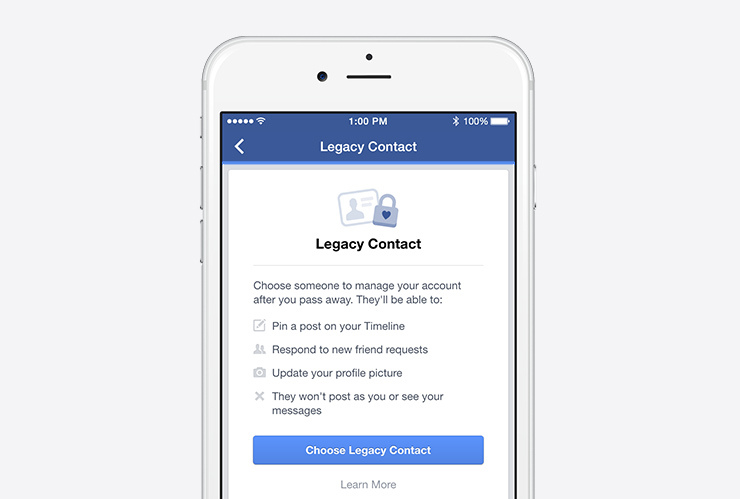
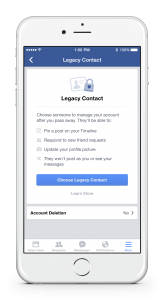
    Facebook has announced a ‘Legacy Contact’ feature for its social network, signifying a person can be entitled full control to the user’s account after his death. The addition of this new feature allows a user to take control of his legacy contact, who will be able to mange their account when he/she dies.

    The Legacy Contact can post on your Timeline, update your profile picture, respond to friend requests, though won’t be allowed to access your messages. They can also choose to delete the account permanently from Facebook. In addition, the Legacy Contact will be allowed to take control of someone’s account, only after they inform Facebook about the concerned user’s death.

    Earlier, Facebook had offered something similar with the memorialized account feature, though did not allow family or friends of the deceased user to manage their account.

    Here’s how you can activate the Legacy Contact feature on Facebook – Go to Settings, then Security and click on Legacy Contact.

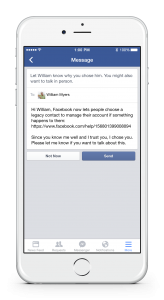
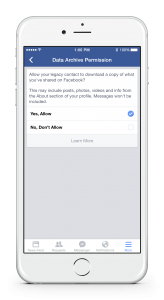
    You’ll be allowed to further customise the kind of access you want to give your legacy contact, and even contact them to let them know you chose them. In an event that an account remains active, a “Remembering” mention will be added above the deceased person’s name on Facebook.

  • Facebook Brings Internet.org to India to Provide Free Basic Internet

    Facebook Brings Internet.org to India to Provide Free Basic Internet

    Facebook founder has been working on an audacious initiative to provide free internet to people who haven’t yet received the benefits of the information superhighway. Internet.org was launched on August 20, 2013 and has till now provided services more than 150 million people total across Africa and Latin America. Now the biggest social network has introduced the service in India.

    Internet.org is in partnership with Facebook and six mobile phone companies, namely Samsung, Ericsson, MediaTek, Microsoft, Opera Software, and Qualcomm. It is one of the initiatives along with Google’s Project Loon and Space-Internet plans by Tesla founder Elon Musk. They intend to reach the last 3 Billion people untouched by the internet.

    mark zuckerberg

    Mark Zuckerberg in a post on Facebook has announced the introduction of the initiative in India. The initiative will begin offering services on the Reliance network in the states of Tamil Nadu, Maharashtra, Andhra Pradesh, Gujarat, Kerala and Telangana. The users will now have free data access to more than three dozen services.

    Mr. Zuckerberg also hoped to one day connect everyone, and the power of the internet will serve every community across India and the world. He added that the day is coming soon. This initiative from Facebook is surely appreciable and will help empower the vulnerable communities in the world.

    Want to know more about Internet.org? Click here.

  • Zuckerberg Reveals Why We Were Forced to Download the Facebook Messenger App

    Zuckerberg Reveals Why We Were Forced to Download the Facebook Messenger App

    Back in July, Facebook announced that it will be removing the messaging feature from its mobile app, and requiring people to use its standalone Messenger app instead. Hence, forcing users to download the Messenger app to chat with their Facebook contacts on their mobiles.

    The change followed through a plan which was announced in April and for now, affects Facebook mobile app on iOS and Android. According to the company, the plan had seen ‘positive results’ in Europe in terms of user engagement, and so decided to move ahead with rolling out of the standalone app to everyone. However, they never explained why this plan came into effect at the first place, until now.

    In a live Q&A conversation yesterday, Mark Zuckerberg finally explained why Facebook moved messaging out of its main app and made it into a separate, standalone app that needs to be downloaded.

    I’m grateful for hard questions. It keeps us honest. We need to be able to explain clearly why what we’re thinking is good. Asking everyone in our community to install a new app is a big ask. I appreciate that was work and required friction. We wanted to do this because we believe that this is a better experience. Messaging is becoming increasingly important. On mobile, each app can only focus on doing one thing well, we think.

    The primary purpose of the Facebook app is News Feed. Messaging was this behavior people were doing more and more. 10 billion messages are sent per day, but in order to get to it you had to wait for the app to load and go to a separate tab. We saw that the top messaging apps people were using were their own app. These apps that are fast and just focused on messaging. You’re probably messaging people 15 times per day. Having to go into an app and take a bunch of steps to get to messaging is a lot of friction.

    Messaging is one of the few things people do more than social networking. In some countries 85 percent of people are on Facebook, but 95 percent of people use SMS or messaging. Asking folks to install another app is a short term painful thing, but if we wanted to focus on serving this [use case] well, we had to build a dedicated and focused experience. We build for the whole community. Why wouldn’t we let people choose to install the app on their own at their own pace? The reason is that what we’re trying to do is build a service that’s good for everyone. Because Messenger is faster and more focused, if you’re using it, you respond to messages faster, we’ve found. If your friends are slower to respond, we might not have been able to meet up.

    This is some of the hardest stuff we do, is making these choices. We realize that we have a lot to earn in terms of trust and proving that this standalone messenger experience will be really good. We have some of our most talented people working on this.

  • Indian Govt and Facebook to Work Together on an App for ‘Clean India’

    Indian Govt and Facebook to Work Together on an App for ‘Clean India’

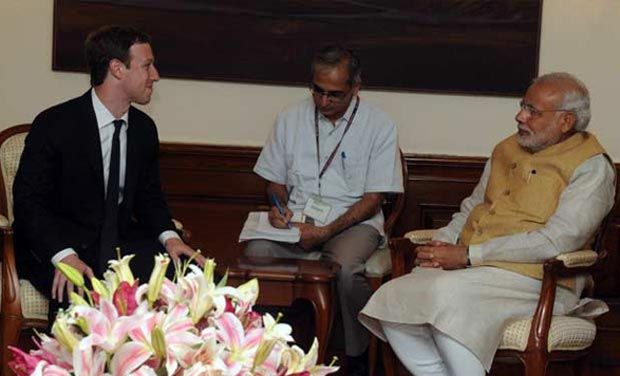
    Facebook founder Mark Zuckerberg on Friday met Prime Minister Narendra Modi. One of the highlights of the meeting was the prospect of launching a mobile application devoted to Clean India, while they also discussed the PM’s pet projects such as Digital India and his hopes to use the networking site’s use for social causes and prevent its misuse by terror outfits. Facebook will help in the creation of the Clean India Mobile App and it would be launched soon. This would give a strong impetus to the Swachh Bharat Mission, the Facebook boss told Modi.

    “Connecting more than a billion people with internet is not only going to improve lives of people in India but will help the innovation and imagination of Indian people to help turn around the world and we are very excited in opportunities in India,” Zuckerberg said after his meeting with the telecom minister.

    “About 2.7 billion people have access to the internet. But that’s only one-third of humanity. Almost 4.5 billion people don’t use the internet,” pointed out Zuckerberg, in Delhi on a two-day visit to India. “Connectivity cannot just be a privilege of the rich and powerful. It is a human right.”

    mark-modi
    Facebook CEO, Mark Zuckerberg in conversation with PM Narendra Modi

    According to The Economic Times report, Zuckerberg told the Prime Minister that he is extremely excited about the government’s Digital India initiative. Modi, a prolific user of social media platforms with nearly 7 million followers on Twitter and around 23 million people following him on Facebook, has asked Zuckerberg to identify domains of the program that it can get involved in and work with the government.

    In the conversation, the Prime Minister also expressed some concerns about social media, especially the use of such platforms by terrorist elements to recruit new members. “This is unfortunate and we need to think of the role social media can play to stop terror,” the PM said.  He also urged Facebook to promote India’s rich tourism potential and look at how to enhance internet literacy along with connectivity.

  • Facebook CEO Mark Zuckerberg to Meet PM Narendra Modi Today

    Facebook CEO Mark Zuckerberg to Meet PM Narendra Modi Today

    After Facebook COO Sheryl Sandberg’s successful meeting with Prime Minister Narendra Modi, it’s now founder Mark Zuckerberg’s turn. He will be in India to address the first Internet.org summit taking place from October 9-10 in the capital city.

    His visit comes three months after the visit of Sheryl Sandberg (July 2014), Chief Operating Officer of the social networking giant, to the country, which is the second biggest market for Facebook. Zuckerberg is the third high profile CEO of a US-based corporation, after Amazon’s Jeff Bezos and Microsoft’s Satya Nadella, to visit India in last few days.

    Modi famously utilised social media effectively during his Lok Sabha campaign, and has been open about his desire to spread government and civic messages via social media.

    facebook-fans

    While Zuckerberg’s meeting with Modi is likely to dwell on how the Indian government can collaborate on Internet.org, which aims to make internet access affordable for people across the globe, he could end up receiving a small briefing on the Prime Minister’s ‘Digital India’ plan which has rather similar goals.

    When Modi met Sandberg, he had suggested the use of Facebook for improving governance, better interaction between people and the government, and to attract more tourists to India. India is an important market for the social networking company. With over one billion users globally, the company gets over 100 million users from India. Many of these users log onto the website from their mobile devices.

    Zuckerberg is also expected to meet with Communications Minister Ravi Shankar Prasad as well as some other ministers, who had also met Sandberg when she visited.

iGyaan Network
Privacy Overview

This website uses cookies so that we can provide you with the best user experience possible. Cookie information is stored in your browser and performs functions such as recognising you when you return to our website and helping our team to understand which sections of the website you find most interesting and useful.