Tag: qualcomm

  • Snapdragon 8150 Registers Highest AI Benchmark Score

    Snapdragon 8150 Registers Highest AI Benchmark Score

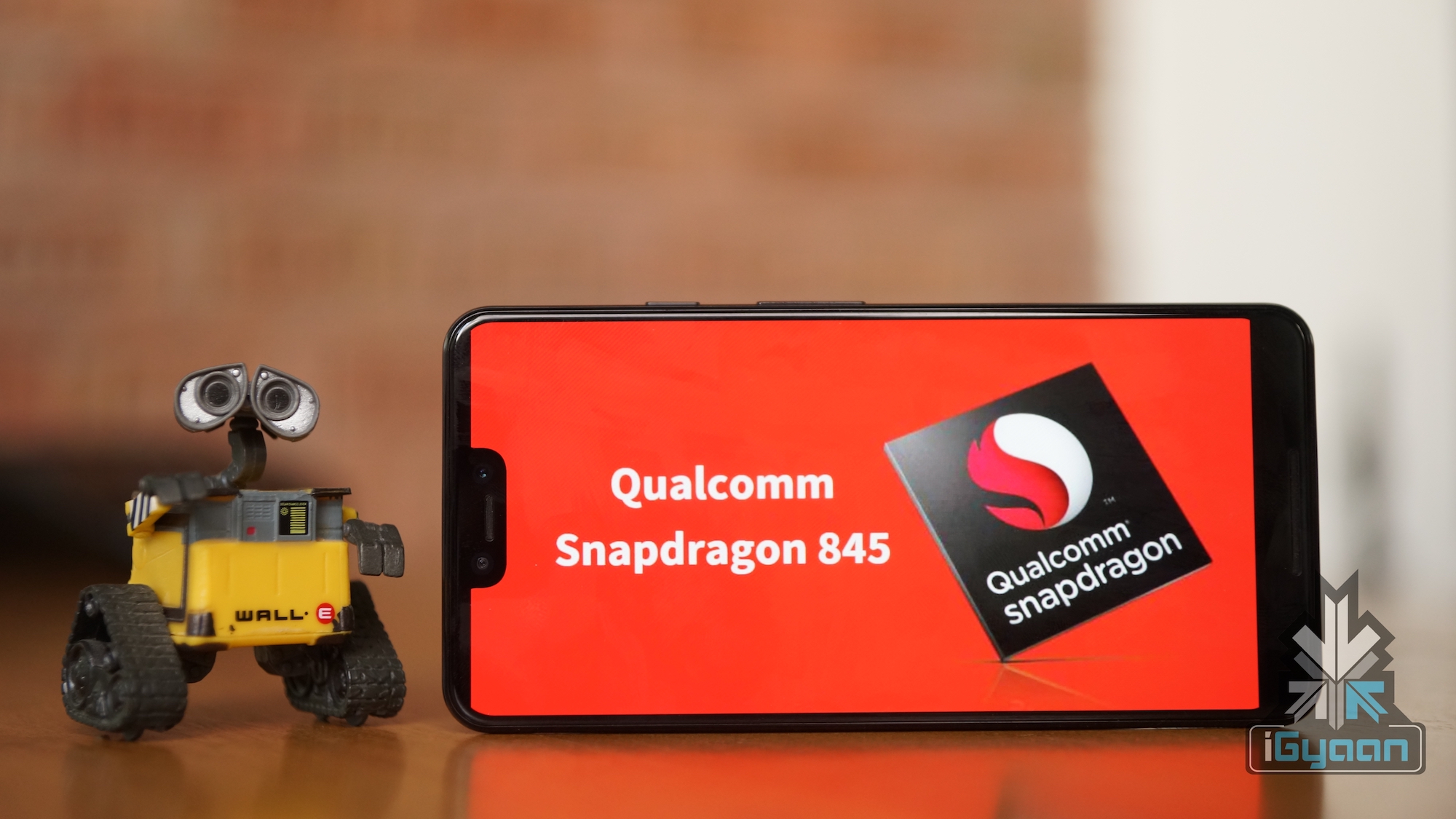
    American chipmaker Qualcomm is about to launch their latest Snapdragon 8150 processor. It will be the successor to the Snapdragon 845. The new processor will be manufactured using the 7 nm FinFET technology compared to its predecessor which is made using the 10 nm technology. Qualcomm claims that the new processor has better performance and consumes less power. Recently, the AI performance of the Snapdragon 8150 was registered on the AI-Benchmark application. The results reveal that the AI scores are about two times higher than the Snapdragon 845.

    AI-Benchmark
    Model CPU RAM Year Android AI-Score
    Qualcomm 8150 Dev Platform Snapdragon 8150 6GB 2018 9.0 22082
    MediaTek P80 Dev Platform MediaTek Helio P80 6GB 2018 9.0 19453
    OnePlus 6 Snapdragon 845 8GB 2018 9.0 12274
    Huawei Mate 20 Pro HiSilicon Kirin 980 (NPU) 6GB 2018 9.0 12026
    Huawei P20 Pro HiSilicon Kirin 970 (NPU) 6GB 2018 9.0 8921
    Google Pixel 3 XL Snapdragon 845 4GB 2018 9.0 6895
    MediaTek P60 Dev Platform MediaTek Helio P60 6GB 2018 8.1 5767

    The tests were performed on a developer platform (prototype board) and not a real-world device. But it gives a fair idea about what to expect from the new platform. The prototype board with 6 GB of RAM and Android 9.0 Pie scored 22082 points. This score allows it to place at the top of the AI-benchmark results.

    The Competition

    Surprisingly, the Qualcomm Snapdragon 815o is closely followed by the MediaTek P80 chipset. Again, the results from the Helio P80 were collected on a prototype board. It is able to fetch a score of 19453 points. The results are about 400% higher than the company’s Helio P60 which is featured on a lot of budget devices like the Oppo Realme 1.
    At number three in this list is the Snapdragon 845 which gets a score of 12,274 points. Shockingly the 7 nm Kirin 980 is at number four in the list which Huawei claimed would have 2 times higher AI-scores than its predecessor, the Kirin 970. But, it only manages to fetch 12,026 points which are only 33% faster than P70’s 8921 points. Another revelation that AI-benchmark reveals is that the Google Pixel 3 XL with the Snapdragon 845 only scores 6895 points. This is probably due to lower RAM capacity and inferior optimisation compared to the OnePlus’s Oxygen OS.

    Also Read: Google Pixel 3 Lite Camera Samples Posted Before Official Launch

    All in all, the upcoming Snapdragon 8150 will be an absolute beast and will definitely raise the bar for flagship smartphones.


  • Apple iPhones To Get 5G Connectivity In 2020

    Apple iPhones To Get 5G Connectivity In 2020

    With 5G technology at the brink of reaching consumers soon, it is not surprising that tech giant Apple is gearing up to launch its own 5G handsets. Companies like OnePlus, Xiaomi and Oppo have already partnered with Qualcomm. They have even started testing some of their 5G compatible devices. However, Apple is partnering with Intel to make 5G enabled iPhones available by 2020. Apple will use Intel’s 8161 5G modem, according to reports.

    Apple’s 5G

    Intel plans to use the 10nm process for its 8161 chip, which will increase transistor density and hence provide more speed and efficiency. Intel is also working on a separate chip, the 8060. This will be used for prototyping and testing on the 5G iPhone. However, things have not been all smooth sailing between Apple and Intel.

    The 8060 has some heat dissipation issues which has not yet been solved by Intel. This could be due to the fact that 5G carriers will initially rely on the millimetre-wave spectrum to connect the first few 5G phones. However, this process is extremely demanding on the modems. It causes them to release levels of heat which are higher than the normal. These levels can reach a stage where they can be felt on the exterior of the device as well and also affects battery life. Obviously, Apple is not happy with these results.

    Intel is said to be working on solving this issue. But it seems like this hurdle isn’t big enough for Apple to reopen talks with Qualcomm regarding the supply of chips. Qualcomm’s 5G modem also has its own share of heat dissipation issues. However, the chip maker has said that it has found a way around this and solved the issue. Apple has reportedly held conversations with MediaTek as well, regarding the supply of 5G modems. However, MediaTek usually makes chips for budget and mid-range devices. Therefore, it might not be the perfect fit for Apple’s flagship iPhones. The talks however have taken place and MediaTek is just a distant ‘Plan B’, according to reports.

    Also ReadPrimeOS Equips Any Laptop Or PC With Android

    The Race To 5G

    A number of Android devices with 5G capability will be showcased at the Mobile World Congress, early next year. This might make it seem like Apple is joining the party a bit too late, however, the move makes perfect sense. Although chip manufacturers are making 5G modems this year itself and basic infrastructure for 5G will be set up soon. It does not guarantee great 5G connectivity. Infrastructure will be present, but it will be limited. This would give users great download speeds at very limited places and not any dependable connectivity. Therefore, waiting till 2020 to ensure that the required infrastructure is present, instead of rushing into making sure ‘we did it first’ could be a logical move by Apple.

  • Snapdragon 8150 Appears On Geekbench

    Snapdragon 8150 Appears On Geekbench

    Qualcomm was founded in 1985 and since then it has become one of the largest microchip manufacturer and supplier. The company has seen astounding growth in the past decade due to the smartphone revolution. Like every other computing device, smartphones need a processor to function. This is where Qualcomm has taken the lead by being a company that can innovate and develop class leading computing products. Qualcomm’s range of smartphone microchips is titled Snapdragon and the company’s latest Snapdragon 8150 (or the Snapdragon 855) processor’s benchmarks have surfaced on Geekbench.

    First Snapdragon 8150 Device

    Royole, a Chinese company has recently launched the world’s first foldable commercial phone called the FlexPai. Moreover, it is the first device to be powered by the latest Snapdragon 8150 processor. As the phone deliveries have not yet started, the performance of the new SoC has not been tested.

    Snapdragon 8150 is Qualcomm’s first 7 nm processor. But, competitors Apple and Huawei have already launched their devices running on 7 nm processors. Apple’s 7 nm A12 Bionic SoC is present on the latest iPhone XS, XS Max and XR series of smartphones. While Huawei’s Kirin 980 which is the world’s first 7nm Android processor is present on the Huawei Mate 20 series and the recently launched Honor Magic 2.

    Geekbench Scores

    Also read: Lenovo Z5 Pro With 95 % Screen-To-Body Ratio Launched

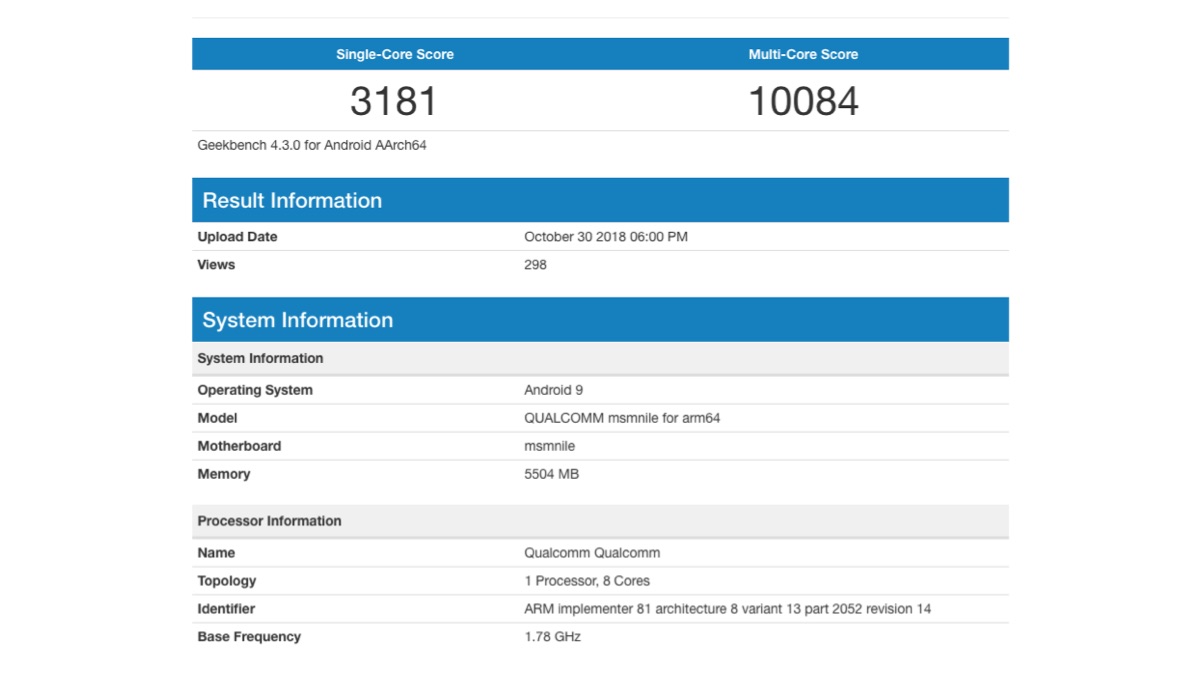
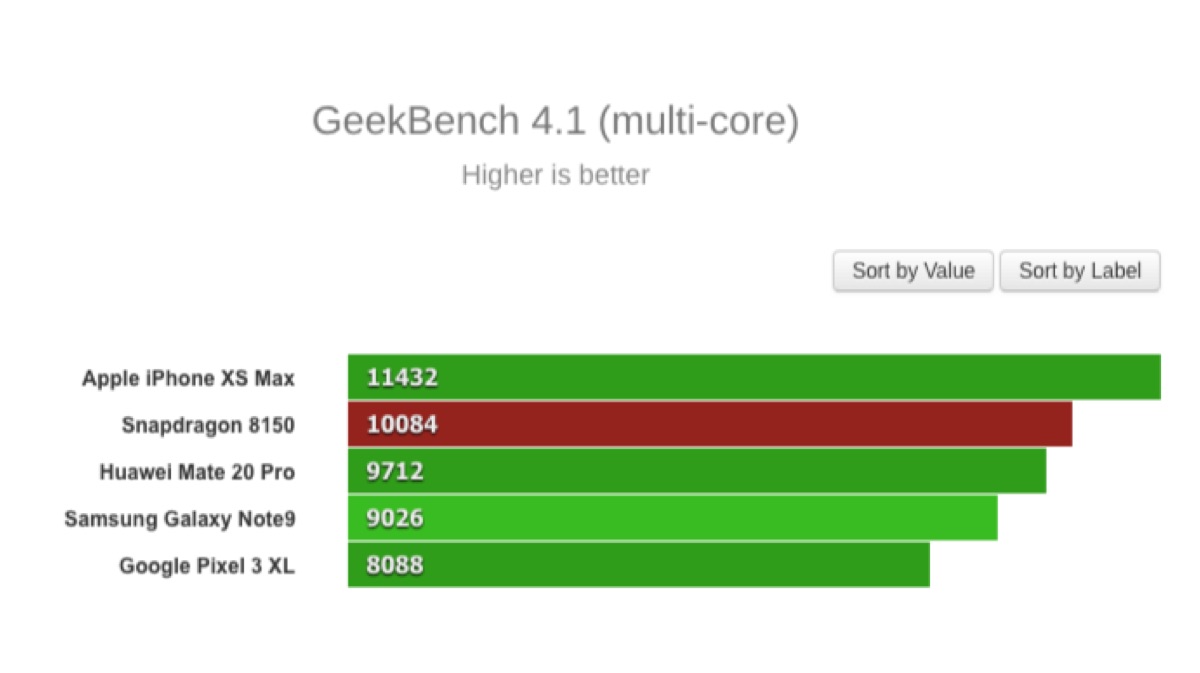
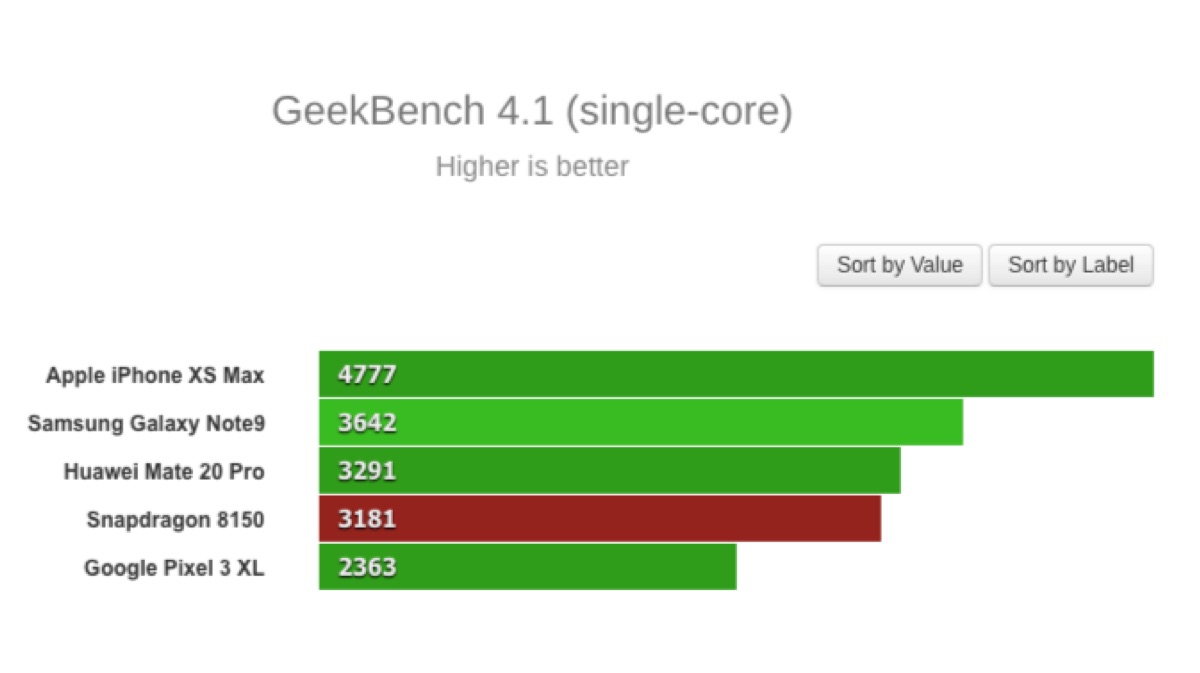
    The Geekbench result of the Snapdragon 8150 reveals its single and multi-core results. The processor gets a reputable 10,084 multi-core score and which helps it secure the number 2 ranking. The processor is only second to Apple’s XS Max which has a mighty score of 11,432. However, it is ahead of all other Android devices including the Huawei Mate 20 Pro, Samsung Galaxy Note 9 and the camera beast Google Pixel 3 XL.

    Talking about the single-core result, it gets a score of 3,181 and is placed at number 4 in this category. The iPhone XS Max again maintains the lead with a score of 4,777. While the Note 9 and Mate 20 Pro take the second and third position.

    Although it should be kept in mind, Geekbench results also vary on a lot of other factors including RAM, Storage type and ROM optimisation. Hence, it is possible the Snapdragon 8150 can get a higher score considering all the things are set right. For now, we will have to wait for a real-life device to examine what the new processor brings to the table.

  • Apple Accused Of Unpaid Chip Royalties By Qualcomm

    Apple Accused Of Unpaid Chip Royalties By Qualcomm

    Apple and Qualcomm are at it again. Apple recently had accused Qualcomm of unfair patent licensing practices and Qualcomm has in turn accused Apple of patent infringement. Qualcomm revealed the amount of unpaid royalties by Apple in a hearing. The hearing was of one of the cases in a Federal court in San Diego. Apple however, have disputes about the amount. At this moment, the companies are involved in about 100 legal proceedings around the world. Qualcomm wishes 56 patents to be dropped and wants to follow the licensing dispute between the two companies instead. According to Qualcomm, Apple has $7 billion in unpaid chip royalty payments.

    Apple’s Reply

    Apple has, in a statement, said that for many years Qualcomm has unfairly insisted on charging royalties for technologies they have nothing to do with.  The company has also accused Qualcomm stating that the more Apple innovates with unique features for phones, the more money Qualcomm collects. Apple claims that this makes it more expensive to fund these innovations. Apple has accused Qualcomm of building its business on older, legacy, standards. They claim that Qualcomm has reinforced its dominance through exclusionary tactics and excessive royalties. The smartphone giant also said that the latter insists on charging Apple at least five times more in payments. This is in comparison to all the other cellular patent licensors they have agreements with combined.

    Also readApple Demands Bloomberg To Take Down Chinese Chip Hacking Report

    A U.S. International Trade Commission administrative law judge had, in September, ruled in favour of Qualcomm, stating that Apple had infringed on a power saving patent to extend battery life in mobile devices. The judge had also said that this will not hinder Apple from selling their phones in the US. Apple also said that Qualcomm is withholding nearly $1 Billion in payments from Apple as ‘retaliation for responding truthfully to law enforcement agencies investigating them’.

  • Amazon & Qualcomm Partner To Bring Alexa To More Headphones

    Amazon & Qualcomm Partner To Bring Alexa To More Headphones

    Alexa is Amazon’s virtual assistant which was first seen in 2016 on the Amazon Echo & Amazon Echo Dot smart speakers. Alexa can interact with humans via voice commands making searches easy and natural.

    Widespread Alexa

    Amazon is partnering with Qualcomm to bring Alexa voice assistant to more wireless earphones. Qualcomm will develop and manufacture new embeddable chips for other manufacturers who can incorporate them into their earphones. The chip will provide these earphones with Amazon’s voice assistant.

    One similar concept is Apple’s AirPods with voice assistant capabilities. Apple AirPods allow users to interact with their virtual assistant Siri by a simple tap. Even Google allows other companies to integrate their Google Now virtual assistant into their wireless earphones. The latest example of it is the Nokia True wireless Earbuds & Pro Wireless Earphones.

    Earlier this year, Sony announced that a lot of their earphone models will support Alexa assistant after a software update. Companies like Bose and Jabra also have a few Alexa supporting earphone models in their portfolio. Qualcomm has already showcased a chip that can be integrated by 3rd party manufacturers to attain Alexa support. Qualcomm also said that the partnership with other manufacturers will help them drive down the costs and adoption of their chips. These chips will open up a whole new market for Qualcomm. Hence, they can diverge into other markets and decrease their revenue dependence on mobile phone processors.

    This is a bankable future option for Qualcomm. Although, it requires patent licensing and regulatory fees from companies like Apple. At a recent conference held in Hong-Kong, Qualcomm announced they are also working with action camera makers like GoPro to incorporate Qualcomm chips in their devices. Qualcomm expects to achieve $ 5 billion in revenue from non-mobile sources in 2018. This expected revenue will make up for 20% of their sales revenue which according to analysts will be $ 22 billion.

  • Qualcomm Snapdragon 710 Launched

    Qualcomm Snapdragon 710 Launched

    Qualcomm has announced a new mid-range chipset, the Snapdragon 710 SoC. This will be the first chipset in its recently announced Snapdragon 700 series for the mobile platform. As budget smartphones become more popular, we expect premium features to trickle down to mid-range and budget devices as well. The new Snapdragon 710 chipset has a lot of optimisations which should help make premium smartphone features more accessible to mid-rangers.

    The Snapdragon 710 sits somewhere between the Snapdragon 660 and Snapdragon 845. It is not as powerful or efficient as the Snapdragon 845 but, has enough improvements to be superior to the Snapdragon 660. Qualcomm concedes that Snapdragon 710 has improvements in most of the popular consumer use cases. For example, 4K HDR video recording will consume 40% less power compared to 4K SDR capture on the 660.

    The Snapdragon 710’s processors also have a different composition. Qualcomm has designed the octa-core chip with two 2.2GHz ARM Cortex-A75 cores for performance and six 1.7GHz ARM Cortex-A55 cores for efficiency. According to Snapdragon, users can expect 25% faster web browsing, 20% overall increase in performance, and 15% faster app loading compared to the Snapdragon 660. The battery life will also improve, thanks to the composition of the cores of the SoC.

    Must Read: BlackBerry KEYone Successor Spotted On GeekBench

    The new chipset is also the first for Snapdragon to feature 600-series GPU. According to Qualcomm, the 616 GPU  will allow for up to 35% faster graphics rendering while consuming up to 40% less power. This is a great news for people who like gaming on budget smartphones.

    Specifications
    Specifications Qualcomm Snapdragon 660 Qualcomm Snapdragon 710
    CPU Kyro 260
    4x 2.2GHz (Cortex-A73)
    4x 1.8GHz (Cortex-A53)
    Kyro 360
    2x 2.2GHz (Cortex-A75)
    6x 1.7GHz (Cortex-A55)
    GPU Adreno 512 Adreno 616
    DSP Hexagon 680 3.0
    ISP Spectra 160 ISP
    24MP
    Spectra 250 ISP
    32MP single / 20MP dual
    Memory 2x 32-bit @ 1866MHz
    LPDDR4
    29.9GB/s
    2x 32-bit @ 1866MHz
    LPDDR4
    29.9GB/s
    1MB system cache
    Integrated Modem Snapdragon X12 LTE
    (Category 12/13)
    DL = 600Mbps
    3x20MHz CA, 256-QAM
    UL = 150Mbps
    2x20MHz CA, 64-QAM
    Snapdragon X15 LTE
    (Category 15/7)
    DL = 800Mbps
    4x20MHz CA, 256-QAM
    UL = 300Mbps
    2x20MHz CA, 256-QAM
    Encode/
    Decode
    2160p30, 1080p120
    H.264 & H.265
    2160p30, 1080p120
    H.264 & H.265
    10-bit HDR pipelines
    Manufacturing Process 14 nm 10 nm


  • Qualcomm Announces Snapdragon 700 Chipset Series At MWC 2018

    Qualcomm Announces Snapdragon 700 Chipset Series At MWC 2018

    Qualcomm launched the Snapdragon 700 series chipset at MWC 2018. The Snapdragon 700 series of chipsets from Qualcomm offers premium tier-1 performance in the mid-tier smartphones.

    In fact, the company claims that the Qualcomm Snapdragon 700 chipset will be able to deliver up to two times the AI performance compared to series 600. This series of chipsets will bring features and performance that was previously available on the series 800 chipset. However, the company did not unveil any chipset on this newer lineup.

    Alex Katouzian, senior vice president and general manager, mobile, Qualcomm Technologies, said:

    From our cutting-edge Qualcomm AI Engine to superior camera, device performance and power. The Snapdragon 700 Series is optimized to support the experiences consumers have come to expect from the most advanced mobile devices at a lower price point.

    Features:

    The new series will support premium features like Qualcomm Spectra ISP, Qualcomm Kryo CPU, Qualcomm Hexagon Vector Processor and Qualcomm Adreno Visual Processing to improve the overall user experience.

    The chipset from the new series will offer 30% better battery efficiency compared to the Qualcomm Snapdragon 660 chipset. The chipset also supports latest WiFi standards with carrier WiFi features. Similarly, the chipset also offers Bluetooth 5.0.

    The chipsets will be available for the OEMs in the first of 2018. Similarly, we will see smartphones by the end of Q3 2018.

    Conclusion:

    The Qualcomm Snapdragon 700 series chipset will enable OEMs to create a new smartphone segment. With this chipset, we can expect flagship smartphones at a much affordable price tag.

  • 2Gbps Download Speeds A Thing Of Reality With The Qualcomm X24 LTE Modem

    2Gbps Download Speeds A Thing Of Reality With The Qualcomm X24 LTE Modem

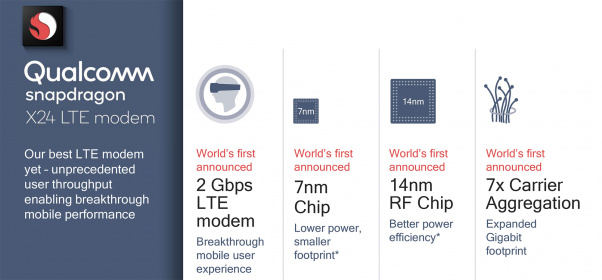
    Qualcomm, the pioneer in the smartphone chipset business has officially announced a new X24 LTE modem. The modem offers LTE download speeds of up to 2 Gbps. These speeds are almost double of what the X20 LTE modem (used in Qualcomm Snapdragon 845) offers. Rumours also suggest that the modem will be used in the upcoming Qualcomm Snapdragon 855 SoC (which is due until 2019).

    The technology is called 4.9G by Nokia communications, which will be the last phase of the 4G era. As a matter of fact, this is faster than the Gigabit LTE (which offers up to 1.2 Gbps). This makes it the fastest wireless modem that is currently in mass production.

    Samsung Galaxy S9 Will Run On Snapdragon 845
    Specifications:

    The chipset is based on 7nm FinFET process, with support for Cat 20 LTE. 4×4 MIMO with a maximum of 20 spatial streams.

    Maximum download speed of 2 Gbps and an upload speed of 316 Mbps has been achieved in the test run. The chipset does offer dual VoLte and dual LTE dual standby. In layman’s term, one can use two Jio SIM simultaneously.

    The modem does support all the exciting cellular technologies like LTE FDD, LTE TDD, and LTE-U etc. The 3×20 Mhz carrier aggregation will make this one of the best standalone modems for upload speeds.

    Conclusion:

    The year 2019 will be a great year for smartphone enthusiasts as the chipset maker is also developing a 5G modem by the name X50 5G modem. This is set to debut in late 2019. So, the OEM will have to make a choice between newbie X50 with the 5G capability or well-versed X24 modem with 4.9G capability.

  • MediaTek And Qualcomm Announce Support For Android Go Oreo Edition

    MediaTek And Qualcomm Announce Support For Android Go Oreo Edition

    Google recently announced the Android Go Oreo edition. A new variant of Android 8.1 Oreo OS optimised for smartphones with 1GB of RAM or less. Two of the most prominent chipmakers in the smartphone industry, MediaTek and Qualcomm have now voiced their support for Android Go.

    MediaTek, in a statement, said that it will be an SoC partner for bringing Android Go Oreo edition to smartphone makers and will offer support on Android devices with 512MB to 1GB of RAM.

    MediaTek Inc. today announced that it is a System-on-Chip (SoC) partner for providing Google’s Android™ Oreo (Go edition) software to smartphone makers, and after a deep collaboration with Google, MediaTek’s MT6739, MT6737, and MT6580 SoCs, among others, now have board support packages available to run Android Oreo (Go edition).

    Qualcomm has also announced that it will be working closely with Google to offer an optimised experience on smartphones with a memory of 1GB or less.

    We are excited to implement Android Oreo (Go edition) within the Qualcomm Snapdragon mobile platform family as it will enable consumers around the world to experience a more robust operating system for lower cost smartphones.

    This allows greater consumer flexibility as mobile users in emerging regions such as India, Southeast Asia and Africa gain access to a wider variety of Android smartphones with a more modern operating system.

    Google has claimed that Android Go’s Oreo edition will be a variant of Android Oreo that a manufacturer can just set by ticking off a configuration flag. What this basically does is that it sets up the phone to use the “Go” versions of a handful of Google apps such as the main Google app, Google Assistant, Google Maps, Gmail, and others. Google claims that the smaller apps and slimmer OS can as much as halve the amount of storage that’s taken up by default on a new phone running default OS.

    India is expected to be one of the first few countries to get Android Go Oreo edition thanks to its large budget smartphone segment.


  • Snapdragon 845: Everything You Need To Know

    Snapdragon 845: Everything You Need To Know

    A majority of Android phones are powered by the chipsets made by Qualcomm. From phones priced at Rs 6999 running Snapdragon 212 to the Galaxy Note8 priced at Rs 67900 powered by the Snapdragon 835, smartphones in all price range run on a Qualcomm chipset, with some exceptions running MediaTek chipsets.

    For 2018, the flagship phones will be powered by the new chip from Qualcomm, the Snapdragon 845 which was announced two days ago during the Qualcomm Tech Summit.

    The Snapdragon 845 has the new Kryo 385 CPU architecture and an upgraded Adreno 630 GPU. The chip is built on Samsung’s 10nm LPP FinFET, its second generation 10nm node that offers “10-percent higher performance or 15-percent lower power consumption compared to its first generation”.  Similar to the previous generation, the Kryo 385 is built on Arm Cortex technology. Qualcomm claims that thanks to its customised off-the-shelf design from Arm, the chip promises up to a 25% performance upgrade compared with the last generation Snapdragon 835. The four performance cores clock up to 2.8 GHz and are paired with four energy efficient cores that can reach up to 1.7 GHz.

    A lot of experts claim that what bezel-less design was to 2017 smartphones, AI and machine learning will be to 2018 smartphones. With Apple and Huawei already claiming a stake in the AI space with their new chipsets, a lot will be expected from the Snapdragon 845. In terms of performance, the Snapdragon 845 gets a 3X upgrade in AI tasks over the Snapdragon 835. This comes down to upgraded CPU and GPU performance but, the Snapdragon 845 also includes a third generation Vector DSP with HVX, called the Hexagon 685, which is optimised for AI and imaging workloads.

    Specifications Snapdragon 845 Snapdragon 835
    CPU Core Semi-custom ARM Cortex – Kryo 385 Semi-custom ARM Cortex – Kryo 280
    CPU Configuration 4x 2.8GHz (Cortex-A75)
    4x 1.7GHz (Cortex-A55)
    4x 2.45GHz (Cortex-A73)
    4x 1.9GHz (Cortex-A53)
    GPU Adreno 630 Adreno 540
    Manufacturing Process 10nm LPP FinFET 10nm LPE FinFET
    DSP Hexagon 685 with HVX Hexagon 682 with HVX

    For multimedia, Qualcomm’s latest Spectra image signal processor has been rebuilt from scratch. The new Spectra 280 ISP introduces new video capture options, such as 720P at 480fps, 60 fps video recording at up to 16MP of resolution, and the ability to capture 64x more high-dynamic range colour information than before.

    Qualcomm has also introduced a new security feature. It has added Security Processing Unit (SPU), a hardware isolated security subsystem inside the Snapdragon 845. This dedicated chip acts as a storage unit for any saved biometric information, such as fingerprint, face, or iris scans, and builds on Qualcomm’s existing security software.

    The Samsung Galaxy S9 and S9+ are expected to be the first of the many phones which will be powered by the Qualcomm Snapdragon 845 chipset. Xiaomi also announced that its new flagship, presumably Xiaomi Mi 7 will have the Qualcomm Snapdragon 845 chipset as well.

  • Qualcomm Announces Snapdragon 845 Chipset

    Qualcomm Announces Snapdragon 845 Chipset

    Qualcomm has announced the new flagship chipset, the Snapdragon 845 at it Qualcomm Tech Summit.

    The Snapdragon 845 will be the successor to the popular Snapdragon 835 chipset which powered the majority of 2017 flagship phones, barring the likes from Huawei and some Samsung phones (that ship outside the US and South Korea). The Snapdragon 845 will likely be found in many high-end Android phones in 2018, though it is also expected to make its way to Windows 10 laptops as well.

    Just like the Snapdragon 835, the Snapdragon 845 is also based on a 10nm manufacturing process albeit upgrades to performance and power efficiency. Qualcomm will pair the 845 with its latest X20 LTE modem, which provides gigabit connectivity on supported networks.

    The Snapdragon 845 will definitely aim to compete with Apple’s A11 Bionic chipset since the Snapdragon 835 fell short against it in benchmark scores.

    Similar to the partnership that led to Samsung having early access to Snapdragon 835 chipsets, the Snapdragon 845 chipset might be found in the Galaxy S9 and S9+ before any other phone. Even though, the LG G7 is expected to be launched at a similar time. Also, Xiaomi has announced its plan to use the Snapdragon 845 chipset in its next flagship, which could be the Mi 7.

    The American chipmaker is hosting its tech summit right now where we will get to know more about the Snapdragon 845 chipset.

  • Qualcomm Sues Apple Again For Infringing Palm OS Patents

    Qualcomm Sues Apple Again For Infringing Palm OS Patents

    The Apple-Qualcomm legal battle seizes to fizzle any time soon. After Apple filed a counter-suit against its bitter tech-rival, Qualcomm has responded with a new patent infringement lawsuit against the Cupertino-based tech giant.

    Qualcomm wants the iPhone X banned because it claims that Apple infringed the chip maker’s patents, including some relating to improving bandwidth in devices, saving power and enhancing photos from the rear-facing camera. Qualcomm has also claimed that Apple copied some elements of the Palm OS, which Qualcomm obtained the rights to in 2014, when it bought many of Palm’s other patents.

    In its filing of the suit, Qualcomm said:

    All of these Palm inventions – owned by Qualcomm – have vastly improved the functionality of mobile devices and the user experience, and all of them are widely found in Apple products without license or permission.

    However, Qualcomm has claimed that this is not in response to Apple’s latest lawsuit. In fact, this lawsuit was in the company’s plan for a long time and the timing is just a coincidence. Donald Rosenburg said:

    You can’t react that quickly to file lawsuits. We were in the process of filing three new district court cases in San Diego today, and one new ITC case in Washington, D.C. Those involve a group of 16 patents that are additional to the ones we have already sued them on, and five of those 16 are ones we are suing them on in the ITC seeking an exclusion order.

    This is a new lawsuit by Qualcomm in quick succession. Back in October, it claimed that Apple was giving rival processor company Intel information about its chips.

  • Your iPhone X May Be Faster Than Your Friend’s iPhone X

    Your iPhone X May Be Faster Than Your Friend’s iPhone X

    Apple iPhone X has been out for almost a month now and people who’ve recently ordered it, will start receiving their iPhone X sooner rather than later. If you have an iPhone X already, it is possible that your phone might be faster (or slower) than your friend’s iPhone X.

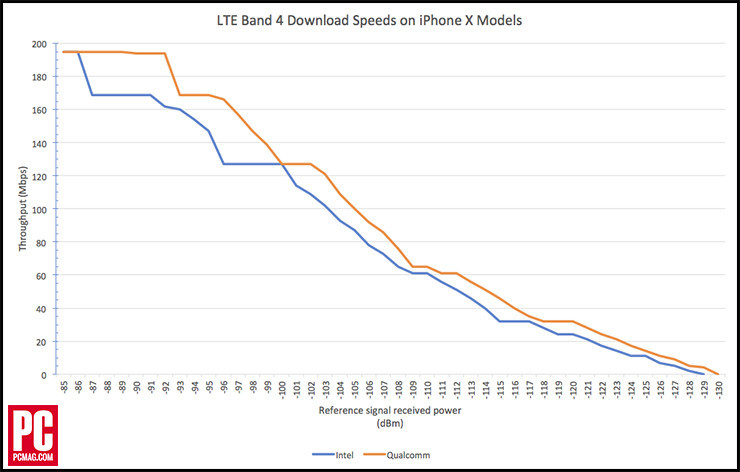
    Apple equips iPhones in the US with modems from both Intel and Qualcomm, and the same goes for their priciest iPhone yet, the iPhone X. In a new report, it has been unearthed that iPhone X models with Qualcomm modems were faster than iPhone X models with Intel modems.

    The test shows that iPhone X models with Qualcomm modems “get consistently better LTE speeds than Intel’s on America’s most common LTE band.”

    It is worth noting that Apple crippled a few functionalities of the Qualcomm chip because the Intel chips don’t support these features yet. So, in order to keep the differences at a bare minimum, Apple curbed the performance of the Qualcomm chipsets itself.

    But, the good news is that you won’t notice the difference between the two until you’re in a dire situation.

    Following recent legal battles between Qualcomm and Apple, it won’t come as a surprise if all iPhones start shipping with Intel modems in the future. Reports already suggest the same and with recent law suits, the relationship between the two firms may have gone beyond repair.

  • Broadcom Wants To Buy Qualcomm For US $100 Billion

    Broadcom Wants To Buy Qualcomm For US $100 Billion

    In what might be one of the most sensational deals in the tech industry, Broadcom is interested in buying Qualcomm. According to a report, Broadcom is currently in talks with advisers on how to best approach the potential bid, which is likely to be made official by the end of 2017. However, it is an iffy situation right now and sources from the company have said that Broadcom might even not go ahead with it if the pieces don’t fall into place.

    Qualcomm is the largest maker of modems while Broadcom is the industry leader in terms of WiFi chips. A deal between the two companies would consolidate their stand in the industry and put them in a better position to negotiate with the likes of Samsung and Apple.

    The sensational US $100 billion bid, if made, will not guarantee the deal. Qualcomm is not in a strong legal position right now considering a number of legal battles the company is embroiled in. Qualcomm is in the midst of a legal dispute with Apple, with the dispute having started in January when Apple sued Qualcomm for US$1 billion. Qualcomm countersued the American tech giant, Apple in April, sought injunctions to halt iPhone sales in the US and China, and filed a lawsuit over copyright infringement.

    The legal battle for Qualcomm doesn’t end here, it recently sued Apple again for leaking software information to rival chip-maker, Intel. Qualcomm further said that it has proof of such a leak and that Apple has breached their contract by not allowing Qualcomm to audit its software handling by Apple.

    It is yet to be seen if Qualcomm will indulge in a US $100 billion takeover considering its legal woes but, if it does happen, it will be the biggest ever takeover of a chip maker in the world.


  • Qualcomm Sues Apple Again For Sharing Software With Intel

    Qualcomm Sues Apple Again For Sharing Software With Intel

    The legal battle between Qualcomm and Apple has been extended as Qualcomm has now sued Apple for allegedly sharing proprietary Qualcomm technologies with its market rival, Intel. In the lawsuit, filed on the 1st of November, Qualcomm is accusing the Apple of breaching a software license contract. To prove its claim, Qualcomm says it has email in which Apple requested confidential documentation. It has been reported that the email contained an Intel engineer in the distribution list.

    Qualcomm goes on to claim that according to the contract between the two companies, Qualcomm has the permission to audit Apple’s handling of its software, however, Apple has refused any such requests. The details of the lawsuit do not clarify the amount of money Qualcomm has sued the tech giant for but, considering the recent legal battles between the two companies, Qualcomm might not settle for a meagre amount.

    It was reported that Apple will drop Qualcomm components from its 2018 iOS devices, ending a long-term partnership with the American chip maker. This news came after a series of legal battles were dragged on between Apple and Qualcomm. Apple, along with Samsung is also suing Qualcomm for taking advantage of its monopoly.

    Qualcomm has not had an ideal time in terms of its legal battles after it was fined a record US $773 million by Taiwan’s Fair Trade Commission. The Commission said that Qualcomm misused the monopoly in the smartphone business to squeeze higher licensing fees and better terms out of its customers.


iGyaan Network
Privacy Overview

This website uses cookies so that we can provide you with the best user experience possible. Cookie information is stored in your browser and performs functions such as recognising you when you return to our website and helping our team to understand which sections of the website you find most interesting and useful.