Tag: Yahoo

  • New Yahoo App Helps You Find Your Favourite Shows And Movies

    New Yahoo App Helps You Find Your Favourite Shows And Movies

    Ever find yourself in a state where you just have to watch a new TV show or movie but just don’t know where to begin? Yes, there are a number of streaming sites out there that cater to the movie and TV junkie in you, but seldom do you find someone to tell you where to start. Yahoo has heard your plight and has come out with an app that generously tells you what to watch and where you can watch it.

    The app is called Yahoo Video Guide runs through all of your available services to find where your favorite shows are playing. Once it does that, a simple click will take you to that episode or movie if it is available from one of your streaming services. The app also lets you purchase the videos as well.

    But that’s not all the app does. We all have preferences based on our current mood. So, the app also features a Mood Picker, which suggests videos based on your mood. There are GIFs that correspond to your current state of emotions. Pick the GIF and the app will do the rest.

    Yahoo Video Guide is available for free from Google Play Store for Android users, and the App Store for iOS users. The app is yet to be made available globally.

  • Yahoo Relaunches Messenger, Attempts to Take on Facebook

    Yahoo Relaunches Messenger, Attempts to Take on Facebook

    Yahoo announced today that it’s launching an entirely new Messenger platform on mobile, web and within Yahoo mail that is faster, smarter and better than ever before. You may remember that Yahoo Messenger did exist many years ago, much before WhatsApp or Facebook Messenger took over the world. Yahoo is back and wants to level the playing field a little – and it has the app to do so.

    Yahoo Messenger introduces a whole bunch of new and unique features. Like on WhatsApp, you can name each conversation group like maybe one for “drinking buddies” and another for “office peeps”. Anyone in the group can add another chat buddy.

    q-80

    But messaging isn’t the only thing the app boasts off. One of the highlights of Yahoo Messenger is photo sharing that unlike any other messaging service today. Since Yahoo owns Flickr, it was able to harness the latter’s powerful photo management platform.

    “In most messaging apps, you have to decide between quality or speed,” explained Austin Shoemaker, senior director of product management for Yahoo Messenger to Engadget. iMessage, for example, allows you to send high-res photos, but it takes awhile to do so. WhatsApp, on the other hand, downgrades images in order to send them quicker. “But we thought: Why not have both?”

    photo-sharing-ios-1

    “The new Yahoo Messenger achieves both speed and quality by streaming photos into the conversation,” explains Shoemaker. “A small preview of the photo is uploaded and appears in the conversation. The original photo is then uploaded in the background.”

    Moreover, if you send multiple photos at once, they’ll be displayed horizontally underneath the message rather than vertically as is the case with mostly all messaging services out there. On the new Yahoo Messenger, you can simply swipe through the photos from left to right. This way, Shoemaker says, you can view the photos while remaining in the context of the conversation.

    But that’s not all Yahoo Messenger does. You can also send GIFs, similar to Facebook’s Messenger service. Yahoo Messenger also pulls an Instagram where you can double tap to ‘like’ or ‘heart’ a message. Finally, and this might just win heart here, you can also ‘unsound’ a message. if you sent a photo that you regret, you can easily delete it from the thread later on and it’ll be wiped from the conversation history. And this rule stands not just for photos but for messages and GIFs as well.

    The Yahoo Messenger app is available on Android and iOS starting today. Though it will take some time for the app to be made available everywhere.

  • Yahoo In a Soup; Might Put Itself Up For Sale

    Yahoo In a Soup; Might Put Itself Up For Sale

    According to reports, Yahoo might be considering to put itself or its core businesses up for sale. This could include selling off Yahoo’s internet business, spinning off its shares in Alibaba, or doing both.

    Yahoo

    Yahoo has been deteriorating slowly through the years, and CEO Marissa Mayer had been given several years to work on it, in the hope to turn things around. Despite all of that, Yahoo’s biggest asset remains its stake in Alibaba. The company was planning to spin off its holdings in Alibaba for a while, however, the plan was never executed due to tax concerns.

    Yahoo Mail

    If Yahoo does decide on selling off its internet business shares, it will end up remaining barely anything more than a holding company for its Alibaba shares. On the other hand if they decide to keep the internet business and let go of its Alibaba holdings; that will just leave Yahoo a weaker company than it is now. Despite such worrying reports emerging, Yahoo has not made any official announcement yet.

  • Yahoo Messenger: Is It Back?

    Yahoo Messenger: Is It Back?

    Today we have moved on from the age of emails and PCs to the age of texting and mobile phones, and with apps such as Viber, WhatsApp, FaceTime, Skype etc. the use of emails has become almost limited to being used exclusively for official purposes. In the process, age old apps like Yahoo have almost become redundant, especially with the growing popularity of new apps such as Google because of their efficiency and ability to cater to the growing needs of the modern lifestyle.

    yahoo

    Recently though, Yahoo has made a silent comeback with the launch of its Livetext app on the iTunes app store. The unique feature of this app is that it is a peculiar combination of silent video chatting combined with texting. This app is unlike Skype or FaceTime. Users can have a virtual face-to-face chat and text each other simultaneously, without the voice getting in the way of the messaging. It should be very useful for people in business or classroom situations.

    http://cdn.ndtv.com/tech/images/yahoo_livetext_video_messenger_app_screenshots_itunes.jpg

    The advertisement for this app as the iTunes description states is as follows:

    “Welcome to Livetext for iOS, the most natural way to have REAL conversations. It’s live video texting, without sound. You will feel like your friends are right there with you.”

    Therefore, according to Yahoo, this new app should allow people to interact more naturally. This is Yahoo’s answer to making communication and interactions in the modern world efficient, interesting but yet personal and REAL.

    The reviews for the app have been mixed. Some consider it a worthwhile comeback while others term it as ‘odd’. The necessity of silent video chatting has been questioned, although as previously mentioned it could be of use in certain situations. Apart from that, we also have apps such as FaceTime and Yahoo’s ultimate usurper, Gmail with functions such as Google+ Hangout which is basically “free video chat service from Google that enables both one-on-one chats and group chats with up to ten people at a time.” Yahoo Livetext on the other hand, is still not equipped for more than a 1:1 interaction- at least for the time being.

    Yahoo made its app live, on July 11,2015. Livetext for iOS can use either a WiFi or cell connection. With the app having been launched only on the Hong Kong iTunes, it is yet to be seen whether it will hit the global market.

    So, will you revert back to the revamped Yahoo? Let us know.

  • Yahoo May Bring Out an Independent Siri-Like Personal Assistant App Soon

    Yahoo May Bring Out an Independent Siri-Like Personal Assistant App Soon

    During a conference call a few day back, CEO of Yahoo, Marissa Mayer spoke about a special new product the team has been working on. The new service will go against the likes of Apple’s Siri, Google Now or Microsoft’s Cortana. She stated that Yahoo is developing an interest in search in the mobile sector and will focus on “what happens when you involve context and personal information like email.”

    According to Business Insider, the new service has been code-named ‘Index’ and it will come in the form of a smartphone app. Yahoo hopes to release a beta version of the same by the second quarter of this year.

    Mayer explains the new app would search information somewhat like Google Now, and probing for information in the user’s inbox may help people give better results. Quoting an example to help understand the working of the app, she explained that if a user had booked a flight from John F. Kennedy Airport, then Index would find information related to the airport or flight, by using the information in the inbox – instead of fishing out information about President Kennedy.

    The voice assistant idea may seem unoriginal from the user point of view, but Yahoo is willing to place a bet on this ambitious project.

  • Yahoo is Closing Shop in China, Hundreds of Employees to Lose Jobs

    Yahoo is Closing Shop in China, Hundreds of Employees to Lose Jobs

    Once the top portal on the internet, Yahoo has not seen good days in the recent past. But recently, since the arrival of new age apps and features, Yahoo has somewhat faded into the background. The company is now pulling out from China where it had to shut down its web portal in 2013. This move will result in a loss of jobs of 200 employees.

    The consumer side businesses of Yahoo such as the Web portal, Yahoo Music and email service has already been shut down. Yahoo’s only office in Beijing was then transformed into a research facility. Now the company is pulling the curtain down on its entire show in China by shutting down the Beijing facility.

    Yahoo’s Chinese business was overseen by Alibaba group. The Beijing facility though was directly controlled by Yahoo and the company employed over 350 employees there. The shutdown will lead to massive layoffs in terms of hundreds. Yahoo has intimated the employees about the shutdown. Yahoo had laid off about 2000 employees in 2012 citing financial woes.

    Yahoo’s present CEO Marissa Mayer has been instrumental in turning the company around by taking some unpopular decisions. Her first task in the office as CEO was to shut shop in South Korea. As the services were being ignored for newer services outside US, she decided to bring focus back to America. There were also several layoff’s in India, Vietnam, Indonesia, Malaysia, Singapore, and the Middle East. In total, the company has cut between 700-900 jobs since October last year.

    The wages were also cited as reasons for the shutdown. Yahoo China employees get twice the salary of their Indian counterparts. Considering there are no consumer side application in the country, it made sense for the company to cut the costs there.

  • Yahoo’s New ‘On-demand password’ Service Allows Users to Forget Their Passwords

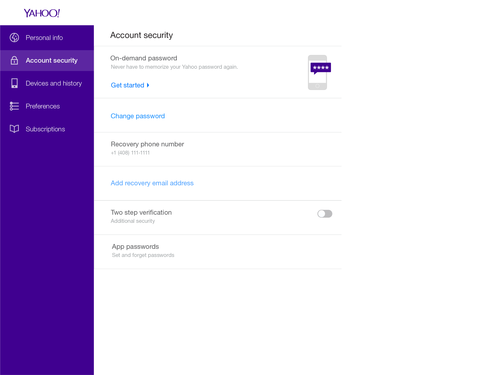
    It has become awful hard to keep a track of our passwords these days. If remembering passwords is not your thing, then Yahoo has a way out for you. The company has introduced a new service called ‘On-demand passwords’ system that sends out a unique password to your handset whenever you want to sign in to your account.

    The new approach by the company is much like Google’s two-step verification method, but Yahoo has made it hassle-free by encapsulating it into one easy step. Now, users don’t need to remember the tricky password. Whenever someone wishes to login to the account, he/she need to click the ‘Send me password’ button. The user will receive a code through an app or text message on their phones, which will be the password for your Yahoo account. Yes, exactly like the One-Time Password Service used by banks for online transactions.

    The Director of Product Management, Chris Stoner, stated on the official Yahoo Tumbler page –

    We’ve all been there…you’re logging into your email and you panic because you’ve forgotten your password. After racking your brain for what feels like hours, it finally comes to you. Phew! You no longer have to memorize a difficult password to sign in to your account.

    The feature will not activate automatically, and one has to login to their account using the traditional method. Once you’re logged in, change the settings to enable ‘On-demand password’ service. Go to Settings > Security and turn on ‘On-demand passwords.’ Enter the phone number on which you wish to accept the password from then on. Enter the code you’ll receive on your registered device on your system, and you are done. You will now get a new password on the handset every time you wish to login.

    yahoo

    It’s difficult to say how much the new method is reliable because once your registered phone gets lost, you’ll be unable to access your account anymore as there will be no set password. The best part is that Yahoo has not forced the new system on its users, and it’s optional.

    Yahoo presented one more technology to secure emails, along with the single-step password system. According to the new feature, the emails will be encrypted, and only the sender and receiver will be able to see the content of the email. Again, the service would not enable automatically, and users can turn on the the security measure for specific emails.

    Both the ‘On-demand passwords’ and mail encryption technology will release globally later this year. The former is available for the US users now. To know how the mail encryption service works, check the video below:


  • Bing and Yahoo Eyeing to Replace Google Search on Safari

    Bing and Yahoo Eyeing to Replace Google Search on Safari

    Of course, Google is the ultimate king of internet search engines and there is no doubt in it. With almost all popular browsers using Google Search as their default search engine, the American internet giant enjoys a monopoly in the social-networking arena. However, Yahoo is trying to revive its lost glory and has been taking major steps to challenge the supremacy of Google over internet search.

    Last week, Firefox announced that it will use Yahoo as its default search engine in the United States on mobile as well as on desktop. And now, according to a report from The Information, Google may also lose the privilege of being the default search provider in Apple’s Safari browser next year.

    According to the report, the latest extension of a deal that made Google Search the default search engine for iPhone owners since 2007 is set to expire in 2015, and the arch-rivals, Microsoft and Yahoo, are already pitching a case for change with Apple’s leadership. Each company has pitched Apple’s Senior Vice President Eddy Cue on the idea of replacing Google as the default iOS search provider; Microsoft wants Bing to be the default option out of the box, and Yahoo is also trying its hands.

    Bing is already in contract with Apple as a default search provider used by Siri. And on the desktop, OS X Yosemite and Apple’s Spotlight search also show Bing results — without any way for users to replace them with any other search provider.

    According to The Information, Apple has been trying to separate itself from Google’s services for several years now. One of the most noticeable change was the removal of YouTube as a pre-loaded app on iPhones and iPads. The rivalry has been going on for years, but Apple has always said that it puts users first. Hence, if you consider this, the American multinational giant might not risk losing such huge user base, however, nothing is official now.

  • Yahoo Steps Into the Shoes of Google as Default Search Engine on Firefox

    Yahoo Steps Into the Shoes of Google as Default Search Engine on Firefox

    Of course, Google is the ultimate king of internet search engines and there is no doubt in it. With almost all the popular browsers using Google Search as their default search engine, the American internet giant enjoys a monopoly in the social-networking arena.

    Well, Yahoo is trying to revive its lost glory and has taken a major step to challenge the supremacy of Google over internet search. Starting in December, Firefox will use Yahoo as its default search engine in the United States on mobile and desktop.

    “I’m thrilled to announce that we’ve entered into a five-year partnership with Mozilla to make Yahoo the default search experience on Firefox across mobile and desktop,” Yahoo Chief Executive Marissa Mayer wrote in a Wednesday blog post. “This is the most significant partnership for Yahoo in five years.”

    It is estimated that Google has been paying Mozilla around $100 million for the privilege of being the default search engine used in the Firefox browser. That deal, last renewed for a three-year period in 2011, has come to an end and will not be renewed as Yahoo has grabbed the contract for the next five years.

    “Our teams worked closely with Mozilla to build a clean, modern, and immersive search experience that will launch first to Firefox’s U.S. users in December and then to all Yahoo users in early 2015. The interactive and integrated experience also better leverages our world-class content and personalization technologies.” Mayer wrote. She further talked about the company’s vision saying, “At Yahoo, we believe deeply in search – it’s an area of investment and opportunity for us.”

    Market leader Google accounts for 67% of searches from US desktop computers. That compares to about 20% for Microsoft and 10% for Yahoo, according to research firm comScore. Let’s see how much popularity this American multinational giant gains with this deal.

  • Yahoo Acquires Video Ad Giant BrightRoll for $640 Million in Cash

    Yahoo Acquires Video Ad Giant BrightRoll for $640 Million in Cash

    The American multinational Internet corporation Yahoo recently acquired video advertising company BrightRoll for $640 million. The acquisition is the second-biggest purchase under CEO Marissa Mayer and was carried out in cash. The company is struggling hard to keep up with its competitors Google and Facebook in ad revenues.

    BrightRoll will continue to operate independently ‘with Yahoo’s additional investment and global support.’ The deal is expected to close in the first quarter of 2015. In turn, Yahoo is hoping to revive its share in the US digital marketing industry, which fell to 5.8% in 2013, according to analyst eMarketer, and is expected to dip again this year.

    brightroll-sf

    According to Yahoo Chief Marissa Mayer, this deal will turn Yahoo into the largest video advertising platform in the US. Mayer talked that BrightRoll is ‘expected to exceed $100 million this year’ in net revenues. “Acquiring BrightRoll will dramatically strengthen Yahoo’s video advertising platform, making it the largest in the US. BrightRoll is the industry’s leading programmatic video advertising platform for reaching audiences across web, mobile and connected TV. Video is display 2.0. It’s what brand advertisers love. It’s a format that elegantly and easily transitions from broadcast television to PC to mobile and even to wearables. This is why video is a key part of our strategy,” Mayer said in a blogpost.

    She said that she thought video could reinvent and replace banner advertising, a mainstay of online ads. Once the market leader, Yahoo is expected to fall on to fourth place this year, according to eMarketer. It was reported in July that the Internet corporation collected less than 3% of online ad revenue last year. Google was on top with nearly 32% ad revenue, while Facebook accounted for about 6%. Microsoft is projected to exceed Yahoo this year.

    Yahoo hopes to counter Google’s sheer volume of user-generated videos with professional video content produced by journalist Katie Couric and tech reviewer David Pogue among others. Yahoo was able to buy BrightRoll with cash after it sold shares worth close to $9 billion in the initial public offering of Chinese e-commerce powerhouse Alibaba this year.

  • Gmail’s Redesigned App to Support Yahoo and Outlook Accounts

    After the release of the long awaited Android L and its associated Material Design, it seems Google wants to take its feature a step further. Android Police has accessed Gmail 5.0 app for Android and discovered support for Yahoo and Outlook accounts. This will be a big blow to the independent apps of these mail clients; people might find it more convenient to access all their accounts from one place.

    The new Android OS was appreciated for its ease of use and simplified view with updated iconography and tweaked buttons. A companion video shows how the new update keeps the interface similar to what we have gotten used to, but adds more functionalities to the app.


    This will be a great new feature for folks who use multiple accounts for different purposes. It will work out for business and personal users and by using a single app to access all the mails will save a lot of precious time. Ok Google, we are waiting for our updates!

  • Top 5 Once-Popular Websites That Are Now History

    Top 5 Once-Popular Websites That Are Now History

     The internet has led to some amazing success stories, Amazon, Yahoo, iTunes, eBay, Facebook, Google. But it has seen some dark days too. When the dot com bubble burst around 2000, many companies who made millions in pre-Google era failed miserably. Some failed because of the dot com bust, others were ahead of their time and some simply disappeared. We are listing 5 of these websites which are now defunct successes.

    1. Google Answer
    google-answers

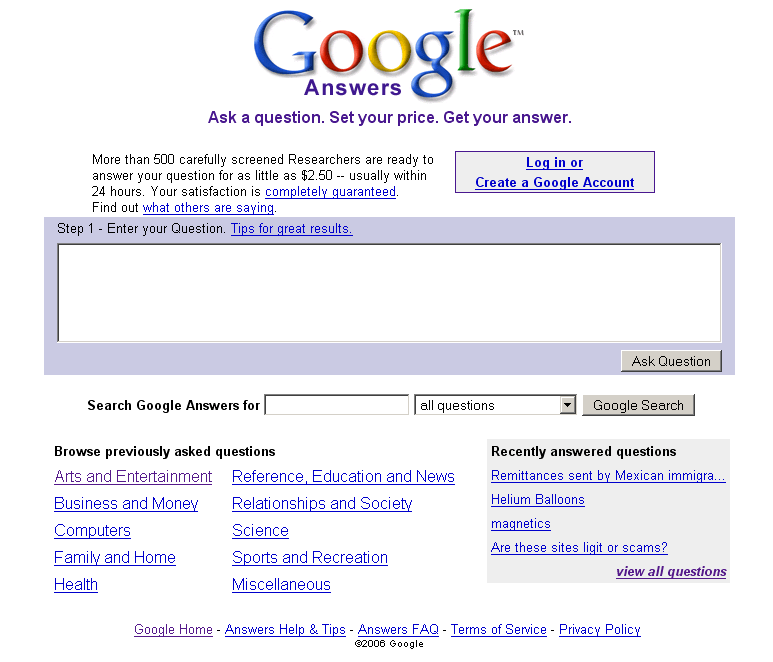
    Google Answers was an online knowledge market. It worked like a traditional search engine but paid one. You pay someone else to do the search for you. People would post questions which would then be answered for a fee, or “bounty”, ranging from $2 to $200 by contractors who completed a registration process. There were of course restrictions: links to adult oriented sites, copy righted material, plagiarism and questions of uncertain legality, i.e. “How do I make a bomb?” were not allowed. The site launched in April 2002 and lasted for four years before Google shut it down. Some of Google Answers contractors went on to form another online knowledge website, Uclue.com.

    2. Yahoo! Auction

    yahoo_auction

    Launched in 1998 as as direct rival for eBay, Yahoo! Auctions used the same proxy bidding system as eBay and even had its own version of PayPal, Yahoo! Wallet. The big difference between the two was Yahoo! Auctions had no seller’s fees, all revenue was from ad sales. This would have made Yahoo! Auctions more popular than eBay, but somehow the site just never made it. Maybe it just wasn’t trusted like eBay. Either way, the U.S. and European sites failed in 2003. Though the site still operates in Hong Kong, Japan and Taiwan but for the rest of the world, this site is nothing but a memory.

    3. Ogrish.com

    maxresdefault

    Ogrish.com was a website featuring uncensored video and photos of war zones, accidents, executions and other similar material. For example, in 2002, graphic pictures and videos of the jumpers of the September 11, 2001 attacks were displayed. In summer 2004 the site was targeted for hacking attacks from South Koreans after Ogrish uploaded the execution video of Kim Sun-il. In September 2005, graphic pictures of Hurricane Katrina victims were posted. As you can imagine the site proved very controversial and was banned in many countries including Germany (Wow, they really had to have crossed a violence threshold to get banned by the Germans.) Over time Ogrish.com became less about blood and guts and more about uncensored news and video. Today, Ogrish.com redirects to LiveLeak.com, a video sharing and “citizen journalism” website which was among the first to feature footage of the execution of former Iraqi dictator Saddam Hussein.

    4. Nupedia

    nupedia2

    Nupedia was an online encyclopedia, launched in March of 2000. But while its sister site, Wikipedia, went on to become one of the biggest websites in the world, Nupedia faded into obscurity. What happened? Unlike Wikipedia, Nupedia was not open to public editing. Each article had an extensive peer-review process which resulted in infrequent updates. In fact, Wikipedia was originally created as side-project to get around this very problem. By the time it folded in September 2003, Nupedia had a mere 24 articles.

    5. Audiogalaxy

    audiogalaxysatellite

    The original Audiogalaxy system was created in 1998 by Michael Merhej as an FTP site index called The Borg Search. It quickly evolved into a robust peer-to-peer system with client software (the Audiogalaxy “Satellite”), a web-based search engine, always-on searching for requested files, auto-resume and low system impact. It quickly gained ground among file sharers abandoning Napster in 2001. From 1998 to 2002, it was a file sharing system that indexed MP3 files. From mid-2002 to mid-2010, it was a promotional website for the Rhapsody music subscription service. From mid-2010 through 2012, it was a personal audio placeshifting service. Audiogalaxy finally ceased operations on January 31, 2013.


  • Yahoo! To End Facebook And Google Sign-Ins

    Yahoo! To End Facebook And Google Sign-Ins

    Yahoo is planning on removing all of the Facebook and Google login functionality in a move to heighten the overall user experience. This latest move by CEO Marissa Mayer who has been shaking up nearly everything from search to company culture to acquisitions.

    “Yahoo is continually working on improving the user experience,” the company said in a statement, noting that the new process “will allow us to offer the best personalized experience to everyone.”

    For now, users can still access Yahoo services using their Facebook or Google log-ins. A timeline wasn’t provided for when exactly they will cease to exist.

    As TNW reports, the move to integrate Facebook and Google log-ins three years ago came as Yahoo sought to tap on their huge numbers of users — but it seems like CEO Marissa Mayer is keen to take a different route in a bid to reclaim native users and revive its ecosystem.

    The first Yahoo service to require the new sign-in process is Yahoo Sports Tourney Pick’Em, a service focused on the NCAA college basketball tournament which begins later this month. News of the change to Yahoo’s Tourney Pick’Em sign-in process was first reported by the technology blog Betanews.

  • Microsoft, Facebook & Google Says ‘Current Laws and Practices Need to be Reformed’

    Microsoft, Facebook & Google Says ‘Current Laws and Practices Need to be Reformed’

    Microsoft, Facebook, Google, LinkedIn, Yahoo and AOL have together asked the world’s governments to reform its current laws and practices. 

    All of these companies have issued a letter to the government directly and also posted it in various publications to spread it worldwide. This is what the letter says:

    The undersigned companies believe that it is time for the world’s governments to address the practices and laws regulating government surveillance of individuals and access to their information.

    While the undersigned companies understand that governments need to take action to protect their citizens’ safety and security, we strongly believe that current laws and practices need to be reformed.

    Consistent with established global norms of free expression and privacy and with the goals of ensuring that government law enforcement and intelligence efforts are rule-bound, narrowly tailored, transparent, and subject to oversight, we hereby call on governments to endorse the following principles and enact reforms that would put these principles into action.

    google

     All of this will work on five principles as per these companies:

    1. Limiting Governments’ Authority to Collect Users’ Information

    2. Oversight and Accountability

    3. Transparency About Government Demands

    4. Respecting the Free Flow of Information

    5. Avoiding Conflicts Among Governments

    All these companies have openly acknowledged the government’s need to take actions for the public good. Here is what the CEO’s of these company have to say:

    Reports about government surveillance have shown there is a real need for greater disclosure and new limits on how governments collect information. The US government should take this opportunity to lead this reform effort and make things right.”

    —Mark Zuckerberg, CEO, Facebook

    People won’t use technology they don’t trust. Governments have put this trust at risk, and governments need to help restore it.”—Brad Smith, General Counsel and Executive Vice President, Legal and Corporate Affairs, Microsoft

    The security of users’ data is critical, which is why we’ve invested so much in encryption and fight for transparency around government requests for information. This is undermined by the apparent wholesale collection of data, in secret and without independent oversight, by many governments around the world. It’s time for reform and we urge the US government to lead the way.”

    —Larry Page, CEO, Google

    [Reform Government Surveillance]

  • Yahoo Acquires Movie Making Application Ptch

    Yahoo Acquires Movie Making Application Ptch

    This is not a new story, as we have seen Yahoo and other firms acquiring start up based companies. To name a few, Yahoo has acquired start ups like Bre.ad, IQ Engines, Summly and On the Air. 

    Yahoo has now acquired another company, a movie making app ‘Ptch’. The company was launched a year ago, with a mission to give users the best way to make and share beautiful movies made from the photos and videos on the phone. The company seems to have done well, as Yahoo noticed them and has now acquired them. 

    In a blog from the company, it says:

    Today, we’re excited to announce that Ptch will be joining Yahoo! As part of the Yahoo team, we’ll be able to focus our efforts and leverage our technology to make Yahoo’s photo and video platforms the best in the world.

    The company has also suggested users to keep all there photos and save them, before they shut down(January 2nd 2014). However, it will be interesting to see how will yahoo use this service to enhance Flickr. 

    [Ptch]

iGyaan Network
Privacy Overview

This website uses cookies so that we can provide you with the best user experience possible. Cookie information is stored in your browser and performs functions such as recognising you when you return to our website and helping our team to understand which sections of the website you find most interesting and useful.