Author: Abhinav Mishra

  • Next-Gen YotaPhone Goes Official, Sports an AMOLED and E-Paper Display

    Next-Gen YotaPhone Goes Official, Sports an AMOLED and E-Paper Display

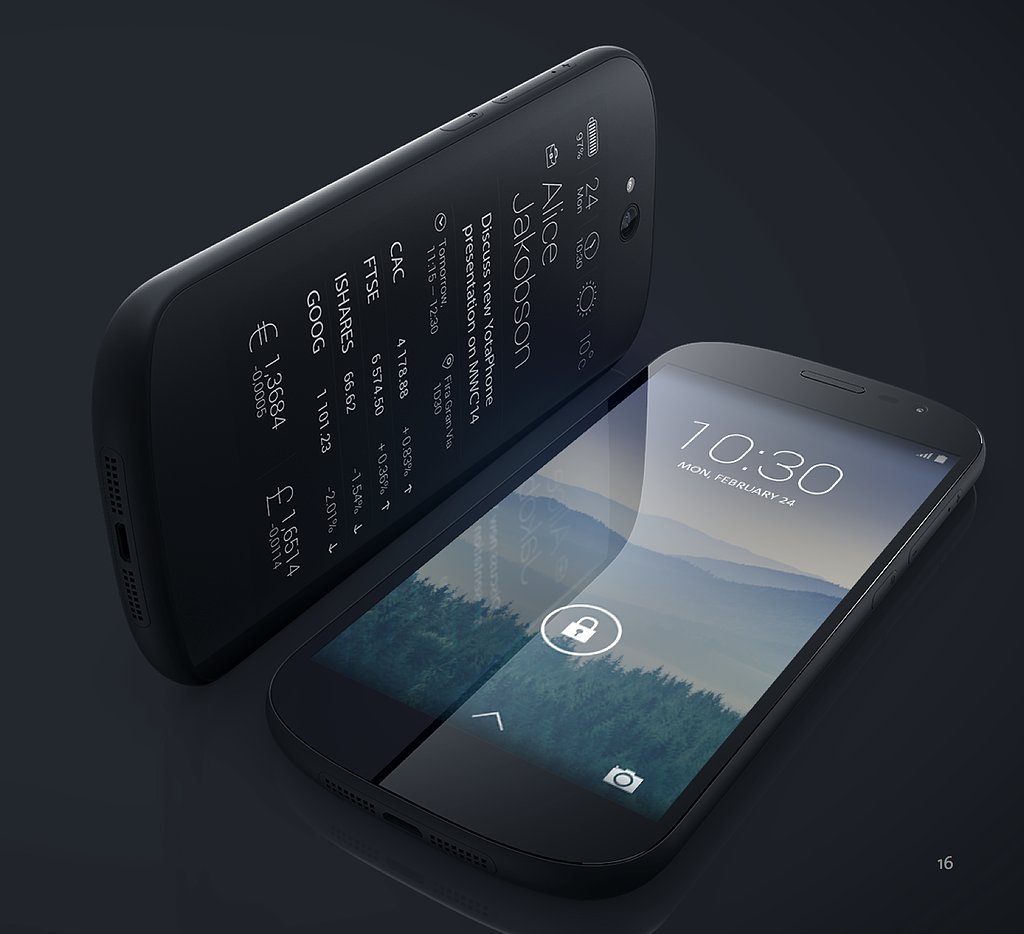
    Remember Russian President Vladimir Putin gifting the next-generation Yotaphone to the Chinese President during the Asia-Pacific Economic Cooperation (APEC) summit in Beijing? Yes, that same phone called the YotaPhone 2 has been officially announced and is already setting benchmarks when it comes to innovation.

    The YotaPhone 2 has got some improvements over its predecessor. It features a 5-inch 1080p AMOLED display and a 4.7-inch QHD e-Ink touchscreen, which is way better than the 4.3-inch of the previous model. The e-Ink paper display on the smartphone is similar to the e-Ink display we find on Amazon’s Kindle readers, and shows up notifications, clock, weather, etc. while the front display is the standard display we find on other smartphones.

    It runs on Android KitKat and is powered by a 2.3GHz quad-core Snapdragon 800 chipset along with 2 GB of RAM. The phone has 32 GB internal storage space. On the camera front, YotaPhone 2 sports an 8MP camera on the back and a 2MP camera on the front. It gets its juice from a 2,500mAh battery. Have a look at the key specs below:

    Specifications

    YotaPhone 2

    Display
    • 5-inch Full HD AMOLED display
    • 4.7-inch always-on E-paper display
    Processor 2.3 GHz quad-core Qualcomm Snapdragon 800
    Storage 32 GB
    RAM 2 GB
    Camera 8 MP Rear Camera
    2 MP front camera
    Battery 2500mAh
    Operating System Android OS, v4.4 (KitKat)

    The phone is expected to release for general sales in Russia this December. Though, it is expected to arrive in India some time in the future, as the official website lists India as one of the countries where the handset will go on sale. For the time being, interested users can register on the Yota’s official website to get more updates.

    This attempt could put Russia on the smartphone map of the world, largely dominated by American and Asian manufacturers. But as we already mentioned, the first official phone is in Chinese hands, the Russian manufacturer might have been a bit naive to hand over the only unique consumer device to the world’s photocopier nation.

  • Future iPhones May Soon Have the Technology to Only Fall Face Up – Just Like Cats

    Future iPhones May Soon Have the Technology to Only Fall Face Up – Just Like Cats

    Apple always seems to have a knack of pulling-off something out of the ordinary, and this time around the Cupertino based giant is on a quest to make its iPhone land like a cat in the event of a fall. Sounds too good to be true, but the company has reportedly filed a patent which just got approved by the Patent and Trademark office which put simply, would make the iPhone fall on its back.

    The patent is a wild attempt by Apple to keep its glass screen from cracking. As we know, cats are known for their innate ability to reposition itself while airbone in such a peculiar way, so that it lands on its feet to prevent itself from getting hurt. Apple’s new patent tries to implement the exact same principle to its bending and overpriced devices like iPhone and iPads.

    So how does it work?

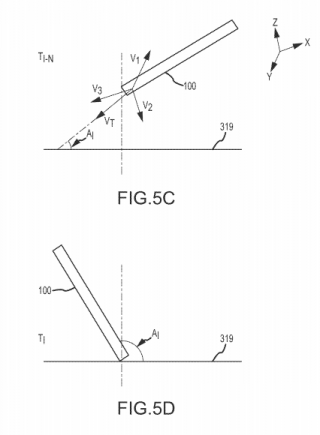
    apple catpatentUsing inputs via a combination of sensors like gyroscopes, accelerometers, and GPS, a device equipped with this new protective mechanism will detect when it’s in free fall and calculate parameters like speed of descent and time to impact. The device will then use an on-board motor to reposition itself, just like a cat would, in an attempt to protect fragile components like screen or the camera in the event of a fall. In addition, the device’s on-board motor can also be deployed, so it would screech a bit as it falls on the ground, just like a cat.

    Reports indicate that the patent is quite exhaustive, and Apple has provided a few more methods for repositioning the device while mid air, including extending air foils and use of gas canisters for more controlled landings.

    This sounds pretty insane and we wish Apple all the luck on their noble quest to scale the pinnacle of engineering innovation, rather than settling for the mundanely obvious solution of making their phones more robust. However, its worth mentioning the fact that often companies file patents just to protect their intellectual property, rather than actually building a device. So this could well be a distant possibility and chances of it becoming a reality might be slim. Either way, we would to love to see a cat-like iPhone.

  • Next Assassin’s Creed Revealed in a Leak; Ubisoft Confirms Report

    Next Assassin’s Creed Revealed in a Leak; Ubisoft Confirms Report

    The next installment of the wildly popular Assassin’s Creed franchise has been leaked, and this time around the game is set in 19th century London during the Victorian era. According to internal sources, it’s called ‘Assassin’s Creed Victory’ for the time being, and will be coming to PS4, Xbox One and PC in fall 2015. Sources also indicate that Victory will apparently be developed by Ubisoft Quebec, and not Ubisoft Montreal.

    This is what Ubisoft has to say after leaks were reported all over the web:

    [quote text_size=”small”]

    It is always unfortunate when internal assets, not intended for public consumption, are leaked. And, while we certainly welcome anticipation for all of our upcoming titles, we’re disappointed for our fans, and our development team, that this conceptual asset is now public. The team in our Quebec studio has been hard at work on the particular game in question for the past few years, and we’re excited to officially unveil what the studio has been working on at a later date. In the meantime, our number one priority is enhancing the experience of Assassin’s Creed Unity for players.

    [/quote]

    The leaks were apparently spotted by game-focused blog Kokatu, who also reported of seeing a seven minute ‘target gameplay footage’. The clip also notes that the footage was recorded using the new Anvil engine, which means that it was not pre-rendered.

    The leaked footage shows an unnamed assassin in smoke-covered London, whose target is a Templar engaged in human trafficking of children. The assasin accepts the contract and is engaged in a battle on top of a moving vehicle. The fight then moves on to a train station where assassin gets on to a higher ground, swings using a grappling hook – a new gameplay mechanic, and takes out the target.

    Sources also indicate that this will be the only Assassin’s Creed game next fall; unlike this year that saw two Assassin’s Creed titles launch – Assassin’s Creed Unity and Assassin’s Creed Rogue.

  • ZTE Brings Out the 5.5-inch Full-HD Grand S II in India

    ZTE Brings Out the 5.5-inch Full-HD Grand S II in India

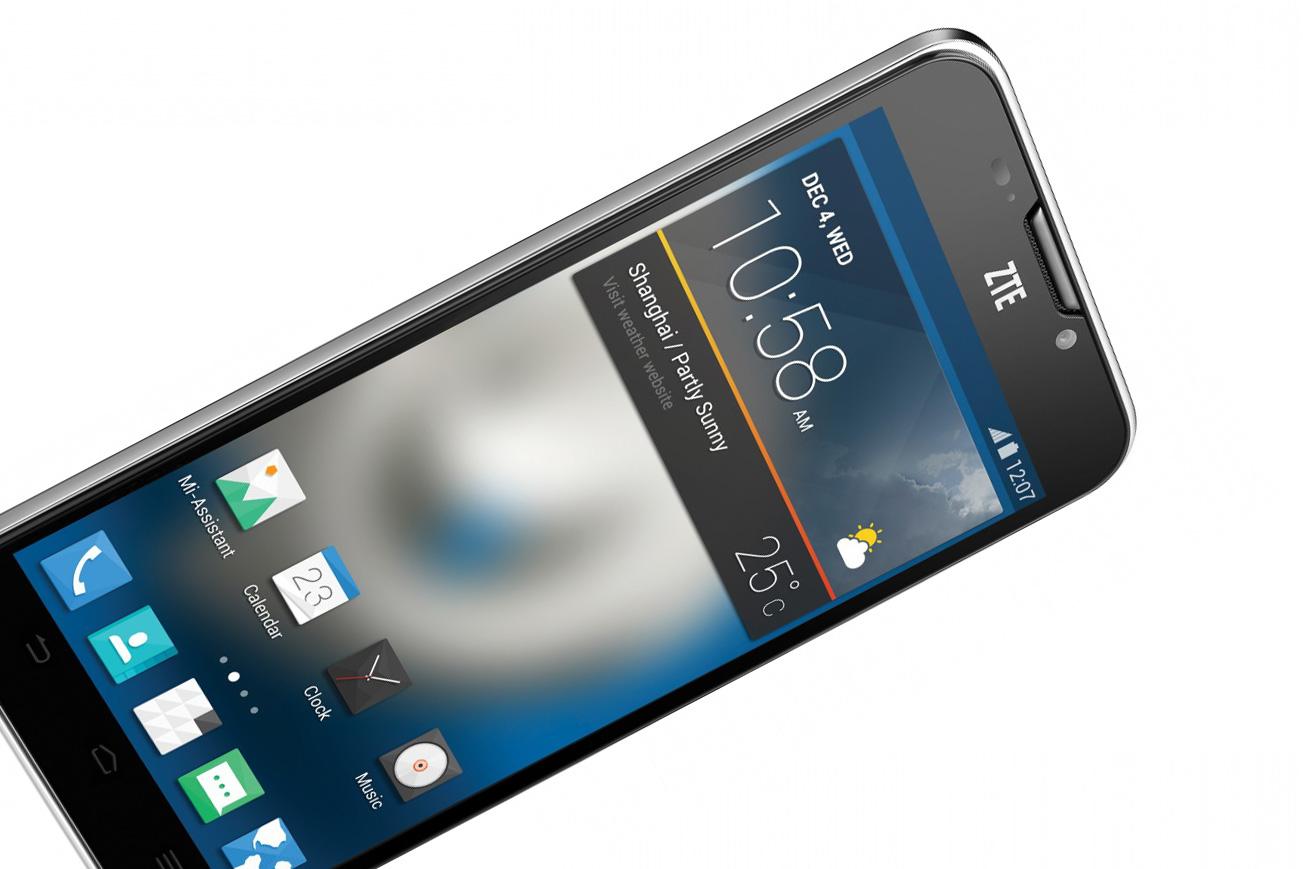
    Chinese Telecommunication giant ZTE has officially announced the Grand S II in India which will be available for purchase exclusively via Amazon for Rs. 13,999. The smartphone was initially unveiled at CES 2014 and unlike Xiaomi, the Grand S II will be available without the flash sale system.

    Apart from the slightly dated Android version, the Grand S II is crammed with some impressive features given the price. The smartphone sports a 5.5 inch Full-HD display and packs in a solid 2500mAh battery. Under the hood, the ZTE Grand S II is powered by a quad-core Qualcomm Snapdragon 800 chipset clocked at 2.2Ghz bundled with 2GB of RAM. The camera unit includes a 13 MP rear camera with LED flash capability along with a 5MP selfie cam. On the memory front it comes with a hefty 16GB inbuilt storage expandable upto 32 GB via SD card. Check out the key specs below.

    Specifications

    ZTE Grand S II

    Display 5.5 inch Full-HD 1080×1920 pixels
    Processor 2.2GHz  quad-core Qualcomm Snapdragon 800
    Storage 16 GB + microSD upto 32 GB
    RAM 2 GB
    Camera 13 MP with LED flash
    5 MP front camera
    Battery 2500mAh
    Operating System Android OS, v4.2 (Jelly Bean)

    In addition, ZTE has introduced Hub and Spoke models for customer service which are open across metros and is further planning to expand its operations in India. The smartphone does pack an impressive set of specs given the price range, though how good the device is, we’ll have to wait till we get hands on the device.

  • Celkon Brings Out an Ultra Cheap Windows Smartphone

    Celkon Brings Out an Ultra Cheap Windows Smartphone

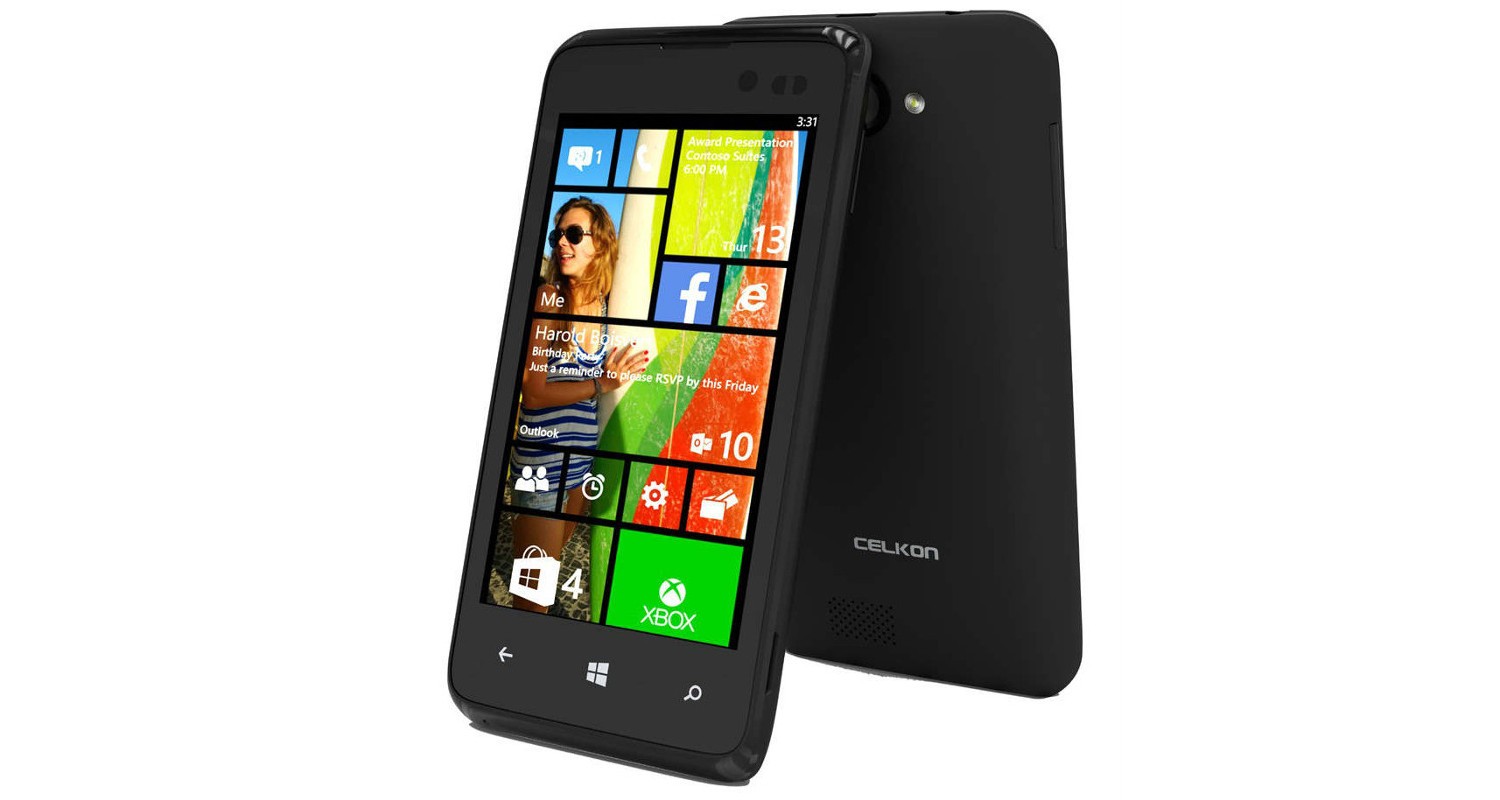
    Following the footsteps of XOLO and Micromax, Celkon has also jumped onto the Windows bandwagon. Celkon Mobiles, in partnership with Qualcomm and Microsoft today launched its first ever Windows OS phone called the Win 400. The device will be up for grabs for Rs.4979 and does pack some good specs given the price range.

    Commenting on the launch, Mr. Y Guru Chairman and MD – Celkon Mobiles, said “We are happy to announce our association with Microsoft and Qualcomm, a new milestone for Celkon. We have many more exciting offerings lined up in the coming year as well which will stand true to our proposition of being innovative and yet, affordable.”

    The Celkon Win 400 has dual-SIM capability and runs Windows 8.1 OS. It has a 4-inch WVGA display and is powered by a Qualcomm snapdragon quad-core chipset clocked at 1.2Ghz bundled with 512MB RAM. In terms of memory, the phone offers 4GB in-built memory expandable upto 32GB via sdCard Slot. Optics on the device feature a 5 MP Rear Camera AF coupled with a Flash along, while on the front we have  a 1.3MP selfie cam. Connectivity options on the Win 400 include support for 3G, Bluetooth, Wi-Fi along with GPS support. The device packs a pretty decent 1500mAh battery. Check out the key specs in the table below.

    Specifications

    Celkon Win 400

    Display 4” (10.16cm) Screen with WVGA Display
    Processor Qualcomm Snapdragon 200
    processor with 1.2 GHz Quad core CPU
    Storage 4 GB + microSD upto 32 GB
    RAM 512 MB
    Camera 5 Mp Rear Camera AF with Flash Light
    1.3 Mp Front Camera
    Battery  1500mAh
    Operating System Windows Phone 8.1

    The phone will be available in White and Black color variants across all retail stores and e-commerce websites in India. The Win 400 from Celkon is apparently the cheapest Windows phone ever produced.

  • The Stylish ASUS ZenWatch Likely to Hit Indian Shores by March 2015

    The Stylish ASUS ZenWatch Likely to Hit Indian Shores by March 2015

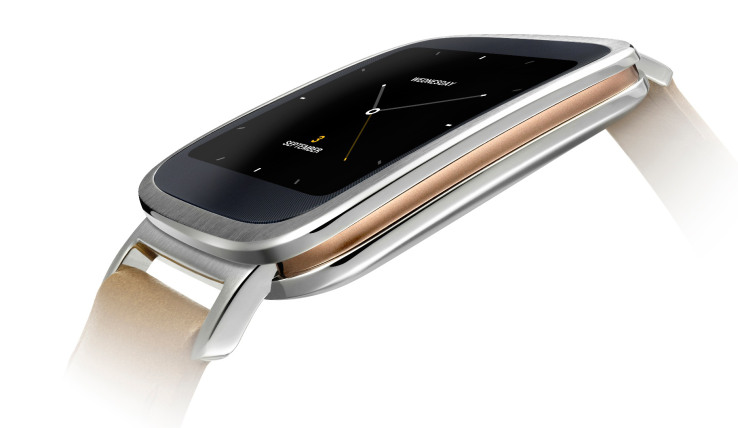
    ASUS ZenWatch is all geared up to launch in India by March 2015. The stylish looking watch has already made its mark in the smartwatch arena and is the hot favourite in the Android wear smartwatch league. The device is expected to be priced below Rs. 20,000 in the Indian market, though there is no official statement from the company in terms of pricing. We can expect the ZenWatch to be strategically priced, as the Moto 360 (its main competitor) is selling in India for Rs. 17,999. The other first-gen Android wearables like the LG G Watch and Samsung’s Gear Live are priced at Rs. 14,999 and Rs. 15,900 respectively.

    ASUS ZenWatch has already received some rave reviews and is claimed to be one of the best Android wearables currently in the market. The smartwatch is one hell of a looker and comes with a 1.63-inch 320×320 AMOLED display. The screen is curved to give off a 2.5D effect and the watch is powered by a 1.2GHz Qualcomm Snapdragon 400 processor along with 512 MB RAM. Check out the key specs in the table below:

    Specifications

    ASUS ZenWatch

    Display 1.63-inch AMOLED, 320×320 pixels
    Processor 1.2 GHz Snapdragon 400
    Storage 4 GB
    RAM 512 MB
    Battery 1.4Wh
    Operating System Android Wear
    Dimensions 50.6×39.8×7.9 mm

    It is also rated IP55 for water and dust-proofing, so it can easily handle those accidental splashes. The ZenWatch also has a 9-axis sensor for tracking activities and movements like step counts, heart rate and relaxation levels. In short, it’s a personal wellness manager that helps users keep a close watch at their fitness goals.

    Overall, this unique piece of hardware is one heck of a device we just can’t wait to get our hands on it.

  • Xiaomi Redmi Note: Unboxing and Hands On

    Xiaomi Redmi Note: Unboxing and Hands On

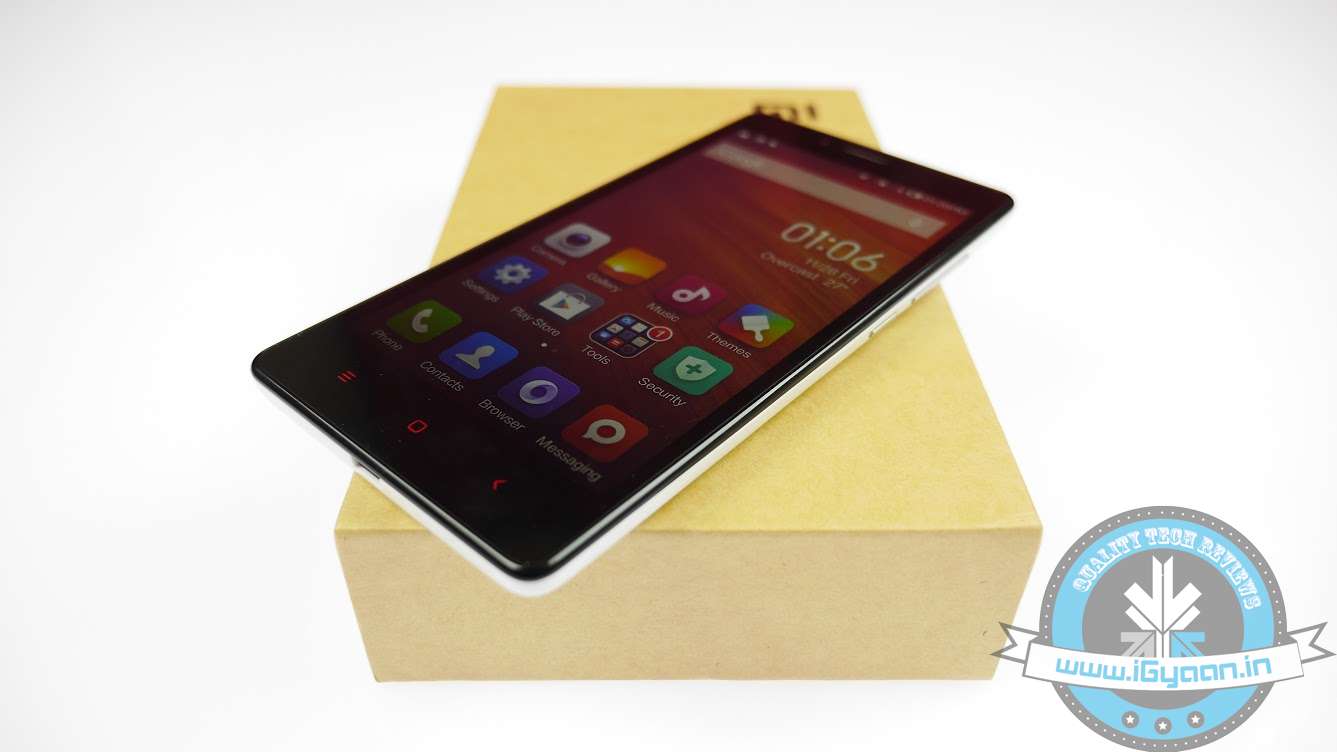
    In the house, we have the new Redmi Note from Xiaomi. The device was launched just a few days back and will be available in two variants, one is a 3G variant, while the other one is the 4G LTE compatible variant. The one with us is a 3G variant. The phone comes in the recycled MI style brown box. The first thing that you see once you unbox is the Redmi Note, which has a nice and glossy back. Delving deeper in the box, we see the microUSB to USB charging cable along with a fairly nice quality wall charger. Also included in the box is a 3.8 volt, 3100mAH battery along with a manual, service booklet and a bunch of other documentation.

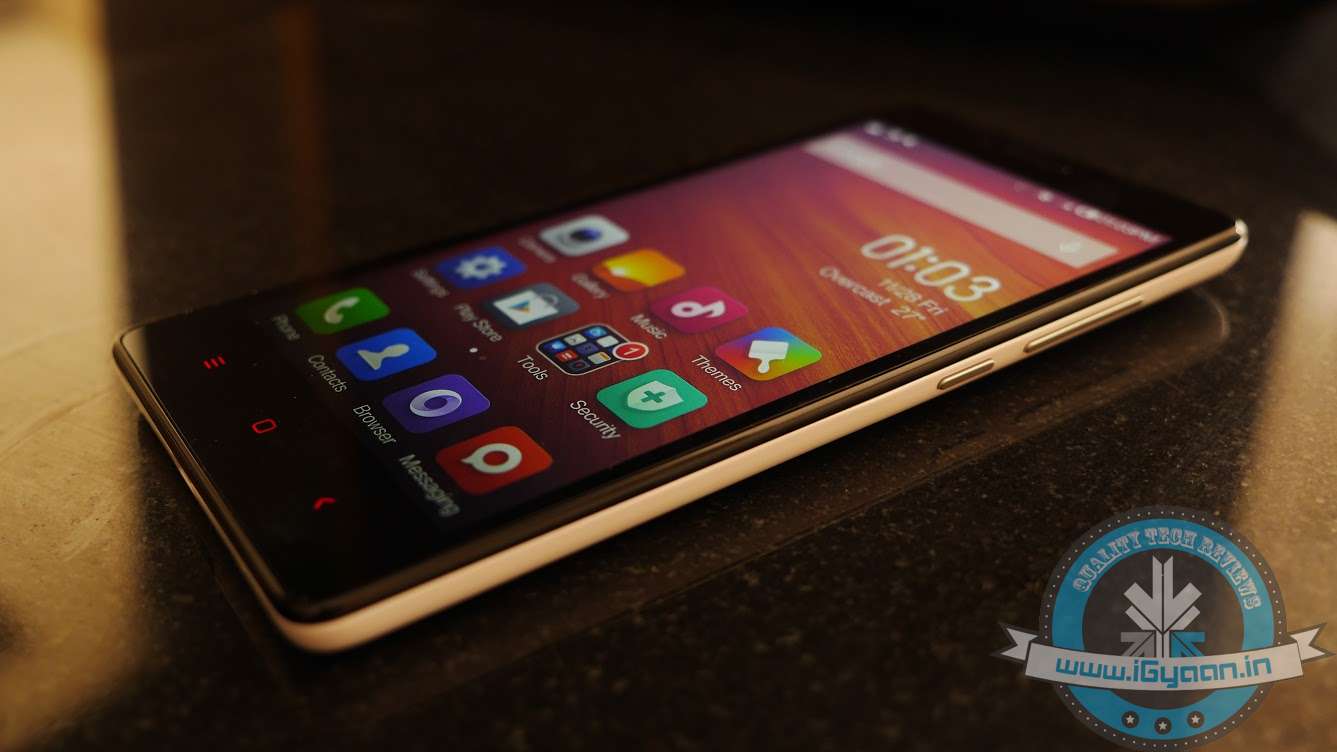
    Getting back to the phone, on the front we have a 5.5-inch IPS LCD screen with a resolution of 720p. A 5MP wide angle camera capable of 1080p video recording sits on the top of the device. Right below the display, we have three red coloured touch capacitive buttons. The right side houses the power button along with the volume rockers. On the top lies the 3.5 mm headphone jack along with a secondary microphone for voice cancellation. There’s nothing on the left, while at the bottom lies the USB port along with the main microphone.

    P1070103

    Coming on to the back, we have a 13MP camera bundled with a LED flash. The back has a nice glossy finish with a MI logo at the bottom along with the speaker grill right below the logo. Removing the back panel reveals the two SIM slots and an SD card slot.

    Talking about the specs of the Redmi Note, the chipset on the device is a MediaTek octa-core MTK 6592 processor clocked at 1.7GHz bundled with 2 GB RAM. It offers 8 GB in-built storage expandable up to 32 GB.  The device is powered by a pretty solid 3200 mAh battery. On the camera front, you get a 13MP primary camera along with a wide angle 5 MP front-facing selfie shooter.

    Key Specs

    Specifications

    Xiaomi Redmi Note (3G)

    Display 720×1280 pixels, 5.5 inches IPS LCD capacitive touchscreen
    Processor 1.7 GHz Octa-core
    Storage 8 GB + microSD upto 32 GB
    RAM 2 GB
    Camera 13 MP, 4128×3096 pixels, autofocus, LED flash
    5 MP front camera
    Battery Li-Po 3100mAh
    Operating System Android OS, v4.2 (Jelly Bean)

    Powering on the device, the first thing you see for setting up the device is a keyboard input method. Once through with the setup process, you get to see the same MIUI we saw in the MI3. The exact version is the MIUI 29.0, while the Android version is 4.2.2 Jelly Bean. It will be updated soon to the KitKat. Coming back to the UI, the interface seems quite snappy and swift. Scrolling is really fast and responsive, there are a lot of quick toggle notifications. Multitasking should be fairly good as we always have a little over 1 GB RAM free.

    P1070089

    The screen has a nice feel to it, so you would want to avoid putting a screen protector to retain that feel.  We also tried playing a few videos and it runs videos pretty well, though the audio output is not as good we’ve seen with devices in the same price range.

    Talking about aesthetics, the device feels really good in the hand, though slightly on the heavier side. The device has a nice glossy finish all round, so it does attract a lot of fingerprints.

    Overall, the device seems fairly decent and comes at a very economical price point and will definitely make the holiday list of the phones. The build quality, look and feel seem quite good given the price of the device. You will able to get your hands on the device very soon as the first flash sale is scheduled for 2nd of December. So that’s about it for now, keep checking back for an in-depth review of the new Xiaomi Redmi Note.

  • Arkham Knight Trailer Flaunts Wacky New Batmobile

    Arkham Knight Trailer Flaunts Wacky New Batmobile

    The upcoming game in Rocksteady’s Arkham series, Arkham Knight, has a new trailer giving us fresh insights of what we can expect from the game. This sequel is set one year post the events of Batman: Arkham City where Batman is fending off Scarecrow, who has united Batman’s foes in a deadly plot to kill the Bat. The new trailer shows off the Batmobile with Batman leaping out of the vehicle to fight enemies.

    In the trailer, we get to see some of the gameplay, especially how the Batmobile has been made an integral part of the game mechanics. It also shows some of the highly acclaimed combat and stealth mechanics that we saw in Arkham Asylum.

    Batman: Arkham Knight marks the return of Rocksteady Studios. The last year’s Arkham Origins developed by Warner Bros. was a bit disappointment. The game also marks the return of the veteran voice actor Kevin Conroy as Batman with Scarecrow being the Dark Knight’s nemesis this time. In this explosive finale of the Arkham saga, Batman faces his arch nemesis Scarecrow, who has united Gotham’s top evil geniuses including Penguin, Two-Face and Harley Quinn to destroy the Dark Knight forever. The game will feature the intriguing Batmobile, which apparently will form an integral part of the gameplay for the first time in the franchise. A deadly combo of Batmobile and new gameplay mechanics should suffice hardcore Batman fanatics who have been longing for that complete Batman experience.

    The game was expected to launch in October this year, but the date has now been pushed ahead. The official launch date for Batman: Arkham City is 2nd June for the PC, Xbox One and PS4. Check out the new trailer below:

  • Lenovo Yoga Tablet 2 830LC Review

    Lenovo Yoga Tablet 2 830LC Review

    In today’s highly competitive tablet market, manufacturers are bound to offer an interesting set of specs just to have that slight edge over their rivals. Lenovo recently launched its Yoga Tablet 2 in an attempt to make a mark in this overcrowded tablet market. Does it have what it takes to compete against the big boys including the likes of iPad Retina, the Galaxy Tab 4 or for that matter, the wildly popular Nexus 7. Based on an entirely different form factor, a decent set of specs and a Full HD display, the Yoga Tablet 2 was dying to come to our test lab for a review, and we did not disappoint it.

    SUMMARY

    Strategically priced at Rs. 20,990, the 8-inch Lenovo Yoga Tablet 2 packs a rather interesting set of specs along with a very innovative design. But does it packs enough punch to become a tablet worth shelling out your hard-earned cash? Let’s find out:

    Yogatablet 2

    HARDWARE

    The Yoga Tablet 2 830LC is powered by an Intel Atom Z3745 quad-core processor clocked at 1.86 GHz. It has a massive 6,400mAh battery that should provide enough juice, while optics includes an 8MP f/2.2 rear camera along with a relatively docile 1.6 MP front snapper.

    On the memory front, the Yoga Tablet 2 offers 16 GB of inbuilt storage expandable up to 64 GB via MicroSD bundled with 2 GB of RAM.

    KEY SPECS

    Specifications

    Lenovo Yoga Tablet 2

    Display
    • 8-inch Full HD IPS display
    • 1920X1200 pixels
    Processor Intel Atom Z3745 quad-core processor clocked at 1.86 GHz.
    Storage 16 GB + microSD
    RAM 2 GB RAM
    Camera Front 1.6 MP HD, Rear 8 MP
    Battery 2 Cell 6400mAH Li-Cylindrical
    Operating System Android 4.4 KitKat

    BUILD QUALITY AND DESIGN

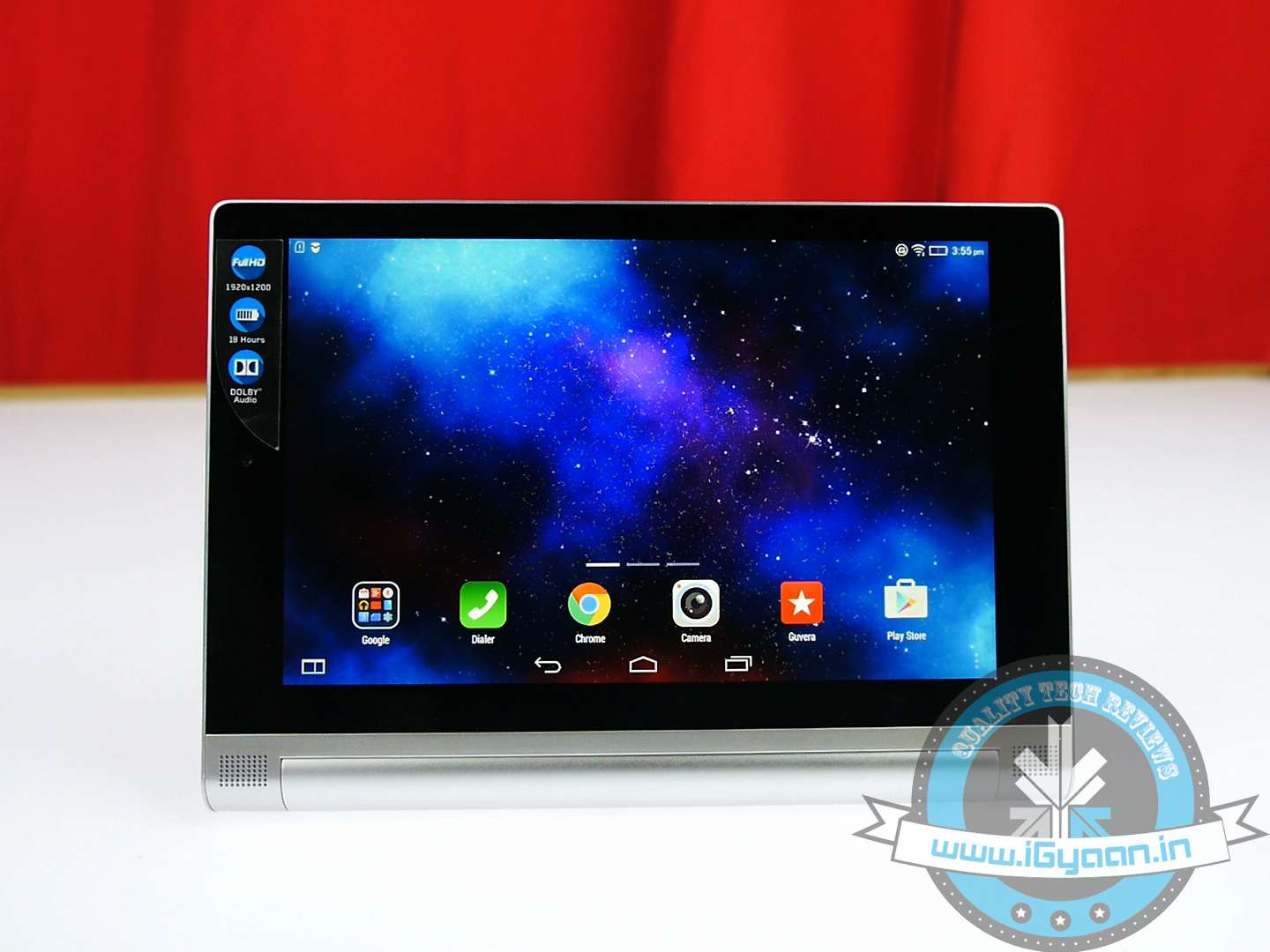
    The 8-inch form factor of tablets is always considered rather comfortable, so the Lenovo Yoga Tablet 2 comes across more of a paperback. It allows easy one-handed usage and comfortably slips into your briefcase making it ultra portable.

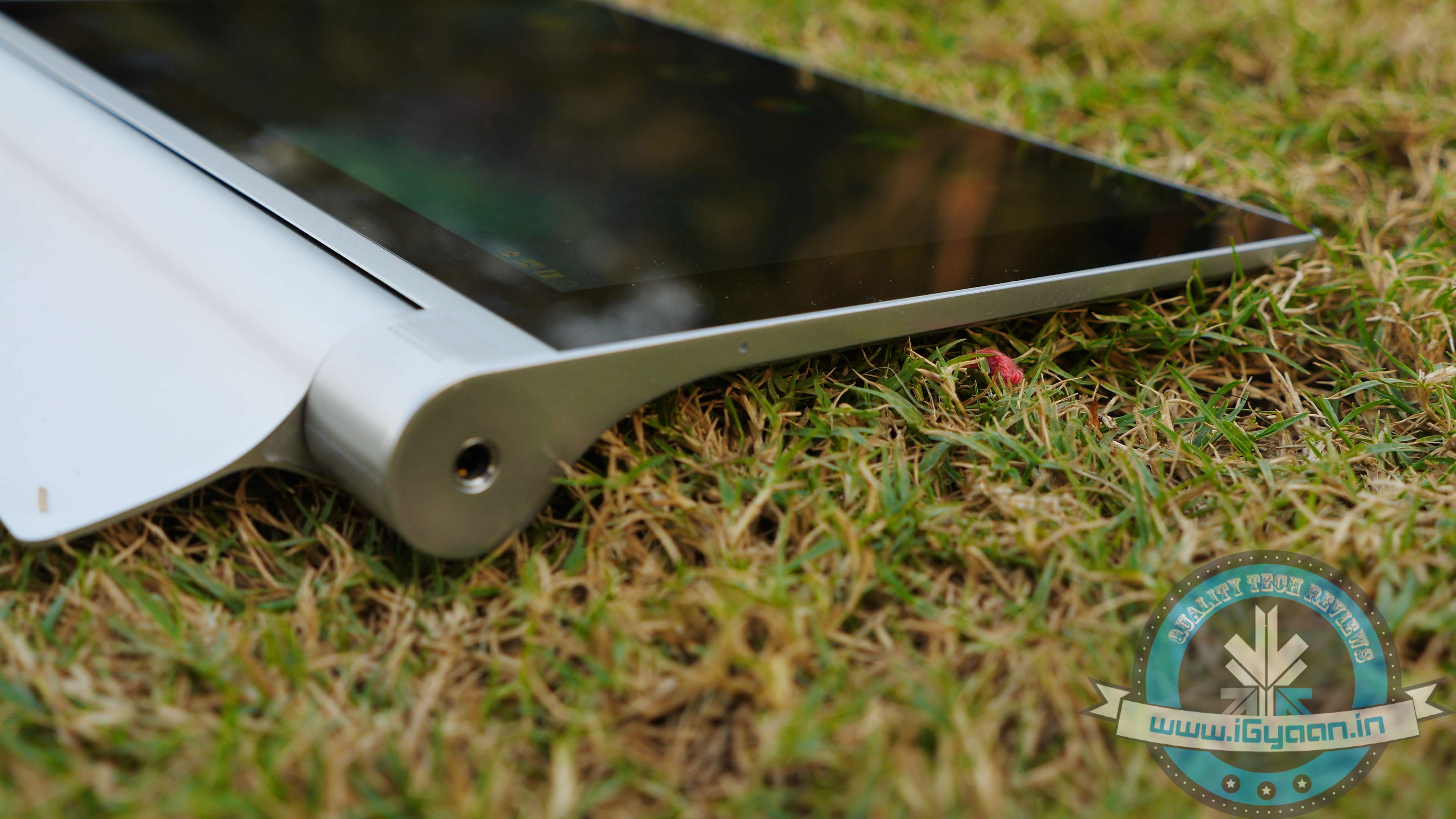
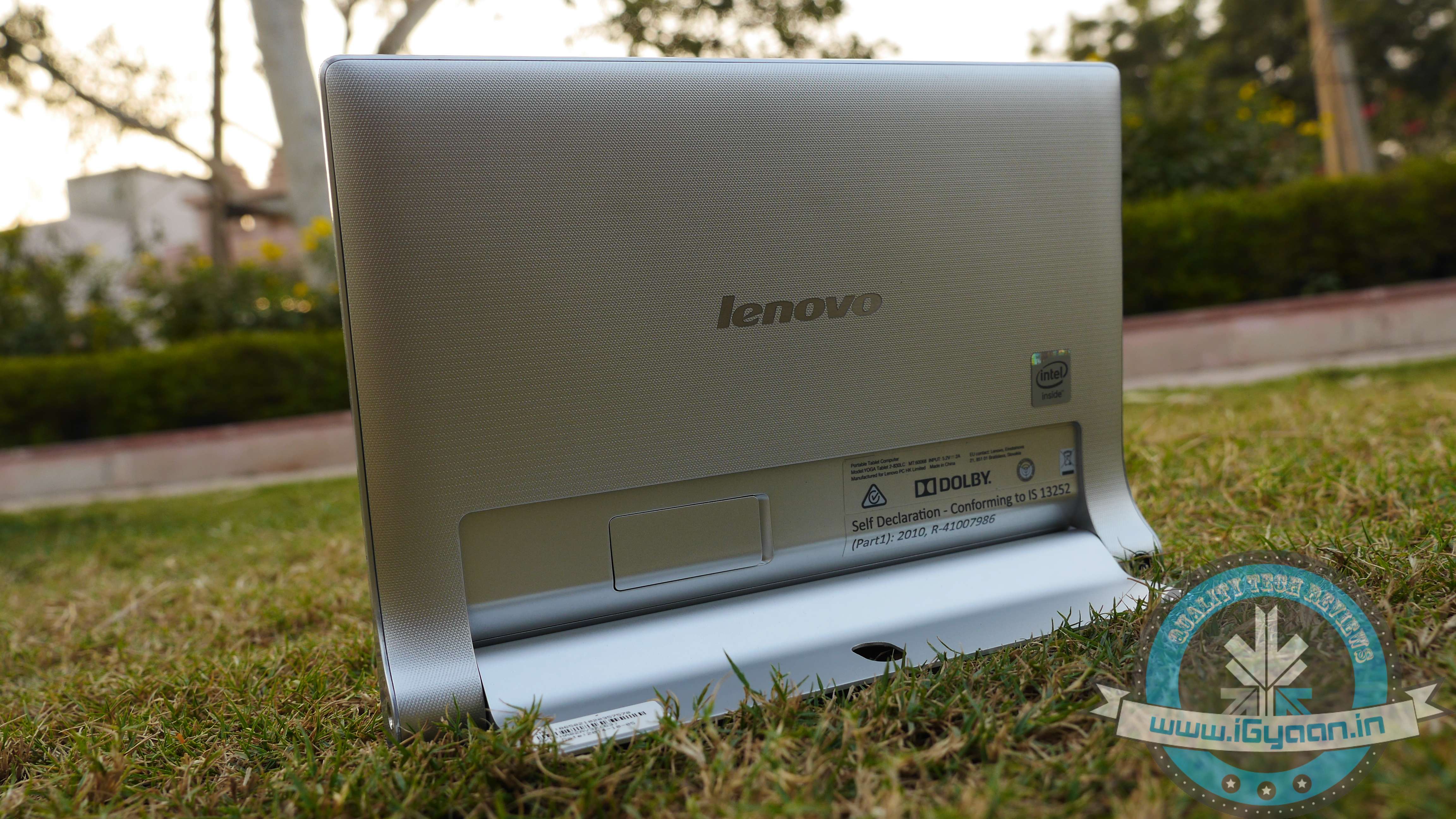
    To kick things off, the first thing that will grab your attention is the tablet’s all metal-magnesium alloy body. Perfect balance of right build and design is what you can expect from this tablet. There’s something intriguing about holding the Yoga Tablet 2; the alloy body gives it a very niche look, being lightweight at the same time.

    P1060873 P1060871

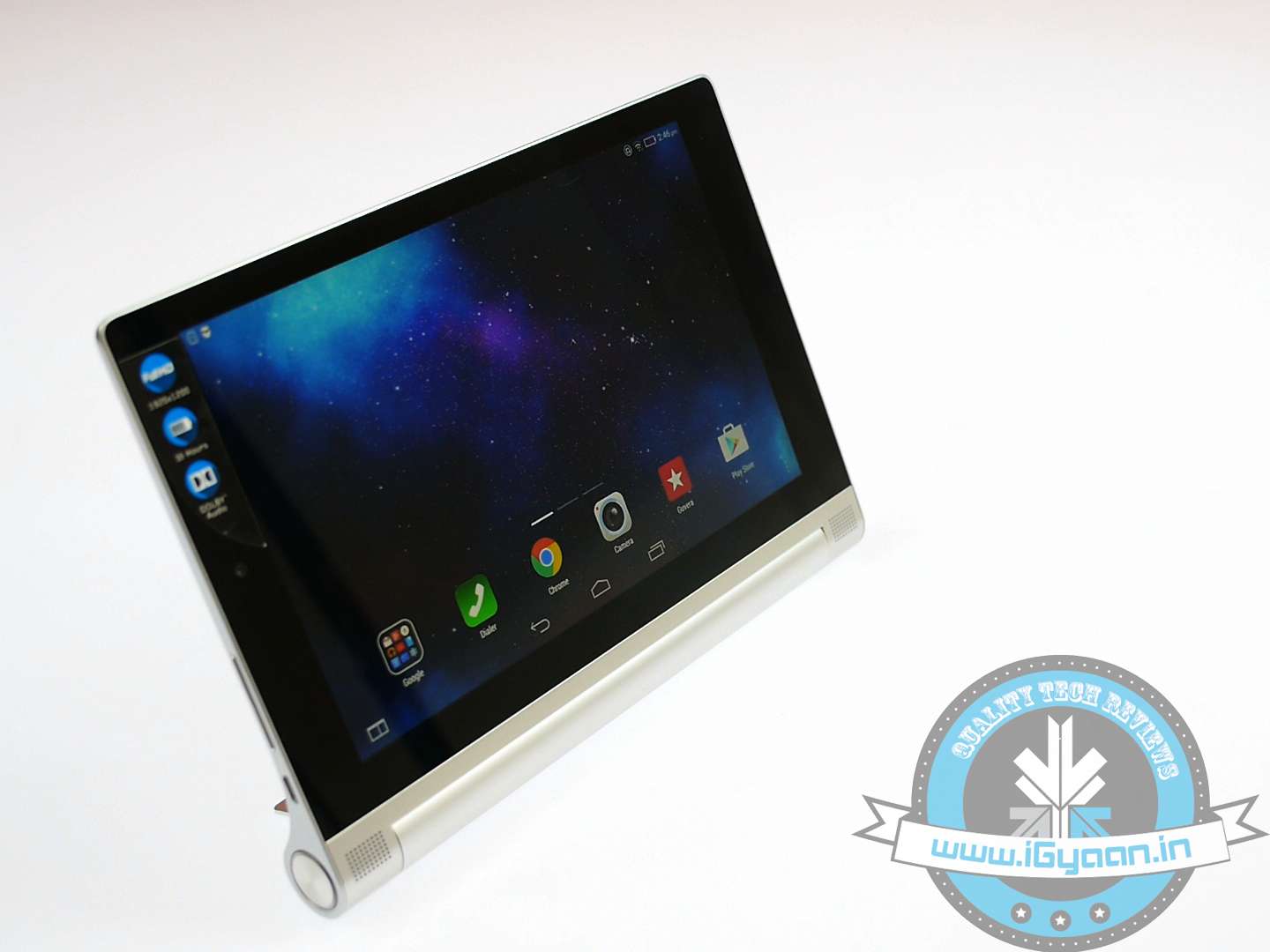
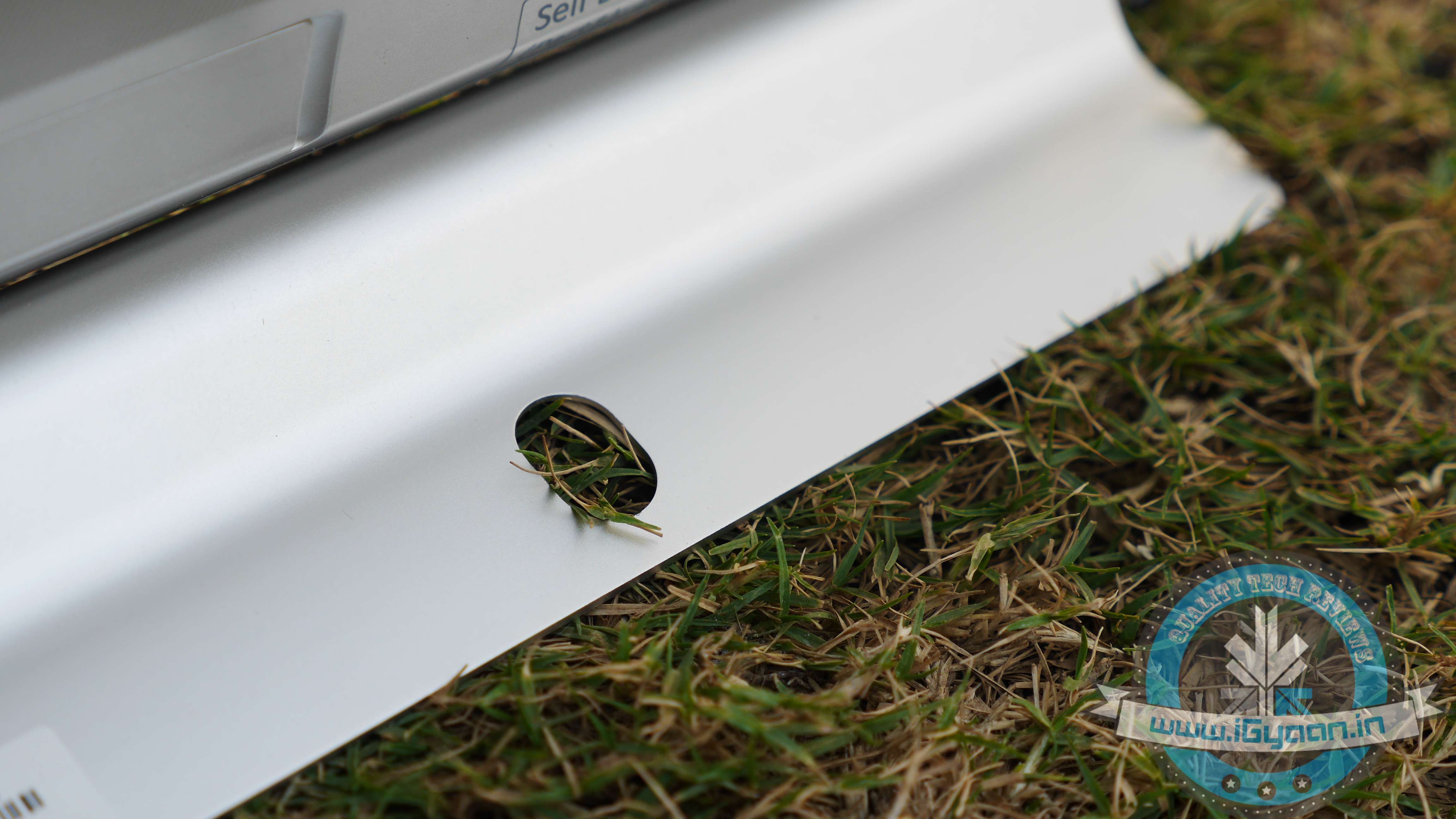
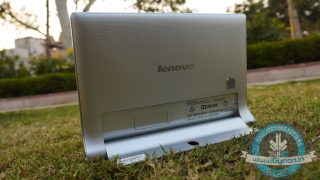
    The real kicker is the nifty stand that flips out in three positions, offering great comfort and viewing angles, no matter which way you want to use it. Whether you’re lazing around or sitting upright at your desk or for that matter even while working out, it truly emanates that hands-free experience. In addition, there’s also a hinge hand that makes it very comfortable to hold on to.

    Certainly, it is one of the most innovative designs at the moment from the usual rectangular slab we’re used to. Be it catching updates from IGN or watching Homeland, you’ll simply love the hassle-free usage.

    However, there’s only one USB port in the entire device with no HDMI slot, which is kind of lame and can certainly put off prospective buyers.

    DISPLAY AND MULTIMEDIA

    Given the price of the tablet, it is quite remarkable to have a Full HD display at this price point. The 8-inch screen renders vivid colours and excellent viewing angles. It’s a great device with a gorgeous display whether you’re watching movies, browsing and even gaming. We were quite impressed with the tablet’s 8-inch display.

    yogatablet 2

    Playing games or watching your favourite TV sitcoms on the Yoga Tablet 2 is no doubt fun. In addition, the front-facing Dolby stereo speaker packs enough punch that further enhances the whole multimedia experience. Lenovo Yoga Tablet 2 is an entertainment powerhouse.

    CAMERA

    The camera on the Yoga Tablet 2 is apparently its only weaker link. Optics includes an 8MP primary camera. Meanwhile, the 1.6 MP front camera is only decent enough for video chats. There seems to be some issue with our review unit’s battery, so we were not able to take camera samples as the camera unit was detecting low battery backup. Going by the specs, it’s safe to assume that the camera is one of the weaker links of the tablet.

    Eventually, we had to give the camera a very low rating which has affected the tablet’s aggregate score.

    OS and UI

    The Lenovo Yoga Tablet 2 runs on a forked version of Android 4.4 KitKat with a highly customised UI on top. The UI is very reminiscent of the iOS with the same dropdown menu including the home screen.

    Hence, there’s no app tray which some of us would not be comfortable with, but overall, the UI is quite user friendly with nicely laid icons. It will depend on users whether they find Lenovo’s tweaked UI useful. The new layout and icons would need getting used to, though there are some nifty pre-loaded apps that will certainly come in handy for users. Have a look at the screenshots below:

    PERFORMANCE

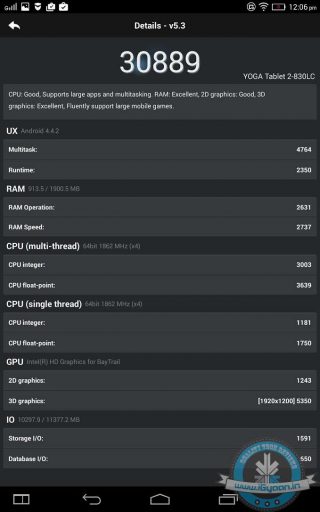
    The 8-inch tablet has a relatively powerful Intel Atom Z3745 quad-core processor clocked at 1.86 GHz. The chipset is perfectly capable of handling multiple apps and runs graphically intensive titles like Asphalt 8 without any hassles. The chipset combined with a hefty 2 GB RAM further bolsters the tablet’s performance, leaving enough room to run multiple apps at the same time.

    The tablet’s benchmark scores are quite impressive and translate into real time performance. Yoga Tablet 2 can handle everything thrown at it from 1080p flicks to graphic intensive games like Asphalt and Real Racing. Have a look at the benchmark scores below:

    TABLET NETWORKS AND BATTERY

    In terms of connectivity, the Yoga Tablet 2 offers great mobility with 3G, Wi-Fi and Bluetooth capabilities including support for 4G LTE. There’s also a SIM slot just in case you’re not in a mood to switch devices. As there’s no internal speaker, one needs to find a suitable place to have a conversation apparently. And of course, you have other options like Bluetooth, earphones etc.

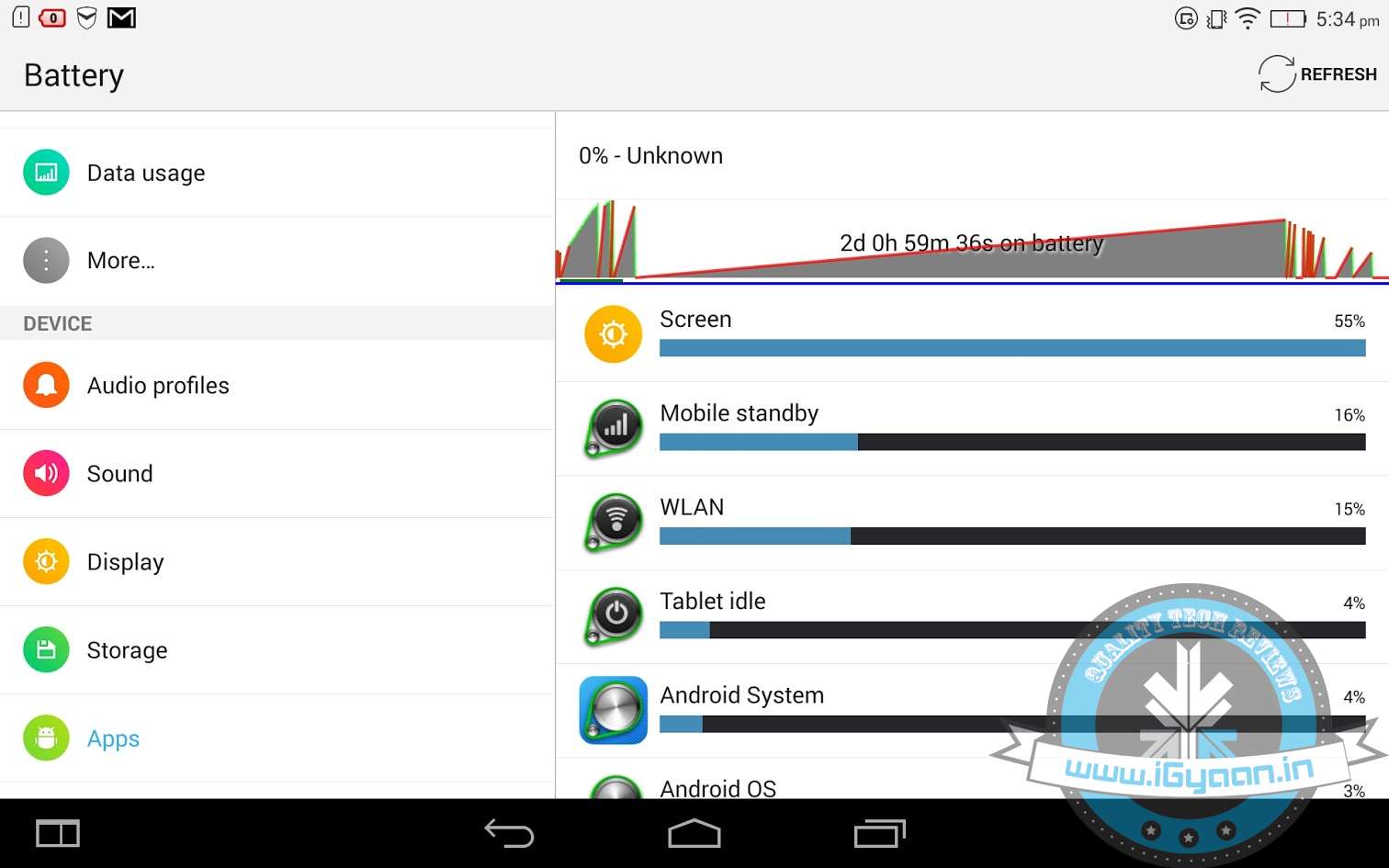
    The 8-inch tablet powered by a Li-ion 6400mAh battery looks quite superb on paper. The battery unit is much larger as compared to the iPad mini and Nexus 7 2013 which come with 4490 and 3950 mAh units respectively. Once fully recharged, Lenovo claims that the battery can last for 18 hours. Though, we would not be able to give you an accurate measure of the tab’s battery performance as our review unit always shows the battery level at zero percent. Still, we could use the tablet for two days in a row after charging it once. The screenshot below might give you a general idea of the tablet’s battery performance.


    yoga tablet 2

    So eventually, this has affected the tablet’s overall rating as we had to give a 5 on 10, which otherwise would have been at least 7.5.

    VERDICT

    Lenovo Yoga Tablet 2 hits the right spot in terms of performance, a Full HD display, innovative design and ease of use. The tablet features one of the best designs in the tablet market, compliments to the nifty little kickstand that significantly increases its usability.

    Apart from the relatively docile camera unit and lack of HDMI connectivity that is rather surprising, the Yoga Tablet 2 has all the attributes you would look for in a mid-range modern day tablet. If you are planning to invest in a mid-range tablet with a great display and top-notch performance, the Lenovo Yoga Tablet 2 should suffice all your needs. It has the attributes to give serious competition to the iPad mini 16 GB and Nexus 7 2013.

    [tw-column width=”one-half”

    GOOD THINGS

    • Innovative Design
    • Ease of Usage
    • Sharp FullHD Display
    • Impressive Performance
    • Great Build Quality

    [/tw-column]
    [tw-column width=”one-half” position=”last”]

    BAD THINGS

    • Weak Camera Unit
    • No HDMI Connectivity
    • No Bundled Headset

    [/tw-column]

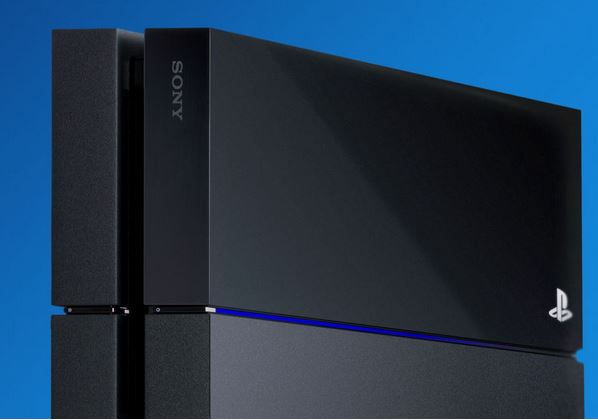
  • Sony Reportedly Shifting its Focus to PlayStation From TVs and Smartphones

    Sony Reportedly Shifting its Focus to PlayStation From TVs and Smartphones

    According to recent reports, Sony is in the process of shrinking down its TV and smartphone business to focus more on gaming consoles. With PS4 sales reaching a 13.5 million milestone, it’s apparently the only division that is generating profits for the company. Following a recent forecast that predicts 30 percent downfall in Sony’s mobile division by next spring, the Japanese giant is now making the PlayStation brand its utmost priority.

    A recent report from Reuters revealed that Sony has devised a 3-year plan for a shift that will focus primarily to boost the sales of PlayStation division by 25 percent, while reducing support for its mobile and television divisions. Thanks to the PS4, the company has generated a $265 million profit which compensated for the loss from its television and mobile business.

    The Japanese electronics giant has been posting yearly losses that have eventually resulted in the fall of its share price. The PlayStation 4 sales have been so strong that despite facing losses in other divisions, the company’s revenue grew by 7.2 percent. Let’s see how beneficial will this step be for the company.

  • Gionee Elife S5.1 Unboxing and Hands On

    Gionee Elife S5.1 Unboxing and Hands On

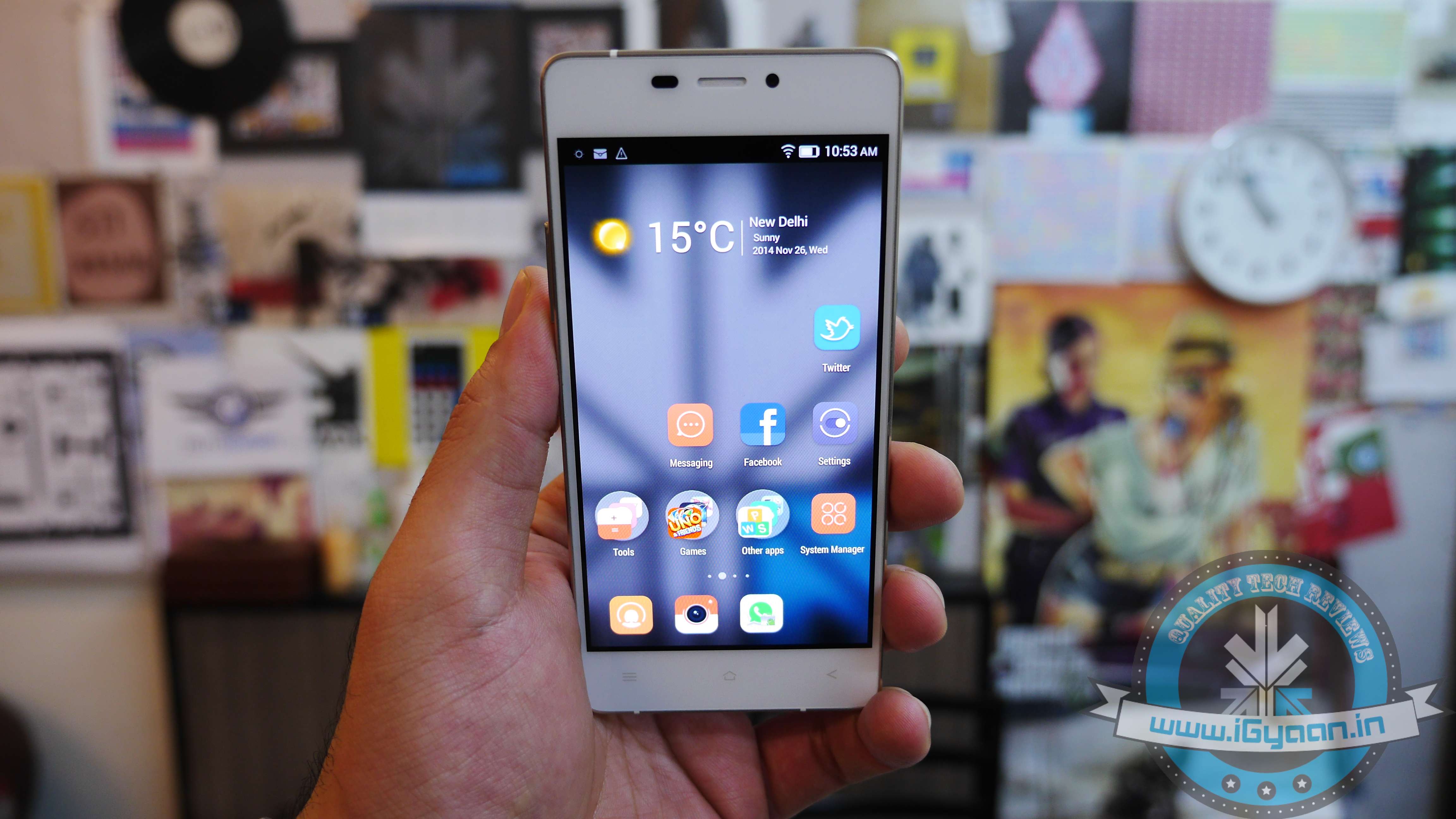
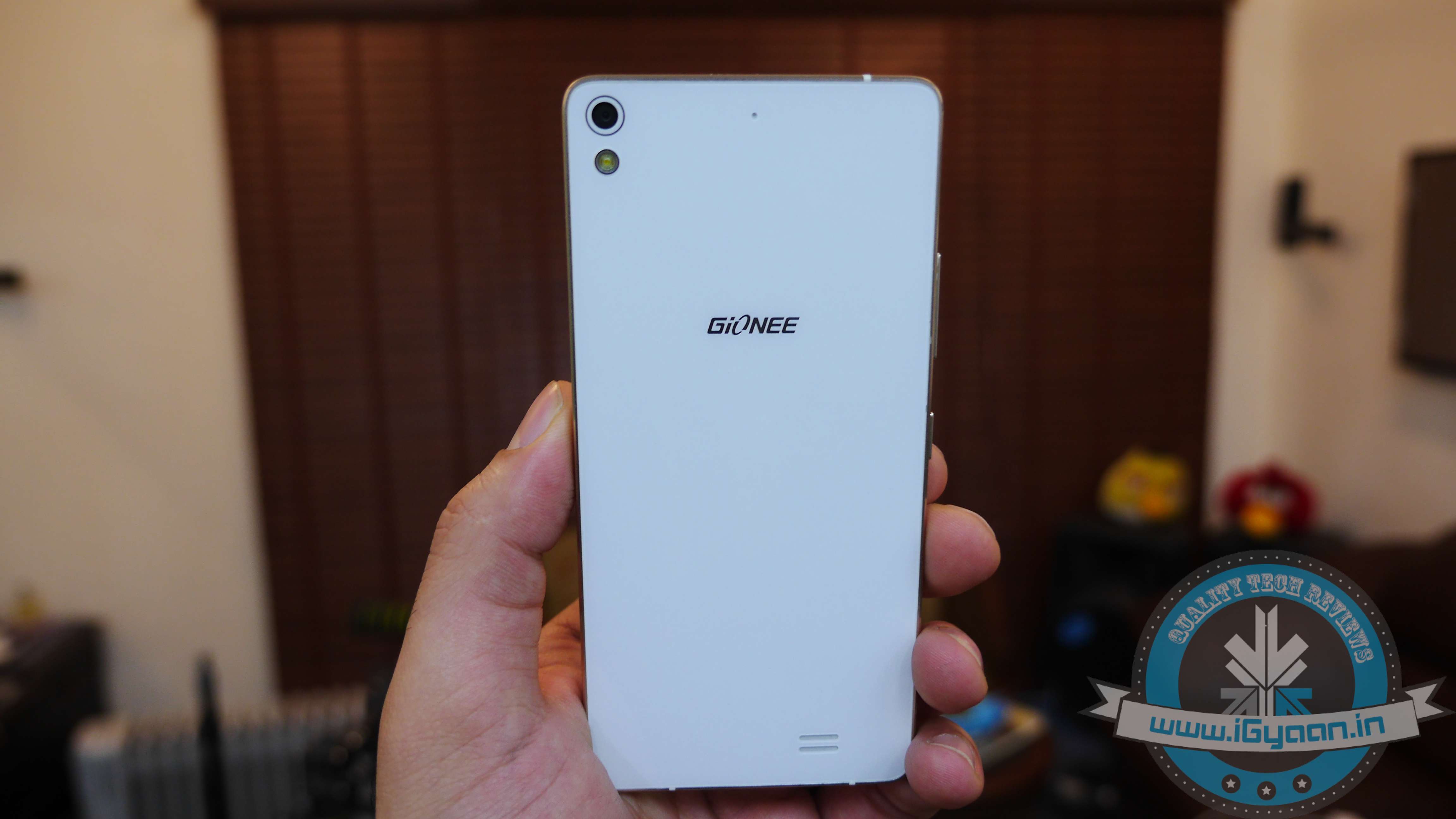
    Gionee’s latest addition to the smartphone lineup Elife S5.1 has arrived in our hands. The second slimmest smartphone just came out of test lab and from the initial impressions, it does look more refined and well built than its previous iteration.

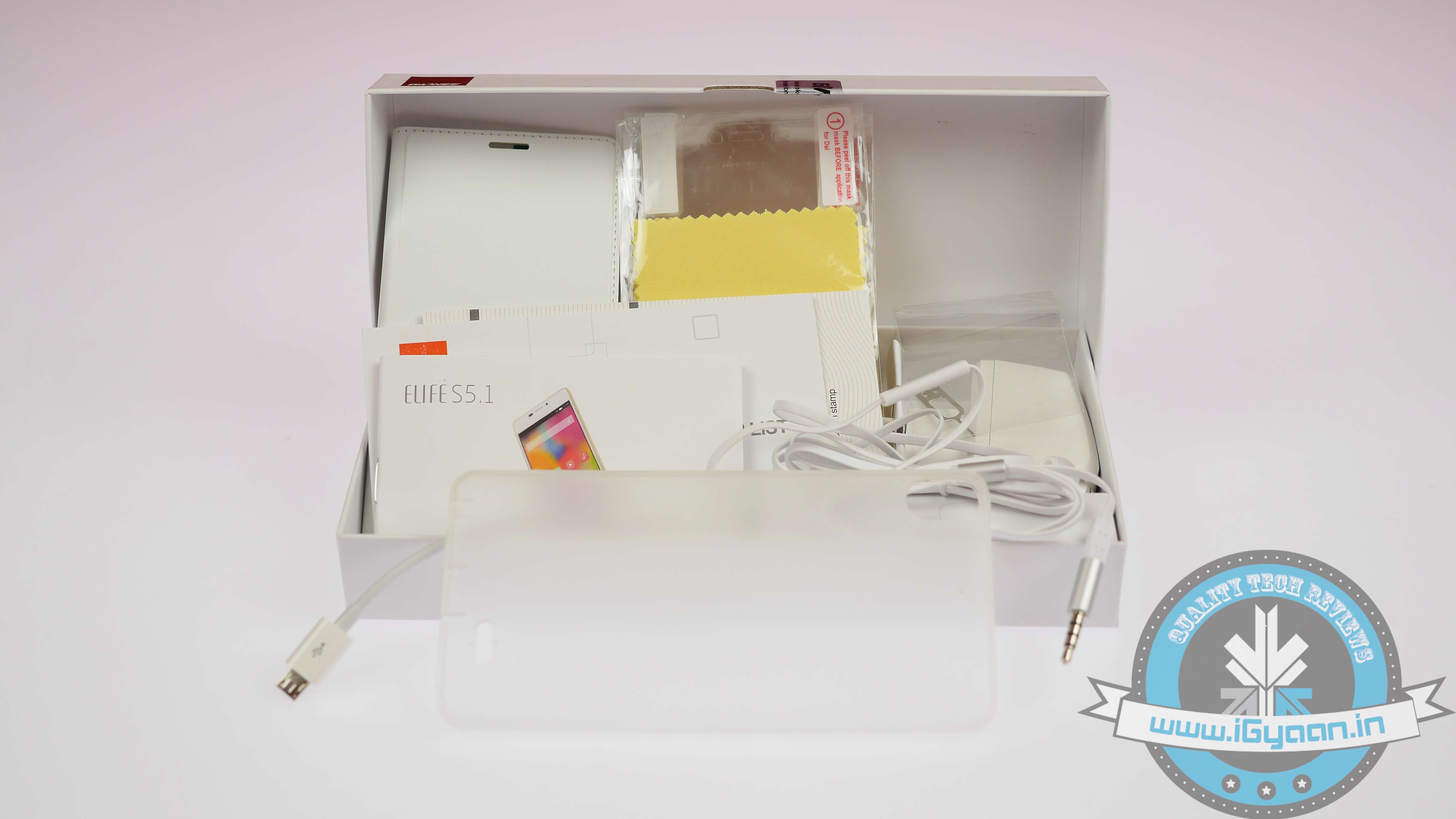
    Gionee has filled the box to the brim with free goodies.
    Gionee has filled the box to the brim with free goodies.

    Out of the box, the first thing you see is the flip case, within which rests the white and gold coloured Elife S5.1. The edges are rounded that make it looks much better and feel excellent in the hand. Along with the standard accessories which include the charger, USB cable and earphones, you get two sets of front and rear protectors. You also get a plastic cover in case you don’t want the flip cover. In addition, there’s an OTG cable, a detailed service list, a warranty card and a SIM removal tool.

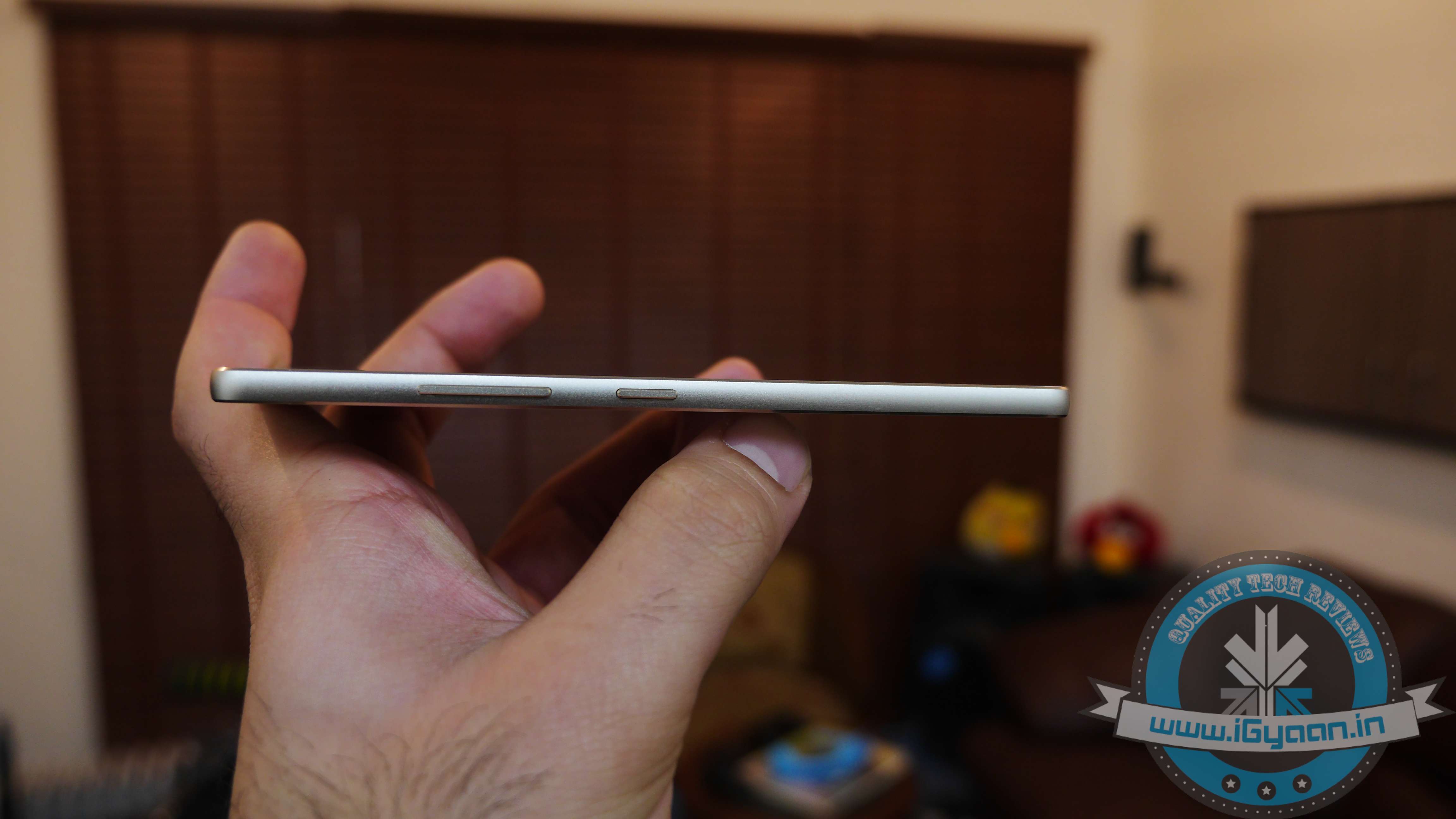
    At 5.15 mm this device brings a whole new meaning to slim and sexy.
    At 5.15 mm, this device brings a whole new meaning to slim and sexy.

    Despite being so slim, it houses a 2050mAh battery which is quite impressive. It has a nice metallic strip running along the sides, which does not come across as sharp as the one we saw with its predecessors and provides an efficient grip. Measuring at just a mere 5.15-inch, it’s slimmer than the latest iPhone and guess what – it doesn’t bend! Not yet anyway.

    The Gionee Elife S5.1 features a 4.8-inch Super Amoled HD display with a 1280x720p resolution and has a pixel density of 306ppi. Under the hood, it has a 1.7GHz octa-core MediaTek chipset bundled with 1 GB of RAM and 16 GB of non-expandable built-in storage capacity.

    The phone runs on Gionee's own Amigo UI.
    The S5.1 runs on Gionee’s own Amigo 2.0 UI.

    The camera unit on the phone features an 8MP rear camera with LED flash and a 5MP front camera with 88 degrees wide angle lens (for those wide selfies). Connectivity features include Bluetooth 4.0, MicroUSB 2.0, Wi-Fi, GPS and OTG connectivity. In addition, it has support for LTE connectivity. We get Android 4.4.2 KitKat out of the box with Amigo 2.0 UI onboard, and a hopeful update to Lollipop Android 5.0.

    The moment you turn on the device, you see the latest version of the Amigo UI. Multitasking with Amigo 2.0 is now different as compared to the previous version of the UI. Now instead of the home button, you have to hold down the Menu button, which brings up the same card style interface.

    Gionee S5.1 48

    The device seems really nice; it’s exceptionally slim, making one wonder whether it bends or not. It comes loaded with a bunch of handy accessories and will be announced soon and hopefully, at the right price. We are expecting the Gionee Elife S5.1 to be priced under Rs. 18,000, which seems promising for the handset. It is expected to be available in a variety of colours including white/gold, black, blue and pink.

    Tune in for the unboxing and hands-on video that will be up shortly.

    Key Specs:

    Processor Octa-core 1.7 GHz Cortex-A7
    Display 720×1280 pixels, 4.8-inch (~306ppi pixel density) AMOLED Capacitive Screen
    RAM 1 GB
    Battery capacity (mAh) 2050, non-removable
    Storage 16 GB in-built non expandable
    Camera 8 MP, 3264×2448 pixels, autofocus, LED flash
    Operating System Android OS, v4.4.2 (KitKat)

  • Qualcomm Develops Two Mammoth Devices to Test its Snapdragon 810 Processor

    Qualcomm Develops Two Mammoth Devices to Test its Snapdragon 810 Processor

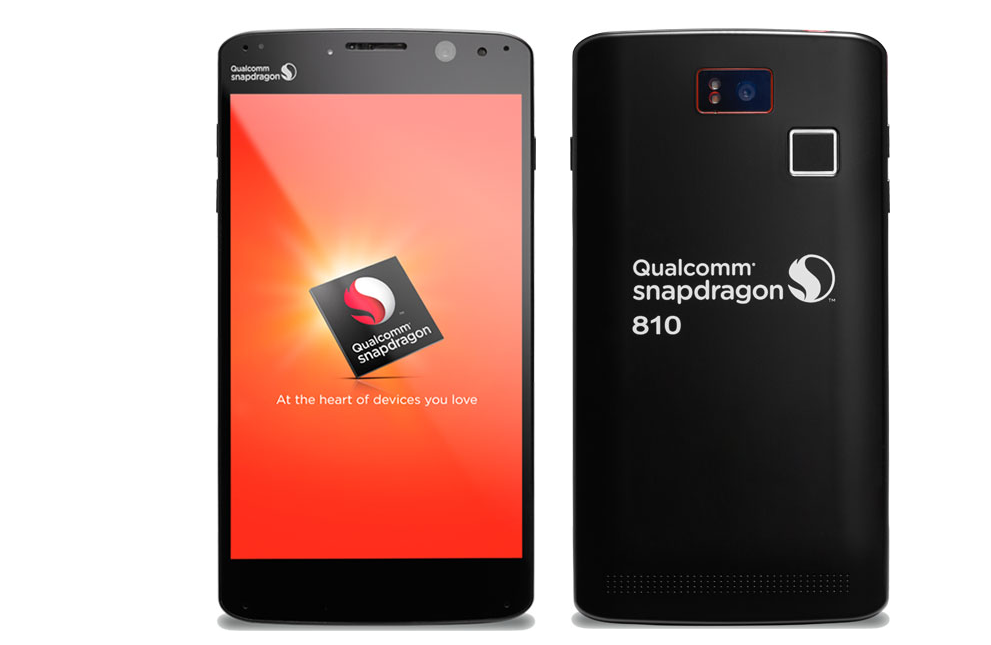
    Chipset manufacturer Qualcomm is testing the prowess of its next-gen Snapdragon 810 processor. This involves production and release of a new set of devices which the company has been busy with off late. First in the list is the Snapdragon 810 MDP smartphone that sports a 6.2-inch QHD display, 64-bit octa-core Snapdargon 810 Ultra HD processor, Adreno 430 GPU, 4 GB of RAM, 32 GB storage, 13 MP rear camera, 4 MP front snapper, a hefty 3020mAh battery with Quick Charge 2.0 technology. In addition to this, the device is packed with ultrsound emitter, microSD card slot, microUSB 3.0, fingerprint scanner and Android’s latest 5.0 Lollipop. This beast of a smartphone costs $799, which is still way below the 64 GB iPhone in the US market that costs $849.

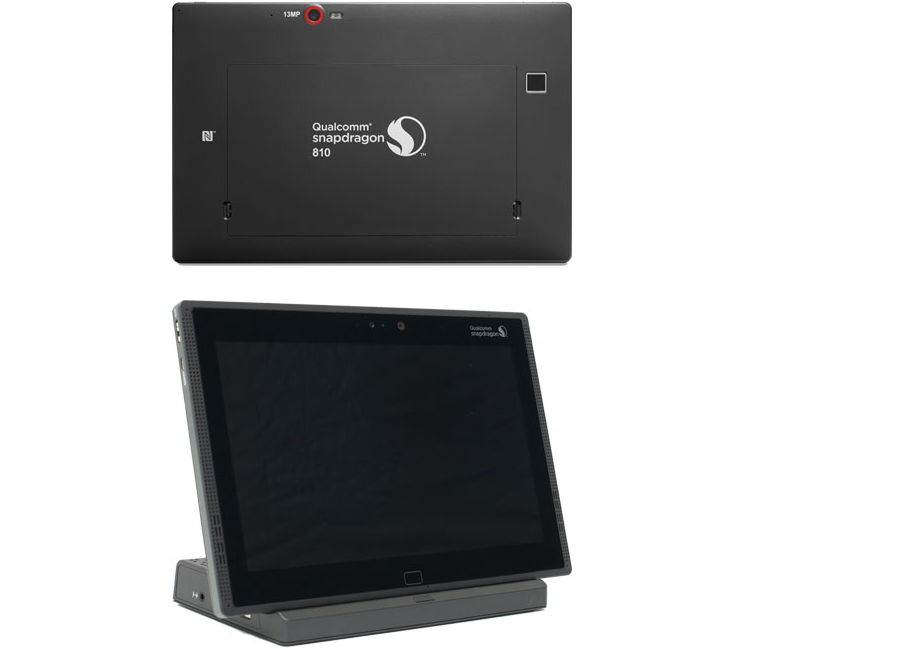
    The second one is the Snapdragon 810 MDP tablet that comes with a 10.1-inch 4K display, 64-bit octa-core Snapdragon 810 Ultra HD processor, Adreno 430 GPU, 4 GB of RAM, 64 GB storage. Optics include a 13MP rear camera along with a 4MP front snapper. The device packs in a mammoth 7050mAh battery with Quick Charge technology. The tablet also features dual ultrasound emitters, a microSD slot, microUSB 3.0 and Android Lollipop 5.0. The device costs $999.

    snapdraogn 810
    The mammoth set of specs that both the devices have is quite a notch higher than what we are used to. Sorry guys, but you don’t get to play around with these devices as it will be only available with registered purchasers.

  • Huawei Ascend P7 Full Review

    Huawei Ascend P7 Full Review

    Huawei has added some rather interesting devices in its product range. Its recent addition Honor 6 was a unique piece of hardware primarily focused on performance. Now, the Chinese manufacturer has added another device to its smartphone portfolio with the launch of Ascend P7. The company apparently made some bold claims during the P7’s launch event in France saying that the phone can outclass the best of flagships including the likes of Samsung Galaxy S5 and the HTC One. Last year’s release P6 was a gorgeous looking phone but struggled because of an underpowered chipset.

    So, has the company rectified its past mistakes and is the P7 the mid-range smartphone that the company claims it to be?

    SUMMARY

    Priced at Rs. 26,990, the P7 is certainly an expensive device from a budget manufacturer. It will be available for sale in the Indian market starting 30th November. To a certain extent, it defies Huawei’s image as a budget manufacturer as the Ascend P7 can be deemed as one of the fanciest phones produced by the company. It may not be as crammed with features like the other flagships, but is it better than other handsets in the same price bracket; we’ll find out.

    HARDWARE

    In comparison to its previous iteration, the Ascend P7’s hardware is cranked up a bit. It has Huawei’s in-house 1.8 GHz Kirin 910T quad-core CPU, Mali-450 GPU and 2 GB RAM on show, which should be up to the task.

    Specifications

    Ascend P7

    Display 5-inch Full HD (1920×1080 pixels) 445ppi
    Processor HiSilicon Kirin 910T quad-core 1.8 GHz
    Storage 16 GB + microSD
    RAM 2 GB RAM
    Camera 13 MP AF BSI F2.0, with Flash
    8 MP Front
    Battery 2500mAh
    Operating System Android 4.4 KitKat Emotion UI 2.3

    BUILD AND DESIGN

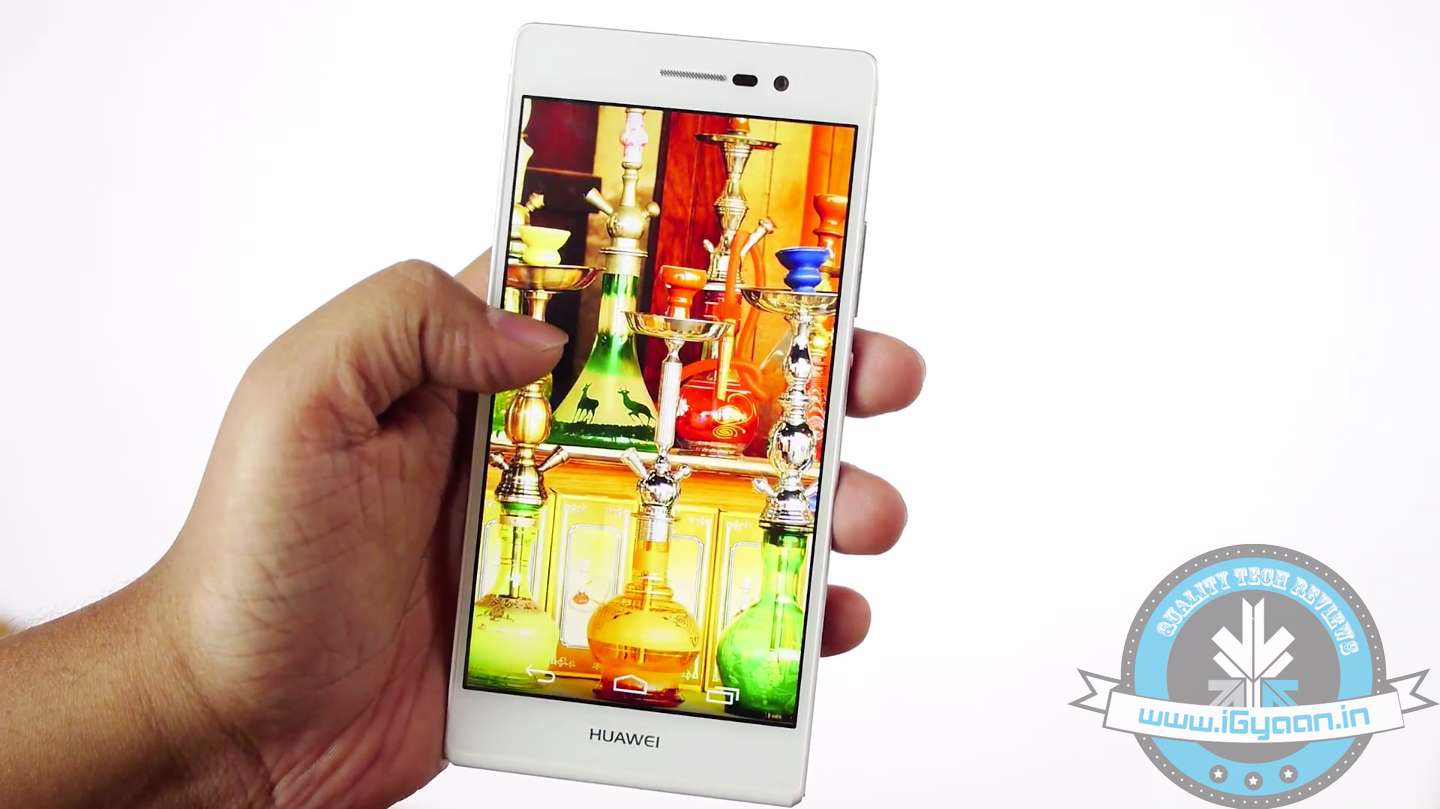
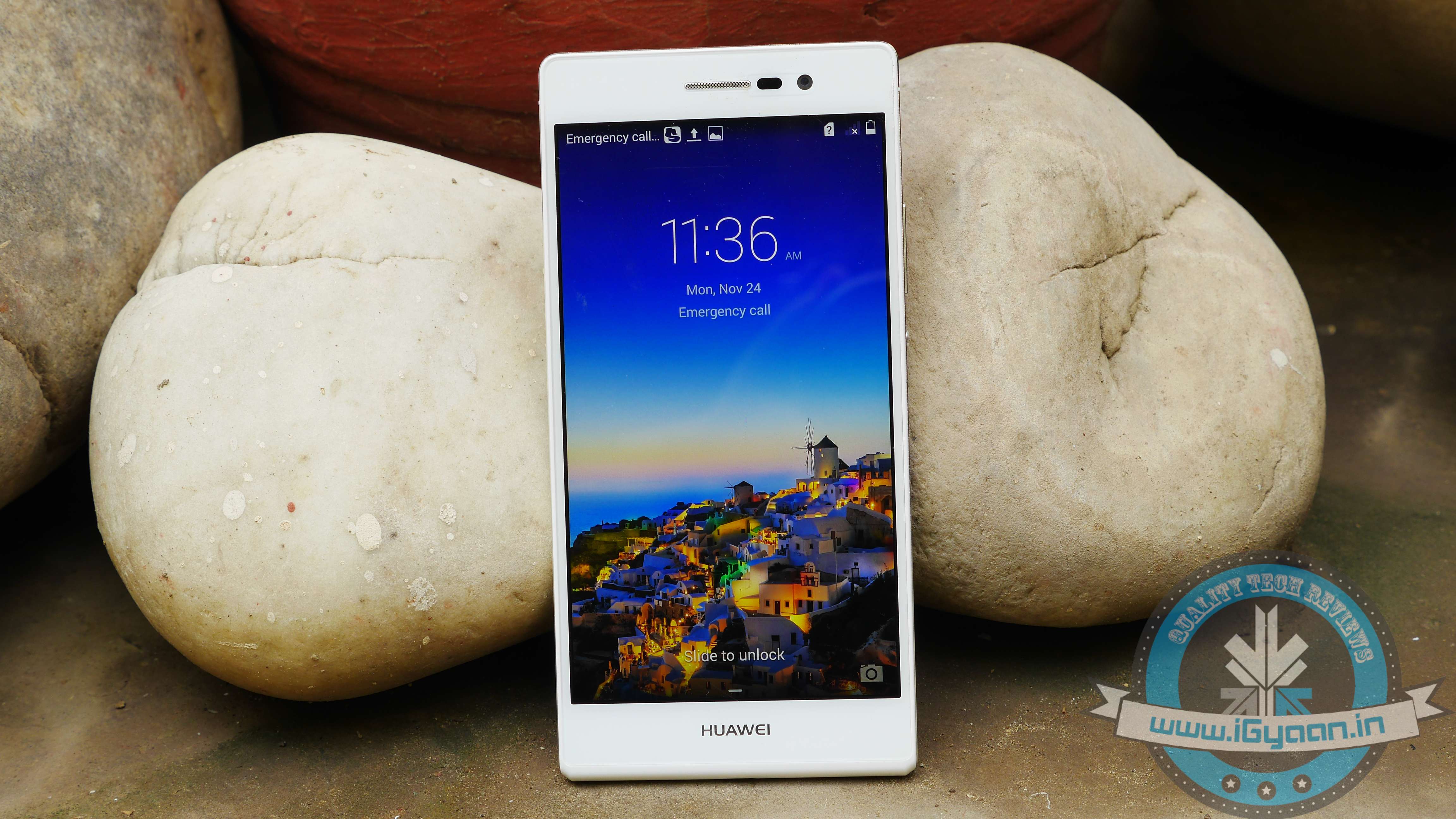
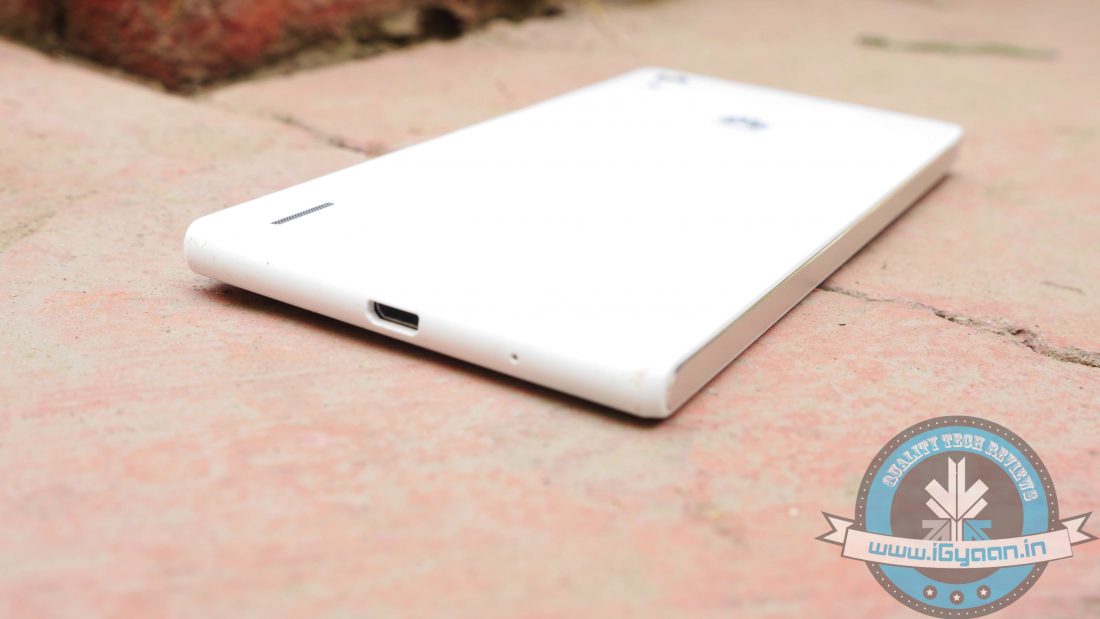
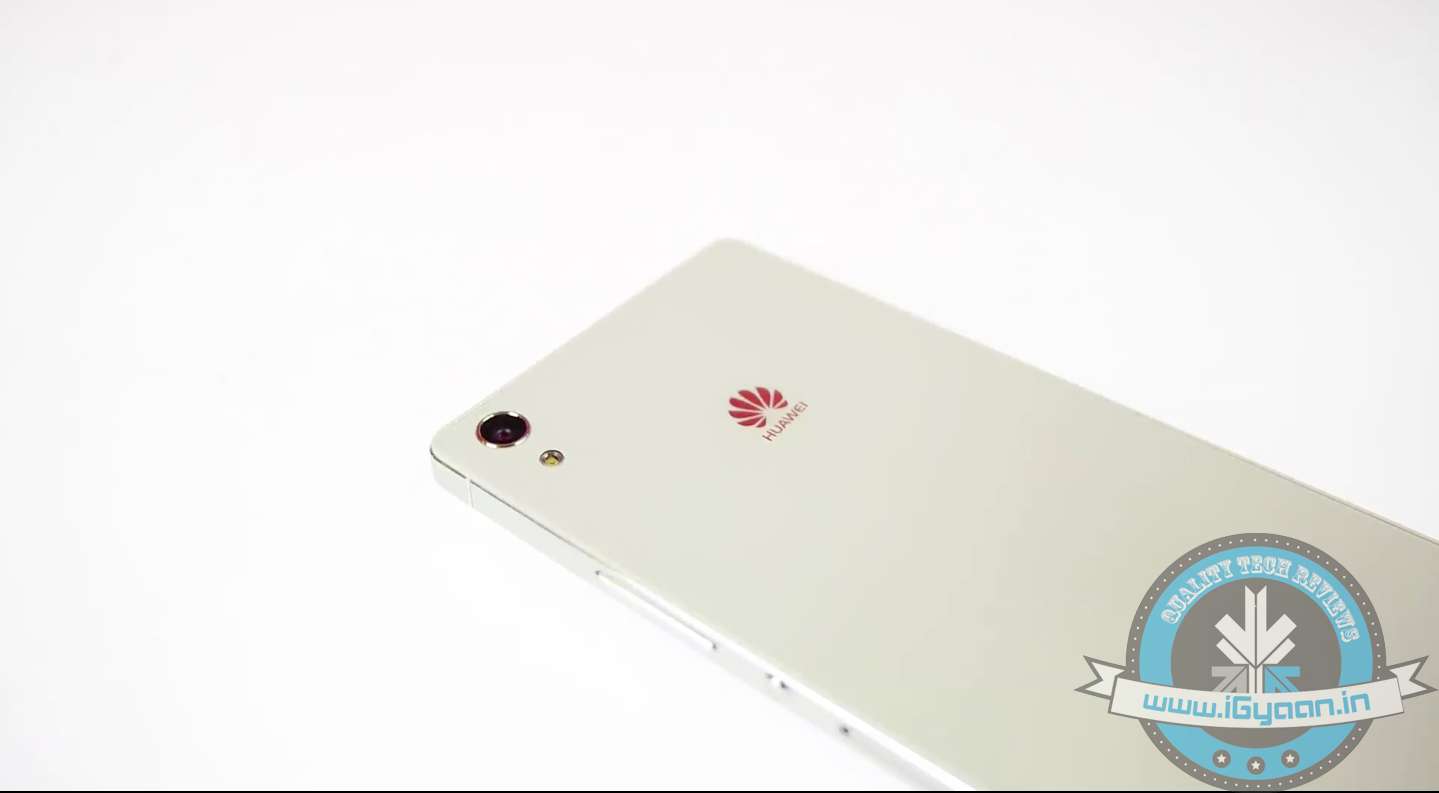
    At first glance, the Huawei Ascend P7 looks like a blend of the iPhone 4 and the Xperia Z. It’s a neat looking equipment and does feel like a premium built phone while in hand. Its slim form factor makes the phone slip easily into your pocket. It measures only 6.5 mm thick and weighs a mere 124 grams.
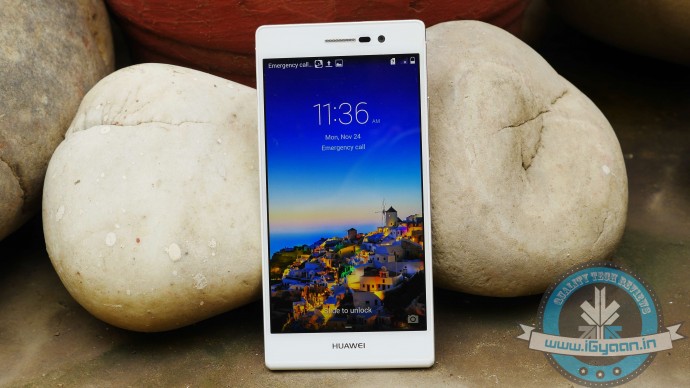
    ascend p7 1We were pretty impressed with the way phone looks and feels. It can easily compete with more established flagships when it comes to looks. The overall feel of the phone is quite brilliant. With the right size, it has just the right amount of chrome and metallic accents, subtle logos along with simply laid out buttons.
    p7 2

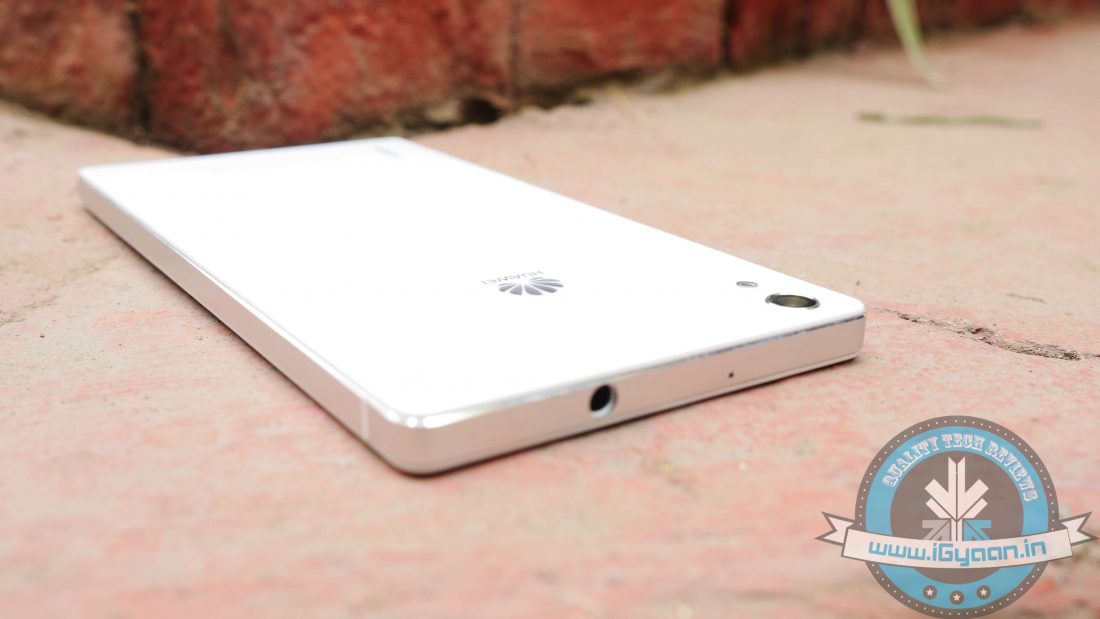
    It has a nice minimalistic design and finish, so you won’t feel shy flaunting your device amongst your peers. The front houses a speaker, a light sensor, and a massive 8MP selfie cam. On the bottom, we have a microUSB port for charging, while the 3.5 mm jack rests on the top. The left-hand side has no keys and slots, so the right side houses the microSIM and microSD trays. Along with the trays lays the power button mounted in the centre, very reminiscent of Sony’s Xperia range. A nice metallic finish runs along the side of the device, giving it a more premium look.

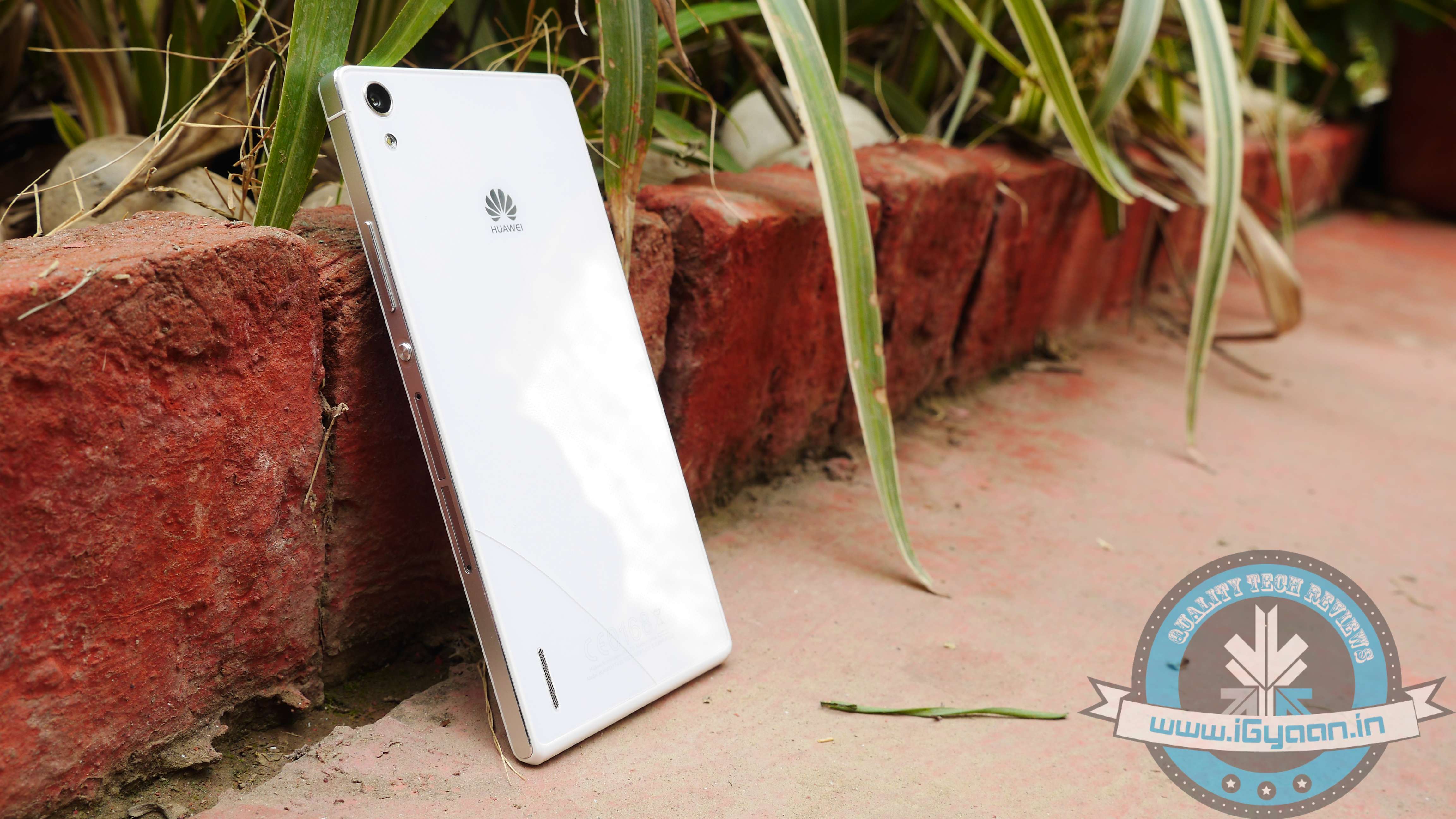
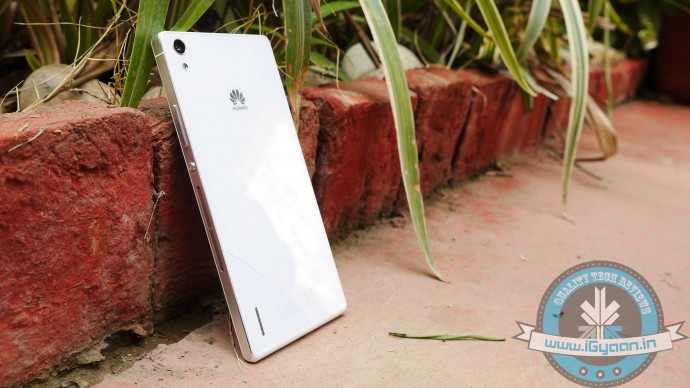
    Turn the phone around, and we see the elegant and subtle non-removable glass back panel with a neat looking finish.
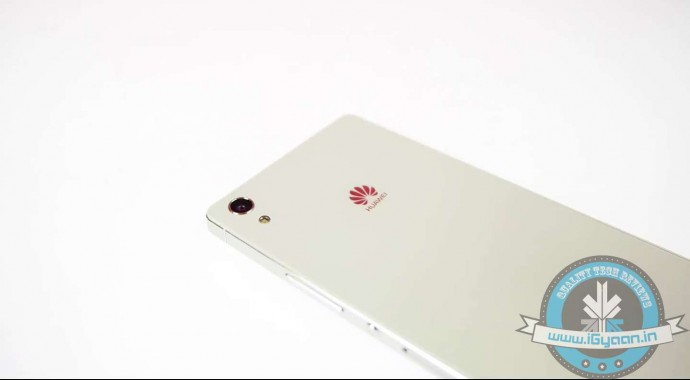
    Screen Shot 2014-11-22 at 5.33.15 PMThe only downside with design would be the glass back, which makes the device slippery. So, if you have a tendency to slip your phone often, we recommend you to buy a case. In addition, the glass back is made up of very delicate plastic material, which can easily crack. So, make sure you have a case. Apart from that, the design and build of the phone is top notch.

    DISPLAY AND CAMERA

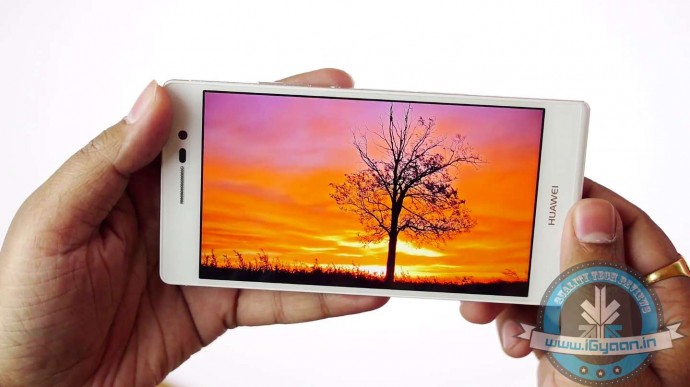
    The Huawei Ascend P7 has a 5-inch display with Corning Gorilla Glass 3. It has a Full HD 1080p display, which is quite impressive and is by far one of the best displays we’ve seen. The 5-inch screen is just lovely and bright with good viewing angles, and enough contrast allows users to watch even the gloomiest of flicks with crisp and sharp details. There are no flaws with the display and it was kind of hard to point out a fault with the phone’s display quality. Bright colours and sharp texts coupled with great viewing angles are as good as a smartphone’s display can get, well unless you get a device with a QHD display.
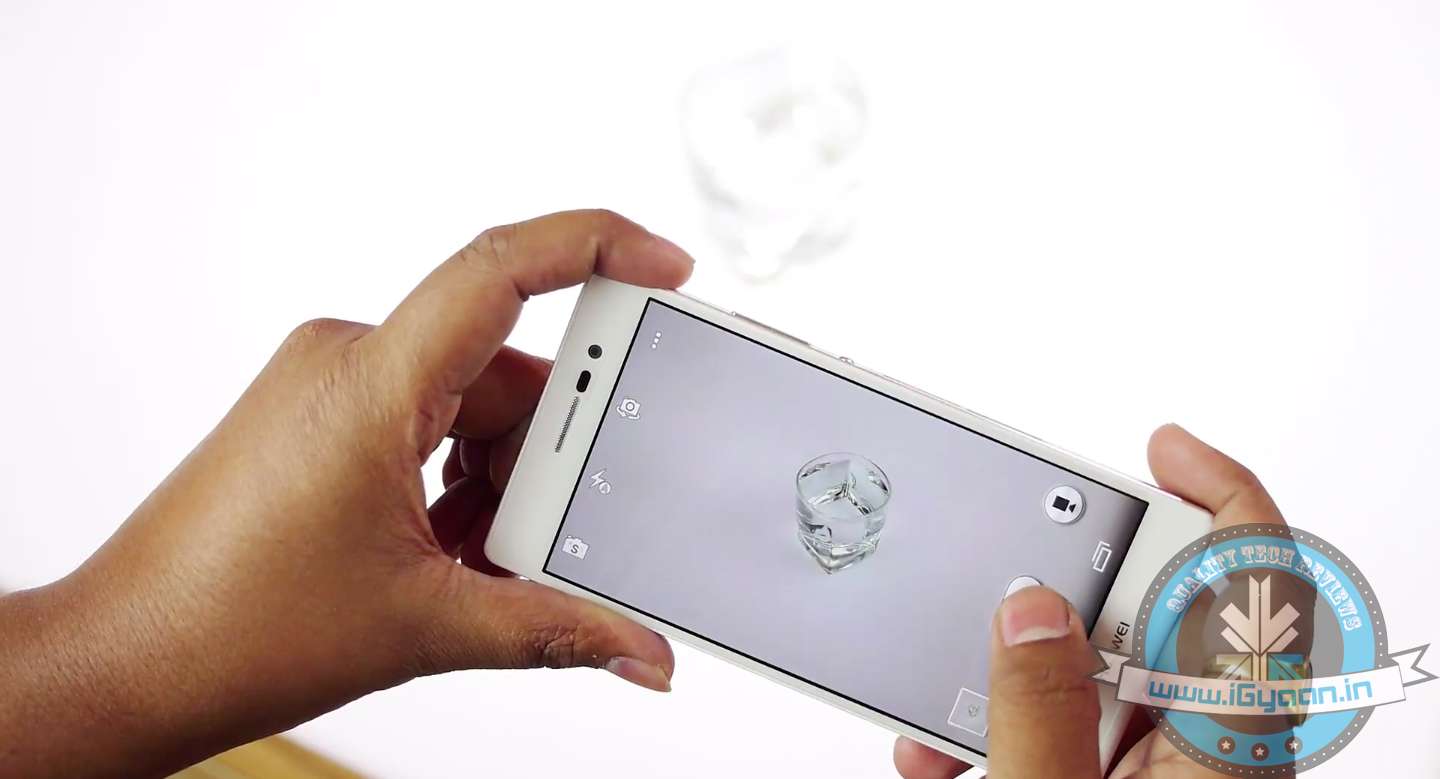
    Screen Shot 2014-11-22 at 5.41.54 PMThe optics on the Ascend P7 are quite remarkable. Both rear and front snappers are a delight, with the primary camera equipped with a 13MP Sony BSI sensor. Shutter Lag time is negligible, while response times are just too good. The auto focus is swift, and colours offer the right depth. Meanwhile, the staggering 8 MP front camera takes care of all your selfie needs. The front camera performs astonishingly well, with end results being more than satisfactory. It also includes a front-facing panorama option for wider shots and selfies. The camera app has the same overlay for its menu found in the Xperia Z2. Main options include a selection of shooting modes, with Huawei’s ‘Smart’ shooting feature coming as default. There are a lot of interesting filters, including HDR, Smile detection and Object tracking with a few minor tweaks offered by the manufacturer.
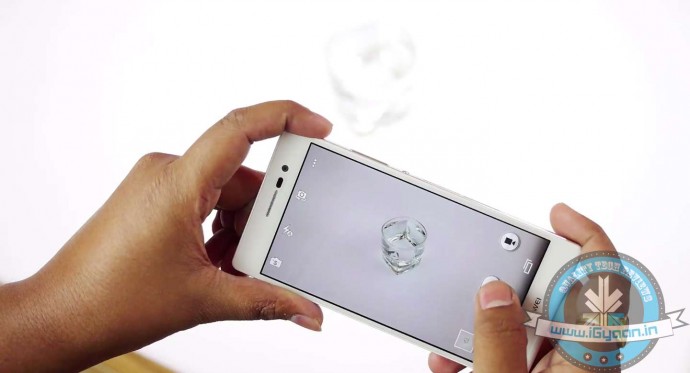
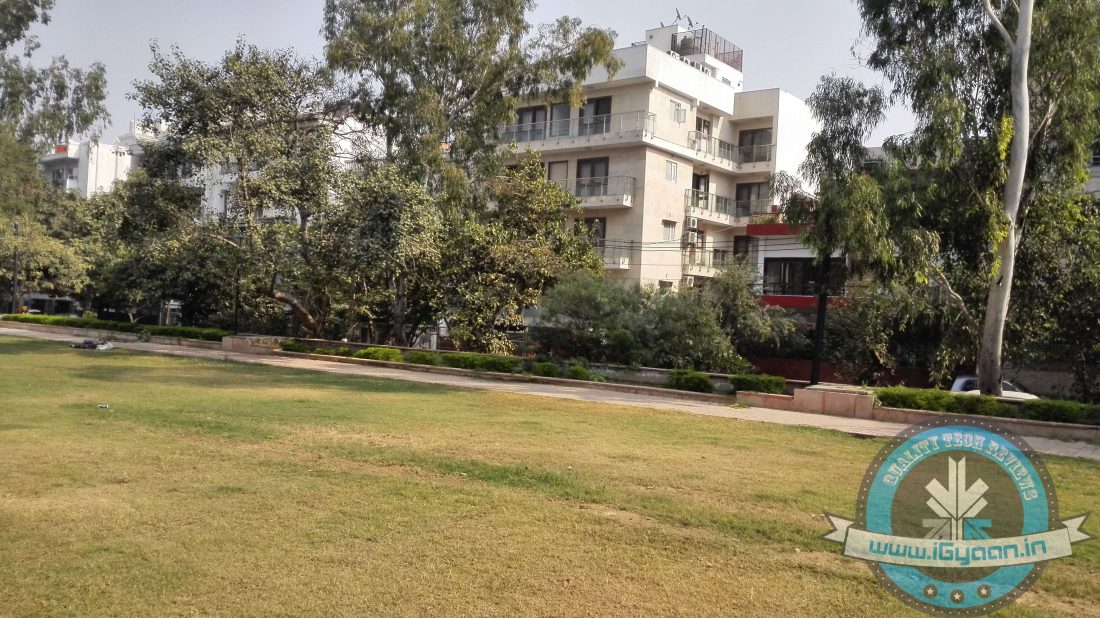
    Screen Shot 2014-11-22 at 5.37.55 PMOverall, we were pretty satisfied with the phone’s camera performance. Images rendered were bright and clean and looked superb in full resolution. Have a look at the samples below:

    While, video mode is not that impressive. It works fine and you’ll be able to record videos but we rather not talk about it.
    MULTIMEDIA AND PERFORMANCE

    A blend of advanced hardware combined with fantastic display, multimedia experience on the phone is rather satisfactory. The external speakers position is apt for watching movies and playing games, with sound coming from the centre of the device rather than from the sides. The audio output is quite impressive and should suffice without the need for putting on your headset. It is loud, clear and does not distort even at high volume. The Full HD 5-inch display just takes the whole experience of watching videos and playing games to a whole new level.
    The phone’s benchmark scores fall way behind other flagships, but as we know with benchmarks, they do not tell the whole story. It can handle tweeting, making calls, browsing, watching a video at ease without any major hiccups or stutters.

    We were a tad worried about its gaming performance looking at the benchmark scores, but boy the Ascend P7 proved us wrong. It ran graphically intensive 3D titles like Asphalt 8 and other games running on full juice without any hassles. The phone’s quite impressive when it comes to daily usage and the fluidity as it performs tasks pretty well and quick.

    SOFTWARE

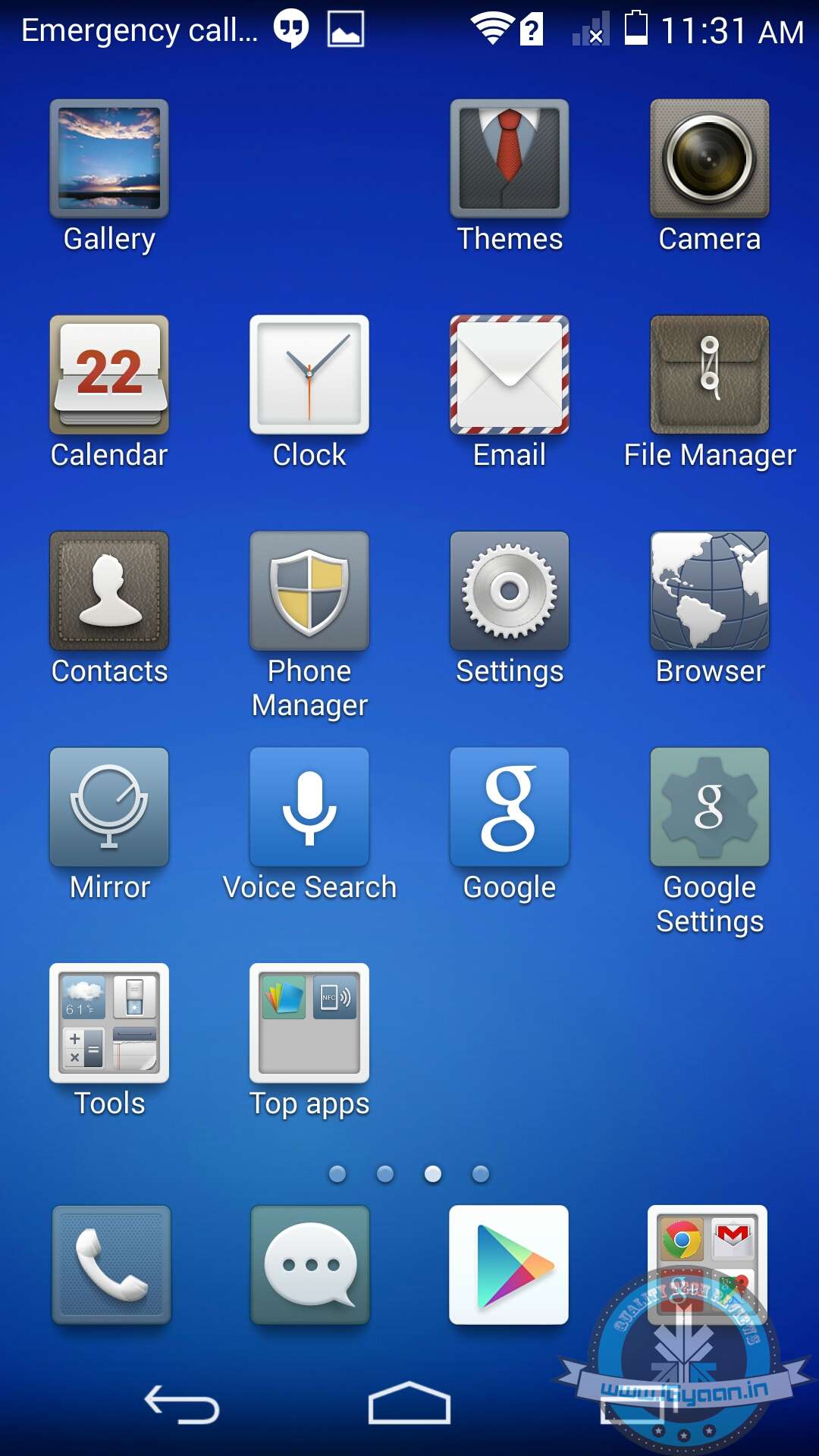
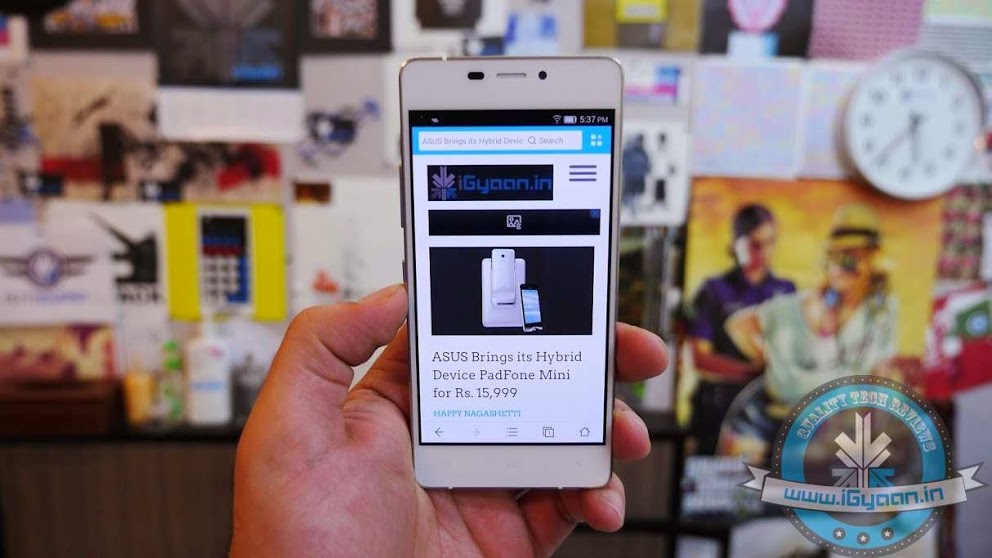
    The Ascend P7 runs on Android 4.4 KitKat with Huawei’s Emotion UI 2.3 skin atop. The first thing Android users will notice is the absence of the app tray. Huawei has removed Android’s two-stage launcher, so all apps rest on multiple pages of the home screen – just like iOS. Huawei has crammed several utilities into folders in an attempt to prevent the home screen look unnecessarily cluttered. But it happened the other way round, it just made the home screen look all the more cluttered. So one needs to get used to things a bit and do some shuffling around to get the desired results. Even the app icons look childish and are not so pleasing.

    Meanwhile, the home screen comes preloaded with weather, music, gallery and Google search widgets. There’s also a ‘Me’ module, which apparently can offer instant access to single favourite contact, but it’s rather useless. However, there is a wide array of customisation options, and you can tweak the icons and environment according to your preference.

    There’s also an option to add a suspend button – a floating launch button with a ring of shortcuts that hovers around the screen. It may come in handy for certain users, offering instant access to utilities like messaging, note-taking, and music playback.

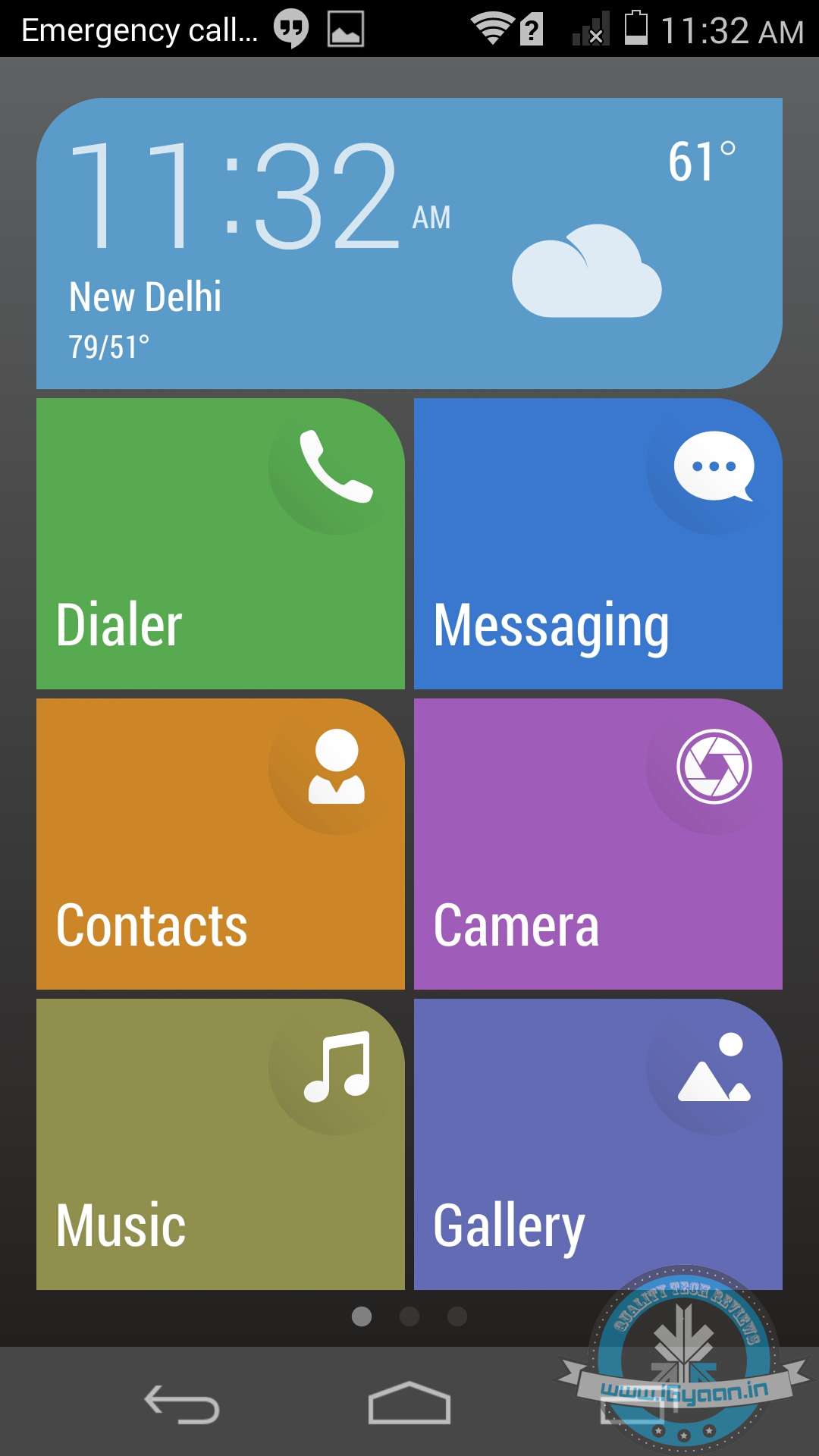
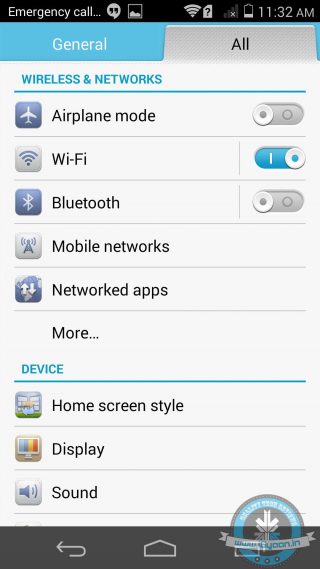
    In the Settings menu, Huawei has added two home screen styles, Standard and Simple. While ‘Standard’ is a regular application and widget layout, ‘Simple’ turns your home screen into more of a Windows Phone (adding massive icons to apps and features). It certainly will be useful for the first-time smartphone users or for those who may not have a very good eyesight.

    Multitasking in the Ascend P7 is done in the usual Android style, with right hand on screen button popping up a list of recently used apps.

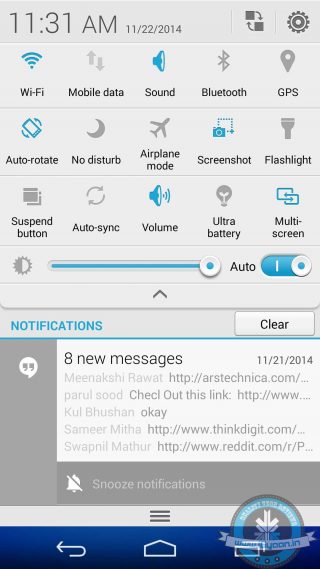
    Meanwhile, the pull down notifications tab forms an integral part of the Android ecosystem, and here Huawei has tweaked a bit. A collection of five toggles are housed at the top when you first pull down the notifications, another pull down reveals more controls. These can be customised according to user’s preferences as a seperate menu lets you customise the order in which they appear.

    All in all, there are no noticeable performance issues apart from a few home screen jerks when the phone was under heavy usage. It’s a snappy and reliable device. Though, users will notice a lot of battery saving notifications popping up time and again, which can be annoying at times. Along with that, the UI is not as standard and intuitive that we see with other smartphones.

    PHONE NETWORKS AND BATTERY

    Phone network is quite good. We had no issues with the audio quality of incoming or outgoing calls. It latches onto networks quite easily, and we did not experience any call drops both indoors as well as outdoors.

    The Huawei Ascend P7 houses a 2500mAh battery, which is slightly less than the Galaxy S5 (2800mAh) and larger when compared to the 2300mAh battery of the Nexus 5. In our battery test, we ran a 90-minute media file on full brightness and with ‘Wi-Fi turned on’. By the end of the video, the battery went from 100% to 71%.

    That’s not awful, but it’s neither great too. The battery can easily suffice for a whole day of normal usage.

    CONCLUSION

    From decent specs, great camera, awesome display to super sleek and good looks, Huawei Ascend P7 has all the features that you wish in a smartphone. If you’re to judge a phone solely on benchmark scores, the Ascend P7 might put you off but its real time performance is top notch.

    At a price tag of Rs. 26,990, the Ascend P7 seems to be a little overpriced. There are a lot of worthy alternatives to consider like the Nexus 5, the Moto X, LG G2, Samsung Galaxy S5 in this price bracket.

    The phone’s performance is satisfactory, though it would have been more of a catch if Huawei had created a budget marvel like the Moto G. On the contrary, the company has tried to match up the P7 with other top flagships, and it just falls short.

    Had it been priced under Rs. 20,000, it would have been a great alternative to the mid-segment masters.

    [tw-column width=”one-half”]

    GOOD THINGS

    • Great Design and Build Quality
    • Awesome Full HD display
    • Superb Camera
    • 8MP selfie Camera

    [/tw-column]

    [tw-column width=”one-half” position=”last”]

    BAD THINGS

    • Video Recording below par
    • Low Benchmark score
    • Slippery back panel

    [/tw-column]


  • Xiaomi Redmi Note May Come to Indian Shores on 2nd December

    Xiaomi Redmi Note May Come to Indian Shores on 2nd December

    It’s been a while since Xiaomi launched a new product in India and as expected, the company has started teasing the India launch of its phablet – the Xiaomi Redmi Note. In addition, a report also claims that the phablet might be available for sale starting 2nd December. The Chinese manufacturer has started a campaign on its Facebook page for the Indian customers which reads, “Want to win a Redmi Note?” The page also says, “Show us your creative side and win a Redmi Note from Mi!”, with he contest deadline being Friday i.e. November 21 till 9:00 PM IST.

    Notably, Xiaomi is sending teasers for the launch the same way it did for Mi3 and Redmi 1S. Also, it's worth noting that the company had stopped selling Mi3 in India to focus more on the Redmi 1S.

    While the Chinese electronics giant is busy preparing for occasional flash sales and celebrating the new tag of being the world’s third-largest smartphone maker, it seems like the company is heading forward in the Indian market with some new offerings. In a recent post on Facebook, Hugo Barra (Vice President of International for Xiaomi) mentioned that the Redmi Note is finally ready for India.

    [caption id="attachment_83382" align="aligncenter" width="650"]With its high specs and big screen, this will be a great device for a multimedia enthusiast on a budget. With its high specs and big screen, this will be a great device for a multimedia enthusiast on a budget.[/caption]

    A good news arriving with the device is its price. The Xiaomi Redmi Note has been priced at just Rs. 9,999. The phone comes with a 5.5-inch 720p IPS display, 1.7 GHz MediaTek MT6592 octa-core processor supported by 2 GB of RAM.

    The device was expected to launch a month back, however, it didn’t happen. In an interview with a popular publication last month, Barra said that the Redmi Note will come to India in late October or early November. It looks like the early November in the Chinese calendar is here.

  • Gorilla Glass 4 Launches This Quarter, Claimed to be 2x Stronger Than Any Other Screen

    Gorilla Glass 4 Launches This Quarter, Claimed to be 2x Stronger Than Any Other Screen

    Creators of Gorilla Glass, Corning Incorporated, recently unveiled the fourth generation of its glass technology – the Gorilla Glass 4. The company is sure of the toughness of its new products and claims that it can endure a drop of one metre without shattering – 80 percent of the time. This new glass is being promoted as ‘up to two times stronger’ than any other competitive mobile screen, specifically aimed at surviving everyday drops in the real world.

    Corning also mentioned that soda-lime glass, used in most of today’s devices, breaks almost every time when dropped from some height. The company claims that the Gorilla Glass 4 can even handle rough surfaces and pavements, signifying that with this glass technology, the phone should be less prone to shattering.

    gorilla-glass4

    “Corning Gorilla Glass has outperformed competing materials, such as soda-lime glass and other strengthened glass, since it was introduced in 2007, and we’re always innovating to push the limits of what glass can do”, said James Steiner, SVP and General Manager at Corning.

    Meanwhile, Corning testing charts reveal that the new GG4, at a thickness of 0.4 mm, can withstand higher drops than GG3, which has a thickness of 0.7 mm. This makes the GG4 more durable and apparently thinner than its earlier models.

    Our sources reveal that the latest version of this glass will reach consumers this quarter. Though, Corning did not reveal which manufacturers would be the first to introduce the new toughened glass technology.

iGyaan Network
Privacy Overview

This website uses cookies so that we can provide you with the best user experience possible. Cookie information is stored in your browser and performs functions such as recognising you when you return to our website and helping our team to understand which sections of the website you find most interesting and useful.