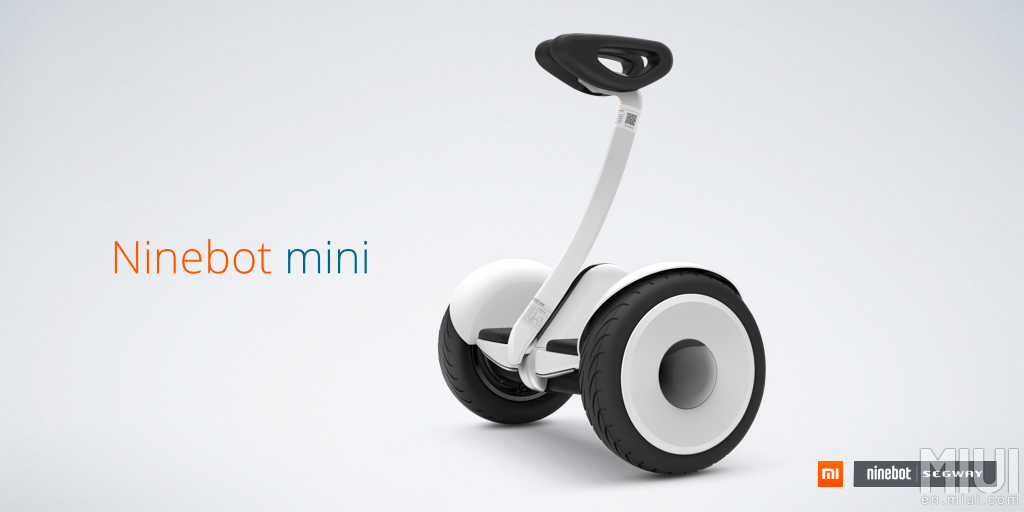
Xiaomi’s event today revealed the fruits of the company’s investment in Ninebot. The Chinese electronic company invested in a Chinese robotic startup called Ninebot back in April and now six months later they have come out with their first product – a new self-balancing scooter called the Ninebot mini. The scooter is Xiaomi’s Segway competitor.
Those familiar with the Segway will know what to expect from the Ninebot mini. The Ninebot mini is essentially a self-balancing scooter. This battery-powered scooter can reach a speed of 16 km/h, and can climb inclines up to 15 degrees. Xiaomi claims that the scooter can go go up to 22 km on a single charge. The Segway PT, on the other hand, gives a speed of up to 25 km/h and travels up to 38 hours on a single charge.
The Ninebot mini works the same way as the Segway. The driver uses their legs to steer the scooter and can also do a 360 degree spin on the spot. The Ninebot mini is lighter too at 12.8kg, and is small enough to fit in the trunk of a car.
Segway PT
The Ninebot is priced at 1,999 Yuan, which translates to around Rs. 20,000. This makes the Ninebot far cheaper than the Segway that debuted in India in 2010 with a price tag of over Rs. 3 lakh. The Ninebot Mini is made out of aerospace grade magnesium alloy, and also comes with safety gear set along with the Ninebot Mini.The scooter can even connect to your smartphone via an app. The app can show you traffic data and can also run a diagnostic check on the scooter.
Xiaomi has not yet revealed when it plans to launch the scooter but you can expect it to come out soon enough. The company has revealed plans to release the scooter in other markets as well.
Jailbreak for iOS 9 is now official thanks to the team at PanGu. For the uninitiated, Jailbreak is what you do when you want more from your operating software. Jailbreaking allows for more customization of your device and gives you apps that are otherwise not found in the app store. Jailbreak for iOS is especially useful because Apple has a tougher screening process when it comes to the apps it selects for the App Store.
The name suggests that this is something that can involve some risks. With jailbreaking, you are in fact changing the way your iPhone or iPad functions in certain areas and you also have access to features that Apple has not incorporated. So, jailbreaking does come with its own set of risks, and it’s always advised to backup your data in iTunes before you proceed with jailbreaking your iPhone or iPad.
How to Jailbreak iOS 9:
1. Download an anti-bug/ bug-fixing app
Jailbreaks often have some bugs. Before jumping straight to jailbreaking your device, you should download a tool that fixes the various bugs. So the first thing you want to do is download Pangu’s jailbreak tool.
2. Back up your device
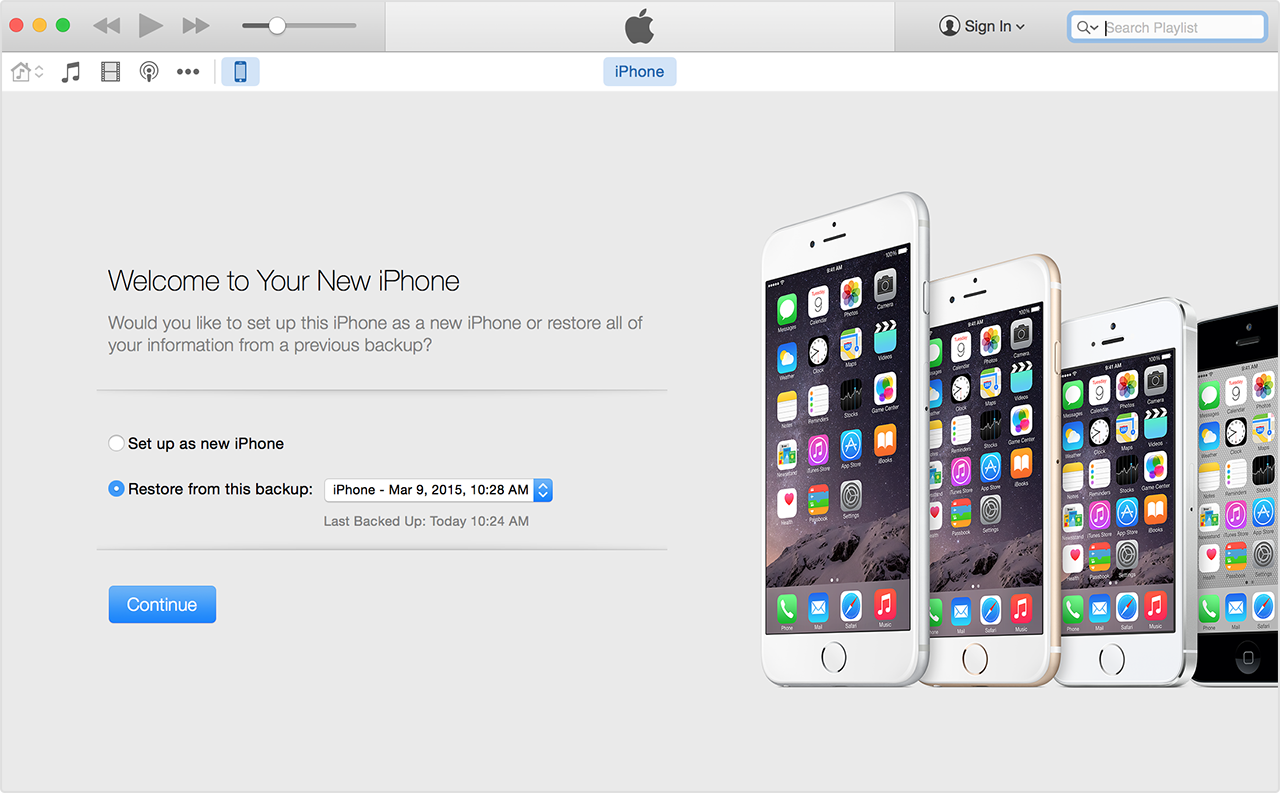
While your tool downloads, you can use the time to backup your iPhone in iTunes. You need a fresh install of iOS 9.0.2 and set up your device as a new device to apply the jailbreak. So, you need to download iOS 9.0.2 through your PC via USB. It is advised that you shouldn’t download through Wi-Fi as that may cause some issues. Once you’ve backed up your device, click ‘set up as new iPhone’.
A couple of more steps before you begin jailbreaking require you to switch off ‘Find my iPhone’ and Wi-Fi, disable passcode and switch to airplane mode.
3. Follow the instructions running on the PanGu tool
Run the PanGu tool and the program will tell you if your phone is ready. Follow the instructions clearly when the program begins. After about 50 percent, the device will restart and you will have to unlock your phone and enable airplane mode once again as well as click on the PanGu icon on your device.
4. Watch out for the Cydia icon
You’ll know your jailbreak has worked when you see the Cydia icon in your device. If it’s there it means you’ve had a successful jailbreak and you may proceed to restore your backed up data. Once you restore your data, all your files will be there including Cydia.
5. Restore your device and check out the tweaks
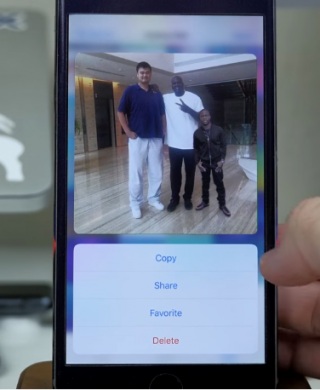
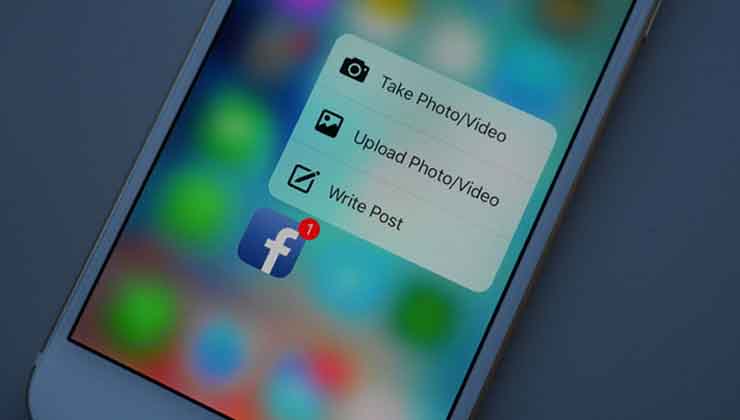
There are some pretty neat tweaks offered here. A tweak called Universal Force brings the latest 3D Touch feature to your older devices. You won’t get the full features of the 3D Touch, though, but what Universal Force does offer is that it gives you the peek and pop functionality for your apps, pictures and mail. You can press and hold on a picture in your gallery for a quick peek along with options to Copy, Share, Favorite or Delete the picture all from your Photos grid.
A Better5IconDock tweak lets you have 5 icons in your dock rather than just 4. So there is extra room to add your most frequented app.
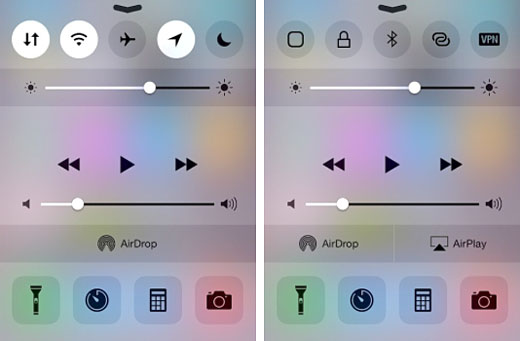
Finally, CCSettings for iOS 8 gives you one of the best tweaks where you can now have a ton of different toggles in your Control Centre rather than the traditional 5 limit. There are loads of other tweaks that give your iPhone and iPad some flavour and some fun features to play around with.
Facebook is gung ho about videos and animated pictures taking over the social networking site. Today, GIFs are the new way to greet and add some humour to your News Feed (because words were so 5 years ago). And it’s time people caught up with the trend. GIFs are short animated videos that say what you want to say in a funny, ‘pop culture’ referenced way, only minus the need to use words. To put it simply, GIFs are the new emojis.
Memes have been around for a while now. But Facebook felt that memes and smileys weren’t enough to convey ones feelings anymore. Initially, Facebook was against using GIFs, fearing that along with its autoplaying video feature the News Feed would become too cluttered. But the company had to cater to the users love for meme’s and GIFs. So, without further ado, here’s how you can post GIFs on Facebook.
Posting a GIF on Facebook
Posting a GIF is simple, however, you won’t be allowed to upload your own GIF files to your post as you would a photo. You’ll either need to create one and upload it on another hosting site or simply find a GIF that aptly describes your Monday morning blues, for example, from sites like Giphy, Imgur and Tumblr. Open the GIF and right-click on the image.
If you’re using Google Chrome, select the option ‘Copy Image URL’. For Firefox, the option is ‘Select Image Location’. And for Opera it’s ‘Copy Image Address’. Basically, every browser will have a similar option that allows you to copy the URL.
Next, log into your Facebook account and simply paste the URL in the ‘What’s on your mind?’ status field. Once the image appears, you can edit the status and write something so that people understand what the GIF is trying to convey. Hit Post and you’re done.
Now that you know how simple it is, go ahead and find your perfect GIF for the day and share it with your gang on Facebook. It’s all about spreading the joy and knowing that there are people out there who feel the same way about Mondays. Sigh.
You may have also noticed a GIF option in your Messenger and chat as well. Facebook has been testing the GIF and attachment buttons for the Messenger, though not all users have the feature yet. Open a chat window on the Facebook site or through the Messenger app and you’ll find a new GIF button next to the smileys icon.
The GIF option will show you some trending GIFs and it also lets you search for the GIF you want. Now you can have more animated discussions with your friends when you feel words just don’t cut it.
A long time ago, in a galaxy far, far away, there were droids, space lasers, lightsabers and landspeeders. Of course, we’re talking about the fictional world of the cult sci-fi space opera movie, Star Wars. But how fictional is all that technology – that was seen in the series about 40 years ago – today? Let’s take a look at how close we’ve come to creating some of the technological marvels found in Star Wars.
Landspeeder
Landspeeders originally debuted in the original Star Wars series 37 years ago and since then fans around the world have been drooling over the prospect of zipping over the ground in an anti-gravity vehicle. While it might be a while before you see a population of people riding in their own hoverbikes, there is (a new) hope nevertheless. Malloy Aeronotics and Aerofex are two companies among others who have been actively working on trying to make the hoverbike a reality.
Aerofex has been testing its own hoverbikes in the Mojave desert. There has been keen interest in this area with many parties interested in this technology. So it won’t be long before one can see some insane anti-gravity drag-racing, once these hoverbkes are ready. Watch the video of Aerofex testing out the hoverbike below.
Droids
Droids are robotic machines possessing artificial intelligence. The term ‘droid’ was popularized by Gearge Lucas in the original Star Wars films, and originated as an abridgment of ‘android’. Droids are seen throughout Star Wars in various shapes and sizes, the most famous ones being R2-D2 and C-3P0. Ever since the classic twosome appeared in Star Wars: A New Hope, people have been waiting for the day droids and robots will become an everyday thing. Technology is progressing along, but it’s just not fast enough.
It takes a new Star Wars film for technology to kick it into overgear. The new Star Wars: Force Awakens movie is out in December, but a small 40 seconds trailer that was released a few months ago got the whole world in a frenzied state. Every scene from the teaser was dissected to bits, including one scene which showed a new droid, the BB-8. The little ball of a droid was seen rolling along the desert of Jakku. One never expected any droid to top R2-D2 but fans are adoring BB-8, which is why a company called Sphero has done the deed. Yes, BB-8 is real and it is available on Amazon for $149.
The BB-8 toy can be controlled via mobile app and it is all kinds of awesome. The BB-8 can roll around, listens and responds to your voice, and has a mind of it’s own. Look at the promotional video below and see for yourselves.
Lasers
It’s 2015 and we should be having lasers by now, right? Well, not exactly, but there are people working on it. Lasers are among the top technologies that comes to mind when you think of the ‘future’. That and flying cars, of course. We’re probably a few hundred years away from having fancy lasers like the ones seen in Star Wars with bright colours that zipped by the screen and were trippy as hell. But laser technology today is a fact and while it may not shoot red or blue bolts into the target, they can still burn holes when concentrated on the target long enough.
We’re talking about the Laser Weapons System (LaWS) that is employed by the U.S Navy on a warship, the USS Ponce. The weapon was first tested in 2014 and the United States Navy reported the LaWS system works perfectly. Here’s what it looks like when a ship lasers a drone.
https://www.youtube.com/watch?v=D0DbgNju2wE
Space Travel
If there was a real-life Millennium Falcon, space travel would be a blast. You could make the Kessel Run in under 12 parsecs and have a Wookie for a co-pilot. But alas, we’ll probably never see a real-life Millennium Falcon. But space travel is not off the cards. Indeed, consumer space travel has been around for a while now. Although, you’ll need really deep pockets if you want a ticket to the stars and back. As of now, space travelling will be available only to the filthy rich.
Boeing has partnered with NASA and will soon have seats for paying tourists in their CST-100 vehicle, allowing members of the general public to visit the International Space Station along with the astronauts. The price of admission is high and you’ll probably have to wait a couple of decades for fares to reduce once space travelling becomes part of normal human life. Fingers crossed.
Lightsabers
Perhaps the one piece of technology that is truly the star of Star Wars is the lightsaber. That awe-inspiring laser sword is a signature weapon of the Jedi order and the Sith alike. The lightsaber is used for close combat typically between the Jedi and the Sith. The lightsaber’s energy blade can cut, burn and melt through pretty much anything. It can also deflect blaster bolts and other lightsabers as well.
Lightsabers were so loved by film fans around that it was voted the most popular weapon in the film history in a 2008 survey. So naturally, a weapon so admired must be made into a reality. Over the decades, we have seen two groups of scientists who have expressed their opinions on the lightsaber. There are the killjoy scientists who believe that a real-life lightsaber is not scientifically possible. And then there are believers who will do anything to bring this technological work of art to life like the boys from Harvard and MIT back in 2013.
Based on the findings by the team from Harvard and MIT, a group of theoretical physicists from the National Institute of Standards and Technology (NIST) recently discovered a mechanism that can bind photons together in a pseudo-molecule, bringing us a little closer to real-life lightsabers.
All right, so that’s Obama with a toy lightsaber. But if he’s excited about the prospect of a real lightsaber in the future then so are we.
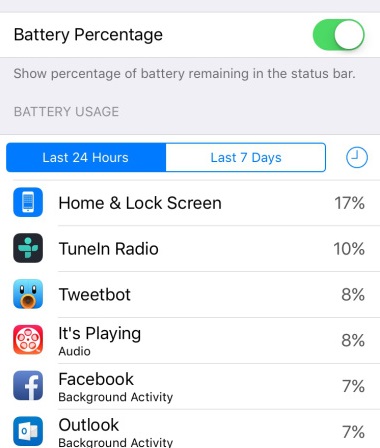
Has your iPhone been dying on you faster than usual? Facebook could be the reason for it. The company recently confirmed that its iOS app is causing serious battery drain issues and is working to fix it. Apparently, the app continues to run in the background even when your Background App Refresh is turned off.
A spokesperson for Facebook gave a statement to TechCrunch confirming the issue and promising that the company will fix the problem soon.
“We have heard reports of some people experiencing battery issues with our iOS app. We’re looking into this and hope to have a fix in place soon,” the spokesperson said.
The reason behind the battery drain is not yet known. While some believe that it could be due to Facebook’s new update that allows for autoplay of videos, other believe that this does not take up battery any more than the previous version did.
Facebook hasn’t commented on the various theories around why the app has been gulping down battery, and has only stated that they’re working to fix it. Whether this is a bug or ‘audio hijacking’ as some conspiracy theories suggest is something only the company would know about. If you find yourself facing the same issue, be patient. For now, you can ditch the iOS app and log on to Facebook through the mobile web until Facebook comes out with a new update.
Intel is looking to get a piece of Apple’s booming sales by taking a version of its cellular modem into Apple’s next iPhone, likely to be called iPhone 7, stated reports by VentureBeat. The partnership is yet to be official, though. As of now the two companies have exchanged words and work is already underway. So, you can expect Apple or Intel to come out with an official statement soon.
Intel CEO Brian Krzanich
Apparently, Intel has an ‘army’ already working on the project. Around 1000 people are working to supply Apple’s next iPhone with Intel’s next-gen 7360 LTE modem. VentureBeats also reported that Apple will be sending some of its own crew to work with Intel. Meanwhile, Intel looks to take out Qualcomm from the top position of modem suppliers for Apple.
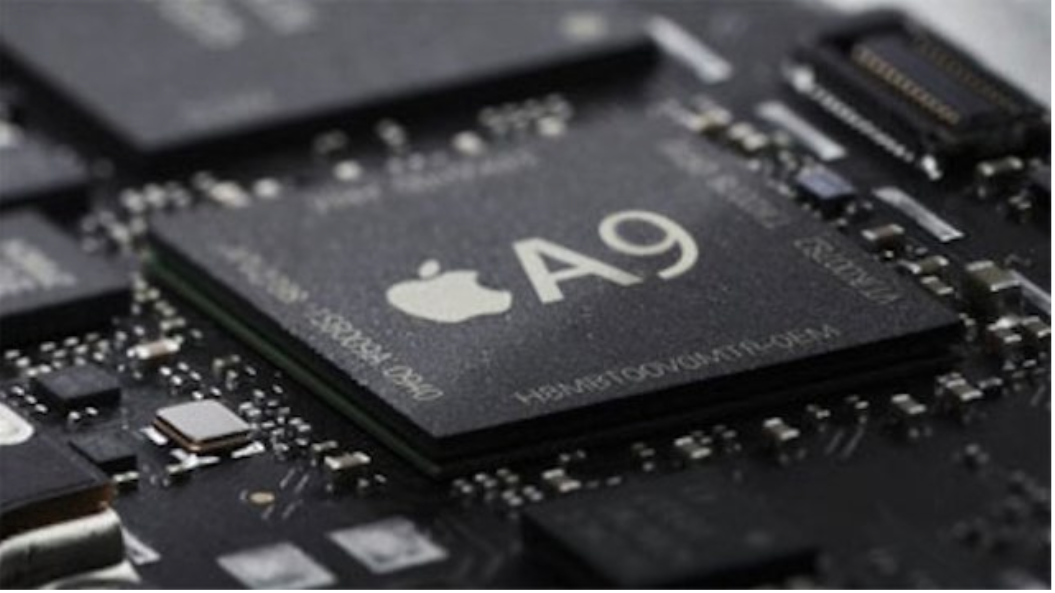
Currently, Qualcomm’s 9X45 LTE chip has been the modem for Apple’s handset. A few years ago, Infineon used to supply the iPhone with 3G modems before Intel bought the German semiconductor company. Apple then moved to Qualcomm and made it its modem supplier. Like with its A9 chip, Apple may dual-source the LTE modems from both Intel and Qualcomm if Intel comes through. However, nothing has been officially stated on this matter.
The current task ahead for Intel is to scale its 10-nanometer process so that it can work with Apple’s A9 chipset. This is one of the reasons that Apple has been attracted to Intel. Intel has both 14-nanometer and a new 10-nanometer process in the works. A 10-nanometer could yield faster and smaller processors. Apple is currently dual-sourcing its A9 chip from Samsung, which employs 14-nanometer process, and TSMC which uses 16-nanometer process.
The end goal for Apple is to have an SoC that is capable of holding both the processor and LTE modem on a single, small, fast and power efficient component and the fabrication of this can fall into Intel’s hands if all goes well. This is a “must-win for Intel” as it has been struggling to keep pace with Qualcomm, a source told VentureBeat.
There is someone out there who feels that people have suffered long enough from dropped calls. The Telecom Regulatory Authority of India (TRAI) today made it mandatory for telecom companies to compensate consumers for call drops. Customers will now be compensated by 1 rupee for every call drop with a limit of three dropped calls a days.
This new ruling will be made effective from January 1, 2016. Telecom operators will have to send a message through SMS or USSD to its calling customer giving details of the amount credited in his/her account within four hours of a dropped call. The detail of the credit should be provided in the bill for post-paid customers.
TRAI said that this mandate will give some relief to consumers who have been troubled by call drops. At the same time, this new rule will cause service providers to improve their quality of service. TRAI also said that it will make sure service providers are compensating consumers properly and will undertake a review after six months.
Accroding to some reports, telecos are not at all pleased with this decision and are looking in to this matter with a possibility of taking TRAI to court. Individual service providers are complaining of serious financial hit with this move. “It will be a hefty payout and, in many cases, it is not technically feasible to monitor call drops.”
A final decision is expected to be taken in a day or two.
By now you must be aware of the Indian pricing of the iPhone 6s and 6s Plus. Apple’s latest phones that launched in India today, 3 weeks after the US launch, are not only heavier than the previous iPhone 6 and 6 Plus, but are also heavy on your pockets.
The iPhone 6s and 6s Plus come at a starting price of Rs. 62,000 and Rs. 72,000, respectively for the 16 GB version. At these prices, the newest iPhones cost more in India than any other country.
If one translates the Indian pricing of the iPhone 6s and iPhone 6s Plus to US currency, here’s what you get.
iPhone 6s
iPhone 6s Plus
16 GB
$955
$1,110
64 GB
$1,110
$1,265
128 GB
$1,265
$1,415
The same 16 GB iPhone 6s model costs $649 in the US, which means customers in India will be shelling out $306 more for the iPhone 6s 16 GB. Similarly, the base model of the iPhone 6s Plus costs $749 in the US whereas you’ll have to pay $351 more in India.
The extravagant prices in India is likely to bring down sales for the latest iPhones. But pre-bookings for the latest devices do not seem to show any such signs. Many retailers, both online and offline, have offered major offers for the latest iPhones. Airtel is offering free 4G data on purchase of the iPhone 6s or iPhone 6s Plus, while Vodafone is offering freebies worth Rs. 8,885. These offers are only some of the many promotional campaigns being seen around India.
The iPhone 6s and 6s Plus may be the most expensive phones in India, but that didn’t stop fans from lining outside Apple reseller stores across the country to get their hands on the latest device. Apple CEO Tim Cook even expressed his thanks on Twitter. The excitement for the phones is still as high as ever. So, it could be that customers are willing to overlook the mighty price tag so that they can enjoy all the new features that come with the new phones.
Thanks to all our customers in India who queued at midnight for the new iPhone 6s and iPhone 6s Plus! pic.twitter.com/MxSkRk2BmP
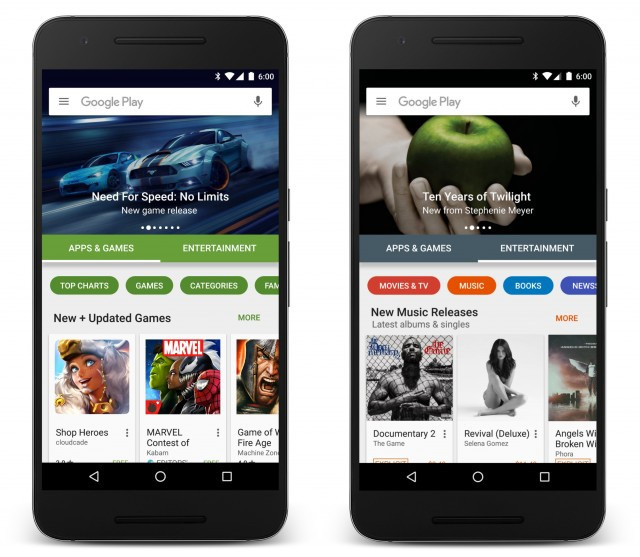
Google is revamping its Google Play Store. A redesigned version of the Play Store began rolling out on Thursday and the changes are quite evident. The homepage has a whole new look to it with horizontal scrolling and improved search features.
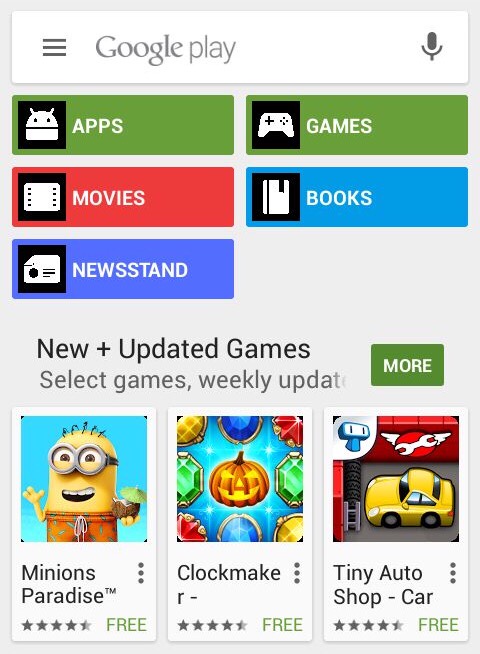
One of the first things you’ll notice on opening the new Play Store is the two clearly divided sections: Apps and Games and Entertainment. Previously there were six categories, but now they will be found under these two major sections, which makes it easier to navigate. In the Apps and Games section you’ll find all your social media apps and games, and basically all your chart topping apps for your smartphone and tablets. In the Entertainment section you have your movies, TV shows, news, music, books, and more.
Image: Google
The search and discovery features also come with improvements. You’ll now get better recommendations and more relevant results based on what you’re looking for. Google promises an impressive selection and richer apps in the new Play Store.
The revamped Play Store also comes with a new header that gives room for latest and popular apps, games, movies, books, and more. You can scroll through the suggested apps right from your homescreen and find out what’s trending. It is likely that the apps will also show tailor-made suggestions based on the users Play Store downloads.
Current Version
The new Play Store update will roll out gradually to Android users over the next few weeks.
Founder and CEO of Facebook, Mark Zuckerberg, has planned out his next trip. According to his recent post on Facebook, Zuckerberg will be visiting India on October 28. He will arrive in New Delhi at 12 pm and will host a Townhall Q&A at the Indian Institute of Technology.
Zuckerberg has not stated the duration of his stay and if he’s planning on visiting other parts of the country, yet.
Zuckerberg also mentions in the post that India is one of the most active communities on Facebook with over 130 million users. He has invited Facebook users to post questions in the comments section that the people in India would like answered during his Delhi visit. He says that he will “be answering questions from across Facebook as well as from a live audience at the Indian Institute of Technology (IIT) Delhi.”
Within an hour since his post, people have already begun posting questions, some of which are related to the benefits of Internet.org in rural communities and ways in which Facebook can help better the lives of people in India. If you have any questions, be sure to leave a comment below his post.
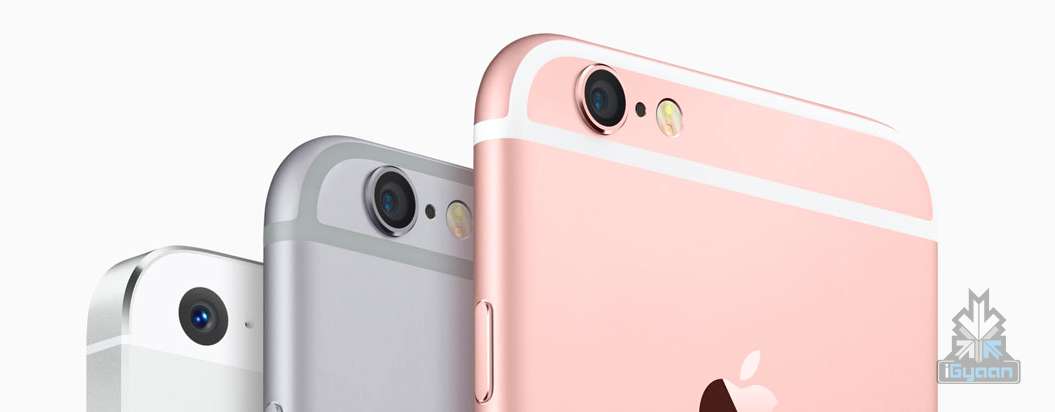
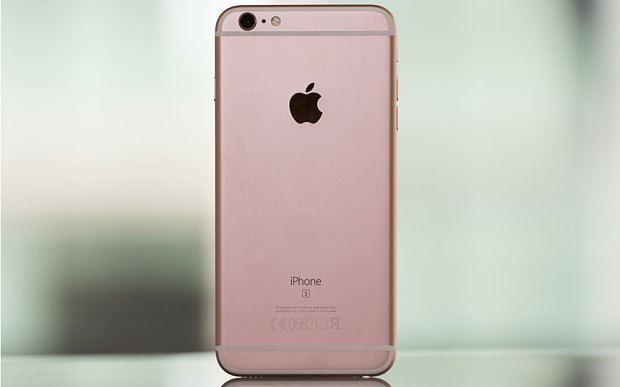
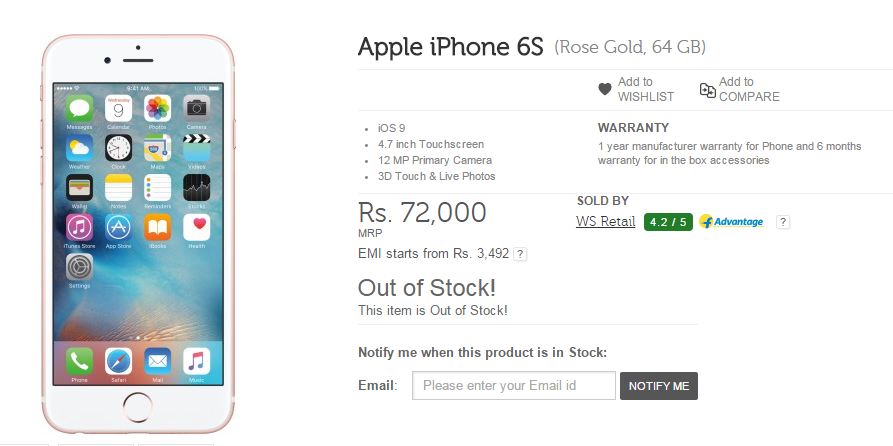
With hours to go before the launch of the iPhone 6s, pre-orders are rising. It seems that the iPhone 6s Rose Gold model is the most popular iPhone right now with most pre-orders for that variant having already stopped on most e-commerce sites.
Initially, the Rose Gold variant was met with lukewarm reactions right after the Apple event. But the pre-orders tell a different story. Flipkart has already stopped pre-orders for the Rose Gold flavour. Other sites will soon follow since the Rose Gold variant is seeking a massive popularity around the world.
One reason behind the popularity might be that Apple fans have grown tired of the usual colours that come with every new iPhone and the Rose Gold is a pleasing sight. The Rose Gold colour is unique to iPhone 6s, so far. Other smartphone makers are aware of the craze behind this colour and are trying to come out with their own Rose Gold variants as well. One example is the upcoming HTC One A9 phone which will have a Rose Gold variant along with the traditional Space Grey and White.
This could signal other smartphone makers to experiment with different hues now. However Apple brought acceptance to the Gold colour a few years back and now it looks like Rose Gold will be the colour of choice in the next years.
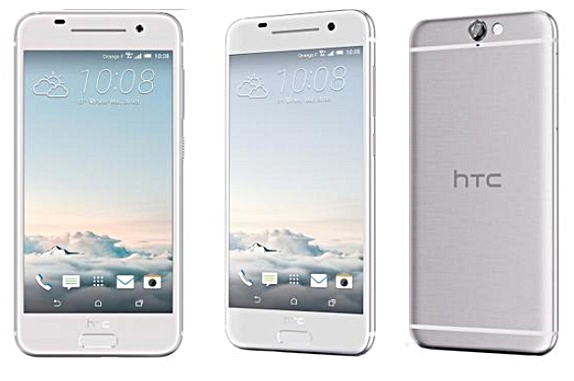
We’re just days away from the official launch of the new HTC One A9 smartphone. However, the phone’s specs has been spotted in a French carrier’s website. Orange ‘accidentally’ listed some key specs of the HTC One A9 as well as the price.
The iPhone look-alike will sport a 5-inch Full HD AMOLED display with 1080 x 1920 resolution, 13-megapixel rear camera and 4-megapixel front, and will run Google’s Android 6.0 Marshmallow OS as mentioned in an earlier post. The price of the phone was listed at €599.90, which translates to around $688. The specs of the HTC One A9 and the pricing certainly do not add up.
The HTC One A9 was just recently spotted on GFXBench which confirmed some other specs such as a Snapdragon 615 octa-core processor with Adreno 405 GPU, 2 GB RAM and 16 GB internal memory. The Indian pricing of the phone could translate to anywhere between Rs.45,000 – Rs. 60,000. We’ll have to wait until the 20th event to confirm the prices.
Over the past few weeks, there has been a lot of discussion regarding OnePlus’ upcoming phone, the OnePlus X/Mini. None of the rumours and reports have clearly stated what the official name of the phone will be. However, the specs of the phone have pretty much been confirmed now by China’s TENNA, which is a regulatory agency similar to FCC in the US.
While some of the specs keep with past leaks, others are a bit different. The TENAA listing reports that the OnePlus X/Mini will sport a 5-inch OLED display with a resolution of 1080 by 1920 pixels at 441 ppi. So far so good.
Rumours that the latest phone will not feature a dual camera set have been squashed. The OnePlus X/Mini will feature a 13-megapixel primary camera and an 8-megapixel front. In the storage department, the phone will have 3 GB RAM, 16 GB internal storage, and a MicroSD card slot.
The CPU is totally different from what we have come to learn. Earlier it was rumoured that the phone will be powered by MediaTek’s Helio X10 chipset with a 2.2 GHz octa-core Cortex-A53 CPU. The TENAA listing, however, shows that that’s not the case. The device will be powered by Qualcomm’s Snapdragon 801 but will run at 2.0GHz unlike other Snapdragon 801 variants, which all come with a CPU clocked at 2.26GHz or higher. No confirmation on the battery of the device as of yet.
In case you missed it, a teaser by OnePlus India was posted yesterday on Facebook. The image suggests that the phone will be launched on the 29th of October. There were also rumours about OnePlus X/Mini featuring the Force Touch technology similar to the 3D Touch found in the latest iPhones, but nothing more has been revealed on that front. We’ll have a detailed specs table up once the device is officially out.
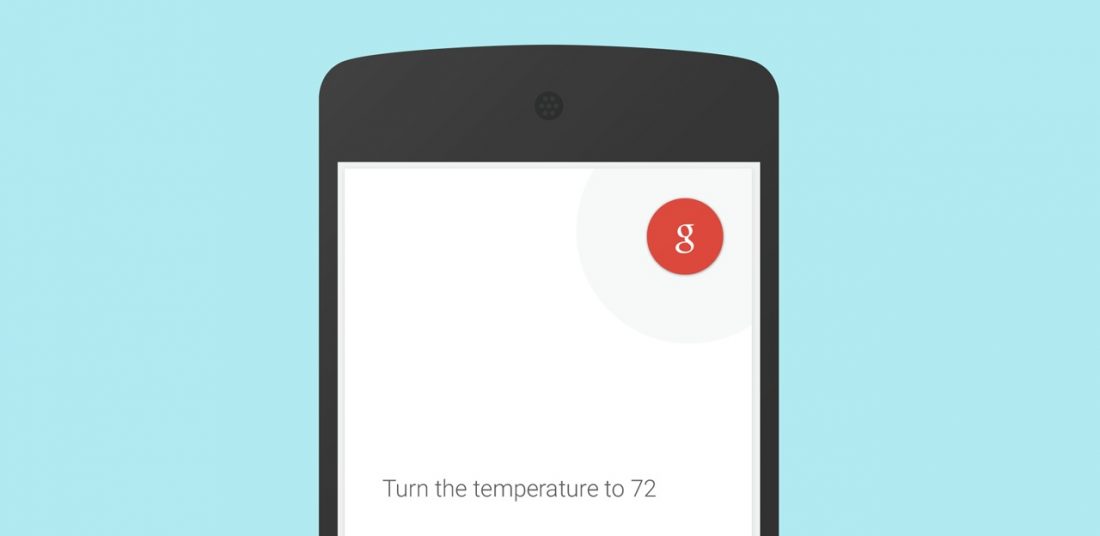
Here’s something you probably didn’t know. Google has the entire recording history of your Google Now conversations. All the questions you’ve asked Google Now is stored by Google in a vast pool of information that it has already on you. You can find your recording history in the archives and The Guardian’s Alex Hern tells you how.
Hern recently discovered all the recording he had ever had with Google Now and felt a little unnerved about it since some of the recording was done when he wasn’t exactly sober. “I found a recording of me asking for the nearest Waitrose in Glasgow (well, I am a Guardian journalist), lazily doing Fahrenheit conversions for cooking, trying to get driving directions to an Ikea, and just hurling random obscenities as a dumb, unfeeling computer,” he writes in an article.
This is not the only way Google has collected user information. The company also offers location history, showing users every location that it has tracked them to, through apps like Google Maps. Such features can make one feel very uneasy as it brings into question just how much companies like Google know about you. Google has already stated that it would start suggesting tailor-made ads based on the users Gmail account and YouTube search.
But why does Google need to store your voice recordings? According to the company it is to “help recognize your voice and improve speech recognition.”
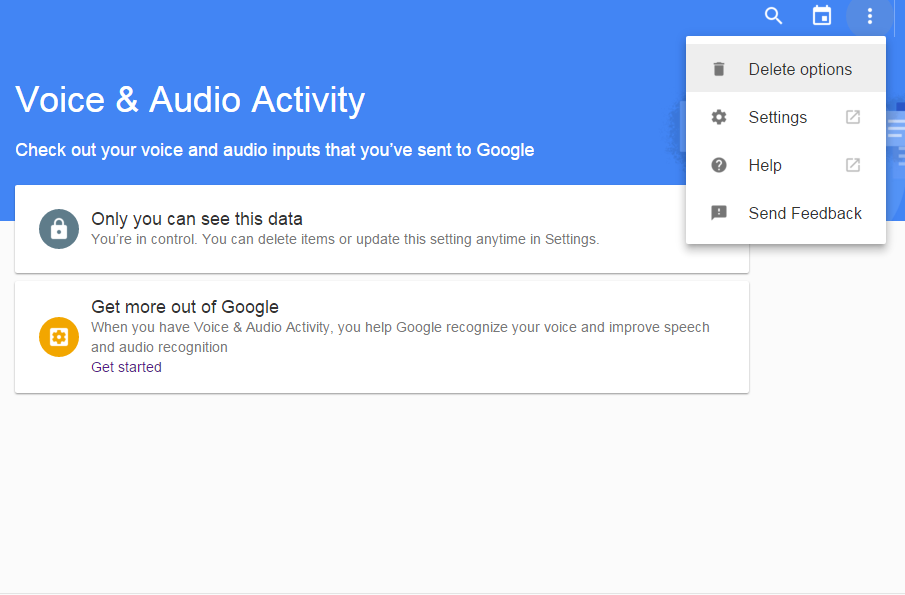
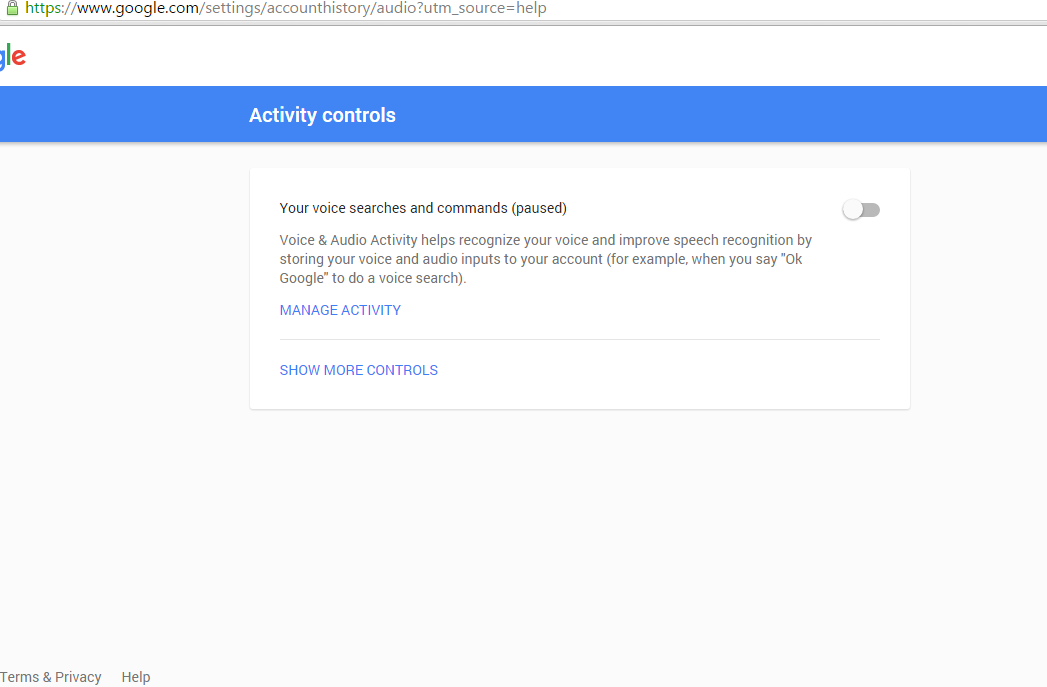
However, there is a way to delete the cache of recordings. All you have to do is log into your Google account and open the page for your Voice and Audio Activity Controls. To delete in bulk, click on the three-dots menu icon and select ‘Delete options’.
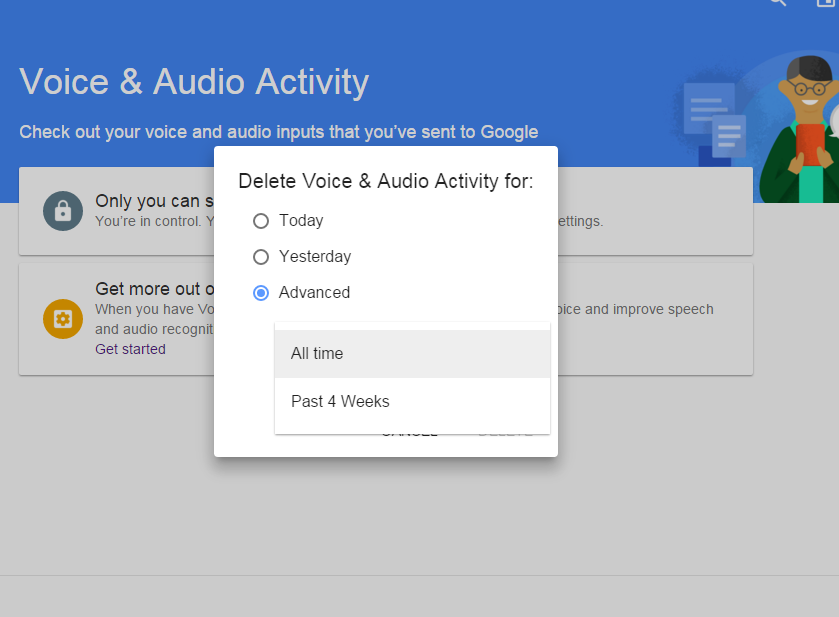
The ‘Delete option’ will give you three choices. You can choose to delete voice activity for ‘Today’, ‘Yesterday’, and by selecting the ‘Advance’ option, you can remove activity for ‘All Time’
You can also turn off the voice activity as well from ‘Activity controls’, but it won’t stop Google from storing the recordings it already has. It will, however, be kept under an anonymous identity which can be traced back to your account.
There are so many apps and games that come out every week that it is a little difficult to sort through the mess. Not all of them succeed in drawing users attention. It takes a while for an app to accumulate a base. And then there are some games that don’t really require too much thought. It’s usually the simplest ones that become highly addictive and popular. So, in today’s app(s) of the week, we have two games to please your addictive soul.
Nibblers
Nibblers is the latest game developed by Rovio. The company behind Angry Birds is trying to bounce back with its newest match 3 game. For the past few years Rovio has been trying to regain the glory it achieved with Angry Birds. The sequel to Angry Birds did not meet with the same level of enthusiasm. With Nibblers, Rovio might be on to something.
Nibblers is a simple yet addictive game where players must match up fruits to take out monsters and continue along the game. The game is similar to many match 3 games out there like Candy Crush, but Rovio has added something extra just to stand apart. You can knock enemies off of bushes and sand before they get the jump on you, power ups, obstacles and hidden fish power give the game a bit of flair. The levels also constantly shift from the currents of the water. These little additions to the standard 3 match game makes Nibblers a fun play with some twists and turns.
As simple as the game may sound, it is not as easy as most other game in this genre. The difficulty is in matching the fruits that border the lizards in order to cause damage. Damaging the lizards enough time will cause them to go up in a puff of smoke and the whole ordeal can be a little challenging. You win the level when all the lizards have been defeated.
With up to 200 levels that can be played for free, you can spend loads of free time on the game. We think the game is worth a visit if you’re looking for something new to play this week. You can download it on Google Play Store and App Store for free.
Jetpack Joyride
Yes, it’s not a new game and it’s been there since 2011. But what is new is the new Back to the Future-themed update that was released just last week. Halfbrick Studios launched this new mode celebrating the 30th anniversary of the cult favorite sci-fi film franchise Back to the Future.
The new mode is set at Hill Valley, home of the film’s main character Marty McFly. It’s a time trial mode so players will get to drive the DeLorean Time Machine car or the hoverboard and will have to collect flux capacitors that add an extra 5 seconds to the remaining time. However, if you collide with the surrounding in your screen, your time will reduce by 10 seconds.
Collect enough flux capacitors and you will get to unlock a total of three beloved characters from the film – Marty McFly, Doc Brown and Biff Tannen. The game is only free for this month, after which you will have to pay to play the Back to the Future themed mode.
This latest update by Halfbrick has once again brought the addictive game that many have grown out of back in the limelight. So if you thought you were done with the game then think again. All we’re saying is that you get to control the DeLorean and the hoverboard, and that’s reason enough to go for it. You can download Jetpack Joyride from Google Play Store and App Store and have a little fun.
So these are the two games for this week. Be sure to let us know what you think about the games in the comments below.