Category: Hardware News

Latest news from the World of Hardware

  • Lexar Unveils Largest microSD Card With 512GB Capacity

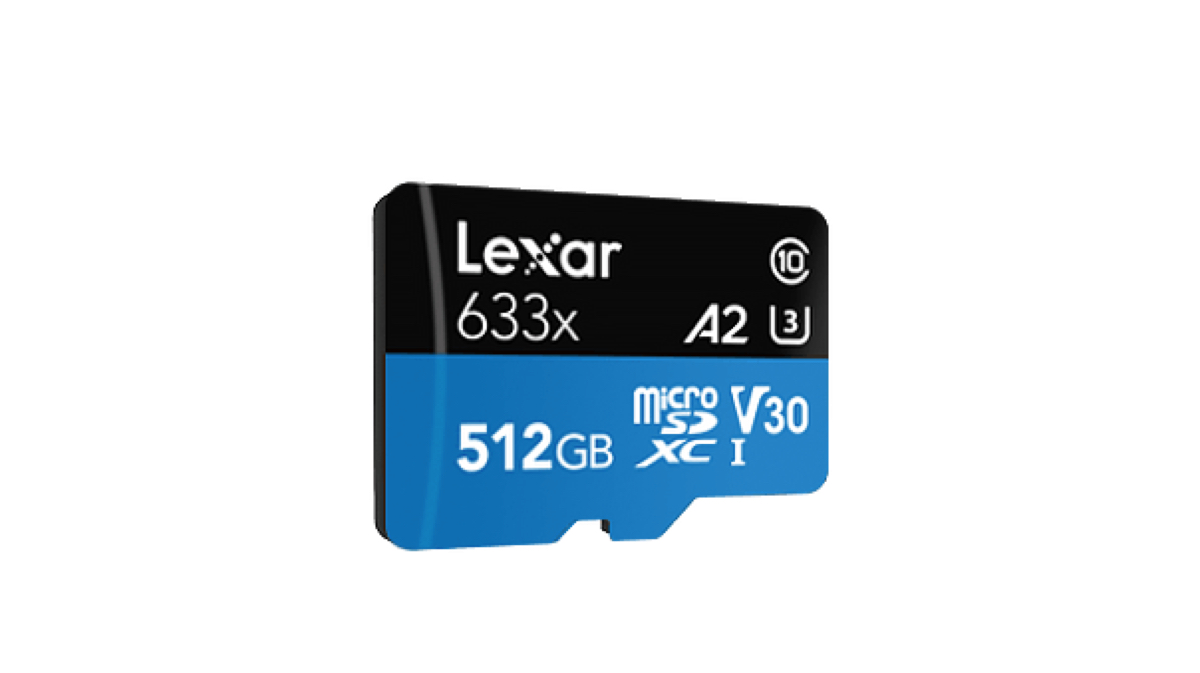
    Lexar Unveils Largest microSD Card With 512GB Capacity

    With ever-evolving technology, the need for higher storage mediums has become crucial. Mankind has started recording and gathering as much data as possible. Data could be in any form such as documents, images, videos, software applications and many more. Data storage devices are available in multiple shapes and sizes like hard disks, SSDs, CDs, and microSD cards. Hard disk and SSD offer greater storage capacity and are not as footprint bound as microSD cards. While packing in more storage capacity into tiny microSD cards is hard but it is also essential to push the boundaries of data storage on modern-day mobile devices. MicroSD cards go hand in hand with the latest smartphones that are capable of serving digital media on the go. Recently Lexar has launched the Lexar 512 GB microSD card for mobile devices.

    512 GB In A Tiny Chip!
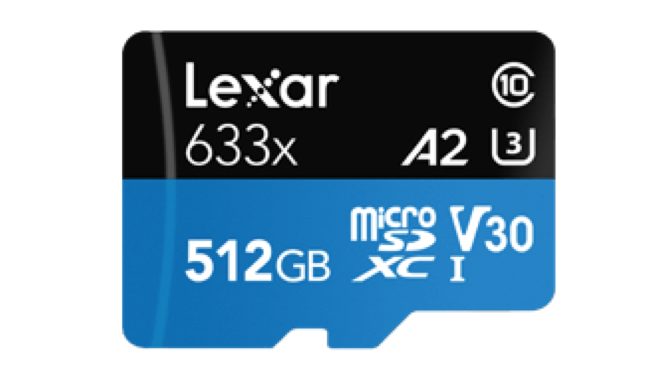
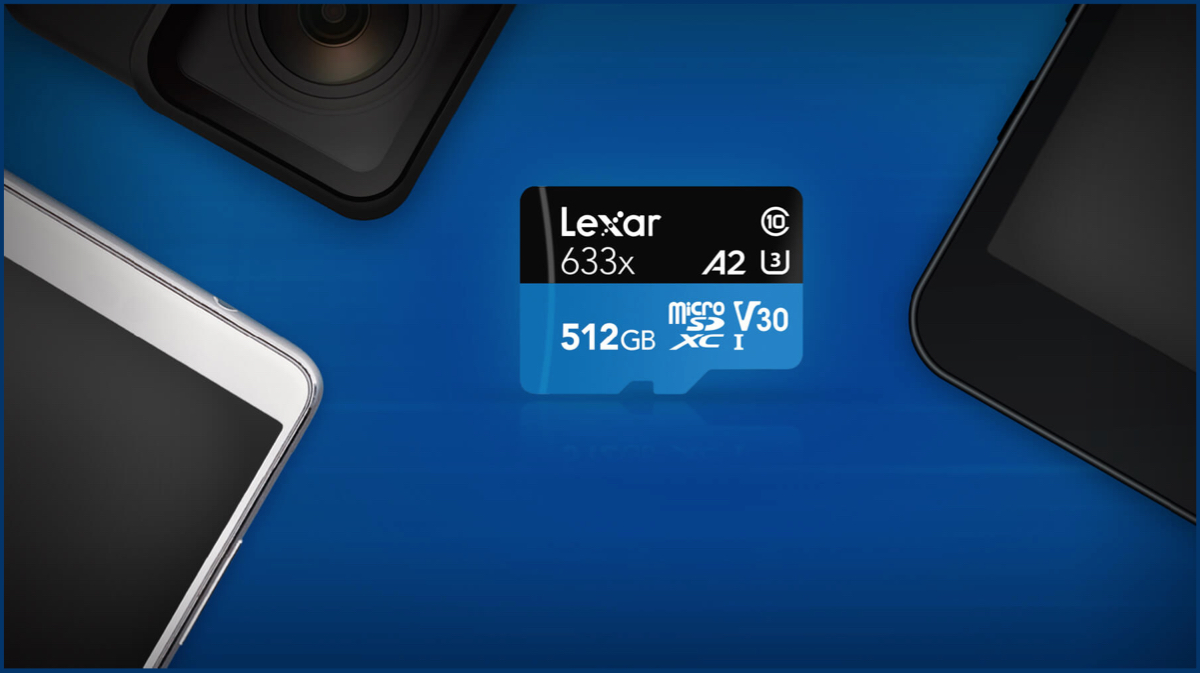
    Lexar 633x is the world’s largest storage capacity microSD card that is commercially available. It has an astounding storage capacity of 512 GB with 100 MB/s and 70 MB/s read-write speeds. To support such high capacity cards,one must also need a compatible device. Samsung flagship smartphones launched after Galaxy S8 are capable of supporting a 512 GB microSD card. But, no company till now has offered microSD cards with such a large capacity. The Lexar 512 GB microSD is a notable technological feat which allows storing an enormous amount of data.
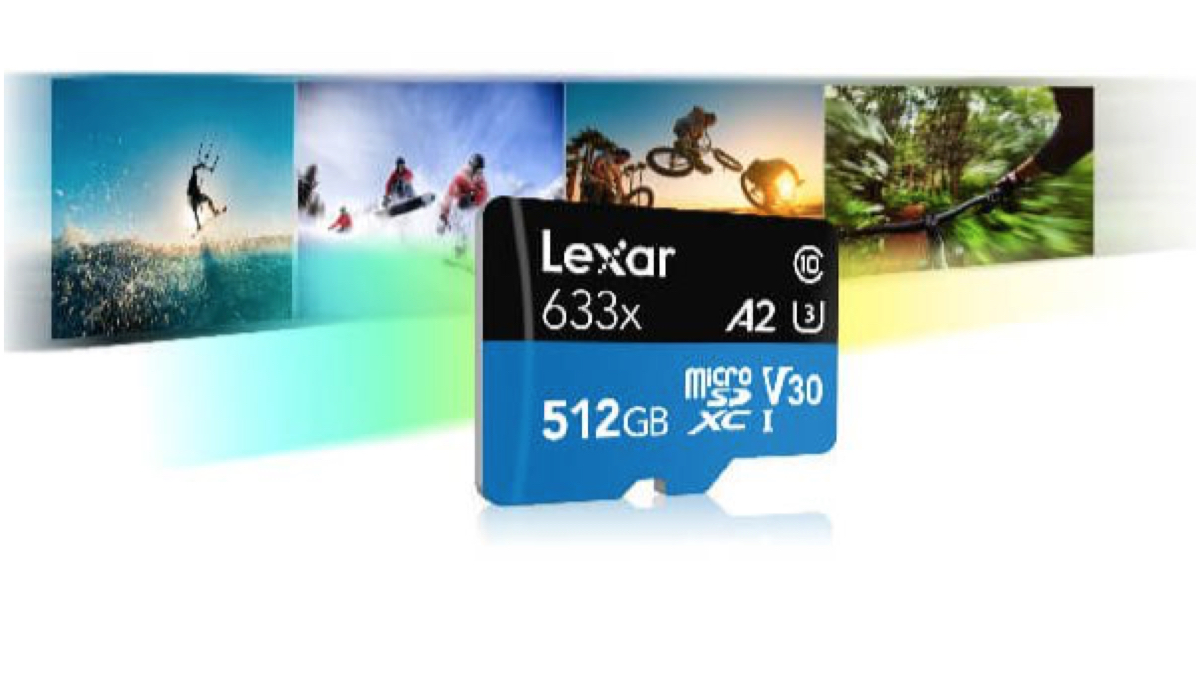
    For reference the amount of different data types that can be stored on the Lexar 512 GB microSD card are as follows:
    • Movies- 512 (avg size 1 GB)
    • Songs- 64,000 (avg size 8 MB)
    • Pictures- 32,000 (16 MP Photos)
    • Video- 7 Hours 28 Minutes (4K Ultra HD)
    • Document Files- 5,12,000 (avg size 1MB)
    • Applications-10,240 (avg size 50MB)

    Most notably the Lexar 512 GB 633x microSD card is of A2 type. The Type A2 has much higher read and write IOPS compared to an A1 type card.
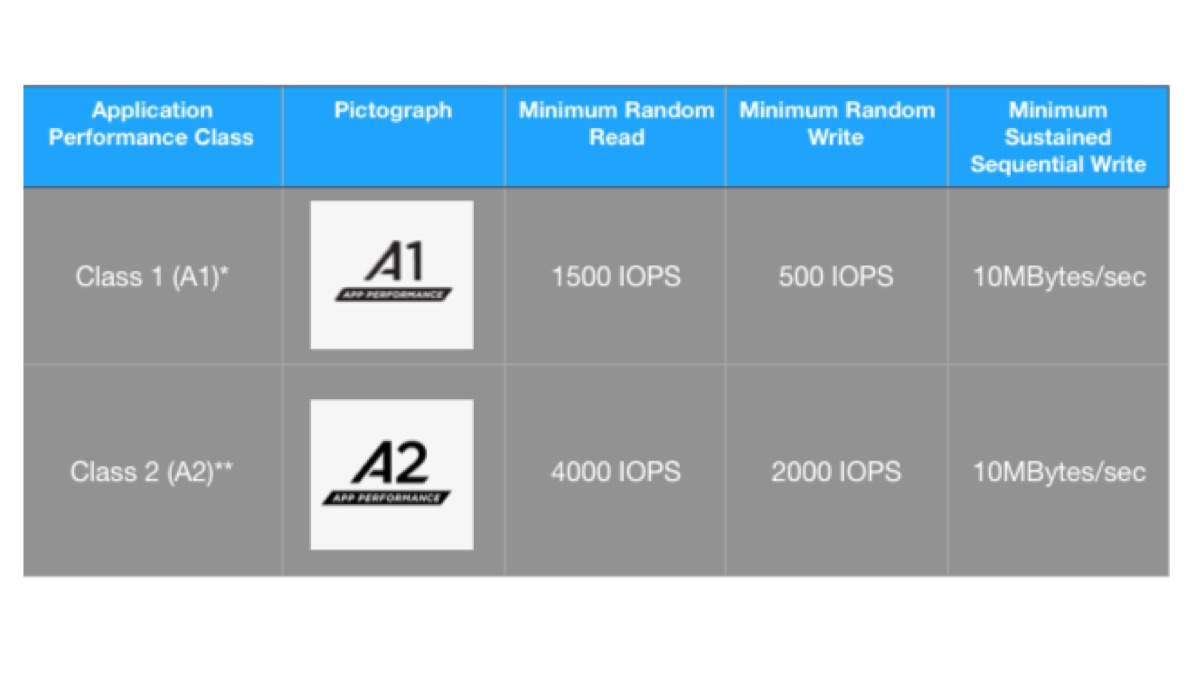
    IOPS stands for input/output operations per second that plays a vital role in the number of files can be accessed at a given time. The A1 storage cards have 1500 and 500 minimum read and write IOPS  speed while the A2 has a minimum 4,000 and 2,000 IOPS read/write speed. In simpler words, the Type A2 contribute to a faster performing mobile device.

    Price & Availability
    Also read: Top 5 Air Purifiers To Buy This Diwali

    The Lexar 512 GB 633X has price tag of $ 299 (around Rs. 21,900) and is available from Lexar’s official website and later will also be available offline.


  • Snapdragon 8150 Appears On Geekbench

    Snapdragon 8150 Appears On Geekbench

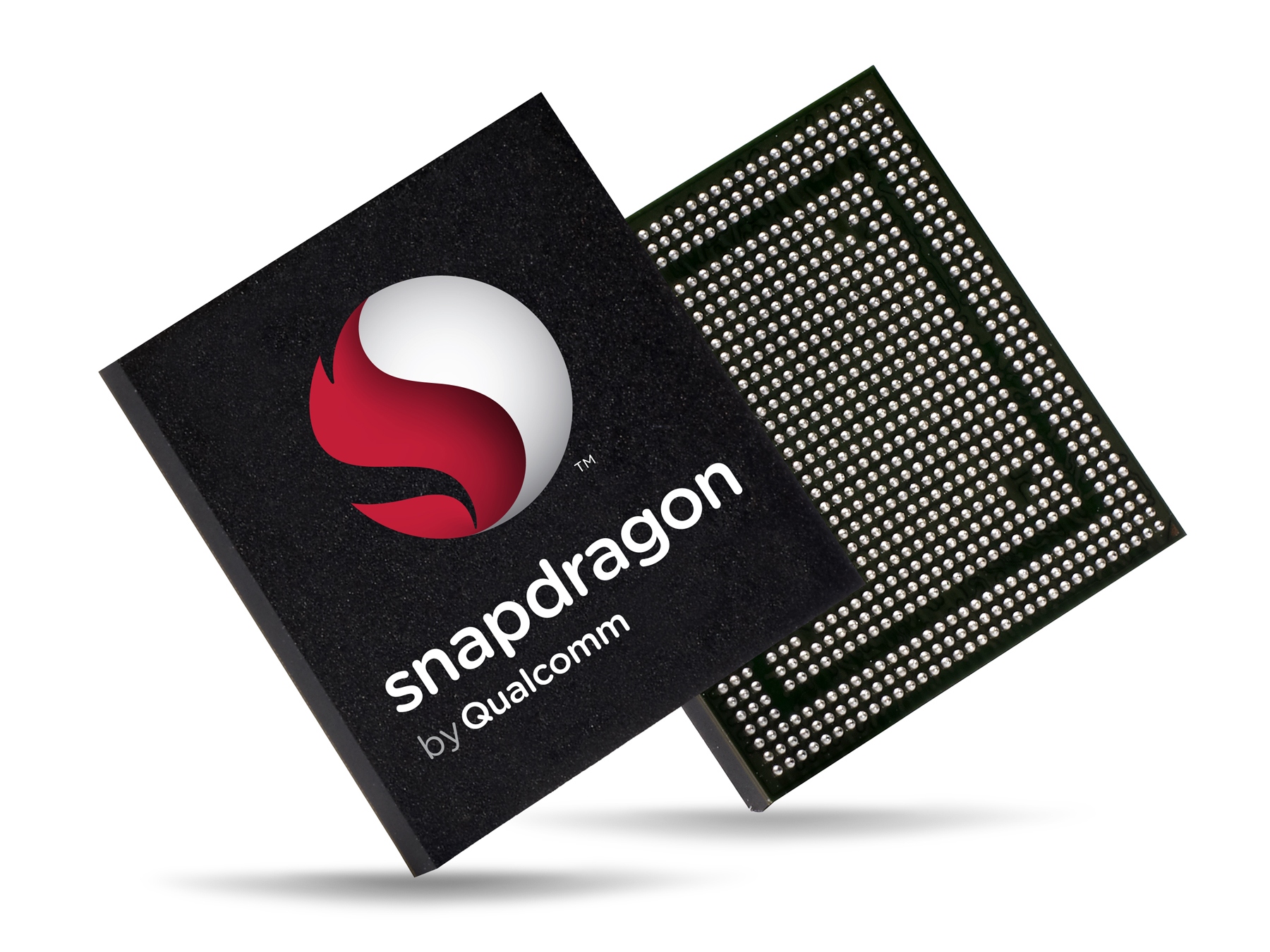
    Qualcomm was founded in 1985 and since then it has become one of the largest microchip manufacturer and supplier. The company has seen astounding growth in the past decade due to the smartphone revolution. Like every other computing device, smartphones need a processor to function. This is where Qualcomm has taken the lead by being a company that can innovate and develop class leading computing products. Qualcomm’s range of smartphone microchips is titled Snapdragon and the company’s latest Snapdragon 8150 (or the Snapdragon 855) processor’s benchmarks have surfaced on Geekbench.

    First Snapdragon 8150 Device

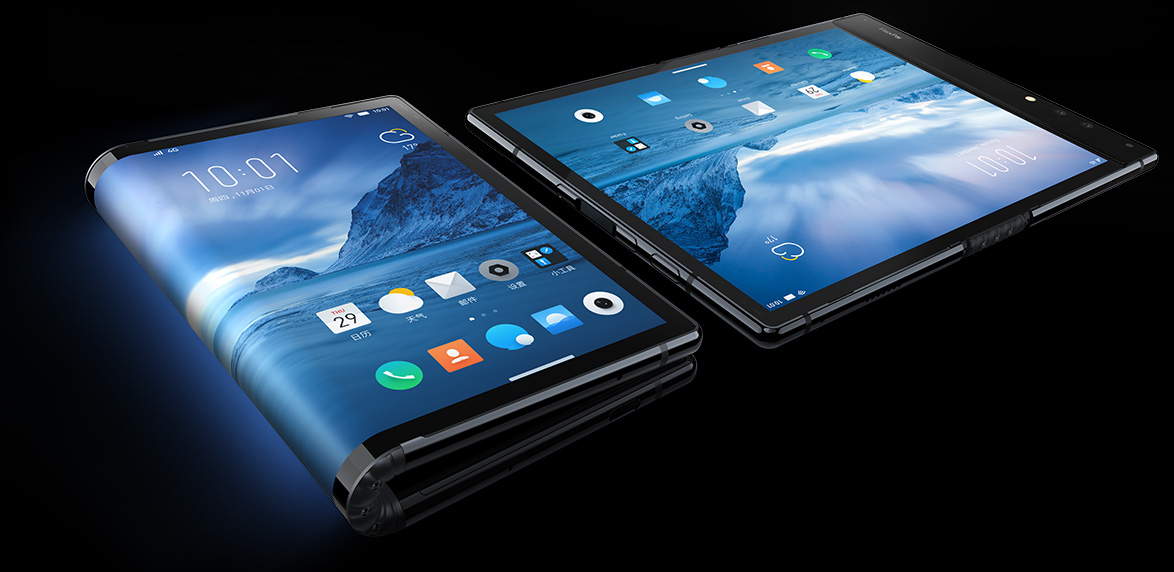
    Royole, a Chinese company has recently launched the world’s first foldable commercial phone called the FlexPai. Moreover, it is the first device to be powered by the latest Snapdragon 8150 processor. As the phone deliveries have not yet started, the performance of the new SoC has not been tested.

    Snapdragon 8150 is Qualcomm’s first 7 nm processor. But, competitors Apple and Huawei have already launched their devices running on 7 nm processors. Apple’s 7 nm A12 Bionic SoC is present on the latest iPhone XS, XS Max and XR series of smartphones. While Huawei’s Kirin 980 which is the world’s first 7nm Android processor is present on the Huawei Mate 20 series and the recently launched Honor Magic 2.

    Geekbench Scores

    Also read: Lenovo Z5 Pro With 95 % Screen-To-Body Ratio Launched

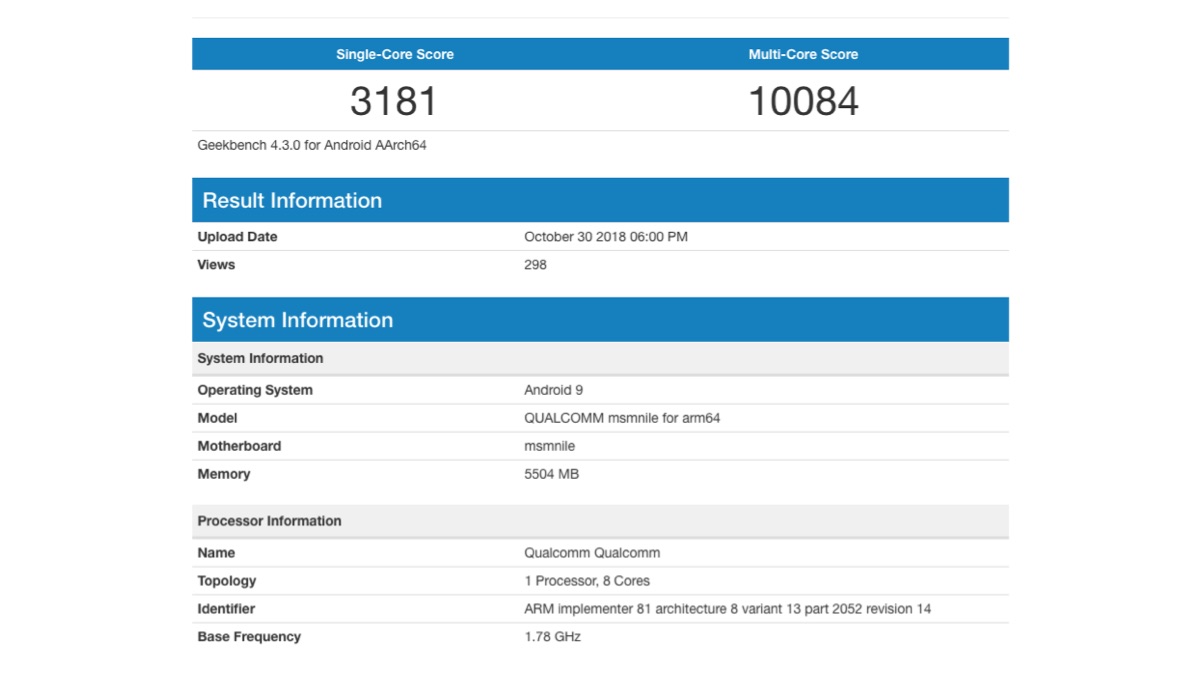
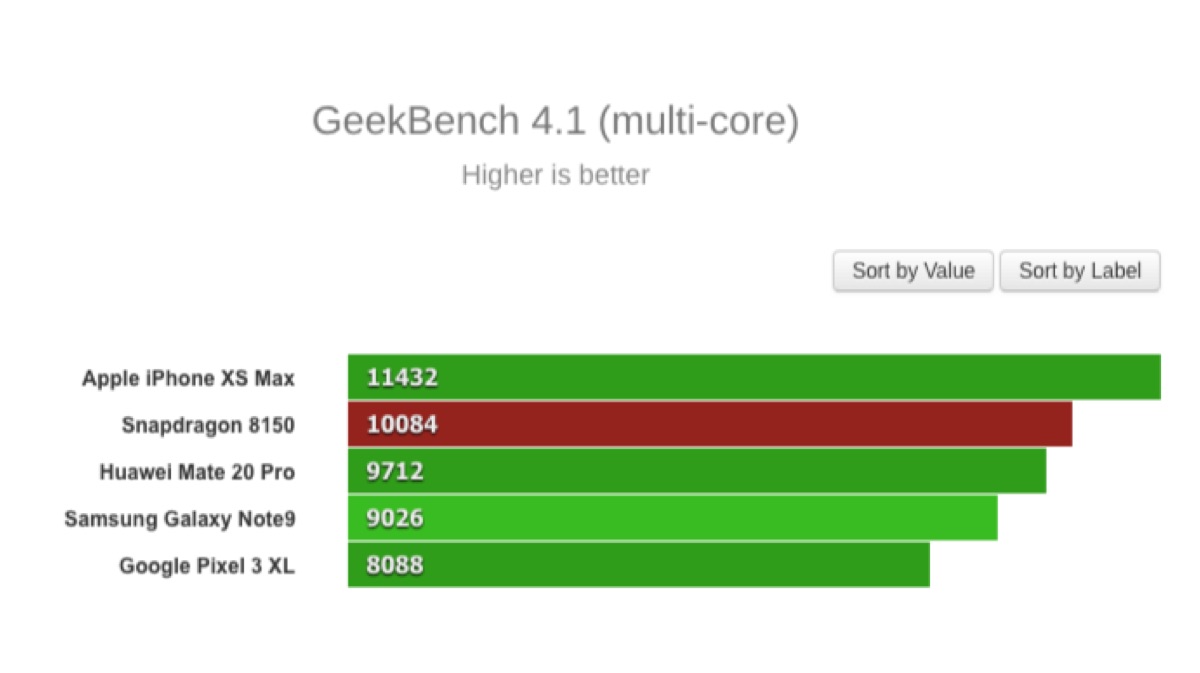
    The Geekbench result of the Snapdragon 8150 reveals its single and multi-core results. The processor gets a reputable 10,084 multi-core score and which helps it secure the number 2 ranking. The processor is only second to Apple’s XS Max which has a mighty score of 11,432. However, it is ahead of all other Android devices including the Huawei Mate 20 Pro, Samsung Galaxy Note 9 and the camera beast Google Pixel 3 XL.

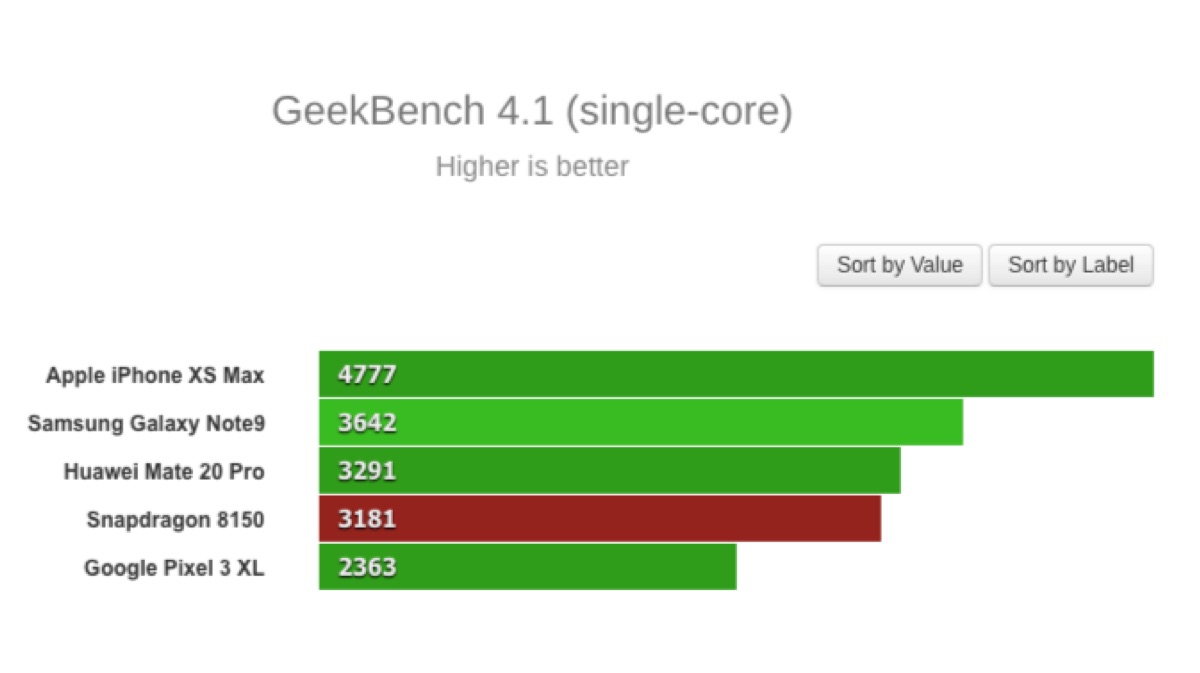
    Talking about the single-core result, it gets a score of 3,181 and is placed at number 4 in this category. The iPhone XS Max again maintains the lead with a score of 4,777. While the Note 9 and Mate 20 Pro take the second and third position.

    Although it should be kept in mind, Geekbench results also vary on a lot of other factors including RAM, Storage type and ROM optimisation. Hence, it is possible the Snapdragon 8150 can get a higher score considering all the things are set right. For now, we will have to wait for a real-life device to examine what the new processor brings to the table.
  • IIT-Madras Researchers Develop India’s First Microprocessor

    IIT-Madras Researchers Develop India’s First Microprocessor

    Researchers from the Indian Institute of Technology, Madras have designed and developed India’s first indigenous microprocessor for mobile computing devices. As a result, it will help to diminish India’s reliance on foreign microprocessors.  The microprocessor is on par with International standards hence, it is fit for sectors like Defence and Communication.

    Indian Shakti!

    The chip is developed under project ‘Shakti’ and was manufactured at the Indian Space Research Organisation’s (ISRO) Semi-Conductor Laboratory (SCL) in Chandigarh. It is the first RISC V (Reduced Instruction Set Computer)  microprocessor that is fully designed and developed in India. Shakti microprocessors are built on an open and free programming language ISA which stands for Instruction Set Architecture. The RISC-V ISA  provides hardware and software freedom for future developments, due to its open source nature.

    India’s Latest Computing Achievement

    Most noteworthy, the Indian chips eliminate the risks of backdoors or trojan infested hardware which is significant as these will be used in sectors by defence and government agencies where security is a major concern.

    Kamakoti Veezhinathan, who is the lead researcher at RISE (Reconfigurable Intelligent Systems Engineering ) laboratory states that the Digital India movement will be hugely benefited by this feat as many applications require task-specific processor cores.

    The clock speeds of Shakti processors are designed to suit various electric devices like consumer electronic devices, networking systems, and embedded low power wireless systems. Project Shakti is financed by the Ministry of Electronics and Information Technology, Government of India.

    IIT Madras officials said that this homegrown microprocessor is a major step towards computing self-sufficiency in the future. The Shakti processors use Bluespec open-source High-Level Synthesis (HLS) language.

    Also readXiaomi Announces Android Pie Update Schedule

    Even more, the first batch of 300 chips was manufactured in July 2018 at Intel’s facility at Oregon, US. The processor is called the RICE CREEK and it was successfully able to boot the Linux operating system. Above all, the latest chips are manufactured in India.

  • Realme To Soon Launch A Helio P70 Powered Smartphone

    Realme To Soon Launch A Helio P70 Powered Smartphone

    Realme is a smartphone manufacturer which was first registered in China in 2010. The company was a sub-brand of of Oppo Electronics until it’s sepration in 2018. The company launched its first smartphone, the Oppo Realme 1 earlier this year which was a huge hit in the Indian smartphone market. Realme has launched other smartphone models since then which are in high demand as well. Now, MediaTek has made an announcement at the IMC(Indian Mobile Congress) 2018. The company confirmed that a Realme smartphone will be the first device to be powered by the upgraded MediaTek Helio P70 SoC

    Helio P70- What Has Changed?

    The recently launched Helio P70 is an upgraded version of the Helio P60 which is seen in the likes of Oppo F9 Pro & Realme 1. The Helio P70 is 64-bit Octa-Core processor which uses 12nm production process that makes it more power efficient. It is up to 13% faster than the Helio P60 and up to 35% less power hungry. The Heli0 P70 supports up to 8 GB DDR4 RAM or 4 GB DDR3 RAM. The Helio P70 SoC has the Mali-G72 GPU with 900 MHz frequency and has a maximum screen resolution support of 2160 x 1080 px.

    The Helio P70 also has an in-built 525 MHz APU(Accelerated Processing Unit) which is a combination of CPU & GPU that allows for faster data communication. Hence, resulting in better performance and processing power.

    Realme & MediaTek
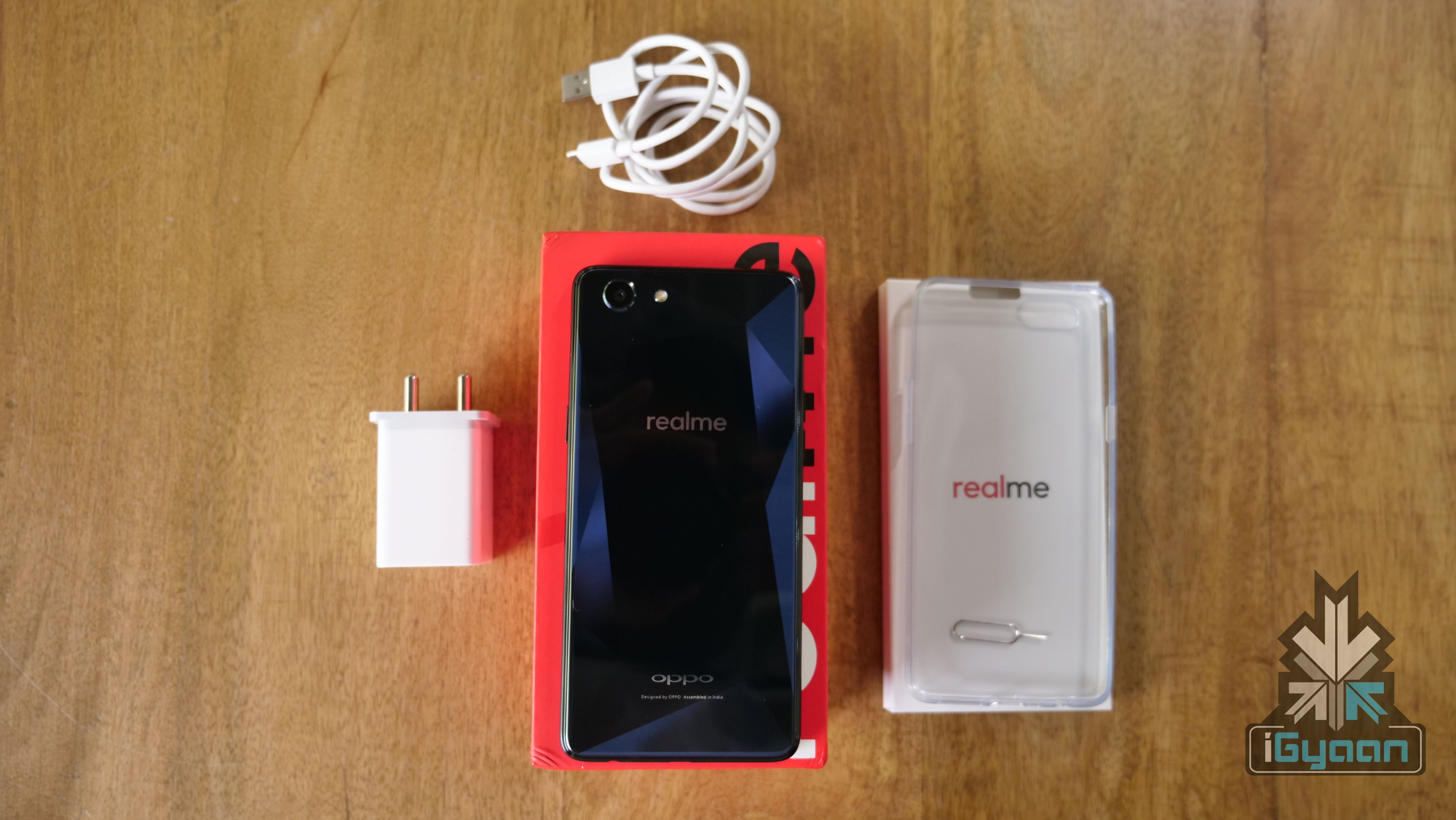
    Oppo Realme 1

    The last time Realme and MediaTek got together ,the result was the Realme 1. It stirred up the already cut-throat Indian smartphone market. Before the launch of Realme, Xiomi was one of the top smartphone manufacturers to offer a feature packed device at a highly affordable price. The Realme brand has since then become a synonym for great value for money smartphones. Later, the company launched the Realme 2, with a bigger battery and a fingerprint scanner which was an alternate to their Realme 1 which was more performance oriented. Recently, the company launched the Realme 2 Pro, a powerful mid-ranger and the Realme C1, the budget killer. Both of which run on Qualcomm processors.

    The Realme 1 with the Helio P60 SoC had overall better performance compared to it competitors in that price bracket. Now, the updated Helio P70 with multiple updates and better AI intergration is out. We are eager to see how the upcoming Realme smartphone with the Helio P70 SoC will fare. As we know, Realme prices their smartphones very aggressively we have a feeling the new smartphone will be a killer deal that will be hard to pass.

    The launch date of the device is not yet available, but the company had hinted towards a possible smartphone release by the end of this year.

    Also read: Top Smartphone Deals On Amazon Great Indian Sale

  • MediaTek Launches Helio P70 With Enhanced AI & Camera Capabilities

    MediaTek Launches Helio P70 With Enhanced AI & Camera Capabilities

    MediaTek is a Taiwanese micro chip manufacturer that provides chips for smartphones, HD-TV’s and wireless communication devices. Recently, they launched the Helio P70 SoC which is the successor to the popular Helio P60. The Helio P60 was seen on devices like Oppo F9 Pro and the budget champion Realme 1.

    Supported Configuration

    The Helio P70 is a 64-bit Octa-Core processor with a max frequency of 2.1 GHz which is up to 13% faster than the Helio P60. It is based on the ARM Cortex-A53 & Cortex-A73 microarchitecture and uses the 12nm production process which makes it faster and power efficient. In terms of camera support, the Helio P70 offers support for 32 MP and 24 MP + 16 MP camera sensors. It means, any smartphone  featuring the processor can use this camera configuration either on the front or back of the device.  It can also process a max video resolution of 2160p.

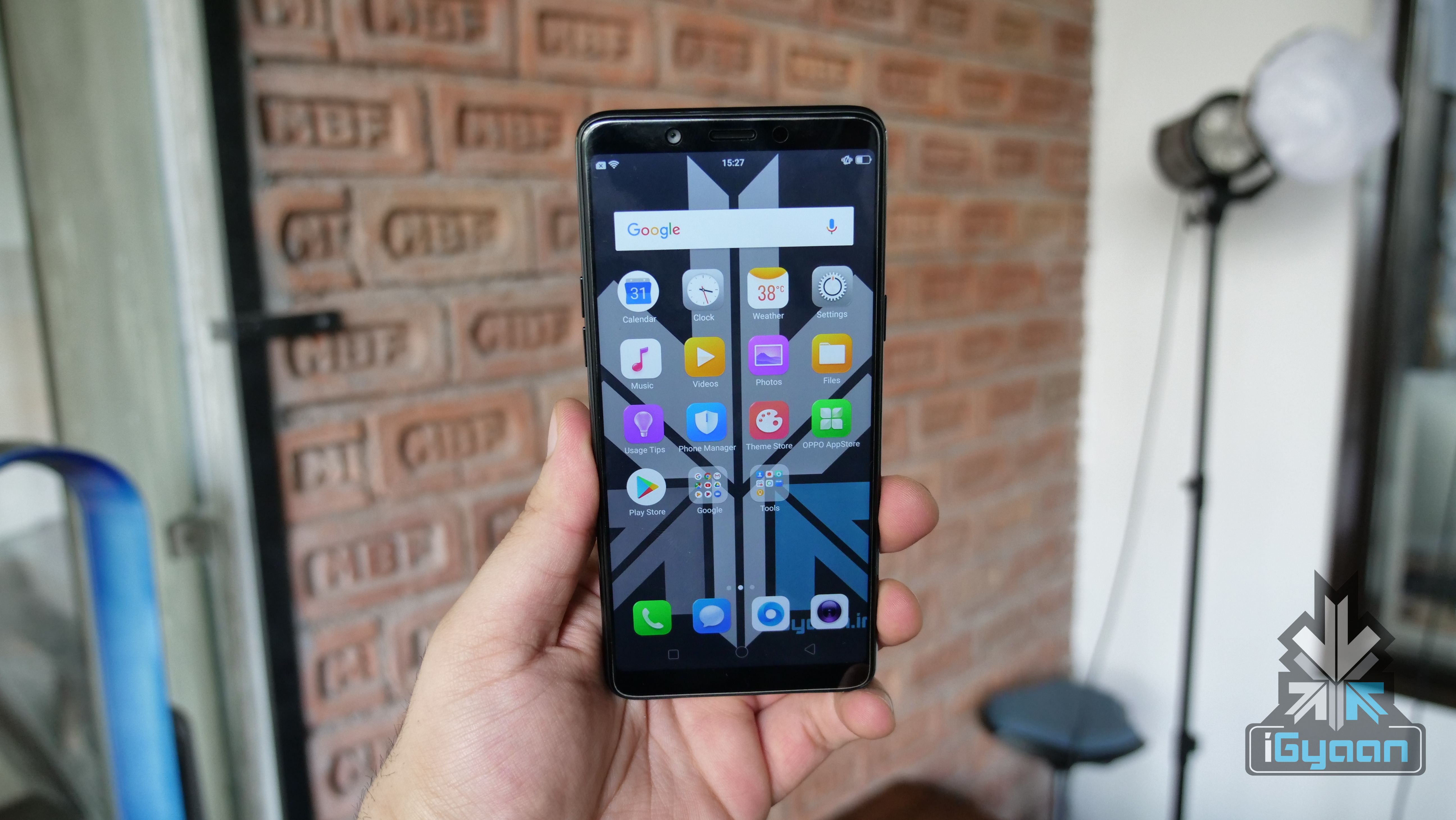
    Realme
    Oppo Realme 1 With Mediatek Helio P60

    The Helio P7 supports both LPDDR3 and LPDDR4x high frequency RAM. It can be paired with up to 4 GB of DDR3 RAM or up to 8 GB of DDR4x RAM. It also supports eMMC 5.1 and high speed UFS 2.1(Universal Flash Storage). In terms of Graphics, it has a Mali-G72 GPU with a max frequency of 900 MHz and max display resolution of 2160 x 1080 px. The processor can carry Dual 4G Volte SIMs and supports Bluetooth 4.2 low-energy, Wi-Fi a/b/g/n/ac and GPS.

    Key Changes

    The Helio P70 has a a multi-core APU (Accelerated Processing Unit) with a maximum frequency of 525 MHz. When combined with the Mediatek’s NeuroPilot, it delivers 10-30% more AI processing than the Helio P60. An APU is simply a combination of CPU & GPU which allows for faster data communication resulting in greater processing power and performance. Mediatek’s Neuropilot makes use of “Edge AI”, which means the processing is done on the device rather than relying on a fast internet connection or  cloud service. It makes the AI faster and keeps user data private as the data always remains on the device. The new Helio P70 is more power efficient and is up to 35% less power hungry than the Helio P60.

    Also read: Amazon Great India Festival: Top Smartphone Deals

    To sum up, the Helio P70 looks like a promising SoC for mid range smartphones. But, we are yet to see smartphone manufacturers to incorporate the latest chipset in upcoming handsets to see it’s real life performance.


  • Google Launches The Pixel Slate Starting at $599

    Google Launches The Pixel Slate Starting at $599

    Google has launched the Google Pixel Slate at its hardware event today. Google calls it the ‘perfect combination’ of a tablet and laptop and it features rounded edges. As the leaks suggested, the tablet is available in midnight blue colour. The Pixel slate has a pixel density of 293 ppi, and a 6M pixel display. This is Google’s second attempt at making a perfect tablet as it improves on their OS design. It supposedly provides the sharpest picture in the category with 8K content playback. The 12.3 inch LCD UHD+ Custom display looks fantastic at first glance, featuring a low temperature polycrystalline and silicone technology. It is 7 mm thin and weighs a mere 1.6 lbs. It has an aluminium body.

    The Pixel Slate has dual front firing speakers and comes with custom design profile for audio. Google is also providing 3 Months of YouTube TV with Pixel Slate and Pixel Book for free but for now it is limited o the US market. It is unclear if this will be available for Indian markets or not.

    The tablet also features 8 MP front and rear cameras and uses machine learning algorithms. It is not surprising that it has an integrated portrait mode even though it has a single lens, as do the Pixel devices. The front facing wide angle lens is for video chat and larger pixels allow better low light performance.

    The all new Chrome OS optimised for touchscreen experience is designed in a way that it becomes easy to use handheld .It also provides full desktop experiences and runs developer tools and full power Linux apps. Machine learning customises your toolbar, suggesting apps that you use frequently and at certain times in the day. The big screen enables working in splitscreen mode easier and faster. Google Assistant integration offers a wide variety of voice activated features  such as finding restaurants, dictating emails or playing shows.

    Google has also introduced Google Family link that helps parents set digital ground rules for children. It also features do not disturb and nightlight features for sleep

    After having a few bad days relating to security breaches, google has decided to provide Titan security chip to all its mobile devices.  Google also introduced the Pixel Slate Keyboard, as anticipated. It requires no pairing or charging and you can just connect and start typing. The round buttons were also among the many things that had leaked in the last few days. The keyboard is full sized and has backlighting for night time typing.

    The full feature trackpad makes it feel like a laptop instead of a two in one device. The folio is infinitely adjustable for any angle and turns into a protective case when not in use. Google has also heavily integrated G Suite, Docs, Sheets and Slides to enable working on the Pixel slate that much easier.

    This can be deduced from the full desktop Chrome browser that the company has integrated into the tablet and not the mobile browser of any site. Google also boasted that the tablet could easily handle any number of tabs you need. Google also spoke at length about the Pixel Pen support and promised that the tablet would give around 10 hours of battery life.

    The Pixel Slate starts at $599, and will be available inUS, Canada and UK later this year.


  • Huawei Launches Ultra Fast Charging Battery

    Huawei Launches Ultra Fast Charging Battery

    The Huawei Consumer Business Group has unveiled the first patented Lithium-Silicon battery. The company promise to change the entire experience of using a smartphone with this new battery. The Lithium-Silicon battery enhances fast charging and adds to the safety as well.

    Also Read: Huawei’s Freebuds 2 Pro & Huawei Mate 20 Pro Leaked

    Huawei says that the technology is similar to a battery which is likely to be seen in upcoming Huawei smartphones. This could mean that we would see the Huawei Mate 20 and Mate 20 Pro equipped with this capabilities. The new battery is more durable and has better power-retention capability. This is due to the fact that the silicon anodes in the Lithium-Silicon battery hold more power than the Graphite based versions.

    The company claims that this technology will revolutionise the way people use their smartphones. Just like multi-touch changed the way displays work. The battery has 3D Nitrogen-doped Carbon coating. They manufacture the coating at a lower temperature and it has high conductivity. This results in ultra fast charging.

    Ultra-Fast charging uses a relatively low voltage and high current formulas. This is however, unlike the conventional fast charging technologies. The low voltage and high current formula maximises the amount of current going into the device while minimising efficiency loss simultaneously.

    Huawei says that the technology is based on electrochemical kinetics advancements. This enables ultra fast charging batteries to support greater power efficiency and current input. The company promises that this new technology will change the way we use smartphones and free users from having no access to their devices due to lower battery life. It will be interesting to see how this technology will impact the way smartphones work in the future.

  • 2Gbps Download Speeds A Thing Of Reality With The Qualcomm X24 LTE Modem

    2Gbps Download Speeds A Thing Of Reality With The Qualcomm X24 LTE Modem

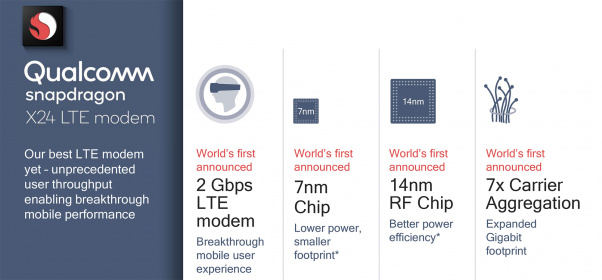
    Qualcomm, the pioneer in the smartphone chipset business has officially announced a new X24 LTE modem. The modem offers LTE download speeds of up to 2 Gbps. These speeds are almost double of what the X20 LTE modem (used in Qualcomm Snapdragon 845) offers. Rumours also suggest that the modem will be used in the upcoming Qualcomm Snapdragon 855 SoC (which is due until 2019).

    The technology is called 4.9G by Nokia communications, which will be the last phase of the 4G era. As a matter of fact, this is faster than the Gigabit LTE (which offers up to 1.2 Gbps). This makes it the fastest wireless modem that is currently in mass production.

    Samsung Galaxy S9 Will Run On Snapdragon 845
    Specifications:

    The chipset is based on 7nm FinFET process, with support for Cat 20 LTE. 4×4 MIMO with a maximum of 20 spatial streams.

    Maximum download speed of 2 Gbps and an upload speed of 316 Mbps has been achieved in the test run. The chipset does offer dual VoLte and dual LTE dual standby. In layman’s term, one can use two Jio SIM simultaneously.

    The modem does support all the exciting cellular technologies like LTE FDD, LTE TDD, and LTE-U etc. The 3×20 Mhz carrier aggregation will make this one of the best standalone modems for upload speeds.

    Conclusion:

    The year 2019 will be a great year for smartphone enthusiasts as the chipset maker is also developing a 5G modem by the name X50 5G modem. This is set to debut in late 2019. So, the OEM will have to make a choice between newbie X50 with the 5G capability or well-versed X24 modem with 4.9G capability.

  • Xiaomi Mi Mix 2S Could Be Faster Than Apple iPhone X

    Xiaomi Mi Mix 2S Could Be Faster Than Apple iPhone X

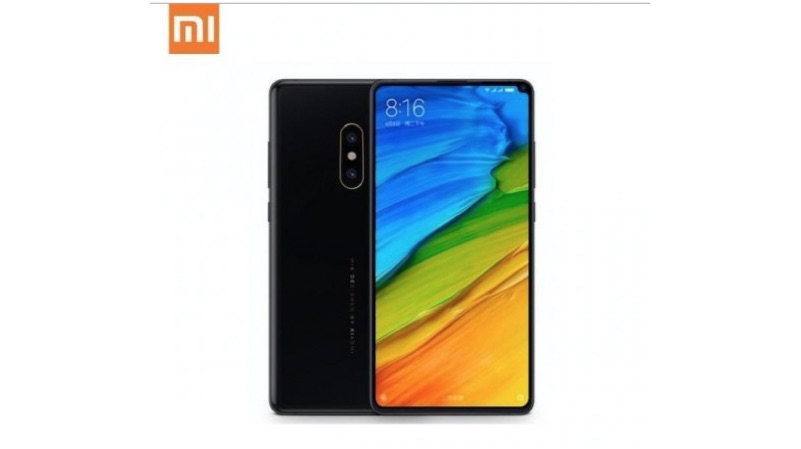
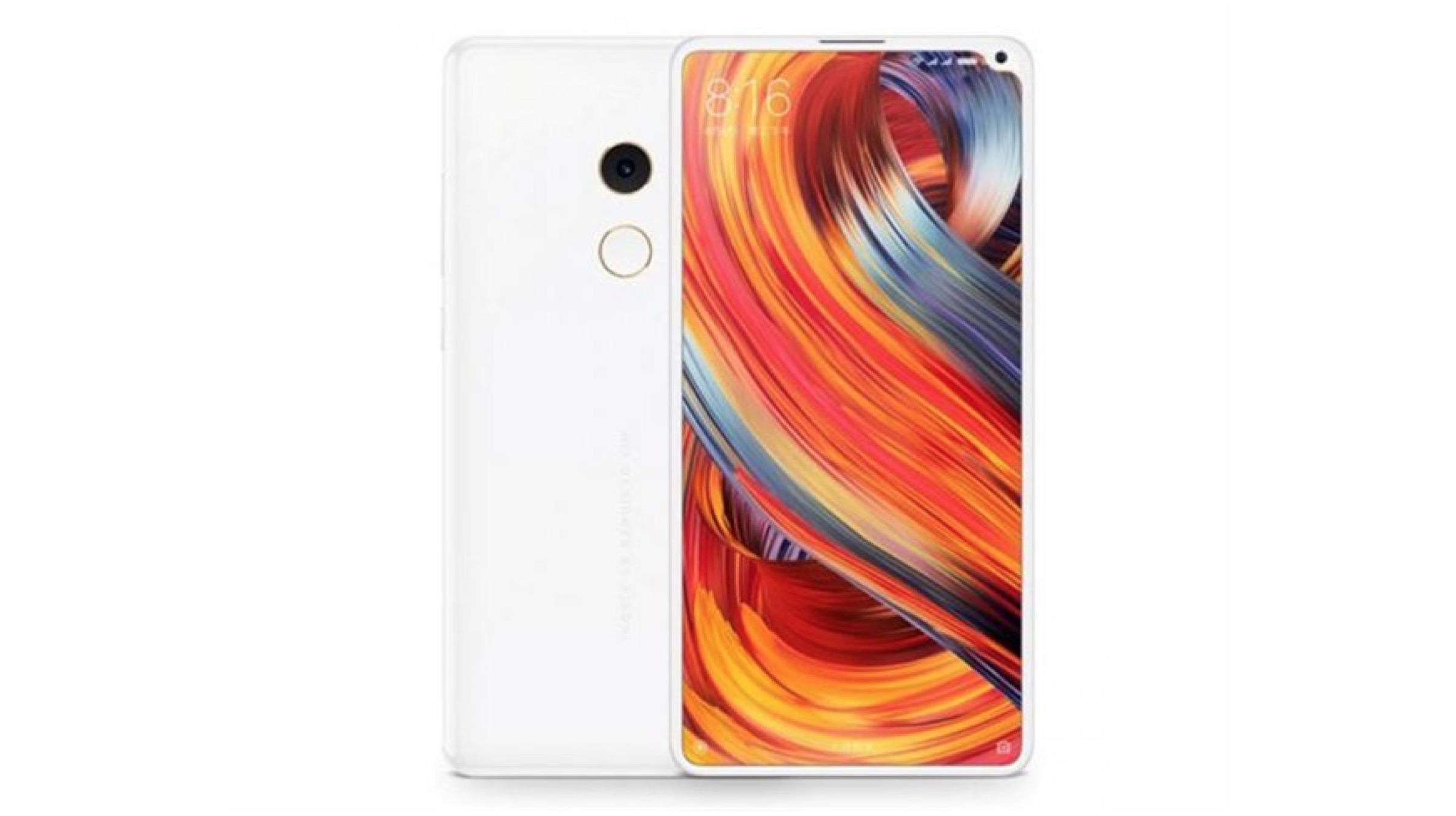
    Xiaomi Mi Mix 2S is speculated to be launched at MWC 2018. Apart from its out of the ordinary design, the Mi Mix 2S is expected to be one of the first few smartphones to run on the Qualcomm Snapdragon 845 chipset. If true, some tests have revealed that it could be much faster than the Apple iPhone X.

    Mi Mix 2s
    Mi Mix 2s Renders

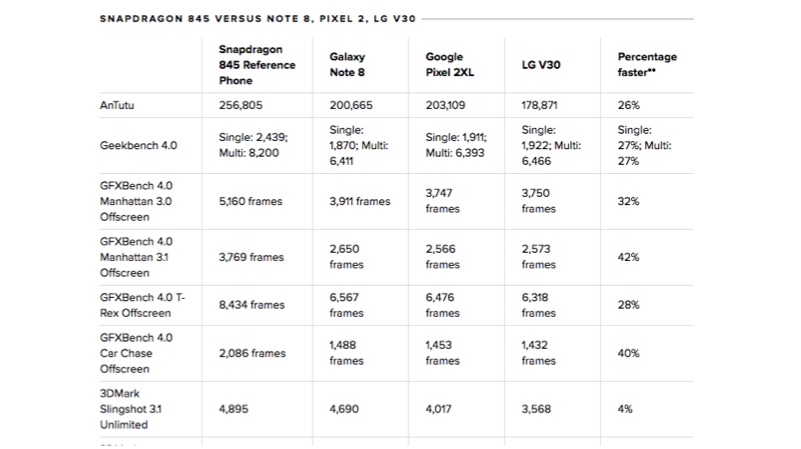
    A recent benchmark test of a reference phone running Snapdragon 845 chipset has revealed that it is much faster than the Snapdragon 835. A reference phone is what Qualcomm relies on, to test new chips in as close to a real-world environment as possible. The test scores were compared with Google Pixel 2, Galaxy Note8, and the LG V30. All smartphones running on the Snapdragon 835 chipset.

    Results:

    Apart from blitzing the Snapdragon 835 chipset, the reference phone has a higher AnTuTu score than the iPhone X. After the launch of the iPhone X, the A11 Bionic chipset was in the news for being much more powerful than the Snapdragon 835. In our Samsung Galaxy Note8 and Apple iPhone X comparison, the A11 chipset fared much better in benchmark results.

    The average score of the iPhone X on AnTuTu is over 202,000. In fact, the highest score record of iPhone X reported to Antutu database is 226,000. For context, Snapdragon 845 running reference phone scored a whopping 256,805. Now, if you are a believer in benchmark scores, then this test should be enough for you.

    However, benchmark scores hardly ever tell the whole story. Companies like OnePlus, Samsung have been accused of optimising their devices in order to score more on benchmark tests. Also, how a chipset fairs over a period of intensive testing varies. After all said and done, the Snapdragon 845 chipset seems ready to rule most of the “speed tests” on the internet for the next year at least.

  • Qualcomm Snapdragon 670 Specifications Leaked

    Qualcomm Snapdragon 670 Specifications Leaked

    Qualcomm announced the Snapdragon 845 chipset in late-2017. The flagship chipset will power most of the flagship devices in 2018 but, the smartphone industry comprises a lot of budget smartphones. Hence, the onus is on Qualcomm to consistently produce great budget chipsets like the Snapdragon 625.

    A couple of months ago, there were leaks surrounding the existence of Snapdragon 670 chipset. Now, a new leak has revealed all the specifications of the chipset. It is also expected to be announced at MWC 2018. The Snapdragon 670 will be a 10nm chipset that will not be based on the classic big.LITTLE architecture. Also, the chipset will comprise six low-end cores and two high-end cores. This is different from the usual four low-end and four high-end CPU cores.

    Snapdragon
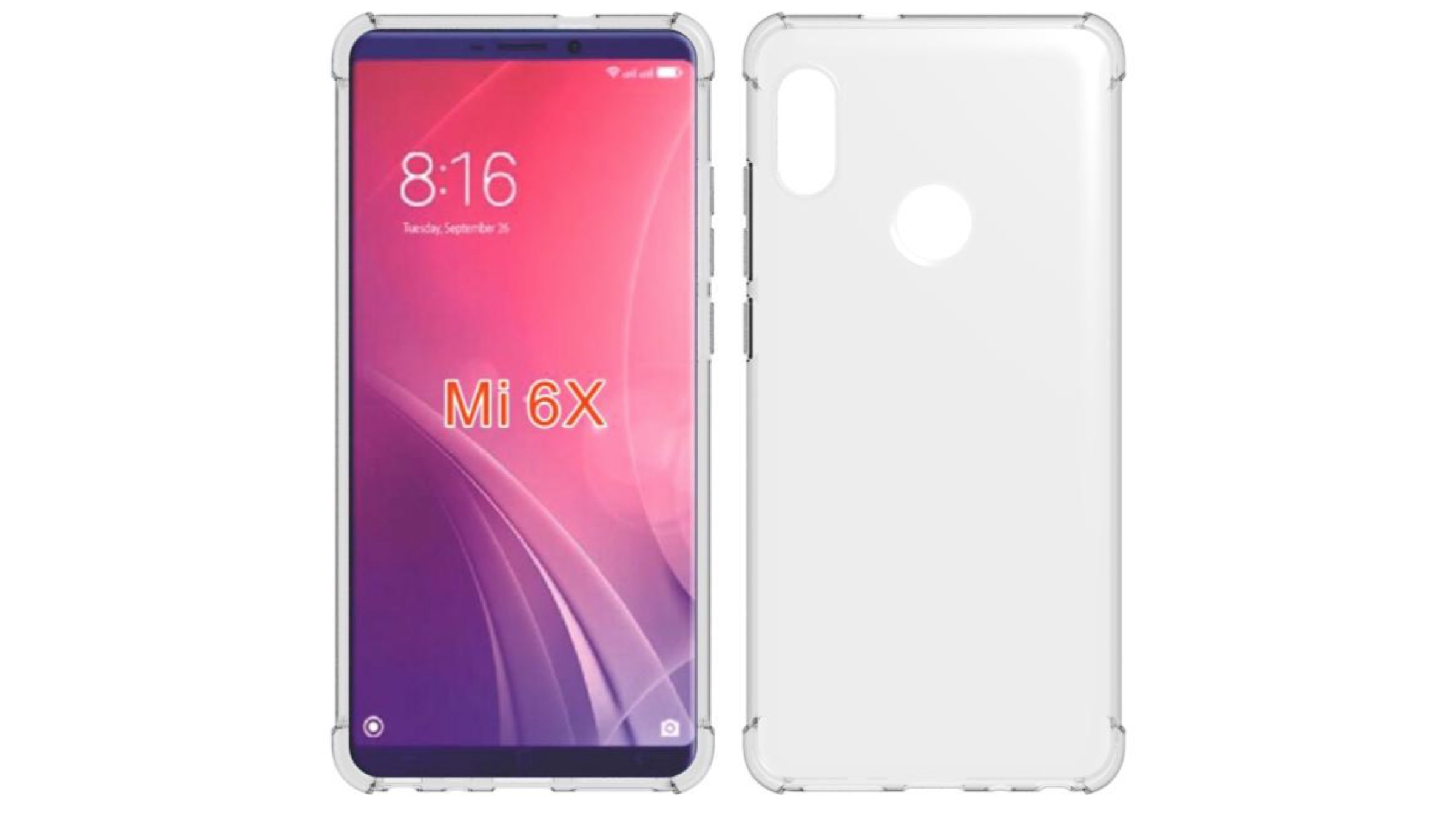
    Mi 6X Could Be Powered By The Snapdragon 670

    The low-end cores, dubbed as Kryo 300 Silver will have a maximum clock speed of 2.6GHz. In a nutshell, the Kryo 300 Silver is just an adapted version of ARM Cortex A55. The high-end cores, called Kryo 300 Gold, is a custom version of ARM Cortex A75. The Kryo Gold will have a maximum processing speed of 1.7GHz.

    Supporting the graphics will the Adreno 615 that works at 430MHz or 650MHz however, it can also reach 700MHz dynamically. The smartphones running on the Snapdragon 670 chipset will be expected to have top-notch performance. The Snapdragon 670 will support maximum download speeds of 1Gbps, thanks to the Snapdragon X2X modem. The chipset will offer support for UFS 2.1 and eMMC 5.1.

    If the chipset is announced at MWC 2018, there are chances of OEMs adopting the chipset for their smartphones that are scheduled to launch in mid-2018 or later, like the Mi 6X.

  • Face Unlock Is Coming To Android Go Smartphones

    Face Unlock Is Coming To Android Go Smartphones

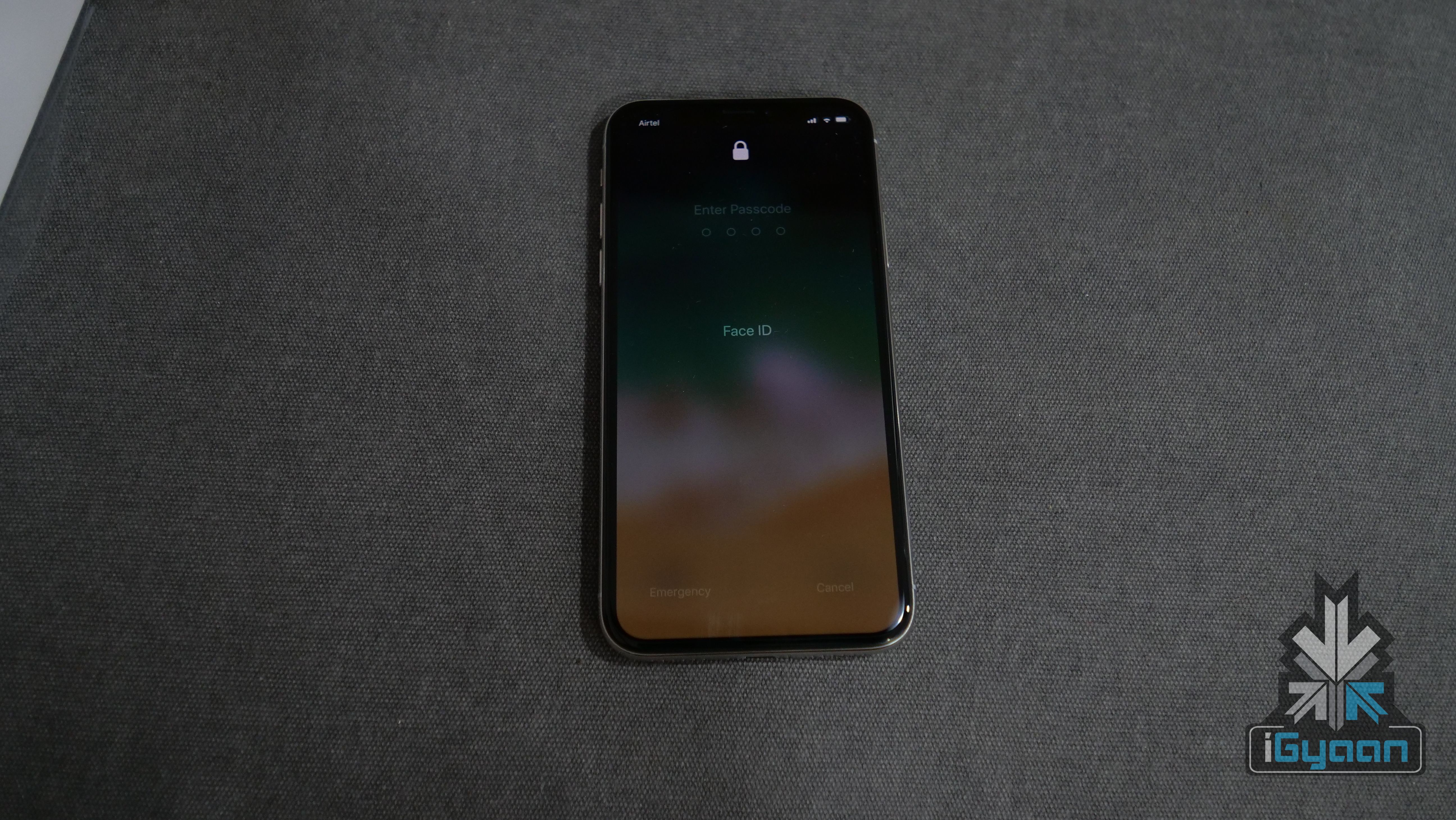
    In September of 2017, Apple launched the iPhone X without the beloved Touch ID. In came Apple’s spin on facial recognition, called Face ID. Even though the facial recognition technology has been present in Android smartphones for a number of years, it has gained mainstream attention ever since the launch of the iPhone X.

    More smartphone makers have announced their plans to introduce facial recognition technology in upcoming smartphones. The OnePlus 5T, launched in November 2017 has one of the fastest Face Unlock right now albeit, not the most secure. MediaTek, one of the biggest smartphone chipmaker after Qualcomm has announced plans to introduce the coveted facial recognition technology in entry-level smartphones.

    MediaTek claims that the facial data is stored on its chipset natively. Which means the facial data collected for authentication does not get stored in the cloud, thereby keeping it secure. The company also claims that its facial recognition system is fast and can unlock a smartphone in 0.5 seconds. It has a 30º angle unlock which makes it possible for one to unlock the smartphone while facing sideways as well.

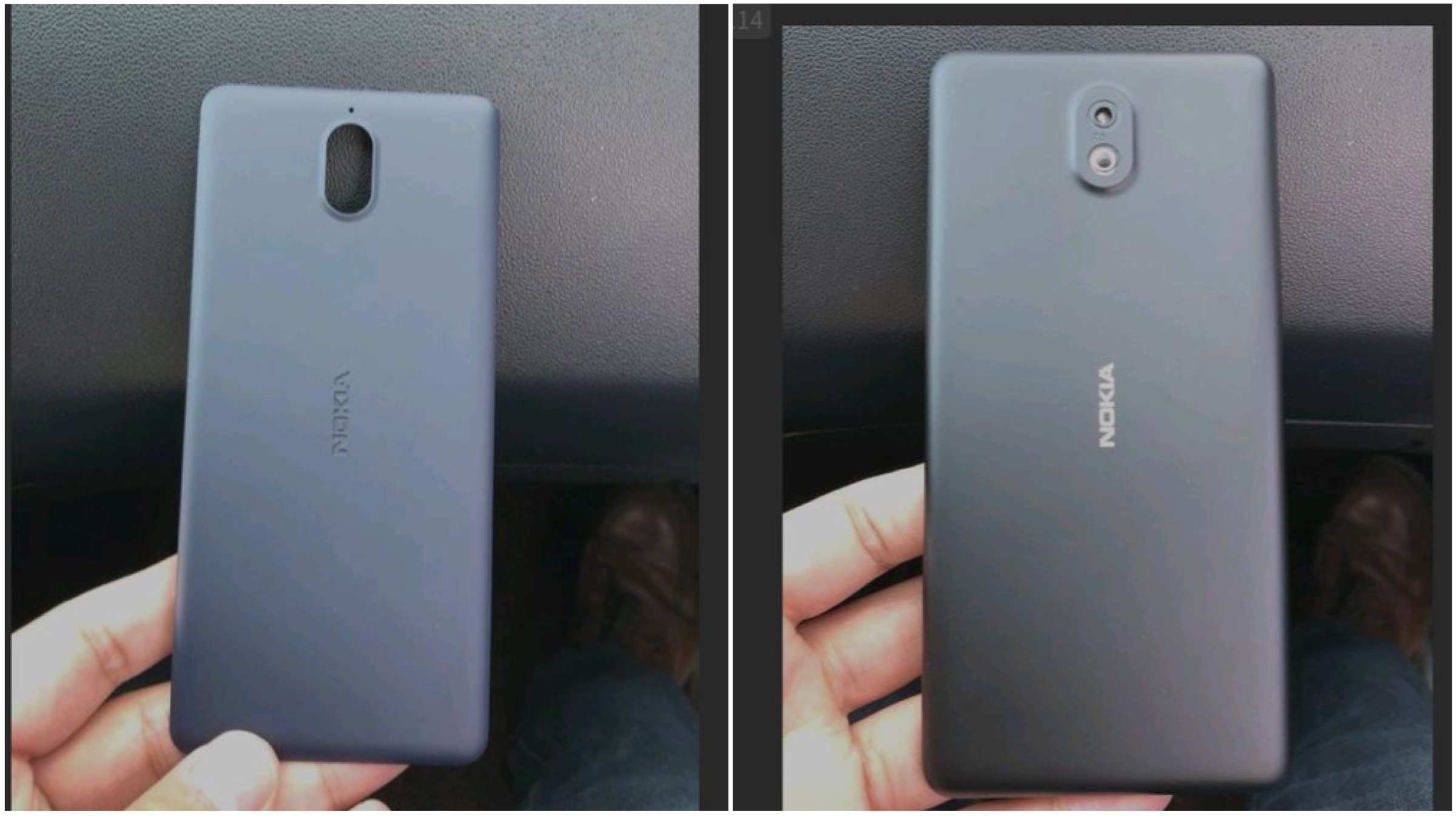
    Expected Nokia 1 Design

    The MT6739 chipset has features like Dual 4G VoLTE support, 18:9 HD+ display, and 13MP+2MP dual camera setup with bokeh effect.

    The chipset from MediaTek will be optimised to work with Android Go smartphones.It is already working with Reliance Jio on an Android Go device, as reported earlier. Also, this chipset will power entry-level smartphones which are expected to be priced below Rs 5,000. The first Android Go smartphone with MT6739 chipsets will be available starting March this year.

  • Xiaomi’s New Surge S2 Chipset To Power The Mi 6X

    Xiaomi’s New Surge S2 Chipset To Power The Mi 6X

    There is no denying that Qualcomm rules the roost when it comes to chipsets powering Android smartphones. Big smartphone makers opt for Snapdragon chipsets for their best devices and it seems like this will be the case for a long time. However, a lot of companies are preparing in-house chipsets and use these chipsets for a lot of important smartphones. Samsung uses its Exynos chipsets for devices sold in the US and South Korea, while Xiaomi only recently started developing its in-house chips.

    In 2017, Xiaomi launched its first-ever chipset, the Surge S1. The Surge S1 powered the Xiaomi Mi 5c but, the device remained a China-exclusive like a lot of other Xiaomi smartphones. However, it looks like the next iteration of Xiaomi’s in-house chipsets will power a device that could potentially see a release outside China. Specifications of Surge S2 have surfaced online and it is being reported that the Xiaomi Mi 6X will be powered by the new chipset.

    Mi 6X leaks

    The Surge S2 will have an octa-core CPU with four Cortex-A73 cores running at 2.2 GHz and four Cortex-A53 at 1.8 GHz. Accompanying the chipset will be the Mali-G71 MP8 GPU which is a great improvement over the Mali-T860 from the Surge S1. According to the report, Xiaomi is looking to par the S2 with the Kirin 960 by Huawei.

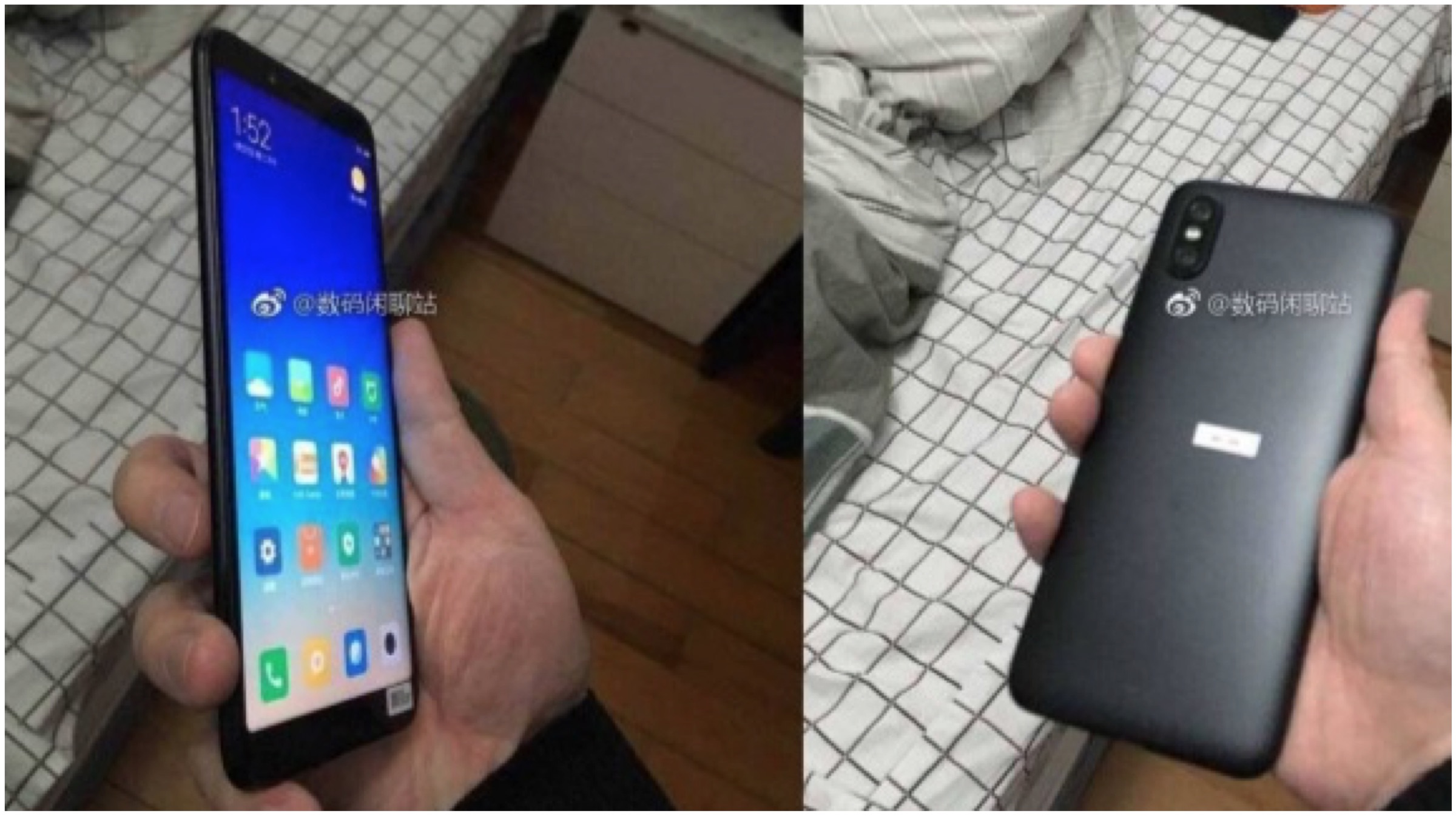
    It is reported that the first device to be powered by the new chipset is the Xiaomi Mi 6X. It is worth noting that the Xiaomi 5X was launched as the Xiaomi Mi A1 in the global market and if Xiaomi continues the trend, the Surge S2 could power the Xiaomi Mi A2 or Mi A1 (2018). So far, there have been two leaks that seemingly confirm a design change for the Mi 6X.

    The two leaked images reveal that the Xiaomi Mi 6X will have a vertically placed dual-camera setup on the back, similar to the Apple iPhone X. The front of the phone will see reduced bezels and a tall display, presumably a 6 inch IPS LCD display with a 2160 x 1080 px resolution.

    The launch of the smartphone might be far but, the Surge S2 is expected to be announced at the MWC 2018, where Xiaomi could also unveil the Mi 7.

  • Vivo Unveils First Ever Smartphone With An In-Display Fingerprint Sensor

    Vivo Unveils First Ever Smartphone With An In-Display Fingerprint Sensor

    Vivo, one of the most famous Chinese smartphone maker in its native country, has done something incredible. Teaming up with Synaptics, it has unveiled the first-ever smartphone with an in-display fingerprint sensor that might be the answer to reducing bezels, shaky facial recognition technology and the inconvenience of rear-facing fingerprint sensors.

    The technology is known as Clear ID and lets users OEMs embed a fingerprint sensor under the display. Synaptics has claimed that it has a failure rate of 1 in 50,000 which, for a first gen product, is admirable. Early reviews of the device are in and mostly paint a positive picture. People are praising the accuracy of the sensor while it is slower than other fingerprint sensors found on devices like the OnePlus 5T, it is hard to complain when the process feels so futuristic.

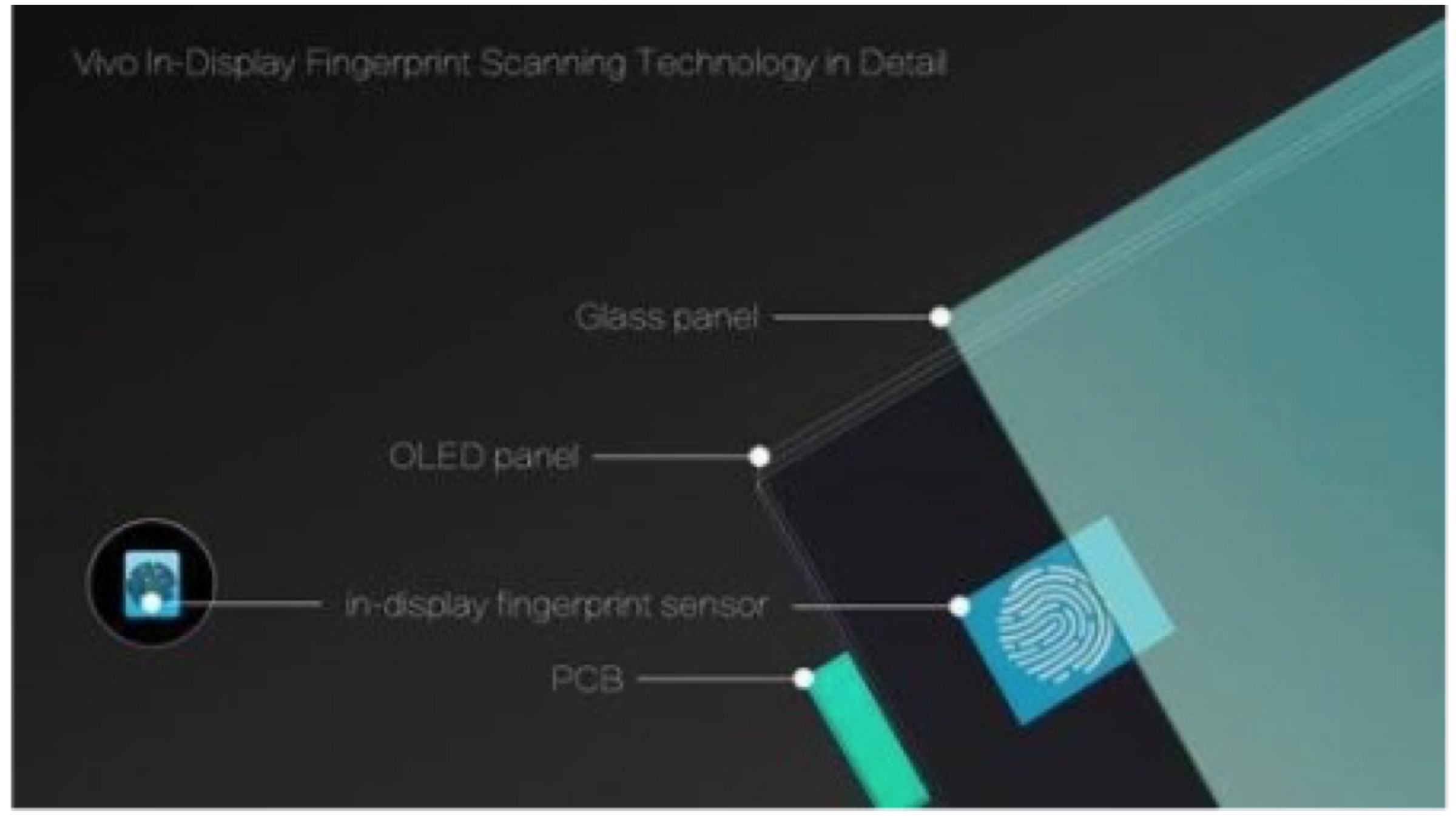
    The in-display fingerprint sensor sits between the mainboard and the OLED panel where it illuminates the finger and then processes the beams of light. Hence, this technology will not work on LCD panels as the sensor looks through the dots of an OLED panel, and then recognises the fingerprint.

    Alex Feng, Senior VP in Vivo, said in a press release that this technology is the solution to the industry’s challenge of providing a more convenient authentication experience. The smartphone is ready for mass production and should be announced in “early 2018.”

    While the device might not be available in a lot of markets, it marks the beginning of more smartphone makers integrating this technology into their upcoming flagship devices. There are rumours already that Doogee V will also have a screen embedded fingerprint sensor and a design similar to the iPhone X.

    With bezels becoming almost negligible, the implementation of this technology will be crucial for Vivo and other OEMs to keep producing smartphones with a front-facing fingerprint sensor.

  • Vivo Shows Off The In-Display Fingerprint Sensor Technology A Day Before Launching The Smartphone

    Vivo Shows Off The In-Display Fingerprint Sensor Technology A Day Before Launching The Smartphone

    Vivo teased the official unveiling of the first-ever smartphone with an in-display fingerprint sensor on the 10th of January at CES 2018. Now, a day before the smartphone’s launch, Vivo has showcased the technology that will be responsible for putting a fingerprint sensory inside the display.


    The in-display fingerprint sensor will sit between the mainboard and the OLED panel where it will illuminate the finger and then process the beams of light. Alex Feng, Senior VP at Vivo, said in a press release that this technology is the solution to the industry’s challenge of providing a more convenient authentication experience. The smartphone is ready for mass production and should be announced in “early 2018”.

    Early reports of the Vivo smartphone with an in-display fingerprint sensor have been positive. Analyst Patrick Moorhead detailed his experience with a pre-production Vivo phone equipped with the in-display fingerprint sensor technology. Synaptics, the manufacturer of the fingerprint sensor had also claimed that this technology is three times more accurate and faster than Apple’s Face ID. This claim, however, will be thoroughly tested once the device is made available to consumers.

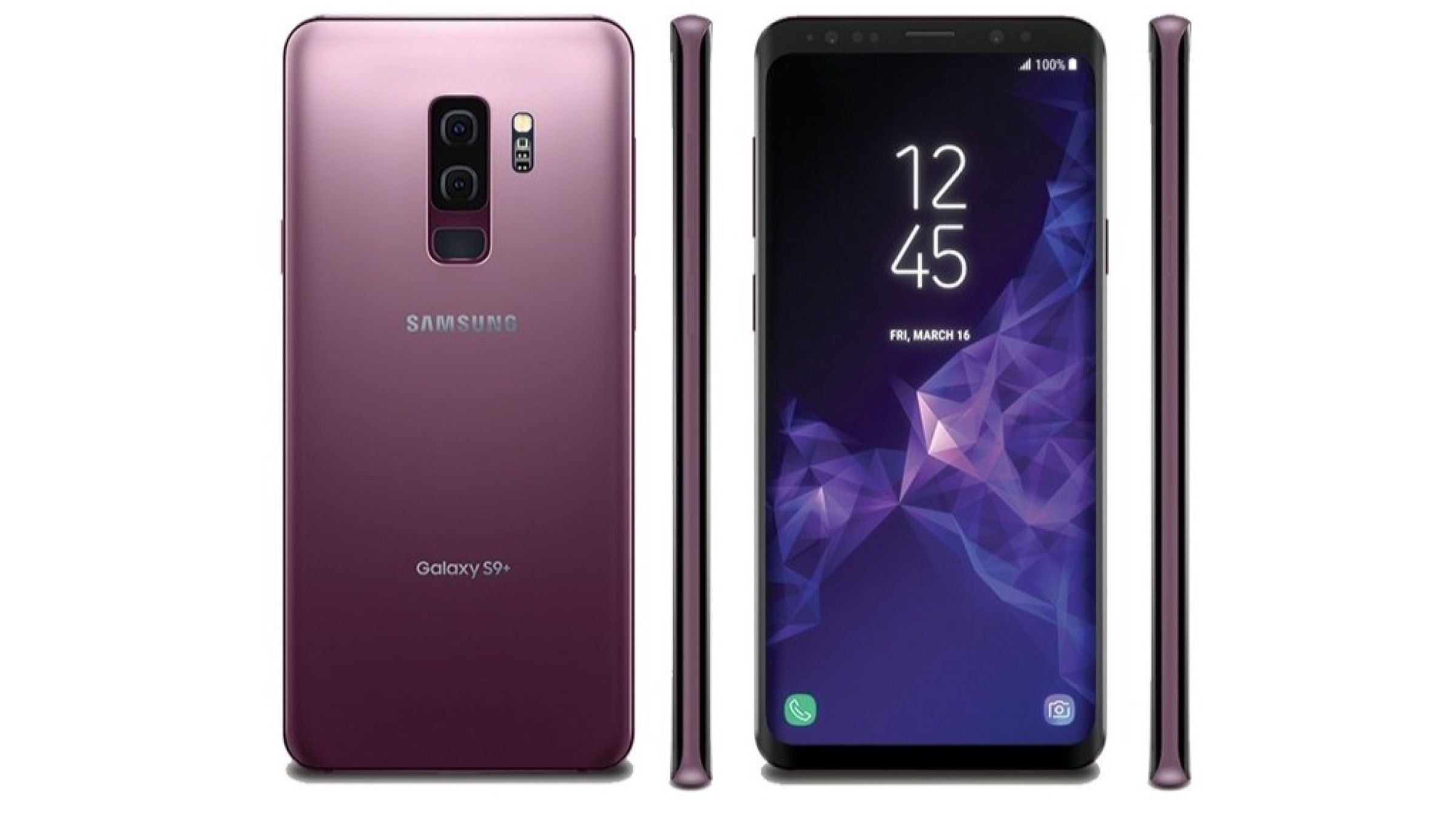
    Apart from Vivo, Doogee, another Chinese smartphone maker is also working on a smartphone with an in-display fingerprint sensor. The name of the device will be Doogee V and according to the leaks, the smartphone’s design is heavily inspired by that of the iPhone X and Galaxy S9+ Leaks.

    The launch of the Vivo smartphone will usher in a new technology trend which will allow OEMs to provide a front-facing fingerprint sensor all the while decreasing the bezels around the display as well. However, a lot will depend on the responsiveness and reliability of the device from Vivo as this will set precedence for upcoming devices from other OEMs and how the consumers will respond to this technology as well.

  • Apple Admits Spectre And Meltdown Affects All macOS And iOS Devices

    Apple Admits Spectre And Meltdown Affects All macOS And iOS Devices

    Alphabet’s Google, along with a few other security researchers published a document which chronicled two major flaws found in nearly all modern CPUs. The reason this flaw is much more complex than the usual software or hardware bugs is that it’s more than just a bug that can be fixed with an update. The flaw lies in the middle, at the level of the processors’ “architectures,” in the way all the millions of transistors and logic units work together to carry out tasks.

    In the architecture of modern CPUs, there are unpenetrable spaces where data passes through in raw, unencrypted form, such as inside the kernel, the most central software unit, or in system memory carefully set aside from other applications. This data has powerful protections to prevent it from being interfered with or even observed by other processes and applications.

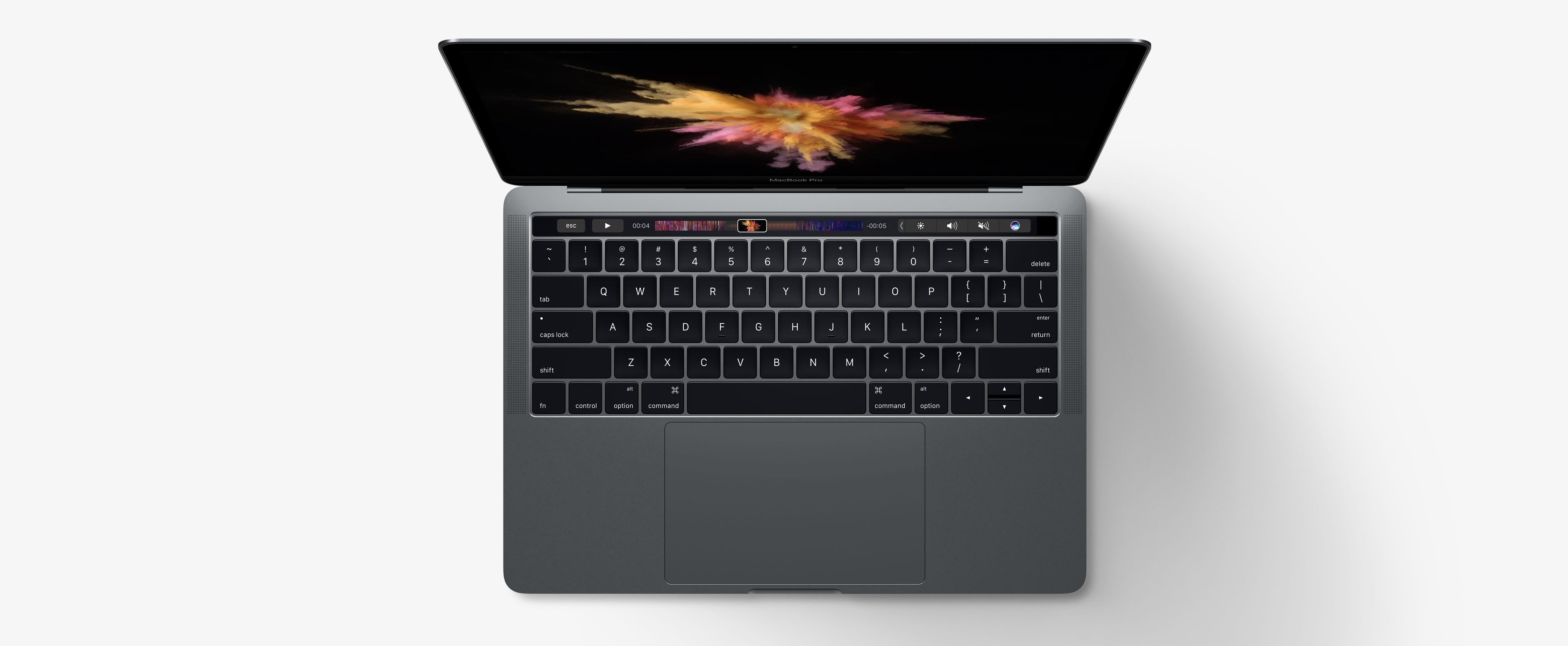
    MacBook Pro

    Meltdown and Spectre exploit critical vulnerabilities in modern processors. These hardware bugs allow programs to steal data which is currently processed on the computer. While programs are typically not permitted to read data from other programs, a malicious program can exploit Meltdown and Spectre to get hold of secrets stored in the memory of other running programs. This might include passwords stored in a password manager or browser, personal photos, emails, instant messages and even business-critical documents.

    Meltdown affects Intel processors and works by penetrating through the barrier that prevents applications from accessing arbitrary locations in kernel memory. Spectre affects Intel, AMD, and ARM processors, which basically means that it affects anything with a chip in it, from mobile phones to thermostats.

    iPhone X

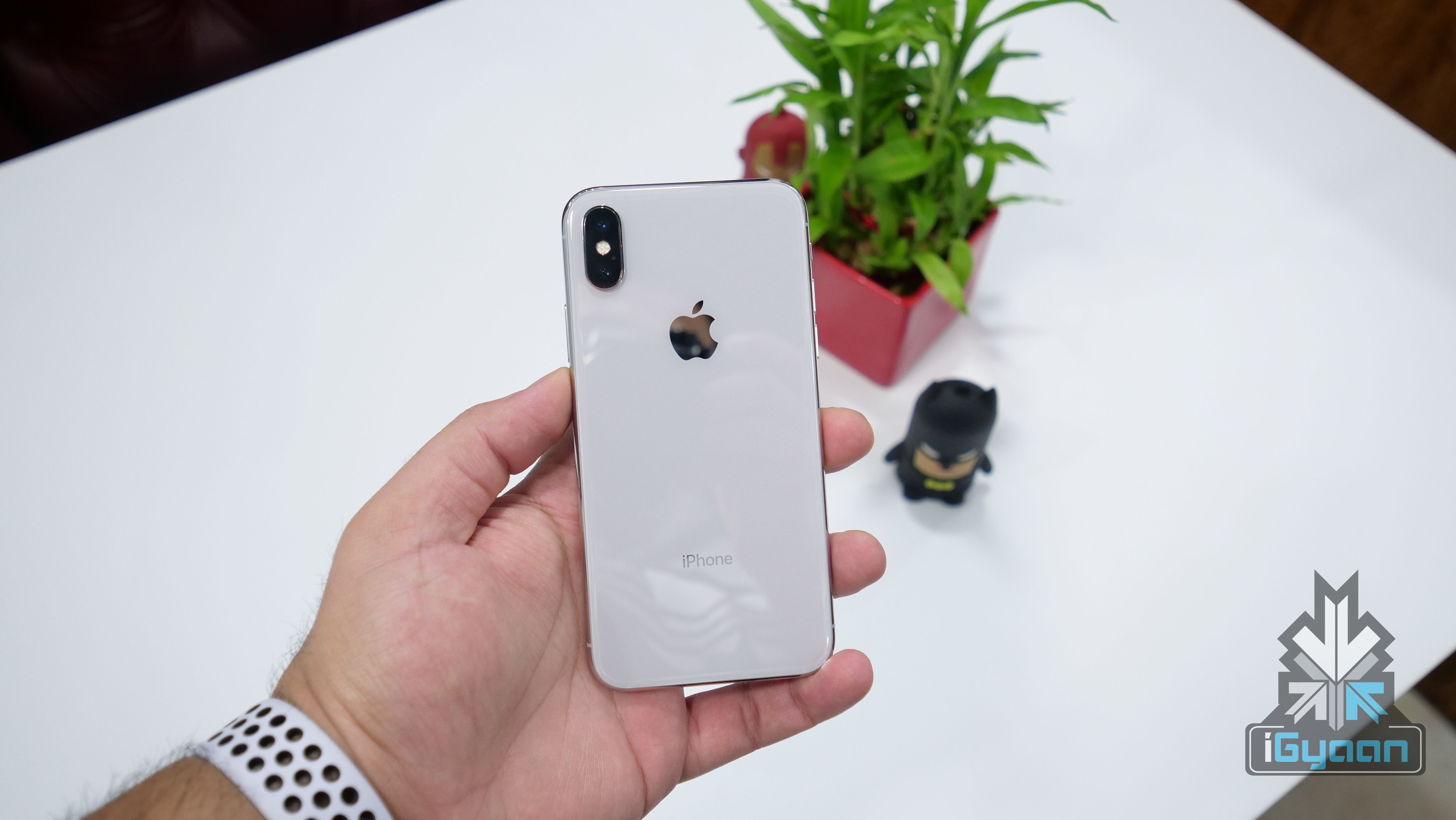
    In a response to this revelation, Apple has come out and conceded that its devices are not immune to the security flaws. In a statement, the company announced that all its macOS and iOS devices are affected but, mitigations are either already in place or in the final stages of being rolled out. Apple has stated that it has already dealt with Meltdown:

    Apple released mitigations for Meltdown in iOS 11.2, macOS 10.13.2, and tvOS 11.2. watchOS did not require mitigation.

    This is what the company had to say about Spectre:

    Analysis of these techniques revealed that while they are extremely difficult to exploit, even by an app running locally on a Mac or iOS device, they can be potentially exploited in JavaScript running in a web browser.

    Apple will release an update for Safari on macOS and iOS in the coming days to mitigate these exploit techniques.

    In a nutshell, this means that while Meltdown is no longer a threat, Spectre remains the only major flaw which can be exploited and Apple will soon release a fix for that.

iGyaan Network
Privacy Overview

This website uses cookies so that we can provide you with the best user experience possible. Cookie information is stored in your browser and performs functions such as recognising you when you return to our website and helping our team to understand which sections of the website you find most interesting and useful.