Category: Social Media

  • Facebook Activates ‘Safety Check’ Feature Amid Paris Terror Attacks

    Facebook Activates ‘Safety Check’ Feature Amid Paris Terror Attacks

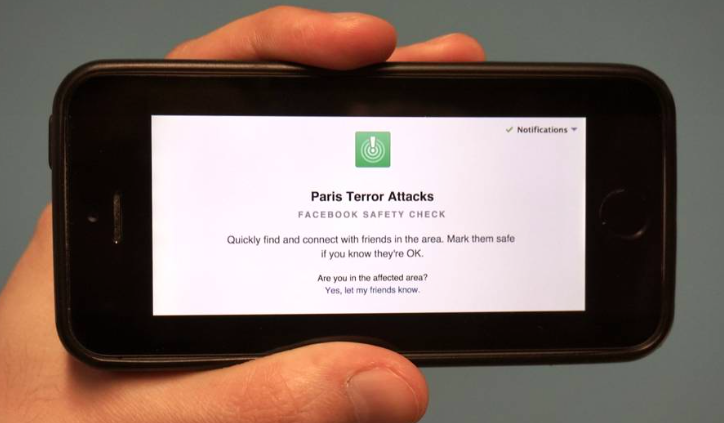
    Today, the world woke up to one of the worst terror attacks in recent times. The Paris massacre last night killed dozens of people and left many more severely injured. In times of such crisis one needs to stay connected to those closest to them, especially if they happen to be near the crisis zone, and Facebook lets you do that with its ‘Safety Check’ feature.

    On Friday, Facebook activated its safety check feature during the Paris crisis to allow users to notify friends and family that they were safe through the site’s ‘Safety Check’ tool. Users began getting notifications telling them that their friends who were in Paris during the attacks were safe.

    Safety check

    The ‘Safety Check’ feature was launched in 2014 and has been activated five times so far. This is the first time the feature has been used in a non-natural disaster setting. in the wake of the attacks, Facebook promptly activated the feature and also released a statement:

    “We are shocked and saddened by the events unfolding in Paris. Communication is critical in these moments both for people there and for their friends and families anxious for news. People turn to Facebook to check on loved ones and get updates which is why we created Safety Check and why we have activated it today for people in Paris.”

    Facebook hasn’t yet shared how many people were marked safe. According to its site, Facebook determines the location of a user by “looking at the city you have listed in your profile, your last location if you’ve opted in to the Nearby Friends product, and the city where you are using the internet.”


  • ‘Quit Facebook, Stay Happy,’ Says Happiness Research Institute

    ‘Quit Facebook, Stay Happy,’ Says Happiness Research Institute

    Facebook, like smoking or drinking, can be regarded as an addiction for the digital age. Well, maybe not as harmful to the body as the latter, but according to a study conducted by the Happiness Research Institute (yes, it’s a real place), Facebook can be quite harmful, mentally.

    A study was conducted by the Happiness Research Institute on 1,095 Facebook users in Denmark to see how the social media might be affecting their mood. The researchers first discovered that over 94% of the participants visited Facebook on a daily basis.

    The subjects were them split into two groups – one group continued their daily use of Facebook while the other were made to stay off the site completely. One week later, the Happiness Research Institute found that 88% of the quitters said that they felt “happy,” while 81% of Facebook users felt the same. According to the results, Facebook users reported greater rates of anger, worry, sadness, depression and loneliness; while the quitters reported higher rates of happiness and enthusiasm, better social lives, fewer problems with unproved concentration.

    Social Media

    Let it be known that this study is far from being scientifically accurate as the subjects basically wrote down what they felt, which cannot be all taken at face value. But the study itself revels a growing concern over our dependance on scrolling through timelines and news feed every chance we get, worrying about our status updates and the number of likes, among other things.

    Let’s be honest, we’ve all felt like giving up Facebook at some point in our lives. We’ve also deactivated our accounts only to return to it the next day. The potential effects of Facebook and other social media addiction cannot be properly quantifiable, which is what makes this form of addiction silently scarier than others. Let us know what you think about the effects of social media on you in the comments below.

  • Facebook’s New Message System Takes On SnapChat’s Self-Destruct Messages

    Facebook’s New Message System Takes On SnapChat’s Self-Destruct Messages

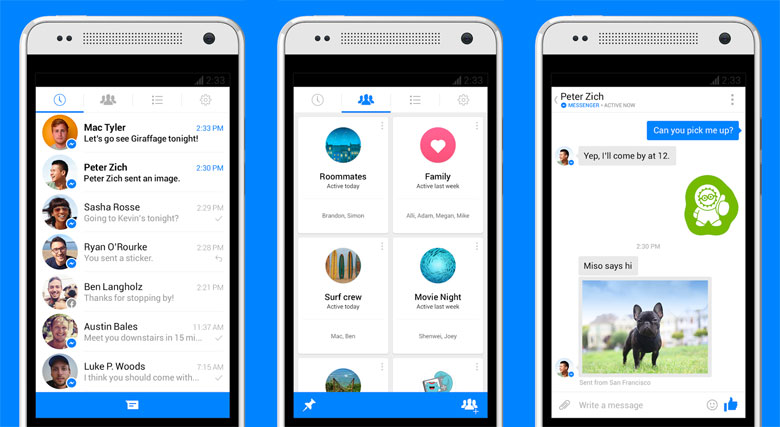
    Facebook is currently testing a new feature on their messaging app in France to introduce a self-destruct option within the Messenger app. This is not too difficult to operate, since one just has to click on a hourglass button at the top of the screen to activate it. The activation of this button will allow messages to be destroyed after one hour. In order to deactivate the feature, you’ll just have to click on the button again. In a public statement, Facebook said:

    “We’re excited to announce the latest in an engaging line of optional product features geared towards making Messenger the best way to communicate with the people that matter most.

    This is not the first time that Facebook has tried to introduce the idea of ephemeral messaging. It had previously introduced “Poke” in 2012 that was almost a copy of SnapChat, which had to be discontinued because it did not perform well. Eventually, they came out with another app called “Slingshot”, which was once again a take on SnapChat along with a couple of personalized features such as the fact that it required a photo in return before a message could be viewed.

    Facebook Messenger

    Anyway, what’s done is done, let’s just hope this feature doesn’t tank too. And for all those  wishing to erase a message already sent, or wishing you never sent them out and hoping it would get lost in the universe and never come up again – this could be your dream come true.

  • YouTube Launches its Own Music Streaming App, Challenges Apple Music and Spotify

    YouTube Launches its Own Music Streaming App, Challenges Apple Music and Spotify

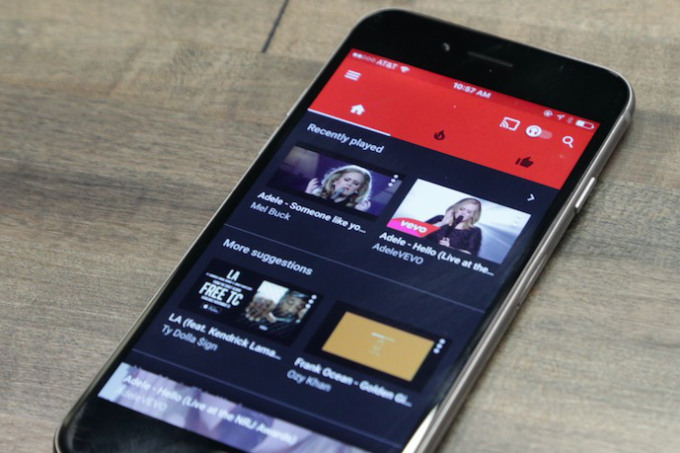
    Watch out Apple Music and Spotify, YouTube Music is here. The world’s largest and most popular free music service has started rolling out a dedicated music app, which includes a paid subscription option.

    YouTube has been dominating online video streaming for years and has become a household name today. Now the video giant wants to do what it does best – bring music to the masses. YouTube has stuck to free music videos for years to the dismay of some in the music business. The contention was that YouTube doesn’t generate nearly enough revenue when compared to the number of hits it gets on a daily basis.

    The YouTube Phenomenon

    Videos are becoming the next big thing for social networking sites. Facebook’s big video push is now providing a real competition to YouTube, and Facebook has also shown interest in music, too with the newly launched Music Stories. But the impact on YouTube has been massive and the video giant knows just how big it is. in their official blog, YouTube said that, “today, any artist can upload a video to YouTube and get discovered by over 1 billion people around the globe. That global exposure has allowed YouTube and Google to pay out over $3 billion to the record industry to date. But it’s also provided an incredible source of promotion for artists, helping fuel ticket sales, move merchandise, and boost album and song downloads. Just this month, Adele’s “Hello” became the fastest rising video of the year on YouTube, while also breaking the record for first week download sales.”

    The fact that YouTube is coming out with a standalone app when Google Play Music already exists is a bit confusing. However, those who are subscribers to YouTube Red can avail benefits on both the apps.

    https://www.youtube.com/watch?v=uwj1qFPnhow

    How Does YouTube Music Work?

    The app works like a standard music service. You search for artists or songs and then YouTube suggests more songs based on your search. It’s unlike Apple Music and Spotify in that while the latter services offer curated songs and playlists, YouTube Music doesn’t. The app lets computers rather than humans pick out songs for you, and will do so once you already have a song in mind.

    No matter where you start in the app, the music will never stop. Every song you play or artist you choose will take you on an endless journey through YouTube’s music catalog. A simple tap and you’re on your way, enjoying your favorite music and discovering new artists effortlessly. The home tab will recommend tracks just for you and create personalized stations based on your tastes.

    YouTube Music

    You cannot create playlists, however. Instead YouTube Music creates a daily playlist for you in ‘My mix’, which combines tracks you’ve listened to, tracks you’ve liked and some new suggestions based on both. The app is also unlike Apple Music and Spotify in that it is the first music streaming app that includes videos. You can share and listen to music for free, with ads, or go for an ad free version by subscribing to YouTube Red for a monthly fee of $10.

    The YouTube Music app is available only in the U.S as of now and YouTube plans to roll out the service in other countries soon. Let us know what you think of YouTube’s newest app in the comments below.

    Source: [tw-button size=”medium” background=”#07ABE2″ color=”” target=”_blank” link=”http://youtube-global.blogspot.in/2015/11/a-youtube-built-just-for-music.html”]YouTube[/tw-button]

  • Barack Obama Launches Facebook Page, Gains 200,000 followers in 3 Hours

    Barack Obama Launches Facebook Page, Gains 200,000 followers in 3 Hours

    When American president Barack Obama joined Twitter in May, 2015 he broke Robert Downey Jr.’s record of reaching one million followers in the fastest time ever according to Guinness Book of World Records. Obama reached the number in under five hours, while it took Downey Jr. over 23 hours to achieve the same.

    The Prez has now taken to Facebook and seems to be setting new bench-marks of popularity on the social media platform already. Within hours of announcing the account, he has over 600,000 followers on his Facebook page.

    The inaugural post of the page is a video of President Obama walking across the White House grounds, also a national park.

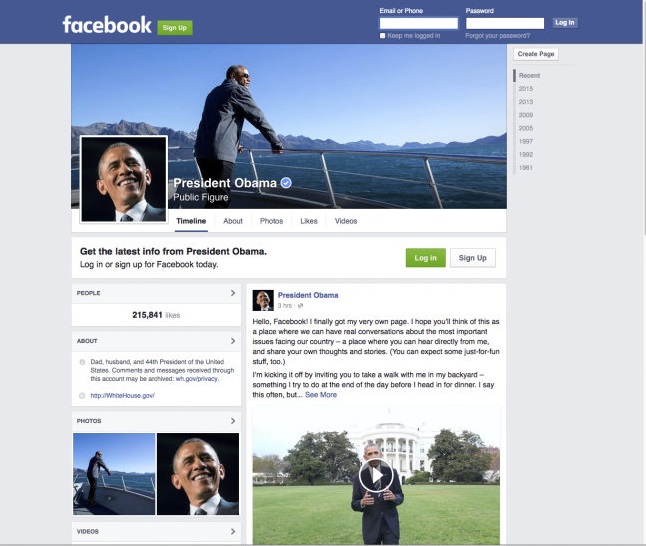
    Hello, Facebook! I finally got my very own page. I hope you’ll think of this as a place where we can have real conversations about the most important issues facing our country – a place where you can hear directly from me, and share your own thoughts and stories. (You can expect some just-for-fun stuff, too.)I’m kicking it off by inviting you to take a walk with me in my backyard – something I try to do at the end of the day before I head in for dinner. I say this often, but that’s because it’s always at the front of my mind: We’ve got to preserve this beautiful planet of ours for our kids and grandkids. And that means taking serious steps to address climate change once and for all. Now, we've made a lot of progress to cut carbon pollution here at home, and we're leading the world to take action as well. But we’ve got to do more. In a few weeks, I’m heading to Paris to meet with world leaders about a global agreement to meet this challenge.I hope you'll join me in speaking out on climate change and educating your friends about why this issue is so important. At a time when nearly three in four adults online use Facebook, this feels like a great place to do it. Share your thoughts in the comments, and pass this message on to folks you think need to see it.If we're all in this together, I'm confident we can solve this and do right by future generations. Posted by President Obama on Monday, November 9, 2015
    Needless, to say, like of the President's social media activity, this Facebook account is also taken care of by an entire team of tech-professionals. He is known to have roughly 20 techies to take care of his various social media accounts across Twitter, Facebook, Instagram and YouTube. Here's a screenshot of the page. Obama Official Facebook Page    

  • Pinterest To Launch New In-App Visual Search Feature

    Pinterest To Launch New In-App Visual Search Feature

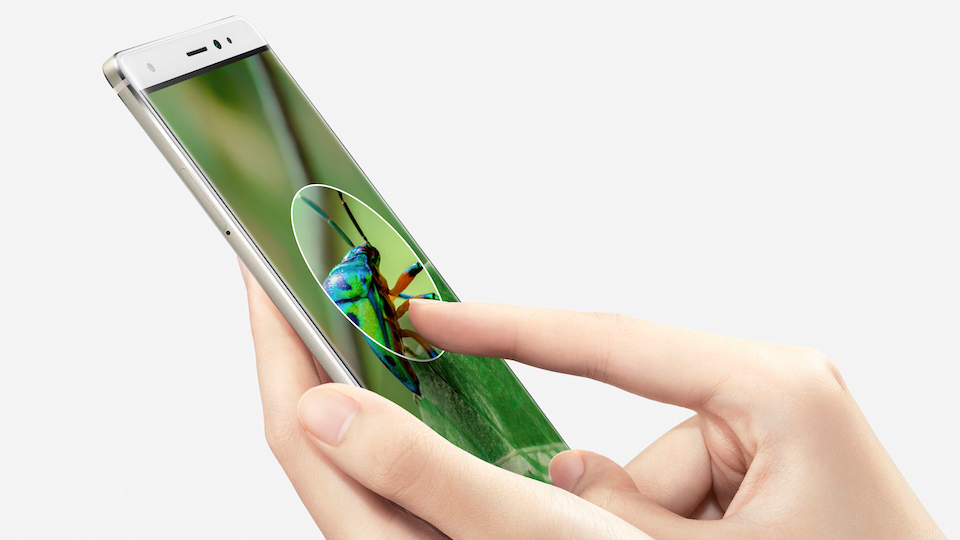
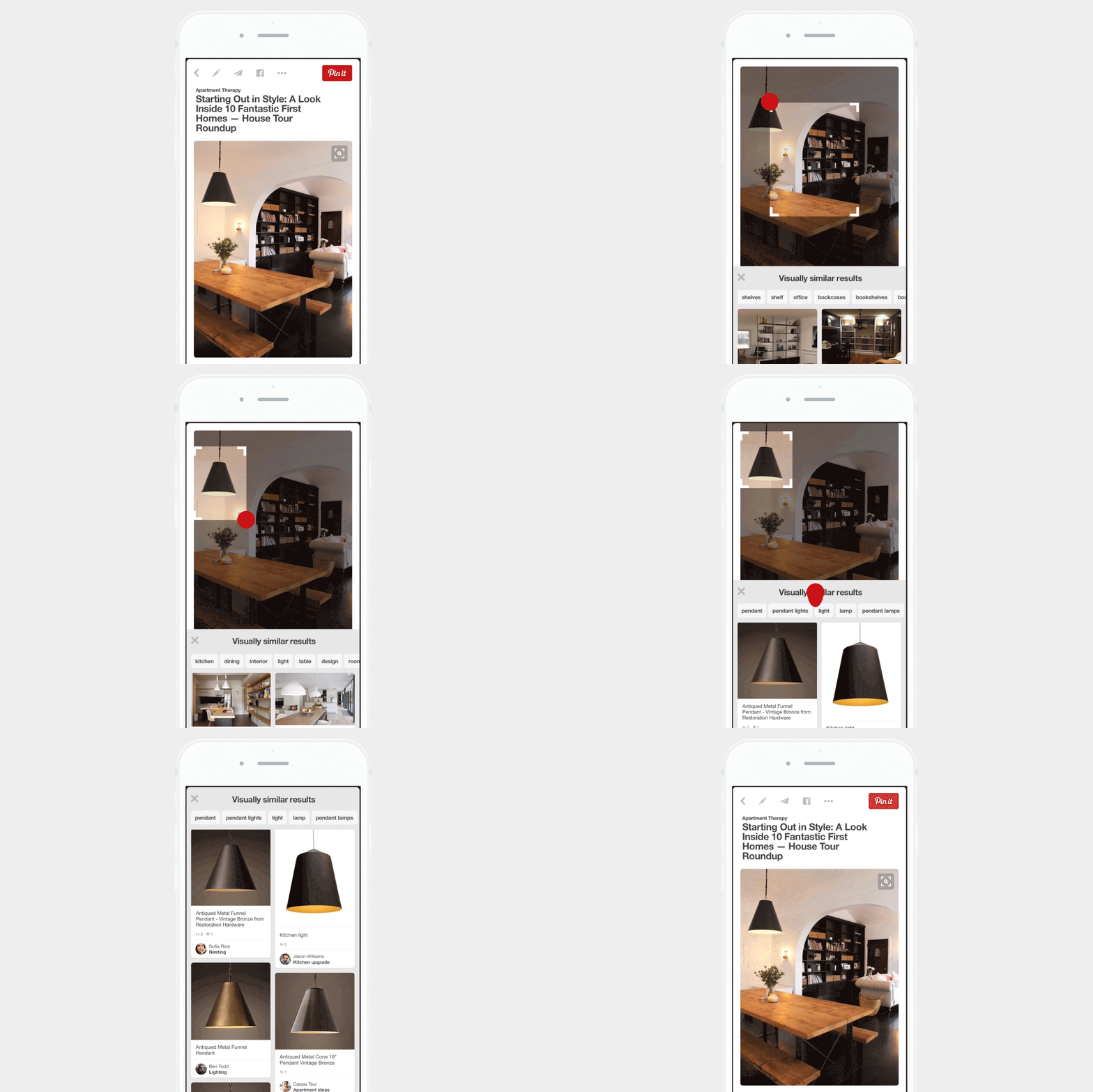
    Pinterest has teamed up with Berkeley Vision and Learning Center to create a new feature on the addictive browsing website which will help enhance your search. This feature will allow you to select an item of your choice in a pinned photo and search for similar items within Pinterest. Basically, what we’re trying to say, is that, Pinterest is going to launch a new visual search feature within the website.

    Pinterest Visual Search

    The new search feature works very simply, you just have to click on the search button, and then use an adjustable box over the photo to zoom in on the item of your preference. Furthermore, you can even add key words to specify your search.

    “We optimize on visual similarity, not just duplicates to power Pinners to discovery exact results, as well as unexpected results that may be similar in style or pattern or shape.” says Pinterest engineer Andrew Zhai.

    This new feature will also help you save time in two possible ways. Firstly, you won’t have to Google search an image, and can instead stay within the website and fine similar items that you might be interested in. Secondly, it saves us the time of browsing endlessly on this website. We all do it, and it is completely enjoyable, unless we have something very important to do and instead of doing that, we’re just browsing through Pinterest.

    This feature will go live on today and will be available on iOS, Android and the web.

    For more information, click here.


  • Facebook and Alphabet Team Up For New Drone Project to Provide Internet

    Facebook and Alphabet Team Up For New Drone Project to Provide Internet

    Alphabet (Google’s parent company) and Facebook have brought their forces together to develop drones that can provide broadband internet access from above the Earth. Both companies have reportedly registered new drone designs with the US Federal Aviation Administration.

    Military Drone

    Apart from this, Alphabet is currently planning a secret operation at the Spaceport America allegedly creating a solar-powered drone. With smaller drones gaining the attention of big business firms like Alphabet and Amazon with their project Wing and Prime Air respectively, Google and Facebook are working on a larger drone that will be able to operate even as high as 90,000 feet above ground level.

    If their assessments are to be trusted, we can safely assume that these drones could possible be flying for weeks or months, thereby could also potentially provide cities and towns with high-speed internet in underdeveloped countries.

    “We’re working on ways to use drones and satellites to connect the billion people who don’t live in range of existing wireless networks,” said Facebook’s CEO, Mark Zuckerberg, in July.

    This project was preceded by Facebook last year, setting up an initiative with Nokia, Samsung and others to provide online access to two-thirds of the world via internet.org. However, that was a lone project, this one on the other hand, is a collaboration with Alphabet which would in turn help both companies reach new users in their advertising market. All we can hope for is that this initiative churns out something good. What do you think of this collaboration? Feel free to post your comments in the comment section below.

  • Here is How Facebook Might Be Invading Your Privacy With Its New Ad Products

    Here is How Facebook Might Be Invading Your Privacy With Its New Ad Products

    Facebook has reportedly decided to roll out two new advertisement products aimed at small businesses. This new advertisement scheme is to encourage smaller firms and companies, who have previously been reluctant to be a part of prime placement on the social networking website.Facebook Ads

    The first ad product focuses on what Facebook is calling “local awareness ads”. This will allow businesses to target customers according to their location. This feature will especially be helpful to smaller businesses which have multiple chain stores to target their specific audience more personally.

    Giving us an example of what the advertisements will look like, Facebook says, “a cafe with multiple locations …could choose to automatically populate the city name in their ad copy, depending on where the people seeing the ad are. So, people in Glasgow would see ‘join us for lunch in Glasgow’, while people in Bristol would see ‘join us for lunch in Bristol’.”

    The second ad product will be mainly for the use of the company. It will allow businesses to mark the demographics of their page and locate facts and information about potential customers, that will facilitate documenting and analyzing of data by these businesses. This product will also help them differentiate between people who are passing by their page and potential customers or users.

    This feature, however helpful it might sounds to the business, is in fact just one more way that Facebook might be trying to access our private information in order to facilitate another survey more accurately. This has sparked off a debate on Facebook between privacy vs. accuracy. Internet privacy

    Facebook had initially started off as a social networking site, where you logged into your profile to contact friends or simply like their profile picture. However, today it has turned into a mega business company and has stretched its arms over almost every sphere of life possible. As of now, the results of it are positive, so let us keep hoping that Facebook continues the way it does.

  • ‘Notify’ -Facebook’s Standalone News-Only App to Launch Next Week

    ‘Notify’ -Facebook’s Standalone News-Only App to Launch Next Week

    Following its announcement of serving over a billion users, Facebook is once again in news -this time for a standalone app for delivering news to readers. According to reports, the app is called Notify and it will put together news from different sources which include The Washington Post, Comedy Central and Vogue, among others. Facebook-app

    Rumours of Facebook working on a news-only app has been milling since August. This app aims to standout from others in the league by giving alerts to the reader as and when the story they are following develops. The reader would not have to visit specific stories or categories again to view the updates and changes.

    Notify is expected to follow in the footsteps of Apple’s pre-installed News app for iOS 9 which boasts of over 40 million users now since its launch in mid-September. Let’s see how users take to this newest update by Facebook. Do you think it will simply add to the fray of many other similar news-related apps or will it be a change as refreshing and useful as reports are making it sound to be? We’ll keep you updated as and when we get more on this.

  • Twitter Drops ‘Stars’ For ‘Hearts’ and ‘Favorites’ For ‘Likes’

    Twitter Drops ‘Stars’ For ‘Hearts’ and ‘Favorites’ For ‘Likes’

    Twitter recently announced that they would replace their users’ ability to mark “favorites” with an option to “like” Tweets instead. Along with this, they have also decided to ditch the star icon for favorites with a heart icon for likes.


    The social media networking company made a statement regarding this change, saying that because “the star could be confusing, especially to newcomers”, they will now use a more “universal symbol” like the heart “that resonates across languages, cultures, and time zones.”

    According to user tests, these changes have been said to do well and will soon be introduced on Vine too. However, as it happens with all new changes, this one, too, has had mixed reactions, since the “favourites” option was used to indicate various things and was even used as a bookmark or reminder.

    Social media is getting more emotive, and its users are becoming more and more aware of small things such as “like” buttons and its correct usages. Facebook is working on ways to let users express a lot more than simple “likes”, whereas Twitter seems to be going back a step by providing its users a basic “like” option. With all the revamping and the firing of employees, let us hope that Twitter can manage to stay afloat and save their dwindling fan base. What do you think about this? Let us know in the comments section below.

  • Facebook Wants Some Employees to Switch from iPhone to Android

    Facebook Wants Some Employees to Switch from iPhone to Android

    According to reports, Facebook employees simply have too much love for the iPhone. So much so that the company’s chief product officer Chris Cox is forcing some employees to shift to Android. The reason behind this is that Facebook needs to know how its social networking site is doing across all platforms and not just on high-end iOS devices.

    According to Cox, Facebook workers need to be “reporting bugs and living in the same experience that most Facebook users experience today,”

    Facebook’s primary goal is to enter as many markets as it can. This means that the company has to tailor its software for every platform emerging across devices both advanced and old. Facebook is also keen on entering markets in developing nations where internet speeds are slow and older devices are still commonplace.

    “I am mandating a switch of a whole bunch of my team over to Android, just because people, when left up to their own devices, will often prefer an iPhone.”

    iPhone might be popular in some countries like the U.S., U.K .,and China but Android still dominates globally with around 82% of smartphones on Android’s operating system. Furthermore, the Android devices range from low-end to high-end. Thus, in order to study how Facebook functions in Android, employees will need to have a hand-on experience with it.

    Facebook iOS

    The seriousness of Facebook’s aspirations is also understood when this news is clubbed with last week’s decision to have ‘2G Tuesdays’. The new initiative will see employees work for one hour ever Tuesday on 2G connections. This will give employees an “opportunity to experience for themselves the slow mobile Internet speeds found in developing countries.”


  • Social Media or Social Anxiety: What is the Internet Actually About?

    Social Media or Social Anxiety: What is the Internet Actually About?

    Fear of public speaking, inabilty to communicate face-to-face, the need to stay in the background and establish relationships from a distance, and fear of being judged that leads to insecurities and self-doubt -these are but some of the signs of social anxiety, and many people around the world suffer from it.

    The advent of the internet and social networking sites was supposed to bring people around the world closer. It was supposed to let people socialize even more than they normally do. Meeting friends and family from time to time on specific occasions were now not the only ways for people to connect.

    Internet has changed the way people interact with one another.But how does it affect those who are unable to socialize? Is the internet, and social media in particular, helping or harming the socially challenged? While many studies have suggested that social media has led to more social anxiety among teens and elderly folks, the picture isn’t as cut and dry as that.

    Anonymity Through Social Media

    Socially anxious people shun society and crave solitude. But that doesn’t mean they don’t seek company or contact with others. So if there is a medium to provide that contact without a physical presence, how can it be a bad thing. Granted, therapists and loved ones will suggest that one should be more open, explore and step out of the fear of establishing contact, but actually doing it is never easy.

    Anonymity

    It was generally believed that the internet would be specially useful for those who struggle with social anxiety. There was a sense of anonymity while using a social networking site and people could explore and connect with more ease without the fear of revealing too much. Even today, a public forum like Reddit lets you post questions and opinions on literally anything while staying anonymous. This makes it easy for people to connect who would otherwise be embarrassed and would fear being judged.
    A False Sense of Society, But a Society Nevertheless

    Social media sites like Facebook, Twitter and Instagram also provide a way to be out there. What’s changed is that these sites don’t let you stay anonymous. These sites have become more personal now. A person struggling with social anxiety might spend 30 minutes making sure his Facebook post is perfect so as to not to invite judgement. While looking at pictures on Facebook or Instagram, you may think that people around are having more fun than you. These insecurities do exist, but it doesn’t overshadow other areas that actually improve, namely, relationships.

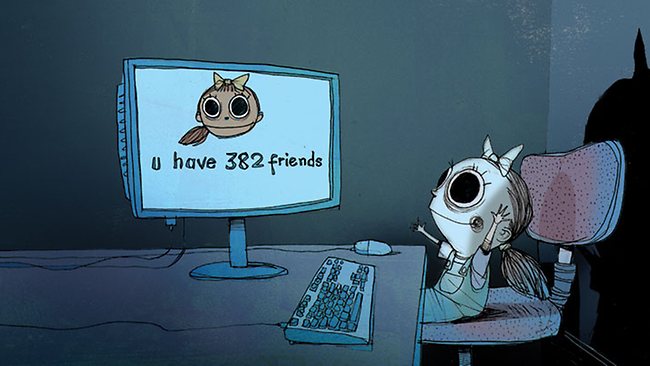
    Here’s the thing about sites like Facebook – It can help socially anxious people but not always in the right way. Having over 300 friends can make a person feel good despite the fact that one never talks to 299 of them. This false sense of having a lot of friends can be therapeutic, according to some people. However, there is a flip side to this. Having a lot of friends can also cause some people to feel lonely because you end up sacrificing conversation for connection.

    Social Media Lets You Present a Different Self

    A number of studies have explored how social media stimulate sharing and relationship-building among their users. Researchers have also found that the perceived usefulness of a platform positively influences the adoption and spread of said technology by users (Hsieh, Hsieh, & Feng, 2011). In case of social networks, such as Facebook, the illusion of building and maintaining relationships with people is more important than their actual effectiveness.

    Studies have also suggested that chatting online might allow people with social phobia the ability to practice social skills in a non-threatening setting that they could then use in face-to-face social situations. In a face-to-face setting, conversations happen in real time and you can’t control what you’re saying. But texting, email and posting is done through a virtual sphere where people have more time to carefully think about what they want to say.

    The positives and negatives are vast and there is no clear proof of whether social media aids the socially anxious or harms them. The answer will vary from person to person and the discourse will continue as long as social media is an intrinsic part of our lives.

iGyaan Network
Privacy Overview

This website uses cookies so that we can provide you with the best user experience possible. Cookie information is stored in your browser and performs functions such as recognising you when you return to our website and helping our team to understand which sections of the website you find most interesting and useful.