Category: Top Around the Web

All the best of Online in one place.

  • HTC Might Say Goodbye To The Indian Market

    HTC Might Say Goodbye To The Indian Market

    With their sales dipping year after year, HTC might just call it quits in the Indian market. The company has been facing a bit of trouble across its global markets and are struggling to keep their sales figures up as well. In a recent report by the Economic Times, the resignation of Country Head Faisal Siddiqui, Sales Head Vijay Balachandran and Product Head R Nayyar has left the Indian arm of the company in dire straits. In a stunning move, the company has asked around 70 to 80 of its Indian employees to leave the company with only Chief Financial Officer Rajeev Tayal staying behind after the three key members’ resignation. Although the company could halt all Indian operations soon, they are still pushing forward with their Virtual Reality division which will be overseen and controlled by the Taiwanese branch of the company.
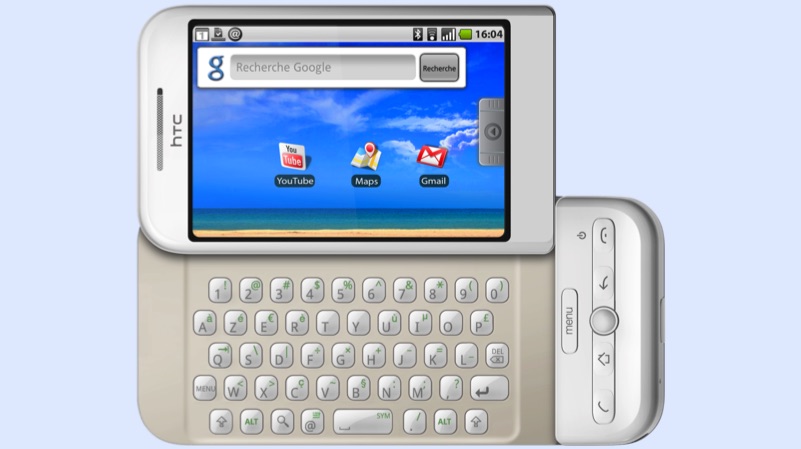
    HTC Dream
    HTC Dream

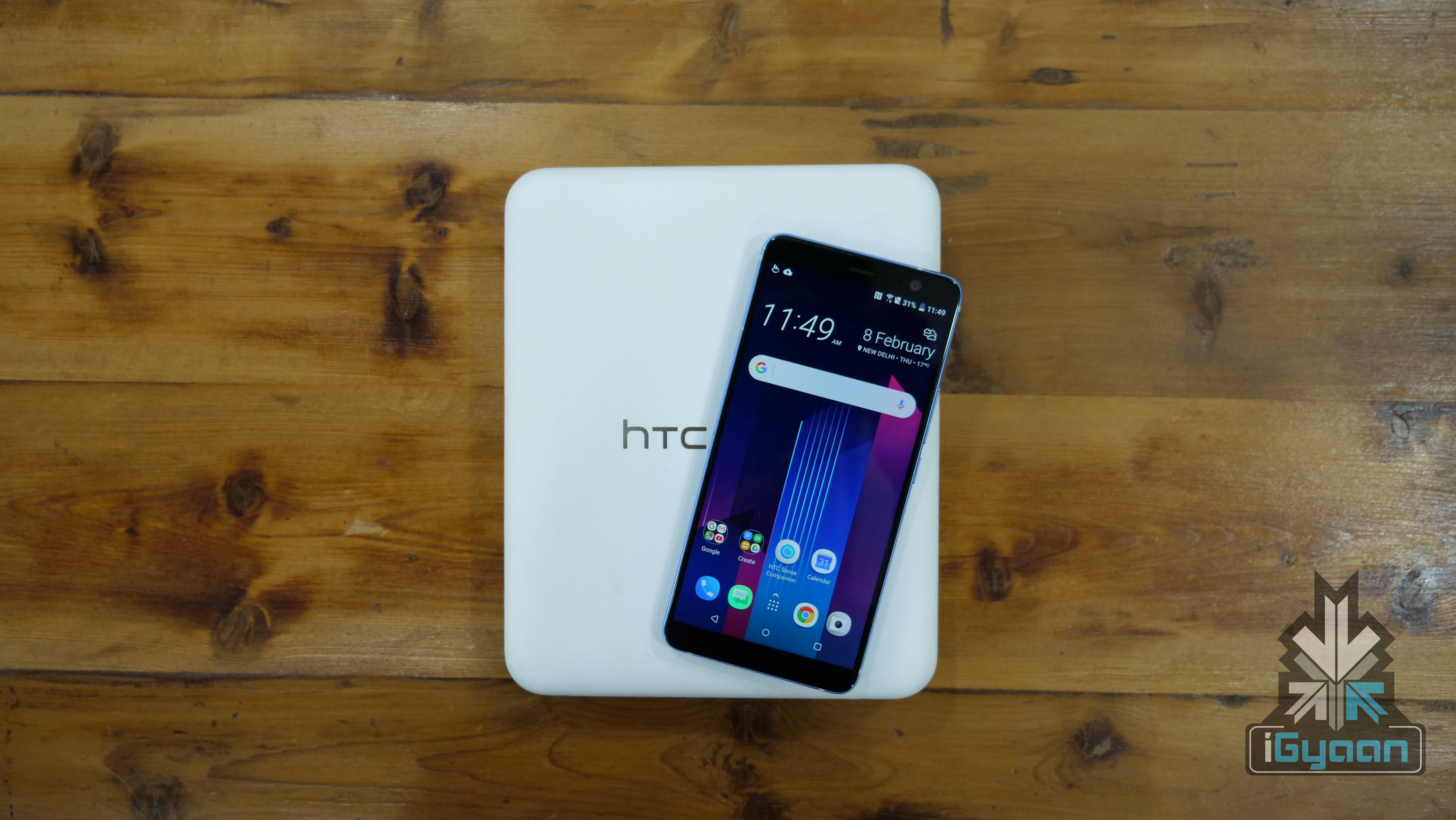
    Looking back at the company’s storied history, the HTC Dream was the first commercially sold Android phone back in September 2008. Since then, the company has been rather competitive in global markets. However, in recent years, the company has not been able to keep up with the pace at which other manufacturers are adding innovations to their smartphones. Despite launching a flagship like the HTC U11+, the company has not been able to do well in the markets. The device runs on the Snapdragon 845 with the Adreno 630 GPU. In its early years, the company launched the Nexus One in association with Google which did really well in the market. The company then released the HTC One (M7) which had one of the best cameras of its time. Despite having only a 4MP rear-facing camera, the smartphone could take professional looking shots. Its metallic design gave the phone a very unique look and it also had BoomSound front-firing stereo speakers. This was one of the major selling points of the smartphone since these speakers were the best sounding ones of their time. Arguably, the BoomSound speakers could still outperform speakers of many 2017 and even 2018 flagship smartphones.

    Must Read: Unboxing The HTC U11+
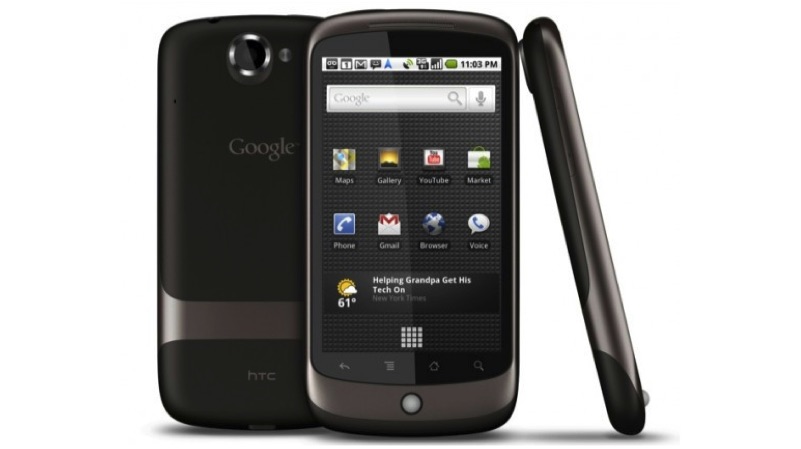
    HTC Nexus One
    HTC Nexus One

    This move means that the company will stop selling its smartphones through offline retailers. The company still plans to use online shopping portals like Flipkart to sell its smartphones in India. They also acknowledge the fact that India is one of the most crucial markets for a smartphone manufacturer. This could mean that the company still hasn’t completely given up on the Indian market as yet.
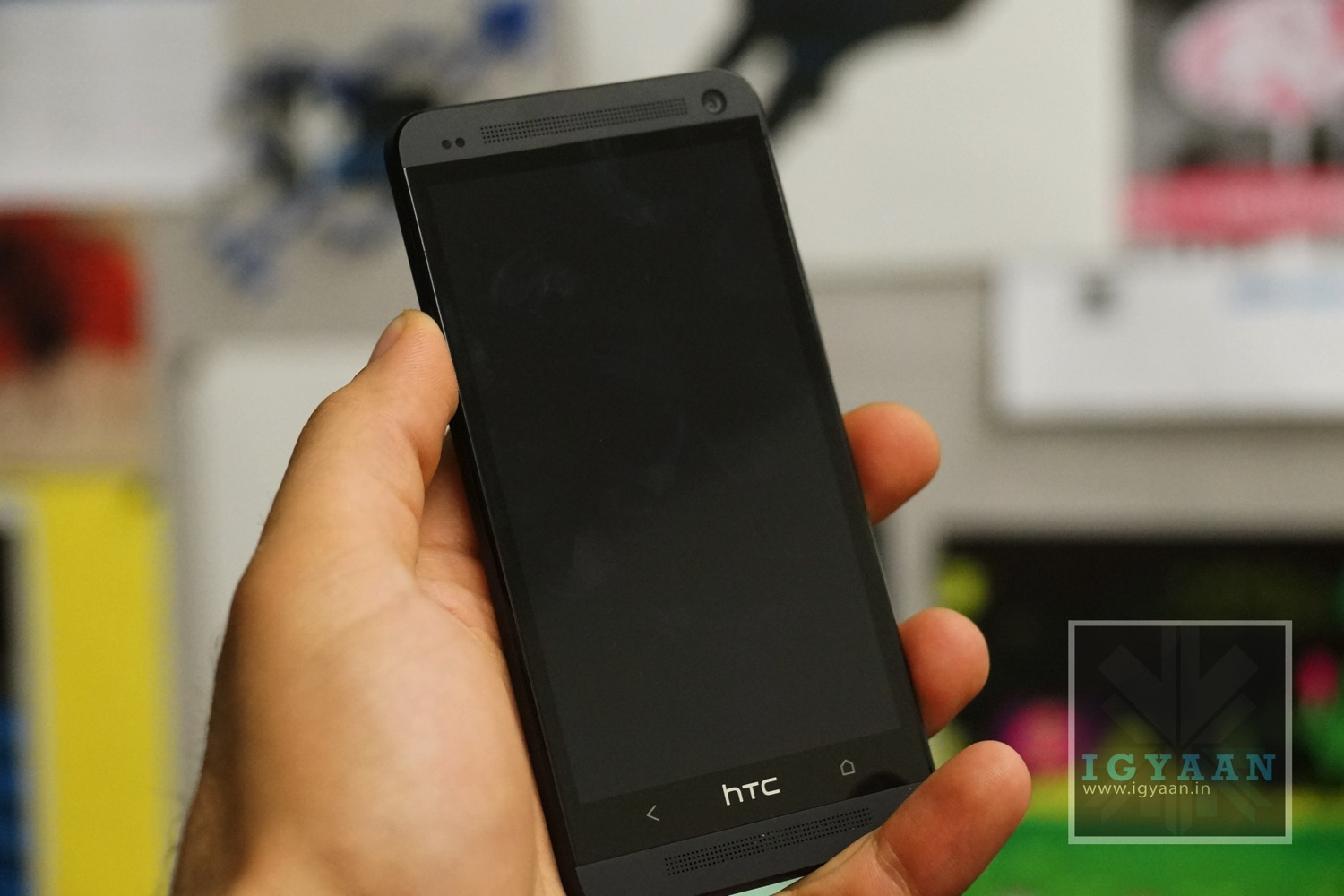
    HTC
    HTC One (M7)

    With its offline retail shut down, HTC may face some dispute by retailers. The major retailers of the company’s smartphones in India are the Optiemus Group, MPS Telecom, and Link Telecom. HTC owes debts in several crores to some of these retailers.

    The future for HTC looks bleak at this point in time. While the company has plans to keep on selling its smartphones, it will have to bring about some major changes in its business strategies to survive the competition.

    Have something to add? Leave a Comment Below!


  • Xiaomi Mi Max 3 Officially Launched In China

    Xiaomi Mi Max 3 Officially Launched In China

    Big screen-size smartphones have been around for a while now, ever since the first Samsung Galaxy Note launched back in 2011. From the standards of 2011, the Galaxy Note 1 was a phablet. Nowadays, 5.3-inches is the average screen size for a smartphone. The Xiaomi Mi Max series was the first from the company to launch with a 6.44-inch display. On 19th July, the Chinese manufacturer launched the Xioami Mi Max 3 in China. The phone has a starting price of CNY 1,699 (Rs. 17305.44 approx). Currently, the smartphone is exclusive to China, but Xiaomi could launch this device globally soon.

    Also Read: Xiaomi Redmi 6 Pro To Launch In Late-2018

    Xioami Mi Max 3
    Mi Max 3

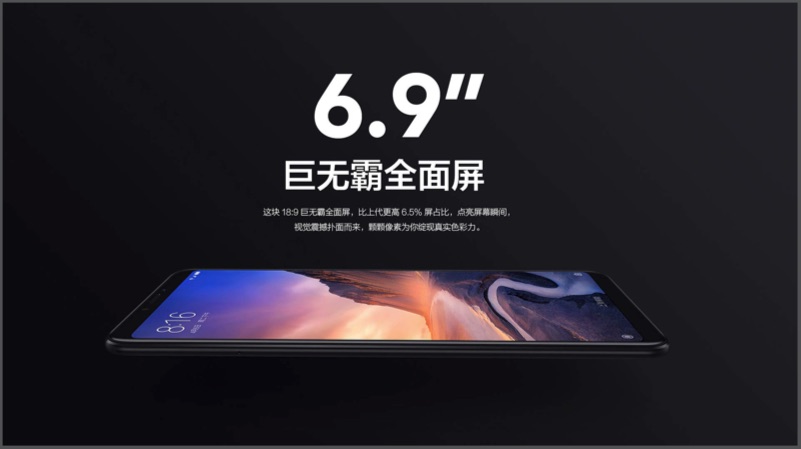
    Made with glass, the front panel of the Xiaomi Mi Max 3 houses the gigantic 6.9-inch display with 2160 x 1080 px resolution. The display is an IPS LCD panel with an 18:9 aspect ratio. The smartphone has an overall aluminum body.

    Xiaomi Mi Max 3

    The smartphone uses the MIUI 9.5 which is based on Android 8.1 (Oreo). The Xiaomi Mi Max 3 runs on the Qualcomm Snapdragon 636. This is an Octa-core 1.8 GHz Kryo 260 chipset. The SoC is paired with the Adreno 509 GPU.

    The Xiaomi Mi Max 3 will be available in two storage and RAM variants. The 64GB storage variant has a 4GB RAM and the 128GB variant has a 6GB RAM. The smartphone allows storage expandability of up to 256GB using MicroSD card. The price for the 64GB is CNY 1,699 (Rs. 17305.44 approx) and the 128GB variant will cost CNY 1,999 (Rs. 20361.14 approx).

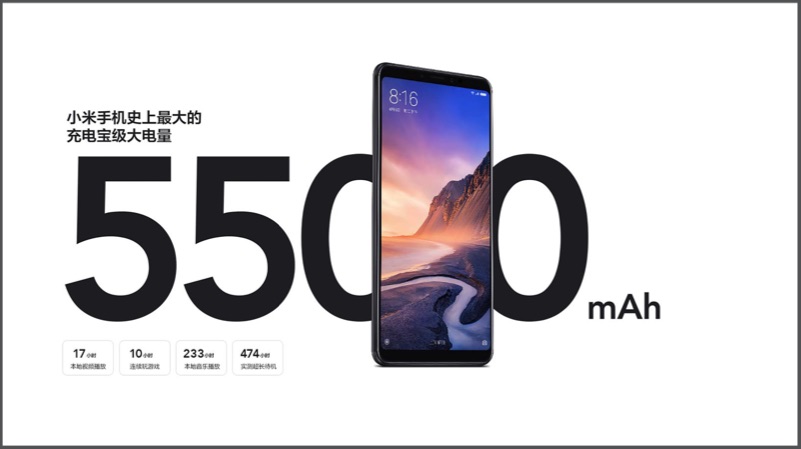
    For the first time, Xiaomi is introducing dual rear-facing camera for the Mi Max series. The primary camera for the Mi Max 3 has a 12 MP sensor with a f/1.9 aperture, and a 5 MP depth sensor. The secondary camera of the Xiaomi Mi Max 3 has a single 8MP sensor with f/2.0 aperture. The smartphone can shoot 2160p videos at 30fps, 720p and 1080p at 30fps gyro-EIS stabilization, and 720p@120fps. The phone will be powered by a massive 5,500 mAh Li-Ion battery.

    Mi Max 3 Battery

    Xiaomi is one of the top brands in India. With that said, there are already a lot of good smartphones in the price range at which the Mi Max 3 is sold in China. From the Samsung Galaxy J8 to the Huawei P2 Lite. We will have to wait until the device is officially launched in India.

    Have something to add? Leave a Comment Below!



  • Corning Gorilla Glass 6 Is The Next Generation Of Glass Panels

    Corning Gorilla Glass 6 Is The Next Generation Of Glass Panels

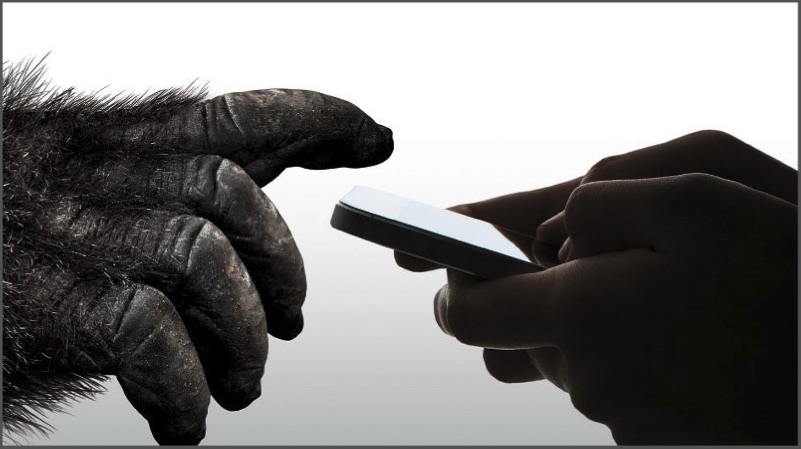
    When we talk about displays and glass panels, Corning is the top manufacturer that comes to mind. Corning is an American tech company with its headquarters in Corning, New York. The company specializes in manufacturing glass and ceramic materials. In a press release on the 19th of  July, Corning announced the latest in its Gorilla glass series, the Corning Gorilla Glass 6.

    The first version of Corning Gorilla Glass was designed specifically with the first generation of iPhones in mind. Although Apple has never officially claimed to use Corning glasses on their smartphones. The company demanded a strong glass material which would not only be durable but also responsive. Which is how Corning Gorilla Glass came to be. Since then, the company has made display and body panels for other companies like Samsung.

    Corning Gorilla Glass 6
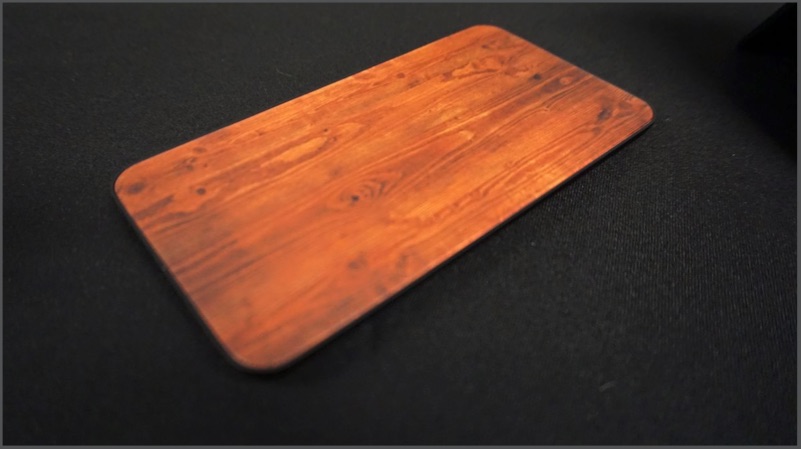
    Wooden Finish On Gorilla Glass 6

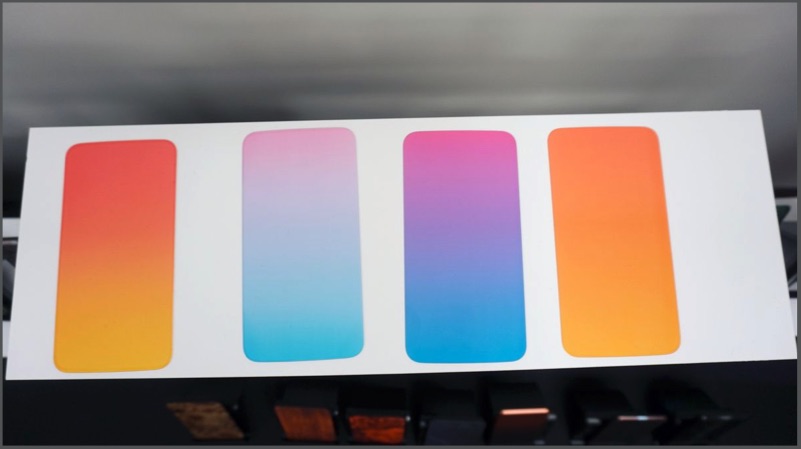
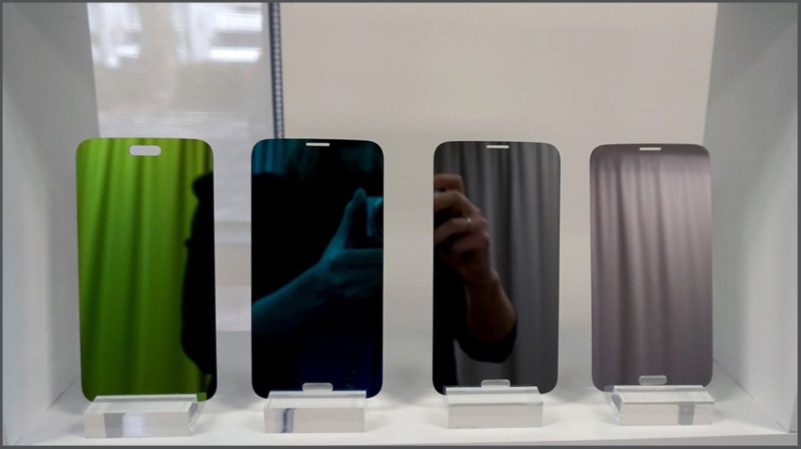
    The Corning Gorilla Glass 6 will allow users to customize the way they want to use the glass. They can use it for displays, or as textured back panels. The best part is, Corning will do the designing and texturing of the glass for the company.

    Corning Gorilla Glass 6
    Glass Customization

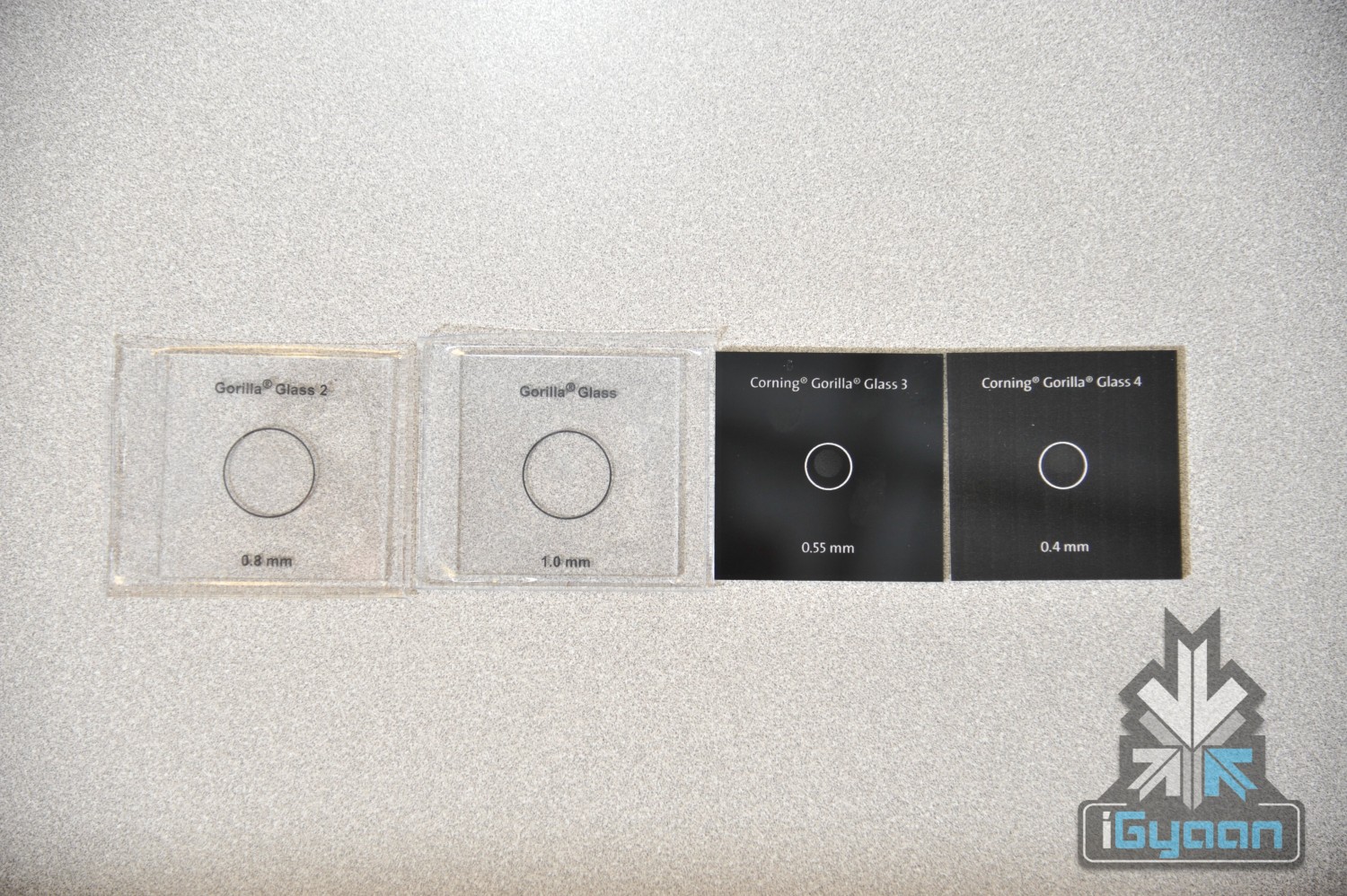
    With the increased demand for smartphones, the demand for their durability is also increasing. Coring has been developing glass panel technology since 2008 when it launched the first generation of Gorilla Glass Panels. Corning announced the second generation of the Gorilla glass four years after the first version, in 2012. With each passing year, Corning claims that it has not only worked on the durability of the glass panel, but also on its methodology of developing them.

    The latest Corning Gorilla Glass 6 can survive up to 15 drops from a height of 1 meter onto rough surfaces. This is twice the durability as compared to Corning Gorilla Glass 5 which could survive only 80% of drops from relatively the same height.

    Must Read: You Don’t Know Glass Like Corning Knows Glass

    Corning Gorilla Glass 6
    Various Versions Of Gorilla Glass

    Smartphones like the OnePlus 6, Nokia 8 Sirocco, and the LG G7 ThinQ use the Corning Gorilla Glass 5. Now that smartphone manufacturers are embracing full glass-body design, it is important that the material can survive rough use. The American company claims that Corning Gorilla Glass 6 is suitable for such scenarios. The glass will provide scratch resistance, optical clarity, wireless charging capabilities and enhanced durability.

    Corning claims that the Gorilla Glass 6 is durable enough to be used without a case. Since the company is already providing an option to customize the glass to give it the desired design, the need of case wouldn’t arise in the first place.

    It is quite coincidental that Corning announced the Gorilla Glass 6 before the launch of Galaxy Note 9 and the new iPhone line up. We believe that these smartphones could feature the Corning Gorilla Glass 6 in the form of a display as well as the back panel.

    In a smartphone, a display is its most used parts by a user. Which is why it is important for manufacturers to use a durable material. Once the Corning Gorilla Glass is officially available, it will be interesting to see how well it does.

    Have something to add? Leave a Comment Below!
  • Nokia 3.1 Officially Launched In India For Rs. 10,499

    Nokia 3.1 Officially Launched In India For Rs. 10,499

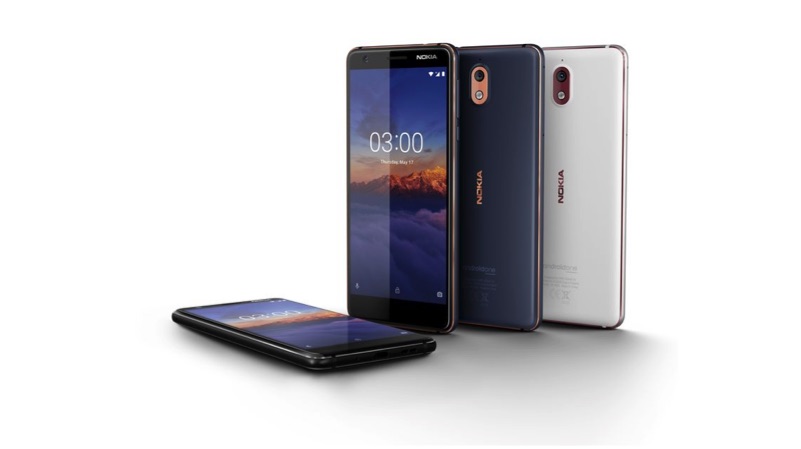
    HMD Global is out with yet another Nokia smartphone. This time the device belongs to the sub Rs. 15,000 price segment. The Nokia 3.1 has officially launched in India on the 19th of July at a price of Rs. 10,499. Nokia plans to sell the device on Paytm Mall and on their own website and it will available at offline retail stores as well. Out of the box, the smartphone will use the Android 8.0 (Oreo) and receive further updates to Android 8.1 (Oreo). The company claims a secure and up to date Android experience with Android One for the device. The sale for the Nokia 3.1 will start on the 21st of July.

    Also Read: Apple iPhone 9 Renders Reveal An iPhone X Like Notch

    Nokia 3.1

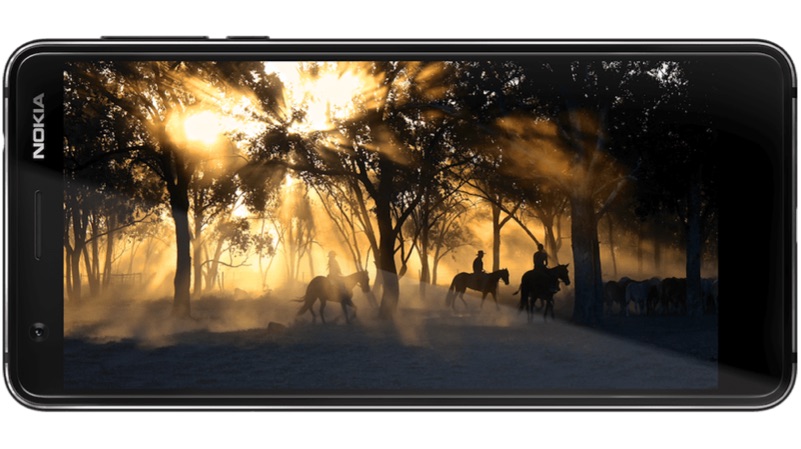
    The Nokia 3.1 has a 5.2-inch display with 1440 x 720 px and an aspect ratio of 18:9. The phone has an aluminium frame with a glass front panel and a plastic back panel. The phone weighs around 138.3 g. Nokia claims that the display uses Corning Gorilla Glass but, the version of glass used is unspecified.

    Nokia 3.1
    Nokia 3.1 Screen

    Running on an octa-core MediaTek MT6750, the Nokia 3.1 features the Mali-T860MP2 GPU. Out of eight cores, four Cortex-A53 cores run at 1.5 GHz and the remaining four run at 1.0 GHz. In India, only one storage variant of the smartphone will be sold which is the 16GB variant with 2GB RAM. The Nokia 3.1 has a MicroSD card slot allowing users to expand the storage up to 256GB.

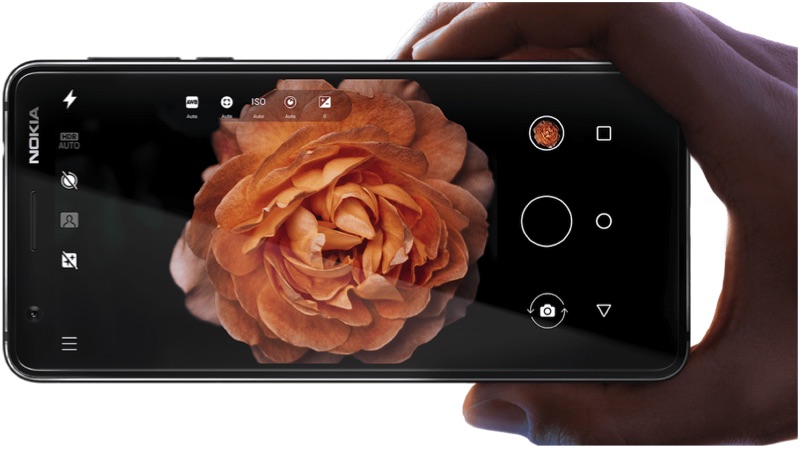
    The camera setup of Nokia 3.1 consists of single primary and secondary sensors. The primary camera is a 13MP sensor with a f/2.0 aperture and an LED flash. This sensor is capable of shooting 720p videos at 30 fps as well. The secondary camera on this device is an 8MP sensor with a f/2.0 aperture.

    There is a 2990 mAh Li-Ion battery powering the Nokia 3.1. Considering that the smartphone is slightly underpowered, the 2,990 mAh should last a day in an ideal use case scenario.

    A device running on Android One means that it will receive the latest updates for the operating system as soon as they are available. On paper, the Nokia 3.1 seems like a value for money smartphone.

    Have something to add? Leave a Comment Below!


  • Vivo Nex Unboxing And First Impressions

    Vivo Nex Unboxing And First Impressions

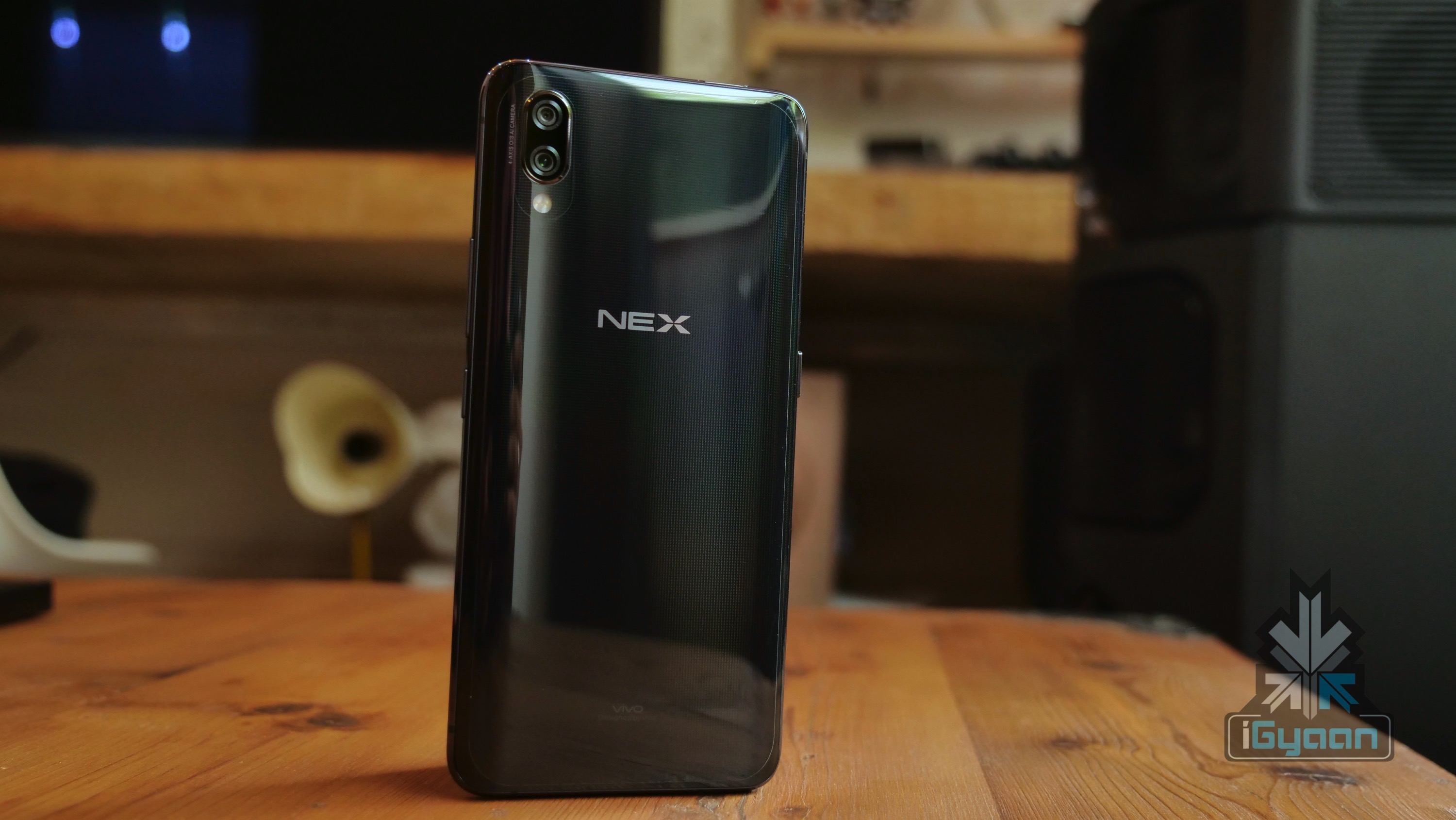
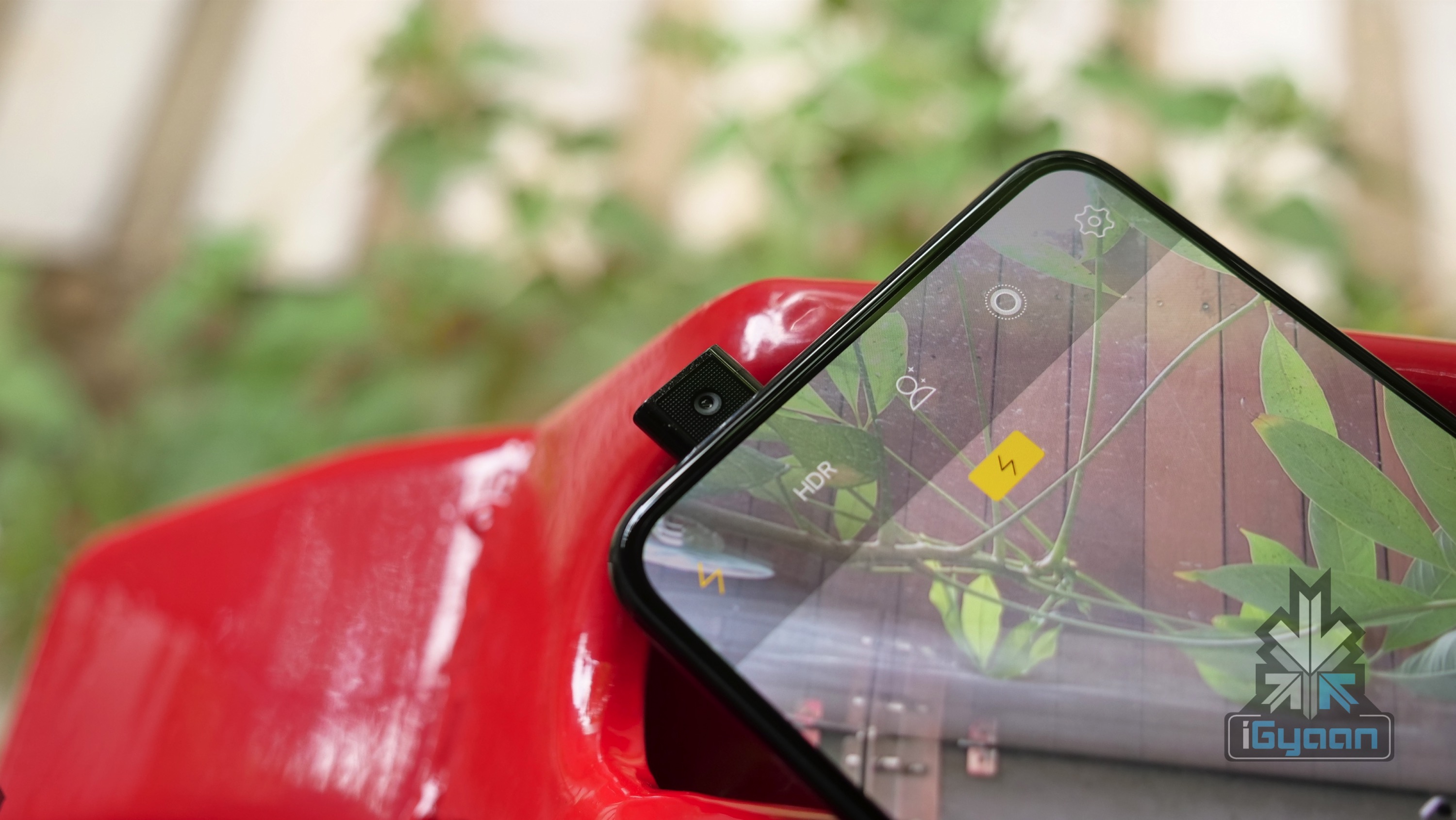
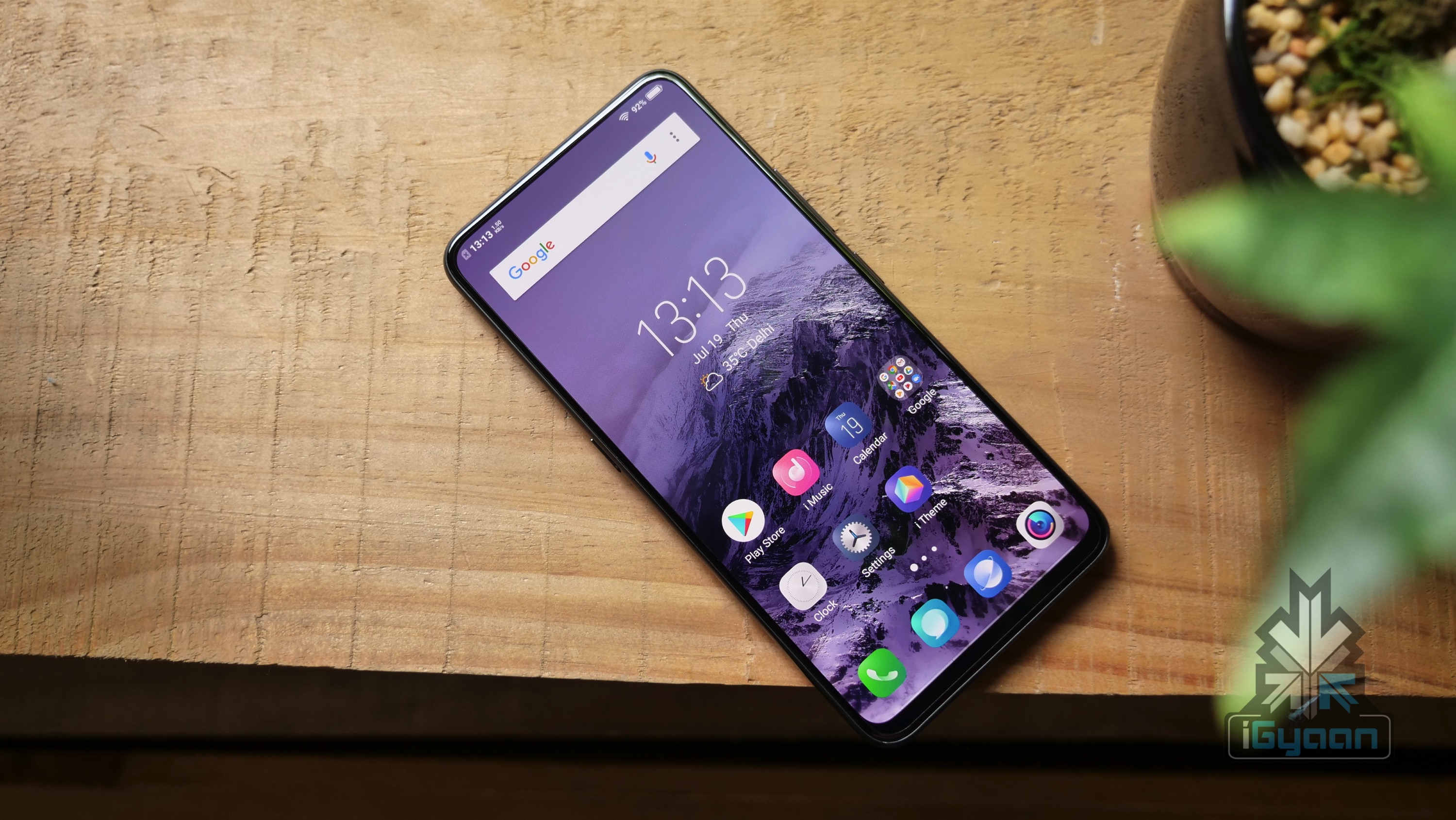
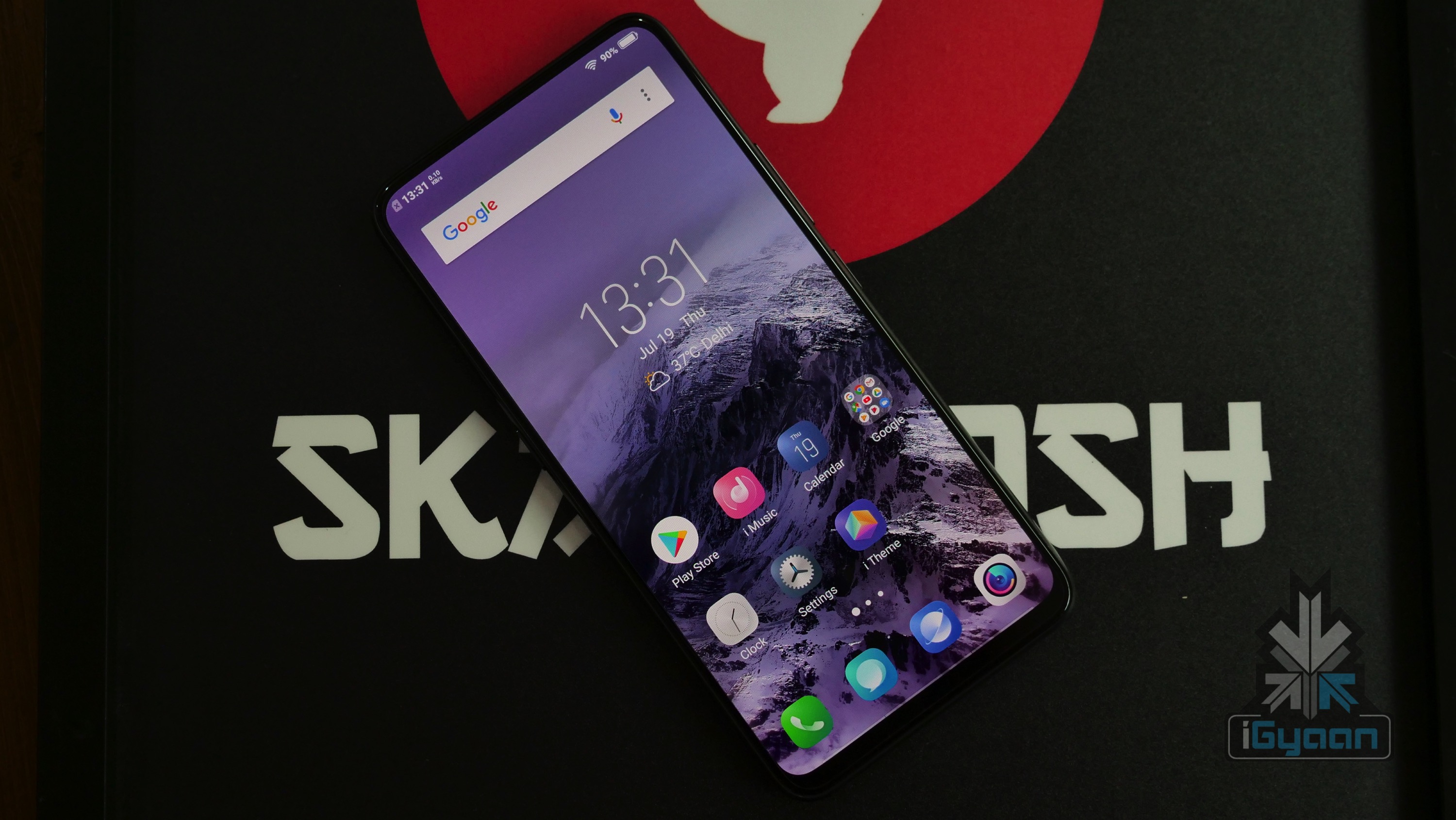
    Vivo has been in the Indian smartphone market for quite a while, however, only in 2018 was the company noticed by the industry properly. While Vivo has been a forerunner in the offline retail market, this year, the brand redefined itself with a few firsts. Vivo showed off the first smartphone with an in-display fingerprint reader and also a phone with a popup front camera. All this was done to allow the front of the phone to become display focused. The Vivo Nex was shown off as a prototype at the Mobile World Congress 2018 this year, a phone that was to show off future technology. It seems, however, the future is only moments away from the grasp of the audience.

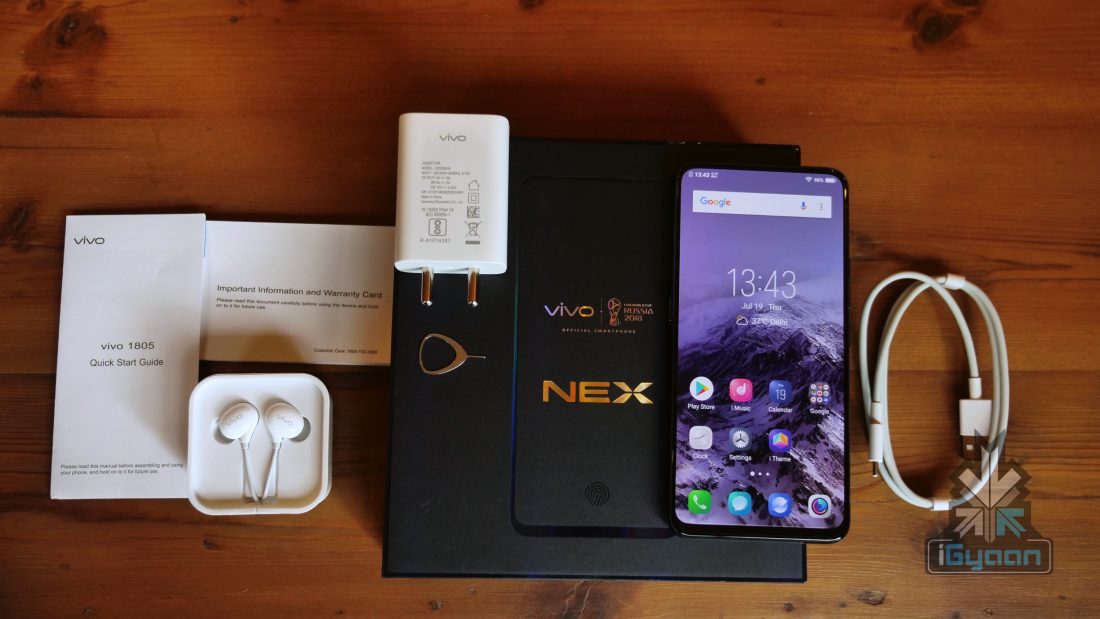
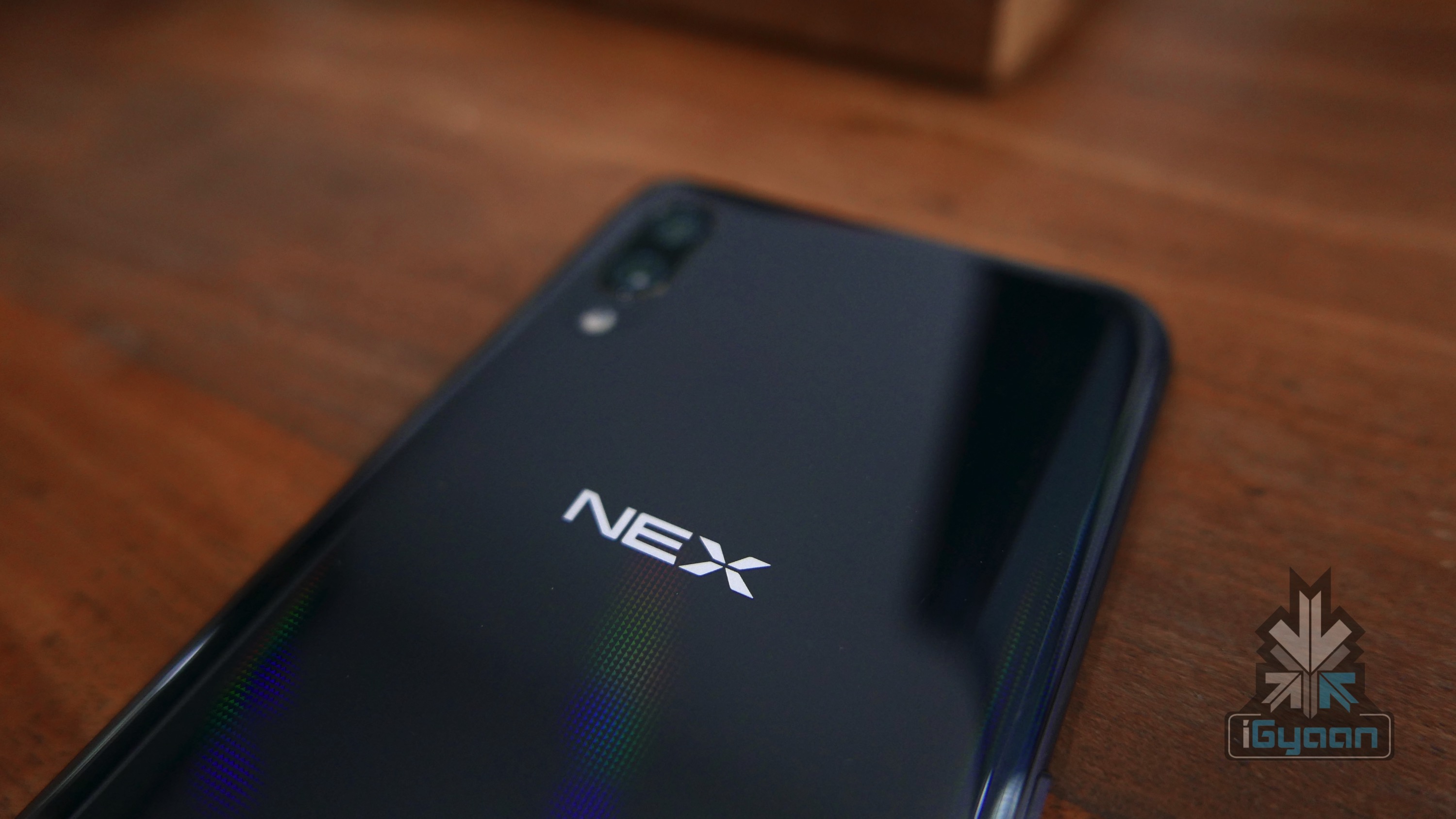
    Vivo has launched the Nex in India for a price of Rs. 44,990. The phone features some impressive technology that may pave the way forward for innovation in smartphone technology. The unboxing experience is pretty satisfying as the phone comes well packaged and front and back screen protectors are pre-applied. In box accessories include a high-quality USB-C cable, a 22.5W Charger and quality in-ear earphones. There is also a silicon-plastic back case included in the box.

    • Vivo Nex
    • Protective case
    • In-Ear Earphones
    • USB C Cable
    • 22.5 Watt USB Charger
    • Sim Ejector Tool
    • Documentation

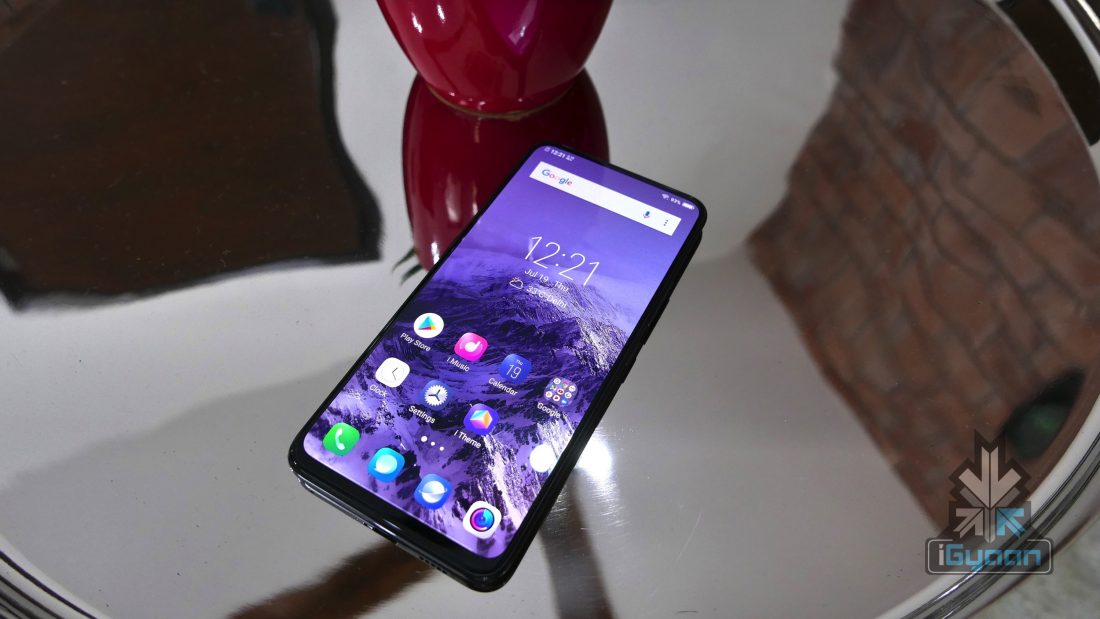
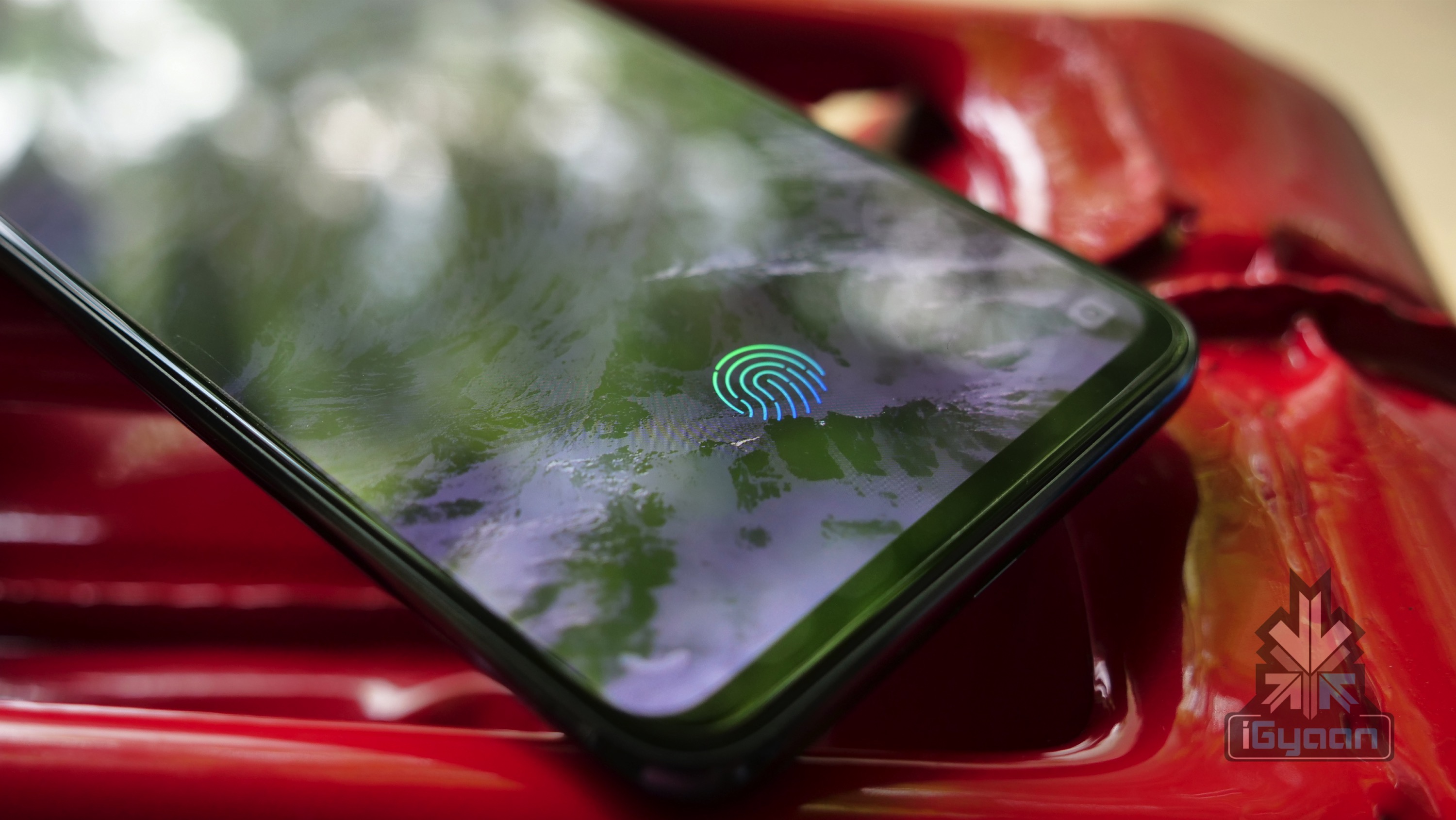
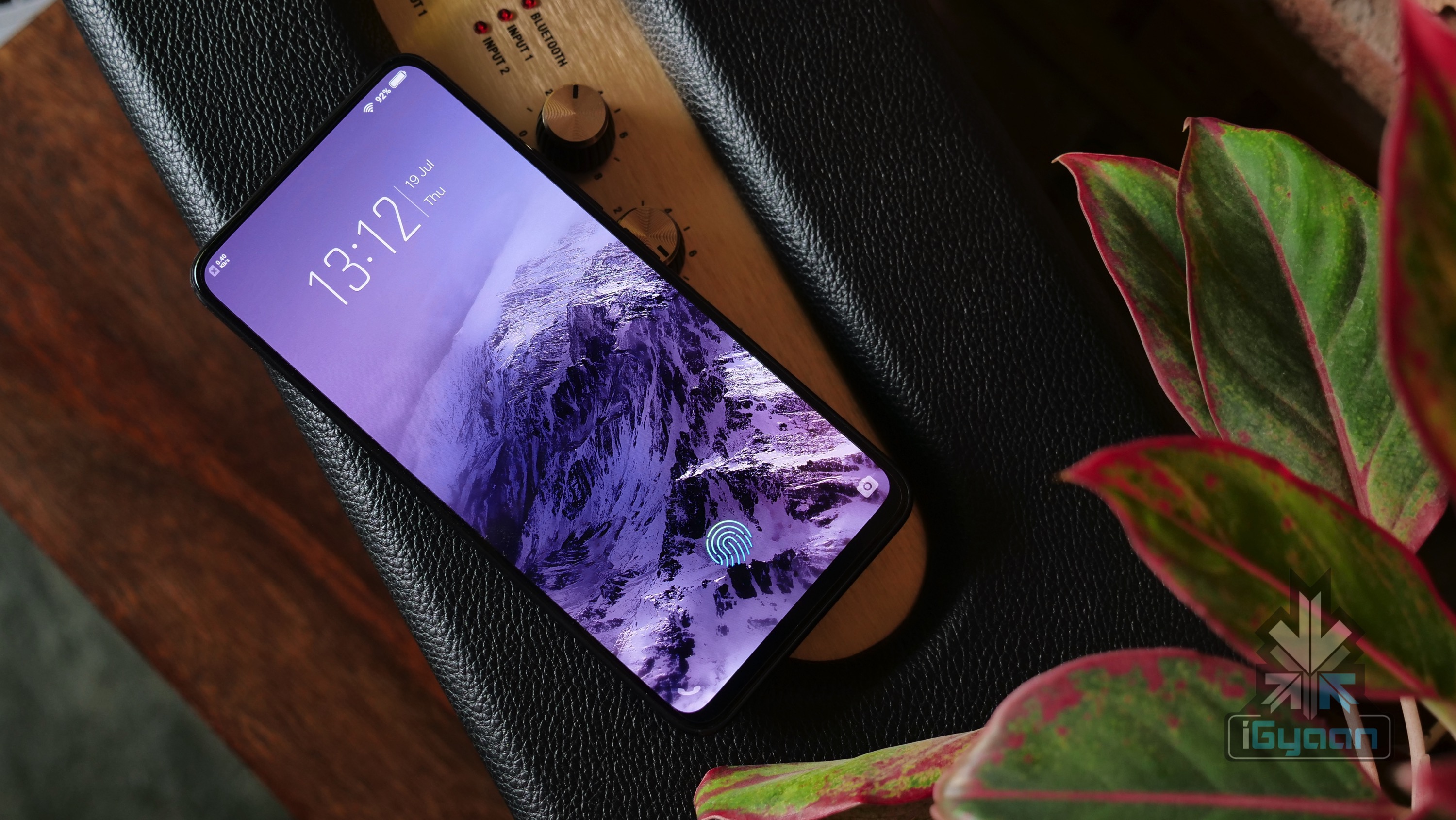
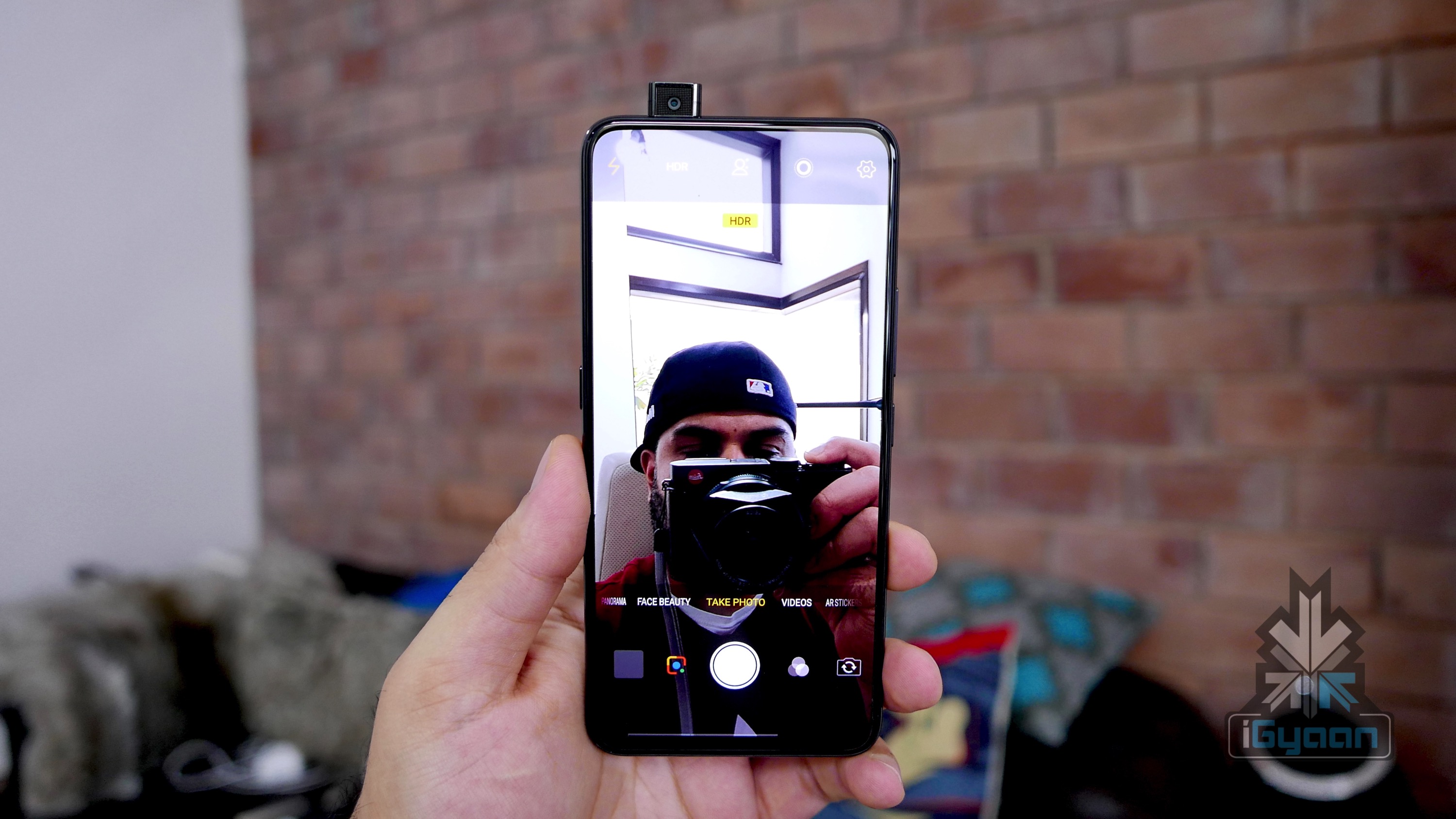
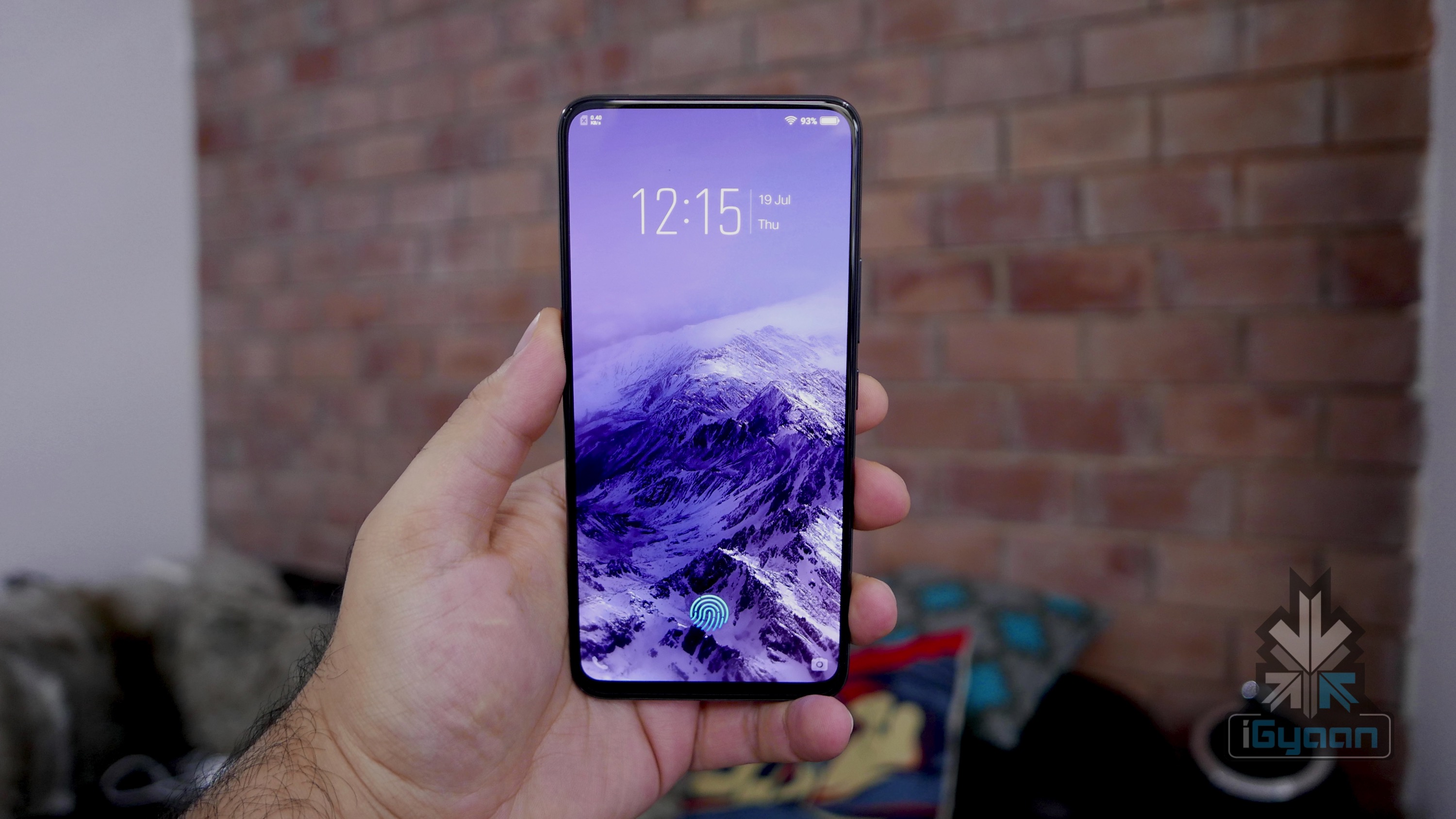
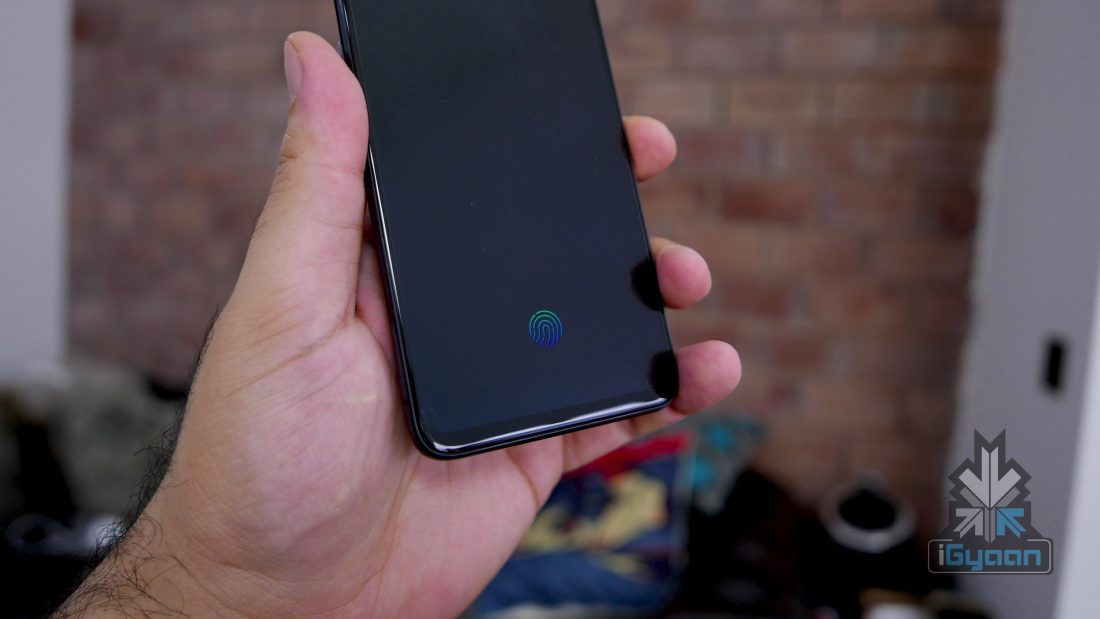
    The Vivo Nex is surprisingly well made, the phone has an all-glass front and because the front camera is housed in the pop-up mechanism, the front remains only for the display. The front also gets this near bezel-less look by including the fingerprint sensor in the display. The tech, even though in its early stage, works rather well, is easy to set up and responsive to unlock. The phone is missing a “face unlock” feature, due to the way their pop up camera is constructed, and the lack of any IR sensors. The company also decided to stay away from the software-based face unlock options seen on many other smartphones, including the OnePlus 6.

    In Display Fingerprint Sensor

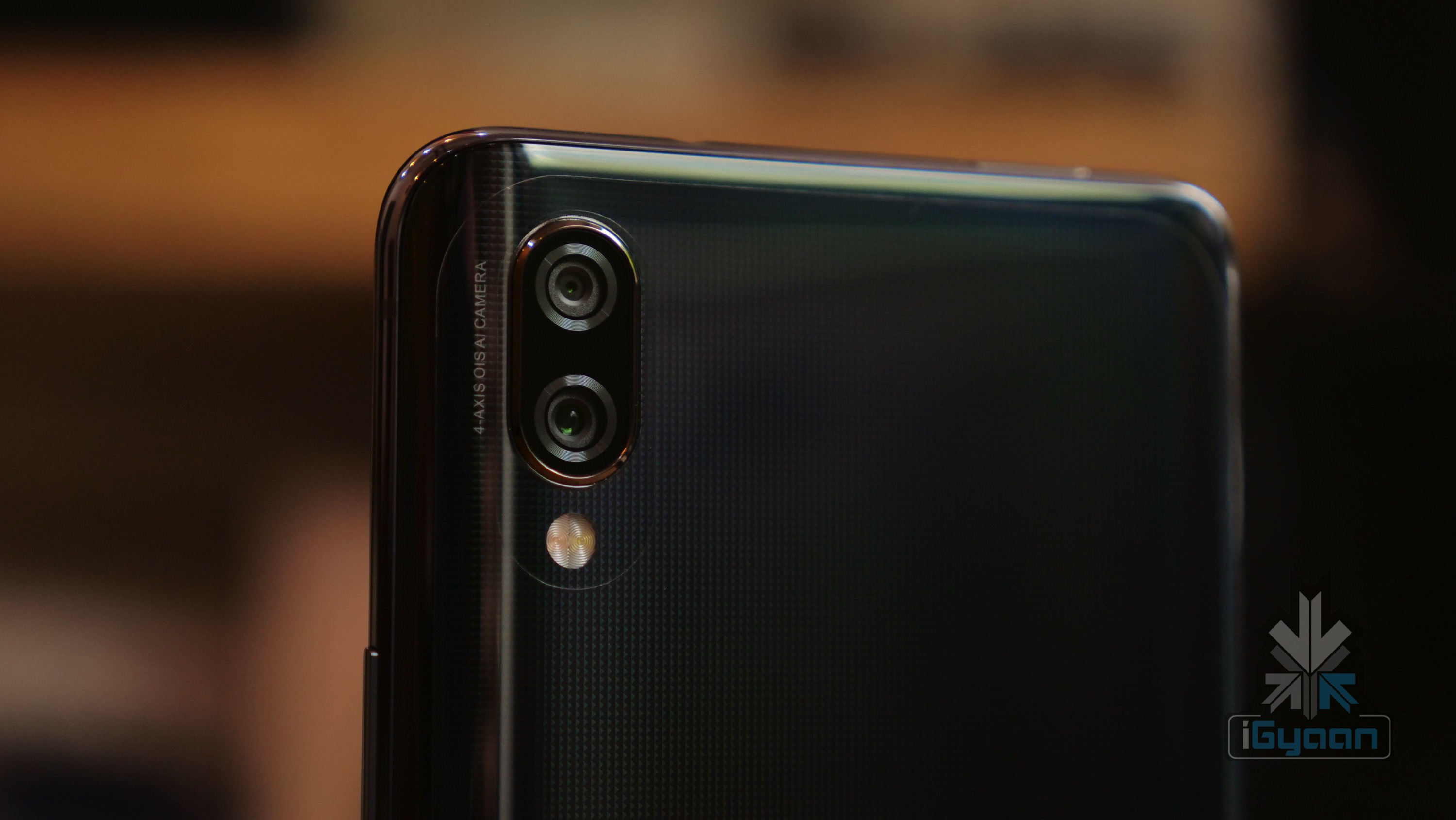
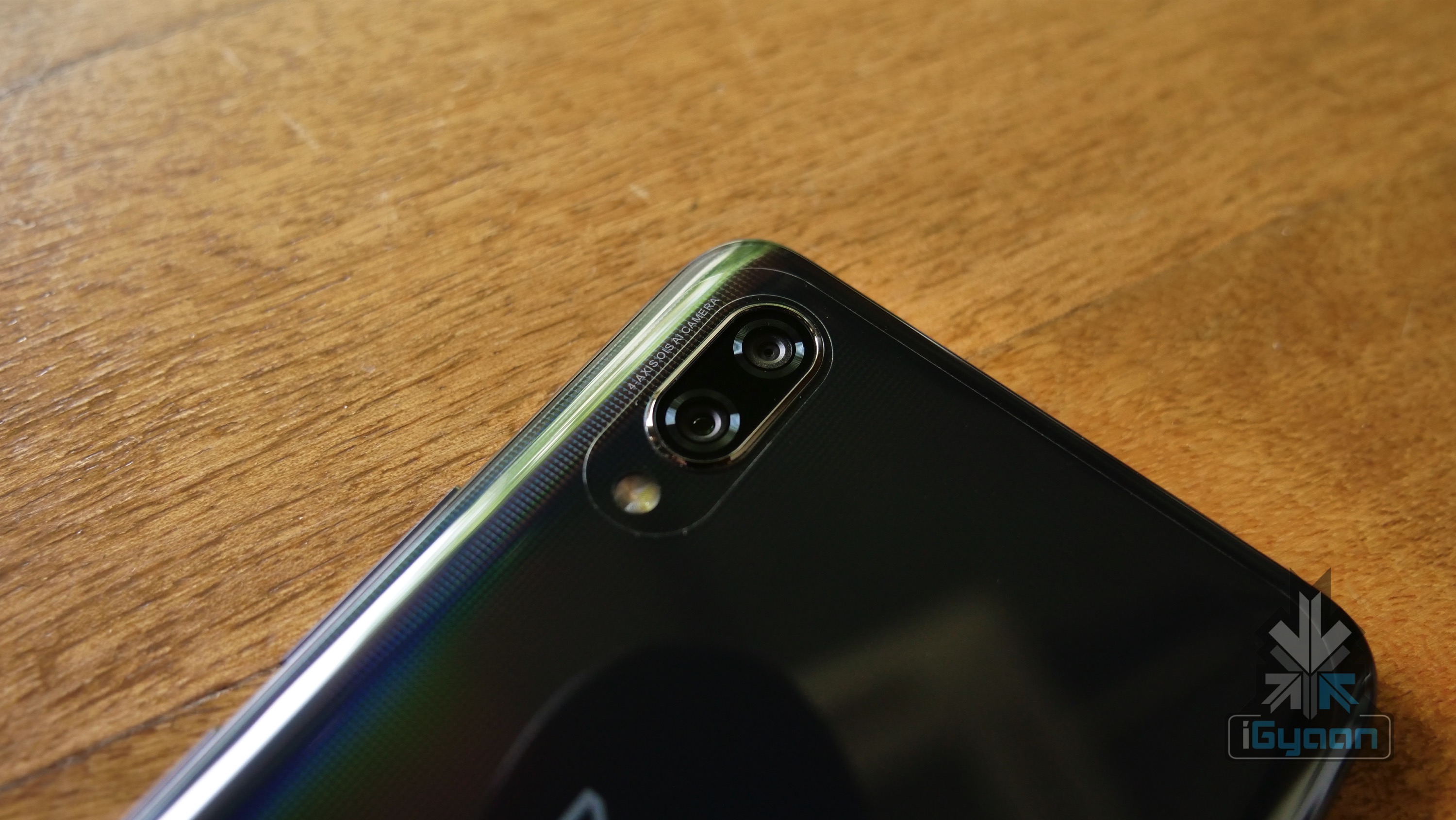
    The Vivo Nex has all the specifications you can ask for from a modern day smartphone. A Qualcomm Snapdragon 845 chipset, 8 GB RAM, 128 GB of Storage and a massive 4000 mAh battery with really fast ( up to 22.5 watt) charging. It also has a dual camera setup: a main 12MP sensor with an F1.8 aperture with a 5MP secondary shooter with a F2.8 aperture along with 4-Axis optical image stabilisation.

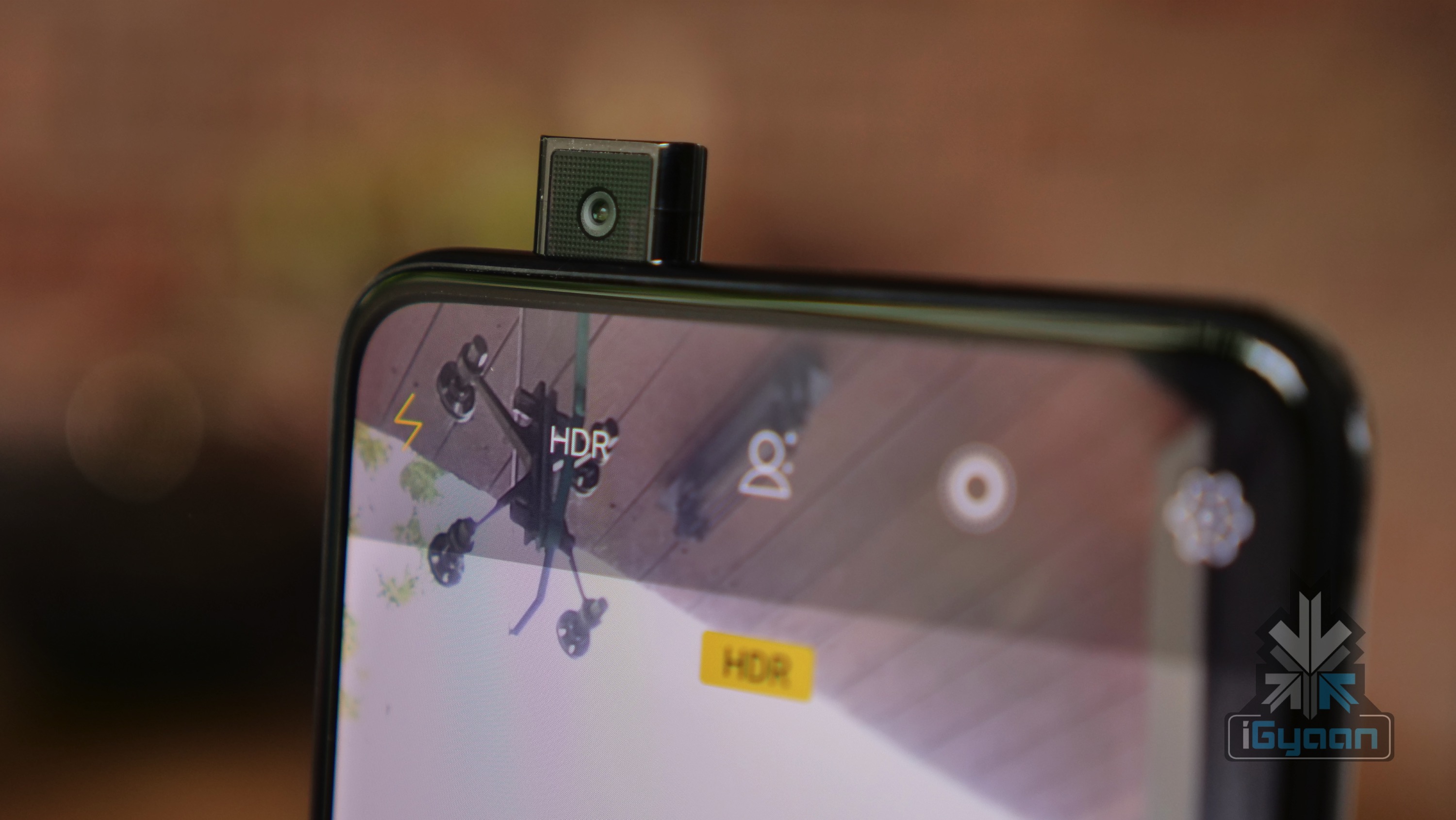
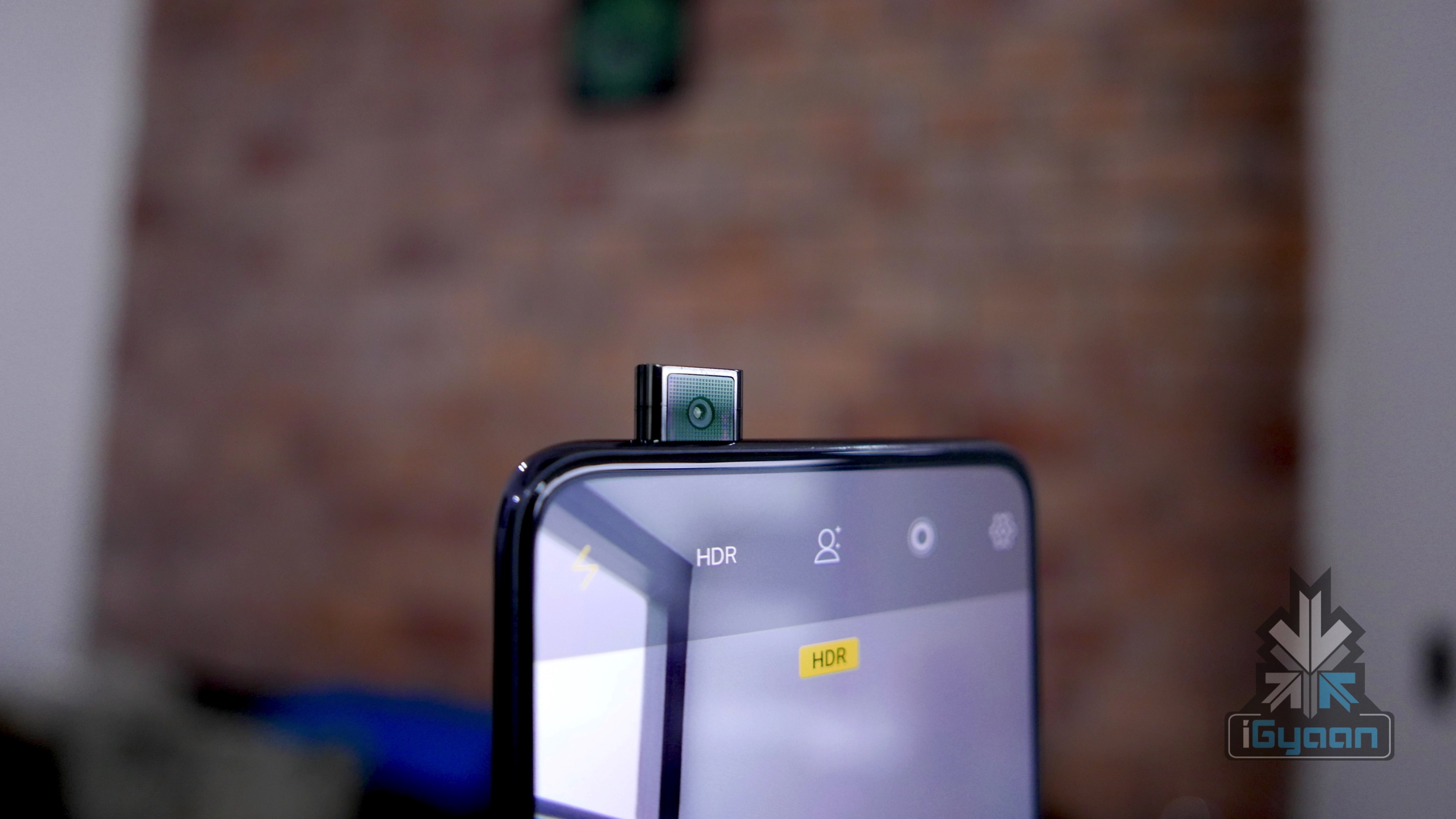
    The Vivo Nex is missing a few things, like face unlock, wireless charging and any form of IP certified water resistance due the moving motor and camera module. While the design and execution of this new pop up camera is cutting-edge, others ( including Vivo’s sister concern Oppo) have tried it as well. The moving part in a portable pocketable device does not seem to make long-term durability sense. But, the module and motor mechanism is impressively robust and designed to last for a long period of time. Vivo claims several hundred thousand times.

    The operating system and usage experience is also rather pleasing and clean. With little bloatware, which is easily uninstalled, the phone runs on the company’s Funtouch OS, a skin for Android 8.1. The UI is minimal and super responsive. The phone also supports gesture-based navigation, allowing for better and fuller use of the large 6.59 inch display. The screen is a Super AMOLED panel which allows the phone to display the fingerprint icon with the entire display off. The animations on the display for the fingerprint unlock are also possible due to the use of the Super AMOLED panel. The display has a 2316 x 1080 px resolution, although it seems to have a little bit of a blue tint that we had to manually fix by turning on the reading mode.

    The Vivo Nex is a step in the right direction and is a good looking premium device that helps technology move forward. However, portable technology and the lack of moving parts is what made smartphones so great in the first place. The durability is something that we are sceptical of as we fully review the device.

    Have something to add? Leave a comment below!


  • Vivo Nex Officially Launched In India For Rs. 44,990

    Vivo Nex Officially Launched In India For Rs. 44,990

    Apple’s iPhone X set the bar rather high with its facial ID technology and also ushered in the trend of notch displays. It seems that smartphone manufacturers are now moving away from this design and are focussing on doing away with the notch. The Oppo Find X was the first phone to launch in India which featured face-unlock technology but without a notch display. Now, the Vivo Nex has officially launched and it also features a notch-less display and face-unlock technology. The smartphone will go on sale via Amazon at a price of  Rs. 44,990. 

    Vivo Nex

    Must Read: Huawei Gains A Patent On A Foldable Smartphone Design

    The display on the Vivo Nex is a massive 6.59-inch panel with 2316 x 1080 px Full HD+ resolution and an aspect ratio of 19.3:9. The screen to body ratio of the smartphone is 91.24% which means that the phone sports ultra-thin bezels. The back panel of the smartphone has a sleek glass finish as well.

    Vivo Nex
    Vivo Nex Display

    The Indian variant of the Vivo Nex will be running on a Qualcomm Snapdragon 845 SoC. The Snapdragon 845 is a flagship chipset and has a total of eight Kyro 380 cores. This chipset will be paired with the Adreno 630 GPU.

    The Vivo Nex has launched with a single storage variant option. The 128GB storage variant is paired with 8GB RAM.

    Following the Oppo Find X, the Vivo Nex is the second smartphone to launch with a pop-up camera in India. The smartphone camera setup consists of a dual rear-facing and a single front-facing pop-up camera. The rear-facing camera has a 12 MP sensor with f/1.8 aperture and a 5 MP depth sensor with f/2.4 aperture. The primary camera is capable of recording 2160p and 1080p videos at 30 fps.

    Vivo Nex

    Apart from the face-unlock technology, the Vivo Nex also features an in-display fingerprint sensor. Powering all of this is a 4,000 mAh Li-Ion battery which should be enough for the smartphone to last an entire day.

    The trend of the notch-display is more or less at its last stage and we’re beginning to see various companies find a way around it. Regardless, the Vivo Nex and the innovation it has brought to the table is a sign that the industry is moving forward.

    Have something to add? Leave a Comment Below!


  • Nokia X5 Officially Launched In China On 18th July

    Nokia X5 Officially Launched In China On 18th July

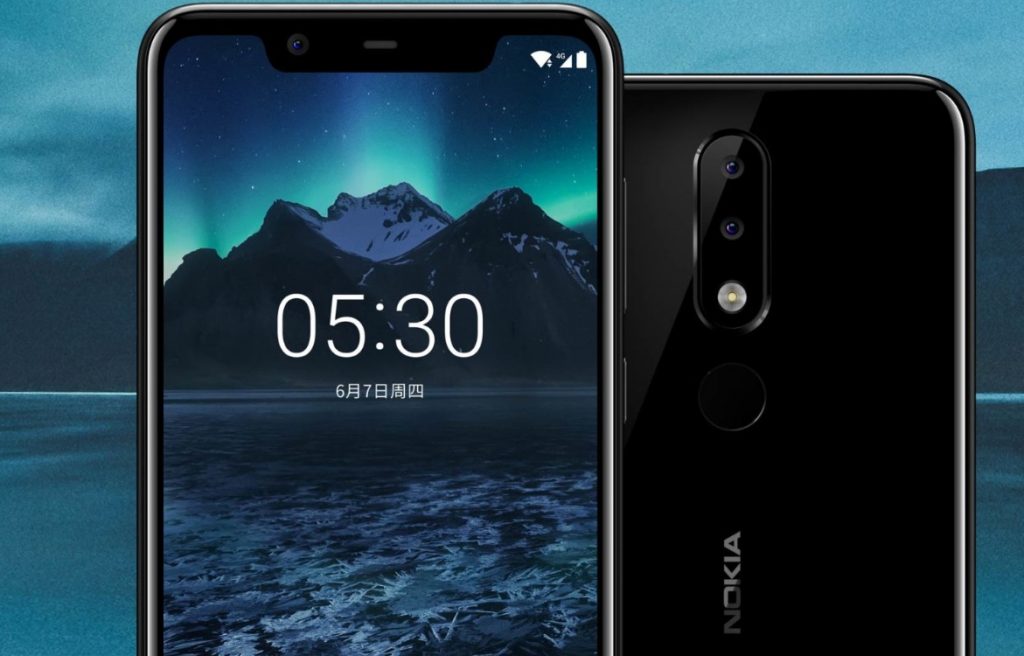
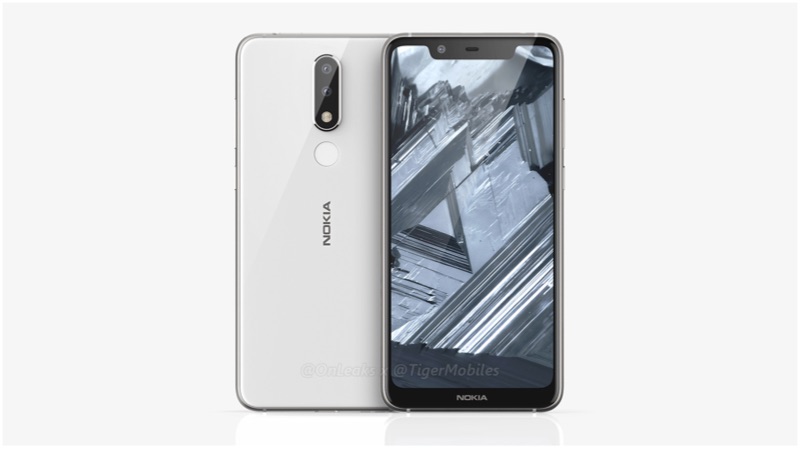
    The Nokia X series was first introduced in February 2014 as Microsoft Mobile was marketing the Nokia X series at the time. The OS for these smartphones were based on Linux and had Android as its backbone. Now, HMD Global has reimagined the Nokia X series and after the Nokia X6  was released in China earlier this year, the Nokia X5 is the latest smartphone to launch in the Nokia X series. The smartphone launched on the 18th of July in China.

    Nokia X5

    The Nokia X5 will feature Android 8.1 (Oreo) out of the box and HMD claims that it will receive an Android P update as soon as it is available. The smartphone features a 5.86-inch notch-display with a resolution of 1520 x 720 pixels. The aspect ratio of the device is 19:9 with a screen to body ratio of 79.6%. The smartphone has a 2.5D curved display which gives it an elegant and sleek look. The phone is covered with glass panels on both the front and rear. Complementing the glass panels is a plastic frame as well.

    Also Read: BlackBerry Athena With Physical Keyboard Leaked

    The Nokia X5 runs on a MediaTek MT6771 Helio P60 SoC. This is an octa-core chipset with four Cortex-A73 and four Cortex-A53 cores running at 2.0 GHz. The GPU for the device is the MaliG72 MP3. The device will be available in two storage variants. The 32GB storage variant will have 3GB RAM and the 64GB variant will have 4GB RAM.

    There is a dual rear-facing and a single front-facing camera setup on the Nokia X5 as well. The rear camera has a 13 MP sensor with f/2.0 aperture and a 5MP depth sensor. The primary camera is capable of recording 1080p videos at 30fps. The front-facing camera is an 8MP sensor with a f/2.2 aperture.

    Powering the smartphone is a 3,060 mAh Li-Ion battery.

    The price for the Nokia X5 in China starts from CNY 999 (Rs. 10200.26 approx). If HMD Global releases the smartphone in India then we can expect the price to be close to its Chinese counterpart.

    Clearly, the Nokia X5 offers a lot of features for its price. However, we still believe that the Nokia X5 will face tough competition in this price segment. How it fairs against other smartphone is something we will keep an eye out for.

    Have something to add? Leave a Comment Below!
     

  • Xiaomi Mi Max 3 Price Revealed Before Launch On 20th July

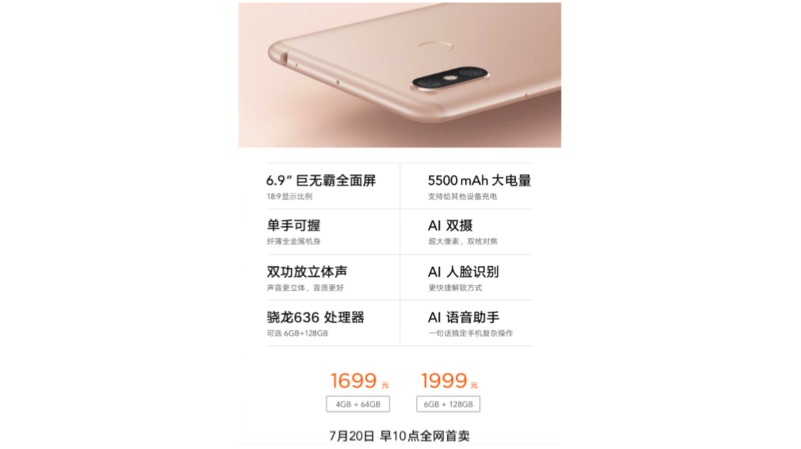
    The mid-range smartphone segment is a tough nut to crack for a manufacturer. There are already a lot of devices which offer value for money features. One such smartphone series is the Xiaomi Mi Max. The first phone to launch in this series was the Mi Max back in July 2016. Xiaomi is all set to launch a new device for the Mi Max series, the Xiaomi Mi Max 3. The device will launch on the 20th of July at 10.30 AM in China (8.00 AM IST). Before the launch, however, the price for two of the device’s variants are already available on Weibo.

    Also Read: Honor 10 To Launch In India On May 15th For Rs 32999

    Xiaomi Mi Max 3
    Mi Max 3 Price Reveal via Weibo
    Pricing

    We can get a rough idea of the Indian pricing of the smartphone from the Weibo post. The Xiaomi Mi Max 3 would cost CNY 1,699 (Rs. 17,335.89 approx) for the 4GB RAM and 64GB storage variant. While the 6GB RAM and 128GB storage variant would cost CNY 1,999 (Rs. 20,396.97 approx).

    Specs

    From the post, we also got a decent amount of information about some of the smartphone’s specifications. The Mi Max 3 could feature a large 5,500 mAh battery. This is by far the biggest battery Xiaomi has ever used in its devices. The smartphone’s predecessor, the Mi Max 2, featured a massive 5,300mAh battery as well.

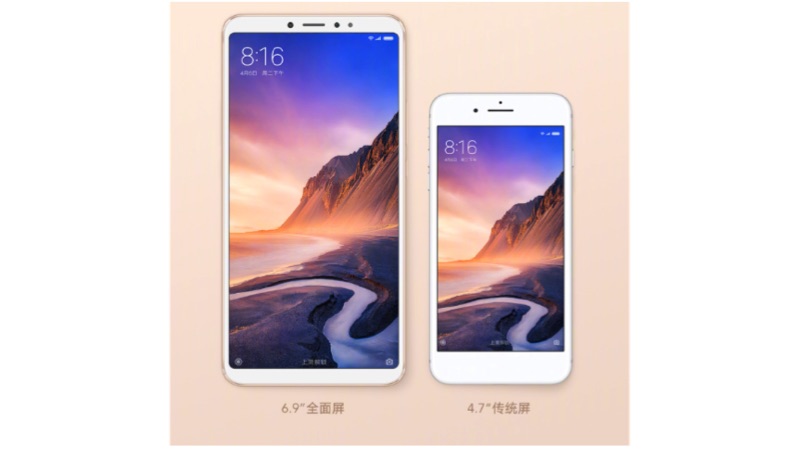
    The Xiaomi Mi Max 3 will sport a 6.9-inch display, as suggested by the post. We can expect a 19:9 aspect ratio to go along with the display. The advertisement for the display size of the Mi Max 3 seems to be taking shots at what looks like an iPhone.

    Xiaomi Mi Max 3
    Mi Max 3 VS iPhone Look-Alike

    The post also confirms previous speculations regarding the Mix Max 3 featuring the Qualcomm Snapdragon 636 SoC. This chipset will be paired with the Adreno 509 GPU.

    Colour Variants

    The Xiaomi Mi Max 3 could launch in three colour variants. The usual Gold, Matte Black, and some shade of Blue. We will have to wait for the launch to find out the official names of these variants.

    Conclusion

    Xiaomi’s Mi Max series has always been big on screen-size, yet they are priced competitively. We can only expect the trend to continue with the Xiaomi Mi Max 3 as well. What do you guys think of the smartphone?

    Have something to add? Leave a Comment Below!
  • Huami To Launch Two Smartwatches In India On 24th July

    Huami To Launch Two Smartwatches In India On 24th July

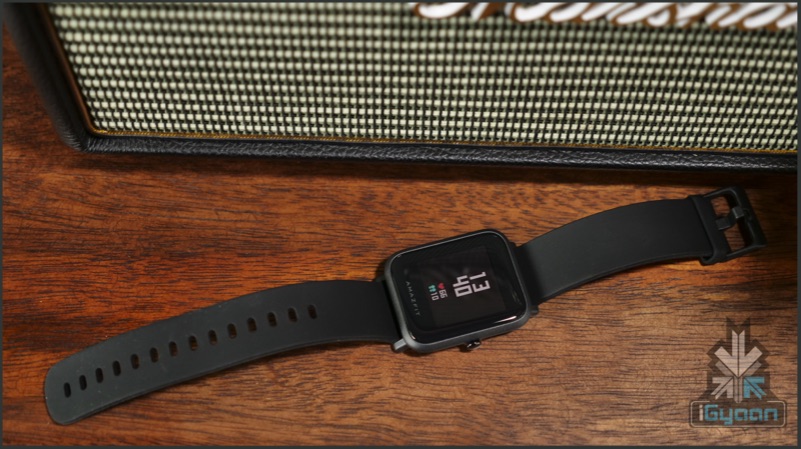
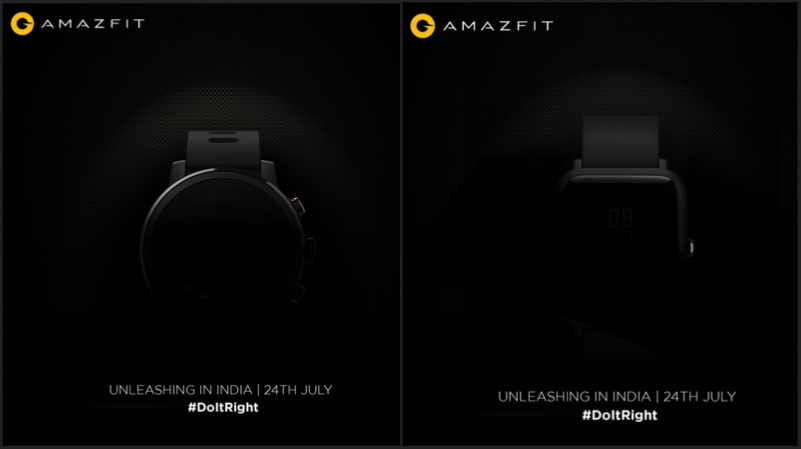
    Ever since wearables became a trend, Xiaomi has been launching its own line of fitness bands and smartwatches. Huami is a partnered brand with Xiaomi, which made the Mi Fit, Mi Band, and the Amazfit smartwatches. The brand is now launching in India with two smartwatches. The Amazfit Bip and Amazfit Stratos are the two wearables launching on the 24th of July. Huami made an official announcement via Twitter regarding these smartwatches.

    Huami
    Huami Announcement

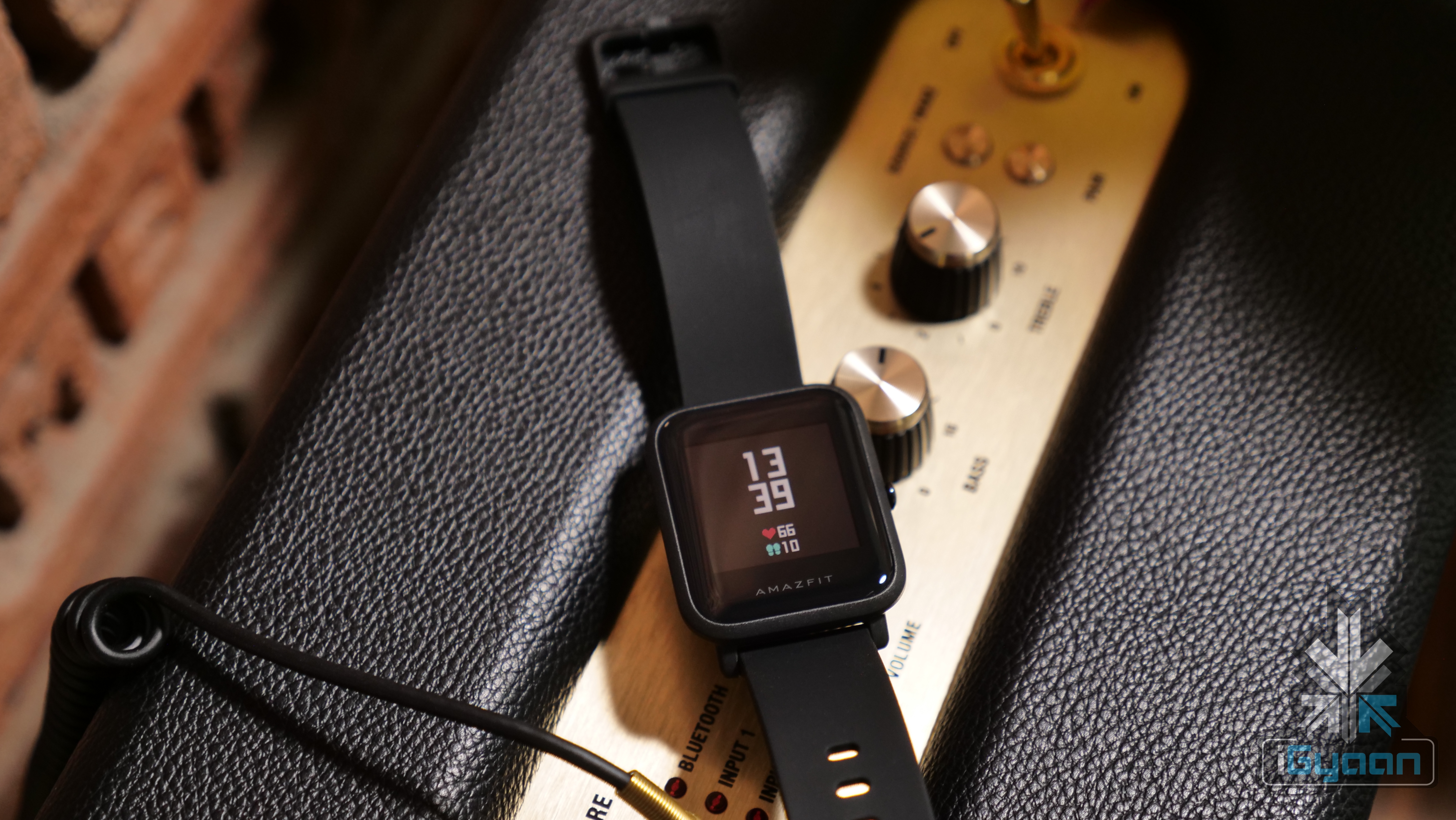
    While the Amazfit Stratos follows a circular design, the Amazfit Bip has a more rectangular aesthetic. The Amazfit Bip has rounded corners, making it look similar to the Apple Watch. The strap found on both the smartwatches are rubberized.

    Also Read: Asus ROG Gaming Smartphone Launch In India Confirmed

    Huami
    Amazfit Bip


    The Amazfit Stratos is comparatively on the pricier side, as it costs about US $199.99 (Rs. 13,718.31 approx). Whereas the Amazfit Bip costs US $99 (Rs 6,785.96 approx). Naturally, the latter has a few corners cut in terms of specifications but the Bip still holds its ground with an IP68 rating and an array of sensors. Both smartwatches offer a lot of fitness tracking features and are compatible with both iOS and Android devices. The Huami Amazfit Bip and Stratos both use a proprietary OS.

    Those who can’t wait for the devices to launch in India can directly order them from the US Amazon website. Considering the US price of these smartwatches are fairly competitive, we can expect the Indian prices to be relatively on the cheaper side as well. After their launch in India, we will give our final verdict on the price tags of the smartwatches. Given that the Indian market is already flooded with a plethora of fitness bands and smartwatches. On paper, both the Amazfit Bip and Amazfit Stratos look incredibly promising.

    Are you going to buy a Huami smartwatch when they are available for sale? We are all ears in the comment section, do leave your feedback.

  • Samsung Galaxy Note 9 Press Renders And Live Images Leaked

    Back in October 2011 when Samsung launched the first Galaxy Note, it took the market completely by surprise. The Galaxy Note 9 was the first smartphone with such a large (by 2011 standards)  5.29-inch display. Since then, along with the display size, the specifications of the Samsung Galaxy Note series has seen a major overhaul. The latest smartphone in the series is the Samsung Galaxy Note 9. And, it seems like the leaks for the device just keep on coming. The latest leak is by Evan Blass, showing a press render of the smartphone with the all-new S Pen. The leak was posted on Twitter in a reply to a tweet by Marques Brownlee, otherwise known as MKBHD.

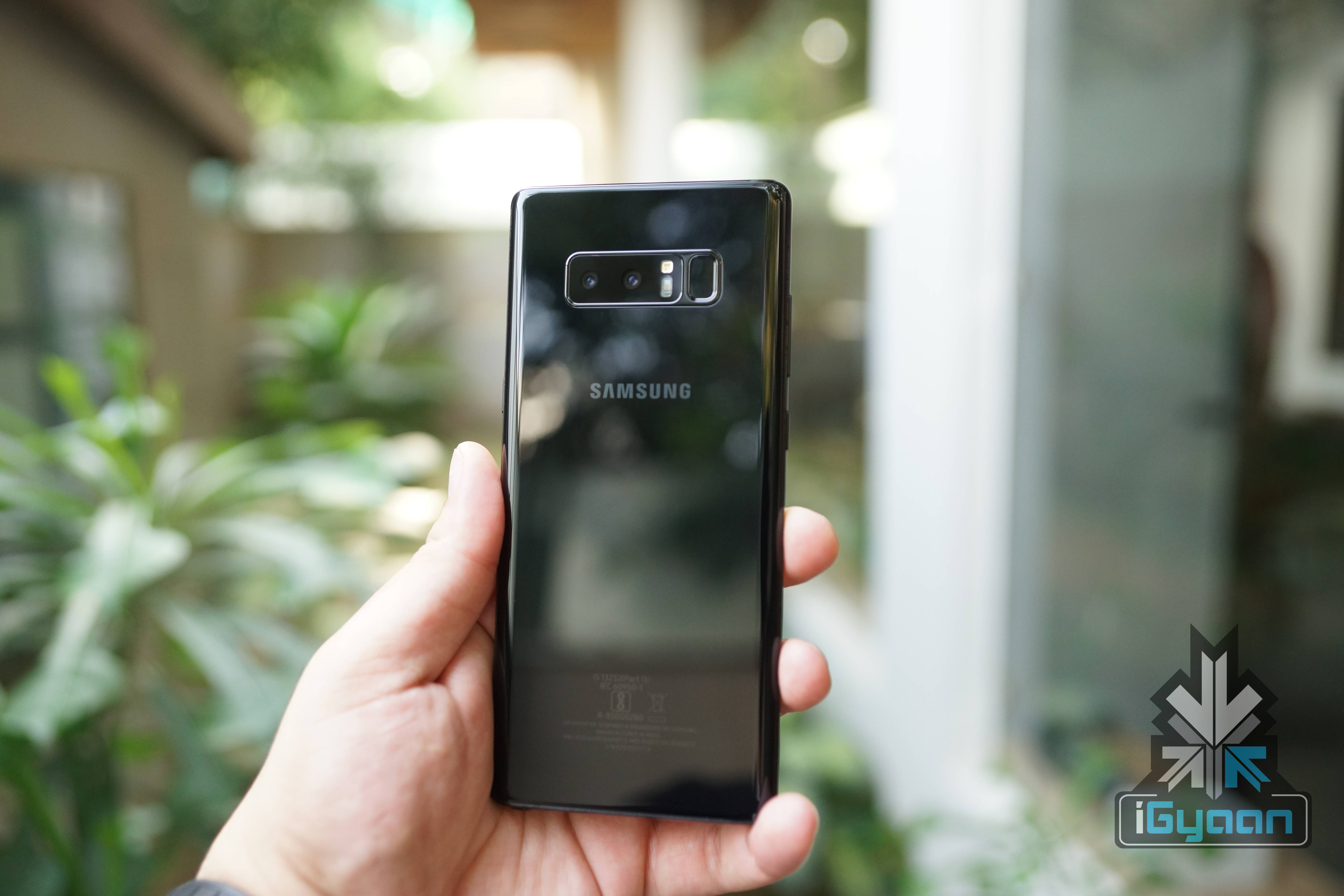
    The other leak was posted by the Twitter user Ice universe showcasing what is potentially the live images of the Samsung Galaxy Note 9. In recent years, Samsung has stopped making major design changes to their smartphones and the Galaxy Note 9 may be following the same trend. Except for the placement of the fingerprint sensor below the secondary camera, there isn’t much of a difference between the Galaxy Note 8 and Note 9. This puts the previous rumours of a screen embedded fingerprint sensor to rest.

    The Galaxy Note 9 may come with a 6.4-inch Super AMOLED display with a 2960 x 1440 px resolution and an aspect ratio of 18.5:9. The pixel density for the Note 9 could peak at about 514 ppi. Samsung has been using Corning Gorilla Glass for most of its smartphones and the Note 9 may also feature Corning Gorilla Glass 5.

    There may be more than one SoC variant for the Samsung Galaxy Note 9. There could be a US variant with a Snapdragon 845 SoC as well.  The other could be an EMEA (Europe, the Middle East, and Asia) variant with an Exynos 9810 octa-core chipset.

    If the leaked images are anything to go by, then the camera setup for the Samsung Galaxy Note 9 may feature dual rear-mounted sensors. This flagship could also feature an 8MP front-facing camera. This is similar to the camera setup found on the Galaxy Note 8.

    Samsung Galaxy Note 9
    Samsung Galaxy Note8

    Samsung will have to make sure that the Note 9 packs a punch. Especially since the company’s market performance has been a little underwhelming despite the Galaxy S9 and S9+ doing well. The launch of the device is right around the corner on August 9.

    Have something to add ? Leave a Comment Below!
  • Best Deals for Amazon Prime Day Sales

    Best Deals for Amazon Prime Day Sales

    The Amazon Prime day sale is one of the biggest sales in the country and especially online. Amazon customers get a host of exclusive deals and this year’s sale is even bigger.

    Here are some of the hottest deals

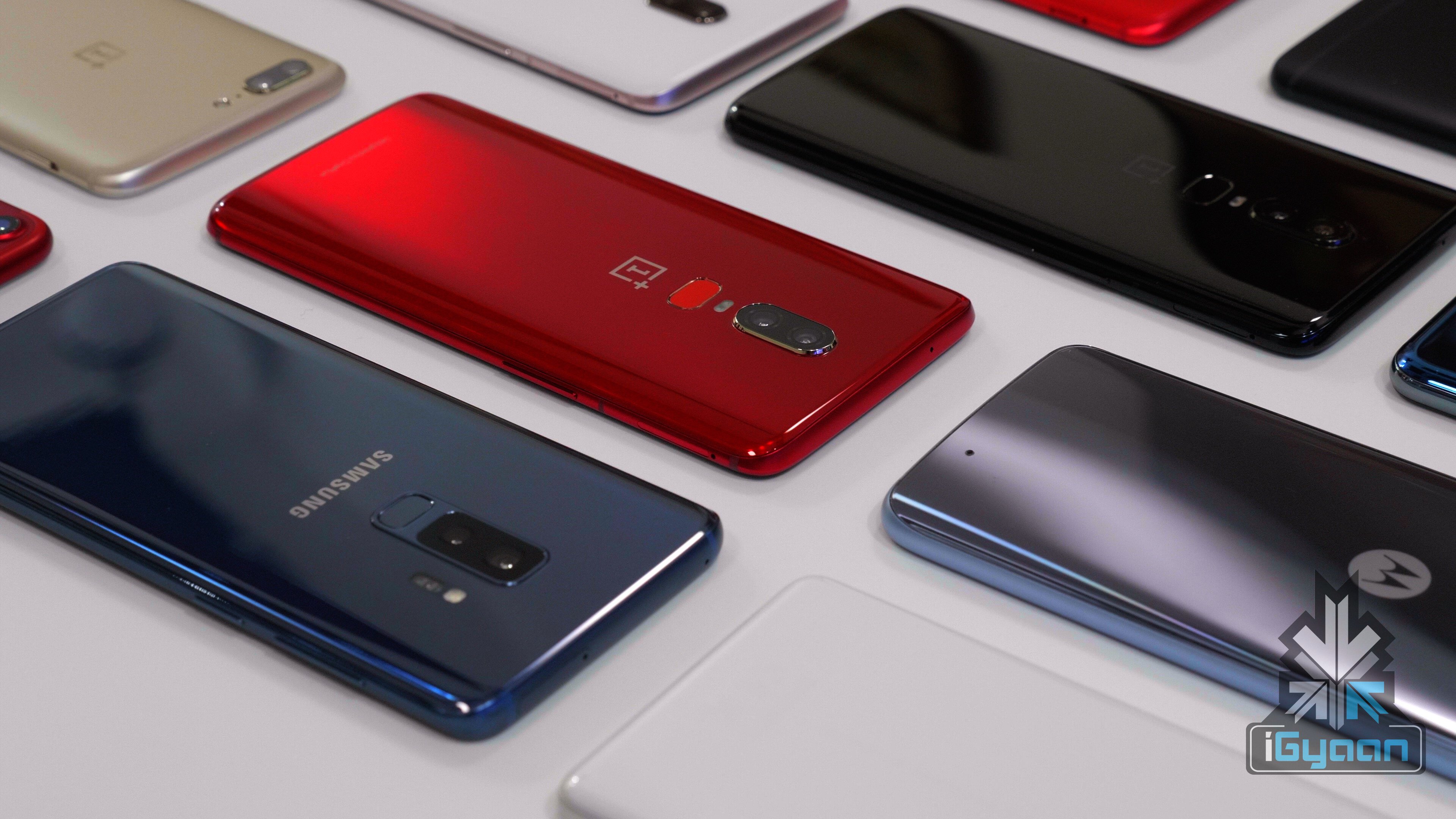
    1. OnePlus 6 RED

    The red color variant of the OnePlus 6 is now finally available, while not on sale it is exclusively available on Amazon starting today.

    You can check out our unboxing video here or play in the giveaway to win the OnePlus 6 Red here.

    2. Bose QC 25 ( 50%)

    One of the best noise cancelling headphones now available at a massive 50% discount. Get them quick.


    3. Sony WH1000XM2

    Another pair of high end headphones up for grabs are the Sony WH100XM2. With a 26% discount these are much more affordable ( a term we’d like to use loosely)


    4. Bose Sound Touch III and Soundlink Mini

    These speakers get a 20% discount which is extremely rare for Bose products.


    5. Amazon Echo Range

    What’s a Prime day without discount on Amazon Products. The whole range gets a cut. And the Fire TV stick is down to Rs. 2799

    6.Fujifilm Instax Mini

    These cameras are fun to use and easy to carry. Plus you get a print instantly. Now only Rs. 2999


    7. Sandisk SD cards and USB drives 

    Lots of discounts on storage media click here for the whole list.


    8.TV Deals

    Starts at 6:00 pm today but you get awesome deals including two TV’s for the price of one. Sony Bravia on massive discount.

    Another deal that starts 17th July is massive discount on the 65 inch Android TV : Get it as low as Rs. 56999.
    For the full deal click here.


    9. Printers and Supplies

    Great deals on Inkjet and laser printers along with printing supplies : click here for full list. 


    10. Routers and PC hardware

    There are tons of deals on routers and hard drives.


    11. Laptops and Notebooks

    Lots of exciting offers on laptops and portable computers. Full list here.

    Microsoft Surface Pro now for Rs. 84990.

    12. Canon Eos 1300D

    This starter DSLR now available for Rs. 20,990

    13. GoPro Hero 5

    Now available in Black edition with accessories for Rs. 24250.

    There are ongoing deals and you should check back for more constantly in the next three days.


  • Apple Updates MacBook Pro, Now Includes New Core i9 Configurable Option

    Apple Updates MacBook Pro, Now Includes New Core i9 Configurable Option

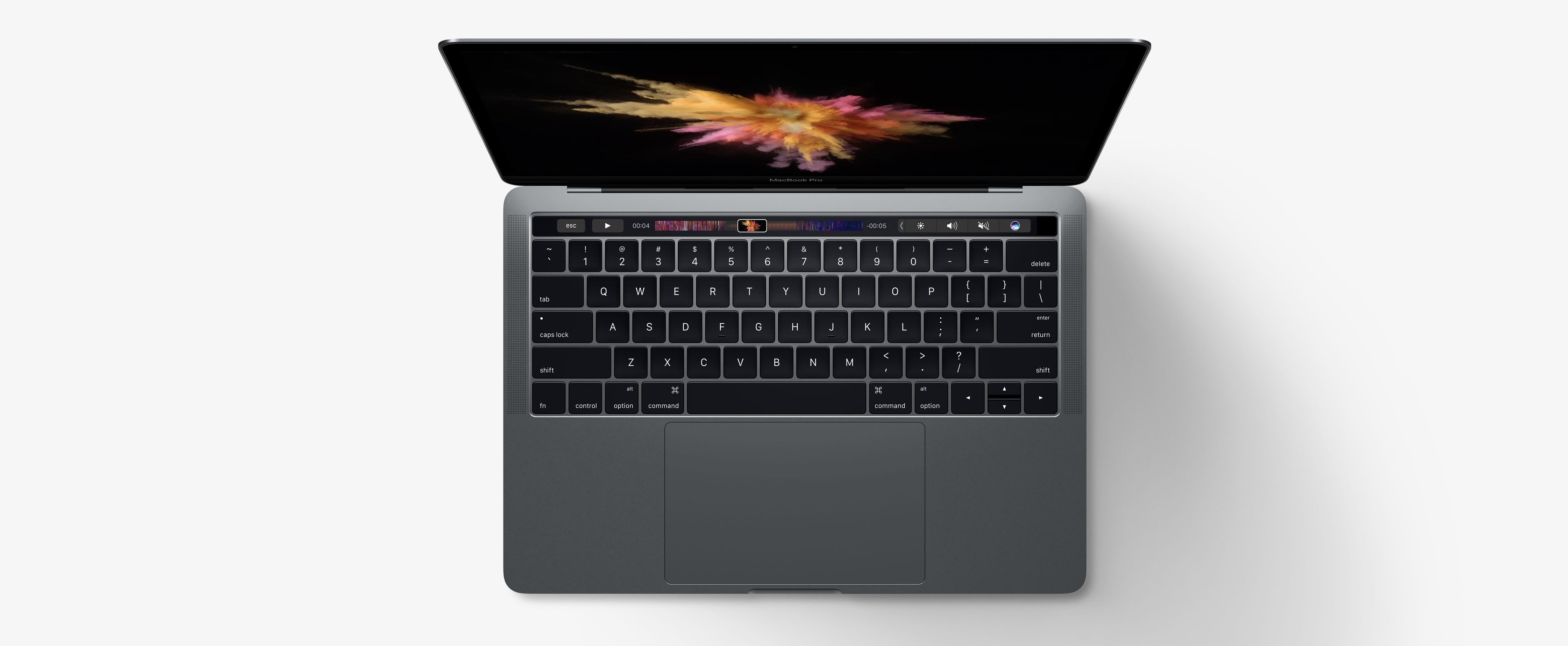
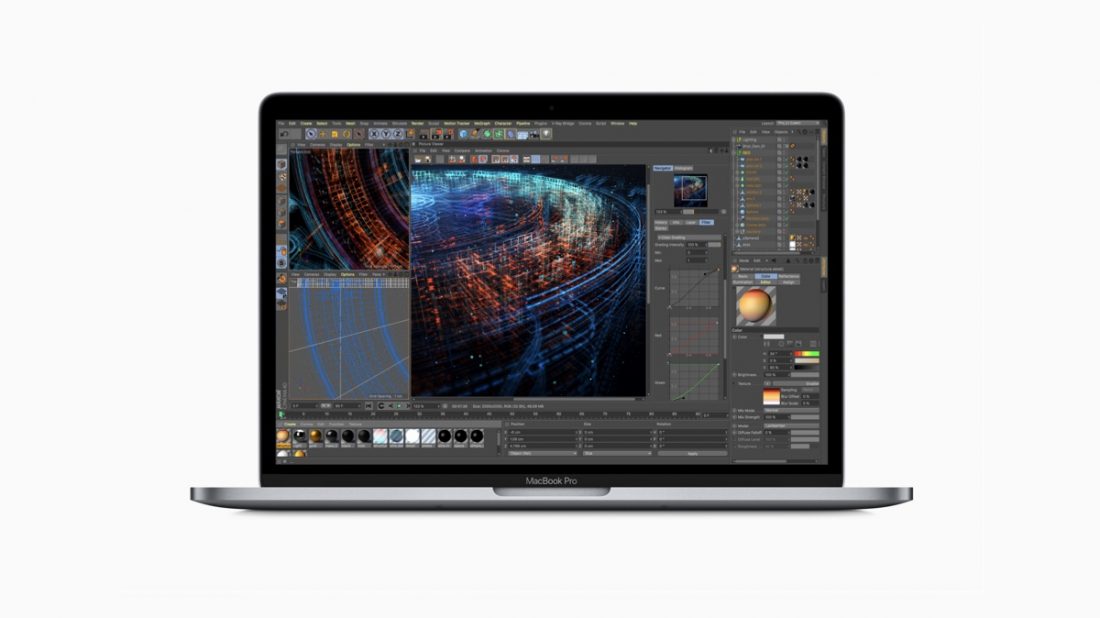
    Apple has updated their MacBook Pro lineup with new hardware upgrades. The MacBook Pro 15  inch is now available with an upto Core i9 Option with 4tB SSD and 32 GB of RAM. These machines are more targeted to resolve the performance needs of many MacBook Pro users who were not satisfied with the 2016 Update.

    “The latest generation MacBook Pro is the fastest and most powerful notebook we’ve ever made,” said Philip Schiller, Apple’s senior vice president of Worldwide Marketing. “Now with 8th-generation 6-core processors, up to 32GB of system memory, up to 4TB of super fast SSD storage, new True Tone technology in its Retina display and Touch Bar, the Apple T2 chip for enhanced security and a third-generation quieter keyboard packed into its thin and light aluminium design with all-day battery life, it’s the best notebook for pro users.”

    Apple will for the first time also allow configurable options in India, for the MacBook pro Line-up allowing Indian consumers to pick their choice of hardware. Also new to MacBook Pro is the Apple T2 chip, first introduced in iMac Pro. With the Apple T2 chip, MacBook Pro now delivers enhanced system security with support for secure boot and on-the-fly encrypted storage, and also brings “Hey Siri” to the Mac for the first time.

    Macbook Pro 15 inch Specs:

    • 6-core Intel Core i7 and Core i9 processors up to 2.9 GHz with Turbo Boost up to 4.8 GHz
    • Up to 32GB of DDR4 memory
    • Radeon Pro discrete graphics with 4GB of video memory in every configuration
    • Up to 4TB of SSD storage
    • True Tone display technology
    • Apple T2 Chip
    • Touch Bar and Touch ID
    Macbook Pro 13 inch Specs:
    • Quad-core Intel Core i5 and i7 processors up to 2.7 GHz with Turbo Boost up to 4.5 GHz and double the eDRAM
    • Intel Iris Plus integrated graphics 655 with 128MB of eDRAM
    • Up to 2TB of SSD storage
    • True Tone display technology
    • Apple T2 Chip
    • Touch Bar and Touch ID
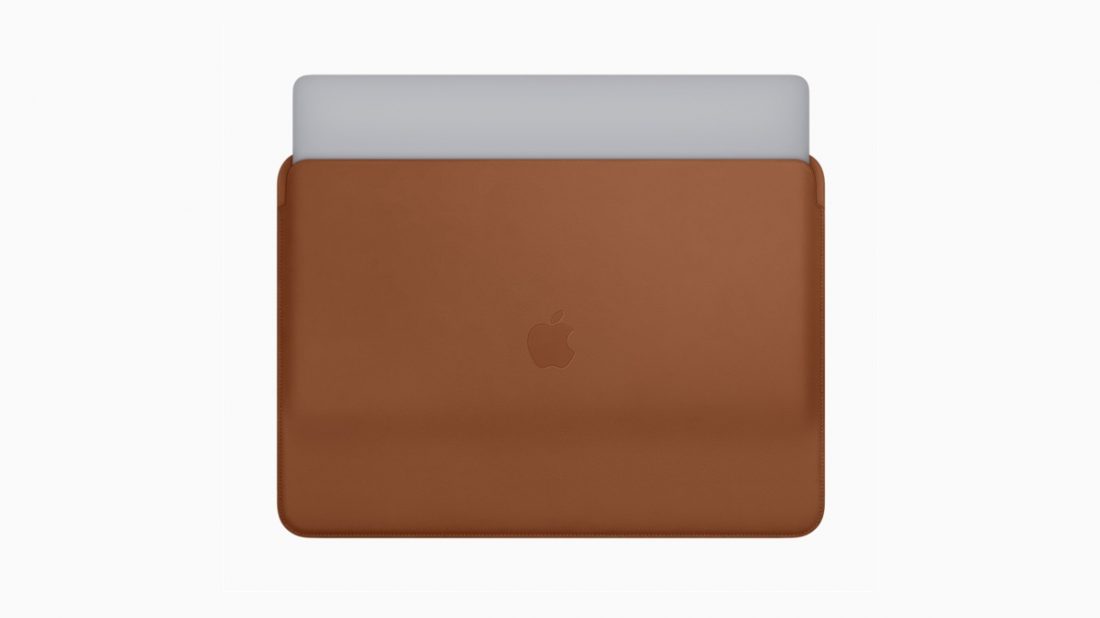
    Apple has also launched new accessories for the MacBook Pro lineup including Apple sleeves for the 13-inch and 15-inch MacBook Pro in Saddle Brown, Midnight Blue and Black.
    Starting at INR 149900 and INR 199900 respectively, the updated 13-inch MacBook Pro models with Touch Bar and 15-inch MacBook Pro models with Touch Bar are available in select Apple Authorised Resellers later this month.
  • Leaks Suggest Android P Could Be Called Android Pistachio

    Leaks Suggest Android P Could Be Called Android Pistachio

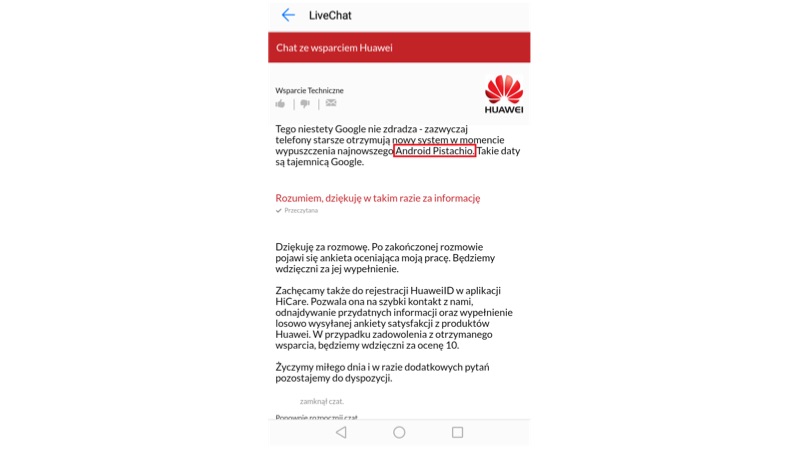
    Leaks have revealed the name of Android P and the fans are going nuts (pun intended). The leak was first posted on a Polish website. The website shared screenshots of a conversation between a Huawei representative and a customer. The customer was inquiring about the Android 8.0 Oreo update for the Huawei P9 Lite.

    Android Pistachio
    Huawei Live Chat Screenshot

    Though it is highly unlikely for Google to reveal the official name for its Android P. This news still steers the thought process and speculation to a new direction. Other rumors about the name suggest that the name could be Android Pistachio Ice-cream.

    Android Pistachio
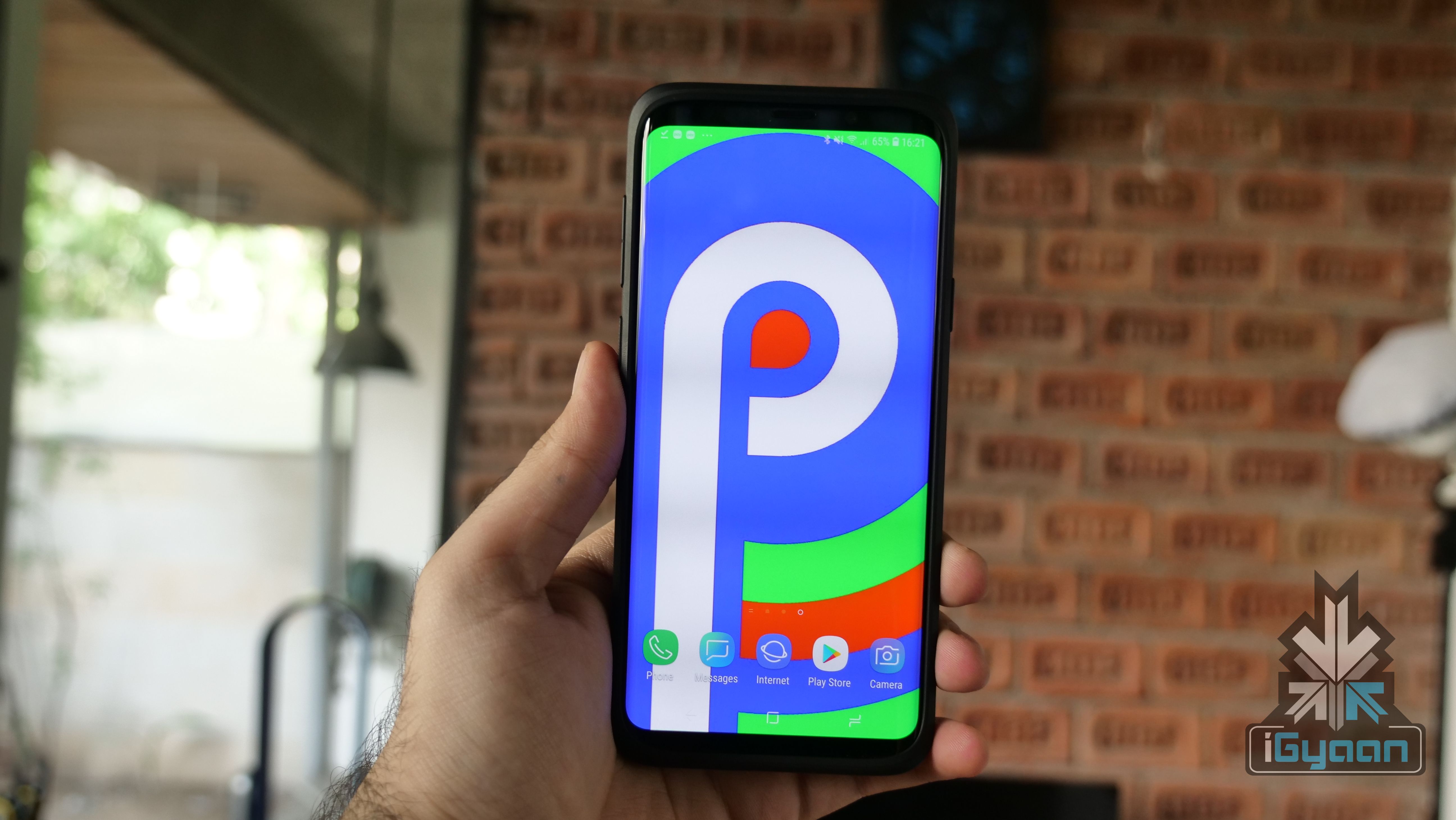
    Android P

    Android usually uses names of sweet treats or desserts. For Google to use a “nutty” name will be quite surprising. In this case, the name Pistachio Ice-cream would make more sense. From Cupcake to the to Oreo the names have always been based on a candy or dessert. One should keep in mind that during its testing phase Android 8.0 was just called Android O.

    There is again a catch to Android Pistachio Ice-cream as the name “Ice-cream Sandwich” has already been used. This naming convention could sound redundant which further creates a doubt about the entire leak.

    Must Read: Only 1% Android Smartphones Are Running Android 8 Oreo

    Android P is the ninth installation of Google’s Android OS. Many devices including the OnePlus 6 have already received a Developer Preview of the Android P. This new version brings subtle UI changes like the redesigned notification panel when triggered by the volume rockers. The new update also brings better battery optimization, dark and light theme modes, and the ability to toggle between multiple wallpapers.

    Pistachio tastes quite good but, whether Google names Android P after “these nuts”, remains to be seen. With the official announcement about a month or so away, we will monitor this thread closely so stay tuned to iGyaan for any further updates.

  • Oppo Find X Launched In India

    Oppo Find X Launched In India

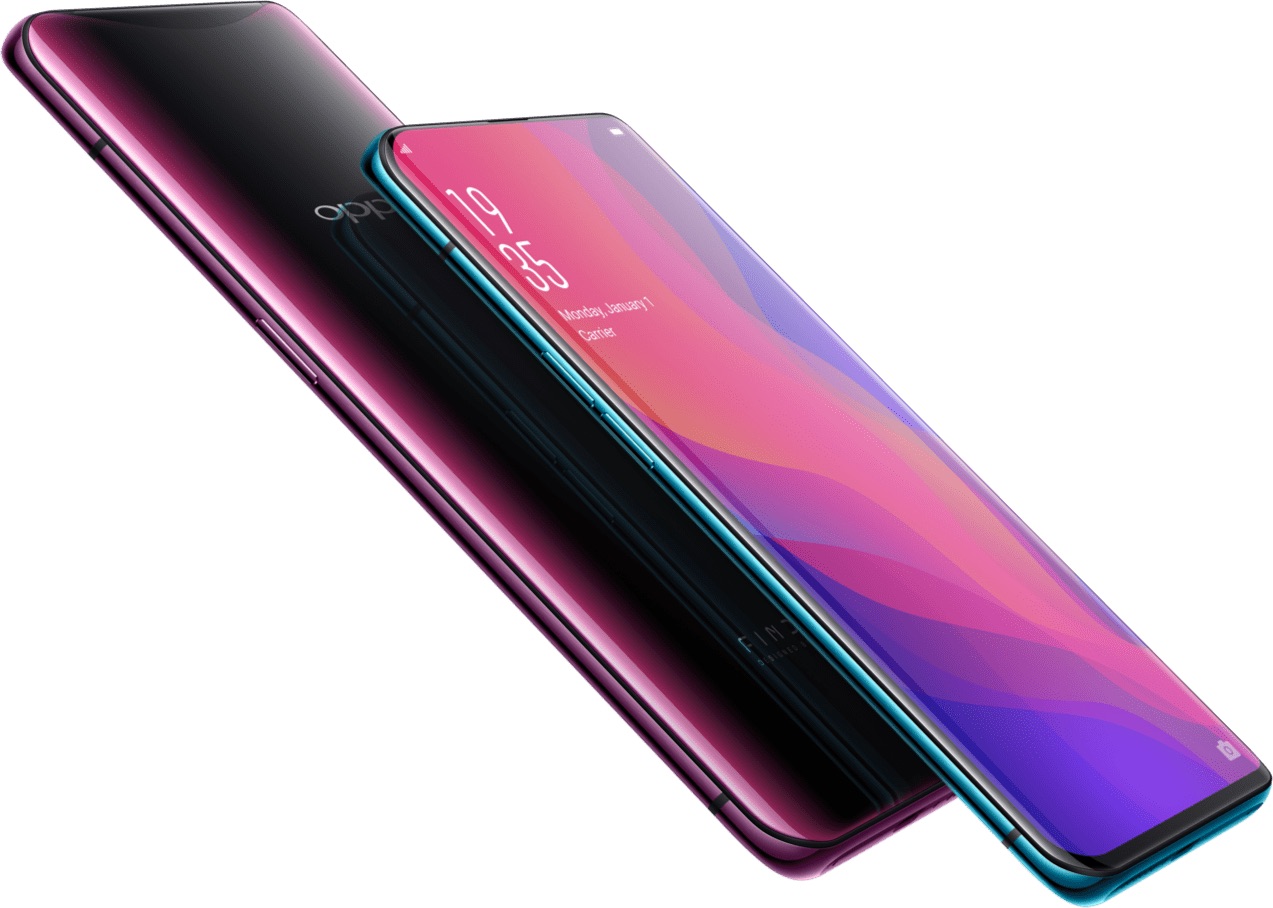
    Oppo has finally launched the Find X in India for a price of Rs. 59,990 exclusively through Flipkart. The company also plans on selling the Oppo Find X through offline stores. Pre-orders for Find X will begin from 25 July and the phone will go on sale starting 3rd August. The hefty price may be a turn-off for some people but it would be nice to see how well the phone does in the Indian market. Oppo is among the first manufacturers from China to release a phone at this price range. There is still no official word on when the Indian market will see the Oppo Find X Automobili Lamborghini Edition .

    Oppo Find X
    Oppo Find X

    The Oppo Find X looks astonishing with its unique and close to truly bezel-less design. The whopping 98.3% screen-to-body ratio is another feature which makes the Oppo Find X one of the top devices of 2018. The way this smartphone manages to achieve such a ratio is by moving the front camera behind the display. The front camera along with the rear camera is docked away in a motorized panel which pops-up when needed.

    Must Read: Xiaomi Mi MIX 3 With Pop-Up Front Camera Revealed In Promotional Poster

    The two colour variants in which the Oppo Find X will be sold in India are Glacier Blue and Bordeaux Red.

    The motorized mechanism has a high probability of failure. Although Oppo has tested the pop-up mechanism for 300,000 slides. The company says that the average person unlocks their phone 100-150 times a day. This puts the mechanism’s shelf-life to about 5 years of failure-free usage.

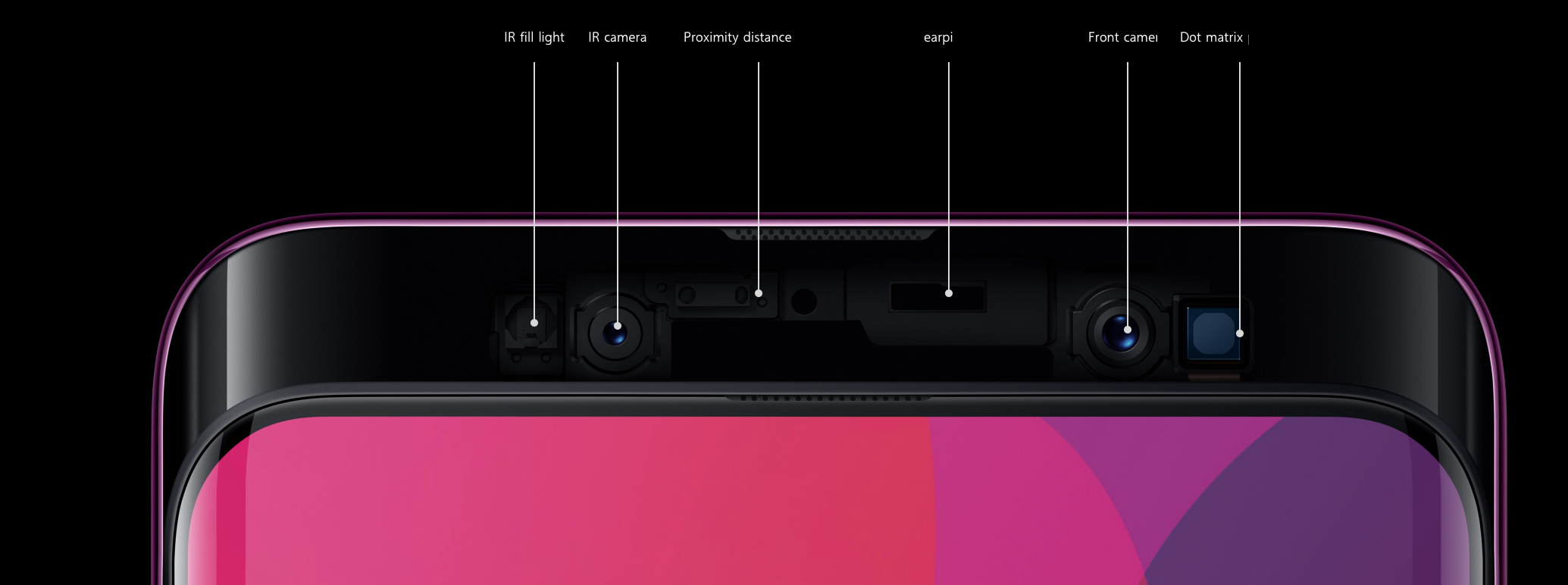
    Oppo FInd X Camera
    Stealth 3D Camera

    The OPPO Find X misses out on a fingerprint sensor and instead uses Face Unlock which they call it the Stealth 3D Camera. The company claims that it is a bit more advanced than the software-based Face Unlock found on other modern day devices. The Find X uses a dot matrix projector to scan the face to allow the unlock, this is quite similar to the tech seen on the iPhone X.

    Under the hood, the smartphone runs on the Qualcomm Snapdragon 845 chipset coupled with 8GB of RAM and 256GB of storage. Powering the smartphone is a 3730 mAh battery with support for VOOC Flash Charging. Out of the box, the smartphone will run Android 8.1 Oreo with ColorOS 5.1 on top of it.

    The sliding module houses a 16MP and a 20MP aperture rear-facing dual camera setup. These are 1.26″ sensors with an aperture of f/2.0 aperture. The smartphone is capable of recording 4K videos at 30fps but, we know that the chipset can handle 4K videos at 60fps. The camera on the front is a 25MP sensor with a f/2.0 aperture.

    In Europe, the Oppo Find X retails for a price of 999 Euros which is why most people speculated this smartphone will launch in India for Rs. 80,000. The smartphone will go on sale in India for a relatively cheaper price. Stay tuned to iGyaan as we will be taking an in-depth look at the device.


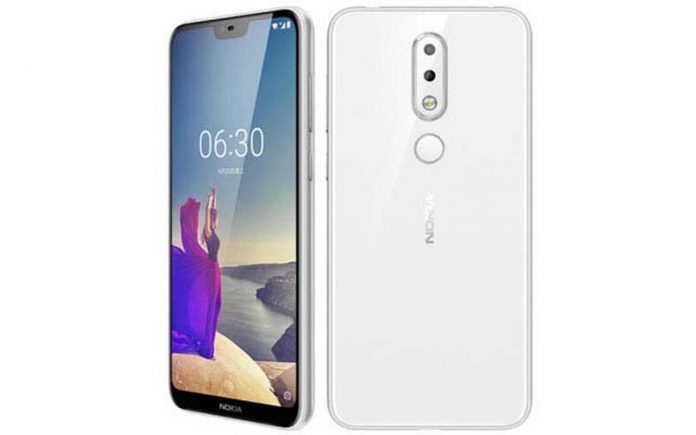
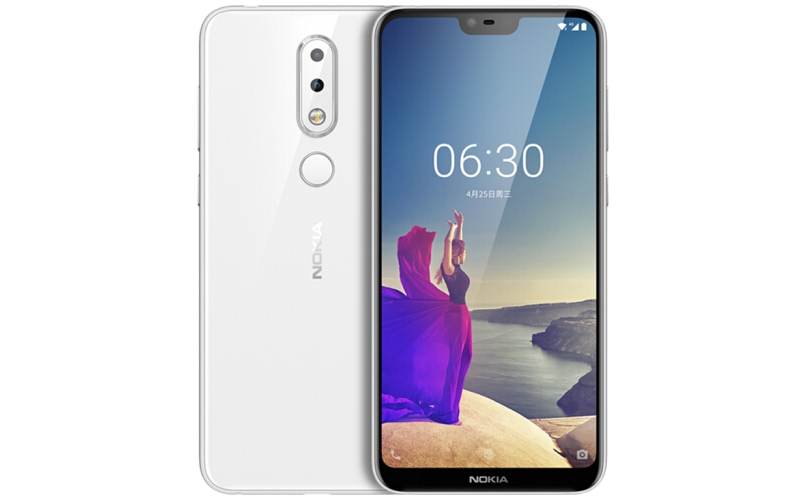
  • Nokia X6 Launched in a Limited Polar White Color

    Nokia X6 Launched in a Limited Polar White Color

    HMD Global has launched a new Nokia X6 Polar White edition, which is now available for sale in China. However, this time, only the variant with 6GB RAM and 64GB internal storage is available for RMB 1,699 (approx Rs. 17,459). The Nokia X6 went on sale in China in the month of May for the first time and the smartphone sold out in a matter of seconds.

    Although there is no word from HMD Global on when the Nokia X6 will hit the global market, those interested to purchase the phone can buy it from Chinese sites. Keep in mind that the websites are in Chinese and you may need a translation tool. 

    The Nokia X6 Polar White is an elegant looking smartphone with an aluminum frame and a glass body for both the front and rear panel. The glass gives the Nokia X6 a premium feel for a relatively cheap price.

    The Nokia X6 has a 5.8 inch IPS LCD display with a 2280 x 1080 pixel resolution. This gives the smartphone an aspect ratio of 19:9, the same as the Huawei P20 Lite. There is also a notch on the display, which is the reason why the smartphone has a taller aspect ratio.

    Must Read: Huawei P20 Lite Goes On Sale Before Launch

    The Nokia X6 Polar White runs on the same Qualcomm Snapdragon 636 chipset paired with the Adreno 509 GPU, as the other colour variants. The variant on sale has 6GB RAM and 64GB internal storage. There is another variant with 4GB RAM and 32GB storage. Nokia X6 has a microSD card slot allowing you to expand the storage up to 256GB. The fingerprint sensor is located on the back which has a glossy finish matching the overall glass design of the phone.

    Nokia X6 uses a 3,060 mAh Li-ion battery and a USB C port for charging. The Nokia X6 Polar White runs a near stock Android 8.1 Oreo with minor tweaks done by HMD Global.

    When HMD Global finally decides to launch the device in India, it will be interesting to see how the smartphone sales stack against offerings from other manufacturers. If the device is aimed at the sub Rs. 20,000 segment, it is a crowded market already dominated by the likes of Xiaomi and Motorola.


iGyaan Network
Privacy Overview

This website uses cookies so that we can provide you with the best user experience possible. Cookie information is stored in your browser and performs functions such as recognising you when you return to our website and helping our team to understand which sections of the website you find most interesting and useful.