Blog

  • New Smartisan T1: A Fresh Android Feel from China

    New Smartisan T1: A Fresh Android Feel from China

    The Chinese are at it again. No, they didn’t takeover a new part of the South China Sea or any part of the Indian territory. We are talking about the new Smartisan T1. This is an innovative product that promises a fresh Android experience.

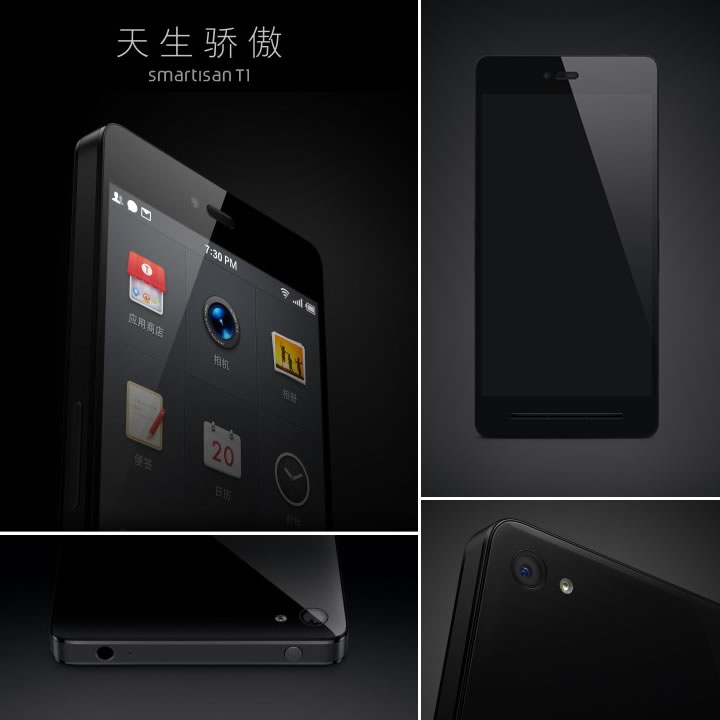
    Any Chinese phone whose heart is made of a Snapdragon 801 processor is worth a notice and believe us when we say this, there is a lot to notice about the Smartisan T1. The T1 has Gorilla glass 3 on both sides, giving it a rather iPhone-ish appeal. The phone follows the same obsession with symmetrical design that iPhone has retained for quite a while.

    smartisan-t1-collage

    Folks who appreciate the feel of pressing a real button are in for a treat since this phone has lot many physical buttons. It has three elegantly placed physical buttons under the screen which are a departure from the monotonous capacitive touch panels. It has two sets of rockers on both sides, one for brightness and the other one for volume.

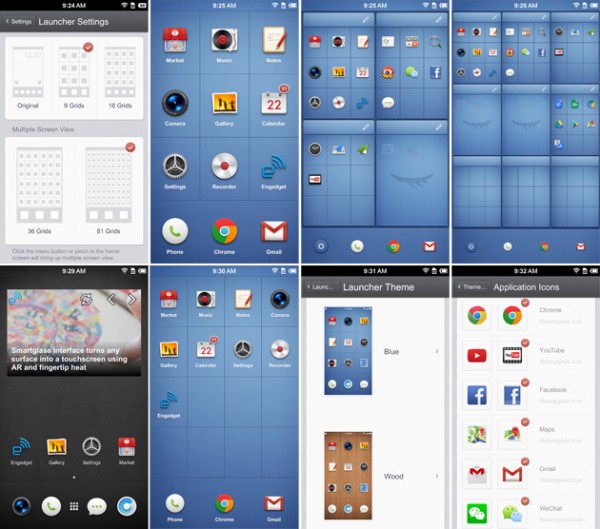
    Not just that, it also lets you change the functions of the physical buttons. For the first time in a phone, you can select the functionality according to your hand inclination (right or left handedness). The USP of this device is its high customizable features.

    smartisan-t1-screenshots

    Even with all its unique customizable features, the main screen looks rather clean and crisp. The T1 allows you to click a photo from the standby screen by pressing rockers on both sides together. This is great for people who like to take a lot of pictures and want quick access to the camera to not miss any moment worth capturing.

    Though there is a giant downer, the phone will only be available in China and might release in States after a year. Hopefully, some other low-end Chinese OEM will copy the design and sell it to one of the Indian companies.

    Major phone manufacturers must take notice of this innovative new product. Instead of adding bloatwares, they should focus on making the mobile experience easy for everybody.

  • New Micromax Unite 2 Wants to Trouble The Moto E

    New Micromax Unite 2 Wants to Trouble The Moto E

    Micromax’s new Unite 2 is priced to excite the buyers of the Moto E, however it wasn’t how the company planned it. The Unite 2 was supposed to be priced for a higher price, and since the launch of the Moto E, many companies seem to have revised their pricing schemes and Micromax seems to be one of them.

    The Unite 2 does some of the magic of the Motorola Moto E, as Micromax claims that the handset will stay updated with FOTA “Free Over the Air” updates. But Micromax is using a new approach to the handset as it will be one of a few handsets that support Indian Languages.  The Micromax Unite 2 will support 21 Indian languages and will come with Android 4.4.2 Kit Kat out of the box.

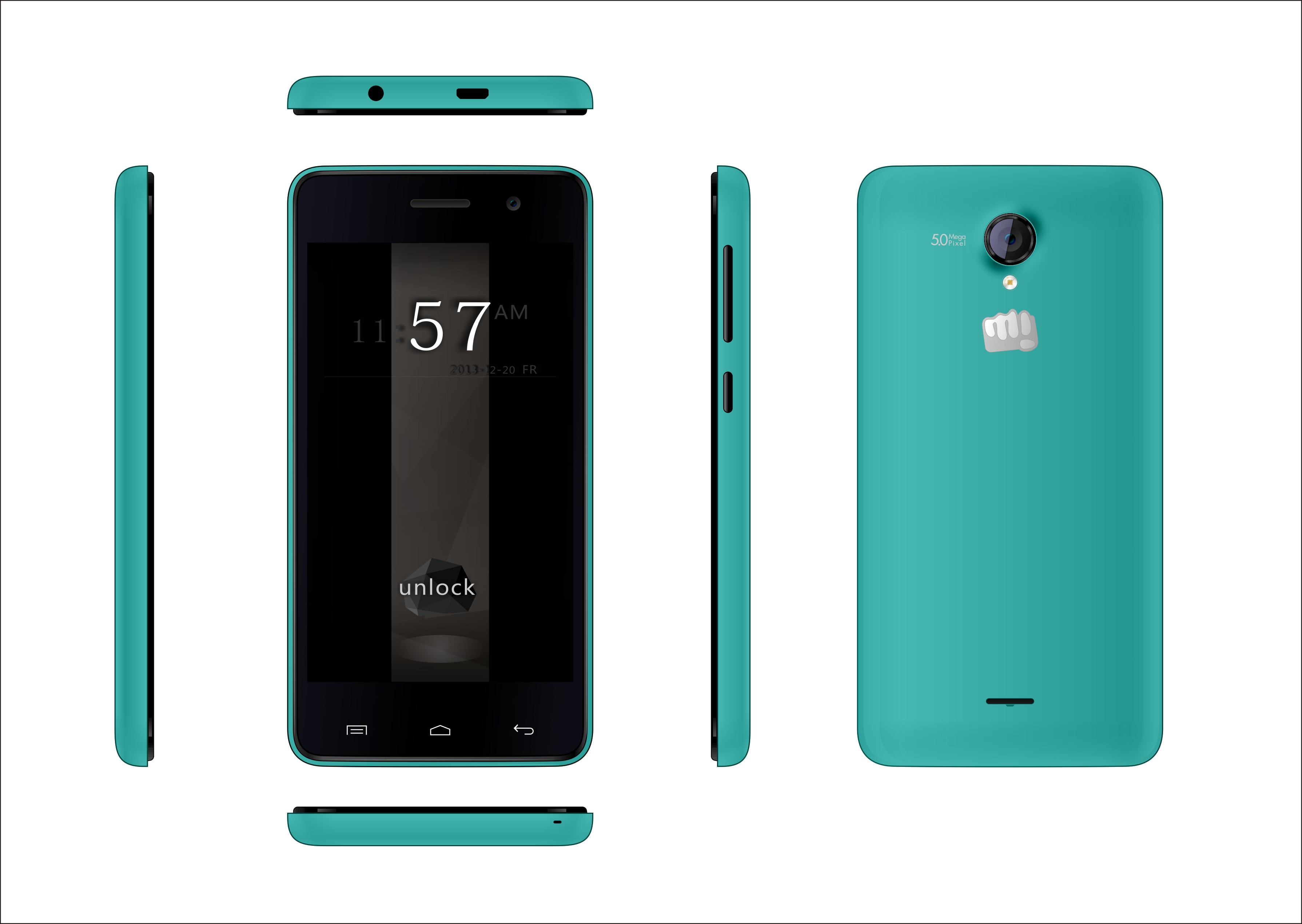
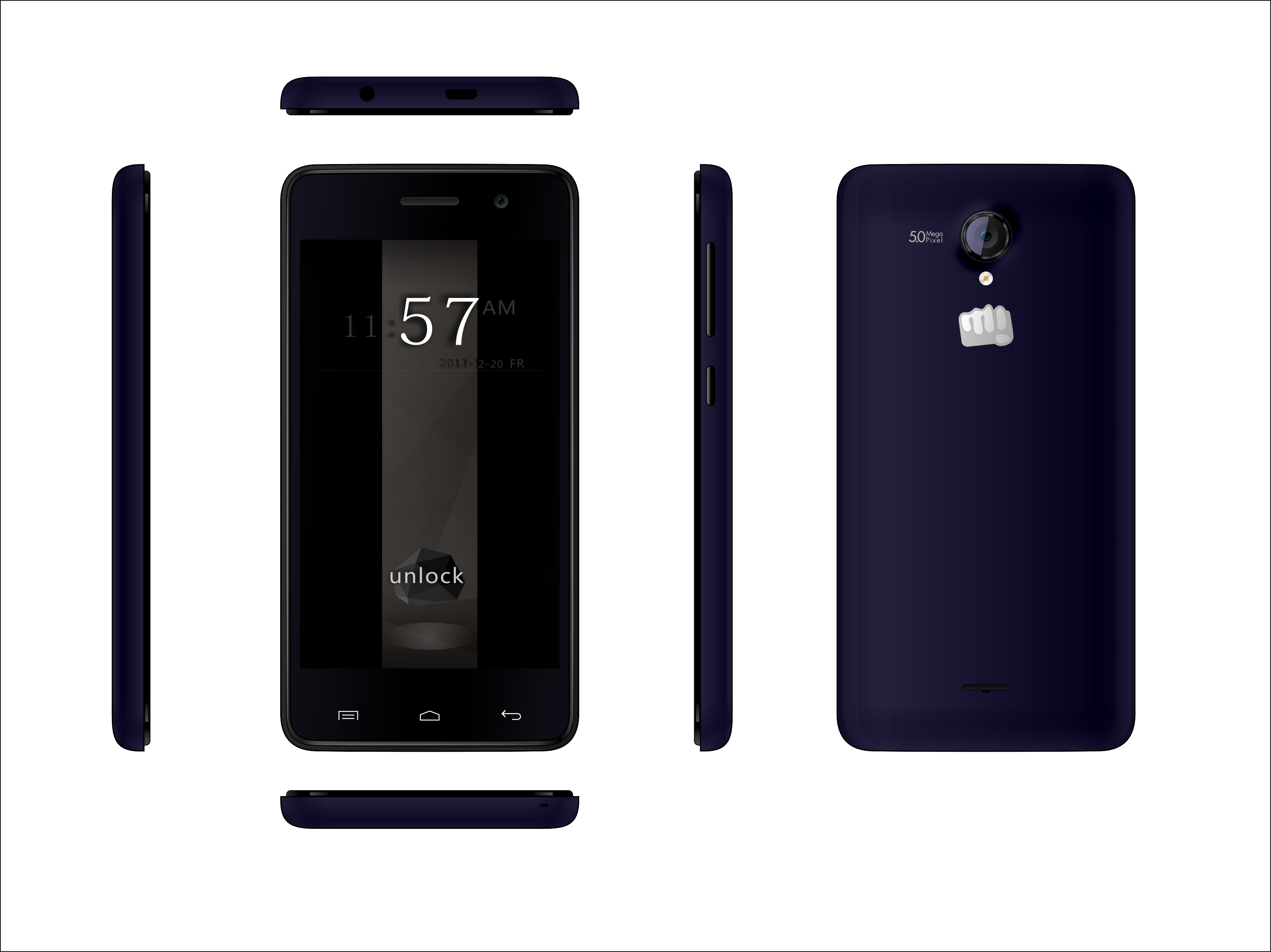
    Micromax Unite also beats the Moto E on paper, as the new Unite 2 also has a 1.2 Quad Core processor, a 4.7 inch display with 800 x 480px resolution, 2000 mAh battery and a 5 MP main camera.  Micromax Unite 2_Grey

    Design wise the Unite 2 is also taking its cues from the Moto E by offering replaceable back panels. and a similar design but build quality details are vary and we couldn’t get confirmation on the use of reinforced plastics or gorilla glass.

    The idea is really novel, however will it give people the kind of assurance they have gotten in the past with Motorola and their Moto G and X. Micromax is trying to bring the better specs and pricing to the market with this handset, they have also made it more localized by adding multi language support, but it really comes down to experience. If Micromax can deliver a good package, they might be able to save their most important price market which is currently been highjacked by one of the oldest manufacturers of cellphones. 

  • One Step Ahead: 3D Imaging on New Google Tablet

    One Step Ahead: 3D Imaging on New Google Tablet

    “What if you could walk into a store and see exactly where that thing you need to buy is, or play hide-and-seek in your home with that character from your favorite game, or help the visually-impaired navigate that place they have never been able to to go on their own? We believe the possibilities are vast.” That’s been Google’s Project Tango‘s vision. And now, Google is reportedly working on a tablet version of this initiative, that incorporates multiple advanced imaging sensors into a portable device for real time 3D imaging and mapping.

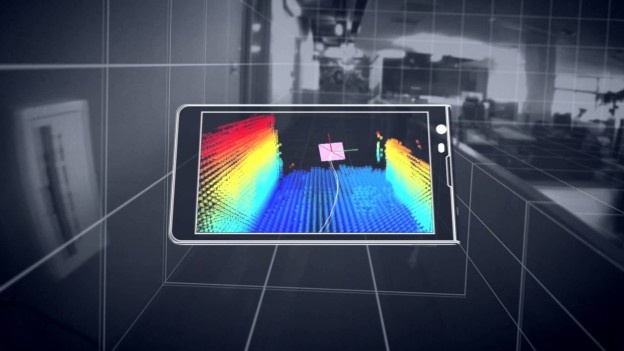
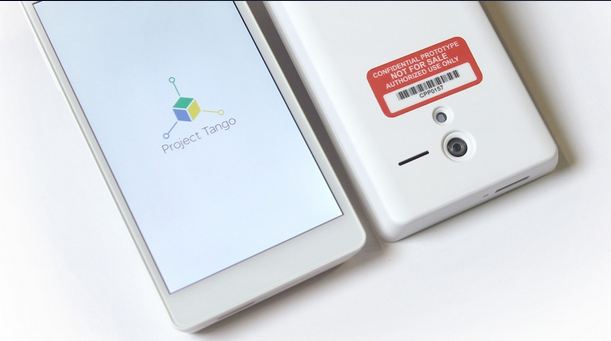
    tp1According to The Wall Street Journal, the Internet search giant is further exploring into computer vision technology with a 7-inch tablet which has two rear-facing cameras, infrared depth sensors and highly customized software. The small-format slate seems to be an oversized version of the existing prototype Project Tango smartphone released in February by Google’s Advanced Technology and Projects division.

    Google’s Project Tango webpage notes the sensor suite “allows the phone to make over a quarter million 3D measurements every second. Updating its position and orientation in real-time, and then further combining that data into a single 3D model of the space around you.”

    In February, Google had released a prototype smartphone out of that group, which also boasts sensors that could come up with a 3D map of your surroundings. The tablet appears to have the same or similar imaging hardware as the smartphone version, which features a regular camera mounted near the top of the handset, a motion-sensing camera placed opposite and incorporated depth sensors mounted between the two. It is unknown what type of CPU will power the tablet, but the phone boasts two “computer vision” processors and assorted positioning sensors for calculating movement in three-dimensions.

    The project’s recommended applications range from the ordinary, such as capturing the dimensions of a home before furniture shopping simply by waving the phone around a room, to the helpful, such as aiding the visually impaired inside unfamiliar buildings, to the playful, such as turning a foyer into a virtual-reality game space.

    ptFacebook is also exploring advanced computer vision technology with its planned $2 billion acquisition of Oculus VR, the maker of virtual reality headset Oculus Rift. The headset was originally intended for use with gaming devices, but Facebook has said it plans to extend its virtual reality capabilities beyond gaming into areas such as communications, media, entertainment, and education.

    Developers already have their hands on the phone and WSJ reports the company plans to release the tablet to select testers prior to Google I/O, which begins on June 25.

  • A French Failure and Other Major Engineering Blunders

    A French Failure and Other Major Engineering Blunders

     The French have given the world a lot of things; photography, parachutes, modern philosophy and fashion snoot-ism. But something they are not known for is their heavy work ethics. The country recently passed a regulation which allows workers to ignore work emails after work hours – even though their work week only consists of 35 hours. No wonder they are good at philosophy, they have a ton of time to sit around and think.

    This gives us an idea about their work culture, which may or may not be responsible for the recent French railway blunder. Which, incidentally, is the inspiration for this article.

    France recently invested 20 billion dollars on 2000 new trains called TERs (trains express regionaux), which they later found to be too wide to fit in their older platforms. Almost 1 in 6 stations are affected. You can blame the Indian Railways for a lot of things, but they have never shown this level of inefficiency. Now the French rail operators have had to invest an additional 70 million dollars to narrow the affected platforms. The problem occurred when the train manufacturers were handed measurements of stations built in the last 30 years. The platforms older than 30 years were ignored that lead to a situation where two of these new trains can’t even pass on parallel tracks.

    This of course is not one of the major engineering blunders, lets look at some other past examples of institutional failures:

    1. Tacoma Washington Bridge Disaster:

    The Tacoma Narrows Bridge is a pair of mile-long (1600 meter) suspension bridges with main spans of 850m. The first bridge, nicknamed Galloping Gertie, was opened to traffic on July 1, 1940. The bridge became famous four months later after a dramatic wind-induced structural collapse that was caught on film. The only fatality was a poor black Cocker Spaniel. The first replacement bridge opened in 1950, and a parallel bridge opened in 2007.

    2. St. Francis Dam Flooding:

    St_Francis_Dam_cropWilliam Mulholland was a self taught architect whose career came to a crashing halt on March 12, 1928, when his St. Francis Dam failed just hours after being inspected by Mulholland himself. The dam sent 12.5 billion gallons (47,000,000 m³) of water flooding into the Santa Clarita Valley, north of Los Angeles. It laid the town of Santa Paula under 6 meters of mud and debris. Some parts of Ventura County were covered up to 21 m high pile of muck. The final death count has been estimated at 450, including 42 school children.

    3. The Vasa:

    Stockholm_ship_VasaA long time before the Titanic there was The Vasa. It was the biggest ship of its era and it sunk after travelling just 120 meters from the shore. The reason cited was that it was built top-heavy and had low gun doors which let the water in, capsizing the vessel just a few minutes after first setting sail on her maiden voyage on August, 10th, 1628. Surprisingly, even after clearly lacking stability at the port, she was allowed to set sail. Apparently the impatience from King Gustavus Adolphus, was seen as a major reason for the disaster. The death toll reached between 35-50 sailors and crew but no sentences were handed out.

    4. Skylab:

    SkylabDuring the peak of the cold war, America launched its first space station called the Skylab. Weighing 75 Metric tons, Skylab was launched on 14 May 1973 by a Saturn rocket into a 435 km orbit. The launch is sometimes referred to as Skylab 1. There was severe damage to the vehicle during launch. The station lost its micrometeoroid shield, sun shade and one of its main solar panels. Even the debris from the lost micrometeoroid shield prevented the deployment of all solar panels and left the station with a huge power deficit. The first american space station failed miserably and cost the tax payers about $3.6 Billion dollars. There were of course a lot of lessons learned from this disaster which were later corrected on the ISS.

    5. The Leaning tower of Pisa:

    Leaning_tower_of_pisaThis is without a doubt one of the most prominent engineering failures, probably the most photographed blunder too. This bell tower’s tilt began during its construction itself. It was caused by an inadequate foundation on a ground that was too soft on one side to properly support the tower’s weight. The tilt increased gradually in the following decades till the structure was stabilized (and the tilt partially corrected) by efforts in the late 20th and early 21st centuries.

  • Moto 360 Watch Rumors Fly : What To Expect

    Moto 360 Watch Rumors Fly : What To Expect

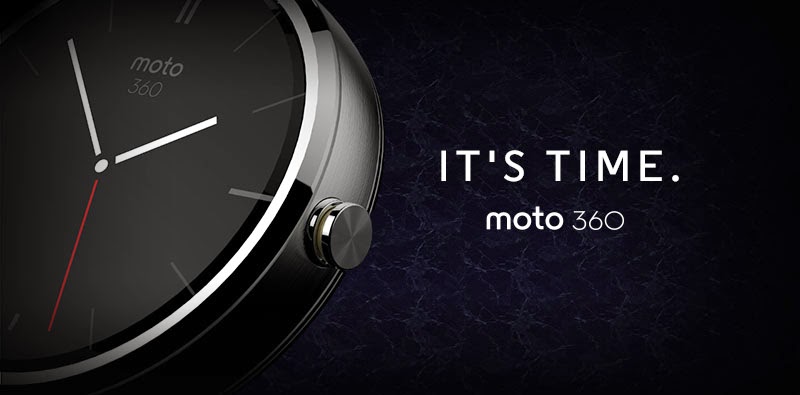
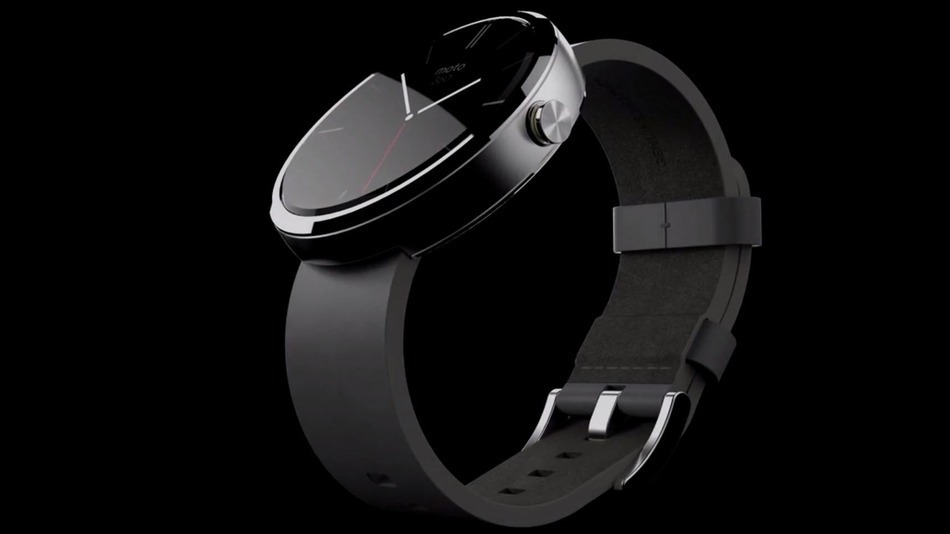
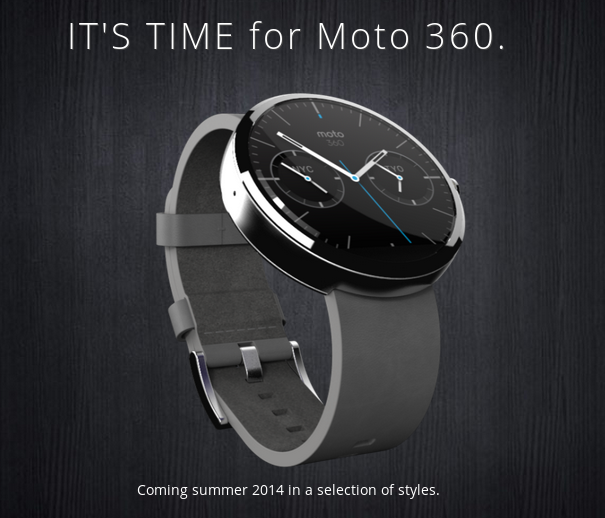
    Samsung has been ruling a still infant, smartwatch market with half-a-million Samsung Galaxy Gears dispatched this year. These have been  hogging around 70 percent of the fast-growing market for smart timepieces. Motorola has since stepped in the game and has unveild its Moto 360(don’t mix it up with a popular games console). It is the least smartwatch-like smartwatch we have seen for a long time. It looks quite like a regular watch, which Motorola insists it isn’t in the least.

    moto360thumbThe Moto 360 will use Sapphire glass in order to keep scratches at bay and generally protect it against knocks and scrapes. With Gorilla Glass being designed for much larger pieces of glass, it’s unsurprising to see Motorola opting for a different material here.

    Motorola has plans to release the Moto 360 in July with a $350 price tag, according to Journal du Geek, a French website. The company has also hinted that the Moto 360 would launch this summer. It did not however, mention whether it would come first to the U.S with a later release for Europe and the rest of the world. Motorola has released images of the Moto 360 with both leather and steel bands, and accidentally leaked leather color options went online earlier this year.

    motorola-smartwatch-moto-360-watch-release-date-price

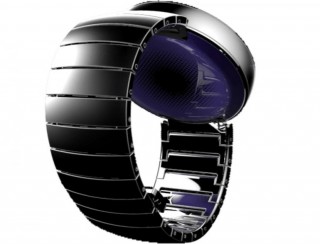
    The Moto 360 will not feature ports for USB charging or any other wired connector, which means the purple plastic plate behind its face will allow it to utilize induction charging, a method of wireless charging that requires a powered mat or some other specialized charger. Induction charging does not currently transmit through metallic materials, which is probably why Motorola selected plastic.

    purple-back-moto-360-smart-watch-release-date-smartwatch
    The Moto 360 might be induction charged

    Motorola could also use solar or self-winding chargers to supplement wireless charging in the Moto 360. This will help to increase the  battery life of the watch before you finally have to set it down to charge. Of course, this is an unconfirmed leak and we are definitely hoping for a considerably lower price when the Moto 360 comes out stateside.

    We hope Motorola can bring Smart and Sexy together in their endevour in Smartwatches, as they have done in the smartphone market with the Moto X, G and the baby E.

  • SingStar : Now Use Your Phone as a Karaoke Mic

    SingStar : Now Use Your Phone as a Karaoke Mic

    Music games are great for parties with close friends who won’t judge you when you totally tear down that one riff in David Bowies’ Let’s Dance. But they do have one weak spot: you can’t play them without all the plastic instrument accessories, making impulsive sessions at a friend’s place somewhat of a chore. The creators of Sony’s SingStar series have found a solution for that.

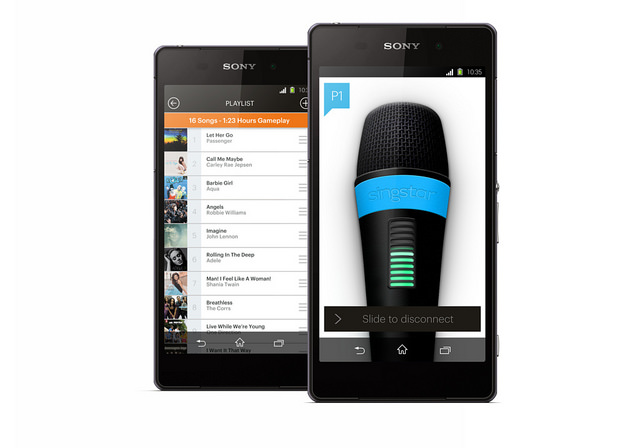
    To celebrate it’s 10th anniversary, the SingStar franchise is launching a new app that enables you to turn your phone into a microphone. SingStar Director Chris Bruce wrote on the playstation blog, “We’re really pleased to announce that SingStar will be coming to PS4 later this year. Not only that but we will also be launching a free SingStar app that will transform your smartphone into a microphone. That’s right, no more mics required!”

    The app works with both PS3 and PS4 versions and is also compatible with most iOS and Android smartphones and devices. The app also lets you create your own personal playlists.

    SingStar-Ultimate-PartyThe karaoke party game series previously required players to use USB microphones to sing along and compete against friends. Later this year they have promised SingStar: Ultimate Party on PS3 and PS4, which will host a collection of 30 tracks, which represents great value for anyone new to SingStar. Players will be able to select playlists directly from their phones as well.

    With its improved scoring system, you can also build up your XP and get rewarded for game activity, or challenge your friends online and entertain them with renditions of your favorite songs,

    SCE London Studio is working to expand SingStar’s social features by making it easier to share the best bits of your night on Twitter and Facebook straight from the game. They have also promised to continue adding new tracks to the SingStore. Though the release date for its forthcoming upgrade has not been announced.

    Check out the new trailer featuring  Carly Rae Jepsen’s Call Me Maybe.

  • The Curious Case of QuickCircle: LG G3 Case unveiled

    The Curious Case of QuickCircle: LG G3 Case unveiled

    Protection is a must. No we are not talking about condoms, we are talking about phone covers. The variety in the market is immense. Not just from the companies itself, but third party cases have flooded the markets all across the world.

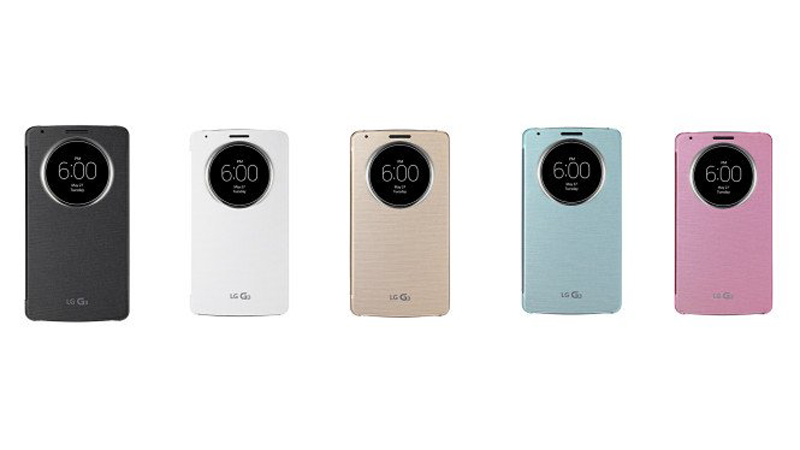
    In a peculiar move, LG has released its cover design before releasing the phone. The prominence being given to this particular cover is well deserved. It looks really functional and is not just a marketing gimmick. The video that has been released shows a customized lock screen which is accessible from the circular opening in the cover. They call it the QuickCircle.


    Samsung had previously introduced the S view covers for their S4’s. They also brought the S view on the Note 3. But till now they were only meant for reading notifications or  to pick a call. Also they were rectangles, not nearly as sexy as LG’s circle.

    LG has taken it a step further by adding more interactive options. The cover design lets you access the customized lock screen where you can check the time, place calls, send text messages, take photos, listen to music or get an update of your health directly from the circular window. The QuickCircle will come in five colors: Metallic Black, Silk White, Shine Gold, Aqua Mint and Indian Pink(the last one sounds a bit naughty).

    Apart from all this, the case also has the ability for wireless charging through its built-in Qi compatibility. LG also made a lot of developers happy when it said it will release an SDK next month. That will ensure that even more customized functionality can be added to the QuickCircle.

    The company also claims that the QuickCircle provides the best “grip-ability” for the massive 5.5 inch QHD screen of the LG G3. The phone itself is claimed to have Android 4.4 out of the box, a 32 GB internal memory and a 3000 MaH battery. More details will come out soon.

    There is a lot of potential here that LG is uncovering. Lock screen accessibility will also help to decrease battery usage. Plus it is perfect for travel as it gives quick access to music and camera – the two most useful functions to use during excursions.

    LG should be commended for this development and the QuickCircle deserves the special mention it has got from the company. Hopefully, other companies will join the game faster and convert the dumb flip cover into useful accessories.

  • Meanwhile in Mumbai, Drones Delivered Pizzas

    Meanwhile in Mumbai, Drones Delivered Pizzas

    Picture this: You order a pizza, and as always, 30 minutes later the door bell rings. You’re expecting a cheery delivery guy with the hot cheesy pizza you ordered. But wait, what if instead it’s being delivered by a flying drone?

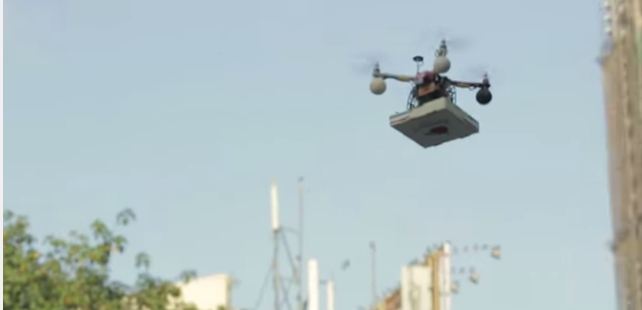
    A lesser-known pizza chain in Mumbai called Francesco’s Pizzeria, did just that last week. It succeeded in making a test-delivery, less than 3km away from its outlet in Lower Parel by using a remote-controlled, GPS-enabled drone. A four-rotor drone took off with the order from its outlet in central Mumbai’s Lower Parel area and delivered it to a high-rise building in adjacent Worli area. It dropped the 13-inch plain margherita pizza, weighing half a kilo, on the 21st floor rooftop before taking off again for the return journey. The speed with which the delivery was made thus beat the record for most leading pizza chains, which manually deliver pizzas within 30 minutes. The company claimed that it was the first time a drone has been used for such a purpose in the country.

     droneThe drone used  was custom-made, said an official from the pizza chain, adding that an auto engineer friend of his had helped him make the flight possible. The official said the chain had carried out the test-delivery as an experiment because they want to be ready for when regulations in India loosen.

    Since commercial deliveries by drones is not allowed in India, the ‘customer’ was  a friend of the chain’s CEO. It may not be considered an official sale, but in a way, it was a first time for an aerial product delivery.

    Several roadblocks have ensured their limited use  and drones are mainly used in India by filmmakers. Legal restrictions make it clear that they are only allowed to fly between the altitude of 200 to 400 feet. They are also barred from flying over security establishments, and then there are the technical difficulties such as the limited operating radius of 8 km, after which their batteries go dry.

    In the past, Taco Bell and Dominoes USA have attempted similar strategies. An idea called the TacoCopter — an app that would dispatch a drone to deliver a taco to your door — went viral last year, but the service is illegal under U.S. law as well. Dominoes USA tried pizza delivery which help of drone called ‘Domicopter’. Even Amazon has been in the news for testing and planning  an unmanned aerial vehicle delivery system since quite a while.

    It’ll take some time for them to figure out the nitty-gritties, but this seems to be the future of quick-deliveries. Till then, it is working well for the companies as a marketing gimmick.

  • MJ’s Resurrection and The Future of Holography

    MJ’s Resurrection and The Future of Holography

    Love him, hate him, but you can’t ignore the grooves of the King of Pop. Michael Jackson continues to get our foot tapping from the other side of the consciousness wall. His latest posthumous album, Xscape, brings back the the classic MJ, the one we 90’s kids were in love with while growing up. It took half a years worth of effort but we saw MJ’s resurrection at this year’s Billboard Music Awards,  showing off his signature moves and making us all slaves to his Rhythm.

    His latest feat at billboard awards was made possible due to the awesome powers of Holography. No, holography is not limited to the “Holodeck” on Star Trek alone. It’s here, it’s real and it’s getting us a lot more nostalgic. This incredible technology helped us witness the man with the golden feet after almost a decade. The experience was nothing short of breathtaking.

    In 2012, Tupac was resurrected at Coachella and recently Indian Prime Minister elect Narendra Modi used the technology to address multiple rallies at the same time. Celine Dion also performed with a 1968 version of Elvis at the American Idol. All these were made possible through the technique called Pepper’s Ghost.

    Holography is a technique which enables three-dimensional images (holograms) to be made. It involves the use of a laser and light measurement for recording visual data. The image changes as the position and orientation of the viewing system changes in exactly the same way as if the object were still present, thus making the image appear three-dimensional. The Holographic principles also states that our own lives must be just projections at a grand scale.

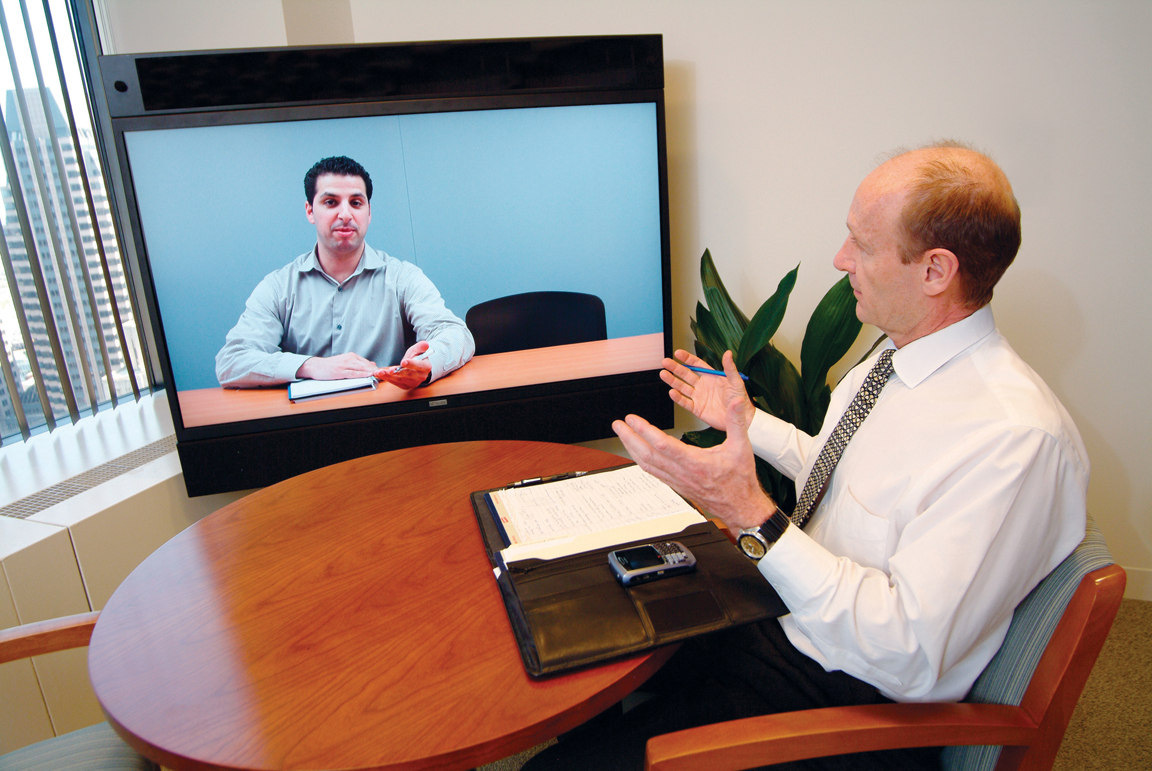
    The technology though is not just restricted to these performances. We can pretty soon have holographic communication capabilities. The research is in progress to allow you and your friends to have a conversations in simulated environments. It will be like video conferencing but you don’t have the distraction of a screen. This is the closest we can come to real life interactions with people thousands of miles away.

    A Teliris telepresence videoconferencing system in 2007.
    A Teliris telepresence videoconferencing system in 2007.

    Tele-Immersion seem to be the future of communication. It gives you a fully simulated environment where you can have complete immersive interactions. The users will feel as if they are  looking, talking, and meeting with each other face-to-face in the same room.

    To achieve this, the computers recognize the presence and movements of individuals and objects. Two or  more cameras are used to capture the objects or people.  They track those individuals and images and reconstruct them onto one stereo-immersive surface.

    Two or more cameras take rapid sequential shots of the same object, continuously performing distance calculations, and projecting them into the computer-simulated environment, as to replicate real-time movement. Tele-immersion presents the greatest technological challenge for Internet2 (The Research Network).

    We are still far away from projections like the one that got Leia’s message to Luke and Obi wan through R2D2. There is though an option for fog projection, in which the fog will act as a three dimensional screen where images can be projected. But that would not be immersive enough for true 3D involvement.

    Holographic Slideshows are so much cooler than present day projectors
    Holographic Slideshows are so much cooler than present day projectors

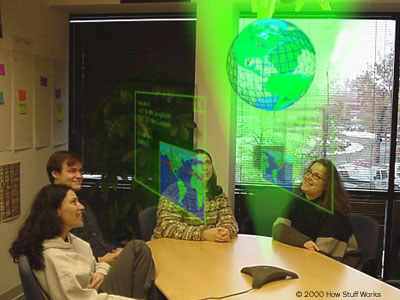
    Holographic technology will also help in 3D slide shows. It will be the end of  staring at the boring 2D projections on a wall. Imagine interacting with the virtual world with your fingers while presenting a slide show; surely the best way to engage a bored audience. It will be reminiscent of the slide show at rebel ships where they studied the plans of the Death Star. It can also be seen in Big Bang Theory’s episode “The Holographic Excitation”.

    Holographic Theory is a great area of study and we should all be taking interest in its evolution. Maybe if we have more innovative brains working on it, we’ll be closer to a Star War style communication apparatus.

  • Details About The HTC One M8 Prime Leaked

    Details About The HTC One M8 Prime Leaked

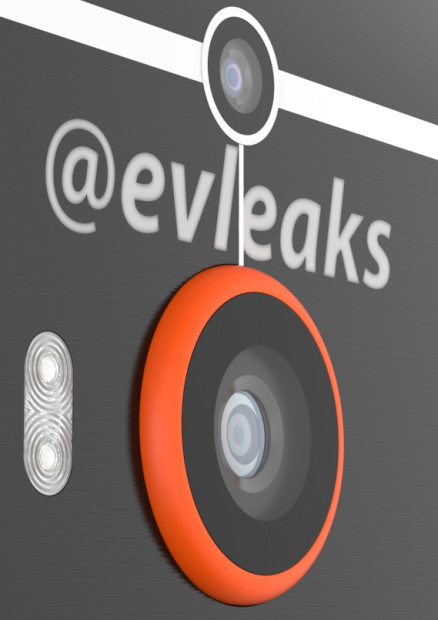
    Specification of a future HTC smartphone, referred as the M8 Prime have been leaked recently. If the information is accurate, it’s shaping up to be a real powerhouse. Over the past few weeks there has been a buzz about the upcoming phone, today got the first look at the rumored device. Top smartphone leaker @evleaks, has been on a roll about leaking details on the HTC One M8 Prime. On Tuesday he posted a full 3D render of the actual device, which apparently HTC had created for the press kits of the device.

    HTC-Prime-438x620Touted to release this summer, this new phone looks a lot like the HTC One M8 – the only difference is that its camera protrudes slightly on the back of the device, which isn’t present on HTC’s earlier phones. The reason for this might be because the One M8 Prime will have a camera which fairs better than One M8’s underwhelming camera. Though, it clearly seems to have come at the cost of having a smooth rear shell.

    Based on multiple rumors, most of which were revealed by @evleaks, it should have a 5.5-inch 2560 x 1440 Quad HD display, and the latest 2.5 GHx quad-core Snapdragon 805 processor with 3GB of RAM. Also, a casing of liquid-metal or a new composite of aluminum and liquid silicon blend into one. This will make it lightweight and durable, yet handle thermals better, amongst other things.

    It might also be water-resistant and have the new Cat 6 radio technology to deliver some of the fastest 4G LTE and WiFi speeds on a mobile device.

    The HTC One M8 Prime is said to feature one of the best displays available, the fastest quad-core processor, tons of RAM and storage, and what could be one of the best cameras on any Android smartphone. It sounds too good to be true, but thankfully, this leakster has an excellent track record of being right.

    HTC-One-M8-Prime-360-degree-view-evleaks

  • Microsoft Introduces Surface Pro 3!

    Microsoft Introduces Surface Pro 3!

    The new Surface Pro 3, launched today in the USA, is Microsoft’s third attempt at “the tablet that can replace your laptop.”  Earlier, Microsoft had introduced its first two Surface tablets, the Surface RT and Surface Pro, in a surprise media event in June 2012. The tablets were initially received well, with curious online commenter’s praising the design, the built-in metal kickstand, and its split-screen feature. However, by the time the Surface went on sale months later, the enthusiasm had waned, and Microsoft failed to capture much foothold in the tablet market. Currently, that market is dominated by Apple’s iPad and various devices running Google’s Android operating system, including Amazon’s Kindle Fire.

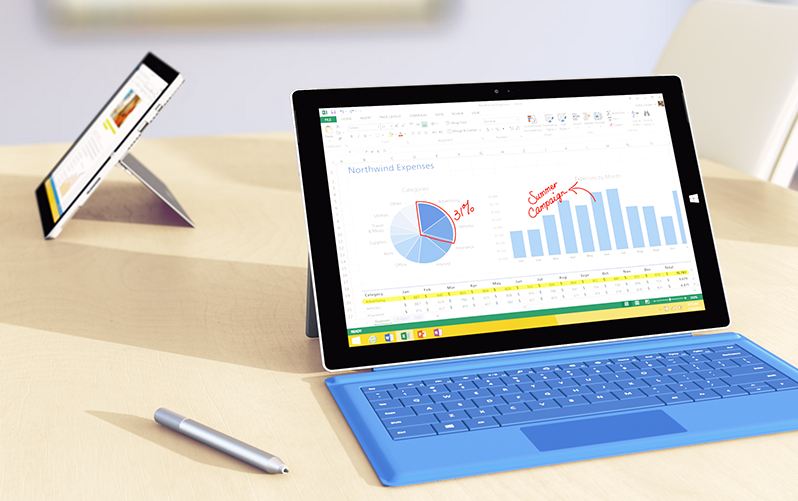
    The brand new Surface Pro 3 runs a full version of Windows 8, which only means that owners can run desktop Windows apps such as the Microsoft Office suite, as well as apps made solely for tablets. Buyers can also purchase an attachable keyboard and mouse to transform the Surface into a more traditional laptop.
    surface4

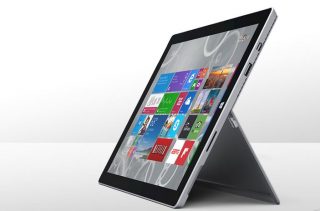
    The new hinge on Surface Pro 3 helps it adjust to an angle between 22 and 150 degrees, making it handy and super adjustable. And while it may be tempting to compare the Surface Pro 3 to the iPad, it was clear from today’s onstage remarks by Microsoft officials that they’d like to view its competitor as the MacBook Pro and other laptops. The company hopes that Surface Pro 3 will be viewed as an all-in-one device, serving the function of both a laptop as well as a tablet,without compromising on any features.  The Surface Pro 3 sports a 2,160-by-1,440 display, which according to Panos Panay, Head of Microsoft’s Surface division, provides the “highest contrast ratios in the industry.”

    Along with the Surface Pro 3, the company introduced several add-ons which are built keeping in mind the needs of its users.

    The new Type Cover keyboard add-on, priced at $130, has a much-improved trackpad. The new design has a 68 percent larger area than the Type Cover 2, and 78 percent less friction. It’s better for lap use as well; you can lock it in the cover so that it doesn’t wobble when you perch the device on your lap. During the demonstration, Microsoft’s representatives admitted that the old version of the trackpad was “unforgivably bad”. The upgraded Type Cover’s trackpad is better responsive and larger than its predecessor.
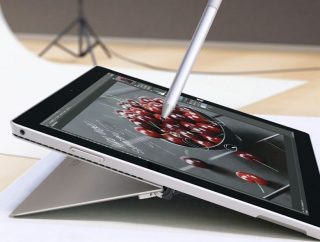
    surface1The second major add-on available is the accompanying stylus. It is built to look and feel like a proper pen with a comfortable heft, bringing its own realm of functionality. For example, a single click of the top button turns on the pen and turns on the tablet for immediate use.

    The company has also unveiled a docking station for those who want to use the new Surface as a makeshift desktop. Besides adding a bevy of extra connections (three USB 3.0, two USB 2.0, Ethernet and audio) to the tablet, the dock also lets you output video at 4K through its Mini DisplayPort. Both the station and the new Type Cover should be available when the Pro 3 launches in North America on June 20th, and there are promises of extra peripherals in the future.

    Another key-feature is the new touch-based version of Adobe Photoshop CC. Adobe worked closely with Microsoft to tailor Photoshop for the Surface Pro 3. It’s all set to use the power of the screen, pen and touch. The earlier Photoshop tablet versions were restricted to the use of the pen, this version boasts a touch-optimized interface which means you can now use your fingers to zoom, pan, and edit. Michael Gough, VP of design experience for Adobe at the launch said, “when you take the power of Photoshop and put it on this powerful device, it’s a creatives dream come true.”

    surface3

    The U.S. release is slotted for June 20 with a worldwide release in late August. Starting price at $799, the tablet will be available in three configurations: with an Intel Core i3, Core i5, or Core i7 processor. The i3 version will be on sale in June, with Core i5 and i7 arriving in August.

  • Right Time to Buy : Samsung Galaxy S5 Price drops to an all time low of Rs. 40600

    Right Time to Buy : Samsung Galaxy S5 Price drops to an all time low of Rs. 40600

    The Samsung Galaxy S5 was launched for a price of Rs. 52500 last month in India. The Phone however saw a major price drop and was selling at a price ranging from 47500-50000 in less than a week. The Galaxy S5 price has hit an all time low of Rs. 40600 available from online vendors and some retail stores. It is said that Samsung has seen a major drop in sales of their flagship when compared to last years launch and people seem to be inclined more towards Nexus devices, or flagships like the HTC One M8 or the new Xperia Z2.

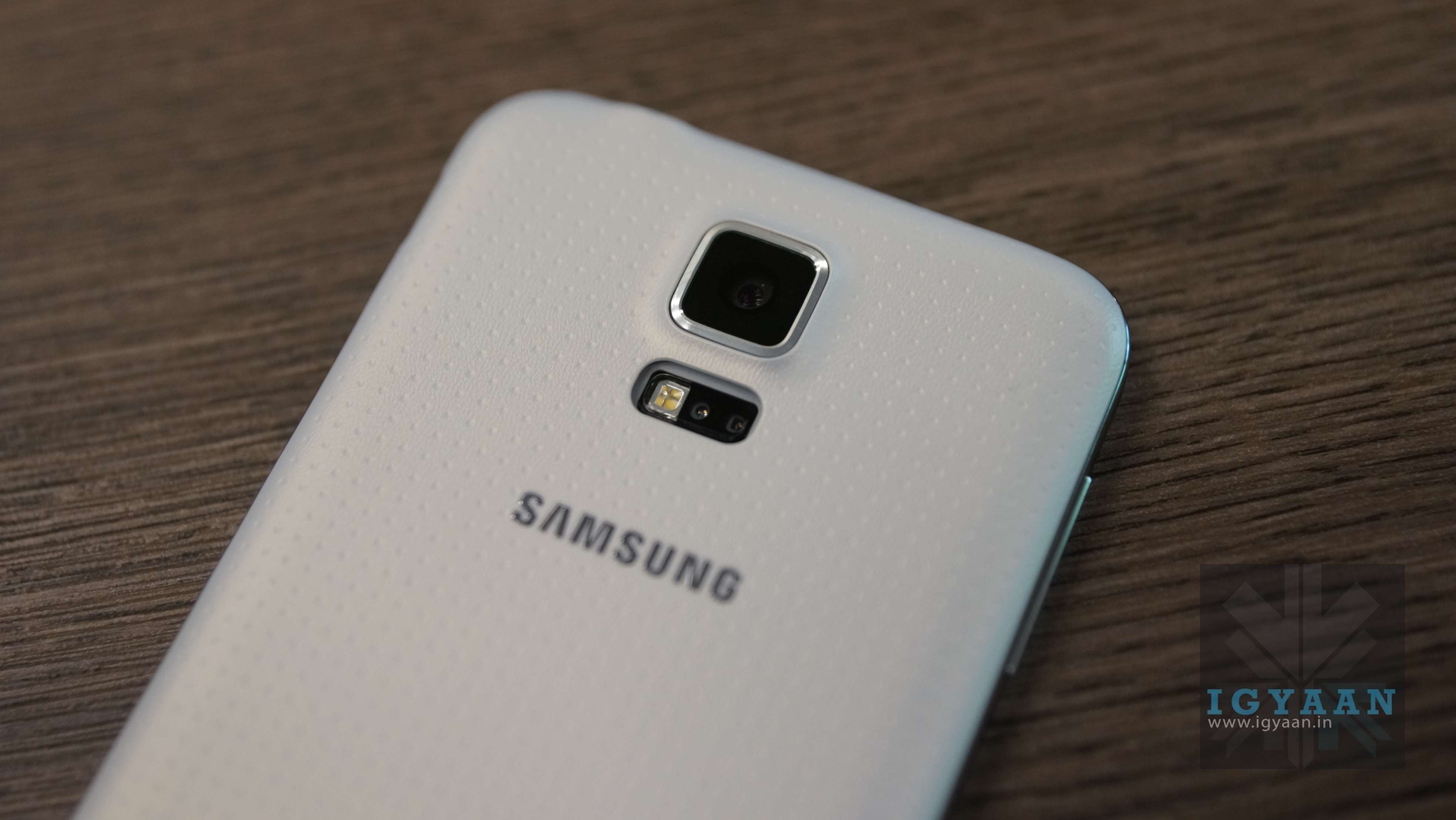
    Samsung also launched a Gold variant of the Galaxy S5  to lure the Indian buyers who were very excited to buy the golden iPhone 5s launched last year. The Galaxy S5 in India has two Quad Core processors (one chipset), one clocked at 1.9 GHz and the other at 1.3 GHz. Samsung claims that unlike its predecessor, the Galaxy S5 has both the quad cores running simultaneously thereby giving you the experience of a true octa processor. The lighter applications are handled by the 1.3 GHz Quad core whereas the more power intensive apps (HD games, HD video playback) are taken care of by the 1.9 GHz Quad Core processor. 2 GB RAM is what supports the processors in the Galaxy S5. The Phone is also the first to be weather sealed and offers water and dust resistance.

    Most have not appreciated the minor design changes in the handset and the back panel has been critiqued heavily of being anywhere from ugly to resembling a Band-aid. Performance wise Samsung has shown major improvements in the handset and it is possibly the best phone from the company today even though it has only 2 GB RAM. If you were eyeing the Galaxy S5 the time to buy may be right now. Read our full Review of the Galaxy S5 here.

  • New Milestone Unlocked: Creating Matter from Light

    New Milestone Unlocked: Creating Matter from Light

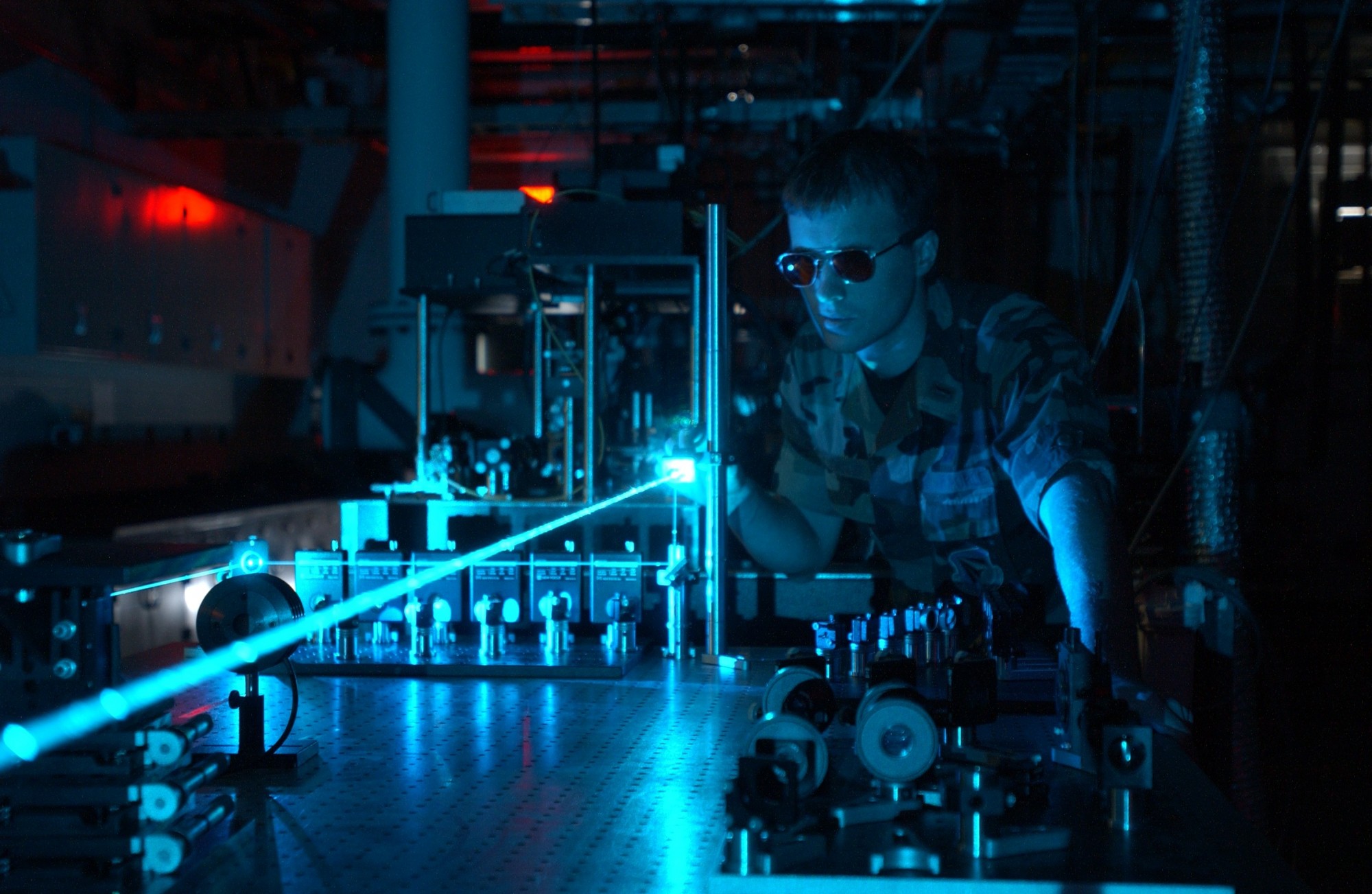
    Physicists at Imperial College London have created a new milestone for Human civilization. They have just proved that light can be molded into matter, something nobody before now thought was possible to recreate in the laboratory. Physicists have for long wondered about the possibilities of creating matter from light and this development brings us a lot closer.

    The experiment is yet to be done, but it has passed peer review as practical and the inventors are in discussions with experimentalists about the equipment to carry it out. These are exciting times because it has been accepted for 80 years that two photons of light could theoretically create matter, but there has never been demonstrable evidence yet.

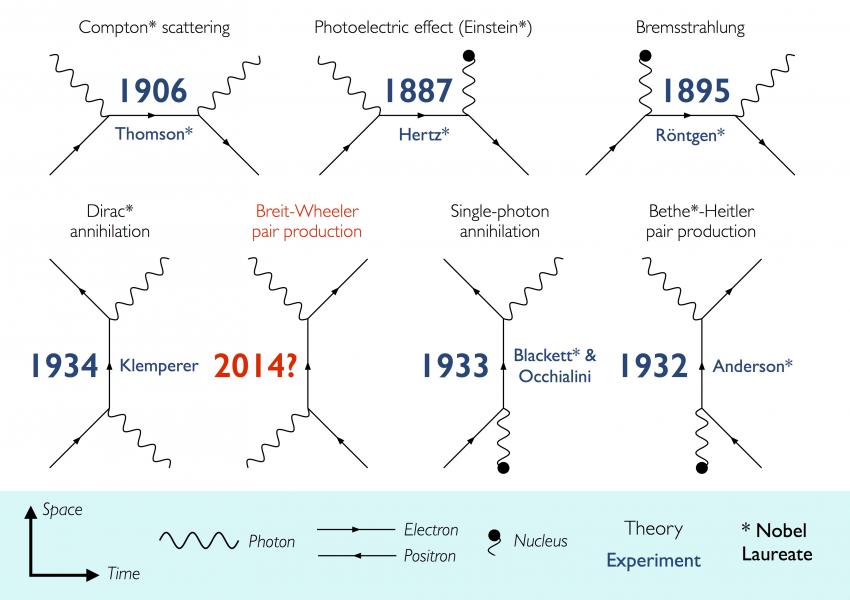
    In 1934 Gregory Breit and John Wheeler proposed that, under the right circumstances, two photons of light would convert into an electron and the positron(the antimatter equivalent).

    Even if this theory was universally accepted by physicists to be true, when Breit and Wheeler first proposed it, they said that they never expected it to be shown in the laboratory. The scientific evolution of today makes it easier to prove the theory now.

    The proposal is fairly simple in scientific terms. Professor Steve Rose and his Phd student Oliver Pike have designed the model on which the tests can be done. Their paper in Nature Photonics proposes a two-step process. High intensity lasers would be used to push electrons until they are traveling close to the speed of light, directing them towards a slab of gold. The scientists then would fire a high-energy laser at the inner surface of this gold can called hohlraum, to create a thermal radiation field, generating light similar to the light emitted by stars.

    They would then direct the photon beam from the first stage of the experiment through the centre of the can, causing the photons from the two sources to collide and form electrons and positrons. It would then be possible to detect the formation of the electrons and positrons when they exited the can.

    For this, they would require a “Photon-photon collider”. This collider would convert light directly into matter using technology that is already available. Like the Large Hadron Collider, this will be a whole new type of high-energy physics experiment.

    The Seven proposed models of photon collision, all others have got Nobel prizes

    This experiment would also recreate a process that was important in the first 100 seconds of the universe and this is also seen in gamma ray bursts, which are the biggest explosions in the universe but one of physics’ greatest unsolved mysteries.

    Lead researcher Oliver Pike said that although the theory is conceptually simple, it will be very difficult to verify experimentally. But what is good is that the experimental design they propose can be carried out with relative ease and with existing technology.

    Experiments like this bring us closer to understanding our own universe. They allow us to break the secrets of nature and stare in the face of the creation. Also, knowledge of Physics has an added bonus of making The Big Bang Theory episodes more enjoyable.

  • Rumor Report : Twitter To Buy Soundcloud

    Rumor Report : Twitter To Buy Soundcloud

    Twitter had shown interest in the music scene before, by introducing its own Twitter Music app, which unfortunately proved to be a failure. But that hasn’t deterred the company’s effort to find a way to make music a larger part of its service.

    According to RecodeTwitter is attempting  to purchase SoundCloud, one of the internet’s best homes for sharing music.

    twitter-is-reportedly-in-talks-to-buy-soundcloud-0-300x300Berlin-based SoundCloud is a free service that lets users upload and share audio files around the Web; it is popularly described  as the “YouTube for audio.” In October 2013, the company announced that it had 250 million users.

    If the deal is confirmed, the acquirement would be a huge move for Twitter, which has seen its stock worn out over the last few months – its investors anxious about its slow growth pace. If the deal goes forward, it would also be Twitter’s most pricey acquisition till date. Earlier this year, SoundCloud announced a $60 million funding round that valued the company at $700 million. Last fall,  Twitter was preparing to go public with its acquirement of a mobile advertisement company called MoPub, in a deal that valued the company above $300 million.

    A Twitter deal will also likely up the pressure on SoundCloud to reach a deal with big music labels to distribute their songs. SoundCloud currently has no such deals, which puts it in a gray area similar to YouTube in its early days. Some copyrighted songs are on the service without the owners’ permission, but others are uploaded by artists and labels that value the distribution SoundCloud provides.

    The two are already linked in several ways. Twitter’s users frequently pass along SoundCloud links in their messages; Peter Watts, a music tech hacker, has been tracking the popularity of music services on Twitter, his survey found that Twitter users share SoundCloud links more than any other music service, including Spotify.

    twitter

    If SoundCloud can gets favorable music licensing deals to legalize how their users get access to published songs, then maybe we could see music become a deeply embedded feature on Twitter. This deal would give Twitter the much needed push into media by adding another interesting and popular publishing platform.

  • Right to be Forgotten : Can it Really Happen ?

    Right to be Forgotten : Can it Really Happen ?

    EU has just passed a Bill which allows people to get some links removed from search engines like Google. In an unappealable ruling, the EU courts ordered the removal of links to information which can be deemed as inadequate or irrelevant.

    Right to be Forgotten, as its colloquially called, gives EU citizens the right to petition to Google to remove links which have information about their lives. This law only asks the engines to remove the links and not the actual information itself. This law also comes directly in conflict with the Right to Freedom of Expression. Basically it is a fight between information and privacy.

    Google has to delete irrelevant links now
    Google has to delete irrelevant links now

    Google stated that before this law can be brought into effect, careful formulation of the infrastructure needs to take place. The company would have to set up an “army of removal experts” in all 28 EU countries, including those countries where it doesn’t have operations.

    The procedure of how to judge the potential links also needs to be worked out. Yahoo also said that it was taking a step to carefully review how the judgment would affects its business and users.

    It all began when a Spaniard, Mr Mario Costeja Gonzalez, wanted a newspaper link of a story about auction of his repossessed home in 1998 removed from Google. He claimed that the story infringed his privacy.

    The Spanish data protection agency held that search engines should make access to the story impossible. This sets a dangerous precedent as well. The internet is so easy to use because of its search engines; if we have hidden data, then it might become a pseudo deep net with several hidden internet pages. Google appealed and the case was referred to the European Court of Justice, which has now upheld the original decision.

    The other factor about this ruling is that it is practically unenforceable. As John Oliver quipped on his show, “the internet is like a quicksand, the more you try to get out, the more it absorbs you into itself.” Also, as it can be used by anti-social elements like child pornographers, online fraudsters and “politicians” which would not be appreciated by the very same people celebrating the ruling.

    The case is one of 180 similar cases in Spain whose complainants want Google to delete their personal information from the Web. The company says forcing it to remove such data amounts to censorship. Immediately after the ruling, Google received thousands of requests for deletion on links. These included a politician who wanted mentions of “his time in office” removed and a doctor who wanted a negative review removed.

    Another negative? This law may dissuade tech investment in the region. A lot of countries in EU are suffering from heavy unemployment, particularly amongst the youth. This would be a major jolt to them.

    The idea of internet is so simple, its an open communication platform. It is a fluid communication fabric so whatever restriction are placed on it  will always be a way to work around it. Maybe somebody will create a search engine which will only access the deleted links –  the possibilities are endless.

    People should stop messing with the concept altogether.

iGyaan Network
Privacy Overview

This website uses cookies so that we can provide you with the best user experience possible. Cookie information is stored in your browser and performs functions such as recognising you when you return to our website and helping our team to understand which sections of the website you find most interesting and useful.