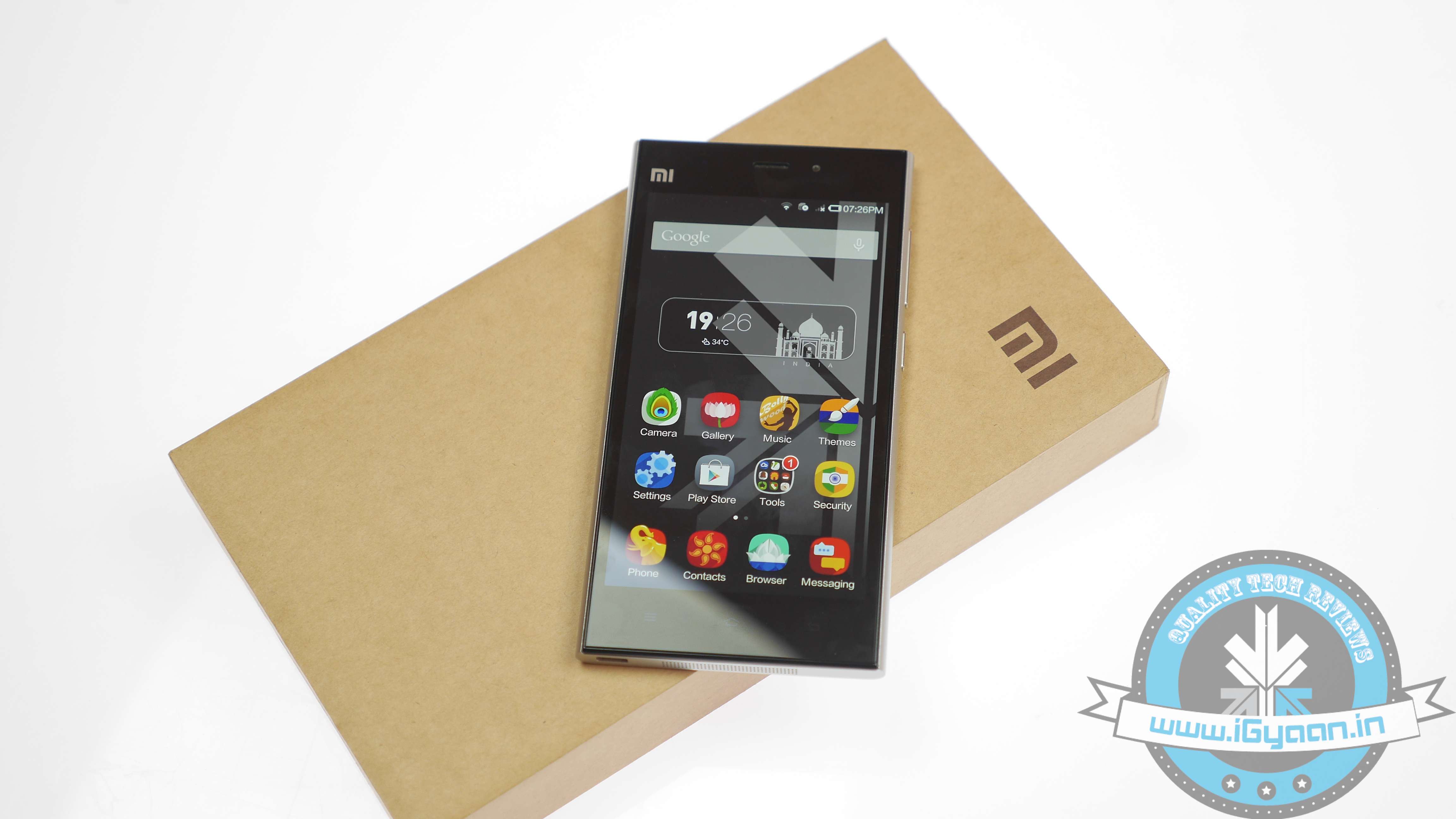
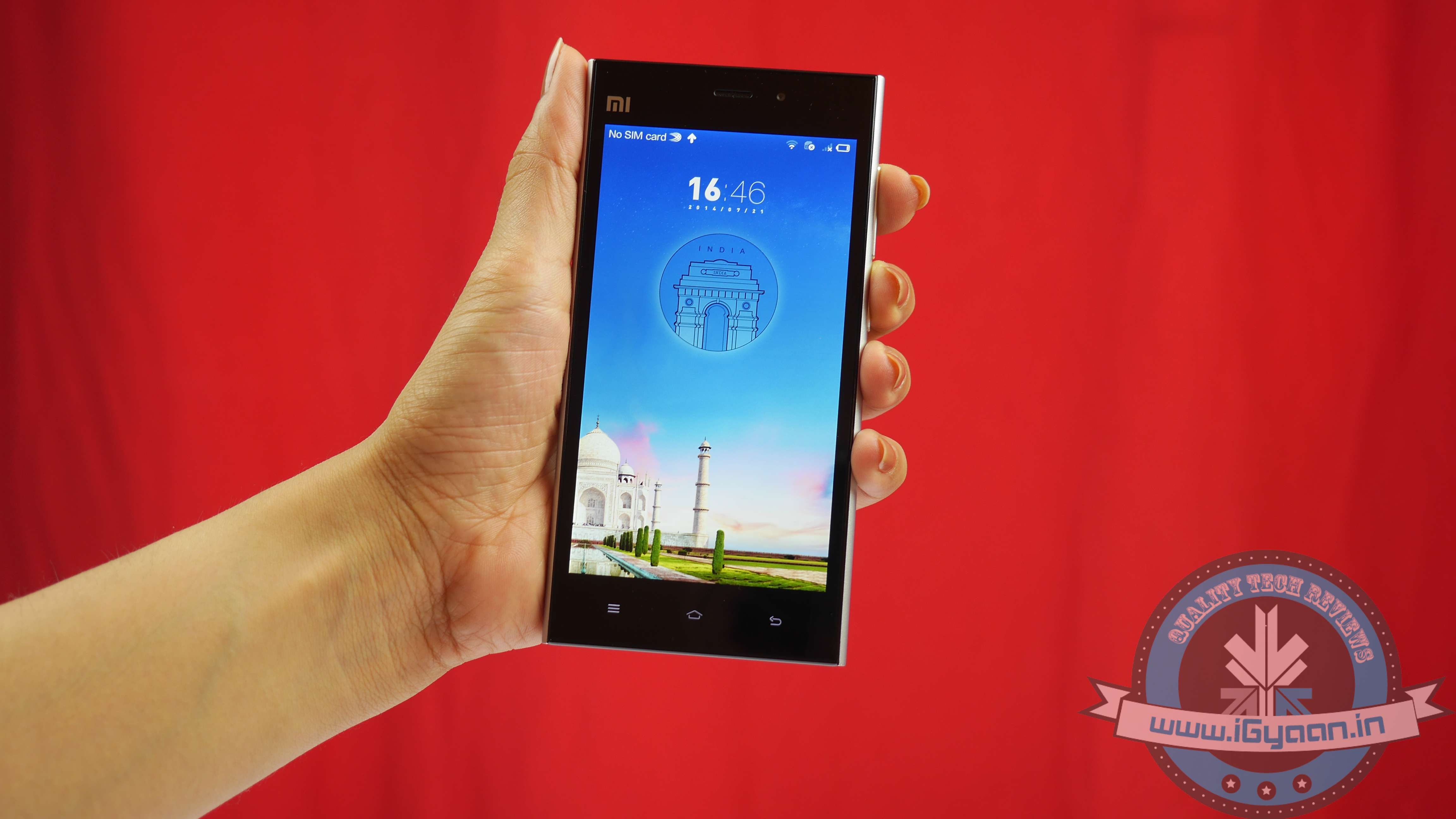
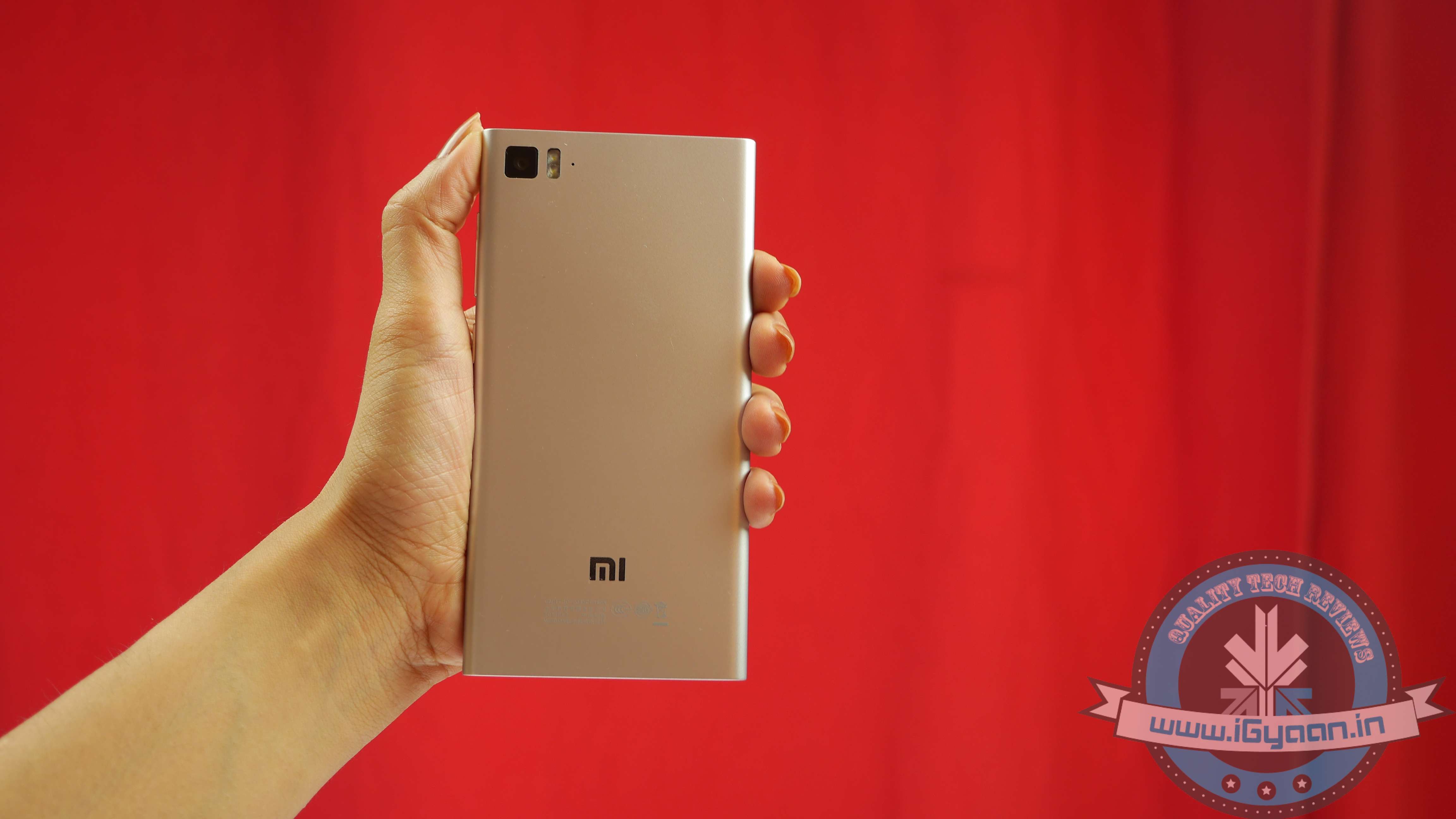
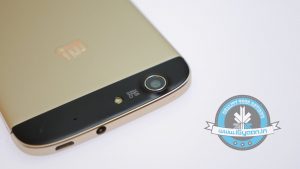
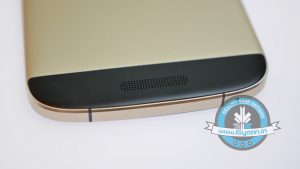
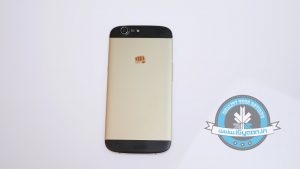
The Xiaomi Mi3 goes on sale tonight for the Indian market at a mere Rs. 13,999. Despite the fact that Xiaomi is a Chinese manufacturer the phone has one of the best specs and benchmarks in its price bracket. This device is set to release in India tonight and will be available for purchase exclusively on Flipkart.com.
The Xiaomi Mi3 has a 5-inch screen with a 1080X1980 p display on a Qualcomm MSM8274AB Snapdragon 800 chipset. The CPU is a Quad-core 2.3 GHz Krait 400 and the GPU is an Adreno 330. Presently this phone runs on an Android OS, v4.4 KitKat.
The optics are fitted with a primary 13 MP camera, with a 4128 x 3096p, autofocus and a dual LED flash. It also has a secondary camera of 2 MP capable with 1080p video capabilities. The phone has 16 GB internal Storage. Additionally it has a 2 GB RAM which is sufficient to ensure smooth functionality of the device.
Further features also include micro USB port, Bluetooth and Wi-fi and a non-removable Li-Ion 3050 mAh battery.
For a device in its price band it certainly promises to be one of the most dynamic and feature-ful phones. In terms of its functionality and UI it certainly hit all the check boxes. For any person on a fixed budget this flagship introduced by Xiaomi is the phone to order.
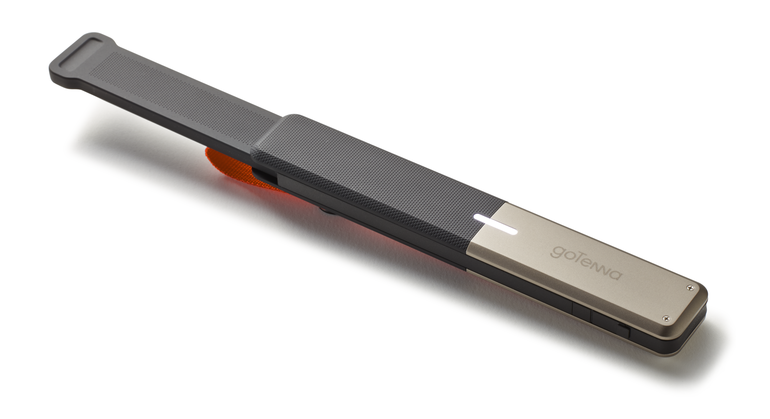
Stuck in the desert or the mountains or even at home with no signal on your smartphone? Here’s the best way to communicate. GoTenna, a Brooklyn-based startup is offering a solution for off-the-grid travelers who need low-cost connectivity for their smartphone – and it doesn’t even rely on satellites.
GoTenna is a pocket-size communication tool that lets smartphones talk to one another without cell service.
This device connects to your phone via Bluetooth and turns it into a low-frequency radio with a range of several miles (up to 50 miles). Using an iOS or Android app, that’ll let you text or share GPS locations (no voice calls) over an unlimited, free ad hoc network with other goTenna users.
GoTenna is 5.8 inches in length and weighs 2 ounces. This pocket size device is easily portable and allows easy communication in the times of need
The team behind it says that everything is encoded, and the app will automatically retry until your message goes through. goTenna, however, doesn’t give your smartphone LTE-style data, so no Twitter scrolling or Facebook browsing.
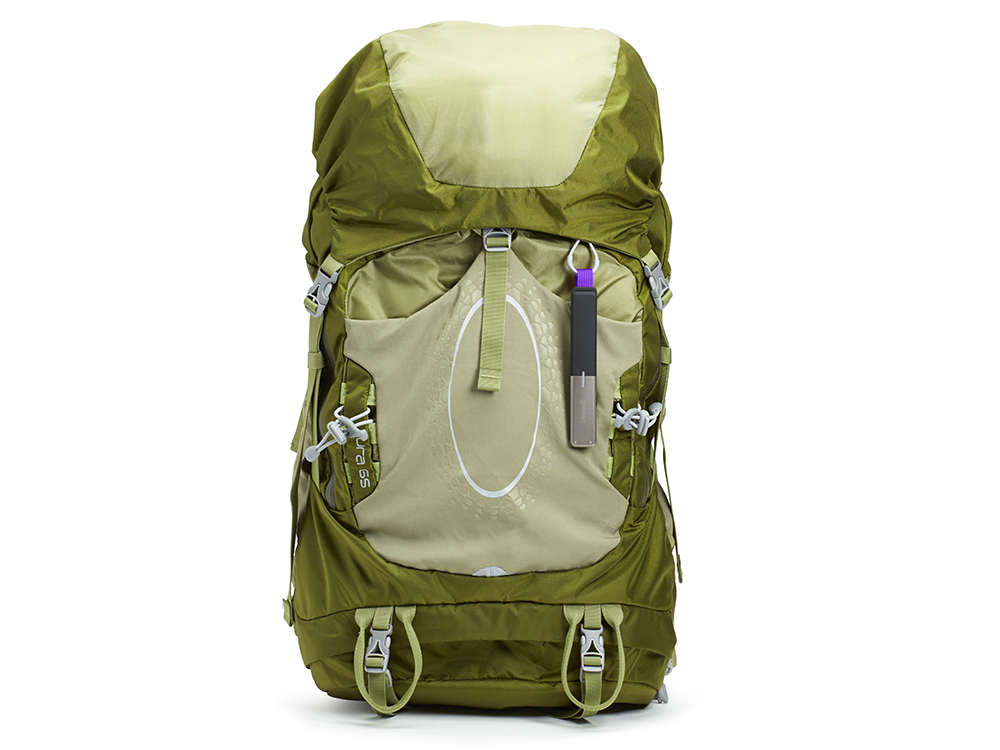
The device is a little too big for your pocket, but it clips easily to a belt or a backpack. The company’s planning on selling a limited number for $150 per pair on their site to raise $50,000 in funding, after that, it’ll sell for $300.
Today began with a sad news. The last remnants of Nokia will be shredded in the coming months with Microsoft pulling the plug on Nokia X. This Finnish giant had ruled the mobile market during its formative years, and now it is a chapter for the history books. But if you thought that it was the end of Finland’s involvement in the Indian mobile market then you have to think twice. Another Finnish company, Jolla is all set to make an entry into India.
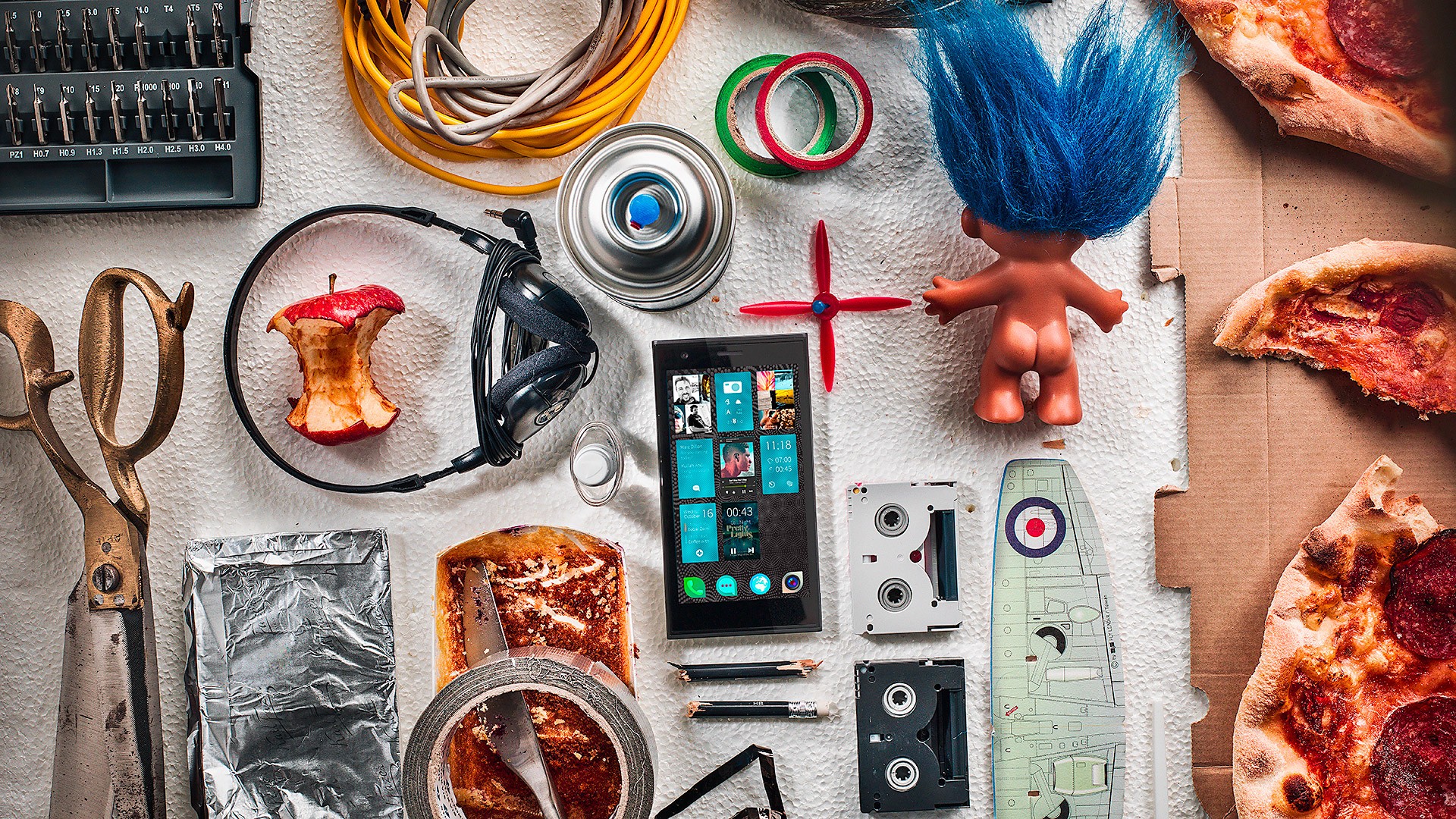
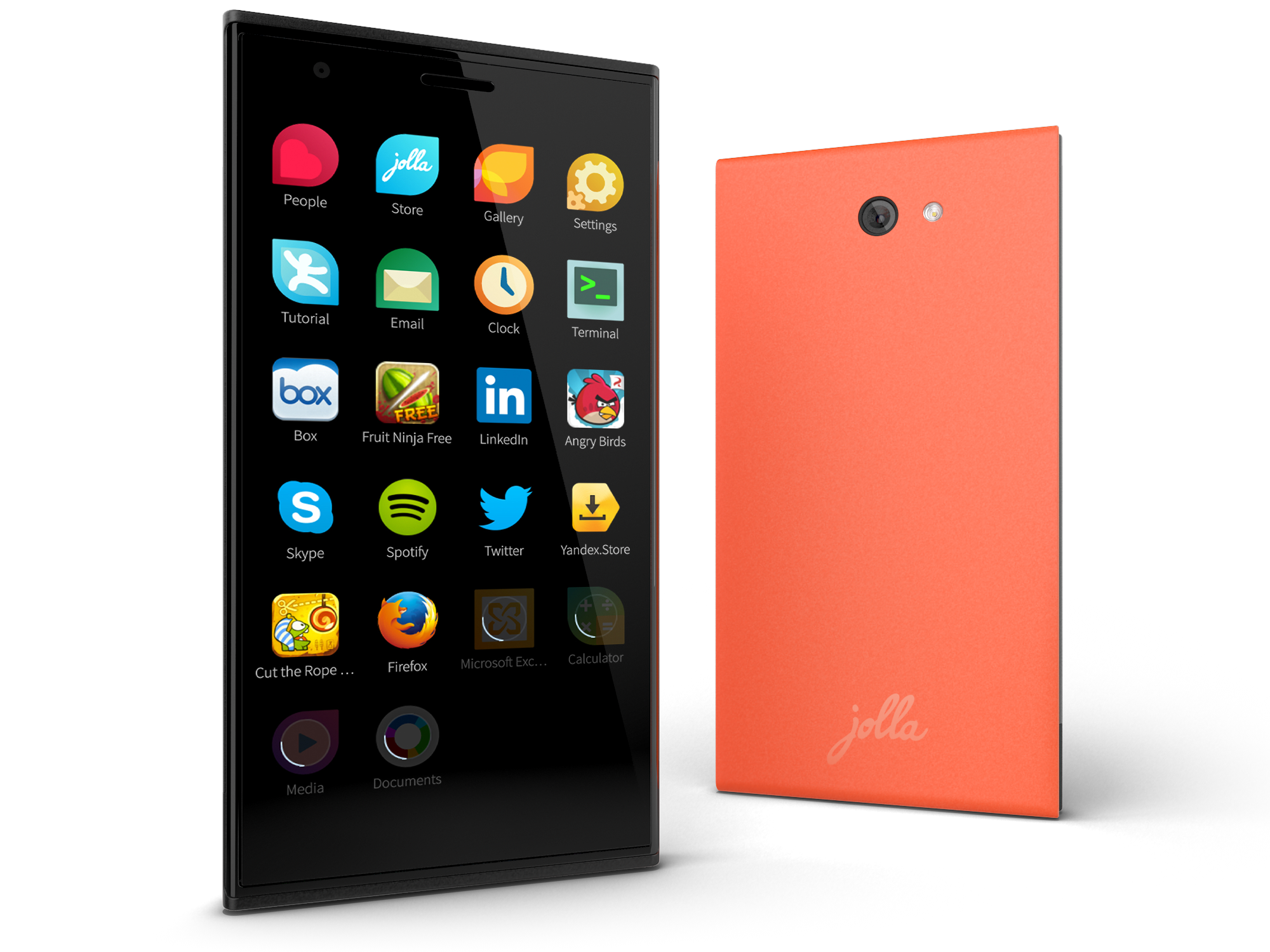
Jolla Phones run on Sailfish OS which wont take long to get used to.
Jolla markets phones running on the Sailfish OS. Jolla (Ok, it’s actually pronounced as Yolla), has signed an exclusive partnership with Snapdeal.com to market their products in India.
The Sailfish OS has evolved from Nokia backed OS, Meego. Guess some legacy of Nokia will still be around apart from, of course, the Nokia 3310 which is known to survive stellar supernovas. The Sailfish OS is unique in the sense of its gesture heavy interface. Multiple functions on the phone can be targeted through interactive gestures. The learning curve is minimal if you have some smartphone experience. The best part, Sailfish is compatible with Android applications which will definitely make it desirable for many enthusiasts.
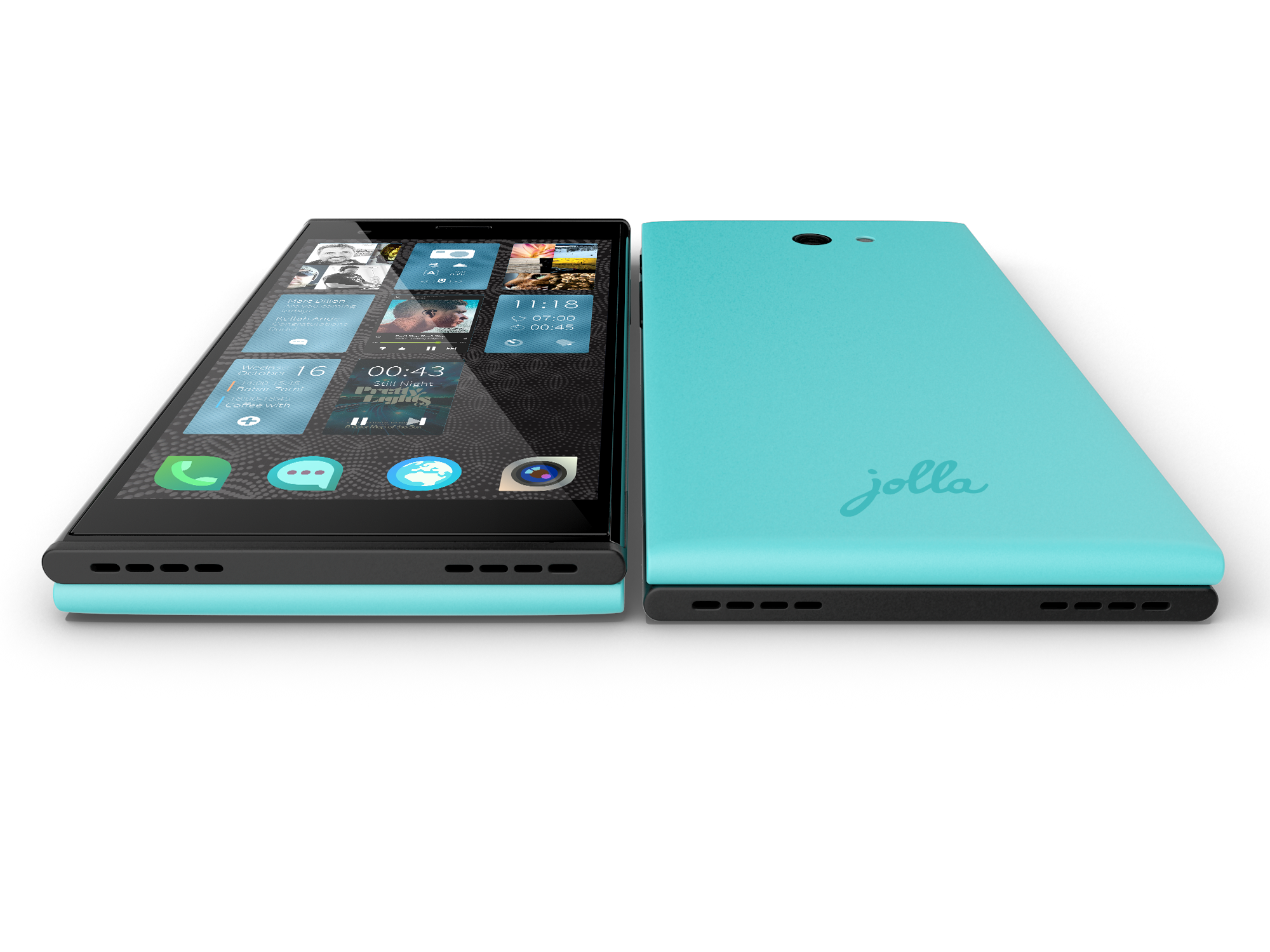
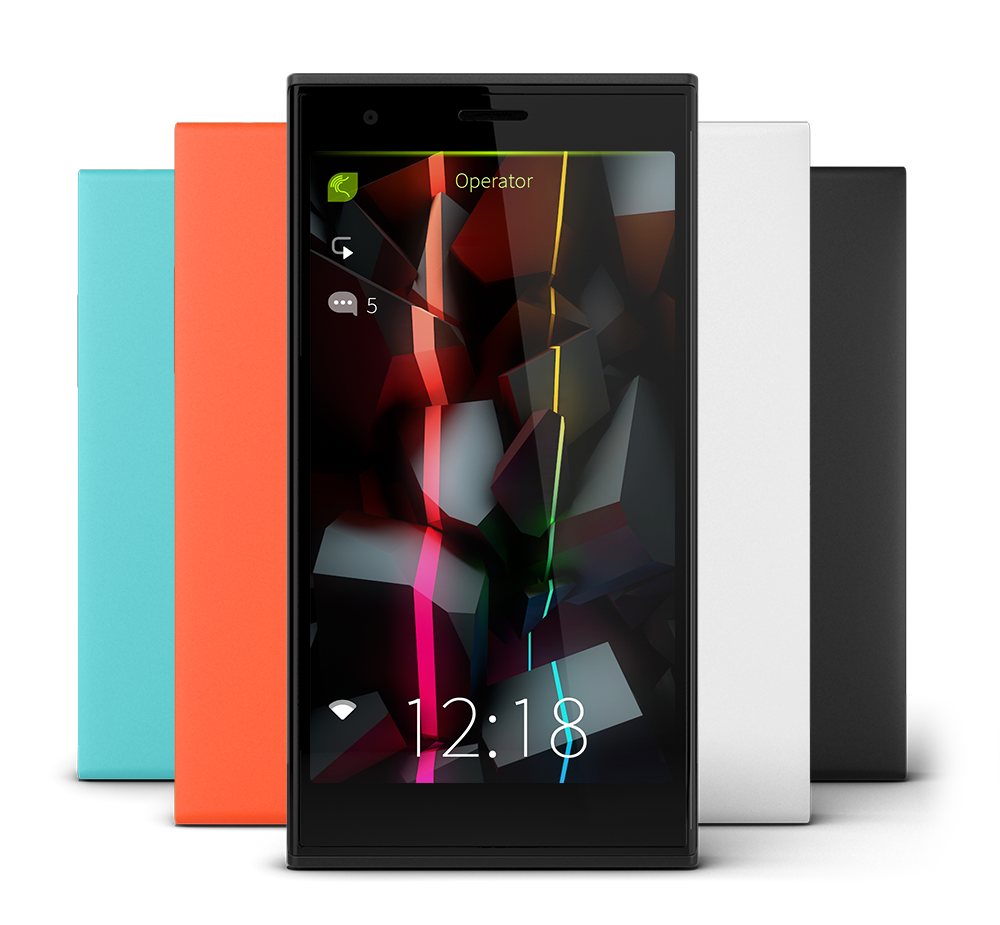
The sharp design features looks good on the phones.
Jolla’s co-founder and CEO Sami Pienimäki said that there had been a lot of interest in India concerning Jolla phones, and that’s why they landed here. It is a good alternative for people looking for a different user experience in comparison to devices flooded in the market.
Meanwhile the co-founder and CEO of Snapdeal, Kunal Bahl commented on the deal saying “The market in India offers few choices in terms of mobile operating systems. Jolla with its innovative Sailfish OS introduces an entirely new user experience to consumers. Jolla offers a unique smartphone experience both in terms of hardware and software. We look forward to a long-term and mutually beneficial relationship.”
There are multiple back panel options too.
India’s mobile market is currently bustling with some youthful energy with multiple companies trying to impress Indians with their products. In the past few months some major international manufacturers like Asus, Xiaomi and some smaller ones like Obi have entered India.
With Jolla also coming into the fray, Indian consumers will have a good number of option to choose. In times of heavy price rises, a healthy competition in the mobile segment can be in favor of the consumers. The phones will be available for purchase within a month.
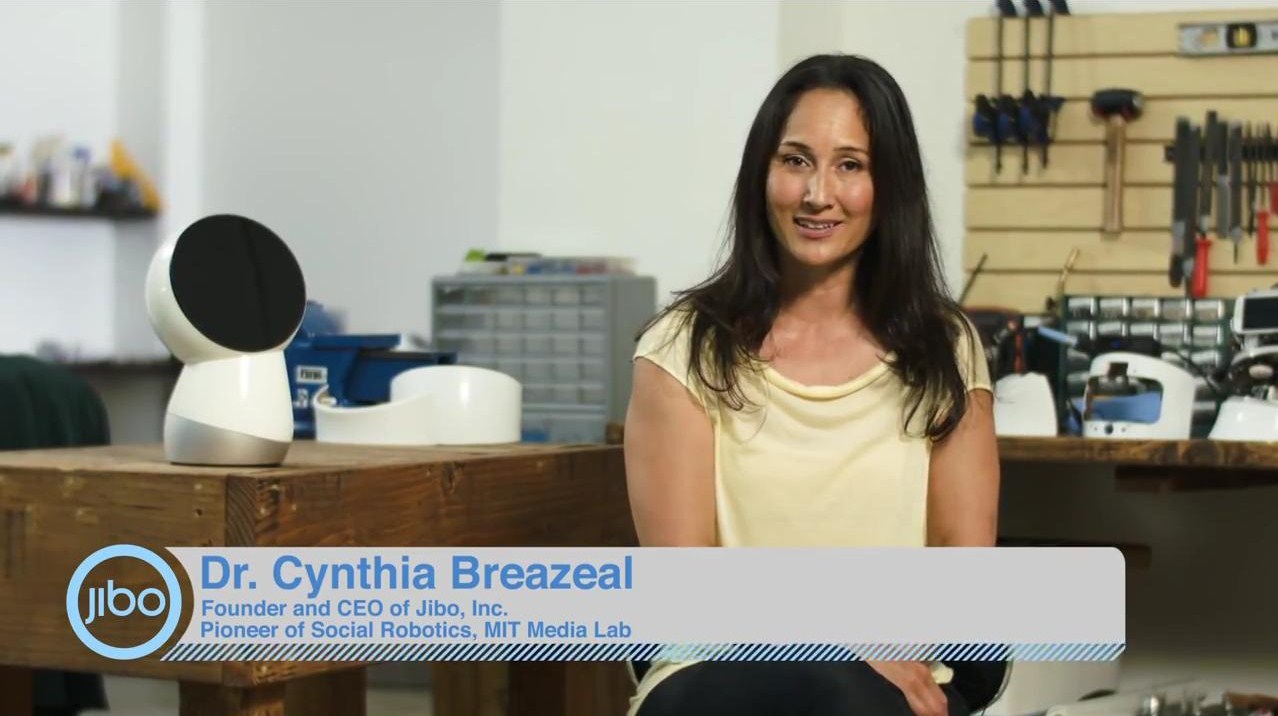
If you remember watching Robin Williams’ forgettable Bicentennial Man, you must have felt the thrill of having a robotic companion in your family. The best part about Robin Williams’ character is that it was a robot capable of human emotions and learning new things just like a human being. Now a company called Jibo Inc, founded by an ex-MIT professor, Cynthia Breazel has brought an incredible new family pet in Jibo.
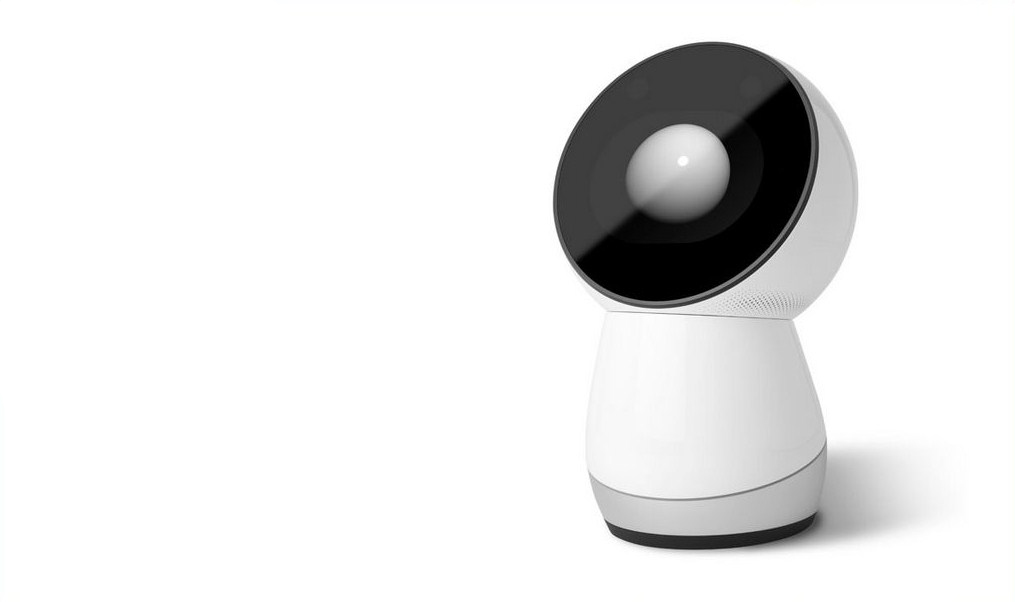
This Linux powered robot has a cylindrical base and a circular screen which makes it look like a smaller and rather enthusiastic version of Marvin the Paranoid Android from The Hitchhiker’s Guide to the Galaxy. Alan Rickman as a sad robot was the only humorous part of that movie.
Jibo is about a foot tall family friendly robot that is capable of doing everything your dog can’t do. It has six microphone inputs that help Jibo to take voice instructions and reply back. Jibo can take pictures; assist you in your daily chores, read out your messages. But here is the best part; it can be a cute little tutor to your kids, which is surely going to make a lot of private tutors angry, especially in India.
One of the feature that is really impressive is the boost tele-presence will get with Jibo. With Jibo the person on the other end can physically move about and interact with all who are present in the room. This is our favorite feature. Jibo also seems fun to interact with and even though some of its functions can be currently done by a smartphone but the fun interaction aspect is missing from them.
In future, the company wishes to integrate Jibo with your home automation system so it can take care of the security of your house and the power management. They also intend to add health features so that it can gather up information from devices like heart rate monitors, glucometers and scales and can maybe become your personal trainer.
Unfortunately you can’t buy Jibo just yet, but you can surely pre-order it and you can also contribute towards the project through their Indiegogo page. Jibo will arrive at the doorstep of folks who have preordered. Guess the robots are finally ready to invade our houses and if they are as cute as Jibo, they’ll be sure welcomed with an elation from everyone in the house.
Android is going places. There is no other operating system that has been integrated simultaneously in so many multiple platforms. From Mobiles, Tablets, Gaming Consoles to Television and Cars, Android seems like it’s taking over everything. Now all this integration requires apps and developers who make that app. With over a billion devices activated, Android is here to stay for a considerable while. A lot many people have shown interest in making apps but they don’t have the skill sets for it. Google understands that and has tied up with Udacity.
You can be a part of the Android ecosystem with this course
The program is called “Developing Android Apps: Android Fundamentals” and the course is exactly what the name suggests. The program aims at giving assistance to programmers who don’t have the skillsets to make android apps.
Google Developer Reto Meier, Dan Galpin, and Katherine Kuan will train potential Android developers. Their curriculum gives step by step instructions in building an app. The course will also teach the basics of mobile app development in general and Android development in particular. The best part, you can get personalized support and feedback from the instructor.
By the end of the 8 week course, programmers would be able to build a cloud-connected Android app, and understand the tools, principles, and patterns that underlie all Android development.
For applying to this course you need a strong working knowledge of Java or another object-oriented programming language. Access to an Android device is not compulsory but is advisable for this course.
The program on Udacity is free for a 2 week trial after which the course costs $150/month, which is pretty reasonable as it comes with verified certificates on completion. So if you have an idea for a brilliant app but were limited by your programming capability, this is an opportunity for you. Most importantly, just remember that there is no stupid idea, the living proof for that is an app called YO (yeah, that exists.) So go ahead, maybe your app will be the next silly app to be valued at $10 million, this one is harder to believe but is true too.
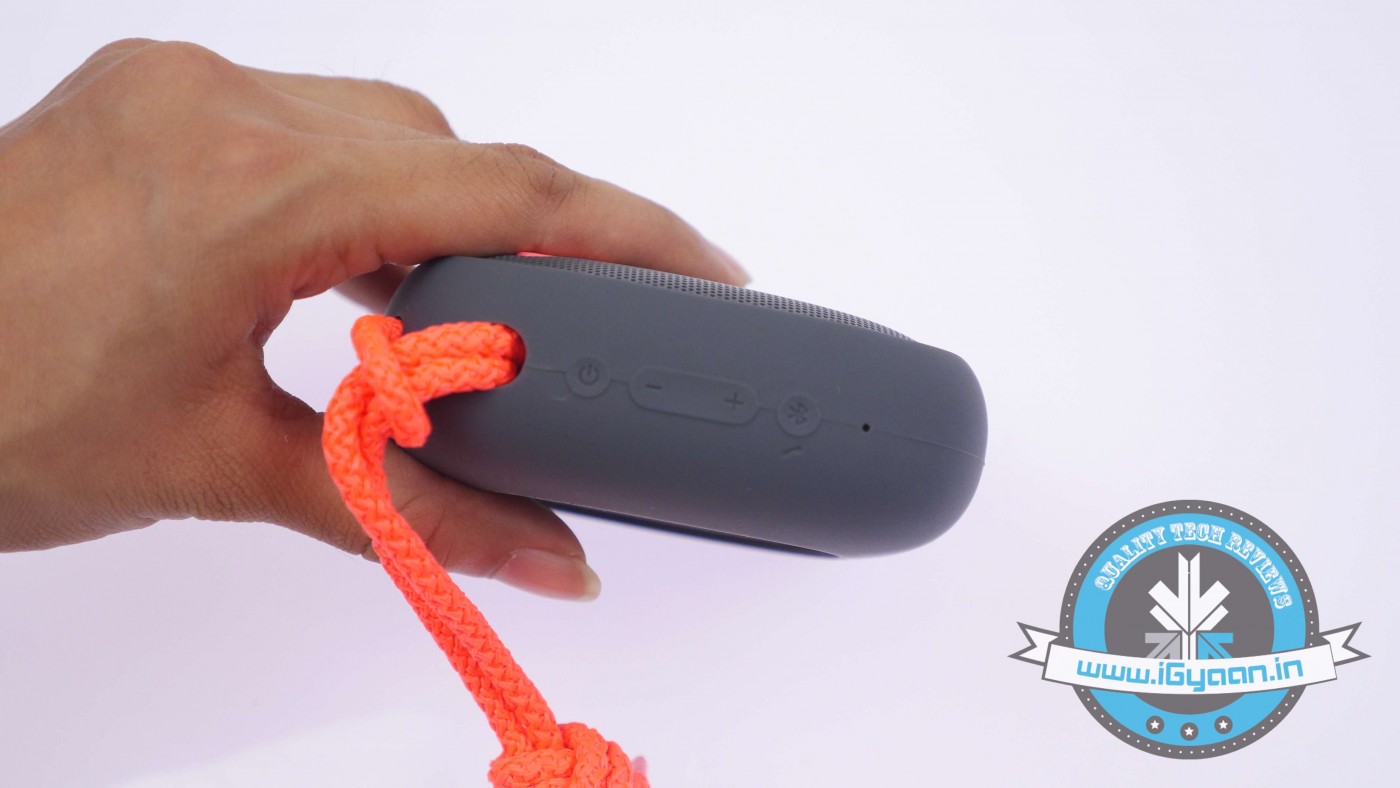
The NUDE Move M is a sexy looking portable speaker. The tiny red sliver of branding over the completely black surface stands out. We definitely love the red harness rope provided with the speakers; they both look as if they are meant for each other. The tiny rope also secures it during a pool party, so you can hang it safely away from your drunken friends who may take it to its untimely demise in the water.
So we got around to play with the speaker and did a thorough review of the speakers for you. Here is what we thought about the NudeAudio Nude Move M Bluetooth Portable Speaker.
The minimalistic design elements of the Nude M make it stand out
Build quality:
The Nude M follows a minimalistic but rugged design philosophy. The only inputs available on the device are an On/Off button, volume up and down and the Bluetooth enable/disable button. The device is quite sturdy and safe, thanks to the giant rubber that covers all its corners. The rubber cover is also removable for cleaning purposes. The device offers support for auxiliary input, micro USB for charging and Bluetooth for calls and music. Nude M is really easy to connect to the phone through Bluetooth. We especially admire the cute little power and Bluetooth notification lights.
Utility:
Apart from listening to music, the Nude M can also act as a speakerphone and works good for conference calls, though sometimes the receiver may not get a clear sound on the other side. The range of the Bluetooth though, calls for a tad bit of criticism.
Battery:
The Nude M’s battery gives a decent output. You can easily expect 6-8 hours of backup, so you can do easily plan an all-nighter without any worries of losing the groove.
The notification lights stand out on the black exteriors
Sound Quality:
Well this is the main criteria to judge the speakers and there isn’t a lot that disappoints, but we were left asking for more. The device is bass rounded so the sound is a bit echo heavy. Hip-Hop, House EDM’s and other bass heavy tracks sound great on the speakers but the output of genres like Classical, Jazz and Rock could have been better. Though the speaker is pretty loud, we compared it to the speakers lying in our office and some of the cheaper models gave louder sound output than the Nude Move M.
Conclusion:
The Nude Move M is an impressive little device which is also flaunt worthy because of its beautiful minimalistic design. Its great for folks who like tracks with a good amount of bass. So if you are looking for style points with some utility features, the Nude M can be your choice.
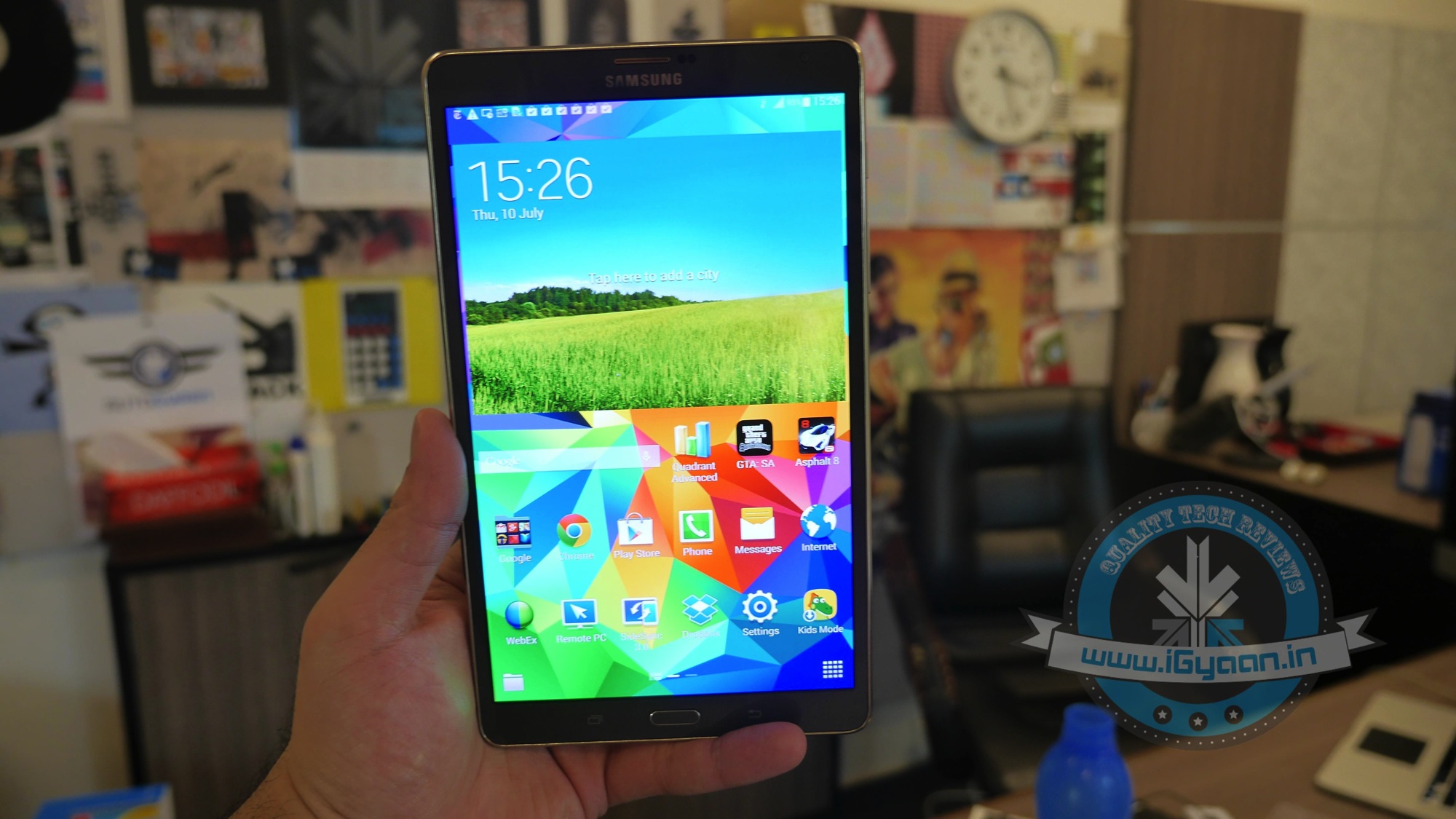
Samsung has constantly held its position in the tablet market, a market where many have come and failed. The company has seemingly changed its perception toward the way they will devices going forward, and the first look comes from the new Tab S series of devices.
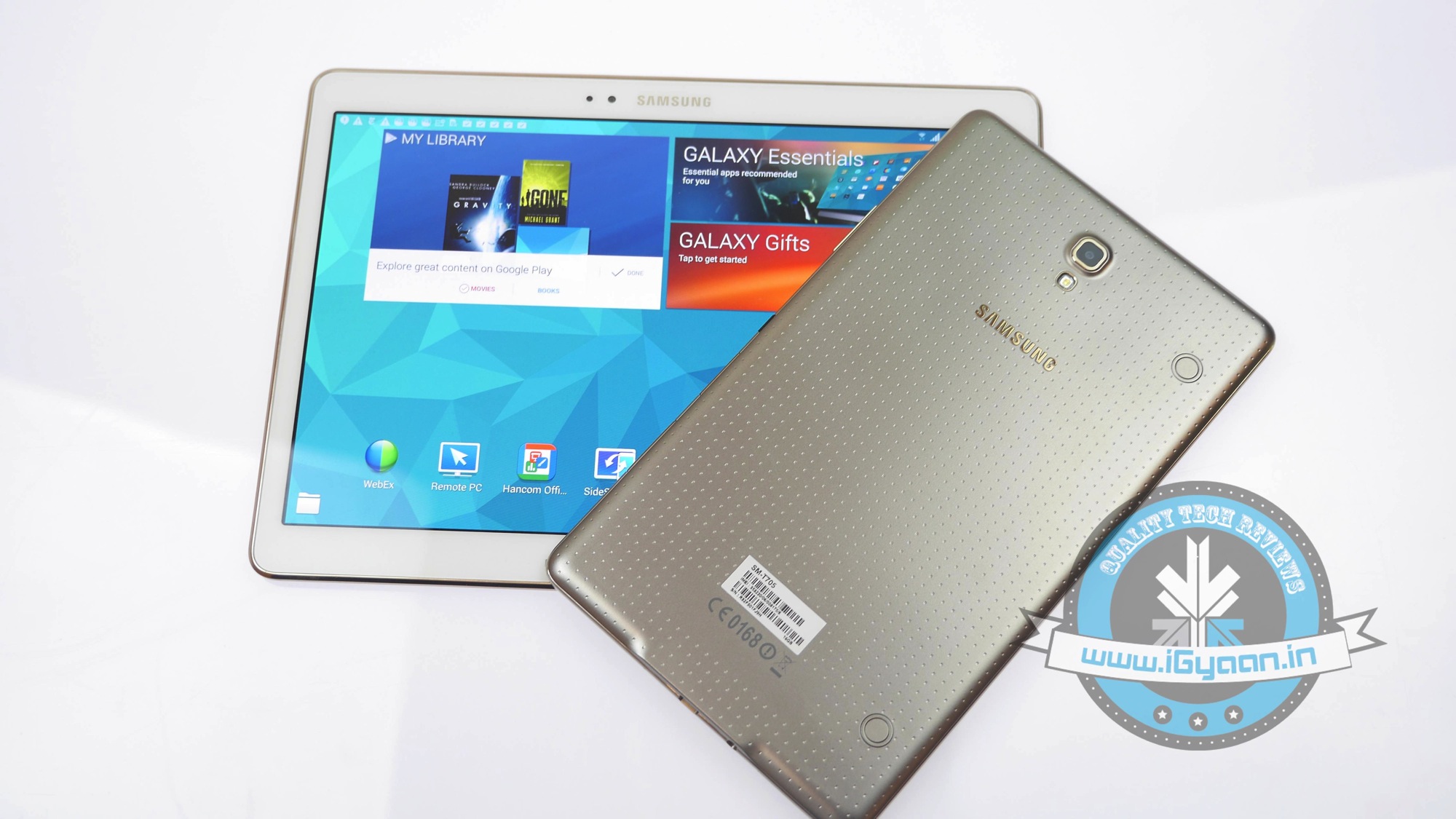
One thing that we appreciate a lot is that the Tab S 8.4 is a true little brother of the Tab S 10.5 where both slates have identical specifications from processor to display resolution and even the internal RAM and storage. What differs is the size of the screen and the battery capacity which are both reduced from the 10.5 incher to get the desired size needed for the Tab S 8.4 .
The display is just phenomenal, it’s like taking the display of the Note 3 and blowing it up to fit the size and then adding 4 times the pixels. Its bright, extremely vivid and beautifully saturated. It is also a pretty large Super AMOLED display, considering a couple of years back Samsung was dealing with issues manufacturing a 4 inch Super AMOLED panel with Full HD capabilities.
The Samsung Galaxy Tab 8.4 comes with a 8.4 inch 2560 x 1600 pixel display that is simply awe-inspiring. The company is also calling it the highlight of the tablet as the usual features from the previous generation tend to follow suit.
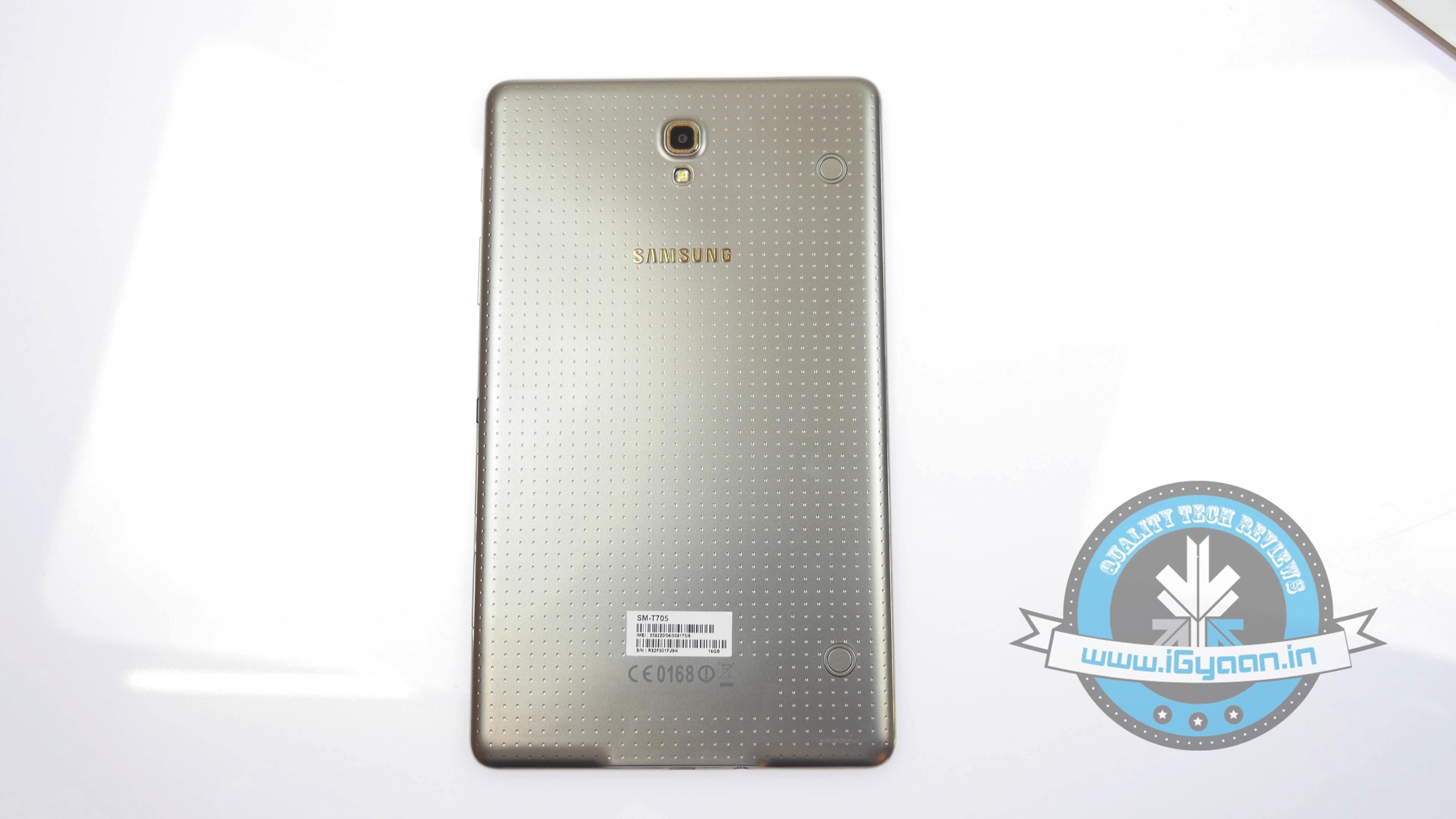
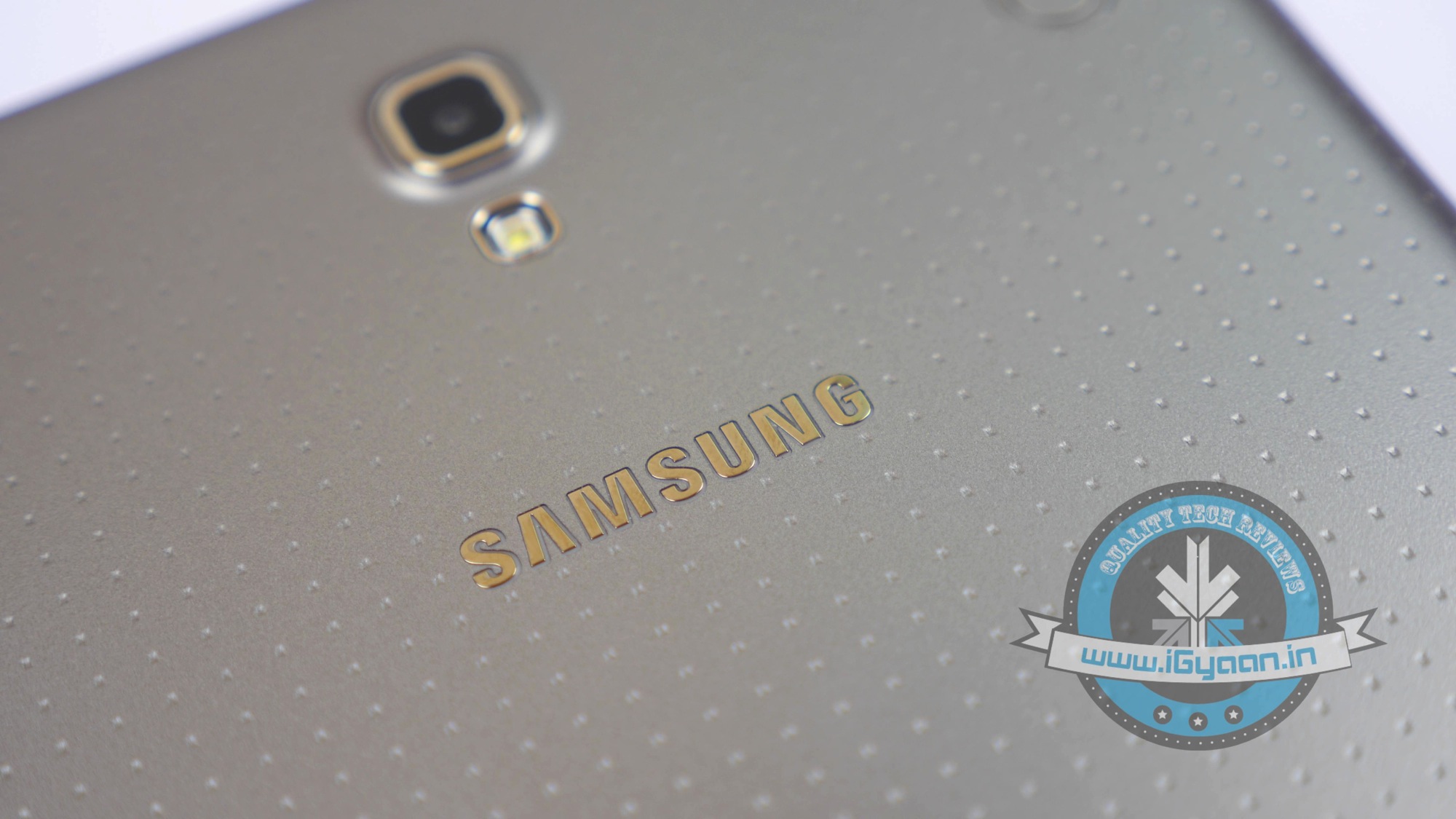
The back panel on the Tab S 8.4 is also a “Smarter and Larger” version of what we saw on the Galaxy S5, even though it looks much more classier and cleaner on the tablets and especially so on the Tab S 8.4 in the titanium copper colour.
Touchscreen is the interface of choice for interaction with digital world for quite a while now. Smartphones, tablets, laptops, cameras, refrigerators, even RO water purifiers now come with touch screens. But there is always a divide in such devices; there is no physical feedback. The devices we use, respond to our stimuli and act on our instructions. We have access to our loved ones thousands of kilometers through video conferencing services like skype, but it still lacks the physical appeal of holding hands. Now MIT’s Tangible Media Group with their Project called inFORM intend to change that.
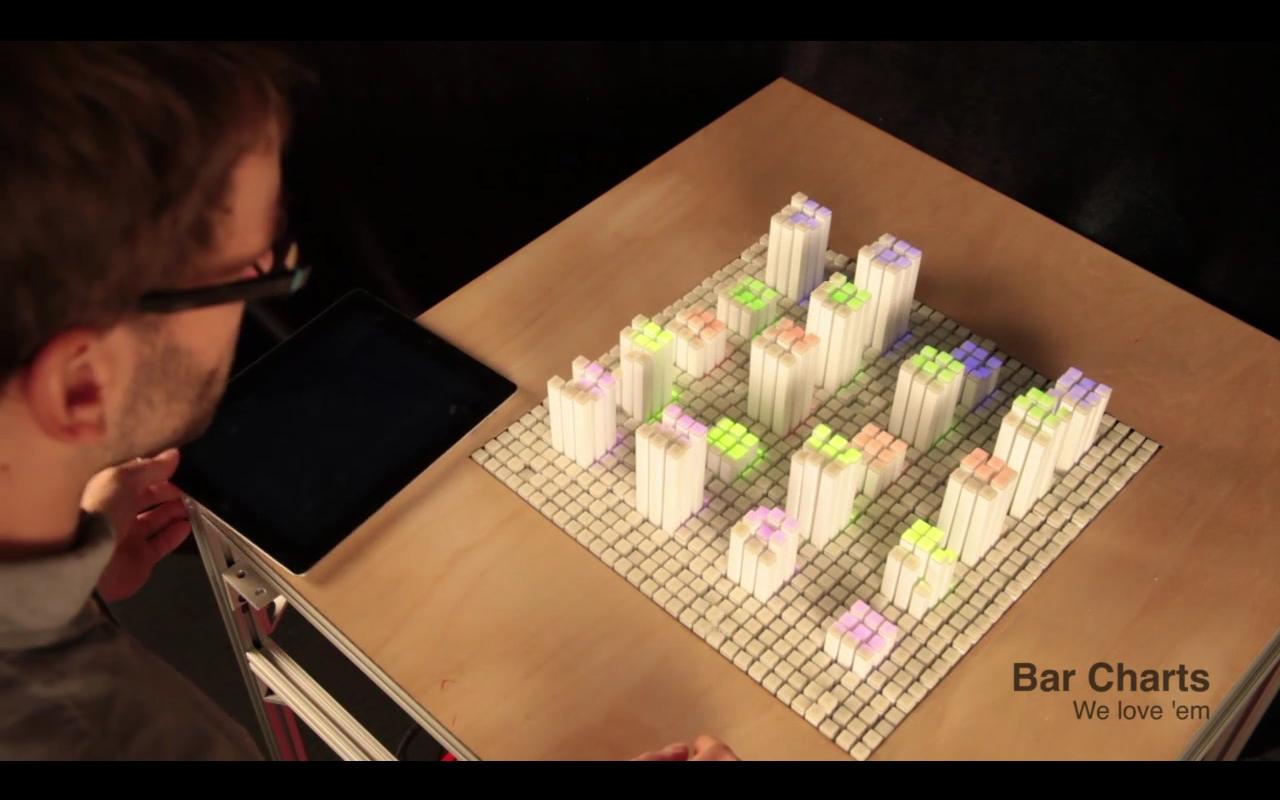
The inFORM was created by Daniel Leithinger and Sean Follmer and overseen by Professor Hiroshi Ishiiis. It is an attempt to look at the future of interactive interfaces. The surface looks like living clay columns which rise to form shapes and graphs as instructed. The project of course is in a rudimentary stage but the practical applications are unlimited.
inFORM is great for Work and Play
The technology behind inFORM is inspired by the pin screens which are used for animation purposes. Each block in inFORM is connected to a motor and controlled by a laptop. Using the inputs you can not only move the pins to render digital content physically, but can also register real-life objects interacting with its surface , for which they have hacked the Microsoft Kinect.
The Tangible Media Group intention with this project is to assess the interfaces of the future. This can be incredibly advantageous for professionals like Designers, Architects, and Engineers who can instantly see their creations in a 3D model and access the flaws of their designs too. The best part is that they can edit and interact with their designs.
For us regular folks, it can be used for physical game of chess with your friend sitting in Australia while you sit in Norway. With Virtual Reality(VR) gaining steam with Oculus and Project Morpheus, inFORM can be used to define the missing element of touch. So while you are having a VR walkthrough in the park, the inFORM surface can stimulate its surface in accordance to where you are in your VR world, you can feel different surfaces like grass, rocks maybe even rivers under your feet. Now that would be a truly immersive experience.
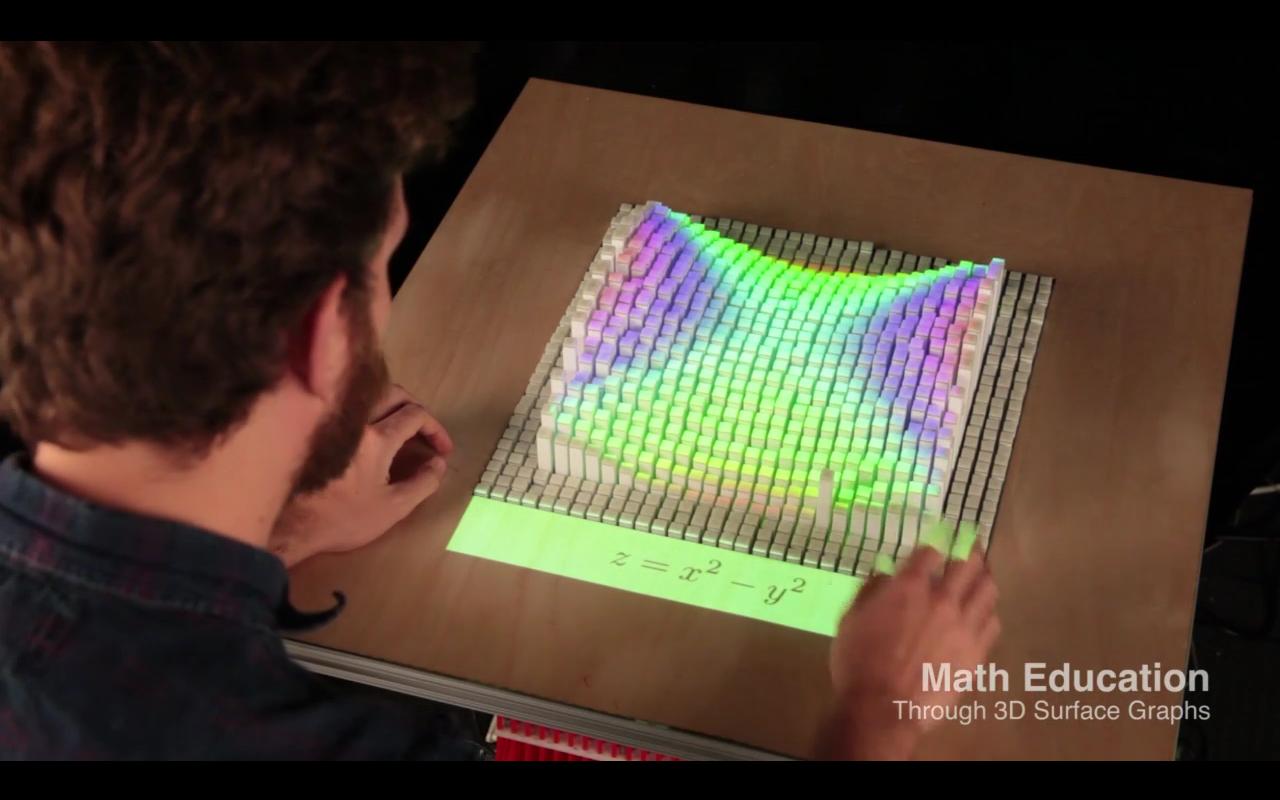
InFORM will be greatly beneficial for Education.
Even in the field of education this technology can bring a paradigm shift. Now instead of just reading about the movement of tectonic plates in geography class, students can see them move in 3D models. Subjects like Science, Maths, and Geometry will get a lot more comprehensible for students who get to see their theorems and formulas in action.
This project doesn’t fail to impress even if it is in a nascent stage. Like touch screens gave way to gesture controls that is found in Kinect and Wii and they too are giving way to VR technology, inFORM might be the new claimant for the next innovative technology revolution. Maybe we are closer than we think in terms of interacting with real world atoms instead of digital pixels. We are back into the physical world; the circle seems to be complete.
In a new animation series by National Geographic show called ‘Food By the Numbers’, they point out that by 2050 we’ll need to feed two billion more people. The special eight-month series explores the possibility of how we can do that—without overwhelming our planet.
The episode called ‘Precision in the Fields‘ provides info about how farmers are increasingly using GPS-equipped machinery supported by computers that organize sophisticated data on plants, soil, and weather. Termed “precision agriculture,” same as the episode, this system helps them identify and manage variability within fields. David Schimmelpfennig of the USDA Economic Research Service says that farmers have always made informed choices but that access to more data expands their decision-making toolbox.
The video talks about the effective use of weather forecasting apps, agriculture drones, soil mapping, GPS guidance and many other technology as a critical tool for modern farming.
Augmented reality has become a revelation in the gaming world; with products like Sony’s Project Morpheus and the Oculus Rift promising to make play time more entertaining and interactive. Furthermore Google Glass has opened up a new possibility with respect to augmented reality.
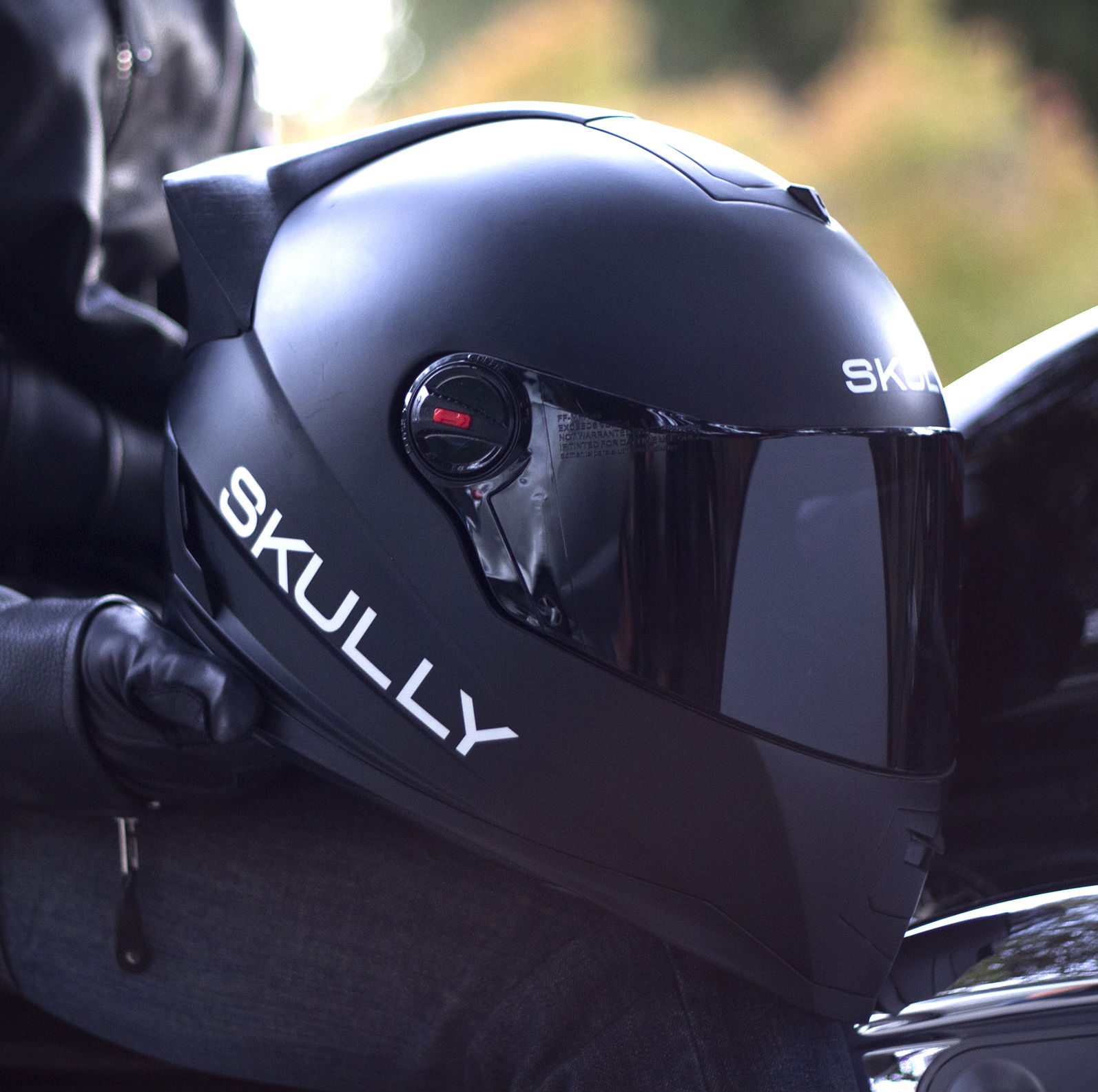
Skully, a San Francisco-based start-up, has given this technology a new meaning.
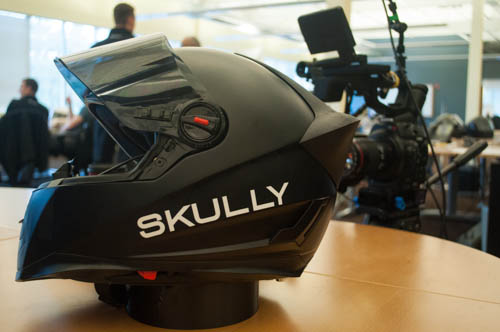
Skully AR-1, as the company claims proudly, is the world’s first augmented-reality motorcycle helmet. It is an anti-fog, anti-glare and face shield helmet, features a heads-up display that shows blind spots, GPS mapping, weather with other additional features. Skully also features Internet connectivity and a Bluetooth smartphone connection. The Skully AR-1 allows you to control the interface with your voice. You can control your music, send texts, make calls and change your GPS destination, all hands-free. Never before has riding been so connected.
With Synapse(TM) integrated Heads-Up Display (HUD), Skully provides an advanced situational awareness system, showing navigation and blind spot data, allowing you to stay focused on the most important part of your ride – The Road. Skully AR-1 has a patented integrated rear view camera system with a 180 degree viewing angle. The rear view camera feeds video to the HUD to provide complete situational awareness.
Skully AR-1 is already making waves in the tech world. The helmet won the coveted SXSW Accelerator Award in the Wearable Technology in Austin, Texas this year.
Key Features include-
Lightweight, aerodynamic shell
3D laser-cut foam for a perfect fit
Fully adjustable flow-through ventilation
Anti-fog, anti-scratch, anti-glare face shield
Quick release chin strap and visor
SKULLY SYNAPSE (TM) Heads Up Display system with voice control
Visual GPS navigation
180 degree wide angle rearview camera
Bluetooth connectivity to smartphone
Internet connectivity via smartphone
Presently, Skully AR-1 is not available for commercial sale. However you canapplyto become an approved beta-tester for the Skully AR-1. Approved beta-testers may get to test a pre-released version of the AR-1 before the official release date.
The Android L is one of the most comprehensive updates to the Android operating systems. Google went down to the rudimentary pieces of the OS and reimagined the functioning of the Android system. Now as everyone is eagerly waiting to take a spin on the Android L, we bring a list of phones that will be the first to get the L update. You can buy these phones today as they are all future proof.
So here we go:
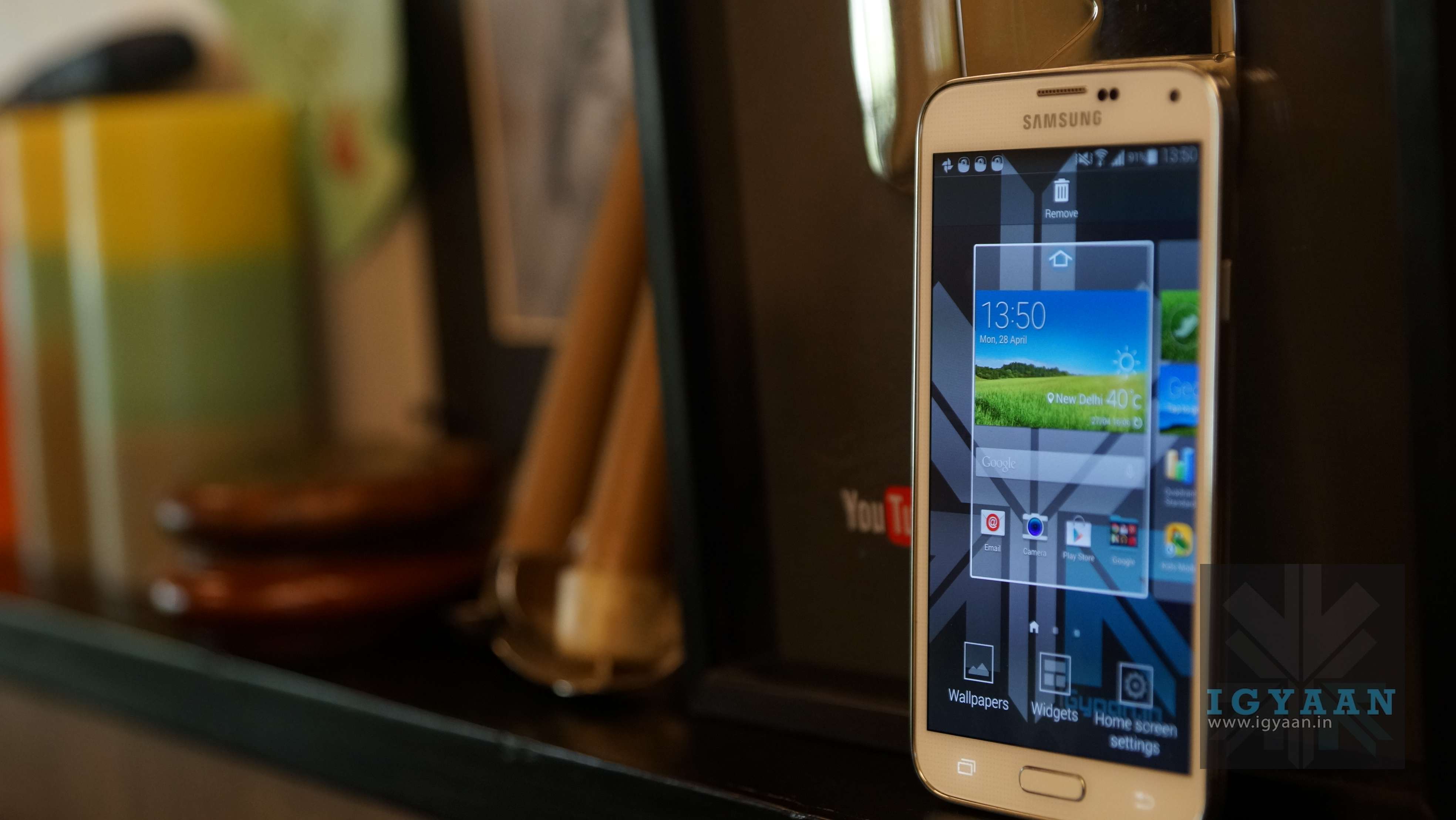
5.Samsung Galaxy s5
Samsung’s present flagship will be the first to get the Android L release in the Galaxy stable.
4. LG G2/ LG G Pro2 /LG G3/ LG G Flex
LG in an exclusive conversation with iGyaan hinted that they will release it on these four phones once Android L hits the market. These phones are already LG’s best sellers and they would be a good bet for now.
3. Moto X/Moto E/Moto G
As Moto’s awesome revival is dedicated to Android based X, G and E, these phones will surely get updated to the latest Android L. They will be the first phones after the Nexus devices to get the updates.
2. HTC Flagship
HTC is the most eager company to induct the Android L across all its Blinkfeed running devices. This is a great news for current HTC users. Phones like HTC One M8, M7, the One Mini and the HTC Desire line of kitkat phones will be the first to evolve into Android L as soon as possible.
1. Nexus 5 – Developer Preview Out Now
Nexus 5 already has the developer preview out for Android L and Boy, does it look good. We’ve been having lots of fun with the L and you can get it right away too. Even though its a beta testing version, its still very stable, has brilliant performance and excellent battery life thanks to Project Volta.
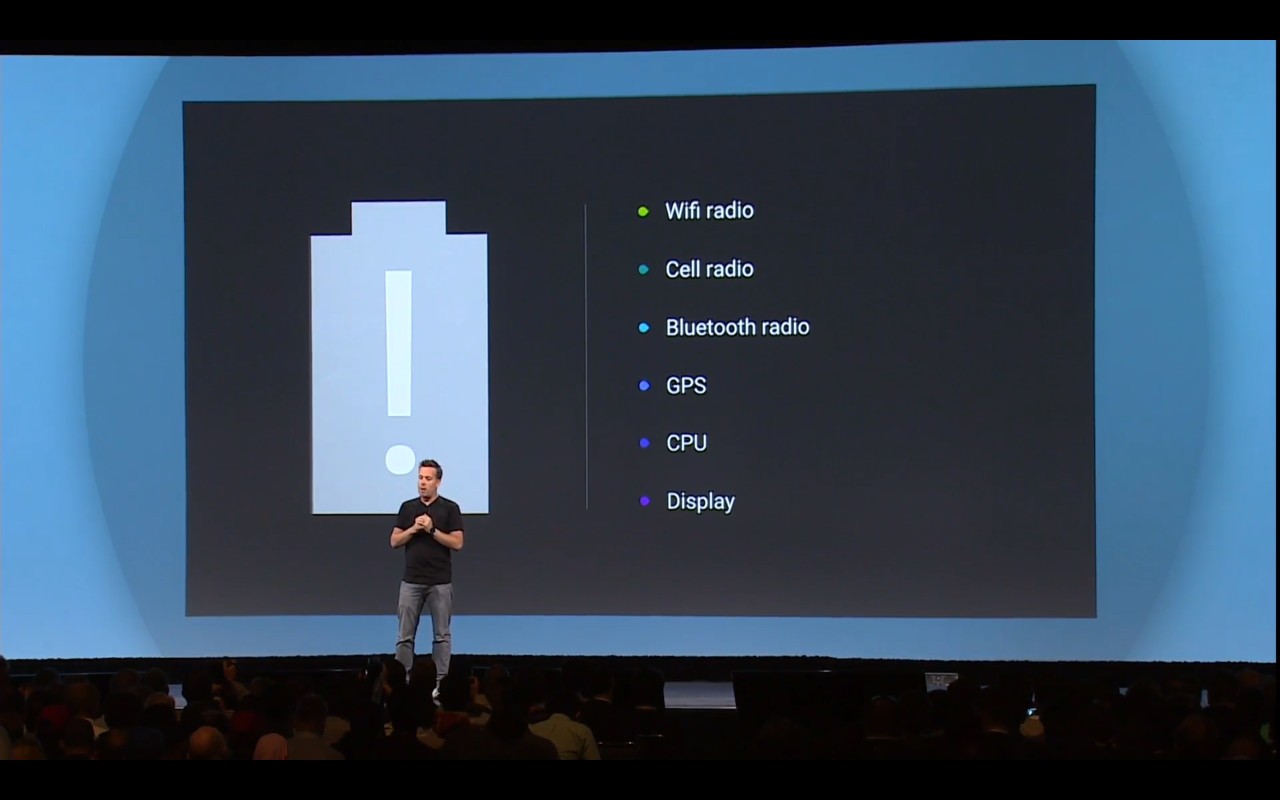
At the recently concluded Google I/O, the new Android L was showcased and it has received unanimous admiration. Even though Apple has won this year’s developer conferences by creating a new seamlessly interconnected universe; Google has a few surprises in the battery efficiency arena with its own Project Volta.
Project Volta aims to bring fundamental enhancement in Android for better battery life.
Battery technology has lagged in competition to almost all other elements of the phone designs. Within a short span of time, we have gone from HD to 2K phone screens. We have 4K video recording, better processors, better RAM, even the OS’s are competitive and getting better with each release. The loser in this entire race has been the battery. Even though, the phone manufacturers have compensated by making bigger batteries but almost all of them give only about a day’s worth of backup in their respective phones.
Google is working on the lines of its previous Project Butter initiative during the release of Android 4.1. Project Butter was directed towards making fundamental changes in Android to make it more efficient, smooth and lag free. There was also the Project Svelte, which was directed towards running the Android 4.4 on low-end devices, thereby making KitKat a truly inclusive Android operating system.
With Project Volta, Google introduces a slew of measures to find enhancements to the Android system to increase battery efficiency. Google hopes to fix fundamental flaws in its software architecture to address the battery issue.
Google invented a tool called the Battery historian for the developers to access what apps were using battery at a specific period. Using this, developers got to play around with the various variables which could help to make the best use of the precious juice in the battery.
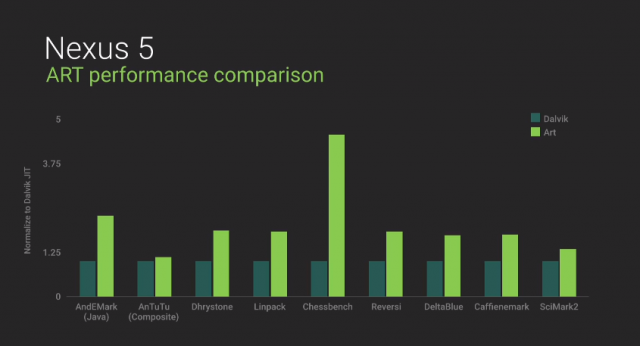
ART helps increase performance remarkably
Android is also completely incorporating the Android Runtime or ART and switching over from Dalvic runtime in a bet to improve efficiency and speeds. ART is available for testing on the Android 4.4, if some of you want to let your inner nerd flow. The difference between the two is that Dalvic compiles code every time an app starts and thereby waking the processor and in turn sucking in some juice every time. On the other hand, ART compiles and optimizes the codes well in advance thereby requiring less power to run apps.
JobSchedular API will help batch multiple functions at once to increase efficiency.
Project Volta also introduces a new Job Scheduler API. With this, developers could program certain apps to work only when corresponding conditions are met. So instead of individual apps arbitrarily asking for processor access, multiple functions can be batched together and done at once for minimum use of battery life so that you can spend that extra juice for watching “dogs and babies” videos on YouTube.
Apart from this Android also inducted the battery saver mode which has been seen on manufacturers like Samsung and HTC. When the phone reaches the predetermined low battery level, the processor is slowed down, screen is dimmed, animations are reduced and the radio usage is decreased. This option is to maximize the last few moments of the battery before finding the sanctuary of a plug point.
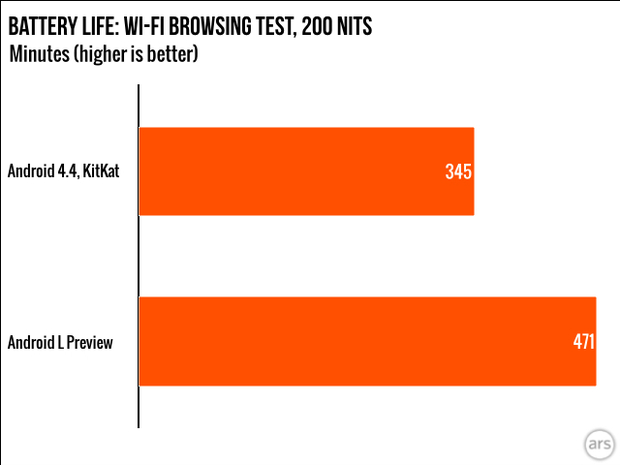
Ars Technica’s test showed a 36% increase in battery efficiency
These efforts seem to be showing some results as Ars Technica did an extensive test and found the Android L to be 36% more battery efficient, and that’s quite impressive.
There have been some efforts by the markets to address the battery issue. The Oppo Find 7 is a good example. With its fast charging VOOC charger, the Find 7 boasts of charging 0-75% battery in 30 minutes. Apart from this the market is also flooded with power-banks but they become just one more extra piece of equipment to charge and carry around. What is needed is a back-to-drawing-board study of the battery and maybe Google should make it a priority at the Google X (its semi-secret research facility) now.
With the amount of dependency we have on our smartphones and the information they hold on us, battery technology should be a priority research. The company that delivers the best battery improvement will surely emerge a winner in this over-saturated market. It’s about time that Smartphones got some Smart Batteries.
Gionee will be pushing out Android KitKat Update version 4.4.2 with the new Amigo UI to some devices in the coming days (as told to us by Arvind Vohra in our LetsTalkShop ).
The first two devices to get the said update are the CTRL V5 and Gionee Elife S5.5, while most owners of the V5 should already be getting update notifications, owners of the Elife S5.5 will soon get a notification for the proposed update.
We went hands on with the Elife S5.5’s Android 4.4 KitKat Update, and we can tell you, it is one major improvement. Apart from being a major overhaul in frameworks the new upgrade is at least twice as responsive and 50% lighter on the resources.
Here is a ChangeLog for the devices:
For the Gionee Elife Slim S5.5 and Gionee Ctrl V5
1. Android KitKat Update
2. New Desktop layout
3. Removed the World Cricket Champion and Real Football game
4. Added Du Speed Booster
5. Updated Amigo Paper with a brand New UI
6. Updated Game Zone with a New UI
7. Updated GioneeXender
8. Updated UC Browser
9.Updated NQ Mobile Security
10. Updated Kingsoft WPS
11. Removed Settings Shortcut from Notification Panel
12.Theme and Wallpaper will be reset to Default after System Update, but Data will not be Lost.
While you wait for the final KitKat update which should be a big download 800-900 MB in size, other devices including the Elife E7 and possible previous versions are also set to get Android KitKat in the coming weeks. As mentioned above, we did an update and the data remains safe, while some of the settings get reset, including the wallpaper, which you can reselect.
Meet the extremely fascinating Susan Kare. She is an artist and designer and has spent most of her life pioneering pixel art. The extremely talented Iconographer has created thousands of icons for hundreds of companies.
As a key member of the Mac software design team, she has created many of the graphical interface elements for the original Apple Macintosh in the 1980’s.
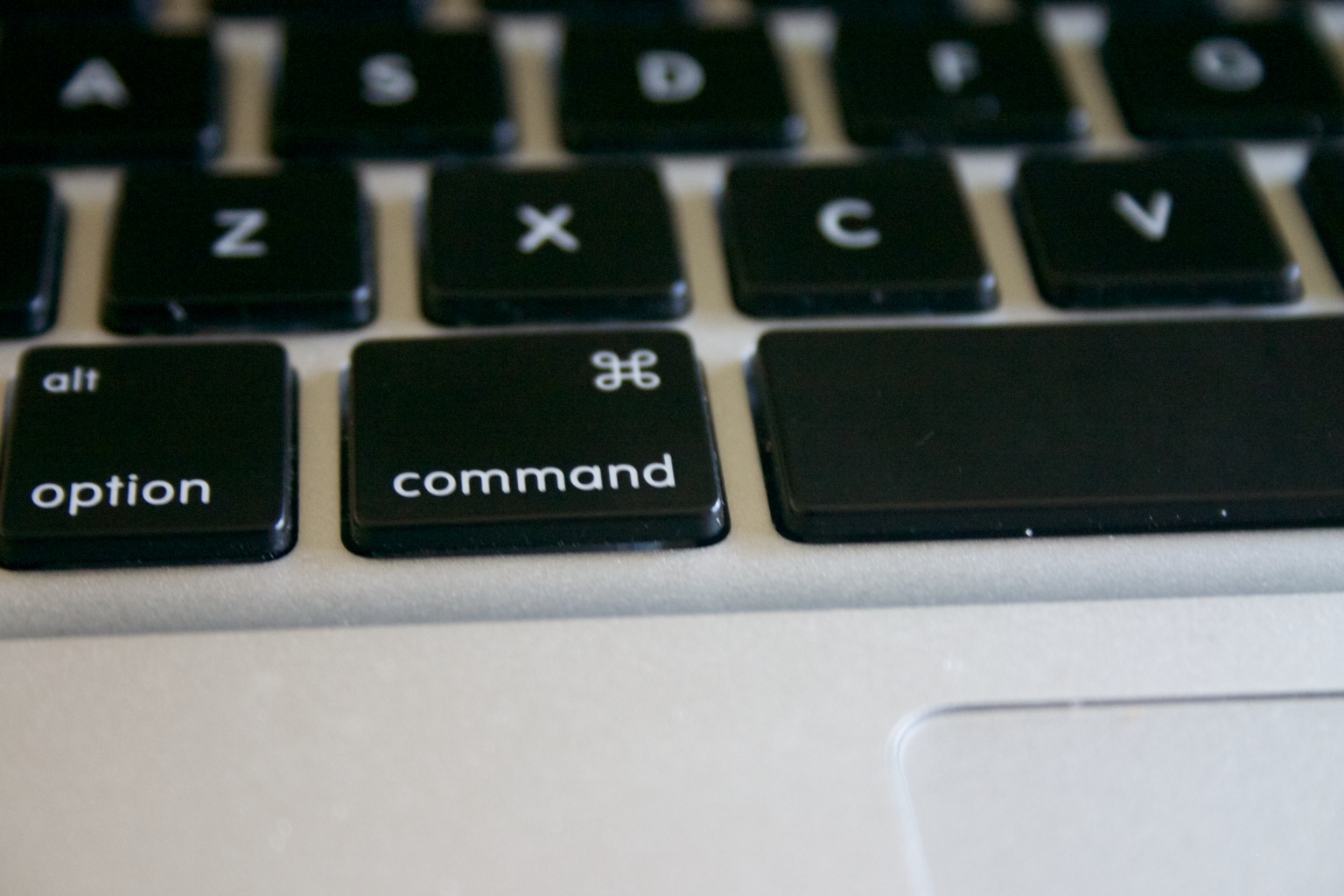
This symbol is formally known as the Command key. Informally, it has had several names. It is known to be been referred as the Apple key,pretzel key, squiggly button, Saint John’s Arms and the Bowen Knot. Without a doubt, it is the most useful key on the board.
The symbol became a part of the Macintosh project when Steve Jobs found that the former Apple symbol overcrowded the menu. It was then, while doing a bit of research, Susan Kare found this symbol while browsing through the symbol dictionary. She’s glad to have chanced upon this cloverleaf-like design, commonly used in Nordic countries as an indicator of cultural locations and places of interest.
In the video,Kare goes on to talk about her journey from Apple to Windows and the evolution of digital Iconography. While talking about the yesteryears, she walks us through the early 80’s when Apple launched its first Macintosh 128K in 1984.
Susan also points out the importance of simplicity in iconography. While explaining the idea, she mentioned a book the called ‘Understanding Comics: An invisible Art’ by Scott McCloud. In which McCloud tells how details make the graphic personal while a sketch with minimilistic details is relatable to most beings.
She ended with a quote of her hero of Graphic Designing:
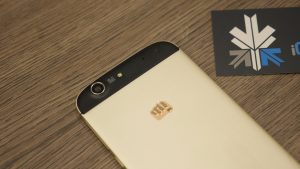
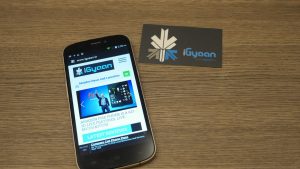
Micromax today upped its market position by launching what the company is calling their “most premium” handset yet, the Micromax Canvas Gold A300.
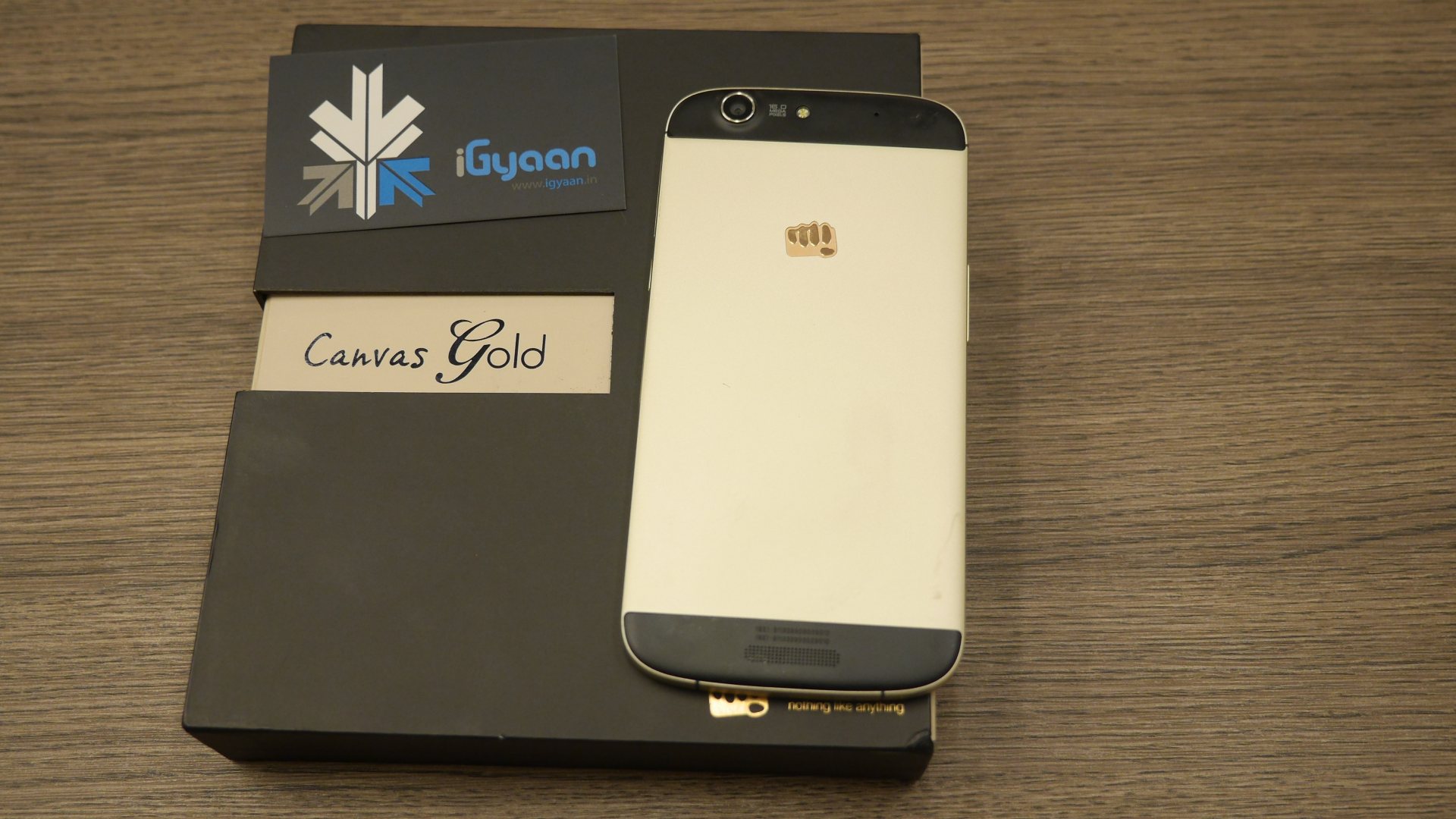
The smartphone builds on the canvas series of devices and brings about a complete new design and build quality to the table. At first glance, the handset is a huge improvement over the previous generation of handsets and comes packed in a box that shows the new direction the company plans to head in.
The Micromax Canvas Gold A300 comes at a price of Rs. 23999/- making it the most expensive phone available from the company today. This handset comes in just a day after the launch of their first foray into Windows Phone 8.1 devices by the name of Micromax Canvas Win.
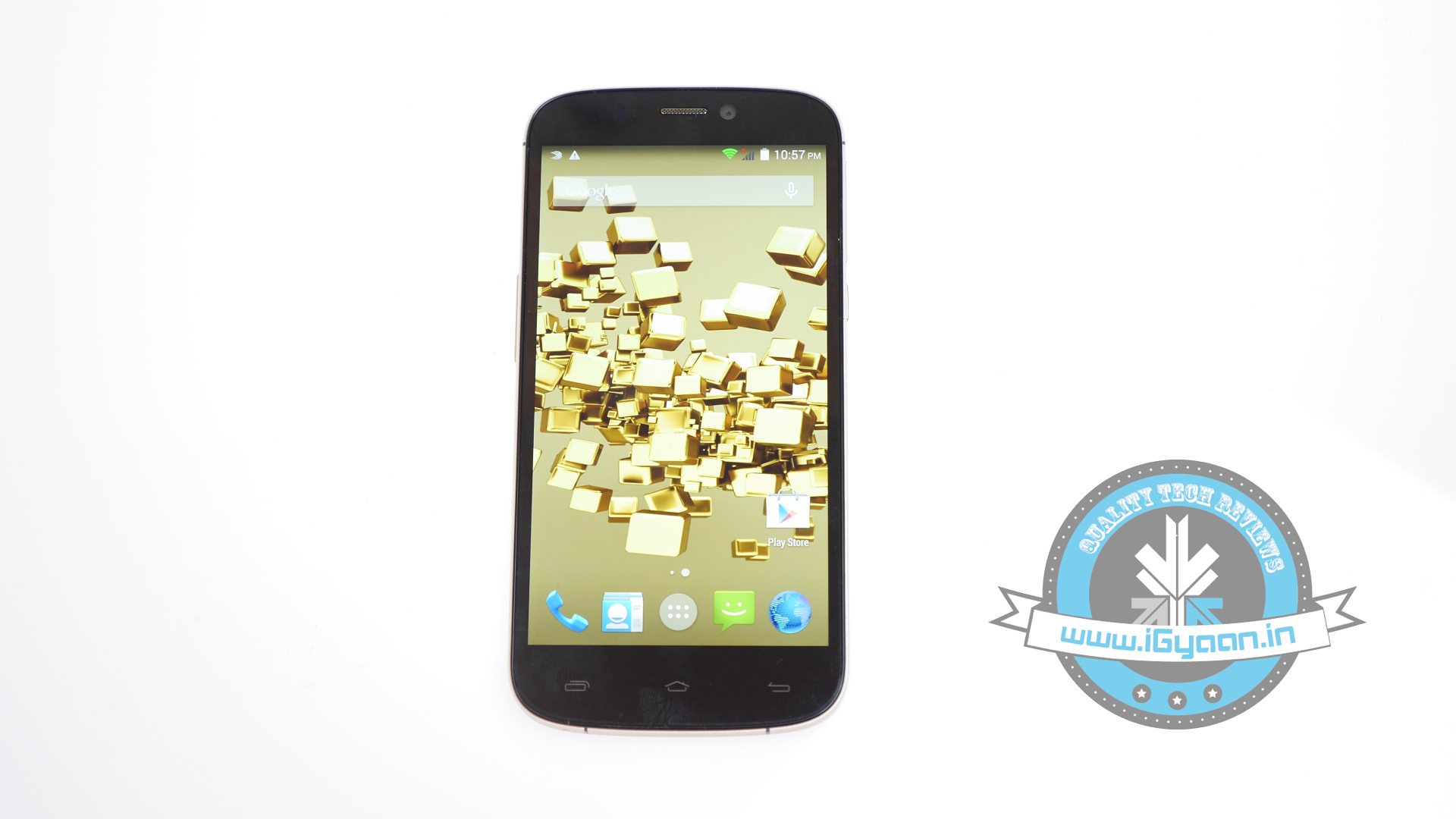
For the price (market price much lower: presently at Rs. 20,800), the phone offers a 1920 x 1080p 5.5 inch display with an IPS LCD panel. The Micromax Canvas Gold A300 also has an Octa Core 2.0 Ghz MTK6592 chipset, 2 GB RAM and 32 GB of storage.
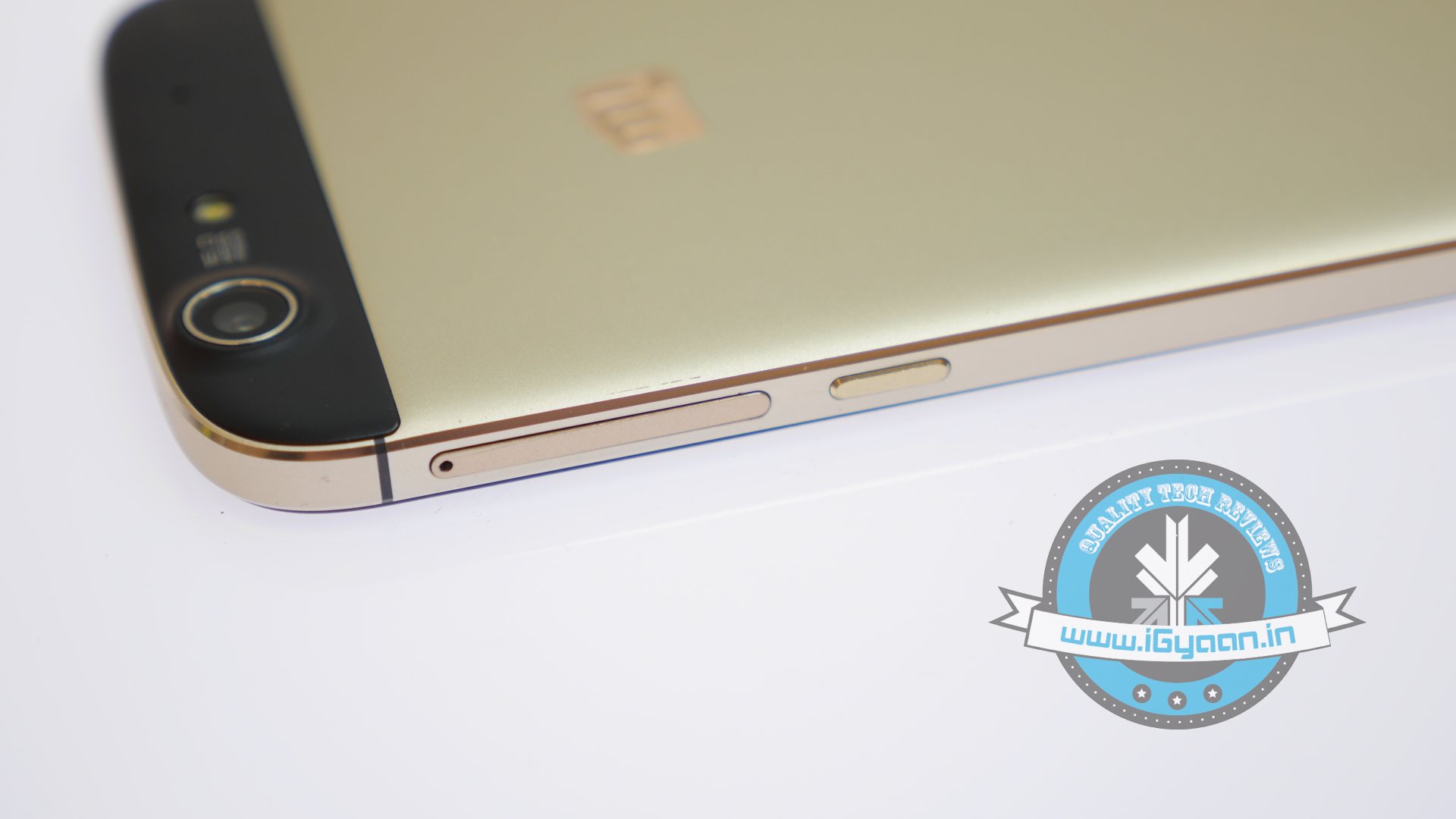
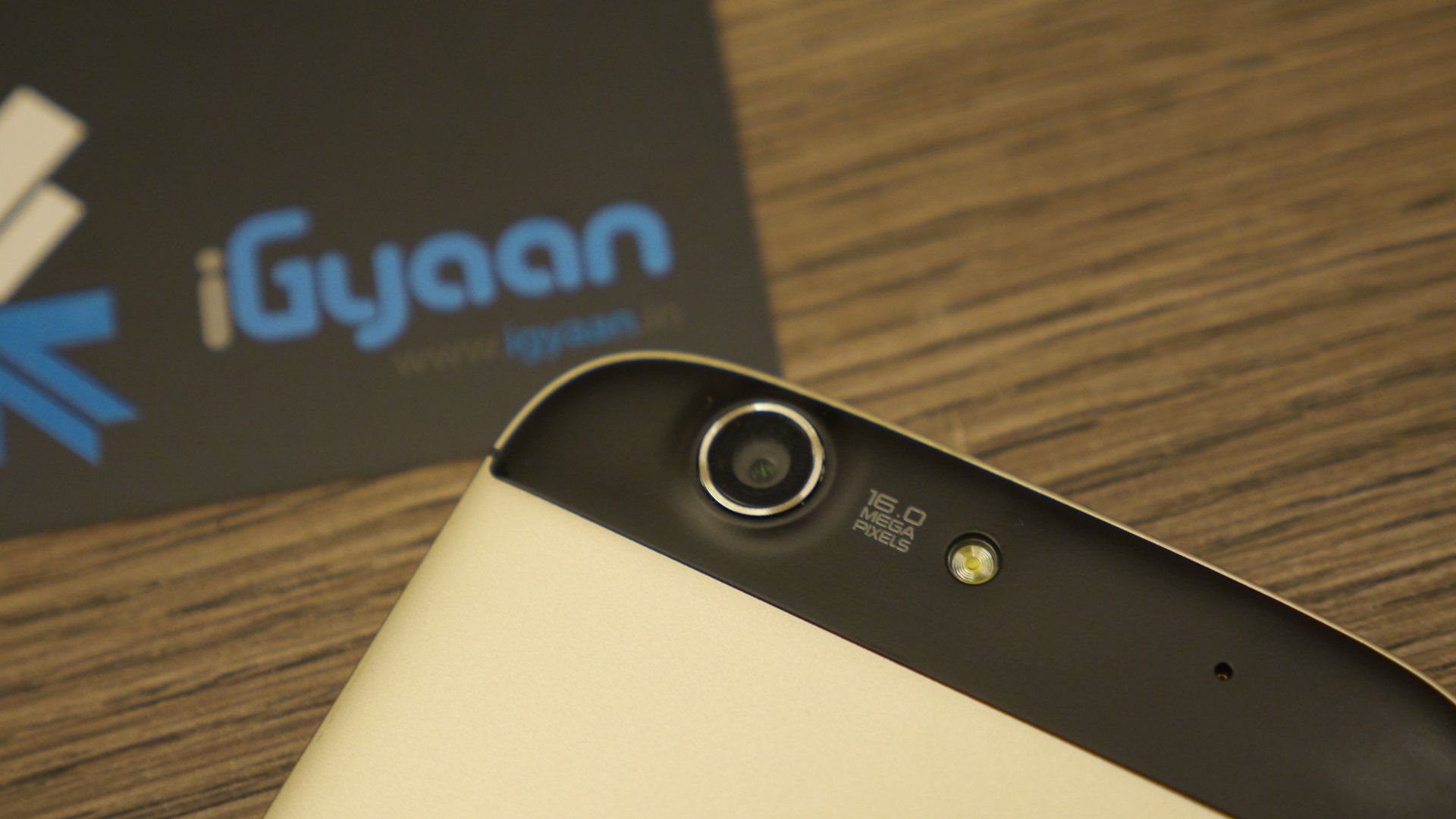
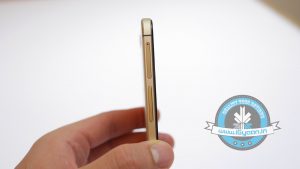
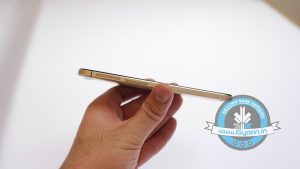
The build and finish on the Micromax Canvas Gold A300 are impressive, and the device is a unibody device which lays flat on the table and has chamfered edges. Packing the optics is a 16 MP main camera and a 5 Mp front facing selfie booster, both will capture 1080p video at 30fps. The main camera is very impressive with a f/2 lens and excellent low light performance in our initial tests.
The Micromax Canvas Gold A300 will accept two SIM cards, one micro SIM and one full size SIM, both capable of data connectivity.
The device comes out of the box with Android 4.4.2 KitKat along with standard features like Mobile Hotspot, FM Radio and Micromax apps preloaded (which may not essentially be appreciated).
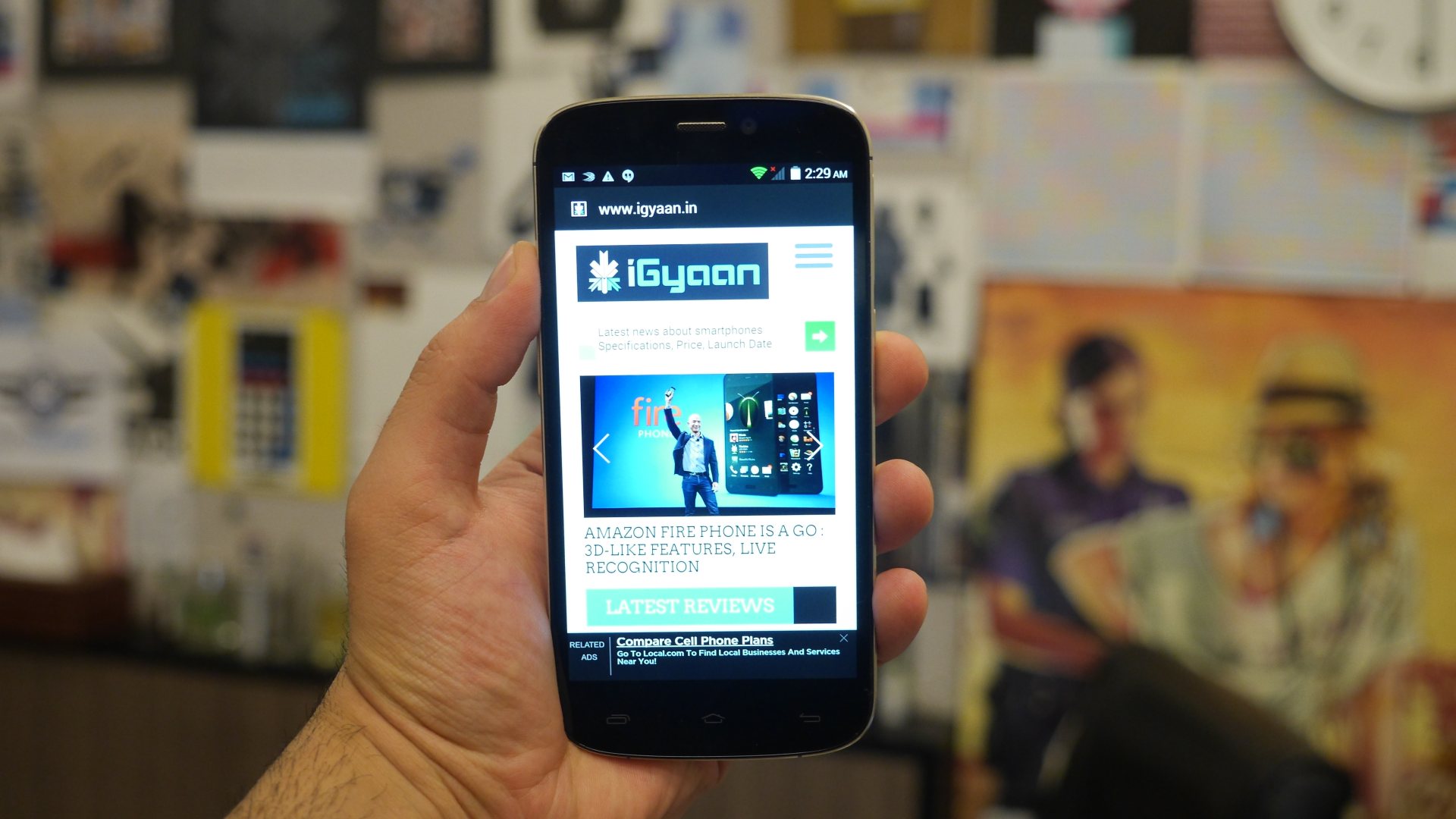
The display is stunning on the Micromax Canvas Gold A300 and has great visibility and colour reproduction, almost making the handset feel a notch above the price bracket it is available in. For now check out the video up top, and images below, and stay tuned for more.