Category: Intel

  • Intel Announces 10th Gen Ice Lake Core CPUs

    Intel Announces 10th Gen Ice Lake Core CPUs

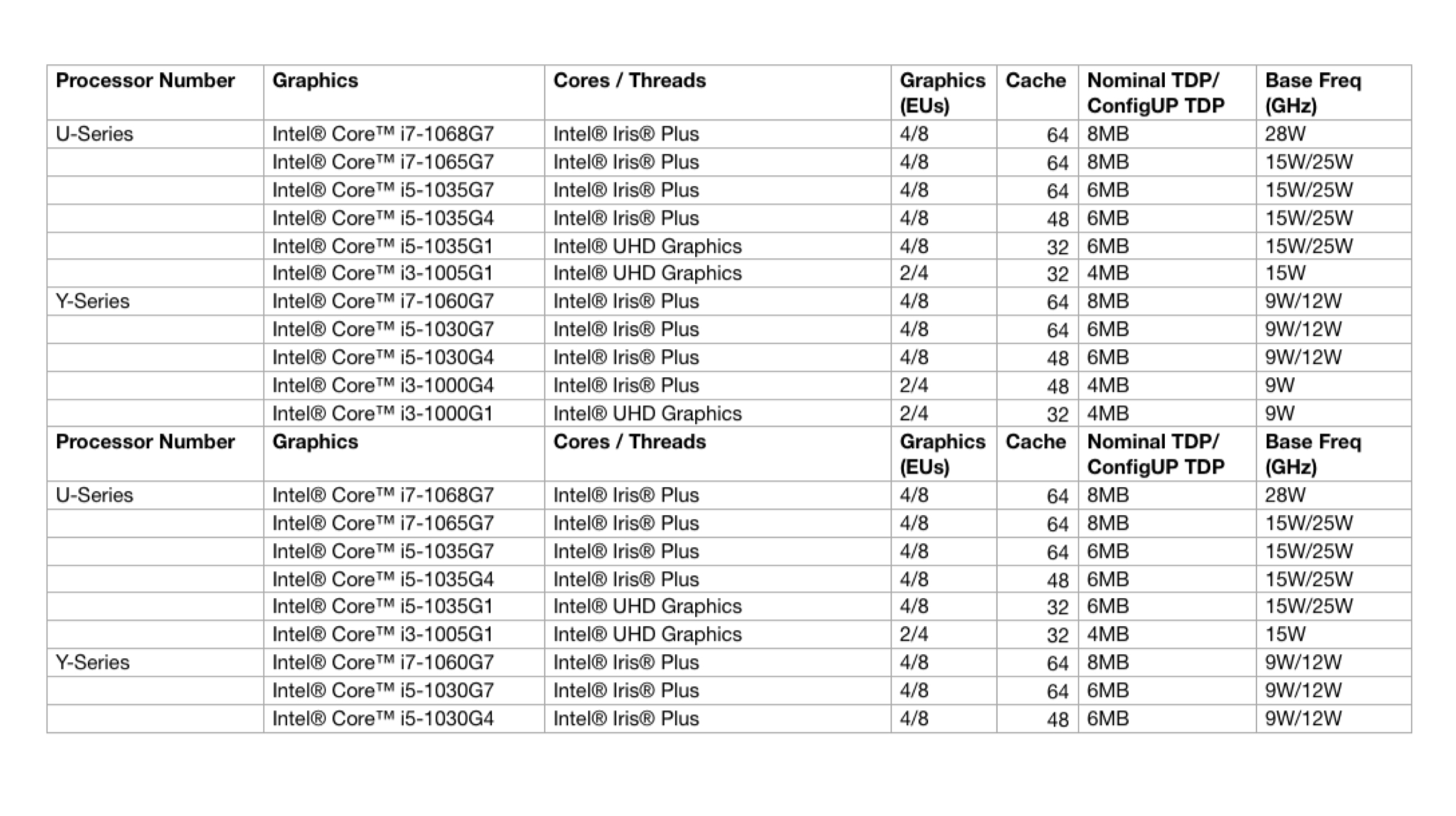
    On the 1st of August, American chipmaker, Intel unveiled it’s latest and greatest of CPUs in the form of 10th Generation Core processors which carry the ” Ice Lake ” branding. The company has currently launched 11 models which are part of (U-Series and Y-Series) and they are targeted towards ultrabooks, 2-in-1 computing devices and other mobile form factors.

    Right of the bat, the key difference between the 10th Gen and 9th Gen Intel processors is the fabrication process. The newly launched CPUs are manufactured using 10 nm fabrication process which is a considerable bump from 14 nm process that the last-gen CPUs were made with.

    According to Intel, besides performance improvements, the 10th Gen Core CPUs also have optimised AI processing, better graphics performance and an extended I/O support. In terms of graphics, the CPUs feature Intel Iris Plus graphics.

    All the newly launched Intel U-Series and Y-Series processors have 4 physical cores or 8 logical cores. For readers who do not know, Logical cores have the ability to execute 2 or more task simultaneously, therefore, they help in boosting productivity.

    The 10th Gen Intel core CPUs can support upto 32 GB of LP4/x RAM 3733 MHz or up to 64GB of DDR4 3200 MHz RAM. They also support Intel Optane memory SSDs/Memory, PCIe 3.0, SATA, SD 3.0 and eMMC 5.1 storage.

    Intel CPUs in both the U-Series and Y-Series have 16 lane PCI-E 3.0 support, Integrated Wi-Fi 6 (Gig+) and support for Thunderbolt 3. Following is the list of CPUs along with their specifications:

    Also Read: Specs And Images Of The Upcoming Osmo Mobile 3 Revealed Via FCC

    In terms of availability, the 10th Gen Intel Core processors will be seen in devices manufactured by different OEMs from the month of November. 

    In order to gain, real-life performance samples of the CPUs we will have to wait until we get our hands on some commercially available products.

  • Apple To Buy Intel’s 5G Modem Business For US$ 1 Billion

    Apple To Buy Intel’s 5G Modem Business For US$ 1 Billion

    American technology giants Apple and Qualcomm dropped all pending lawsuits against each other and signed a six-year licensing agreement back in the month of April this year. As a repercussion of the decision, chipmaking giant Intel, who was the chief supplier of smartphone modem for the Apple iPhone for the last few years; announced that it is quitting any development on 5G modems. Now, the latest reports reveal that Apple is in advanced talks in buying the dormant 5G modem division from Intel for a hefty sum of US$ 1 Billion.

    About the deal

    Apple

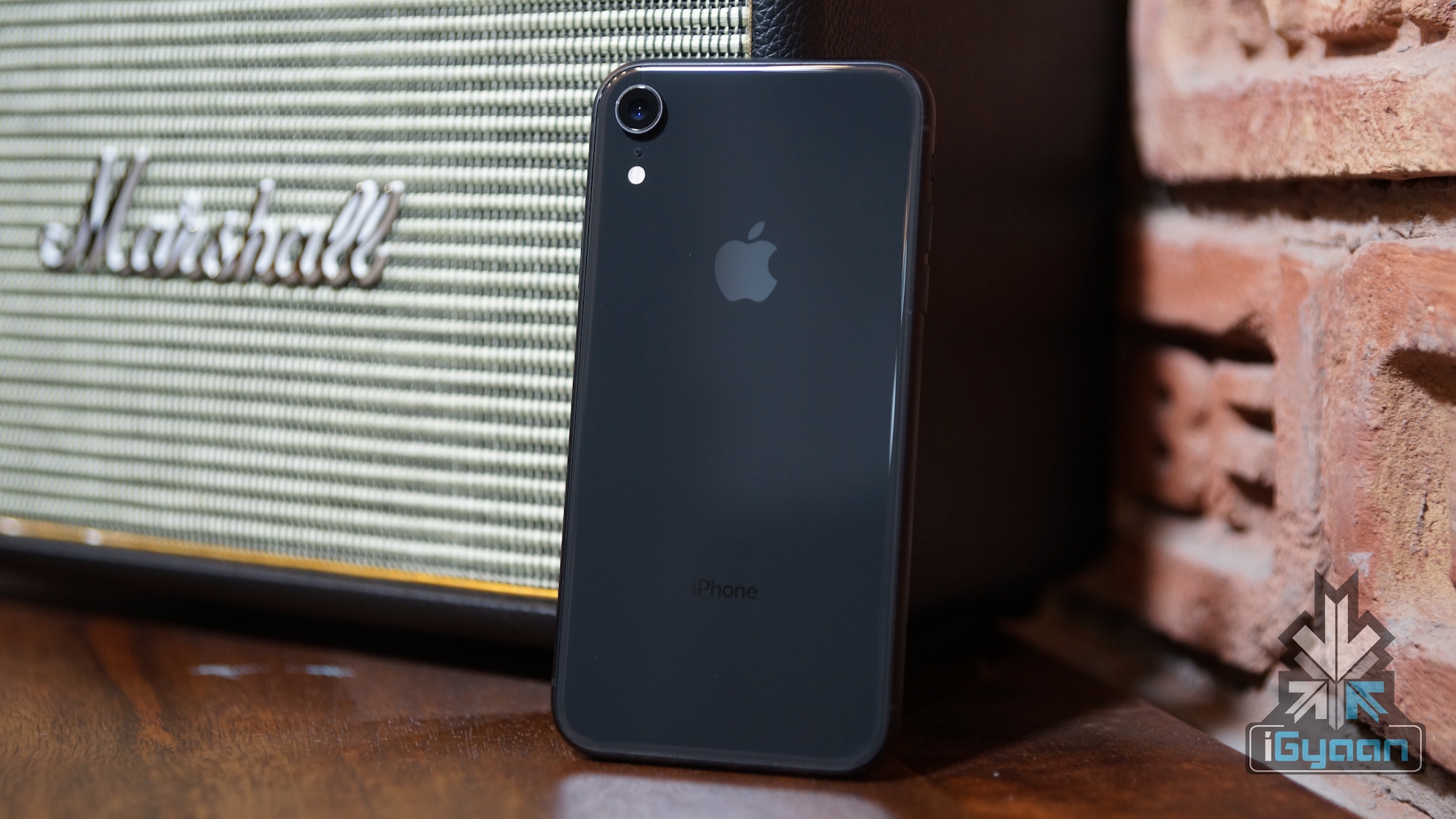
    As mentioned above, due to the settlement between Apple and Qualcomm, Intel announced that it is quitting the 5G modem business. The reason cited of the decision by the latter was that Apple is its most important client and without it, the company does not see a path forward. With the chipmaker moving out of the modem business, Apple could really benefit with the company’s resources and expertise. Intel was also the sole supplier of network modems for the iPhones launched in the year 2018, which include the iPhone XS, iPhone XS Max and iPhone XR.

    Apple

    Also read: Huawei’s First 5G Smartphone Will Soon Be Commercially Available

    It has been rumoured time and again that iPhones with support for 5G connectivity may arrive as soon as next year. And Apple is looking forward to using its own 5G modems inside the devices. However, for the near future, the company may have to use third-party modems, like the Qualcomm Snapdragon X50/X55 ones; as it may take years for it to develop a viable and sustainable modem business for its handsets. It is speculated that when the deal with Qualcomm ends in the year 2025; Apple will be ready with its own smartphone modems for use in future iPhones.

  • Intel’s Project Athena Pushes  Higher Industry Standards For Ultrabooks

    Intel’s Project Athena Pushes Higher Industry Standards For Ultrabooks

    Intel was the first to coin the term ‘Ultrabook’ for high-end subnotebook computers. Spending millions of dollars into a marketing strategy aimed for the industry’s latest most powerful laptops that were less bulky without compromising on battery life overall. Project Athena as announced by Intel seeks to revisit this old definition and make true on certain promises left undelivered.

    The Ultrabook laptops had unintentionally brought with them an industry standard demanding lightweight, thinner dimensions, effective performance and battery life. The Industry had, on the contrary, thrived with these new set of restrictive parameters that gave birth to a new breed of ultra-thin laptops capable of rivalling some of their desktop counterparts.

    Gone were the days of plastics. These new machines now sported a more premium metallic form factor and were installed with new hardware that made the lag that had always accompanied laptops a less frequent occurrence. Powerful laptops like HP Spectre x360 and XPS 13 by Dell pulled ahead in the competition.

    Intel has dedicated itself to challenge the norm again by taking laptops even further with Project Athena. However, unlike last time, Intel did not showcase a tag or name like ‘Ultrabook’ to market to the world. Project Athena’s focus is not on an inexpensive marketing gimmick but to hunt for the big industry-wide lies that have pervaded the market since its inception. Battery life sits at the forefront of such a lie. 

    Project Athena sets the minimal benchmark for laptops to deliver 9 hours of real-world battery life while browsing over the internet on Wi-Fi, at a brightness of 250 nits. Laptops have woefully failed to deliver on the longer battery life that had been promised before and thinner laptops have a stronger tendency to skimp out on the said feature. Manufacturers that advertise their products with 24 hours of battery life, with video playback that barely puts any strain on the CPU while Wi-FI is turned off and brightness at its lowest, do not portray an accurate real-life scenario of daily use.
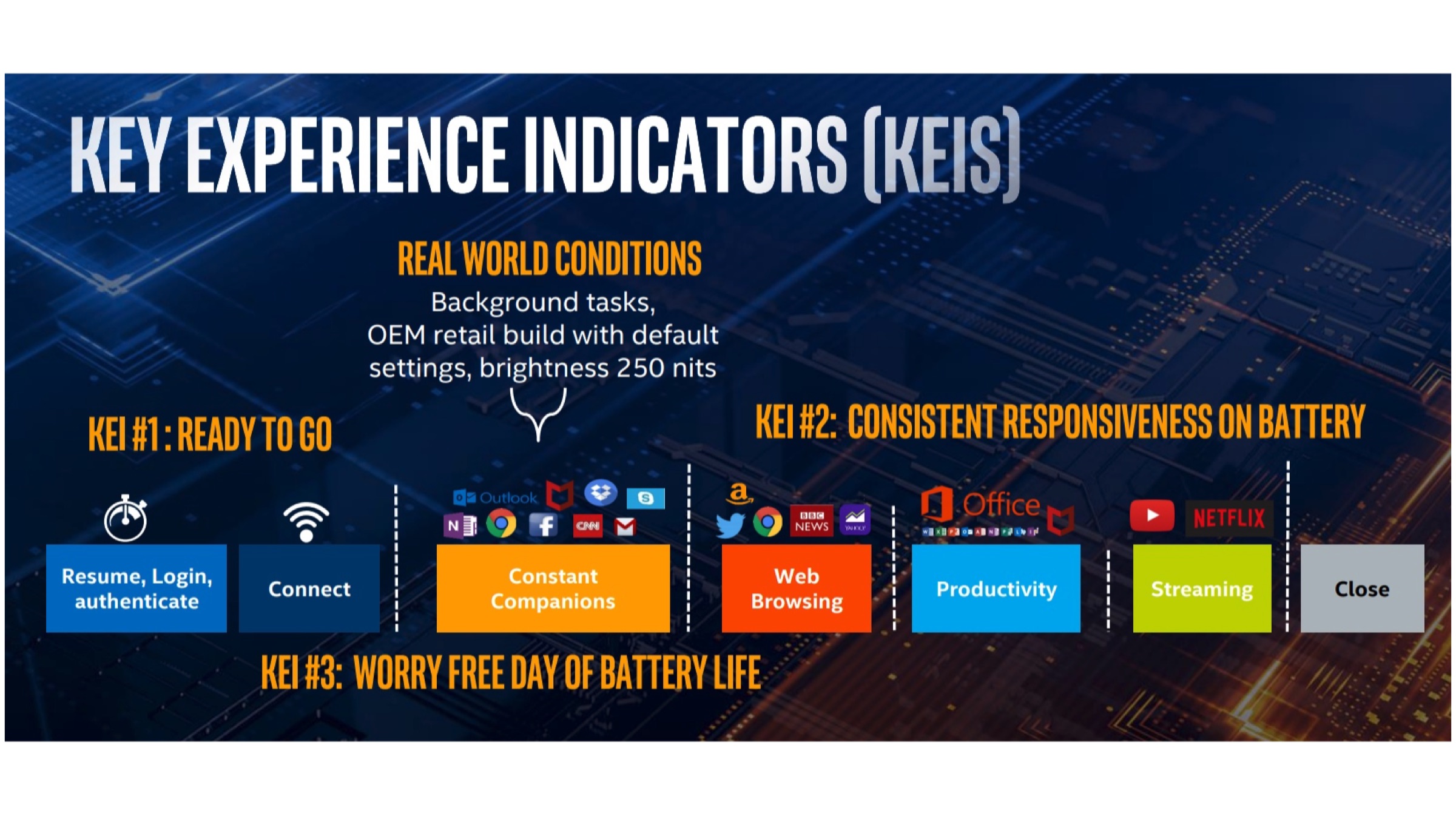
    Battery life is just the start. Project Athena will require a laptop to also boot from sleep within a second and be ready for web browsing in 2 seconds flat while having the same performance output regardless of whether the laptop is plugged in or running on battery. Intel set the basic hardware requirements with touchscreen displays, accurate trackpads, ample amount of RAM (8GB) and an NVMe SSD (256GB) equipped within the laptop.

    Intel, taking it upon itself to enforce the standards set by them to actually satisfy the consumers’ needs. The company promises to discourage practices that have manufacturers cheap out on essential parts of a system. ‘Cheating’ as Intel put it will not be tolerated and the ‘Ultrabook’ brand will have its standards set high. Project Athena is not an advertisement or marketing scheme that the users shall ever encounter, dedicating themselves not to be in the face of every consumer but guaranteeing a good experience that they will feel. 
    There is just one glaringly obvious problem. OEMs and manufacturers have no real incentive or reason to actually adhere to these standards that may lead to the rise of the industry standards. Unlike what Project Athena is made to be, an industry standard for every laptop device to follow, the aforementioned OEMs will simply submit those laptops which are bound to pass the tests. The same laptops which are top of the line and cost just high.

    Also ReadAlienware m15 And m17 Series Gaming Laptops Launched At Computex 2019

    Project Athena is at its infant stage and Intel may in the future decide to incorporate some marketing strategy and brand name for the campaign to follow it. This comes along with Intel’s announcement of its 10th Gen Intel Core Processors that will power the latest generation of Ultrabooks. 

     

  • Intel Announces Octa Core i9-9900KS CPU With All Cores Clocked At 5.0 GHz

    Intel Announces Octa Core i9-9900KS CPU With All Cores Clocked At 5.0 GHz

    Intel is looking to strengthen its position in the CPU market. The company unveiled its 5GHz laptop processors in the month of April 2019, which have already been incorporated by brands like ASUS, Dell, HP and Razer. In 2018, the American chip manufacturer showcased a CPU which had all its cores clocked at 5.0 GHz. The aforementioned processor, which is the Core i9-9900KS, is all set for release in the upcoming weeks and will be the first of its kind. 

    The new Intel Core i9-9900KS features a total of 8 cores, all of which will run at a clock speed of 5.0 GHz during single-core workloads as well as multi-core workloads. As per reports, the company showcased a demo of a 28-core Intel Xeon CPU in the year 2018, but the clock speed of the same was way lower than the 9900KS. Noteworthy, the core i9-9900KS is selectively binned so that each core utilizes the maximum clock speed i.e. 5.0 GHz.
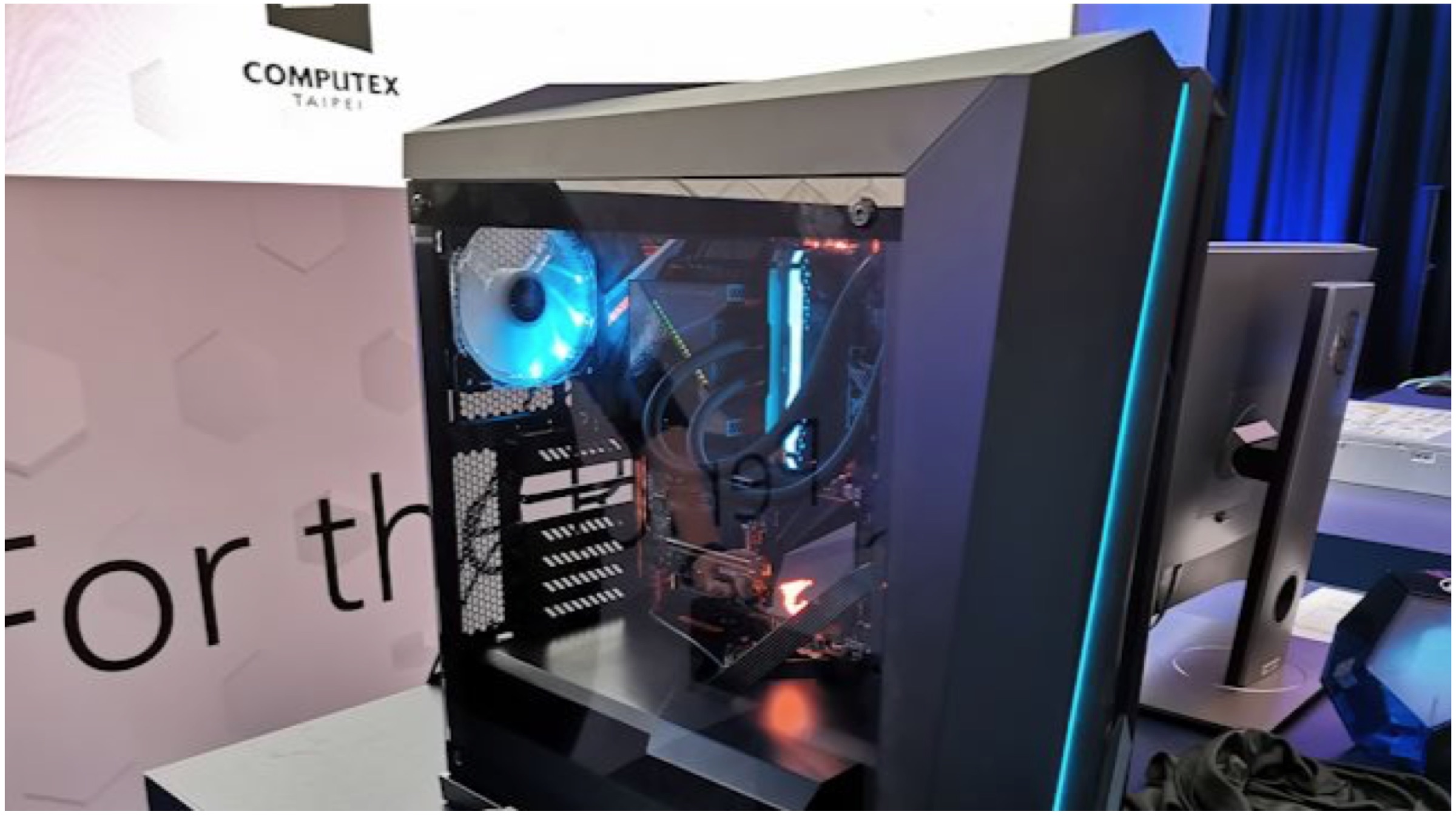
    Reports further state that the current motherboards supporting Intel’s core i9-9900K processors will be able to accommodate the newly launched i9-9900KS as well. However, a minor firmware update will be pushed out to the motherboards by their respective manufacturers so as to enable support for the core i9-9900KS. Furthermore, it was also stated that the new CPU will feature a similar integrated GPU chip to the i9-9900K processor.  

    Intel i9-9900KSAlso Read: Microsoft And Sony Join Hands For Cloud Gaming Service

    The TDP (Thermal Design Power) of the CPU is unknown as of now, alongside the unrevealed details regarding the pricing and the launch date. However, as per sources, Intel may have stepped up the TDP of the i9-9900KS a notch, since the base frequency of the processor exhibits a 10 percent increase over the i9-9900K CPU. More details regarding the same are expected to be unveiled in the upcoming Computex Event, which kicks off on May 28 in Taiwan. 

  • Intel Working On A Smartphone With A 360 Degree Camera

    Intel Working On A Smartphone With A 360 Degree Camera

    American technology giant Intel is known for its desktop processors and computer components. Now, fresh leaks suggest the company may be working on a unique smartphone which it may introduce soon. According to reports, Intel applied for two patents in the year 2016 for a smartphone design with a 360 Degree Camera system. This was later published on the official website of the World Intellectual Property Office (WIPO) on the 14th of May.

    Intel Smartphone With 360 Degree Camera

    Intel 260 Degree Camera

    The patents reveal two smartphone designs, with both of them showing a near bezel-less smartphone; with some minor differences in design. The first one has a full screen without any borders. A flexible display seems to be on use in the device on the front and back which extends all the way to its sides. The standout feature of the image is the placement of the cameras. The displays on both sides have an off centre placed camera which is a lot like the one found in the Galaxy S10 series of smartphones. The significance of the number 360 written on the back is expected to be related to the capabilities of the setup. Reports claim the handset will utilise both cameras to capture images and video in 360 degrees.

    Intel 260 Degree Camera

    Also read: PUBG Mobile Season 7 Released, New Weapon, Skin Among Other Features Added

    More images from Intel’s patent reveal a similarly designed smartphone with components placed differently. In one image, a device with a single rear camera in the centre and two cameras, placed on the left and right respectively is visible. The handset in question here may also utilise the 360-degree camera technology as the one showcased earlier, as it also has a similar text on the back. The patents imply the company is working on a smartphone with a similar design. Unfortunately, it is not known when it will be launched or if Intel will end up selling this. This could also simply be a concept design, and proof of concept from Intel. 

  • Intel’s Leaked Roadmap Reveals No Signs Of A 10nm CPU Till 2022

    Intel’s Leaked Roadmap Reveals No Signs Of A 10nm CPU Till 2022

    More and more companies are adopting the 10nm fabrication process for their processors, but Intel does not seem to be affected in the least, as a leaked roadmap for the company’s future CPUs reveals that Intel will not be releasing any 10nm based processors anytime soon. 10nm processors offer considerable improvements over current generation 14nm fabricated processors. For starters, 10nm CPUs have closely placed transistors, implying that signals travel at a higher speed between various components of the chipset. Moreover, since the transistors are closely placed, power consumption is noticeably reduced. It seems, however, that Intel has some plans of its own.

    Intel Coffee Lake CPUs

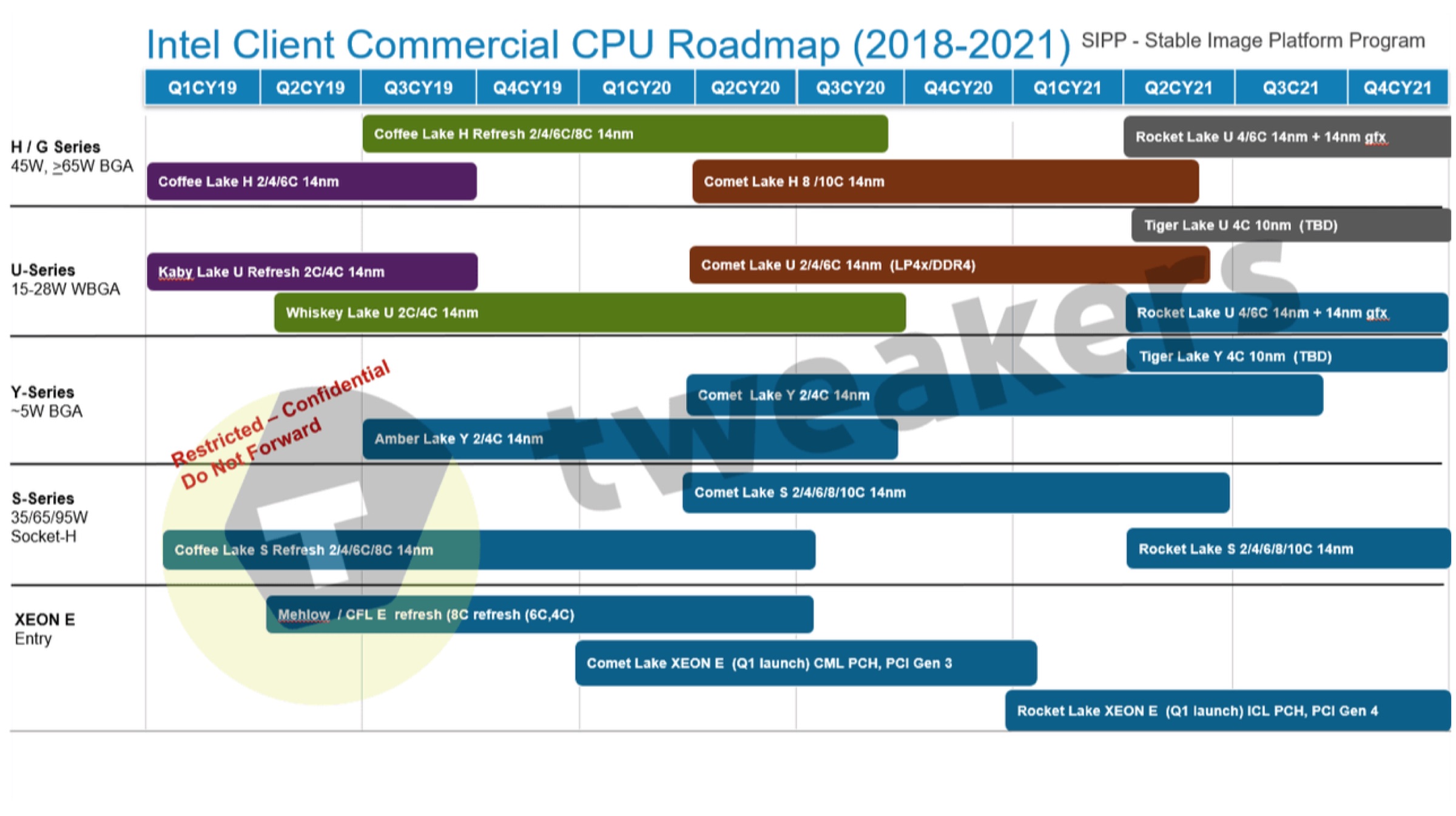
    First leaked on April 24 by a Dutch website, the roadmap highlights Intel’s key plans over the next two years. As per the roadmap, the company will launch a whole new refreshed lineup of Coffee Lake CPUs in the latter half of 2019. Intel will then follow up the Coffee Lake processors with the Comet Lake series of processors in the early half of the year 2020. Since Intel often labels its desktop processors as the “S-series”, it’s clearly visible in the roadmap that Intel will keep working on 14-nm S-series processors until 2022. 

    Intel Tiger Lake CPUs

    Another highlighting fact is that the company has marked its upcoming 10nm “Tiger Lake” processors as TBD, or To Be Decided. Tiger Lake architecture-based CPUs will be released as the “U-series”, and they will be specifically targeted towards mobile devices such as laptops. Planned for release somewhere in the second quarter of the year 2021, the TBD label on the aforementioned CPUs may mean that the company might have different plans for them. 

    Also Read: Samsung Patents A Distinctive Smartphone With Display On Front And Back

    Furthermore, as mentioned previously, Intel will release the Comet Lake desktop CPU range based on the 14nm process in the second quarter of the year 2020. The processors will feature a 10-core architecture. Also, in the year 2021, Intel will provide an overhaul to the Comet Lake lineup, which will then be called the “Rocket Lake” series. It may be possible that Intel is actually developing a 10nm desktop CPU that may be announced in the near future. Even if the roadmap shows otherwise, fans should take this news with a grain of salt, as the company hasn’t provided a statement regarding the same yet. 

  • Intel Announces New Laptop Processors, Capable Of Hitting 5GHz Clock Speeds

    Intel Announces New Laptop Processors, Capable Of Hitting 5GHz Clock Speeds

    Intel’s mobile processors are widely regarded as some of the best processors in terms of power consumption and clock speeds. On April 23, Intel Announced its latest lineup of mobile CPUs with a host of new features, including the support of 5GHz clock frequency. Previously, such a clock speed was unattainable in mobile devices, such as laptops. 

    Intel Gen-H Series Features and Specifications

    Intel’s new Gen H-series claim to provide faster operating speeds and improved connectivity support than its predecessors. Compared to the 15W power draw of the previous processors, the Gen H-series processors have a wattage label of 45W. Moreover, the processor lineup is unlocked, implying that the CPUs can be overclocked to even higher speeds. The primary target of the Intel Gen-H processor chips would be gamers and content creators.

    The new CPUs from Intel are fabricated using a 14nm process, and the top variant in the lineup, which is the Core i9-9980HK features 8 cores and 16 threads. The processor has 16MB of cache memory and has support for Wi-Fi 6 networking. Intel claims that the new processors can top speeds of 2.4 Gbps. Additionally, the new lineup provides 54% faster 4K video editing and 56% improved gameplay performance, the company says. To top it all off, Intel has announced that the new series of processors will be incorporated in newer ASUS, Dell, HP, Razer, MSI and Lenovo laptops with immediate effect.

    Also Read: OnePlus Announces The Launch Date Of The Upcoming OnePlus 7 And 7 Pro

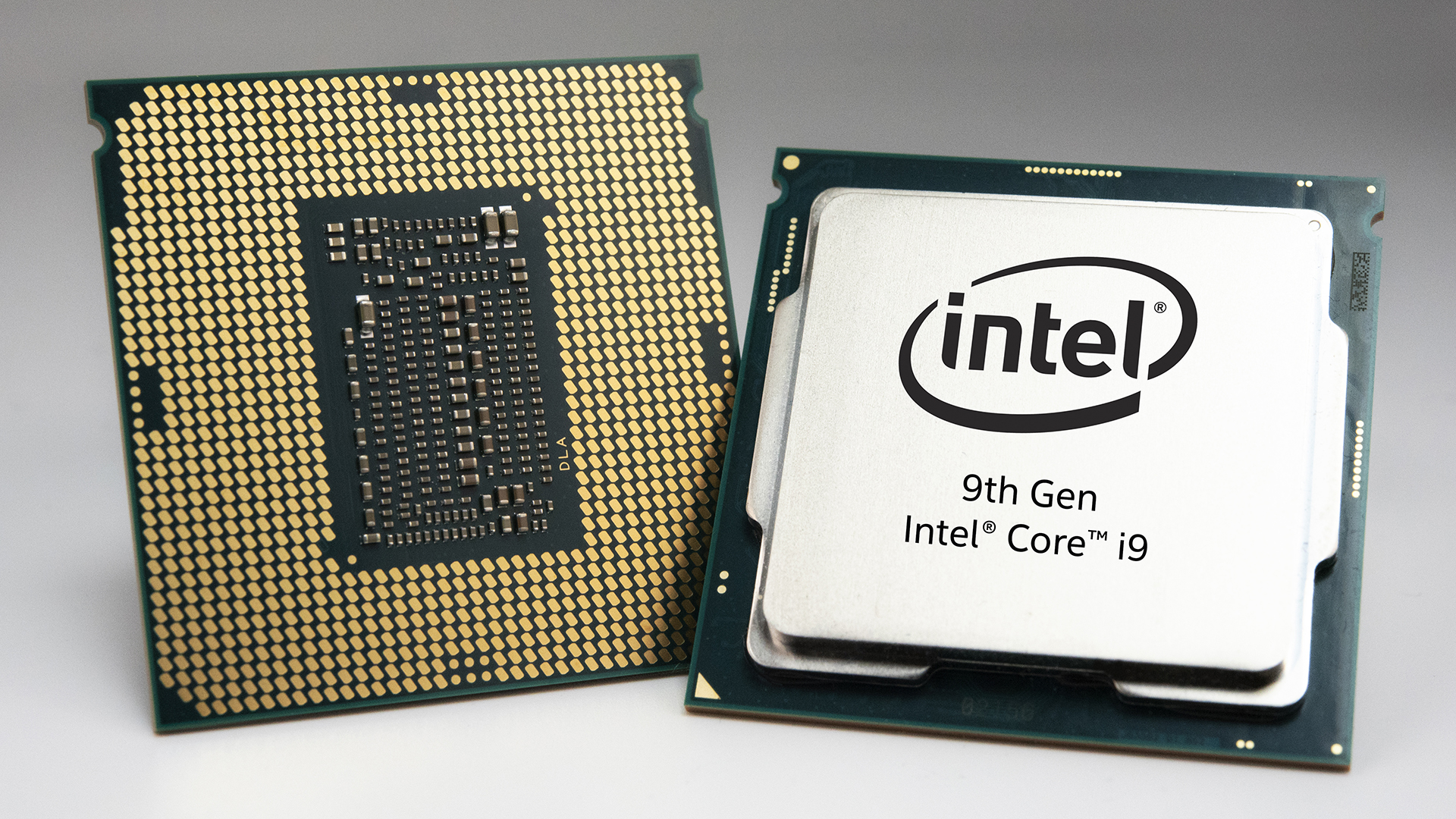
    Alongside, Intel also brought its new 9th Gen chips to light, which are specifically designed for desktops. The 9th series expansion covers over 25  Intel CPU variants, which includes the latest Celeron and Pentium Gold models. Moreover, the company is also expected to release a new processor lineup based on a smaller fabrication process in 2019, which will probably include 10nm chips.   

  • Intel Announces Advancements In Hardware, Cloud And Connectivity, Collaborates With Facebook

    Intel Announces Advancements In Hardware, Cloud And Connectivity, Collaborates With Facebook

    Researchers predict that Artificial Intelligence will make its way to a majority of computer systems by the year 2023. Intel has always been pro-AI, and the company even has a Developer Program to encourage programmers to develop AI systems based on Intel’s Xeon Chips. At the Open Compute Project (OCP) Global Summit, the company unveiled its advancements in new hardware, which will improve computing capabilities and cost innovation for hardware developers.

    The company stated that there is a huge amount of untapped data and that the company will design hardware that enables its systems to process the generated data in a way that efficiency is maintained. Moreover, Intel believes that new systems are also required to manage the ever-changing workloads and deployment models that drive data-based infrastructure. Consequently, OCP and Intel are working together for the same. Intel claims that it’s expertise in the field of AI and engineering will enable it to produce products and technologies that will lay the foundation for innovation in the aforementioned field.
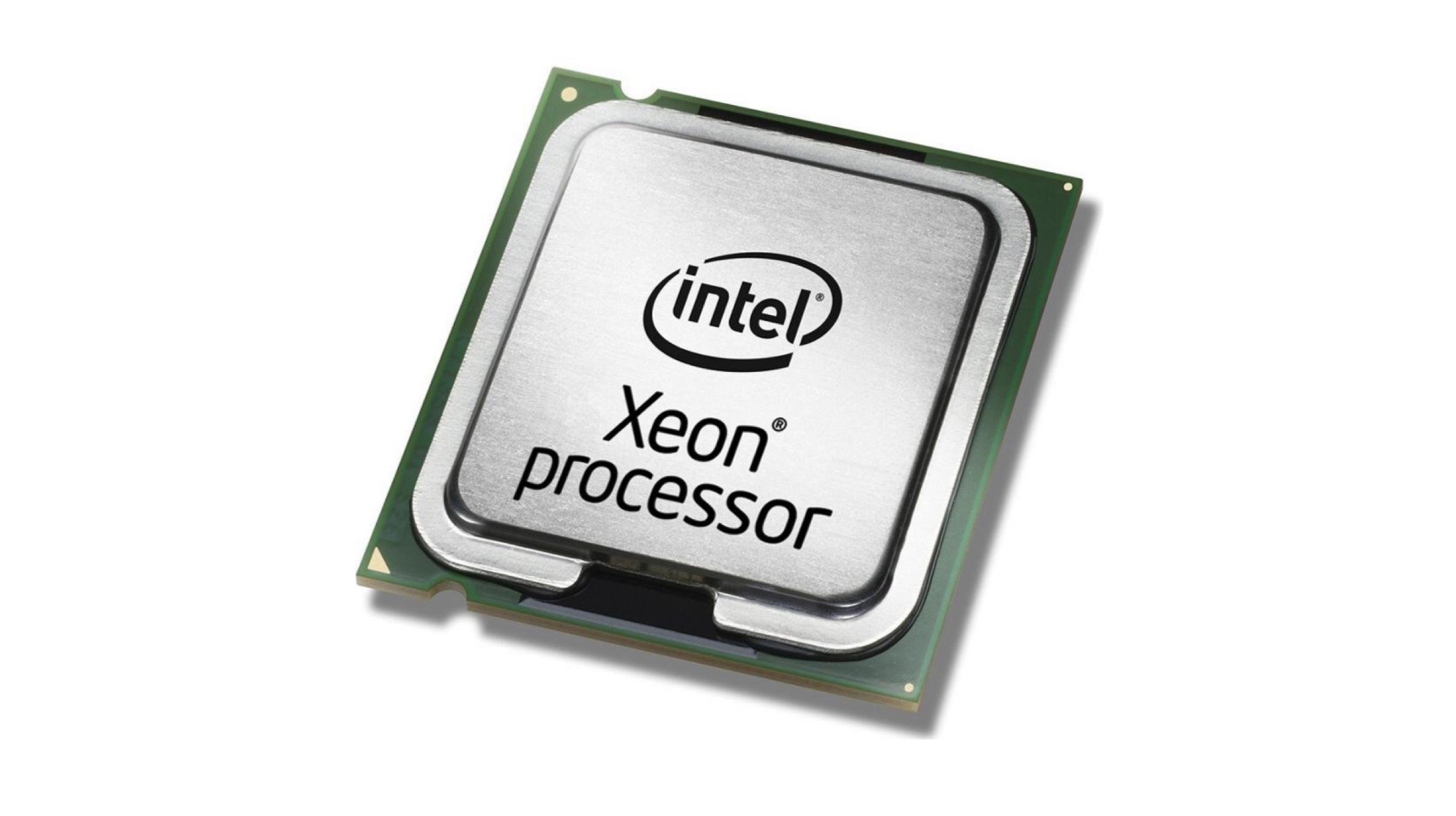
    As per the event, Intel’s new cloud-optimized setup for the Xeon processors will have a 4-socket reference design. This will enable the processor to get its core count up to 112 in a singular 2U platform and greatly boost memory bandwidth. Companies like Dell, HP, Lenovo and Quanta will probably deliver new cloud-optimized Xeon processors based on the preceding reference design. They might make their way into markets by the end of the year 2019.

    Intel Collaborates With Facebook For Upcoming Processors

    Intel has announced that it will team up with online social media and networking giant, Facebook to work on Intel’s upcoming Cooper Lake 14nm Intel Xeon processor family, which will sport Bfloat 16. Bfloat 16 is a 16-bit floating representation which will boost the performance of deep learning systems by offering a similar dynamic range to the basic 32-bit representations. Doing so will greatly improve the speed of AI deep learning, which in turn will help develop new systems such as recommendation engines, speech recognition and machine translation.

    Also Read: Best Wireless Headphones Under Rs 3,000 In India For April 2019

    Furthermore, the American multinational technology company also announced the release of new OCP-complaint network interface controllers, which carry the OCPv3.0 branding. The controllers range from speeds of 1 GbE (Gigabit Ethernet) to 100 GbE. Also, Intel will now contribute its new Rack Management Module Code to the OCP community to increase its engagement in OCP systems.  


  • Intel May Introduce 9th Gen Core CPUs For High End Laptops Soon

    Intel May Introduce 9th Gen Core CPUs For High End Laptops Soon

    The Game Developer’s Conference held in San Francisco saw some interesting revelations being made, with Google unveiling its upcoming cloud gaming platform and Oculus’ new VR headset, the Rift S. The American multinational corporation, Intel also announced its 9th generation of CPUs for high-performance laptops.

    About The New Lineup

    Named “Coffee Lake”, the new lineup will primarily be targeted towards gaming and digital content creation. The new processors will enable users to play games and stream at high framerates and resolution without affecting the performance. Also, the 9th Gen Core CPUs will support Gigabit-class Wi-Fi 6 and Intel Optane Memory for improving communication latency and solving storage issues. The Intel Optane chip was launched in the year 2017 and is as fast as conventional RAMs while being inexpensive at the same time. It unifies the RAM chip and storage chip into a single module.

    Expected Specifications

    The company did not put forward any official specifications for the same, but as per leaks, Intel will introduce two new models in each of the Core i5, i7 and i9 CPUs. The Core i5-9400H is expected to have four cores running at 4.3 GHz, whereas the toned down i5-9300H will sport similar cores clocked at 4.1 GHz. The i7 lineup will be joined by the Core i7-9850H and Core i7-9750H, both with hexa cores clocked at 4.6 GHz and 4.5 GHz respectively. Lastly, the top-end Core i9 series is said to feature two new models, which are the i9-9980HK and the i9-9980H. Both the variants will expectedly have a total of 8 cores, with the clock speeds varying at 5 GHz and 4.8 GHz respectively. All the models are also speculated to sport Hyper Threading.

    Also Read: Netflix Starts Testing Rs. 250 Monthly Subscription Plan In India

    Furthermore, the company also teased its upcoming graphics card, code named Odyssey. Although Intel did not divulge any specifications or details regarding the same, spectators were thrilled to learn that Intel may release a variant from the Odyssey series soon. Additionally, the company also teased its new UI for GPU configuration, which is already available for selected beta testers.

    The Intel 9th Gen Core CPUs will be launched in the second Quarter of 2019.


  • Intel And Qualcomm Will Offer 5G Modems For Computers

    Intel And Qualcomm Will Offer 5G Modems For Computers

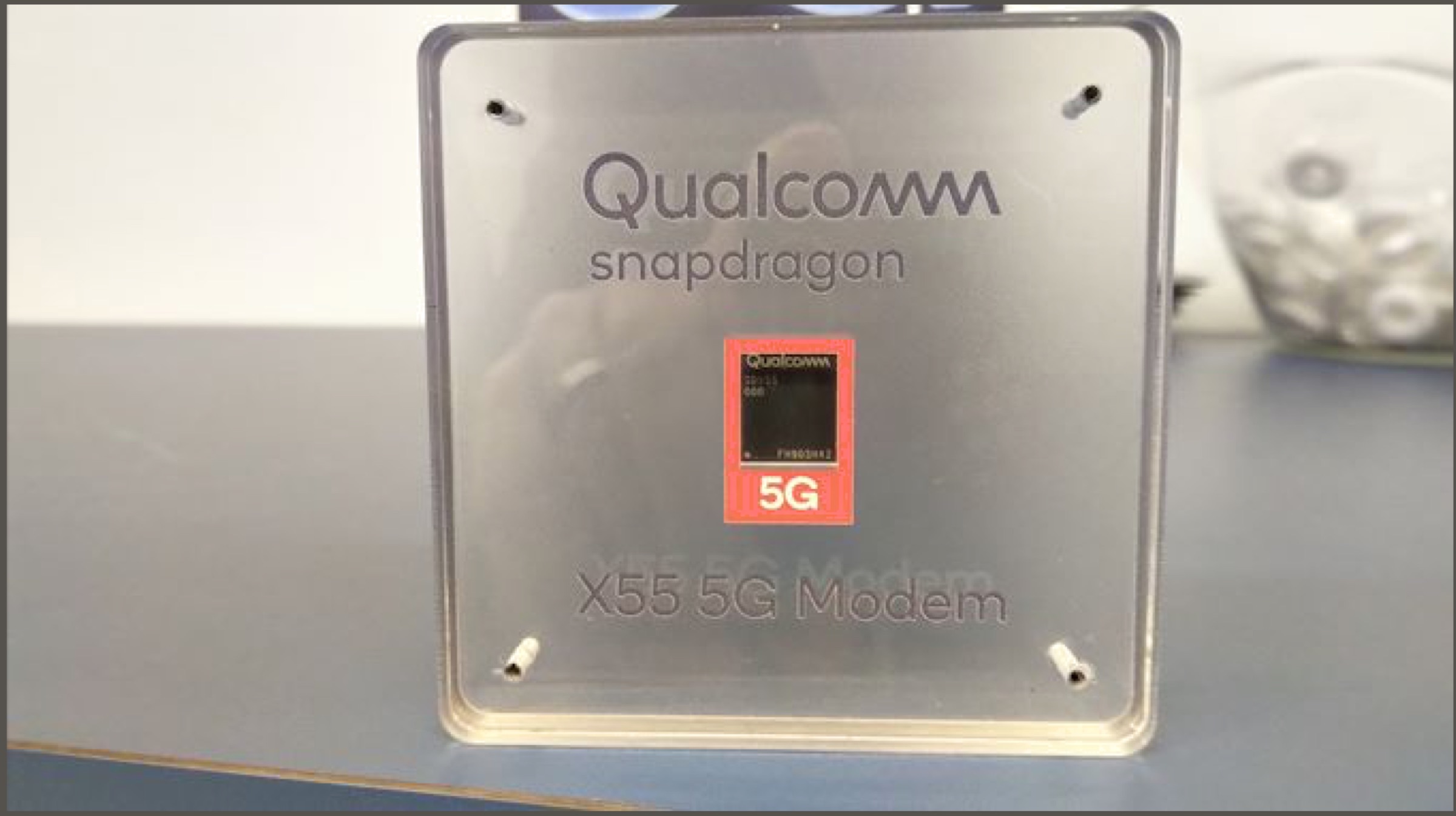
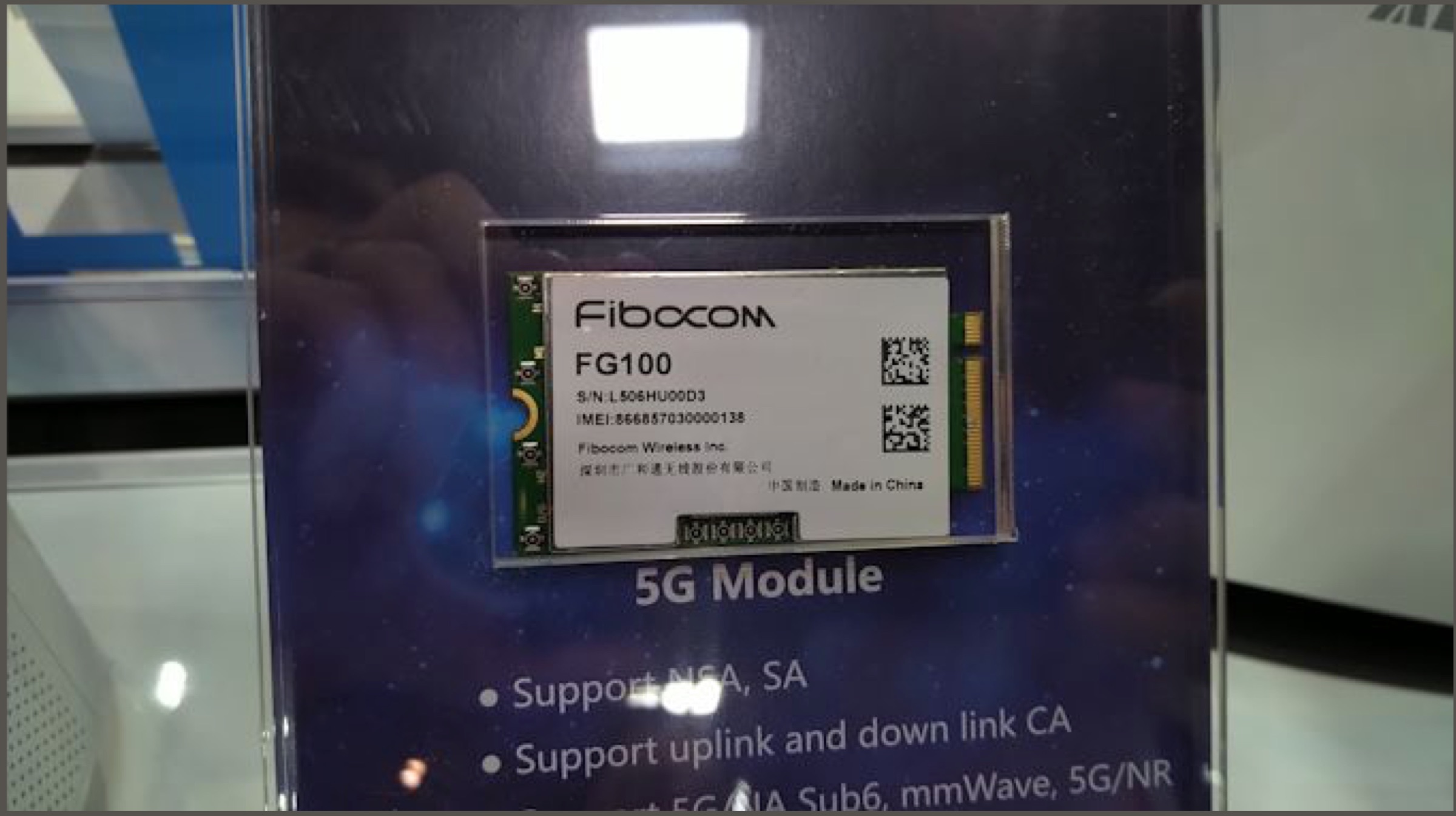
    Consumers believe that 5G technology will initially be limited to just smartphones, which may not be the case. A lot of companies speculate that 5G support will be available almost immediately on desktops and laptops with M.2 sockets. At MWC 2019, companies like Intel and Qualcomm were found showing off their 5G modems that will render high speed internet connectivity to traditional computing devices including laptops and desktops.

    Noteworthy, the 5G modules are not intended to be Plug and Play devices, instead, they are dependant on the external 5G antennae for network reception. This means that without a 5G supported machine, the modules are of absolutely no use. The modules will be used by Laptop and desktop manufacturers, which include companies like HP, Lenovo and Dell. All these brands have implemented LTE versions of similar connectivity modules in the past, so it is likely that the aforementioned companies will be the first to unveil laptops and desktops with 5G modules.
    Qualcomm and Intel Modems: Bands And Availability

    During MWC 2019, Qualcomm announced the X55 modem for 5G support across devices. The module is expected to be compatible with both mmWave 5G and Sub-6GHz 5G bands. mmWave 5G technology makes use of ultra high frequency radio signals, which are used to transfer data across devices. This is done within the 24 to the 90Ghz range, so a lot of bandwidth is wasted where it could be used to boost 5G speeds. Instead, the Sub-6GHz band operates between 1 and 6 GHz, which encompasses mostly all the data. It is less operational than mmWave in the long run, but it is certainly more functional.
    Also Read: Is Artificial Intelligence Digging Its Roots Deeper Into Our Reality?

    The Intel 5G modules will be manufactured by Fibocom and will use the XMM8160 modem. Just like Qualcomm’s module, it will support both 5G bands. Reportedly both the Qualcomm and Intel modules are 30 wide. Therefore, they cannot be used with standard M.2 ports. Consequently, companies need to incorporate compatible sockets on their machines to accommodate previously mentioned modules. The 5G modules will be first seen in laptops and desktops in the year 2020. 

  • Foldable Intel Smartphone, Converts To Large Tablet

    Foldable Intel Smartphone, Converts To Large Tablet

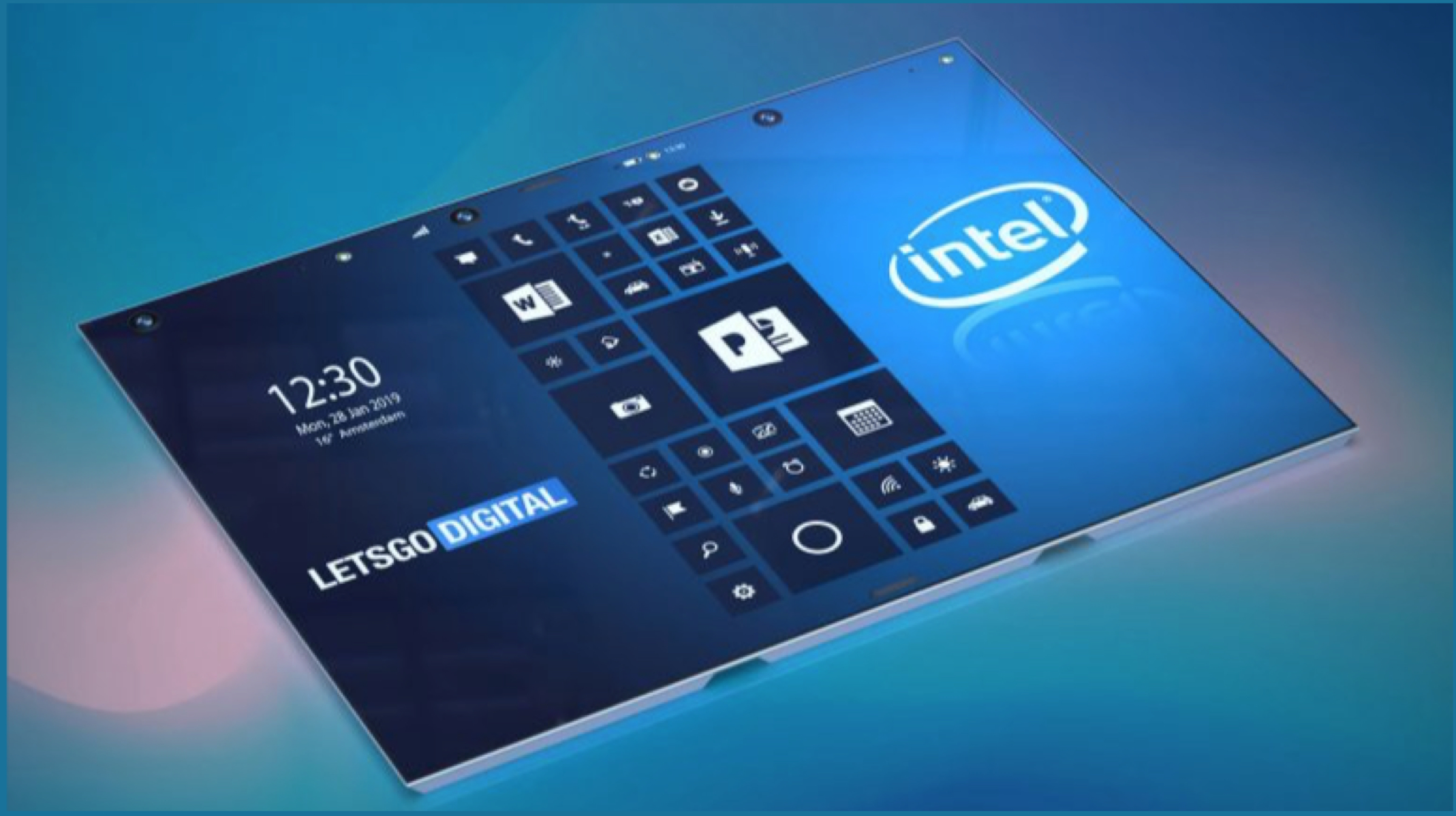
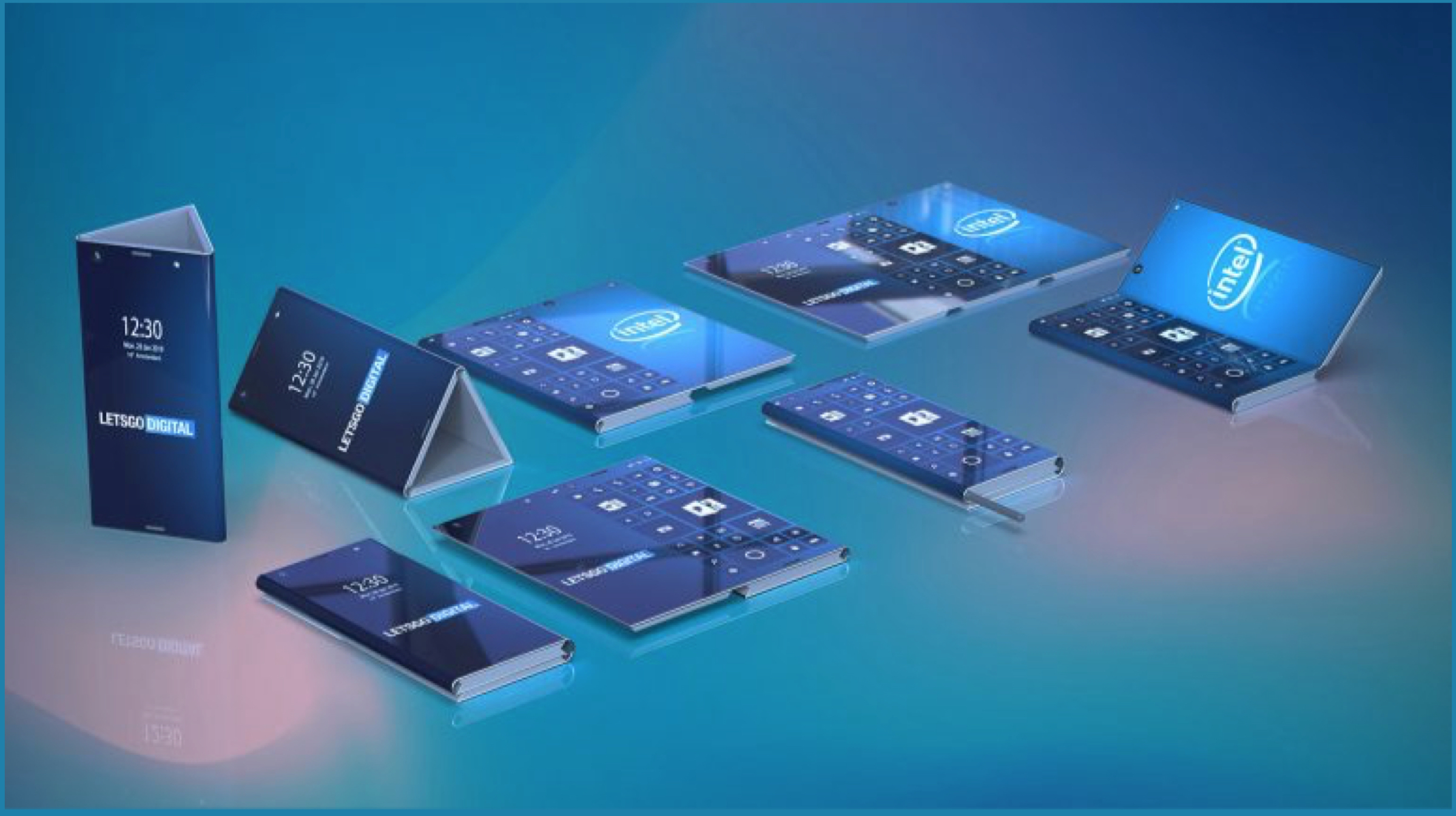
    Intel has finally patented a foldable smartphone which has three different display sections to create an extra large screen. It will run on Windows OS and will probably be equipped with a Stylus pen. 

    Intel Partnering With Microsoft

    For such a venture, it seems that Microsoft will enter into a partnership with Intel. At Computex 2018, Intel put forward two prototypes, which included the before-mentioned foldable smartphone and a notebook, also codenamed as the Tiger Rapids Project. The documentation by LetsGoDigital shows a folding smartphone that is made up of three screen parts. It has also released some 3D renders for the same. 

    About The Device

    Intel now has a design patent for the device with the foldable panels. Needless to say, the device looks pretty amazing. In the normal state, the device is fully folded for one-handed usage. The device is supposed to be bezel-less. All major components and sensors are placed under the display of the device. When the device is unfolded, it can be used as a mobile workstation. 

    Surprisingly, the Intel foldable smartphone can be unfolded twice, which means that it is made up of three display parts. Also, the device has two cameras per screen section, so that’s six cameras in total. On top of that, the Intel smartphone is equipped with a stylus. Oddly resembling the S-Pen, it magically slides into the corner of the smartphone housing. Probably, the Stylus is held in place by a magnet of sorts.
    Implications Of The Intel Foldable Smartphone

    Also Read : More Images Of The Samsung Galaxy S10 Leak

    An interesting advantage of the foldable smartphone is the fact that you can actually fold the screens towards each other and lock them in place, creating a triangle. You can then place the device on a table, just like an alarm clock. Obviously, there can be a lot more helpful implications for the same. But you can be sure that it will turn heads towards the device. It doesn’t seem likely to be in the market during the near future, but it’s very intriguing that tech giants are actually trying to do so. 

  • Apple iPhones To Get 5G Connectivity In 2020

    Apple iPhones To Get 5G Connectivity In 2020

    With 5G technology at the brink of reaching consumers soon, it is not surprising that tech giant Apple is gearing up to launch its own 5G handsets. Companies like OnePlus, Xiaomi and Oppo have already partnered with Qualcomm. They have even started testing some of their 5G compatible devices. However, Apple is partnering with Intel to make 5G enabled iPhones available by 2020. Apple will use Intel’s 8161 5G modem, according to reports.

    Apple’s 5G

    Intel plans to use the 10nm process for its 8161 chip, which will increase transistor density and hence provide more speed and efficiency. Intel is also working on a separate chip, the 8060. This will be used for prototyping and testing on the 5G iPhone. However, things have not been all smooth sailing between Apple and Intel.

    The 8060 has some heat dissipation issues which has not yet been solved by Intel. This could be due to the fact that 5G carriers will initially rely on the millimetre-wave spectrum to connect the first few 5G phones. However, this process is extremely demanding on the modems. It causes them to release levels of heat which are higher than the normal. These levels can reach a stage where they can be felt on the exterior of the device as well and also affects battery life. Obviously, Apple is not happy with these results.

    Intel is said to be working on solving this issue. But it seems like this hurdle isn’t big enough for Apple to reopen talks with Qualcomm regarding the supply of chips. Qualcomm’s 5G modem also has its own share of heat dissipation issues. However, the chip maker has said that it has found a way around this and solved the issue. Apple has reportedly held conversations with MediaTek as well, regarding the supply of 5G modems. However, MediaTek usually makes chips for budget and mid-range devices. Therefore, it might not be the perfect fit for Apple’s flagship iPhones. The talks however have taken place and MediaTek is just a distant ‘Plan B’, according to reports.

    Also ReadPrimeOS Equips Any Laptop Or PC With Android

    The Race To 5G

    A number of Android devices with 5G capability will be showcased at the Mobile World Congress, early next year. This might make it seem like Apple is joining the party a bit too late, however, the move makes perfect sense. Although chip manufacturers are making 5G modems this year itself and basic infrastructure for 5G will be set up soon. It does not guarantee great 5G connectivity. Infrastructure will be present, but it will be limited. This would give users great download speeds at very limited places and not any dependable connectivity. Therefore, waiting till 2020 to ensure that the required infrastructure is present, instead of rushing into making sure ‘we did it first’ could be a logical move by Apple.

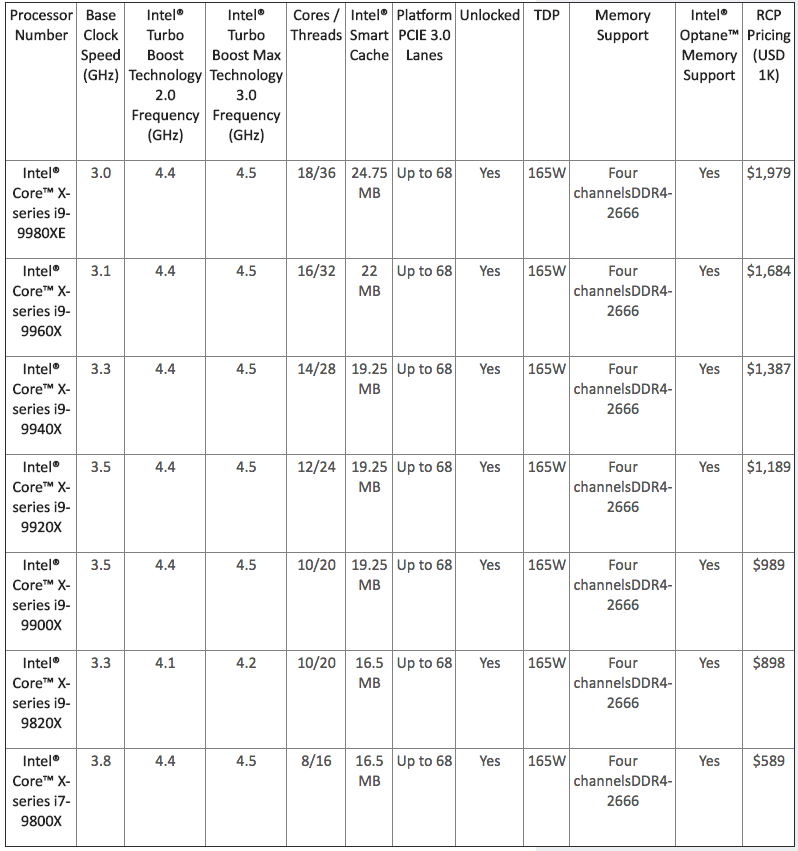
  • Intel Launches 9th Generation X-Series Chips

    Intel Launches 9th Generation X-Series Chips

    Intel has launched a lineup of their new X-Series 9th generation processors. With the new line of processors the company is mainly focusing on gaming and content creation. The key product launches from the event are: the Core-i9, Core-i5, Core-i7 and the new 28 core Xeon processor. The new processors are based on the 14 nm manufacturing technology which is same as the 8th Gen Skylake Processors.

    Also read: Amazon Great Indian Festival Sale : Top Deals On Speakers

    Details

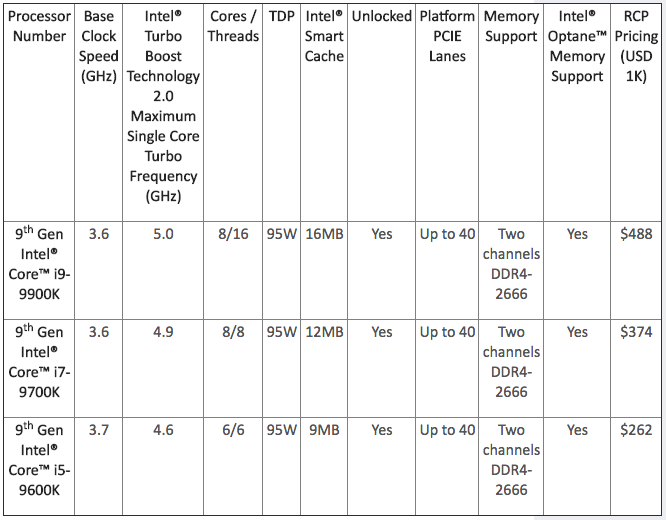
    The main star of the show was the new i9 flagship model which is the 9900k. The company is touting it as “the best gaming processor in the world”.  The core i9-9900k is an 8 core / 16 thread CPU. It has a Turbo Frequency of 5.0 GHz making it the world’s first mainstream processor that is able achieve this clock speed.

    The new i5-9600k is an 8 core and 8 thread CPU. It has a base clock speed of 3.7 GHz and it can throttle upto 4.6 GHz. The i7-9700k is an 8 core 8 thread CPU which has a base clock speed of 3.6 GHz. It can be boosted upto to a frequency of 4.9 GHz.

    Another important product the company launched is the Intel W-3175x Xeon processor. It is a 28 core / 56 thread CPU. This chip’s clock speed starts at 3.1GHz and goes up to 4.3GHz. It has a TDP (Thermal Design Power) of 255 watt.

    Price & Availability

    The Core i9-9900K is available for pre-order now and deliveries will start from 19 October. Other processors in the lineup will go on sale in November and December. Talking about price, the Core i9-9900K has a price tag of $488 (approximately Rs. 36,120), the Core i7-9700K has a price tag of $374 (approximately Rs. 27,660) and the Core i5-9600K has a price tag of $262 (approximately Rs. 19,380). The price of the Intel W-3175x Xeon is unannounced and we will have to wait for the company to do the same.


  • 8th Gen Intel Core i9 Processor For Laptops Officially Announced

    8th Gen Intel Core i9 Processor For Laptops Officially Announced

    Intel has officially announced the 8th generation Core i3, i5, i7, and Core i9 processor for laptops at a global event in Beijing. Additionally, the company also announced next-generation Intel Optane memory that can deliver high performance even on older PCs. These processors will be available across the globe for notebook manufacturers. The manufacturers are most likely to launch notebooks based on these chipsets by Q2 2018.

    These chipsets are based on the latest Coffee Lake platform with 14nm++ process. Compared to the 7th generation chipsets, these processors offer up to 41% more frame rate while gaming. Similarly, 4K video editing will be faster by up to 59%. These processors also come with a discrete graphics card from AMD, which has an edge over the last gen processors.

    The 8th Gen Intel Core i9-8950HK is the most powerful mobile processor launched to date. The chipset has a six cores and 12 hyper-threads to offer top of the CPU performance. The processor uses Thermal Velocity Boost (TVB), which will automatically increase the clock speed of the CPU based on temperature. This feature will help this chipset to achieve up to a maximum frequency of 4.8GHz.

    The processors can handle native VR and Windows mixed reality content. Additionally, Intel has also launched a new Intel 300 Series chipset, which offers a faster 2x internet speed with  2×2 802.11AC 80 MHz (867 Mbps) standards. The 8th Gen chipsets combined with an Intel Optane memory can increase the performance a device by a large margin. The Intel Optane memory uses SATA-based storage technology without compromising storage capacity. In fact, compared to an HDD drive, the Octane can load a game 4.7 times faster and 1.7 times faster multimedia loading speeds.

  • Apple Will Make It Own Chipsets To Power Mac Devices By 2020

    Apple Will Make It Own Chipsets To Power Mac Devices By 2020

    Most of the Notebook manufacturers use either Intel or AMD chipset. However, recently, companies like HP and Asus has started to launch notebook based on the Qualcomm chipsets. According to a report, Apple might replace the Intel processors on Macs to use its custom ARM chipsets. When Apple started making MacBooks and iMacs, the company initially used Motorola and IBM’s PowerPC chipsets. However, in 2005 Apple switched to Intel processor-based Macs.

    The report suggests that the company is working on a new project named ‘Kalamata.’ The project is still in a nascent stage and this will help Apple to achieve seamless integration across its lineup including iPhone, iPad, iMac, and MacBook. This would also affect Intel, as 5% of its overall revenue generated comes from Apple. As soon as this news was out, Intel’s shares were down by 9.2%, which is the biggest intraday drop in the last two years.

    However, Intel has not spoken a word about this development, and played safe:

    We don’t comment on speculation about our customers

    Apple Custom Chipset Specs

    The processors will be manufactured by TSMC, which is the manufacturer of Apple A series chipsets for iPhones and iPads. These chipsets will use Arm’s technology. These processors are expected to offer better battery life and it will ease out the transition of unifying the iOS and macOS. The unification will be achieved using a new platform called ‘Marzipan’, which will be expected to go live in WWDC 2018 for developers.

    Most of the notebook manufacturers like HP, Dell, and Asus wait for Intel or AMD to launch its latest chipset. If Apple develops its own chipset, then the company can be ahead of the competition. This will have a positive impact on Apple, as the company will have an all-around control over the components required for designing a device. This also means that the company will be able to launch newer Mac models with its own time frame. Additionally, this will help the company to integrate iOS and macOS on chipset level.

iGyaan Network
Privacy Overview

This website uses cookies so that we can provide you with the best user experience possible. Cookie information is stored in your browser and performs functions such as recognising you when you return to our website and helping our team to understand which sections of the website you find most interesting and useful.