Category: Tech

Latest Technology News, Alternative, Bio-Tech, Medical, R&D and Innovations

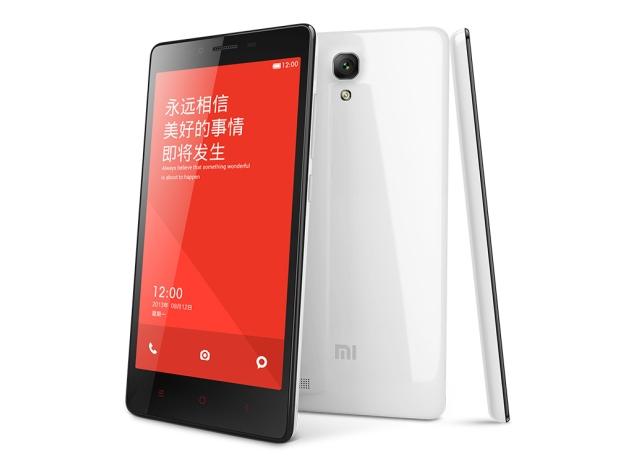
  • Xiaomi Lowers Price of Redmi Note 4G by Rs 2,000

    Xiaomi Lowers Price of Redmi Note 4G by Rs 2,000

    Great news for Xiaomi fans. The company has announced a price cut for Redmi Note 4G in an official tweet.

    From today, people can buy the Redmi Note 4G at a discounted price of Rs. 7,999 from Xiaomi’s website as well as various leading websites and retail stores. The news is not only exciting for existing Xiaomi fans, but should also excite those who have been looking for a new phone.+

    https://twitter.com/MiIndiaOfficial/status/615740349068152832/photo/1

    It seems Xiaomi has reduced the price to take on the K3 Note, which was recently launched by Lenovo and has similar specifications. The new price cut makes the Redmi Note 4G more affordable than the K3 Note.

    Xiaomi Redmi Note 4G is a 4G LTE ready device. It is powered by a 1.6GHz quad-core Qualcomm Snapdragon 400 CPU coupled with 2GB of RAM. The Redmi Note 4G sports a 5.5 inch IPS LCD capacitive touchscreen, a 13 MP front camera and has a storage capacity of up to 64 GB. The phone runs on a 3,100 mAh battery, which is often counted as one of the phone’s strongest features. If the price drop doesn’t convince you to buy the phone, maybe these specifications will.

    Specs

    Redmi Note 4G

    Display 5.5 inch IPS LCD capacitive touchscreen (720×1280 pixels)
    Processor 1.6 GHz Qualcomm MSM8928 Snapdragon 400
    RAM 2 GB
    Storage 8 GB
    Expandable Upto 64 GB
    Main Camera 13 MP
    Front Camera 5 MP
    Battery 3100 mAh
    Operating System Android 4.2 upgradable to v4.4.2 (KitKat)
    Price Rs.7,999

    The Redmi Note 4G was launched in December last year at a price of Rs. 9,999 through a flash sale on Flipkart.
  • Check What Your Favorite Artists Are Listening to With Shazam’s Newest Update

    Check What Your Favorite Artists Are Listening to With Shazam’s Newest Update

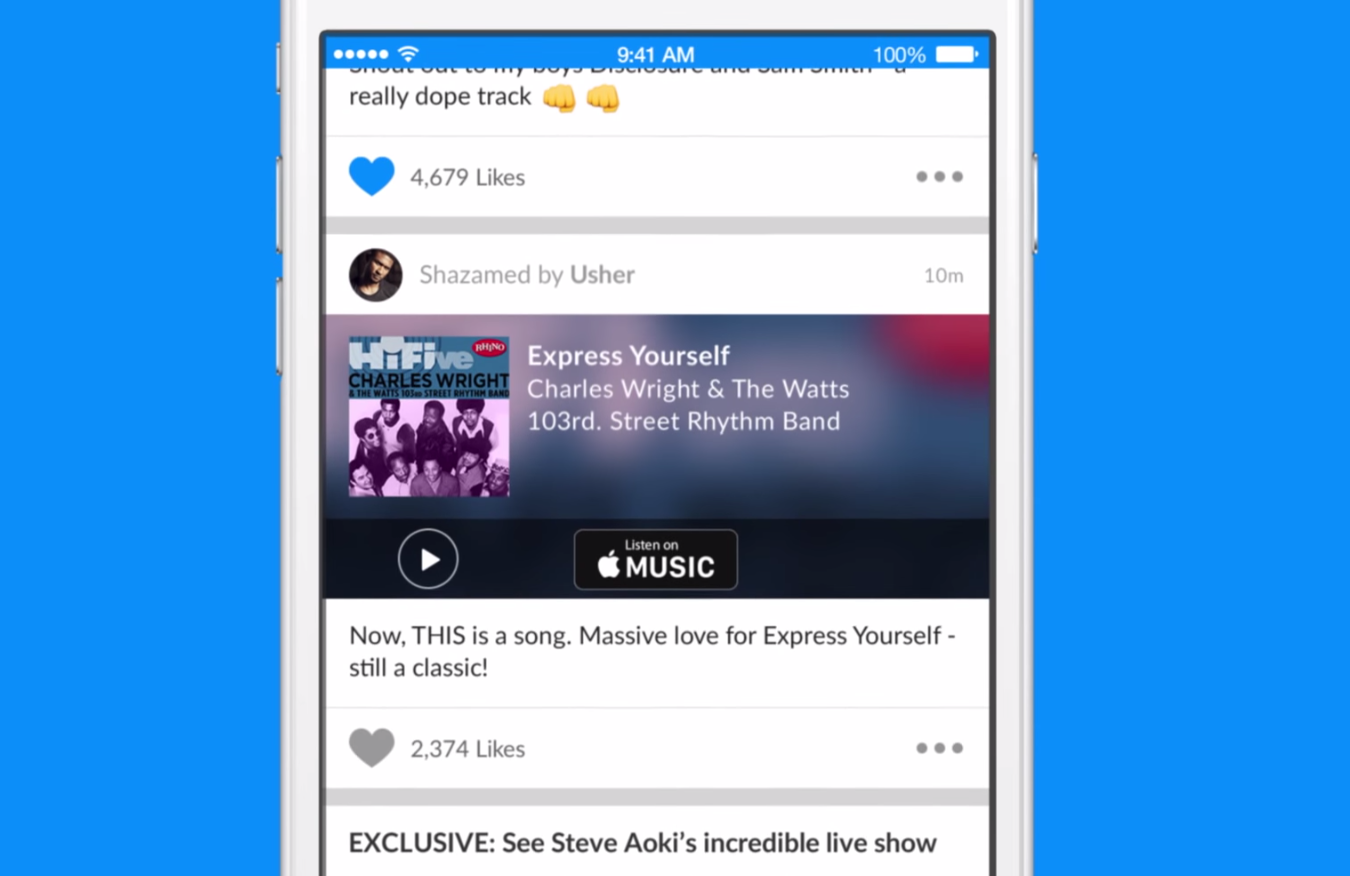
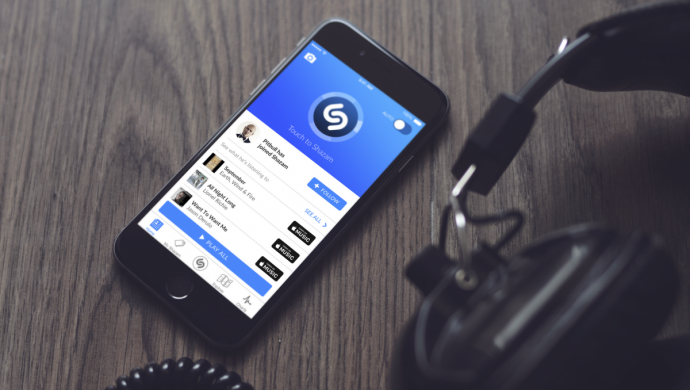
    Shazam, the popular music app that identifies what song is playing on any other medium, is about to update a new feature that will make it more than a magical blue button. At a TriBeCa event on Monday, Shazam has announced a new feature where you can follow your favorite artists and see what they are Shazaming. Pretty cool!

    Daniel Danker, Chief Product Officer, Shazam, said

    We want Shazam to continue to serve as a destination for music fans, increasingly becoming the center of their music world. For years Shazam has identified music with just one tap. Now it’s just as easy to open Shazam and tap once to discover and listen to great music.

    The company has signed up 30 top-notch artists, including famous names like Pitbull, Calvin Harris, Maroon 5, Meghan Trainor, Coldplay, Usher, One Direction, Alicia Keys, Shakira, Mariah Carey, Imagine Dragons, Linkin Park, and many others. Soon after launch, Shazam says it will extend this functionality to include hundreds of others from around the world.

    You will be able to follow artists’ pages within the app and “like” a musician’s search results, listen to songs they have searched for and get updates on the music they release. Songs that an artist has searched for will also show up in a user’s feed if they follow that artist.

    shazamed-by-usher

    With this, Shazam aims at a larger goal of making music discovery easier for its users. The company is already offering a number of ways to find new songs you like, including music charts, a news feed of sorts, Facebook integration, a worldwide map of users’ Shazam, a trending section to see the top tracks or the top tracks by particular regions, and much more. Shazam hopes to reach the top-most position in the world of music apps.

    But, the world is competitive, and Shazam also has quite a good amount of rivals in this matter. The Shazam update comes the same day that Apple is scheduled to launch Apple Music, its paid streaming service. Tidal is another paid streaming service maintained by Jay-Z and it is placing itself in the market for fans to connect with their favourite artists and gain them access to exclusive content.

    Shazam said the new feature will go live on Tuesday morning for iOS and Android devices. Lately, Shazam has been extending its scope by including visual identification. This update will soon let users identify or learn more about anything they point out at.

    https://www.youtube.com/watch?v=_IzK9qtb8Gc

  • Google Updates Hangouts for iOS Users

    Google Updates Hangouts for iOS Users

    Good news for iOS users who still use Hangouts. In a blog post, the company announced “Hangouts 4.0”, an improved version of the messaging app for iOS. The new update includes bugs and performance fixes and a new design.

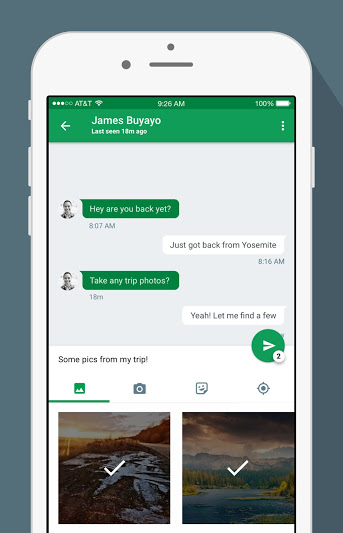
    The most notable improvement in the new Hangouts is the easier access to send photos and stickers. In the previous versions, the option was hidden behind a paperclip button. In the new version, the attachment options are now located on a strip below the text entry field.

    Hangouts_iOS_Share_Photos

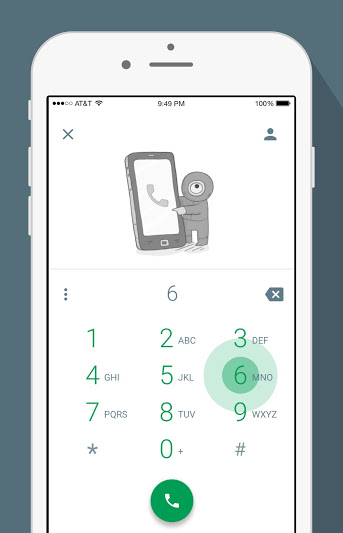
    The strip makes it easier to select photographs and stickers without exiting the chat window. The camera button will open a mini viewfinder below the text field. The new version features a Quick Compose button that finds the most frequent contacts and starts a new conversation. The dialler gets a new user interface as the standard buttons have been replaced by green floating action buttons – circular buttons that lift and display an ink reaction on a press.

    Hangouts_iOS_Dailer

    The update also includes many bugs fixes and performance improvements. Hangouts 4.0 is currently available on the App Store. Google will soon announce the Android update for Hangouts.

  • OnePlus Two Will Feature Fingerprint Scanning Technology

    OnePlus Two Will Feature Fingerprint Scanning Technology

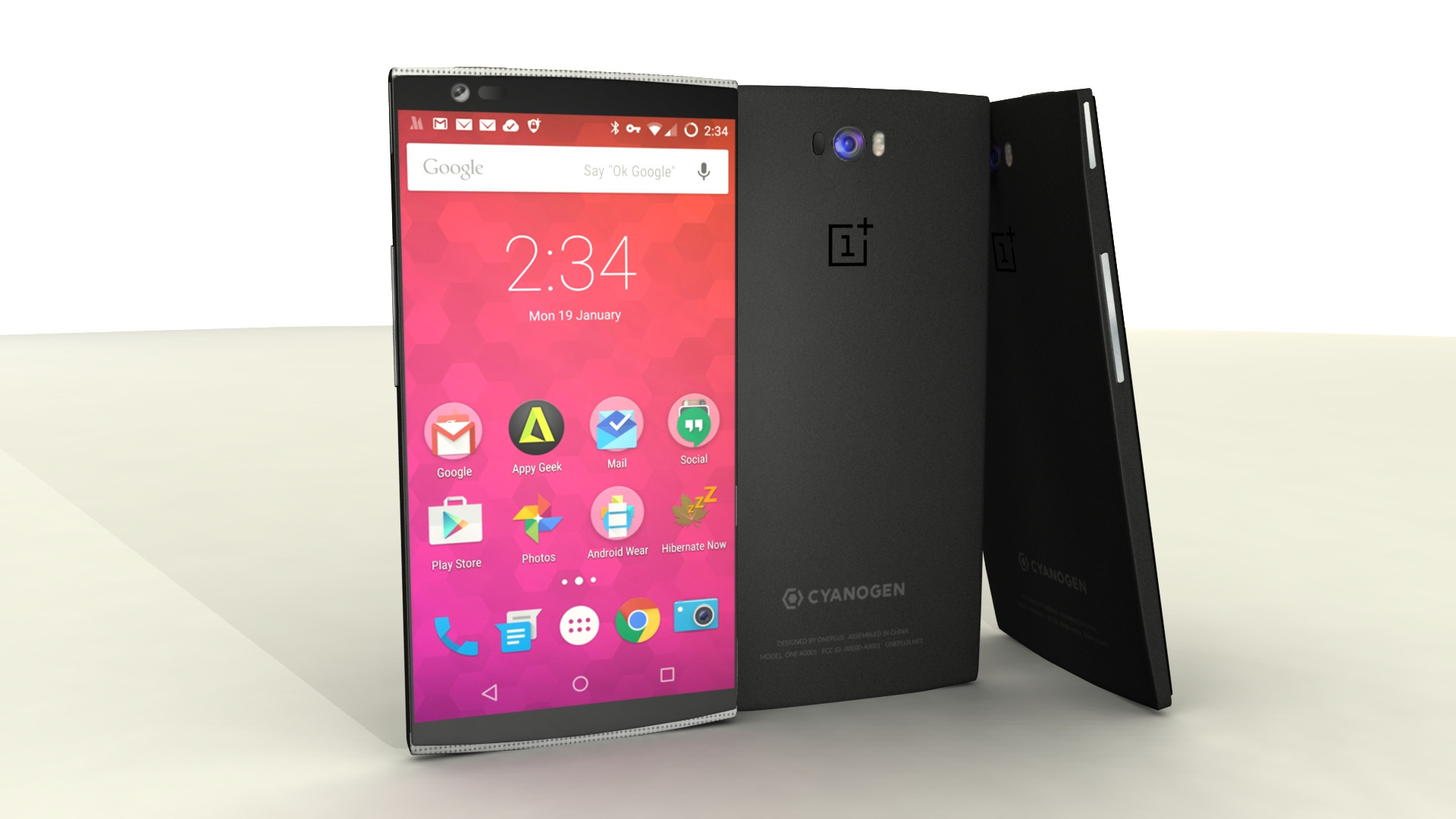
    With its launch only a month away, OnePlus is slowly giving out hints and details of the highly anticipated OnePlus Two. Just yesterday a new detail emerged about the phone sporting a display ranging between 5.5 and 5.7 inches and having a black matte border. Before this, OnePlus confirmed that the Two will be the first Android handset to feature a USB C-Type charging. Today, the company has revealed that the new handset will have a fingerprint sensor, and it is slated to be better than the Touch ID.

    The official blog page of OnePlus reads that the fingerprint sensor is “done right. It’s refined and lightning quick, unlocking your device faster than TouchID.” It also says, “Your smartphone is your most personal device, and its security should be personal, too.”

    The company assures that the sensor will not be used as a selling point of the device, but instead be a useful feature. OnePlus says the technology is meant to unlock your device and will be able to store five fingerprint profiles.

    OnePlus Two is not the first device to implement fingerprint scanning within it. Samsung has done the same with its devices. However, researchers at Germany’s Security Research Labs showed that the Samsung Galaxy S5’s fingerprint scanner is not at all secure.

    OnePlus Two will launch on 27th July through a virtual reality event. Currently not much is known about the spec details of the expected OnePlus handset, but we got some notable information that pointed out to its processing capacity. As per the detail leaked by the company CEO Liu Zuohu, OnePlus Two will run on Snapdragon 810 chipset along with 4GB RAM. A 5.5-inch 2K display will improve the viewing experience of the user.

    oneplus two

    There is still a little bit of time for the OnePlus Two to come out. In the meantime, you can watch our review on the OnePlus One:

  • Engineers Break the Speed Limit for Fiber-Optic Transmissions

    Engineers Break the Speed Limit for Fiber-Optic Transmissions

    Fiber optic networks are already the preferred choice for Internet connections in countries like USA and UK and following the trend, companies like MTNL and Airtel are offering fiber optic services to Indian consumers. Fiber-optics based Internet can usually transmit Internet speed ranging from 15 Mbps upto 100 Mbps in some countries.

    Of late, there is a discussion going on among scientists and researchers on what will happen when fiber-optic cables reach their physical limits. In a matter of few years, the physical barrier of 100 TBps could be reached in five years and could easily break if services like 8K streaming and others become the standard.

    It may look like that the Internet Apocalypse may soon end our days of trolling and killing time on 9GAG, but thankfully, it will not happen.

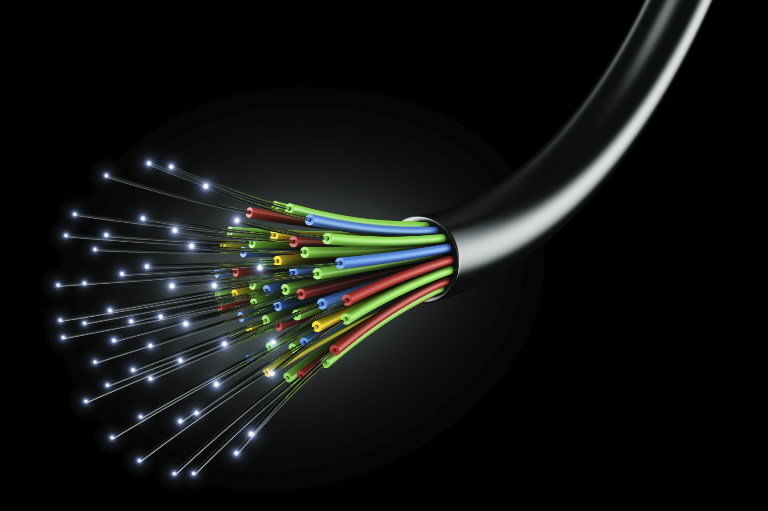
    Engineers at UC San Diego’s Qualcomm Institute have successfully tested the limit of fiber-optic transmissions by increasing the power of optical signals almost twenty times the base level. To send the data faster, engineers usually increase the speed by adding more power, which can interfere with the data, scramble it and lead to a state where data is not being delivered at all.

    Engineers used wideband “frequency combs” that conditioned streams of information before they were sent out, so that any interference that occurred along the way would be predicted. At the receiving end of the fiber, the information was unscrambled and fully restored.

    As Nikola Alic of the Qualcomm Institute, a lead author on the paper, under which the experiment was carried out, puts it, “Today’s fiber optic systems are a little like quicksand. With quicksand, the more you struggle, the faster you sink. With fiber optics, after a certain point, the more power you add to the signal, the more distortion you get, in effect preventing a longer reach.” The team’s use of “frequency combs” will not only keep the signal going but will also allow distortion-free signal.

    Internet will live on, after all.

  • Leaked Image of the OnePlus 2 Confirms its Screen Size

    Leaked Image of the OnePlus 2 Confirms its Screen Size

    Since the launch of the OnePlus 2 is only a month away, we can expect to see more details being revealed everyday.  A few days ago, OnePlus announced the launch date for the OnePlus 2 as 27th July. Today, a new detail has emerged about the phone regarding the display.

    leakedoneplustwo

    A new image of OnePlus 2 has been leaked on popular Chinese microblogging website Weibo,which reveals more details about the phone. As we had earlier suspected,  the phone will sport a display ranging between 5.5 and 5.7 inches and will have black matte border. Since the image features a filter, it is difficult to confirm until the official statement comes out.

    OnePlus Two will launch on 27th July through a virtual reality event. The phone is priced at around Rs. 25,000 and will support USB-C port, becoming the first flagship phone to do so.

  • Apple iPhone 6s – Everything We Know So Far

    Apple iPhone 6s – Everything We Know So Far

    The Apple iPhone 6 and iPhone 6 Plus released last year in September. It barely seems any time has passed and we’re already hearing a steady flow of rumours about the next iPhone, temporarily dubbed as the iPhone 6s.

    If we took a wild guess at what the smartphone might incorporate, we would include a long list of patents that Apple have issued to the USPTO (United States Patent and Trademark Office). Going by the patents, Apple might have a three-sided wall display, a smart waterproof design and it might be flexible. Like we said, that would be our wild guess.

    Coming back to reality, we have a long list of rumours that give us a good idea of what the next iPhone might incorporate.

    apple-macbook-force-touch

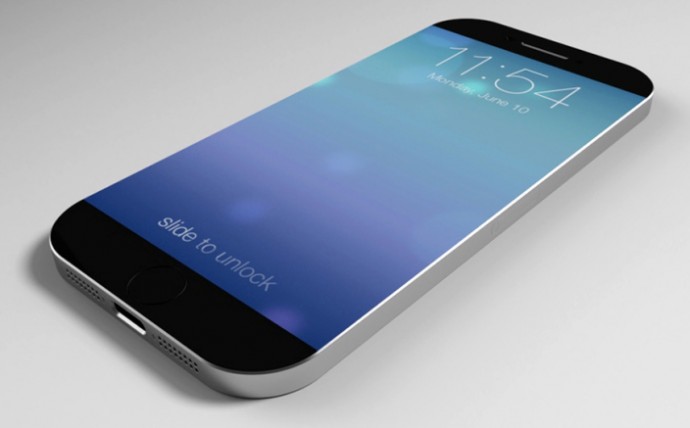
    It is highly unlikely that Apple will be going for a significant design change for the new upcoming iPhone. Since with the iPhone 6, the company’s flagship went through a major makeover. We also read that the next iPhones will include Force Touch and a new casing to make the iPhone 6S wider, taller and stronger.

    The new model will run on iOS 9 and have an upgraded processor, as Apple announced at the WWDC this year. We saw in May that Samsung might provide chipsets and displays for Apple’s upcoming products. Ming-Chi Kuo, an Analyst at KGI Securities, says that Apple’s next iPhone 6s models will be powered by a next-gen A9 processor. There are no official confirmations from both the tech powerhouses, but if correct, we may soon see something very different from this alliance. Some sources state that the upcoming handset is expected to arrive with a 2GB RAM.

    apple battery patent

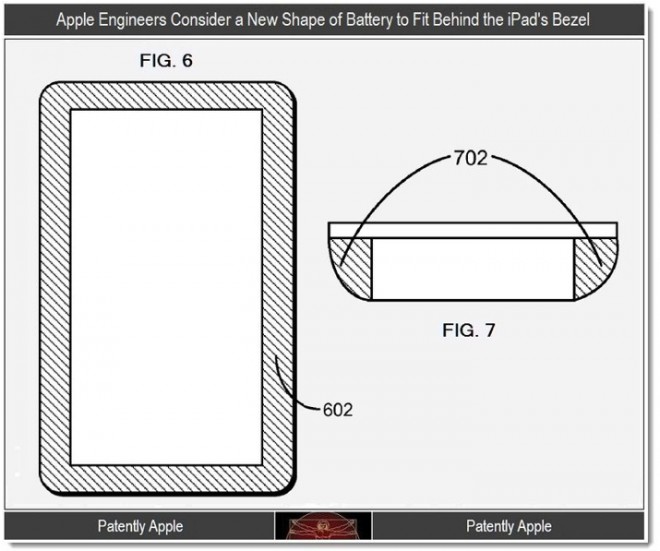
    From the battery perspective, Apple will use a next-gen battery that goes beyond the barrier of the conventional rectangular slab type and can take any shape. This battery consists of thin electrode sheets stacked on one another. This way, developers would be able to utilize the reserved battery space to embed an LTE chip.

    rosegoldiphone_3321476b

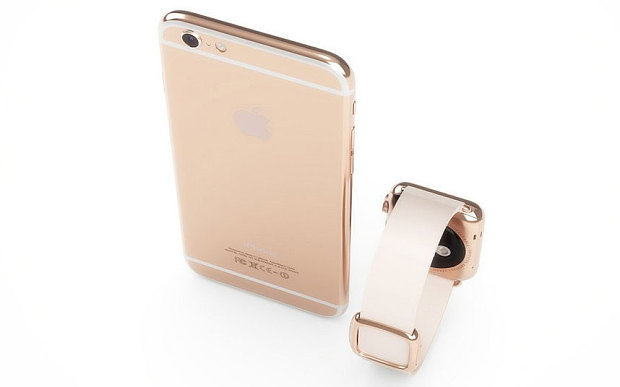
    According to AppleInsider, Ming-Chi Kuo also said that Apple will be offering an additional Rose Gold option for the upcoming iPhone, to keep its market in momentum. It is entirely possible that Apple may release two variants of the iPhone, the smaller 6s variant, and a larger 6s ‘Plus’ version.

    If rumours are to be believed, the upcoming iPhone 6s will be available in stores from 25th September this year. According to the source, pre-orders will start from 18th September and it will go live physically on 25th September.

    There is still more than two months left before we see the new iPhone. Until then, we’ll make sure to keep you updated about its (leaked) details.

  • In the Near Future, Smartphones Might Help the Blind ‘See’

    In the Near Future, Smartphones Might Help the Blind ‘See’

    Scientists are developing a new technology that would enable blind people to see through their cell-phones and tablets. The technology is being developed at the University of Lincoln, UK where specialists in computer vision and machine learning are trying to create a system that would describe new environments to people with sight challenges. The program is funded through a Google Faculty Research Award.

    “This project will build on our previous research to create an interface that can be used to help people with visual impairments,” says project lead Dr Nicola Bellotto, an expert on machine perception and human-centred robotics from University of Lincoln’s School of Computer Science.

    The team will use colour and depth sensor technology inside smartphones and tablets to enable 3D mapping and localisation, navigation and object recognition. Then it will develop the best interface to relay that to blind users – through vibrations, sounds or the spoken word.

    “There are existing smartphone apps that are able to, for example, recognise an object or speak text to describe places. But the sensors embedded in the device are still not fully exploited. We aim to create a system with ‘human-in-the-loop’ that provides good localisation relevant to visually impaired users and, most importantly, that understand how people observe and recognise particular features of their environment,” says  Dr. Belloto

    To recognise the visual clues in an environment, the team will develop a system. The data will be detected through the device camera and identify the type of room as the user will move around the space. The more accustomed the blind user gets, the more quicker and easier it would be for the system to identify the room.

    It’s important to celebrate and encourage all kinds of technology that help the impaired. This is a major step towards the future.

  • First Back Photo Of The OnePlus Two Leaked

    First Back Photo Of The OnePlus Two Leaked

    OnePlus, the company that rose to fame with the release of the OnePlus One, will be releasing One’s successor, Two this month. OnePlus has been releasing regular teasers to keep its fans occupied ahead of its official launch on 28th July.

    Unfortunately for OnePlus, PhoneArena seems to have got hold of the device way ahead of its launch and posted some photos on their site.

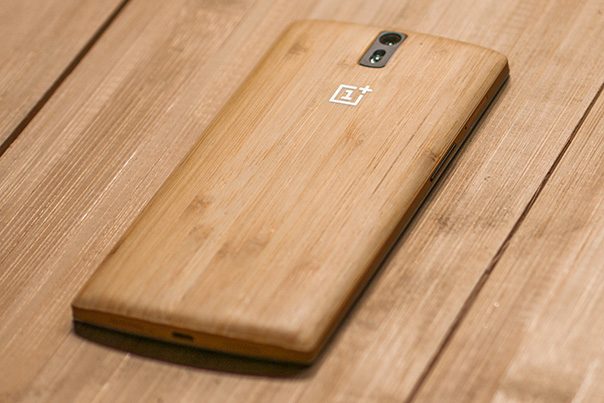
    From the above images , we see that the back appears to sport wood, which would be a very nice touch (but could also be a premium wooden cover that won’t come stock with the device). There’s some sort of dimple on the back cover. The OnePlus logo is clearly visible beneath it, so one could surmise that the dimple is the fingerprint scanner rumored to be part of the kit.

    We know that OnePlus Two will run on Snapdragon 810 chipset along with 4GB ram. The phone will sport a 5.5-inch Full HD 1920 x1080p display that will improve the viewing experience of the user. The OnePlus Two will also have a USB C-Type, the first in a flagship device by a major manufacturer. Just a few days back, the company revealed that the phone will come with a built-in fingerprint scanner.

    oneplus two 810

    The company has confirmed its price will not cross more than Rs 28,500. OnePlus ruled out all the rumors of the temporarily titled OnePlus Two and stated that the much-awaited device will make a debut in the third quarter of this year. Let’s wait and watch!

    Specification

    OnePlus Two

    Display 5.5 inches LTPS LCD Capacitive touch screen
    Resolution 1080 x 1920 pixels (401 ppi)
    Chipset Qualcomm MSM8994 Snapdragon 810 v2.1 SoC
    Processor Quad-core 1.5 GHz Cortex-A53 & Quad-core 2 GHz Cortex-A57
    GPU Adreno 430
    RAM 4 LPDDR4 RAM
    Storage 16/64 GB
    Expandability N/A
    Rear Camera 13 MP
    Rear Camera Video 2160p@30fps, 2160p(DCI)@24fps, 1080p@60fps, 720p@120fps, HDR, stereo sound rec.
    Front Camera 8 MP (Not confirmed)
    Front Camera Video 1080p@30fps
    Battery Non-removable Li-Po 3300 mAh battery
    Operating System Android 5.1 Lollipop-based Oxygen OS
    Connectivity Wi-Fi 802.11 a/b/g/n/ac, Wi-Fi Direct, DLNA, hotspot
    Bluetooth v4.1, A2DPGPS with A-GPS, GLONASS
    NFC, Radio FM,microUSB v2.0, Type-C reversible connector
    Miscellaneous Fingerprint sensor
    Price  Not more than Rs, 28000

    Click here to know everything we know about the OnePlus Two.

  • This Google Project Will Blow Your Mind Away

    This Google Project Will Blow Your Mind Away

    Once again, Google impresses us with its world-changing research efforts. The company’s Project Soli, which has been developed at Google’s secretive Advanced Technology and Projects lab in San Francisco, will allow you to interact with gadgets by simple gestures in air.

    You may ask, so what is new about controlling your gadgets with hand gestures? For we already have Xbox Kinect, PlayStation Move and of course, JARVIS. What makes Soli unique is that the system can identify subtle finger movements using radar built into tiny microchips.

    According to lead researcher Ivan Poupyrev, the team’s breakthrough will be a game changer.

    Most sensors are camera-based, such as Kinect and Move. They act only when they capture gestures and require additional hardware. Soli’s microchips can be embedded into anything – from TVs to wearables, and this is the game-changing quality that Poupyrev refers to.

    Welcome_to_Project_Soli

    “Using a tiny, microchip-based radar to track hand movements we can now track the minutest movements and twitches of the human hand to interact with computers and wearable devices,” says Poupyrev.

    The team has managed to overcome its biggest challenge: to fit a shoe-box sized radar on a tiny microchip. The team worked with German chipmaker Infineon for 10 months, finding new ways to shrink the radar’s components. Now, the chips are ready for mass-production.

    ‘Soli can pick up hand movements as far as a metre away as in Minority Report. But in reality this is too tiring,’ Poupyrev says. ‘Until now, we lacked the fidelity to capture hand movements in sufficient detail. But now using radar, for the first time in history you can build Minority Report type interfaces.’

    Poupyrev recently demonstrated Project Soli in front of developers in California. The project’s open source technology will be handed over to developers later this year.

    Google deserves credit for envisioning this project. The company has always pushed the boundaries of knowledge. They need to be appreciated for taking on resource intensive projects without compromising with their quarterly results.

    Watch the video below to help understand the project better:

  • New Leak Gives a Glimpse at What Samsung Note 5 Might Look Like

    New Leak Gives a Glimpse at What Samsung Note 5 Might Look Like

    Samsung’s next flagship phablet is one of the most talked-about topic right now. Many speculations and rumours about the device’s features and launch date have been uncovered till now. But, the main cloud of mystery is related to the appearance of the device.

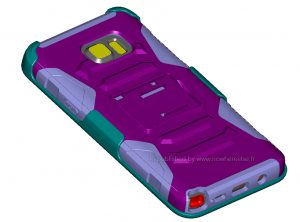
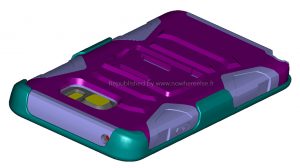
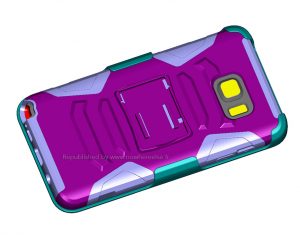
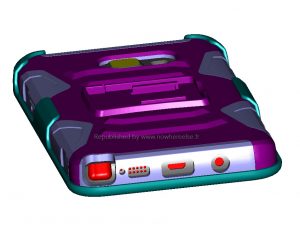
    Thanks to a French blog, NoWhereElse, we can now somewhat draw up an image of the Samsung Galaxy Note 5 in our minds.

    The blog shows the rendered images of a case that is designed for the Galaxy Note 5. From the case, we can somewhat deduce that the Note 5 could have almost the same body design as the Galaxy S6 and S6 Edge. There is also a cut-out for an S Pen stylus at the bottom and a speaker positioned in the same area. It is a notable change since the previous Note devices had its speaker at the back. It is likely that the Note 5 will come with a semi-protuding camera unit, again, like the Galaxy S6 and S6 Edge. The rendered image also shows a microUSB port, so the device may not feature USB Type C charging.

    Although there is some time before the smartphone is unveiled, we already have a vague picture of what’s ahead. As far as the spec rumours go, it is said that the Note 5 will be featuring a 5.9-inch Super AMOLED display with curves on both the edges. An improved version of Samsung’s Exynos 7422 is speculated to administer the computing operations. It is said to have a mammoth battery of 4100mAh, which is necessary for a phablet with these specifications.

    Amid rumours and reports, we brought to you the arrival date of the Note 5, i.e. September 4, and we also learnt that the 32GB Galaxy Note 5 variant will launch at Rs. 64,999 in India. With the iPhone 6s launch scheduled for the same month, we’re now impatiently waiting for September to arrive.

  • Apple Begins Manufacturing the New iPhone With ‘Force Touch’

    Apple Begins Manufacturing the New iPhone With ‘Force Touch’

    According to a new report, Apple has started the manufacturing process for the new iPhone. We’re talking about the iPhone 6s which will be arriving this September. The Force Touch feature, first introduced in the Apple Watch and the new 13-inch MacBook, has been expected to be included in the new iPhone for a few months now.

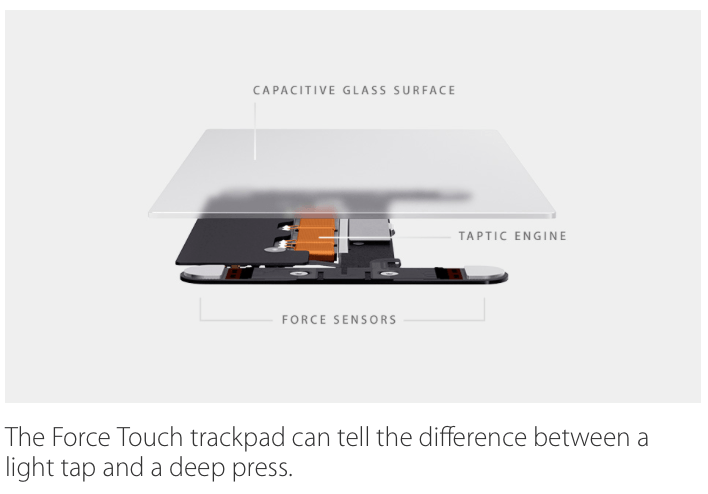
    ‘Force Touch’ is a feature that detects the level of force in a tap and responds accordingly. For example, a light tap on the screen will perform another task than a hard tap. Tiny electrodes surrounding the Retina display sense the difference in the amount of pressure applied on screen. Thus, a user can perform simple tasks such as fast-forwarding a movie or using pressure to zoom in on a map with ease.

    Apple begins production from the first of July. The company expects the production to go smoothly due to the similarities in design between the new and existing iPhone 6. Apple has spent more than two years trying to perfect ‘Force Touch’, which will enhance the user experience when using pressure-sensitive displays.

    Earlier this month, it was reported that the next-gen iPhone would be thicker than the existing iPhone due to the integration of ‘Force Touch’ feature. Also, Apple is reportedly integrating support for the feature in the beta versions of iOS 9, which will allow developers to make use of ‘Force Touch’ in navigation and media controls.

    Source : [tw-button size=”medium” background=”#07ABE2″ color=”” target=”_blank” link=”http://www.bloomberg.com/news/articles/2015-06-26/apple-suppliers-said-to-start-making-iphones-with-force-touch”]Bloomberg[/tw-button]

  • Refuge: The First Short Film Shot Entirely in Moonlight

    Refuge: The First Short Film Shot Entirely in Moonlight

    For Sci-Fi movie fans, this film will suit your taste. But, if you are a camera enthusiast as well, this movie could literally inspire you to think beyond the regular rules and boundaries. Yes, ‘Refuge’ is a narrative short film that used only the moon as its light source. No fill lights, no backlights, no diffuse light – just light from the moon.

    While filming, the lighting of the video is done shot by shot. This means that when you relocate the camera to shoot a different angle, the lights must be moved as well to ensure the subject is always lit correctly. This is one of the reasons why films take so long to shoot.

    Refugee ScreenShot

    Director of the movie, Sam Shapson, said that Refuge could very well be the first narrative film that was shot entirely in the moonlight. The team behind the project recorded the footages in 4K using the Atomos Shogun Recorder and Canon Prime Lenses (24mm, 35mm, 50mm, 85mm). The film was shot with the overall ISO of 51,200. In very basic terms, ISO is the level of sensitivity of your camera to light. The lower the ISO number, the less sensitive it is to the light while a higher ISO number increases the sensitivity of your camera. But higher sensitivity comes at a price – it adds grain or “noise” to the pictures.

    1311914308314077508

    The whole movie was shot using a Sony Alpha a7S digital camera. On replying to the comments on their Vimeo page, Sam Shapson explained:

    We tested all of the picture profiles and seriously considered pp7 for s-log, but unfortunately we couldn’t reconcile the way it handled noise in the deep shadows unless we graded down about 2 stops, which we couldn’t afford to risk committing to. Therefore we landed on pp6, shot wide open at 1/25 with the speedbooster. Lastly, the 4K from the shogun was utilized to give Neat Video every bit of info we could throw it to smooth out the noise. Still, I’m constantly reminding myself how the images here are so much more clear and vibrant than what my eyes were seeing out there in the dark. Still blows me away.

    The resulting video is, unsurprisingly, far from absolute perfection, but the Sony’s low light capabilities are absolutely unbelievable.

    Watch the movie below:

    REFUGE // A Moonlit Short Film from Sam Shapson on Vimeo.

    The video definitely looks unique. I think it is awesome that directors are willing to go this far and bring science fiction fans everywhere something new to get excited about. It’s certainly the most interesting use of the technology we’ve seen so far. What do you think about the short film that was shot using only moonlight? Comment below.

  • Facebook is Slowly Turning its Independent Messenger App into WhatsApp

    Facebook is Slowly Turning its Independent Messenger App into WhatsApp

    Recently, Facebook came out with a new feature that allows you to log into its Messenger without actually having a Facebook account. The social media giant made this announcement on Wednesday, stating that this move is being done to push Messenger’s count of 700 million users, higher. They said that users in US, Peru, Canada and Venezuela would no longer need a Facebook account to use Messenger.

    Users in the mentioned countries can make an account using their names and their phone number only. They can upload their phone contacts to the app. Yes, we know what you’re thinking, this is quite similar to popular instant messaging apps like WeChat and (Facebook-owned) WhatsApp.

    With Messenger, we’ve been focused on creating the best messaging experience possible by giving people a fun and easy way to connect and express themselves with friends. With this update, more people can enjoy all the features that are available on Messenger – including photos, videos, group chats, voice and video calling, stickers and more.

    Last year in July, when Facebook announced that it will be removing the messaging feature from its mobile app, which will require people to use its standalone Messenger app instead. This forced users to download the Messenger app to chat with their Facebook contacts on their mobiles.

    Just a few months prior to this, Facebook had acquired WhatsApp for $19 Billion. Then why, has Facebook been trying to make Facebook Messenger more and more like WhatsApp? It owns both. What difference would remain between the two, which were once entirely different apps?

    WhatsApp 1

    The math is simple. Currently, WhatsApp has about 800 million active users, and Messenger has about 700 million monthly users. If added up, the number would outweigh any other competitive instant messaging app. Messaging has become a way of life, and there are many users that use Facebook purely for chatting and talking with friends. This group of users will find the change very welcoming.

    Mark Zuckerberg is also on a spree to convert the chat-only app to something more. Messenger has, earlier this year, introduced the payment feature that allows you to make payments through the Messenger interface. He also introduced video calling and location sharing features.

    Needless to say, we’re certainly interested to see where the continuously-evolving Messenger finally lands in the near future.

  • 4 Simple Tips to Help Safeguard Your Smartphone this Monsoon

    4 Simple Tips to Help Safeguard Your Smartphone this Monsoon

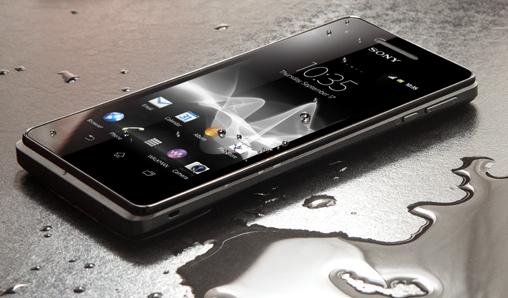
    While we’re relieved the rain is washing away the scorching summer, monsoon can be tedious. Clothes don’t dry, the roads are mucky, and you’re perpetually losing your umbrella. More than anything, our precious smartphones need protection. Now, unless your phone comes with an inbuilt mechanism that expels water as it comes, it is most likely that it need protection.

    To make sure you have a happy monsoon, we bring some easy hacks to protect your phone:

    1. Use a spare phone

    nokia1100

    In this case, the saying ‘better to be safe than sorry’ should be implemented. You can just leave aside your smartphone at home and use a spare phone for a while, maybe a Nokia 1100 or a reliable oldie that has what it takes to withstand the season. But remember to cover up your old device with a safe plastic casing.

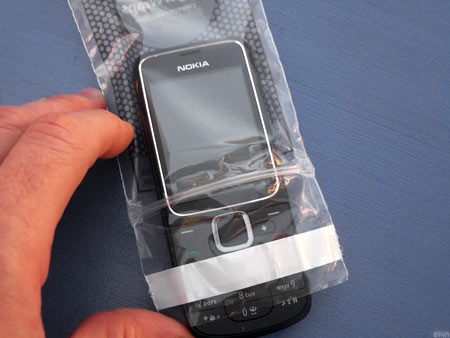
    2. Zip Lock

    zip lock

    Normally, Ziplock pouches are used to store food or medicines. But it is also one of the cheapest ways to protect your phone from getting drenched.

    If this option is not available, any plastic bag would work out just fine. These are the most basic methods to protect your smartphone, and it always works out.

    3. Use Cling-film or Balloons

    Another low-cost method, cling film can help save your smartphone from the damage. Cling-film is a plastic foil with which our mothers used to pack us our tiffins. Tight and air-locking, this is yet another cheap method to protect your smartphone.

    Wondering how you can use a balloon? Take an inflated balloon and place the phone on it, screen side facing towards the balloon. Now slowly, start deflating the balloon till the end. You will see the mobile completely wrapped up with the rubber around it. The cover is water-tight and will protect your phone from the water-induced damage. Just for more protection, you can repeat the procedure again on the other side of the handset, thus gaining a double layer.

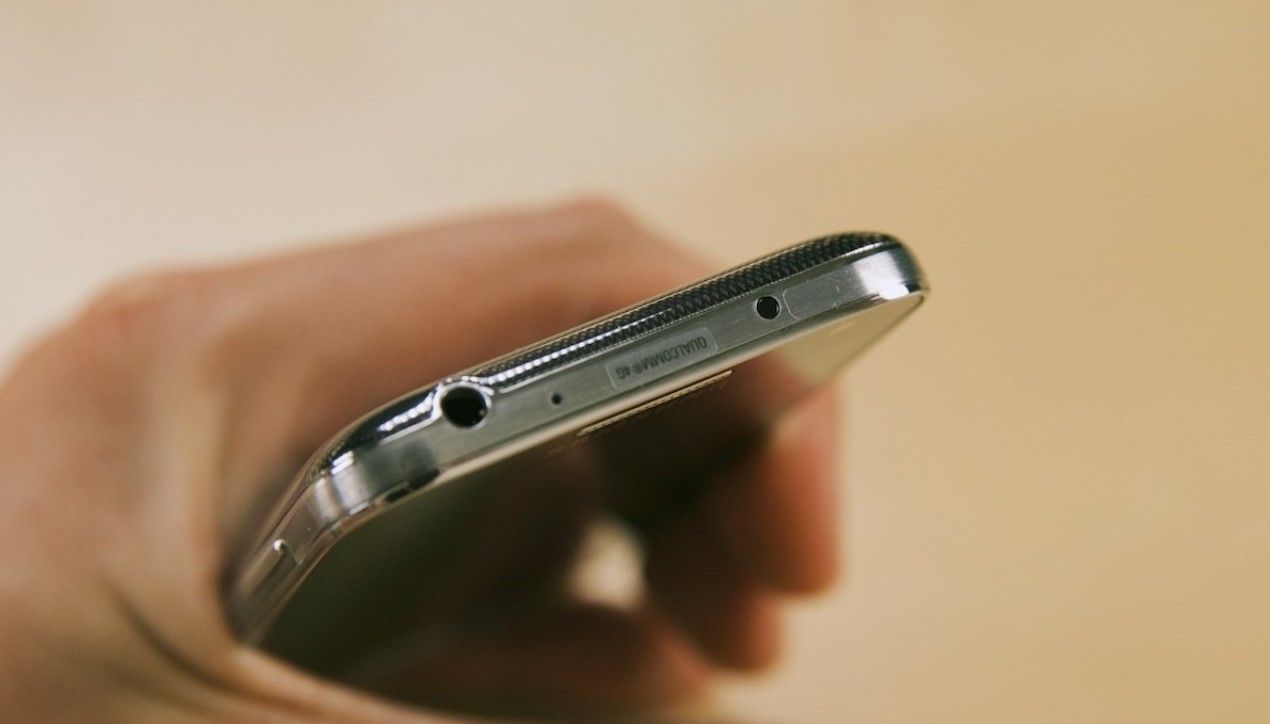
    4. Conceal the openings on your phone

    Samsung-Galaxy-S4-Mini-Top-1280x853

    Try to conceal the open areas of your phone like the micro-USB port, headphone jacks, speakers, etc with a tape. Be warned! Though this method is not a foolproof solution, it may help reducing the risk of water entering the device.

iGyaan Network
Privacy Overview

This website uses cookies so that we can provide you with the best user experience possible. Cookie information is stored in your browser and performs functions such as recognising you when you return to our website and helping our team to understand which sections of the website you find most interesting and useful.