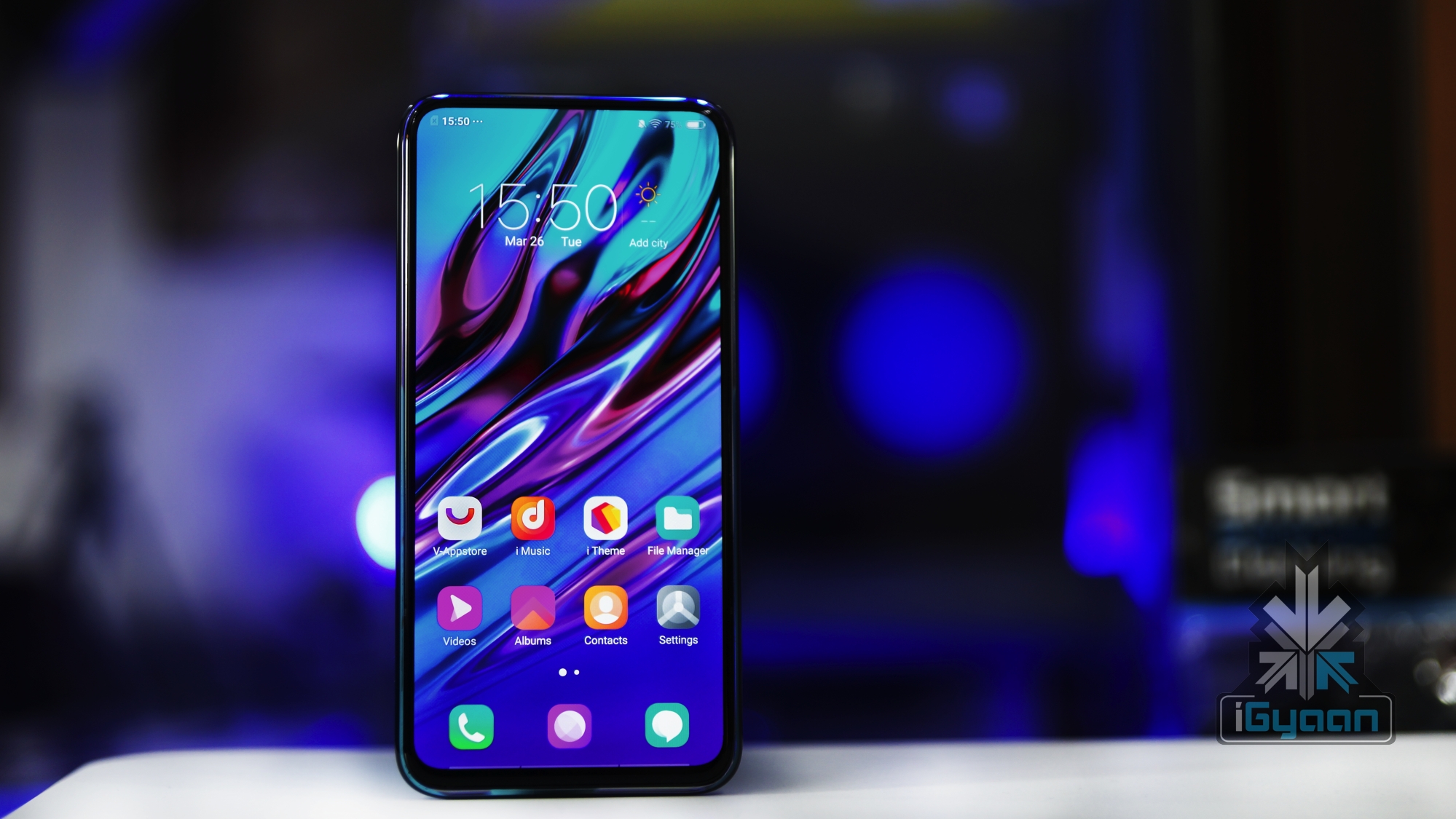
Vivo Y12 is the latest budget smartphone offering from the Chinese smartphone manufacturer. The handset features triple rear cameras and an 8MP front camera. Under the hood, it runs on the Helio P22 chipset which consists of an ARM Cortex-A53 CPU and IMG PowerVR GE8320 GPU. It sports a 6.35 inch Halo FullView display with HD+ resolution and 19.3:9 aspect ratio. It boasts of Android 9 Pie, with Funtouch OS 9 on top. The device is powered by a massive 5,000 mAh battery, with reverse wireless charging feature.
Category: Tech
Latest Technology News, Alternative, Bio-Tech, Medical, R&D and Innovations
-

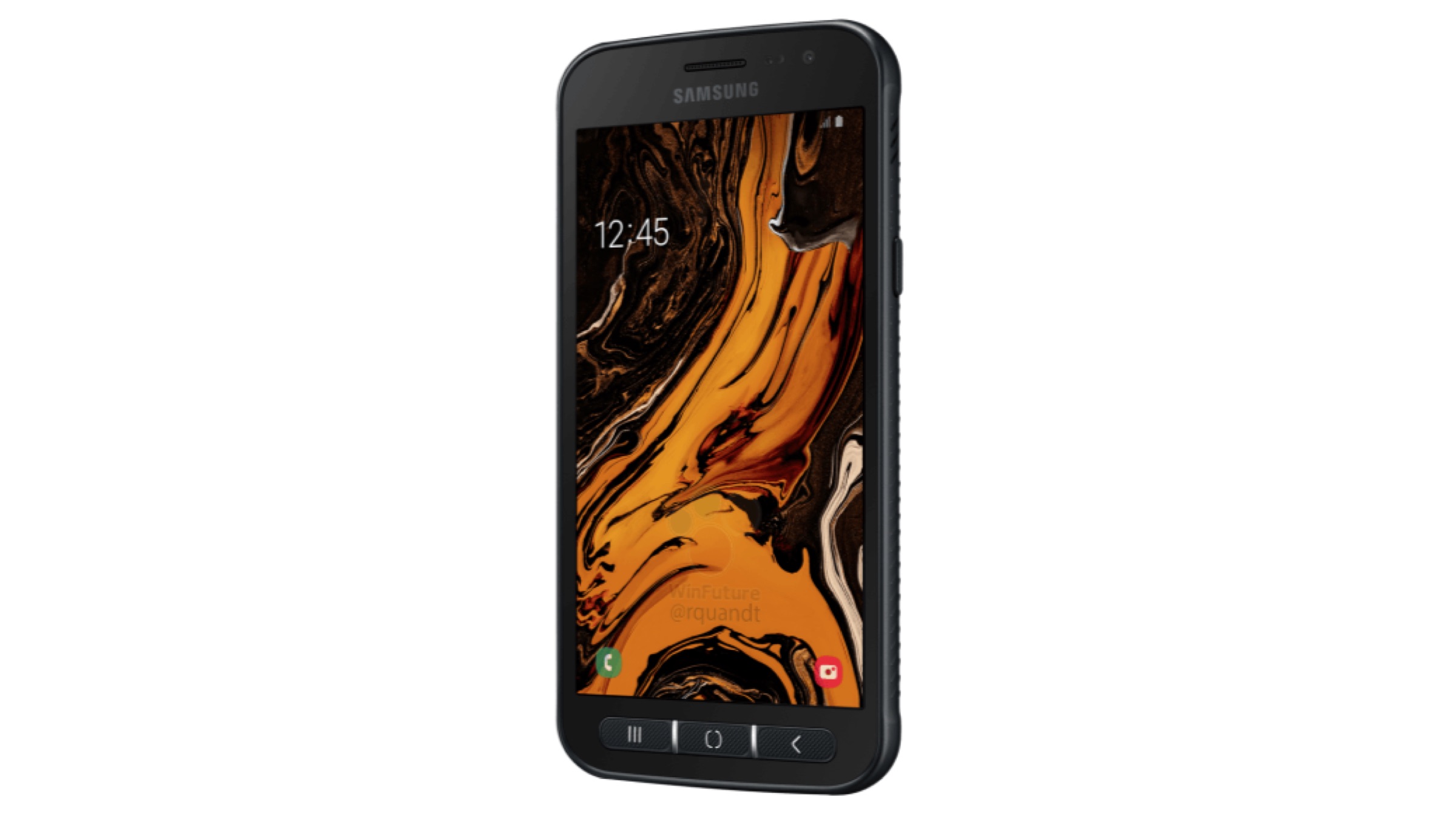
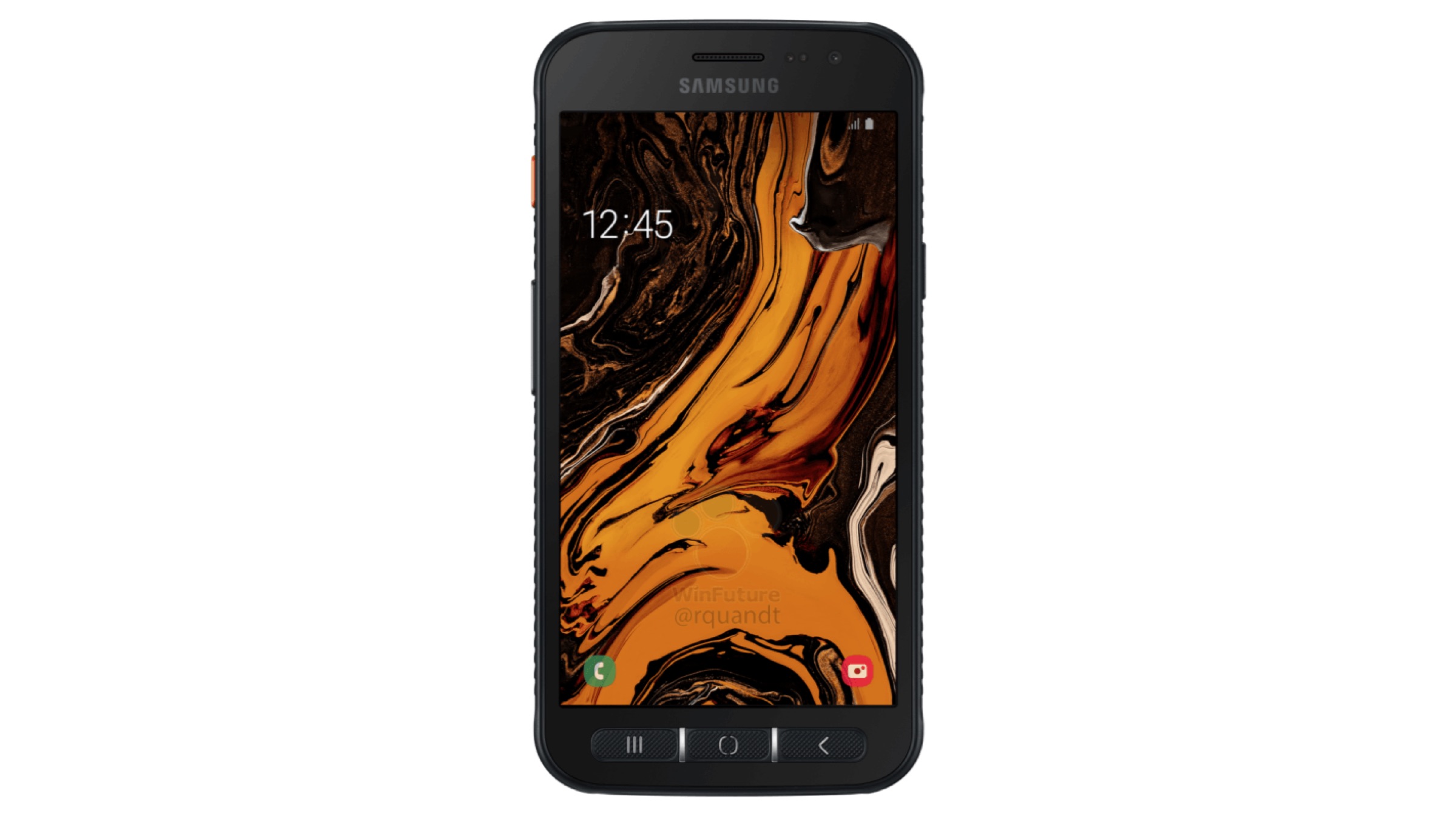
Samsung Galaxy XCover 4S Renders & Specs Leaked
Samsung has been focusing a lot on the budget smartphone segment in India lately. The South Korean technology company has tasted success in the hands of Galaxy M-series devices, such as the Galaxy M20 and Galaxy M30. As per latest leaked renders, a smartphone from the company believed to be the Galaxy XCover 4S is in the works. The device previously received FCC certification in the month of May 2019.
Samsung XCover 4S: Specifications And Features
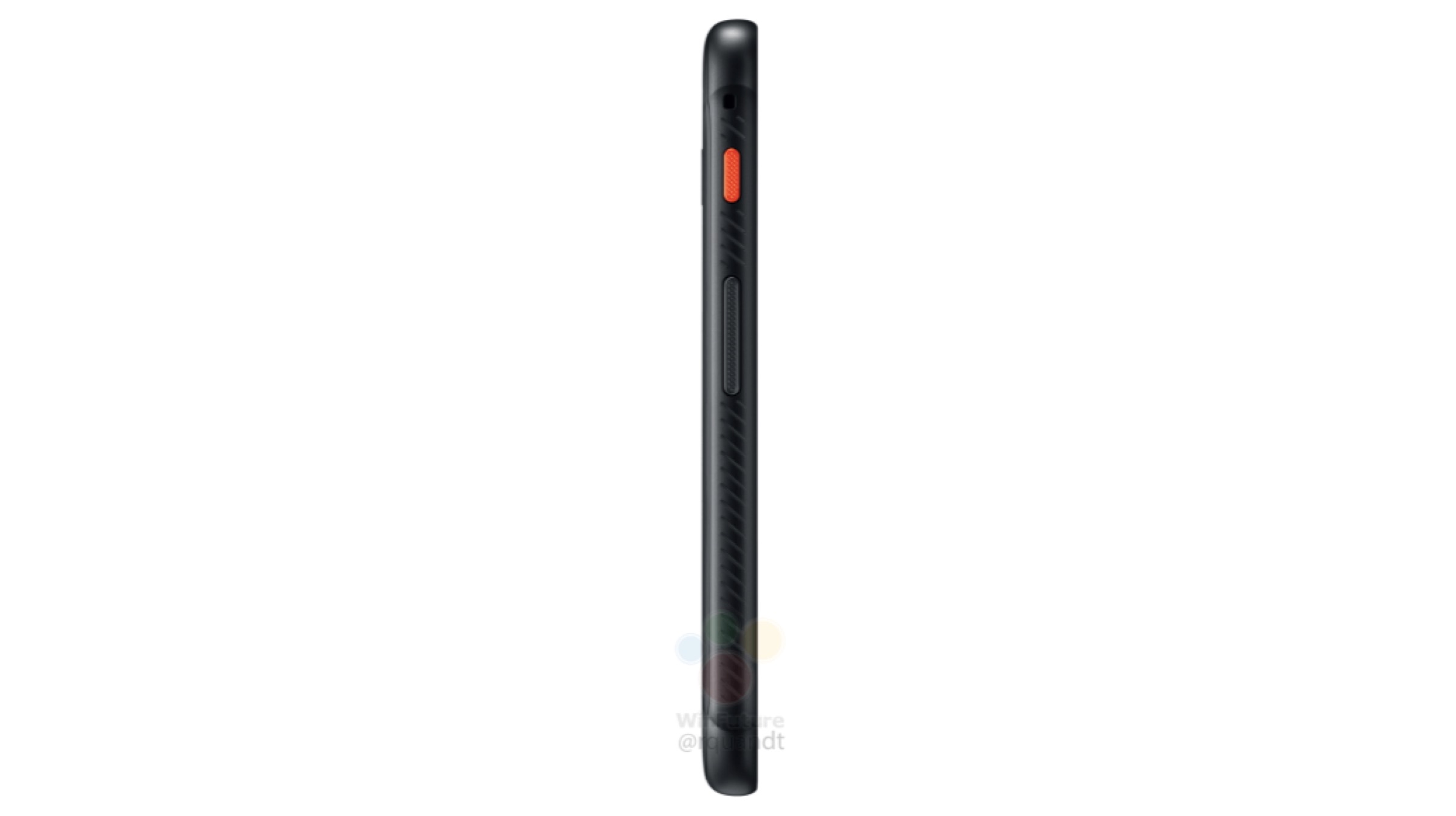
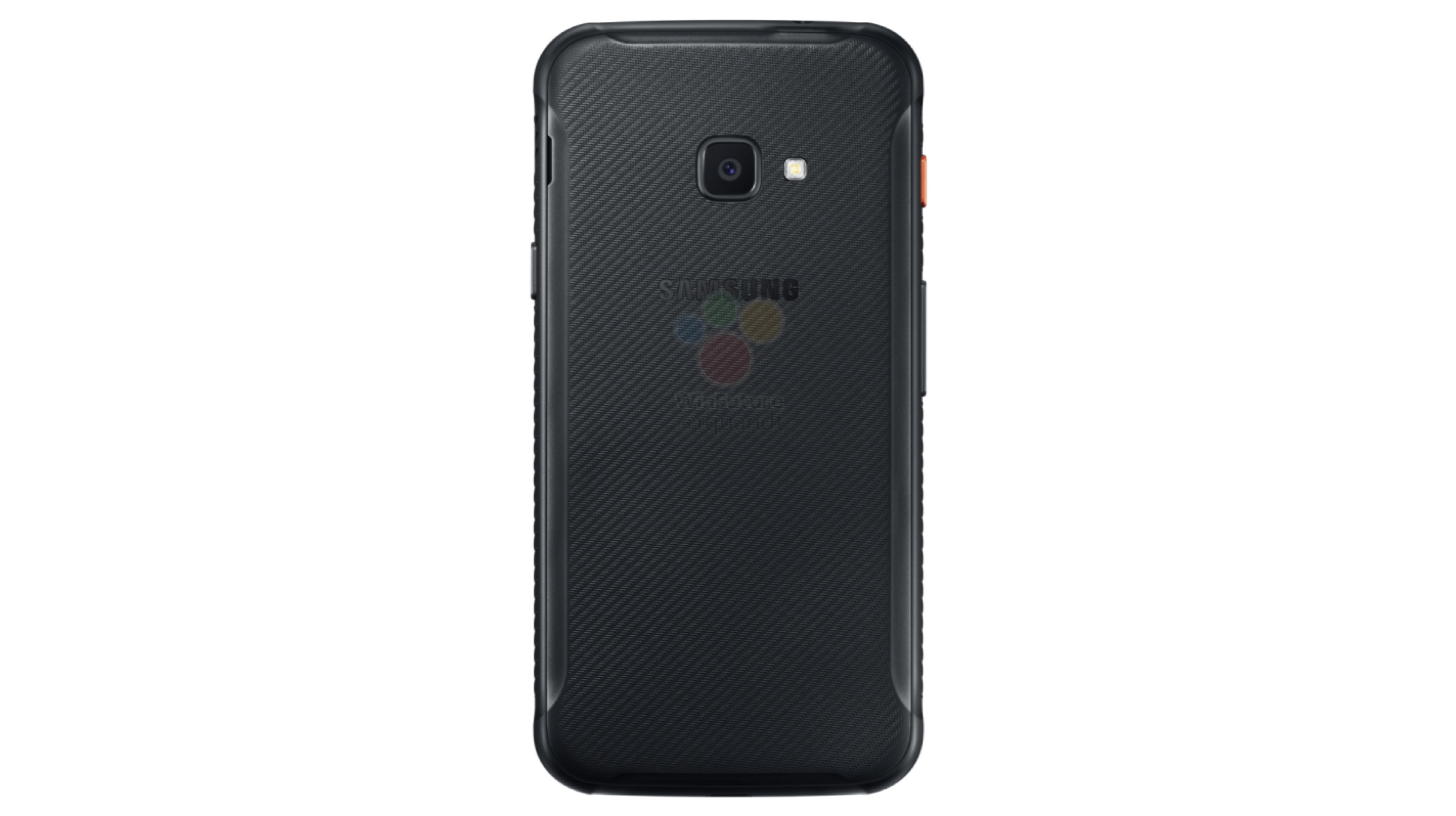
The device bears the model number SM-G398. As per renders, the Galaxy XCover 4S sports a rubber coating which will improve the grip and durability of the smartphone. The smartphone is rated IP68 water and dust resistant. Moreover, it also has MIL-STD 810G certification, which means that the XCover 4S can survive drops from up to 120 centimetres high as well. An interesting feature to note is that the device has physical navigation buttons placed right below the display.

The smartphone features a 5 inch LCD with a 1280 x 720 px resolution and 294 PPI. Since the device doesn’t exactly lie on the side of design and looks, it features reasonably wide bezels on all edges. Under the hood, the Galaxy XCover 4S runs on the Samsung Exynos 7885 chipset, which is clocked at 1.6GHz. It is bundled with 3GB RAM and 32GB of internal memory, which can be expanded via the microSD card slot.
In terms of optics, the device features a single rear 16MP (f/1.7) camera. which supports scene optimization via AI. The camera supports Full HD video recording. For selfies, the company has included a 5MP (f/2.2) aperture front camera, which is placed in the top bezel of the handset. It packs a 2800 mAh replaceable battery, which can be charged via the USB Type-C port present at the bottom of the smartphone. It supports Bluetooth v5.0 and NFC. In addition to a 3.5mm headphone jack, the XCover 4S also has a XCover key which can be assigned to any application or service of choice.Samsung XCover 4S: Expected Price And Availability

Also Read: Samsung Has Started Research On 6G Networks At A New Center
The smartphone is expected to be launched on 12 June 2019. It will be targeted towards users who are looking for a rugged and durable device without any game-changing features. At the time of launch, it is expected to be priced at US$ 280 (~INR 19,500).
-

Samsung Has Started Research On 6G Networks At A New Center
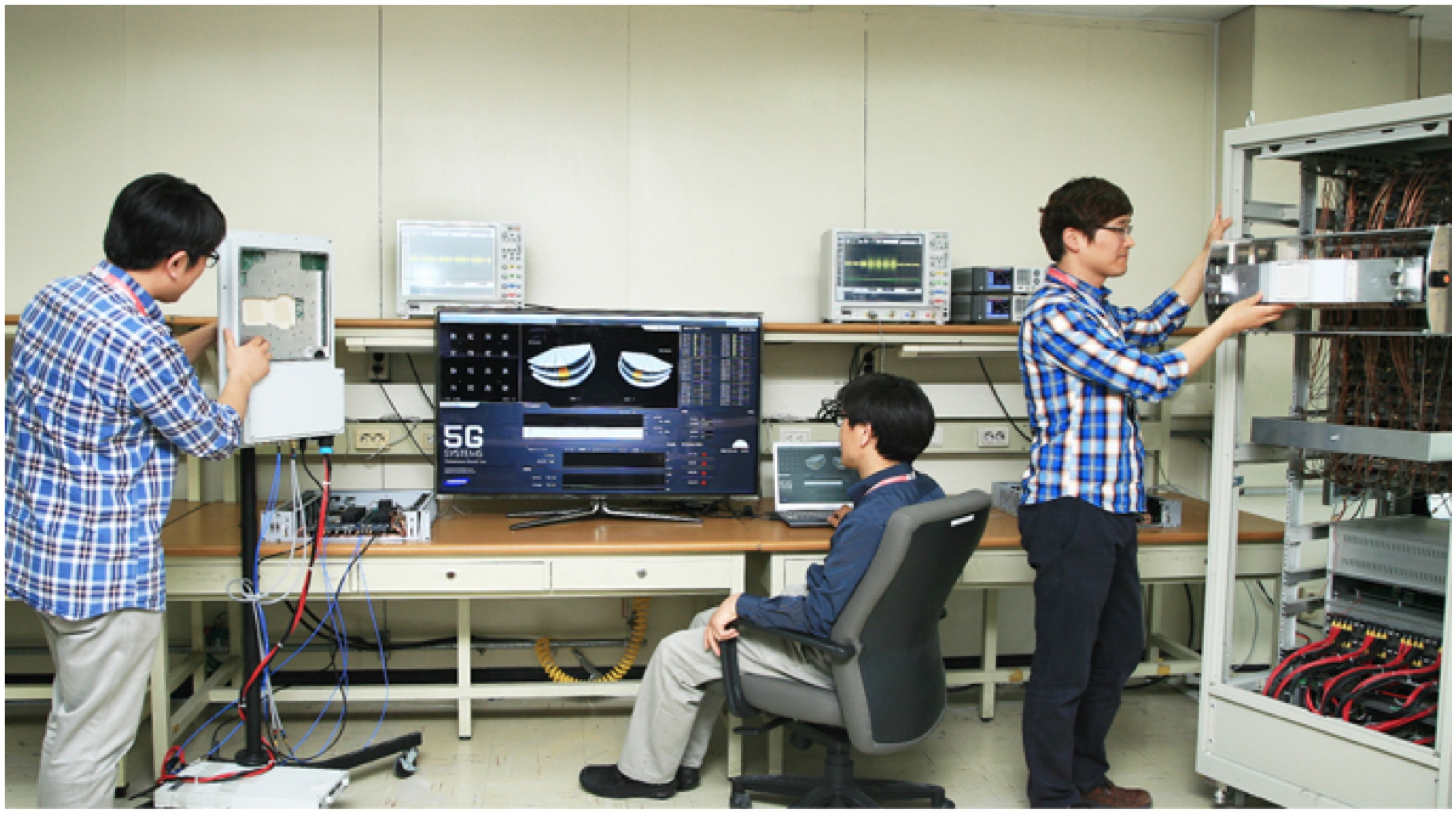
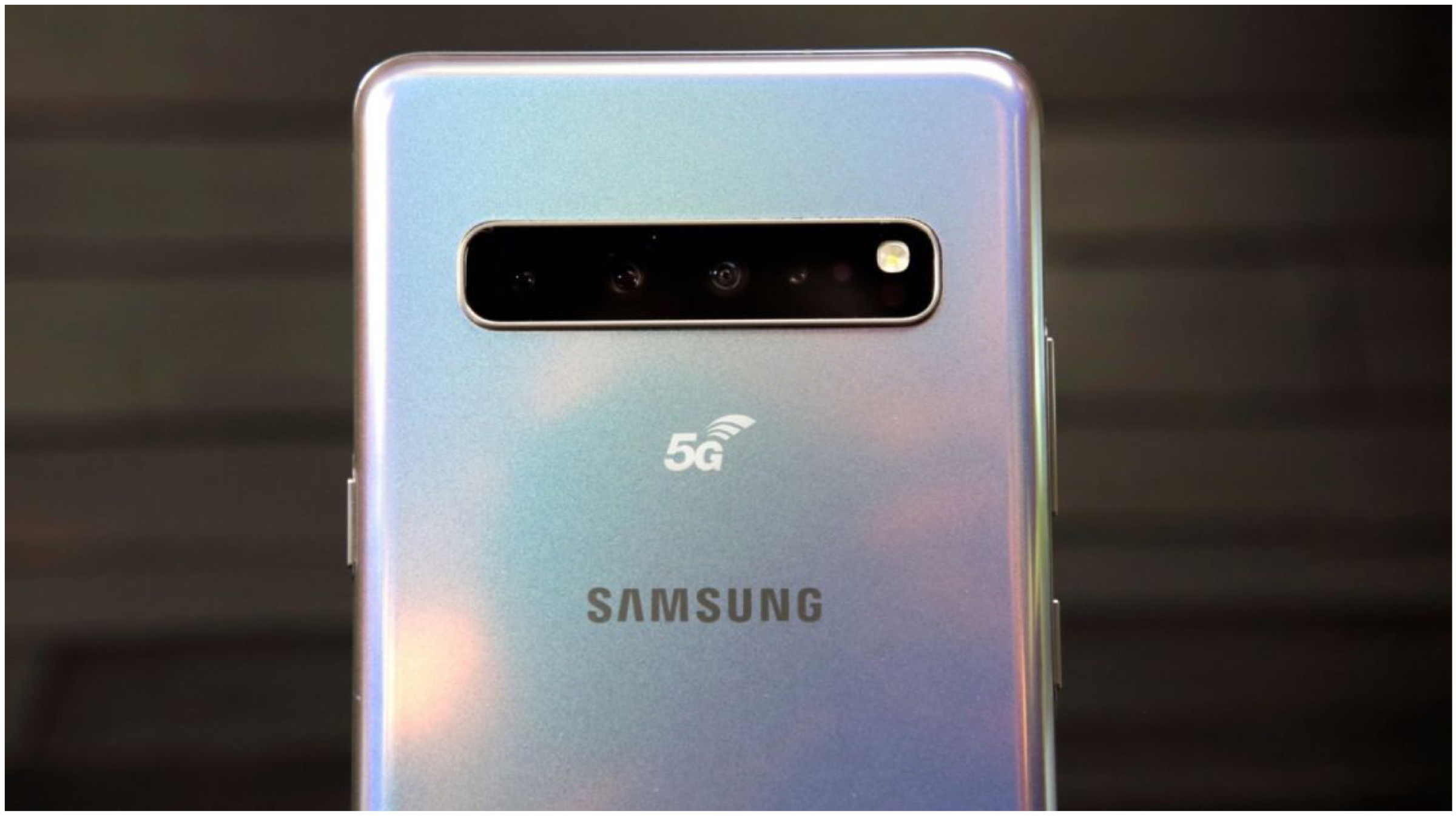
At a time where 5G networks are still in their developing times, South Korean technology giant Samsung has already begun research on 6th Generation networks. That is right, the company which is gearing up to launch one of the first 5G smartphones in the market is also looking towards 6G networks. There is absolutely no information regarding the availability of such technology yet, but the fact that advancements are overstepping even the current iteration of the technology is very interesting to witness.

An official from Samsung stated that the organization is already scoping out initial research points by launching a brand-new research centre. The company recently established its Advanced Communications Research Center under Samsung Research. This is one of the company’s main R&D (Research And Development) divisions, and as per reports, it is based in Southern Seoul (the capital of South Korea).

The company had a team of researchers already working on fifth generation networks, which will now be expanded to the level of an all-round research centre as per reports. Furthermore, the newly set up centre will focus solely on 6G networks, even though analysts predict that 6G networks will not be commercially viable until the year 2030. This is almost 11 years from now, so 6G demos might not even be available until the year 2027 or later.

Samsung Galaxy S10e Also Read: Apple CarPlay Update Makes It A Better Travel Partner
An additional piece of news states that Samsung Research is also in charge of R&D for AI (Artificial Intelligence) and Robotics. Apparently, the company is venturing into future technologies that may set it apart from other electronics manufacturers in the not-so-distant future. Samsung’s Galaxy S10 5G is already rolling out to exclusive Verizon customers in the United States. Demo tests of the same have showcased insanely fast data download speeds, so it is just a speculation that 6G technology will provide speeds that are not even imaginable.
-

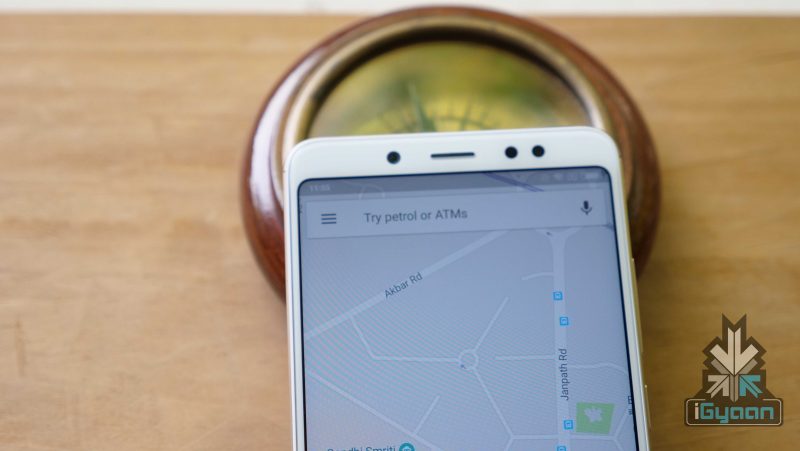
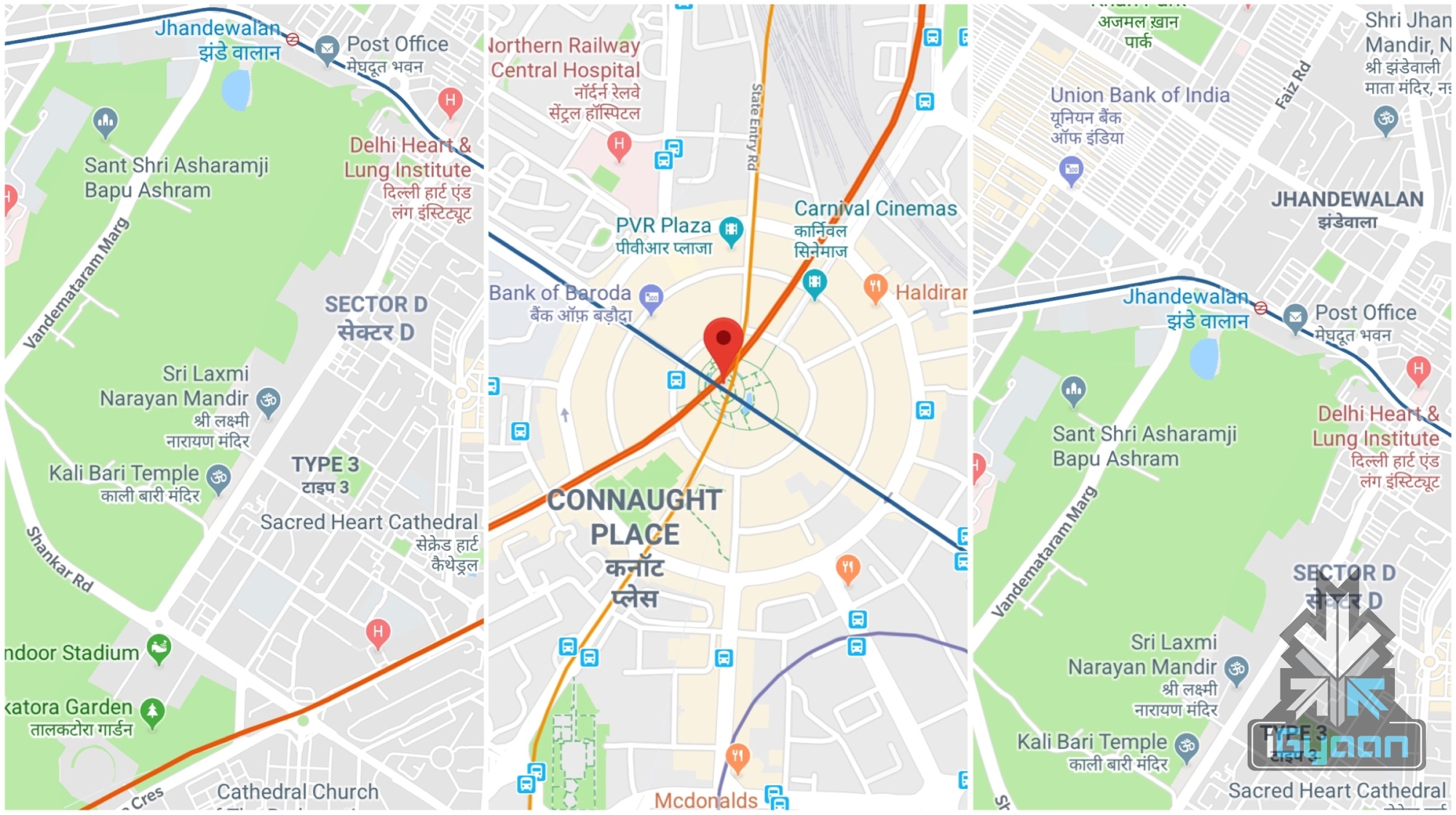
Google Maps Will Now Provide Info on Trains and Buses In India
In a modern day world where time is money, information regarding an individual’s commute is extremely important. In Indian states like Mumbai where trains are the most common form of transportation for the masses, details regarding the status of various trains is quite crucial. In a new announcement, Google has unveiled its plans for adding practical (and much needed) features to Google Maps for its Indian user base.

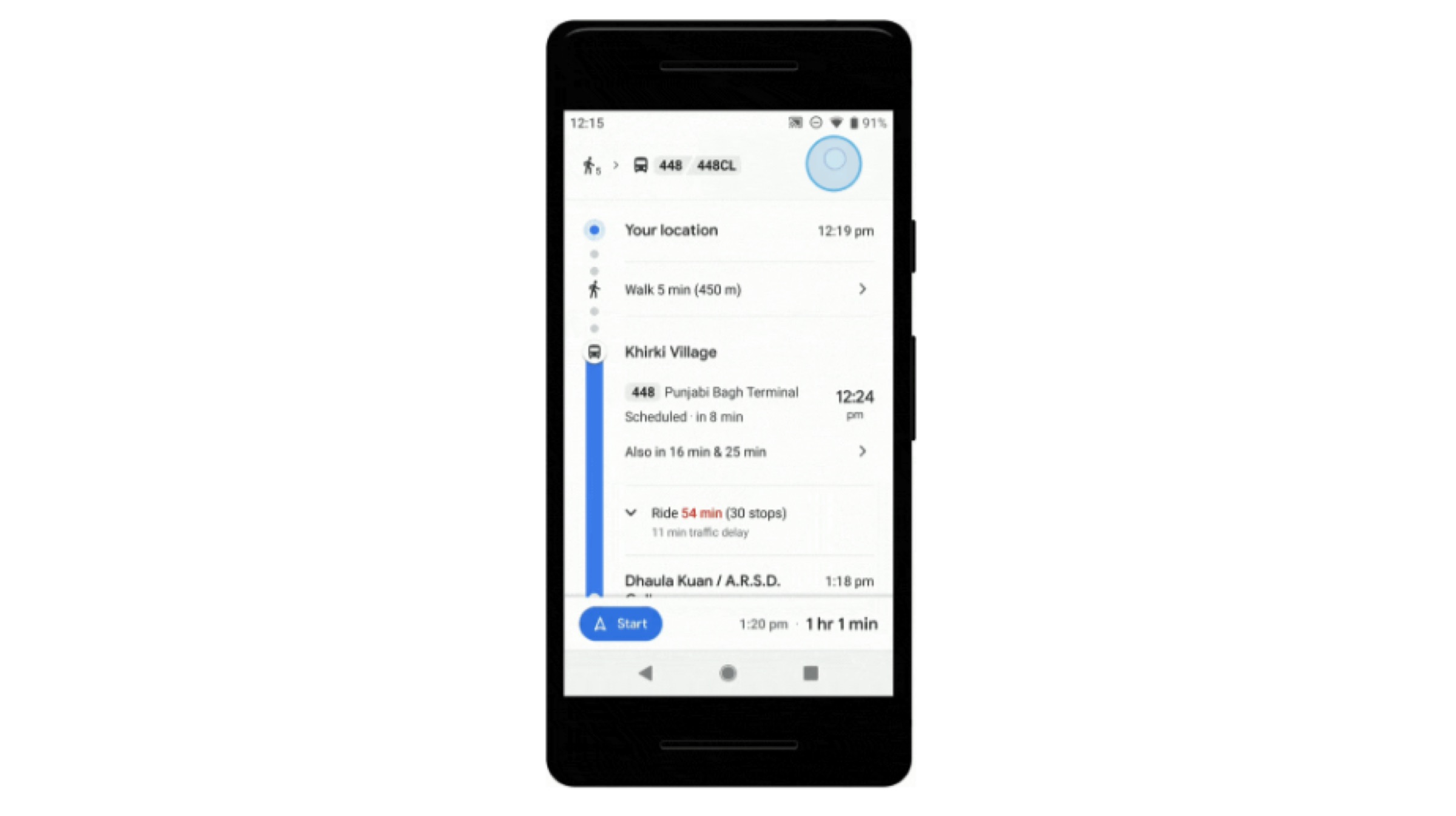
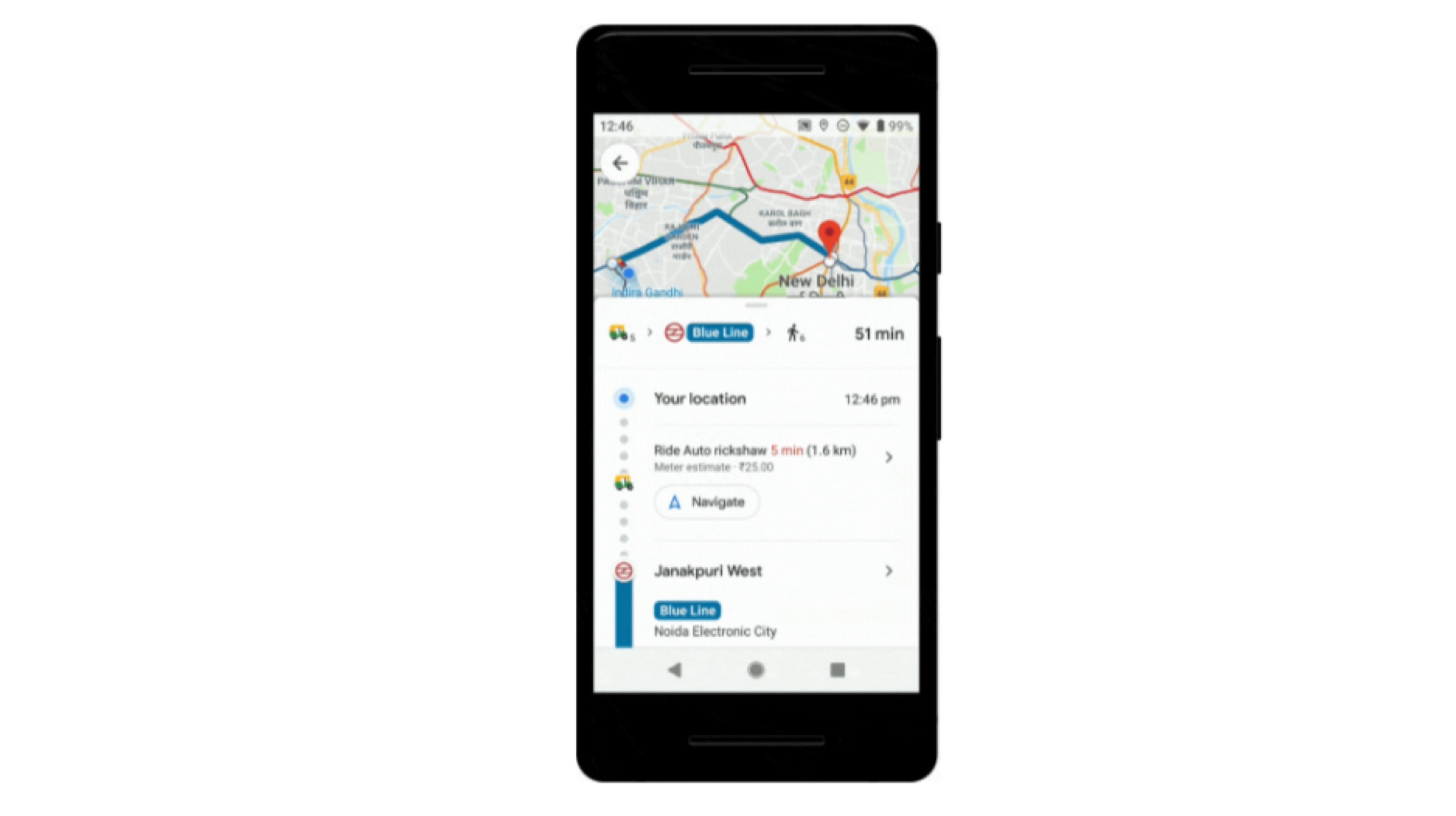
With the new update, Google Maps can provide the user with real-time information on bus travel times derived from live traffic conditions. Furthermore, users will now also be able to track live statuses of Indian Railway trains. The update is set to be introduced to ten major cities in the country. A mixed-mode commute feature will also be introduced. This feature combines auto-rickshaws with public transport for a more detailed route to the user’s destination.
Bus & Public Transport

The aforementioned feature will work hand-in-hand with Google Maps pre-existing live traffic data and public bus schedules. This will provide accurate travel times regarding buses in real-time. Bangalore, Mumbai, Hyderabad, Pune, Lucknow, Chennai, Mysore, Coimbatore, and Surat will be the first cities to receive this feature. The new update will be tested out for the first time in the real world and will help in relaying more detailed information regarding buses to the users.
Indian Railways

Trains will also receive a similar set of updates. Information regarding delays and travel times will now be available on Google Maps. Upon searching for the user’s current location and destination, the app will provide inter-state data regarding train routes. This feature was developed with the help of ‘Where is my train’ app, that was acquired by Google in the year 2018.
Mixed-Mode Commute

Also Read: How ARKit 3, RealityKit And HomeKit Will Help Developers In Creating Apps
With the inclusion of the new mixed-mode feature, route results now also highlight auto-rickshaws. This form of travel is popular in India for quick and short duration rides. Google Maps will suggest rickshaws during trips in public transport only if it is a viable alternative. This particular feature, however, will be only available in Delhi and Bangalore and will eventually spread to other cities as well.
-

How ARKit 3, RealityKit And HomeKit Will Help Developers In Creating Apps
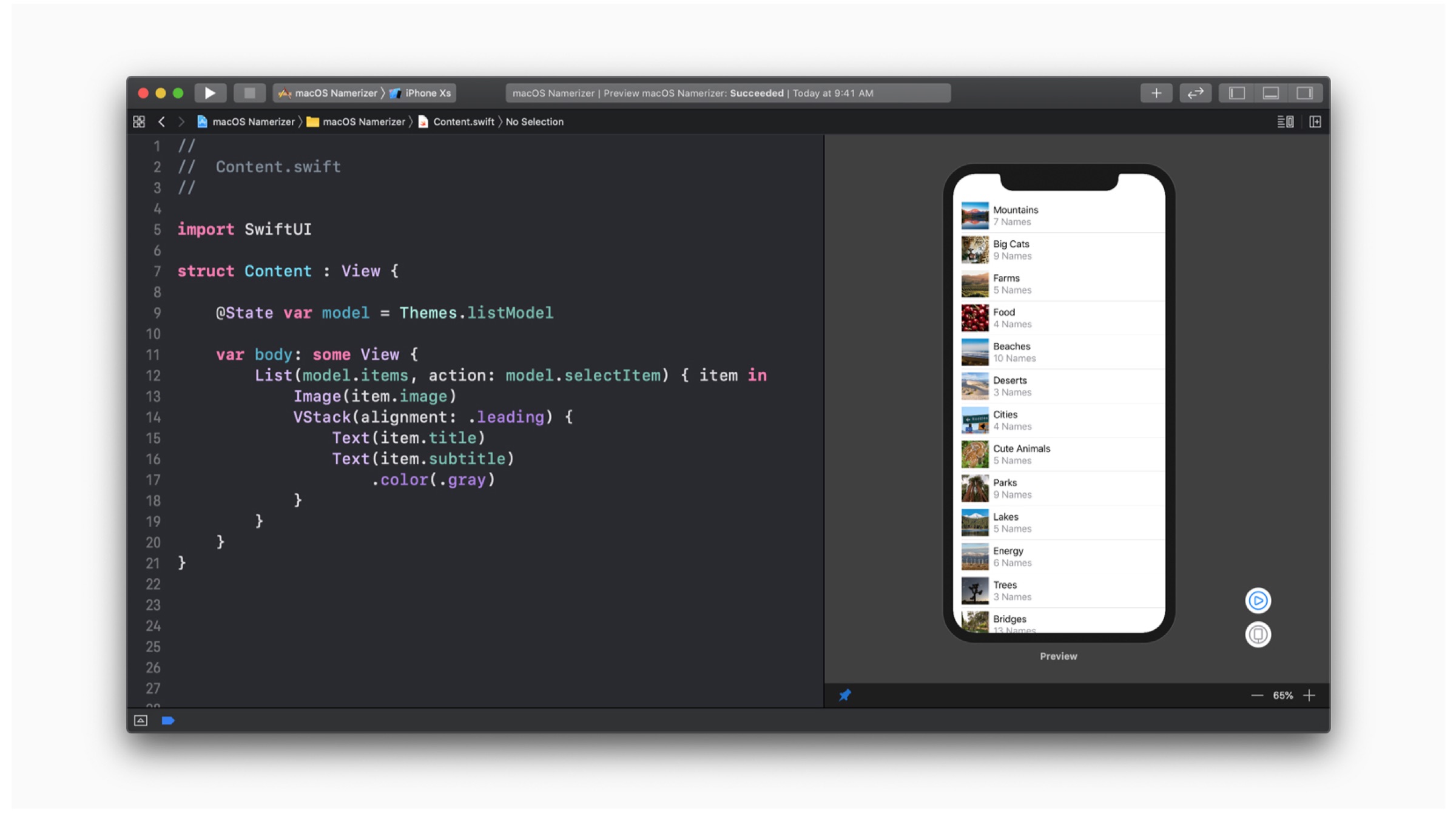
The first day of the WWDC 2019 saw some radical updates being brought forth by Apple. The American multinational company announced the iOS 13, the all-new Mac Pro and iPadOS, watchOS, tvOS and macOS. Furthermore, since the event was a ‘developers’ conference’, Apple also unveiled new software frameworks, especially for developers. The development kits include ARKit 3 and RealityKit frameworks. Additionally, Homekit will now be added to security cameras and wi-fi routers. HomeKit is a software framework by Apple that helps iOS-based devices to communicate with smart-home appliances.
ARKit 3

Developers will find it much easier to formulate AR-based applications with the updated ARKit iteration, which receives a fair overhaul in features from the ARKit 2. Using Motion Capture, developers can track human movements and feed them directly into the applications. Motion Capture will also be able to accurately track the limbs and torsos in real-time. People Occlusion is another feature being included in the ARKit 3 framework. It will ensure that all the Augmented Reality based content will show up naturally in front or behind people.
RealityKit

RealityKit was also introduced by the company, and it enables developers to fabricate ‘photorealistic’ AR experiences, Apple states. This implies that real-world environments can easily accommodate virtual objects. Effects such as motion blur can be manually added into scenes, which will simulate a real-world environment instead of a virtual environment. The company also announced the integration of RealityKit with Swift’s Application Programming Interface (API).
HomeKit

Also Read: Samsung Collaborating With AMD For Radeon Graphics On Its Smartphones
Regarding Apple’s interface to make Home-based Apple devices more accessible via devices running iOS, HomeKit will undergo two new developments. HomeKit Secure Video will ensure that the security cameras connected to the HomeKit network will process and analyze security feed directly on the user’s device rather than on the cloud. Furthermore, the 10-day feed will be encrypted and uploaded to the user’s iCloud account. Alongside, HomeKit-enabled routers will create a virtual firewall between the complete network and the devices connected to it. This will make sure that the network will remain secure even if one of the devices is breached.
-

As Apple Retires iTunes, Here Is How It Paved The Way For Modern Music Platforms
When Apple first unveiled iTunes back in the year 2001, it revolutionized the music industry. Changing the way people purchased music and digital albums, iTunes remained as an iconic music symbol until now, because Apple has decided to break iTunes apart. iTunes is splitting into three different applications, namely Music, TV and Podcasts. However, the application will stay intact as a standalone iOS application and on Windows PCs. Let’s have a look at the interesting journey of iTunes through the years.
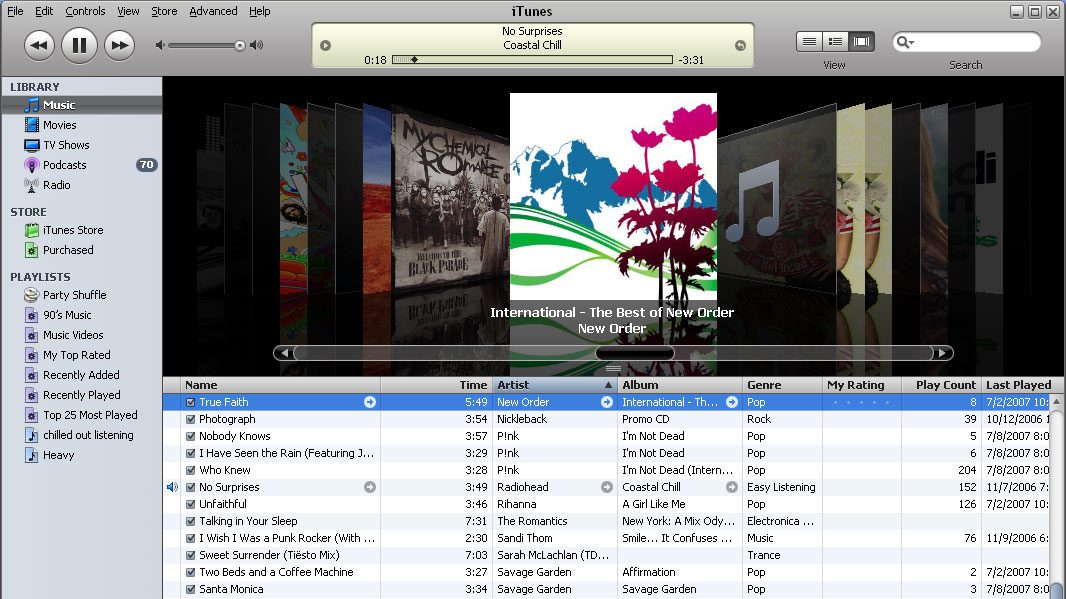
Formally launched on 9th January 2001, iTunes was introduced at a time where music was hugely downloaded via pirated websites and file-sharing platforms. The application had a fairly simple user interface, which made it easy for users to get accustomed to it. It had a simple billing procedure and a detailed yet vast catalogue of music and albums for users to pick from. In a nutshell, the iTunes application provided one of the best user experience at its time. 
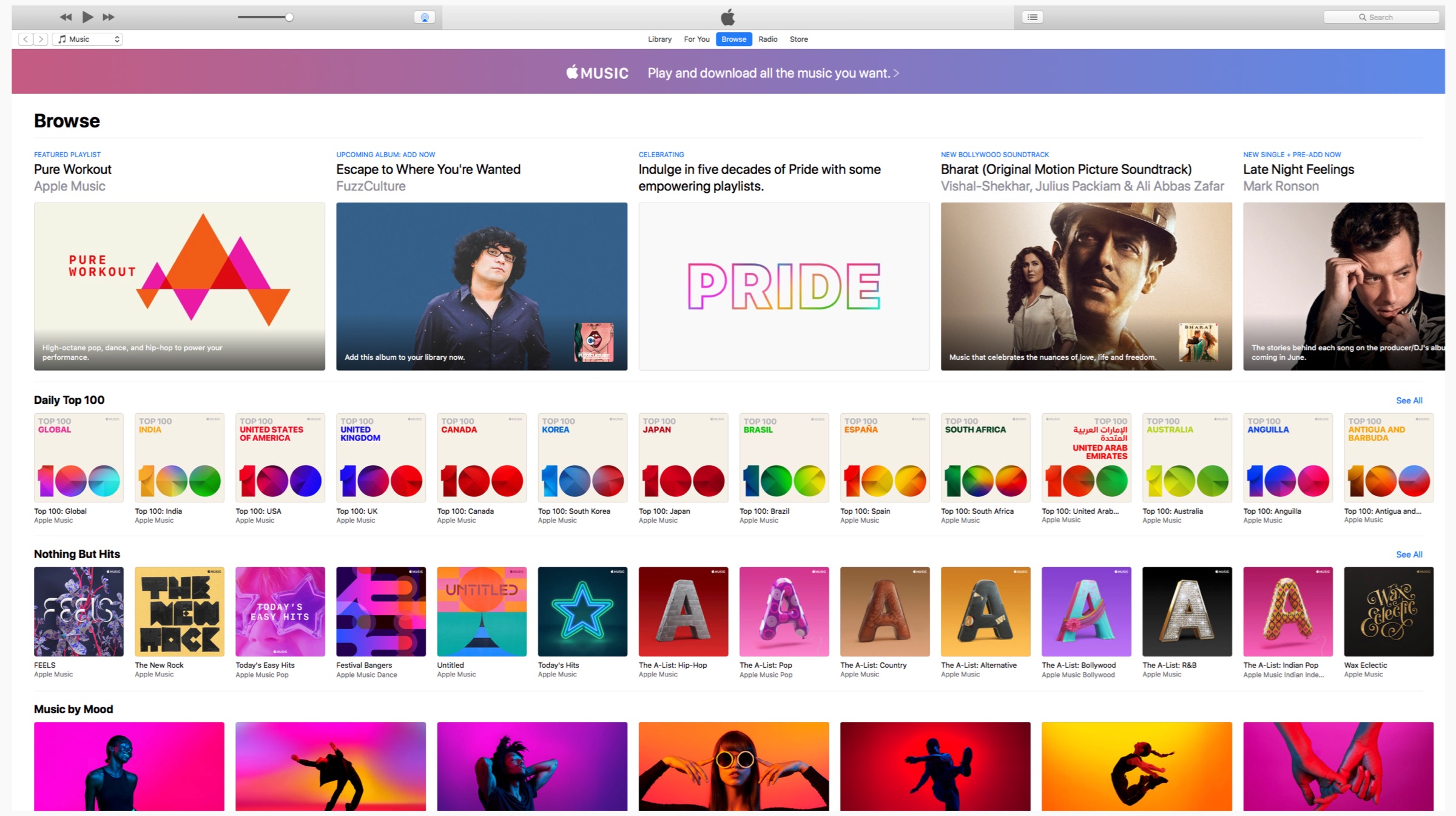
In the year 2003, iTunes made its way onto the Windows platform. This drastically expanded the reach of the application and made it accessible to a lot more users. This also removed the doubts regarding iTunes being an Apple-only service. However, Apple’s strategy regarding iTunes has always been closely linked with its devices, including iPhones, iPads and MacBooks.
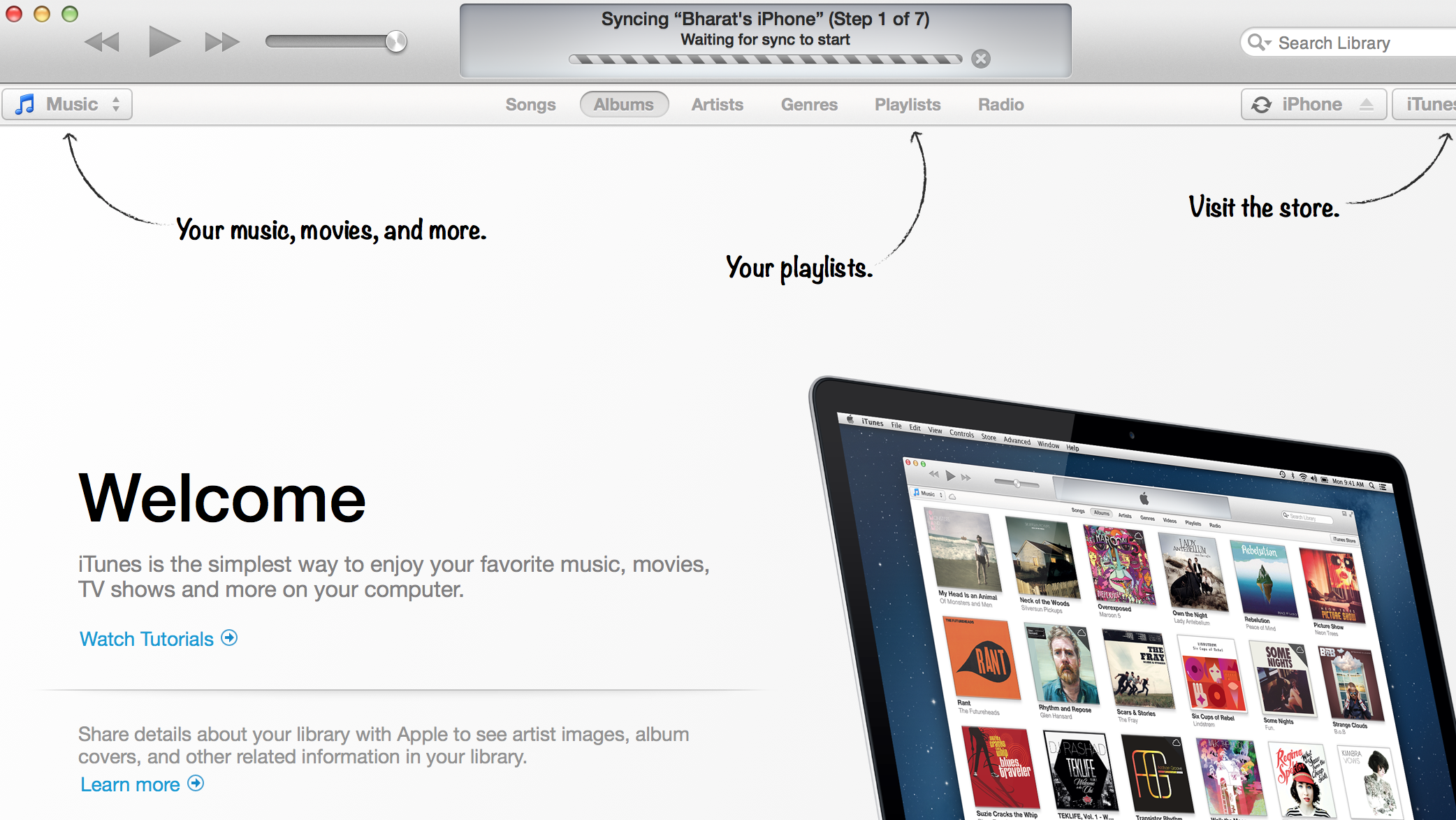
Almost two years later, iTunes started offering TV shows for purchase. This marked one of the most defining eras for iTunes, where music was sold alongside videos, making iTunes the perfect go-to entertainment platform. If that wasn’t enough, Apple also introduced movies on iTunes in the year 2006. Apple was tasting a lot of success with its entertainment platform, so it decided to launch the ‘Genius’ feature within iTunes, which recommended new music to users based on previous listening patterns.2008 was a really big year for Apple since iTunes became the largest music retailer in the United States. This literally marked the death of record stores, since most users were directly purchasing music from the iTunes store. To enhance the “music anywhere” functionality, the company launched iCloud almost 3 years later. It allowed users to back up their music files and other documents to the cloud. This meant that with an internet connection, users could access their music from any location.
With The launch of the iPhone in subsequent years, Apple required an initial setup and sync to be done using iTunes, and while this process has been reduced to device restores and wireless updates. iTunes will always be remembered as the pain point and the weak link for iPhone Jailbreakers.
In 2010 Apple also attempted to create a music social network dubbed “Ping”. This allowed users to follow artists and see short, timely postings by both friends and artists. This didn’t work as expected and Apple shut it down in 2012.
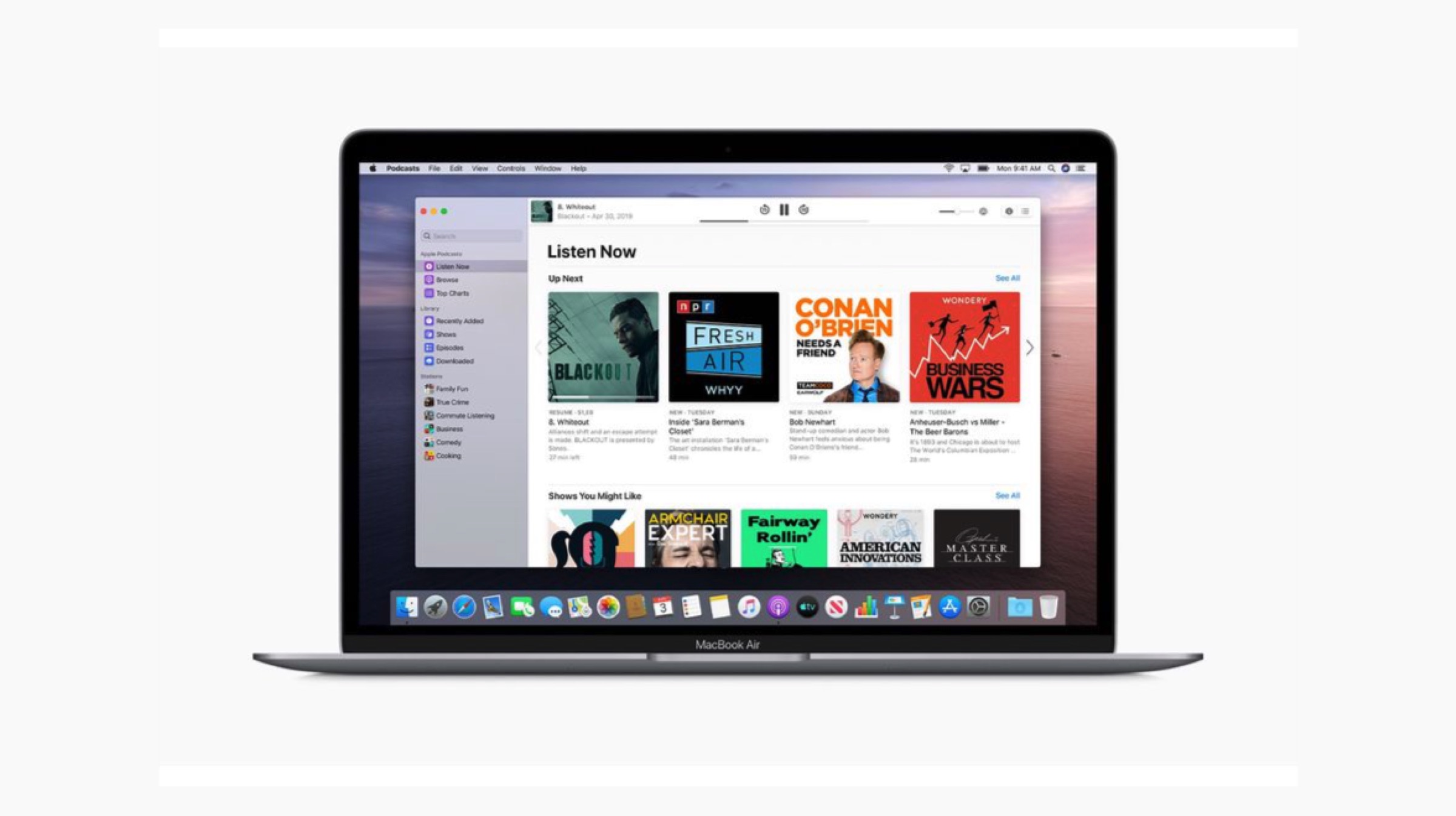
Skip forward to the present year, a lot of users were skeptical about iTunes’ departure from the scene. However, analysts stated that the iTunes shut-down is an integral part of Apple’s strategy to focus on subscription content and services. This will help Apple in radically boosting its revenue based on selective content delivering. Statistics exhibit that subscription services made up for about 80 percent of all online music and video revenue in the year 2018. Stats further reveal that Apple currently boasts of almost 56 million paying customers, indicating why it decided to branch out to three different applications instead of a single application.
Also Read: Apple Showcases The Updated watchOS 6 and tvOS 13 At WWDC 2019
Apple shutting iTunes doesn’t imply that all the content owned by users will be deleted in one go. The company will release some information shortly regarding the downloaded content. Expectedly, the content will be managed via Apple Music and other applications. Nonetheless, iTunes will always be one of those applications that revolutionized the whole culture of the entertainment when it was turning digital. And it did so in a way that a huge chunk of users depended on it for their daily dose of music and movies. Hopefully, Apple continues to introduce similar overhauls to the newly formed applications that can make up for the removal of iTunes from the Apple ecosystem.
-

Here Is How Apple Watch Covers All Bases In Modern Healthcare
In a world where health concerns are on the rise, each step taken in the right direction may save lives. Apple recognised the need for a device that brings genuine utility for its consumers. Rather than making an entirely new product, it has added new layers of functionality that enables the device to be a small but impactful health partner.

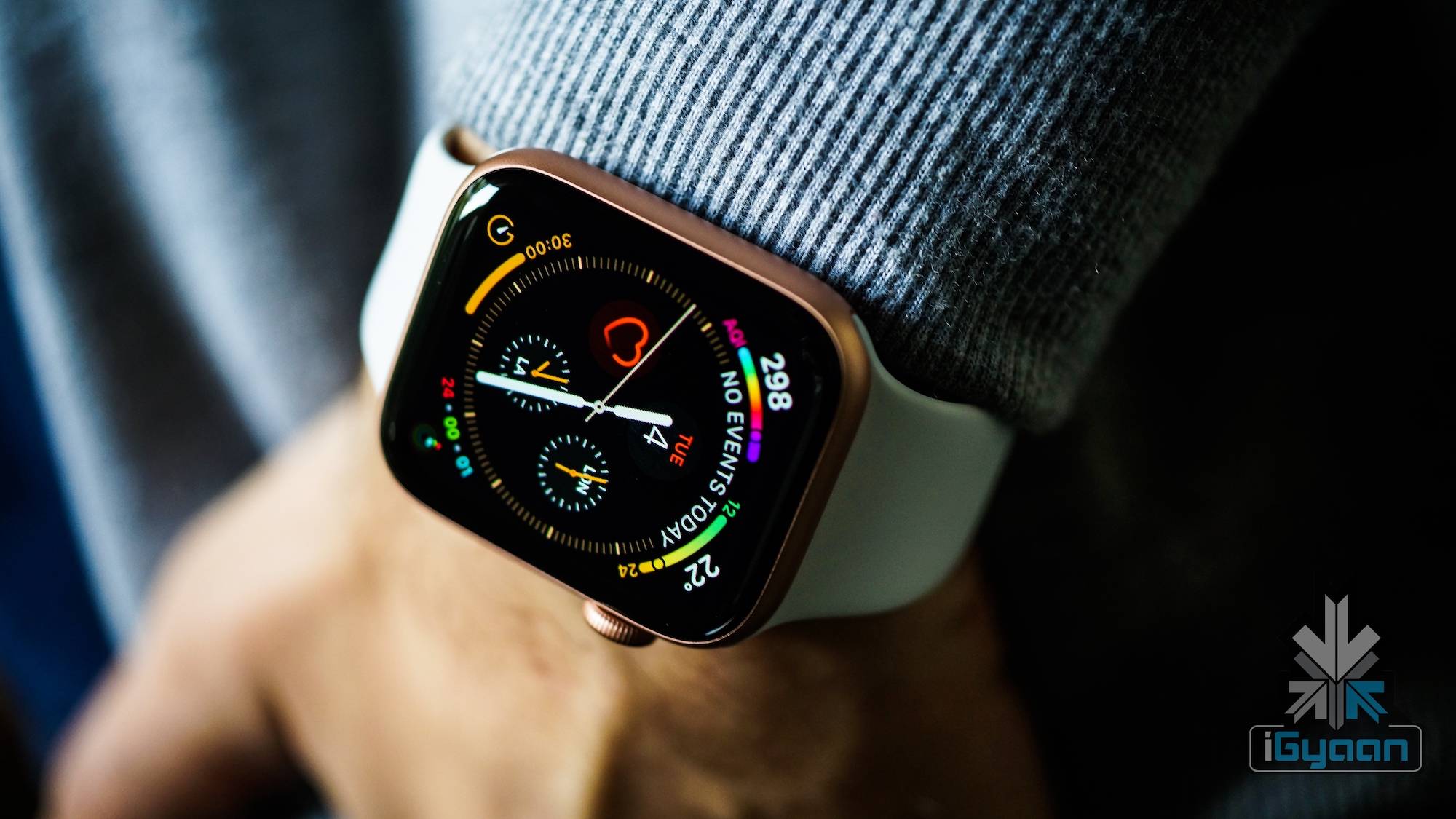
Apple has focused on making the Watch a standalone experience with its own unique functions. With the inclusion of an ECG sensor on the Apple Watch series 4, health took an active role with the device. Incorporating many of the health monitoring features that have been popular in the mobile industry such as tracking the number of steps taken. With individuals becoming more self-aware and conscious with their health, the industry soon adapted to provide the market with their current demands.

Health partner bands and companion wearable devices are not a new concept now, but Apple with its inclusion of functions like noise detection and menstrual cycle tracking made the experience a lot more streamlined and rounded. ECG sensor that brought real-time monitoring of heart rate, in countries like India where heart conditions affect nearly one-third of the entire adult population, makes it more than a useful tool for everyday use. (ECG is presently only available in limited countries)

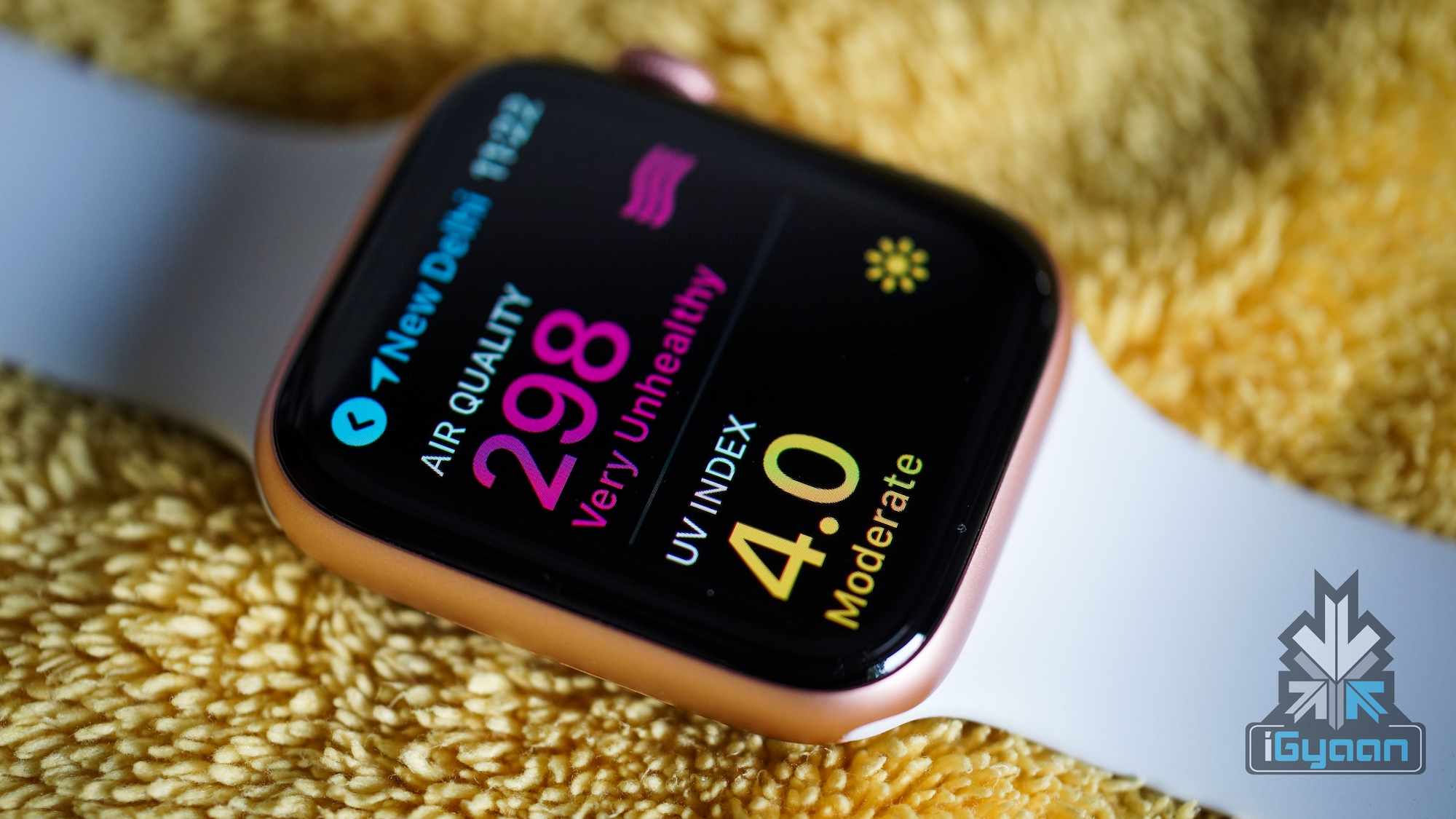
The latest update to watchOS 6 had Apple say, ‘why stop there?’ The company along with its new ‘faces’ has seamlessly integrated pro-health functions to the Apple Watch. The ‘Loud Noise’ detecting app is one such application that passively records and measure sound levels in the users surrounding ambience. Noise pollution has become a real epidemic in the modern world and areas where sound levels cross 90 decibels are immediately notified to the user as harmful and unsafe. This function has yet to be reproduced by other manufacturers that target health-conscious consumers.

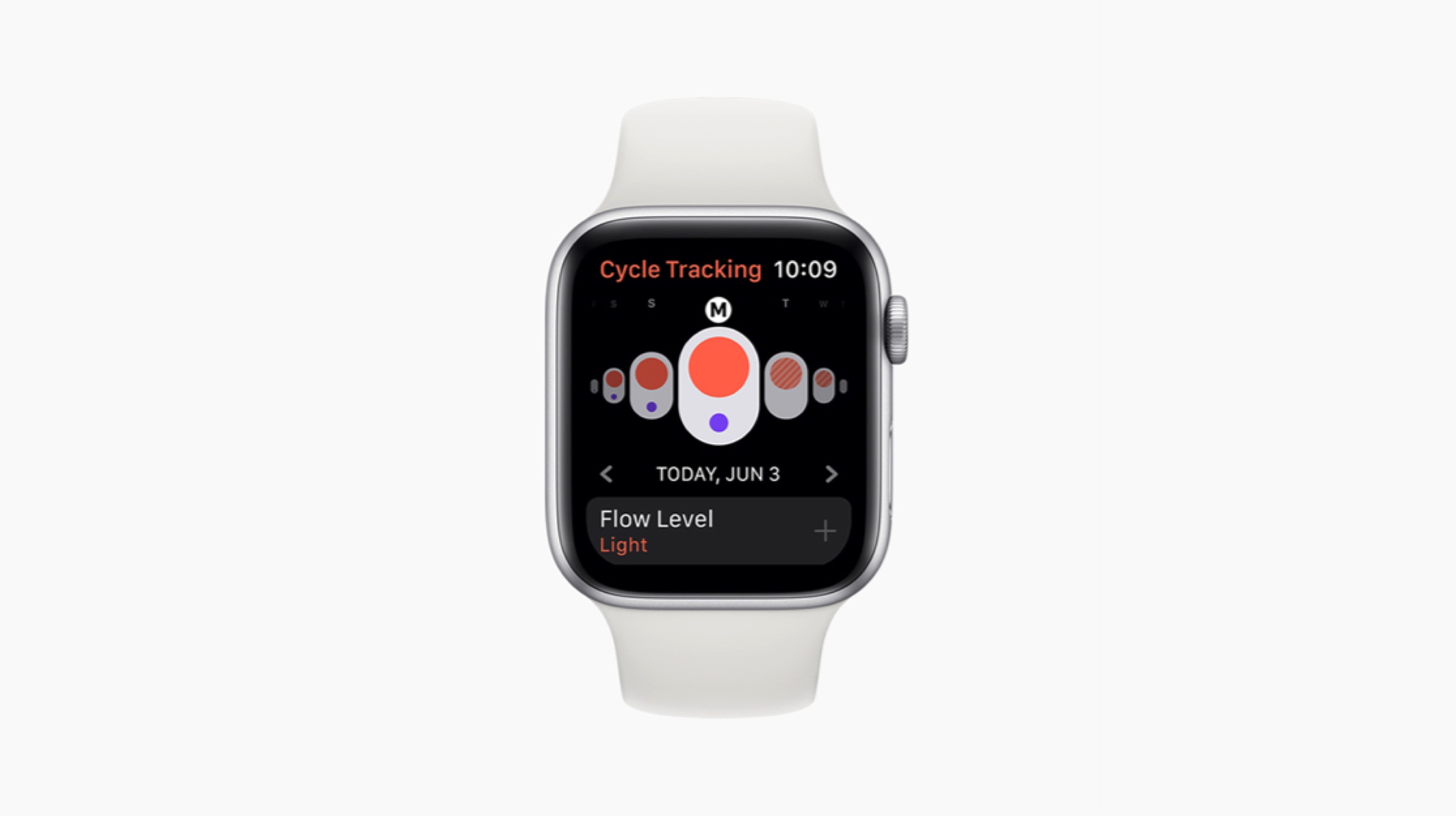
Apple, for its women userbase, has added a uniquely interactive app that lets them track their menstrual cycles. With the new Cycle Tracking App, women can log important data related to their menstrual cycles. The application with data inputs is also capable of predicting future cycles beforehand along with current period flow, symptoms and results from ovulation prediction kits. Fertility and ovulation can also be tracked by Apple Watch.

Also Read: Apple Mac Pro Is The Productivity Machine Apple Promised
No wearable device/companion, even the ones specifically made for health monitoring feature such degree of functionality at this size. Apple succeeded in making the best wearable device in the market in this regard. Users can get a full picture of their health right on their wrist without ever needing an iPhone.
Apple has also made the Apple Watch a more stand alone device, which means it can function without requiring input from the iPhone. The Apple Watch offers Fall detection and emergency auto dial for the elderly, Heart Rate monitoring, and ECG, along with several other features like, Breathe reminders and fitness tracking which include auto exercise detection. The Apple Watch has already saved a lot of lives with some of it’s features and with more being added with WatchOS 6, the Apple Watch has now become the most well developed fitness and health tracker.
-

Apple Mac Pro Is The Productivity Machine Apple Promised
When Apple launched the previous version of the Mac Pro a lot of prospective buyers were excited for the new “trash can” design. However, even though it turned out to be an exciting device for pro-consumers, professionals didn’t like the design or the lack of expandability. Especially since Mac Pro’s originally offered expansion and flexibility.
Apple last year clarified that they were working on a redesigned Mac Pro that would live up to the name, and boy has Apple delivered. The new 2019 Mac Pro offers a pro focused approach towards productivity.
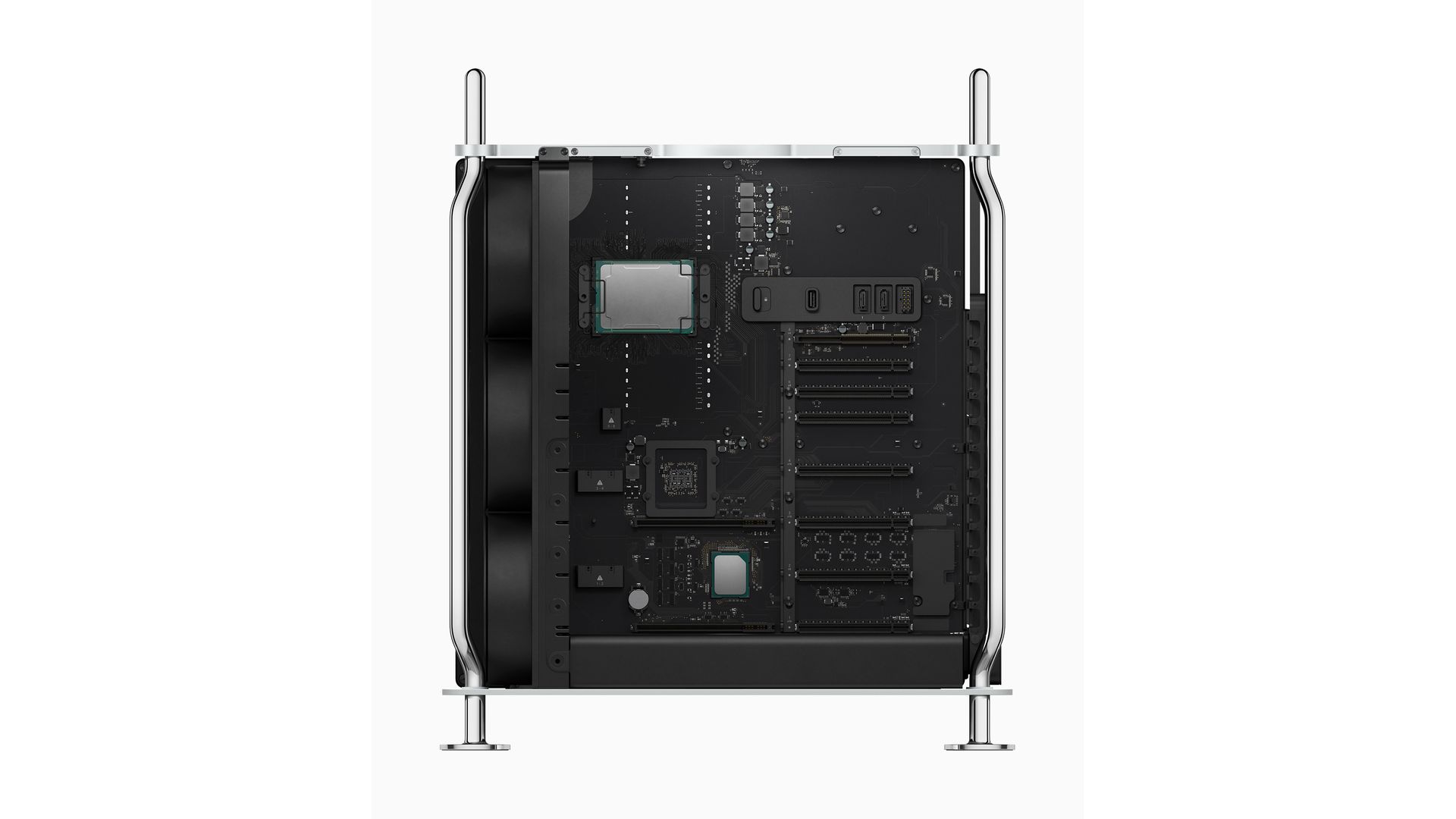
The Mac Pro will have Xeon processors up to 28 cores with 64 PCI lanes that will allow for ample expansion for improved graphics cards, capture cards or fast storage. Users can also use the six lane memory which is expandable up to a whopping 1.5TB.
The new pro includes an option for the Radeon Pro Vega II, and Duo cards which were also debuted with the Mac Pro. Users can utilize the dual MPX Modules for 2 Vega II Duos to achieve 56 Teraflops of Graphics performance and upto 128 GB of Graphics Memory.
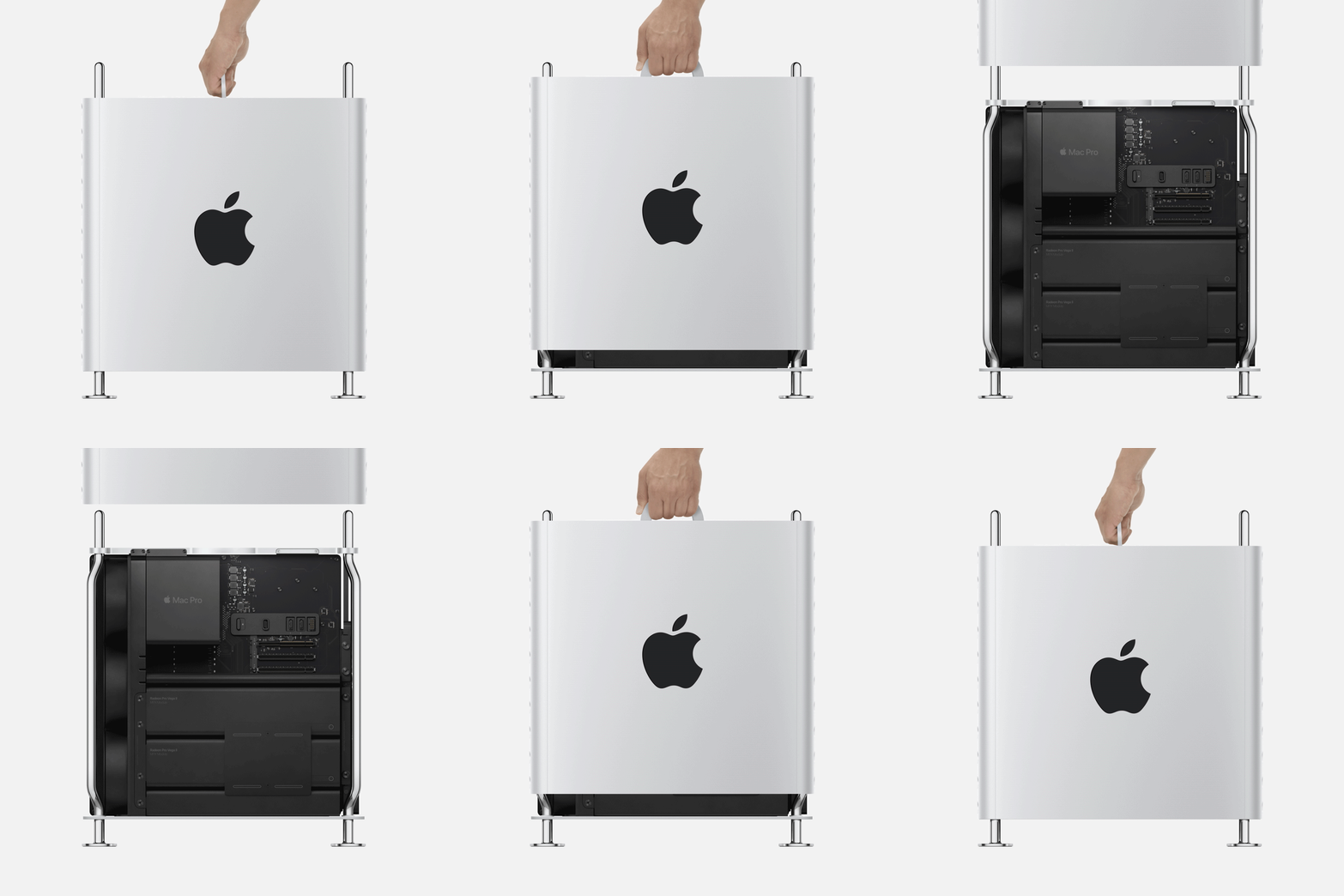
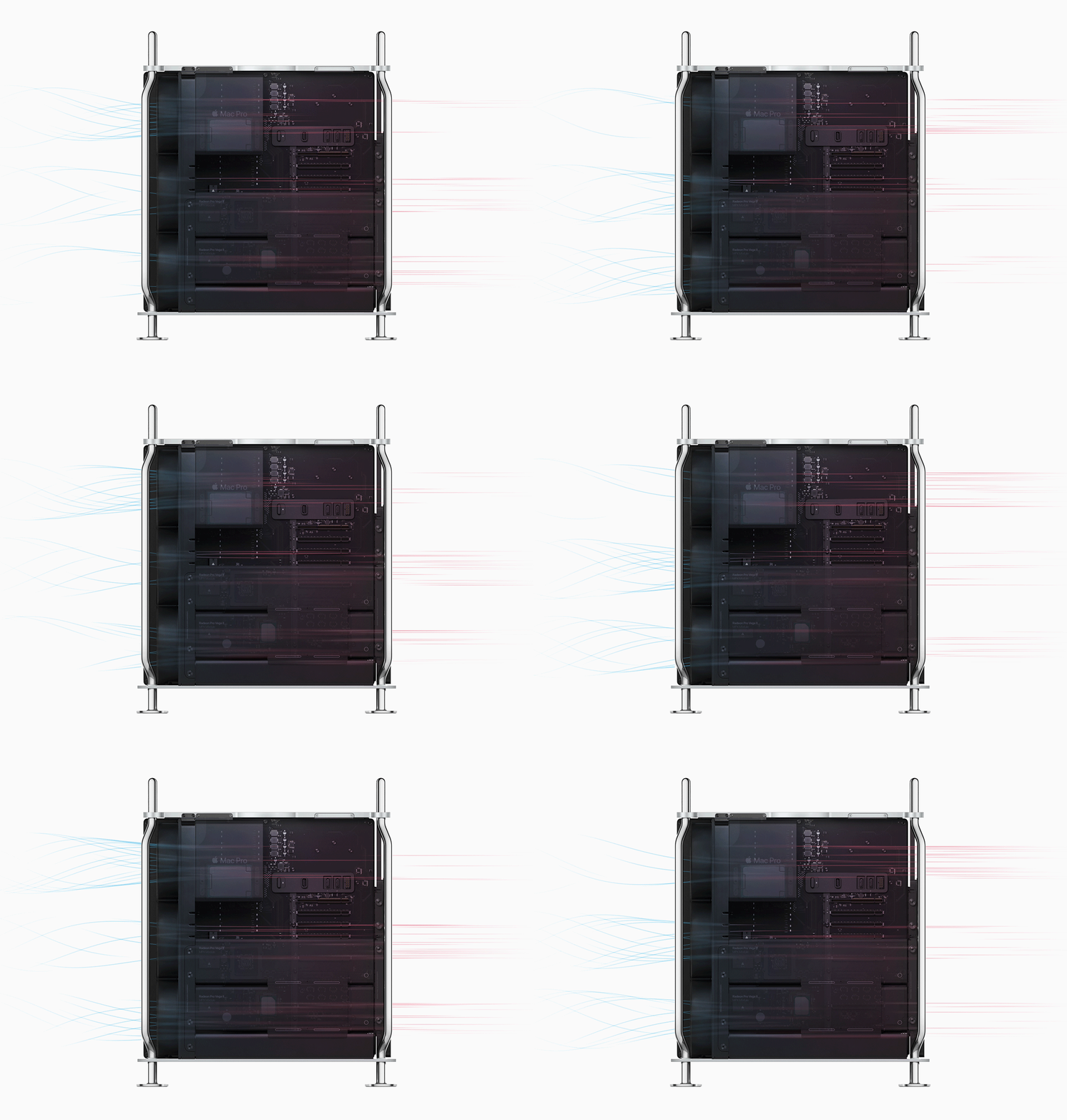
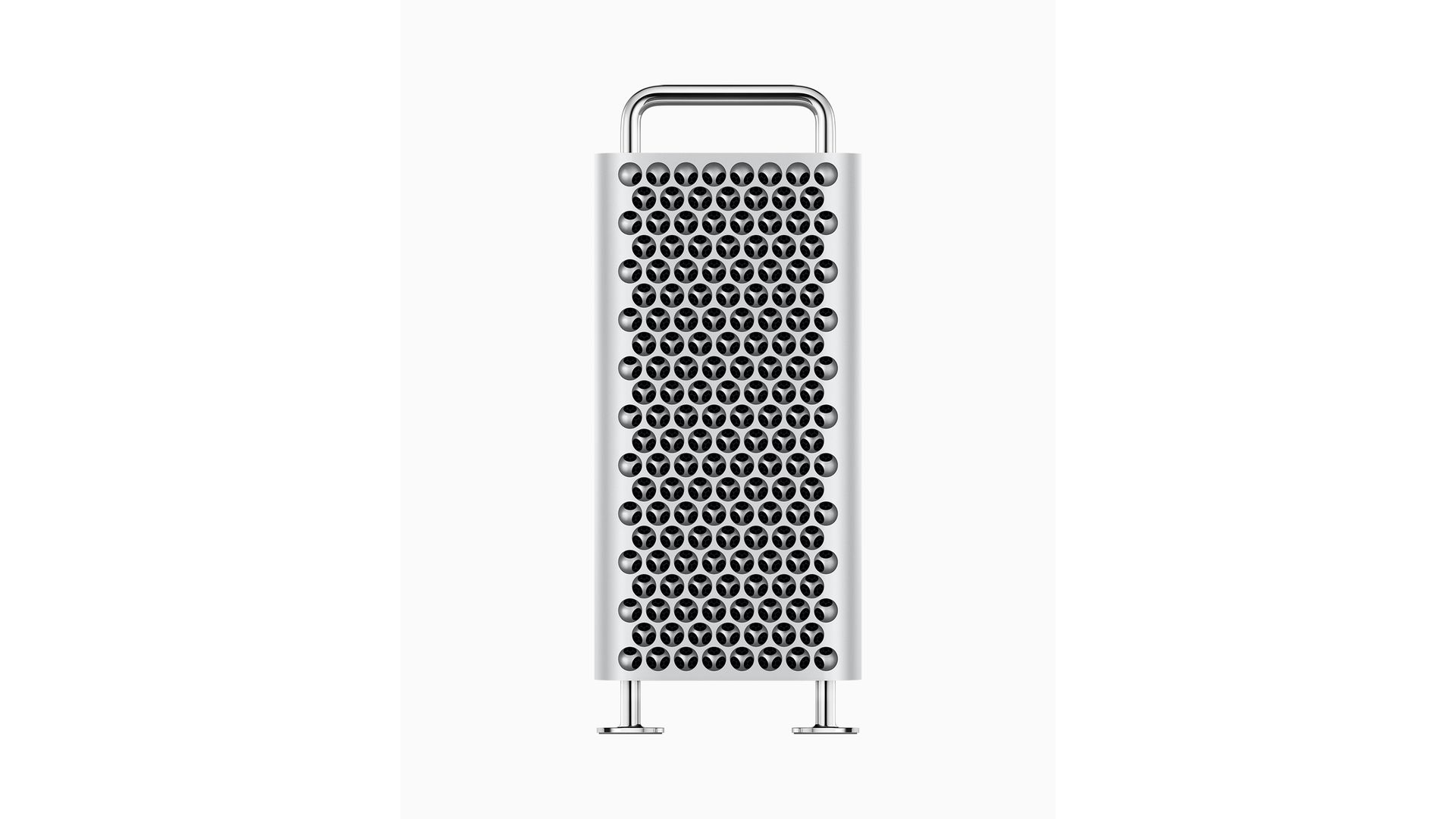
But all these specifications are only an added plus to the new design of the Mac Pro which is clearly one of the best cpu case designs for pro usage. While aesthetically pleasing the case is designed with cooling in mind . A fully vented front and three fans at the back mean that air moves through the Mac Pro in a singular direction at all times. The open nature of the machine means users will be able to add Liquid cooling into the mix and that may end up in some improved throttle free performance.
The case design also allows for quick all around access the machined aluminum frame sits on solid pipe frame which while reminding us of the original “cheese grater” Mac Pro, is much more simpler to access and customize.
Apple has not held back with performance and expandability and it is evident that the company wants the professionals, movie makers and pro consumers to accept the Mac Pro back into their workflow. Expansion options will also include thunderbolt 3 ports which will allow for EGPUs and displays including the new 6K Apple Pro Display XDR.
The Mac Pro’s Afterburner is also another feature designed to lure big video creators and movie makers. The programmable ASIC is capable of decoding up to 6.3 billion pixels per second. Which means it can live decode upto three 8K Pro Res streams. This also translates to 12 4K streams, means that production houses won’t have to rely on fast proxy media, eliminating production storage costs.
The Apple Mac Pro is more a legend reborn, almost like a cult classic revamped. Ever since the first Mac Pro was introduced it became a staple for video editors and movie producers. Major motion pictures were created on these machines and that legacy may continue yet again for the foreseeable future.
Needless to say Apple will also allow full customization and professionals are already drooling over their favorite specification builds. The Mac Pro will ship in fall and will be available to customize from Apple’s website. In India the Apple Mac Pro will be available in certain pre-configured builds, but Apple is working on bringing full customization to India, and we might see that soon.
-

Apple Launches The All New Revamped Mac Pro Alongside The Pro Display XDR 6K Monitor
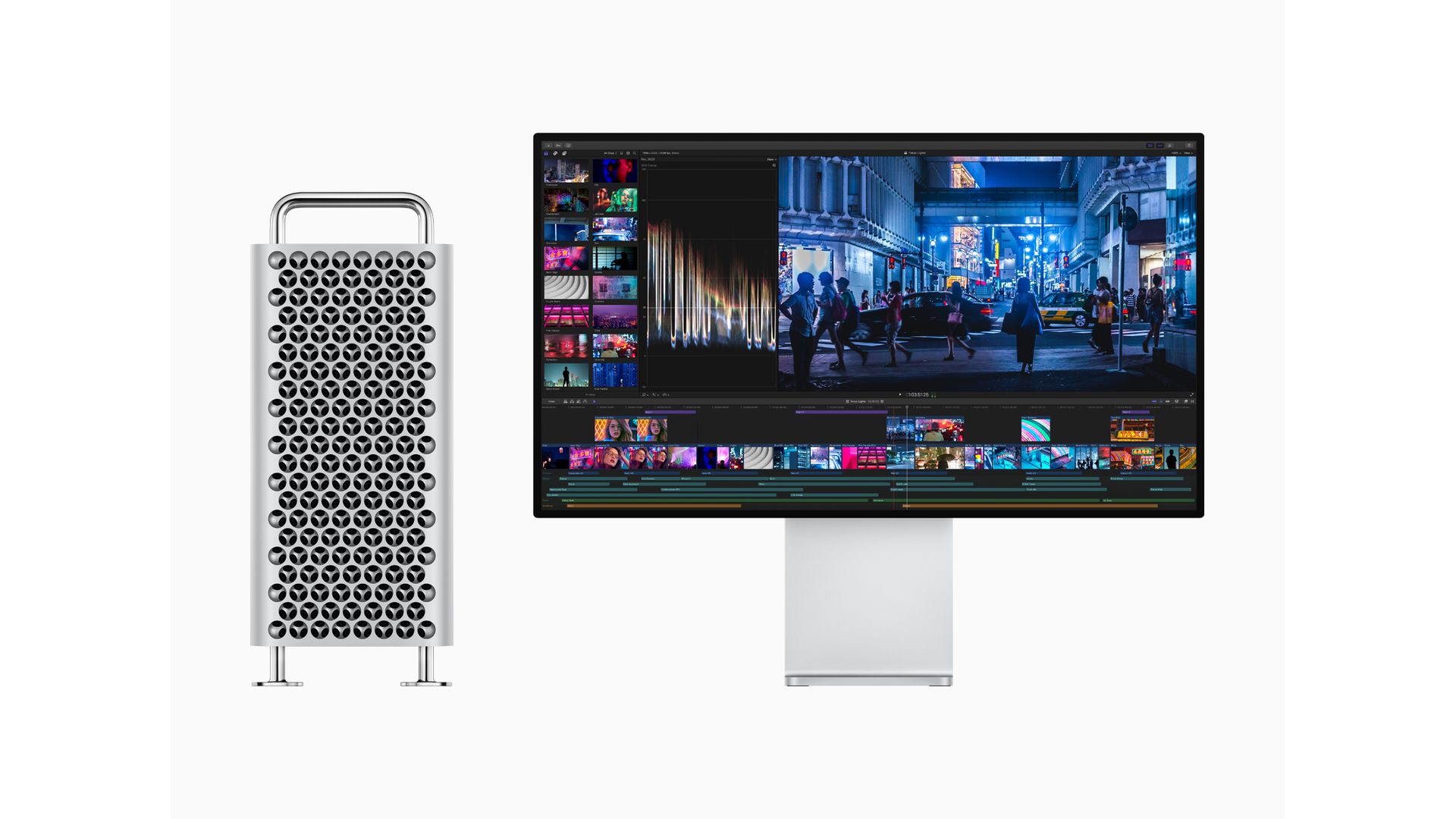
Alongside the launch of the highly-anticipated iOS 13 operating system, Apple finally unveiled the long-promised Mac Pro with a modular design. The company also announced the 32-inch Pro Display XDR 6K monitor. The first look of the Mac Pro can be very clearly attributed to Apple’s classic “Cheese grater” design. Since the trash can design (previously released in 2013) wasn’t previously accepted very warmly by Apple consumers, the company has decided to choose a much more elegant and modern design. The company claims that the Mac Pro is designed to focus on modular computing and ease of expansion.
Apple Mac Pro: Features & Specifications
The Apple Mac Pro runs on the 28 core Intel Xeon processor with 300W of power and state-of-the-art cooling. Apple claims that the cooling system will enable the system to run at maximum power and efficiency. In terms of memory, the Mac Pro supports up to 1.5TB of RAM, which is staggering at the least. Expansion can be done via six-channel memory across 12 DIMM (Dual In-Line Memory Module) slots.
Another highlighting feature of the machine is the presence of eight PCI Express slots. Four out of those eight slots are double-wide, implying that they can house larger expansion cards. Regarding connectivity, the Mac Pro sports 2 USB-C/Thunderbolt 3 ports and two USB-A ports that are present on the front of the case.
Additionally, Apple also launched the MPX module, which is a custom expansion module. In order to provide the components with more power and connectivity speeds, the MPX utilizes the dedicated Thunderbolt 3 module embedded in the motherboard. It can accommodate two graphics cards and sports a custom Thunderbolt connector to plug into the backbone of the motherboard. It also has its own dedicated heat sink for effective heat management.
In terms of graphics, the MPX module can be kitted with AMD’s Radeon Pro Vega 2 or Radeon Pro Vega 2 Duo cards. This will consequently add a total of 4 GPU chips to the Mac Pro, summing up to around 128GB of High Bandwidth Memory graphics. Alongside the MBX module, Apple will also sell an I/O module that will equip the Mac Pro with two more Thunderbolt 3 ports and two USB-A ports, in addition to the 3.5mm headphone jack. A special feature of the I/O module is the “Afterburner”, which is a dedicated video card for graphics and editing. It uses the FPGA (field-programmable gate array) that enables it to process up to 6 billion pixels a second.The components of the Mac Pro are powered by a 1400W power supply. Apple claims that the the three large fans present at the front cool the system at the rate of 300 cubic feet per minute. The case can be fitted with optional wheels to enable mobility of the system.
Apple Pro Display XDR
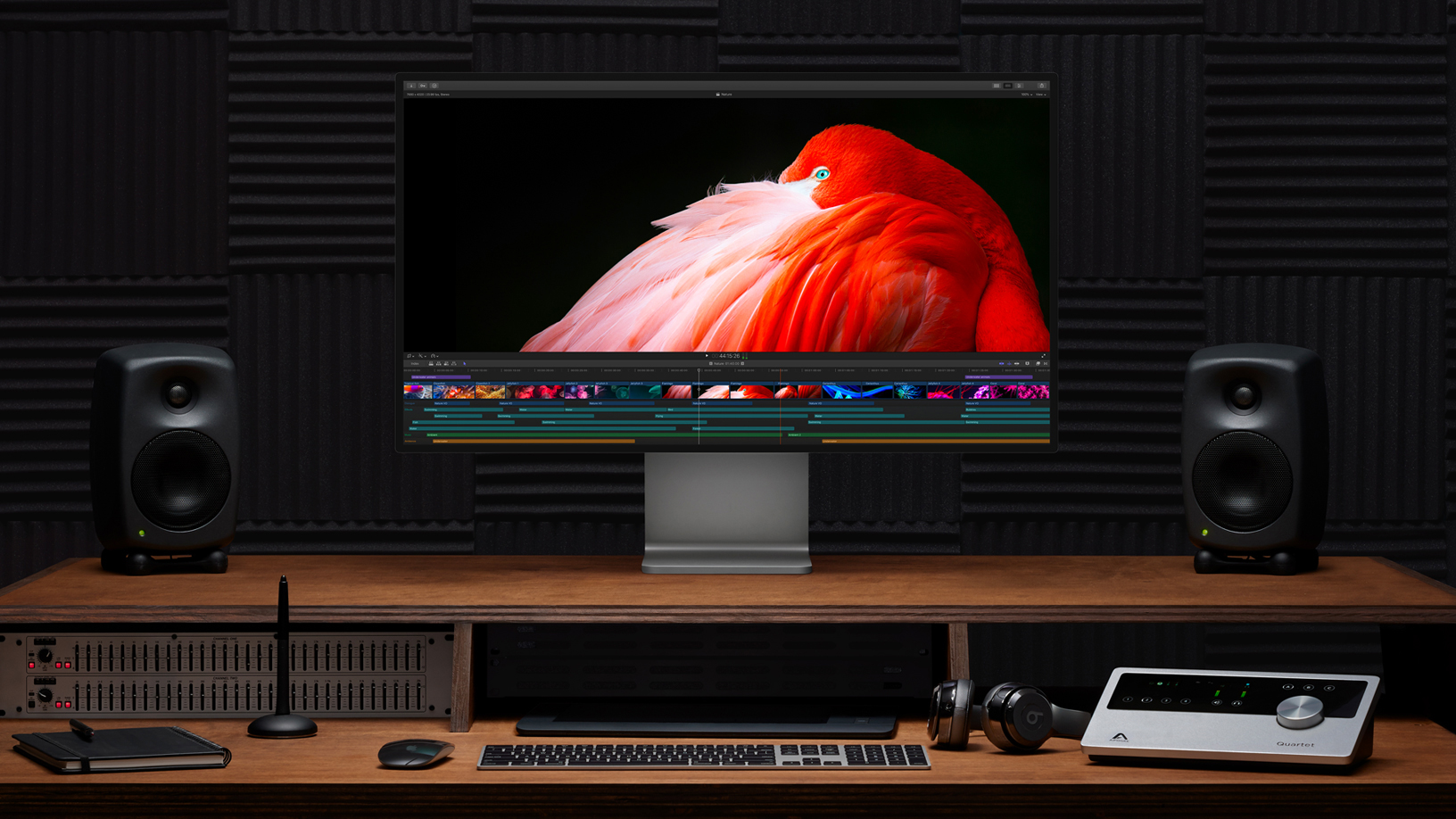
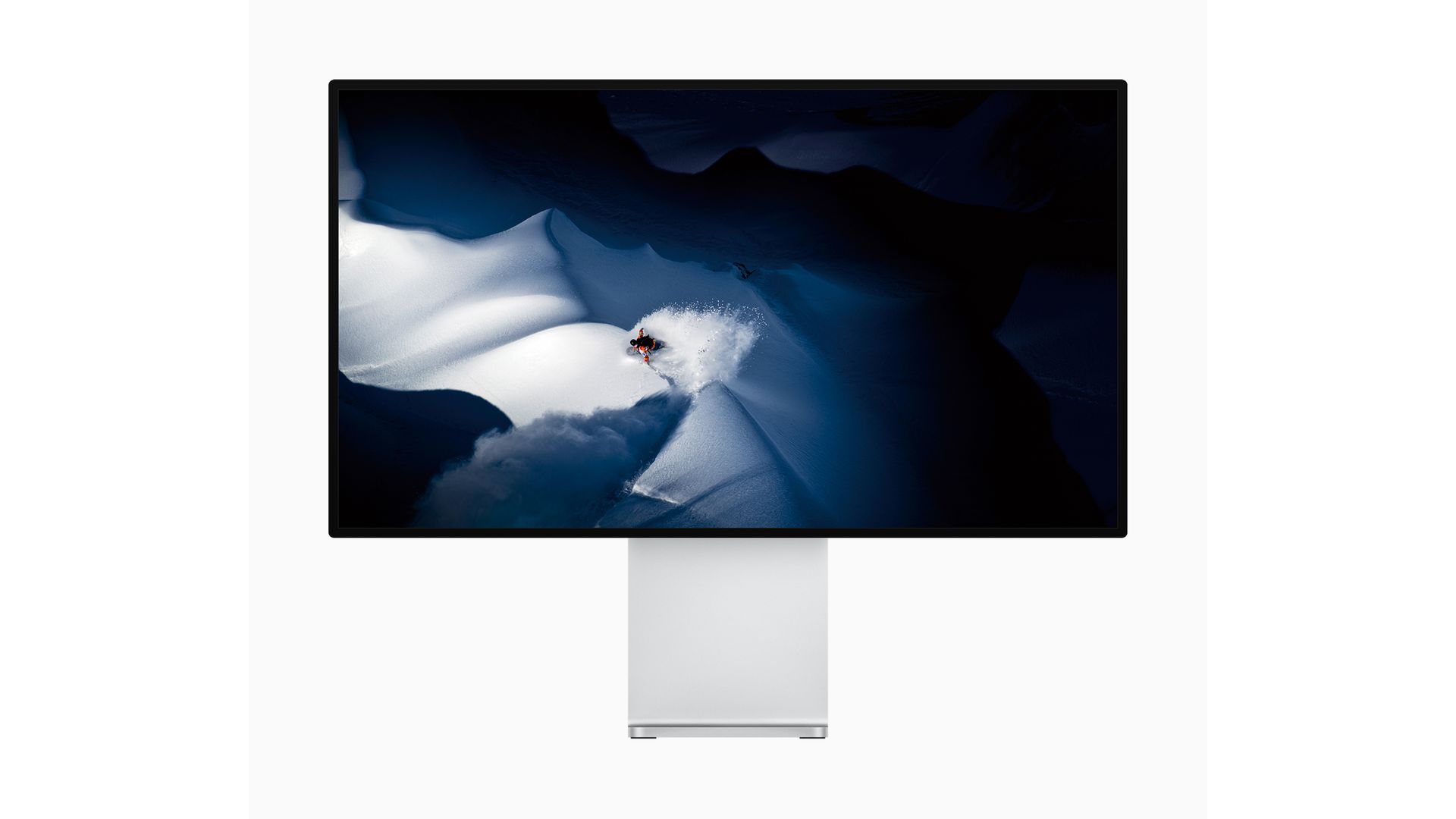
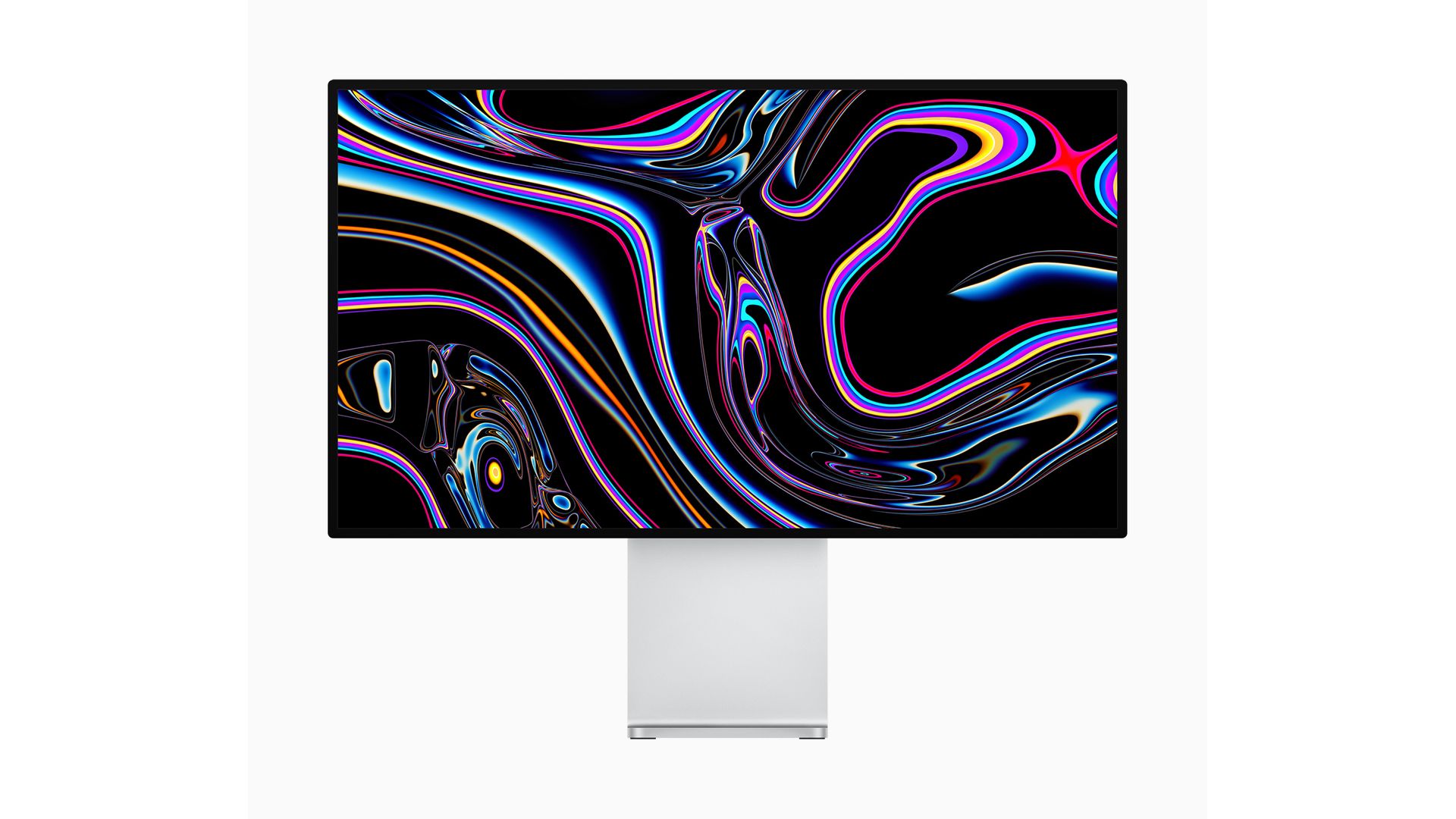
The company also unveiled a 6K monitor at the WWDC, which is named the Pro Display XDR. The 32-inch LCD display has a 6016 x 3384 px Retina HD screen. The monitor has ultra narrow 9mm bezels. The XDR stands for Extreme Dynamic Range. The display supports Apple’s True Tone automatic colour adjustment for ambient lighting.
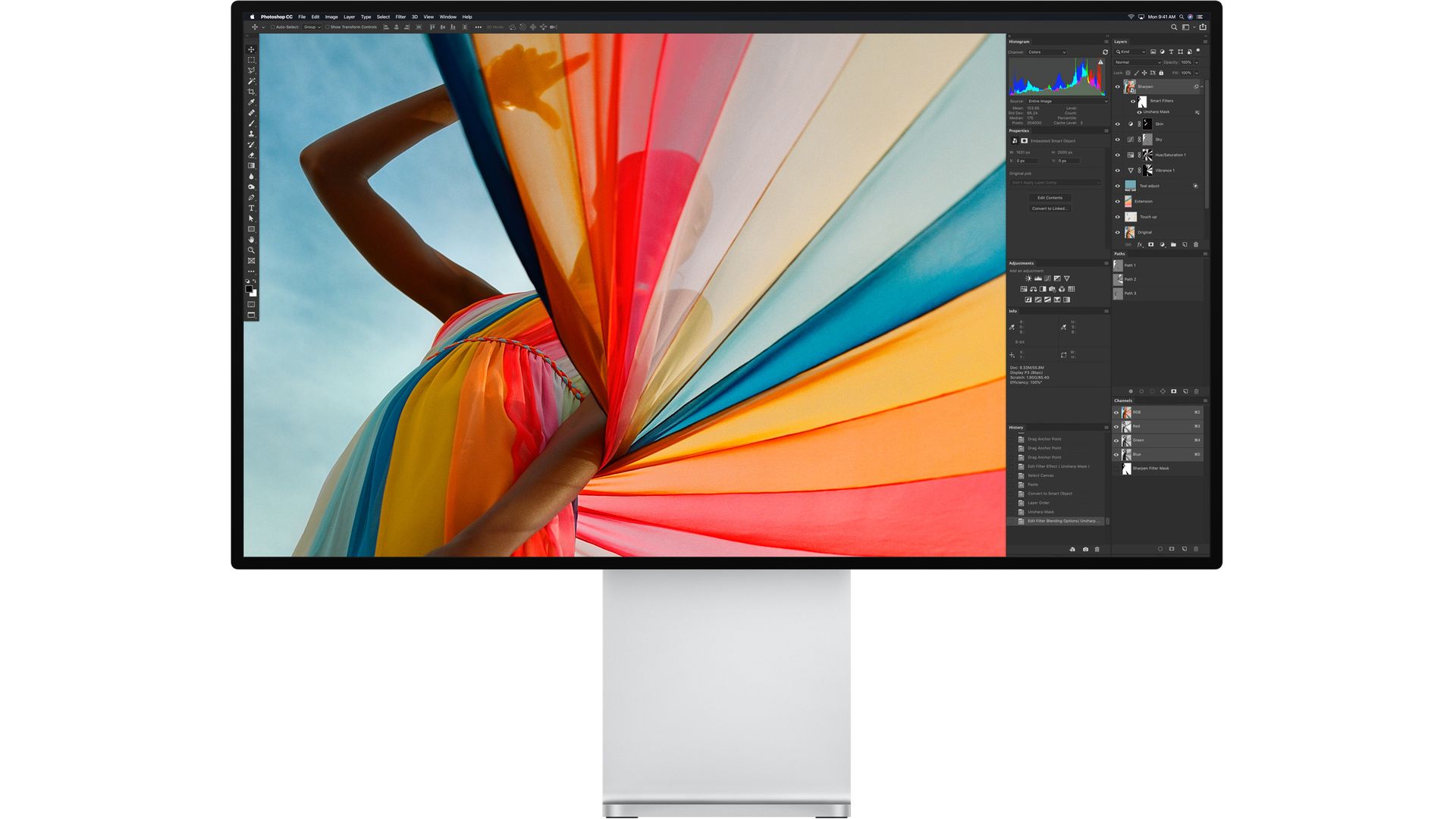
The display is 40 percent larger than the 5K display present in the iMac. It has a matte variant called Nanotexture and features an anti-reflective coating. The back of the monitor has a similar design to the Mac Pro, which acts as a heatsink. Apple claims that the screen can hit brightness levels of 1600 nits which will assist during the editing of HDR content. It connects to the Mac Pro via a Thunderbolt 3 cable. Moreover, the Pro Stand included with the monitor is extremely modular and functional. The display can be rotated into vertical mode using the Pro Stand.The Apple Pro Display XDR is priced at US$ 4,999, whereas the Pro Stand will be sold separately for US$ 999.
Apple Mac Pro: Availability And Price

Also Read: LG 88Z9, The World’s First Commercial 8K OLED TV Up For Pre Orders
The Mac Pro will be available in Fall 2019 at a starting price of US$ 5,999 for the most toned down variant. The aforementioned variant will pack an 8-core Intel Xeon CPU, 32GB of RAM, Radeon Pro 580X GPU and 256 gigs of SSD.
-

Microsoft Teases A New Dual-Screen Surface Device
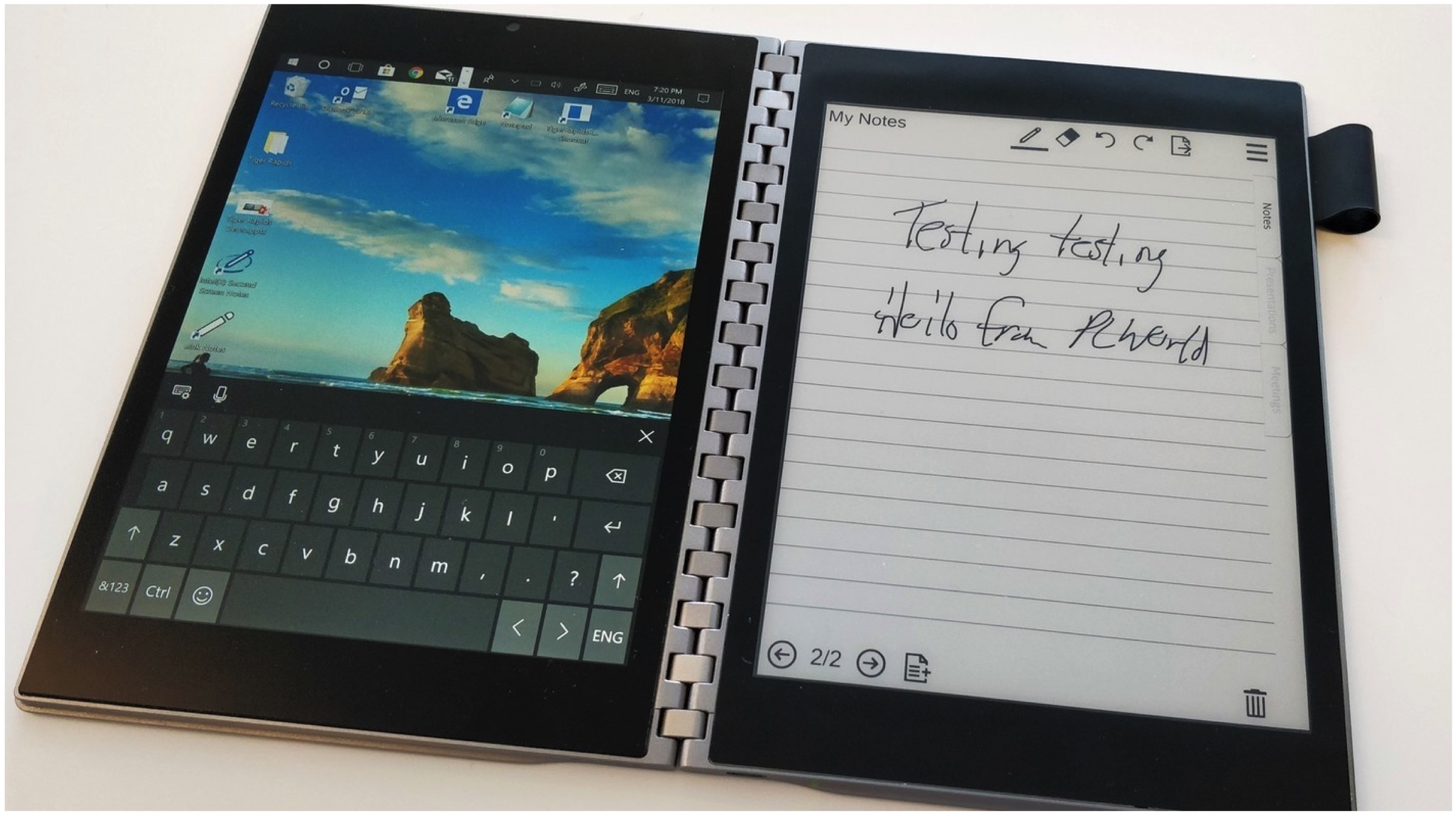
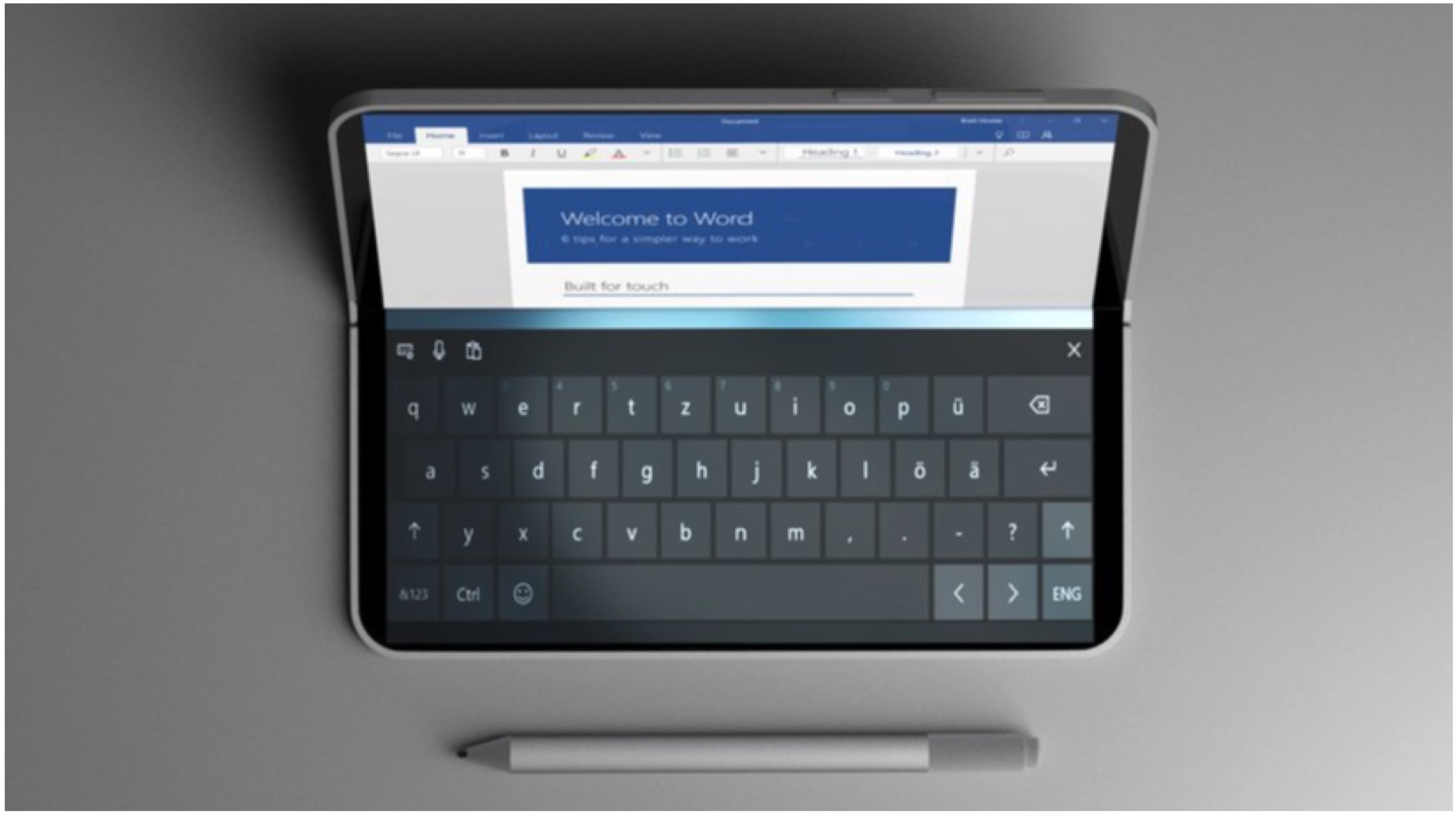
Sources have uncovered that Microsoft has showcased a new dual-screen Surface device within the company. The device was demonstrated to the team working on the new 2 in 1 with the help of a video reel showcasing the new Microsoft Surface with dual-screen prototype hardware.

Codenamed Centaurus, Microsoft has been hard at work regarding the upcoming dual-screen device for about 2 years now. Microsoft Surface is set to pave the way for a new breed of dual-screen tablet and laptop hybrids with its unique new designs. The company had also had plans for a smaller pocketable Surface variant, code-named Andromeda, that had its development halted for Centaurus. The dual-screen laptop prototype (Centaurus) was first heard of in December 2018 with similarities drawing it closer to Microsoft’s Courier tablet concept.

The Surface team at Microsoft demonstrated the hardware, long before any official announcements, showcasing various dual-screen prototypes for it. Centaurus being openly shown to the employees does point at the possibility of the development stages reaching its final cycles with estimates putting the release by year-end or early 2020.
Microsoft’s Centaurus (latest version of Surface) will also be receiving the Microsoft Windows Lite version, making it one of the first devices to run on the Operating System. Windows Lite is a new slimmed down version of Windows for dual-screen devices and Chromebook competitors. Intel’s new stance on ultrabooks and push towards dual-screened devices with more added functionality and productive uses much like the Lenovo Yoga Book C930 is expected to popularise the idea of a dual display device.Also Read: Xiaomi To Launch The Redmi K20, K20 Pro In India Within The Next Six Weeks

Microsoft besides the Centaurus has also showcased the fully functional xCloud, the cloud game streaming platform. More details on the online gaming platform will come on E3 2019 on the 8th of June. The company pitches the cloud gaming service, not as a replacement for Xbox consoles but rather a way to resume the games users were playing on any device, with these upcoming light and portable dual-screened devices.
-

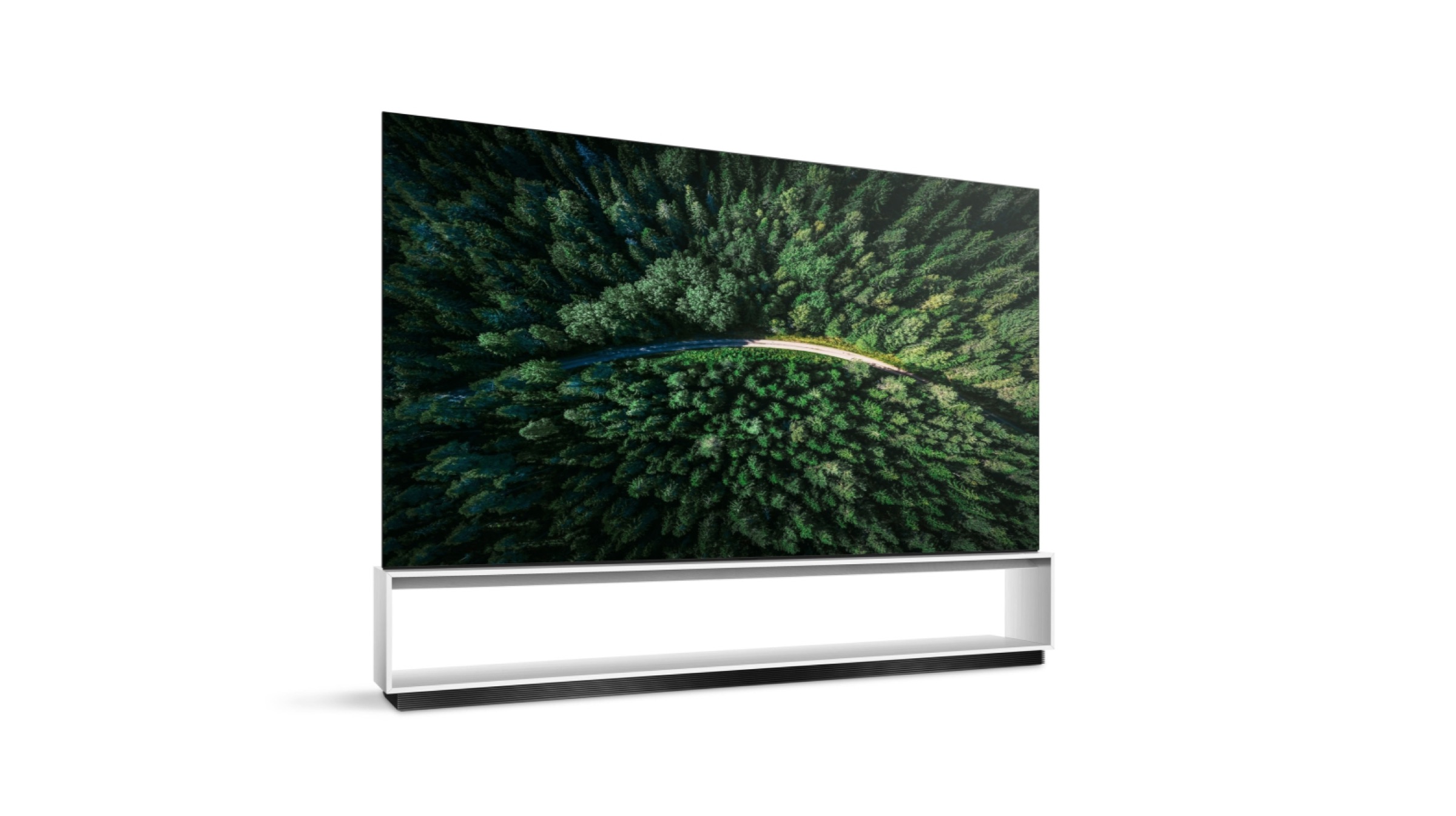
LG 88Z9, The World’s First Commercial 8K OLED TV Up For Pre Orders
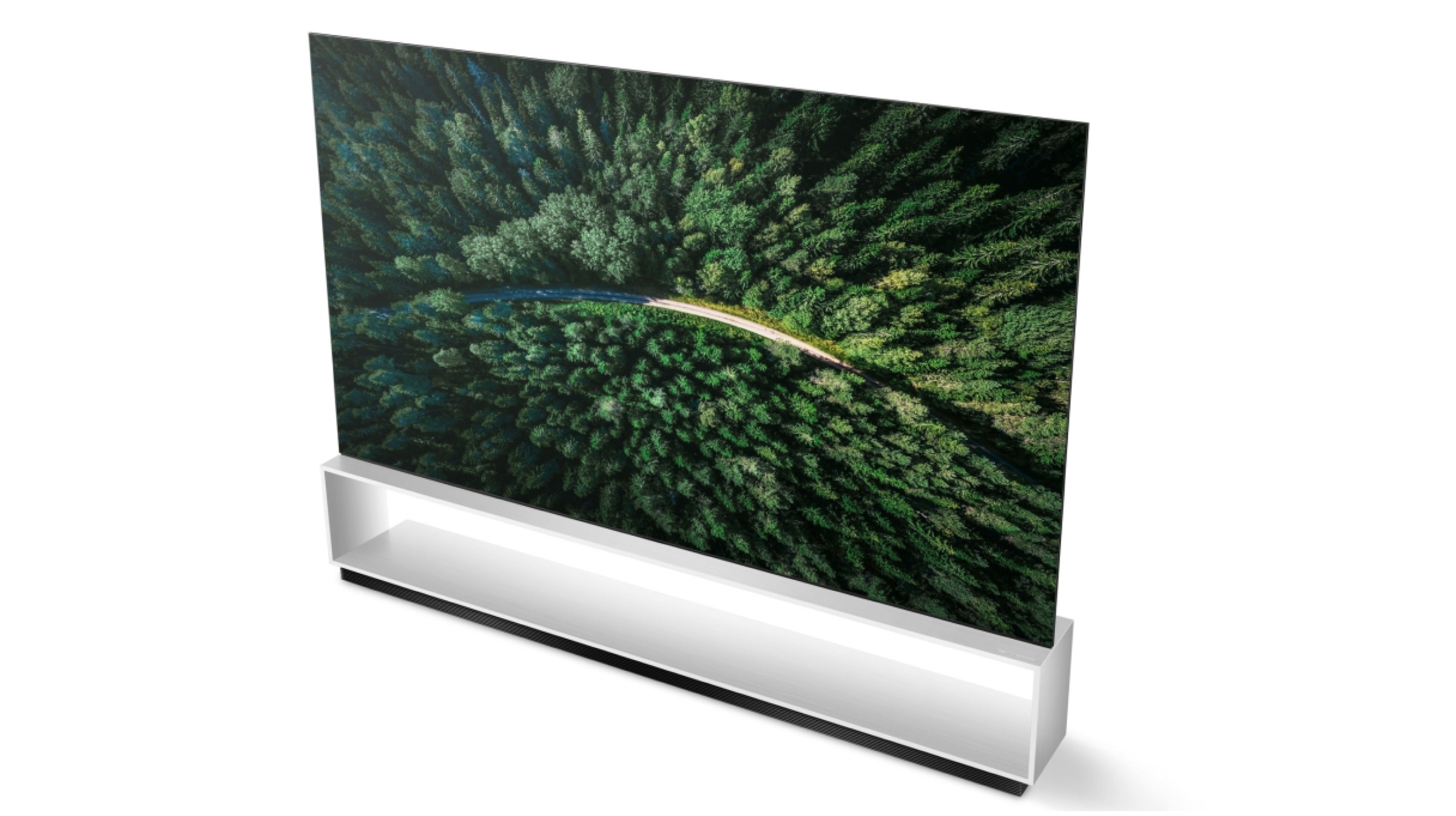
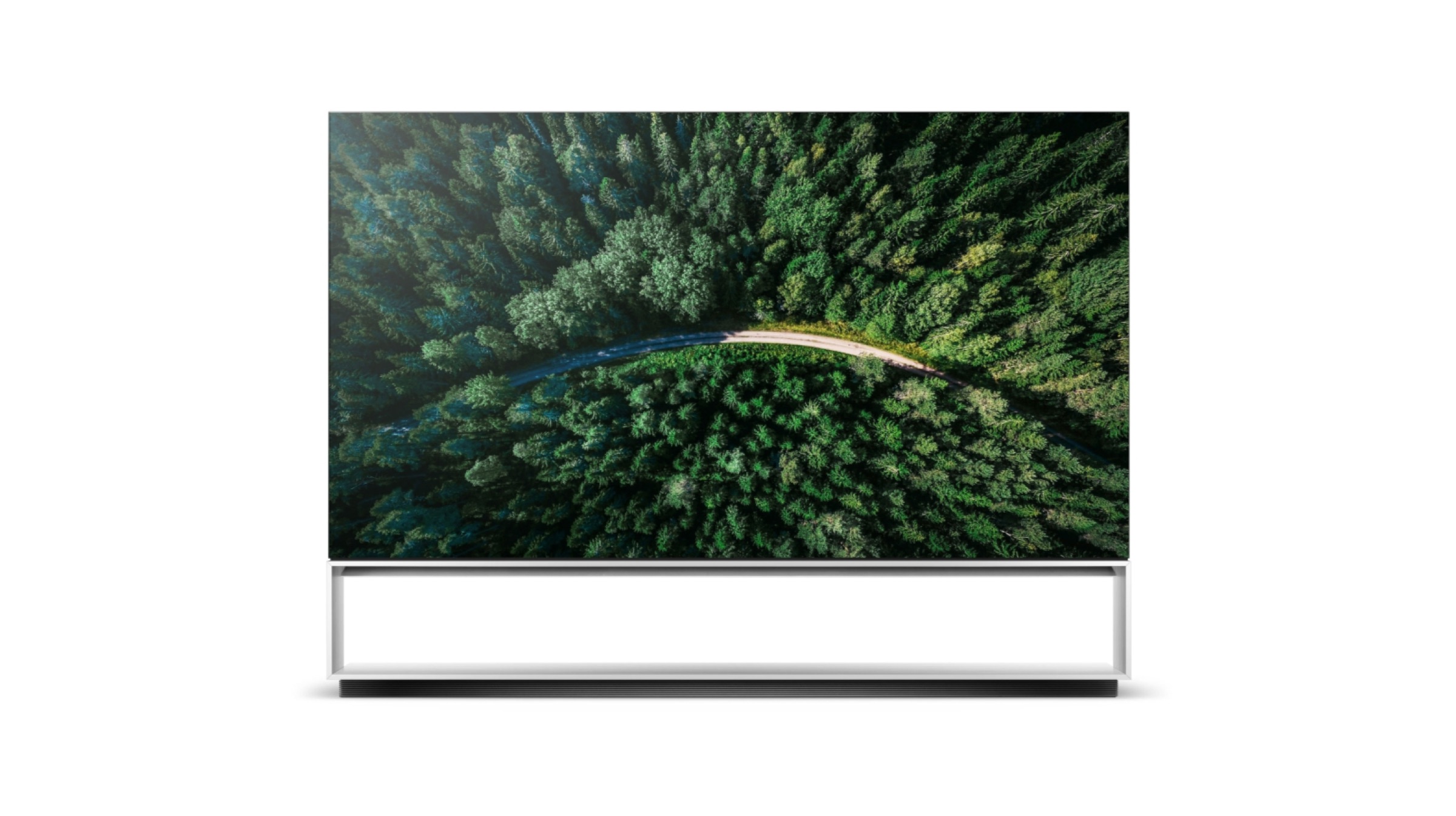
At the Consumer Electronics Show (CES) 2019, South Korean technology company LG unveiled the world’s first 8K OLED TV, the LG OLED88Z9. The company has now opened pre-booking of the television in South Korea. Consequently, the television will be retailed in North America and Europe in the third quarter of the year 2019. As of now, the company has not hinted at an India launch yet.
LG OLED88Z9: Features And Specifications

The 8K OLED TV has a resolution of 7680 x 4320 px with a massive 88-inch display. The resolution implies that the screen houses a total of 33 million pixels. Additionally, the TV supports HDR and Dolby Vision formats. In terms. In terms of sharpness, 8K displays are almost 4 times as sharp as 4K screens and have almost 16 times the number of pixels present in FHD+ displays. Noteworthy, not a lot of 8K content is available on the market which can be showcased on LG’s display.

From a different perspective, even 4K content was quite scarce when 4K displays first made its way into the market. With the development of various online streaming platforms such as Netflix, Hulu and Prime Video, 8K content can be expected to be pushed out to consumers as well. Moreover, the 2020 Olympics, which will be held in Tokyo will be supposedly broadcasted in 8K resolution. Select video developers roll out custom content in 8K as well, but to be fair, there is not a lot that users can juice out of the LED at the moment.

Also Read: Xiaomi To Launch The Redmi K20, K20 Pro In India Within The Next Six Weeks
Additional features include Google Assistant and Amazon Alexa voice assistant. Noteworthy, the voice assistant functionality will not be available globally. The LG 8K OLED TV has an inbuilt LG Gen 2 Pro Intelligent processor. Although the price of the TV has not been officially announced yet, it is expected to be quite expensive since there is no other commercially available 8K OLED TV in the market.
-

Xiaomi To Launch The Redmi K20, K20 Pro In India Within The Next Six Weeks
Xiaomi’s subsidiary Redmi launched its latest smartphones, the Redmi K20 and K20 Pro at an event in China on the 28th of May. While the former is a mid-range device, the latter is a flagship offering from the company. Both smartphones offer competitive specifications at a lucrative price tag. It was expected that the company will announce the handsets’ availability in the Indian market; however, no announcement regarding the news followed. Now, a senior Xiaomi executive has announced that both the Redmi K20 and K20 Pro will launch in India within the next six weeks.
Specifications
Mi fans! Here's a KNOCKOUT announcement! ? #RedmiK20 and #RedmiK20Pro are launching in India within 6 months.. ooops, I meant 6 weeks! ??
— Manu Kumar Jain (@manukumarjain) June 3, 2019
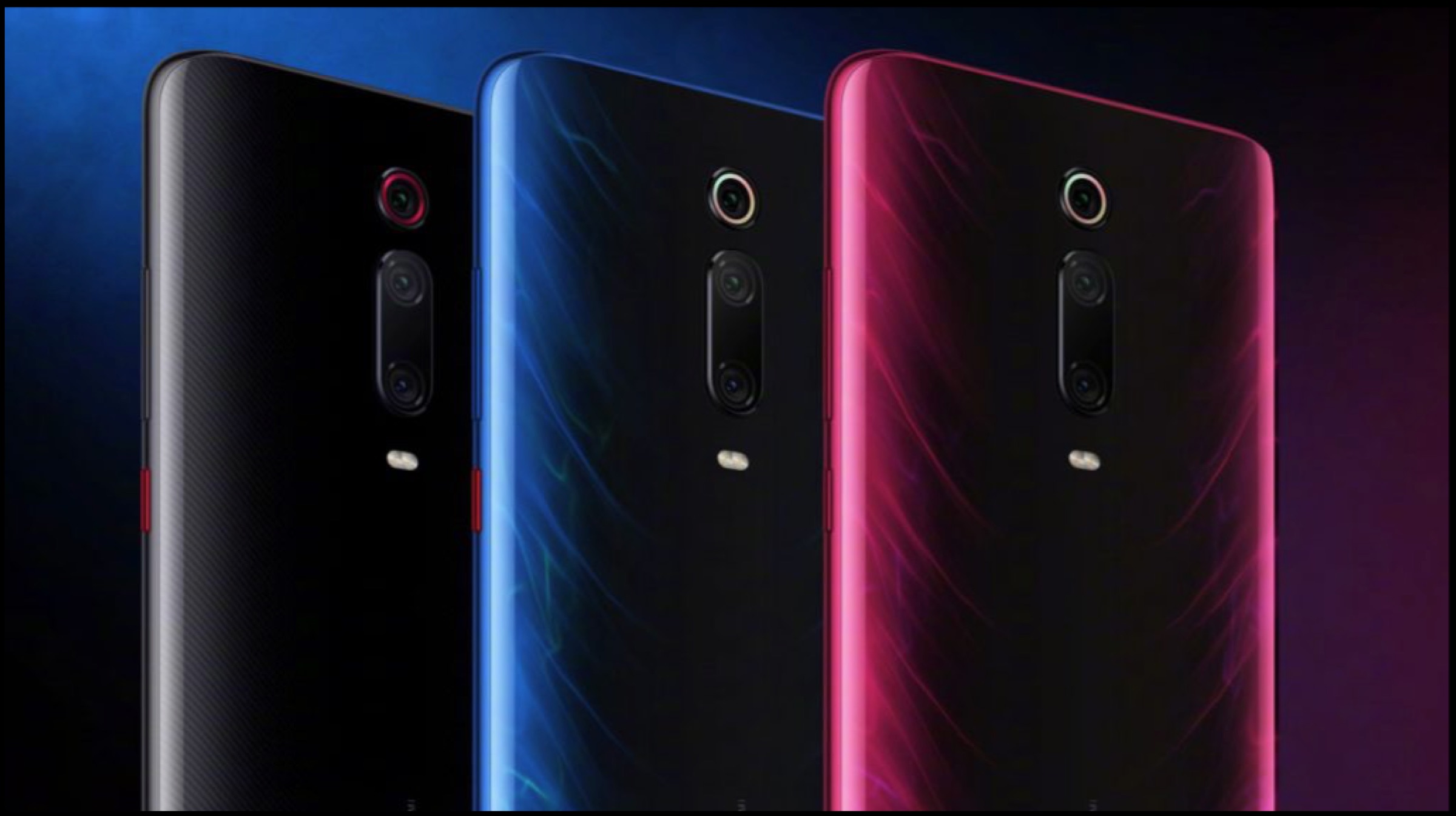
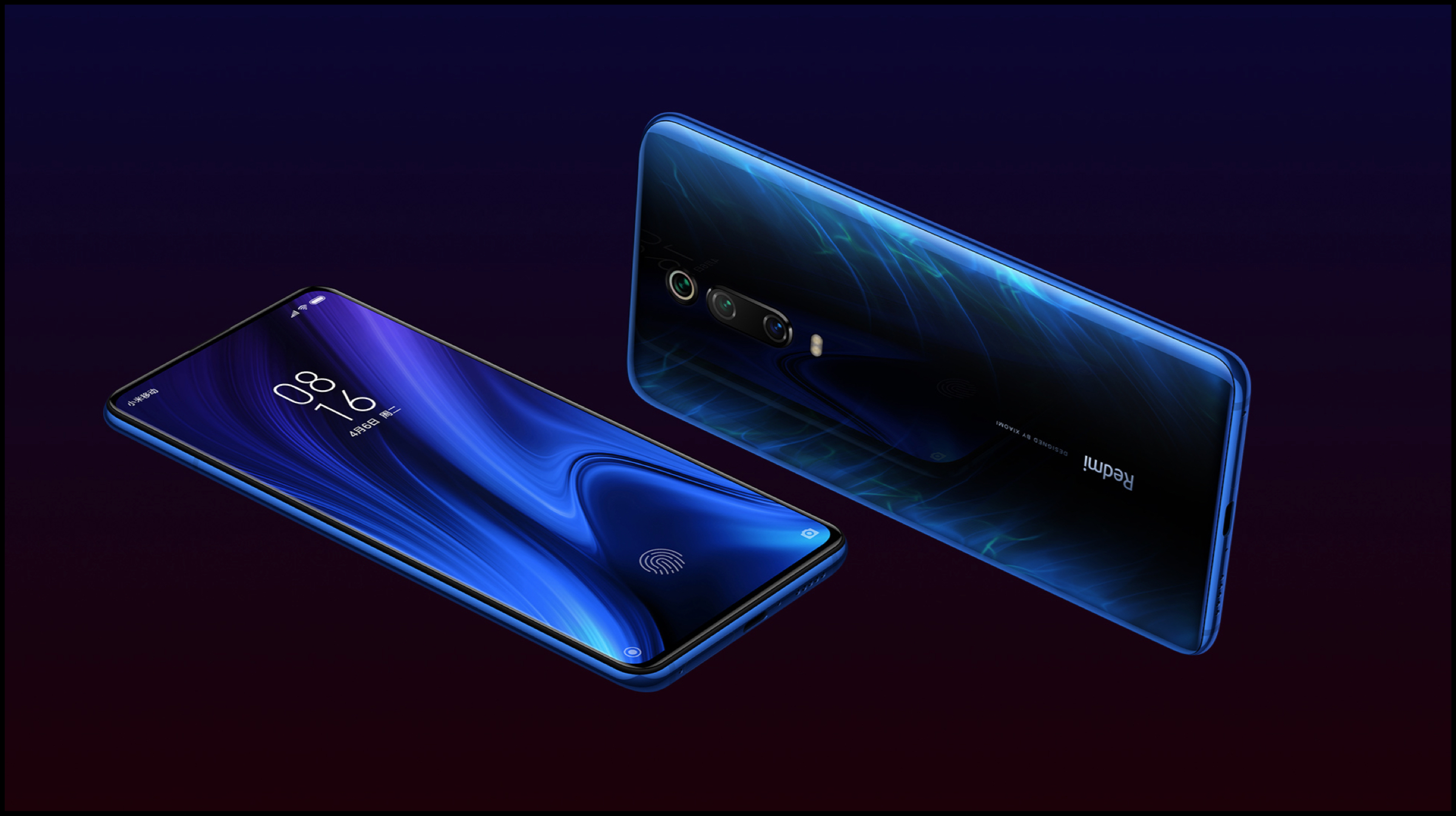
It's time India experiences the true #FlagshipKiller 2.0! ? RT ? if you are excited about these amazing devices.#Xiaomi ?? #Redmi pic.twitter.com/QN0JxH1osgTo recall, the Redmi K20 and the K20 Pro are the latest smartphones from the company. The devices have a glass design on the front and back with a metal chassis for reinforcement. They have an attractive gradient coloured design on the back. The handsets have a 6.39 inch AMOLED display with a resolution of 2340 x 1080 px. To maximise the screen real estate, they both have a pop-up mechanism on top to house the front-facing camera. For biometric security and unlocking the smartphones, the Redmi K20 series has an in display fingerprint scanner along with support for face unlock.

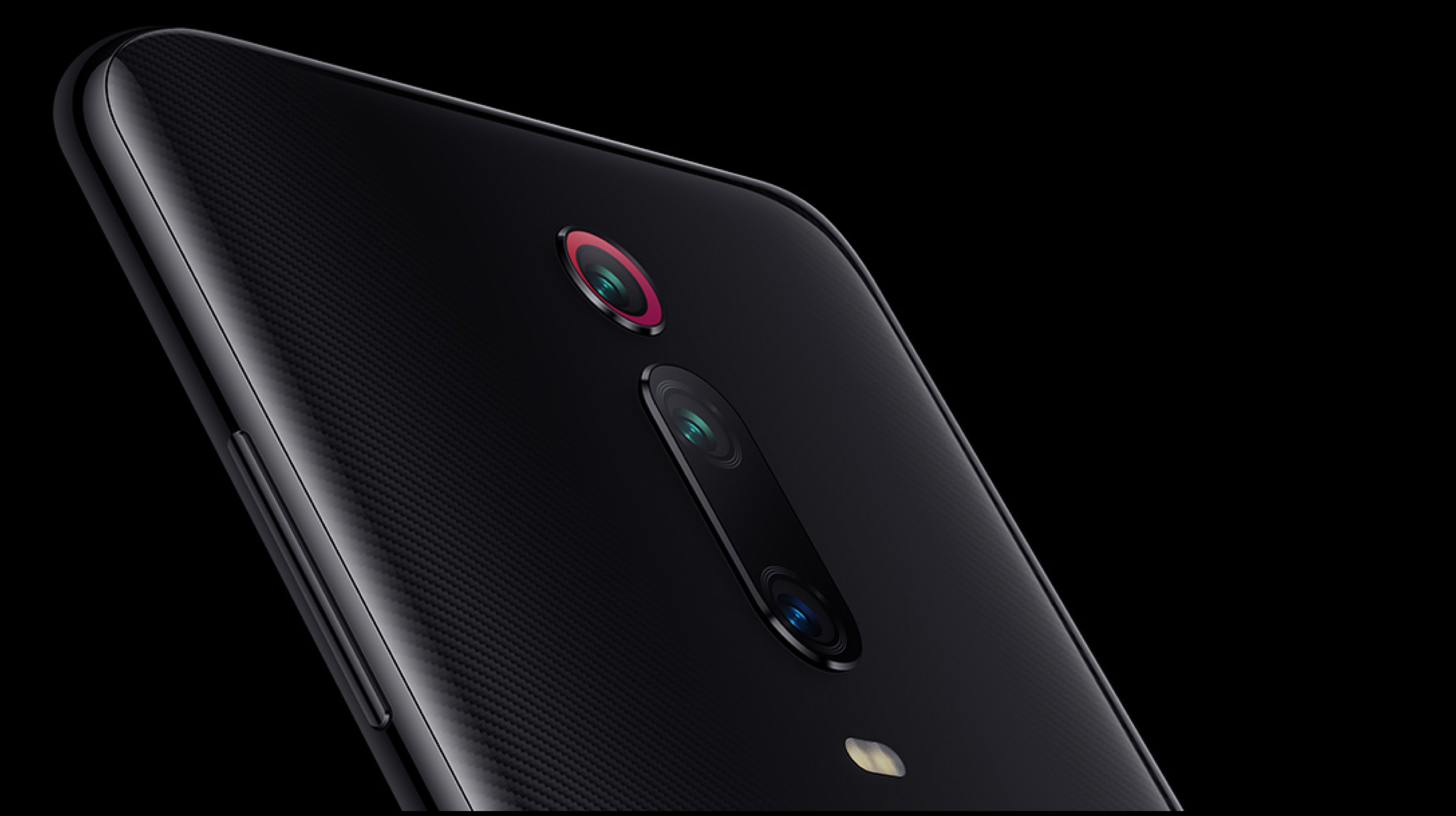
Under the hood, the Redmi K20 is kitted with the 8nm Snapdragon 730 SoC. The chipset is comprised of an Octa-core CPU and the Adreno 618 GPU. The more premium Redmi K20 Pro runs on the flagship grade 7nm Snapdragon 855 SoC which has an Octa-core CPU and the Adreno 640 GPU. In terms of optics, both smartphones have a triple rear camera setup consisting of an f/1.75 aperture equipped 48MP sensor, an f/2.4 aperture equipped 13MP ultra wide angle sensor; and a tertiary f/2.4 aperture equipped 8MP telephoto sensor. For selfies, an f/2.0 aperture equipped 32MP sensor is housed in the pop-up mechanism on top of the handsets.

Both the Redmi K20 and the K20 Pro are powered by a 4,000 mAh battery. However, the former supports 18 W fast charging while the latter supports 27 W fast charging. Both devices run on MIUI 10 which is based on top of the latest Android 9 Pie. The smartphones will be available in three colour variants namely, Blue, Red and Black. For memory and storage, the devices have up to 8GB of RAM and 256 GB of internal storage.Pricing & Availability

As mentioned above, the Redmi K20 and K20 Pro will launch in the Indian market within the next six weeks. While the exact date of the announcement is not known yet, it is likely that the smartphones may be launched in the last week of June or first week of July. As far as pricing is concerned, the Redmi K20 is expected to be priced around Rs. 20,000, while the more premium K20 Pro may be priced around Rs. 30,000.
-

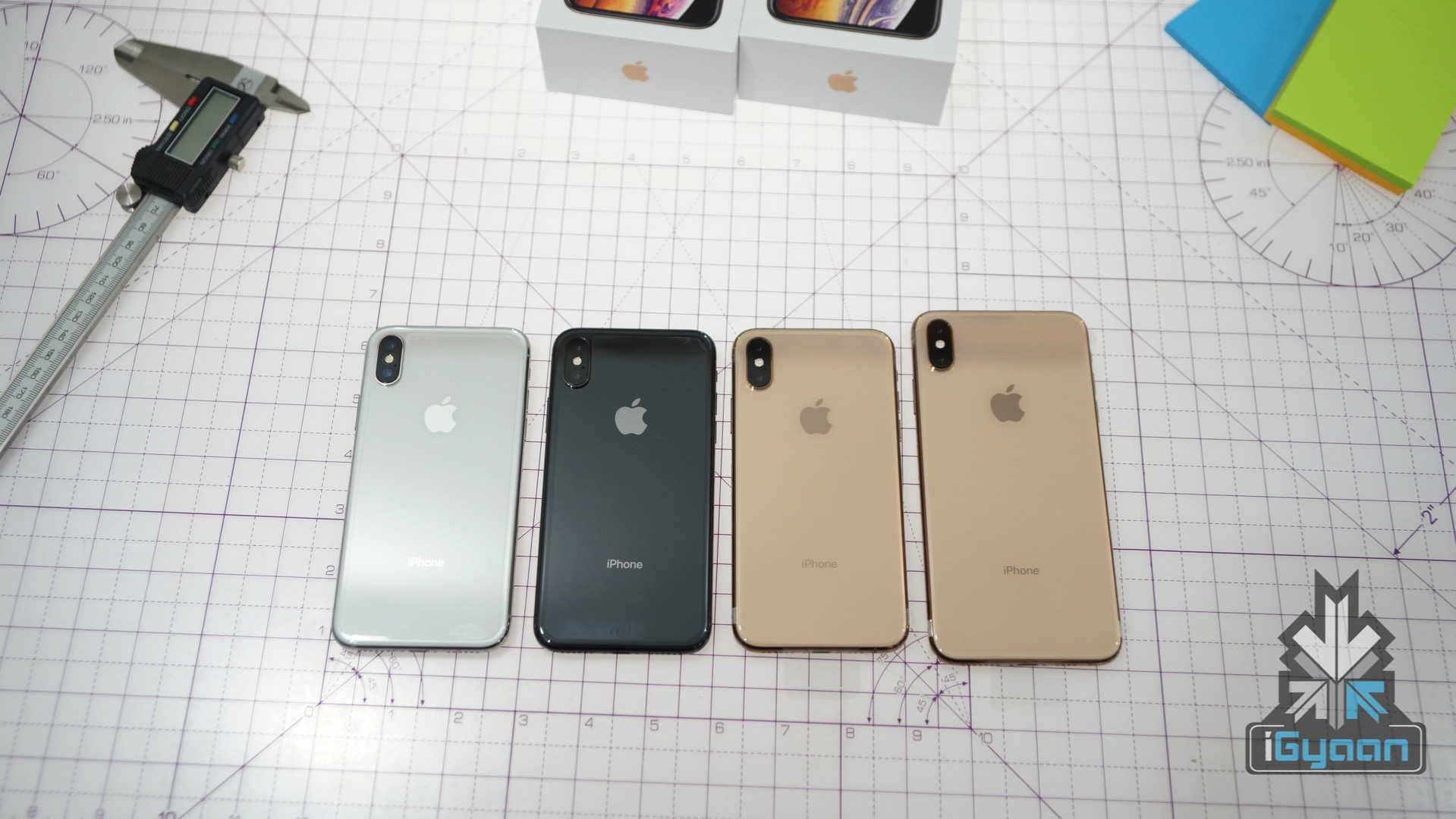
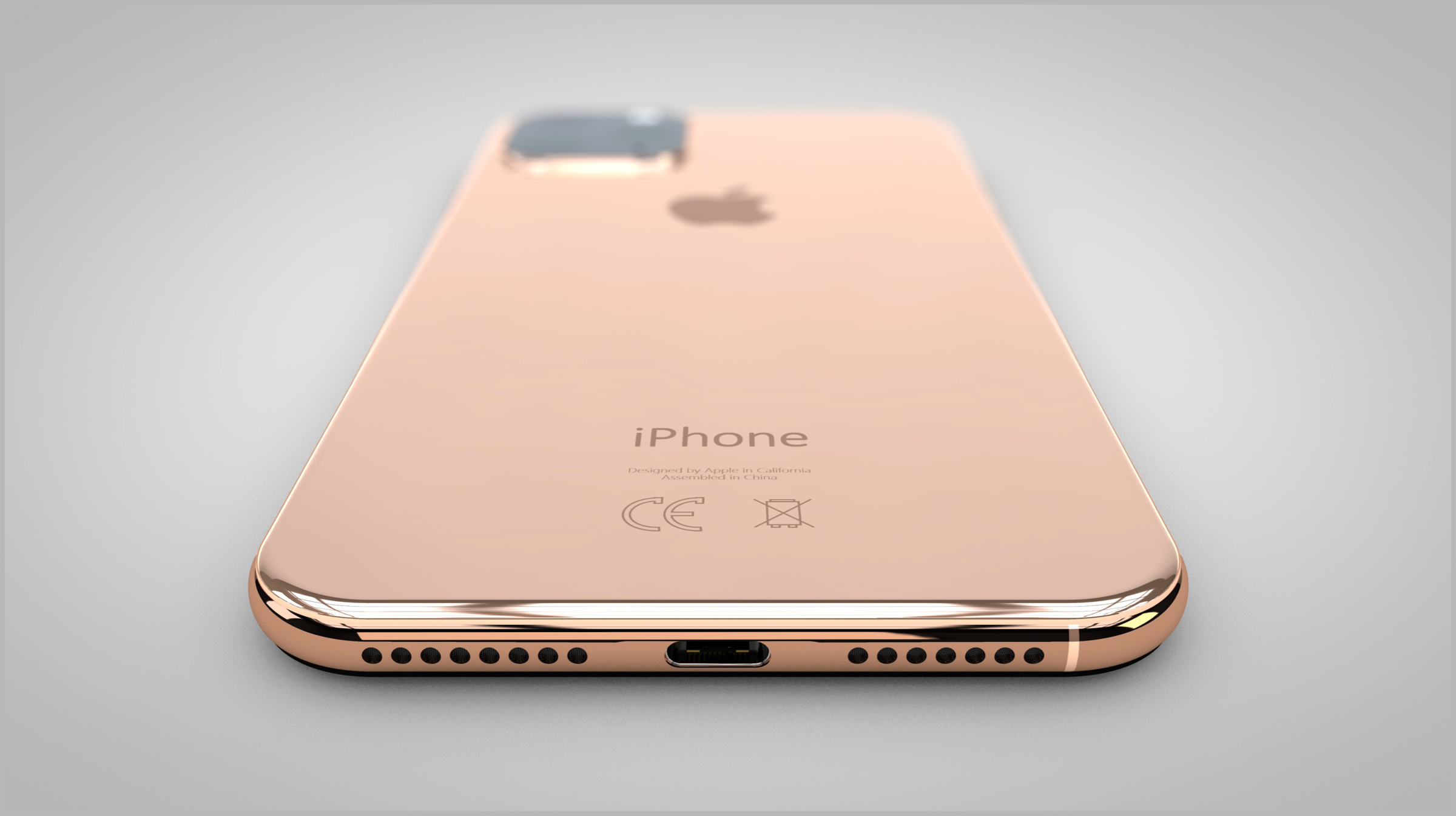
Apple iPhone 2019 Lineup To Have 128GB Base Storage, Leaked Cases Confirm The Smartphone’s Design
Rumours regarding the latest generation of iPhones are countless and varied, however, certain reliable sources have come forward with more concrete information regarding the upcoming devices. The Apple iPhone lineup, in a market where most phones start with either 32GB (budget) or 64GB of storage (mid-range to flagships), is reported to start from 128GB of internal storage. This along with iPhone cases being seen out in the open, confirm renders that have been leaked.

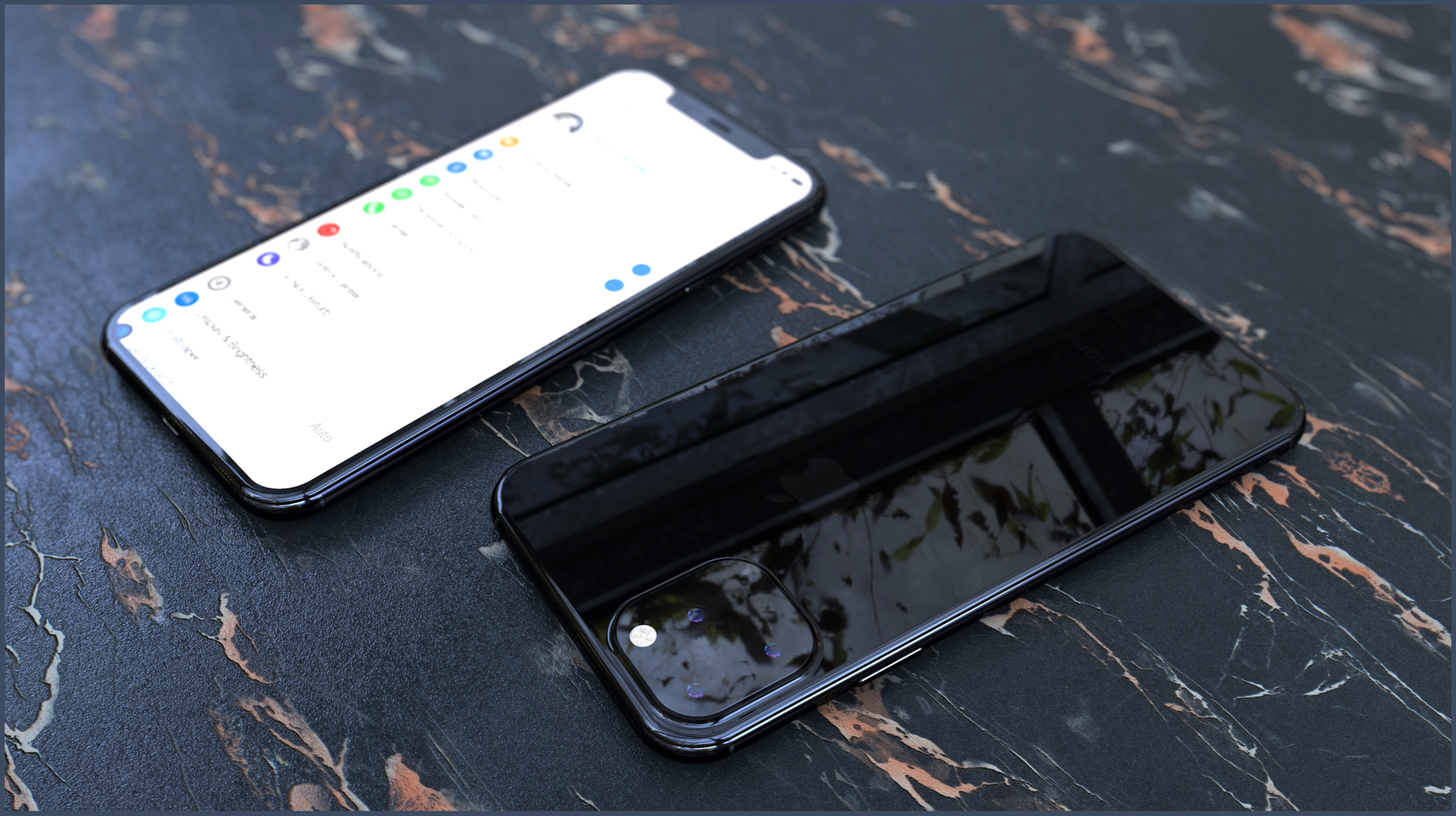
Apple’s long-awaited flagship smartphone and its variants have already been making headlines all across the tech world. The latest iPhone XI is still four months away from being showcased to the entire world, yet half a year prior to the launch event and renders of the smartphone have already surfaced online. The leaks showcase an entirely unique triple camera setup, that has received mixed reception with Apple’s fan base.

Multiple sources had already confirmed the renders of the Apple iPhone XI design with a video being uploaded on YouTube, that had an unboxing of clear cases for the upcoming Apple flagships. The clear cases had cut-outs for the triple camera set-up that was seen prior with slight changes in button placements due to dimensional differences with the iPhone XS, on which the case was tried on for reference in the video. The three prototype cases received in the package may possibly be for the iPhone XI, iPhone XI Max, and iPhone XIR (names not conclusive).

Also Read: Under Display Selfie Camera Technology Showed Off By Oppo And Xiaomi
The Apple iPhone XI will probably have the same screen size as its predecessor iPhone XS that was equipped with a 5.8-inch OLED display. Reports also point towards a 12MP selfie camera, a welcome improvement over the 7MP sensor used in the current generation. Finer details can only ever be discerned when Apple finally unveils the smartphones, but the 128GB of base internal storage is one of the features that may have already been confirmed.
-

Under Display Selfie Camera Technology Showed Off By Oppo And Xiaomi
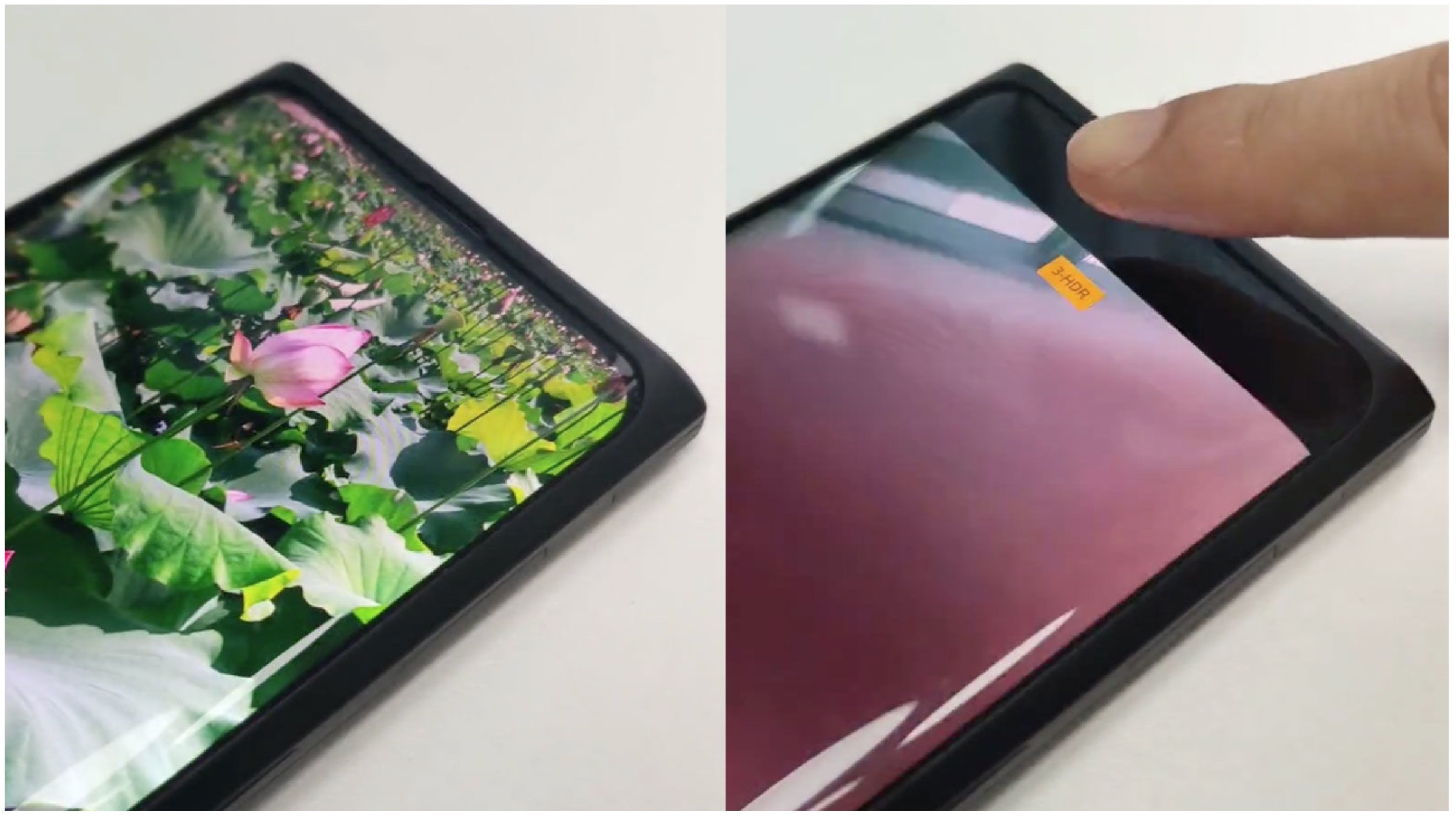
Innovation regarding smartphone cameras is an ongoing process in the current scenario. Instances from the past include the first pop-up camera, which was introduced in the Vivo Nex in the year 2018. In constant strife to eliminate notches in smartphone displays, brands such as Samsung and ASUS launched the Galaxy A80 and Zenfone 6 respectively, which feature rotating camera systems. However, Chinese brands Oppo and Xiaomi have posted videos that showcase smartphones with under-display selfie cameras in all their glory.
For those seeking the perfect, notchless smartphone screen experience – prepare to be amazed. ?
— OPPO (@oppo) June 3, 2019
You are taking a very first look at our under-display selfie camera technology. RT! ? pic.twitter.com/FrqB6RiJaYA senior Oppo executive allegedly shared a short video clip of a prototype smartphone sans a notch. When the camera app was launched, the screen displayed a view of the room’s ceiling, whereas no front camera can be spotted in the video. To confirm that the camera being showcased is an under-display module, the VP hovered his finger above the spot where the selfie camera is supposed to be, and as expected, it was visible on the display.
Check this out from our R&D team! @Xiaomi continues to innovate and we have some exciting tech up our sleeves. RT if you love under display camera! #xiaomi pic.twitter.com/4Rlzt9uRAd
— Alvin T (@atytse) June 3, 2019On the other hand, Xiaomi also posted a video which showcases two smartphones held next to each other. The device on the right features a waterdrop style notch, whereas the one on the left has no notch at all. After the camera application was launched, the user of the device switched to the front camera, which was placed under the display and hence wasn’t visible at all.

As further stated by the Oppo executive, an under-display camera would imply that there will be one less fragile component in the device to worry about. Moreover, there will be no physical wear and tear regarding such a camera module. However, a significant loss in optical quality may be experienced in the early stages of development as stated by the company.
Also Read: LG To Launch An Online Only Budget Smartphone Series In India Soon
Nonetheless, this unveil may be an indication that Oppo’s sister company, Vivo might also be working on a smartphone with an under-display selfie camera. The company previously hinted at such a feature in the Vivo Apex 2019 concept smartphone. Since the smartphone was devoid of any notch and ports, it is expected that the device will be launched with an under-display selfie camera.
-

Samsung Launches The Notebook 7 and Notebook 7 Force Laptops With Intel 8th Generation Processors
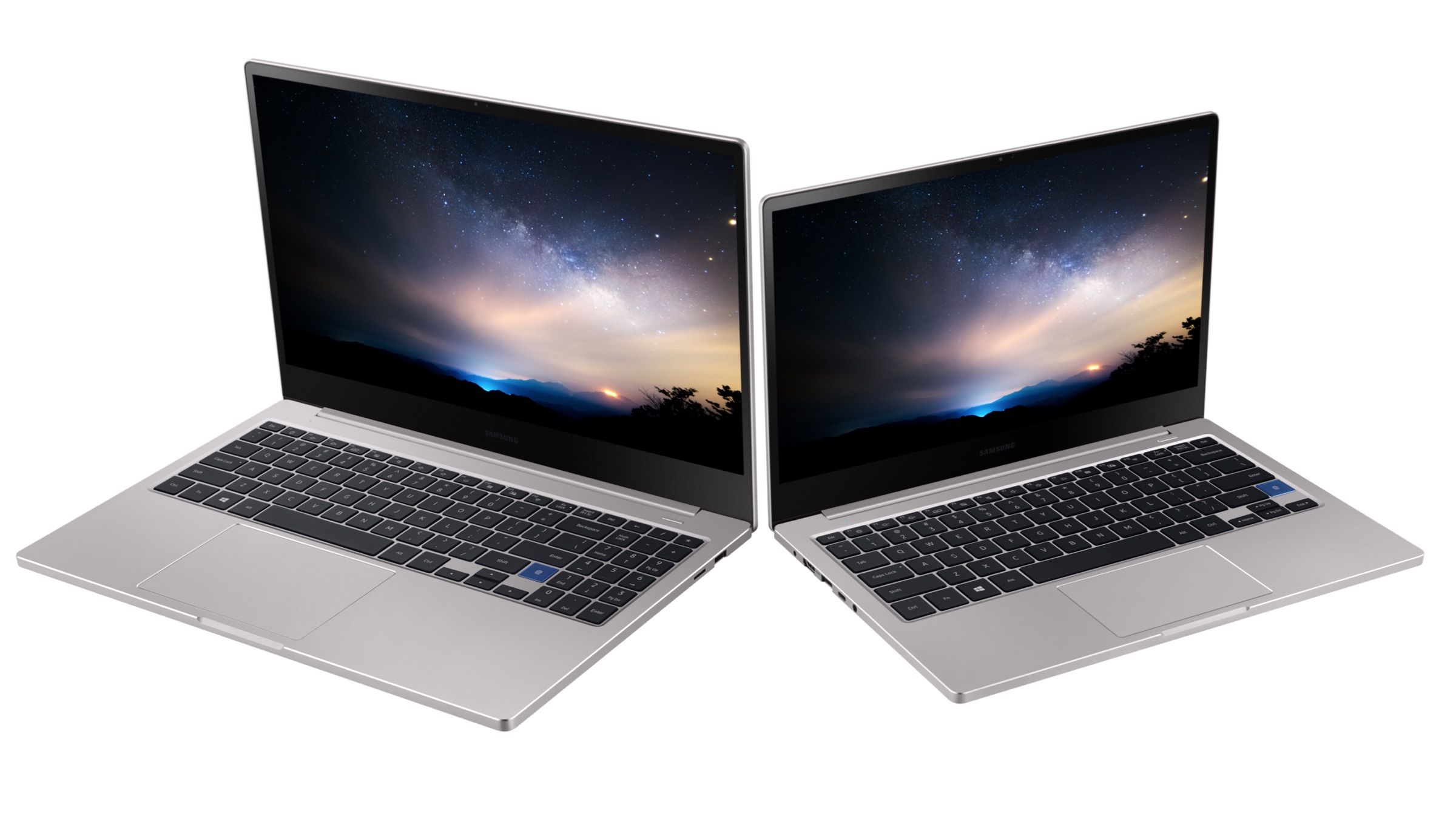
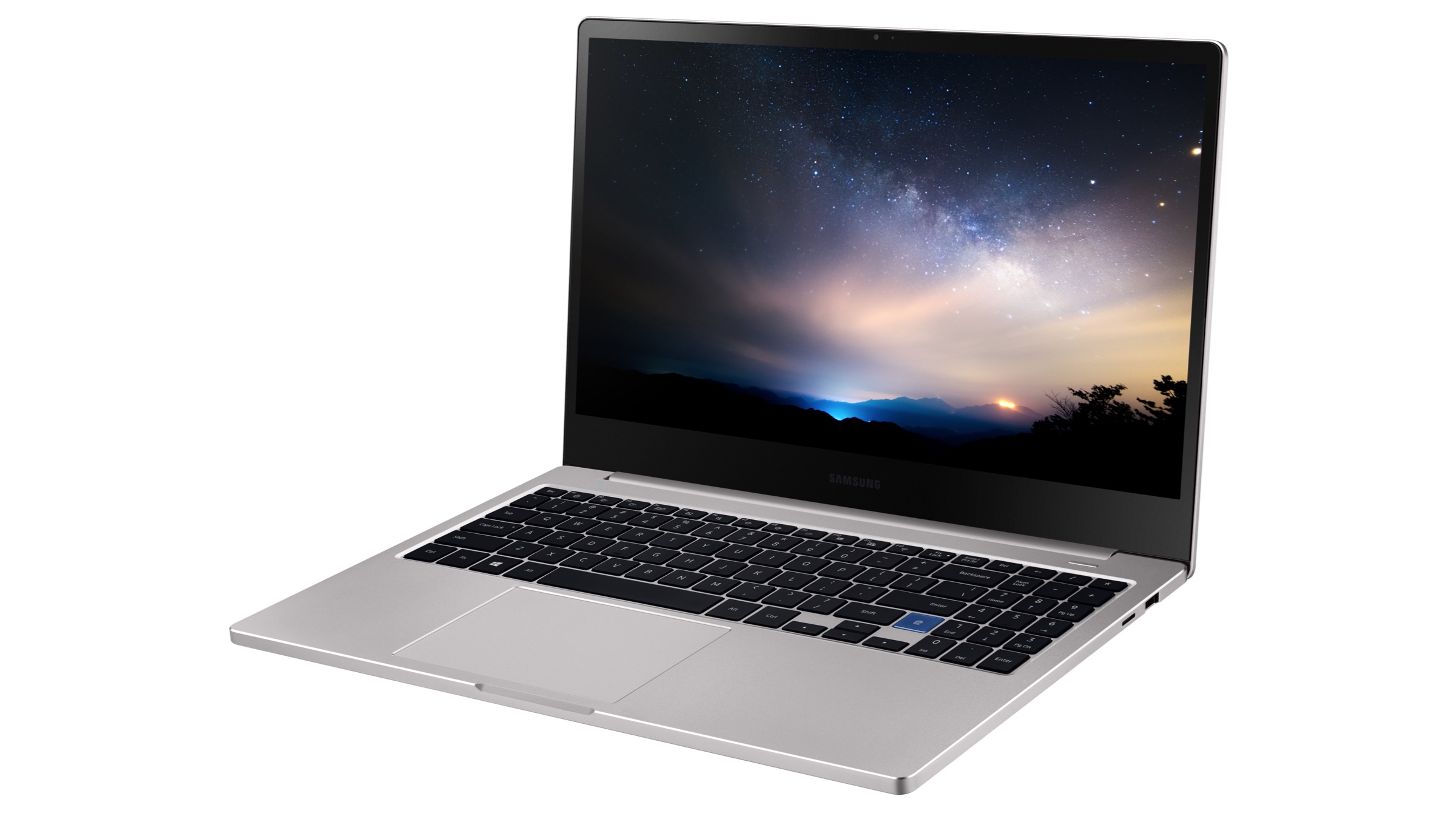
Korean electronics giant Samsung has announced new laptops, called the Notebook 7 and Notebook 7 Force on the 3rd of June. The devices are the latest entrant in the company’s Notebook 7 lineup and feature updated specifications and features over their predecessors. While the Notebook 7 Force has been launched in only a 15.6-inch display option, the regular Notebook 7 will be available in two sizes, 13 and 15 inches respectively.
Samsung Notebook 7, 7 Force

The Notebook 7 by Samsung feature metal construction with a design that is reminiscent of Apple’s MacBook lineup. As mentioned above, the devices have been launched with displays measuring 13.3 and 15.6 inches. Irrespective of the display size, its resolution is capped at 1920 x 1080 px. In terms of connectivity, the laptop features a variety of ports, including two USB 3.0 ports, USB Type C port, an HDMI port and a microSD slot. All the devices in the lineup also have a 720p HD webcam with Dual Array Microphones for video calls.

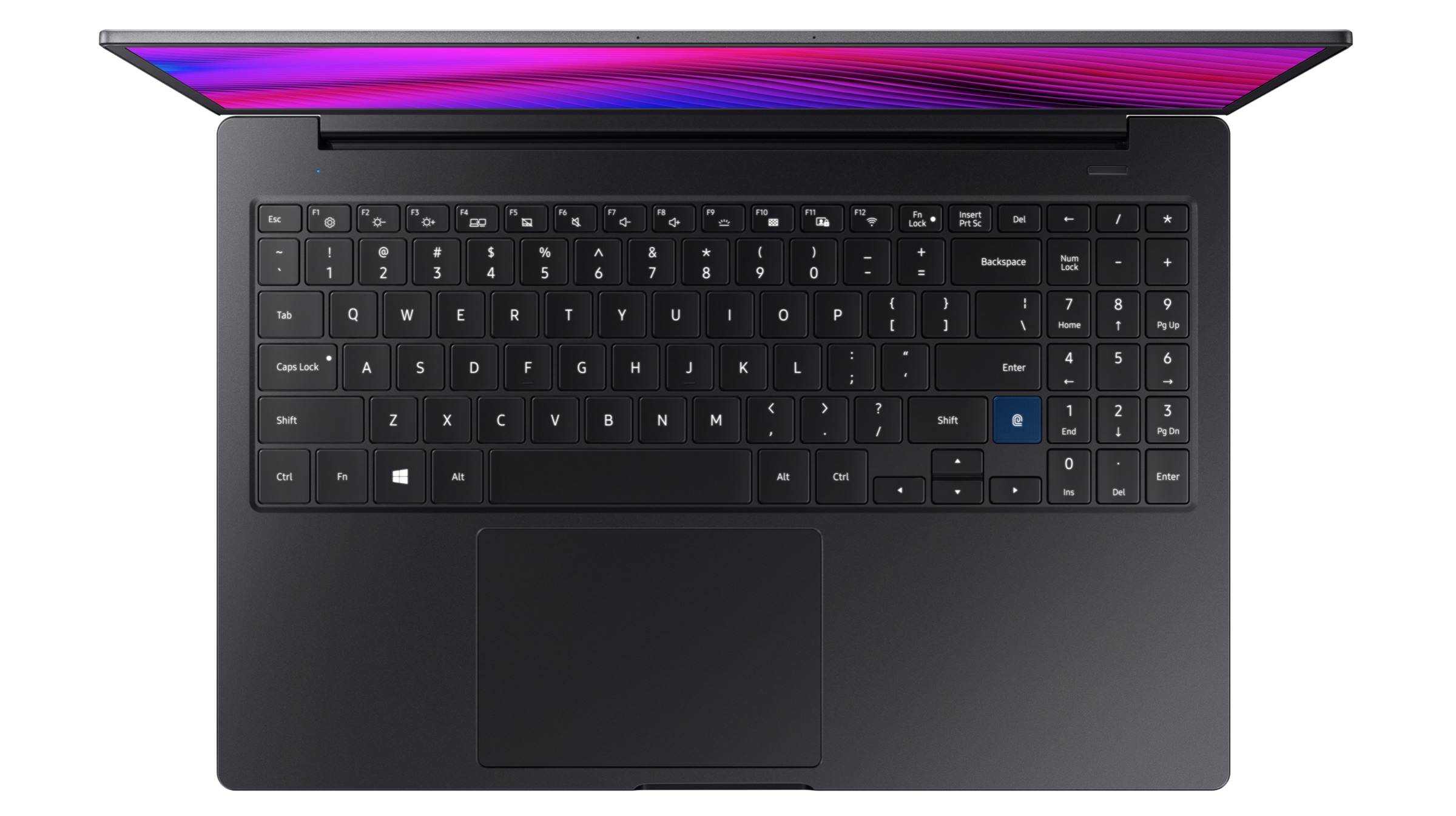
All the devices in the Samsung Notebook 7 lineup run on Intel’s 8th Generation Processors and support up to 16GB LPDDR3 RAM and 512GB NVMe SSD. In terms of graphics, the base variants feature Intel UHD graphics, but there is an option of upgrading to the NVIDIA GeForce MX250 as well. All the variants have fingerprint sensors for Windows Hello authentication and have a backlit keyboard.

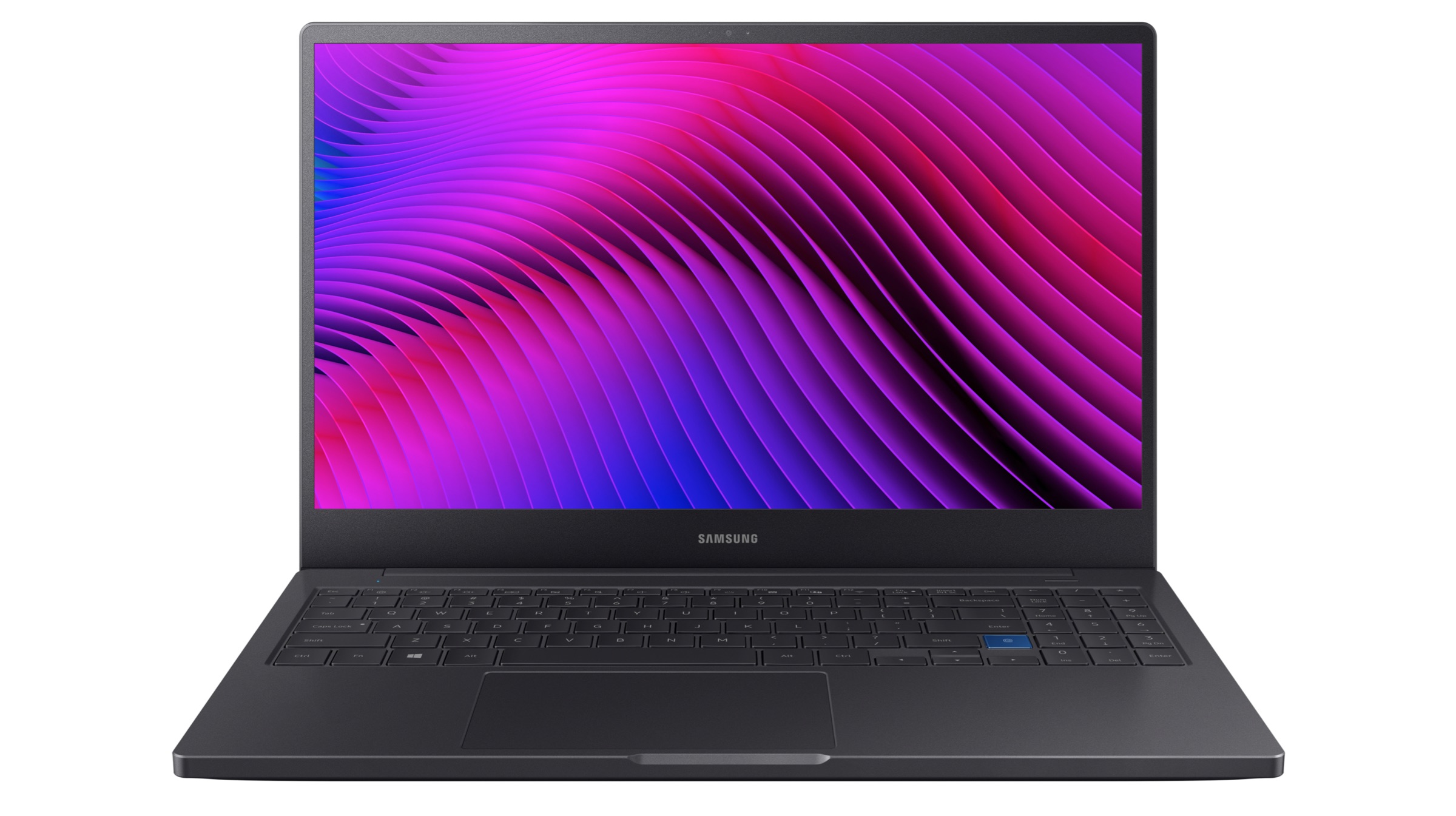
The Notebook 7 Force, on the other hand, is a more premium offering in the lineup. It has a similar design to the rest of the Notebook 7 series but is available only in black colour. The laptop also runs on 8th generation Intel Core processors, has a backlit keyboard, and a fingerprint sensor. In terms of graphics, it has the NVIDIA GeForce 1650 GPU for better gaming performance than the rest of the lineup.

Also read: Spotify Tests New ‘Social Listening’ Feature That Lets Users Listen To Music Together
All the devices in the Notebook 7 series will be initially sold in Hong Kong and Korea and later made available in the US and Brazil in late 2019. While the 13.3-inch Notebook 7 is priced at US$ 999(Rs. 69,400), the 15.6 inch will cost US$ 1,099 (Rs. 76,400). The Notebook 7 Force has been priced at US$ 1,499 (Rs. 1,04,100).