Category: Tech

Latest Technology News, Alternative, Bio-Tech, Medical, R&D and Innovations

  • Oppo Working On A Foldable Phone With Pop Up Camera Claims Patent

    Oppo Working On A Foldable Phone With Pop Up Camera Claims Patent

    Chinese smartphone maker, Oppo has slowly emerged as a leader in mobile phone technologies. In the year 2018, the company launched the Oppo Find X smartphone that was laden with remarkable features like a motorised camera slider and 50w SuperVOOC flash charge. Freshly granted patents claim that the company is developing yet another praiseworthy smartphone with a foldable display and a pop up selfie camera. 

    The Conception Of Foldable Smartphones

    Ever since the inception of smartphones, the maximum number of devices have had a rigid form factor. Over the years, several OEMs have proposed smartphones with a flexible form factor to pack in a large display on a device with a small footprint. None of the devices launched in the past were polished enough to be adopted by the mass audience.  However, it seems modern day foldable smartphones can turn the table for such devices. Earlier this month Samsung had launched its first foldable smartphone, the Galaxy Fold which will be available for purchase from 26 April this year. Numerous smartphone makers like Huawei, LG and Xiaomi are also expected to soon join the foldable phone bandwagon. Oppo being a competitive company cannot miss out on the industry that is likely to explode soon. 

    Oppo’s Patent Revelations
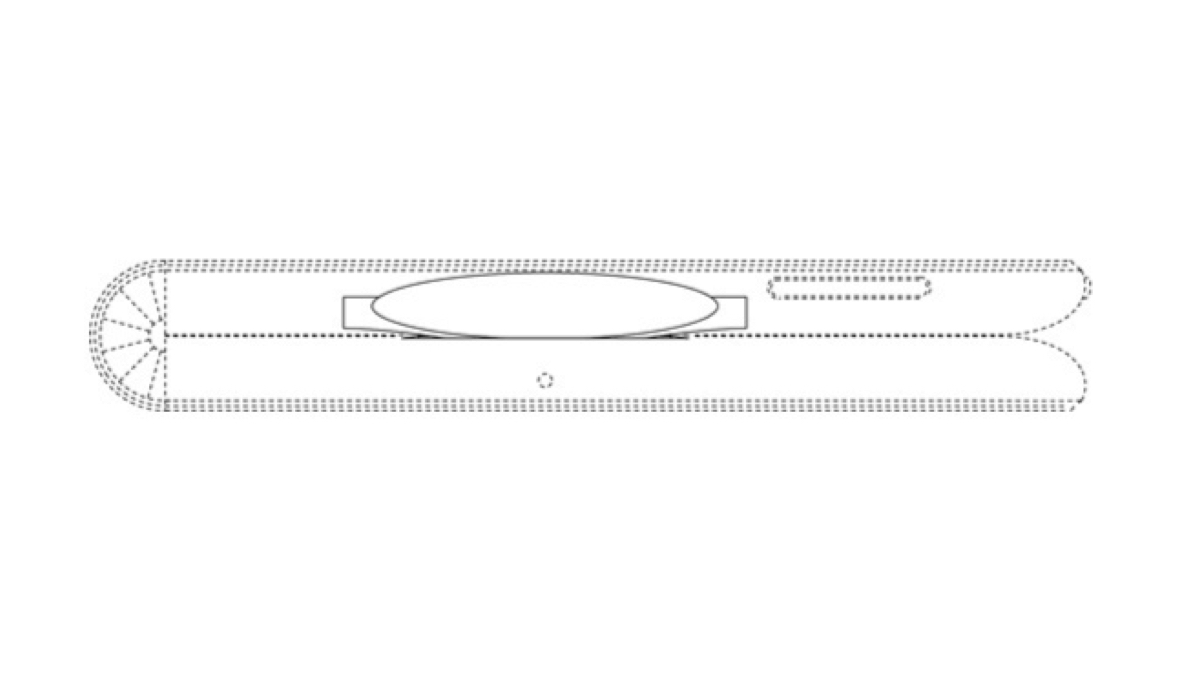
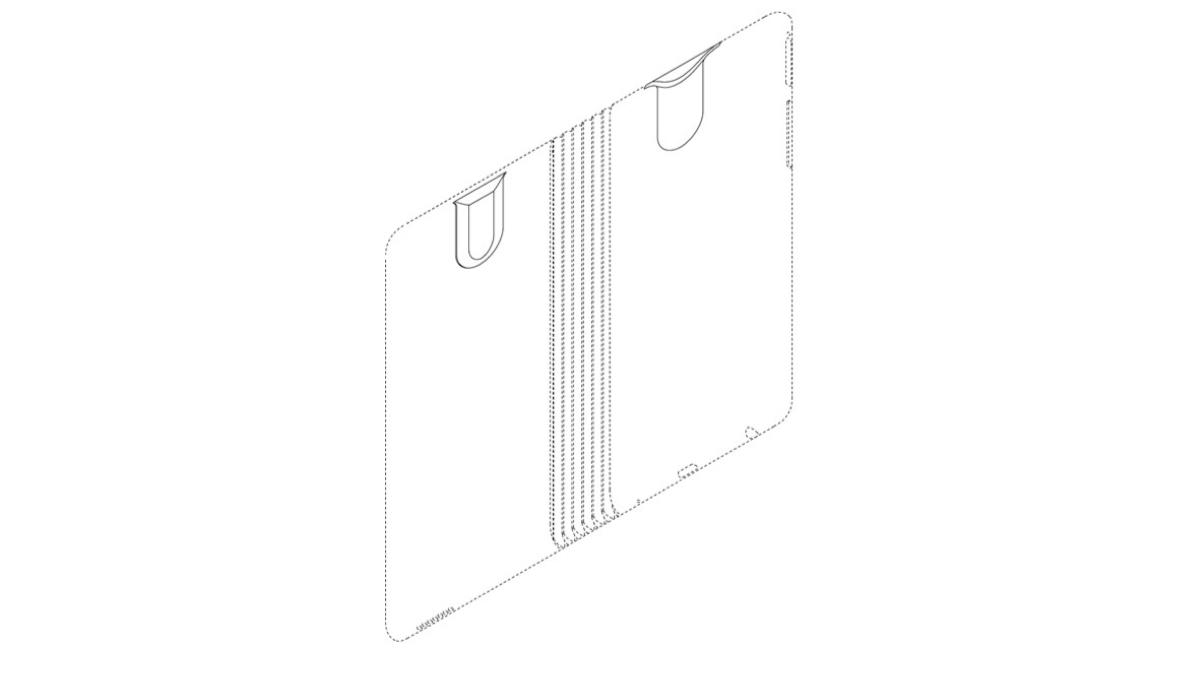
    The patent granted to Oppo exhibits a futuristic smartphone with a foldable display. Noteworthy, the display on the Oppo smartphone folds on the outside which is unlike the freshly launched Samsung Galaxy Fold. The device when in its unfolded state turns into a large screen tablet that has minimal bezels. The exceptional feature of the device is its pop up selfie camera which is similar to Vivo’s V15 Pro

    The hinge on the rear side of the device is reminiscent of the Royole Flexpai. It seems to be made out of a pliable material which will provide the device with its foldable ability. The left half of the device has a ridge-like contour that accounts for the camera module. While the right half has an indentation which will make up for the camera module ridge when in the folded state. The patent also reveals that the bottom side of the device is occupied by the 3.5 mm audio jack, microphone pinhole, loudspeaker grille and cutout for a connector.  

    Launch Date

    Also Read: Galaxy A10, A30, A50 Launch Imminent States Samsung’s Website

    Unfortunately, Oppo has not announced the launch date of its first foldable smartphone. Nevertheless, it is assumed that the company will soon launch a device with this form factor. 


  • Galaxy A10, A30, A50 Launch Imminent States Samsung’s Website

    Galaxy A10, A30, A50 Launch Imminent States Samsung’s Website

    Earlier this month, three unreleased smartphones from Samsung which include the Galaxy A10, A30 and A50 were leaked online. A tweet posted on the company’s Twitter account verifies that the leaked smartphones certainly exist and they will launch soon. 

    New Members Of Galaxy A Series

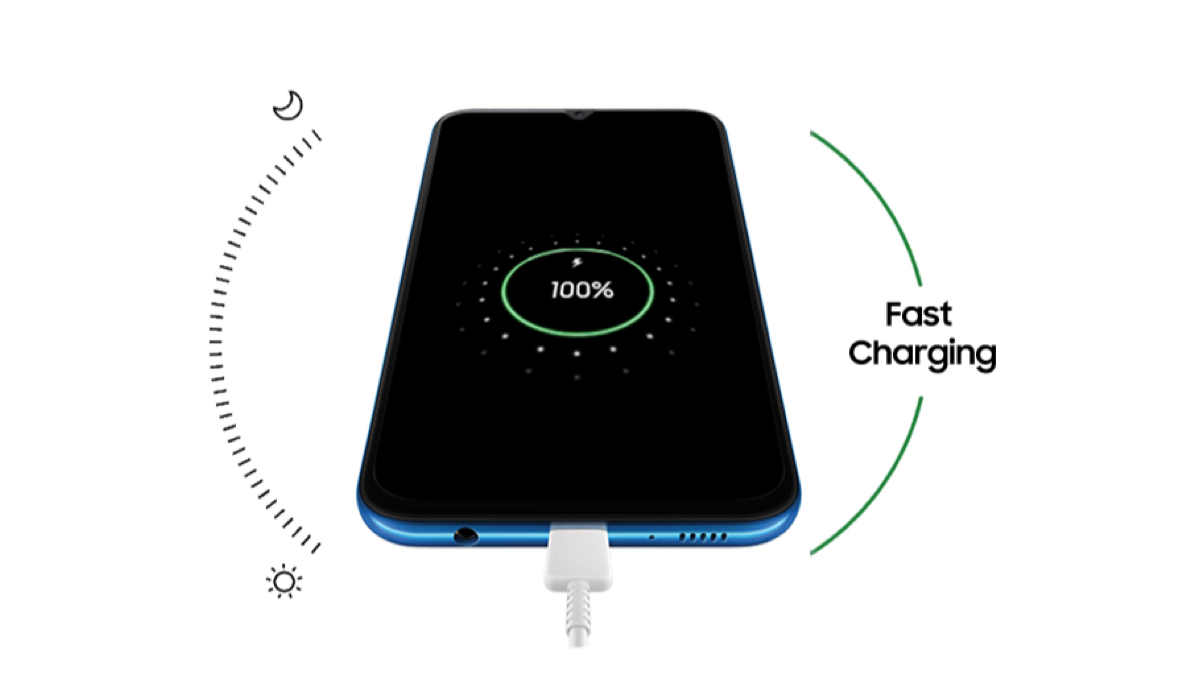
    The Tweet shared by Samsung boasts of smartphones with appreciable photo and video performance. In addition to the Tweet, a new webpage on Samsung’s website has also come into existence. According to the webpage, the new members of the Galaxy A series will have a focus on photography with features including an Ultra Wide camera, Slow-Mo video and hyper-lapse photography. The upcoming Galaxy A smartphones will also support fast charging and will have an Infinity notch display. Samsung has also shared images of the unreleased smartphones which look attractive and contemporary.

    Galaxy A50, A30 and A10 Looks

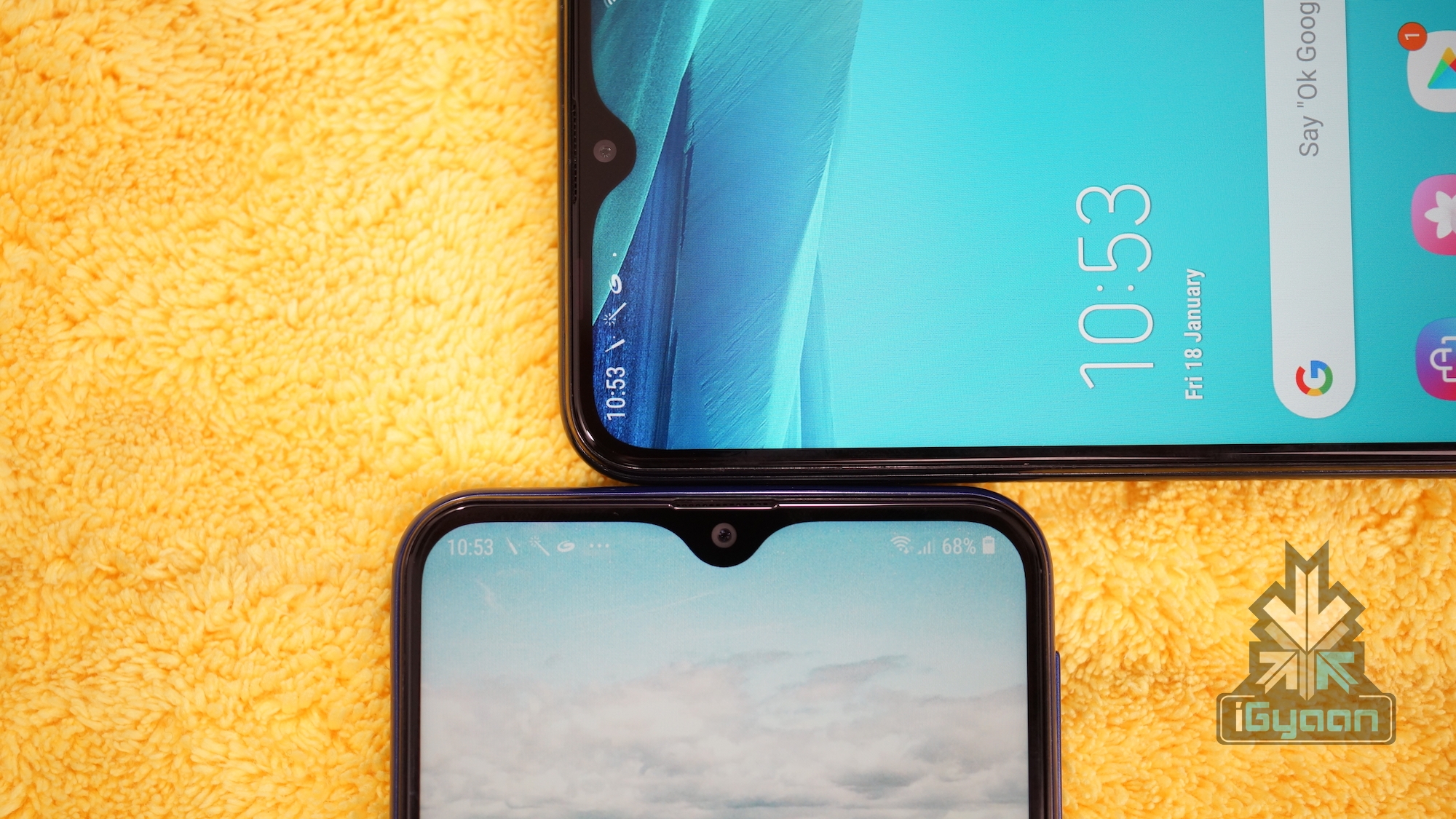
    All three smartphones have a high screen to body ratio display with an Infinity notch that house the selfie camera. Another characteristic that is standard amongst the Galaxy A trio is the right side mounted power button and volume rockers. The Galaxy A50 and Galaxy A30 have an Infinity U notch while the Galaxy A10 has an Infinity V notch.

    The Galaxy A30 has a white coloured back panel which houses the company branding and triple rear camera setup. The images do not exhibit a visible fingerprint sensor on either side of the device. So, it is likely to feature an in-display fingerprint sensor which was previously claimed in a leak. 

    The Galaxy A30 has a blue coloured rear panel which is occupied by a fingerprint sensor and dual camera setup. The most affordable smartphone out of the three, the Galaxy A10 has a black coloured rear panel which houses a single camera sensor with an LED flash. Also, the Galaxy A10 does not have any type of biometric recognition sensor. 

    Galaxy A50, A30, A10 Specifications and Launch Date
    Features Galaxy A50 Galaxy A30 Galaxy A10
    Design 3D Glossy Platic 3D Glossy Platic Glossy Platic
    Colours Black, White, Blue Black, White, Blue Black, Gold
    Display Size and Resolution

    6.4-inch 

    2340 x 1080 px

    sAMOLED

    19.5:9

    6.4-inch 

    2340 x 1080 px

    sAMOLED

    19.5:9

    6.2-inch

    HD+

    Infinity Display Infinity U Infinity U Infinity V
    Front Camera

    25 MP

    F2.0

    16 MP 

    F1.9

    5 MP

    F1.9

    Rear Camera

    25 MP

    5 MP

    8 MP

    16 MP

    5 MP

    13 MP
    Processor

    Exynos 9610 

    Octa-Core

    2.3 GHz

    Exynos 7904 

    Octa-Core

    1.8 GHz

    Exynos 7884B 

    Octa-Core

    1.6 GHz

    RAM + Storage

    4 GB + 64 GB

    6 GB + 128 GB

    3 GB + 32 GB

    4 GB + 64 GB

    3 GB + 32 GB

    Expandable upto 512 GB upto 512 GB N/A 
    Battery

    4000 mAh

    Type-C

    15 W Fast Charging

    4000 mAh

    Type-C

    15 W Fast Charging

    4000 mAh

    Micro-USB

    5 W Charging

    Dimensions 158.5 x 74.5 x 7.7 mm 158.5 x 74.5 x 7.7 mm 155.6 x 75.6 x 7.94 mm
    Fingerprint Sensor In-Display Rear Mounted N/A

    Also Read: Nokia 9 Camera Sample Spotted On Instagram, Looks Amazing

    Samsung is yet to announce the launch date of the three smartphones. According to reports and leaks, the smartphone will be launched in the month of March. 

  • Nokia 9 Camera Sample Spotted On Instagram, Looks Amazing

    Nokia 9 Camera Sample Spotted On Instagram, Looks Amazing

    Nokia is will soon launch several smartphones which include the highly anticipated Nokia 9 PureView, Nokia 1 Plus, and Nokia 6.2. The company has scheduled its press conference on the 24th of February in Barcelona which is a day before the MWC 2019 kicks off. A senior Nokia executive has shared an admirable picture of a scenic landscape on Instagram which was captured and edited on the Nokia 9 PureView. 

    About The Camera Sample

    The image has been geotagged in Scotland, and it shows an amazing landscape with a variety of exposure and light settings in the same picture. The picture intends to display the capabilities of Penta Camera Module present in the Nokia 9 PureView. Going by the initial impressions, the device might just secure a spot in the tight niche of extraordinary smartphone cameras in the market.

    https://www.instagram.com/p/BuL3OeOA20u/?utm_source=ig_web_copy_link

    Since Instagram doesn’t allow images of over 1080 pixels to be uploaded, the image’s compression might deprive users of some important aspects of the picture. Nonetheless, the composition can be appreciated owing to the crisp colour balance, darkness and highlights.

    Nokia’s Penta lens setup has been the talk of the town since its revelation last year. With a distinctive arrangement, the 5 camera lenses may use computational photography to generate high quality images. The HMD Global owned brand teamed up with Zeiss to patent a ‘miniaturized zoom camera’ system, which forms the basis of the Nokia 9’s camera. 

    Expected Specifications

    The Nokia 9 may sport a 5.99 inch AMOLED display with a 2960×1440 px resolution. The smartphone will have Gorilla Glass protection which will safeguard it against scratches and accidental drops. It will run on the Snapdragon 845 chipset, which consists of an octa-core CPU paired with an Adreno 630 GPU. The smartphone is speculated to be available in 4GB and 6GB RAM variants which will be paired with 128GB of internal storage. Reportedly it will be powered a 4150 mAh battery which will be charged via a USB Type-C port. Past leaks have claimed that the smartphone will also have an in-display fingerprint scanner and IP68 dust and water resistance.
    Also Read: Sony Partners With Light To Make Multi-Camera Modules For Smartphones

    HMD Global will unveil the smartphones at its MWC 2019 press event. You can tune in to their live stream below, which kicks off at 8:30 pm IST on February 24.

  • Sony Partners With Light To Make Multi-Camera Modules For Smartphones

    Sony Partners With Light To Make Multi-Camera Modules For Smartphones

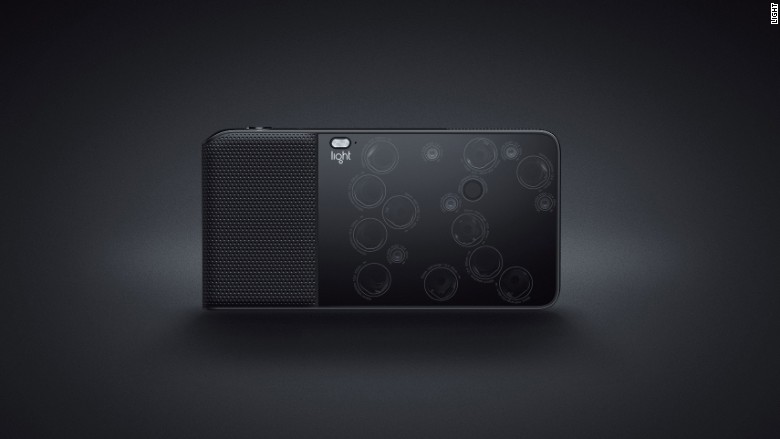
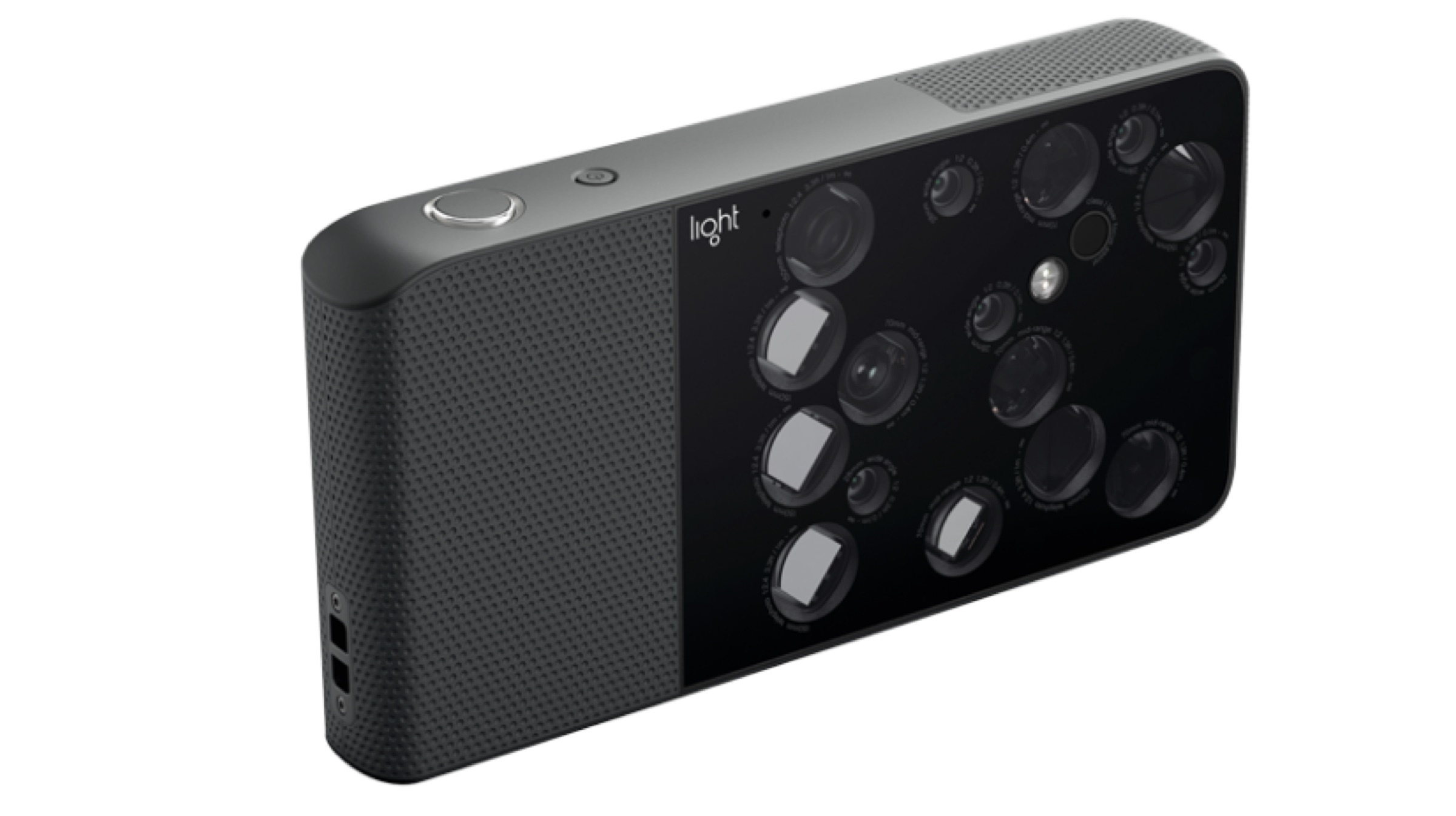
    Smartphone photography has seen an exponential increase in quality over the last few years. With devices like Google’s Pixel, Apple’s iPhone and Huawei flagships continuously pushing the boundaries of innovation in mobile photography. One such company, Light tried to push the envelope even further with their L16 model in 2017. Noteworthy, the device had 16 cameras at the back. It relied on computational photography to take high quality, detailed pictures. According to a press release, the company has collaborated with Sony to make multi-camera modules for smartphones.

    Changing The Future Of Smartphones

    Nokia 10

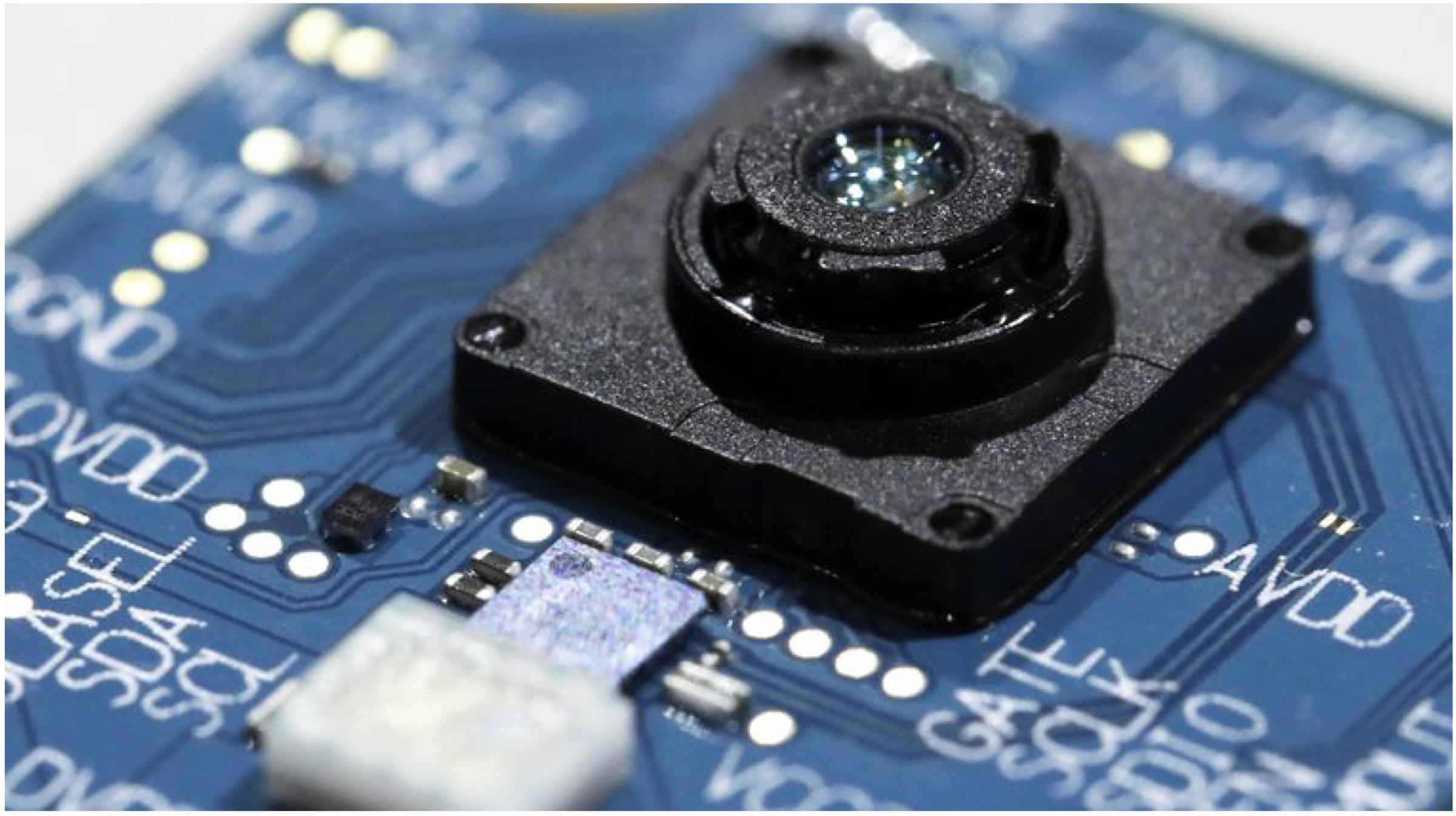
    This collaboration will make use of Sony’s image sensors and Light’s computational photography to make use in smartphones with four or more cameras on one side. This will not be exclusive to either one of the two companies but will be provided to any manufacturer for use in their devices. Interestingly, many smartphones today use Sony’s imaging sensors. The latest product from the company includes the IMX586, a 48MP sensor for smartphones last seen in the Xiaomi’s flagship Mi 9.

    Light is not a new name in the smartphone business. Last year, it provided the computation photography in phones like the Huawei P20 Pro. The rumoured Nokia 9 PureView, is also rumoured to sport Light’s technology for its Penta-rear camera setup. The multiple cameras in a smartphone may be used for many different purposes, like providing optical zoom and ultra-wide angle capabilities. But, the company uses these multiple sensors as RGB and Monochrome sensors to produce images with enhanced quality and detail.

    Also read: Apple Will Use 5nm Processors For iPhones Starting 2020

    This collaboration between Light and Sony is expected to extend the trend of putting more than four cameras on the back. As many companies already use technologies from these respective brands, the product of the partnership may also be seen in many upcoming devices later in the year 2019.

  • Sony Xperia 10 & Xperia 10 Plus With Unconventionally Tall Display Leak

    Sony Xperia 10 & Xperia 10 Plus With Unconventionally Tall Display Leak

    Sony is all set to showcase its newest range of smartphones at the MWC (Mobile World Congress) 2019. Amidst all this, the specifications of the upcoming Sony Xperia 10 and Xperia 10 Plus were leaked via the Google Play Console. The leaked specs confirm prior rumours surrounding the devices.

    Xperia 10 Leaks

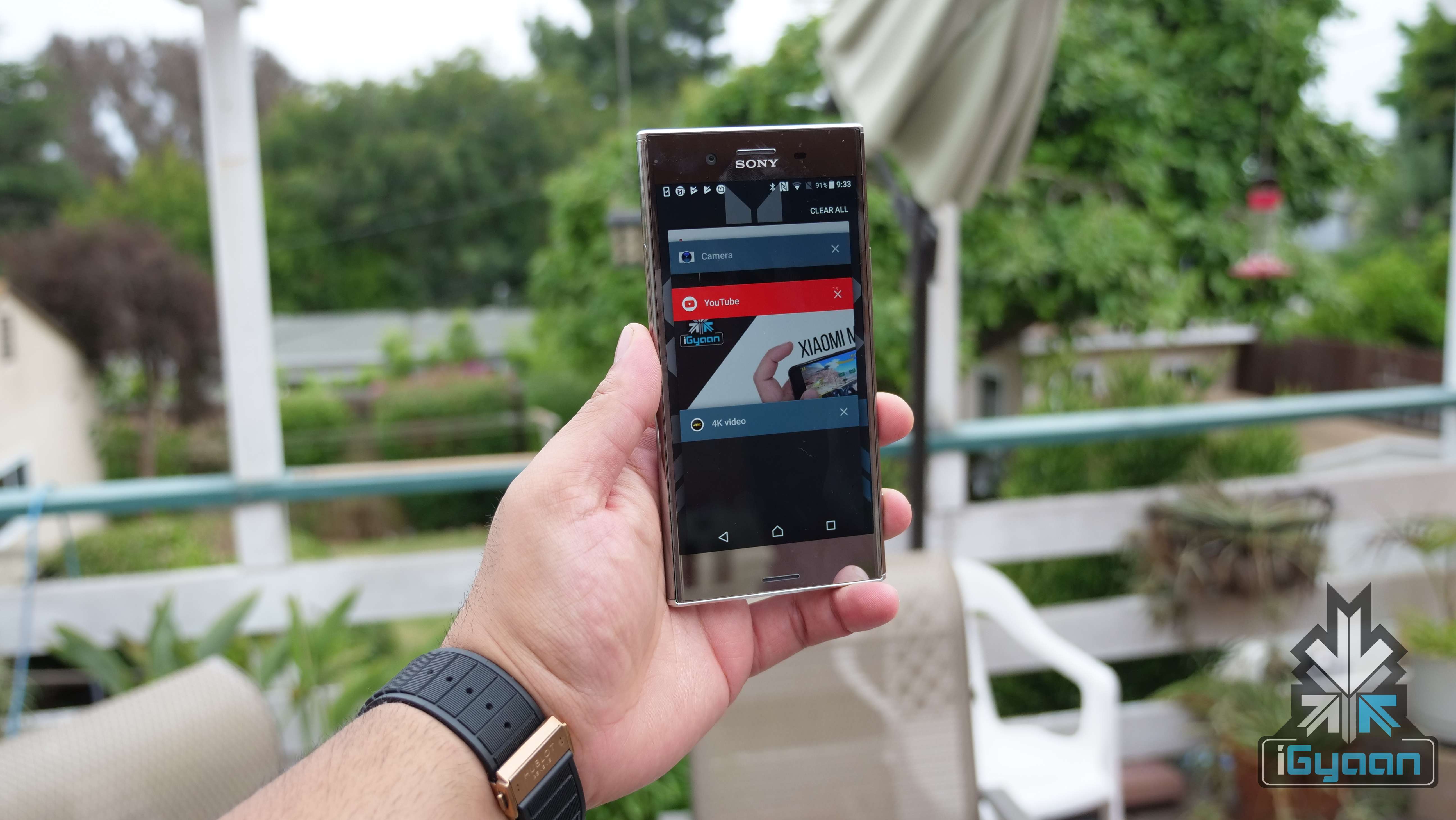
    As per the leaked specs list revealed by sources, the Xperia 10 will run on the 14nm Qualcomm Snapdragon SDM630, which consists of the 64 bit 8x ARM Cortex A53 CPU clocked at 2.2 GHz.  It is paired with the Qualcomm Adreno 508 GPU. The list also shows that the display of the smartphone will have a screen density of 480 DPI and exhibit a resolution of 2520 x 1080 px with a 21:9 aspect ratio.
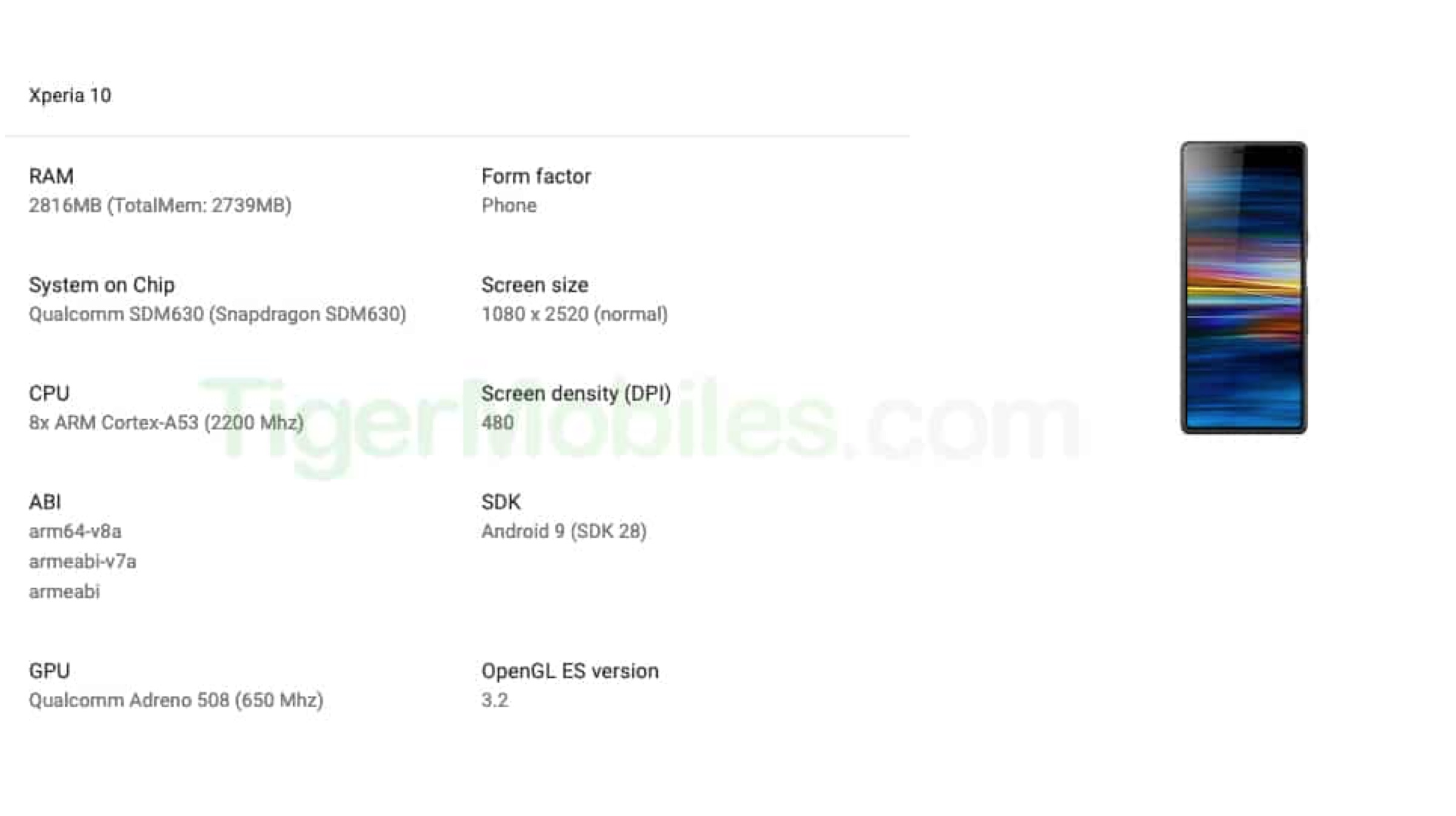

    Leaks also show that the Xperia 10 will run on the Android 9 (SDK 28). No information is available regarding the storage yet, but the leaked specs inform that the device will have 3 GB of RAM. The handset is expected to feature a dual primary camera setup with a combination of 13MP+5MP sensors. It may also be equipped with an 8MP front facing camera. The device will reportedly be powered by a 2870 mAh battery with fast charging support.

    Xperia 10 Plus Leaks

    The leaked list also reveals some key specifications about the Xperia 10’s elder sibling, the Xperia 10 Plus. As per sources, it will run on the 14nm Qualcomm Snapdragon SDM 636 chipset. The chipset comprises of the Kryo 260 octa-core CPU, with four cores clocked at 1.8 GHz and the rest of the cores clocked at 1.6 GHz. The SoC also packs the Adreno 509 GPU. The smartphone’s screen will have the same resolution and aspect ratio as the Xperia 10. 
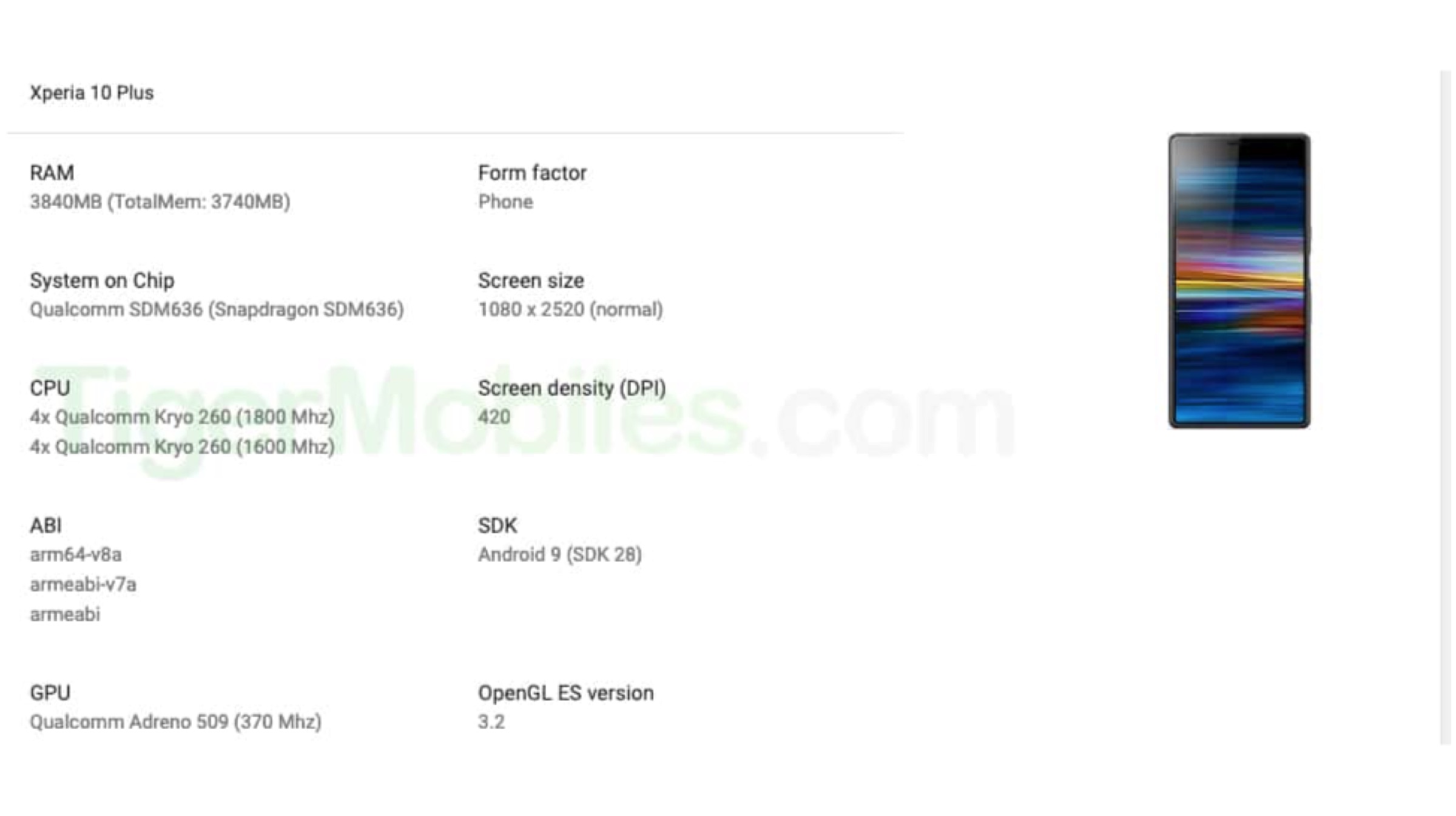
    As per the leaks, the Xperia 10 Plus will also run on the Android 9. The device will reportedly have 4 GB of RAM, with no details regarding the storage options. It may be equipped with a dual (12MP+8MP) camera module on the back, with an 8MP selfie camera. A 3,000 mAh battery may power the device.

    Availability

    Also Read: Notchless OnePlus 7 Leaks In The Wild

    Sony hasn’t made an official announcement regarding the release date of the Xperia 10 and 10 Plus. Previously, it was speculated that Sony might release these devices at the MWC 2019. But reports say that the launch date has been postponed to somewhere in the near future. Either way, the devices may make an entry in the sub-25k segment.

    If you have any information for us, do share it in the comment section below.


  • Apple Will Use 5nm Processors For iPhones Starting 2020

    Apple Will Use 5nm Processors For iPhones Starting 2020

    Apple is best known for making premium smartphones which offer top of the charts performance. Though many other OEM’s have taken a lead in the design and optics department, none of them has even come close to the processing power Apple’s A-series of SoC’s have. Its latest chipset, the Apple A12 is reported to be a full generation ahead of Qualcomm and Huawei’s offering, the Snapdragon 855 and the Kirin 980 respectively. Fresh reports state that Apple is planning to use 5nm processors in iPhones starting the year 2020.

    Apple’s 5nm Processors

    Reports state that Apple’s chipset supplier, Taiwan Semiconductor Manufacturing Company(TSMC) will announce its 5nm fabrication process in a few days. The event will take place on February 25 at the Mobile World Congress(MWC) in Barcelona. Apple will reportedly soon place an order for the manufacturing of 5nm chipsets which will be used in the 2020 iPhones. This chipset is expected to be called the A14 Bionic and would support 5G and enhanced machine learning capabilities.

    Apple’s new 5nm chipsets will be made using a new technology called Extreme Ultraviolet Lithography, developed by TSMC. This technology would allow the company to pack more transistors in a confined space, making the chip smaller. This would then result in increased performance and efficiency of the new smartphones. TSMC claims that it will be able to mass produce these chipsets by 2020, confirming the reports. There were also reports claiming Apple would release a 5G iPhone next year. This device is expected to have an Intel modem to support the new communication standard.

    Also read: Huawei’s Foldable Phone, The ‘Mate X’ Leaks

    Apple was one of the first company’s to unveil a 7nm chipset, the A12 Bionic in 2018; when they announced the current generation of iPhones . Other chipset manufacturers, like Qualcomm and Huawei also started manufacturing SoC’s using the 7nm fabrication process; but their products weren’t at par with Apple’s offering. In almost all the benchmarks, the Apple A12 Bionic has the Kirin 980 and the Snapdragon 855 beat. Unlike Apple, the competition isn’t likely to switch to 5nm chipsets as soon as next year, so they may release devices with 5nm chips in or after the year 2021.

  • Nokia 6.1 Plus With 6 GB RAM Launched In India

    Nokia 6.1 Plus With 6 GB RAM Launched In India

    Nokia 6.1 Plus was first launched in India in August 2018. At the time of its launch, the device was offered with 4GB of RAM and 64GB of internal storage. A newer variant of the Nokia 6.1 Plus with 6GB RAM has now been launched in the country by HMD Global. The variant with 6GB RAM was first launched globally in July 2018 at a price of CNY 1,299 (around Rs. 13,190).  The Finnish telecommunication company released the new 6.1 Plus in India to strengthen its foothold in the entry to mid-budget smartphone segment.

    Display And Design

    The Nokia 6.1 Plus has an aluminium frame and is fitted with front and back glass panels. The device is equipped with Corning Gorilla Glass 3 for protection against scratches and impacts. The smartphone sports a 5.8 inch IPS LCD display. The screen has a resolution of 2280 x 1080 px and 19:9 aspect ratio. The volume rockers and the power/lock button are present on the right side of the smartphone.
    Specifications And Variants

    The Nokia 6.1 Plus runs on the Qualcomm Snapdragon 636 chipset which consists of an octa-core 1.8 GHz Kryo 260 CPU paired with the Adreno 509 GPU. The device has Android 8.1 (Oreo) out-of-the-box and will be upgradable to Android 9 (Pie) in the future. 

    The handset is equipped with a dual camera setup on the rear, which comprises of a 16 MP (f/2.0) primary camera and a secondary 5 MP (f/2.4) depth sensor. The Nokia 6.1 plus also has a 16 MP (f/2.0) selfie shooter.

    The smartphone is powered by a 3,060 mAh battery which supports 18W fast charging via the bottom mounted USB Type-C connector. In terms of biometric security, it has a rear mounted fingerprint sensor. The newer version which is launched in India has 6GB RAM and 64GB internal storage. The device also supports expandable memory up to 400GB via a microSD card. It will be available in Black and Blue colour options.


    Price And Availability

    Also Read: GTX 1660 Ti With 6GB GDDR6 RAM Launched

    The Nokia 6.1 Plus will be available at a price of Rs. 18,499. It can be purchased via Nokia’s official web store, which you can check out by clicking here. Furthermore, the device will be available across leading Indian offline stores March 1 onwards. Noteworthy, Airtel users are eligible for an instant cashback of Rs. 2,000 along with 240GB of 4G/3G data over 12 months on recharges of Rs 199, Rs 249 and Rs 448.


  • Huawei’s Foldable Phone, The ‘Mate X’ Leaks

    Huawei’s Foldable Phone, The ‘Mate X’ Leaks

    Samsung surprised the world on February 20 when it unveiled the Galaxy Fold, its first foldable smartphone. Some other OEM’s like Huawei and Nubia, have already promised to show off a foldable device at the Mobile World Congress(MWC) 2019 in Barcelona. The foldable phone from Huawei has been teased for a while but no official details about the device were available. A fresh leak has revealed the design and the name of the device. The foldable smartphone from Huawei will be called the Mate X.

    Huawei Mate X

    The Mate X will be the first foldable smartphone from the Chinese electronics giant Huawei. The leaked image shows workers setting up an outdoor advertisement of the device which reveals it in its entirety and affirms it will be the ‘World’s first foldable 5G phone’. The image also exposes the design of the device, which looks futuristic with a large screen that has an outward fold. The fold will split the screen into two, disabling the second screen and making the first screen work as a regular smartphone. Interestingly, this approach will be unlike Samsung’s, which put two screens in its foldable smartphone the Galaxy Fold, and has an inward fold. 

    The Mate X from the image looks similar to the Royole FlexPai, which was the world’s first commercially available foldable smartphone. The Huawei device will also have a triple camera setup and a side mounted fingerprint scanner. The display housing will be present on the left side of the device, where the screen will rest when folded completely. The smartphone will reportedly run on the Kirin 980 SoC which is manufactured using the 7nm fabrication process, has an Octa-core CPU and a Mali-G76 GPU. 

    Also read: DxOMark Ranks Xiaomi Mi 9 As The Best Video Shooter, Samsung Galaxy S10+ Best For Selfies

    Unfortunately, details about the pricing of the Mate X foldable smartphone aren’t known yet. Huawei will reveal the device on February 24 at MWC in Barcelona. Reports suggest that the smartphone will be priced at US $1500(around Rs 1,06,000).

  • GTX 1660 Ti With 6GB GDDR6 RAM Launched

    GTX 1660 Ti With 6GB GDDR6 RAM Launched

    Nvidia is an American company that designs graphics processing units (GPUs) for gaming and professional markets. Late last year the company launched the Titan RTX GPU which is targetted towards the premium sector. On 22 February 2019, the company launched a new GPU chip called GTX1660 Ti which is targetted towards the mid range sector.

    GTX 1660 Ti Features  

    The all new GTX 1660 Ti chip is based on the 12th generation Turing Architecture. Unlike the GTX 1060 which can be deemed its predecessor is based on the Pascal architecture. According to Nvidia, the architecture on the latest chip is 1.4x power efficient than Pascal architecture. The GTX 1660 Ti requires 120 watts of power to operate and taking the increased power efficiency into consideration, it delivers the best performance per watt of any GPU in its class. 

    The GTX 1660 Ti features 1,536 Cuda cores that have a boost clock of 1.8 GHz. The new chip packs 6 GB of GDDR6 memory which has a transfer rate of up to 12 Gbps. The company has also added that overclocking the new chip is fairly easy. The GTX 1660 TI has dedicated hardware encoder that delivers 15% improved efficiency over prior generation graphics cards. Noteworthy, the new chips is also optimized for Open Broadcaster Software (OBS) which is the most popular software used by streamers globally. 

    The GTX 1660 Ti also has built-in support for Nvidia ANSEL which allows taking high-quality screen captures and 360-degree photospheres of games. It also has support for Nvidia Freestyle technology that allows the gamers to customise the appearance of their games with post-processing technology. This filter can convert gameplays or photos to resemble watercolour paintings, oil paintings or even retro movies. 

    GTX 1660 Ti Price

    Also Read: DxOMark Ranks Xiaomi Mi 9 As The Best Video Shooter, Samsung Galaxy S10+ Best For Selfies

    GPU’s based on GTX 1660 Ti chip start at US $ 279 (around Rs 19,800). However ready to purchase GPU’s from manufacturers like Asus, EVGA, MSI, PNY, Zotac will slightly differ in price dependent on region and features like single or double fans.  


  • Vivo Roadmap Reveals New Smartphone Models

    Vivo Roadmap Reveals New Smartphone Models

    After introducing the V15 Pro, Vivo has registered trademark applications which indicate that the company is prepping for the launch of new smartphone models. A total of 14 applications were submitted to the EUIPO (European Union Intellectual Property Office) under the description ‘smartphones; mobile phones’. Although there is no official information regarding the devices, we might see the new range of Vivo handsets being unveiled in the not-so-distant future.

    Vivo X Series Smartphones

    The X series will include high-end smartphones from Vivo. Last year, Vivo X21 became the world’s first device with an in-display fingerprint scanner. The device will probably be followed by the X31 by March 2019. Trademark requests for the Vivo X35 and the X37 were also filed, but it is too soon to expect their launch.

    Given below are the trademark requests for the devices

    Vivo V Series Smartphones

    The mid-budget segment of the market will be targeted by the V series of Vivo smartphones. The latest device from this series was the Vivo V15 Pro, which was launched on February 20 and sports a pop-up selfie camera. As of now, there are speculations that all the smartphones may not launch in this year itself. In fact, the lineup looks like a roadmap for the next year.

    The trademark requests for the handsets can be checked out below

    Vivo Y Series Smartphones

    Also Read: Vivo V15 Pro Unboxing And Hands-On

    The most budget-aggressive smartphones from Vivo will be placed in the Y series. The Chinese smartphone manufacturer released the Vivo Y93 in November 2018, but the new series info released shows that the names of the devices will be changed. They will be priced inexpensively as compared to their counterparts.

    Find out more about the trademark requests below

  • DxOMark Ranks Xiaomi Mi 9 As The Best Video Shooter, Samsung Galaxy S10+ Best For Selfies

    DxOMark Ranks Xiaomi Mi 9 As The Best Video Shooter, Samsung Galaxy S10+ Best For Selfies

    A good camera is a prerequisite for premium smartphones these days. An average smartphone can be deemed as a good smartphone if the camera of the device performs up to the mark. Flagship smartphones such as Google Pixel 3 and the Apple iPhone XS hold the top spots when it’s about camera performance. However, with the release of newer devices which are challenging this niche at a much lower price, improvements in the camera become very necessary. Xiaomi Mi 9 and Samsung Galaxy S10+ are the latest smartphones to get their cameras examined by DxOMark, the pioneers in camera benchmarking.

    Xiaomi Mi 9

    Xiaomi released the Mi 9 in China on February 20, and it has been the talk of the town since its launch. With flagship-level specifications at almost half the price of premium smartphones, there are high expectations from the camera of the Mi 9. DxOMark tested out the camera of the smartphone, and fair enough, the Mi 9 didn’t disappoint.
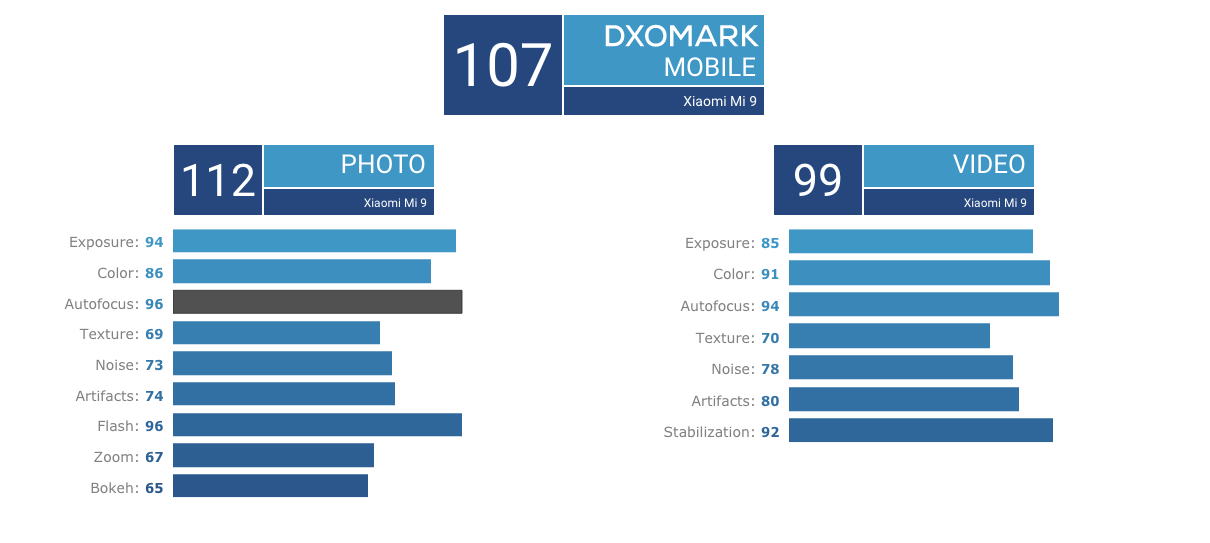

    The Xiaomi Mi 9 sports a triple rear camera setup. The device has a 48MP (f/1.75) Sony IMX586 primary sensor, combined with a 16MP (f/2.2) ultra wide sensor and a third 12MP (f/2.2) telephoto sensor. In terms of the front camera, the Mi 9 has a 20MP selfie shooter. DxOMark’s scores for the smartphone’s camera are as follows

    As per DxOMark, Mi 9 is the best Xiaomi device they have tested to date. It almost secured the top spot in their smartphone camera ranking list. A score of 112 points clearly displayed the camera’s ability to take high-quality images. Also, the Mi 9’s camera scored 99 points when it was tested for video recording, which is the best video score so far.

    Samsung Galaxy S10+

    The Samsung Galaxy S10+ also passed the DxOMark test, and it did so by claiming the first rank next to the Huawei Mate 20 Pro and P20 Pro. The device was launched on February 21 and was given the title of “the best front camera performance for both still images and video” by DxOMark.
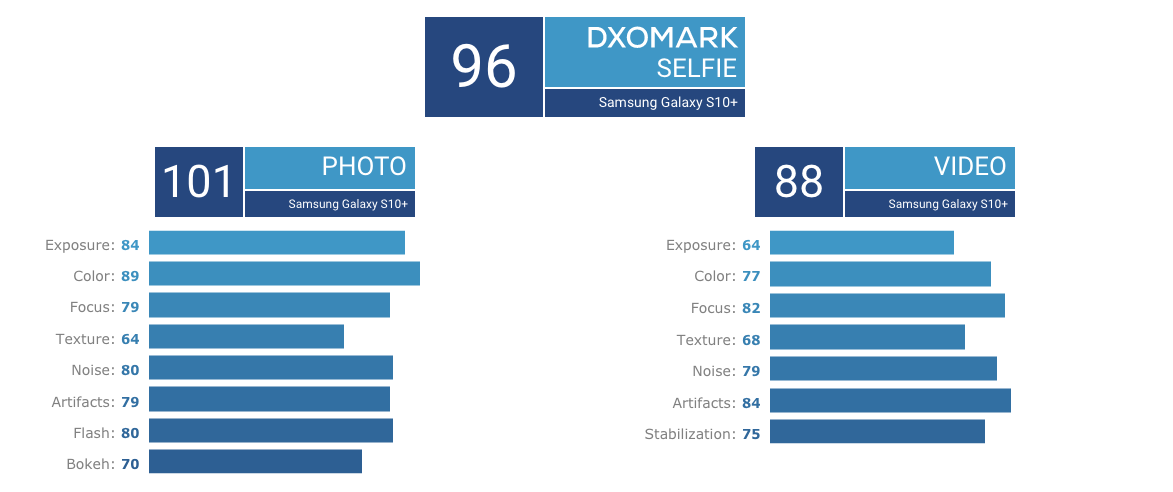
    The device sports a triple rear camera setup which consists of a 12MP (f/1.5- f/2.4) primary sensor, 12MP (f/2.4) telephoto sensor and a third 16 MP (f/2.2) ultra-wide sensor. The smartphone also has a dual front camera module, which is a combination of a 10MP (f/1.9) sensor and an 8MP (f/2.2) sensor housed in the punch-hole display.

    Also Read: Xiaomi Launches The Mi 9 In China

    According to DxOMark, The Galaxy S10+ performed really well while capturing skin tones and maintaining exposure at the same time. The portrait mode of the device also got very rave reviews. The handset showed off impressive stabilization and focus while recording videos. In terms of ranking, it surpasses Google Pixel 3 and the Galaxy Note 9, making it the highest ranked smartphone camera in their list.


  • Google Will Require Android Apps To Support Android Pie In 2019

    Google Will Require Android Apps To Support Android Pie In 2019

    Google’s operating system Android has been really popular because of the millions of apps available on the platform. What also helps its case is the level of customisation Android devices offer. This includes the ability to sideload apps from third party sources. But, some of these sources have been known to spread spyware through bypassing the app permissions as they support older Android’s Application Programming Interface(API). Google in a bid to counter the problem, has announced that all the new apps submitted to the Play Store in the year 2019 will have to support the latest API level 28, that is Android 9 Pie.

    What Does This Mean?

    According to Google, over 150,000 applications have added support for runtime permissions in 2018. Shockingly, the feature was introduced back in 2016 with Android Marshmallow, which had the API level 23. This meant that these apps were capable of bypassing permissions altogether, creating a security risk. Google tackled this by mandating all new apps to support API level 26, which was in Android 8.0 Oreo. Updates to the existing apps also had to support the same API.

    Google is updating these restrictions up a notch by mandating the app developers to update these apps to the latest API. Google Play Protect which was launched in 2017 is a security suite integrated into the Play Store. This service will be used to warn users of the apps not supporting the latest API. Here are the new timelines for the developers:

    • August 2019: New apps will be required to target API level 28 (Android 9 Pie).
    • November 2019: Updates to existing apps on the Play Store will be required to target API level 28(Android 9 Pie).
    • By 2020: The target API level will increase annually.

    Android Pie Android 9 Google

    Android will also use the Google Play Protect to warn the users if the app they are about to sideload targets to an API level older than Android Oreo (API level 26). It has also gotten the major Chinese application markets to comply with the new API levels on their app stores. These are from companies like Huawei, OPPO, Vivo, Xiaomi, Alibaba, and Baidu.

    Also read: Samsung Will Finally Allow Users To Remap The Bixby Button

    Google has said that 95% of the spyware target API level 22 (Android 5 Lollipop) or older, which creates a host of security issues. Notably, the Android platform gets monthly security patches, but some devices take a long time to be updated because of their respective OEMs. This leaves these devices vulnerable to new security threats. Therefore, this move is expected to make Android more secure.

  • Notchless OnePlus 7 Leaks In The Wild

    Notchless OnePlus 7 Leaks In The Wild

    OnePlus is a Shenzhen based smartphone manufacturer that came into existence in the year 2013. Albeit it is a budding company in contrast to competitors like Apple and Samsung, it has made its mark in the heavily crowded smartphone industry. Late last year the company launched the OnePlus 6T smartphone which has received a warm welcome globally. For the past three years, the company has been launching two smartphones each year. Accordingly, the company will launch the OnePlus 7 smartphone before the Q2 of 2019 ends. The first renders of the upcoming smartphone were leaked weeks after the launch of OnePlus 6T. Freshly leaked live images suggest that the future smartphone will be a big leap forward from the current device.

    OnePlus 7 Leak

    https://twitter.com/Steven_Sbw/status/1097856863620583425

    The live images of OnePlus 7 were leaked on Twitter which reveals a smartphone with a notch less display and minimal bezels. Certainly, the device posing in the image is a OnePlus smartphone as the signature OnePlus icons are clearly visible on its screen. Noteworthy, the alleged OnePlus 7 smartphone does not have a notch display to accommodate the front facing selfie camera. The images shared on Twitter were captured in an improperly lit environment. Therefore, it is hard to make out what the device exactly looks like. Past leaks have claimed that the OnePlus 7 smartphone will have a sliding display like the Mi Mix 3 which has concealed selfie camera and ambient light sensor. 

    Expectations and Launch Date 

    • Upgraded Chipset- The OnePlus 7 is expected to feature the latest chipset from Qualcomm which is the Snapdragon 855. The SoC consists of an Octa-Core CPU and Adreno 640 GPU. 
    • Larger Display- Although the OnePlus 6T sports a 6.41 inch display which is one of the largest on flagship smartphones, its successor the OnePlus 7 is plausible to have an even larger display.
    • Larger Battery- The OnePlus 6T is powered by a 3700 mAh battery which was bumped by 400 mAh from the OnePlus 6‘s 3300 mAh. The upcoming OnePlus 7 is likely to pack a larger size battery as its competitors like Huawei Mate 20 Pro and Galaxy S10 Plus have a battery larger than 4,000 mAh.
    • Faster Charging Support- The regular variant of the OnePlus 6T supports 20 watts Dash charge. While the limited McLaren edition OnePlus 6T supports 30 watt Warp charge. Accordingly, OnePlus 7 is also expected to feature faster charging Warp charge. 

    Also Read: Samsung Galaxy S10e, Galaxy S10, Galaxy S10+ India Price Revealed

    OnePlus has not announced the launch date of the OnePlus 7 smartphone. Going by the past OnePlus launch cycles, the upcoming device will launch sometime in the month of May or June this year.

  • Samsung Will Finally Allow Users To Remap The Bixby Button

    Samsung Will Finally Allow Users To Remap The Bixby Button

    Samsung has time and again proved its hardware prowess with its flagship smartphones. The devices offer cutting-edge design and features but they always had an Achilles heel, their software. The software that the company provides with the handsets has not always fared well with the audience. Introducing Bixby in 2017 made their problems worse as they gave users a voice assistant they didn’t ask for. The company also added a non-remappable button to the mix, making problems worse. But Samsung has announced that its flagships running Samsung’s latest OneUI will get an option to remap the infamous Bixby Button.

    Samsung Bixby Remapping

    Samsung recently started updating its yesteryear’s flagships to Android Pie based OneUI. These devices include the Galaxy S8 and S8+, Galaxy Note 8, Galaxy S9 and S9+ and Galaxy Note 9. These devices are also set to get the option to remap the Bixby Button to a third party app. The option is currently only available in the latest Galaxy S10 series of smartphones. Notably, the Bixby button works via three methods, a single press, a double press and a long press on the button activates the voice assistant. After the update, it will be possible to remap it to a third party app using any of the above functions. For example, if you set a single press on the button to open the camera, a double and a long press would still activate Bixby. 

    Also Read: HTC Announces The Vive Focus Plus With Revamped Motion Controllers

    Samsung’s decision to allow the Bixby button to be remapped may come as a reason to rejoice for many users. It is expected to make using the company’s flagships convenient by providing the ability to remap the button to any app. Bixby as a voice assistant has not seen the popularity that Samsung may have expected it to be. According to a study, the users of the assistant are as low as 4% in the US. Unfortunately, the company has not provided any information about the timeline of the update for older devices, but it is expected to arrive in a few weeks.

  • HTC Announces The Vive Focus Plus With Revamped Motion Controllers

    HTC Announces The Vive Focus Plus With Revamped Motion Controllers

    HTC tasted a lot of success in the hands of the Vive VR Headsets, which clearly shows in the fact that the HTC Vive is one of the highest selling VR headsets worldwide.  The company has announced the Vive Focus Plus on February 21, which is a newer and upgraded version of the Vive Focus VR headset. First revealed in October 2018, the Vive Focus had support for three degrees of freedom. With the recently announced Vive Focus Plus, the controllers can be tracked in six different degrees, which means that you can now move the controllers around, not just rotate them on the spot.

    The Competition

    With the announcement of the ‘standalone’ Oculus Quest VR headset last year, competition for creating the ‘all-round performing’ VR headset has stepped up. The Quest will include a pair of controllers and will support the “arena-scale” tracking feature. This feature will enable the user to walk in areas of almost 4,000 square feet while retaining headset tracking. The Oculus Quest is set to be released this spring, whereas the HTC Vive Focus Plus will be released in the second quarter of 2019.

    Design And Features

    The headset of the Vive Focus Plus resembles the headset of the original Vive Focus in almost all aspects. It is equipped with the Qualcomm Snapdragon 835 chipset and provides the user with six degrees of freedom tracking. The VR headset has a 3K AMOLED display with 2880 x 1600 px resolution. The Vive Focus Plus runs on the Vive Wave platform, enabling its users to download new content and apps from the Viveport online store. Furthermore, HTC claims that the new edition of the Vive Focus can distribute its weight more evenly by increasing its contact area with the forehead.

    Availability

    Also Read: Samsung Galaxy S10e, Galaxy S10, Galaxy S10+ India Price Revealed

    The Vive Focus Plus will be available for purchase in 25 countries, some of them being Canada, USA, UK and Australia. HTC has not announced the price or launch date for its latest VR headset yet, but as mentioned before, users can expect it to go live on sale in the second quarter of 2019.

iGyaan Network
Privacy Overview

This website uses cookies so that we can provide you with the best user experience possible. Cookie information is stored in your browser and performs functions such as recognising you when you return to our website and helping our team to understand which sections of the website you find most interesting and useful.