Tag: Samsung Galaxy S8

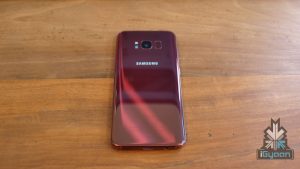
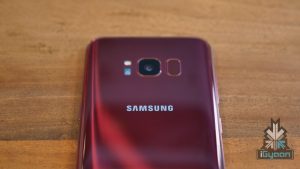
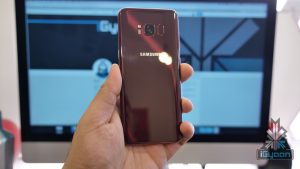
  • Samsung Galaxy S8 Burgundy Red Is The Best Colour On A Smartphone

    Samsung Galaxy S8 Burgundy Red Is The Best Colour On A Smartphone

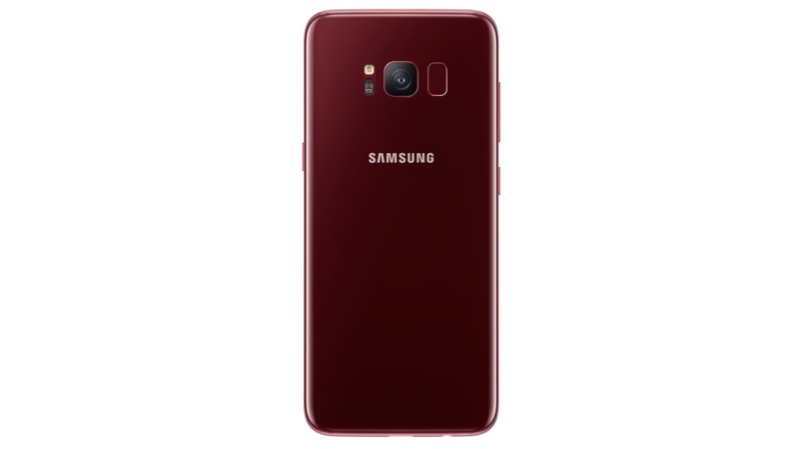
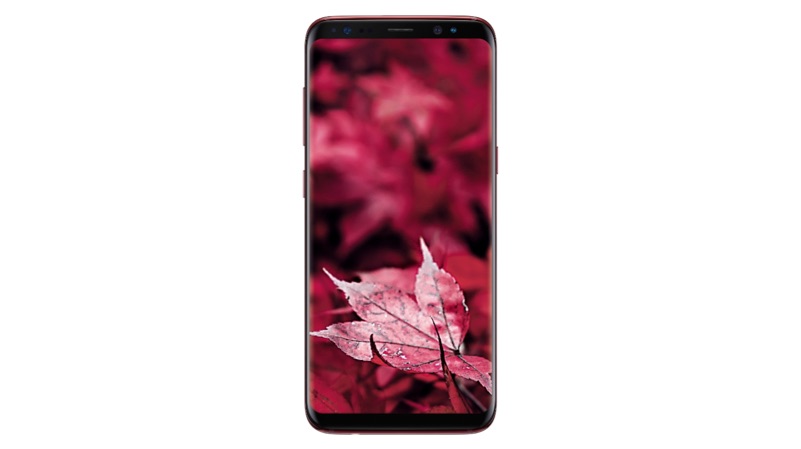
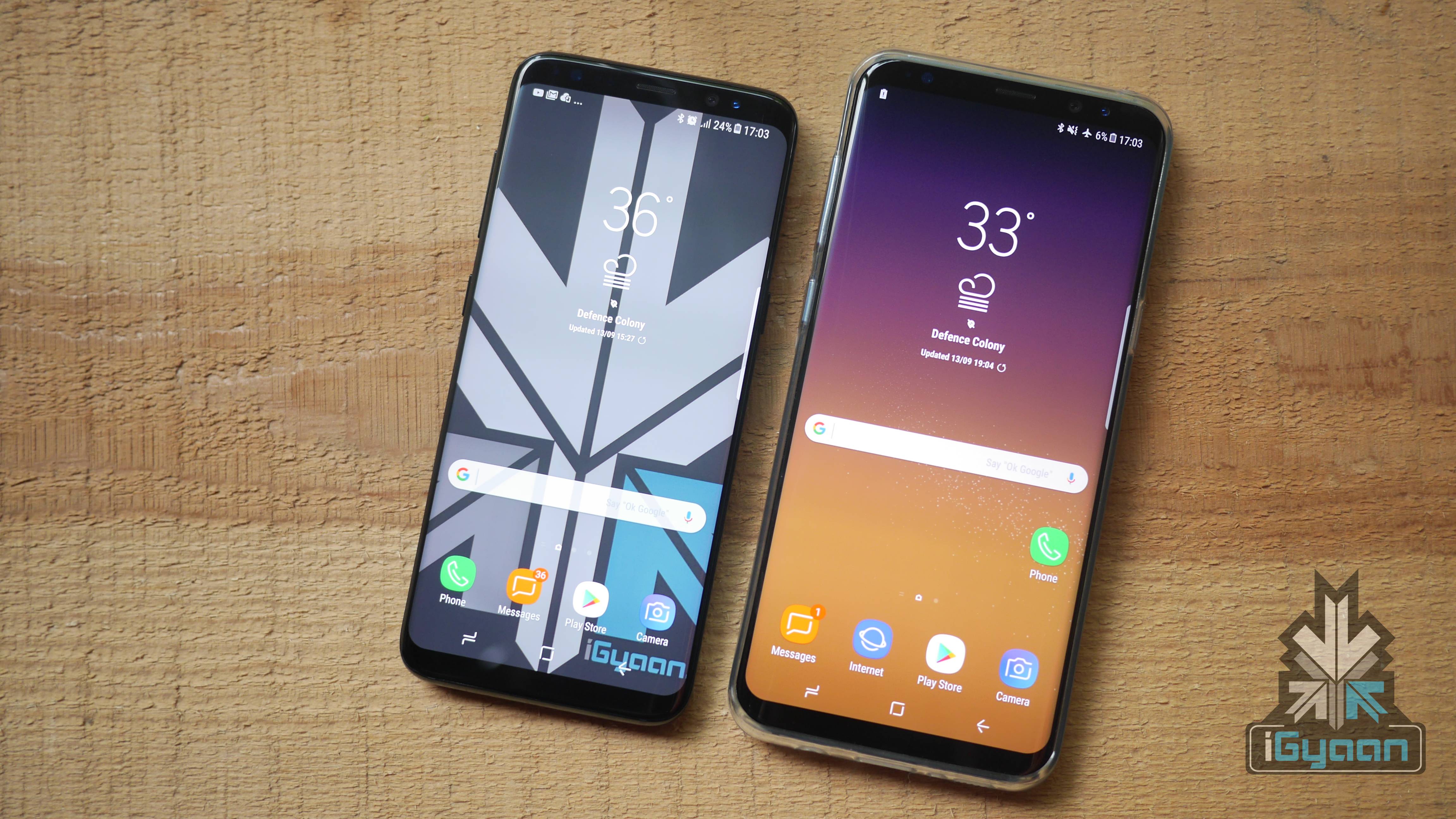
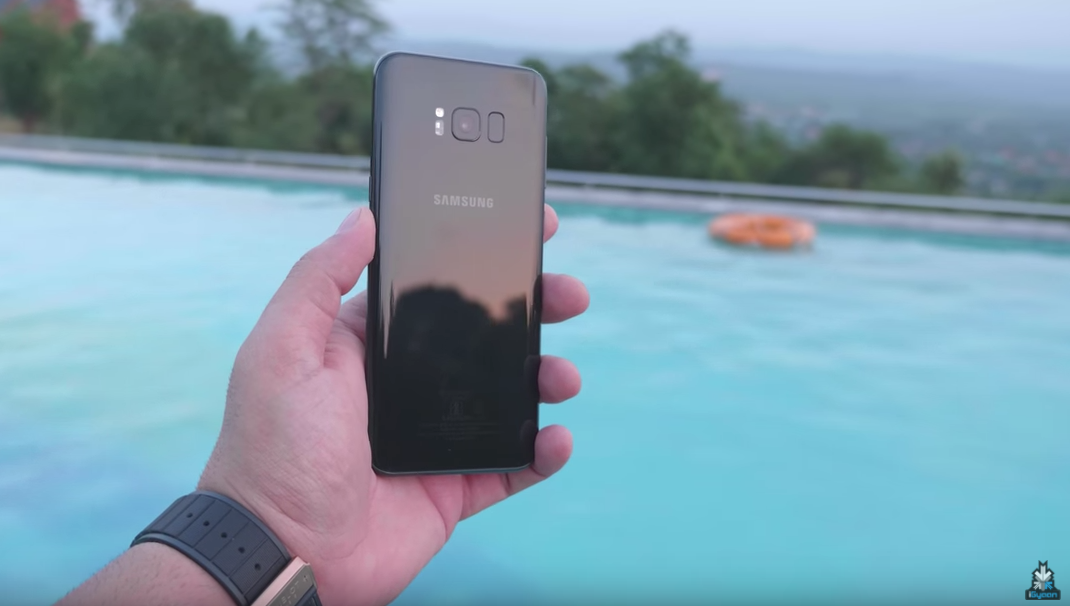
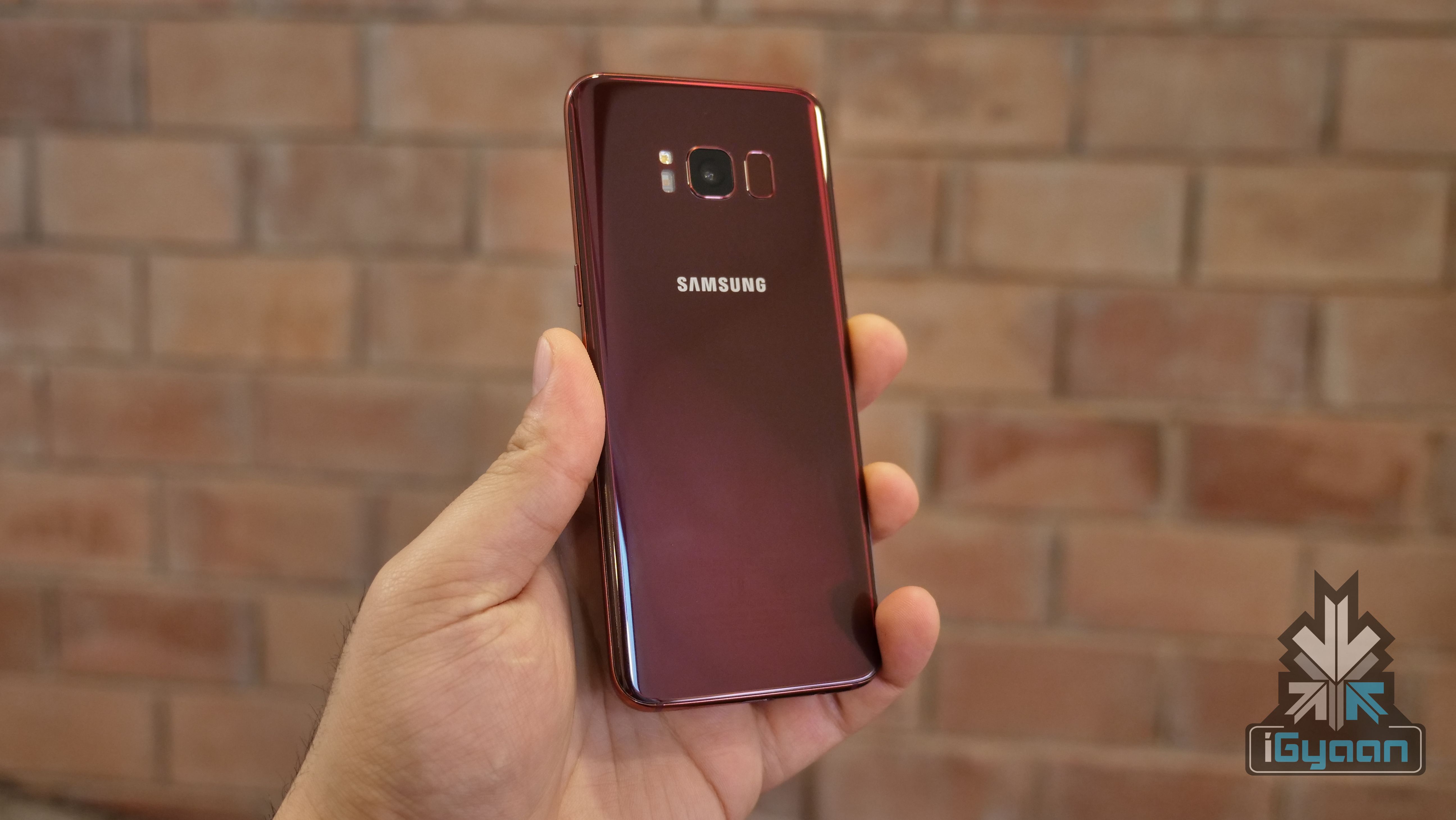
    Samsung has launched a new colour variant of its year old flagship device, the Galaxy S8. Available now the Samsung Galaxy S8 Burgundy Red colour, retails for Rs 49999. Consumers can also avail a Rs 10000 cash back on credit card payments, bringing the effective price of the Galaxy S8 to Rs 39999. The 2017 flagship smartphone received a price cut after the Galaxy S9 and S9+ were launched in India back in March.

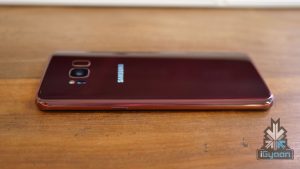
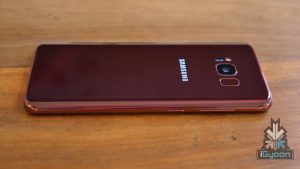
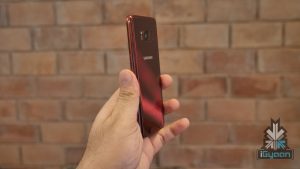
    The timing of the launch of the Galaxy S8 Burgundy Red in India is an interesting one, as it was launched a few hours before Apple introduced the iPhone 8 and 8 Plus (Product) RED globally. What makes the Galaxy S8 Burgundy Red the best colour variant of any smartphone is the fact that it is not your usual red coloured smartphone. Smartphone makers like OnePlus, Xiaomi and Honor have also launched a red colour variant of their popular smartphone but, nothing quite like the Burgundy Red found on the Galaxy S8.

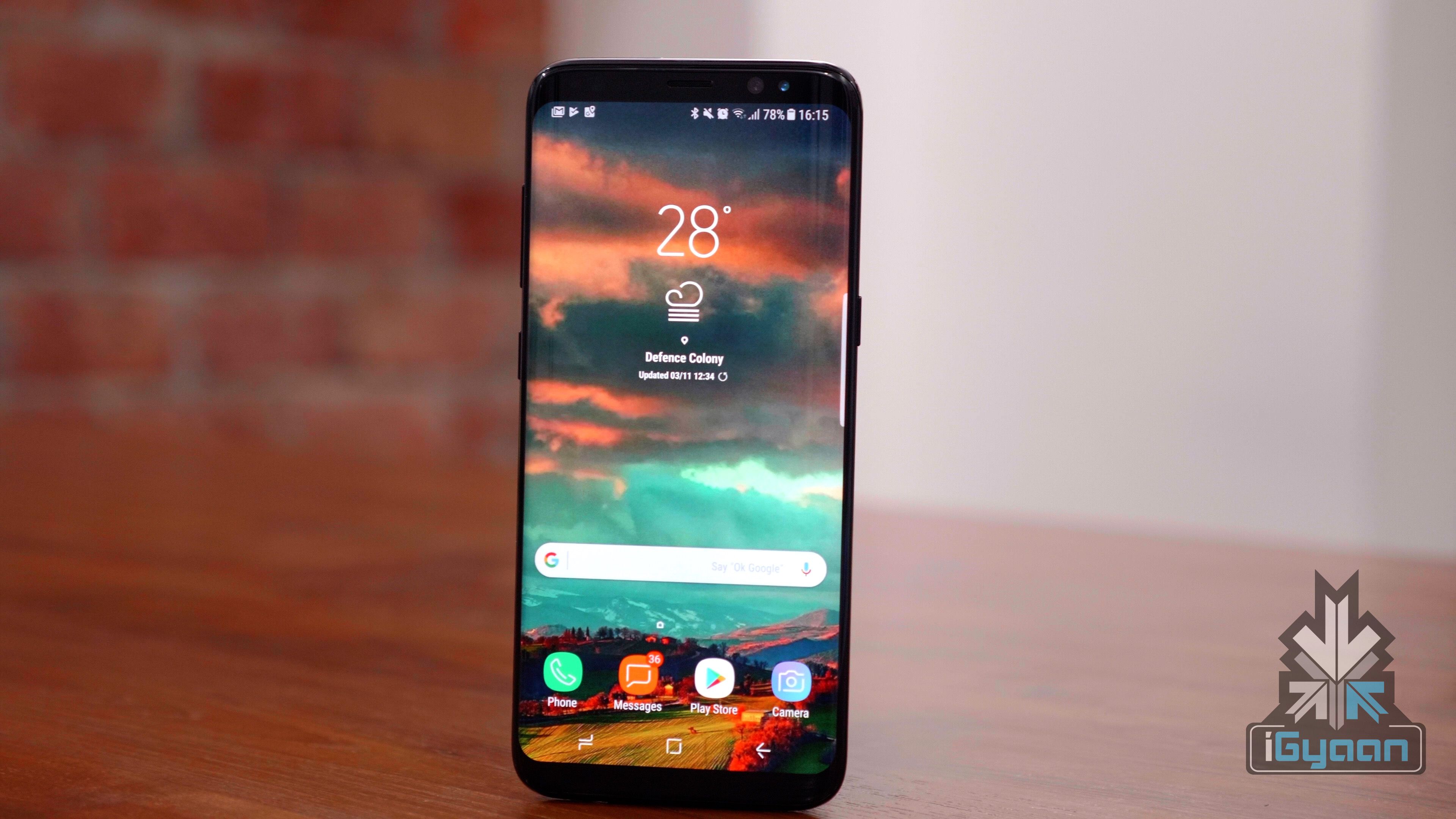
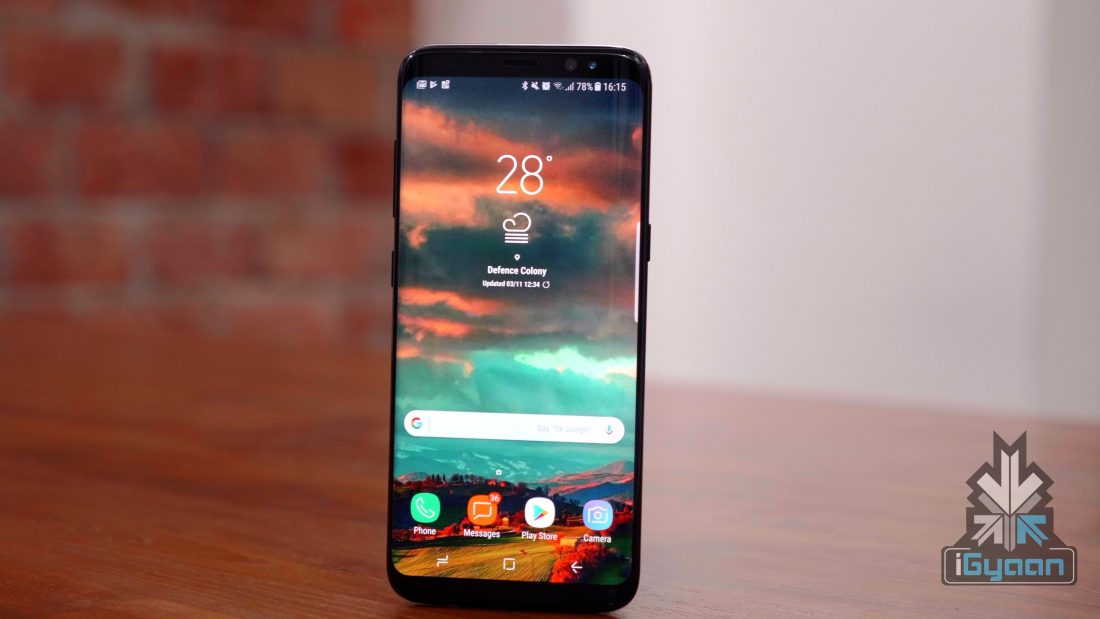
    The all-glass Samsung Galaxy S8 was already one of the best-looking smartphones to have launched lately and the new colour makes it a tad better. Also because of the glass build of the Galaxy S8, the shade of red colour is much deeper and more subtle than the red colour found on the likes of the iPhone 7 or OnePlus 5T.

    At a price 0f Rs 49999, the Galaxy S8, especially with the new Burgundy Red colour can be a great buy. Smartphones these days barely differ in specifications and the difference is even more minute when comparing two generations of a smartphone. If a user is not interested in the variable aperture or 960fps video recording, the Samsung Galaxy S8 is a great way to get the design and build quality of a Galaxy S9 at a price that is much lower.

  • Samsung Galaxy S8 Burgundy Red Launched In India At Rs 49990

    Samsung Galaxy S8 Burgundy Red Launched In India At Rs 49990

    Samsung has launched the Galaxy S8 in a new Burgundy Red colour variant at a price of Rs 49990 in India. The new colour variant will be available across all leading retail outlets with an additional Paytm cashback of Rs 10000 from the 13th of April. Whether the new colour variant will be available online via Flipkart or Amazon is not yet clear. After the launch of the Galaxy S9 and S9+, the Galaxy S8 and S8+ received a heavy price cut and the new colour variant is available at the same price as the other Galaxy S8 colour variants.

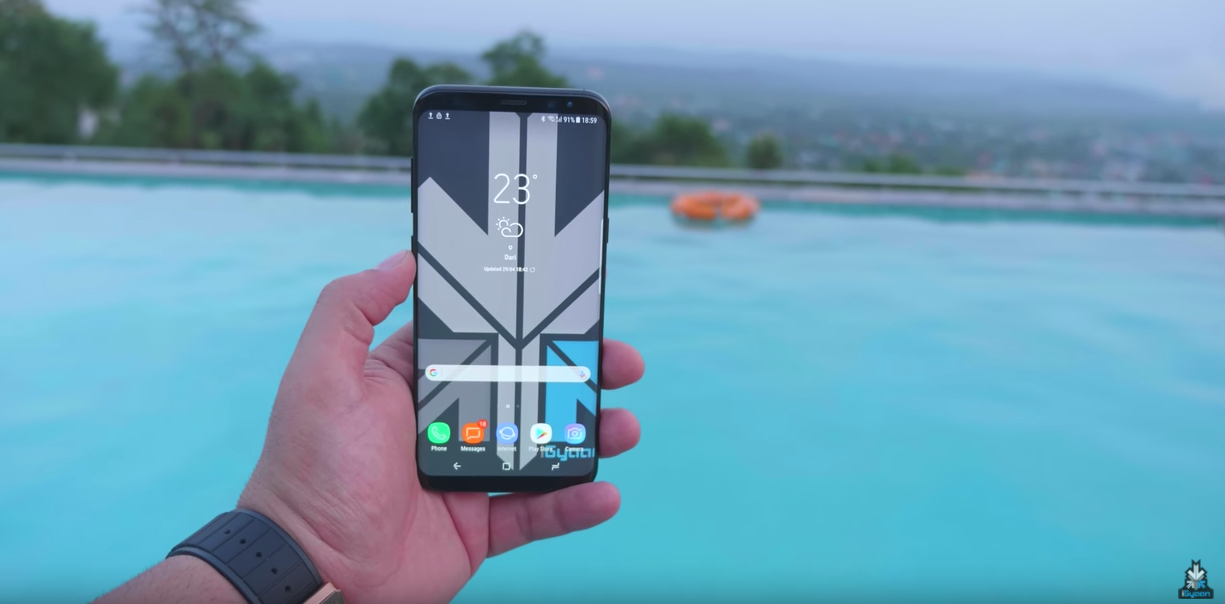
    The Samsung Galaxy S8, even after a year since its official launch, continues to be a strong seller for Samsung. For consumers looking for a flagship Samsung device but, do not want to spend heavily on the S9 or its bigger sibling, the Galaxy S8 makes perfect sense. It is now available at a much lower price compared to its original price tag and still has one of the best display and build quality on the market.

    Galaxy S9
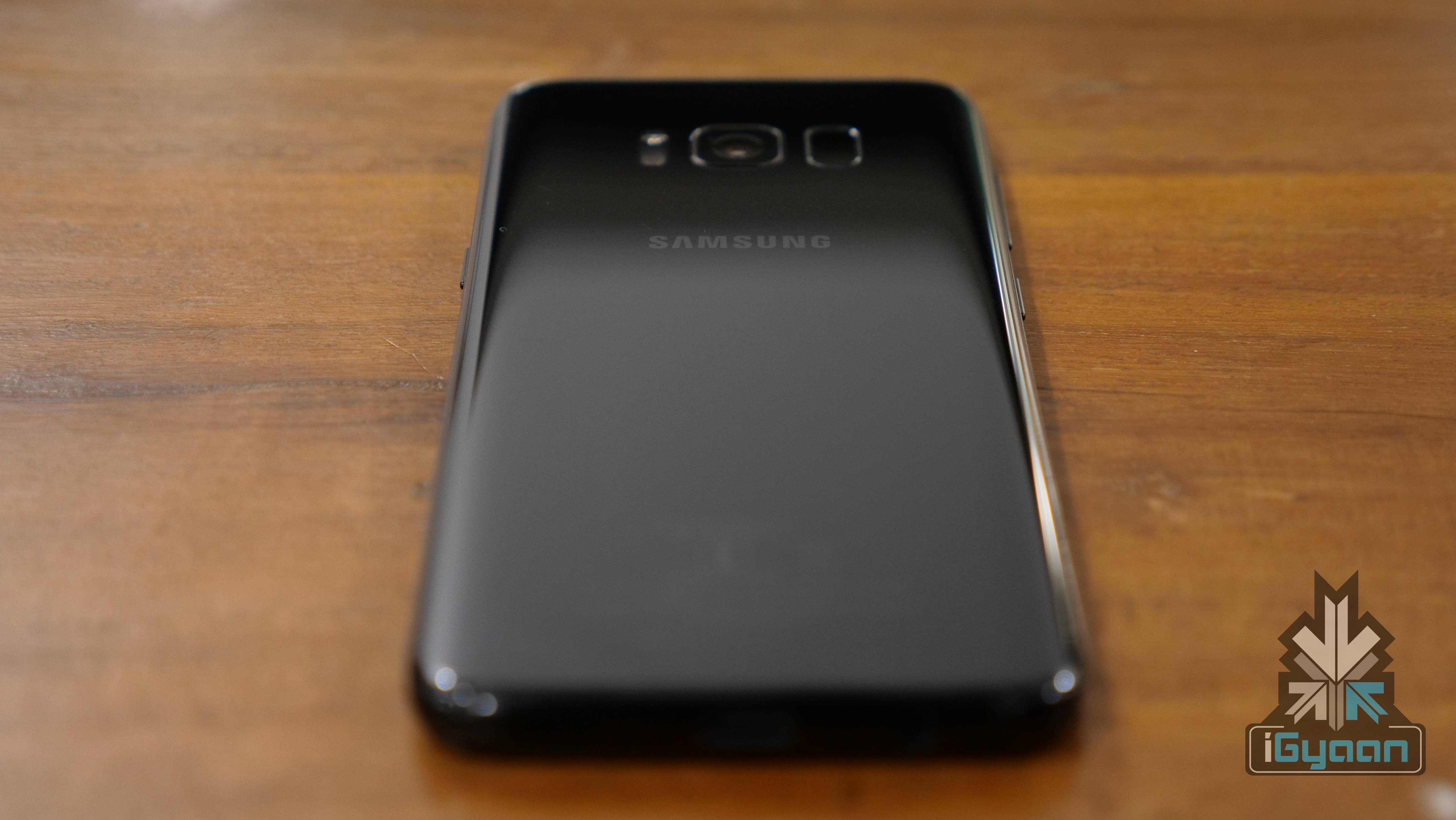
    Samsung Galaxy S8 Midnight Black

    With the new Burgundy Red colour, the consumers have another option to choose from. This new colour variant also gives Samsung an upper hand over other sub-50K smartphones like the Nokia 8 Sirocco. It is worth noting that the Galaxy S8 is out of stock on Flipkart and offline retailers are the only source to buy a new Galaxy S8 from. The Galaxy S8 Plus, on the other hand, is still available on Flipkart.

    Samsung Galaxy S8 Specs
    Price Rs 49,990
    Display 5.8 inch
    Super AMOLED
    Display Resolution 2960 x 1440 px
    18.5:9
    570 ppi
    Battery 3000 mAh
    Chipset Exynos 8895
    RAM 4GB
    Storage 64GB
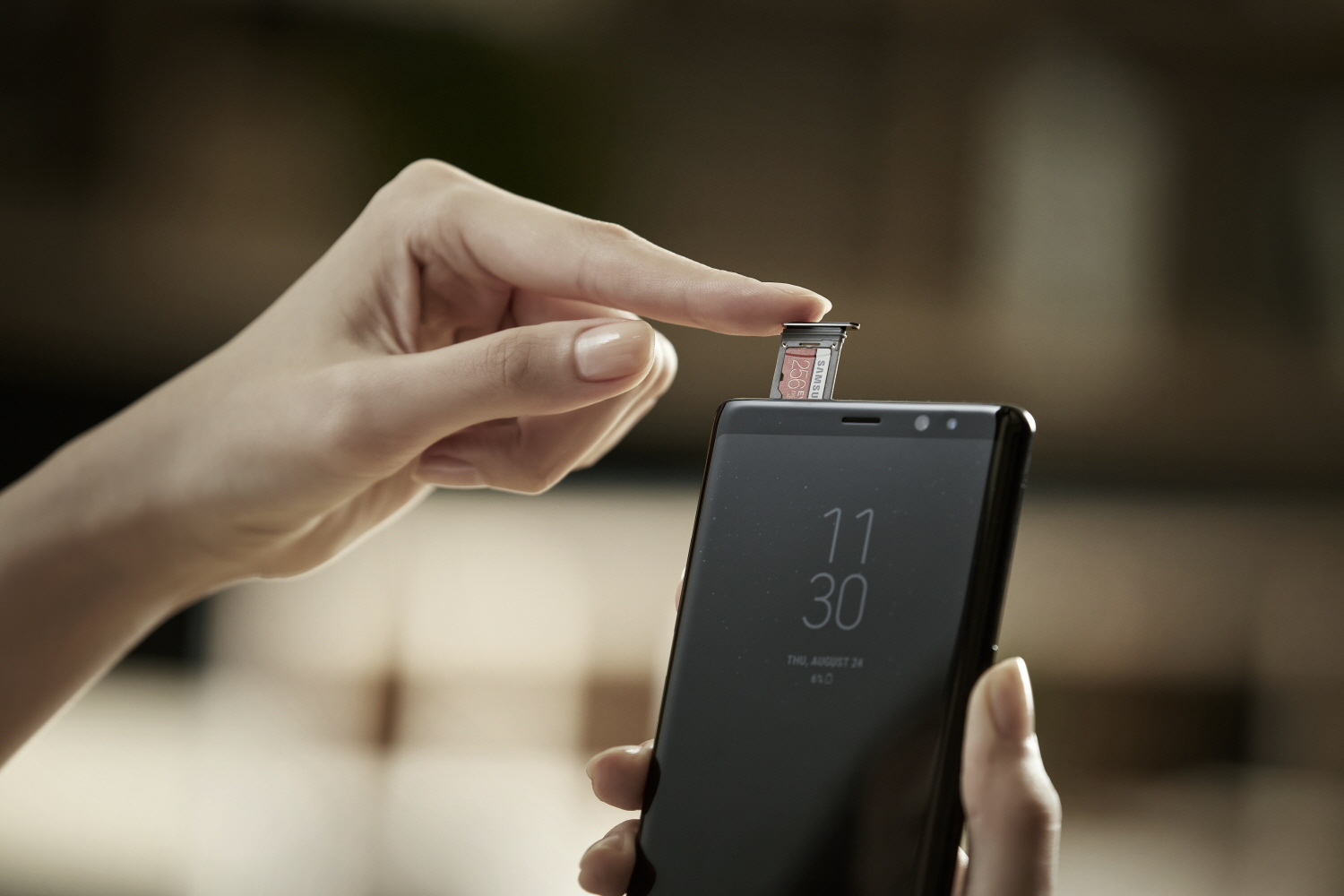
    Expandable up to 256GB
    Primary Camera 12MP
    f/1.7
    Primary Camera Video 3840 x 2160 px @ 30fps
    Secondary Camera 8MP
    f/1.7
    Add-Ons Fingerprint Sensor
    Iris Scanner
    IP68 Rating
  • Specs Comparison: Nokia 8 Sirocco Vs Samsung Galaxy S8

    Specs Comparison: Nokia 8 Sirocco Vs Samsung Galaxy S8

    HMD Global recently launched their flagship smartphone, the Nokia 8 Sirocco in India for Rs 49,999. Nokia 8 Sirocco is a successor to the Nokia 8, which comes with a premium all-glass design. Samsung’s last year flagship, the Galaxy S8 currently retails in India for Rs 49,990, which is a head to head competitor to the Nokia 8 Sirocco.

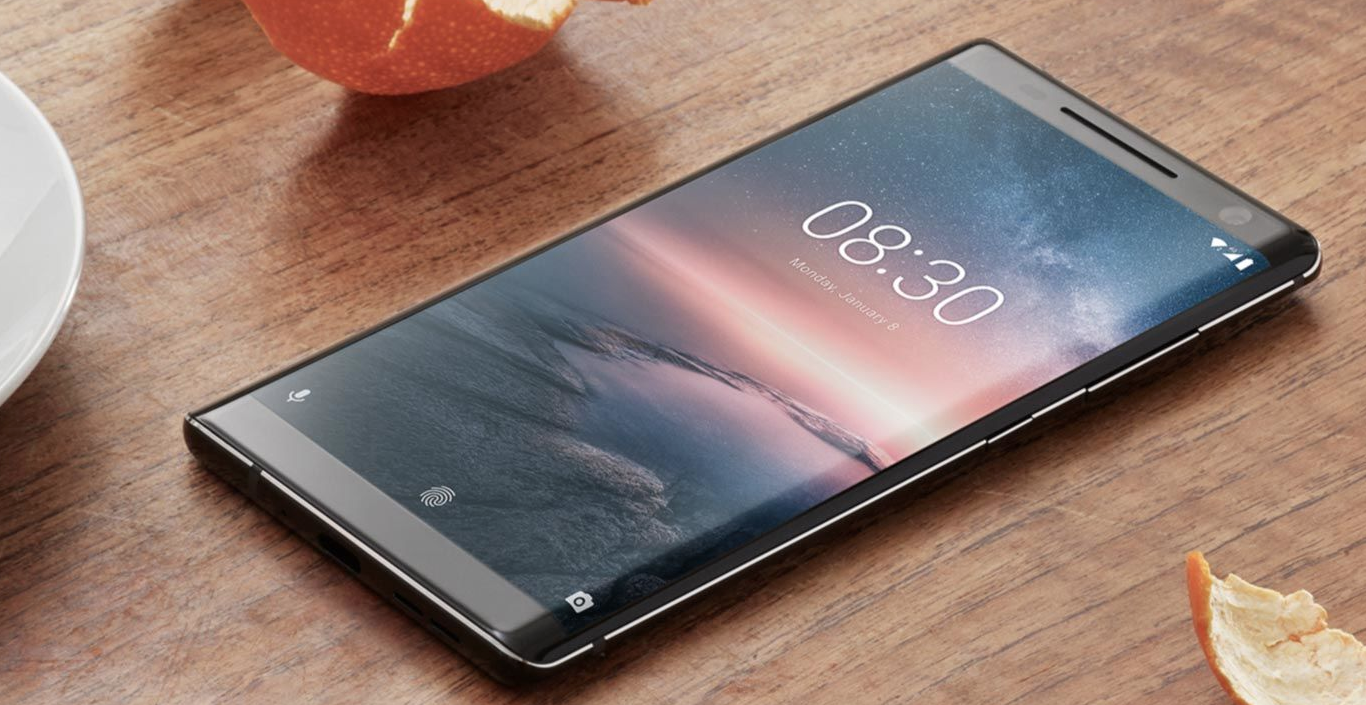
    The Nokia 8 Sirocco is the first smartphone from HMD Global to have a curved display with wireless charging capability. The smartphone is also IP67 rated for water and dust resistance. However, the Nokia 8 sirocco does have some shortcomings. The smartphone is powered by the last generation processor, the Snapdragon 835. Also, for a 2018 flagship, the smartphone still sports a 16:9 aspect ratio, even though the Nokia 7 Plus, priced at Rs 25999, has an 18:9 aspect ratio. We can only imagine its popularity had it been powered by the latest Qualcomm Snapdragon 845. Despite the 16:9 aspect ratio, it has a great build and design.

    Nokia 8 Sirocco

    Though the Samsung Galaxy S8 is a year old flagship, it still makes sense to compare it with the latest flagship offering from Nokia. The Galaxy S8 and the Nokia 8 Sirocco are equally powerful. The Galaxy S8 and S9 have a similar design with common features like IP68 certification, wireless charging and the same Infinity Display. In fact, the difference between the Galaxy S8 and the S9 is limited to camera and processor.

    The Nokia 8 Sirocco might have an edge over the Galaxy S8 in terms of camera. The Nokia 8 Sirocco has a Zeiss branded dual camera setup with a 12MP RGB sensor with an f/1.75 aperture and a 13MP telephoto lens with an f/2.4 aperture. The smartphone supports bokeh effect and 2X lossless zoom, whereas the Galaxy S8 misses out on both the features.

    Specs Comparision
    Nokia 8 Sirocco

    Rs 49,999

    Samsung Galaxy S8

    Rs 49,990

    Display  

    5.5 inch

    pOLED

    2560 x 1440 px

    554 ppi

    16:9 Aspect Ratio


    5.8 inch

    Super AMOLED

    2960 x 1440

    571 ppi

    18.5:9 Aspect Ratio

    Processor Qualcomm Snapdragon 835 Exynos 8895
    RAM 6GB 4GB
    Storage 128GB 64GB

    Expandable Up to 256 GB Via Micro SD card

    Primary Camera 12MP

    f/1.75

    13MP

    f/2.4

    12MP

    f/1.7

    Secondary Camera 5MP

    f/2.0

    8MP

    f/1.7

    Operating system Android 8 Oreo

    Stock Android

    Android 8 Oreo

    Samsung Experience UI 9

    Battery 3260 mAh 3000 mAh
    Add-Ons  

    Fingerprint Sensor

    Wireless Charging

    Fingerprint Sensor

    Wireless Charging

    Iris Scanner

  • Samsung Smartphones With Always-On Displays Get Support For GIFs

    Samsung Smartphones With Always-On Displays Get Support For GIFs

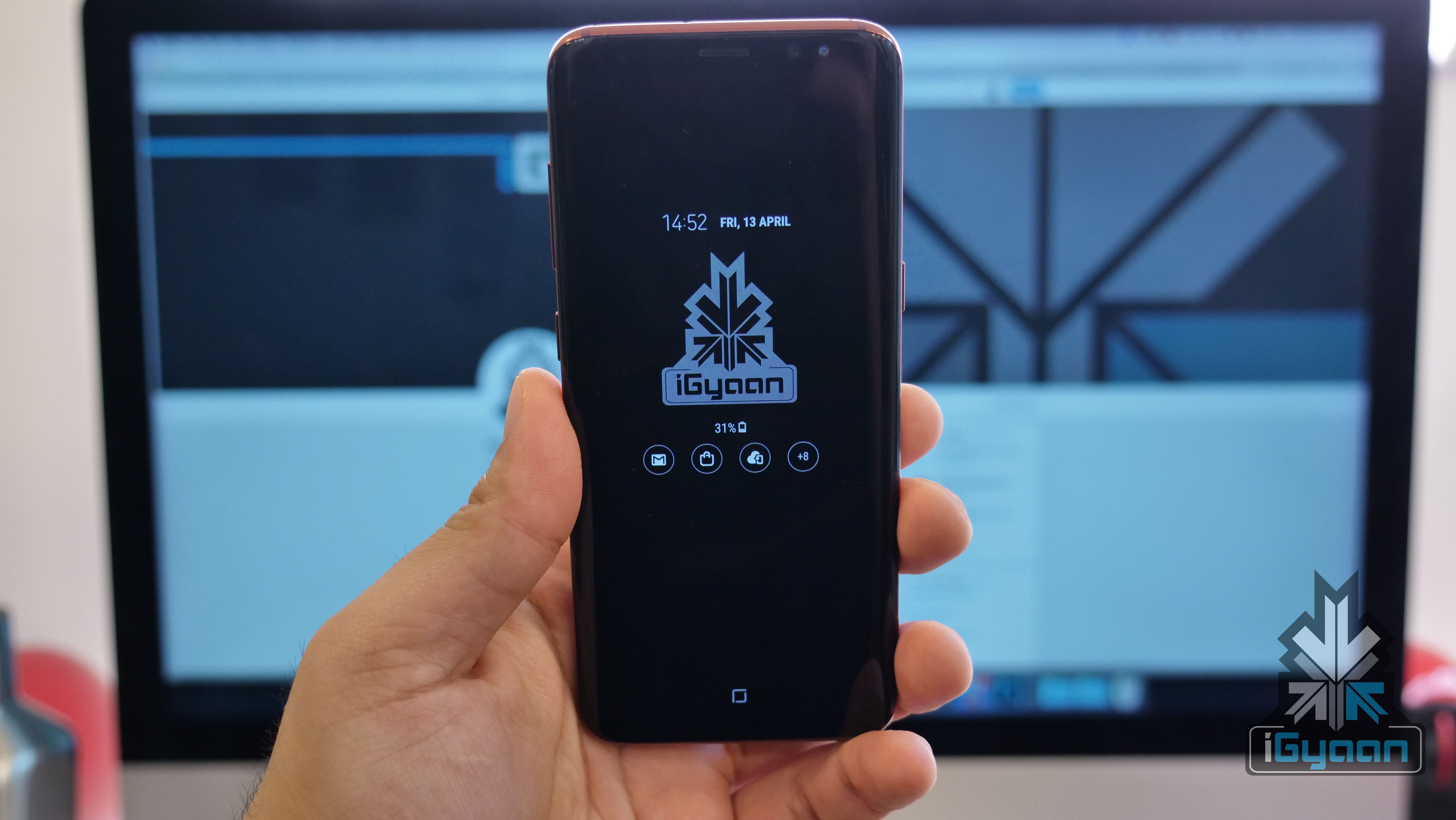
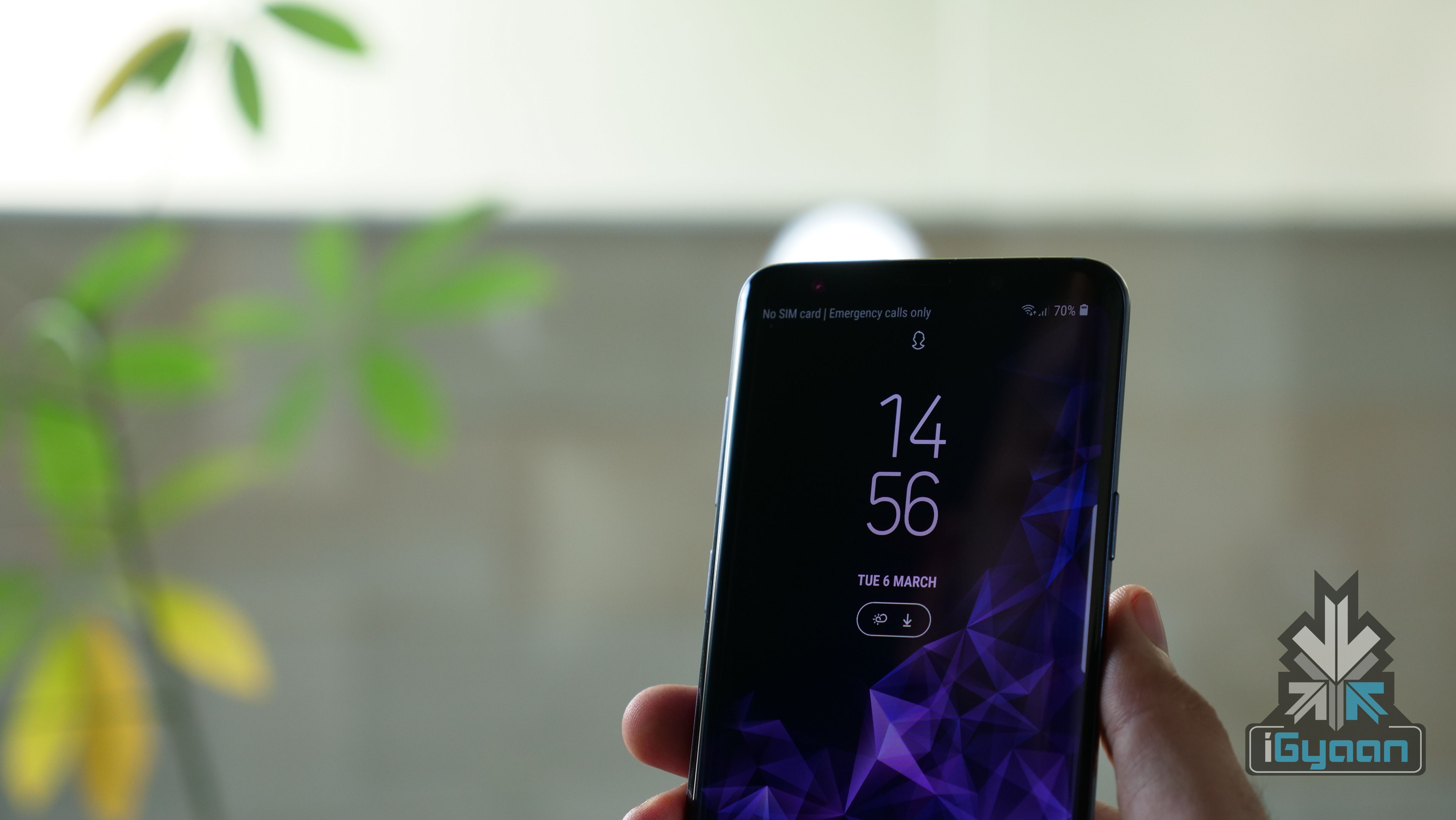
    Samsung has silently added support to showcase GIFs on its smartphones with Always on Display (AOD). Always On Display is a feature where the phone’s screen is off, except for the clock and notification icon. This features required an AMOLED panel, and it only works in the Samsung flagship series smartphones.

    To get this feature working, you should have AOD application version  3.2.26.4. If you are running on the latest version, then select ‘set always on display image’ and select a GIF. However, note that the app can only rear GIF formatted pictures, not .webp. Similarly, if the GIF is too long, the app will recommend it to trim down to a specific time frame.

    Always On Display

    Once, you lock your smartphone, the GIF will animate for a once and will stay in the fixed frame after that. Additionally, one can also set a super slow motion video recorded on the Galaxy S9/S9+ as an AOD picture as well.

    This feature will work on devices including, the Samsung Galaxy S9/s9+, Galaxy S8/S8+ and the Galaxy Note 8. If you are yet to receive this update and you don’t want to wait. Then, click on this link to manually download the APK and sideload it. However, we don’t recommend sideloading third-party apps as they might goof-up your smartphone.

  • Samsung Galaxy S6 Edge+ To Get Android 7 Nougat Update

    Samsung Galaxy S6 Edge+ To Get Android 7 Nougat Update

    Samsung recently launched the Galaxy S9 and the Galaxy S9+ in India. The smartphones resemble the Galaxy S8‘s design with a new camera setup with variable aperture. After launching its flagship series, the company is updating its older portfolio with the newer version of Android OS. Samsung follows the two-letter OS upgrade for its flagship smartphones. The Galaxy S8 was released with Android Nougat and the device has received an update for Android Oreo.

    According to an official document found on Samsung’s website, the company is planning to upgrade at least 6 devices, which have completed the two year’s OS cycle. However, unlike the S8 or the S7, these devices will not receive the latest Oreo update. Instead, these OS builds will be based on an older Android version with security patch and bug fixes. Though these devices are listed to receive the software update, no time frame is mentioned.

    Galaxy S6
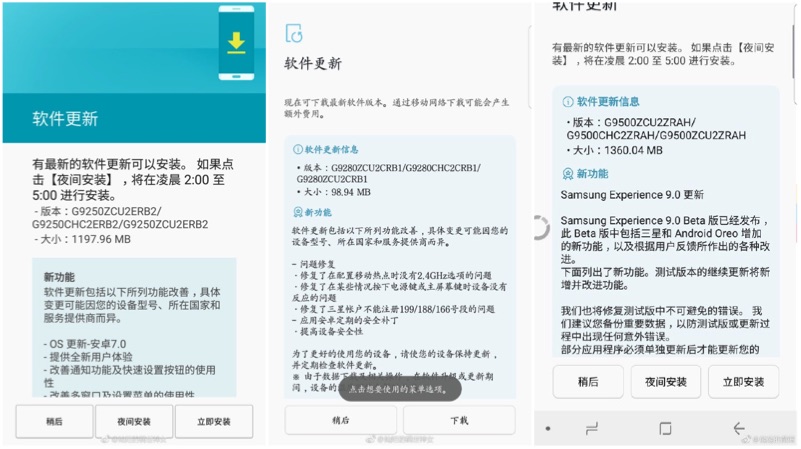
    Left to right: Update for Galaxy S6 Edge, Update for Galaxy S6 Edge+, Update for Galaxy S8

    According to the document, the Samsung Galaxy S6 Edge will receive Android 7 Nougat update G9250ZCU2ERB2. The update weights at 1233.30MB, which upgrades the smartphone from Android Marshmallow to Android Nougat. However, the Galaxy S6 Edge+ and the Galaxy Note 5 are expected to receive the incremental software update. The Samsung Galaxy S8 and the Note 8 will receive Android 8 Oreo update with Samsung Experience UI 9.0. In fact, the update for the Galaxy S8 and the Galaxy Note 8 is already live in most of the countries.

    Galaxy S6

    Samsung Devices Listed
    • Galaxy S6, S6 Edge
    • Samsung Galaxy S8, S8+
    • Galaxy Note 5, Note 8
  • Samsung Galaxy S8 Android 8 Oreo Update Resumes

    Samsung Galaxy S8 Android 8 Oreo Update Resumes

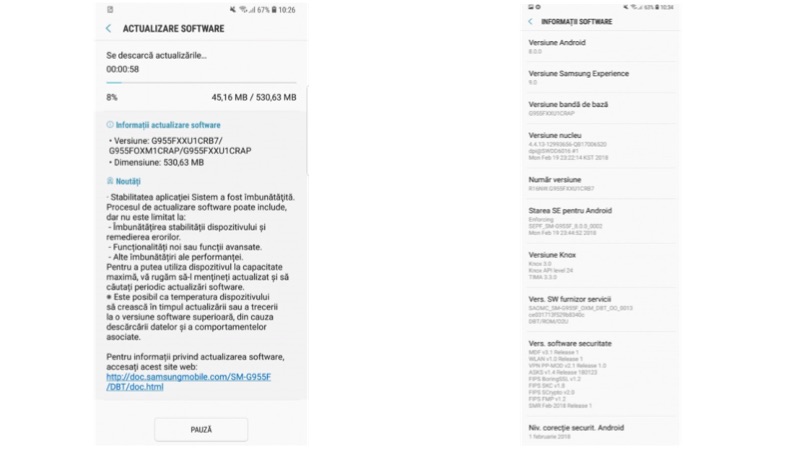
    The Samsung Galaxy S8 and the Galaxy S8+ have started receiving Android 8 Oreo update for the second time. The first update was suspended for the fact that, the smartphone after update started rebooting. With the new update, the company has issued that issue.

    The software update comes with software version G950FXXU1CRB7 for the Galaxy S8 and G955XXU1CRB7 for the Galaxy S8+. The update weighs at about 530MB for those who are on the first batch of Oreo update. However, originally, the update weighed at around 487MB. 

    Whats new in Experience 9 UI?

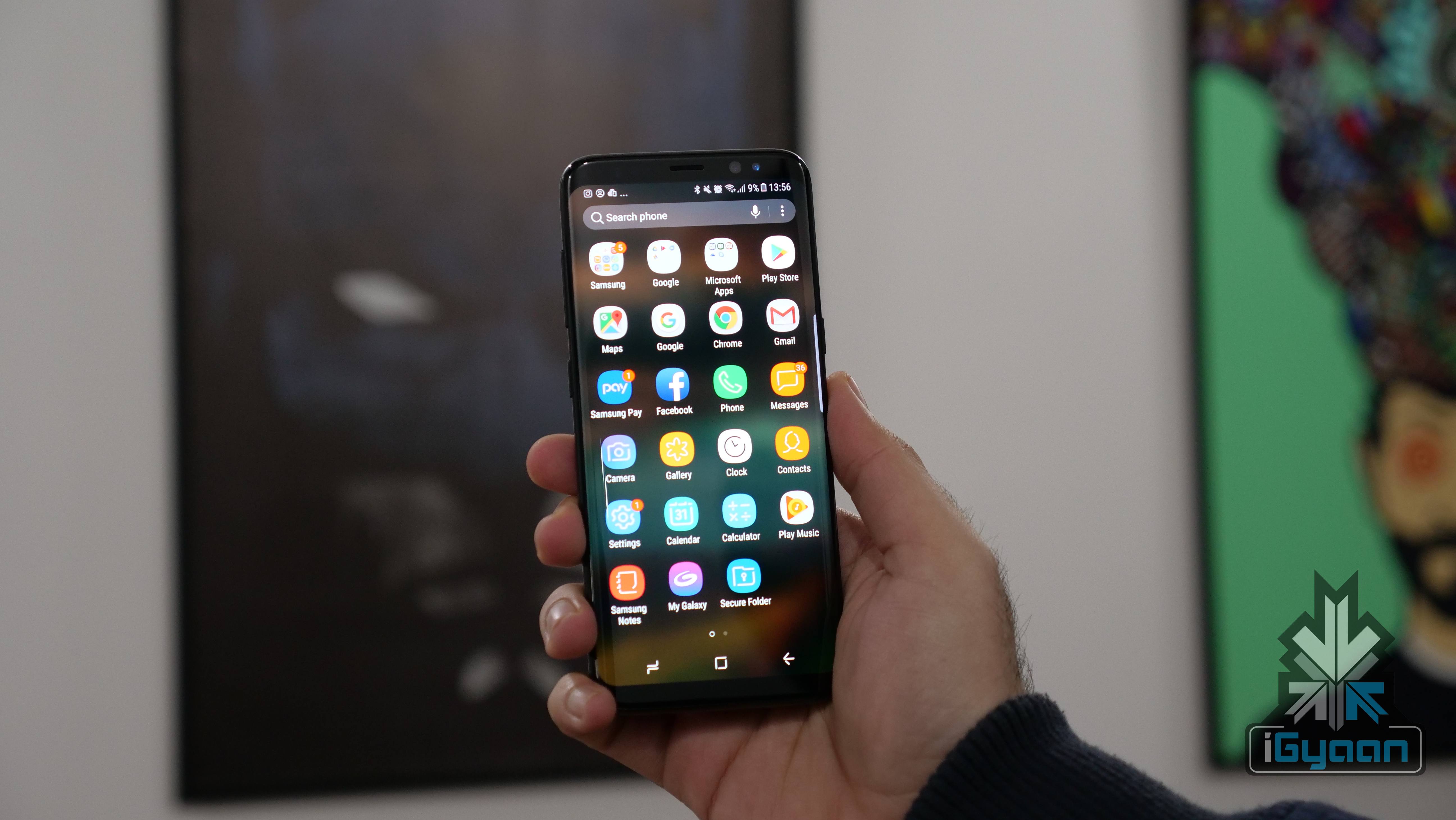
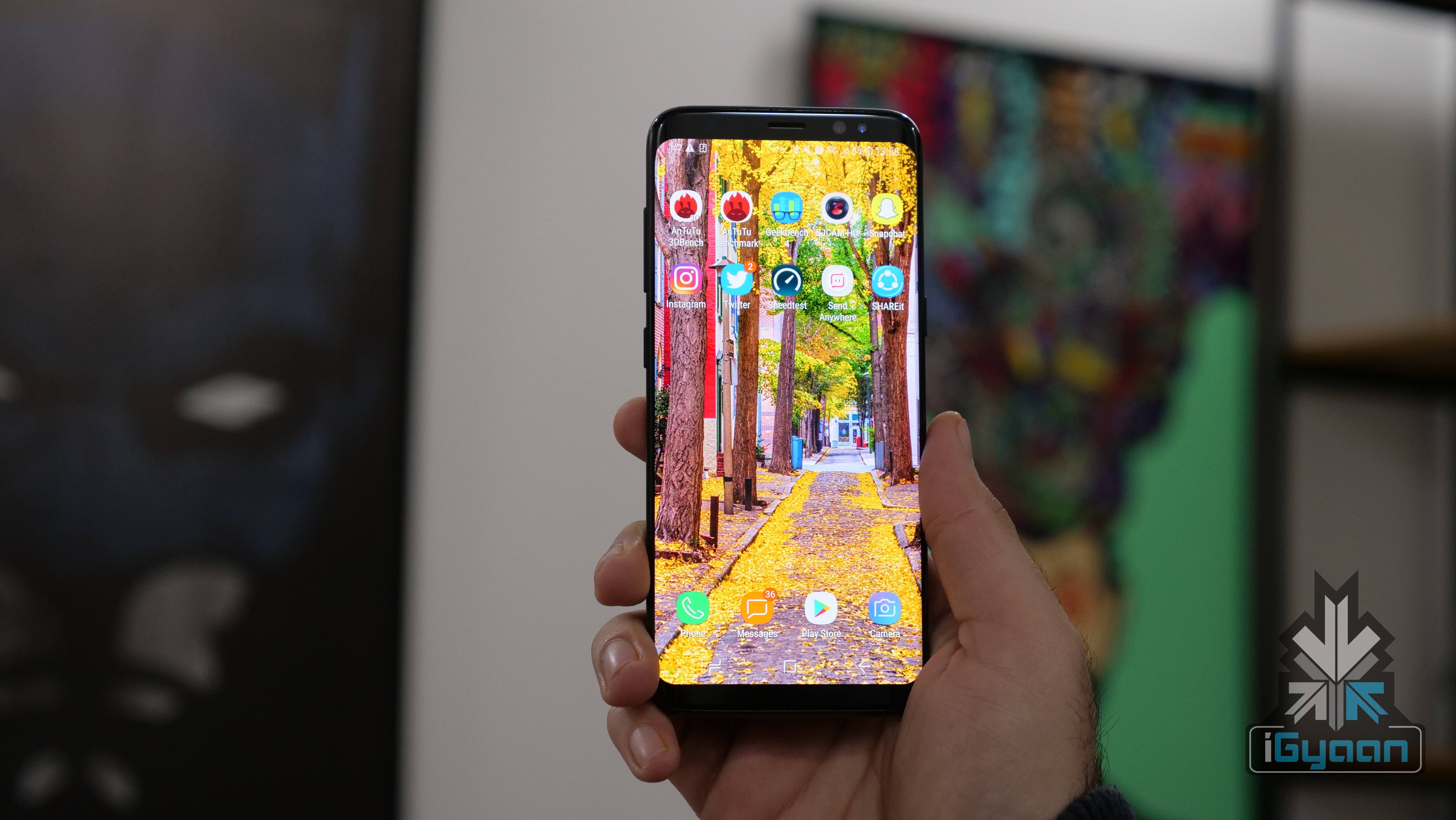
    The Oreo update on the Galaxy S8 and the Galaxy S8+ comes with Samsung’s new UI called Experience UI 9.0, with a new style of home page and icons. It also updates the smartphones from Android 7 Nougat to Android 8 Oreo.

    The light effect for the notifications is customisable, by taking the advantage of AMOLED screen. More customisations for the lock screen has been added, including support different clock options. However, it still misses out on the third party widget integration.

    There are additional system-level modifications enables an overall smoother UI experience. With this update, the Android App shortcuts are also included in the stock launcher.

    Specifications:

    The Galaxy S8 and the Galaxy S8+ has a 5.8-inch and a 6.2-inch QHD+ with Gorilla Glass 5 protection. Under the hood, the smartphone was powered by either Snapdragon 835 or Exynos 8895 chipset with 4GB RAM and 64GB storage. However, the company did launch a special version of S8 with 6GB RAM and 128GB storage for the Chinese market.

    These phones had a 12 MP main camera with OIS and 4K video recording capability up to 30fps. The 8 MP front-facing camera was also capable of recording video footages up to 2k resolution.

  • Samsung Galaxy S8 Android 8 Oreo Update Suspended

    Samsung Galaxy S8 Android 8 Oreo Update Suspended

    Android 8 Oreo, much like iOS 11, seems to be a troubled software update of 2017. Officially launched back in August, OEMs were slow to roll out updates but, at least some devices were being updated. Samsung recently started rolling out the Android 8 Oreo update to its 2017 flagship, the Galaxy S8 and S8+. This rollout began after an extensive Beta program was carried out.

    8 Oreo
    Experience UI Based On Android 7 Nougat

    However, the company had to suspend the new software update rollout. This isn’t the first time an OEM had to suspend the Android 8 Oreo update. Smartphone makers like Xiaomi, OnePlus also halted updates to their devices. Samsung has come out and clarified its stance on the matter:

    Following a limited number of cases where Galaxy S8 and S8+ devices have rebooted unexpectedly with the Android 8.0 Oreo, we have temporarily stopped the rollout of the update. We are investigating the issue internally to ensure that the impact to the affected devices is minimized and the rollout of the update can resume as quickly as possible.

    When the year began, Xiaomi had to suspend the Android 8 Oreo update to its Mi A1 devices. Many users complained about issues pertaining to an unresponsive camera and dialer app. Similarly, OnePlus had to suspend the rollout for the OnePlus 5T.

    There is no confirmation from the company as to when the rollout will resume. The downloaded files will be deleted if you haven’t installed the update yet.

    Some Android 8.0 Oreo features:

    User Interface

    Users can now organise notifications into custom channels and modify the alerts for the entire channel. An autofill framework in the operating system makes the repeated filling of forms easy for the user. This can range from sign up information to a new service, or credit card information to make a payment. The feature will prevent frustration and repetitiveness by allowing users to quickly fill in a form. Users will have to opt-in for the Autofill framework, after which new and existing applications can make use of the feature.


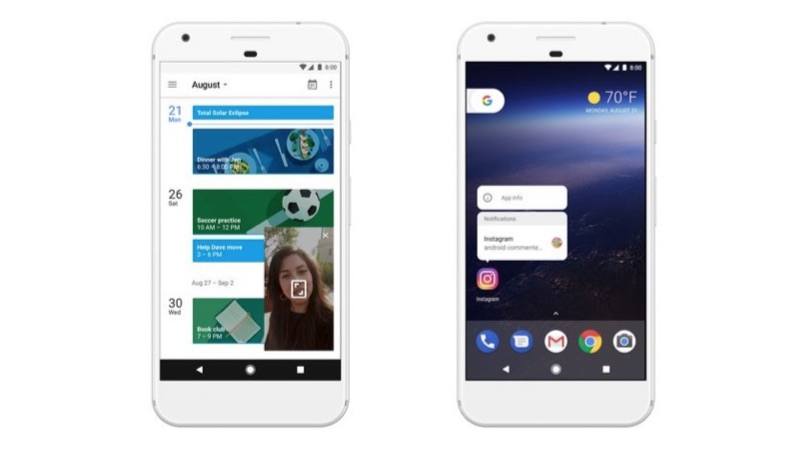
    Picture-In-Picture Mode and New Notifications

    A new picture-in-picture feature allows users to continue operating the device without interruptions for things like watching a video. Another interesting change in the UI this time around is Adaptive Icons. The supported shapes are Circle, Squircle, Rounded Square and Square.

    Behind The Screen

    A cache budget is allocated to every application. When the system is low on resources, the applications that exceed the cache budget the most will be the first to have their cached files deleted. Developers can also set custom triggers to update the content when it is stale or outdated, even without a specific request from the user. There are also background execution limits, which ensures that applications running in the background don’t use up a lot of system resources.

    Media playback should be significantly improved for users, as now there is fine-grained control to scrub to a particular frame in a video. Applications can also now mix multiple audio and video tracks at once, for streaming purposes.

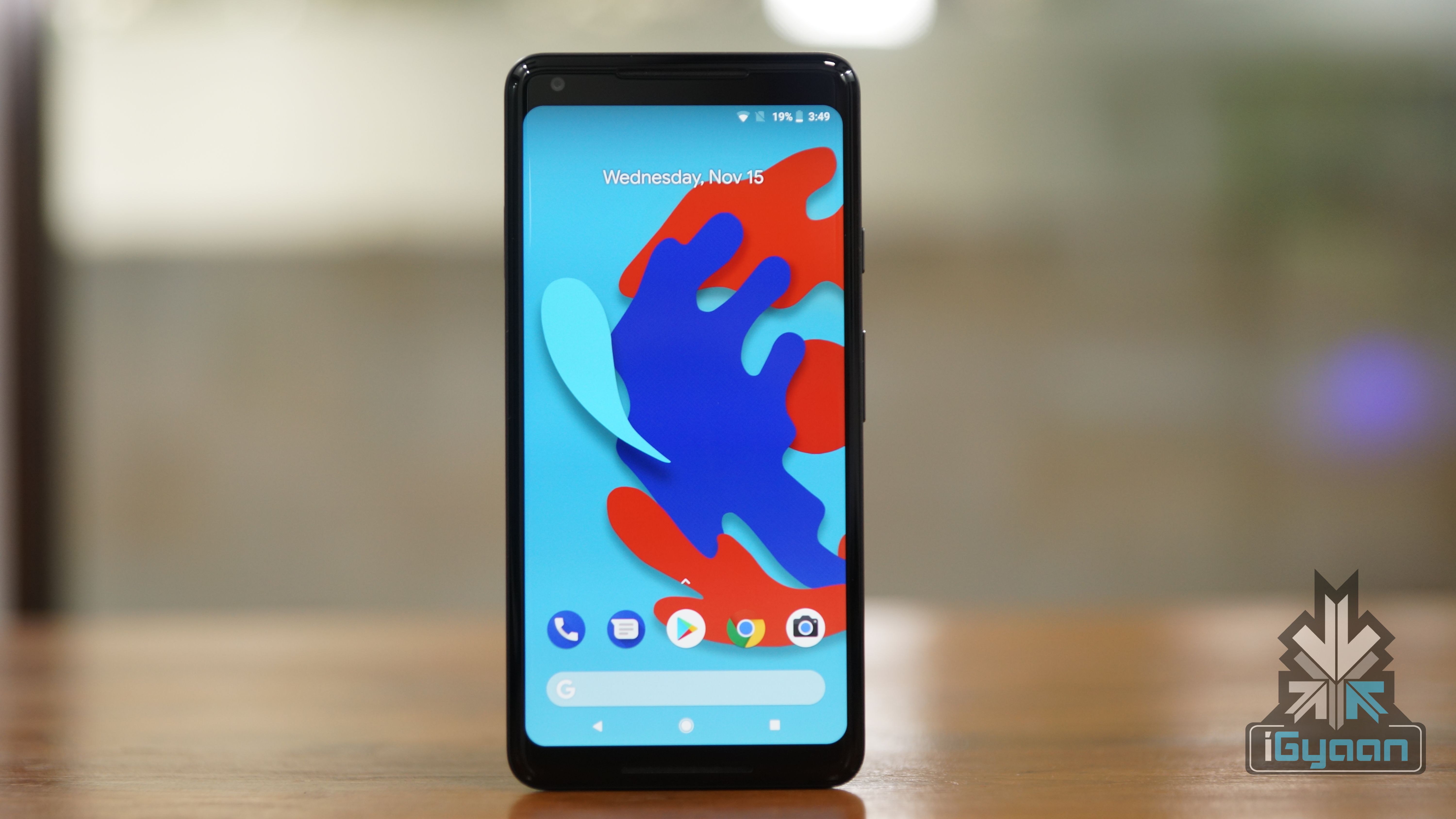
    Pixel 2 XL Runs Android 8 Oreo

    A smart sharing feature allows the operating system to guess the context of a photo, and pick the best application to hand the image over to. The more you use your phone, the more your smartphone will learn about your behaviour and act accordingly. A smart copy feature enables similar functionality but for text, where the smartphone recognises if the text copied is an address, a phone number or name of an entity, and suggest opening a relevant app.


  • Samsung Galaxy S8, S8+ Owners Rejoice! Android 8 Oreo Rollout Begins

    Samsung Galaxy S8, S8+ Owners Rejoice! Android 8 Oreo Rollout Begins

    Earlier, we reported that Samsung accidentally rolled out Android 8 Oreo update for the Galaxy S7 Edge. While that appeared to be a mistake, this news is official and a good one. Android 8 Oreo update for the Samsung Galaxy S8 and S8+ has started rolling out in Germany. Samsung had promised that Beta testers would get the Android 8 Oreo 24 hours before everyone else and the company has delivered.

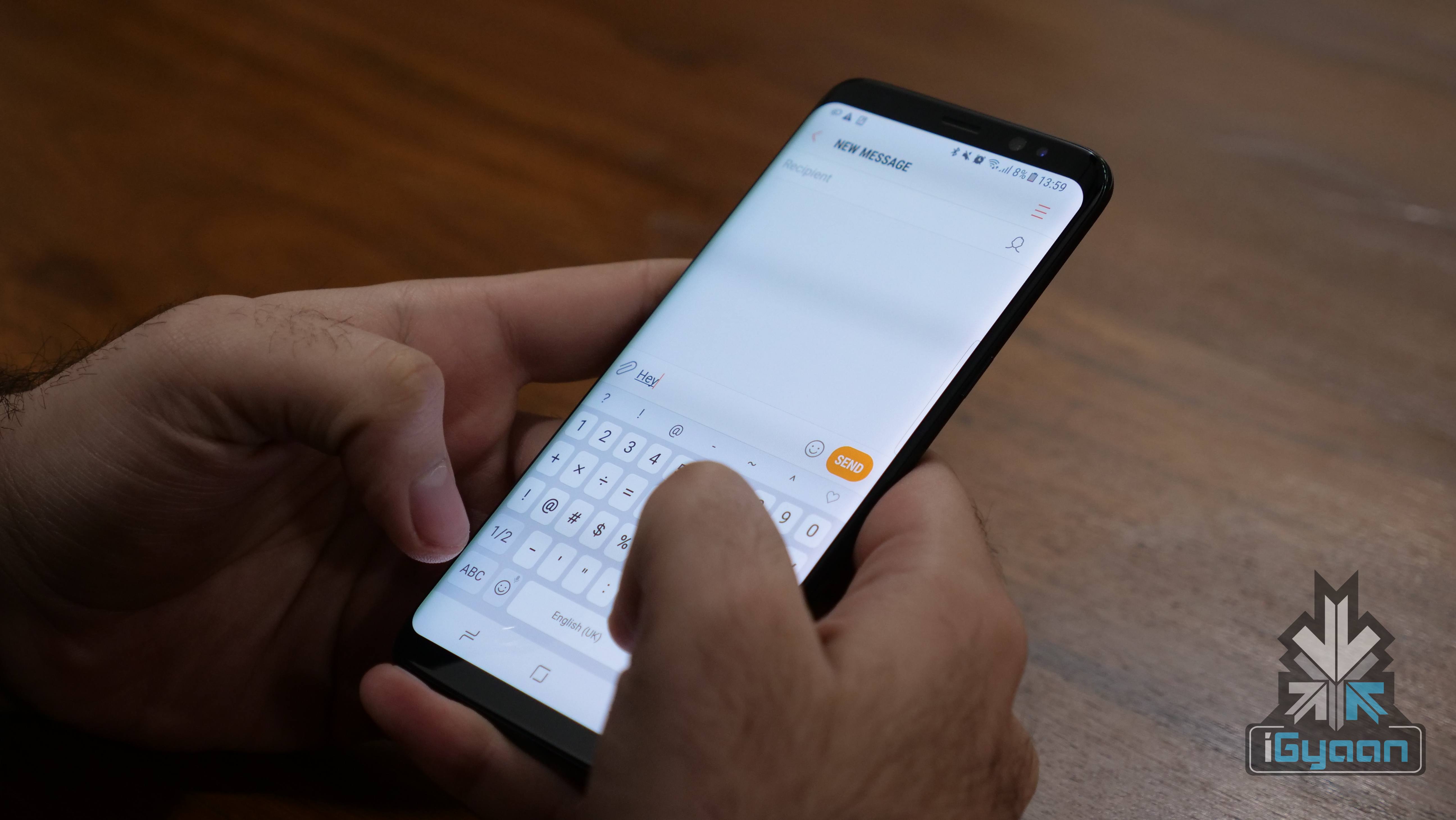
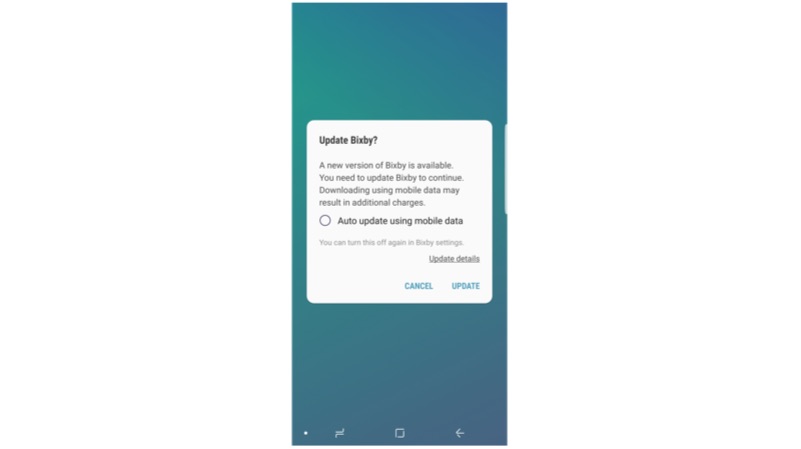
    The update will soon make its way out of Germany however, the exact timeline has not been shared by the company. long with Android 8 Oreo, the update also brings Samsung Experience 9.0 to the fore. Samsung Experience 9.0 has new features like a new keyboard, colour lens for display, improvements to Bixby and more.

    It was expected that Samsung would release the final build of Android 8 Oreo to older devices only after launching the Galaxy S9. It recently launched the Galaxy A8+ in India that still runs on Android 7 Nougat, more than four months after the official launch of the Android 8 Oreo. For context, OnePlus has already updated its smartphones to Android 8 Oreo while the Pixel devices are running Android 8.1 Oreo.


  • Samsung Galaxy S8 And S8+ Android 8.0 Oreo Is Coming Soon

    Samsung Galaxy S8 And S8+ Android 8.0 Oreo Is Coming Soon

    The latest iteration of Android OS, Android 8 Oreo was officially launched back in August. While the Pixel and Nexus devices have moved on to Android 8.1 Oreo, some smartphones like the Moto X4, Xiaomi Mi A1, OnePlus 5 and others have already received an official update to Android 8.0 Oreo. Two of the most successful flagship smartphones of 2017, the Samsung Galaxy S8 and S8+ however, are still running  Android 7.1 Nougat.

    Not for too long though, as Samsung recently rolled out the last beta version Android 8 Oreo for Galaxy S8 and S8+ users. This means that the official release of the OS is not too far away as most of the bugs, if any, would’ve been ironed out by now. Samsung is not known for fast software updates and recently launched the Samsung Galaxy A8+ in India with Android 7.1 Nougat running out of the box.

    Read: Unboxing The Samsung Galaxy A8+

    However, Google recently announced the Project Treble and early reports suggest that the Galaxy S9 and S9+ will support Google’s Project Treble. With Project Treble, it is expected that the upcoming flagship devices from Samsung will receive the Android P update sooner than its predecessors.

    [amazon_link asins=’B06Y3GYZKW’ template=’ProductAd’ store=’igyaan-21′ marketplace=’IN’ link_id=’61e57840-f78c-11e7-9f06-eb84335bd074′]

    Project Treble is Google’s effort at reducing the time it takes for OEMs to receive the new OS and optimise it for its devices and then push out the update. A few months ago, Android received a new Vendor Interface, which is largely what Project Treble is about. The VI’s aim is to separate the “Vendor Implementation” (that is, “the device-specific, lower-level software written in large part by the silicon manufacturers”), from the Android OS framework.

    What this basically means is that Project Treble compatible smartphones will receive faster software updates since the OEMs won’t have to spend too long customising the latest build of Android OS.

  • The LG V30+ Vs The Competition

    The LG V30+ Vs The Competition

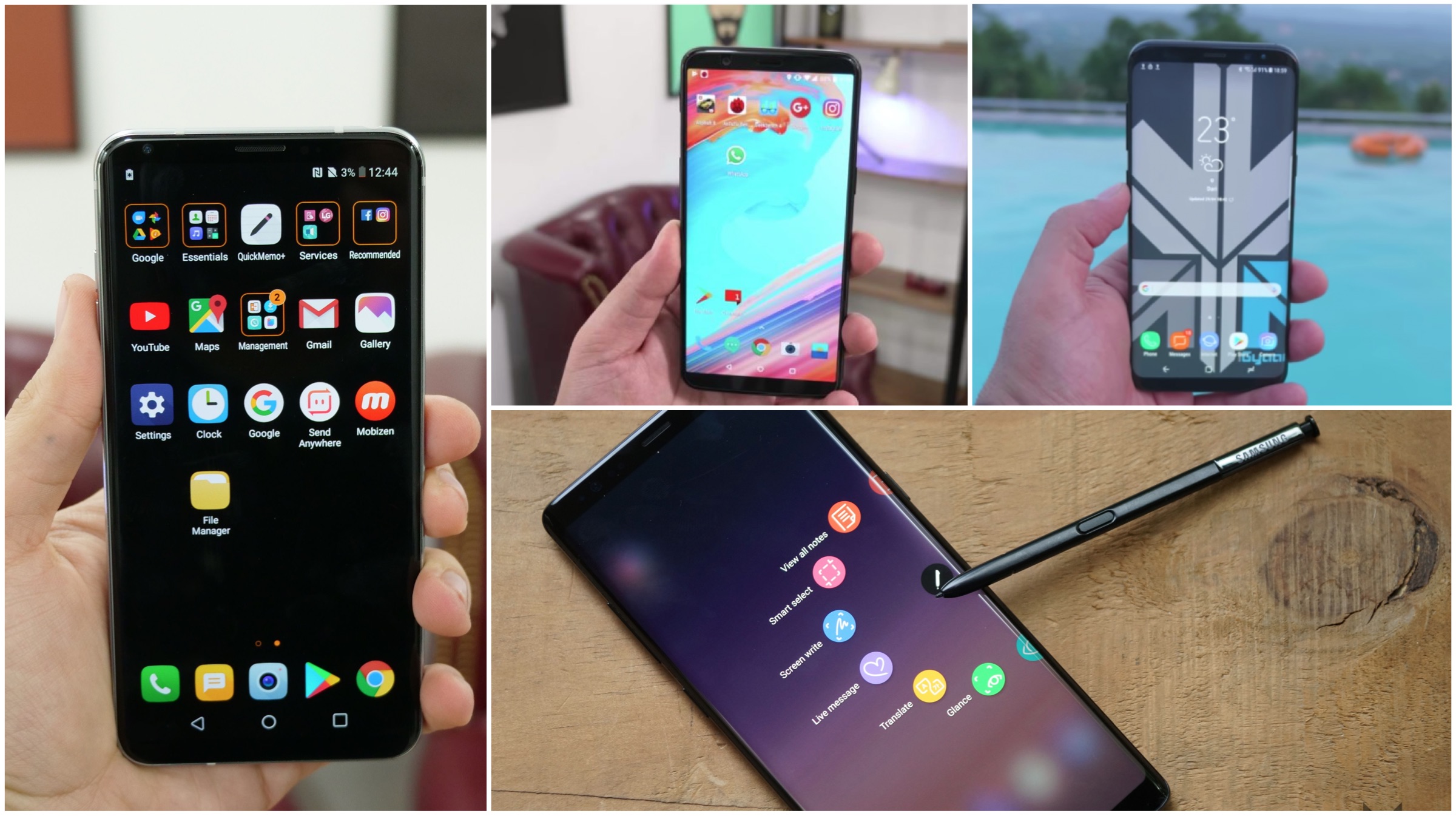
    LG finally launched the LG V30+ in India after globally unveiling it back in August. To many’s surprise, LG competitively priced the LG V30+ at Rs. 44990 and it will go on sale in India via Amazon on the 18th of December. But, as we move closer to the launch of the Samsung Galaxy S9 which will, in all probability feature the new Snapdragon 845, has LG missed a trick and launched the V30+ a little too late?

    let’s peg the LG V30+ against its competition and see which phone comes out on point:

    Specifications LG V30+ OnePlus 5T Samsung Galaxy S8 Samsung Galaxy Note8
    Price Rs. 44990 Rs. 32999 (6GB RAM)
    Rs. 37999 (8GB RAM)
    Rs. 53900 (4GB RAM) Rs. 67900
    Display 6 inch

    POLED display

    6-inch

    AMOLED

    5.8 inch

    Super AMOLED

    6.3inch

    Super AMOLED

    Design Glass front and back
    Metal frame
     Aluminium unibody Glass front and back
    Metal frame
    Glass front and back
    Metal frame
    Resolution 2880 x 1440 px
    537 ppi
    2160 x 1080 px
    401 ppi
    2960×1440 px
    570ppi
    2960×1440 px
    521ppi
    Chipset Qualcomm Snapdragon 835 Qualcomm Snapdragon 835 Exynos 8895 Exynos 8895
    RAM 4GB 6GB/8GB 4GB 6GB
    Storage 128GB, Expandable up to 2TB 64GB/128GB non-expandable 64GB, expandable up to 256GB 64GB, expandable up to 256GB
    Battery 3300 mAh 3300 mAh 3000 mAh 3300 mAh
    Primary Camera 16MP f/1.6 Primary + 13MP f/1.9 wide-angle 16MP f/1.7 + 20MP f/1.7 Dual Pixel 12MP f/1.7 aperture 12MP wide angle lens with an f/1.7 aperture
    12MP telephoto lens with an f/2.4 aperture
    Secondary Camera 5MP f/2.2 aperture 16MP f/2.0 8MP f/1.7 8MP f/1.7
    Other Features HiFi Quad DAC
    Fingerprint Sensor
    Facial and Voice Recognition
    Wireless charging
    Face Unlock
    Fingerprint Sensor
    Fingerprint Sensor
    Iris Scanner
    Wireless Charging
    S Pen
    Iris Scanner
    Wireless Charging

    In terms of specifications, there is very little separating the three phones, with the OnePlus 5T the clear winner if you’re looking for more RAM. The LG V30+ and Galaxy S8 provide the option of expandable storage while the OnePlus 5T runs close to pure Android OS. If you are an audiophile, then the LG V30+ should be your choice considering the presence of the HiFi Quad DAC. The OnePlus 5T loses out in the display department and thanks to a higher ppi count, the Galaxy S8 should have the most vivid display out of the three with the LG V30+ not far behind. If you are a creator and believe that the S Pen can genuinely contribute to the productivity of your day, then the extra cash for the Samsung Galaxy Note8 is justified.

    At the end of the day, it boils down to what features you prefer over the other. If price is your main criteria, then the OnePlus 5T wins by a long shot but, if you can’t compromise on your wide-angle shots, then the Galaxy Note8 and LG V30+ should be the two phones you should consider.

    Watch Our LG V30+ unboxing-

    Watch our full review of the OnePlus 5T

    Watch our Galaxy Note8 Unboxing-

    Watch our full review of the Samsung Galaxy Note8


  • Top Water Resistant Phones In India Right Now

    Top Water Resistant Phones In India Right Now

    A lot of smartphones nowadays boast of an ‘IP’ rating which indicates the phone’s ability to fight off water and dust damage. Here’s what an ‘IP’ rating mean-

    IP- This stands for the International Protection marking, a standard drawn up by the International Electrotechnical Commission (IEC).

    Dust

    6- The first digit stands for its resistance to dust, but also general dirt and sand. For example, the Moto X4 earned a ‘6’ rating for “No ingress of dust; complete protection against contact (dust tight).”

    Water

    The second digit stands for the phone’s resistance to water

    •    0 – No protection.
    •    1 – Dripping water shall have no harmful effect.
    •    2 – Vertically dripping water shall have no harmful effect with enclosure is tilted at 15°.
    •    3 – Water falling as a spray at any angle up to 60° from the vertical.
    •    4 – Water splashing against the enclosure from any direction.
    •    5 – Water projected by a nozzle (6.3mm) against enclosure from any direction.
    •    6 – Water projected in powerful jets (12.5mm nozzle) from any direction.
    •    6K – Powerful water jets with increased pressure.
    •    7 – Immersion, up to 1m depth for up to 30 minutes.
    •    8 – Immersion, 1m or more depth (exact details vary).
    •    9K – Powerful high temperature water jets.

    This feature has become ever so important nowadays as phones are getting more expensive and every user wants the best features for the price he/she pays. Also, phones are the principal mode of photography for a majority of consumer market and having a phone with an IP68 rating always helps. So, let’s take a look at the top phones with an IP68 rating available in India right now:
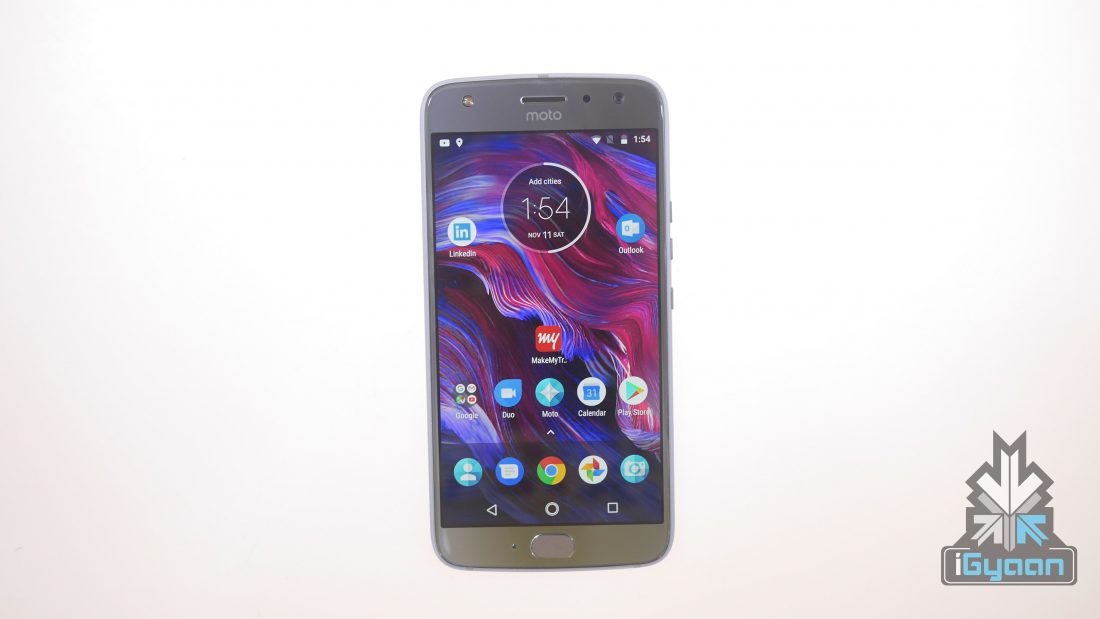
    Moto X4

    The cheapest phone on the list, the Moto X4 starts at a price of Rs 20999 and is the only phone in this price bracket which has an IP68 rating for water and dust resistance.

    The Moto X4 has a 5.2 inch 1920 x 1080 px LTPS IPS LCD display with Corning Gorilla Glass 3 on top for protection.

    The Moto X4 has the Qualcomm Snapdragon 630, 2.2 GHz octa-core processor and Adreno 508 GPU, along with 3GB or 4GB of RAM and 32GB or 64GB of onboard storage which can be expanded up to 2TB via microSD card. The fingerprint sensor is housed inside the home button which also doubles up as a single navigation button. The Moto X4 is powered by a 3000 mAh battery with TurboCharge capabilities.

    The Moto X4 has a dual-camera setup at the back. The main camera is a 12MP sensor with an f/2.0 aperture, and the 8MP secondary camera with an f/2.2 aperture is equipped with a wide-angle lens. The dual-cameras allow users to have depth effect shots, bokeh effect shots, ultra-wide angle shots, and selective focus shots. On the front of the device is a 16MP camera with an f/2.0 aperture and an LED flash. The cameras record 4K videos at 30 FPS.

    Sony Xperia XZ Premium
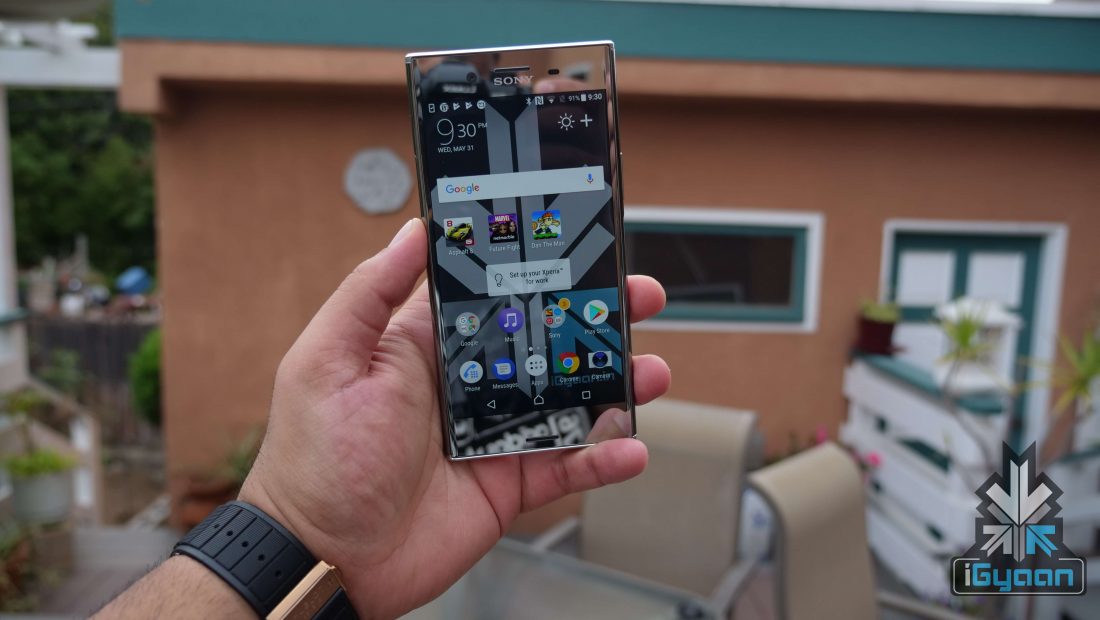
    Priced at Rs 54945, the Sony Xperia XZ Premium became the first phone with a 4K HDR display. The device is also IP68 water and dust resistant.

    The Sony Xperia XZ Premium has a 5.5 inch 4K HDR Display with TRILUMINOS Display for mobile and X-Reality for mobile picture engine. The 4K display comes into play whenever high res content is available like a 4k video or movie.

    Inside is a Qualcomm Snapdragon 835 chipset along with 4 GB of RAM and 64 GB of Storage with microSD support for 256 GB. Running all the hardware is a 3230 mAh battery with Qnovo Adaptive charging and Quick Charge 3.0.

    Sony Xperia XZ Premium has a 19MP Motion Eye camera which has a 1/ 2.3”  Exmor RS for mobile memory stacked sensor with a pixel size of 1.22m and Predictive Hybrid Autofocus.
    The XZ Premium also offers 960 fps Super slow motion video and the camera is equipped with a 25 mm wide G Lens with a F2.0 Aperture.
    The Sony Xperia XZ Premium has SteadyShot 5-axis image stabilization and does 4K recording at 30fps. The front camera is a 13MP 1/ 3.06”  Exmor RS for mobile image sensor with a 22mm Wide-angle lens with an F2.0 aperture. The front too has SteadyShot with 5-axis stabilization.

    LG G6
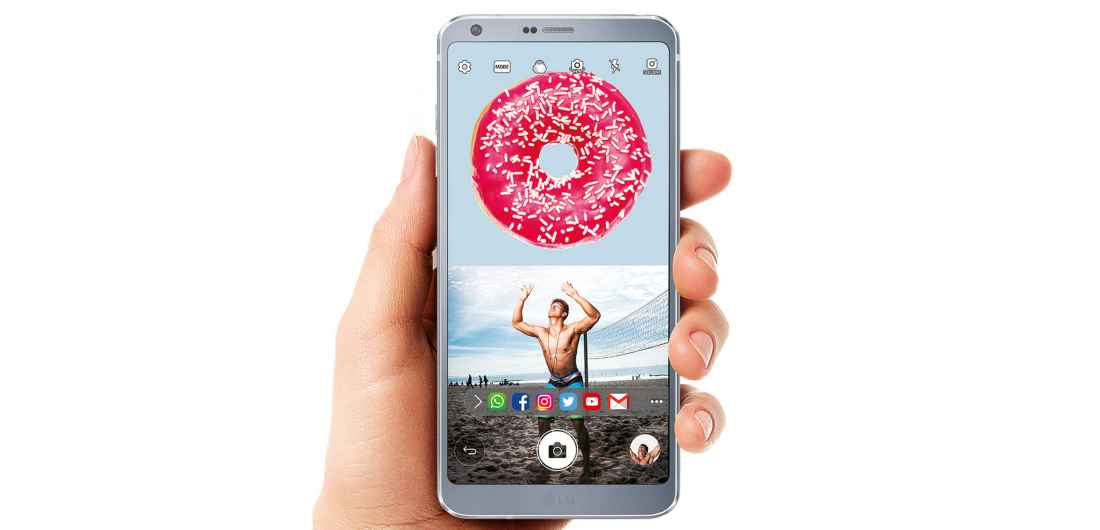
    The LG G6 runs on the Qualcomm Snapdragon 821 chipset with quad-core processor and Adreno 530 GPU along with Android 7.0 Nougat. The phone has a 5.7 inch QHD+ FullVision display with a 2880 x 1440 px resolution and an awkward 18:9 aspect ratio. The LG G6 is available in two variants – one with 4 GB RAM, 32 GB internal storage and the other with 4 GB RAM, 64 GB internal storage. Both the variants have an expandable storage of up to 2 TB, when those card become available.

    The LG G6 has a dual rear camera setup with two 13 MP sensors. One of the sensors supports wide-angle shots and has a 125 degree lens. The other sensor is for regular shots, with OIS 2.0 and 71 degree lens. The front camera is a 5 MP wide angle lens with a 100 degree field of view.

    The LG G6 has a non-removable 3300 mAh Li-ion battery, which supports QuickCharge 3.0, and will work for more than a day according to LG.
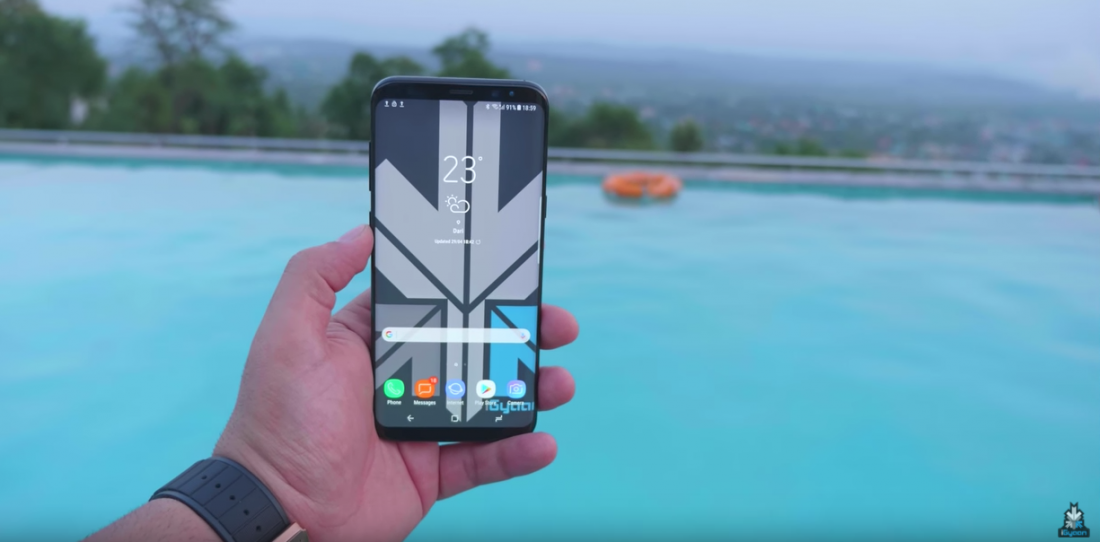
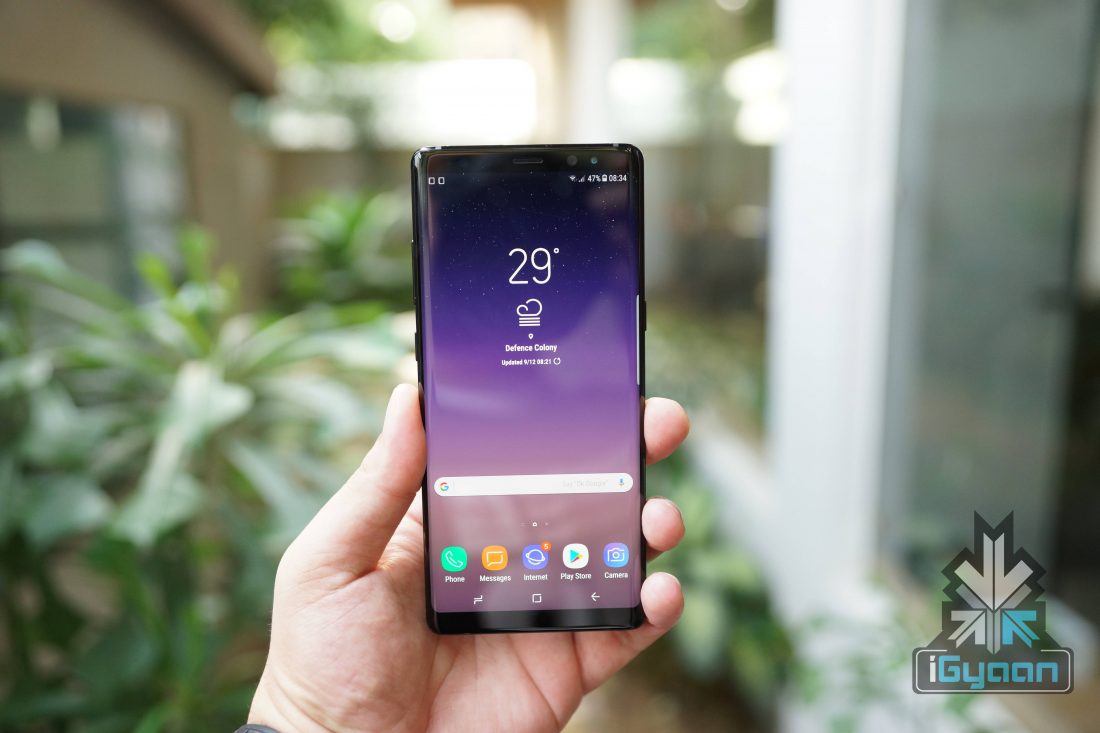
    Samsung Galaxy S8/S8+

    The 2017 flagship phones from Samsung have an IP68 rating as well for water and dust resistance.

    Samsung launched the Galaxy S8 and its bigger sibling, the Galaxy S8+ in April 2017. Apart from the LG G6, there was hardly any mainstream global phone with thin bezels and premium features. Qualcomm made a deal with Samsung and gave the company an exclusive early access to the Snapdragon 835 chipset. This made it possible for Samsung to launch the Galaxy S8 with a 2017 flagship chipset way before any other OEM got their hands on it.

    The display is edge-to-edge with minimal upper and bottom bezels. Both the phones run a new 10 nm chipset, The S8 has an Octa core (2.3GHz Quad + 1.7GHz Quad), 64 bit chipset while the S8+ will have an Octa core (2.35GHz Quad + 1.9GHz Quad), 64 bit chipset.

    Both the Galaxy S8 and Galaxy S8+ have a 4GB RAM (LPDDR4), 64GB (UFS 2.1) storage, the Galaxy S8 has a 5.8” (146.5mm) Quad HD+ 2960×1440 px display with a 570ppi while the S8+ has a 6.2” (158.1mm) Quad HD+ 2960×1440 px display  with a 529ppi density. Both have Samsung’s own super-AMOLED display. For cameras both phones get a main Dual Pixel 12MP OIS (F1.7), Front: 8MP AF (F1.7). While the battery on the Galaxy S8 is 3000 man, the S8plus has a 3500 mAh battery. Both support fast charging and wireless charging as well.

    Samsung Galaxy S8 and Galaxy S8+ does most of the things right. If you have the budget, there aren’t many phones that look as good and perform as well as these two flagship phones from Samsung.

    Buy it here
    Samsung Galaxy Note8

    Both the Galaxy Note8 and the S Pen are IP68 rated for water and dust resistance.

    The Samsung Galaxy Note has a 6.3 inch 2960 x 1440 px 18.5:9 aspect ratio Super AMOLED display with an 83.1% screen-to-body ratio and Corning Gorilla Glass 5 on the front and back of the device.The Galaxy Note 8 runs Android 7.1.2 Nougat and Samsung has promised an update to 8.0 Oreo in the near future. The phone is powered by a non-removable 3,300 mAh battery with QuickCharge 2.0 through the USB Type C port and because of the glass at the back, the phone also supports wireless charging as well.

    Just like the Samsung Galaxy S8 and S8 Plus, the fingerprint sensor sits at the back of the device right next to the dual-cameras.  As is with all Samsung flagship devices, the Galaxy Note8 ships with two different chipsets, the Qualcomm Snapdragon 835, 2.45 GHz octa-core processor with Adreno 540 GPU for USA and China, and the Exynos 8895, 2.3GHz Quad-Core (Custom CPU) + 1.7GHz Quad-Core (Cortex-A53) with Mali-G71 MP20 for the remaining markets.

    The Galaxy Note 8 is the first phone from Samsung to feature dual-cameras with a 12MP dual-camera setup, the primary camera has a wide-angle 12MP lens with an f/1.7 aperture and the secondary camera has a 12MP telephoto lens with an f/2.4 aperture. The telephoto lens enables a 2X lossless optical zoom and has features such as the Bokeh effect, much like the iPhone 7 Plus. The dual-cameras are capable of capturing 4K videos at 30 FPS On the front is an 8MP camera with an f/1.7 aperture and captures 4K videos at 30 FPS.

    The Galaxy Note8 is much more than just a “slightly larger Galaxy S8+.” It surely does what Galaxy S8+ does best, and then does a lot more. The integration of the S Pen in Samsung’s UI and the dual-cameras are worth an upgrade to the Galaxy Note8 and the premium price tag.

    Buy it here
    Apple iPhone X

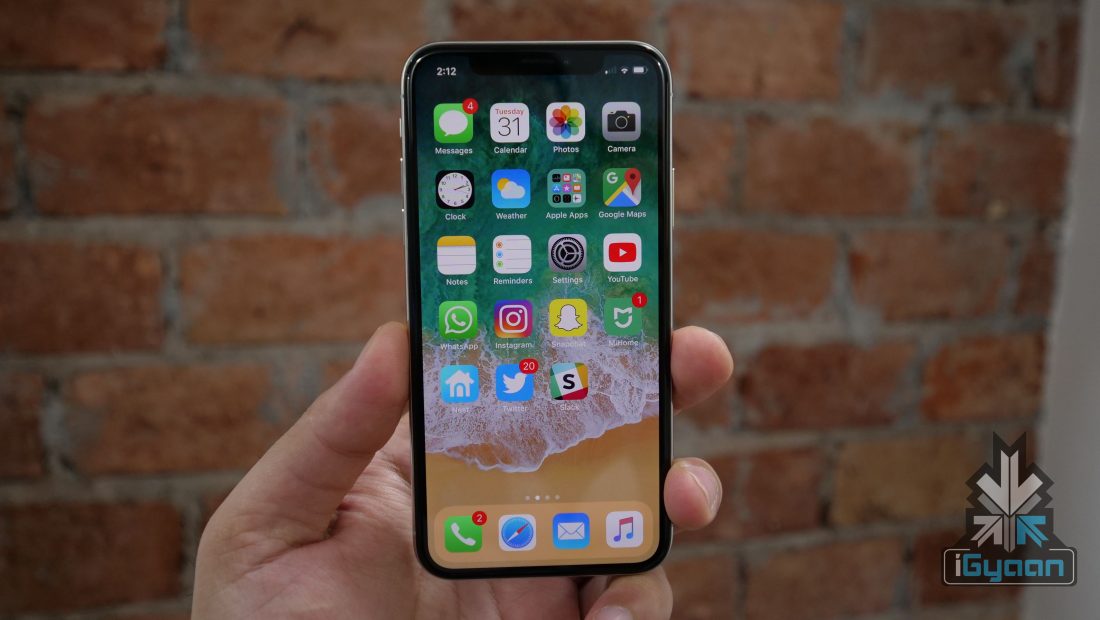
    Although onky IP67 rated, the iPhone X deserves a mention for its superior hardware and software performance.

    The iPhone X has a 5.8-inch 2436 x 1125 px OLED True Tone Super Retina display with minimal bezels around it. The phone runs iOS 11 and is powered by a 3,000 mAh battery which charges through the Apple signature lightning port placed at the bottom of the phone. Under the hood, the smartphone has the Apple A11 Bionic chipset with a neural engine, a hexacore processor, 3GB of RAM and storage options of 64GB, and 256GB. As is with every iPhone, the onboard storage can not be expanded via a microSD card. The small bezels mean there is no physical home button, which is now replaced with gestures for navigation. Siri is activated by pressing the now larger lock/unlock button. The iPhone X is also IP67 certified for water and dust resistance.

    The iPhone X has dual 12-megapixel rear cameras, and it’s equipped with dual optical image stabilization. The sensors are both larger and faster, according to Apple, and the main camera is equipped with a wide angle lens and has an f/1.8 aperture while the secondary telephoto lens has an f/2.4 aperture. In between the two cameras is a quad-LED True Tone flash. Both the front and back cameras have the portrait mode. The rear cameras have the portrait lighting feature, just like the iPhone 8 and iPhone 8 Plus.

    The bottom line is, the iPhone X has all the ingredients of being the best iPhone yet. The design, the new cameras and the AR integration makes the iPhone X even more future-proof than it predecessors. However, the price tag of the iPhone X can make you question how much you love the iPhone and whether its enough to shell out over a thousand dollars on it.

    Buy it here
  • Apple iPhone X Vs Samsung Galaxy S8 Feat. Samsung Galaxy Note8

    Apple iPhone X Vs Samsung Galaxy S8 Feat. Samsung Galaxy Note8

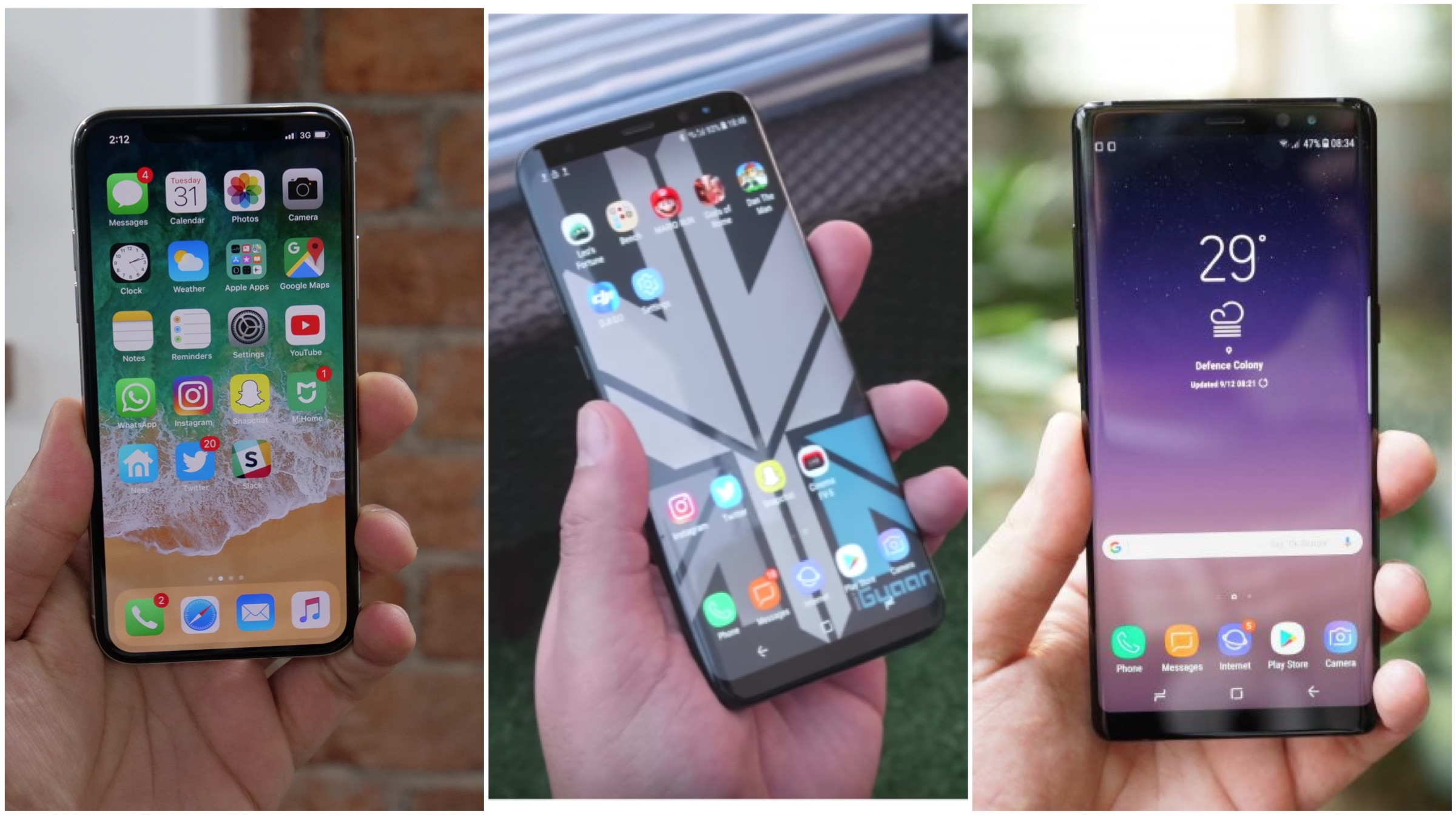
    2017 saw the rise of ‘bezel-less” smartphones which was ignited by the 2016 Xiaomi Mi Mix. In March 2017, the Samsung Galaxy S8 with a zero side bezels and thin forehead and chin was launched. The trickle down effect was noticeable as more and more smartphones came out with thin bezels. The Samsung Galaxy Note8 was launched in August as the successor to the ill-fated Galaxy Note7 with a design similar to the Galaxy S8 albeit, a more square-ish build which is iconic to the ‘Note’ series. After months of speculations and leaks, Apple launched the highly anticipated iPhone X on the 12th of September.

    Display

    All the three smartphones have excellent displays with great clarity and viewing angles. All three phones have an OLED panel manufactured by Samsung and while the 5.8 inch inch display on the iPhone X has a resolution of 2436 x 1125 px, the Galaxy S8’s 5.8 inch and Galaxy Note8’s 6.3 inch display have a resolution of 2960 x 1440 px.

    Performance

    Every flagship smartphone in this day and age has to be fast. You can’t pay over Rs 60,000 for a phone and experience lags and jitteriness just a few days into using it. For a phone launched back in March, the Samsung Galaxy S8 holds up very well. Both the Galaxy S8 and the Galaxy Note8 have the Exynos 8895 chipset, and while the Galaxy S8 has 4GB of RAM, the Galaxy Note8 has 6GB of RAM. The Apple iPhone X on the other hand has the A11 Bionic chipset with a neural engine and 3GB of RAM. All three phones are fast and day-to-day usage as well as heavy gaming is a breeze.

    Camera

    The Apple iPhone X and the Samsung Galaxy Note8 have dual camera setup at the back while the Samsung Galaxy S8 has a single camera. Despite a single camera, the Galaxy S8 is still one of the best camera smartphones out there. However, the flexibility of a dual camera setup trumps the single one on the Galaxy S8 and with dual OIS, the iPhone X and the Galaxy Note8 perform better than the Galaxy S8. If you are a content creator then look no further than the iPhone X as it records 4K videos at 60 fps, something that no other smartphone does right now.

    Watch our full comparison here:

  • Portrait Mode May Be Coming To Samsung Galaxy S8 With A Future Update

    Portrait Mode May Be Coming To Samsung Galaxy S8 With A Future Update

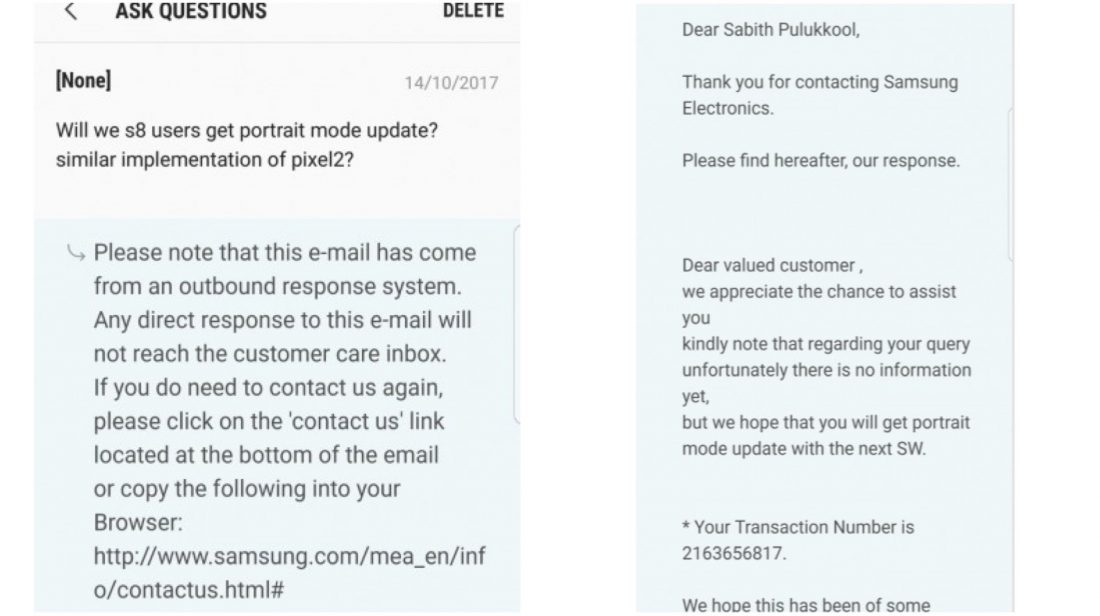
    The portrait mode on smartphones is the new rage. Every new flagship phone is almost entirely judged by how good the camera is and how good the portrait mode is nowadays. Smartphone makers went the dual-camera route in order to create that bokeh effect but, Google showed that great software can do just the right amount of work in a camera with the Google Pixel 2 and Pixel 2 XL. Now, there are reports that Samsung wants to keep its flagship S8 and S8+ relevant, and a ‘portrait mode’ might be added with future updates.
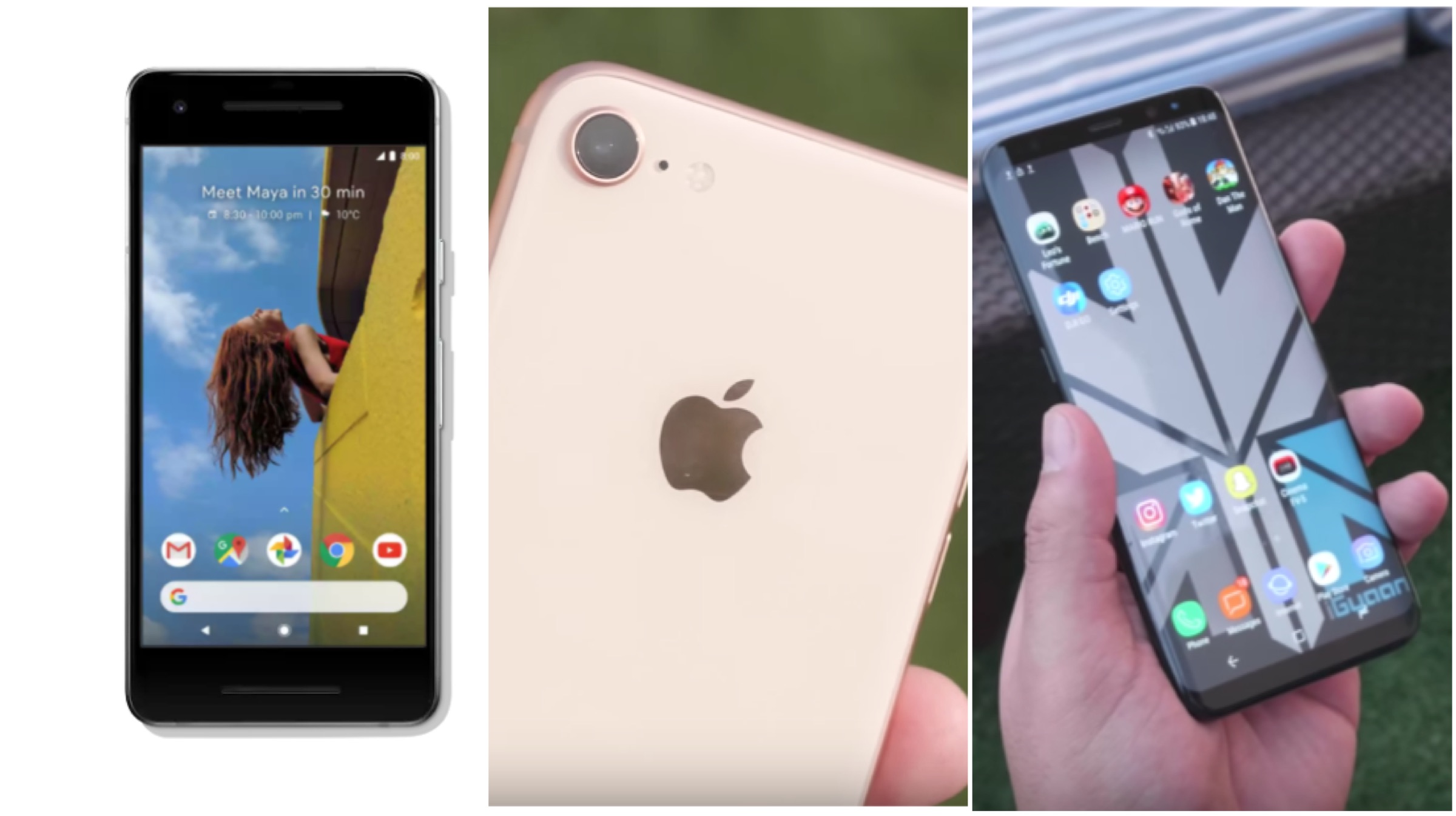
    When Samsung Galaxy S8 was launched in early 2017, the dual-camera craze was just starring to pick up and it as understandable why Samsung stuck to a single camera setup on it flagship smartphone. A customer inquired if such a feature is inbound and the response from Samsung Electronics support read: “there is no information yet, but we hope that you will get portrait mode update with the next SW”. The usual support responses would have only contained the first part, but this one not only suggested that the feature is a possibility, but also gave hope that it’s just around the corner.
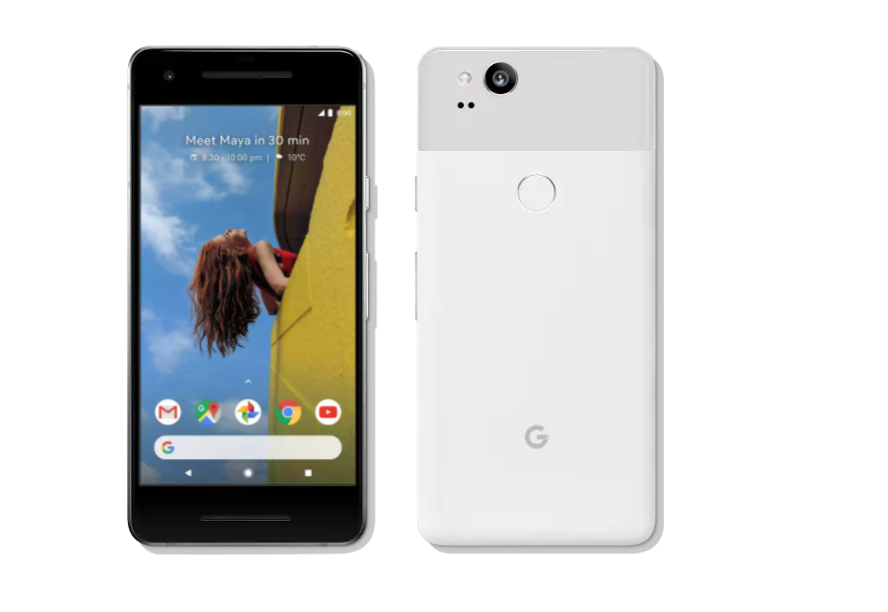
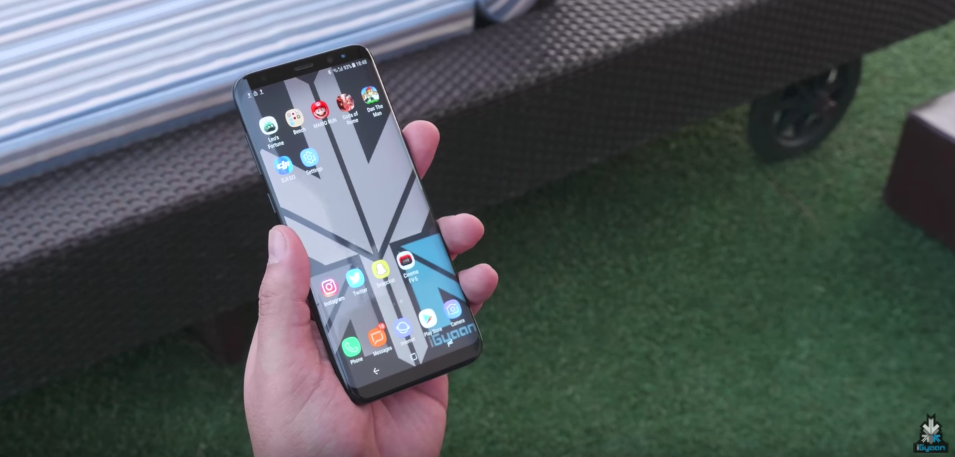
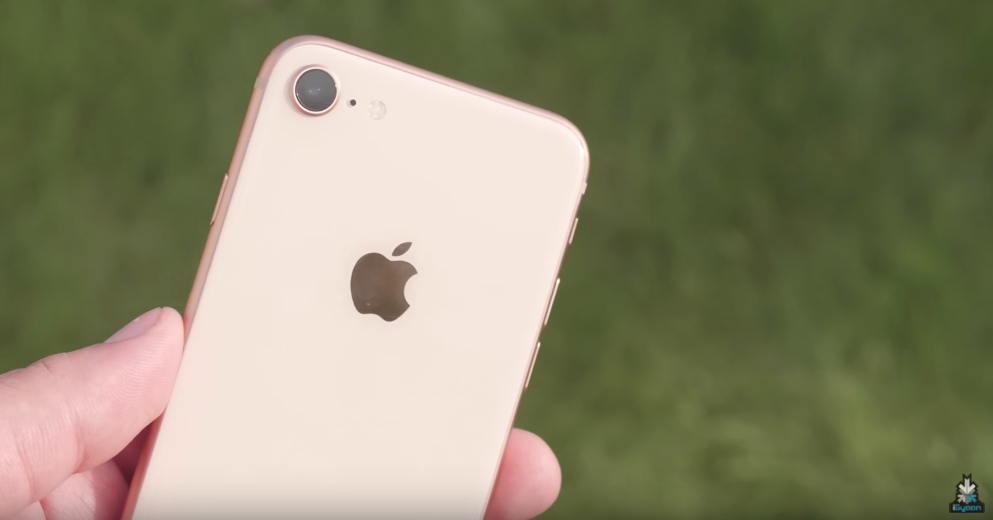
    Samsung Galaxy S8 and S8+ lack a telephoto lens but, can achieve this feature with software, just like the Pixel 2 smartphones. There are no details as to when the software update will come but, since the Android 8.0 Oreo update is around the corner, Samsung might just add this feature in the next big software update.


  • Google Pixel 2 Vs The Competition

    Google Pixel 2 Vs The Competition

    On October 4th, Google announced the next iteration of its Android smartphones, the Pixel 2 and Pixel 2 XL. Smaller of the two siblings, the Pixel 2 has a tight integration with Google Assistant. With the Google Pixel 2 arriving in India on November 1st, let’s take a look at how it stacks up against the competition.

    Google Pixel 2

    The Google Pixel 2 has a 5 inch 1920 x 1080 px OLED display with Corning Gorilla Glass 5 on top for protection. Powering the device is a 2700 mAh battery and it runs Android 8.0 Oreo out of the box. As is with with every Google phone, the new Pixel 2 will be first in line to receive Android P update in 2018. Under the hood, the device has typical 2017 flagship specifications. It has the Qualcomm Snapdragon 835 chipset, 2.4GHz octa core processor, Adreno 540, 4GB RAM and 64GB/128GB onboard storage. The fingerprint sensor sits at the back of the device but, this time around the “glass window” is smaller. The two-tone colour of the phone is also reminiscent of the original Pixel from 2016. Google claims that the fingerprint sensor is the fastest on a smartphone. The Pixel 2 is water resistant as well.

    On the camera front, Google has decided to go for a single camera setup similar to last year’s Pixel phones. The rear-facing camera is a 12.2 MP sensor with an f/1.8 aperture and 1.4 micron pixel size. On the front is an 8MP camera with an f/2.4 aperture. Google has introduced new features in the camera department like the addition of AR. The Pixel 2 XL uses both OIS and EIS simultaneously for better clarity and stable images and videos. The portrait mode works on both rear and font facing cameras, just like the new iPhones.

    Samsung Galaxy S8

    The Samsung Galaxy S8 has a 5.8” 2960×1440 px Super AMOLED display with a 570ppi. Powering the device is a 3000 mAh battery and it runs Android 7.1 Nougat out of the box. Under the hood, both the smartphone has Exynos 8895 chipset, 64GB onboard storage options which is expandable up to 256GB via microSD card and 4GB RAM. The Galaxy S8 is also water and dust resistant. The Galaxy S8 has a glass  black which means it is wireless charging compatible. The smartphone has an awkwardly placed fingerprint sensor right next to the camera.

    For cameras, both phones get a main Dual Pixel 12MP OIS (F1.7), Front: 8MP AF (F1.7). While the battery on the Galaxy S8 is 3000 man, the S8plus has a 3500 mAh battery. Both support fast charging and wireless charging as well.

    Apple iPhone 8

    The Apple iPhone 8 has a 4.7 inch 1334 x 750 px IPS LCD True Tone display. Under the hood, the iPhone 8 has the A11 Bionic chipset with a hexacore processor and the new Apple GPU. Because of the glass back, the iPhone 8 is now wireless charging capable. The iPhone 8 runs iOS 11 and the battery of the iPhone 8 is identical to the iPhone 7. The iPhone 8 is available in two storage variants, 64GB and 256GB.

    On the camera front, there’s a 12-megapixel sensor on the iPhone 8 that is larger, faster and has optical image stabilisation. The iPhone 8 Plus also has new 12 MP sensors. The main camera is equipped with a wide angle lens and has an f/1.8 aperture while the secondary telephoto lens has an f/2.8 aperture. The dual cameras on the iPhone 8 Plus also have a new “Portrait Lighting” feature to adjust the lighting for portrait shots.


    Specifications Google Pixel 2 Samsung Galaxy S8 Apple iPhone 8
    Price Rs 61000 for 64GB variant Rs 55900

    Rs 59,999 for 64GB variant

    Display size and type 5 inch OLED 5.8 inch Super AMOLED 4.7 inch IPS LCD True Tone Display
    Display resolution 1920 x 1080 px 2960 x 1440 px 1334 x 750 px
    Dimensions 145.7 x 69.7 x 7.8 mm 148.9 x 68.1 x 8.0 mm 138.4 x 67.3 x 7.3 mm
    Weight 143 grams 155 grams 148 grams
    Chipset Qualcomm Snapdragon 835 Exynos 8895 A11 Bionic Chipset
    Processor 2.4GHz
    8x Qualcomm Kryo 280
    Octa core (2.3GHz Quad + 1.7GHz Quad), 64 bit, 10 nm process Hexacore processor
    RAM 4GB 4GB 3GB
    Storage 64GB

    128GB

    64GB 64GB

    256GB

    Storage Expandability No Yes

    Up to 256GB

    No
    Primary Camera 12.2MP with an f/1.8 aperture

    Dual pixel technology

    Dual Pixel 12MP with an f/1.7 aperture 12MP with an f/1.8 aperture
    Primary Camera Features Simultaneous OIS and EIS

    Portrait mode

    OIS and EIS

    PDAF

    OIS

    Six element lens

    Secondary Camera 8MP with an f/2.4 aperture

    Portrait mode

    8MP AF (F1.7) 7MP camera
    f/2.2 aperture
    Colours White, Blue, Black Midnight Black, Maple Gold, Orchid Grey Gold, Silver, Space Gray
  • Bixby Voice Now Available In India

    Bixby Voice Now Available In India

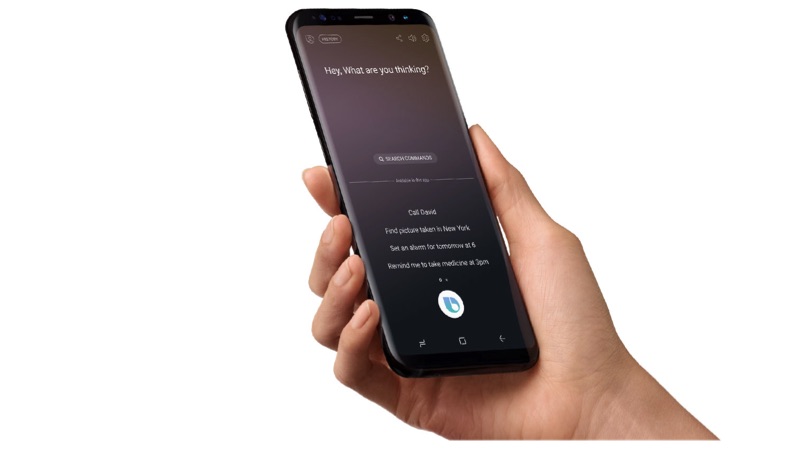
    It is fair to say that Samsung has had a great 2017 when it comes to its flagship smartphones. The Samsung Galaxy S8 and S8+ released earlier in 2017 and the Samsung Galaxy Note8 broke pre-order records in the United States and South Korea. In India, the Galaxy S8, S8+ and the Galaxy Note8 all released with Bixby but, without Bixby Voice. Samsung, however, during the India launch of the Galaxy Note8 announced that Bixby Voice for India will start rolling out from September 22.

    For all the software and hardware prowess that the Galaxy S8 and Galaxy Note8 devices possess, one thing that still annoys consumers is a physical button on the left hand side of the phone, the Bixby button. When Samsung introduced Bixby along with the Galaxy S8 and Galaxy S8+, there was a general consensus of it being exactly like Google Assistant and dedicating a hardware button to the AI assistant was Samsung’s push to replace Google Assistant.

    Samsung has said that it has optimised Bixby for India in away that it will understand different Indian accents. This means that your Galaxy flagship phone will respond to you regardless of which region of the country you are from.

    At Samsung, we listen to our consumers and bring in meaningful innovations that help make their lives better. With Bixby, the phone adapts to you and not the other way around. It’s a smarter way to use your phone and get more done. Keeping in mind the diversity in Indian accents and our commitment to ‘Make for India’, Bixby has been optimised to understand Indian accents.

    Similar to other AI voice assistants like Google Assistant, Siri, and Amazon Alexa, Bixby allows you to verbally communicate with your phone and perform tasks such as googling something, open apps or even make calls or send text messages. You can even point your phone to a certain object and Bixby will be pull up links to buy that product.


iGyaan Network
Privacy Overview

This website uses cookies so that we can provide you with the best user experience possible. Cookie information is stored in your browser and performs functions such as recognising you when you return to our website and helping our team to understand which sections of the website you find most interesting and useful.