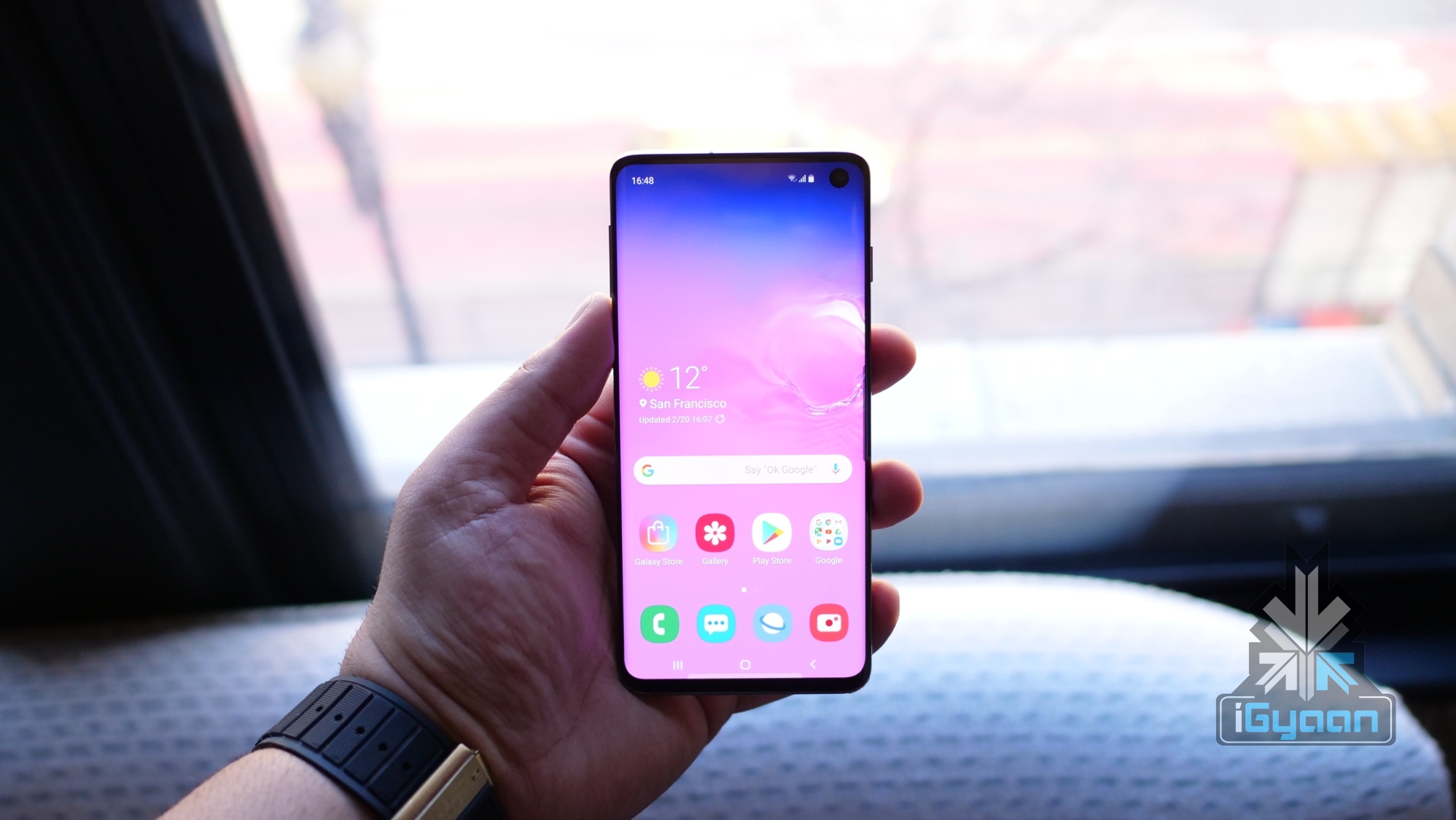
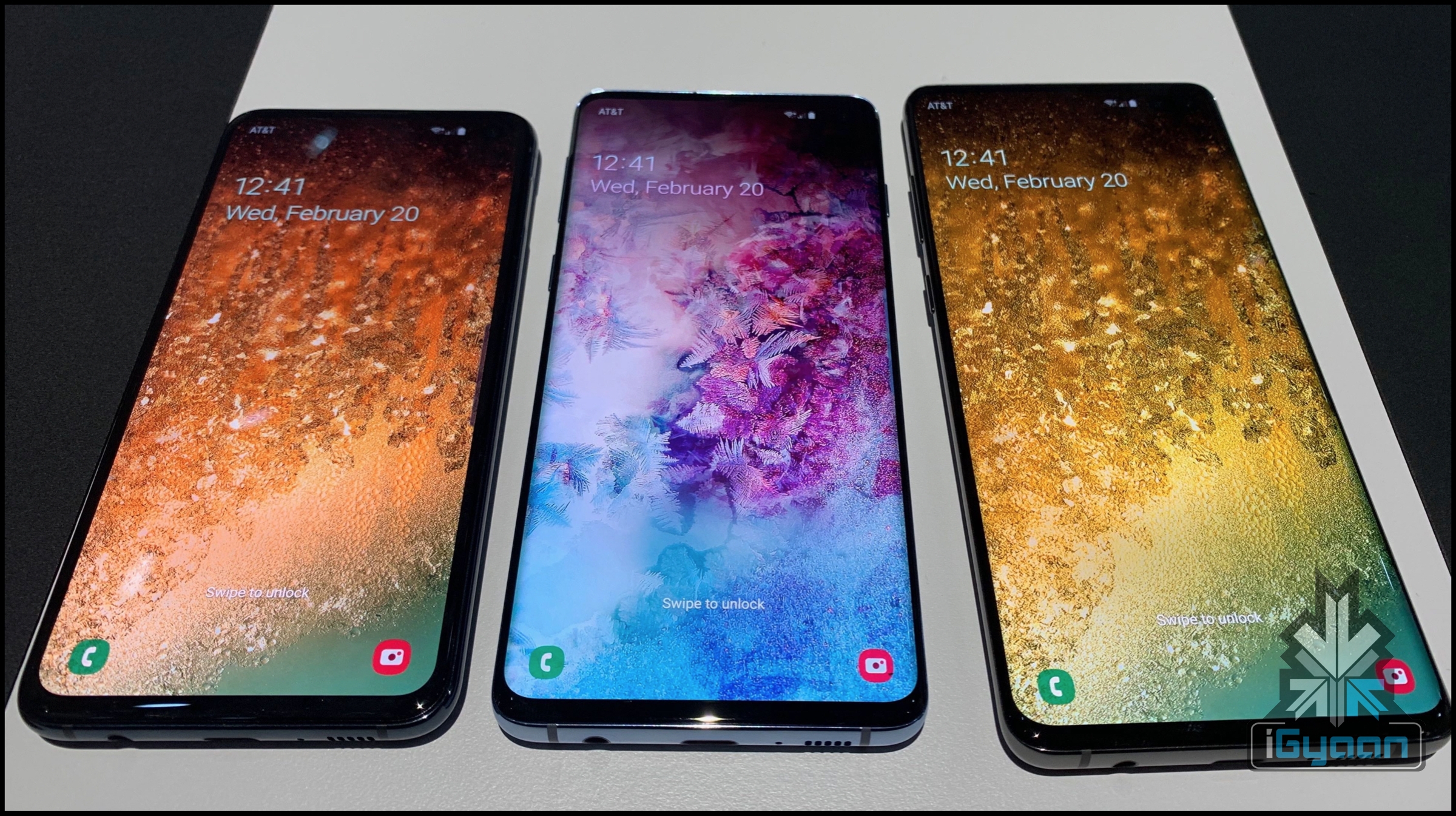
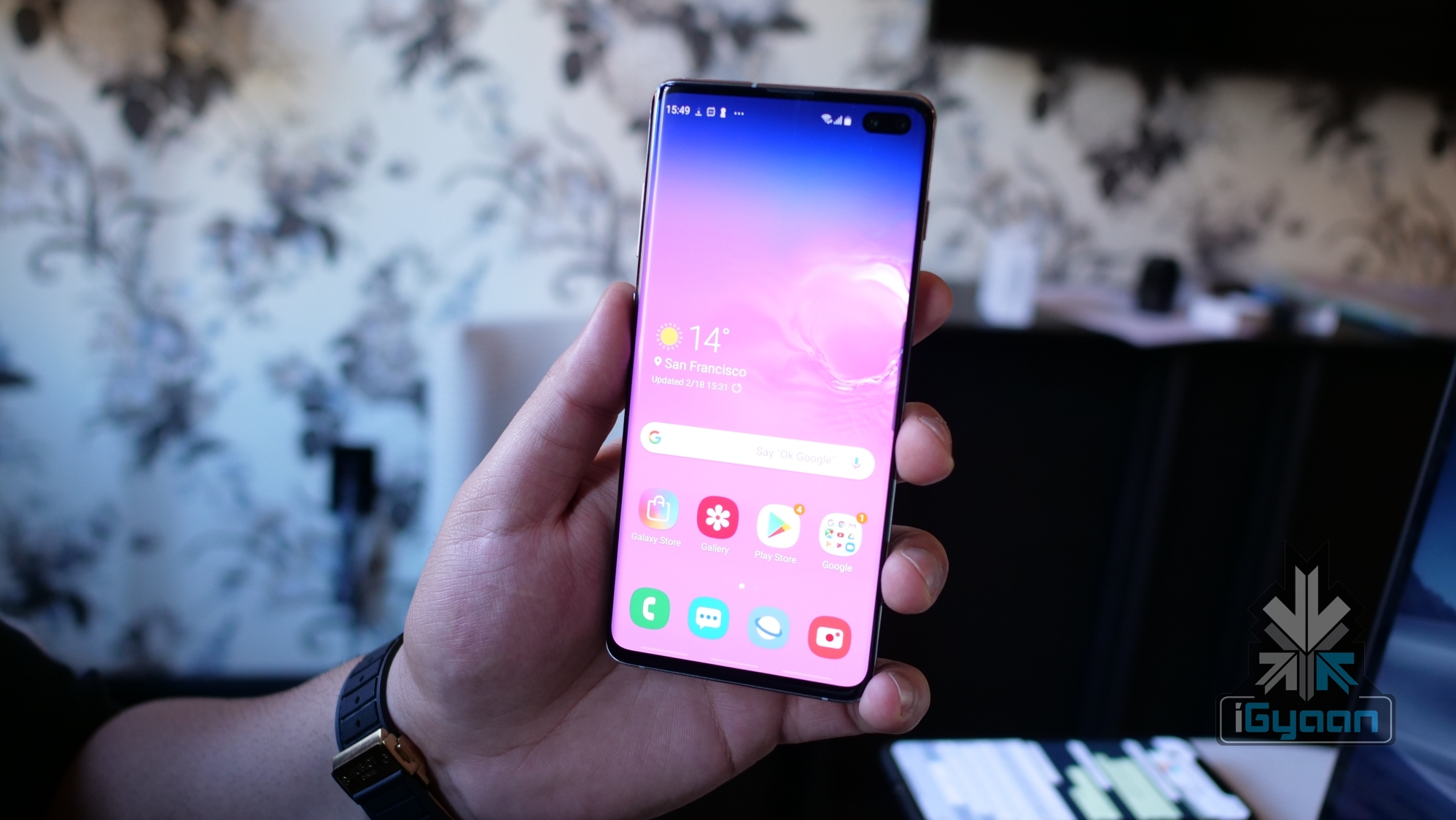
Samsung launched the Galaxy S10 series of smartphones at the Galaxy Unpacked event on February 20. The devices that were launched in the lineup include the Galaxy S10e, Galaxy S10, Galaxy S10+ and the Galaxy S10 5G. All the devices were marked by a striking similarity, their displays. While the display sizes are different, all the smartphones have a Dynamic AMOLED display with support for HDR10+ content. DisplayMate, a noted display calibration and testing company has ranked the Samsung Galaxy S10 excellent for its display.
Who Is DisplayMate?
DisplayMate is a well-known display benchmarking company that tests, evaluates and compares all types of displays, like monitors, projectors, mobile displays etc. It also offers professional display calibration software for consumers. The company has been in the limelight for the last few years when it started testing and ranking mobile displays. It is often considered as an industry standard in display testing.
Samsung Galaxy S10 Display
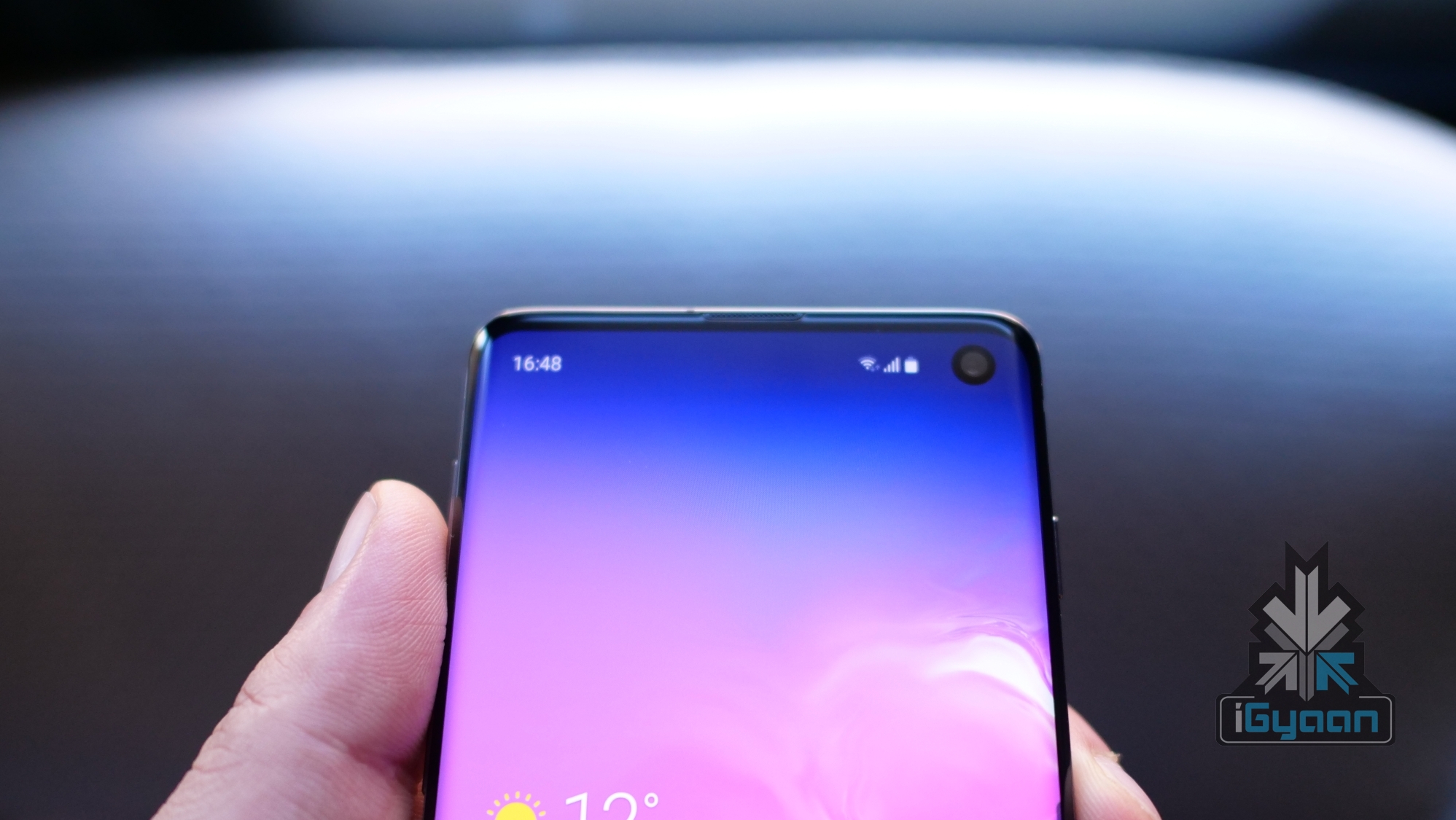
In the Galaxy S10, Samsung has used an Infinity-O, 6.1-inch Dynamic AMOLED display with a resolution of 3040 x 1440 px. It has an aspect ratio of 19:9 and a pixel density of 550 ppi. The display on the Samsung Galaxy S10 is considered better than the one on its elder siblings, the Galaxy S10+ and the Galaxy S10 5G; due to its higher pixel density. One highlighting feature of the display is its illumination levels which can reach 1200 nits of brightness.
DisplayMate in their testing rated the display on the device as Excellent and gave it an A+ rating. This is in part due to its colour accuracy which the company claims is ‘indistinguishable from perfect’. According to DisplayMate, the display also has a very high image contrast accuracy and minimal colour and white shifting. Notably, Samsung has been time and again appreciated for making praiseworthy displays for smartphones and is a big name in the monitor and the TV business. The company also supplies AMOLED displays for major smartphone OEMs including Xiaomi and OnePlus.
Samsung announced the latest entrant in the Galaxy A series, the Galaxy A10, Galaxy A30 and Galaxy A50 on February 28 in India. There were reports about a possible Galaxy A40 and Galaxy A90 in the works for some time too. Fresh leaks have surfaced revealing possibly another device in the ever-expanding range of devices. The leak claims the device is the upcoming Galaxy A60 and unveils key specifications of the smartphone.
Samsung Galaxy A60
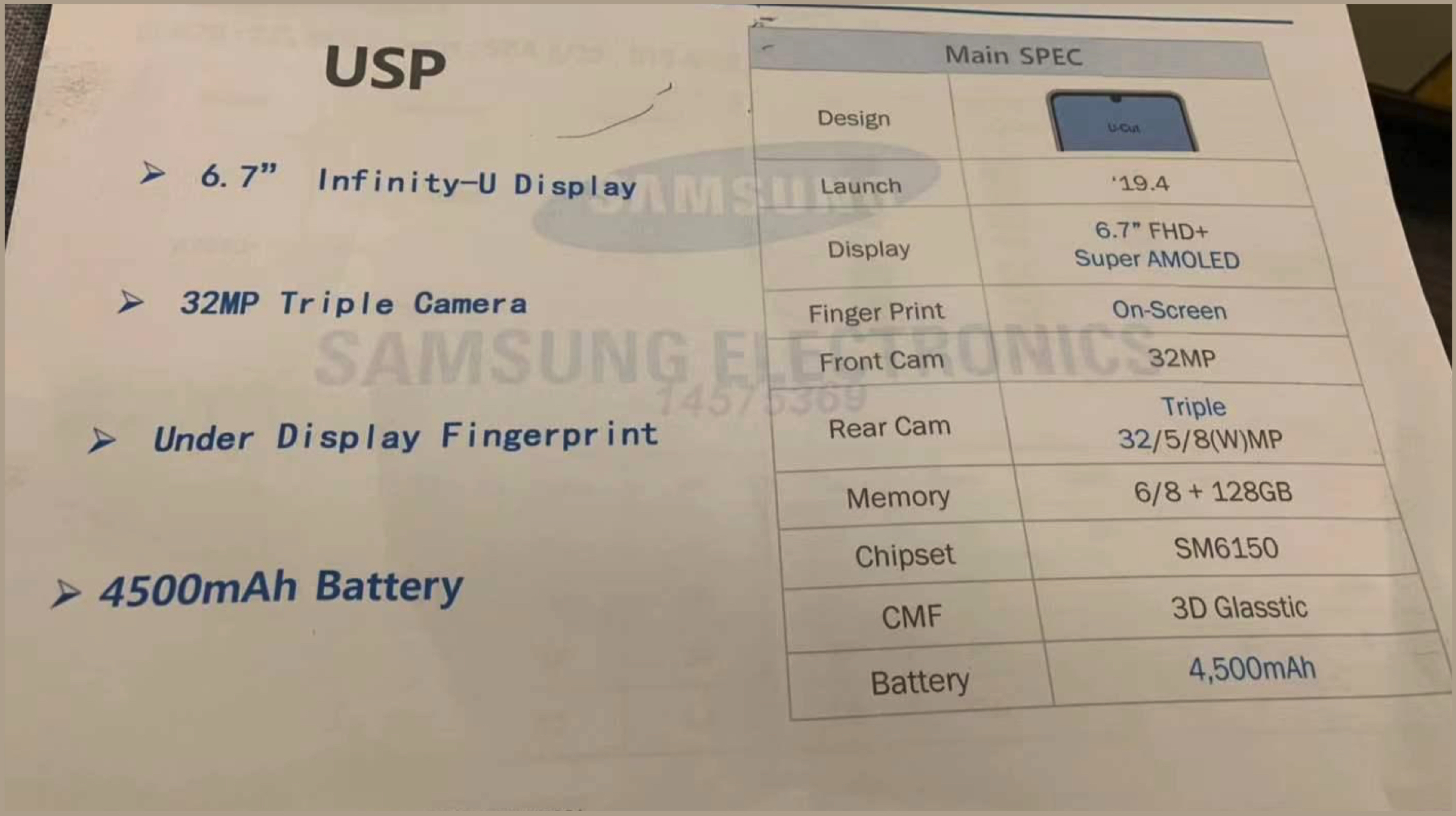
As the name suggests, the Samsung Galaxy A60 will be the elder sibling to the Galaxy A50; and is expected to carry major design and features from the device, albeit with a few upgrades. The leak suggests the smartphone will have the same ‘3D Glasstic’ back which will provide it with a modern look. Its display will be a massive 6.7 inch Super AMOLED one with an Infinity-U notch on the top and a resolution of 2340 x 1080 px. Like the Galaxy A50, there will be an in-display fingerprint scanner with support for face unlock technology.
The leak insinuates that the Galaxy A60 may debut with an all-new SoC, the Qualcomm Snapdragon 6150; which has been reported to be manufactured using 11nm fabrication process. The chipset may sport an Octa-core CPU and an unannounced Adreno GPU. Interestingly, Qualcomm uses Samsung’s architecture process to make 11nm processors and manufactures SoCs like the Snapdragon 675. It is therefore expected that the company will produce the aforementioned chipset for Qualcomm and debut the Galaxy A60 with it.
In terms of optics, the leak reveals Galaxy A60 will feature a triple rear camera setup comprising of a 32MP sensor; combined with an 8MP ultra-wide angle sensor and a 5MP depth sensor. For selfies, the smartphone will have a 32MP camera housed in the notch on top of the display. The device will be powered by a 4500mAh battery and is likely to support fast charging via the USB Type-C port. For memory and storage, the Galaxy A60 will be available in the following variants:
The leaks also reveal when the Samsung Galaxy A60 will launch. The smartphone will be unveiled in the month of April. Unfortunately, no details about the pricing are known yet, but early estimates suggest that the device will be priced at Rs 25,999 for the base model and Rs 28,999 for the version with 8GB RAM and 128GB of internal storage.
Samsung announced the newest devices of the Galaxy A series, the Galaxy A10, Galaxy A30 and the Galaxy A50 at an event on February 28. Fresh reports and leaks surfaced which claimed the existence of a new variant in the lineup. This device was purported to be the Galaxy A40 because of an official support page which went live on Samsung’s German website a few days ago. Unfortunately, many details about the device were unknown at the time including the price. Latest reports claim that the launch of the smartphone is imminent in Europe.
Samsung Galaxy A40
Samsung Galaxy A30
As the name suggests, the Samsung Galaxy A40 will be a mid-range smartphone from the company which will sit between the Galaxy A30 and the Galaxy A50. It is expected that these devices being a member of the same lineup, will share most of their design traits. Like the Galaxy A30, the Galaxy A40 is expected to feature a glossy polycarbonate back which will be called a ‘Glasstic’ design. The display of the device is expected to be an Infinity-U, 6.4 inches Super AMOLED panel with a resolution of 2340 x 1080 px. Noteworthy, this will be the same display as the ones found in its siblings.
Samsung Galaxy A30
Under the hood, the Galaxy A40 is expected to run on the Exynos 7904 which is manufactured using 14nm fabrication process. The chipset has an Octa-core CPU and a Mali G71 GPU. For memory and storage, the smartphone will feature 4GB of RAM and 64GB of Internal Storage. The smartphone is expected to sport better optics on the rear than the Galaxy M30. The front camera is expected to be a 16MP f/2.0 sensor housed in the notch on top of the display.
Like the Galaxy A30 and Galaxy A50, the Galaxy A40 is also expected to be powered by a 4000mAh battery with 15W fast charging, support Bluetooth 5.0, and run on the latest OneUI on top of Android 9 Pie. The smartphone will reportedly cost €249 in Europe and may arrive in India in the coming weeks at an expected price of Rs 17,999.
Samsung has had a rough couple of years. Post the recall of the Galaxy Note 7, Samsung laid low and didn’t advertise their devices much. A strategy which may have been well thought of. However, it had drastic implications on the brand’s sales. Samsung continued to sell its flagship phones like the Galaxy S8 and S8 Plus and even the Galaxy Note 8 was well received. What took a hit was the sale of budget devices, which is where the Galaxy M30 fits in.
The fragmentation within Samsung’s own lineup of products also didn’t help the company push numbers. Between the Galaxy J series, the On series and many others they experimented with, Samsung was losing ground fast to their Chinese counterparts.
The Galaxy M series is Samsung trying to understand the market. A complex economy driven by specs and not durability or after sale service. A market that is more prone to price cuts and discounts than any other. And a consumer who frequently changes his/her phone simply because a new model is available.
Has Samsung finally cracked the market with the M series and namely the Galaxy M30? Let’s find out in this Review.
Build Quality and Design
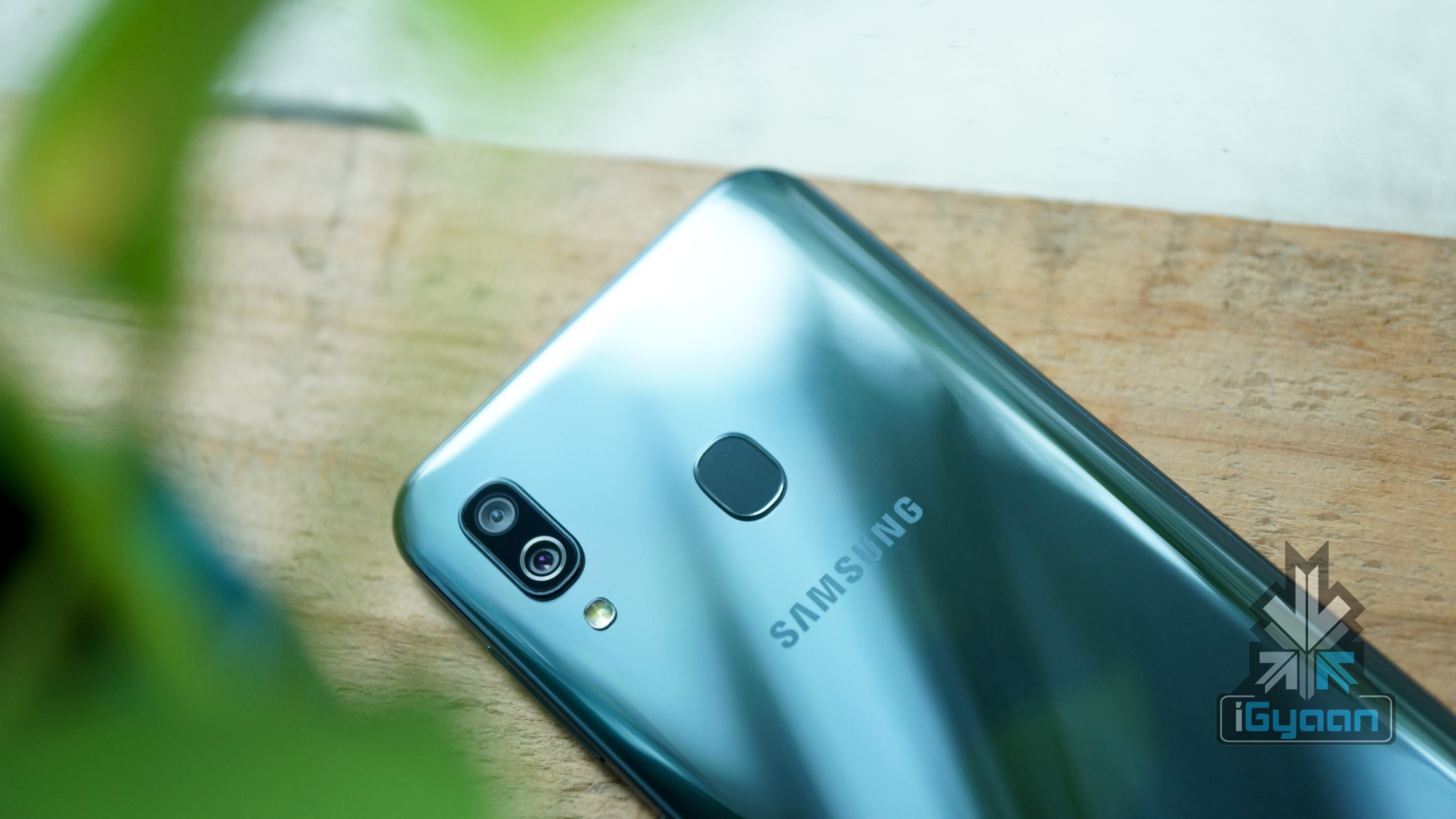
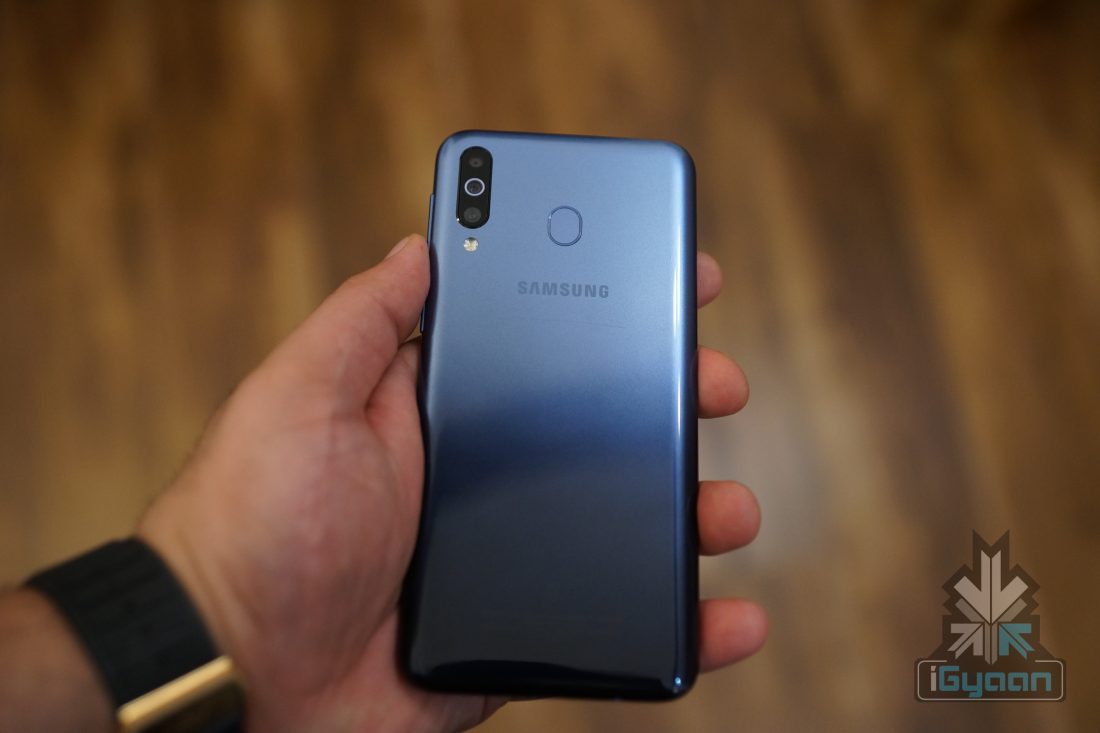
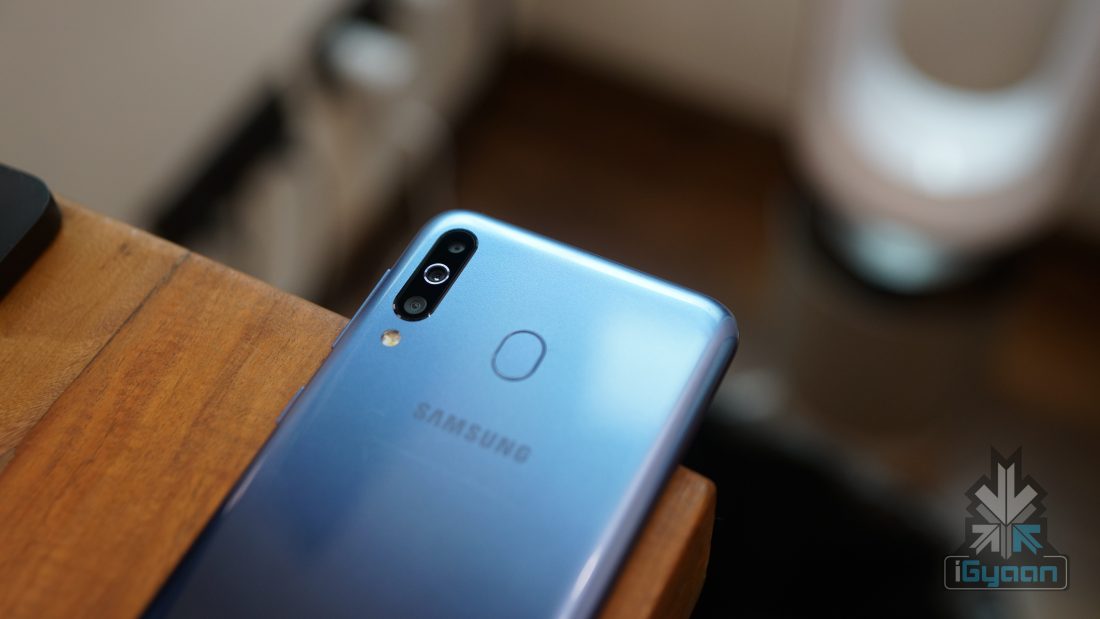
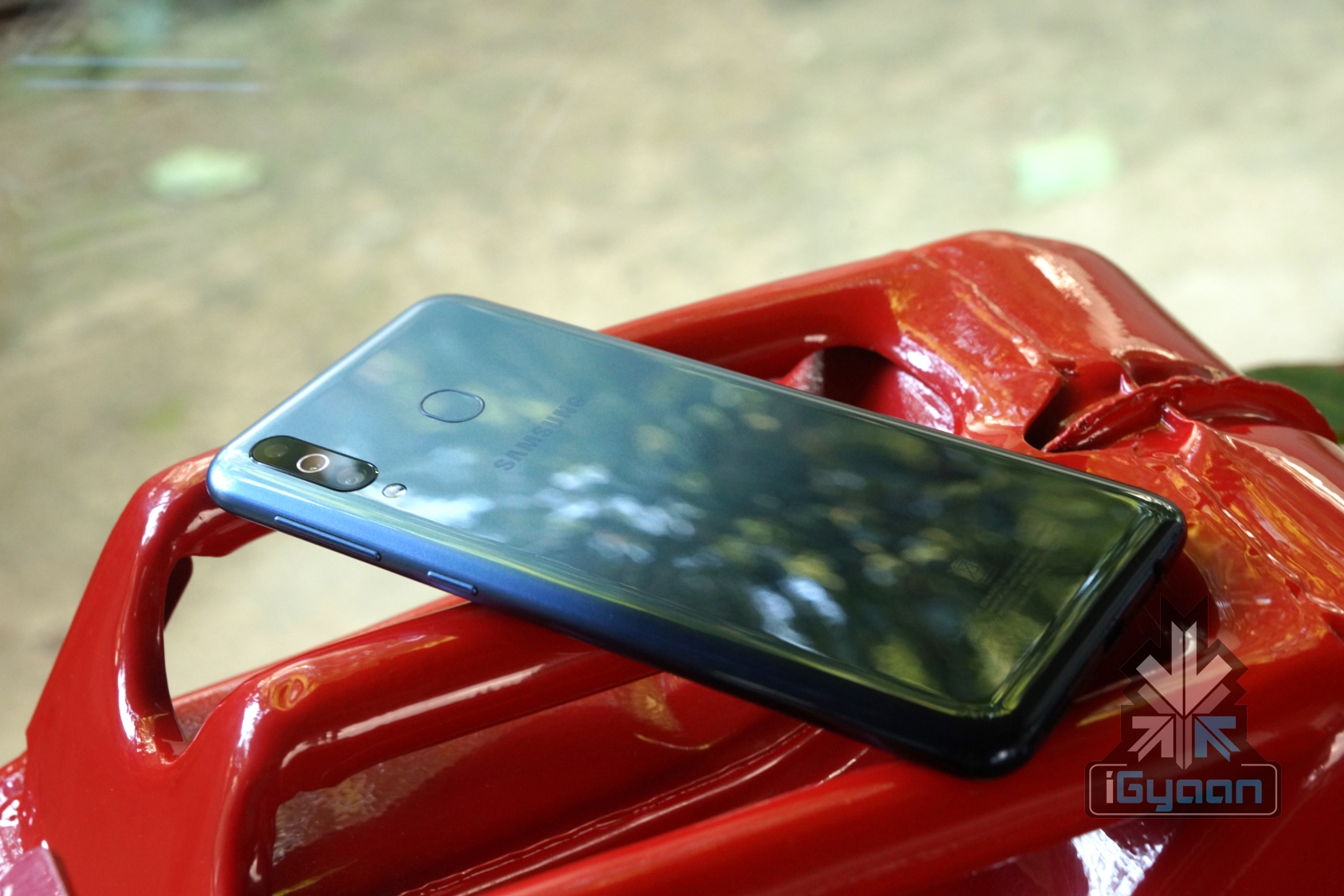
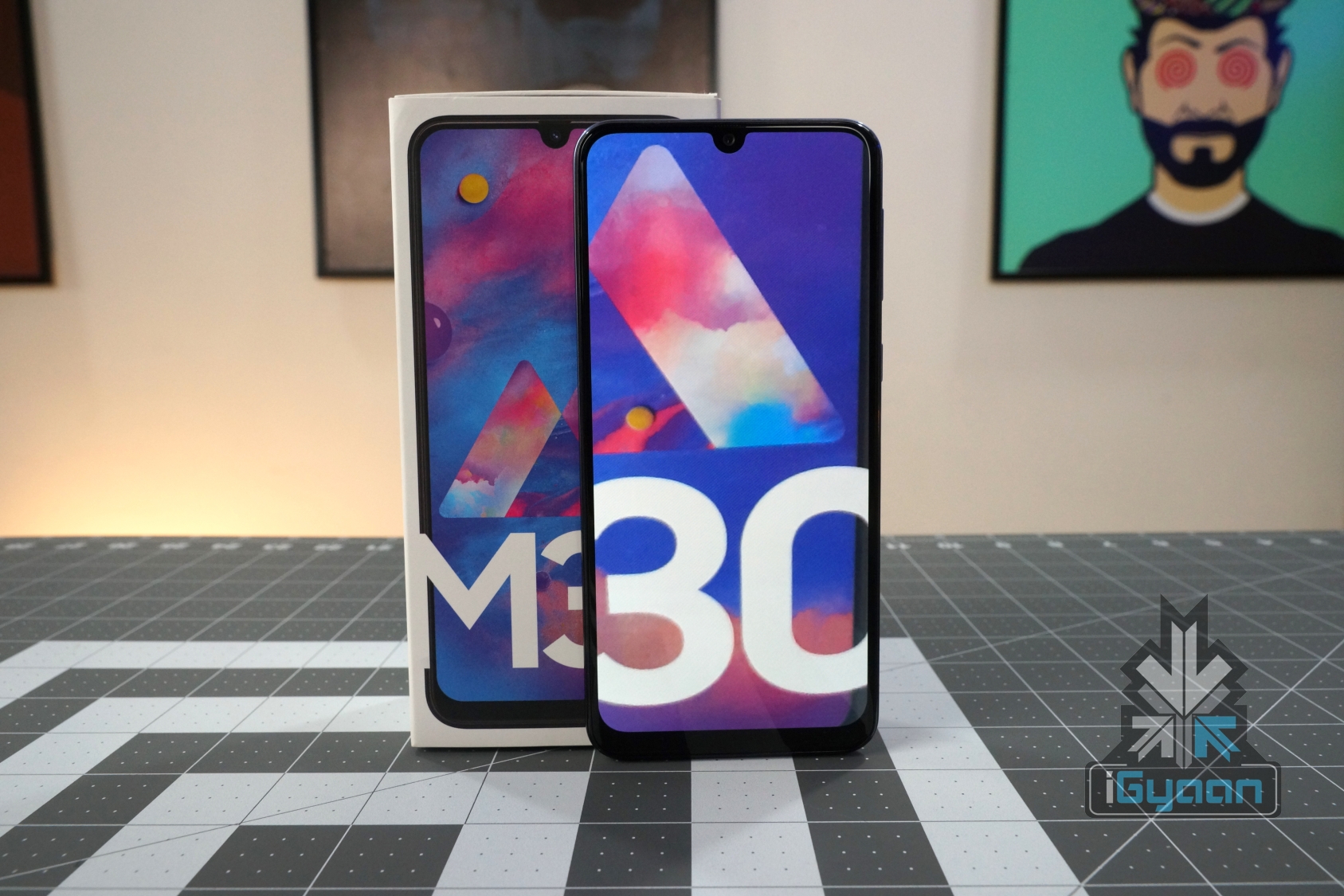
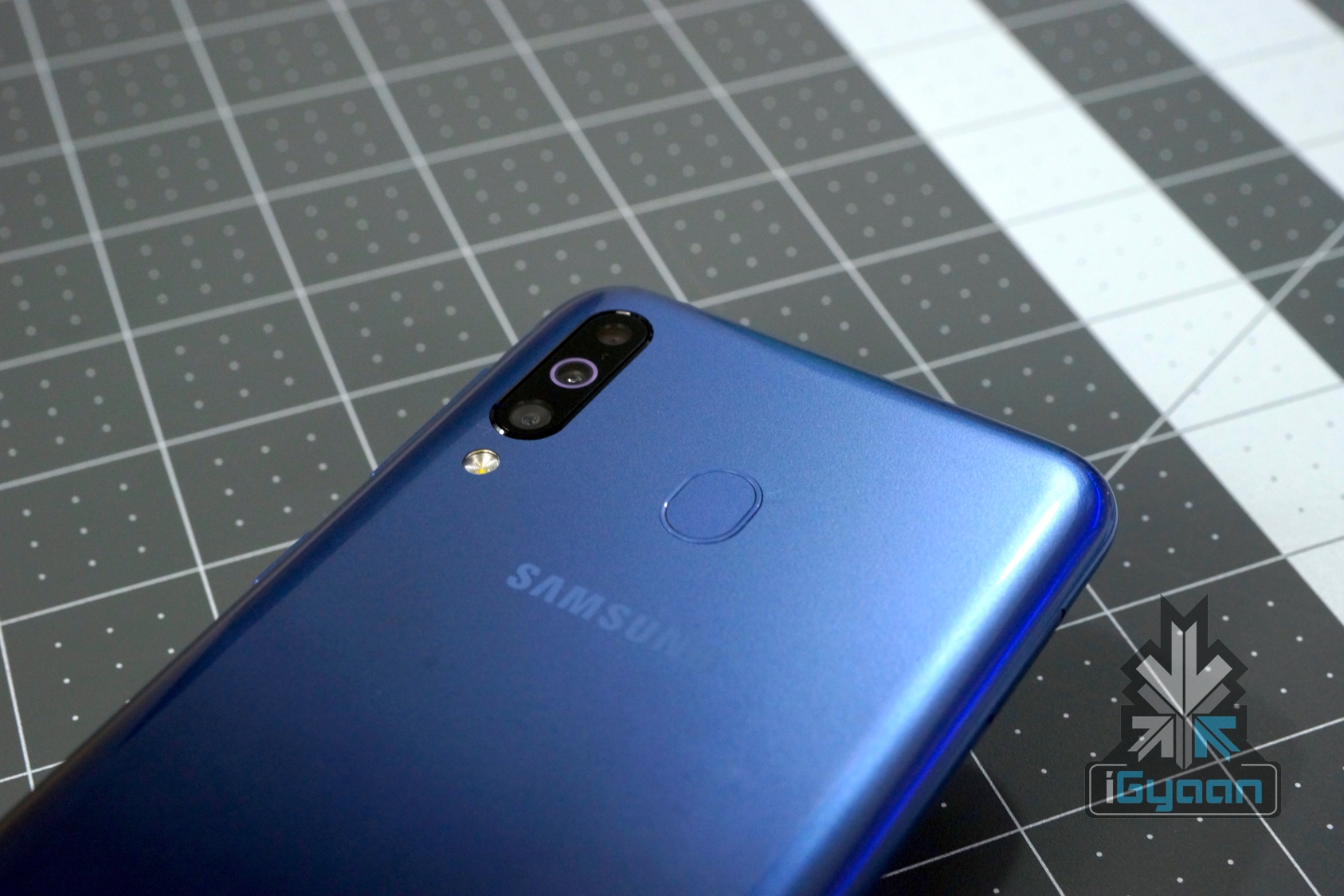
It is not difficult to see that Samsung has taken many of its design cues for the Galaxy M30 from the existing smartphone market in 2018. The tear drop notch display, the gradient back and a bezel less front. The cameras at the back also sit flush with the phone and so does the fingerprint sensor, which is usually depressed on some devices. the phone feels premium and has a robust frame. The device does not bend, wiggle or rattle from anywhere.
The build is plastic which means it scratches easily and the back despite its nice metal finish may start to lose lustre soon. There is also no ingress protection, whether water or dust, although expecting that in this price bracket may be too much in early 2019. We expect that to start happening towards the end of the year.
The phone is 8.5mm thin despite the large battery and thick plastic build. It fits quite comfortably in the hand and does not feel heavy.
Display
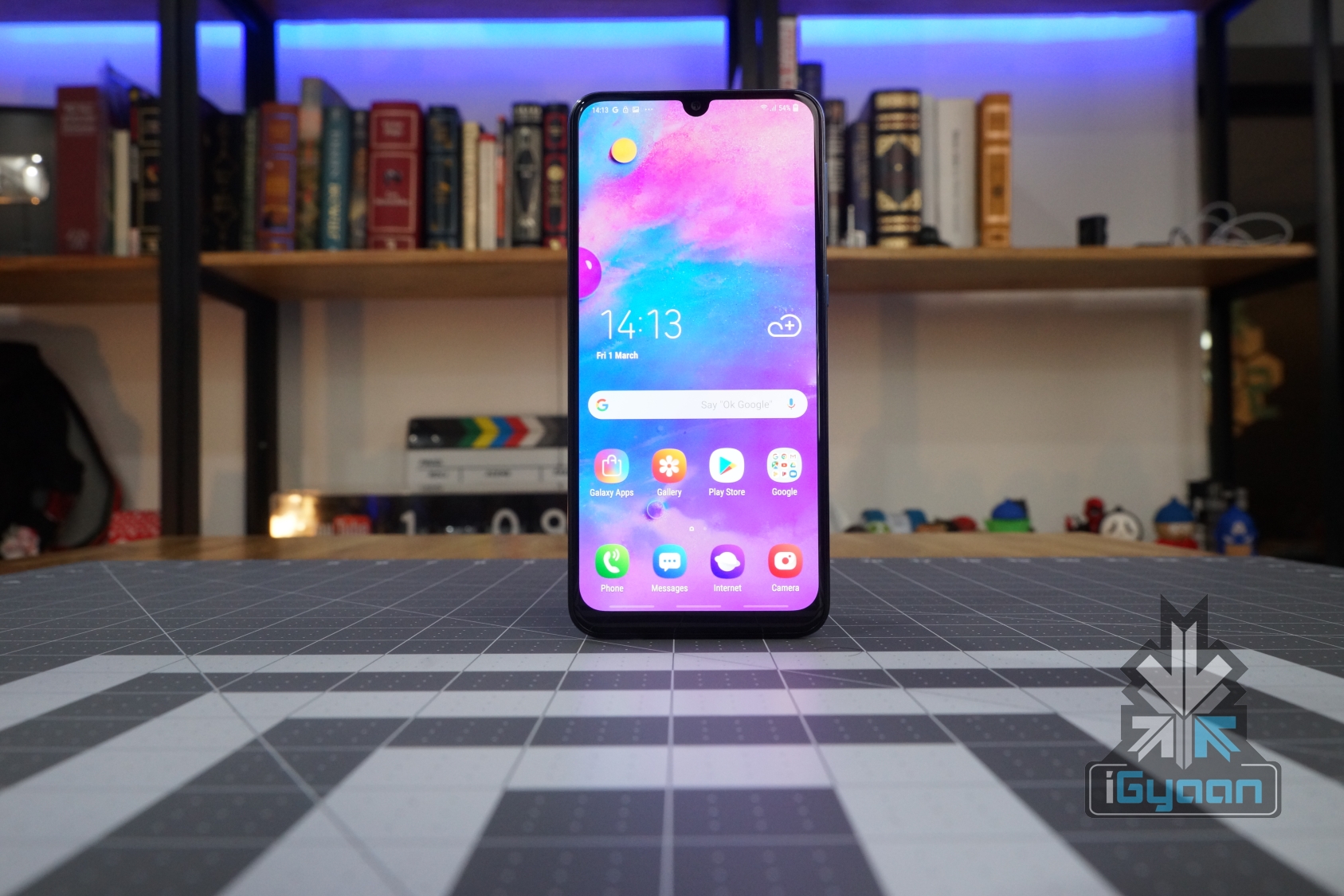
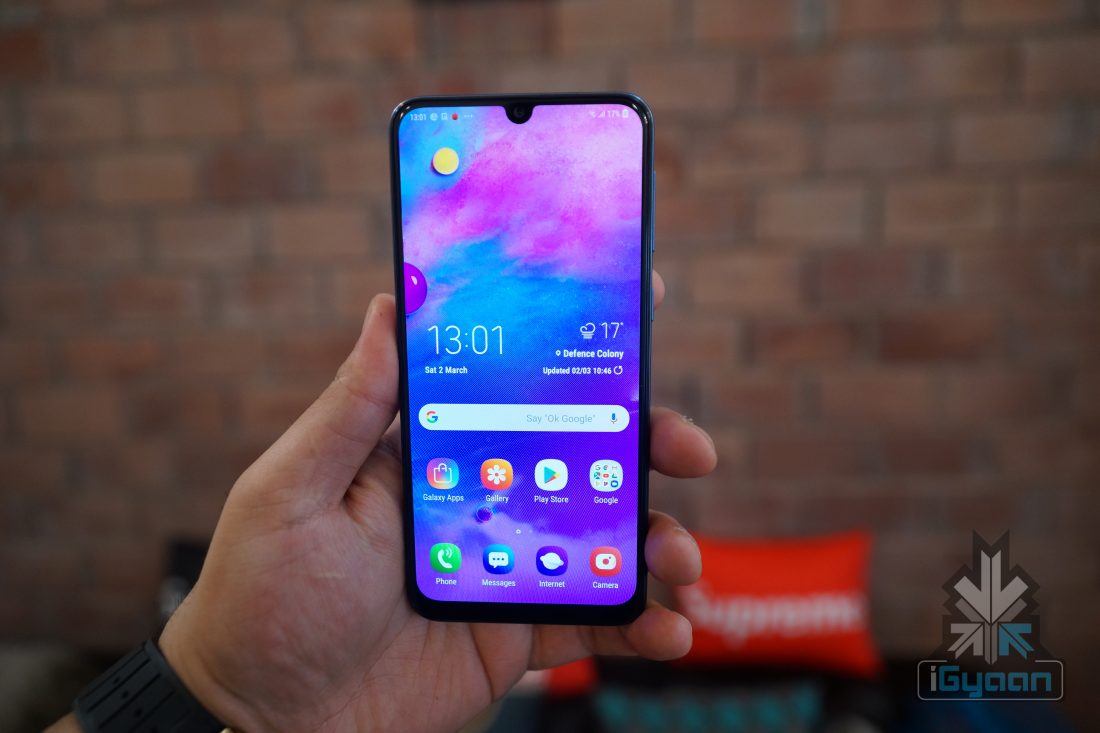
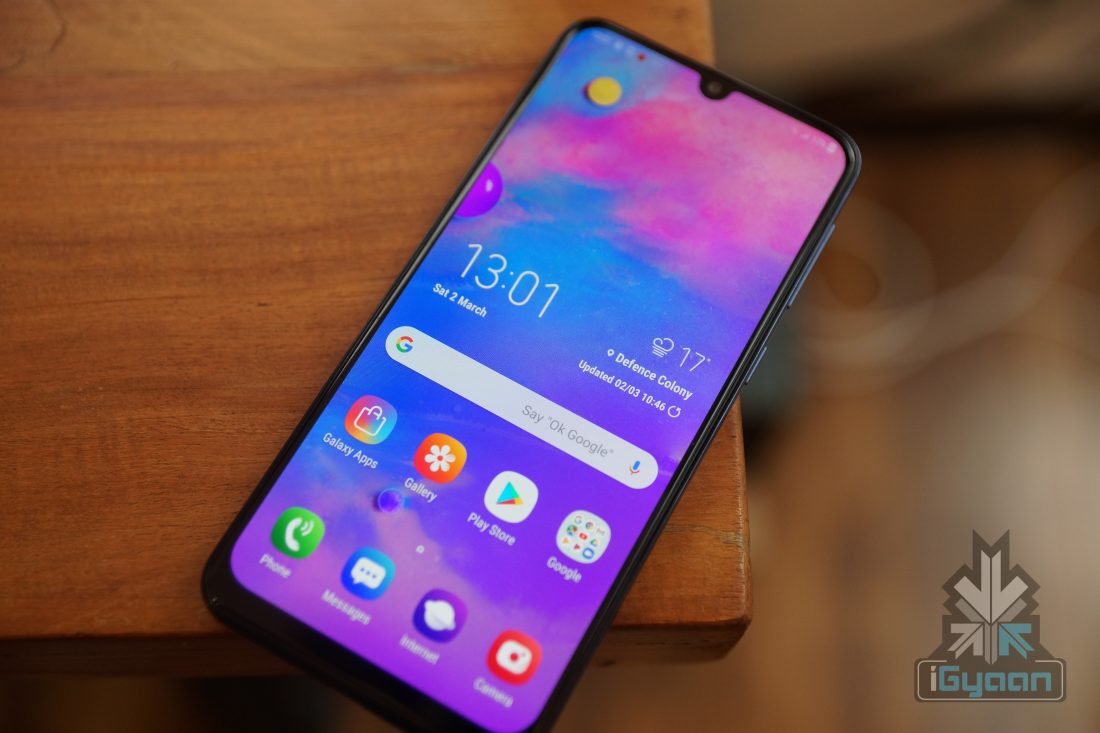
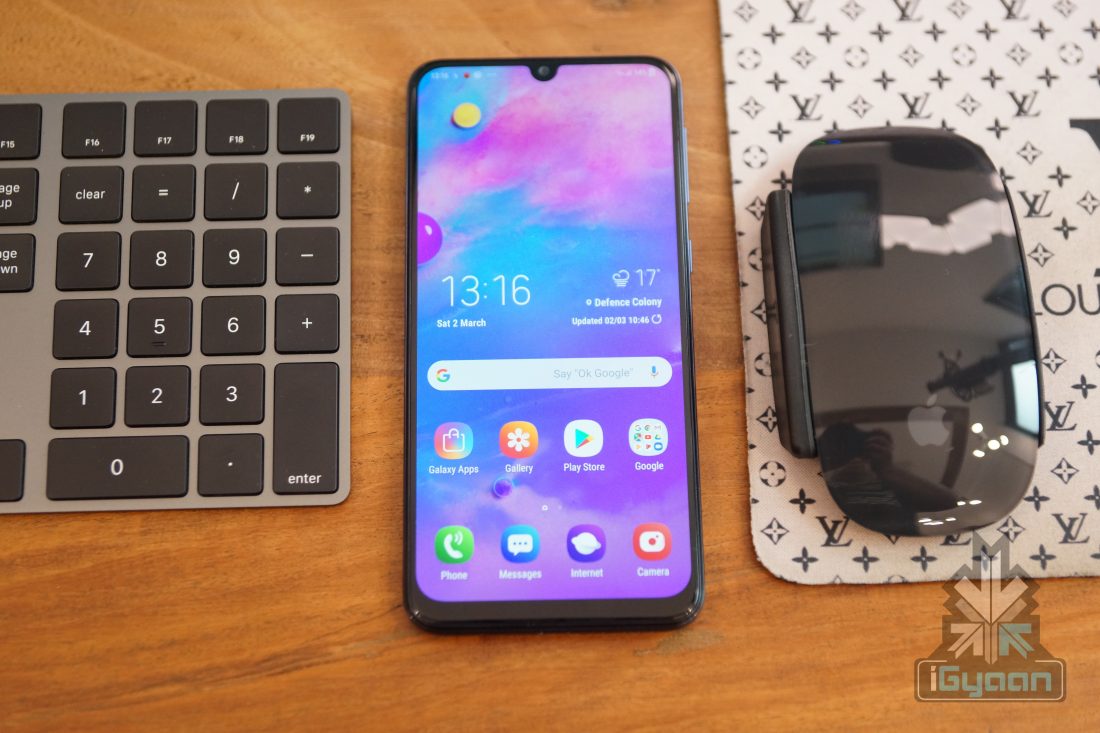
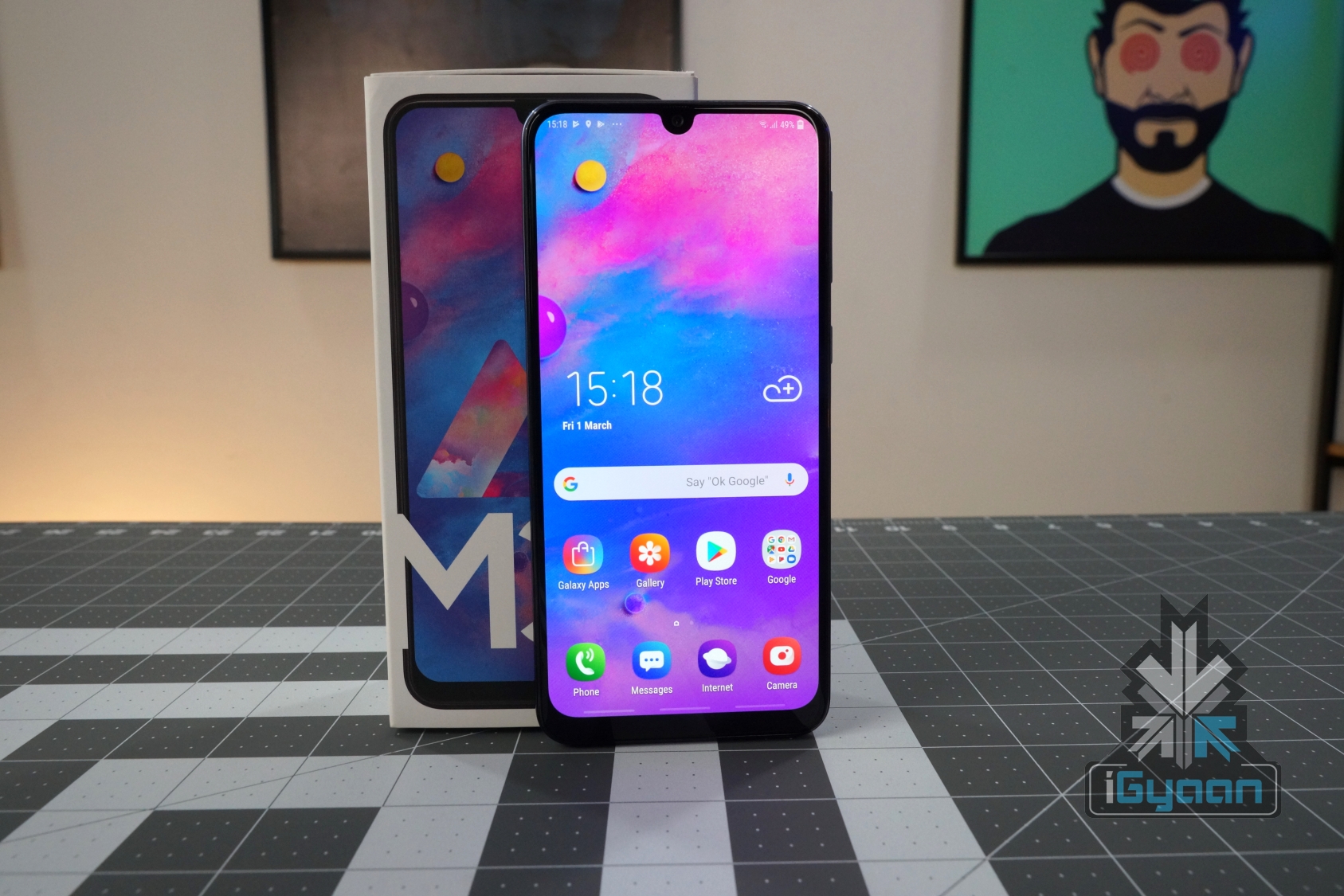
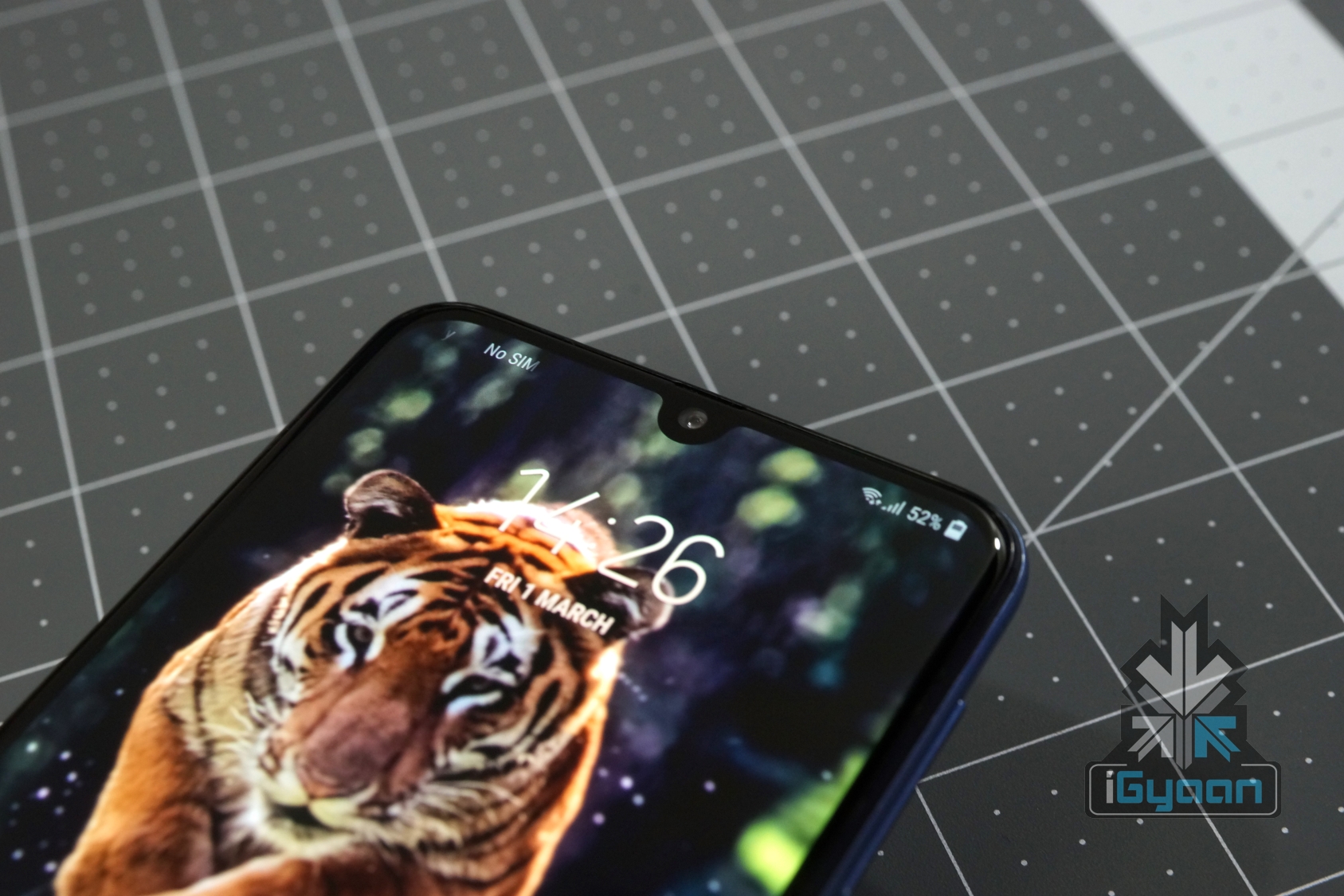
Samsung really has cracked the market here. The Samsung Galaxy M30 features a Super AMOLED display with a 2280 x 1080 px resolution and a 394 ppi density. The display is not only punchy and colourful, it is bright and easy to view indoors and out. The viewing angles are excellent and Samsung has managed to accurately set the colour profile. Although for those with specific requirements the display colour can be optimised.
It also has the always on feature which as the name suggests keeps the screen on at all times to display clock even when the device is locked. Noteworthy, this feature only draws less power from the battery. Therefore, the users can keep this feature turned on without stressing that it would affect the battery performance.
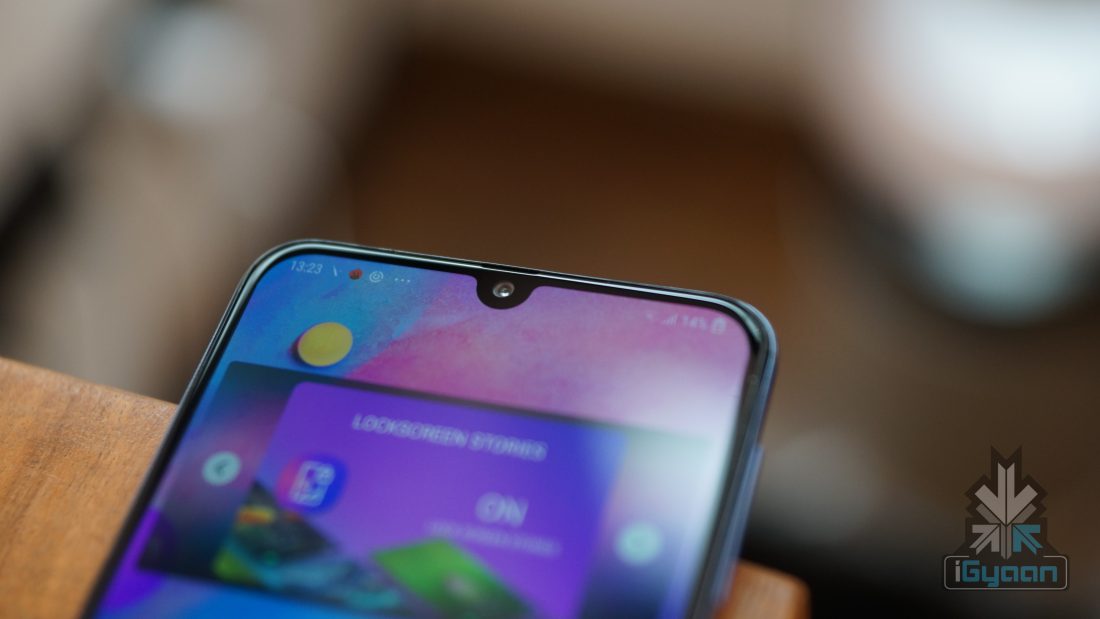
The display covers over 90% of the front of the phone although a considerable chin dawns the bottom of the front. The camera cutout is minimal and if you enable Face Unlock, a small light runs across the camera notch while you try to unlock the phone, looks fancy.
Cameras
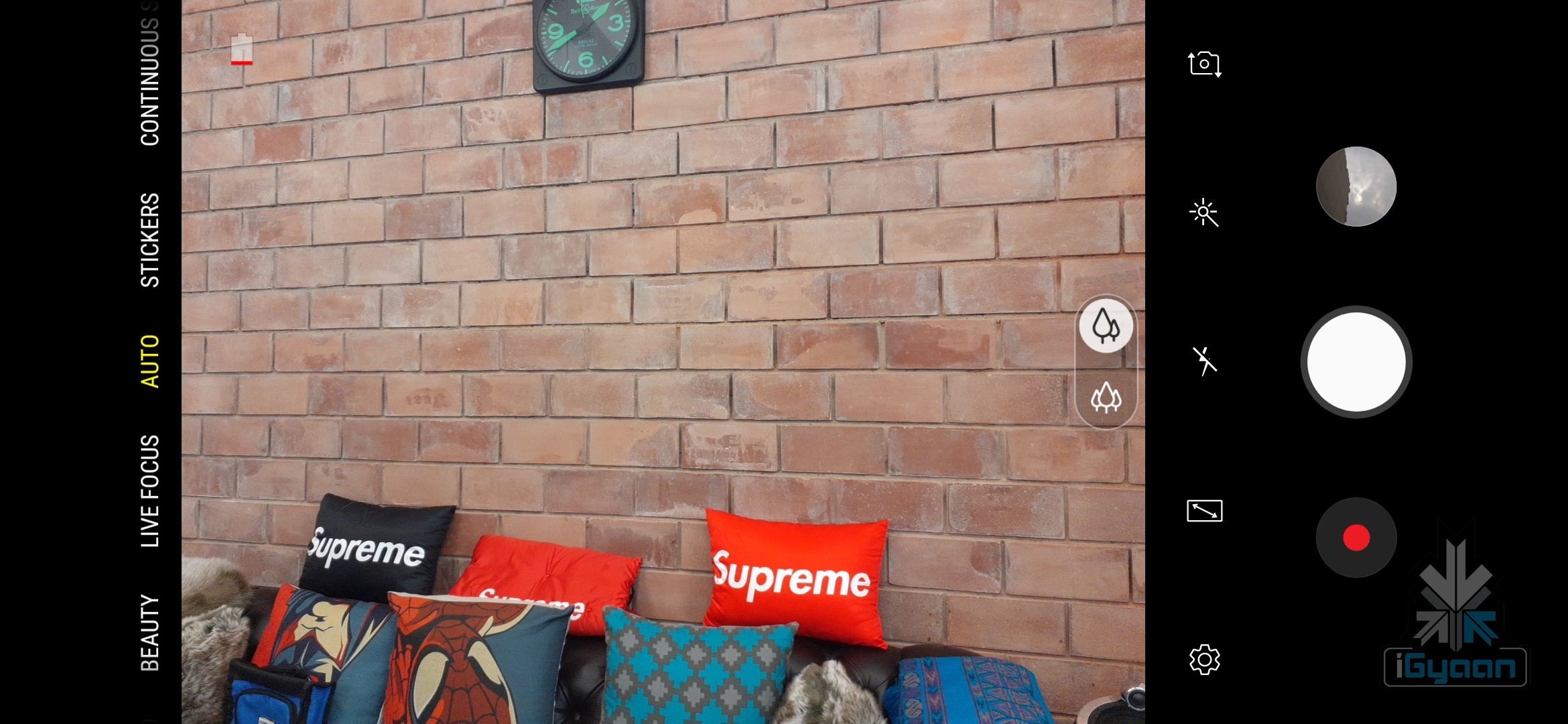
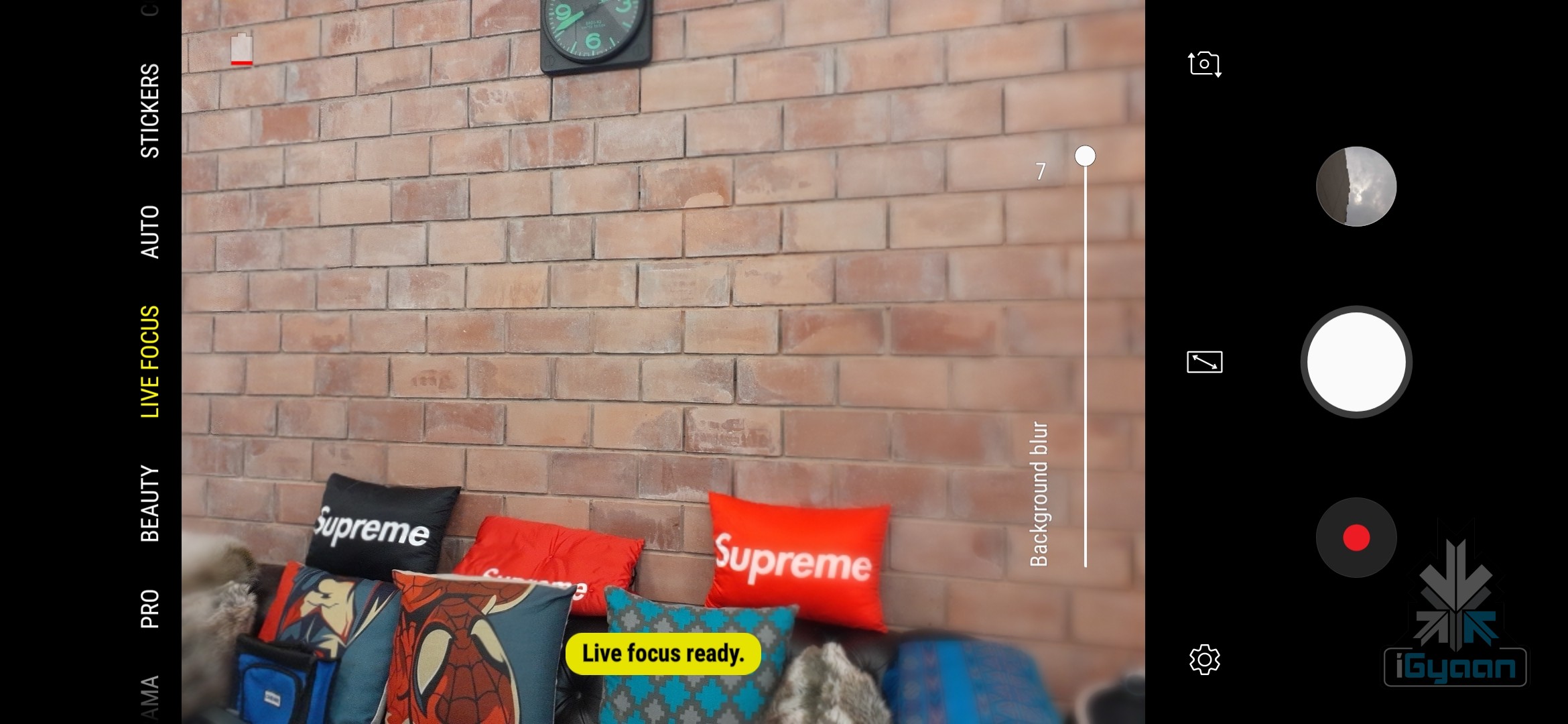
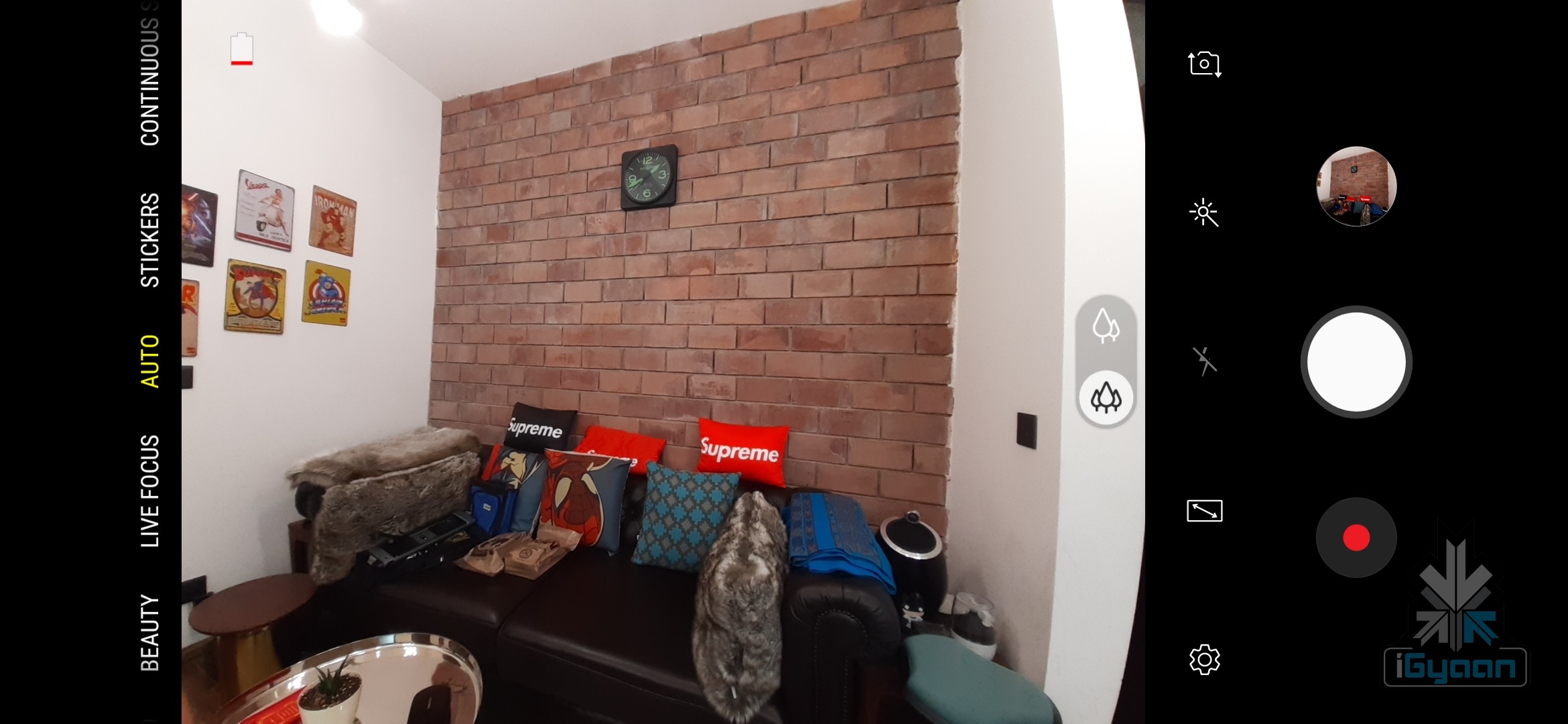
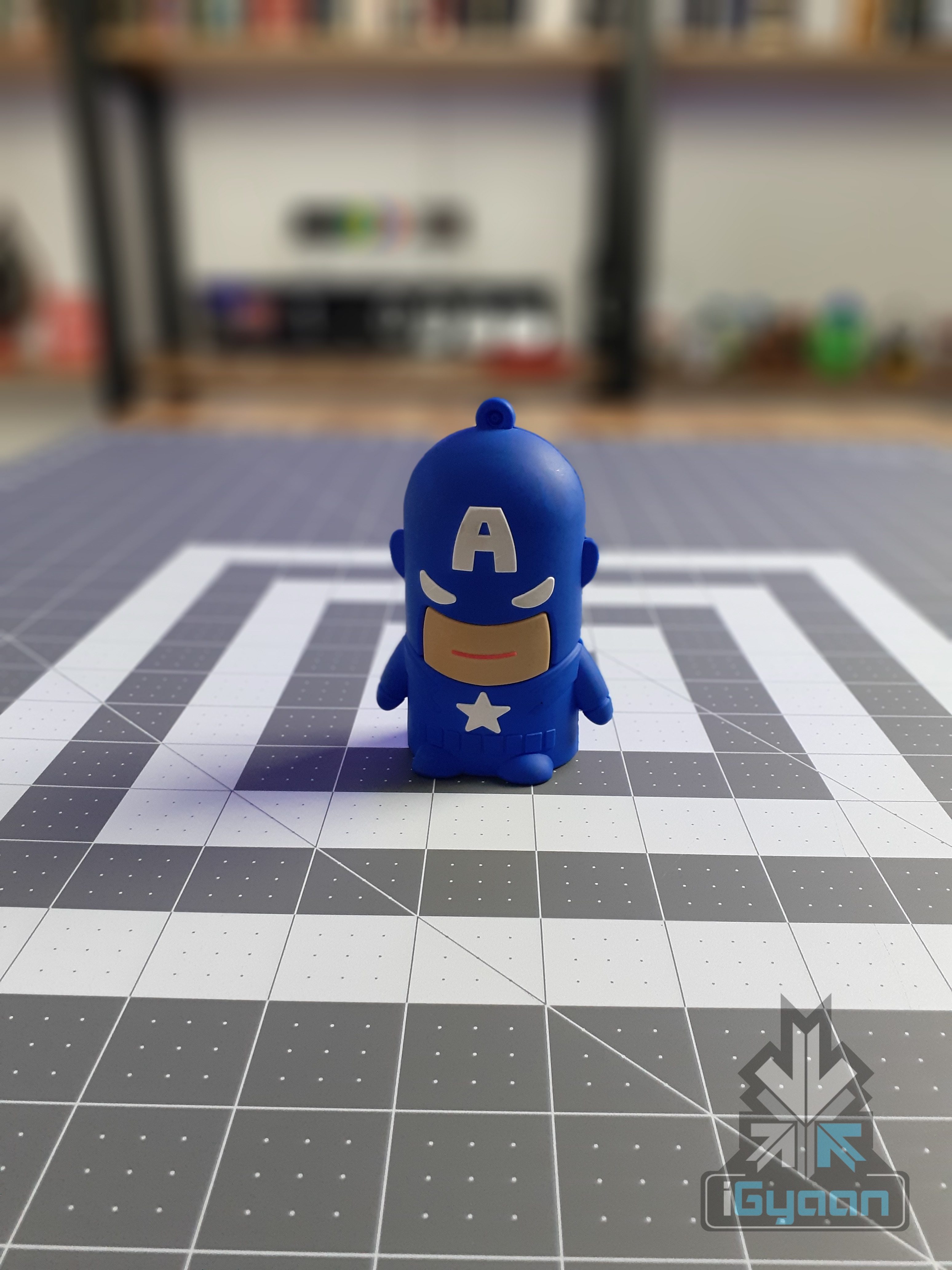
The Samsung Galaxy M30 features three cameras at the back; a 13 MP primary camera and two 5 MP sensors, one which measures depth. While the other is an UltraWide sensor. While the ultra wide sensor is great for the occasional landscape shot or group photo. The primary camera is great for everyday usage. You get accurate color and good low light performance ( which you do not with the ultra wide sensor), and some of the Live Focus features will be used throughly by owners of the phone.
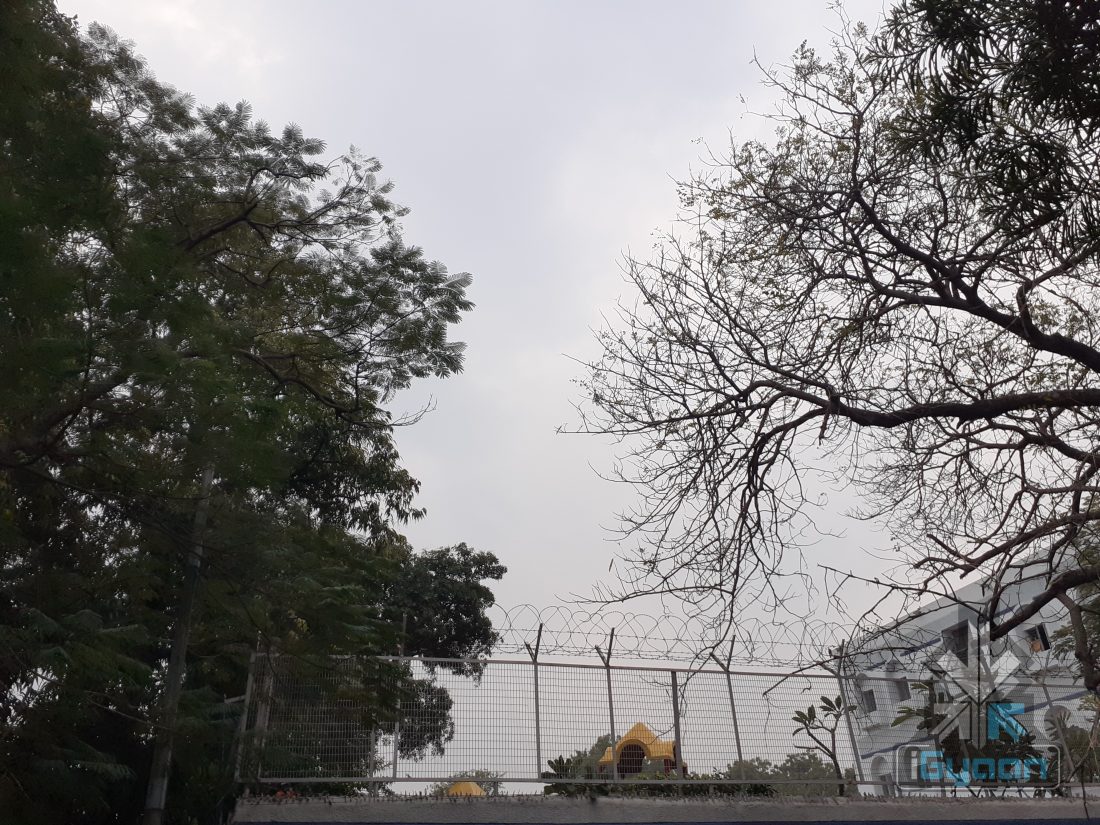
The phone camera UI is familiar and easy to use, and the camera produces good results consistently. Images are sharp, in focus have good color and contrast. The HDR works great and there are some manual controls for ISO and shutter.
The video is restricted to 1080p, but again the video result is good and colour is accurate. You can also stretch the video to the display format of 2280x1080px for widescreen video.
Rear Live Focus
Rear Auto
The front camera also produces good results with quick and accurate focus and sharp images. A 16 MP f/2 shooter at the front means you can get good results in low light. Software based live focus is available on the front camera as well.
Hardware and Performance
The Galaxy M30 runs on the Exynos 7904 it is a 14 nm chip with an Octa core CPU and a Mali-G71 MP2 GPU. The way the cores are laid out allow for better battery management, with two 1.8 GHz performance cores and 6 1.6 GHz daily cores. And while it is easy to fault Samsung for not using Snapdragon chips, Exynos chipsets work well and have consistently delivered long lasting performance on Samsung devices, also because much like Apple, Samsung optimises the hardware well with the software.
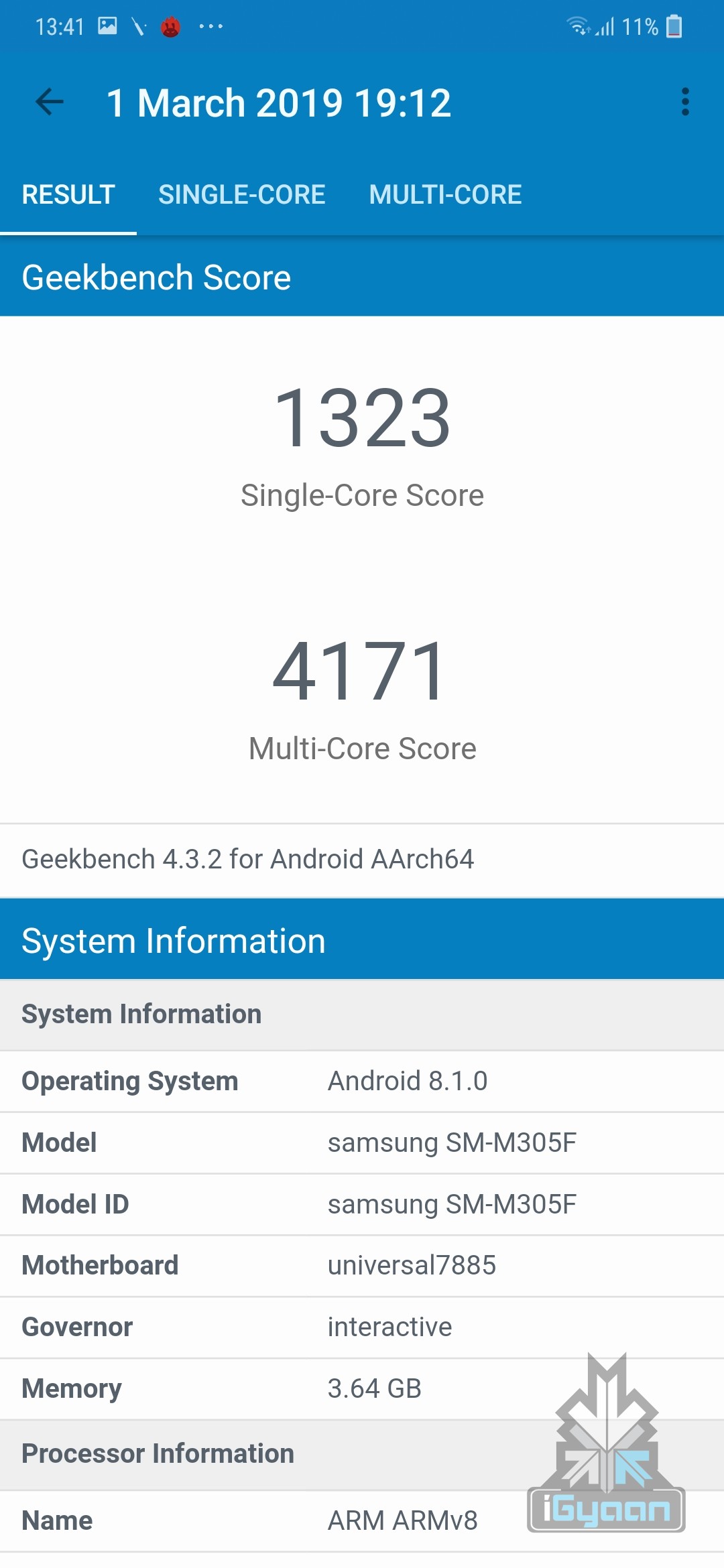
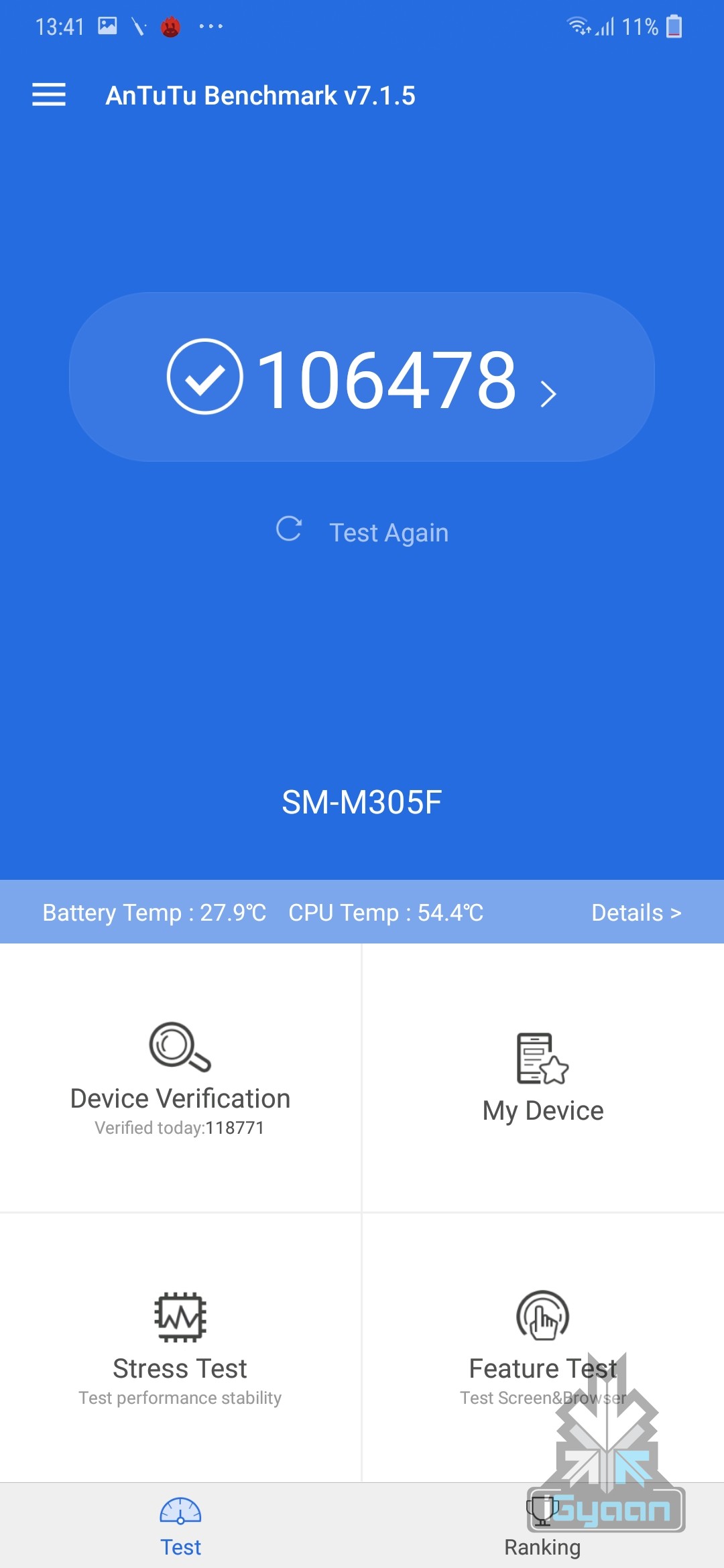
That being said, some of the performance scores leave a lot to be desired from the Galaxy M30 especially in comparison to the Snapdragon devices.
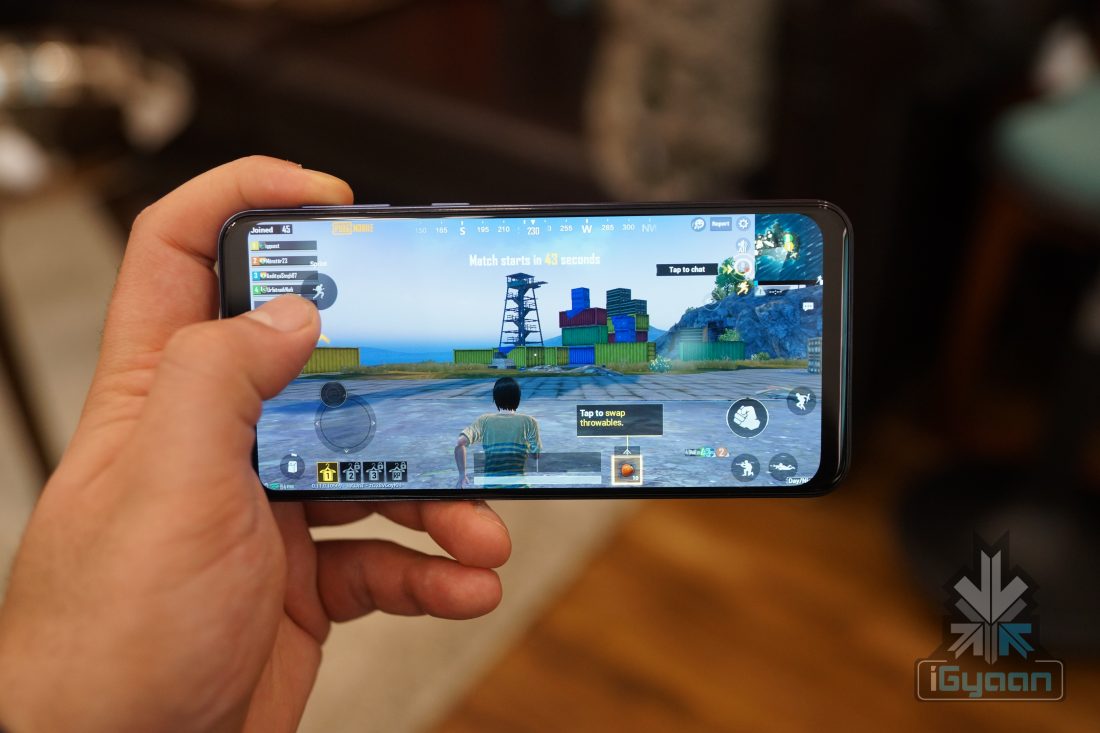
The phone does manage to run most games well and even PUBG works on high graphics even though medium is recommended, with good performance from the device. The phone also has a game booster which allows users to disable notifications and calls while allowing focus and allocating hardware resources to the game. Thereby improving the overall gaming experience ever so slightly.
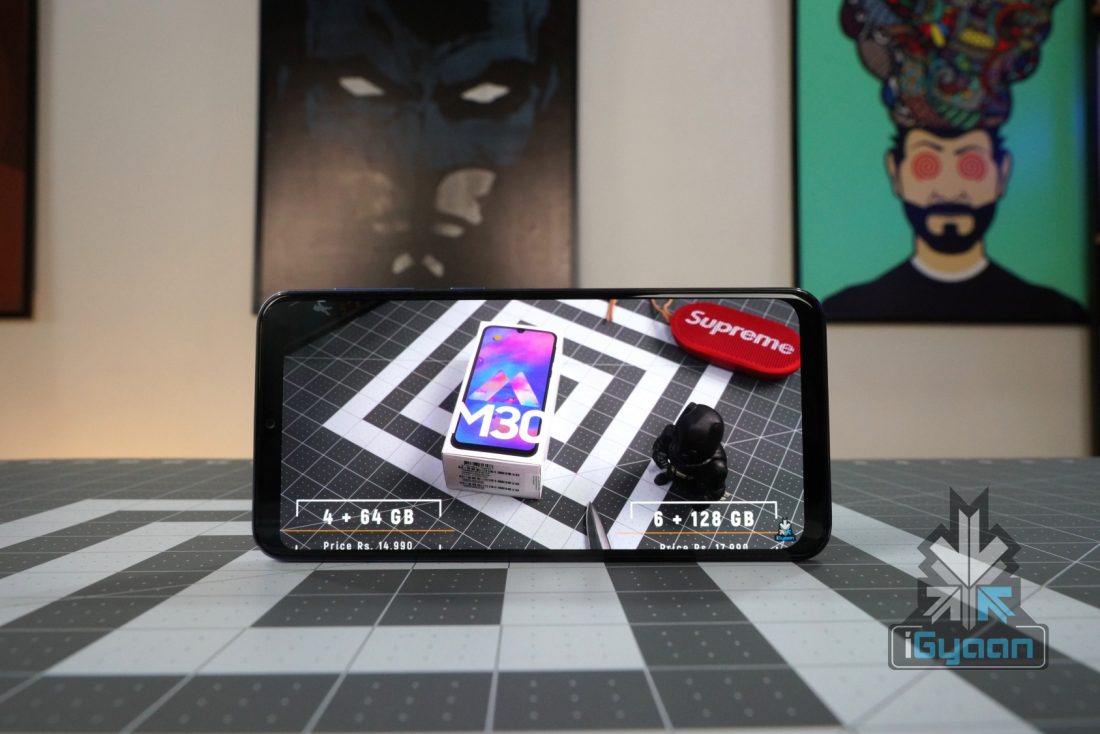
The Galaxy M30 is also available in both 4 GB and 6 GB variants, and if you are serial gamer and have the extra money the 6GB version will allow for more simultaneous apps and a smoother overall gaming experience.
Daily usage from the phone is impressive, and while multitasking is good the phone does seem to lack a certain fluidity, which could be more and Android Oreo thing. Since the phone ships with the older version of Android out of the box.
Software, UI and Multimedia
Another thing that has kept Samsung users unhappy has been their slow Android updates and less refined UI. While Samsung has had consistently one of the best UI skins for Android, it has been fragmented and difficult to operate through. The new One UI solves that with smoother animations and a minimalistic design. But, the Galaxy M30 does not have that yet. Samsung plans to update the whole M series to Android 9 and with that the One UI, when and how is presently unknown.
The UI is pretty refined on the Galaxy M30 and Samsung has included navigation gestures, with the ability to disable those annoying bottom tabs. The gestures work great but certain things are missing from the phone. There is no Samsung Pay or even Pay mini yet. The Always on display is missing despite a Super AMOLED screen and the dark mode seen on the newer A series phones is also missed on the M30.
However, all these are simple software related issues and can easily be resolved with a software update.
The phone does support HD streaming and has the Wildvine L1 certification. The display and speakers are great for consuming content and the phone also has Dolby Atmos for enhanced audio via headphones.
Phone, Battery and Security
The Samsung Galaxy M30 takes two SIM cards in dedicated slots along with a third slot for microSD expansion ( 512 GB worth). Both SIMs support VOLTe and also LTE data connectivity. Call quality and network strength is good and audio both from the speaker and microphone is impressive. The phone also has good noise cancellation for the microphone and manages to cancel out most of the background noise during calls.
With a massive 5000 mAh battery the Galaxy M30 offers multiple day battery life. With a conservative approach you can see your phone run into day three. With heavy usage we found the phone to have upwards of 20% battery at the end of the day, this is with several hours of gaming and video consumption.
Talk Time : 8 Hours
Music Playback : 36+ hours
Video : 10+ Hours
Gaming Online : 4 Hours
( Battery life tests are done in controlled conditions, and may vary from scenario to scenario)
The fingerprint sensor is fast on the Galaxy M30, and easy to setup. Samsung offers the ability to lock down certain folders and apps, along with certain other features. The phone also offers a less secure face unlock which helps quickly unlock the phone using the camera.
Other Mentions
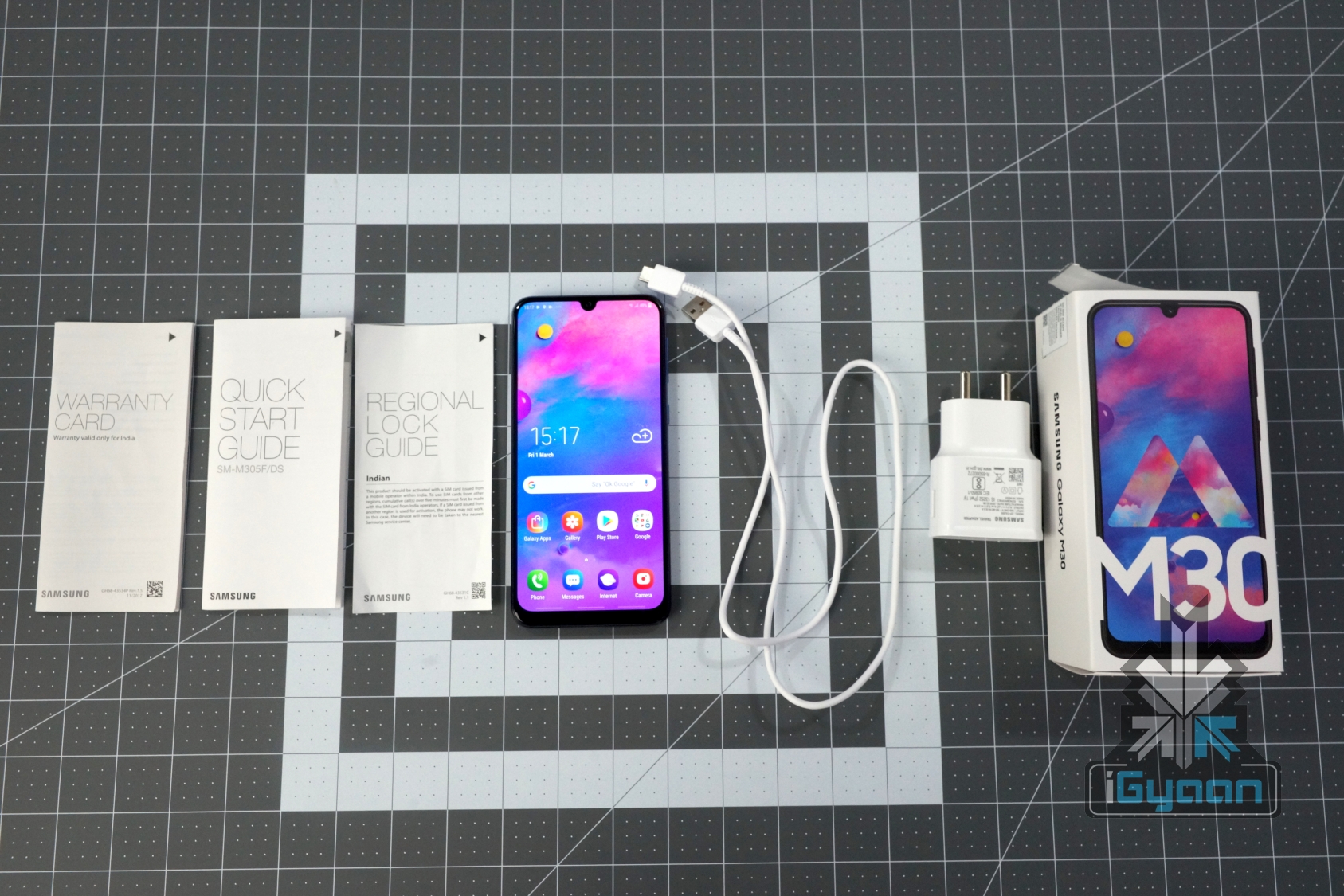
The Samsung Galaxy M30 also offers a 15 Watt charger inside the box. The phone has a USB C port which makes it somewhat future ready.
The Samsung Galaxy M30 also has a very low SAR value of 0.409W/KG Head.
Conclusion
The Samsung Galaxy M30 is a fantastic flagship to the Galaxy M series. It is priced well and offers some really good features including a Super AMOLED display and a 5000 mAh battery. And while the Redmi Note 7 Pro’s recent launch in India will make it difficult for users to decide, ( A comparison of the two will be out shortly), Samsung also made decisions difficult with the launch of the Galaxy A30. Samsung does offer best in class service and support which will help a buyers end decision if they plan to use the phone for a long time. Plus the added Samsung brand name may help aid the decision. Either way the Samsung Galaxy M30 is a compelling device, and if you are considering buying it, the decision of buying it will be a good one.
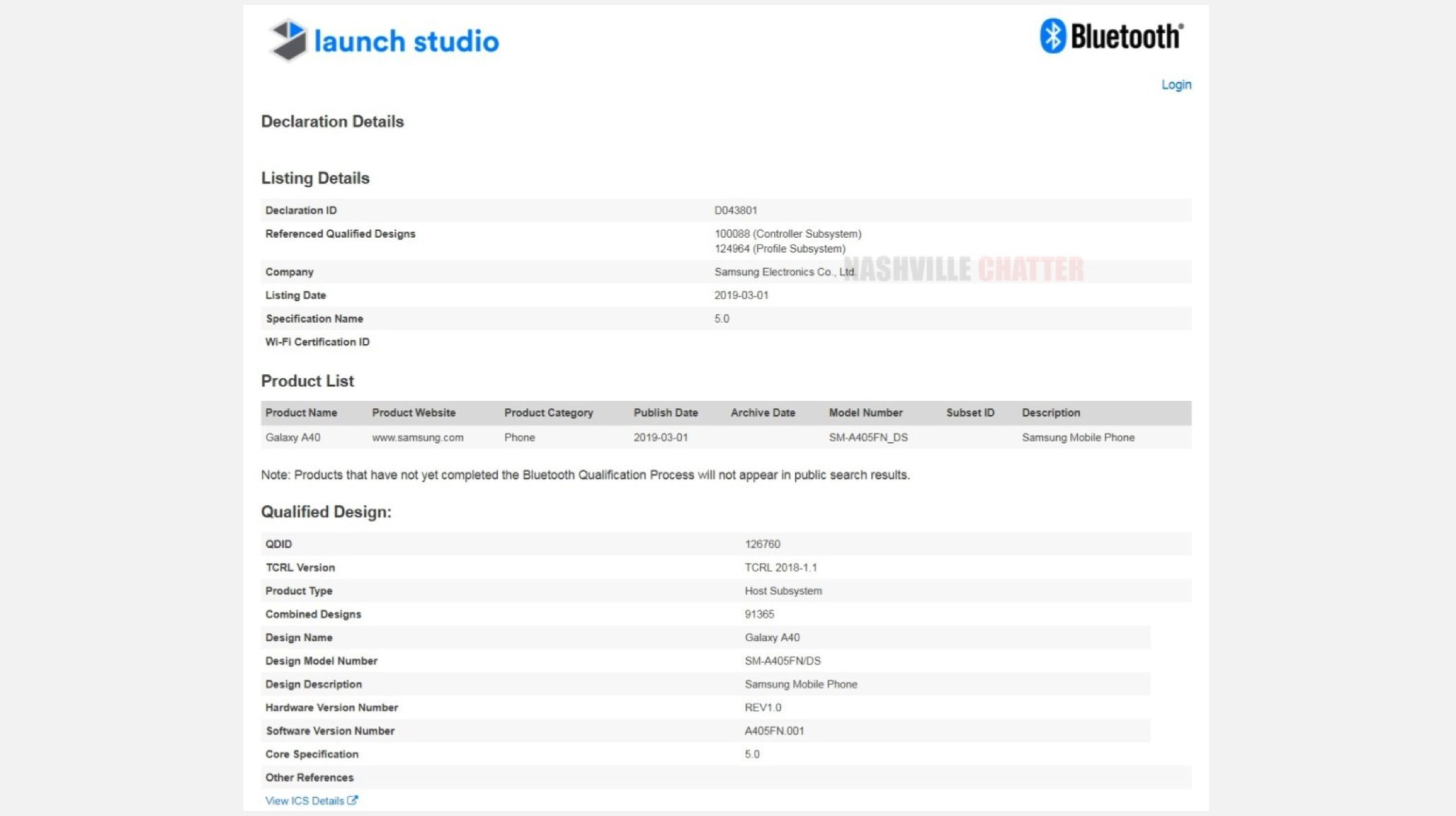
Samsung launched the latest entrants in the Galaxy A series on February 28; when it launched the Galaxy A10, Galaxy A30 and Galaxy A50 in India. Fresh leaks suggest that a new device possibly called the Galaxy A40 may also be launching soon. The support page for a Samsung device with the model number SM-A405FN/DS is live on the company’s German website. Going by Samsung’s naming scheme for previously launched smartphones, the aforementioned device is most likely the Galaxy A40. Also, the webpage suggests that the launch of the handset is imminent in Europe.
Samsung Galaxy A40
Samsung Galaxy A40 will be an affordable offering from the company which will sit between the newly announced Galaxy A30 and Galaxy A50. Reports suggest that the smartphone will have a similar design to its siblings, complete with a polycarbonate body and a ‘glasstic’ back. The display will sport an Infinity-U, 6.2 inch Super AMOLED panel with a resolution of 2340 x 1080 px. Like the Galaxy A30, it will have a rear-mounted fingerprint scanner and will support face unlock technology.
Under the hood, the Galaxy A40 is expected to run on the Exynos 7885 SoC which is manufactured using 14nm fabrication process. The chipset has an Octa-core CPU and a Mali G71 GPU. In terms of optics, the smartphone will feature a dual rear camera setup consisting of a 16MP f/1.7 sensor and an 8MP f/2.2 ultra-wide angle sensor. For selfies, the Galaxy A40 will have a 16MP f/2.0 sensor housed in the notch on top of the display. In terms of memory and storage, the device will be available with 4GB of RAM and 64GB of onboard storage. Recent reports also confirm that the Samsung Galaxy A40 will have Bluetooth 5.0 support for connectivity.
The Galaxy A40 is expected to be powered by a 4000mAh battery, just like its siblings. There will be support for 15W fast charging via the bottom mounted USB Type-C port. Out of the box, the smartphone will feature Samsung’s OneUI on top of the latest Android 9 Pie. Unfortunately, there is no report on the pricing of the device but estimates suggest that the device could launch at a price of Rs 17,999.
Samsung launched the Galaxy M30 on 27th of February in India which was soon followed by the Redmi’s Note 7 Pro. Both newly smartphones are packed with features and carry a lucrative price tag. In this article, we will put both smartphones against each other and discuss their features in detail.
Display:
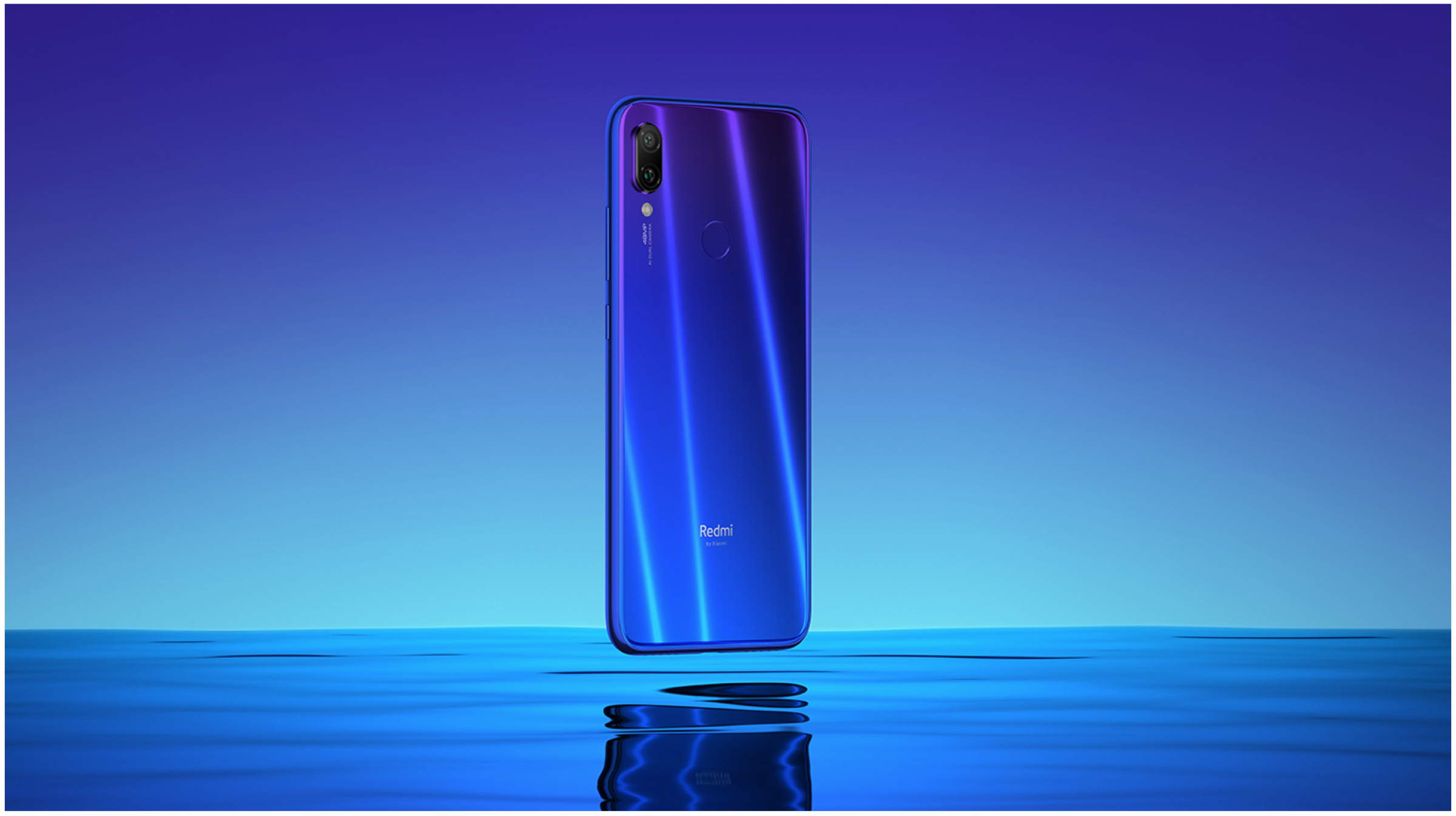
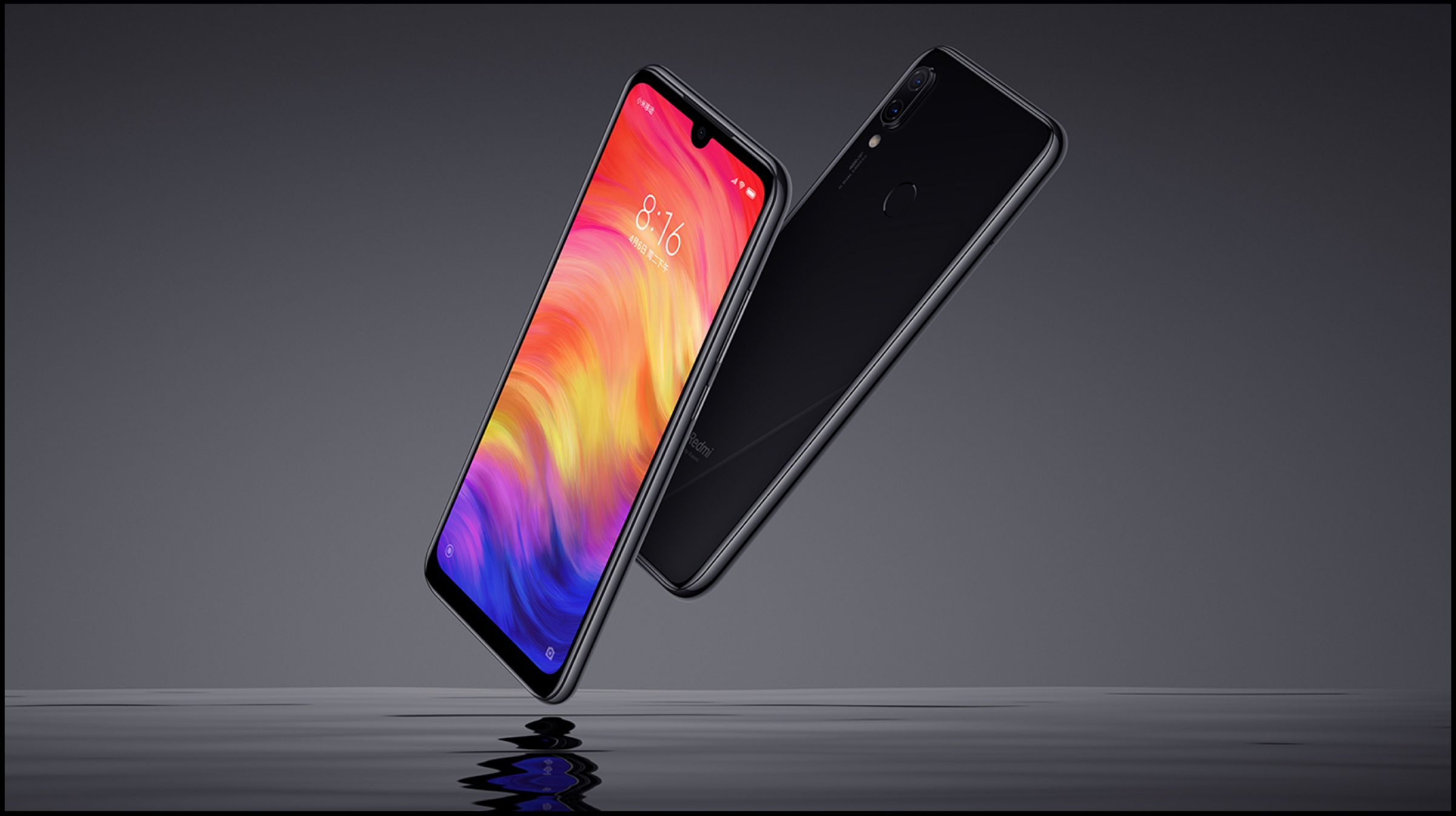
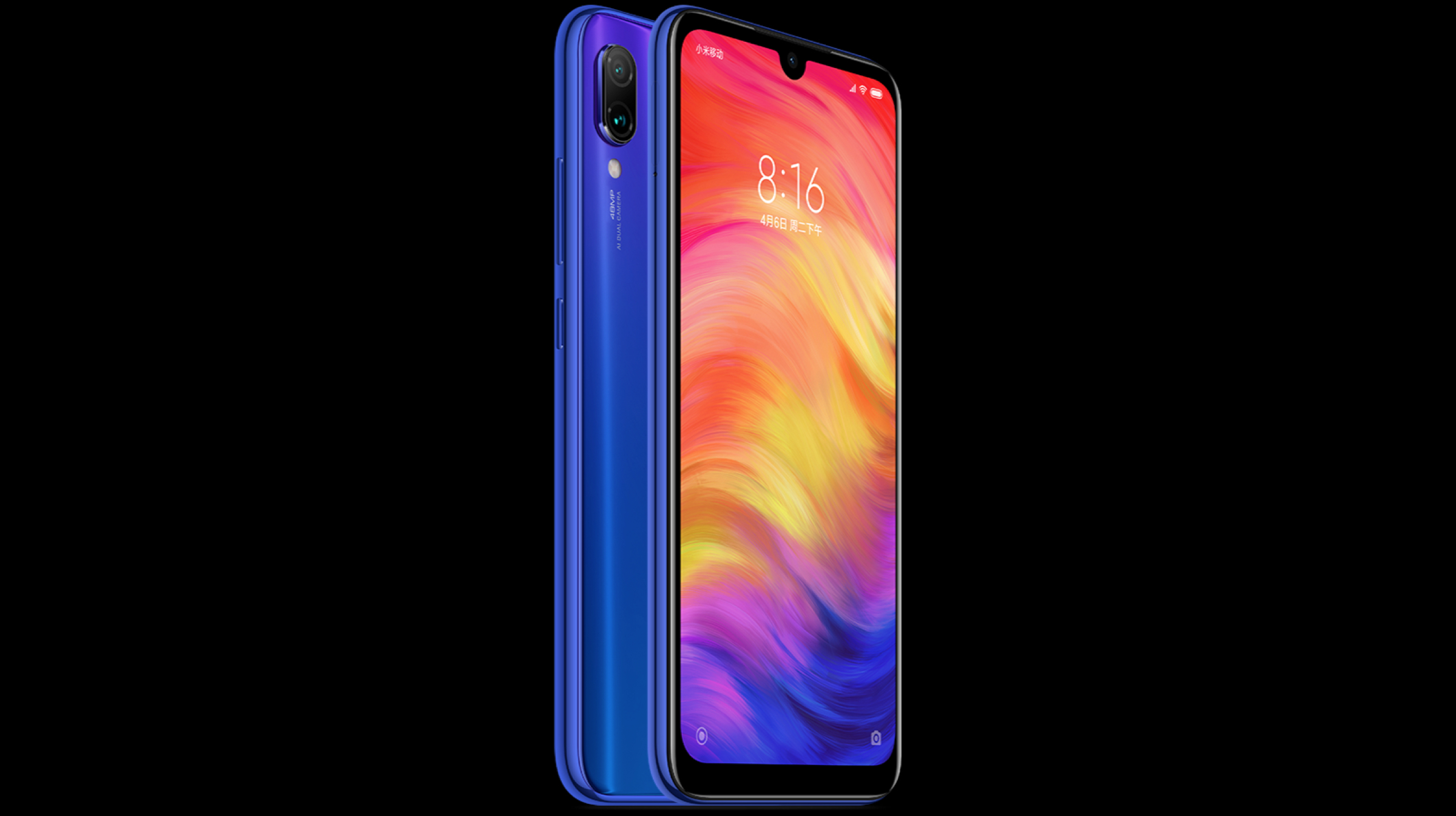
The Samsung Galaxy M30 sports a 6.4 inch Super AMOLED display while the Redmi Note 7 Pro sports a 6.3 inch LCD display which is safeguarded with Corning Gorilla Glass 5. The Galaxy M30’s display has a pixel density of 394 ppi whereas the Note 7 Pro’s display has a higher pixel density of 409 ppi. Nevertheless, the variation between the ppi is virtually unnoticeable due to the meagre difference. However, Note 7 Pro’s LCD display is no match for M30’s Super AMOLED panel which has better colour reproduction.
Chipset:
The Samsung Galaxy M30 is kitted with the Exynos 7904 SoC which is designed and manufactured by Samsung. On the other hand, the Redmi Note 7 Pro packs the Snapdragon 675 SoC. The chipsets on both smartphones are comprised of an Octa-Core CPU however their innards are entirely different. The Exynos 7904 has two Kryo 260 Gold cores and six Kryo 260 Silver cores while the Snapdragon 675 has four Kryo 460 cores and four Kryo 460 Silver cores. Even though performance on the Galaxy M30 is honourable, the Exynos 7904 is secondary to Redmi Note 7 Pro’s Snapdragon 675. Furthermore, the Snapdragon 675 is manufactured using 11 nm fabrication technology and the Exynos 7904 is manufactured using 14 nm fabrication technology.
Camera:
Front facing selfie camera on both the Galaxy M30 and Redmi Note 7 Pro are housed in the notch above the display. The former has a 16 MP selfie camera while the latter has a 13 MP sensor. On paper, the Galaxy M30 is ahead of the Note 7 Pro in this department. Talking about the rear cameras, the M30 has triple sensors while the Note 7 Pro only has two. The Galaxy M30’s rear camera setup consists of 13 MP PDAF sensor, 5 MP ultrawide sensor and a 5 MP depth sensor. In contrast, Redmi Note 7 Pro’s rear camera setup consists of a 48 MP sensor and a 5 MP depth sensor. Though, the latter loses out in number it makes up for lost ground in terms of composition. The 48 MP rear camera on the Note 7 Pro is the Sony IMX586 sensor which is seen on high end devices like the Honor View 20. However, it is noteworthy that by default the Note 7 Pro’s camera captures 12 MP resolution photos to conserve storage. Additionally, social media platforms including Snapchat and Facebook compress images to a great extent. Therefore, final results from both smartphones will be comparable if not equivalent. Though full resolution images captured on Note 7 Pro will undoubtedly outperform images captured on Galaxy M30 when viewed on a large screen high definition display.
Battery and Charging Speed:
The Samsung Galaxy M30 is powered by a massive 5,000 mAh battery while the Note 7 Pro is powered by a 4,000 mAh powerhouse. Even though the Galaxy M30 packs a larger battery, the 11 nm based Snapdragon 675 chipset on the Note 7 Pro consumes less power and strives to make up for a smaller battery. Furthermore, the Note 7 Pro supports 18 W fast charging while the M30 supports 15 W fast charge. Pleasantly, Samsung ships its device with a 15 watt fast charger whereas the Redmi Note 7 Pro is shipped with a 10 watt traditional charger.
Storage Options, Expandability and Price:
Both the Samsung Galaxy M30 and Redmi Note 7 Pro are available in two storage variants which include 4 GB RAM plus 64 GB ROM and 6 GB RAM plus 128 GB ROM. Both devices also support memory expansion via a microSD card. Distinctively, the Galaxy M30 supports microSD cards of upto 512 GB while the Redmi Note 7 Pro only supports card of upto 256 GB. Furthermore, the Galaxy M30 has a dedicated slot for the microSD card whereas the Note 7 Pro uses SIM slot 2 for memory expansion. The price for different variants of the handsets are as follows:
Samsung Galaxy M30 (4 GB + 64 GB) – Rs. 14,990
Samsung Galaxy M30 (6 GB + 128 GB) – Rs. 17,990
Redmi Note 7 Pro (4 GB + 64 GB) – Rs 13,999
Redmi Note 7 Pro (6 GB + 128 GB) – Rs 16,999
Design and Software:
Both Samsung Galaxy M30 and Note 7 Pro have a plastic chassis with a waterdrop notch display. Though the bezels around the display are slightly thinner on the M30. The rear panel of the Galaxy M30 is made out of plastic while the Note 7 Pro has a Corning Gorilla Glass 5 back panel. Placement of ports and connectors on both devices is alike. The right side of both smartphones is occupied by volume rockers and power button while the bottom side of both handsets accommodates the USB Type-C port, 3.5 mm jack and loudspeaker grille. Both devices also have a rear mounted fingerprint sensor and also support facial recognition. In terms of software, the Galaxy M30 runs on the older Android 8.1 Oreo OS which is skinned with Samsung’s custom UI. Inversely, the Note 7 Pro runs on the latest Android 9.0 Pie which as well is skinned with the company’s custom MIUI.
Both the Galaxy M30 and Redmi Note 7 Pro have their own strong suits with a similar price point. Therefore, declaring a clear winner in this competition is tough. The choice of right handset is dependent upon the needs and wants of each buyer.
Samsung has launched the third smartphones in its online exclusive, Galaxy M series. The new handset carries the Galaxy M30 moniker and it is placed above the previously launched Galaxy M10 and M20. Like other Galaxy M smartphones, the newly launched device is packed with features and is priced aggressively.
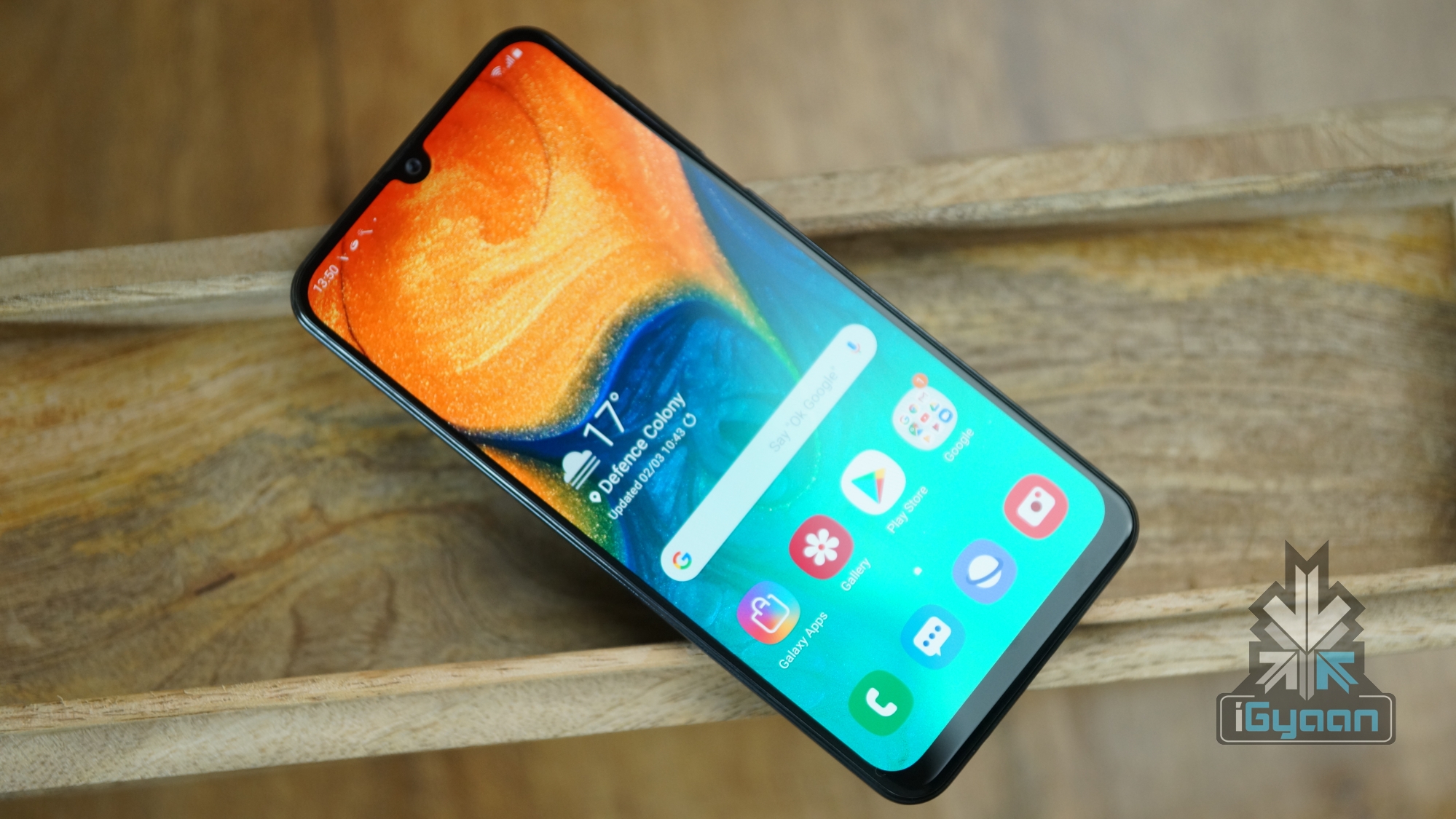
The Samsung Galaxy M30 has a modern design with a 6.4 inch Infinity-U display on the front and gradient coloured plastic panel on the rear. The display of the smartphone has a Super AMOLED panel that has a resolution of 2280 x 1080 px and a pixel density of 394 ppi. The right side of the device is occupied by the power button and volume rockers while the left side is occupied by the SIM card + dedicated microSD card tray. The bottom of the smartphone accommodates the 3.5 mm audio jack, loudspeaker grille, microphone pinhole and USB Type-C port.
Chipset
The Galaxy M30 is kitted with the Exynos 7904 SoC which is designed and manufactured by Samsung. The chipset is manufactured using 14 nm manufacturing process and it is comprised of an Octa-Core CPU and Mali G71 MP2 GPU. Out of the eight CPU cores, two Kryo 260 Gold cores are clocked at 1.8 GHz while the remaining six Kryo 260 Silver cores are clocked at 1.6 GHz.
Memory & Storage
The Samsung Galaxy M30 is available in two storage variants which include 4 GB RAM + 64 GB ROM and 6 GB RAM + 128 GB ROM. Noteworthy, the smartphone is packed with LPDDR4x memory which is the fastest RAM technology currently available for mobile devices. The smartphone also supports memory expansion upto 512 GB via the dedicated memory card slot.
The Samsung Galaxy M30 is powered by an enormous 5,000 mAh lithium battery which supports 15 W fast charging via the bottom mounted USB Type-C port. Thoughtfully, Samsung ships the device with a 15 W fast charging capable power adapter. The device runs on Android 8.1 Oreo out-of-the-box which skinned with Samsung’s UI. The device is also expected to receive the latest Android 9.0 Pie update in the near future.
Camera
The Samsung Galaxy M30 has an f/2.0 aperture equipped 16 MP selfie camera which housed in the notch above the Infinity-U display. The triple rear camera setup of the smartphone is comprised of f/1.9 aperture equipped 13 MP PDAF sensor, f/2.2 aperture equipped 5 MP depth sensor, 5 MP ultrawide sensor and an LED flash. The handset can also capture 2160p videos at 30 fps from the triple rear cameras and 1080p videos at 30 fps from the front mounted selfie camera.
Connectivity & Other Features
In terms of connectivity, the Samsung Galaxy M30 supports dual 4G VoLTE, Bluetooth 5.0, 802.11 Wi-Fi, GPS, and bottom mounted 3.5 mm audio jack and USB Type-C Port. The rear of the smartphone features a fingerprint sensor which allows it to be unlocked securely and swiftly. Besides the fingerprint sensor and on-screen pattern lock, it also supports facial unlocking technology.
The Samsung Galaxy M30 is available in two colour options which include Gradation Black and Gradation Blue. It is currently available for pre-order on Amazon.in and its deliveries will commence from 7th of March. The price of different variants of the Samsung Galaxy M30 are as follows:
Samsung launched the Galaxy M30 in India on February 27, which is the third device in the M series lineup so far. Earlier this month, another Samsung smartphone, the Galaxy A10 was leaked online. Now, Samsung has officially launched the Galaxy A10 in India. The company is targeting low to mid-range segment smartphones with the A series, and the Galaxy A10 is the base model in this lineup.
Display And Design
The Samsung Galaxy A10 features a 6.2 inch HD+ Infinity-V display. The smartphone measures at 155.6 x 75.6 x 7.94 mm. It sports a glossy plastic back panel, with a waterdrop notch on the front and a single camera module on the back. The speaker is present on the back near the bottom left corner of the panel. The right side of the smartphone houses the volume rockers and the power button, while the left side houses the SIM card tray. The bottom of the Galaxy A10 is occupied by a 3.5 mm headphone jack and micro USB 2.0 port which can be used for charging and data syncing.
Specifications And Camera
The Galaxy A10 packs the Exynos 7884 chipset, which comprises of an octa-core CPU. The device is available with 2 GB RAM and 32 GB of internal storage, which is expandable up to 512 GB via the dedicated microSD card slot. The smartphone runs on Android 9 (Pie) out of the box, with Samsung’s One UI on top. It sports a single 13 MP (f/1.9) rear camera with an LED flash and a single 5 MP (f/2.0) front facing selfie camera. The Galaxy A10 is powered by a 3,400 mAh battery.
The Galaxy A10 has been priced at Rs. 8,490 for the 2GB+32GB variant. The smartphone will go live on sale from March 20, and will be available in the following colour options:
In an effort to boost sales, Samsung been on a smartphone launching spree. Earlier this week, the company launched a new Galaxy M smartphone, the Galaxy M30. In an event held in Mumbai, India on 28th of February, the company has launched three new smartphones in its Galaxy A lineup which includes the Galaxy A10, Galaxy A30, and Galaxy A50. Like previous Galaxy A smartphones, the new devices also have a focus on photography.
Galaxy A30 and A50 Layout and Specifications
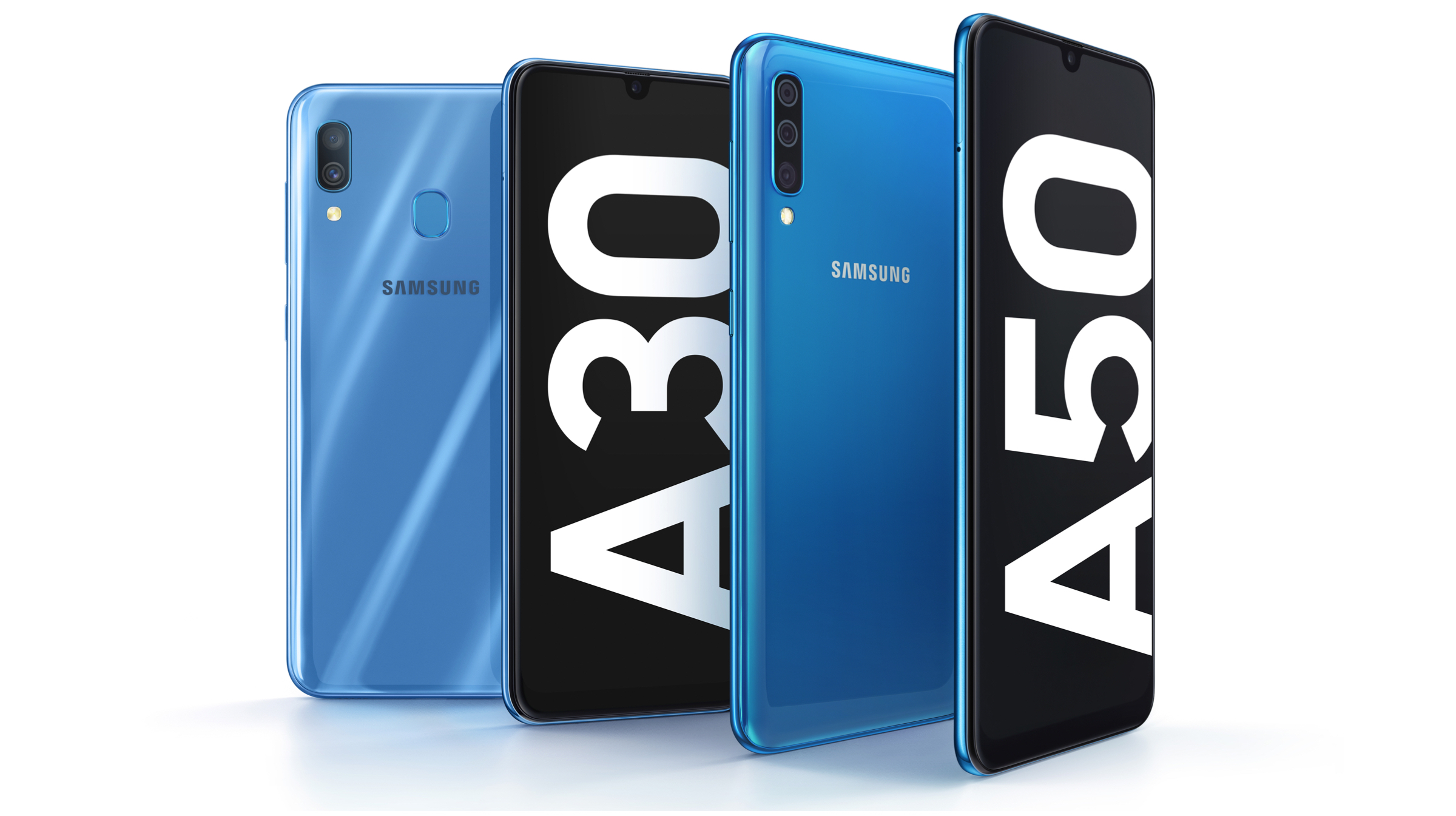
Both, the Galaxy A30 and Galaxy A50 measure 158.5 x 74.7 x 7.7 mm which means that they share a common chassis. The front of the smartphones accommodates a 6.4 inch Infinity U display. The display on the devices uses a Super AMOLED panel that has a resolution of 2340 x 1080 px. Noteworthy, the elder A50 has an on screen fingerprint sensor to securely unlock it. The power button and volume rockers are situated on the right side while the SIM card tray is placed on the left side of both the handsets.
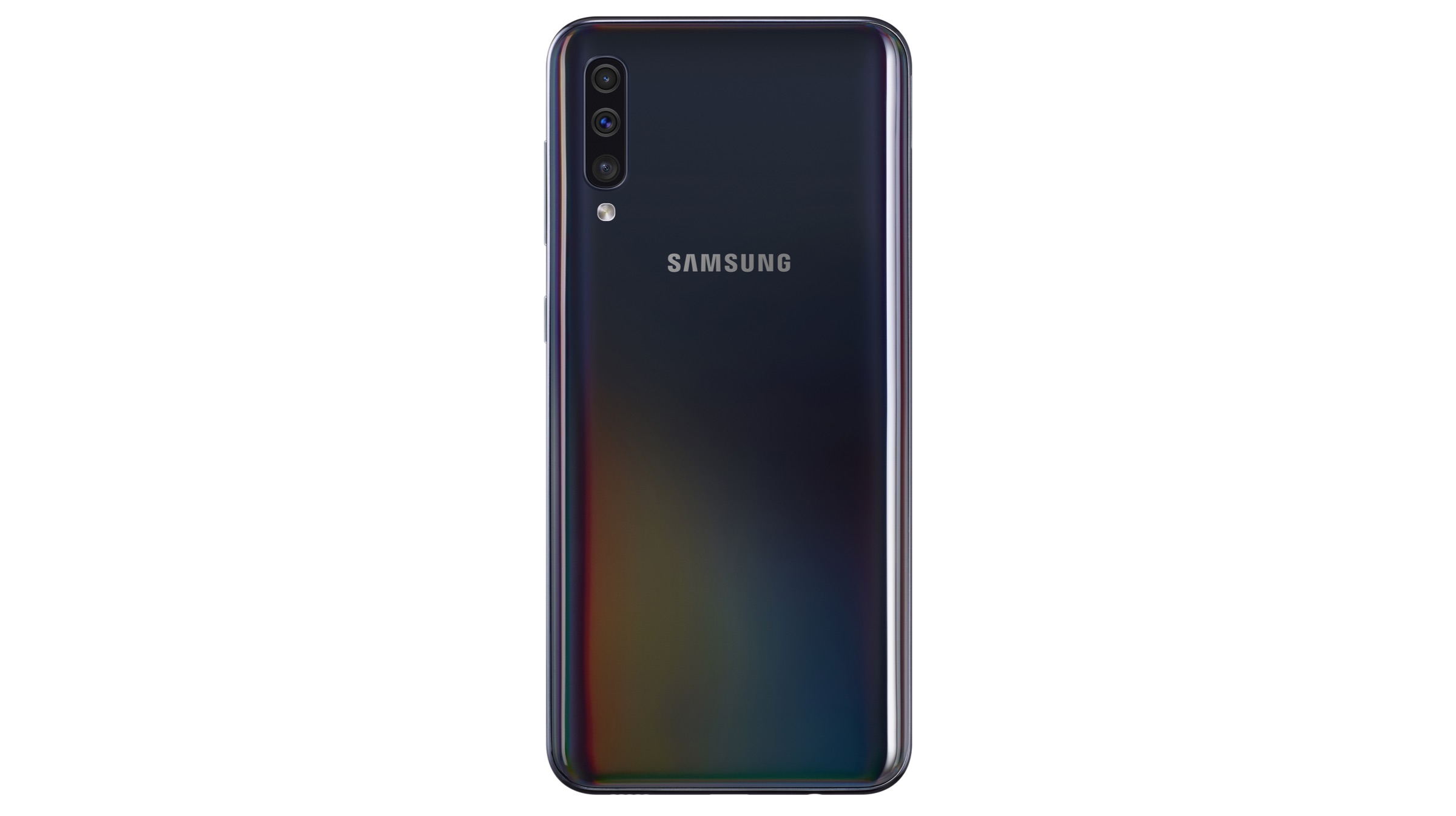
The rear of both the Galaxy A30 and A50 have a ‘3D glasstic’ design which has a light glaring surface. The rear of the smartphones house the Samsung branding and camera setup with LED flash. Distinctively, the Galaxy A50 has a triple rear camera setup which is comprised of a 25 MP + 5 MP + 8 MP camera sensors. While the Galaxy A30 has a dual rear camera setup which is comprised of a 16 MP + 5 MP sensors. Notably, the more affordable Galaxy A30 has a rear mounted fingerprint sensor.
The front facing camera of the Galaxy A50 has a 25 MP sensor while the Galaxy A30 has a 16 MP sensor. Both smartphones are powered by a 4,000 mAh battery which supports fast charging via the bottom mounted USB Type-C port. Under the hood, the Galaxy A50 features the Exynos 9610 chipset while the Galaxy A30 packs Exynos 7904 chipset. The Exynos 9610 chipset consists of four Cortex A73 cores, four A53 cores and Mali G72 MP3 GPU. On the other hand, the Exynos 790 chipset consists of two Cortex A73 cores, six A53 cores and Mali G71 MP2 GPU. Connectivity options on both smartphones include 802.11 ac Wi-Fi, Bluetooth 5.0, GPS and 3.5 mm audio jack.
Galaxy A30 and A50 Price, Variants and Availability
Both Samsung Galaxy A30 and Samsung Galaxy A50 will be available for purchase from 2nd of March through both offline and offline channels. The price for different variants of Galaxy A30 and Galaxy A50 are as follows:
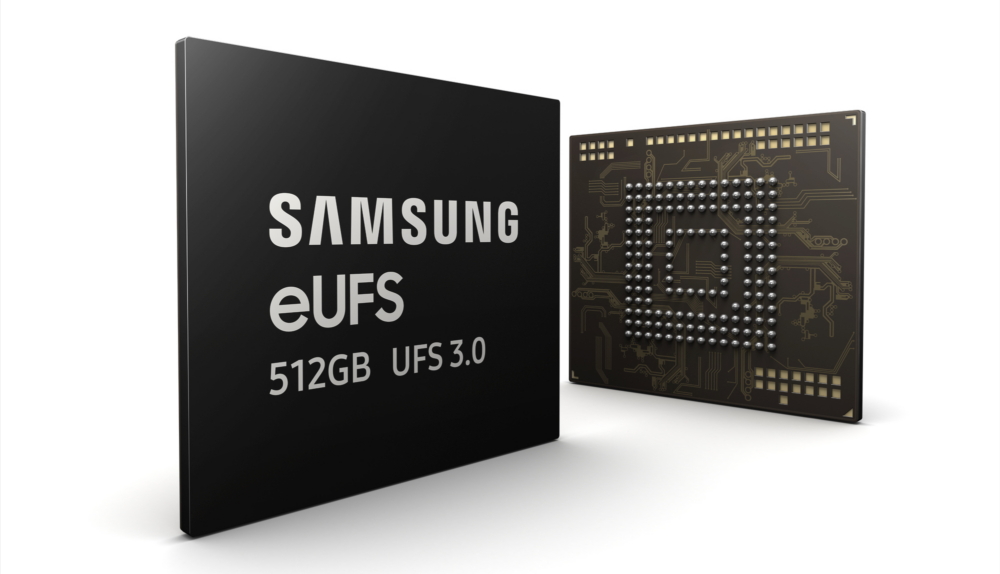
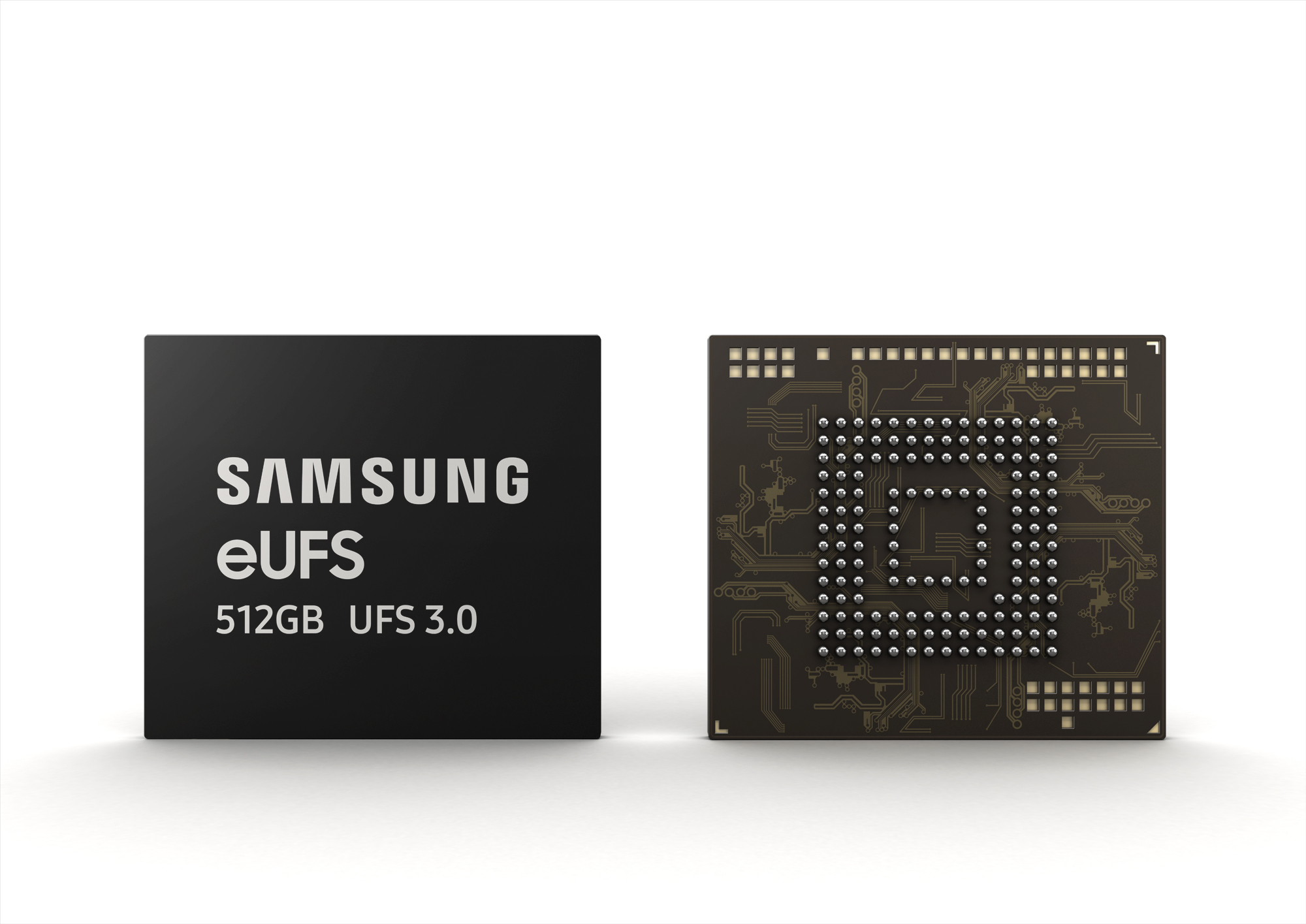
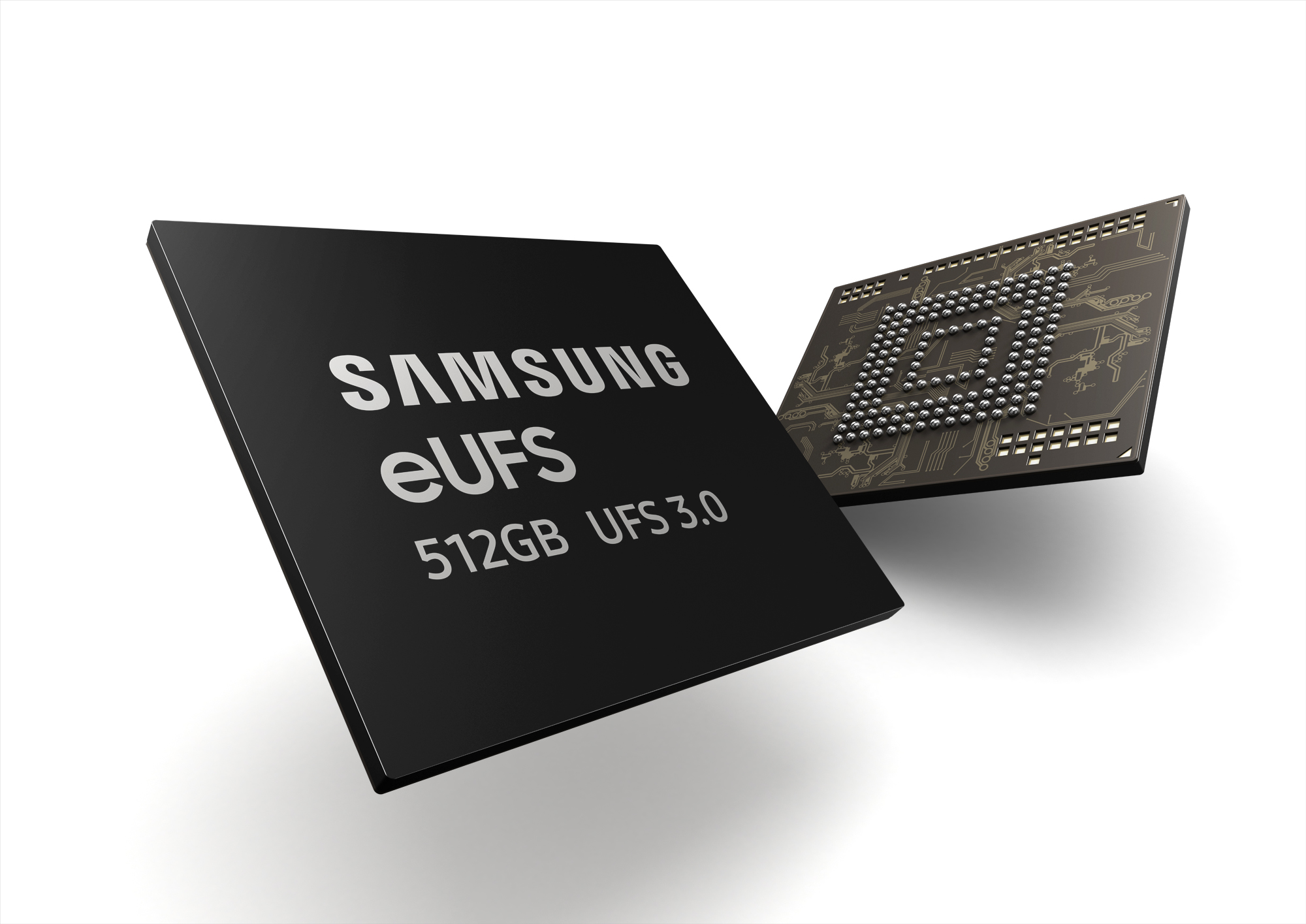
On February 20, Samsung announced the Galaxy Fold, its first foldable smartphone. The device had some groundbreaking features like a foldable display and six cameras in total. One feature that was mentioned in the device was 512GB of eUFS 3.0 storage which would translate to lightning fast read and write speeds on paper. Samsung has announced that it has started the mass production of the Industry’s first 512GB embedded Universal Flash Storage (eUFS) 3.0 for smart device.
Samsung’s 512GB eUFS 3.0 Storage
Samsung’s new eUFS 3.0 storage for mobile devices claims to deliver twice the read and write speeds of the previous generation, which was eUFS 2.1. The company also claims that this new storage solution would make the transfer speeds on mobile devices that were only available on ultra-slim laptops. This would suggest that Samsung is promising SSD level of speeds on its eUFS 3.0 storage. This offers the read speed of up to 2,100MB per second and offers write speed of up to 410MB per second.
Interestingly, Samsung was the first company to produce the first UFS interface with eUFS 2.0 storage in early 2015. This was claimed to be 1.4 times faster than the mobile memory standards at the time, embedded multi-media card 5.1 (eMMC). It is surprising to see the company match up to ultrabook-level of speeds in four years.
Samsung also plans to launch a 128GB version of the eUFS 3.0 storage and it is planning to launch a 256GB and a whopping 1TB version in the second half of the year 2019. The 512GB version will debut with the Galaxy Fold, which goes on sale starting April 26. The mass production of the storage may suggest that it will be available in upcoming Samsung flagships.
Samsung launched the Galaxy M30 in India at an event today, February 27. The smartphone is the latest entrant in the company’s online only, budget Galaxy M lineup. It is accompanied by the Galaxy M10 and the Galaxy M20 that were launched late last month. The Galaxy M30 has an upgraded display, better optics and higher RAM options than the Galaxy M20.
Design & Features
The Samsung Galaxy M30 measures 159 x 75.1 x 8.4mm and weighs 175g. The smartphone features a polycarbonate body and an edge to edge display with minimal bezels. Its display is an Infinity-U, 6.4 inch Super AMOLED panel with a resolution of 2220 x 1080 px. The Galaxy M10 and Galaxy M20 have a PLS TFT display, which is considered inferior to an AMOLED panel. The smartphone has a rear mounted fingerprint sensor and also supports facial unlock technology. The device has a triple rear camera setup consisting of a 13MP f/1.9 sensor combined with a 5MP f/2.2 ultra-wide sensor and a 5MP f/2.2 depth sensor for portrait shots. For selfies, there is a 20MP f/2.0 sensor housed in the Infinity-U notch.
Under the hood, the Galaxy M30 runs on the Exynos 7904 SoC which is manufactured using 14nm fabrication process. The chipset has an Octa-core CPU and a Mali G71 MP2 GPU. Interestingly, this is the same processor that is present on the Galaxy M20. The Galaxy M30 is powered by a massive 5000mAh battery with support for 15W fast charging via the bottom mounted USB Type-C port. The device is available in two colours, Gradation Black and Gradation Blue. For memory and storage, the device will be available in two variants:
The Galaxy M30 has been priced at Rs. 14,990 for the 4GB+64GB variant. The 6GB+64GB variant will retail for Rs. 17,990. It will be sold exclusively via Amazon India and Samsung’s official website starting March 7.
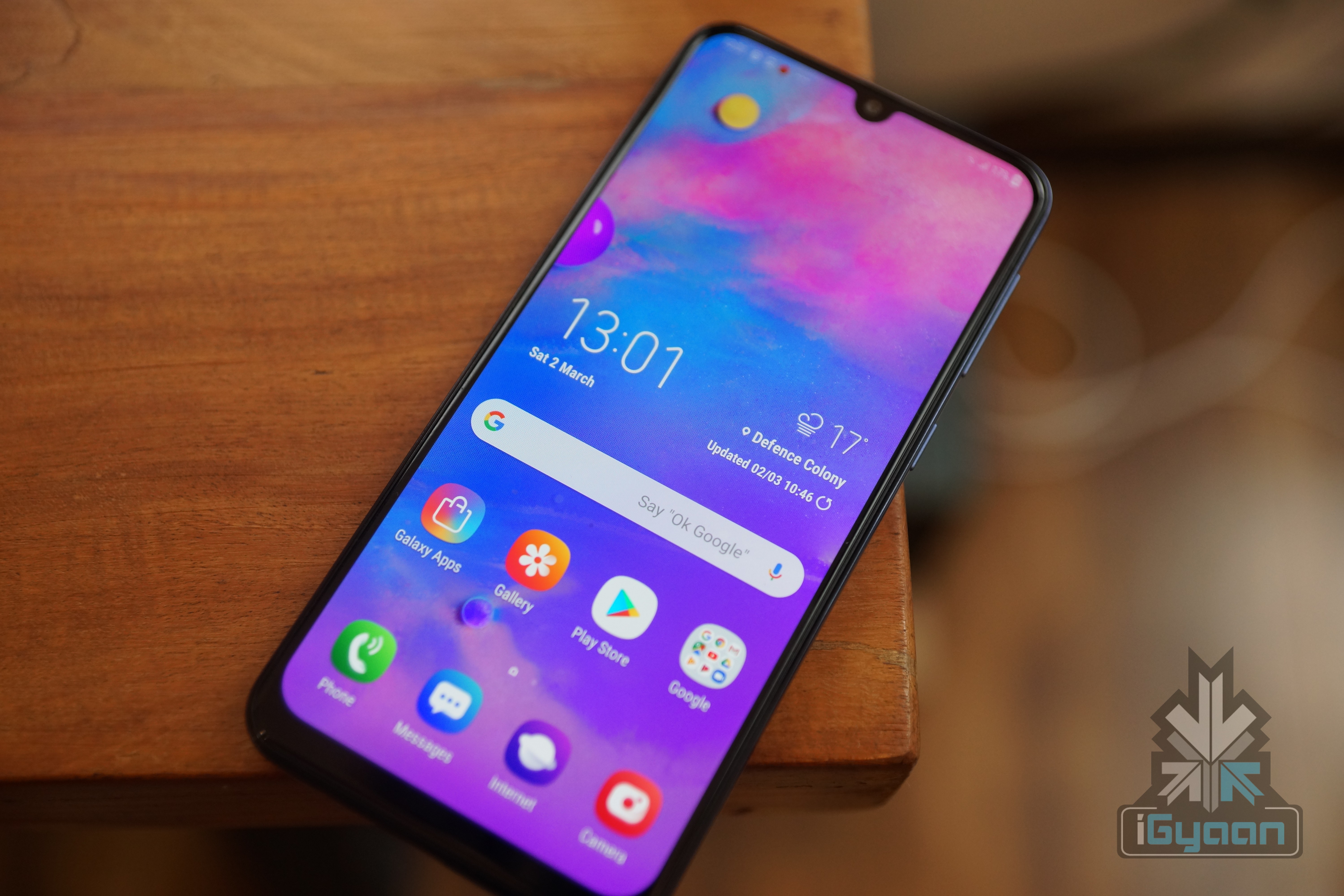
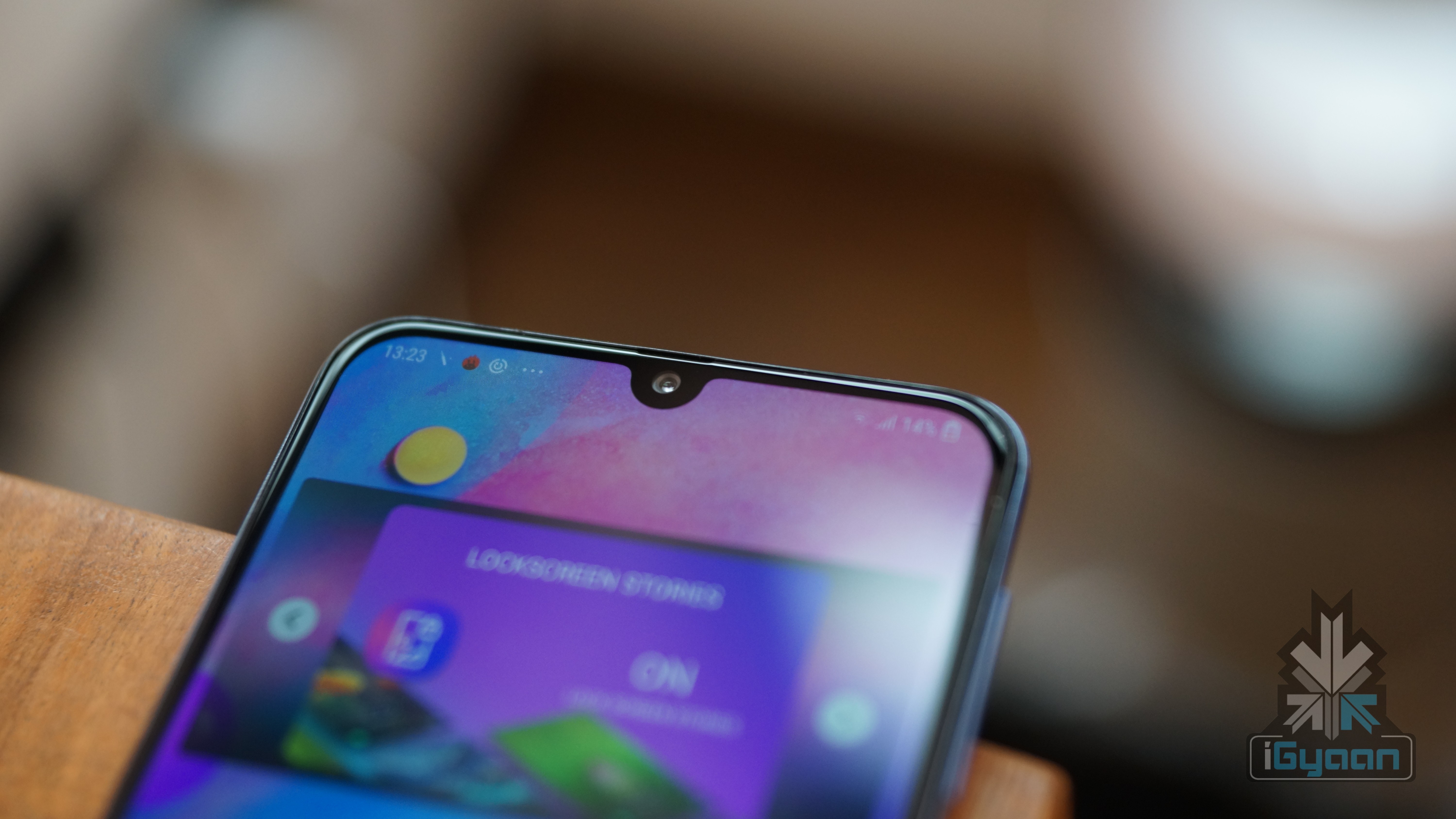
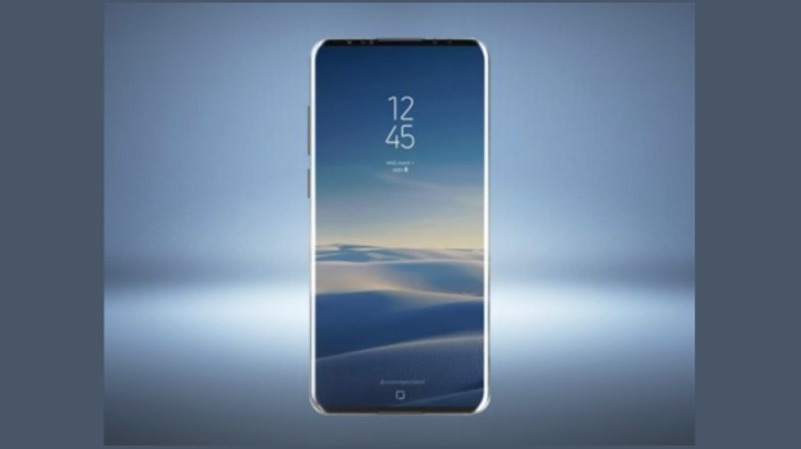
Samsung is already working on its second flagship smartphone for the year 2019, the Galaxy Note 10. As per reports, the device will sport a Quad rear Camera setup. The device has the model number SM-N975F and upon launch, it will be Samsung’s second major smartphone in 2019 after the Galaxy S10 5G.
Speculations And Rumours
Rumours have been around regarding Samsung rebranding its lineup later in 2019. Because of the same reason, it can’t be confirmed whether the device will be called the Note 10, but it will surely succeed the Note 9 which was released in the year 2018. The model number with the digit ‘5’ is unusual and off-track for Samsung phones, which usually have their model numbers ending with ‘0’. This may imply that the device may launch with a 5G variant alongside a 4G LTE model.
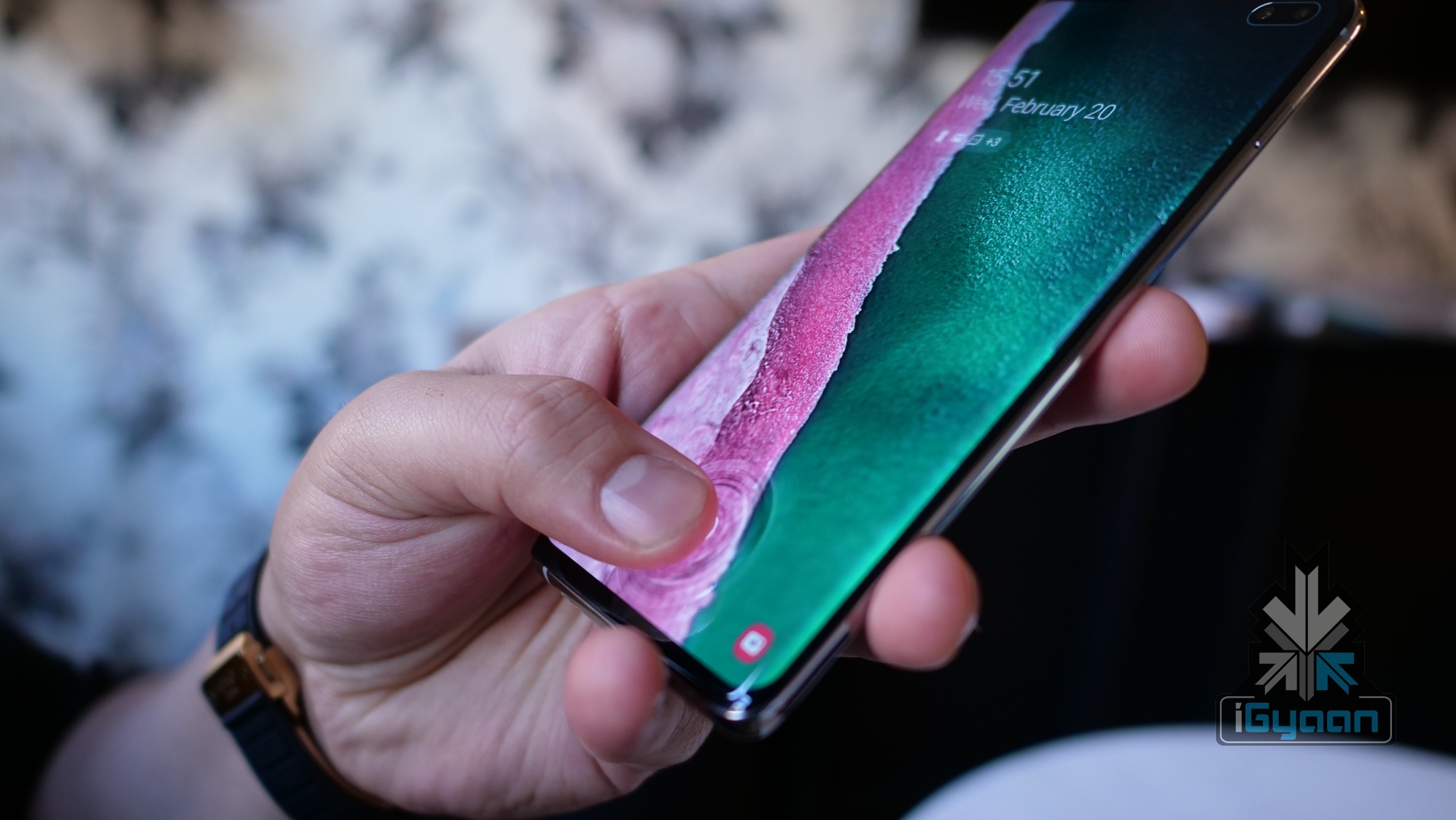
The company is a strong player when it comes to smartphone cameras, and the Samsung Galaxy Note 10 is expected to bring some innovative camera features to the table. The device may run on the Exynos 9820 or Snapdragon 855, which are the flagship chipsets in the smartphone arena right now. It will supposedly feature an in-display ultrasonic fingerprint scanner, which was first introduced with the Samsung Galaxy S10 and S10+.
Expected Features
The Galaxy Note 10 is expected to have an Infinity-O display which will allow Samsung to pack a high screen to body ratio display in a compact chassis. It is also reported to have a new and improved S Pen stylus. A patent granted to Samsungexhibits a stylus that has an inbuilt camera with optical zoom capability.
All the leaks and rumours about the upcoming device will only be cleared once the company officially announces the device. Nevertheless, we will have to wait patiently as the Note 10 is unlikely t launch before the second half of the year.
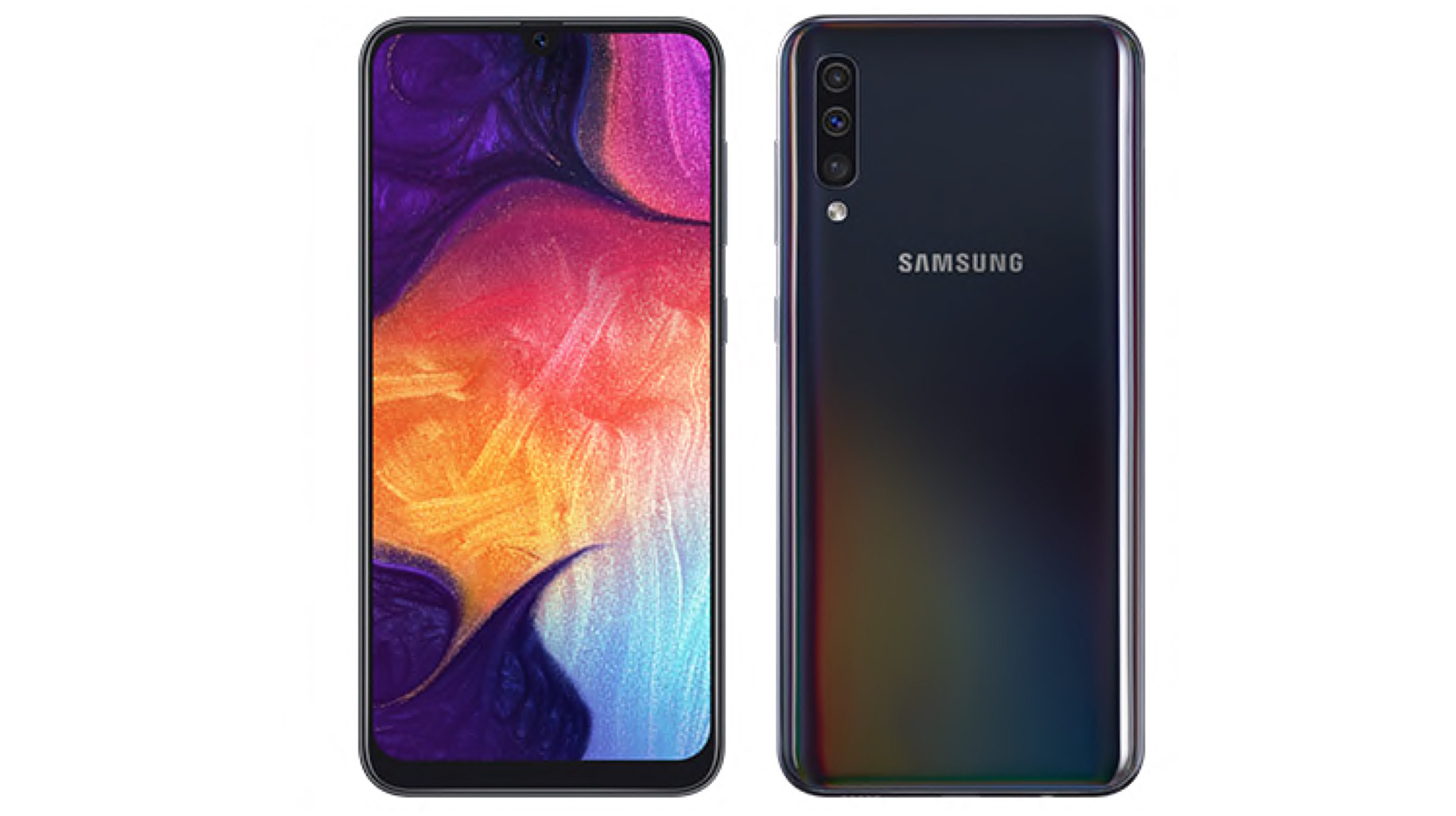
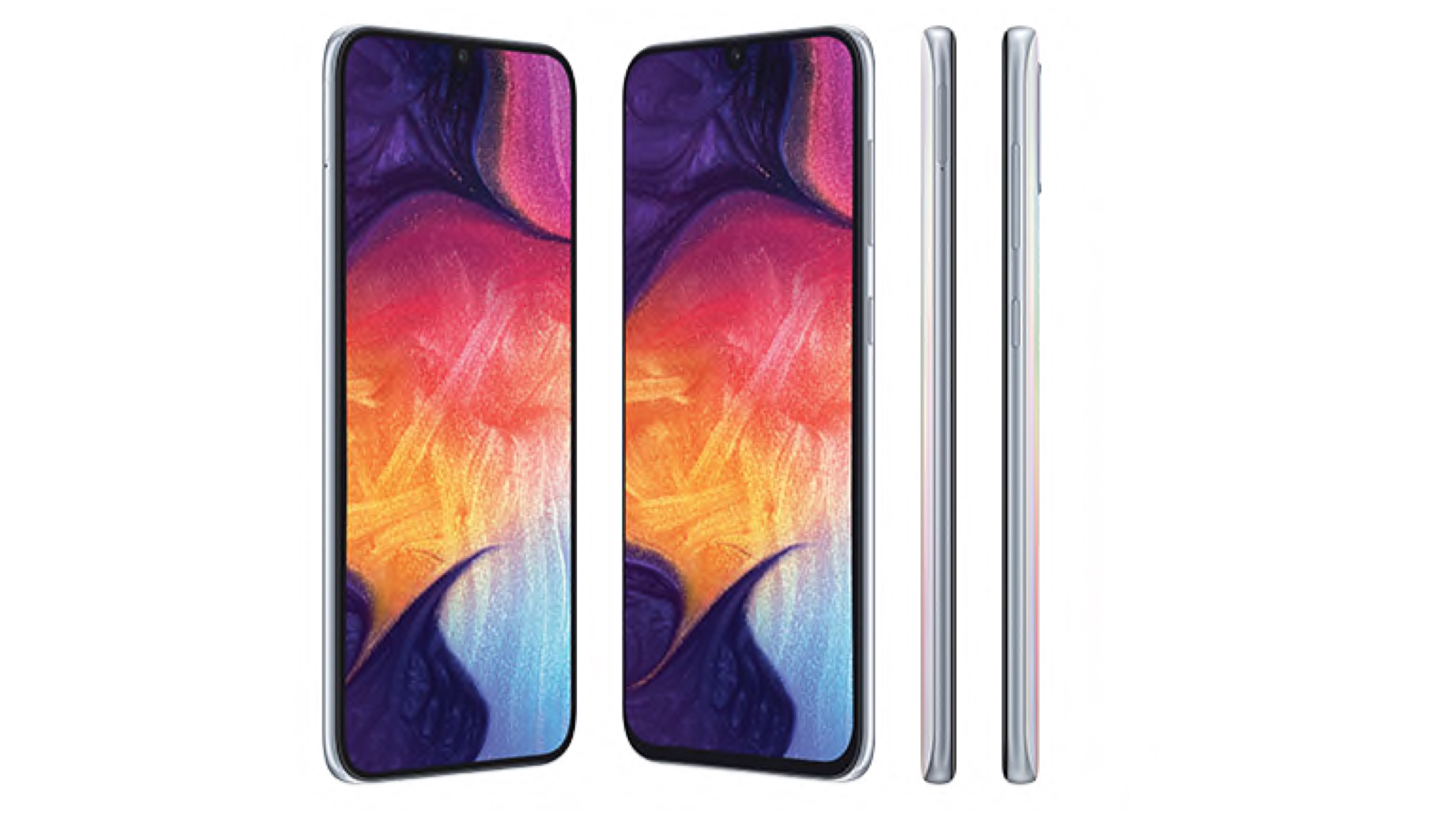
Samsung Galaxy A50 is the latest addition to the mid-range A-series by the South Korean electronics giant Samsung. The smartphone has some modern specs and a unique design. It features an in-display fingerprint sensor, making it the only device from Samsung other than the Galaxy S10 and the Galaxy S10+ to have this feature.
Samsung Galaxy A30 is the latest addition to the A series lineup. The device has an Infinity-U display with a rear-mounted fingerprint scanner. The device sports a dual rear camera setup and a single 16 MP front camera housed in the notch. The device features an Exynos 7885 chipset with an octa core processor.
Samsung fans had their eyes on the Galaxy S10 lineup from the very start of the MWC. But the Korean electronics company had more to offer at the event, which they did by unveiling two new devices from the Galaxy A series, the Galaxy A30 and A50. While these phones offer a step-down from the S10 series, they are packed with some neat features to impress Samsung users out there.
Samsung Galaxy A30
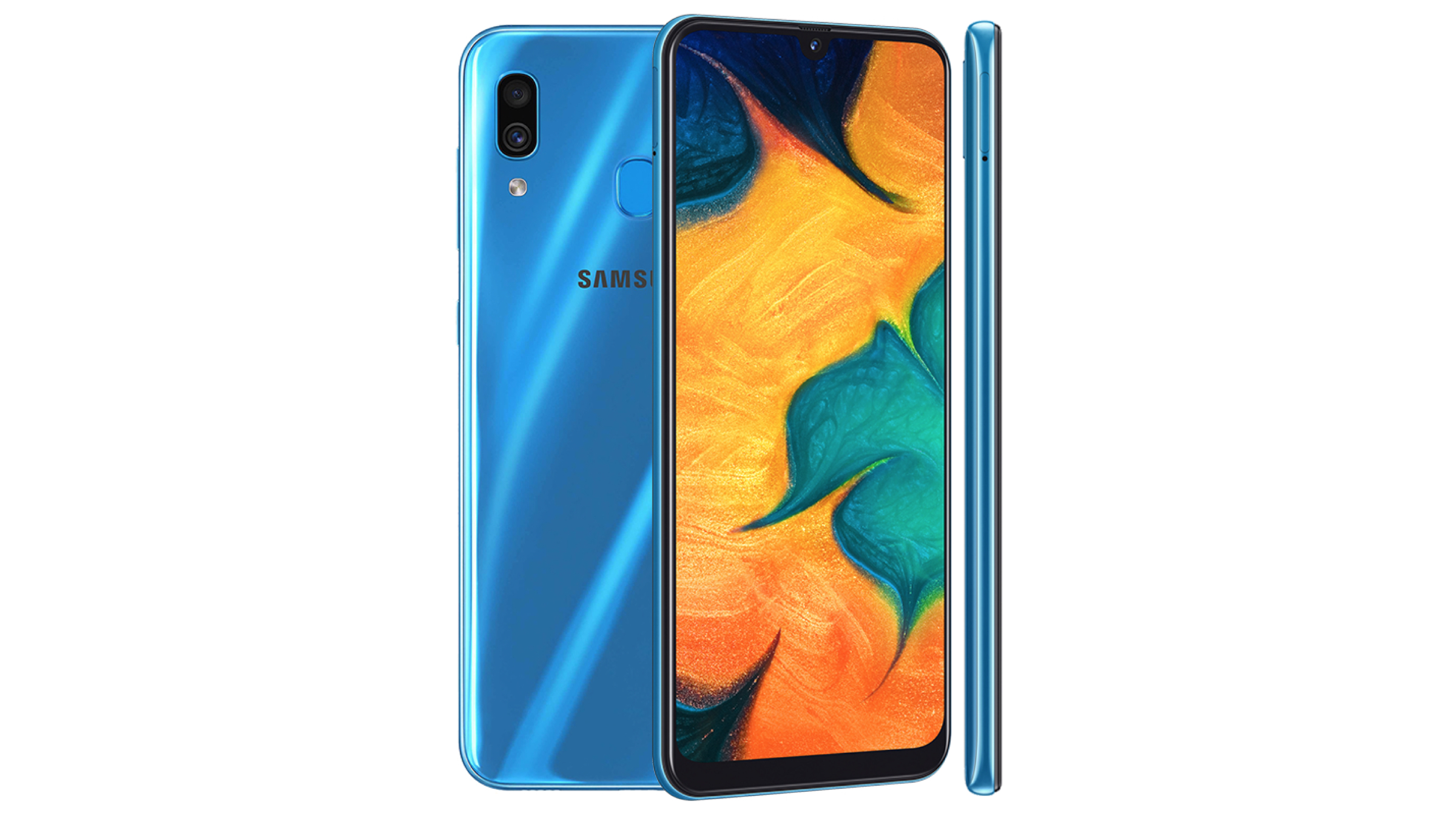
The Samsung Galaxy A30 has a 6.4 inch Super AMOLED Infinity-U display with an 85.1% screen-to-body-ratio. The screen has a resolution of 2340 x 1080 px with a 19.5:9 aspect ratio and a pixel density of 403 ppi. The device combines rounded edges with a front glass panel and a plastic back. The Galaxy A30 retains the 3.5 mm headphone jack. The smartphone runs on the 14nm Exynos 7885 chipset consisting of an octa-core CPU and a Mali-G71 GPU. It is available in 3GB and 4GB RAM variants with 32GB and 64GB of storage options respectively. Internal memory is further expandable via a dedicated microSD slot (up to 512GB). The Galaxy A30 runs on Android 9.0 (Pie)
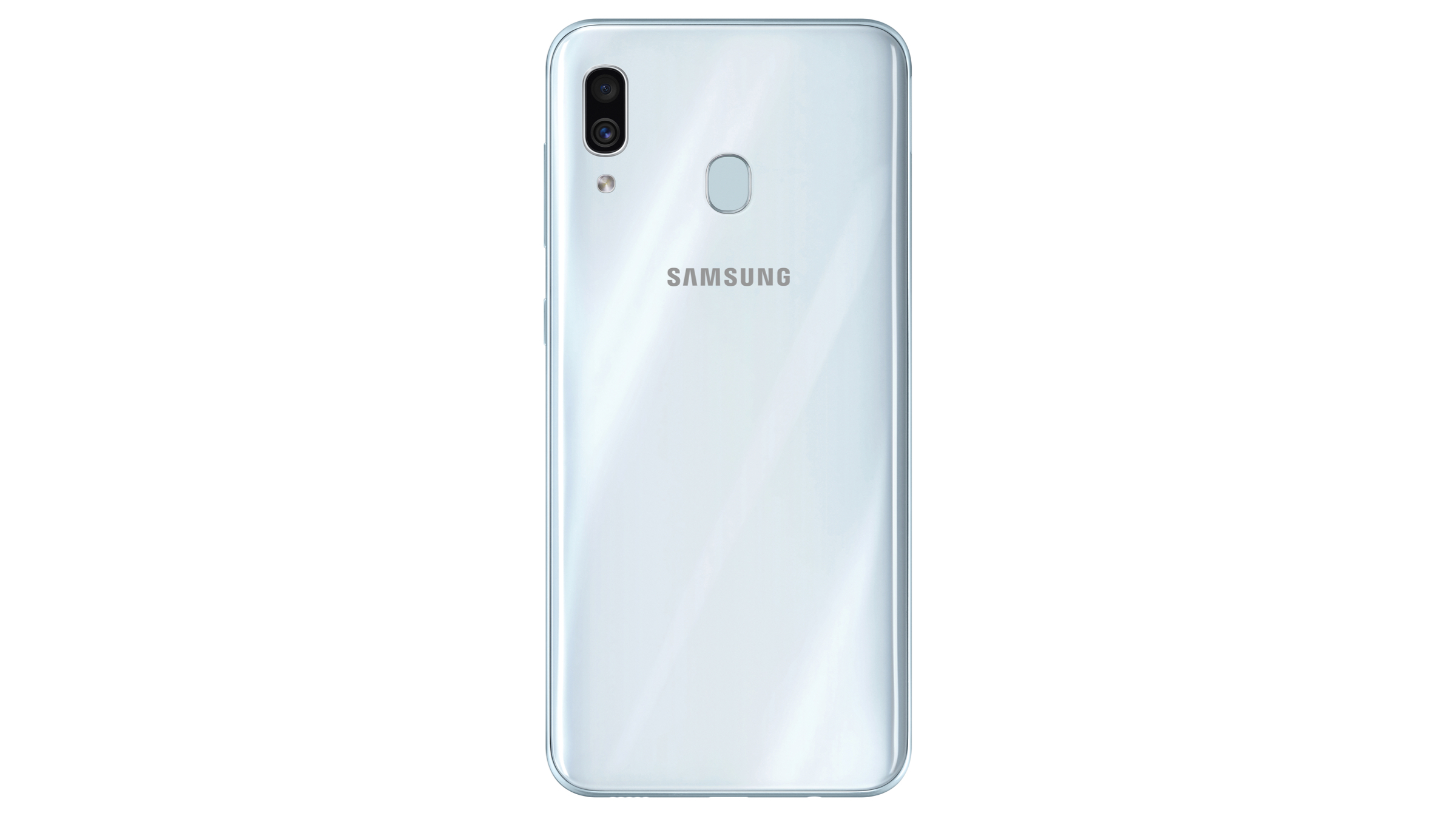
The handset has a dual camera setup on the back, which comprises of a 16MP (f/1.7) sensor and a 5MP (f/2.2) sensor. The 16MP (f/2.0) front camera is housed in the notch and is positioned below the earpiece. The Galaxy A30 has a 4,000 mAh battery, which can be charged via the USB Type-C connector located at the bottom of the handset, right next to the loudspeaker grille and audio jack. The smartphone is also IP68 certified which makes it dust and water resistant. Furthermore, the device sports a rear mounted fingerprint scanner and is available in 3 colour options, Black, White and Blue.
Samsung Galaxy A50
The Samsung Galaxy A50 is the elder sibling of the A30. It sports a similar 6.4 inch Super AMOLED Infinity-U display with an 84.9% screen-to-body-ratio. With a resolution of 2340 x 1080 px and a 19.5:9 aspect ratio, the display panel has a pixel density of 403 ppi. Samsung claims that the back of the device has a “3D glasstic” design, which is a ‘combination’ of glass and plastic. Like the Galaxy A30, it also has IP68 dust and water resistance. The smartphone runs on the 10nm Exynos 9610 chipset consisting of an octa-core CPU and a Mali-G72 MP3 GPU. It is available in 4GB and 6GB RAM variants with 64GB and 128GB of storage options respectively. Internal memory is expandable via a dedicated microSD slot (up to 512GB). The Galaxy A50 runs on the lates Android 9.0 Pie which is skinned with Samsung’s UI.
The handset has a triple camera setup on the back, which consists of a 25MP (f/1.7) sensor, an 8MP (f/2.2) ultrawide sensor and a third 5MP (f/2.2) depth sensor. The 25MP (f/2.0) front camera is housed in the notch and is set below the earpiece. The Galaxy A50 is powered by a large 4,000 mAh battery, which can be charged via the USB Type-C connector located at the bottom of the handset, right next to the loudspeaker grille and a 3.5 mm audio jack. Noteworthy, the device features an in-display fingerprint scanner, unlike the Galaxy A30. It is available in four colour options which include Black, White, Blue and Coral.
Samsung will launch the Galaxy A50 in Netherlands for a price of EUR 349 (roughly Rs. 28,100) in March. The price for the A30 is not out in the open yet, but the devices can be expected to roll-out soon.

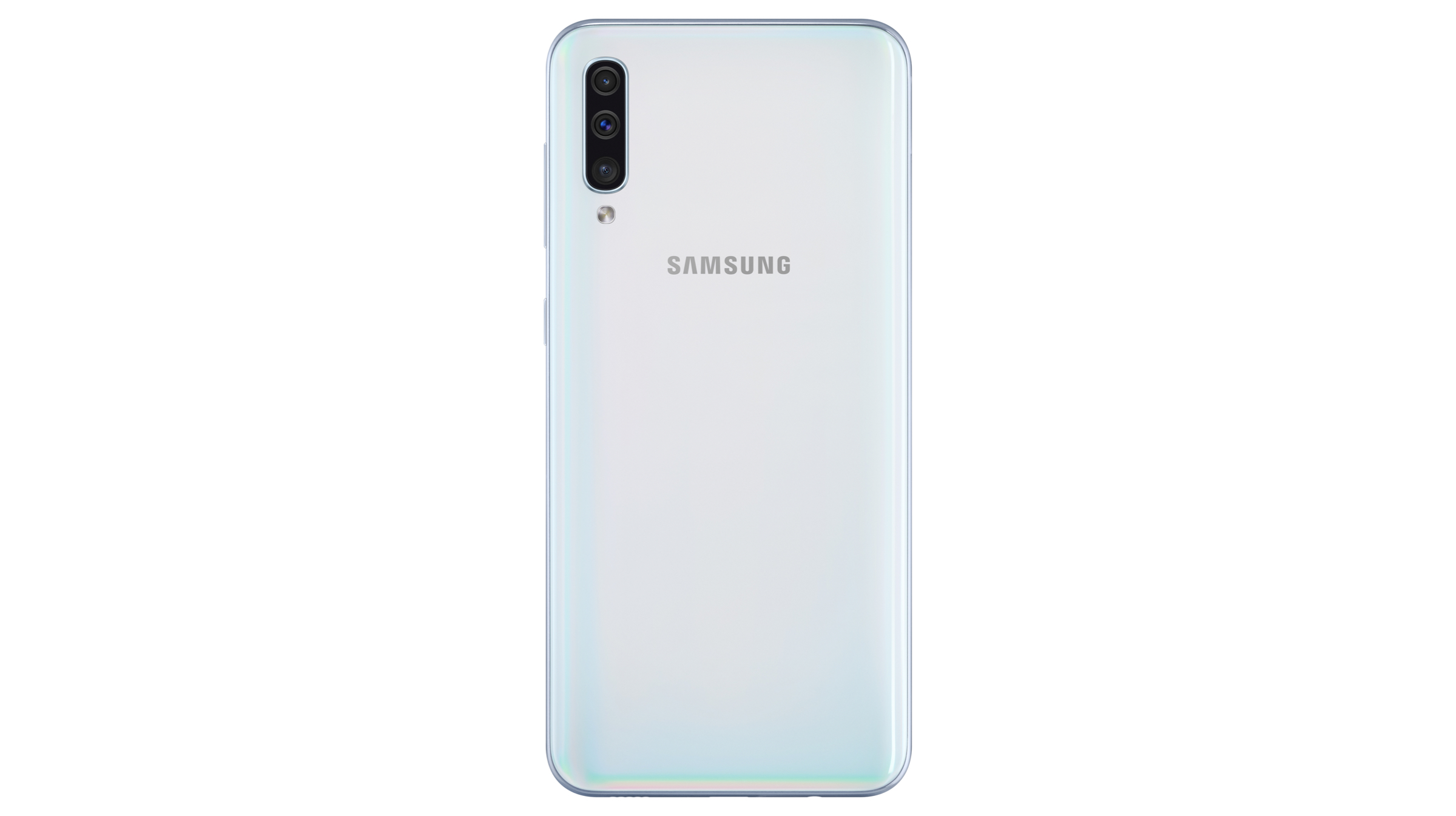
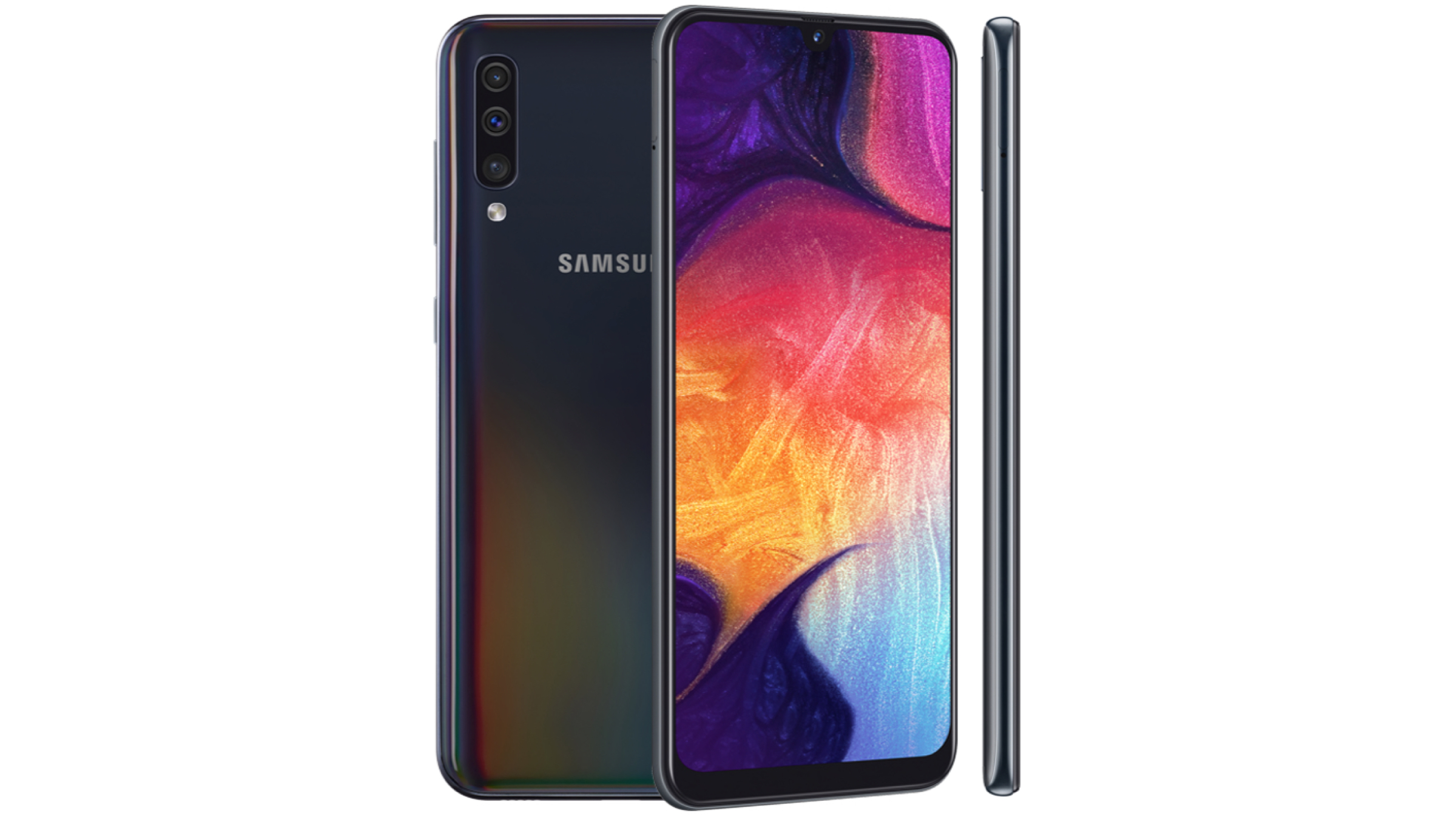
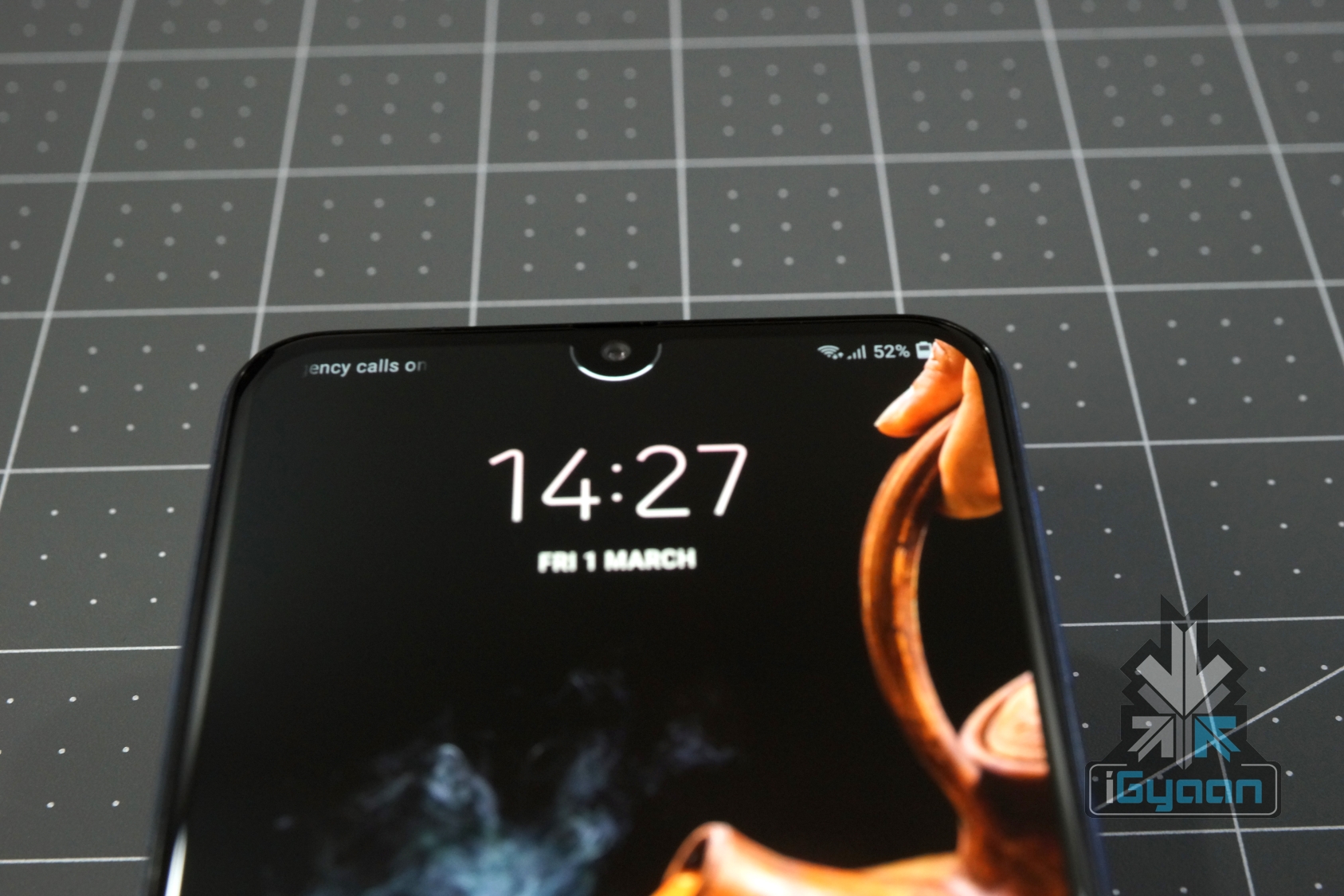


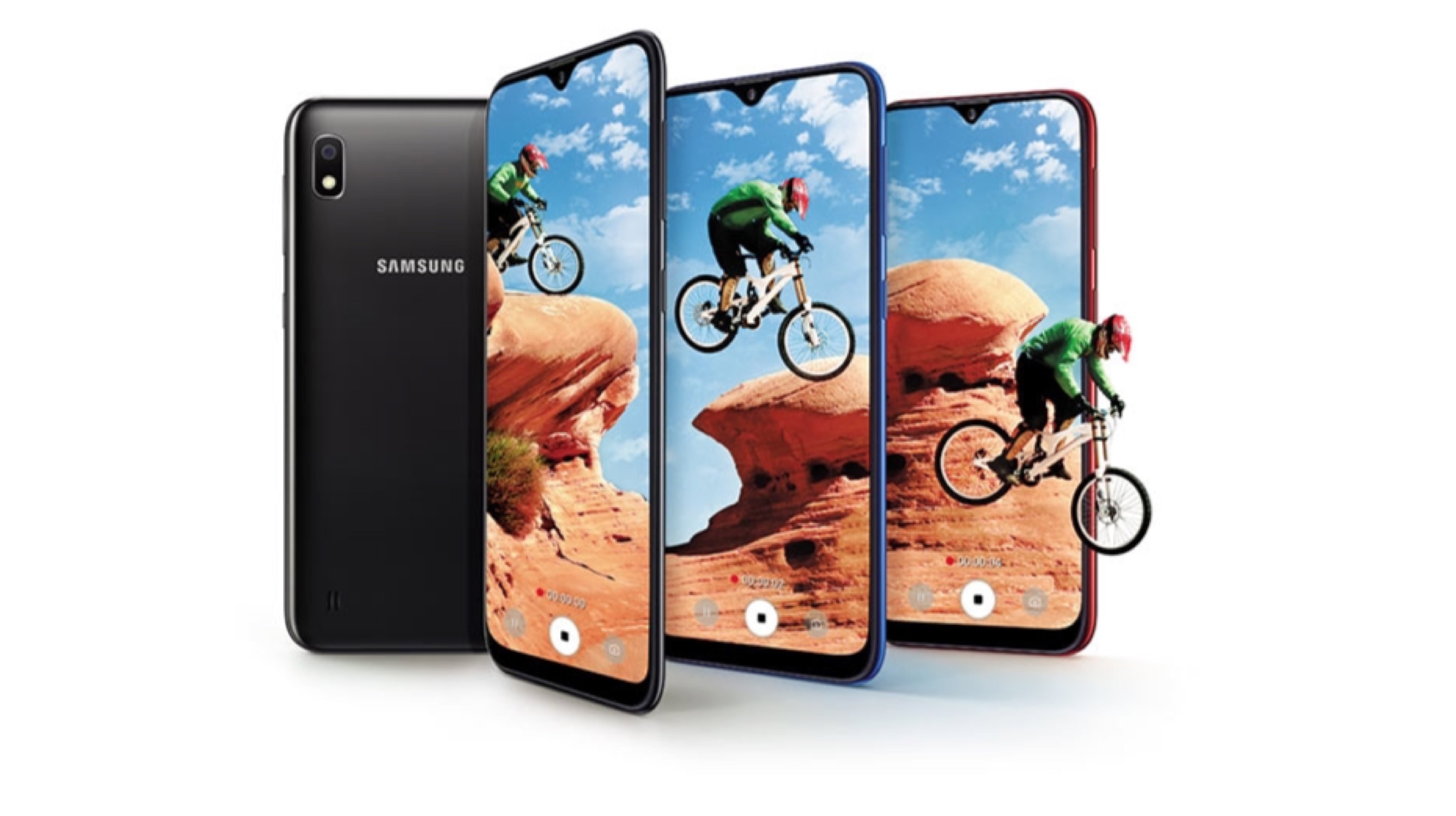
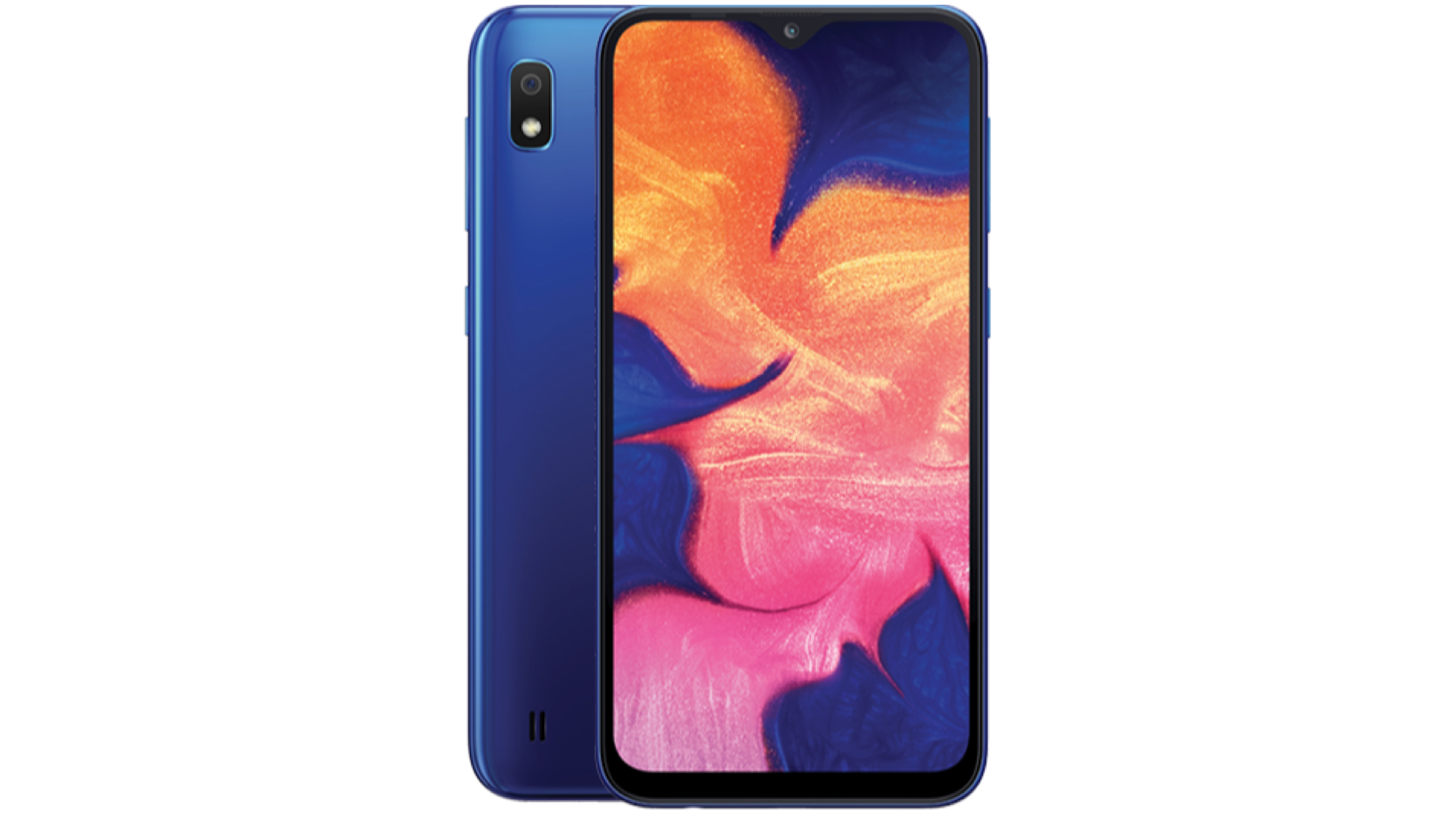 The Samsung Galaxy A10 features a 6.2 inch HD+ Infinity-V display. The smartphone measures at 155.6 x 75.6 x 7.94 mm. It sports a glossy plastic back panel, with a waterdrop notch on the front and a single camera module on the back. The speaker is present on the back near the bottom left corner of the panel. The right side of the smartphone houses the volume rockers and the power button, while the left side houses the SIM card tray. The bottom of the Galaxy A10 is occupied by a 3.5 mm headphone jack and micro USB 2.0 port which can be used for charging and data syncing.
 The Galaxy A10 packs the Exynos 7884 chipset, which comprises of an octa-core CPU. The device is available with 2 GB RAM and 32 GB of internal storage, which is expandable up to 512 GB via the dedicated microSD card slot. The smartphone runs on Android 9 (Pie) out of the box, with Samsung’s One UI on top. It sports a single 13 MP (f/1.9) rear camera with an LED flash and a single 5 MP (f/2.0) front facing selfie camera. The Galaxy A10 is powered by a 3,400 mAh battery.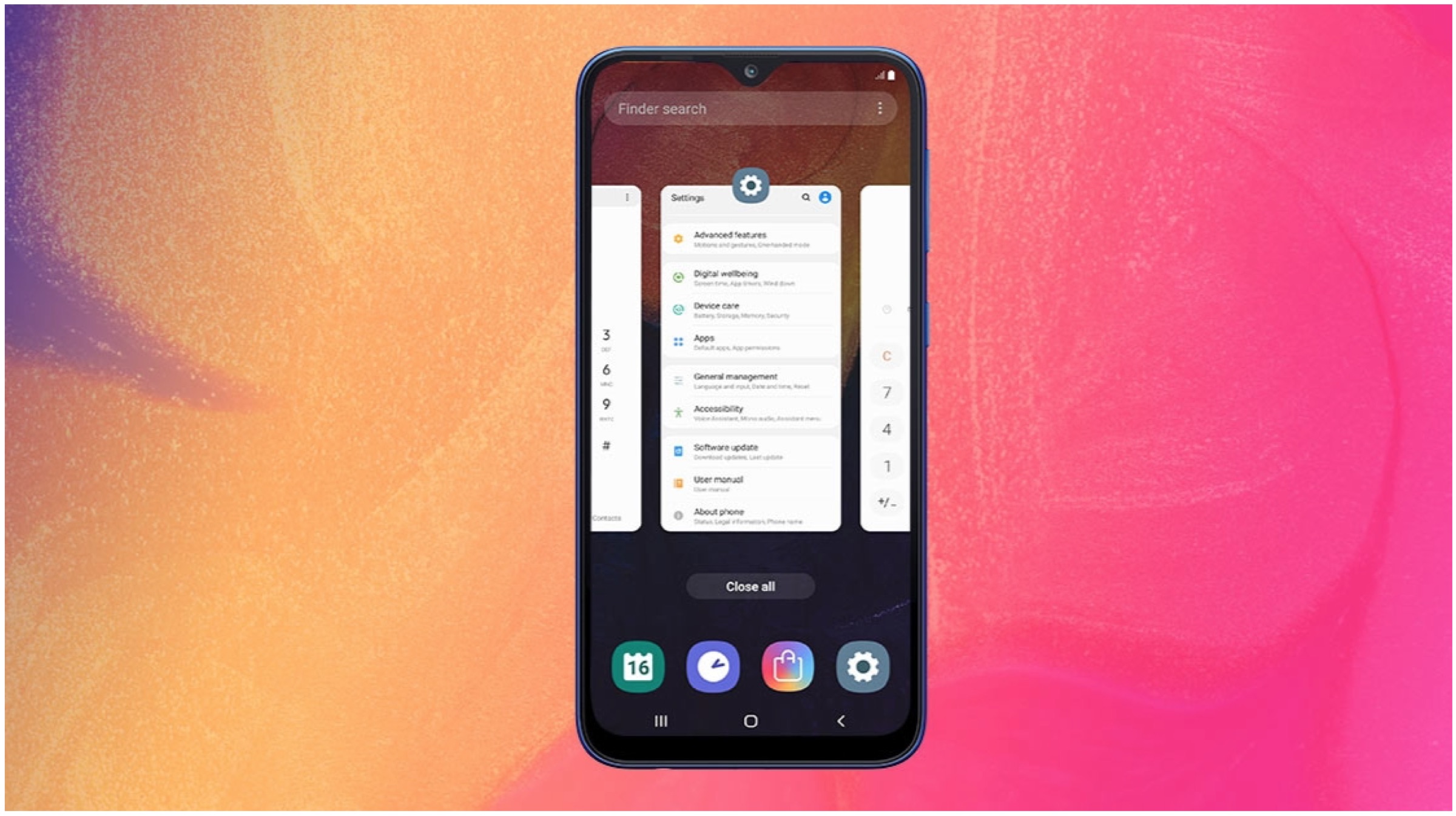
 Rumours have been around regarding Samsung rebranding its lineup later in 2019. Because of the same reason, it can’t be confirmed whether the device will be called the Note 10, but it will surely succeed the Note 9 which was released in the year 2018. The model number with the digit ‘5’ is unusual and off-track for Samsung phones, which usually have their model numbers ending with ‘0’. This may imply that the device may launch with a 5G variant alongside a 4G LTE model.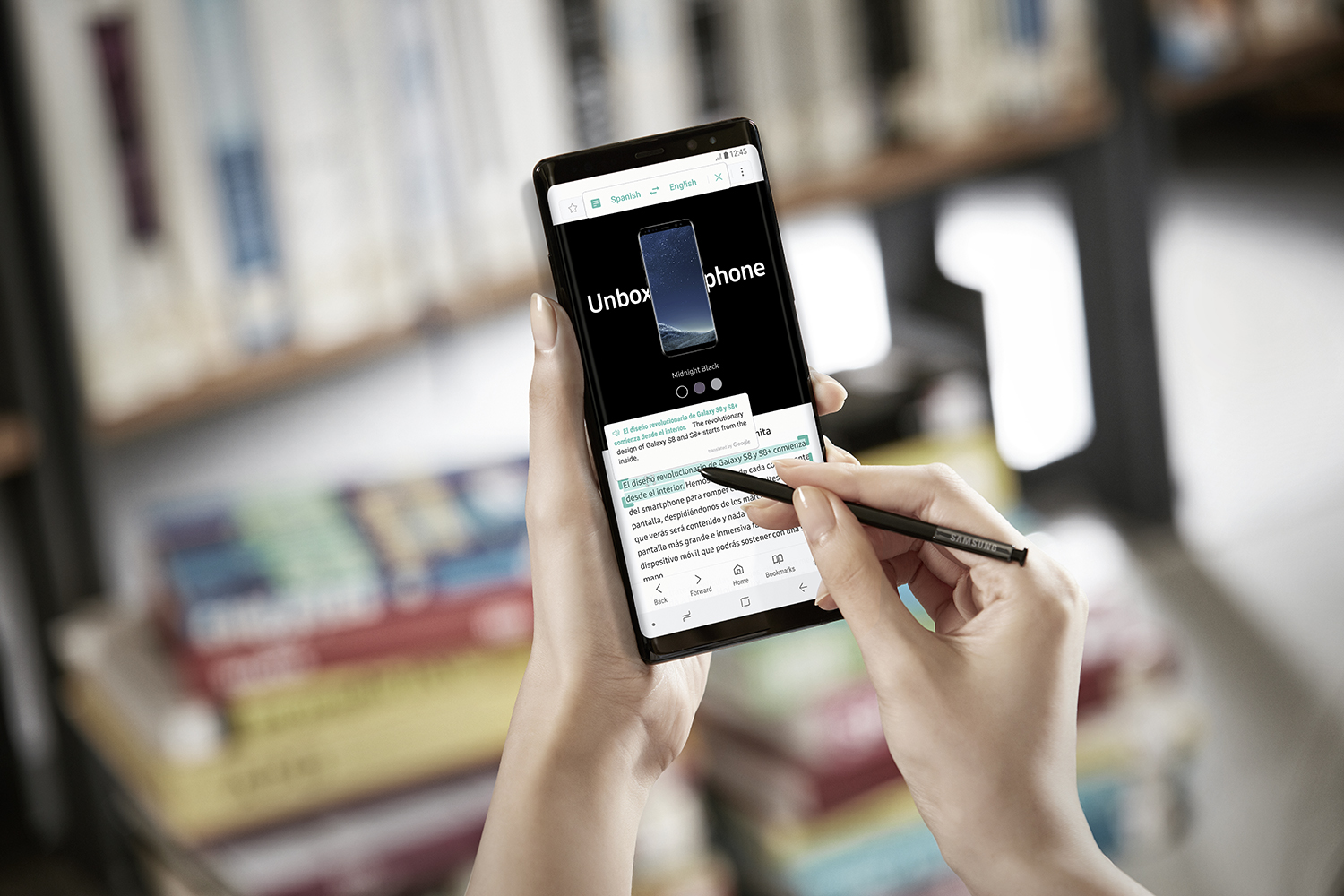

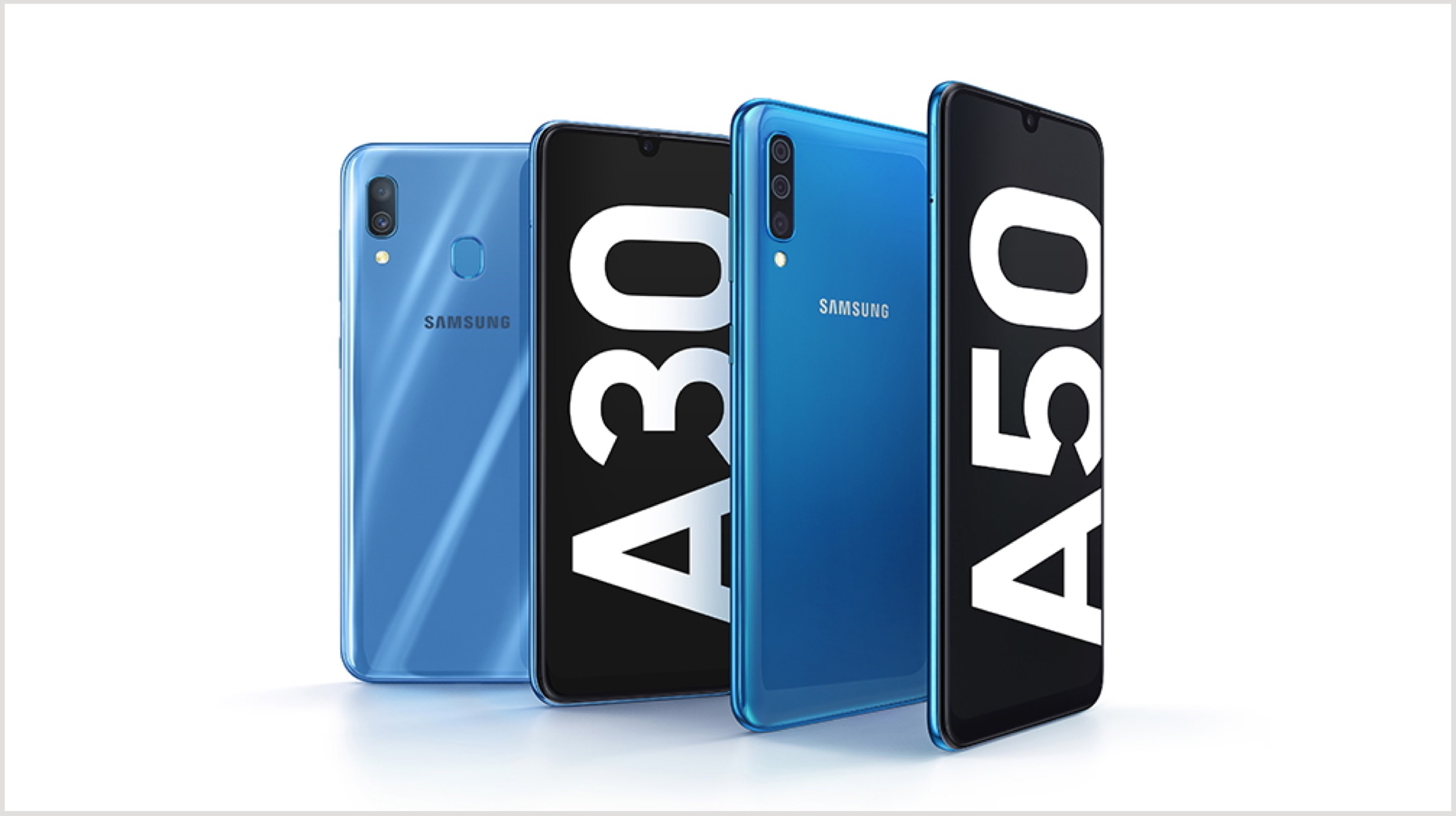
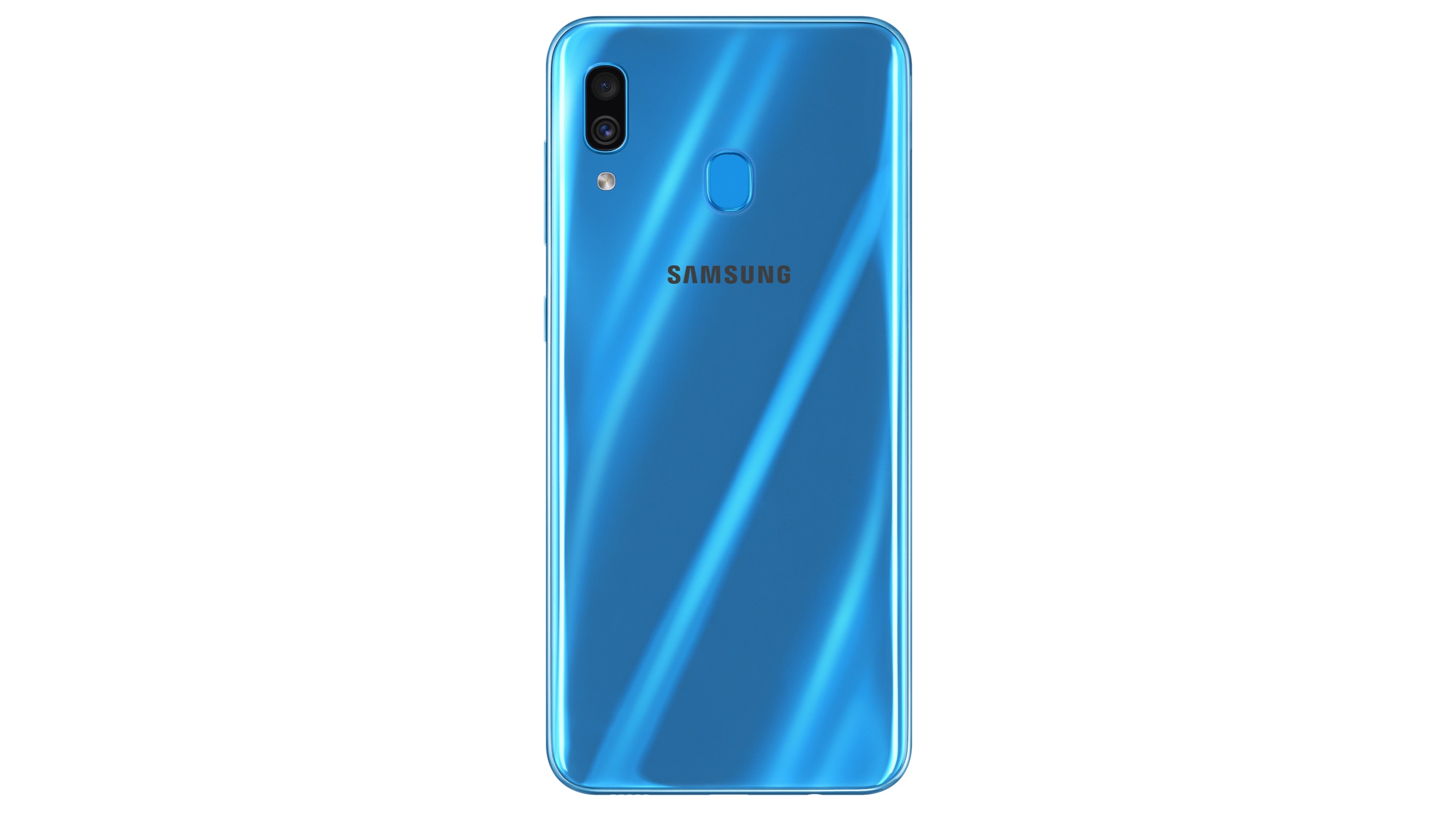 The handset has a dual camera setup on the back, which comprises of a 16MP (f/1.7) sensor and a 5MP (f/2.2) sensor. The 16MP (f/2.0) front camera is housed in the notch and is positioned below the earpiece. The Galaxy A30 has a 4,000 mAh battery, which can be charged via the USB Type-C connector located at the bottom of the handset, right next to the loudspeaker grille and audio jack. The smartphone is also IP68 certified which makes it dust and water resistant. Furthermore, the device sports a rear mounted fingerprint scanner and is available in 3 colour options, Black, White and Blue.
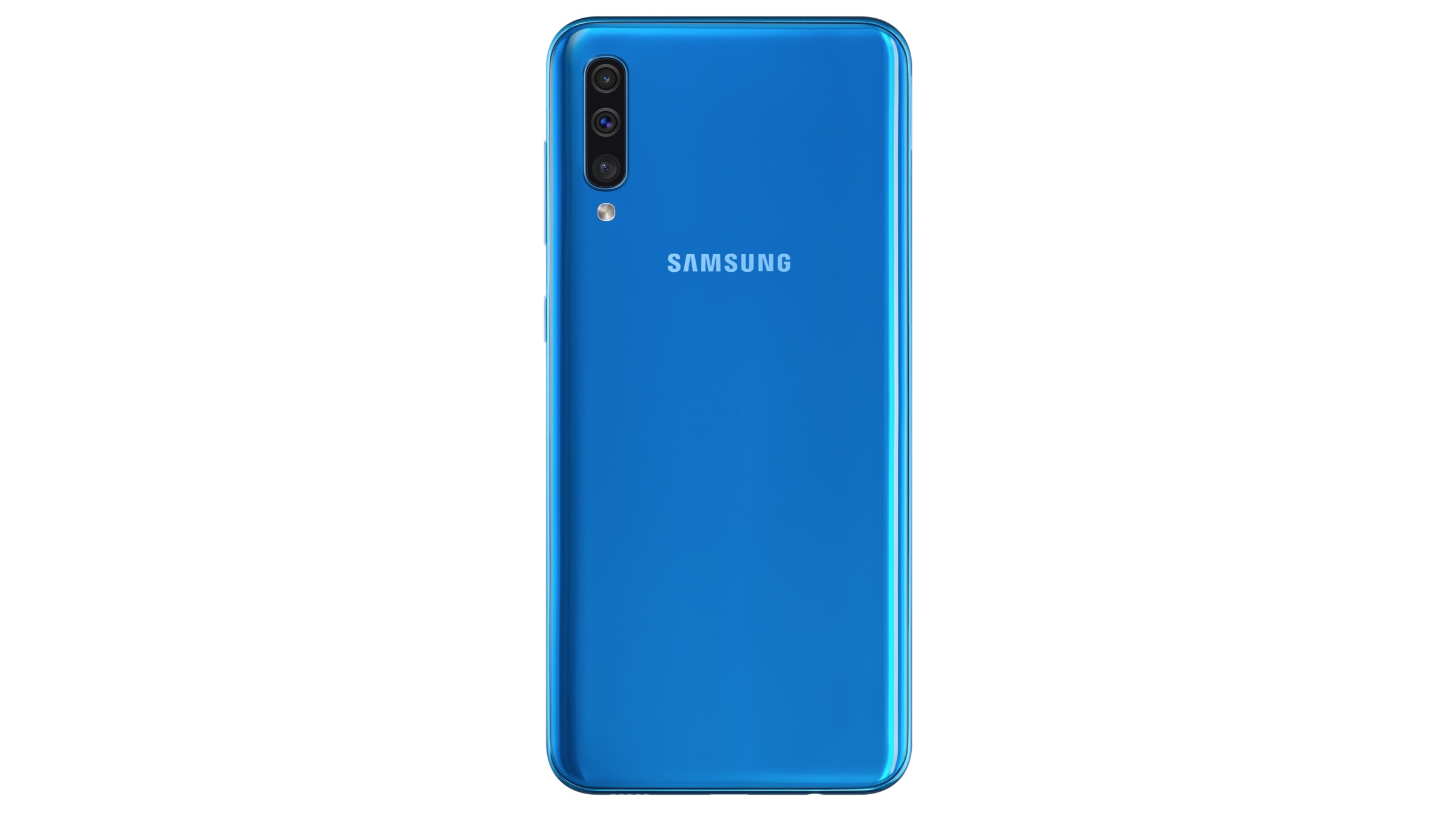 The handset has a triple camera setup on the back, which consists of a 25MP (f/1.7) sensor, an 8MP (f/2.2) ultrawide sensor and a third 5MP (f/2.2) depth sensor. The 25MP (f/2.0) front camera is housed in the notch and is set below the earpiece. The Galaxy A50 is powered by a large 4,000 mAh battery, which can be charged via the USB Type-C connector located at the bottom of the handset, right next to the loudspeaker grille and a 3.5 mm audio jack. Noteworthy, the device features an in-display fingerprint scanner, unlike the Galaxy A30. It is available in four colour options which include Black, White, Blue and Coral.
 Also Read: