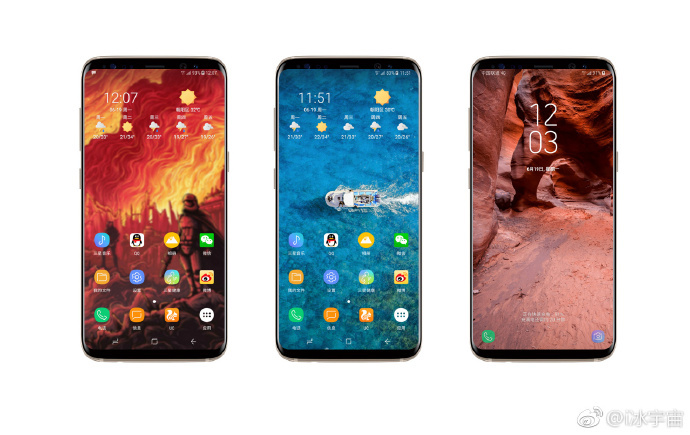
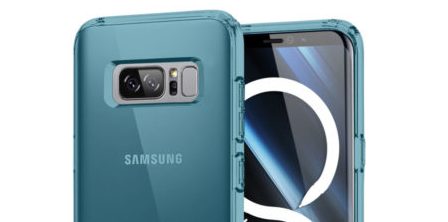
Tag: samsung galaxy note 8

  • Samsung Smartphones With Always-On Displays Get Support For GIFs

    Samsung Smartphones With Always-On Displays Get Support For GIFs

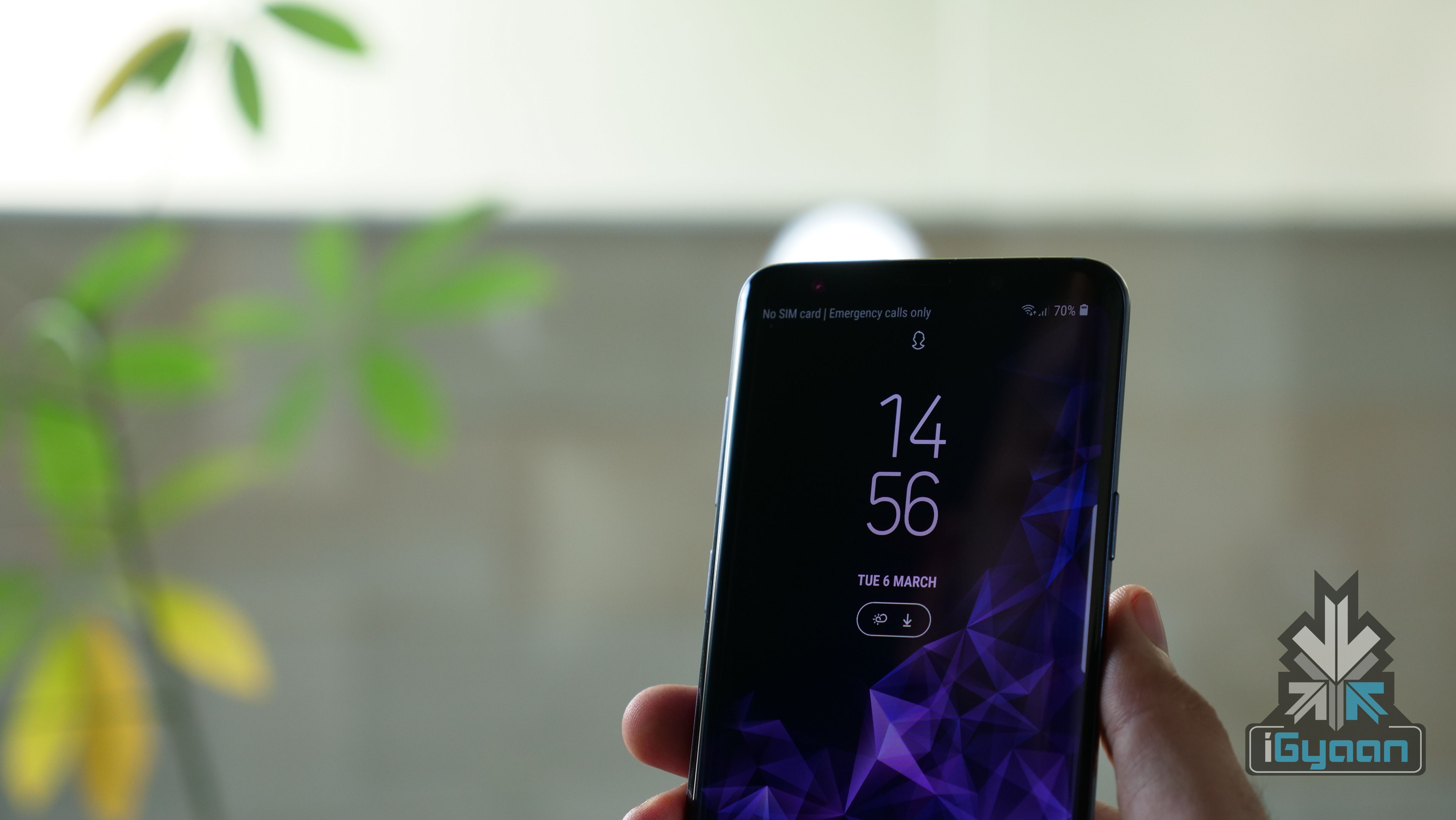
    Samsung has silently added support to showcase GIFs on its smartphones with Always on Display (AOD). Always On Display is a feature where the phone’s screen is off, except for the clock and notification icon. This features required an AMOLED panel, and it only works in the Samsung flagship series smartphones.

    To get this feature working, you should have AOD application version  3.2.26.4. If you are running on the latest version, then select ‘set always on display image’ and select a GIF. However, note that the app can only rear GIF formatted pictures, not .webp. Similarly, if the GIF is too long, the app will recommend it to trim down to a specific time frame.

    Always On Display

    Once, you lock your smartphone, the GIF will animate for a once and will stay in the fixed frame after that. Additionally, one can also set a super slow motion video recorded on the Galaxy S9/S9+ as an AOD picture as well.

    This feature will work on devices including, the Samsung Galaxy S9/s9+, Galaxy S8/S8+ and the Galaxy Note 8. If you are yet to receive this update and you don’t want to wait. Then, click on this link to manually download the APK and sideload it. However, we don’t recommend sideloading third-party apps as they might goof-up your smartphone.

  • Android 8 Oreo  For Samsung Galaxy Note8 Rolling Out In India

    Android 8 Oreo For Samsung Galaxy Note8 Rolling Out In India

    Samsung recently launched the Galaxy S9 and S9+ in India for a starting price of Rs 57,900. Concurrently, the company also started updating its already existing devices with Android 8 Oreo. The update for Galaxy S8 and S8+ was recently made available. Similarly, the company has now rolled out the same for the Samsung Galaxy Note 8  with Samsung Experience UI 9.0.

    Recently, the Galaxy Note 8 devices in France started receiving Android 8 Oreo update and now Indian units have started to receive the update. The update includes security update for the month of March. The Android 8 Oreo update brings in some new features to the device with Samsung Experience UI 9.0. This update includes features like a customisable keyboard, new emojis, new stickers, and support for dual apps.

    Samsung Galaxy Note 8 Specs

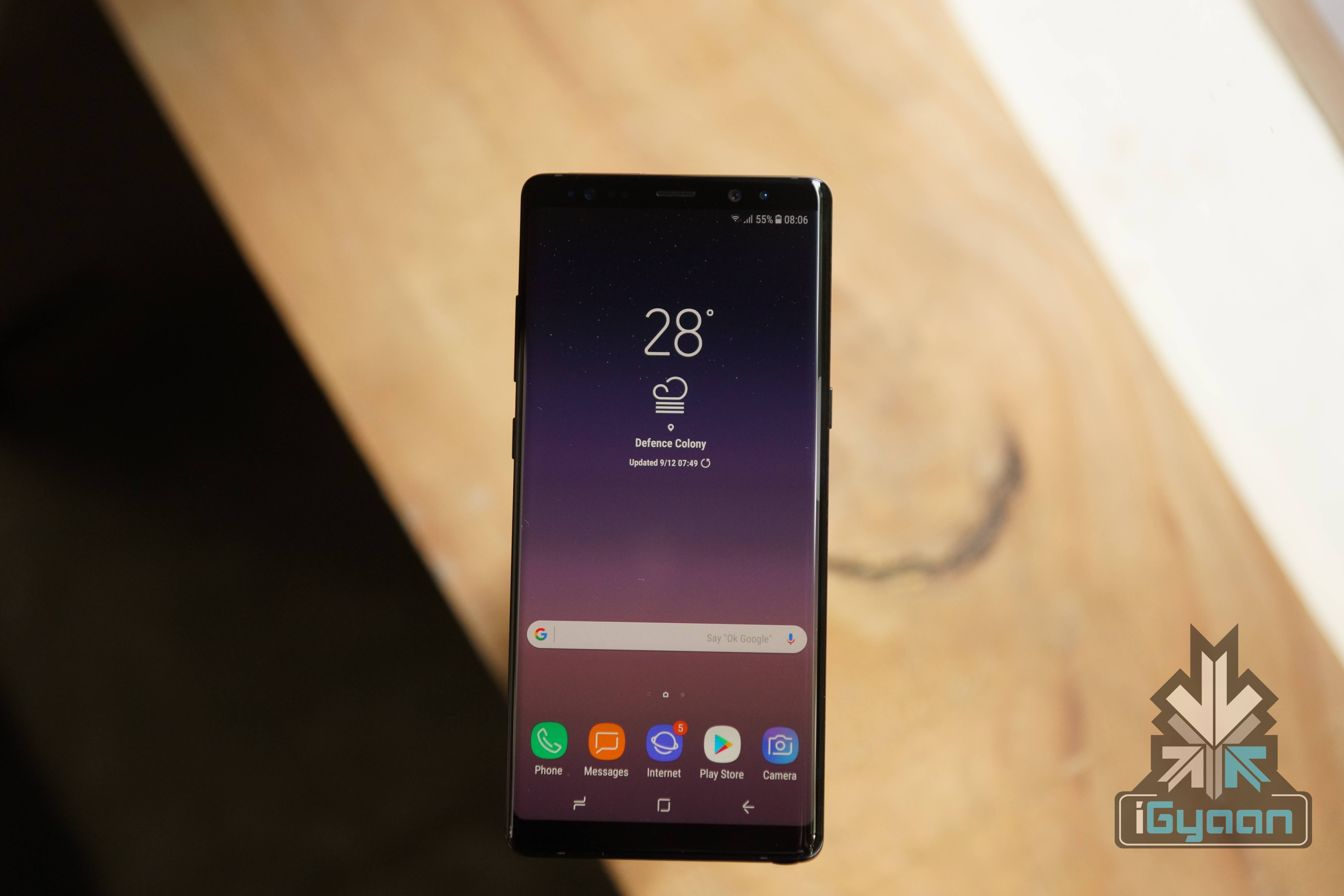
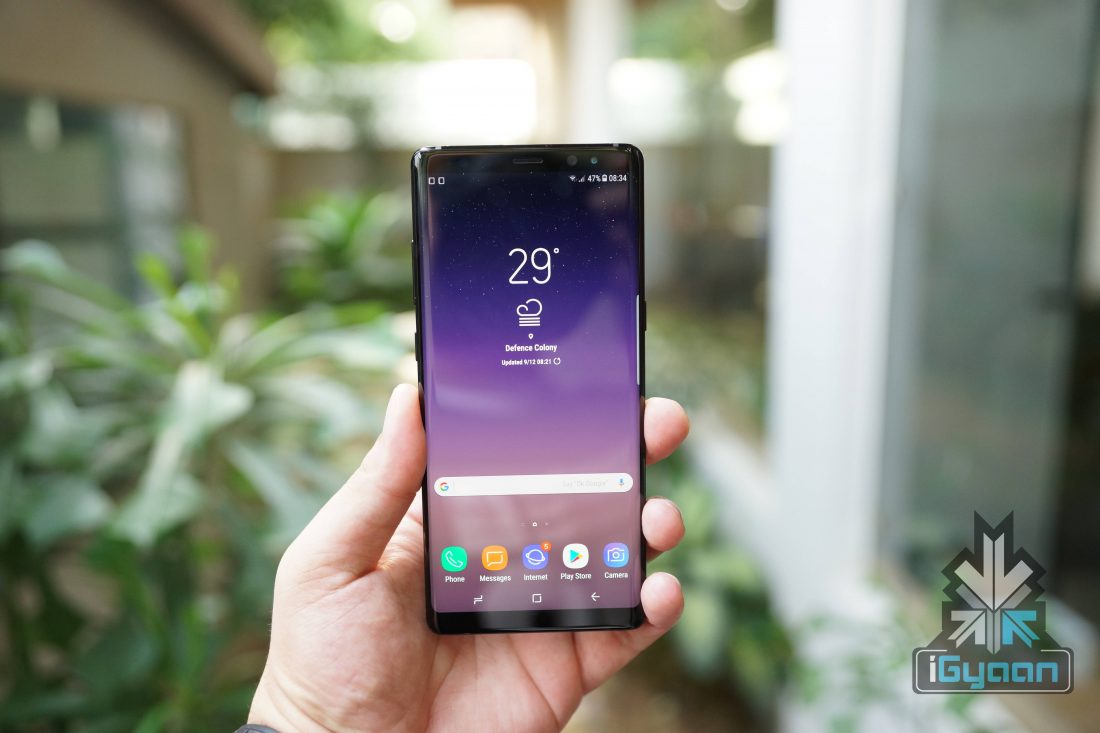
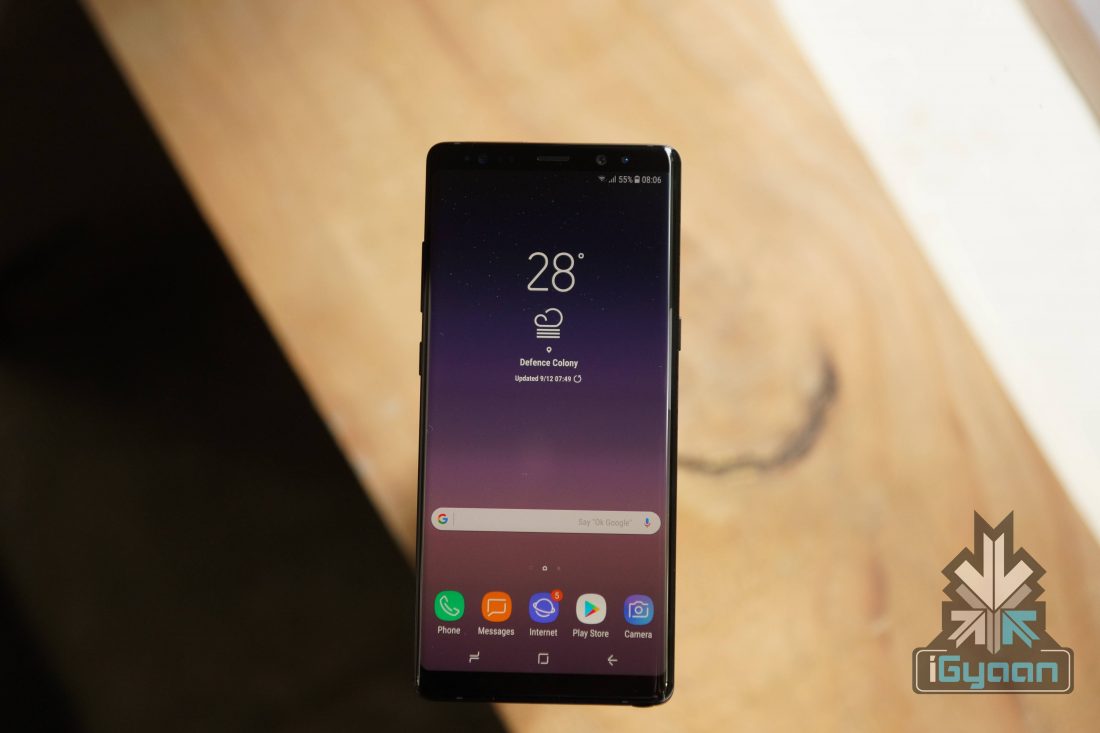
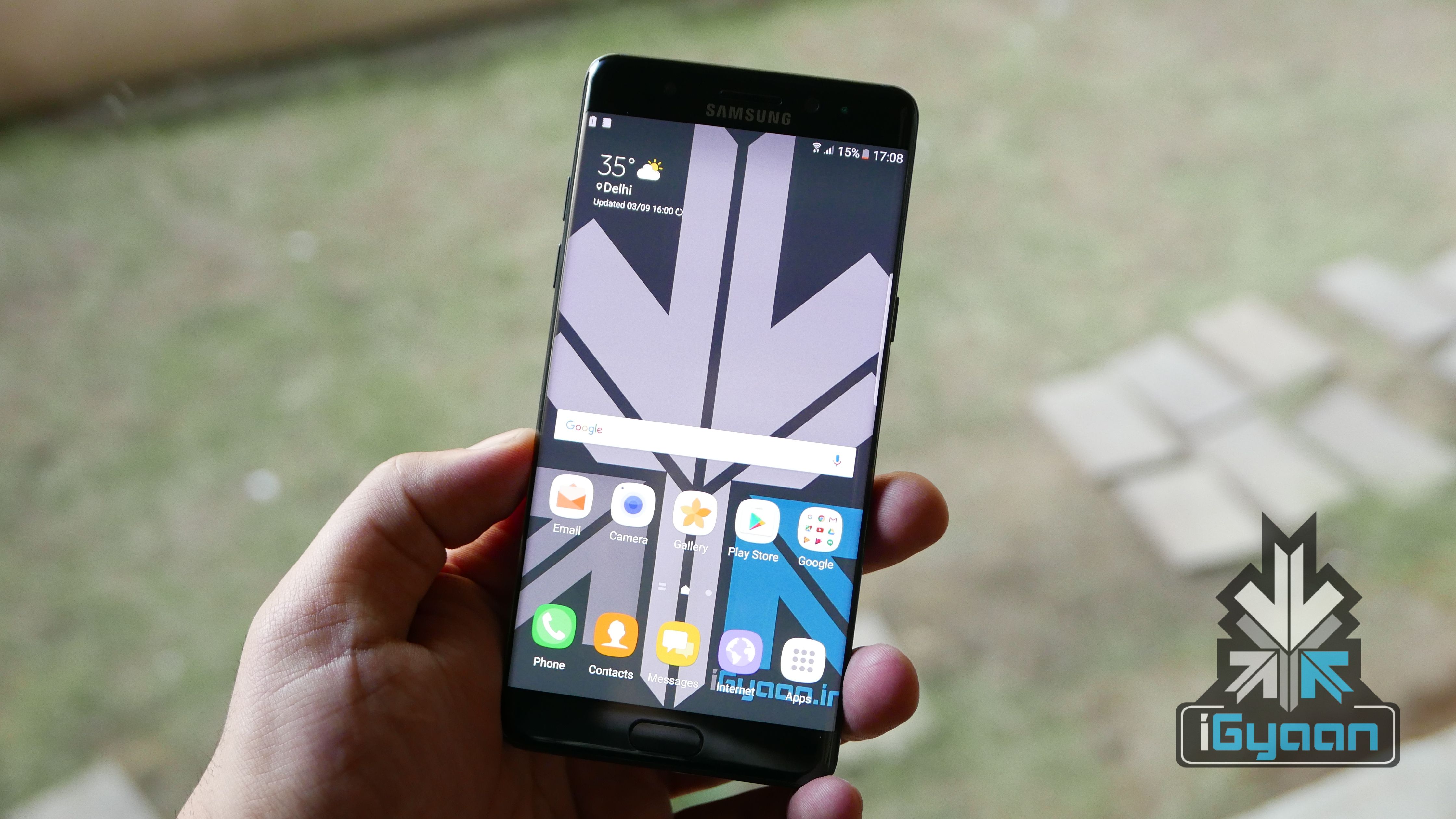
    The Galaxy Note8 has a 6.3 inch 2960 x 1440 px Super AMOLED display with an 18.5:9 aspect ratio with an all-glass body and a metal frame. Powering the device is a 3300 mAh battery with wireless charging capabilities. The device has the Exynos 8895 chipset, 6GB of RAM and 128GB onboard storage. The graphics are handled by the Mali-G71 MP20 GPU. The Galaxy Note8 and the S Pen are both IP68 certified water and dust resistant and will be available in Midnight Black and Maple Gold colour variants.

    Galaxy Note 8

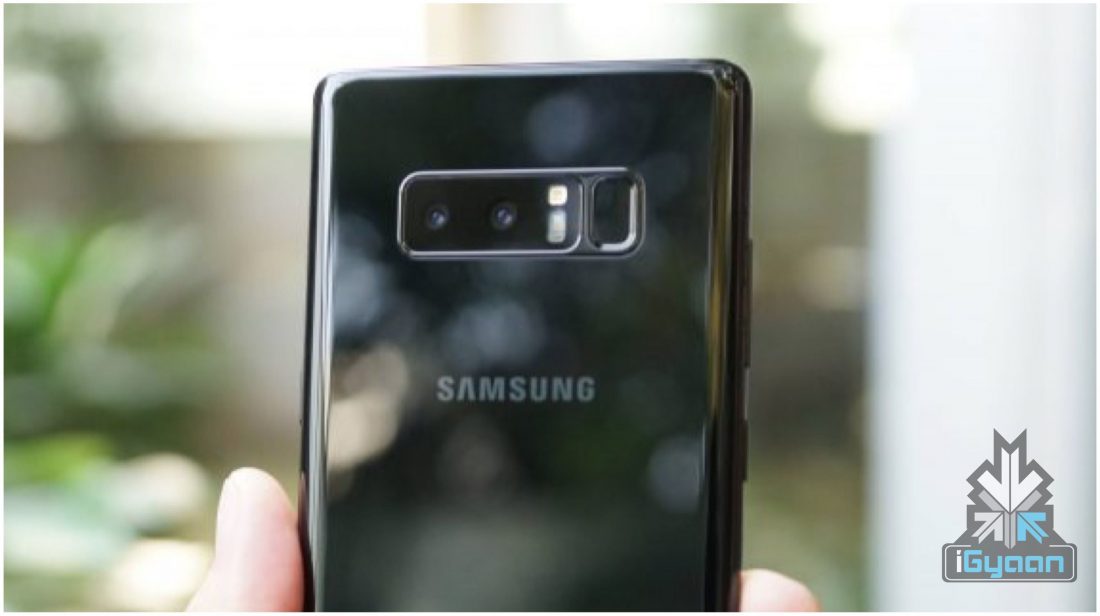
    The Galaxy Note8 is also the first Samsung smartphone to feature a dual-camera setup. The new Note8 has a 12MP dual-camera setup, one of which has a wide lens and the other a telephoto. The use of dual camera allows for the ability to blur out the background for bokeh effect shots. Samsung claims that the first smartphone to feature OIS in both the cameras at the back. The Samsung Galaxy Note8 also records 4K videos at 30 FPS along with high-speed video at a lower resolution. The front camera has an 8MP sensor with an f/1.7 aperture and also records 4K UHD videos at 30 FPS.

  • Samsung Galaxy Note8 Android 8 Oreo Starts Seeding

    Samsung Galaxy Note8 Android 8 Oreo Starts Seeding

    Samsung launched the Galaxy S9 and the S9+ in India on the 6th of March and the devices went on sale on 16th of March. And now, the company has started updating their existing devices to Android 8 Oreo operating system. As the update was available for the Galaxy S8 and S8+, the Galaxy Note8 has started receiving the software update based on Android 8 Oreo.

    The update comes with the firmware version N950FXXU3CRC1, which includes security update for the month of March. The Android 8 Oreo update brings in some new features to the device with Samsung Experience UI 9.0. This update includes features like a customisable keyboard, new emojis, new stickers, and support for dual apps.

    Specifications of the Samsung Galaxy Note 8

    The Galaxy Note8 has a 6.3 inch 2960 x 1440 px Super AMOLED display with an 18.5:9 aspect ratio with an all-glass body and a metal frame. Powering the device is a 3300 mAh battery with wireless charging capabilities. The device has the Exynos 8895 chipset, 6GB of RAM and 128GB onboard storage. The graphics are handled by the Mali-G71 MP20 GPU. The Galaxy Note8 and the S Pen are both IP68 certified water and dust resistant and will be available in Midnight Black and Maple Gold colour variants.

    Galaxy Note 8

    The Galaxy Note8 is also the first Samsung smartphone to feature a dual-camera setup. The new Note8 has a 12MP dual-camera setup, one of which has a wide lens and the other a telephoto. The use of dual camera allows for the ability to blur out the background for bokeh effect shots. Samsung claims that the first smartphone to feature OIS in both the cameras at the back. The Samsung Galaxy Note8 also records 4K videos at 30 FPS along with high-speed video at a lower resolution. The front camera has an 8MP sensor with an f/1.7 aperture and also records 4K UHD videos at 30 FPS.

  • Here’s A List of Samsung Smartphones To Get Android 8 Oreo Update

    Here’s A List of Samsung Smartphones To Get Android 8 Oreo Update

    Android and iOS are the two mobile operating systems that run on most of the smartphones. They do share a bunch of features, yet, they are unique in their own terms. When it comes to OS adoption rate, iOS has an upper hand over Android. In fact, 71.3% of the iOS devices are running on latest iOS 11.2 and less than 1.5% of Android devices are running on Android 8 Oreo. This is not Google’s fault, as Android smartphone makers customise the OS according to their liking. Not only that, the hardware fragmentation also makes it tough to push timely software updates.

    Android 8 Oreo
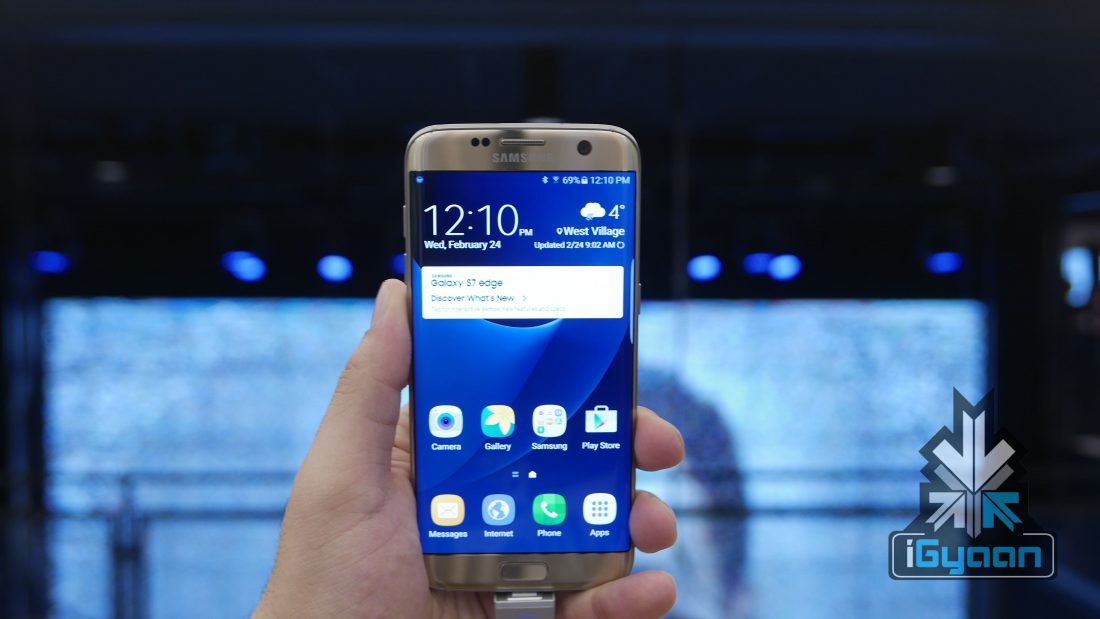
    Samsung Galaxy S7 Edge

    OEMs like Samsung and Xiaomi launches smartphones with custom UI which sits on the top of the Android OS. These custom skins offer additional features, at a cost of slower OS upgrades. In fact, the flagship Samsung Galaxy Note8 is yet to receive the Android 8 Oreo upgrade.

    Starting with 2018, Samsung might have taken the issue seriously, as the company has mentioned the list of smartphones that will receive Oreo update on Samsung Canada website.

    Android 8 Oreo
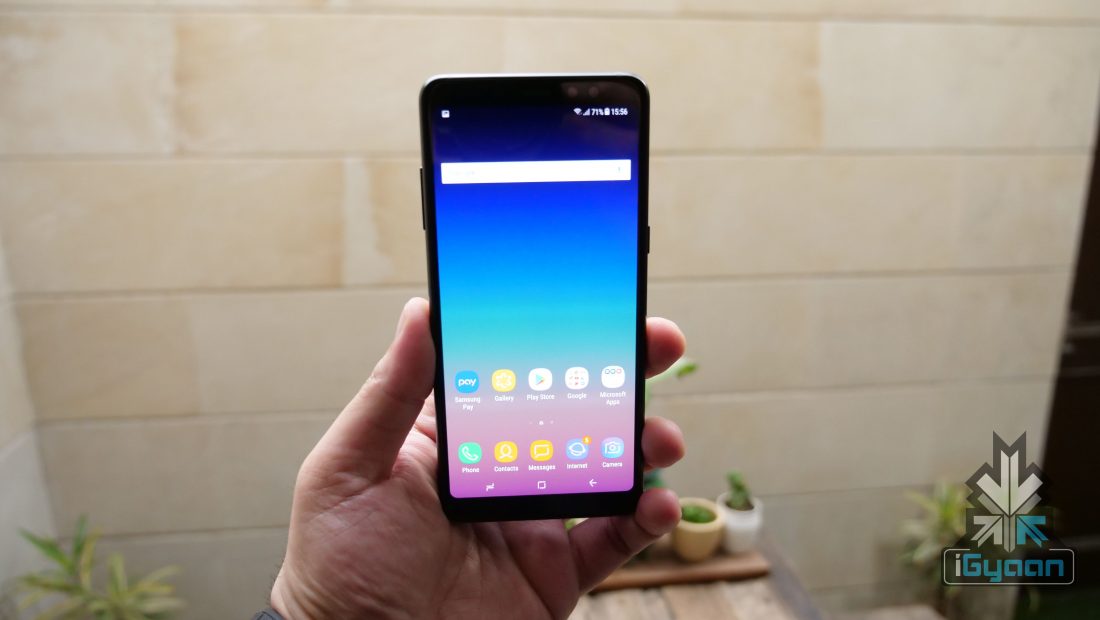
    Samsung Galaxy A8+
    List of Samsung smartphones to Receive Android 8 Oreo
    • The Samsung Galaxy S8 and S8+ will receive the update by the 18th of March. However, the Beta Android 8 Oreo is available for these models for the past two months
    • The Samsung Galaxy Note 8 will receive the update by the 28th of March
    • Galaxy S7, S7 Edge, A5 (2017), and the Tab S3 9.7 inch will receive Android 8 Oreo update by 2018 Summer
    • Galaxy A8 (2018), J3, Tab A (2017), Tab Active 2, and the Tab A (2016) will receive the update by the end of 2018
  • Samsung Galaxy Note8 Android 8 Oreo Update To Be Rolled Out By End Of March

    Samsung Galaxy Note8 Android 8 Oreo Update To Be Rolled Out By End Of March

    Samsung launched the Galaxy S9 and S9+ in India for a starting price of Rs 57,900. The smartphone comes with a new dual aperture camera with the latest software update. The company has already updated the Galaxy S8 and S8+ smartphones with Android 8 Oreo. However, the Galaxy Note8 is yet to receive Android 8 Oreo update, which was, in fact, is the newer model compared to the S8.

    Galaxy Note8

    Samsung’s official Turkey website lists the upcoming devices that will receive Android 8 Oreo update. According to the website, the Galaxy Note8’s update is scheduled to go live on the 30th of March. Similarly, the website also lists few other devices, which will receive the Android 8 Oreo update.

    Smartphone
    Date
    Samsung Galaxy Note8 30th of March
    Samsung Galaxy S7 13th of April
    Samsung Galaxy S7 Edge 13th of April
    Samsung Galaxy A7 2017 25th of May
    Samsung Galaxy A5 2017 25th of May
    Samsung Galaxy A3 2017 25th of May

    The above-mentioned smartphones will receive the Android 8 Oreo update. However, this does not mean that these are the only devices that are eligible for the Android 8 Oreo update.


  • Samsung Galaxy A8+ Available At An Effective Price Of Rs. 28990 On Amazon

    Samsung Galaxy A8+ Available At An Effective Price Of Rs. 28990 On Amazon

    Amazon is offering a limited-time price cut on various Samsung smartphones from the 5th to 8th of March. The Samsung Galaxy Note8 is now available for Rs 59,900 instead of Rs 67,900 and the Samsung Galaxy A8+ is available for Rs 28,990 instead of Rs 32,990. Amazon will credit the cashback of Rs 8,000 for the Note8 buyers and Rs 4,000 for the Galaxy A8+ buyers via Amazon Pay balance.

    Note:

    The offer is applicable for those, who make the payment via Amazon Pay. At the time of purchase, one has to make the complete payment, then Amazon will credit the cashback within 10 days.

    Specifications of Samsung Galaxy Note8
    Galaxy Note 8
    Galaxy Note8

    The smartphone has a 6.3 inch 2960 x 1440 px Super AMOLED infinity display with minimal bezels on the top and bottom of the phone. The device has the Exynos 8895 chipset with 6GB of RAM and 128GB onboard storage.

    The Note8 has a 12MP dual-camera setup, one of which has a wide lens and the other a telephoto. The telephoto lens allows a user to zoom in losslessly for an up to 2x magnification.

    Powering the device is a 3300 mAh battery which is smaller than the 3500 mAh battery found on the Galaxy Note7 with wireless charging capabilities, and runs Android Nougat 7.1.1 with Samsung’s custom skin on top. The Galaxy Note8 and the S Pen are both IP68 certified water and dust resistant.

    Specifications of Samsung Galaxy A8+
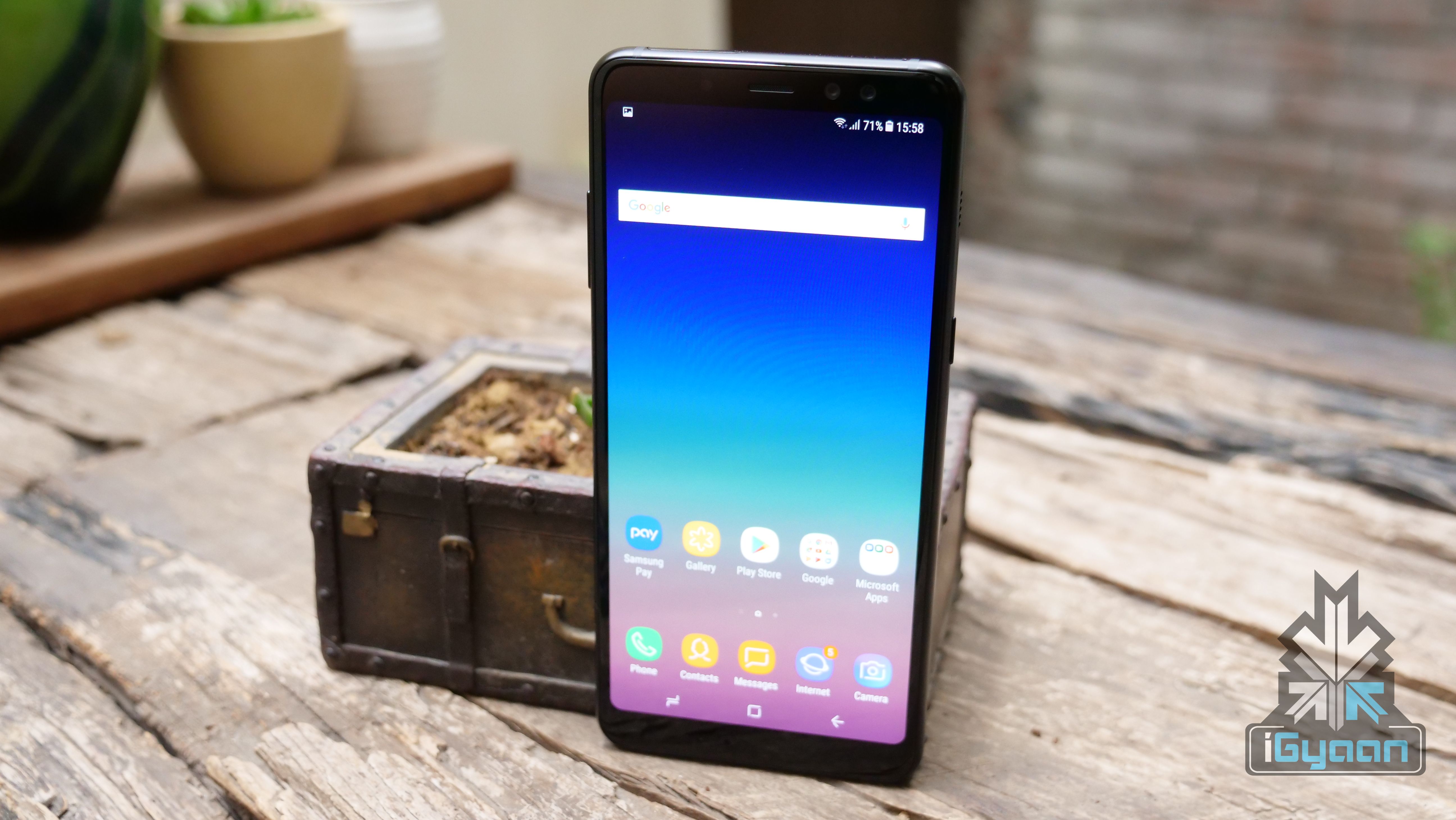
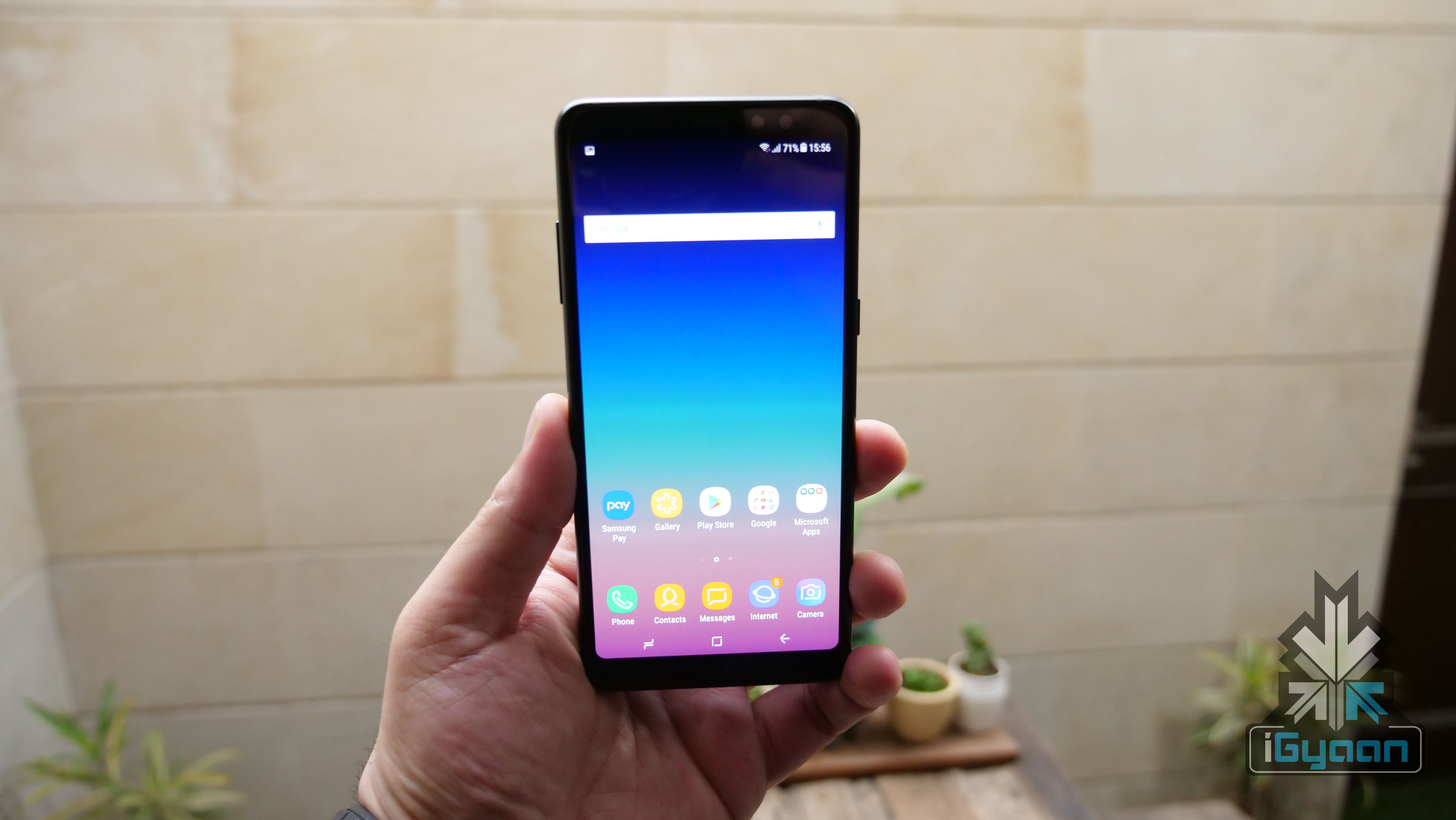
    Samsung Galaxy A8+

    The Samsung Galaxy A8+ has a 6-inch Super AMOLED display with a 2220 x 1080 px resolution which translates to an 18.5:9 aspect ratio. Under the hood, it has an Exynos 7885 chipset, an octa-core processor and Mali-G71 GPU.

    The Galaxy A8+ will run Android 7.1.1 Nougat out of the box with Samsung’s own custom skin on top. Powering the Galaxy A8+ is a 3500 mAh battery which is charged via USB Type-C port.

    he Galaxy A8+ is also the first of Samsung phone to have a dual-camera setup on the front. The Galaxy A8+ has a 16MP + 8MP camera setup with an f/1.9 aperture on the front.

  • Top Water Resistant Phones In India Right Now

    Top Water Resistant Phones In India Right Now

    A lot of smartphones nowadays boast of an ‘IP’ rating which indicates the phone’s ability to fight off water and dust damage. Here’s what an ‘IP’ rating mean-

    IP- This stands for the International Protection marking, a standard drawn up by the International Electrotechnical Commission (IEC).

    Dust

    6- The first digit stands for its resistance to dust, but also general dirt and sand. For example, the Moto X4 earned a ‘6’ rating for “No ingress of dust; complete protection against contact (dust tight).”

    Water

    The second digit stands for the phone’s resistance to water

    •    0 – No protection.
    •    1 – Dripping water shall have no harmful effect.
    •    2 – Vertically dripping water shall have no harmful effect with enclosure is tilted at 15°.
    •    3 – Water falling as a spray at any angle up to 60° from the vertical.
    •    4 – Water splashing against the enclosure from any direction.
    •    5 – Water projected by a nozzle (6.3mm) against enclosure from any direction.
    •    6 – Water projected in powerful jets (12.5mm nozzle) from any direction.
    •    6K – Powerful water jets with increased pressure.
    •    7 – Immersion, up to 1m depth for up to 30 minutes.
    •    8 – Immersion, 1m or more depth (exact details vary).
    •    9K – Powerful high temperature water jets.

    This feature has become ever so important nowadays as phones are getting more expensive and every user wants the best features for the price he/she pays. Also, phones are the principal mode of photography for a majority of consumer market and having a phone with an IP68 rating always helps. So, let’s take a look at the top phones with an IP68 rating available in India right now:
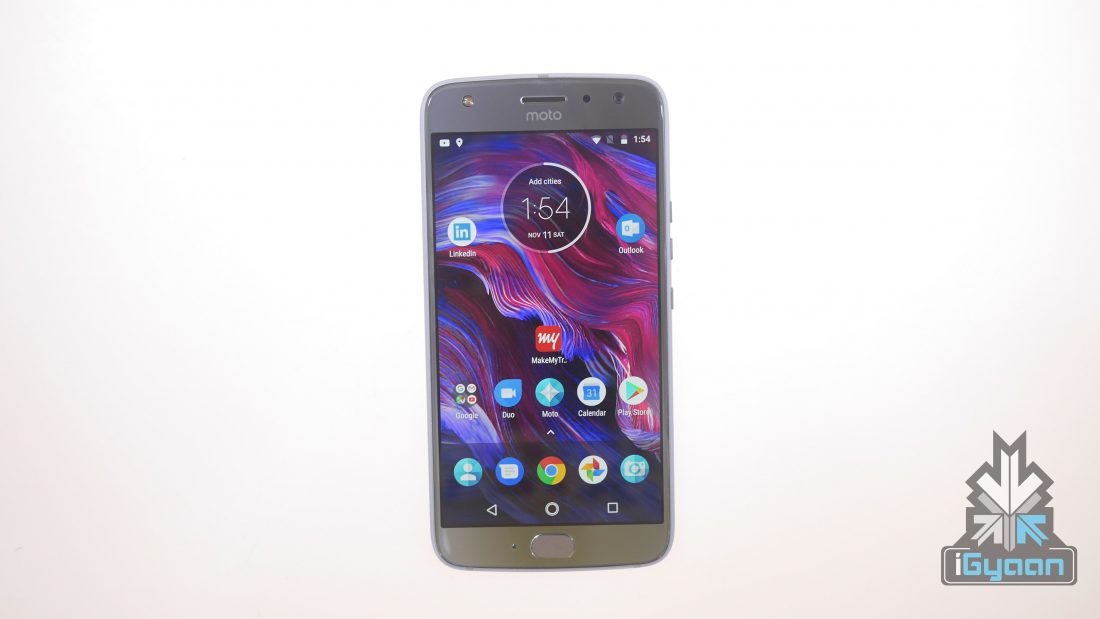
    Moto X4

    The cheapest phone on the list, the Moto X4 starts at a price of Rs 20999 and is the only phone in this price bracket which has an IP68 rating for water and dust resistance.

    The Moto X4 has a 5.2 inch 1920 x 1080 px LTPS IPS LCD display with Corning Gorilla Glass 3 on top for protection.

    The Moto X4 has the Qualcomm Snapdragon 630, 2.2 GHz octa-core processor and Adreno 508 GPU, along with 3GB or 4GB of RAM and 32GB or 64GB of onboard storage which can be expanded up to 2TB via microSD card. The fingerprint sensor is housed inside the home button which also doubles up as a single navigation button. The Moto X4 is powered by a 3000 mAh battery with TurboCharge capabilities.

    The Moto X4 has a dual-camera setup at the back. The main camera is a 12MP sensor with an f/2.0 aperture, and the 8MP secondary camera with an f/2.2 aperture is equipped with a wide-angle lens. The dual-cameras allow users to have depth effect shots, bokeh effect shots, ultra-wide angle shots, and selective focus shots. On the front of the device is a 16MP camera with an f/2.0 aperture and an LED flash. The cameras record 4K videos at 30 FPS.

    Sony Xperia XZ Premium
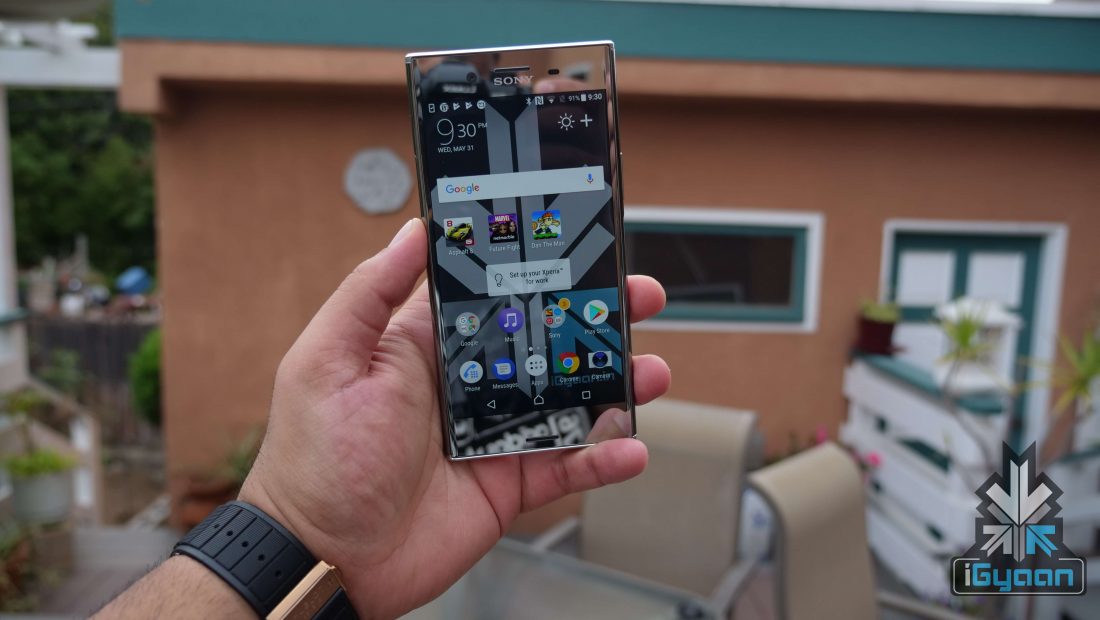
    Priced at Rs 54945, the Sony Xperia XZ Premium became the first phone with a 4K HDR display. The device is also IP68 water and dust resistant.

    The Sony Xperia XZ Premium has a 5.5 inch 4K HDR Display with TRILUMINOS Display for mobile and X-Reality for mobile picture engine. The 4K display comes into play whenever high res content is available like a 4k video or movie.

    Inside is a Qualcomm Snapdragon 835 chipset along with 4 GB of RAM and 64 GB of Storage with microSD support for 256 GB. Running all the hardware is a 3230 mAh battery with Qnovo Adaptive charging and Quick Charge 3.0.

    Sony Xperia XZ Premium has a 19MP Motion Eye camera which has a 1/ 2.3”  Exmor RS for mobile memory stacked sensor with a pixel size of 1.22m and Predictive Hybrid Autofocus.
    The XZ Premium also offers 960 fps Super slow motion video and the camera is equipped with a 25 mm wide G Lens with a F2.0 Aperture.
    The Sony Xperia XZ Premium has SteadyShot 5-axis image stabilization and does 4K recording at 30fps. The front camera is a 13MP 1/ 3.06”  Exmor RS for mobile image sensor with a 22mm Wide-angle lens with an F2.0 aperture. The front too has SteadyShot with 5-axis stabilization.

    LG G6
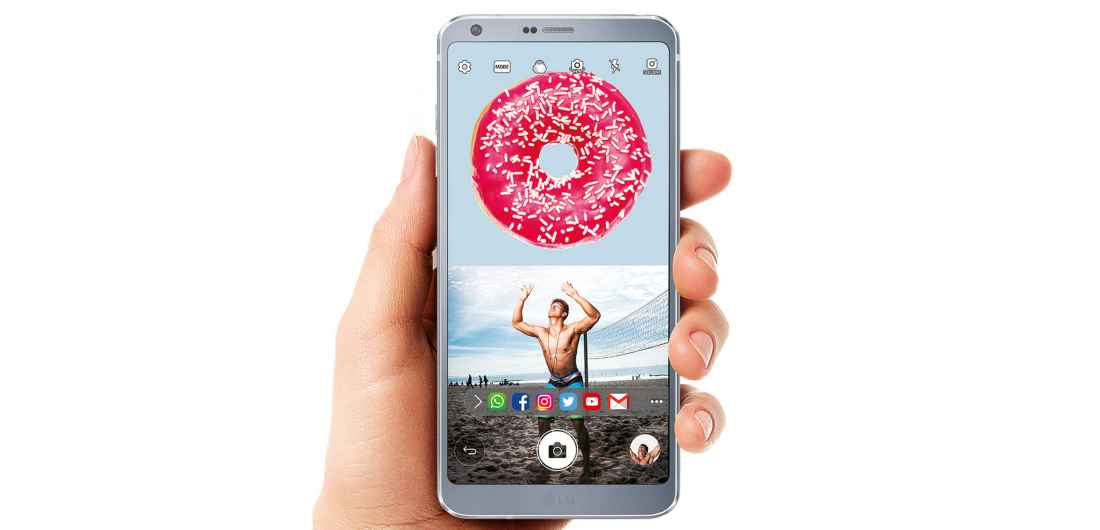
    The LG G6 runs on the Qualcomm Snapdragon 821 chipset with quad-core processor and Adreno 530 GPU along with Android 7.0 Nougat. The phone has a 5.7 inch QHD+ FullVision display with a 2880 x 1440 px resolution and an awkward 18:9 aspect ratio. The LG G6 is available in two variants – one with 4 GB RAM, 32 GB internal storage and the other with 4 GB RAM, 64 GB internal storage. Both the variants have an expandable storage of up to 2 TB, when those card become available.

    The LG G6 has a dual rear camera setup with two 13 MP sensors. One of the sensors supports wide-angle shots and has a 125 degree lens. The other sensor is for regular shots, with OIS 2.0 and 71 degree lens. The front camera is a 5 MP wide angle lens with a 100 degree field of view.

    The LG G6 has a non-removable 3300 mAh Li-ion battery, which supports QuickCharge 3.0, and will work for more than a day according to LG.
    Samsung Galaxy S8/S8+

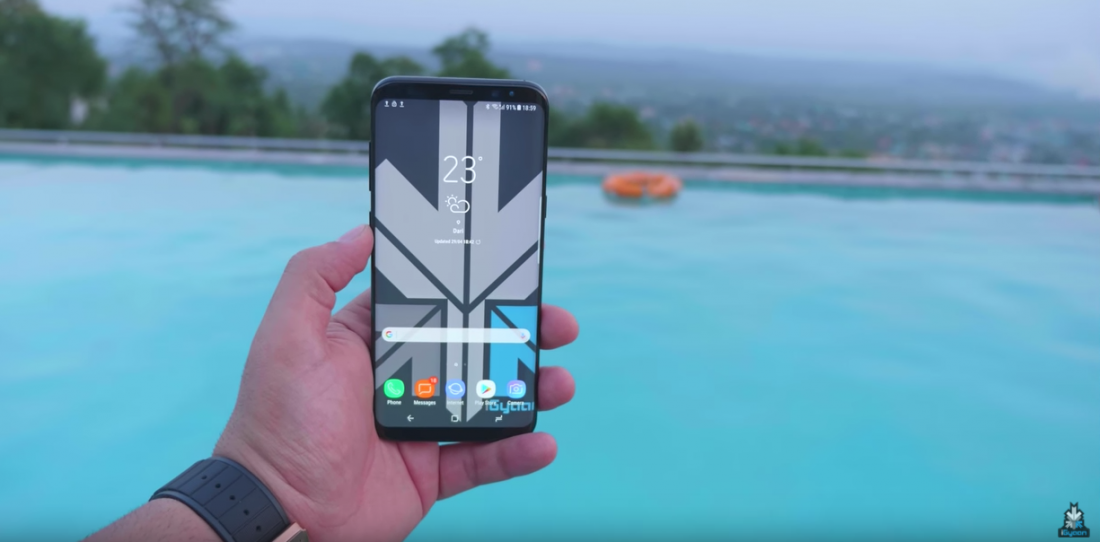
    The 2017 flagship phones from Samsung have an IP68 rating as well for water and dust resistance.

    Samsung launched the Galaxy S8 and its bigger sibling, the Galaxy S8+ in April 2017. Apart from the LG G6, there was hardly any mainstream global phone with thin bezels and premium features. Qualcomm made a deal with Samsung and gave the company an exclusive early access to the Snapdragon 835 chipset. This made it possible for Samsung to launch the Galaxy S8 with a 2017 flagship chipset way before any other OEM got their hands on it.

    The display is edge-to-edge with minimal upper and bottom bezels. Both the phones run a new 10 nm chipset, The S8 has an Octa core (2.3GHz Quad + 1.7GHz Quad), 64 bit chipset while the S8+ will have an Octa core (2.35GHz Quad + 1.9GHz Quad), 64 bit chipset.

    Both the Galaxy S8 and Galaxy S8+ have a 4GB RAM (LPDDR4), 64GB (UFS 2.1) storage, the Galaxy S8 has a 5.8” (146.5mm) Quad HD+ 2960×1440 px display with a 570ppi while the S8+ has a 6.2” (158.1mm) Quad HD+ 2960×1440 px display  with a 529ppi density. Both have Samsung’s own super-AMOLED display. For cameras both phones get a main Dual Pixel 12MP OIS (F1.7), Front: 8MP AF (F1.7). While the battery on the Galaxy S8 is 3000 man, the S8plus has a 3500 mAh battery. Both support fast charging and wireless charging as well.

    Samsung Galaxy S8 and Galaxy S8+ does most of the things right. If you have the budget, there aren’t many phones that look as good and perform as well as these two flagship phones from Samsung.

    Buy it here
    Samsung Galaxy Note8

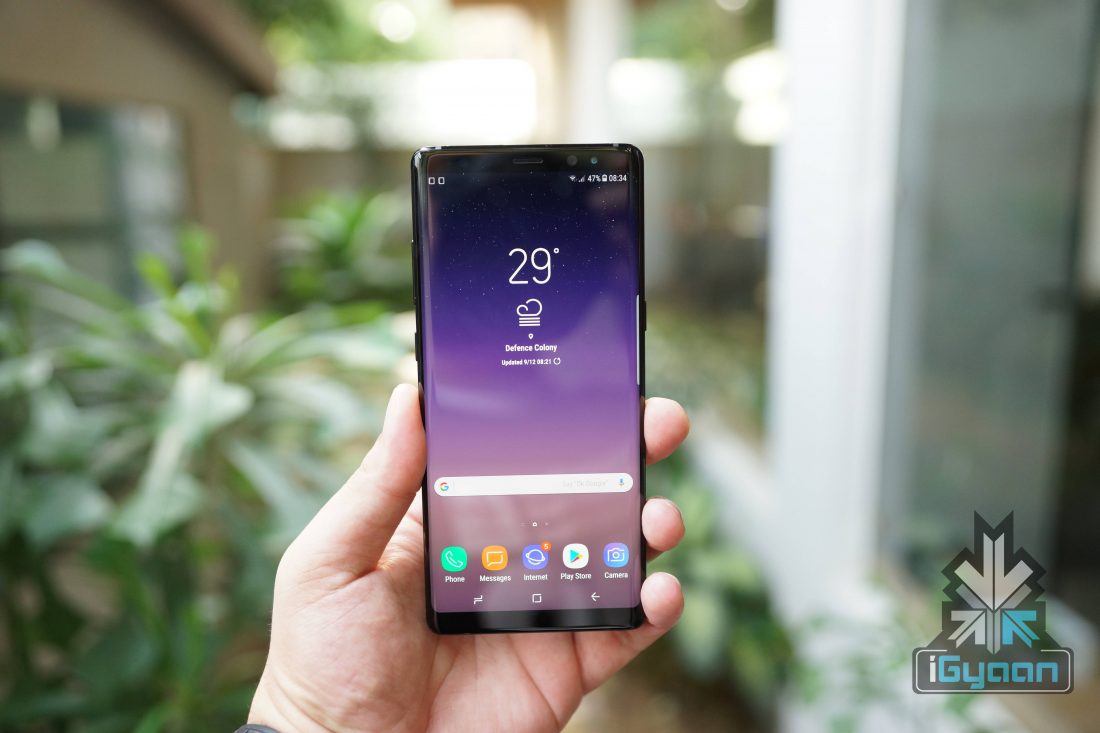
    Both the Galaxy Note8 and the S Pen are IP68 rated for water and dust resistance.

    The Samsung Galaxy Note has a 6.3 inch 2960 x 1440 px 18.5:9 aspect ratio Super AMOLED display with an 83.1% screen-to-body ratio and Corning Gorilla Glass 5 on the front and back of the device.The Galaxy Note 8 runs Android 7.1.2 Nougat and Samsung has promised an update to 8.0 Oreo in the near future. The phone is powered by a non-removable 3,300 mAh battery with QuickCharge 2.0 through the USB Type C port and because of the glass at the back, the phone also supports wireless charging as well.

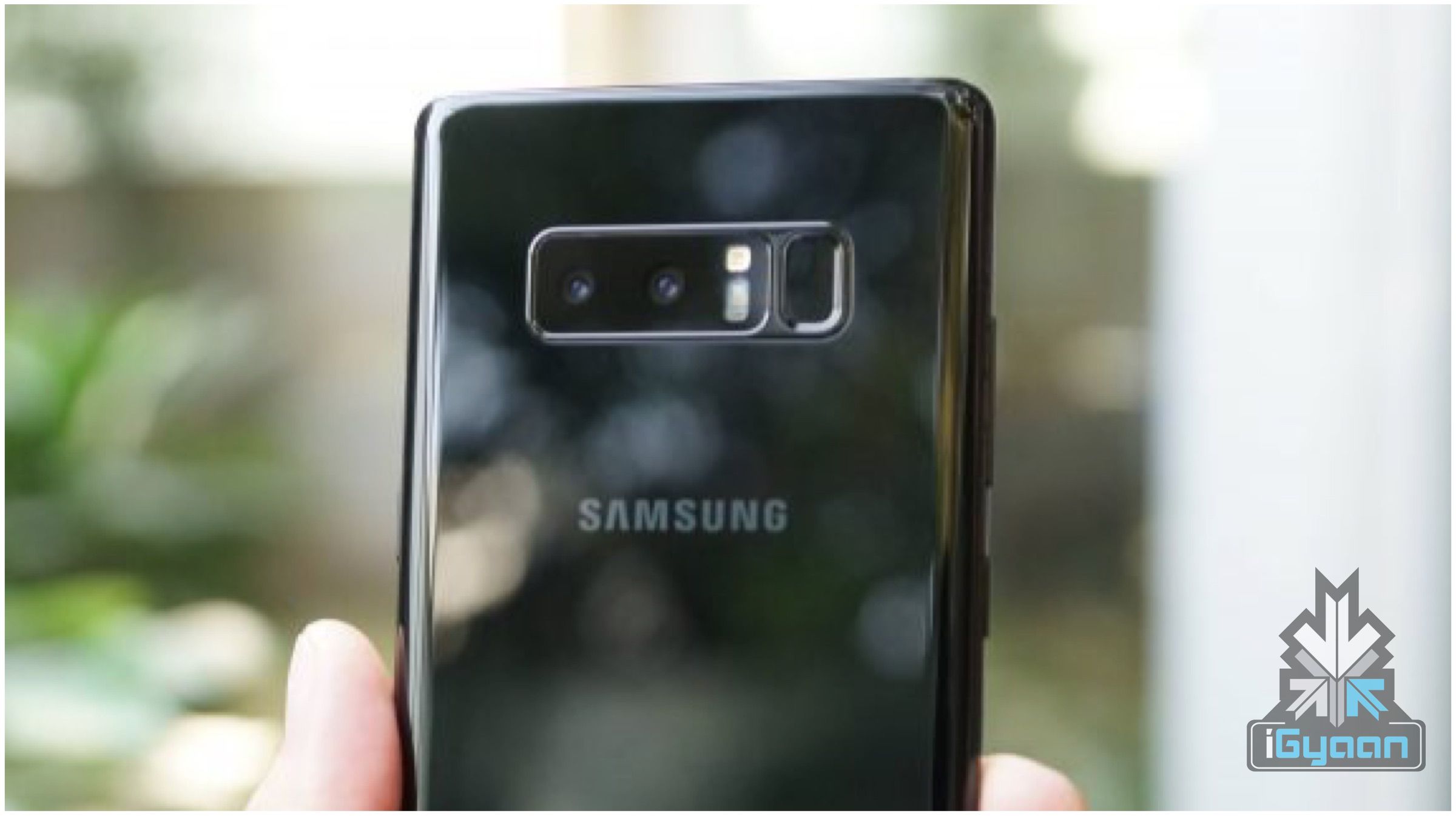
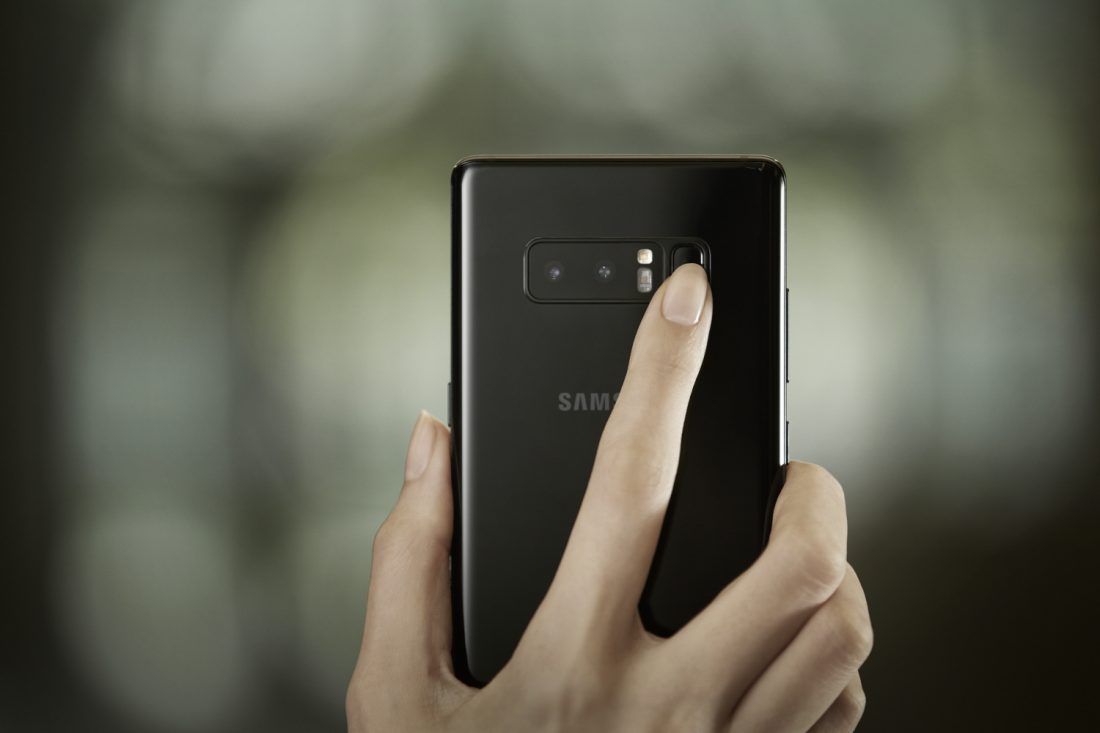
    Just like the Samsung Galaxy S8 and S8 Plus, the fingerprint sensor sits at the back of the device right next to the dual-cameras.  As is with all Samsung flagship devices, the Galaxy Note8 ships with two different chipsets, the Qualcomm Snapdragon 835, 2.45 GHz octa-core processor with Adreno 540 GPU for USA and China, and the Exynos 8895, 2.3GHz Quad-Core (Custom CPU) + 1.7GHz Quad-Core (Cortex-A53) with Mali-G71 MP20 for the remaining markets.

    The Galaxy Note 8 is the first phone from Samsung to feature dual-cameras with a 12MP dual-camera setup, the primary camera has a wide-angle 12MP lens with an f/1.7 aperture and the secondary camera has a 12MP telephoto lens with an f/2.4 aperture. The telephoto lens enables a 2X lossless optical zoom and has features such as the Bokeh effect, much like the iPhone 7 Plus. The dual-cameras are capable of capturing 4K videos at 30 FPS On the front is an 8MP camera with an f/1.7 aperture and captures 4K videos at 30 FPS.

    The Galaxy Note8 is much more than just a “slightly larger Galaxy S8+.” It surely does what Galaxy S8+ does best, and then does a lot more. The integration of the S Pen in Samsung’s UI and the dual-cameras are worth an upgrade to the Galaxy Note8 and the premium price tag.

    Buy it here
    Apple iPhone X

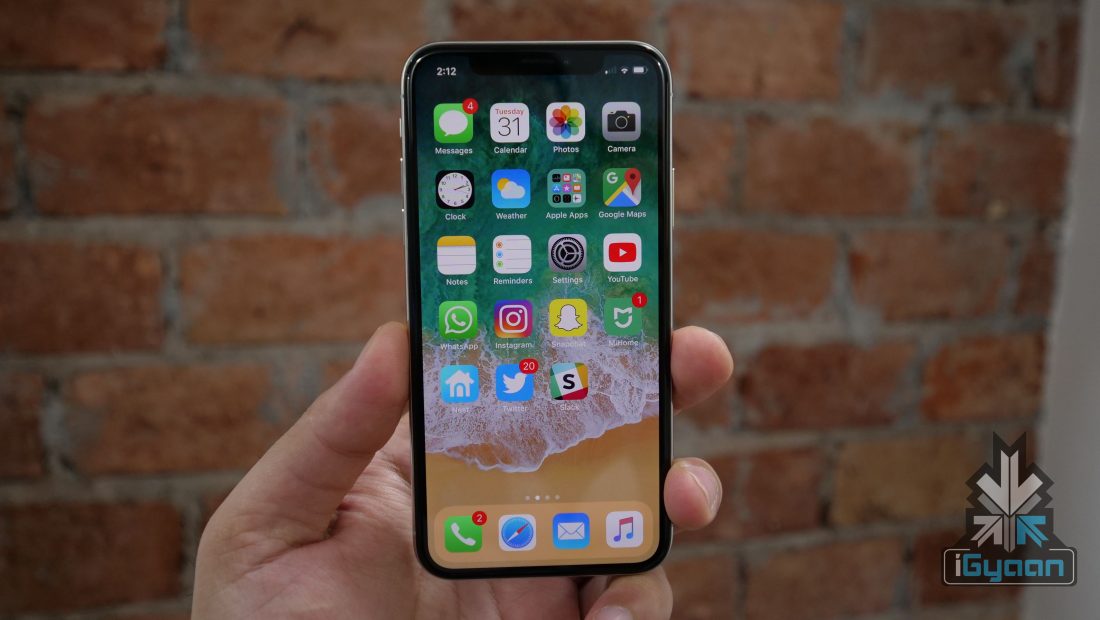
    Although onky IP67 rated, the iPhone X deserves a mention for its superior hardware and software performance.

    The iPhone X has a 5.8-inch 2436 x 1125 px OLED True Tone Super Retina display with minimal bezels around it. The phone runs iOS 11 and is powered by a 3,000 mAh battery which charges through the Apple signature lightning port placed at the bottom of the phone. Under the hood, the smartphone has the Apple A11 Bionic chipset with a neural engine, a hexacore processor, 3GB of RAM and storage options of 64GB, and 256GB. As is with every iPhone, the onboard storage can not be expanded via a microSD card. The small bezels mean there is no physical home button, which is now replaced with gestures for navigation. Siri is activated by pressing the now larger lock/unlock button. The iPhone X is also IP67 certified for water and dust resistance.

    The iPhone X has dual 12-megapixel rear cameras, and it’s equipped with dual optical image stabilization. The sensors are both larger and faster, according to Apple, and the main camera is equipped with a wide angle lens and has an f/1.8 aperture while the secondary telephoto lens has an f/2.4 aperture. In between the two cameras is a quad-LED True Tone flash. Both the front and back cameras have the portrait mode. The rear cameras have the portrait lighting feature, just like the iPhone 8 and iPhone 8 Plus.

    The bottom line is, the iPhone X has all the ingredients of being the best iPhone yet. The design, the new cameras and the AR integration makes the iPhone X even more future-proof than it predecessors. However, the price tag of the iPhone X can make you question how much you love the iPhone and whether its enough to shell out over a thousand dollars on it.

    Buy it here
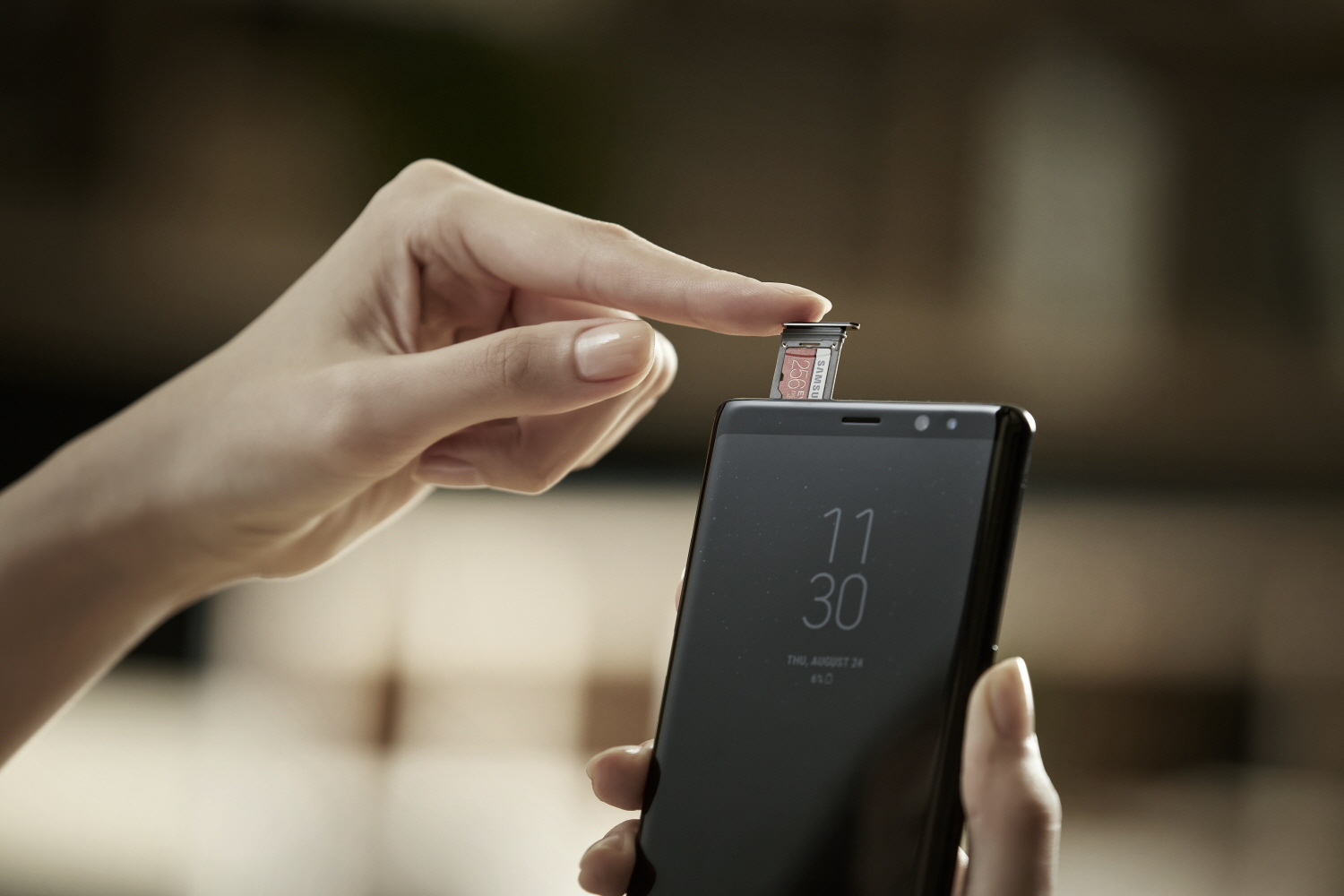
  • Apple iPhone X Vs Samsung Galaxy S8 Feat. Samsung Galaxy Note8

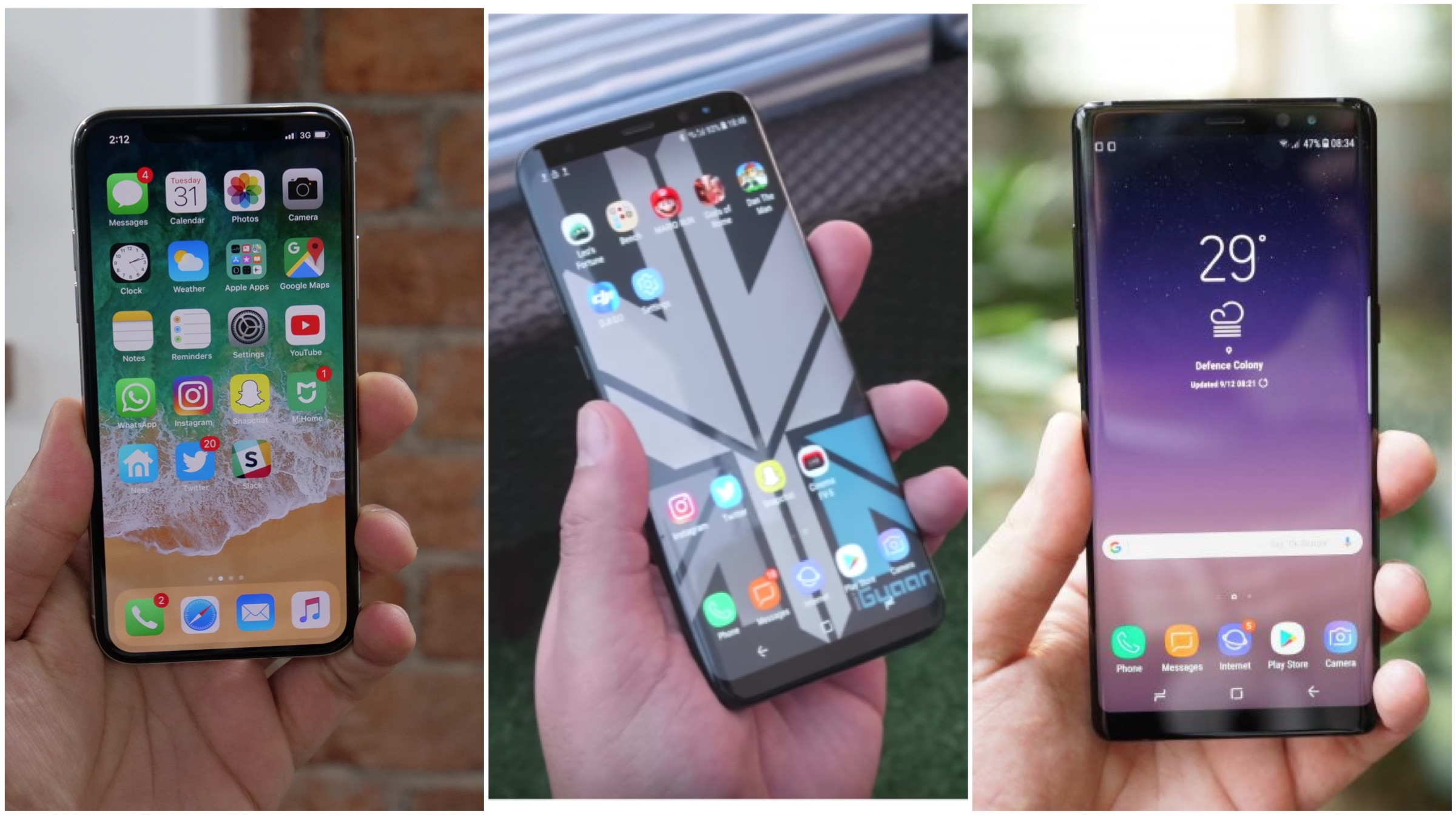
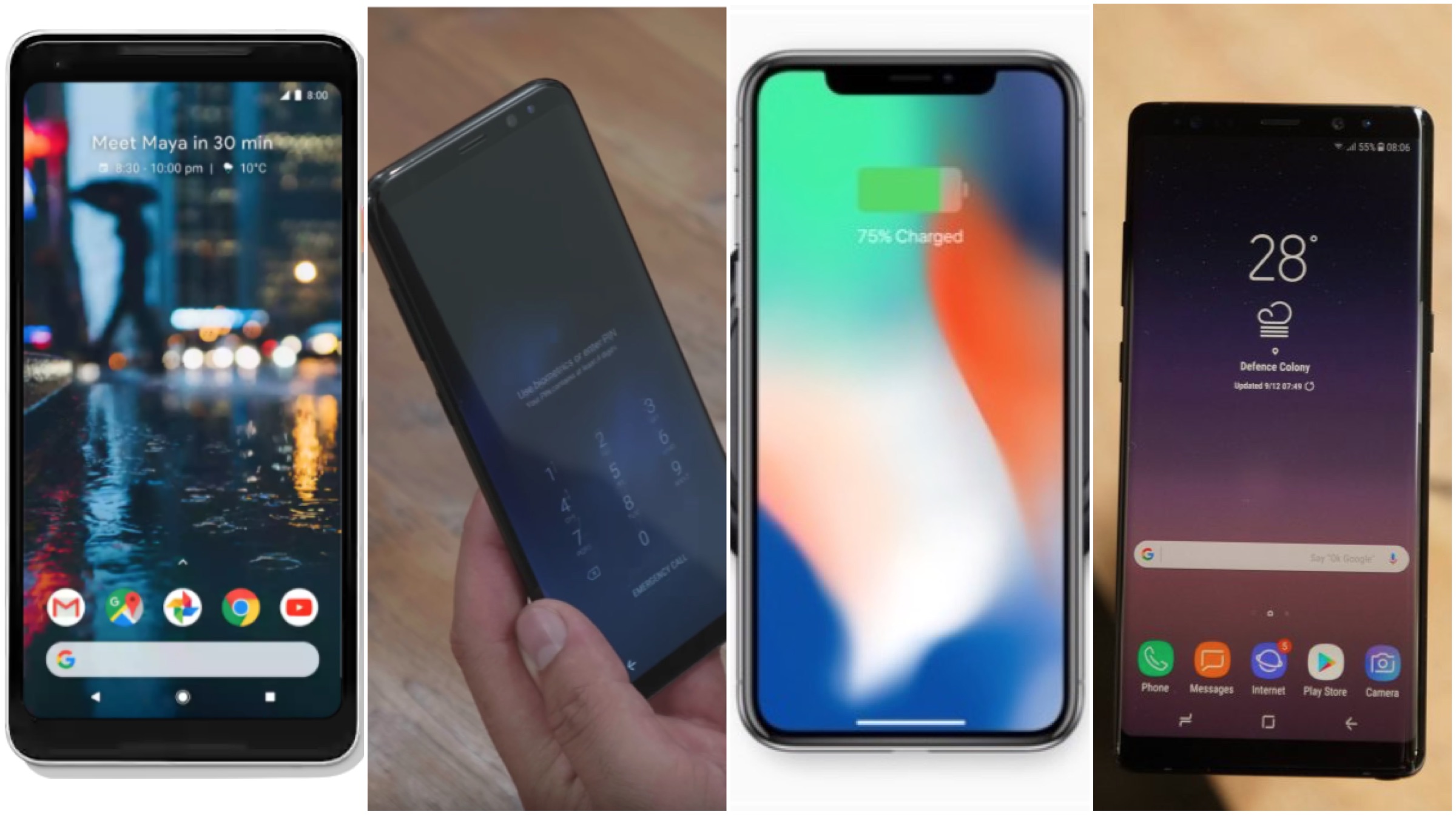
    Apple iPhone X Vs Samsung Galaxy S8 Feat. Samsung Galaxy Note8

    2017 saw the rise of ‘bezel-less” smartphones which was ignited by the 2016 Xiaomi Mi Mix. In March 2017, the Samsung Galaxy S8 with a zero side bezels and thin forehead and chin was launched. The trickle down effect was noticeable as more and more smartphones came out with thin bezels. The Samsung Galaxy Note8 was launched in August as the successor to the ill-fated Galaxy Note7 with a design similar to the Galaxy S8 albeit, a more square-ish build which is iconic to the ‘Note’ series. After months of speculations and leaks, Apple launched the highly anticipated iPhone X on the 12th of September.

    Display

    All the three smartphones have excellent displays with great clarity and viewing angles. All three phones have an OLED panel manufactured by Samsung and while the 5.8 inch inch display on the iPhone X has a resolution of 2436 x 1125 px, the Galaxy S8’s 5.8 inch and Galaxy Note8’s 6.3 inch display have a resolution of 2960 x 1440 px.

    Performance

    Every flagship smartphone in this day and age has to be fast. You can’t pay over Rs 60,000 for a phone and experience lags and jitteriness just a few days into using it. For a phone launched back in March, the Samsung Galaxy S8 holds up very well. Both the Galaxy S8 and the Galaxy Note8 have the Exynos 8895 chipset, and while the Galaxy S8 has 4GB of RAM, the Galaxy Note8 has 6GB of RAM. The Apple iPhone X on the other hand has the A11 Bionic chipset with a neural engine and 3GB of RAM. All three phones are fast and day-to-day usage as well as heavy gaming is a breeze.

    Camera

    The Apple iPhone X and the Samsung Galaxy Note8 have dual camera setup at the back while the Samsung Galaxy S8 has a single camera. Despite a single camera, the Galaxy S8 is still one of the best camera smartphones out there. However, the flexibility of a dual camera setup trumps the single one on the Galaxy S8 and with dual OIS, the iPhone X and the Galaxy Note8 perform better than the Galaxy S8. If you are a content creator then look no further than the iPhone X as it records 4K videos at 60 fps, something that no other smartphone does right now.

    Watch our full comparison here:

  • Samsung Spain Hands Out 200 Galaxy Note8 Devices To Passengers In A Flight

    Samsung Spain Hands Out 200 Galaxy Note8 Devices To Passengers In A Flight

    All seems to be very well at the Samsung Mobile HQ’s after a very successful 2017. Samsung started the year with the highly successful Galaxy S8 smartphones and resurrected the Note series with the Galaxy Note8 which received record pre-orders in the US and South Korean market. 2017 succeeded the debacle of the global recalling of the Galaxy Note 7 due to serious battery issues. To overcome that psychological block and show how far Samsung’s new Note device has come, Samsung Spain decided to give away 200 Galaxy Note8 devices to unsuspecting passengers of a flight going from Madrid to A Coruna.

    In the video, you can see passengers baffled in the beginning, but, when they realised that they are actually getting a US $1000 phone for free, that confusion quickly changed to joy. The boxes were accompanied by a written message in Spanish. It translated to: “A year ago we asked you to turn it off, we welcome you today on board.” This was in reference to the Galaxy Note7 and its highly publicised battery issue. Due to such an extraordinary security concern from a phone, almost everywhere in the world airlines first banned the phone from the check-in baggage and then later banned it altogether.

    The global recall of the Galaxy Note7 was a huge blow to Samsung, not just from a financial point of view but, also the company’s image. All was redeemed with the Galaxy Note8 when it was launched in August in 2017 and received rave reviews from critics and consumers alike. This gesture from Samsung goes a long way in proving that no matter how successful its new phones will be, the company will do anything to get over the disaster that was the Galaxy Note7.

    https://youtu.be/9FAmSCUq5zw


  • Google Pixel 2 XL Vs The Competition

    Google Pixel 2 XL Vs The Competition

    The Google Pixel 2 was launched on October 4th as the marquee Pixel device for 2017. It strays away a little from the thick bezels that the Pixel 2 has but, still incorporates the front-firing speakers in relatively thinner bezels. Just like the Pixel 2, there is a tight integration with Google Assistant in Google’s attempt to harmonise AI, software and hardware. So, how does the bigger Google flagship stack up against the competition? let’s find out:

    Google Pixel 2 XL

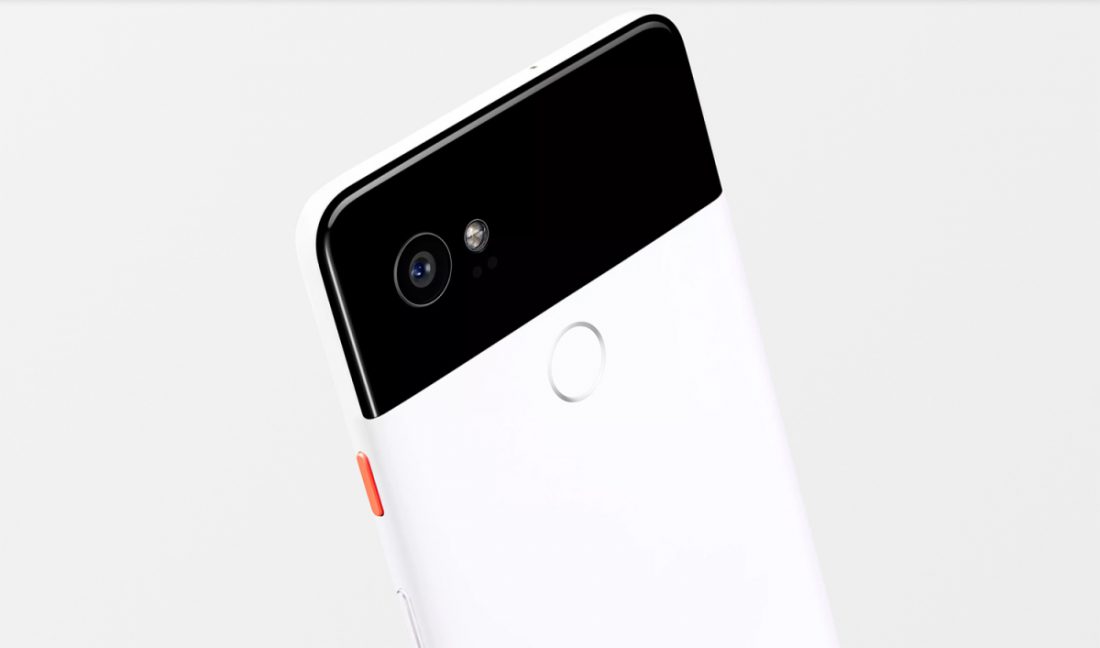
    The smartphone has a 6 inch 2880 x 1440 px POLED display which translates into an 18:9 aspect ratio. Protecting the display is Corning Gorilla Glass 5. Just like the Pixel 2, the device runs Android 8.0 Oreo out of the box and will receive the Android P update in 2018. Powering the device is a 3520 mAh battery which is larger than the one found in the Pixel 2. Under the hood, the Pixel 2 XL has the Qualcomm Snapdragon 835 chipset, 2.4GHz octa core processor, Adreno 540, 4GB RAM and 64GB/128GB onboard storage. The fingerprint sensor sits at the back of the device but, this time around the “glass window” is smaller.

    On the camera front, Google has decided to go for a single camera setup similar to last year’s Pixel phones. The rear-facing camera is a 12.2 MP sensor with an f/1.8 aperture and 1.4 micron pixel size. On the front is an 8MP camera with an f/2.4 aperture. Google has introduced new features in the camera department like the addition of AR. Google says Pixel 2 XL has greater high dynamic range, optical image stabilisation, and a portrait mode that doesn’t use a second camera but dual-sensor image technology. The Pixel 2 XL uses both OIS and EIS simultaneously for better clarity and stable images and videos.

    Samsung Galaxy S8+

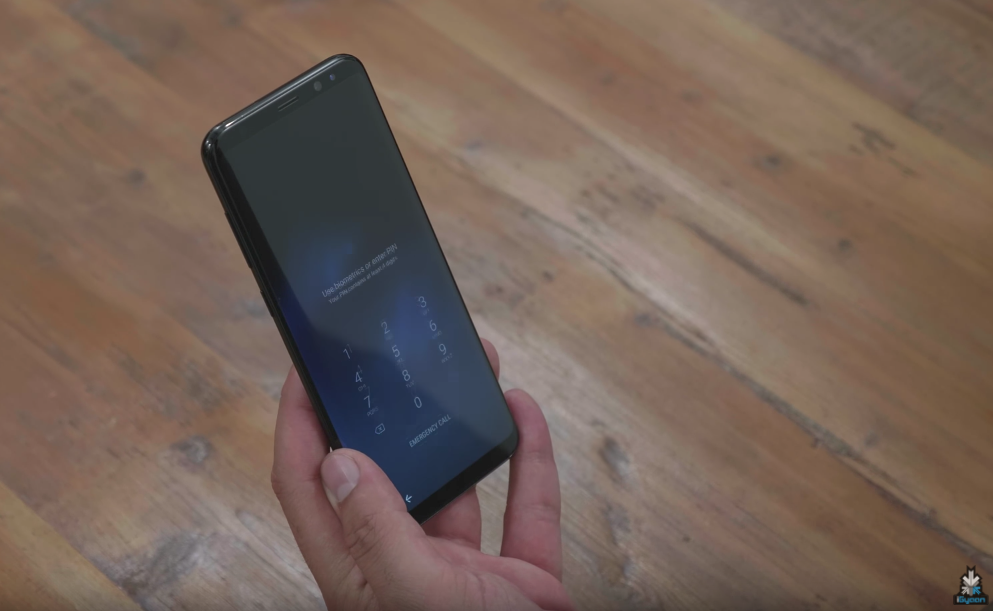
    The Samsung Galaxy S8+ has a 6.2 inch 2960×1440 px Super AMOLED display with a 570ppi. Powering the device is a 3000 mAh battery and it runs Android 7.1 Nougat out of the box. Under the hood, the smartphone has Exynos 8895 chipset, 64GB or 128GB onboard storage options which is expandable up to 256GB via microSD card and 4GB RAM or 6GB RAM variants. The Galaxy S8+ is also water and dust resistant. The Galaxy S8 has a glass  black which means it is wireless charging compatible. The smartphone has an awkwardly placed fingerprint sensor right next to the camera.

    For cameras, both phones get a main Dual Pixel 12MP OIS (F1.7), Front: 8MP AF (F1.7). While the battery on the Galaxy S8 is 3000 man, the S8plus has a 3500 mAh battery. Both support fast charging and wireless charging as well.

    Apple iPhone X

    The iPhone X has a 5.8-inch 2436 x 1125 px OLED True Tone Super Retina display with minimal bezels around it. The phone runs iOS 11 and is powered by a 3,000 mAh battery which charges through the Apple signature lightning port placed at the bottom of the phone. Because of the all-glass design, the iPhone 8 also has wireless charging. Under the hood, the smartphone has the Apple A11 Bionic chipset with a neural engine, a hexacore processor, 3GB of RAM and storage options of 64GB, and 256GB. Apple has also gotten rid of TouchID and replaced it with facial recognition called FaceID which Apple claims has a security breach chances of 1 in a million.

    On the optics front, the iPhone X has dual 12-megapixel rear cameras, and it’s equipped with dual optical image stabilization. The main camera is equipped with a wide angle lens and has an f/1.8 aperture while the secondary telephoto lens has an f/2.4 aperture.

    Samsung Galaxy Note8

    The Galaxy Note8 has a 6.3 inch 2960 x 1440 px Super AMOLED display with an 18.5:9 aspect ratio, which is the same aspect ratio found on the Galaxy S8 and S8+. Powering the device is a 3300 mAh battery which is smaller than the 3500 mAh battery found on the Galaxy Note7 with wireless charging capabilities, and runs Android Nougat 7.1.1 with Samsung’s custom skin on top. The device has the Exynos 8895 chipset, 2.3GHz Quad-Core (Custom CPU) + 1.7GHz Quad-Core (Cortex-A53) processor, 6GB of RAM and 128GB onboard storage, which is expandable up to 256GB via microSD card. The graphics are handled by the Mali-G71 MP20 GPU.

    The new Note8 has a 12MP dual-camera setup, one of which has a wide lens and the other a telephoto. The telephoto lens allows a user to zoom in losslessly for an up to 2x magnification. The use of dual camera allows for the ability to blur out the background for professional looking bokeh effect shots, something that seems to be common in smartphones in 2017. The Galaxy Note8, Samsung claims, is the first smartphone to feature OIS in both the cameras at the back.

    Specifications Google Pixel 2 XL Samsung Galaxy S8+ Apple iPhone X Samsung Galaxy Note8
    Price Rs 73000 for the 64GB variant Rs 64900 for the 64GB variant

    Rs 89000 for the 64GB variant Rs 67900

    Display Size and Type 6 inch POLED display 6.2 inch Super AMOLED 5.8 inch Super Retina Display 6.3 inch Super AMOLED
    Display Resolution 2880 x 1440 px 2960 x 1440 px 2436 x 1125 px OLED True Tone 2960 x 1440 px
    Dimension 157.9 x 76.7 x 7.9 mm 159.5 x 73.4 x 8.1 mm 143.6 x 70.9 x 7.7 mm 162.5 x 74.8 x 8.6 mm
    Weight 175 grams 173 grams 174 grams 195 grams
    Chipset Qualcomm Snapdragon 835 Exynos 8895 A11 Bionic Chipset Exynos 8895
    Processor 2.4GHz
    8x Qualcomm Kryo 280
    Octa core (2.3GHz Quad + 1.7GHz Quad), 64 bit, 10 nm process Hexacore processor with 2 high performing and 4 low cores Octa core (2.3GHz Quad + 1.7GHz Quad), 64 bit, 10 nm process
    RAM 4GB 4GB or 6GB 3GB 6GB
    Storage 64GB

    128GB

    64GB

    128GB

    64GB

    256GB

    64GB
    Storage Expandability No Yes up to 256GB No Yes up to 256GB
    Primary Camera 12.2MP with an f/1.8 aperture

    Dual pixel technology

    Dual Pixel 12MP with an f/1.7 aperture 12MP wide-angle and telephoto cameras
    Wide-angle: ƒ/1.8 aperture
    Telephoto: ƒ/2.4 aperture
    Dual 12MP camera
    Wide-angle: ƒ/1.7 aperture
    Telephoto: ƒ/2.4 aperture
    Primary Camera Features Simultaneous OIS and EISPortrait mode OIS

    PDAF

    Portrait mode
    Portrait Lighting (beta)
    Dual optical image stabilization
    Six?element lens
    Quad-LED True Tone flash with Slow Sync
    PDAF
    2X lossless optical zoom
    Bokeh Effect
    Dual OIS
    Secondary Camera 8MP with an f/2.4 aperture 8MP AF (F1.7) 7MP camera
    f/2.2 aperture
    8MP with an f/1.7 aperture
    Colours  Black and White, All Black Midnight Black, Maple Gold, Orchid Grey  Space Gray, Silver Midnight Black, Maple Gold


  • Bixby Voice Now Available In India

    Bixby Voice Now Available In India

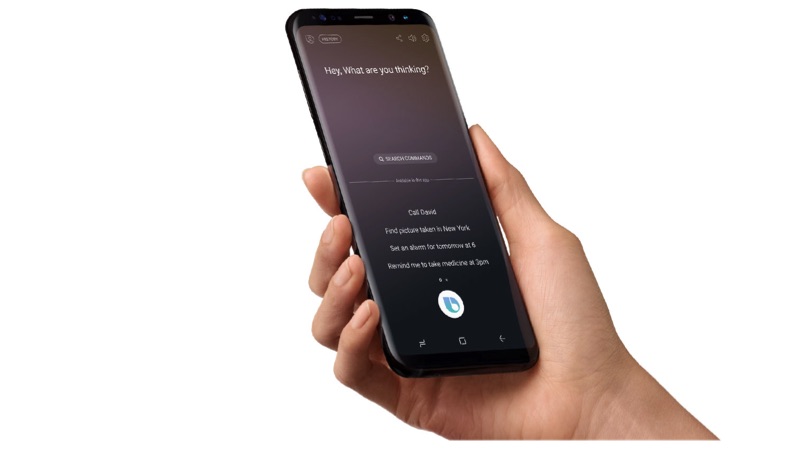
    It is fair to say that Samsung has had a great 2017 when it comes to its flagship smartphones. The Samsung Galaxy S8 and S8+ released earlier in 2017 and the Samsung Galaxy Note8 broke pre-order records in the United States and South Korea. In India, the Galaxy S8, S8+ and the Galaxy Note8 all released with Bixby but, without Bixby Voice. Samsung, however, during the India launch of the Galaxy Note8 announced that Bixby Voice for India will start rolling out from September 22.

    For all the software and hardware prowess that the Galaxy S8 and Galaxy Note8 devices possess, one thing that still annoys consumers is a physical button on the left hand side of the phone, the Bixby button. When Samsung introduced Bixby along with the Galaxy S8 and Galaxy S8+, there was a general consensus of it being exactly like Google Assistant and dedicating a hardware button to the AI assistant was Samsung’s push to replace Google Assistant.

    Samsung has said that it has optimised Bixby for India in away that it will understand different Indian accents. This means that your Galaxy flagship phone will respond to you regardless of which region of the country you are from.

    At Samsung, we listen to our consumers and bring in meaningful innovations that help make their lives better. With Bixby, the phone adapts to you and not the other way around. It’s a smarter way to use your phone and get more done. Keeping in mind the diversity in Indian accents and our commitment to ‘Make for India’, Bixby has been optimised to understand Indian accents.

    Similar to other AI voice assistants like Google Assistant, Siri, and Amazon Alexa, Bixby allows you to verbally communicate with your phone and perform tasks such as googling something, open apps or even make calls or send text messages. You can even point your phone to a certain object and Bixby will be pull up links to buy that product.


  • Samsung Galaxy Note8 May Debut In India On September 12

    Samsung Galaxy Note8 May Debut In India On September 12

    Samsung launched the Galaxy Note8 in New York last month and looks all set to debut its new flagship in India on September 12. Samsung has reportedly sent out press invites for a September 12 event in New Delhi to showcase its next big innovation. The invite doesn’t specify the name of the device but it is almost certain that the Galaxy Note8 will be introduced for the Indian market at a price of Rs 74,999. The pre-registrations of the device have already started in India and the successor to the Galaxy Note7 seems like the best bet right now. The phone will be available in Midnight Black and Maple Gold colours in India.

    The Samsung Galaxy Note8 has a 6.3 inch 2960 x 1440 px Super AMOLED display with an 18.5:9 aspect ratio, similar to the Galaxy S8 and S8+. The phone runs Android 7.1.1 with Samsung’s custom UI on top and is powered by 3,300 mAh battery with QuckCharge 3.0 capabilities. Under the hood, the Galaxy Note8, for the Indian market has the Exynos 8895 chipset, 2.3GHz Quad-Core (Custom CPU)+1.7GHz Quad-Core (Cortex-A53) processor, Mali-G71 MP20 GPU, 6GB RAM and 64GB/128GB/256GB storage options. The onboard storage can be expanded up to 256GB via microSD card. In a disappointing move, Samsung retained the awkward placement of the fingerprint sensor right next to the dual cameras at the back.

    Talking about cameras, the Galaxy Note 8 is the first phone from Samsung to feature dual-cameras with a 12MP dual-camera setup, the primary camera has a wide-angle 12MP lens with an f/1.7 aperture and the secondary camera has a 12MP telephoto lens with an f/2.4 aperture. The telephoto lens enables a 2X lossless optical zoom and has features such as the Bokeh effect, much like the iPhone 7 Plus. The dual-cameras are capable of capturing 4K videos at 30 FPS On the front is an 8MP camera with an f/1.7 aperture and captures 4K videos at 30 FPS.

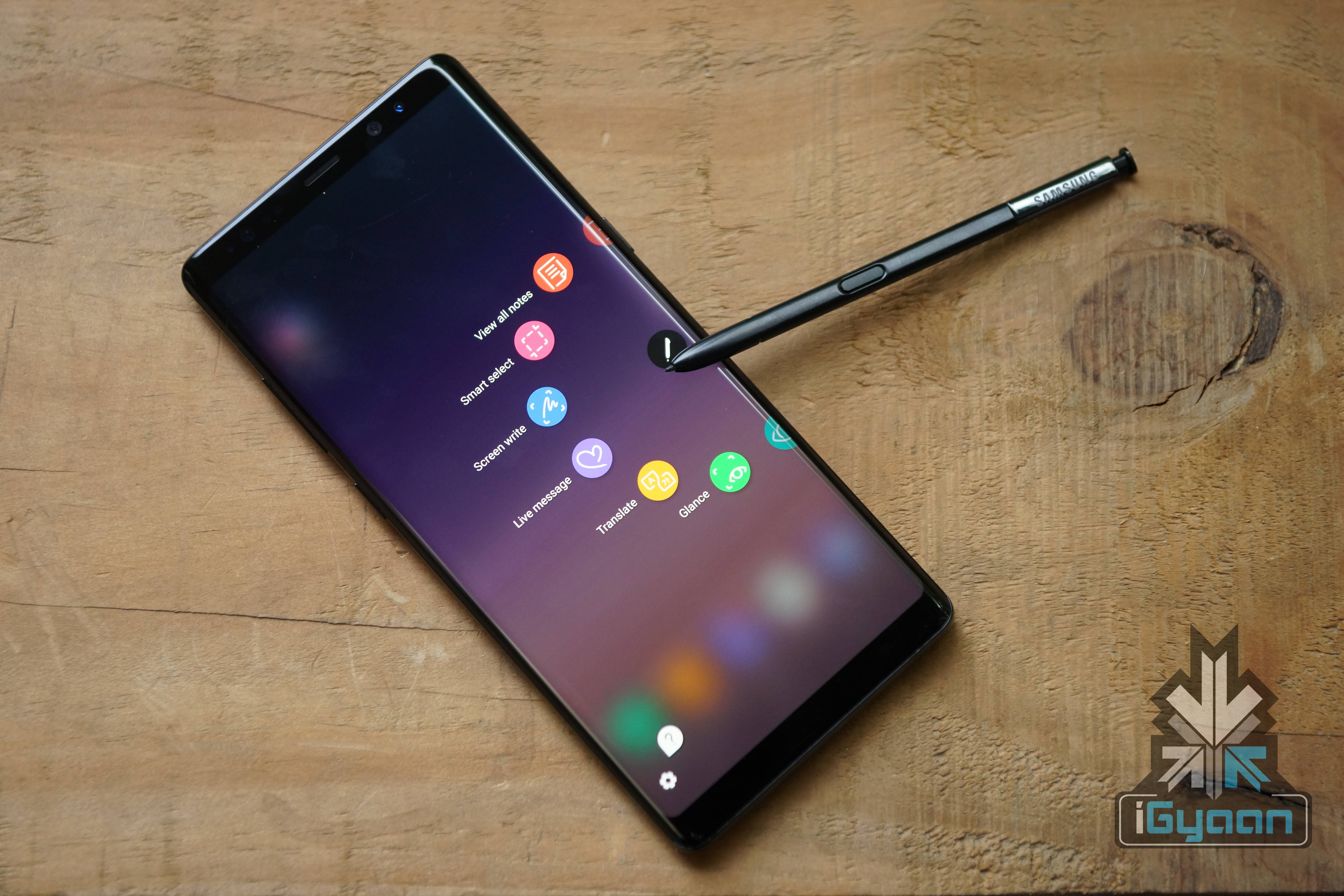
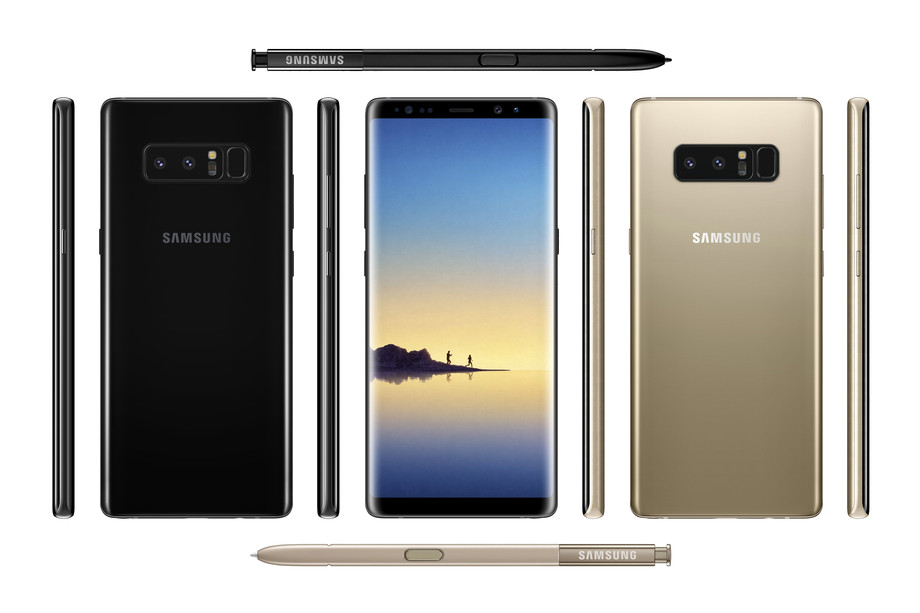
    The S Pen is more than just a marketing gimmick and has become the standout feature of the Galaxy Note series over the past few years. The S Pen and the Galaxy Note8 are both also IP68 certified water and dust resistant. The S-Pen comes with a host of new features such as Smart Select, which allows you to easily select, clip and copy the content that you like. You can also send .gif messages via the S Pen. The S Pen will be available in Midnight Black and Maple Gold colours.

  • Samsung Galaxy Note 8 Leaked In A New Deep Sea Blue Colour

    Samsung Galaxy Note 8 Leaked In A New Deep Sea Blue Colour

    Samsung is hosting an “Unpacked” event on 23rd August and many are anticipating the glitzy reveal of the new Galaxy Note 8. Though the press invite didn’t disclose the name of the device, but, the words “Samsung’s newest mobile device.” makes it quite obvious.

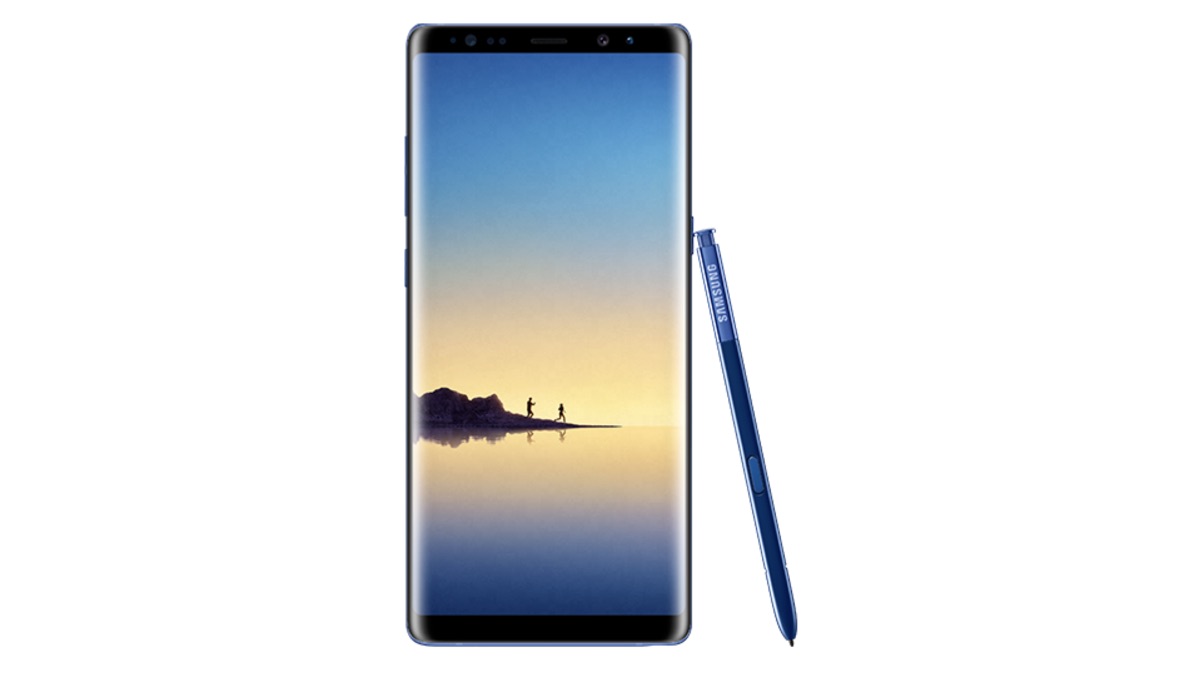
    Recently, the Galaxy Note 8’s “Midnight Black” colour variant was leaked in a tweet.  Now another colour variant of Samsung’s flagship device has surfaced. The tweet shows a leaked image of the Galaxy Note 8 in a “Deep Sea Blue” colour with the Note series S-Pen stylus.

    The Galaxy Note 8 is expected to feature a 6.4 inch Super AMOLED edge-to-edge 2960 x 1440 px display. The smartphone will be available in two variants, one with the Exynos 8895 Chipset and the other one with the Qualcomm Snapdragon 835. Both the models will feature 6GB RAM and 64GB onboard storage, expandable via microSD up to 256 GB additional storage. The leaks confirm that the Galaxy Note 8 will run Android 7.1.1 Nougat with Samsung’s TouchWiz UI on top.

    The next Galaxy Note is rumoured to sport a horizontally placed, 12MP dual camera setup, along with the fingerprint sensors placed next to the cameras. The primary, wide-angle camera will have an f/1.7 aperture and dual-pixel autofocus, while the telephoto lens will have an f/2.4 aperture and will enable a 2x optical zoom. The front-facing camera will be an 8MP camera with an f/1.7 aperture.

    As compared to the Galaxy Note 7’s 3500mAh battery, the Samsung Galaxy Note 8 will reportedly run on a 3,300mAh battery with Qualcomm’s QuickCharge 3.0. Samsung has a lot riding on the next Galaxy Note smartphone, as the Note 7 battery debacle served quite a blow to the company’s reputation last year.

    The Samsung Galaxy Note 8 is expected to cost around EUR 1,000 and will be available in the Midnight Black, Maple Gold, Orchid Grey and Deep Sea Blue colour variants.

  • Samsung Galaxy Note 8 Running On Exynos 8895 Spotted On Geekbench

    Samsung Galaxy Note 8 Running On Exynos 8895 Spotted On Geekbench

    The 8th instalment in the Samsung Note series, the Samsung Galaxy Note 8, has been subject to a lot of rumors and the latest leaks show us the internals of the new device.

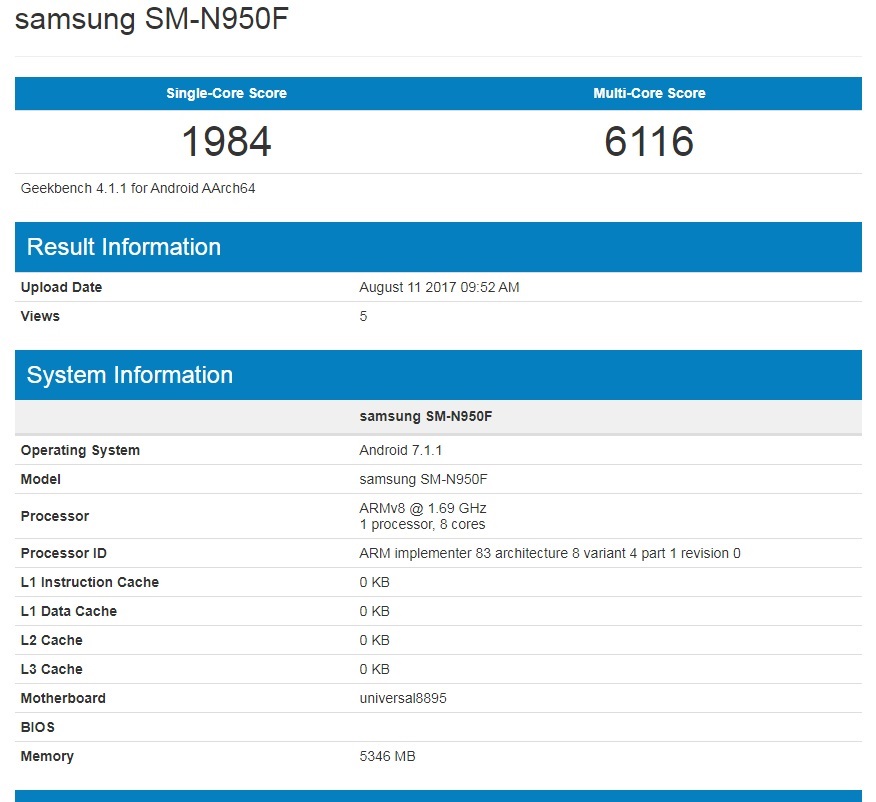
    The Note 8 was spotted on benchmarking website, Geekbench by the model number of  SM-N950F. The leak has confirmed hardware specs that were widely expected. Running the Exynos 8895 chipset just like the Galaxy S8 and S8+ along with a 2.45GHz octa-core CPU for all markets except the US where the Galaxy Note 8 will launch with the Qualcomm Snapdragon 835 and 6GB RAM. The listing also confirms that the Galaxy Note 8 will run on Android 7.1.1 Nougat with Samsung’s TouchWiz UI on top. The device scores 1984 in single-core performance, while its multi-core performance score is 6116.


    There have been many other leaks suggesting that the device will sport a 6.4 inch Super AMOLED edge-to-edge display Quad HD display. Recently, the Galaxy Note 8 was leaked in live images confirming the dual-camera setup at the back and a Midnight Black colour variant. Other rumoured colour variants are Orchid Grey and Deep Blue. The phone is tipped to feature a new and improved S Pen along with a force touch display.

    This is what we know so far about the Samsung Galaxy Note 8

    • Launch- August 23
    • Price – $1100 (approximately INR 71,000
    • Display- 6.3-inch Super AMOLED
    • Force Touch – Pressure sensitive display
    • Battery- 3,300 mAh battery
    • Chipset- Qualcomm Snapdragon 835/Exynos 8895
    • OS- Android Nougat 7.1.1
    • RAM- 6GB
    • Storage- 64GB/128 GB
    • Camera- 12-megapixel dual camera
    • Improved S-Pen functionalities
    • Iris Scanner and Fingerprint sensor

    Samsung has announced that it will host its ‘Unpacked 2017’ event in New York on 23rd August where the Galaxy Note 8 will be officially unveiled. Stay tuned on iGyaan for more updates!

  • Samsung Galaxy Note 8 Is Set To Launch on 23rd August

    Samsung Galaxy Note 8 Is Set To Launch on 23rd August

    Latest reports state that the Samsung might release the newest Note 8 on 23 August. And with the expected delay in Apple’s iPhone 8 launch, Samsung’s Note 8 might steal some of its thunder. Last year’s Samsung Galaxy Note 7, and the fact that it was recalled due to battery fires, makes the launch of the Samsung Galaxy Note 8 a crucial release for Samsung. So far a whole lot of rumors of the Samsung Galaxy Note 8 have been floating the rumor mill.

    Display

    The Samsung Galaxy Note 8 is expected to have a larger 6.3-inch curved infinity display, similar to the one used on the Galaxy S8 and S8+. Samsung might switch to a 19.5:9 elongated ratio, which should feel  narrow in your hand, despite the size of the screen. Rumors also suggest that the Samsung Galaxy Note 8  will be manufactured with a 4k display which is what is also expected to raise the price of the Samsung Galaxy Note 8. 

    Design

    The Galaxy Note 8 is rumored to look a lot like the Samsung Galaxy S8 and Samsung Galaxy S8 Plus, albeit with its curves a little flattened out. Reports also suggest almost zero bezel on the sides, improved iris scanner, a horizontal dual lens rear-facing camera with the finger print scanner likely to be place next to it. The S-Pen may also get a new design with improved functionality, the pen will charge inside the Note 8’s shell.

    Camera


    The Samsung Galaxy Note 8 may also feature dual cameras, much like the iPhone 7 Plus, LG G6  and OnePlus 5. Each of these cameras are expected to be 12MP dual pixel sensors. While the earlier rumors stated that dual lens camera might be placed vertically but the latest leaks say that the lenses will be placed horizontally and away from the fingerprint scanner.

    Hardware

    The rumored Snapdragon 835 and a massive 6GB RAM will help with multitasking and the extra features of the Samsung Galaxy Note 8’s S Pen such as a built-in speaker. According to the reports, the 64GB on board storage and a microSD expansion will offer a major storage boost. Reports suggests that the Note 8 is expected to have a 3,300mAh battery pack, which is actually smaller than the Galaxy Note 7. But considerings last year’s battery performance issues, Samsung may want to play it extra safe.


    Price

    The Galaxy Note  is said to cost over $1,000 or approximately Rs. 69,000. Majorly due to the 4k display and the edgeless design. This cost may not sit down well with the guys eager to get their hands on the Note 8.

    While Samsung’s Galaxy Note 8 is expected to launch on August 23 with a 6GB RAM and 64 GB Storage, the company may launch a larger storage and RAM variant in certain markets for a slightly higher price.

iGyaan Network
Privacy Overview

This website uses cookies so that we can provide you with the best user experience possible. Cookie information is stored in your browser and performs functions such as recognising you when you return to our website and helping our team to understand which sections of the website you find most interesting and useful.