Category: Business

  • Apple Announces $58 Billion Revenue In Q2 2019 As iPhone Sales Drop By 30%

    Apple Announces $58 Billion Revenue In Q2 2019 As iPhone Sales Drop By 30%

    Apple, one of the biggest technology companies in the world released its quarterly earnings on April 30. According to the reports, the company earned US$ 58 billion in revenue and $11.56 billion in profits. While the company stopped revealing the sales of iPhones, iPads and Macs starting last year, a separate report from the International Data Corporation (IDC) has also been announced, revealing the same. It stated the global smartphone market saw a decline of around 6 percent Year on Year (YoY) compared to the same quarter in the year 2018. This led to Apple iPhones performing the worst out of the bunch, seeing a sharp sales decline of 30 percent over last year.

    Apple’s Revenue For The Quarter
    Apple Watch Series 4

    Apple earlier predicted revenue between US$ 55 billion and US$ 59 billion for this quarter of the year. While the actual number hits the predicted mark, it is slightly lower than the US$ 61.1 billion the company announced the same quarter last year. The lower number is credited due to the gradually diminishing hardware sales. Despite the decrease in revenue, the CEO of Apple, Tim Cook was noted saying the company has hit an all-time record for services and has seen a strong momentum of Wearables and Home accessories category. According to him, more details about the companies revenues and sales will be shared at the 30th Annual WWDC (Worldwide Developers Conference) scheduled for the month of June.

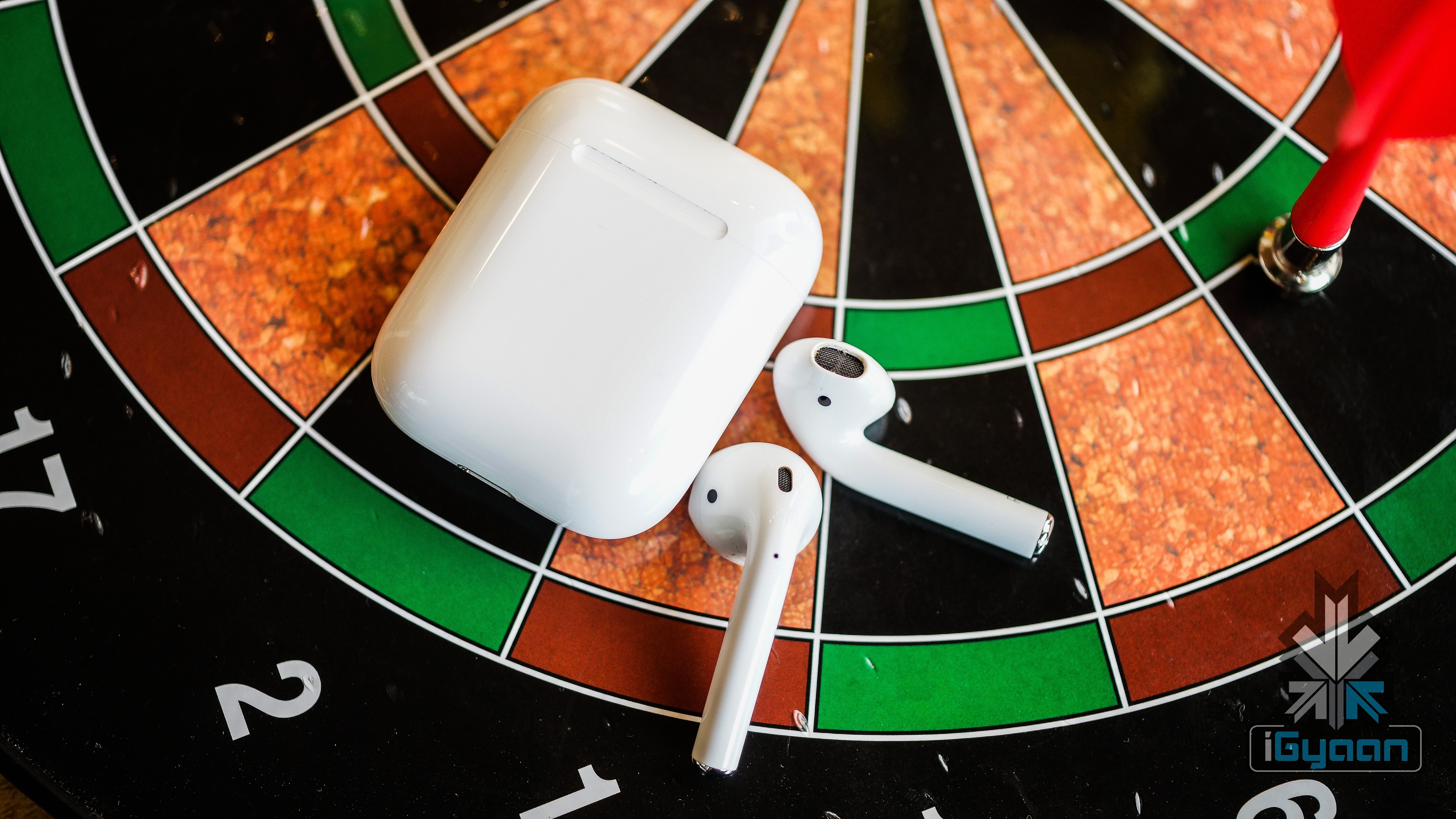
    Apple AirPods

    Also read: Dental Plaque Can Now Be Wiped Out By An Army Of Microrobots

    Furthermore, according to the aforementioned quarterly report by IDC, Apple shipped around 36.4 million iPhones during this quarter of the year. Notably, this is a significant 30.2 percent decline compared to the same time period last year when it shipped 52.2 million iPhones. The total breakdown of Apple’s revenue breakdown by its hardware products compared to last year is mentioned below.

    Product Revenue in 2019  Revenue in 2018
    iPhone US$ 31.05 Billion US$ 37.55 Billion
    Services US$ 11.45 Billion US$ 9.85 Billion
    Mac US$ 5.51 Billion US$ 5.77 Billion
    Wearable and Home US$ 5.13 Billion US$ 3.94 Billion
    iPad US$ 4.87 Billion US$ 4.01 Billion
    Total US$ 58.01 Billion US$ 61.13 Billion
  • Apple Hired Intel’s 5G Modem Lead Developer Ahead Of Qualcomm Settlement

    Apple Hired Intel’s 5G Modem Lead Developer Ahead Of Qualcomm Settlement

    Apple, Qualcomm and Intel have been a subject of a multitude of legal issues lately. The companies have been involved in conflicts over a variety of reasons, the major one regarding the supply of 5G chips to Apple. Previously, Qualcomm and Apple were involved in a 6-Year License agreement regarding 5G modems, following which Intel exited the 5G modem business. As per latest reports, Apple hired the lead modem developer of Intel before settling with Qualcomm and letting Intel go. 

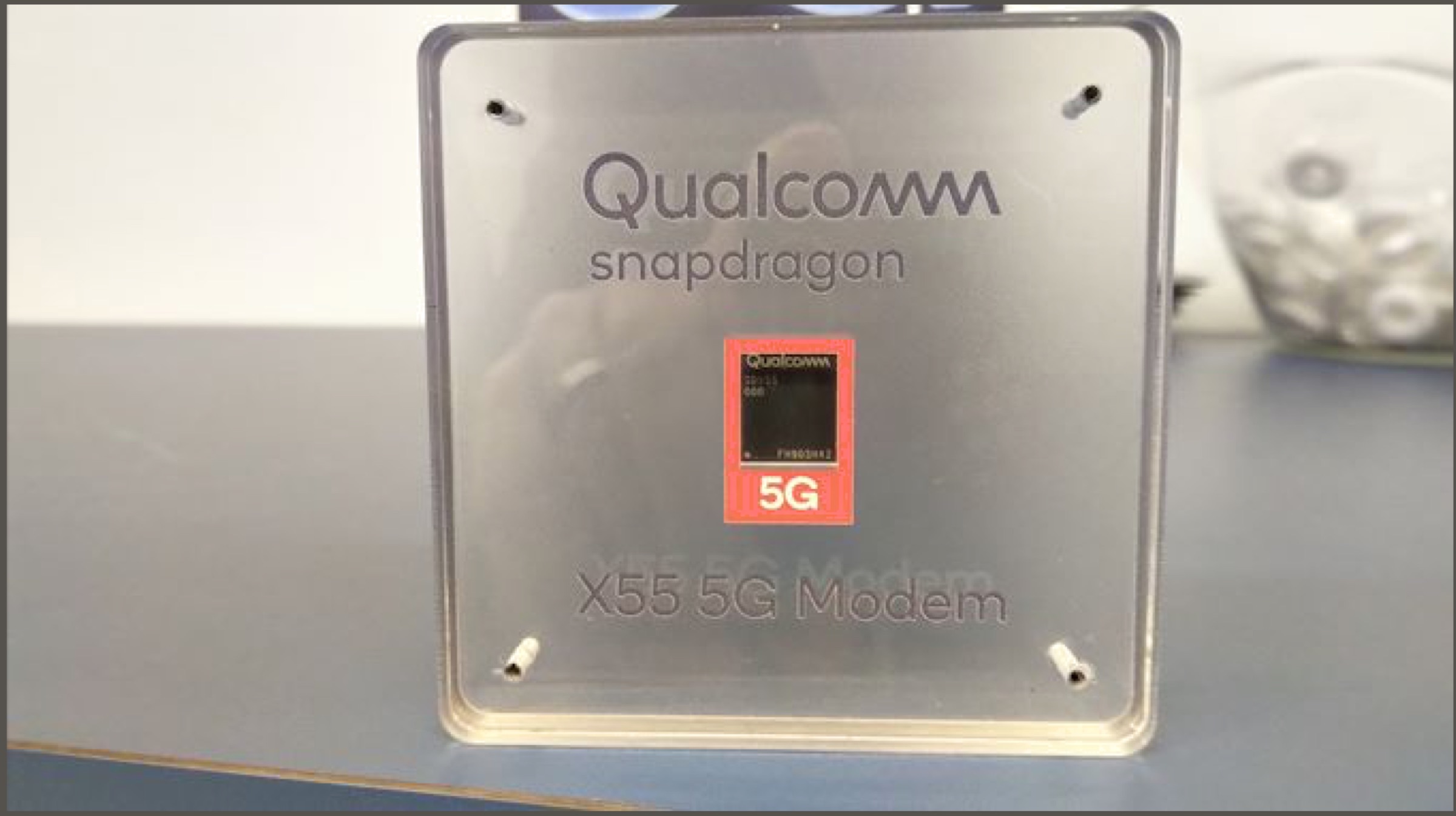
    Qualcomm X50 5G Modem

    A leaked email cited the aforementioned facts, in addition to the news that Umashankar Thyagarajan, the developer involved was hired just two months before the settlement. As per sources, Umashankar played an important role at Intel in the development of 4G modems, and was also working on the 5G XMM 8160 modems. After his exit from the scene, Intel was forced to rethink its chip development strategy. Consequently, Intel announced its departure from the 5G business on the same day as the Apple-Qualcomm deal went down.

    As previously reported, the company had raised concerns regarding Intel’s pace of the development process of 5G chips, following which Apple’s 5G iPhones were eventually delayed up to 2020. Seeing the 5G competition in the market from brands like Samsung and Huawei, Apple was forced to rethink its partnership with Intel. While Apple was unsatisfied with Intel’s results, the latter reverted by saying that Apple is a demanding client and that it is very conflicted with Apple regarding the partnership. 

    Also Read: Samsung Patents PlayGalaxy Game Link Service For Galaxy Devices

    In other reports, Apple was planning to step-up it’s in house modem manufacture after Intel delayed the production of the 5G chips. This step was taken in order to reduce the dependence on third-party suppliers, but unfortunately, adopting a manufacturing strategy like this will still cost time, delaying future 5G iPhones up to 2021. Since Apple is taking matters into its own hands now, 5G support can be expected fairly soon from the American multinational company.

  • Apple, Qualcomm Drop All Lawsuits, Sign A Six-Year License Agreement

    Apple, Qualcomm Drop All Lawsuits, Sign A Six-Year License Agreement

    In a surprising turn of events, Apple and Qualcomm have dropped all the pending lawsuits against each other. The companies have also signed a six-year license agreement, which may be further extended. Both the companies, the known electronics giant Apple and mobile chip maker Qualcomm had filed multiple lawsuits against each other for copyright infringement. A few days ago, Apple was found guilty and was asked to pay 31 million US $ as a fine.

    About The Case
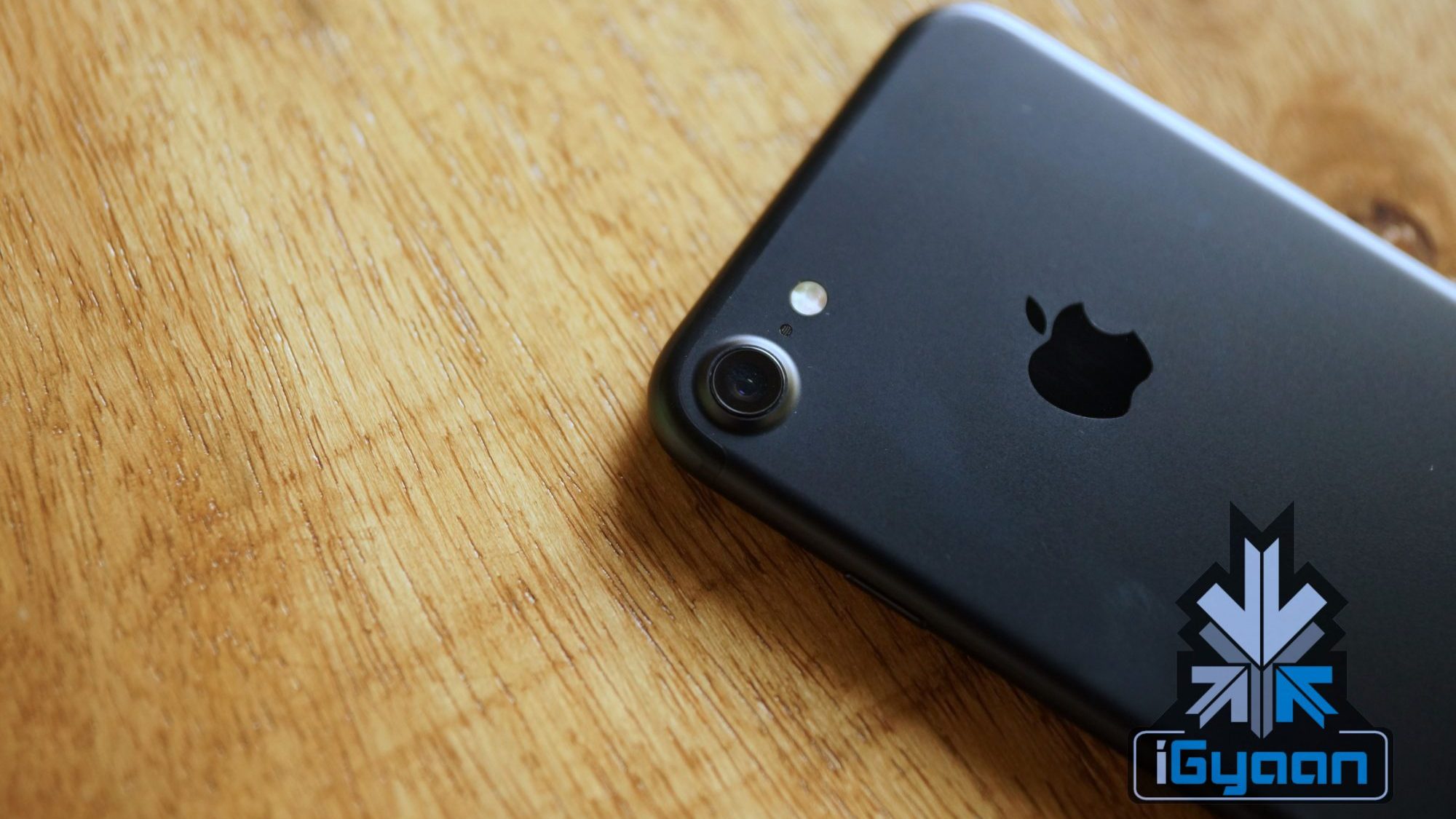
    iPhone 7

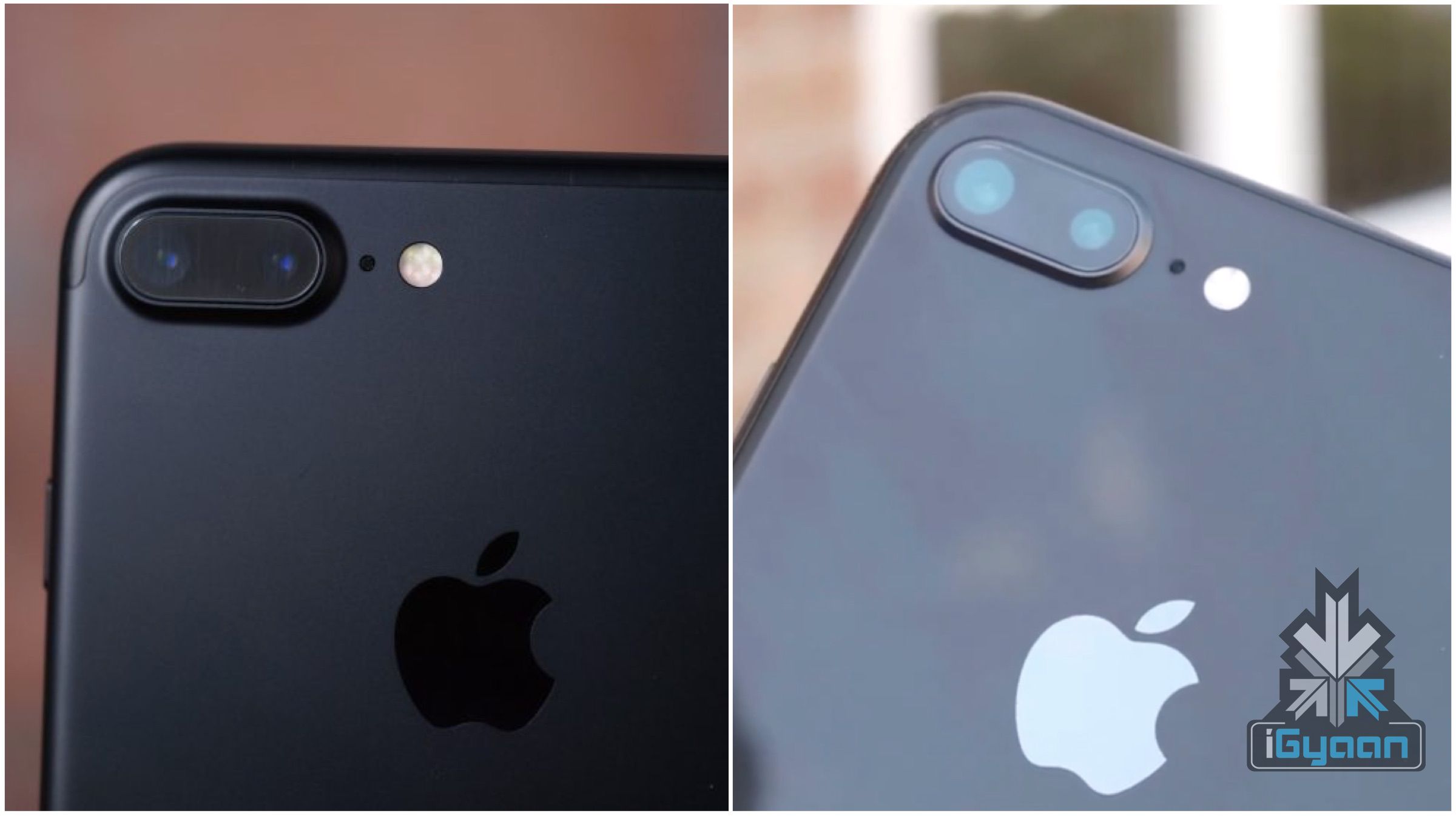
    The lawsuit filed by Qualcomm cited that Apple had violated at least three patents. The damages that it asked for applied to iPhones sold July 2017 onwards, which were kitted with Intel chips. Later in the year 2017, Apple replaced Qualcomm with Intel as its exclusive components supplier. As per reports, in the year 2016, Apple was also using Intel modems in some iPhone variants instead of Qualcomm modems. The devices included the iPhone 7 and 7 Plus. The patents relate to the following functions on mobile devices.

    • Allowing phones to connect to the internet instantly after being switched on
    • The efficiency of the smartphone’s battery and its relation with graphics processing
    • A traffic management function enabling faster data downloads
    The Settlement

    Both Apple and Qualcomm have agreed to reach a settlement as per the former company’s announcement. According to reports, the iPhone maker will have to make a payment to Qualcomm for an undisclosed amount as a part of the settlement. However, the companies have signed a licensing agreement for at least six years and the chipset maker will now supply parts to Apple. This may lead to iPhones sporting Qualcomm’s chips appearing on the shelves once again. 

    Also read: Sony PlayStation 5 With 8K Graphics Teased In An Interview

    Interestingly, Intel, who was the interim supplier for iPhone modems to Apple, has announced it is quitting the manufacturing of 5G modem for smartphones. As the iPhone maker and Qualcomm have finally struck peace, it is expected to lead to the latter supplying its 5G modems in the future smartphones by the former. 

  • True Wireless Earbuds Market Reaches 12.5 Million, AirPods Still The King

    True Wireless Earbuds Market Reaches 12.5 Million, AirPods Still The King

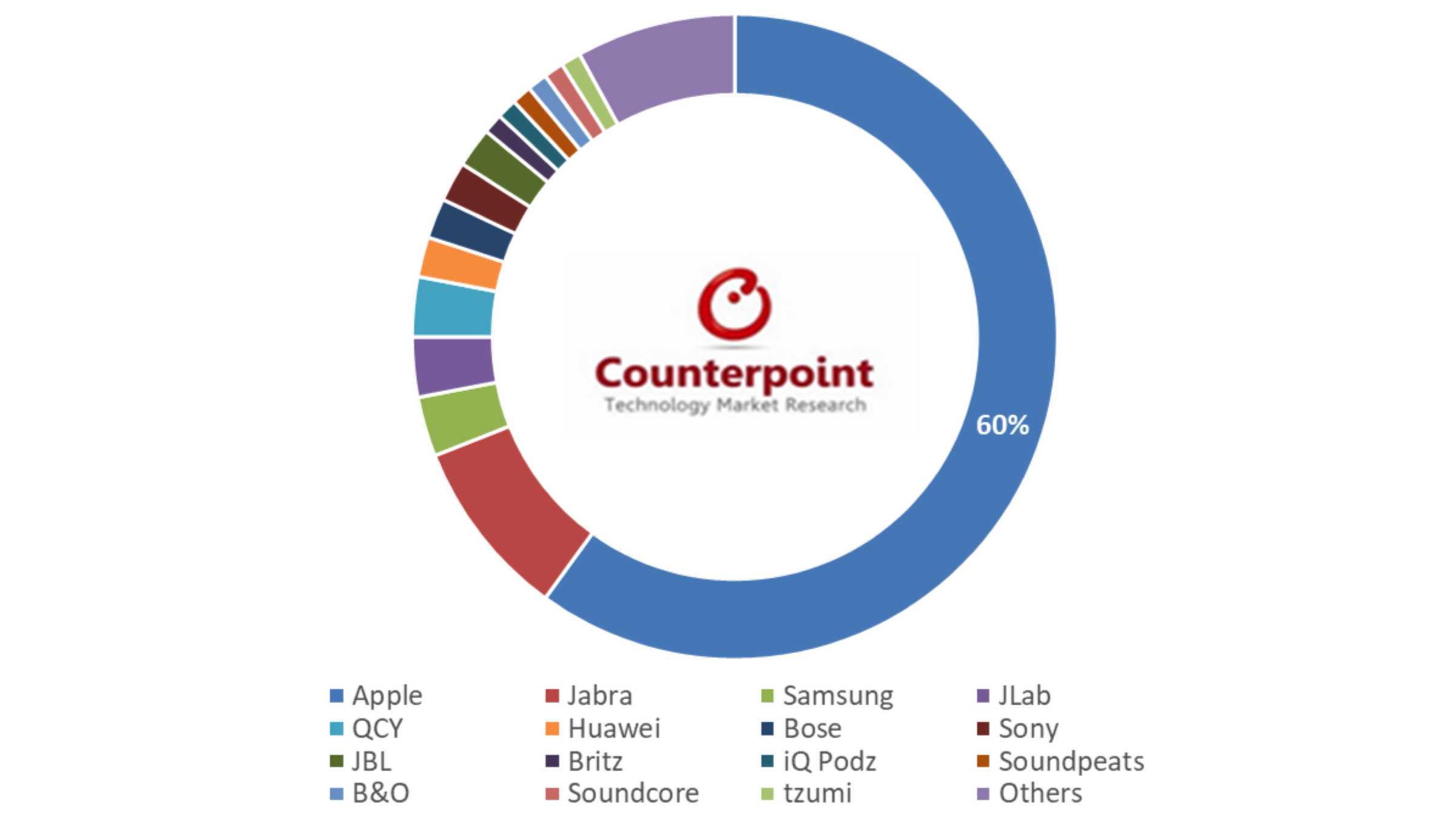
    With the launch of the iPhone 7 and iPhone 7 Plus in the year 2017, Apple removed the 3.5mm headphone jack from its smartphones. Eventually, more OEMs followed suit and in today’s day and age, truly wireless earbuds have become really popular for listening to music and for taking calls. Recent research conducted by Counterpoint, a known research organization claims that the Global market for truly wireless earphones has reached 12.5 million in the fourth quarter of the year 2018. Out of the massive number, the Apple AirPods are the most selling pair of truly wireless earbuds.

    Results Of The Research

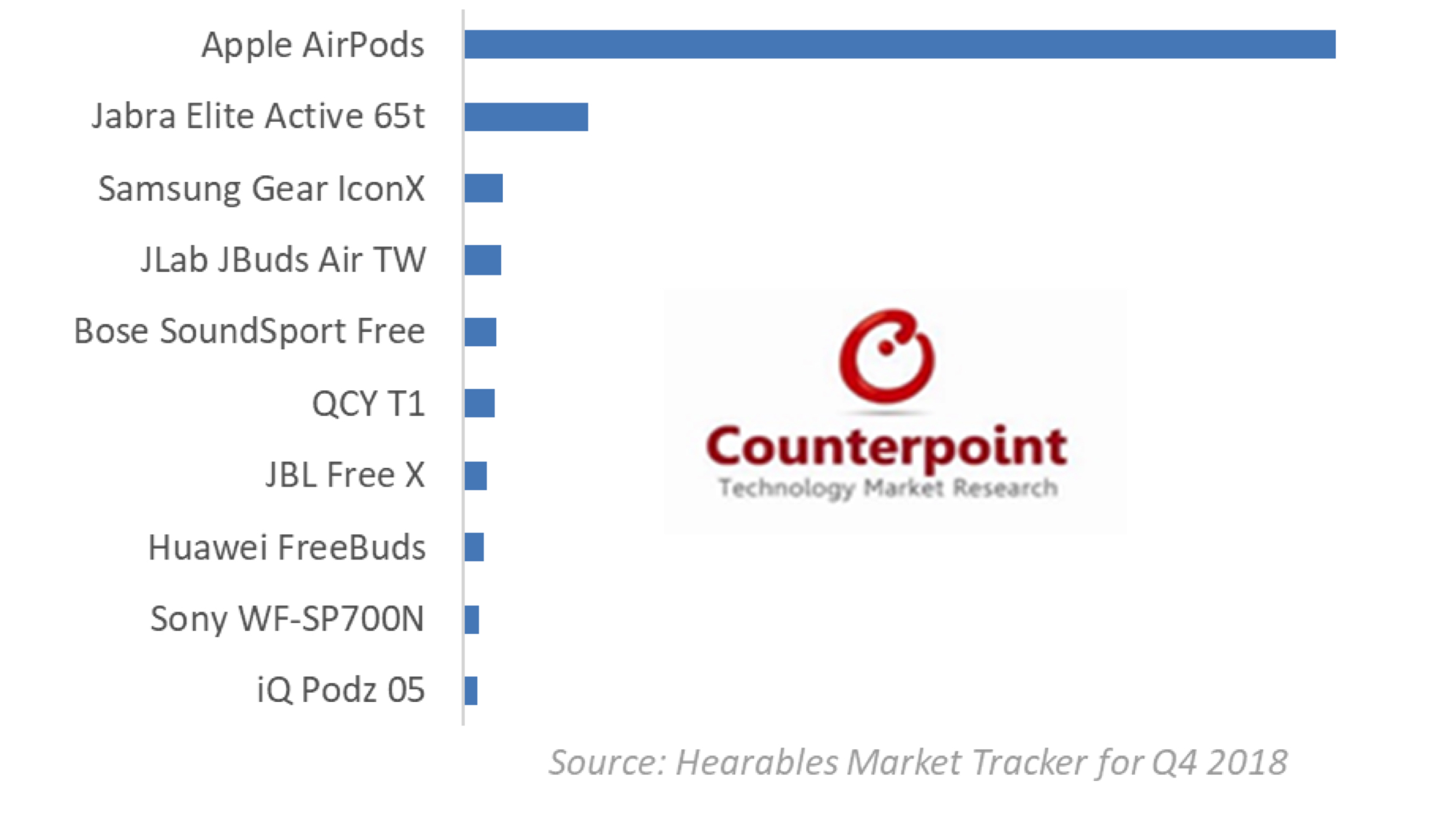
    In the global research conducted by Counterpoint, the finding revealed that the market for truly wireless earbuds is on the rise. The highest selling devices were as mentioned above, the Apple AirPods. The truly wireless earphones hold a massive market share of around 60 percent of the total sales. Other members in the top ten list include the Jabra Elite Active 65t, Samsung Gear IconX, and Bose SoundSport Free. However, several low to mid-tier models priced under US$100 (Rs. 6,900) also made the cut. 

    The area where truly wireless earphones were found to be most popular was North America with it being the largest market for wearables. It accounted for 24% of the sales volumes, followed closely by the Asia Pacific region (excluding China) and in the third place, there is Europe. A senior Counterpoint analyst said that as more companies will enter the market of truly wireless earbuds and offer advanced features at a reasonable price, the customers will end up getting more choices in the future. She also claimed that the competition is going to be more intense with time.

    Also read: Canon Launches Zoemini S And Zoemini C Instant Print Cameras

    The success of Apple AirPods in regard to the sales of truly wireless earbuds is alleged because of the seamless connectivity to the Apple ecosystem. For people who use an Apple electronic device like an iPad, iPhone or a Macbook, using AirPods has its advantages over any regular Bluetooth headphones. Their sales dipped a bit towards the end of last year, but that is seen as due to the anticipation of the next generation of the truly wireless earbuds which launched a few days ago.

  • Apple Told To Pay Qualcomm Over $31 Million In Patent Infringement Case

    Apple Told To Pay Qualcomm Over $31 Million In Patent Infringement Case

    In the follow up of a heated lawsuit between the noted chipmaker Qualcomm and prominent electronics company Apple, the latest ruling by the San Diego court has found Apple guilty. The company was told to pay a fine of over US$ 31 million to Qualcomm. The amount roughly breaks down to US$ 1.40 per iPhone sold by the company. Notably, it is the exact amount the lawsuit was filed for by the chipmaker. Apple was found by the court to have infringed three patents held by Qualcomm. It was sued back in the year 2017 citing that the company had violated patents related to assisting mobile phones getting a better life.

    What Are The Patents?

    The lawsuit filed by Qualcomm cited that Apple had violated at least three patents. The damages that it asked for applied to iPhones sold July 2017 onwards, which were kitted with Intel chips. Later in the year 2017, Apple replaced Qualcomm with Intel as its exclusive components supplier. As per reports, in the year 2016, Apple was also using Intel modems in some iPhone variants instead of Qualcomm modems. The devices included the iPhone 7 and 7 Plus. The patents relate to the following functions on mobile devices.

    • Allowing phones to connect to the internet instantly after being switched on
    • The efficiency of the smartphone’s battery and its relation with graphics processing
    • A traffic management function enabling faster data downloads

    Also read: Samsung Galaxy A2 Core Android Go Smartphone Leaked

    Interestingly, the past ruling by a German court banned the sales of Apple’s older iPhone models because of a similar patent infringement case. The company then swapped out the Intel’s modem that it had been lately using for the ones manufactured by Qualcomm. This leads the company to be allowed to continue the sales of the said devices. Notably, the biggest lawsuit between the companies will be settled in April 2019, in which Apple has accused Qualcomm of indulging in anti-trust practices and illegally withholding US$ 1 Billion worth of rebates from Apple.

  • Elon Musk Releases All of Tesla’s Patents To Save Earth

    Elon Musk Releases All of Tesla’s Patents To Save Earth

    Elon Musk, CEO of Tesla and SpaceX is known for being a genius, motor mouth billionaire. Under his leadership, Tesla has transitioned from being just another wannabe electric brand to the best selling one. His social media presence is mostly controversial. However, there is no denying that he has done a lot for the planet.

    We now have one more reason to praise him. On Thursday, Elon announced that all of Tesla’s patent will be made public in a bid to save the planet.

    In a blog post shared by him on Twitter, Musk says “Tesla Motors was created to accelerate the advent of sustainable transport. If we clear a path to the creation of compelling electric vehicles, but then lay intellectual property landmines behind us to inhibit others, we are acting in a manner contrary to that goal. Tesla will not initiate patent lawsuits against anyone who, in good faith, wants to use our technology.”

    Tesla Smartphone

    Tesla Going Strong

    This comes after a report in CNBC stated that Tesla has around 83 percent market share of electric cars in the US. The sales of the company also have increased over 50 percent since last year. With this step, Musk feels that more companies will make use of electric powered vehicles and would contribute to save the planet.

    Read more:  Nokia 8.1 With 6GB RAM And 128GB Storage Launched

    Musk said in his blog post that he earlier filed patents to prevent big car companies from copying the technology. And also using the huge marketing and sales apparatus to take over the market. “We couldn’t have been more wrong. The unfortunate reality is the opposite,” he said, noting that electric or clean-fuel cars “at the major manufacturers are small to non-existent.”

    The shares of Tesla declined following mixed reactions to the news.


  • DJI Uncovers Employee Fraud, May Cost The Company $ 150 Million

    DJI Uncovers Employee Fraud, May Cost The Company $ 150 Million

    DJI, a drone manufacturing company recently uncovered an employee fraud that could very well have cost the organization $150 Million. The company released a statement that said that DJI holds their employees to strict ethical standards and takes any violation of their code of conduct very seriously. 

    Statement By DJI

    During a recent investigation, DJI found out that some employees inflated the cost of parts and materials for certain products. They, according to DJI, pocketed the profits themselves. The company estimates the damages to be around RMB 1 billion which is around $150 Million. DJI, to address this issue, dismissed a number of employees who violated company policies. Law enforcement officials were also contacted to report the fraud. The company in their statement also said that they continue to investigate the situation. They are cooperating fully with law enforcement’s own investigation.

    The drone manufacturer, who made a mark in CES with their range of new products just a few weeks back, also said that such actions do not represent the company. The statement further said that the 14,000 employees working for the company work hard every day to serve customers and develop cutting-edge technologies. DJI has become one of the biggest players in the drone market. Forbes recently named the company’s CEO Frank Wang the first “drone billionaire”. 

    DJI is taking steps to strengthen internal controls after the incident.  They have established new channels for employees to submit confidential reports. The reports relating to any violations of the company’s workplace conduct policies will be completely anonymous. 

    Also Read: DJI Announces A $650 Smart Controller At CES

    The company has in recent years faced various issues including different drone flying regulations in different countries and battery problems in their drones. Their latest product, a Smart Remote Controller With Built-In Display was widely appreciated in CES. However, DJI said in their statement that despite of the heavy losses, the company did not incur a full year loss in 2018.

  • What Spotify Entering Indian Market Might Mean For Prime Music And Apple Music

    What Spotify Entering Indian Market Might Mean For Prime Music And Apple Music

    Swedish online music streaming service Spotify might launch it’s services in India soon. There is already quite a competition brewing between other music streaming services, with Prime music and Apple music being paid services. Saavn, Gaana Google and other companies also have free streaming that many Indians use, apart from using Youtube for their music needs. Spotify is already a couple of years late in entering the market. Recent news suggests that they plan to establish themselves and launch before the end of this month. 

    The company has already partnered with T series. T series is India’s largest music label and movie studio. Fans of T series have been in loggerheads to gain the most number of subscribers on Youtube with popular Youtuber Pewdiepie. This partnership will allow Spotify to gain access to T-Series’ catalogue of Bollywood and regional songs. The company is believed to be launching with a catalogue of five languages with more than 160,000 tracks across various genres. 

    What Others Offer

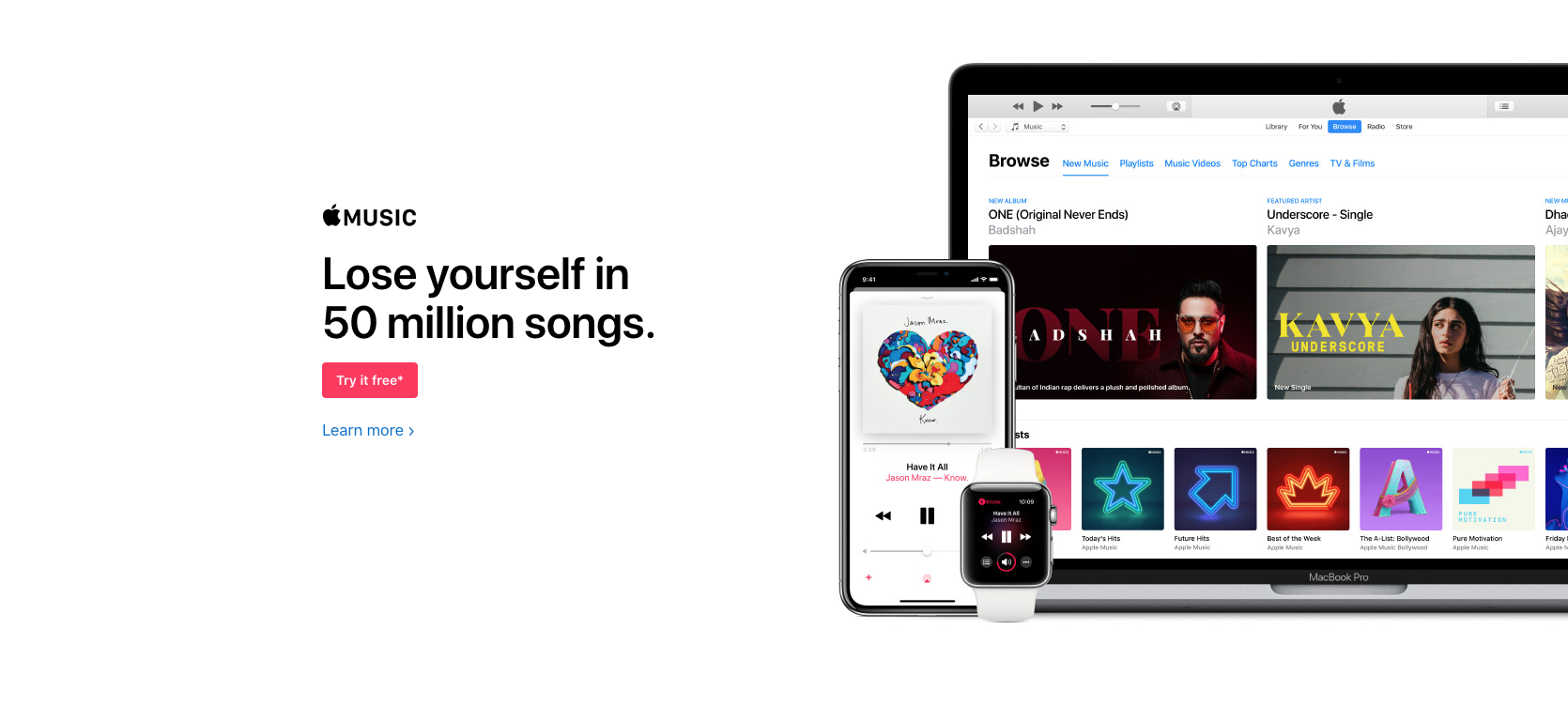
    Apple Music currently provides three months of free trial before one has to subscribe in India. The subscription charges are Rs 60/month for students, Rs 120/month for individuals and Rs 190/month for families. Amazon’s Prime Music on the other hand is available for free for all Amazon Prime users which costs 129 per month or Rs 999 per year. Prime membership also adds certain other benefits such as Prime Videos, free delivery for orders from Amazon and so on. On the other hand, JioSaavn PRO is offered for Rs 99 per month. In a highly competitive market such as this, Spotify needs to up the game if it is to survive and thrive. Being a price sensitive market, the membership fees will be the deciding factor for subscribers. 

    Till last year Spotify claimed to have the presence in 78 markets across the world. The company also has over 250 partners across televisions, cars, laptops and speakers among others. One of India’s biggest music streaming service, Saavn was recently acquired by telecom behemoth Reliance Industries Limited. Spotify can play to their strengths and look at acquisition of Indian music streaming services as well. This will not only reduce establishment costs but also reduce competition. However, in a stock exchange filing, Spotify reported that it had a dedicated office space in India, with 308 employees. This means that the company is going to have a go at the music streaming business in India very soon. It will be interesting to see how it pans out and how Indians receive the new streaming service option. 


  • Apple May Slow Down Hiring Due To Weak iPhone Sales

    Apple May Slow Down Hiring Due To Weak iPhone Sales

    Apple was riding the wave of becoming a trillion dollar company, but in the field of tech nothing is certain. Each company has good days and bad days. In a recent report by a reputed news website, Apple has been reported to be planning to cut back on hiring new employees. This indicates that the company may be entering a period of financial problems soon. 

    Possible Reasons

    Apple’s CEO recently sent out a revised revenue forecast in the light of major issues and challenges that the company is facing. One of the biggest issues is that of iPhone sales in China. China’s economy began to slow down in the second half of 2018. The ban of sales of older iPhones due to a dispute with Qualcomm over patents also played a part. The strong US dollar and the US – China trade tensions didn’t help either. Apple has faced a backlash in emerging and price sensitive markets as well. Chinese manufacturers have taken these markets by storm with their low priced higher spec’d phones.

    Batterygate also harmed the company quite badly.  They had to provide replacement batteries to consumers at a lower than expected price. This led to a lot of consumers jumping on the opportunity and getting their batteries changed at just $29 instead of buying new phones. According to the news website, the slump in hiring forecast was made by the CEO of the company in a meeting held a day after the Letter to investors was published. 

    Also Read: Apple In Troubled Waters With Regards To iPhone Sales, According To Letter To Investors By Tim Cook

    That being said, it is not unusual for companies to hire lesser number of people. And it definitely isn’t as bad as not hiring any new employees or laying off the ones who work in a company. It might just be a small dent in Apple’s trajectory and may not be a horrible financial problem as most news websites are making it out to be. 

  • How Do Netflix And Other Streaming Services Earn Money

    How Do Netflix And Other Streaming Services Earn Money

    Netflix and Amazon’s Prime Video are always at loggerheads as the streaming giants fight it out to get the most number of subscribers, the best shows and the most eyeballs. Some of the biggest shows from all across the world are either on Netflix or Prime Video. These services disrupted many industries – CD/DVD renting, music and even the film industry itself – giving viewers the opportunity to watch the best movies and tv shows from the comfort of your home.

    So, how did they do it? How did they take over the experience of going to Movie theatres and watching movies on a big screen with a bucket of popcorn shared between the group of people.

    What Is A Streaming Service?

    A streaming service is a website that allows you to view content online for a fixed charge. This can be on a monthly, yearly or even a per show price. These streaming companies sign contracts with different production houses to get exclusive access to content. This allows for a viewer to get a unified content experience vs browsing the internet for different types of content. It also aims at stopping piracy which was prevalent before companies like Netflix showed up. In other words, “What Apple did with Apple Music, Netflix has done with movies and TV shows” which refers to the stopping of piracy in the entertainment business. 

    The World Before Streaming Services

    Viewers like you and I have grown up watching movies at the cinema. Once the movie had run its natural course in these cinema theatres, the work on DVDs would begin. This was approximately five months post the movie release. If someone missed the movie during initial release , they would wait about six months for the movie to hit DVD production. Some preferred to wait for months more to watch the movie when it was eventually broadcast on television. Some even rented movies from places like Blockbuster(R.I.P.) or, in India, local renting stores. 

    Change In Business

    Content production companies, traditionally, have had a business model that likes to control distribution. They wait for as long as they can before releasing a new format. For example, when they release a movie they wait till the vast majority of people who were willing to watch a movie at the cinema has watched it. Then they release other formats one by one. In the earlier days, they used to have different formats released one by one, which included DVD, CD, VCR, PPV and BlueRay. TV broadcasts were usually saved for last as it was reserved for people who wanted to see the movie, but were not willing to pay for it. So the production companies earned from TV sales and ad revenues.

    But things have changed now and many production and distribution companies understand the importance of giving viewers options . The number of movie releases have also increased tenfold and a viewer does not wait for six months to watch a movie. Piracy has also been a concern with camera quality improving drastically, pirated versions of a movie have become very good in quality. The production companies were losing money in trying to control distribution. That is where streaming services came in. 

    Streaming Services Revenue

    Many viewers think that Netflix is being paid by the production companies to list their movies. But in actuality it is the other way around. Netflix pays producers of movies to have content on their website for a set period of time. Once the time has expired, they choose to take it down or if the viewer count is more then they can extend the period by paying more.

    In fact, Netflix’s entire cash flow comes from subscriptions. They have different plans for different countries which has options based on the number of screens. If you are subscribing for more than one screen so that two people from your friends or family can watch simultaneously. Amazon Prime which also earns from subscriptions as well but they have a one person one account policy and everyone has to subscribe to Prime separately.

    Originals

    Even though Netflix earns a lot from the subscription, they spend a lot more in advertising, marketing and overhead as well as operating cost. They also invest a lot on what they call Netflix Originals which are movies and TV shows produced by Netflix themselves. Prime Video have also heavily invested in originals but Netflix has had more hit titles like Stranger Things, Brahman Naman, Narcos, Little Things and so on. The new Black Mirror Bandersnatch and a movie called Bird Box saw rave reviews. 

    Also read: Top Crime Dramas To Watch On Netflix This Weekend

    In a developing country like India with immense growth potential , streaming services like Netflix and Prime Video are producing Indian content and focussing on the Indian market by reducing subscription prices. The competition has just begun in India and it will be interesting to see if other players like Hulu see India as a possible expansion strategy in future. Till then, get your blankets and popcorn out, sit back, relax and stream. 
  • 5G vs 4G Cost, Speed And Viability In India

    5G vs 4G Cost, Speed And Viability In India

    If a smartphone is the body, the network is it’s heart. And network connectivity is an extremely important part of our day to day lives. From quickly browsing Facebook or other social media websites, to checking facts, the weather, time in a different country to just about anything requires internet connectivity. Thus network providers have put immense importance in bringing faster internet to the consumers. The arrival of 4G was called a revolution back when it came out as the consumers understood how improved it was and what it’s benefits were compared to 3G. Now that talks about 5G have started and with countries like US and UK set to roll out 5G in 2019, let’s discuss what it would mean for a huge and still growing market like India. 

    What Is 5G?

    5G is a faster, more efficient way of using the internet. In 5G, data transmitted over wireless broadband connections could travel at rates as high as 20 Gbps with a latency of and well as offer latency of 1 ms or lower for uses that require real-time feedback. This means, it will have a better surfing speed, in layman’s terms. 

    What Are It’s Benefits Over 4G?

    The speeds of these networks depend on the frequency bands that they use. The 4G network supports frequency band speeds upto 6GHz, whereas the radio bands for 5G will be able to handle anywhere between 30GHz and 300GHz. This is a significant improvement which will make your internet surfing experience much faster. The 5G network is also interference free even if you are standing next to other wireless signals which was an issue with 4G networks since they sent radio signals in different directions. Owing to the way 5G uses wavelengths, it will also reportedly be able to service a lot more people which is reported to be approximately 1,000 devices per meter. This means even in crowded cities, using 5G will be blazing fast. 

    How Does It Affect An Average Customer?

    So how does all of these relate to customers? Should they shift to 5G? If so, then why? All a customer wants from a network are lower costs, better connectivity without hindrances and faster internet. 5G seems to satisfy all these conditions except for the cost which we will discuss later on in the article. So, when 5G rolls out, and you are satisfied with the cost per month for your plan, then go ahead and port to 5G because it is better than 4G in every other way. 

    How Much Will It Cost?

    The cost of 5G internet, like 4G will vary from country to country and will change from carrier to carrier. In India, we can estimate the price to be close to what 4G is because companies like Reliance and Vodafone will want the majority of customers to shift. India being a very price sensitive market, the prices of 5G can be expected to be very competitive. And the Network providers will recover their costs if 5G implementation only if a lot of people use it. 

    When Will It Arrive In India?

    India had caught on the the 4G trend suddenly and abruptly. Usually new networks arrive in the US and UK first. India has always been late in receiving these new technologies. Since changing networks have a lot of variables including steps taken by the government, bidding, setting up the infrastructure and others India adopts to these trends much later. The new network in India is expected to be available in India by 2022, according to TRAI which will be 3 years after many of the first world countries. Telecom minister Manoj Sinha has recently stated that India cannot afford to miss the 5G bus. This is little assurance however, of India adopting 5G before 2022. Given that today 400 million people in India have good quality internet access, the new network will definitely be a great business opportunity for the network providers. 

    Also read: Our First Taste Of 5G Might Not Even Be 5G

    Will Your Device Support 5G?

    Most high end smartphones in 2019 will ship 5G enabled. Qualcomm’s Snapdragon 855 is one of the few chipsets that support 5G at the moment. While there will be other cheaper chipsets in future but your current 4G device in all probability will not support 5G. Even if you bought the most expensive iPhone this year you will need to buy another device next year or whenever 5G arrives. So your Oneplus, Samsung or Huawei flagship that you have at the moment will not be 5G compatible. 


    It is yet to be seen when 5G is rolled out in India but early last year Airtel and Huawei successfully conducted India’s first 5G network trial under a test setup at the former’s network experience centre in Manesar, Gurgaon. Being one of the biggest as well as one of the fastest growing telecommunication markets in the world, we sure hope India doesn’t fall behind the 5G bandwagon. 

  • Apple iPhone Flagships To Be Manufactured At Foxconn Chennai Plant

    Apple iPhone Flagships To Be Manufactured At Foxconn Chennai Plant

    Foxconn is a Taiwanese multinational electronics manufacturing company. The company is the largest contract manufacturer for Apple Inc. Apart from Apple, Foxconn also manufactures smartphones for companies like Xiaomi, Nokia and Gionee. The company has two manufacturing plants in India which are located in Chennai and Tamil Nadu. Out of the two, the Chennai plant was dedicated to manufacturing Nokia smartphones. But, that plant has remained shut since 2015 after Nokia’s acquisition by Microsoft. The Chennai plant was left out of this deal due to some tax disputes with the Indian government. However, the company plans to revive operations at this location which will be used to manufacture Apple iPhones.

    Foxconn Chennai Plant Revival

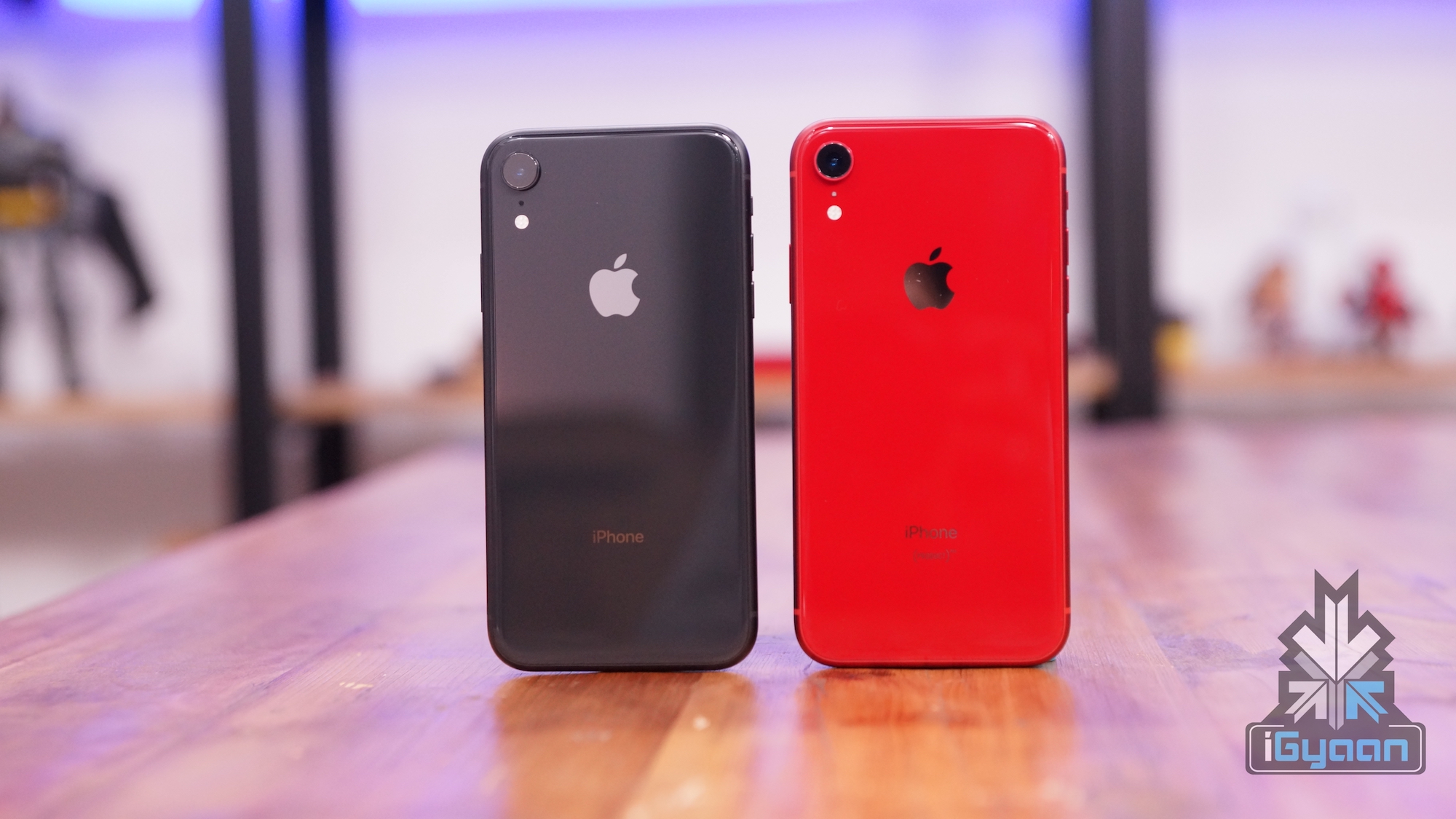
    The asset’s at the Chennai Foxconn plant were frozen by the Indian government due to the alleged outstanding taxes. However, in April 2018 Nokia agreed to pay the pending taxes in the form of provisional payments which has resulted in resolution of the dispute. Therefore, the operations at the manufacturing facility can be restarted. Foxconn officials at a Tamil Nadu state cabinet meeting announced that plant will be utilised to manufacture the Apple iPhone flagships including iPhone X , XS and XR in India. The company will reportedly invest Rs 25 billion to upgrade the plant to manufacture Apple iPhones. Additionally, the restart of operations will create 25000 jobs for the city locals. It is the first time that the iPhone X will be manufactured in India. As of now, Wistron, another Taiwanese company has manufactured the lower end variants of the iPhone including the iPhone SE and the iPhone 6 in Bengaluru.

    Bezel-Less

    An official announcement with precise details is expected to be made at the upcoming Global Investors Meet which is scheduled in Chennai in January 2019.


  • Indian Government Bans Smartphone Online Exclusive Sales

    Indian Government Bans Smartphone Online Exclusive Sales

    India is a largely online buyer’s market and many phone manufacturers have switched to selling online instead of investing in brick and mortar stores. Samsung has been in the number one position in terms of smartphone sales worldwide for quite some time now. But Xiaomi had taken the lead in the first quarter of 2018 in terms of India smartphone shipments market share. But now, it seems like Samsung will get a leg up in this battle with a new law that has been introduced by the government banning exclusive deals of phone manufacturers with online marketplaces.

    What Exactly Happened?

    Most manufacturers these days such as Xiaomi, Oppo, Vivo and even OnePlus use these exclusive launches with one of the E-commerce players to promote their phones and drive sales. The new law will bring the websites including Amazon and Flipkart to a level playing field. The government also directed that a single vendor can sell a maximum of 25% of its inventory on an e-commerce platform. This is where Samsung’s brick and mortar stores come in. Since the Chinese manufacturers heavily depend on online sales which help them keep their phone prices down, we can expect a surge in prices of these phones in future. We can also expect phones being sold out quicker. A black marketing of phones due to their unavailability can also be a cause for concern. Xiaomi and OnePlus has already started opening their own storefronts in several locations in India. But they are not nearly enough to compete with Samsung.

    According to Counterpoint, about two years ago, 5% of Xiaomi’s volumes came from offline channels which has grown to around 30%. This can largely be attributed to them opening their own stores and selling through other affiliate stores as well. Xiaomi has around  500 Mi stores at the moment while Samsung has around 2100 stores in the country. This also means that Indian manufacturers who completely missed out on the online selling bandwagon might just regain their footing in the business. OnePlus had also said in March 2018 that they will expand their offline selling stores, which they call ‘experience zone’. Their plans included 10 cities which also include Delhi, Mumbai, Chennai and others.

    It is also important to note that the offline segment witnessed an annual growth of 6.6 per cent in Q3 2018 but still online channels continued to dominate with around 60 per cent of the Indian smartphone market in that quarter.

  • Our First Taste Of 5G Might Not Even Be 5G

    Our First Taste Of 5G Might Not Even Be 5G

    With 2018 coming to a close, 2019 will usher in a new era of mobile technology. 5G is one of the most anticipated technologies. Multiple network operators, smartphone manufacturers and even chipset makers around the world testing and readying their 5G technology. The launch of the next big thing in mobile connectivity is just around the corner. However, according to the latest reports, the first layer of 5G which reaches consumers, might not even be 5G.

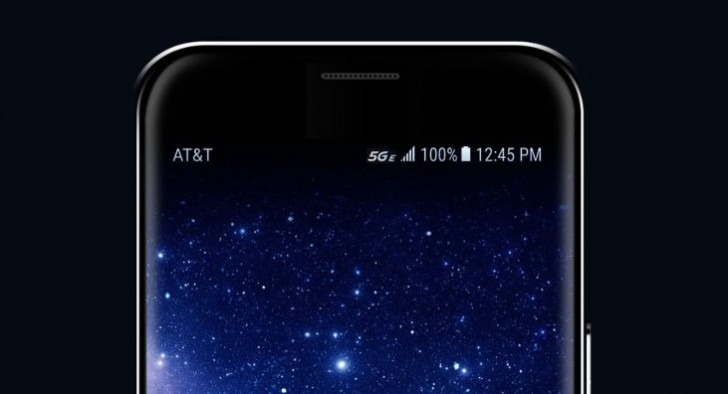
    American telecom giant AT&T has already launched its 5G network in the US. It did so on the 21st of December. And has made the network available to users in select cities in the US. But, there is a twist to this tale. While the company is advertising this as its first 5G network, it is just a faster 4G network, under the guise of a 5G network. How and why are they doing this?

    With the rollout, the company will be upgrading a few LTE enabled handsets with a “5G E” indicator. The 5G E indicator is nothing but a 4G network. This now offers 4 x 4 MIMO and 256 QAM technologies, along with other advanced LTE technologies. So now, a lot of users will see the 5G E icon pop-up on their screens, and AT&T will roll this feature out to many more LTE devices by spring 2019. Additionally, the ‘5G Evolution’ will be available in more than 400 markets in the near future, according to the company.

    Also Read : Facebook Developing Cryptocurrency To be Used In WhatsApp

    The exact reason for this step according to the company is that the 5G E technology will allow for the company to make the gradual shift into 5G technology. In short, this is the stepping stone to the much faster 5G netwrok. However, a lot of experts point out that this 5G Evolution plan might just confuse consumers even more, rather than aiding in the rollout of 5G.

  • Xiaomi Launches Mi Pay Mobile Payment Service In India

    Xiaomi Launches Mi Pay Mobile Payment Service In India

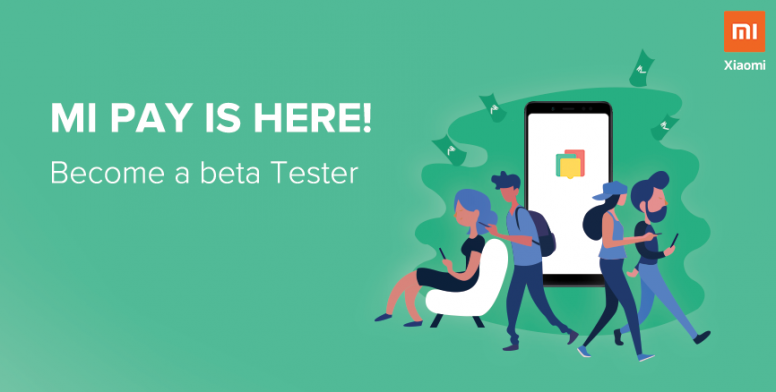
    With online payments and mobile wallets becoming the most favoured and popular method of payments in recent years, more and more companies are stepping into this arena. With Paytm, Google Pay and PhonePay already ruling the Indian market, a new player was nowhere in sight. However, in a surprising move, smartphone giant Xiaomi has now launched their mobile payment service. It is called Mi Pay and the beta testing for the same is now going live.

    Mi Pay

    The Mi Pay service is a platform that is supported by ICICI Bank and PayU in India. With the service you can make payments using UPI, debit cards, credit cards and internet banking. It also allows you to pay bills or do mobile and DTH recharges. It also includes phone bills, electricity bills and water bills. The service has been cleared by the National Payments Corporation of India (NPCI) for large group usage. 

    The beta testing will soon be available for MIUI users, according to Xiaomi. You can sign up for the beta testing for the same here. The company also announced that the service will support all leading credit and debit cards at the time of the launch.

    Additionally, Xiaomi highlights the advantages that Mi Pay has over other payment services. They say that the best feature is the deep integration with MIUI. This makes transferring amounts to contacts and vendors very easily. Mi Pay will also be integrated with Contacts, SMS, Scanner as well as App Vault in MIUI. According to the company, al user-generated data will be kept in a highly encrypted format ‘within the India- based cloud infrastructure’. The company has also provided an extensive guide to using the service.

    Also Read : Complete Motorola G7 Series Renders Leak Online

    Xiaomi’s Expansion

    With this, Xiaomi has stepped out from your homes and into your bank account. Over the years, it has taken gradual steps to ensure that it is not just a smartphone brand but a lifestyle choice foe consumers. Xiaomi now provides everything from toothbrushes to air purifiers, to t-shirts. In fact, there are more than 200 Xiaomi products which are not available in India right now, which can expand the company’s reach. What the future holds for a company like Xiaomi and where it will be in the next couple of years is sure something to watch out for.

iGyaan Network
Privacy Overview

This website uses cookies so that we can provide you with the best user experience possible. Cookie information is stored in your browser and performs functions such as recognising you when you return to our website and helping our team to understand which sections of the website you find most interesting and useful.