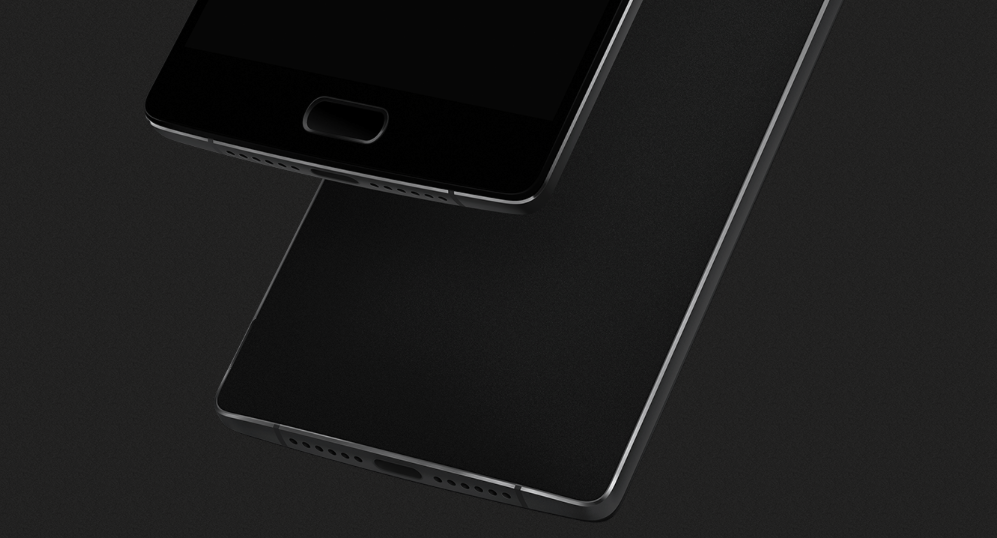
The day has finally arrived. OnePlus has released their highly-anticipated follow up to their 2014 OnePlus One, the OnePlus 2. The launch event was showcased exclusively through Virtual Reality technology via specially designed OnePlus VR headsets. All this while, the Chinese start-up had been releasing teasers and trailers to keep their fans occupied ahead of the launch today. These, served the purpose, and managed to create the desired hype.
First, let us see have a quick look at how the OnePlus 2 fares against its elder brother, the OnePlus One.
Specification
OnePlus One
OnePlus 2
Display
5.5-inch LTPS LCD, Corning Gorilla Glass 3
5.5-inch TPS LCD in cell, Corning Gorilla Glass
Resolution
1080×1920 pixels, 401 ppi
1080×1920 pixels, 401 ppi
Chipset
Qualcomm MSM8974AC Snapdragon 801
Qualcomm MSM8994 Snapdragon 810 v2.1
Processor
Quad-core 2.5 GHz Krait 400
Quad-core 1.5 GHz Cortex-A53 and Quad-core 2 GHz Cortex-A57
GPU
Adreno 330
Adreno 430
RAM
3 GB
3/4 GB LPDDR4 RAM
Storage
16/64 GB
16/64 GB
Expandability
N/A
N/A
Rear Camera
13 MP Sony Exmor IMX214 camera with f/2.0 aperture
13 MP with OIS, 1.35 sensor size and fast laser focus and f/ 2.0 aperture
Rear Camera Video
2160p at 30fps, 2160p(DCI) at 24fps, 1080p at 60fps, 720p at 120fps, HDR, stereo sound recording
2160p at 30fps, 2160p(DCI) at 24fps, 1080p at 60fps, 720p at 120fps, HDR, stereo sound recording
Front Camera
5 MP
5 MP
Front Camera Video
1080p at 30fps
1080p at 30fps
Battery
Non-removable Li-Po 3100 mAh battery
Non-removable Li-Po 3300 mAh battery
Operating System
CyanogenMod 12
Android 5.1 Lollipop-based Oxygen OS
Connectivity
SIM: MicroWi-Fi 802.11 a/b/g/n/ac, Wi-Fi Direct, DLNA, hotspotBluetooth v4.1, A2DP with A-GPS, GLONASSNFC, microUSB v2.0, USB Host
SIM: DualWi-Fi 802.11 a/b/g/n/ac, Wi-Fi Direct, DLNA, hotspot
Bluetooth v4.1, A2DPGPS with A-GPS, GLONASS, Radio FM,microUSB v2.0, Type-C reversible connector
Miscellaneous
Available in Silk White, Sandstone Black colours;
Fingerprint sensor, Reversible USB Type-C Charger
Price
Rs 21, 999
Rs 22,999/24,999
As we can see in the spec sheet above, there is not much difference between the One and 2. Most of the specs including the screen size, resolution, storage and camera. The OnePlus 2, although, stands out in the terms of its processor and RAM. OnePlus 2 is also the first OnePlus device to feature a Type-C USB port and a fingerprint sensor, that can store five unique fingerprints.
Camera-wise the megapixel number may not have budged, however the company has added an array of useful sensors. The OnePlus 2 comes with a sensor pixel size of 1.3 microns that makes it up to 35% larger than standard smartphone cameras. The new Laser Focus feature also helps to take clear shots in less that 0.3 seconds. It also features the coveted OIS (Optical Image Stabilisation), which has been previously seen in the iPhone 6 Plus.
Just like the specs, the price also barely sees a change. The company had announced that the new handset will not cross more than the price of Rs. 28,500 ($450). Honoring that promise, OnePlus revealed the final launch price of the new OnePlus 2 as Rs. 22,999 for the 16GB variant and Rs. 24,999 for the 64GB variant.
We think the upgraded design and the new camera, RAM, reversible chargerm and fingerprint scanner may be worth the amount, but we’ll only give our final verdict after our full review. Watch this space for more on the new OnePlus 2.
‘Tech Wear’ is a relatively new concept that perhaps began with the introduction and launch of the Google Glass on April 4, 2012. There was a huge frenzy about the Google Glass and the things it promised its wearer – such as direct visual access to friends, schedules and Internet. But Google Glass did not work. Why? What makes products like Google Glass, the Neptune Pine, the Pebble, fitness trackers and other technological wearables not popular enough to cater to the taste of the general public?
Credit: Frazer Harrison/Getty Images for Mercedes-Benz
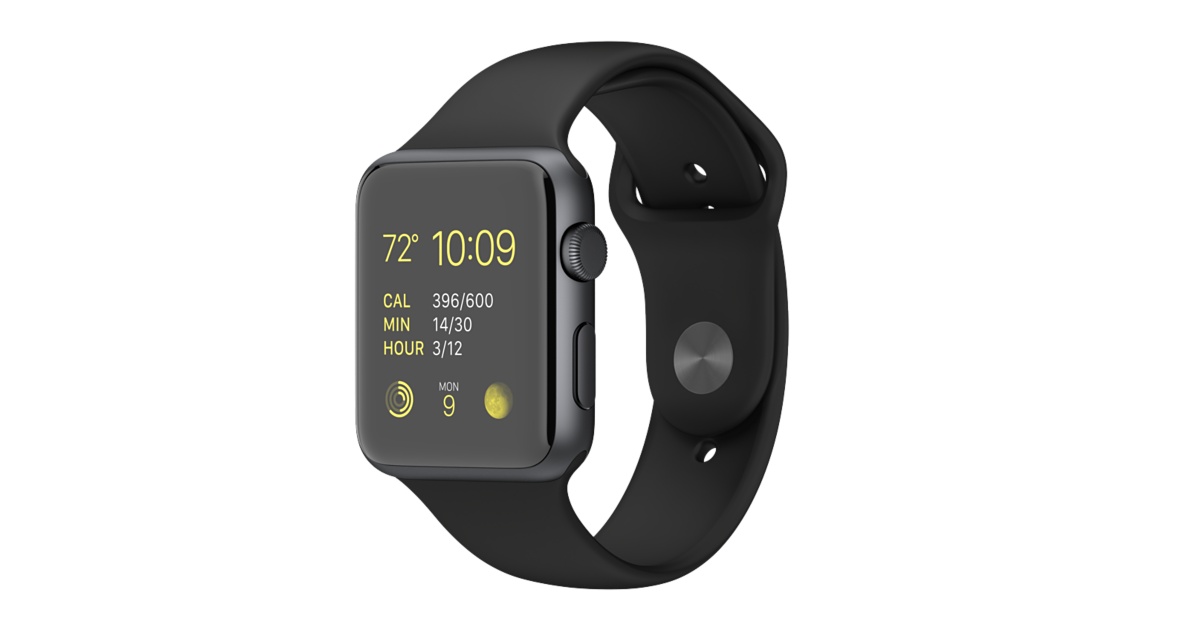
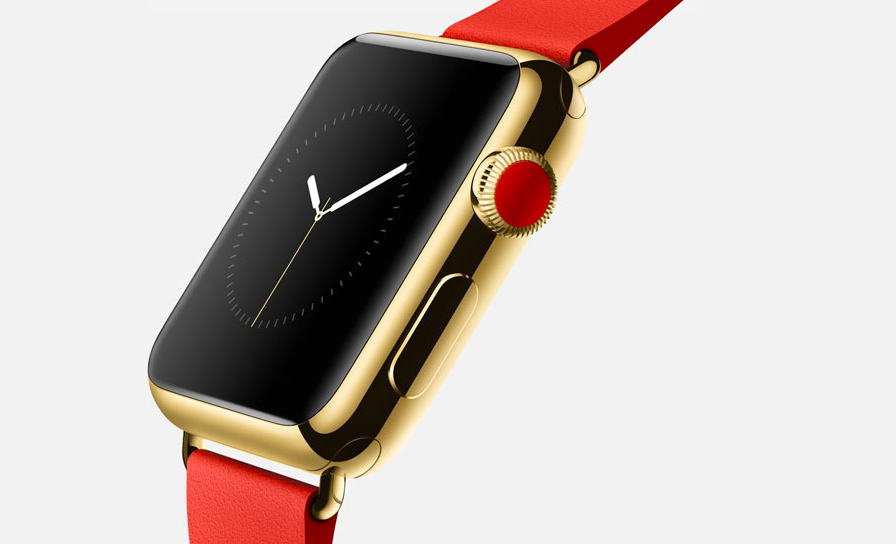
Firstly, these are luxury products. They cater to the needs of the general public but make themselves available to only a certain strata of society. For example, the Apple Watch is created in order to make interaction simpler and intimate. One doesn’t have to constantly be on their phones in order to check the time, reply to emails, take calls, respond to text messages etc, instead all these activities can be completed by a few glances and voice notes. Here is the catch, you have to have an iPhone (or any product by Apple) too so that all the information from your device can get synced to this new iWatch.
To get an idea of the approximate amount of money we might have to spend to buy an iWatch and support it, let us look at its INR value. The Apple Watch Sport Edition: Expected price tag in India for 38mm case model is Rs. 25000 and for the 42mm case model is Rs. 30000, plus the other Apple product to support it, for example an iPhone 6 (Silver 16GB) which is Rs.42,920 (on Ebay). The total amount would be Rs. 67,920. The prices differ in different countries and the accessibility of the product also differs, but to the average Indian, an iPhone update makes no serious change to his lifestyle.
Secondly, even with a large portion of the world being able to afford tech wear, they are still looked at sceptically or cautiously by investors. Why? What makes a product stable in the market? The necessity of a product. Although, further research shows a changing trend in the demands of the consumers. Fashion experts say that most of these products look ugly, in fact, the New York Times even tagged them as ‘ugly tech’ instead of ‘wearable tech’.
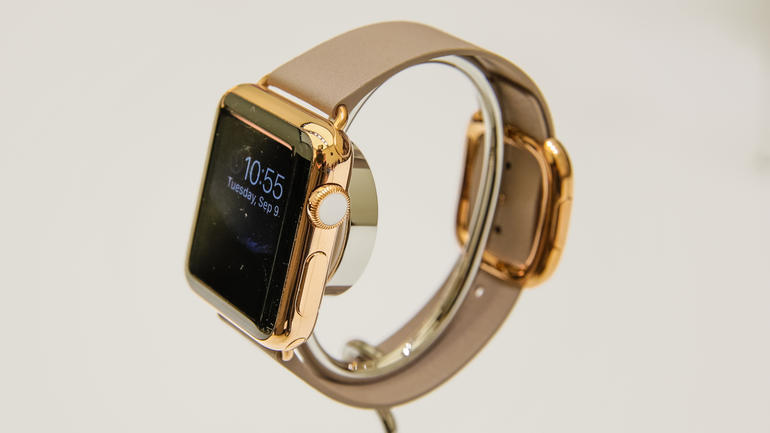
The consumer’s taste is now much more sophisticated than it used to be, he/she is not going to wear anything on his wrist that looks like a mini Kindle. And this is where Apple comes in with its slick and fashionably created Apple Watch. The ‘iWatch’ comes in various belts, both leather and metal, and is styled in a way that is appealing to all. Perhaps following suit are smaller fashion-focused tech companies, with a handful of partnerships between tech companies and big-name fashion brands.
So far, the investors and critics were skeptic of these wearable products, but now with the coming of the fashionable and efficient iWatch, their predictions have changed. Gene Munster, managing director and senior research analyst at Piper Jaffray, predicted a 3 million dollars’ worth Apple Watch sale on 9to5mac.com, and thinks that 2017 will be the device’s ‘breakout’ year. What changed?
The reviews for the Apple Watch have been somewhat stable; most of the critics encourage the use of this wearable technology that is more compact, fashionable, efficient, modern, and advanced in its settings and features. For example, the product description states that the custom-designed chip at the heart of the Apple Watch is encapsulated in the resin to protect the electronics from the elements, impact and wear. Configuring an entire computer system on a single chip is an industry first; settings like these and many others make the Apple Watch user friendly. Although despite this commendable attempt by Apple, critics still suggest that there is room for improvement as far as speed, efficiency and battery life are concerned but that these are problems that can be rectified by perhaps an iWatch 2.
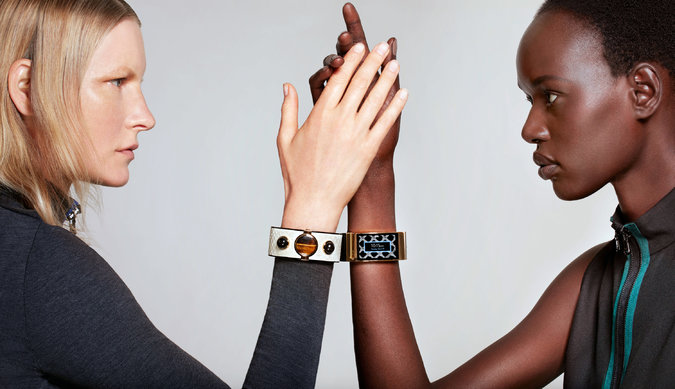
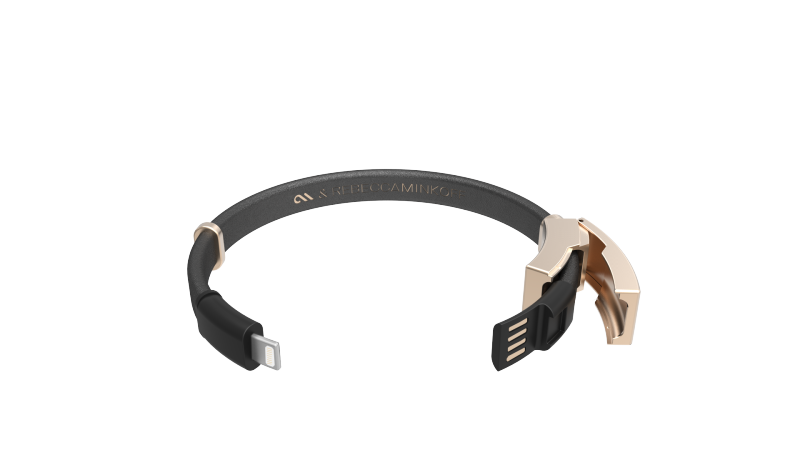
Similarly, The New York Times states that earlier this year Fitbit announced a partnership with the designer Tory Burch to make fitness trackers stuffed inside a hinged bracelet and pendant necklace. Google Glass has partnered with DVF and Luxoticca to make the geeky specs, stylish. Rebecca Minkoff and Case-Mate announced a new line of techie jewellery, including a gold bracelet that pairs with a smartphone. Intel has also partnered with Barney’s New York and Open Ceremony to create a bracelet with a curved sapphire screen and built-in wireless radios called the MICA (My Intelligent Communication Accessory.)
Image source: New York Times
As far as reviews are to be trusted, they give us a realistic take on the new influx of wearable technology and its appeal. What has changed therefore, is the taste of the consumer and now that modern technology is being able to steadily cater to it, wearable technology might actually carve a stable niche for itself in the years to come.
Yu Televentures has launched the Yu Yureka Plus, the successor to Yu Yureka, priced at Rs. 9,999. The phone comes with a 5.5 inch FHD display and Qualcomm Snapdragon 615. Check our review of the new phone and find out whether it is worth your money.
According to a report, Amazon will launch its Prime service in India later this year. It is the membership program that offers unlimited free shipping on most deliveries with no minimum order size, unlimited backup for photos, access to streaming movies and music, free books from the Kindle Lending Library and more, for an annual fee.
In a bid to connect with their audience and to up their usage, Google has finally decided that it will be shutting down Google+ photos and making way for Google Photos by August 1st.
After announcing it in CES, Las Vegas, earlier this year, Sony has finally rolled out the Android TV in the Indian market at a starting price of Rs. 69,900.
Details about Micromax’s next ultra budget phone has been leaked. It will apparently be the next big thing since Canvas. The phone is expected to be below the 10k price bracket and will use a Snapdragon 615 processor.
Apple has posted its third quarterly results for 2015 and the company has performed better than the previous quarter, but apparently it wasn’t enough for the investors. Apple’s performance is based on the rise in iPhone sales and its increasing popularity in China.
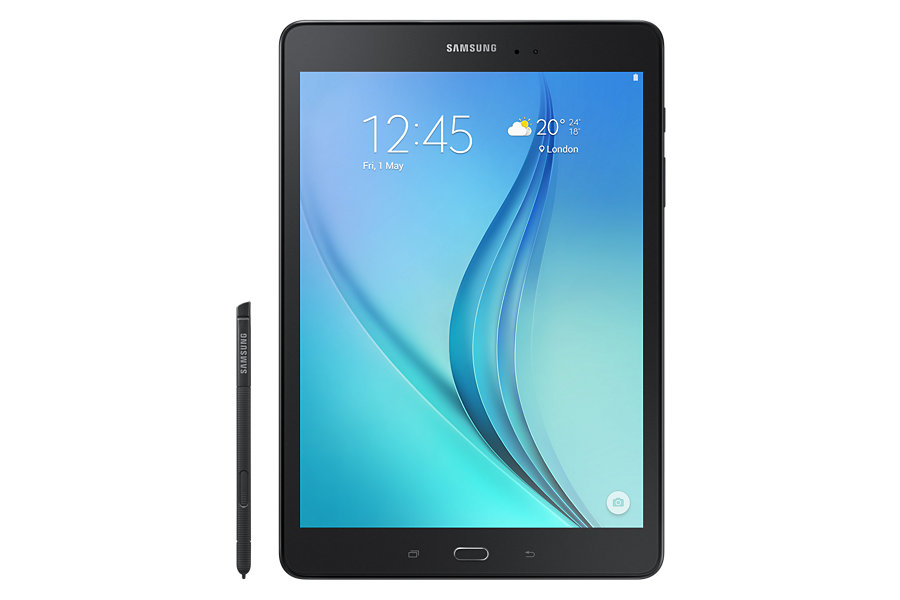
Samsung has announced the launch of Galaxy Tab S2, which the company says is “the most immersive Samsung tablet to-date” . The Galaxy Tab S2 is available in two sizes – 9.7-inch and 8.0-inch.
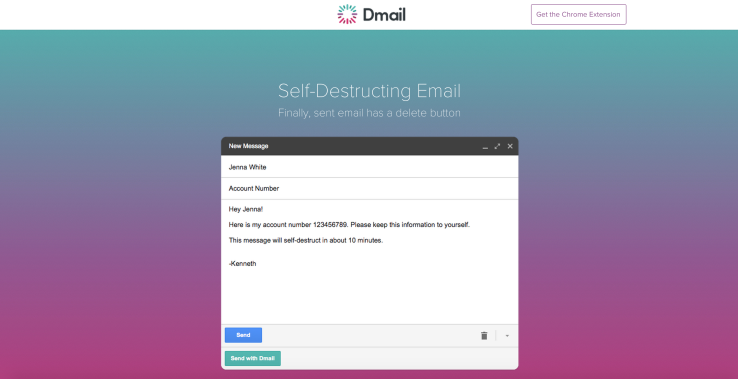
Gmail had recently announced a new feature called the Undo save button, which allowed you to retrack your email within 30 seconds of the it having been sent. Now Gmail has an extention feature called Dmail created by Delicious (an online social bookmarking company) with a tagline that reads ‘Finally sent email has a delete button’.
Dmail is well aware that the concept of re-tracking one’s email isn’t new and has therefore introduced its self-destruct feature, which needs to be installed by the user from the Google Web Browser Extension and for the first time allows you to destroy a sent email whenever you want to. The Dmail button can also be controlled by you with the help of a toggle switch.
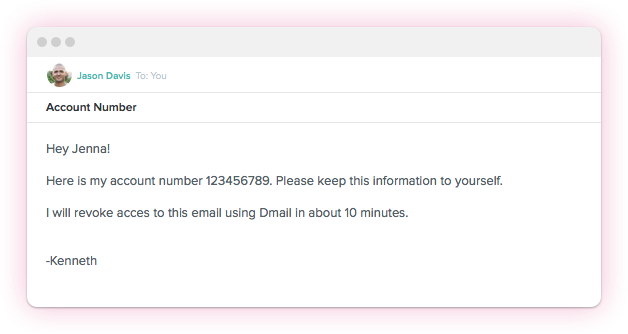
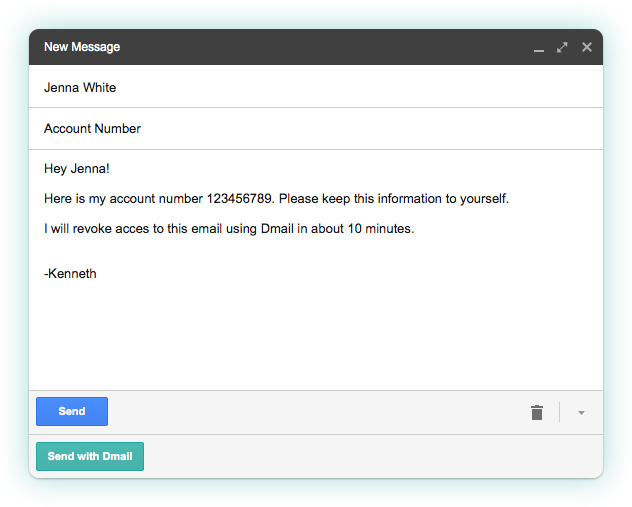
How this works is, that, once loaded, you will have a new option on Gmail, within the ‘compose’ interface which allows you to turn on the Dmail service. Ahead of sending the email, you can specify as to when you want the email to destroy itself. The options given are ‘an hour’ to a day, week or never. And even if you choose the never option you can go back and click on the revoke email button which removes access to that email from all recipients.
What is different about Dmail is that the recipent doesn’t need to be a user of the service in order to access the email. In case one is not a Dmail user and receives a Dmail encrypted mail, you will receive a message that says “This secure message was sent using Dmail. To view this message, simply click the button below.” This will direct the viewer to a web view where they can read the email.
The product has been in development for a long time and was built by a seven member subset of Delicious’s team. Currently, the feature is available online for all Gmail users, but not for smartphone users. Hence, the company is looking to expand their business by making this feature accessible to iOS devices in August followed by Android devices. They also plan on making Dmail a fremium service, this means that though some aspects of the service will remain free for individuals; power users and businesses will have to pay for other specific security features.
Meanwhile, a document control feature is already in development, and Jones expects this feature to launch before this winter. Click here to download Dmail. Meanwhile, tell us what you think about this feature?
Microsoft is busy gearing up for the launch of Windows 10. However, latest reports by Windows Central suggest that the company is working towards a total make-over of its range of smartphones with Windows 10.
The rumoured devices, codenamed as Cityman and Talkman, will possibly be launched at IFA Berlin in September this year. As far as the specs are concerned, the Talkman is touted to have a 5.2-inch display with 2560x1440p resolution. Under the hood, one can expect a hexa-core Snapdragon 808 processor coupled with 3GB RAM, 20-megapixel rear snapper, 5-megapixel front-facing camera, 32GB storage and a 3,000mAh battery.
The big brother, Cityman, will come with a 5.7-inch display, and almost a similar set of specs. Apart from the larger screen, some other differentiating specs may be an octa-core Snapdragon 810 processor and a 3,300mAh battery.
Although, there is no official word from Microsoft yet, Windows Central suggests that the devices will come with support for Qi wireless charging and an infrared scanner that will unlock the device in seconds. Iris scanner is a not-so-common feature and may turn the tides towards Microsoft’s favour, considering the fact that the Indian market is dominated widely by Samsung, OnePlus, Xiaomi and many other competitive companies. Microsoft is also reportedly bringing its Surface Pen technology to both of the expected Lumia handsets.
Both the devices are assumed to make their debut at IFA in September, followed by a release in October or November. Both will be offered in a choice of black and white polycarbonate, but there’s no word on their pricing yet.
The curiosity that human beings have had towards the supernatural has always been very apparent. And with pop culture encouraging our intrigue with superhero, sci-fi and fantasy movies, this curiosity turns into obsession to actually create these devices. For example, in a speech by President Barack Obama, on the development of a classified project he famously remarked “We’re building Iron Man”. Even the American military can’t get enough of the superhuman world.
Why though? Is it because human beings inherently have a characteristic to never be satisfied with what they have? Suddenly, a pair of hands and feet don’t seem good enough. Therefore, the need to build something that is bigger and better than us crops up. Things that can do everything we cannot, so that they can protect us.
The newest announcement, stemming out of this thought process perhaps, is the need to build and create invisibility cloaks (just like the one in Harry Potter) and invisible military vehicles. The American Chemical Society has released an episode of a series called Reactions in collaboration with ACS Photonics, that speaks about how we can actually create such a device or wearable. They speak about how the idea of invisibility or camouflaging actually exists all around us, with the aircraft that can disappear from radar imaging systems, and animals like cephalopods and chameleons that can camouflage themselves by mimicking light.
The video is said to have been revealed to celebrate the International Year of Light by exploring the science behind light, sight and invisibility. The technology behind this is being referred to as, cloaking technology and the video shows how many scientists and researchers have actually made discoveries towards this possibility. At Duke University, methods of making light avoid an object by using meta-materials and engineered materials to craft things such as powerful antennas and invisibility cloaks have been undertaken.
Harry Potter trying out the invisibility cloak for the first time.
In fact, researchers from Europe have already created a three-dimensional cloak that can hide objects by bending light waves. And as reported, researchers from the German Karlsruhe Institute of Technology and Imperial College of London used the cloak that was made using photonic crystals, with a structure resembling piles of wood, to conceal a small bump on a gold surface.
These are merely advances towards cloak technology, but companies such as BAE Systems are working on projects to give military vehicles the option of invisibility. Researchers in various institutions have already began experimenting the uses of meta-materials to make small objects disappear.
So, is this the future? Has the human race become so paranoid so as to take a cue from Harry Potter’s invisibility cloak? Are we now incapable of facing the damage that we ourselves have created? Either way, mischief managed!
Source:[tw-button size=”medium” background=”#07ABE2″ color=”” target=”_blank” link=”http://www.acs.org/content/acs/en/pressroom/newsreleases/2015/july/are-invisibility-cloaks-possible-video.html”] American Chemical Society[/tw-button]
The coming week will be handful as we will witness the launch of three highly anticipated smartphones, plus a new phone that might be the next best thing to have come out of Micromax in a while.
Check out the top four phones coming out next week:
One Plus 2
OnePlus 2 is the most anticipated phone on this list for obvious reasons – success of the OnePlus One phone, Virtual Reality launch event and embracing quality features for a minimal price – the phone will be a bonafide hit.
The OnePlus 2 will sport a display ranging between 5.5 and 5.7 inches and a Type-C USB port, making it the first flagship phone from a mainstream company to use this USB port. The phone will come with Qualcomm Snapdragon 810 v2.1 processor with 4GB of RAM. The phone’s launch can be seen through a VR event on July 28th at 7:30 a.m. IST. In case you’re missing cardboard, here’s how you can watch the event live.
Wi-Fi 802.11 a/b/g/n/ac, Wi-Fi Direct, DLNA, hotspot
Bluetooth v4.1, A2DPGPS with A-GPS, GLONASS
NFC, Radio FM,microUSB v2.0, Type-C reversible connector
Miscellaneous
Fingerprint sensor
Price
Not more than Rs, 28000
Moto G (Gen 3)
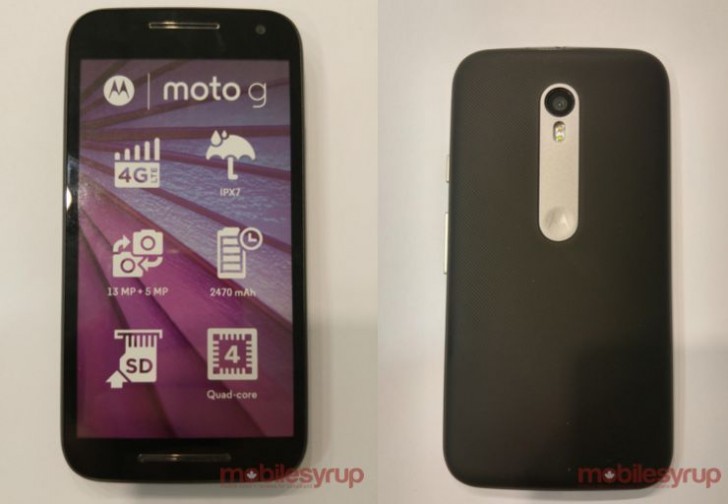
A leaked store dummy of Moto G (Gen 3). Source: Mobilesyrup
The Moto G (Gen 3) will boast a 5-inch HD display and a quad core processor. The phone has been certified IPx7, so it will be water resistant. It will have a 13MP rear camera with LED flash and a 5MP front camera. The device will run on Android Lollipop 5.1 and will offer expandable storage via a MicroSD card upto 32 GB. The Moto G (Gen 3) can be customised using Motorola shells, like in the first Moto G. The dual SIM phone will support both 3G and 4G. The phone will be announced on July 28th.
Specification
Moto G (Gen 3)
Display
5 “(12.7 cm) TFT, Gorilla Glass
Resolution
1280 x 720 HD
Chipset
NA
Processor
MSM8916 1.4 Ghz Quadcore
GPU
NA
RAM
1 GB/2 GB
Storage
8 GB/16GB
Expandability
32 GB
Rear Camera
13 MP
Rear Camera Video
1080p
Front Camera
5MP
Front Camera Video
NA
Battery
Non-removable Li-ion 2470 mAh battery
Operating System
Android 5.1 Lollipop
Connectivity
Wi-Fi 802.11 b / g / n, Wi-Fi Direct, hotspot, Bluetooth v4.0, A2DP, LE,
GSM 850/900/1800/1900, HSDPA 850/900/1900/2100, LTE band 1 (2100),
3 (1800), 7 (2600), 20 (800)
Miscellaneous
Fingerprint sensor
Price
Not more than Rs. 13,700
Moto X (Gen 3)
Source: Peru Android
Moto X (3rd Gen)
The new Moto X will supposedly have a 5.64-inch QHD display and will run on Qualcomm Snapdragon 808 chipset with 3GB of RAM. The phone will have USB Type C port, 21GB of storage with a 16MP main camera with an f2.0 lens, a 5MP front camera and 3,280 mAh non removable battery. Like Moto G, it will run on Android 5.1.1 Lollipop. According to some reports, the new Moto X will also feature a font facing flash and fingerprint scanner located at the lower front speaker.
Micromax Ultra
Rumoured to be launched this week, Micromax Ultra is touted to be the next big thing since the company’s Canvas series. Although much hasn’t been revealed about the phone, it is said to be priced under Rs. 10K. The device will sport a 13MP rear camera and a Snapdragon 615 chipset and may possibly run Cyanogen OS. We will be on the lookout for more details about the phone.
At U2’s recent eight-show run at Madison Square Garden, Bono pulled up a woman onstage, handed her a smartphone and announced that they were live streaming the performance onto the internet. The stream was then displayed off a huge feed from U2’s Meerkut account.
At this particular concert, famous talk show host, Jimmy Fallon made a surprise appearance for a duet of “Desire”. This tour also includes messages condemning the 1974 car bombings of Ireland, a call to fight AIDS, Stephen Hawking’s voice, high-tech gimmicks and more than two hours of music that included songs from U2’s 2014 album, “Songs of Innocence”.
https://www.youtube.com/watch?v=1VWsGG2Z-dI
U2 packs technology into its Innocence and Experience tour by incorporating the smartphone spectacle each night for at least one song. Yet, this isn’t the first of U2’s tech savvy performances. One can recall a stage they had built in the shape of a four-legged spaceship, and now, they have designed a two-sided display that hangs over the arena, providing a good view to each and every person.
The band also used a new form of musical storytelling, they climb up to perform within the display while Bono walks along the base, with displays showing visuals and animation to help create an analogy of him akin to that of walking the street on which he grew up.
But, it is said that the most creative way U2 used technology for this tour is one that cannot be seen. Most touring production companies store visuals directly on the systems they use for running the video screens. The problem with that is, if something needs to be changed, the entire thing would need to be copied to the show system with a pen drive, which might even delay the show.
Image: Rich Fury/Associated Press
U2, is now, using a modern technique for its tour with the help of a cloud storage company called EMC. Therefore, if they need to switch setlists or songs, the team is able to update visuals and deliver them on time. But, because cloud relies on the internet, which may not be available at major venues for security reasons, U2 uses an on-premise tech unit so that they have access to the data even without a web connection. EMC is said to be archiving the HD video streams with their cameras used during the show.
While previously, tours were held to promote music so that an album was successful, nowadays monetizing concerts and merchandise have become more important, as we have seen in Taylor Swift’s 1989 tour, which has an entire line of clothes created with the album’s theme kept in mind. This is said to be done, so that later on, the band can use the footage and decide how to monetize those archives.
The Innocence And Experience tour is definitely said to be a high-tech futuristic event that has been created, not just for fans but anybody who wants to be entertained.
Despite an initial dip in sales, Samsung emerged as the top smartphone seller in the second quarter, while Apple and other Chinese companies also saw an increase. A quarterly survey by IDC shows the rise in demand and usage of the smartphone from 11.6 percent a year back to to 337.2 million units, recently.
“The overall growth of the smartphone market was not only driven by the success of premium flagship devices from Samsung, Apple, and others, but more importantly by the abundance of affordable handsets that continue to drive shipments in many key markets,” said Anthony Scarsella, research manager with IDC.
Samsung ranks first, with a 21.7 percent market share, followed by Apple with 14.1 percent. In the third place we have China’s Huawei with an 8.9 percent market share, followed by Xiaomi (5.3 percent) and Lenovo + Motorola.(4.8 percent). The rest of the 42.5 percent market being captured by other vendors.
Vendor
2Q15 Shipment Volumes
2Q15 Market Share
2Q14 Shipment Volumes
2Q14 Market Share
Year-Over-Year Change
Samsung
73.2
21.7%
74.9
24.8%
-2.3%
Apple
47.5
14.1%
35.2
11.7%
34.9%
Huawei
29.9
8.9%
20.2
6.7%
48.1%
Xiaomi
17.9
5.3%
13.8
4.6%
29.4%
*Lenovo
16.2
4.8%
15.8
5.2%
2.4%
Others
152.5
45.2%
142.2
47.1%
7.3%
Total
337.2
100.0%
302.1
100.0%
11.6%
Lenovo + Motorola
16.2
4.8%
24.3
8.0%
-33.3%
With smartphone sales beating PC sales this year, the competition among smartphone brands are constantly rising. Will Samsung be able to keep up? Time will tell.
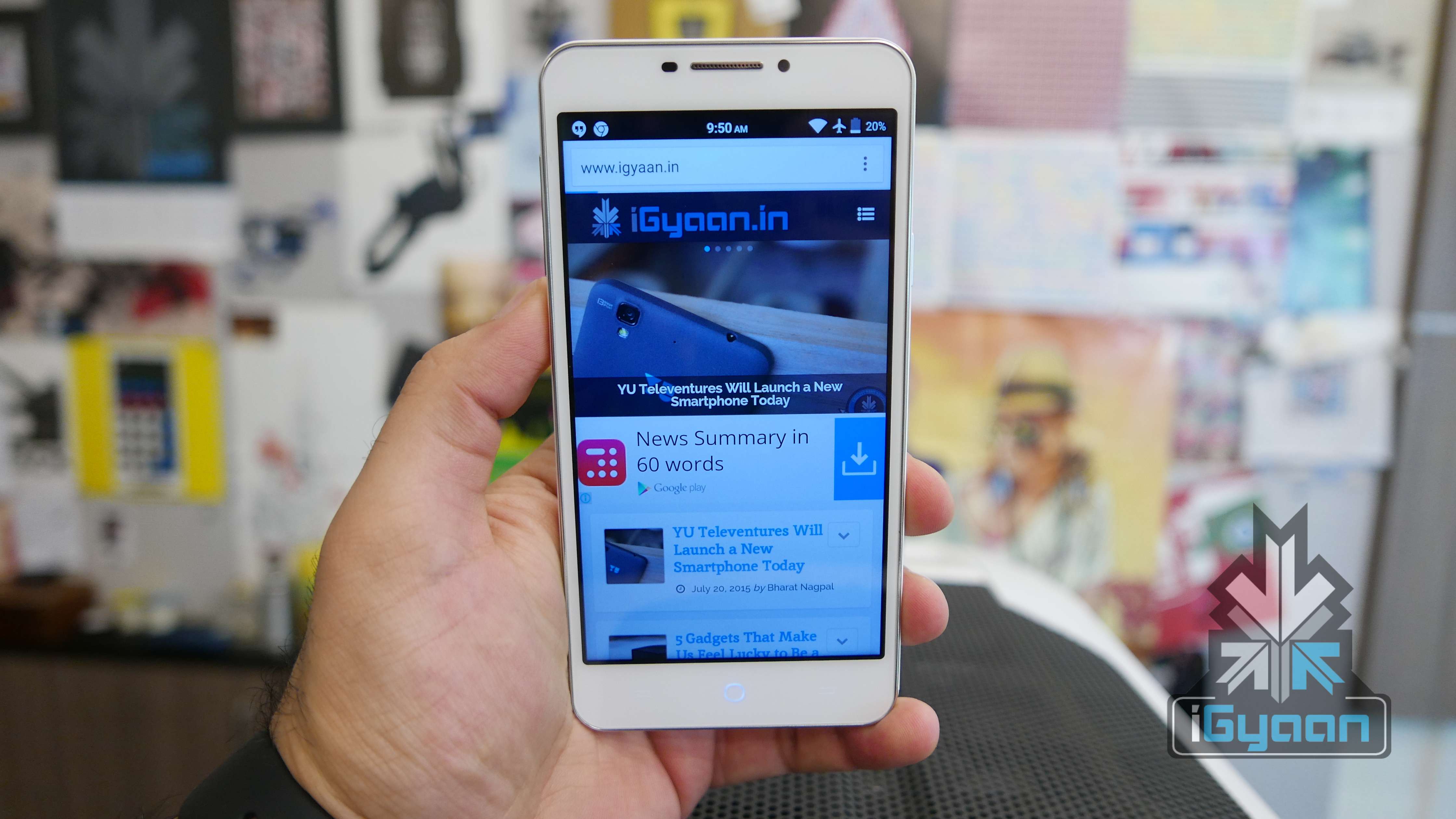
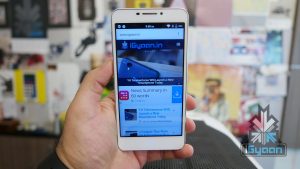
Today Yu Televentures announced a new handset, the Yu Yureka Plus. The phone is a revision to the existing Yureka, with added benefits. The revised specs also called for a revised price of Rs. 9,999.
Registrations for this handset have started again today and the handset will go on sale on the 30th of July exclusively on Amazon.in.
Overview
The Yu Yureka Plus is a phone that the Yureka should have been, in the first place. However, it is the company’s way of letting their consumers know that they are listening. The Yureka Plus improves on key features without drastically increasing the price. Is it worth the extra moolah? Let us find out in the iGyaan review.
Alabaster White and Moonstone Grey
Hardware
Spec wise, the phone is more or less the same with some improved features. A higher resolution display with Gorilla Glass 3, a new Sony sensor in the camera and a stronger chassis.
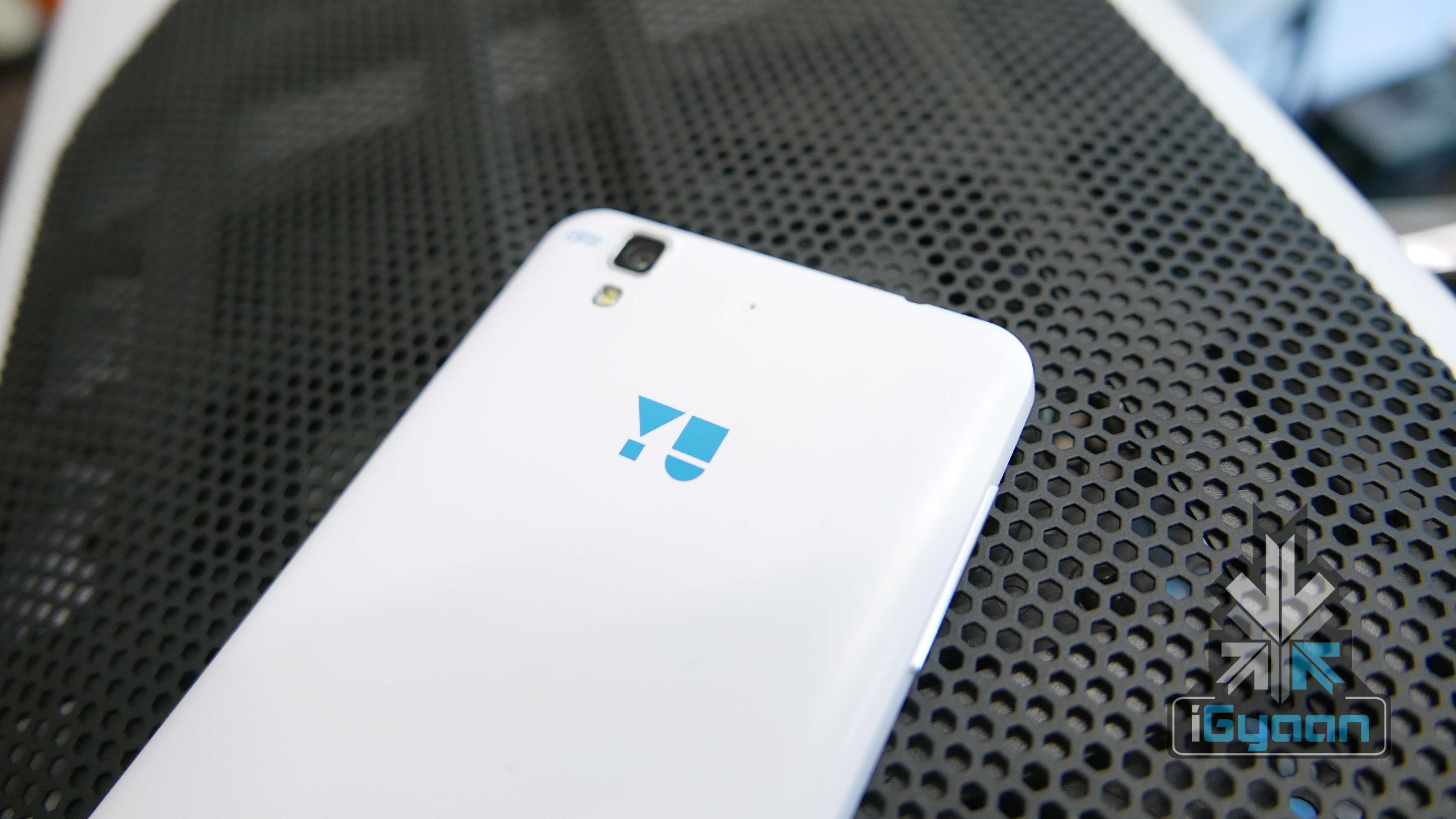
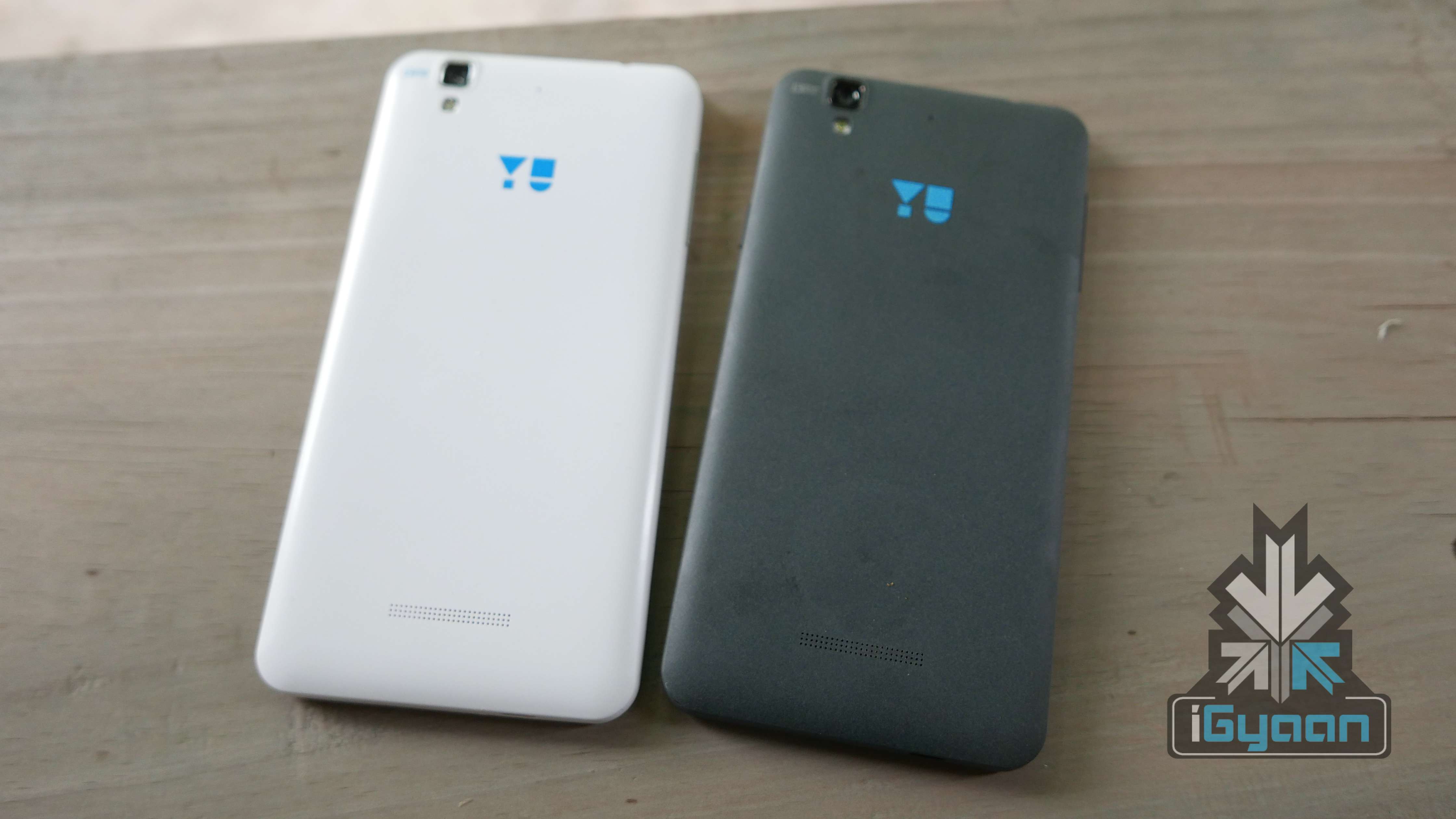
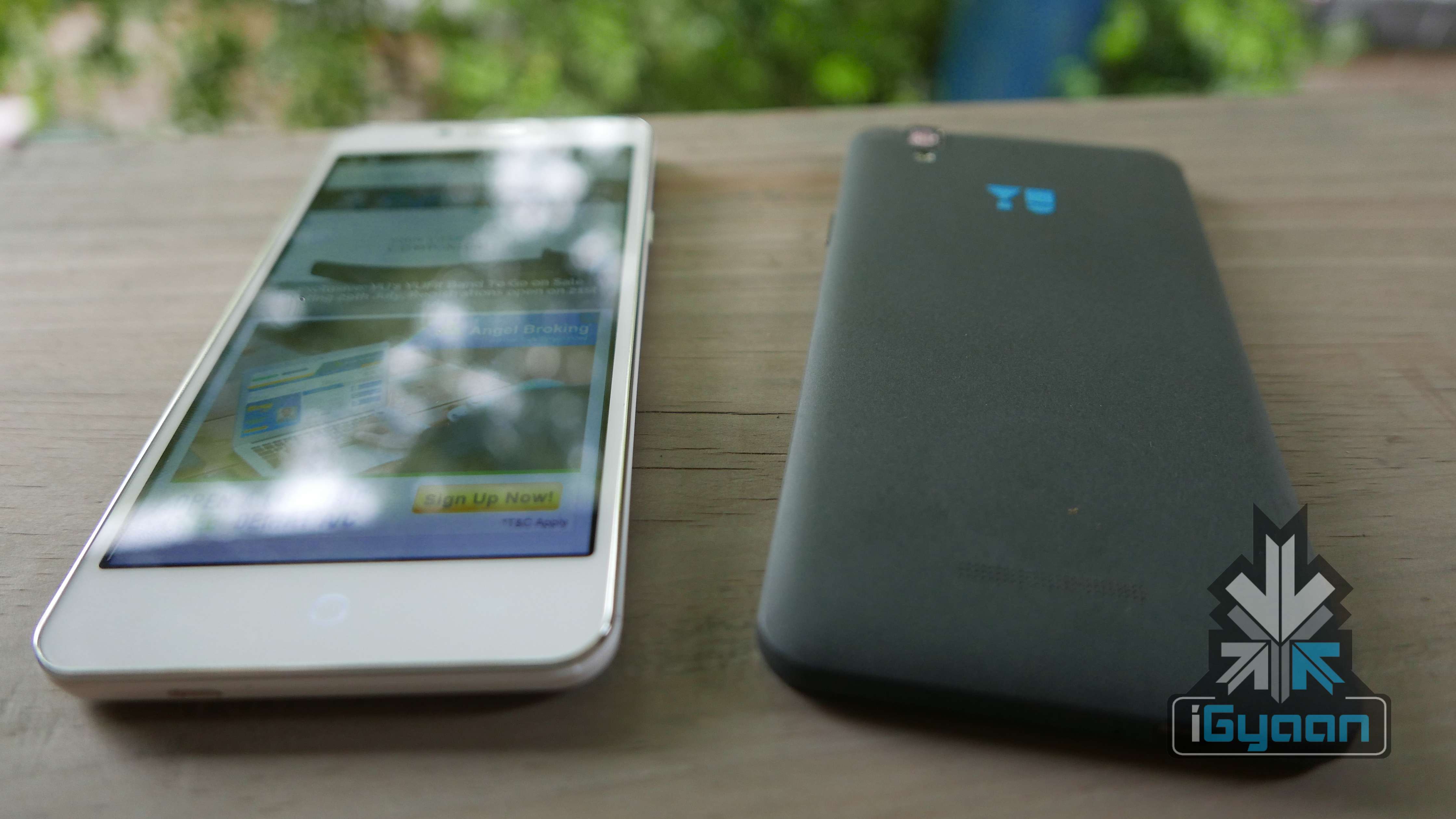
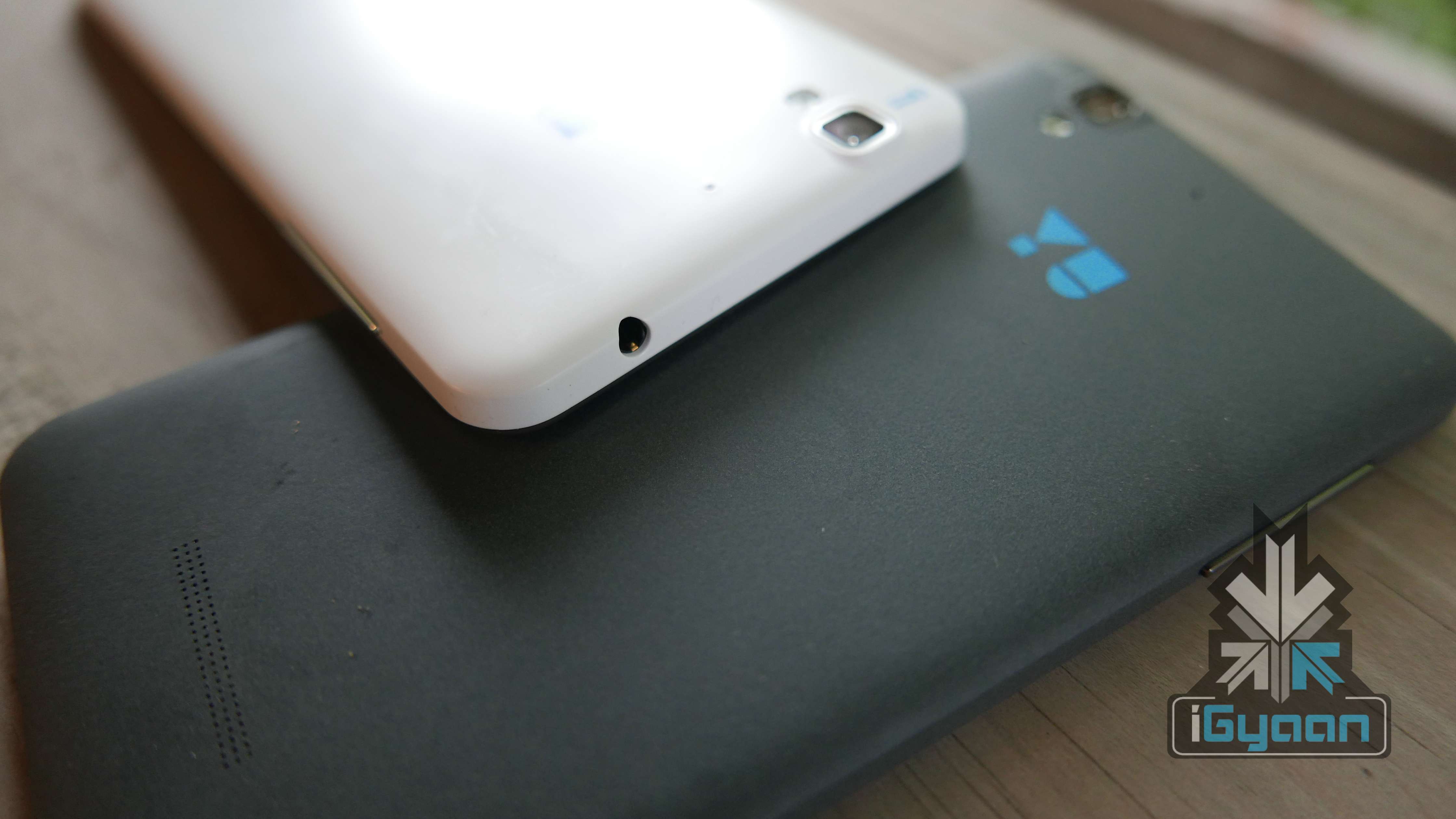
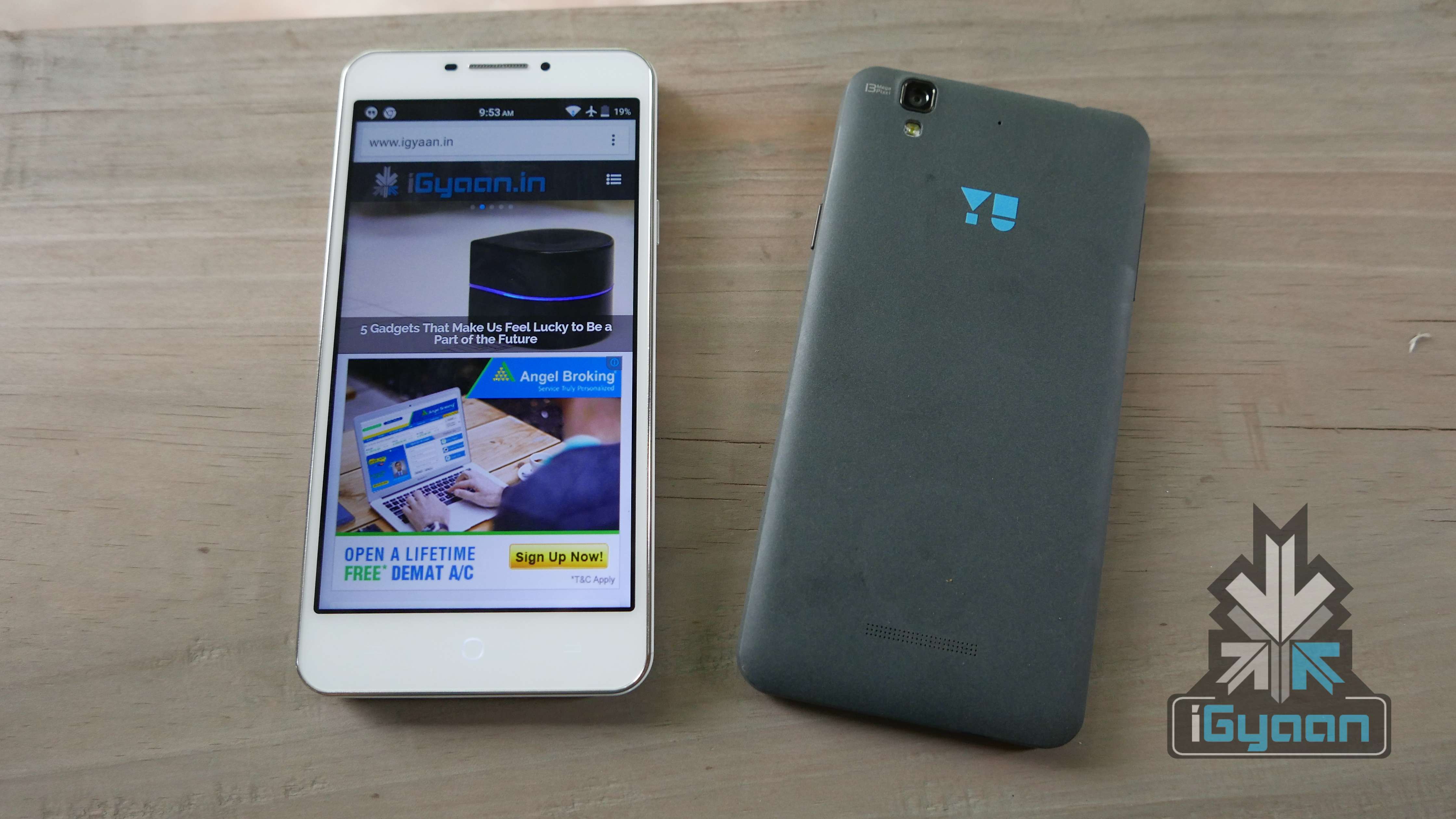
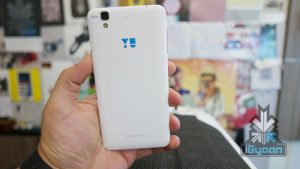
Design wise, you really cannot tell one Yureka from the other (even if the other is a Plus). The only real design change is the availability of the the alabaster white colour, which is great to look at. Since it is a matte finish, it won’t attract fingerprints, but it will attract stains and pen marks just like the Silk white OnePlus One. For our other inputs on the design you can revisit the original Yureka review.
Build-wise, Yu claims that there is a brand new chassis which has been reinforced for additional rigidity in the frame. The phone is more resilient to drops and dings and just like the first gen Yureka, should last you a long time. The addition of Gorilla Glass 3 as a top layer of the display will make the phone slightly more tougher.
The Yureka was pretty tough as it is, and we showed that off in our review of the handset. Pop on a case and the included screen protector and you are good to go. However, the new white colour, despite being resistant to smudging and fingerprints, gets dirty easily and will attract ink stains and food stains.
Performance and Gaming
Just like on the design front, the performance of the Yu Yureka Plus is the same as the Yureka. The Hardware is identical and a few software improvements are apparent. The phone does not heat up despite excessive usage, and the plastic shell of the phone aids in keeping the heat at bay. Although the Yureka was in big trouble with heating issues, after some usage, it appears to be resolved.
We, just like everyone else who waited for a new device, expected a big bump in specs and that was not the case with the Yureka Plus. The company launched a modest update and the performance hasn’t been entirely impacted. The benchmark scores are higher due to software optimizations, but this might not be the case after weeks of usage.
Gaming seems better too, we did face few drops and jitters while playing games like Asphalt 8 and we are not sure if the full HD display will impact the GPU performance enough to make a difference in gaming.
Network, Calls and Battery
The Yu Yureka Plus will handle two LTE enabled SIM cards, however, you can have data running on one SIM at a time. LTE speeds are good as we managed over 20 Mbps downloads on Airtel Delhi Network. The network remains strong through most areas, which also impacts the battery less, hence improving the battery life.
Calls remain good too, the proximity sensor issue also seems to have been addressed. Sometimes however, during the calls the screen turns on, on its own, which can get rather frustrating. Dropped calls are negligible and can also be due to network limitations in certain areas.
Battery will last you a day with moderate usage. The Full HD display will impact the battery life a little extra, but optimisations from the company improve performance, considerably. We did hear mixed opinions about the battery last time, where some experienced good battery life while others had heating and battery drain issues. If that will be the case with the Yureka Plus or not, is presently unknown.
Talk Time : 5-6 Hours. (LTE)
Music : 10 Hours
Internet Usage : 5.5- 6 Hours
Multimedia and Gaming : 4 Hours.
Cyanogen
Yu Yureka was the reason that OnePlus had to drop Cyanogen OS usage on the One when it was launched in India. Their Cyanogen OS exclusivity partnership is one of the biggest reasons that makes the Yu franchise stand out. Cyanogen 12 OS comes out of the box on Android 5.0.2 along with many of the new features on the OS. The newer user interface has a highly improved experience. Transitions and page changes are fluid too. Cyanogen customization options make the usage very personal, and the tweaks and quick toggles make usage, easy.
Alabaster White and Moonstone Grey
Yu Brand Value and Promise
Negative chatter still remains high on the lack of service quality from Micromax. The Yu franchise also has the same response. With a lack of spares, service from the brand is slow and tedious and somewhat expensive in case of things like cracked display replacement.
The forums are active and a large community has adapted the brand and endorse it thoroughly. We don’t see many updates from the company when compared to the activity of companies like OnePlus and Xiaomi on their respective forums. However the discussion boards are full of consumers and prospective buyers communicating within themselves, which is in itself, a great thing. There are also YU team members who answer queries, in the usual, robotic manner.
Display and Camera
The increase in resolution is always welcome, especially when it brings along added Gorilla Glass 3 protection. The outdoor visibility is poor and at its brightest setting, it is barely visible. The increased resolution improves ppi to 400ppi which will improve the usage experience. The display has good colour reproduction and viewing angles.
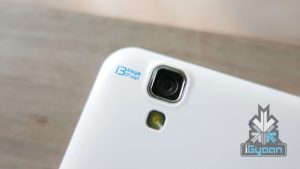
The camera sensor has been improved from a previous gen Sony sensor to a newer sensor which will capture colours better and work well in low light conditions. The megapixels remain the same at 13MP, however images are sharper and contrast is better. Some samples are given below. Video is still shot at 1080p and thanks to better low light performance and colour saturation, the video quality is much better.
Yureka
Yureka Plus
Yureka
Yureka Plus
Conclusion
While the price difference is negligible and so are the improvements, the Yureka Plus adds a Full HD display and a better camera, with a supposedly better build. All of which are worthy of the Rs. 1,000 price increase. There is no loss in performance, in fact, it is a tad bit better. If Yureka was your choice before, the Yureka Plus should be your choice now. There are however some other options in this price bracket, the ZenPhone 2 and the new Moto G (3rd Gen) is just around the corner. Check out our video review below.
Click here to register for the Yu Yureka Plus : [tw-button size=”medium” background=”#07ABE2″ color=”” target=”_blank” link=”http://www.amazon.in/b/ref=as_li_ss_tl?_encoding=UTF8&camp=3626&creative=24822&linkCode=ur2&node=6690337031&pf_rd_i=yureka&pf_rd_m=A21TJRUUN4KGV&pf_rd_p=656691227&pf_rd_r=1R4GV1T0M1A7TNVFECFT&pf_rd_s=desktop-auto-sparkle&pf_rd_t=301&qid=1437731665&ref=spks_0_0_656691227&tag=igyaan-21″]Register Now[/tw-button]
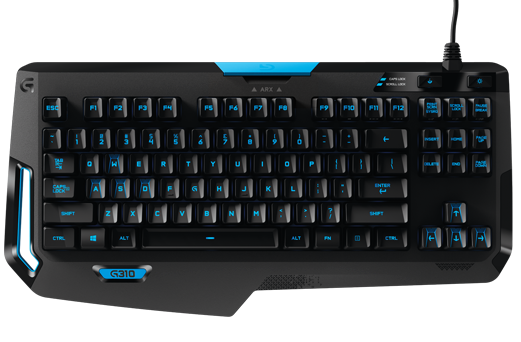
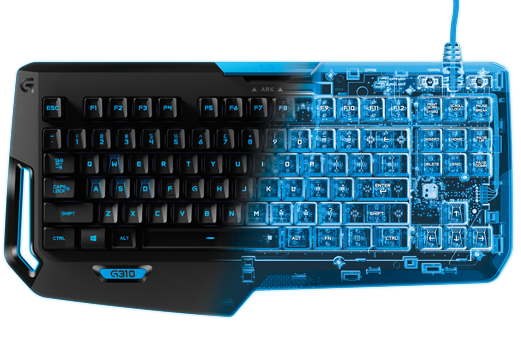
As a follow up to the G910 Orion Spark that had been brought to the market in late 2014, the new Logitech G310Atlas Dawn Compact Mechanical Gaming Keyboard has been announced. The G310 is a more slender version of the G910 without the macro keys, media control functions, and number pad. The G310 is designed to be convenient to carry around, making it ideal for traveling.
Along with this, the Romer-G mechanical switches can register key presses up to 25% faster than its competitors. It Sports a 1.5 mm actuation point with the switches featuring an average lifetime rating of 70 million keystrokes, which according to Logitech is 40% longer than any other switch in the market.
Source: Digital Trends
As quoted by Logitech G vice president and general manager Ujesh Desai:
“Having a keyboard that is compact and lightweight was important, but it also had to be durable and comfortable for hours of gameplay.”
The keyboard also supports a central backlighting system with the ability to control its brightness. It also allows users to dock their smartphones in the blue section, at the top of the board. This allows them to use the smartphone as a second screen that displays in-game information, system stats, and so forth, in conjunction with the Arx Control App conceived by Logitech.
The Logitech G310 Atlas Dawn Compact Mechanical Gaming Keyboard comes with a two-year manufacturer warranty and a price tag of Rs.8,795 in India and an MSRP of $180. Sounds exciting, doesn’t it?
We have all been recently experiencing something that has been termed as ‘call drops’, and as of June 30th 2015 Airtel has received the the most number of complaints (31) followed by Vodafone, Idea Cellular and BSNL as written by telecom minister, Ravi Shankar Prasad in a written reply to the Lok Sabha. The TRAI (Telecom Regulatory Authority of India) has also received complaints from Reliance, Aircel, MTS and Tata users too.
The Airtel CEO had written an open letter to its customers asking for their help. He mentioned that the two most important things necessary for a good service or network were sites and spectrum. He also requests customers to identify nearby mobile sites to reduce call drops in a particular locality.
But what is the government doing about this, since customers are still paying for inefficient services?
“TRAI has been monitoring the performance for service providers against the quality of service benchmarks for the various parameters through quarterly performance monitoring reports.” – Ravi Shankar Prasad
Ideally, the call drop rate should be less than 2%. Although, service providers have cited various reasons such as equipment faults, frequent load shedding in some circles, difficulty in site acquisition, shutting of existing mobile towers due to radiation concerns and restrictions near international borders. These don’t seem to be excuses but facts of this situation.
The government promises to meet telecom service providers in April as well as the second week of July, 2015 regarding the call drop issue, wherein, they have been asked to take immediate measures to address issues of call drops by radio frequency optimization, installation of new sites and in-building solutions.
However, the results of these measures are yet to be experienced.
Source: [tw-button size=”medium” background=”#07ABE2″ color=”” target=”_blank” link=”http://timesofindia.indiatimes.com/tech/tech-news/Airtel-subscribers-suffer-maximum-call-drops-TRAI/articleshow/48184843.cms?utm_source=facebook&utm_medium=referral&utm_campaign=TOITech”]Times Of India [/tw-button]
Yu Telecommunication’s first product, the Yu Yureka, was an instant hit when it was released in January this year. Later on, the Yu Yuphoria worked out really well for the Indian audience. Now, the company bought Yu Yureka’s brother, the Yu Yureka Plus, a few days ago and will go on the company’s trademark style of flash sale today.
The handset will be up for sale from 12 pm Indian time on Amazon India. But, this sale is valid only for registered users, which began on 21st July and expired yesterday.
The Yu Yureka Plus consists of small and significant changes. The Yu Yureka Plus comes with a 1920x1080px display, as compared to Yu Yureka’s 720p display. Since the screen size remains the same with both the handsets, the pixel density of the Plus version is bumped up to 400 ppi. The screen is also protected by a Gorilla Glass 3.
Yu Yureka Plus
The Yu Yureka Plus also has a new camera sensor made by Sony. The Plus also boasts of improved chassis and better build qualities.Other than this, both the handsets are the same, overall.
The Yu Yureka Plus comes in two colour options, the Moondust Grey and Alabaster White.
Hardware Specs
Yu Yureka Plus
Display
5.5-inch FHD Gorilla Glass 3
Resolution
1920 x 1080px 400ppi
Chipset
Qualcomm Snapdragon 615
Processor
1.5GHz Octacore | 64 Bit
GPU
Adreno 405
RAM
2GB
Primary Camera
13MP Sony Sensor
Front Camera
5MP
Video Recoding
1080p Full HD
Storage
16GB
Expandable Up to
32 GB
Battery
2,500 mAh
Operating System
Android 5.1 Lollipop with Cyanogen 12
Bluetooth
4.0
Price
Rs. 9,999
Check out the unboxing and hands on of the device below:
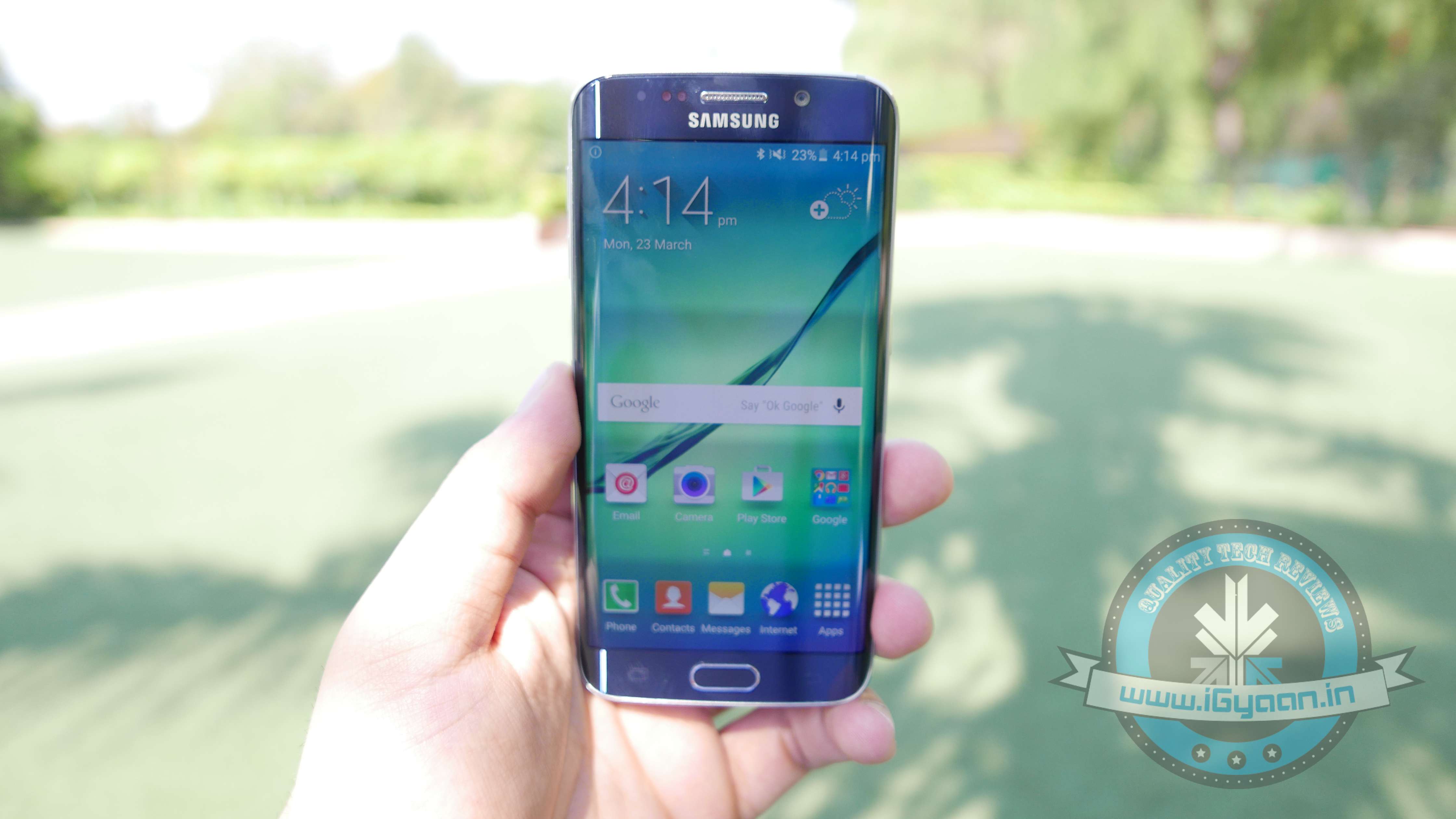
We had recently mentioned to you that Samsung is all set to take the markets with the new S6 Edge Plus. However, the coming of this new device might see the exit of the 128GB variant of the Galaxy S6 and S6 Edge that have been taken off the shelves of Indian and Dutch markets.
Earlier, these devices were available in three variants: 32GB, 64GB, and 128GB in countries like Singapore, UK, Australia etc. But now, it is likely that the 128GB will exit these countries as well.
While the actual reasons for taking the 128GB off shelves are unclear, it could be due to the exorbitant price tag it had. That’s right. The 128GB Galaxy S6 model costed a whopping Rs.61,900 (970$) while the Edge variant costed Rs.70,900 (1110$). Keeping these rocketing prices in mind, bidding farewell to this variant, won’t be such a bad decision, after all.
The announcement for the launch of the Apple Watch was met with great optimism and reviews encouraging the users to adapt to the product despite certain glitches. Fashion experts were also looking forward to its launch as it was hoped that Apple would finally launch a fashionable smartwatch that would be wearable.
Despite these reviews, the critical opinions seemed to overpower them, even post release. For instance, Brad Hargreaves initially predicted an 11 million sale in the third and fourth quarter which he later slashed down to 10.5 million. Most reviews seemed to tag the product as ‘destined for failure’ and no one would ever know since Apple rarely reveals sales numbers or internal statistics.
However a new report is said to show the Apple sales as “exceeding internal expectations” despite the pessimistic aura. Numbers never seem to fail Apple Inc. and as reported they have sold four million watches in the second quarter, giving them 75.5% of the global smartwatch market shares.
Global Smartwatch Vendor Shipments (Millions of Units)
Q2 ’14
Q2 ’15
Apple
0.0
4.0
Samsung
0.7
0.4
Others
0.3
0.9
Total
1.0
5.3
Global Smartwatch Vendor Marketshare (%)
Q2 ’14
Q2 ’15
Apple
0.0%
75.5%
Samsung
73.6%
7.5%
Others
26.4%
17.0%
Total
100.0%
100.0%
Total Growth: Year-over-Year (%)
~
457.3%
Source: Strategy Analytics
In direct comparison we have the Samsung smartwatch that sold only four hundred thousand watches giving them a 7.5% share in the market. Other brands like Motorola, LG etc. have sold around nine hundred thousand watches giving them a total of 17% of smartwatch sales. In total, Samsung plus the other smartphones own 24.5% of the market, with Apple far ahead of it with 75.5%. Hence, proving that Samsung and the rest have a long way to go before catching up to a Cupertino product.