Tag: intel

  • Intel’s Showcases Twin Screen Gaming Laptop At Computex 2019

    Intel’s Showcases Twin Screen Gaming Laptop At Computex 2019

    Intel, the chipmaking company has a lot of buzz going around its various announcements (such as Project Athena) and prototypes that have been making rounds all over the internet. The company was seen highlighting one of those prototypes in Computex 2019 all the way from its Santa Clara Lab in the headquarters. 

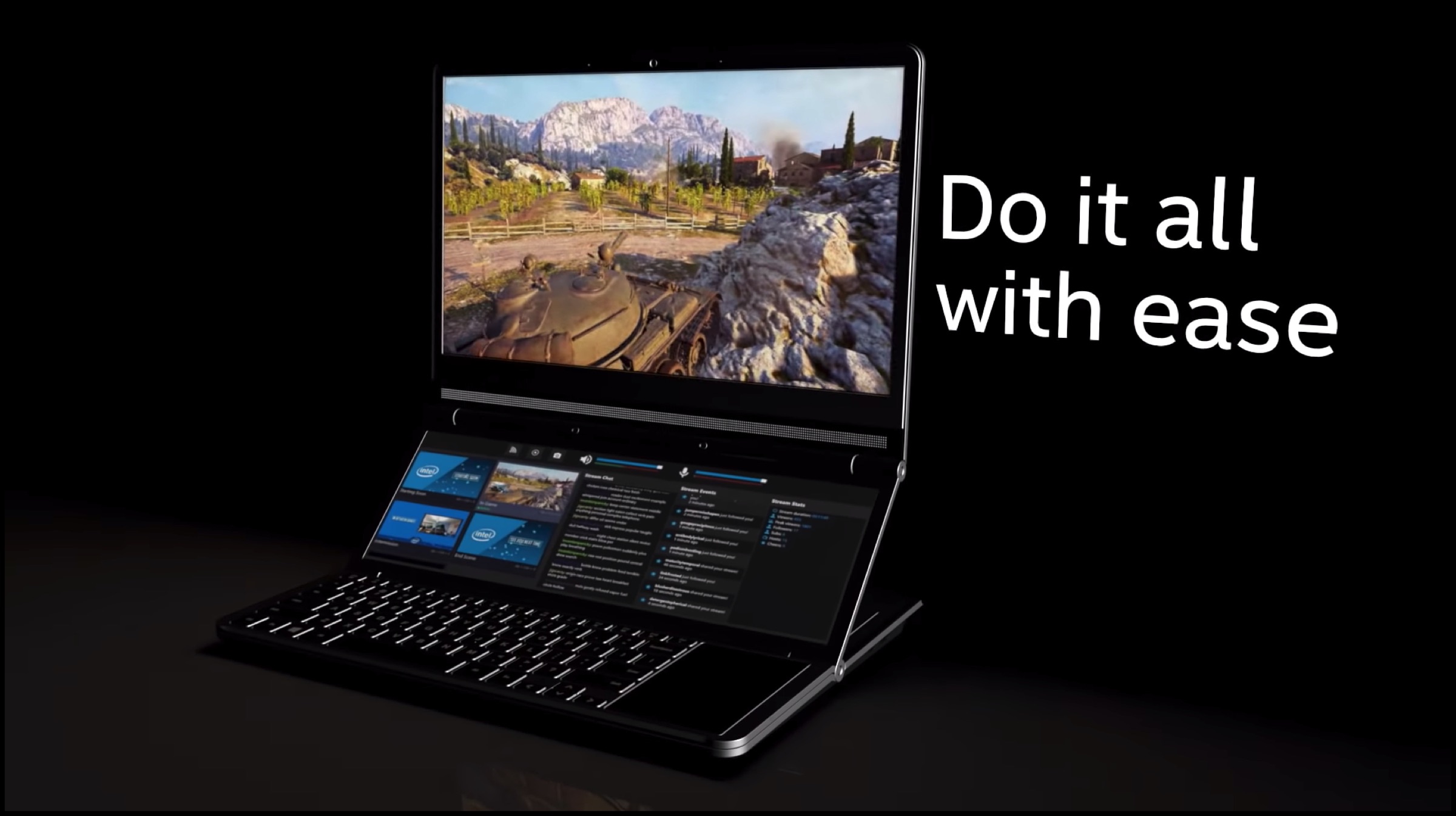
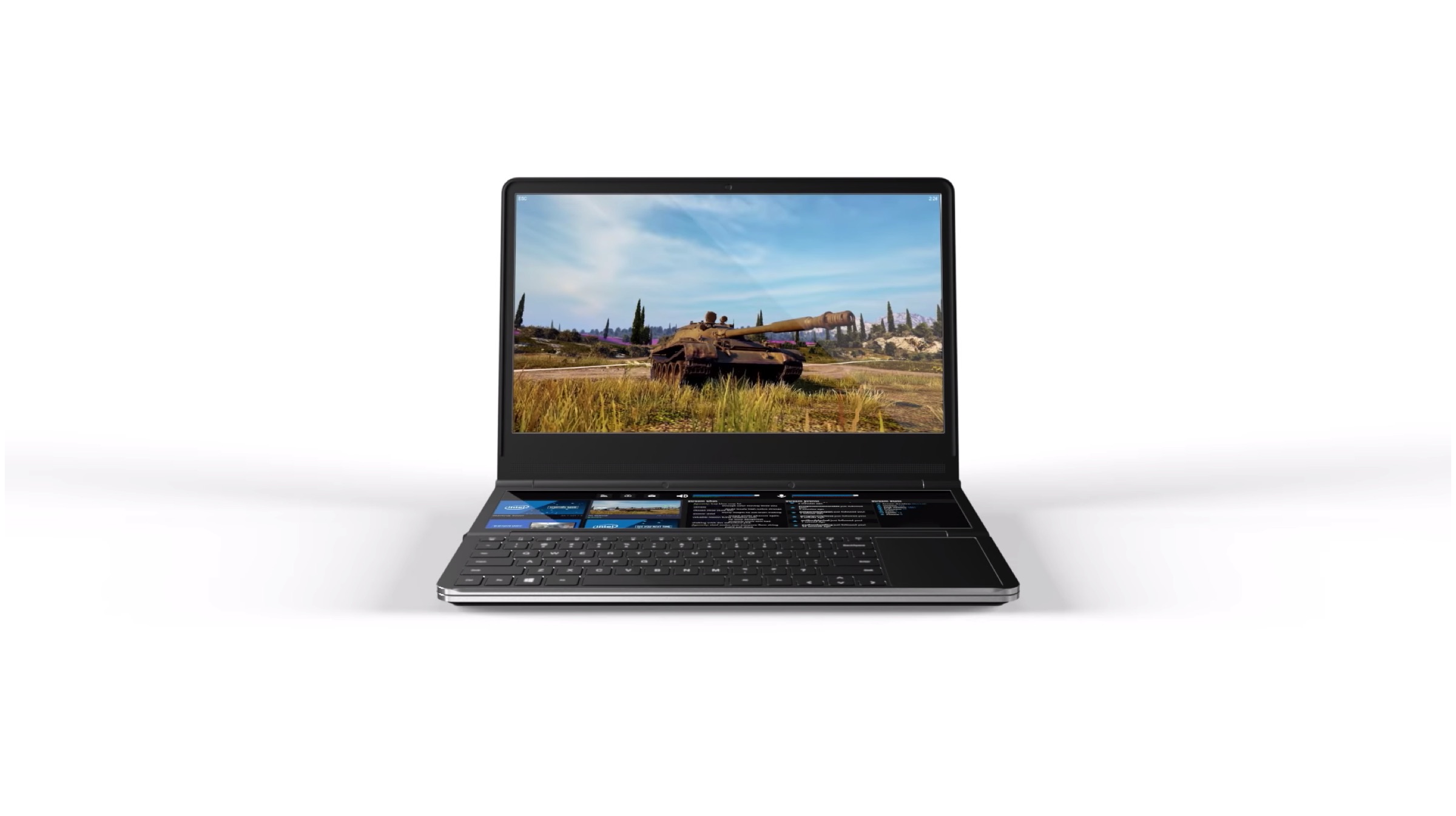
    Honeycomb Glacier may not seem like the name for a gaming system but Intel gets a pass on this for its innovation. Intel has supplied ample horsepower within this compact laptop. The key feature of this prototype is Intel’s attempt to place two full displays in the machine for an enhanced gaming experience.
    Intel

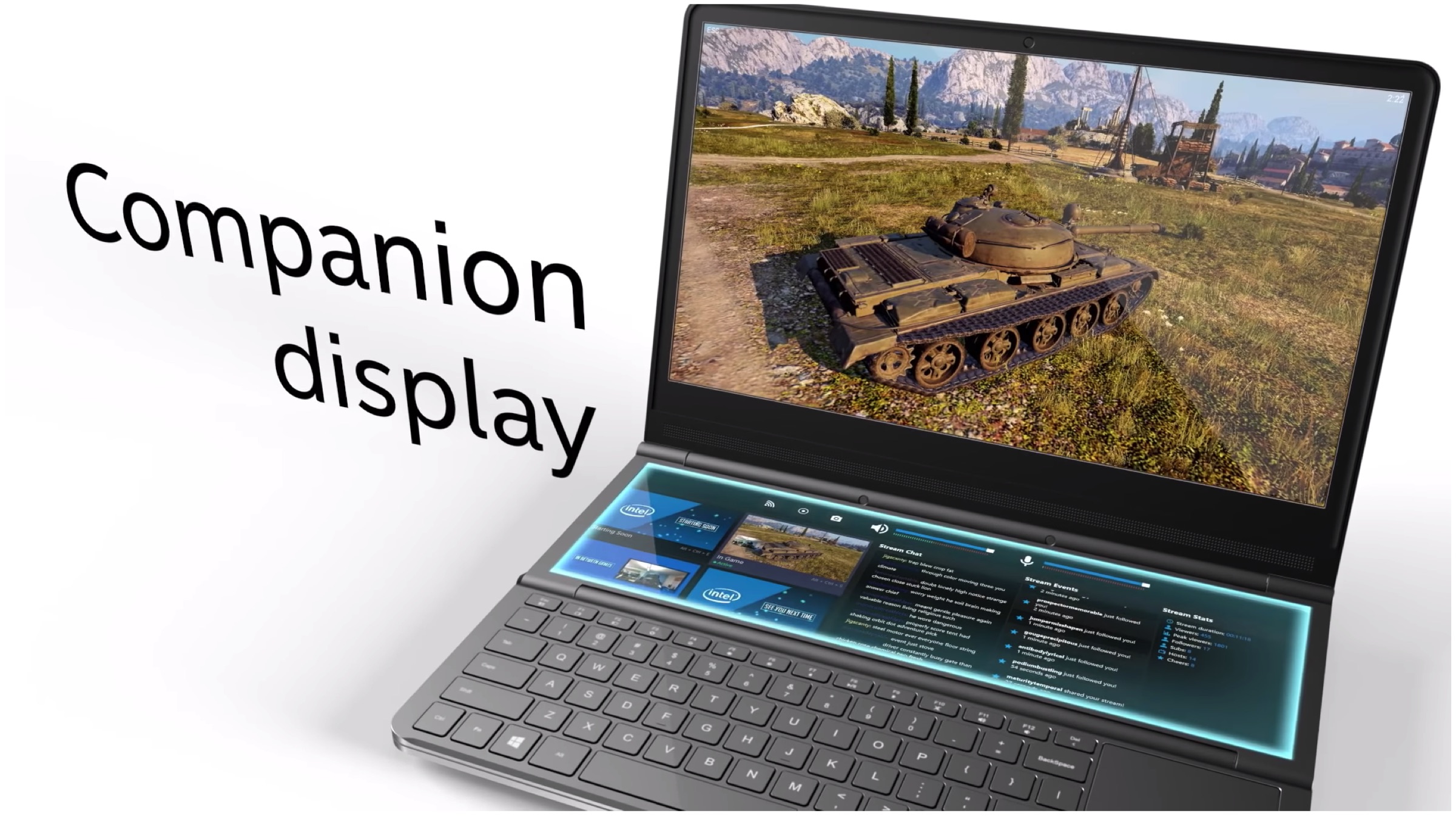
    The device is outfitted with a 1080p display panel for its main 15.6-inch screen while the secondary panel receives a 720p 12.3-inch 1920 x 720 display. Intel had partnered with Razer for the original Switchblade prototype back in 2011, the first laptop to have an entire screen as a touchpad, making this attempt their second endeavour for dual screens.
    Intel

    Intel sets itself apart from the numerous other OEMs, that have implemented a dual screen format, by actually having a second screen that does not necessitates having you look away from the primary screen. Users do not have to look down or divert their attention with a simple inclusion of a double hinge mechanism that raises the second screen to just below eye level that compliments the main screen.
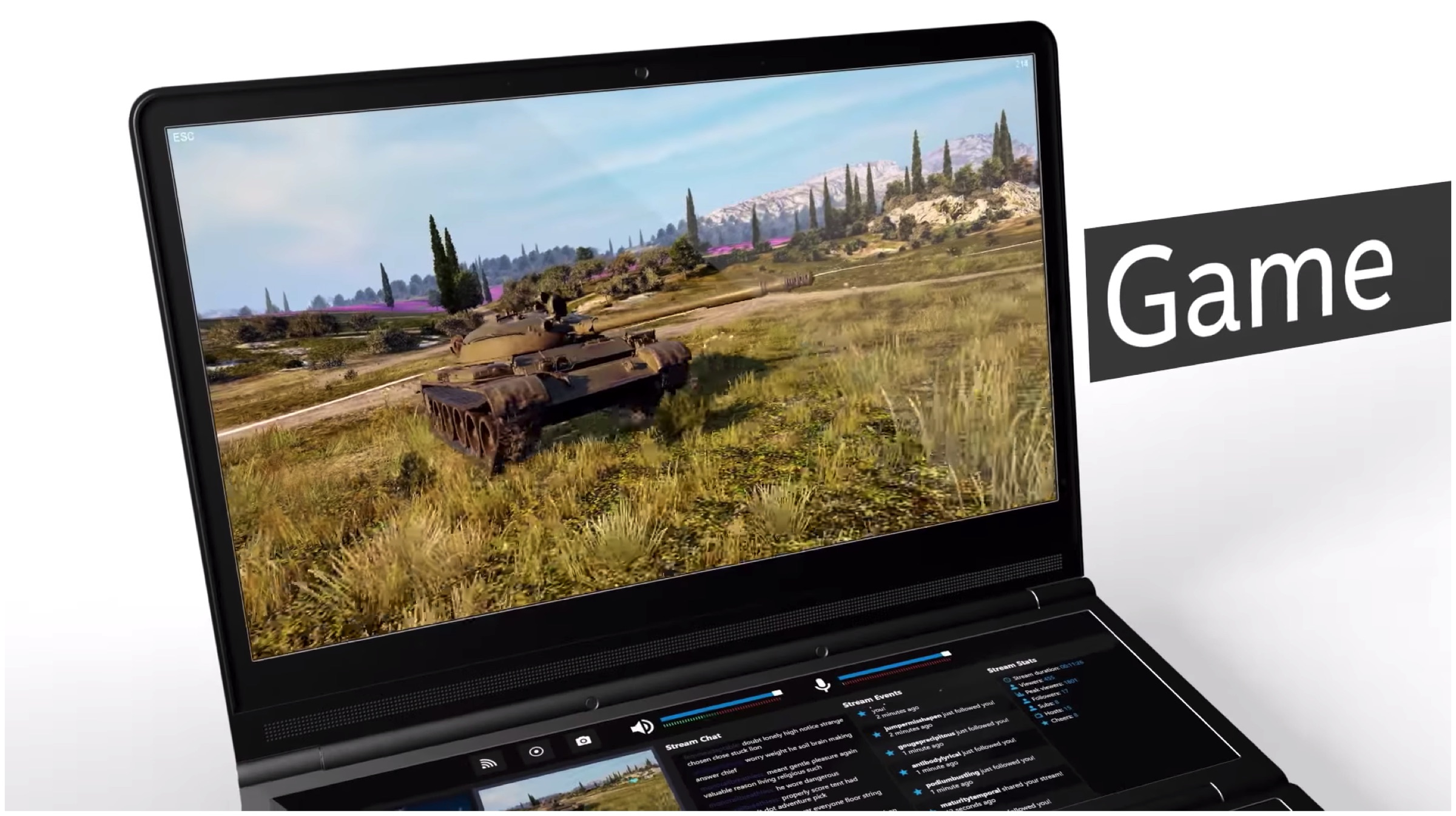
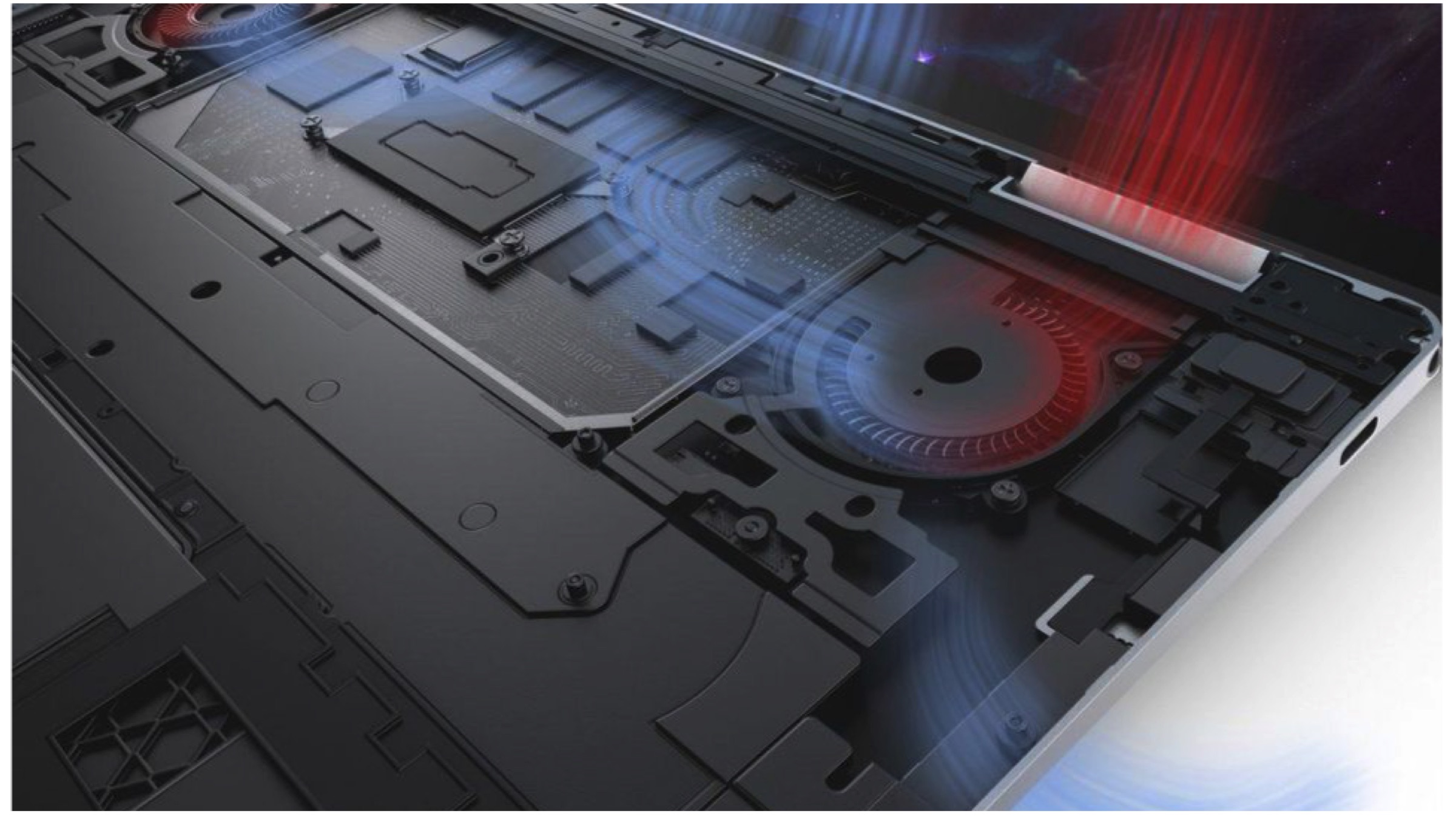
    A unique hinge mechanism gives users the freedom of the elevation and angle that automatically stays in whatever position it was propped up on. This was achieved by one-way roller mechanical clutch. Pressing on a small black button on the left side disengages the clutch to fold the laptop. This special mechanism provides space for the cooling solution built specifically for the specially placed motherboard with a single fan.
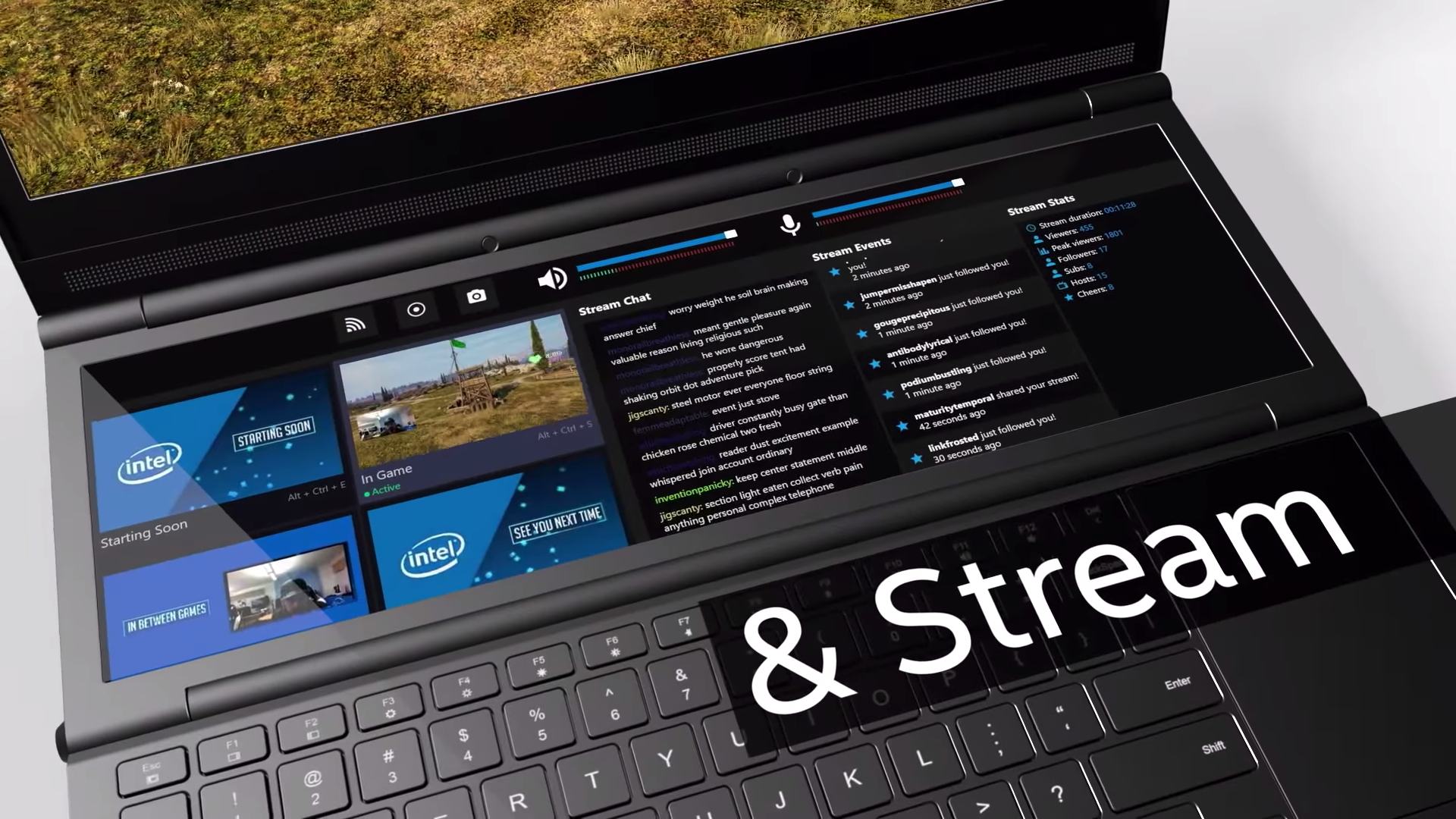
    The prototype, Honeycomb Glacier had been reportedly running on a 45W 8-core i9 Intel CPU and NVIDIA GTX 1070, both units being overclocked. The near eye level hinge houses a Tobii eye-tracking camera, that enables smoother user interaction with the second screen interface in different applications like Discord and Twitch for gamers or Slack for work. Simply drawing your eye to the application puts it on focus.

    Also ReadKonami Celebrates 20 Years Of Contra With Anniversary Bundle

    Intel is optimistic about Honeycomb Glaciers new design and functionality that has generated much interest from other manufacturers seeking to derive from it. Dual-screen laptops are making their way into mainstream reality, soon becoming a common happenstance. 
  • Dell Refreshes The XPS 13 With Intel’s Latest 10th Gen CPU Processors

    Dell Refreshes The XPS 13 With Intel’s Latest 10th Gen CPU Processors

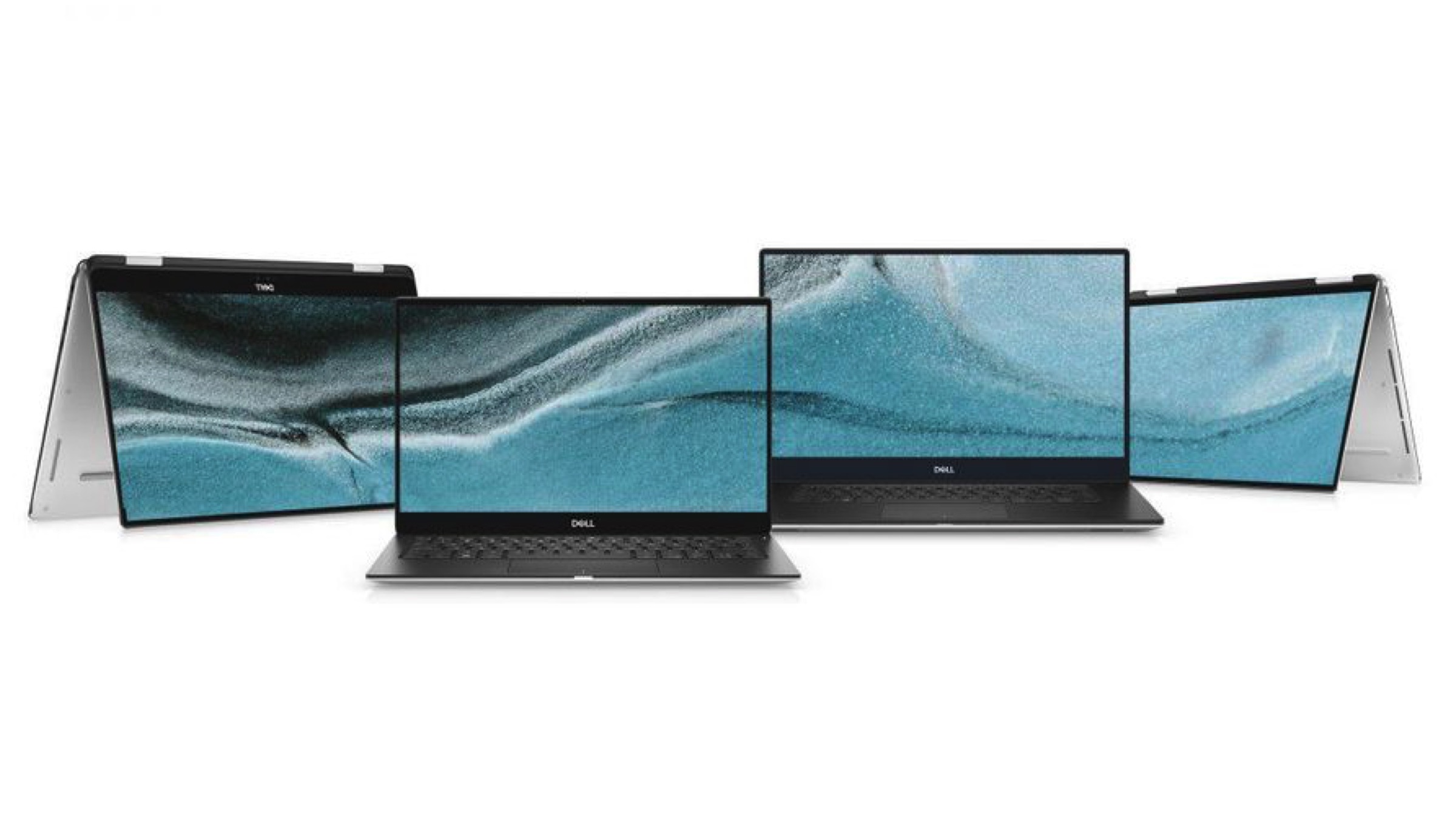
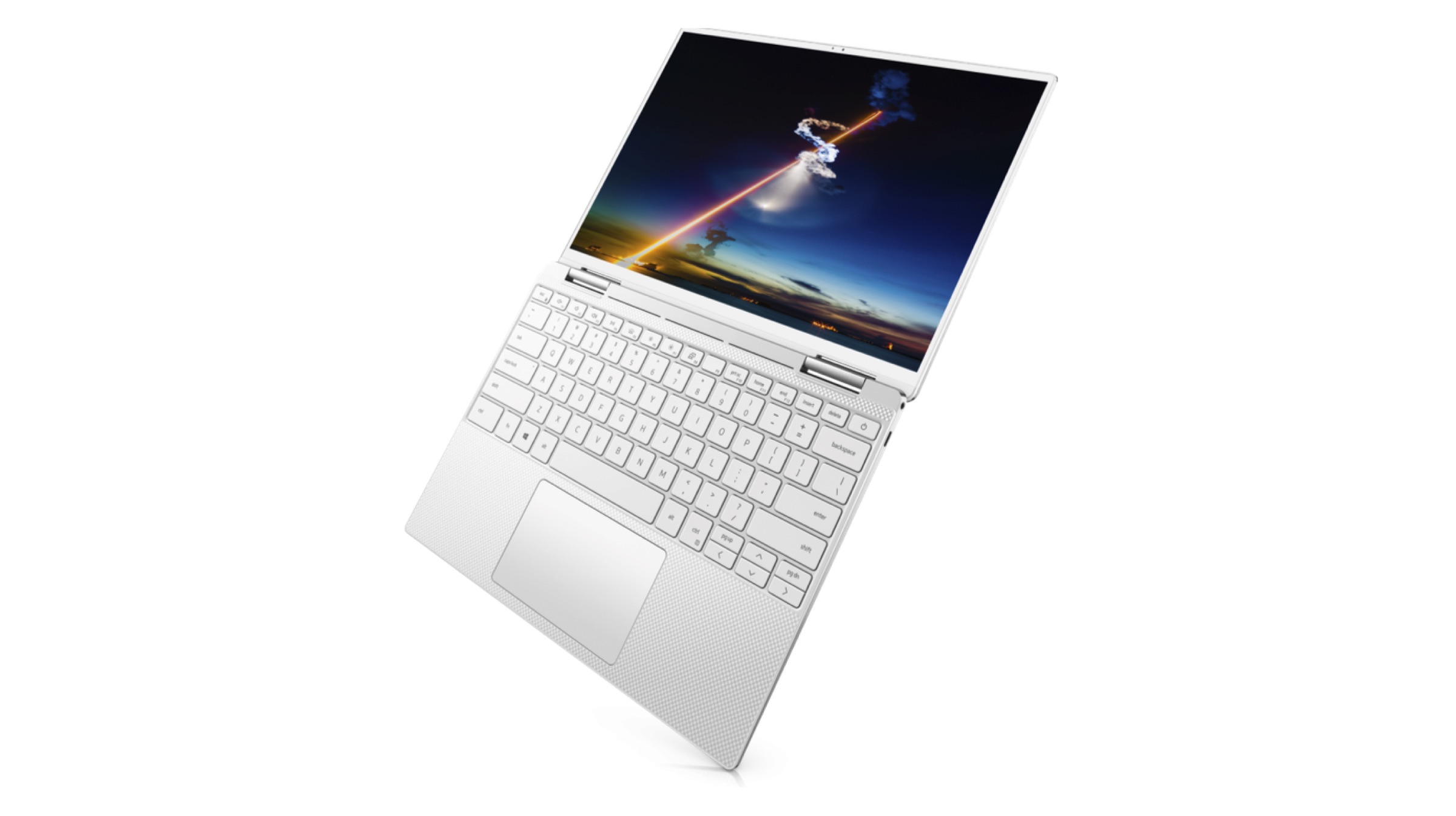
    Computex 2019 has seen its fair share of updates and overhauls in the specifications and design of laptops. However, none so far have crossed the generation in the processor unit. The Dell XPS 13 2-in-1 laptop previously received a minor update regarding the placement of the webcam back in CES in the month of January. The long-awaited Intel 10th Gen Ice Lake processor also makes a debut with the XPS 13.

    Along with a new display and keyboard, the key change made is the upgrade to Intel’s latest generation of CPUs. Intel’s new 10nm Ice Lake chips in the Dell XPS 13 are based on the U-Series lineup of the 10th generation. The company had to add fans to the XPS 13 to utilize the more powerful processor over the Y-Series lineup which was made specifically for fanless laptops and is a worthwhile trade for better performance. Dell, for assurance, is going as far as to claim two and a half times more processing strength than the last iteration of the notebook with the addition of the latest chipset.

    Dell has also bumped up the screen size to 13.4 inches, changing the aspect ratio of the display to 16:10. This made the screen slightly taller than its previous versions. The latest version has a bigger keyboard and touchpad, which is a significant improvement over its predecessor. In a similar fashion to its variants from the past, the display options on the notebook are still FHD+ or 4K.

    The Maglev (Magnetic Levitation) keys make an appearance in the XPS 13 2-in-1 laptop, borrowed from the XPS 15 from 2018. However, it is not the exact same keyboard and slight touches are evident due to the presence of more metal than the XPS 15. For biometric security, a fingerprint sensor is placed comfortably alongside the keyboard.

    Also ReadIntel’s Project Athena Pushes Higher Industry Standards For Ultrabooks

    Additional variants of the XPS 13 are available with the latest iterations as well. Dell now gives the option of the 9th Generation Intel Core processors (i5, i7, and i9) along with the new GTX 1650 from NVIDIA and RAM upto 64GB. A new 4K OLED display is optional too. Dell has yet to announce the release of XPS 13 and XPS 15 in the global market, but the pricing of the regular XPS 15 sits at $999.99 (~ Rs. 70,000), and $1899.99 (Rs. 1,32,000) for the OLED variant.

  • Apple Hired Intel’s 5G Modem Lead Developer Ahead Of Qualcomm Settlement

    Apple Hired Intel’s 5G Modem Lead Developer Ahead Of Qualcomm Settlement

    Apple, Qualcomm and Intel have been a subject of a multitude of legal issues lately. The companies have been involved in conflicts over a variety of reasons, the major one regarding the supply of 5G chips to Apple. Previously, Qualcomm and Apple were involved in a 6-Year License agreement regarding 5G modems, following which Intel exited the 5G modem business. As per latest reports, Apple hired the lead modem developer of Intel before settling with Qualcomm and letting Intel go. 

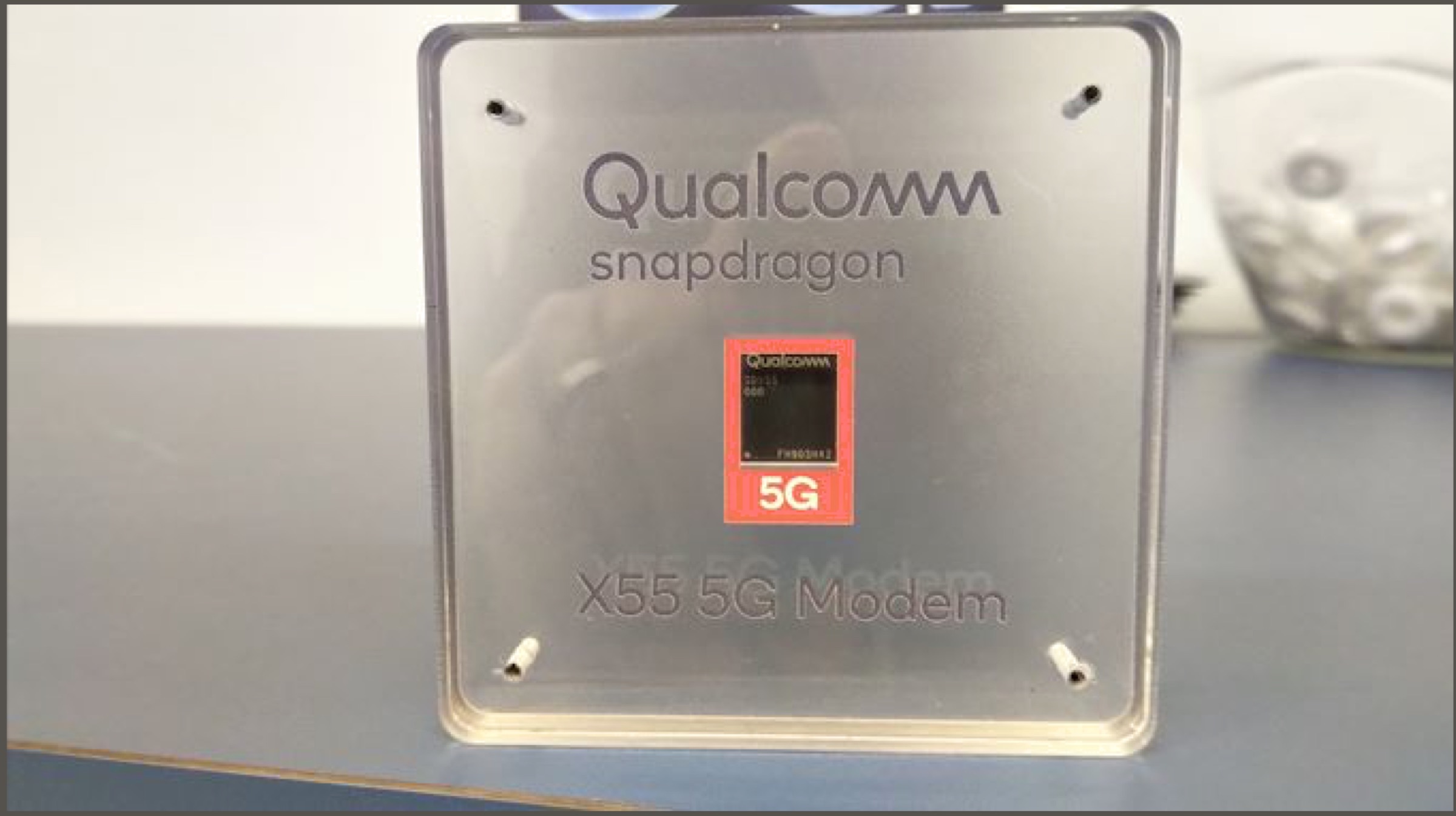
    Qualcomm X50 5G Modem

    A leaked email cited the aforementioned facts, in addition to the news that Umashankar Thyagarajan, the developer involved was hired just two months before the settlement. As per sources, Umashankar played an important role at Intel in the development of 4G modems, and was also working on the 5G XMM 8160 modems. After his exit from the scene, Intel was forced to rethink its chip development strategy. Consequently, Intel announced its departure from the 5G business on the same day as the Apple-Qualcomm deal went down.

    As previously reported, the company had raised concerns regarding Intel’s pace of the development process of 5G chips, following which Apple’s 5G iPhones were eventually delayed up to 2020. Seeing the 5G competition in the market from brands like Samsung and Huawei, Apple was forced to rethink its partnership with Intel. While Apple was unsatisfied with Intel’s results, the latter reverted by saying that Apple is a demanding client and that it is very conflicted with Apple regarding the partnership. 

    Also Read: Samsung Patents PlayGalaxy Game Link Service For Galaxy Devices

    In other reports, Apple was planning to step-up it’s in house modem manufacture after Intel delayed the production of the 5G chips. This step was taken in order to reduce the dependence on third-party suppliers, but unfortunately, adopting a manufacturing strategy like this will still cost time, delaying future 5G iPhones up to 2021. Since Apple is taking matters into its own hands now, 5G support can be expected fairly soon from the American multinational company.

  • Lenovo Yoga 730 And Flex 14 Launched At MWC 2018

    Lenovo Yoga 730 And Flex 14 Launched At MWC 2018

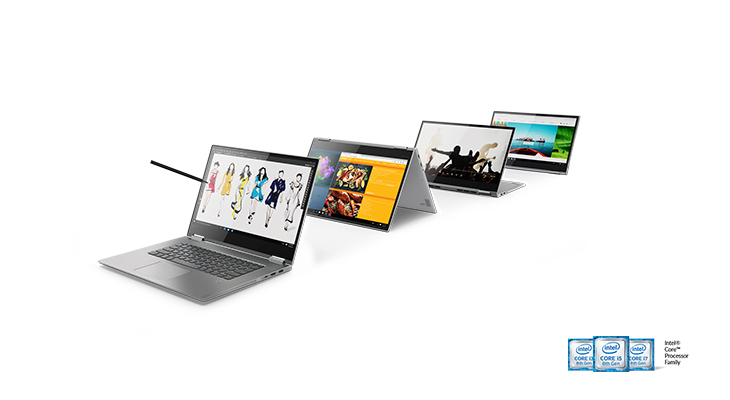
    Lenovo launched two new notebooks at MWC 2018. The Lenovo Yoga 730 is a premium offering, which comes with built-in far-field-mics with Alexa AI. The Flex 14 is more of an affordable offering from the company. Both the notebooks are powered by Windows 10 OS.

    Pricing and availability:

    The Lenovo Yoga 730 comes in Iron Grey and Platinum Silver, which will be available from April, starting at US$ 879.99. The Flex 14 will be available in onyx black colour, which will be available from April, starts at US$ 600.

    Design and features:

    Both the notebooks from Lenovo offers flip to tablet mode with support for touch input. The display edges have been curved to offer a smoother tablet-using experience on the Lenovo Yoga 730. The Yoga 730 also offers a built-in fingerprint scanner. However, it misses out on the Windows Hello camera feature.

    The laptop acts as Alexa hub, which can be used to control other Alexa accessories. However, the notebooks need to be up and running to access Alexa AI.Lenovo Yoga 730

    Specifications of Lenovo Yoga 730:

    The Lenovo Yoga 730 comes in 13 inch and 15 inch display with 1980 x 1080p resolution. Under the hood, the notebook is based on 8th generation Intel Core i5 or i7 processor with 8/16GB RAM and 512/1TB SSD. The 13 inch variant is equipped with Intel UHD 620 GPU and the 15 inch variant has a powerful GTX 1050 GPU.

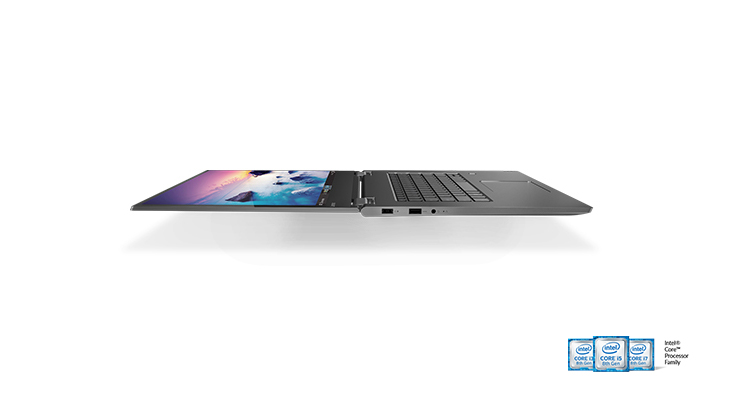
    The notebook comes with plenty of port options, including dual Thunderbolt 3 port, one full-sized USB 3.0,  USB type C port, and a mini HDMI port. The notebook also supports Active Pen 2, which has to be bought separately. In fact, the Thunderbolt can be used to connect external GPU for additional power.

    Specifications of Lenovo Flex 14:

    The Lenovo Flex 14 will also be called as Lenovo Yoga 530 in the European markets. As the name suggests, the Lenovo Flex 14 has a 14 inch full HD 1980 x 1080px resolution display with touch input. Similarly, one can choose between the 8th gen Intel Core i5 or i7 processor with up to 16GB RAM. However, the storage is limited to a maximum of 512 GB SSD.

    The choice of ports on the Flex 14 includes 2x USB-A 3.0 ports, one USB C 3.1 port, 3.5 mm headphone jack and a mini HDMI port. However, like the Yoga 730, there is no Alexa AI integration.

  • Your iPhone X May Be Faster Than Your Friend’s iPhone X

    Your iPhone X May Be Faster Than Your Friend’s iPhone X

    Apple iPhone X has been out for almost a month now and people who’ve recently ordered it, will start receiving their iPhone X sooner rather than later. If you have an iPhone X already, it is possible that your phone might be faster (or slower) than your friend’s iPhone X.

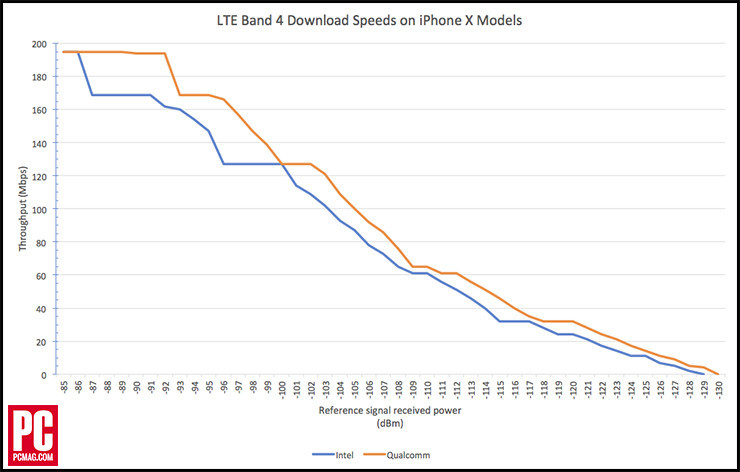
    Apple equips iPhones in the US with modems from both Intel and Qualcomm, and the same goes for their priciest iPhone yet, the iPhone X. In a new report, it has been unearthed that iPhone X models with Qualcomm modems were faster than iPhone X models with Intel modems.

    The test shows that iPhone X models with Qualcomm modems “get consistently better LTE speeds than Intel’s on America’s most common LTE band.”

    It is worth noting that Apple crippled a few functionalities of the Qualcomm chip because the Intel chips don’t support these features yet. So, in order to keep the differences at a bare minimum, Apple curbed the performance of the Qualcomm chipsets itself.

    But, the good news is that you won’t notice the difference between the two until you’re in a dire situation.

    Following recent legal battles between Qualcomm and Apple, it won’t come as a surprise if all iPhones start shipping with Intel modems in the future. Reports already suggest the same and with recent law suits, the relationship between the two firms may have gone beyond repair.

  • Intel Stops Overclocking of Non-K Skylake CPUs with Update

    Intel Stops Overclocking of Non-K Skylake CPUs with Update

    News that is sure to miff overclockers around the globe, Intel has gone ahead and released an update for its Skylake CPUs to stop users from overclocking processors which it believes they shouldn’t. For overclockers searching for an economical way to get a little more juice out of their powerful computing hardware, the skylake generation of processors came as a godsend.

    intel2

    Users with the locked, Non-K skylake processors towards the end of last year, started receiving BIOS updates from ASRock which enabled base clock frequency overclocking. Other motherboard vendors followed with such BIOS updates thus giving users a relatively inexpensive intel processor to overclock.

    These Skylake processors that were discovered to be readily overclockable are now having their speeds clocked back down, with Intel shipping a new microcode update for the chips which closes a loophole.

    Speaking about this, an Intel spokesperson said,”  ”Intel regularly issues updates for our processors which our partners voluntarily incorporate into their BIOS. The latest update provided to partners includes, among other things, code that aligns with the position that we do not recommend overclocking processors that have not been designed to do so. Additionally, Intel does not warranty the operation of the processor beyond its specifications.”

    With this, Intel has once again tried to push overclocking enthusiasts to an expensive corner where they have to shell out extra money just to buy unlocked K range processors which are also not covered under warranty for overclocking. Well played, Intel.

  • Coolest Tech at CES 2016 So Far

    Coolest Tech at CES 2016 So Far

    CES 2016 kicked off in the most spectacular way possible. The technological fest had everything a tech junkie could ask for. While drones and hover boards were the ones that stole the spotlight, there were some others that just inspired awe. Here are some of our favorites so far.

    Razor Blade Stealth

    razer-blade-stealth-04

    Razer – maker of the coolest and most badass gadgets around – unveiled its 12.5-inch Razer Blade Stealth with Super HD 2,560×1,440-pixel resolution touchscreen display, a Core i7 processor, 8GB of memory and 128GB of solid-state storage. And since the laptop is a Razer product, the device comes with RGB backlit keyboard that lets you program every key to light up in individual colors.

    Saving the best for last, the laptop also features Razer Core, an external graphics docking station which will arrive for an undisclosed price in the first half of this year.

    Intel RealSense Technology

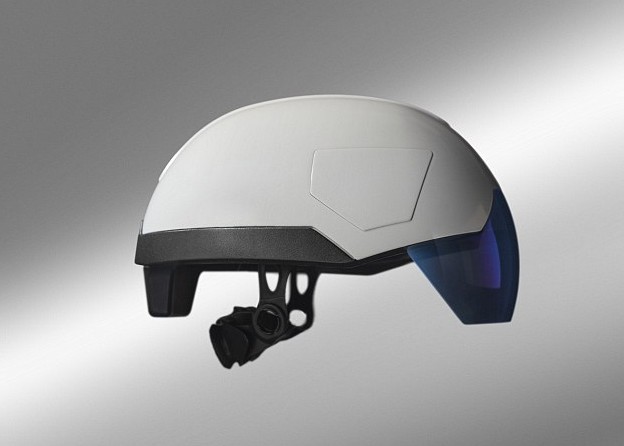
    Intel reminded everyone that the future is indeed here. The chipmaker showed off its RealSense sensor technology, which allows computers to map an environment in real time and react to it. Intel used this technology in three different products – a helmet, a car, and a robot.

    The Daqri is a smart helet that is aimed at construction workers and athletes. The helmet has inbuilt glasses that are AR-ready. The helmet uses RealSense 3D camera to create augmented reality on the screen of the glasses. The RealSense technology was also seen in Segway’s Advanced Personal Robots, which is a hoverboard that doubles into a robot. Finally, the technology was seen in a race car that showed movements on the screen following the driver wherever they turned their head.

    Ehang 148 Drone

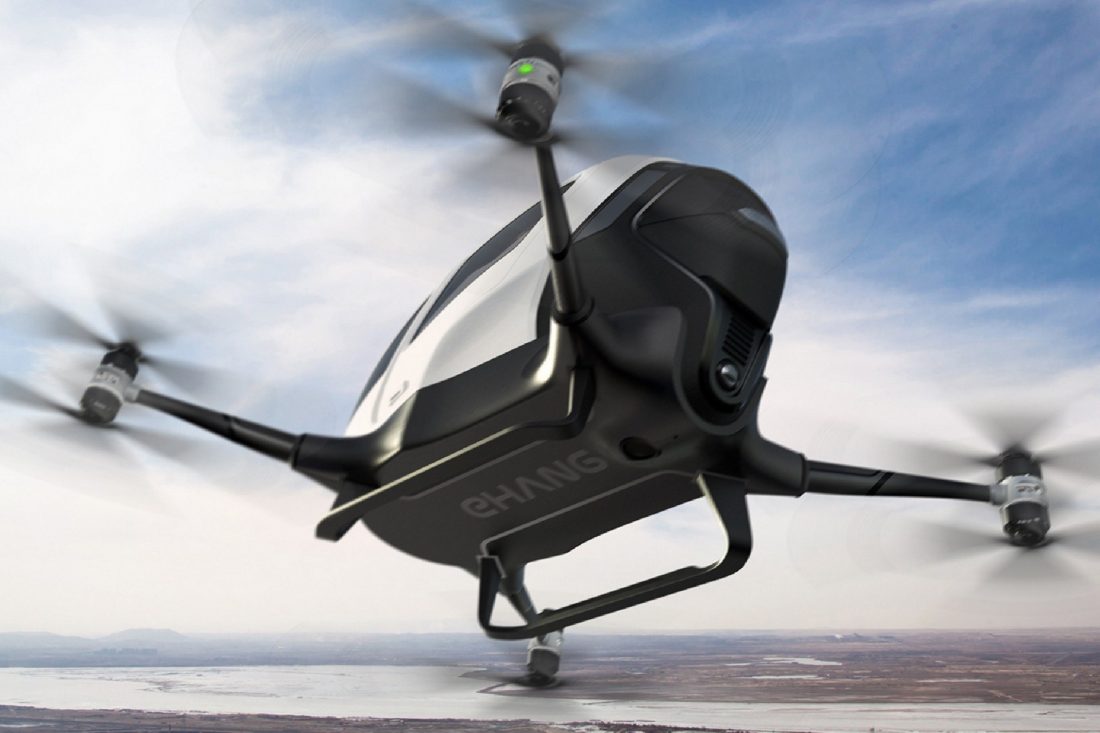
    Ehang 184 Human Carrying Drone

    A Chinese company, Ehang Inc., unveiled what is being touted as the first ever drone capable of carrying a human being, on Wednesday at CES.

    The Ehang 184 was unveiled yesterday as an electric-power drone that can carry up to 220 pounds and is capable of flying for 23 minutes. It looks like a small helicopter, but of course, along with the four doubled propellers of a drone. The air-conditioned cabin has room for one person and is capable of being charged fully in only two hours. It also has a reading light and space for a back-pack, just because.

    Faraday Future’s FFZero1 Electric Concept

    faraday-future-03-690x345

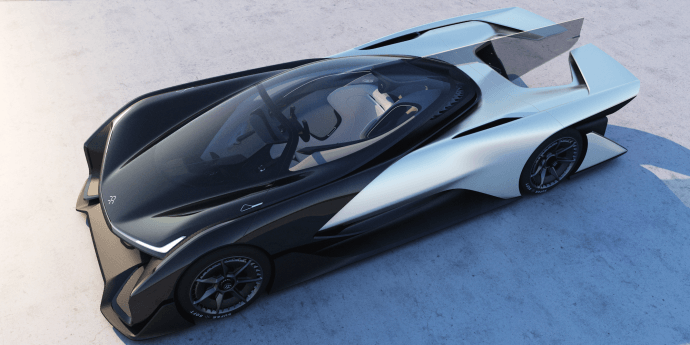
    One of the coolest unveiling in the automotive departments comes from Faraday Future. The startup, which is backed by Chinese internet TV provider LeTV, unveiled its first-ever electric concept, the FFZero1 which will be production ready by 2018. The exterior design of the vehicle draws inspiration from the 1960s Batmobile.

    The FFZero1 has a smartphone embedded in the steering wheel to give the vehicle a “sixth sense” that understands the driver’s preferences and is also capable of driving itself. The internet-connected FFZero1 has a top speed of 200mph (321 kph) and accelerate from 0 to 60 mph in less than 3 seconds. Furthermore, the car has what the company calls ‘aero tunnels’ that channels air through the car to reduce drag and cool the batteries.

    Faraday Future research chief Nick Sampson said that the company can achieve production of the FFZero1 faster than other automakers thanks to its adoption of “variable production architecture”. “Our lifestyle is becoming very digital and connected, and the car industry isn’t responding to those needs quick enough,” Sampson said. “Our architecture allows us to create different batteries without completely re-engineering the thing each time.”

    Fitbit Blaze

    Fitbit Blaze Smartwatch

    Fitbit – the company that’s currently dominating the fitness tracking market – showcased its new wearable that looks more like a smartwatch than any of its previous offerings. The smartwatch was also launched in India yesterday at Rs. 19,999 and is up for pre-orders.

    The watch comes equipped with a sleep-tracker, GPS and Bluetooth Smart which notifies the user of calls, texts and calendars notifications. The user can also accept or reject calls using the watch when its connected to a compatible smartphone. On-screen controls also allows the user to navigate and play music from the connected smartphone. PurePulse feature of Blaze tracks the heart-rate of the user and helps make training routines more efficient.

    Blaze seems high on design with its interchangeable bands, modular design and a high resolution colour touchscreen. It has a stainless steel display which further has three options to choose from -black, mist grey and camel. There is another option of a Luxe stainless steel band paired with the display frame available in silver.

  • Xiaomi Mi Pad 2 Gets Benchmarked, Will Have Intel Inside

    Xiaomi Mi Pad 2 Gets Benchmarked, Will Have Intel Inside

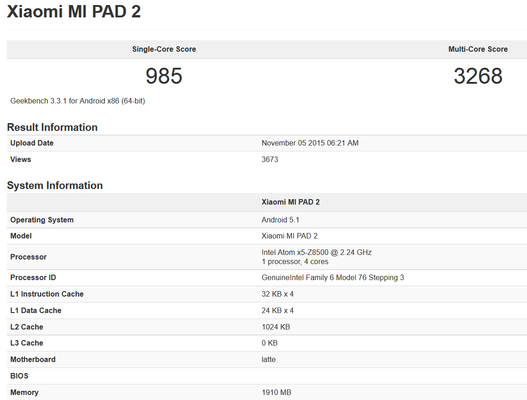
    It looks like the wait for Xiaomi’s Mi Pad 2 will soon be over. Rumours about the tablet began as far back as December last year. In September, the Mi Pad 2 was certified in China and today the tablet has passed the Geekbench benchmark test. According to the test, it looks like the Mi Pad 2 will have Intel inside. The test revealed that the tablet will sport an Intel X5-Z8500 SoC under the hood, with a quad-core 2.24GHz CPU, 2GB RAM and will have Android 5.1 pre-installed.

    That’s not all the test revealed. The Mi Pad 2 with Intel chipset scored a 985 on the single-core test and a 3268 on multi-core. The original Xiaomi Mi Pad scored a 1113 (single-core) and 3481 (multi-core) back in 2014.

    Geekbench

    Not much is know about the upcoming tablet. Rumours suggest that the Mi Pad 2 will sport the same 7.9-inch glass found in the original Mi Pad. It is likely that Xiaomi will unveil the Mi Pad 2 along with the Mi 5 on the 3rd of December.

    Source: [tw-button size=”medium” background=”#07ABE2″ color=”” target=”_blank” link=”http://browser.primatelabs.com/geekbench3/4084530″]Geekbench[/tw-button]

  • Apple’s Next iPhone May Have Intel Inside

    Apple’s Next iPhone May Have Intel Inside

    Intel is looking to get a piece of Apple’s booming sales by taking a version of its cellular modem into Apple’s next iPhone, likely to be called iPhone 7, stated reports by VentureBeat. The partnership is yet to be official, though. As of now the two companies have exchanged words and work is already underway. So, you can expect Apple or Intel to come out with an official statement soon.

    Intel CEO
    Intel CEO Brian Krzanich

    Apparently, Intel has an ‘army’ already working on the project. Around 1000 people are working to supply Apple’s next iPhone with Intel’s next-gen 7360 LTE modem. VentureBeats also reported that Apple will be sending some of its own crew to work with Intel. Meanwhile, Intel looks to take out Qualcomm from the top position of modem suppliers for Apple.

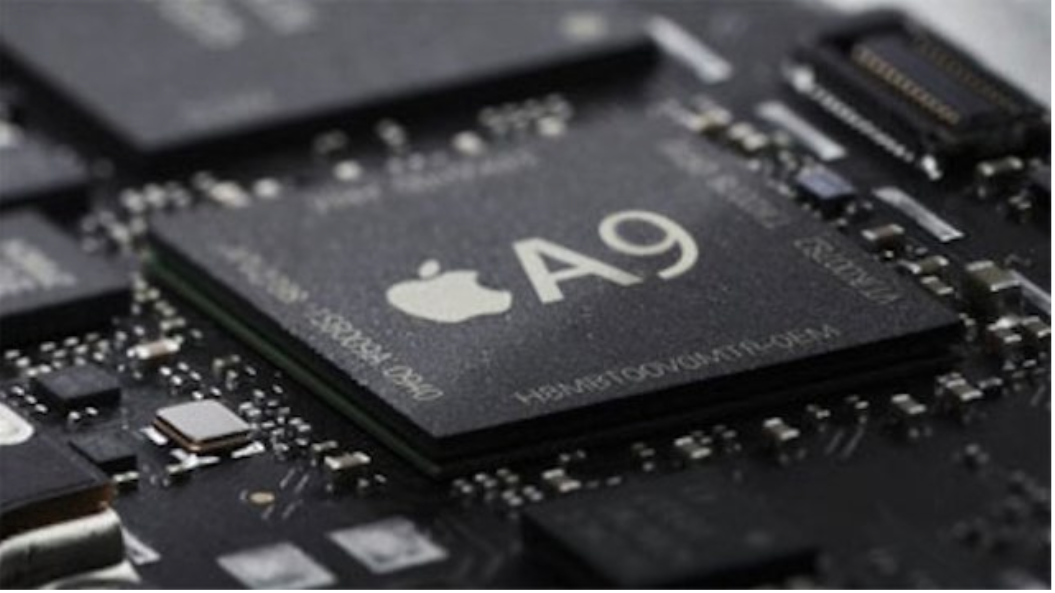
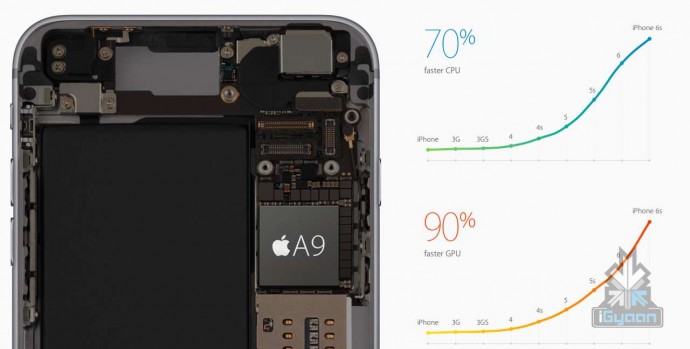
    Currently, Qualcomm’s 9X45 LTE chip has been the modem for Apple’s handset. A few years ago, Infineon used to supply the iPhone with 3G modems before Intel bought the German semiconductor company. Apple then moved to Qualcomm and made it its modem supplier. Like with its A9 chip, Apple may dual-source the LTE modems from both Intel and Qualcomm if Intel comes through. However, nothing has been officially stated on this matter.

    a iPhone 6s 3

    The current task ahead for Intel is to scale its 10-nanometer process so that it can work with Apple’s A9 chipset. This is one of the reasons that Apple has been attracted to Intel. Intel has both 14-nanometer and a new 10-nanometer process in the works. A 10-nanometer could yield faster and smaller processors. Apple is currently dual-sourcing its A9 chip from Samsung, which employs 14-nanometer process, and TSMC which uses 16-nanometer process.

    The end goal for Apple is to have an SoC that is capable of holding both the processor and LTE modem on a single, small, fast and power efficient component and the fabrication of this can fall into Intel’s hands if all goes well. This is a “must-win for Intel” as it has been struggling to keep pace with Qualcomm, a source told VentureBeat.

  • TAG Heuer Collaborates with Google, Plots its Way Through the World of Smartwatches

    TAG Heuer Collaborates with Google, Plots its Way Through the World of Smartwatches

    Tag Heuer, the world renowned high-end watch making company, will soon be announcing that it is working on building its own smartwatch. Chief Executive Office, Jean-Claude Biver told Bloomsberg in an interview that the company will be officially making a statement tomorrow about its partnership with Google and Intel. As Switzerland lacks the necessary resources in technology, the partnership with Silicon Valley giants will only benefit the company.

    Intel has been signed to supply the processor, while there is no official word on how Google will be of help. It’s an easy assumption to make that the company would be incharge of providing a seamless OS experience, with Android Wear. Tag Heuer has taken us the mammoth responsibility of designing the watch-case and crown. Biver is also suggesting a Tag Heuer smart watch may come with dials, such as an analog watch.

    [quote text_size=”small” author=”Stéphane Linder” author_title=”CEO, TAG Heuer”]

    I don’t see us taking a big risk unless we find a way to make luxury watches looking like real luxury watches that provide very easy-to-use, smart information that isn’t complicated—and don’t just replicate the mobile phone.

    [/quote]

    Tag Heuer stated that the craftsmanship of making this particular model will be very different than its traditional watches. Hence, the Research and the Development Business department has been split up into two.

    In this age of Smartwatches, traditional Swiss Watch industries might be heading towards extinction. Swatch co-inventor Elmar Mock has said that the Apple Watch might put a lot of pressure on traditional watchmakers in Switzerland, and he anticipates an ice age for the industry.

    We could be looking at a luxury Android Wear smart watch. Its availability and price have not been revealed. We will have to wait till tomorrow to find out the answers of these questions.

  • Samsung Showcases First Ever 10nm Processor Technology

    Samsung Showcases First Ever 10nm Processor Technology

    With mobile phones going for slimmer and thinner designs, its components are also going narrower in size. So far, all high-end phones are equipped with 28nm or 20nm size system-on-chip (SoC), but Samsung has showcased the sleekest ever SoC that makes a dent in the mobile hardware market.

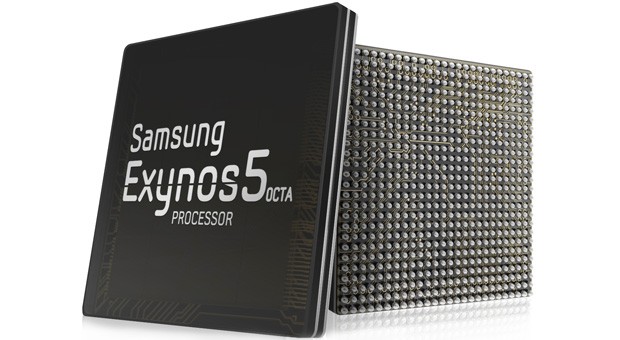
    Today, at the International Solid State Circuits Conference (ISSCC), the Korean manufacturer demonstrated the 10nm FinFET semiconductor manufacturing process. It’s the world’s first SoC to come in such a minimal size and is expected to be more powerful and energy efficient than the existing offerings. Meanwhile, the latest processor, Qualcomm Snapdragon 810 is built on a 20nm die size. On the other hand, Samsung’s in-house Exynos 7420, said to be embedded on the upcoming Galaxy S6 and S6 Edge flagship devices, uses a 14nm SoC.

    samsung-exynos-5-octa-chip-1363365230

    Samsung Electronics Semiconductor President, Kim Ki-nam explained the new manufacturing process as a major step in the evolution of the Internet of Things (IoT). He said that it allows more power efficient chipsets at smaller and smaller sizes. It’s also learnt that Samsung is planning on releasing a memory built on the same 10nm die process.

    The company has solidified its steps in the hardware segment and the refurbishment of its in-house operating system Tizen is going in full swing. Samsung has given decent competition to Intel and Qualcomm. Since the Korean firm has just presented the idea, it is not going to come anytime soon (maybe in a year or two).

  • The Future of Chipsets Showcased at ISSCC 2015

    The Future of Chipsets Showcased at ISSCC 2015

    Chipsets are at the heart of all the smart devices around us. The silicon revolution has led to a rapid change in the way people do work and lead their daily lives. Each year the most prominent names in technology along with the engineers congregate at the International Solid-State Circuits Conference (ISSCC) to delve into the future of chip technology. This year’s conference presented a lot of interesting presentations that might help to improve the performance of chipsets in the future.

    Here are a few of the innovations that might change the world of technology in the near future:

    Intel’s Move towards 10Nm and 7Nm

    14 nm processor

    Intel is one the foremost names that pop into your mind when you hear the term microprocessors. The company is making proactive efforts to introduce chipsets based on 14 Nm transistors. Intel wants to further challenge Moore’s law that states that the number of transistors to be incorporated on a chip will double every 24 months. In the coming future, the company plans to bring out 10 and 7 Nm chipsets. As Silicon is not stable at these tiny sizes, the company would need to look for a replacement. One of the materials it has cornered is the indium gallium arsenide (InGaAs) but more details are available yet. Intel has stated though that the first 10 Nm chipsets won’t be out before 2017.

    MIT’s Low Power Radio for the Internet of Things

    Low power sensors for IoT devices.
    Low power sensors for IoT devices from MIT.

    Internet of Things (IoT) is the next major technological arena where all the major brands are putting their focus in. One of the major hurdles in the process is to create a sensor that only comes active when its required to and hence leads to least current leakage. Most of the times, the sensors will just stay idle until they have been summoned. A system that almost shuts down the leakage will be more efficient, in the long run. MIT researchers have showcased a picowatt radio that significantly brings down the current drain. To achieve this, the team had to break down the radio system design so that most of the circuit can run at the lowest possible voltage.

    AMD unveils Carrizo Laptop Chips

    Intel Carrizo
    AMD Carrizo

    US based Chipmaker, AMD have unveiled the new Carrizo chipsets. Based on 28 Nm processes, AMD claims this chip will lead to 40% efficiency and hence better performance over its predecessor, Kaveri. Carrizo also offers better power saving capabilities that is one of the most demanded features in consumer electronics. One more feature that will excite the takers will be its on-chip H.265 video decode capability. The devices running on Carrizo will be out in the second or third quarter of this year and will also be cheaper than their Intel counterparts.

  • Adobe, Intel, Google, and Apple Reach Settlement in Employee Poaching Lawsuit

    Adobe, Intel, Google, and Apple Reach Settlement in Employee Poaching Lawsuit

    Silicon Valley’s biggest names got together to a reach a settlement in an employee poaching lawsuit. The case was filed against Apple, Google, Intel and Adobe in 2011 by tech sector workers. It stated that these tech giants limited job mobility for workers and thus limited salary growth too. Now these companies have come together for an agreement to settle the case.

    Last year, U.S. District Judge Lucy Koh in San Jose, California, rejected the settlement amount of $324.5 million, calling it too low. The settlement was rejected after one of the complainant objected to the amount. That complainant has agreed to the new undisclosed settlement amount which was offered by the tech giants. Judge Lucy Koh has said that to match the earlier settlement, the amount must be at least $380 million to address the loss of potential wages to the employees.

    The case is mostly based on the emails between Apple Co-founder Steve Jobs and ex-Google CEO Eric Schmidt along with heads of other rival companies. The emails detailed their plans to resist from poaching each others’ top engineers. This would lead to limited opportunity for the engineers to grow in the market.

    The complainants (plaintiffs) will be filing a detailed explanation of the new deal “imminently”. The Judge will then have the option of accepting or rejecting the settlement. Guess the lesson from this case is to be good at your job, but not that good that your employer will try to keep you in forever.

  • CES 2015 : Intel’s Compute Stick is a Windows 8.1 PC on a Stick

    CES 2015 : Intel’s Compute Stick is a Windows 8.1 PC on a Stick

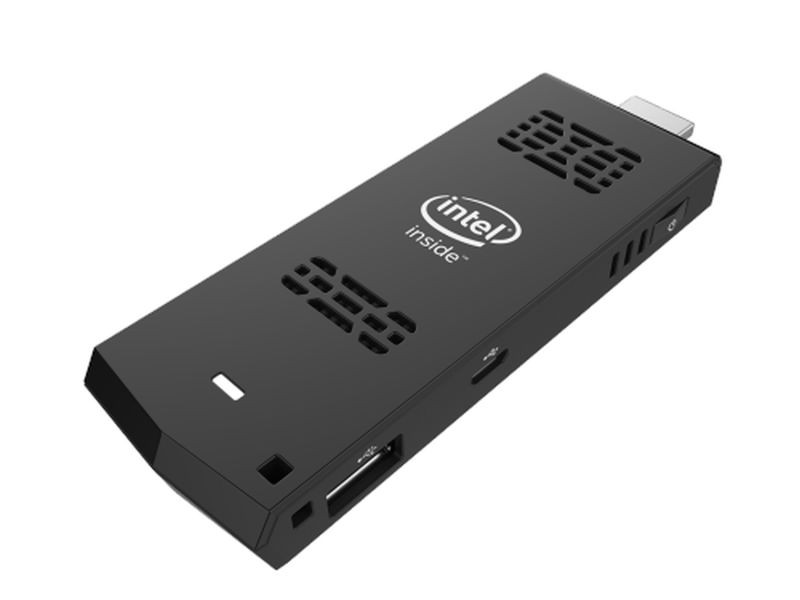
    In a time when mobile devices are gaining prominence over computer, its time for the good old computers to stand up and fight back. Intel seems to have a solution, and it’s an entire computer that fits in your hands. Meet Intel’s Compute Stick, a device that can turn your regular TV into a computer and costs just $150.

    There are at present many devices such as Google’s Chromecast and Amazon Fire Stick that provide streaming services, but the Compute Stick goes a little further. This device plugs into the HDMI port of your television and transforms it into a computer. It is available in Windows and Linux variants. The Linux variant comes at a price of $89.

    The Windows version of the Compute Stick comes with 2 GB RAM and 32 GB Flash storage. On the other hand, the Linux version comes with 1 GB RAM and 8GB storage. Both devices are powered by a quad-core Atom CPU.

    The stick sports a USB port, micro USB port, and supports Bluetooth 4.0, and 802.11b/g/n Wi-Fi. You can connect a Bluetooth keyboard and mouse and begin your task where ever you go. The company claims that this will help in bringing low-cost computing to schools, institutions and individuals too.

    The device will come to market in March and is a good option if you own an HDMI capable TV and are in need of a low-cost computer. You should, though, know that this is no-frills computing and don’t expect to play any high-quality games on it. Intel plans to bring an upgrade to the device that will feature a Core M processor to increase performance. In our view, what it should really provide is storage expansion through a micro SD card, as 32 GB is comparatively less for modern computing needs. Overall, this looks like a great effort by Intel.

  • CES 2015: Intel’s Button Sized Chipset lets Anyone Make Wearables

    CES 2015: Intel’s Button Sized Chipset lets Anyone Make Wearables

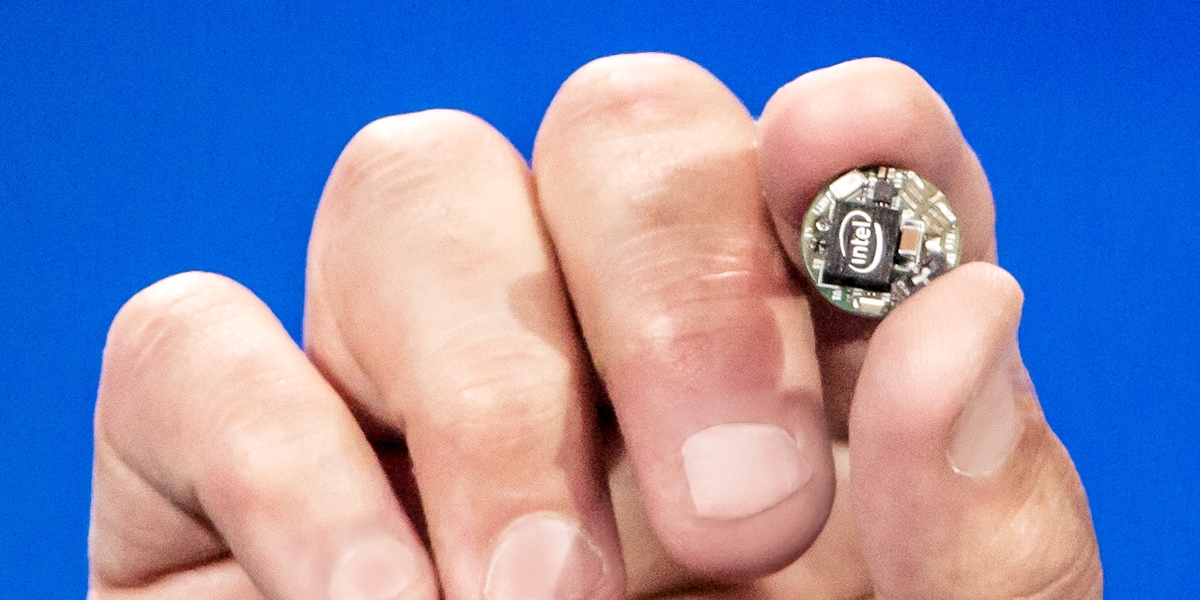
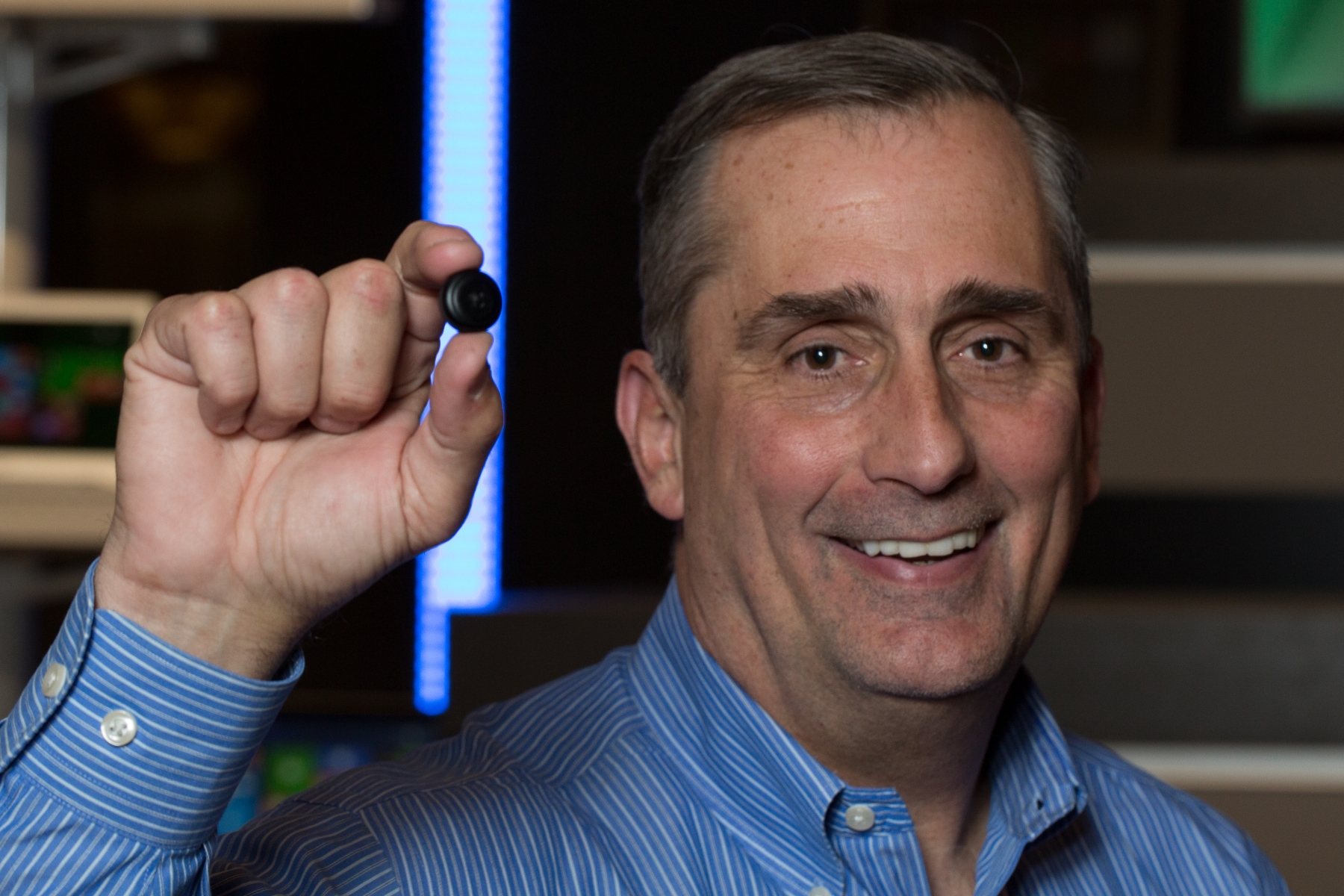
    Future looks quite promising for wearables as prominent manufacturers have shown a renewed interest in the wearable segment. Intel being the latest to jump onto the wearable bandwagon, as the company’s CEO Brian Krzanic announced a new tiny chipset for wearable devices which is the size of a coat button. It’s a low power 32 bit micro controller called the Quark SE which has 384kb of flash memory and 80kb SRAM. In addition, the chipset also features a plethora of sensors including accelerometer, gyroscope and Bluetooth LE support.

     CEO Brian Kraznic with the Intel Curie Prototype
    CEO Brian Kraznic with the Intel Curie Prototype

    Intel also announced a development module called Curie, that will allow companies to manufacture wearable devices out of anything. Krazinch claimed that with Curie and Quark, one could build a wearable device out of anything from rings to handbags, pendants and even glasses.

    Intel seems all geared up to speed up the development of Curie based devices. It is providing complete software and technical support needed to work with its reference wearable applications called Intel IQ Software Kit.  The company believes it will help customers across all demographics, including fashion, sports and lifestyle companies.

iGyaan Network
Privacy Overview

This website uses cookies so that we can provide you with the best user experience possible. Cookie information is stored in your browser and performs functions such as recognising you when you return to our website and helping our team to understand which sections of the website you find most interesting and useful.