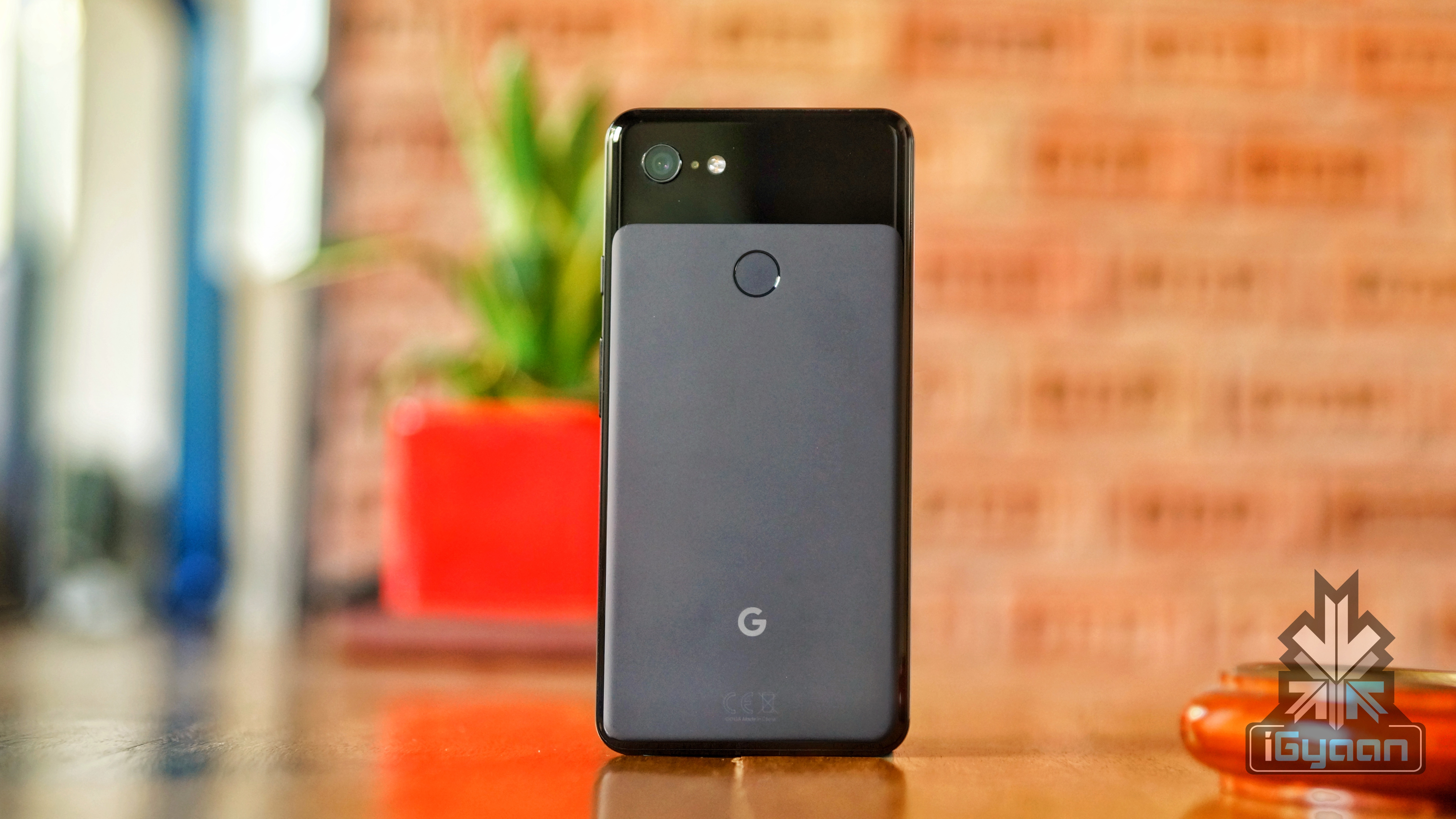
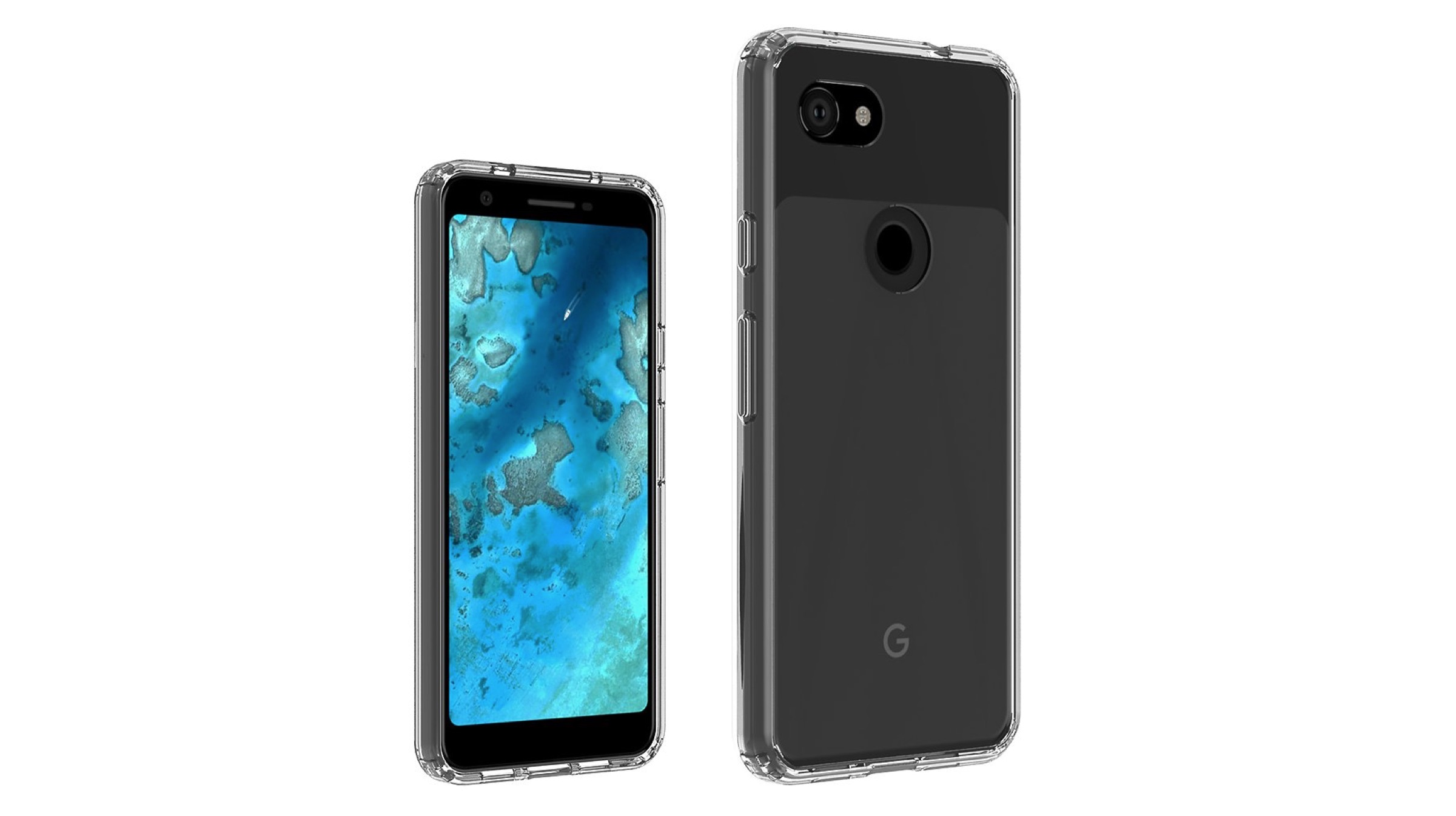
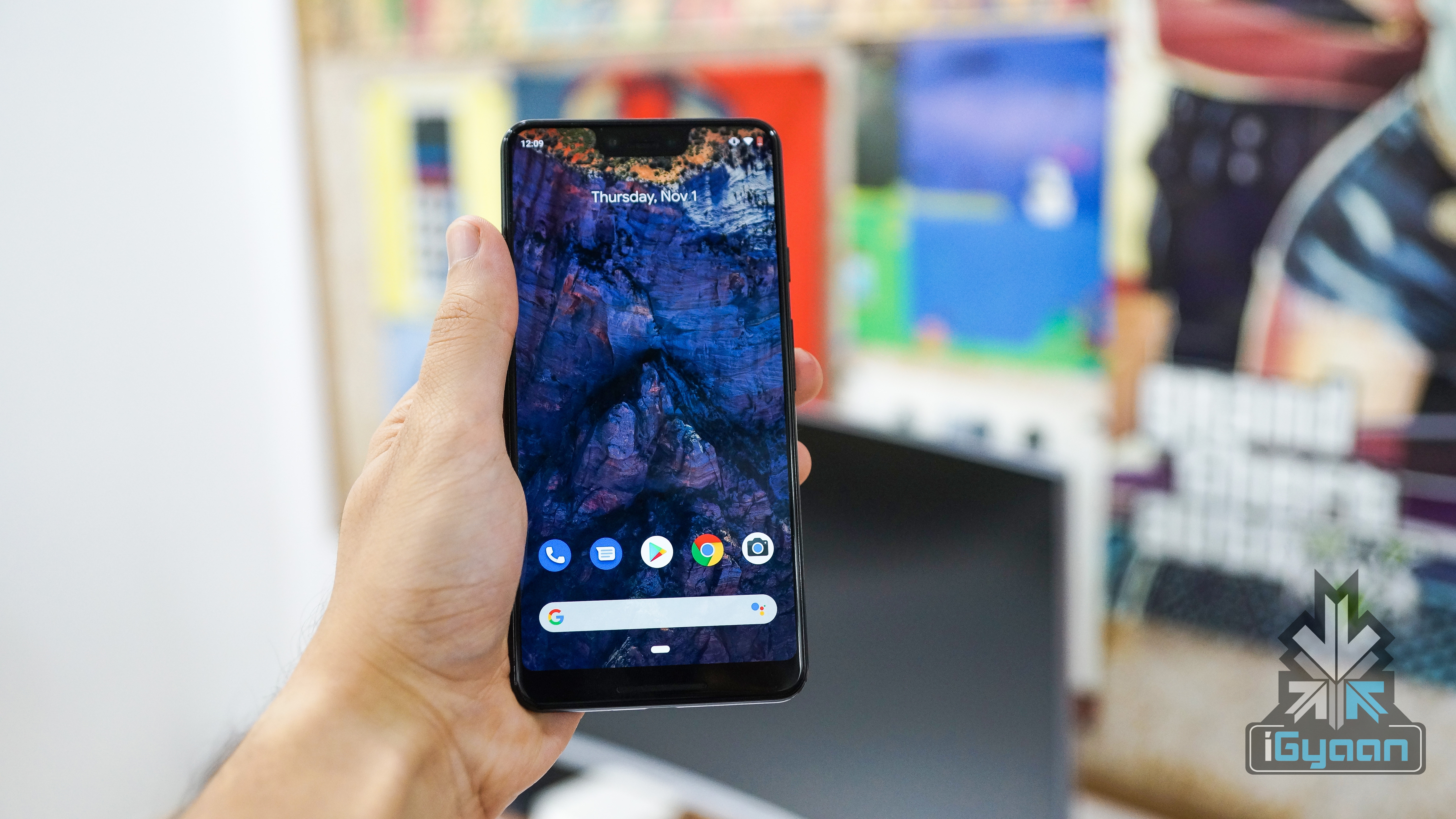
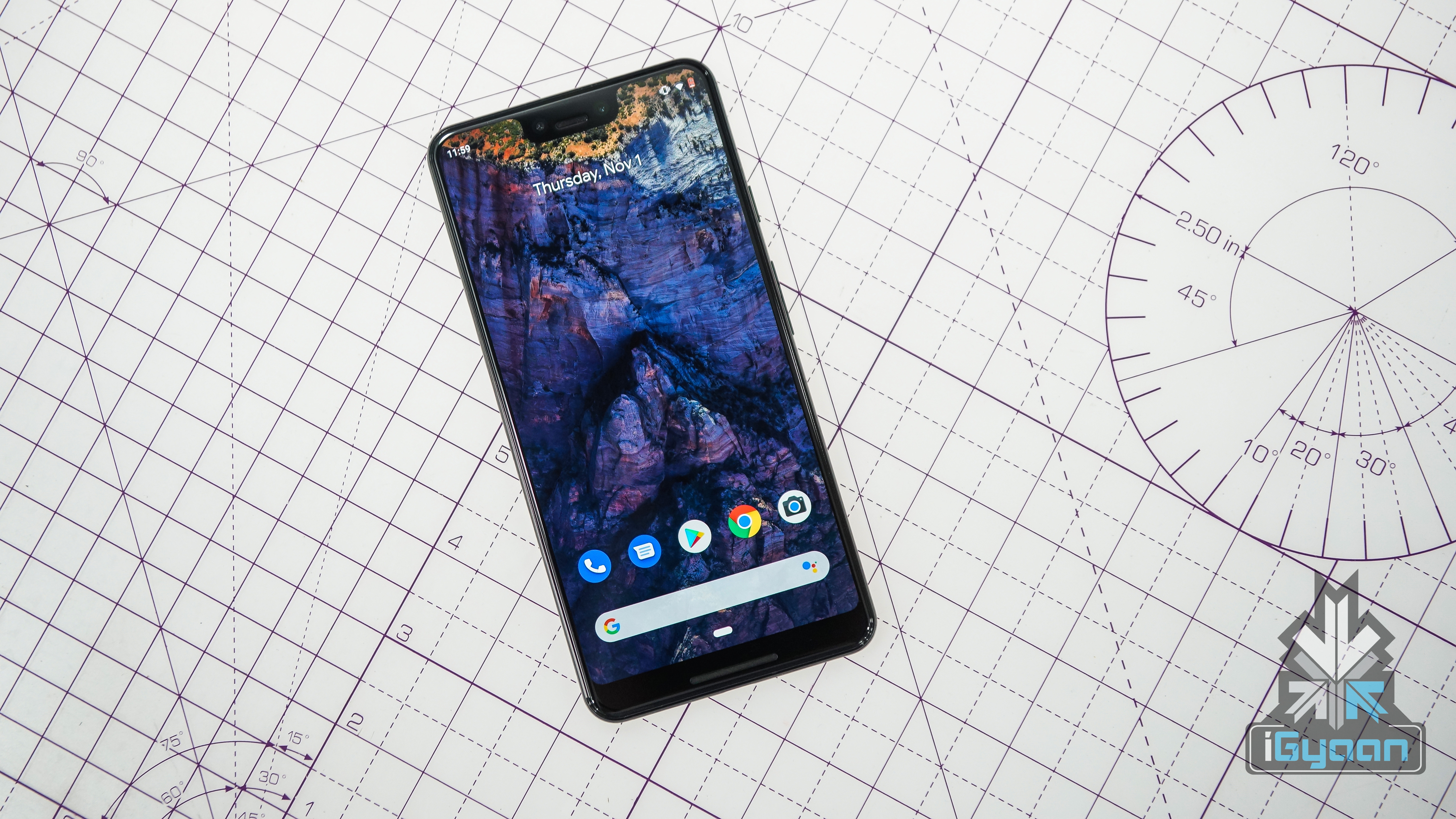
The Google Pixel 3a XL features a 6-inch OLED panel with a resolution of 2160 x 1080 px, and an 18:9 aspect ratio. Under the hood, the device packs a Snapdragon 670 chipset, which comprises of an octa-core CPU and the Adreno 615 GPU. It is bundled with 4GB of RAM and is available in 2 memory variants, 64GB and 128GB. The Pixel 3a XL has a 12MP rear camera sensor and an 8MP selfie camera. It is powered by a 3700 mAh battery with 18W fast charging support. The Google Pixel 3a XL is available in 3 colours, Just Black, Clearly White and Purple-ish.
In the latter part of April 2019, Lenovo launched its flagship device, the Z6 Pro, which has flagship specifications and a competitive price tag. As per latest reports, the company is gearing up for the release of another mid-range smartphone, which will be the Lenovo L38111. The device was spotted on Chinese regulatory website TENAA which reveals it complete specifications.
Lenovo L38111: Design And Specifications
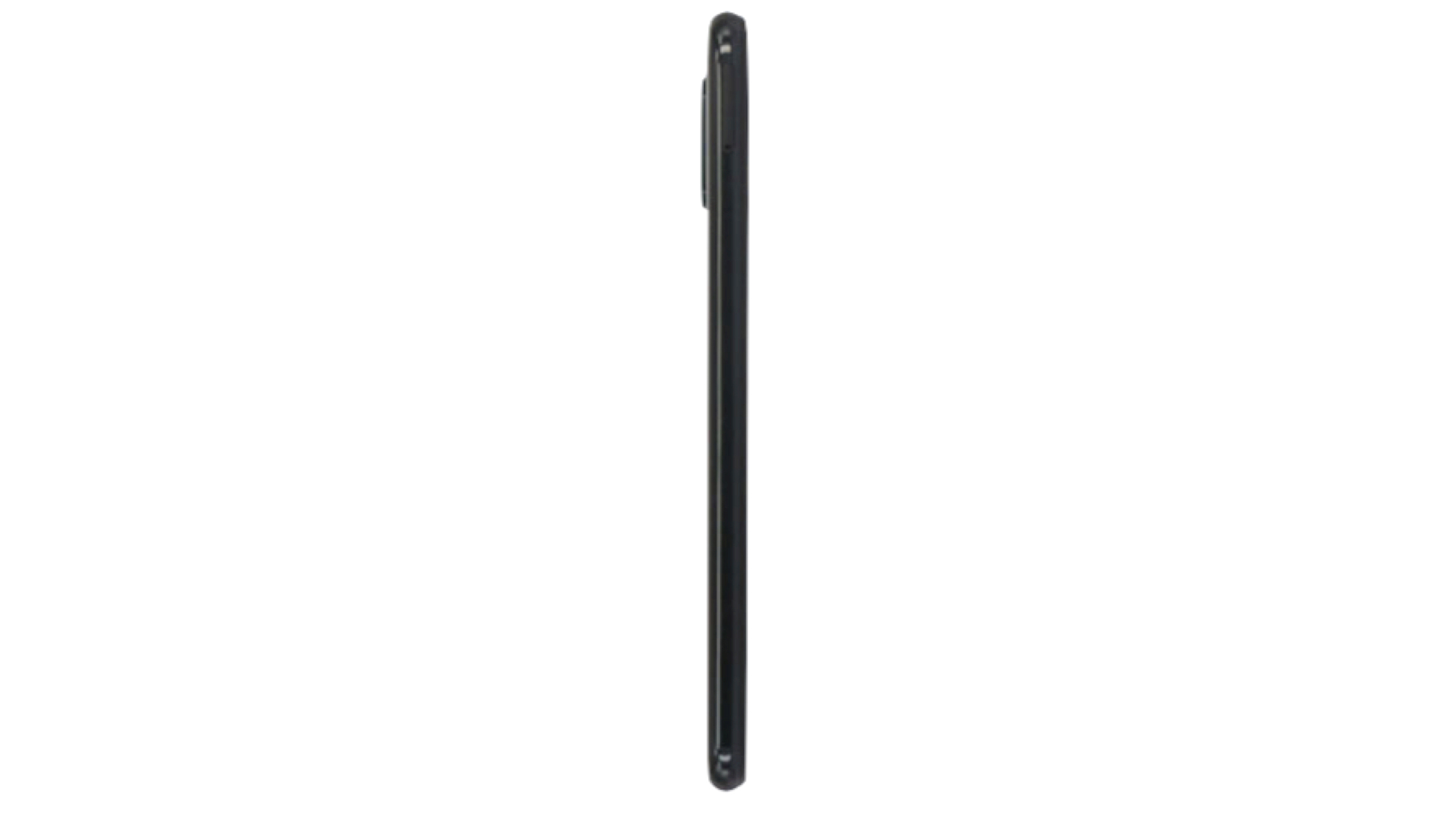
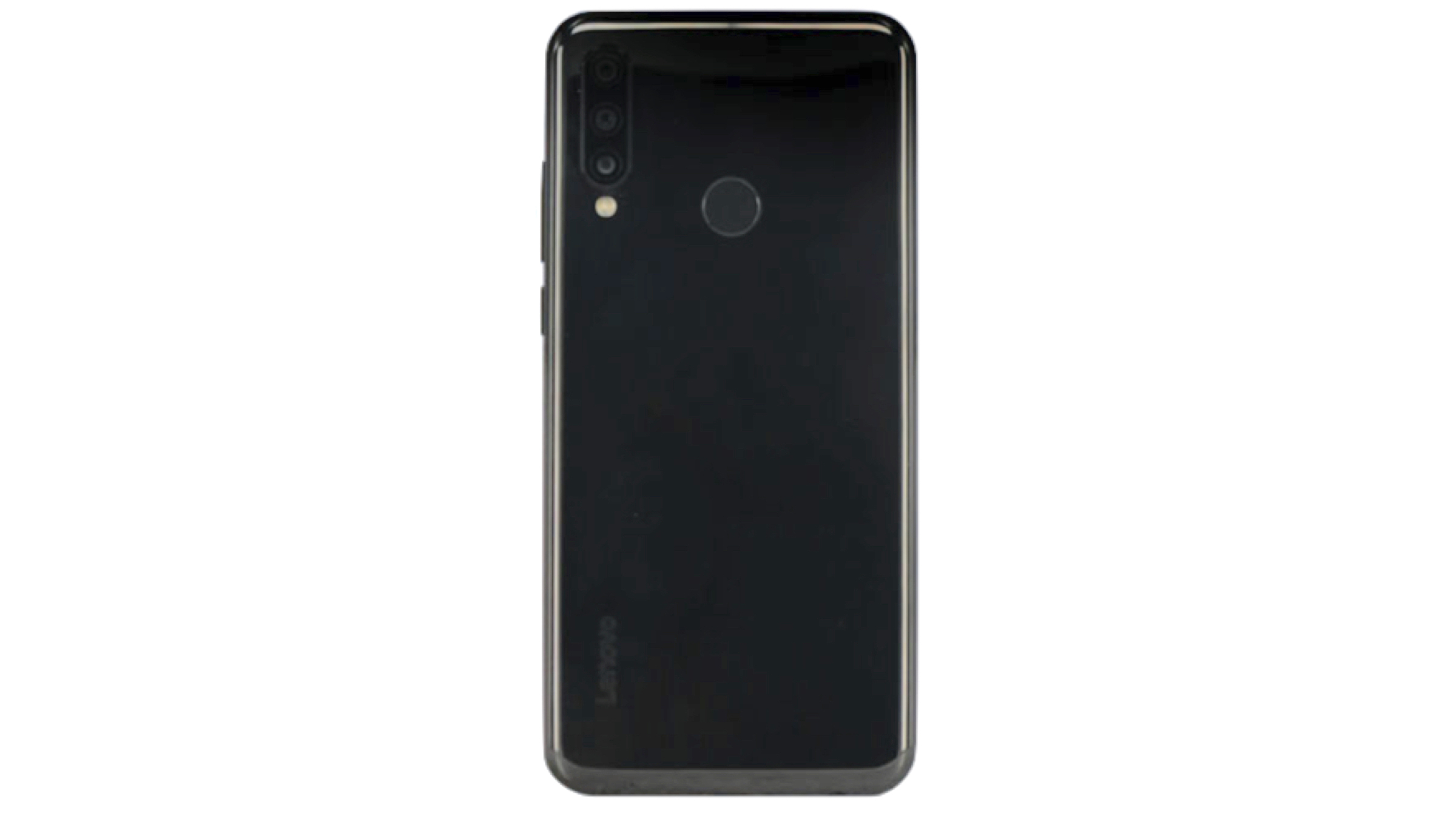
The TENAA certification reveals that the Lenovo L38111 measures at 156.4 x 74.4 x 7.9 mm and weighs 163 grams. The smartphone has a 6.3 inch FHD+ IPS LCD display with a resolution of 2340 x 1080 px. It has a waterdrop style notch up front that houses the selfie camera. The smartphone’s back panel appears to be made out of a glossy plastic material.
Under the hood, the Lenovo L38111 features a 2.2GHz octa-core unnamed processor. Details about the same may be available in the near future. The device will be launched in three different variants as follows:
3 GB RAM + 32 GB storage
4 GB RAM + 64 GB storage
6 GB RAM + 128 GB storage
In terms of optics, the smartphone has a triple rear camera setup, which accommodates a 16MP primary sensor. Any information about the other two sensors is not known as of now. For selfies, the smartphone packs a 8MP front camera. The Lenovo L38111 runs on the Android 9 Pie operating system.
Previously in the month of April 2019, the device received Bluetooth certification, confirming that the Lenovo L38111 will feature Bluetooth v5.0. Furthermore, it will be powered by a 3,930 mAh battery, which will have support for 18W fast charging. For biometric security, the L38111 sports a rear-mounted fingerprint scanner. The TENAA website reports a total of nine colour variants of the device, including Black, Green, Red, Purple, Gray, Gold, Silver, White and Blue colour options. Reports state that the Lenovo L38111 may be launched in the market in this year itself.
Razer, an American Gaming Peripheral company is making a toaster. There, that’s the news you guys are here to read. After announcing the Project Breadwinner as an April Fools joke in the year 2016, the company is making it a reality. In the supposed joke, the company claimed it is developing an RGB Toaster which can make toasts with the Razer Logo on them. Now, the CEO of Razer has confirmed the company will start working on an actual toaster really soon. If all of this sounds weird, let us assure you that it is and you are not alone.
History Of The Razer Toaster
So if you want to know more about this “amazing” and “groundbreaking” idea by Razer, grip on to something. The story starts about six years ago, in the year 2013 when a fan asked Razer CEO Min-Liang Tan about the Razer Toaster. The executive jokingly said the company has already made one and that is when it all went downhill. A man named Mark Withers, the mastermind behind all this, started commenting on every Liang Tan’s post about the fabled product. He also created a Facebook page dedicated to this quest.
This led to Tan claiming if Withers gets a million likes on the page, Razer will make an actual toaster. Furthermore, if a member of the page tattoos the Toaster image on their body, an additional 1,00,000 will be counted in the case. No prizes for guessing who won, as around 12 people posted pictures of them gracing the tattoo on their forearm.
April Fools Of 2016
The tale continues, and it doesn’t get less weird from there. So in the year 2016, Razer maybe in a bid to tease the hardworking activists just wanting a toaster, released the Project Breadwinner as an April Fools Joke. This, as discussed above, teased an amazing looking toaster, with RGB lights. What was interesting about the product was that it could imprint the company’s famous three-headed snake logo on the bread.
While this prank was taken mostly in jest, it ended up increasing the demand for a Razer Toaster. Three years and a lot of bad decisions later, we are here and the product is a reality. After the page hit their goal, Min-Liang Tan posted on Facebook that he will put together a team and in a few years, will make the project a reality. Don’t fret though, as regular updates will be shared so you know the toaster is safe and sound. So Razer is making a toaster – for Razer toaster lovers. By Razer Toaster Lovers.
So this brings us where we are today, in a world where RGB toasters by Razer are apparently a thing. While we are all in for a company fulfilling all the demands of the consumers, how long do we have to wait for Asus to make a ROG Microwave? And if no one has asked that question before now, we are going to go and make a Facebook page soon about it.
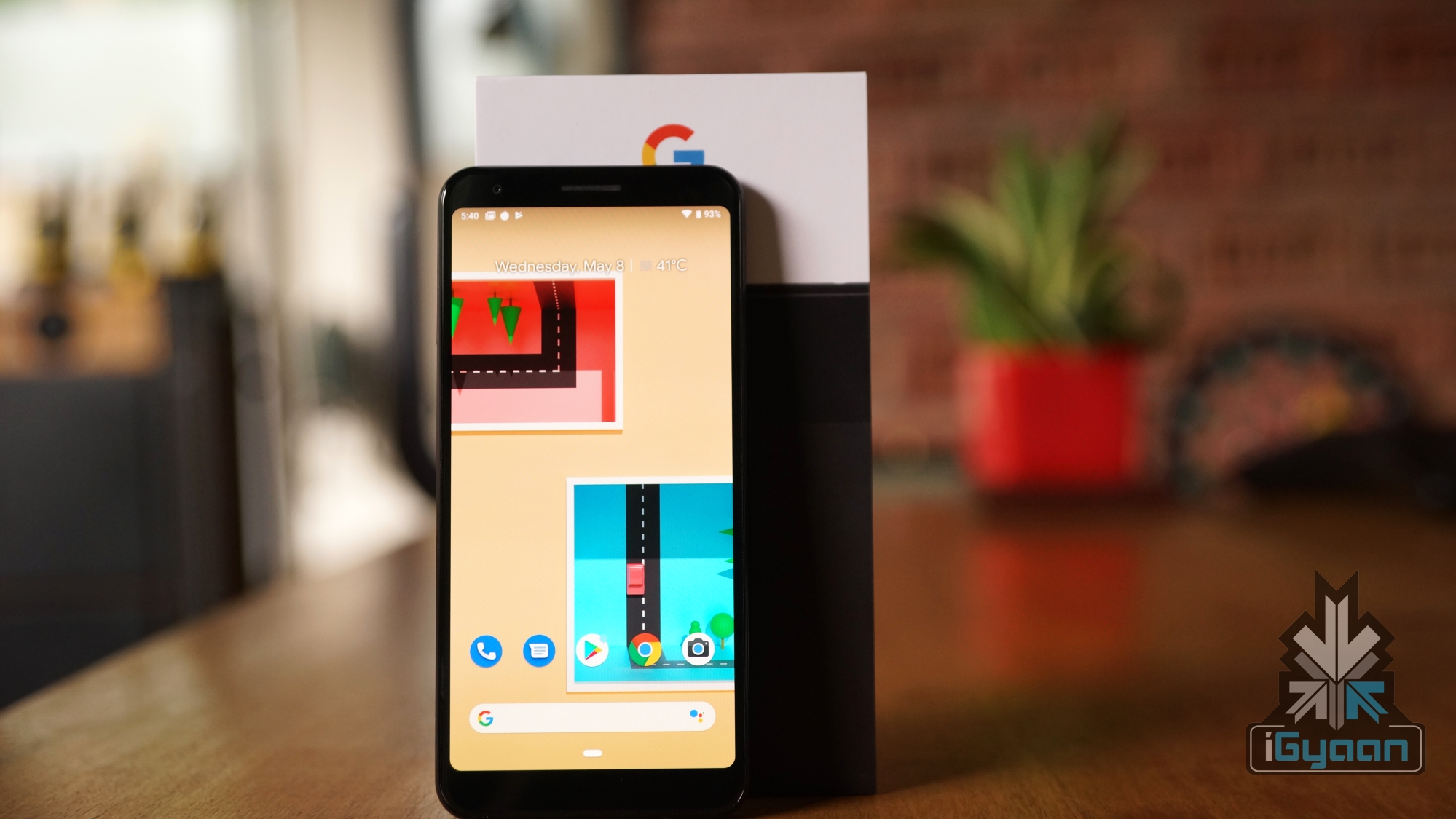
Google is likely to release the highly-anticipated Pixel 3a and the Pixel 3a XL smartphone duo at the Google I/O keynote on the 7th of May. A lot of rumours have already brought the devices out into the spotlight. They are expected to be Google’s first attempt to tap into the midrange smartphone segment, accrediting to which the price expectations for the devices are quite varied. As per latest reports, the Pixel 3a, the specced down variant of the Pixel 3 will be priced at half its price. Images have also surfaced which showcase the Google Pixel 3a’s retail packaging in all its glory.
As per the leaked retail packaging images, the Pixel 3a will be available in a purple colour option apart from the Just Black and Clearly White variants, which will be named as “Purple-ish”. The retail packaging further affirms that the device will be available in two variants, one with 64GB and the other with 128GB of internal storage. Moreover, reports say that the Pixel 3a will be priced at US$ 399 (~INR 28,000) onwards, whereas the Pixel 3a XL will be placed at a price point of US$ 479 (~INR 33,000) onwards. A multitude of other details was also leaked regarding the upcoming Google devices, which are listed below.
Design, Features And Specifications
The design of Google smartphones have been previously leaked, and it is quite similar to Pixel 3 and Pixel 3 XL. The devices are expected to be designed with polycarbonate instead of metal and glass on the Pixel 3 & 3 XL. As per leaks, the Google Pixel 3a will feature a 5.6 inch FHD+ gOLED display with 441 ppi pixel density while the Pixel 3a XL will sport a 6-inch gOLED FHD+ display with 402 ppi pixel density. For biometrics and security, both the handsets will feature a rear-mounted fingerprint sensor.
Google Pixel 3XL
Under the hood, the upcoming Pixel 3a and 3a XL are reported to run on the 10nm Snapdragon 670 SoC. which comprises of an octa-core processor and the Adreno 612 GPU. In terms of optics, an f/1.8 aperture equipped 12 MP single rear camera is expected in both the smartphones, while the front camera will have a resolution of 8 MP. As mentioned before, the devices are expected to feature 4GB of RAM and 64GB of internal storage for the base variants. Where the Pixel 3a weighs around 150 grams, the Pixel 3a XL weighs almost 20 grams more than the 3a.
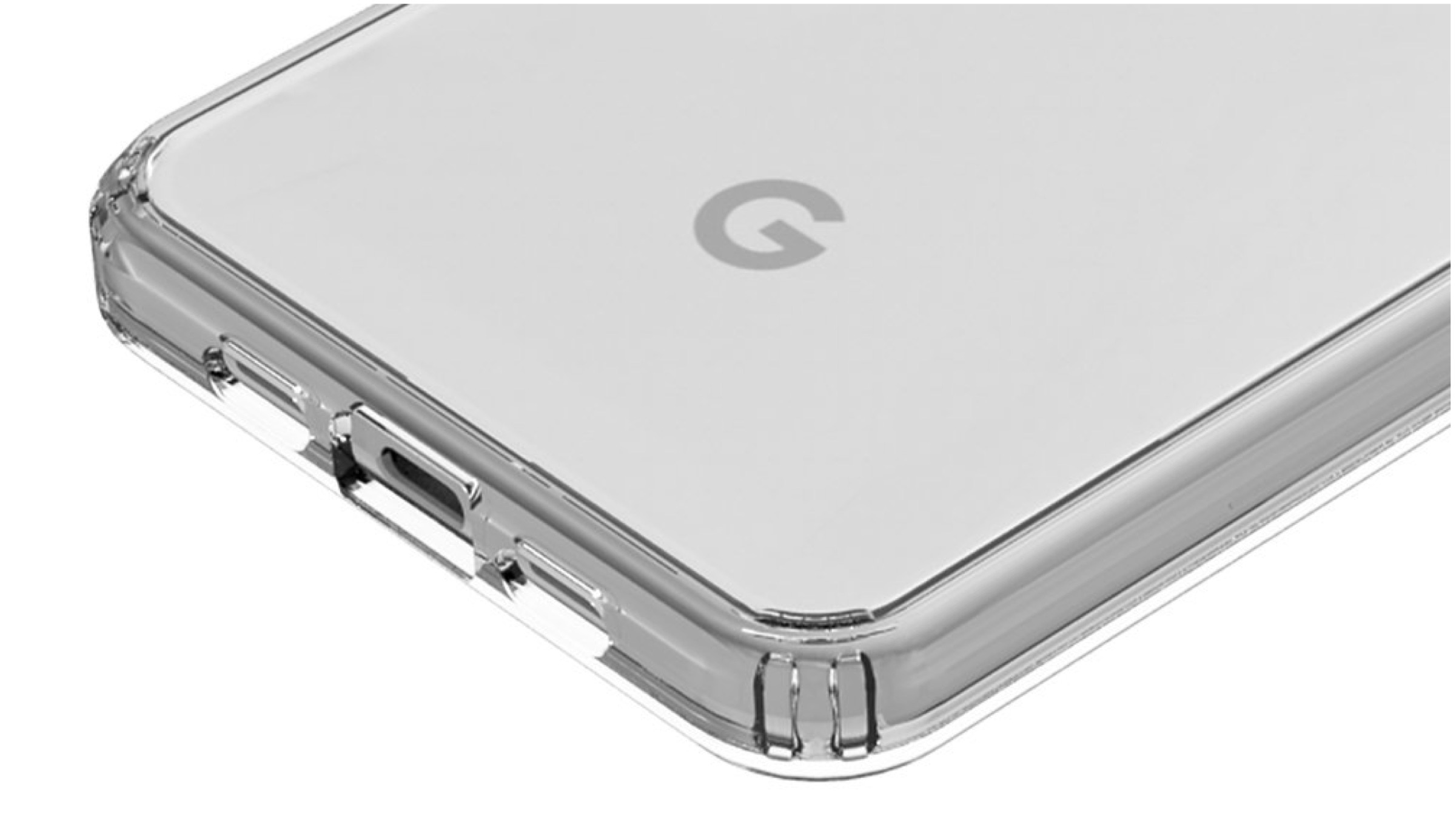
Google Pixel 3a XL case render
Past leaks suggest that the Pixel 3a will be powered by a 3000 mAh battery with support for 18W fast charging. Instead, the Pixel 3a XL is expected to feature a 3,700 mAh battery with 18W fast charging support as well. Like its elder siblings, they are expected to run on the latest Android 9 Pie with a stock interface and will get fast software updates. They are also expected to retain the 3.5mm headphone jack as seen inpreviously leaked images. A former listing on the Bluetooth certification website reveals the smartphones will support Bluetooth 5.0 connectivity. Recent reports have also suggested that the smartphones will have Always-On and Now Playing feature.
As mentioned above, the Pixel 3a smartphone duo will be launched on the 7th of May at the Google I/O conference. Prices for the same have also been mentioned previously. Considering that Google can actually provide a premium camera in the midrange segment, the device will provide a tough competition to smartphones like the Samsung Galaxy A70.
The WH-XB700 are the latest addition to Sony’s wireless headphones family. For audiophiles, the Sony WH-XB700 provide a good set of features at a competitive price. One of the highlighting features of these headphones is Extra Bass, and that is an aspect most “regular” headphone users are willing to bet their money on. Let’s deduce where the Sony WH-XB700 delivers and where it could’ve done better.
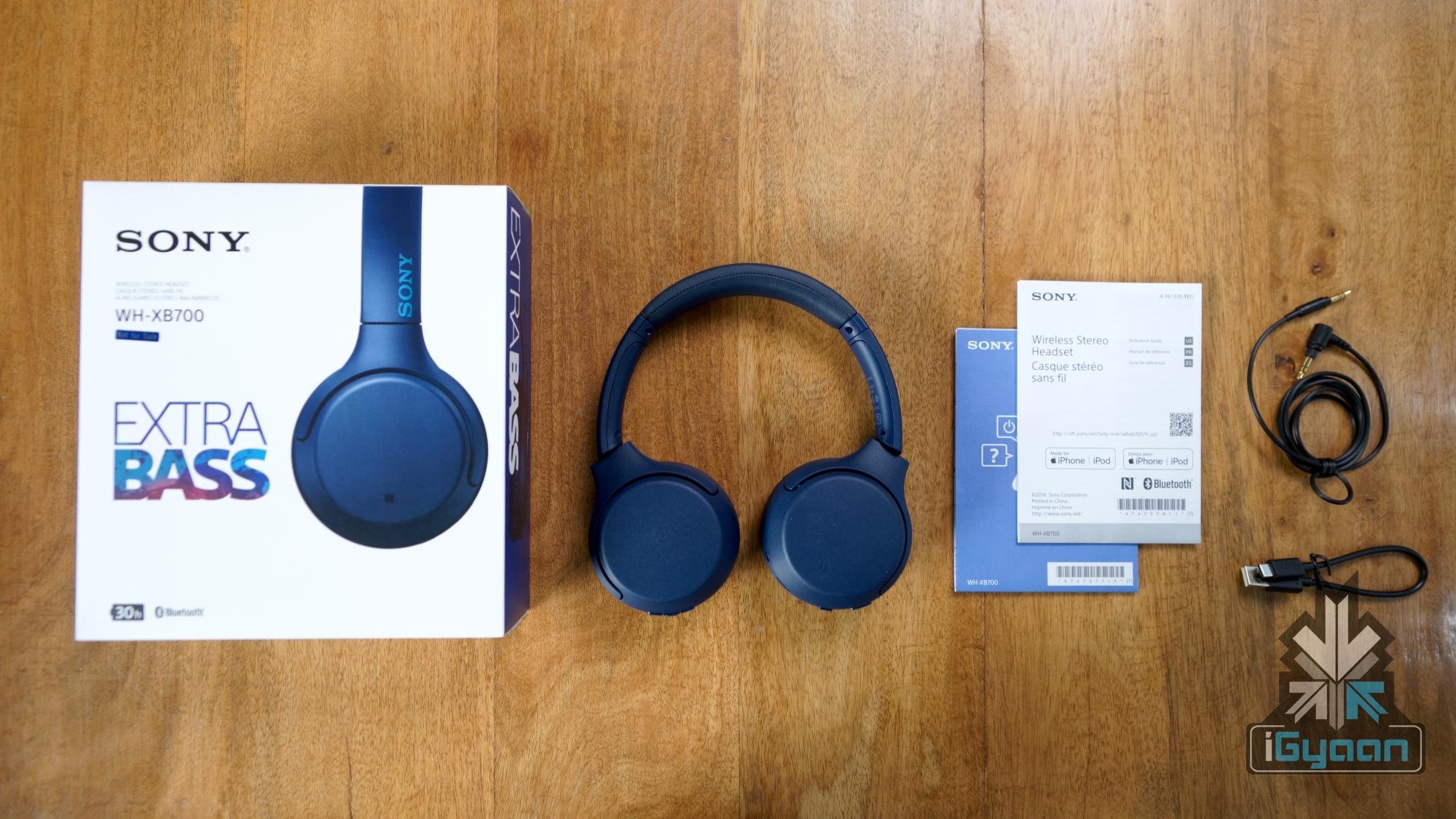
Inside The Box
Sony WH-XB700 Headphones
Instruction Manual and Warranty/Safety Guide
3.5mm AUX cable
USB Type-C cable
Build Quality And Design
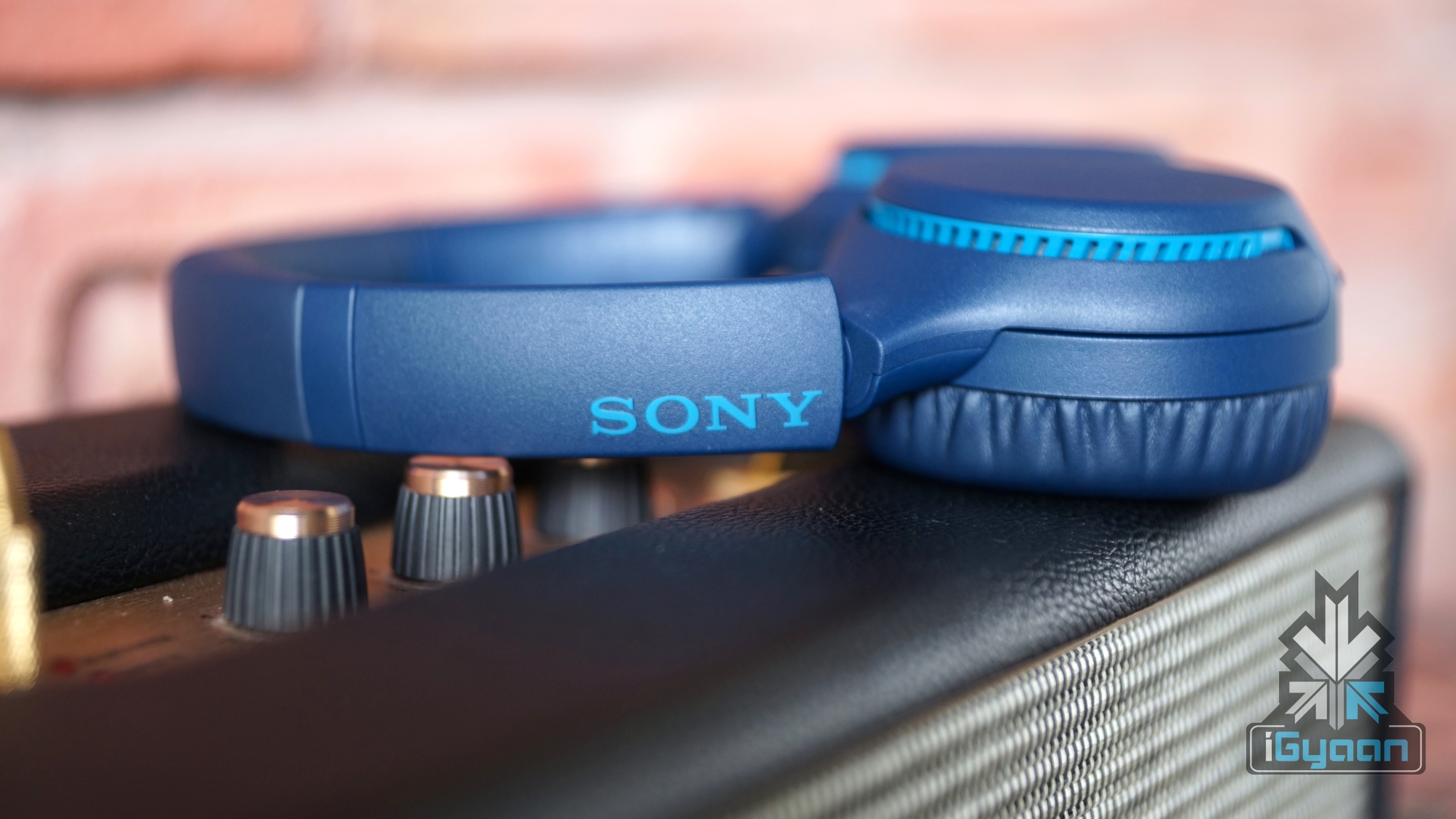
The Sony WH-XB700 are fabricated from high grade plastic with a smooth matte finish. The framework of the headphones is made of metal though. More metal would have been appreciated in the build of the WH-XB700. The ear cups have a swivel design, implying that the Earcups can rotate around the pivot. This will make it convenient for users to slip these headphones inside their backpacks . Weighing at just around 195 grams, these may be one of the lightest headphones in this segment
The Sony Logo is neatly embossed above both the earcups. The headphones look good enough to make a style statement. The headphones have an on-the-ear, or supra-aural design, implying that they rest on the ears rather over them.
The earcup’s pads, as well as the headband’s cushioning, are made out of memory foam. This material feels very premium and comfortable even when used for longer periods of time. The extending strips along with the framework are designed out of metal, which allows for considerable freedom of movement. Even upon stretching the ear cups apart, they seemed to retain their original shape upon restoring. Noteworthy, owing to the light weight of the Sony WH-XB700, they tend to sway “dangerously” when you move around while wearing these, so you might want to be careful when you take them out for a run.
The left earcup houses the power button (which also doubles up as the pairing button). In addition, it accommodates the 3.5mm audio jack, USB Type-C port, the notification LED and a “Custom” button, which will be discussed in detail later. On the other hand, the right earcup houses the volume rockers and the play/pause/answer calls button.
Audio Quality
The primary defining feature of any headphones is its audio quality. The Sony WH-XB700 operate within a frequency range of 20-20,000 Hz with 44.1 kHz Sampling and have an impedance of 37 ? (ohms). The headphones are quite loud, clocking in at a loudness level of 103 decibels. The 30mm Neodymium driver churns out evenly distributed frequencies, but it’s really the lows where the headphones excel. At higher volumes, negligible distortion in the sound is present. Even though Sony has laid emphasis on the lower frequencies here, there is a profound focus on the highs as well, which make them a pleasure to listen to.
The headphones are advertised with “Extra-Bass”, and they live up to their name. The ample amount of bass goes easy on the ears, delivering a rich experience. Plus, the headphones sport the “Vocal Clarity” feature, which enhances the experience if you are listening to a podcast or watching a lecture. Noise isolation is not that great, but that is expected considering the supra-aural design of the headphones.
Audio is captured via the microphone present on the right earcup, and in the course of usage, the microphone quality is mediocre when it comes to answering calls indoors. Furthermore, the audio doesn’t bleed a lot when you have the headphones on. Advanced tweaking of the sound quality and bass levels can be done via the Smart Headphone Connect app, which is available for both Android and iOS devices. Firmware updates are also pushed to the WH-XB700 via the same app.
Connectivity Options
In terms of connectivity, the Sony WH-XB700 features Bluetooth v4.2, NFC (Near Field Communication), a USB Type-C port and a 3.5mm headphone jack for those times where you run out of battery. To pair the headphones with your smartphone via Bluetooth, the user needs to simply hold down the power button and the headphones will pop-up on your smartphone’s Bluetooth devices list. Like other headphones in this range, the Sony WH-XB700 cannot be connected to multiple devices simultaneously. They have to be disconnected from one device in order to connect to another one.
The WH-XB700 also supports one-touch NFC pairing, where users can just stream music to their headphones by touching their NFC-enabled devices with the headphones. One thing to note is that there is a significant loss in audio quality when the headphones are connected via the 3.5mm AUX cable. Similarly, all the buttons present on the headphones stop functioning when the headphones are connected passively.
Battery Life And Additional Features
The Sony WH-XB700 features a Li-ion battery, which promises a battery life of 30 hours, and we tested that out. Interestingly, on the maximum value and bass levels, the headphones were able to churn out the aforementioned time with ease. The headphones can be charged via the USB-Type C port which is mounted on the left earcup. They also provide a 90-minute playback time after a 10-minute charge time, which can be helpful for users who are on-the-go. Overall, the headphones take a bit more than 4 hours to attain maximum charging capacity. And if you do manage to run out of battery, you always have the option to use them with the 3.5mm AUX cable.
As previously mentioned, the Sony WH-XB700 headphones have a “Custom” button on the left earcup which can be mapped to either Alexa or Google Assistant dependent on user preferences. We noticed that the button was very responsive, as it immediately launched Google Assistant on our device in all instances. However, as mentioned previously, the Custom button only works in wireless mode. Nonetheless, we found the custom Assistant button very convenient and is welcoming addition.
In a nutshell, the Sony WH-XB700 is a pretty good deal considering it checks most of the boxes in the list. Rich and punchy bass, low distortion levels, rich highs and lows, and that’s just the audio quality. The headphones have a good battery life, support a host of connectivity options and look good on the ears.
The only drawbacks that are worth mentioning are some aspects of the build quality, such as the lack of any metal accents. The fact that the headphones tend not to be very stable while wearing them might be a bit pesky for those who like to listen to music while running. Noteworthy, the Sony WH-XB700 don’t ship with a carrying pouch or hard case in-the-box. Although not a deal breaker it is worth taking into consideration.
Another worthy option in the same segment is the JBL Tune 600, which provides passive noise cancellation and deep, punchy bass. For almost INR 1,500 less, you can also try out the Sennheiser HD 4.40 Bluetooth headphones, which are a good buy considering its price. The Sony WH-XB700 is a pair of good sounding headphones, and audiophiles who want a set of portable cans should definitely go for them.
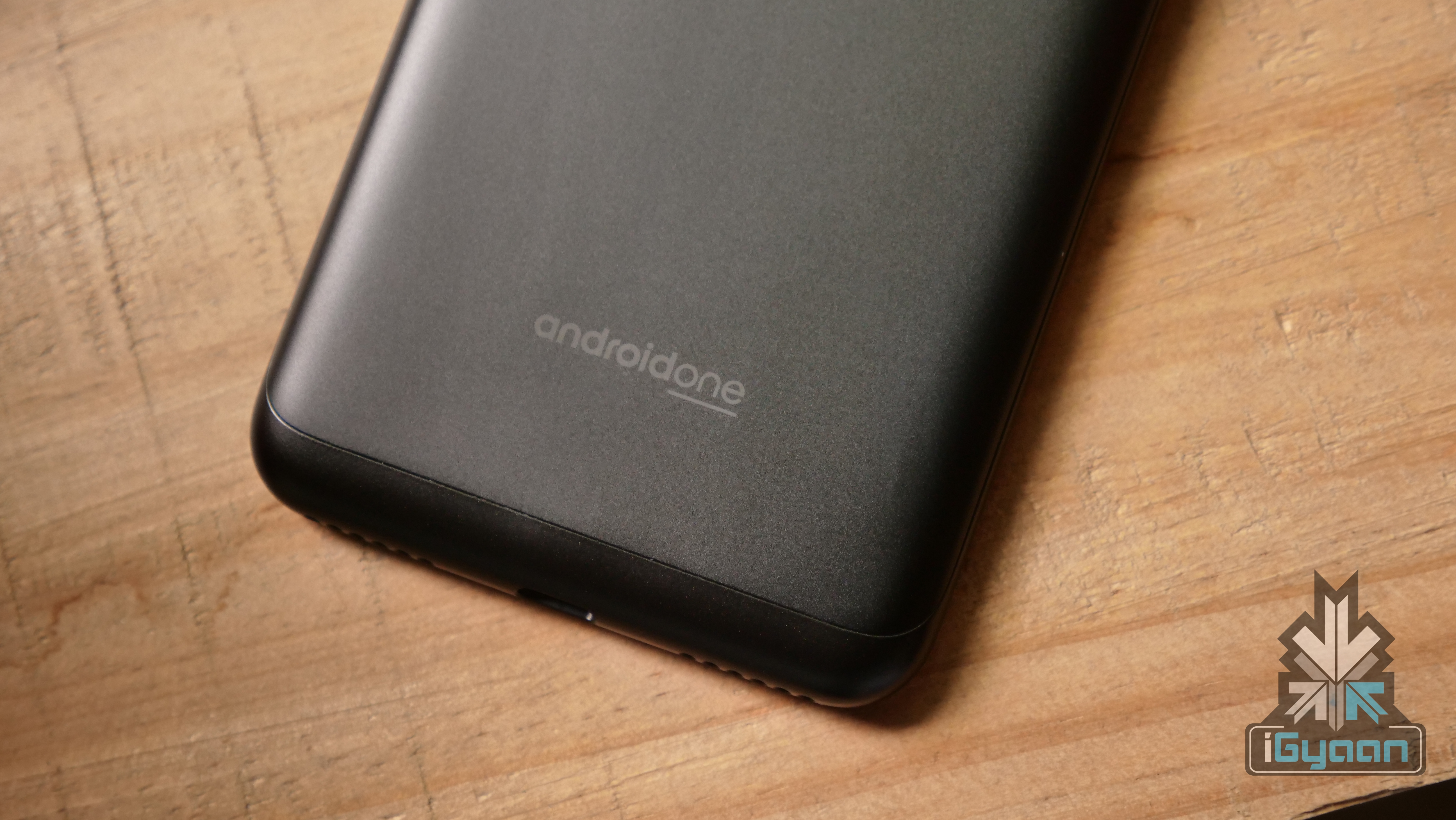
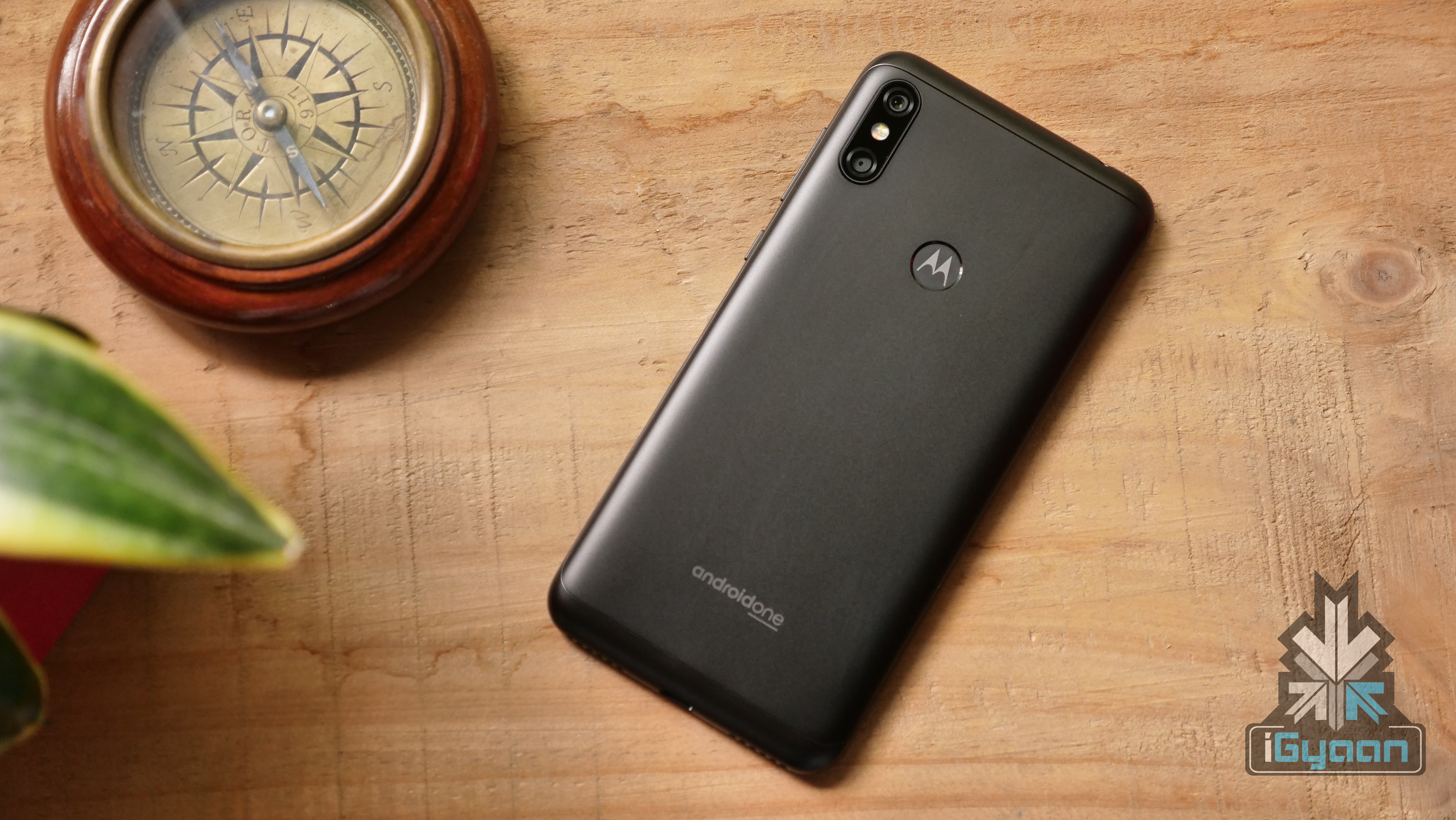
Motorola launched the Moto One Power smartphone in India last year. The device was an entrant in a completely new series of handsets by the company and was unveiled with an Android One certification. Smartphones that are Android One certified run a clean, stock build of Android and are guaranteed to receive major software updates for up to two years and security updates for at least three years. A known gadget tipster on Twitter has now revealed the launch date of the successor of the Moto One Power. Allegedly called the Moto One Vision, the smartphone has been leaked multiple times in the past. The device will be launched on the 15th of May in Brazil.
Moto One Vision
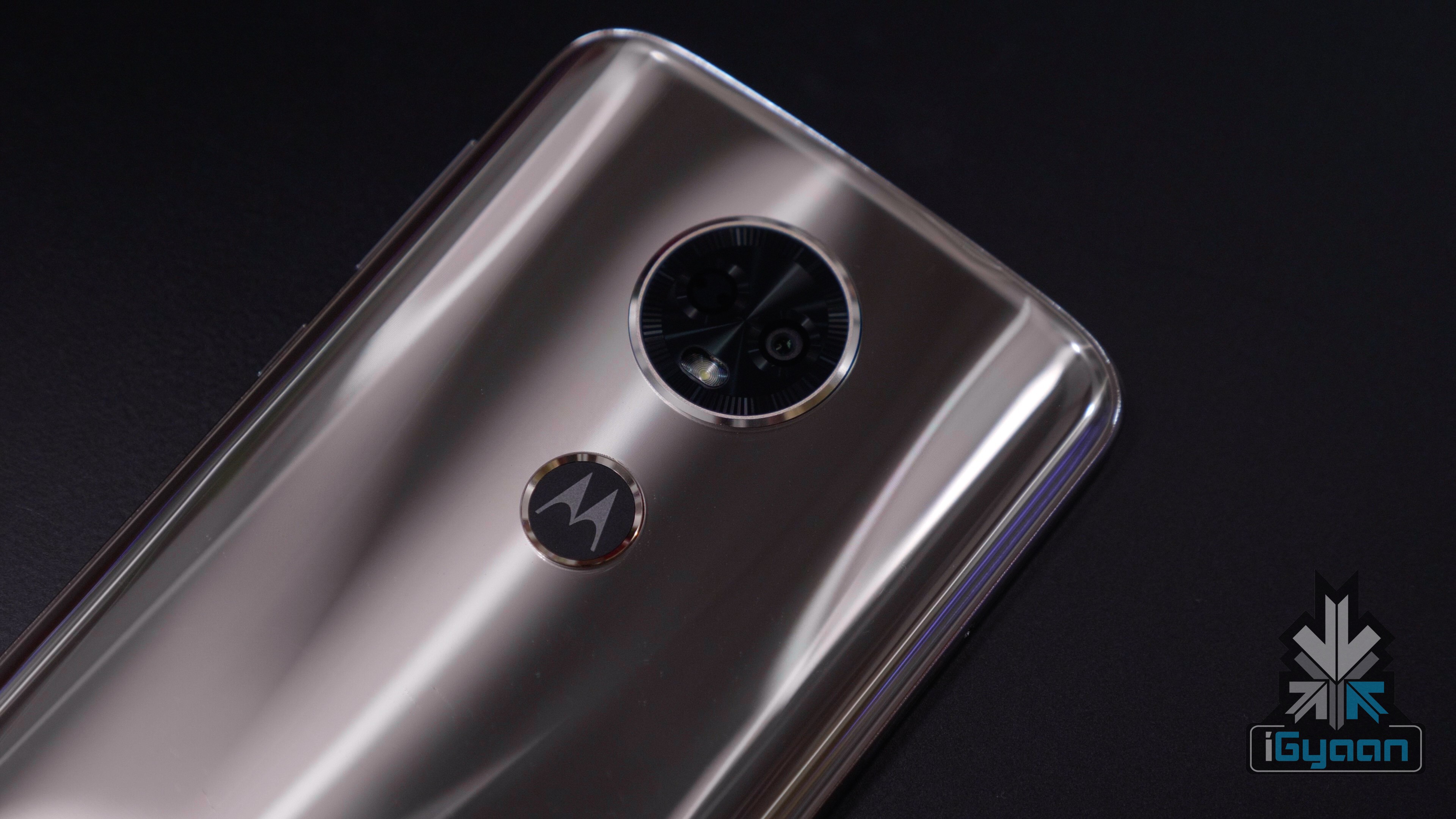
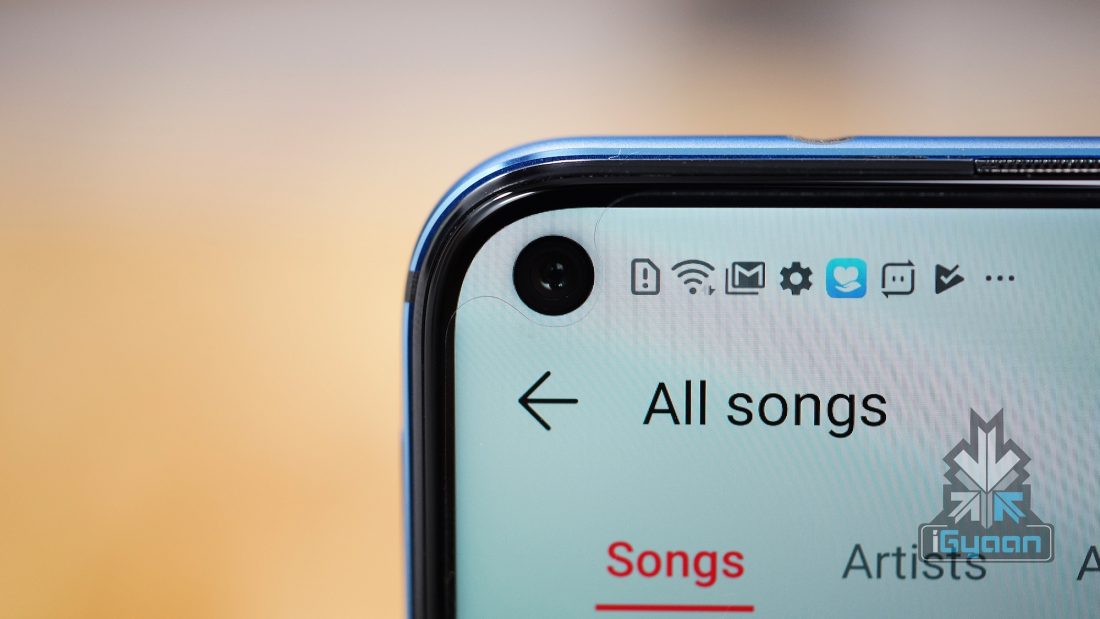
The Moto One Vision is expected to embody a new design language by Motorola. The renders of the smartphone were leaked previously which reveal it will have a glass sandwich design with a glossy back. The front of the device has a 6.2 inch IPS LCD display with minimal bezels on all sides, and a punch-hole cutout for the front camera on the top left of the display. The design on the front is reminiscent of the Honor View20 which was launched in the month of January this year. For biometrics and security, the Moto One Vision will have a rear-mounted fingerprint sensor, housed in the Motorola batwing logo.
Honor View20
Under the hood, the Moto One Vision has been leaked to run on the 11nm Exynos 9610 SoC by Samsung. Notably, this is the same chipset that is kitted inside the Galaxy A50 which was announced in the month of February. However, the smartphone will be available in China with the 11nm Snapdragon 675 SoC. In terms of optics, previous renders reveal it will have a dual rear camera setup consisting of an f/1.75 aperture equipped 48MP sensor; and a secondary 5MP depth sensor. For selfies, a 12MP sensor is expected to be housed in the punch-hole cutout on the top left of the display. For memory and storage, the device is expected to be available in the following variants:
4GB RAM and 64GB ROM
6GB RAM and 128GB ROM
The previously leaked FCC listing reveals that the Moto One Vision will have a 3500mAh battery with 18W fast charging support. As mentioned earlier, the smartphone will be Android One certified; and will run on the latest Android 9 Pie. As far as connectivity is concerned, the Moto One Vision is confirmed to support Bluetooth 5.0, Wi-Fi 802.11 a/b/g/n/ac dual band and NFC.
The Moto One Vision, as mentioned above will launch in the city of Sao Paulo of Brazil. Unfortunately, no details are available regarding the pricing of the device. But, taking the price of its predecessor into consideration, it may launch under Rs 20,000 in India.
In-display fingerprint scanners are slowly becoming a norm for flagship smartphones. First incorporated in the Vivo X20 Plus UD, the in-display scanners were later introduced by companies like OnePlus, and Huawei. Furthermore, South Korean technology company Samsung introduced the world’s first ultrasonic fingerprint scanner in the Galaxy S10+. The American technology giant, Apple till now has abstained from implementing the technology on its devices but this is likely to change soon. The company was granted a patent for what looks like to be an in-display biometric scanner for a future iPhone.
The patent showcases “methods of biometric imaging of input surfaces”, which directly relate to an acoustic imaging system. Using the aforementioned technique, a high-resolution image of the object can be mapped, in this case, a fingerprint. Since Apple has never used an in-display fingerprint scanner in any of its devices yet, this patent getting published may be a start for the company.
How Does The Scanner Work?
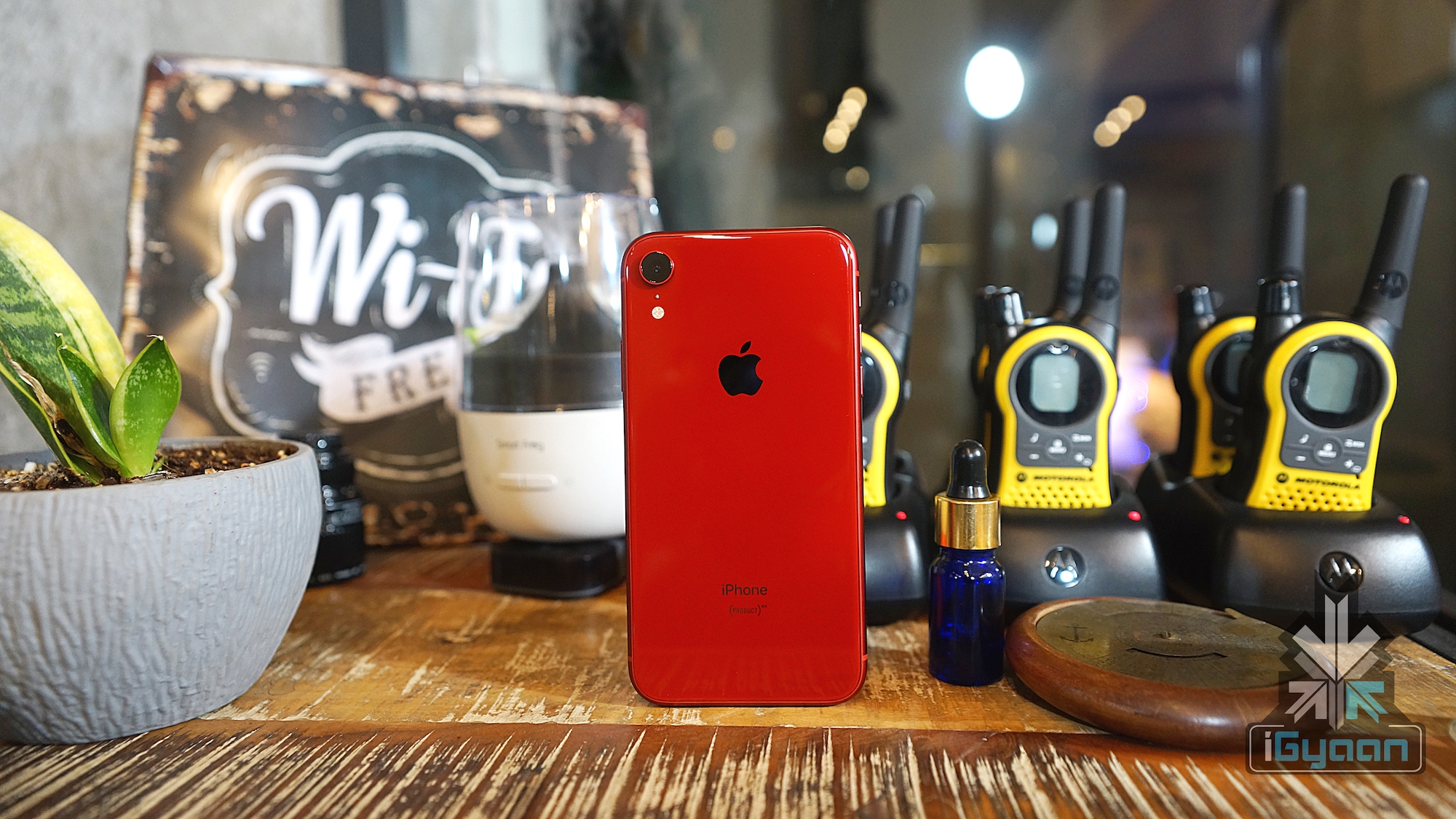
iPhone XR
As per the patent, an acoustic transducer is configured to generate acoustic outputs in response to a signal from a controller. The outputs may be in the form of mechanical waves or pulses, and they will be coded with the help of the controller. To obtain the image of the fingerprint, the acoustic imaging system can use a multitude of techniques, including reflection, diffraction and transmission. Further notes from the patent state that the acoustic imaging system can also be used to map biometrically unique features of the fingers like size, shape and skin patterns. Moreover, some notes also affirm that the imaging technique can capture features like the user’s ears and other prominent features.
Considering that Apple originally filed the aforementioned patent in the third quarter of the year 2016, this technology may never see the light of day in the immediate future. However, implications of the same tech can be incorporated in newer Apple devices, and since Apple is highly focused on security detail, it might be the best-in-class too.
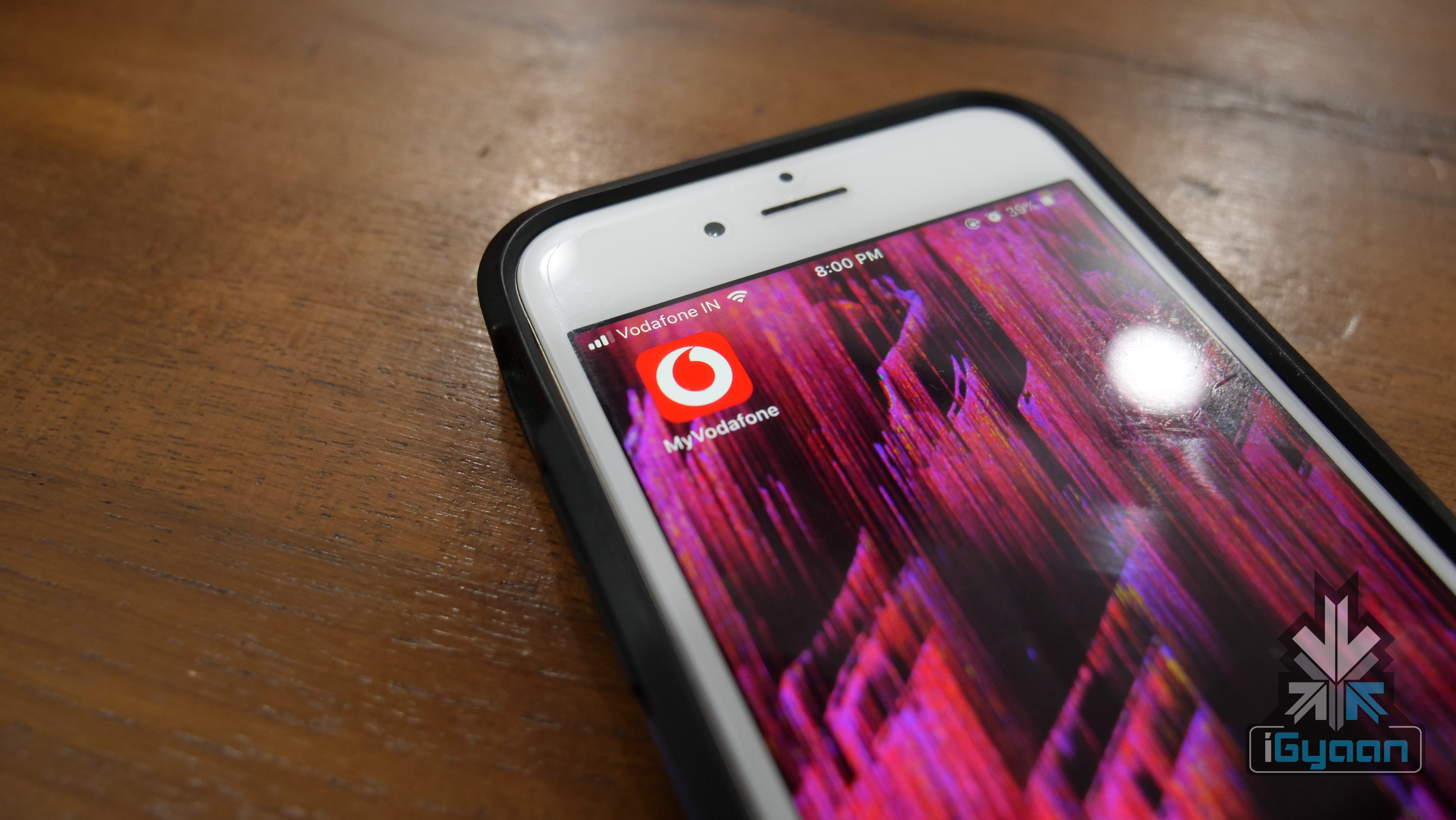
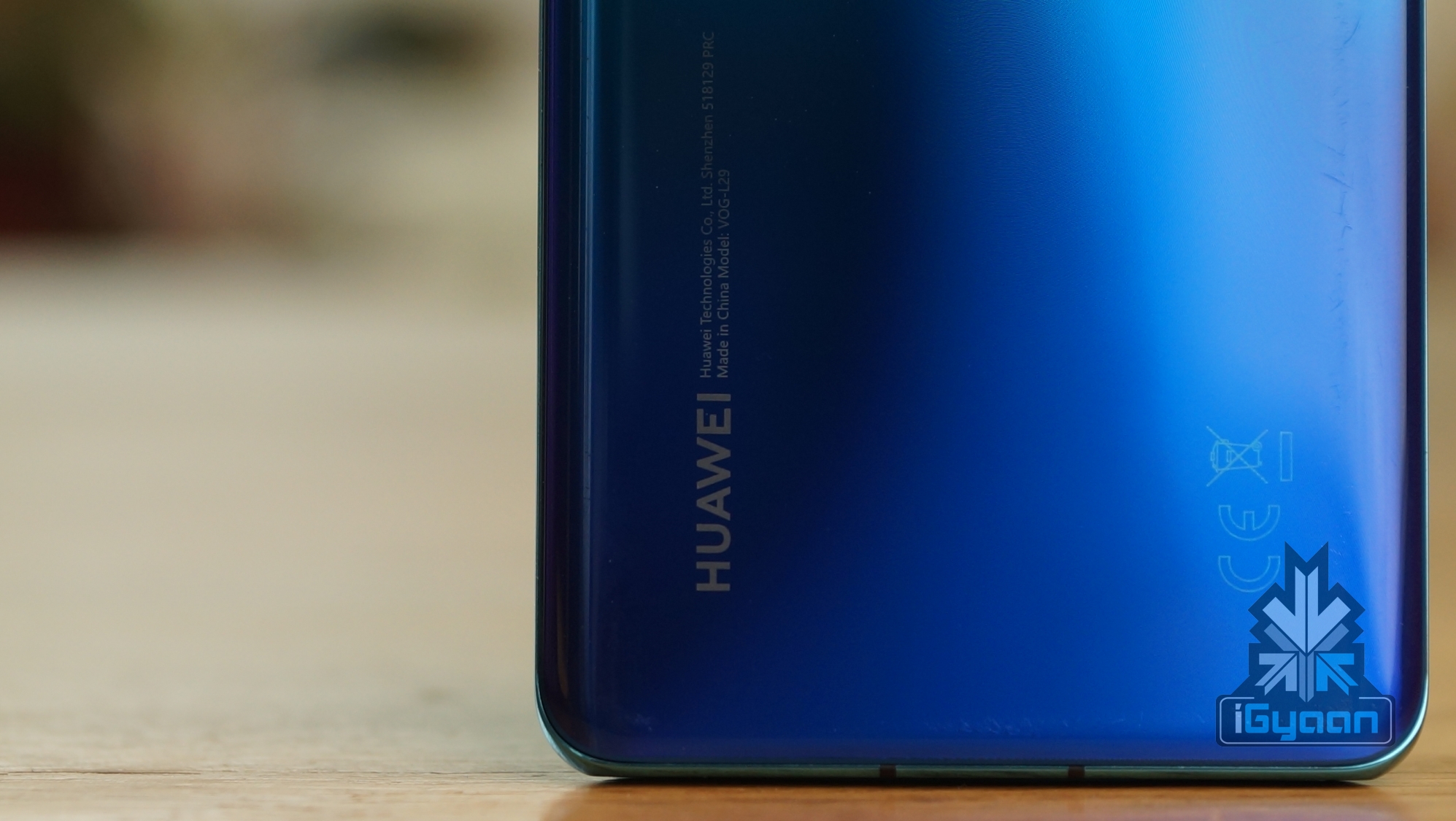
Huawei is currently the world’s largest networking equipment manufacturer and the world’s second largest smartphone maker which is an honourable feat. However, it has had a few rough years accrediting to accusations associated with security. The company is blamed for installing back doors on its networking equipment which can allegedly expose sensitive user data to the Chinese government. Notably, the US government had suggested its allies to boycott using equipment manufactured by the company. Even though allegations against the company were not proved, they have definitely scarred Huawei’s reputation. In the latest development to the case, Bloomberg has published a report that states that the company indeed have backdoors in its equipment which date back from 2009 and 2011.
According to the report, the telecom provider, Vodafone had found vulnerabilities in the equipment supplied by Huawei for the carrier’s Italian business. The vulnerabilities also referred to as hidden backdoors allowed unauthorised access to Huawei which could have been used to lurk into telecom providers fixed line network in the country. Vodafone reportedly asked the Chinese networking equipment provider to remove the backdoors from home internet routers in the year 2011 which the latter assured to have been removed. But, further testing performed by the telecom operator revealed that the back doors remained.
Furthermore, Vodafone also discovered backdoors in parts of the fixed access network which is known as optical service nodes. Prominently, the service nodes are responsible for transporting data over optical fibre cables and also dealt with authentication of subscribers. Bloomberg would not reveal the names of the report providers as they were guaranteed of full anonymity on the matter.
Implications And Reasons For Installing Backdoors
As previously discussed, backdoors can imply serious security concerns for an organisation and its subscribers. Especially, if ill-intended hackers get hold of such backdoors, a significant amount of damage can be done both in terms of money and confidential user data.
However, it must be noted that companies purposely tend to integrate backdoors in their equipment. These can be used for collecting data from the hardware which would help the company to eliminate bugs on the current hardware and further strengthen the security for future devices.
Even though Vodafone states the issues were resolved by the accused and has also vouched for the security on network equipment manufactured by Huawei. The fact will further damage the company’s reputation on a Global level. All in all, it is yet unclear what the future holds for the Chinese conglomerate.
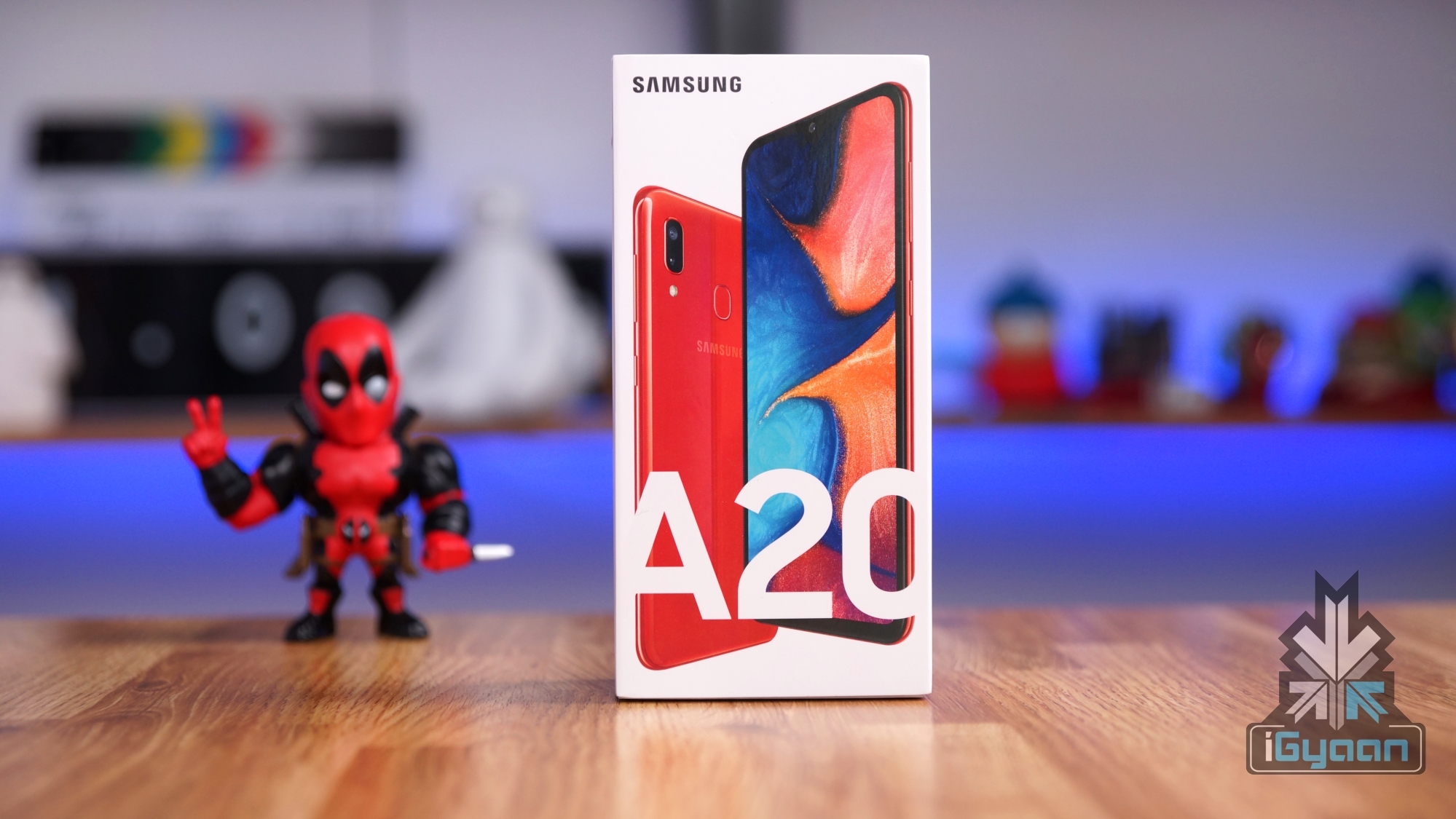
Samsungs latest entrant in the Galaxy A lineup of smartphones is the Galaxy A20. Priced at Rs. 12,490, it goes head to head with the likes of the Redmi Note 7 and the company’s own Galaxy M20. With a modern design and competitive specifications on paper, can the Galaxy A20 compete with the best in the segment or it is just a disappointing budget handset from the company?
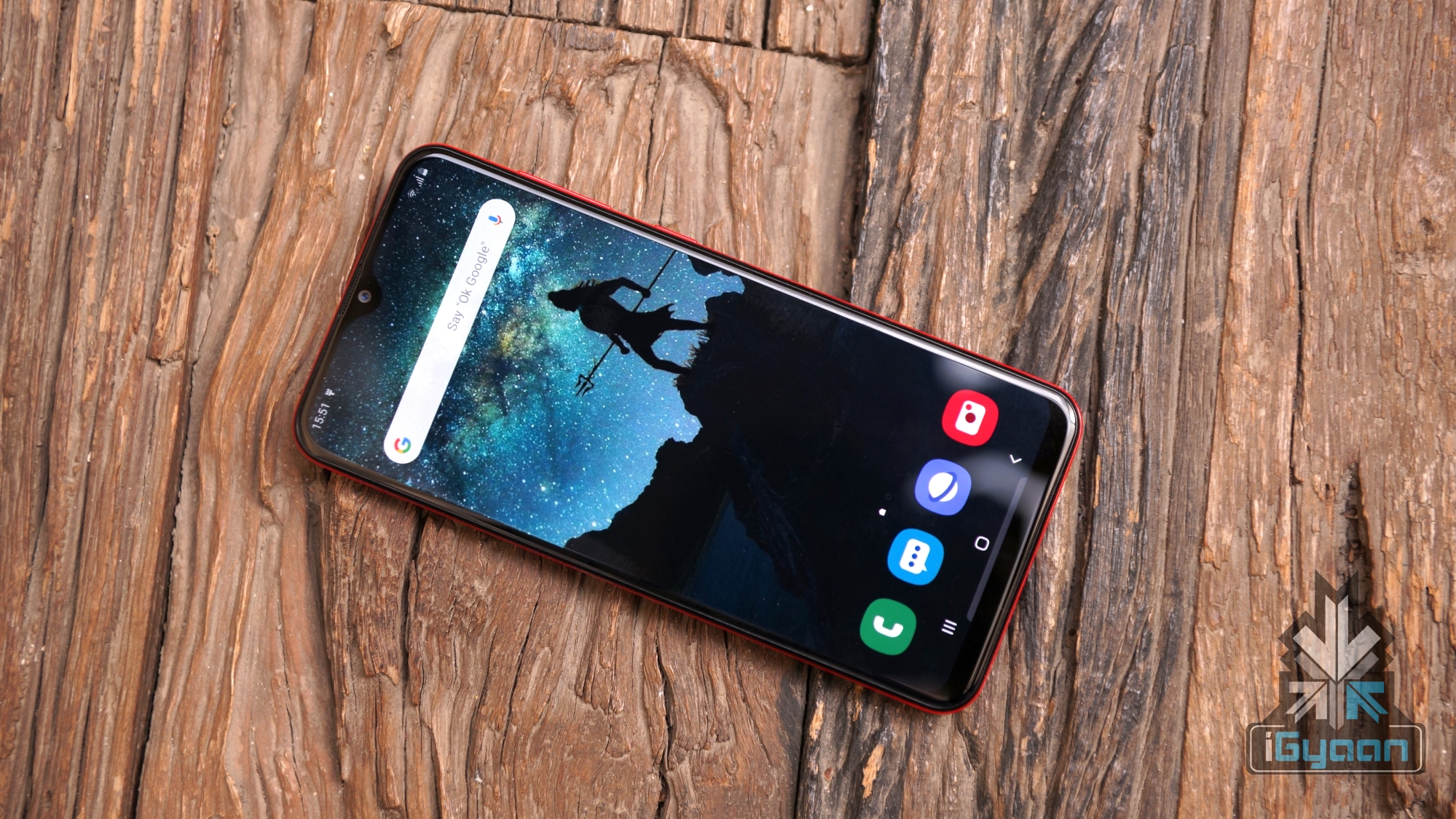
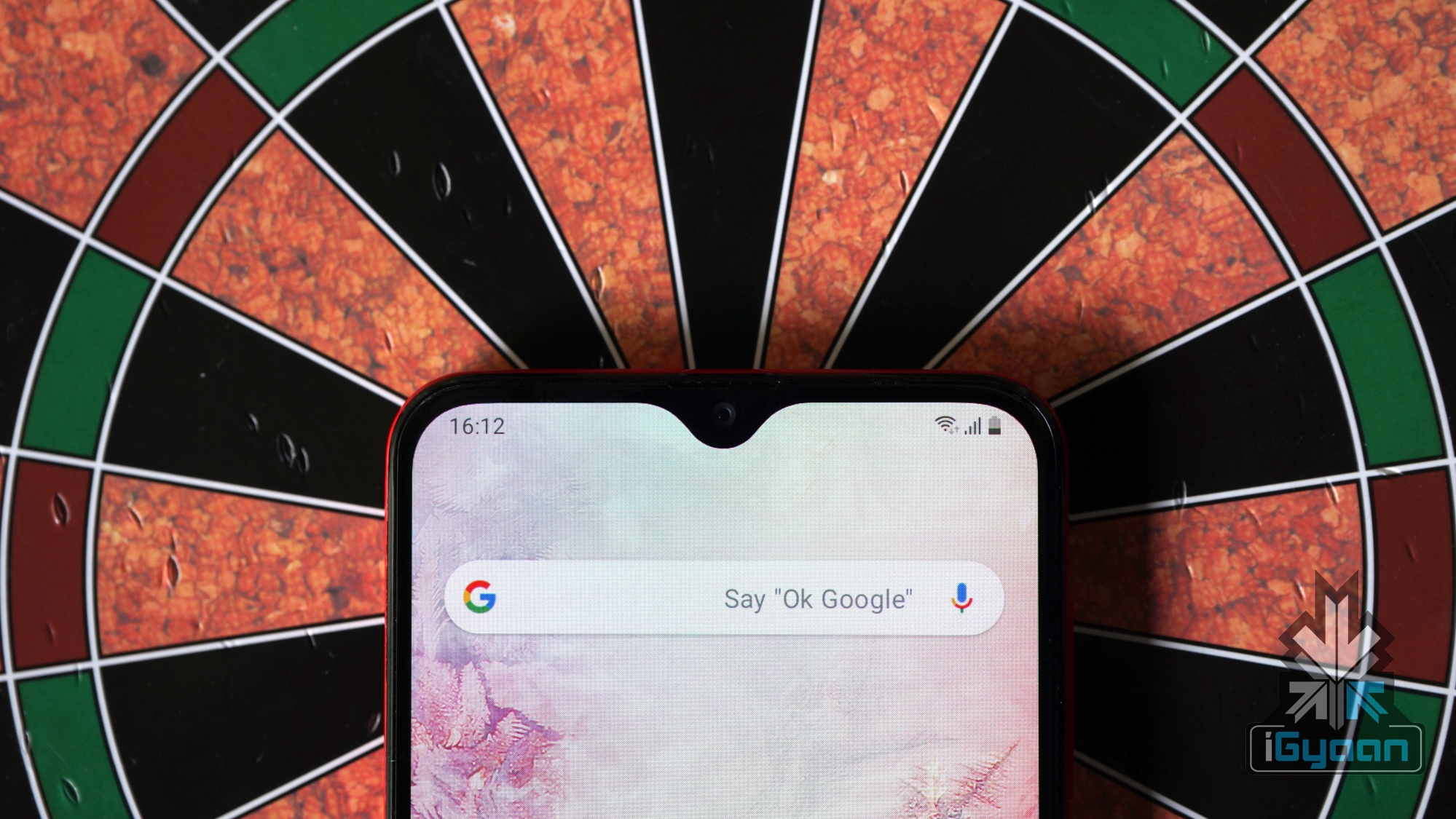
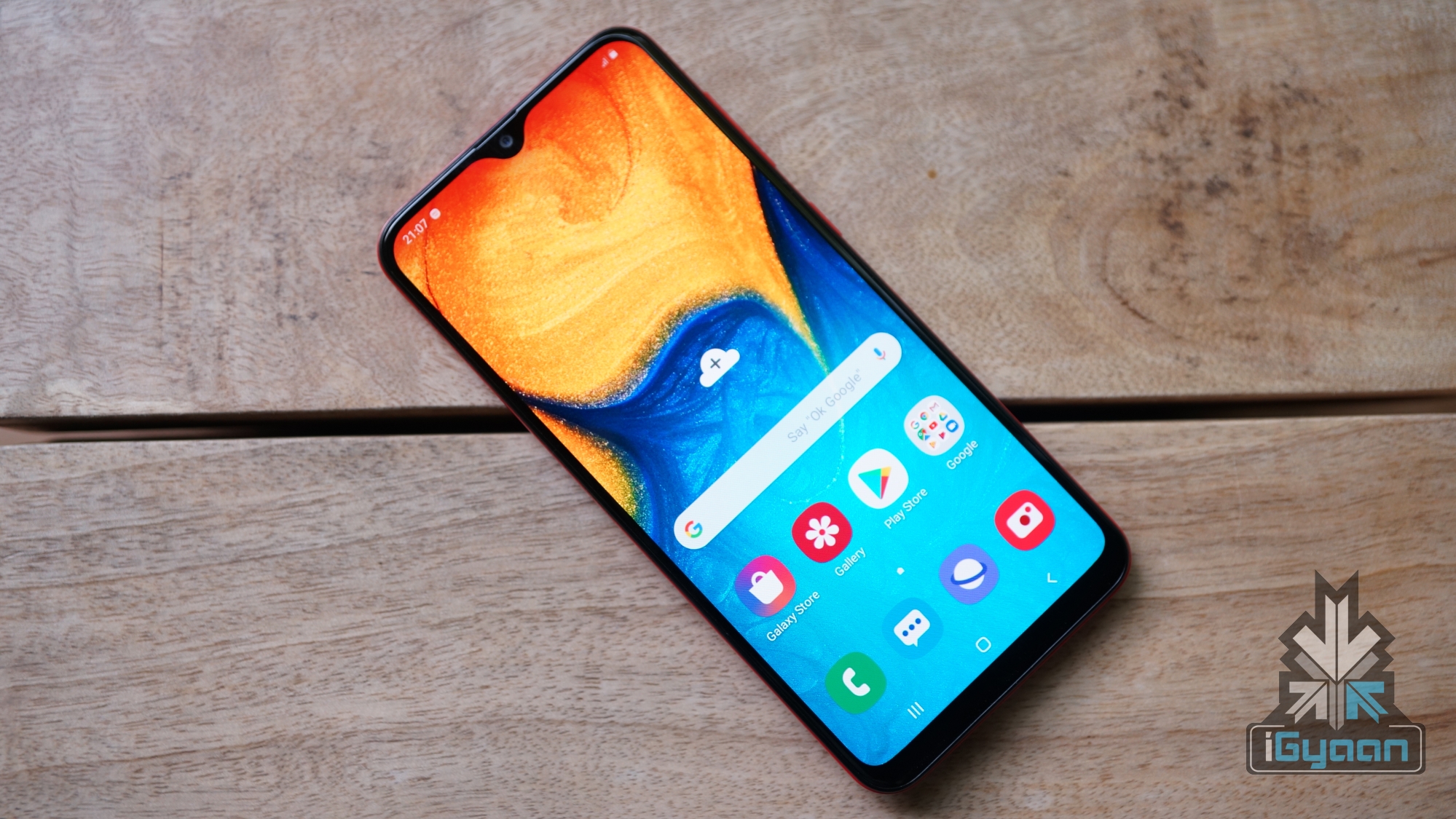
One look at the Galaxy A20 and you would know Samsung has stuck to the basics while making the smartphone. The device is entirely made out of plastic with a design similar to the Galaxy A30. The front of the handset has a 6.4-inch display which has an Infinity V notch on the top and a considerable chin on the bottom.
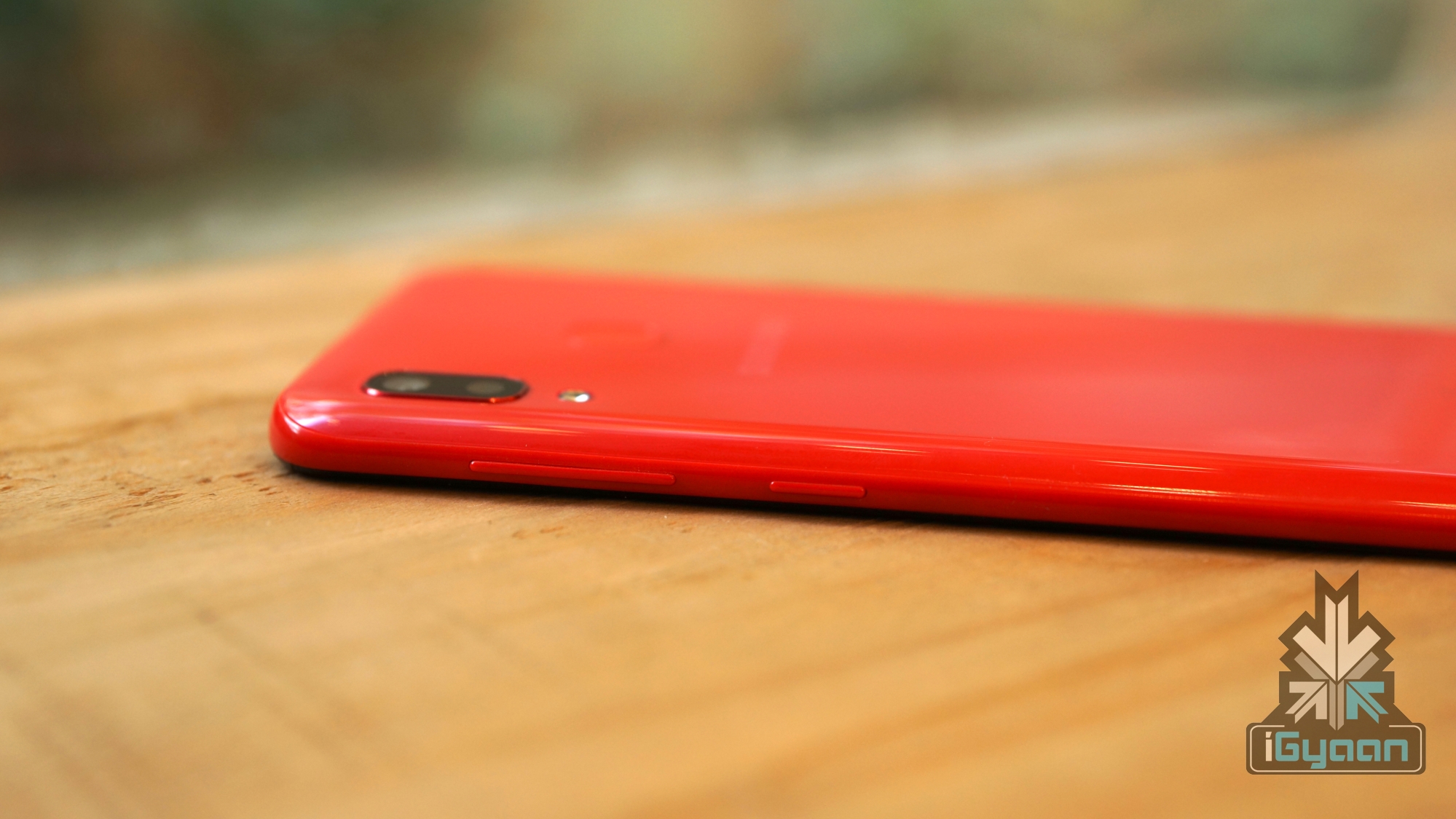
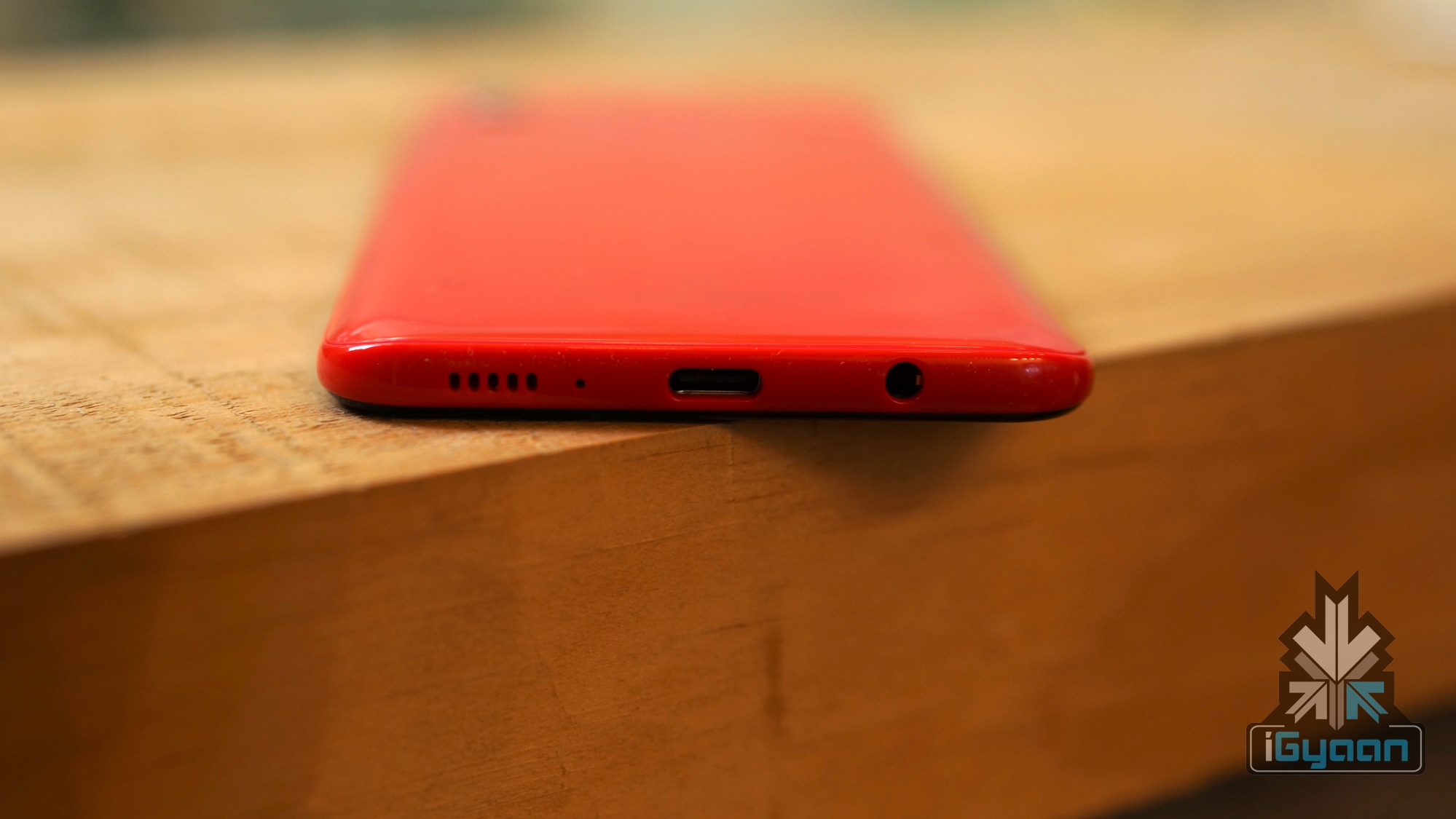
The right side of the smartphone houses the volume rockers and the power button; while the left side remains completely empty except for the SIM card tray which also has a dedicated microSD card slot. The top of the device has a secondary noise cancellation microphone. At the bottom, there is a 3.5mm headphone jack along with the USB Type-C port and the speaker grille lined up together. The Galaxy A20 features a solid build, with a back that makes it look like glass.
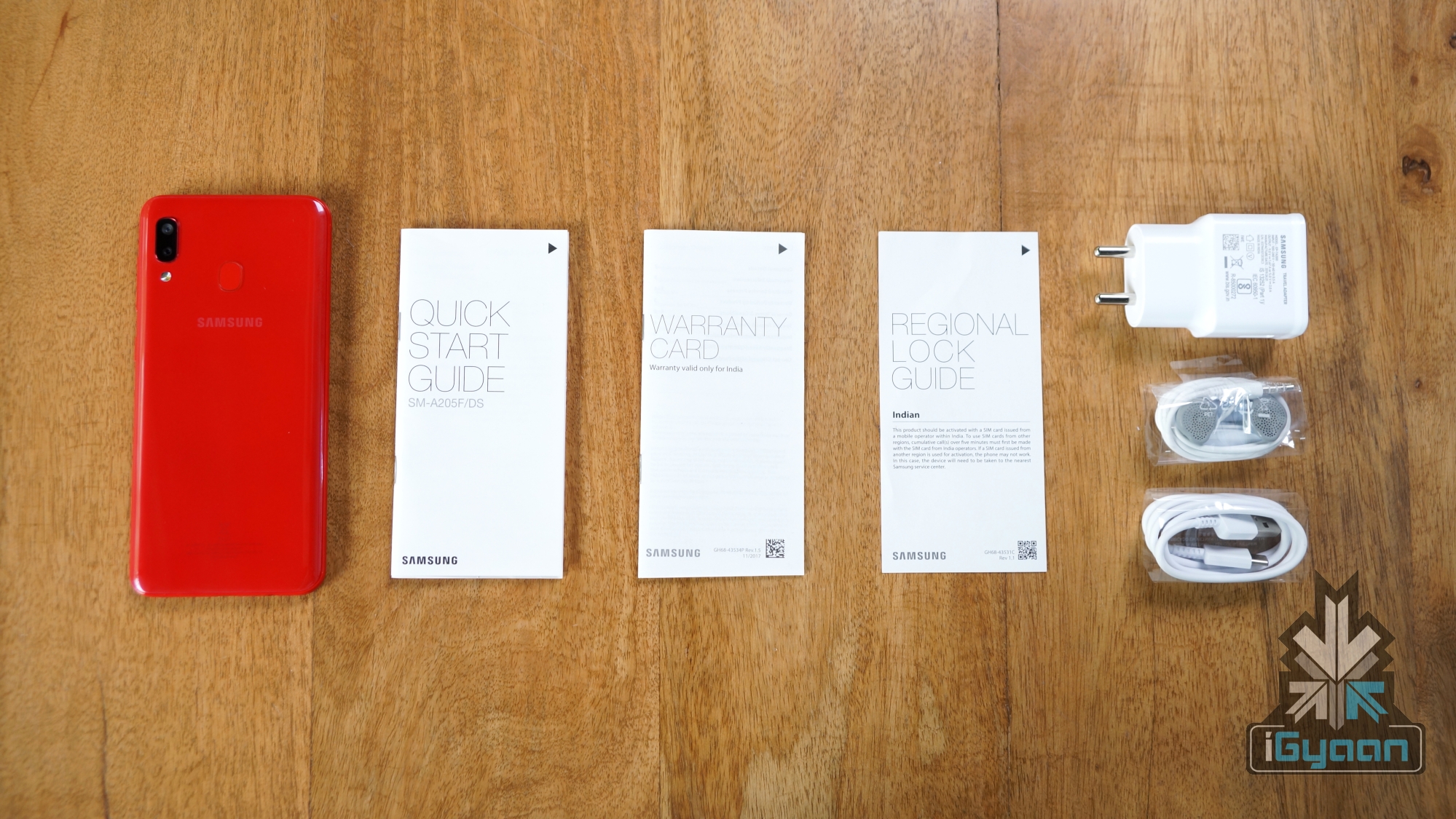
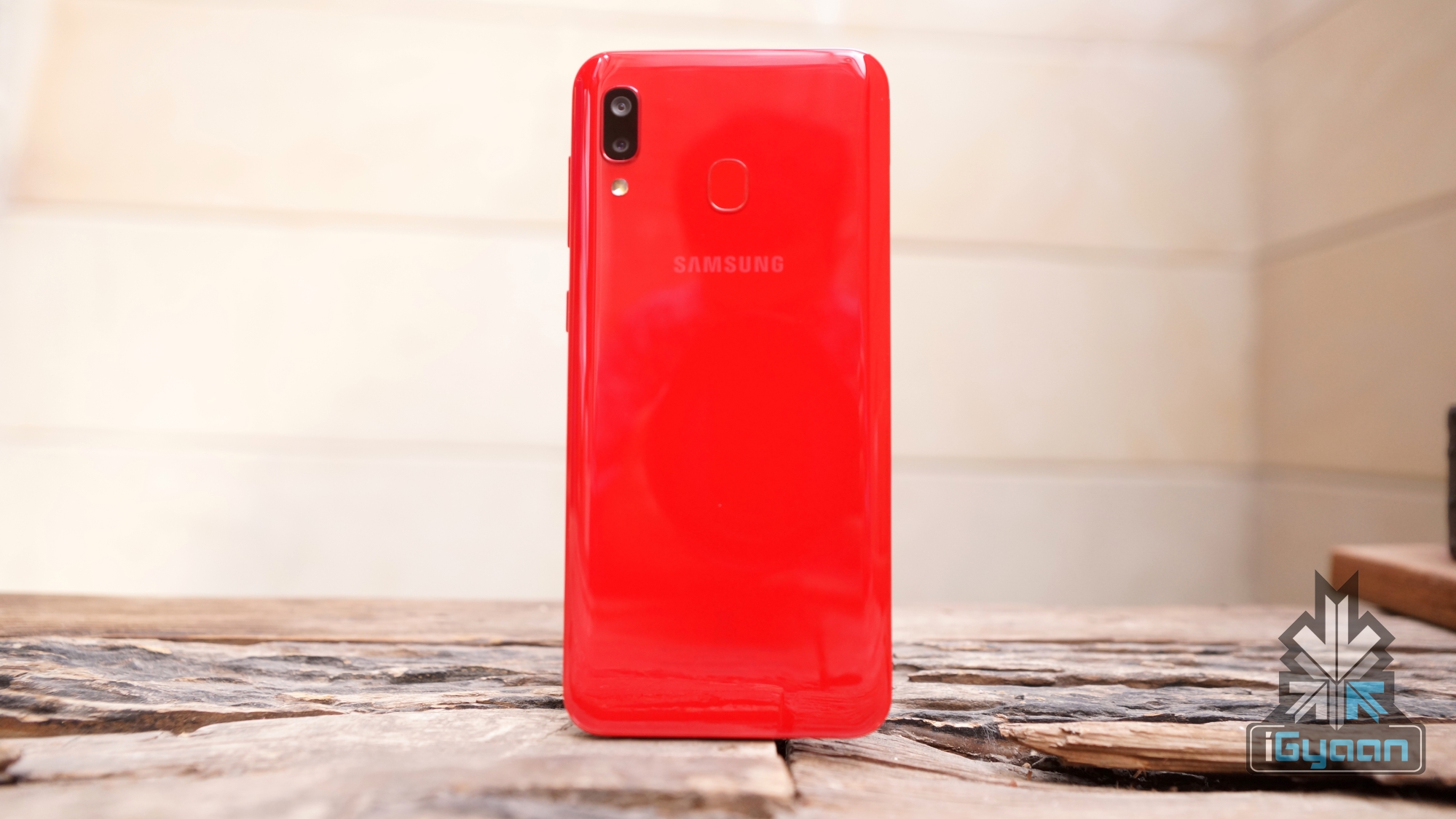
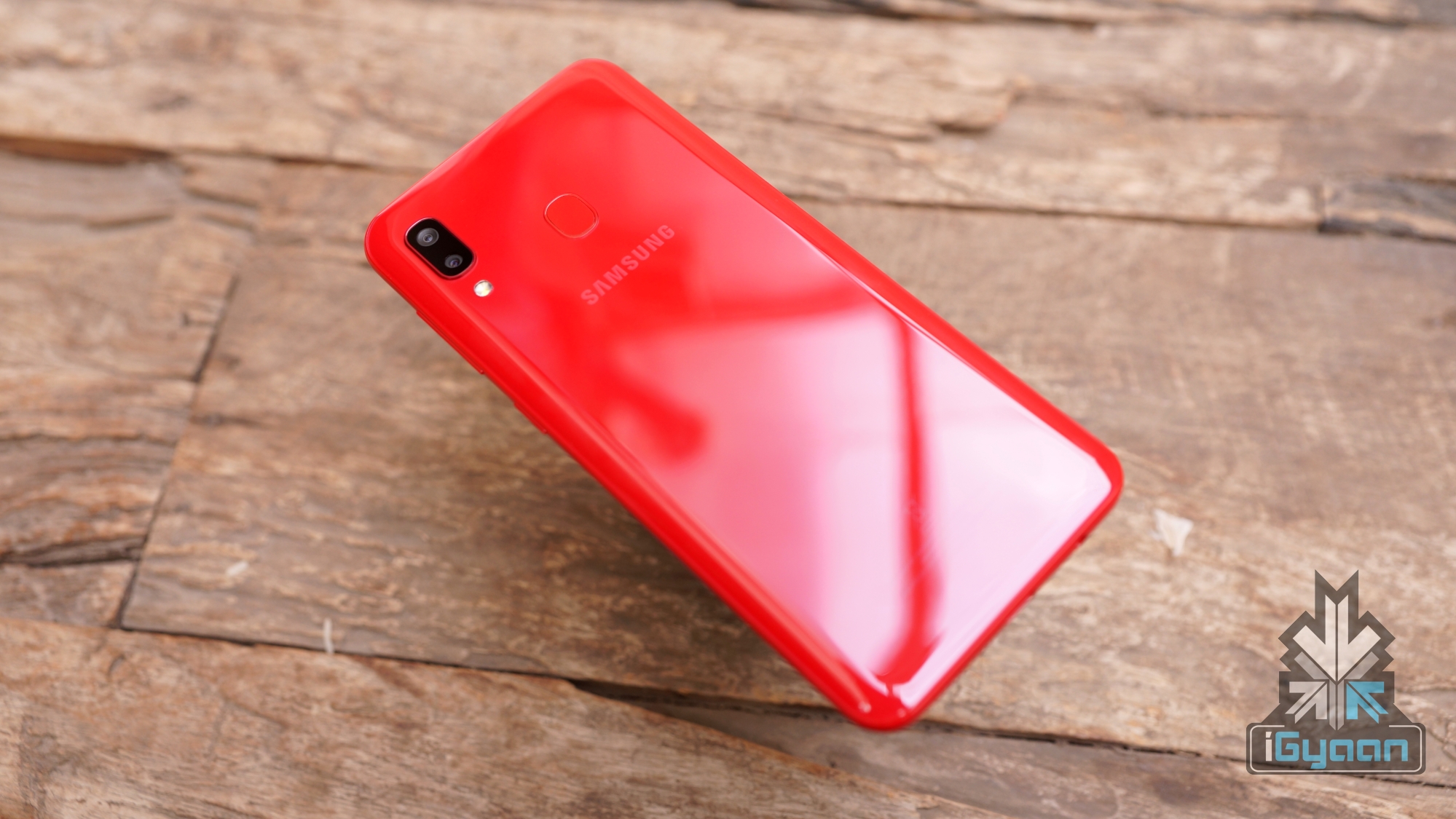
Our review unit is the red coloured version, which has a glossy finish to it. The popsicle coloured back of the Galaxy A20 houses the vertical dual camera layout with the LED flash like most modern smartphones. When it is laying flat on its back, the smartphone wobbles a bit due to the slightly protruding camera bump. The device has a fingerprint reader on the back with the Samsung branding present right below it.
While the design of the Galaxy A20 is nothing new, the smartphone looks good and the red colour of our unit definitely attracts attention to it. Using a case is recommended as the back is extremely glossy and easily attracts fingerprints to it. Additionally, a case would also cover the camera bump to an extent, minimising the previously mentioned wobble.
Display
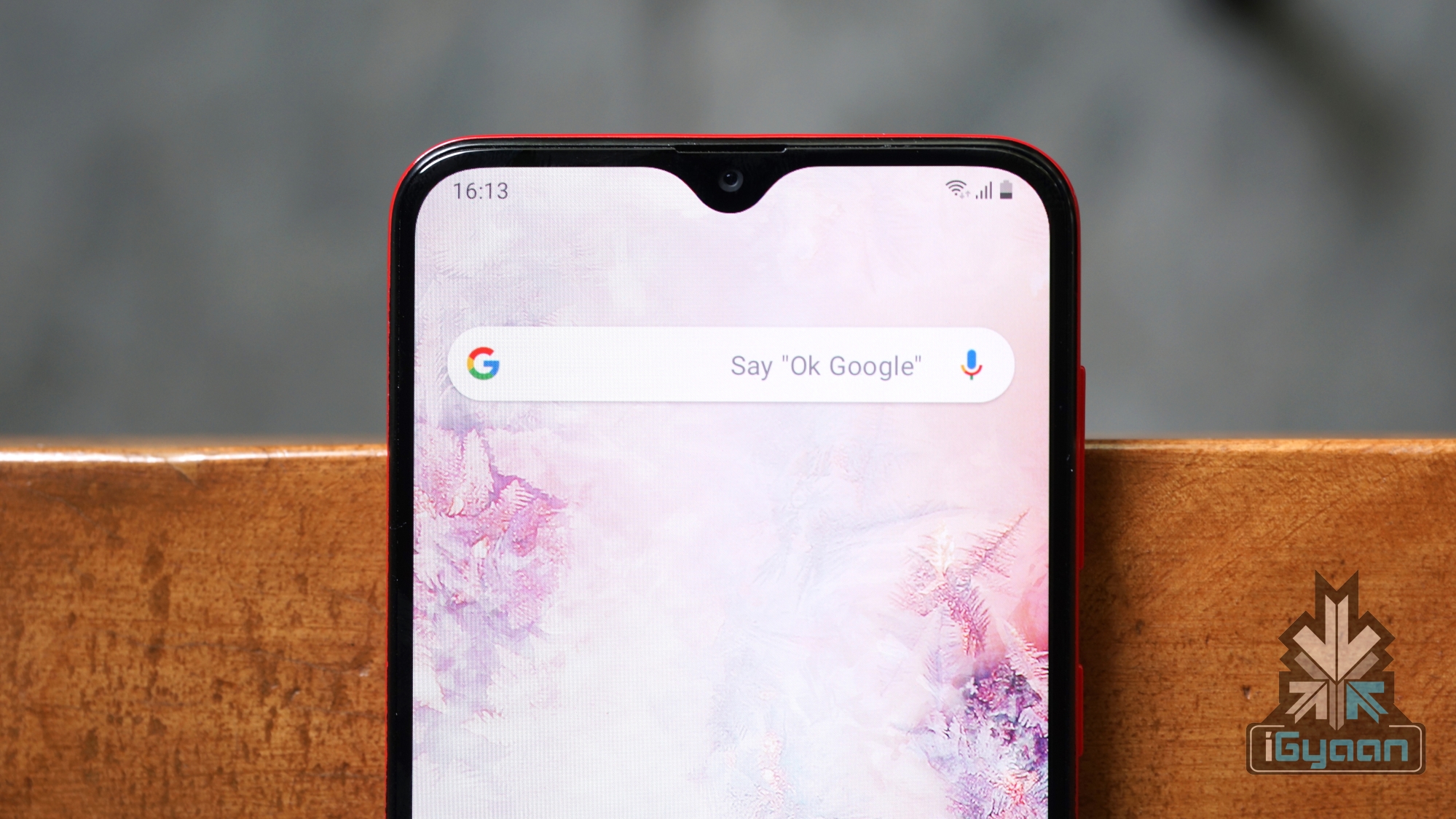
The display on the Galaxy A20 is marketed as one of the highlights of the smartphone. It has a 6.4 inch Super AMOLED display with a resolution of 1560 x 720 px. To increase the screen real estate of the device, Samsung has used an Infinity V style notch on the top of it.
In terms of quality, the Galaxy A20 has a great display for multimedia consumption. The colours have great contrast, the blacks are deep, there are good viewing angles and the brightness outdoors is sufficient. However, due to the low resolution, the sharpness takes a backseat. The display on the Galaxy A20 is great for watching videos and playing games, although we would’ve appreciated a Full HD display in the device. Given, it competes with devices like the Redmi Note 7 that has a display panel with Full HD resolution.
Hardware & Performance
The Galaxy A20 features the Octa-core Exynos 7884 SoC, combined with 3GB of RAM and 32GB of onboard memory. For day to day tasks, the smartphone performs well, and we faced zero lags while switching between applications with several apps running in the background. The humble amount of RAM is enough for keeping light applications in memory. Gaming, on the other hand, is another experience on the Galaxy A20.
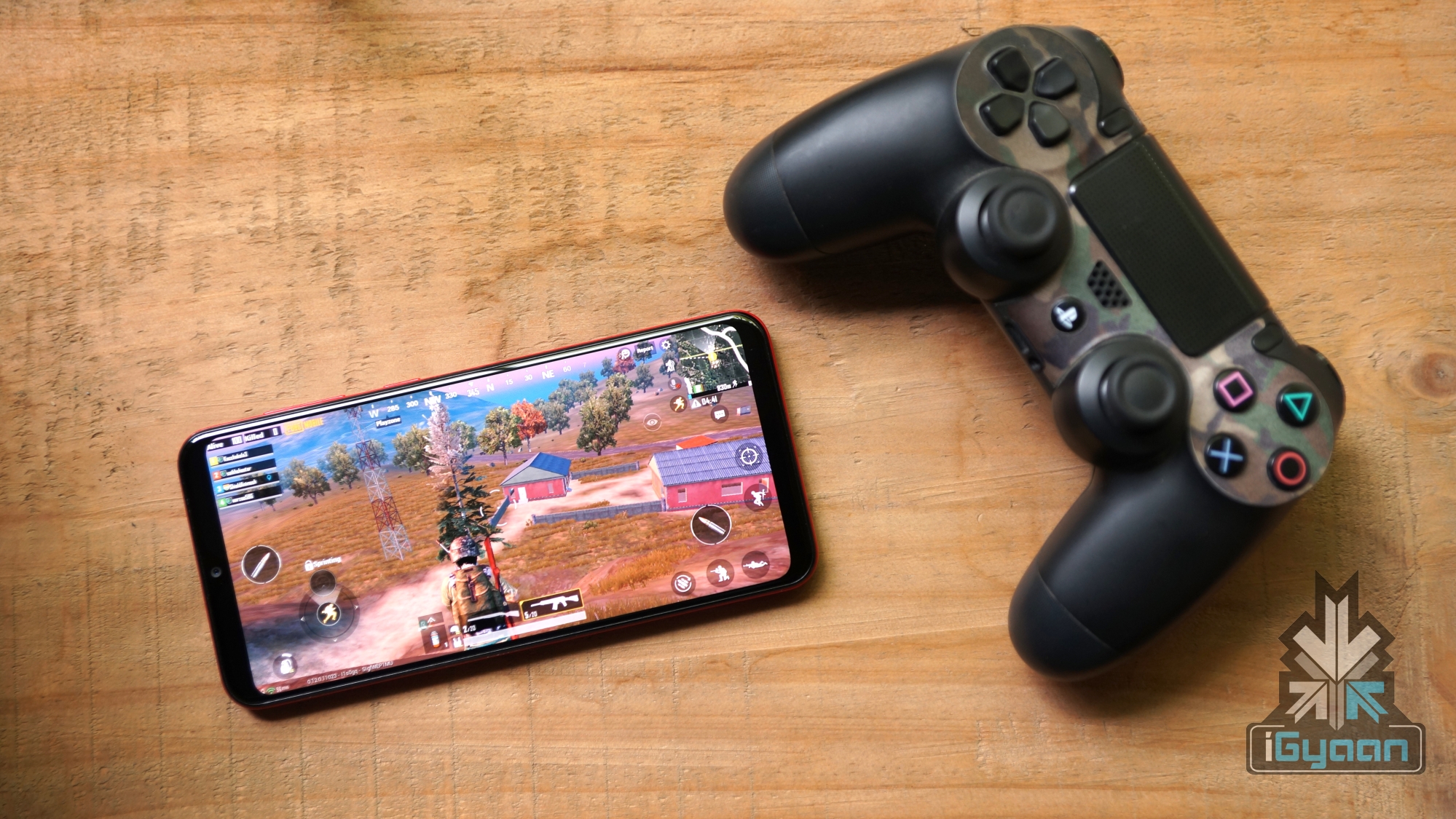
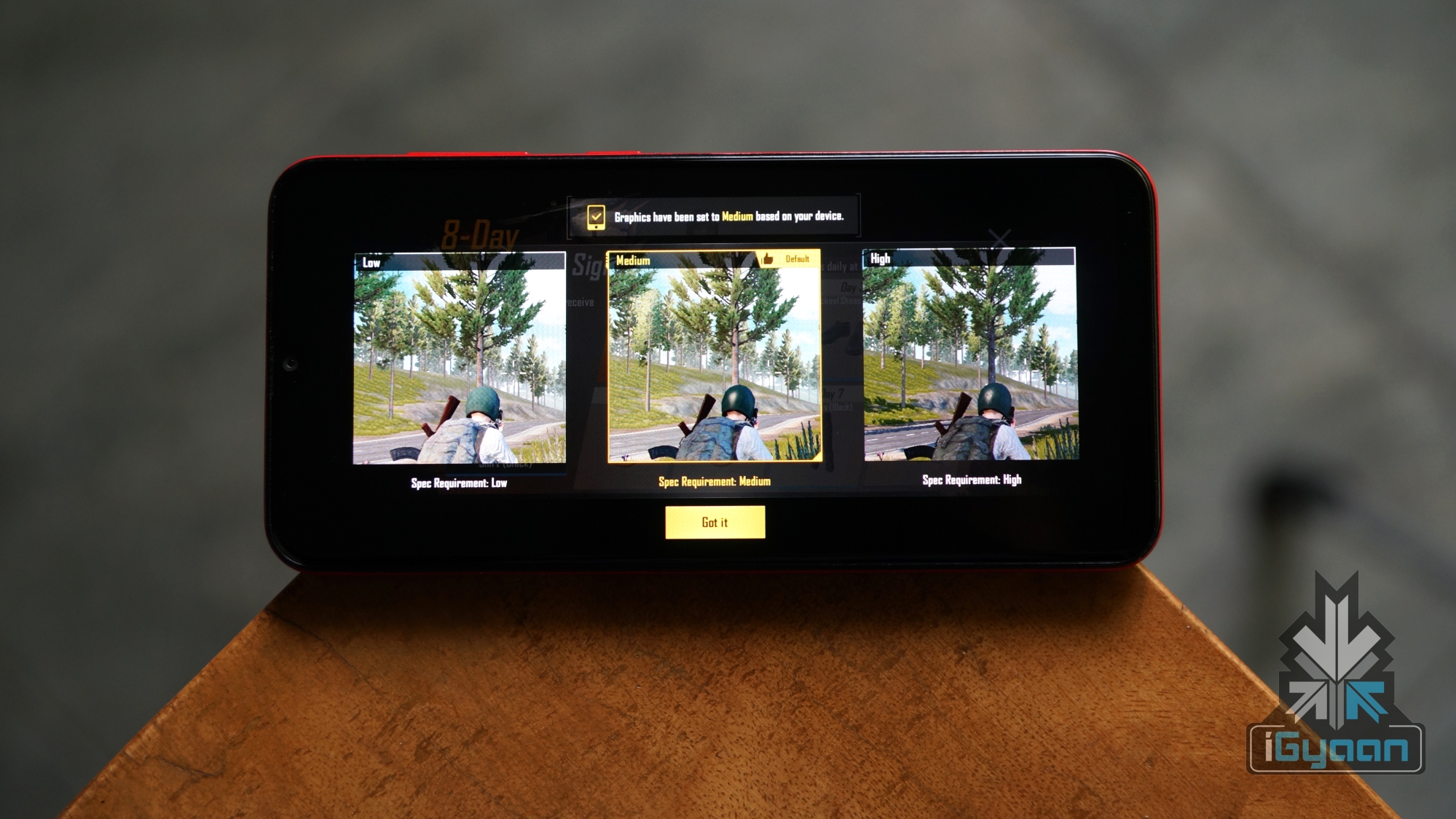
While playing games like PUBG Mobile on the device, it surprisingly chose the medium setting by default but gave unplayable frame rates at the setting. Selecting a low graphics setting and the smooth frame rate option churned out a playable experience. While there were a few frame drops, the gameplay was stable enough, combined with the skills of the player, we were able to earn a satiable Chicken Dinner.
Another game that we tried was Need For Speed: No Limits, which is a racing game that for the larger part ran without any frame drops. The gameplay was mostly smooth and we didn’t encounter any hiccups while playing it or rather hitting into the walls due to the insufficient game skills.
There was a bug that we encountered however which exited any game or heavy application that was opened for the first few times. After opening the app for more than two times, the bug seemed to vanish automatically. After the initial few times, we did not face the issue again.
In terms of benchmarks, the Galaxy A20 scores slightly less than the smartphones in the price range. While testing the Antutu benchmark, we got a score of 95,067 which is significantly lower than the competition including the Galaxy M20 or the Redmi Note 7. In Geekbench, the device registered a single core score of 1217 points and a multi-core score of 3694 points. As is evident from the numbers, the handset should be fine for day to day usage but is not made for performance enthusiasts.
Software, UI & Multimedia
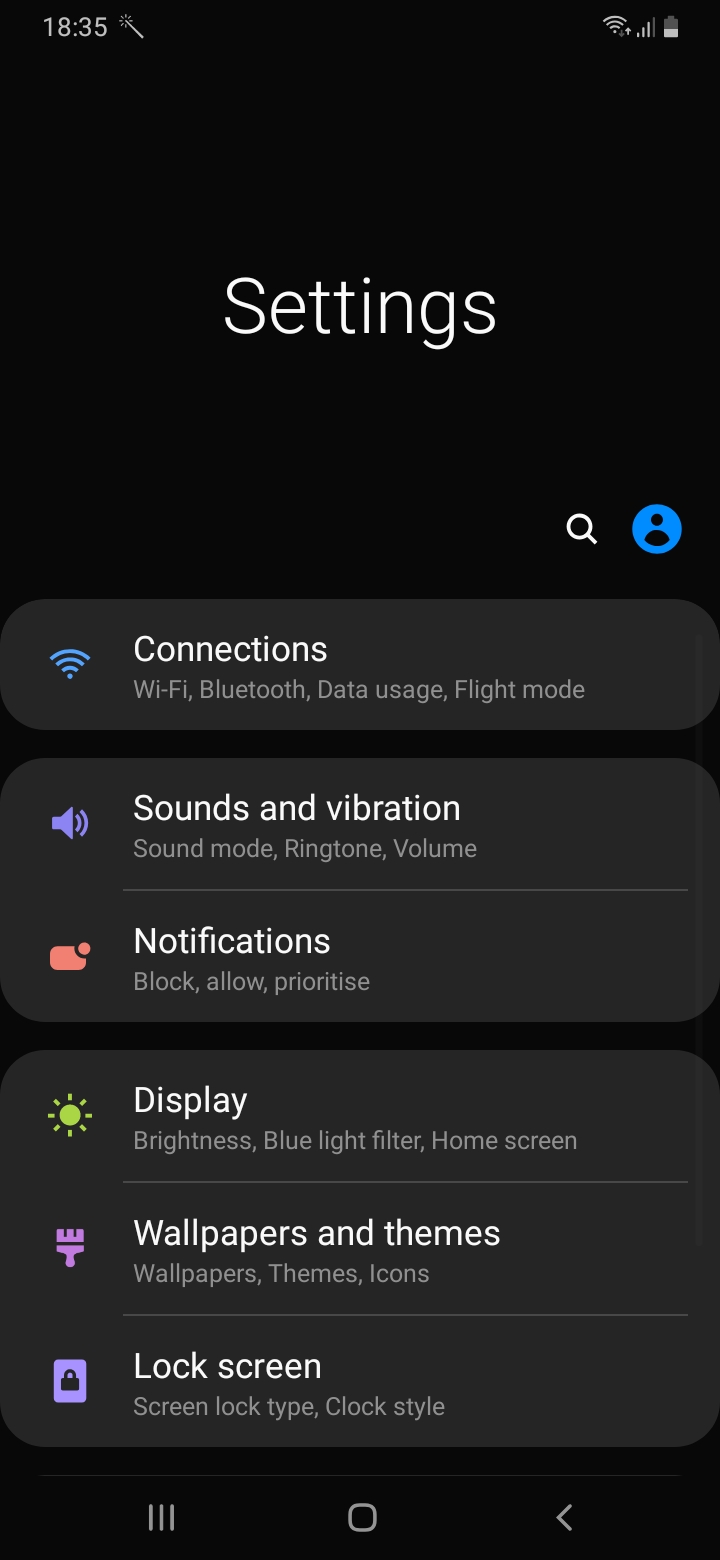
The Galaxy A20 runs on the company’s latest OneUI version 1.1 on top of the current Android 9 Pie. Like the other smartphones running the software, the Galaxy A20 offers a refined software experience. There is a native dark mode inside the settings which makes the whole UI suited for use in dimly lit environments. Notably, this setting helps in prolonging the battery backup on the smartphone.
Dark Mode on OneUI
Dark Mode on OneUI
The icons in OneUI are big and the menus easy to access and reach. Unfortunately, there is no Always On Display despite having an AMOLED panel which although is not a dealbreaker. The UI also supports gestures in addition to the conventional navigation buttons. These gestures use an upward swipe from the left to go into the multitasking menu. To go back, a swipe up from the right is required while swiping up from the centre takes you to the home screen. There is also support for Samsung Pay Mini on board, which is activated by a swipe up from the bottom of the display below the navigation buttons.
In terms of sound quality, the smartphone has a single bottom firing speaker which has decent sound output. One downside of the setup is how easy it is to block while the speaker grille while holding the device in the landscape mode. Audio output via the Bluetooth is above average which provides for a good listening experience.
Camera
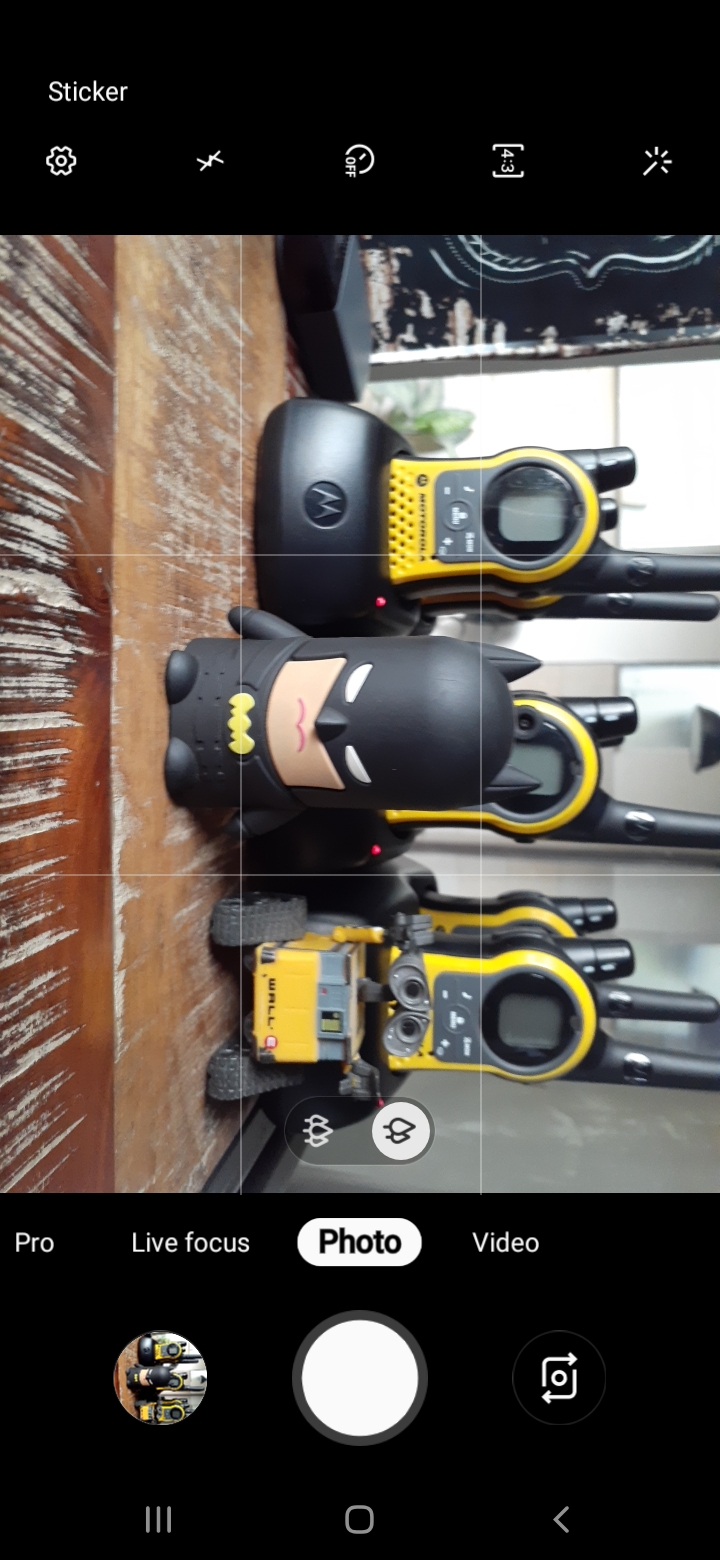
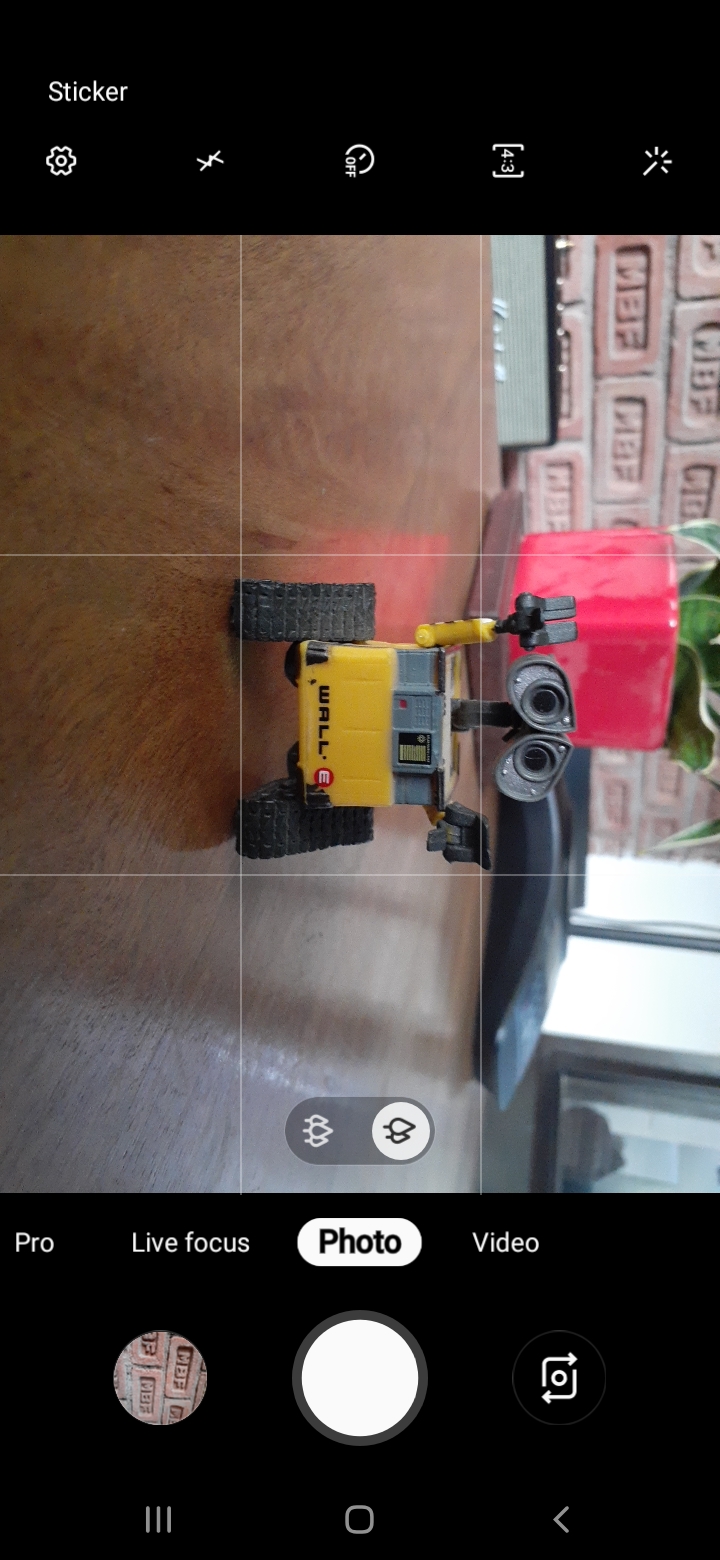
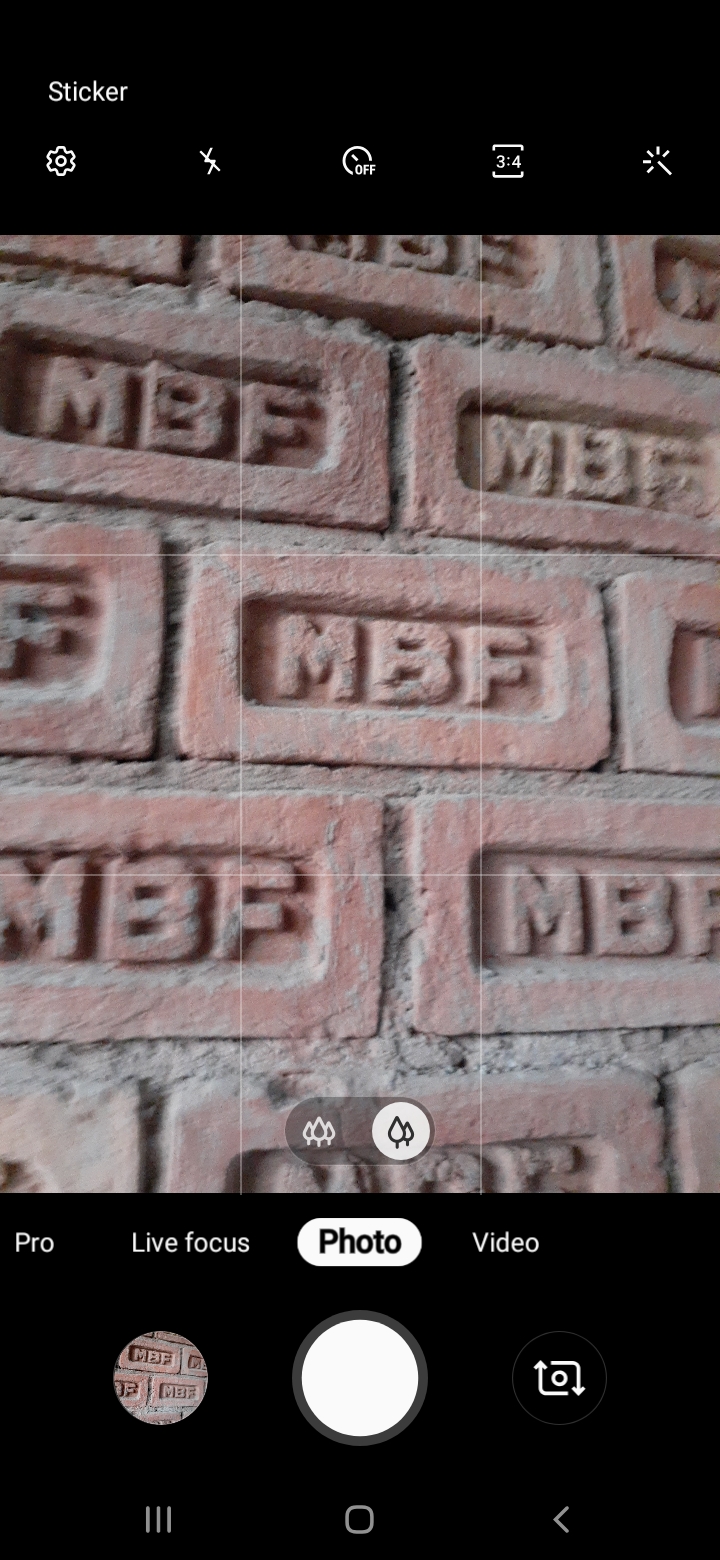
The Galaxy A20 has an all new camera app that ships with the OneUI. It seems to be inspired by the camera UI of iOS and Pixel devices. All the controls are lined up within the reach of one hand. The app also uses a swipe gesture to switch between the front and the back cameras which is an appreciable feature.
Galaxy A20 Camera App
Galaxy A20 Camera App
Galaxy A20 Camera App
Video output from the rear and the front camera is locked to 30fps in 1080p resolution. There is also an option to record videos with the ultra-wide angle camera. Sadly, there is no option of switching between the different sensors while recording video.
Galaxy A20 Rear Camera
Galaxy A20 Rear Camera
Galaxy A20 Rear Camera
Galaxy A20 Rear Camera
Galaxy A20 Rear Live Focus
Galaxy A20 Rear Live Focus
The Galaxy A20 has a dual rear camera setup consisting of an f/1.9 aperture equipped 13MP sensor and an f/2.2 aperture equipped 5MP Ultra-wide sensor. Images captured in daylight have good contrast and saturation levels typical to Samsung devices. One downside of the images is the loss of detail which occurs due to an aggressive image processing.
Like most modern smartphones, there is a portrait mode called Live Focus inside the camera app. The background blur is average at best, giving you results that have a decent background separation.
Galaxy A20 Wide Angle
Galaxy A20 Wide Angle
Galaxy A20 Wide Angle
An added bonus the Galaxy A20 has over its competitors is the presence of an ultra-wide sensor on the rear. While the sensor does not pack high resolution, it helps in providing a wider field of view. Switching between both the lenses is fun and we found ourselves intrigued by the secondary sensor which illustrates the versatility of this kind of camera setup.
Galaxy A20 Front Camera
Galaxy A20 Front Camera Live Focus
Galaxy A20 Front Camera
For selfies, the Galaxy A20 has an f/2.0 aperture equipped 8MP camera housed in the notch on top of the display. Images from the front camera, like the results from the rear, perform well in good lighting. However, the colours are a little washed out and the details are not properly retained. But, if you’re a casual user of the front camera, the quality should be perfectly fine for occasional usage or sharing on your favourite social media platform.
Battery and Connectivity
The Galaxy A20 is powered by a 4000 mAh battery which supports 15W charging via the bottom mounted USB Type-C port. A significant size of the cell in the smartphone, combined with a low-resolution display ensures a great battery life overall. With a light to medium usage, the battery will easily last you more than a day. The average screen on time we received in our usage was around seven hours.
In terms of connectivity, the device supports Wi-Fi 802.11 b/g/n and Bluetooth v4.2. The Galaxy A20 faced no problems latching on to a Wi-Fi signal nor did it have any trouble connecting to a pair of Bluetooth headsets. Unfortunately, as it is a budget device, there is no support for the 5Ghz network band on Wi-Fi. The call quality of the smartphone was excellent, with clear sound output through the earpiece which is housed in the notch. Even in an area where signals are generally weak, the smartphone performed admirably. Noteworthy, the Head SAR value of the Galaxy A20 is just 0.389 W/kg which is significantly lower than it’s Chinese rivals.
Other Features
The Galaxy A20 has a rear mounted capacitive fingerprint sensor and also supports the increasingly popular face unlock technology. Both of these technologies help in swiftly accessing the smartphone. The fingerprint scanner is effective in unlocking the device, but it takes a good second to do so. Face unlock, on the other hand, is a faster albeit less safe option but is useful when the handset is lying flat on a table as the rear-mounted fingerprint sensor is inaccessible in this state. One more notable feature the smartphone has is the aforementioned triple card slot. The user can simultaneously insert two nano SIM cards and a microSD card which can go all the way up to 512GB.
Verdict
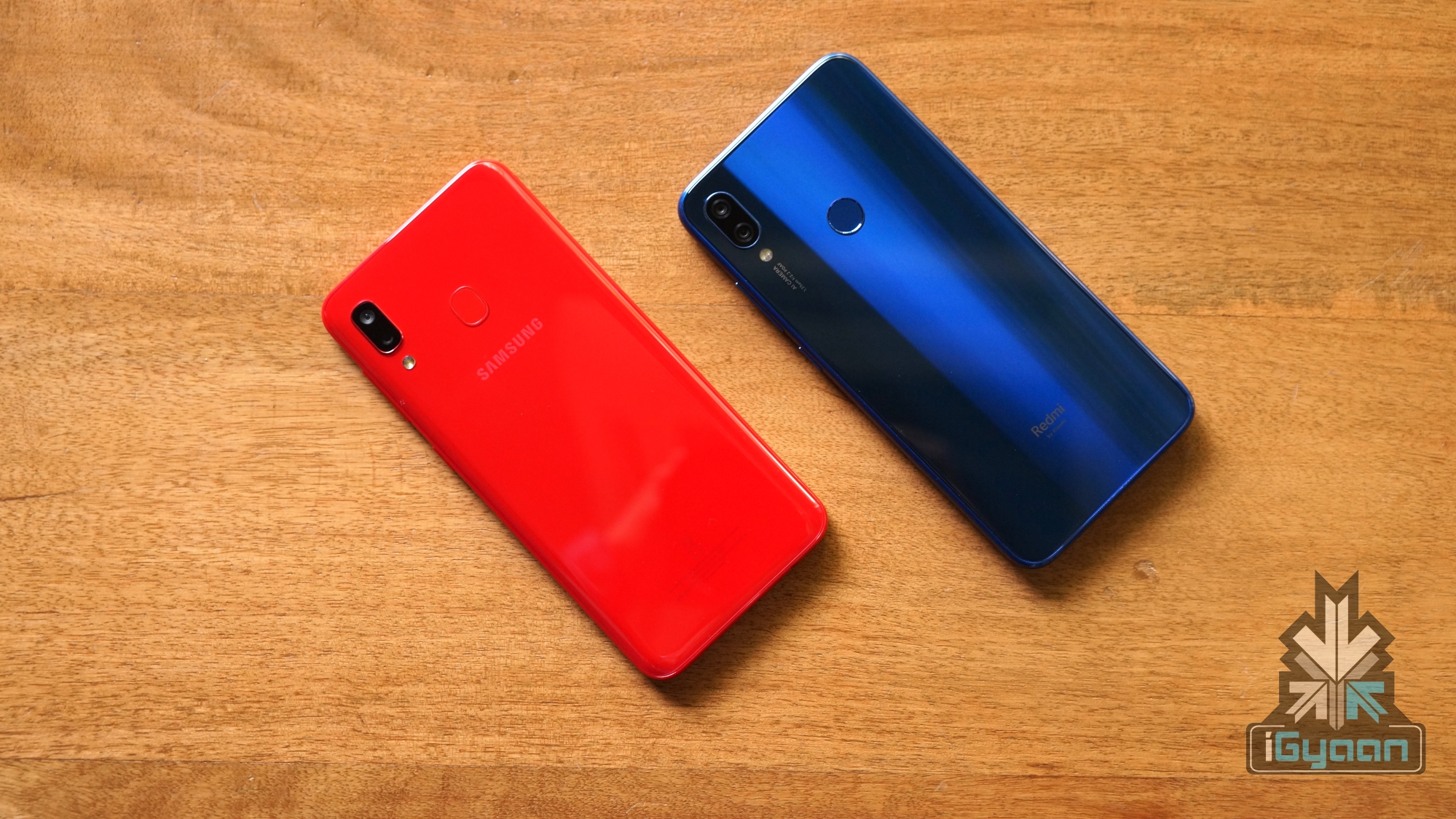
Galaxy A20 (Left) & Redmi Note 7 (Right)
The Galaxy A20 represents a new line of budget smartphones by Samsung and provides some competitive specs at a lucrative price. While the device is a compelling option in the price range, it still leaves a lot to be desired. With a more high-resolution display, slightly better gaming performance and a more detail-oriented camera, it would’ve made it a strong competitor to the Redmi Note 7.
If you’re in the market for a smartphone from a brand offering great service support, a great display, long lasting battery and versatile cameras, the Galaxy A20 is a good option for the price. On the other hand, if you are looking for a phone that offers the best value for money, the Redmi Note 7 might be your best bet. However, if you’re adamant on buying a Samsung device and want better performance, display and cameras, we recommend you check out the Galaxy A30 or the Galaxy M30 which cost slightly higher than the Galaxy A20 but offer great value for money.
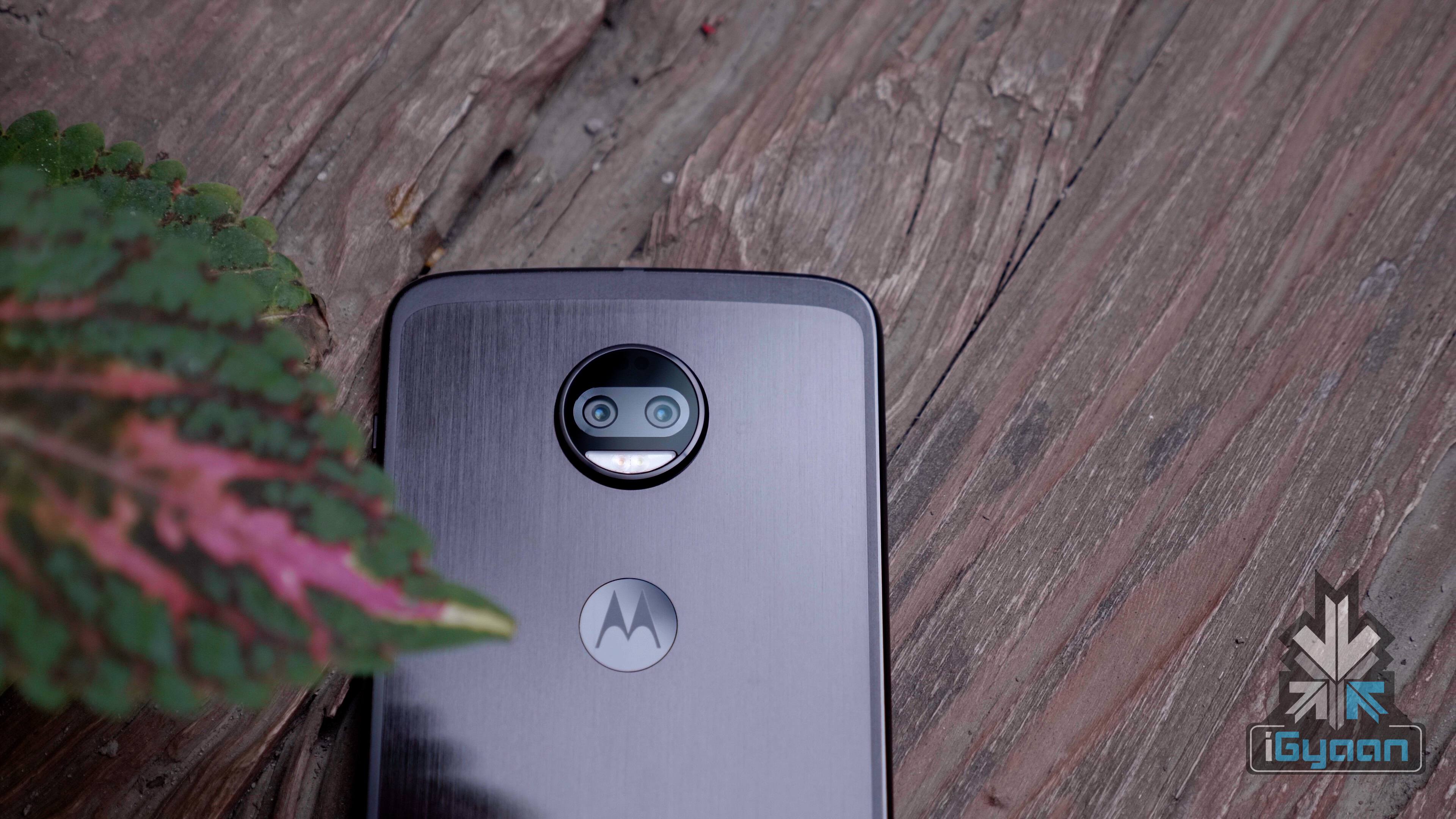
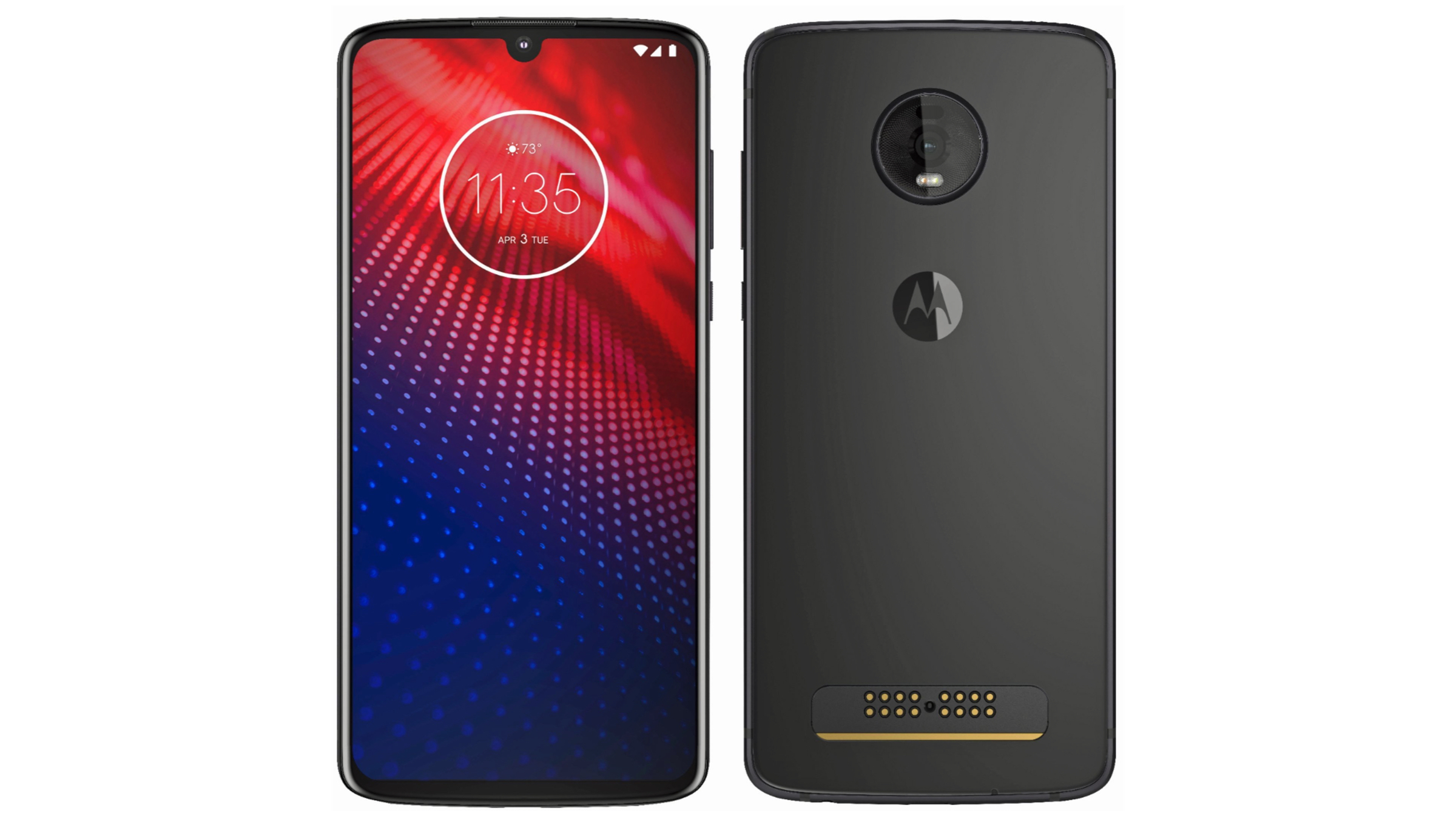
Motorola, a renowned smartphone OEM, launched the first Moto Z smartphone back in the year 2016. Remarkably, the aforementioned smartphone lineup allows users to add certain functionalities with the help of additional accessories called Moto Mods. The functionality that a Moto Mod can add could range from external battery pack to a loudspeaker pack to even an optical zoom camera. The company is expected to launch a new device in the lineup in the following weeks. This handset, allegedly called the Moto Z4 has been leaked in design renders by the popular gadget tipster Evan Blass (@evleaks) on Twitter.
Moto Z4
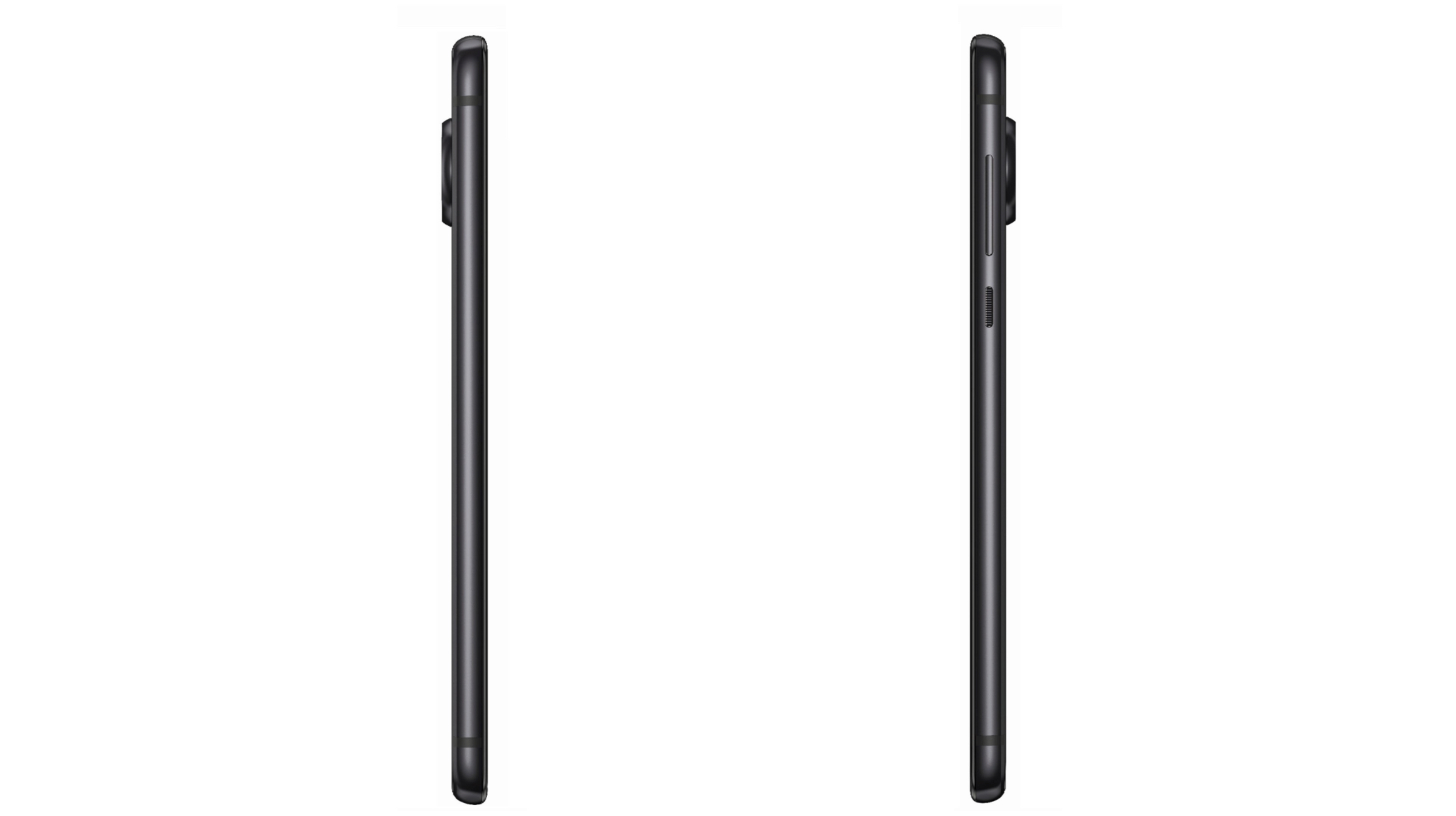
The upcoming Moto Z4 is expected to be a mid-range offering from Motorola. Leaked renders of the smartphone reveal it will sport a design that is reminiscent of its predecessors. The reason the design remains the same may be because of the promised uniform support of the Moto Mods accessories across different generations for a minimum of three years. While the promised support would have ended with the Moto Z3 launched last year, the company may be sticking with the same design with the Moto Z4 for the accessories to last longer and making the upgrade easier for buyers of the old device.
Previous leaks suggest the upcoming Moto Z4 will feature a 6.2-inch Super AMOLED panel with a resolution of 2280 x 1080 px. To maximise the screen real estate, the company will use a waterdrop notch on top of the display like seen in the Moto G7 and Moto G7 Plus. For biometrics security, it may have an in display fingerprint sensor with support for face unlock technology. The handset will run on the 11nm Snapdragon 675 SoC which is also found in the Redmi Note 7 Pro. The chipset is comprised of an Octa-core CPU and the Adreno 612 GPU. In terms of optics according to the renders, the Moto Z4 will have a single rear camera which is expected to be an f/1.75 aperture equipped 48MP Sony IMX 586 sensor. In terms of memory and storage, the smartphone will have 6GB of RAM and 128GB of internal storage.
Past leaks claim the Moto Z4 will be powered by a 3600 mAh battery with support for 18W fast charging. The smartphone is likely to run on the latest Android 9 Pie with some additional customisation by Motorola. Leaked renders of the handset reveal it will have a USB Type C port for charging and data syncing and will retain the 3.5mm headphone jack. The increased intensity of the leaks of the device hint its launch is imminent. Unfortunately, details about the pricing are not available yet, but it is reported to launch at a price of US$ 450 (Rs. 31,300).
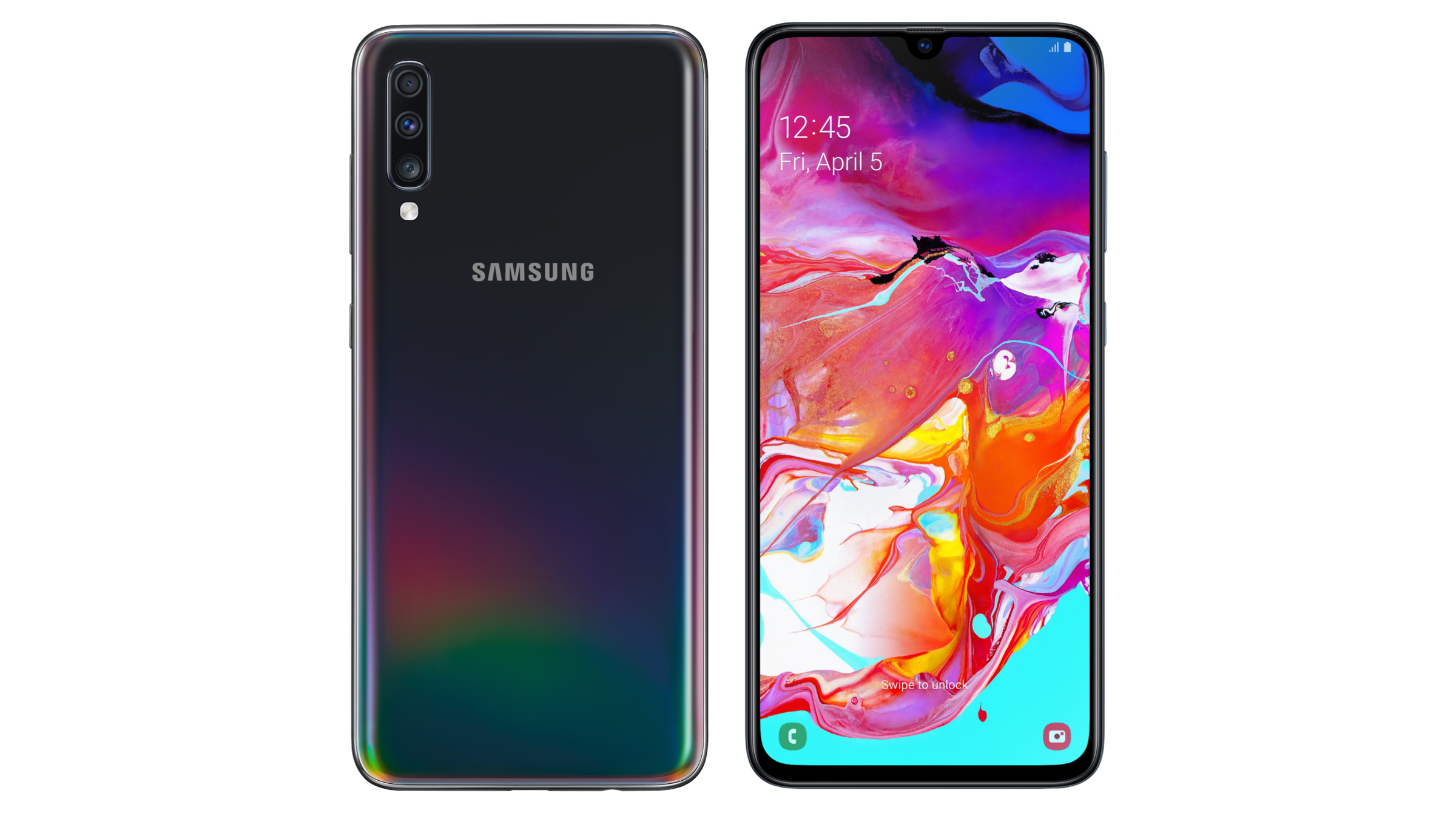
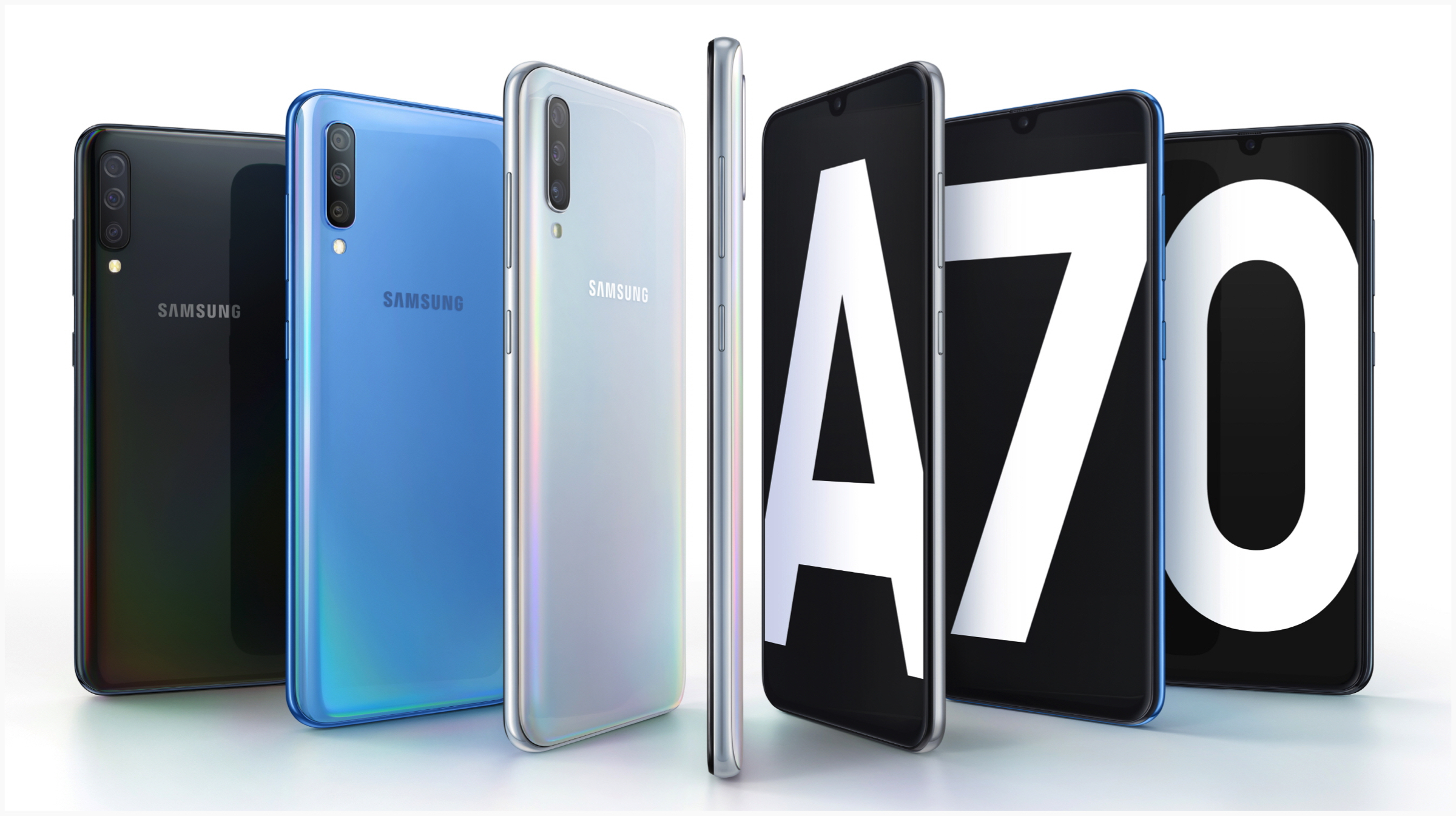
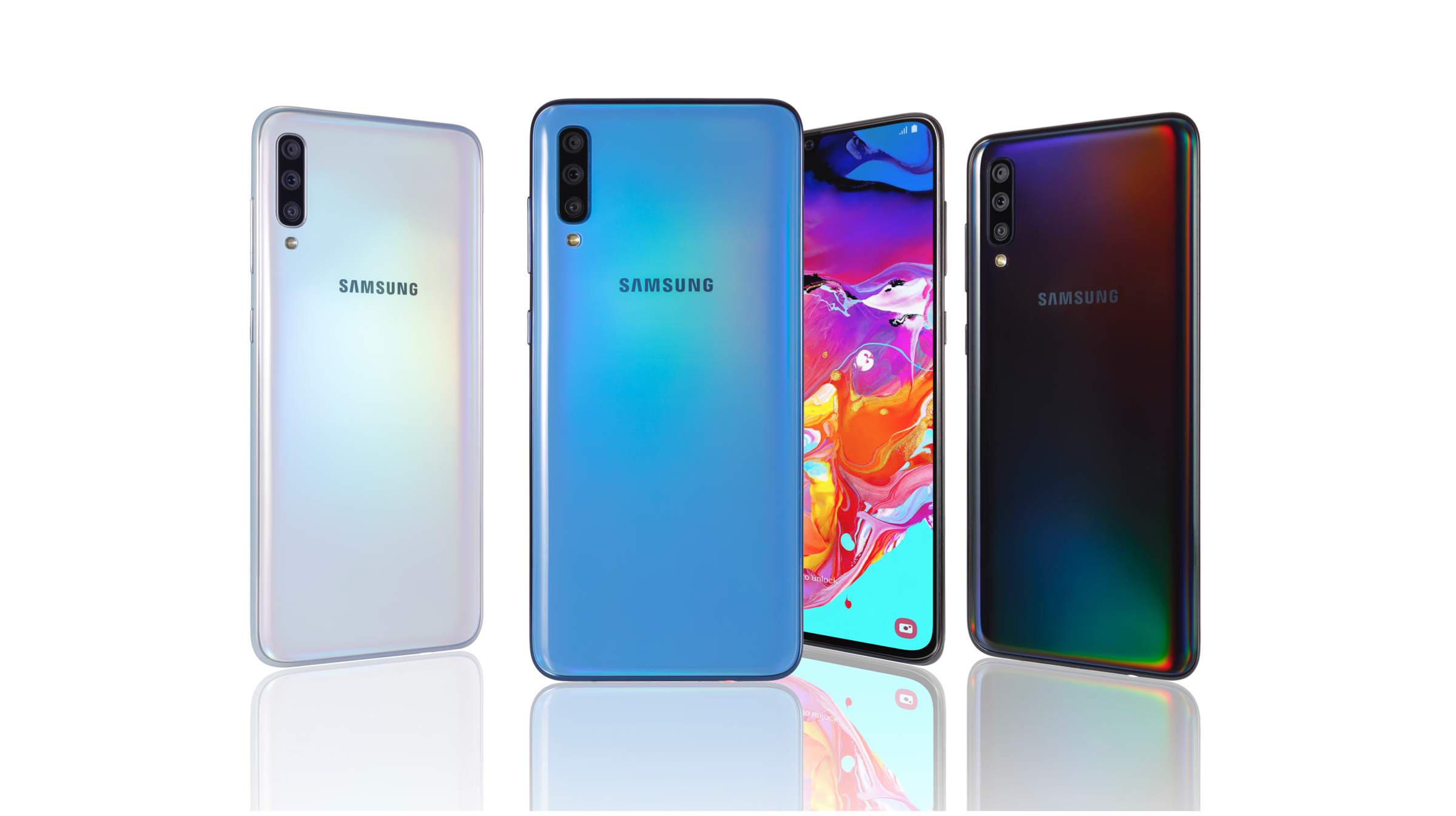
On the 17th of April, Samsung unveiled the Galaxy A70 in India which is a mid range focused smartphone. Like other Galaxy A handsets, the latest device has a vivid Super AMOLED display and a large battery. Even though the smartphone was unveiled two weeks ago, it was not put for sale. To the joy of excited consumers, the device is now available for purchase in the country.
Samsung Galaxy A70 Price and Availability
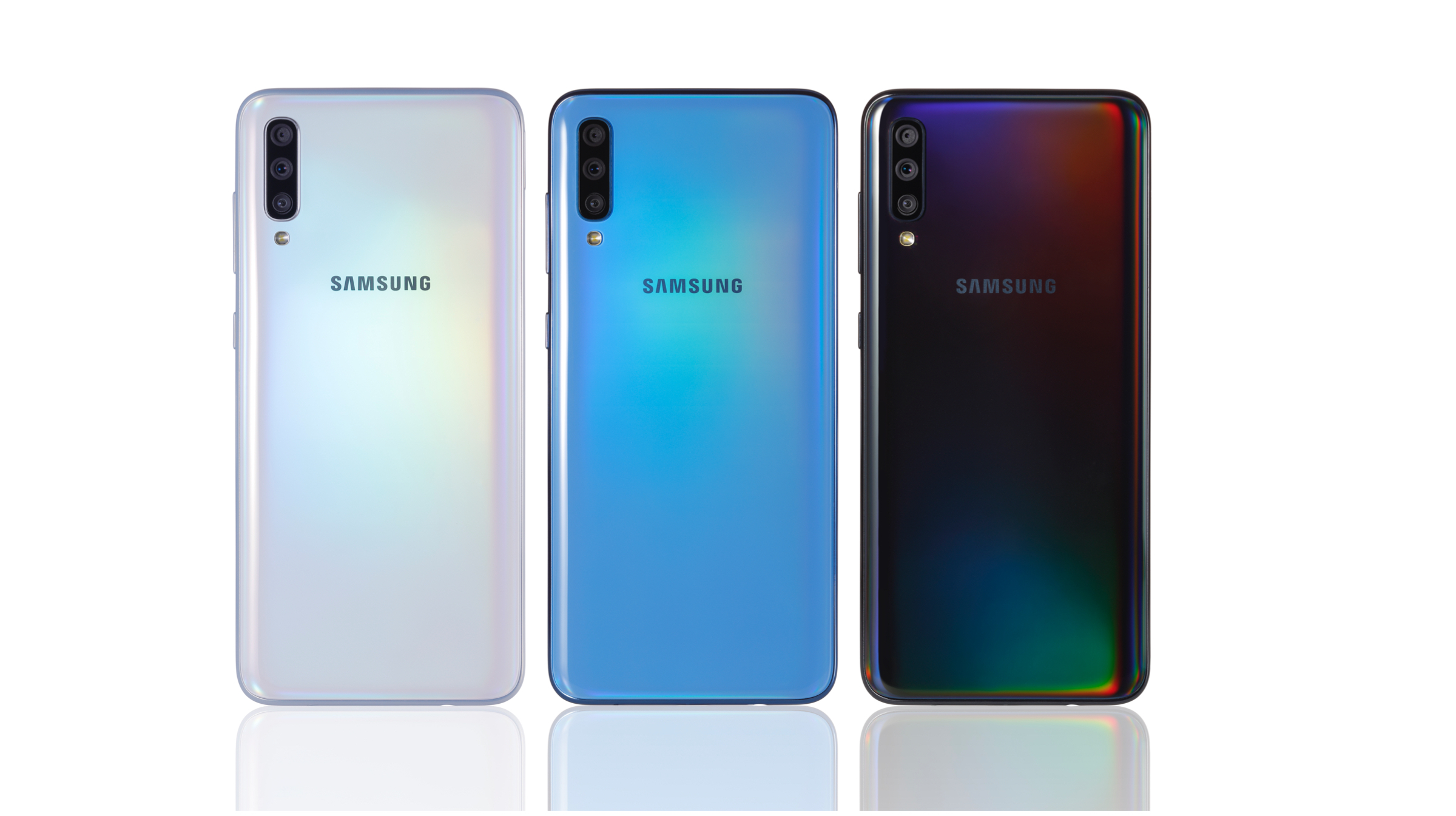
The Samsung Galaxy A70 will be available via Flipkart.com, Samsung Online store, as well as conventional brick-and-mortar stores in the country. The smartphone is offered in three colour options which include Blue, Black and White. It is available in a single RAM + ROM variant for which the price is as follows:
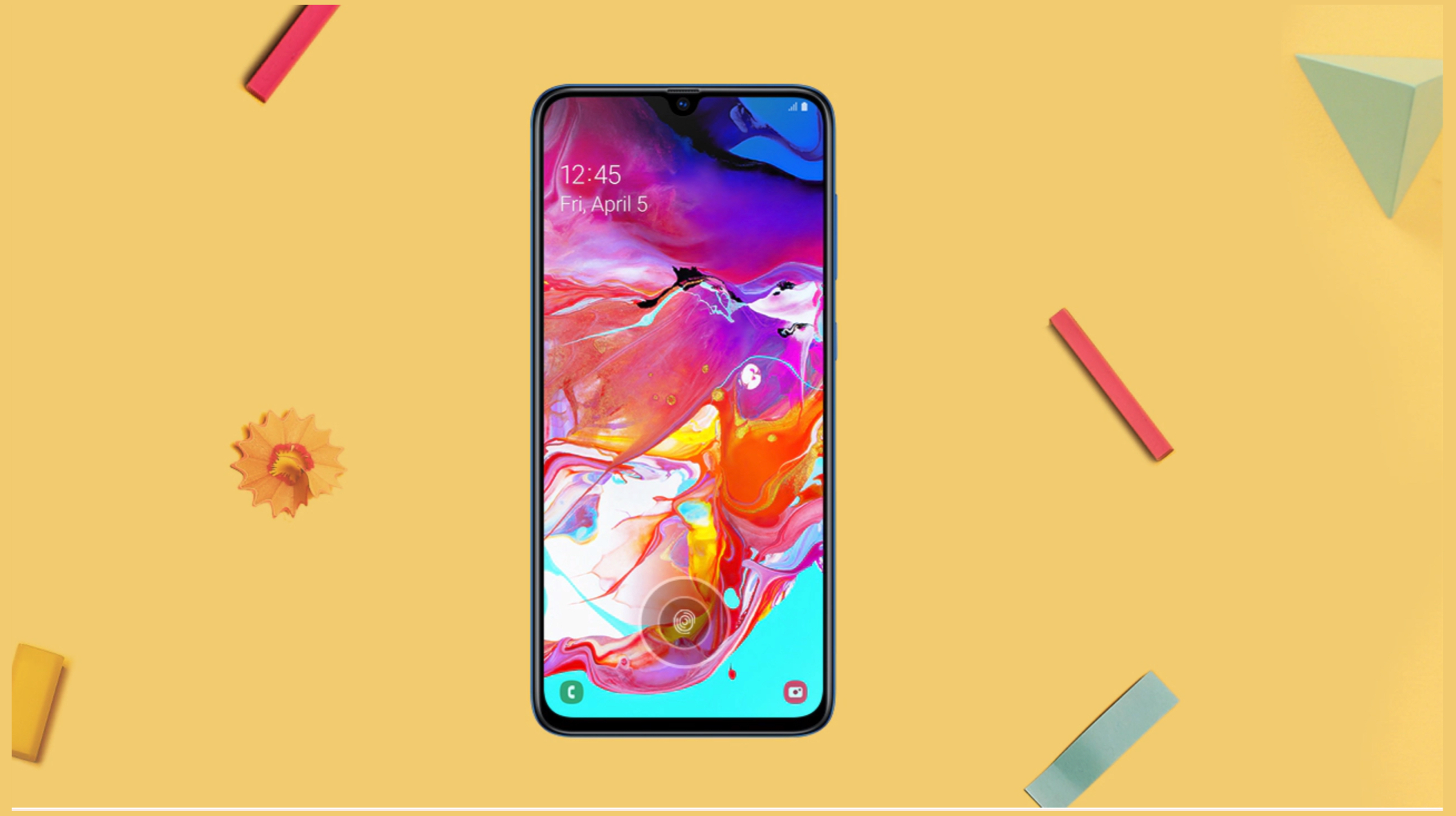
The Samsung Galaxy A70 has an elegant design with an edge to edge display on the front and ‘3D Glasstic’ gradient at the back. The front of the smartphone accommodates a massive 6.7 inch Super AMOLED display that has a resolution of 2400 x 1080 px. The front of the handset has negligible bezels on all sides and a small water drop notch is present on top of the display. For biometrics and security, it features an in-display fingerprint scanner and supports face unlock technology.
The Samsung Galaxy A70 is kitted with the 11nm Snapdragon 675 SoC which consists of an Octa-core CPU and the Adreno 612 GPU. For optics, the smartphone has a triple rear camera setup consisting of a 32MP sensor with an f/1.7 aperture; combined with an 8MP ultra-wide angle sensor and a 5MP f/2.2 depth sensor. For selfies, it has an f/2.0 aperture equipped 32MP camera which is housed in the Infinity-U notch on top of the display. As previously mentioned, the device has 6GB of RAM and 128GB of internal storage which can be further expanded upto 512 GB via the dedicated microSD card slot.
The Galaxy A70 packs a 4500 mAh battery which supports 25W fast charging via the bottom mounted USB Type-C port.The handset runs on Samsung’s OneUI which is built on top of the latest Android 9 Pie.
American Multinational Semiconductor Company, AMD has confirmed that the highly anticipated Navi Graphics Cards will make their way into the market in the third quarter of 2019. Along with upcoming GPUs, the company is also reported to unveil the first Zen 2 architecture based CPUs. The aforementioned information was revealed following AMD’s latest financial figures which were leaked previously.
The Navi GPU chip will be manufactured using 7nm fabrication technology. AMD will initially release mid-range models for the same, which are speculated to be the Navi 10 GPUs. Further iterations, including the more powerful Navi 20 graphics cards will be launched later in the year 2020, reports state. The Navi 20 series graphics cards will go up against NVIDIA’s more powerful GPUs, such as the RTX 2080 and RTX 2070.
AMD’s Upcoming Big Revelations
The company has also hinted towards some big chunks of information regarding the upcoming GPUs that will be revealed at the Computex Keynote in May 2019. However, since rumours are stating that the 7nm Graphics Cards will be launched on 7/7, or the 7th Of July, AMD might just limit the information reveal to a tease regarding the GPUs. This falls in line with their recent announcement of the Navi Cards release in the third quarter.
As mentioned previously, AMD will also unveil its first Zen 2-based 7nm processor in the same quarter, which is codenamed “Rome”. They will comprise of second-gen EPYC chips, which will be targeted towards heavyweight data handling and server management. AMD’s move towards 7nm based components can be a power-move for the company. Since NVIDIA released the budget-friendly yet powerful GTX 1660 Ti GPU, AMD’s new Navi 10 cards will have to gain ground here in order to go up against the former graphics card.
Apple, one of the biggest technology companies in the world released its quarterly earnings on April 30. According to the reports, the company earned US$ 58 billion in revenue and $11.56 billion in profits. While the company stopped revealing the sales of iPhones, iPads and Macs starting last year, a separate report from the International Data Corporation (IDC) has also been announced, revealing the same. It stated the global smartphone market saw a decline of around 6 percent Year on Year (YoY) compared to the same quarter in the year 2018. This led to Apple iPhones performing the worst out of the bunch, seeing a sharp sales decline of 30 percent over last year.
Apple’s Revenue For The Quarter
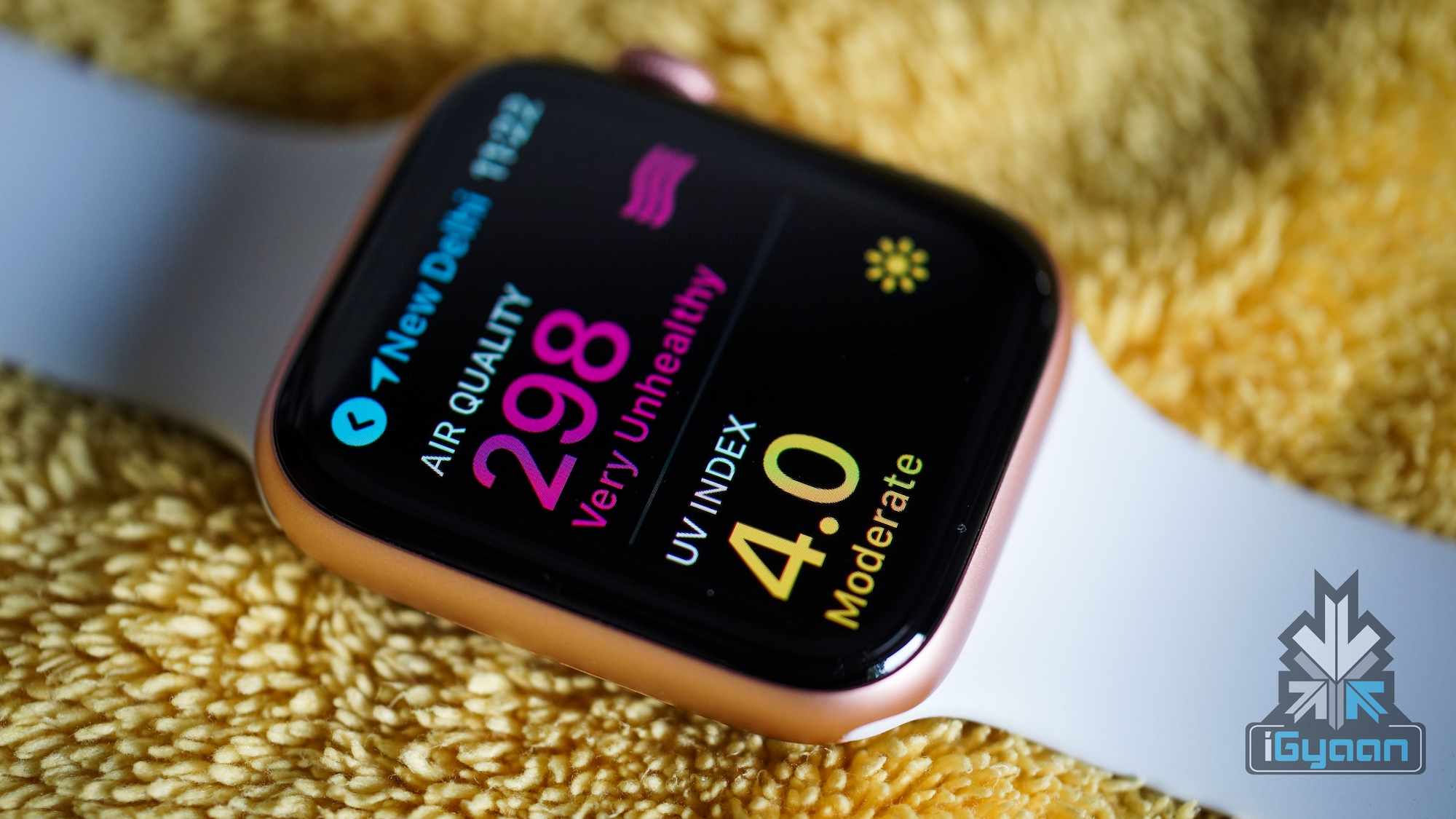
Apple Watch Series 4
Apple earlier predicted revenue between US$ 55 billion and US$ 59 billion for this quarter of the year. While the actual number hits the predicted mark, it is slightly lower than the US$ 61.1 billion the company announced the same quarter last year. The lower number is credited due to the gradually diminishing hardware sales. Despite the decrease in revenue, the CEO of Apple, Tim Cook was noted saying the company has hit an all-time record for services and has seen a strong momentum of Wearables and Home accessories category. According to him, more details about the companies revenues and sales will be shared at the 30th Annual WWDC (Worldwide Developers Conference) scheduled for the month of June.
Furthermore, according to the aforementioned quarterly report by IDC, Apple shipped around 36.4 million iPhones during this quarter of the year. Notably, this is a significant 30.2 percent decline compared to the same time period last year when it shipped 52.2 million iPhones. The total breakdown of Apple’s revenue breakdown by its hardware products compared to last year is mentioned below.
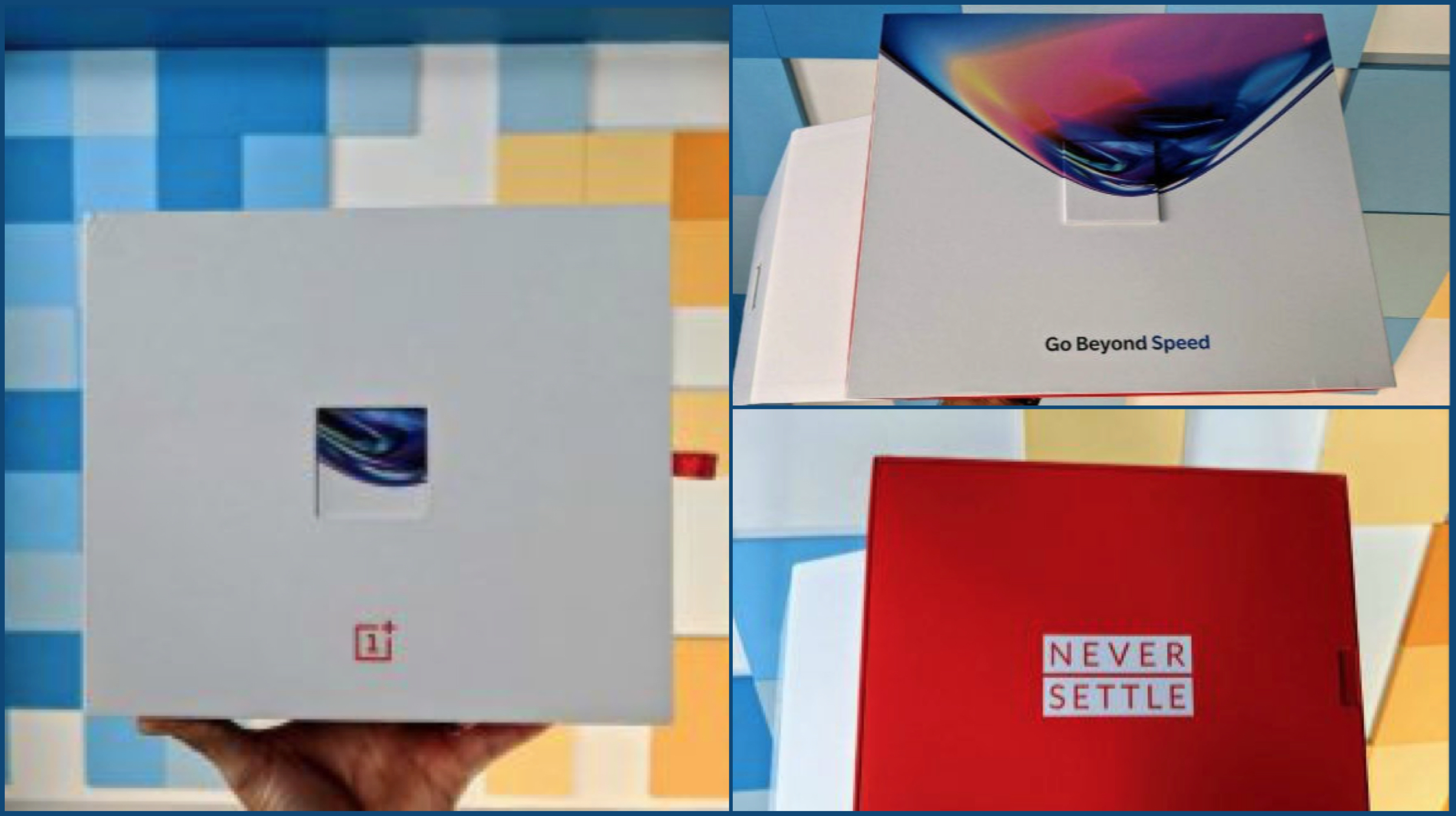
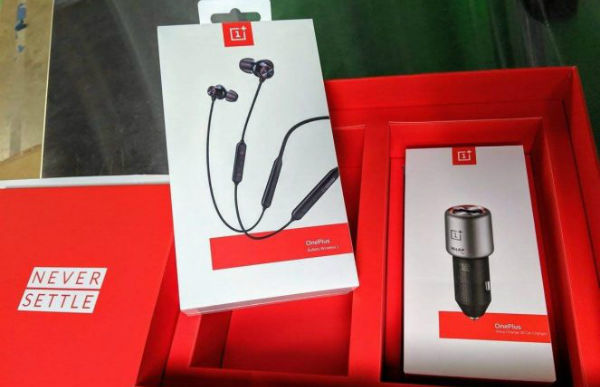
OnePlus is set to launch successors of the OnePlus 6T on the 14th of May. Going by the leaks and teasers, the upcoming smartphones will be a worthy upgrade over the current flagship and carry the OnePlus 7 and OnePlus 7 Pro moniker. As we move closer to the official launch date, more details surrounding the devices are surfacing the internet. Lately, the Pro variant was spotted on popular benchmarking website, Geekbench with 12 GB of RAM. Further contributing to the launch specifics, the retail box of the flagship has leaked on Twitter. Even though the original Tweet has now been taken down, netizens were able to grab hold of the images shared.
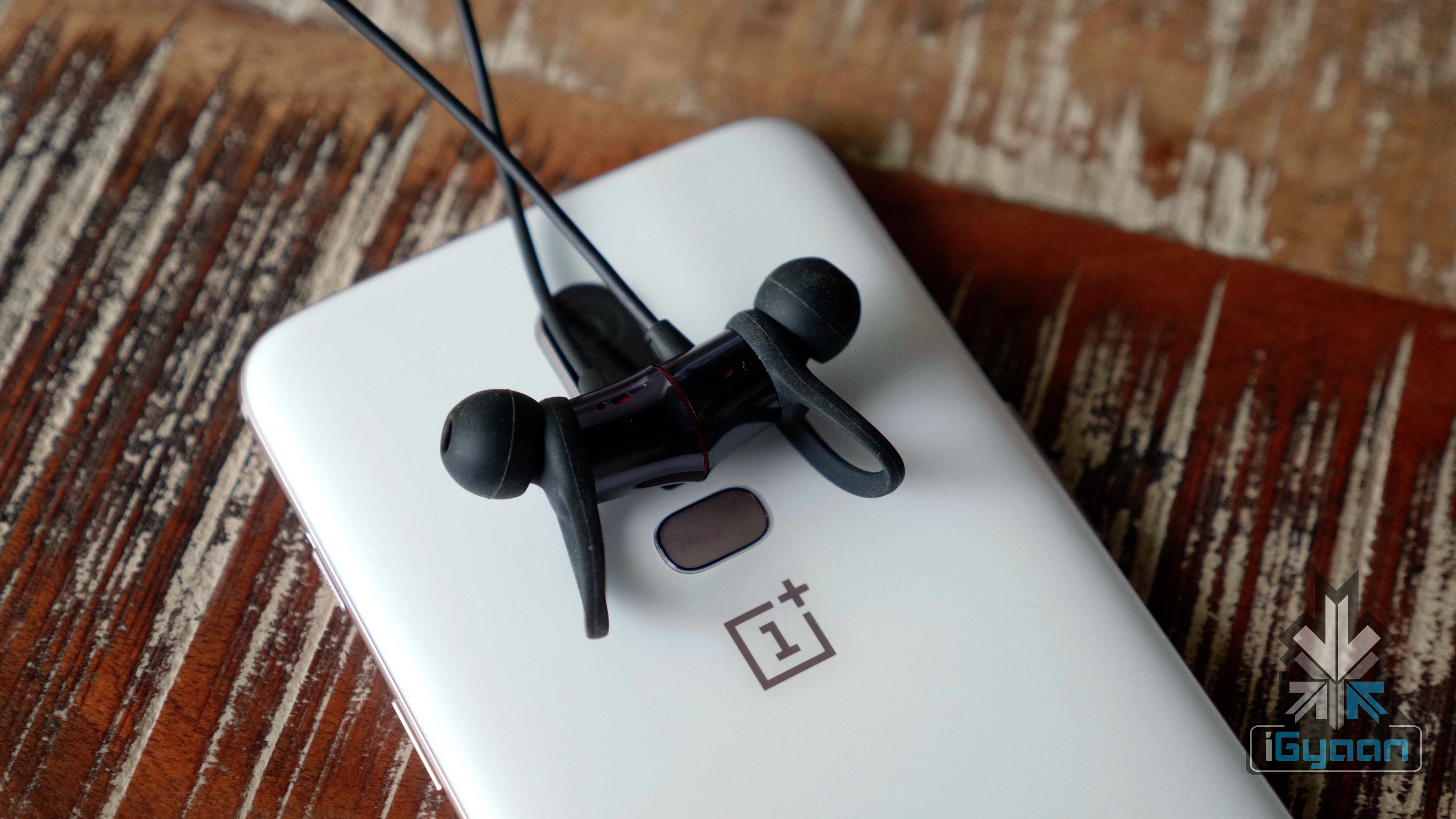
The images exhibit a conventional OnePlus box with Never Settle printed on top which reportedly belongs to the OnePlus 7 Pro. Noteworthy, the box contains unannounced OnePlus accessories which include the Bullets 2 wireless earphones and the Warp 30 car charger. However, it is not yet clear whether the aforementioned accessories will be provided complimentary to the device buyers or sold separately. The leaked Bullets 2 wireless earphones will succeed the original Bullets earphones which were launched last year. Even though the source did not reveal any features of the upcoming headphones it is expected to have the following features:
OnePlus Bullets 2 Expected Features
Like its successor, the OnePlus Bullets 2 have an around the neckband style form factor. They also feature an in-line remote for controlling audio with a magnetic back that automatically pauses and resumes the track.
Improved Sound Quality- The original OnePlus Bullets wireless earphones have an excellent sound quality and the upcoming OnePlus Bullets 2 are assumed to follow suit. The company is expected to further tune and optimise the new pair of headphones which will deliver even better sound output.
Bluetooth 5.0 and Longer Battery Backup- The original OnePlus Bullets have remarkable battery backup which also charges speedily. However, the current gen wireless earphones incorporate 4.1 and the upcoming OnePlus Bullets 2 is expected to have Bluetooth 5.0 LE (Low Energy) which will provide them with even longer battery backup.
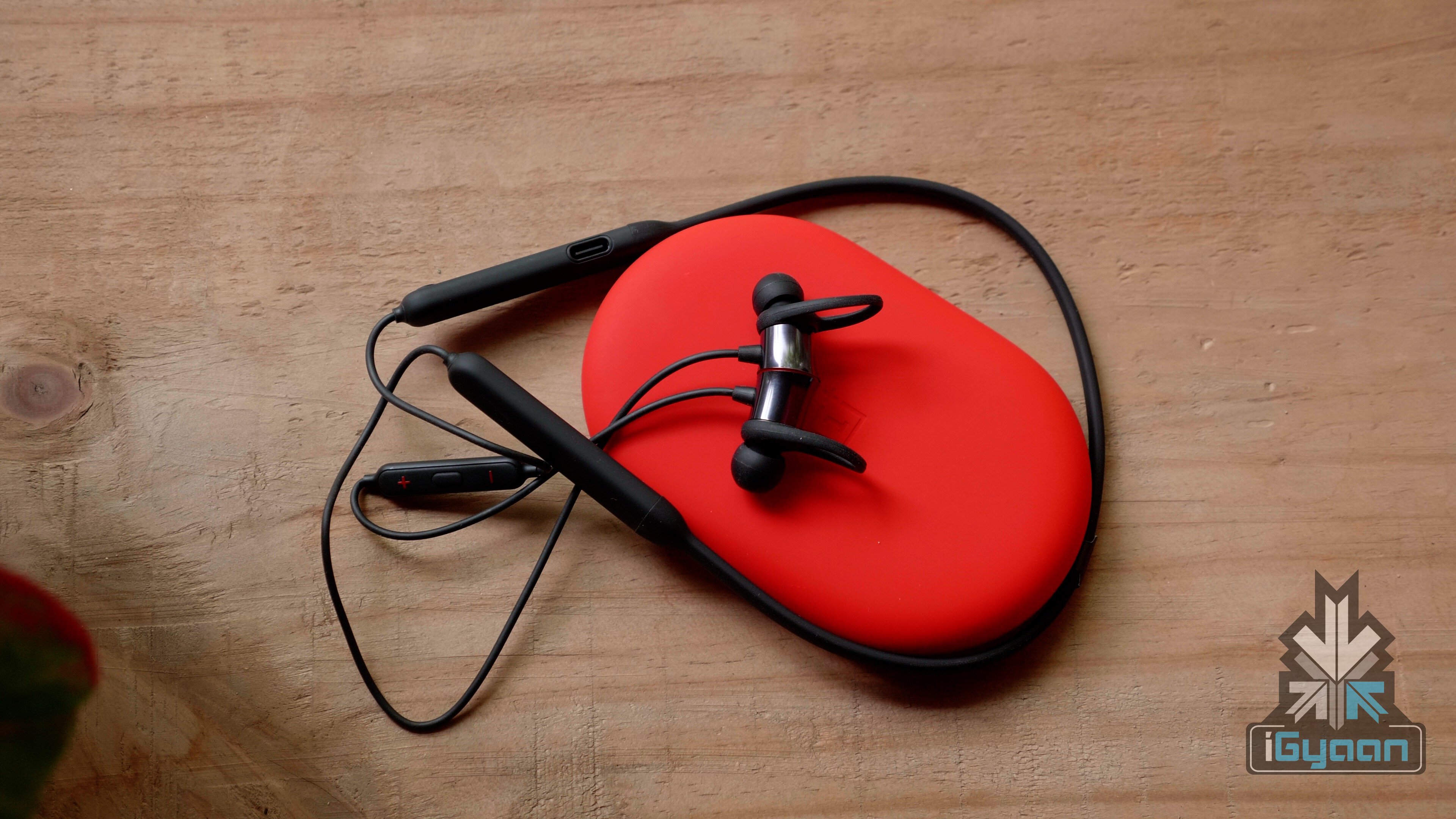
Original OnePlus Bullets
Redesigned Earbuds- The image quality of the leaked OnePlus Bullets 2 is not high resolution to reveal its design fully. Though, it is visible that the upcoming pair of wireless earbuds have a different design in contrast to its predecessor.
Talking about the OnePlus Warp Car charger, it will be able to charge a device with 30 w of power which is the same as what a conventional OnePlus 7 and OnePlus 7 Pro wall charger would. Finally, the price and detailed specifications of the upcoming accessories and flagship smartphones will be revealed at the official launch which is nearing fast.
It has been long anticipated that Google, the renowned American technology company will soon release two new smartphones. These devices allegedly called the Pixel 3a and Pixel 3a XL are expected to be the company’s mid-range offerings. While Google teased the handsets will be unveiled on the 7th of May on the sidelines of the Google I/O developers conference, no information on their Indian availability had been hinted before. In a recent listing, Flipkart; an e-commerce website in the country has revealed the upcoming smartphones from Google may launch on the 8th of May in India.
Pixel 3a, 3a XL India Launch
In a dedicated page on its website, Flipkart has shared a similar teaser as Google did a while ago to tease the Pixel 3a & 3a XL. While it doesn’t reveal any key detail about the smartphones, it claims more information about them will be available on the 8th of May. It is speculated the devices will be announced at the same time as the aforementioned global launch.
Pixel 3a, 3a XL
The upcoming Pixel 3a lineup will be Google’s first mid-range smartphone offering and the specced down versions of the Pixel 3 and the Pixel 3 XL respectively. The devices have been previously leaked to sport a design that is reminiscent of their elder siblings. However, the material of choice is expected to be polycarbonate instead of metal and glass on the Pixel 3 & 3 XL. The front is expected to be dominated by a 5.6 inch OLED display on the Pixel 3a while the Pixel 3a XL will sport a 6-inch OLED display. For biometrics and security, both the handsets will feature a rear-mounted fingerprint sensor.
Google Pixel 3XL
Under the hood, the Pixel 3a and 3a XL are reported to be kitted with the 10nm Snapdragon 670 SoC. The chipset is comprised of an Octa-core processor and the Adreno 612 GPU. For optics, an f/1.8 aperture equipped 12 MP single rear camera is expected in both the smartphones, while the front camera will have a resolution of 8 MP. In terms of memory and storage, the devices are expected to feature 4GB of RAM and 64GB of internal storage.
Past leaks suggest that both the smartphones in the Pixel 3a lineup will be powered by a 3000 mAh battery with support for fast charging. Like its elder siblings, they are expected to run on the latest Android 9 Pie with a stock interface and will get fast software updates. Unlike their elder siblings, they are expected to retain the 3.5mm headphone jack as seen in previously leaked images. A former listing on the Bluetooth certification website reveals the smartphones will support Bluetooth 5.0 connectivity.
As mentioned above, the Pixel 3a smartphone duo will be launched on the 7th of May at the Google I/O conference. Unfortunately, details about the pricing of the devices in India are not available yet. But they are expected to start at Rs. 35,000 for the Pixel 3a and Rs. 45,000 for the Pixel 3a XL.

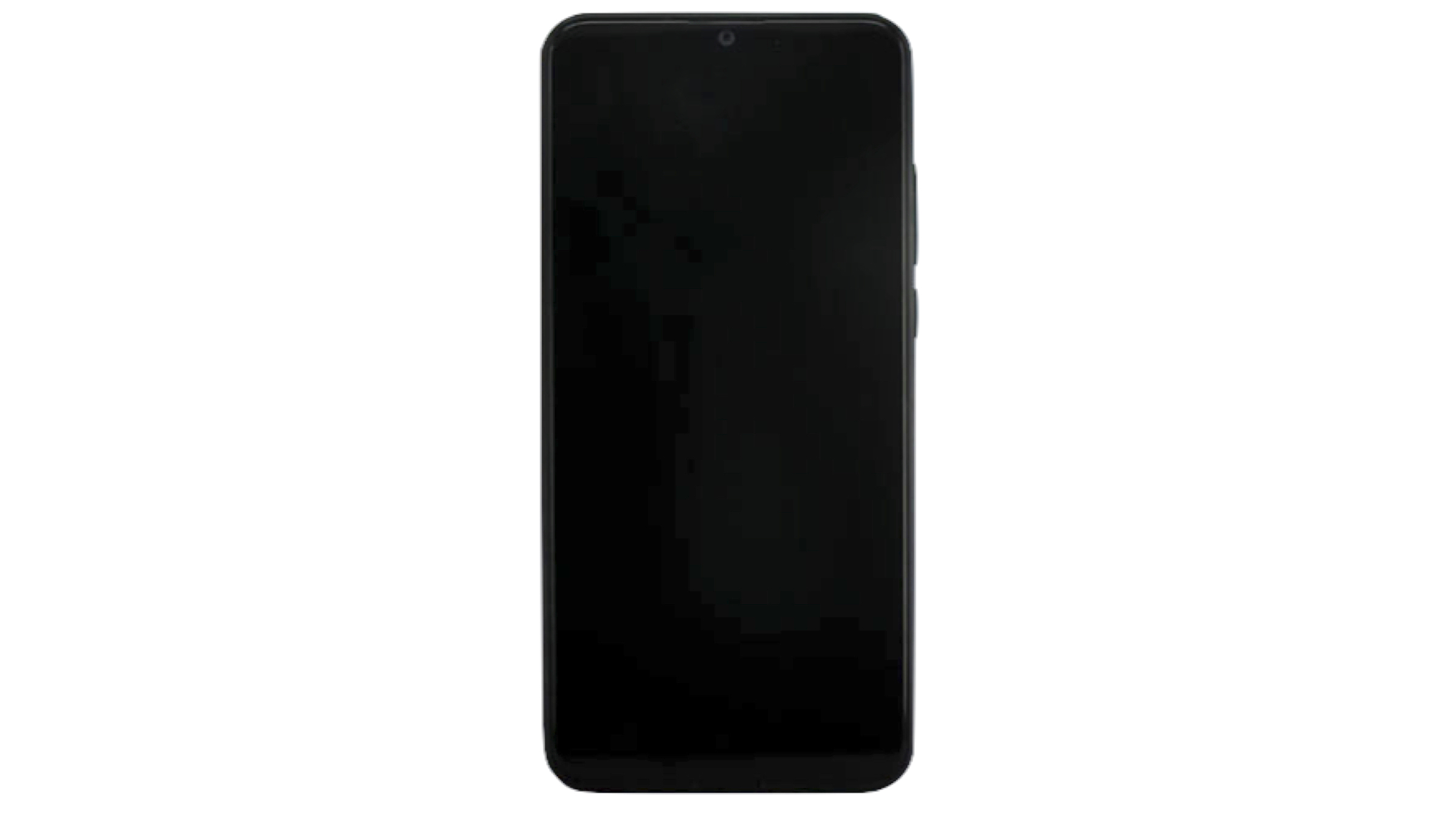 The TENAA certification reveals that the Lenovo L38111 measures at 156.4 x 74.4 x 7.9 mm and weighs 163 grams. The smartphone has a 6.3 inch FHD+ IPS LCD display with a resolution of 2340 x 1080 px. It has a waterdrop style notch up front that houses the selfie camera. The smartphone’s back panel appears to be made out of a glossy plastic material.
  In terms of optics, the smartphone has a triple rear camera setup, which accommodates a 16MP primary sensor. Any information about the other two sensors is not known as of now. For selfies, the smartphone packs a 8MP front camera. The Lenovo L38111 runs on the Android 9 Pie operating system.
 Also Read: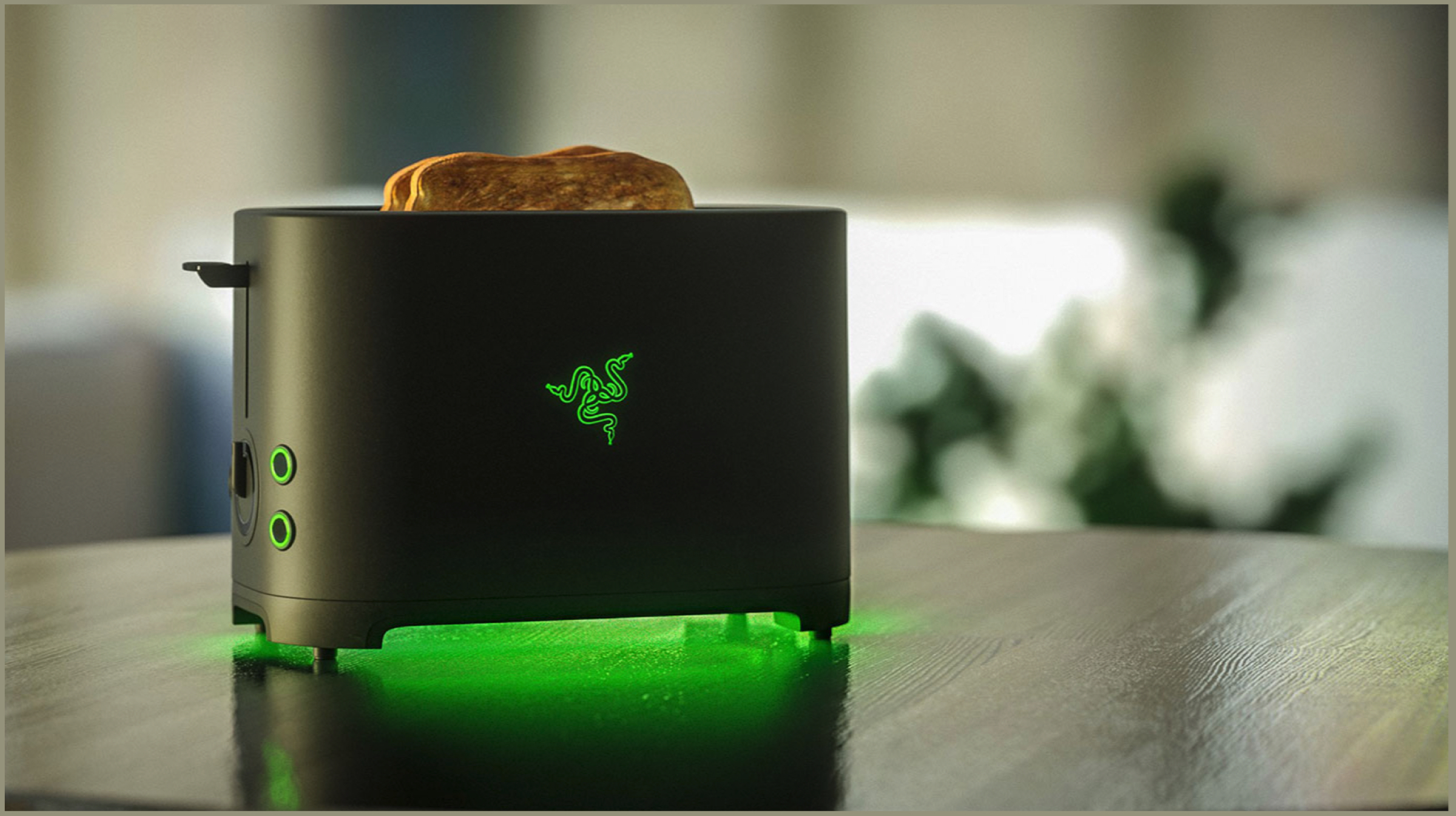


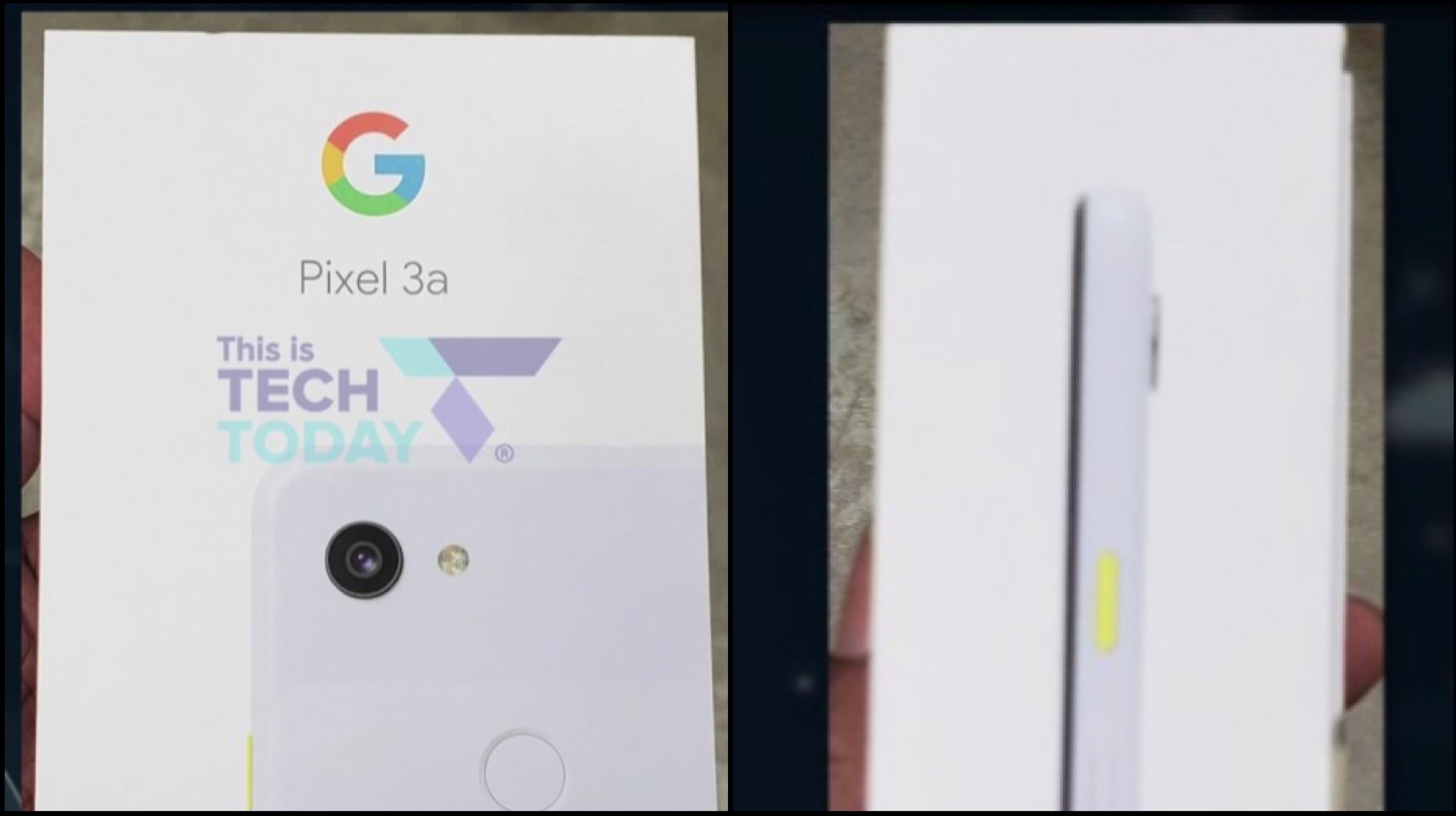 As per the leaked retail packaging images, the Pixel 3a will be available in a purple colour option apart from the Just Black and Clearly White variants, which will be named as “Purple-ish”. The retail packaging further affirms that the device will be available in two variants, one with 64GB and the other with 128GB of internal storage. Moreover, reports say that the Pixel 3a will be priced at US$ 399 (~INR 28,000) onwards, whereas the Pixel 3a XL will be placed at a price point of US$ 479 (~INR 33,000) onwards. A multitude of other details was also leaked regarding the upcoming Google devices, which are listed below.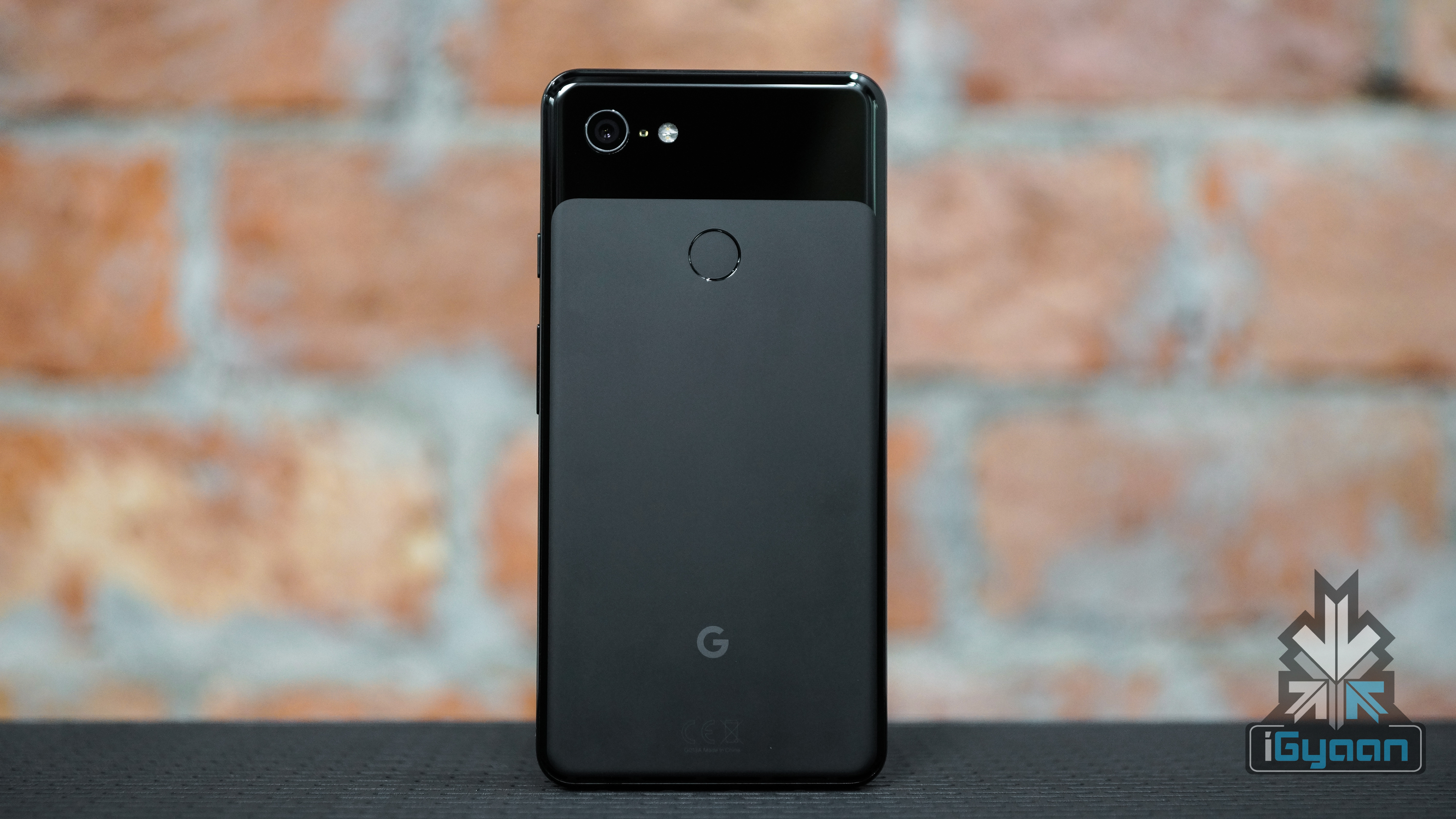
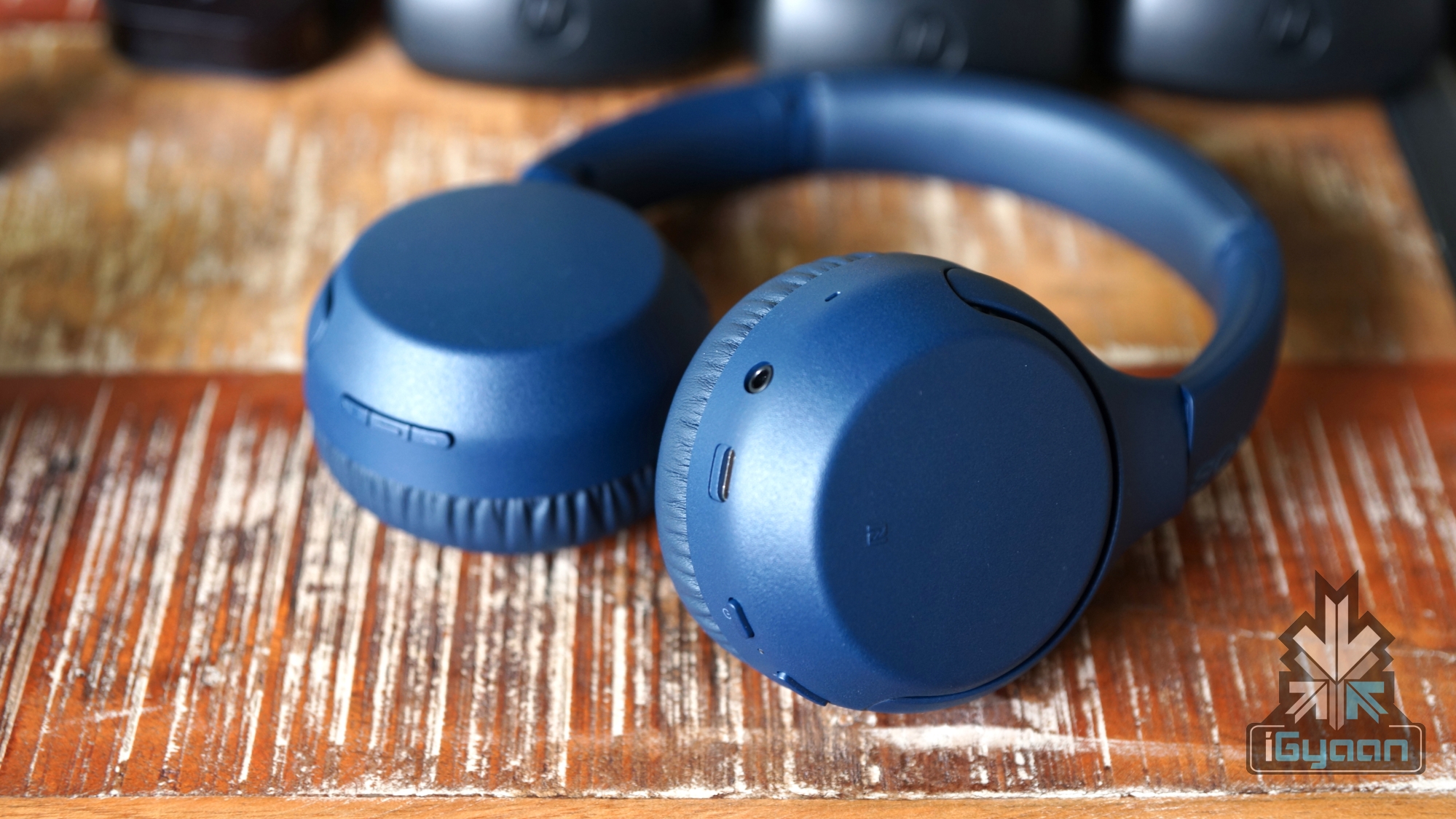 The Sony WH-XB700 are fabricated from high grade plastic with a smooth matte finish. The framework of the headphones is made of metal though. More metal would have been appreciated in the build of the WH-XB700. The ear cups have a swivel design, implying that the Earcups can rotate around the pivot. This will make it convenient for users to slip these headphones inside their backpacks . Weighing at just around 195 grams, these may be one of the lightest headphones in this segment
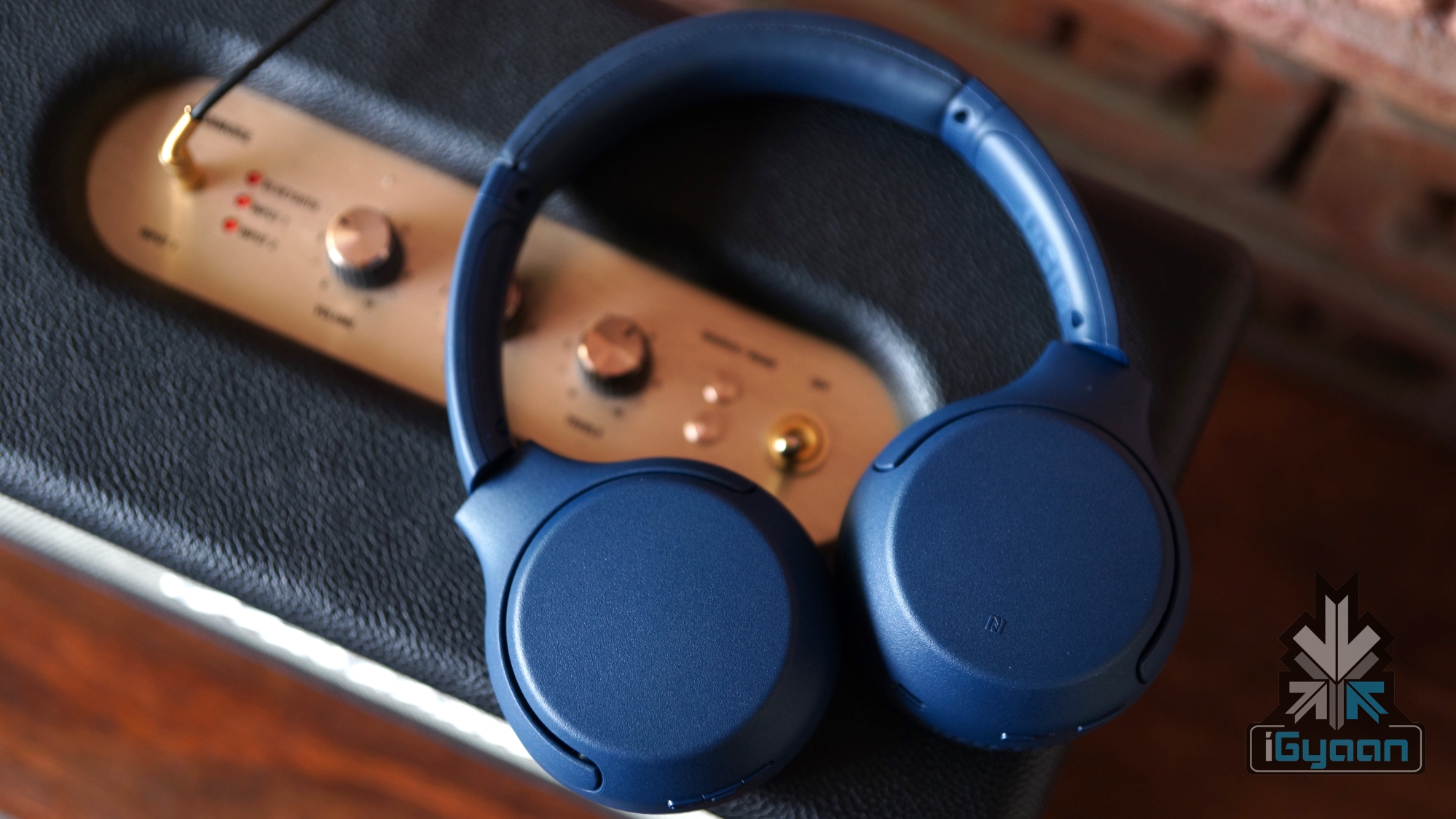 The primary defining feature of any headphones is its audio quality. The Sony WH-XB700 operate within a frequency range of 20-20,000 Hz with 44.1 kHz Sampling and have an impedance of 37 ? (ohms). The headphones are quite loud, clocking in at a loudness level of 103 decibels. The 30mm Neodymium driver churns out evenly distributed frequencies, but it’s really the lows where the headphones excel. At higher volumes, negligible distortion in the sound is present. Even though Sony has laid emphasis on the lower frequencies here, there is a profound focus on the highs as well, which make them a pleasure to listen to.
 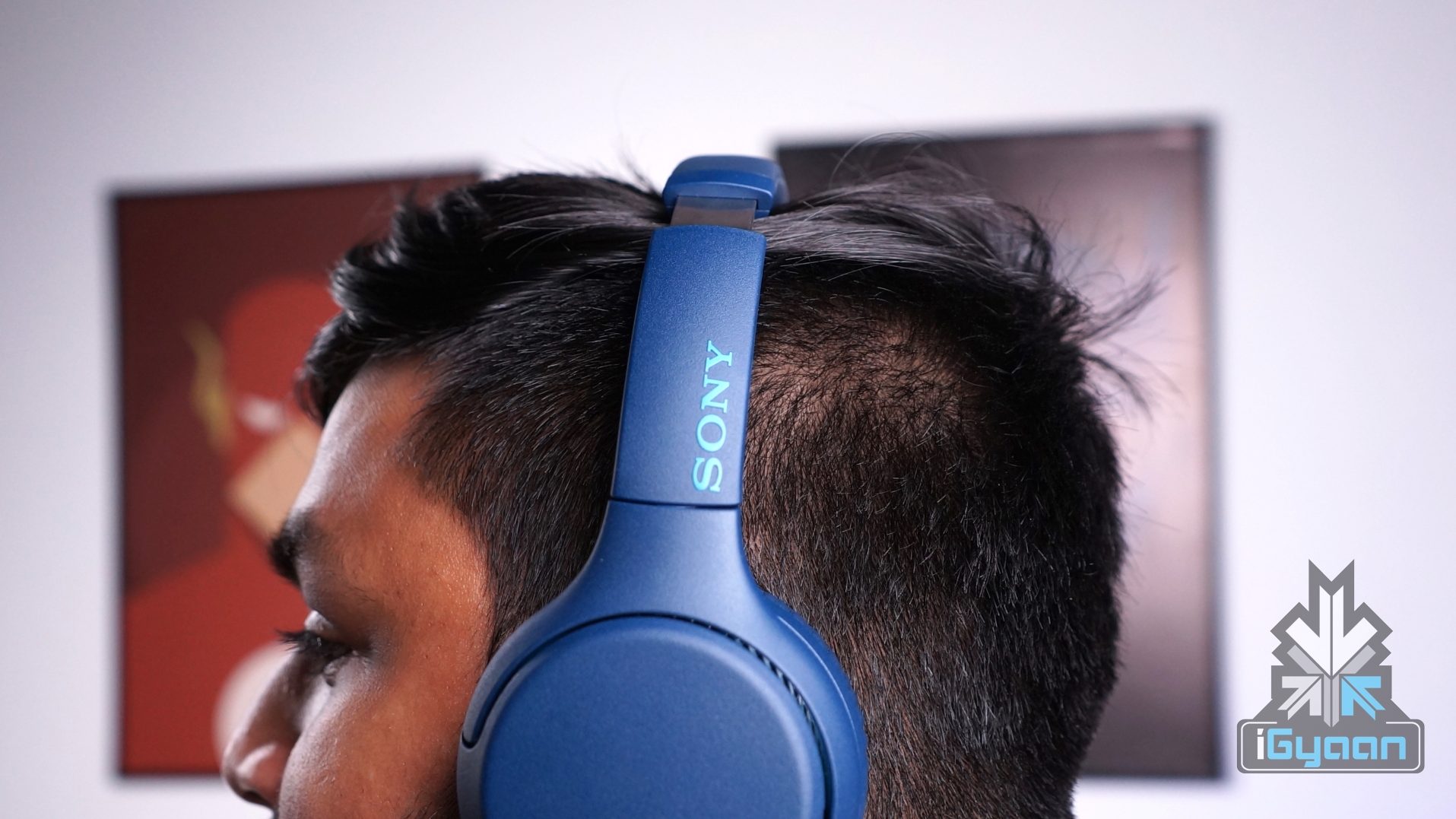 The headphones are advertised with “Extra-Bass”, and they live up to their name. The ample amount of bass goes easy on the ears, delivering a rich experience. Plus, the headphones sport the “Vocal Clarity” feature, which enhances the experience if you are listening to a podcast or watching a lecture. Noise isolation is not that great, but that is expected considering the supra-aural design of the headphones.
 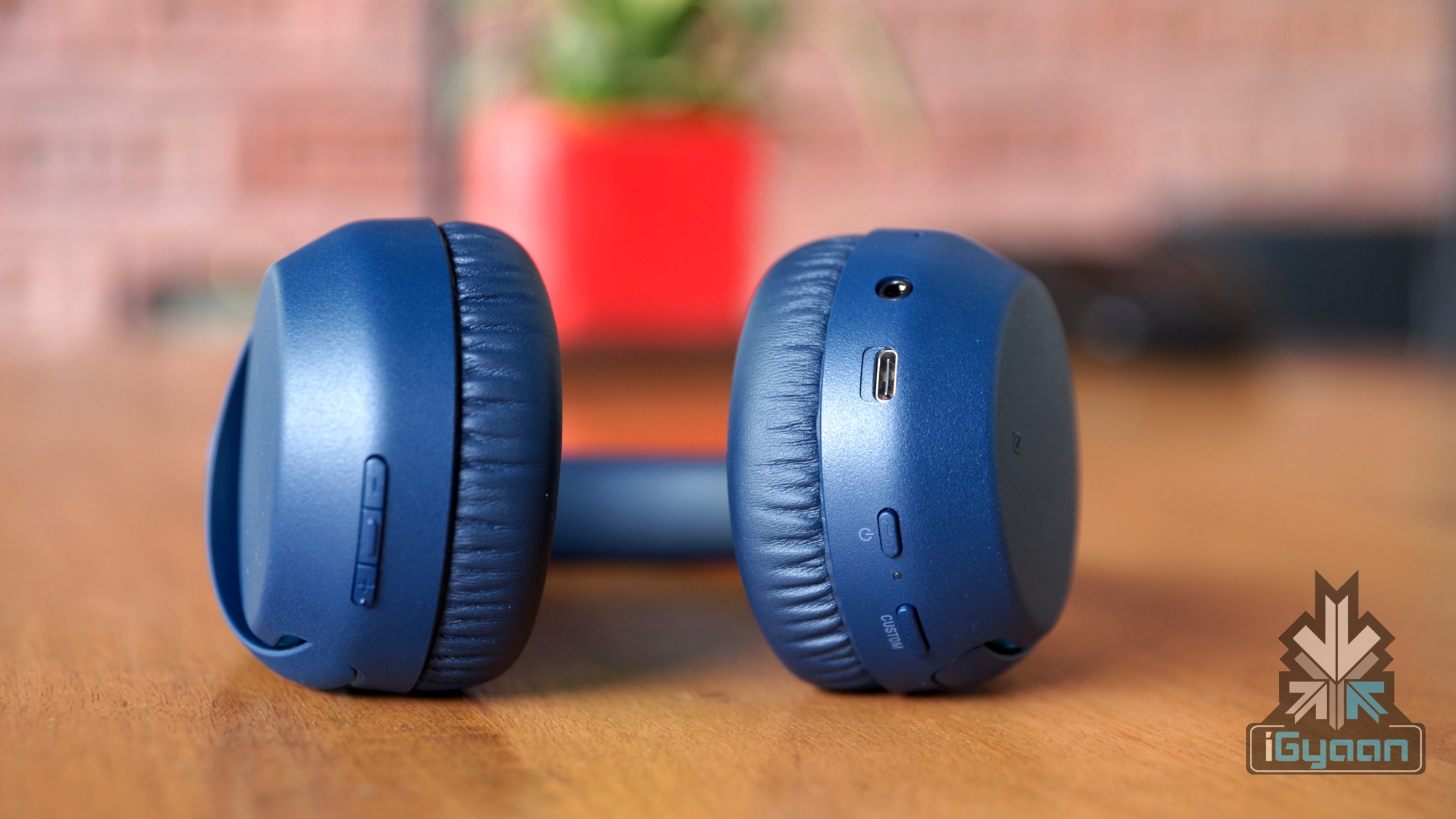 In terms of connectivity, the Sony WH-XB700 features Bluetooth v4.2, NFC (Near Field Communication), a USB Type-C port and a 3.5mm headphone jack for those times where you run out of battery. To pair the headphones with your smartphone via Bluetooth, the user needs to simply hold down the power button and the headphones will pop-up on your smartphone’s Bluetooth devices list. Like other headphones in this range, the Sony WH-XB700 cannot be connected to multiple devices simultaneously. They have to be disconnected from one device in order to connect to another one.
 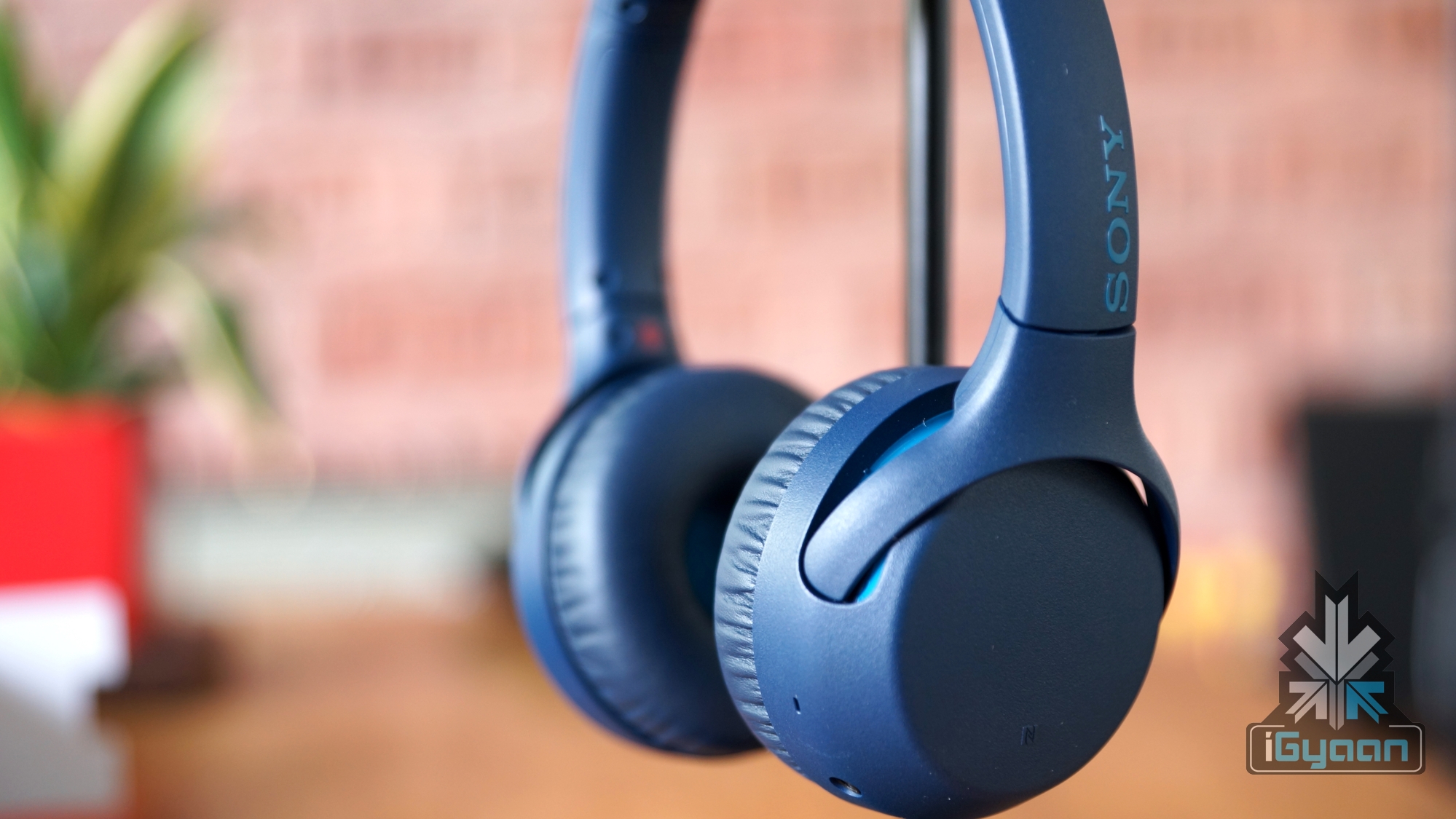 The Sony WH-XB700 features a Li-ion battery, which promises a battery life of 30 hours, and we tested that out. Interestingly, on the maximum value and bass levels, the headphones were able to churn out the aforementioned time with ease. The headphones can be charged via the USB-Type C port which is mounted on the left earcup. They also provide a 90-minute playback time after a 10-minute charge time, which can be helpful for users who are on-the-go. Overall, the headphones take a bit more than 4 hours to attain maximum charging capacity. And if you do manage to run out of battery, you always have the option to use them with the 3.5mm AUX cable.
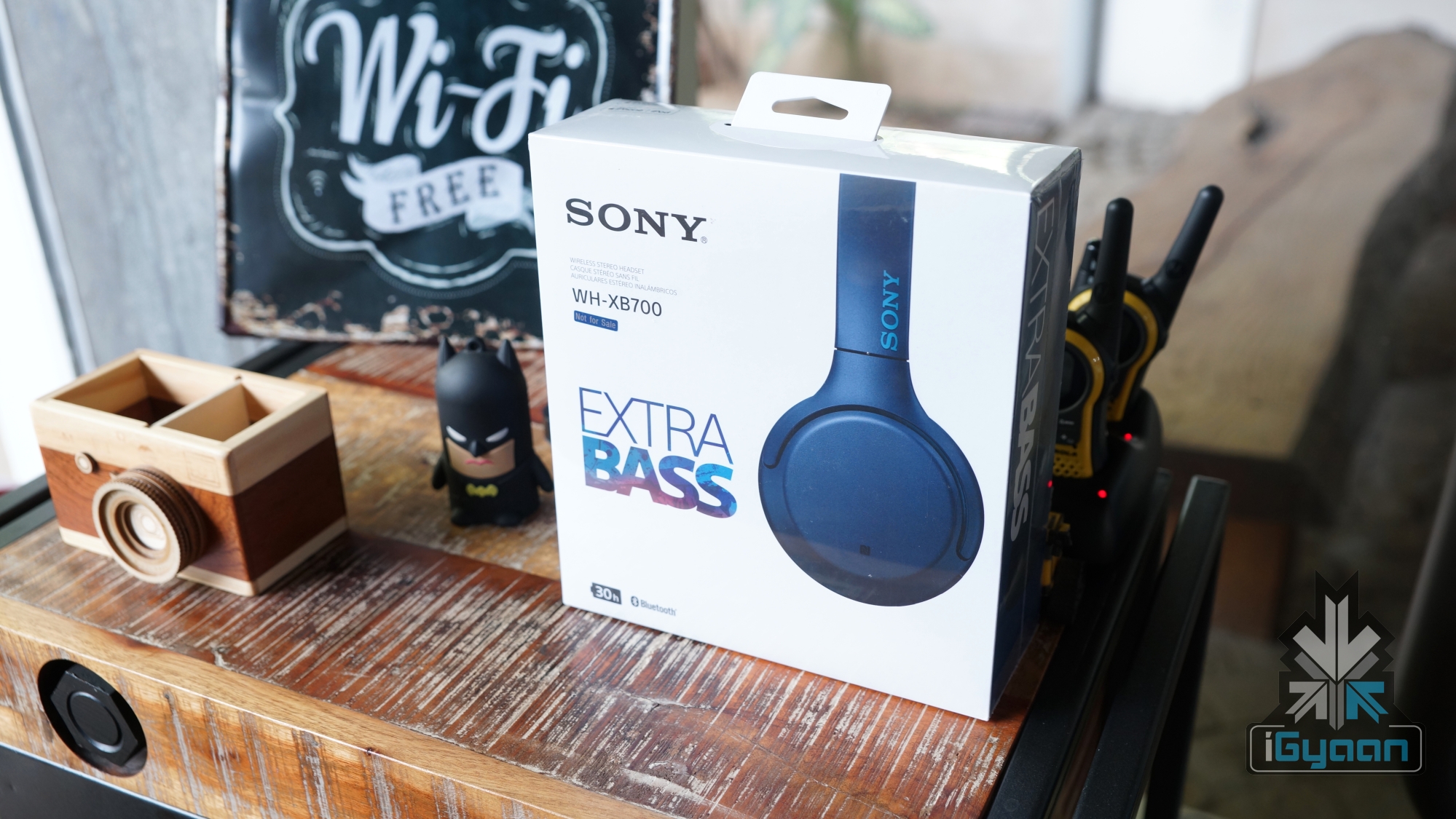 As previously mentioned, the Sony WH-XB700 headphones have a “Custom” button on the left earcup which can be mapped to either Alexa or Google Assistant dependent on user preferences. We noticed that the button was very responsive, as it immediately launched Google Assistant on our device in all instances. However, as mentioned previously, the Custom button only works in wireless mode. Nonetheless, we found the custom Assistant button very convenient and is welcoming addition.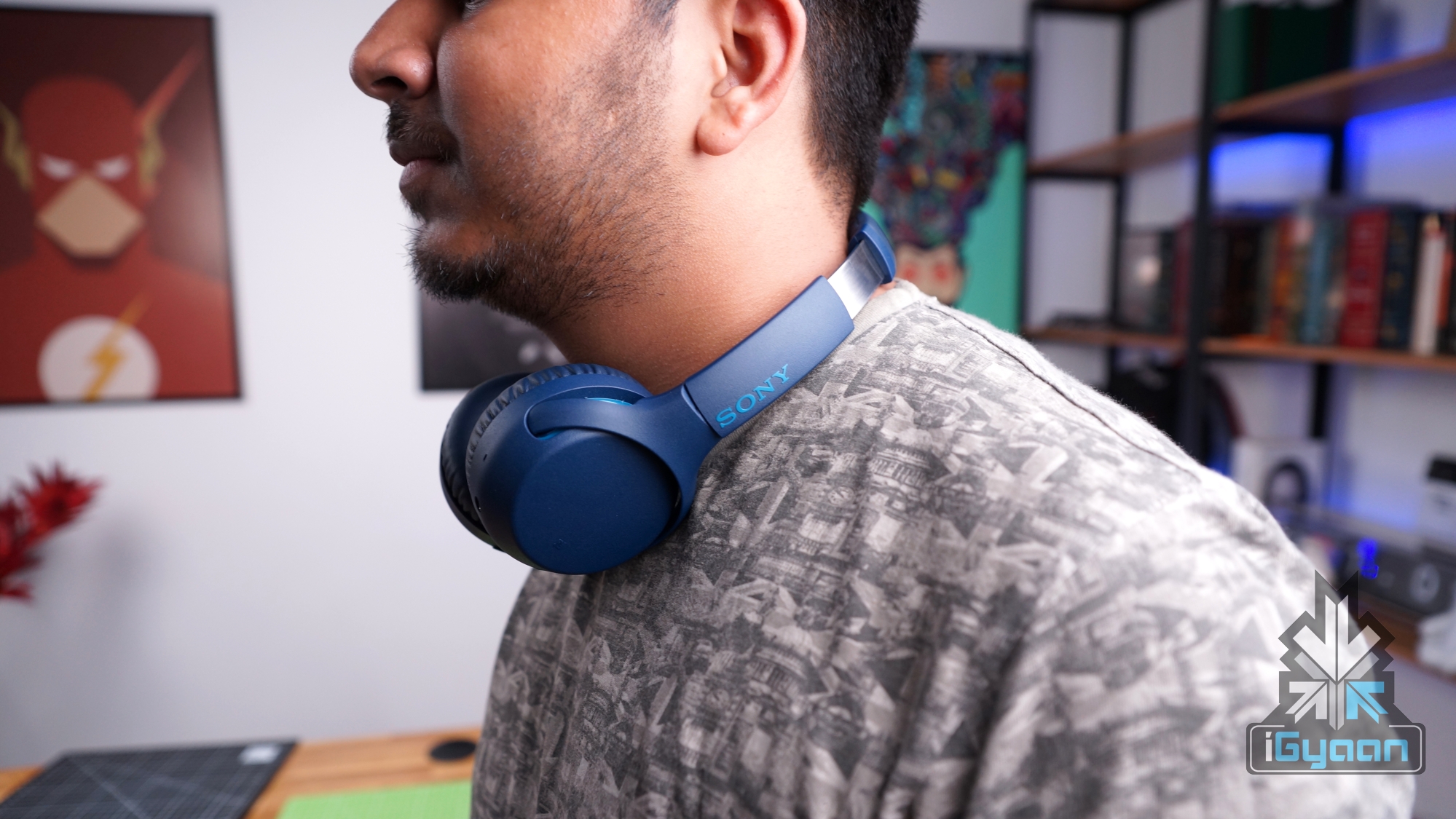


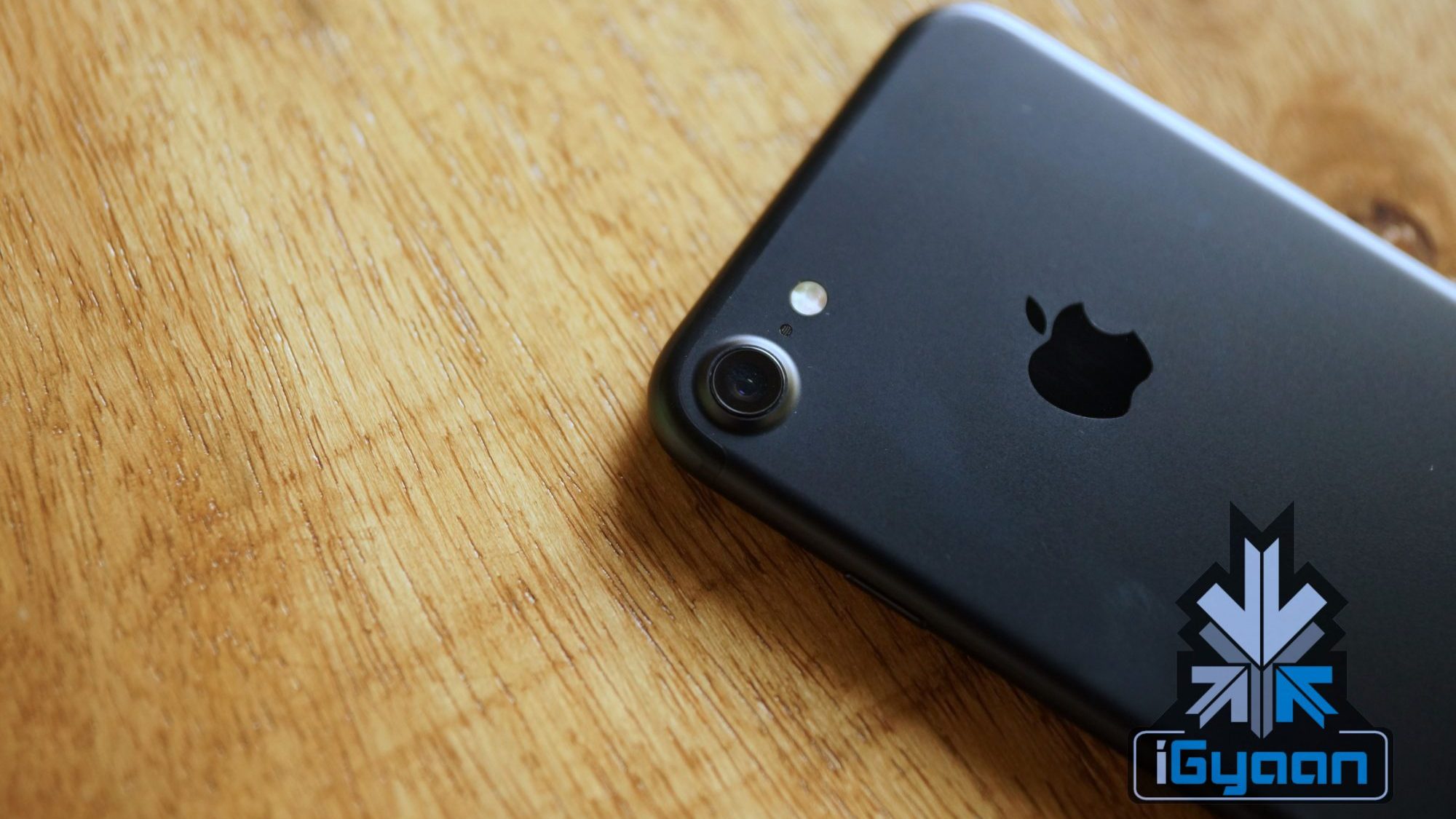
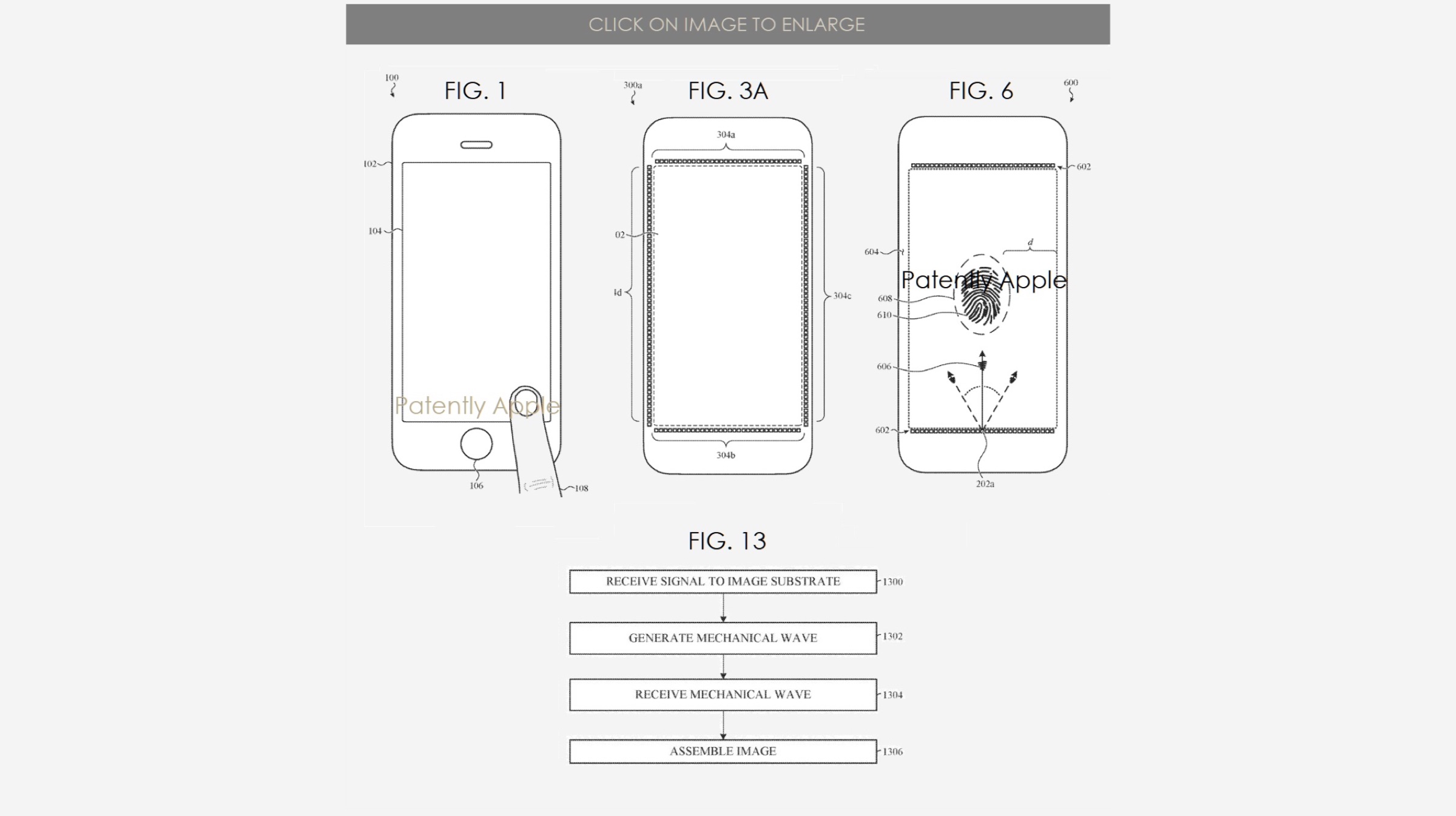 The patent showcases “methods of biometric imaging of input surfaces”, which directly relate to an acoustic imaging system. Using the aforementioned technique, a high-resolution image of the object can be mapped, in this case, a fingerprint. Since Apple has never used an in-display fingerprint scanner in any of its devices yet, this patent getting published may be a start for the company.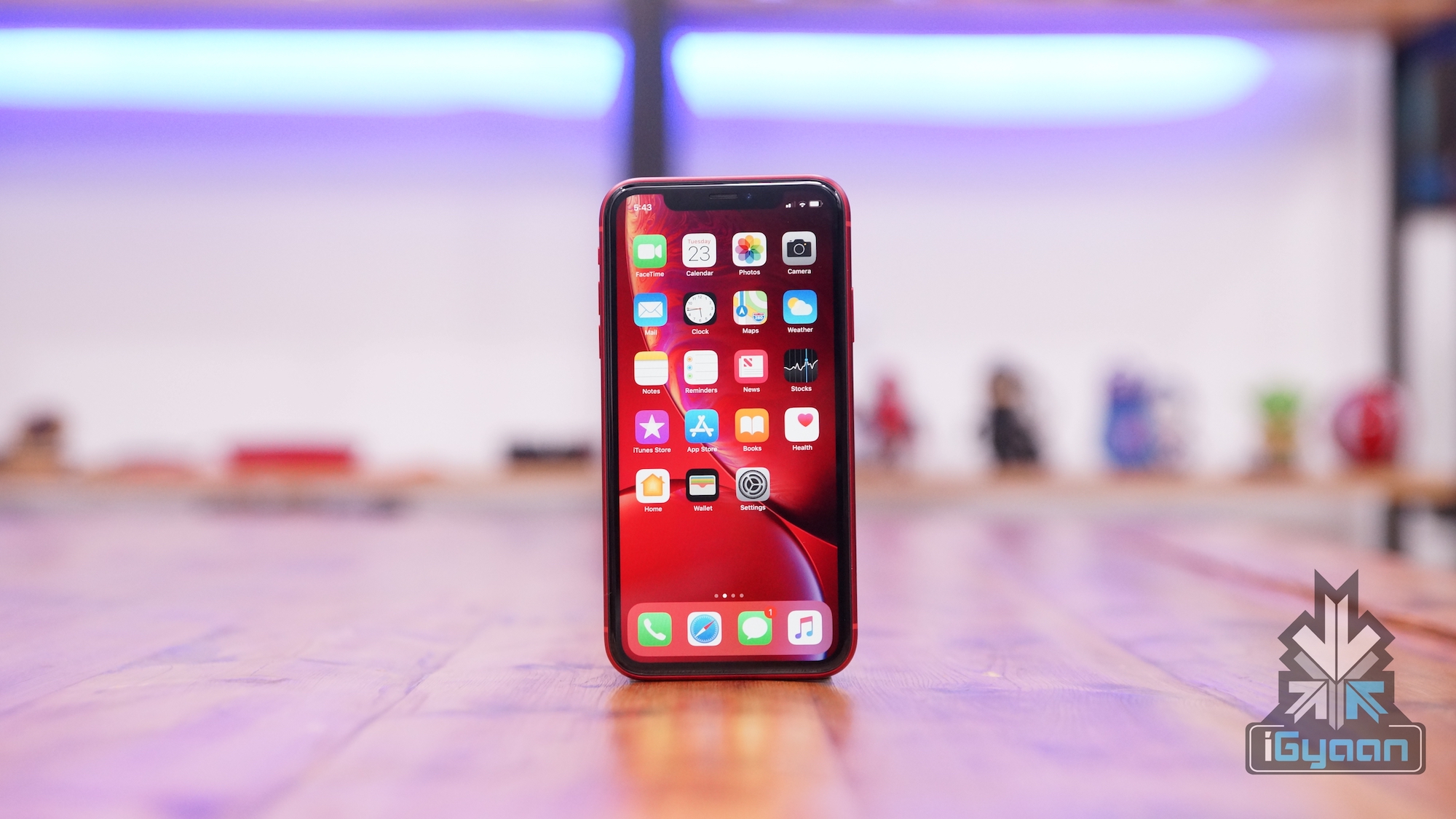














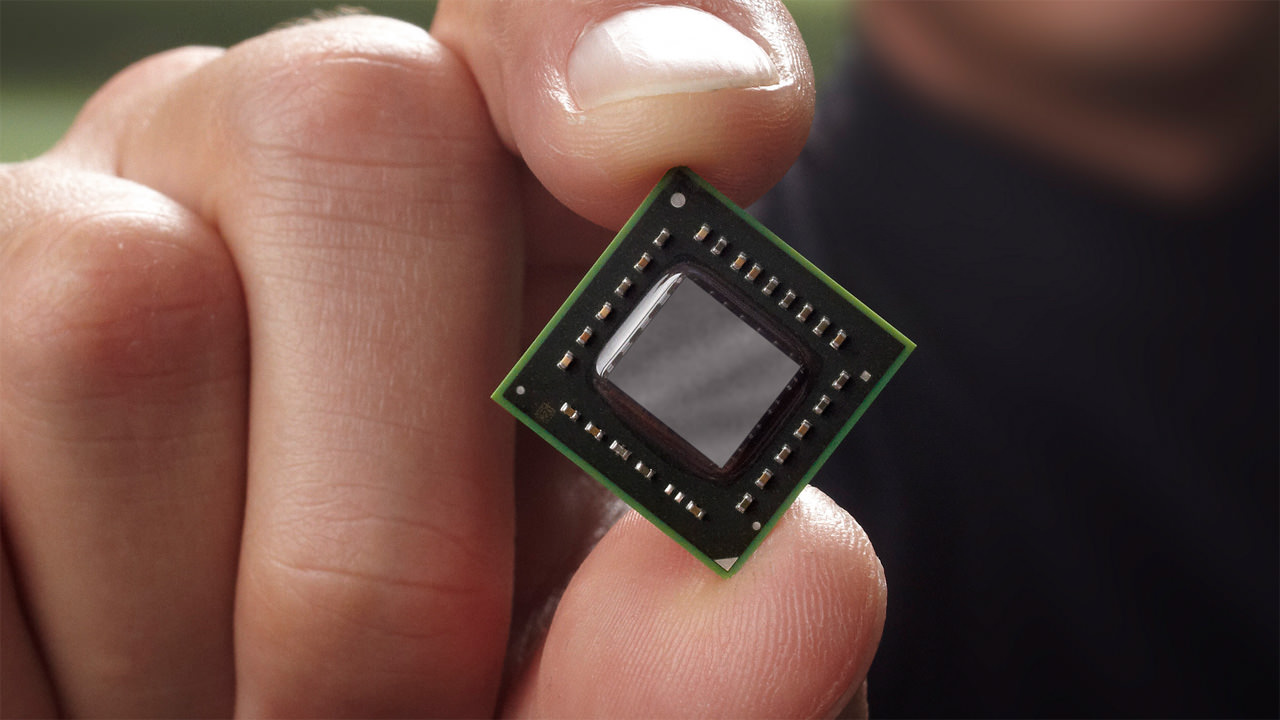
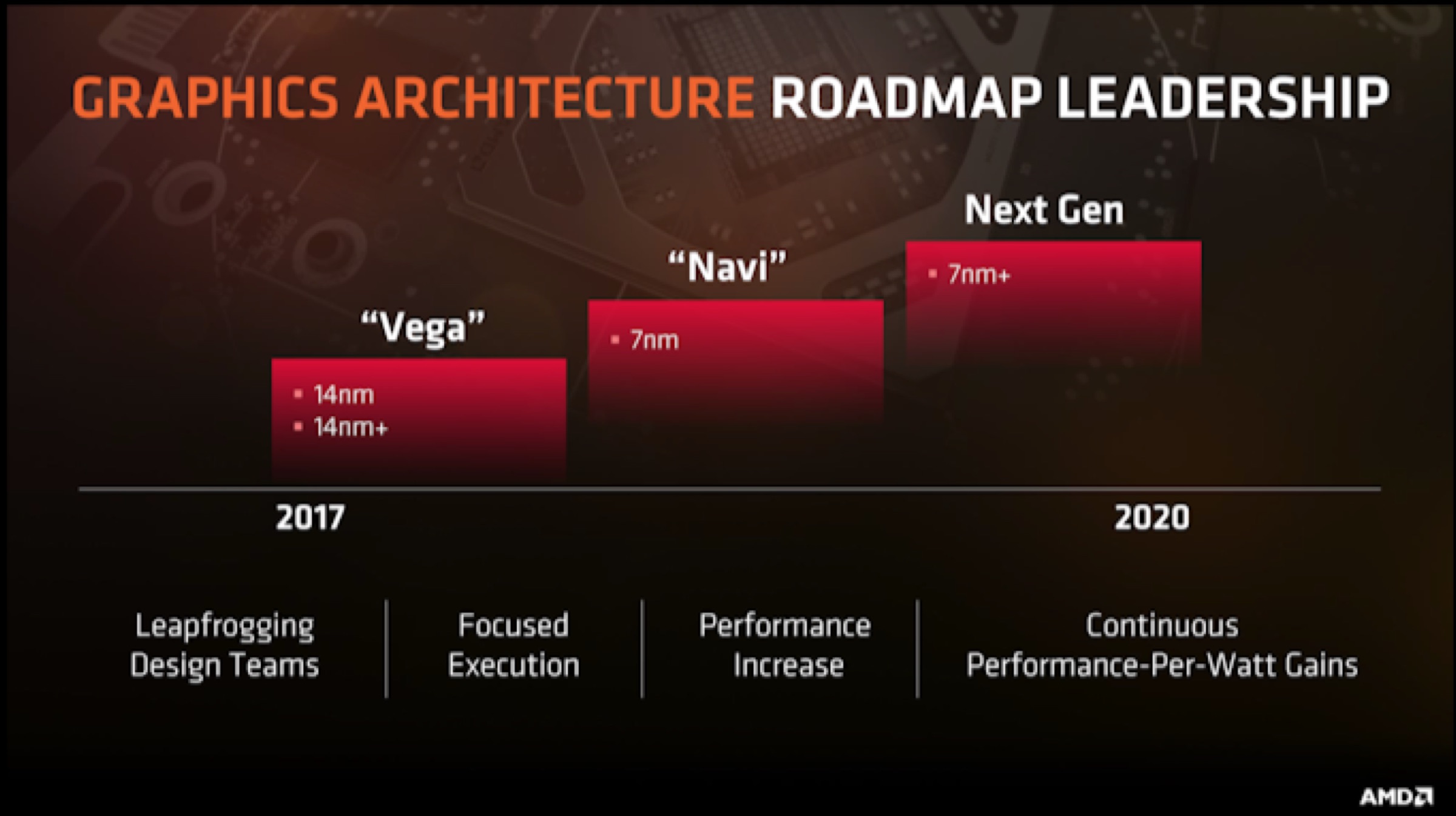 The Navi GPU chip will be manufactured using 7nm fabrication technology. AMD will initially release mid-range models for the same, which are speculated to be the Navi 10 GPUs. Further iterations, including the more powerful Navi 20 graphics cards will be launched later in the year 2020, reports state. The Navi 20 series graphics cards will go up against NVIDIA’s more powerful GPUs, such as the RTX 2080 and RTX 2070.
  The company has also hinted towards some big chunks of information regarding the upcoming GPUs that will be revealed at the Computex Keynote in May 2019. However, since rumours are stating that the 7nm Graphics Cards will be launched on 7/7, or the 7th Of July, AMD might just limit the information reveal to a tease regarding the GPUs. This falls in line with their recent announcement of the Navi Cards release in the third quarter.
  Also Read: