Category: Latest

All the Latest, News, Reviews, Updates, How To, Mobile Phone news, Global and International News, From Cameras to Automobiles, from TV To PC and a lot more! Constantly updating!

  • Top Smartphones Launch In India : June 2019

    Top Smartphones Launch In India : June 2019

    It is June already and many smartphone OEMs have announced that their handsets will launch in India this month. Amidst a sea of devices, we have compiled a list of all the top upcoming smartphones that are expected or have been confirmed to be launching in the Indian market in June.

    OnePlus 7

    Click here to buy the OnePlus 7 from Amazon

    OnePlus has already announced its latest smartphone, the OnePlus 7 on the 14th of May. The company has now revealed it will go on sale starting on the 4th of June. It is the successor of the OnePlus 6T from last year and boasts of several improvements over its predecessor. In terms of specifications, the OnePlus 7 features a 6.41-inch Optic AMOLED display with a waterdrop notch. For biometric security and rapidly unlocking the device, it has an in display fingerprint scanner and support for face unlock technology.
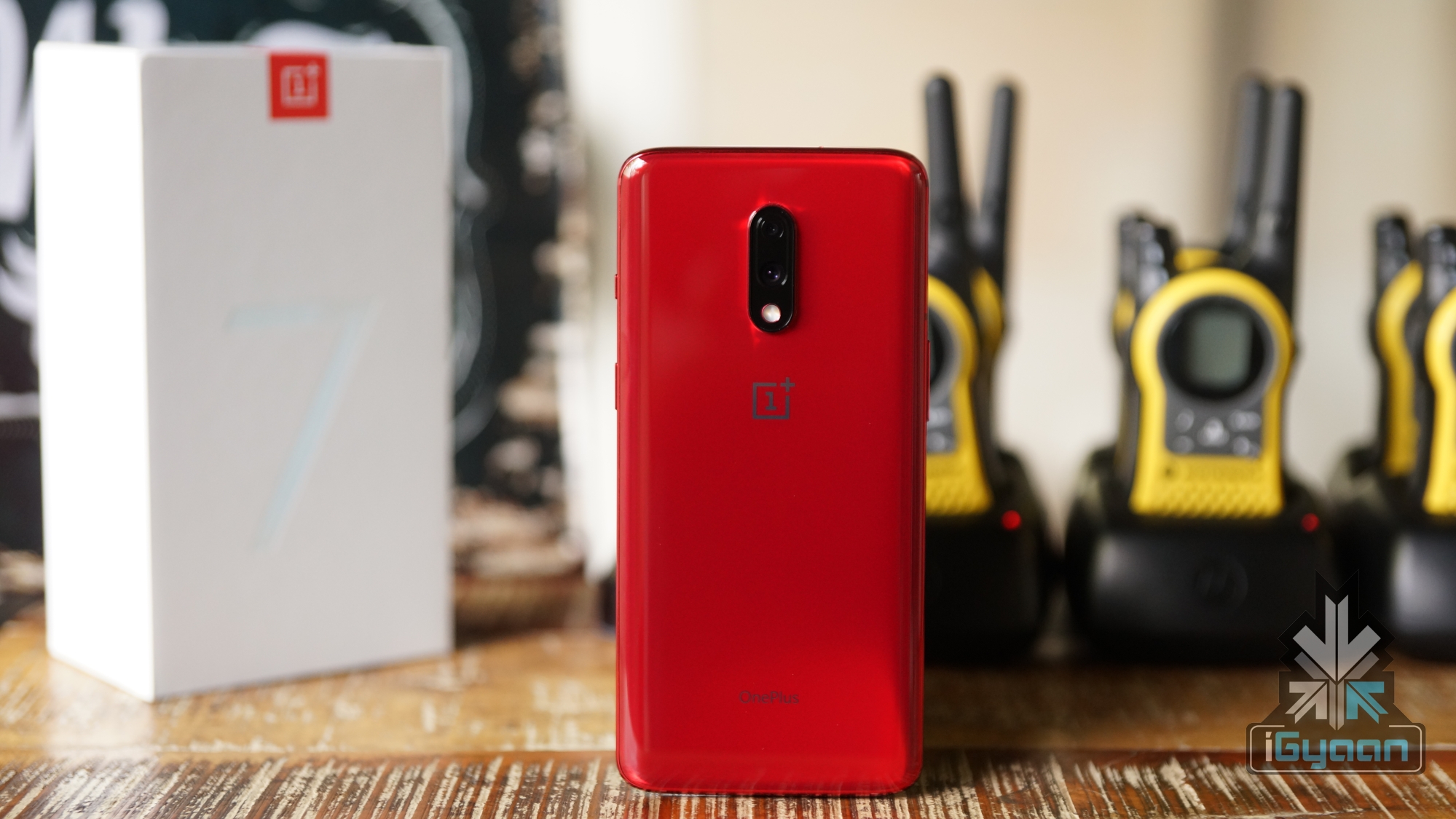
    Under the hood, it is kitted with the 7nm Snapdragon 855 SoC which is comprised of an Octa-core CPU and the Adreno 640 GPU. For memory and storage, the OnePlus 7 has up to 8GB of RAM and 256GB of internal storage. In terms of optics, the handset has a dual 48MP + 5MP camera setup and a single 16 MP camera on the front. It is powered using a 3700 mAh battery with 20W fast charging support. The smartphone has been priced at Rs. 32,999 for the base variant with 6GB of RAM and 128GB of internal storage and Rs. 37,999 for the version with 8GB of RAM and 256GB of onboard memory.

    Samsung Galaxy M40

    Upcoming smartphone

    The Samsung Galaxy M40 will be the latest addition to the company’s online exclusive Galaxy M lineup. It has been announced that the smartphone will be launched on the 11th of June. While the specification of the device has not been confirmed yet, past leaks have revealed it will sport a 6.3 inch LCD display; with an Infinity O style hole punch on the top left corner of the display. The teasers have also exhibited the presence of a rear-mounted fingerprint scanner for efficiently accessing the handset.
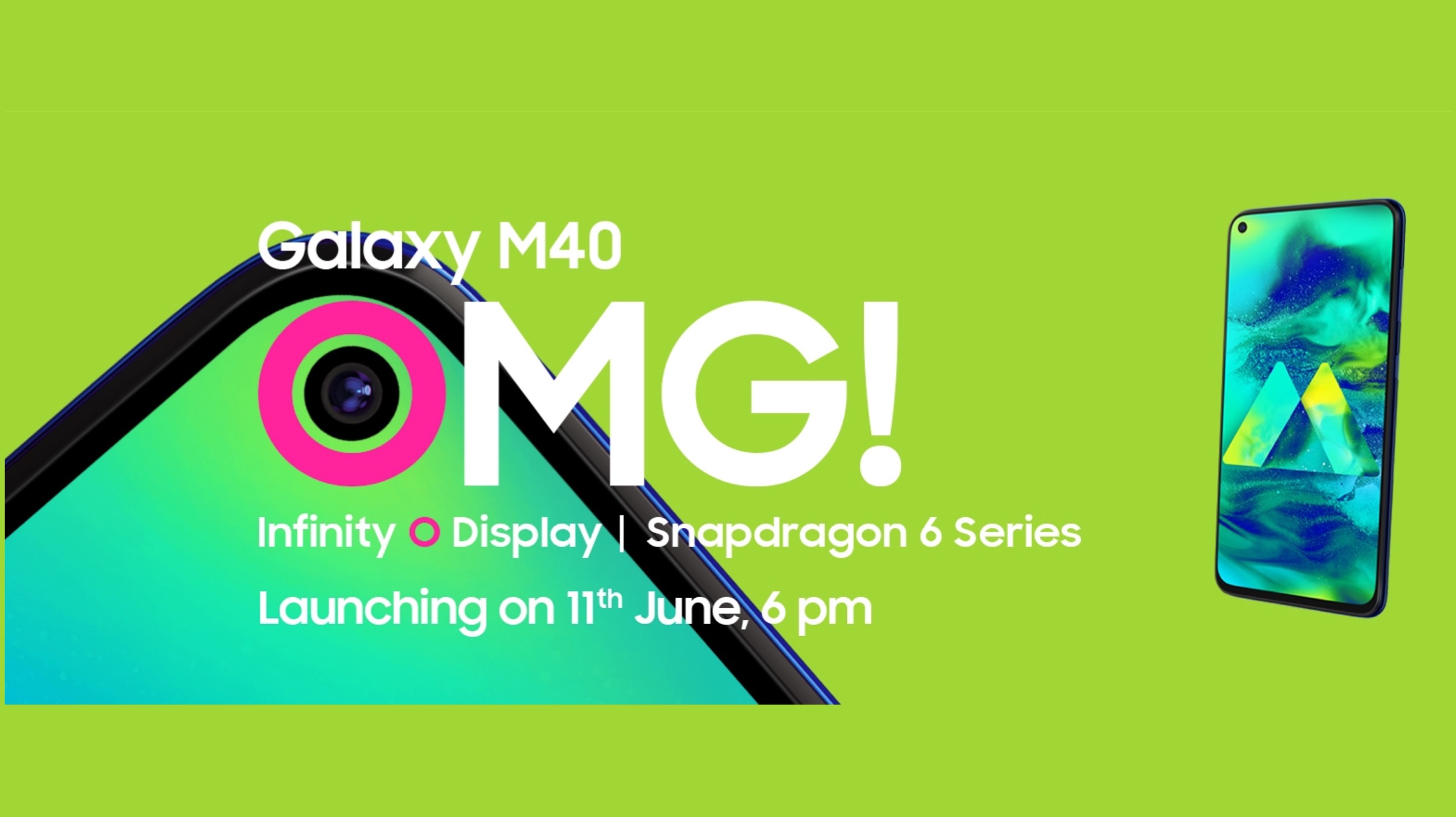
    Samsung Galaxy M40 Teaser

    Under the hood, the Galaxy M40 is expected to run on the 11nm Snapdragon 675 SoC; which is comprised of an Octa-core CPU and the Adreno 612 GPU. In terms of optics, it is revealed to have a triple camera setup, details of which are not known yet. The device is also rumoured to feature up to 6GB of RAM and 128GB of Internal storage. More details about the upcoming smartphone may be revealed as we move closer to its launch.

    Samsung Galaxy A80

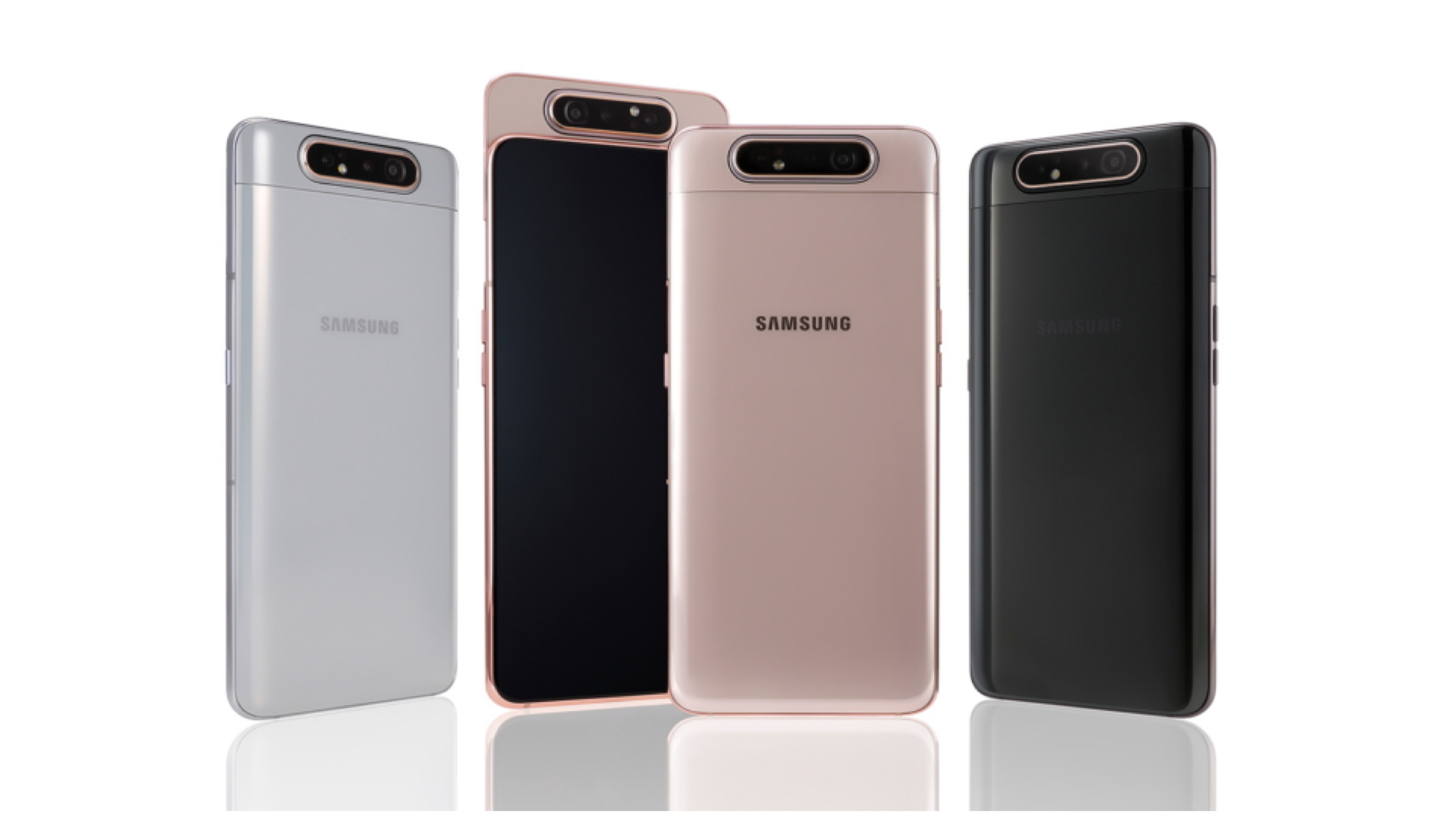
    The Samsung Galaxy A80 was announced in the month of April and is the first smartphone from the company to feature a mechanical camera mechanism. It was introduced alongside the Galaxy A70 which has already gone on sale in India. In terms of specifications, the Galaxy A80 features a 6.7 inch Super AMOLED display with no notch or hole punch in sight. The device has an in display fingerprint scanner with support for face unlock.

    Upcoming smartphone

    Under the hood, the Galaxy A80 runs on the 8nm Snapdragon 730 SoC, which is comprised of an Octa-core CPU and the Adreno 618 GPU. In terms of optics, the upcoming smartphone has a triple camera setup, which has a 48MP primary sensor, combined with an 8MP ultra wide sensor and a Time of Flight (ToF) sensor for capturing depth. The highlight feature of the device is the rotating camera mechanism, which allows the users to take selfies from the primary camera.
    For memory and storage, the handset has 8GB of RAM and 128GB of internal storage. The Galaxy A80 is powered by a 3700 mAh battery with 25W fast charging. It is expected to be priced at around Rs. 45,000 when it launches in India later this month.

    Asus ZenFone 6
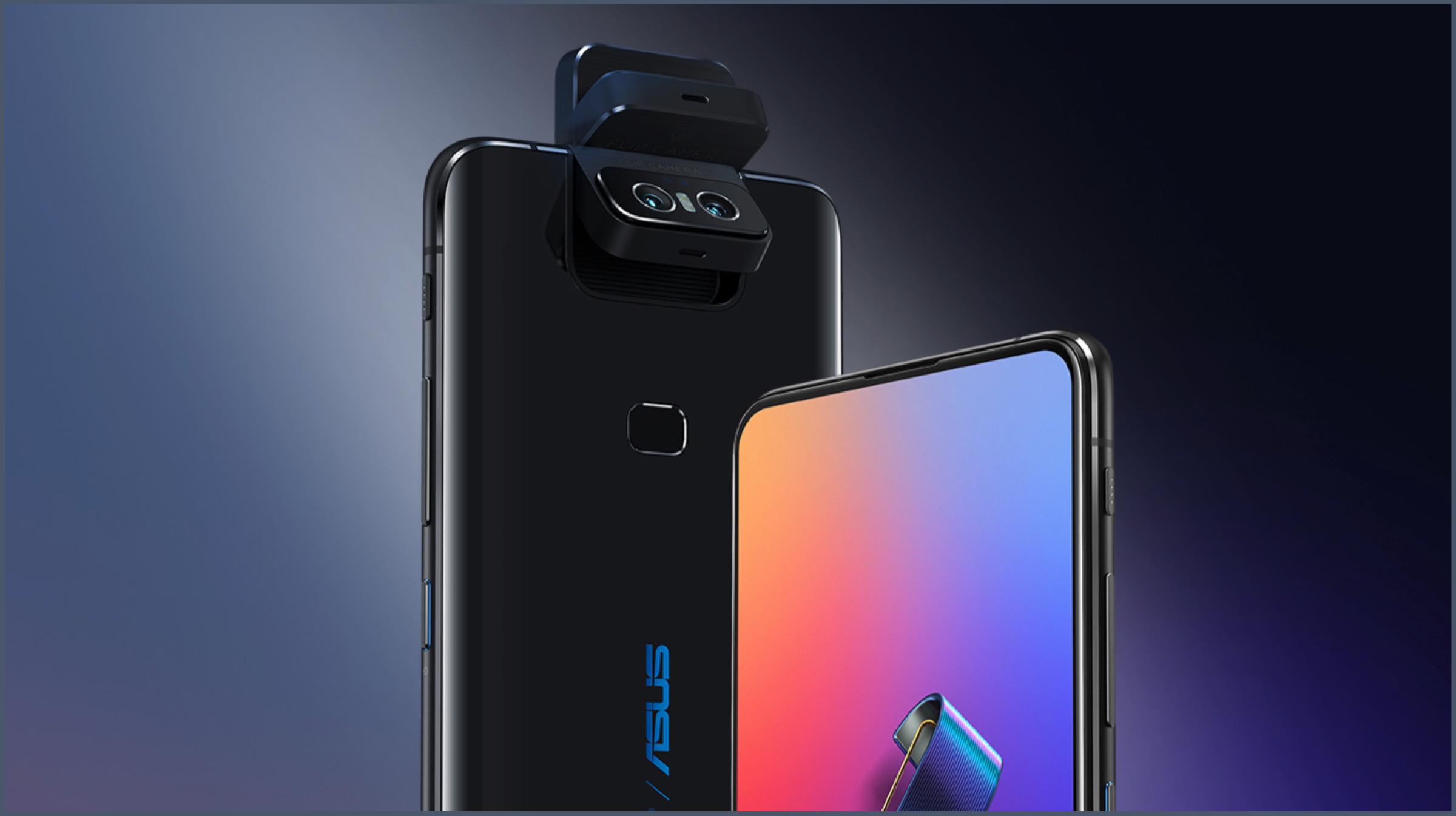
    Taiwanese electronics giant Asus introduced its latest flagship smartphone, the Zenfone 6 at an event on the 16th of May. It is expected to be launched in India on the 6th of June at a lucrative price tag. In terms of specifications, it has a 6.4 inch LCD display with no obstruction like a notch or hole punch. For quickly accessing the device, there is a rear-mounted fingerprint scanner and also support for face unlock.

    Upcoming smartphone

    Under the hood, the Zenfone 6 is kitted with the 7nm Snapdragon 855 SoC; comprised of an Octa-core CPU and the Adreno 640 GPU. In terms of optics, a dual camera setup is present on the flip camera mechanism on the back. This setup consists of a 48MP primary sensor and a 13MP ultra wide angle sensor which can be flipped to 180 degrees for taking selfies. For memory and storage, the device has up to 8GB of RAM and 256GB of internal storage. The handset is powered by a mammoth 5000 mAh battery with 18W fast charging. It is expected to be priced around Rs. 40,000 range in India.

    Nubia Red Magic 3

    The Red Magic 3 is the latest gaming smartphone from ZTE’s subsidiary Nubia. It was announced in the month of April and features top tier hardware. In terms of specifications, the device has a 6.65-inch OLED display with a 90Hz refresh rate. For quickly accessing the handset, a rear-mounted fingerprint sensor with support for face unlock is present.

    Upcoming smartphone

    Under the hood, the Nubia Red Magic 3 runs on the 7nm Snapdragon 855 SoC, comprised of an Octa-core CPU and the Adreno 640 GPU. In terms of optics, it has a 48MP primary rear sensor with a 16MP selfie camera. For memory and storage, the device has up to 12GB of RAM and 256GB of internal storage. For efficiently cooling the upcoming smartphone under heavy gaming load, it has the company’s air and water cooling technology. The handset is powered by a 5000 mAh battery with 27W fast charging. It is expected to be priced around Rs. 35,000 price bracket in India.

    Redmi K20 Series

    Upcoming smartphone

    Xiaomi introduced the Redmi K20 and K20 Pro last week. While the former is a mid-range offering, the latter is a flagship-grade device from the company, featuring top tier specifications at a competitive price. In terms of specifications, the smartphones have a 6.39 inch AMOLED display. For biometric security and unlocking the smartphones, the Redmi K20 series has an in display fingerprint scanner along with support for face unlock.
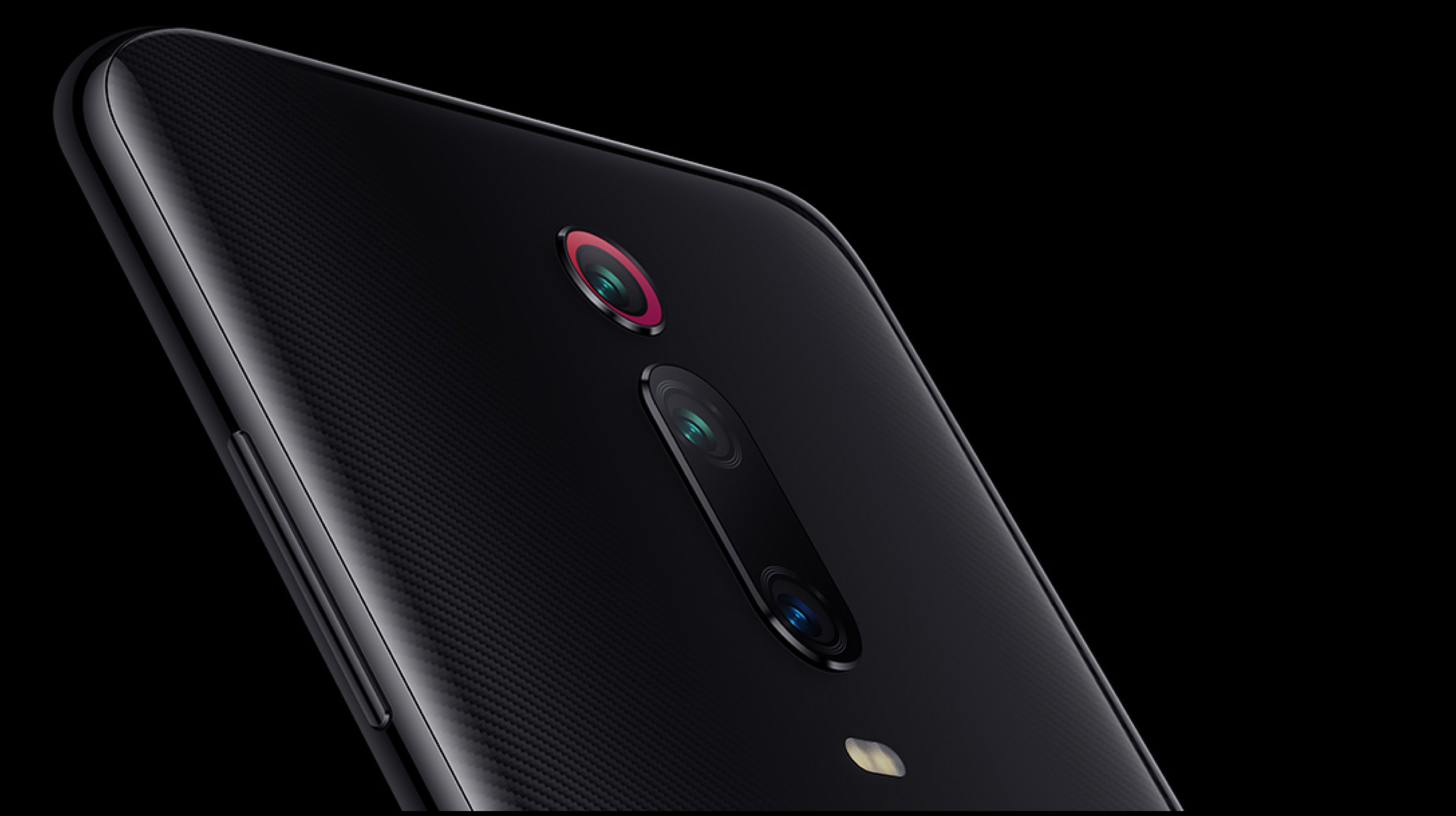
    Under the hood, the Redmi K20 is kitted with the 8nm Snapdragon 730 SoC. The chipset is comprised of an Octa-core CPU and the Adreno 618 GPU. The more premium Redmi K20 Pro runs on the flagship grade 7nm Snapdragon 855 SoC which has an Octa-core CPU and the Adreno 640 GPU. In terms of optics, both smartphones have a triple rear camera setup consisting of a 48MP + 13MP ultra wide angle sensor + 8MP telephoto sensor. For selfies, a 32MP sensor is housed in the pop-up mechanism on top of the handsets.

    Both the Redmi K20 and the K20 Pro are powered by a 4,000 mAh battery. However, the former supports 18 W fast charging while the latter supports 27 W fast charging. The Redmi K20 is expected to be priced around Rs. 20,000 while the K20 Pro might cost around Rs. 30,000 in India. Both the upcoming smartphones are one of the most anticipated in the country.

    Honor 20 Series

    Announced last month, the Honor 20 and 20 Pro are the latest flagship devices from the Huawei subsidiary. The company has announced the upcoming smartphones will be launched in India on the 11th of June. In terms of specifications, the handsets feature a 6.26 inch LCD display with a punch hole cutout on the top left corner. They have a side mounted fingerprint scanner for quickly accessing the device.
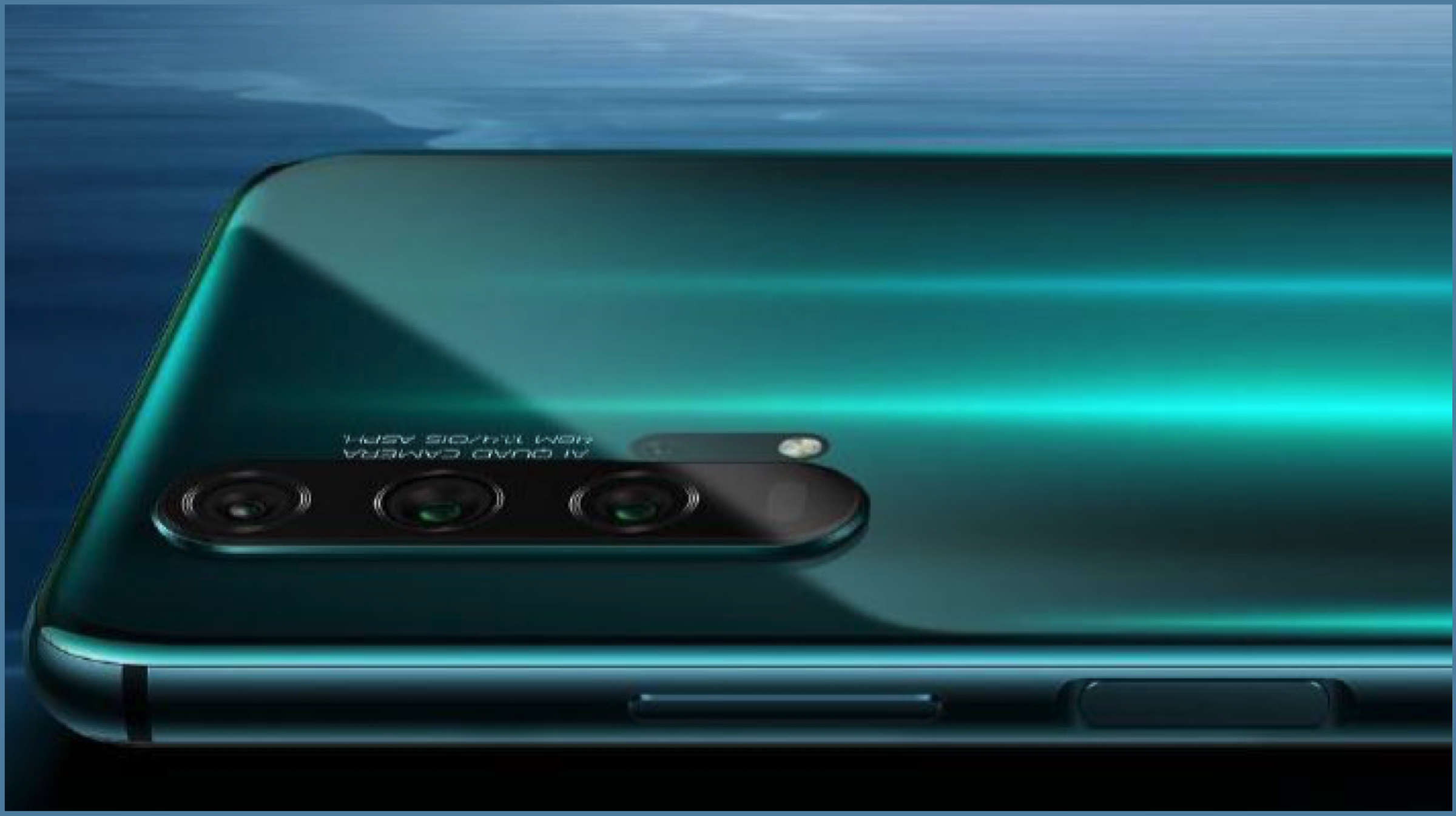
    Under the hood, the smartphones pack the Kirin 980 SoC consists of an Octa-Core CPU and the Mali G76 GPU. The key highlight the Honor 20 and the Honor 20 Pro is the rear facing quad camera setup. Both smartphones have a 48 MP Sony IMX586 sensor, 16 MP wide angle sensor and 2 MP macro sensor. The fourth sensor on the Honor 20 is a 2 MP depth sensor whereas the Honor 20 Pro has an 8MP telephoto lens. For memory and storage, the handsets have up to 8GB of RAM and 256GB of internal storage.

    Upcoming smartphones

    Also read: China Prepares A Counter-Strike On The Huawei Ban

    In terms of battery, the Honor 20 is powered by a 3750 mAh battery whereas the Honor 20 Pro is powered by a 4,000 mAh. Both devices also support 22.5 W fast charging. They are expected to be priced around Rs. 35,000 in India.

  • Xiaomi Mi Band 4 With A Coloured Display Leaked In Images

    Xiaomi Mi Band 4 With A Coloured Display Leaked In Images

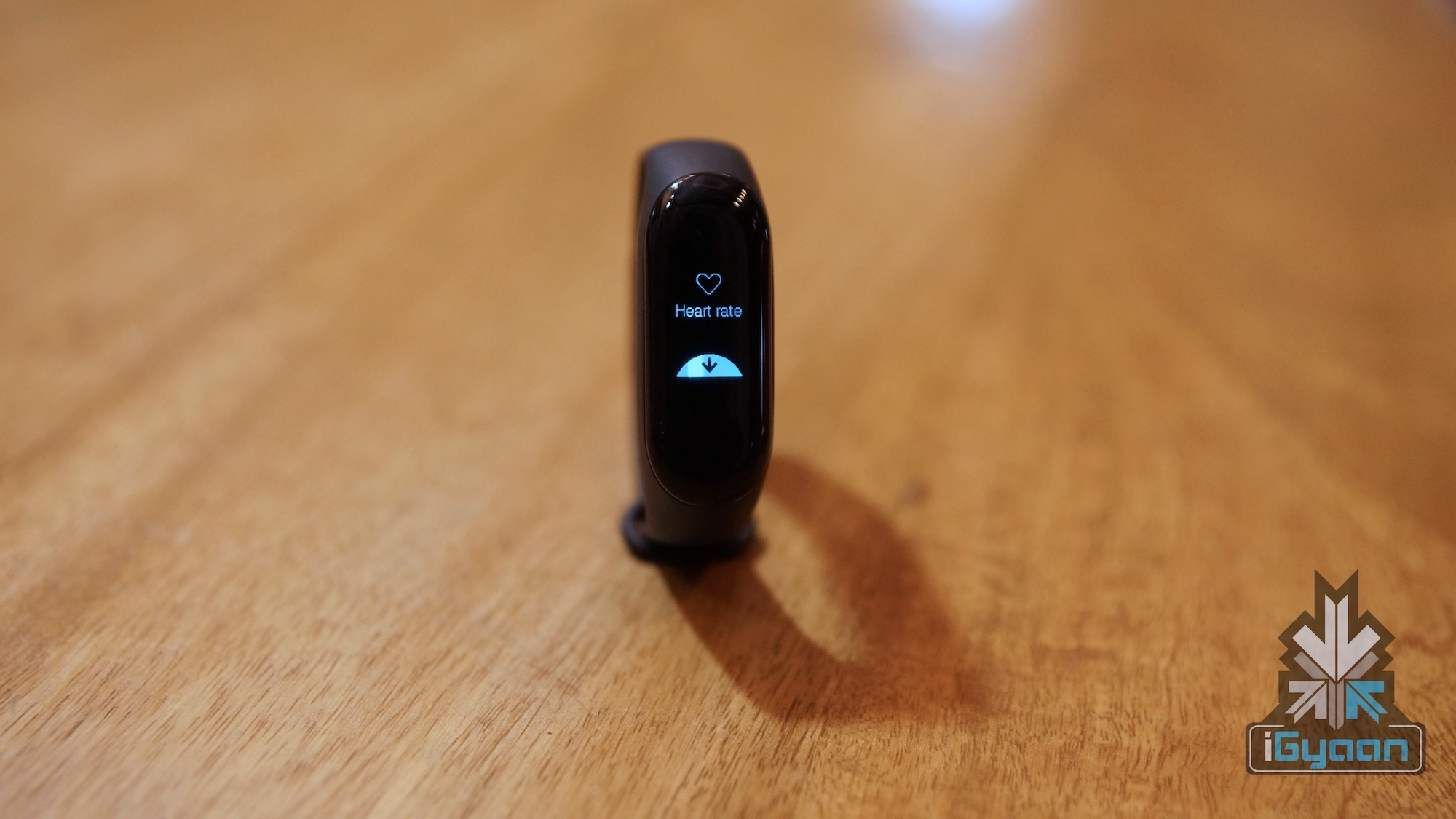
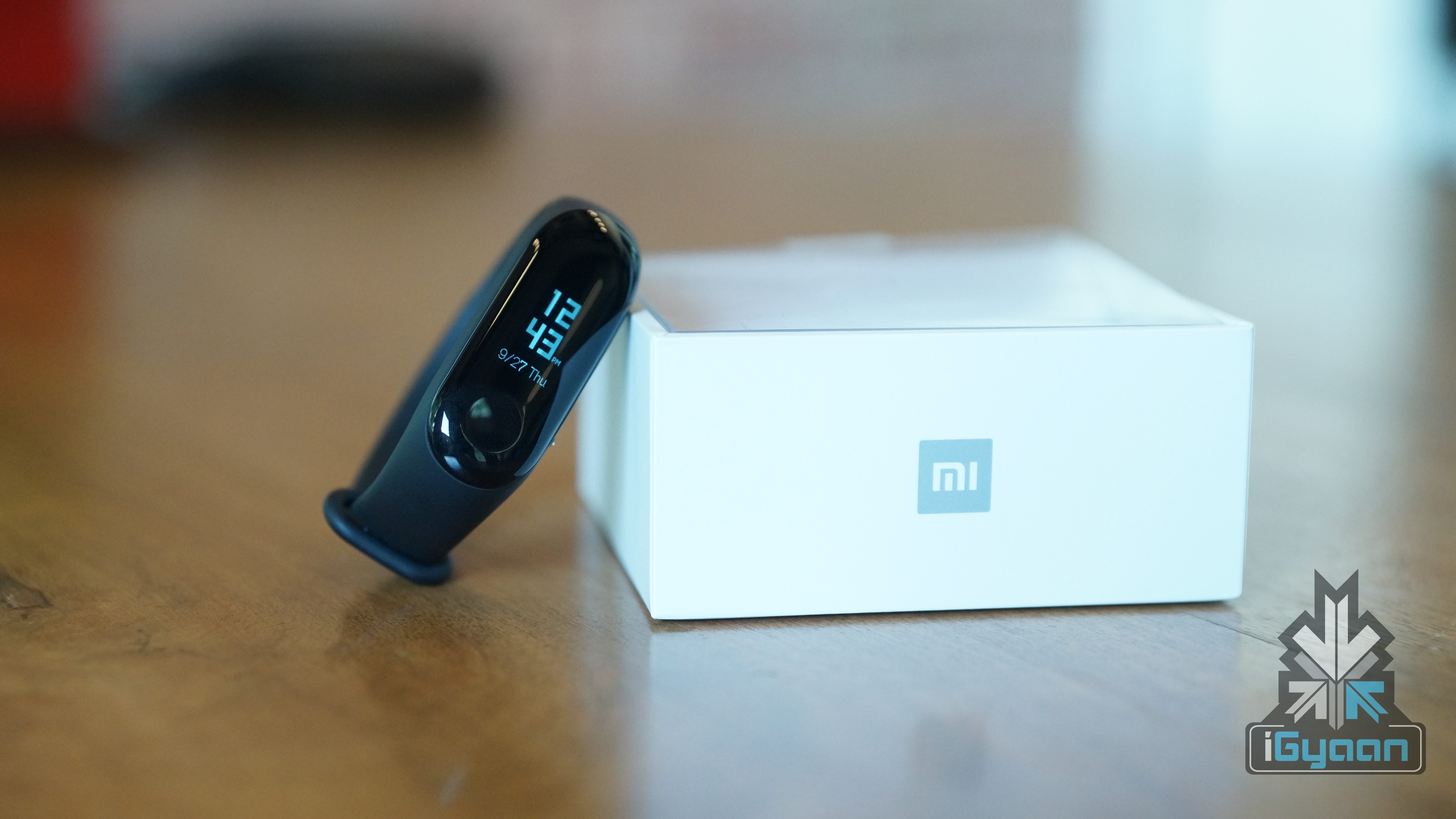
    Xiaomi launched the latest iteration of its fitness wearable, the Mi Band 3 last year. It has been long speculated that the company will launch a successor to the device soon. Details about the upcoming wearable; purportedly called the Mi Band 4 have been leaked online in the past. Images of the device have surfaced online which reveal the updates inbound over its predecessor.

    Mi Band 4

    Xiaomi Mi Band 4

    The Mi Band 4 will be the latest fitness wearable from Xiaomi. Images of the device reveal it will have a coloured display. This will be an improvement over the monochrome display found on the Mi Band 3. While its rest of the design is reminiscent of the previous generation, the addition of a colour display will make for a notable addition. As a colour display consumes more power than a monochrome display; the future smart wearable may have a 135 mAh battery which is a considerable bump from 110 mAh found on the current device. Noteworthy, disparate to previous Mi Band versions, the Mi Band 4 will have an inbuilt charging port. The previous generation devices have proprietary charging connectors; which have not been well received by numerous consumers due to their complexity.

    Xiaomi Mi Band 3

    Also read: Apple To Focus On Devices Other Than The iPhone In The Future

    The leaks in the past also reveal the Mi Band 4 will be offered in two variants. The affordable variant will only have support for Bluetooth 5 Low Energy (LE) while the top end variant will also support NFC. The rest of the features will reportedly be taken over from the Mi Band 3; including a heart rate tracker, a pedometer for counting steps and a water resistance rating. In terms of pricing, it is expected that the lower end, Bluetooth version of the Mi Band 4 will cost Rs 2,000 like its predecessor; while the NFC version may be priced in the neighborhood of Rs 3,500. The smart wearable is expected to be unveiled in the following weeks.

  • Facebook Ordered by US Judge to Turn Over Records on Data Privacy

    Facebook Ordered by US Judge to Turn Over Records on Data Privacy

    As per latest reports, Facebook has been ordered by a US judge to turn over emails from various shareholders amongst other records. The records were related to the company’s model of handling data privacy and security. This happened as a consequence of when British Political Consulting firm Cambridge Analytica accessed private data of 87 million users in 2015. 

    Facebook

    Shareholders of the social media giant stated that they had a credible basis to believe in the fact that Facebook board members may have been involved in data privacy breaches. The breach involving Cambridge Analytica, however, was not revealed until the month of March 2018. It was noted that at the time of the breach, Facebook was subject to a US Federal Trade Commission consent decree that essentially required the company to strengthen its data security measures. 

    The shareholders in the organization filed a suit against Facebook in order to obtain various records concerning the Cambridge Analytica and other breaches. In case any anomalies would be detected with the reports, the shareholders can also sue the company officials and related directors via a derivative lawsuit. Basically, a shareholder derivative suit is brought by a shareholder on behalf of a corporation. A shareholder can only sue on behalf of a corporation when the corporation has a valid cause of action, but has decided not to use it. 

    Facebook

    Also Read: Alphabet’s New AI Defeats Human Players In A Multiplayer Game

    Cambridge Analytica was hired during US President Donald Trump’s 2016 election campaign, and it used various profiling techniques to influence the behaviour of voters in general. However, as soon as the data breach was out in the open, it shut down, leading to the introduction of several US and European regulatory probes into Facebook. The company has been surrounded with controversies for quite some time now, including the disclosure of user passwords in plaintext to company employees. Current situations are not hinting towards the betterment of the scenario, indicating that Facebook needs to employ some serious discretionary measures in order to stabilize. 


  • Under Armour And Dwayne Johnson Launch Project Rock Truly Wireless Earphones

    Under Armour And Dwayne Johnson Launch Project Rock Truly Wireless Earphones

    American apparel brand Under Armour and popular actor/retired professional wrestler, Dwayne Johnson have collaborated to unveil new ‘Project Rock’ Truly Wireless Earphones. The earbuds are focused towards consumers who indulge in extensive fitness activities such as gymming, running and exercising. Previously, the duo launched the over-the-ear UA Sport Wireless Project Rock Edition headphones in 2018. 

    Project True Wireless Earphones Features 

    Project Rock Truly Wireless EarphonesThe Truly Wireless Earbuds will be the latest addition to the “Project Rock” audio products. Named as the “UA True Wireless Flash Project Rock Edition”, the earphones are IPX7-rated water and sweat resistant. On a single charge, the earphones can last for about 5 hours. Upon discharging, they can be juiced up via the charging-cum-carrying case, which provides an additional 20 hours of recharge. The carrying case itself can be charged via a micro-USB 2.0 port. Regarding audio, the company has teamed up with JBL audio. 

    Project Rock Truly Wireless EarphonesThe Project True Wireless Earphones feature UA TALKTHRU, which enables the user to lower the music momentarily to focus on the surroundings. This technology is similar to the one found in JBL’s own wireless earbuds. A golden bull logo is embossed on both the earphones, which doubles up as a button to activate noise cancellation and block out external audio. The earphones will ship with a set of antibacterial ear tips that will enable them to sit comfortably in the ear without falling off.
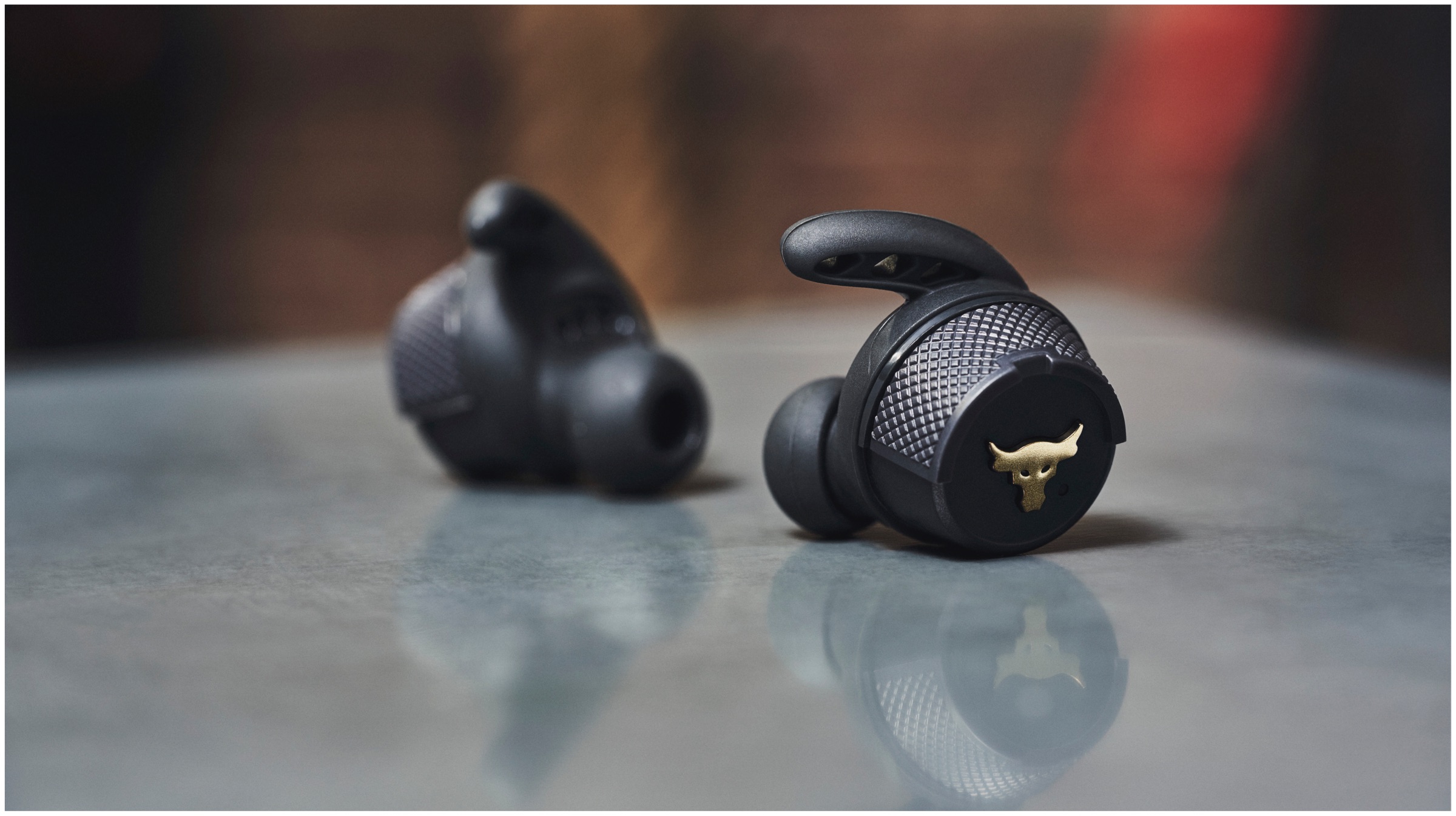
    Project Rock Truly Wireless EarphonesAlso Read: Facebook Patent Reveals A Drone Powered By Kites

    The Project Rock earphones will pack JBL’s 40mm drivers for high-precision audio. Dwayne Johnson has been teasing the sound quality of the earphones for quite some time now on his Instagram channel. The earphones will be shipped June 7 onwards, and are priced at US$ 199 (~INR 13,800). They will go up against the Beats PowerBeats Pro Truly wireless earbuds, which retail for $249.95.

  • Apple To Focus On Devices Other Than The iPhone In The Future

    Apple To Focus On Devices Other Than The iPhone In The Future

    Apple, in a bold step of decentralizing focus, has decided to shift its vision towards the ‘peripheral’ products with more operational independence. Since the dawn of the iPhone, each new generation of the handset saw the inclusion of new technology within or alongside it. Products made by Apple were only in rare cases focused on providing an entirely standalone experience overall.

    Apple


    The iPad serves as a great example, marketed as a laptop replacement with more freedom in mobility while not sacrificing power. In most other cases devices developed like the Apple Watch only seemed to exist for the sake of supplementing the iPhone and its user experience. 

    Apple’s upcoming developer conference seeks to draw a road map for the company’s plans on moving away from the iPhones glory, around which products were based. The keynote presentation will have the upper echelon of the tech giant showcase the latest generations of Apple devices and software in San Jose. Going forward Apple seeks to make the Watches more independent, iPads that will actually reduce the needs for laptops, and cross-platform applications to run on every Apple products.

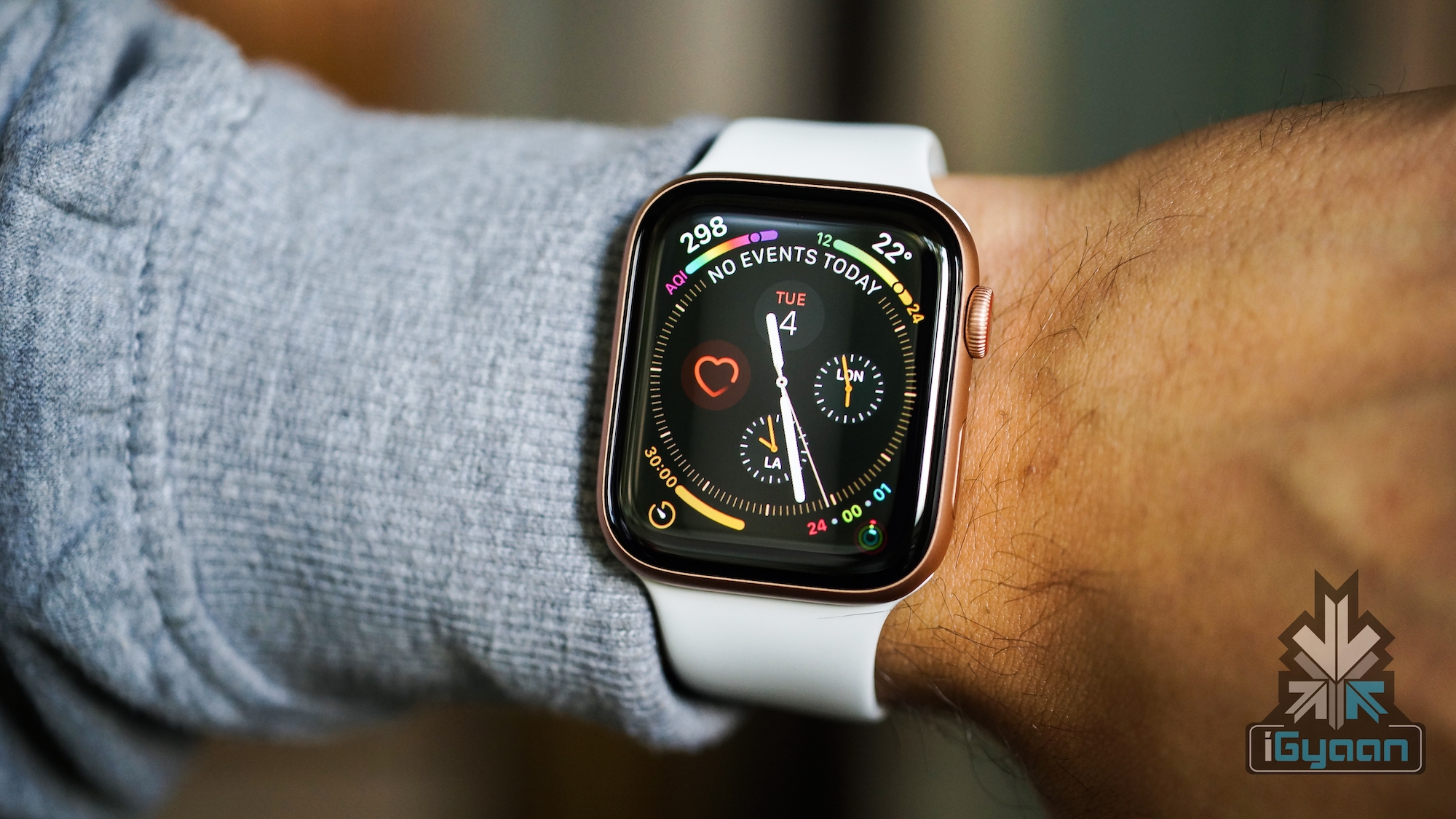
    Future Of Apple Watch 

    Made to be the next great leap in innovation after the iPhone in 2015, the device has yet to reach the level that the handset has achieved years prior. Apple Watch which had the potential to push computing to even smaller frames while still providing the functionality to users had ended up relying on the iPhone.

    However, with the inclusion of cellular connectivity support to the device two years ago and the upcoming software update with watchOS 6, the company will further branch off the Watch and the iPhone. The new update will bring features like an on-board App Store with calculator and voice recorder alongside new messaging capabilities.

    iPad’s Potential

    As brought up previously, the iPad has been marketed often being tagged as the worthy replacement for laptops. Apple has a more than capable hardware lineup which has beaten laptop grade processors in the past in performance but lacks severely when discussed by the software aspects.

    Apple iPad Pro

    The company seeks to improve on the OS that’ll give users more functionality and not something that would seem like a tweaked version of the iPhone iOS. Planned updates to include features like using multiple apps simultaneously and a refreshed Home Screen have been announced.

    Also ReadAlphabet’s New AI Defeats Human Players In A Multiplayer Game

    Cross-Platform App Ecosystem

    Seeking to aid developers, Apple will soon provide tools for iOS applications to be made available to other platforms within the company’s ecosystem. Applications will now be ported over to the Mac desktops and MacBook laptops, following the example of the iPad receiving its own versions of Apple’s News, Voice Memos, Home, and Stock apps from the Mac. This points towards a future with a single version of an App being available across every platform by Apple.

  • DJI Unveils The DJI Storm Drone Alongside Its Own Van And Crew

    DJI Unveils The DJI Storm Drone Alongside Its Own Van And Crew

    DJI, one of the most highly celebrated brands in the field of drone and cinematography has yet again outdone themselves with its latest professional-grade filming drone. The drone is as flagship as they get, so much so that the model is not even available for purchase. DJI has rather decided to employ its service of this drone alongside a van that is equipped with various tech and parts of the drone being manned by a team of professionals trained crew for filming.

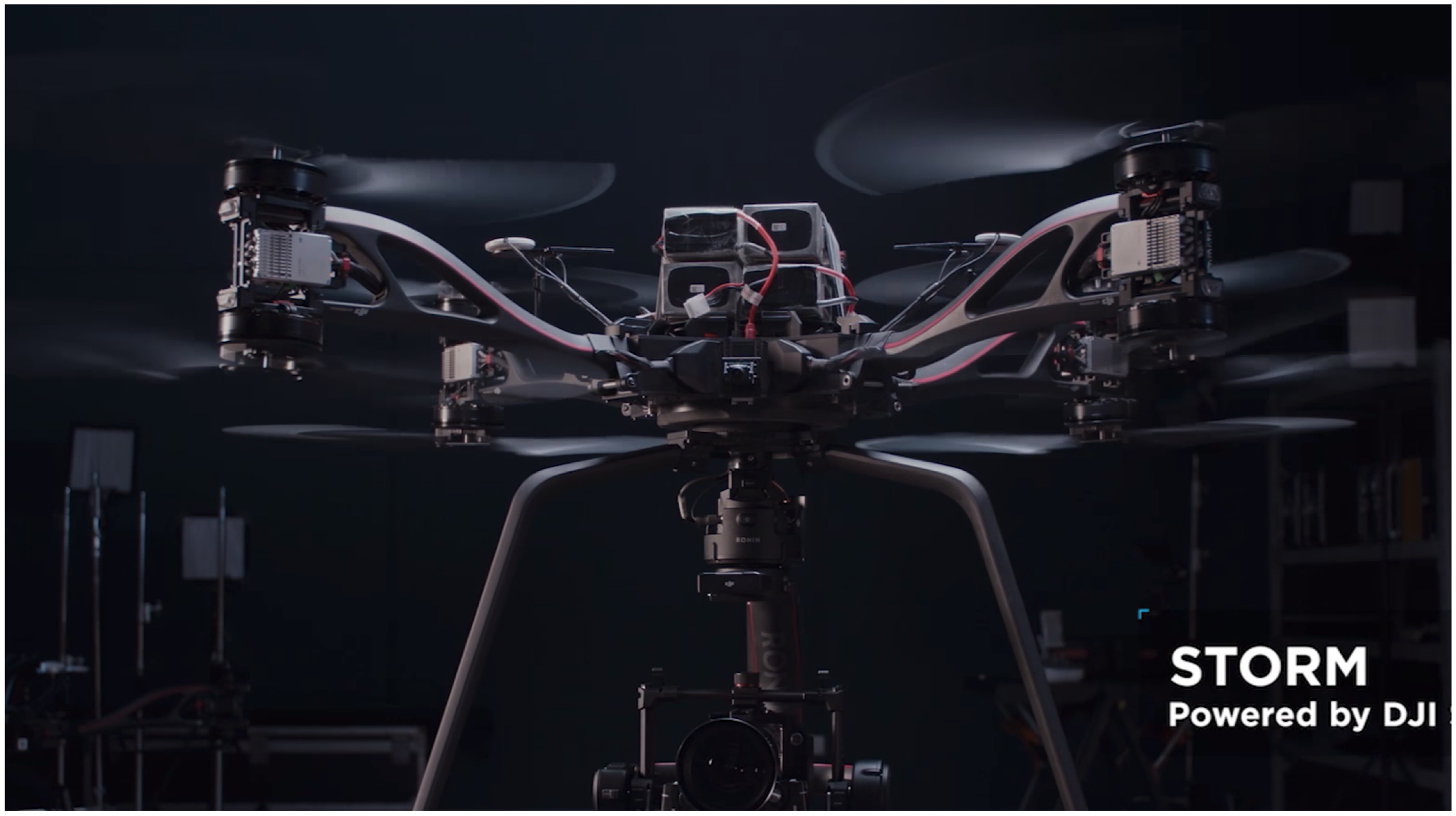
    Aptly named, DJI Storm received a rather uneventful reveal with the company discreetly uploading a video of the drone on YouTube. The drone is heavily equipped to tackle various scenarios and function at the optimum levels(operational parameters ranging from -10°C to 40°C). Carrying with it an eight-rotor blade, the drone has a maximum payload capacity of 18.5kg.

    DJI

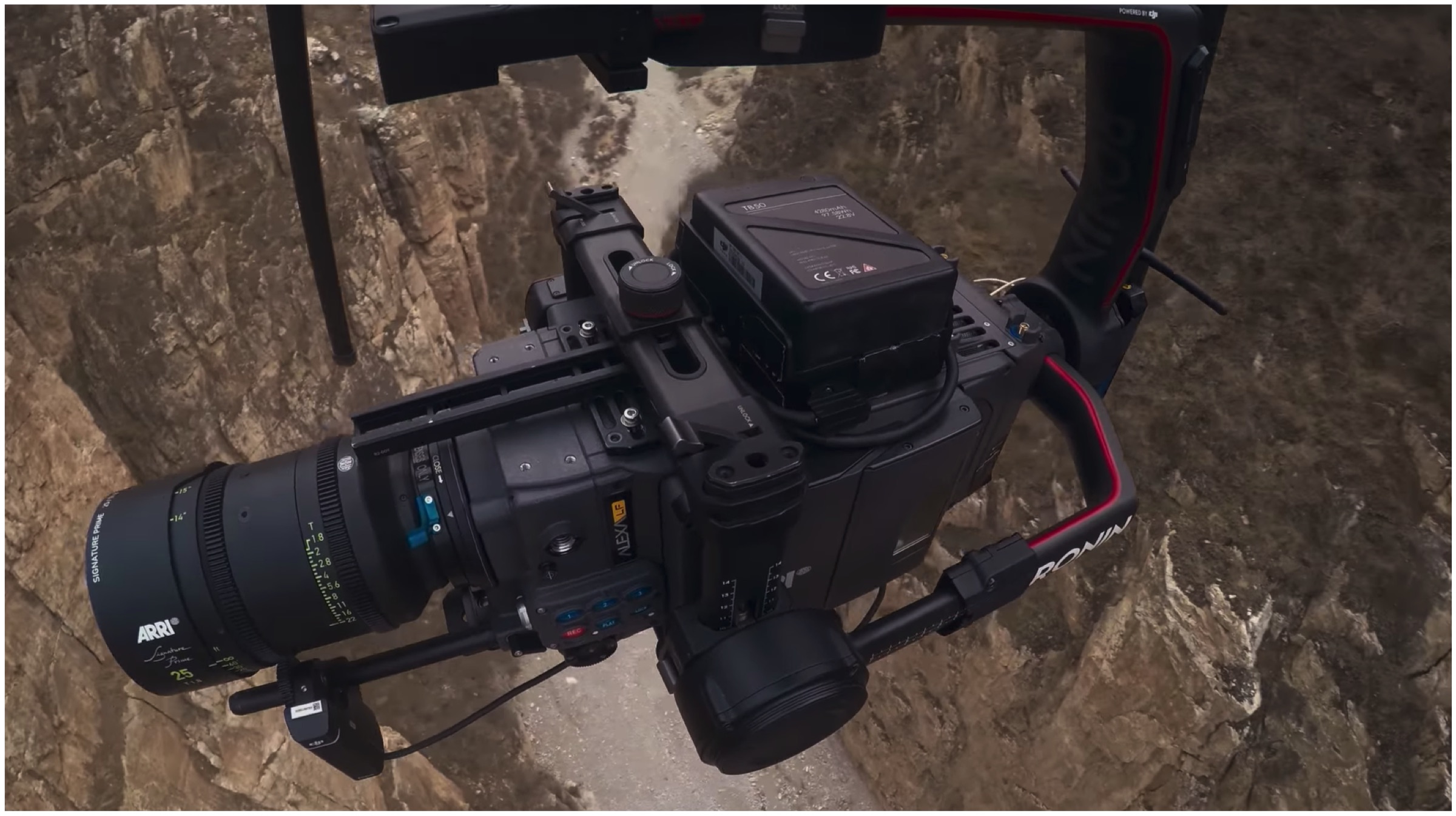
    This opens up the potential for drones to carry various mid-sized and professional filming cameras like the Arri Alexa LF camera that was equipped with its lens as seen in the YouTube reveal video. The camera was also outfitted with one of DJI’s wireless focus system (that follows the subject in focus) along with DJI’s Ronin 2 gimbal for stabilization.

    The video showcased a myriad of expensive hardware that is not exactly consumer grade but rather used for professional work or filming. Even DJI’s latest drone model available for sale, the Matrice 600 for professionals, costs $5000 (approx. Rs. 3,47,000). The Matrice 600 however, is only capable of carrying a load of upto 6kg. DJI Storm is also reportedly faster than the Matrice variant by 10mph, having a top speed of 80kmph. DJI has listed the capabilities of the drone to sustain flight for 15 minutes with a payload of 12kg,  this depends on the batteries used to power the drone systems.

    DJI Storm is working out to be one of the most expensive filming drone systems ever seen. The DJI Ronin 2 gimbal for stabilization carries a hefty price tag of $8000 (approx. Rs. 5,56,000) and the heavy duty drones like xFold Dragon X12 will put buyers down by $30,000 (approx. Rs. 20,87,000). 

    However, the company seems to be reserving the equipment for its DJI Studio Custom Aerial Cinematography Service, which is seen in the video with the special van, professionally trained crew, and many of the DJI’s top gears like Master Wheels and Force Pro remote control systems. These systems allow the cinematographers to move the drone’s camera as they would do in person.
    Also Read: Mysterious Mid Range HTC Smartphone Certified By Bluetooth SIG, Launch Imminent

    DJI Studio is not a relatively new department within DJI, having been working with Asian markets for a while now. What can be gathered by the company’s Chinese website show offerings for only the DJI Matrice 600 paired with the Sony A7S II camera or the DJI Inspire 2. It is unclear as to which markets would be hit with this service as no official announcements have been made so far.

  • Samsung Galaxy M40 Specs Leaked, Reveals 32MP Primary Camera

    Samsung Galaxy M40 Specs Leaked, Reveals 32MP Primary Camera

    As previously reported, South Korean technology giant Samsung is all set to launch the Galaxy M40 smartphone on June 11, 2019. Similar to the other devices in the Galaxy M series, the Galaxy M40 is expected to provide decent specifications at a competitive price point. Samsung seems quite confident with the upcoming device owing to the success of the Galaxy M10, M20 and M30 in the market. As per fresh leaks, the smartphone is expected to feature a 32MP primary camera alongside two other sensors. 

    Galaxy M40: Leaked Specifications And Features

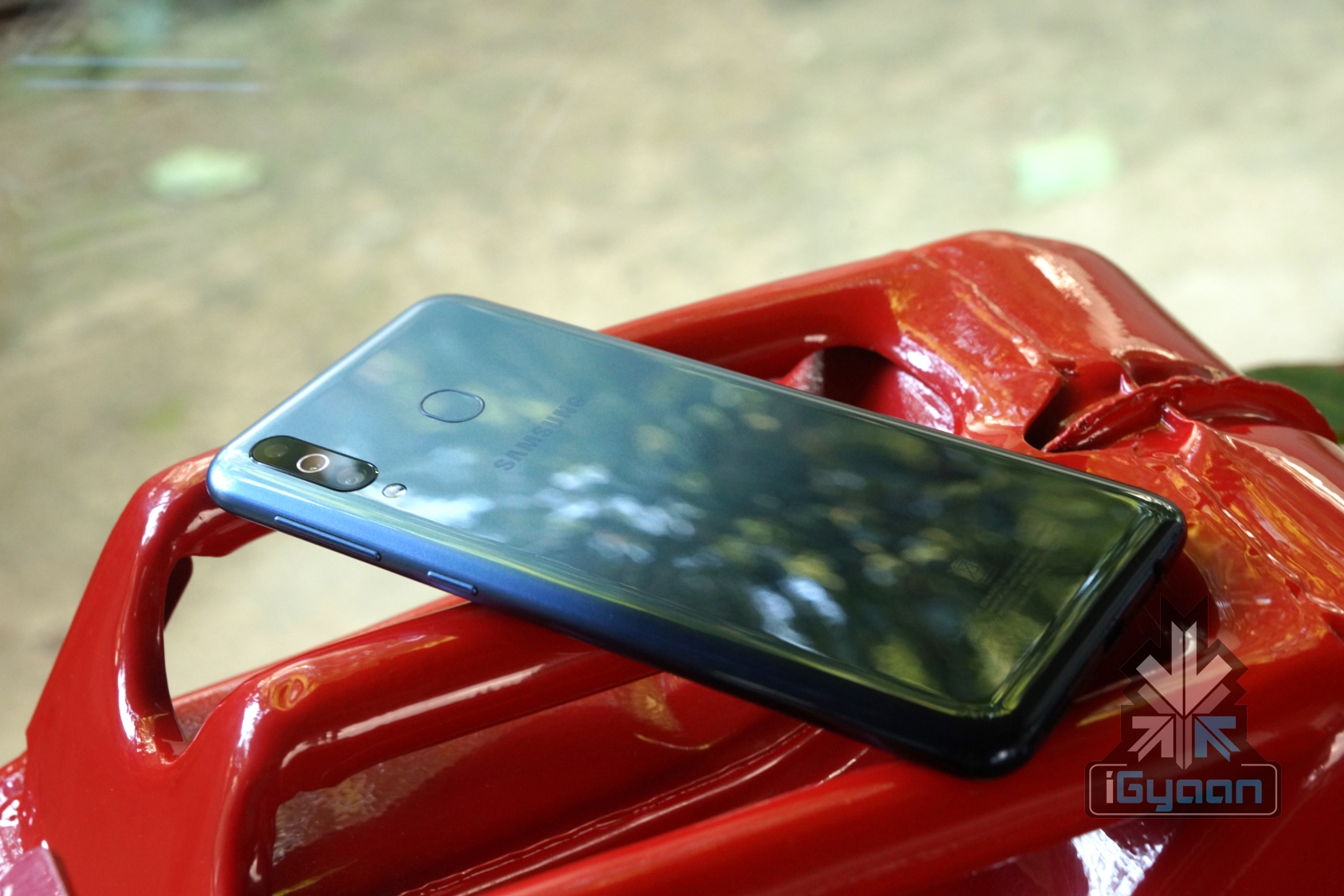
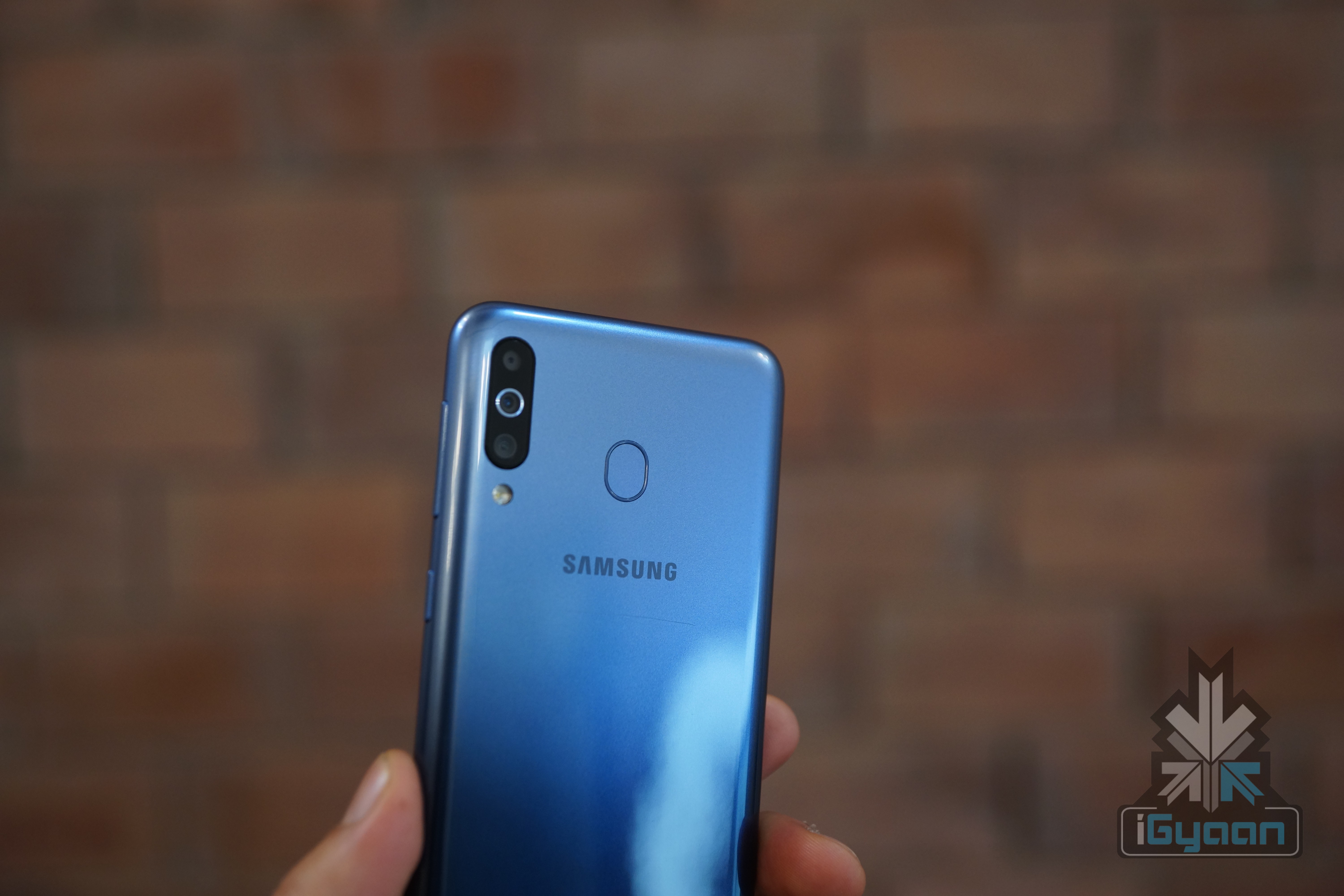
    Samsung Galaxy M40

    Leaks suggest that the Galaxy M40 will sport a 6.3 inch FHD+ display with a resolution of 2340 x 1080 px. The smartphone will boast of a high screen-to-body ratio thanks to the Infinity-O display (punch-hole display). The right side of the device will accommodate the volume rockers and the power button. The rear panel of the handset houses the triple camera setup, the fingerprint scanner and the company branding in the middle.

    Samsung Galaxy M30
    Samsung Galaxy M30

    Under the hood, the Galaxy M40 will run on the Snapdragon 675 chipset, which consists of the octa-core Kryo 460 CPU and the Adreno 612 GPU. Information regarding different variants is unknown, but it is confirmed that the smartphone will launch with at least 6GB of RAM and 128GB of storage. It will be powered by a 3,500 mAh battery, unlike the Galaxy M30 (see review here), which packed a massive 5000 mAh battery. 

    Regarding optics, the Galaxy M40 will feature a triple rear camera setup, which will consist of a 32MP primary sensor, a 5MP depth sensor and a third 8MP ultra wide sensor. For selfies, it will sport a 16MP front camera housed in the in-screen cutout. Noteworthy, the M40 will be the first M-series smartphone to run on Android 9.0 (Pie) out-of-the-box. 

    Galaxy M40: Expected Price And Availability

    Samsung Galaxy M40 Teaser

    Also Read: Mysterious Mid Range HTC Smartphone Certified By Bluetooth SIG, Launch Imminent

    As mentioned before, the Galaxy M40 will be unveiled by the company on June 11, 2019. Sources state that it will be priced around the price point of INR 20,000 (~$287). When launched, it will be retailed on an online-only basis, with the retailers being popular e-commerce website Amazon and Samsung’s own online store.  

  • Panasonic S1H Launched With Support For 6K Video Recording

    Panasonic S1H Launched With Support For 6K Video Recording

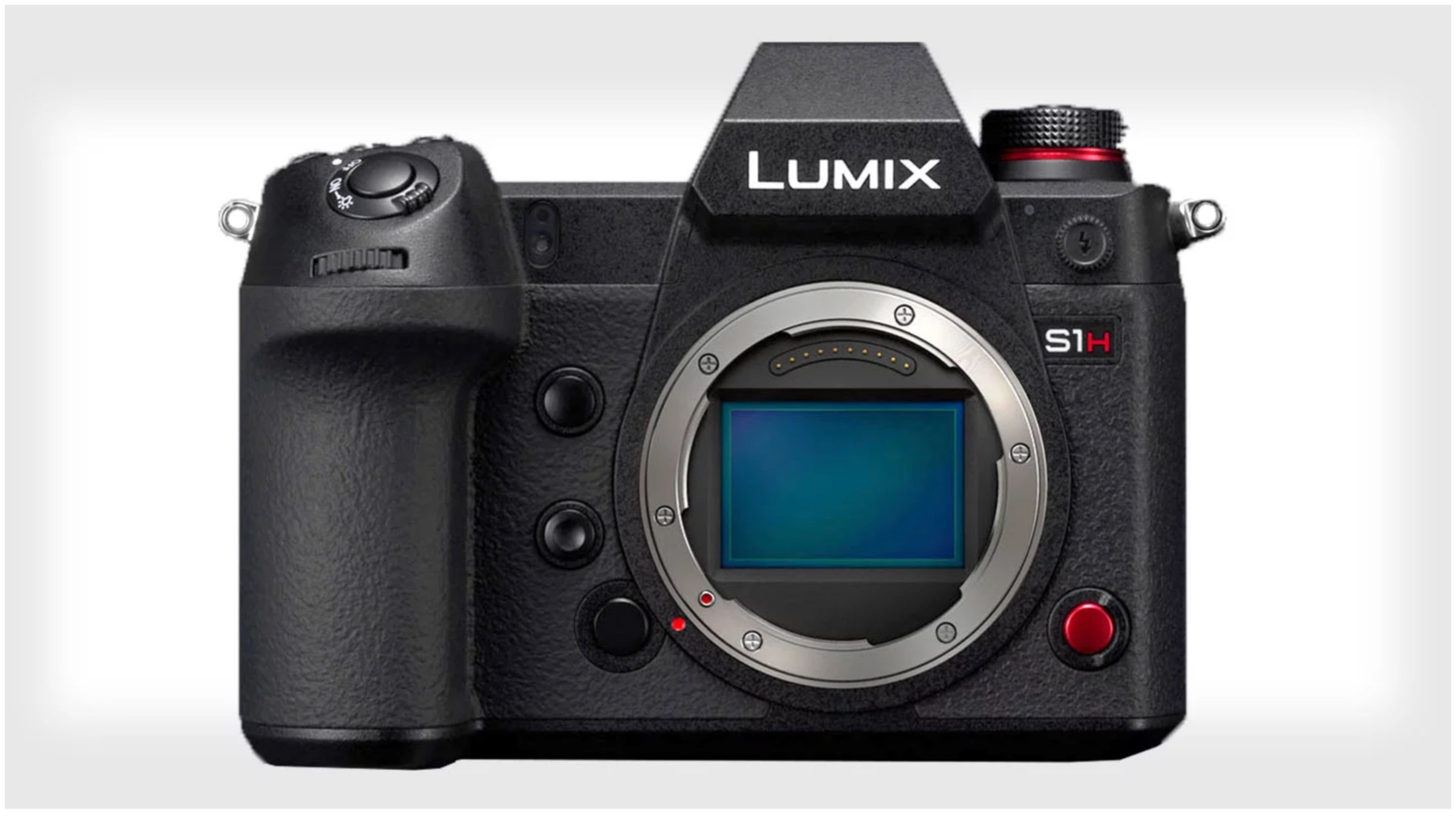
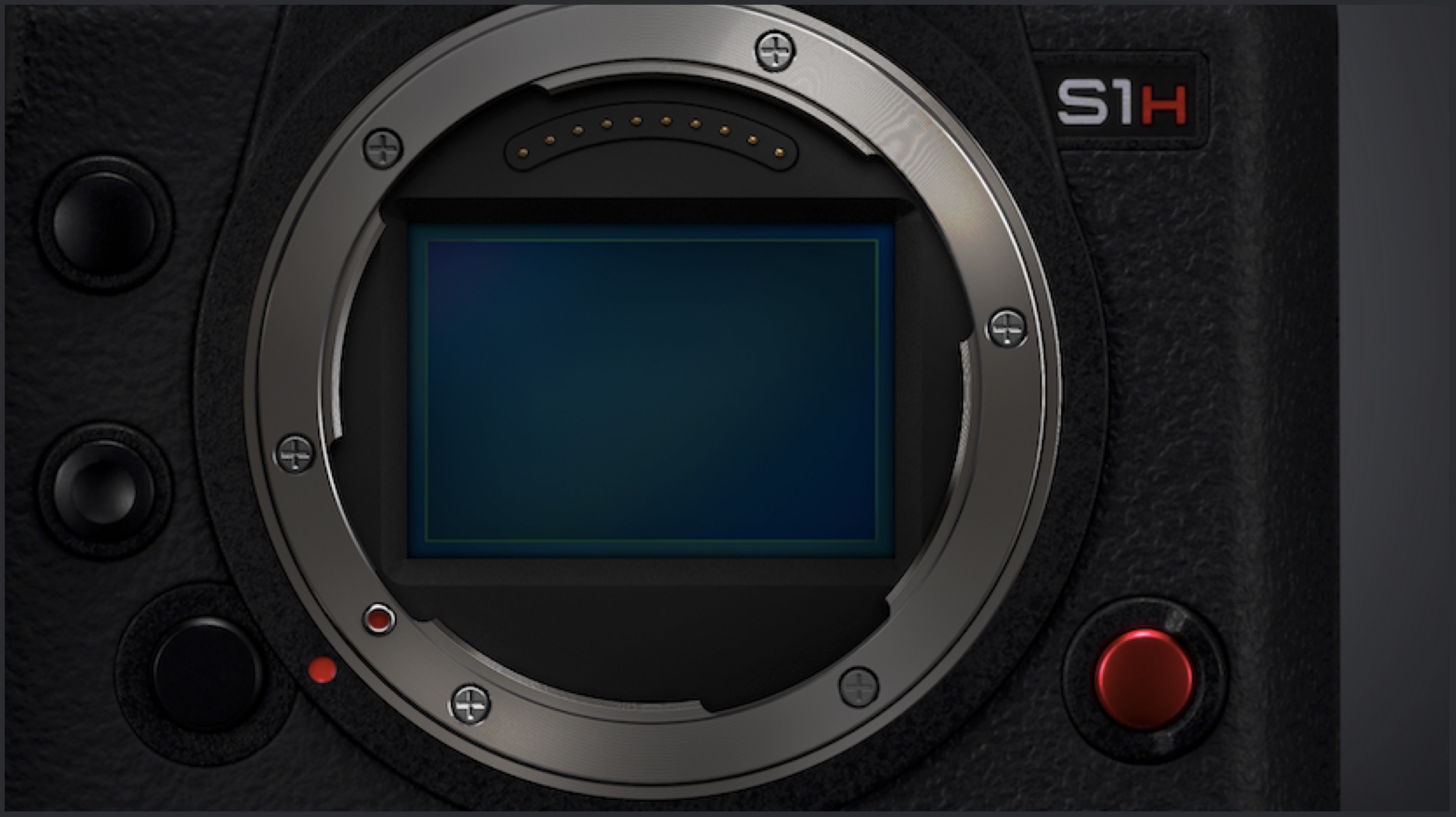
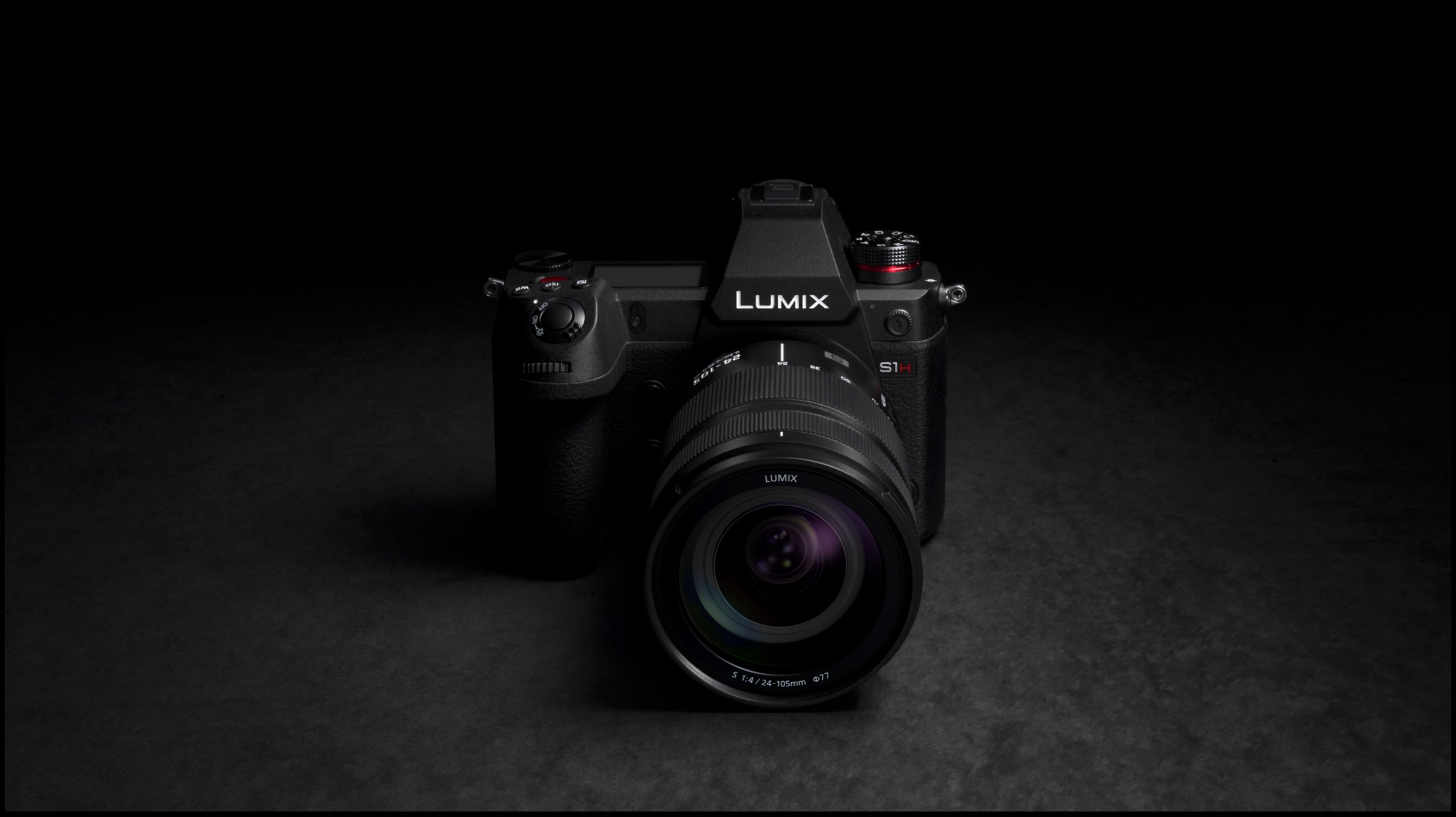
    Japanese electronics company Panasonic is widely known for making capable mirrorless cameras under its Lumix brand. The company on 31st May has announced its latest offering, the Lumix S1H Digital Single Lens Mirrorless camera; which boasts of being the worlds first full frame camera capable of recording in 6K resolution at 24 frames per second (fps). It is the successor to the Panasonic Lumix S1 launched last year and features notable improvements over it.

    Panasonic S1H

    Panasonic Lumix S1H

    As a full frame digital camera, the Panasonic Lumix S1H claims many world’s first to its name. Like mentioned above, it is the world’s first to record in 6K resolution at 24 fps in a 3:2 aspect ratio; or in 5.9K resolution at 30fps with an aspect ratio of 16:9. It is also capable of recording 10 bit 4K DCI video at up to 60 fps, which is also a world’s first. The camera has a variety of recording formats like the 4:3 Anamorphic mode like present in the popular GH5 camera from the company. The Lumix S1H also claims a wide dynamic range of 14+ stops with the V-Log/V-Gamut mode. Noteworthy, this dynamic range is the same as the premium Panasonic VariCam video camera.

    Panasonic Lumix S1H

    Also read: Alphabet’s New AI Defeats Human Players In A Multiplayer Game

    Unfortunately, Panasonic has not specified if the Lumic S1H will feature the in body image stabilization; like present in its predecessor, but it is assumed that the latest camera will pack in the stabilisation option. It also does not have any recording time limit, which may be a beneficial feature for shooting events. In terms of pricing and availability, the Panasonic Lumix S1H will be available starting fall, which generally refers to the fourth quarter of the year in the US; with the global availability to be announced soon. For pricing, the company’s latest offering is expected to be priced around US$ 4000 (Rs 2,78,300).

  • China Prepares A Counter Strike On The Huawei Ban

    China Prepares A Counter Strike On The Huawei Ban

    Trade relations between the US and China are rising in intensity again with China preparing for a response against the US ban on Huawei. The southeast Asian country has taken special measures to restrict the trade of rare earth elements to the US, placing the western country in its own ‘entity’ list. This puts the US in a blacklist as an unfavourable foreign company. 

    Japan’s SoftBank, taking the market opportunity has announced its plans for building its 5G network with equipment from Nokia and Ericsson amidst the turmoil. Huawei prior to this had been the supplier for 4G and was planned to collaborate alongside SoftBank for the same.

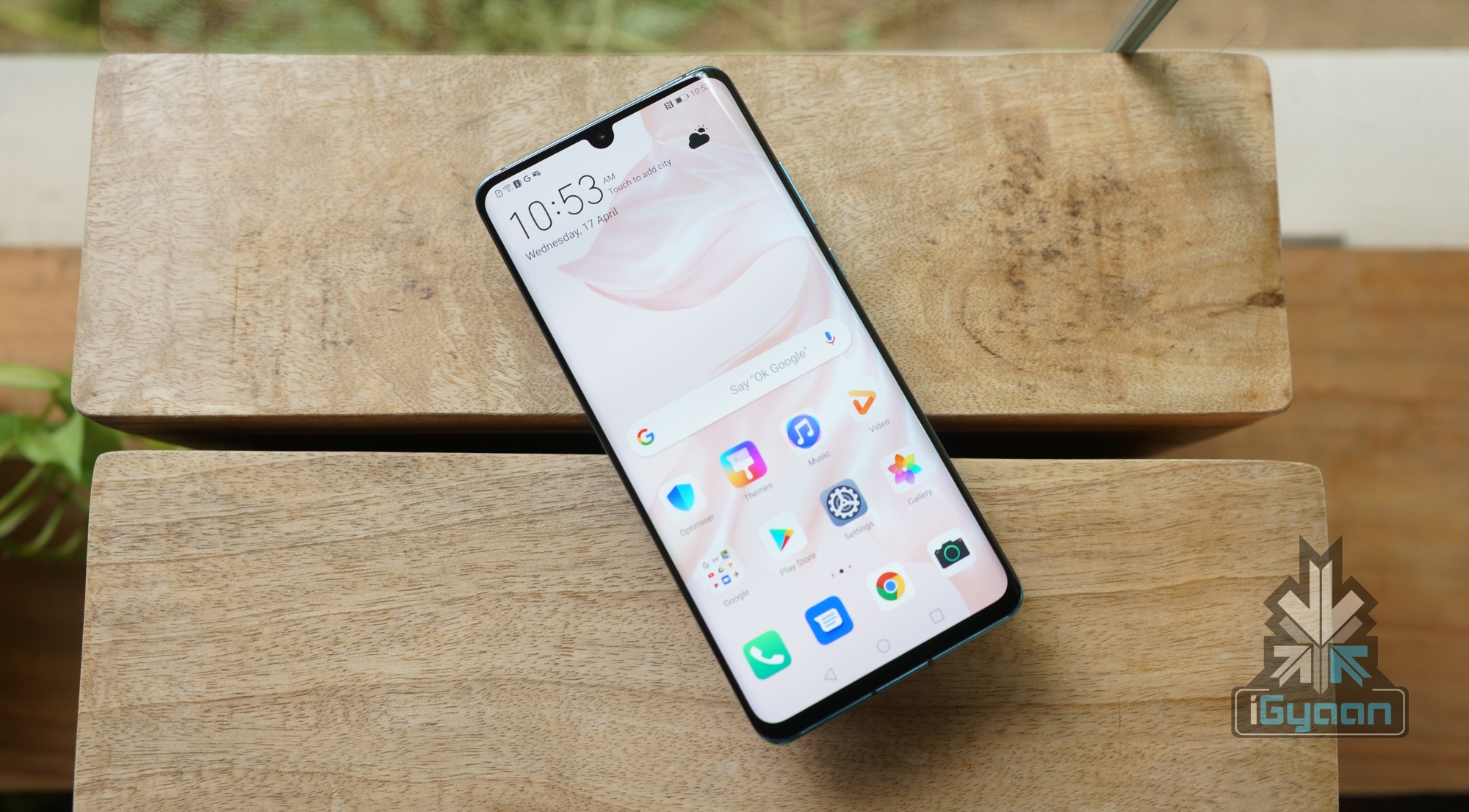
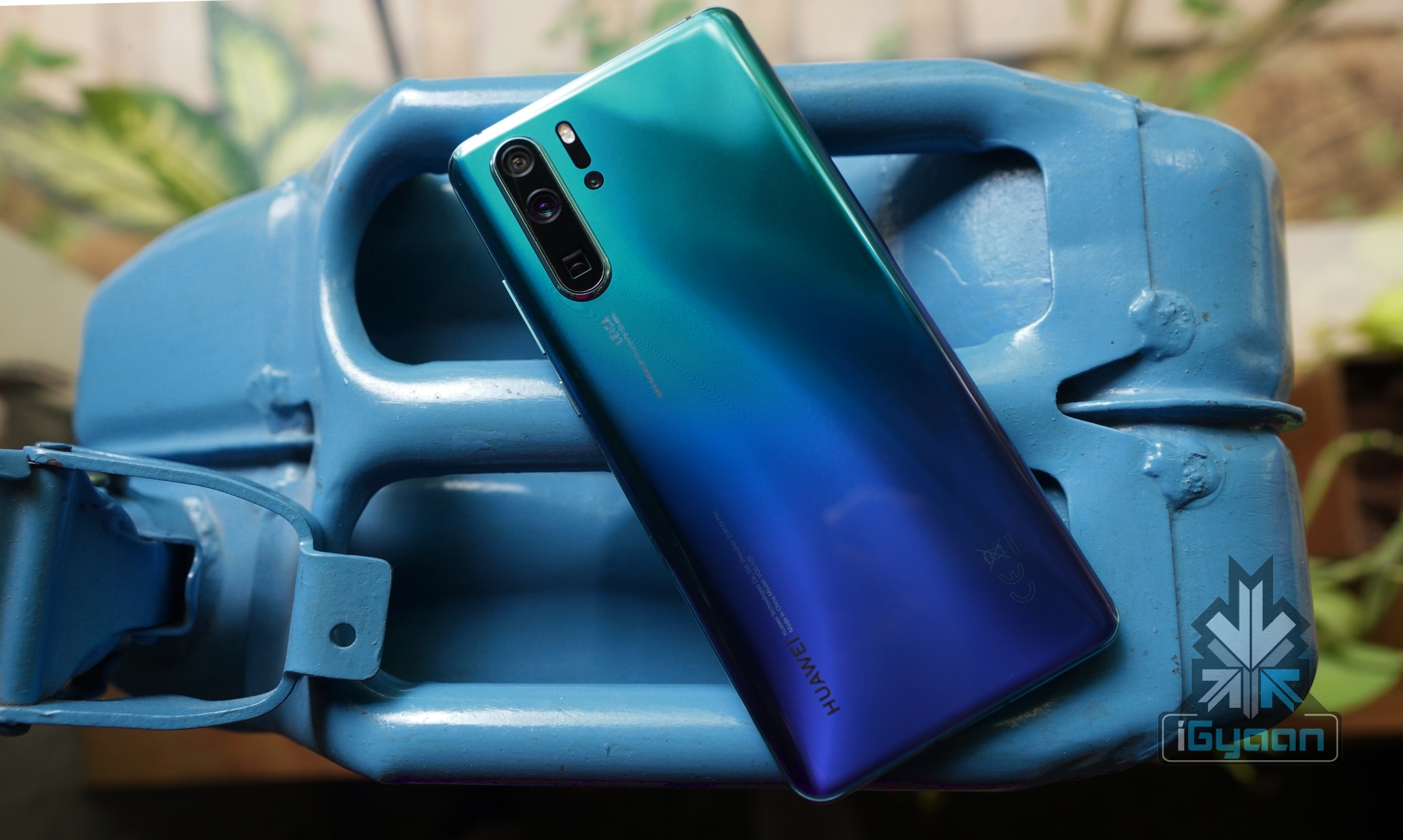
    Huawei P30 Pro

    The restrictions on rare earth elements stand as a signal from the Beijing leaders of its willingness to retaliate with countermeasures in place. This, however, is reported to only be actually deployed if the trade war between the US and China worsens with time. One of the important rare elements derived from China is Neodymium, a popular industrial grade element used to make magnets. It is often seen advertised spec sheets of audio gear such as earphones and headsets. The US according to various trade experts and researchers have no outside alternative worthwhile apart from China.

    Huawei

    The Chinese phone manufacturer, Huawei sits in the middle of the trade war zone. Taking a massive hit on its business with the loss of its huge deal with SoftBank related to 5G networking. This incident came after Huawei was claimed to be a national threat by the US President Donald Trump and placed in the Bureau of Industry and Security’s Entity List that has its business operations in America crippled.

    Also ReadApple Planning On Removing 3D Touch Feature In Future iPhones

    Actions questioning Huawei’s networking equipment and services have never been raised although concerns regarding security have driven its potential business operations away from it. The company’s affiliation with the Chinese Government only worsens relations with foreign companies like the Japanese SoftBank who’s decision is only a result of such accusations thrown about. Regardless of how soon or how smoothly the trade tensions die out, Huawei’s brand trust with confidentiality in mind will remain as trauma in the minds of its future partners.

  • Mysterious Mid Range HTC Smartphone Certified By Bluetooth SIG, Launch Imminent

    Mysterious Mid Range HTC Smartphone Certified By Bluetooth SIG, Launch Imminent

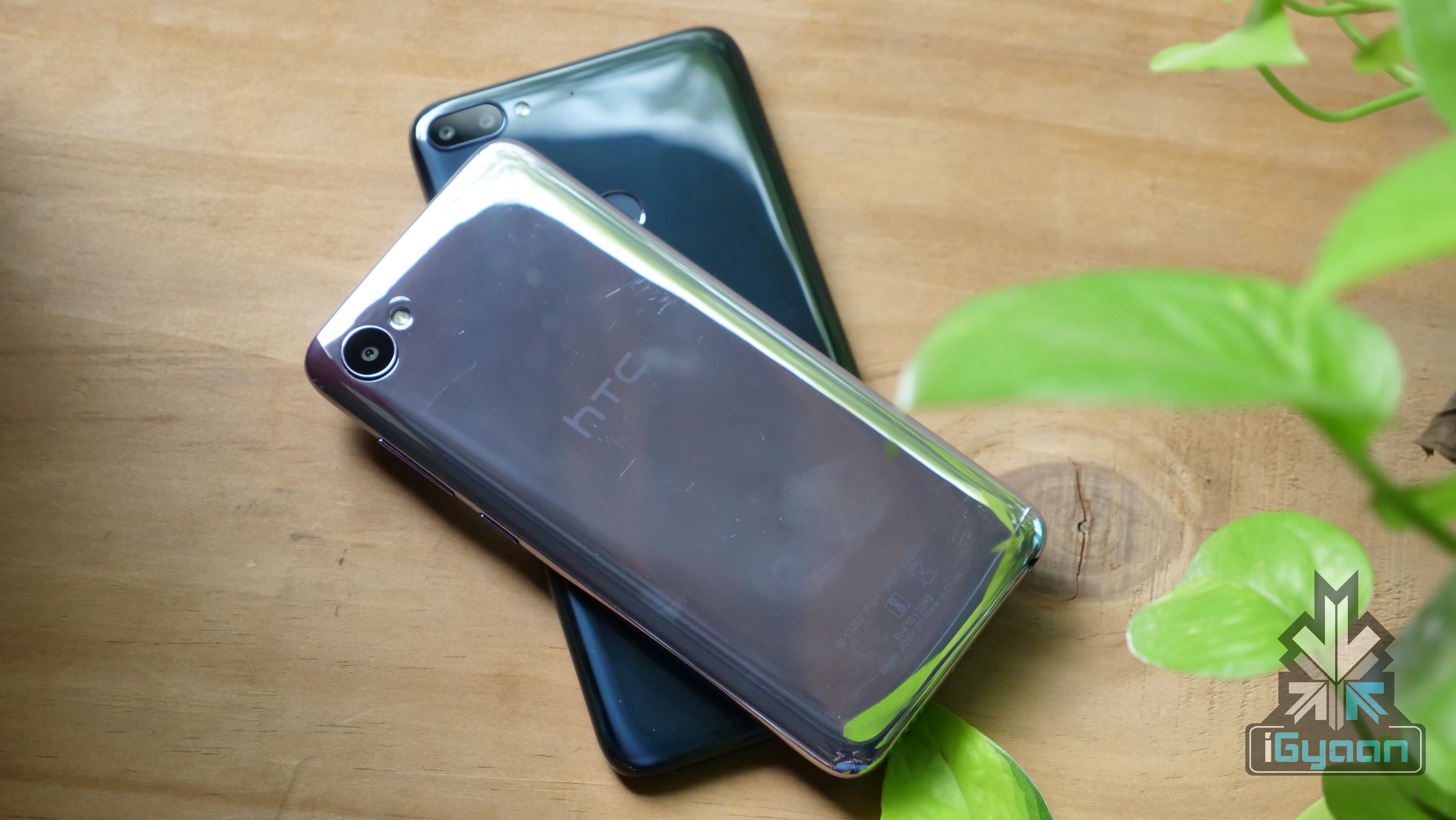
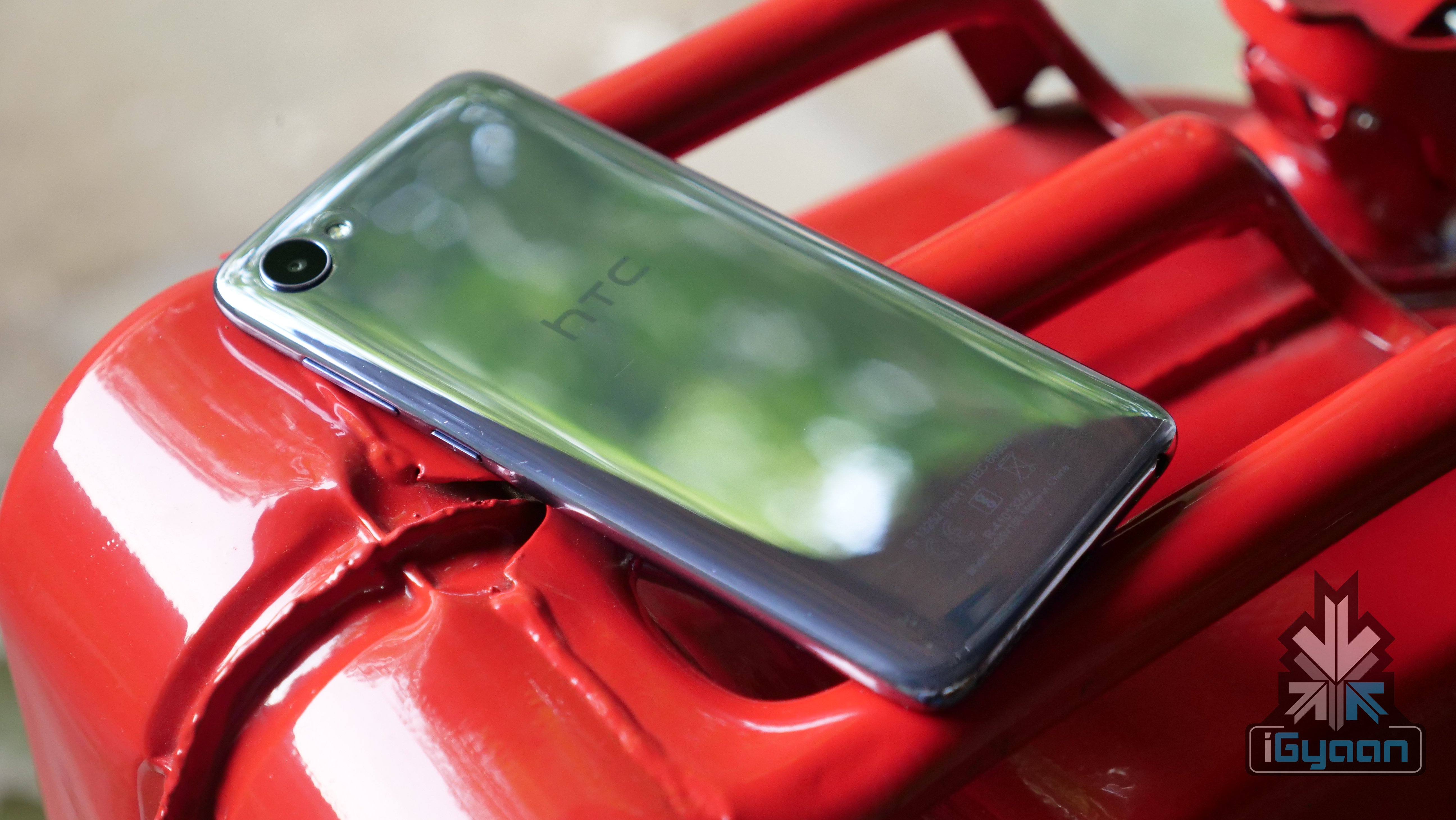
    Taiwanese company HTC is best known for its smartphones. However, due to intense competition in the space, courtesy of Chinese OEMs, sales for the company have fallen significantly in the past few years. It has been long speculated that the company may exit the smartphone business altogether. However, in the month of April, a mid-range HTC handset surfaced on performance benchmarking platforms Geekbench and Antutu which suggests otherwise. Now, the device has been granted Bluetooth certification which suggests an imminent launch.

    HTC Mid-range Smartphone

    HTC

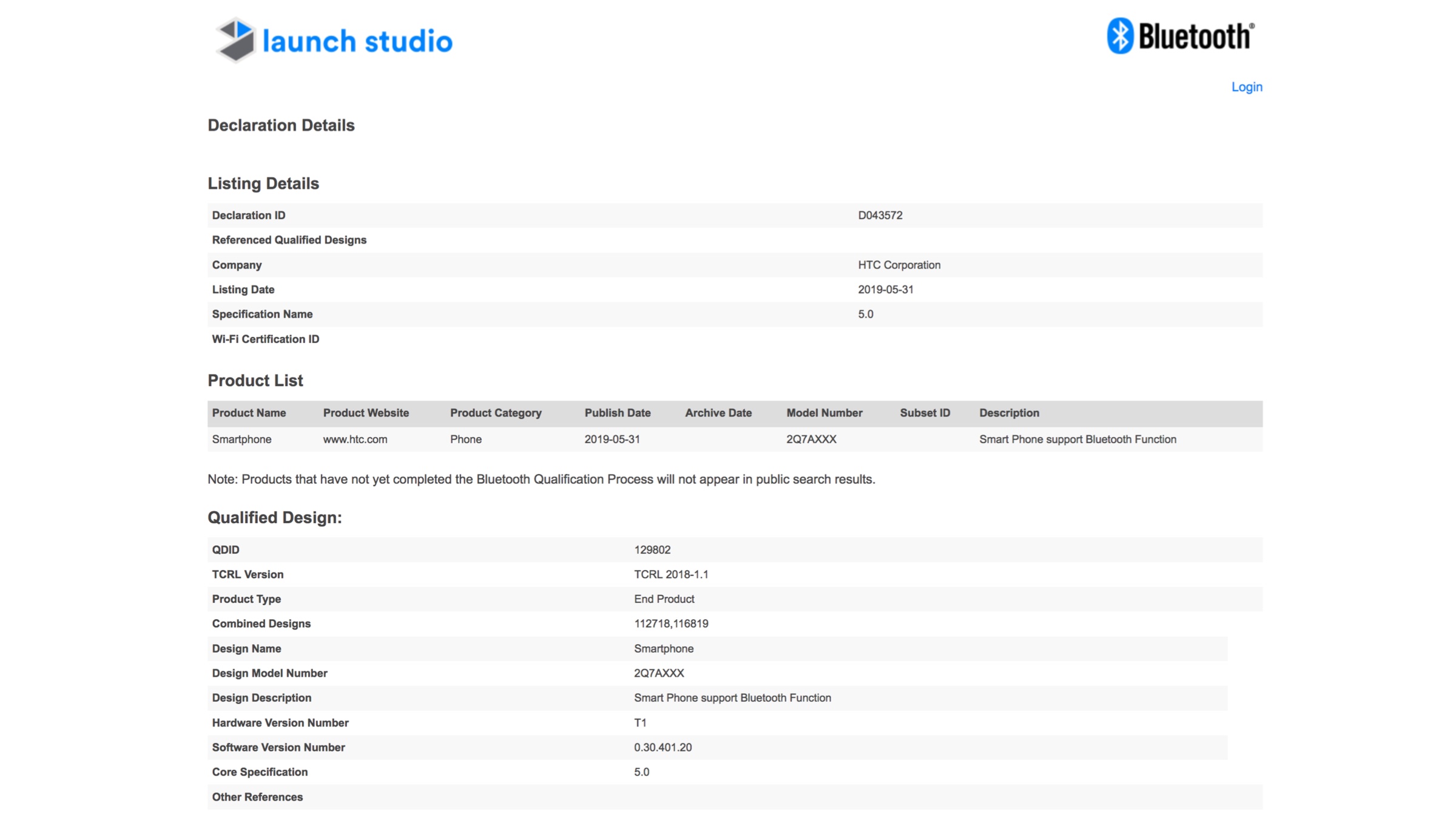
    The mysterious smartphone from HTC is expected to be a mid-range offering. It has been certified by the Bluetooth Special Interest Group (SIG) with the model number 2Q7AXXX. This falls in line to the two previously leaked mid-range devices from the company. While the former had the model number 2Q7A100; the latter used the HTC 2Q741 moniker to identify itself. This insinuates the aforementioned handsets are part of a series that HTC may introduce soon. Unfortunately, the Bluetooth certificate of the smartphone does not add to the existing information about it, except for the fact that the upcoming device will have support for Bluetooth 5.0 Low Energy.

    HTC
    HTC Desire 12

    Also read: Xiaomi Delays The Release Of Its Foldable Smartphone Over Market Insecurity

    Previous leaks revealed the mysterious HTC mid-range smartphone will run on the 10nm Snapdragon 710 SoC. The chipset consists of an Octa-Core CPU and the Adreno 616 GPU. In terms of memory and storage, the device may have 6 GB of RAM and 128 GB of internal storage which might be further expandable via a microSD card. Even though the listing did not reveal the screen size of the upcoming device, it mentions an FHD+ resolution of 2160 x 1080 px. Unfortunately, HTC has not confirmed the authenticity of the leak, therefore, the price and the launch date of the upcoming smartphone by the company is anyone’s guess. But, the listing on the Bluetooth certification website hint toward an imminent launch.

  • Facebook Patent Reveals A Drone Powered By Kites

    Facebook Patent Reveals A Drone Powered By Kites

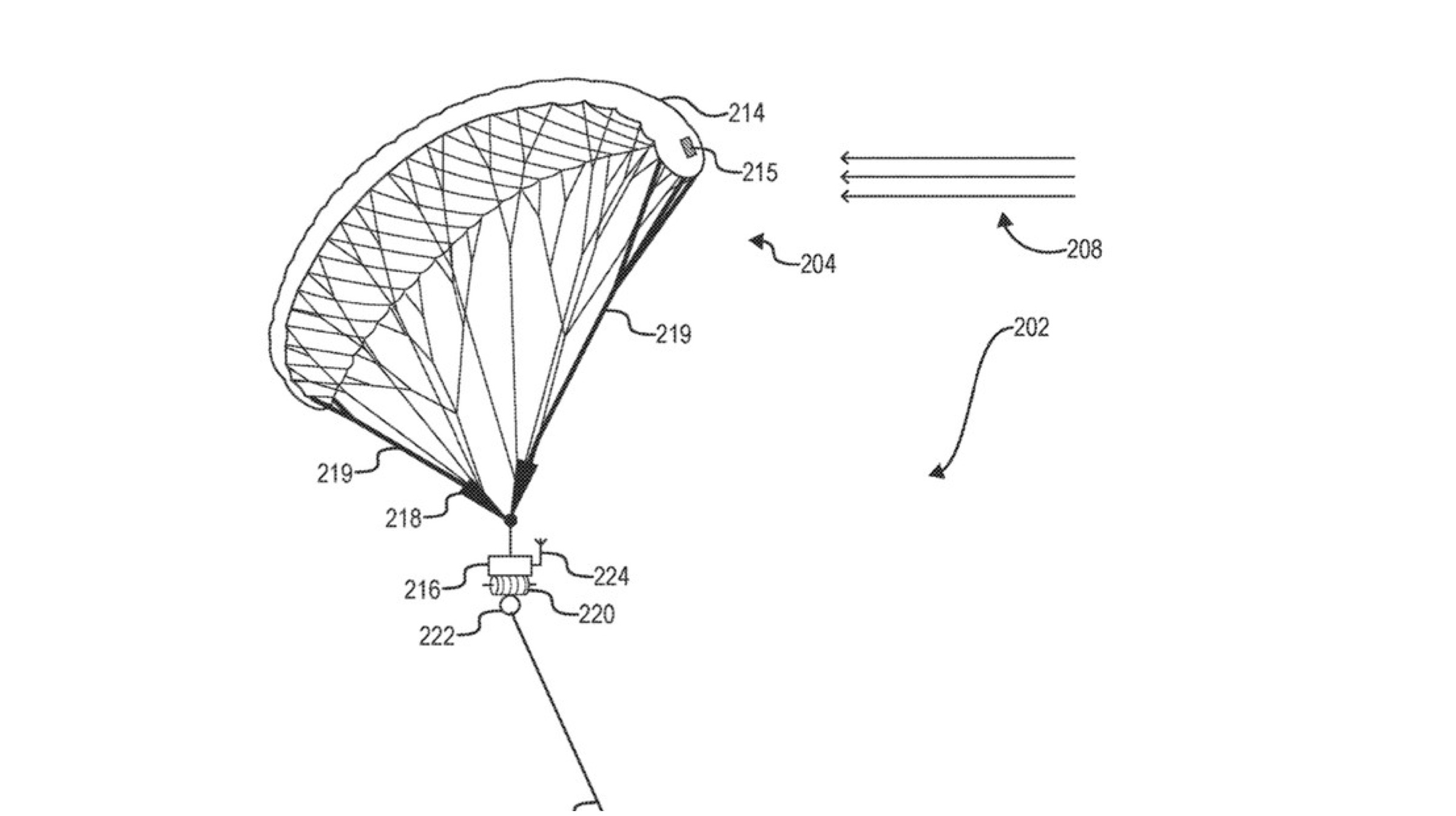
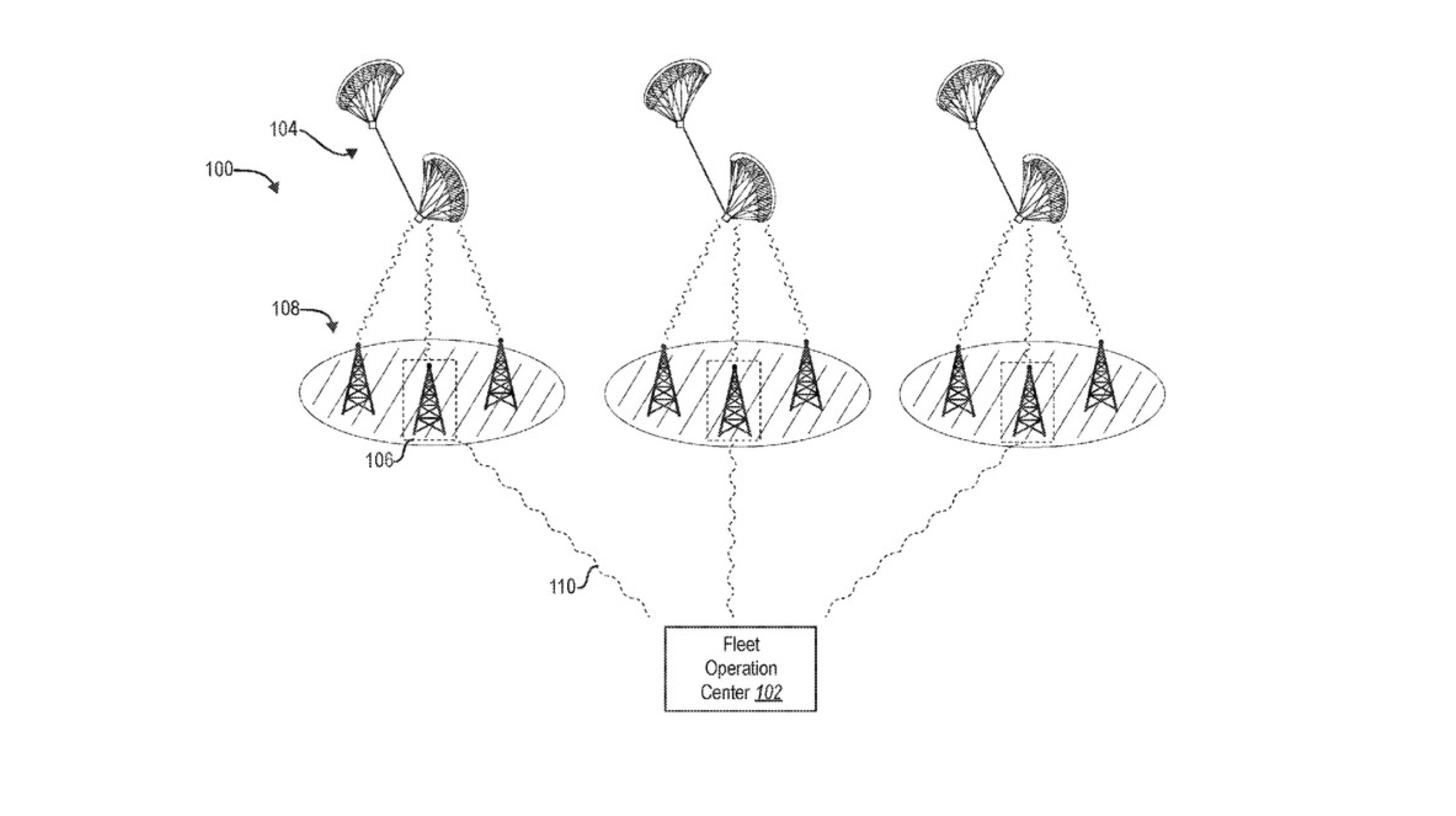
    A freshly revealed patent shows that Facebook is working on a drone which is quite unconventional. The drone will not use its own power source for flight, instead it would make use of kites to stay afloat. Named the “dual-kite aerial vehicle”, each drone consists of two separate kites that can be directed independently. Moreover, the drone can utilize the force of the wind to extend its flight time, essentially making it self-sufficient. 

    Facebook Kite Drone

    The patent was originally filed in the month of November 2018. It depicts a drone that is connected to the kites via a kiometre-long tether. It is designed along the lines of a helicopter-style aircraft, and by cutting down the size and weight of the drone, it can attain extra-long flight durations. Facebook also mentions that a fleet of such drones can be controlled wirelessly from the surface. Since higher altitudes imply more sunlight, they can be employed to generate power through solar panels as well. 

    Facebook Kite Drone

    The social media giant was previously reported to be working on Aquila, which was a project that involved beaming down an LTE network from high-flying droneships in the stratosphere. The drones in Aquila were supposed to run on solar energy, providing sustainable flight over long durations of time. However, the project didn’t really take ‘flight’, and was abandoned by the company in the year 2018. 

    Also Read: Call Of Duty: Modern Warfare Trailer Reverts The Series Back To Its Roots

    The drone in the freshly filed patent, however, is nothing like Aquila. It resembles the balloons that Google previously showcased for its Loon project. Nonetheless, the reveal should be taken with a grain of salt, since it could be long before we could get to witness such an offering from the company. With the privacy and security concerns looming over Facebook, it may not want to launch large drones into the sky anytime soon. However, considering that the organization previously teamed up with aviation giant Airbus to provide high altitude connectivity, a prototype may be under development as well. 

  • Alphabet’s New AI Defeats Human Players In A Multiplayer Game

    Alphabet’s New AI Defeats Human Players In A Multiplayer Game

    Concepts easily understood by humans are not as simple to machines. Variables always arise and questions that machines can’t answer make complete autonomy difficult. Alphabet, Google’s parent company had its DeepMind’s technological studio train its AI to learn how to play a game of capture the flag on a level greater than that of a human.

    One of the most basic games in terms of principle, capture the flag has two teams go against each other with the primary objective of the game being to capture a flag (any marker). The marker is located at each teams respective base and has to be captured by an enemy team after which they have to safely return with it to their own base safely. Easy for humans to understand and play, but complex for a machine that has to make numerous calculations that’ll help it strategize in a manner resembling humans.

    This stands to change with AI and machine learning. A report published by researchers at DeepMind, subsidiary of Alphabet, details a system not only capable of learning the game, capture the flag but also devising strategies and planning on a level of human teams in Id Software’s Quake III Arena. The paper published reported on how the AI was not taught how the game played but only informed if the opponent was beaten or not.

    Reasoning behind this approach of training an AI stems from the unpredictable behaviour that can be exhibited as the learning process continues. Some of the researchers working on DeepMind’s AI have previously developed alongside AlphaStar, who’s machine learning program beat professional StarCraft II players. The key techniques utilized in the study was reinforcement learning, which had rewards given out to incentivize the software towards the goal.

    AI

    The agent utilized by DeepMind, appropriately dubbed For The Win (FTW), learns from on-screen pixels using a convolutional neural network, a collection of mathematical functions (essentially neurons in the human brain) arranged in layers. The data absorbed by this is sent to two recurrent long short-term memory (LSTM) networks, one that that operates on a slow timescale while the other on a faster timescale. This enables a degree of prediction about the game world and take actions through an emulated game controller.

    AI

    The 30 FTW AI agents were trained in different stages with the powerful learning paradigm to improve real world performances. Agents there on were reported to have formulated and enacted strategies generalised across the different maps, team rosters, and team sizes. The AI’s learned human behaviours like following teammates, camping, and defending their base from attackers while not repeating tactics that do not give any inherent advantages like following the teammate too close as the training progressed.

    Also ReadCall Of Duty: Modern Warfare Trailer Reverts The Series Back To Its Roots

    The AI had surpassed the win-rate of human players by a substantial margin in a tournament involving 40 humans that were randomly matched in both games as teammates and enemies. The Elo rating (the probability on winning) of the AI was 1,600 compared to good human players that had an Elo of 1,300 while the average for human players was 1,050. This held true even when the agents were slowed down by a quarter of a second. Human players only won 12-21% of the times ranging from skill level.

  • Gigabyte Launches PCIe 4.0 NVMe SSDs With 4.88 Gbps Read Speeds

    Gigabyte Launches PCIe 4.0 NVMe SSDs With 4.88 Gbps Read Speeds

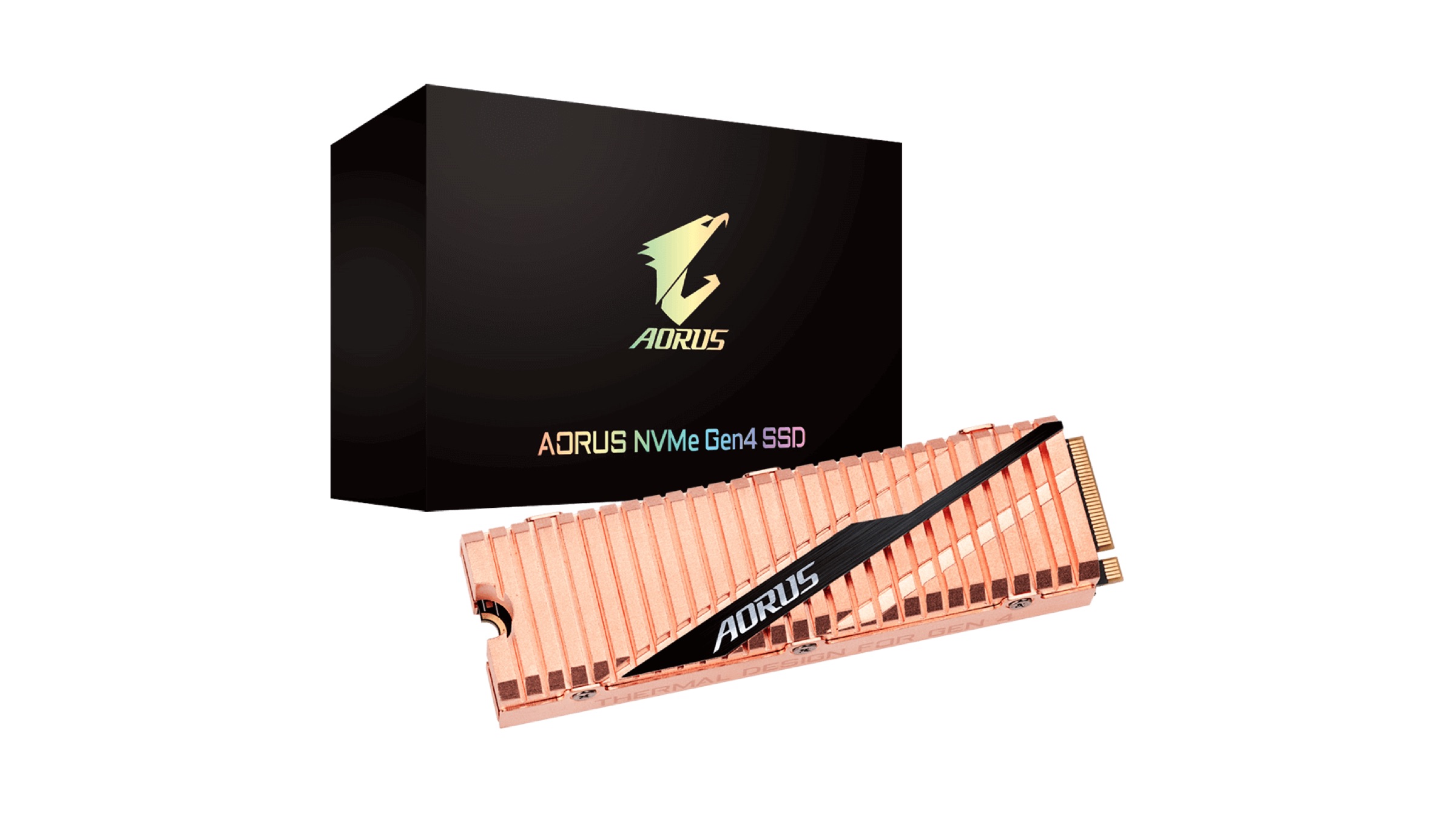
    Taiwanese technology company Gigabyte has unveiled the first PCIe 4.0 NVMe SSD that hits an incredible read speed of 5,000 MB/s, or 4.88 GBps. At the same time, the SSD can reach write speeds of 4,400 MB/s. 

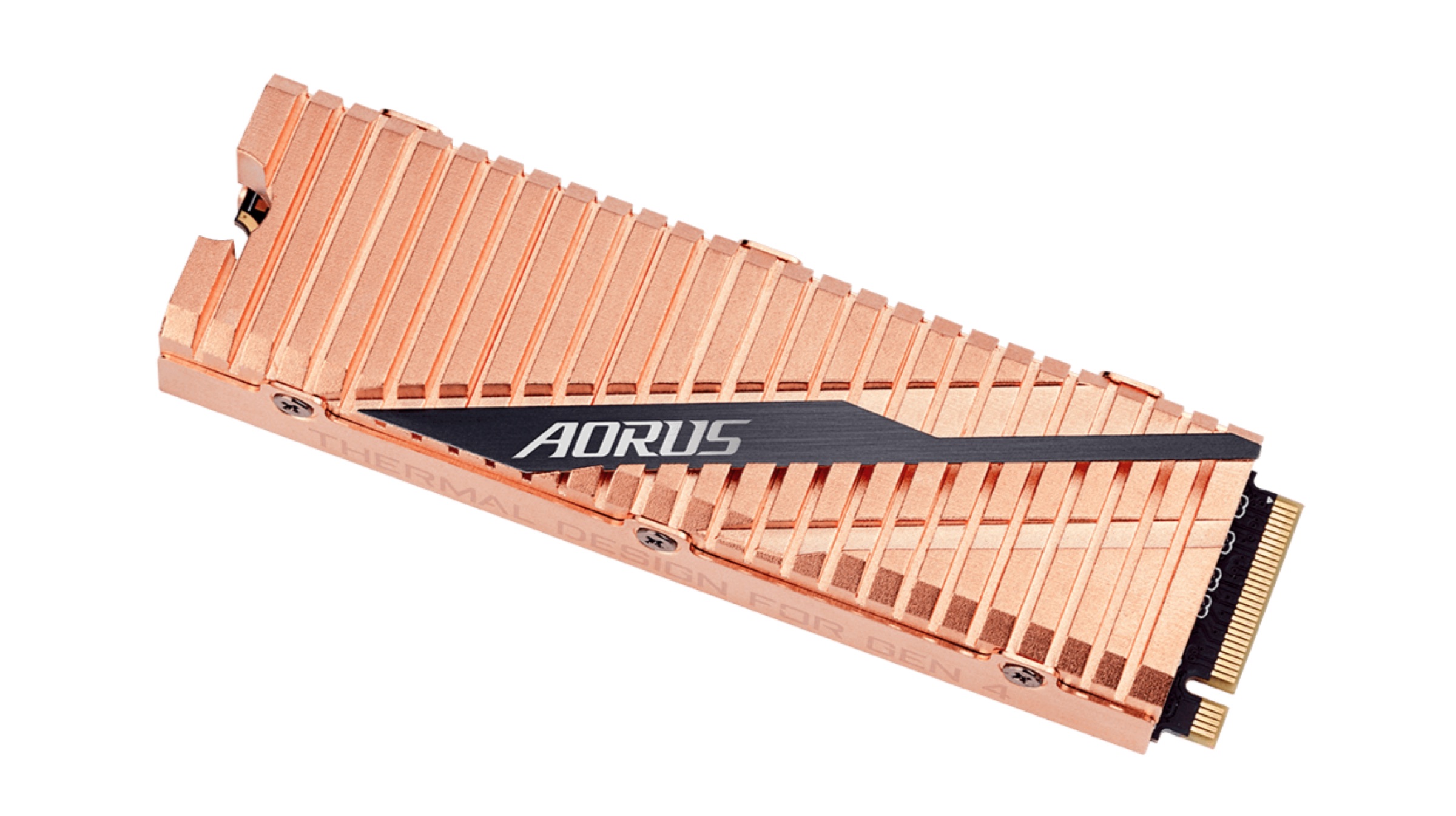
    However, Corsair also launched its own Generation PCIe SSD on May 27, 2019. It can achieve a read speed of 4950 MB/s, which falls merely 50MB/s short of Gigabyte’s SSD. Both the SSDs offer almost 56% faster read speeds than the Samsung 970 nvme Solid State Drive, which is one of the fastest available SSDs in the market. The Gigabyte PCIe 4.0 utilizes the Phison PS5016-E16 controller and 3D Triple Level Cells (TLC) NAND flash memory chips manufactured by Japanese manufacturer Toshiba. 
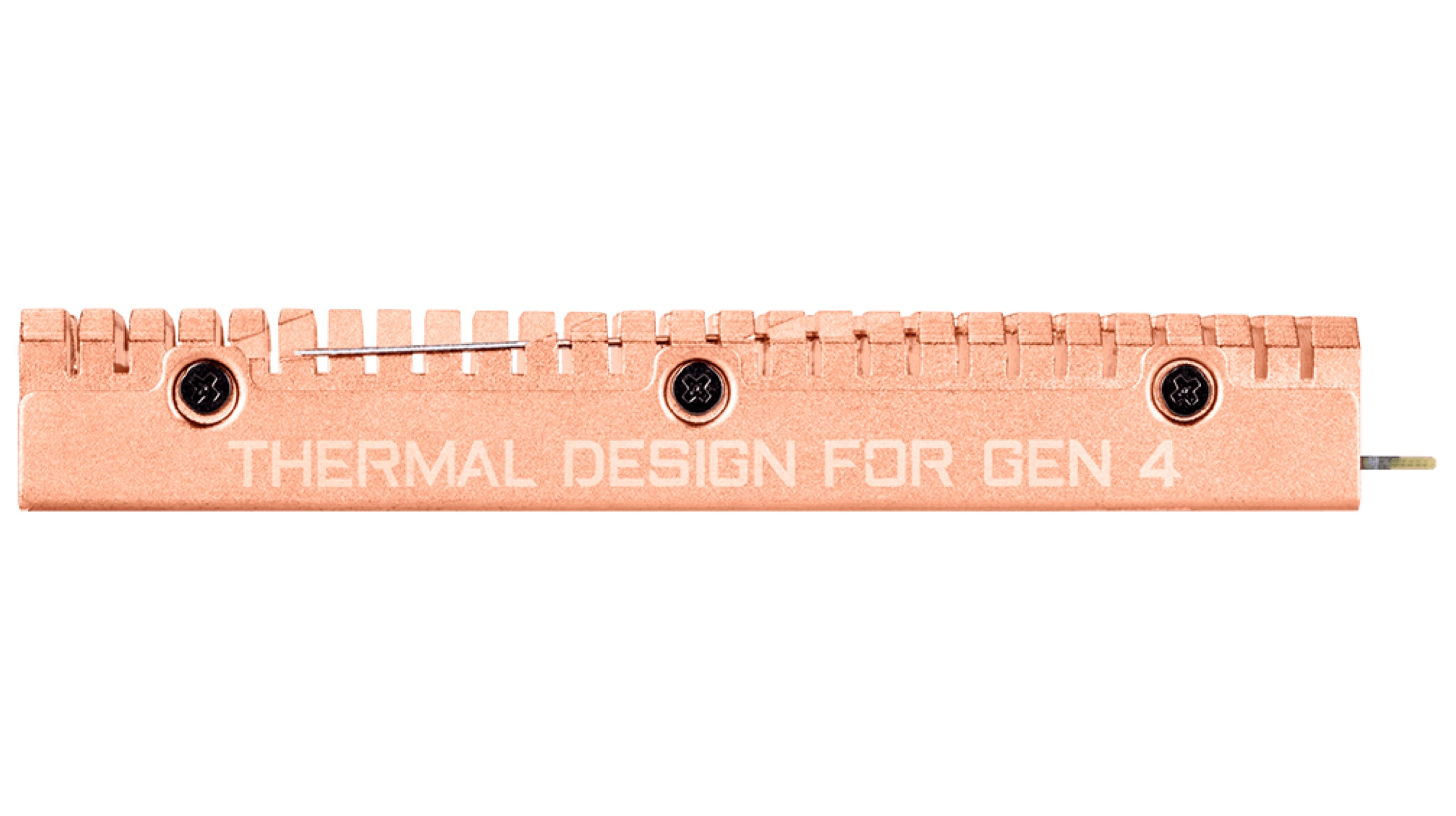
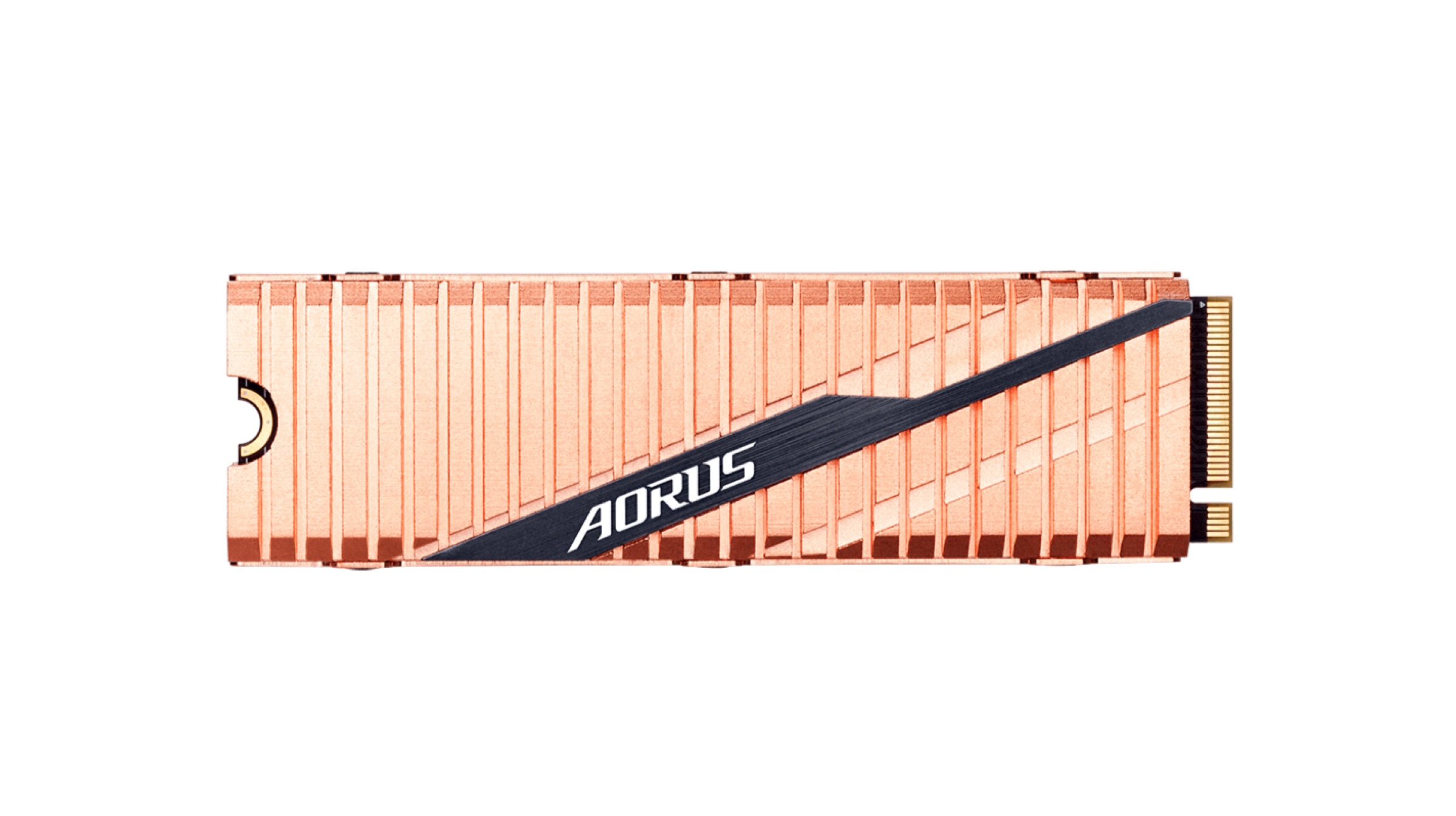
    A full body copper heat spreader engulfs the AORUS NVMEe Gen4 SSD, so that the generated heat can be managed at higher read/write speeds. Since the temperature can increase drastically during operation, Gigabyte states that using the heatsink can reduce the temperature of the SSD by almost 14 percent. 
    Also Read: Xiaomi Delays The Release Of Its Foldable Smartphone Over Market Insecurity

    As per reports, the NVMe SSD will be available in two storage variants, 1TB and 2TB. The company plans to roll out the SSDs in the month of July 2019. Interested users can get their hands on the Gigabyte X570 motherboard along with the SSD and the latest Ryzen processors in order to test out the insane Gen4 transfer speeds. Since Gigabyte has not unveiled the price of the NVMe Gen4 PCIe SSDs, an official announcement is awaited regarding the same. 

  • Xiaomi Delays The Release Of Its Foldable Smartphone Over Market Insecurity

    Xiaomi Delays The Release Of Its Foldable Smartphone Over Market Insecurity

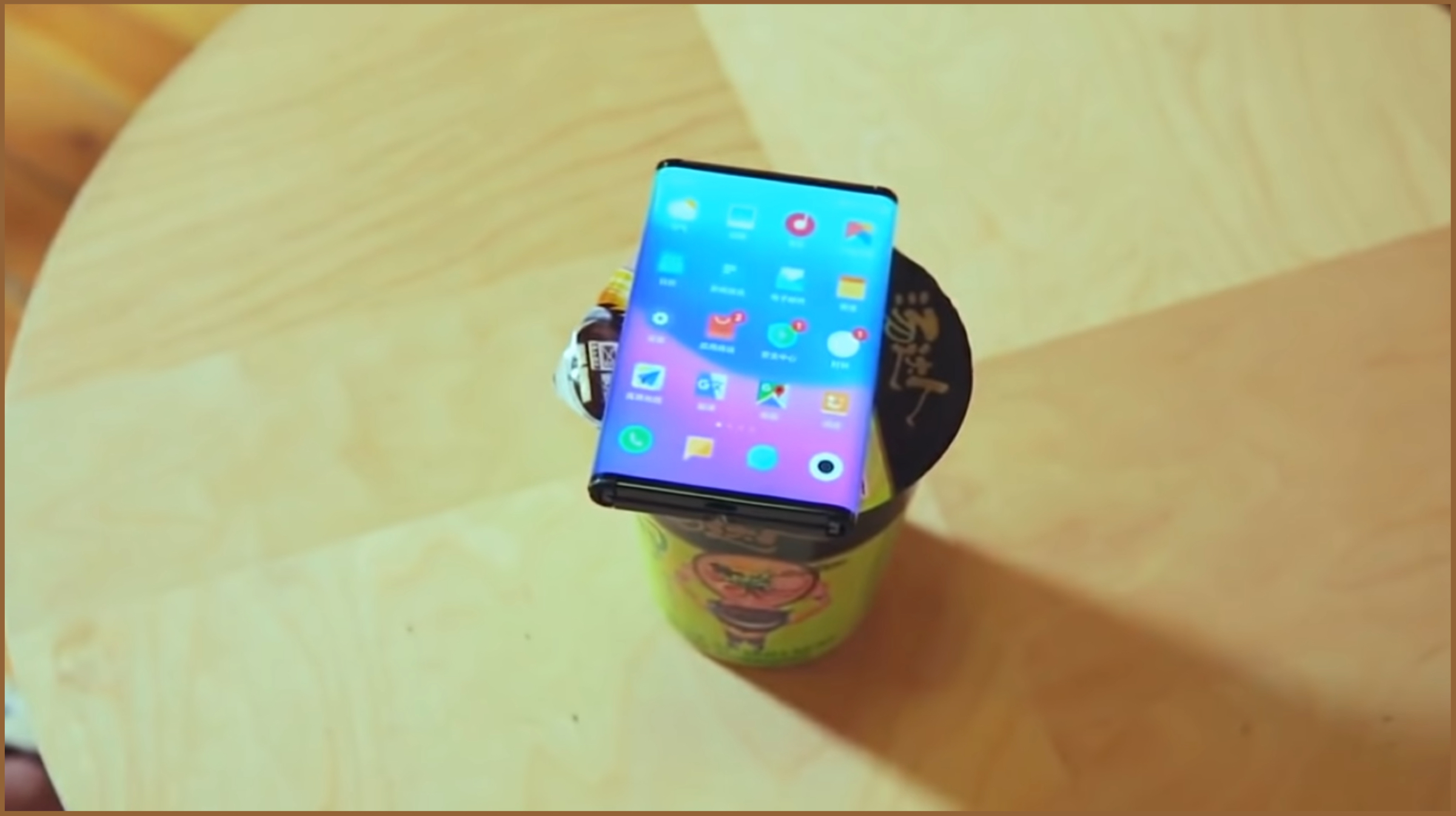
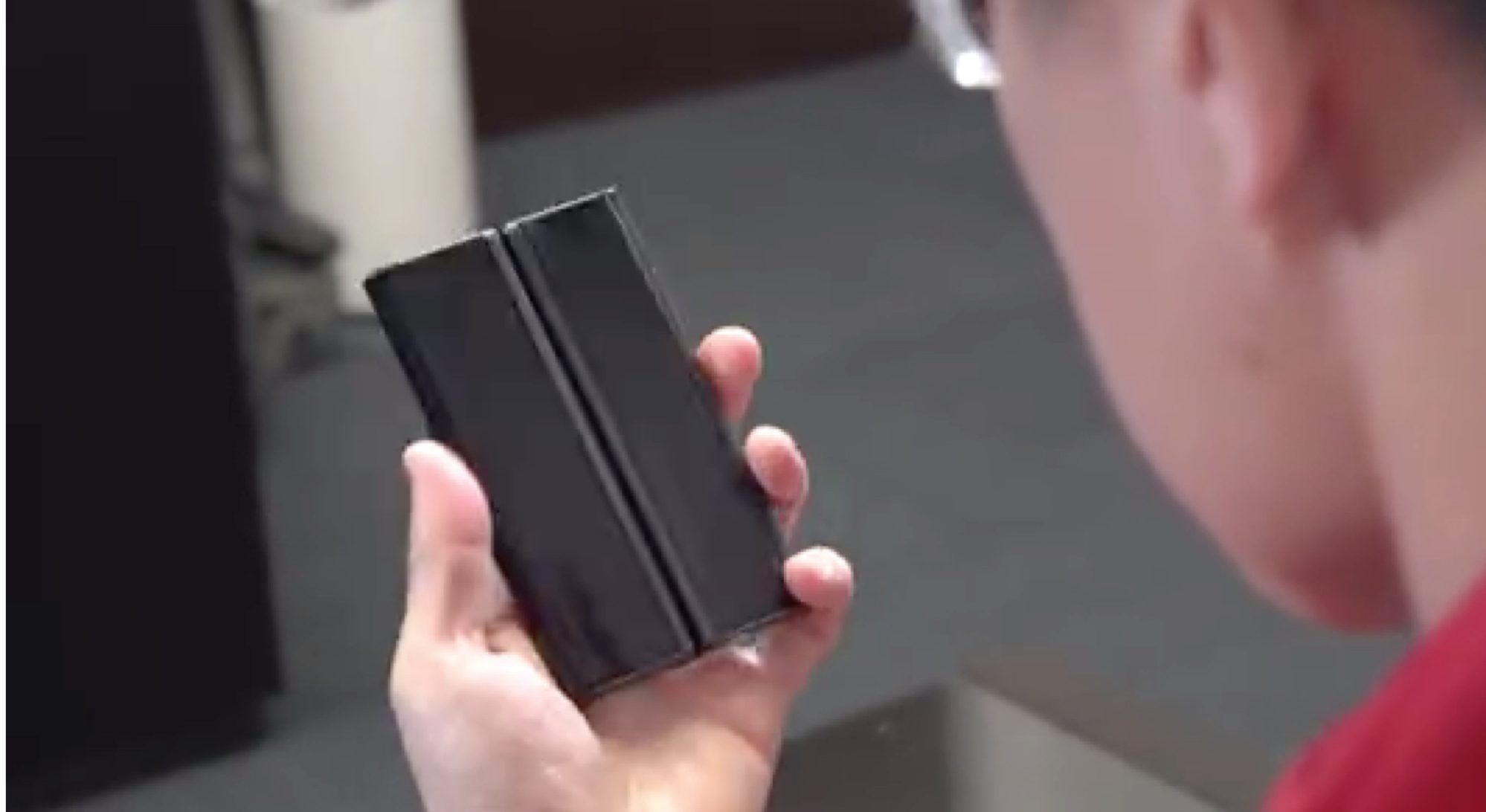
    Foldable smartphones are expected to be the technology trend for the year 2019. Samsung and Huawei have both showcased their first devices capable of folding into half. These handsets are the Galaxy Fold and the Mate X respectively. While the former was deemed ready for sales a few weeks ago, incidents questioning the smartphone’s durability surfaced online. This led to Samsung recalling the units in a bid to fix the issues plaguing them. While the market waits patiently for the Galaxy Fold to show up again, the major blow of the incidents seems to have been suffered by Xiaomi. 

    The Chinese smartphone OEM showed off its foldable smartphone in a series of teasers and videos over the past few months. It was also reported the device could make its way into the market in a few months at half the price of the Galaxy Fold and the Mate X. However, due to the increasing market insecurities over Foldable Smartphones, Xiaomi seems to have pushed back the release of its foldable handset.

    Xiaomi Foldable Smartphone

    Investors in the Xiaomi supply chain, had revealed that while the launch of the device was earlier planned in the month of June, our original source claims it has been postponed for later in the summer. This will allow Xiaomi to further test their foldable device. 

    Xiaomi Foldable Smartphone

    Due to the unfortunate incidents with the durability of the Samsung Galaxy Fold, and the following negative sentiments regarding foldable smartphones; Xiaomi is delaying the release, and further testing their product, and also making sure that the insecurity over the Galaxy fold failure will not impact the sales of their foldable device. Our source claims that the company may wait till another manufacturer releases a foldable device, before they unveil the phone in its entirety. 

    Xiaomi Foldable Smartphone

    The company was claimed to have sourced foldable displays from the display maker Visionox. A patent for a foldable Xiaomi device was also discovered around the same time. The rumoured handset by the company is also expected to feature the Snapdragon 855 SoC, up to 8GB of RAM and 512GB of internal storage.

    Xiaomi Foldable Smartphone

    Also read: OnePlus 7 Unboxing And Hands On Video

    The major attraction with the foldable Xiaomi smartphone is claimed to be its price. Our source told us that the device could retail at half the price of the already announced handsets from Samsung and Huawei, retailing in at about US$ 999 and arriving in India at a lucrative price tag of Rs 74,999. 
    The handset is now expected later in the Summer, possibly after Samsung re launches the Galaxy Fold, and while Huawei Mate X is also expected in the month of July. 

  • Apple Planning On Removing 3D Touch Feature In Future iPhones

    Apple Planning On Removing 3D Touch Feature In Future iPhones

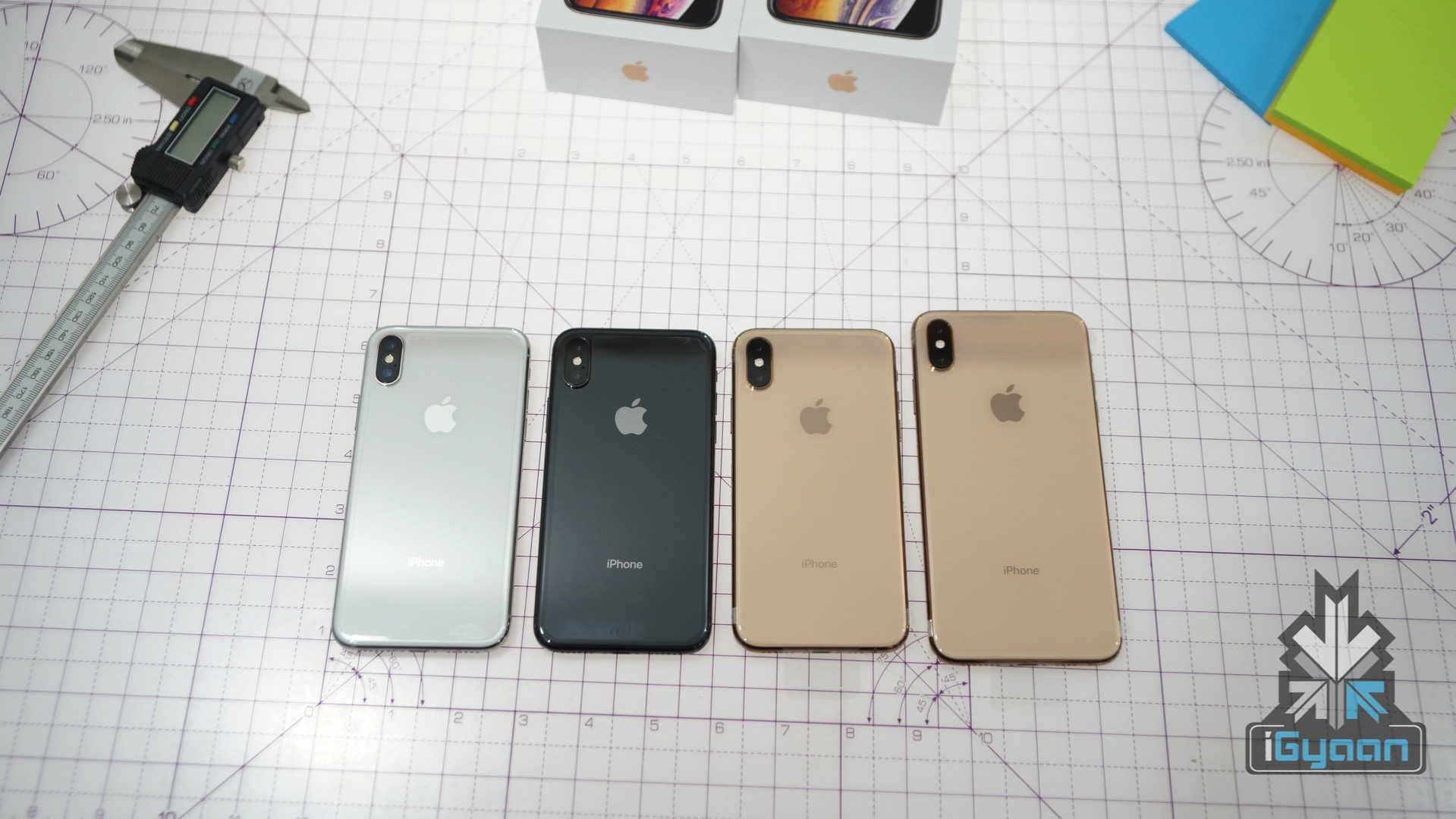
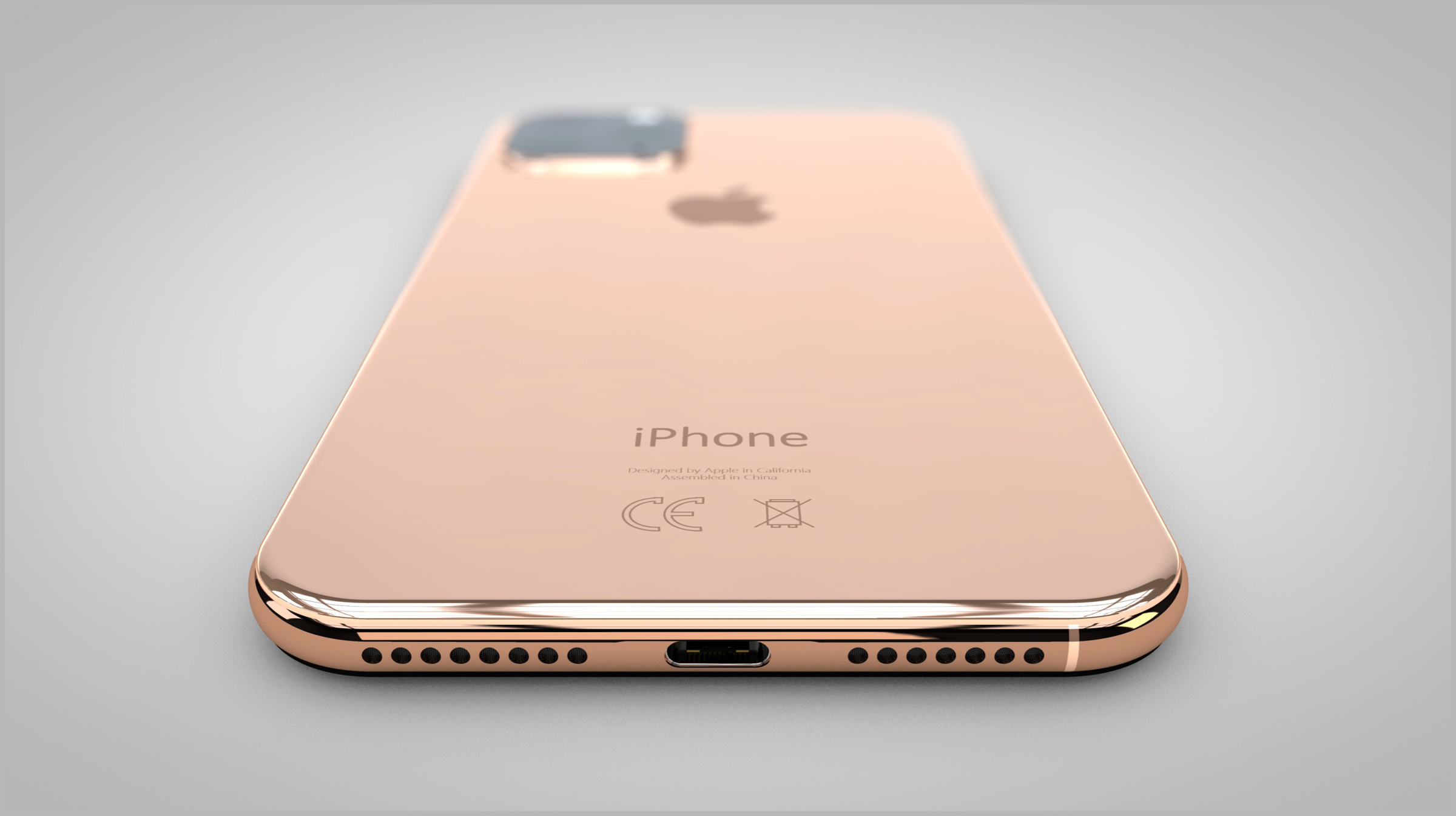
    Apple’s latest generation of smartphones has been shrouded with plenty of rumours and speculations. The renders seem to strike the right chord with some but fail to impress others, regardless Apple is set to take centre stage with its latest lineup. Amongst the many leaks that have yet to be confirmed, the latest reports point towards the removal of 3D Touch input. The 3D touch is a feature that the company introduced in its handsets back in the year 2015 that has made a recurring appearance since and is now receiving a rain check with the latest generation of iPhones.

    Apple

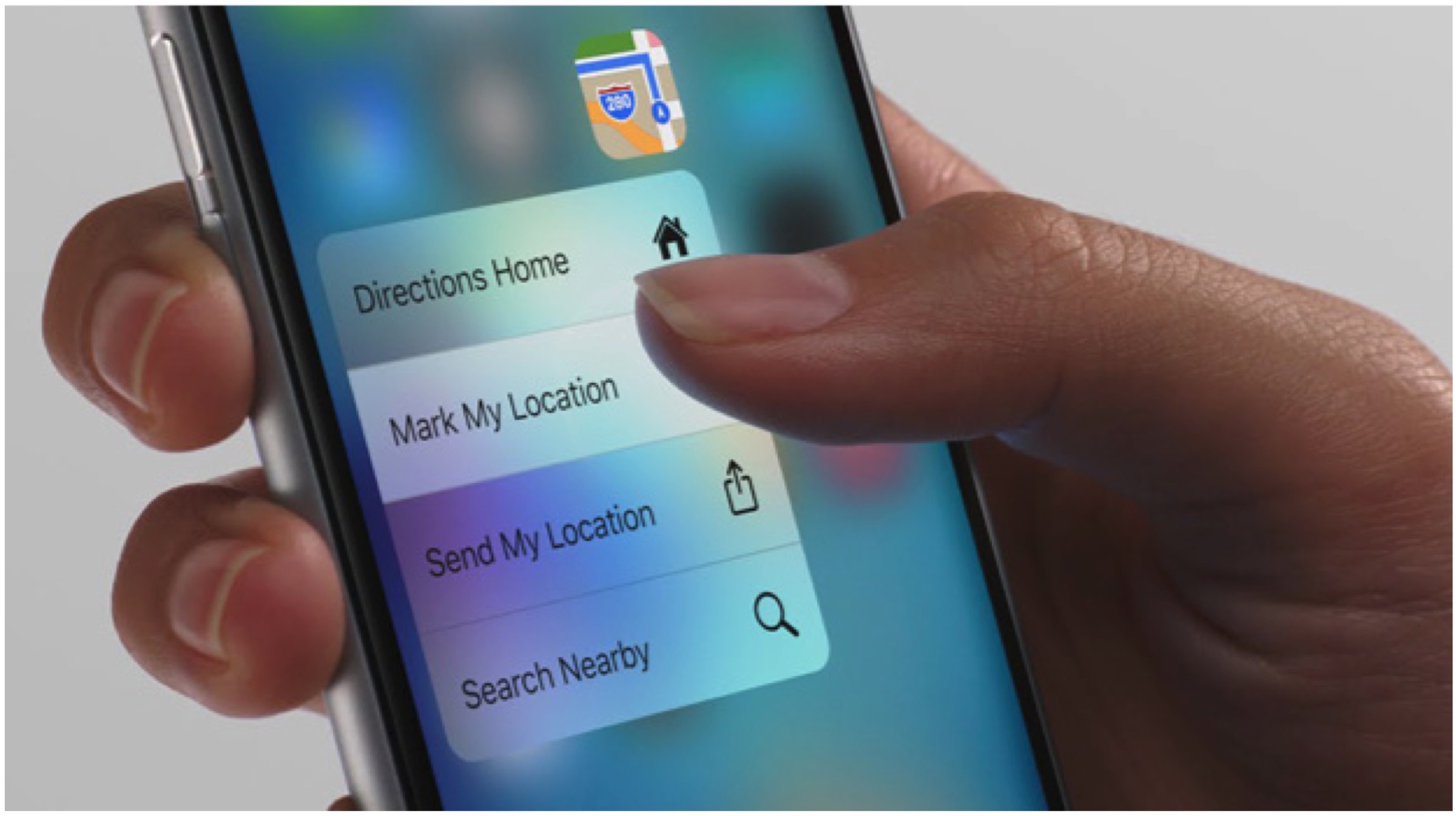
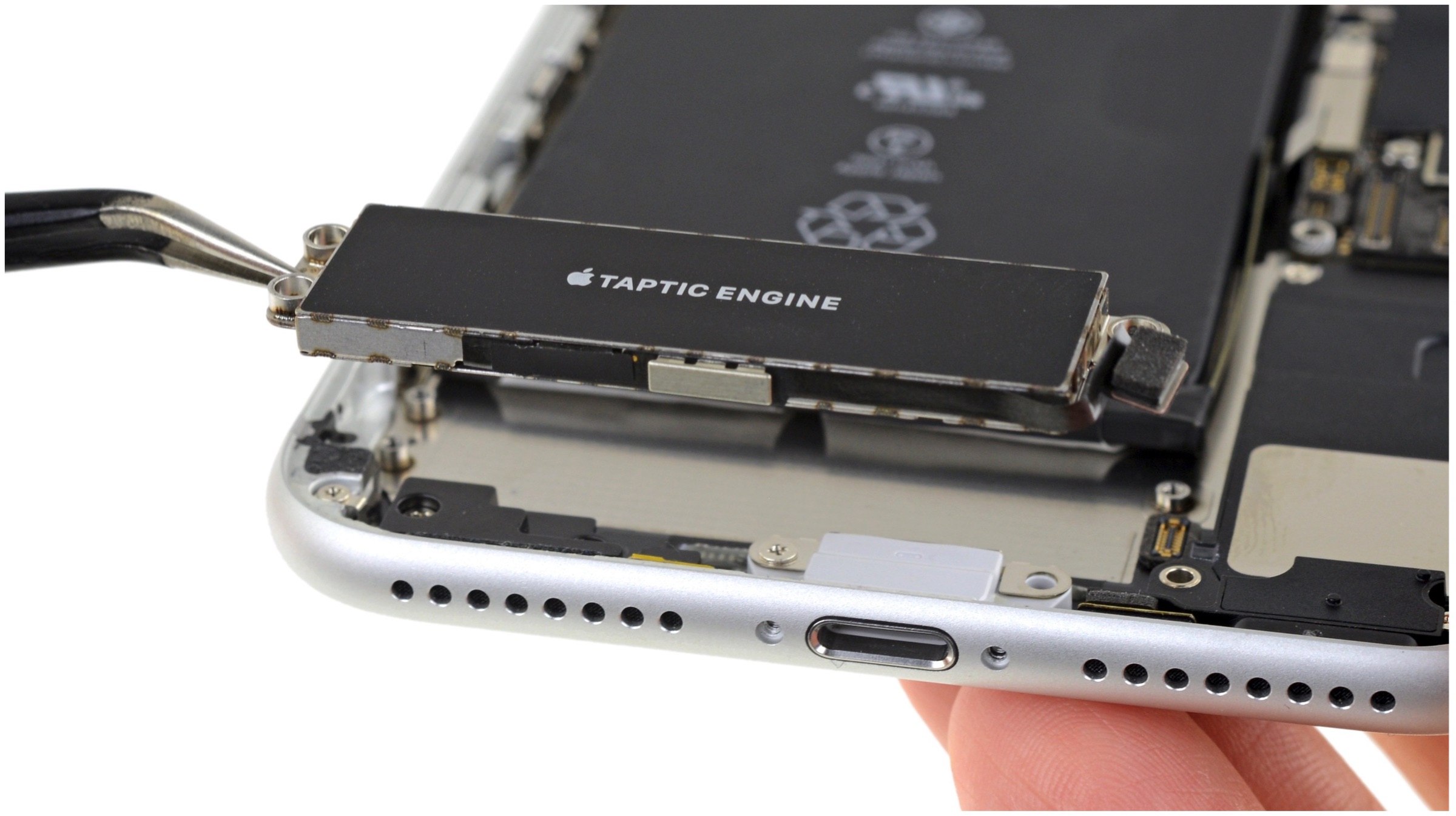
    The exclusive pressure sensing technology from Apple has always been a cut above the rest was made possible by the company’s proprietary Taptic Engine. The seamless integration of 3D Touch within iOS added a varying degree of functionality to the user interface that saved time for users.

    3D Touch allowed users to perform many useful ‘quick functions’ like ‘peak and pop’ where pressure on emails or other text-based apps allowed previews of messages and URLs without actually opening the said application or links. Apple, however, has been reported to have removed the Taptic Engine for cost efficiency and space management. 

    Apple’s Taptic Engine that powers the 3D touch is reportedly expensive to implement and takes up a lot of space inside the device. The company has sought to increase its profit margins and use the space for other potential components, like a larger battery. One of Apple’s best-selling iPhones the iPhone XR lacked the 3D Touch feature and still sold commendably. This is probably one of the major reasons that reassured Apple on its decision to make the feature optional.

    Also ReadOnePlus 7 Unboxing And Hands On Video

    Apple users have to, regardless of their stance on this decision, accept the removal of the Taptic Engine and lack of the 3D Touch functionality that was offered on previous iterations of iPhone models.

iGyaan Network
Privacy Overview

This website uses cookies so that we can provide you with the best user experience possible. Cookie information is stored in your browser and performs functions such as recognising you when you return to our website and helping our team to understand which sections of the website you find most interesting and useful.