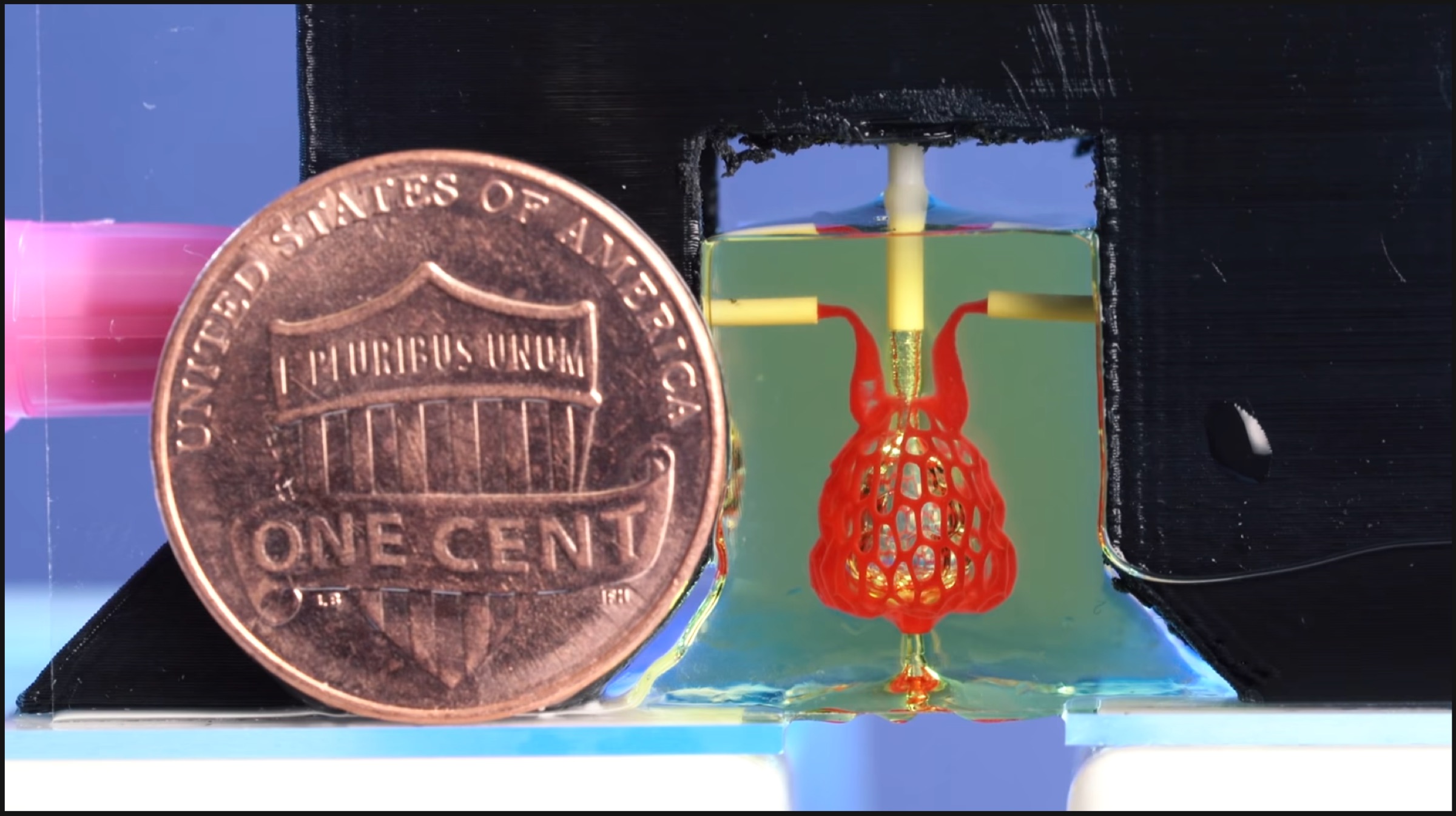
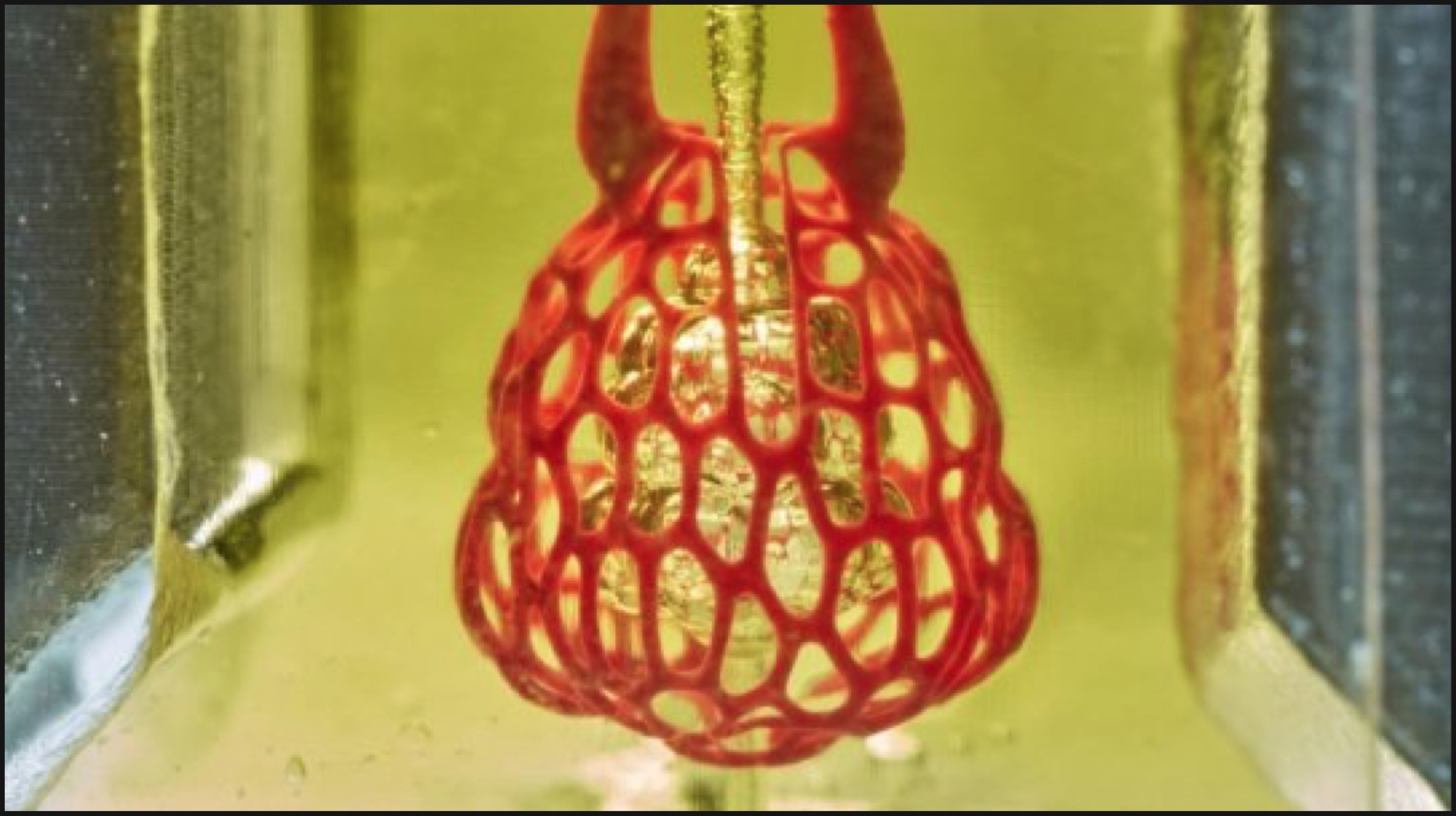
One of the major hurdles for scientists regarding the creation of human organs via 3D printing was the inability to print the complex vascular structure that can transfer nutrients to nearby tissues. Previously, a breakthrough was achieved in the form of a 3D printed heart, and as per recent reports, Bioengineers from the United States have overcome the aforementioned hurdle and have created a hydrogel model of a lung-mimicking air-pocket/sac, which has airways that can deliver oxygen to surrounding blood vessels.
 The team was led by bioengineers from Rice University and University of Washington. The 3D printed lung was designed in such a way that it could include independent vascular networks. The different vascular networks include airways, lung blood vessels, bile ducts and the blood vessels present inside the liver. Delivering oxygen to tissues surrounding the blood vessels was always a challenge, but the researchers claim that their bioprinting technology is the first one to beat the hurdle of multivascularization in an artificially designed organ.
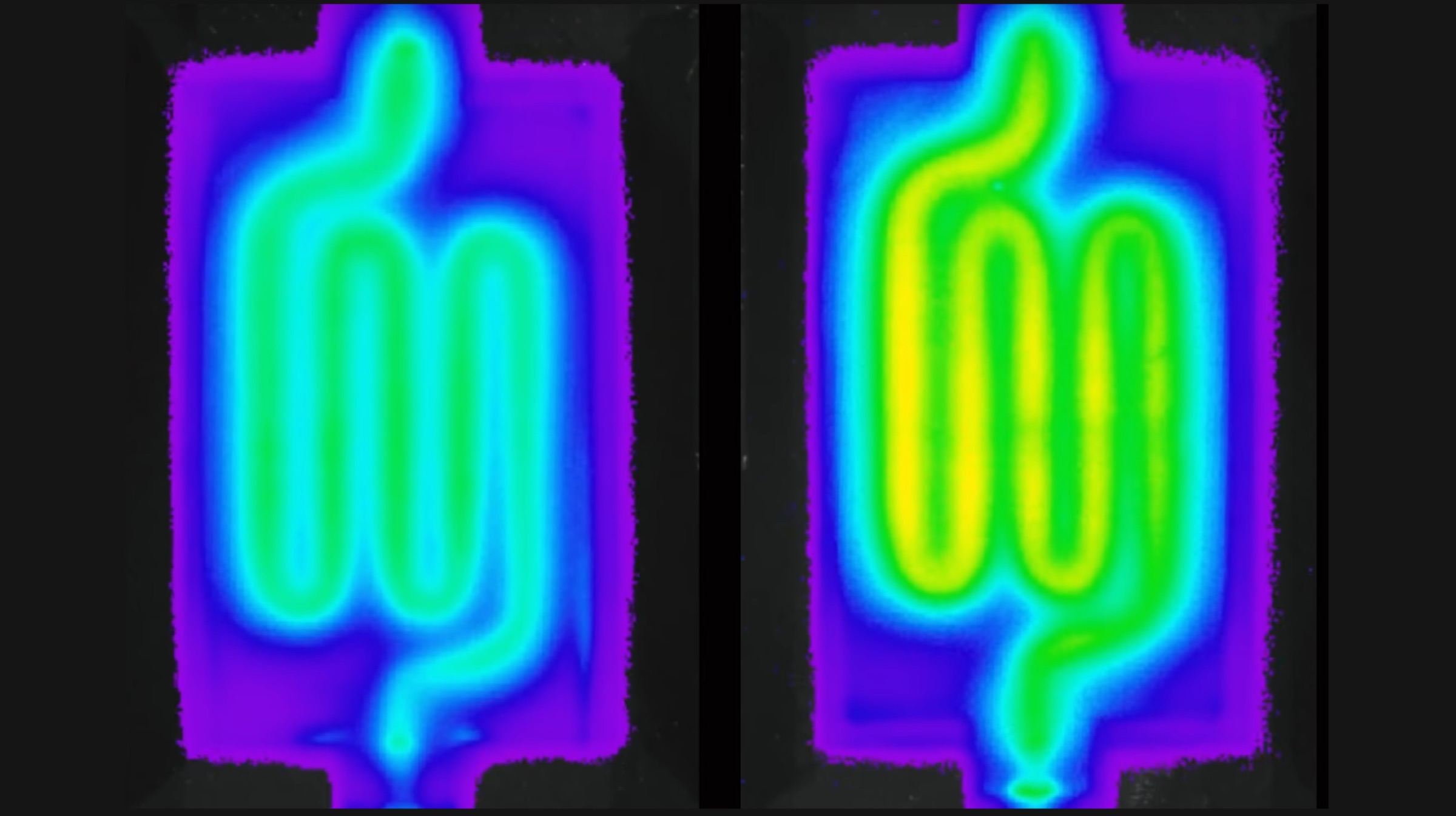 An assistant professor at the University of Washington states that with the removal of such an obstacle from the path, multiple tissues can be designed which can breathe and function just like the healthy tissue in our bodies. Not just that, 3D printed organs will be able to behave more functionally than ever before. Bioprinting has gained a lot of traction in the past few years, solely because it could allow doctors to print replacement organs from a patient’s own cells, increasing chances of survival drastically.
 Also Read: An Unknown HTC Mid Range Smartphone Spotted On Geekbench
The bioengineers believe that a ready supply of such bioprinted organs can one day be rolled out in huge quantities, which could then be used to treat patients worldwide. Additionally, 2D slices of organs (as thin as 1-50 microns) will also be used to fabricate organs like the liver, which is especially complex to manufacture using just a 3D printer. It is specifically necessary to develop a bioprinted liver that can perform the same functions of a human liver. This is because unlike some other organs, no machine or therapy can entirely replace the functionality of the liver. Hopefully, in the not-so-distant future, 3D printers will be capable of printing a complete set of organs that can effectively replace human organ functionalities.

 The game has now been inducted into the World Video Game Hall of Fame. In doing so, it has joined some really landmark-setting games, such as Doom, Tetris, World of Warcraft, Pac Man and Sonic The Hedgehog. The World Video Game Hall Of Fame judges various games based on the following criteria
 Also Read:







 In terms of optics, reports state that the upcoming flagship will have a quad-lens design on the rear panel, which will interestingly resemble the Mate 20 Pro’s triple camera setup. The in-depth details of the camera sensors is unknown, but the module will be equipped with a ToF sensor. Instead of the persicope camera lens (featured in the P30 Pro), the Mate 30 Pro will feature a rectangular-design camera setup, as per sources. Furthermore, the LED flash will be placed at the centre of the module. The details of the selfie camera, unfortunately, are unknown as of now.
 Also Read:
 The design of the smartphone falls in line with the previously leaked images for the same. As per past leaks, the upcoming device will feature a 6.5 inch OLED display with FHD+ resolution. The absence of a notch suggests that the Realme X will sport a pop-up camera mechanism for the front camera. The back panel of the device will be expectedly made out of a polycarbonate material, and will have a gradient colour pattern. As per reports, it will measure 161.2 x 76 x 9.4 mm.
 Under the hood, the upcoming flagship is expected to run on the 7nm based Snapdragon 855 chipset. The SoC is one of the most powerful chipsets in the market right now, comprising of a Kryo 485 octa-core CPU and the Adreno 640 GPU. Previous reports claim that the Realme X will boast of vertically placed dual rear cameras. As of now, specifications of the same are unknown as an official statement from the company is awaited. The pop-up camera mechanism discussed above will house the selfie camera.
  Also Read:







 The P Smart Z features a large 6.59 inch display with a FullHD+ resolution. The renders exhibit a device with a high screen-to-body ratio which is achieved due to the pop-up camera mechanism. Similar to Chinese competitors Oppo and Vivo, Huawei seems to be following the trend of a smartphone sans a notch. The leaks further state that its display panel has a resolution of 2340 x 1080 px and pixel density of 391 ppi.
  Under the hood, the Huawei P Smart Z is kitted with the 14nm HiSilicon Kirin 710 chipset, which consists of an octa-core CPU and the
  Also Read:







 Although the disease is not fatal, it’s symptoms may lead to incidents that may be fatal in the long run. As per recent reports, researchers from
  Also Read:





 Previously, similar experiments were hosted to figure out the same question, but the difference was that they used real images. Instead, Harvard investigators overcame this hurdle using synthetic images that were custom tailored to each specific neuron’s preference. Where real images are limited to stimuli present in the real world, AI-generated images changes the whole scenario.
  Also Read: