Category: Business

  • NASA Opens Commercial Opportunities For The International Space Station

    NASA Opens Commercial Opportunities For The International Space Station

    The National Aeronautical Space Agency of the US has opened the door for business endeavours in the ISS. The American space agency made this decision with national interest in mind. “US industry innovation and ingenuity can accelerate a thriving commercial economy in low-orbit,” as stated by NASA in a press release, will open the space station to private sectors

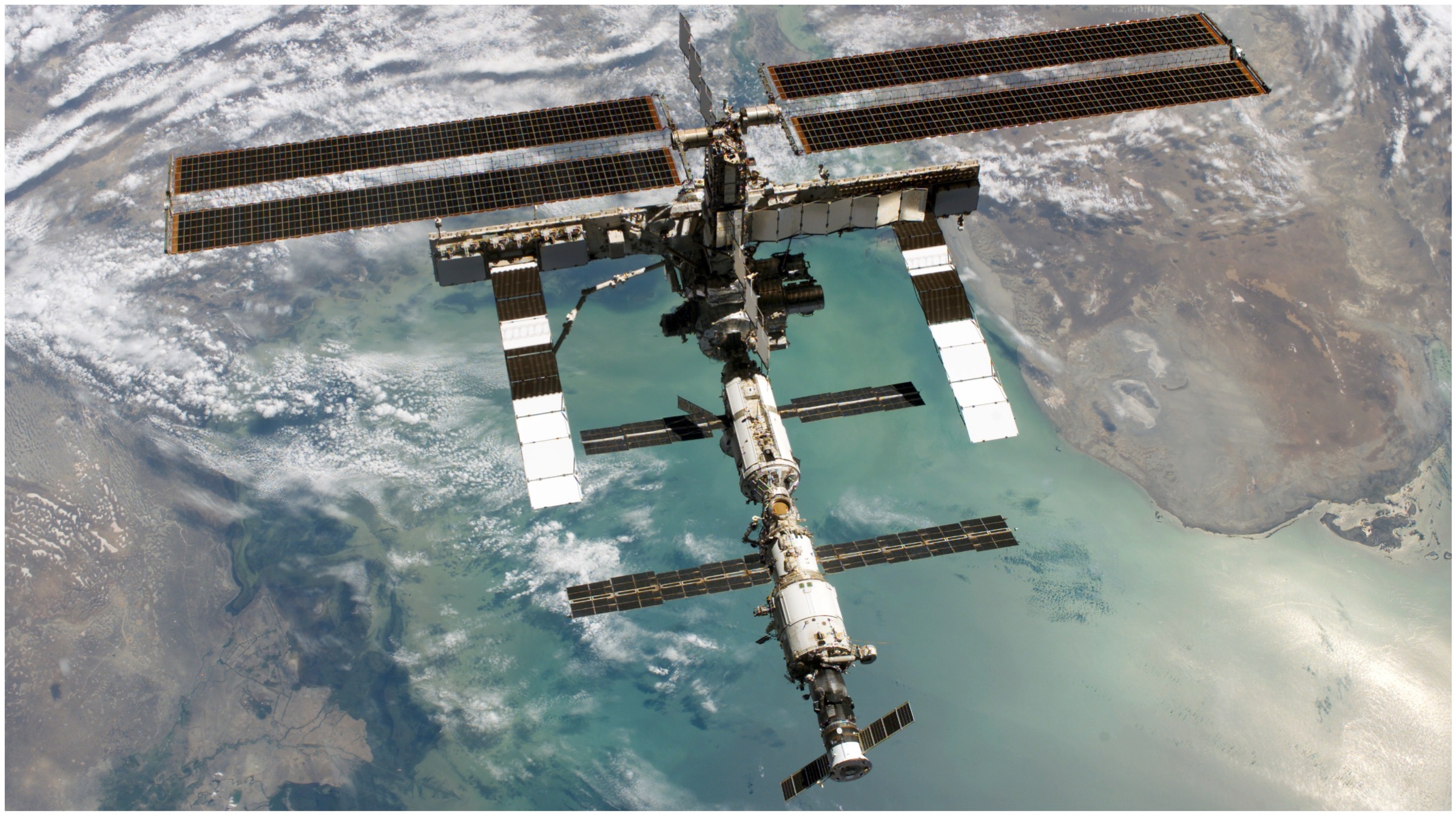
    NASA executives announced today the commercial viability of opening up certain sections of the International Space Station. This will allow companies to work in space with the station’s facilities. The filming industry could greatly utilize the opportunity for filming commercials or movies in space. NASA is also encouraging the private space industry to send in ideas for habitats and modules attachable to the ISS for a temporary basis.
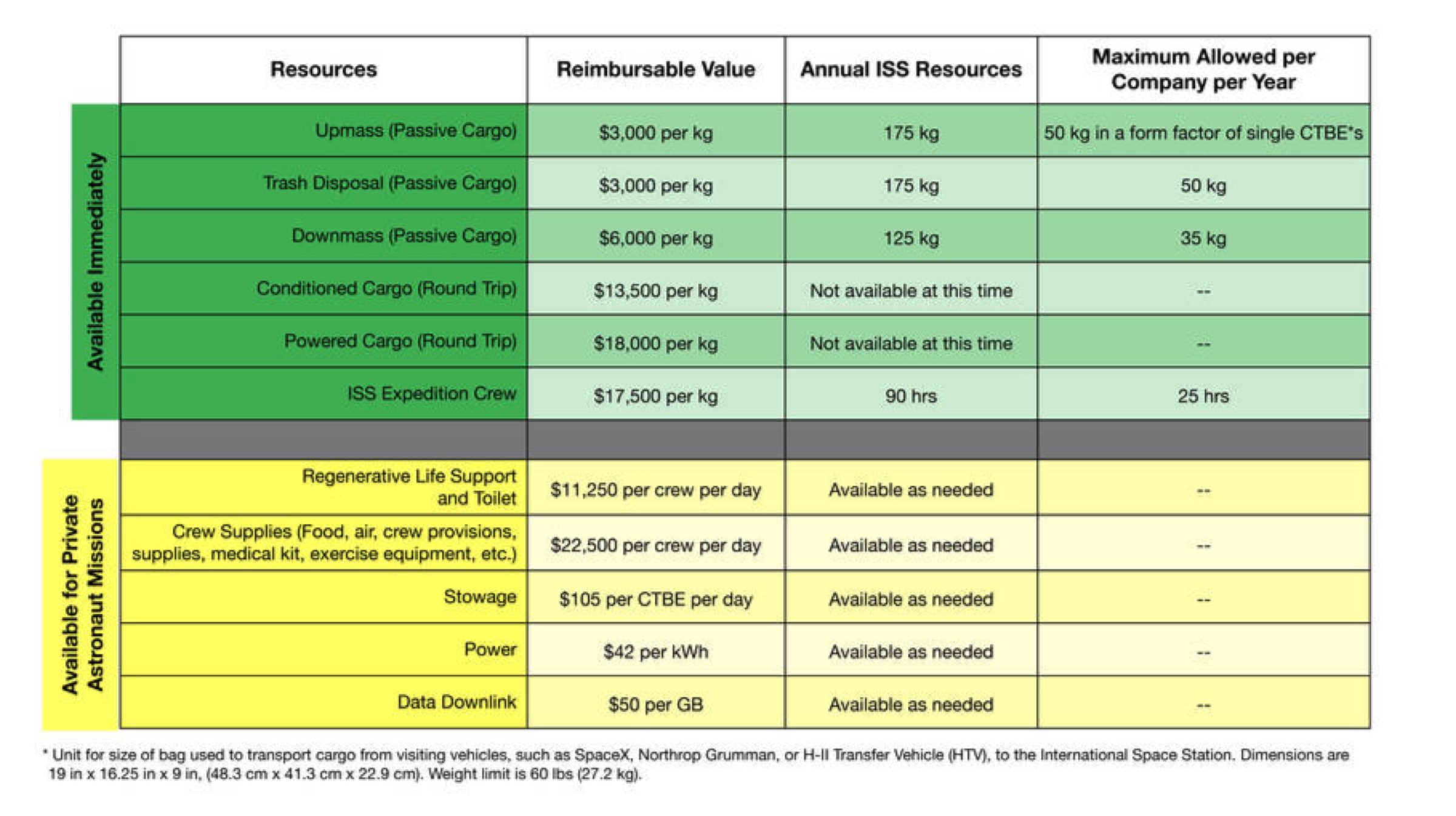
    Private companies can now buy time and space for a chance aboard the ISS to produce, market, or test products. These companies will also be allocated resources directly from the ISS for their commercial endeavours. Starting from 2020, companies can send their astronauts to the ISS but with a heavy cost. NASA has always been openly against the commercialisation of the ISS, unlike Russia that is open to ads and branding on its side of the station. The Russian side has even allowed tourism to some extent while NASA has strictly regulated all forms of commercial activities, save educational undertakings or technological demonstrations that are non-commercial in nature.
    The extent of this commercial-phobia even had NASA ban its astronauts from experimenting on any research that might be profitable down on Earth. A committee formed by the western space agency was tasked to devise new methods to commercialize the space station for a new source of revenue and recognition. This business-oriented mindset might also see NASA selling naming rights of its past spacecraft and rockets, although nothing concrete supports this claim. 

    The leadership behind NASA is looking into a transition for the commercialization of the ISS and its low orbit region of space to the private sector. This will help alleviate the monetary load required to run and maintain the ISS, $3-4 billion per year. Eventually, the entire station might be handed over to private sectors and the funds acquired will help in making the new space station near the moon. 

    Also ReadHuawei P30 With 12GB RAM Spotted On TENAA

    The new opportunities for commercial activities might lead to some really interesting outcomes in the near future. The world has already started moving post this announcement with SpaceX’s Crew Dragon space being contacted by Bigelow Aerospace, the space habitat developer, for the transport of its private astronauts. Soon many more announcements and projects like the aforementioned collaboration are likely to be seen.

  • Google Outage Linked To Huawei Ban?

    Google Outage Linked To Huawei Ban?

    Early morning on June 2nd 2019 Google engineers struggled with a four hour Google cloud services outage. This took out critical Google services down, including Google Drive, Gmail, Youtube, and also affected sever other companies including Vimeo and Snapchat who use Google Cloud Services to host their platforms globally. 

    This comes soon after an announcement from Google stating that the company will remove Huawei as an authorized Android supported OEM and that the company will not officially get Android updates, or future security updates. Google’s services are crucial for any Android smartphone maker and allow for markets outside of China to fully utilize the devices. 

    This “ban” originated at the US governments blacklisting of Huawei. which banned US companies from using Huawei hardware or doing any kind of business with Huawei. And while a 90 day grace period was granted to the state funded Chinese Electronics and telecom giant, the future looks bleak for the company, and revenue estimates along with market value of the brand has dropped drastically. 

    China is not happy about this and has suggested a rare minerals export ban, which could intern affect US manufacturers. 

    “What is interesting is the timing of the outage,” claims our source ( An Ex Huawei Employee ) “this is the company fighting back”, Suggesting that Huawei or those close to Huawei are responsible for the outage.

    While Google has not explained what caused the outage publicly and managed to restore services back in four hours, with no impact to infrastructure or data. A large scale attack on Google’s crucial servers could be a possible reason. Google services were detected down in 249 locations in 170 cities around the world something that could have had long term implications on business and productivity. And if this was a third party attack, it could be considered a warning. 


    While we are not sure if anyone was responsible or if there was an attack, we will have to wait for an official statement from Google. 

  • Huawei Regains Wi Fi, SD Card And Bluetooth Consortium Membership

    Huawei Regains Wi Fi, SD Card And Bluetooth Consortium Membership

    Earlier this month, Chinese tech Titan, Huawei had to encounter a massive blow after US Commerce Department revoked all American companies from maintaining any trade relations with the former. Following the ban, the rapidly booming company which was previously speculated to take over Samsung as the world’s number one smartphone manufacturer in 2020 crumbled at an uncontrollable pace. It all started with Google’s support withdrawal of Android OS for Huawei smartphones. Followed by Google, Microsoft also took away the support for Windows from Huawei made computers and laptops. Initially what seemed like end of road for company might not be the case.
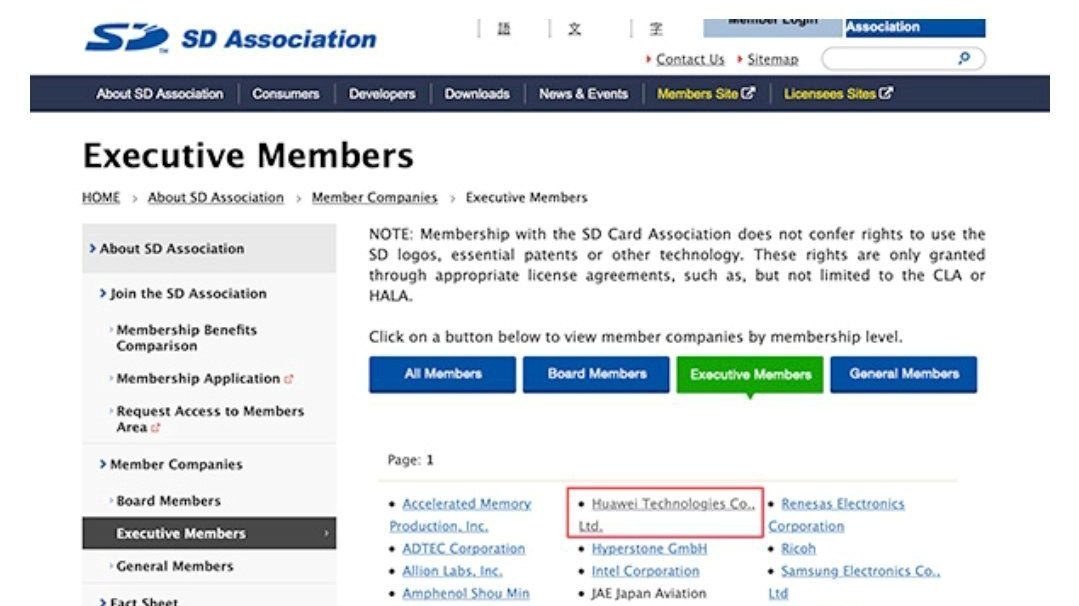
    uawei which was previously ruled out from Wi-Fi alliance, SD association and Bluetooth consortium has regained its membership. Even though the three said associations are not wholly owned by companies based in the US, they are surely influenced by the same. However, it is reported that Huawei’s considerable contribution in the three associations has led to roll back of the previous decision. Adding to the story, Huawei who is allegedly developing its own operating system which is expected to roll out later this year might well be on the road to healthy recovery.


    Talking about Huawei’s homegrown OS, the company has trademarked three names with EUIPO (European Union Intellectual Property Office), including Huawei ARK OS, Huawei ARK and ARK OS. Even though, their is limited information available about the upcoming operating system from Huawei. A company executive on Chinese social media website, Weibo claimed that the future OS will be compatible with Android applications. Noteworthy, the executive pointed if developers recompile their apps for the companies platform, the applications will see upto 60 % improvement in terms of speed.

    Also Read: New MediaTek SoC Is All Set To Bring 5G Network On Budget Devices

    To conclude, it seems Huawei will once again bolster its spot as one of the best tech companies in world sooner rather than later.

  • Huawei No Longer Allowed To Work On The Wi-Fi, USB and SD Cards Standards In The Future

    Huawei No Longer Allowed To Work On The Wi-Fi, USB and SD Cards Standards In The Future

    Chinese telecommunications giant Huawei has seen better days. In the past week, it has seen business ties cut with every American company. Even ARM, the known chipset architecture licensing firm from the UK has suspended business with it. Now, in the latest development, reports claim the Wi-Fi Alliance has “temporarily restricted” Huawei’s membership and the company is also not a member of JEDEC, which sets the standard for semiconductors. Adding another blow to the list, Huawei has also been barred from setting new USB standards and cannot use SD cards in their future devices.

    About this ban

    Huawei Wi-Fi Alliance

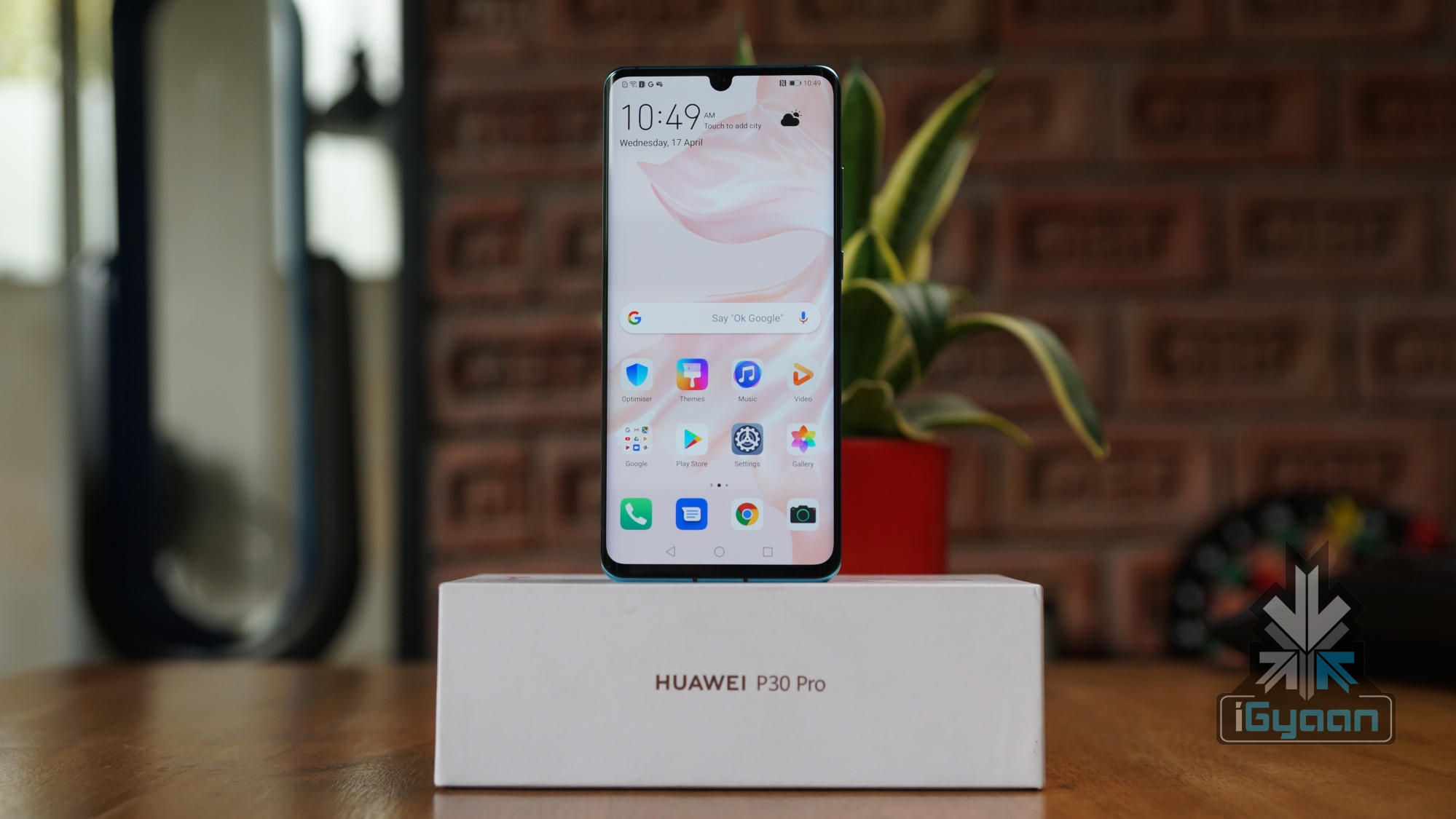
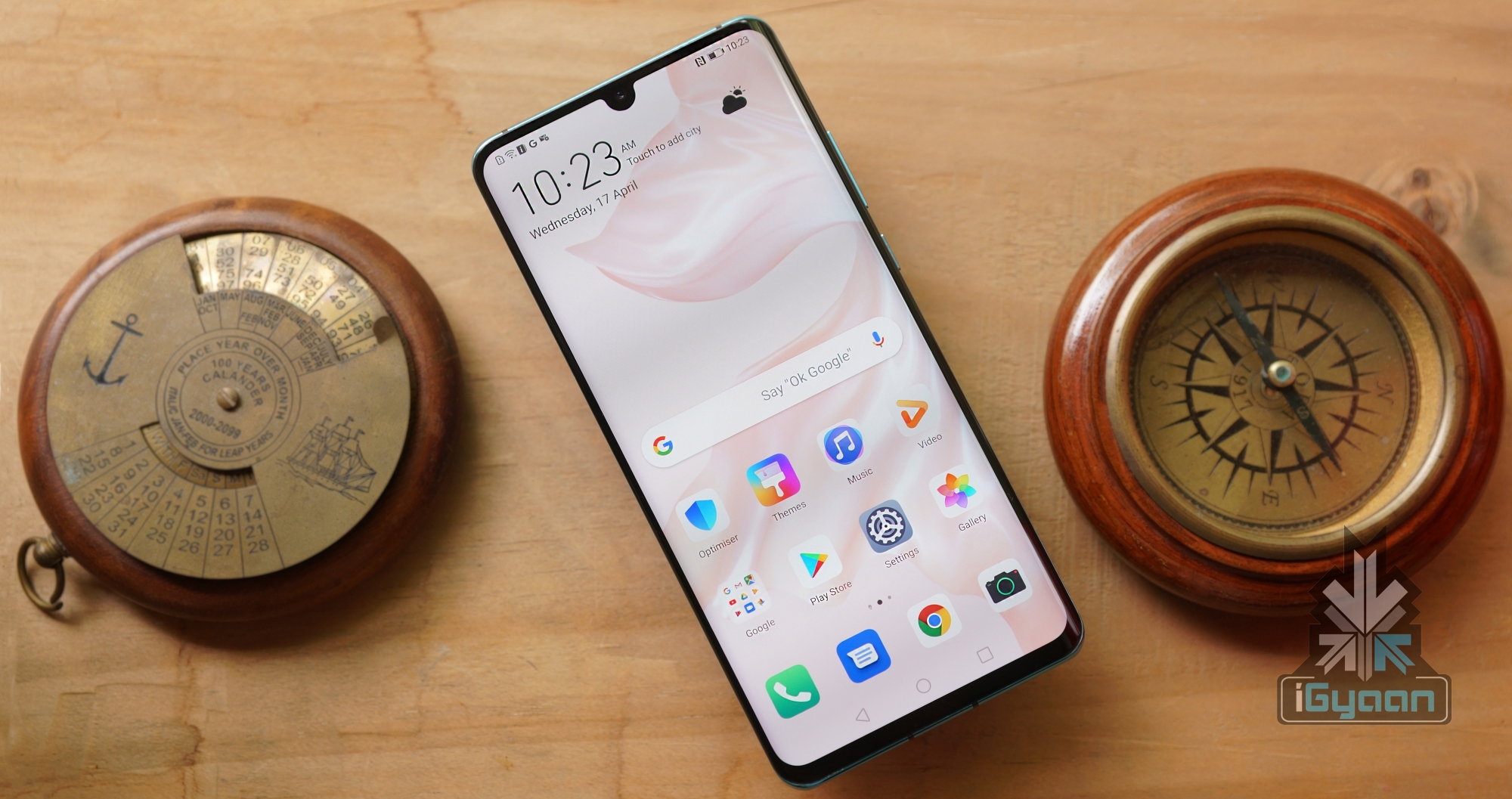
    Last week, the government of the United States barred every American company from doing business with Huawei; until granted explicit permission to do so. Since then, companies like Google, Microsoft, Intel and NVIDIA have suspended business relations with the Chinese brand. Like mentioned previously, ARM has also cut any ties with Huawei owing to the former’s “US Based” technology. The latest addition arrives courtesy the Wi-Fi Alliance. It is a consortium that decides the new standards of the wireless technology going forward and it has temporarily restricted Huawei’s membership. The Wi-Fi Alliance, as most companies in the consortium are American, it has chosen to exclude the P30 Pro maker temporarily. This means the company will not be able to decide or have a say in the future of Wi-Fi technology.

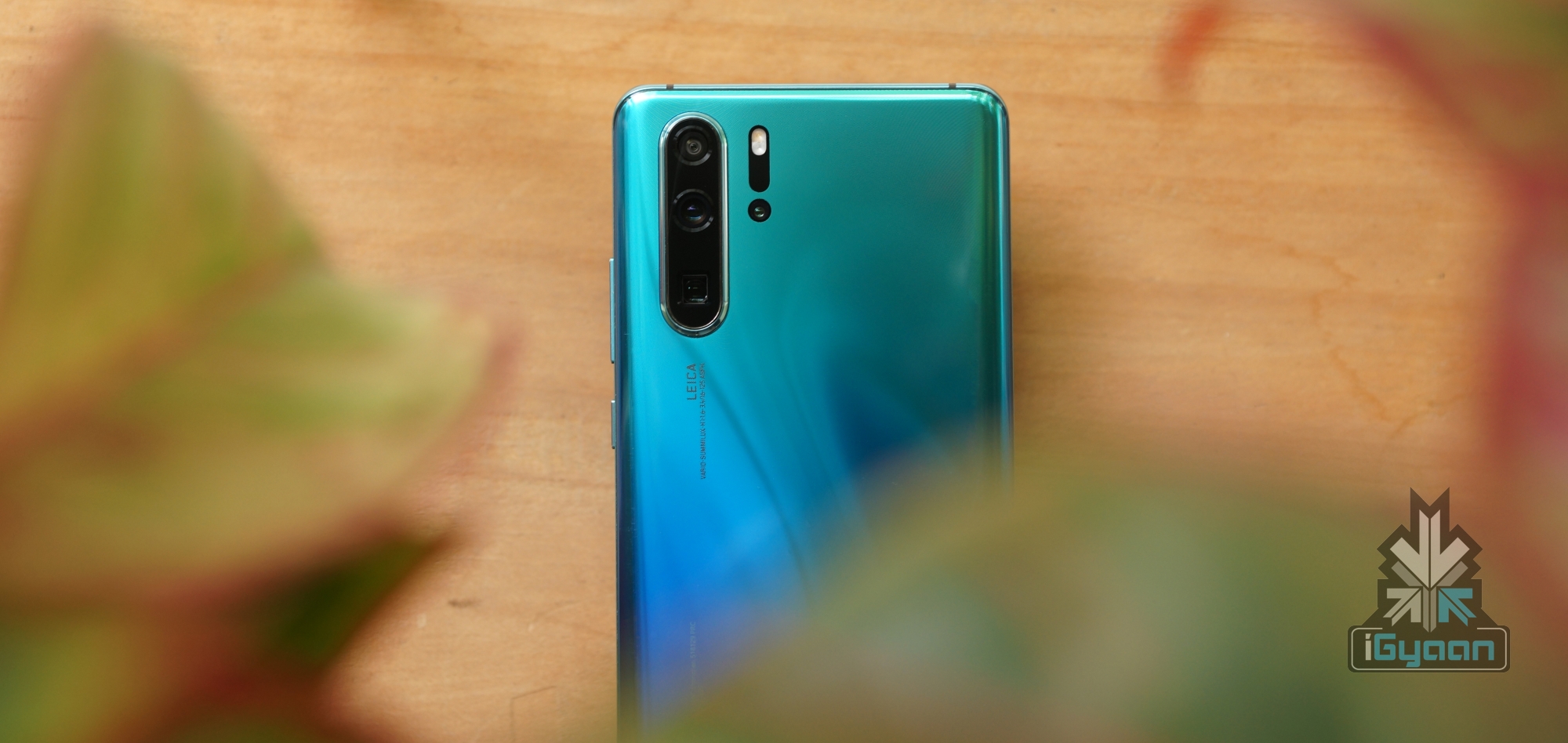
    Huawei P30 Pro
    Huawei P30 Pro

    Also read: Standard Variant Of The Redmi K20 To Feature The Snapdragon 730 SoC

    In other news, Huawei is also no more a member of JEDEC which as mentioned above; is responsible for setting the standards of semiconductor technologies. This again means the company has no say in the development of the standards and technologies involved in future semiconductors. It has also been ousted from the SD card alliance, which implies future Huawei products cannot use SD cards. The last part may not be such a big deal for the company, as it has already been pushing its nano-memory standard since the launch of Mate 20 Pro last year.

  • Huawei’s Recess Could Provide Opportunities For Its  Competitors In India

    Huawei’s Recess Could Provide Opportunities For Its Competitors In India

    Huawei under the US ban, sanctioned by The US President Donald Trump, has the Chinese company take a step back. The company had been gaining traction in various markets around the globe, becoming the second largest manufacturer for smartphones, surpassing Apple. The sudden blow that slowed Huawei’s progress now gives breathing room for other companies to exploit.

    Huawei

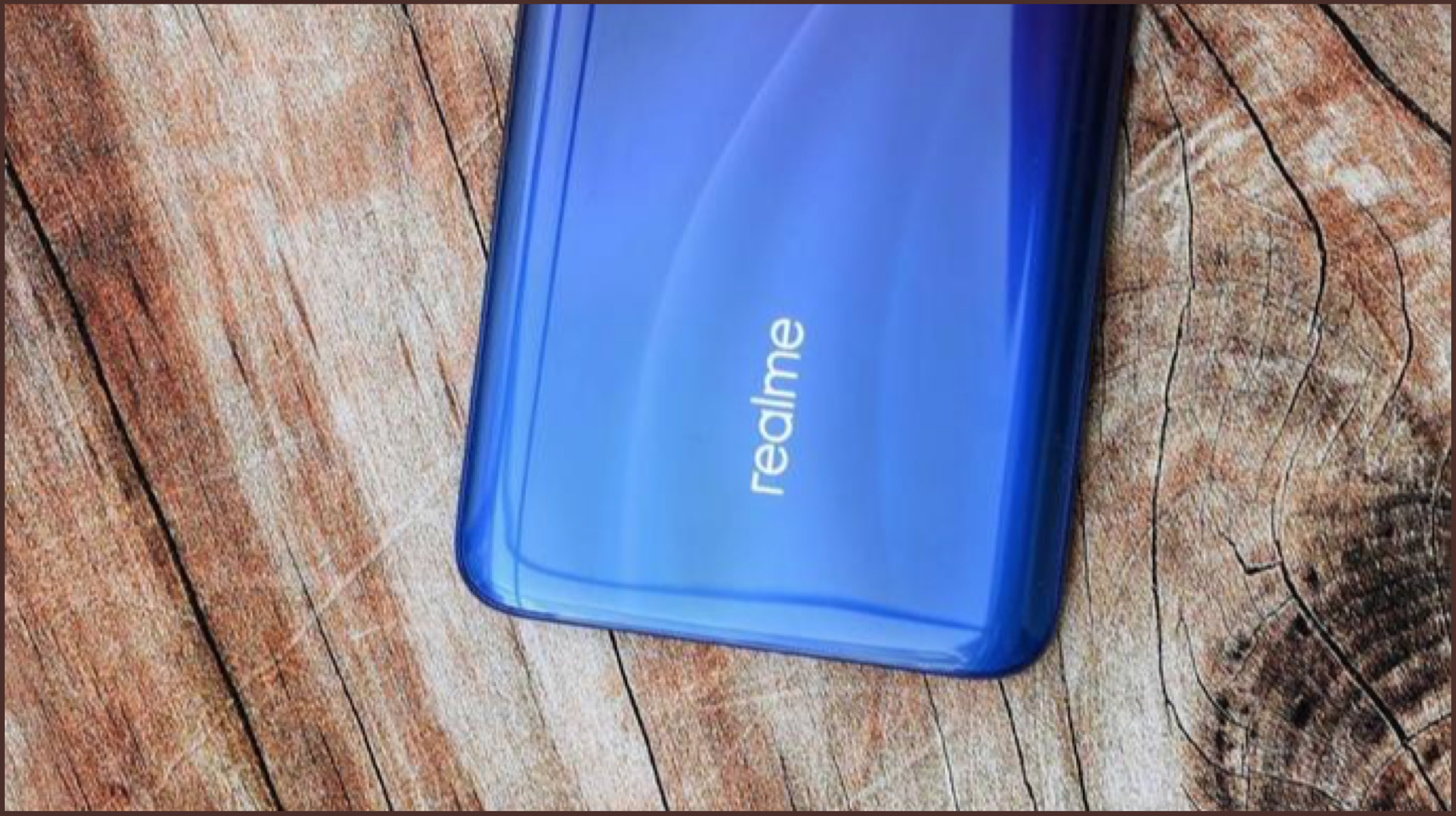
    Huawei’s recess will lead smaller companies, in its comparison, securing a foothold in the market. Realme the debutant for the premium segment market is expected to join the category on the latter half of the year while Oppo is crossing the Rs30,000 threshold for the second time. The Reno series by Oppo will be its star line up for the premium market.

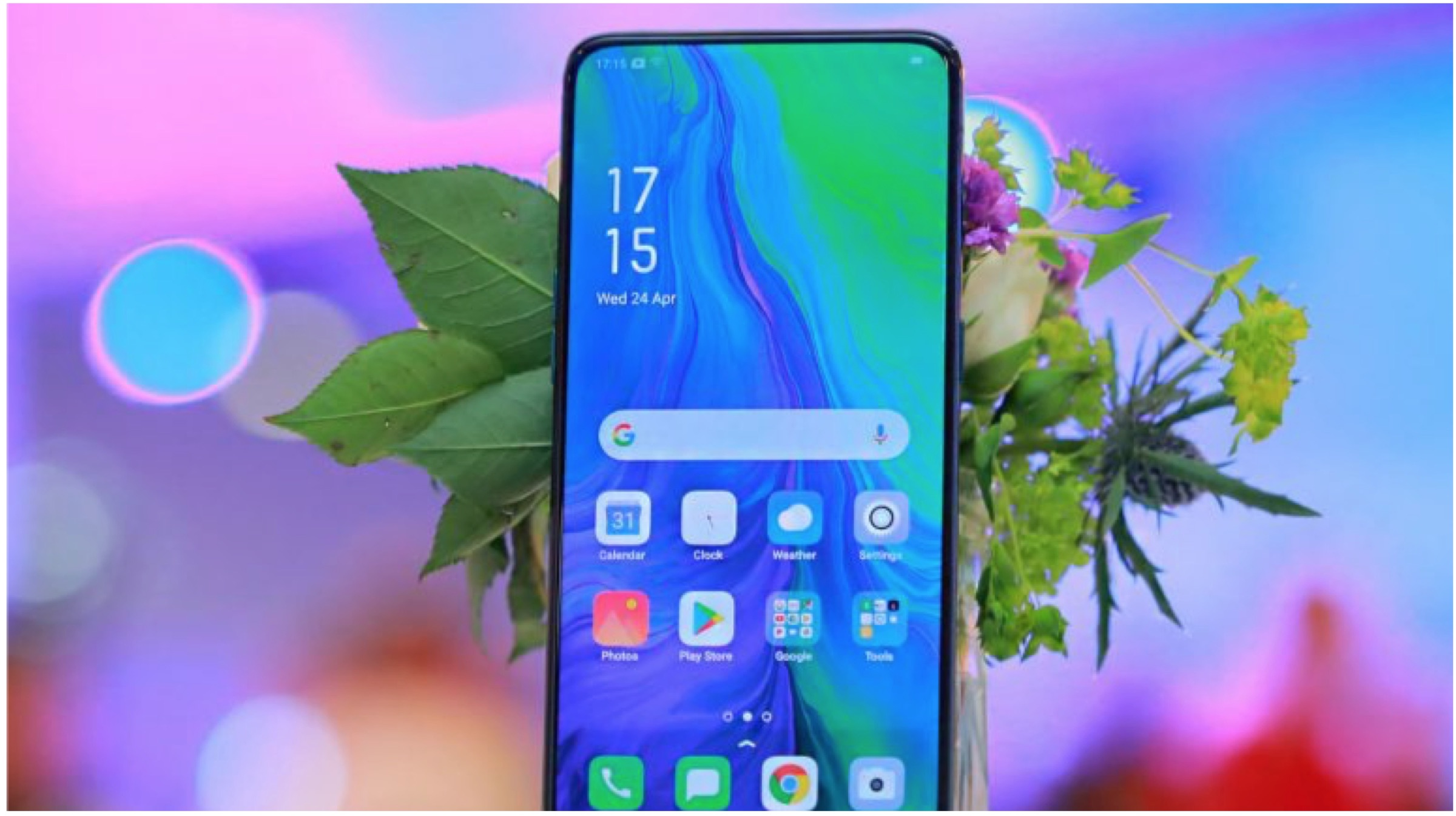
    Huawei competitor Oppo Reno

    The premium segment of smartphones has been dominated by industry giants like Samsung, Apple and OnePlus in India. According to CounterPoint Research, the premium segment market will reportedly double by December end of this year reaching a 10% of overall market share.

    One of the fastest growing company in the premium segment, Huawei’s absence should give competitors relief as stated by CounterPoint Research’s associate director. The Chief Executive Officer (CEO) of Realme has confirmed the brand’s focus on entering the premium market segment also stating the huge scope in the region. Realme is set to have a presence amongst other giants in the same market.

    BBK Electronics is the parent company which owns Oppo and Realme, both of which are in the top 5 of the overall Indian smartphone market. OnePlus and Vivo also fall under BBK Electronics. OnePlus as of March was the second largest premium brand after being the first throughout last year, as per CounterPoint and IDC.

    Also Read: Standard Variant Of The Redmi K20 To Feature The Snapdragon 730 SoC

    The Oppo Reno with the distinctive 10x Zoom feature will be announced later this month, this follows suit after its release of the first premium smartphone in 2018 namely the Find X and R17. The aforementioned phones did not perform well in India in terms of sale. But they paved the way for the company’s future endeavours in the higher price margin.


  • ARM Terminates All Ties With Huawei After US Ban

    ARM Terminates All Ties With Huawei After US Ban

    Huawei has been dealt another critical blow in the form of support withdrawal from ARM. The UK based company licenses the architectural design for the most smartphone chipset. After already have been knocked down by the loss of Android OS after the controversial US ban. The aforementioned ban was enforced by the US Commerce Department on all American firms to cease any forms of business ties or trades with the Chinese firm Huawei. This move had already crippled the company with the loss of the operating systems (Windows, Android) for the computing products they offer. 

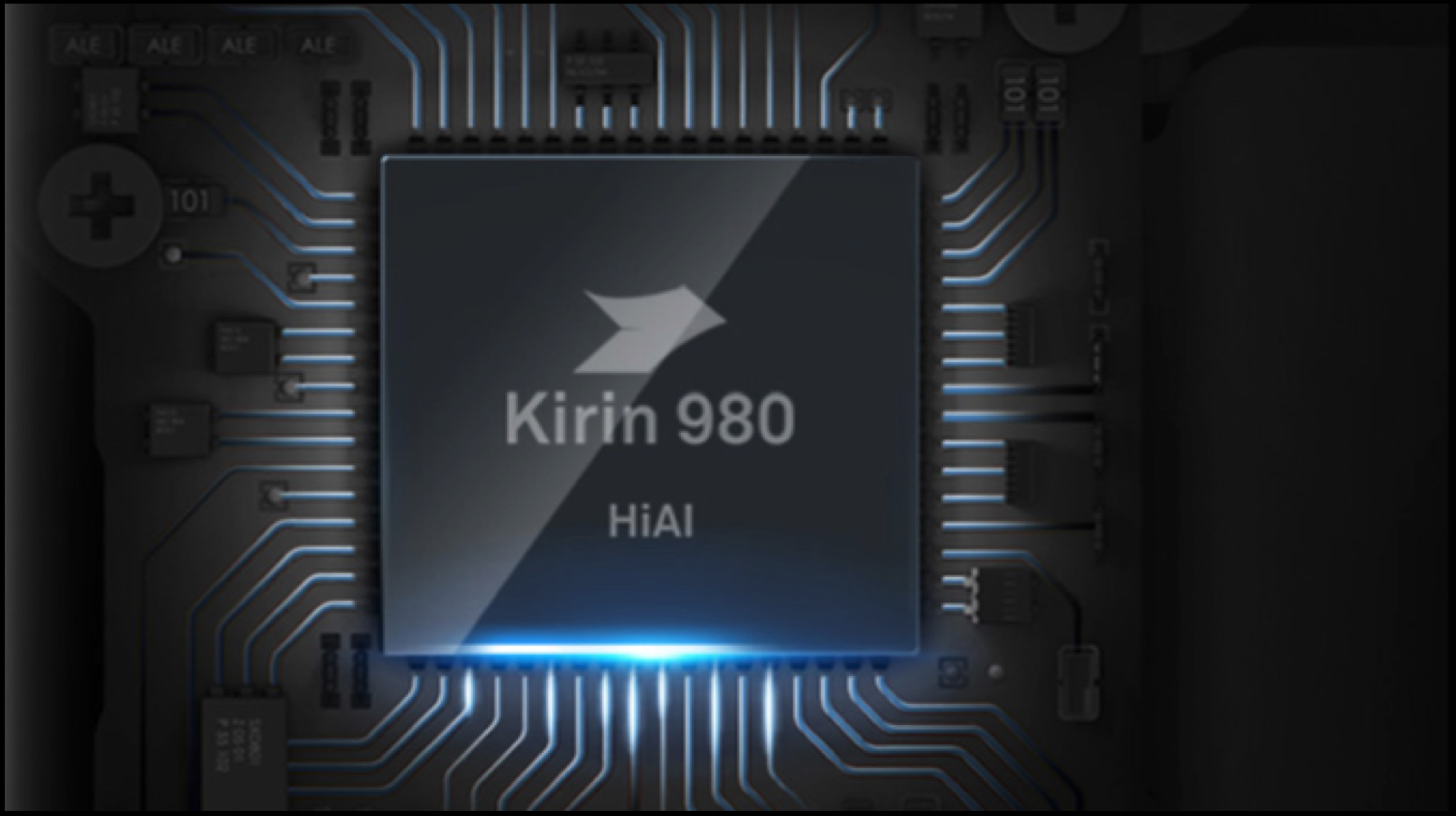
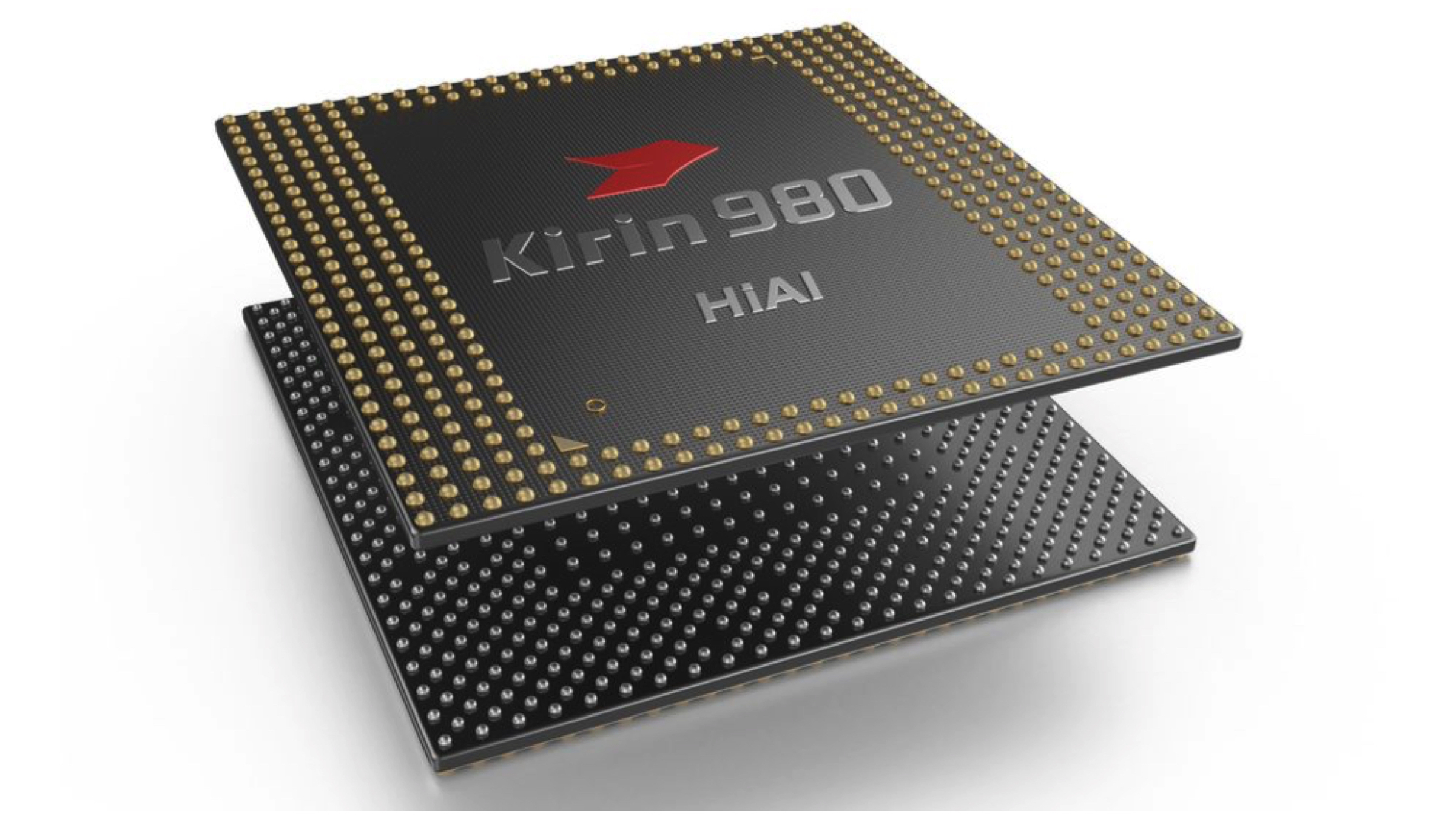
    The rippling effect of the oncoming ban essentially weakens the Chinese based company’s structure and functions. Huawei’s ambitious climb to the top came to a staggering halt as the UK based chipset manufacturer ARM, has ordered to cease all ongoing support or projects with the Chinese firm.ARM Kirin

    Since the US President’s decision on moving Huawei to the ‘Entity’ list, the business became restrictive and limited between the US based firms and its eastern counterpart. The ARM’s chip design is not easily replaceable or solvable. The UK based chipset manufacturer, although owned by the Japanese Firm SoftBank, has many of its technologies originated in the United States.ARM Kirin 980

    ARM’s chipset architecture is used by every major phone manufacturing company, name and not limited to, Qualcomm and Huawei. ARM’s belief is being held accountable under the US Regulations breach by operating with Huawei. Consequently, this also impacts ARM’s China joint-venture that aims to increase the impact of ARM technologies support on the country. ARM was reported to have a 49% stake in the joint-venture.

    Also Read: Samsung Launches 10000 mAh Power Bank With Wireless Charging Support

    Huawei had tasted success in the western market as well its domestic market. The company became the second largest smartphone manufacturer in the world in the month of May 2019. The Kirin 985 chipset is reportedly unaffected, but Huawei has remained silent so far on their stance. No future products can utilize the ARM chipset architecture, which was being used as a foundation of their own proprietary Operating system previously rumoured to debut this fall.

  • Sony To Exit The Smartphone Business In India, North America Among Other Countries

    Sony To Exit The Smartphone Business In India, North America Among Other Countries

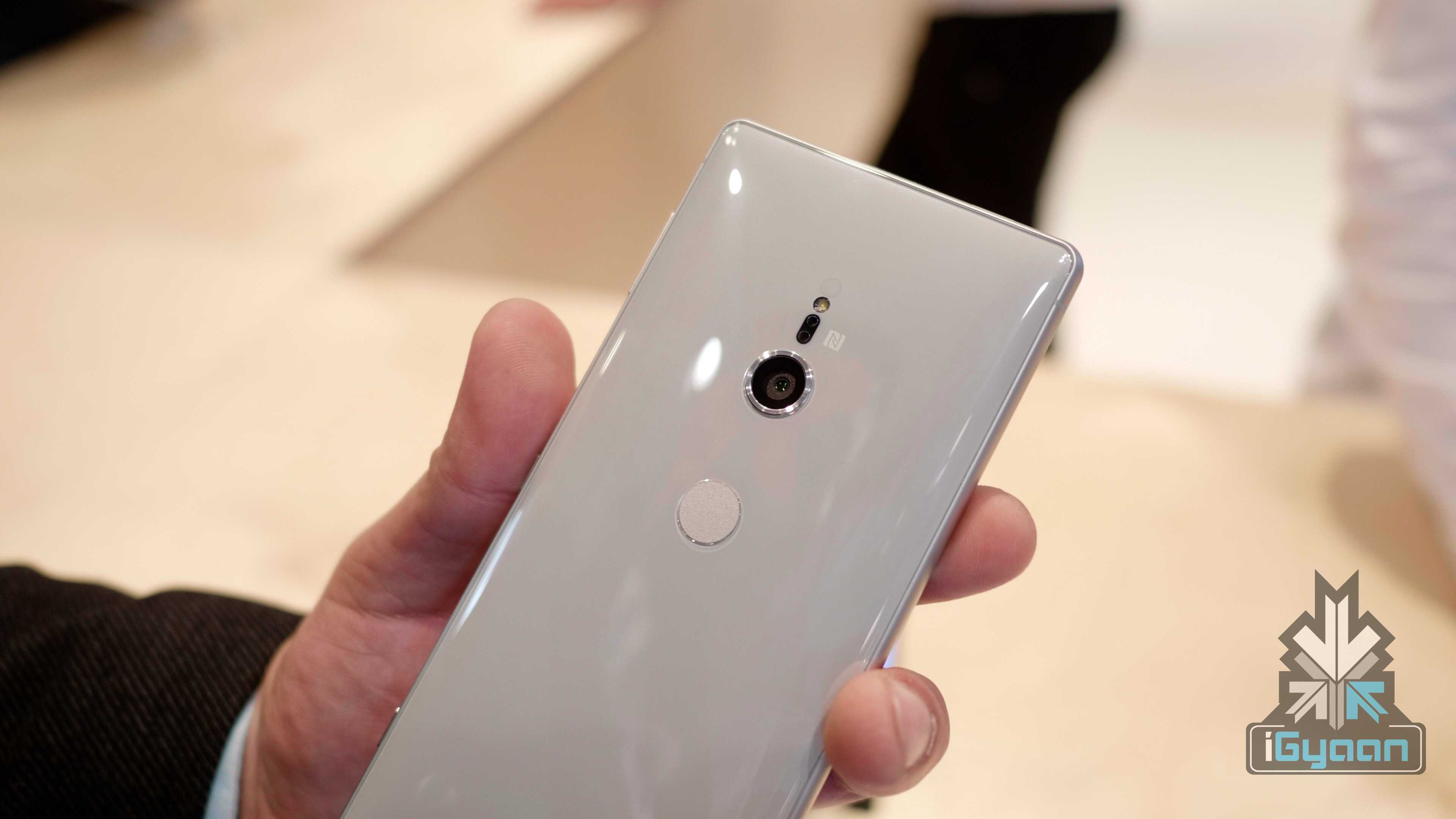
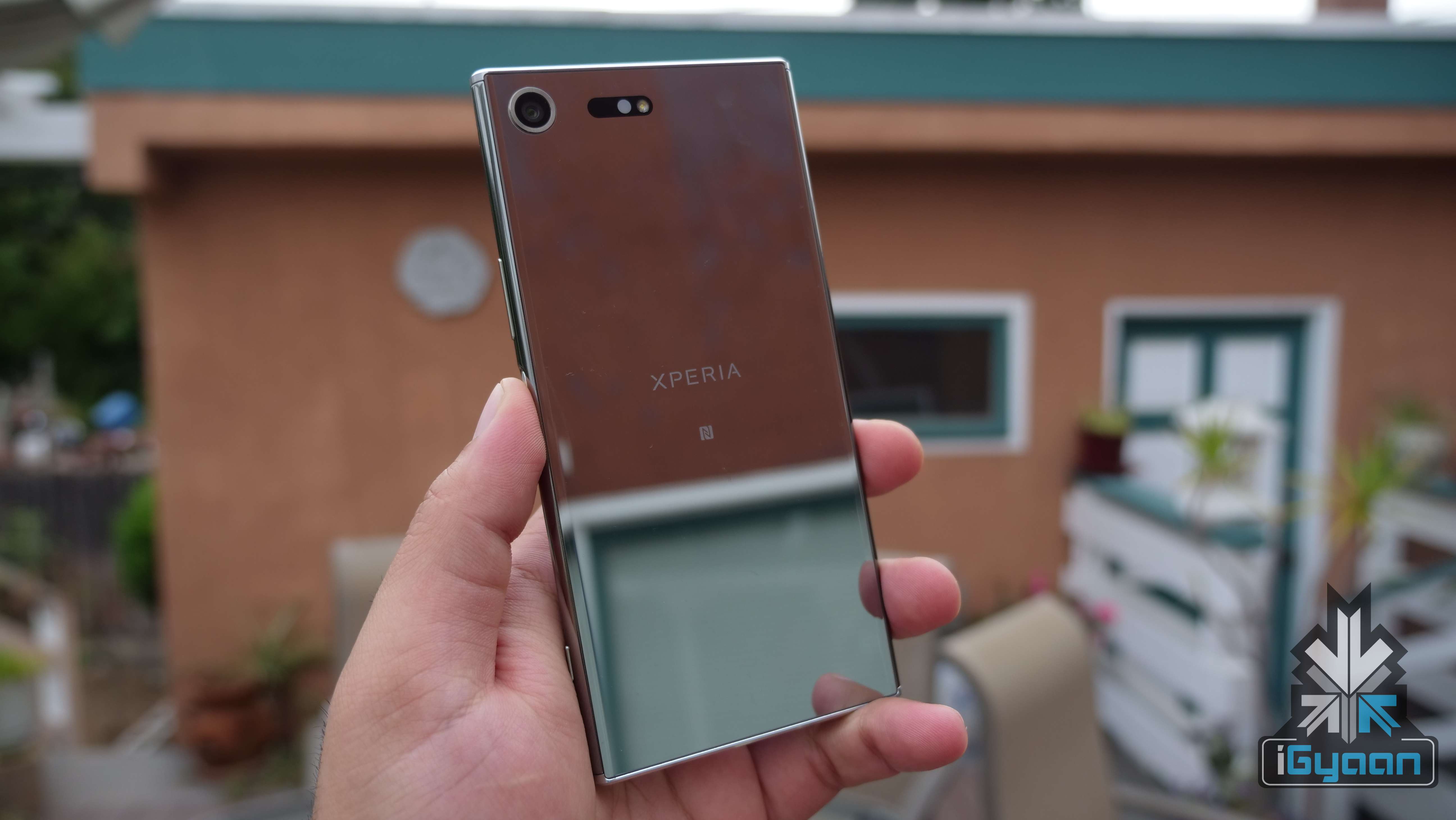
    Japanese electronics giant Sony was once one of the most renowned smartphone makers in the world. In the past, mobile devices from the company boasted of a unique design, innovative camera features and a clean software experience. But, due to the ever-increasing competition from Chinese manufacturers like Huawei, OnePlus and Xiaomi, Sony has not seen much success lately. According to a latest report, the smartphone business by the company is running on losses. Now, in an attempt to curb costs and prevent more loss, Sony has announced it is exiting major markets worldwide including India and North America.

    What Does This Mean?

    Sony Business Transformation

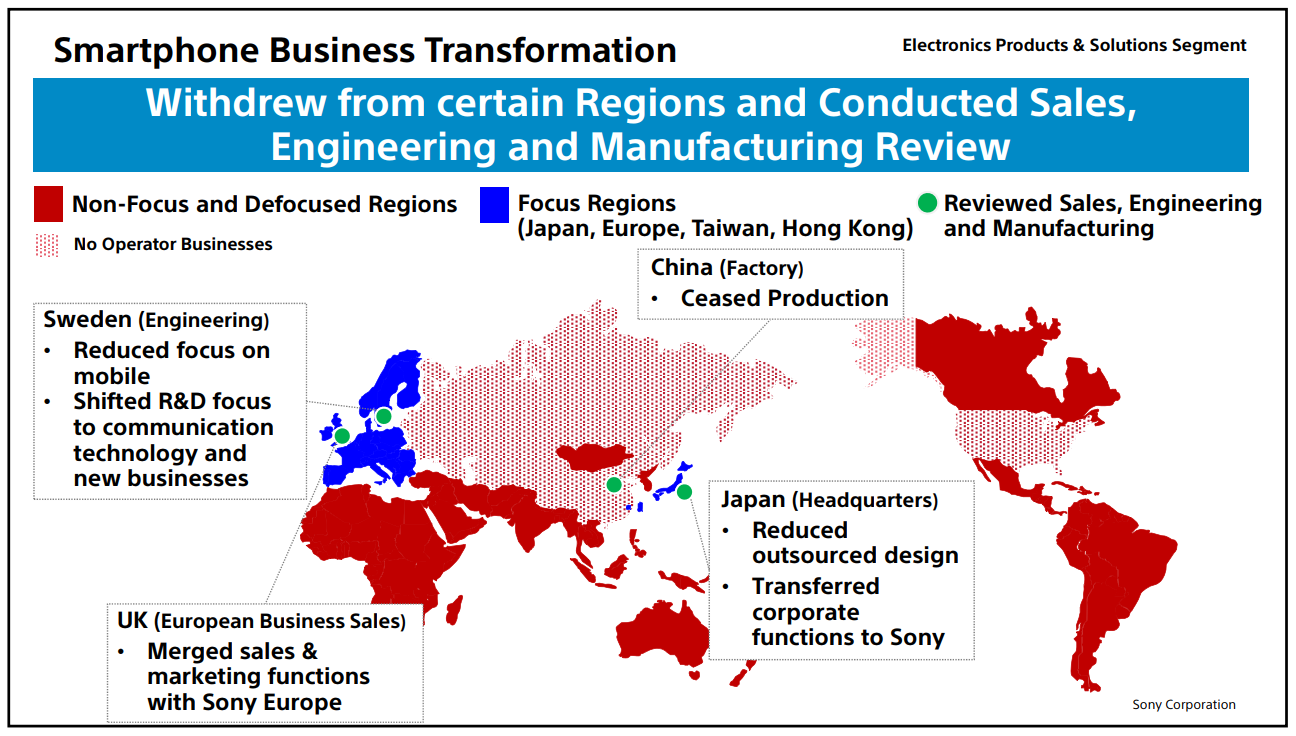
    In the annual corporate strategy day on the 21st of March, Sony announced it has selected its areas of focus for smartphones. These countries include Japan, Hong Kong, Taiwan and Europe. The countries that constitute the rest of the world either don’t have a presence of the company’s mobile devices yet or are the ones which have been left out of the focus areas. The latter are referred to as defocussed areas and includes regions like India, Australia, Canada, North America, Africa, The Middle East among others. While reports of the company jumping ship from these markets were rife for a while; it is the first time an official confirmation from Sony has been received.

    Sony

    Also read: Lenovo Z6 Youth Edition Launched In China

    Along with concentrating on the focussed areas, Sony also plans to cut down its smartphone workforce by half in the next year. This is seen as a cost-cutting measure which may return profits; especially in regions where mobile devices from the company have proven to be popular. With respect to the defocused areas, Sony has planned to withdraw from the sales and marketing of smartphones in the aforementioned regions. All the above changes insinuate that the company is looking forward to implementing major changes with regard to its smartphone business.

  • United States Issues Warning Against China Made Drones, DJI May Be Banned

    United States Issues Warning Against China Made Drones, DJI May Be Banned

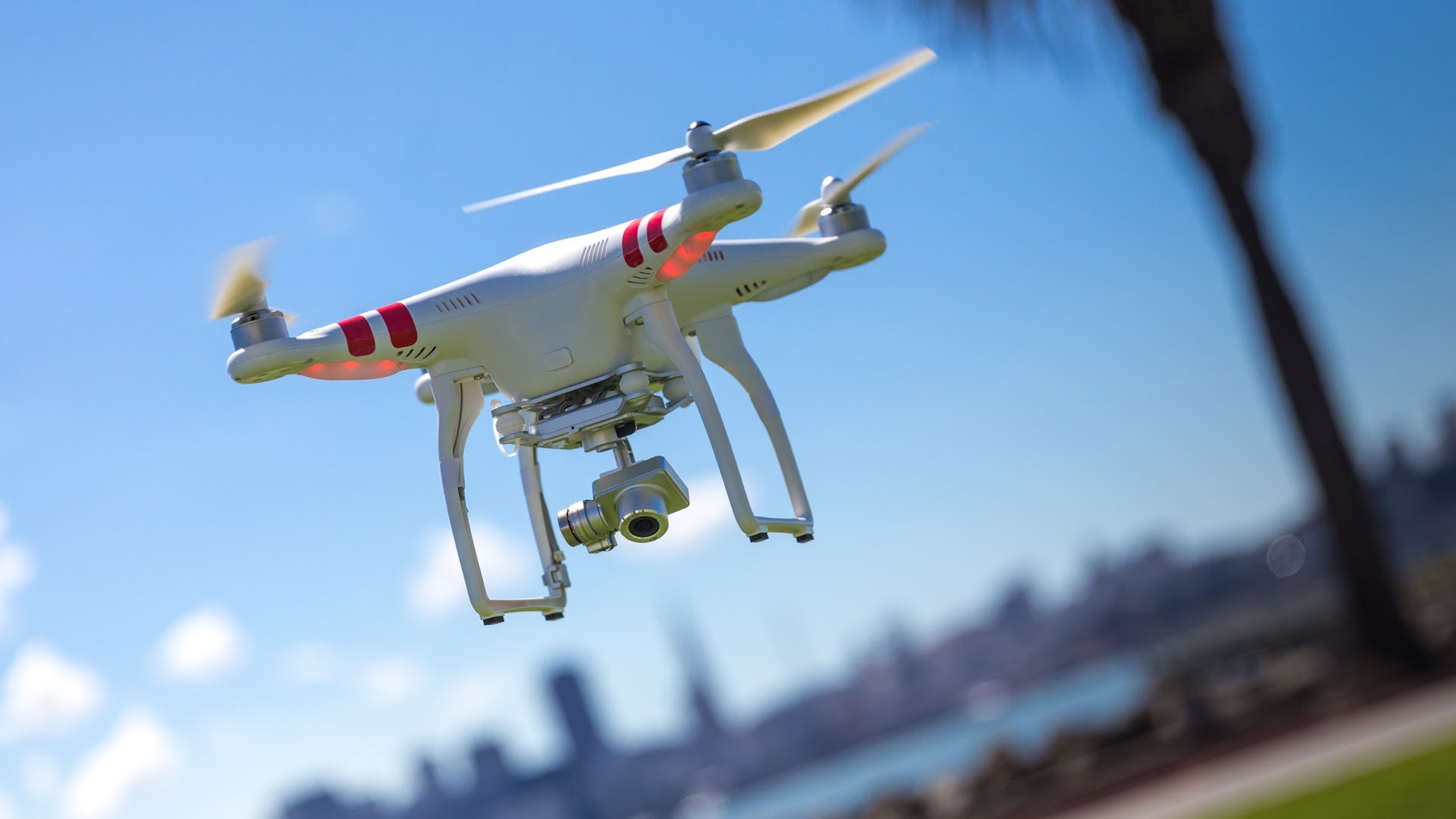
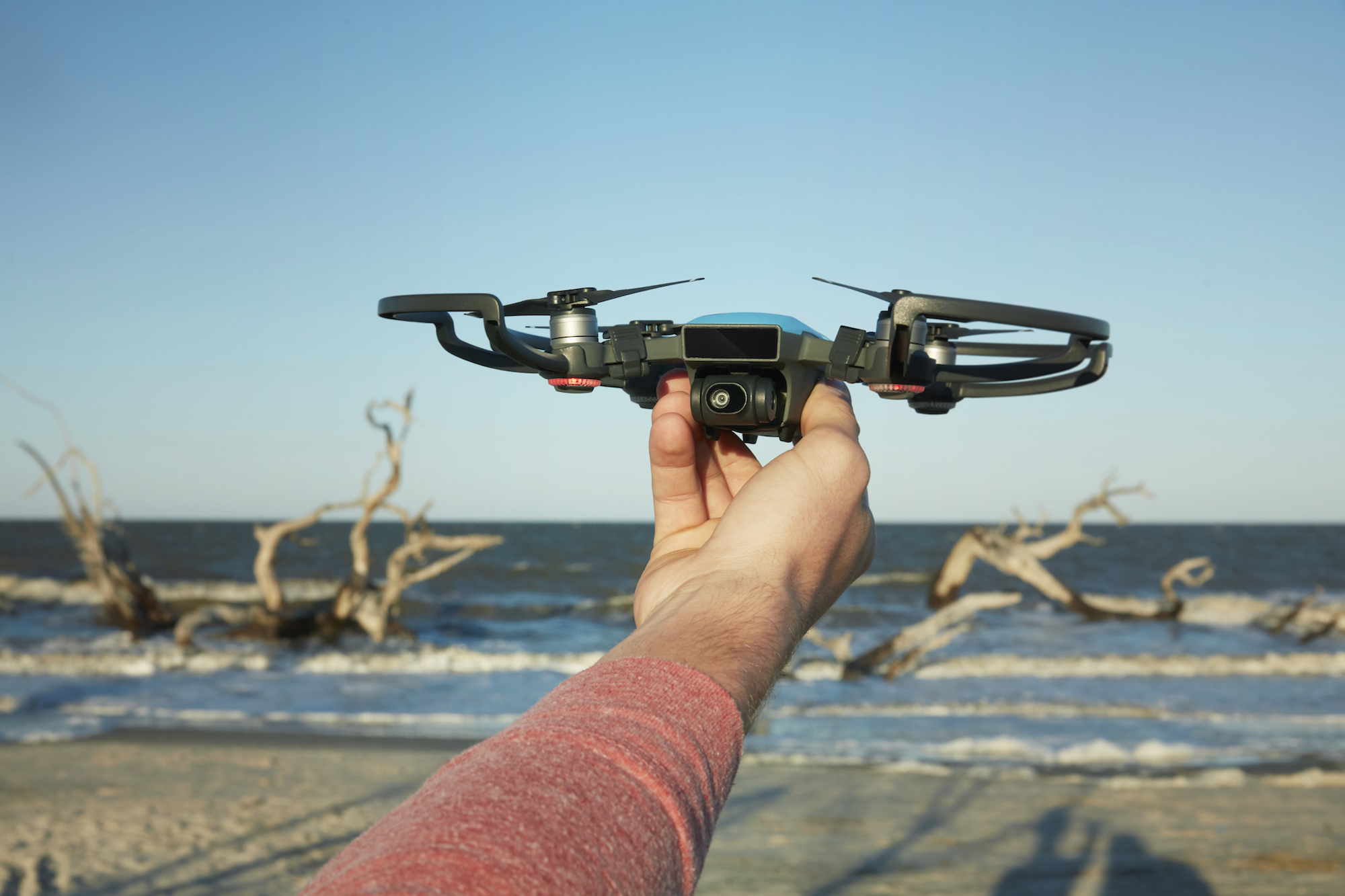
    The Department Of Homeland Security (DHS) of the United States has issued an alert against the Unmanned Aerial Vehicles (UAV) or drones manufactured in China. In a report provided to a renowned media house, the department claims the drone sends flight data to the manufacturers. And given the latest stance by the country over spyware, it is expected that DJI, a major Chinese drone maker who sells about eighty percent of the total drones in the US and Canada; may be banned from the country as well.

    DJI Drone

    This news arrives after the latest trade ban imposed by the country on Chinese telecommunications giant Huawei. While the ban has been suspended for 90 days, the increasing trade war between the US and China is expected to further rise because of the fresh statement. 

    About The Alert

    DJI Drone Spark

    As mentioned above, the Department of Homeland Security has alerted the users of drones manufactured in China that their flight data is being sent back to the manufacturers. This data can be accessed by the Chinese government which it can further use for spying purposes. According to the Department, the drones pose a potential risk to an organisation’s information. This is because the products contain components that can be used to compromise the user’s data and share their information on a server accessed by the Chinese government. And while a brand or a product is not mentioned specifically mentioned in the report, popular drone maker DJI seems to be that can be affected if the US decides to ban China made drones in the country.

    Also read: PlayStation 5 Loading Speed Shown Off, Will Be Ten Times Faster Than The PS4 Pro

    DJI is a Chinese manufacturer headquartered in Shenzhen and is really popular globally for its drones. As is previously mentioned, they have over 80 percent of the market in the US and Canada. So in a case where the country decides to ban their products, the revenue of the company can take a hit substantially. It has clarified to its customers in a statement which notes that its products provide full and complete control over the security of their data. The users can decide how their data is stored, collected and transmitted. 

  • Huawei US Ban Delayed For 90 Days

    Huawei US Ban Delayed For 90 Days

    Update

    Since writing the story, Huawei has issued a statement to clarify its stance on US ban which is as follows:

    Huawei has made substantial contributions to the development and growth of Android around the world. As one of Android’s key global partners, we have worked closely with their open-source platform to develop an ecosystem that has benefitted both users and the industry.

    Huawei will continue to provide security updates and after-sales services to all existing Huawei and Honor smartphone and tablet products, covering those that have been sold and that are still in stock globally. We will continue to build a safe and sustainable software ecosystem, in order to provide the best experience for all users globally.

    Original

    The US government for a long time has accused Chinese tech titan, Huawei for stealing user data and sending it over to the Chinese government for malpractices. Even though the allegations are yet to be proved, the Trump government took a drastic step which has negatively affected the fate of the company. On the 19th of May, 2019, the US government revoked all American companies to have any sort of trade relations with Huawei.

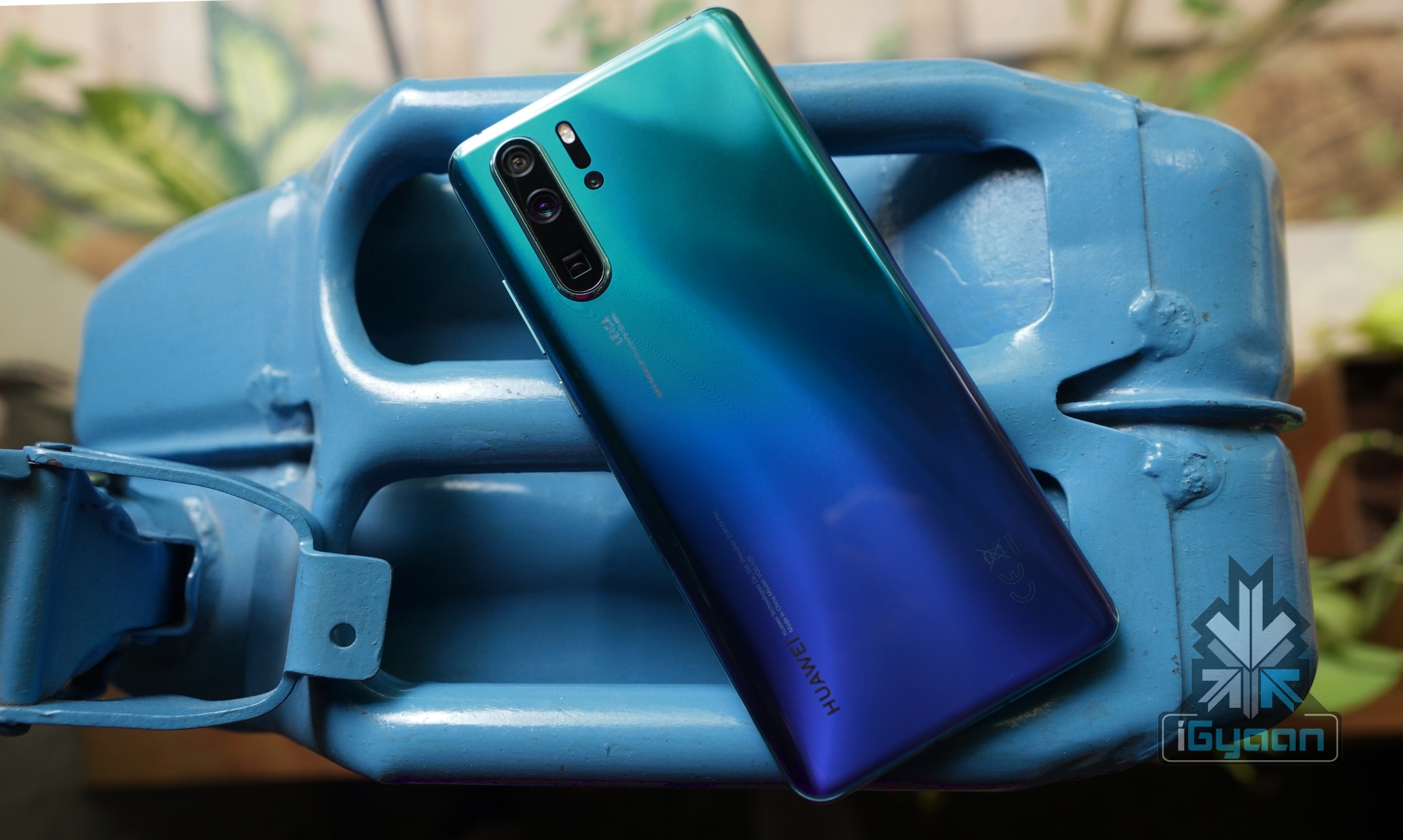
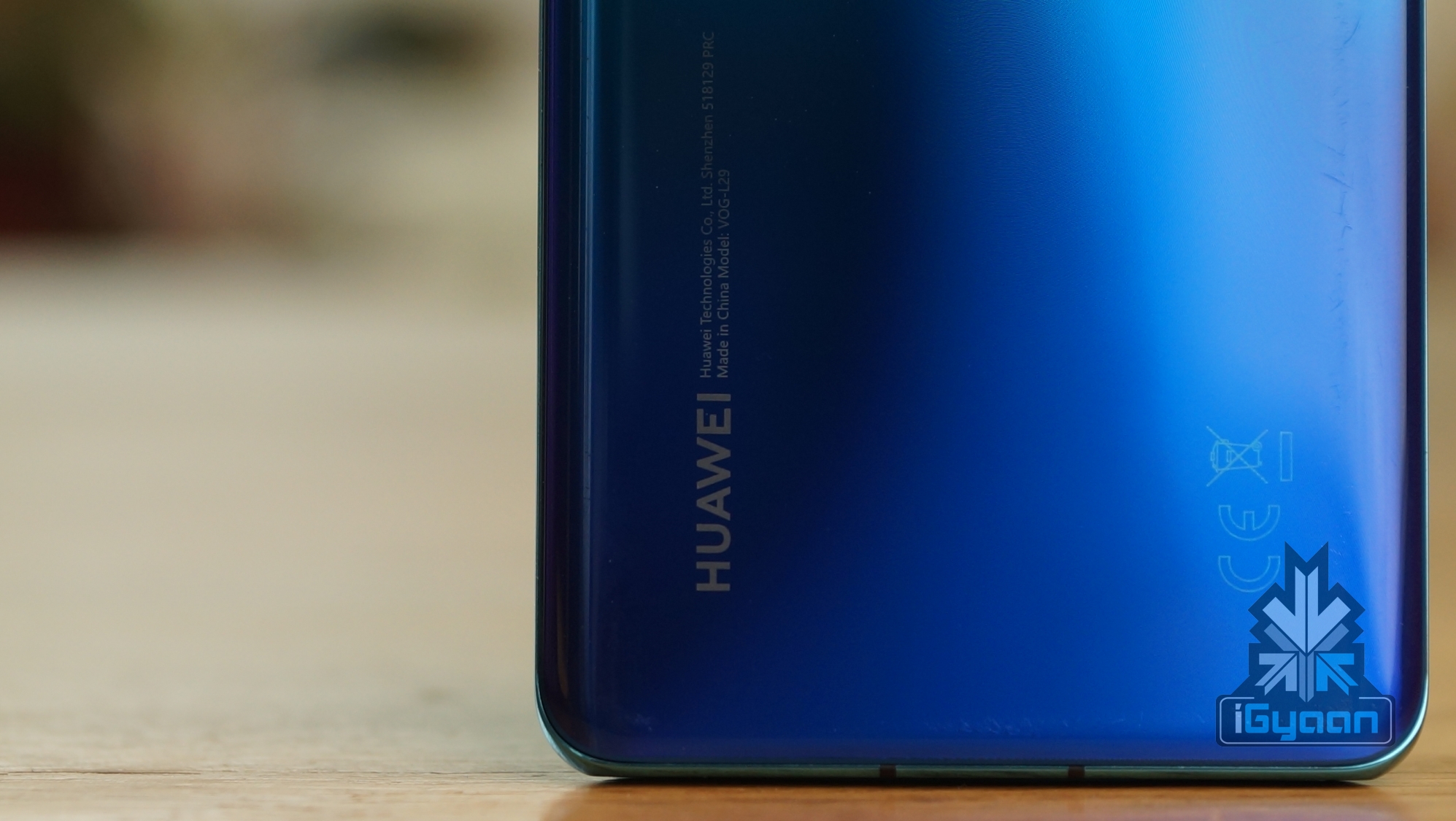
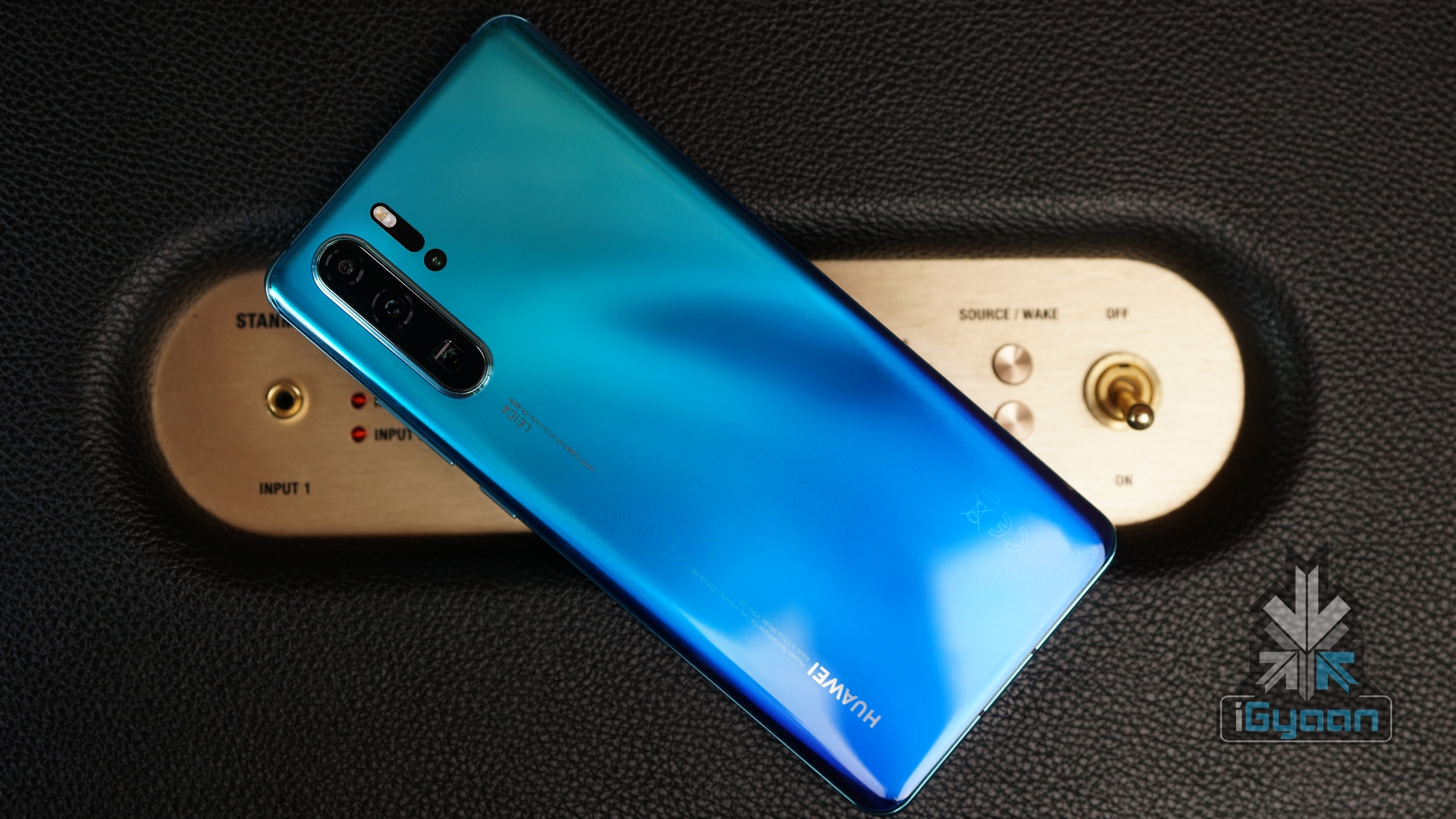
    Huawei LogoThe former is currently the world’s second largest smartphone manufacturer and they all run Android OS which is developed and facilitated by Google, an American conglomerate. Due to the ban implied by the US government, Google had to break all ties with Huawei resulting in the withdrawal of support for services like the Play Store, Youtube, Maps and many more. Albeit Android is an open source operating system that any OEM can install on devices they offer. In order to ship the device with the aforementioned applications and services from Google, the OEM needs to get its devices licensed. Huawei P30 Pro Back

    Following the convulsive change, the US Commerce Department has delayed some of the consequences of the said order for Huawei by 90 days. This period has been granted to the Chinese company so that it can purchase American made networking devices including servers which can be used for providing software updates to existing Huawei smartphones. Also, during the 90 day period, the company can get its existing smartphones Android Q certified which will provide some comfort to Huawei smartphone owners in the country.

     Also Read: Redmi Note 7 Vs Note 7s Vs Note 7 Pro: Which One Should You Buy?

    Noteworthy, Huawei still cannot launch any new smartphones that are not already certified by Google. The about to launch Honor 20, Honor 20 Pro and the Mate X that have already received the certifications are safe and can be launched without any hindrance. Conclusively, only time will tell what the future beholds for Huawei. 

  • Huawei Smartphones To Stop Receiving Android Updates As Google Suspends Business Relations With Huawei

    Huawei Smartphones To Stop Receiving Android Updates As Google Suspends Business Relations With Huawei

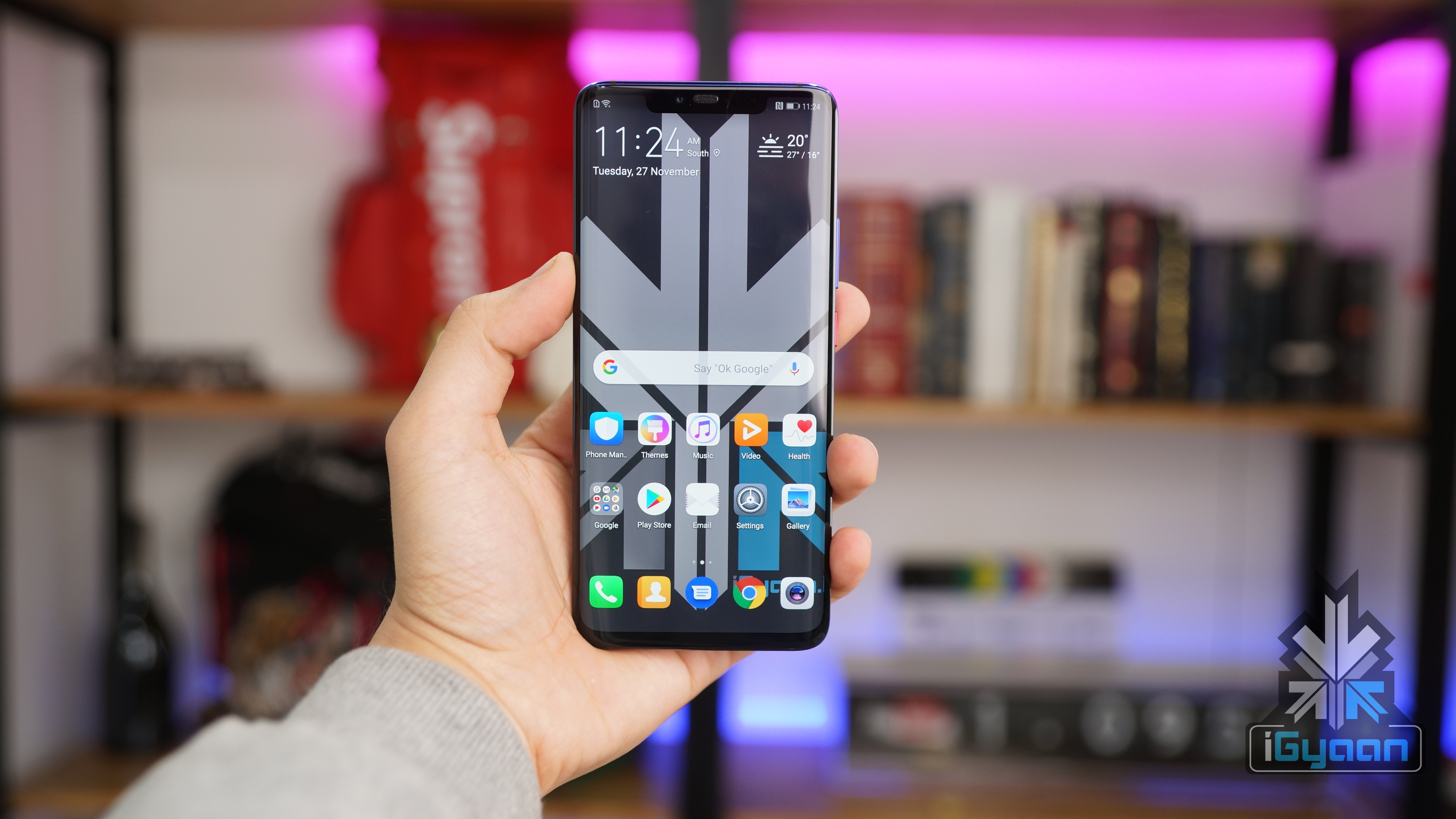
    Chinese telecommunications giant Huawei has time and again faced backlash for its ties with the Chinese government. It has been accused of stealing its user’s data and sending it back to the home country for spying purposes. In what could be a major blowback to the company’s imperative business, American technology giant Google has suspended the majority of its business with the company. This insinuates that going forward, Huawei and it’s subsidiary Honor’s devices will not receive Android security updates. They will also lose access to the search engine giant’s popular services such as Maps and YouTube.

    What Does This Mean?

    The aforementioned suspension of business will take place between Huawei and Alphabet, the parent company of Google. With this in effect, the existing and future smartphones from the former will stop receiving monthly security updates from Google. These are important for keeping the device up to date and safe from newly discovered malware. Furthermore, as mentioned above, the handsets from the Chinese OEM will also lose access to services like the Google Play, YouTube and Google Maps. Notably, the suspension does not affect the existence of Android on Huawei smartphones. This is because the suspension is not applicable on open source software and as is implied, Android is an open source software. But, the Chinese company will only be able to use the public version of the operating system and not the one made available by Google.

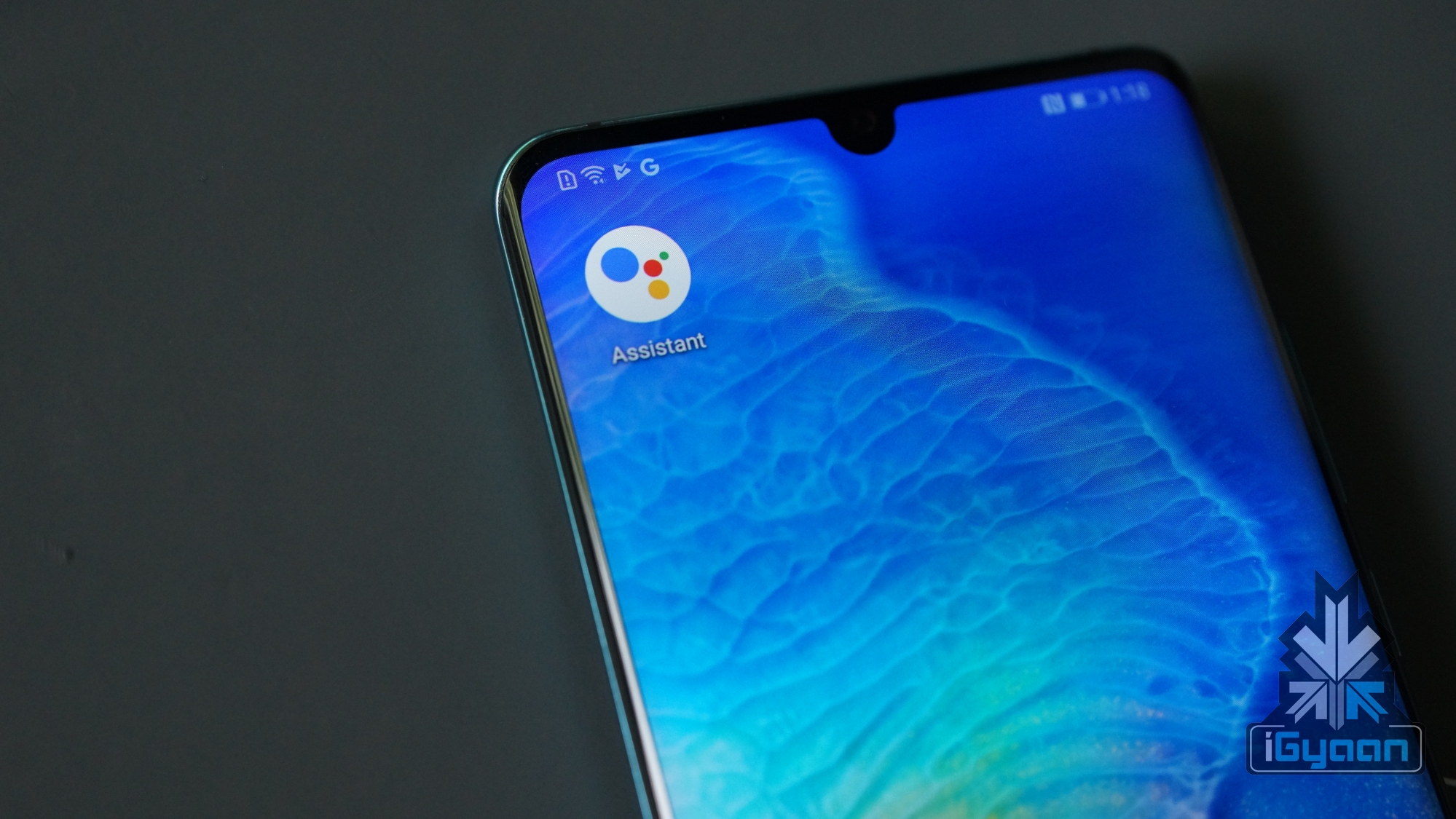
    Google Voice Assistant On Huawei P30 Pro

    Also read: 5 Of The Weirdest Gadgets Ever Designed

    The suspension of business by Alphabet on Huawei takes place after the United States government added the latter to its trade blacklist. It was added to the aforementioned list on Thursday and it means no American firm can engage in business with the Chinese company until explicitly given permission by the US government. In a post on microblogging website Twitter, the official account of Android has assured existing Huawei users that the suspension does not affect existing devices from the company. Present users of all Huawei and Honor handsets will keep featuring the Play Store and receive app updates via the software.

  • Xiaomi Wants You To Buy Phones From A Vending Machine

    Xiaomi Wants You To Buy Phones From A Vending Machine

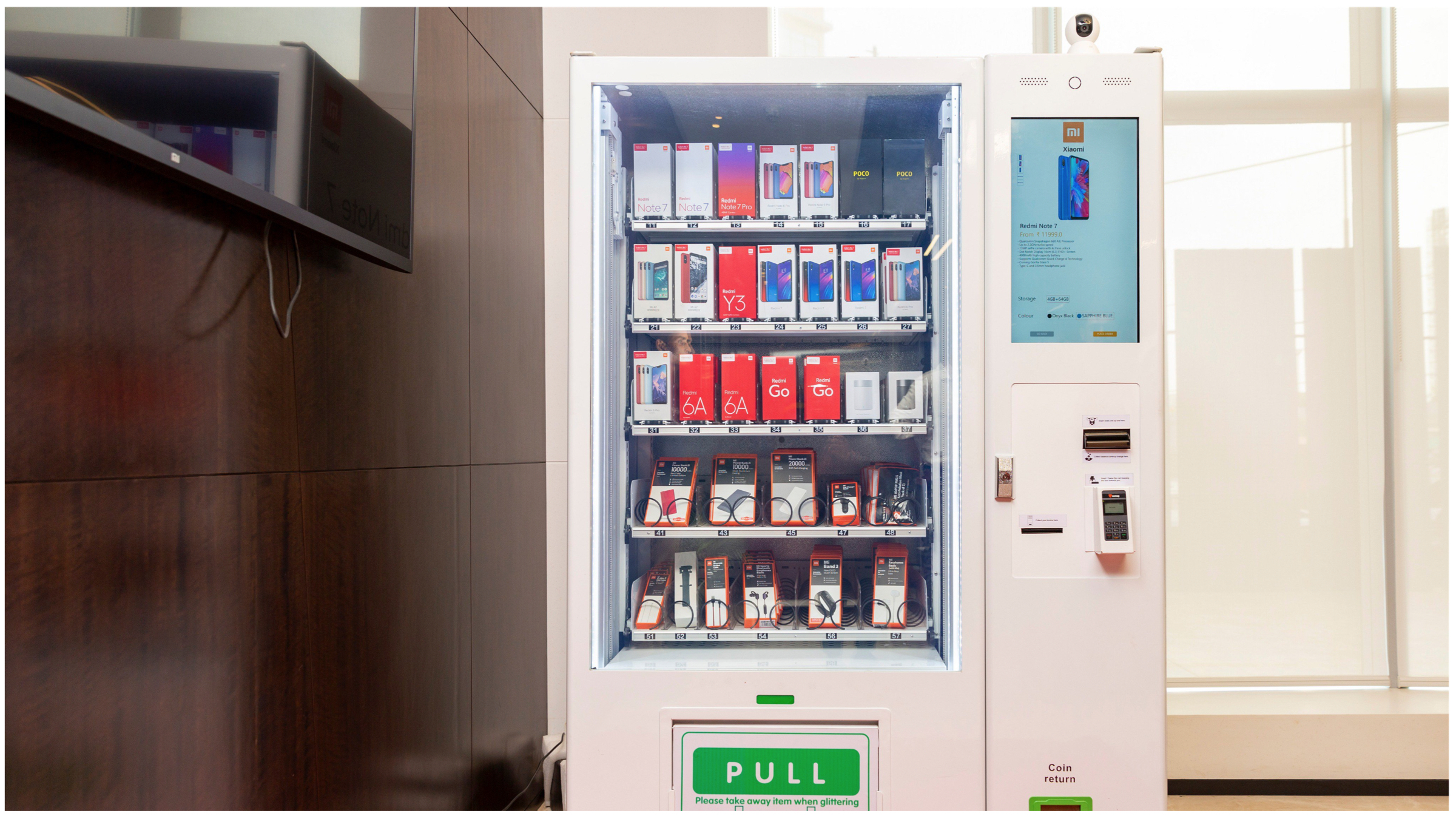
    Chinese conglomerate Xiaomi is an unconventional company when it comes to their business strategies. It was the first company in India to exclusively sell smartphones online which allowed to offer feature rich smartphones at lower prices in comparison to its competitors. Furthermore, in order to expand its offline growth the company opened thousands of small stores in areas like villages across the country. Another unorthodox initiative taken by the company is the newly installed electronics vending machine which the company is referring to as a Mi Express Kiosk. Mi Express Kiosk

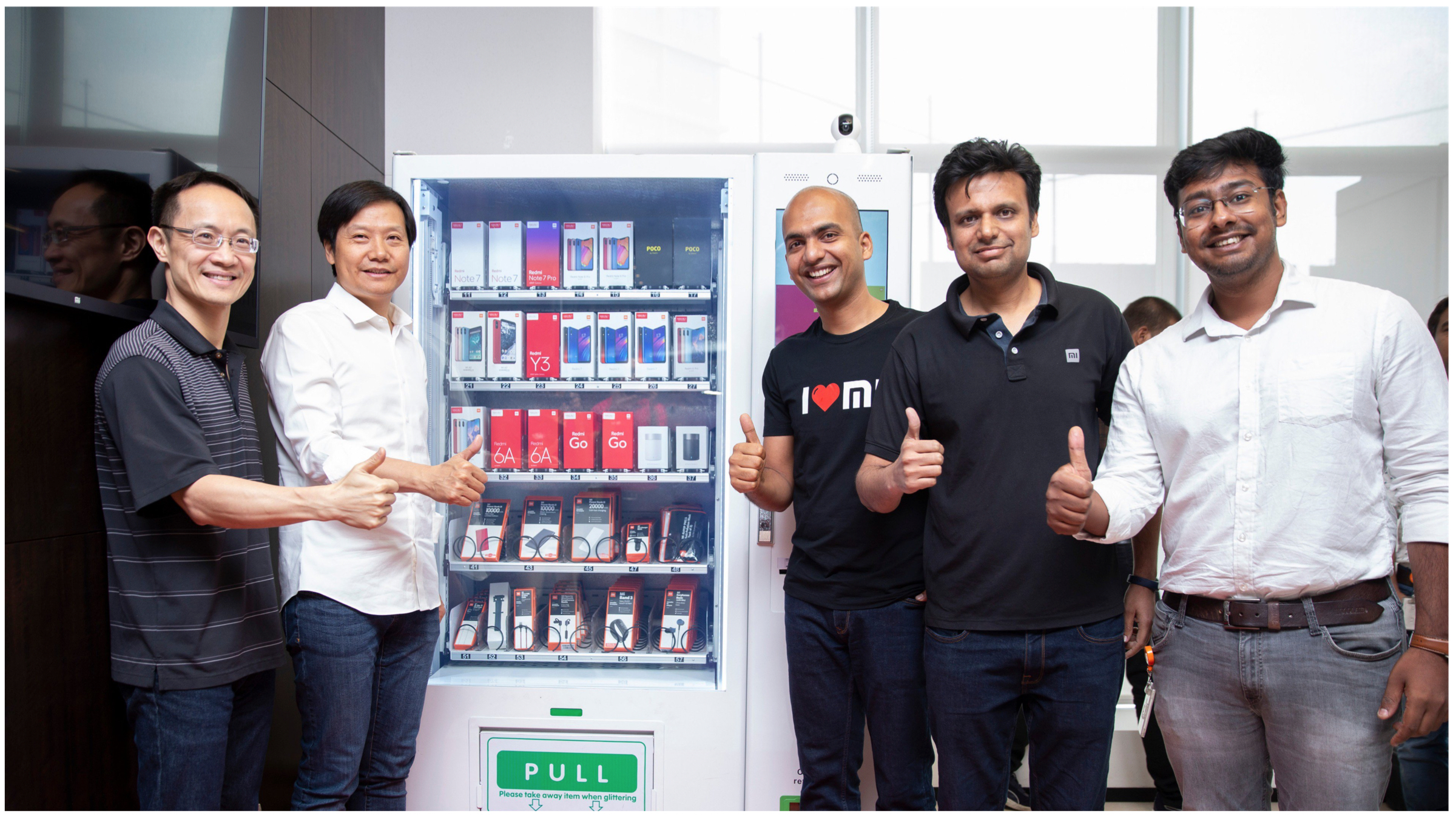
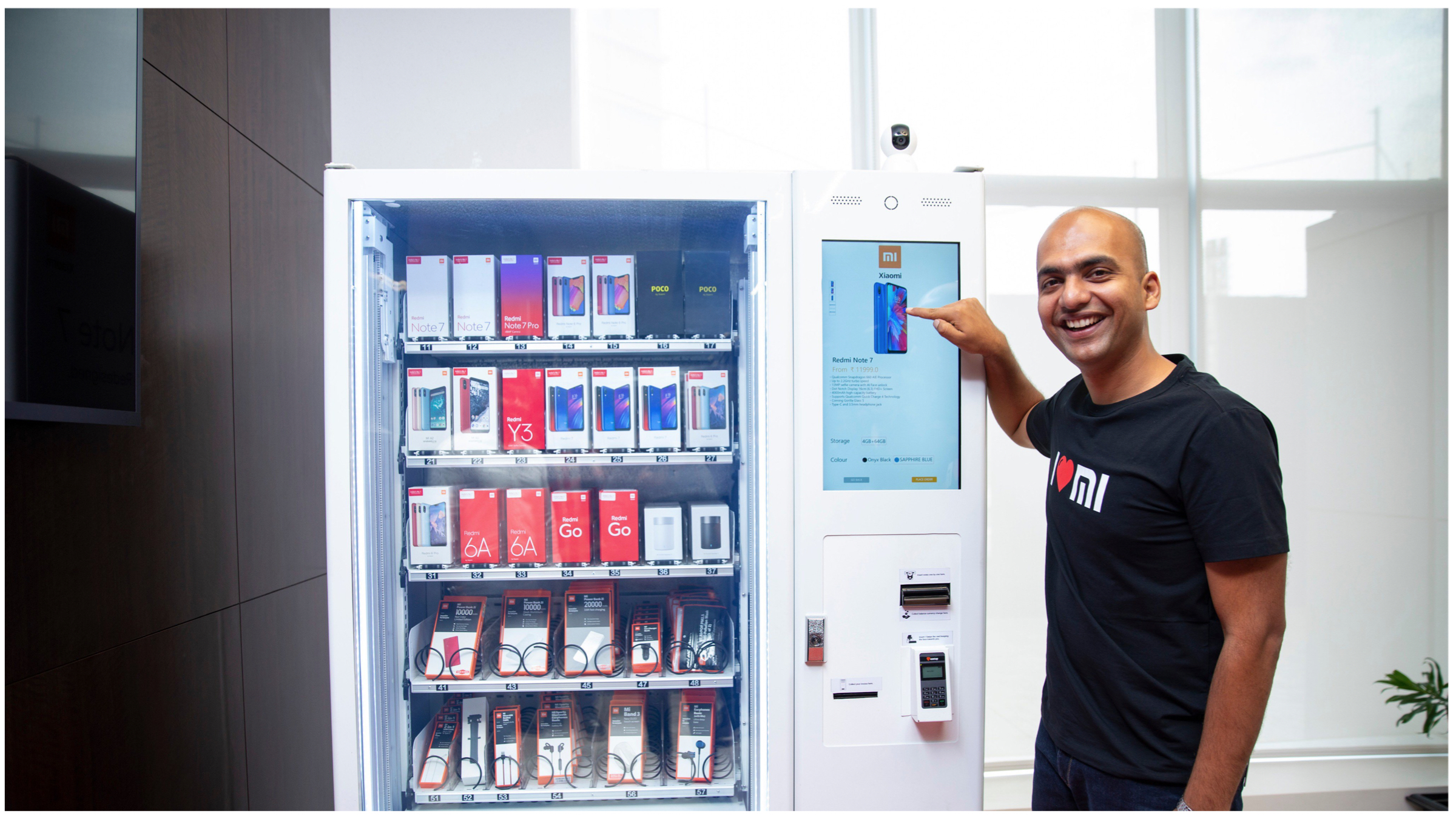
    Xioami India’s senior executive, Manu Kumar Jain on his Twitter account shared images of the aforementioned vending machine. Called the Mi Express Kiosk, it sells smartphones and smartphone accessories. The machine has been installed in Manyata Tech Park which is located in Bengaluru and the company reports to bring more of these to different locations soon.

    In terms of design, the Mi Express Kiosk resembles a traditional vending machine with a see-through glass pane that displays the offered products. To buy a certain product, the user can select options with the help of a large touch screen display which is placed on the top right side of the unit. The mode of payment that the Mi Express Kiosk supports include Cash, Debit or Credit Card or even UPI transfer. The idea of a machine selling electronics does seem innovative but the fact cannot be denied that vending machines never really took off in the country. Primarily due to the following reason:

    • Users perceive purchasing products from machines a complicated process. 
    • Security is another factor that has limited the adaptation of vending machines. With cases arising from ATM’s being looted, vending machine with expensive electronics would be looted if security is not in sight.

    Mi Express Kiosk

    However, Xiaomi has designed a simple UI that is easy to use. Also, the machines are likely to be installed in generally safer locations like malls and airports. To conclude, only time will tell whether these machines take over the country with storm or fail miserably.


    Also Read: Apple To Open Largest Store In The Indian Subcontinent In Mumbai

    What are your thoughts on the Mi Express Kiosk? Will you buy a smartphone from a vending machine?

    Do let us know in the comments below!

  • Apple To Open Largest Store In The Indian Subcontinent In Mumbai

    Apple To Open Largest Store In The Indian Subcontinent In Mumbai

    American technology giant Apple is known for providing a premium shopping experience to its customers. Part of the experience is grand nature of the renowned Apple Stores. Now, the company is all set to open its largest store in the Indian subcontinent. It has finalised the location  at a high-end mall in the city of Mumbai, Maharashtra.

    About the Store

    Apple iPhone

    As mentioned above, the new Apple Store in Mumbai will be one of the company’s biggest retail market place; and the largest in the Indian subcontinent. Early reports claim it will measure a whopping 4,500 square foot in area. Sources claim the location finalised for the Apple Store is the Palladium shopping mall in Mumbai. It is a known premium destination and may fall perfectly in line to the grandeur the company wants for its flagship retail store in the country. The latest retail market place will fall under the large format Apple Premium Reseller (APR) category. This essentially means that the company has planned to open and run the store in collaboration with a local business partner who will only sell Apple products.

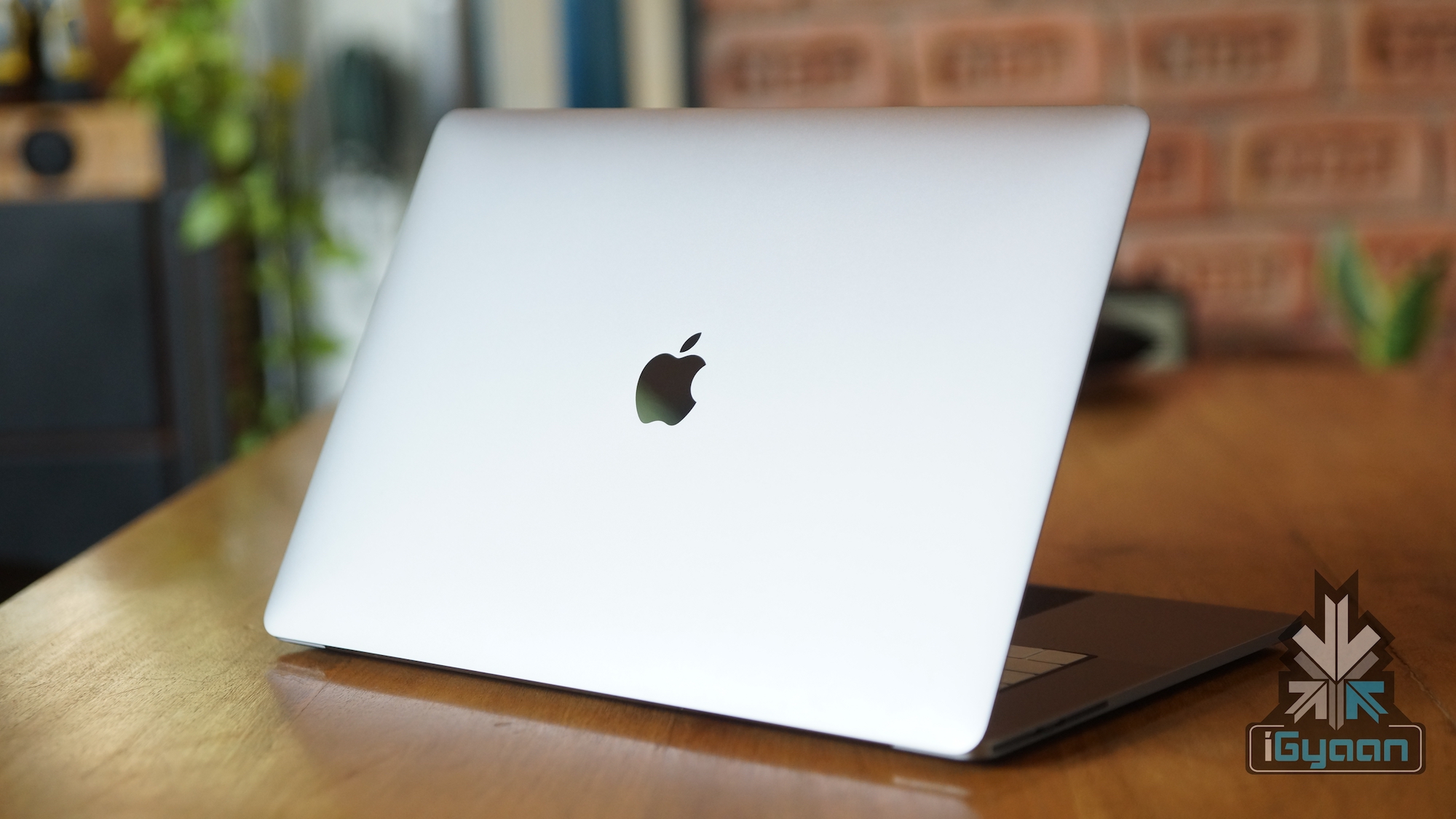
    Apple MacBook Pro

    Also read: Android’s Digital Wellbeing Slowing Down Pixel Smartphones, Here’s How To Turn It Off

    While it has been speculated that the company will open its signature Apple Store in India, many regulations of the Indian government have prevented it from doing that. The rules state if a foreign company wants to open a retail store in the country, it has to source at least 30 percent of the products locally. While the iPhone maker has since met the requirements by manufacturing multiple products in the country; it still has not been granted certification for a retail store. Notably, the aforementioned reason is one of the biggest why electric automaker Tesla has strayed away from the Indian market. The first Apple owned store is expected in the capital New Delhi, in the Connaught Place area by the year 2020. 

  • Samsung Is Once Again The Number One Premium Smartphone Maker In India

    Samsung Is Once Again The Number One Premium Smartphone Maker In India

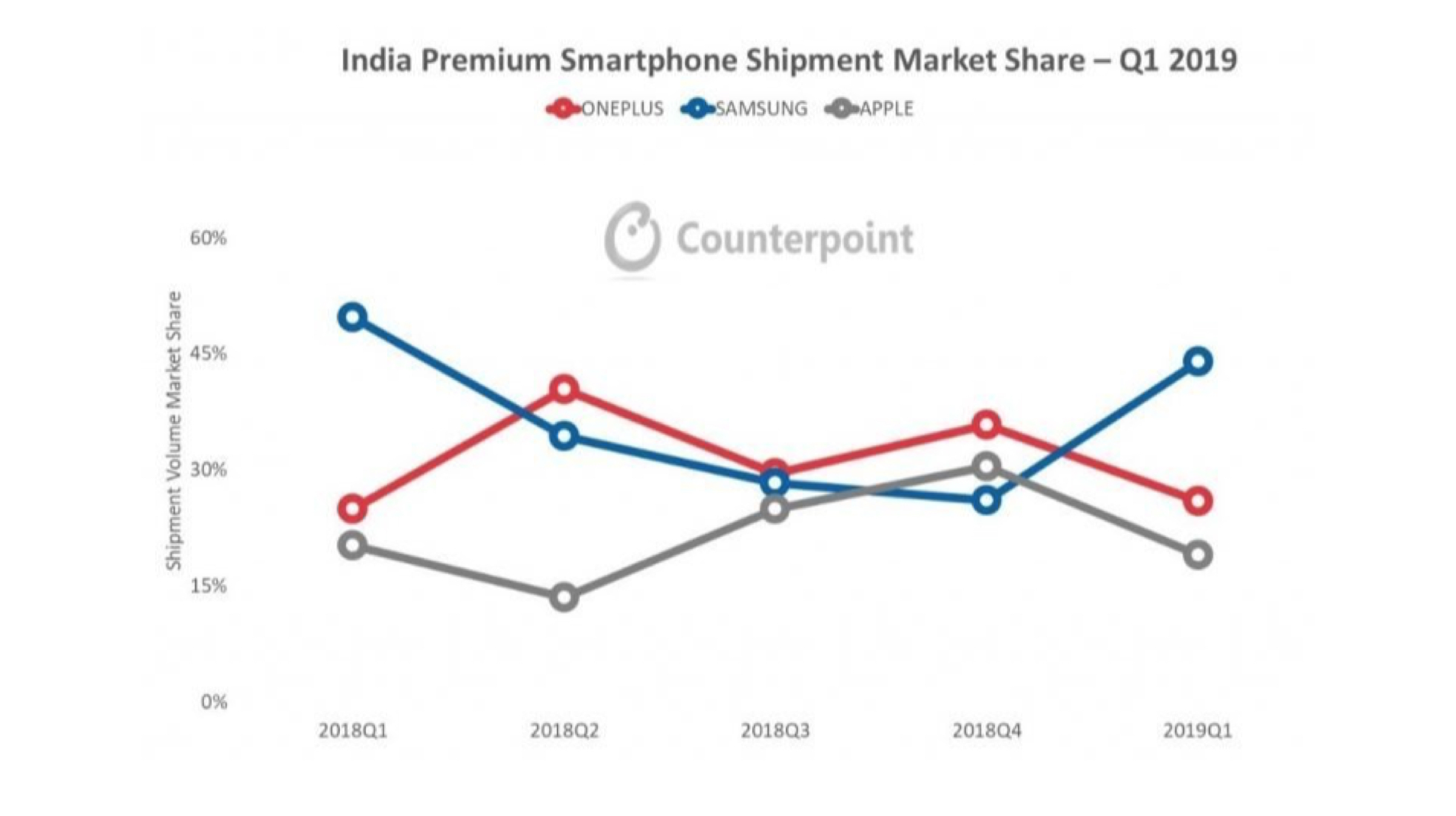
    Samsung is currently the number one smartphone manufacturer in the world. Clearly, the company also has a very strong grip in the densely populated Indian mobile phone market. Even though the largest smartphone maker in India is Xioami, Samsung has held the top spot in the premium smartphone segment. But, for the last three quarters, the company lost its title to the Chinese smartphone maker, OnePlus which rode to the top on back of the OnePlus 6 and the OnePlus 6T.

    A fresh report published by Counterpoint research reveals the newly launched Galaxy S10 lineup has helped the company regain its pole position. For starters, Counterpoint is a market research company dedicated to delivering intelligence on technology trends across the globe. According to the report, the top three premium brands including Samsung, OnePlus and Apple accounted for 90 per cent of the premium segment shipments in Q1 of 2019 as compared to 95 per cent in Q1 of 2018.

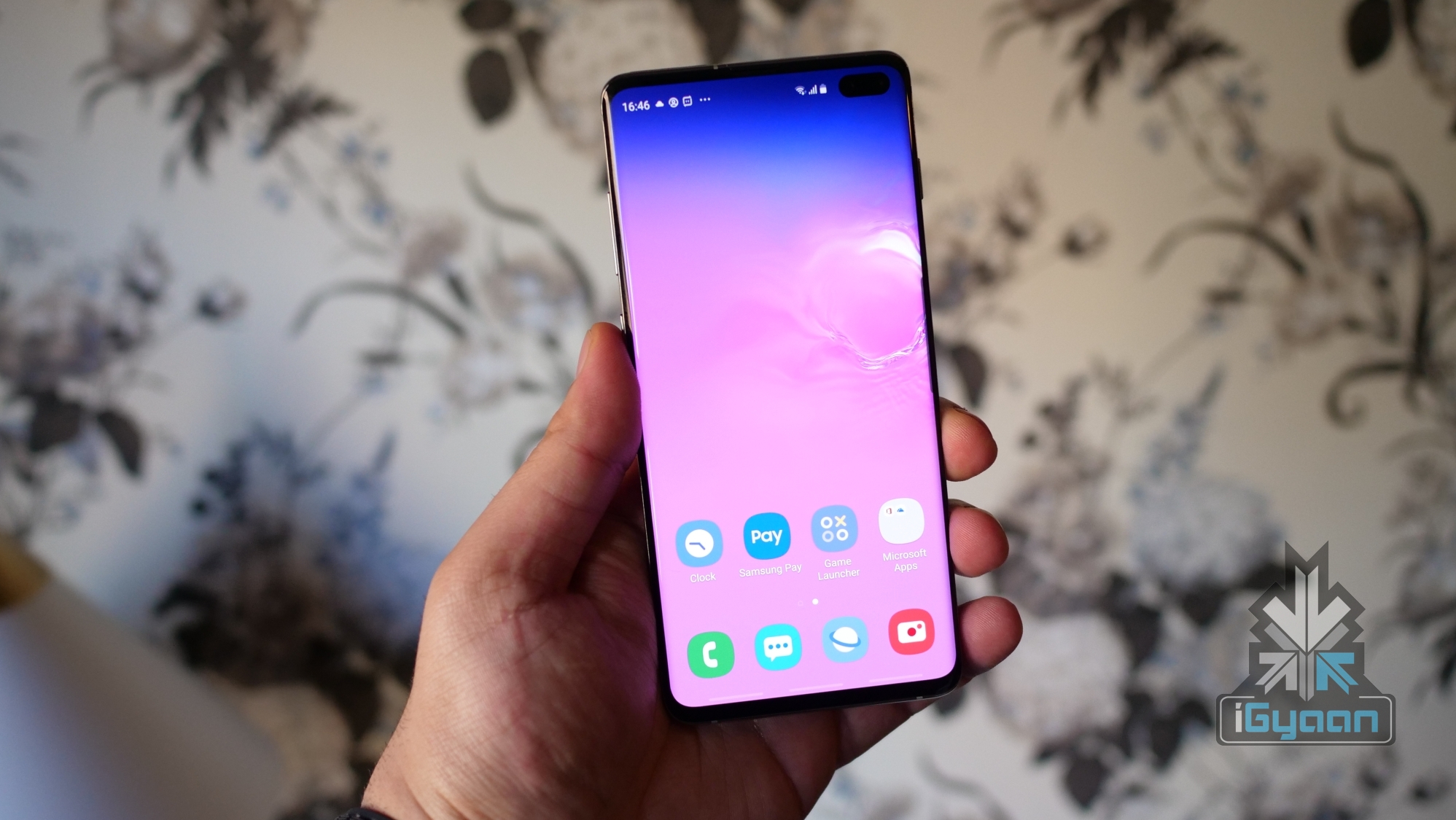
    The report states the remaining 10% of the stake is shared companies like Huawei which have gained traction based on the Mate and P Series of smartphones. It also highlights that Apple is also striving to stop its decline which is primarily due to excessive pricing. On the brighter side, as the company starts local assembly of certain iPhone models which is expected to happen soon, it will be relieved of the 20% import duty that the Indian government collects for each unit. Samsung Galaxy S10

    The Counterpoint report exhibits if Apple passes on some of the price benefits to the consumers, it is expected to see a significant rise in its sale. The top selling premium smartphones in the Q1 2019 are as follows:

    • OnePlus 6T : 26%
    • Samsung Galaxy S10 Plus: 16 %
    • Samsung Galaxy S10: 12 % 

    Also Read: Realme X With 8 GB RAM Spotted On Geekbench

    Samsung has certainly managed to race ahead of the competition in the Q1, however, it will be interesting to see what the results are like once the highly anticipated OnePlus 7 and OnePlus 7 Pro launch. The said devices are set to launch on the 14th of May. 

  • Apple Watch Leads The Smartwatch Market As It Grows By 48% In Q1 2019

    Apple Watch Leads The Smartwatch Market As It Grows By 48% In Q1 2019

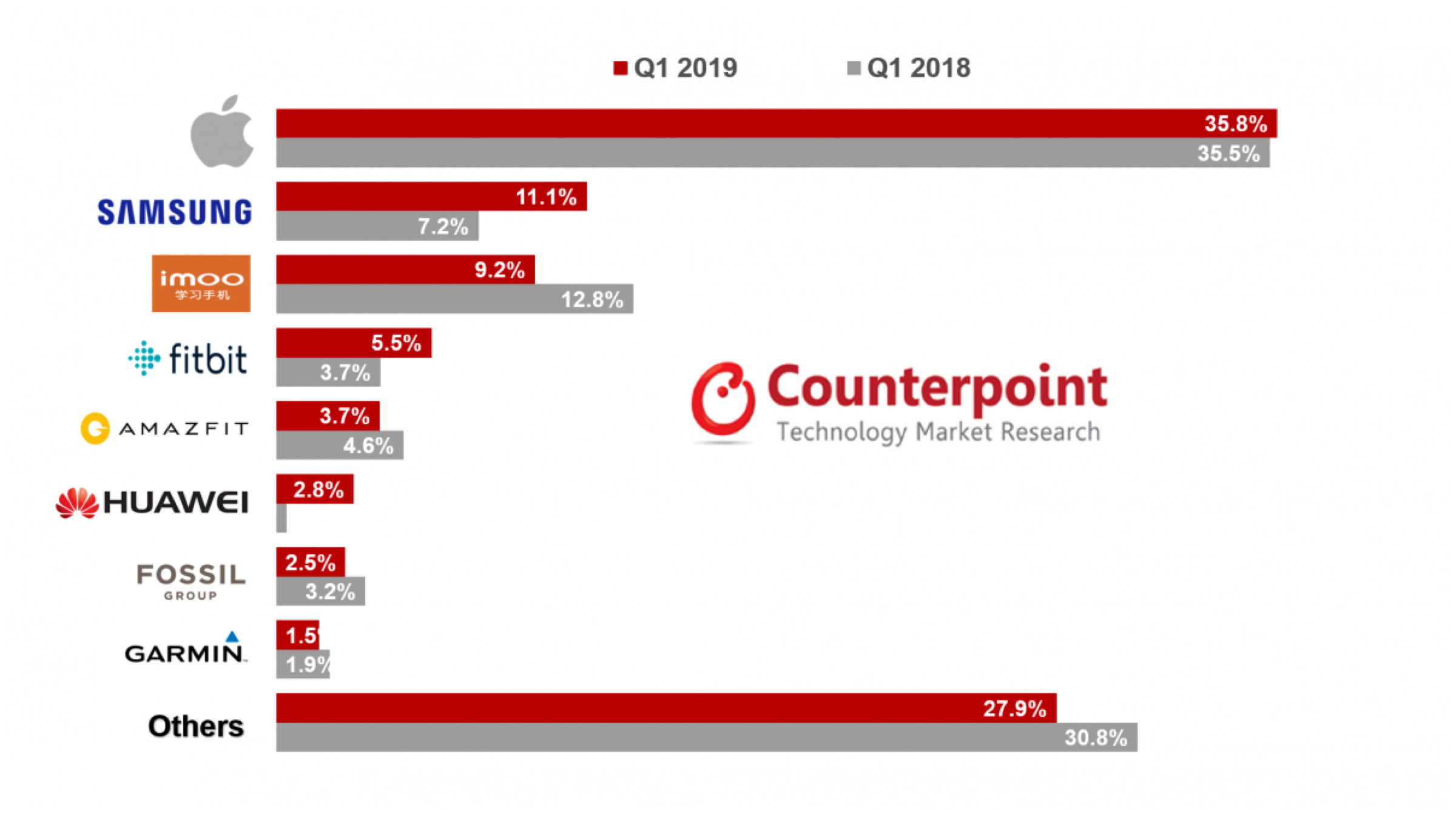
    Smartwatches, since their introduction has become an important part of people’s lives. The devices function as fitness trackers, show notifications and in some cases, like the Nubia Alpha, also help make calls and click pictures. According to known research organization Counterpoint, the global market for smartwatches has seen steady growth. Since the first quarter of last year, the sales of the wearable product has grown around 48 percent Year on Year (YoY). And the Apple Watch is the most sold smartwatch in the time period.

    Results Of The Research

    In a result published on its website on the 2nd of May, Counterpoint claims the smartwatch industry has grown by 48 percent YoY as mentioned above. Apple, whose Apple Watch is a really popular product in the segment, led the pack by clocking in the most sales in the first quarter of 2019. According to the research organization, its demand grew by 49 percent compared to the first quarter last year. It also claims that because of such unprecedented growth, one of every three smartwatches sold in the time period belonged to Apple. In the second place is Samsung, witnessing an exponential growth of 127 percent; which is accredited to the strong sales of its latest Galaxy smartwatches. Also in the list are companies from the likes of Fitbit, Amazfit, Huawei and Fossil. All these brands are a known name in the smartwatch market.

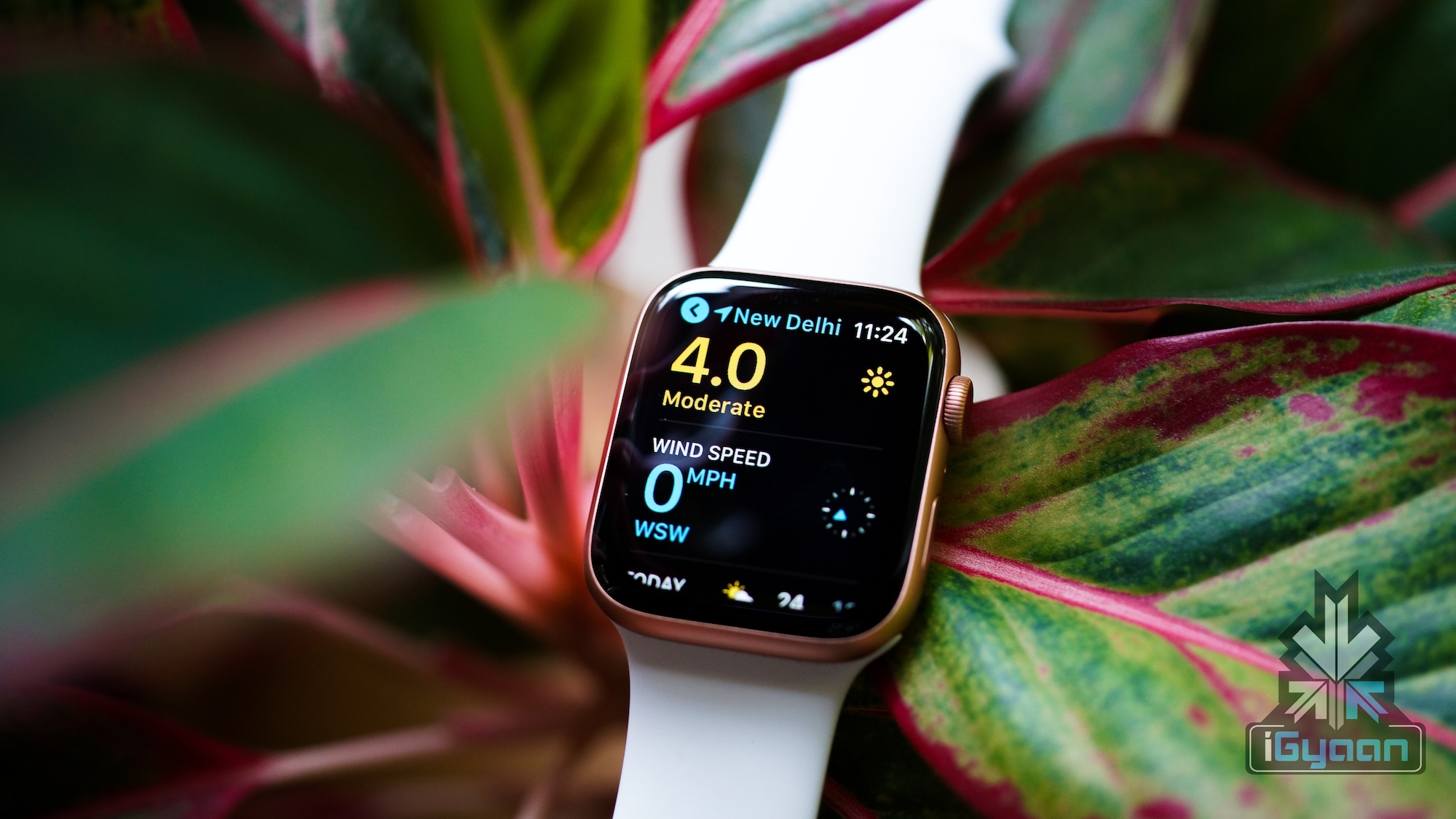
    Apple Watch Series 4
    Apple Watch Series 4

    Also read: Realme X Spotted In YouTube Video, Confirms Dual Camera Setup

    The growth of the Apple Watch in the ever-increasing market of smartwatches is not surprising according to Counterpoint. According to it, the ECG and the fall detection feature on the current generation Apple Watch Series 4 are the most desirable worldwide. The device has been claimed to have saved numerous lives due to the aforementioned features. While these functionalities are available in a limited number of countries worldwide as of now; Apple is also said to be bringing the ECG feature to 20 more countries after seeking necessary approvals for the same.

  • Huawei’s Networking Equipment Had Backdoors Reveals Report

    Huawei’s Networking Equipment Had Backdoors Reveals Report

    Huawei is currently the world’s largest networking equipment manufacturer and the world’s second largest smartphone maker which is an honourable feat. However, it has had a few rough years accrediting to accusations associated with security. The company is blamed for installing back doors on its networking equipment which can allegedly expose sensitive user data to the Chinese government. Notably, the US government had suggested its allies to boycott using equipment manufactured by the company. Even though allegations against the company were not proved, they have definitely scarred Huawei’s reputation. In the latest development to the case, Bloomberg has published a report that states that the company indeed have backdoors in its equipment which date back from 2009 and 2011.Huawei

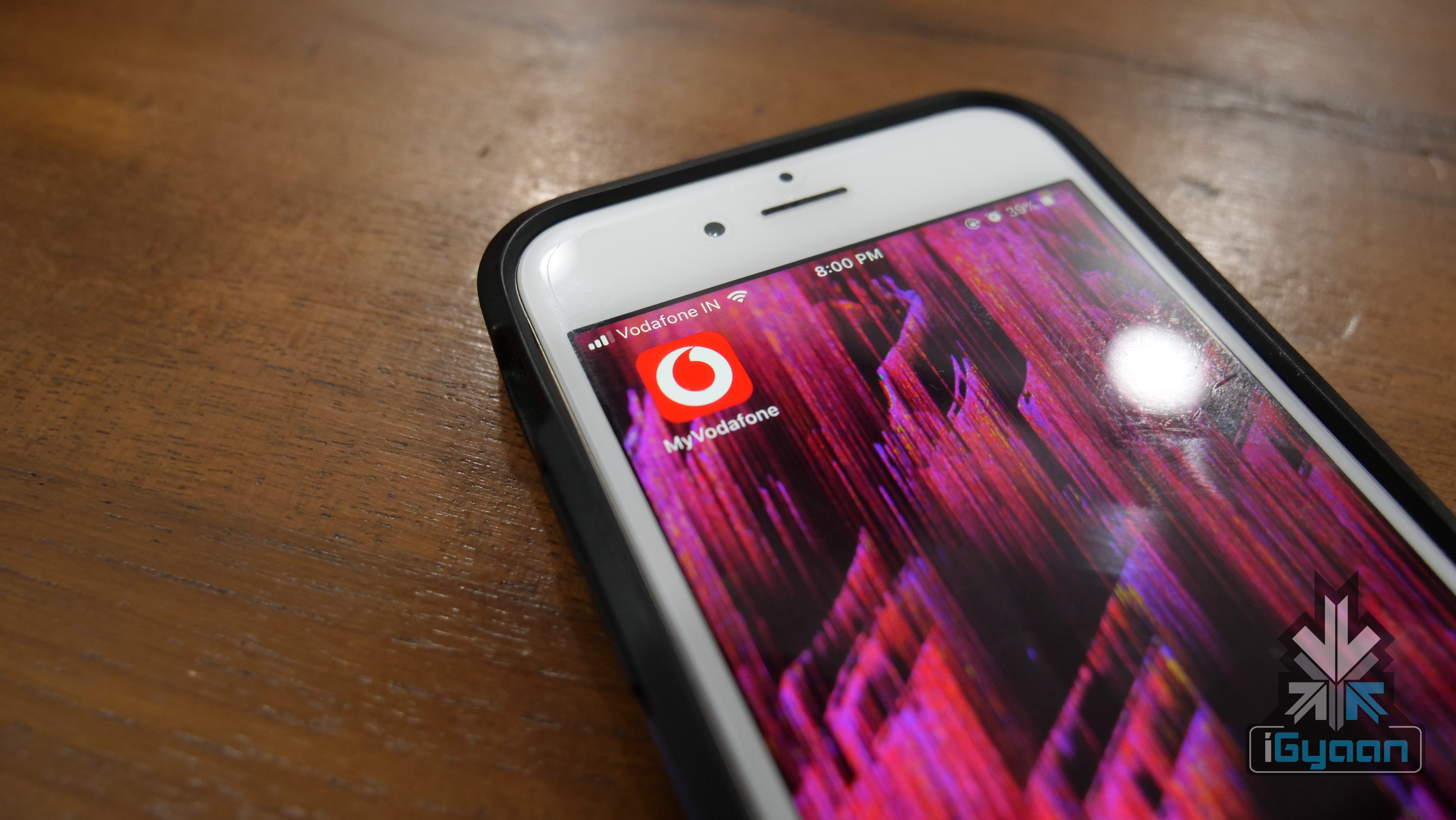
    According to the report, the telecom provider, Vodafone had found vulnerabilities in the equipment supplied by Huawei for the carrier’s Italian business. The vulnerabilities also referred to as hidden backdoors allowed unauthorised access to Huawei which could have been used to lurk into telecom providers fixed line network in the country. Vodafone reportedly asked the Chinese networking equipment provider to remove the backdoors from home internet routers in the year 2011 which the latter assured to have been removed. But, further testing performed by the telecom operator revealed that the back doors remained.

    Furthermore, Vodafone also discovered backdoors in parts of the fixed access network which is known as optical service nodes. Prominently, the service nodes are responsible for transporting data over optical fibre cables and also dealt with authentication of subscribers. Bloomberg would not reveal the names of the report providers as they were guaranteed of full anonymity on the matter. 

    Implications And Reasons For Installing Backdoors

    As previously discussed, backdoors can imply serious security concerns for an organisation and its subscribers. Especially, if ill-intended hackers get hold of such backdoors, a significant amount of damage can be done both in terms of money and confidential user data. 

    However, it must be noted that companies purposely tend to integrate backdoors in their equipment. These can be used for collecting data from the hardware which would help the company to eliminate bugs on the current hardware and further strengthen the security for future devices. 

    Also Read: Samsung Galaxy A20 Review: A Good Alternative To The Redmi Note 7?

    Even though Vodafone states the issues were resolved by the accused and has also vouched for the security on network equipment manufactured by Huawei. The fact will further damage the company’s reputation on a Global level. All in all, it is yet unclear what the future holds for the Chinese conglomerate. 

iGyaan Network
Privacy Overview

This website uses cookies so that we can provide you with the best user experience possible. Cookie information is stored in your browser and performs functions such as recognising you when you return to our website and helping our team to understand which sections of the website you find most interesting and useful.