Apple today has released a new iOS 9.3 beta software for its iOS devices, giving developers a glimpse into the new features that will soon be available. Public beta will be up for download for all who signed up for it. The iOS 9.3 beta is one of the biggest updates to iOS 9 as of now, and brings along with it a number of really cool features.
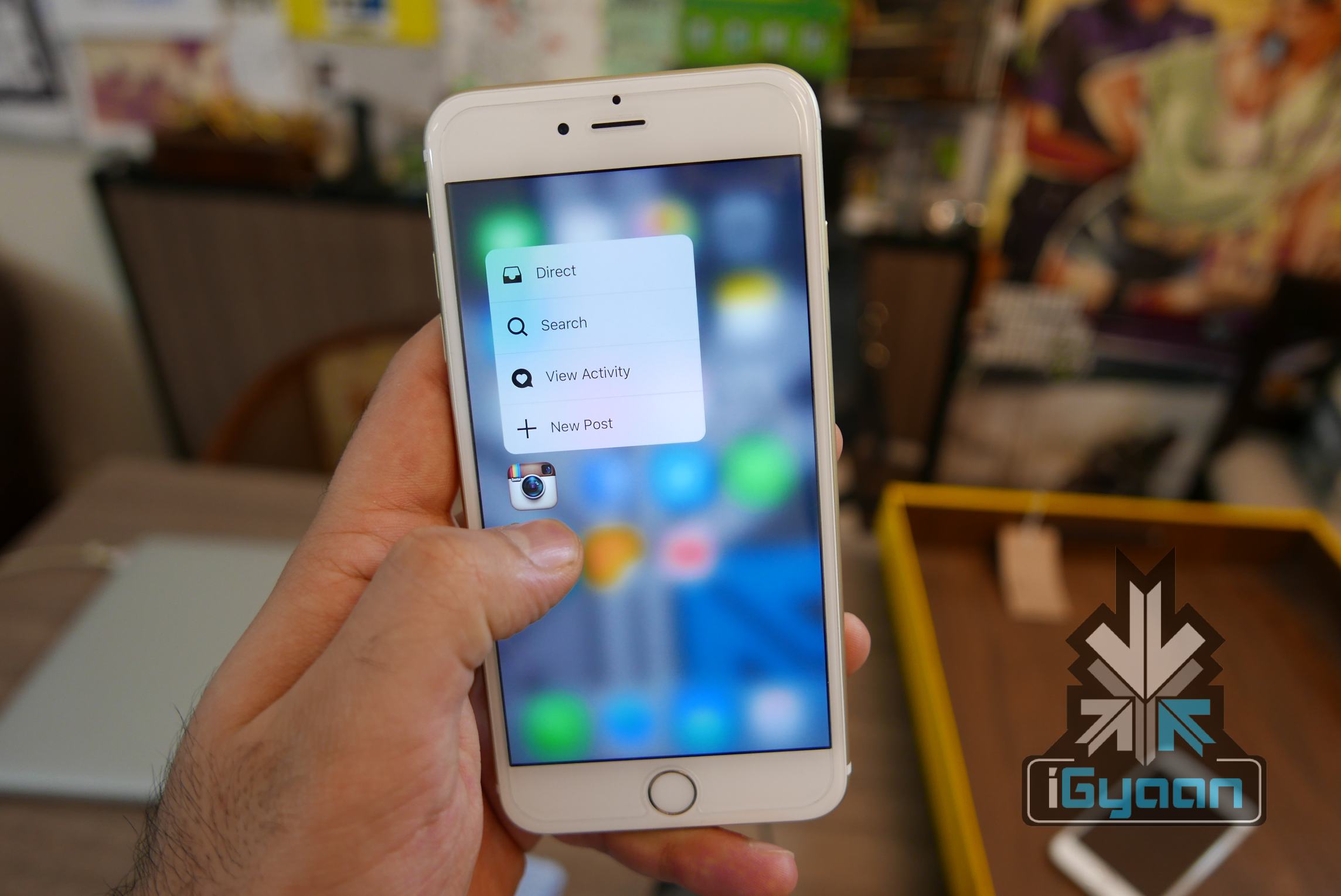
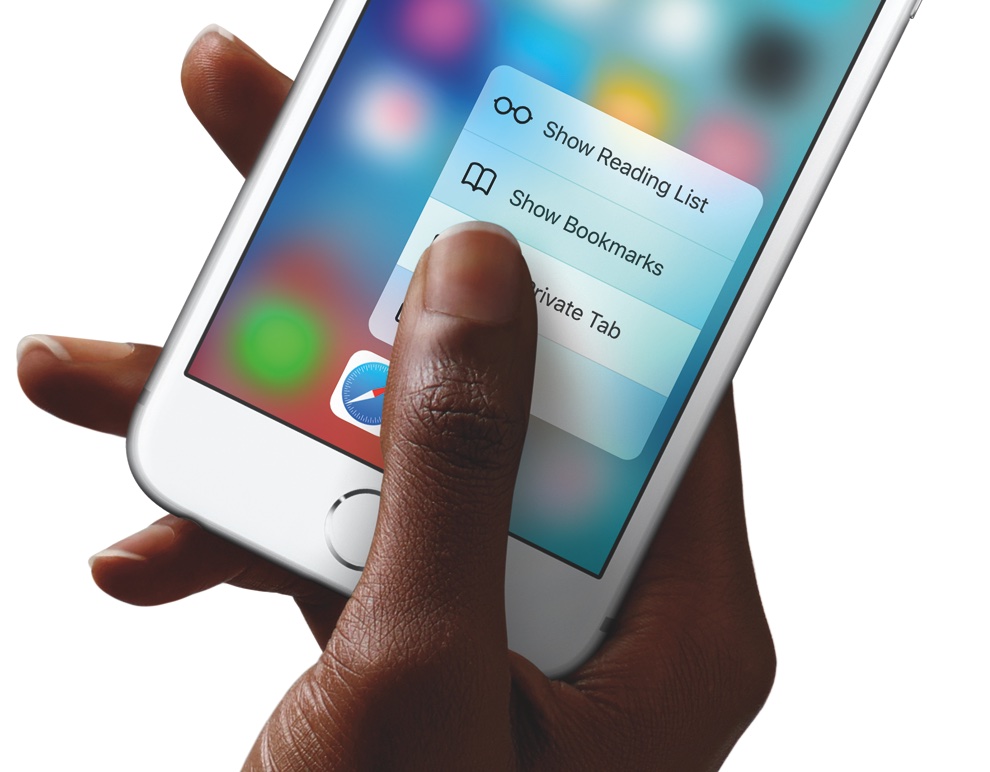
Improved 3D Touch
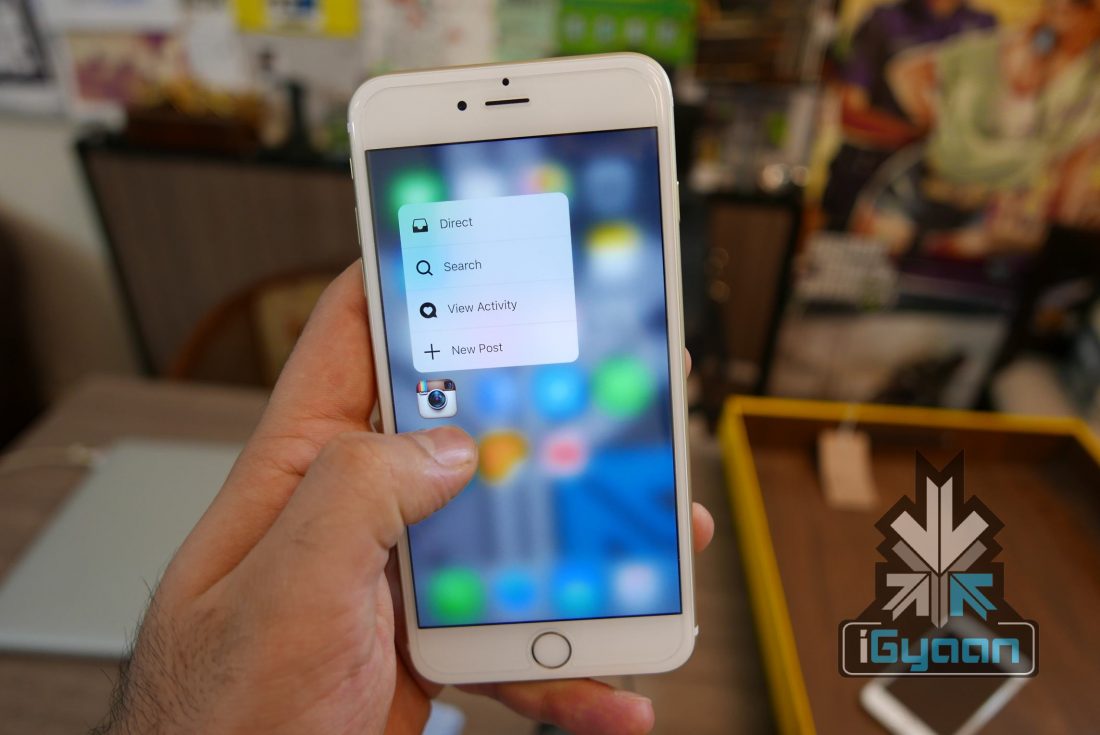
The latest update to the OS will bring with it advanced 3D Touch capabilities. Advancements to the way users interact with their Apple device will be seen such as the use of pressure commands. New ‘Quick Shortcuts’ for the App store, Compass, Health, iTunes Store and Weather are going to be seen,
App Switcher
iOS 9.3 includes haptic feedback when using the Force Touch app switcher on an iPhone 6s or 6s Plus. “Peek” feedback is provided when first opening the app switcher, and a full “Pop” feedback is given when pressing further to open it fully.
Night Shift
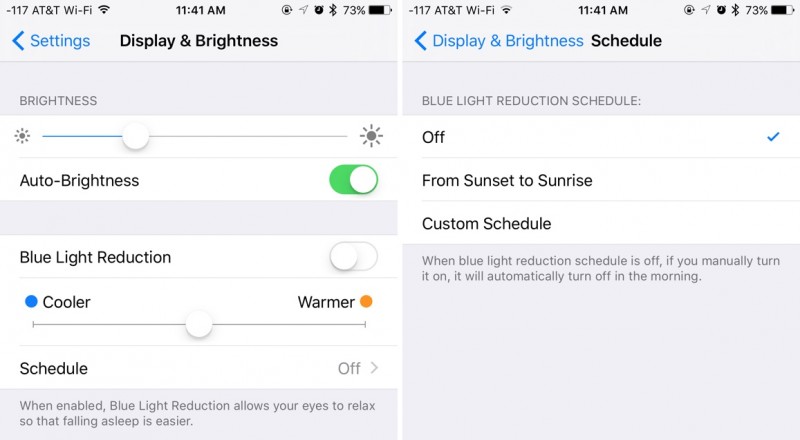
This is a new feature designed to decrease the amount of blue light an iOS user is exposed to at night. Night Shift allows for the OS to shift to more yellow tones for the iPhone or iPad’s display. Apparently this shift will help the user, be more comfortable while reading in the dark, and result in a more peaceful sleep at night. Thank you Apple for caring so much.
News
Improvements have been made to the news app in iOS 9.3 to make it more specific to each person’s interests. A new For You section will also incorporate trending topics and specific picks from Apple editors to help users discover conetent. Other new features include a new landscape view for News on the iPhone, in-line video playback for videos in news stories. According to Apple faster content updating when opening the news app will also be noticed.
Health
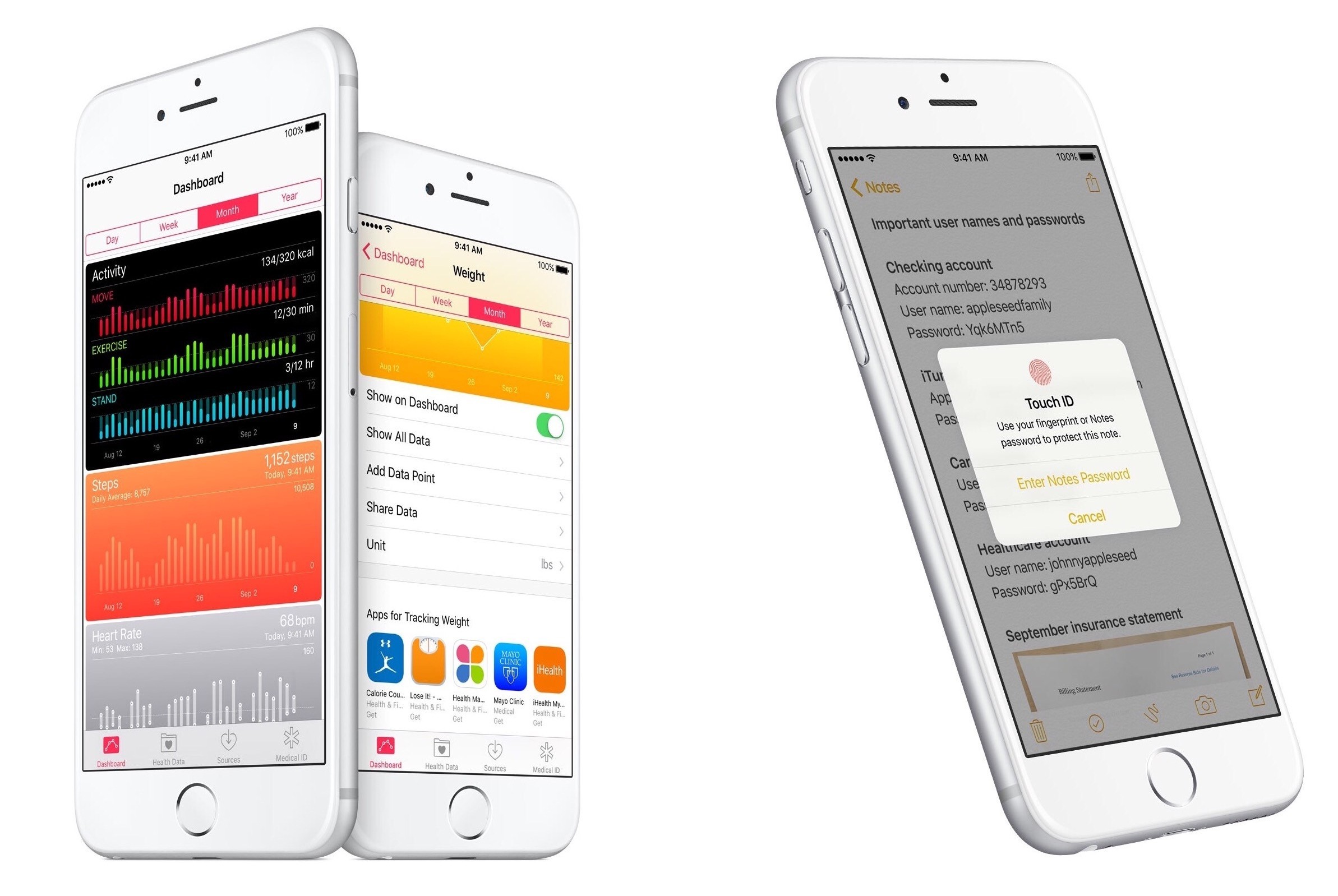
iOS 9.3 will include third-party app recommendations in the Health app, where users will also be able to see move, exercise, stand, and goal data from a paired Apple Watch. Health will highlight apps for example tracking weight.
CarPlay
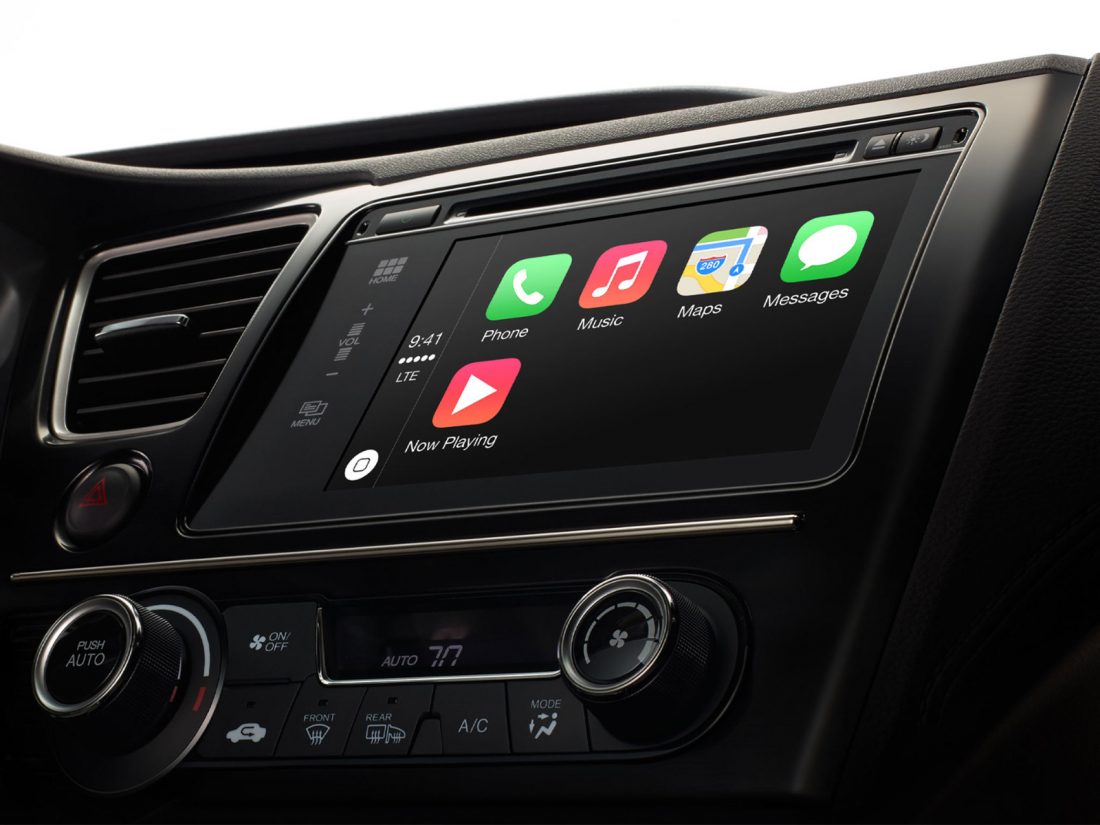
CarPlay apps have been updated to bring them in line with iOS apps on iOS 9. The Apple Music CarPlay app now include a new For You sections to help the user with music discovery. A new Nearby feature is also added to maps to offer information about what’s close-by tailored for the user.
Education
iOS 9.3 will bring with it several Education-oriented features such as feature of shared iPads for students, a new Classroom app, an Apple School Manager, and improved Apple ID management features. Sharing of iPads is a particularly interesting feature which is picked up from android, and as such could be seen soon in use for more than just the Education app.
Apple Watch
Alongside iOS 9.3, Apple also released the watchOS 2.2 beta to developers around the world. With both these updates installed the iPhone will be able to pair with more than one Apple Watch at a time.
Live Photos
iOS 9.3 will also see the iPhone 6s get a brand new option to save a full resolution photo from a Live Photo. Users can do this while using Share Sheet, choosing “Duplicate”. it will now gives an option to create a Still Photo duplicate of a Live Photo.
Notes
The Notes app has a minor update to it. iOS 9.3 will see the Notes app get finger-print unlocking ability. This is expected to make using the the must have app more convenient.
It’s sort of a tradition now for Apple to release a cheaper variant of its flagship devices. It was the case for the iPhone 5C and so will be the case with the iPhone 6C. For weeks now we have been hearing rumours that Apple is working on a 4-inch iPhone. The device was initially called iPhone 6c, which later went ahead to be renamed 7c, and now we know it will be called iPhone 5e.
A Chinese analyst has confirmed that the 4-inch iPhone would be called iPhone 5e where ‘e’ stands for ‘enhanced’. The phone will be an improved version of the 5s and will support Apple Pay and VoLTE.
Because the phone will be an entry level device, we don’t expect it to feature current-gen processor. Even on the camera front don’t expect a major bump. The iPhone 5e will likely stick with an 8 MP rear from the iPhone 6 and 6 Plus and might even let go of OIS. It’s expected to be priced around $500 (close to Rs. 33,000) and arrive in March. For a complete round-up of all that we know about the device so far, click here.
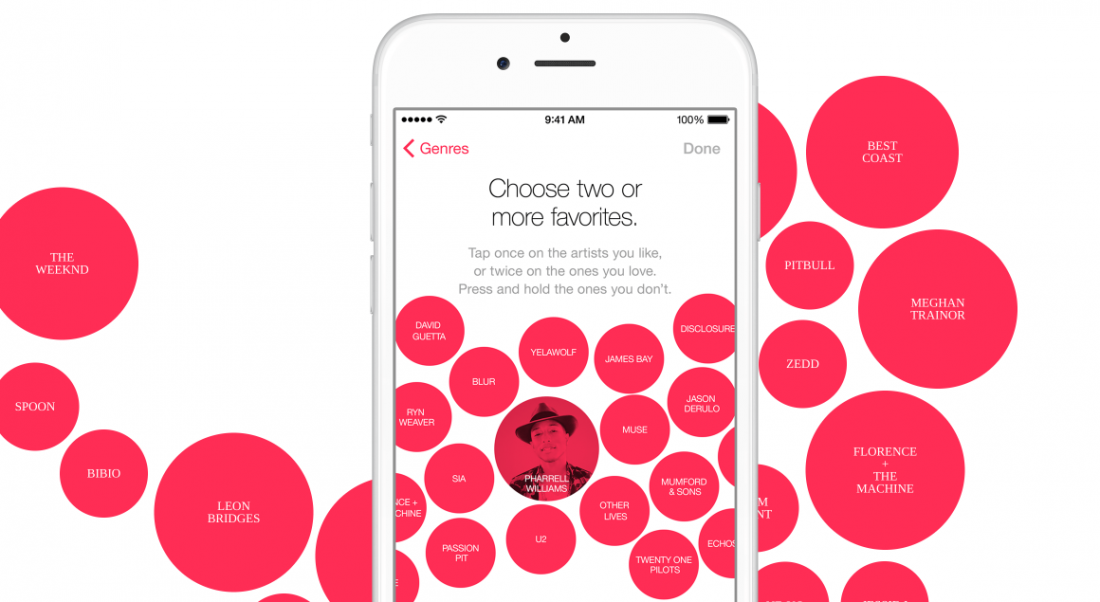
It’s only been six months since Apple started operations at Apple Music, and in that short span of time, this promising service has outdone market expectations, and already managed to reach half the number of paid subscribers that the market leader, Spotify has. Noteworthy is the fact, that it took Spotify, its main rival, 6 long years to reach this milestone of 10 million subscribers.
What makes this feat even more impressive, is the fact that Apple’s streaming service which because of it’s bug ridden, and clustered interface met with a lot of criticism at its launch. It was only after iOS 9 came in that many of these issues were cleared.
This growth of Apple’s premium music streaming service, which launched in more than 100 countries, not only raises the competition in the music streaming service space, but more importantly raises hopes for the future of the music Industry itself, which has been fighting a losing battle against Piracy for the last decade or so.
Deciphering this music industry analyst, Mark Mulligan had this to say,“It’s good news that Apple is making streaming work but it is also going to accelerate the decline of downloads.” Apple is rapidly gaining on Spotify and at its current growth rate has “the potential to be the leading music subscription service sometime in 2017.”
Streaming is slowly becoming the preferred form of consumption of music, and is growing rapidly as people give up on downloads. In the US, demand for streaming increased more than 50 per cent, with 164bn songs streamed in total.
Apple despite all of this has a long way to go before it comes close to overtaking Spotify. Spotify last reported its number of subscribers in June, and it is expected to have grown substantially since then. Back then it had 20 million paid members, and in total it reported 75 million users.
Update: Apple has denied the development of any such app. “There is no truth to this rumor. We are entirely focused on switching users from Android to iPhone, and that is going great”, says Apples spokesperson, Trudy Muller
Say hello to tech world where things keep getting stranger. Earlier we had talked about an app which allows you to shift from an Android device to iOS. Developed by Apple, the app is available on the Google Play Store and lets users transfer their images, contacts and other important data to an iPhone from their Android device.
Now there are rumours of Apple working on an app that allows iOS users to shift to Android. Though there is no news on when the app will be up and about, speculations about it have already begun. We can perhaps expect to see the move-to-android app sometime this year.
Reports emerging from the UK have suggested that many users stick with iOS simply to avoid the trouble of transferring or losing their data to an Android device. The app is being developed to ease such migrations from one OS to another.
Earlier, following the launch of ‘Move to iOS’, there had been an adequate response from the Android community as they mocked it with their own ‘Stick With Android’ app. Let’s see what response is triggered by this latest development.
According to reports, Apple Inc, has pretty interesting, and possibly ground breaking plans in works for its future iPhones. The Cupertino based tech giant, famous for its innovation, and creativity, has been granted patents for some really cool ideas.
Apple, has plans of bringing to life what seem to be iPhones that could heal, and clean themselves while you sleep peacefully in your bed.The newly granted patents reveal a system to fix dead pixels on a screen, and even dry the handset’s speaker and internal components all without human intervention.
The idea is for the phone to run an automatic, screen diagnostic overnight which last a couple of hours while you sleep to help fix issues of dead pixels. The smartphone will also run other diagnostics while you sleep, like testing the camera, as well as checking on the handset’s components to make sure your phone is able to connect to the internet properly, make calls and send texts.
The patent also has information on how the phone will deal with a situation in which it has been accidentally dunked in a drink. Showcasing intelligence beyond its processing power, the future iPhone would wait until you take it somewhere loud, like a concert, and then play a special tone that would expel the water stuck in the speaker grill.
Such fancy ideas by Apple would only result in greater customer satisfaction, and hence increased sales. After-all, none of us like the dreaded visit to the repair centre. Do we?
Apple recently bought a Sandiego based Artificial Intelligence start-up called Emotient. The firm was established in 2012 to analyse facial expressions and therefore emotions of viewers, helping the company evaluate their response. Needless to say, this move by Apple comes with its own set of doubts and apprehensions. Tech that detects facial expressions has been a topic of debate and dislike for a while now with Australia being one of the latest places to receive flak for incorporating face-detection tech in its administration. A spokesperson of the company confirmed the acquisition leaving us to wonder what Apple plans to do with it. Apple has been pursuing AI and virtual reality actively the last couple of weeks and this comes as the latest development in that sphere.
Facebook and Google are also big on AI and virtual reality and are pushing for it with great zeal. The future of tech, as unclear as it might be, looks quite interesting as of now. AI and virtual reality are definitely going to be the next big thing in 2016. While Zuckerberg works on his home-butler which he likened to Jarvis, let’s see what consumers get out of this race for AI and VR breakthroughs.
Apple had busy year with Apple music, launching it on iOS and then on Android. The Apple music service made available globally received raving reviews especially in countries like India where cost of subscription was very little.
“Apple Video” is the company’s next big project with many partners involved, such as ABC, CBS, and Fox. Apple already has a large library of movies and video on its iTunes Store, which can currently be only bought or rented.
Apple has already worked out details with Sony Pictures, Universal and disney and may be negotiation with some other studios. NBCUniversal is reportedly not on board due to a feud between Apple and NBC parent company Comcast.
Apple has been working on a video streaming service, according to the rumour mill, for the past six years. It seems 2016 will be the year of release. With the recent news of Netflix going global and launching in 190 countries worldwide, Apple may have to move fast if it wants to get on with the competition.
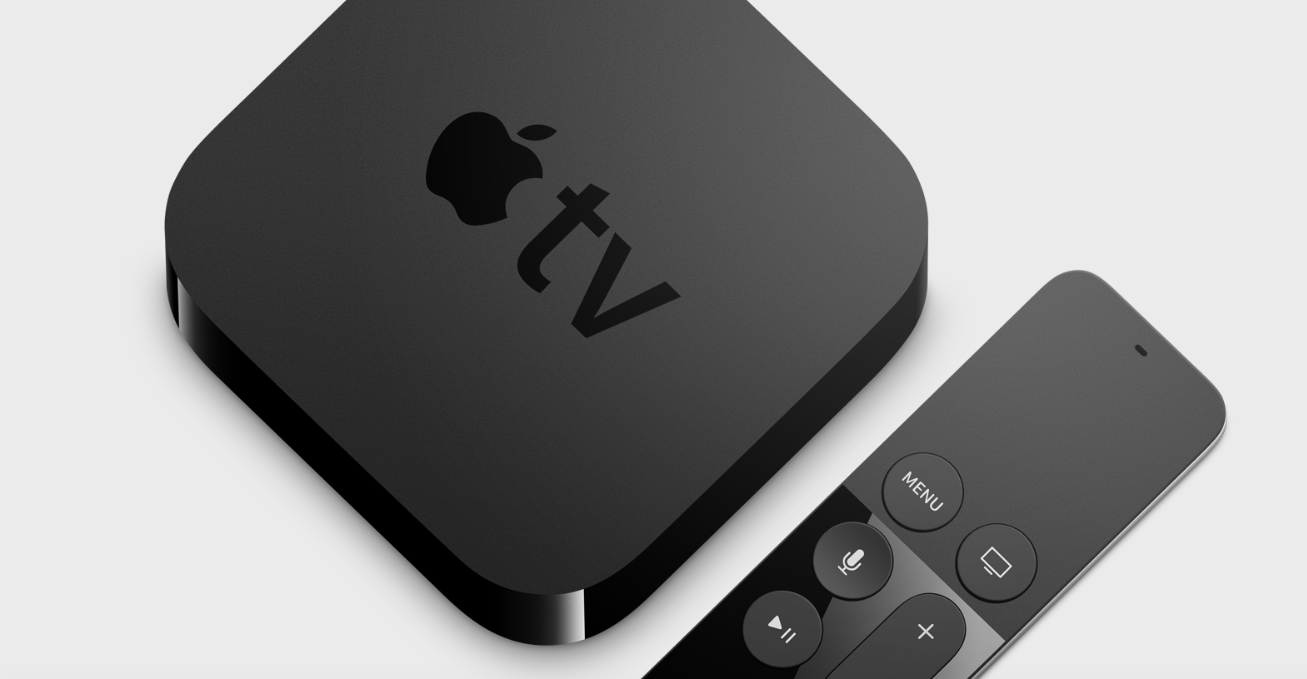
With most new Apple devices supporting 4k content, Apple may launch the service with UHD streaming keeping in mind the new line of Apple TV units which have hardware capable of streaming 4k video. It may be a simple matter or turning on the feature via a software update.
Jimmy Lovine, who joined Apple with as part of the Beats acquisition, said:
We all know one thing, we all have different television delivery systems, don’t we all wish that the delivery systems were better, as far as curation and service? They’re all technically good. And Netflix is starting to cross the code because they’re starting to make some original content. It is really good, but still I mean none of us make movies here right, so we’re all punters, or what do you call them in the music business, fans right? We want to watch movies. Sit down with your girlfriend or a bunch of friends and try to find a movie online. That box helps you none — it doesn’t help. You’re on your own. And eventually that will catch them unless somebody digs in and really helps the customer. And entertainment needs that, it needs to live and breathe.
Apple will start the pricing for the video streaming service for US $20 as the base package and It’s claimed that the service will offer around 25 different channels, with the likes of ABC, CBS and Fox being lined up as partners.
Only time will tell if Apple does launch this service which they have, reportedly, been working on since 2009. And if they do will it impact the already wrong hold that Netflix is set to gather in the next few years.
Following the release of the iPhone 6s series, the crowded corridors of internet have already been abuzz with news,and leaks of the next range of phones from the Cupertino based company. Some might call it pre-mature to make predictions about the iPhone 7 and 7 Plus, which are not due until September this year, but fresh leaks surfacing on the Internet seem credible enough to be worth taken note of.
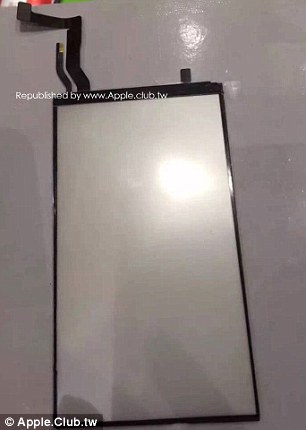
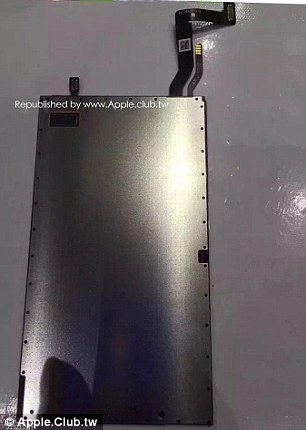
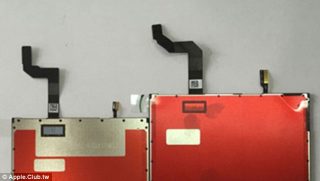
According to new leaked pictures of the the backlight screen for the iPhone 7 published by Taiwanese website Apple Club, there are clear suggestions of design changes in the upcoming iPhones. It had been previously claimed that the handset will win the race to dump the headphone socket, relying on the lightning port, or use wireless headphones to do its work. This new leak has only made these rumours grow stronger.
Side-by-side pictures comparing the leaked images with the one used in the Apple iPhone 6s also show flex cables located on the left side of the iPhone 7 backlight while the iPhone 6s backlight has it on the opposite side.
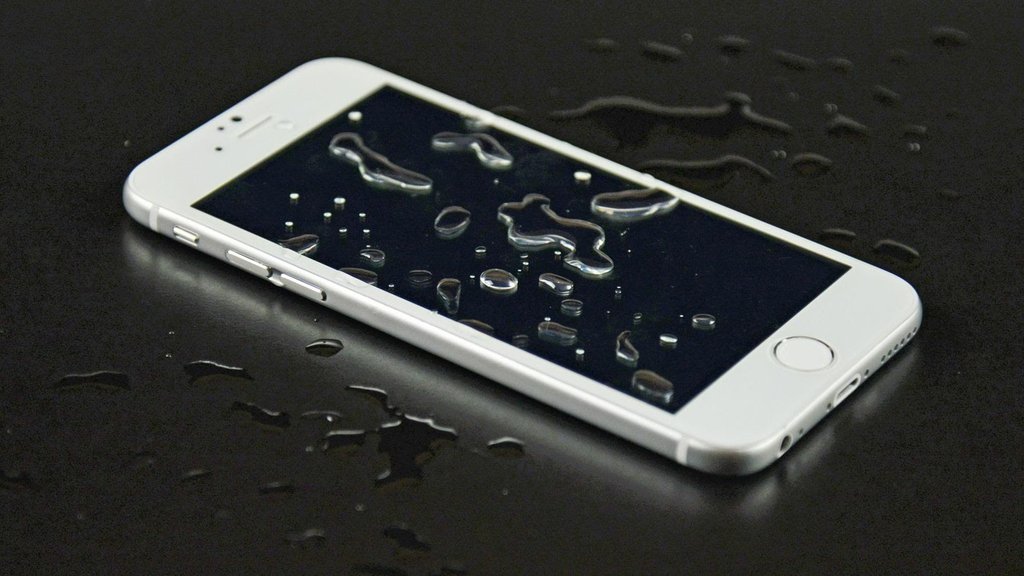
These moves will possibly help the new range of iPhones achieve between 6.0 mm and 6.5mm thinness, and a design that’s waterproof. The devices may also have a faster TSMC-built A10 chip and non-metallic casing with hidden antenna bands.
Last year saw some incredible smartphones that pushed the boundaries of design and specification, making it difficult to pick out just one favourite. This year promises to do the same. We take a look at some of the most anticipated smartphone launches expected in 2016 and what we know about them so far.
iPhone 7
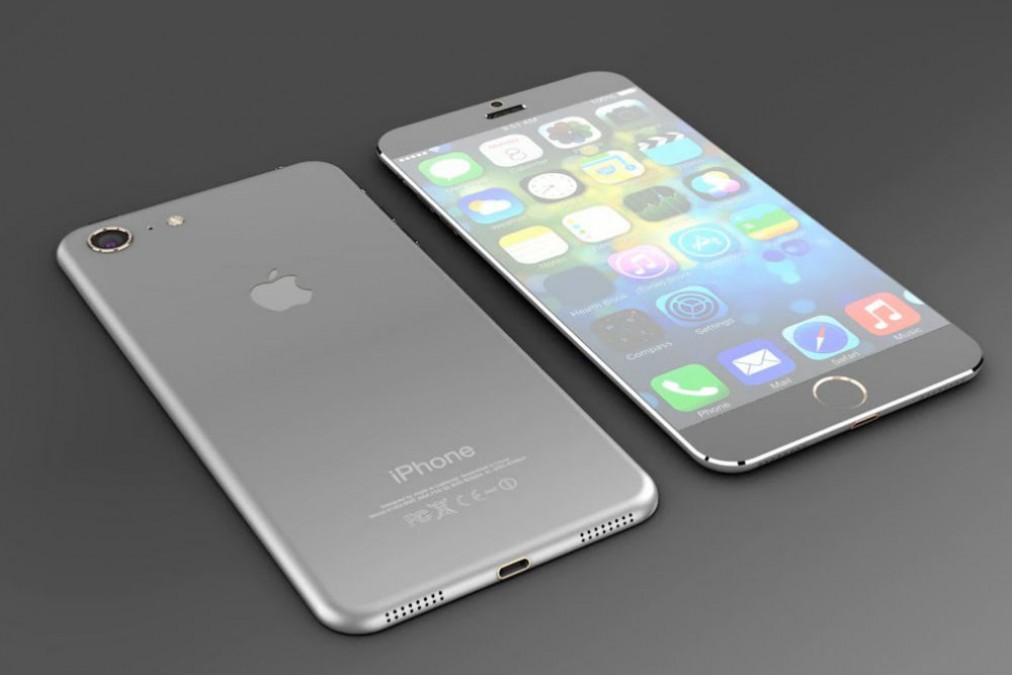
Apple’s iPhone 7 and Samsung’ Galaxy S7 are perhaps the most talked about flagship devices today. There’s just a lot of anticipation attached to the upcoming handsets and along with it comes a lot of rumours as well. The first round of rumours a few months ago suggested that the iPhone 7 will lose the home button and will sport an OLED display thereby giving up on LCD display that it has relied on so far. Apple followers will know that the Apple Watch is the only Apple device to sport an OLED display currently. Furthermore, the OLED display will either be supplied by LG or Samsung, or both.
Next up, the iPhone 7 is rumoured to be waterproof and will feature 3 GB of RAM. More recently, there have been talks related to Apple’s decision to ditch the headphone jack. This is part of Apple’s plan to improve the quality of music streaming. Furthermore, the loss of a headphone jack means more space for Apple to add a larger battery to the iPhone 7, as well as make the device thinner. We’ll just have to wait and see how this strategy plays out.
Samsung Galaxy S7 and S7 Edge
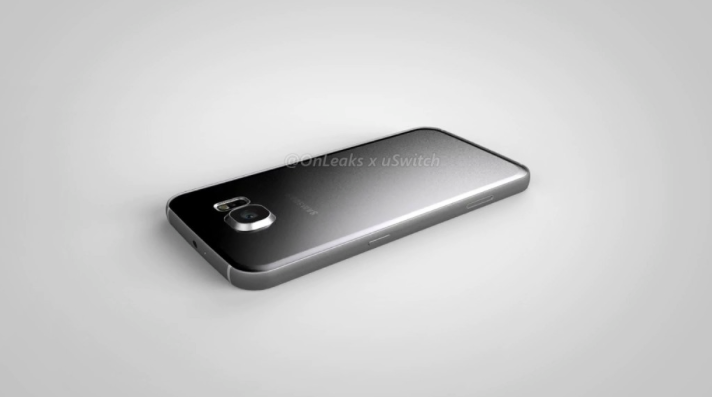
Samsung S7 Render
There have been a lot of rumours and a lot of questions regarding the launch and specs of Samsung’s upcoming flagship Galaxy S7 devices. What everyone is expecting is Samsung to pull out another stunning flagship that pushes the boundaries of design and power, like it did with the Galaxy S6 series.
It’s almost confirmed that the Galaxy S7 will arrive in two variants – one powered by the new Snapdragon 820 chipset and the other by Exynos 8890.
Among the many rumours that have been making the rounds, some that have caught our attention is that the S7 devices will feature Apple’s 3D Touch-like pressure sensitive display called ClearForce that’s being developed by Synaptics. Additionally, the Galaxy S7 will have a Type C USB Port which means the device will charge significantly faster.
The flat Galaxy S7 will likely sport a 5.2-inch Super AMOLED display while the ‘Edge’ variant will come with a 5.5-inch display of the same kind. As for the S7 Edge, very little is known as to how the curved screen device is going to look. Whether Samsung is going for a different curved design or rather just tweak the previous S6 design is still a mystery. The flagship devices are slated for a February launch at the MWC.
HTC One M10
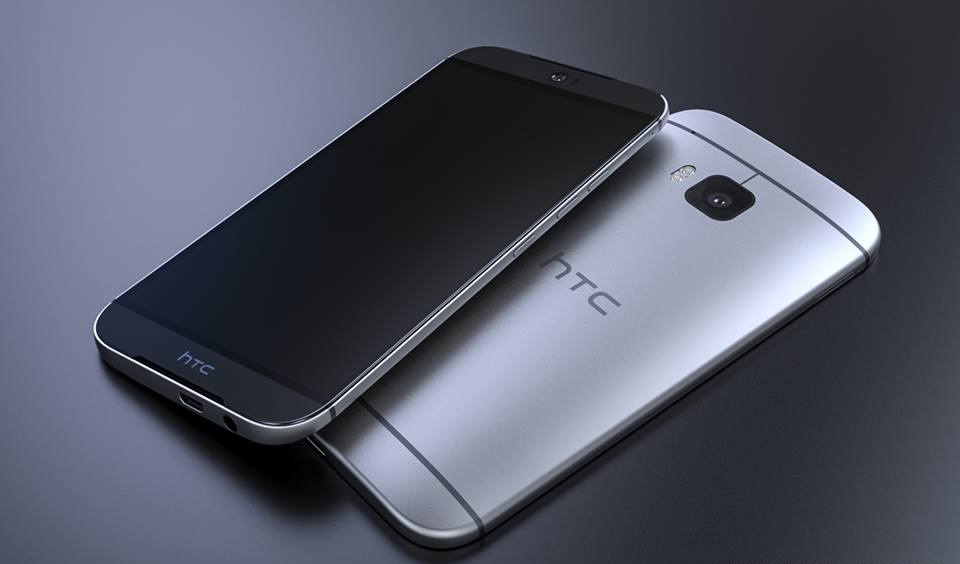
HTC One M10 Render
Being a successor to the One M9, the HTC One M10 will look to improve on specs wherever it can. The new iteration is said to come with a 5.5-inch QHD display. You can expect some bright, crisp colours under a Gorilla Glass 4 protection.
On the design front, the device will have the all-metal, unibody form associated with HTC flagships, along with curved edges and bezels to give it an attractive look. The HTC One M10 will sport a Snapdragon 820 chipset under the hood along with a powerful graphics card.
Other features include a Touch ID fingerprint scanner, 4 GB of RAM with 16 GB and 32 GB internal storage variants, and a battery capacity of 3,500 mAh. The device is expected to come out sometime in March.
Xiaomi Mi 5
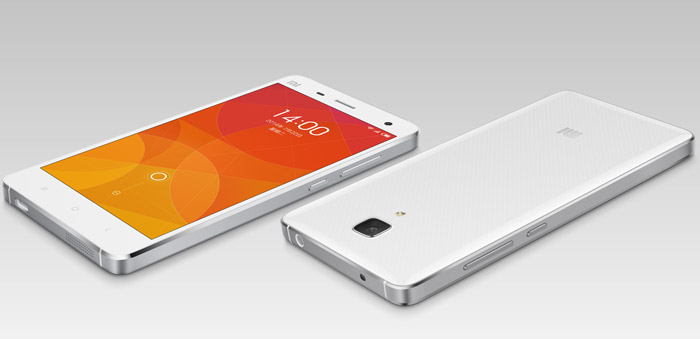
Xiaomi Mi 4
Xiaomi fans have been eagerly awaiting the Mi 5 flagship smartphone, which has been delayed due to the launch of the Snapdragon 820 chipset. Since Samsung has claimed exclusivity of the new chipset for the first quarter, the Mi 5 along with any other device sporting the new, powerful processor will all likely see a post-March release.
On the specs front, the Mi 5 will sport a 5.5-inch screen with quad HD (2560×1440) display, Snapdragon 820 chipset, 20MP primary camera and an 8MP front camers. The device will also come with 3,800mAh battery and 4G LTE support. RAM is set at 4GB and the phone will offer 16GB/64GB/128GB storage options.
OnePlus 3
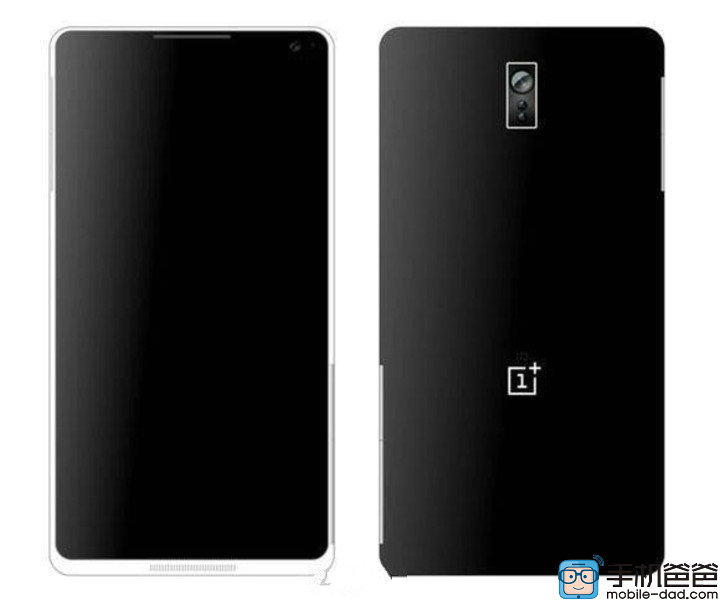
OnePlus 3 Render
OnePlus has done so much in so little time. The company, still in its infancy, has already released 3 spectacular devices -OnePlus One, OnePlus 2 and OnePlus X in the span of two years. This year, OnePlus will look to reclaim the title of the ‘flagship killer’ with the upcoming OnePlus 3 smartphone. Not much is known about the third flagship device, and only a couple of leaked renders have appeared giving rise to possible hardware specs.
The image above shows a brushed metal back instead of the usual sandstone panels. The new OnePlus might also feature a front speaker. The render shows that the handset could possibly come in two different colours.
From what we’ve heard so far, the new OnePlus device will sport a 5.5-inch UHD display with 5GB RAM. Sources also reveal a little about the hardware and display citing that the handset could arrive with the Snapdragon 820 chipset and a 1080p display resolution.
LG G5
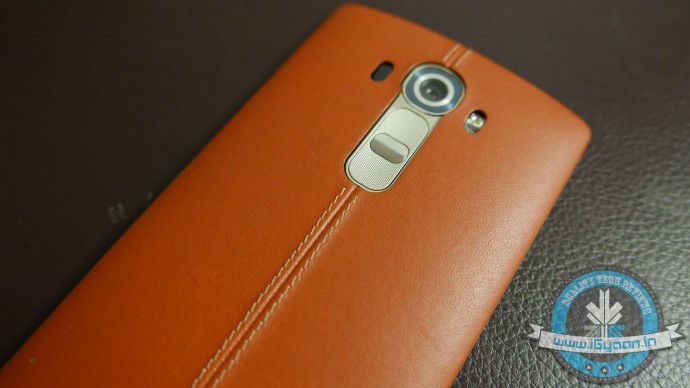
LG G4
A Redditor recently leaked some specs and images of the LG G5. The device will sport a 5.3-inch Quad HD display, powered by the new Snapdragon 820 SoC with 3 GB of RAM and an 8 MP front camera. Other specs include a full metal body, SIM and MicroSD slot, heart rate sensor that’s under the camera module, a fingerprint sensor embedded in the power button, a USB Type-C port, bottom firing speaker and an IR blaster on top.
A leaked image also suggests that the LG G5 will sport a dual camera set-up at the back – 16 MP and 8 MP. No word yet on when LG plans to launch the device.
Sony Xperia Z6
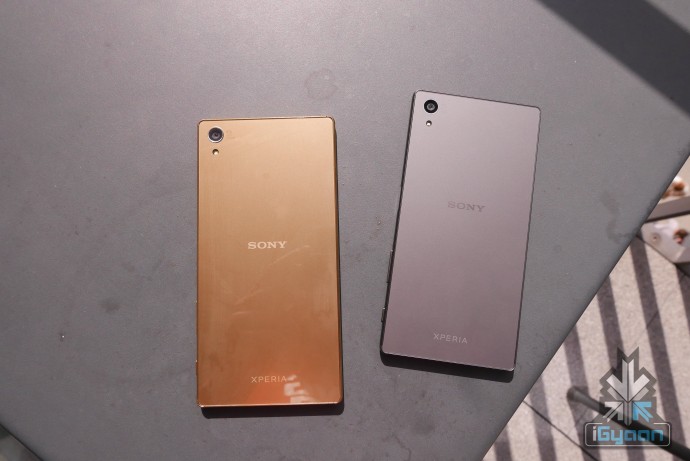
Sony Xperia Z5 Premium
It looks like Sony is planning to launch a slew of devices under the Z6 line. It is rumoured that a total of six Z6 devices will be launched this year: a 4-inch Xperia Z6 Mini, a 4.6-inch Xperia Z6 Compact, a 5.2-inch Xperia Z6, a 5.8-inch Xperia Z6 Plus, a 6.4-inch Xperia Z6 Ultra, and a 5-inch Z6 Lite. Now, Sony is yet to confirm the rumours, but you can expect some, if not all, to be true.
What you can expect from the Xperia Z6 is a build that’ll reflect the Z5 with a squarer, flatter design rather than the traditional rounded edges that Sony had previously stuck to with the older models. The Z6 will also come with a fingerprint scanner added to the power side button.
The burning question is whether Sony will go for a 2K display with the 5.2-inch Xperia Z6 or will it continue with a Full HD display as it has with the Z5. Doing the former would mean having to sacrifice battery life, which Sony isn’t all too fond of doing at the moment.
Nokia C1
Nokia C1
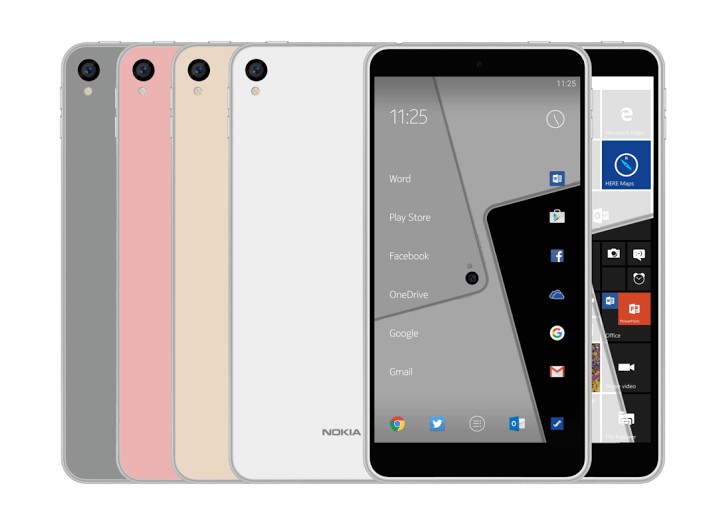
Nokia is all set to make a comeback with a new smartphone. This new device, allegedly called the C1, will be the first flagship device to bear the Nokia logo since the Finnish company was sold to Microsoft a few years ago.
There have been a number of leaked renders that claim the design of the C1, though each source has leaked different designs. One of the more recent renders show a very minimalist and sleek design, which actually looks pretty good, if confirmed as legit. The C1 is also depicted running both Android and well as Windows 10 OS.
Rumours suggest that the Nokia C1 will come in two variants. The first one will sport a 5.5-inch Full HD display and a 13 MP rear camera and 5 MP front camera. The device will also come with 3 GB of RAM and 64 GB of internal memory expandable via microSD card slot.
The second variant will have a 5-inch Full HD display and will sport an 8 MP rear camera and 5 MP front camera, 2 GB of RAM and 32 GB of memory.
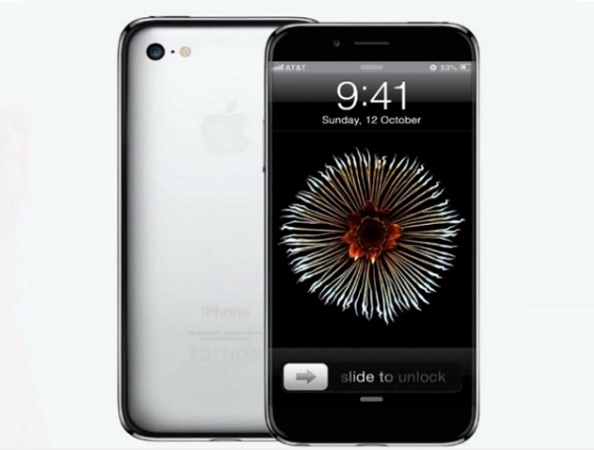
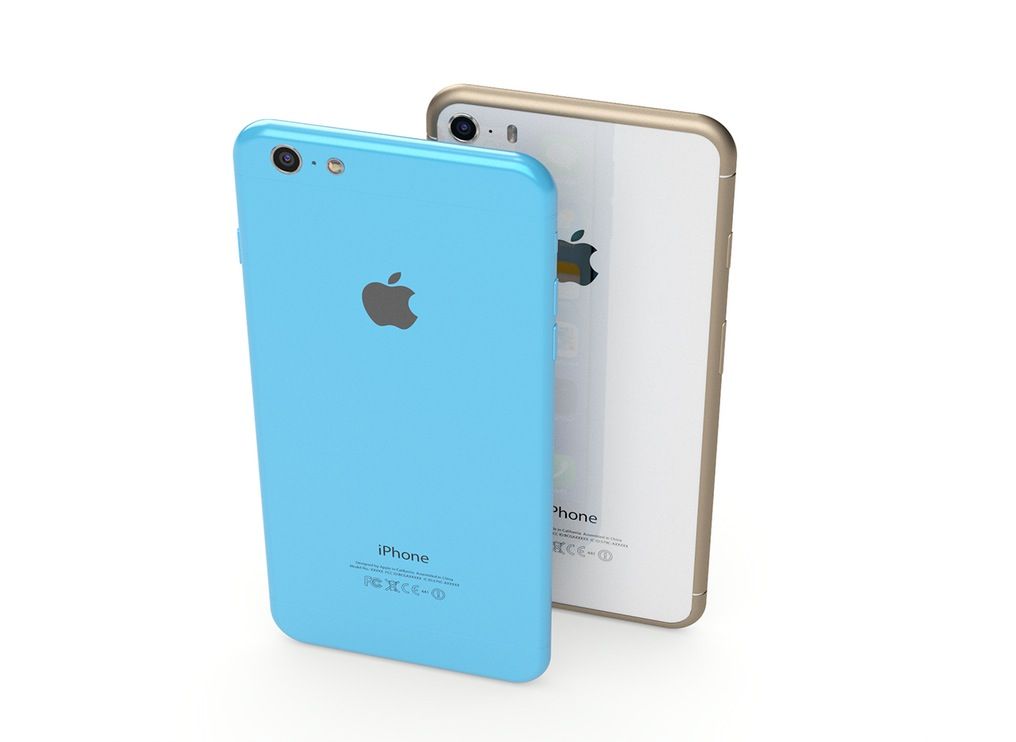
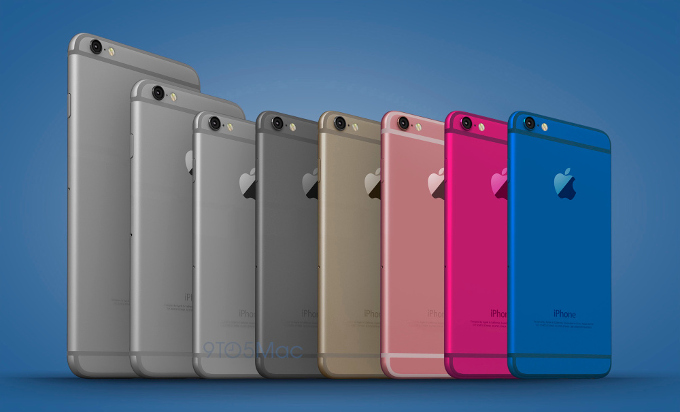
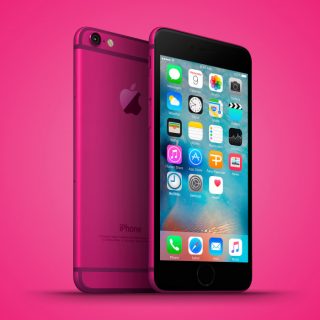
The rumour mill has been working around the clock on its speculations of what to expect from Apple this year. The latest update we have is in the form of new renders of iPhone 6c.These renders are created by Ferry Passchier and suggest more variety in the design department. Following suit with iPhone 5c, 6c can also come sporting a varied colour palette.
In terms of design, there have been various rumours so far but it remains unknown whether the iPhone 6c will follow the aluminum iPhone 5S design or the candy-colored polycarbonate iPhone 5c. We’re leaning towards the latter as some colourful polycarbonate frame will be a welcome sight rather than the usual colours of silver, space grey, gold, and rose gold.
Some rumours have also suggested that the miniature iPhone will not come with a physical home button and will also ditch the 3D Touch feature, which makes sense if Apple is going for a cheaper device. We can hope to see the device in March this year, when Apple is expected to unveil it along with the second gen Apple Watch. Come March, 2016 and we’ll see how close have we hit the mark with these rumours.
According to reports, Apple is holding an official event in March where it is expected to unveil the iPhone 6c along with iPad 3 and the new Apple Watch. Needless to say, the rumour mill is working round the clock. Here’s a look at some of them:
Release Date:
Even if the Apple Watch 2 gets announced in March, it won’t be ready for shipping before April at the earliest, suggests 9to5Mac. Another rumour places May as the probable date for the Watch.
Quant, the Chinese manufacturer of the previous model of the Apple Watch, is expected to manufacture the second generation model as well. Therefore when Bary Lam, the Chairman of Quant comments on this, we sit up and listen. Reportedly, he claims that near the end of Q2 2016, a limited stock of the Apple Watch 2 would be available, followed by more in Q3. Following this, the Apple Watch 2 can be expected to make an appearance in June this year.
Camera:
The Apple Watch 2 is expected to have a front camera to allow for FaceTime; the user would now be able to receive and make video calls from the Watch itself, if this speculation turns out to be true. The front camera will probably be embedded in the top bezel of the face of the Watch.
Wireless Chipset:
Other than some basic features like playing music or tracking activity, the current version of the smartwatch relies almost entirely on an iPhone to perform any other function. However, the new , updated smartwatch is expected to come with a wireless chipset which would make the Watch ‘tether-less’. It would no longer require connection with an iPhone to perform functions, owing to the chipset which would make it more independent of the phone.
Battery:
One of the main drawbacks of the first generation Apple Watch is its battery life. Even though it was initially expected to last an entire day, many users discovered to their disappointment, that this was not so. The Watch would be drained of battery even before the day ended. Additionally, it was a big strain on the battery of the iPhone it was connected to.
However, there are not any big rumours about battery improvement in the second gen. This news is a little disheartening for Apple fans all over.
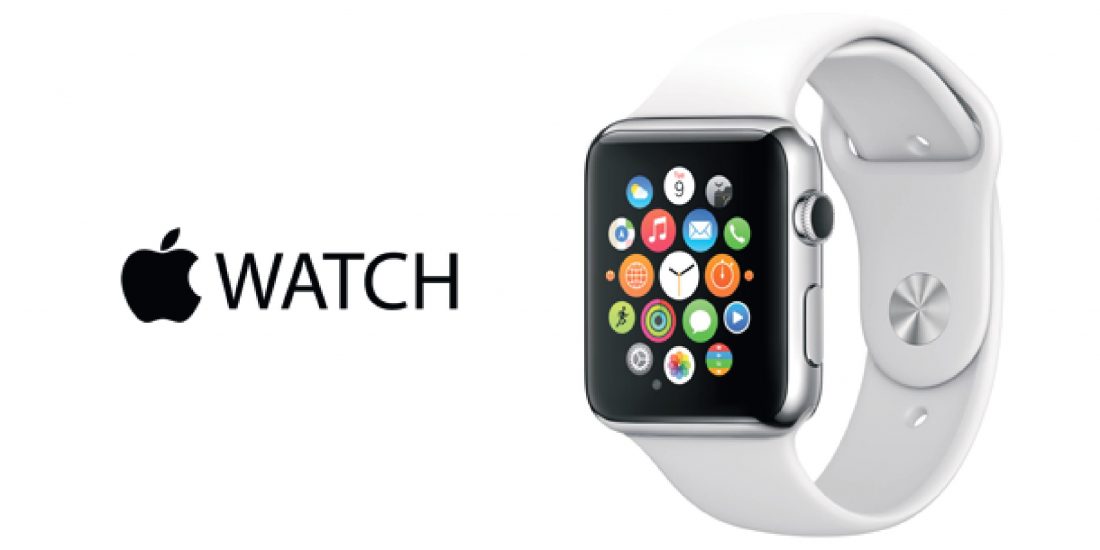
Apple Watch
Design:
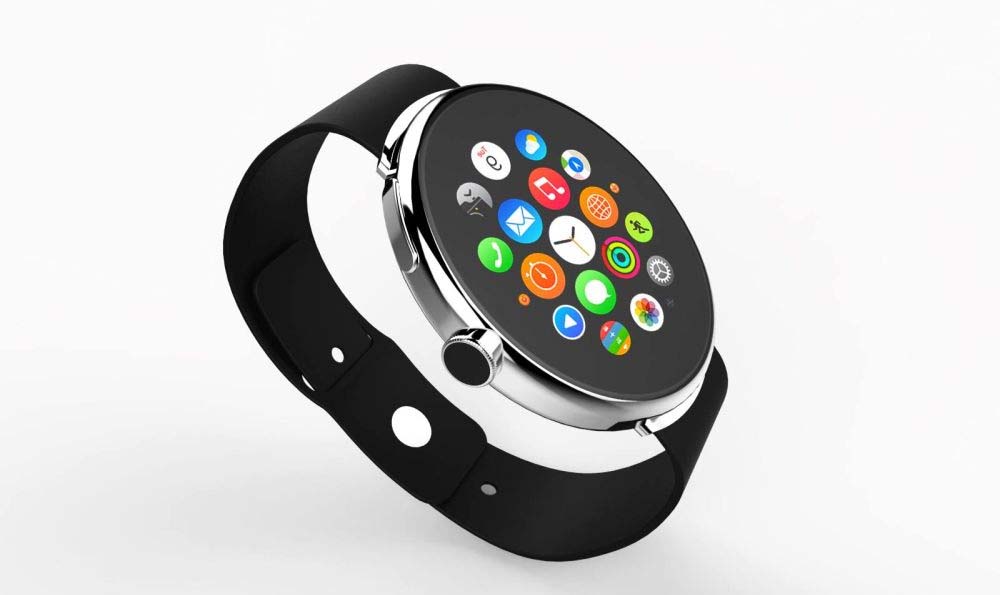
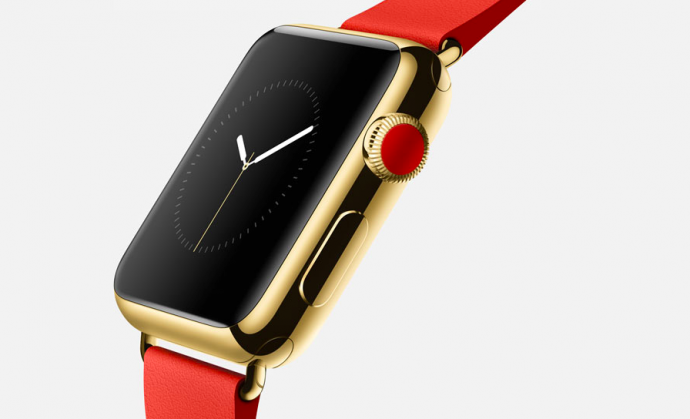
In terms of design, Apple is expected to introduce a new variant priced between the steel Apple Watch at £949 and the Apple Watch Edition at £8,000. We hope for some more variety like a circular watch face as well as a thinner design, along with more strap options to choose from.
Some of its other features we hope Apple would include in the second gen smartwatch are in-built GPS and better durability against water, dust and scratches. We’ll keep you updated as more rumours hit the scene and if anything gets confirmed. Let us know what would you want to see in the Apple Watch 2.
It’s a beautiful thing when science meets Star Wars. A group of Taiwanese tech researchers at PVD+ have created an app for the Apple Watch that allows you to control a drone using your arm movements. Yes, the Force is strong with this Apple Watch.
Reuters caught the motion-controlled drone in action. You can check it out in the video below. “Previously we’ve needed complicated controls to fly drones, but now we can use a wearable device, and through human behavior and gestures directly interact with them – using a hand to control and fly drones directly,” PVD+ founder Mark Ven told Reuters.
https://www.youtube.com/watch?v=YX8ZkgFk_Rw
But that’s not all. The researchers also channeled their inner Jedi to create an app that controls light levels and colors via hand movements, and a spherical robot resembling the adorably rolly BB-8 droid seen in Star Wars: The Force Awaken. “We can also control a ball, like that in Star Wars’ BB-8 droid, using a wearable device as well,” Ven said.
PVD+ is calling the software Dong, and is working on securing a patent for it. Looks like it won’t be long before the line between science fiction and reality disappears completely.
If wearables is what you’re looking for, you’ve come to the right place. Read on to find out about the best pieces of wearable tech in 2015.
Apple Watch:
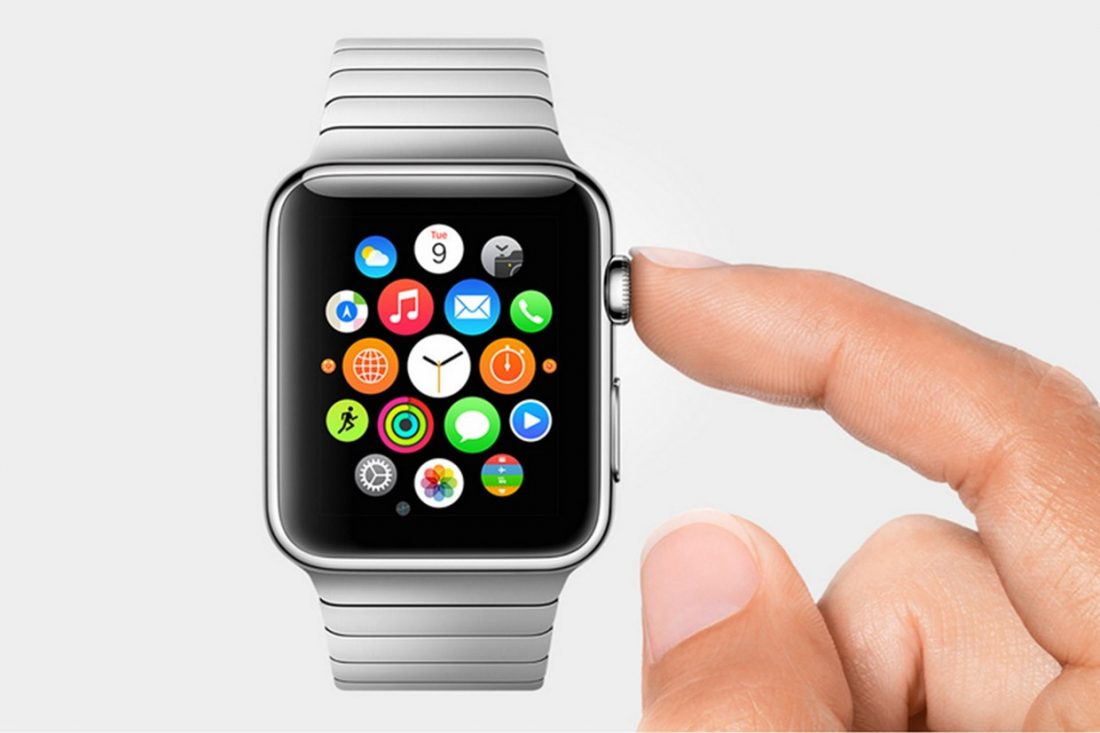
Apple released its Watch in April this year, and 7 months later it made it to the Indian market starting at Rs. 30,900. It’s available with Apple retailers across the country. The Watch comes in a variety of colours including gold, Rose Gold, Space Gray, silver anodized aluminium, polished silver or Space Black stainless steel, and 18-Carat Rose Gold or Yellow Gold, but not all of these variants made it to India. Click here for specs and all other details of the smartwatch.
Moto 360 Gen 2:
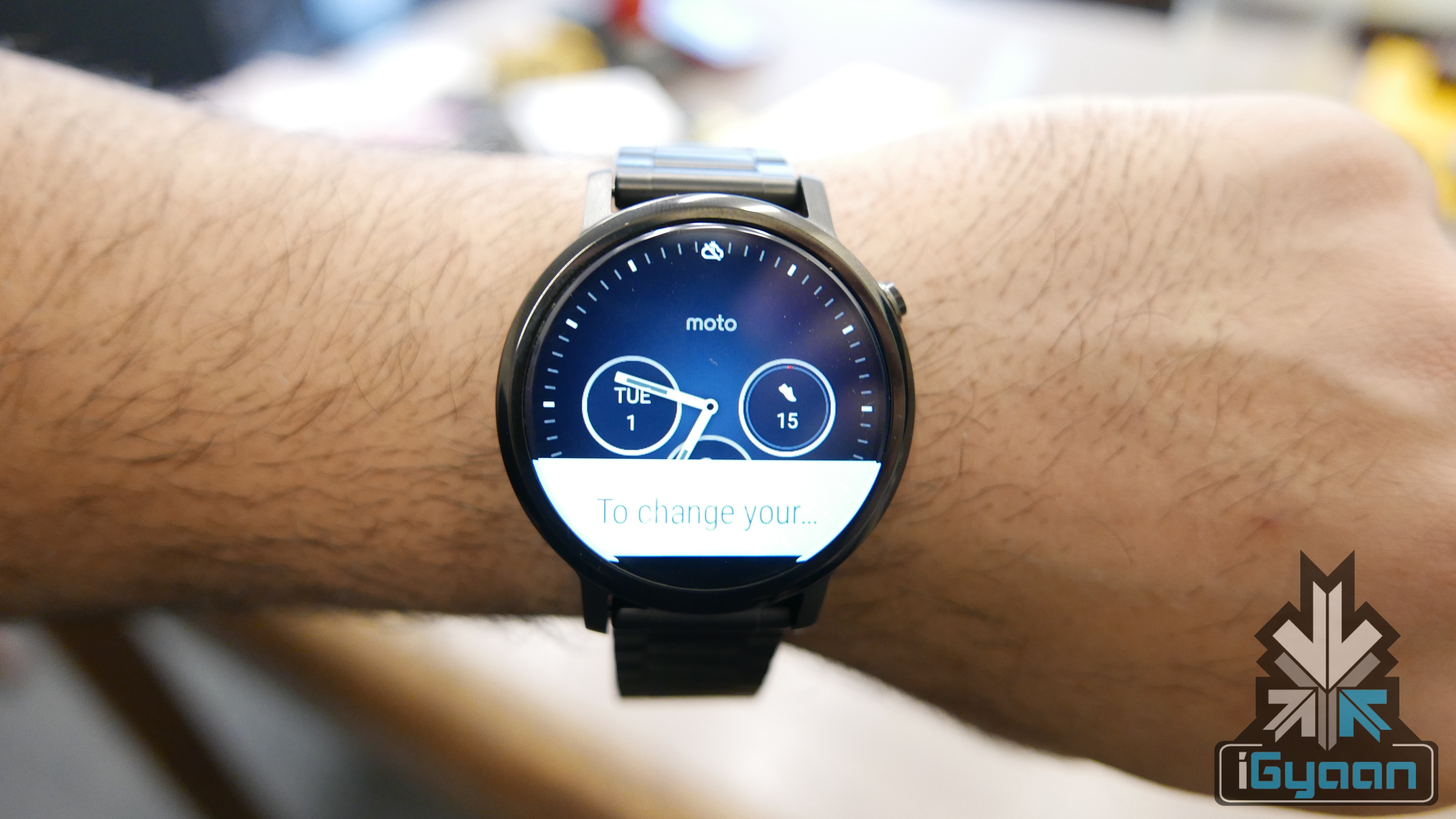
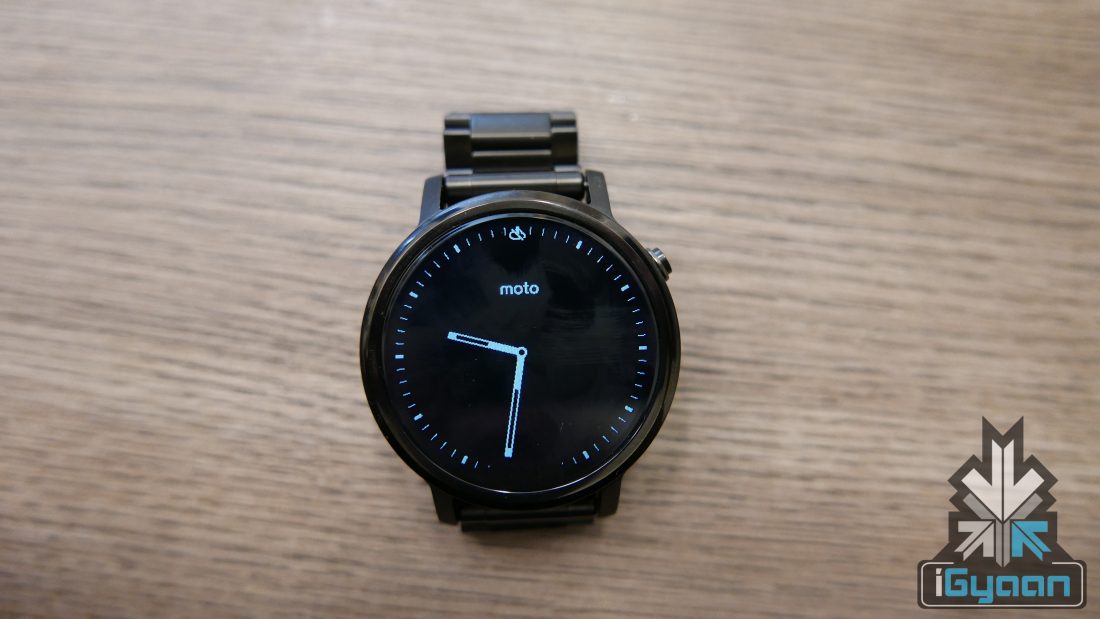
Launched at IFA Berlin this year, the Moto 360 Gen 2 arrived in India in early December. With a starting price of Rs. 19,999, the Moto 360 comes in two different sizes – a 42 mm male and female version, and a male-only 46 mm model. The bands of the watch can be chosen from metal and leather. Though there is also a silicon option available for the band, it won’t be arriving in India any time soon. Click here for the specs and a hands on of Moto 360 Gen 2.
HTC Re Action Camera:
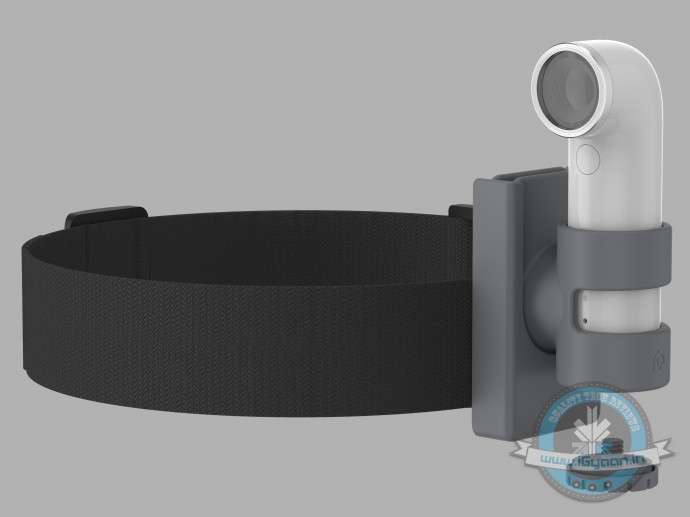
The new HTC RE camera is a take on Go Pro style action cameras but HTC calls it the first camera that is designed to be held, and fits naturally and comfortably in the palm of your hand. It comes in various colors and sizes with various mounting options and accessories. Specs wise the RE is pretty impressive. It is equipped with a 16MP 1/2.3” CMOS sensor with an Ultra wide angle: 146° lens (f/2.8) captures 1080p, 30fps FHD video and 720p, 4x slow motion video and it also has a Time-lapse video recording mode. Click here for more details.
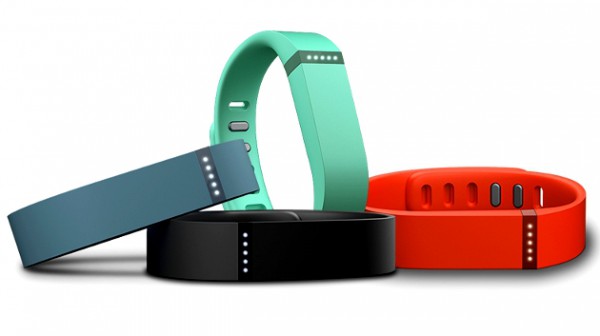
FitBit Fitness Wearables:
Fitbit, the world’s largest tech wearable brand, entered the Indian market in 2015 through a partnership with Amazon India. The company is popularly known for selling wearable technology, which helps monitor fitness. It offers its range of wearables on Amazon which include Zip, Flex, Charge HR and Surge. The prices range from Rs. 4,000 – Rs. 19,990. You can find more details and specs of FitBit wearables here.
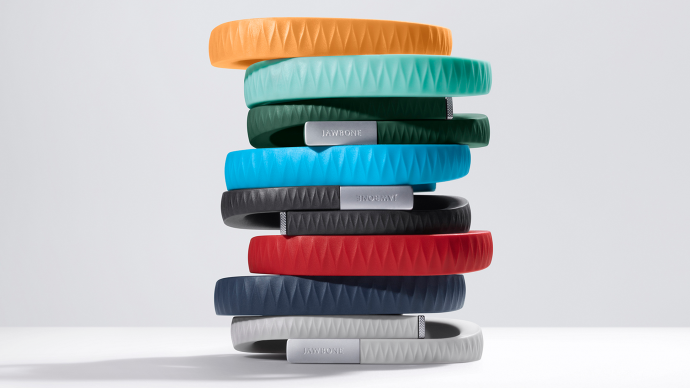
Jawbone:
Jawbone products give a better understanding of sleeping patterns, diet and physical movements. The company introduced its UP product range in India in September, 2015. This technology allows you to monitor your diet, sleep patterns and physical movement. The app in the gadget is equipped with Smart Coach – Jawbone’s coaching system which turns data into personalised guidance, giving you insights and challenges to help you improve your sleep, activity and diet. The UP activity trackers are of three kinds – UP Move, UP2 and UP3.
They came, they saw and they conquered 2015 -we take a look at smartphones above the price range of 40K in this list which took the tech circuit by storm this year.
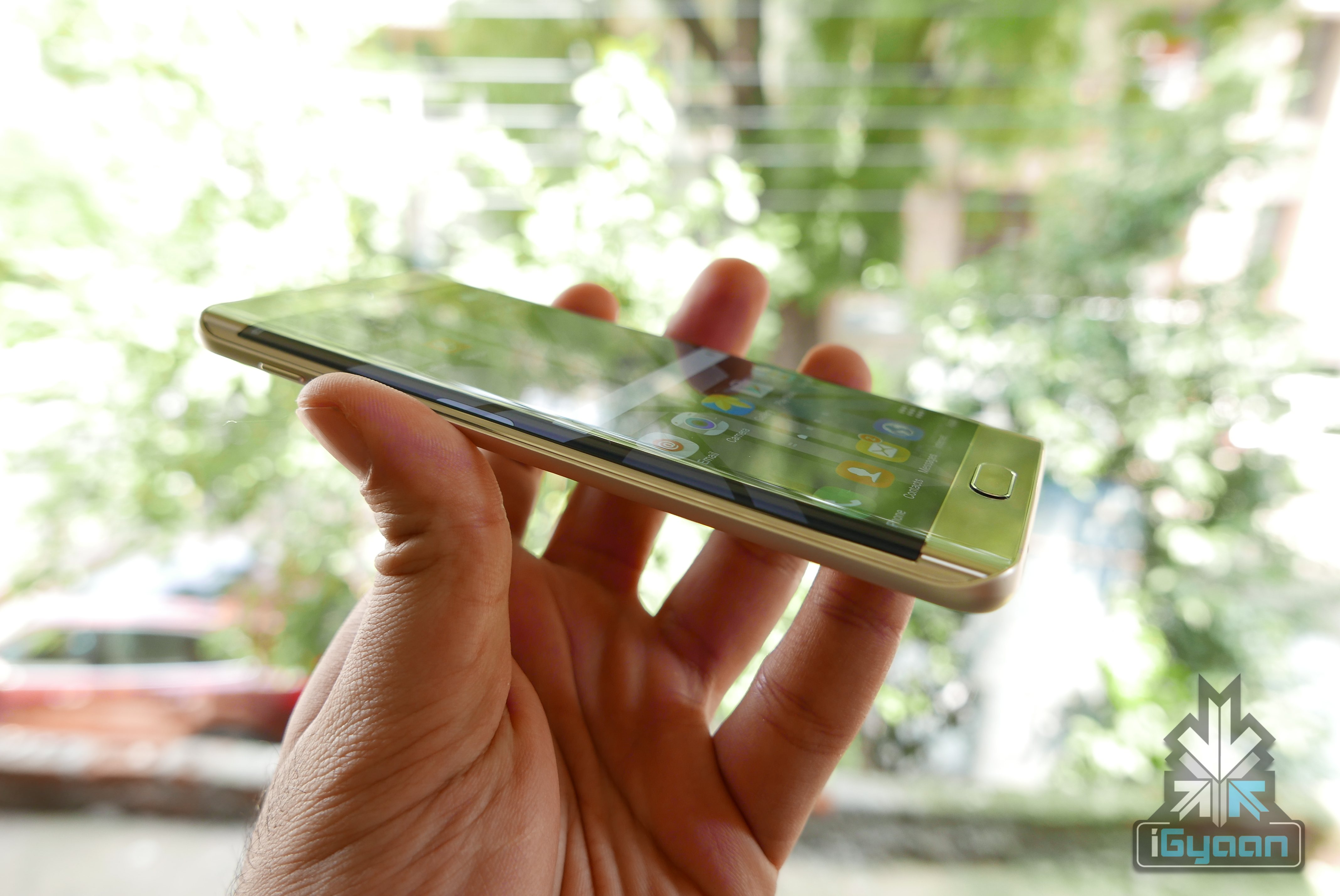
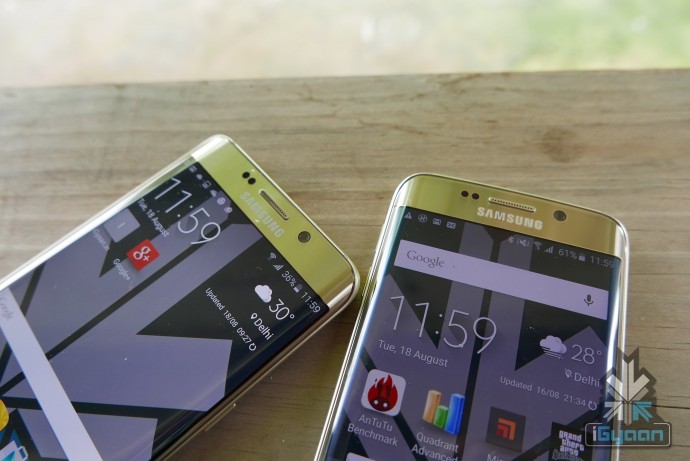
Samsung Galaxy S6 Edge and Edge Plus: Samsung Galaxy S6 Edge sports a 5.1 inch Super Amoled screen and QuadHD resolution with a total of 577 ppi. Powered by a 2,600 mAh battery, the handset is available only with fixed storage of either 32GB, 64GB or 128GB, which are all based on UFS 2.0 (Universal Flash Storage). With 16 MP primary camera, it is capable of shooting 4K video as well. Click here to check out the hands on of the gold variant of Samsung Galaxy S6 Edge.
When it comes to S6 Edge+ -everything from display and resolution to chipset and cameras are identical to the Galaxy S6 Edge. However thanks to the new large display of the S6 Edge+ the pixel density drops to 515 ppi vs the mammoth 577 ppi on the S6 Edge. The Edge+ variant also sports a larger 3,000 mAh battery to combat the drain from the larger QHD Super AMOLED display. An additional 1 GB of LPDD4 RAM, takes it upto 4 GB on the Edge+ however the phone is missing the 128GB storage option as only the 32 and 64 GB variants will go on sale. Find the complete review of Galaxy S6 Edge+ here.
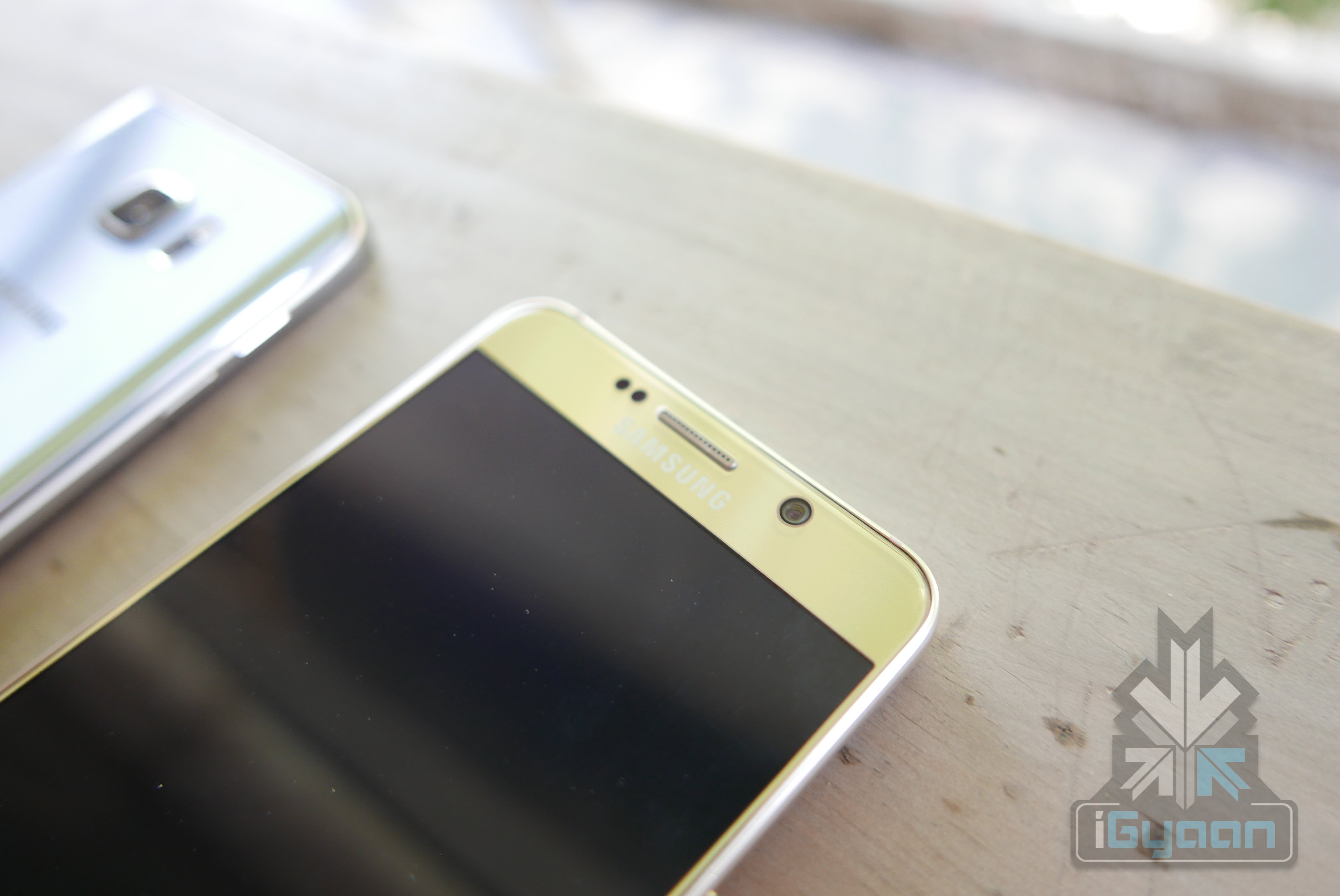
Samsung Galaxy Note 5:
Samsung Galaxy Note 5
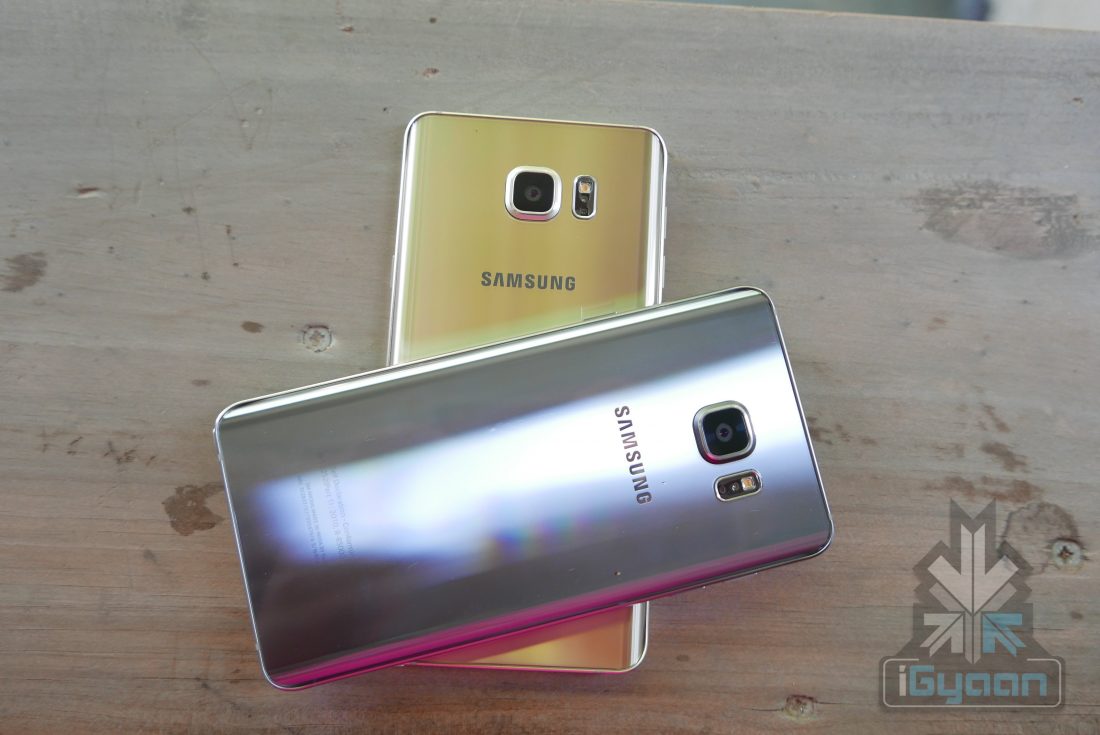
The Note 5 is a beautiful device thanks to its extensive use of glass and metal -Gorilla Glass 4 on the back and the front, and rear glass tapers in to the edges, putting the Edge display design on the back of the Note 5. It runs on what is possibly the best version of Samsung’s skin called “TouchWiz”. Other features include the Slick UI elements, use of power buttons to increase or decrease screen font size, the S-Pen, which is capable of giving previews, like before, and the super smooth pop ups. The 5.7 inch size of the screen is larger than before and hence reduces the PPI to 518. For more details of the Galaxy Note 5, click here.
iPhone 6s and 6s Plus:The iPhone 6s and 6s Plus add an improved Apple A9 chip and an M9 co-processor, along with enhanced cameras. There is a 12 MP rear camera that shoots 4K videos. On the front, there is a 5 MP snapper, which however is still restricted to 720p. Compared to the iPhone 6s’ 1330 x 720p display, the Apple iPhone 6s Plus gets a larger display with a 1920 x 1080p resolution. It also gets a bigger battery and Optical Image Stabilisation in the rear camera. Everything else on both devices is identical in terms of specifications.
The introduction of the 3D Touch functionality is the highlight of iPhone 6s and 6s Plus, and the Peek and Pop UI of iOS 9 makes this feature infinitely fun. If you are in India and have been planning to buy iPhone 6s, now is the best time to do it. The smartphone has undergone a big price-cut of 11K -after being launched for Rs. 62,000 in India, it’s now available for 50K. There is a fall in the price of the iPhone 6s Plus as well but it’s not as drastic as the 6s. If you’re still unsure about the new iPhones, read our full review here.
Sony Xperia Z5 and Z5 Premium:
The Z5 Premium has a 5.5-inch 4K display. It is world’s first 4K display smartphone and comes with a 3,430 mAh battery, bigger than the Xperia Z5. The rest of the specs of the two phones are pretty much the same. The Sony Xpreria Z5 features a 5.2-inch full HD screen and 2900mAh battery. Both devices run on Android Lollipop 5.1, powered by a 64-bit octa-core Snapdragon 810 chipset with Adreno 430 GPU, 3GB RAM, 32GB storage (expandable to 200 GB).
The devices also come with a 23MP primary camera and a 5 MP camera in front. There is also a fingerprint scanner in the power button on the side of the device.
The Xperia Z5 has a matt finish that looks great. The Z5 Premium, on the other hand, has a glossy finish and will be available in Gold or Chrome. The front of the devices has BoomSound-styled dual speakers that are loud and give a crisp, well balanced sound. Click here for the complete hands on of Sony Xperia Z5 and Z5 Premium.
Lumia 950 and 950 XL:
Microsoft Lumia 950 XL
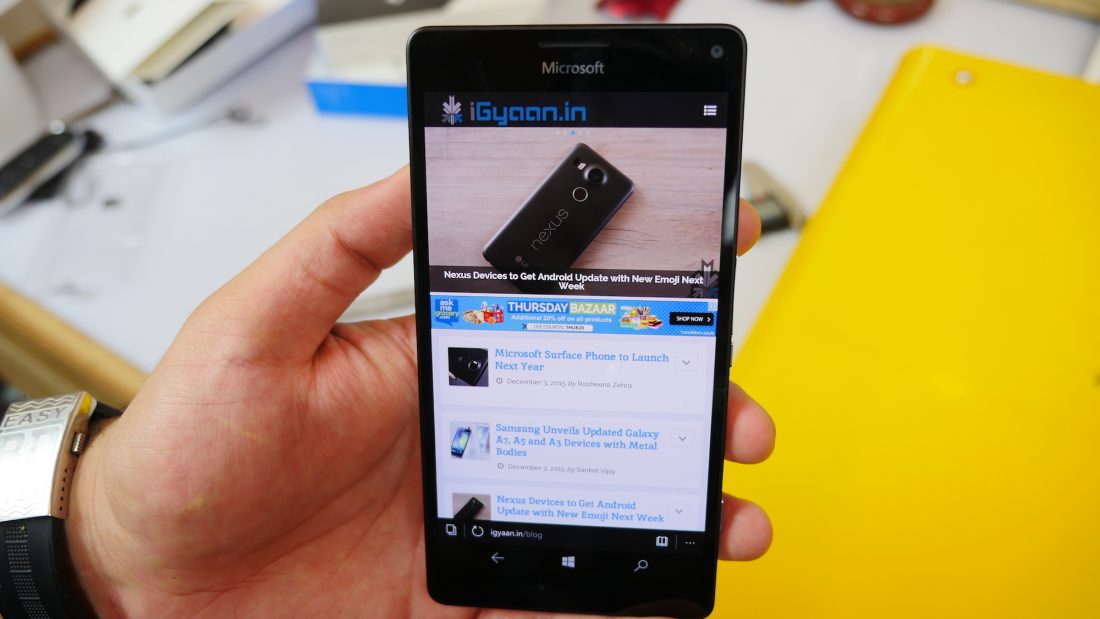
The Lumia 950 sports a 5.2-inch AMOLED display with 2560×1440 pixel resolution and a pixel density of 564 ppi for clear, sharp images. The 950 XL, on the other hand, comes with a larger 5.7-inch IPS display with 2560×1440 pixel resolution and a pixel density of 518 ppi. This is the first time Microsoft has used QHD display in its Lumia lineup.
The Lumia 950 is powered by a hexa-core Qualcomm Snapdragon 808 processor with 3GB of RAM while the 950 XL packs in a 64-bit octa-core Qualcomm Snapdragon 810 processor with 3GB of RAM. Both phones feature a liquid cooling technology, similar to the one found in the Surface tablet computer.
Lumia 950 and 950 XL have 32 GB of internal storage along with a MicroSD slot that allows up to 200 GB of expandable storage. The devices sport a 20MP primary camera with triple LED flash and fifth generation OIS, all of which promises detailed low light pictures.
The selfie snapper is marked at 5 MP and has a physical camera button. One of the biggest USPs of these Windows devices is the Continuum feature -you can read about it as well as all other specs of Lumia 950 and 950 XL on iGyaan.
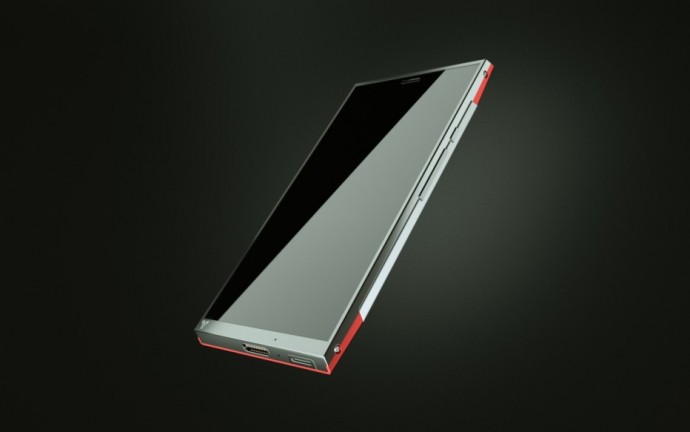
The Turing Phone:
The Turing phone is an Android phone that is designed around the idea of being unhackable. It does not come with a USB port or headphone jack or any other extension that could be used to manipulate its data, leaving BlackBerry far behind in terms of security measures.
The specs of this phone include a 5.5-inch 1080p LCD, a Snapdragon 801, 3GB of RAM, a 13MP rear and an 8MP front camera, 3,000 mAh battery and a fingerprint scanner on the left side of the phone.The phone runs on a hardened version of Android 5.1 with built-in end-to-end encryption with Turing Aemaeth UI. The phone can be charged via a magnetically attached power connector, like Apple’s MagSafe.
When registrations had begun back in August this year, the 16 GB, 64 GB, and 128 GB variants were priced at $610 (approximately Rs 39,000), $740 (approximately Rs 47,300) and $870 (approximately Rs 55,700) respectively. Additionally, the dark Wyvern special edition Turing phone was available for $999 (approx. Rs.66,023), and the Dark Wyvern “Glaedr” special edition was available for $1299 (approx. Rs. 85,850). The pre-order period for the Turing phone has ended for now but you can sign up for the next round here.
BlackBerry Priv: Though the phone is yet to arrive in the country, a list of smartphones from 2015 priced over 40K won’t be complete without the BlackBerry Priv. It’s Android-powered, but is very much a BlackBerry phone. Privacy and security is of major importance here and that’s what Priv stands for. The handset is a hybrid with both a full touchscreen as well as a slide-out QWERTY keyboard. This means the phone caters to both touchscreen fans as well as keyboard loyalists. And given that very few devices today offer a keyboard, this may just work in BlackBerry’s favour.
The Priv comes with a Snapdragon 808 processor and 3 GB of RAM with 32 GB extendable storage. It features a 5.5 -inch curved display with a 1440×2560 pixel resolution and 537ppi. Finally, the phone has an 18 MP primary camera and a 5 MP front camera. The Indian pricing of the device is expected to be close to Rs. 50,000.
Moto Droid Turbo 2/Moto X Force:The phone, famous because of its ‘crack-proof’ screen, has not hit the Indian markets yet but is expected to arrive soon. Launched as Droid Turbo 2 in the US, the smartphone is expected to be released with its current price tag of $624 (Rs. 40,000 approximately) and $720 (Rs. 47,000 approximately) for the 32 GB and 64 GB variants respectively.
On the specs front, Moto X Force packs a 5.4 inch Quad HD display with a resolution of 2560×1440 pixels. It is powered by Qualcomm Snapdragon 810 octa-core chipset along with 3 GB of RAM. The two internal storage options of 32 GB and 64 GB are expandable up to 2 TB with the help of a microSD card.The highlight of the device is its super-hardy screen.
Needless to say, Motorola cannot stop talking about its first ever shatter-proof phone in the world. Let’s see if Moto X Force manages to live up to all the expectations. It seems like a pretty neat device which is why it’s included in this list.
If you’re looking for a phone priced between 30-40K, here are our recommendations. Let us know about your favourite smartphones in this price bracket in the comments below.
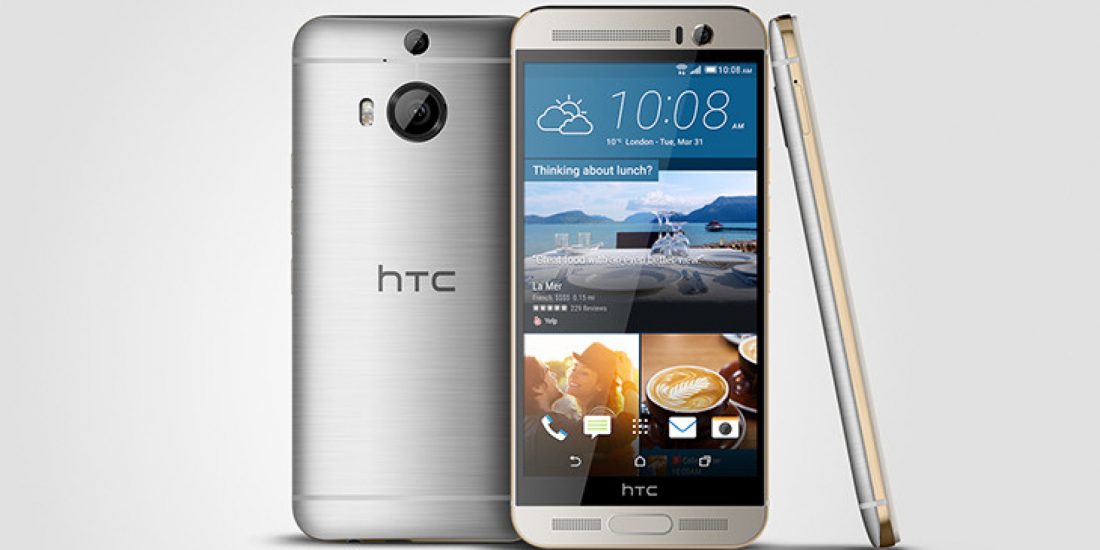
HTC One M9 Plus
The HTC One M9 Plus packs a 20 MP primary camera with sapphire cover lens, auto focus, BSI sensor and ultrapixel front facing camera. It has a5.2-inch (13.2 centimeters) display with 1440 x 2560 pixels resolution. The phone is powered by 2.2GHz octa-core processor, 3GB RAM, 32GB internal memory expandable up to 2 TB, and it supports only a single SIM. The battery is marked at 2840 mAh.
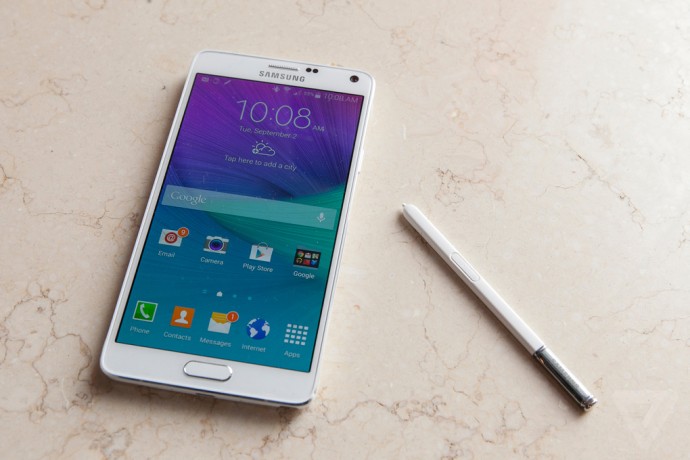
Samsung Galaxy Note 4
Galaxy Note 4 comes with a 5.7 inch QHD display and a 3,220 mAh battery with fast charging technology. It is powered by Snapdragon 805 chipset which is clocked at 2.7 gHz quadcore, coupled with 3GB RAM. It offers 32GB internal memory with support for expandable memory of upto 64 GB. Note 4 packs a 16 MP rear camera with OIS, along with a 3.7 MP front snapper allowing users to take wide-angle selfies. Samsung also added a fingerprint scanner feature along with a heart rate monitor on the back of the device. You can find our hands on of the Galaxy Note 4 here.
Huawei Nexus 6PThe 6P features a 5.7-inch QHD touchscreen, Qualcomm’s Snapdragon 810 chipset, with 3 GB RAM, a 3450 mAh battery and a USB Type-C port. The camera sports a 12.3 MP sensor with laser autofocus, dual-LED flash at the rear and a rather impressive 8MP on the front. This pure Android phone runs on the latest Marshmallow operating system. One of the main highlights of the Nexus 6P is the Nexus Imprint. The fingerprint sensor on the back is fast and fluid in accessibility, which according to Google only “gets better over time” as it learns more about your unique fingerprint. Click here for a detailed hands on of the device.
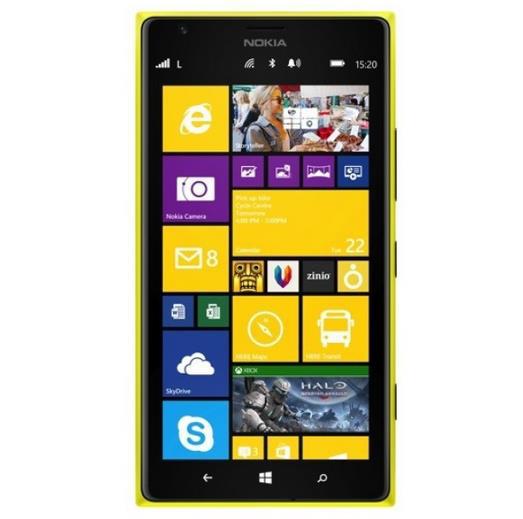
Nokia Lumia 1520
Even though Nokia Lumia 1520 was launched as early as 2013, this list wouldn’t be complete without it.The device features a 6-inch Full HD with 1080p display resolution. The device is powered by a Snapdragon 800 processor, sports a 20 MP PureView camera and has an inbuilt storage of 32 GB expandable upto 64 GB. Nokia has included a big 3400 mAh battery, the device is packed with a 2 GB of RAM. The polycarbonate build supports wireless charging. The price of the phone has now dropped to 39K after the initial price tag of about 47K during the time of its release.
LG G4: The LG G4 is an iconic design from LG, while many companies have attempted to make leather looking handsets (Note 3 and Galaxy S5), LG actually made a smartphone with a genuine leather back panel. The phone packs a 5.5-inch Quad HD LCD with 2560 x 1440 PX resolution. It is powered by Qualcomm Snapdragon 808 with 1.8 GHz hexa-core processor. The LG G4 also has dual sim (certain regions) and a removable and replaceable battery marked at 3,000 mAh, along with micro-SD expansion all of which is lacking in the Galaxy S6 and S6 Edge. Find the complete review of the smartphone here.
Samsung Galaxy S6
The S6 is equipped with 64-bit Exynos octa-core, a premium metal and glass based design. Additionally, the S6 has the most pixel intensive Quad HD display with 577 ppi for a unique, eye-popping multimedia experience, along with wireless charging and ultra power saving mode for improved convenience. For the complete specs and a hands on of the device, click here.
iPhone 6The iPhone 6 is available at an all time low of Rs. 41,000, falling pretty much in the 30-40K price bracket. The phone is a good buy at this price -it offers almost all features of the iPhone 6s (except for Force Touch) minus the hefty price tag. If there was ever a right time to buy an iPhone in India, it is now. iPhone 6 has a 4.7 inch display with a resolution of 1334 by 750 with 326 ppi, and is equipped with an 8 MP iSight camera. Find here the complete review of the iPhone 6.


 Tech that detects facial expressions has been a topic of debate and dislike for a while now with Australia being one of the latest places to receive flak for incorporating face-detection tech in its administration. A spokesperson of the company confirmed the acquisition leaving us to wonder what Apple plans to do with it. Apple has been pursuing AI and virtual reality actively the last couple of weeks and this comes as the latest development in that sphere.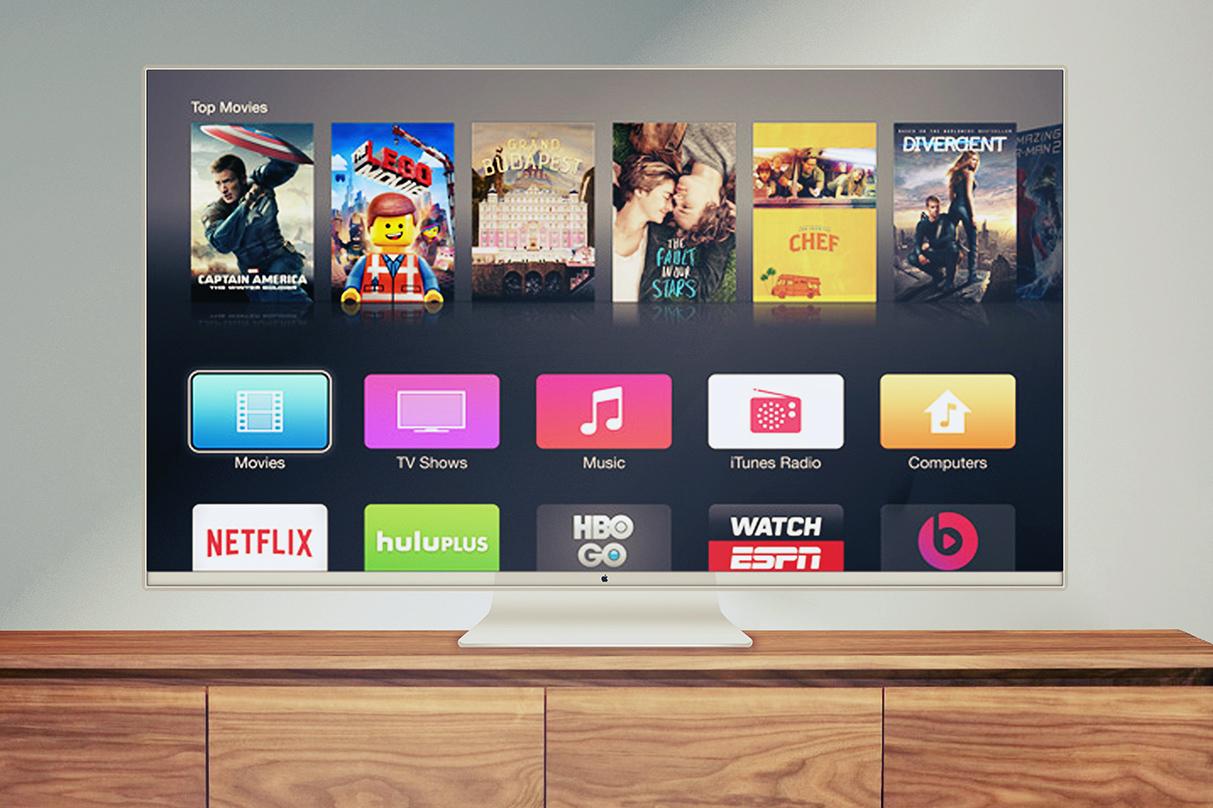

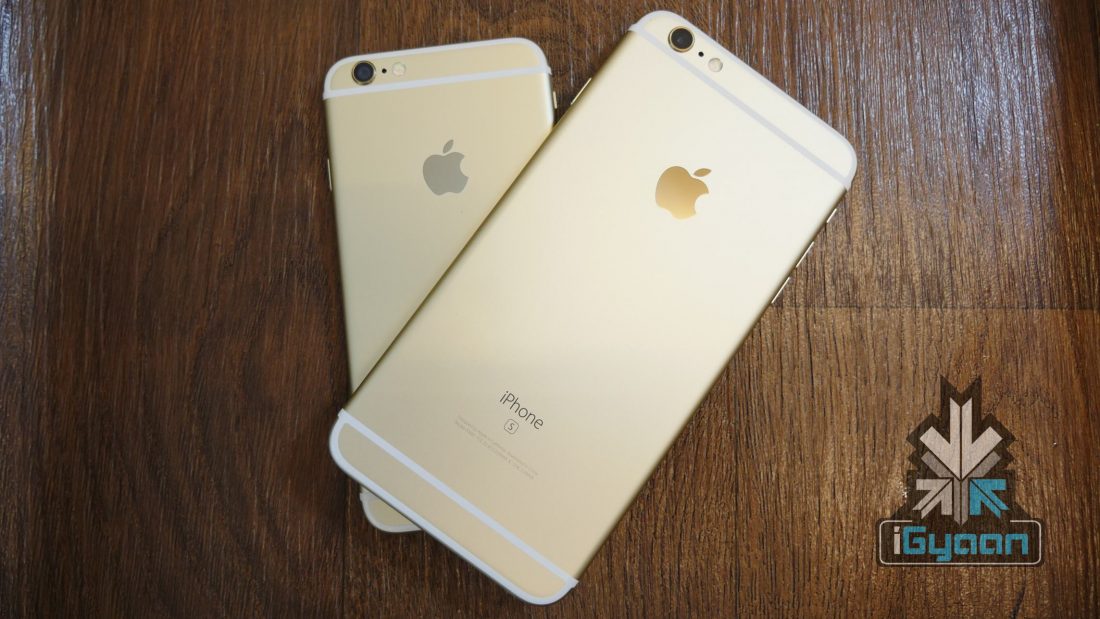 The iPhone 6s and 6s Plus add an improved Apple A9 chip and an M9 co-processor, along with enhanced cameras. There is a 12 MP rear camera that shoots 4K videos. On the front, there is a 5 MP snapper, which however is still restricted to 720p. Compared to the iPhone 6s’ 1330 x 720p display, the Apple iPhone 6s Plus gets a larger display with a 1920 x 1080p resolution. It also gets a bigger battery and Optical Image Stabilisation in the rear camera. Everything else on both devices is identical in terms of specifications.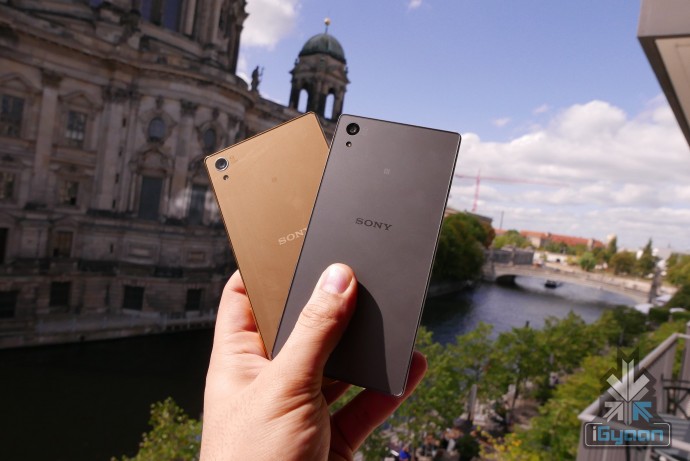
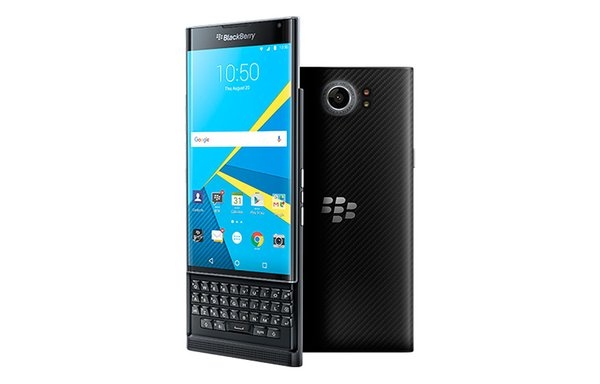 Though the phone is yet to arrive in the country, a list of smartphones from 2015 priced over 40K won’t be complete without the BlackBerry Priv. It’s Android-powered, but is very much a BlackBerry phone. Privacy and security is of major importance here and that’s what Priv stands for. The handset is a hybrid with both a full touchscreen as well as a slide-out QWERTY keyboard. This means the phone caters to both touchscreen fans as well as keyboard loyalists. And given that very few devices today offer a keyboard, this may just work in BlackBerry’s favour.
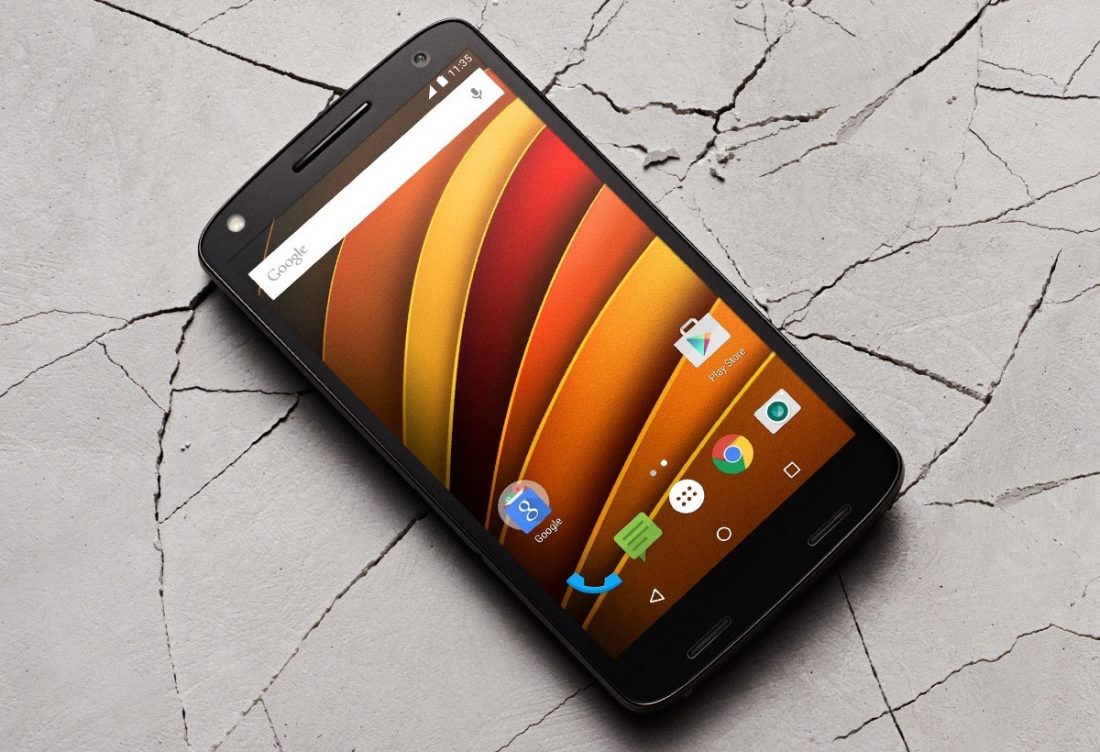 The phone, famous because of its ‘crack-proof’ screen, has not hit the Indian markets yet but is expected to arrive soon. Launched as Droid Turbo 2 in the US, the smartphone is expected to be released with its current price tag of $624 (Rs. 40,000 approximately) and $720 (Rs. 47,000 approximately) for the 32 GB and 64 GB variants respectively.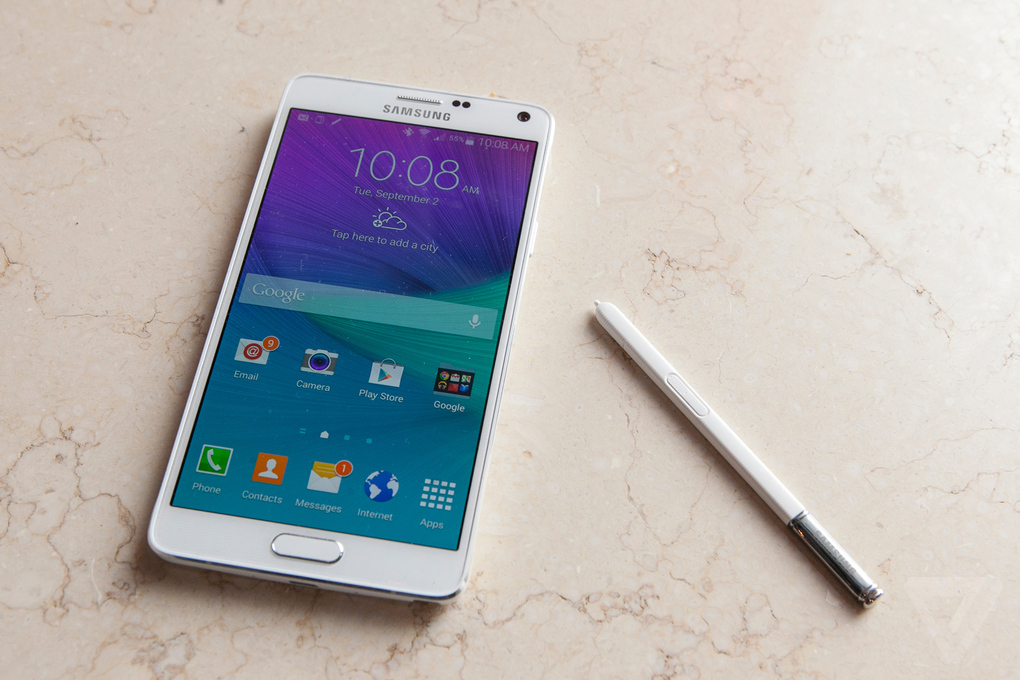
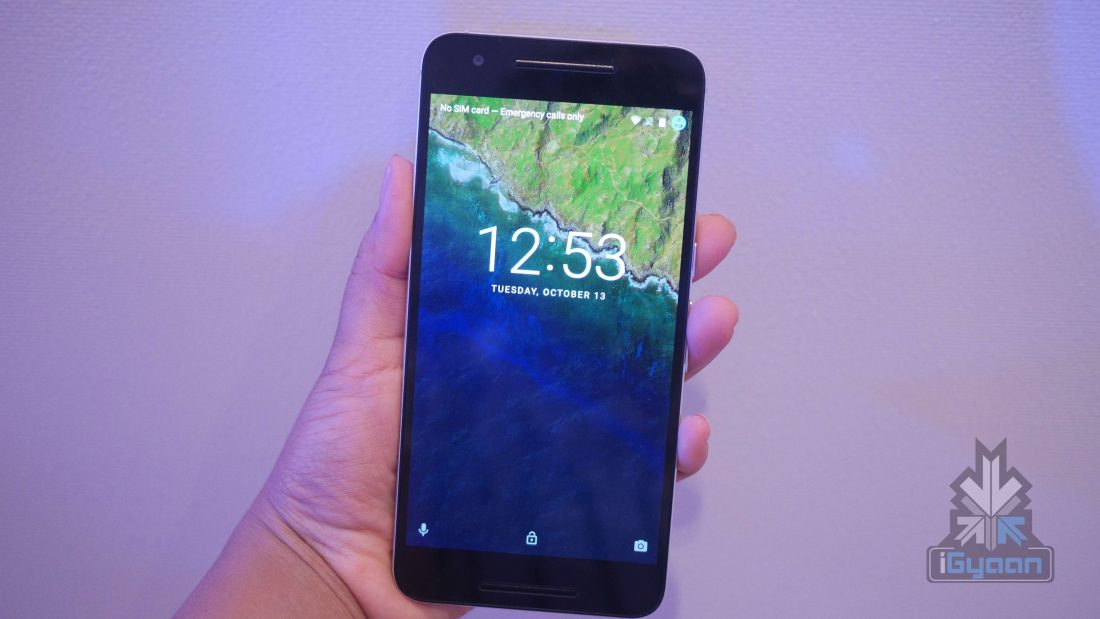 The 6P features a 5.7-inch QHD touchscreen, Qualcomm’s Snapdragon 810 chipset, with 3 GB RAM, a 3450 mAh battery and a USB Type-C port. The camera sports a 12.3 MP sensor with laser autofocus, dual-LED flash at the rear and a rather impressive 8MP on the front. This pure Android phone runs on the latest Marshmallow operating system. One of the main highlights of the Nexus 6P is the Nexus Imprint. The fingerprint sensor on the back is fast and fluid in accessibility, which according to Google only “gets better over time” as it learns more about your unique fingerprint.
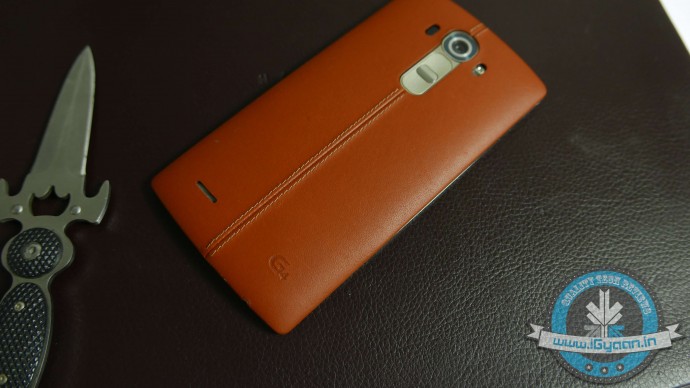 The LG G4 is an iconic design from LG, while many companies have attempted to make leather looking handsets (Note 3 and Galaxy S5), LG actually made a smartphone with a genuine leather back panel. The phone packs a 5.5-inch Quad HD LCD with 2560 x 1440 PX resolution. It is powered by Qualcomm Snapdragon 808 with 1.8 GHz hexa-core processor. The LG G4 also has dual sim (certain regions) and a removable and replaceable battery marked at 3,000 mAh, along with micro-SD expansion all of which is lacking in the Galaxy S6 and S6 Edge. Find the complete review of the smartphone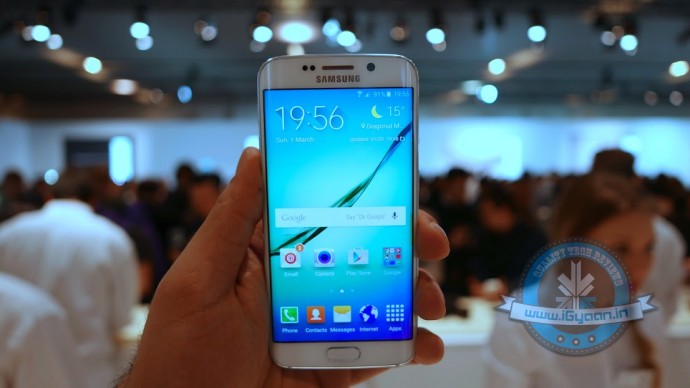
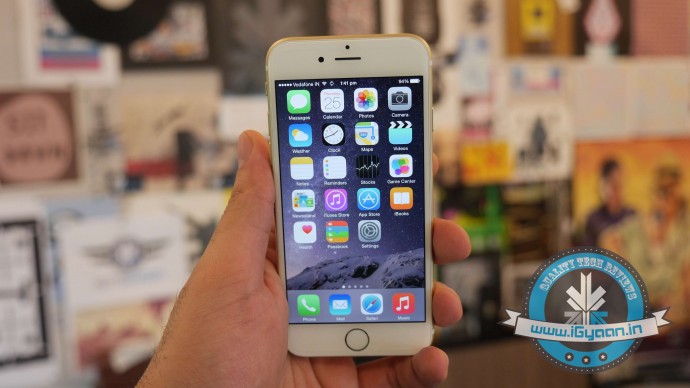 The iPhone 6 is available at an all time low of Rs. 41,000, falling pretty much in the 30-40K price bracket. The phone is a good buy at this price -it offers almost all features of the iPhone 6s (except for Force Touch) minus the hefty price tag. If there was ever a right time to buy an iPhone in India, it is now. iPhone 6 has a 4.7 inch display with a resolution of 1334 by 750 with 326 ppi, and is equipped with an 8 MP iSight camera. Find here the