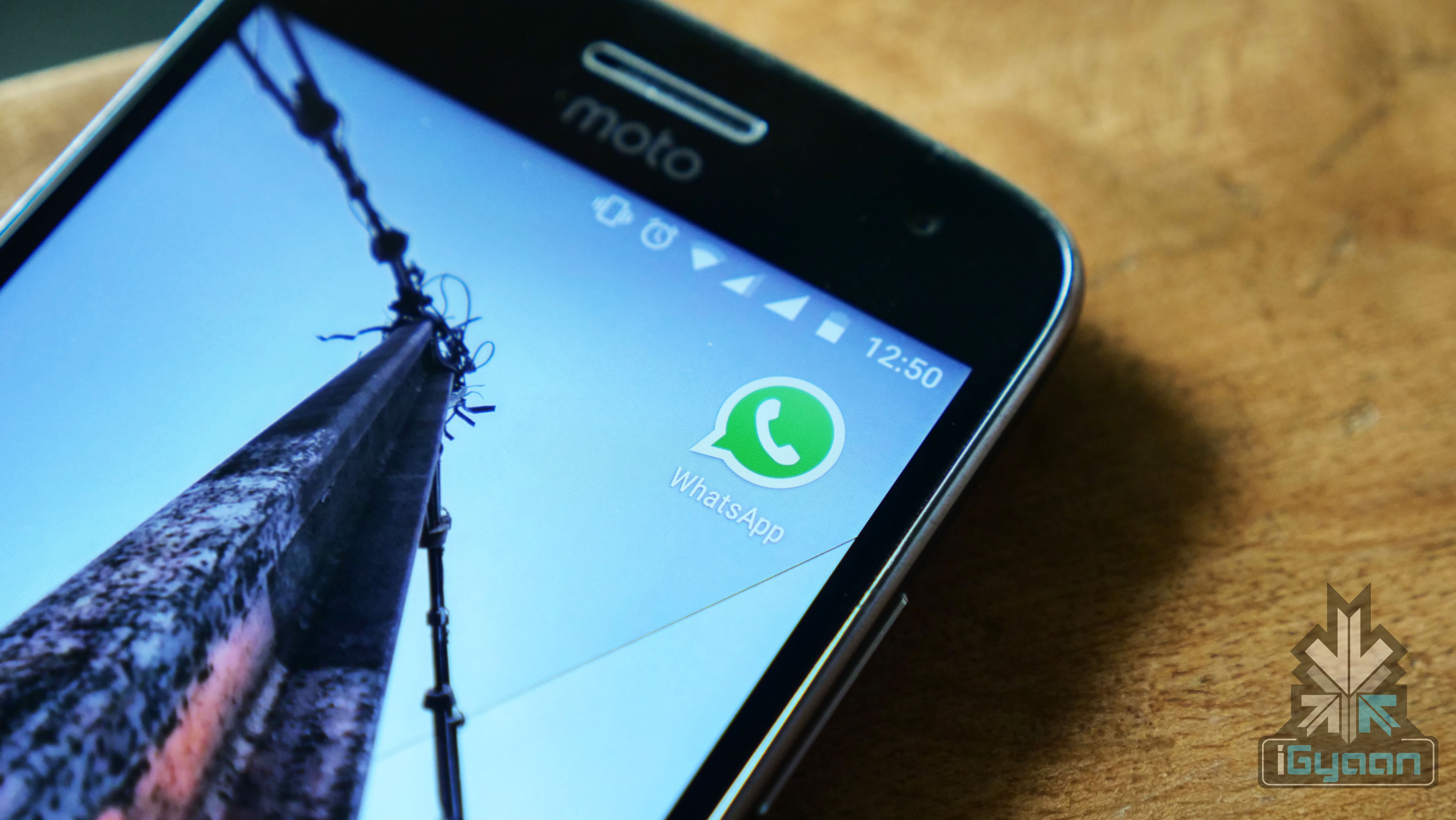
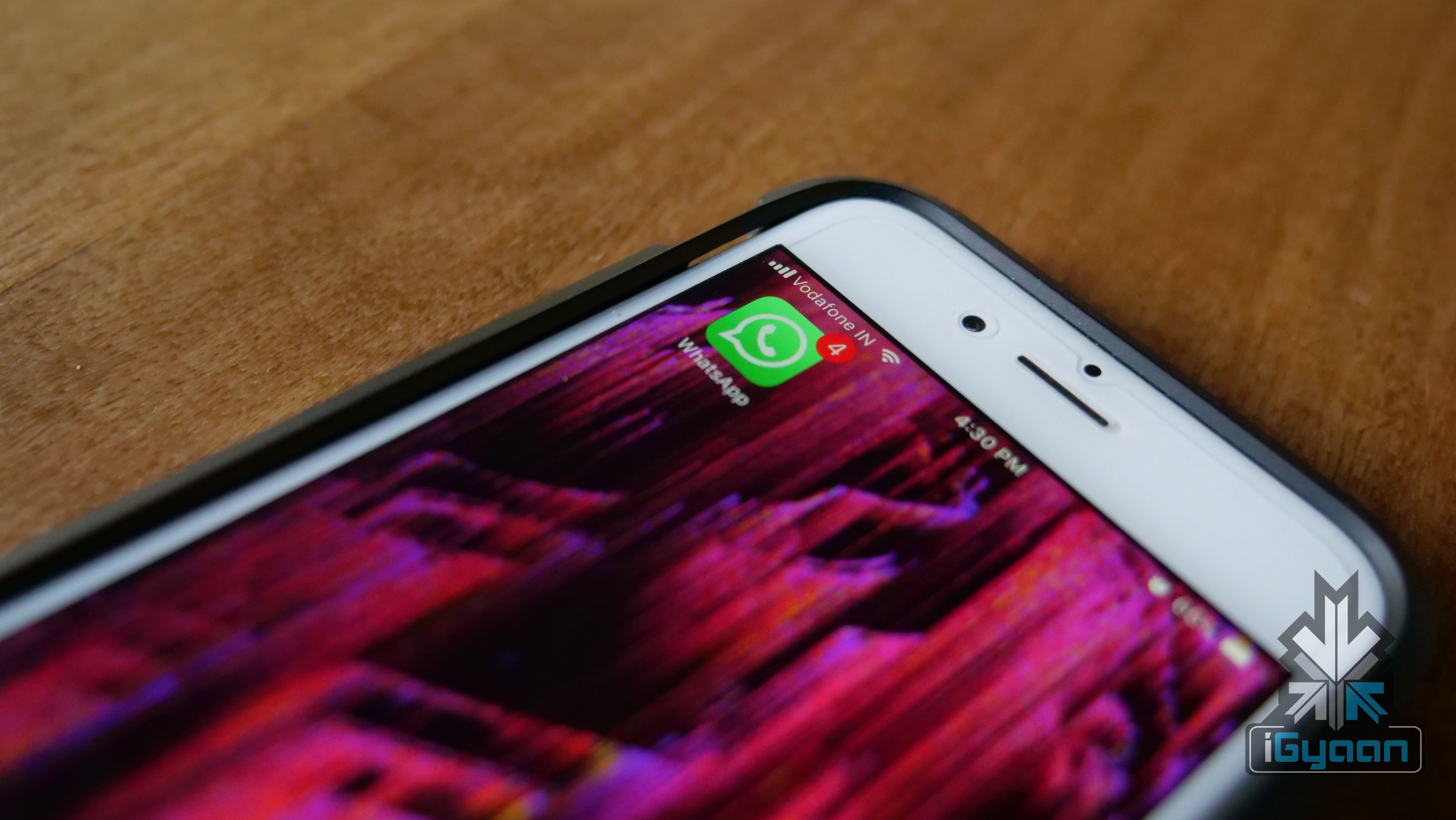
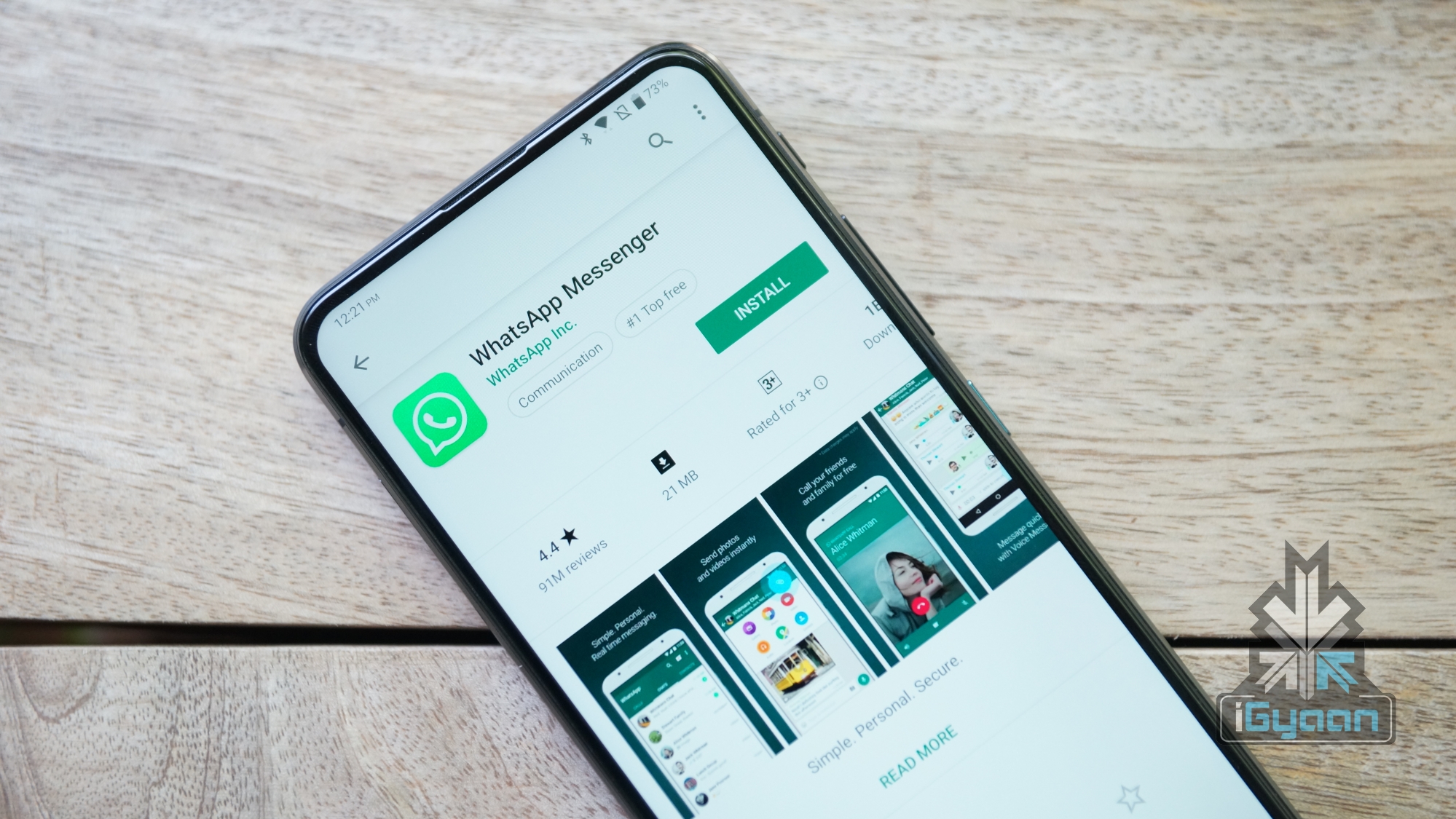
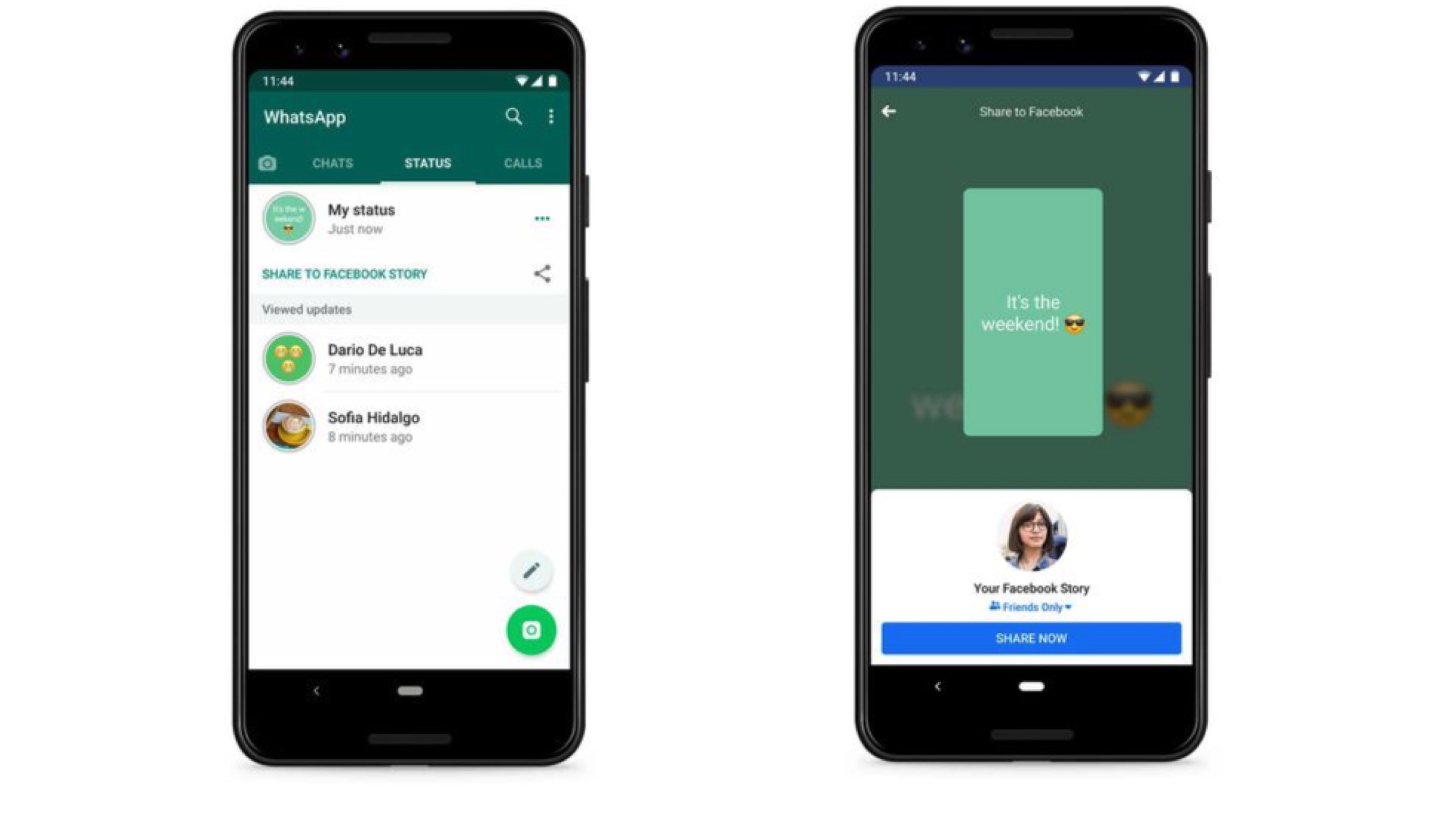
WhatsApp is one of the largest social media platforms in the world. Indians are reportedly the highest users (estimated 200 million) of the chatting app that is owned by Facebook Inc. The company is now testing a new feature, which would allow users to seamlessly share their WhatsApp status on Facebook. The move will bridge the gap between both these massively popular standalone social media applications.
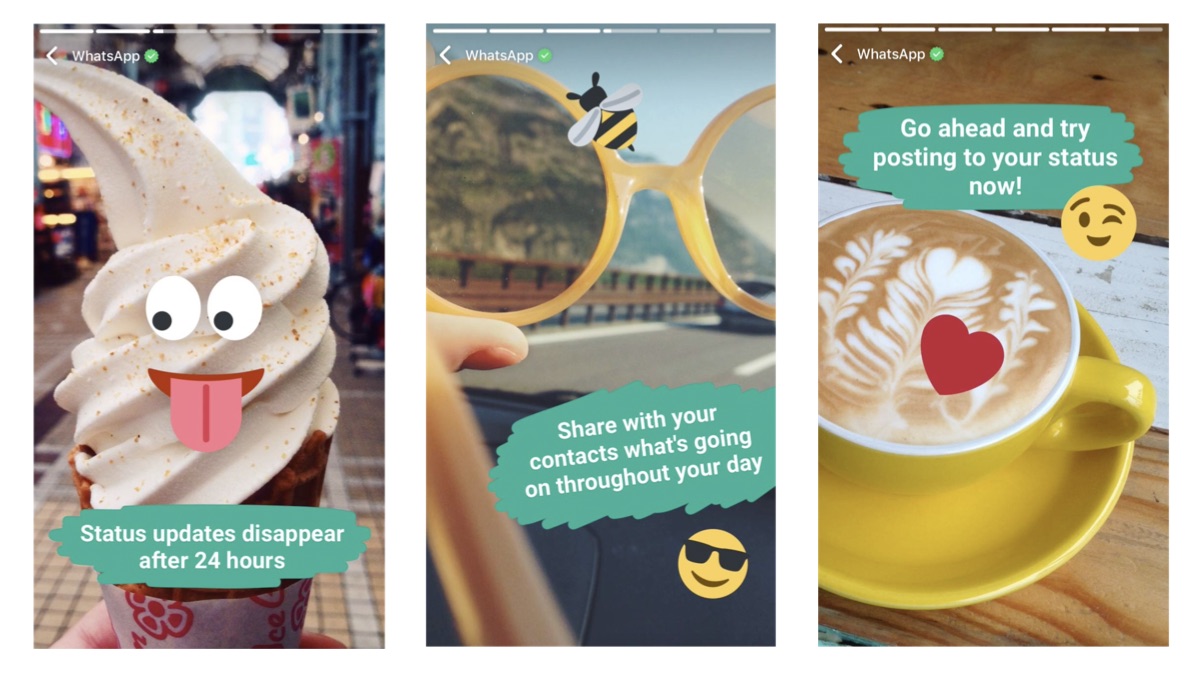
WhatsApp’s status is essentially the same feature as ‘stories’ from Snapchat and Instagram. It allows users to share instances from their lives or any other creative messages intended for a broader audience. The new feature would allow such status to be directly portable to Stories on the parent company’s Facebook app. Furthermore, the status can also be shared to Instagram, Gmail and Google Photos.
According to the report, WhatsApp will not require the linking of its users’ accounts to their separate Facebook profiles to share stories. The trade, however, is made via the data-sharing API used by Android and iOS platforms. This will allow the content being shared on either platform without a direct link being established on the accounts. The feature is not activated by default and users will have to manually share their status. WhatsApp’s new status sharing feature is claimed not to share any additional user data with the Facebook app.
The link between the two social media apps has always been a serious subject. Facebook had initially acquired WhatsApp back in 2014 for a sum of US$ 19.3 billion (approx. Rs. 1,33,600 crores). The parent company has been a target of numerous allegations and scandals regarding user privacy and data tracking. Hence, the implications also affect WhatsApp’s business practices. Additionally, Facebook has already hinted at a single streamlined messaging app that combines the Messenger app, Instagram DMs and Whatsapp.
WhatsApp status was originally introduced back in 2017 and is actively used by an estimated 500 million users. The number is a large chunk of the total user base (1.5 billion) and in 2020 will become the largest platform to generate ad revenue for the company. The new feature is a welcome change that eases the transition between the two apps but the heavy implications do warrant caution. It is currently available for interested users under Whatsapp’s beta program.
YouTube is one of the largest and most recognisable platforms for viewing online content. However, the company has been a target of various criticism over the past couple of weeks. The media giant has faced multiple critiques regarding it’s Home Feed and recommendations column.
Now, YouTube has sought to give users more control over which videos that may possibly show up on their Feed.
The Problem
Users are shown a collection of videos when browsing YouTube which is cleverly provided based on their preferences and browsing history. YouTube uses an algorithm to cater to its millions of visitors every day in a personalised fashion. Advertising strategies and paid artificial boosting from content creators have unfortunately caused an issue. Users have started receiving recommendations of videos that they have neither subscribed or would likely never see. The problem lies in the implementation, not the system itself. Artificial boosting offers a healthy growth to any channel but not if it is received by a person that is not inclined to watch their videos.
New Suggestions
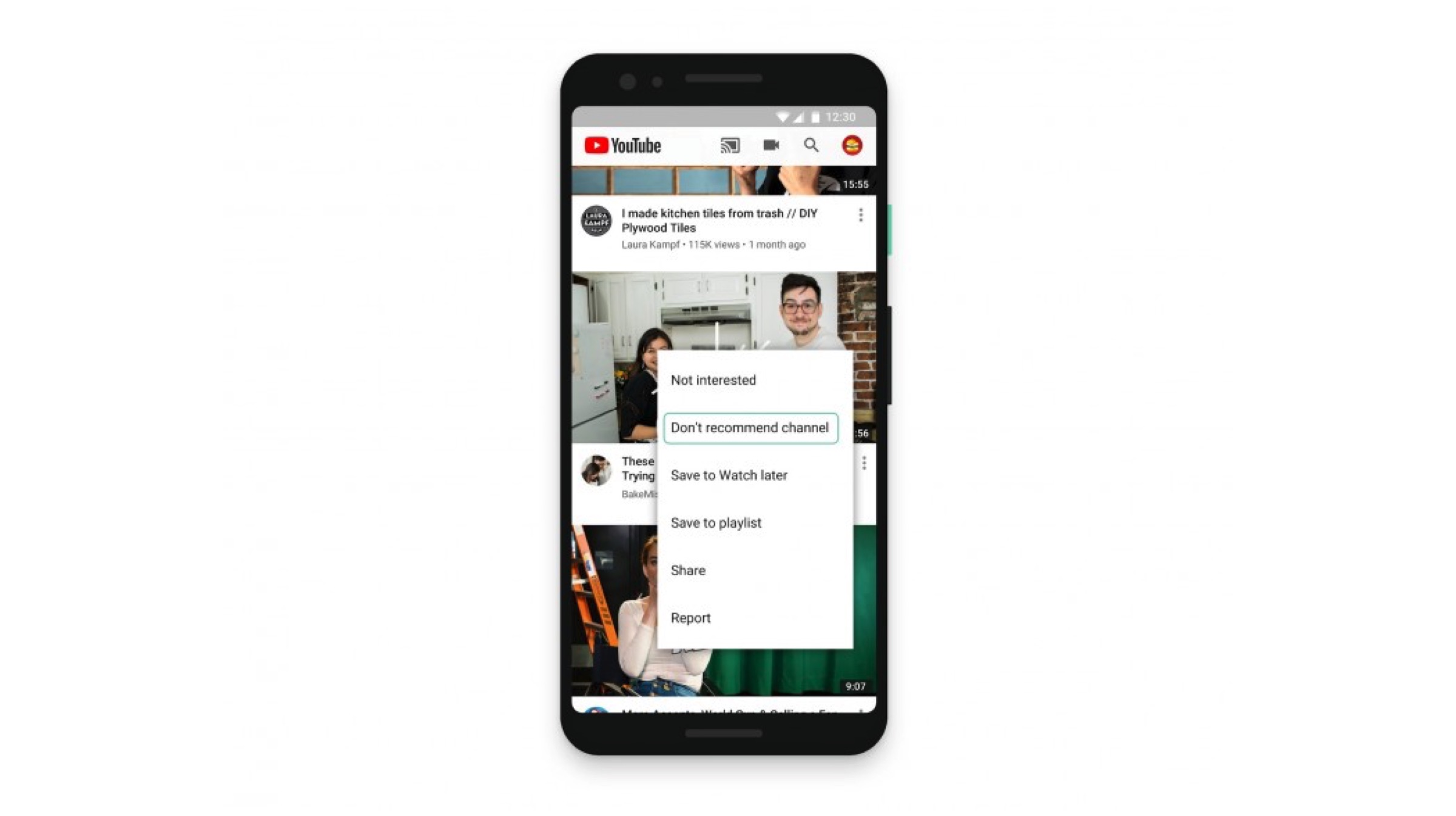
After numerous backlash, YouTube is finally offering more choices to its consumers. People who wish to stop receiving unwanted content can remove suggestions from their Home Feeds. Users can do this by tapping the three-dot menu next to a video on the homepage or Up Next, then “Don’t recommend channel.” The option, once activated, removes any unnecessary videos that one might end up receiving via notifications or in their feeds. Furthermore, users can still look up the dismissed channel by simply searching for it or their videos.
Explore Topics & Videos
The addition of the new explore topics and related videos options now allows one to browse more videos of their preferred genres. The suggestions could be related to the video a person is watching or more from the same channel. The options presented are based on users existing personalized suggestions and are meant to help them quickly find what they are looking for. Explore feature can be found on the homepage when you scroll up or on the Up Next when browsing.
Transparency
YouTube has stated that it uses the data collected via the channels a person visits and their similar interests to recommend videos. The company now plans to include a small box underneath a video that provides more information when recommending similar content. For example, a cooking video recommended might carry a tag of baking in the small box. This is done to explain why certain videos from unfamiliar new channels may end up on the homepages.
The new features will be made globally available. An update for the YouTube app on iOS will be released prior to the Android counterpart and even the desktop main website. The company has added a great new feature which is a pro-consumer move. It should help the company regain lost reputation over past mishaps and pave the way for a user-friendly business model. It is also likely to ensure YoutTube’s long-standing reign in the online multimedia segment.
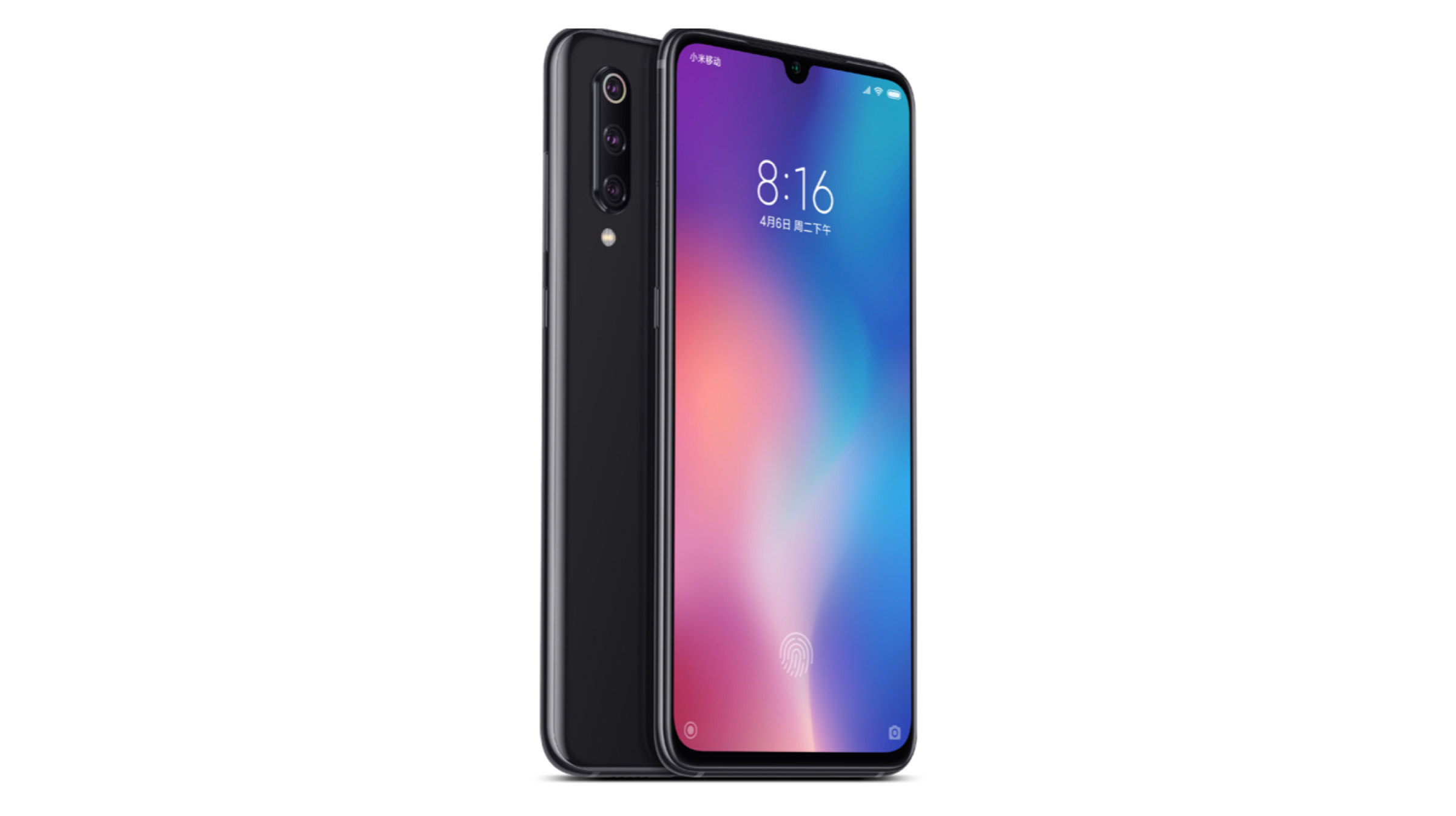
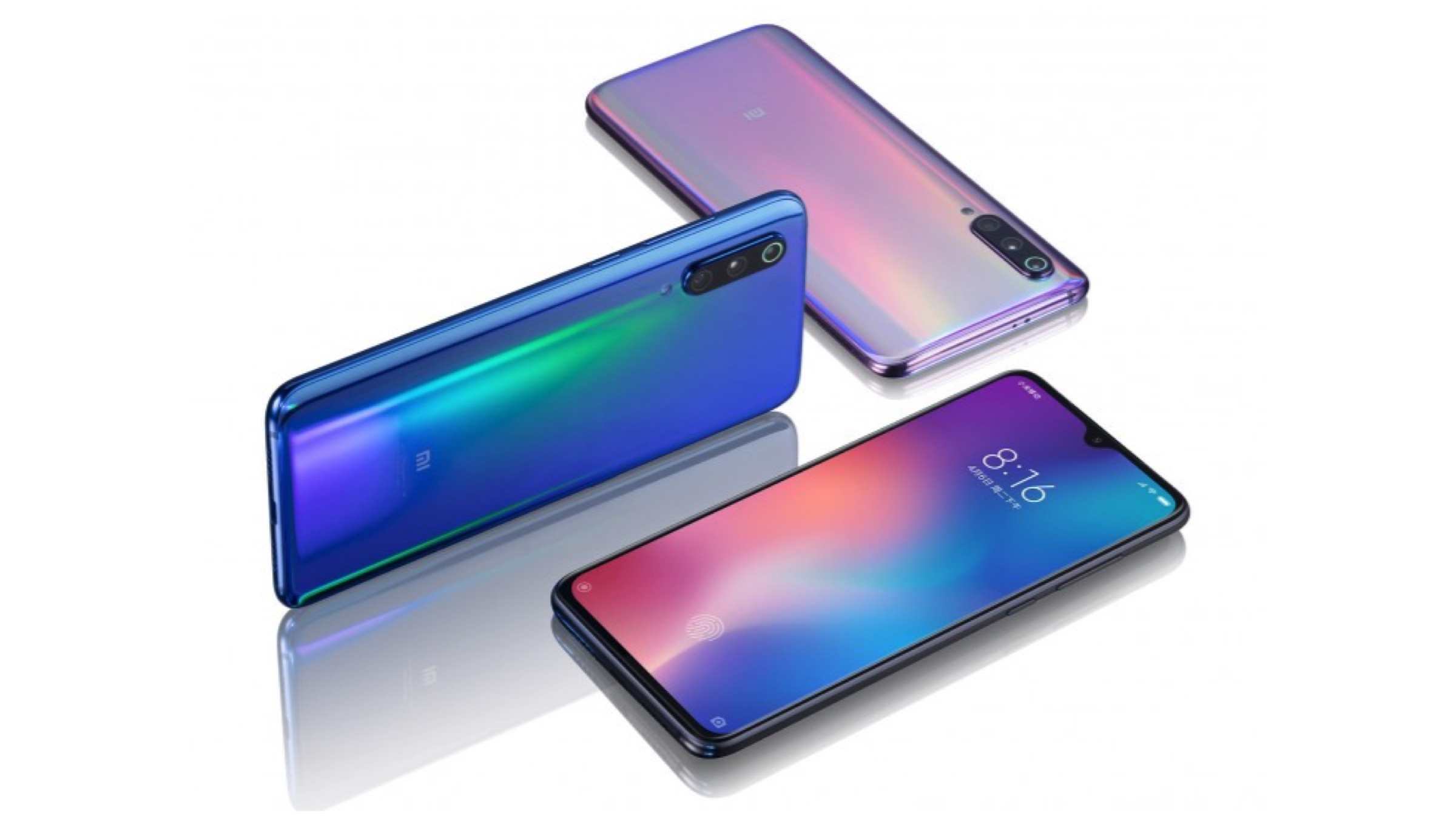
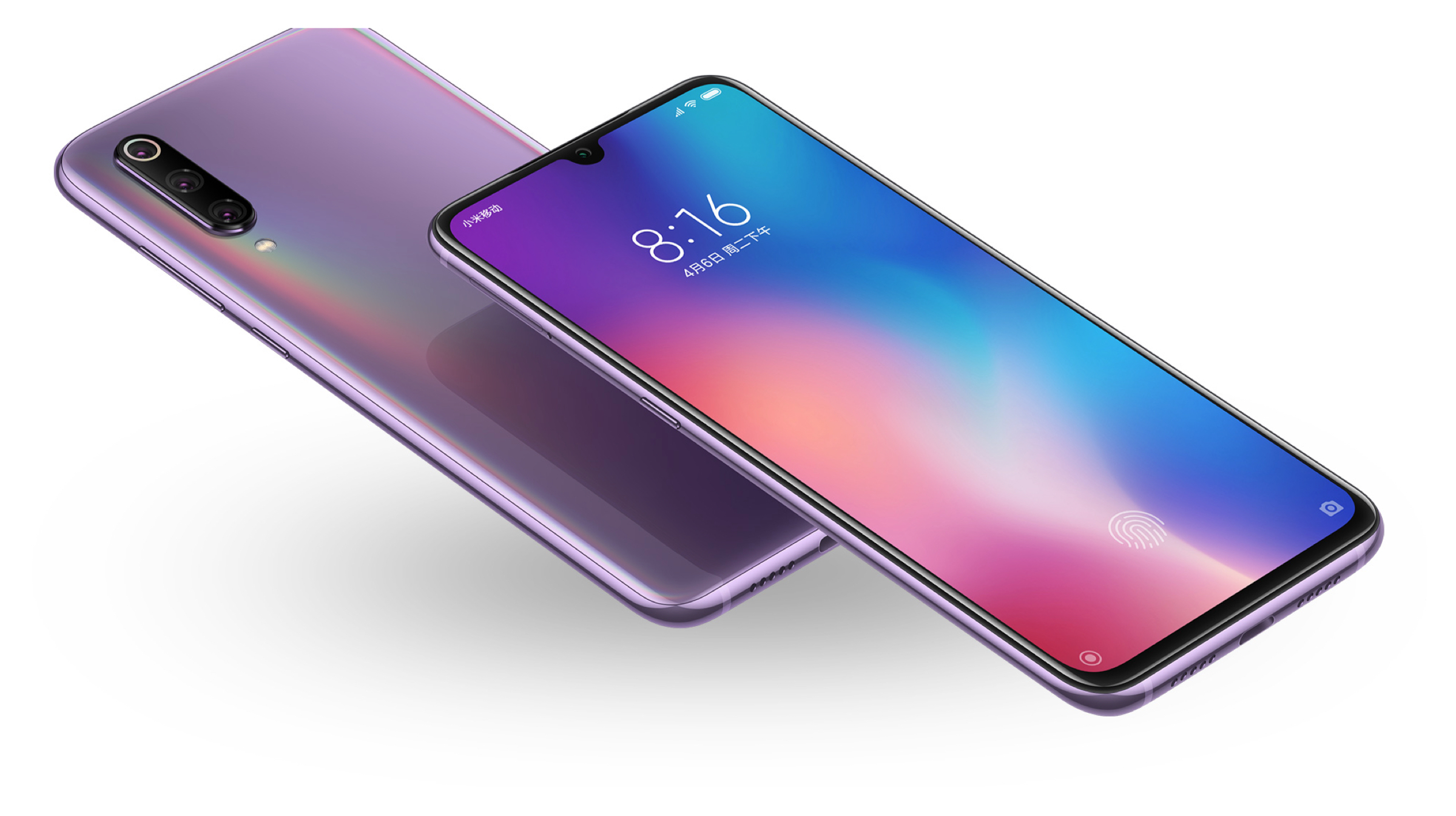
Xiaomi is known to incorporate its Beta builds of MIUI with multiple new features that it wants to test out. Historically speaking, the Chinese region generally receives these form of updates before any other country. The latest beta build for MIUI has just received new gestures support for the XiaomiMi 9. The company has dubbed this new feature “3D Air Gestures”.
The new feature will let users launch various apps by simply waving their smartphones in the air in a certain manner. Programmable gestures demonstrated by a Xiaomi executive include M, W, C, and Z. According to the source, drawing any of the previously mentioned alphabets in the air with the device can open a certain application which might be user programmable. As seen so far, the feature can only be accessed while the device is an unlocked state. However, when the feature rolls out in a consumer ready update, it might even work on the lock screen which is similar to Moto actions seen on Motorola smartphones. Speaking of functionality, the feature uses a combination of the accelerometer and gyroscope sensors which are present on most modern smartphones. Therefore, this feature may even be seen on the current lineup of Mi device and not just future releases.
3D Air Gestures were first seen in a video by a Xiaomi employee on Weibo that has since been reposted on YouTube. In the video, the employee can be seen drawing a C with his Mi 9 to launch the camera app, a W to launch TikTok and drawing a Z to launch an unspecified app. However, the exact method of how the feature truly works in regards to the sensors is yet to be discerned.
All in all, this seems to be a great feature from Xiaomi which might actually turn into a mainstream feature amongst offerings from other OEMs as well. To get precise details of this feature’s capabilities, we will have to wait patiently as Xiaomi is yet to release the launch date of the upcoming MIUI 11 update.
Apple announced new versions of its operating systems for all of its devices earlier this month at the World Wide Developer’s Conference (WWDC). These include the new version of the iPhone operating system, iOS 13; a brand new OS for iPads, iPadOS and an upgraded MacOS called MacOS Catalina.
While the aforementioned software were available to download in developers beta; it was only possible if the user was signed up to the Apple’s developer program. On 24th of June however, the company has released the first public betas for all the operating systems. This means they can be download by anyone owning a compatible device. Here is a step by step guide on how to download the beta software of the iOS 13, iPadOS and MacOS.
iOS 13 Public Beta
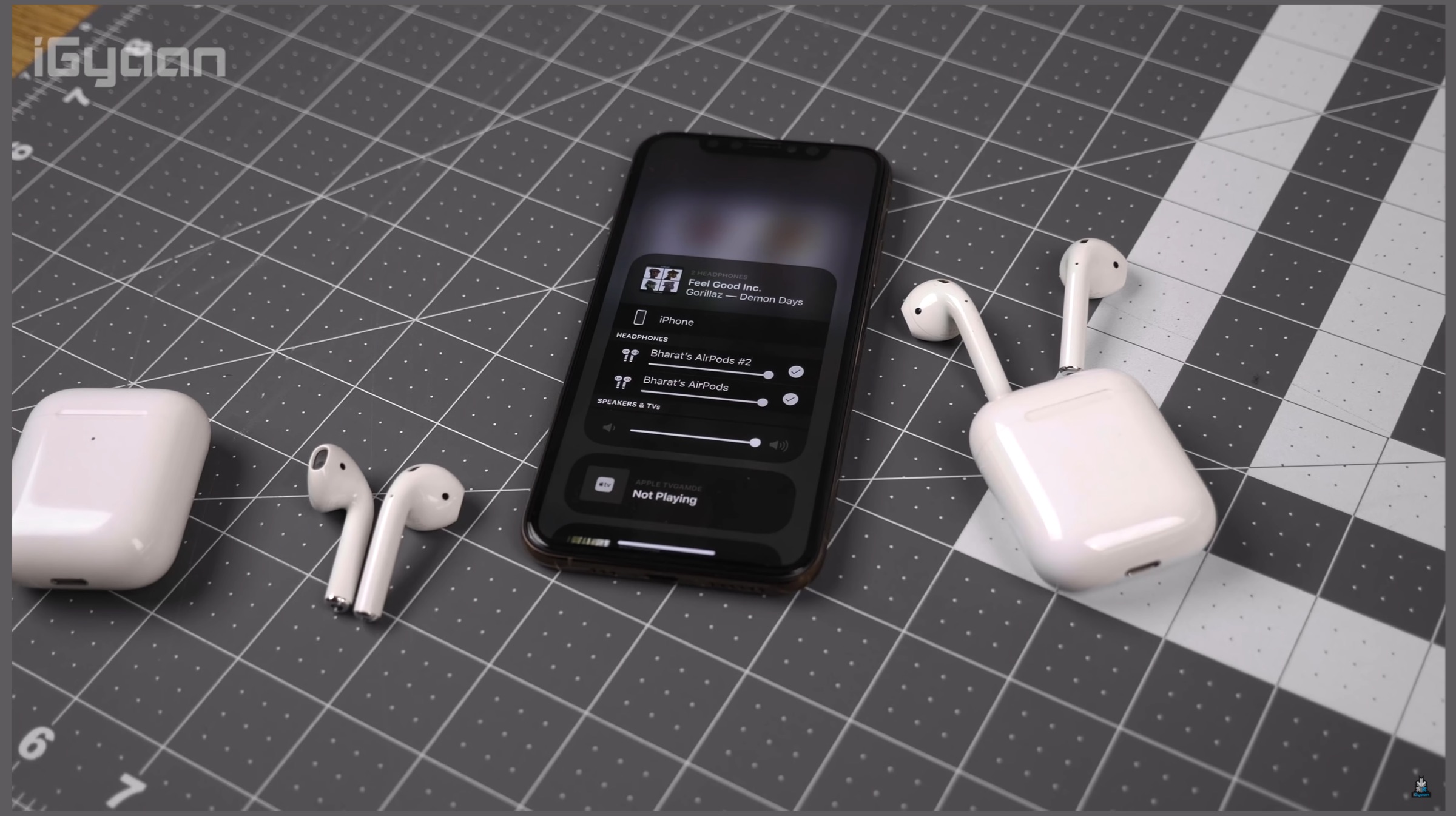
The iOS 13 as mentioned above, will be the latest software available for the Apple iPhone starting the iPhone 6s series. It promises many noticeable improvements over its predecessor, iOS 12. The latest software has a system-wide dark mode, which as the name suggests turns many areas of the User Interface dark. This is aimed at preserving battery life in OLED iPhones and will look more pleasing at night. It also supports multiple AirPods pairing to share music between iPhones.
More improvements on the iOS 13 include a new swipe gesture for keyboard, overhauled Reminders and Maps apps and performance improvements over iOS 12. Apple claims a 30 percent speed increase for FaceID in supported iPhones and smaller app update size. Overall, iOS 13 is a significant update for the software, however, if you plan on installing it; please be wary that it is still in beta and there may be some bugs that will be needed to iron out. Here is how you can install the iOS 13 Public Beta.
Head over to the Apple Beta Software Program by clicking here from Safari on your iPhone. (It doesn’t work with any other browser)
Sign in to your Apple account if you have not done it already.
Click on “Enroll Your Devices” on the top of the webpage.
Click on the “iOS” tab, this will make a reminder pop up on your screen to ensure your phone backup is complete. This will be needed if you plan on downgrading later.
Select the option “Download Profile” on the next page, this will bring another pop-up saying the website wants to download the file. Click on Allow.
Open the Settings app on your iPhone, select the section “Profile Downloaded” and then you can install the iOS 13 Beta.
iPadOS Public Beta
The iPadOS is an overhauled version of iOS 13 that is designed while keeping the iPad in mind. The iPadOS targets the iPad Pro and takes it one step closer to making it a full fledged computer. Many new features have been taken from the iOS 13 like the Dark Mode and new Reminders and Maps applications. It adds a redesigned home screen with widget support, new multi tasking features. The latency in the Apple Pencil has also been greatly reduced and there are new gestures for screenshots, editing text etc.
The biggest overhaul in the iPadOS that separates itself from iOS 13 is the new files app and external storage support. Both have been added to make the iPad more productive than before. There is also a new feature that is in sync with MacOS Catalina called Sidecar. It lets you use the iPad Pro as a secondary display to your Mac with minimal latency over wired or wireless connections. If you plan on installing the iPadOS beta, once again be wary of the bugs that will exist; until the stable update later this year. Here is how you can install the iPadOS public beta on your device.
Head over to the Apple Beta Software Program by clicking here from Safari on your iPad.
Sign in to your Apple account if you have not done it already.
Click on “Enroll Your Devices” on the top of the webpage.
Click on the “iPadOS” tab, this will make a reminder pop up on your screen to ensure your phone backup is complete. This will be needed if you plan on downgrading later.
Select the option “Download Profile” on the next page, this will bring another pop-up saying the website wants to download the file. Click on Allow.
Open the Settings app on your iPhone, select the section “Profile Downloaded” and you are all set to install the iPadOS Beta.
MacOS Catalina Public Beta
The MacOS Catalina is the latest version of the operating system for various computing devices from Apple. It features considerable changes over the last generation, MacOS Mojave. The latest OS boasts of the Catalyst feature, which was codenamed Marzipan and allows iPad developers to port applications over to MacOS. The sidecar feature as mentioned in the iPadOS above is also making its debut in the newest generation MacOS.
A major feature that MacOS Catalina is bringing about is the introduction of Voice Control. It is an accessibility feature that will allow users with limited motor skills to control their Mac enabled device with their voice. Again, the MacOS public beta, like the iOS 13 and iPadOS is still in beta stage; so there may be some bugs that may need squashing in the stable update due later this year.
Visit the Apple Beta Software Program by clicking here.
Sign in to your Apple account. (Ignore if already done)
Click on the MacOS option, this will make a reminder pop up saying to ensure you have a time machine backup; in case you want to downgrade to a previous version.
Click on the option “Download the MacOS Public Beta Access Utility”; which will download a .dmg file enrolling your computer in the beta program.
Open System Preferences and click on Software Update option to install the MacOS Catalina beta. One thing to note is that it might not be available to download instantly in some cases. Users will need to wait if that is the case.
The new iOS 13, iPadOS and MacOS are major software releases by Apple this year. It is also seen as a step by the company to combine some functionalities of all the three different products for the future; as demonstrated by the Catalyst feature in MacOS. What do you think about Apple’s latest releases? Tell us in the comments below.
Google’s Android is by far one of the most accessible OS (operating system) available in the market. It is estimated that about 75% of all smartphone users are using the software. This implies that 3 out of every 4th person has an Android enabled device. Hence, there are bound to be shortcomings and problems related to such a high user base. Notably, a brand new report has claimed that over 2,040 of Google Play Store apps are harmful to the users, some of which are famous.
Research by the University of Sydney and Data6161 or CSIRO has administered over 1 million apps on the Google Play store. The two-year long study had found a large number of fake apps which weren’t malware but still required an unnecessary amount of permissions. These apps had no need for the data access that they were asking the users to provide. Certain software available on the Play store were famous, such as Hill Climb Racing and Temple Run. However, a few of these applications were downright malware.
Machine learning and Neural networking are being heavily implemented in the processing of all the 1 million applications. An algorithm was specifically developed to look for similar text description and icon designs in Google Play’s top 10,000 most popular apps. A massive number of 49,608 were seen as potential threats to users or their device’s integrity. VirusTotal flagged about 7,246 of the apps as outright malicious while the remaining 2,040 were fake and high-risk apps. Furthermore, 1,565 of such apps made at least 5 sensitive permissions request and 1,407 were embedded with 3rd party ad libraries.
The aforementioned dangerous applications have since been removed. Google has reported that the number of rejected app submissions has jumped by more than 55% over the previous year while app suspension has increased by up to 66%. Users should be wary of such applications and should ensure to always download only the official and recognised corporations applications from the Google Play store. If unavoidable, one should pay attention as to what permissions the apps are demanding. A game should have no right to making calls and sending messages or have access to customers contact details.
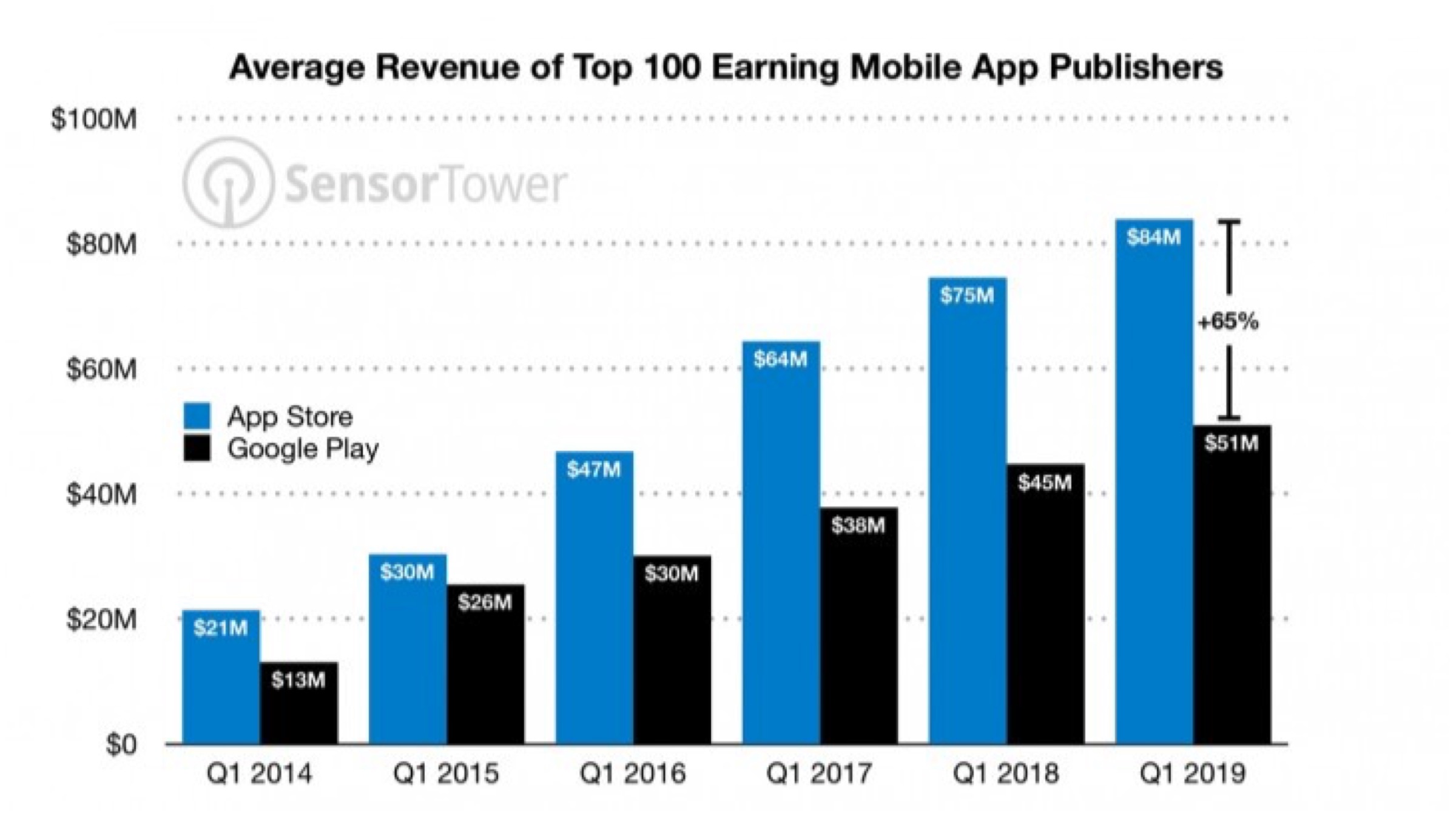
According to a new report by Sensor Tower research group, a significant gap was observed in the revenues generated between iOS and Android app publishers. This income disparity was noticeable by a large margin. In Q1 of 2019, the top 100 application developers for Apple’s App Store on an average earned 64% higher than its Android counterpart Google Play.
Sensor Tower’s Store Intelligence uncovered App Store publishers earning an estimated amount of $83.8 million (approx. Rs.584 crores), whilst Android studios only garnered $51 million (approx. Rs. 355 crores). This survey was taken over the top 100 apps the Apple and Google platform. Both of these platforms have seen an annual growth of 12% from last years figures.
Gaming Apps
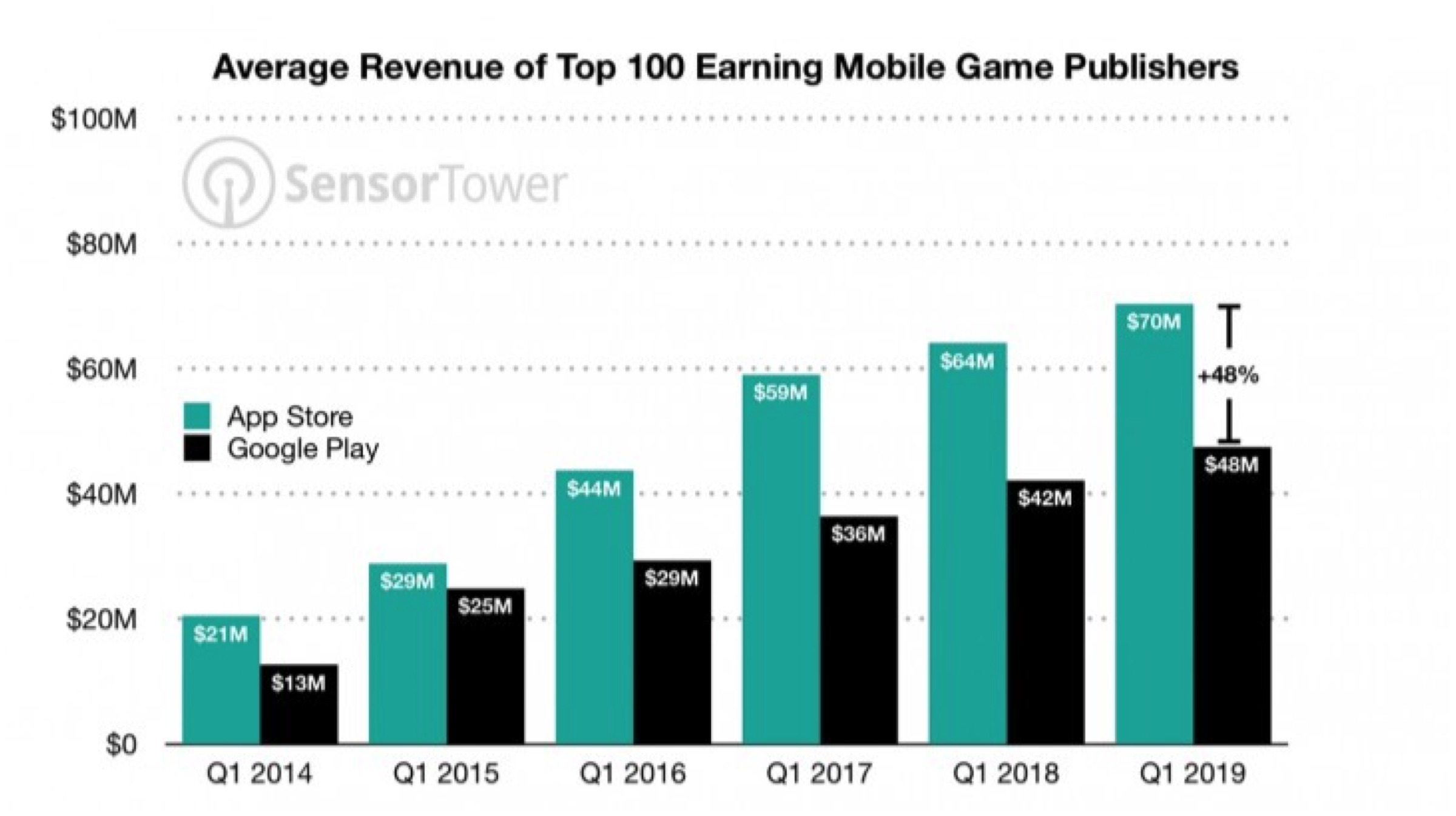
In the field of mobile gaming, the revenue gap was much smaller. However, App Store developers still held a large margin of lead with 48% over Android mobile game studios. Apple’s platform under this segment made $70 million (approx. Rs. 487 crores) to Play Stores $48 million (approx. Rs. 334 crores). This segment of gaming combined is still the largest revenue stream for the industry with the rise in popularity of mobile gaming.
Non-Gaming Apps
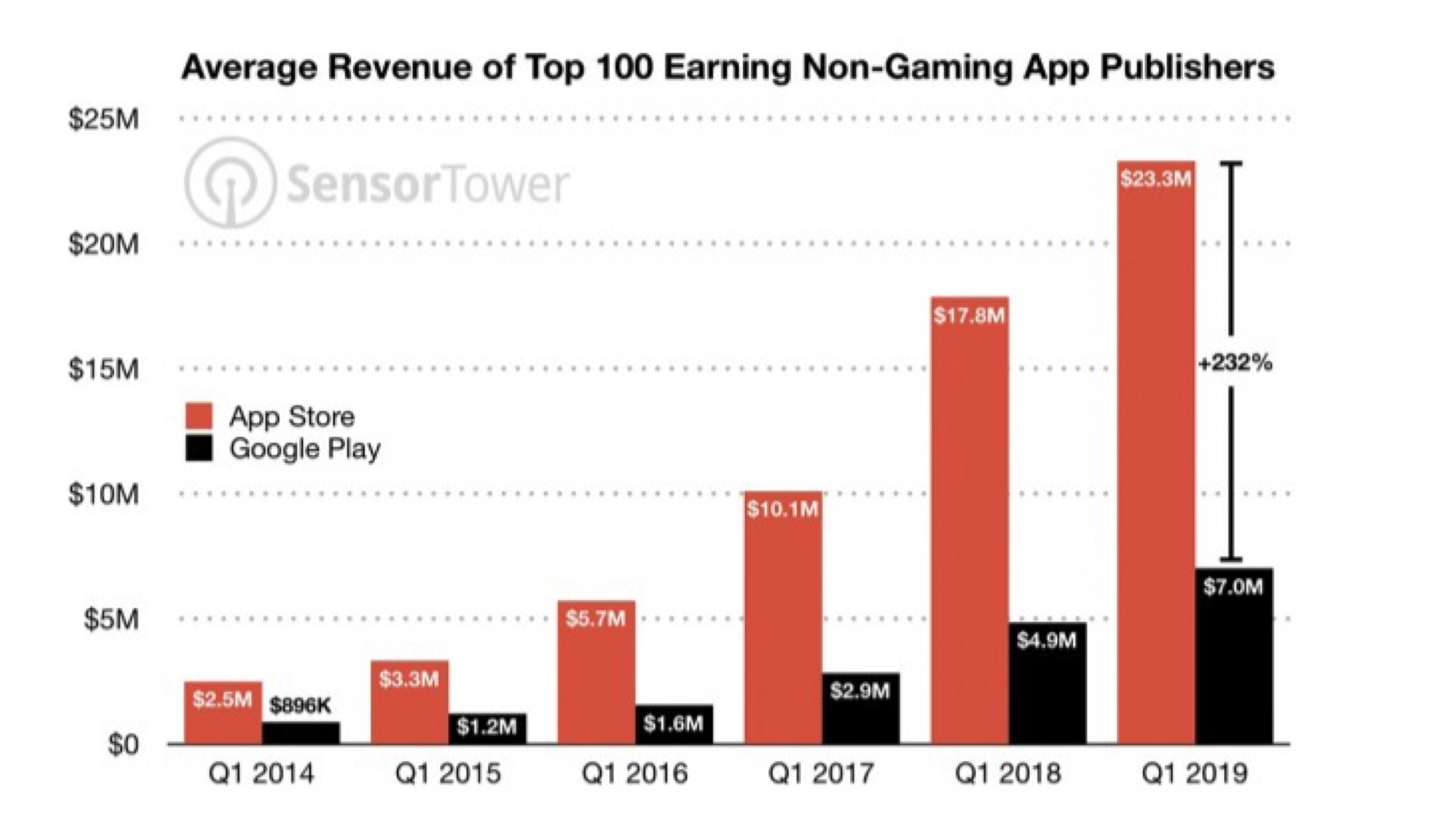
Furthermore, non-gaming apps paint a grim picture for Android. The gap between the App Store and Google Play app publishers is a massive 232% difference. Users from Apple spent an estimated $23.3 million (approx. Rs. 162 crores) in comparison to Android’s mere $7 million (approx. Rs. 49 crores). There is a revenue discrepancy of more than three folds. Notably, Apple does have a great advantage considering that Google services and Play apps are banned in China, the largest consumer of smartphone services
This essentially makes App Store a more profitable business venture regardless of the fact that Android is the more popular platform. It is reported that Android currently holds an estimated 75% of the OS market share whilst iOS holds just about 23%. Hence, although it should’ve been the other way around, various factors such as user preferences, demographics, and availability should be taken into consideration.
OnePlus has been busy with various software updates for its lineup of smartphones, especially the OnePlus 7 Pro. The Chinese company is well renowned and critically acclaimed for its user-centric business model. On multiple occasions, the company has added features or brought bug fixes relatively quick just after scouring its own community app. In a similar manner, the company has unveiled its planned catalogue of features and additions to its Oxygen OS.
What To Expect
In a new post on the OnePlus Forums, the company has highlighted developing as well as planned features with the future update. The Open Beta build already includes a couple of these new features that aim to enhance the OxygenOS user experience. Notably, a small part has been confirmed to be product exclusive while the rest are generally available OS-wide. The said exclusive features include OnePlus 7 Pro’s horizon light customizability, whereas most OnePlus devices will receive a new step counter in the Shelf.
OnePlus has already given its approval for most of the feature requests which are currently being tested in various open and closed beta programs. For example, the horizon light feature lights up the edges of the OnePlus 7 Pro when a notification is received. This was done by the company to address customer grievances regarding the lack of LED notification lights. Unfortunately, the feature will not appear on the standard OnePlus 7 model or its predecessors.
OnePlus 6T
The developers in OnePlus have also seemingly confirmed working on video recording via the ultra-wide camera found on the latest flagship. The community had been requesting for this feature for a while, as only the primary shooter currently captures videos. OxygenOS is also slated to provide support for adaptive icons for its OnePlus launcher. Furthermore, functions such as a custom duration for Zen Mode, more apps in the recent menu and sound effect when the device is charging will be released by the developers.
Other Notable Features
Digital Wellbeing will be supported on OnePlus 5/5T/6/6T, and are currently available in the open beta.
Ability to block messages by specific keywords is also being tested under the closed beta and will be released soon.
Folders being considered for the app drawer for a simplifies and quicker way of finding applications.
OnePlus thrives on its great community by being actively involved and interactive with its user-base. This particular form of communication typically strengthens the loyalty of customers and attracts potential ones as well. Hence, the company ensures its accountability and responsibilities with its products. The features do not have a concrete launch date but will soon be available via updates or on the open beta for a first look.
2019 has been a year of numerous outages across various services and applications worldwide. For instance, social media platforms Facebook, Whatsapp and Instagram suffered from a worldwide outage in the consecutive months of March and April. Furthermore, American technology company Google also suffered from Google Cloud downtime earlier this month. As per recent reports, Google Calendar is also not functioning currently for multiple users across the globe.
Many users who have been trying to access their Google Calendar schedules at calendar.google.com are facing issues, since they are greeted with an error. First reports started pouring in at about 7:30pm IST (10am EST). The majority of Canadian and US population (in addition to other countries) are unable to navigate to the website since then. The company has confirmed details regarding the service outage via its G Suite Status Dashboard, which can be viewed by clicking here.
The company’s statement implied that the problem is being investigated. Additional details are expected to be available shortly. The most interesting aspect of this outage is the fact that the company posted a tweet from the G Suite Twitter handle stating how the Google Calendar application makes scheduling much simpler for day-to-day usage. The tweet was published merely an hour before the service outage. This may be a coincidence or a timed external attack on the company’s servers. Shortly thereafter, the company posted about the service disruption as well.
Google Calendar is currently experiencing a service disruption. Please stay tuned for updates or follow here: https://t.co/2SGW3X1cQn
This incident is another wake up call to a multitude of users across the globe, showcasing how vulnerable online services can be. When a lot of users rely on a single platform for their daily needs, a backup/contingency plan becomes an absolute necessity for conglomerates. An update from Google is expected to be available shortly, with engineers working on the problem, as stated by the company. Google’s other services (including Gmail, Docs and Drive) seem to be entirely unaffected at the moment. Moreover, the mobile application for the same is functioning without any hiccups as well.
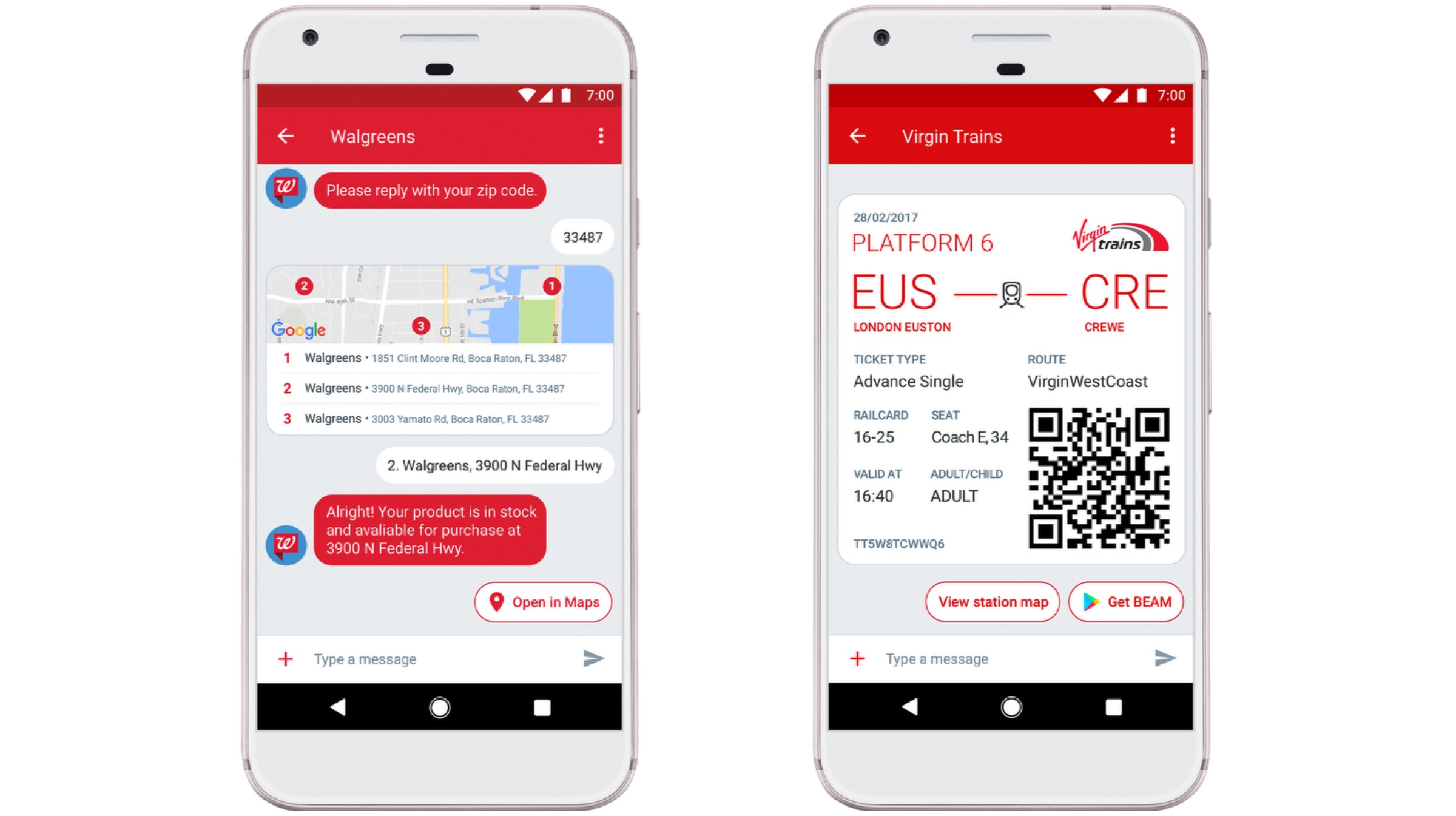
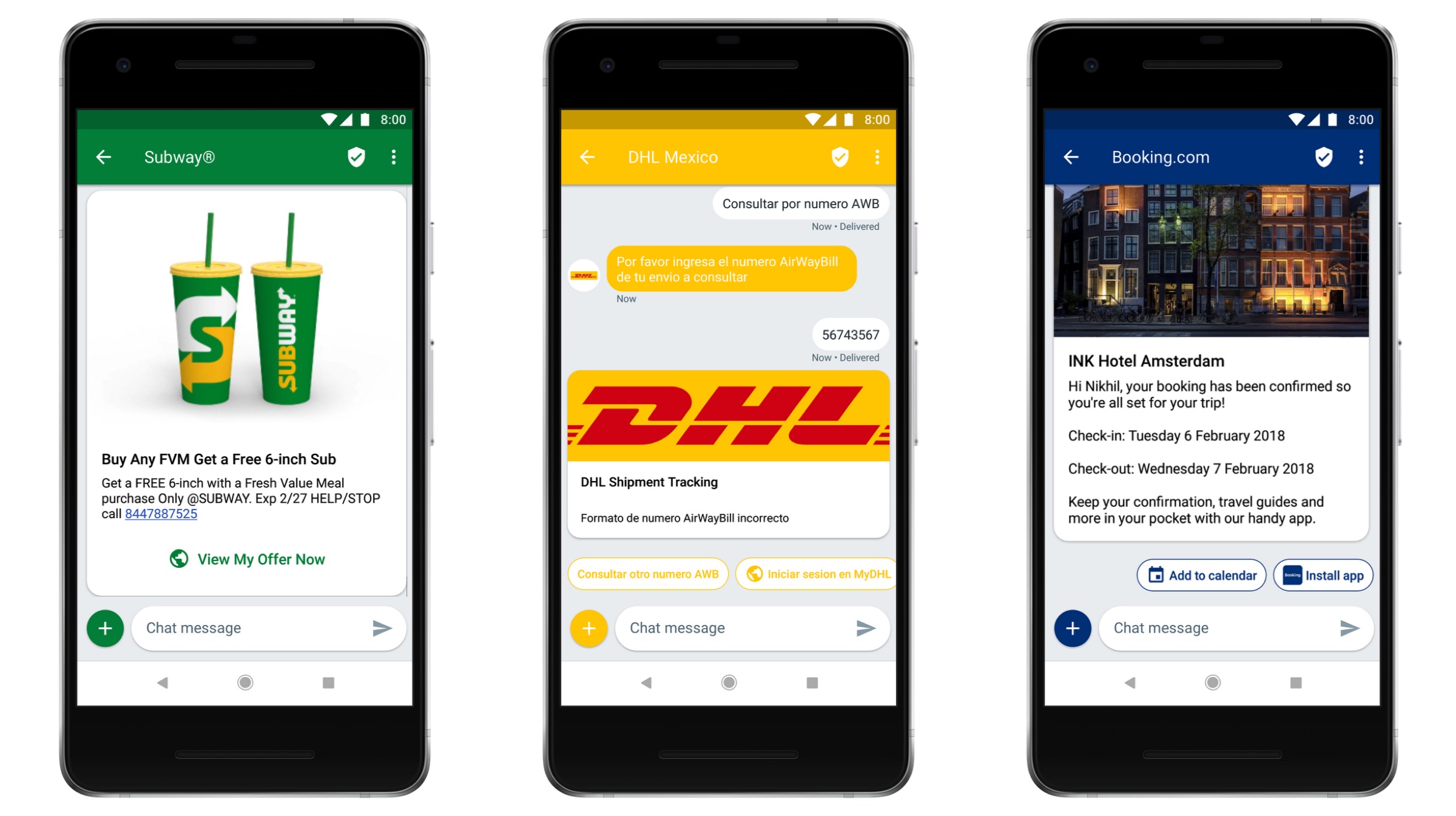
Google has finally taken a stance on its upcoming RCS chat(Rich Communication Service) functionality for Android devices. The feature was announced back in 2018, although its implementation has been rather slow. The blame is partly on various carriers as the next-gen texting format usually depends on networks adding support. This usually occurs one at a time inducing great delay. Hence, compatibility so far has been grey in nature. The tech giant, however, has now announced that it will take the lead on the projects roll out.
RCS is said to be a new-gen replacement for SMS texting and will be initially made available for users in the UK and France in June. Users can opt-in for the service in the aforementioned countries. This service does not work on a central server and is designed to work with other devices that are compatible. Google passes the exchanged messages through its servers (which they claim are deleted as soon as they’re delivered) taking on a decentralized system. Hence, not requiring carrier support or complicated OEM policies.
How Does RCS Work?
RCS is essentially a peer-to-peer workaround for the carrier-driven model. The next-gen texting service is agreed on by most carrier across the globe to be a viable and necessary replacement for SMS. Similar to modern texting apps, it will provide many of the new features currently popular in base messaging apps. Compatible devices thereon receive high-quality media, read receipts and other new features with the service. Unfortunately, end-to-end encryption is still lacking right now.
Google’s Android Messenger dubs the app as ‘Chat’ and will be optional for those that want to update to the RCS Chat. Furthermore, new smartphones will, by default, be offered on devices running Android OS. To enable the feature, click ‘Yes’ on the Chat prompt on the default messaging app. If another user in the same virtual room has RCS, it will be shown as Chat in the app. The service will work with any smartphone supported by the RCS Universal Profile, regardless of carrier support or even Google.
RCS is a federated model with different carriers being responsible for delivering messages to users. This is unlike Apple’s iMessage that utilizes a central server based model. The complex nature of RCS is crucial for not having a single company benefitting and controlling the entire system, similar in nature to SMS.
Google has not passed every hurdle to be faced with RCS’s widespread induction. The tech giant has not announced a proper roadmap for the new chat technology being implemented in other countries. However, with Google’s hands-on involvement with the service, users can be assured of an earlier release than carriers.
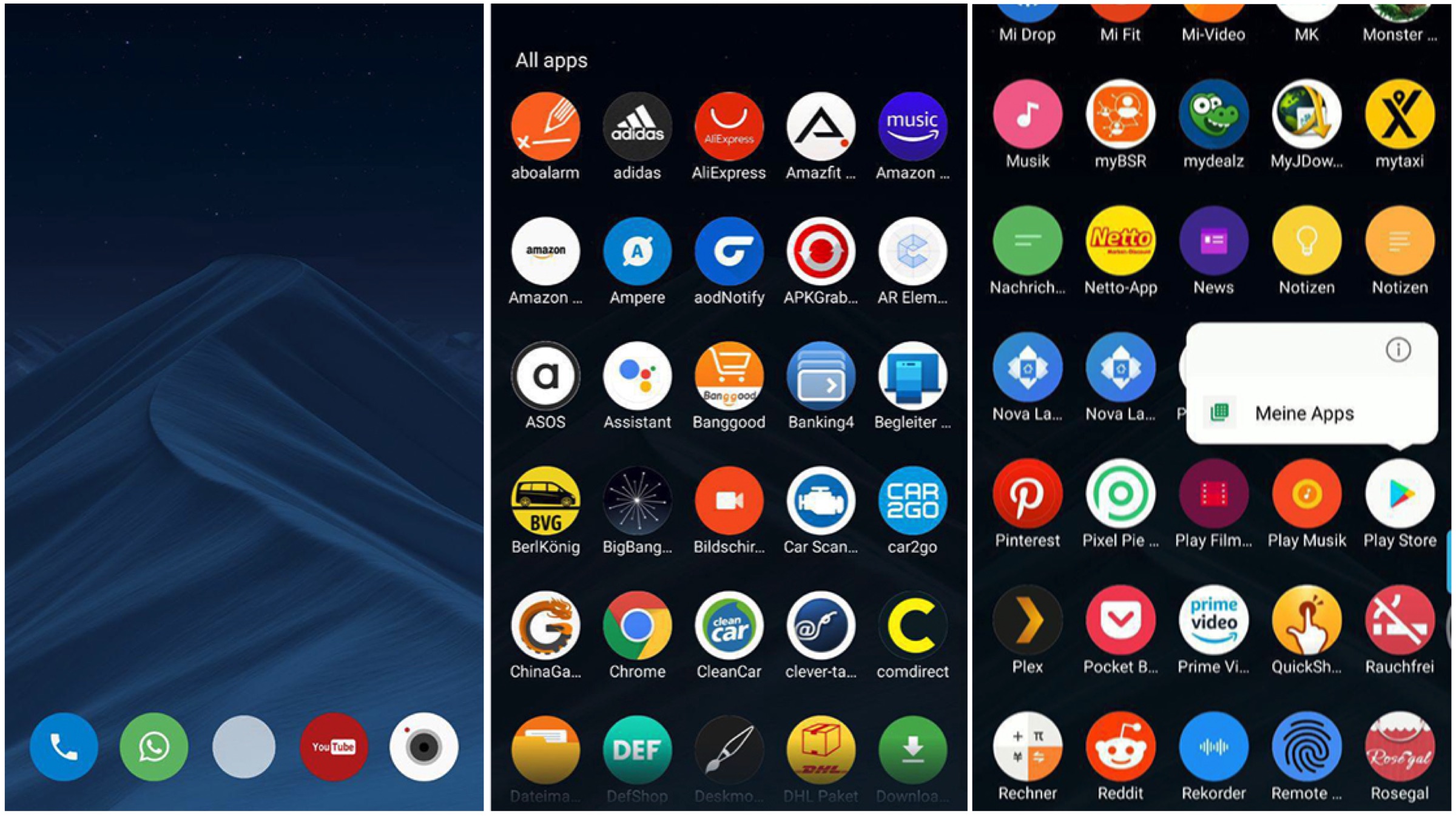
Xiaomi is one of the leading smartphone manufacturers in the world with a total market share of about 8 per cent (as of Q1 2019). This implies that there are effectively 100+ million Xiaomi devices running the MIUI. Hence, any update will impact a large number of people. According to reports, Xiaomi is planning on providing the MIUI with an app drawer which will be seen for the first time ever since its launch.
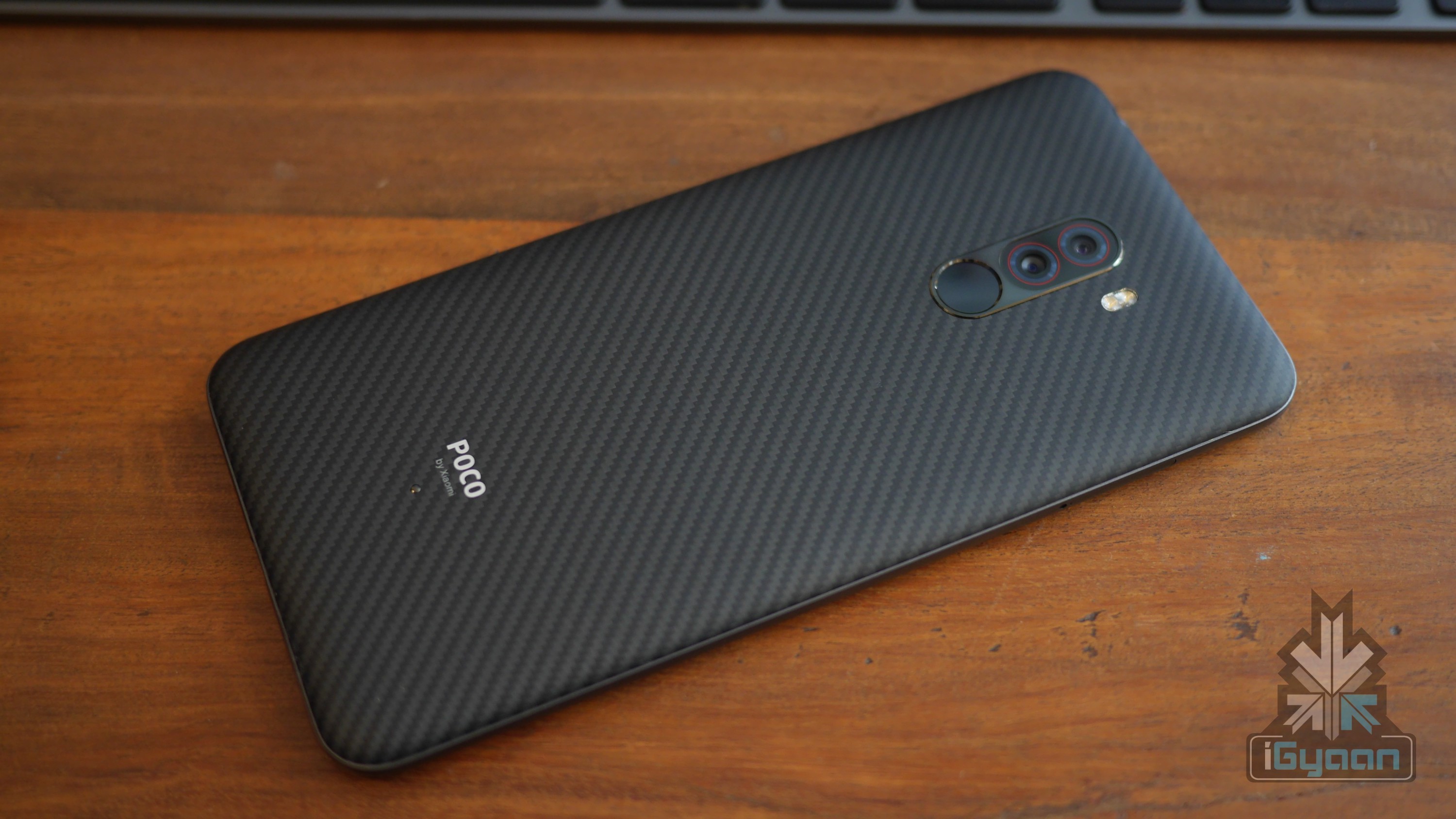
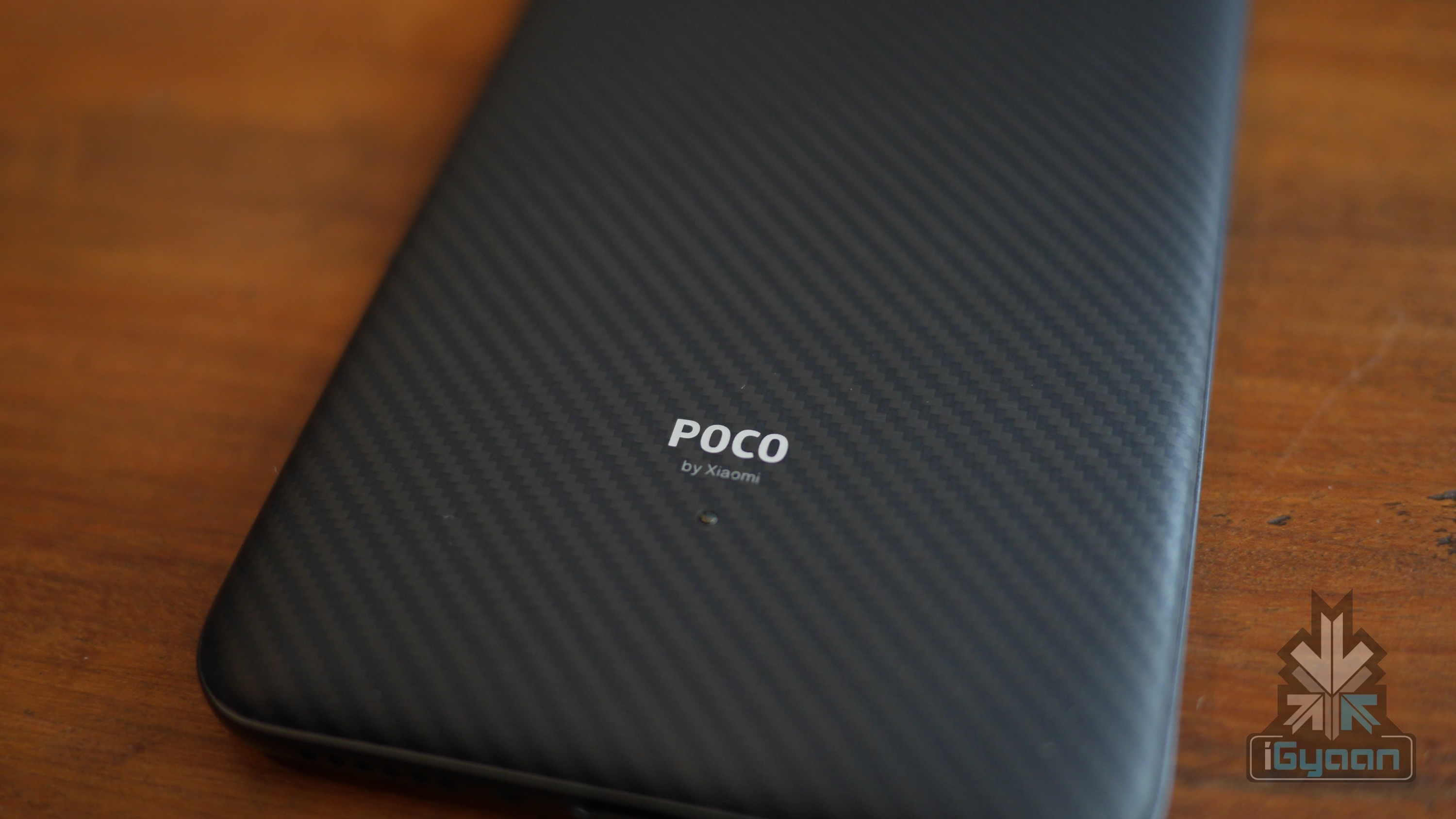
The Chinese company’s UI has always lacked the aforementioned feature, and users looking for one had to turn towards third-party app launchers. However, this may very well change soon. Xiaomi is currently testing an app drawer in its stock MIUI launcher along with app shortcuts. POCO launcher was the first to include app drawers with the POCO F1 when it released in 2018.
The latest alpha build of the Xiaomi MIUI launcher, version 4.10.6.1025-06141703, is testing out the new feature. Users will now be able to tap on the middle button in the app bar found in the bottom of the home screen to open the app drawer. This is unlike any other current gen Android device that requires a swipe from the bottom. Furthermore, this addition to the user interface will probably be very well received as more customizability to consumers is always a good deal.
MIUI in its latest version also receives a new app shortcuts feature. These are programmable commands that pop up when an app icon is long-pressed. This was initially seen with the release of Android Nougat 7.0 and allowed users to launch a specified part of the app directly. The upcoming Xiaomi MIUI launcher is in its early stage of development and testing, meaning there is still time before it will go live.
For those interested, it should be noted that due to it being in the alpha stages it is not likely to be polished or stable. Incidents like crashes during use will be probable, hence, it is not recommended to be downloaded and used by default immediately. The new launcher will be available to all that are devices running MIUI. Xiaomi has listened to its community that had longed for this feature since the POCO F1.
Instagram has steadily been growing to become one of the most prominent social media platform over the last couple of years. With user base numbers easily crossing several hundreds of millions, there will always be “bad company”. Potential hackers that seek to harm or exploit are found in every major website or social platform. However, Instagram in its bid to strengthen its defences against these parties is now making accounts safer and easier than before to recover.
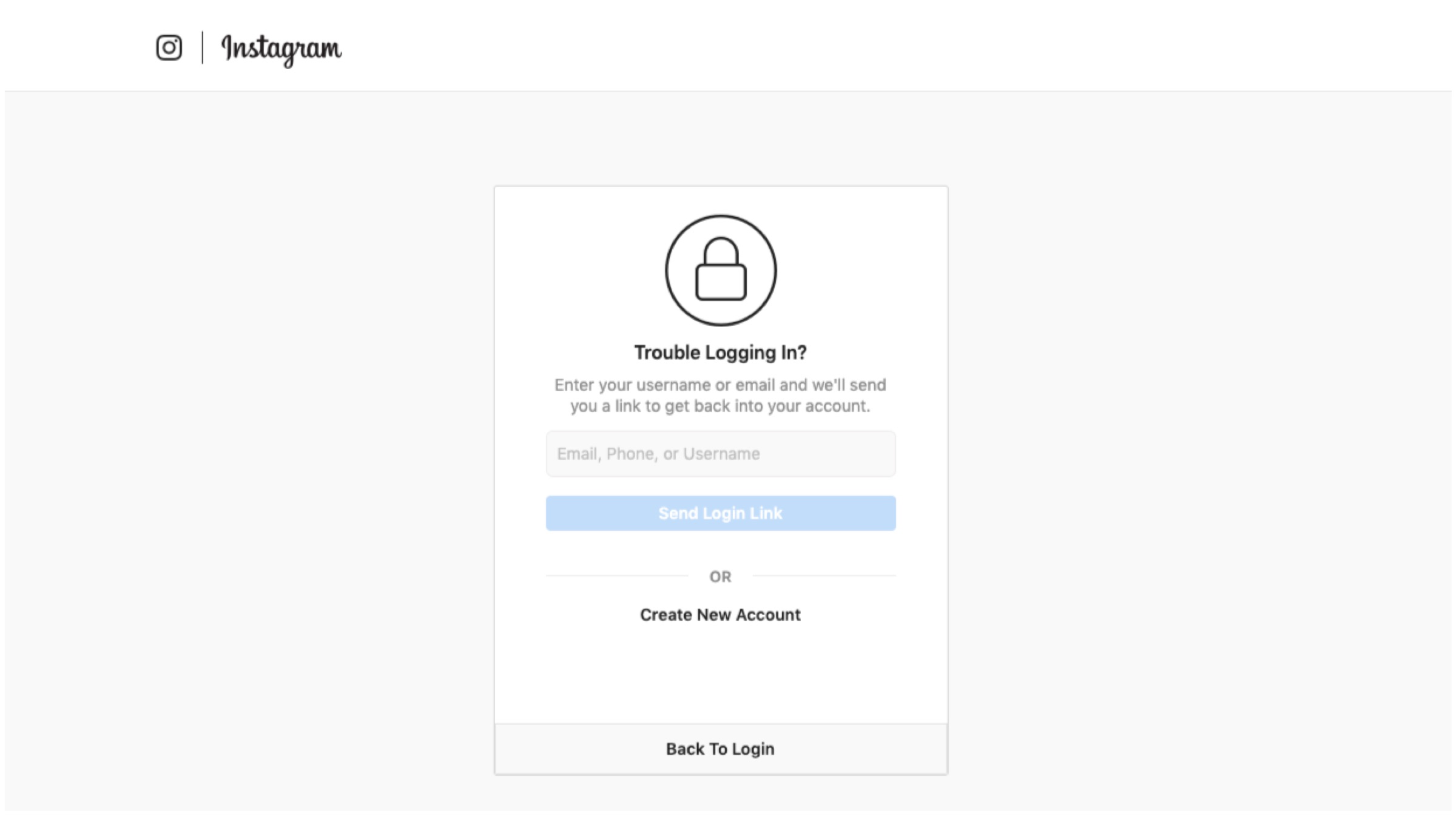
Numerous people had gone online to voice their grievances regarding their accounts that were broken into by hackers in 2018. Instagram now seeks to make the process of recovering users account easier in case of future attacks. The company is testing a new in-app account recovery process that will streamline the process while making it harder it to be hacked into.
Previously, users had to wait for an email or fill out support forms but now a new approach is being taken. The app will now ask for different types of information (like users original email address or even phone numbers). A six-digit code will then be sent on the details provided, and Instagram will thereon prevent hackers from accessing the user’s account using the email or phone number from a different device.
This method seeks to ensure users account recovery even if the thief has changed usernames and contact data. Instagram has also added a small period of time in which the original username cannot be claimed after being changed regardless of whether or not it was intended or unintended. This feature is already accessible to all Android and iOS users, however, the availability of the new in-app recovery system is still not certain.
Instagram is planning for a full in-app account recovery feature in the future without ever needing the security team. The social media giant’s security has been reportedly lax, with various exposed passwords and growing attacks on its systems occurring at frequent intervals. This new security feature cannot actually prevent all forms of hacking, but it may make it harder for hackers to take advantages of vulnerabilities in the recovery system that is currently live.
With the increase of fake and manipulative images on the internet, online frauds and scams have been rising in number. One of the most widely used image editing applications, Adobe Photoshop may receive a feature soon that will enable users to uncover any changes that have been previously made to images. This will be enabled with the help of Artificial Intelligence or AI.
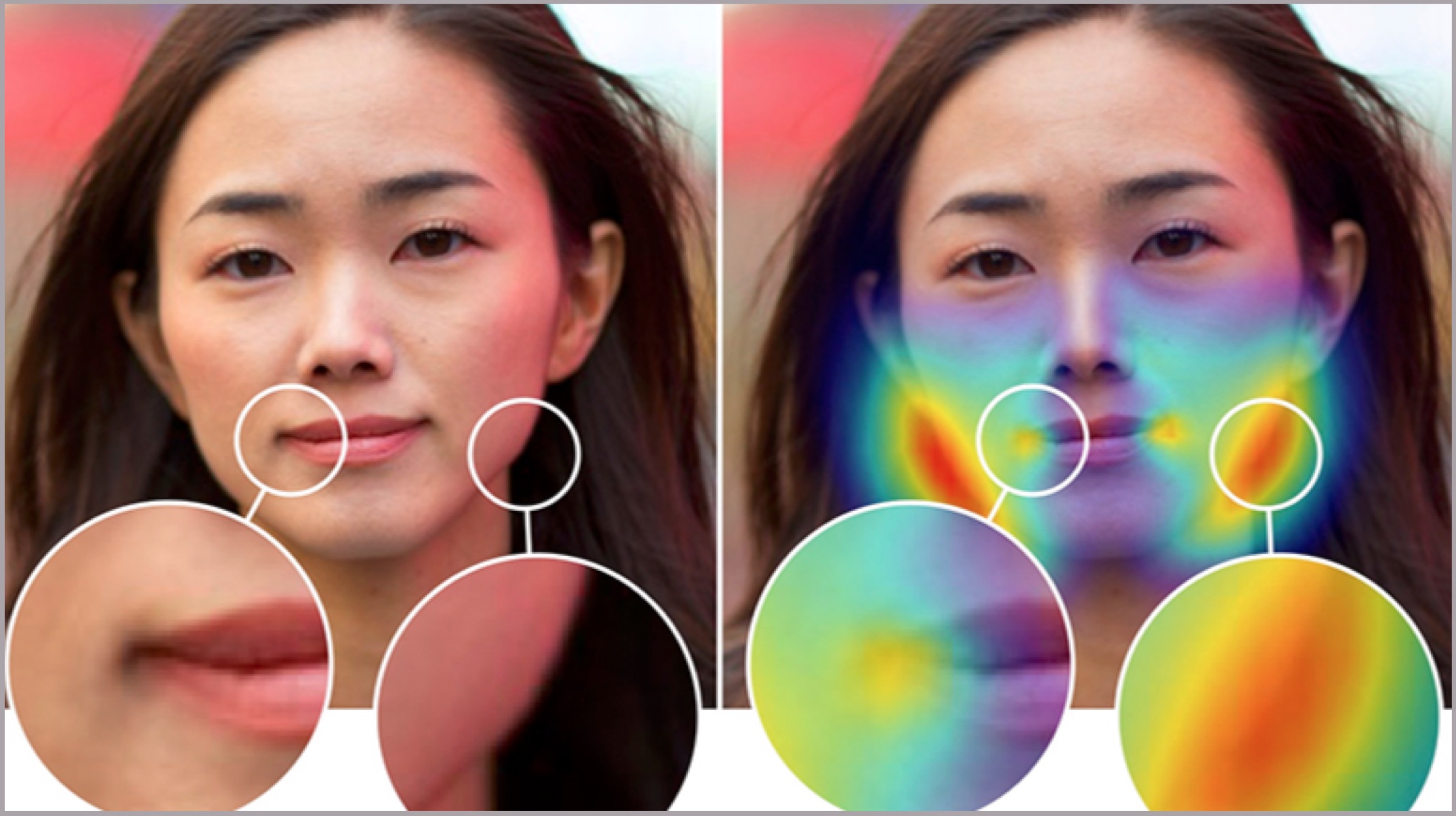
Adobe researchers collaborated with UC Berkeley students to train AI so that it can detect facial manipulation in images edited with Adobe’s Image editing software. This will be made possible with the help of Photoshop’s ‘Face Aware Liquify’ feature. It uses the same technique which is used in forensics to match the faces in the database with real-time images. This technique, once incorporated, will be a major step towards democratising image forensics.
Previously, Adobe research laid its emphasis on splicing, removal and cloning. On the other hand, Adobe Photoshop’s new Face Aware Liquify feature focuses more on detecting modifications to facial features, for instance, facial expressions. As per Adobe, the three main terms that are considered while researching the images are as follows:
Can the image detection tool detect any form of manipulated faces?
Can that tool decode the specific manipulation made to the image features?
Can the changes be reversed towards the original image?
With the implementation of deep learning, researchers developed a huge training set of images, which was then scripted with the help of the Photoshop. Noteworthy, the image data set was created by scraping thousands images off the internet. Facial warping and other distortions were applied to the images, which were easily detected by the AI. This feature will greatly help restore the faith of people in Social media, the company states. Profiles can be more accurately analysed with the new feature that may be integrated with Adobe Photoshop in the upcoming updates.
Over the last few Google Chrome updates, build 73 was essentially the one that introduced a notable feature in the form of dark mode. Google Chrome builds 74 and 75 only focused on nominal aspects such as bug fixes and security. The tech giant, however, in a rather quiet manner added key new features that will make anonymity more easily achievable for users browsing online.
One of Google Chrome’s developer had conveyed that the browsers Incognito mode (or Private more) had always been detectable by a website. Basically, certain subscription-based online channels that had their revenue tied to the users that visit the website could ascertain whether or not it was the same person logging in from an anonymous private mode. This allowed such organizations to charge the user and disallow them from availing the initial first free entry over and over again. The aforementioned ability is now being taken away from developers for furthering user anonymity and privacy when browsing on Incognito Mode.
Chrome Incognito mode has been detectable for years, due to the FileSystem API implementation. As of Chrome 76, this is fixed. Apologies to the "detect private mode" scripts out there. ? pic.twitter.com/3LWFXQyy7w
Google’s Chromium blog post had another major focus, to have its latest Chrome builds putting more emphasis on phasing out Adobe Flash. The software already has been blocked by numerous major browser in different degree and manner for years now. With the adoption of the build 76 in Chrome, the browser takes new strides in keeping clear of it. Adobe Flash is now turned off by default in Google Chrome, including all of the individual flash items alongside the software. Interested users can discover this setting in the Beta build by going to “chrome://settings/content/flash” and finding the ‘Ask First’ settings turned off beforehand.
Additionally, Google Chrome now features a more enhanced version of the coveted Dark mode. Furthermore, web developers now have the option to program their sites to automatically switch to a darker version of their websites when a user, with dark mode, visits. Chrome version 76’s stable build is scheduled to be available on the 30th of July 2019.
Whatsapp is widely regarded as one of the most widely used Instant messaging applications in the world. Launched in the year 2009, the application was later acquired by social media giant, Facebook in the year 2014. As per latest reports, Whatsapp will start taking legal action against users who have a habit of sending way too many messages. This step is being taken to curb the amount of fake news that is being spread via the application.
Previously, the company owned rights to ban users if the terms and condition policy was violated in any manner. However, incidents in the past have indicated that people tend to act instinctively upon receiving news via the application. In a survey, it was discovered that almost 52 percent of respondents received news and stories via WhatsApp. The content shared via the application has supposedly led to murders, extortions and even unwanted uprisings amongst the inhabitants of the country.
The company had previously introduced a “forwarded” tag to messages which had been forwarded multiple times. However, 7 December 2019 onwards, any user who indulges in “bulk or automated WhatsApp messaging” can be sued, the company states. Whatsapp states that the sole motive of the application was to act as a direct link between people and organizations (via the Business app), hence any kind of spam will not be tolerated. This step will enable the organization to assert direct control over its users, even if it concerns data that is solely accessible by the company itself.
The update can be seen on Whatsapp’s page under “unauthorised usage of WhatsApp”, which clearly states that the Facebook-owned instant messaging application is committed to developing its structure around the private nature of data transmission. Especially during elections, a rogue message forwarded by a group of people can spark controversies and biased opinions. This decision by the American company will serve as an effective check on people who tend to forward/send messages in bulk amounts.
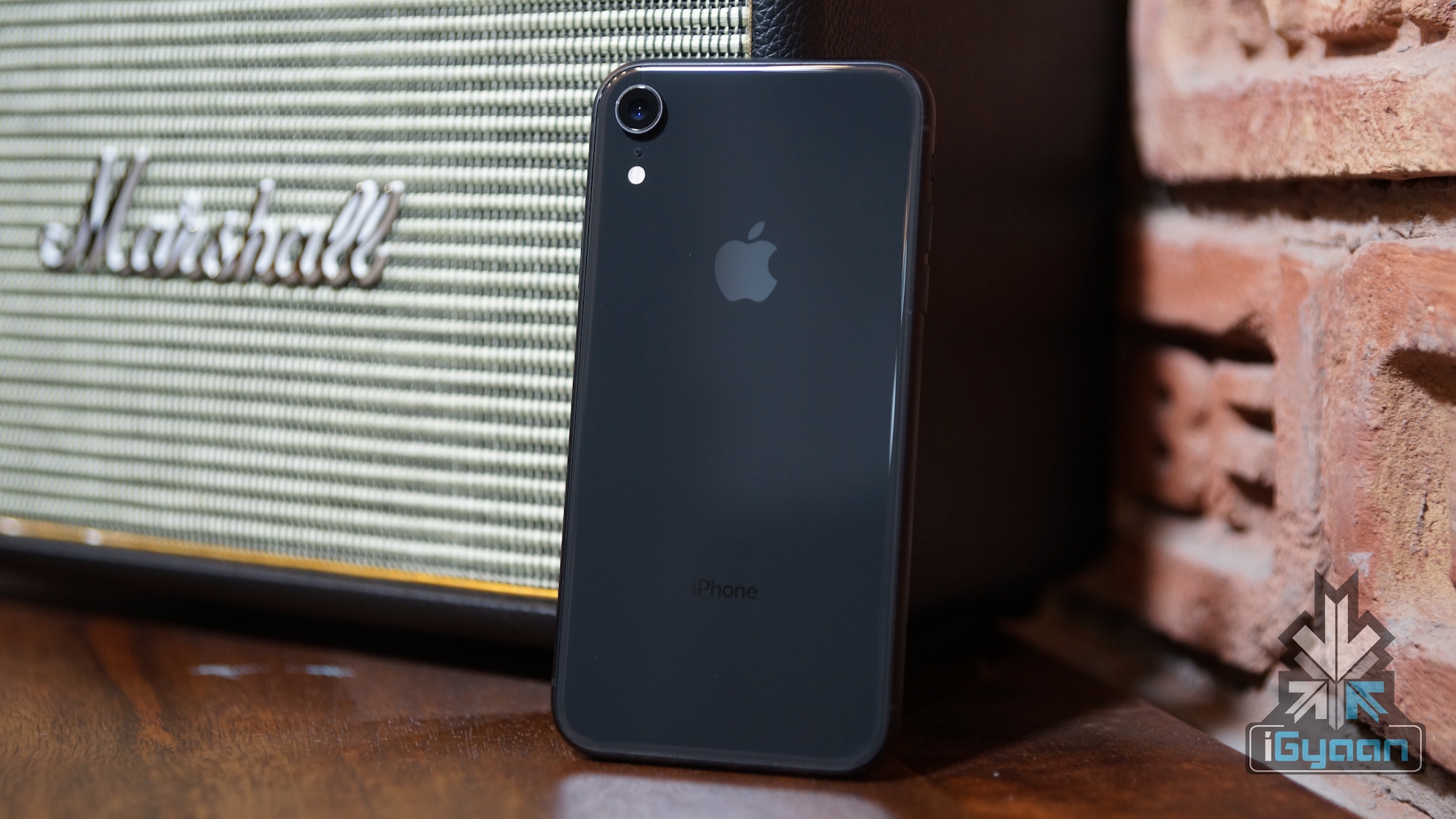
Apple, one of the most popular smartphone brands in the world is preparing for the launch of its latest handsets to the global audience. The American company is reported to release its newest generation of flagship devices (iPhone 11, iPhone 11 Max and iPhone 11R) in September 2019. Various leaks online have been risen up, showcasing numerous renders, specifications, and features before the launch of the upcoming iPhones. A new report points at the Apple iPhones sporting a Google Pixel like Night Sight camera feature.
According to newly leaked information, the upcoming smartphones will have a dedicated ‘night mode’ camera feature. Night Mode helps the camera capture better pictures in environments that are not optimally illuminated. The leak reports that the feature can be manually toggled by the user but the device will also be able to automatically activate by detecting light density. This report is yet to be confirmed, however, looking at the adoption rate of other companies it is a feature Apple would probably incorporate in its new generation iPhone.
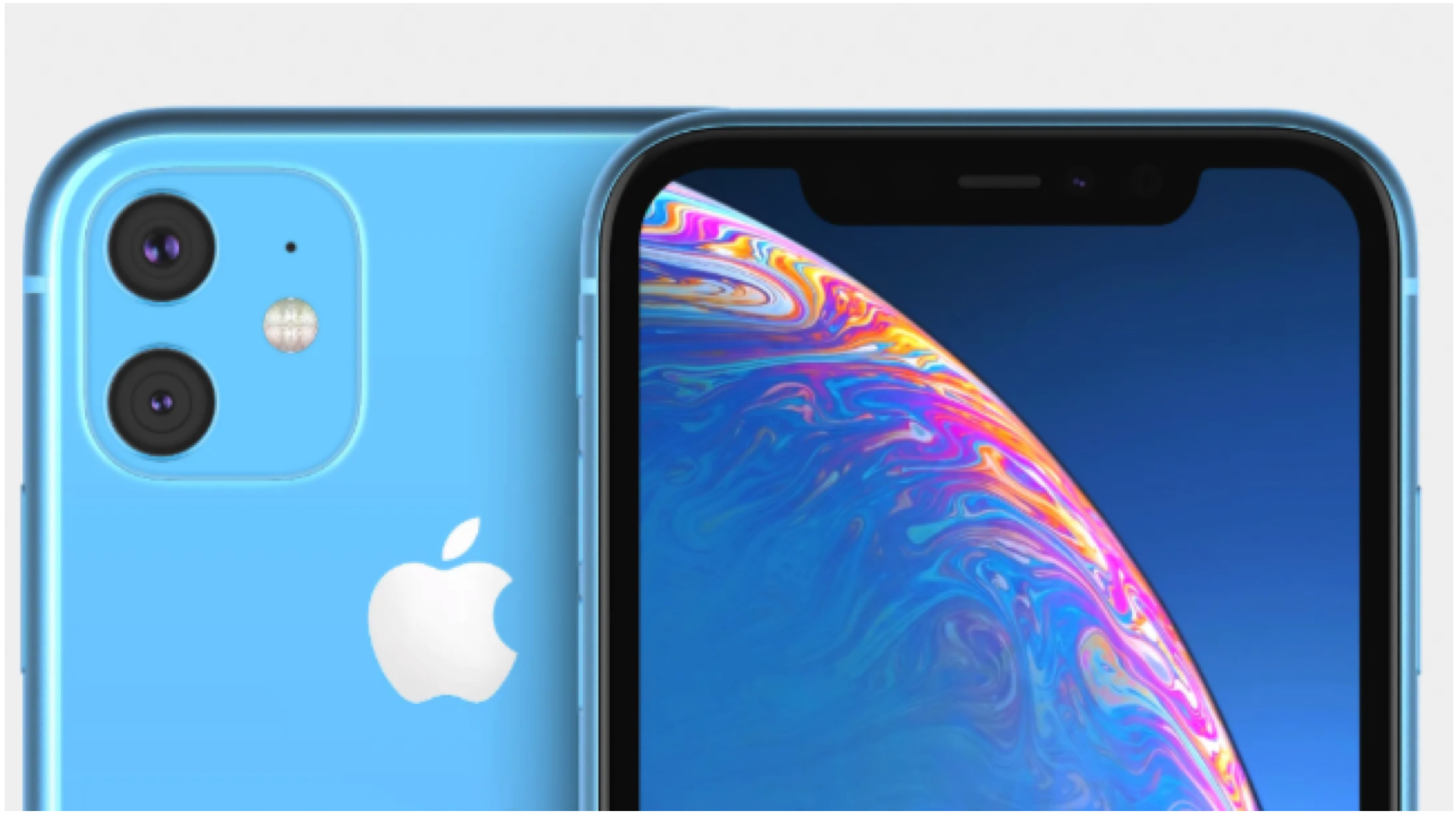
Apple’s latest iPhones have been seen in renders sporting a triple camera module setup, while the iPhone 11R may receive a dual camera sensor at the back. Hence, a camera mode for better low-light photography may not be far off. Google and Huawei have arguably one of the better results with the night mode feature, but the report also claims Apple’s version of the aforementioned feature will outperform the competition.
Apple, with the latest iPhones, is placing more emphasis on the camera hardware and software upgrades. This will be important for the company facing neck-in-neck competition in the smartphone industry. Although the company has lagged behind in the overall global market, Apple is still the most popular smartphone brand in the US. Faster adoption of trending innovation will only widen the company’s foothold within the mobile industry.












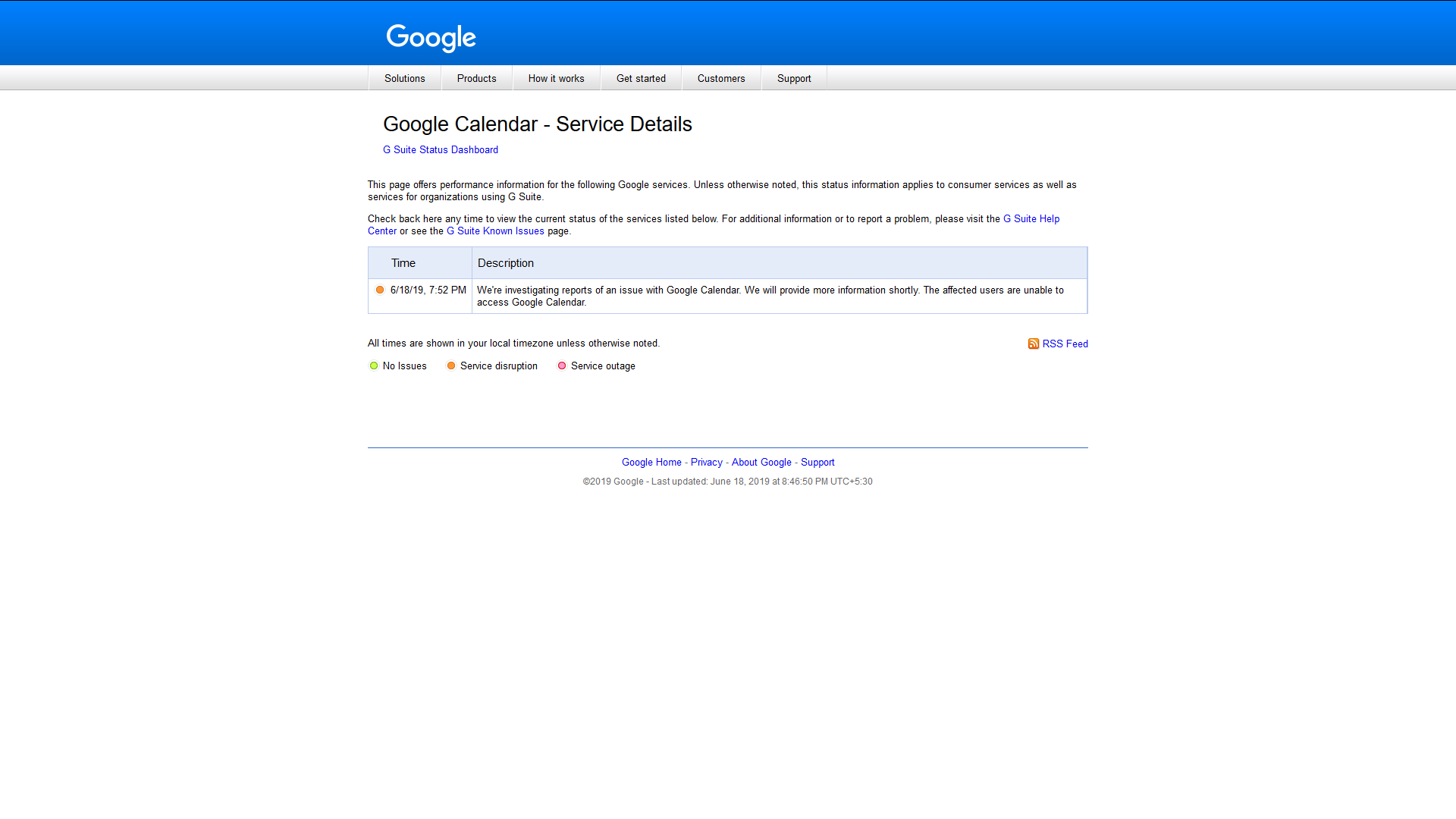 Many users who have been trying to access their Google Calendar schedules at calendar.google.com are facing issues, since they are greeted with an error. First reports started pouring in at about 7:30pm IST (10am EST). The majority of Canadian and US population (in addition to other countries) are unable to navigate to the website since then. The company has confirmed details regarding the service outage via its G Suite Status Dashboard, which can be viewed by clicking