Tag: report

  • Xiaomi Is The Number One Smartphone Seller In India For Q2 Of 2019

    Xiaomi Is The Number One Smartphone Seller In India For Q2 Of 2019

    India being one of the most populated country in world, also has a massive smartphone user base. The research firm, Canalys has shared an India bound sales report that exhibits the sales performance of different smartphone OEMs in the country. 

    According to a report published by Canalys, Chinese smartphone maker, Xiaomi has once again come out on top as the most selling smartphone maker in India for the Q2 of 2019 (April to June). Noteworthy, the position has been held by Xiaomi since 2017 after it surpassed Samsung that held the postition for an extended period of time.Most Selling Smartphone Brand India Q2 Of 2019
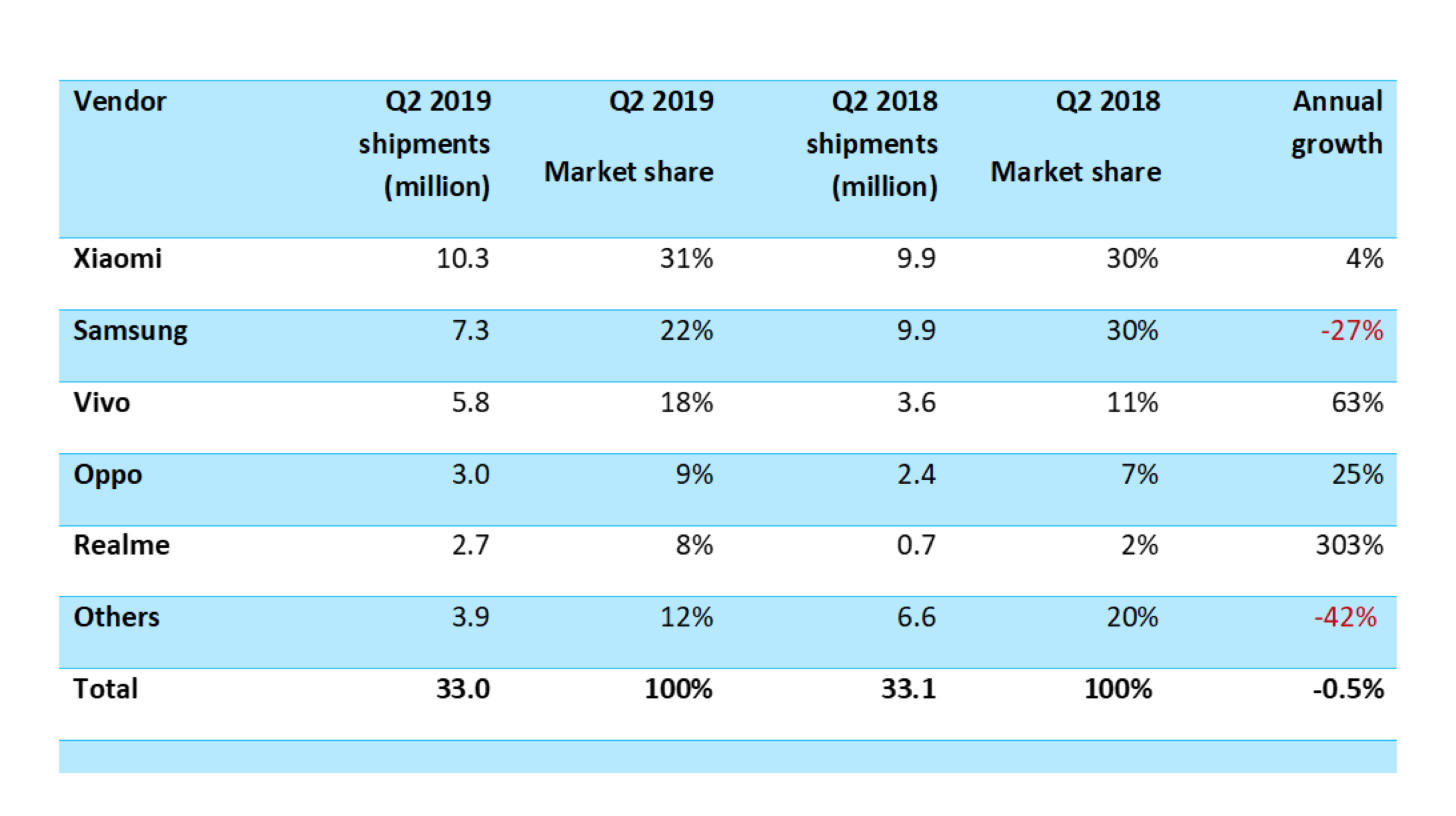
    In terms of sales figures, Xiaomi sold 10.3 million (1.03 crore) smartphones in the Q2 of 2019 which is 4 percent higher in contrast to its yesteryear’s comparable quarter. 

    On the other hand, the Korean giant, Samsung secured the number two position as it sold 7.3 million smartphones in the same time period. However, in comparison to Q2 of 2018, overall shipments have slumed by 27 percent which is sharp downfall.  

    The third postion in list is held by Vivo which surprisingly has registered extraordinary growth due to its strong offline penetration. The company sold 5.8 million smartphones in Q2 of 2019 which is 63 percent higher in comparison to previous years corresponding quarter, in which, it sold 3.6 million units. Most Selling Smartphone Brand India Q2 Of 2019
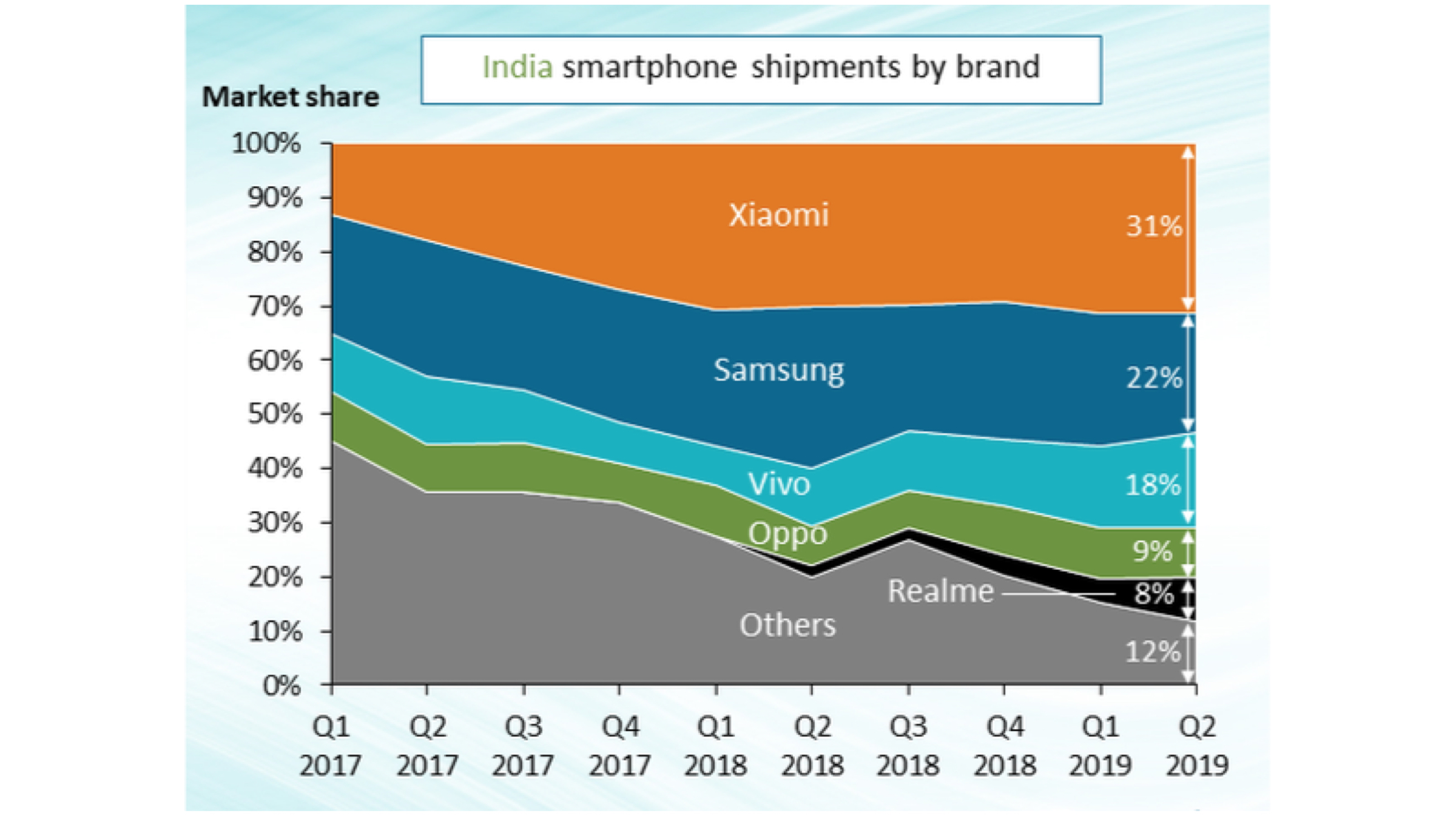
    Vivo’s sister company’s Oppo and Realme also showed notable growth which hold the number fifth and sixth spot in the list. Oppo saw a growth of 25 percent YoY for Q2, while the newly incorporated, Realme saw exceptional growth of 303 percent YoY. 

    Last but not the least, other brands collectively that include Apple, Micromax and many more saw a sales dip of 42 percent in comparison to the year 2018.

    Also Read: HTC Wildfire X Listed On Android Enterprise Website, Expected To Launch Soon

    Overall, the Indian smartphone industry saw a negative sales growth of 0.1 million smartphones in comparison to Q2 of 2019 and Q2 of 2018. Nevertheless, the all inclusive sales are 33 million or 3.3 crore which is an enormous figure. 
  • Xiaomi Leads The Wearables Industry With 21 Percent Market Share

    Xiaomi Leads The Wearables Industry With 21 Percent Market Share

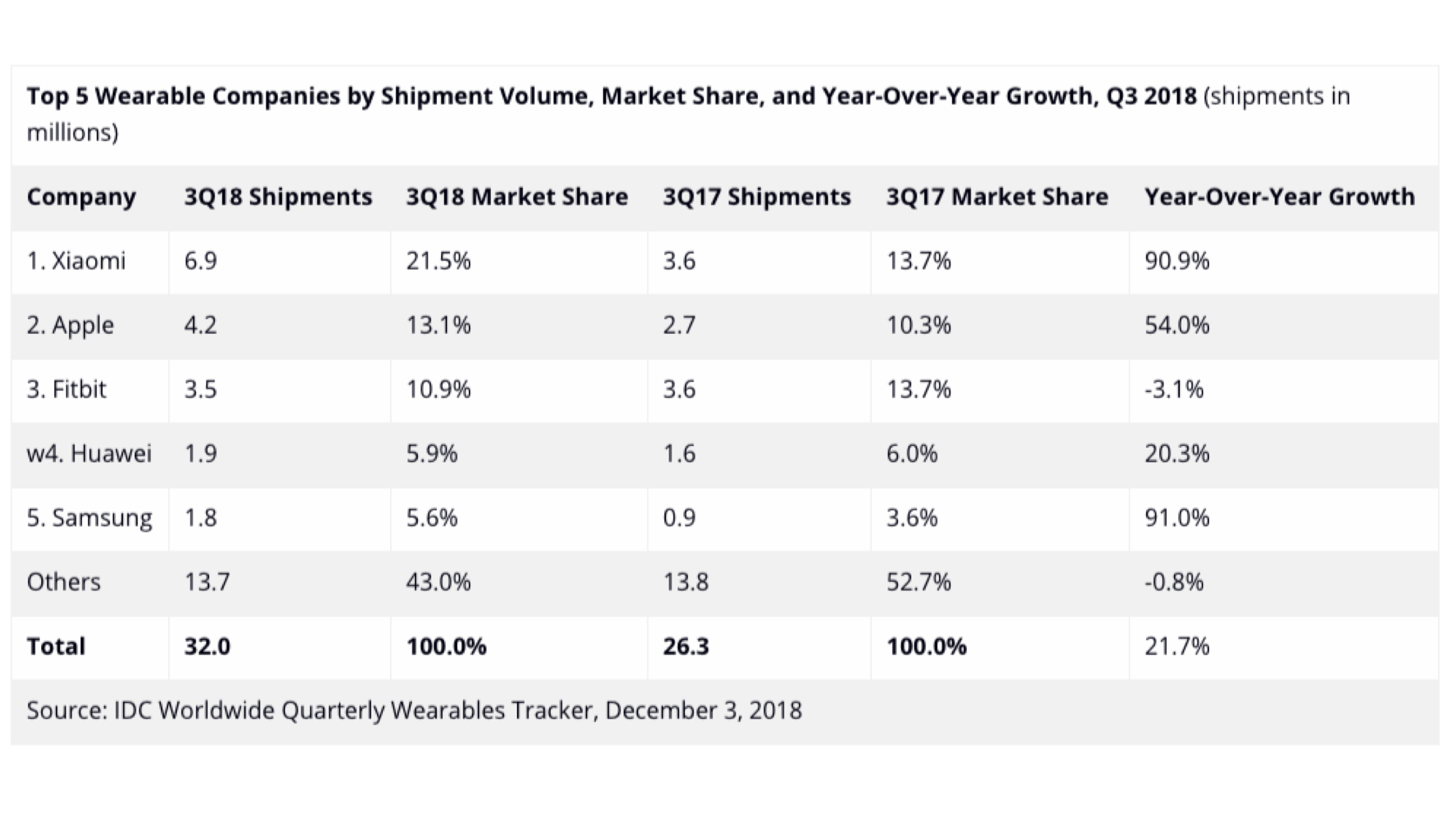
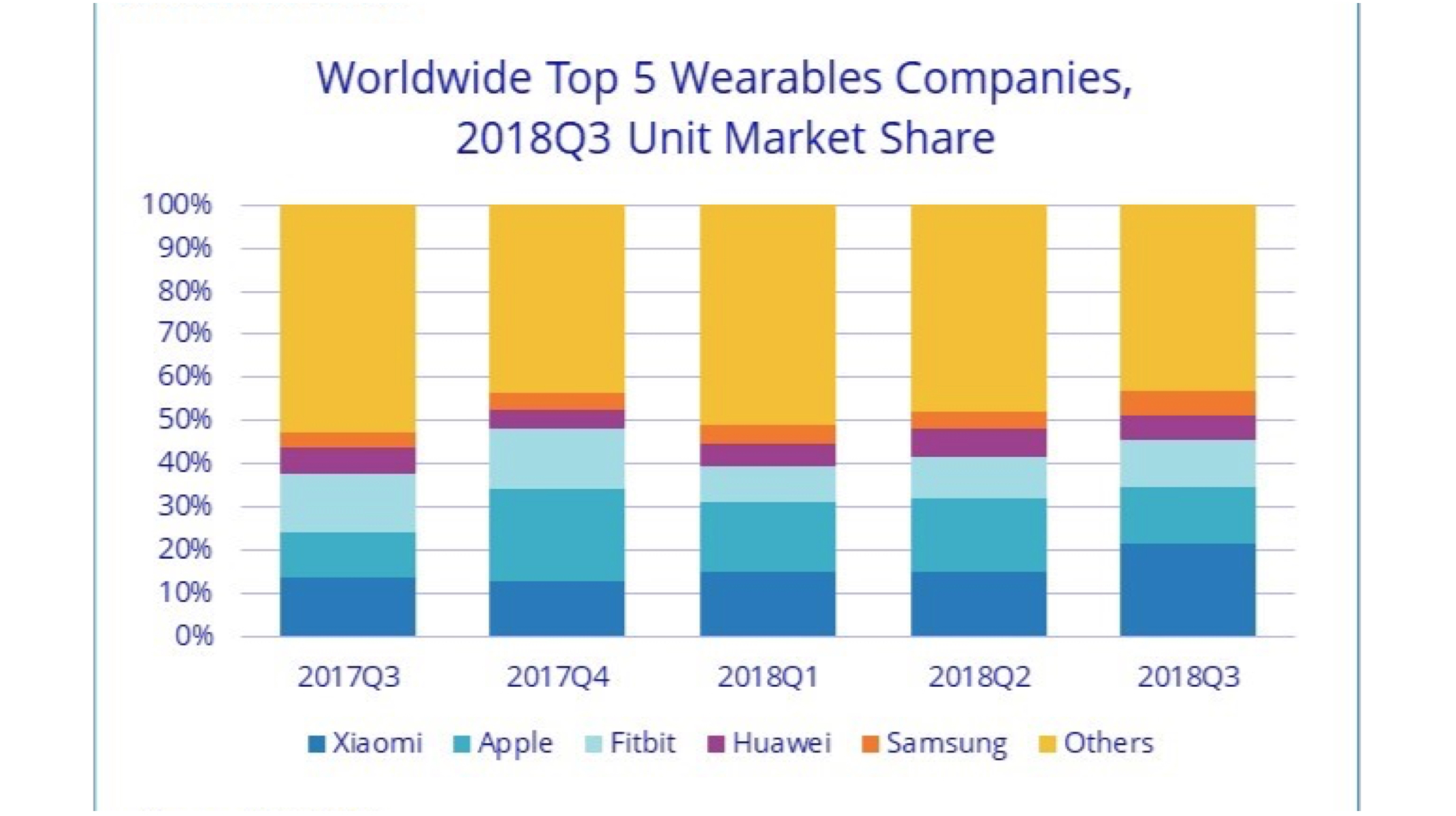
    IDC short for International Data Corporation has revealed that global shipments of wearable devices have grown significantly YoY from the year 2017 to 2018. The biggest gainer in market share and the top spot for the maximum number of devices sold is held by Xiaomi. The full chart for shipments from different companies can be found below.

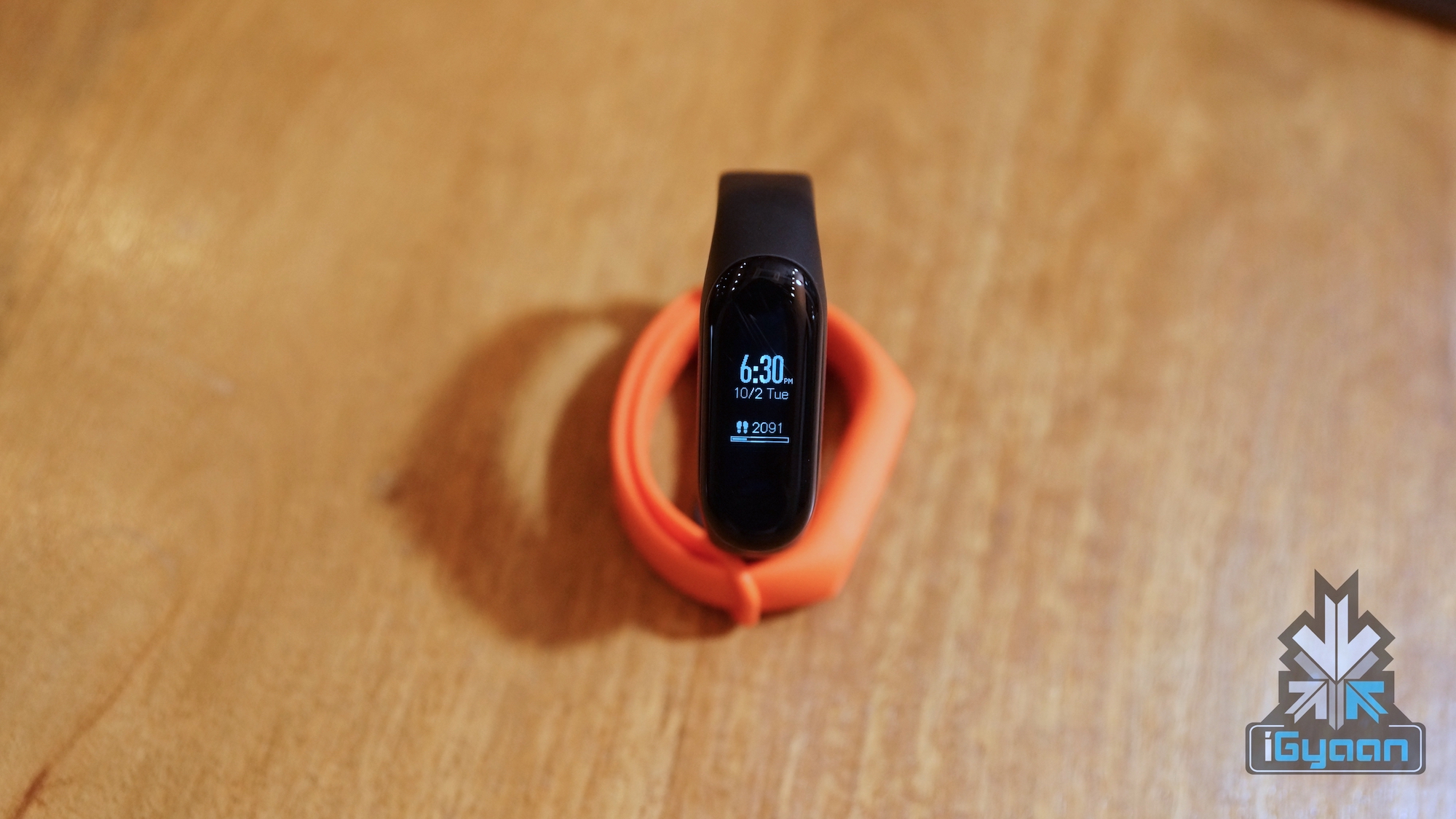
    According to the report published by IDC, Xiaomi sold 6.9 million wearable devices in Q3 of 2018, up from 3.6 million in Q3 of 2017. Major contributors in Xiaomi’s portfolio is the Mi Band which is an affordable fitness band. Noteworthy, Xiaomi’s stake grew from 13.7 percent to 21.5 percent which is significant growth. Apple Watch Wearable

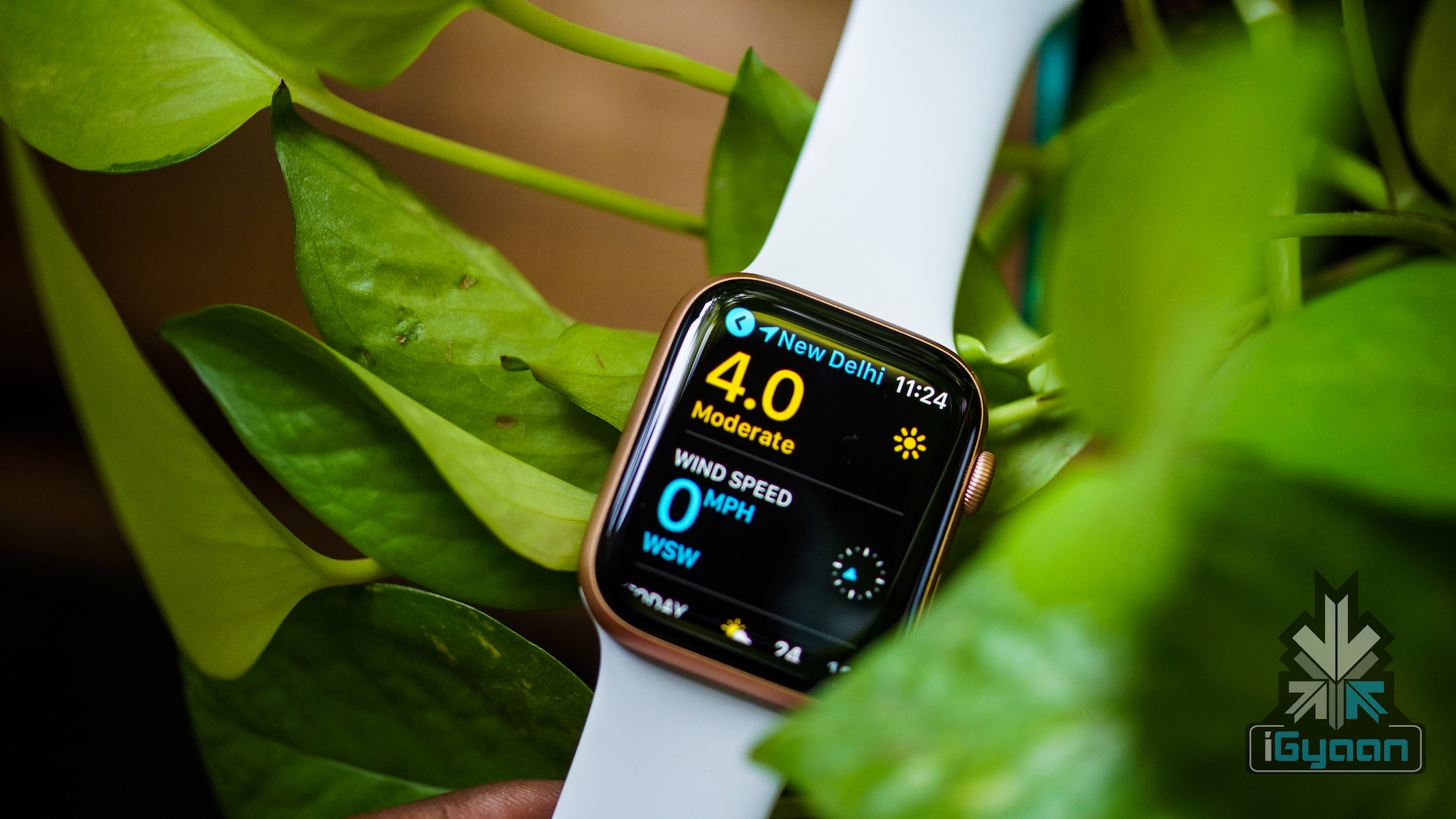
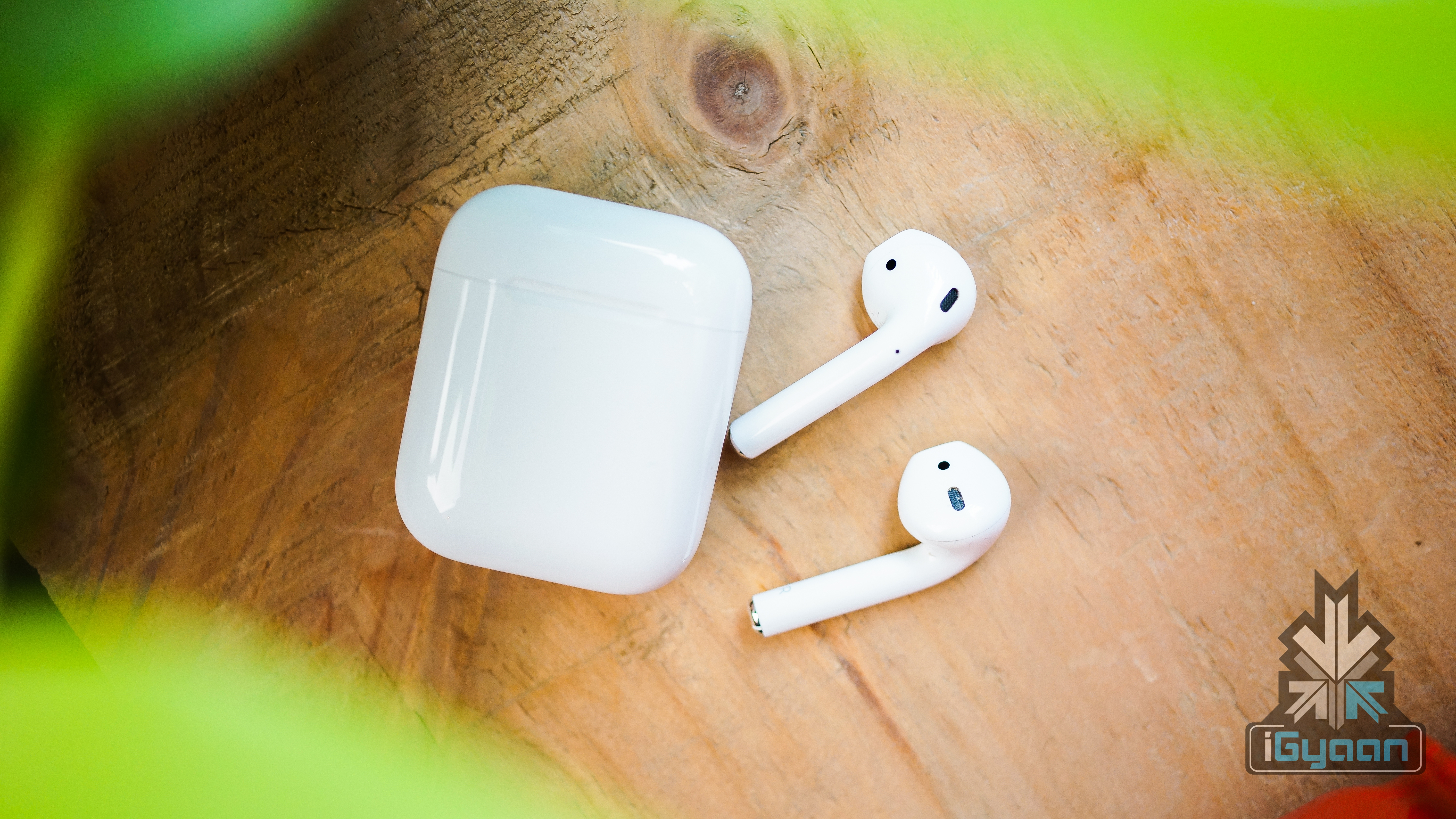
    Following Xioami in the list is the American giant, Apple which sold 4.2 million smart wearables in Q3 of 2018. The devices in Apple’s portfolio include the Apple Watch and Apple AirPods. In comparison to Q3 of 2017, Apple saw close to 3 percent growth in the overall marketshare which grew from 10.3 percent to 13.1 percent. IDC Wearable Report

    Coming in at number three is Fitbit whose sale fell slightly YoY. In the Q3 of 2017, the company sold 3.6 million wearables, whereas in Q3 of 2018 it sold 3.5 million units. The overall YoY growth for the company fell over 3 percent. In Q3 of 2017 Fitbit had a market share fo 13.7 percent which fell to 10.9 percent in third quarter of the following year.

    Other companies including Huawei and Samsung also sold a considerable amount of wearable devices in two years. Both companies saw an upward trend in terms of sale. Noteworthy, the market share of Korea based Samsung grew 91 percent between the two time frames. The company sold 0.9 million wearable devices in the third quarter of 2017 which double to 1.8 million for Q3 of 2018.

    Also Read: Huawei Cancels MateBook X And E Over US Trade Ban

    Conclusively, the data reveals that the demand for wearable devices is seeing rapid growth and 2019 is expected to translate into the charts climbing even higher. 

  • iPhone X Was The Most Selling Smartphone In 2018 Reveals Report

    iPhone X Was The Most Selling Smartphone In 2018 Reveals Report

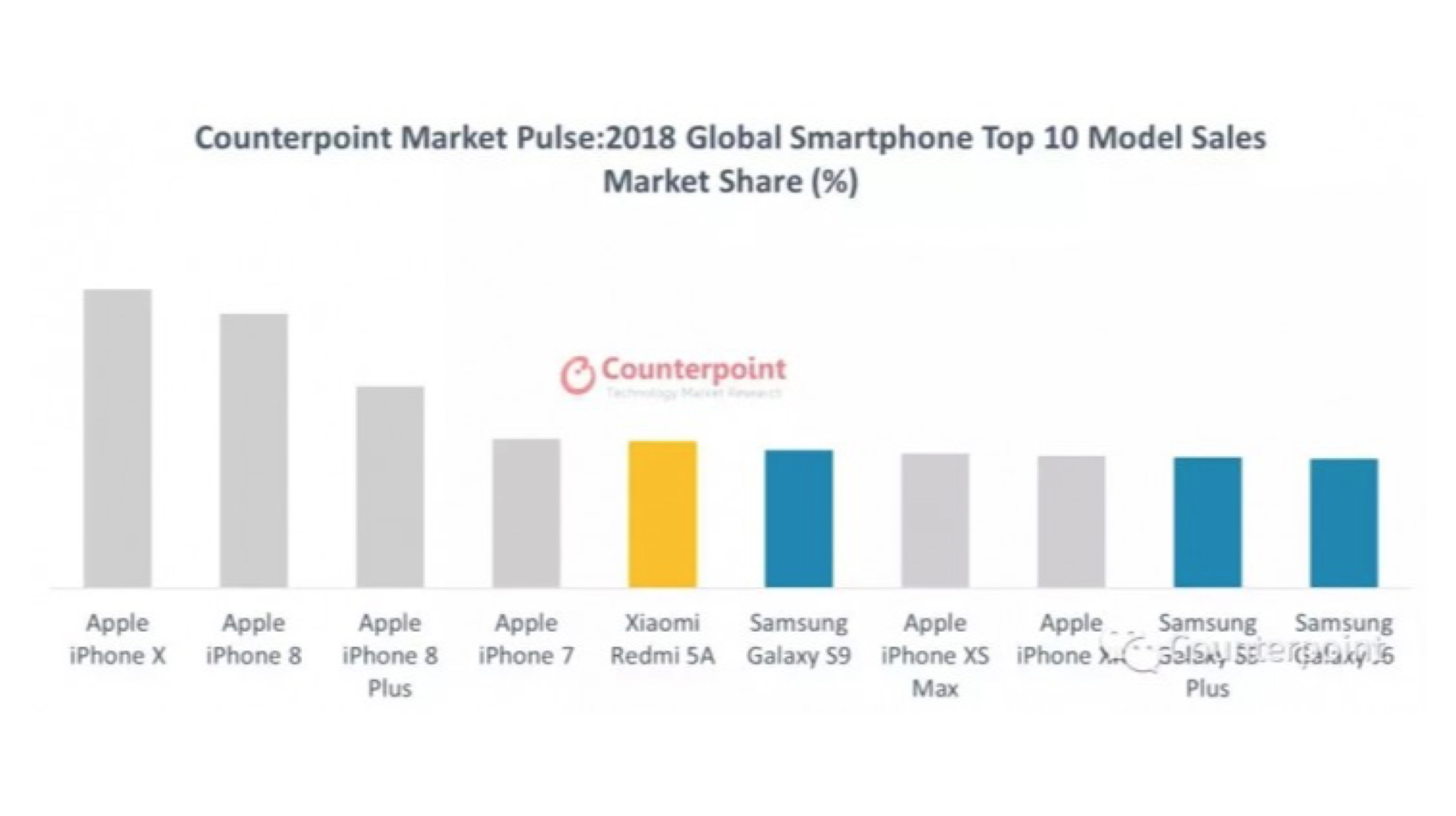
    Counterpoint is a market research company dedicated to delivering intelligence on technology trends across the globe. The company has freshly released its “Counterpoint Market Pulse 2018” report which reveals interesting findings. The report details the top-selling global smartphones for the year 2018. Surprisingly, the list is dominated by handsets from Apple which secure six positions out of ten.

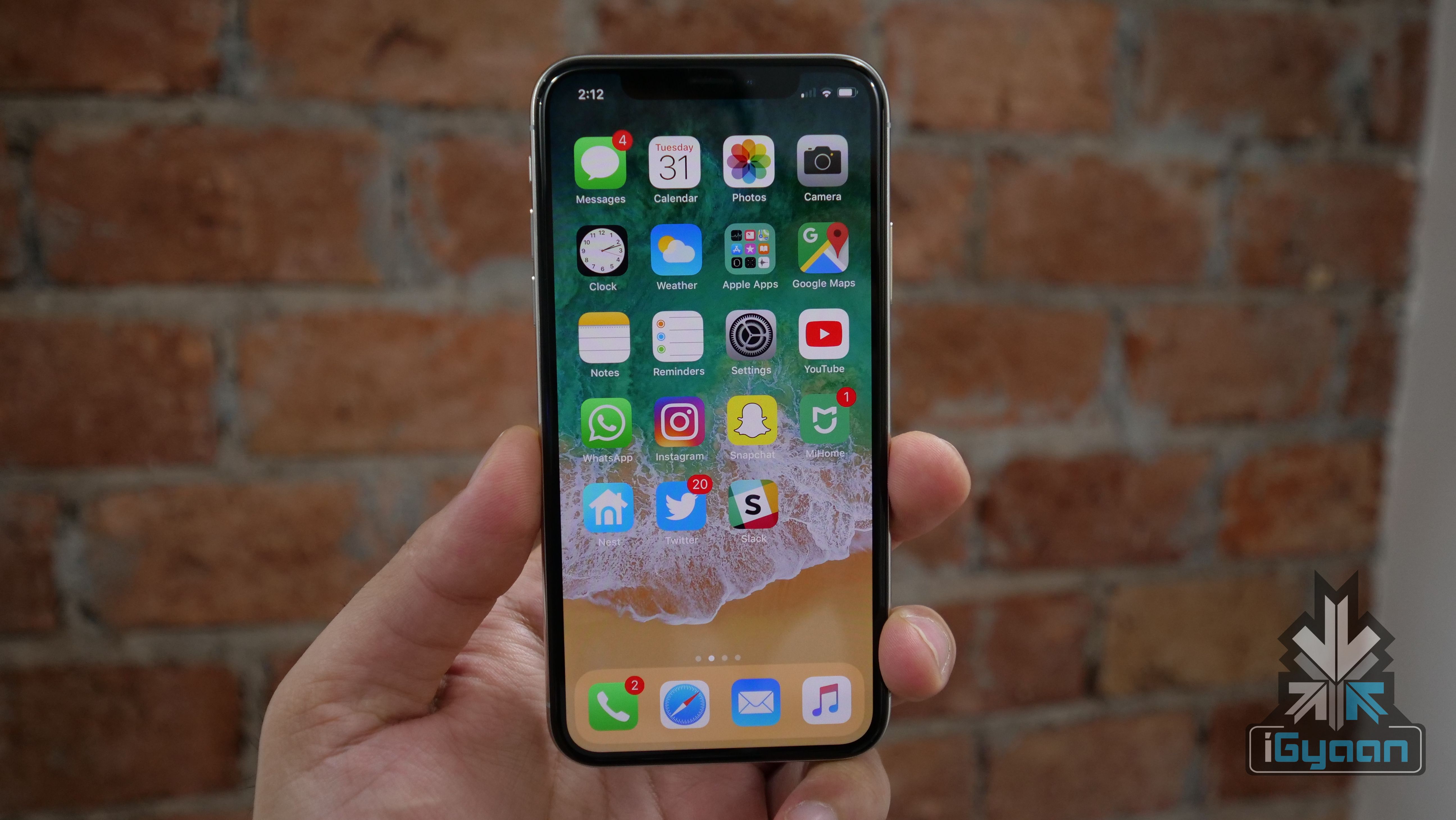
    Astoundingly, the “Counterpoint Market Pulse 2018” report is topped by Apple’s iPhone X which was launched in the year 2017. The former is followed by three other smartphones from Apple which include iPhone 8, iPhone 8 Plus and iPhone 7 in respective order. Even though the report does not provide exact sales figures of each smartphone, it states that the top three iPhone models have combined sales figures close to 100 million.

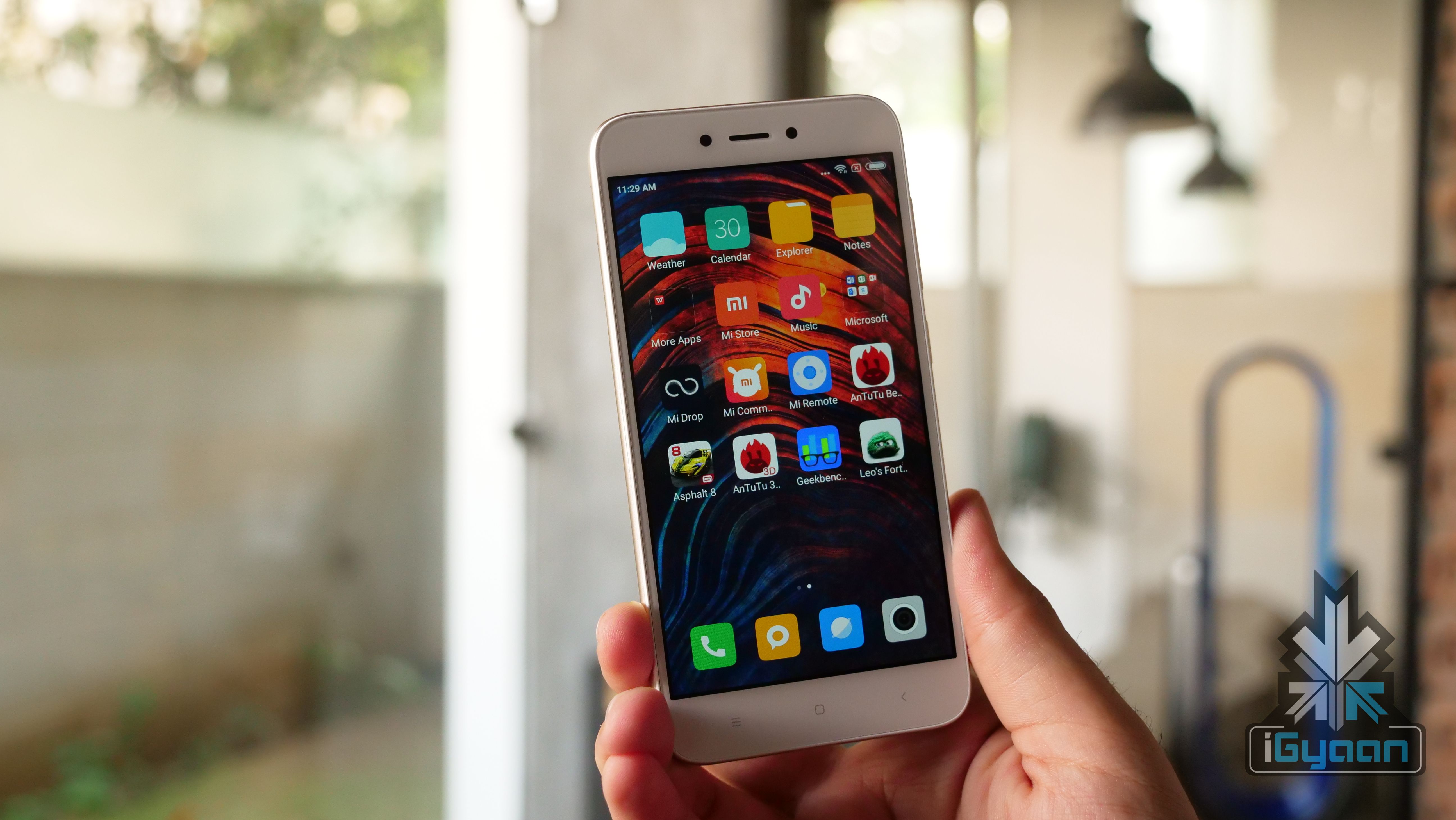
    Interestingly, the number five spot in the report is secured by the budget-oriented Redmi 5A from Xiaomi. Noteworthy, the results also register that the former was the most selling Android smartphone from yesteryear which is closely followed by Samsung’s flagship grade Galaxy S9. Albeit, Samsung’s smartphone sales have been plummeting over the last couple of years, Galaxy S9 was able to perform well in terms of sale for the Android side.

    Once again, Apple smartphones with iPhone XS Max and the iPhone XR secure the seventh and eighth positioning in the report. Running further down the list, Samsung’s 2017 flagship Galaxy S8 Plus and the mid-range Galaxy J6 take the ninth and tenth position. 

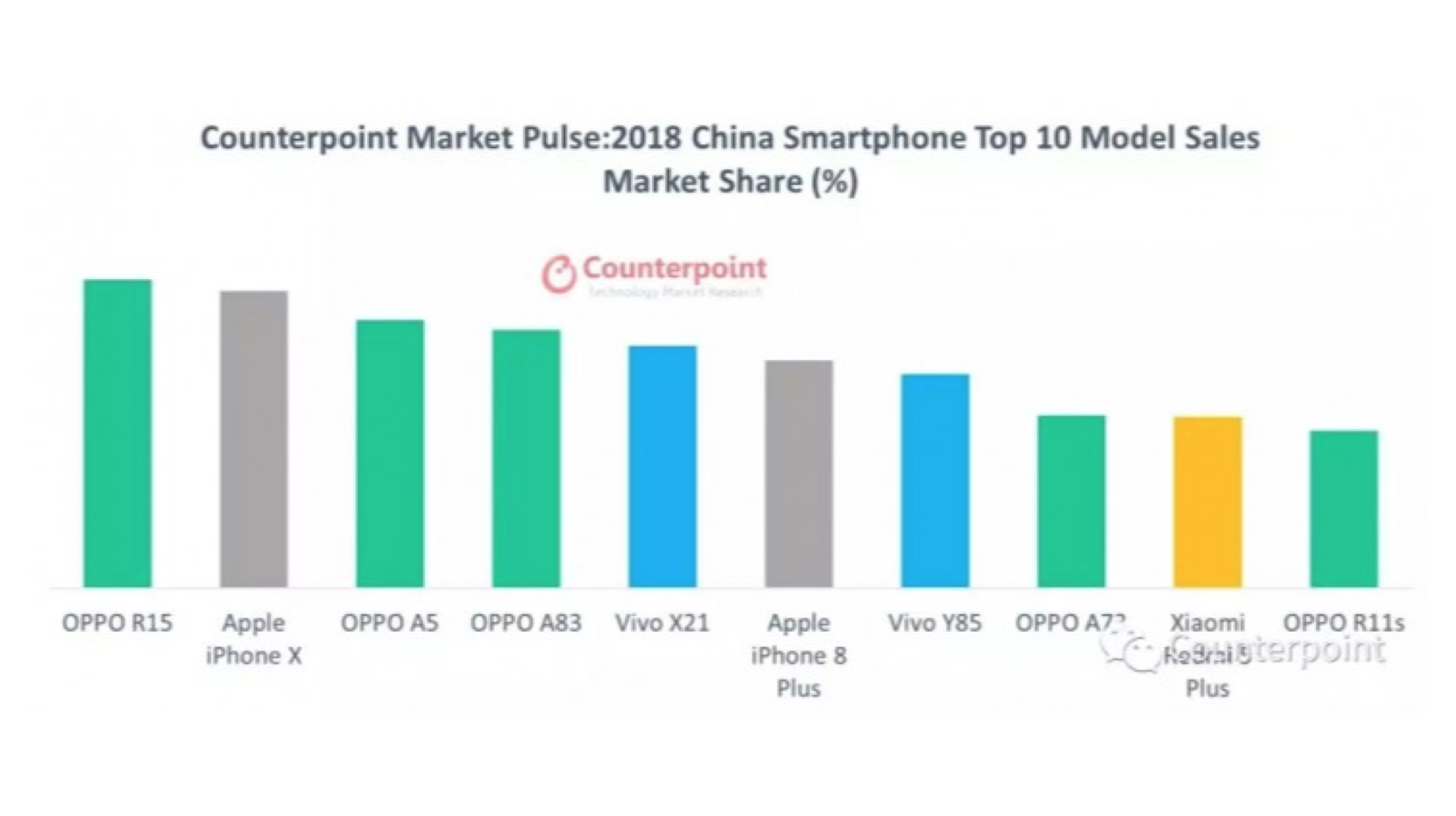
    The research company also provided data about top selling smartphones for China in 2018. Unlike Global results, top-selling smartphones in China are mainly dominated by local brands Oppo and Vivo which are both owned by BBK electronics. Notably, the iPhone X is also able to stabilise the number two position even in China. The complete list of most selling smartphones can be found above.

    Also Read: OnePlus Bullets 2 And Warp 30 Car Charger Leak Ahead Of Official Launch

    All in all, it seems Apple smartphones are able to maintain a mojo in the Global market while the Chinese consumers have a preference towards locally assembled devices. 

  • YouTube Removed 8.3 Million Videos For Violating Guidelines In Q3 Of 2017

    YouTube Removed 8.3 Million Videos For Violating Guidelines In Q3 Of 2017

    YouTube has published its first-ever community guidelines enforcement report. According to the report, YouTube removed 8.3 million videos between October and December 2017. Along with the report, it also launched a Reporting Dashboard that lets users see the status of videos they’ve flagged for review.

    This report comes after the video streaming company promised more transparency in terms of how it handles abuse and decides what videos will be removed. In a blog post, the video-streaming giant said:

    This regular update will help show the progress we’re making in removing violative content from our platform. By the end of the year, we plan to refine our reporting systems and add additional data, including data on comments, speed or removal and policy removal reasons.

    Google-owned YouTube came under the cosh last year when it was reported that a lot of disturbing videos were masquerading as kid-friendly content. Advertisers, in turn, were upset that their commercials had played before videos with violent extremist content. The report also mentions the competence of its bots as 6.7 million of the 8.3 million videos were flagged for review by machines without anyone even viewing them for the first time.

    The company’s AI method of flagging off videos has been criticised time and again as many content creators have complained that they are unable to monetize their videos despite abiding the guidelines set by the company. The report by YouTube, however, differs from these claims. In 2017, about 8% videos were removed from the platform before anyone viewed them. After YouTube implemented machine learning, that number has increased to more than 50%.

    The report seems like YouTube’s way of appeasing the upset advertisers after the controversy broke out regarding child-exploiting videos. It is, however, an insight of sorts into how YouTube handles offensive content and it should be useful in the long run for everyone.

  • LG G7 ThinQ Will Launch On The 3rd Of May

    LG G7 ThinQ Will Launch On The 3rd Of May

    The LG G7 ThinQ is one of the most anticipated flagship smartphones of 2018. The company postponed the launch of the LG G7 as the company wanted to rework on their flagship smartphone. The company has now confirmed that the LG G7 ThinQ will be launched on the 3rd of May in New York.

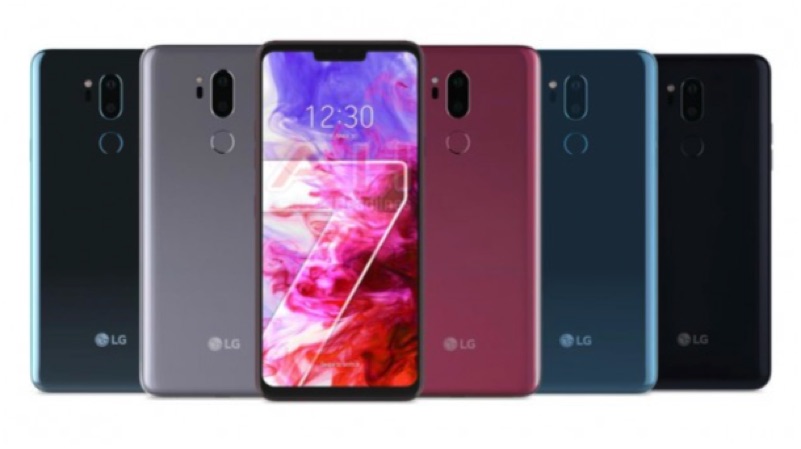
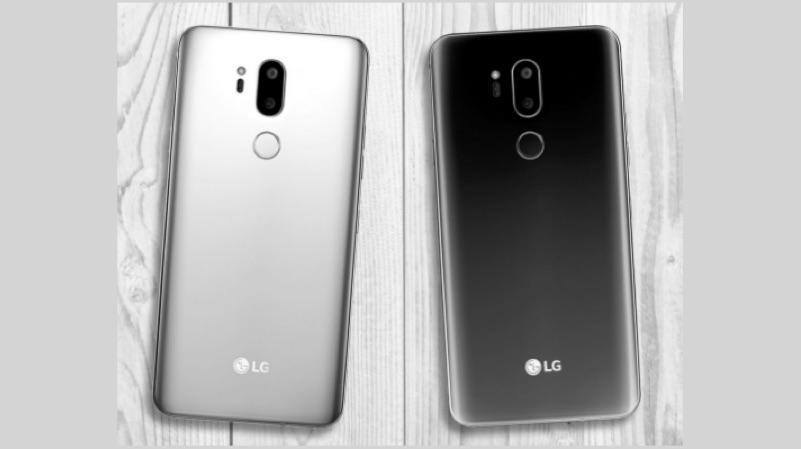
    A report claims that the LG G7 ThinQ will be available in Aurora Black, Platinum Grey, Moroccan Blue, Moroccan Blue (Matte), and Raspberry Rose. The availability of these colours will depend on the market.

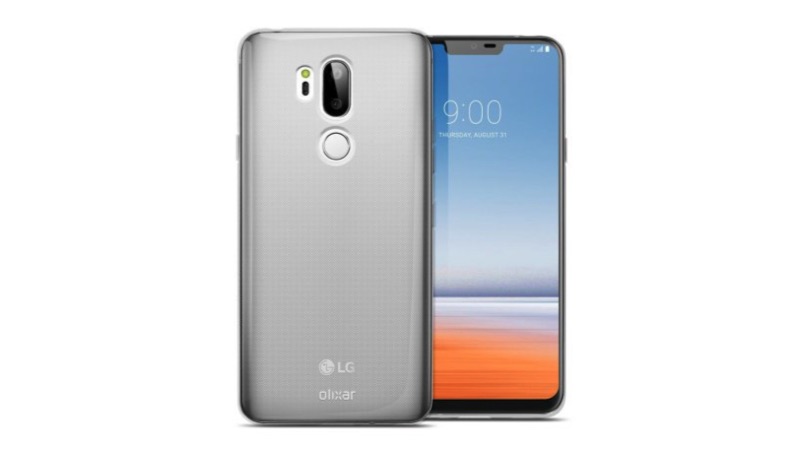
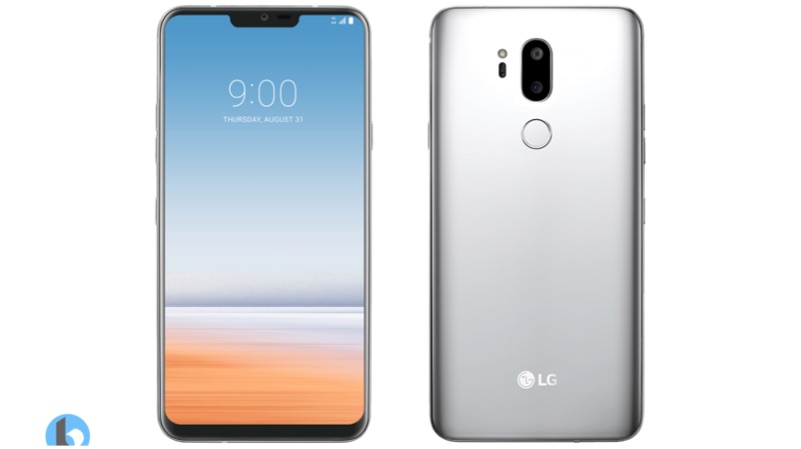
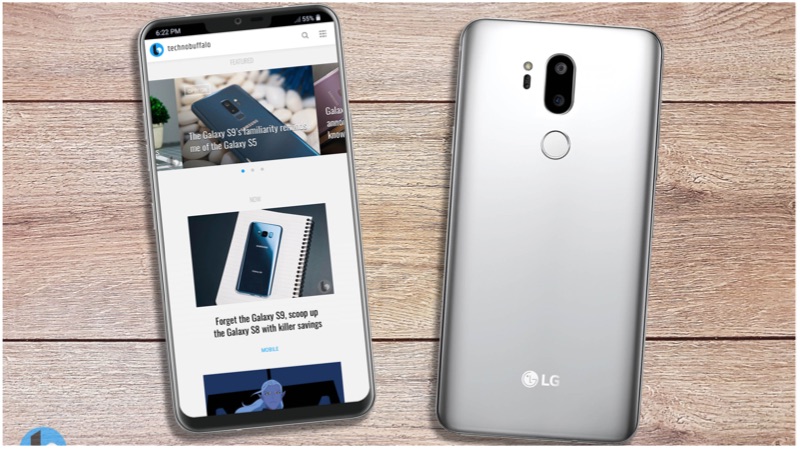
    This will be a first for LG and its G series of flagship devices. Up until 2017, LG unveiled its flagship devices, mainly the G series at Mobile World Congress. However, this time around, the company has tried something new, in order to resuscitate its dwindling smartphone business. The LG G7 ThinQ, apart from retailing with a new moniker, will also have a few striking design changes when compared to its predecessor. One of the most talked about changes is on the front of the smartphone. The LG G7 ThinQ is expected to have an iPhone X style notch which has become one of the most imitated iPhone features so far.

    The notch will have an earpiece, front-facing camera, proximity and ambient light sensors. The LG V30 had a mediocre front-facing camera and the G7 ThinQ might have a better front-facing camera with features like Face Unlock. On the back, the smartphone might have a dual camera setup similar to LG V30, with an RGB sensor and a wide-angle sensor. This time, the G7 ThinQ might offer features like slow motion video recording and 4K video recording at 60fps. The smartphone might also come with a virtual voice assistant similar to Siri and Bixby. In fact, the smartphone might have a dedicated physical button to trigger the voice assistant.

    The LG V30+ launched in India at a price of Rs 45,000. Similarly, the LG G7 ThinQ is also expected to be priced less than Rs 50,000 to compete against the likes of the OnePlus 6 and the Asus ZenFone 5z.

    LG G7 ThinQ Specs
    Model

    LG-G710TM

    LG G7 ThinQ

    Display 6.2 inch2880 x 1440 px

    19:9 Aspect Ratio

    M+ LCD

    Processor Qualcomm Snapdragon 845 Octa-core
    RAM 4GB6GB
    Storage 64GB128GB
    Camera 16MP RGB Sensor16MP Wide-Angle Sensor

    f/1.5 Aperture

  • Mid-Range Google Pixel To Launch In India Soon

    Mid-Range Google Pixel To Launch In India Soon

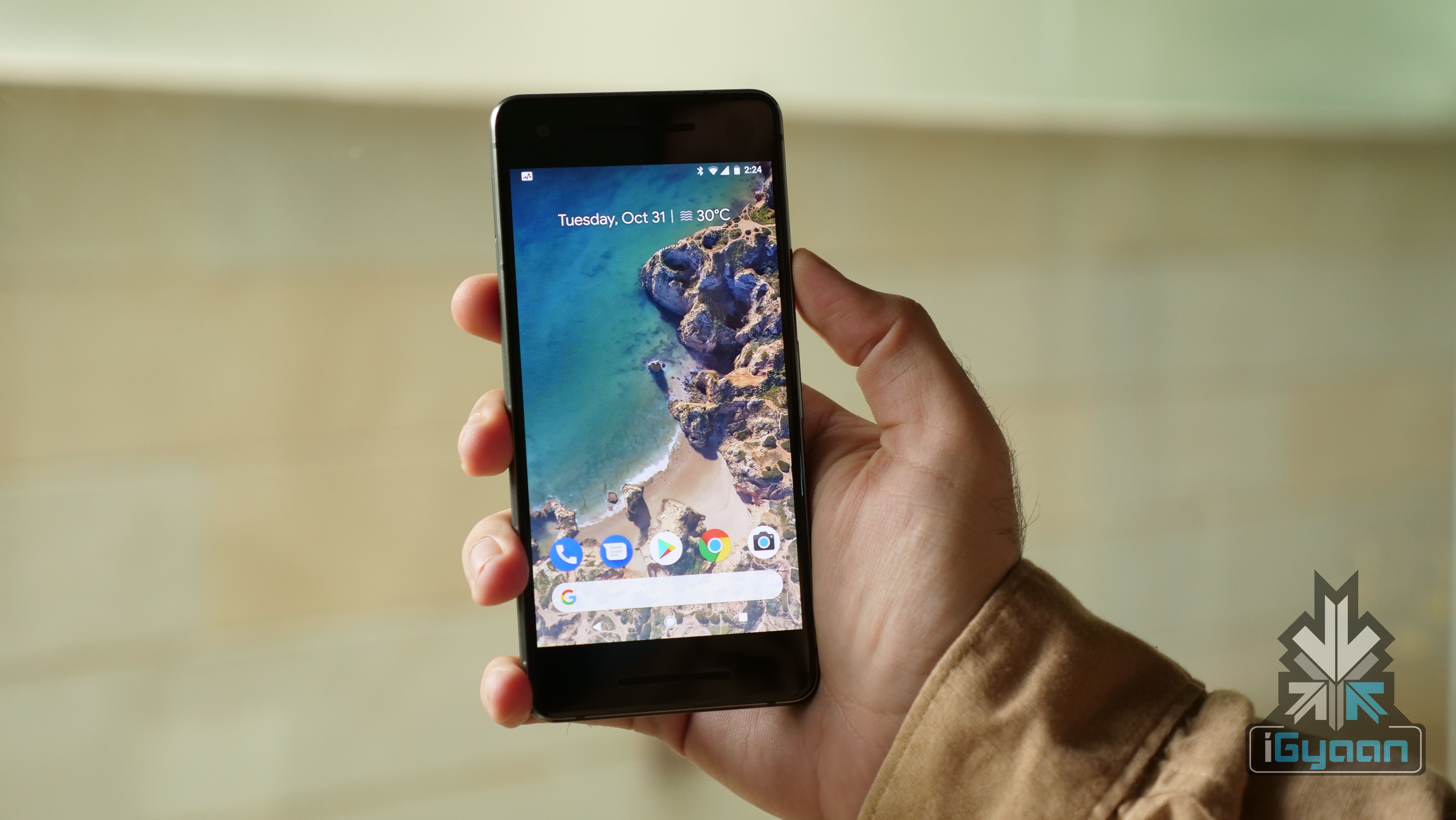
    Google Pixel series of smartphones are known for their unprecedented camera capabilities. However, unlike Moto or Xiaomi smartphones, the Pixel devices retail at a higher price tag. Google is now targeting markets like India, which has a huge demand for smartphones priced between Rs 10,000 to Rs 20,000. According to a report, Google is planning to launch an Indian market specific device in July-August, which includes an affordable Pixel smartphone, Pixelbook and Nest devices. Additionally, the company will launch the Pixel 3 series of smartphones by Diwali.

    If we look at the numbers, Google sold 3.9 million Pixel smartphones globally in 2017 while Apple sold 214.9 million devices. The existence of offline stores and affordable iPhone models like the iPhone SE has helped Apple to achieve these sale figures. Additionally, Google is still new to the hardware game and Apple has already established itself as a premium brand.

    Google
    Pixel 2

    Mid Range Google Pixel Specs

    According to a report, Google will launch the mid-range Google Pixel smartphone and a Pixelbook in India by August 2018. However, the report does not specify the pricing or specifications of these devices. Along with these, the company might also launch the Nest series of smart home accessories. The Nest series of accessories comprises a thermostat and other smart home accessories.

    Google will begin this launch by announcing the Google Home products. The company will launch the Google Home and Home Mini to take on the competition like the Amazon Echo speakers. The Home mini will retail for Rs 4,499 and the Home will retail at Rs 9,999. This time around, the company will focus on the offline market through brick and mortar stores. This means Google is most likely to set up stores in crowded places like malls and electronics stores.

  • Xiaomi To Launch A Helio P60 Chipset Powered Smartphone

    Xiaomi To Launch A Helio P60 Chipset Powered Smartphone

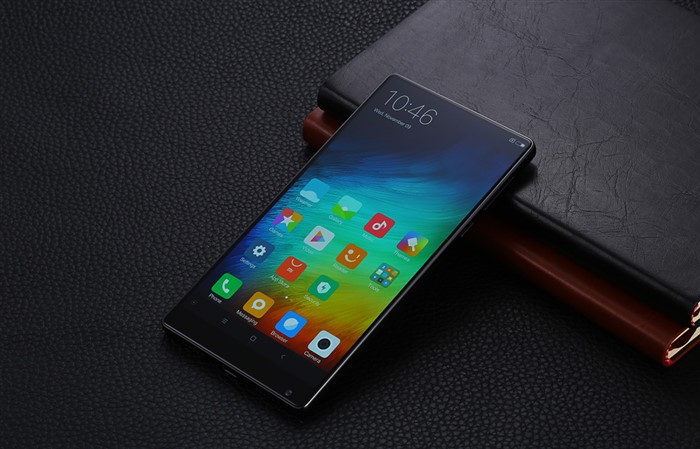
    Xiaomi recently launched the Xiaomi Mi MIX 2s, which is the first 2018 flagship smartphone from the company. Lately, the company has been launching smartphones powered by a Snapdragon chipset. However, according to a report, the company is all set to launch a smartphone in Q2 of 2018 powered by the Helio P60 chipset. The MediaTek Helio P60 chipset was launched at MWC 2018.

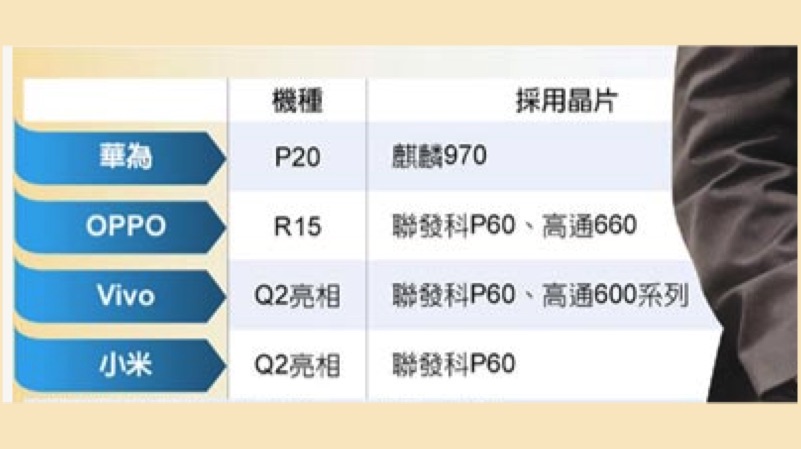
    Companies like Oppo, Vivo, and Meizu have already launched smartphones with this chipset and Xiaomi is the next phone-maker to join the club Helio P60. However, considering the patent infringements, the Xiaomi smartphone based on this chipset is most unlikely to launch in India.

    Helio P60

    MediaTek Helio P60 Specs

    The chipset uses 12 nm FinFET technology based on big.LITTLE architecture. The four high-performance cores are based on ARM Cortex-A73 cores and the other four efficient cores are based on ARM Cortex-A53 cores. Compared to the Helio P30 chipset, the Helio P60 offers up to 70% improved CPU performance.
    The chiset has a Mali-G72 MP3 GPU. The chipset offers a staggering 70% boost in overall GPU performance compared to its predecessor. In fact, the performance will be similar to Qualcomm Snapdragon 660 chipset. The dedicated NeuroPilot can handle native AI tasks using Android Neural Networks API with class-leading performance. The three image sensing processors support dual camera module. In fact, this uses 16% less power by combining Ai accelerators with the real-time image enhancement.

    The MediaTek Helio P60 chipset supports displays with up to 1080p resolution. In fact, the smartphone manufacturers can go with a display with up to 20:9 aspect ratio.  In terms of storage and RAM, the chipset can handle up to 8GB LPDDR4x RAM. The chipset can handle UFS 2.1 storage. Finally, coming to the connectivity the processor can handle dual LTE and VoLte network with Cat 7 download speeds and Cat 13 upload speeds.

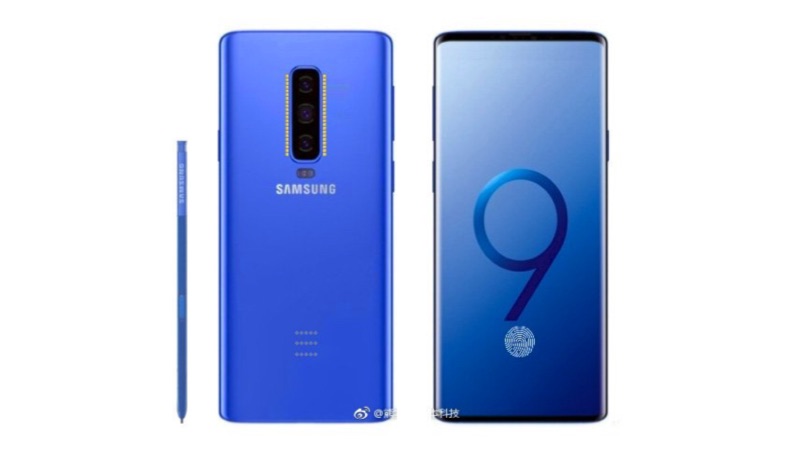
  • Samsung Galaxy Note9 Could Launch In July This Year

    Samsung Galaxy Note9 Could Launch In July This Year

    Samsung recently launched the Galaxy S9/S9+ in India and the company is already gearing up for its upcoming Note flagship smartphone launch. According to a report, the company will launch the Galaxy Note9 in the month of July, that is 2 months before the usual launch date. According to the report, Samsung usually starts manufacturing display units for its Note series of the smartphone in June. However, this time around, the company will start the manufacturing of the display panels in the early April. So, the Note flagship is coming sooner than the expected date.

    One more reason for this earlier launch is to compete against Apple’s three upcoming iPhone models. The report also claims that the Note9 will miss out on an In-Screen fingerprint sensor as the technology was not up to Samsung’s quality standards. However, smartphone makers like Oppo, Vivo, and Huawei have already launched a smartphone with an In-Screen fingerprint sensor.

    Samsung Galaxy Note9 Specs

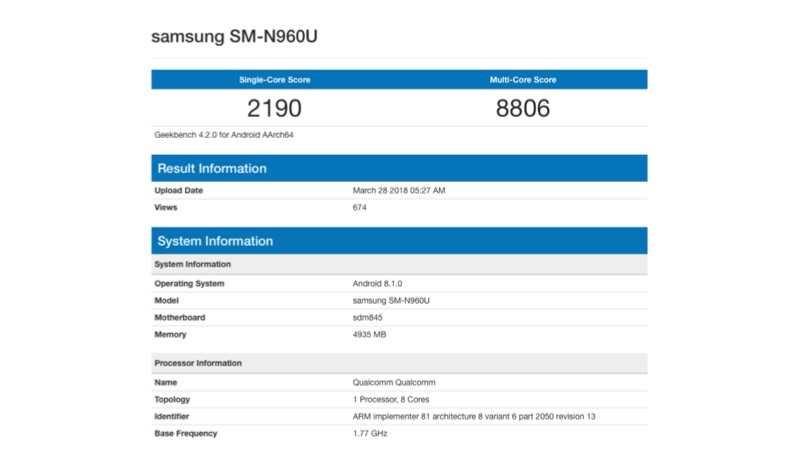
    The Samsung Galaxy Note 9 is listed on Geekbench with a model number SM-N960U. The company will manufacture the Galaxy Note 9 in two variants. One variant will feature Qualcomm Snapdragon 845 and an Exynos 9810 variant similar to the Galaxy S9/S9+. The Geekbench listing confirms some of the key specifications of the device. According to the listing, the smartphone will have a Qualcomm Snapdragon 845 Octa-core chipset with 6GB RAM. Additionally, the smartphone scores 2190 points on the single core and 8809 points and multi-core performance. The score is similar to the other smartphones running on the Snapdragon 845 processor. Additionally, the listing confirms that the device runs on Android 8.1 Oreo with Samsung Experience UI 9.

    Galaxy Note 9

  • Apple Watch Series 4 Will Have A 15% Bigger Screen And A New Design

    Apple Watch Series 4 Will Have A 15% Bigger Screen And A New Design

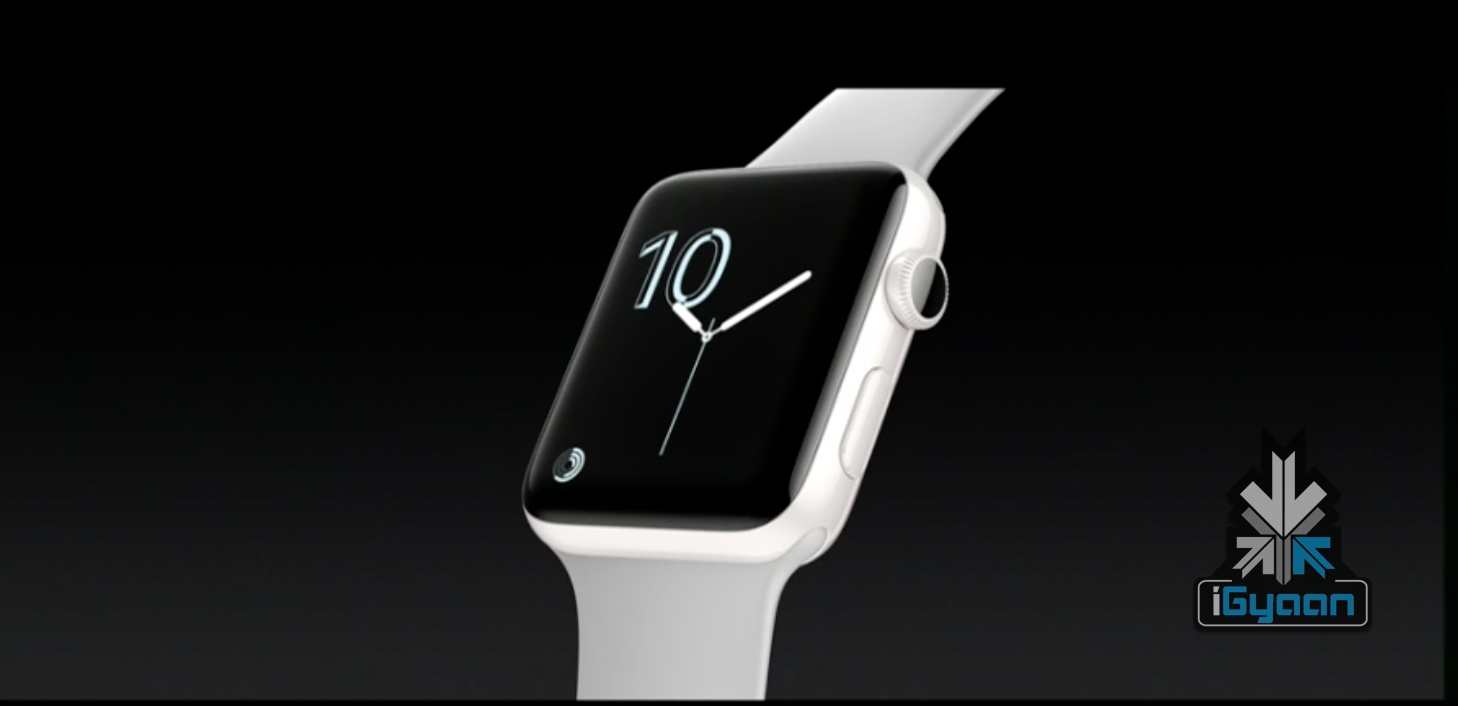
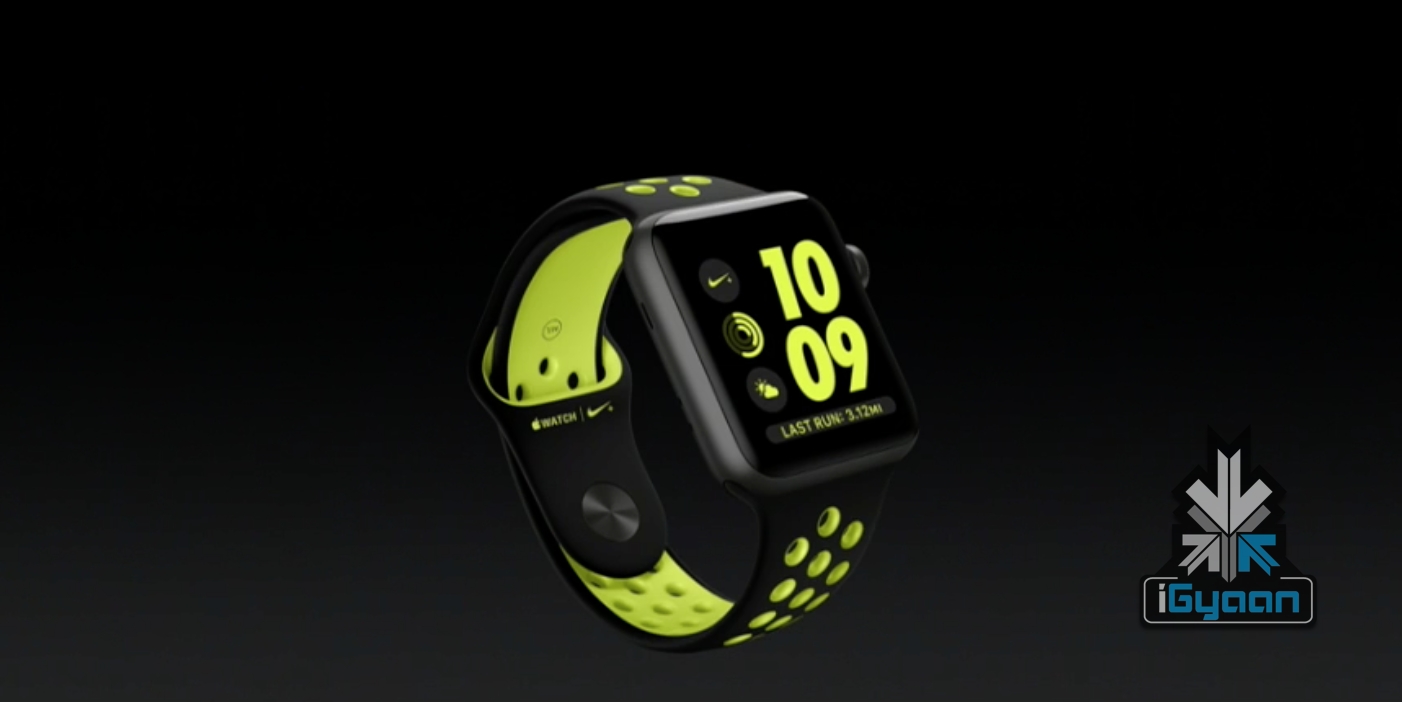
    The smartwatch industry, much like tablets, is dominated by Apple. Google recently rebranded its smartwatch OS to Wear OS in a bid to revive it a bit. However, all of that might not come to any fruition as Apple plans a design overhaul for the upcoming Apple Watch. Apple has already launched three generations of the Apple Watch. However, all three generations look very similar. According to a new report, the Apple Watch Series 4 will have a new design with a 15% bigger screen.

    Apple Watch Series 4
    Apple Watch Series 2 Nike Edition

    The Apple Watch Series 4 will debut in September 2018, along with the new iPhones. According to KGI Securities’ Ming-Chi Kuo, the watch will have a newer design with a bigger screen and a longer lasting battery life. Additionally, the smartwatch will have additional health monitoring capabilities. The company is also working on a new display technology called micro-LED display. This display technology will consume less power by offering more pixels per inch.

    The watch will be available in 38mm and 42mm screen sizes with minimal bezels. To cater to a bigger display, the watch will also have a bigger battery with extended battery life. The report also predicts that Apple will sell at least 30 million units of Apple Watch in 2018, which will go up to 50 million in the upcoming year.

  • Apple To Begin Trial Production Of 2018 iPhone Lineup In Q2 Of 2018

    Apple To Begin Trial Production Of 2018 iPhone Lineup In Q2 Of 2018

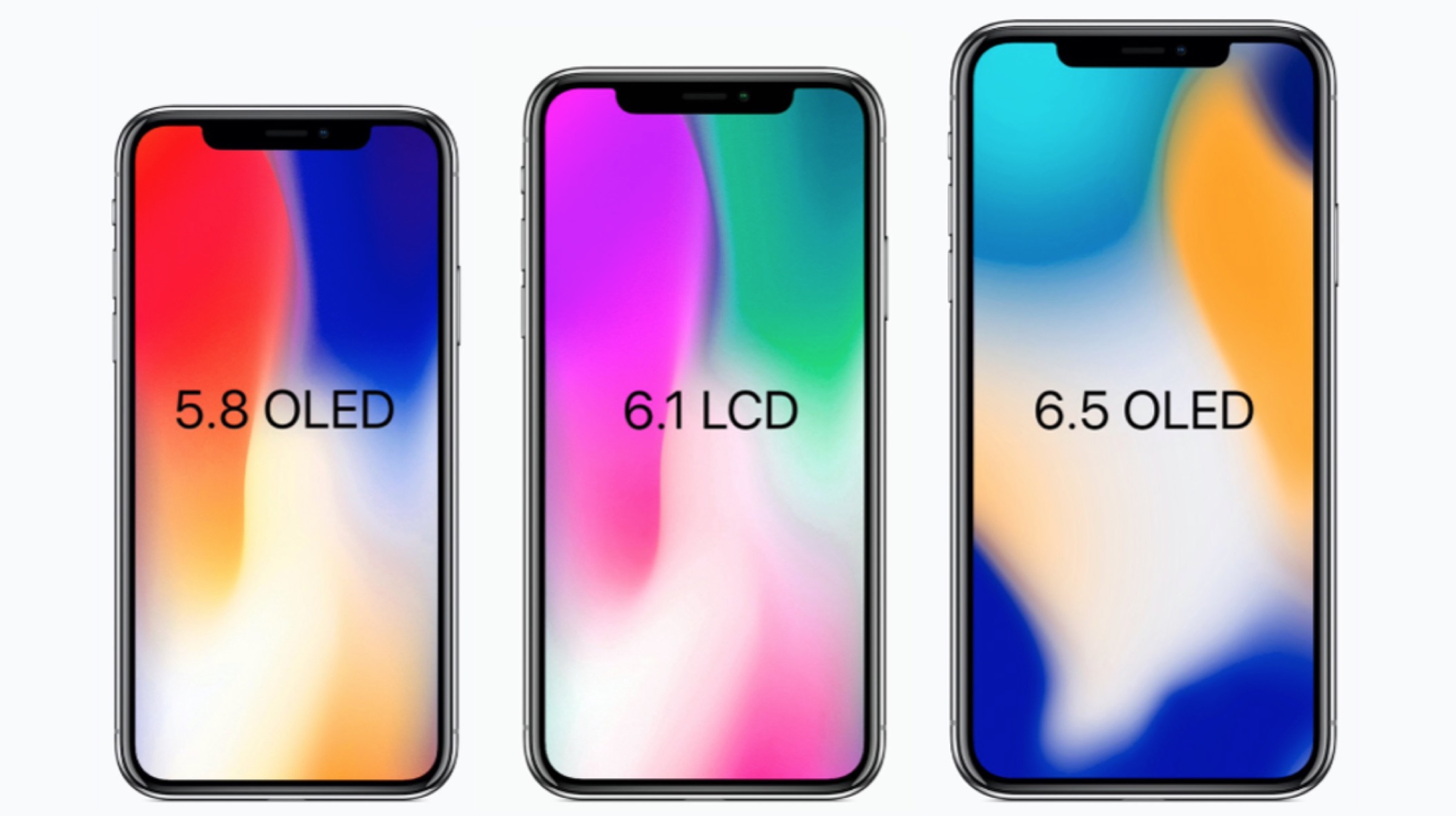
    There have been many rumours and speculations about the successors of the Apple iPhone X. Apple is expected to launch three new iPhones at the end of 2018. Two models are expected to have an OLED display, and the third one will have an IPS LCD display. According to a report, the company is expected to begin a trial run production of these three smartphones by the end of Q2 2018. This enables the company to have enough stock at the time of launch.

    Apple was hit by the production delay of the Apple iPhone X and the company is taking precautionary steps not to repeat the same mistake. Additionally, the company is also focusing on 3D sensors for Face ID, as all three iPhones are expected support Face ID. The report also adds that there is no surging in the order of internal hardware components. Since Apple is expected to launch the successor of the iPhone SE in Q3 of 2018, the revenue generation is expected to go upwards.

    iPhone
    2018 Apple iPhone lineup

    2018 Apple iPhone Lineup Specs

    Except for the display, these three iPhones will have identical specifications. The models with an OLED display will have a 5.85 and 6.45 inch display. Whereas, the LCD model will have a 6.1 inch display. These devices will be powered by a next-generation A12 chipset with 64GB or 256GB storage.

    The iPhone with 5.85 inch OLED display will be the most affordable of the lot. To make that happen, Apple might take a step back and use Aluminium frame instead of Stainless steel. The device is expected to have a dual camera setup similar to the iPhone 8 Plus.

    The iPhone X Plus (tentative name) with a 6.45 inch OLED display could be the costliest iPhone of this series. Which is expected to have premium features like dual camera setup with dual OIS and. a stainless steel frame.

    The iPhone with 6.1 inch display will be priced between these devices. It is expected to have similar internals as of the 5.85 inch iPhone. Additionally, the usage of an LCD panel will drive down the overall cost of production, compared an OLED model.

  • LG G7 To Have An LCD Display

    LG G7 To Have An LCD Display

    LG has postponed the launch of the LG G7 (tentatively named) to improvise the design of the smartphone. LG’s smartphone business has been dwindling for quite some time now and its flagship devices have not performed to their expectations. The company will now launch its flagship phones as and when it deems fit, instead of following a launch pattern.

    The LG G7 was expected to be launched at MWC 2018. But, it was only showcased behind closed doors at the event. The LG G7 is expected to do what a lot of Android smartphones have done lately. It will follow the iPhone X path and have a notch at the top of the display. Now, a new report has claimed that the company will; revert to an IPS LCD display for the G7 instead of continuing with the p-OLED panel found on the LG V30.

    Choosing an LCD display over an OLED might be an important move by the company in the grand scheme of things. But, the presence of a notch would mean that this decision might not get the importance it deserves. OLED panels look much better than LCD and only a 120Hz display will justify this decision. However, from the financial point of view, this choice makes sense as OLED displays cost three times the cost of an LCD display. The LG G6 came with an LCD display and the company switched to P-OLED display for the LV V30+. This means the company might reserve the OLED display for the V series smartphones.

    LG G7 Specs

    The LG G7 is expected to have a 6 inch LCD display with a 2880 x 1440 px resolution. Until Corning comes up with Gorilla Glass 6, we expect most flagship smartphones to have the Gorilla Glass 5 on top.

    LG G7

    Under the hood, the G7 will have the Snapdragon 845 chipset. One of the primary issues with the LG G6 was its older chipset. By no means was the Snapdragon 821 a bad chipset but, the Galaxy S8 with the Snapdragon 835 made the G6 look archaic. However, that won’t happen this time around as Samsung no longer has exclusive access to the new chipset.

    Features like water resistance, wireless charging and fast charging are expected to be retained. The dual-camera setup on the back will be placed vertically, this time around. The implementation is expected to be the same as the G6 and V30. A regular lens coupled with a wide-angle lens. This is also something that has been appreciated by many LG users.

  • Samsung Galaxy S10 Could Feature An In-Screen Fingerprint Sensor

    Samsung Galaxy S10 Could Feature An In-Screen Fingerprint Sensor

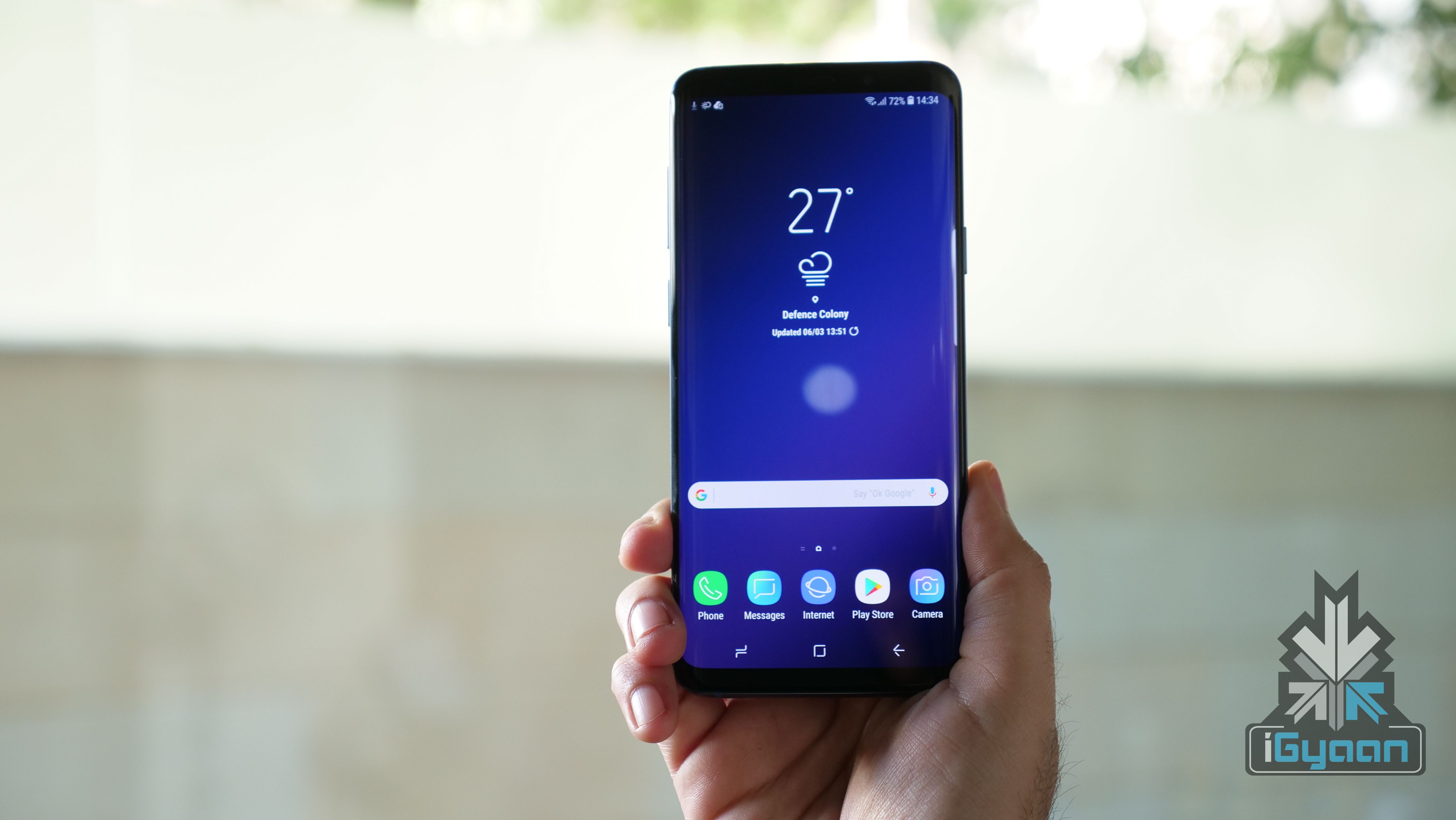
    Samsung launched the Galaxy S9 and the S9+ in India on the 5th of March. The Galaxy S9 devices are the latest flagship smartphones from the company that features a variable aperture for the first time ever. The smartphones went on sale today (16th March) and rumours about its successor have already started surfacing. According to a report, the Galaxy S10 will have an in-screen fingerprint sensor with 3D facial recognition.

    While it is fair to assume that the Galaxy S9 successor will be the Galaxy S10, nothing is certain right now. As the company might take the Apple route and end up calling it something else.

    The in-screen fingerprint scanner was expected to debut with the Galaxy Note 9. However, the technical challenges appear to have forced Samsung into pushing forward the technology for the Galaxy S10. This is because the company is seemingly working on the technology to eliminate its drawbacks.

    Galaxy S10 Expected Features

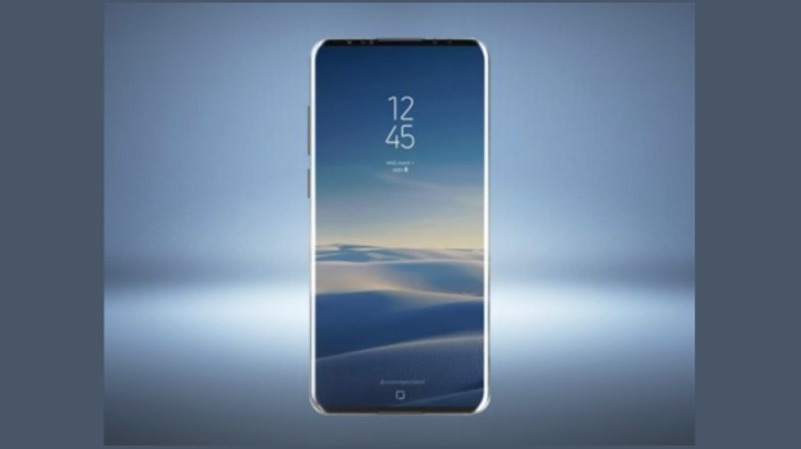
    The Galaxy S10 will have an in-screen fingerprint scanner with 3D facial recognition. The facial-recognition will be similar to the Apple iPhone X‘s Face ID. However, instead of placing it in a notch, the company will retain the bezels to house the required set of sensors.

    Samsung Galaxy S10
    Render image of the Galaxy S10


    The Samsung Galaxy S10 will be the first smartphone to offer 5G. The Galaxy S10 will be the worlds first chipset based on the 7nm manufacturing process. The company has signed a strategic relationship agreement with Qualcomm, which means Galaxy S10 could be the first smartphone to deploy 5G using Qualcomm’s upcoming Snapdragon 855 chipset.

  • Android Has More Loyal Users Than iOS

    Android Has More Loyal Users Than iOS

    The debate of Android vs iOS always seems to reach an impasse. At the end of the day, comparing an iPhone X to a Galaxy S9 is like comparing apples and oranges. However, loyalty towards a smartphone or a platform can be measured and compared. A study has done exactly that and conceded that Android users are more loyal than iOS users.

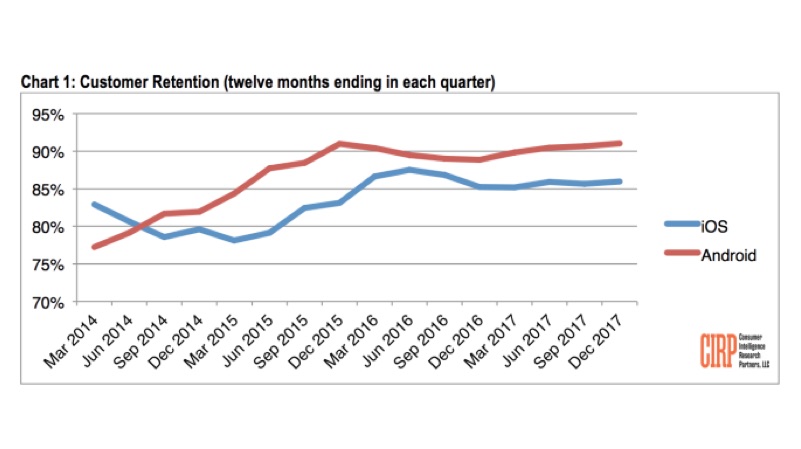
    A new report from Consumer Intelligence Research Partners has claimed that Android users do not switch to iPhones as frequently as they used to. The study has found out that Android has a 91% loyalty rate, compared with 86% for iOS. This is measured as the percentage of U.S. customers who retained their OS platform when they upgraded their smartphones in 2017.

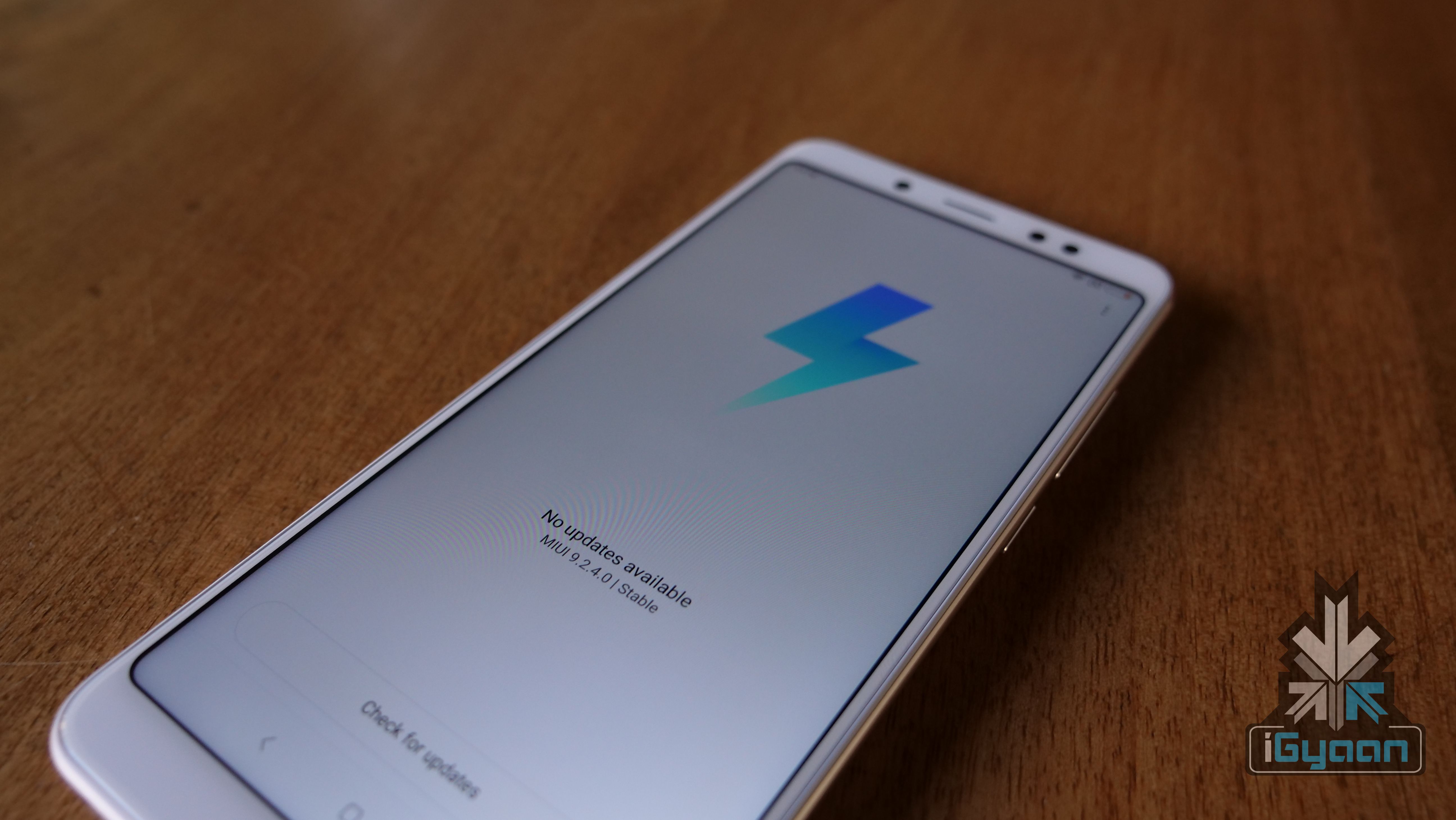
    MIUI On Redmi Note 5 Pro

    Mike Levin, partner and co-founder of CIRP explains:

    With only two mobile operating systems at this point, it appears users now pick one, learn it, invest in apps and storage, and stick with it. Now, Apple and Google need to figure out how to sell products and services to these loyal customer bases.

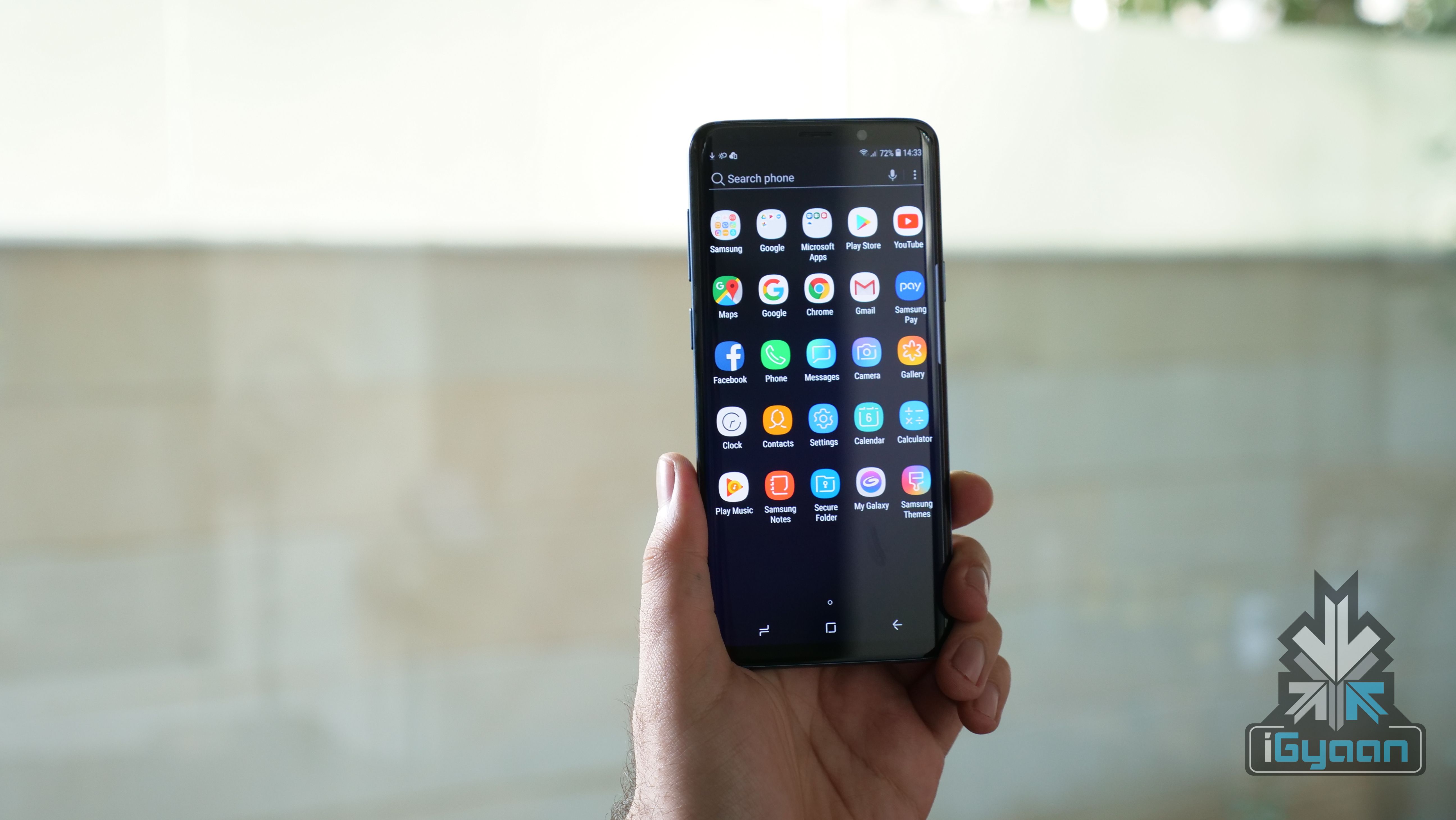
    Experience 9.0 On Galaxy S9+

    It is worth noting that the rate of switching is different from the total number of people switching. Levin said:

    We know Android has a larger base of users than iOS, and because of that larger base, the absolute number of users that switch to iOS from Android is as large or larger than the absolute number of users that switch to Android from iOS.

    Looking at the absolute number of users in this way tends to support claims that iOS gains more former Android users, than Android does former iOS users.

    This has become more obvious than ever. With the dwindling popularity of BlackBerry and feature phones a thing of past, Android and iOS are the only players left in the OS game. This explains the two companies’ behaviour as well. As smartphones now reach a saturation point, services these companies provide will play a major role in influencing consumer behaviour.

    That somehow explains the Apple HomePod. From the outside, the HomePod seems like an absurd smart speaker which can’t even connect to an iOS device. However, Apple is pushing its services to people who want a really good sounding smart speaker. With time, Apple will rely heavily on services for major revenue generation, services like Apple Music.

    For Android users, brand loyalty is evident thanks to the array of devices available. Users can move from one device to another and pick up from exactly where they left off. There are definitely more options to choose from for Android users which means they can get a better experience from a new device without changing their services.

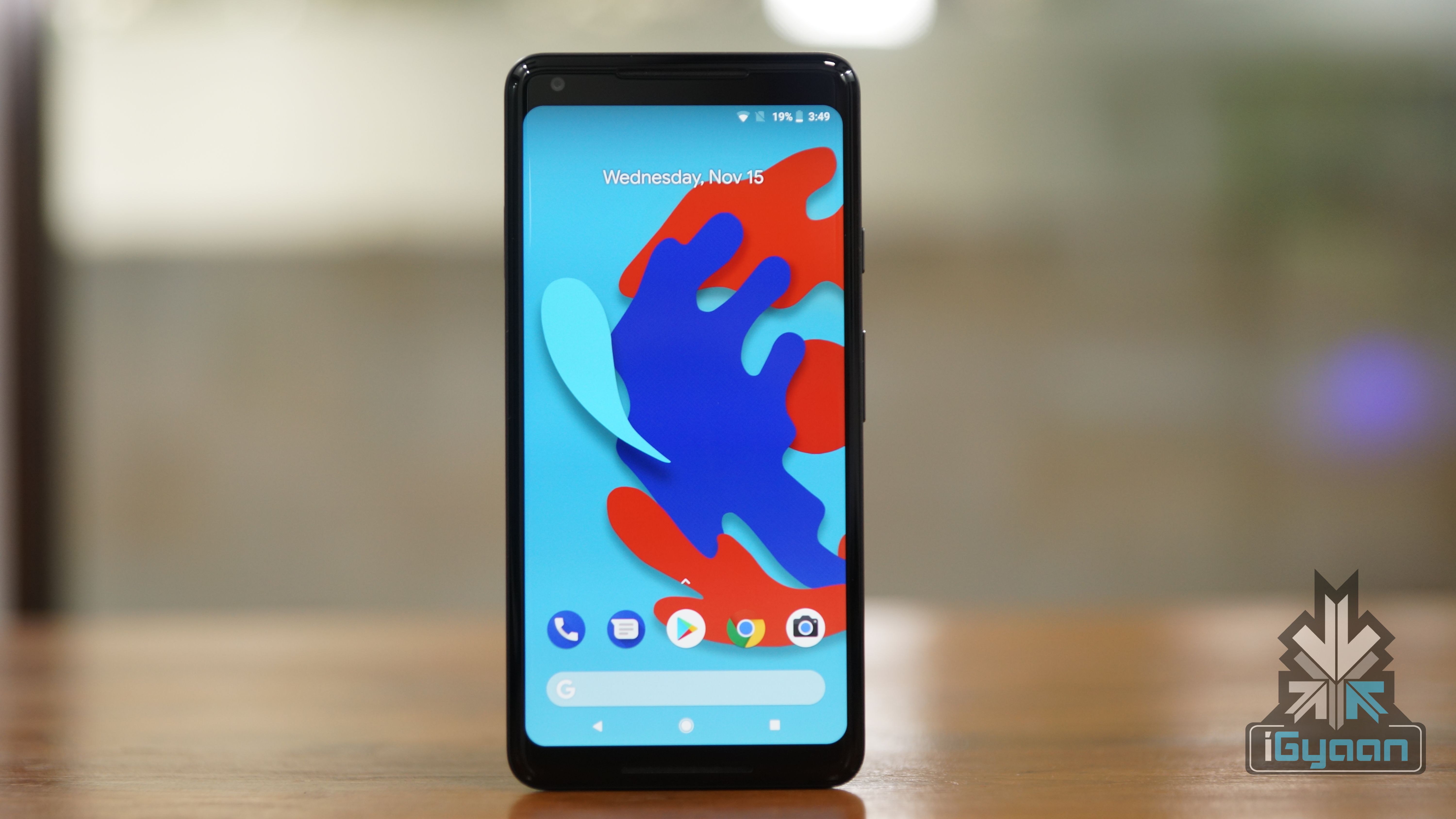
    Stock Android 8.1 Oreo On Pixel 2 XL

    However, it is worth noting that iOS was once the more loyal platform. Back in 2013, iPhone users were more loyal than Android users. But, ever since then, the loyalty of Android users has been on a rise.

    Conclusion

    With smartphones becoming more or less the same, at least in the flagship category, it seems like people have picked their preferred OS. Now, it is up to Google and Apple to maintain that customer base and keep innovating to provide more options to users part of their ecosystem. As for the debate of iOS vs Android, it will continue on for a long period of time.

  • Apple iPhone SE 2 Might Not Launch In 2018

    Apple iPhone SE 2 Might Not Launch In 2018

    Back in 2016, Apple launched the iPhone SE as a smaller variant of the iPhone 6s. It was missing a few features like 3D Touch but, it was intended for people who preferred the smaller form factor and wanted the latest specifications. While many expected the iPhone SE 2 to be launched in early-2017, Apple decided to skip the launch. There have been plenty of rumours about the upcoming iPhone SE 2 but, they all might in vain.

    Trusted Apple analyst Ming-Chi Kuo has cast a shadow of doubt over the prospect of an iPhone SE 2 launch in 2018. He believes that the company “may have used up its development resources” on the flagship trio it’s prepping for this fall. In his research note, he says:

    The announcement of three new iPhone models in the same quarter in the second half of 2017 was the first time Apple made such a major endeavor, and we believe the delay of iPhone X, which had the most complicated design yet, shows that Apple doesn’t have enough resources available for development.

    With three new models in the pipeline for the second half of 2018, we believe Apple may have used up its development resources. Also, we think the firm will do all it can to avoid repeating the mistake of a shipment delay for the three new models.

    Kuo believes that Apple doesn’t have enough resources to pull off a year with four iPhone launches. He uses the 2017 launch of three iPhones as an example. And with all the three iPhones now with a design like the iPhone X, the process of manufacturing might be even more cumbersome.

    However, he hasn’t completely quashed the idea of an iPhone SE 2 launch in 2018. He says that if Apple does decide to launch a successor in 2018, it will be a minor refresh. This means that no bezel-less design or wireless charging. It might end up looking a lot like its predecessor with hardware upgrades like the A11 chipset and a bigger battery.

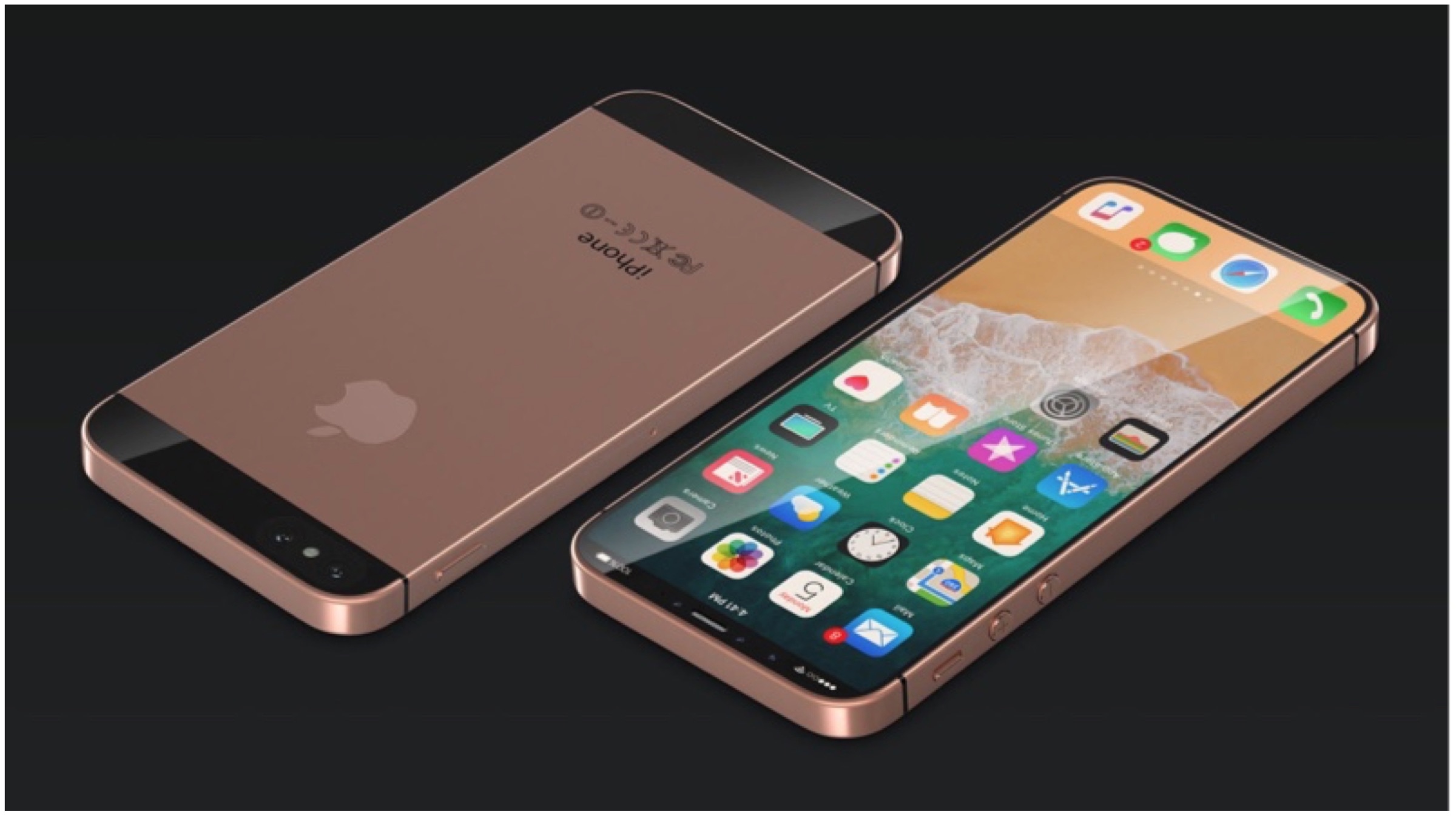
    iPhone SE 2
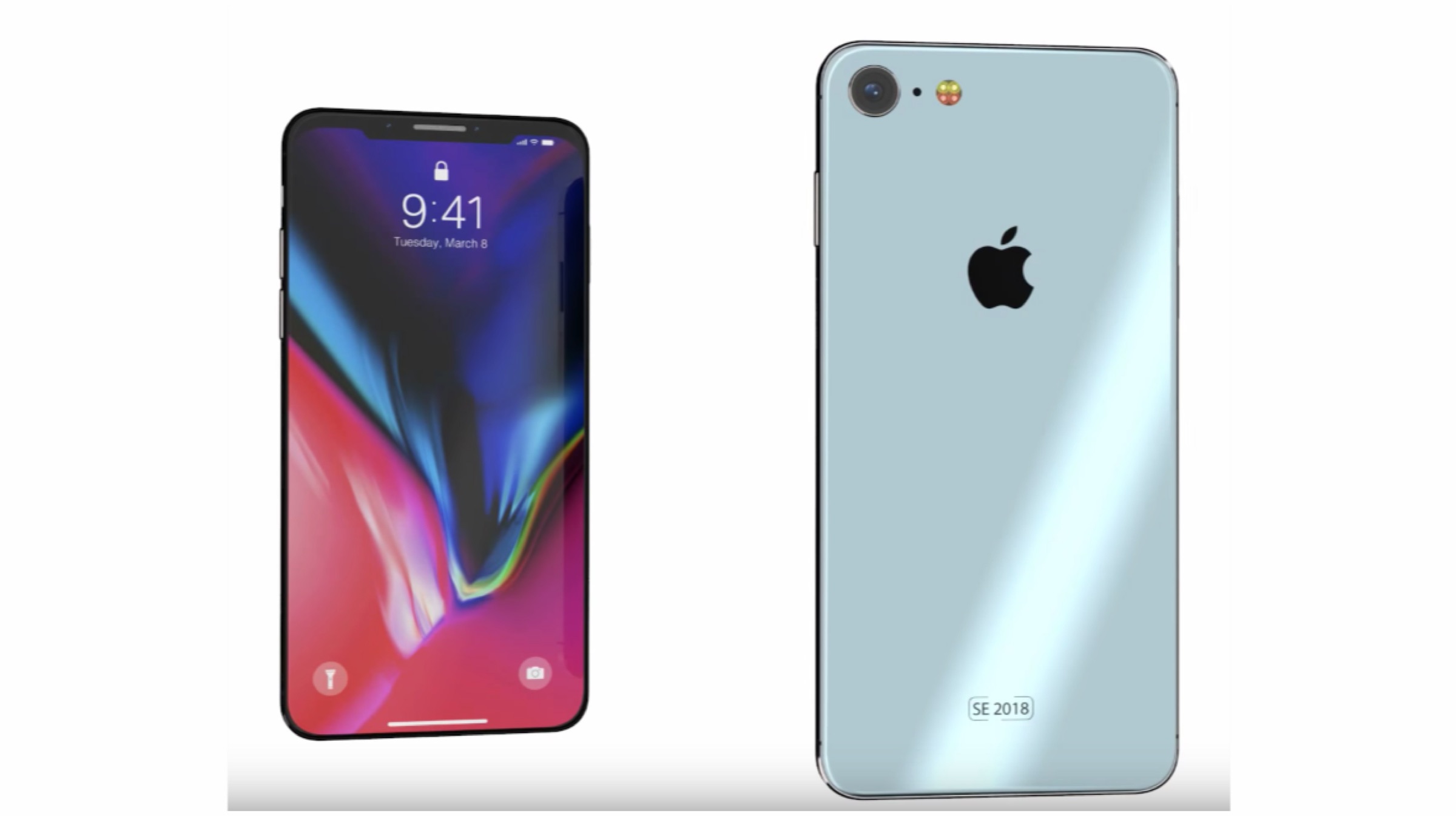
    iPhone SE 2 Concept

    Recently, Kuo revealed a few key details about the upcoming 2018 iPhone lineup.

    2018 Apple iPhone

    Kuo claims the 2018 iPhone X will again start at US$ 1000, the iPhone X Plus will be priced higher (likely US$ 1200-US$ 1350) while the iPhone X SE will be priced at around US$ 700-US$ 800.

    The iPhone X 2018 (tentative name) will have the same 5.8 inch OLED display found on the current iPhone X. It will have a 2,700 to 2,800mAh battery, supplied primarily by Unimicron. The 2018 iPhone X will also be powered by a new chipset and is expected to feature advanced Face ID.

    The iPhone X Plus will have a 6.5-inch OLED display in a body that might not be much bigger than the iPhone 8 Plus’. It is expected to have a 3,400 to 3,500 mAh battery supplied Unimicron.

    2018 Apple iPhone lineup

    The cheapest iPhone of the lot will be the iPhone X SE. It will be the successor to the iPhone SE and feature considerable upgrades over the predecessor. Although, these updates might end up costing the essence of the ‘SE’ series. The iPhone X SE will have a 6.1 inch LCD display with a design similar to the iPhone X. This means that Face ID will be introduced in this smartphone as well.

  • Apple Posts $ 10.5 Billion Profit This Quarter

    Apple Posts $ 10.5 Billion Profit This Quarter

    While most companies are struggling to get any sales, Cupertino electronics giant Apple just posted a net profit of $ 10.5 Billion. Although, lower than last year’s income of $13.6 billion Apple is still going strong.

    The Company posted lower quarterly revenue of $50.6 billion which compared to revenue of $58 billion, in the year-ago quarter, is not a big drop.

    “Our team executed extremely well in the face of strong macroeconomic headwinds,” said Tim Cook, Apple’s CEO.

    We generated strong operating cash flow of $11.6 billion and returned $10 billion to shareholders through our capital return program during the March quarter,” said Luca Maestri, Apple’s CFO.

    Apple also means to give back to its shareholders, The company has authorized an increase of $50 billion to the Company’s program to return capital to shareholders. Under the expanded program, Apple plans to spend a cumulative total of $250 billion of cash by the end of March 2018

iGyaan Network
Privacy Overview

This website uses cookies so that we can provide you with the best user experience possible. Cookie information is stored in your browser and performs functions such as recognising you when you return to our website and helping our team to understand which sections of the website you find most interesting and useful.