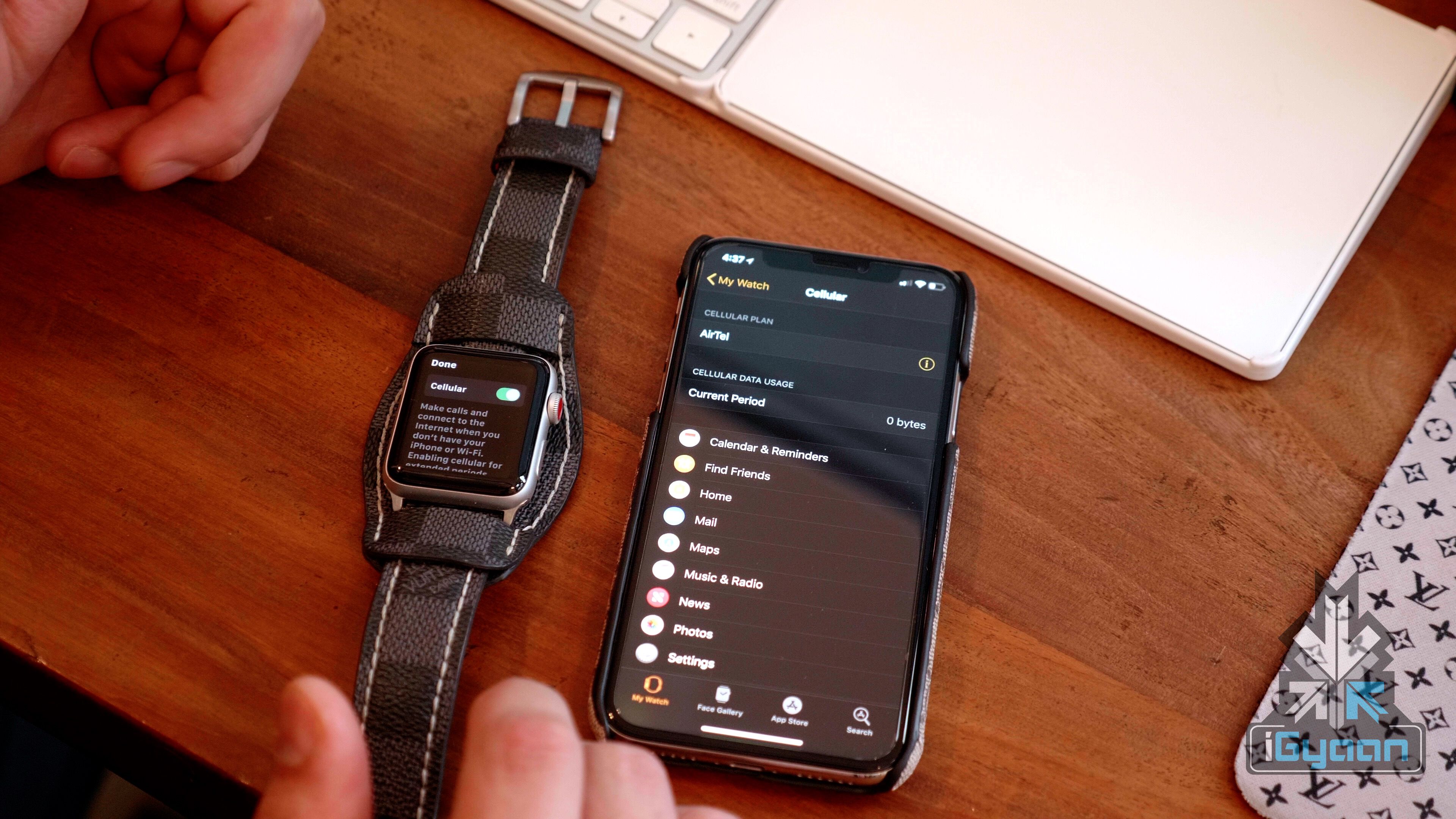
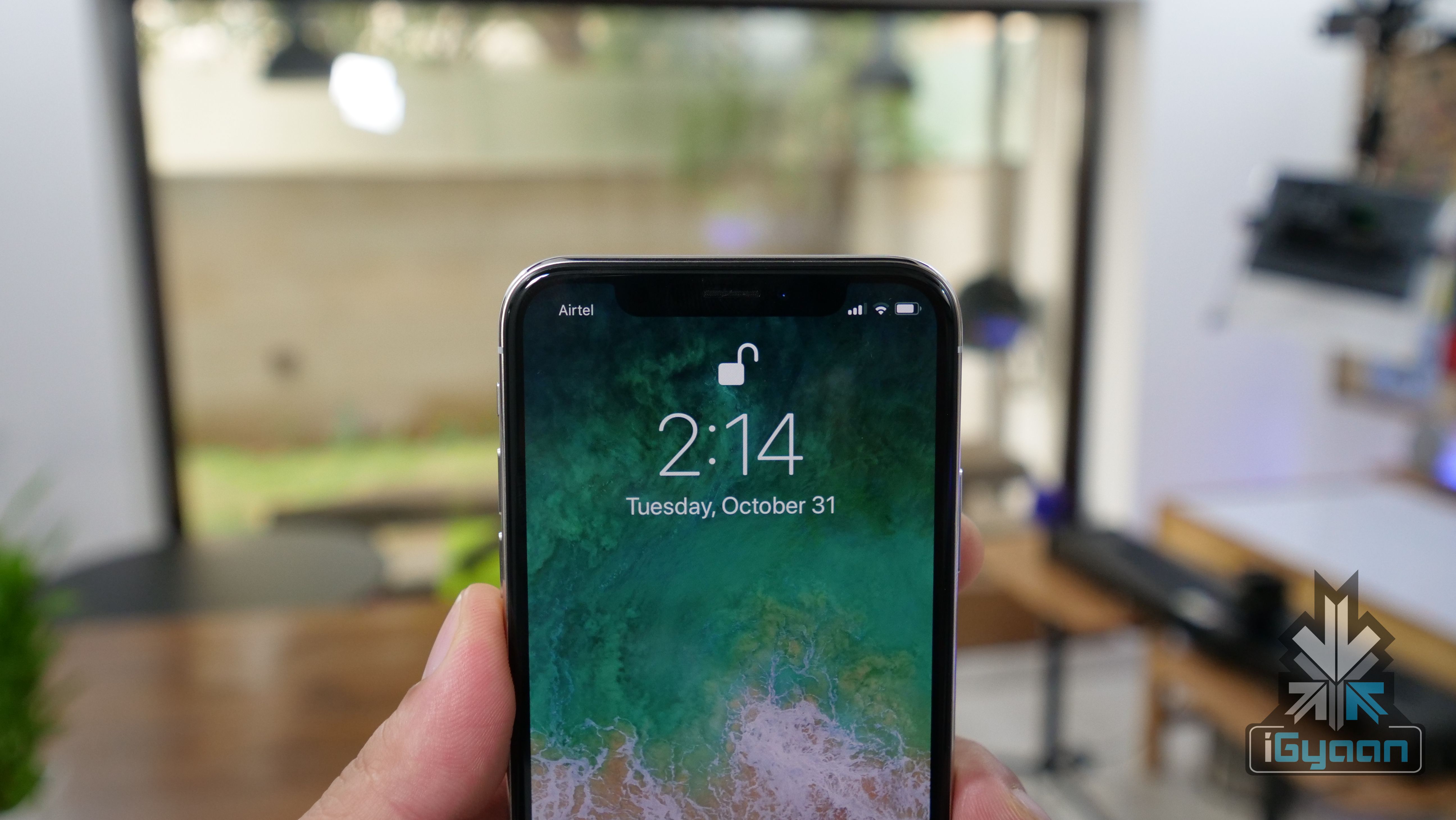
Apple had bid farewell to its Touch ID fingerprint security solution since the launch of the iPhone X. The feature of fingerprint for protection was first introduced in iPhone 5S and had been a staple for the next couple of generations. Now, Apple has seen a shift towards Face ID for its primary source of security and has been incorporated in its flagships. According to a new report, Apple might reintroduce Touch ID with an in-display fingerprint scanner with its 2021 iPhone.
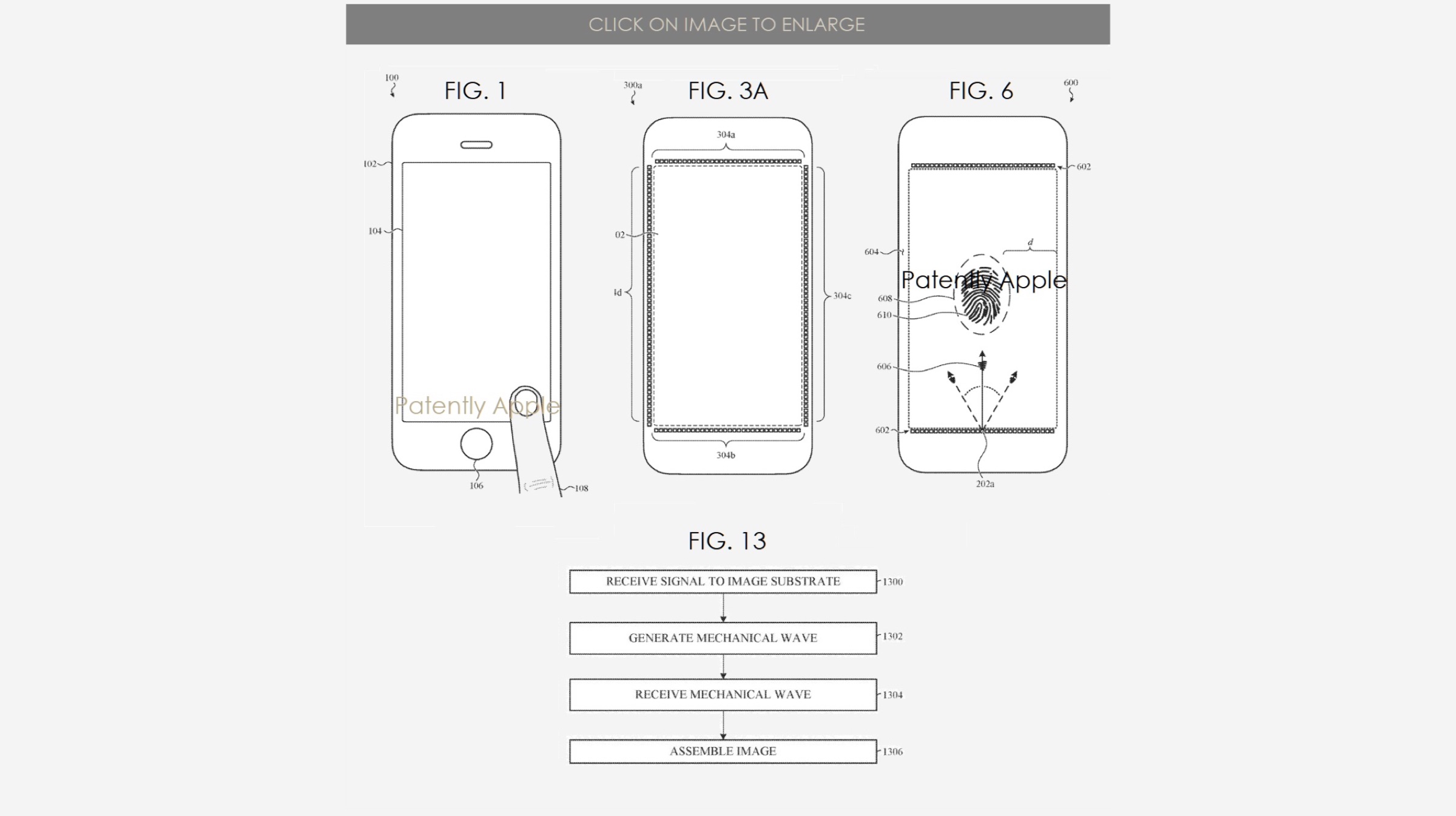
The new technology will reportedly be available with Apple’s facial recognition solution in two years. In-display fingerprint sensors are not new by any means but the tech giant has yet to incorporate the technology. Previously, Apple was reported to have been working on the technology since 2017 according to patents but has held off from its induction. The reason for this could probably be blamed on the technology itself. Currently, in-display sensors are bulky module sizes and draw more power than conventional fingerprint scanners.
According to analysts, the problems that current-gen smartphones face should be dealt with within the next two years. It would allow for a hassle-free introduction of the technology. Furthermore, Apple iPhones have also rumoured to likely use an ultrasonic fingerprint sensor. The relatively new technology is also seemingly a better match for the Apple Watch for security purposes. The Apple Watch does not feature any form of biometric security as of right now, hence, the potential of this is far-reaching. Additionally, Touch ID and Face ID security systems being used together for future two-factor authentication can make the systems highly secure and less vulnerable to hacking.
Conclusively, these are still analytical speculations and, although highly likely, is yet to be confirmed by any official channels. Apple 2021 iPhone is two years away so drawing concrete conclusion is difficult. It is still unconfirmed if the 2019 iPhone won’t feature Touch ID of any form. Hence, readers are advised to not be hopeful if the feature makes it to 2019 iPhone. More information is expected to available in the arriving months, stay tuned for updates.
Xiaomi to better penetrate the Indian smartphone market had operated alongside its subsidiary Redmi. The latter focused on the low to mid ranges of handset devices. A couple of years since its first introduction, the Note series has seen explosive success in India. Furthermore, Redmi Note 7 series is one of the highest-selling smartphones with 5 million units sold. Now, the General Manager of Redmi has confirmed the Redmi Note 8 which will be significantly more powerful than the current-gen Note 7.
Rumoured Specs
The top executive after confirming the existence of Redmi Note 8 which was rumoured in the past. It confirms that the company has already started working on the successors of the Note 7, Note 7 Pro and Note 7S. Additionally, the GM also claimed that the Note 8 will be noticeably more powerful than its past iterations. Currently, information regarding the upcoming Note device is still a mystery. However, rumours have pointed at the Note 8 being equipped with MediaTek Helio G90T SoC. It is a chipset that has been tuned for gaming and high performance.
Redmi Note 7S
Furthermore, Redmi is gearing up for the launch of a smartphone with 64MP camera. The event on 7th August will have the company discussing the new technology. It is possible yet unlikely at the same time that the Note 8 might feature the same sensor. Furthermore, Xiaomi was also rumoured to be working on an in-display punch hole selfie shooter as well. It would be a first for the company and the popular Note series could be a great platform to unveil the new setup.
Redmi Note 7 Pro
Expected Price & Availability
Redmi Note 8 series is speculated to arrive in the year-end of 2019. It is an educated guess after looking at the company’s release schedule considering no announcements have yet been made. In terms of price, the Note series, in general, have been priced relatively similar since the past few generations. So, it won’t be a surprise if the Note 8 also starts somewhere close to INR 13,000 to 15,000.
The upcoming Redmi Note 8 can prove to be a notable upgrade over its predecessors. The company can improve on many features like a bigger 4,500mAh battery over the 4,000mAh one of the previous gen. A metal frame could surround the sides for a more robust build. It also may have features which are new and innovative. Unfortunately, we still don’t have a lot to work with currently. So stay tuned for more updates after more information is available.
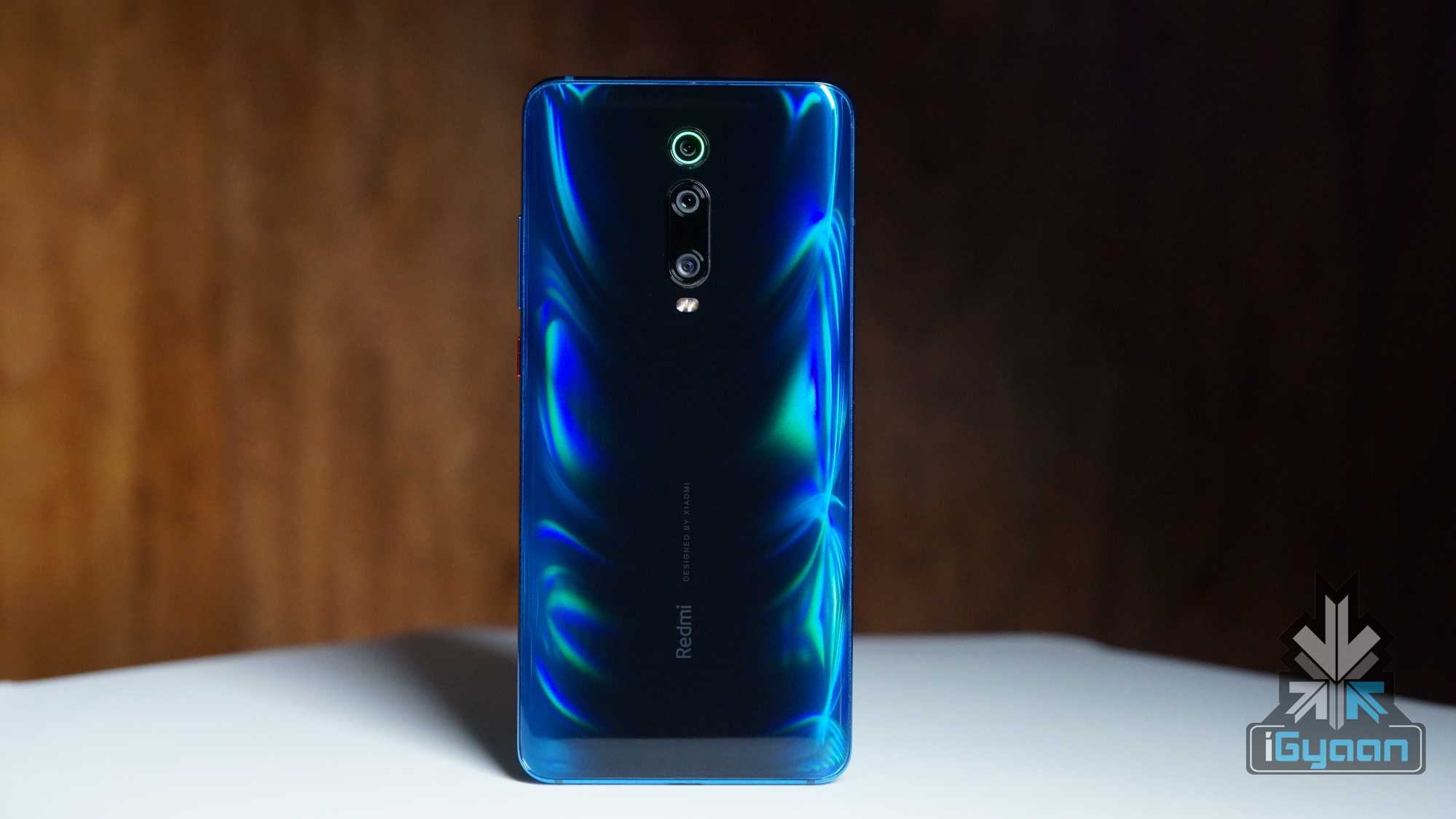
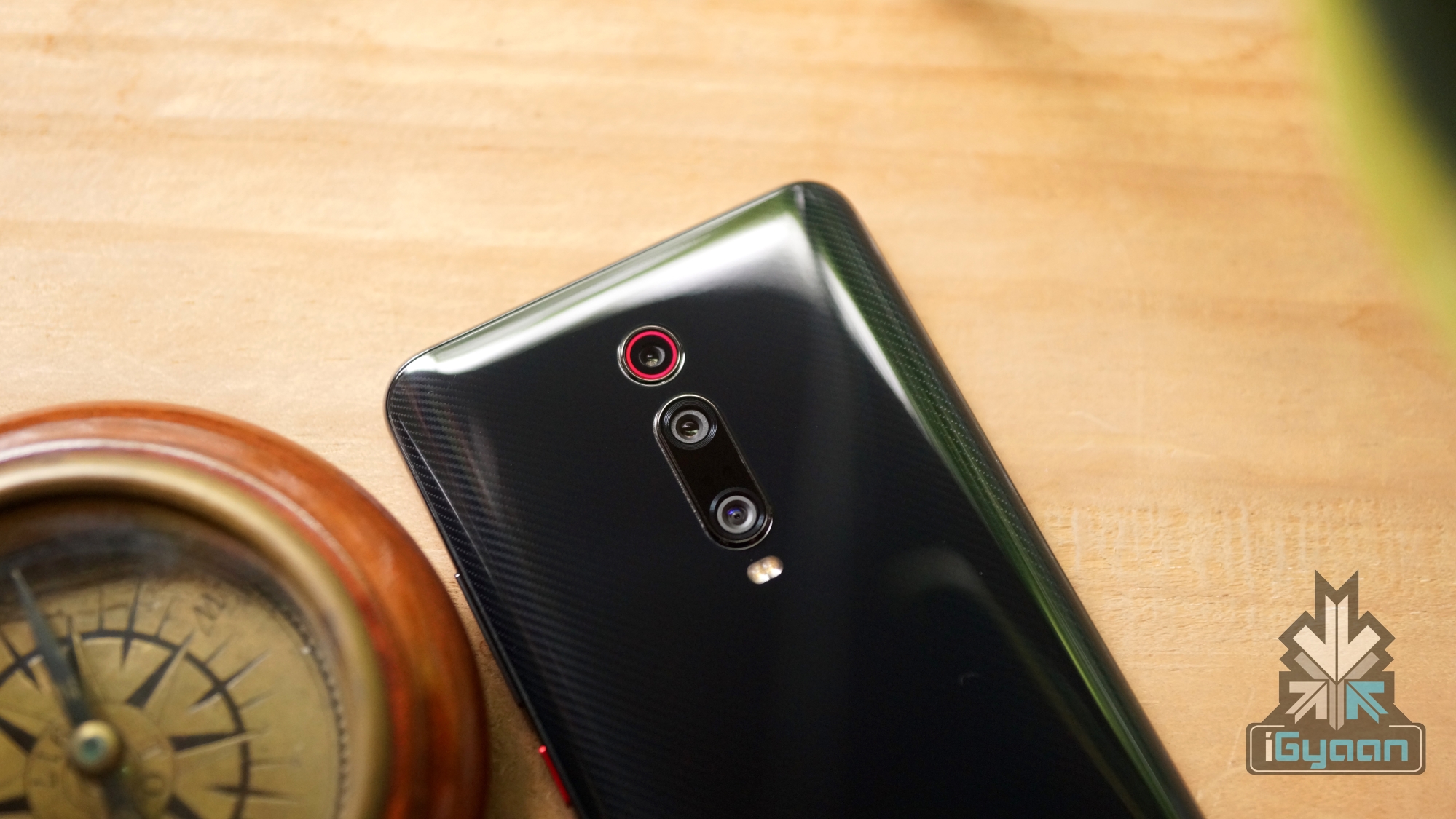
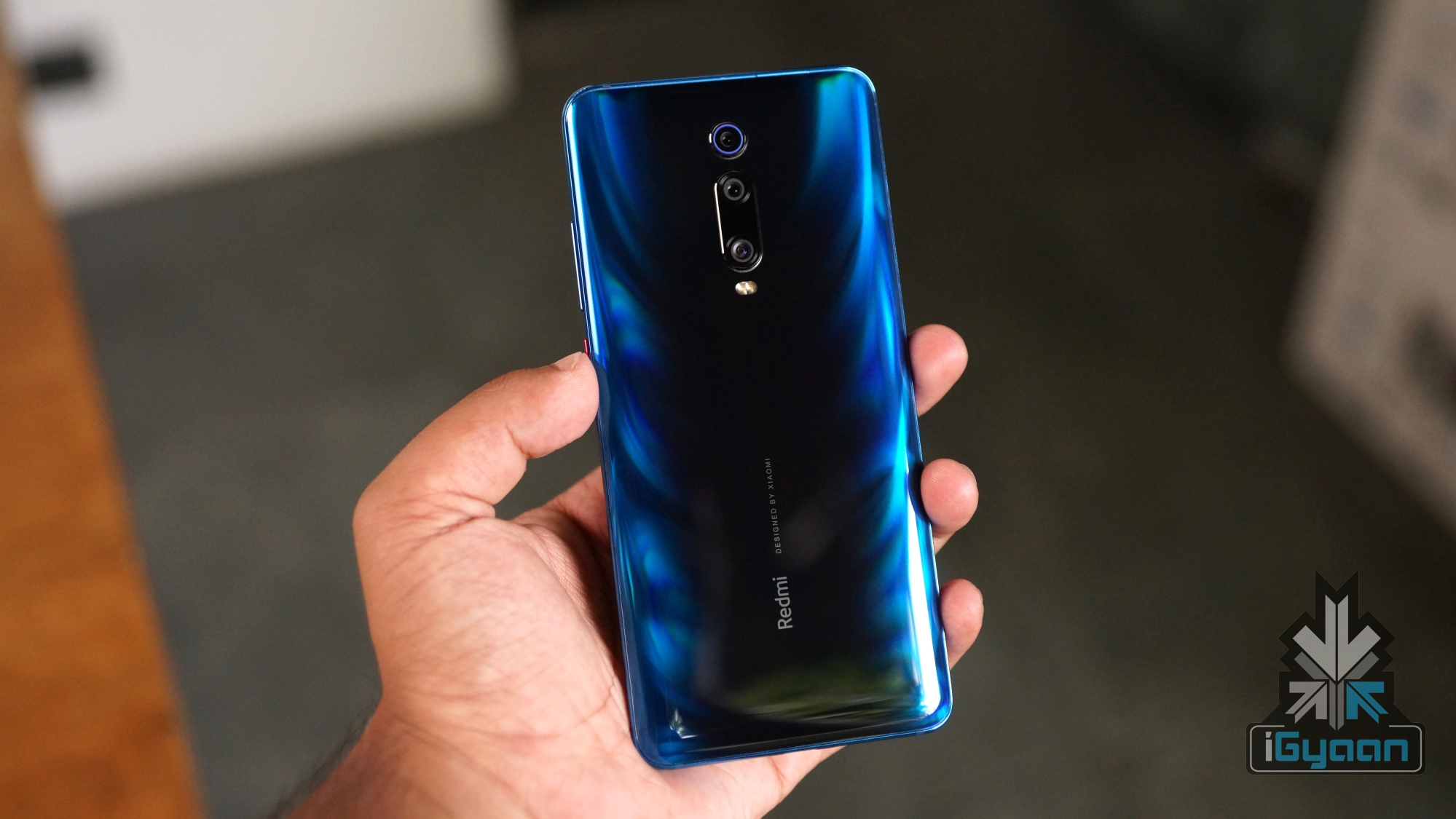
Redmi, a Xiaomi subsidiary, offers devices that have historically focused at mid to low ranges. However, the philosophy has now changed with the introduction of the K20 series. The Redmi K20 and K20 Pro were launched in India on July 17th and till now were offered via flash sales. Now, Xiaomi has announced that the K20 series will finally be available through open sale meaning it is available for at all time and every day.
Redmi K20 Pro
Redmi K20 & K20 Pro
In India, Redmi K20 series is offered in two RAM and internal storage variants. The base model of the former arrives in 6GB RAM with 64GB ROM for INR 21,999. Its higher variant features 6GB RAM with 126GB ROM at a price of INR 23,999. The K20 Pro is offered at 6GB RAM with 128GB ROM with a price tag of INR 27,999. While the top-end version is sold for INR 30,999 with 8GB RAM and 256GB ROM.
Redmi K20
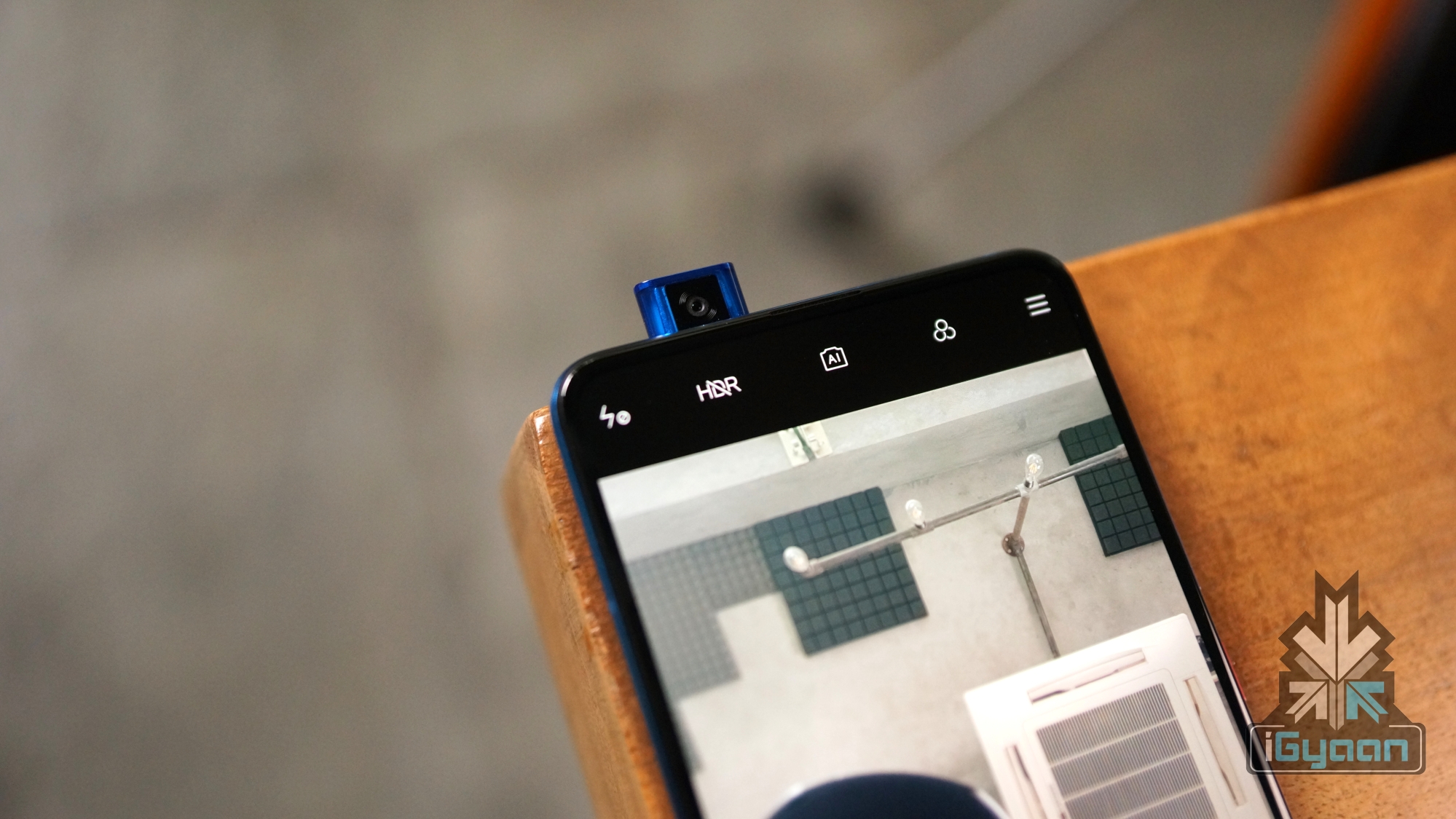
Furthermore, both variants sport a 6.39 inch FHD+ AMOLED display with an aspect ratio of 19.5:9. The regular model has equipped with Qualcomm Snapdragon 730 SoC while the Pro variant has a Snapdragon 855. A triple camera setup consisting of a 48MP primary sensor alongside a 13MP wide-angle lens and 8MP depth sensor can be found on both smartphones. Additionally, both smartphone variants run the latest Android 9 Pie with a 20MP pop-up selfie camera and 4,000mAh battery as well.
As of 5th August 2019, both smartphones are currently available through open sale on both Flipkart and Mi official website. For those who wish to purchase the devices can click on the links listed below:
OnePlus is currently one of the leading brands of the premium segment in the Indian smartphone market. The company launches its flagship smartphones annually which are known to be soon followed up by an upgraded version. A new post on Weibo has allegedly leaked the first live images of OnePlus 7T Pro.
OnePlus 7
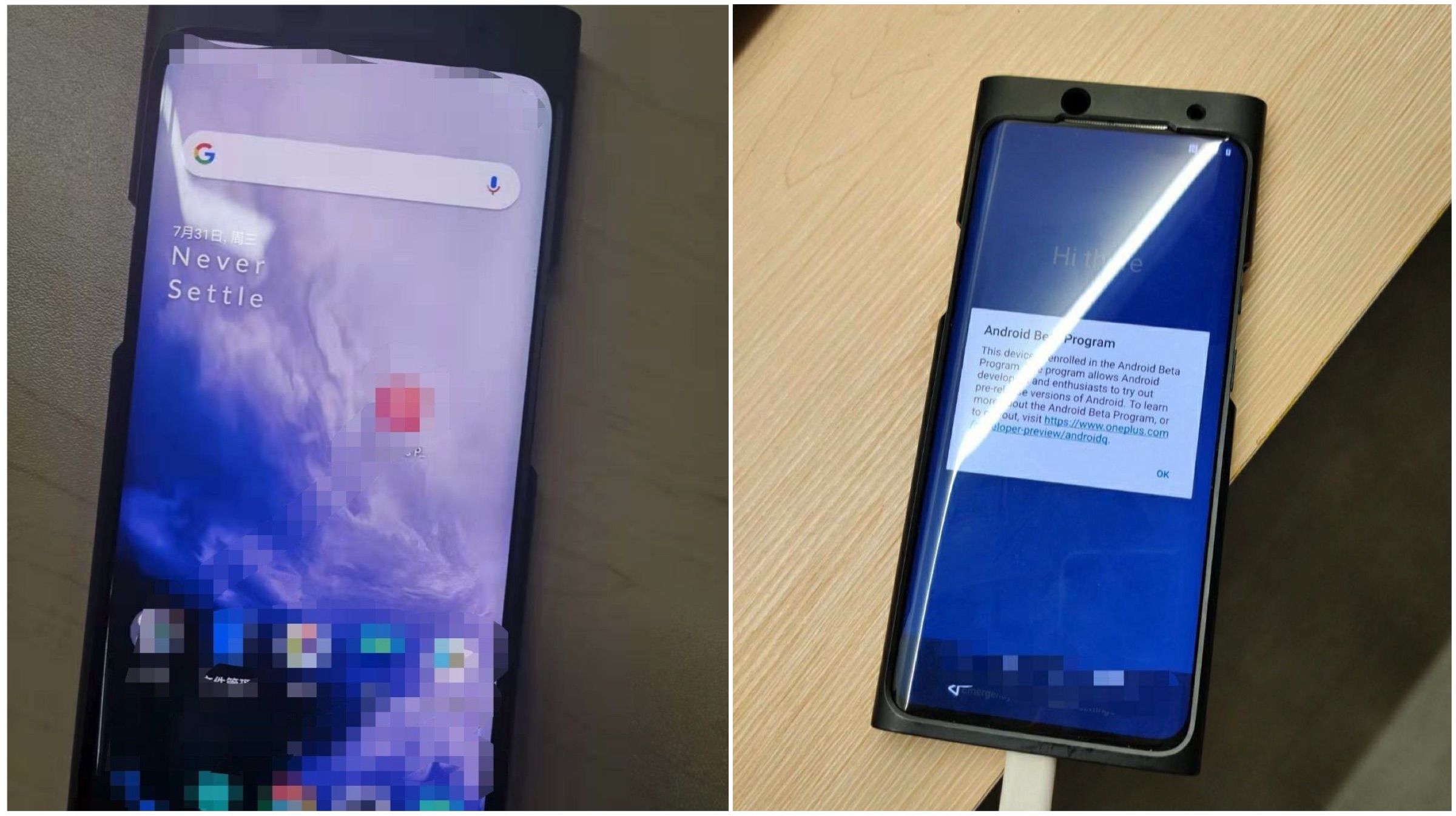
The Chinese company had launched the OnePlus 7 and OnePlus 7 Pro two months prior, so a ‘T’ version is expected to arrive soon. On the Chinese social networking site Weibo, two images of the yet unannounced upcoming OnePlus device were spotted. OnePlus 7T Pro is speculated to arrive before November if going by past release cycle that the company has followed so far. According to the leaked images, the OnePlus device features a very prominent speaker grill on the top of the phone at the front; which could either mean its a OnePlus 7T Pro or a prototype of the original 7 Pro which was launched in May.
Since the images are taken from the front, not a lot of details can be discerned. However, it can be speculated that the 7T Pro will be equipped with Qualcomm’s latest Snapdragon 855+ chipset. The new chipset is an improvement over the SD855 that was featured on its predecessors and should offer a noticeable increase in performance. Furthermore, the refresh rate of the smartphone may also be bumped up and wireless charging can also be included in OnePlus 7T Pro.
The handset is also seen to be running Android Q beta according to the images. It is likely that a popup selfie camera makes a return and the rear camera sensors to be similar for the most part. The company might push for 64MP primary camera which is being looked into by other companies as well(1,2). Unfortunately, information is scarce and educated guesses aren’t concrete. More details are expected to be available soon so stay tuned for updates.
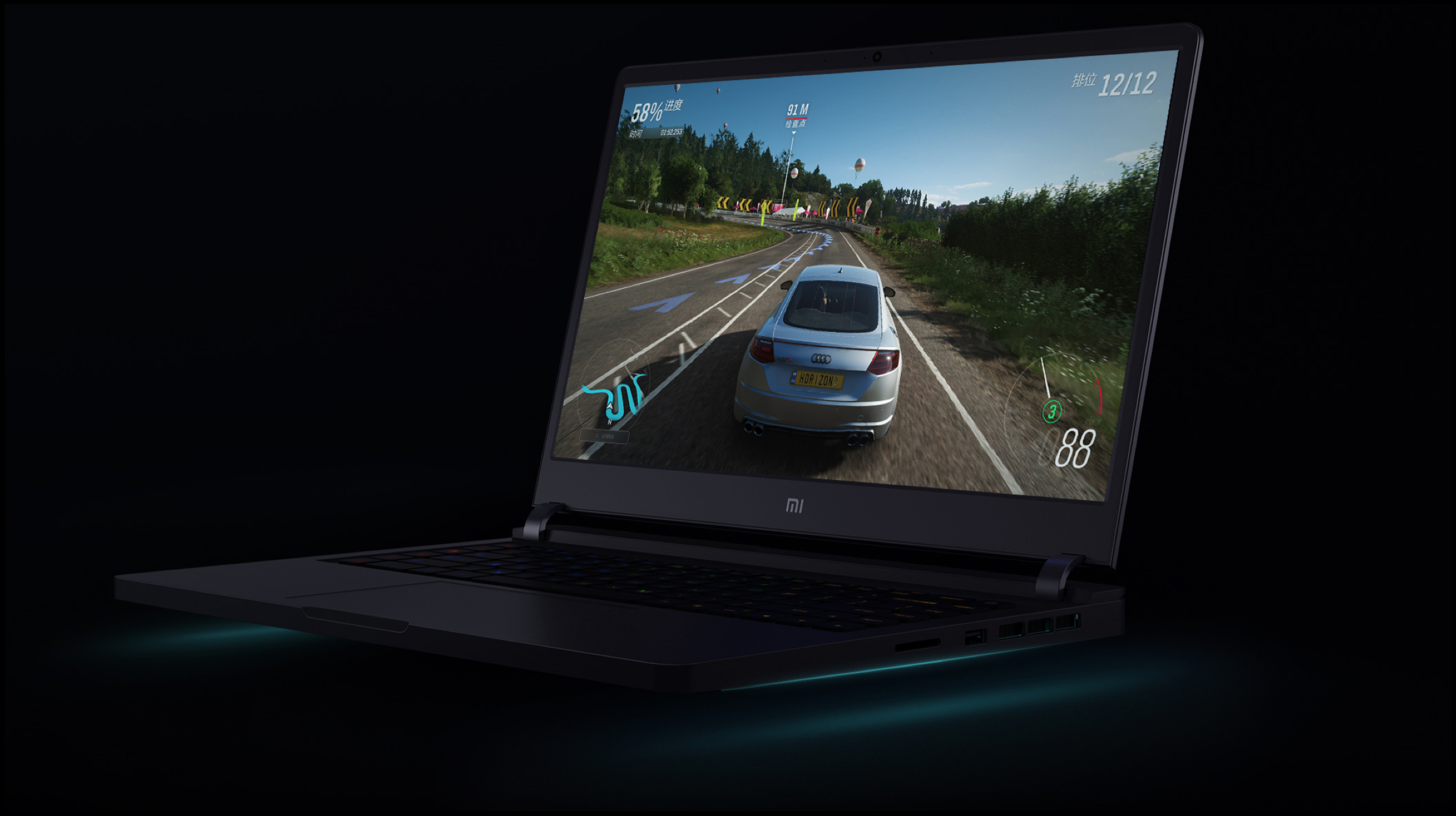
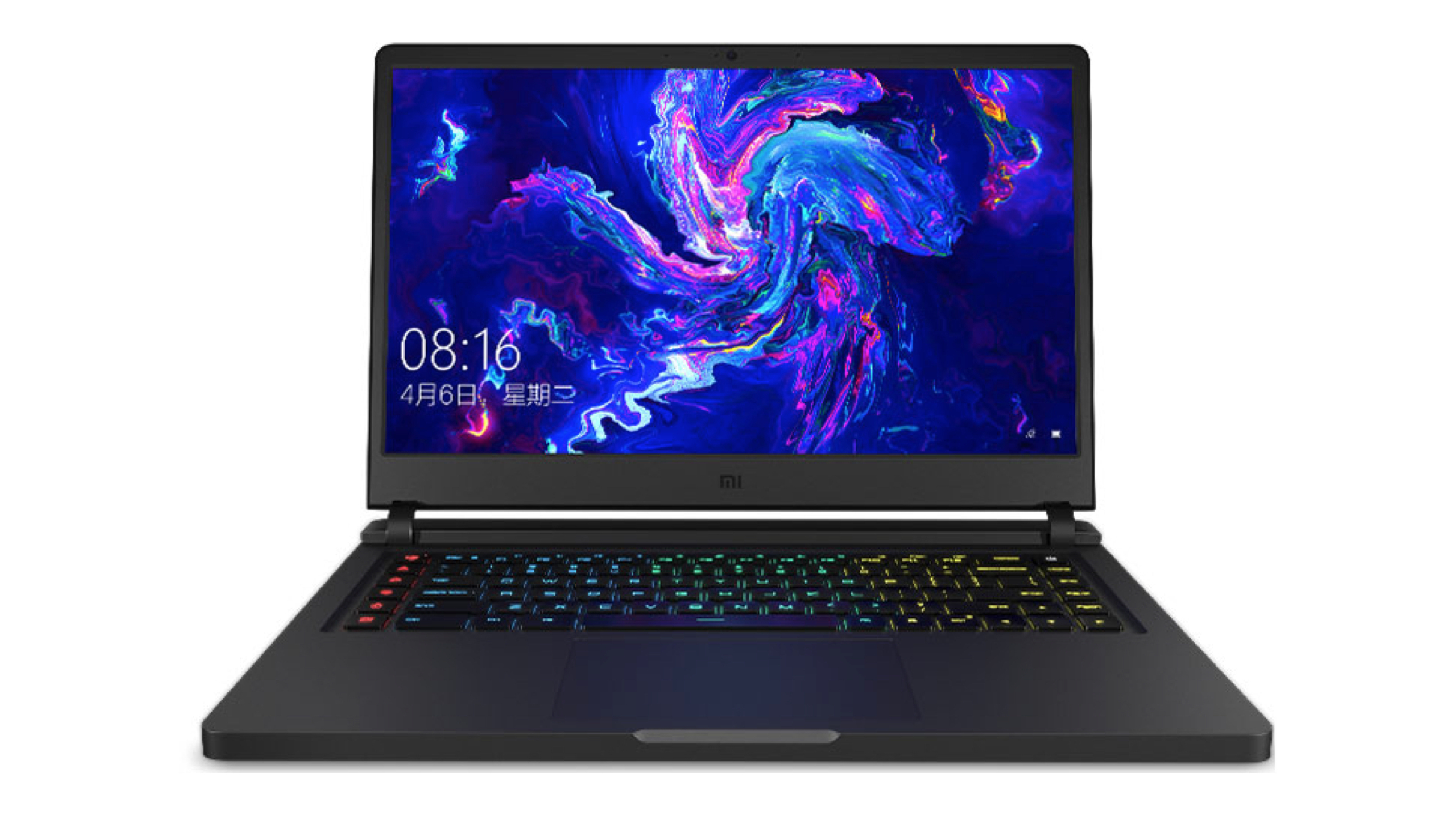
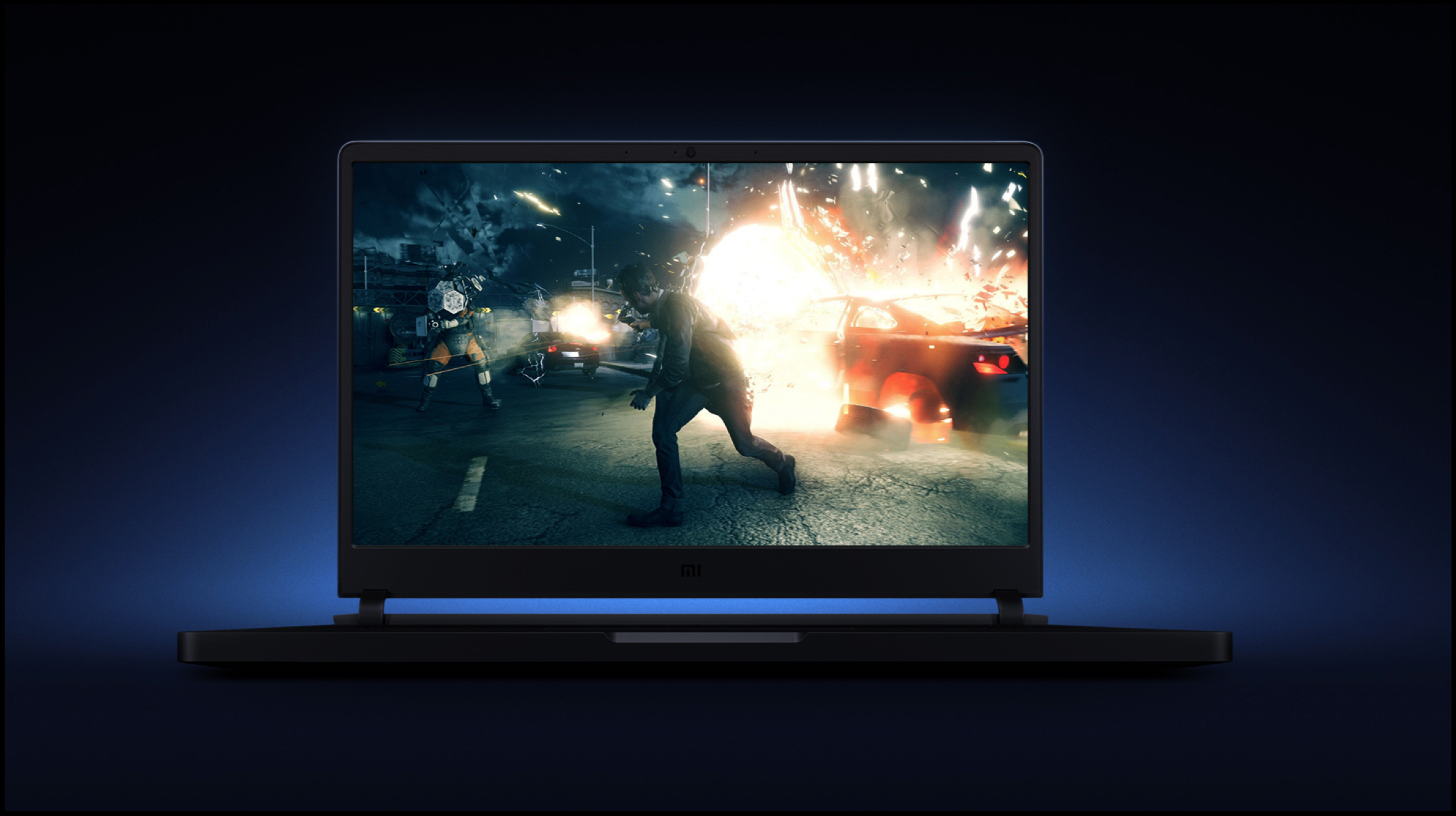
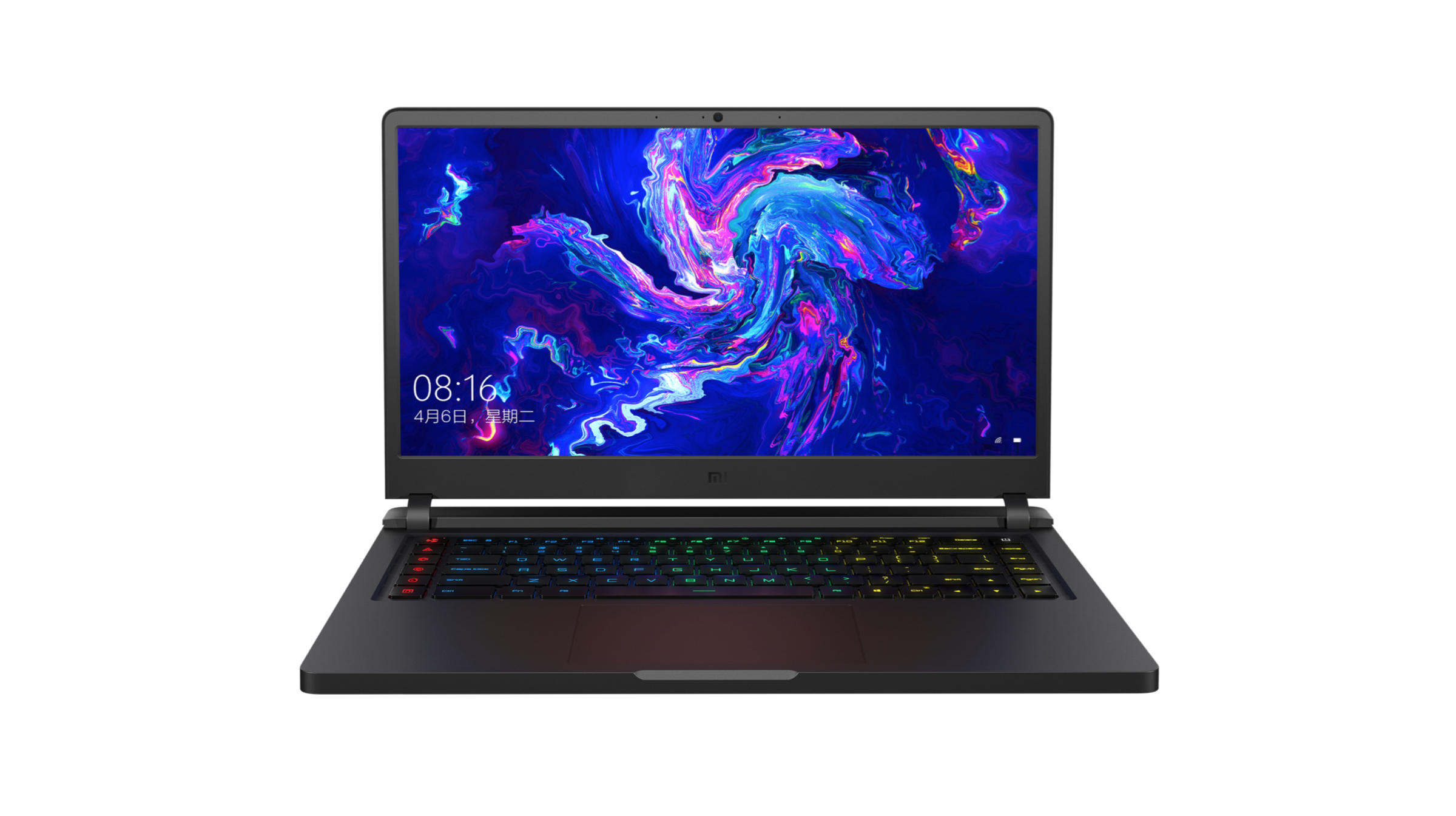
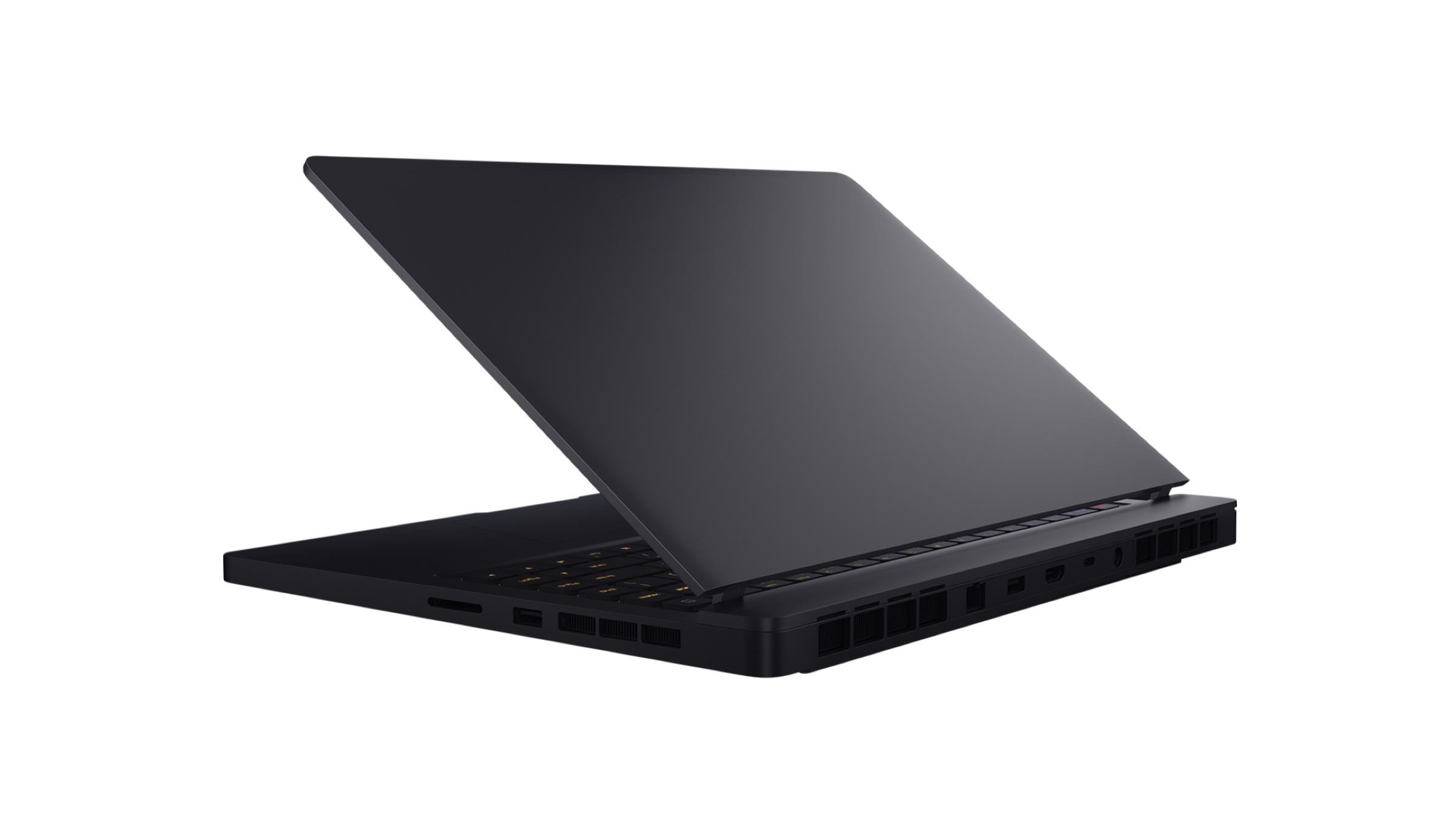
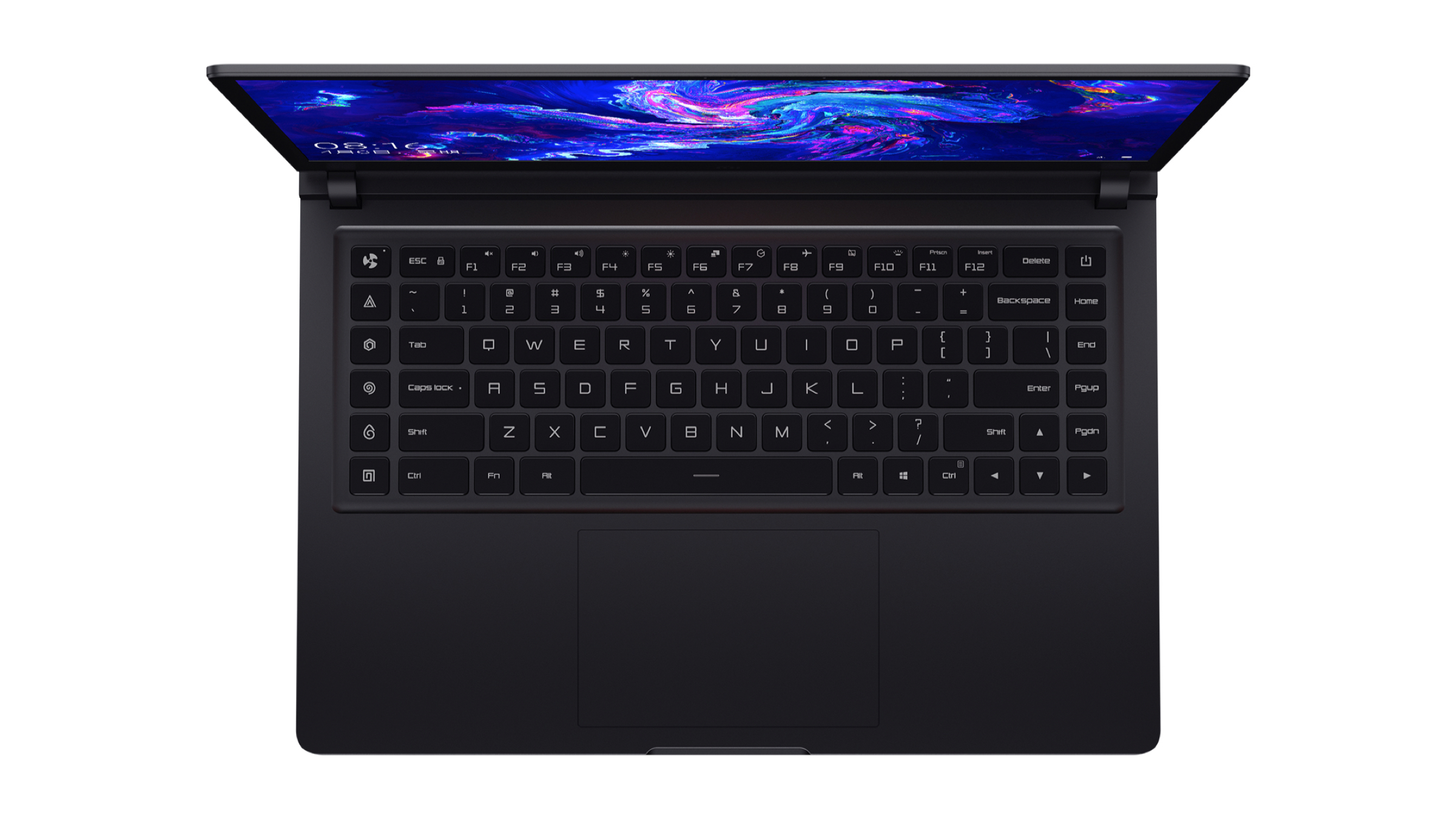
Previously, we had covered a few leaked specifications of Xiaomi’s latest entry in gaming laptops. Now, a short wait after, the Mi Gaming Laptop 2019 has finally been launched and which boasts of powerful specifications. The gaming laptop is currently available in China and offers Intel CPU configurations alongside NVIDIA GPUs.
Design
Xiaomi’s Mi Gaming Laptop 2019 is almost identical to the 2018 model in terms of design. Similar to its predecessors, the same number of ports and vents are offered with a 15.6 inch display. The bezel size also remains the same as does the keyboard layout that is LED-backlit. Notably, the 2019 version is slightly darker in shade with a bit of a deeper black casing.
Specifications
One of the key differentiating factors between the newer and older Mi Gaming Laptops is their internal specifications. Notably, NVIDIA’s latest generation of GPU offerings was only made available in 2019 as was the latest generation of Intel Core processors. Hence, prospective buyers can expect impressive performance with the specs offered. The 15.6 inch display has a refresh rate of 144Hz which will be achieved via the new hardware. Xiaomi’s Mi Gaming Laptop is offered in three variants:
Base Model
Intel Core i5-9300H
NVIDIA GeForce GTX 1660 Ti
8GB DDR4 RAM (2666MHz)
512GB PCIe SSD
144Hz Refresh Rate Full HD Display.
High End Model
Intel Core i7-9750H
NVIDIA GeForce GTX 1660 Ti
16GB (2 x 8GB) DDR4 RAM (2666MHz)
512GB PCIe SSD
144Hz Refresh Rate Full HD Display.
Top Model
Intel Core i7-9750H
NVIDIA GeForce RTX 2060
16GB (2 x 8GB) DDR4 RAM (2666MHz)
512GB PCIe SSD
144Hz Refresh Rate Full HD Display.
Connectivity
Every variation of the Mi Gaming Laptop sports dual-band Wi-Fi, Bluetooth 5.0, 2 x 3W speakers, Dolby Audio, and a 1MP HD webcam. Furthermore, Xiaomi offers 4 x USB 3.0 ports, an Ethernet port, a mic, one headphone jack, an HDMI output port and a 3 in 1 card reader. The dimensions of the gaming laptop are similar to its past iteration which is 364 x 265.2 x 20.9mm but weighs lesser at 2.6kgs over 2.7kgs.
Xiaomi Mi Gaming 2019 features a 4 colour LED-backlit keyboard with 3 different modes. Additionally, a glass touchpad is offered with multiple gesture control, and ships with Windows 10 Home. It has a 55Whr battery that should offer a decent backup.
The Mi Gaming Laptop 2019 carries a price tag of CNY 7499 (approx. $1,080 or INR 76,130) for the base model. The higher-end model will sell for CNY 8,599 (approx. $1239 or INR 87,300) while the top end goes for CNY 8,999 (approx, $1,297 or INR 91,400). Currently, Xiaomi has launched the gaming laptop exclusively in China with a global launch being uncertain. Stay tuned for more updates.
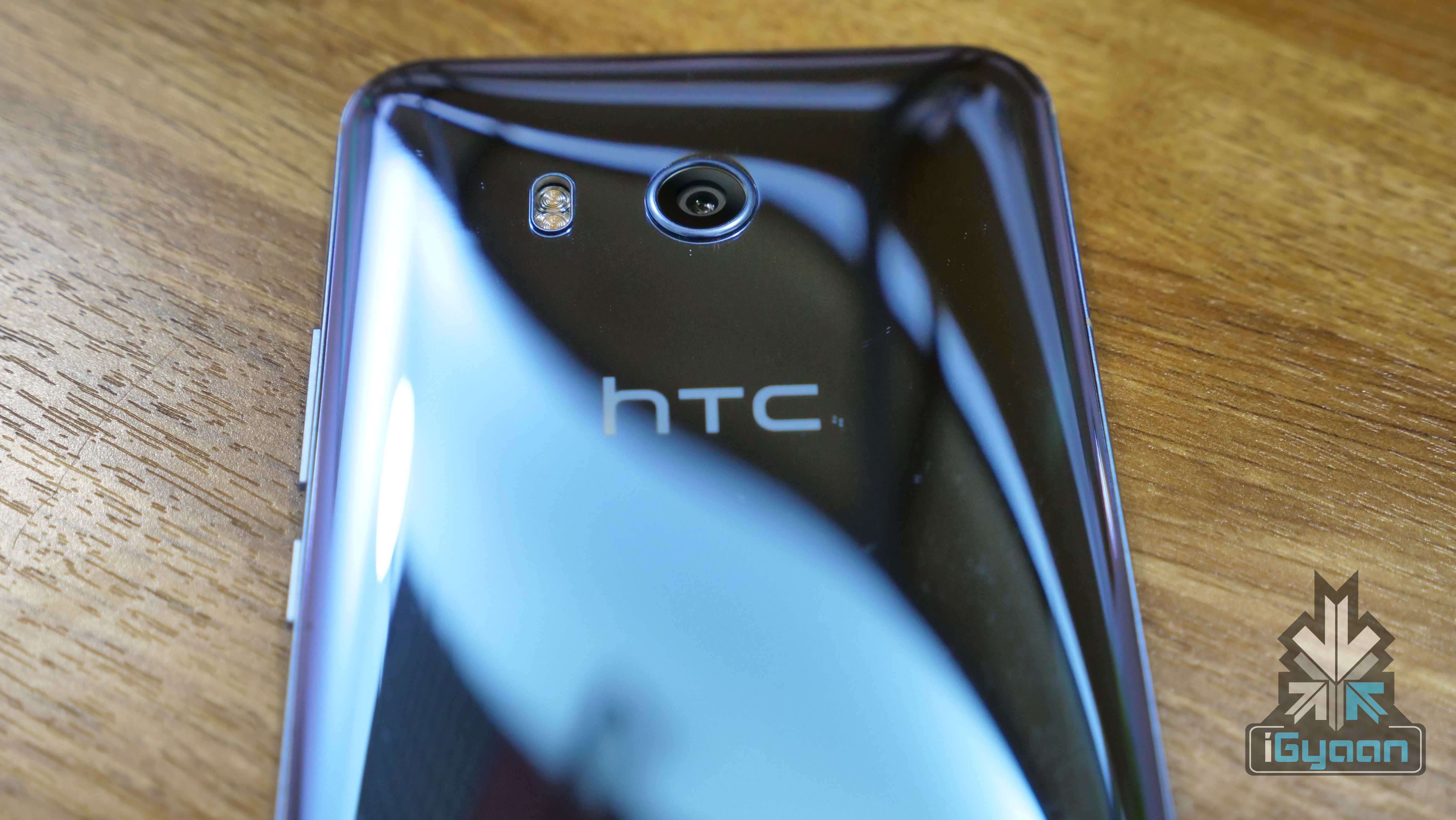
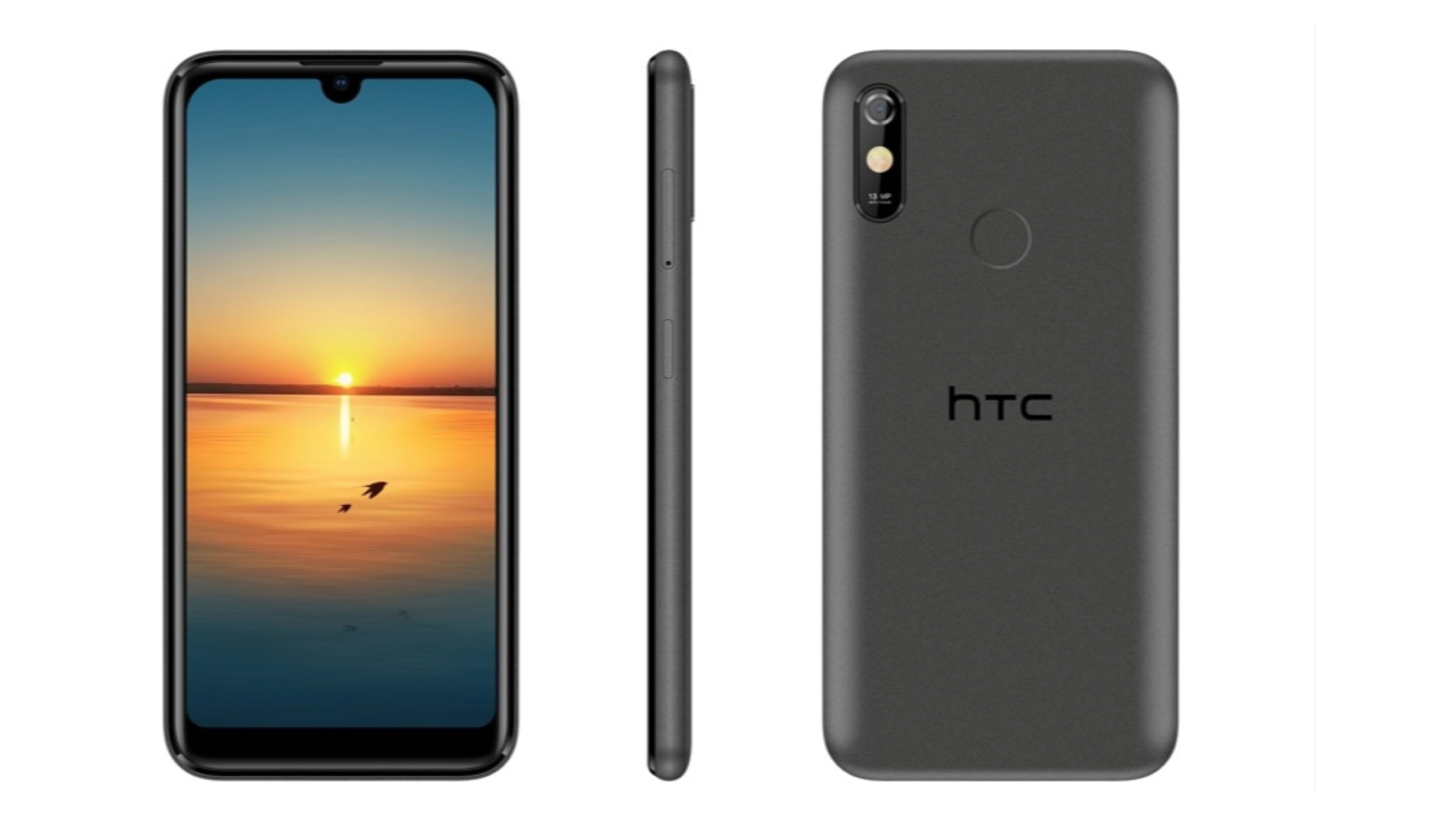
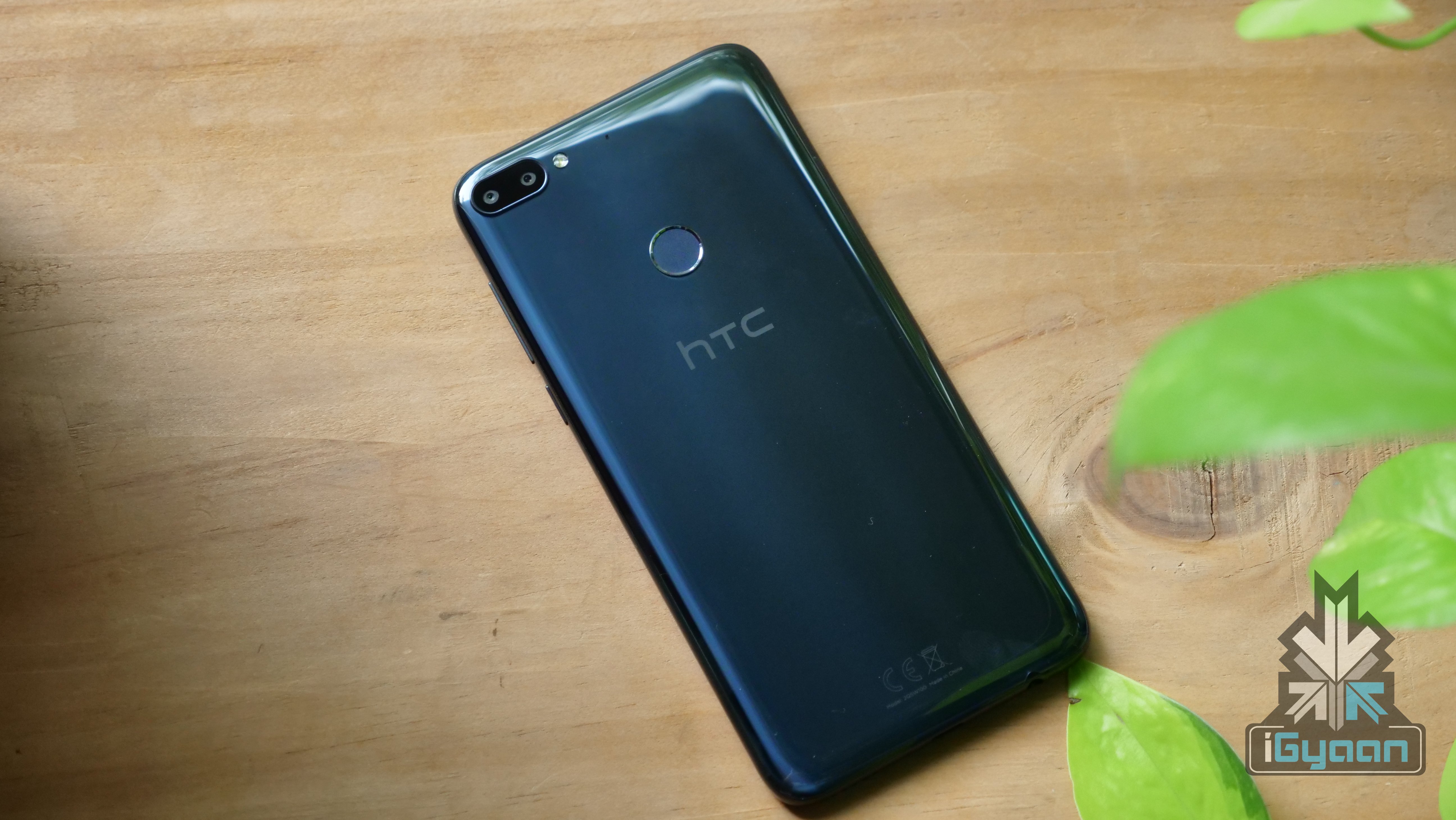
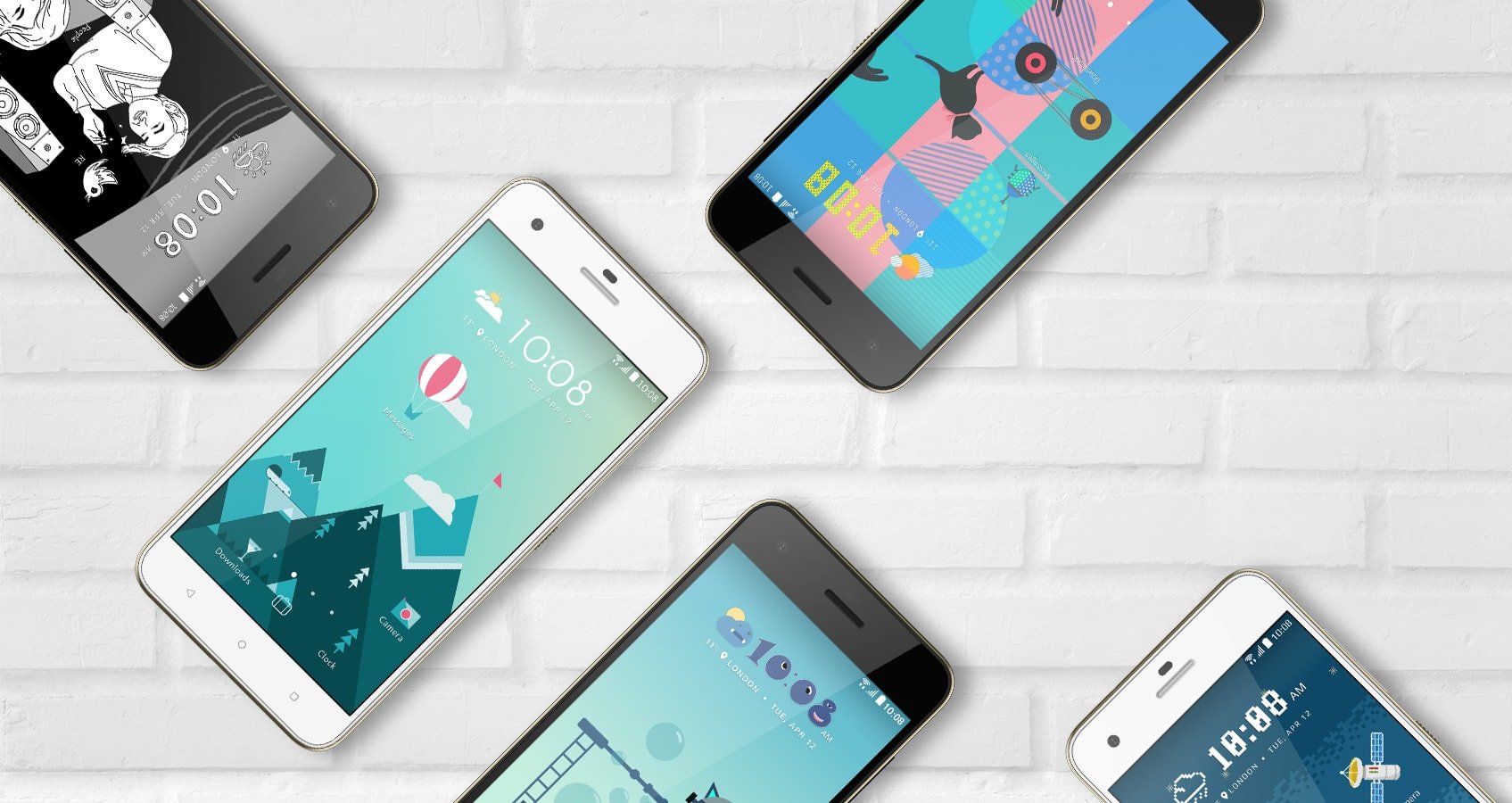
HTC was one of the most iconic brands in India a couple of years ago. Similar to Nokia, HTC went through rough waters that had seen them backing off from the Indian market altogether. The Taiwan based company had numerous reasons for its losing market standing and has distanced itself from the Southeastern Asian country for more than a year now. According to a fresh report, however, HTC is seeking to make a comeback to the developing countries smartphone market.
HTC Wildfire E1
One of the many reasons why HTC had to bail out of India was its pricing and marketing. The smartphone from the company was known to be premium built on even a few of its mid-range devices, however, this, in turn, couldn’t justify their high prices. In comparison, at the time companies like Xiaomi and OnePlus were just emerging that targeted the low to mid and top tier markets respectively. Both companies had aggressively priced their handsets which struck a right chord with the Indian audience. Hence, the companies and its overpriced products felt rather obsolete in value.
HTC Desire 12
Now, a brand new report from sources close to the company revealed that HTC will arrive in the Indian market in August. Inone Technology distribution network will be partnered with the company for the launch of its new flagship series. It is expected that HTC will launch new smartphones in the next few days or weeks with a couple of new features. It is exciting to see brands that were popular in India make a comeback to the market. The new launch would mark the first official release in a little more than a year.
HTC needs to be prepared to face stiff competition as the smartphone industry is more populated than when it had originally pulled out. Samsung’s A series of smartphone, Xiaomi, Oppo and Vivo are giants in the Indian market so HTC has their work cut out for them. Unfortunately, information regarding the upcoming HTC devices is still sparse. Stay tuned for more information which is expected to be available in the arriving days.
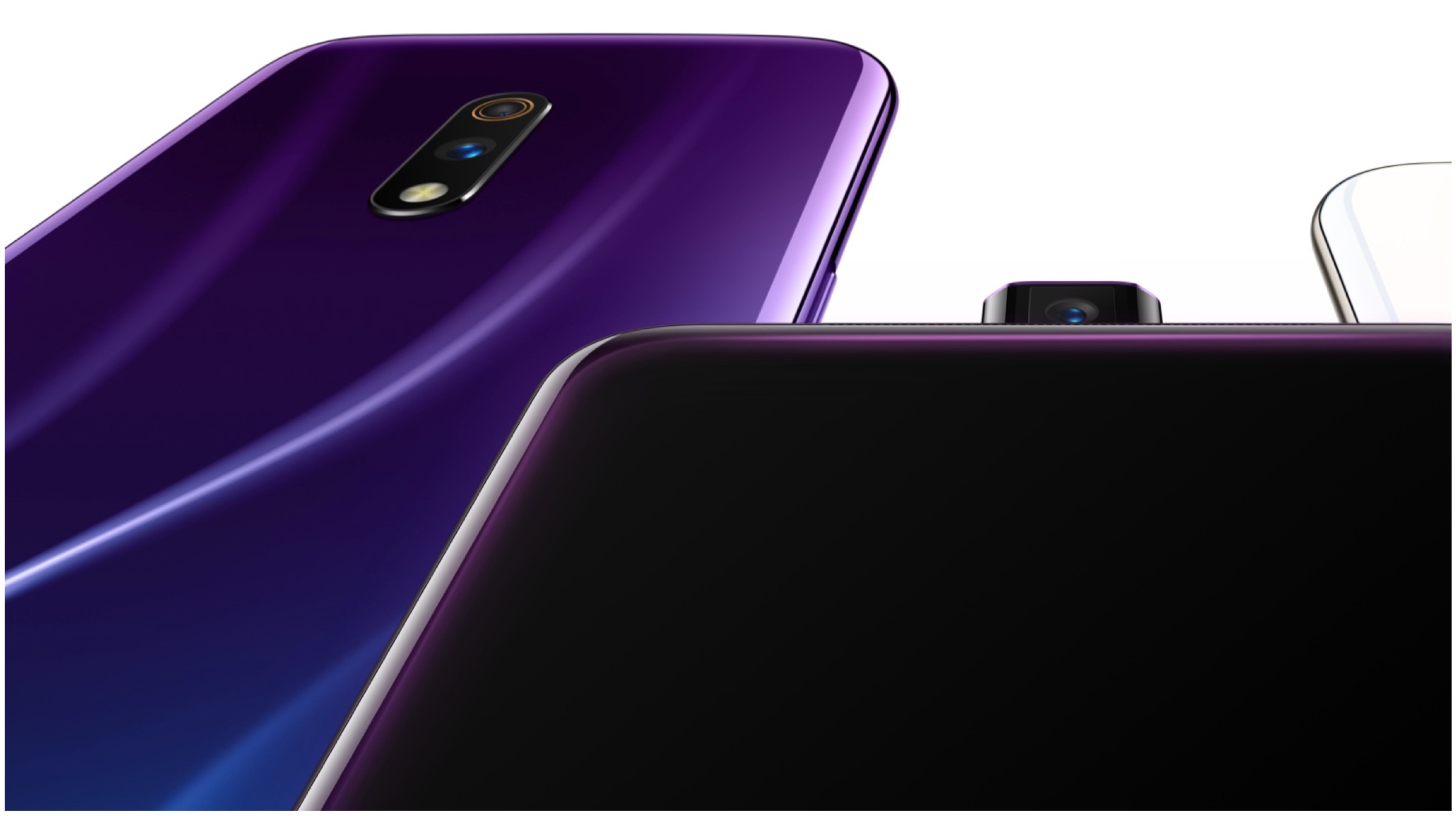
In 2019, the 48MP primary sensor on smartphone cameras became a steady norm. Leading brands equipped their flagships with this sensor which was also soon followed by mid-range devices as well. Previously, reports had surfaced regarding a new 64MP sensor which would soon be equipped on the latest smartphones, Now, Realme is ready to debut its first smartphone with a 64MP quad-camera in India on 8th August.
Get ready to witness some of the world's first in smartphone camera technology at the #realme camera innovation event. Stay Tuned as we #LeapToQuadCamera and reveal the world's first 64MP Quad Camera technology on a smartphone. pic.twitter.com/iN6xde6Y7l
Earlier in June, Realme had announced that it is planning on revealing a smartphone with 64MP in India. Now, the company has revealed that it will address the device on the 8th of August in a closed media briefing.
The company went on Twitter to share a post that shows a quad-camera setup on the rear with a 64MP primary sensor.
Working on the new premium killer! Introducing world's first smartphone camera with 64MP GW1 largest 1/1.72” sensor and mega 1.6µm pixel with amazing clear shots in low light too. RT if you want to see more “knockout” shots. #DareToLeappic.twitter.com/D54xNFdaVm
Realme has launched dual camera smartphone in the past in which one of the cameras is a depth sensor. The company has yet to launch a triple camera handset and is making a skip straight to a quad camera. In the tweet, Realme mentions a “Leap to Quad Camera”, although, it is currently unclear how they will implement it. We will have to see if a quad-camera setup is really the next trend of the arriving year.
Unfortunately, it is unclear as to which sensors will be found in the upcoming Realme device. Furthermore, even the finer details regarding the smartphone is a mystery. It can be speculated that apart from the depth and primary 64MP sensor, a telephoto and ultra wide angle lens maybe employed. More information regarding the device will be available on the 8th August event, so stay tuned for updates.
Previously, several reports had surfaced that accused both Apple and Google of listening to users’ private conversations. Both companies explained through their official channels that the recordings were transcribed to improve their respective voice assistants. Now, Apple and Google are reportedly shutting down the program which had contractors listen in on private conversations.
Google Assistant and Apple’s Siri are both voice assistants that occasionally sent voice recordings of their surroundings to their parent companies. The companies claimed that they had started the program of hiring contractors, who listened to the recordings, for the purpose of improving the user interaction with the voice assistants. As of today, Google and Apple have suspended their respective programs after facing backlash from the community and regulatory bodies.
Apple in a statement said that they wanted to conduct a global review of its program to retain trust users trust in privacy. Grading had third party contractors listen to the recordings from Siri. Now, users can opt-in for the program and participate in grading. Furthermore, Google after having faced allegations, after its Dutch user recording was leaked, has also suspended its voice assistant program. Its “Hey Google” wake word had inadvertently triggered and had recorded many private and sensitive moments. Hence, the company will review its program as well.
Notably, the concerns raised over user privacy have become an increasingly sensitive aspect in the European regions. It is expected that Governmental regulatory bodies will soon step in and investigate the matter separately. However, the issue has expanded to an international level and should require some form of mediation if carried forward.
The digital world has dug its roots deep into humans’ lives. We are now observing much more at risk than ever regarding our privacy and data. Companies like Google and Apple operate on a global scale and have influences over a much broader audience. It is a daunting prospect to think about when considering the control these companies have over the general public. Stay tuned for more updates regarding the matter.
Online competitive gaming tournaments have become increasingly more popular in the last couple of years. Mainstream media have already started taking notice on the vast potential of a new breed of athletes. E-sports is the official name of this newfound sport which is video gaming-centric in nature. Now, after various gaming tournaments having been successfully hosted, Sony is also starting a new Challenger Series for every PS4 user.
PS4 Tournament: Challenger Series
Sony has invited users of all skill levels to participate in its latest seasonal online competitive gaming tournament. The game roasters that will be played for the competition include AAA titles like Mortal Kombat 11, Warface, Battlefield V, and FIFA 20. One of the taglines the company is pushing is that anyone of any skill level can compete against their friends and other PS4 gamers to win prizes. The PS4 Challenger Series officially kicks off on August 6th with Mortal Kombat 11.
Competition & Prizes
Seasons: PS4 Tournaments: Challenger Series is seasonal, it means gamers are given repeated chance to compete again within a fixed interval. In each season, PS4 users can progress through various stages that test their skills on a level playing field which will be rewarded.
Competition Stages: In every season of the tournament, the competition will be played in 3 stages. Stage 1 has, for Mortal Kombat 11, users win at least 3 out of 4 matches to advance to the next stage. In Stage 2, users will compete at a higher skill level and need to win to get to the final stage. Stage 3 has the gamers join other elite competitors to fight for the PS4 championship title.
Prizes: Sony is offering a chance to every PS4 user to compete and win various prizes. With progression, gamers can have the value of prizes earned increase with each rising levels of competition. The prizes include unique games specific dynamic themes to in-game currency and even cash prizes. There are plenty of reasons for gamers to compete throughout the season so look out for the tournament.
Earlier this very month, a Fortnite championship had seen a teenager take home millions of dollars. Furthermore, Valve is also hosting a DOTA 2 crowdfunded tournament which will have its total prize pool cross over $35 million. If it is any indication, video games are here to stay and the multi-billion dollar industry is an ever-growing form of popular entertainment and virtual sport. Sony is jumping on the bandwagon and the PS4 Challenger Series seems very promising. It provides a competitive platform to its user and offers a great opportunity for an esports career. Stay tuned for more updates.
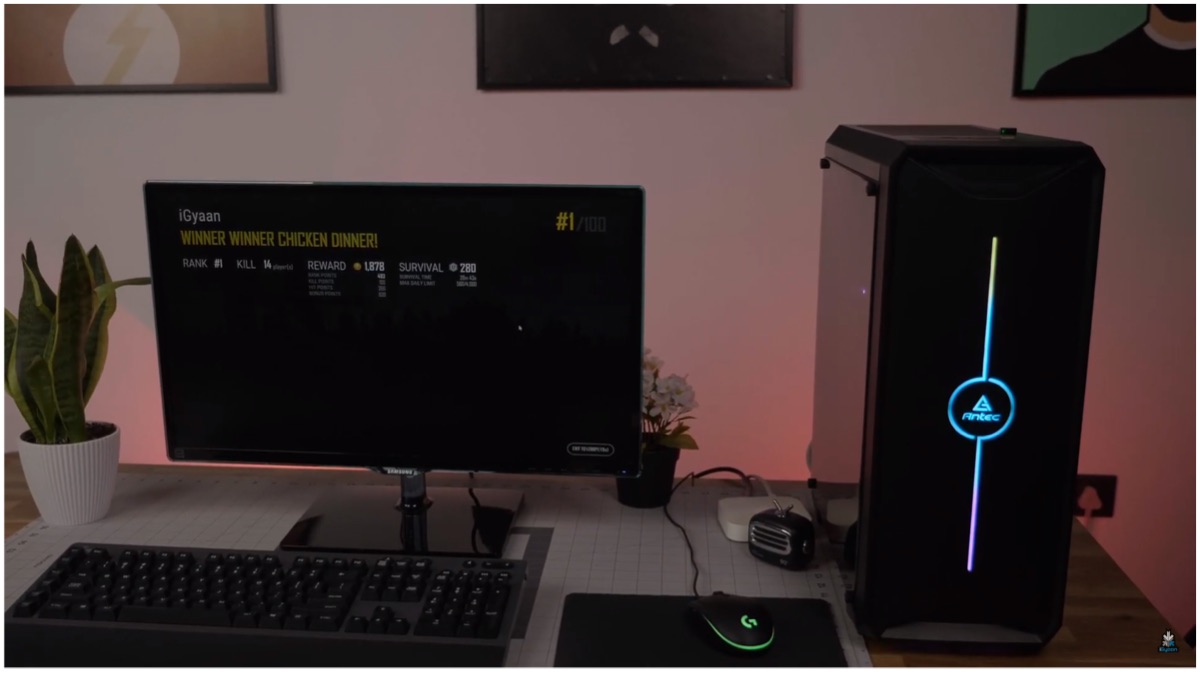
It’s finally here! After many requests, the iGyaan team has finally built a budget gaming PC. We made a gaming computer for just under INR 25,000 and have provided links to all the parts that are available online. Furthermore, we have also provided step by step instructions as to how you can build it yourself.
Gaming PC Parts
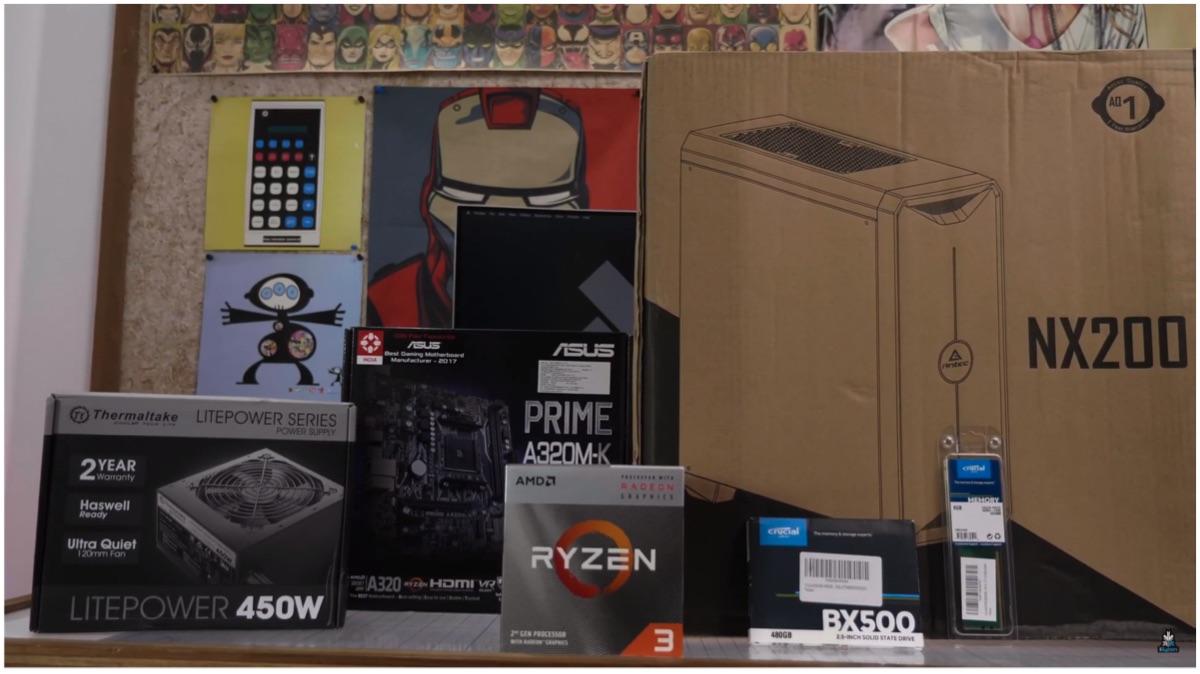
One of the hardest aspects of building a budget gaming PC is deciding on the components. We have used parts that are easily accessible and are available online while leaving room for future upgradability. Here is a list of what we used along with their respective buying links:
Note: The parts we acquired may have their prices vary.
How To Build A Gaming PC
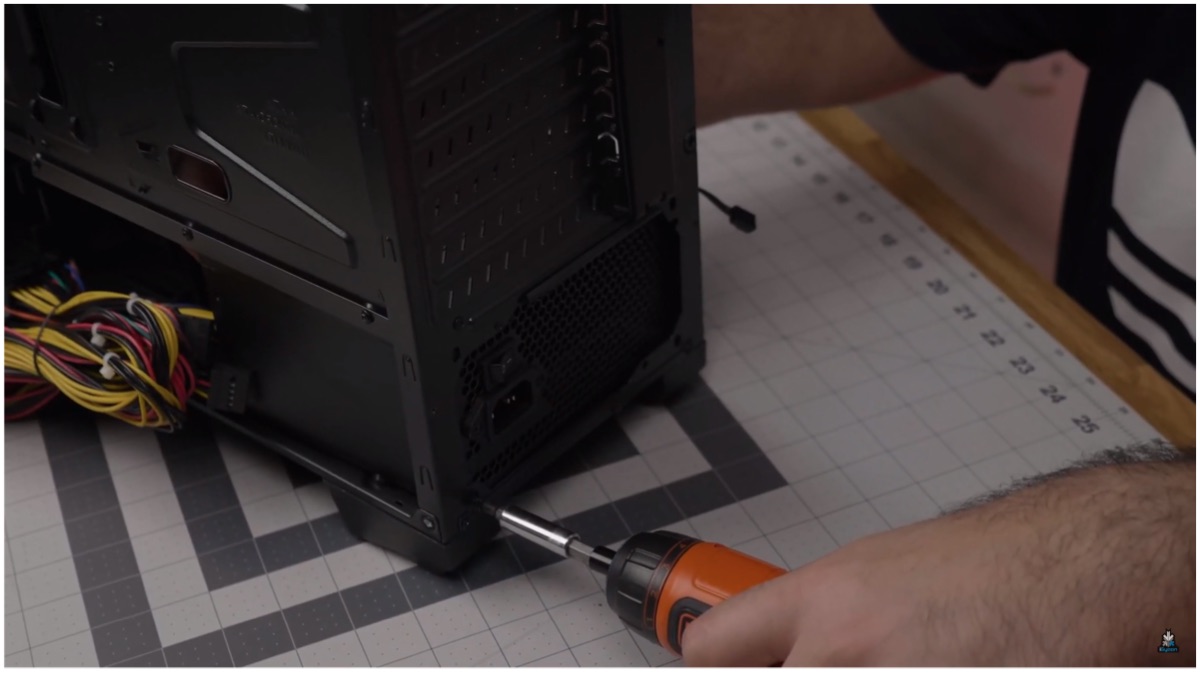
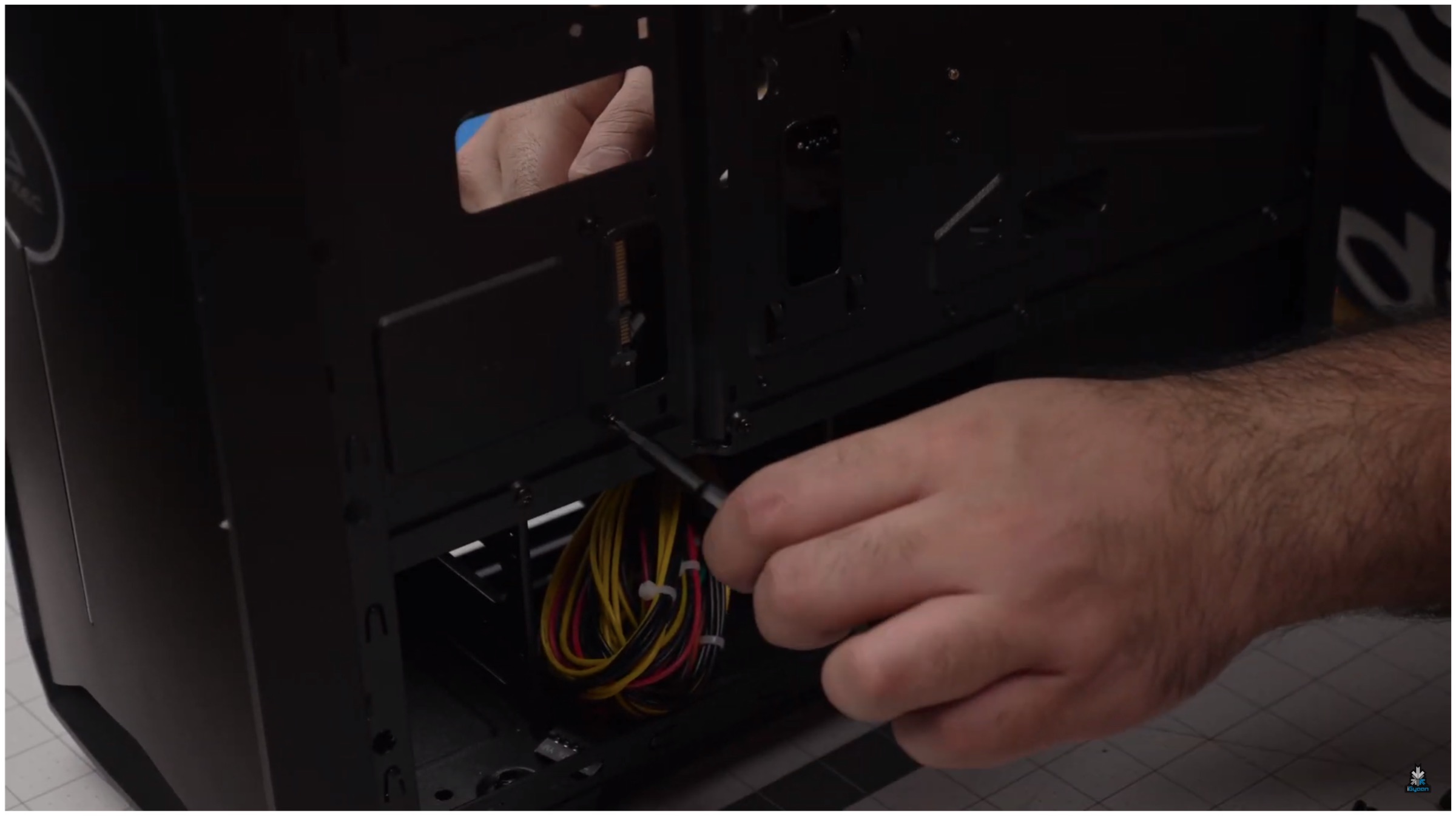
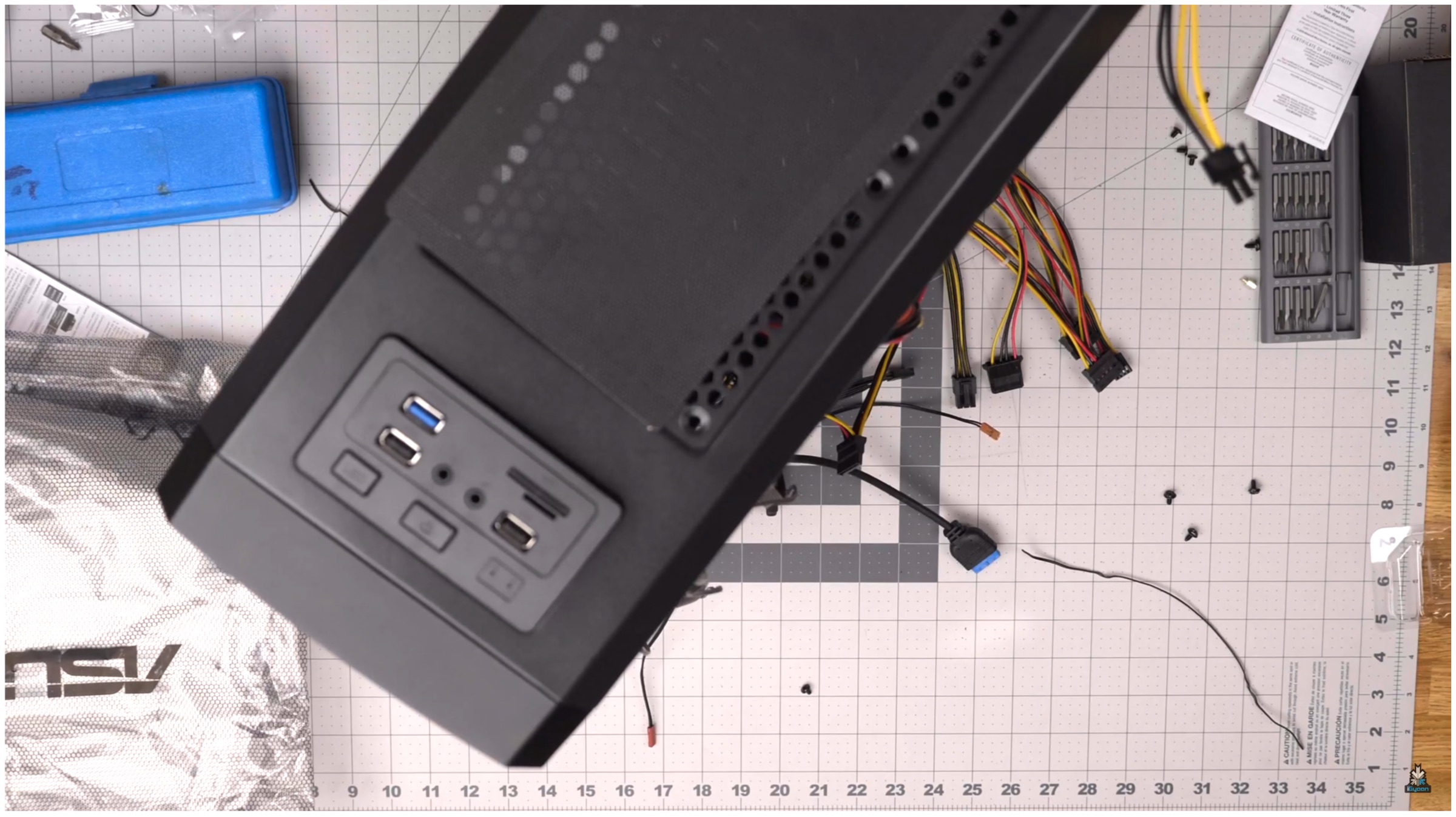
Step 1: Install the PSU after opening up the Antec NX200 case, the Thermaltake 450W PSU will be installed first (always use a renowned brand as PSU is a crucial component). Do remember to always safely store screws while building or opening a PC. The bottom part of the case houses an area specifically for the power supply unit and we will start from there.
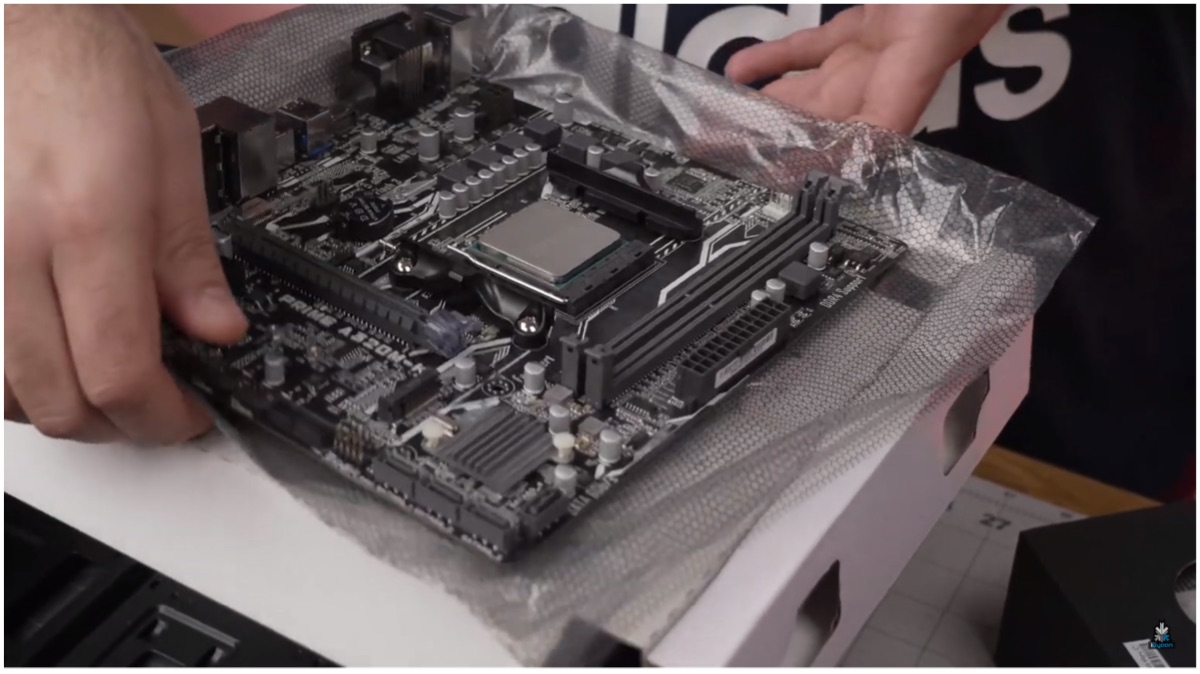
Step 2: Now, we ready the motherboard before outfitting it onto the case. The Asus A320 AM4 compatible motherboard is perfect for the Ryzen 3200G. To install the APU, lift the lever before placing the chipset. Now, an arrow can be found on both the CPU and motherboard that must be aligned to ensure proper fitting. Pull the lever down again to lock in the CPU.
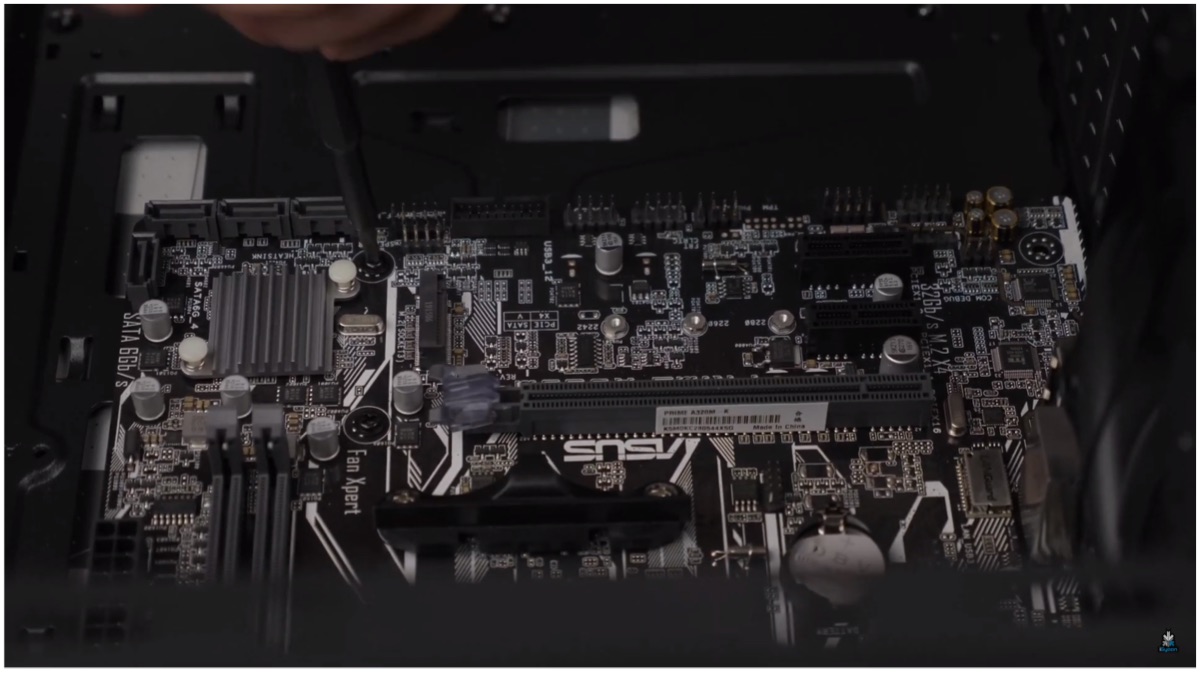
Step 3: The A320 has 6 total standoffs holes which can be used to safely mount the motherboard onto the case. The case only offers four standoffs pre-installed but offer additional screws that make it possible to place two more. Make sure to have the standoffs at the same height lest the motherboard bends and gets damaged.
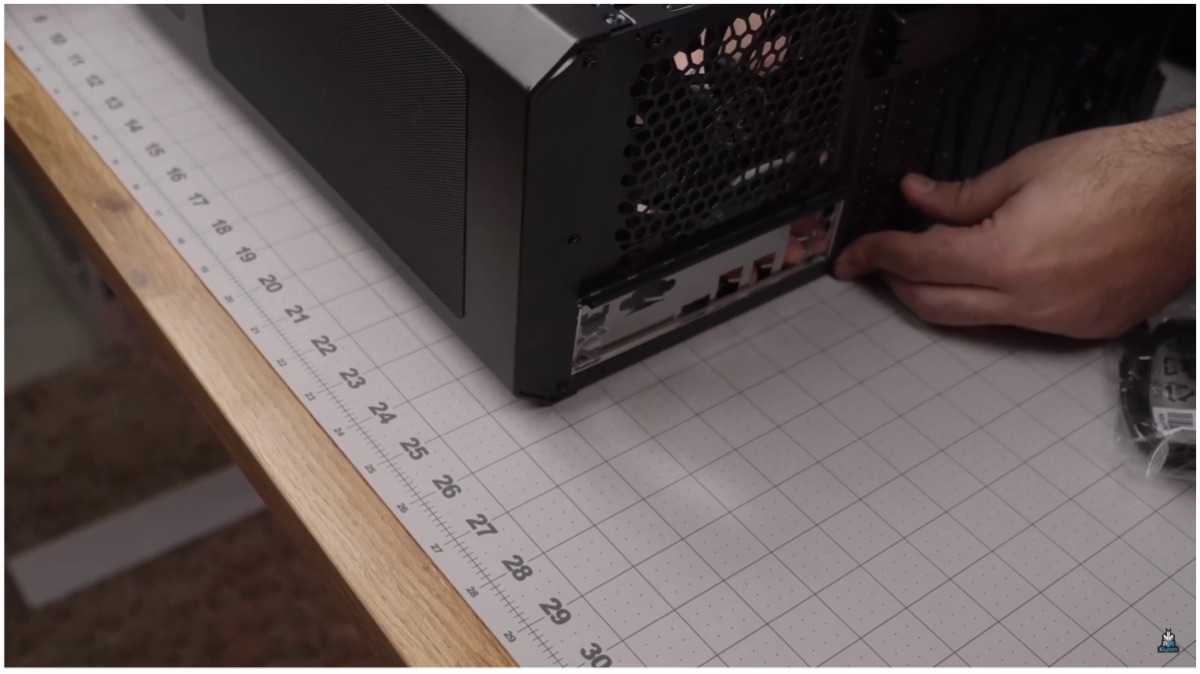
Step 4: Place the IO shield on the backplate. It is a metallic slate which can be fitted into the backplate. Once you place the motherboard, the IO shield should have ports from the board that align perfectly with its holes. Now, use a screwdriver to ensure a secure fit of the motherboard onto the case and make sure not to overtighten the screws.
Step 5: Install the RAM according to the slot. DIMM A1 is the first slot and where the 8GB Crucial RAM should be fitted. You should hear a click once it is housed properly. After this is done flip the case to route the cable and equip the build with the SSD. After opening the side panel users can use the screws provided to fit the 480GB Crucial SSD into place.
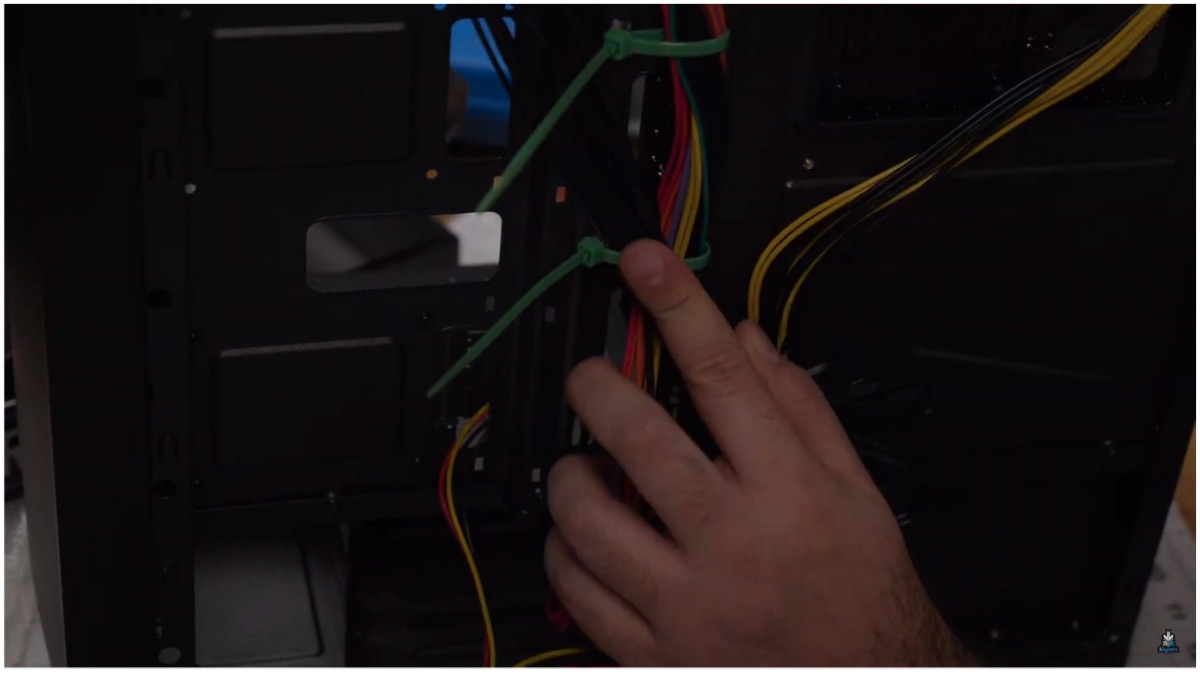
Step 6: Cable management is always important. We used the cases inbuilt routes to ensure better cable management with wires being less evident from the clear side of the build. Users can take each cable out from the side panel. It is required to connect necessary cables, like the power cable, after being routed from the back. Users should check to see which pins the cable align with to know where to connect the plugs. For example, HD Audio connects to the audio connector. Like the LED power connectors, Always check the motherboard that has markings which define what each pin is made for.
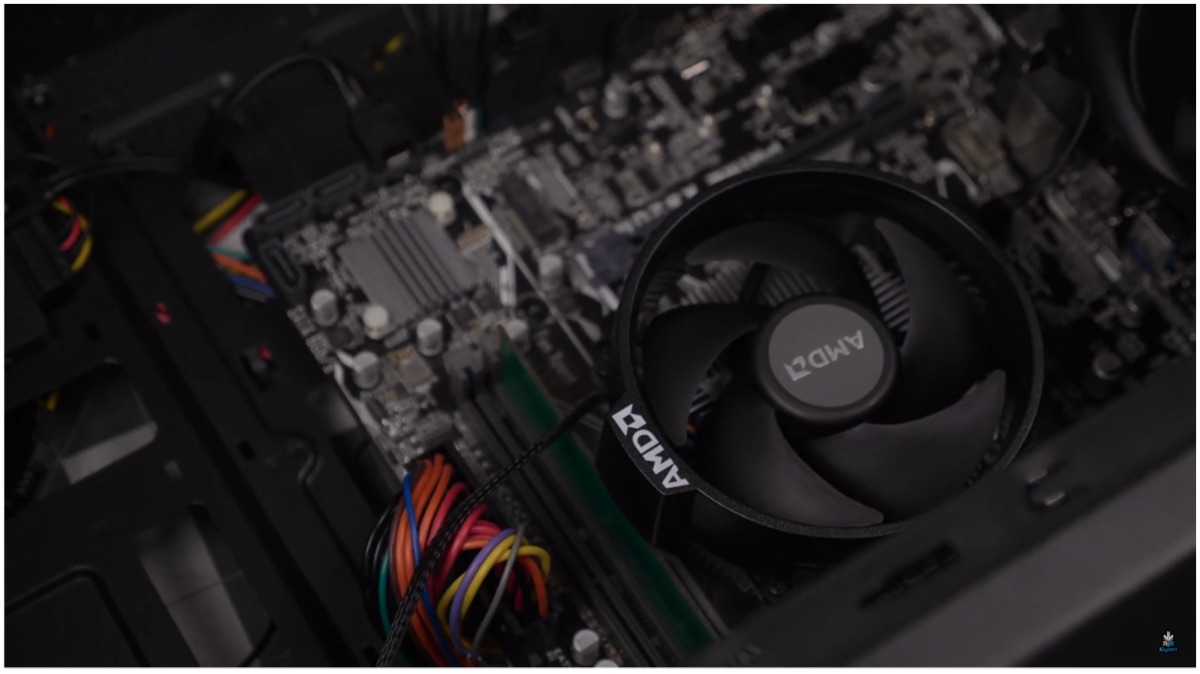
Step 7: To keep the CPU cool, users need to install the Wraith Fan from AMD. Take the cable from the back before plugging, it is similar to what we have previously done with the other wires. This hides most of the wires to the back of the PC build. The CPU cooling fan has thermal paste pre-applied which can be cleaned and switched but we recommend using the stock. Remove the mounting brackets that are pre-installed on the flanks of the CPU unit, these are not required in our build.
Make sure to hold onto the plates that are co-joined with the brackets from the opposite side and screw it along with the fan. In our initial attempt, we had the fan come into contact with the RAM. To fix the issue we rotated the fan bracket right way up to avoid the problem by loosening 4 screws on the fan itself and tightening it back again.
The build is more or less done considering we don’t have to worry about a GPU or additional SSD. The case has space for added cooling via more fan units or even water cooling if users wish to upgrade in the future. The build isn’t complete before we can secure every cable and close up the case; so do check our video to see how we used ties to group the cables neatly before tucking them in.
Step 8 (Optional): For aesthetics, we also included an LED strip whose power had to be routed through the back to power it up. After the Windows installation was complete we decided to spray paint the red and mustard colour cables that seemed distracting. It was achieved without spending additional money and we went spraying to finally achieve the look we were after.
Performance & Conclusion
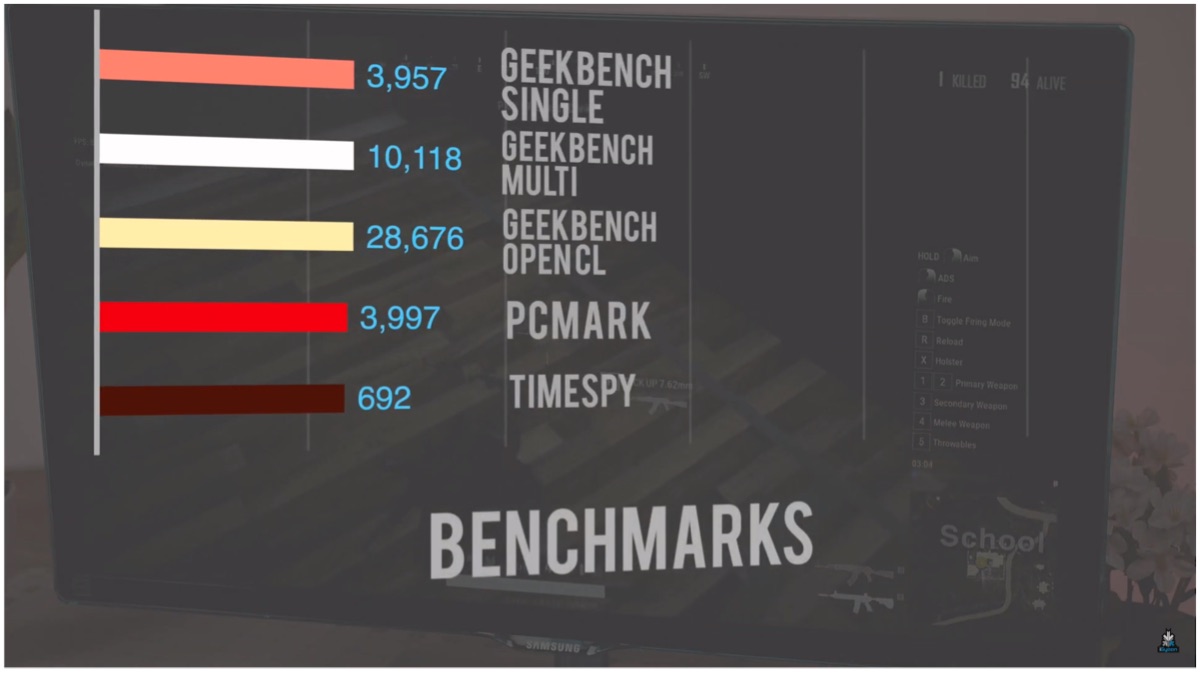
In games like PUBG Lite and GTA V, we achieved frame rates between 50-60fps after tweaking some settings. The budget PC is capable of running other popular games like CS:GO, Apex Legends and even DOTA 2 as well. It is a long shot to claim you can play the latest AAA titles but most classic to even certain new games run well at the lowest settings. You can also look at the chart below to discern the synthetic benchmark of the PC.
For visual assistance, while building your own setup, you can refer to our video on the official iGyaan Network YouTube channel. The video offers a much more in-depth look with visual cues as to how to go about certain complex portions such as cable routing or management. Do follow us on social media for more PC and gaming related content and stay tuned for more.
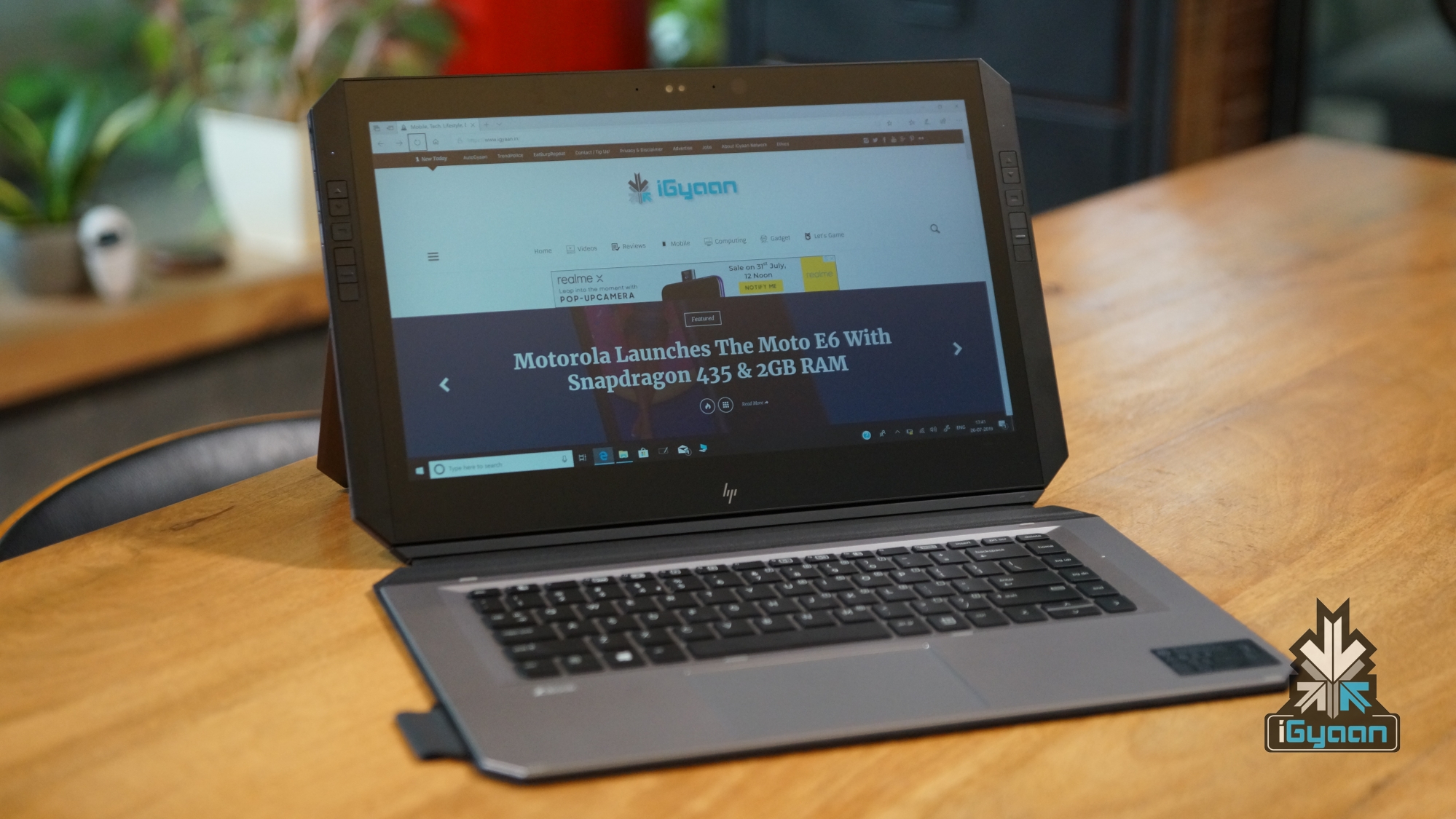
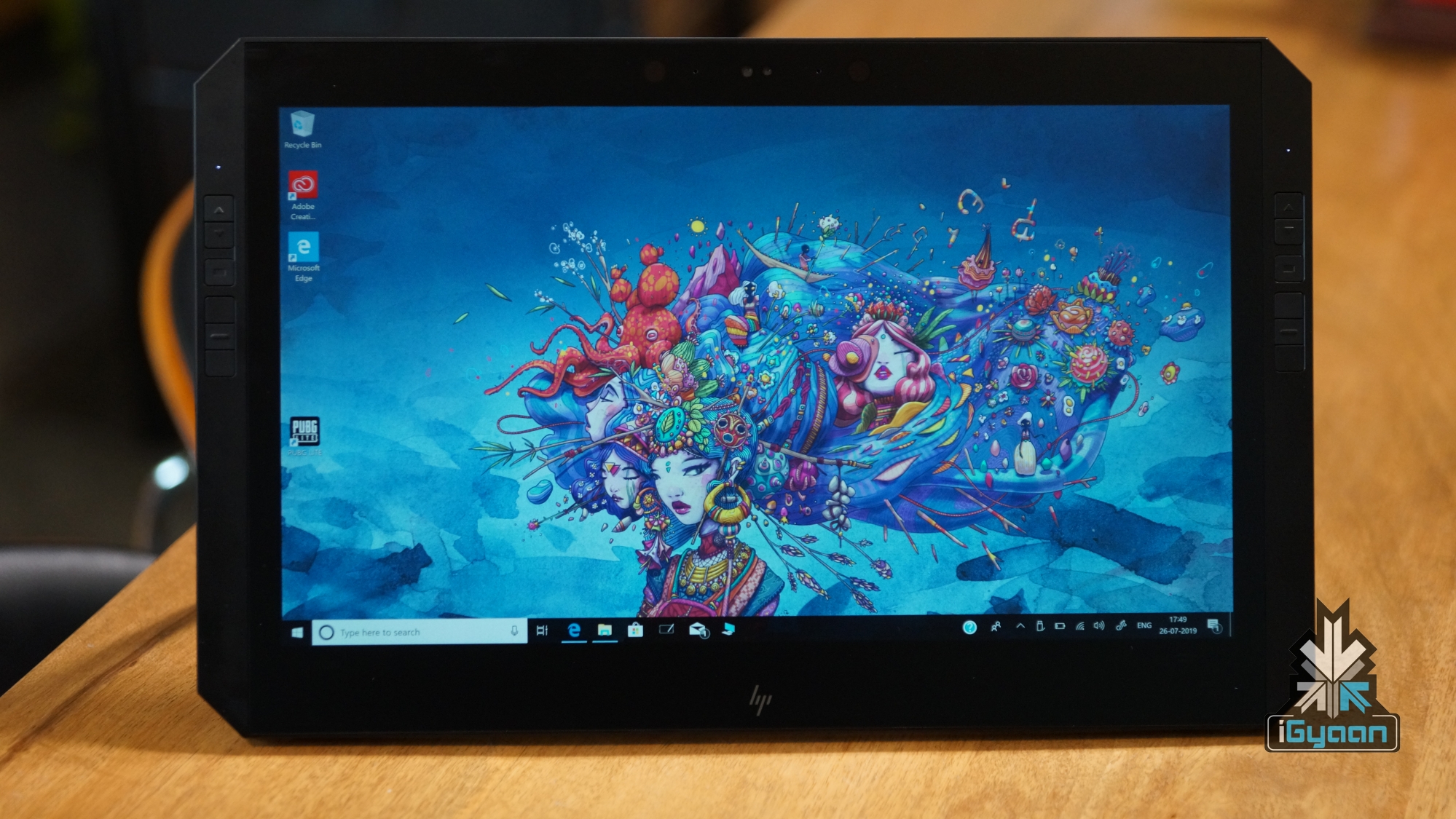
HP has just launched its latest offering in workstation-grade laptops with the ZBook X2 G4 in India. It is a hybrid laptop with a detachable keyboard for tablet functionality whilst sporting top-notch specs. The highlighting features of the device include an 8th Gen Intel CPU with HP Pen and Bang & Olufsen speakers. The laptop is targeted towards design professionals who are always on the go. Here is our Unboxing and Hands-On experience with the new HP laptop. Click on the video below if you wish to see the video as well.
What’s Inside The Box?
HP Zbook X2 G4
Charger Brick
Quick Start Guide
Power Cable Cord
HP Pen
Design & Build
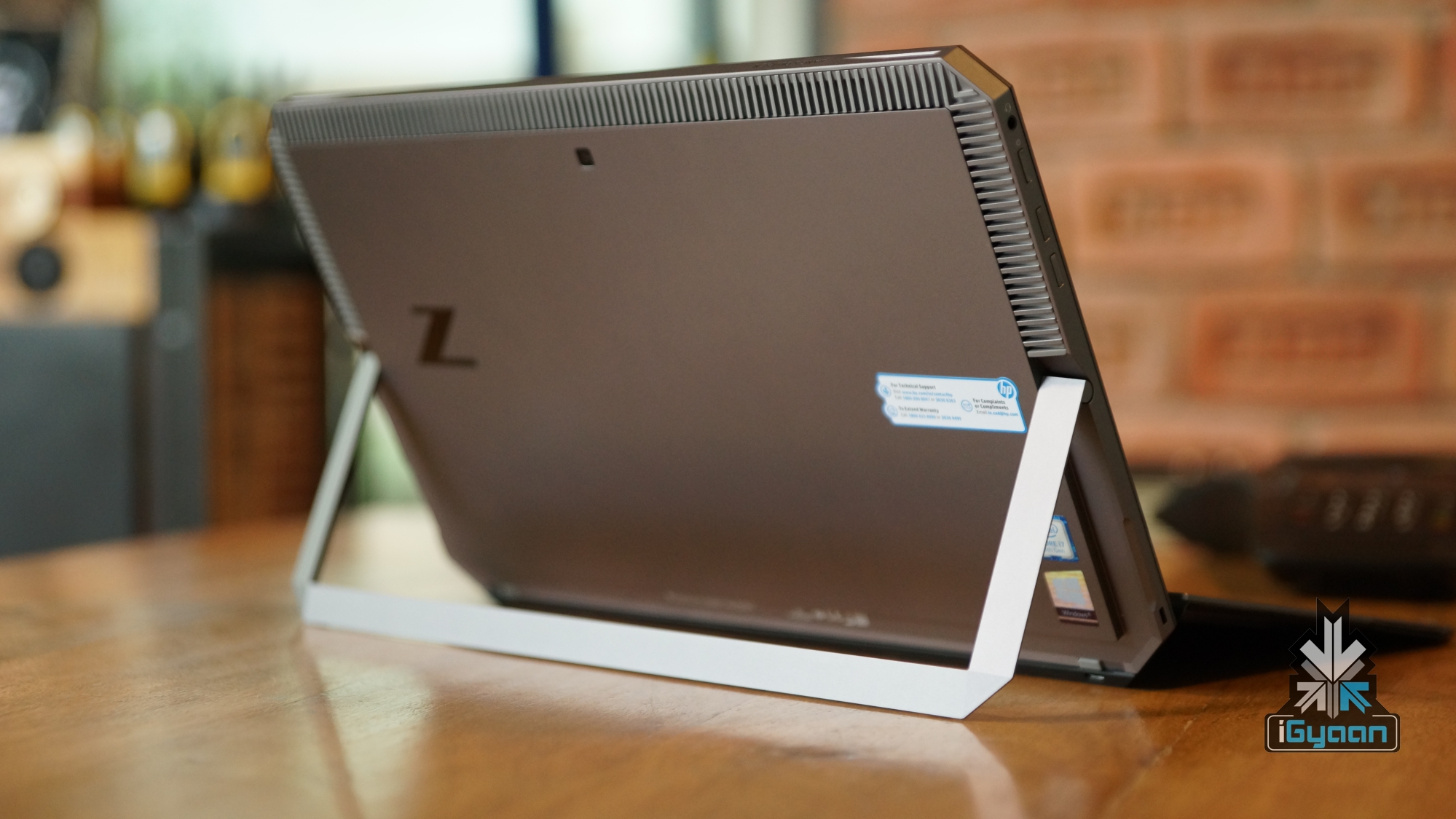
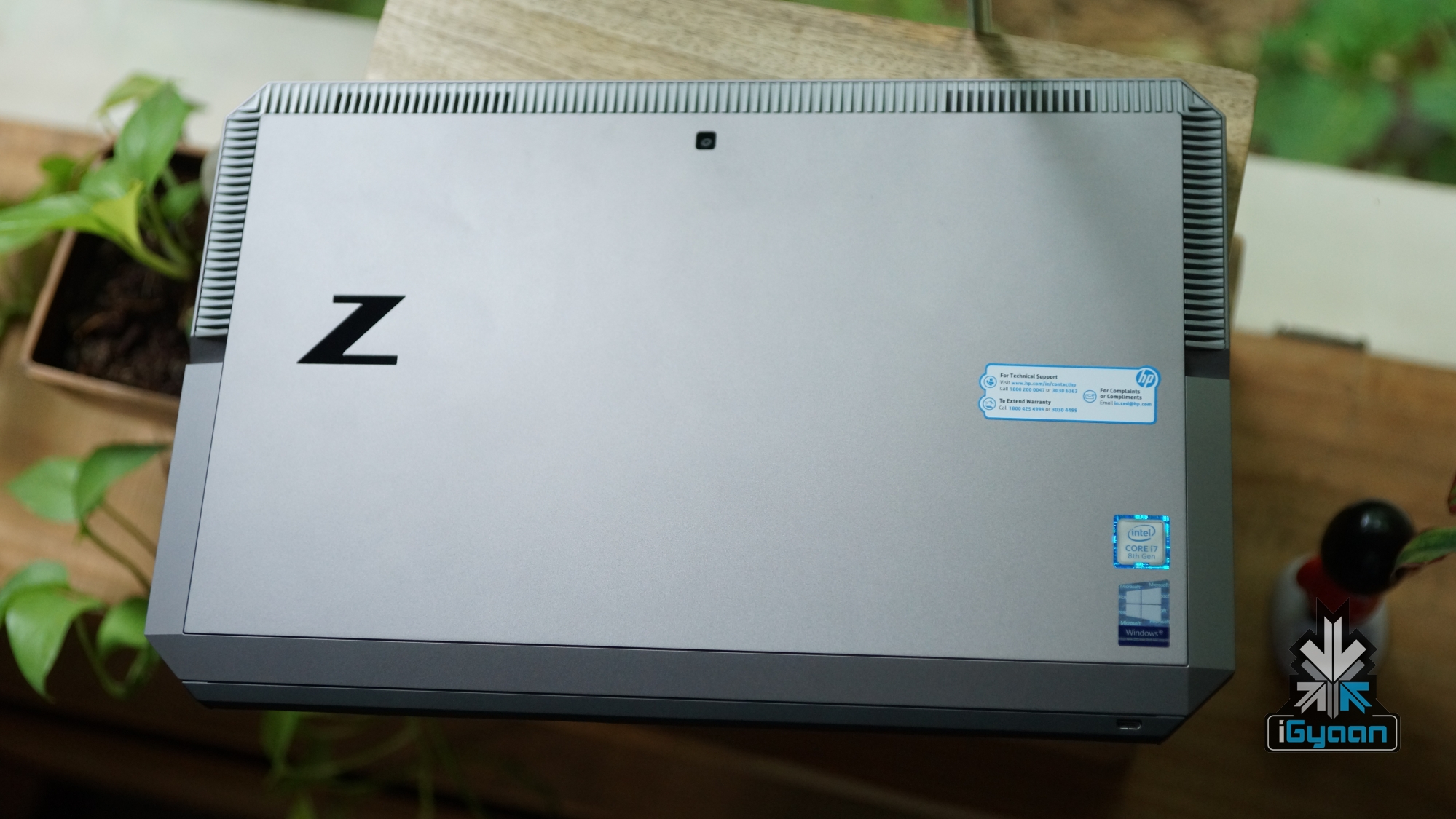
The HP Zbook X2 G4 is a workstation laptop and its design and form factor reflect that philosophy. It is made out of stiffened anodised aluminium and is designed to pass military-standard stress testing. In simpler words, it can withstand accidental drops without receiving critical damage. The device feels sturdy which showcases its productivity-focused aesthetics.
Furthermore, HP Zbook X2 G4 is a hybrid laptop which means it has a detachable keyboard. It implies that users can completely separate both halves and achieve mobile typing or complete tablet experience. Keep in mind that the device weighs a hefty 1.65kg even in tablet mode, so it is not ultra-portable as one would prefer. With the keyboard attached, it weighs in about 2.17 kg.
Display
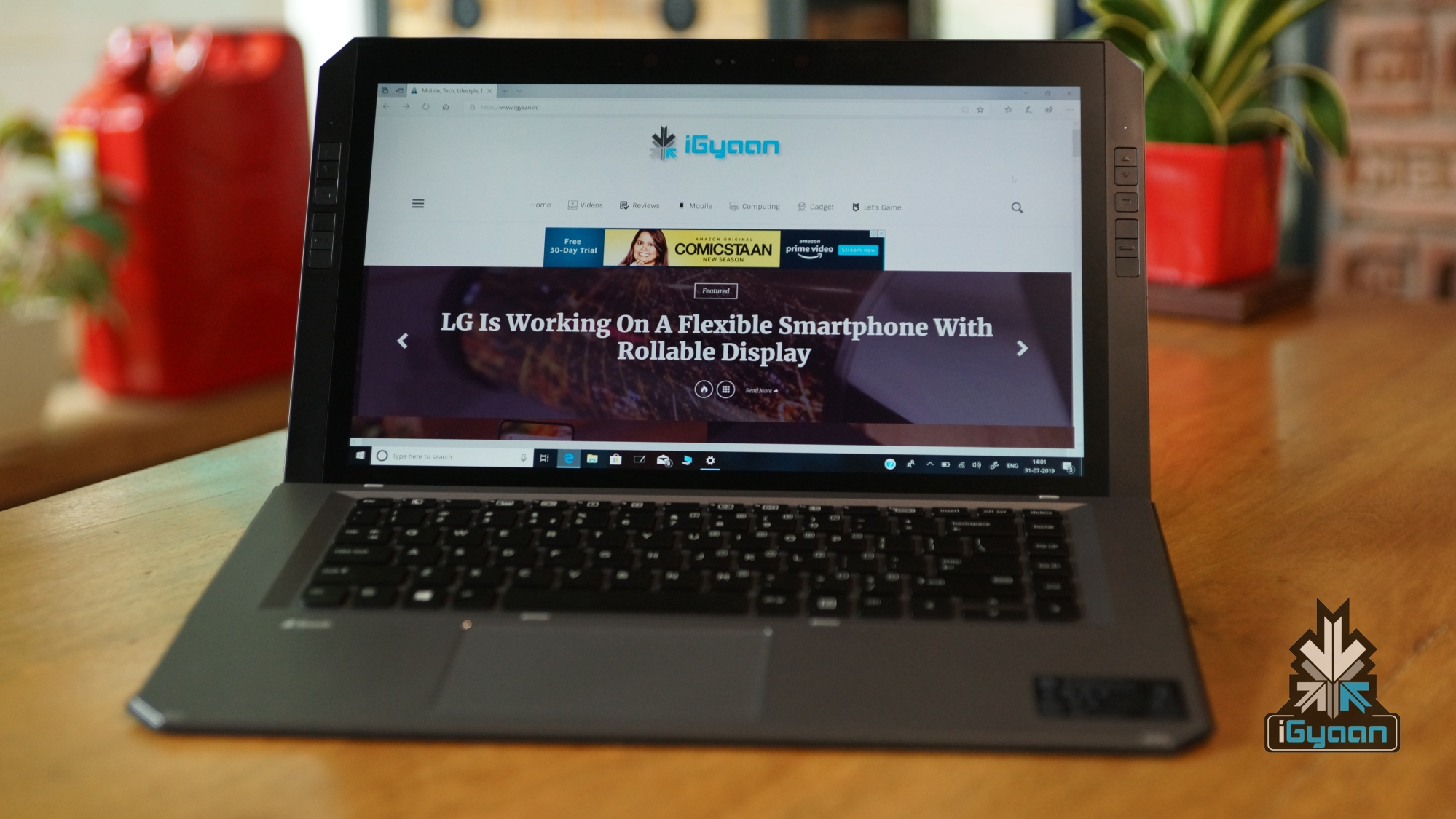
The display of the HP Zbook X2 G4 is pretty vivid. The 14 inch 3840 X 2160px display panel is 4K matte screen which offers great viewing experience. It is a bright display and although it doesn’t have eye-catching colours one would see in a normal display; it has an anti-reflective screen that provides better readability even under bright light. Notably, the display is surrounded by thick bezels on all four sides. Nevertheless, the area is put to good use as the left and right bezels accommodate physical buttons to control features like volume and brightness.
Keyboard, Trackpad & Speakers
HP Zbook X2 G4 has a full-sized keyboard that accompanies it alongside a smooth trackpad. Users can choose between having it attached or detached or even opt for an on-screen keyboard in tablet mode. The keyboard gets the work done and typing experience on the machine is better than several other hybrid laptops with such thin keyboards. As previously mentioned, HP also offers Bang & Olufsen speakers with the laptop which are placed at the top of the display.
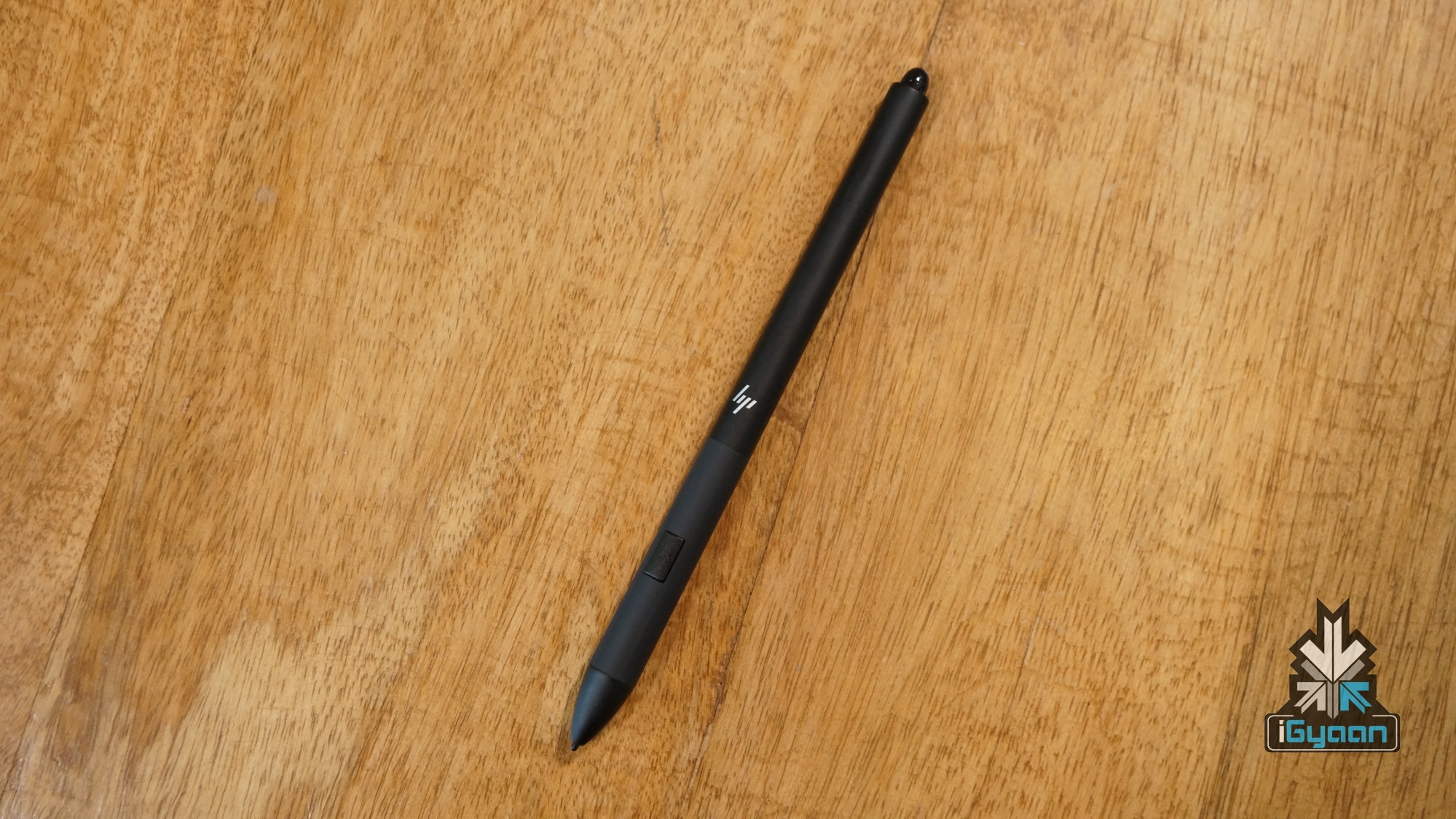
Being a workstation laptop, HP Zbook X2 G4 is shipped with an HP Pen. The stylus is found inside the accessory box and is a great offering for a productivity centric laptop. The pen can be used to take quick notes or make drawings and has precise registration on the display.
Performance
Since the HP Zbook X2 G4 is a device aimed at professionals, it features an eighth-gen Intel Core i7-8550U quad-core CPU. Besides, it is also equipped with 2GB GDDR5 NVIDIA Quadra M620 GPU which facilitates the graphic intensive tasks.
Key Specs:
8 GB / 16GB RAM
Intel Core i7-8550U
512GB PCIe M.2 SSD Storage
NVIDIA Quadro M620 (2GB GDDR5) GPU
14-inch 4K AntiGlare LED-Backlit Display
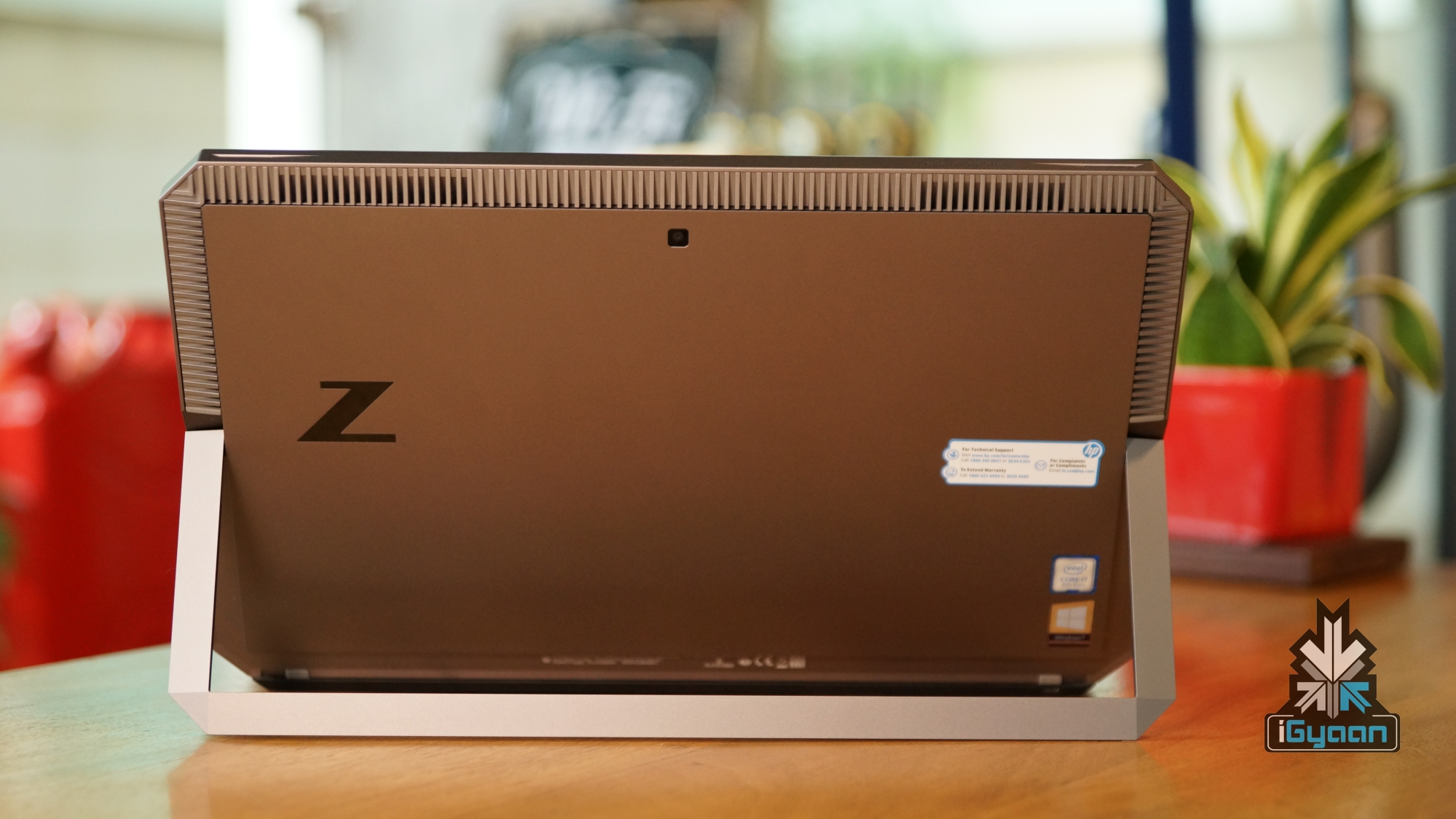
As previously mentioned, the HP ZBook X2 G4 is designed while keeping professionals in mind, it has rear-facing air vents and dual fans that keep the temperatures under check even while running CPU intensive tasks. For average users, the device may be overkill but for professionals, it is a worthy productive machine in a compact form factor.
Connectivity and Other Features
The HP Zbook X2 G4 is equipped with various ports that include 2x Thunderbolt ports, 3.5mm headphone jack and USB Type-C 3.1 ports. For wireless connectivity, the device includes both WiFi and Bluetooth.
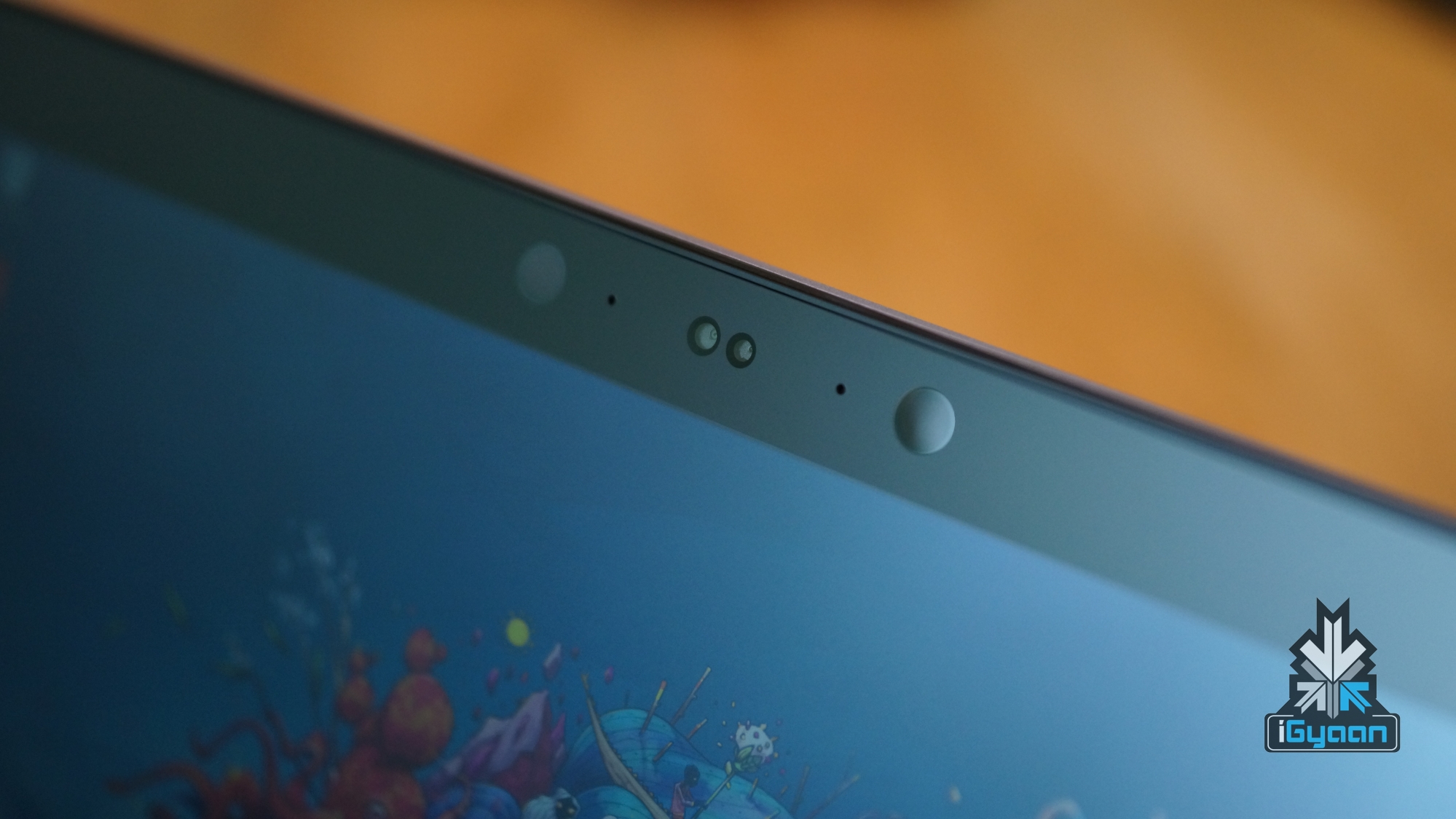
Additionally, it also features a HD webcam at the front and an 8MP camera at the rear which can also capture 1080p videoes @30fps. Windows Hello facial recognition is also provided as the front camera is accompanied by IR sensors. For quick login, even a fingerprint scanner can be found on the right side of the device.
HP’s Zbook X2 G4 is available from authorised HP retailers across India for a price of INR 2,12,388 for its base variant with 8GB of RAM. For 16GB of RAM, the laptop is offered at a price tag with INR 2,62,386. It is a hefty amount for a laptop that offers great specifications and varying modes of iteration with it. Do let us know in the comments down below if you wish for an in-depth review of the laptop.
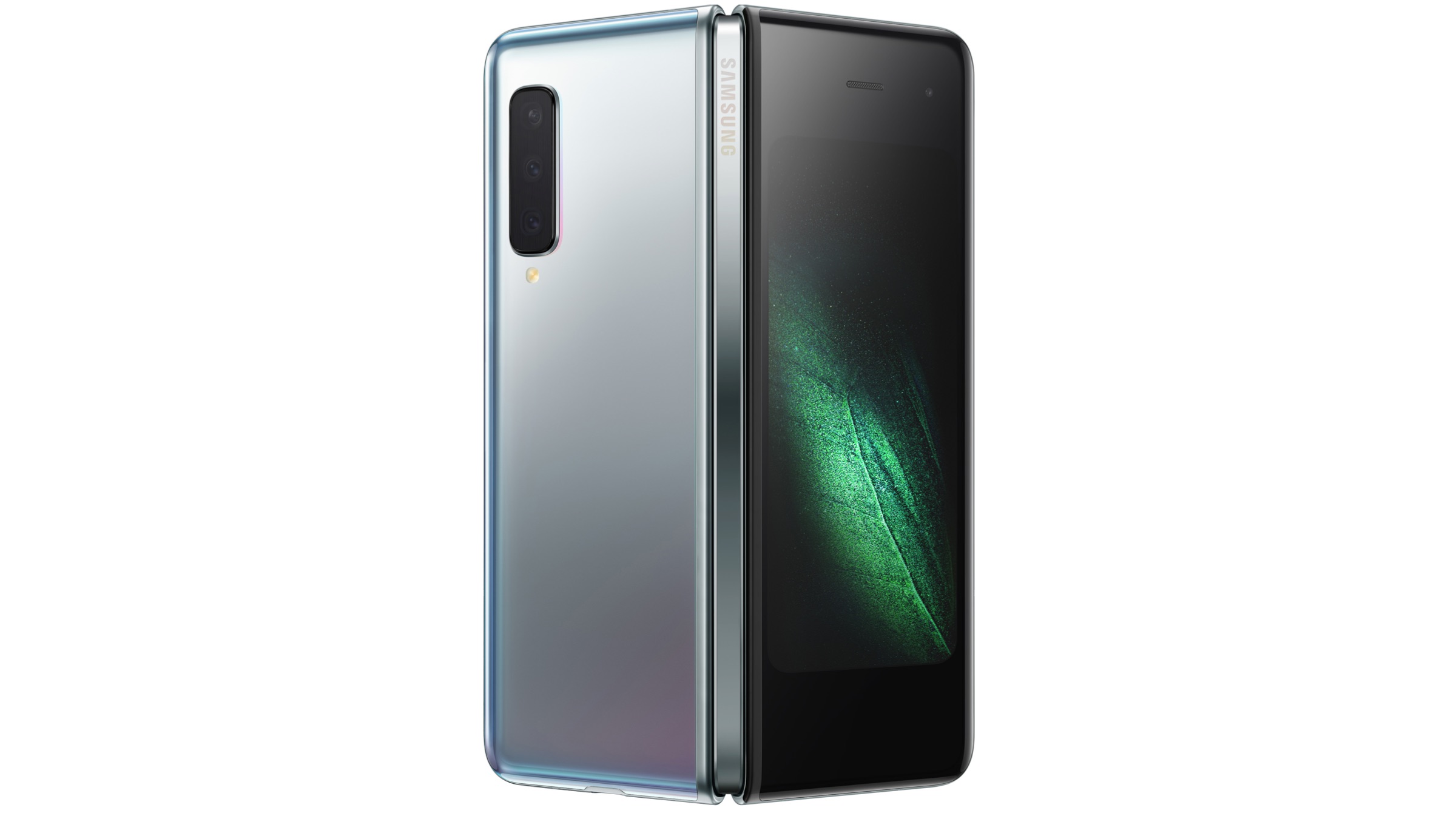
The year 2019 has seen many new innovations and trends popularised in the mainstream mobile industry. One of such innovative buzzwords surrounded flexible or foldable smartphones. Samsung with the Galaxy Fold was one of the first to reveal a functioning smartphone with a flexible display despite all itsflaws. Now, LG is also reportedly jumping on the bandwagon to introduce its own flexible smartphone which may have a rollable display.
Samsung Galaxy Fold
LG has trademarked the name ‘LG Rolling’ with the South Korean Intellectual Property Office. Earlier this year, the South Korean company had also trademarked names such as ‘Roll Canvas’, ‘Rotolo’, ‘The Roll’, ‘E Roll’, ‘Dual Roll’, ‘Signature R’, ‘R Screen’, ‘R Canvas’, and ‘Bi Roll’ with the European Union Intellectual Property Office. Hence, it is speculated that an LG smartphone with a flexible rollable display is currently under development.
Foldable LG Phone Concept
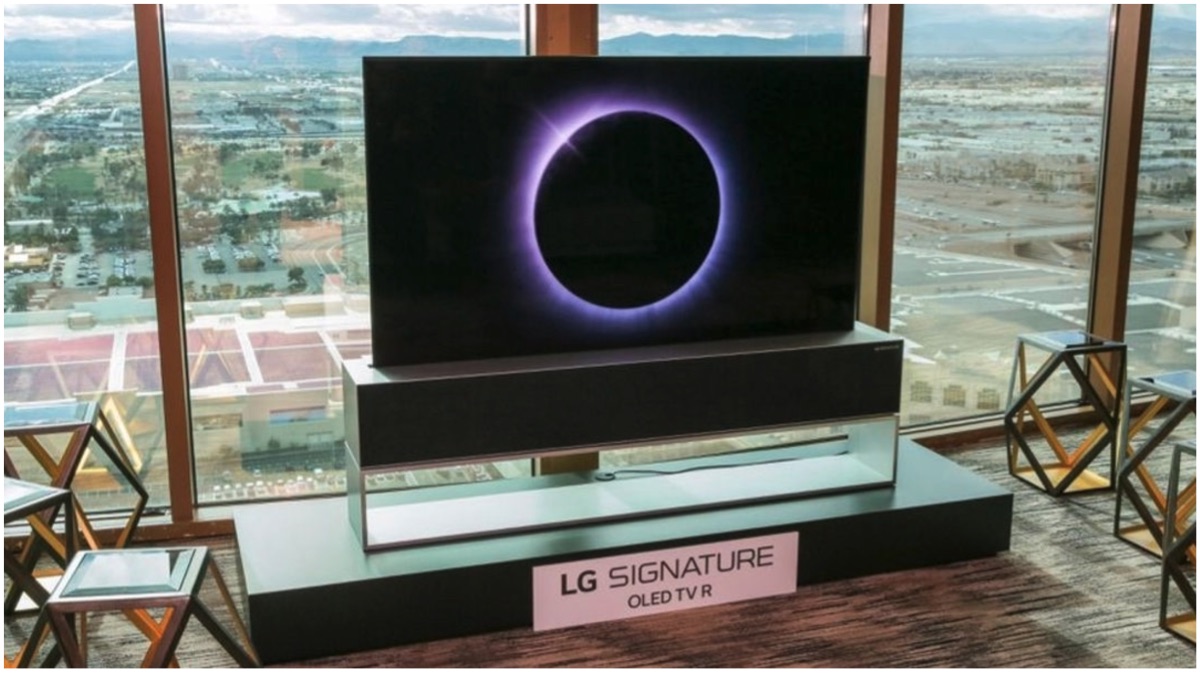
Notably, LG has already used rollable displays in the past. The technology is currently employed on its Signature OLED TV R. As the name suggests, it is an OLED TV that was showcased at CES 2019. The Signature TV features a 65 inch OLED display that can roll back into the base when not in use. Previously, LG had confirmed that they were planning to work on a rollable and foldable smartphone after various reports and rumours surfaced.
The freshly granted patent suggests that LG’s rollable handset is currently in-development stages whiles its name is still undecided.
Conclusively, LG may probably not end up calling the device ‘Rolling’ but use the moniker to represent its key feature. Furthermore, the inclusion of the Signature TV technology in smartphones is a great step in innovation for the mobile industry. Foldable smartphones have already been made and seen but a rolling device could be the next big trend for the arriving year. Unfortunately, concrete information is still lacking but more news is expected to arrive soon, so stay tuned.
Xiaomi is a renowned brand in the smartphone industry. The company is known to offer multiple devices at every range from entry-level to premium grade flagships. The Chinese OEM has managed to incorporate the latest trends relatively quick with devices such as the Redmi K20 series with its popup camera. Now, Xiaomi is reportedly planning on releasing smartphones with an in-display punch hole selfie camera.
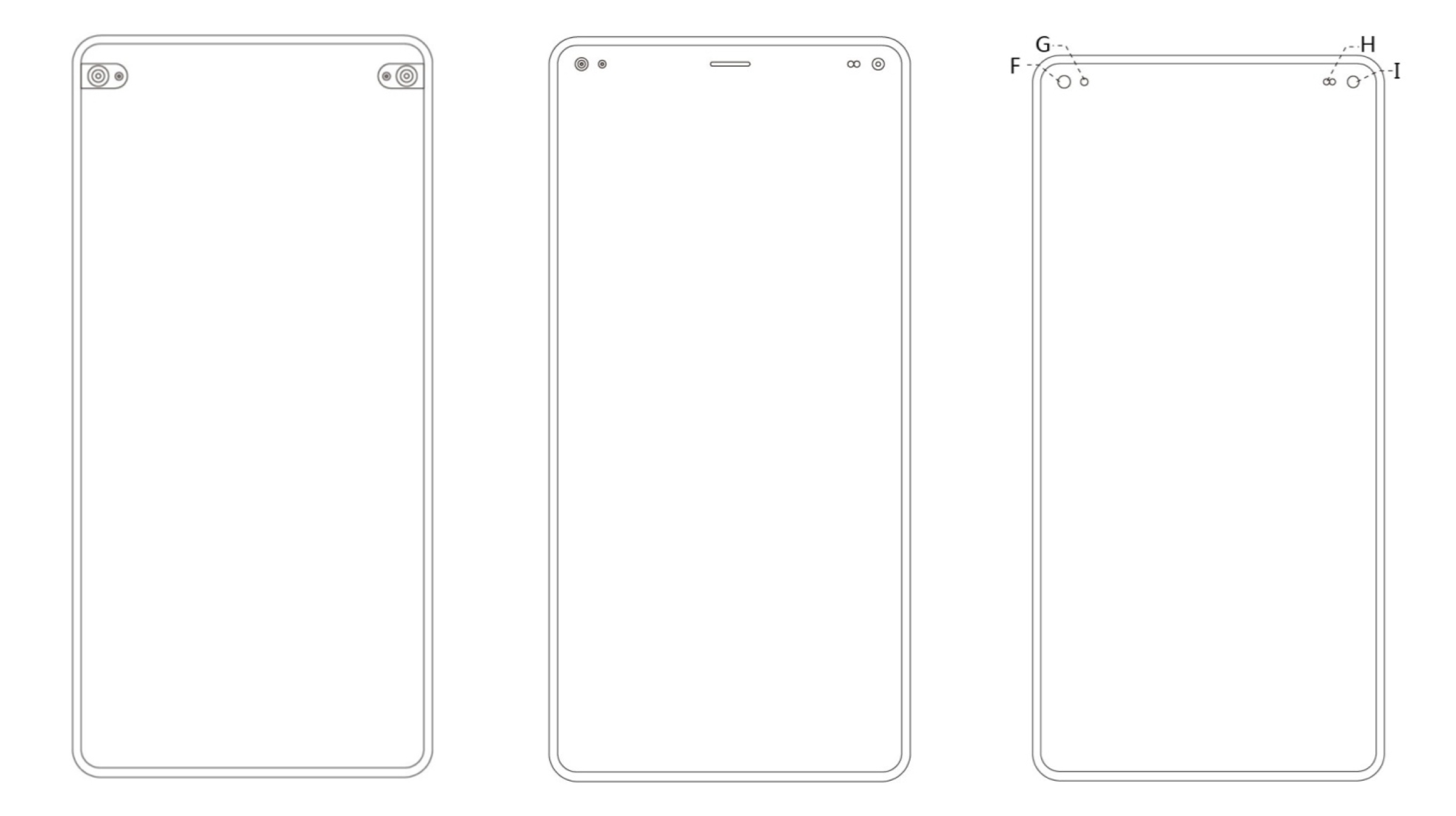
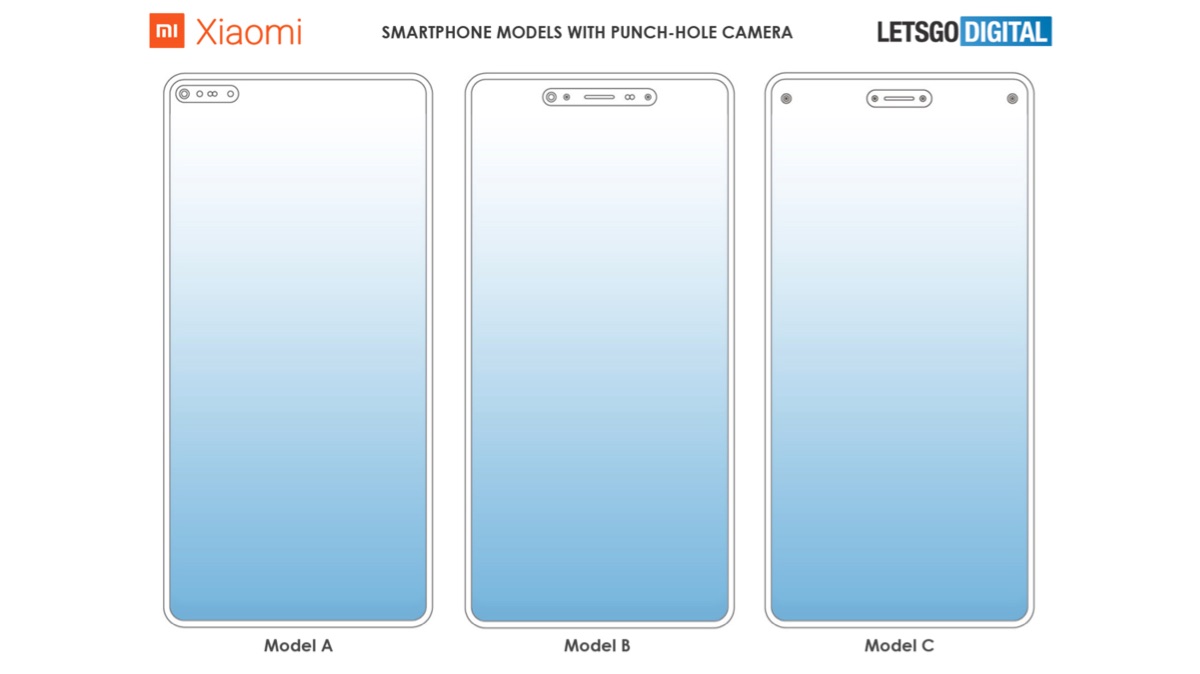
Xiaomi has jumped on many of the trending bandwagons of the year like using in display fingerprint scanner and full body display. However, no punch hole selfie camera has yet been seen from the company. Back in February, Xiaomi was reported to have filed patents for a smartphone with a punch hole camera in different variations. The fresh report now also offers three different form factor of the upcoming Xiaomi device. According to the source, the smartphone is currently patented with 3 different models, namely A, B and C for now.
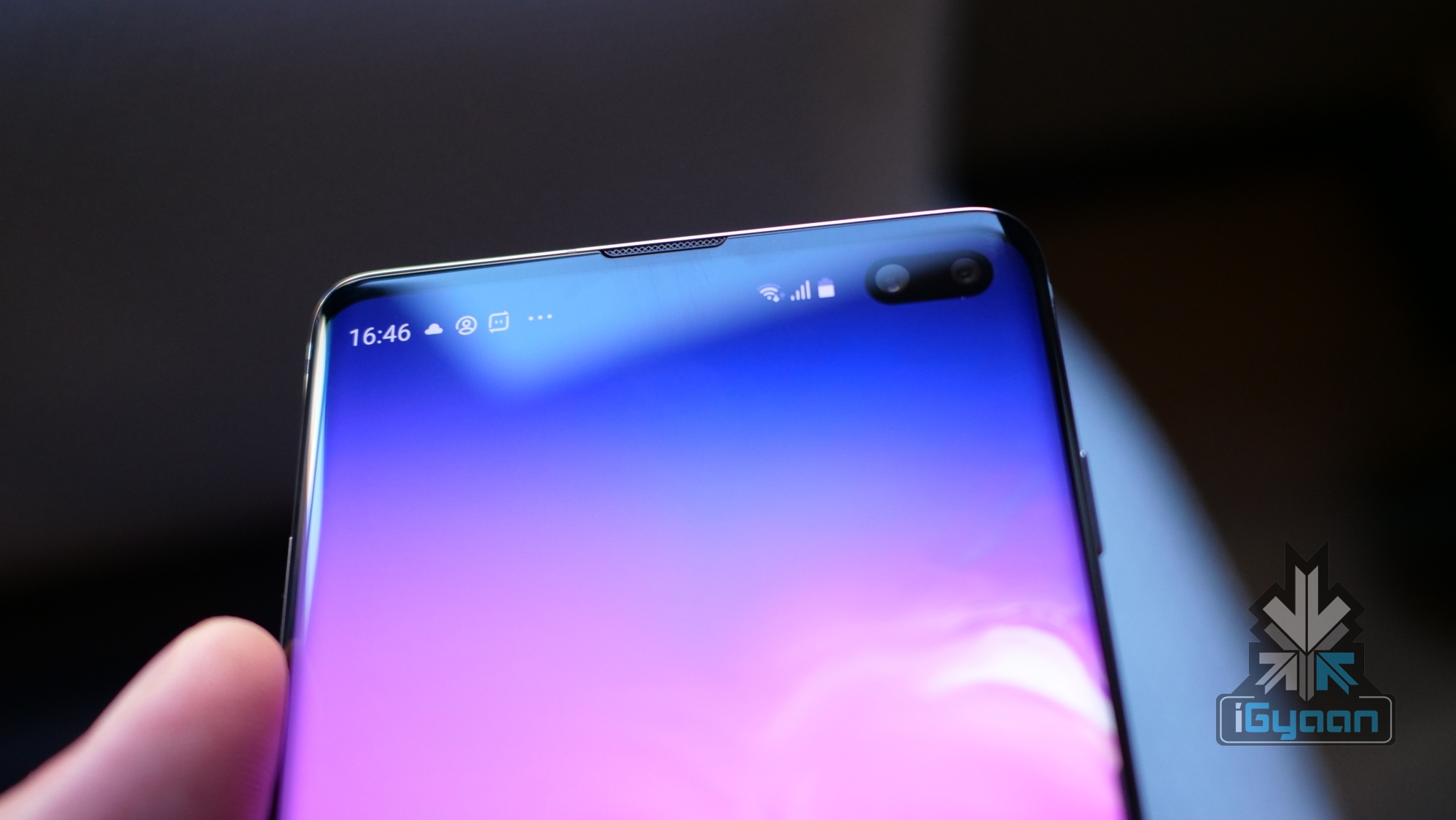
Model A features a wide punch hole display which houses all of the fundamental front sensors and selfie camera on the top left of the display. On the other hand, Model B features a similar anymore noticeable setup at the top centre. Model C is rather unique with a rather unfamiliar selfie camera and sensor setup spreading from the top centre to the flanking sides. Notably, each variation has a dual camera sensors while Model A’s punch hole recess is slightly higher than the other two. Furthermore, it is also unknown which sensors is housed but the patents mention ‘structured light’ so 3D face sensors might be planned.
Punch hole display is one of the solutions to offer a lesser intrusive full front display viewing experience. The camera setup style is popular amongst Samsung’s Galaxy lineup which was one of the first to introduce the feature. Unfortunately, apart from the design, finer details such as specification for the smartphone are still unknown. It is expected that more information will be available in the arriving weeks.
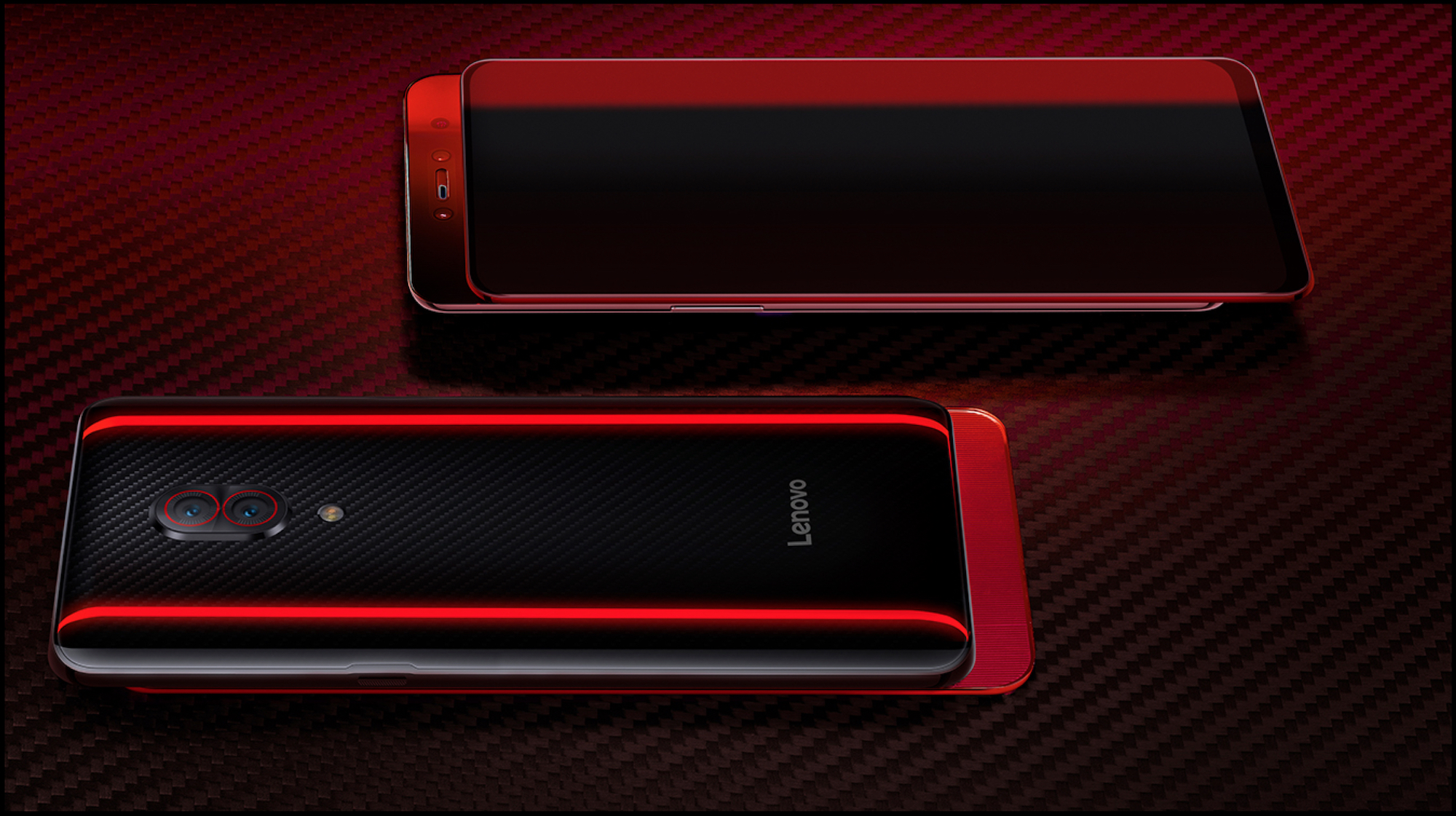
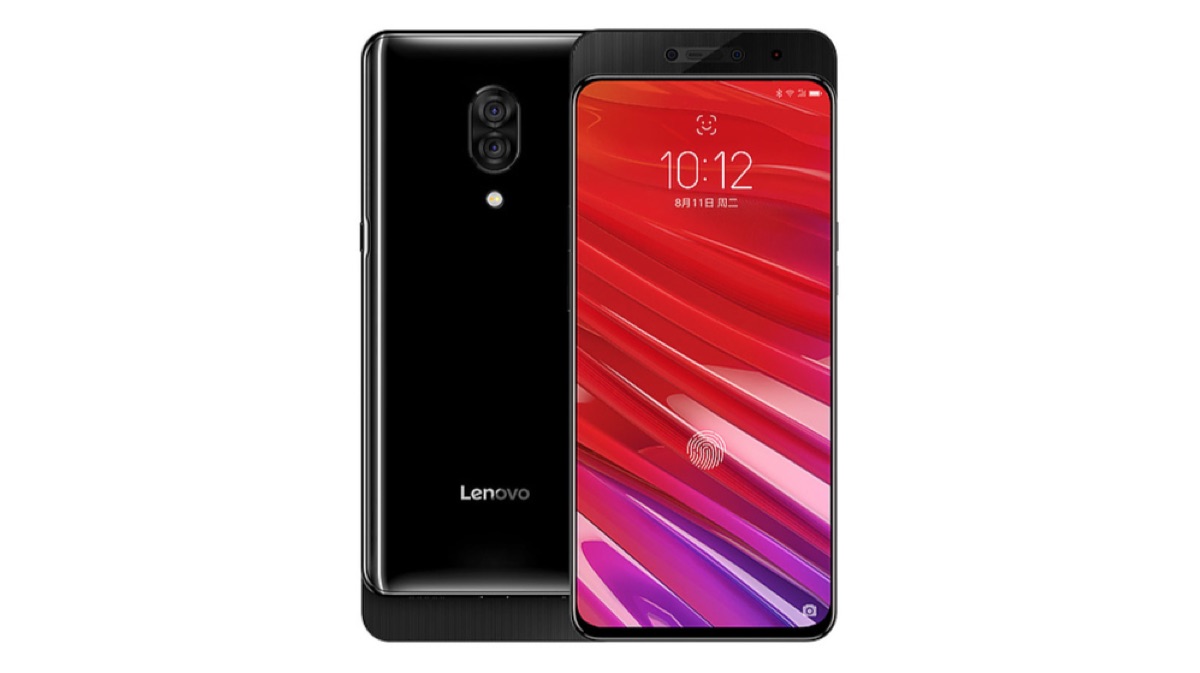
In 2019, the smartphone industry saw many new design trends rise in popularity. The buzzwords were terms like popup camera (generally on the front), all-screen display, and an in-display fingerprint scanner to name a few. OEMs have been creating around these aspects and have released many unique smartphones such as the Samsung Galaxy A80 which incorporates all of the aforementioned features. Now, Lenovo may soon introduce another handset with a slider mechanism similar to the Z5 Pro.
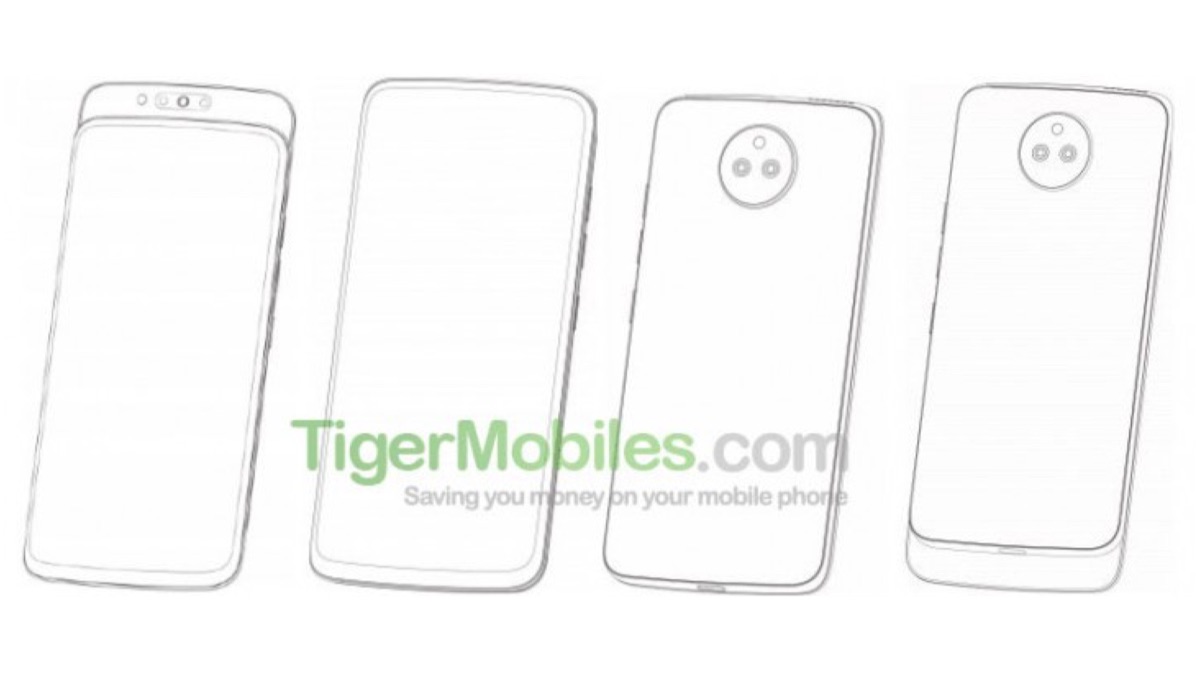
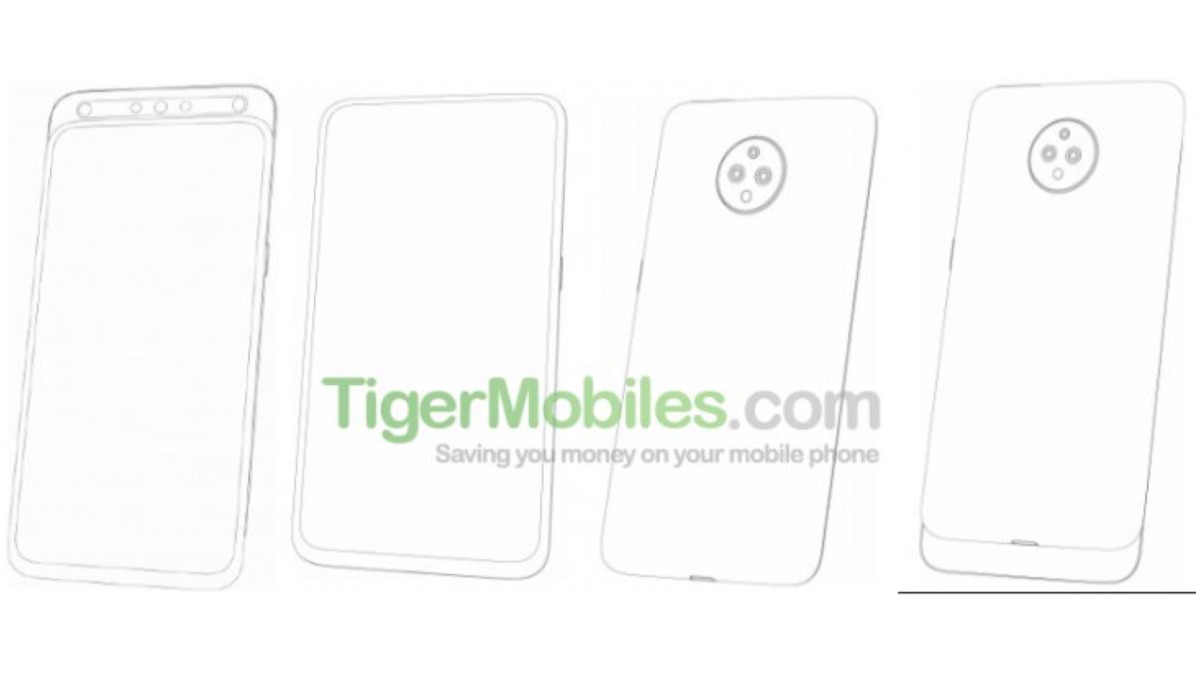
According to a fresh report, a patent has been spotted on CNIPA (Chinese National Intellectual Property Administration) for a new smartphone with a sliding mechanism. The upcoming Lenovo handset will feature a new slider mechanism and is expected to arrive within a year. The component that slides behind the main display houses all the necessary sensors that the front of any smartphone offers alongside the selfie camera. The patent Lenovo was granted pertains two devices. It means that the sliding model will be offered in two variants.
The lower iteration of the sliding Lenovo smartphone only has a single selfie camera and a round dual camera module at the rear. Since the front sensors hide behind the main display when not in use, the device will offer a full front panel display. The higher variant is similar in appearance but features more cameras. Unlike the former, the latter is equipped with a dual selfie camera and a triple camera setup at the rear. The round camera module seems to be heavily influenced or borrow from Motorola’s design formula.
Unfortunately, finer details regarding the smartphone such as the price and specifications are currently a mystery. Furthermore, Lenovo generally targets the Chinese market for its extravagant devices so we may not see a global release. The slider smartphone can possibly also be a successor to Lenovo’s Z5 Pro and Z5 Pro GT that also featured a manual slider functionality. More information is expected to arrive soon, stay tuned for more updates.
5G networking is one of the popular buzzwords that rose in the year 2019. The latest bandwidth is credited to be faster than its previous generation, namely 4G, and has already been introduced in certain markets. Unfortunately, a lot of issues are still plaguing the advancements with slow adoption and spotty coverage overall. Since 2019 saw the mainstream introduction, 2020 may see a complete integration of the newer networking bandwidth. Now, according to a renowned analyst, Apple is reportedly also jumping on the 5G bandwagon with its 2020 iPhone.
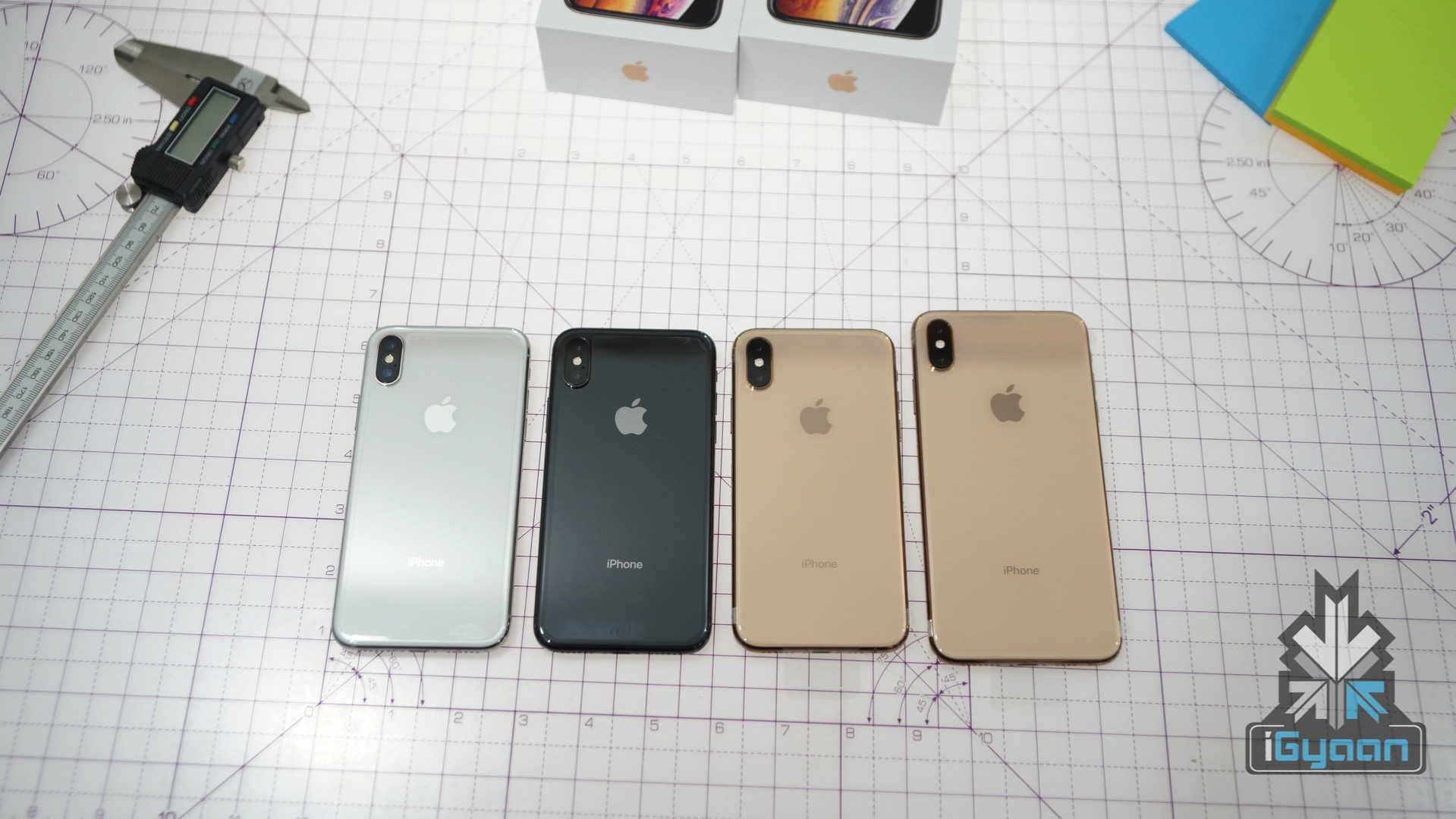
iPhone XR
Despite being a year away from release, the 2020 iPhone is already garnering hype and gaining traction. It is caused by news surfacing that report of the upcoming Apple lineup sporting exciting new features. Additionally, the 2019 iPhones will arrive in September and are unlikely to have 5G networking capabilities. Apple’s direct competitors, the Android OEMs have already shifted to the latest bandwidth generation in certain flagships and entry-level 5G devices are expected to arrive in early 2020.
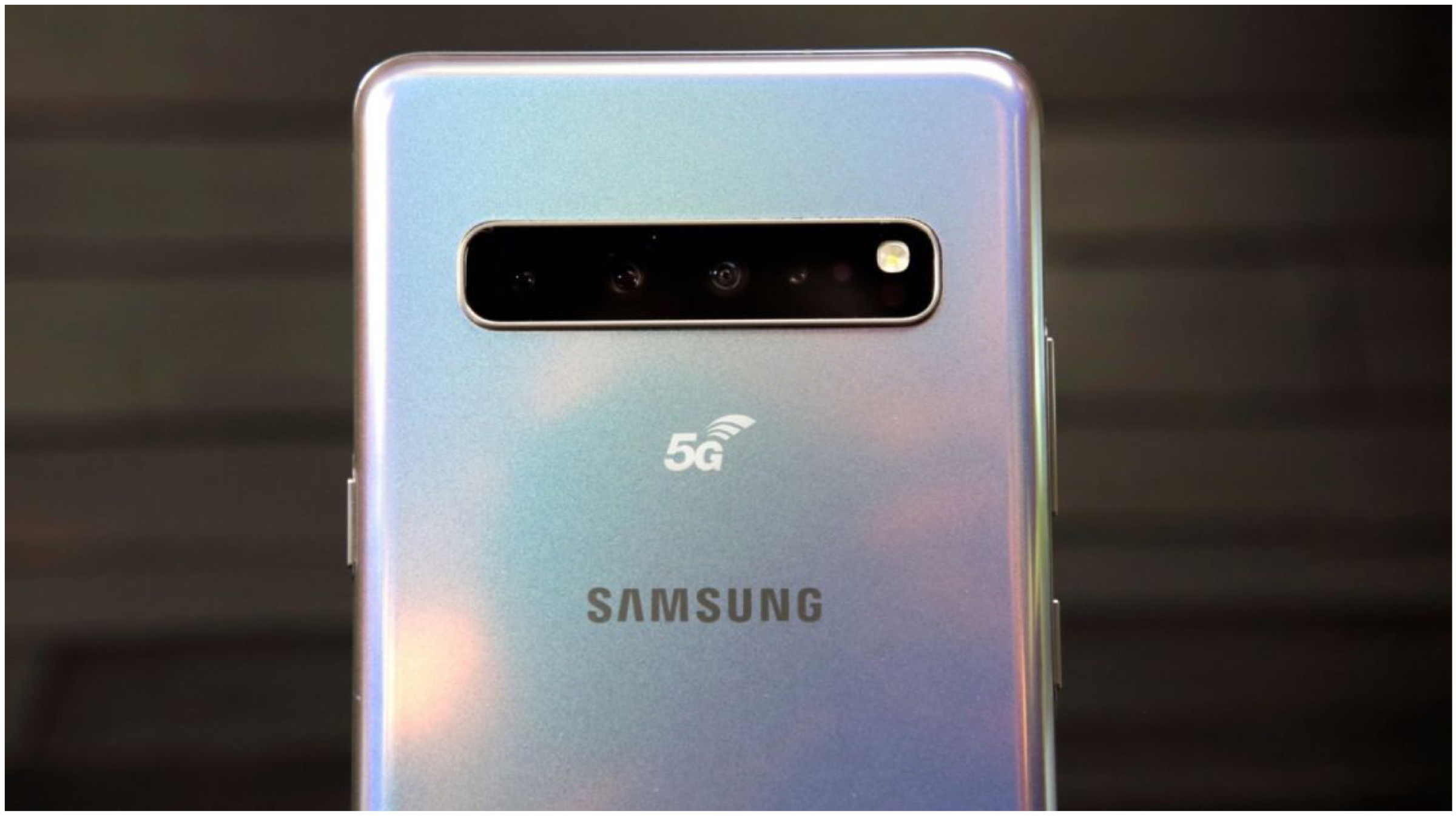
Samsung S10 5G
Previously, we covered news regarding 2020 iPhones featuring 5G, however, it was speculated that only the expensive versions would make the cut. Now, reports suggest that the entire 2020 lineup of Apple smartphones will be supported. The move might be caused by the ever-increasing competition with its Android competitors; especially Chinese manufacturers that price their handsets aggressively.
Furthermore, Apple is planning to include sub-6GHz and mmWave on all 2020 iPhone models. mmWave band refers to the ultra-high frequency which 5G uses for its extremely quick speeds with low latency. A few OEMs have only introduced sub-6GHz in smartphones for borderline 5G capabilities and at a lower price. Apple to save additional cost will employ both wavebands for overall clarity and efficiency during development. Conclusively, the reports are still rather unconfirmed but are promising nonetheless, stay tuned for more updates.